Posted in CATECHESIS, DOCTORS of the Church, EASTER, FATHERS of the Church, QUOTES of the SAINTS, SAINT of the DAY, The WORD

One Minute Reflection – 17 April – Easter Monday 2nd Day of the Octave

One Minute Reflection – 17 April – Easter Monday 2nd Day of the Octave

Meditation for the Day:   Help us put our baptism into action.

The women were frightened and yet very happy,
as they hurried from the tomb and ran to tell his disciples.
— Matthew 28:8

REFLECTION – “We imitate Christ’s death by being buried with him in baptism.   If we ask what this kind of burial means and what benefit we may hope to derive from it, it means first of all making a complete break with our former way of life and our Lord Himself said that this cannot be done unless a man is born again.    In other words, we have to begin a new life and we cannot do so until our previous life has been brought to an end. When runners reach the turning point on a racecourse, they have to pause briefly before they can go back in the opposite direction.    So also when we wish to reverse the direction of our lives there must be a pause, or a death, to mark the end of one life and the beginning of another…….Baptism cleanses the soul from the pollution of worldly thoughts and inclinations:   You will wash me, says the psalmist and I shall be whiter than snow.    We receive this saving baptism only once because there was only one death and one resurrection for the salvation of the world and baptism is its symbol.”………St Basil the Great

Prayer – Loving Father, How do I live the baptismal promises I made again over the weekend? I want to live my life in service of You.
Help me to carry the gift of faith I received from You. Help me to welcome those who joined the church in baptism.
Guide me and give me the courage to live my faith, to accept Your love. Amen

MATTHEW 28-8ST BASIL THE GREAT-BAPTISM

Posted in EASTER, FATHERS of the Church, MORNING Prayers, QUOTES of the SAINTS, SAINT of the DAY

One Minute Reflection – 16 April – Easter Sunday

Through baptism into (Christ’s) death we were buried with him, so that, just as Christ was raised from the dead….we too might live a new life………Romans 6:4

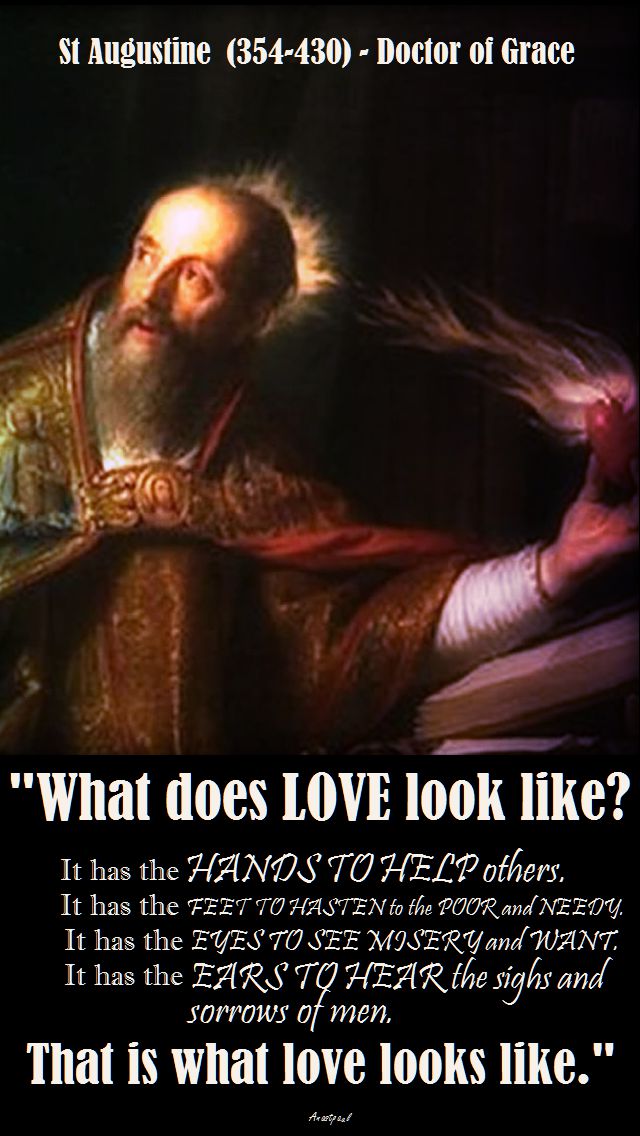
REFLECTION – “Christ is our life.   Let us therefore look to Christ.   He came to suffer in order to merit glory;  to seek cotempt in order to be exalted.   He came to die but also to rise again.”……………St Augustine

PRAYER – Heavenly Father, through my baptism, I was buried with Christ and rose to a new life of grace.   Let me rejoice in the Easter glory of Your Son and so guard my life that I will enjoy it fully in heaven with Him.   St Benedict Joseph Labre, you so rightly are called the “Beggar of Perpetual Adoration”, you so perfectly adored our risen Lord who is always with us in the Blessed Sacrament, please pray for us, amen!

ROMANS 6-4CHRIST IS OUR LIFE-ST AUGUSTINE

ST LABRE PRAY FOR US

Posted in DOCTORS of the Church, FATHERS of the Church, HOLY WEEK, MORNING Prayers, QUOTES of the SAINTS

Quote/s of the Day – 14 April – Good Friday

Quote/s of the Day – 14 April – Good Friday

“The passion of our Lord and Saviour Jesus Christ is the hope of glory and a lesson in patience.    What may not the hearts of believers promise themselves as the gift of God’s grace, when for their sake God’s only Son, co-eternal with the Father, was not content only to be born as man from human stock but even died at the hands of the men he had created?”

– St. Augustine

THE PASSION-ST AUGUSTINE

“No one, however weak, is denied a share in the victory of the cross.    No one is beyond the help of the prayer of Christ.    His prayer brought benefit to the multitude that raged against him.   How much more does it bring to those who turn to him in repentance.”

St. Leo the Great

ST LEO THE GREA

Posted in FATHERS of the Church, HOLY WEEK, MORNING Prayers

Our Morning Offering – 13 April

Our Morning Offering – 13 April

Come, Jesus, for my feet are soiled.
Become once more a servant for my sake.
Pour water into Your basin
and come and wash my feet.
I know these words of mine presume too much
and yet I dread those frightening words of Yours,
“If I do not wash your feet, you can have no part in me.”
Then wash my feet, so that I belong to You.
Yet how can I dare to say, “wash my feet?”
Let Peter say so: he needed only to have his feet washed.
For he was clean through and through.
I too have been washed once in baptism
and yet I need that other cleansing that You spoke of
when You said, “I have anothe baptism to under”;
Cleanse me Lord thoroughly,
by Your saving death. Amen

By Origen of Alexandria

Come Jesus for my feet are soiled by ORIGEN

Posted in DOCTORS of the Church, EASTER, FATHERS of the Church, LENT, MORNING Prayers, QUOTES of the SAINTS

Quote of the Day – 10 April

Quote of the Day – 10 April

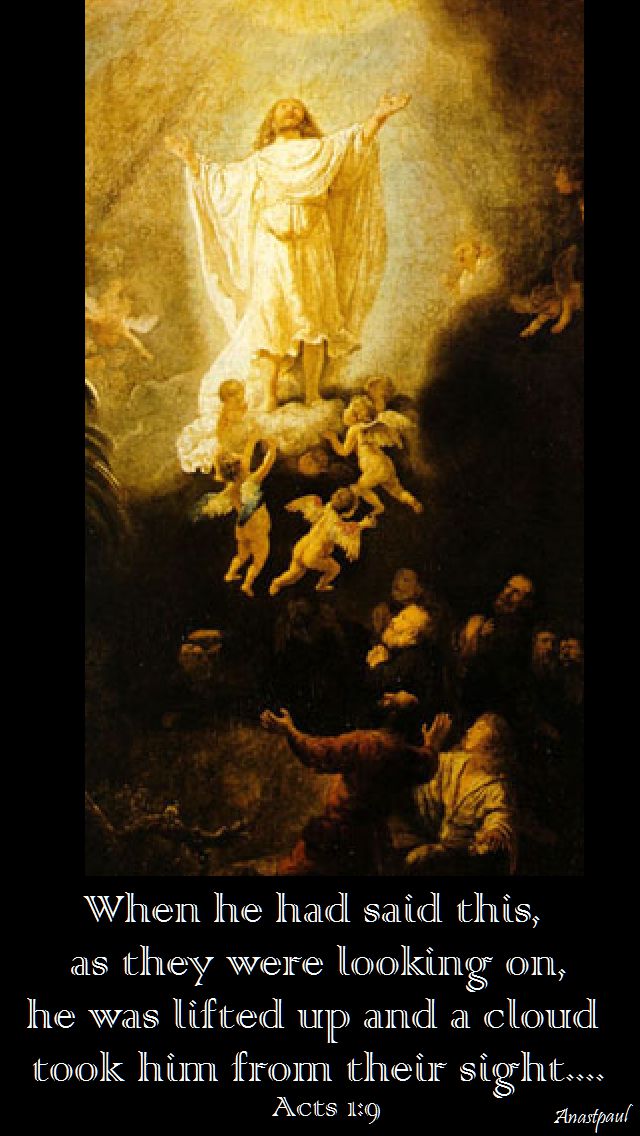
“As they were looking on, so we too,
gaze on His wounds as He hangs.
We see His blood as He dies.
We see the price offered by the redeemer,
touch the scars of His resurrection.
He bows His head, as if to kiss you.
His heart is made bare open, as it were, in love to you.
His arms are extended that He may embrace you.
His whole body is displayed for Your redemption.
Ponder how great these things are.
Let all this be rightly weighed in your mind:
as He was once fixed to the Cross
in every part of His body for you,
so He may now be fixed in every part of your soul!”

St. Augustine

AS THEY WERE LOOKING ON SO WE TOO GAZE ON HIS WOUNDS-ST AUGUSTINE

Posted in DOCTORS of the Church, FATHERS of the Church, LENT, MORNING Prayers, QUOTES of the SAINTS, SAINT of the DAY, The WORD

One Minute Reflection – 10 April

One Minute Reflection – 10 April

Father, into your hands I commend my spirit……Luke 23:45-46

REFLECTION – “He died, but He vanquished death; in Himself He put an end to what we feared;  He took it upon Himself and He vanquished it, as a mighty hunter He captured and slew the lion.
Where is death? Seek it in Christ, for it exists no longer; but it did exist and now it is dead.
O life, O death of death!  Be of good heart; it will die in us, also.   What has taken place in our head will take place in His members; death will die in us also.   But when?   At the end of the world, at the resurrection of the dead in which we believe and concerning which we do not doubt.”…………….St Augustine (Sermon 233:3-4)

PRAYER – God of love, my prayer is simple:  Your son, Jesus, suffered and died for me.
I know only that I cannot have real strength unless I rely on You.   I cannot feel protected from my many weaknesses until I turn to You for forgiveness and your unalterable love. Help me to share this strength, protection and love with others.   St Fulbert of Chartres you worked your whole life to bring the truth and love of God to all, please pray for us, amen.

LUKE 23-45-46he died but he vanquished death-st augustineST FULBERTPRAY FOR US

Posted in DOCTORS of the Church, FATHERS of the Church, MORNING Prayers, PRAYERS of the SAINTS

Our Morning Offering – 10 April

Our Morning Offering – 10 April

Excerpt from the Prayer “You are Christ”
by St Augustine

You are Christ,
my Holy Father,
my Tender God,
my Great King,
my Good Shepherd,
my Only Master,
my Best Helper,
my Most Beautiful and my Beloved,
my Living Bread,
my Priest Forever,
my Leader to my Country,
my True Light,
my Holy Sweetness,
my Straight Way,
my Excellent Wisdom,
my Pure Simplicity,
my Peaceful Harmony,
my Entire Protection,
my Good Portion,
my Everlasting Salvation.
May the live coal of Your Love
grow hot within my spirit
and break forth into a perfect fire;
may it burn incessantly on the altar of my heart;
may it glow in my innermost being;
may it blaze in hidden recesses of my soul;
and in the days of my consummation
may I be found consummated with You!
Amen.

YOU ARE CHRIST-ST AUGUSTINE

Posted in DOCTORS of the Church, FATHERS of the Church, MORNING Prayers, SAINT of the DAY

Thought for the Day – 4 April

Thought for the Day – 4 April

How amazing it is – what one person can accomplish when he works for God alone!   We all find ourselves in situations of leadership or influence and the good we can do by our labour and our example knows no bounds.    Look around, see the lives you can touch – become a genuine influence and example to others.   We have every tool we need AND we have every reason to work for the glory of the Kingdom!

St Isidore of Seville, pray for us!

ST ISIDORE PRAY FOR US 2ST ISIDORE OF SEVILLE - APRIL 4

Posted in DOCTORS of the Church, FATHERS of the Church, QUOTES of the SAINTS, SAINT of the DAY

Quote/s of the Day – 4 April

Quote/s of the Day – 4 April

“Live as if you were to die tomorrow.
Learn as if you were to live forever.”

“Confession heals, confession justifies,
confession grants pardon of sin,
all hope consists in confession;
in confession there is a chance for mercy.”

St Isidore of Seville – Father & Doctor of the Church

QUOTES - ST ISIDORE

Posted in DOCTORS of the Church, FATHERS of the Church, MORNING Prayers, QUOTES of the SAINTS, SAINT of the DAY, The WORD

One Minute Reflection – 4 April

One Minute Reflection – 4 April

Have just men for your……companions;
in the fear of God be your glory…………Sirach 9:16

REFLECTION – “Seek the association of persons who are good. For if you are the companion of their life, you will also be the companion of their virtue.”…….St Isidore of Seville

PRAYER – God of goodness, help me to be continually in the company of true Christians.
Let me be edified by their virtues and their works and let our association bring us all to heavenly glory.   St Isidore of Seville, pray for us, amen.

ST ISIDORE-QUOTEST ISIDORE PRAY FOR US

Posted in DOCTORS of the Church, FATHERS of the Church, PATRONAGE-INTERNET, COMPUTERS, IT Technicians, PC Propgrammers,, etc, QUOTES of the SAINTS, QUOTES on HELL, QUOTES on SUFFERING, SAINT of the DAY

Saint of the Day – 4 April – St Isidore of Seville – Father and Doctor of the Church

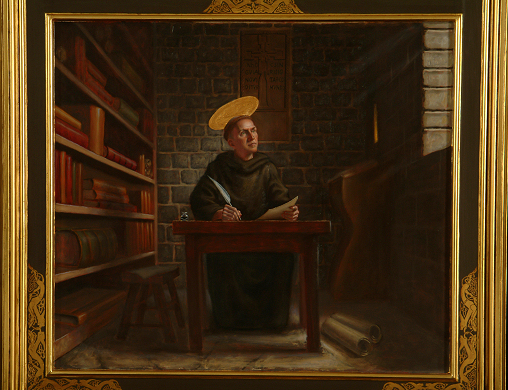
Saint of the Day – 4 April – St Isidore of Seville – Father and Doctor of the Church (560-636) Bishop, Confessor, Father, Doctor, Scholar, Writer, Teacher, Reformer and Evangelist – Patron of newsagents, the internet (not officially appointed), computer programmers and technicians, 2 Diocese, 13 Cities.  He was, for over three decades, the Archbishop of Seville.  The 19th-century historian Montalembert called him, in an oft-quoted phrase, “The Last Scholar of the Ancient World.”   Born in Cartagena of a family that included three other sibling Saints–Leander, Fulgentius and Florentina–he was educated by his elder brother, Leander, whom he succeeded as the Bishop of Seville.1 isisdore.jpg

St Isidore of Seville is sometimes called “the schoolmaster of the Middle Ages” because his books and schools helped shape the education and culture of medieval Europe.   For ten centuries, Isidore’s voluminous works were among those most quoted by other writers.   And his establishment of cathedral schools laid a foundation for the medieval universities and for education in the West.2-saint-isidore-isidro-of-seville-mary-evans-picture-library.jpg

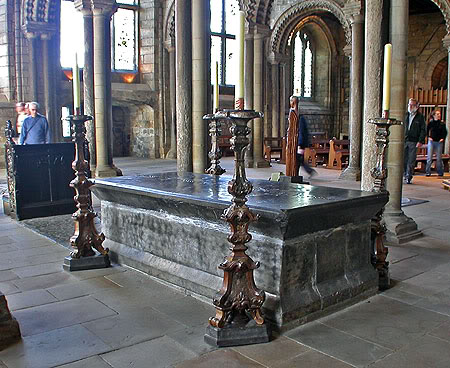
In 599, Isidore became bishop of Seville and for thirty-seven years led the Spanish church through a period of intense religious development.    Isidore also organised representative councils that established the structure and discipline of the church in Spain.    At the Council of Toledo in 633 he obtained a decree that required the establishment of a school in every diocese.    Reflecting the saint’s broad interests, the schools taught every branch of knowledge, including the liberal arts, medicine, law, Hebrew, and Greek.Isidor_von_Sevilla.jpeg

Isidore wrote many books, the most famous being the Etymologies, an encyclopedia of grammar, rhetoric, theology, history, medicine, and mathematics.   He also wrote a dictionary of synonyms, brief biographies of illustrious men, treatises on theological and philosophical subjects, a history of world events since the creation and a history of the Goths, which is our only source of information about them.   Throughout his long life, Isidore lived austerely so that he could give to the poor.   But while Isidore had compassion for needy, he thought they were better off than their oppressors, as he explains in this selection:

We ought to sorrow for people who do evil rather than for people who suffer it. The wrongdoing of the first leads them further into evil.   The others’ suffering corrects them from evil.   Through the evil wills of some, God works much good in others. Some people, resisting the will of God, unwittingly do His purpose.   Understand then that so truly are all things subject to God that even those who oppose His law nevertheless fulfil His will.

Evil men are necessary so that through them the good may be scourged when they do wrong…Some simple men, not understanding the dispensation of God, are scandalised by the success of evil men.   They say with the prophet: “Why does the way of the wicked prosper?”   Those who speak thus should not wonder to see the frail temporal happiness of the wicked.   Rather they should consider the final end of evil men and the everlasting torments prepared for them.   As the prophet says: “They spend their days in wealth and in a moment they go down to hell.”

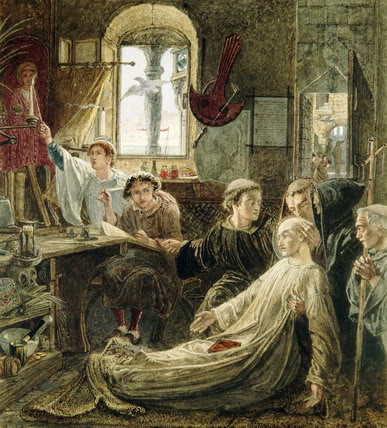
Shortly before his death, Isidore had two friends clothe him in sackcloth and rub ashes on his head so that he could come before God as a poor penitent.   He died peacefully at Seville in 636.

ST ISIDORE

King Reccared abjures his heresy before St. Leander.
King Reccared abjures his heresy before St Isidore
Posted in DOCTORS of the Church, FATHERS of the Church, LENT, MORNING Prayers, QUOTES of the SAINTS

LENTEN REFLECTION – The Fifth Week – Monday 3 April 2017

LENTEN REFLECTION – The Fifth Week – Monday 3 April 2017

ALMSGIVING

Excerpt from a Homily of St John Chrysostum Doctor and Father of the Church (347-407

Nay, if you desire to honour the sacrifice, offer your soul, for which also it was slain; cause that to become golden;  but if that remain worse than lead or potter’s clay, while the vessel is of gold, what is the profit?

Let not this therefore be our aim, to offer golden vessels only but to do so from honest earnings likewise.   For these are of the sort that is more precious even than gold, these that are without injuriousness.   For the church is not a gold foundry nor a workshop for silver but an assembly of angels.   Wherefore it is souls which we require, since in fact God accepts these for the souls’ sake.

That table at that time was not of silver nor that cup of gold, out of which Christ gave His disciples His own blood; but precious was everything there….

Would you do honour to Christ’s body? Neglect Him not when naked; do not while here you honour Him with silken garments, neglect Him perishing without of cold and nakedness.   For He that said, This is my body, and by His word confirmed the fact, This same said, You saw me an hungered, and fed me not; and, Inasmuch as you did it not to one of the least of these, you did it not to me. Matthew 25:42, 45   For this indeed needs not coverings, but a pure soul; but that requires much attention.

Let us learn therefore to be strict in life and to honour Christ as He Himself desires.   For to Him who is honoured that honour is most pleasing, which it is His own will to have, not that which we account best.   Since Peter too thought to honour Him by forbidding Him to wash his feet but his doing so was not an honour, but the contrary.

Even so do thou honour Him with this honour, which He ordained, spending your wealth on poor people.   Since God has no need at all of golden vessels but of golden souls.

And these things I say, not forbidding such offerings to be provided;  but requiring you, together with them and before them, to give alms………..

For what is the profit, when His table indeed is full of golden cups but He perishes with hunger?   First fill Him, being an hungered and then abundantly deck out His table also. Do you make Him a cup of gold, while you give Him not a cup of cold water?   And what is the profit?   Do you furnish His table with cloths bespangled with gold, while to Himself you afford not even the necessary covering?   And what good comes of it?   For tell me, should you see one at a loss for necessary food and omit appeasing his hunger, while you first overlaid his table with silver;  would He indeed thank you and not rather be indignant?   What, again, if seeing one wrapped in rags and stiff with cold, you should neglect giving him a garment and build golden columns, saying, thou were doing it to His honour, would He not say that thou were mocking and account it an insult and that the most extreme?

Let this then be your thought with regard to Christ also, when He is going about a wanderer and a stranger, needing a roof to cover Him;   and thou, neglecting to receive Him, deckest out a pavement, and walls, and capitals of columns and hangest up silver chains by means of lamps but Himself bound in prison you will not even look upon.

ALMSGIVING-STJOHNCHRYSOSTUM LENT MON 3 APRIL

Posted in DOCTORS of the Church, FATHERS of the Church, LENT, QUOTES of the SAINTS, SAINT of the DAY

LENTEN REFLECTION – The Second Week- Saturday 18 March

LENTEN REFLECTION – The Second Week- Saturday 18 March
St Cyril of Jerusalem,  (315-386)
Father and Doctor of the Church

The symbolic meaning of the sacrament of baptism as sharing in Christ’s passion according to Cyril of Jerusalem, Bishop of Jerusalem in the middle of the fourth century and one of the most important sources we have for how the church celebrated the sacraments during that era.  In his Jerusalem Catechesis from which this excerpt comes, St. Cyril instructs new Christians in the days immediately before and after their initiation into the life of the Church at the Easter Vigil.

You were led down to the font of holy baptism just as Christ was taken down from the cross and placed in the tomb which is before your eyes.   Each of you was asked, “Do you believe in the name of the Father, and of the Son and of the Holy Spirit?”   You made the profession of faith that brings salvation, you were plunged into the water and three times you rose again.   This symbolized the three days Christ spent in the tomb.

As our Saviour spent three days and three nights in the depths of the earth, so your first rising from the water represented the first day and your first immersion represented the first night.   At night a man cannot see but in the day he walks in the light.   So when you were immersed in the water it was like night for you and you could not see but when you rose again it was like coming into broad daylight.   In the same instant you died and were born again; the saving water was both your tomb and your mother.

SAT 18 MARCH LENTEN REFLECTION-ST CYRIL ON BAPTISM


Solomon’s phrase in another context is very apposite here.   He spoke of a time to give birth and a time to die.   For you, however, it was the reverse: a time to die and a time to be born, although in fact both events took place at the same time and your birth was simultaneous with your death.

This is something amazing and unheard of!    It was not we who actually died, were buried and rose again.   We only did these things symbolically but we have been saved in actual fact.   It is Christ who was crucified, who was buried and who rose again and all this has been attributed to us.   We share in His sufferings symbolically and gain salvation in reality.   What boundless love for men!   Christ’s undefiled hands were pierced by the nails; he suffered the pain.   I experience no pain, no anguish, yet by the share that I have in his sufferings he freely grants me salvation.

Let no one imagine that baptism consists only in the forgiveness of sins and in the grace of adoption.   Our baptism is not like the baptism of John, which conferred only the forgiveness of sins.   We know perfectly well that baptism, besides washing away our sins and bringing us the gift of the Holy Spirit, is a symbol of the sufferings of Christ.   This is why Paul exclaims: Do you not know that when we were baptised into Christ Jesus we were, by that very action, sharing in his death?    By baptism we went with him into the tomb.

These words of St. Cyril of Jerusalem on the symbolic meaning of the sacrament of baptism, a symbol of Christ’s passion, are read in the Roman Catholic liturgy’s Office of Readings on the Thursday in the Octave of Easter (Cat. 21 Mystagogica 3, 1-3 PG 33. 1087-1091) with the accompanying biblical reading of I Peter 3:1-17.


Posted in FATHERS of the Church, MORNING Prayers, QUOTES of the SAINTS, SAINT of the DAY, Uncategorized

Thought for the Day – 23 February

Thought for the Day – 23 February

We may not be required to give our lives for our faith but we all have to suffer something for our beliefs and our fidelity. It is when things are difficult that faith is really faith. A faith that is good only in good times is scarcely faith at all. We are all called to witness to our faith in some way.   Polycarp was recognised as a Christian leader by all Asia Minor Christians—a strong fortress of faith and loyalty to Jesus Christ.   His own strength emerged from his trust in God, even when events contradicted this trust.   Living among pagans and under a government opposed to the new religion, he led and fed his flock.   Like the Good Shepherd, he laid down his life for his sheep and kept them from more persecution in Smyrna.   He summarised his trust in God just before he died: “Father… I bless Thee, for having made me worthy of the day and the hour…” (Acts of Martyrdom, Chapter 14).

father-i-bless-thee-stpolycarpst-polycarp-pray-for-us


Posted in FATHERS of the Church, MORNING Prayers, QUOTES of the SAINTS, SAINT of the DAY, Uncategorized

Quote/s of the Day – 23 February

Quote/s of the Day – 23 February

“Eighty and six years have I served Christ,
nor has He ever done me any harm.
How, then, could I blaspheme my King who saved Me?….
I bless Thee for deigning me worthy of this day
and this hour that I may be among Thy martyrs
and drink the cup of my Lord Jesus Christ.”

“Let us, therefore, foresake the vanity of the crowd
and their false teachings and turn back to the word
delivered to us from the beginning.”

“You threaten me with fire which burns for an hour
and after a little is extinguished
but are ignorant of the fire of the coming judgment
and of eternal punishment, reserved for the ungodly.”

~~~~~ St Polycarp

quotes-of-st-polycarpyou-threaten-me-with-fire-st-polycarp

Posted in FATHERS of the Church, MORNING Prayers, QUOTES of the SAINTS, SAINT of the DAY, The WORD

One Minute Reflection – 23 February

One Minute Reflection – 23 February

There is a time and judgment for everything………Eccl 8:6

REFLECTION – “Stand fast, therefore, in this conduct and follow the example of the Lord, firm and unchangeable in faith, lovers of the brotherhood, loving each other, united in truth,’ helping each other with the mildness of the Lord, despising no man.”…………..St Polycarp

PRAYER – God of goodness, let me never allow an opportunity for good to be wasted. Help me take advantage of every moment at my disposal to do good.   St Polycarp pray for us, amen.

stand-fast-therefore-st-polycarp

Posted in FATHERS of the Church, MORNING Prayers, PRAYERS of the SAINTS, Uncategorized

Our Morning Offering – 23 February

Our Morning Offering – 23 February

St Polycarp’s Prayer

May God the Father
and the Eternal High Priest Jesus Christ,
build us up in faith and truth and love
and grant to us our portion among the saints
with all those who believe on our Lord Jesus Christ.
We pray for all saints,
for kings and rulers,
for the enemies of the Cross of Christ
and for ourselves we pray
that our fruit may abound
and we may be made perfect
in Christ Jesus our Lord. Amen

st-polycarps-prayer-may-god-the-father-and-the-eternal-high-priest-jesus-christ

Posted in FATHERS of the Church, SAINT of the DAY

Saint of the Day – 23 February – St Polycarp of Smyrna

Saint of the Day – 23 February – St Polycarp of Smyrna – (69-156) – Martyr, Apostolic Church Father and Bishop of Smyrna, Writer, Preacher, Theologian – Patron against dysentery and earache.

Polycarp is regarded as a saint and Church Father in the Eastern Orthodox, Oriental Orthodox, Catholic, Anglican, and Lutheran churches. His name ‘Polycarp’ means ‘much fruit’ in Greek.

It is recorded by Irenaeus, who heard him speak in his youth, and by Tertullian, that he had been a disciple of John the Apostle.    Saint Jerome wrote that Polycarp was a disciple of John and that John had ordained him bishop of Smyrna.

With Clement of Rome and Ignatius of Antioch, Polycarp is regarded as one of three chief Apostolic Fathers.   The sole surviving work attributed to his authorship is his Letter to the Philippians; it is first recorded by Irenaeus of Lyons.

According to St Irenaeus, Polycarp was a companion of Papias, another “hearer of John” as Irenaeus interprets Papias’ testimony and a correspondent of Ignatius of Antioch.   Ignatius addressed a letter to him, and mentions him in his letters to the Ephesians and to the Magnesians.

Irenaeus regarded the memory of Polycarp as a link to the apostolic past. He relates how and when he became a Christian, and in his letter to Florinus stated that he saw and heard Polycarp personally in lower Asia. Irenaeus wrote to Florinus:

“I could tell you the place where the blessed Polycarp sat to preach the Word of God.   It is yet present to my mind with what gravity he everywhere came in and went out;  what was the sanctity of his deportment, the majesty of his countenance;  and what were his holy exhortations to the people.   I seem to hear him now relate how he conversed with John and many others who had seen Jesus Christ, the words he had heard from their mouths.”

In particular, he heard the account of Polycarp’s discussion with John and with others who had seen Jesus.   Irenaeus also reports that Polycarp was converted to Christianity by apostles, was consecrated a bishop and communicated with many who had seen Jesus.   He repeatedly emphasizes the very great age of Polycarp.   Polycarp kissed the chains of Ignatius when he passed by Smyrna on the road to Rome for his martyrdom.

Polycarp occupies an important place in the history of the early Christian Church.   He is among the earliest Christians whose writings survived.   Saint Jerome wrote that Polycarp was a “disciple of the apostle John and by him ordained bishop of Smyrna”.   He was an elder of an important congregation which was a large contributor to the founding of the Christian Church.
Irenaeus, who had heard him preach in his youth, said of him: “a man who was of much greater weight and a more steadfast witness of truth, than Valentinus and Marcion, and the rest of the heretics”. Polycarp had learned from apostle John to flee from those who change the divine truth. One day he met in the streets of Rome the heretic Marcion who, resenting that Polycarp did not greet him, said: “Do you know me?” The saint replied: “Yes, I know you, the first-born of Satan.”    Polycarp lived in an age after the deaths of the apostles, when a variety of interpretations of the sayings of Jesus were being preached.   His role was to authenticate orthodox teachings through his reputed connection with the apostle John: “a high value was attached to the witness Polycarp could give as to the genuine tradition of old apostolic doctrine”, Wace commented, “his testimony condemning as offensive novelties the figments of the heretical teachers”.   Irenaeus states (iii. 3) that on Polycarp’s visit to Rome, his testimony converted many disciples of Marcion and Valentinus.

The story of Polycarp’s martyrdom is the earliest recorded account of a Christian martyr. Polycarp was seized for being a Christian.   Persecution and death would not tear him away from Jesus now.   Polycarp was led into the stadium of Smyrna.   The crowd demanded that he be left to the lions, but instead he was sentenced to death by fire.   An eyewitness account claims that the flames didn’t harm him.   He was finally killed by the sword, and his body was burned.

The community of believers celebrated the anniversary of Polycarp’s death with great joy, for in him they had seen an outstanding example of love and patience.   He had held strong and had won the treasure of eternal life.   Polycarp is remembered as an Apostolic Father, one who was a disciple of the apostles.