St Beoc St Dominic Dosso Bl Elizabeth of Saint Francis
St Everard of Friuli (c815-867) Duke, Count, Soldier, Founder of Churches and a Monastery. In contrast to his soldiering life, St Everard was a peacemaker, a humble and loving Master with a social conscience, striving always to free serfs, wherever possible or at least to free them from their burdens and assisting the poor and needy in all their deprivations. His Humble Life: https://anastpaul.com/2021/12/16/saint-of-the-day-16-december-saint-everard-of-friuli-c-815-867/
St Irenion (Died 389) Bishop No further information can be found Bl James of Tunis St Jean Wauthier St Macarius of Collesano
Martyred Women of North-West Africa: A large group of women Martyred in the persecutions of Hunneric, Arian King of the Vandals. 482 in North-West Africa.
Martyrs of Ravenna – 4 Saints: A group of Christians Martyred together. Four names and no other information has survived – Agricola, Concordius, Navalis and Valentine. c 305 at Ravenna, Italy.
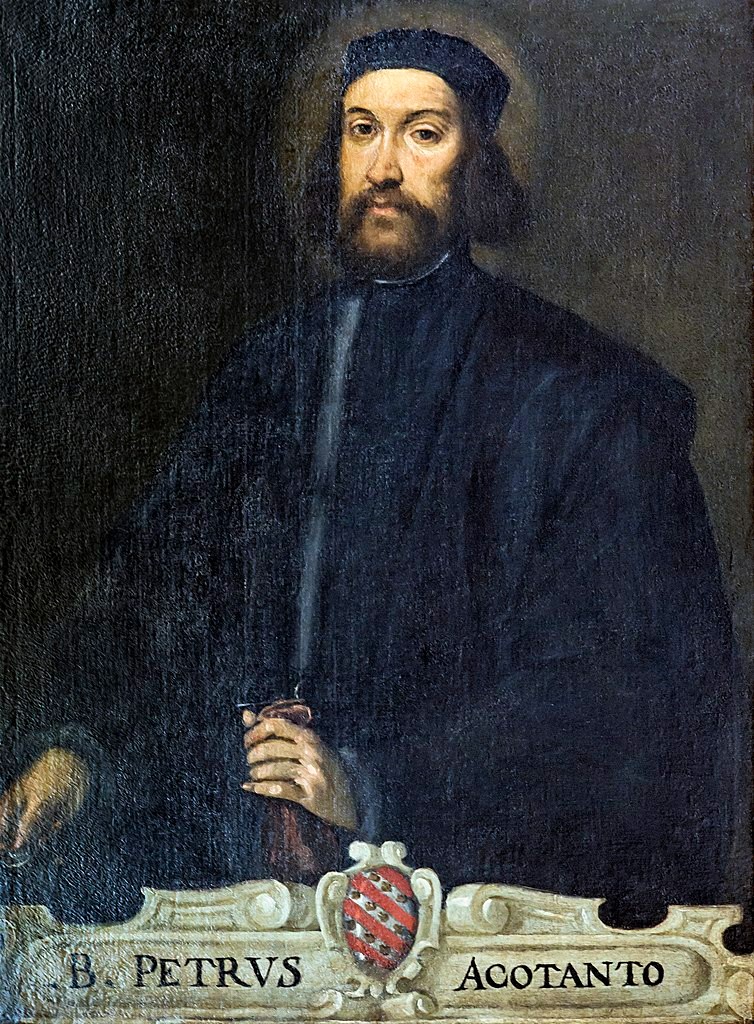
Saint of the Day – 23 September – Blessed Peter Acotanto (1108-1187) Hermit, Apostle of the poor, the most deprived and desparate peoples of Venice. Born in 1108 in Venice, Italy and died there in on 23 September1187 of natural causes. Patronage – of Venice, Italy. His Body is Incorrupt.
According to the Venetian tradition based on a manuscript preserved in the Church of St Basil Peter Acotanto was born in 1108 to the noble Acotanto family, a family which could boast very ancient origins. The same Church of the district where the Acotanto family lived, St Basil, had been built by their family in the 10th Century.
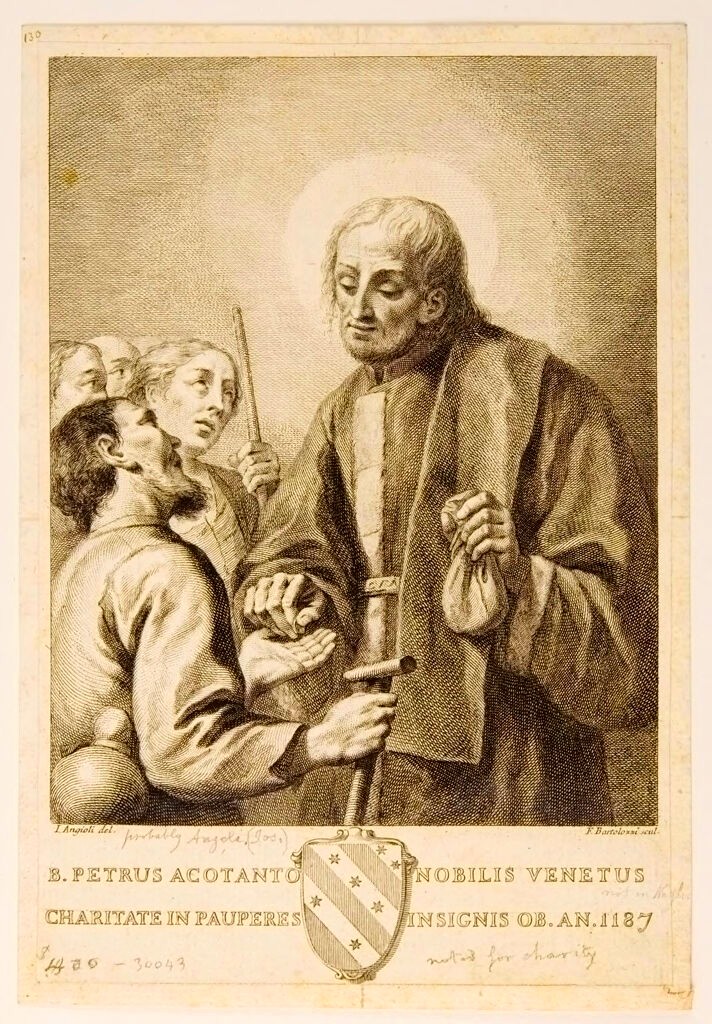
Peter practiced charity in an eminent way – in the poor he saw Christ and in almsgiving – a manifestation of faith, even if many times the poor people took advantage of it. They besieged his house before he went out, they guarded the door when he had to return, they interrupted his walk on the street with importunate requests but Peter patient and generously, welcomed everyone and did not let anyone leave disconsolate or in tears.
In the darkest night, to hide from the sight and applause of men and known only to God, Who assisted him, with his own hands, Peter loaded his little domestic boat with bread, wood, oil, clothes and other necessary items for the poor, the miserable and the deprived. Peter pushed his boat alone through the troubled and angry waters and in the midst of raging winds and with continuous danger to his health and his life, he went here and there, to various distant districts of the City, in search of the most derelict poor and made a generous distribution to them of the abundant load, saving them in this way from the imminent misfortune of having to die from cold or hunger.
Peter pushed his boat alone through the troubled and angry waters, assisting the poor wherever he found them
For the poor Peter became poor himself. He sold everything he had and did not even keep enough for himself to live on. Peter then retired to San Giorgio Monastery among the Benedictines who had been his life teachers. He wore very poor clothes and wished to do the humblest services for the Monks, such as cultivating the vegetable garden and carrying water to the Monastery kitchen after drawing it with difficulty from the well. He was content with very little food and often fasted completely. The example of virtue which he displayed to the Monks was such that, on the death of Abbot Pasquale, they wished to appoint him as their Superior but Peter instead obtains permission to live as a Hermit next to the Monastery. With his own hands he builds a small hut and between fasting and mortification he spent the last years of his life alone in his little hut.
He died on 23 September 1187, the date he had predicted for his death, surrounded by his brothers. He was buried in the Church of San Basilio (commonly known as San Basegio) in Venice where he enjoyed a reputation for sanctity for the miracles performed through his intercession and the incorruption of his body, found in 1250.
In 1305 the body was transferred to another tomb in the nearby cemetery and, in 1340, it was finally transferred inside theChurch, above the Altar of the Crucifix. Recognised as a miracle worker, Pope Clement XIII declared Peter Blessed in 1759.
In 1810, following the Napoleonic suppression of the Church of San Basiio , his relics were transferred to the nearby Church of San Sebastiano and then, in 1821, to the Church of Saints Gervasio and Protasio where they are still venerated today.
In 1946, Prof. Peter Leonardi founded the Blessed Peter Acotanto Charity to assist the evicted from Giudecca and Terese. About 500 of the most needy families were assisted. He worked for human promotion, especially for young people, by opening recreation centers, schools and refectories, where children from the assisted neighbourhoods were welcomed and entertained with games, songs, readings, and food. He set up professional courses and carpentry workshops to teach a trade to abandoned children. The Peter Acotanto Charity ceased its activities in 1964.
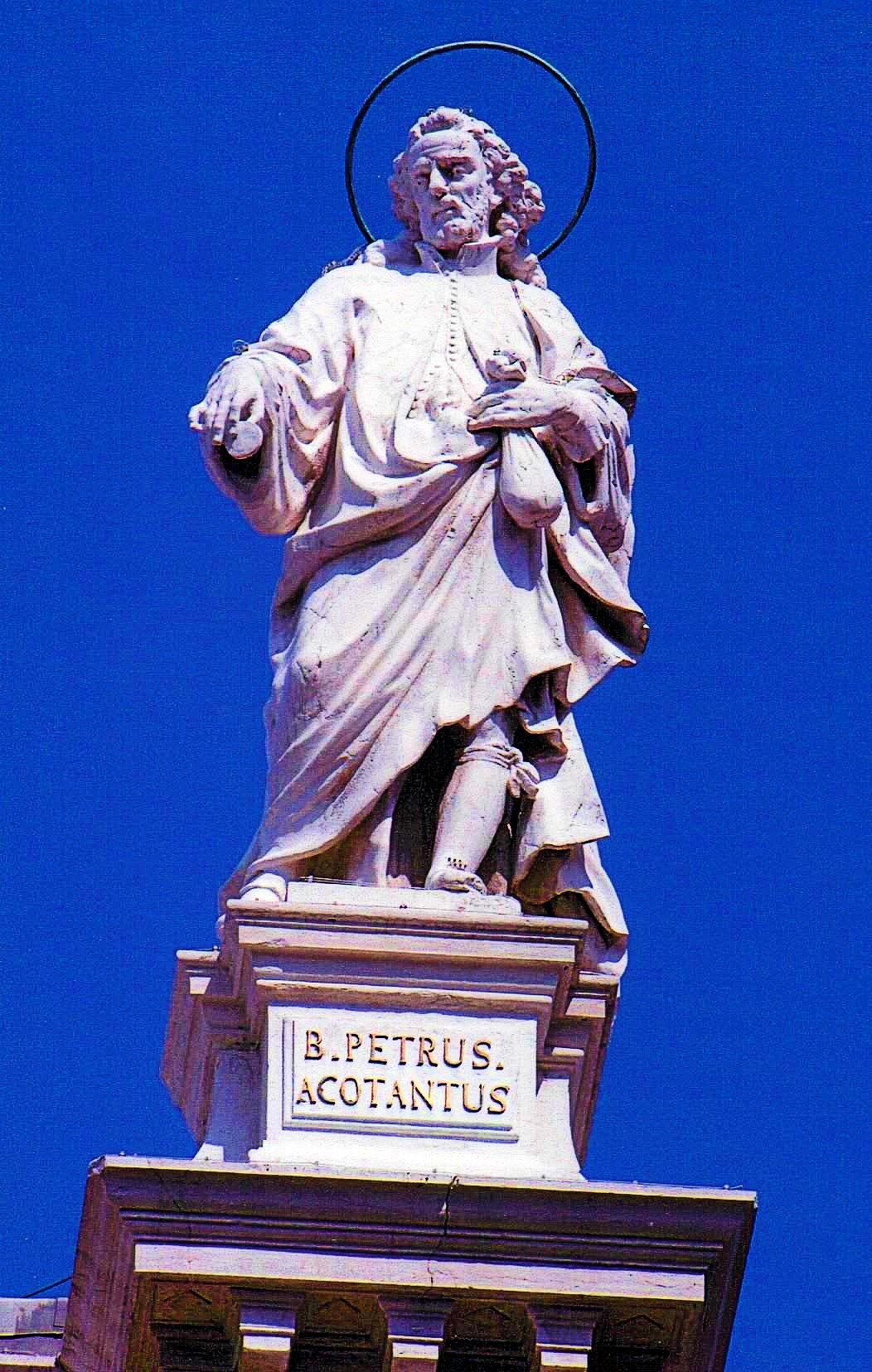
Blessed Peter Acotanto on the Church of San Rocco in Venice
St Pope Linus (c 10 – c 76) Successor to St Peter. Papacy lasted from c 67 to his death as a Martyr. Among those to have held the position of Pope, Peter, Linus and Clement are specifically mentioned in the New Testament. Linus is mentioned in the closing greeting of the Second Epistle to Timothy as being with Paul in Rome near the end of Paul’s life. The Life and Death of St Linus: https://anastpaul.com/2018/09/23/saint-of-the-day-23-september-st-pope-linus-c-10-c-76-successor-to-st-peter/
Blessed Guy of Durnes O.Cist. (Died c1157) Abbot Blessed Peter Acotanto (1108-1187) Hermit St Polyxena
St Sosius (275-305) Confessor, Deacon and Martyr. His holiness and wisdom drew many Prelates to his feet, seeking spiritual assistance. St Sosius was a Deacon of Misenum, an important naval base of the Roman Empire in the Bay of Naples. The Roman Martyrology reads: “At Capo Miseno in Campania, St Sosius, Deacon and Martyr, who, as Pope St Symmachus reports, wishing to save his Bishop from death, instead found death together with him, obtaining equal glory at the same price.” His Life and Death: https://anastpaul.com/2022/09/23/saint-of-the-day-23-september-saint-sosius-275-305-confessor-deacon-and-martyr/
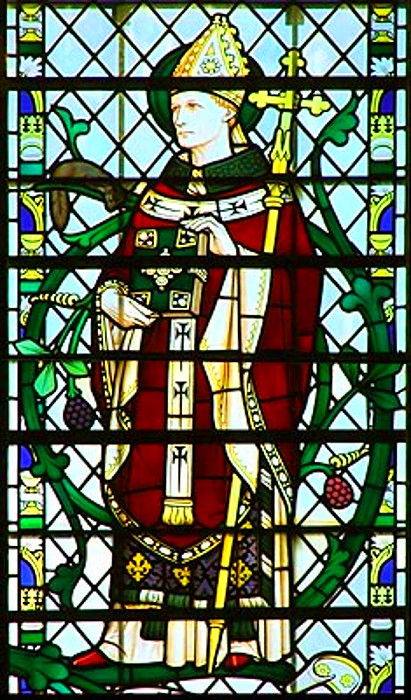
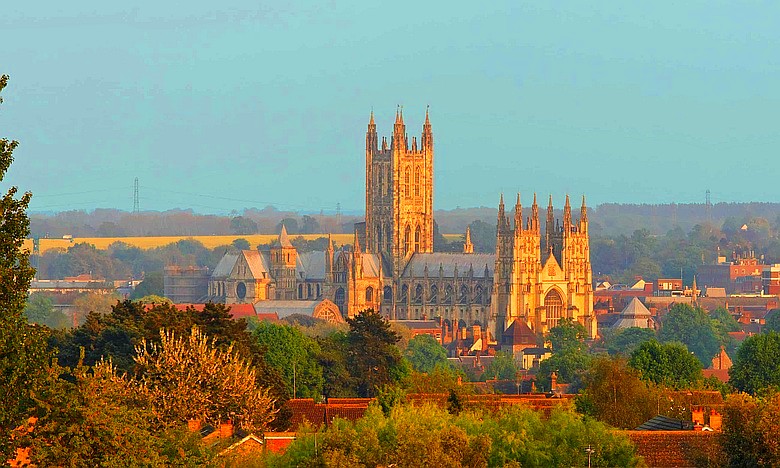
Saint of the Day – 19 September – St Theodore of Canterbury (c602-690) the 7th Archbishop of Canterbury, England and the first archbishop to rule the whole English Church. Theodore was an important and memorable figure in the English Church. Born inc 602 in the City of St Paul’s birth, Tarsus in Cilici, Greece, now in modern Turkey and died on 19 September 690 in Canterbury, Kent, England of natural causes. Also known as – Theodore of Tarsus. His body is Incorrupt.
The Roman Martyrology reads today: “At Canterbury, the holy Bishop, Theodore, who was sent to England by Pope Vitalian and was renowned for learning and holiness.”
After the death of St Deusdedit, the Archbishop of Canterbury, King Oswi of Northumberland and King Egbert of Kent, sent a virtuous and learned Priest – named Wighard – to Rome that he might be Consecrated as the new Bishop and duly confirmed to that important See by the Pope himself. However, sadly, Wighard and most of those who attended him, died in Italy of the Plague and Pope Vitalian chose instead, Adrian, Abbot of Niridian, near Naples, to be raised to that dignity. This Abbot was by birth an African. He understood Greek and Latin perfectly and was thoroughly versed in theology, as well as in monastic and Ecclesiastical discipline. But so great were his fears of the dignity to which he was called that the Pope was compelled, by his entreaties and tears, to yield to his excuses. He insisted, however, that Adrian should find a person equal to that charge and should, himself, attend upon and assist him in instructing the inhabitants of this remote island in the perfect discipline of the Church.
Adrian first named to the Pope a Monk called Andrew but he was judged incapable of the necessary physical strength on account of his bodily infirmities, although otherwise a person extremely well qualified. There was then at Rome, a Greek Monk named Theodore, aged sixty-six, a native of Tarsus in Cilicia, a man of exemplary life and well skilled in divine and human learning and in the Greek and Latin languages. Adrian presented him to the Pope and procured that he should be made a Bishop, promising to bear him company into England.
Theodore was duly Consecrated in 668 and then set out from Rome with St Adrian and St Benedict Biscop, later the Bishop and Abbot of Wearmouth and Jarrow, Durham. In 669 they reached Canterbury, where Theodore appointed Adrian the Abbot of Sts Peter and Paul Monastery, afterward named St Augustine’s.
There they created a famous school influential in the lives of such brilliant scholars as the celebrated historian St Bede the Venerable and the skilled Church architect St Aldhelm.
Theodore organised the English Church, many Sees which were vacant on his arrival and others which needed to be divided. In 672 he called the first General Synod of the English Church at Hertford, to end certain Celtic practices and to divide Diocese. The division issue was postponed, but the Synod imposed the date of the Roman Easter, established obedience for Clerics and Monks, forbade Bishops to interfere in matters relating to and of other diocese and reaffirmed the Church teaching on Marriage and Divorce.
During this period Theodore came into sharp conflict with St Wilfrid, whom he had appointed as the Bishop of York but whom he soon deposed. In 677/678, St Wilfrid went to Rome to protest. Meanwhile, in 678, Theodore helped settle relations between King Aethelred of the Anglo-Saxon Kingdom of Mercia and King Ecgfrith of Northumbria, whom Aethelred had defeated in battle.
Theodore’s Synod at Hatfield in 679, his 2nd Genral Synod, cleared the English Church from associations with the heresy of the Monothelites. Few things have rendered the name of St Theodore more famous than his Penitential or Code of Canons, prescribing the term of public penance for penitents, according to the quality and enormity of their sins. In this Penitential it is stated that when a Monk died, Holy Mass was offered for him on the day of his burial, on the third day after and as often again, as the Abbot thought proper. Also, the Holy Sacrifice was offered for the laity and accompanied by fasting. This Penitential which had been colated and published by his disciples, became highly influential in England and on the Continent.
Theodore, being more than eighty years old and seized with frequent bouts of illness, was desirous of being reconnciled with St Wilfrid. He, therefore, requested the exiled holy Prelate to come to him at London, begged his pardon for having consented with the Kings to his deprivation, without any fault on his side, did all he could to make amends and restored him to his See of York. For this purpose he wrote strong letters to Alfrid, King of Northumberland – who had succeeded his brother Egfrid, to Ethelred, King of the Mercians and to others who were opposed to St Wilfrid or were interested in this affair. Theodore had the comfort of seeing his endeavours everywhere successful.
One of Theodore’s greatest achievement was to adapt the Roman ideal of a centralised Church to English conditions. His establishment of a centralised Church under the Archbishopric of Canterbury in close alliance with secular rulers, was maintained by his successors. No biography of Theodore has survived.
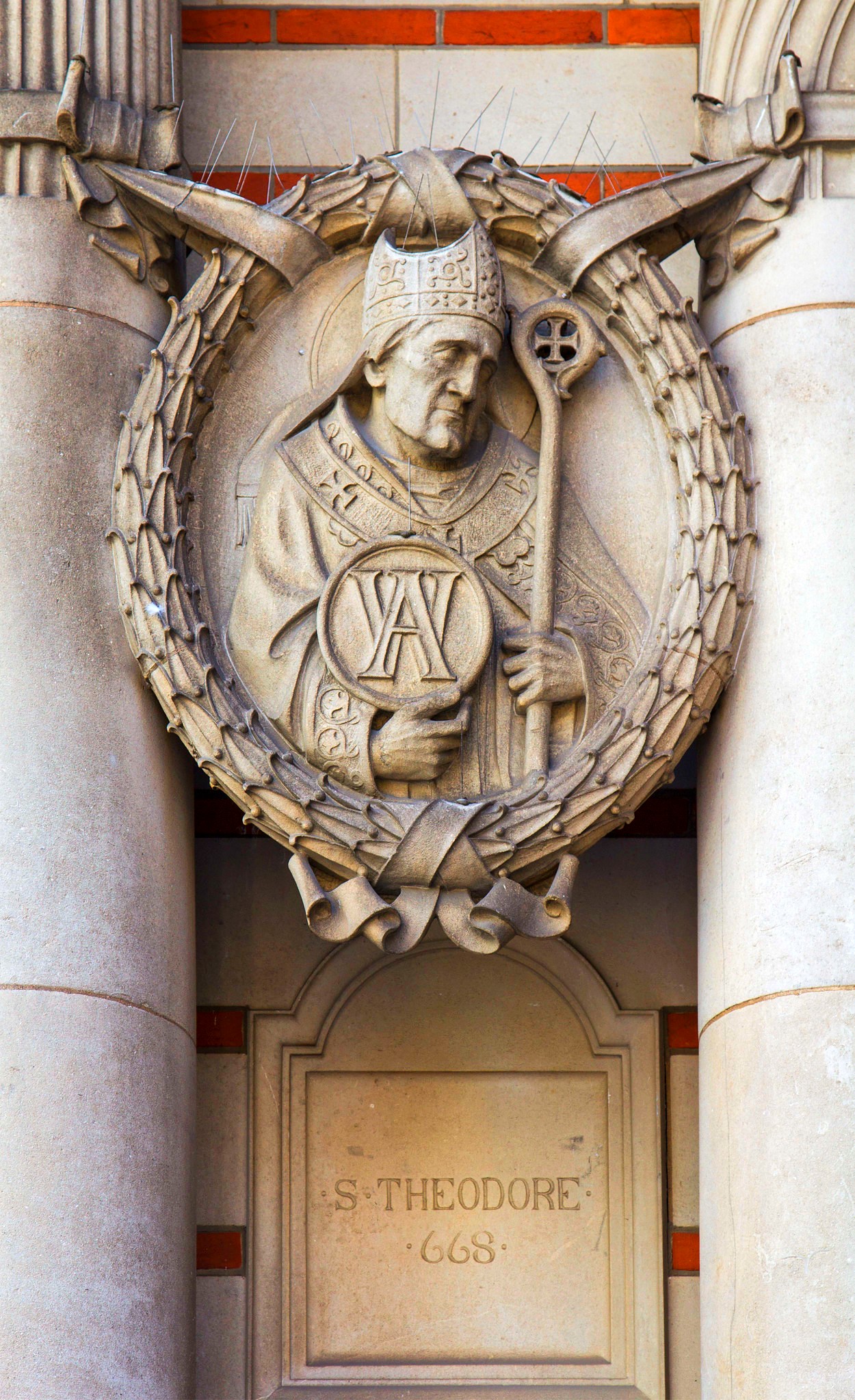
This Medallion resides on the west facade of Westminster Cathedral
St Theodore was the Archbishop of Canterbury for twenty two years and died in 690, at the age of eighty-eight years. His memory is honoured on 19 September the date of his death. He was buried in the Monastery of St.Peter, which afterwards took the name of St Augustine. In 1091 his body was found Incorrupt when it was re-interred in the Cathedral.
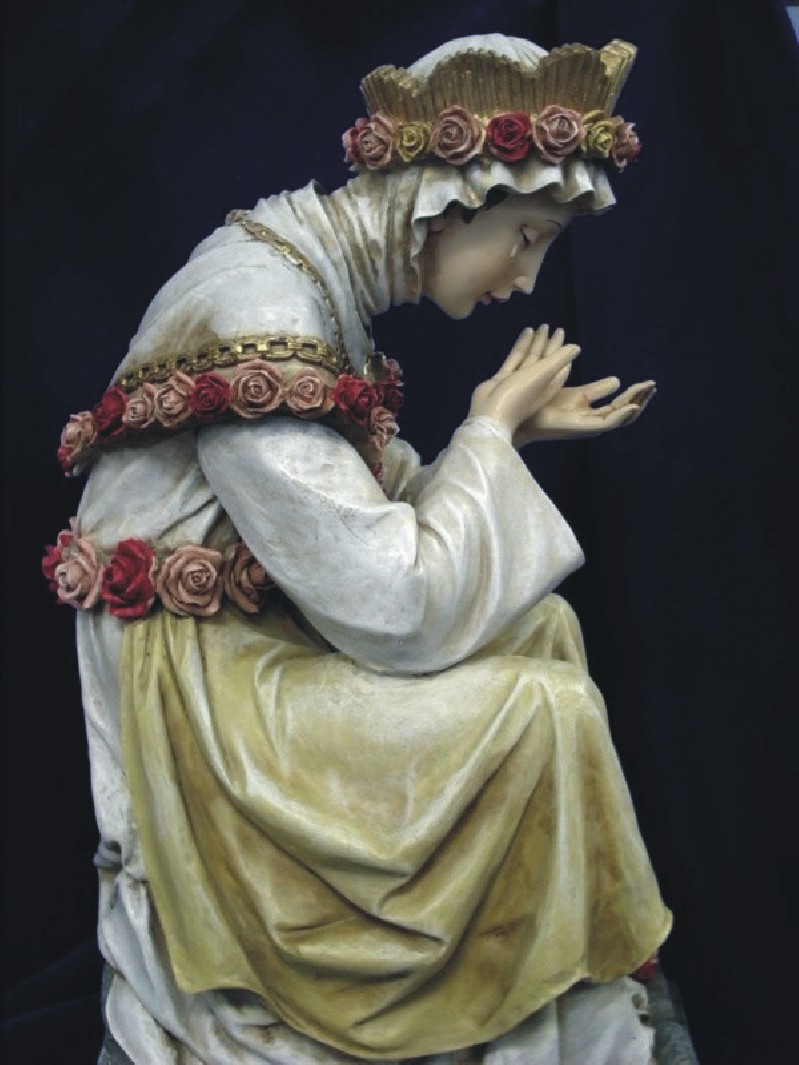
Notre-Dame de la Salette / Our Lady of La Salette), La Salette-Fallavaux, Isère, Rhône-Alpes, France (1846) 19 September: Our Lady appeared to two small children, Melanie Mathieu and Maximin Giraud, on the mountain of La Salette in the French Alps. She was crying and around her neck was a crucifix, with a hammer and pincers on either side – 19 September 1846. Approved by the Diocesan Bishop in 1851. Read the story here: https://anastpaul.wordpress.com/2017/09/19/feast-of-our-lady-of-la-salette-19-september/
St Arnulph of Gap Bl Carolus Hyon Song-Mun St Constantia of Nocera St Desiderius of Pozzuoli St Eustochius of Tours St Felix of Nocera St Festus of Pozzuoli
St Goeric of Metz (c570-c643)Bishop – Goeric is listed as the 30th Bishop of Metz, having governed that See from 625 to 642 or 643. The Roman Martyrology rads: “In Metz in Austrasia, still in the territory of today’s France, Saint Goeríco or Abo, Bishop, who succeeded Saint Arnulf, whose body was transported with veneration to this City.” His Life: https://anastpaul.com/2023/09/19/saint-of-the-day-19-september-saint-goeric-of-metz-c570-c643-bishop/
St Maria de Cervellón OdeM (1230 – 1290) Virgin, Catalan Superior of Second Order of the Mercedarians in her region. Mystic, graced with the gift of bilocation, Apostle of the poor, the abandoned, the needy. She was the first woman to wear the Habit of the ‘ Order of the Blessed Virgin Mary of Ransom. She is considered the Founder of the Mercedary Nuns. Her entry in the Roman Martyrology states: “At Barcelona in Spain, blessed Maria de Cervellione, Virgin of the Order of Our Lady of Ransom. She is commonly called Maria of Help on account of the prompt assistance she renders to those who invoke her.“ Patronages – Mercadarian Nuns and Sisters, Navigators, against shipwreck, Spanish sailors, of the abandoned. On 13 February1692, Pope Innocent XII gave a favourable judgement and confirmed her immemorial cult;and she was introduced into the Roman Martyrology as a Saint on 8 November 1729. Her body is Incorrupt. Her Holy Life: https://anastpaul.com/2021/09/19/saint-of-the-day-19-september-st-maria-de-cervellon-odem-1230-1290/ Please watch this video if you are able to spare the time. It is absolutely beautiful.
St Pomposa St Sequanus St Sosius of Puzzuoli St Theodore of Canterbury (c602-690) the 7th Archbishop of Canterbury St Trophimus of Synnada
Martyrs of Antioch – 3 Saints: Christians imprisoned, tortured and executed in various ways in the persecutions of Emperor Probus; some names have come down to us – Dorymedon, Sabbatius and Trophimus. c 277 at Antioch (in modern Turkey).
Martyrs of Phunon – (4 aints): Four bishops in Egypt who were sentenced to forced labour in a rock quarry and martyred in the persecution of Diocletian. Noted for celebrating Mass in prison. – Elias, Nilus, Patermuzio and Peleus. They were burned to death in 310 at Phunon, near Petra in Palestine.
Saint of the Day – 8 September – Blessed Seraphina Sforza OSC (c1424-1478) Abbess, Widow. Born in c1424 at Urbino, Italy as Sueva and died on 8 September 1478 at Pesaro, Italy of natural causes. Her Body is Incorrupt. Also known as – Sueva Sforza, Sveva da Montefeltro. Additional Memorial on some calendars due to the Feast Day of the Nativity of the Most Blessed Virgin Mary – 9 September.
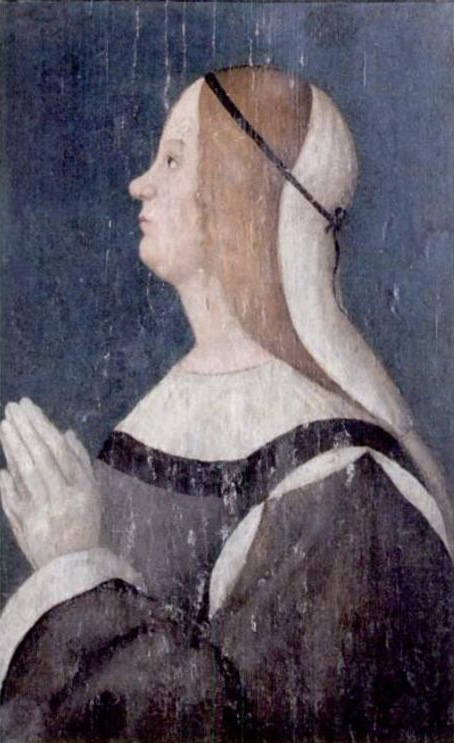
Anonymous 15th Century image
Seraphina, who belonged to the family of the Counts of Urbino, became an orphan at an early age. Her maternal Uncle, Prince Colonna, undertook to raise the child. During her stay in Rome, the girl’s noble disposition unfolded itself like a flower. God and virtue had the strongest attraction for her and the vanity of the world had no value in her sight.
Scarcely had she arrived at young womanhood when, at the wish of her relatives, she was betrothed to the widowed Prince Alexander Sforza, Governor of Pesaro. A difficult task awaited the young wife but she proved equal to it. The Prince had two children by his first marriage, a son and a daughter. Seraphina embraced them with as much affection as if they had been her own children and they, in turn, loved and esteemed their stepmother as their own mother. She also completely won the affection of her husband. After a few years, the Prince was obliged to take up arms to assist his brother, the Duke of Milan. He believed that he could entrust the Government to no-one better than to his young wife, for he marveLled at her wisdom and skill in the management of the household.
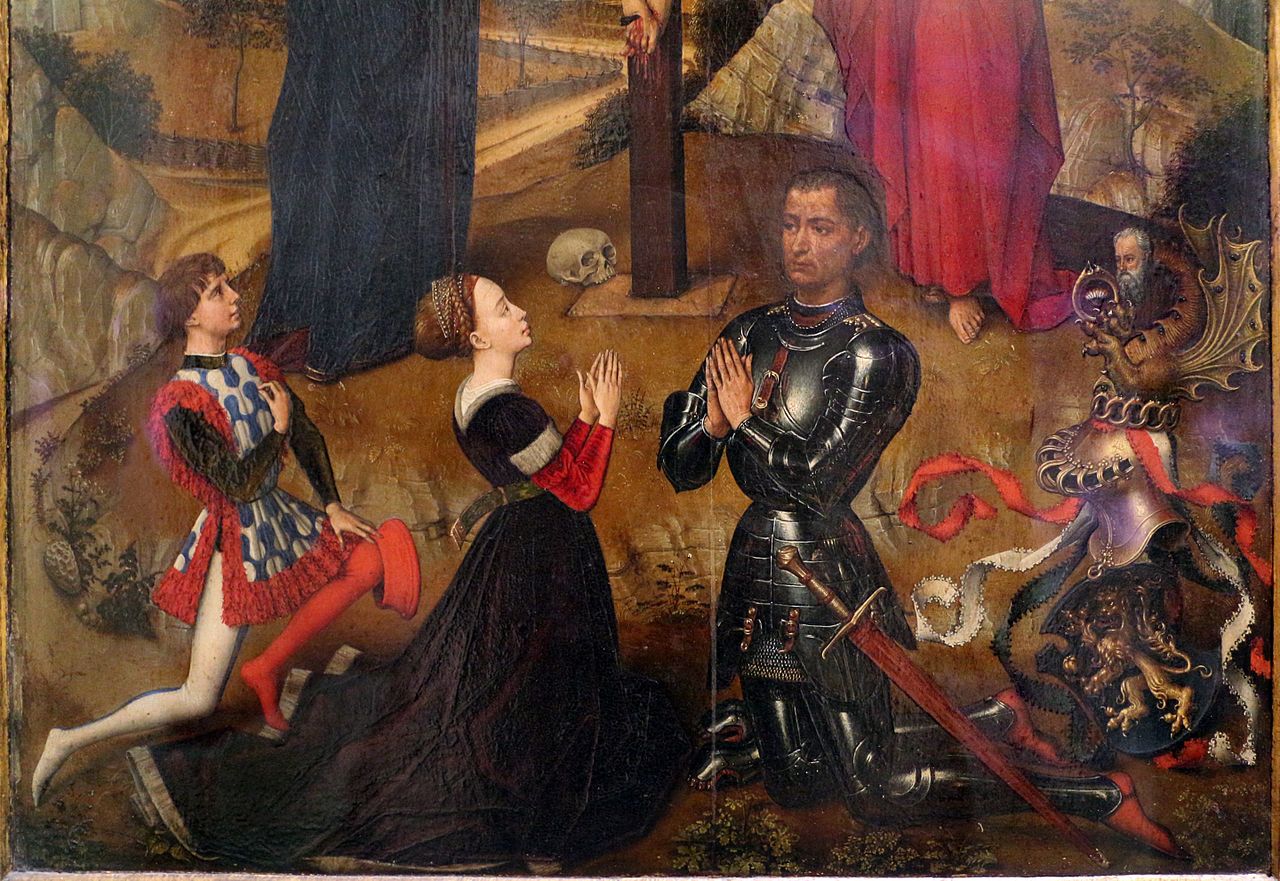
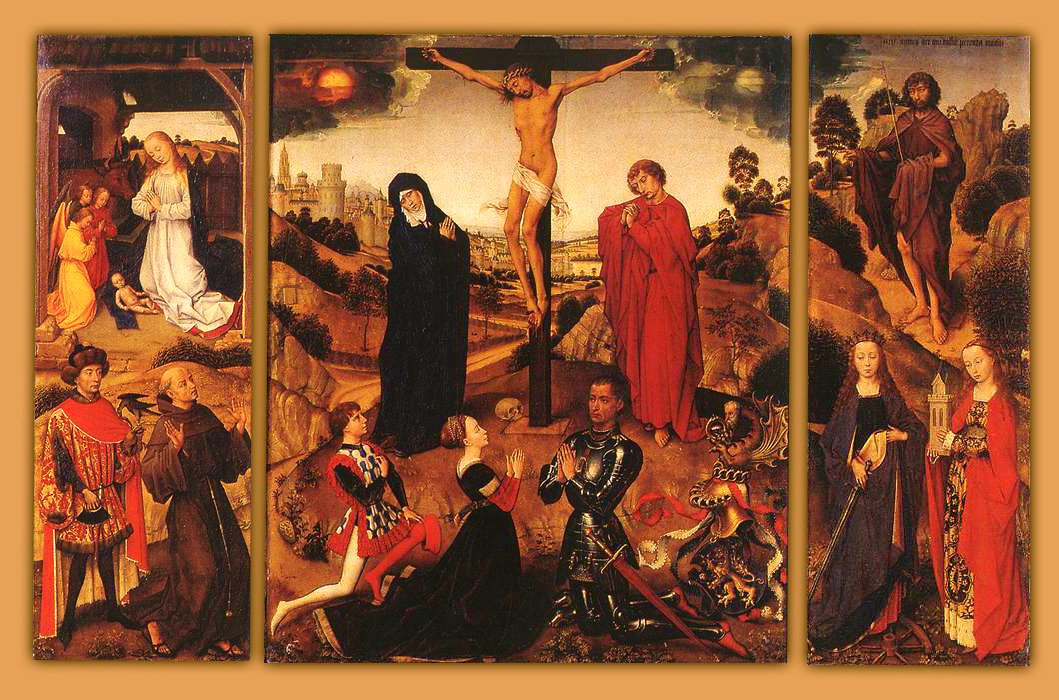
Detail from the Sforza Triptych showing Seraphina (possibly) and Alexander by the Workshop of Rogier van der Weyden from circa 1460
The Prince’s absence extended over a period of six years. Seraphina carried out her tasks, so perfectly that everyone admired her wise foresight and impartiality. She was loved and honoured by all for her brilliant virtues and extraordinary generosity. She sought and obtained God’s blessing on her undertakings by abundant almsgiving.
When her husband returned, it was to be expected that Blessed Seraphina Sforza would receive due credit for her success. But God sometimes permits His servants to be treated in a very different way. A woeful change had taken place in the Prince. He had abandoned himself to a dissolute life and he had become so reckless, as to bring a paramour into his home and reduce Seraphina to the condition of a servant. But she held her peace, suffered and prayed. The very presence of his lawful wife, however, was an unbearable reproach to the profligate; he aimed to take her life. When his attempts failed, he forcibly ejected her from the Palace, ordering her to hide herself in the Monastery of the Poor Clares and there Seraphina went.
Although happy to serve God in the midst of the spouses of Christ, Seraphina, nevertheless, continued to wear secular garb, so as to make it easier for the Prince to return to his duties. She prayed unceasingly for his conversion. The Prince tried to force her to take the religious Habit but, only when she was assured, it was God’s will, did she receive the Habit and take the vows. She was a perfect religious, faithful even in the most trifling ordinances.
Her perfect sacrifice brought about her husband’s conversion. At last, he realised what he had done. He came to the Convent and on his knees begged his holy wife for forgiveness. For nine years he lived on, striving to the best of his ability, to make amends for his sins and for the scandal he had given. Blessed Seraphina Sforza lived eighteen years longer in the Convent and promoted its temporal and spiritual welfare, especially during the last three years when she was appointed as the Abbess.
On the Feast of the Nativity of the Blessed Virgin, 8 September 1478, Blessed Seraphina Sforza went to receive her heavenly crown. Pope Benedict XIV approved the perpetual veneration paid to her. Her Incorrupt body rests in the Cathedral of Pesaro. (From: The Franciscan Book of Saints).
The Sfofza Triptycg by the Workshop of Rogier van der Weyden from circa 1460
St Adrian (Died 306) Confessor, Lay Martyr, Royal Court Guard in Roman Imperial Court at Nicomedia in Asia-Minor during the time of Emperor Maximian in the early 4th Century. Patronages – against the plague/epidemics, against epilepsy, arms dealers, butchers, guards, soldiers. The Roman Martyrology reads this day: “At Nicomedia, St Adrian, with twenty three other Martyrs, who ended their Martyrdom on the 4th day of March by having their limbs crushed, after enduring many torments, under the Emperors Diocletian and Maximian. Their remains were carried to Byzantium by the Christians and buried with due honours. Afterwards, the body of St Adrian was taken to Rome on this day, on which his festival is celebrated.” His Life and Death: https://anastpaul.com/2023/09/08/saint-of-the-day-8-september-st-adrian-died-306-confessor-martyr/
Martyrs of Alexandria – 5 Saints: A group of Christians Martyred together in the persecutions of Diocletian – Ammon, Dio, Faustus, Neoterius and Theophilus. Martyred in Alexandria, Egypt.
Martyrs of Japan – (21 Beati: A group of 21 Missionaries and Converts, who were executed together for their faith. They were: Antonio of Saint Bonaventure, Antonio of Saint Dominic, Dominicus Nihachi, Dominicus of Saint Francis, Dominicus Tomach, Francisco Castellet Vinale, Franciscus Nihachi, Ioannes Imamura, Ioannes Tomachi, Laurentius Yamada, Leo Aibara, Lucia Ludovica, Ludovicus Nihachi, Matthaeus Alvarez Anji, Michaël Tomachi, Michaël Yamada Kasahashi, Paulus Aibara Sandayu, Paulus Tomachi, Romanus Aibar, Thomas of Saint Hyacinth, Thomas Tomachi Died on 8 September 1628 in Nagasaki, Japan Beatified on 7 May 1867 by Pope Pius XI.
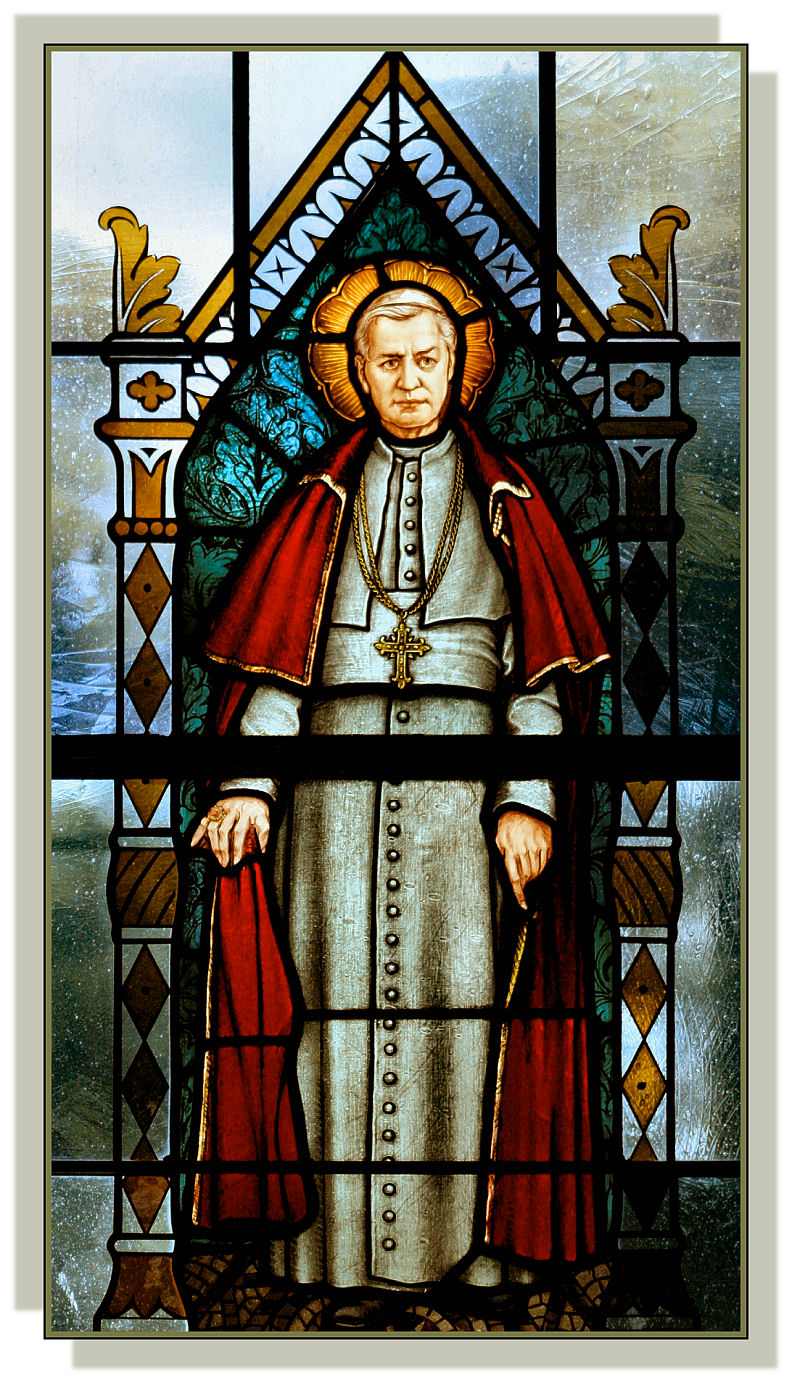
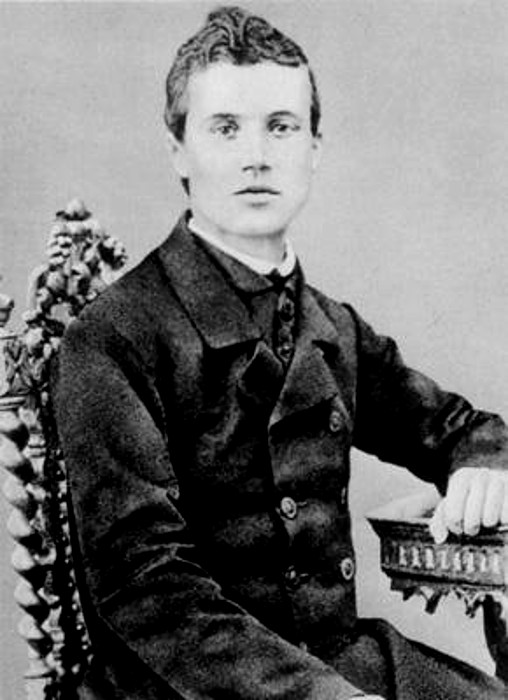
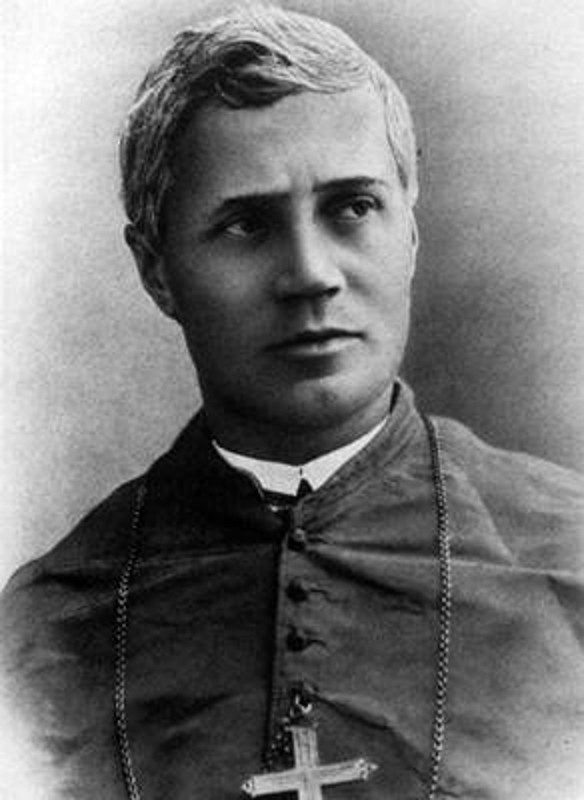
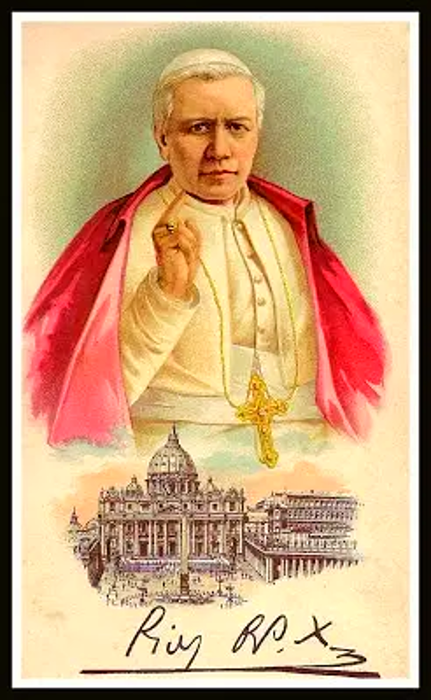
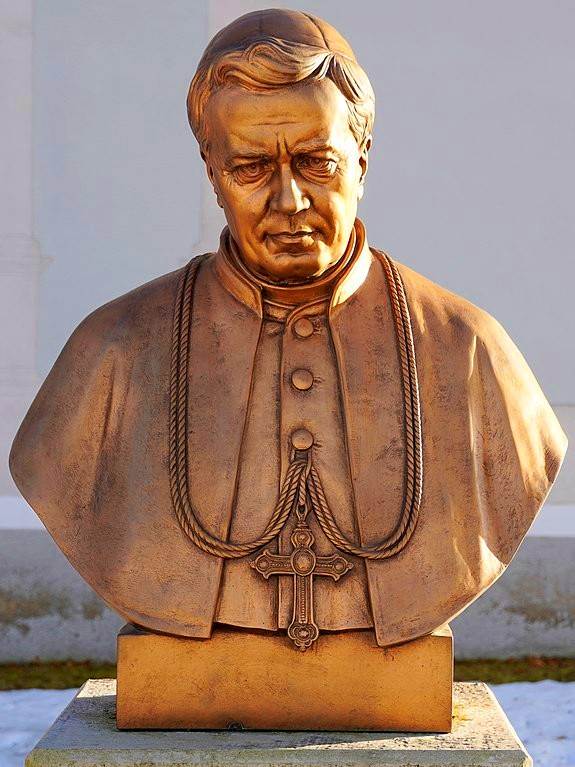
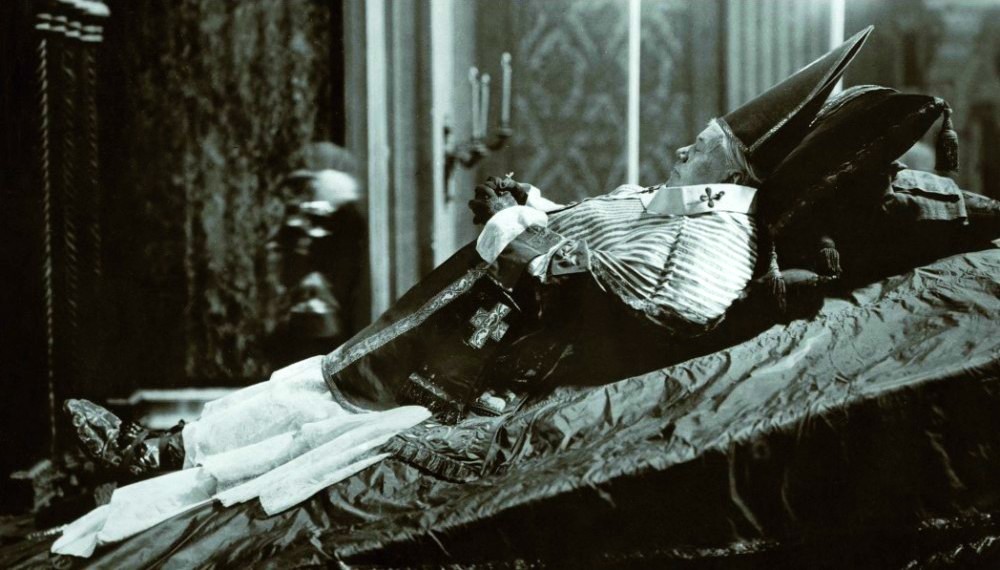
Saint of the Day – 3 September – Saint Pope Pius X (1835-1914) “Pope of the Blessed Sacrament” – born on 2 June 1835 at Riese, Diocese of Treviso, Venice, Austria (now Italy) as Giuseppe Melchiorre Sarto (familiarly known as Joseph Sarto) and died on 20 August 1914 at Vatican City. He reigned from 4 August 1903 until his death in August 1914. Patronages – First Communicants, Catechists, Pilgrims, 7 Diocese, Patriarchy of Venice. His Incorrupt body lies at St Peter’s Basilica. He was Beatified on 3 June 1951 by Pope Pius XII and Canonised on 29 May 1954 by the same Pope.
Pope St Pius X From the Roman Breviary
Pope Pius X, whose name previously was Joseph Sarto, was born in the Village of Riese in the Venetian Province, to humble parents remarkable for their Godliness and piety. He enrolled among the students in the Seminary of Padua, where he exhibited such piety and learning that he was, both an example to his fellow students and, the admiration of his teachers. Upon his Ordination to the Priesthood, he laboured for several years, first as Curate in the Town of Tombolo, then as Parish Priest at Salzano.
He applied himself to his duties with such a constant flow of charity and, such Priestly zeal and, was so distinguished by the holiness of his life, that the Bishop of Treviso appointed him as a Canon of the Cathedral Church and made him the Chancellor of the Bishop’s Curia, as well as Spiritual Director of the Diocesan Seminary. His performance in these duties was so outstanding and so highly impressed Pope Leo XIII that he appointed him as the Bishop of the Church of Mantua.
Lacking in nothing which maketh a good shepherd, he laboured particularly, to teach young men called to the Priesthood, as well as fostering the growth of devout associations and the beauty and dignity of Divine worship. He would ever affirm and promote, the laws upon which Christian civilisation depend and, while leading himself a life of poverty, never missed the opportunity to alleviate the burden of poverty in others.
Because of his great merits, he was made a Cardinal and created Patriarch of Venice. After the death of Pope Leo XIII, when the votes of the College of Cardinals began to increase in his favour, he tried in vain with supplications and tears, to be relieved of so heavy a burden. Finally he ceded to their persuasions, saying I accept the cross. Thus he accepted the Crown of the Supreme Pontificate as a cross, offering himself to God, with a resigned but stedfast spirit.
Placed upon the Chair of Peter, he gave up nothing of his former way of life. He shone, especially in humility, simplicity and poverty, so that he was able to write in his Last Testament: I was born in poverty, I lived in poverty and I wish to die in poverty. His humility, however, nourished his soul with strength, when it concerned the glory of God, the liberty of Holy Church and the salvation of souls.
A man of passionate temperament and of firm purpose, he ruled the Church firmly as it entered into the 20th Century and adorned it with brilliant teachings. He restored the Sacred music to its pristine glory and dignity; he established Rome as the principal centre for the study of the Holy Scripture; he ordered the reform of the Roman Curia with great wisdom; he restored the laws concerning the faithful for the instruction of the Catechism; he introduced the custom of more frequent and even daily reception of the Holy Eucharist, as well as permitting its reception by children as soon as they reach the age of reason; he zealously promoted the growth of Catholic Action; he provided for the sound education of Clerics and increased the number of Seminaries in their divers regions; he encouraged every Priest in the practice of the interior life; he brought the laws of the Church together into one body; he condemned and suppressed those most pernicious errors known collectively as Modernism; he suppressed the custom of civil veto at the Election of a Supreme Pontiff.
Finally, worn out with his labours and overcome with grief at the European War which had just begun, he went to his heavenly reward on the 20th day of August in the year 1914. Renowned throughout all the world for the fame of his holiness and miracles, Pope Pius XII, with the approbation of the whole world, numbered him among the Saints.
On 19 May 1944, the body of Pius X was exhumed for inspection as part of the Beatification process, during which the remains were found to be miraculously Incorrupt. On 29 May 1954, less than three years after his Beatification, Pius X was Canonised, following the recognition of two further miracles.
St Nathy St Numidicus of Carthage St Phelim St Rusticus of Sirmium St Rusticus of Verona St Secundian of Civitavecchia St Stephen of Burgos St Verian of Civitavecchia
Martyrs of Civitavecchia: Three Christians Martyred together in the persecutions of Decius. We know little more than the names – Marcellian, Secundian and Verian. 250 near Civitavecchia, Italy.
Martyrs of Constantinople: 10 Saints: A group of ten Christians who were arrested, tortured and executed for defending an icon of Christ in defiance of orders from Emperor Leo the Isaurian. We know the names of three, but nothing else about them – Julian, Marcian and Mary. They were beheaded in Constantinople.
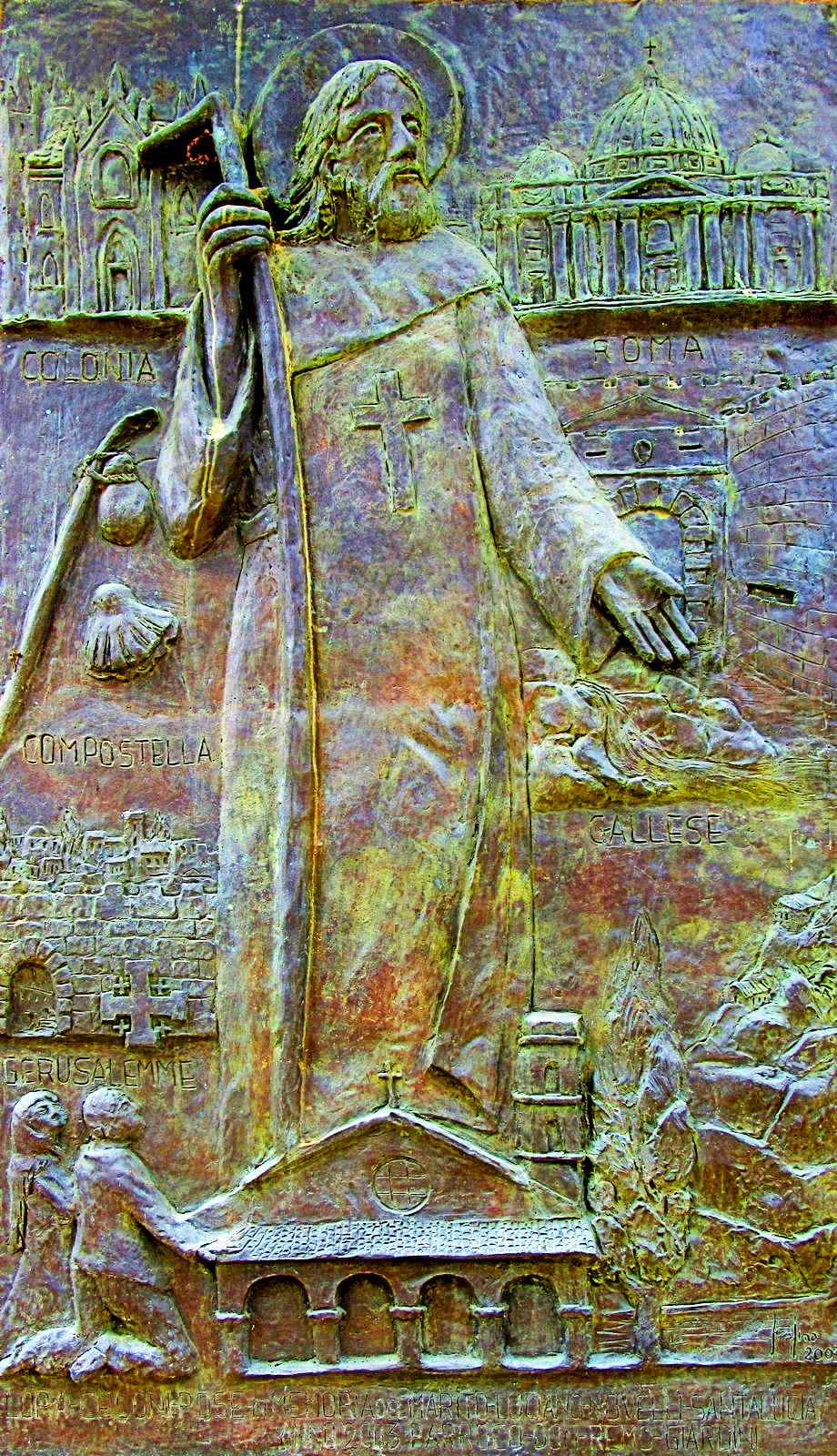
Saint of the Day – 8 August – Saint Famianus O.Cist. (1090-1150) Cistercian Monk, Hermit, Pilgrim, Miracle-worker. Born in 1090 in Cologne, Germany as Gerhard Quardus and died on 8 Augustn 1150, aged 59 or 60, in Gallese, Umbria, Italy of natural causes. St Famianus bears the great honour of being the first Cistercian to be Canonised which took place in 1154 by Pope Adrian IV. Patronage – of Gallese, Italy. Also known as – Gerhard, Wardo, Famian, Famiano, Famianus of Compostela, Famianus of Gallese. The name Famianud comes from Latin and means “who has acquired fame.”In Germany he is known as St Wardo Famianus.
Bronze Relief (2003) at the Basilica of St Famianus in Gallese
Gerhard (called Ward – the name Wardo is derived from ‘the fourth’ probably being the fourth child) Quadrus, son of a prominent family, gave away his inheritance and in 1108 travelled as a pilgrim to the seven pilgrimage Churches in Rome , where he stayed for six years.
In 1114 he made a pilgrimage to Santiago de Compostela and then lived in a Monastery dedicated to the Sts Cosmas and Damian near Tui in Galicia. When the Cistercian Abbey of Osera was built nearby, he joined the Order. But after some time he went on a second pilgrimage to the Holy Land and on his return, via Italy, he visted the Town of Gallese, where he later died.
He is highly venerated in Gallese. This Town in the Viterbo area was the birthplace of 2 Popes Marinus I (Pope from 882 until his death in 884) and Romanus I (Pope from August to November 89).. The prestige which the Town acquired thanks to its religiosity called several pilgrims to Gallese, including out Saint Famianud. This Monk, known as “di Gallese – of Gallese” died in the Town in question on 8 August 1150.
Fresco, 1516, in the Basilica of San Famiano in Gallese (School of Antonio del Massaro)
Famianus ws Canonised by Pope Adrian IV with the name of St Famianus in 1154 and his remains were placed in a cave, where in 1155, the Basilica which bears his name, was erected. Many miracles occurred at Wardo’s grave in Gallese which is why he was given the name Famianus. In 1244, a Basilica dedicated to him was built over his grave which included a pilgrims’ hostel and a small Monastery. Wardo’s body is still incorrupt to this day.
In the place of worship, the Incorrupt Body of St Famianus, the Patron Saint of Gallese, is preserved, guarded in a precious Sarcophagus placed in the crypt. The Church, located outside the urban perimeter, incorporates the cave, transformed into a crypt, where the Saint wanted to be buried. About three kilometers from the historic centre of Gallese, in the countryside, is another Church dedicated to St Famianus, the Chapel of St Famianus at Lungo.
In this Chapel, is preserved the spring which on 17 July 1150, the Saint, made flow by striking the ground with his walking stick. This had occurred at the end of his pilgrimage, which had taken him to Spain (where he is still highly venerated), to the Holy Land and to Rome Even today, on 17 July of each year, the place is the destination of a pilgrimage which travels from very early in the morning to reach the Chapel in time for Holy Mass.
The cult of the Saint and the custody of the two Churches are entrusted to the ancient Confraternity of St Famianus, reconstituted in 1990.
Basilica of St Famianus with Wardo’s Tomb in Gallese
St Eleutherius of Constantinople St Famianus O.Cist. (1090-1150) Cistercian Monk. His Body remains Inoccrupt in Gallese, Umbria, Italy. St Gedeon of Besancon St Hormisdas of Persia St Largus St Leobald of Fleury St Leonidas of Constantinople St Marinus of Anzarba St Mummolus of Fleury St Myron the Wonder Worker St Rathard of Diessen St Severus of Vienne St Sigrada St Smaragdus St Ternatius of Besançon St Ultan of Crayke
Martyrs of Albano – 4 Saints: Four Christians who were Martyred together, and about we today know little more than their names – Carpóforo, Secondo, Severiano and Vittorino. They were martyred in Albano, Italy – their remains are interred in the San Senator cemetery, on the Appian Way, 15 miles from Rome, Italy.
Martyrs of Rome – 5 Saints: Five Christians Martyred together; we know nothing else about them but the names – Ciriaco, Crescenziano, Giuliana, Memmia and Smaragdus. They were martyred at the 7 mile marker, on the Via Ostia, Rome, Italy.
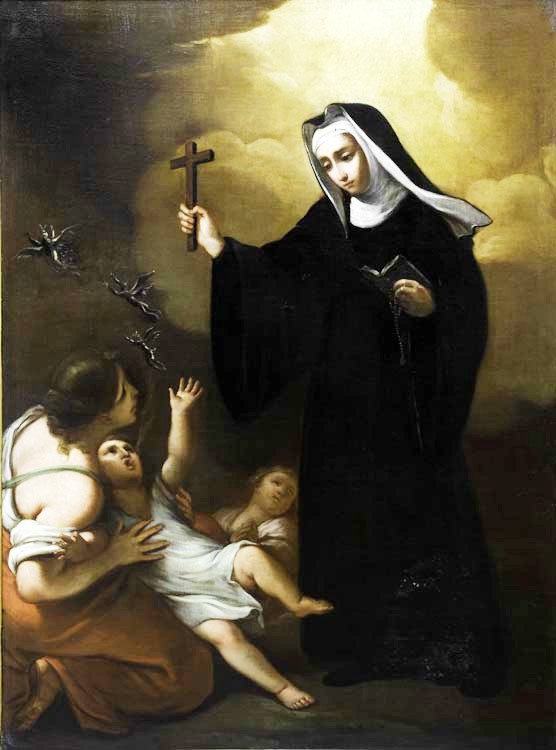
Saint of the Day – 27 July – Blessed Lucia Bufalari of Amelia OSA (Died 1350) Virgin, Augustinian Oblate Prioress, Mystic, Miracle-worker Born in the early 14th Century at Castel Porziano near Rome, Italy and died on 27 July 1350 at the Augustinian Convent in Amelia, Italy of natural causes. Lucia was the sister of Blessed Giovanni or John of Rieti OSA (c1318-2362) who also joined the Augustinians (Feast Day on 1 August). PatronageS – against demonic possession, particularly of children. Also known as – Lucy of Amelia, Lucia. Her body is Incorrupt.
Little is known of her life, save that she gained the reputation for great holiness and prudence as an Augustinian Third Order Nun at Amelia.
We know that later she became the Pprioress of her community. She died young, on 27 July 1350.
Following her death, the people of Amelia acclaimed her as a Saint. Her Incorrupt Body is preserved at the former Augustinian Church of Amelia. Her cultus was confirmed on 3 August 1832 by Pope Gregory XVI.
In 1925, Blessed Lucia’s Relics were re-enshrined in the Church of Saint Monica and in 2011 they were translated and enshrined under the Altar of the Parish Church in Amelia when the Convent closed. Many miracles occurred there, especially in regard to children believed to be demonically possessed.
St Aetherius of Auxerre St Anthusa of Constantinople St Arethas St Aurelius of Cordoba St Benno of Osnabruck (c 1020-1088) Bishop Bl Berthold of Garsten
St Ecclesius of Ravenna St Felix of Cordoba St Galactorio of Lescar St George of Cordoba St Hermippus St Hermocrates St Hermolaus St Juliana of Mataró St Lillian of Cordoba Blessed Lucy Bufalari of Amelia OSA (Died 1350) Virgin, Augustinian Oblate Prioress. Her body is incorrupt. St Luican
Blessed Maria Magdalena Martinengo OSC Cap (1687-1737) Nun of the Order of the Capuchin Poor Clares, Mystic with a great devotion to the Passion of Christ. She had a great horror of sin and devoted much time to contemplating death, and the Divine Judgement. The recognition of two miracles attributed to her direct intercession allowed for Pope Leo XIII to preside over her Beatification on 3 June 1900. Her Story: https://anastpaul.com/2021/07/27/saint-of-the-day-27-july-blessed-maria-magdalena-martinengo-osc-cap-1687-1737/
Bl Rudolf Aquaviva S.J. Bl Robert Sutton St Semproniana of Mataró St Sergius of Bisceglia Bl William Davies Bl Zacarías Abadía Buesa
Martyrs of Nicomedia – 3 Saints: Three Christians Martyred together. The only other information to survive are their names – Felix, Jucunda and Julia. Nicomedia, Asia Minor.
Seven Sleepers of Ephesus: A group of seven young Christian men who hid in a cave in hopes of avoiding the persecution of Decius in the year 250. Found and arrested, they were ordered by the pro-consul in Ephesus to renounce their faith; they refused and were sentenced to die. Legend says that they were walled up in their hiding cave, guarded by the dog Al Rakim; when the cave wall was breached in 479 – they all woke up! It is likely that the youths were tortured to death in various ways and buried in the cave. The resurrection story confusion came from the phrase “went to sleep in the Lord” which was used to describe the death of Christians and 479 is when their relics were discovered. Their names were Constantinus, Dionysius, Joannes, Malchus, Martinianus, Maximianus and Serapion. They were martyred in 250 in Ephesus (in modern Turkey); tradition says that they were walled up in a cave to suffocate but other records indicate that they were tortured to death in various ways. Their relics discovered in 479 and translated to Marseilles, France and enshrined in a large stone coffin.
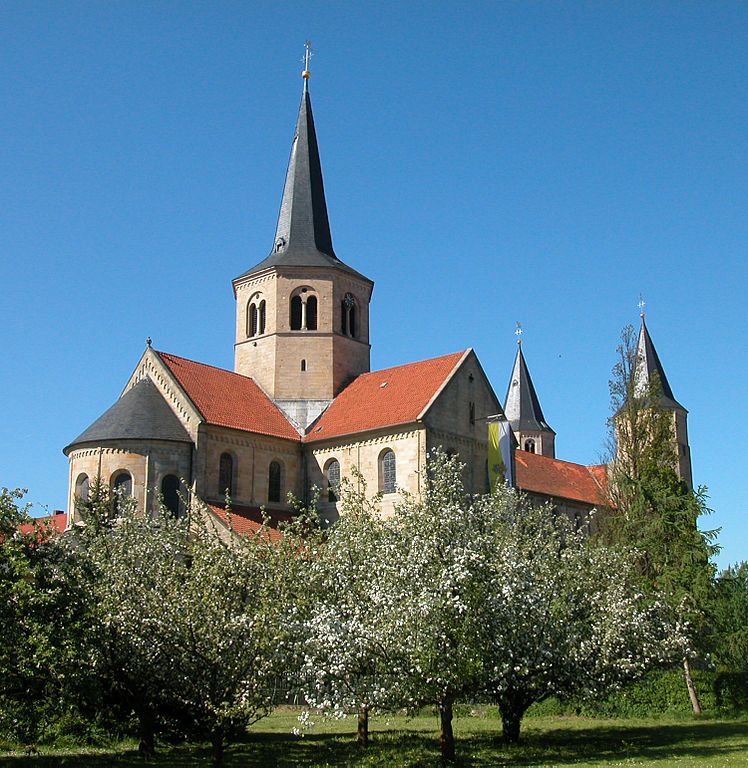
Saint of the Day – 16 July – Blessed Arnulf of Hildesheim (Died 1180) Abbot of Saint Godehard Monastery in Hildesheim. Died on 16 July 1180 at his Monastery of natural causes. Also known as – Arnoldus, Arnold, Arnoldo. His Body is/was Incorrupt.
St Godehard Monastery Church, now a Minor Basilica
Arnulf lived in the 12th Century in Germany. Sadky, we can find no details of his life beyond these few facts. He became a Benedictine Monk in the Fulda Monastery in Germany.
From there he was called to the Monastery of St Godehard in Hildesheim where he was appointed as the Abbot.
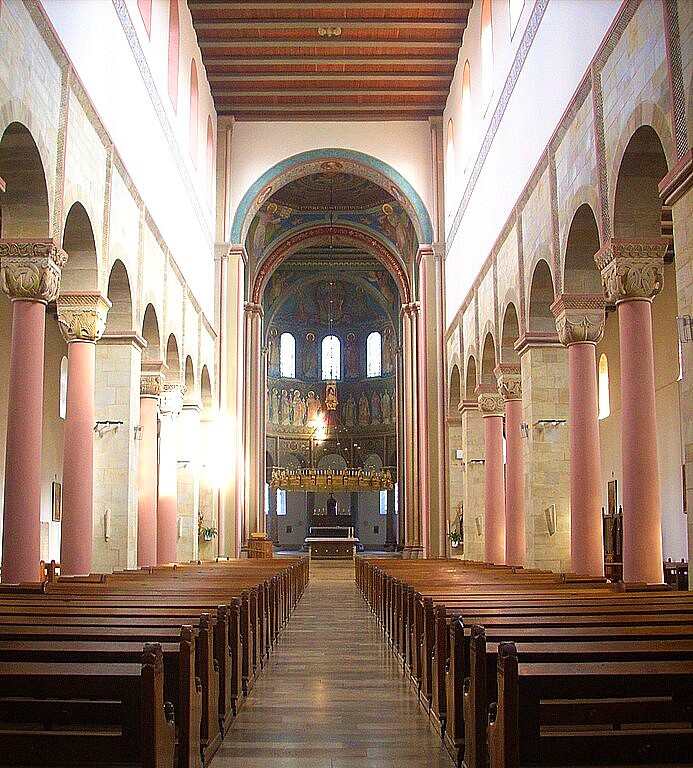
St Godehard Interior
He died on 16 July 1180. His body was found intact during translations in the years 1400 and again in 1473, when his cult was confirmed.
St Elizabeth of Portugal TOSF (1271-1336) Widow, Queen Consort, Widow, Franciscan Tertiary, Apostle of Charity and Peace, Political Negotiator and Mediator. In the year 1694 Pope Innocent XII moved her Feast to 8 July, so that it would not conflict with the celebration of the Octave of Saints Peter and Paul, Apostles. Biography: https://anastpaul.com/2018/07/04/saint-of-the-day-4-july-st-elizabeth-of-portugal-t-o-s-f-1271-1336/
St Abraham the Martyr Bl Adolf IV of Schauenburg St Pope Adrian III
St Morwenna – No details about her have survived. She is reported to have appeared in visions in Morwenstow, Cornwall, England, where her Relics are apparently buried under the Church floor.
St Pancras of Taormina Bl Peter the Hermit St Procopius of Ceasarea St Sunniva of Bergen St Thibaud de Marly St Totnan of Thuringia
Abrahamite Monks/Martyrs of Constantinople: A group of Monks in a Monastery founded by Saint Abraham of Ephesus. Martyred in the iconoclast persecutions of Emperor Theophilus. In c 835 in Constantinople.
Martyrs of Shanxi – 7 Saints: In 1898 seven sisters of the Franciscan Missionaries of Mary were sent to the Shanxi Diocese in China to serve the poor in hospitals and care for the unwanted or other destitutes in orphanages. They were: Anne-Catherine Dierks, Anne-Francoise, Moreau, Clelia Nanetti, Irma Grivot, Jeanne-Marie Kuergin, Marianna Giuliani, Pauline Jeuris There they all died in one of the periodic persecutions against foreign missionaries. They were beheaded on 9 July 1900 at Taiyuanfu, China- Canonisedon 24 November 1946 by Pope Pius XII.
Martyrs of Syrmium – 5 Saints: Five Christians Martyred together for their faith. We know nothing else about them but the names – Cecilia, Eperentius, Eraclius, Sostratus and Spirus. They were martyred in the 4th century in Syrmium, Pannonia (modern Serbia).
Saint Cyril (827-869) Saint Methodius (826-885) “Apostles to the Slavs,” Sibling Brother Bishops, Confessors, Theologians, Missionaries, Writers, Preachers, Patrons of Europe. Creators of the Glagolitic alphabet, the first alphabet used to transcribe Old Church Slavonic and Cyrillac Alphabet, which was developed from it. Their Feast Day is 7 July (moved in 1969). The great Saints Cyril & Methodius: https://anastpaul.wordpress.com/2018/02/14/saints-of-the-day-14-february-sts-cyril-827-869-methodius-826-885/
St Lawrence of Brindisi OFM Cap (1559-1619) Confessor, The “Franciscan Renaissance Man,” Priest and Friar of the Friars Minor Capuchin, Theologian, Vicar General of the Franciscans, Language scholar, Humanist, Philosopher, Biblicist, Preacher, Missionary, Professor, International Administrator, Confidant of Popes, Emperors, Kings and Princes, Diplomatic envoy, Army Chaplain, Military Strategist and Morale builder, Polemicist, Prolific writer. He was Beatified on 1 June 1783 by Pope Pius VI and Canonised on 8 December 1881 by Pope Leo XIII. His Zealous Life: https://anastpaul.com/2017/07/21/saint-of-the-day-21-july-st-lawrence-of-brindisi-o-f-m-cap-doctor-of-the-church/
St Alexander St Angelelmus of Auxerre St Apollonius of Brescia
Blessed Pope Benedict XI OP (1240-1303) Cardinal-Priest of St Sabina, Bishop of Ostia then of Rome, Dominican Friar, Prior Provincial of Lombardy prior to becoming the Master of the Order in 1296, Apostolic Papal Legate to Hungary and France, Teacher, Preacher, Writer and renowned Scholar with special emphasis on Scriptural commentary. His Papacy began on 22 Ocober 1303 and ended at his death on 7 July 1304. His Life: https://anastpaul.com/2020/07/07/saint-of-the-day-7-july-blessed-pope-benedict-xi-1240-1303/
Bl Bodard of Poitiers St Bonitus of Monte Cassino St Carissima of Rauzeille St Eoaldus of Vienne
St Hedda of Wessex St Maelruan St Medran St Merryn Bl Oddino Barrotti St Odo of Urgell (c1063-1122) Bishop St Odran St Palladius of Ireland St Pantaenus of Alexandria
St Pantænus (Died c 216) Father of the Church, Theologian, Philosopher, Teacher, Confessor and Defender of the Faith, Writer and interpreter of the Bible, the Trinity and Christology, |Missionary. Convert of the disciples of the Apostles. Head of the Alexandrian School of Learning – a famous pupil was St Clement of Alexandria. Biography: https://anastpaul.com/2019/07/07/saint-of-the-day-7-july-st-pantaenus-father-of-the-church-died-c-216/
St Peter Fourier C.R.S.A. (1565-1640) Priest, Founder, Reformer, Confessor, Theologian, Teacher, Preacher, Apostle of Prayer, Penance and Charity, Marian devotee – “the Good Father of Mattaincourt” “le bon pere de Mattaincourt”. Although he died on 9 December his Feast Day is celebrated today, 7 July, possibly the date of the translation of part of his Relics. St Peter spread everywhere devotion to the Immaculate Conception of the Blessed Virgin. More than two centuries before the Miraculous Medal in 1830 and the proclamation of the dogma in 1854, he saw to the distribution of large quantities of a medal he had struck, on which were engraved the words – “Mary was conceived without sin.” He was Beatified by Pope Benedict XIII in 1730 and Canonised by Pope Leo XIII in 1897. St Peter Fourier is honoured by a statue of him in St Peter’s Basilica among the founders of religious orders. His Zealous Life: https://anastpaul.com/2018/12/09/saint-of-the-day-9-december-st-peter-fourier-c-r-s-a-1565-1640/
Martyrs of Durres – 7 Saints: Also known as – Martyrs of Dyrrachium/Martyrs of Durazzo. A group of seven Italian Christians who fled Italy to escape the persecutions of Emperor Hadrian. Arrived in Dyrrachium, Macedonia to find Saint Astius tied to a cross, covered in honey, laid in the sun and left to be tortured by biting and stinging insects. When they expressed sympathy for Astius, they were accused of being Christians, arrested, chained, weighted down, taken off shore and drowned. We know little more about each of them than their names – Germaus, Hesychius, Lucian, Papius, Peregrinus, Pompeius and Saturninus. They were born in Italy and were Martyred at sea c117 off the coast of Dyrrachium (Durazzo), Macedonia (modern Durres, Albania).
St Vitus (c 290-c 303) – Martyr, One of the Fourteen Holy Helpers. Died aged 12-13 years of age. Patronages – against animal attacks, against dog bites, against epilepsy; epileptics, against lightning, against over-sleeping, against rheumatic chorea or Saint Vitus Dance, against snake bites, against storms, against wild beasts, of actors, comedians, dancers, dogs, Bohemia, Czech Republic, Serbia, 17 cities. His very short life: https://anastpaul.com/2017/06/15/saint-of-the-day-15-june-st-vitus/
St Abraham of Saint-Cyriacus St Achaicus of Corinth St Barbara Cui Lianshi St Benildis of Córdoba
St Bernard of Montjoux/Menthon CRSA (c 1020-1081) “Apostle of the Alps” Priest, Founder of a patrol that cleared robbers from the mountains and he established hospices for travellers and pilgrims. The large dogs, trained to search for lost victims in the mountains, are named for him. Patronages – Alpinists, Alps (proclaimed by Pope Pius XI on 20 August 1923), Campiglia Cervo, Italy, mountain climbers (proclaimed by Pope Pius XI on 20 August 1923), mountaineers, skiers, travellers in the mountains (proclaimed by Pope Pius XI on 20 August 1923). Biography: https://anastpaul.com/2018/06/15/saint-of-the-day-15-june-st-bernard-of-menthon-c-r-s-a-c-1020-1081-apostle-of-the-alps/
St Constantine of Beauvais (Died c706) Bishop St Domitian of Lobbes St Edburgh of Winchester St Eigil St Eutropia of Palmyra St Fortunatus of Corinth
St Hadelinus of Lobbes St Hesychius of Durostorum St Hilarion of Espalion
St Isfrid of Ratzeburg O.Praem (c 1115-1204) Bishop of Ratzeburg, Confessor, Spiritual advisor, Missionary, Mediator and Peacemaker, a renowned Administrator and gentle corrector of his flock, whom he protected against political abuses, Defender of the Pope and the Holy See. Istfrid also built and restored Churches and Monasteries and established many new Parishes. A Holy and Untiring Shepherd: https://anastpaul.com/2022/06/15/saint-of-the-day-15-june-saint-isfrid-of-ratzeburg-o-praem-c-1115-1204/
Bl Juan Rodriguez St Julius of Durostorum St Landelin of Crespin St Leonides of Palmyra St Libya of Palmyra St Lotharius of Séez St Melan of Viviers St Orsisius Bl Pedro da Teruel Bl Peter Snow St Pierre de Cervis
St Tatian of Cilicia Bl Thomas Scryven St Trillo of Wales St Vaughen of Ireland
St Vouga of Lesneven
Martyr of Lucania – 11 Saints: Eleven Christians Martyred together. We known nothing else about them but the names – Anteon, Candidus, Cantianilla, Cantianus, Chrysogonus, Jocundus, Nivitus, Protus, Quintianus, Silvius, Theodolus in Lucania (modern Basilicata), Italy, date unknown.
St Maria Magdalena de’ Pazzi O.Carm (1566-1607) Carmelite Nun and Mystic, Ecstatic, she bi-located and was the intercessor of many miracles, Stigmatist. She was Beatified in 1626 by Pope Urban VIII. At her Canonisation in 1668, her body was declared miraculously incorrupt. Her Feast day is today 29 May but was moved in 1969 to 25 May. Biography: https://anastpaul.com/2020/05/25/saint-of-the-day-25-may-saint-maria-magdalena-de-pazzi-o-carm-1566-1607/
St Conon the Elder St Conon the Younger St Daganus St Eleutherius of Rocca d’Arce St Felix of Atares St Gerard of Mâcon (Died 926) Bishop of Mâcon, France Bl Gerardesca of Pisa Bl Giles Dalmasia St Hesychius of Antioch St John de Atarés
St Maximus of Verona St Restitutus of Rome Bl Richard Thirkeld St Theodosia of Caesarea and Companions St Votus of Atares
Martyrs of Toulouse: A group of eleven Dominicans, Franciscans, Benedictines, clergy and lay brothers who worked with the Inquisition in southern France to oppose the Albigensian heresy. Basing their operations in a farmhouse outside Avignonet, France, he and his brother missioners worked against heresy. Murdered by Albigensian heretics while singing the Te Deum on the eve of Ascension. They were beaten to death on the night of 28 to 29 May 1242 in the church of Avignonet, Toulouse, France and Beatified on 1 September 1866 by Pope Pius IX (cultus confirmation). They are: Adhemar Bernard of Roquefort Bernard of Toulouse Fortanerio Garcia d’Aure Pietro d’Arnaud Raymond Carbonius Raymond di Cortisan Stephen Saint-Thibery William Arnaud The Prior of Avignonet whose name unfortunately has not come down to us. The Church in which they died was placed under interdict as punishment to the locals for the offence. Shortly after the interdict was finally lifted, a large statue of the Blessed Virgin Mary was found on the doorstep. Neither the sculptor nor the patron was ever discovered, nor who delivered it or how. The people took it as a sign that they were forgiven but that they should never forget and should renew their devotion to Our Lady. They referred to the image as “Our Lady of Miracles.” There is a ceremony in the Church on the night of the 28th May, the Anniversary of the Martyrdom. Called “The Ceremony of the Vow” Parishioners would gather in the Church, kneel with lit candles and process across the Church on their knees, all the while praying for the souls of the heretics who had murdered the Martyrs. Martyrs of Trentino: Three missionaries to the Tyrol region of Austria, sent by Saint Ambrose and welcomed by Saint Vigilius of Trent. All were Martyred – Alexander, Martyrius and Sisinius. They were born in Cappadocia and died in 397 in Austria.
St Accidia Bl Albert of Csanád St Caraunus of Chartres (5th Century) Deacon Martyr St Caraunus the Deacon St Crescens of Rome St Dioscorides of Rome St Eoghan the Sage St Gemiliano of Cagliari
Bl Mary of the Nativity St Moel-Odhran of Iona St Paulus of Rome St Podius of Florence Bl Robert Johnson St Senator of Milan Bl Thomas Ford St Ubaldesca Taccini
Martyrs of Palestine: A group of early 5th Century Monks in Palestine who were Martyred by invading Arabs.
Martyrs of Sardinia – 6 Saints: A group of early Christians for whom a Church on Sardinia is dedicated; they were probably Martyrs but no information about them has survived except the names Aemilian, Aemilius, Emilius, Felix, Lucian and Priamus. Patrons of the Diocese of Alghero-Bosa, Italy.
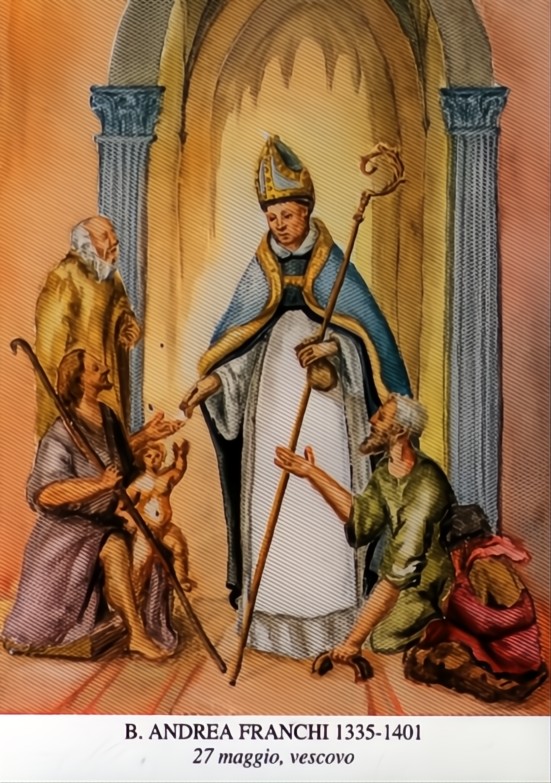
Saint of the Day – 26 May – Blessed Andrea Franchi OP (1335-1401) known as “The Father of the Poor”Bishop, Priest and Friar of the Order of Preachers, renowned Preacher and missionary evangelist, Professor of Prior, Reformer, Miracle-worker. Born in 1335 in Pistoia, Italy and died on 26 May 1401 in Pistoia, Italy of natural causes.
Andrea Franchi was born in Pistoia in 1335 as the third of four children which included – Francesco Franchi, as well as Bartolomeo – an Advisor tp Pope Urban VI and Pope Boniface IX – and Luca (who joined Andreas in the Dominican Order).
He studied at the Dominican Convent of Santa Maria Novella in Pistoia and, in 1359, at the very young age of 14 years, entered the Dominicans. He was later Ordained to the Priesthood and became a noted Preacher and internal missionmary evangelist. He also served as a teacher in Rome of both philosophical and theological studies.
From 1369 until 1381, Andrea served as the Prior of the Dominican houses in his home Town of Pistoia, and also of the districts of Lucca and Orvieto.
In 1382, he was appointed aas the Bishop of Pistoia, by Pope Urban VI. The new Bishop received his Episcopal Consecration sometime in 1382. He administered to the poor and to the ill and gained the moniker of the “The Father of the Poor.” After 18 years servoce, ill health forced him, on 29 May 1400 – to relinquish his Episcopal See and he returned to his Pistoia Convent where he remained for the final months of his life.
Andrea died in 1401. He was interred in theChurch of San Domenico in Pistoia and his remains were found to be incorrupt after their exhumation in 1613 – a sweet odour emanated from his remains.
This holy and zealous Dominican received formal Beatification by Pope Benedict XV on 21 November 1921 after the Pontiff confirmed the late Bishop’s cultus.
St Alphaeus St Anderea Kaggwa Blessed Andrea Franchi OP (1335-1401) Bishop St Becan of Cork Bl Berengar of Saint-Papoul St Damian the Missionary St Desiderius of Vienne St Eleuterus Pope and Martyr St Felicissimus of Todi
St Odulvald of Melrose St Paulinus of Todi St Peter Sanz St Ponsiano Ngondwe St Priscus of Auxerre and Companions St Quadratus of Africa St Quadratus the Apologist St Regintrudis of Nonnberg St Simitrius of Rome and Companions St Zachary of Vienne
St Peter Canisius SJ (1521-1597) – The Known as “The Hammer of Protestantism,” “Second Apostle of Germany” – Confessor, Doctor of the Church, Dutch Priest of the Society of Jesus, Reformer, Teacher, Writer, Apostle of Charity. Patronages – Catholic Press, Germany, Catechists. The restoration of the Catholic Church in Germany after the Protestant Reformation is largely attributed to the work there of the Society of Jesus, which he led. “Peter Canisius was the first publisher, the first author, the first editor of the Society of Jesus. By now, Jesuits have followed in his footsteps to the tune of having published in 400 years, thousands of books. From the time of Canisius, and his name is first in the bibliography of Jesuit writers, from Peter Canisius to the end of the l9th century, that is to 1900, there are about twenty volumes of bibliography, each volume about two inches thick, stands about eighteen inches high, filled just with authors and titles, thousands and thousands and thousands, no other religious institute in the Church publishes as much as members of the Society. It was all started by Peter Canisius.” (Ven Servan of God Fr John A Hardon SJ) His Feast day is 27 April (General Roman Calendar, 1926–1969. Biography: https://anastpaul.com/2017/12/21/saint-of-the-day-21-december-st-peter-canisius-s-j-1521-1397-doctor-of-the-church/ AND: https://anastpaul.com/2018/12/21/saint-of-the-day-21-december-st-peter-canisius-s-j-1521-1397-the-second-apostle-of-germany-doctor-of-the-church/
St Adelelmus of Le Mans St Asicus of Elphin St Castor of Tarsus St Enoder St Floribert of Liege
Blessed Jakov Varingez OFM (c 1400–1496) Croatian professed religious of the Order of Friars Minor, Apostle of charity, Mystic with a great devotion to the Cross of Christ, Marian devotee, he was noted as a miracle worker and levitated. He was Beatified on 29 December 1700 by Pope Clement XIH.His body is incorrupt. His Life: https://anastpaul.com/2019/04/27/saint-of-the-day-27-april-blessed-jakov-varingez-ofm-c-1400-1496/
St Peter Armengol OdeM (c 1238-1304) “The Martyr who Wasn’t,” “The Unconquerable Martyr of Jesus Christ,” “The Gangster Saint,”Spanish Priest of the Mercedarian Friars, Penitent, Mystic. Beatified on 28 March 1686, by Pope Innocent XI and Canonised on 8 April 1687, by the same Pope. His body was incorrupt until it was destroyed during the horrors of the Spanish Civil War. A Miraculous Life: https://anastpaul.com/2022/04/27/saint-of-the-day-27-april-saint-peter-armengol-odem-c-1238-1304-the-martyr-who-wasnt/
St Pollio of Cybalae St Simeon of Jerusalem St Stephen of Tarsus St Tertullian of Bologna St Theophilus of Brescia St Winewald of Beverley
St Zita of Lucca (1212-1272) Virgin, Laywoman, Apostle of the Poor. – Her reputation was such that Dante in the Inferno referred to the City of Luccam, her birthplace and home, as “Santa Zita.” Patronages – housewives, butlers, housemaid, domestic servants (proclaimed by Pope Pius XII), housemaid, eys, manservants, people ridiculed for their piety, rape victims, servers, single laywomen, waiters, Lucca, Italy. Her body is incorrupt. Biography:. https://anastpaul.wordpress.com/2017/04/27/saint-of-the-day-27-april-st-zita-of-lucca/
Martyrs of Nicomedia: A group of Christians murdered together for their faith. In most cases all we have are their names – Dioscurus, Evanthia, Felicia, Felix, Germana, Germelina, Johannes, Julius, Laetissima, Nikeforus, Papias, Serapion and Victorinus. They died at Nicomedia, Bithynia, Asia Minor (modern Izmit, Turkey).
St Peter Caedwalla of Wessex (c658-689) Layman, King of Wessex. Venerable St Bede wrote of him in his History of the English Church. Bl Catwallon St Domninus of Digne Bl Gerald of Salles Bl Harduin
Blessed Hildegun of Schönau O.Cist. (Died 1188) Virgin, Cistercian Monk – yes! she was disguised as a boy as a child, for her own safety and after many frightening trials, decided to retain the identity in order to enter the Cistercian Monastery as Brother Joseph. Her true identity remained a secret until her death. Or Brother Joseph!: https://anastpaul.com/2023/04/20/saint-of-the-day-20-april-blessed-hildegun-of-schonau-died-1188-virgin/
St Marcian of Auxerre St Margaret of Amelia Bl Maurice MacKenraghty St Michel Coquelet Bl Oda of Rivreulle St Sara of Antioch St Secundinus of Córdoba St Servilian
Blessed Simon Rinalducci OSA (Died 1322) Priest, Friar of the Order of the Hermits of St Augustine, noted for his theological studies, Prior of several houses, renowned Preader, Miracle-worker. Blessed Simon was a model of humility and obedience, even in the face of great trials and obvious injustices. Simon was Beatified on 19 March 1833 by Pope Gregory XVI (cultus confirmed). His Life: https://anastpaul.com/2021/04/20/saint-of-the-day-blessed-simon-rinalducci-osa-died-1322/
St Sulpicius St Theodore Trichinas St Theotimus of Tomi St Vincent of Digne St Wiho of Osnabrück
St Bitheus St Calocerus of Brescia St Cogitosus St Corebus St Eleuterius of Illyria St Elpidius of Melitene St Eusebius of Fano St Galdinus della Sala of Milan (c1096-1176) Cardinal Bishop St Gebuinus of Lyons St Genocus St Hermogenes of Melitene
Blessed Idesbald of Dunes O.Cist (c1095-1167) Cistercian Priest and Abbot of Ten Duinen Abbey, Our Lady of the Dunes. The Roman Martyrology states: “In Bruges in Flanders, in today’s Belgium, Blessed Idesbaldo, Abbot, who, soon became a widower and exercised for another thirty years, duties in the palace of the Counts, entered the Monastery of Dune at a mature age, which he held holy, as the third Abbot for twelve years.” Biography: https://anastpaul.com/2021/04/18/saint-of-the-day-18-april-blessed-idesbald-of-dunes-o-cist-c-1095-1167/
The Solemnity of the Patronage of St Joseph Wednesday preceding the Third Sunday after Easter: Few Catholics are likely familiar with the Eastertide Solemnity of St Joseph. According to Father Francis Xavier Lasance (1860-1946) it was instituted during the hostile occupation of Rome by the Troops of the Italian King, Victor Emmanuel II. The Pope proclaimed St Joseph the Patron of the oppressed Household of the Faith, entrusting to St Joseph, the defence of Holy Mother Church.
In the beginning, this Feast Day was observed on the Third Sunday after Easter but when Pope St Pius X reformed the Liturgical Calendar to restore the Sunday Offices to prominence over those of the Saints, the second Feast of St Joseph was moved to the Wednesday preceding the Third Sunday after Easter. In 1911, the Feast was raised to a Double of the First Class and it was assigned an Octave after it was moved to the Wednesday before the Third Sunday after Easter. It is a Common Octave, so the Octave may or may not be commemorated on the intra Octave days depending on the rank of the Feasts which occur during the Octave. While this Feast day is not in the 1962 Missal, it is still kept by Priests who celebrate Holy Mass according to the pre-1955 reforms.
Bl essed Andrés Hibernón Real OFM (1534-1602) Religious Friar, Apostle of the Holy Eucharist, the Blessed Virgin and the Holy Rosary, Apostle of the poor. He predicted the date of his death four years before the fact, which was 18 April 1602 in Gandia, Valencia, Spain of natural causes immediately after having prayed a rosary. He was Beatified on 22 May 1791 by Pope Pius VI. His body is incorrupt. Biography: https://anastpaul.wordpress.com/2018/04/17/saint-of-the-day-17-april-blessed-andres-hibernon-real-o-f-m-1534-1602/
St Agia of Hainault St Anthia of Illyria St Athanasia of Aegina St Bitheus St Calocerus of Brescia St Cogitosus St Corebus
St Eleuterius of Illyria St Elpidius of Melitene St Eusebius of Fano St Galdinus of Milan St Gebuinus of Lyons St Genocus St Hermogenes of Melitene St Innocent of Tortona Bishop and Confessor Bl Idesbald of Dunes Blessed James of Cerqueto OSA (1285-1366)
St Laserian of Leighlin Blessed Mariana of Jesus OdeM (c1565-1624)
St Pantagathus of Vienne Bishop St Perfecto of Córdoba St Pusicio
St Robert de Turlande/Chaise-Dieu OSB (c1000-1067) Priest, professed religious of the Order of St Benedict, Monk, Abbot, Apostle of Charity, Marian devotee. He was of noble stock, was related to Saint Gerald of Aurillac (c855–c909) and was a descendant of St Caesarius of Arles (470-543). He is best known for the establishment of the Benedictine Convent of La Chaise-Dieu (‘Home of God’) and for his total commitment to the poor. He became a spiritual inspiration for Pope Clement VI (1291–1352) – whose own origin,s in the religious life were based at that Convent – and it was Pope Clement who confirmed the Canonisation of the Benedictine Abbot on 19 September 1351 in Avignon. His Life: https://anastpaul.com/2019/04/17/saint-of-the-day-17-april-st-robert-de-chaise-dieu-osb-c-1000-1067/
St Benedict Joseph Labre – Known as the Beggar of Perpetual Adoration (1748-1783) Laqy Penitent and Pilgrim – he “abandoned his country, his parents and whatever is flattering in the world, to lead a new sort of life, a life most painful, most penitential, not in a wilderness, nor in a cloister but in the midst of the world, devoutly visiting as a pilgrim the famous places of Christian devotion.” Canonised by Pope Leo XIII on 8 December 1881. Dearest St Benedict Joseph: https://anastpaul.wordpress.com/2017/04/16/saint-of-the-day-16-april-st-benedict-joseph-labre/
Blessed Arcangelo Canetoli (1460-1513) Priest and Canon of the Canons Regular of the Congregation of the Most Holy Saviour at Bologna, Mystic gifted with the charism of prophecy and of many visions of the Blessed Virgin, Born in 1460 in Bologna, Italy and died on 16 April 1513 (aged 53) in Gubbio, Italy of natural causes. His body is incorrupt. Arcangelo was Beatified on 2 October 1748 by Pope Benedict XIV. Holy Arcangelo: https://anastpaul.com/2023/04/16/saint-of-the-day-16-april-blessed-arcangelo-canetoli-crssb-1460-1513-priest/
St Turibius of Astorga (c402-c460) Bishop St Vaise St William Gnoffi
Martyrs of Corinth – 9 Saints: A group of nine Christians who were tortured and Martyred together in the persecutions of Decius. We know little more than three of their names – Callistus, Charisius and Leonide. They were thrown into the sea at Corinth, Greece c250.
Martyrs of Saragossa: Group of 18 Martyrs murdered in 304 in Saragossa, Spain in the persecutions of Diocletian and the prefect Dacean. We know little more than the names – Apodemus, Caecilian, Caius, Crementius, Engratia, Eventius, Felix, Fronto, Gaius, Julia, Lambert, Lupercus, Martial, Optatus, Primitivus, Publius, Quintilian, Saturnius (4 men of this name), Succesus and Urban. Their graves re-discovered in 1389 in the crypt under the Church of San Encrazia in Saragossa.
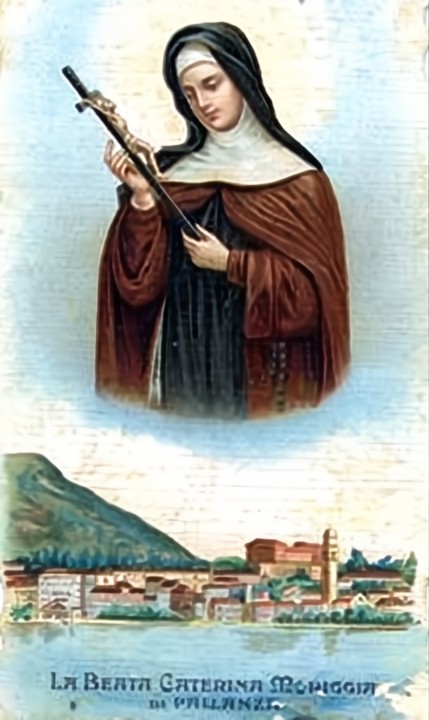
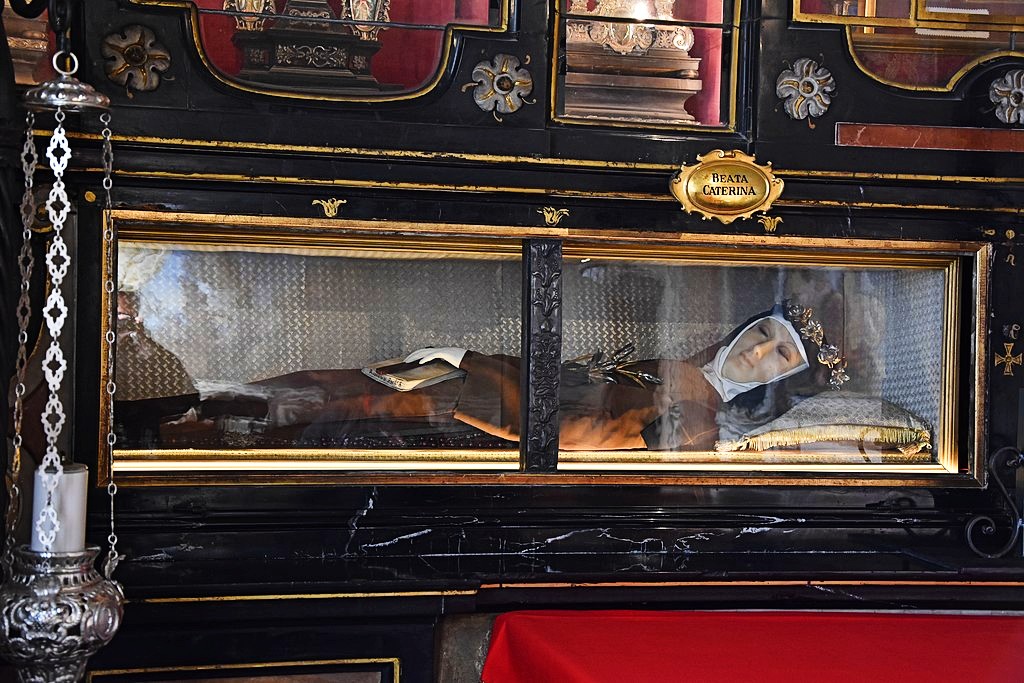
Saint of the Day – 6 April – Blessed Catherine of Pallanza (c1437-1478) Virgin, Hermit, Ascetic, Mystic, Prioress, Spiritual Advisor graced with the charism of prophecy. Born in c1437 in Pallanza, Italy as Catarina Morigi and died on 6 April 1478 at Sacra Monte sopra Varese Monastery, Varese, Italy of natural causes aged 51 years. Also known as – Caterina Morigi di Pallanza, Catherine Morigi, Catarina Morigi Catarina of Pallanza, Katarina … Additional Memorial – 27 April (Ambrosian Rite). Her cult was confirmed on 16 September 1769 by Pope Clement XIV. Her body is incorrupt.
Catarina was born around 1437 in Pallanza, a small village in the Diocese of Novara in the Piedmont region of northern Italy. Her entire family died in a plague epidemic when she was very young and she was adopted by a woman who lived in nearby Milan.
At the age of 20 she was deeply moved after hearing a sermon on the Passion of Christ, prostrating herself before the Crucifix in the Church and consecrating her virginity to God. It was not long after this that she received a vision of the Crucified Jesus Who said to her: “Beloved daughter Catarina … I have selected for you the place called Santa Maria on the Mountain.” Catarina immediately retired to a wild and lonely mountain region above Varese near Milan which had often been used by hermits and, where Saint Ambrose had built an Altar in honour of the Virgin Mary .
She joined a group of female Hermits under the leadership of a Priest in charge of St Ambrose’ Sanctuary. Older sources write that she was the first woman known to have lived there as a Hermit but this is obviously not correct. Catarina lived this life for fifteen years and even in an area famous for the severe penances of its Hermit residents, Catarina’s asceticism was so extreme that it attracted attention. She fasted ten months of the year and was always dependent on gifts of food brought to her at irregular intervals by those who sought her prayers and advice.
Despite her desire to be left alone, a group of five female disciples joined her. The first (in 1454) was Blessed Juliana Puricelli of Busto Arsizio and the others came in 1460. In 1474, Catarina organised them as a duly constituted community with herself as the Prioress, under the Rule of Saint Augustine. Pope Sixtus IV (1471-1484) approved the community. The Monastery was dedicated to Our Lady of the Mountain and the place was called Sacra Monte sopra Varese. The Nuns received permission to wear the Habit of the Poor Clares. Catherine served as Prioress for two years before she died.
Catherine died on 6 April 1478 at Sacra Monte sopra Varese. On her deathbed she was given a Crucifix and she kissed it and said: “I see my beloved Crucified One.” Her Confessor then said to her: “Behold your Crucified One” and she replied: “I have Him engraved upon my heart.”
Even while she was alive, she was graced with prophetic abilities and a local cult developed very quickly. In the 1730s, her mortal remains were translated to a special Chapel built in her honour, where her body is still venerated today. She was Beatified on 16 September 1769 when her cult was confirmed by Pope Clement XIV (1769-1774). At the same time, Blessed Juliana Puricelli’s cult was also confirmed. Catherine’s memorial day is the day of her death 6 April while 27 April is her Feast Day in the Ambrosian Liturgy (together with Juliana).
St Benedict of Palermo OFM (1526-1589) Lay Friar of the Order of Friars Minor of the Observance, Confessor, spiritual counsellor, Apostle of the poor and needy, graced with the gift of healing the sick. St Benedict’s gifts for prayer, his love for the Blessed Virgin and the Infant Jesus and the wisdom displayed in his guidance of souls, earned him, a reputation for holiness, throughout Sicily. Following the example of St Francis, Benedict kept seven 40-day fasts throughout the year. He also slept only a few hours each night. His body is incorrupt. Kind and Holy Benedict: https://anastpaul.com/2023/04/03/saint-of-the-day-3-april-st-benedict-of-palermo-ofm-1526-1589-lay-friar/
Blessed Gandulphus of Binasco OFM (c1200-1260)Priest, Friar of the First Order of St Francis. He was a renowned Preacher mainly in Sicily, Hermit, Miracle-worker . He was one of those who entered the Order while the Seraphic Father was still alive and the life he led was one of great self-abnegation. He was Beatified on 10 March 1881 by Pope Leo XIII. Biography: https://anastpaul.com/2022/04/03/saint-of-the-day-3-april-blessed-gandulphus-of-binasco-ofm-c-1200-1260/
Martyrs of Greece – 4 Saints: A group of young Christian men who protested to City authorities that gifts to temples of pagan gods should be used to feed the poor during a regional famine. When the officials refused, the group went to local temples, broke up the idols and fixtures and gave the gold and silver bits to the poor to use to buy food. The group was imprisoned and executed. The only other thing we know about these Martyrs are the names – Bythonius, Elpideforus, Dius and Galycus. They Died in the 3rd Century at an unknown location in Greece.
Martyrs of Tomi (Romania) – 9 Saints who were Martyred together. We know nothing else about them but the names – Arestus, Benignus, Chrestus, Evagrius, Papo, Patricius, Rufus, Sinnidia and Zosimus. They Died at Tomi, Scythia (modern Constanta, Romania).
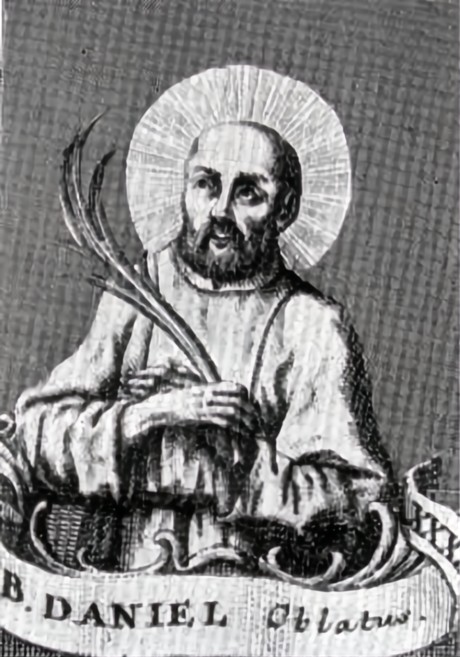
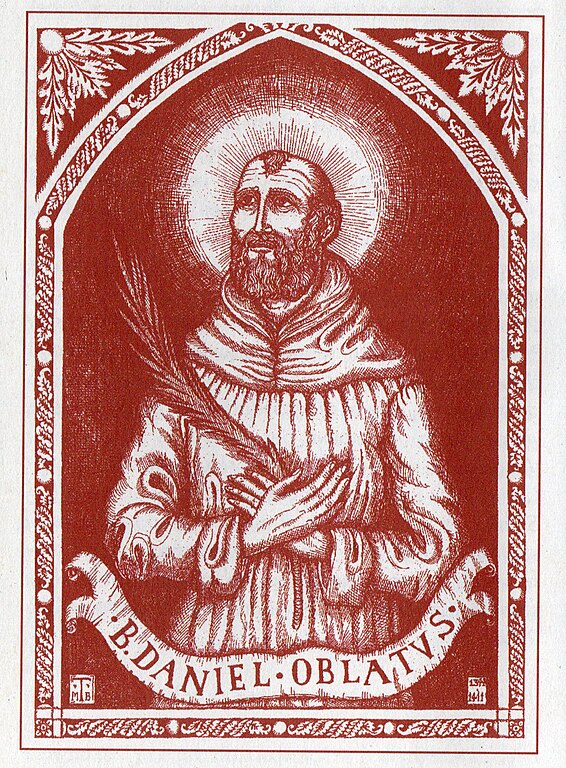
Saint of the Day – 31 March – Blessed Daniel of Venice ECMC (1344-1411) Martyr, Husband, Father, Entrepreneur, Politician, Diplomat, Peace-maker, Apostle of the poor, part-time Monk and Hermit. Born in 1344 in Cormons, near Venice, Italy and died on 16 September 1411 at San Mattia di Murano, Venice, Italy by being murdered by thieves. Also known as – Daniel of Murano, Daniel de Ungrispach. He is commemorated by the Camaldolese Hermits of Mount Corona on 20 March. The Church has never confirmed the cult of this “Blessed” but he still legitimately enjoys this title, as he is present in the Calendar of his Religious family and, in 1435, his cult was approved by the local Bishop. He is venerated as a “Martyr of Charity” and his body is preserved Incorrupt.
Daniel was born in the Castle of Cormons, around the year 1344, the eldest son of Nicolaussio d’Ungrispache of Maddalena Savio of Gemona. His was a noble family of Germanic lineage, “very wealthy.” Lords of Cormons, Medea and Foiana, vassals of the Counts of Gorizia, whih had among its members a Bishop of Concordia and one of Trieste. Even today the Coat of Arms of the Municipality of Cormons is inspired by that of Daniel’s family.
When Daniel was sixteen the family moved to Pordenone, where, at around twenty years of age, Daniel married Ursina Ricchieri, a member of the most powerful family in the City. They had a daughter, Lucia, who, in 1384, married the noble Giacomo Spelladi of Treviso. Between 1365 and 1368 Daniel was a prisoner in Verona, perhaps due to unrest and events of war. He endured the ordeal without harbouring resentment. Despite his young age, he was already so well liked by his fellow citizens that they intervened to obtain his release.
Daniel was an upright husband and father, he lived his days as a good Christian. The chronicles describe him: “a noted observer of God’s law, of every religious practice, of singular compassion towards the poor and a great lover of Pious Places.” He successfully engaged in the trade of silk and woollen cloth and cowhides. On the route which took him to Venice, sailing along the Noncello river, he had the opportunity to meet the Camaldolese of the Abbey of San Martin Rotto. The young man was attracted by monastic and hermitic spirituality, typical of the Order founded by St Romuald. The high-ranking position of the family,but certainly alsothe desire to contribute to the public administration in favour of his fellow citizens, also led him to political commitment and so, in 1384, he was appointed “podestà” (a very high Office and authority similar to a Mayor). The position was annual and included representation of the community, both in the Civil and Religious spheres.
Blessed Daniel d’Ungrispach
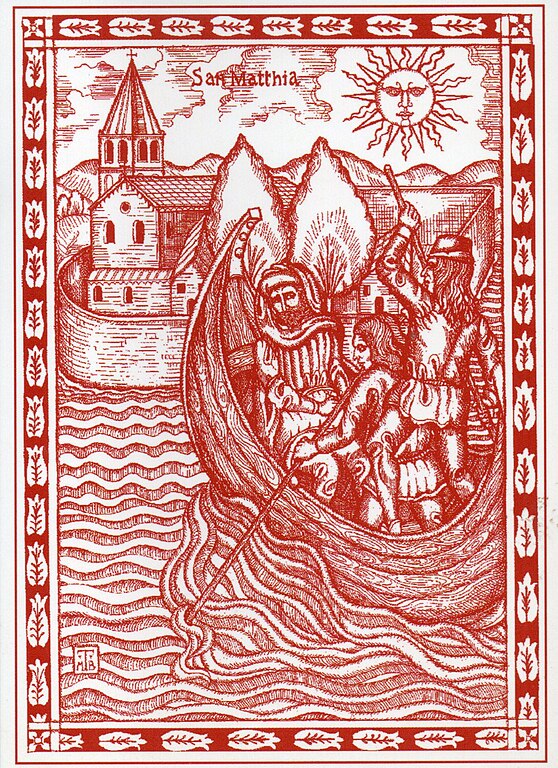
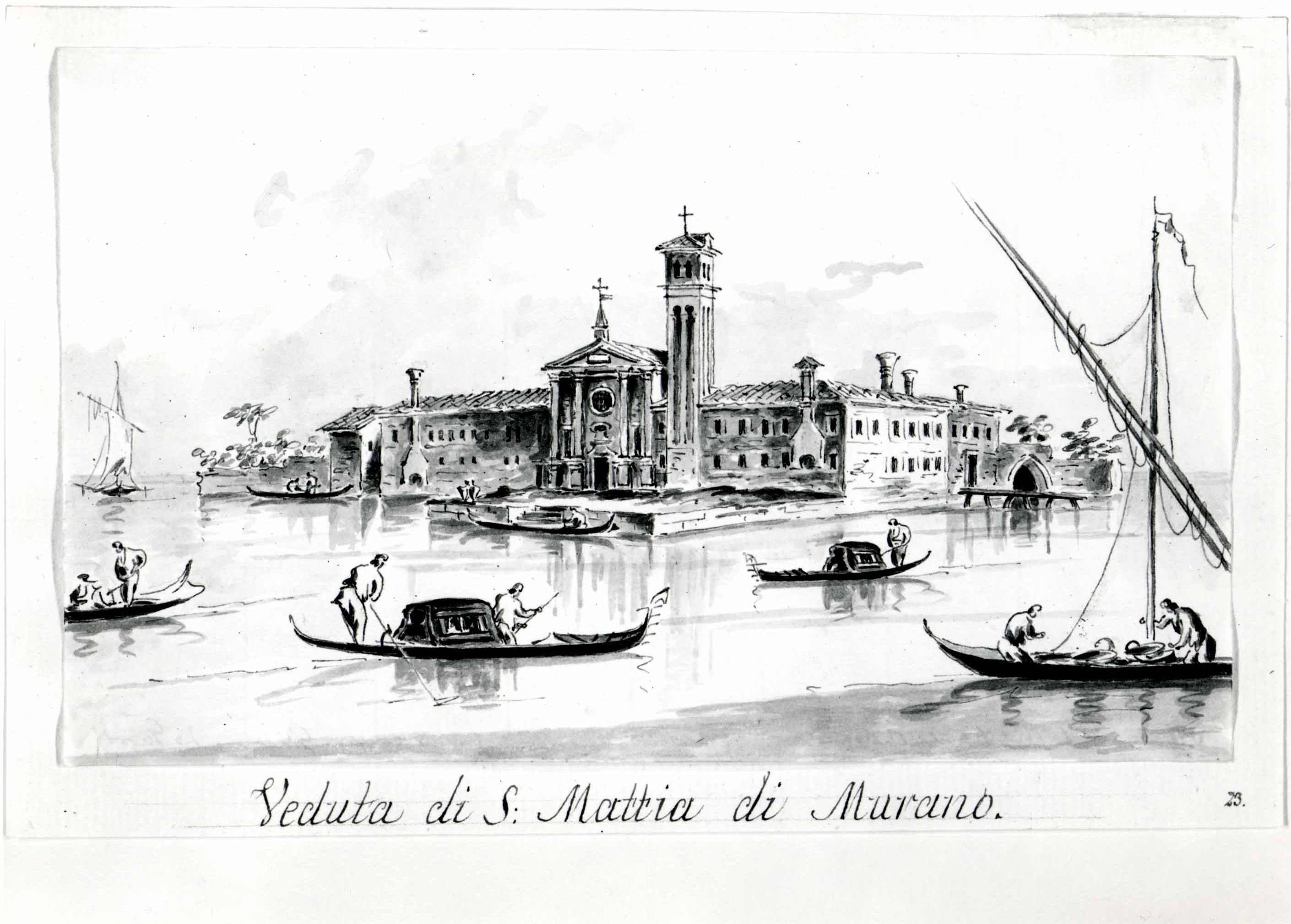
During his travels to Venice Daniel visited the important Camaldolese Monastery of San Mattia on the island of Murano, where, increasingly attracted by monastic life, he became a family guest.
For nineteen years, while maintaining family, social and work commitments, he constantly frequented the Monastery where he fully breathed the presence of God. He loved reading the Scriptures and the writings of the Fathers of the Church, in particular, Saint Augustine. Then, having even large sums of money at his disposal, he responded generously to the needs of the poor and of the Monastery. He could lead a life suited to his social status but instead, he preferred, day by day, to respond to this deep desire to become united to God, alternating days marked by social commitments with days of prayer, spent alongside his Monk friends. His life was a wonderful synthesis of ‘Ora et labora’ — Husband, Father, Entrepreneur and even Politician, with his gaze always turned towards the Giver of all good.
In 1380 he embarked on the journey to become an oblate of the Camaldolese Congregation which was fully completed on 31 March 1392. From that day he had a cell of his own. He was generous, as mentioned, with hisMmonastery but also with other religious entities, especially Venetian ones, so much so that in 1398 he was appointed procurator of the Church of St Mark!
At the age of fifty, the desire for a hermit’s life prevailed and Daniel renounced the rights, privileges and family assets which were due to him after his father’s death. He left his wife, by mutual agreement and was welcomed into the Monastery of San Mattia to share more fully in the life of the Monks but without the obligation of seclusion. From time to time, he returned to Pordenone and in 1404-1405, he was once again Official of the Municipality and Mayor, probably the Deputy, a sign of the great trust everyone placed in him. He continued to carry out the mercantile profession but also had some diplomatic positions. In 1406 he was among the intermediaries in a serious disagreement between Pordenone and Aquileia. The Mayor and the nobles of the City, including Daniel, were tasked with mediating to obtain forgiveness and peace.
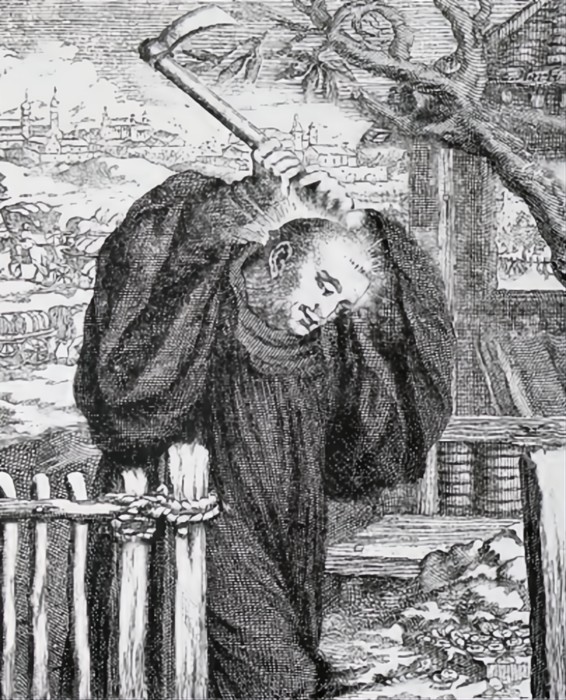
On 16 September 1411 Daniele, while he was in Pordenone, wrote a Last Will naming his wife as universal heir. He arranged to be buried in San Mattia, to which he left bequests and precious books, including a Bible, a Legendary of the Saints, the Sermons of Saint Augustine. A few days later, after returning from work from in Venice, unknown criminals entered his cell at night and strangled him for the purpose of robbery. They were certainly aware of his habits and the money he had with him. The Camaldolese Fathers, struck by such an unjust death, gave him a devout burial in the tomb of the Donà nobles inside the Monastery. He was immediately considered a “Martyr of Charity.”
The Church and Camaldolese Monastery of San Mattia di Murano, between 1804 and 1828. By Giacomo Guardi (1764–1835).
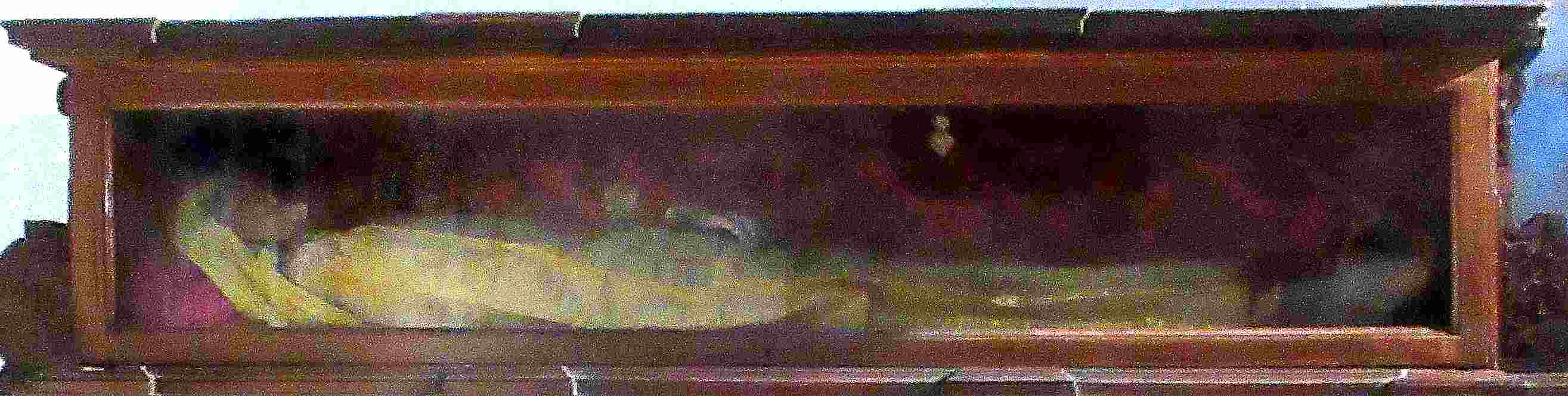
Twenty-four years after his death, in 1435, the body was exhumed and found Incorrupt, “vivid in colour and exuding a very sweet odour, unlike the others found ruined and putrified.” It was placed on an Altar and immediately became a destination for devout pilgrimages. Everyone thought that the Incorrupt body confirmed the holiness which Daniel had displayed in life. The Bishop of Torcello approved the local cult and arranged for an Urn containing the Relics to be displayed in the Church. Graces and miracles followed and Daniel’s fame attracted, in the Centuries to come, faithful from the entire Venetian and surrounding areas. In 1657, Daniel’s Incorrupt body was placed on its own Altar, in a new wooden case, which is still the current one.
In 1810 the Monastery of San Mattia di Murano was suppressed and the Church subsequently destroyed. The body of Blessed Daniel underwent several translations and for a period was preserved in the sacristy of the Basilica della Salute in Venice. In 1857 the remains returned to Murano, the Urn was placed in the external Chapel of the Teacher Sisters of Santa Dorotea, who had opened a school on the island. The Nuns kept a register of the graces obtained by the Blessed, some as late as 1903. The body is today in the Basilica of St Donato, still Incorrupt, covered in a golden robe, a gift for a grace received in 1745. All testimonies of a cult which has never ceased.
Dedicated to his family, involved in public life, active in the mercantile profession, Daniel always had the Word of God as his compass and prayer as his companion. His example is undoubtedly of great relevance in the world we inhabit today. The local memory is set for 31 March, while the Camaldolese commemorates it on 20 March. The “ab immemorabili” recognition of the cult and the official title of Blessed would be highly desirable for this great and holy man.
Saint of the Day – 21 March – Saint Lupicinus of Condat (Died c480) Abbot, previously a Widower, then a Hermit and then founding two Monasteries which became cornerstones of monastic, social and political stability under his administration. Born probably somewhere in the region of the Jura Mountains in France and died at his Monastery there in c480. Also known as – Lupicinus of Lauconne, Lupicinus of Jura, Lupicin… Lupicino… St Lupinus’ Body was certainly incorrupt until the 1700s. I am not sure whether it was protected from the evils destruction of the French Revolution.
The Roman Martyrology reads: “In the territory of Lyons, the Abbot St Lupicinus, whose life was resplendent with the lustre of holiness and miracles.”
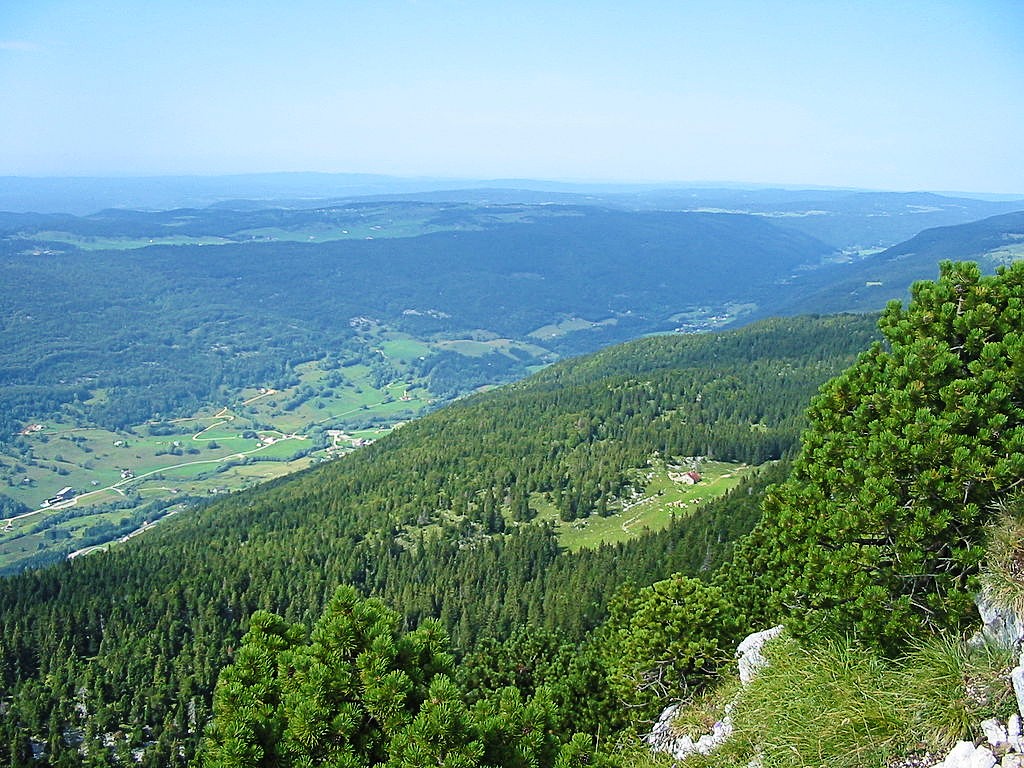
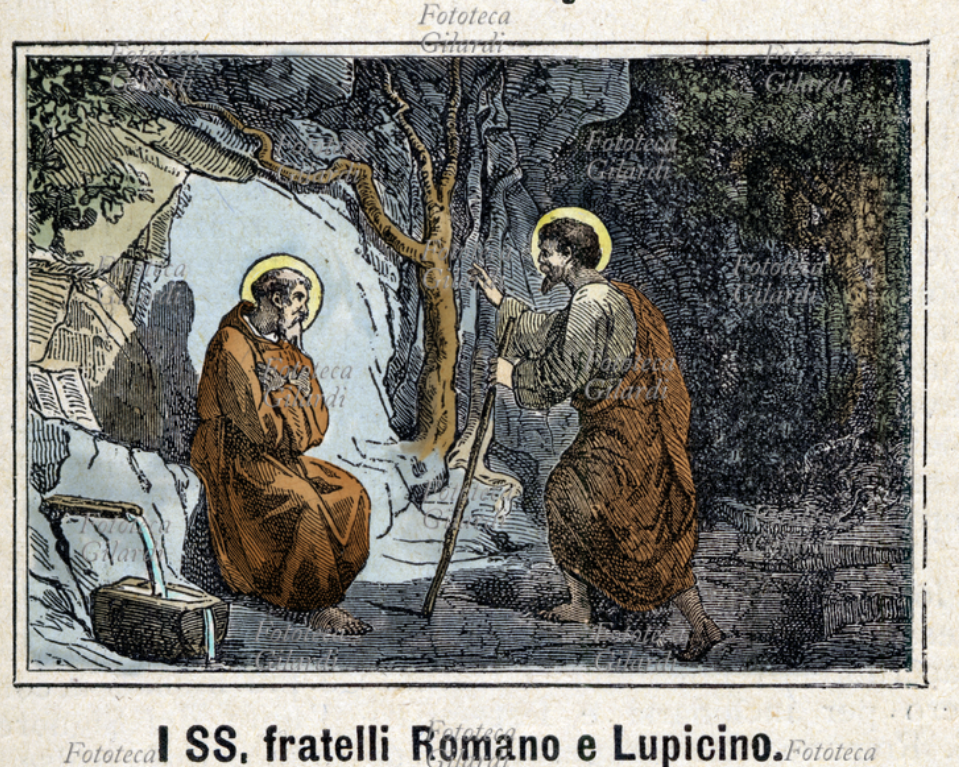
Lupicinus, was a man of adamantine faith and austere spirit. After the death of his beloved wife, Lupicinus joined his brother Romanus, a Hermit dedicated to contemplative solitude living in the Jura Mountains, a short distance north of the Western Alps and mainly demarcating a long part of the French–Swiss border.
Together, the two brothers took the first steps towards a monastic destiny of great importance in the region, founding two Monasteries: Condat, later known as Saint-Oyend (another sibling brother, the youngest, who is actually called St Eugendus) and Saint-Claude and Lauconne, later called Saint-Lupicin. Both brothers led the monastic communities with dedication but Lupicinus stood out for his ascetic rigour and iron discipline, applying the monastic rule with severity and intransigence, both in the governance of the community and in the recruitment of new members.
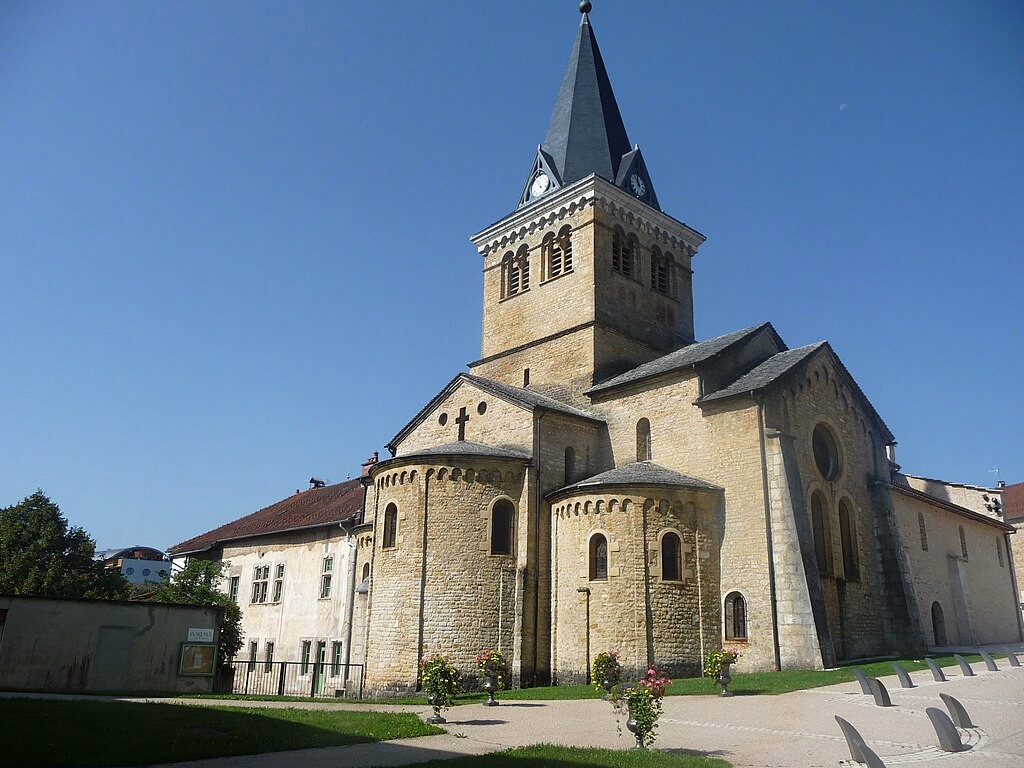
The Monastery Church of St Lupicinus
Upon Romanus’ death, Lupicinus assumed the unified leadership of the two Monasteries, becoming a point of reference, not only for religious life but also for the protection of the surrounding populations. In particular, he distinguished himself as a staunch defender of Count Agrippinus against the aims of the Burgundian King, demonstrating not only spiritual but also political mettle.
His earthly parable ended in 480, leaving an indelible legacy. The memory of Lupicinus and his brother Romanus was handed down by a biography written by a Condat Monk shortly after the death of St Oyend, their fellow Monk. Although the veracity of this document has been questioned by some scholars, others, have recognised its historical value. A further biography, by St Gregory of Tours, offers a less detailed but still, significant account.
St Lupinus Relics were transflated on 3 July of an unspecified year, shortly after his death. A reconnaissance carried out in 1689 miraculously revealed the intact body, strengthening the cult of the Saint. Until the French Revolution, on 6 June each year, the Relics were solemnly transported from the Church of St Lupinus to that of the Chapter of Saint-Claude, in a procession of great popular devotion. The date of celebration of St Lupicinus was set for 21 March and then confirmed by the Roman Martyrology. Together with his brothers Sts Romano and Oyend, he is venerated as a Benedictine Saint, although the Monasteries he founded predated the Rule of Saint Benedict which was adopted at a later time.
In the lives of the first Abbots of Condat, it is mentioned that the Monastery which was built by St Romanus of timber, being consumed by fire, the young brother, St Eugendus, rebuilt it of stone and also that he built a handsome Church in honour of Sts Peter, Paul and Andrew.



















 AnaStpaul
You must be logged in to post a comment.