Quotes of the Day – 30 September – The Memorial of Saint Jerome (347-419), Priest, Father and Doctor of the Church
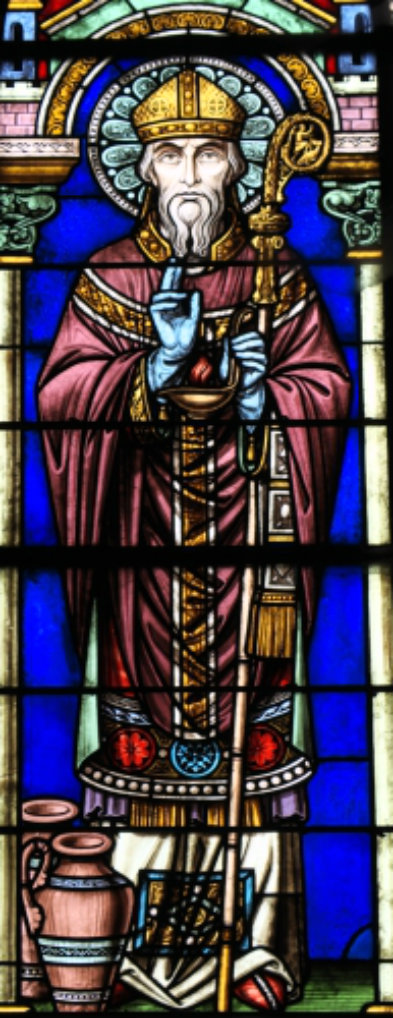
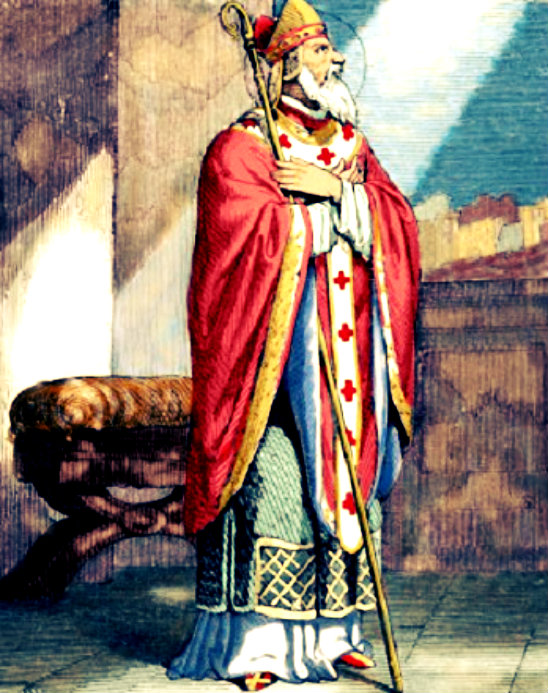
St Jerome – Speaking of Holy Scripture
“The Scriptures are shallow enough, for a babe to come and drink, without fear of drowning and deep enough, for theologians to swim in, without ever reaching the bottom.”
“Make knowledge of the Scripture your love … Live with them, meditate on them, make them the sole object of your knowledge and inquiries.”
“A false interpretation of Scripture, causes, that the Gospel of the Lord, becomes the gospel of man, or, which is worse, of the devil!”
“It is worse still to be ignorant of your ignorance.”
St Jerome (347-419)
Great Western Father and Doctor of the Church
One Minute Reflection – 30 September – Monday of the Twenty Sixth week in Ordinary Time, Year C, Gospel: Luke 9:46–50 and The Memorial of St Gregory the Illuminator (c 257 – c 331)
“Whoever receives this child in my name receives me and whoever receives me, receives him who sent me, for he who is least among you all, is the one who is great.” … Luke 9:48
REFLECTION – “The passion and lust of pride attacked some of the holy apostles. The mere argument about who of them was the greatest is the mark of an ambitious person, eager to stand at the head of the rest. Christ, who did not sleep, knows how to deliver. He saw this thought in the disciple’s mind, springing up, in the words of Scripture, like some bitter plant. He saw the weeds, the work of the wicked sower. Before it grew up tall, struck its root down deep, grew strong and took possession of the heart, He tears up the evil by the very root. In what way does the Physician of souls amputate pride’s passion? How does He deliver the beloved disciple from being the prey of the enemy and from a thing hateful to God and man? “He took a child,” it says, “and set it by him.” He made the event a means of benefiting both the holy apostles themselves and us their successors. This illness, as a rule, preys upon all those who are in any respect superior to other people.
What kind of type and representation did He make the child He had taken? He made the child a representation of an innocent and humble life. The mind of a child is empty of fraud and his heart is sincere. His thoughts are simple. He does not covet rank and does not know what is meant by one man being higher than another is. Christ brought forward the child as a pattern of simplicity and innocence and set him by Him. He showed him as in an object lesson, that He accepts and loves those who are like the child. He thinks they are worthy of standing at His side, as being like-minded with Him and anxious to walk in His steps.” … St Cyril of Alexandria (376-444) Father and Doctor of the Church – Commentary on Luke, Homily 54
PRAYER – Dear and Holy God, let us offer You all our daily struggles against sin and evil. Grant us the strength to resist all forms of idolatry, to seek only You and never to allow the honour of this world to seduce us. Sustain us ever more with Your word and help us to find in it, the source of life. May the Prayers of St Gregory the Illuminator, help us on the path of holiness. We ask this through Jesus our Lord, with the Holy Spirit, one God forever, amen.
Our Morning Offering – 30 September – Monday of the Twenty Sixth week in Ordinary Time, Year C and The Memorial of St Jerome (347-419) Father and Doctor of the Church
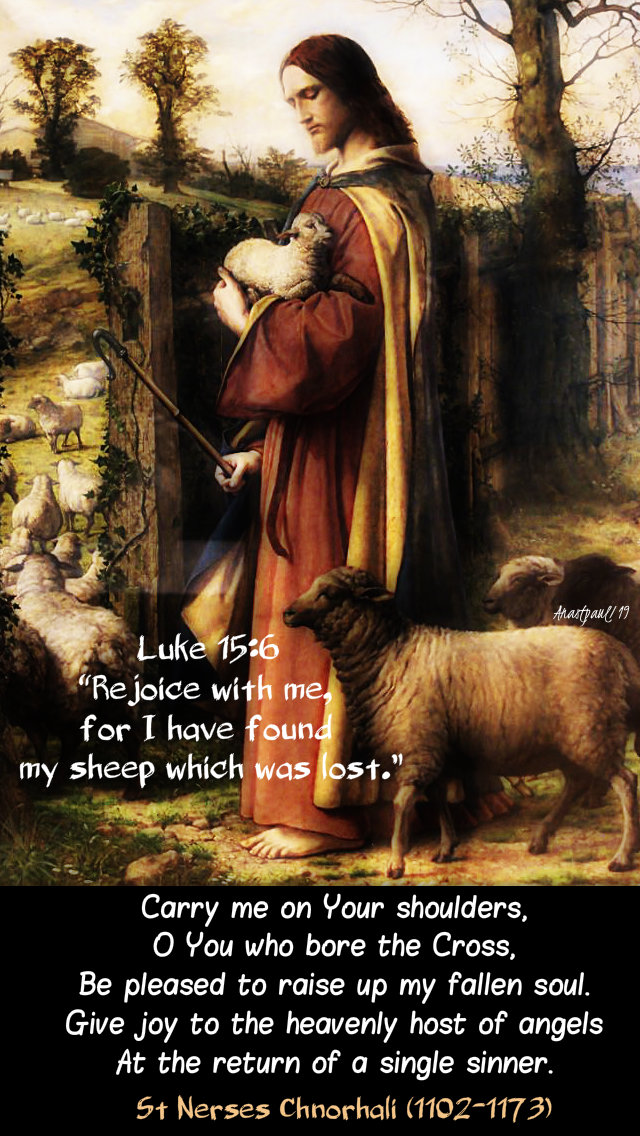
O Lord, show Your mercy to me By St Jerome (347-419)
O Lord, show Your mercy to me
and gladden my heart.
I am like the man on the way to Jericho
who was overtaken by robbers,
wounded and left for dead.
O Good Samaritan,
come to my aid.
I am like the sheep that went astray.
O Good Shepherd,
seek me out and bring me home
in accord with Your will.
Let me dwell in Your house
all the days of my life
and praise You for ever and ever
with those who are there.
Amen
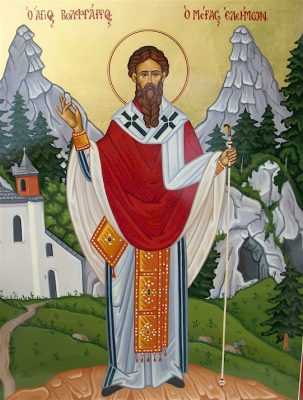
Saint of the Day – 30 September – Saint Gregory the Illuminator (c 257 – c 331) – “Apostle to Armenia” and “Father of Armenia”- Bishop, First Patriarch of the Armenian Church, Missionary, Wonder-worker – born Grigor Lusavorich in c 257 and died in c 331 of natural causes. Also known as Gregory the Enlightener. Patronage – Armenia.
The life of Saint Gregory was first recounted in a biography dating to c 460 and the more or less contemporary History of the Armenians by Agathangelos. The saint’s was born in and around Parthia between 239 to 257. He was the son of Anak Partev the Parthian, who, being in the pay of the rival Sasanian Empire in Persia (224-651), infamously murdered the Armenian king Khosrov of Kadj. The Lusavorich family was both wealthy and influential but they were all wiped out by the revenging relatives of Khosrov. Fortunately for Gregory, he, the sole survivor of the purge, was whisked away by his nanny to the safety of Cappadoccia.
Gregory was raised as a Christian and attended a Greek Christian school. On returning to Armenia, Gregory gained a position as a palace functionary at the court of the Armenian king. There he protested the pagan religion of the period and refused to participate in its rites. The reigning monarch was Tiridates IV (Trdat III or IV), or Tiridates the Great as he would become known and he had the troublesome Gregory imprisoned, tortured and thrown into the terrible Khor Virap prison at Artashat. Known as the “pit of oblivion,” nobody ever returned from Khor Virap.
When out hunting, Tiridates often behaved like a beast, hence the legend that he was transformed into a boar. A King, who was loved by his people and especially his sister, Khosrovidought, tried in vain to return him to his senses. Khosrovidought had a dream, seeing Gregory coming out of the dungeon and healing her brother! This was especially ironic, as the illness had only manifested itself following the king’s orders to murder a group of Christian nuns who had fled persecution in Rome. Khosrovidought told the people at the Court of her dream and revealed that Gregory was living and was the only man in the world who could cure the King. As Tiridat’s condition worsened his courtiers went to the pit and to their great surprise heard a feeble “yes” to the question: “Gregory, are you still alive?” For St Gregory had been in the pit for 13 years! They lowered the rope and out came a man with a long beard and soiled clothes. But his darkened face was wrapped in an aura of light. After dressing him properly,they took him to the presence of Tiridat. Moved by a powerful force which he could not control, Tiridat knelt down before his prisoner. Gregory, putting his hands on the King’s head, prayed for him. There,upon Tiridat was cured and became a new man. He said to Gregory: “Your God is my Go, your religion is my religion.” Gregory lifted him up and embraced him. From that moment, until their death, they remained faithful friends and worked together, each in his own way for the establishment of the Kingdom of God in Armenia, beginning in the year 301.
Gregory first converted the people in the capital city and in its neighbourhood. There were no bishops or clergymen left in the country, because of the severe persecutions by Tiridat. Thus, Gregory could not find people in holy orders to baptise the neophytes. Gregory himself was still a layman. Therefore, the Royal Council decided to send Gregory back to Cæsarea to be ordained as a Priest and then Bishop of Armenia.
Armenia did became a Christian state and it was a momentous moment in the country’s history as the historian RG Hovannisian here explains:
“The conversion of Armenia to Christianity was probably the most crucial step in its history. It turned Armenia sharply away from its Iranian past and stamped it for centuries with an intrinsic character, as clear to the native population, as to those outside its borders, who identified Armenia almost at once as the first state to adopt Christianity.”
Armenia thus became the first nation to adopt Christianity as its official religion.
As soon as Gregory returned to Armenis as the first Bishop (Katholikos) he set about formally establishing the Christian Church. Tiridates gave Saint Gregory up to 15 provinces of territory to establish the Armenian Church. The old pagan temples were torn down and the sites were converted to Christian ones and the whole nation was obliged to embrace the new faith. Churches and monasteries sprang up everywhere, including at the Khor Virap, Gregory’s home for so long, which was eventually converted into a monastery. The Armenian aristocracy quickly followed the royal family’s example and many noble families converted to Christianity.
Later in life, Gregory retired to the seclusion of the cave of Mane in northwestern Armenia where he lived as an ascetic. Gregory died there of old age around 331. The former bishop’s remains were buried at Tordan on the Euphrates River in the western province of Daranaghik, although later his bones would become prized relics in various churches across the country.
St Gregory governed the Armenian Church for about 25 years. He diligently worked for the internal organisation of the Church. His descendants carried on his work, notably his younger son Aristakes, who, known for his asceticism, was the next bishop and who attended the First Ecumenical Council of Nicaea in 325 as St Gregory was too old.
Many Churches were built in his honour but perhaps the most celebrated was the cathedral at Ani built by the great architect Trdat for King Gagik (1001-1010).
Saint Gregory the Illuminator Cathedral, Yerevan, (finished in 2001) contains the remains of St Gregory
He is commemorated as a Canonised Saint by all the ancient churches of the East and of the West, including the Greek Orthodox and the Roman Catholic Churches. The Armenian Church has set aside three holy days in honour of St Gregory, commemorating three of the main events of his life – firstly, his sufferings and entrance into the dungeon, secondly, His release from the dungeon and the conversion of Armenia to Christianity, thirdly, the discovery of his relics.
The Right Hand of Gregory the Illuminator in the museum of the Holy See of Cilicia at Antelias, Lebanon
On St Pope John Paul II’s historic trip in 2001 to Armenia to mark the 1700thof the conversion of the Armenian nation to Christianity, he became inspired by a visit to Khor-Virab where Saint Gregory was confined. As a result, a statue of Saint Gregory the Illuminator now stands (unveiled on 19 January 2005) in the Vatican’s last remaining niche along the walls of Saints leading to St Peter’s Basilica in Rome. Almost 2,5 metres tall, it is situate at the site where visitors wait to climb the cupola. Thousands of visitors now wait under the gentle gaze of St Gregory the Illuminator of Armenia. See the Statue below.
On 26 June 2016, Pope Francis visited Armenia and made a special pilgrimage to the Church and Monastery, where St Gregory’s pit was located. It is here, in one of the Armenian Church’s most sacred places, that Francis concluded his trip. After being welcomed by the Monastery’s superior, the he and the Pope made their way down the small stairs to the room where St Gregory had been held in captivity for 13 years. There, they lit a candle in veneration. They then entered the adjacent chapel in procession and prayed in Armenian and in Italian. Finally, the Pope and Abbot Karekin went out onto the terrace overlooking Ararat and released two doves, in the direction of the Biblical mountain, which is now beyond the border in Turkey.
St Amatus of Nusco
St Antoninus of Piacenza
St Castus of Piacenza
St Colman of Clontibret
Bl Conrad of Urach
St Desiderius of Piacenza
St Enghenedl of Anglesey
St Eusebia of Marseilles Saint Francis Borgia SJ (1510-1572) – Biography: https://anastpaul.com/2017/10/10/saint-of-the-day-10-october-st-francis-borgia-s-j-1510-1572/ (This post made on 10 October 2017, is on the incorrect date. His feast day was moved to today in 1969. Today, 30 September is the day of his death.)
Bl Frederick Albert Saint Gregory the Illuminator (c 257 – c 331)
St Honoratus of Canterbury
St Ismidone of Die
Bl Jean-Nicolas Cordier
St Laurus
St Leopardus the Slave
Bl Ludwik Gietyngier
St Midan of Anglesey
St Simon of Crépy
St Ursus the Theban
St Victor the Theban
—
Martyrs of Valsery Abbey: An unknown number of Premonstratensian monks at the Abbey of Notre-Dame de Valsery, Picardie, France who were martyred by Calvinists. They were martyred in 1567 at Valsery, Pircardy, France
Quote of the Day – 29 September – The Feast of Sts Michael, Gabriel and Raphael
“As our souls move our bodies … so there are Spiritual Intelligences which move those wonderful and vast portions of the natural world which seem to be inanimate and, as the gestures, speech and expressive countenances of our friends around us, enable us to hold intercourse with them, so, in the motions of universal Nature, in the interchange of day and night, summer and winter, wind and storm, fulfilling His word, we are reminded of the blessed and dutiful Angels …. Every breath of air and ray of light and heat, every beautiful prospect, is, as it were, the skirts of their garments, the waving of the robes of those, whose faces see God in heaven.”
One Minute Reflection – 29 September – Twenty Sixth Sunday in Ordinary Time, Year C, Gospel: Luke 16:19–31 and The Feast of Sts Michael, Gabriel and Raphael
The poor man died and was carried by the angels to Abraham’s bosom. The rich man also died and was buried and in Hades, being in torment, he lifted up his eyes and saw Abraham far off and Lazarus in his bosom. … Luke 16:22-23
REFLECTION – “Was that poor man welcomed by the angels solely on account of his poverty? And the rich man, was he delivered up to torment by fault of his wealth alone? No. Let us clearly understand that it was humility that was honoured in the poor man and pride condemned in the rich.
This is the proof, briefly, that it was not his wealth but his pride for which the rich man deserved his punishment. So then, the poor man was carried into the bosom of Abraham, yet Scripture says of Abraham that he had much gold and silver and was rich on earth (Gn 13:2). If every rich man is sent into torment, how is it that Abraham could precede the poor man so as to welcome him into his bosom? It was because, in the midst of his wealth, Abraham was poor, humble, respectful and obedient to all God’s commands. He held his riches in so little esteem that, when God asked it of him, he consented to offer in sacrifice the son for whom these riches were destined (Gn 22:4).
Learn to be poor and needy, then, whether you possess something in this world or whether you don’t possess anything. Because we find beggars full of pride and rich people who confess their sins. “God resists the proud” whether they are covered with silk or with rags but “he gives grace to the humble” (Jas 4:6) whether or not, they have possessions in this world. God looks at what is within, it is there He assesses, there He examines.” … Saint Augustine (354-430) Father & Doctor of the Church – Discourses on the psalms, Ps 85 [86]; CCL 39, 1178
PRAYER – Dear and Holy God, let us offer You all our daily struggles against sin and evil. Grant us the strength to resist all forms of idolatry, to seek only You and never to allow the material goods of this world to seduce us . Sustain us ever more with Your word and help us to find in it, the source of life. Grant that the angels who always minister to You in heaven may defend us during our life on earth and protect us from evil. Grant this, through our Lord Jesus Christ, Your Son, in union with the Holy Spirit, one God forever and ever. Amen
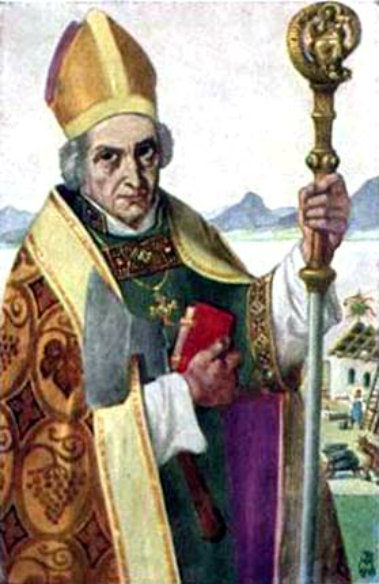
Saint of the Day – 29 September – Blessed Jean de Montmirail / Baron de Montmirail, O. Cist. (1165 – 1217) Cistercian Monk, Apostle of the Sick and Afflicted – also known as Seigneur de Montmirail on the Marne, John de Monte Mirabiliborn – born in 1165 in France and died on 29 September 1217 at Longpoint abbey of natural causes, where his tomb now resides.
Blessed Jean was the son of André de Montmirail, Lord of Montmirai and Hildiarde d’Oisy of Cambrai. He was given a religious upbringing by his mother and was well educated. He became the first Lord of Condé.
While young, he embraced a military career and was presented at the Royal Court, as constable of France, where he formed a lasting friendship with Philip Augustus (who later became King Philip II of France). He became, not only the friend and favourite of the King but also later his adviser. On one occasion, Jean was even said to have saved Philip’s life. The dissipations of court life led him to neglect the training of his youth, even his marriage with Helvide de Dampierre, sister of Guy II of Dampierre, failed to effect a change. King Philip II later decorated him with the title of Baron.
In his thirtieth year he met Jobert, Prior of St-Etienne de Montmirail and experienced a conversion. He built a hospital for the sick of all kinds but the objects of his predilection were the lepers and those hopelessly afflicted. He wore a hair-shirt, frequently passing entire nights in prayer. After a while, he entered the Cistercian monastery of Longpont, after having distributed among the poor all his possessions not needed by his wife and family. He was abused for his decision by his former friends. Even members of his own family disapproved of his abandonment of honour and wealth for poverty and subjection.
He died at Longpont on 29 September 1217.
Miracles were wrought at his tomb and attracted pilgrims. By the 1230s, John was being venerated as a miracle-working saint. Pope Leo XIII granted a special office in his honour for the diocese of Soissons. He was Beatified in 1891 by Pope Leo XIII. Below is his tomb and an engraving of his Mausoleum – 1641.
Bl Alericus
St Anno of Eichstätt
St Casdoe of Persia
St Catholdus of Eichstätt
Bl Charles of Blois
St Dadas of Persia
St Diethardus of Eichstätt
St Fraternus of Auxerre
St Gabdelas of Persia
St Grimoaldus of Pontecorvo
St Gudelia
St Guillermo Courtet Bl Jean de Montmirail / Baron de Montmirail, O. Cist. (1165 – 1217)
Bl John of Ghent
St Lazaro of Kyoto
St Liutwin of Trier Bl Luigi Monza (1898 – 1954) Biography:
St Miguel de Aozaraza
St Quiriacus of Palestine
St Rene Goupil
St Rhipsime
Bl Richard Rolle
St Sapor of Persia
St Theodota of Thrace
St Vicente Shiwozuka de la Cruz
—
Martyrs of Thrace – 3 saints: Three Christian men murdered in Thrace for their faith. They are – Eutychius, Heracleas and Plautus.
Martyred in the Spanish Civil War:
• Blessed Antonio Arribas Hortigüela
• Blessed Antonio Martínez López
• Blessed Dario Hernández Morató
• Blessed Francesc de Paula Castelló Aleu
• Blessed Francisco Edreira Mosquera
• Blessed José Villanova Tormo
• Blessed Pau Bori Puig
• Blessed Vicente Sales Genovés
• Blessed Virgilio Edreira Mosquera
Thought for the Day – 28 September – The Memorial of St Lorenzo Ruiz (1600-1637) Martyr
Excerpt from the Beatification Homily of
St Pope John Paul
Wednesday, 18 February 1981
“The Lord Jesus by His blood truly redeemed His servants, gathered from every race, tongue, people and nation, to make them a royal priesthood for our God. The sixteen blessed martyrs, by the exercise of their priesthood—that of baptism or of Holy Orders—performed the greatest act of worship and love of God by the sacrifice of their blood united with Christ’s own Sacrifice of the Cross. In this way they imitated Christ the priest and victim in the most perfect way possible for human creatures. It was at the same time an act of the greatest possible love for their brethren, for whose sake we are all called to sacrifice ourselves, following the example of the Son of God who sacrificed Himself for us.
4. This is what Lorenzo Ruiz did. Guided by the Holy Spirit to an unexpected goal after an adventurous journey, he told the court that he was a Christian and must die for God and wοuld give his life for him a thousand times!
(Had I many thousands of lives I would offer them all for him.
Never shall I apostatise.
You may kill me if that is what you want. To die for God—such is my will.)
Here we have him summed up, here we have a description of his faith and the reason fοr his death. It was at this moment that this young father of a family, professed and brought to completion, the Christian catechesis that he had received in the Dominican Friars’ school in Binondo, a catechesis that cannot be other than Christ-centred, by reason both of the mystery it contains and the fact that it is Christ who teaches through the lips of His messenger.
5. The example of Lorenzo Ruiz, the son of a Chinese father and Tagala mother, reminds us that everyone’s life and the whole of one’s life must be at Christ’s disposal. Christianity means daily giving, in response to the gift of Christ who came into the world so that all might have life and have it to the full. Or, as so aptly expressed in the theme of my visit to this country – To die for the faith is a gift to some, to live the faith is a call for all.
Dearly beloved, amidst the efforts needed for our own Christian lives and for spreading the light of Christ throughout Asia and the whole world, let us look today to these zealous martyrs who give us deep assurance and fresh hope when they tell us – “In all this we are more than conquerors because of him who has loved us.” And this is the mystery we celebrate today – the love of Jesus Christ, who is the light of the world. Amen.”
One Minute Reflection – 28 September – Saturday of the Twenty-fifth week in Ordinary Time, Year C, Gospel: Luke 9:43–45 and the Memorial of St Lorenzo Ruiz (1600-1637) Martyr
“Let these words sink into your ears, for the Son of man is to be delivered into the hands of men.” But they did not understand this saying and it was concealed from them ... Luke 9:44-45
REFLECTION – “Of all Christ’s miracles and mighty acts, it is this one that far exceeds the limits of human wonder. It goes far beyond the weak power of the human mind to perceive or comprehend, how it is supposed to believe, that the divine majesty, that very Word of the Father (Jn 1:1) and Wisdom of God in which “all things were created, visible and invisible” (cf. Col 1:15), was held within the confines of the man who appeared in Judaea and, even more, that the Wisdom of God entered into the womb of a woman and was born a baby, who cried and wailed just like all little babies. And it is further reported that He suffered the anguish of death, as He Himself admitted by saying: “My soul is very sorrowful, even to death” (Mt 26:38 par) and in the end, He was led to that death which is reputed to be the most shameful among men, even though he did rise again on the third day…
To present this to human ears and explain it in words far surpasses our poor merits… Indeed the explanation of this mystery is probably beyond the grasp even of the whole creation of heavenly powers.” … Origen (c 185-253) Priest, Theologian, Father – Treatise on First Principles
PRAYER – Holy God, help me to amend my life constantly and be sincerely converted to You. Let me seek Your interests rather than my own and be ever more closely united with You. Send Your Spirit of understanding to enkindle our minds but most of all, fill us with Your grace of faith, that whether we understand or not, our love and obedience, is our only guide. St Lorenzo Ruiz, you obeyed to death for Christ, your beloved, please pray for us. We make our prayer through Christ our Lord, in the unity of the Holy Spirit, God for all eternity, amen.
Saint of the Day – 28 September – St Lorenzo Ruiz (1600-1637) First Saint and Protomartyr of the Philippines – Layman, Husband and Father, Marian devotee – born in 1600 at Binondo, Manila, Philippines and died on 29-30 September 1637 at Nagasaki, Japan by being crushed over a period of three days while hanging upside down. Patronages – The Philippines, Filipinos, Overseas Filipino Workers and migrant workers, the poor, separated families, Filipino youth, Chinese-Filipinos, Filipino Altar servers, Tagalogs, Archdiocese of Manila.
Lorenzo Ruiz was born in Binondo, Manila, to a Chinese father and a Filipino mother who were both Catholic. His father taught him Chinese while his mother taught him Tagalog.
Ruiz served as an altar boy at the Binondo Church. After being educated by the Dominican friars for a few years, Ruiz earned the title of escribano (calligrapher) because of his skilful penmanship. He became a member of the Confraternity of the Most Holy Rosary. He married Rosario, a native and they had two sons and a daughter. The Ruiz family led a generally peaceful, religious and content life.
In 1636, whilst working as a clerk for the Binondo Church, Ruiz was falsely accused of killing a Spaniard. Ruiz sought asylum on board a ship with three Dominican priests – Saint Antonio Gonzalez, Saint Guillermo Courtet, and Saint Miguel de Aozaraza; a Japanese priest, Saint Vicente Shiwozuka de la Cruz and a lay leper, Saint Lázaro of Kyoto. Ruiz and his companions sailed for Okinawa on 10 June 1636, with the aid of the Dominican fathers.
The Tokugawa Shogunate was persecuting Christians by the time Ruiz had arrived in Japan. The missionaries were arrested and thrown into prison and after two years, they were transferred to Nagasaki to face trial by torture. The group endured many and various cruel methods of torture.
On 27 September 1637, Ruiz and his companions were taken to Nishizaka Hill, where they were tortured by being hung upside-down over a pit. This form of torture was known as tsurushi in Japanese or “gallows and pit” in Spanish. The method, alleged to have been extremely painful, had the victim bound, one hand was always left free so that the individual may signal their desire to recant, leading to their release. Despite his suffering, Ruiz refused to renounce Christianity and died from eventual blood loss and suffocation. His body was cremated, with the ashes thrown into the sea.
According to Latin missionary accounts sent back to Manila, Ruiz declared these words upon his death:
Ego Catholicus sum et animo prompto paratoque pro Deo mortem obibo. Si mille vitas haberem, cunctas ei offerrem.
I am a Catholic and wholeheartedly do accept death for God. Had I a thousand lives, all these to Him shall I offer.
St Lorenzo was Beatified on 18 February 1981, during St Pope John Paul II’s papal visit to the Philippines. It was the first beatification ceremony to be held outside the Vatican in history. He was Canonised by the same pope at the Vatican on 18 October 1987, making him the first Filipino saint. The Canonisation miracle involved the healing Cecily Alegriae Policarpio from cerebral paralysis.
Msgr Charles Pope – My recitation of the old carol:
Bl Aaron of Auxerre
St Alodius of Auxerre
St Annemond of Lyons
St Bardomianus
Bl Bernardine of Feltre
St Chariton of Palestine
Bl Christian Franco
St Conval of Strathclyde
St Eucarpus
St Eustochium
St Exuperius of Toulouse
St Faustus of Riez
St John of Dukla
St Laurence of North Africa
St Lioba of Bischofsheim
St Machan
St Martial of North Africa
St Martin of Moyenmoutier
St Paternus of Auch
St Privatus of Rome
St Salonius of Geneva
St Silvinus of Brescia St Simón de Rojas O.SS. (1552-1624) Apostle of the Ave Maria About St Simon: https://anastpaul.com/2018/09/28/saint-of-the-day-28-september-st-simon-de-rojas-o-ss-1552-1624-father-ave-maria-apostle-of-the-ave-maria/
St Solomon of Genoa
St Stacteus
St Tetta of Wimborne
Bl Thiemo
St Willigod of Moyenmoutier
St Zama of Bologna
—
Augustinian Martyrs of Japan: The first Augustinian missionaries arrived in Japan in 1602 and met with immediate success; many were brought to the faith; many of them became Augustinians; and many of them were martyred in the periodic persecutions of Christians. This memorial commemorates all of them, whether they have a sanctioned Cause for Canonisation or not. They include:
• Blessed Bartolomé Gutiérrez Rodríguez
• Blessed Ferdinand Ayala
• Blessed Francisco Terrero de Ortega Pérez
• Blessed Ioannes Mukuno Chozaburo
• Blessed Laurentius Kaida Hachizo
• Blessed Mancius Yukimoto Ichizaemon
• Blessed Martín Lumbreras Peralta
• Blessed Melchor Sánchez Pérez
• Blessed Michaël Ichinose Sukezaemon
• Blessed Pedro de Zúñiga
• Blessed Petrus Sawaguchi Kuhyoe
• Blessed Thomas Jihyoe of Saint Augustine
• Blessed Thomas Terai Kahyoe
• Blessed Vicente Simões de Carvalho
• Saint Magdalena of Nagasaki
Martyrs of Antioch – 37 saints: A group of 30 soldiers and 7 civilians who were murdered together for their faith. The names that have come down to us are – Alexander, Alphinus, Heliodorus, Mark, Neon, Nicon and Zosumus. c 303 at Antioch, Pisidia (in modern Turkey).
Martyrs of China – 120 saints: A common memorial for the hundreds of the faithful, lay and clergy, who have died for their faith in the last couple of centuries in China. They were Canonised on 1 October 2000 by Pope John Paul II.
Martyred in the Spanish Civil War:
• Blessed Amalia Abad Casasempere de Maestre
• Blessed Francesc Xavier Ponsa Casallach
• Blessed Josep Casas Juliá
• Blessed Josep Casas Ros
• Blessed Josep Tarrats Comaposada
• Blessed María Fenollosa Alcaina
Thought for the Day – 27 September – The Memorial of St Vincent de Paul C.M. (1581-1660)
Serving the Poor is to be Our First Preference
Saint Vincent de Paul
Priest and Founder
An excerpt from a Writing by St Vincent de Paul
Even though the poor are often rough and unrefined, we must not judge them from external appearances nor from the mental gifts they seem to have received. On the contrary, if you consider the poor in the light of faith, then you will observe that they are taking the place of the Son of God who chose to be poor. Although, in His passion He almost lost the appearance of a man and was considered a fool by the Gentiles and a stumbling block by the Jews, He showed them that His mission was to preach to the poor: He sent me to preach the good news to the poor. We also ought to have this same spirit and imitate Christ’s actions, that is, we must take care of the poor, console them, help them, support their cause.
Since Christ willed to be born poor, He chose for Himself, disciples who were poor. He made Himself the servant of the poor and shared their poverty. He went so far as to say, that He would consider every deed which either helps or harms the poor, as done for or against Himself. Since God surely loves the poor, He also loves those who love the poor. For when one person holds another dear, He also includes in His affection, anyone who loves or serves the one He loves. That is why we hope, that God will love us for the sake of the poor. So when we visit the poor and needy, we try to understand the poor and weak. We sympathise with them so fully, that we can echo Paul’s words: I have become all things to all men. Therefore, we must try to be stirred by our neighbours’ worries and distress. We must beg God to pour into our hearts sentiments of pity and compassion and to fill them again and again, with these dispositions.
It is our duty to prefer the service of the poor to everything else and to offer such service as quickly as possible. If a needy person requires medicine or other help during prayer time, do whatever has to be done with peace of mind. Offer the deed to God as your prayer. Do not become upset or feel guilty because you interrupted your prayer to serve the poor. God is not neglected if you leave Him for such service. One of God’s works is merely interrupted, so that another can be carried out. So when you leave prayer to serve some poor person, remember, that this very service is performed for God. Charity is certainly greater than any rule. Moreover, all rules must lead to charity. Since she is a noble mistress, we must do whatever she commands. With renewed devotion, then, we must serve the poor, especially outcasts and beggars. They have been given to us as our masters and patrons.
Quote/s of the Day – 27 September – The Memorial of St Vincent de Paul C.M. (1581-1660)
“However great, the work that God may achieve by an individual, he must not indulge in self-satisfaction. He ought, rather, to be all the more humbled, seeing himself merely as a tool, which God has made use of.”
“Humility and charity are the two master-chords – one, the lowest, the other, the highest, all the others are dependent on them. Therefore, it is necessary, above all, to maintain ourselves in these two virtues, for observe well, that the preservation of the whole edifice, depends on the foundation and the roof. “
“We have never, so much cause for consolation, as when we find ourselves oppressed, by sufferings and trials, for these make us like Christ our Lord and this resemblance, is, the true mark, of our predestination.”
One Minute Reflection – 27 September – Friday of the Twenty Fifth week in Ordinary Tim, Year C, Gospel: Luke 9:18–22 and the Memorial of St Vincent de Paul (1581-1660)
“The Son of man must suffer many things and be rejected by the elders and chief priests and scribes and be killed and on the third day be raised.”... Luke 9:22
REFLECTION – “The scene found n the Gospel reading forms a climax of the Synoptic Gospels. It constitutes the watershed in Jesus’ life. To this point, in accord with the mission given Him by the Father, He has acted messianically and has aroused a sense of who He is, especially in His disciples. Because the shift that takes place in this scene is so important, Luke places it in the context of a prayer of Jesus in solitude. By asking His disciples about His identity, He takes the opportunity to reveal the core of His mission.
Yet, the people’s perception of who He is, is so imperfect, that He cannot use it as a point of departure. Peter’s statement, “you are the Messiah of God” hits the target, yet Peter’s image of the Messiah remains an Old Testament and contemporary one – the Messiah as Israel’s liberator. That is why Jesus forbids them to use the title and, more profoundly, that is why He lays out clearly, what is the true task of the Messiah – to be rejected, to die, to rise again. So that this will not be received as some sort of incomprehensible, mythological event, He immediately explains it’s implications for anyone who wishes to be His disciple – “Take up your cross daily” and “follow” the Messiah in this way.
The required faith embraces the act it includes – discipleship – but not by scheming to gain something – rather, by unconditional loss: “Whoever loses his life for my sake … ” … Cardinal Han Urs von Bathasar (1905-1988)
PRAYER – Lord God, You hold out the Light of Your Word to those who do not know You. Strengthen in our hearts, the faith You have given us and the Credo we profess, so that no trials may quench the fire Your Spirit has kindled in us. May the intercession of St Vincent de Paul, grant us the grace of following the way of the Cross, to stand beneath it with our Mother, the Mother of God, Ave Maria! We make our prayer through Jesus Christ with the Holy Spirit, one God forever, amen.
Our Morning Offering – 27 September – The Memorial of St Vincent de Paul (1581-1660)
Lord, Teach me How to Pray By St Vincent de Paul
Oh Lord,
You selected the poor
and simple people to be Your Apostles.
Look upon Your poor servant
kneeling before You now.
I recognise that I am simple and poor too.
Dear Lord, please teach me how to pray
as You taught Your disciples
upon their humble request.
If it pleases You in Your goodness
to grant me that grace,
I shall be able to pray well
and much better
than I could ever could hope for
if left to my own efforts.
Lord, I trust that You will bless me
with the fulfilment of this request.
Amen
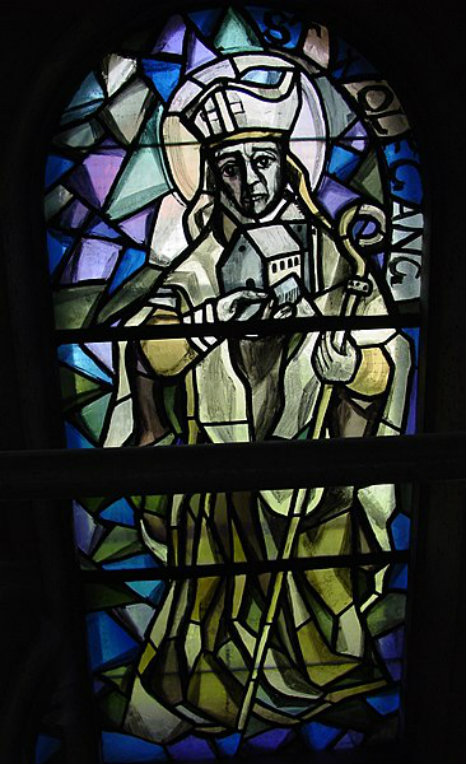
Saint of the Day – 27 September – Blessed Lorenzo of Ripafratta OP (c 1373-1456) Dominican Priest and Friar, Penitent, Vicar General, Teacher, Reformer, brilliant Preacher and Spiritual director – known as “the Ark of Science” – born in c 1373 in Ripafratta, Italy and died in 1456 in Pistoia, Tuscany, Italy of natural causes.
Lorenzo was born into a noble Italian family, who had a military history and a duty to protect the outer defences of the city of Pisa, Italy. Lorenzo, however, was drawn to the religious life, began studying for the priesthoo, and while a deacon, he joined the Dominicans at the convent of Saint Catherine in Pisa in 1396.
He worked for reform of the Dominicans and encouraged his brother friars in their studies, prayer life and devotion to the Rule. Lorenzo served as novice master, spiritual director and preacher and taught theology – his novices and students include Saint Antonius of Florence, Blessed Peter Cappuci, Blessed Fra Angelico and the artist Fra Benedetto.
In 1396, he was appointed prior, a position in which he excelled. His zeal and love for th Order led him to almost easily inspire all his fellow Dominicans to work towards the reform of the order. He was a novice and theology teacher at the convent of Cortona. Without fear of being infected, he helped the sick during the plague that struck the cities of Pistoia and Fabriano.
Because of his wisdom, the people called him the Ark of Science. He set an example to his congregation brothers and parishioners with his life of prayer, fasting, penance and devotion. He suffered a leg injury, which painfully accompanied him for the rest of his life. By the example of his silent and patient suffering – which he offered to God, the admiration and affection of the religious and the people increased. Loved by his community, he died in Pistoia, where his body is still venerated.
Father Lorenzo served for 60 years, lived a simple, ascetic life and was particularly devoted to the sacrament of Penance and Reconciliation.
He died on 27 September 1456 and was buried at the Dominican church in Pistoia. Many miracles were reported at his tomb. He was Beatified in 1851 by Pope Pius IX, via the confirmation of his cultus.
St Adheritus
St Adolphus of Cordoba
St Antonio de Torres
St Barrog the Hermit
St Bonfilius of Foligno
St Ceraunus of Paris
St Chiara of the Resurrection
St Delphine
St Deodatus of Sora
St Elzear
St Epicharis
St Fidentius of Todi
St Florentinus the Hermit
St Gaius of Milan
St Hilary the Hermit
St Hiltrude of Liessies
Bl Jean-Baptiste Laborie du Vivier
St John of Cordoba Blessed Lorenzo of Ripafratta OP (c 1373-1456)
St Marcellus of Saint Gall
St Terence of Todi
—
Martyrs of Aegea – (3 saints)
Martyred in the Spanish Civil War:
• Blessed Crescencia Valls Espí
• Blessed Herminia Martínez Amigó de Martínez
• Blessed José Fenollosa Alcaina
• Blessed Maria Carme Fradera Ferragutcasas
• Blessed Maria Magdalena Fradera Ferragutcasas
• Blessed Maria Rosa Fradera Ferragutcasas
Thought for the Day – 26 September – The Memorial of Saints Cosmas and Damian (Died c 286) Martyrs
Who were Cosmas and Damian? Tradition has it that they were twin brothers, Arabs by rac, and physicians, practising their profession without claiming payment from their patients. Hence they were known as the “moneyless” or “unmercenary” physicians. The lesson formerly read at Matins has this lovely line: “Not more by their knowledge of medicine than by the power of Christ, they healed diseases which had been hopeless for others.”
Ultimately, Cosmas and Damian gave their lives in witness to the Divine Physician Christ. They were honoured first in the East and by the sixth century they had their own basilica in Rome where they were depicted in mosaics which can still be seen today.
It is no surprise that Cosmas and Damian came to be invoked as the patron saints of physicians, surgeon, and other health care givers. For this reason, I remember today, all the physicians and nurses who have cared for us in the past and who care for us now.
In some way we are, all of us, ‘moneyless’ health care givers. There is a long tradition of this — an apostolic one, in fact. Remember Saint Peter saying at the “gate which is called Beautiful” (Ac 3:2) “I have no silver or gold, but I give you what I have” (Ac 3:6). Peter then offered healing in the name of Jesus Christ of Nazareth.
The charism of healing may not given to all but the word of comfort, the word of the Lord that dispels fear and brings assurance, is something that each of us can offer. Holy Father Benedict, speaking of the cellarer of the monastery, says that, “a good word is above the highest gift” (RB 31:14). If words can wound, bringing suffering, they can also heal, bringing light and peace.
The words that bring us together, day after day for the Holy Sacrifice of the Mass — “This is my Body which will be given up for you,” and “This is the cup of my Blood” — are words of healing. They come forth from the mouth of the Divine Physician, moneyless and unmercenary who, “though he was rich, yet for your sake became poor, so that by his poverty you might become rich” (2 Cor 8:9). (Fr Mark of Silverstream Priory)
One Minute Reflection – 26 September – Thursday of the Twenty Fifth week in Ordinary Time, Year C, Gospel: Luke 9:7–9 and The Memorial of Saints Cosmas and Damian (Died c 286) Martyrs
“Who is this about whom I hear such things?” And he sought to see him. … Luke 9:9
REFLECTION – “You cannot know Jesus without having problems. You cannot know Jesus “by sitting in first class” or “in the calm”, much less “in the library.” We only come to know Jesus on the daily path of life. … knowing Him with the mind is a step in the right direction but in order to know Jesus, we need to enter into a dialogue with Him. By talking with Him, in prayer, on our knee s. If you don’t pray, if you don’t talk to Jesus, you don’t know Him. The third way to know Jesus is by following Him, by going with Him, by walking with Him, by travelling along the road of His ways. If you know Jesus with these three languages – of mind, heart and action, then you can say that you know Jesus. Therefore, in order truly to know Him, it is necessary to read what the Church tells us about Him, to speak with Him in prayer and to walk along the path of His ways with Him. This is the road and everyone has a decision to make.”
PRAYER – Holy God, through our Lord Jesus Christ Your Son in union with the Holy Spirit, with Mary Mother of the Church, St Joseph her spouse, the communion of Saints, we pray, be with us, lead us, guide us, never leave us. May we learn the ways of Your Son, may we follow them and may we constantly seek His Face in prayer and the Sacraments. Grant we pray, that by the intercession of Sts Cosmas and Damian, we may be filled with courage and joy as we follow behind Him. We make our prayer through Christ our Lord, with the Holy Spirit, God forever, amen.
Saints of the Day – 26 September – Saints Cosmas and Damian (Died c 286) Martyrs, Twin brothers and Physicians, Apostles of Charity, Evangelists – born in the 3rd century, of Arabic descent and died by being tortured, without suffering any injury and finally they were beheaded c 286 in Aegea, Cilicia (modern Ayas, Turkey). They practised their profession in the seaport of Aegeae, then in the Roman province of Syria. Patronages – surgeons, physicians, dentists, protectors of children, barbers, pharmacists, veterinarians, orphanages, day-care centres, confectioners, children in house, against hernia, against the plague, midwives, Alberobello, Italy, Ossimo, Italy.
Their charity and Christian witness won many converts to the faith and earned them a place of prominence in the Christian communities of Asia Minor. Therefore, when the Diocletian persecutions began in the latter half of the third century they were of some of the first to be sought out for execution.
Cosmas and Damian were twin brothers, born in Arabia, who went to Syria to study and practice medicine. But they were concerned about more than healing bodies. They brought their belief in Christ to those to whom they ministered. Not only that but they also served people without charging any fees. Lysias, the governor of Celicia, heard about these two brothers and he summoned them before him. When Cosmas and Damian proclaimed they were Christians, Lysias had them tortured and finally beheaded.
Cosmas and Damian miraculously transplant the black leg of the Ethiopian onto the white body of the patient.
Devotion to these two brothers grew and many cures were said to have been worked through their intercessions. Later a church in their honour was constructed over the site of their burial. When the Emperor Justinian was sick, he prayed to Saints Cosmas and Damian for a cure. Out of gratitude for receiving this favour, he enlarged the city of Cyr and its church. Numerous other churches were erected for them at Constantinople and Rome. Nine centuries later, St Francis of Assisi rebuilt the dilapidated San Damiano chapel outside Assisi.
Pope Felix IV presents Saints Cosmas and Damian with the Basilica he re-dedicated to them.
The veneration of Cosmas and Damian quickly spread, accounts of their martyrdom were written by various authors such as St Andrew of Crete, Peter of Argos, Theodore II Laskaris, and a certain Maximus around 1300. The legends are preserved also in Syriac, Coptic, Georgian, Armenian and Latin.
The martyr twins are remembered in the Roman Canon of the Mass in the prayer known as the Communicantes (from the first Latin word of the prayer). They are also recalled in the Litany of the Saints and in the older form of the Roman rite, in the Collect for Thursday in the Third Week of Lent, as the station church for this day is Santi Cosma e Damiano.
If so little about these saints is actually known, why do we honour them? Part of the answer can be found in tradition. When so many believers continue to honour the memory of martyrs, year after year and all over the world, there is good reason to believe that their lives were true witnesses to the Gospel. People who live and die according to their convictions and faith, give hope to the world long after their deaths. Their lives can inspire us and encourage us to be faithful during our little trials and sorrows.
St Senator of Albano
St Vigilius of Brescia
—
Martyrs of Korea – 12 saints: Twelve lay people in the apostolic vicariate of Korea who were imprisoned, tortured and martyred together in the persecutions in Korea.
• Saint Agatha Chon Kyong-Hyob
• Saint Carolus Cho Shin-Ch’ol
• Saint Catharina Yi
• Saint Columba Kim Hyo-Im
• Saint Ignatius Kim Che-Jun
• Saint Iulitta Kim
• Saint Lucia Kim
• Saint Magdalena Cho
• Saint Magdalena Ho Kye-Im
• Saint Magdalena Pak Pong-Son
• Saint Perpetua Hong Kum-Ju
• Saint Sebastianus Nam I-Gwan
They were beheaded September 1839 in Seoul Prison, South Korea and Canonised on 6 May 1984 by St Pope John Paul II.
Martyred in the Spanish Civil War:
• Blessed Amalia Abad Casasempere de Maestre
• Blessed Andreu Felíu Bartomeu
• Blessed Antonio Cid Rodríguez
• Blessed Josefa Romero Clariana
• Blessed Manuel Legua Martí
• Blessed María Jord´ Botella
• Blessed Pau Castell´ Barber´
• Blessed Teresa Rosat Balasch
Thought for the Day – 25 September – The Memorial of Blessed Herman of Reichenau/the Cripple OSB (1013–1054) the Author of the Salve Regina
THE “SALVE, REGINA” RECEIVES AN ADDITION
In the year 1146 Saint Bernard, the illustrious doctor of the Church and abbot of Clairvaux, was travelling through Germany and by the power of his eloquence was rousing the people of that country to the necessity of entering upon another crusade, a spirited one, in order to wrest from the iron grasp of the heathens those places in Palestine that had been sanctified by the footsteps and moistened with the blood, of our holy Redeemer.
Passing from Switzerland, by way of Strasbourg, Saint Bernard sailed down the river Rhine and landed at Spire, on Christmas Eve, 1146. In a grand procession, composed of the civic societies and trades unions, with their banners waving in the air and holding lighted tapers in their hands, followed in turn by the clergy with their bishop clad in pontifical robes, Saint Bernard was conducted, amid every sign of respect from the multitudes who lined the streets of the city, to the majestic cathedral.
Here, amid the chant of the choristers and the joyful pealing of the bells, the great preacher of the holy wars was met by the Emperor Conrad and all the royal princes of the court, who tendered to their illustrious guest the welcome of their realm.
It was a scene of great magnificence as the saint crossed the threshold of the sacred edifice. Thousands had to remain outside the building, for the saint’s great reputation for sanctity and the fame of the wondrous miracles that he had wrought, as well as his renowned eloquence, had drawn vast crowds from far and near, eager to get a glimpse of his venerable person.
As the solemn procession, preceded by the cross and other standards, marched slowly up the grand aisle of the cathedral, a choir of a thousand voices chanted the hymn, “Salve, Regina,” or “Hail, holy Queen.” The lofty vaults of the sacred edifice spanning many altars ablaze with a thousand lights, the soldierly form of the emperor, the venerable mien of the holy bishops, the long files of white-robed priests, the vast crowds of admiring people, the inspiring strains of the music and all this but the expression of truly Catholic hearts, over-powered the soul of Saint Bernard with emotions of intense gratitude to God and His blessed Mother.
The altar was reached as the singers’ voices repeated the last words of the “Salve, Regina.” A profound silence ensued as the words, “Et Jesum, benedictum fructum ventris tui, nobis post hoc exilium ostende” – that is, “Show unto us the blessed fruit of thy womb, Jesus,” died away. In a moment of inspiration, and overwhelmed with the loftiest sentiments of piety towards the Blessed Virgin, the great Saint Bernard, in thrilling tones, exclaimed spontaneously, “O clemens, O pia, O dukis Virgo Maria!” that is, “O element, O loving, O sweet Virgin Mary!”
From that moment the “Salve, Regina” continued to have a new ending. The love-breathing words of Saint Bernard, the honey-tongued doctor, as holy Church styles him, were universally adopted and added, with a will by all, to the “Salve, Regina” originally composed by Blessed Herman the Cripple.
They form a beautiful and fitting ending to a beautiful apostrophe to the Mother of God. In the cathedral at Spire, every day, from that time till our day, the “Salve, Regina” is sung solemnly in memory of the events so sacred which led to the inspired composition of its present ending and in memory of the saint who uttered the beautiful words.
Salve Regina, Pray for us, O Holy Mother of God!
V Pray for us, O holy Mother of God,
℟ that we may be made worthy
of the promises of Christ.
Blessed Herman, Pray for Us!
St Bernard, Pray for us!
Quote/s of the Day – 25 September – The Memorial of Blessed Herman of Reichenau/the Cripple OSB (1013–1054) the Author of the Salve Regina, the Veni Sancte Spiritus and the Alma Redemptoris Mater
Let us thank God for Blessed Herman the Cripple. He stands as a shining light reminding us that God purposely chose what the world considers nonsense, in order to shame the wise and He chose what the world considers weak, in order to shame the powerful. He chose what the world looks down on and despises and thinks is nothing, in order to destroy what the world thinks is important.
Rather, God chose the foolish of the world, to shame the wise and God chose the weak of the world, to shame the strong and God chose the lowly and despised of the world, those who count for nothing, to reduce to nothing those who are something ….
1 Corinthians 1:27-28
“In his own day, the heroic cripple who achieved learning and holiness
was called ‘The Wonder of His Age’.
In our day, many voices say
that people with disabilities.
should be phased out of existence.
Which were the Dark Ages, then or now!” … Father McNamara
Veni Sancte Spiritus This translation was by Father Edward Caswall (1814-1878)
Holy Spirit, Lord of light,
From Thy clear celestial height
Thy pure beaming radiance give.
Come, Thou Father of the poor,
Come with treasures which endure,
Come, Thou Light of all that live.
Thou, of all consolers best,
Thou, the soul’s delightsome Guest,
Dost refreshing peace bestow.
Thou in toil art comfort sweet,
Pleasant coolness in the heat,
Solace in the midst of woe.
Light immortal, Light divine,
Visit Thou these hearts of Thine,
And our inmost being fill.
If Thou take Thy grace away,
Nothing pure in man will stay;
All his good is turned to ill.
Heal our wounds; our strength renew;
On our dryness pour Thy dew;
Wash the stains of guilt away.
Bend the stubborn heart and will;
Melt the frozen, warm the chill;
Guide the steps that go astray.
Thou, on those who evermore
Thee confess and Thee adore,
In Thy sevenfold gifts descend:
Give them comfort when they die,
Give them life with Thee on high;
Give them joys that never end.
++++++++++++++++++
Alma Redemptóris Mater, quæ pérvia cæli Porta manes, et stella maris, succúrre cadénti, Súrgere qui curat pópulo: tu quæ genuísti, Natúra miránte, tuum sanctum Genitórem Virgo prius ac postérius, Gabriélis ab ore Sumens illud Ave, peccatórum miserére.
Mother of Christ! Hear thou thy people’s cry,
Star of the deep and portal of the sky!
Mother of Him Who thee from nothing made,
Sinking we strive and call to thee for aid;
Oh, by that joy which Gabriel brought to thee,
Thou Virgin first and last, let us thy mercy see.
One Minute Reflection – 25 September – Wednesday of the Twenty-fifth week in Ordinary Time, Year C, Gospel: Luke 9:1–6 and the Memorial of Blessed Herman of Reichenau/the Cripple OSB (1013–1054) “The Wonder of his Age’
And he called the twelve together and gave them power and authority over all demons and to cure diseases and he sent them out to preach the kingdom of God and to heal. … Luke 9:1-2
REFLECTION – “The other instruction that is very important in the Gospel passage is that the Twelve cannot simply preach conversion – along with preaching there must be, according to the orders and example of Jesus, curing of the sick. Cure of the physically and spiritually sick. He speaks of the concrete healings of illnesses and of the casting out of demons, that is, the purifying of the human mind, cleaning, cleaning the eyes of the soul that have been darkened by ideologies and so cannot see God, they cannot see truth and justice. This double physical and spiritual healing is always the mandate of Christ’s disciples. So, the apostolic mission must always carry these two aspects of preaching the word of God and manifesting His goodness with gestures of charity, service and dedication.” … Pope Benedict XVI 16 July 2012
PRAYER – O God of love, You sent Your beloved Son to the world to proclaim the Good News of Salvation, to heal every illness and to cure all infirmity of body and soul. Help us to continue the mission of the merciful Christ in the service towards our neighbour, preaching the Gospel and offering our help in whatever way we can. May the example of suffering of Blessed Herman the Cripple, teach us how to love and serve You. Through his intercession, grant us the grace to go forth in love. We ask this through Jesus Christ our Lord, with the Holy Spirit, one God forever, amen.
Our Morning Offering – 25 September – Wednesday of the Twenty-fifth week in Ordinary Time, Year C and the Memorial of Blessed Herman of Reichenau/the Cripple OSB (1013–1054) the Author of the Salve Regina
Salve Regina Hail Holy Queen By Blessed Herman the Cripple (1013–1054)
Hail, holy Queen, Mother of Mercy
Hail our life, our sweetness and our hope.
To thee do we cry,
Poor banished children of Eve,
To thee do we send up our sighs,
Mourning and weeping in this vale of tears.
Turn then, most gracious advocate,
Thine eyes of mercy toward us
And after this our exile,
Show unto us the blessed fruit of thy womb, Jesus
This line by St Bernard (1090-1153) Doctor of the Church O clement, O loving, O sweet Virgin Mary.
℣ Pray for us, O holy Mother of God,
℟ that we may be made worthy
of the promises of Christ.
Saint of the Day – 25 September – Blessed Herman of Reichenau/the Cripple OSB (1013–1054) Benedictine Monk, Confessor, Scholar, Scientist, Writer, Hymnist, Poet, Musical Composer, Teacher – born on 18 February 1013 at Altshausen, Swabia (in modern Germany) and died on 21 September 1054 at Reichenau abbey, Germany of natural causes. Also known as Hermann Contractus, Herimanus Augiensis, Hermann von Reichenau.
In his own day, the heroic cripple who achieved learning and holiness was called ‘The Wonder of His Age’. He composed works on history, music theory, mathematics and astronomy, as well as many hymns. Composer of the “Salve Regina” Hail Holy Queen, “Veni Sancte Spiritus” Come Holy Spirit and “Alma Redemptoris Mater” Nourishing Mother of the Redeemer. He was renowned as a religious poet and musical composer. Among his surviving works are officia for St Afra and St Wolfgang. When he went blind in later life, he began writing hymns and these have carried the Church and still do for a 1000 years in joy and glory!
Blessed Herman was the son of Count Wolverad II von Altshausen. Being a cripple (born with a cleft palate, cerebral palsy and possibly spina bifida – though today it is thought that he had amyotrophic lateral sclerosis or spinal muscular atrophy) from birth (hence the surname Contractus) he was powerless to move without assistance and it was only by the greatest effort that he was able to read and write but he was so highly gifted intellectually, that when he was but seven years of age his parents confided him to the learned Abbot Berno, on the island of Reichenau.
His great love and sincere devotion for the “Mother of the afflicted ” secured him peace of soul and even lightened his bodily sufferings. We are told, however, that he continued to pray to his beloved Mother for restoration to health and strength, if it should be pleasing to God. Pious legend informs us, that when he had prayed thus for some months, the Blessed Virgin appeared to him and offered him the choice between two gifts, namely, health or wisdom. Herman, without hesitating a moment, chose the gift of wisdom. He made a wise selection, for notwithstanding his bodily infirmities he became one of the most learned men of his time. Under the poor form of a deformed body there dwelt a noble soul, a clear and richly gifted intellect and a humble and charitable heart.
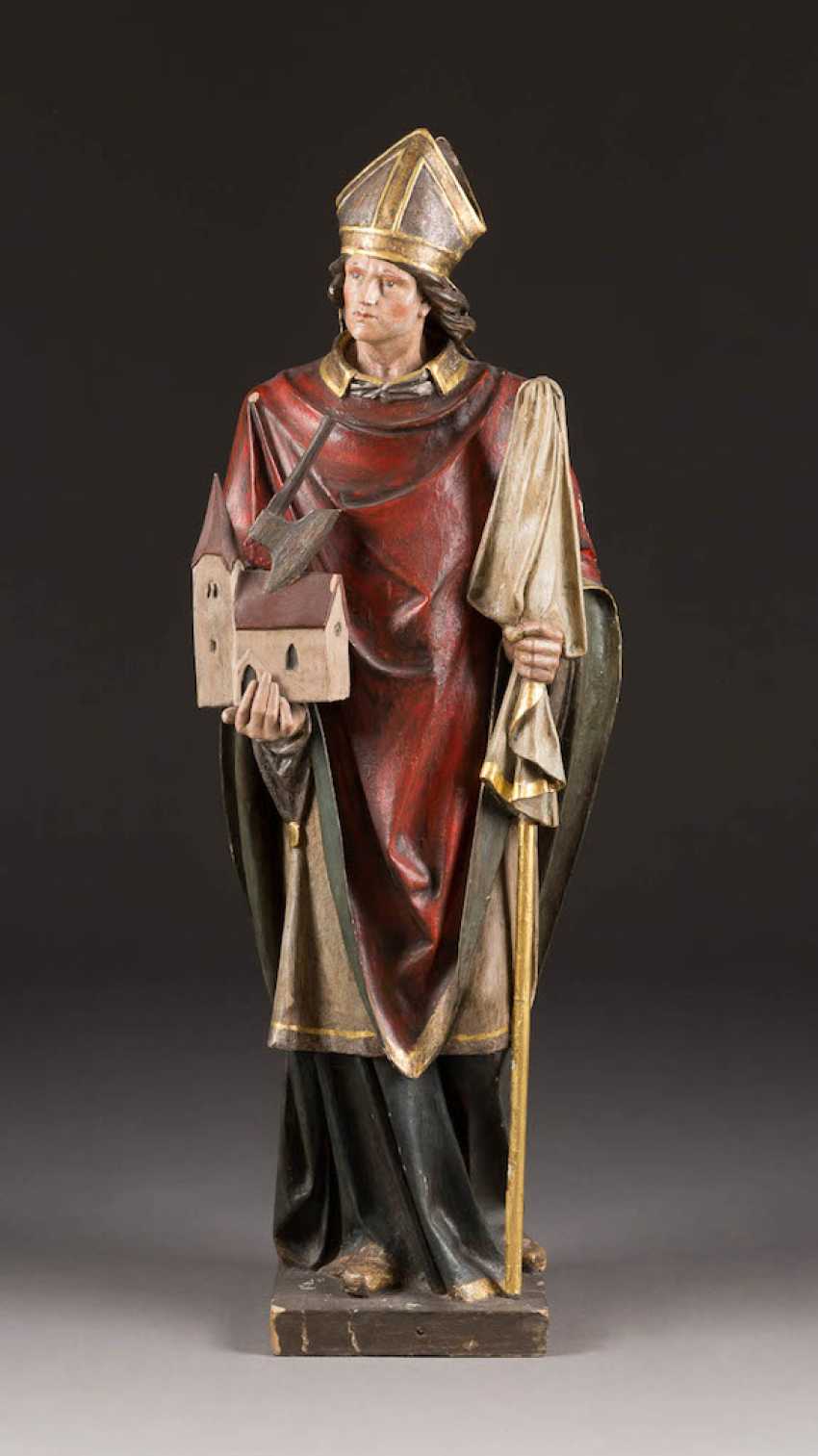
Herman spent his entire life in the monastery Reichenau as a teacher, researcher and musician. Herman was bound to a carrying chair and was completely dependent on his servants. He could only write with difficulty and one may assume that he has dictated a large part of his works. And even that might have been difficult, as his biographer writes that he could only speak with difficulty and was barely understandable. But if we are allowed to believe Berthold, his charisma, his cheerfulness and his modesty of intelligence were so impressive that everyone had to love him.
A good student of theology, he could also produce works of spiritual depth. For a readership of nuns he wrote a discourse “On the Eight Principal Vices.” It was cast in poetry and he handled the versification with great lyricism. He also knew how to give serious matters a light touch. The treatise for nuns was witty and he even began his world chronicle with a touch of self-depreciation: “Herman, the rubbish of Christ’s little ones, lagging behind the learners of philosophy more slowly than a donkey or a slug … ”
Herman was not just a music theoretician but, with that, he took on a special position – he himself created melodies – and he may be considered one of the first known composers of Gregorian chants. In contrast to the strict Gregorian chant, his music show an almost romantic melody. His “Salve Regina” is clearly the work of a master.
Herman gave instructions on how to measure the circumference of the earth at a time when there was not even clarity about the spherical shape of the earth. One of Herman’s inventions was the pillar sundial , which he called the horologium viatorum.
His iron will overcame all obstacles and it was not long before his brilliant attainments made him a shining light in the most diversified branches of learning, including, besides theology, mathematics, astronomy, music, the Latin, Greek and Arabic tongues. Students soon flocked to him from all parts, attracted not only by the fame of his scholarship but also by his monastic virtue and his lovable personality.
We are indebted to him chiefly for a chronicle of the most important events from the birth of Christ to his day. It is the earliest of the medieval universal chronicles now extant and was compiled from numerous sources, being a monument to his great industry as well as to his extraordinary erudition and strict regard for accuracy. While it is not improbable that this work was based on a previous state chronicle of Swabia, since lost (called “Chronicum Universale Suevicum”, or “Epitome Sangallensis”), it has nevertheless a significance entirely its own. But the full measure of his genius appears from the objectivity and clearness with which he wrote the history of his own time, the materials of which were accessible to him only by means of verbal tradition.
In later life he became blind and had to give up his academic writing.
He died on the island of Reichenau, Lake Constance, 21 September, 1054. He was Beatified in 1863 by Pope Pius IX.
Three of five symphonies that were written by Russian composer Galina Ustvolskaya are based on his texts.
You must be logged in to post a comment.