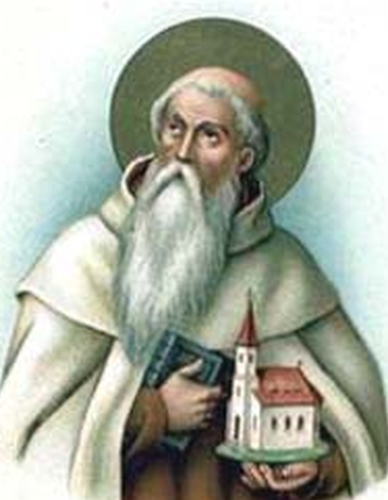
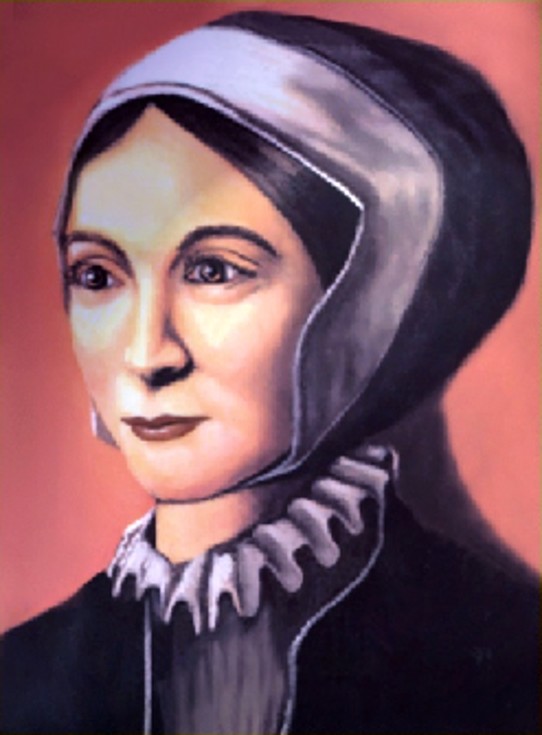
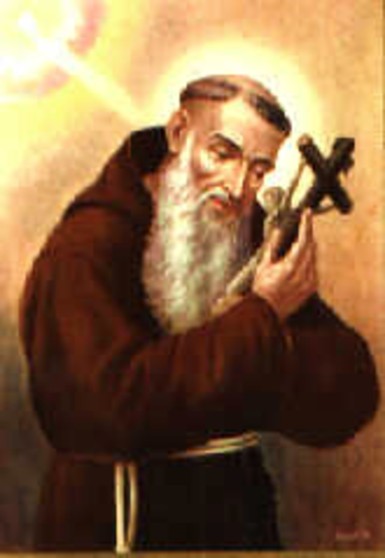
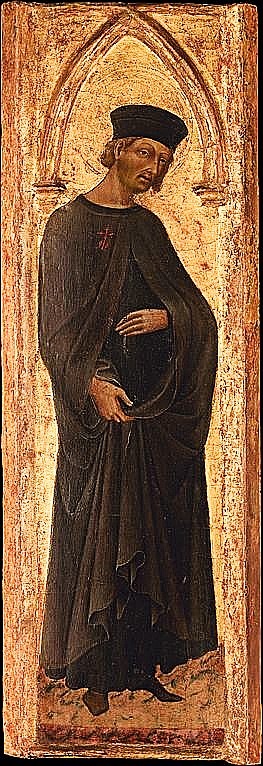
Saint of the Day – 18 March – Blessed Christian O’Conarchy (c1100-1186) O.Cist. Abbot, a disciple and then the Archdeacon of the renowned St Malacy O’More (1094 – 1148) , the Bishop and Confessor of Armagh, possibly also the Bishop of Lismore and the Papal Legate of all Ireland, although these latter Offices are unconfirmed. Born in c1100 at Bangor, County Down, Ireland and died in 1186 at Odorney Abbey, Ireland of natural causes. Also known as – Christianus, Giolla Criost Ua Condoirche.
Beyond the fact that Christian was the Abbot of the first Cistercian Monastery established in Ireland, practically nothing at all can be stated with certainty about his life.
The various traditions and legends are confused and conflicting. According to some accounts, he was born at Bangor in Ulster,and some reports say he was the disciple and then, the Archdeacon of St.Malachy the Bishop of Armagh. Christian probably accompanied the Prelate on a visit to Rome, visiting at Clairvaux on their way there.
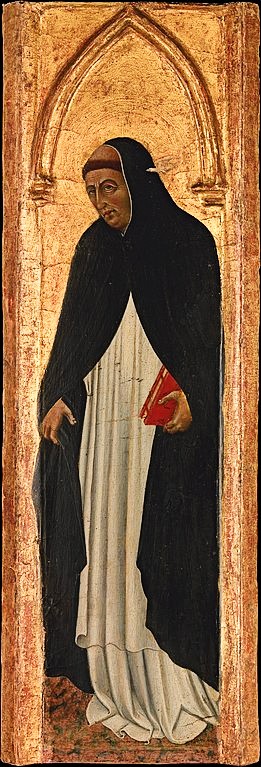
It is believed that Christian was one of the four disciples of St Malachy, who remained behind at Clairvaux on the homeward journey and who received the Habit from St Bernard himself.
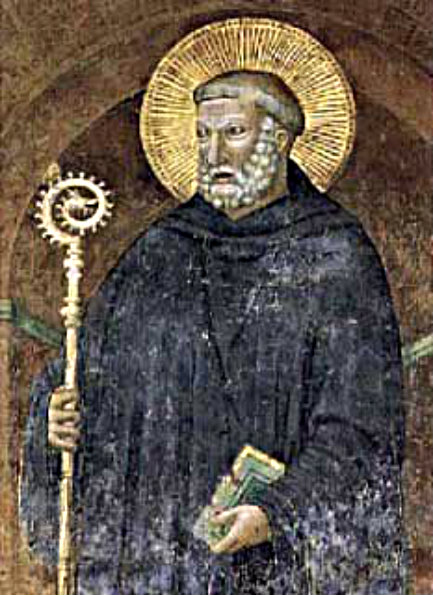
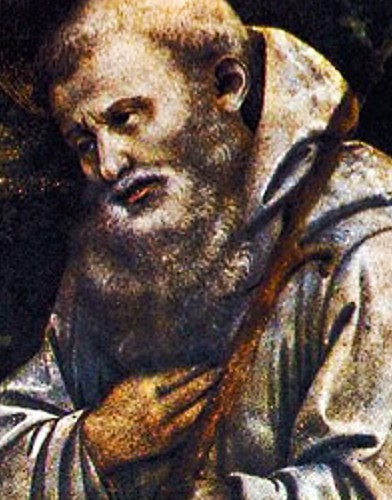
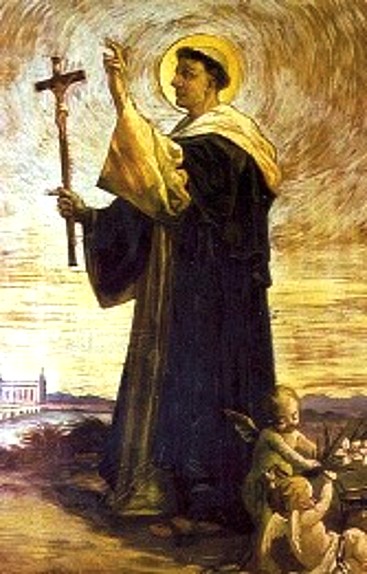
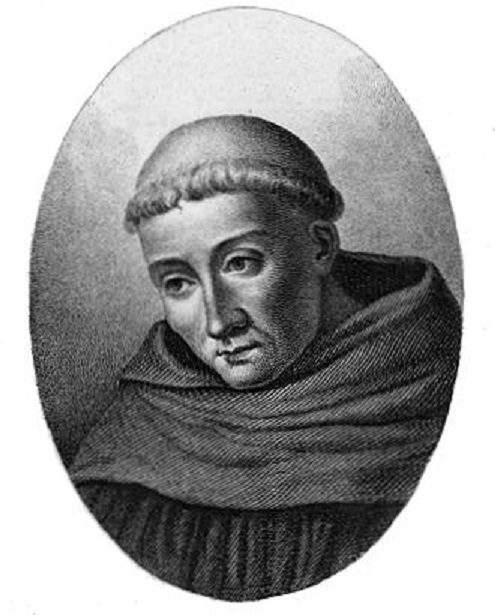
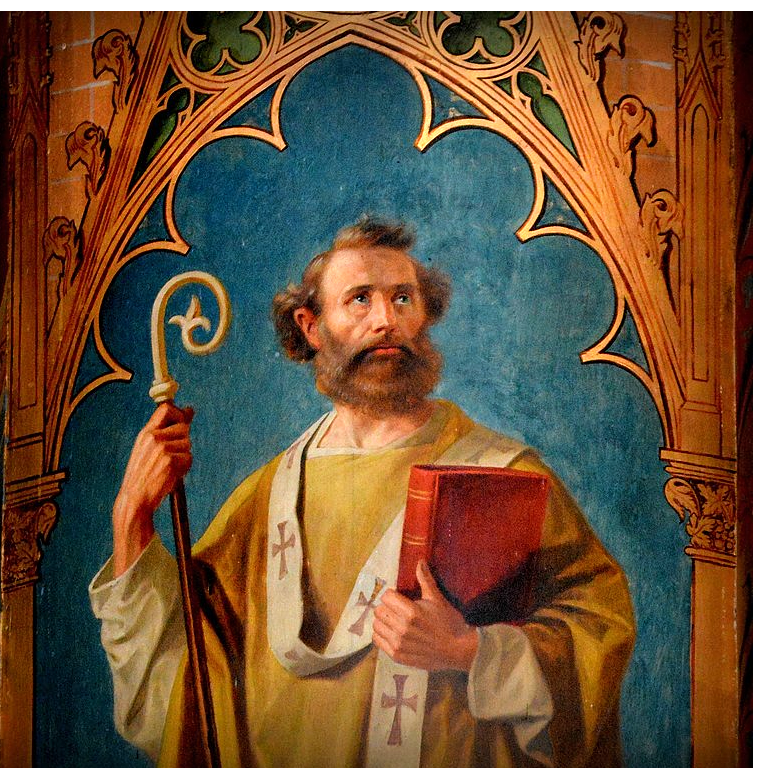
St Bernard
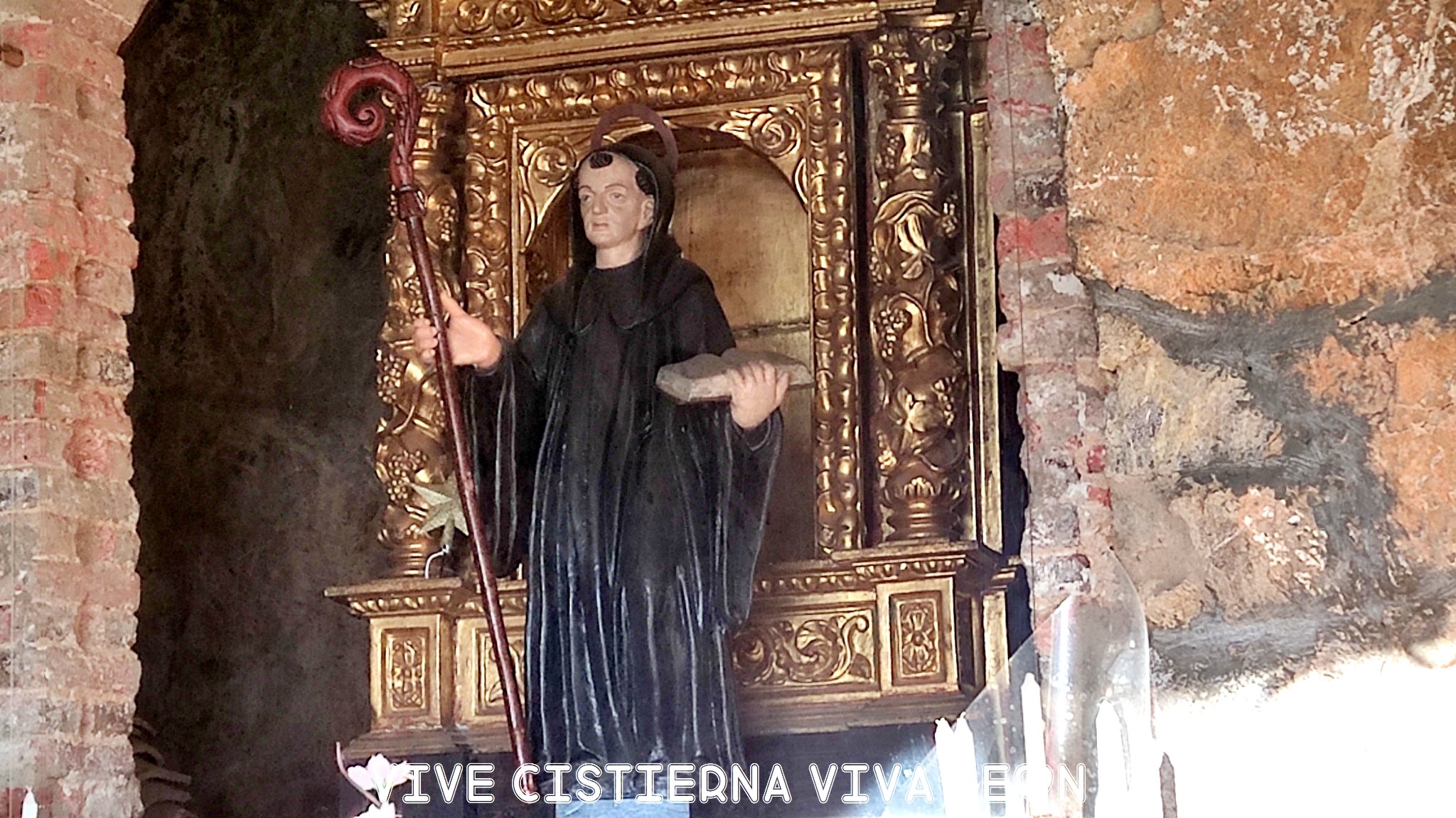
Upon Christian’s return to Ireland, St Malachy was anxious to introduce the Cistercian Order into Ireland and, at his prompting, Christian set about building Mellifont Monastery. In 1142, St Malachy applied to St Bermard to appoint a Superior and to send Monks to fill the new Monastery and St Bernard appointed Christian as the Abbot and sent several French brothers.
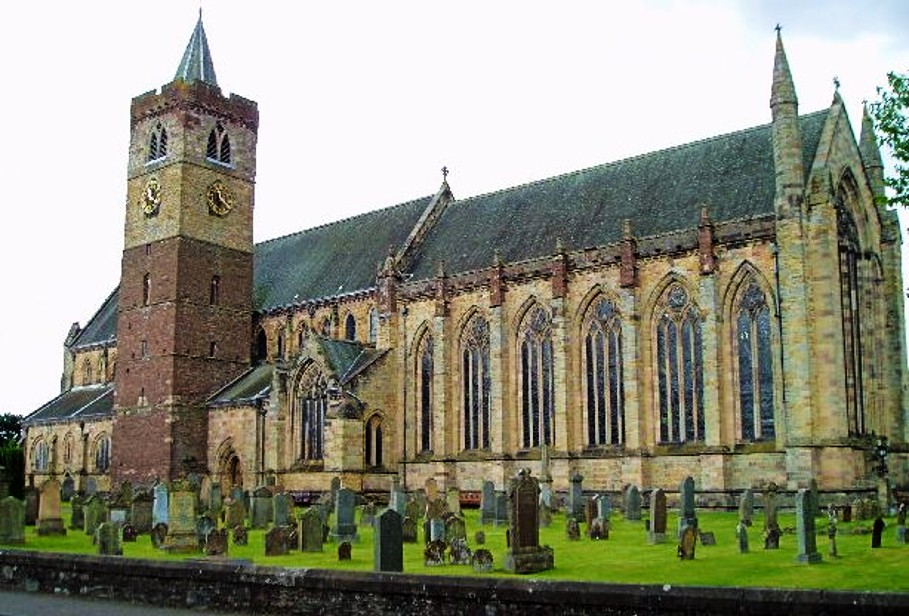
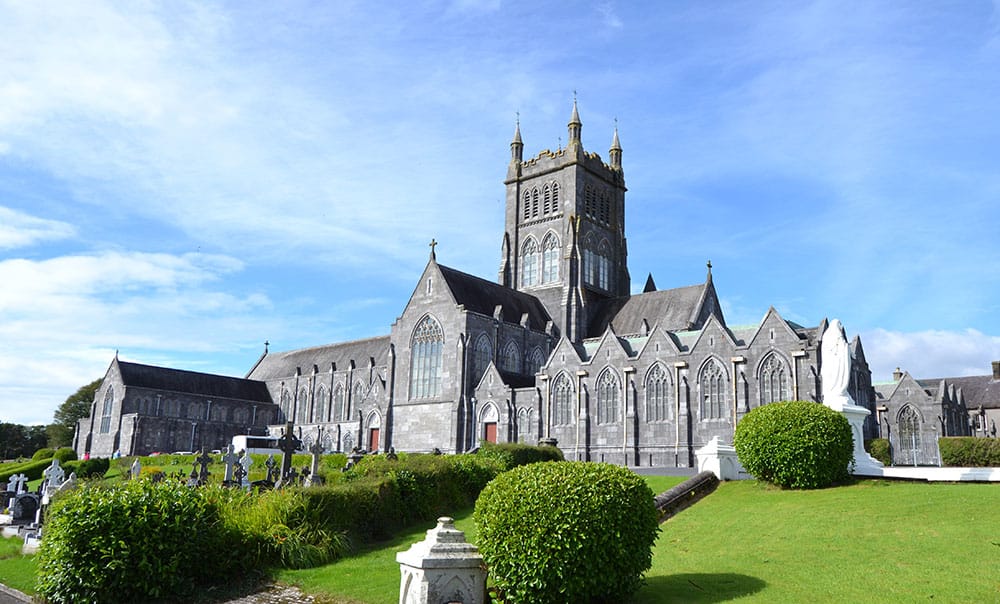
The ruins of the Mellifont Monastery built by Blessed Christian under instruction from St Malachy
Christian is said, by some writers, to have become the Bishop of Lismore andthe Papal Legate for Ireland. An ancient anonymous Irish analyst notes the year 1186 as the date of the death of Christian, the illustrious Prelate of Lismore, “formally Legate of Ireland, emulator of the virtues which he saw and heard from his holy father, St Bernard and from the Supreme Pontiff, the venerable man Eugenius, with whom he was in the novitiate at Clairvaux.”
The new Mellifont Monastery built after the reformation
Martyrs of Nicomedia – Commemorates the Christians who were Martyred anonymously, either singly and in small groups, by local pagans in the area of Nicomedia prior to the year 300 and who may have been over-looked in the waves of Diocletian persecutions that resulted in the deaths of thousands.
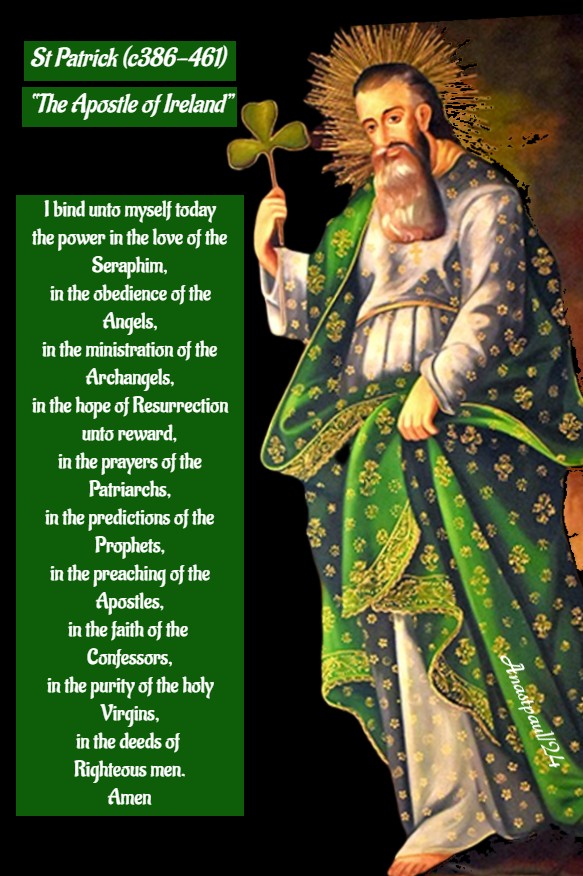
Quote/s of the Day – 17 March – St Patrick (c386-461) “The Apostle of Ireland,” Bishop, Confessor
“The man of God, Patrick, was marvellously favoured with heavenly visions and revelations in prayer. ‘When,’ says his biographer, ‘he everyday, in the Mass, sacrificed the Son to the Father, or devoutly recited the Apocalypse of St John, it was granted to him to see the heavens opened and Jesus standing there, surrounded by a multitude of Angels and whilst he meditated on these great visions, his soul was altogether lost in God.’ Three times in the week the Angel Victor, visited and conversed with him, filling his soul with celestial consolations. The labours of the day, amongst men, seem to have been less arduous than those of the night with God.” (The Life of St Patrick, Apostle of Ireland)
Prayer of St Patrick
I bind unto myself today the power in the love of the Seraphim, in the obedience of the Angels, in the ministration of the Archangels, in the hope of Resurrection unto reward, in the prayers of the Patriarchs, in the predictions of the Prophets, in the preaching of the Apostles, in the faith of the Confessors, in the purity of the holy Virgins, in the deeds of Righteous men. Amen
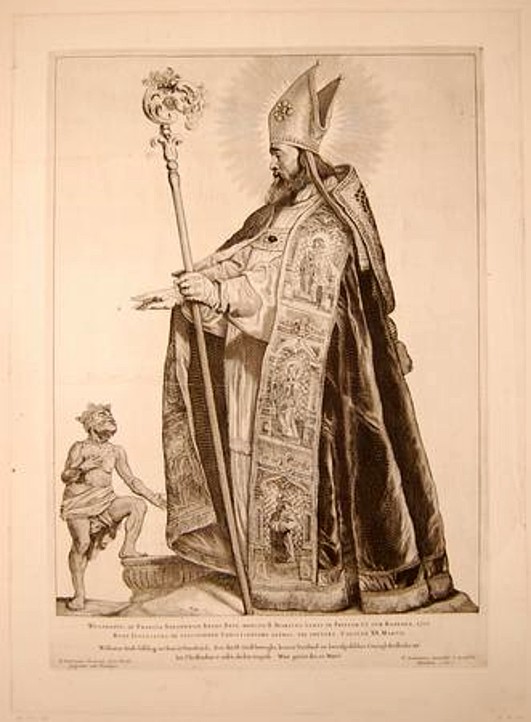
Saint of the Day – 17 March – St Agricola (498-580) Bishop of Châlon-sur-Saône, Defender of the true Faith against heretics, a zealous shepherd and teacher of his flock, Apostle of the poor and sick, building hospitals and leper colonies. He founded Churches and Monasteries. He was also a Diplomat and Peace-maker against invading barbarian forces and protector his people by his great courage. Agricola cared for his Diocese for 50 years with tireless dedication. He was born in 498 in the region and died there in 580 of natural causes. Patronage – of Châlon-sur-Saône. Also known as – Aregl, Agrele.
The Roman Martyrology reads today: “At Châlon, in France, St Agricola, Bishop.”
Born in 498 to a noble senatorial family, Agricola of Châlon-sur-Saône distinguished himself from a young age for his pious nature and religious fervour. Having received a rigorous education, he developed a keen intelligence and a profound knowledge of the Sacred Scriptures which nourished his vocation to the Divine service.
In 532, he was Consecrated as the Bishop of Châlon-sur-Saône, assuming the leadership of the Diocese with tireless zeal and exemplary dedication.
His Episcopate, which lasted about 50 years, was marked by pastoral activity aimed at caring for the flock entrusted to him. Agricola did his utmost to strengthen the faith of Christians, promoting assiduous preaching, religious instruction and the celebration of the Sacraments. With wisdom and firmness, he fought the rampant heresies, especially Arianism, strenuously defending the orthodox doctrine.
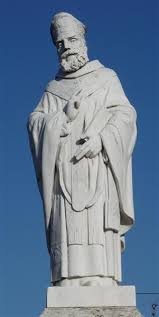
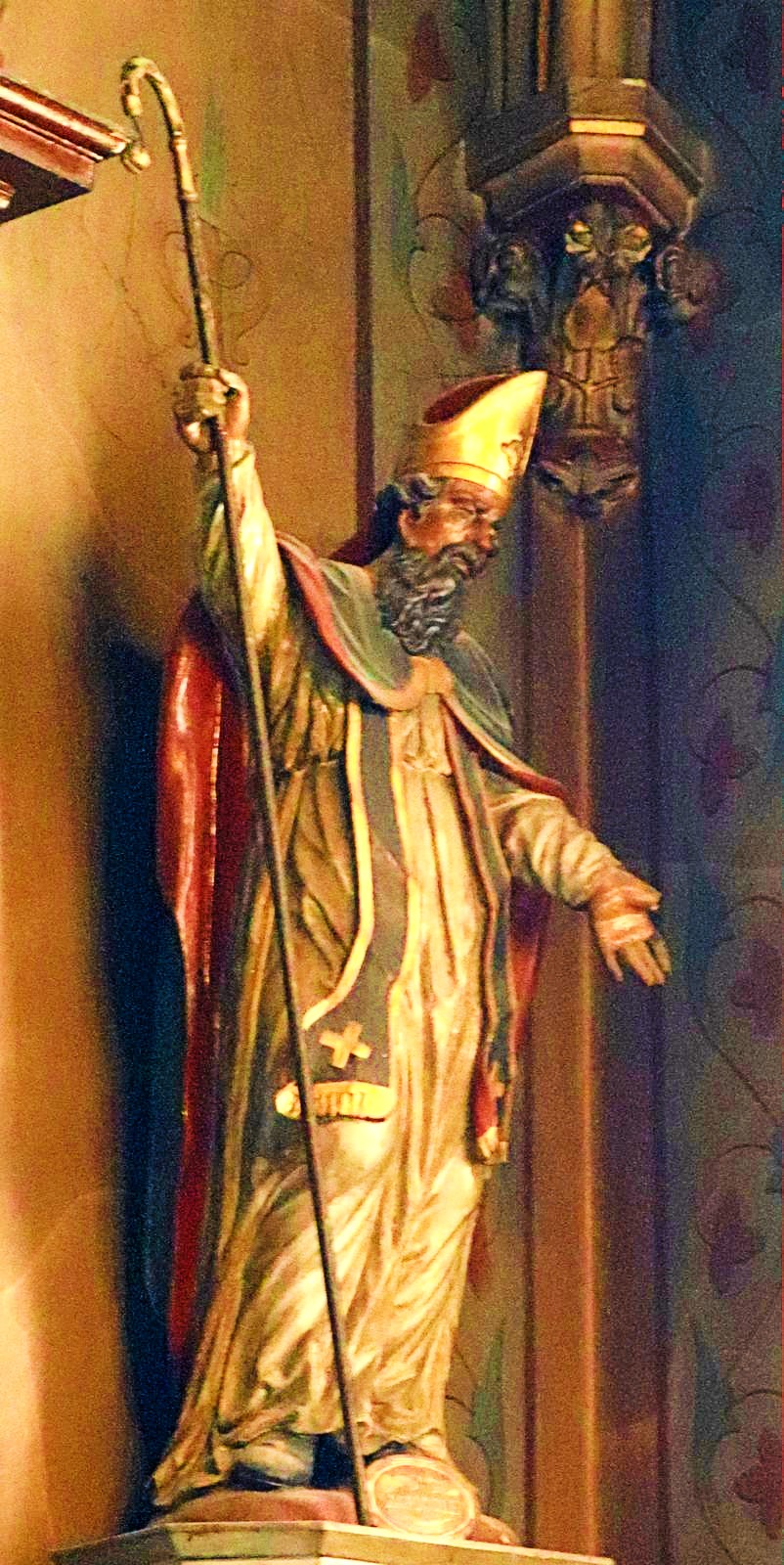
Statue in the Church Saint-Marcel near Châlon-sur-Saône where St Agricola’s FRelics are enshrined
In 535, he participated in the Synod in Arvernis —present-day Clermont-Ferrand— and sent one of his Priests to the Synod in Orléans in 538.
His tenacity and courage were particularly evident in the context of the barbarian invasions which were devastating Europe at that time. Agricola stood as a bulwark of his community, protecting it from the violence and depredations of the barbarians. With skilled diplomacy and tireless commitment, he negotiated with the various invading leaders, obtaining their protection and ensuring the survival of the Diocese.
In addition to his pastoral and civil role, Agricola also distinguished himself for his generosity and charity towards the poor and needy. He promoted the construction of hospitals and leper colonies, offering relief and comfort to the outcasts and the suffering.
His fame for sanctity spread rapidly, attracting pilgrims from all over to Châlon-sur-Saône, who sought his blessing and advice. After a life spent in the service of God and his neighbour, Saint Agricola died peacefully in 580, leaving an indelible legacy of unshakeable faith, adamantine tenacity and loving compassion.
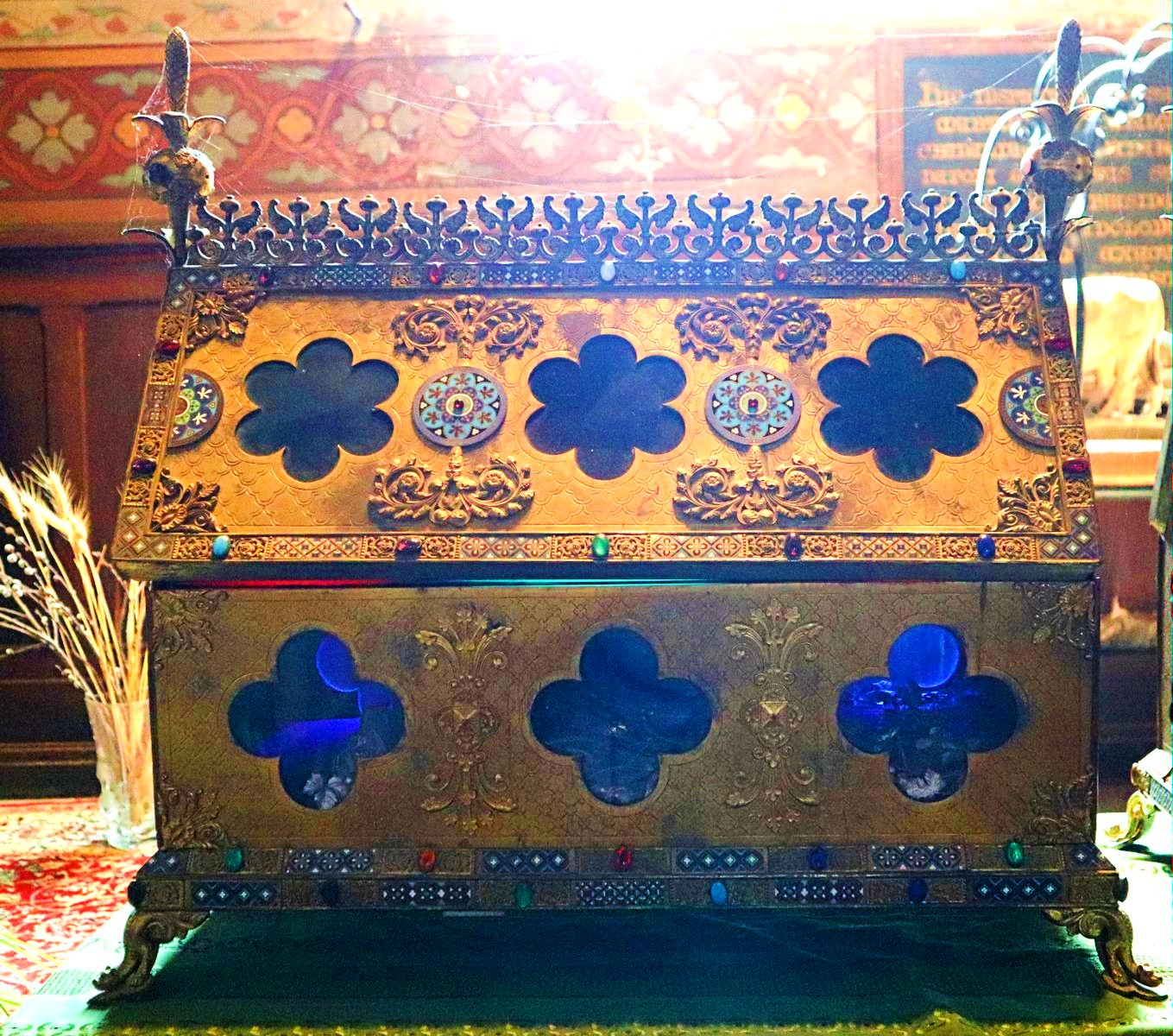
Agricola was buried in the Church of the then Monastery in Saint-Marcel near Châlon-sur-Saône, where his remains were found in 878.
St Joseph of Arimathea (Died 1st Century) “The Secret Disciple of Jesus.” Patronages – of pallbearers, funeral directors, morticians, undertakers, tin miners, tin smiths, Catholic Cemeteries of the Archdiocese of Vancouver, Glastonbury Cathedral. Feast day moved after Vatican II to 31 August “The Secret Disciple of Jesus” https://anastpaul.com/2021/08/31/saint-of-the-day-31-august-saint-joseph-of-arimathea-died-1st-century/
NOVENA to ST JOSEPH DAY EIGHT: Click Link HERE:DAY EIGHT
St Agricola (498-580) Bishop of Châlon-sur-Saône St Alexander St Ambrose of Alexandria
St Llinio of Llandinam St Paul of Cyprus St Stephen of Palestrina St Theodore of Rome St Thomasello St Withburga (Died 743) Abbess, Princess
Martyrs of Alexandria – Also known as Martyrs of Serapis: An unknown number of Christians who were Martyred together by a mob of worshippers of the Graeco-Egyptian sun god Serapis. They were Martyred in c 392 in Alexandria, Egypt.
Saint of the Day – 16 March – Saint Abraham Kidunaia (c 296-c 366) Priest, Hermit, Missionary and a great friend of the Deacon, St Ephrem (306-373) Father and Doctor of the Church.
The Roman Martyrology reads today: “In Syria, St Abraham, Hermit, whose life has been written by the blessed Deacon, St Ephreme.”
Abraham, born near the Syrian City of Edessa, in modern-day Turkey. Abraham’s wealthy parents chose a bride for him, according to Syrian custom. There was only one problem – Abraham had privately vowed to live a celibate life but he had not reported his desires to his family. He certainly did not wish to disobey them but, he neither did he wish to maryy.
He joined in the week of festivities which led to his wedding but when the big day came, Abraham deserted the bride and the wedding. He ran into the desert, where he hconcealed himself in a cave, leaving only a small hole for food and messages.
During this period, often referred to as the golden age of Hermits, when many (including several who became Saints) chose to witness their faith, by holy solitude. Abraham’s family and friends tried encourage and entice him to return to civilisation but he refused. Finally, they agreed to call off the wedding and leave him in peace.
Abraham led his eremtical life for 10 years, until the local Bishop called upon him to help convert the people of Beth-Kiduna, who persisted in paganism and idol worship despite the Bishop’s best efforts. Abraham did not wish to leave his solitary life but was obedient to the Bishop who Ordained him a Priest before he began his mission.
The people of Beth-Kiduna were not happy to see Abraham. First, he tried preaching but they refused his call to Baptism. Then, he built a Church, came back into Town and destroyed their idols and pagan altars. This resulted in an uprising against our Saint whom they whipped and dragged out of the City gates.
He was back the next day, preaching in the village square. They again threw him outside the walls, stoned him and left him for dead. But he was back again the following day. For three years, Abraham continued to preach and the people continued to hurl rocks and insults at him.
Eventually, Abraham’s holiness and persistence, by the grace of God, resulted in him Baptising 1,000 of Beth-Kiduna’s citizens. He stayed with them another year, teaching them the Faith and Baptising many more converts. He prayed for another Priest to come and take care of the people. And when the Bishop sent one, Abraham returned to his csve, where he remained in prayer and solitude until the age of 70.
He won the love and admiration of the surrounding communities and many people flocked to his cave to receive his blessing during his last days. His final journeyaway from his cave, was for his funeral which was attended by numerous mourners.
St Julian of Anazarbus St Largus of Aquileia St Malcoldia of Asti St Megingaud of Wurzburg St Papas St Patrick of Clermont
Blessed Robert Dalby (Died 1589) Priest Martyr. Born at Hemingborough near Wakefield in North Yorkshire, England and died on 16 March 1589 at York, England by being hanged, drawn, and quartered during the persecutions of Elizabeth I. Also known as – Robert Drury. Additional Memorial – 29 October as one of the Martyrs of Douai. Blessed Robert was Beatified on 15 December 1929 by Pope Pius XI. His Life and Death: https://anastpaul.com/2024/03/16/saint-of-the-day-16-march-blessed-robert-dalby-died-1589-priest-martyr/
Saint of the Day – 15 March – St Longinus (1st Century) Martyr, the Roman Centurion who we believe was he who pierced the Sacred Side of Our Lord with his lance. He was Baptised and became a Monk in Caesarea, where he was Martyred by beheading.
The Roman Martyrology reads today: “At Caesarea, in Cappadocia, the Martyrdom of St Longinus, the soldier who is believed to have pierced the side of Our Lord Jesus Christ, with a lance.”
Statue of Saint Longinus by Bernini in Saint Peter’s Basilica
Longinus is the Centurion who pierced the side of Our Lord while He was hanging on the Cross.
Tradition tells us that Longinus, who was nearly blind, was healed when some of the blood and water from Jesus side, dripped into his eyes. It was then, he exclaimed “Indeed, this was the Son of God!” [Mark 15:39].
Longinus then converted, retired from the army, took instruction from the Apostles and became a Monk in Cappadocia.
There, he was arrested for his faith, his teeth forced out and tongue cut off. However, Longinus miraculously continued to speak clearly and managed to destroy several idols in the presence of the Governor. The Governor, who was made blind by the demons which came out of the idols, had his sight restored when Longinus was being beheaded because his blood came in contact with the Governors’ eyes.
St Longinus’ Relics are now in the Church of St Augustine in Rome. His Lance is contained in one of the four pillars over the Altar in St Peter’s Basilica in Rome, where also the glorious Bernin Statue, above resides. Below is a detail of the Statue and the Lance.
St Longinus (1st Century) Martyr St Mancius of Evora St Matrona of Capua St Matrona of Thessaloniki St Menignus of Parium Bl Monaldus of Ancona St Nicander of Alexandria St Peter Pasquale St Sisebuto St Speciosus St Vicenta of Coria Bl Walter of Quesnoy
Saint of the Day – 14 March – Blessed Arnaldo OSB (c1185-1255) Abbot at the Santa Giustinain Monastery in Padua, Italy, a powerful and effective governor, a defender of the rights of the Monastery, the Church and the poor. Born in Padua, Italy in 1185 and died on 10 February 1255 in the prison at Asolo, Italy. Also known as – Arnaldo de’Cattanei, Arnold Cattaneo, Arnold… Arnaldo… Arnaud… Arnoldus…
Arnaldo, born in 1185 to the noble Cattanei family of Limena, near Padua, entered the Monastery of San Giustina in Padua, at a very young age.
Arnaldo soon distinguished himself for his piety, seriousness and exemplary life, so much so that, in 1209, at only 24 years of age, he was elected as the Abbot.
His government was very active – he defended the rights of the Monastery, then compromised, he claimed ancient privileges, such as the one according to which, the abbot of San Giustina participated in the election of the Bishop. He restored the Monastery and enriched it with new buildings and new possessions, he diverted the waters of the Bacchiglione to operate a mill plant and more. We do not know if and what type of relationship he had with St Anthony, who also worked in Padua at this time.
When Ezzelino III took over charge of Padua in 1237 and imprisoned Giordano Forzaté, the Pprior of San Benedetto, the other large Benedictine Monastery in Padua, Arnaldo fled to the Este family, first to Ferrara and then to the closer Monselice. In 1238, Emperor Frederick II returned the Monastery of San Giustina to Arnaldo and the following year, he was a guest there for two months.
However, when the Emperor left, the City remained at the mercy of Ezzelino, who, in 1246, as soon as he felt safe, had Arnaldo arrested and locked him in the fortress of Asolo. The Abbot languished there, on bread and water, for eight years and three months, until his death on 10 February 1255.
On that occasion, there were seen as two burning torches descending from the sky and shining above the castle. Buried temporarily in the Church of the Friars Minor of Asolo, as soon as the tyrant was driven out, his body was transported to Padua and placed in San Giustina in an Ark near the exit. When, on 14 March 1562, the Holy Bodies, already buried in the old Basilica, were definitively buried in the new Church, Arnaldo was placed in the second Chapel on the left starting from the choir, in a beautiful baroque Altar with a marble statue representing the blessed, SEE BELOW. An 18th Century painting representing our Saint is preserved in the large Sacristy.
Santa Giustina (Padua) – Chapel of Arnaldo da Limena
There is no evidence that his cult has official recognition – it is based on tradition. Arnaldo did not have his own Office but only the commemoration in the Martyrologies of the Order. In San Giustina, he continued to be celebrated on 15 March until the suppression of the Abbey in 1806 but since that period, his memory has been renewed. Blessed Arnaldo is also remembered on 10 February, the anniversary of his death.
San Giustina Abbey and Basilica which is replete with the most beaytiful Chapels, Relics (including St Luke) and artworks. Please do visit the Wikipedia page to view them.
The Feast of the Sacred Lance and Nails – Friday after the 1st Sunday in Lent: The Supreme Pontiff, Innocent VI, in his Decree establishing the Feast and Office of the Lance and Nails which pierced the Body of our Crucified Lord Jesus Christ, exhorts all the faithful to have a special veneration for and devotion to, all the Sacred Instruments of our Saviour’s Passion. The following are the Holy Father’s words: “We should honour the most holy Passion of our Lord and Redeemer, Jesus Christ, in such manner that, meditating on all the mysteries and merits of the same Passion, we venerate also each Sacred Instrument thereof.” Then this holy and zealous Pontiff, coming more directly to the honour due to the Lance and Nails, says: “Although the Lance and Nails and the other Sacred Instruments of the Passion, should be enerated everywhere, by the faithful of Christ and although every year the Church celebrates the Solemn Offices of the same Passion, yet, we deem it proper and fitting, that a special Solemn Feast should be instituted and celebrated in honour of those particular Instruments of the Passion, more especially, in those places wherein these salutary Instruments are preserved. Hence, we wish to encourage this devotion by a special Office and privileges.” (Innocent VI in Decret. de Fest. Lane, et Clav. Domini).
The Lance, also known as “The Spear of Longinus” is kept in the Vatican Basilica, given to Innocent VIII in 1492. The Nails were kept with the Crown of Thorns, along with a small piece of the Lance of Longinus at Saint Chapelle, France and were subsequently lost during the French Revolution. The Crown of Thorns was the only Relic saved and is now kept at Notre Dame Cathedral.
NOVENA to ST JOSEPH DAY FIVE – Click Link HERE: DAY FIVE
St Agno of Zaragoza St Alexander of Pydna St Aphrodisius of Africa Blessed Arnaldo (c1185-1255) Abbot in Padua St Boniface Curitan St Diaconus St Eutychius of Mesopotamia
St Peter of Africa St Philip of Turin St Talmach Bl Thomas Vives
47 Martyrs of Rome – Forty-sevenpeople who were Baptised into the Faith in Rome, Italy by Saint Peter the Apostle and were later Martyred together during the persecutions of Nero. Martyred c67 in Rome, Italy
Martyrs of Valeria – Two Monks Martyred by Lombards in Valeria, Italy who were never identified. After the monks were dead, their killers could still hear them singing Psalms. They were hanged on a tree in Valeria, Italy.
Saint of the Day – 13 March – Saint Euphrasia (c382-c412) Virgin, Nun, Ascetic, Penitent, Miracle-worker. Born in c382 in Constantinople and died on 13 March in c412 (aged 30) of natural causes in the Thebaid region, Egypt. Also known as – Euphrax.
The Roman Martyrology reads today: “AtThebaid St Euphrasia, virgin.”
Euphrasia, was the daughter of noble and pious parents, honoured by the devout Emperor Theodosius and the Empress of that country. After the early death of Antigonus, her father, her mother consecrated her widowhood to God and retired with their only child into Egypt, where she possessed a very large estate.
In those days, there were many Monasteries of Nuns, as well as of holy Hermits and, in one single City there were twenty thousand such holy women, Consecrated to Jesus Christ. Euphrasia’s mother chose to reside near a Monastery of one hundred and thirty Nuns which she often visited, accompanied by Euphrasia. When the little girl, seven years of age, begged that she might be permitted to serve God in this Monastery, the pious mother wept for joy.
Then the mother led her before an image of our Redeemer and lifting up her hands to Heaven said, Lord Jesus Christ, receive this child under Thy special protection. It is Thou alone Whom she loves and seeks; to Thee she recommends herself. Then leaving her in the hands of the Abbess, she left the Monastery weeping. She continued her life to prayer and mortification and, a few years later, when this good mother fell ill, she slept in peace.
On receiving the news of her death, Theodosius sent for the noble virgin to come to Court, as he considered himself her protector and already, during her childhood, had arranged for her to be married to a young Senator of Constantinople, when she would reach a suitable age. But the virgin wrote him, refusing the alliance, repeating her vow of virginity and requesting that her estates be sold and divided among the poor and all her slaves set at liberty. The Emperor punctually executed all her wishes, shortly before his own death in 395.
St Euphrasia carried heavy rocks as a penitential labour. From an 1878 Book, Little Pictorial Lives of the Saints
Saint Euphrasia was a perfect pattern of humility, meekness and charity. If she found herself assaulted by any temptation, she immediately sought the advice of the Abbess, who often, on such occasions, assigned her some humbling and painful penitential labour which, she would execute to perfection. Once she moved a pile of great rocks from one place to another, continuing for thirty days with wonderful simplicity, until the devil, vanquished by her humble obedience, left her in peace.
She became powerful over the demons and delivered many possessed persons. She cured a child who was paralysed, deaf and dumb, making the Sign of the Cross over him and saying, May He Who created you, heal you! She was favoured with other miracles, both before and after her death which occurred in the year 412, the thirtieth of her age.
NOVENA for the INTERCESSION of ST JOSEPH DAY FOUR:Clink Link here:DAY FOUR
St Leander of Seville (c534-c 600) BIshop, Confessor of the Faith, Teacher, Writer, Apostle of Spain and Evangelisation, Father of the Church – Patron of Episcopal attire and Liturgical garments. Saint Leander, as Bishop, instituted the practice of praying the Nicene Creed during Mass—a practice which continues today. St Leander’s Holy Life of Grace: https://anastpaul.wordpress.com/2017/03/13/saint-of-the-day-13-march-st-leander-of-seville/
Bl Judith of Ringelheim St Kevoca of Kyle St Mochoemoc
St Nicephorus (c758-829) Bishop and Confessor, Defender of Sacred Images. The Roman Martyrology reads today: “At Constantinople, the Bishop St Nicephorus. In defence of the traditions of his forefathers and of the Churrch, the worship of Sacred images, he opposed the Iconoclast Emperor, by whom he was sent into exile, where he underwent a long martyrdom of fourteen years and departed for the Kingdom of God.” His Zealous Life: https://anastpaul.com/2024/03/13/saint-of-the-day-13-march-saint-nicephorus-c758-829-bishop-confessor/
Bl Peter II of La Cava St Pientius of Poitiers St Ramirus of Leon
Saint of the Day – 12 March – St Alphege [the Elder] (Died 951) Bishop of Winchester, monastic reformer, protector and supporter. Born in England and died in Winchester of natural causes. Also known as – Alphege of Winchester, Ælfheah… Elphege… Elfego… Elpigio… (Not to be confused with St Alphege [the Younger] also the Bishop of Winchester before becoming the Archbishop of Canterbury) https://anastpaul.com/2017/04/19/saint-of-the-day-19-april-st-alphege/
Despite Alphege’s important role in the 10th Century monastic revival, little is known of St Alphege’s life.
He began his career as a Monk and was appointed as the Bishop of Winchester in 934 or 935. He was a relative of the great St Dunstan, the Archbishop of Canterbury (Died 988) and who had taken Alphege as a young man into his service. St Dunstan later Ordained Alphege as a Priest.
Alphege was an instigater of the monastic reforms and was the tutor of St Aethelwold, who became his successor in the See of Winchester and a most zealous monaster reformer.
Alphege died on 12 March 951 and was buried in Old Minster in Winchester. He was immediately revered as a Saint. Following the Norman conquest, Archbishop Lanfranc downgraded a number of Anglo-Saxon Saints, including our St Alphege to bring the Liturgical calendar into line with that of existing elsewhere in the country. However, under St Anselm’s influence, he was subsequently re-instated.
Blessed Jerome of Recanati OSA (Died 1350) Priest, Friar of the Hermits of Saint Augustine, Peacemaker. He was Beatified in 1804 by Pope Pius VII. The Roman Martyrology reads : “In Recanati in the Marche, Blessed Girolamo Gherarducci, Priest of the Order of the Hermits of St Agustine, who worked for peace and harmony between peoples.” essed l Jerome the Peacemaker: https://anastpaul.com/2022/03/12/saint-of-the-day-12-march-blessed-jerome-of-recanati-osa-died-1350/
St Theophanes (c758-817) Abbot, Confessor, Founder of Monasteries, Defender of Sacred images, Writer and Historian. The Roman Martyrology reads today: “At Constantinople, St Theophanes, who gave up great wealth to embrace poverty in the monastic state. By Leo the Armenian, he was kept in prison for two years for the worship of holy images, then, being exiled in Samothracia, where, overwhelmed with afflictions, he breathed his last and wrought many miracles.” Courageous and Brilliant St Theophanes: https://anastpaul.com/2024/03/12/saint-of-the-day-12-march-saint-theophanes-c758-817-abbot-confessor-defender-of-icons/
Martyrs of Nicomedia – 8 Beati: Christians who were Martyred in succession in a single incident during the persecutions of Diocletian. First there were the eight imprisoned Christians, Domna, Esmaragdus, Eugene, Hilary, Mardonius, Maximus, Mígdonus and Peter, about whom we know little more than their names. Each day for eight days one of them would be strangled to death in view of the others so that they would spend the night in dread, not knowing if they were next. Peter was the Chamberlain or Butler in the Palace of Diocletian. When he was overheard complaining about this cruelty, he was exposed as a Christian, arrested, tortured and executed by having the flesh torn from his bones, salt and vinegar poured on the wounds and then being roasted to death over a slow fire. Gorgonio was an army officer and member of the staff in the house of emperor Diocletian, Doroteo was a staff clerk. They were each exposed as Christians when they were overhead objecting to the torture and murder of Peter. This led to their own arrest, torture and executions. Died in 303 in Nicomedia, Bithynia (in modern Turkey) Additional Memorial – 28 December as part of the 20,000 Martyrs of Nicomedia. Beatified on 14 January 1891 by Pope Leo XIII (cultus confirmation).
St Benedict Crispus (Died 725) Archbishop of Milan from c 685 until his death. A poem written about ten years after his death, De laudibus Mediolani- In Praise of Milan, praises him and remembers his veneration by the entire land and informs us that he was buried in the Basilica of Saint Ambrose. A Life of Zeal and Virtue: https://anastpaul.com/2020/03/11/saint-of-the-day-11-march-saint-benedict-crispus-of-milan-died-725/
St Candidus the Martyr St Constantine II St Constantine of Carthage
St Peter the Spaniard St Pionius St Piperion the Martyr St Rosina of Wenglingen
St Sophronius (c550-c638) Bishop of Jerusalem from 634 until his death, Father of the Church.Bishop of Jerusalem from 634 until his death, Father of the Church. Before rising to the primacy of the See of Jerusalem, he was a Monk, Theologian and Philosopher, who was the chief protagonist for orthodox teaching in the doctrinal controversy on the essential nature of Jesus. He was a well-travelled and honoured Teacher of Rhetoric, living for several years in Alexandria, Egypt near St John the Almoner. Ecclesiastical and Liturgical Writer, Poet and exercised an extensive correspondence, some of which has survived and some of which we still use within the Liturgy. He is also renowned in history for his peace negotiations with the invading Saracens, thus ensuring a level of protection to the City’s Christians Born in Damascus, Syria in the 6th Century and died in c638; sources disagree on cause and location. I use St Sophronius Commentaries whenever I are able on this Site. A Most Important Saint: https://anastpaul.com/2024/03/11/saint-of-the-day-11-march-saint-sophronius-of-jerusalem-c550-c638-bishop-father-of-the-church/
St Thalus the Martyr St Trophimus the Martyr St Vigilius (Died c684) Bishop and Confessor of Auxerre St Vincent of Leon
Forty Martyrs of Sebaste, Armenia (Died 320) – Forty Christian soldiers of the Thunderstruck Legion of the Imperial Roman army who were tortured and murdered for their faith during the persecutions of Emperor Licinius. They were exposed naked on a frozen pond to freeze to death at Sebaste, Armenia in 320 and their bodies afterward were burned. THE FULL STORY HERE: https://anastpaul.com/2021/03/10/saints-of-the-day-10-march-the-forty-martyrs-of-sebaste-armenia-died-320/
NOVENA FOR THE INTERCESSION OF SAINT JOSEPH DAY ONE – Link: NOVENA FOR THE INTERCESSION OF SAINT JOSEPH (Remember last year St Joseph’s Feast was moved to 20 March due to Laetare Sunday falling on his Feast Day, 19 March. Hence the Novena began a day later than usual.)
St Alexander of Apema St Anastasia the Patrician St Andrew (Died 1097) Abbot of Strumi
St Attalas (Died c627) AbbotAbbot of Bobbio, Disciple of, Assistant and Successor to St Columban (543-615). A legendary leader of great wisdom and scholarly abilities, a loving father to his Monks and a generous and kindly Apostle to the poor and the ill, Miracle-worker. His Monks included Saint Valery, Saint Blitmund and St Bertulf, all Abbots at various times. Born in Burgundy, France and died in c627 of natural causes in Bobbio, Italy. Patronages – of Bobbio and of Luxeuil-les-Bains, France. The Roman Martyrology reads today: “In the Monastery of Bobbio, the Abbot, St Attalas, renowned for miracles.” Blessed by Miracles, St Attalas: https://anastpaul.com/2024/03/10/saint-of-the-day-10-march-st-attalas-of-bobbio-died-c627-abbot/
St Blanchard of Nesle-la-Réposte St Caius of Apema St Cordratus of Nicomedië
St Emilian of Lagny St Failbhe the Little St Gustav the Hermit St Himelin Bl John of Vallombrosa St Kessog
St Macarius of Jerusalem (Died c335) Bishop of Jerusalem for over twenty years. Defender of the Faith against Arianism, founder of the True Cross with St Helena, organiser and manager of the building of the Sacred Basilicas, including the Church of the Holy Sepuchre in Jerusalem, paid for by St Constantine the Great, St Helena’s son. Also of great import is the fact that Bishop Macarius was one of the two main authors of the Nicene Creed, that is, of the Creed that we still pronounce in Mass today The Life os St Macarius: https://anastpaul.com/2022/03/10/saint-of-the-day-10-march-saint-macarius-died-c-335/
St Peter of Veroli St Rufinus of Nicomedië St Sannudius of Bagensena St Saturninus of Nicomedië St Sedna of Ossory St Silvester of Ireland
Quote/s of the Day – 9 March – St Gregory of Nyssa (c335–c395) Bishop, Father of the Church – St Frances of Rome (1384-1440) Widow – St Dominic Savio (1842-1857)
“It is most laudable, in a married woman, to be devout but, she must never forget that she is a home-keeper. And sometimes, she must leave God at the Altar to find Him in her household affairs.”
St Frances of Rome (1384-1440)
“What could be more wretched for God, than to take the form of a slave? What lowlier for the King of the Universe, than to share our human nature? The King of kings, the Lord of lords, the Judge of the world, pays taxes to Caesar … Consider the excessiveness of His voluntary poverty! Life tastes death; the Judge is dragged before the court; the Master of the lives of us all submits to a magistrate; the King of the Heavenly Powers does not escape the hands of torturers! This is the pattern, says the Apostle Paul, against which His humility is measured.”
St Gregory of Nyssa (c335–c395) Bishop, Father of the Church (Brother of St Basil the Great)
O Mary, I Give You My Heart By St Dominic Savio (1842-1857)
O Mary, I give you my heart. Grant me to be always yours. Jesus and Mary, be ever my friends and, for love of you, grant me to die, a thousand deaths rather than to have the misfortune of committing a single mortal sin. Amen
Saint of the Day – 9 March – St Vitalis (c900-994) Monk, Hermit and Founder of Monasteries. Born as Vitale de Mennita in c900 in Castronovo di Sicilia, Palermo, Sicily and died on 9 March 994 at his Monastery on Mount Vulture near Rapolla, Italy of natural causes. Patronages – of Amento, Italy, of Castronovo di Sicilia, Sicily. Also known as – Vitalis of Castronuovo, Vitalis of Castronovo, Vitale of….
Vitalis de Mennita was born into a wealthy Byzantine family in the first half of the 10th Century in present-day Castronovo di Sicilia .
Around the middle of the 900s he became a Monk and retired to the Basilian Monastery of San Filippo in Agira .
Five years later, with some brothers, he undertook a pilgrimage to Rome and on the way back he decided to stop Calabria and to live as a Hermit which he did for a period of 2 years.. He then returned to a Sicilian Convent for the next twelve years, after which he returned to the Hermitage in Calabria. There he moved a few times, each new location attracting new disciples for whom he founded various Monasteries. Finally, he retired to a cave near Armento in Basilicata .
In 979 he returned to Calabria and restored the Convent and the Church of Sant’Adriano and Natalia in San Demetrio Corone. When this Monastery was attacked by the Saracens, he remained to face the invaders and was miraculously saved from death.
With the help of his nephew, Blessed Elias of Castronovo, he founded the Monastery of Torri and that of Rapolla in Basilicata, where he died on 9 March 994. In 1024, his body was translated ito the Convent of Guardia Perticara, of which his nephew Elias was the Abbot and then, from there, to the Monastery of Torri and then to Armento and to the Cathedral of Tricarico from where it finally returned to Armento.
His biography was written in Greek by a contemporary Basilian Monk and was translated into Latin a century later.
St Gregory of Nyssa (c335–c395) Bishop, Father of the Church, Brother of St Basil the Great. St Gregory was an erudite Theologian, Philosopher. Writer , Defender of orthodoxy against heresy but he possible lacked the administrative ability of his brother, Basil or the contemporary influence of Gregory of Nazianzen but, he was an erudite Theologian who made significant contributions to the Doctrines of the Church, in particular, of the Trinity and the Nicene Creed. St Gregory, together with his elder brother, St Basil the Great (Doctor of the Church) and their great and lifelong friend, St Gregory of Nazianzen (also a Doctor of the Church) are collectively known as the “Cappadocian Fathers.” The Roman Martyrology reads today: “At Nyssa, the demise of St Gregory, Bishop, brother of the blessed Basil the Great, whose life and erudition have rendered him illustrious. He was expelled from his own City for having defended the Catholic Faith during the reign of the Arian Emperor, Valens.” Wonderful St Gregory: https://anastpaul.com/2024/03/09/saint-of-the-day-9-march-st-gregory-of-nyssa-c335-c395-bishop-father-of-the-church/
Our Morning Offering – 8 March – The Feastday of St John of God OH (1495-1550) Confessor
Lord be Blessed! (A Prayer of Thanksgiving and Self-oblation) By St John of God (1495-1550)
Lord be blessed! for in Thy great kindness to me, who art such a great sinner, having performed so many wicked things, yet Thou seest fit to set me free, from such a tremendous temptation and deception into which I fell, through my own sinfulness. Thou hast brought me into a safe harbour, where I shall endeavour to serve Thee with all my strength. My Lord, I beg Thee, with all my might, give me the strength of Thine grace and always let me see Thine clemency. I wish to be Thy slave, so kindly show me what I should do. Give peace and quiet to my soul which greatly desires this. O most worthy Lord, may this creature of Thine, serve and praise Thee. May I give my whole heart and mind, to Thee. Amen
Saint of the Day – 8 March – Saint Pontius (Died c262) Deacon of St Cyprian of Carthage, biographer of the latter’s heroic life and virtues.
The Roman Martyrology reads today: “At Carthage, St Pontius, the Deacon of the Bishop, St Vyprian, who remained in banishment with him, until his death and composed an excellent history of his life and Martyrdom, By ever glorifying God in his own sufferings, he merited the crown of life.”
15th Century woodcut of St Pontius witnessing the Martydom of St Cyprian
St Jerome in his De Virus Illustribus (On Famous Men) states that “Pontius, Deacon of Cyprian, after having endured exile with him until the day of his Martyrdom, left a valuable volume on the life and death of Cyprian.” From this we can deduce very little biographical data on Pontius himself which, however, confirm those provided by St Jerome.
Pontius was close to his Bishop, especially during his imprisonment and in the last year of his life and witnessed his torture. In Curubis (modern Korba in Tunisia), where St Cyprian was exiled with Pontius, a Tombstone was discovered in which a Pontius is remembered and from this, it was thought that the Biographer of St Cyprian was originally from this City.
The Martyrdom of St Cyprian
Some scholars have, however, denied the authorship of the Life of Cyprian, based on the fact that neither the writer says his name, nor is he mentioned in the mss. prior to the 12th Century. St Jerome’s statement is, however, too explicit to be doubted.
St Apollonius of Antinoë St Arianus of Alexandri St Arnulf of Chartres Abbot St Beoadh of Ardcarne St Duthus of Ross
St Felix of Burgundy (Died 647) Bishop, “The Apostle of East Anglia” Missionary in East Anglia and particularly in the Port Town now known as Felixstowe, in Suffolk, England. Amongst being the Founder of countless Churches. a famouse Monastery of Bury Saint Edmunds, he is also the Founder of what is now the University of Cambridge. This wonderful “Apostle of East Anglia” https://anastpaul.com/2023/03/08/saint-of-the-day-8-march-st-felix-of-burgundy-died-647-bishop-the-apostle-of-east-anglia/
St Litifredus of Pavia St Philemon of Antinoë St Pontius (Died c262) Deacon of St Cyprian of Carthage St Provinus of Como St Quintilis of Nicomedia St Rhian
Martyrs of North Africa – 9 Saints: A Bishop and some of his flock who were Martyred together in North Africa. The only details that have survived are nine of the names – Beata, Cyril, Felicitas, Felix, Herenia, Mamillus, Rogatus, Silvanus, Urban.
Saint of the Day – 7 March – Blessed John Ireland (Died 1544) Priest Martyr, Chaplain to Blessed John Larke and Saint Thomas More. Priest at Eltham, Kent, England from 1535 to 1536. Martyred by being hung, drawn and quartered at Tyburn Tree, London on 7 March 1544, together with Blessed Germanus Gardiner and Blessed John Larke for denying that King Henry VIII of England had supremacy over the Church. Additional Feastday – 4 May with the English Martyrs.
Little is known of this you Priest. He was ther Chaplain of the Roper Chantry annexed to St Dunstan’s, in Canterbury (1535–1536) before becoming the Priest of Eltham, Kent and thus the Parish Priest of St Thomas More’s daughter Margaret Roper of West Hall.
On 15 February 1543, Ireland was indicted with the Blesseds John larke, Germanus Gardiner and John Heywood (who recanted on the hurdle or wooden panel and drawn behind a horse to the place of execution). They were brought before Westminster Court and were sentenced to death on the charge of “attempted treason against the King, in the matter of his dignity, title and name of Supreme Head of the Church of England and Ireland, by words, writings and deeds ”. The three Martyrs were hanged, drawn and quartered on 7 March 1544.
The bodies of the Martyrs were buried under the Scaffold. Blessed John Ireland was Beatified by Pope Pius XI on 15 December 1929.
Feast of The Sacred Crown of Thorns of Our Lord Jesus Christ One of the “Seven Passion Feasts” – celebrated on the the Fridays after Ash Wednesday. The first Feast in honour of the Sacred Crown of Thorns (Festum susceptionis coronae Domini) was instituted at Paris in 1239, when Saint Louis IX of France brought there the Relic of the Crown of Thorns which was deposited later in the Royal Chapel, erected in 1241–1248 to guard this and other Relics of the Passion. HERE: https://anastpaul.com/2024/02/16/feast-of-the-sacred-crown-of-thorns-of-our-lord-jesus-christ-friday-after-ash-wednesday/
St Ardo of Aniane Bl Daniel of Wichterich St Deifer of Bodfari St Drausinus of Soissons Bishop St Enodoch St Esterwine of Wearmouth Abbot St Eubulus of Caesarea St Gaudiosus (Died c445) Bishop and Confessor of Brescia
Bl German Gardiner Bl Henry of Austria Bl Jermyn Gardiner Blessed John Ireland (Died 1544) Priest Martyr
Bl Volker of Segeberg OSA (Died c1135) Priest Martyr Bl William of Assisi
Martyrs of Carthage – 4 Saints: A catechist and three students Martyred together for teaching and learning the faith. We know little more than their names – Revocatus, Saturninus, Saturus and Secundulus. Mauled by wild beasts and beheaded 7 March 203 at Carthage, North Africa
Saint of the Day – 6 March – Saint Baldred (Died c757) Abbot, Priest, Missionary, Founder of a monastic community, Hermit, Miracle-worker. Born in Northumbria, England and died on 6 March c757 in Tyninghame in the Lothian region of Scotland. Also known as – “the Apostle of the Lothians”Balthere, Baltherus, … the Hermit, … of Tyninghame.
Baldred seems to have come from Lindisfarne in Northumbria, England, to spread Christ to the Lothians. He founded a Monastery at Tyninghame and choose a life of seclusion. Simeon of Durham says that “the boundaries of his pastorate embraced the whole land which belongs to the monastery of Saint Balther which is called Tyninghame – from Lammermuir to Inveresk, or, as it was called, Eskmouthe.”
He lived in a cell on the Bass Rock and died there. Three communities vied for the right to bury him, Auldhame, Tyninghame and Prestonkirk. His cult was certainly centred on the four Churches of Auldhame, Whitekirk, Tyninghame and Prestonkirk, between East Linton and North Berwick in East Lothian.
Baldred founded a Monastery at Tyninghame. However, at times, he preferred to retire from the spiritual government of the Lothian Britons and he selected the Bass Rock as the spot to build himself a small hermitage and associated Chapel, although he also sometimes resided in ‘St Baldred’s Cave’ on Seacliff Beach.
Ruins of the Base Rock Foundation
Following Baldred’s death on the site of this Chapel, there was a dispute between the people of Auldhame, Tyninghame and Prestonkirk, as to which should be chosen to venerate his life by a Shrine and bury his remains.“ By the advice of a holy man, they spent the night in prayer. In the morning three bodies were found, in all respects alike, each in its winding sheet, prepared for burial.”
St Baldred’s Cave
All three Churches established Shrines to Saint Baldred. Echoes of St Baldred occur throughout the area of East Lothian in which he lived and worked. In 941, St Baldred’s Monastery at Tyninghame was destroyed by the Danes and the following century the version of the remains of St Baldred buried at Tyninghame, were moved to Durham. In the 1100s St Baldred’s Church was built on the location of the monastery and this still stands today in the grounds of Tyninghame House.
At the Prestonkirk Parish Church, there existed, until 1770, when it was damaged by a builder, a Statue of the Saint much venerated by the local population. St Baldred’s Well stands nearby which was “famed for its…healing qualities.” This Well was greatly celebrated as a place of pilgrimage, attracting 1000s of visitors and the area also lays claim to this Saint as the scene of his ministry,
St Baldred’s Well
A Papal Bull of 1493 records the Pope’s consent to build a Chapel on the site of St Baldred’s own Chapel on Bass Rock – possibly this Church below.
St Aetius St Bairfhion St Baldred of Strathclyde St Baldred (Died c757) Abbot St Balther of Lindisfarne St Basil of Bologna St Cadroë
St Chrodegang of Metz (c714-776) The First Bishop of Metz, Protector and Father of the poor and orphans, Reformer of the Clergy, a relative of King Pepin and of Prince Charles Martel, both of whom he was Court Chancellor, Royal Diplomat, Saint Opportuna of Montreuil was his brother. The Roman Martyrology states: “In Metz in Austrasia, in today’s France, St Crodegango, Bishop, who arranged for the Clergy to live as if within the walls of a cloister under an exemplary rule of life and greatly promoted liturgical chant.” Biography: https://anastpaul.com/2022/03/06/saint-of-the-day-6-march-saint-chrodegang-of-metz/
St Colette PCC (1381-1447) Abbess and Foundress of the Colettine Poor Clares, a reform branch of the Order of Saint Clare. Patronages – against eye disorders, against fever, against headaches, against infertility, against the death of parents, of women seeking to conceive, expectant mothers and sick children, craftsmen, Poor Clares, servants, Corbie, France, Ghent, Belgium. St Colette was Canonised on 24 May 1807 by Pope Pius VII. Lovely St Colette: https://anastpaul.com/2017/03/06/saint-of-the-day-6-march-st-colette/ AND: https://anastpaul.com/2019/03/06/saint-of-the-day-6-march-st-colette-2/
St Cyriacus of Trier St Cyril of Constantinople St Evagrius of Constantinople
Bl Guillermo Giraldi St Heliodorus the Martyr Bl Jordan of Pisa St Julian of Toledo St Kyneburga of Castor St Kyneswide of Castor St Marcian of Tortona
St Ollegarius Bonestruga OSA (1060-1137) Bishop, Canon Regular of the Augustinians, Reformer, in both the religious sphere and the social one, Abbot, Diplomat, Peacemaker and Proptector of his people from possible violent incursions. The Roman Martyrology reads: “At Barcelona in Spain, the blessed St Ollegarius, who was first a Canon and afterwards the Bishop of Barcelona and Archbishop of Tarragona.” A Very Busy Shepherd https://anastpaul.com/2024/03/06/saint-of-the-day-6-march-st-ollegarius-bonestruga-osa-1060-1137-bishop/
Martyrs of Amorium – 42 Saints – Also known as Martyrs of Syria and Martyrs of Samarra; A group of 42 Christian senior officials in the Byzantine Empire who were captured by forces of the Abbasid Caliphate when the Muslim forces overran the City of Amorium, Phrygia in 838 and massacred or enslaved its population. The men were imprisoned in Samarra, the seat of the Caliphate, for seven years. Initially thought to be held for ransom due to their high position in the empire, all attempts to buy their freedom were declined. The Caliph repeatedly ordered them to convert to Islam and sent Islamic scholars to the prison to convince them; they refused until the Muslims finally gave up and killed them. Martyrs. We know the names and a little about seven of them: Aetios Bassoes Constantine Constantine Baboutzikos Kallistos Theodore Krateros Theophilos but details about the rest have disappeared over time. However, a lack of information did not stop several legendary and increasingly over-blown “Acts” to be written for years afterward. One of the first biographers, a monk name Euodios, presented the entire affair as a judgement by God on the empire for its official policy of Iconoclasm. Deaths: beheaded on 6 March 845 in Samarra (in modern Iraq) on the banks of the Euphrates river by Ethiopian slaves the bodies were thrown into the river, but later recovered by local Christians and given proper burial.
Saint of the Day – 5 March – Saint Dietmar (Died 1206) Bishop of Minden in Germany from c1185 until his death. Born in Bavaria, Germany and died on 5 March 1206. Also known as – Thietmar, Thiemo, Theodemarus.
Statue of St Dietmar at Minden Cathedral
Bishop Dietmar is said to have been moral and ascetic in personal matters and to have led the Church in Minden with prudence and wisdom. He is considered one of the greatest Bishops in Westphalia. In 1200 he Consecrated the Monastery of Marienwerder.
It is said of Dietmar that on Good Friday he would fast on water and bread as he was accustomed, even though he was very weak physically. However, the water which his servant had drawn from the well had turned into wine. Dietmar refused the drink and asked for water instead. But when he was again and again offered wine, he began to distrust his servant. Finally, he followed him to the well and watched carefully how he drew the water. When he himself saw how the water had been transformed into wine, he thanked God for having strengthened him with this miraculous drink, despite his unworthiness.
Dietmar died on 5 March 1206 in Minden and was succeeded as the Bishop by Henry II (1206-1209). He is venerated as a Saint with a memorial day on the day of his death but 6 March is also mentioned.
St Adrian of Caesarea St Caron St Carthach the Elder Bl Christopher Macassoli of Vigevano St Clement of Santa Lucia St Colman of Armagh St Conon of Pamphylia Bl Conrad Scheuber St Dietmar (Died 1206) Bishop of Minden St Eusebius of Cremona St Eusebius the Martyr St Gerasimus of Palestine (Died c475) Monk, Hermit Bl Giovanna Irrizaldi
St Theophilus (Died c217) Bishop of Caesarea , Theologian, Writer , Apologist and Defender of the Faith. Born in Caesarea, Palestine and died c195 of natural causes. The Roman Martyrology reads: “At Caesarea, in Palestine, in the time of the Emperor, Severus, St Theophilus, Bishop, who was conspicuous for his wisdom and the purity of his life.” Wise St Theophilus: https://anastpaul.com/2024/03/05/saint-of-the-day-5-march-saint-theophilus-of-caesarea-died-c217-bishop/
Martyrs of Africa – A group of 304 Christians Martyred together for their faith. We know nothing else about them but five of their names Eusebius, Evolus, Hadrian, Julian and Octavian. They Died in 254 in Africa, exact location and date unknown.
Saint of the Day – 4 March – St Felix (c970-1038) Abbot and restorer ofSt Gildas’ Abbey at Rhuys, Hermit. Born in c970 near Quimper, Brittany, France and died on 4 March 1038 of natural causes at the reconstructed Rhuys Abbey. Additional Memorial – 9 March 9 in the Liturgical Calendar of the Diocese of Vannes.
Tomb of Saint Felix (right) and Saint Rioc in the Saint-Gildas de Rhuys
Felix was born of wealthy parents in Quimper around 970. He had a great rdevotion for Saint Paul Aurelian who had built a Monastery at Lampoul and whose Relics, in 960, had been translated to Fleury Abbey.
Felix became a Hermit on Ushant but was forced to leave his hermitage during the Norman invasions to take refuge at Fleury in Saint-Benoît-sur-Loire, where he was welcomed by Abbo of Fleury.
Geoffrey I, the Duke of Brittany, asked the Abbot of Fleury to re-establish Rhuys Abbey which had been founded by Saint Gildas in the 6th Century on the Gulf of Morbihan and had been destroyed by the Normans. Father Abbot entrusted Felix with the task of rebuilding this renowned Monastery. The original Abbey had been built in wood on the remains of a Roman settlement.
But Felix now built in stone. Begun in 1008, the reconstruction ended in 1032 with the Consecration of the Church on 30 September, by Judicaël, the Bishop of Vannes and brother of the Duke. Felix was also consecrated as the Abbot, thus forcing him to remain there although his heart still desired to return to the Fleury. He opened a school too.
Félix died there on 4 March 1038 and was buried in his new Abbey. His tomb is now in the north transept of the Abbey Church. He is considered a Saint and his Feastday is set for 4 March ( 9 March 9 in the Liturgical Calendar of the Diocese of Vannes.)
You must be logged in to post a comment.