Posted in DOMINICAN OP, MORNING Prayers, SAINT of the DAY, The WORD

One Minute Reflection – 13 February – “All these evil things come from within and they defile a man.”

One Minute Reflection – 13 February – Wednesday of the Fifth week in Ordinary Time, Year C. Gospel: Mark 7:14-23 and the Memorial of Blessed Jordan of Saxony OP (1190-1237)

And he said, “What comes out of a man is what defiles a man.   For from within, out of the heart of man, come evil thoughts, fornication, theft, murder, adultery, coveting, wickedness, deceit, licentiousness, envy, slander, pride, foolishness.   All these evil things come from within and they defile a man.” Mark 7:20-23

REFLECTION – “The boundary between good and evil does not pass outside of us but rather within us.   We could ask ourselves: where is my heart?   Jesus said:  “Where your treasure is, there will your heart be also”.   What is my treasure?   Is it Jesus, is it His teaching?   If so, then the heart is good.   Or is my treasure something else?   Thus it is a heart which needs purification and conversion.   Without a purified heart, one cannot have truly clean hands and lips which speak sincere words of love — it is all duplicitous, a double life — lips which speak words of mercy, of forgiveness but only a sincere and purified heart can do this.”…Pope Francis – Angelus, 30 August 2015mark 7 20 what comes out of a man - the boundary between good and evil - pope francis 13feb2019.jpg

PRAYER – God our Saviour, through the grace of Baptism, You made us children of light. Hear our prayer, that we may always walk in that light and work for truth, as Your witnesses before men.   May our hearts be purified by You grace and may our hands and lips speak with sincere words of love. Blessed Jordan, you worked and walked with zeal and passion in the light of the Lord, please pray for us.   We make our prayer, through Christ our Lord with the Holy Spirit, God forever, amen.bl-jordanofsaxony-prayforus-13-feb-2017-2.jpg

Posted in SAINT of the DAY

Saint of the Day – 13 February – Blessed Christine of Spoleto OSA (1435-1458)

Saint of the Day – 13 February – Blessed Christine of Spoleto OSA (1435-1458) – Widow, mother, religious nun of the Order of Saint Augustine – born Agostina Camozzi in 1435 at Lake Lugano, Italy and died on 13 February 1458 in Spoleto, Italy of natural causes. Blessed Christine led a dissolute life as a widow and a soldier’s mistress before she became a nun and adopted a life of total repentance.

Agostina Camozzi was the daughter of a well-known doctor in Ostenso in the Italian province of Como.   A graceful and attractive young woman, she married at an early age but within a short time was left widowed.   In a second unmarried relationship she suffered the loss of her only child, a son.   A subsequent marriage left her widowed again, this time at the hands of a jealous rival.

In about 1450 Agostina underwent a serious conversion, became an Augustinian Tertiary and changed her name to that of Christine.   Her time in the order became noted for the severe austerities that she imposed upon herself as penance for her earlier life and she lived in a number of convents where she became known as a miracle-worker until settling in Spoleto.   She clothed herself in a habit that was made from sown-together rags and meditated with great remorse, on the passion of Jesus Christ

In 1457 she undertook a pilgrimage with the intention of visiting Assisi, Rome and Jerusalem.   Together with another tertiary she arrived in Spoleto in the province of Perugia where she devoted herself to the care of the sick and where she died on 13 February 1458, not yet 30 years of age.   Her body was interred in the Church of Saint Nicholas in Spoleto, which at the time belonged to the Augustinians.

Her reputation as a woman of holiness and a worker of numerous miracles caused devotion to Christine to spread quickly and widely.   Pope Gregory XVI confirmed her cult in 1834, proclaiming her blessed.bl christine of spoleto.jpg

Posted in SAINT of the DAY

Memorials of the Saints – 13 February

St Adolphus of Osnabruk
St Aimo of Meda
Bl Beatrix of Ornacieux
St Benignus of Todi
Bl Berengar of Assisi
St Castor of Karden
St Christine of Spoleto OSA (1435-1458) 
St Dyfnog
St Ermenilda of Ely
Bl Eustochium of Padua
St Fulcran of Lodève
St Fusca of Ravenna
St Gilbert of Meaux
St Gosbert of Osnabruck
St Guimérra of Carcassone
St Huno
Blessed Jordan of Saxony OP (1190-1237)
Biography: https://anastpaul.wordpress.com/2018/02/13/saint-of-the-day-13-february-blessed-jordan-of-saxony-o-p-1190-1237/

St Julian of Lyon
St Lucinus of Angers
St Marice
St Martinian the Hermit
St Maura of Ravenna
St Modomnoc
St Paulus Lio Hanzuo
St Peter I of Vercelli
St Phaolô Lê Van Loc
St Stephen of Lyons
St Stephen of Rieti

Posted in DOCTORS of the Church, FATHERS of the Church, QUOTES of the SAINTS, QUOTES on PRAYER, SAINT of the DAY

Thought for the Day – 12 February – The Prayer of St Ethelwald (Died c 740)

Thought for the Day – 12 February – the Memorial of St Ethelwald (Died c 740)

How Ethelwald, successor to Cuthbert, leading a hermit’s life, calmed a tempest by his prayers when the brethren were in danger at sea. [687-699]
The venerable Ethewald succeeded the man of God, Cuthbert, in the exercise of a solitary life, which he spent in the isle of Fame before he became a bishop.   After he had received the priesthood, he consecrated his office by deeds worthy of that degree for many years in the monastery which is called Inhrypum.

To the end that his merit and manner of life may be the more certainly made known, I will relate one miracle of his, which was told me by one of the brothers for and on whom the same was wrought; to wit, Guthfrid, the venerable servant and priest of Christ, who also, afterwards, as abbot, presided over the brethren of the same church of Lindisfarne, in which he was educated.

“I came,” says he, “to the island of Fame, with two others of the brethren, desiring to speak with the most reverend father, Ethelwald.   Having been refreshed with his discourse and asked for his blessing, as we were returning home, behold on a sudden, when we were in the midst of the sea, the fair weather in which we were sailing, was broken and there arose so great and terrible a tempest, that neither sails nor oars were of any use to us, nor had we anything to expect but death.   After long struggling with the wind and waves to no effect, at last we looked back to see whether it was possible by any means at least to return to the island whence we came but we found that we were on all sides alike cut off by the storm, and that there was no hope of escape by our own efforts. But looking further, we perceived, on the island of Fame, our father Ethelwald, beloved of God, come out of his retreat to watch our course, for, hearing the noise of the tempest and raging sea, he had come forth to see what would become of us.   When he beheld us in distress and despair, he bowed his knees to the Father of our Lord Jesus Christ, in prayer for our life and safety and, as he finished his prayer, he calmed the swelling water, in such sort that the fierceness of the storm ceased on all sides and fair winds attended us over a smooth sea to the very shore.   When we had landed and had pulled up our small vessel from the waves, the storm, which had ceased a short time for our sake, presently returned and raged furiously during the whole day, so that it plainly appeared, that the brief interval of calm had been granted by Heaven, in answer to the prayers of the man of God, to the end that we might escape.”

The man of God remained in the isle of Fame twelve years,and died there but was buried in the church of the blessed Apostle Peter, in the isle of Lindisfarne, beside the bodies of the aforesaid bishops.’

These things happened in the days of King Aldfrid, who, after his brother Egfrid, ruled the nation of the Northumbrians for nineteen years.

From Bede’s Ecclesiastical History of England
By The Venerable Bede (673-735)
Father & Doctor of the Church

We beseech Thee, Lord,
open Thy heavens, open our eyes,
may Thy gifts descend to us,
may our hearts look back to Thee.
May Thy throne be laid open to us,
while we receive the benefits which we implore,
may our mind be laid open to Thee,
while we render the service which is enjoined to us.
Look down from Heaven, O Lord,
behold and visit this vine
which Thy right hand hath planted.
Strengthen the weak,
relieve the contrite,
confirm the strong.
Build them up in love,
cleanse them with purity,
enlighten them with wisdom,
keep them with mercy.
Lord Jesus, Good Shepherd,
who laid down Thy life for the sheep,
defend the purchase of Thy blood.
Feed the hungry, give drink to the thirsty,
seek for the lost, convert the wandering,
bind up that which is broken.
Put forth Thine own hand from Heaven
and touch the head of each one here.
May they feel the touch of Thy hand
and receive the joy of the Holy Spirit,
that they may remain blessed for evermore.
Amen

Saint Ethelwald (Died c 740)the prayer of st ethelwald 12 feb 2019

When we pray,
let it be our whole being
that turns towards God –
our thoughts,
our heart…
The Lord will be moved
to incline towards us
and come to our help…

St Pio of Pietralcina “Padre Pio” (1887-1968)when we pray - st padre pio 12 feb 2019

Posted in MARIAN TITLES, SAINT of the DAY

Feast of Our Lady of Argenteuil and the Seamless Tunic (c 500) – 12 February

Feast of Notre-Dame-de-Argenteuil / Our Lady of Argenteuil and the Seamless Tunic (c 500) – 12 February

Our Lady of Argenteuil, Paris, built by King Clovis I containing a portion of the Seamless Garment.xOurLadyofArgenteuil.jpg

The Abbot Orsini wrote: “This priory preserves a portion of the seamless garment of Our Lord.

In about the year 500, Clovis was the King of the Franks but he was not yet a Catholic.   Years passed as his wife Clotilda prayed for her husband to convert, yet always King Clovis demurred.   Then one fateful day Clovis was engaged in a desperate battle, finding himself sorely bested.   At the point of ruin he cried aloud to the Christian God to assist him, promising to forsake his pagan gods if he were granted a miraculous victory.

Looking up to heaven, Clovis cried:

“Jesus Christ, whom Clotilda declares to be the Son of the Living God, who it is said gives aid to the oppressed and victory to those who put their hope in Thee, I beseech the glory of Thy aid!   If Thou shalt grant me victory over these enemies and I test that power which people consecrated to Thy name say they have proved concerning Thee, I will believe in Thee and be baptised in Thy name.   For I have called upon my gods but, as I have proved, they are far removed from my aid.   So I believe that they have no power, for they do not succour those who serve them.   Now I call upon Thee and I long to believe in Thee – all the more that I may escape my enemies!”

God was pleased to answer Clovis’ petition immediately, for no sooner had he prayed than his enemies fled the field.   Clovis won the battle and he was a man of his word. Hating his former error, Clovis converted to the True Faith.

It is related in the Gospels that Christ’s executioners played dice over this tunic. According to legend, that tunic was found in the fourth century by Saint Helena, the mother of Emperor Constantine.   It was then kept at Constantinople until the eighth century.

In the year 800, the Empress Irene of Byzantium offered Charlemagne the Holy Tunic at his coronation as Emperor of the West.   The emperor then gave the relic to the priory of Argenteuil when his daughter, Theodrade, became abbess.holy-tunic-close-up-marc-antoine_mouterde_argenteuil_2016-03-25-3-e1459629490824.jpg

In the year 850 the Normans plundered the village of Argenteuil, including the Basilica of Saint Dennis but the tunic was hidden in a wall before their arrival.   When the abbey was rebuilt in 1003, the relic was restored.   It is venerated until the 16th century when it was partially burned by Huguenots in 1567.

During the French Revolution the Benedictine priory was destroyed and the relic then given to a parish church for safekeeping.   In 1793, a priest found it necessary to cut it into pieces and bury them in his garden to protect them from profanation.   In 1795, after the priests imprisonment had ended, the Holy Tunic appeared again and the different fragments were sewn back together.

The Holy Tunic was displayed again in the nineteenth century and pilgrimages resumed. On the 13 of December in 1983, the parish priest of Saint Dennis discovered the tunic had been stolen.   On 2 February 1984, Father Guyard received a phone call from a stranger promising to return the treasure to the condition that their names would be kept secret. That same evening the tunic, with its case, was found in the Basilica of Saint Dennis.

The last solemn exposition of the tunic took place during the Easter holiday in 2016.   In six days, approximately 80,000 people came to see the tunic.knight-guards-marc-antoine_mouterde_argenteuil_2016-03-25-7-e1459628517884

The Holy Tunic measures nearly 5’ by 3’ in size.   The fibres are wool and of a very regular size.   It is a soft, lightweight fabric and the weaving is uniform and regular with a twisted “Z,” made on a primitive loom.   The tunic is remarkable for a tunic woven manually, as it is made without any seam, including the sleeves.   The dark brown fabric is typical of the clothing in the early centuries of the Christian era.   The fabric was dyed brown, using a method widely in practice at the time by people of modest means.   The construction and dyeing show the tunic to date from the time of Christ.   It is the garment worn by Christ after the Flagellation and along the road to Calvary as He carried His cross.   Christ’s blood and sweat thus impregnate the fabric.    In 1985 a test was done showing the blood was type AB.   Pollen common to Palestine have also been found in the fabric.marc-antoine_mouterde_argenteuil_2016-03-25-2

Posted in MARIAN TITLES, SAINT of the DAY

Feasts of Our Lady and Memorials of the Saints – 12 February

Madonna del Pilerio: is the patron of the city of Cosenza and of the archdiocese of Cosenza-Bisignano.   The Madonna del Pilerio is depicted in an icon dating back to the twelfth century that is found since 1607 in the chapel built specifically within the cathedral of Cosenza , commissioned by Mgr. Giovani Battista Costanzo ( 1591 – 1617 ).   On 10 May 1981, the cathedral of Cosenza was raised to the shrine of Our Lady of Pilerio by the Archbishop Mons. Dino Trabalzini.   The patronal feast of Cosenza is not celebrated on 8 September the feast of Our Lady of Pilerio and date to which the Nativity of the Virgin is recognised but 12 February to remember the devastating earthquake that hit Calabria on that date in 1854.

Official Prayer to the Madonna del Pilerio

Virgin of Pilerio, Mother of the Church,
You are for us Support, Help and Hope.
We thank you and bless you
but above all we love you.
You are our tender Mother,
given to us by Christ on the Cross.
Listen to your children’s prayer.
Do not let us ever turn away from you.
Strengthen our faith in us,
sustain hope, revive charity.
May you praise the Father, the Son and the Holy Spirit forever and ever.
Amen
O Madonna del Pilerio, our glorious Patron, pray for usIconamadonnadelpilerio.jpg

Our Lady of Argenteuil, Paris, France:   Cathedral of Our Lady of Argenteuil, Paris, built by King Clovis I (101) containing a portion of the Seamless Garment of Christ.
See today’s main post.

St Alexius of Kiev
St Ammonius of Alexandria
Bl Anthony of Saxony
St Anthony Kauleas
St Benedict of Aniane OSB (747-821)
About St Benedict – https://anastpaul.wordpress.com/2018/02/12/saint-of-the-day-12-february-st-benedict-of-aniane-747-821-the-second-benedict/

Bl Benedict Revelli
St Damian of Africa
St Damian of Rome
St Ethelwald of Lindisfarne
St Eulalia of Barcelona
St Gaudentius of Verona
St Goscelinus of Turin
Bl Gregory of Tragurio
Bl Humbeline of Jully
St Jak Bushati
St Julian of Alexandria
St Julian the Hospitaller
About St Julian: https://anastpaul.wordpress.com/2017/02/12/saint-of-the-day-12-february-st-julian-the-hospitaller/
Bl Ladislaus of Hungary
Bl Ludan
St Meletius of Antioch
St Modestus of Alexandria
St Modestus of Carthage
St Modestus the Deacon
Bl Nicholas of Hungary
St Sedulius
Bl Thomas of Foligno

Martyrs of Albitina – 46 saints:
During the persecutions of Diocletian, troops were sent to the churches of Abitina, North Africa on a Sunday morning; they rounded up everyone who had arrived for Mass and took them all to Carthage for interrogation by pro-consul Anulinus. The 46 who proclaimed their Christianity were executed. We know some of their names and stories. They were tortured to death in 304 in prison at Albitina, North Africa.

Martyred in England:
Bl George Haydock
Bl James Fenn
Bl John Nutter
Bl John Munden
Bl Thomas Hemeford

Martyred in the Spanish Civil War:
Josep Gassol Montseny

Posted in MARIAN PRAYERS, MARIAN TITLES, PRACTISING CATHOLIC, PRAYERS of the SAINTS, SAINT of the DAY, The BLESSED VIRGIN MARY

Thought for the Day – 11 February – Memorial of Our Lady of Lourdes and the 27th World Day of Prayer for the Sick

Thought for the Day – 11 February – Memorial of Our Lady of Lourdes and the 27th World Day of Prayer for the Sick

Each year over 2 million people make their way through the mountainous country of southeastern France to Lourdes.   They come seeking cures, hoping to find answers, believing, and praying.   At Lourdes, people recall the Lady dressed in white, with a blue sash, yellow roses at her feet and a Rosary on her arm—the Blessed Virgin Mary.

On 11 February 1858, Mary appeared to 14-year-old Bernadette Soubirous.   This was the first of 18 visits, many of them with 20,000 people present.   When Bernadette asked the Lady’s identity, she replied, “I am the Immaculate Conception.”   Just four years earlier, the pope had proclaimed it a dogma that Mary was conceived immaculate without original sin.   The Blessed Virgin, through Bernadette, had come to call sinners to a change of heart.   Her message was a request for prayer and penance.   She also instructed Bernadette to tell the priests that a chapel was to be built on the site and processions held.

On 25 February 1858, the Lady told Bernadette to dig in the dirt and drink of the stream. Bernadette began to dig and after several attempts, she was able to find the water to drink.   The water continued to flow from where she had dug with her hands until it was producing over 32,000 gallons of water a day—as it still does.   There have been over 5,000 cures recorded but less than 100 of them have been declared miraculous by the Church.   Most of these have taken place during the blessing with the Blessed Sacrament.

Today we celebrate the feast of Our Lady of Lourdes.   We may never travel to Lourdes and join in the processions but we can know always that we have a Mother to help us and lead us to her Son, Jesus.   And so we pray to her:

Prayer to Our Lady of Lourdes
By St Pope John Paul II (1920-2005)

To Mary, Mother of tender love,
we wish to entrust all those
who are ill in body and soul,
that she may sustain them in hope.
We ask her also to help us to be welcoming
to our sick brothers and sisters.

Hail Mary, poor and humble Woman,
Blessed by the Most High!
Virgin of hope, dawn of a new era,
We join in your song of praise,
to celebrate the Lord’s mercy,
to proclaim the coming of the Kingdom
and the full liberation of humanity.

Hail Mary, lowly handmaid of the Lord,
Glorious Mother of Christ!
Faithful Virgin, holy dwelling-place of the Word,
Teach us to persevere in listening to the Word,
and to be docile to the voice of the Spirit,
attentive to His promptings in the depths of our conscience
and to His manifestations in the events of history.

Hail Mary, Woman of sorrows,
Mother of the living!
Virgin spouse beneath the Cross, the new Eve,
Be our guide along the paths of the world.
Teach us to experience and to spread the love of Christ,
to stand with you before the innumerable crosses
on which your Son is still crucified.

Hail Mary, woman of faith,
First of the disciples!
Virgin Mother of the Church, help us always
to account for the hope that is in us,
with trust in human goodness and the Father’s love.
Teach us to build up the world beginning from within:
in the depths of silence and prayer,
in the joy of fraternal love,
in the unique fruitfulness of the Cross.

Holy Mary, Mother of believers,
Our Lady of Lourdes,
pray for us.
Amenprayer-to-our-lady-of-lourdes-by-st-john-paul-no-2-11-feb-2018 (1).jpg

Our Lady of Lourdes, Pray for Us!ou lady of lourdes pray for us 11 feb 2019.jpg

St Bernadette, Pray for Us!st-bernadette-pray-for-us-11-feb-2018.jpg

Posted in MARIAN QUOTES, MARIAN TITLES, PRAYERS of the SAINTS, QUOTES of the SAINTS, SAINT of the DAY, The BLESSED VIRGIN MARY

Quote/s of the Day – 11 February

Quote/s of the Day – 11 February – Memorial of Our Lady of Lourdes and the 27th World Day of Prayer for the Sick and the Memorial of St Caedmon (Died c 680)

“I am the Immaculate Conception.”

Our Lady of Lourdes to St Bernadette
25 March 1858i am the imm conception 11 feb 2019.jpg

Let us now praise
the Guardian of the Kingdom of Heaven
and the might of the Creator
and the thought of His Mind,
glorious Father of men,
for He, Lord Eternal,
did frame the beginning
of every marvellous thing.
He first made the heavens
as a roof for the children of men,
God, the Creator!
Then the mid-earth did the eternal Lord,
the Guardian of men,
therewith provide and earth for men,
the Lord God Almighty!

Saint Caedmon

“Hymn of Creation” by St Caedmon, the hymn he learned in his visionhymn of creation by st caedmon 11 feb 2019.jpg

Posted in MARIAN TITLES, MORNING Prayers, PAPAL MESSAGES, SAINT of the DAY, The BLESSED VIRGIN MARY, The WORD

One Minute Reflection – 11 February – 27th World Day of Prayer for the Sick

One Minute Reflection – 11 February – Memorial of Our Lady of Lourdes and the 27th World Day of Prayer for the Sick

And wherever he came, in villages, cities, or country,
they laid the sick in the market places
and besought him that they might touch
even the fringe of his garment
and as many as touched it were made well...Mark 6:56and wherever he came - mark 6 56 11 feb 2019 world day of the sick.jpg

REFLECTION – “Only if we see ourselves, not as a world apart but in a fraternal relationship with others, can we develop a social practice of solidarity aimed at the common good.   We should not be afraid to regard ourselves as needy or reliant on others, because individually and by our own efforts, we cannot overcome our limitations.   So we should not fear, then, to acknowledge those limitations, for God himself, in Jesus, has humbly stooped down to us (cf. Phil 2:8) and continues to do so, in our poverty, He comes to our aid and grants us gifts beyond our imagining.”…Pope Francis, Message for the 27th World Day of the Sick27th world day of the sick - only if we see ourselves - pope francis 11 feb 2019.jpg

PRAYER – Grant us, O merciful God, protection in our weakness, that we, who keep the Memorial of the Immaculate Mother of God, may, with the help of her intercession, rise up from our iniquities. Grant, we pray that our lives may be gifts to all those who cry out in pain. Through our Lord Jesus Christ, your Son, Who lives and reigns with you in the unity of the Holy Spirit, One God, forever and ever, amen.our-lady-of-lourdes-pray-for-us-11-feb-2018.jpg

Posted in DOCTORS of the Church, FATHERS of the Church, POETRY, SAINT of the DAY

Saint of the Day – 11 February – St Caedmon (Died c 680)

Saint of the Day – 11 February – St Caedmon (Died c 680) is the earliest English (Northumbrian) poet whose name is known.   An Anglo-Saxon who cared for the animals at the double monastery of Streonæshalch (Whitby Abbey, in Yorkshire, England) during the abbacy (657–680) of the Founder, St Hilda (614–680), he was originally ignorant of “the art of song” but learned to compose one night in the course of a dream, according to the 8th-century historian and Saint, The Venerable St Bede (673-735) Father & Doctor of the Church.   He later became a zealous monk and an accomplished and inspirational Christian poet.caed4.jpg

The sole source of original information about Cædmon’s life and work is St Bede’s Historia ecclesiastica.    According to Bede, Cædmon was a lay brother who cared for the animals at the monastery Streonæshalch, now known as Whitby Abbey.   One evening, while the monks were feasting, singing and playing a harp, Cædmon left early to sleep with the animals because he knew no songs.   The impression clearly given by St Bede is that he lacked the knowledge of how to compose the lyrics to songs.   While asleep, he had a dream in which “someone” approached him and asked him to sing principium creaturarum, “the beginning of created things.”   After first refusing to sing, Cædmon subsequently produced a short eulogistic poem praising God, the Creator of heaven and earth.

Upon awakening the next morning, Cædmon remembered everything he had sung and added additional lines to his poem.   He told his foreman about his dream and gift and was taken immediately to see the abbess, St Hilda of Whitby.   The abbess and her counsellors asked Cædmon about his vision and, satisfied that it was a gift from God, gave him a new commission, this time for a poem based on “a passage of sacred history or doctrine”, by way of a test.   When Cædmon returned the next morning with the requested poem, he was invited to take monastic vows.   The abbess ordered her scholars to teach Cædmon sacred history and doctrine, which after a night of thought, Bede records, Cædmon would turn into the most beautiful verse.   According to Bede, Cædmon was responsible for a large number of splendid vernacular poetic texts on a variety of Christian topics.saint-hilda-of-whitby-anglo-saxon-abbess-receiving-a-visit-from-caedmon_u-l-otenj0st-hilda-whitby-abbey

After a long and zealously pious life, Cædmon died like a saint – receiving a premonition of death, he asked to be moved to the abbey’s hospice for the terminally ill where, having gathered his friends around him, he died after receiving the Holy Eucharist, just before nocturns.st caedmon.jpg

Bede’s narrative shows that Bede, an educated and intelligent man, believed Cædmon to be an important figure in the history of English intellectual and religious life.   He, however, gives no specific dates in his story.   Cædmon is said to have taken holy orders at an advanced age and it is implied that he lived at Whitby, at least in part, during Hilda’s abbacy (657–680).  caedmon and hilda.JPG

Cædmon is one of twelve Anglo-Saxon poets identified in medieval sources and one of only three of these for whom both roughly contemporary biographical information and examples of literary output have survived.   St Bede wrote, “there was in the Monastery of this Abbess a certain brother particularly remarkable for the Grace of God, who was wont to make religious verses, so that whatever was interpreted to him out of scripture, he soon after put the same into poetical expressions of much sweetness and humility in Old English, which was his native language.   By his verse the minds of many were often excited to despise the world and to aspire to heaven.”

Cædmon’s only known surviving work is Cædmon’s Hymn, the nine-line alliterative vernacular praise poem in honour of God which he learned to sing in his initial dream. The poem is one of the earliest attested examples of Old English and is one of the earliest recorded examples of sustained poetry in a Germanic language.   In 1898, St Cædmon’s Cross was erected in his honour in the graveyard of St Mary’s Church in Whitby.

caedmons-cross-1x1.jpg
St Caedmon’s Cross

St Bede’s Latin version of St Caedmon’s poem runs as follows:

Nunc laudare debemus auctorem regni caelestis,
potentiam creatoris,
et consilium illius facta Patris gloriae –
quomodo ille,
cum sit aeternus Deus,
omnium miraculorum auctor exstitit,
qui primo filiis hominum caelum
pro culmine tecti dehinc terram
custos humani generis
omnipotens creavit.

Now we must praise the author
of the heavenly realm,
the might of the creator
and His purpose,
the work of the Father of glory –
as He, who, the almighty guardian
of the human race,
is the eternal God,
is the author of all miracles,
who first created the heavens
as highest roof
For the children of men,
then the earth.

caedmon_caedmon_cross

Posted in MARIAN TITLES, SAINT of the DAY

Our Lady of Lourdes (11 February and 16 July of 1858) – (Optional Memorial)
Our Lady of Lourdes: https://anastpaul.wordpress.com/2018/02/11/the-memorial-of-the-apparitions-of-our-lady-of-lourdes-our-lady-of-the-immaculate-conception-and-the-26th-world-day-of-prayer-for-the-sick/

27th World Day of the Sick *2019
and the 6th Anniversary of the Resignation of Pope Benedict XVI (his health was the major cause of his resignation)

St Ampelius of Africa
St Ardanus of Tournus
Bl Bartholomew of Olmedo
St Caedmon (Died c 680)

St Calocerus of Ravenna
St Castrensis of Capua
St Dativus the Senator
Bl Elizabeth Salviati
St Etchen of Clonfad
St Eutropius of Adrianopolis
St Felix the Senator
St Gobnata
St Pope Gregory II
Bl Gaudencia Benavides Herrero
St Helwisa
St Jonas of Muchon
St Lucius of Adrianople
St Pope Paschal I
St Pedro de Jesús Maldonado-Lucero
St Saturninus of Africa
St Secundus of Puglia
St Severinus of Agaunum
St Soter of Rome
St Theodora the Empress
Bl Tobias Francisco Borrás Román

Guardians of the Holy Scriptures: Also known as –
• Anonymous Martyrs in Africa
• Martyrs of Africa
• Martyrs of Numidia
• Martyrs of the Holy Books
A large number of Christians tortured and murdered in Numidia (part of modern Algeria) during the persecutions of Diocletian, but whose names and individual stories have not survived. They were ordered to surrender their sacred books to be burned. They refused. Martyrs. c 303 in Numidia.

Martyrs of Africa – 5 saints: A group of five Christians who were martyred together; we know nothing else but the names of four of them – Cyriacus, Oecominius, Peleonicus and Zoticus.

Posted in PAPAL SERMONS, SAINT of the DAY

Thought for the Day – 10 February – The Memorial of Blessed Aloysius Stepinac (1898–1960) Martyr

Thought for the Day – 10 February – The Memorial of Blessed Aloysius Stepinac (1898–1960) Martyr

Excerpt from the Beatification Homily of
THE HOLY FATHER AT MARIJA BISTRICA
FOR THE BEATIFICATION OF THE
VENERABLE SERVANT OF GOD
CARDINAL ALOJZIJE STEPINAC
3 October 1998

For all of us, a particular cause for comfort is today’s Beatification.   This solemn act takes place in the Croatian national shrine of Marija Bistrica on the first Saturday of the month of October.   Beneath the gaze of the Most Blessed Virgin, an illustrious son of this blessed land is raised to the glory of the altars, on the hundredth anniversary of his birth.   It is an historic moment in the life of the Church and of your nation.   The Cardinal Archbishop of Zagreb, one of the outstanding figures of the Catholic Church, having endured in his own body and his own spirit the atrocities of the Communist system, is now entrusted to the memory of his fellow countrymen with the radiant badge of martyrdom.

The Episcopate of your country asked that the Beatification of Cardinal Stepinac take place here, in the Shrine of Marija Bistrica.   I know from personal experience the significance that the Shrine of Jasna Gora had for the Polish people at the time of Communist rule, a Shrine closely linked to the pastoral ministry of the Servant of God Cardinal Stefan Wyszynski.   I am not surprised that this Shrine, or that of Solona which I shall visit tomorrow, have had a similar importance for you.   For some time I have wanted to visit the Shrine of Marija Bistrica.   And so I gladly accepted the proposal of the Croatian Episcopate and today celebrate the solemn beatification ceremony in this significant place.682px-Marija_Bistrica.jpg

“If anyone serves me, he must follow me” (Jn 12:26).   Blessed Alojzije Stepinac took the Good Shepherd as his sole Teacher, following His example to the end and offering his life for the flock entrusted to him at a particularly difficult period of history.

The person of the new Beatus sums up, so to speak, the whole tragedy which befell the Croatian people and Europe in the course of this century marked by the three great evils of fascism, national socialism and communism.   He is now in the joy of heaven, surrounded by all those who, like him, fought the good fight, purifying their faith in the crucible of suffering.   Today we look to him with trust and invoke his intercession.

Significant in this regard are the words spoken by the new Beatus in 1943, during the Second World War, when Europe was in the grip of unheard-of violence:   “What system does the Catholic Church support today, while the whole world is fighting for a new world order?   We, in condemning the injustices, all the killing of innocent people, the burning of peaceful villages, the destruction of the labour of the poor, … give this answer: the Church supports that system which is as old as the Ten Commandments of God.   We are for the system which is not written on impermanent tables but which has been written by the hand of the living God on the consciences of men” (Homilies, Addresses, Messages, Zagreb, 1996, 179-180).

“Father, glorify your name!” (Jn 12:28).   In his human and spiritual journey Blessed Alojzije Stepinac gave his people a sort of compass to serve as an orientation.   And these were its cardinal points – faith in God, respect for man, love towards all even to the offer of forgiveness and unity with the Church guided by the Successor of Peter.   He knew well that no bargains can be made with truth, because truth is not negotiable.   Thus he faced suffering rather than betray his conscience and not abide by the promise given to Christ and the Church.

In this courageous witness he was not alone.   He had at his side other courageous souls who, in order to preserve the unity of the Church and defend her freedom, agreed to pay with him a heavy price in imprisonment, mistreatment and even bloodshed  . To these generous souls – Bishops, priests, men and women religious and lay faithful – we offer today our admiration and gratitude.   Let us listen to their urgent call for forgiveness and reconciliation.   To forgive and to be reconciled, means to purify one’s memory of hatred, rancour, the desire for revenge, it means acknowledging as a brother even those who have wronged us, it means not being overcome by evil but overcoming evil with good (cf. Rom 12:21).
May you be blessed, “Father of our Lord Jesus Christ, Father of mercies and God of all comfort” (2 Cor 1:3), for this new gift of your grace.

May you be blessed, Unbegotten Son of God and Saviour of the world, for your glorious Cross, which in the Archbishop of Zagreb, Cardinal Alojzije Stepinac, has won a splendid victory.

May you be blessed, Spirit of the Father and the Son, Paraclete Spirit, who continue to manifest your holiness among men and unceasingly carry on the work of salvation.

Triune God, today I wish to thank you for the strong faith of this your people, despite the many trials encountered through the centuries.   I wish to thank you for the countless martyrs and confessors, men and women in every age, who have arisen in this blessed land.

“Father, glorify your name!” (Jn 12:28).

Blessed be Jesus and Mary!

HIS HOLINESS JOHN PAUL II

Blessed Aloysius Stepinac, Pray for Us!blessed sloysius stepinac pray for us 10 feb 2019 .jpg

Posted in QUOTES of the SAINTS, QUOTES on CONSCIENCE, QUOTES on COURAGE, QUOTES on DEATH, QUOTES on FAITH, QUOTES on FEAR, QUOTES on FREEDOM, QUOTES on GRATITUDE, QUOTES on HUMAN DIGNITY, QUOTES on JUSTICE, QUOTES on PEACE, QUOTES on PERSECUTION, QUOTES on PERSEVERANCE, QUOTES on the CHURCH, QUOTES on TRUTH, QUOTES on UNITY/with GOD, SAINT of the DAY

Quote/s of the Day – 10 February – St “Joselito”(1913-1928) and Blessed Aloysius Stepinac (1898–1960) Martyrs

Quote/s of the Day – 10 February – the Memorial of St José Sánchez del Río “Joselito”(1913-1928) and Blessed Aloysius Stepinac (1898–1960) Martyrs

“My faith is not for sale.”

St José Sánchez del Río “Joselito”(1913-1928)my-faith-is-not-for-sale-joselito-10-feb-2018

“Blessed be Your name, Lord!
May Your will be done!”

Blessed Alojzije Stepinac’s last wordsblessed be your name lord - bl aloysius stepinac 10 feb 2019

“We affirm then that all peoples and races descend from God.
In fact, there exists but one race. The members can be white or black.
They can be separated by oceans or live on the opposing poles
but they remain first and foremost, the race created by God,
according to the precepts of natural law
and positive Divine law as it is written,
in the hearts and minds of human, or revealed by Jesus Christ,
the son of God, the sovereign of all peoples.”

25 October 1942we affirm that all peopls and races - bl aloysius stepinac 10 feb 2019.jpg

“We always stressed in public life,
the principles of God’s eternal law,
regardless of whether we spoke
about Croats, Serbs, Jews, Gypsies,
Catholics, Muslims, Orthodox or whoever else….
The Catholic Church
does not recognise,
races that rule
and races
that are enslaved.”

Blessed Alojzije Stepinac, 1943the catholic church does not recognise - bl aloysius stepinac 10 feb 2019.jpg

“I know what my duty is.
With the grace of God,
I will carry it out to the end,
without hatred towards anyone
and without fear from anyone.”

Blessed Aloysius Stepinac (1898–1960) Martyri know what my duty is - bl aloysius stepinac - 10 feb 2019.jpg

Posted in SAINT of the DAY

Saint of the Day – 10 February – Blessed Aloysius Stepinac (1898–1960)

Saint of the Day – 10 February – Blessed Aloysius Stepinac (1898–1960) – Cardinal, Archbishop of Zagreb, Martyr – born on 8 May 1898 at Brezaric, Krasic, Croatia as Alojzije Viktor Stepinac and died on 10 February 1960 at Krasic, Croatia.   Blessed Aloysius suffered from polycythemia rubra vera, thrombosis of the leg and bronchial catarrh but was without doubt poisoned, as arsenic was found in his bones during the beatification examination.   He has been declared a Martyr.   Patronages – Croatia, Archdiocese of Zagreb, Patients, Prisoners, Priests, Students, Farmers.oil-painting-blessed-aloysius-stepinac-croatian-church-chicago.jpg

Aloysius Stepinac was the cardinal of Croatia who was imprisoned by the communists, held under accusations of being pro-Nazi and poisoned.   He was born on 8 May 1898 in the village of Krasic, Croatia, near Zagreb.   Since it was then part of Austria-Hungary, he was drafted into the Hungarian army in WW I.   There he was wounded and by 1919 he had earned several medals for valour.   In 1924, he enrolled in the Gregorian University in Rome to prepare for the priesthood.   He earned doctorates in philosophy and theology and was considered a brilliant student.   He was ordained in 1930 and rose rapidly in the church due to his reputation for piety, administrative ability and friendship with the Papal Secretary of State, Eugenio Cardinal Pacelli, later Pope Pius XII.   In 1937, at the age of thirty-eight, after several appointments, he became the Archbishop of Zagreb, the youngest archbishop in Roman Catholic history.bl aloysius stepinac.jpg

In 1941, Croatia declared itself an independent state.   In reality they were considered a puppet ally of Germany under the fascist (Ustasa) regime of Ante Pavelic.   Stepinac was a Croatian patriot and he accepted the government and exhorted his clergy and the laity to do the same.   There is controversy surrounding this government and some of the Archbishop’s actions connected to it.   However, his defenders insist that at great personal risk to himself he denounced the barbarous Nazi practices.   They insist that he never condoned any forced conversions of Orthodox Christians or the massacres of Serbs, Jews and Slovenes.

When a Communist state was set up in Yugoslavia, Stepinac openly denounced Communism.   He was arrested, imprisoned and later released.   He continued to denounce Communist practices and was then arrested again, accused of war crimes and sentenced to hard labour, a sentence that was not enforced.   Upon his release from prison, he was restricted to Krasic and he served as a parish priest to about 400 people.1281719246_stepinac-image.jpg

In 1952, Pope Pius XII elevated Stepinac to the Cardinalate.   He did not go to Rome for the investiture ceremony, knowing he would not be permitted to return home.   He died on 10 February 1960, and his tomb in Zagreb is a place of pilgrimage.   A Museum has also been created to honour his memory.    See here:  https://www.visitzagreb.hr/zagreb/alojzije-stepinac-museum/STEPINAC_PROFIL.jpg

Cardinal Aloysius Stepinac was declared a martyr, having been slowly poisoned while in prison.   St Pope John Paul II beatified him on 3 October 1998.
For his full biography go here: http://www.zg-nadbiskupija.hr/saints-and-martyrs/blessed-alojzije-stepinacCardinal_Stepinac_CNA_size_credit_dennis_jarvis_flickr_cc_by_sa_2_0_

Tuesday, June 7, 2011

BLESSED STEPINAC, VALIANT PASTOR, EXAMPLE OF CHRISTIAN FORTITUDE

VATICAN CITY, 5 JUN 2011 (VIS) – After taking his leave of the apostolic nunciature, the Pope travelled to Zagreb’s Cathedral, dedicated to the Assumption of the Blessed Virgin Mary and to St Stephen I of Hungary, where he celebrated vespers with the bishops, priests, religious, and seminarians.

This evening, the Holy Father said in his address, we gather for a devoted and prayerful remembrance of Blessed Aloysius Viktor Stepinac, a fearless pastor and an example of apostolic zeal and Christian fortitude, whose heroic life continues today to illuminate the faithful of the Dioceses of Croatia, sustaining the faith and life of the Church in this land. The merits of this unforgettable bishop are derived essentially from his faith – in his life, he always had his gaze fixed on Jesus, to whom he was always conformed, to the point of becoming a living image of Christ and of Christ suffering.   Precisely because of his strong Christian conscience, he knew how to resist every form of totalitarianism, becoming, in a time of Nazi and Fascist dictatorship, a defender of the Jews, the Orthodox and of all the persecuted and then, in the age of communism, an advocate for his own faithful, especially for the many persecuted and murdered priests.   Yes, he became an advocate for God on this earth, since he tenaciously defended the truth and man’s right to live with God.

Blessed Aloysius Viktor Stepinac responded with his priesthood, with the episcopate, with the sacrifice of his life – a unique ‘yes’ united to that of Christ.   His martyrdom signals the culmination of the violence perpetrated against the Church during the terrible period of communist persecution.   Croatian Catholics and in particular the clergy, were objects of oppression and systematic abuse, aimed at destroying the Catholic Church, beginning with its highest Authority in this place.   That particularly difficult period was characterised by a generation of bishops, priests and religious who were ready to die rather than to betray Christ, the Church and the Pope.   The people saw that the priests never lost faith, hope and charity and thus they remained always united.   This unity explains what is humanly inexplicable – that such a hardened regime could not make the Church bow down.

At the end of the celebration, Benedict XVI prayed at the tomb of Blessed Stepinac.Benedict-XVI-at-grave-of-Blessed-Stepinac-in-Zagreb-Cathedral-Croatia

A second miracle has been validated due to the intercession of Blessed Aloysius BUT there are problems – read here: https://www.catholicnewsagency.com/news/vatican-commission-agrees-to-disagree-on-cardinal-stepinac-44160

Posted in SAINT of the DAY

Memorials of the Saints – 10 February

Fifth Sunday in Ordinary Time, Year C *2019

St Scholastica (c482-547) (Memorial)
About this twin of St Benedict: https://anastpaul.wordpress.com/2017/02/10/saint-of-the-day-10-february-st-scholastica/

Bl Alexander of Lugo
Bl Alojzije/Aloysius Cardinal Stepinac (1898–1960) Martyr

St Andrew of Bethlehem
St Aponius of Bethlehem
St Austrebertha of Pavilly
St St Baldegundis
St Baptus of Magnesia
Bl Catherine du Verdier de la Sorinière
St Charalampias
Bl Clare Agolanti of Rimini
St Desideratus of Clermont
St Erluph of Werden
Bl Eusebia Palomino Yenes
Bl Hugh of Fosse
Bl José Sánchez del Río “Joselito” (1913-1928) Martyr
Biography: https://anastpaul.wordpress.com/2018/02/10/saint-of-the-day-10-february-st-jose-sanchez-del-rio-joselito-1913-1928-boy-martyr/

Bl Louise Bessay de la Voûte
Bl Louise Poirier épouse Barré
Bl Marie-Anne Hacher du Bois
Bl Marie-Louise du Verdier de la Sorinière
Bl Mikel Beltoja
Bl Paganus
Bl Paul of Wallachia
Bl Pierre Frémond
St Porfirio
St Prothadius of Besançon
St Salvius of Albelda
St Silvanus of Terracina
St Soteris the Martyr
St Troiano of Saintes
St Trumwin of Whitby
Bl William of Maleval

Martyred Soldiers in Rome: A group of ten Christian soldiers who were martyred together for their faith. We know little more about them but four of their names – Amantius, Hyacinth, Irenaeus and Zoticus. • 120 at Rome, Italy. They were buried on the Via Lavicana outside RomeAmantius, Hyacinth, Irenaeus, Zoticus.

Posted in QUOTES of the SAINTS, QUOTES on JOY, QUOTES on the CHURCH, SAINT of the DAY

Quote/s of the Day – 9 February Blessed Anne Catherine Emmerich & St Miguel Febres Cordero

Quote’s of the Day – 9 February – The Memorial of Blessed Anne Catherine Emmerich (1774-1824) & St Miguel Febres Cordero Muñoz FSC (1854-1910)

The Church is the only one, the Roman Catholic!
And if there were left upon earth but one Catholic,
he would be the one, universal Church,
the Catholic Church,
the Church of Jesus Christ
against which the gates of Hell shall never prevail.”…

Bl Anne Catherine Emmerich (1774-1824)the-church-is-the-only-one-bl-a-c-emmerich-9-feb-2018.jpg

“The heart is rich
when it is content
and it is always content
when its desires
are fixed
on God.”

St Miguel Febres Cordero Muñoz (1854-1910)the heart is rich - st miguel febres cordero 9 feb 2019.jpg

Posted in PATRONAGE - TOOTHACHE and Diseases of the TEETH,, of DENTISTS, SAINT of the DAY

Saint of the Day – 9 February – St Apollonia of Alexandria (Died c 249)

Saint of the Day – 9 February – St Apollonia of Alexandria (Died c 249) Consecrated Virgin Martyr, Deaconess – who was one of a group of virgin martyrs who suffered in Alexandria during a local uprising against the Christians prior to the persecution of Decius.   According to church tradition, her torture included having all of her teeth violently pulled out or shattered.   For this reason, she is popularly regarded as the patroness of dentistry and those suffering from toothache or other dental problems. French court painter Jehan Fouquet painted the scene of St Apollonia’s torture in The Martyrdom of St Apollonia.   Patronages – against tooth disease and toothache, of dental technicians, dentists, 3 Cities.

apollonia - carlo dolci.JPG
St Apollonia by Carlo Dolci

At Alexandria, in 249, the mob rose in savage fury against the Christians.   Metras, an old man, perished first.   His eyes were pierced with reeds and he was stoned to death.   A woman named Quinta was the next victim.   She was led to a heathen temple and bidden worship.   She replied by cursing the false god again and again and she too was stoned to death.   After this the houses of the Christians were sacked and plundered.   They took the spoiling of their goods with all joy.

St Apollonia, an consecrated virgin and Deaconess, was the most famous among the martyrs.   Her teeth were beaten out, she was led outside the city, a huge fire was kindled and she was told she must deny Christ, or else be burned alive.   She was silent for a while and then, moved by a special inspiration of the Holy Spirit, she leapt into the fire and died in its flames.saint_apollonia_by_artemisia_gentileschi_ca-_1642-1644

st apollonia wiki

There were indeed many Christians who came, pale and trembling, to offer the heathen sacrifices.   But the judges themselves were struck with horror at the multitudes who rushed to martyrdom.   Women triumphed over torture, till at last the judges were glad to execute them at once and put an end to the ignominy of their own defeat.

Posted in SAINT of the DAY

Memorials of the Saints – 9 February

St Alexander of Rome
St Alexander of Soli
St Alto of Altomünster
St Ammon of Membressa
St Ammonius of Soli
Bl Anne Catherine Emmerich (1774-1824)
Biography: https://anastpaul.wordpress.com/2018/02/09/saint-of-the-day-9-february-blessed-anna-katharina-emmerick-anne-catherine-emmerich-1774-1824/

St Ansbert of Rouen
St Apollonia of Alexandria (Died c 249) Virgin Martyr

St Attracta of Killaraght
St Brachio of Auvergne
St Cuaran the Wise
St Didymus of Membressa
St Donatus the Deacon
St Eingan of Llanengan
St Emilian of Membressa
Bl Erizzo
Bl Francisco Sanchez Marquez
Bl Giacomo Abbondo
Bl Godeschalk of Želiv
St Lassa of Membressa
Bl Marianus Scotus
St Maro
St Miguel Febres Cordero Muñoz FSC (1854-1910)
About St Miguel: https://anastpaul.wordpress.com/2017/02/09/saint-of-the-day-9-february-st-miguel-febres-cordero-munozbrother-miguel/

St Nebridius of Egara
St Nicephorus of Antioch
St Poëmus of Membressa
St Primus the Deacon
St Raynald of Nocera
St Romanus the Wonder Worker
St Ronan of Lismore
St Sabino of Abellinum
St Sabinus of Canosa
St Teilo of Llandaff

Martyrs of Alexandria: An unknown number of Christians who were massacred in church in 4th century Alexandria, Egypt by Arian heretics for adhering to the orthodox faith.

Martyrs of Membressa: A group of 44 Christians martyred together. We know little else about them some names –
• Ammon
• Didymus
• Emilian
• Lassa
• Poemus
They were martyred in Membressa in Africa.

Posted in QUOTES of the SAINTS, QUOTES on DIVINE PROVIDENCE, SAINT of the DAY

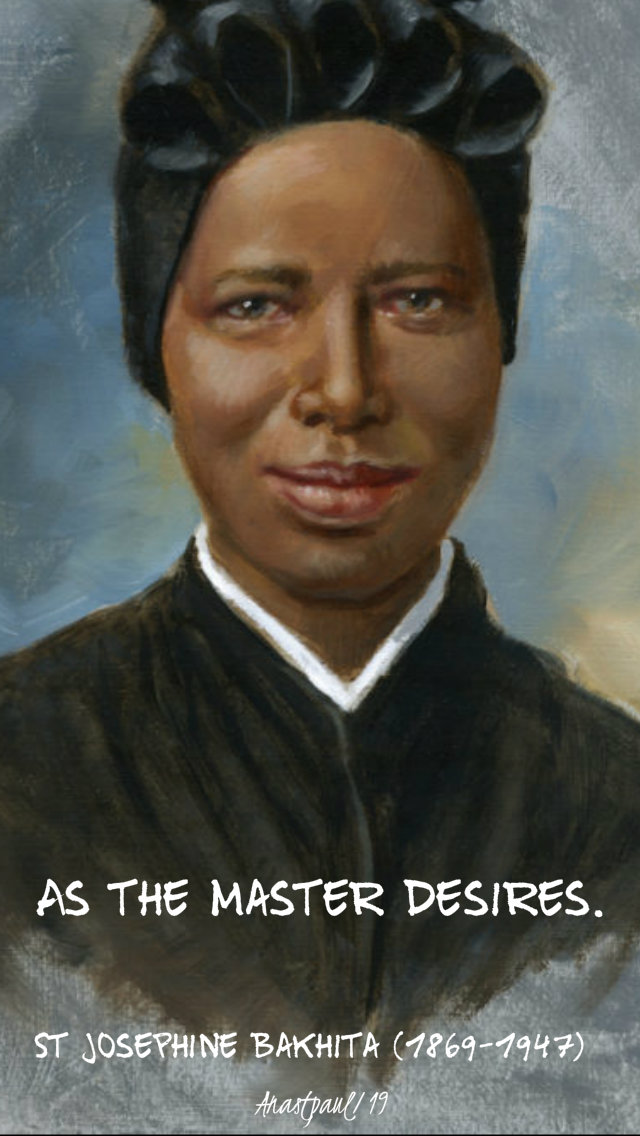
Thought for the Day – 8 February – “As the Master desires.”

Thought for the Day – 8 February – The Memorial of St Josephine Bakhita (1869-1947)

Her kidnappers gave her the name Bakhita, meaning “fortunate.”   Her life in captivity wasn’t quite so.   Born in Darfur in 1869, Josephine Bakhita was taken by Arab slave traders when she was 9.   Forced to walk 600 miles to southern Sudan, she was bought and sold before arriving in El Obeid.   But of all the indignities Josephine faced as a slave—far too many to mention here—one in particular stands out.

Through a combination of branding and tattooing, Josephine suffered the traditional Sudanese practice where a pattern was cut into her skin with a razor.   To ensure scarification, salt was poured into the open wounds.   When it was finished, 140 intricate patterns were carved into her breast, torso and arm.   She also faced countless beatings and lashings from a revolving door of owners as well as a forced conversion to Islam.

Left by her owner in the custody of the Daughters of Charity in Venice in 1888, Josephine finally found refuge.   Baptised in 1890, she took her final vows in 1896 and spent the rest of her life in Vicenza as a doorkeeper and cook.   She died in 1947.   Beatified in 1992, she was Canonised by St Pope John Paul II eight years later.

During Josephine’s years as doorkeeper, Italians were taken by her cheerful demeanour. But the horrors of slavery troubled her the rest of her life.   Her final years were marred by sickness.   In a fevered state, she once pleaded with a nurse to loosen the chains that bound her wrists.   But she never lost her belief in God.   When visitors asked how she was feeling, Josephine’s token response to them was, “As the Master desires.”as the master desires st josephine bakhita - 8feb2019.jpg

That total abandonment to God would be Josephine’s legacy—and it is one we can work toward as 21st-century Catholics.   As the season of Lent approaches, in this month of recognising our brothers and sisters, the victims of Human Trafficking, these words from St Pope John Paul II, who beatified her, ring true: “God used [Josephine] to teach us all the meaning of Jesus’ words:  ‘Blessed are the peacemakers, for they shall be called children of God.’”

St Josephine Bakhita,

Pray for all Victims of Human Trafficing and for us all!st josephine bakhita pray for us - 8feb 2019.jpg

Posted in PAPAL PRAYERS, PRAYERS for VARIOUS NEEDS, SAINT of the DAY

“Together against human trafficking”

The FIFTH International Day of Prayer and Awareness against Trafficking in Persons under the Patronage of St Josephine Bakhita (1869-1947) – 8 February 2019

Theme for 2019:

“Together against human trafficking”

We pray for the generous reception of victims of trafficking in persons, forced prostitution and violence.

Pope Francis – February 2019

“Even if we try to ignore it, slavery is not something other times.
Faced with this tragic reality, no one can wash his hands if he does not want to be, in some way, an accomplice of this crime against humanity.
We can not ignore that slavery exists in the world today, much or perhaps more than before.
We pray for the generous reception of victims of trafficking in persons, forced prostitution and violence.”

Pope Francis is strongly committed to the fight against this scourge in its different expressions.   Recently, in his Angelus on 20 January, he prayed for the victims of human traffickers and also, for those responsible, allowing silence to highlight this.

It is a drama that has been in the heart and in prayer for a long time.   You will remember the return flight from Ireland in July 2018.   He spoke about human trafficking, organised by unscrupulous traffickers, with all his horror.   He had already asked us to organise this month of prayer but just after this trip, during a meeting, he insistently asked that his World Prayer Network truly pray for the men, women and children who live in these situations of slavery.   Faced with this human tragedy, faced with so much suffering, helplessness and anguish of men, women and children who are victims of human trafficking and slavery, often in the context of migration, it is a cry that comes from the heart, it is the cry of prayer to the Lord.   For Francis they are not numbers, they are names, faces, concrete stories, they are our brothers and sisters in humanity.   We can not be silent if we do not wish to sell our soul to the devil.   This is why we are here.   For this reason we have prepared with the Holy Father his monthly video on this drama.   Listen to the Pope’s strong words in this video:  “Faced with this tragic reality, no-one can wash his hands of it he does not want to be, in some way, an accomplice to this crime against humanity”…Fr Frédéric Fornos, SJ (Pope’s Prayer Network)

Dear Saint Josephine Bakhita, help those blinded by greed and lust who trample the human rights and dignity of their brothers and sisters.   Help them to break out of their hateful chains and to become fully human again.

Dear Saint Josephine Bakhita, help us when we feel tempted to look away and not to help, to reject others or even to abuse them.

O Loving God, let your merciful light flood into the darkest shadows.   Bring salvation to the innocents who suffer under sinful abuse.   Bring conversion to the utterly lost souls who hold them captive and exploit them.

Let us Pray:

Daily Prayer to End Human Trafficking

God of goodness and mercy, 
Rewarder of the humble, 
You blessed St Josephine Bakhita of Sudan 
with charity and patience. 
May her prayers help us and her example 
inspire us to carry our cross 
and to love You always. 
Pour upon us the spirit of wisdom 
and love with which you filled St Josephine Bakhita, 
by serving You as she did.
May her prayers on behalf of those enslaved
bring awareness and an end to this evil practice.
May we too please You by our faith and actions,
through our Lord, Jesus Christ, Your Son, in union
with the Holy Spirit, one God forever and ever, amen.second-prayer-to-end-human-trafficking-8 feb 2019.jpg

Posted in QUOTES of the SAINTS, QUOTES on COURAGE, QUOTES on FAITH, QUOTES on HOPE, QUOTES on PATIENCE, QUOTES on PEACE, QUOTES on PERSEVERANCE, QUOTES on SACRIFICE, QUOTES on the DEVIL/EVIL, QUOTES on TRUST and complete CONFIDENCE in GOD, QUOTES on TRUTH, QUOTES on WORK/LABOUR, SAINT of the DAY

Quote/s of the Day – 8 February – The Memorial of St Jerome Emiliani (1486–1537)

Quote/s of the Day – 8 February – The Memorial of St Jerome Emiliani (1486–1537)

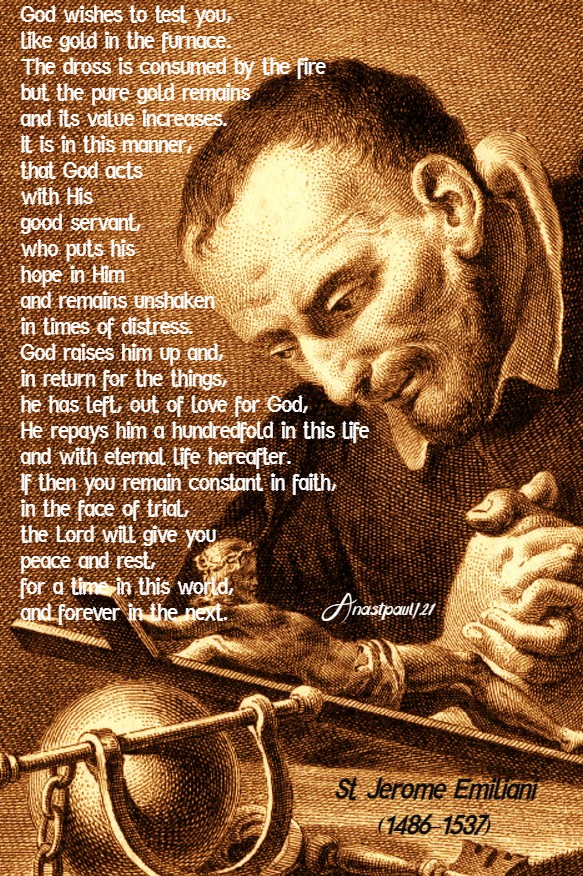
“God wishes to test you, like gold in the furnace.
The dross is consumed by the fire but the pure gold remains
and its value increases.
It is in this manner, that God acts with His good servant,
who puts his hope in Him and remains unshaken in times of distress.
God raises him up and, in return for the things,
he has left out of love for God, He repays him a hundredfold in this life
and with eternal life hereafter.
If then you remain constant in faith, in the face of trial,
the Lord will give you peace and rest for a time in this world
and forever in the next.”

god wishes to test you - st jerome emiliani 4 jan 2021

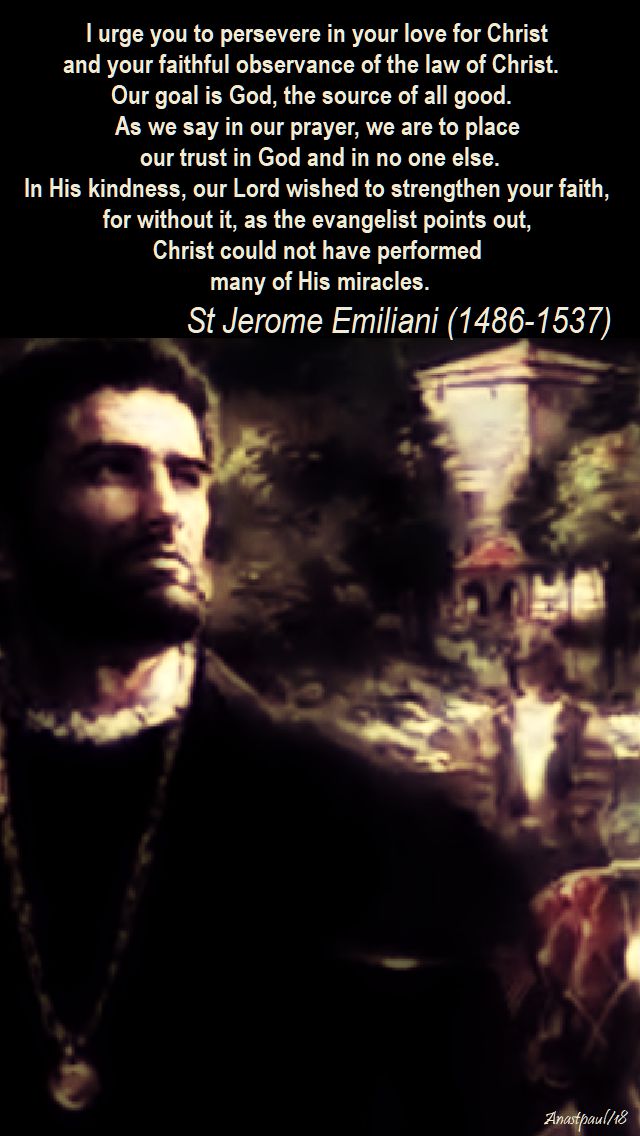
“I urge you to persevere in your love for Christ
and your faithful observance of the law of Christ.
Our goal is God, the source of all good.
As we say in our prayer,
we are to place our trust in God and in no one else.
In His kindness, our Lord wished to strengthen your faith,
for without it, as the evangelist points out,
Christ could not have performed many of His miracles.”

i-urge-you-to-persevere-st-jerome-emiliani-8-feb-2018

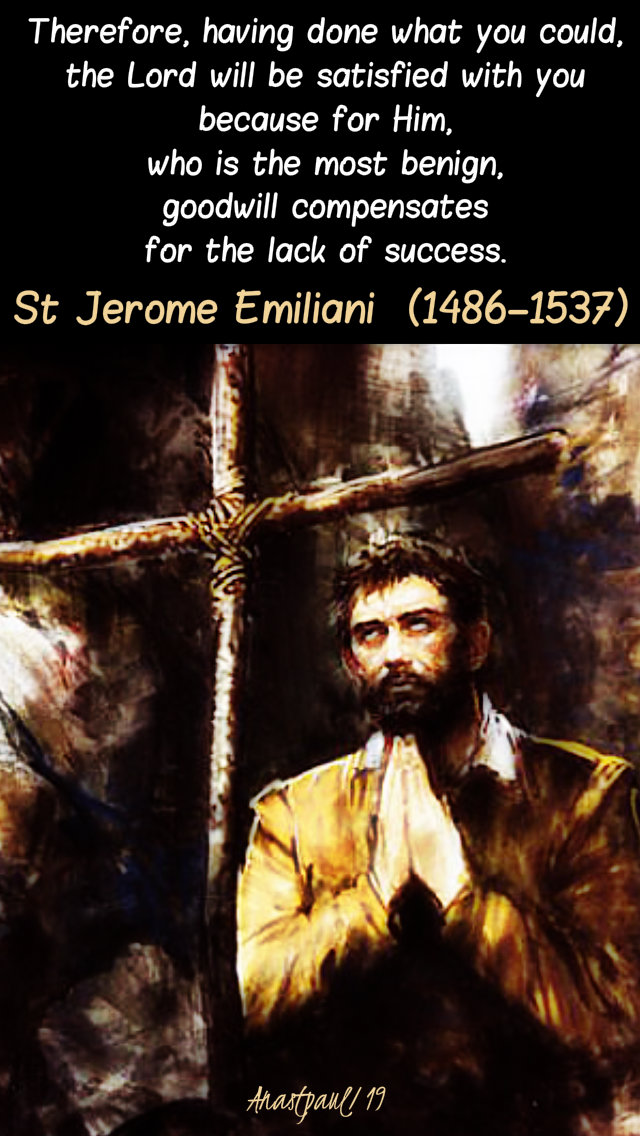
“Therefore, having done what you could,
the Lord will be satisfied with you
because for Him,
who is the most benign,
goodwill compensates
for the lack of success. “
(Letter 5 #4)

St Jerome Emiliani (1486–1537)

therefore having done what you could - st jerome emiliani 8 feb 2019.jpg

Posted in FATHERS of the Church, MORNING Prayers, QUOTES of the SAINTS, QUOTES on COURAGE, QUOTES on DEATH, QUOTES on PERSECUTION, QUOTES on SUFFERING, QUOTES on the CROSS of CHRIST, SAINT of the DAY, The WORD

One Minute Reflection – 8 February – “I want you to give me the head of John the Baptist.”

One Minute Reflection – 8 February – Friday of the Fourth week in Ordinary Time, Year C, Gospel: Mark 6:14–29 and the Memorial of St Jerome Emiliani (1486–1537)

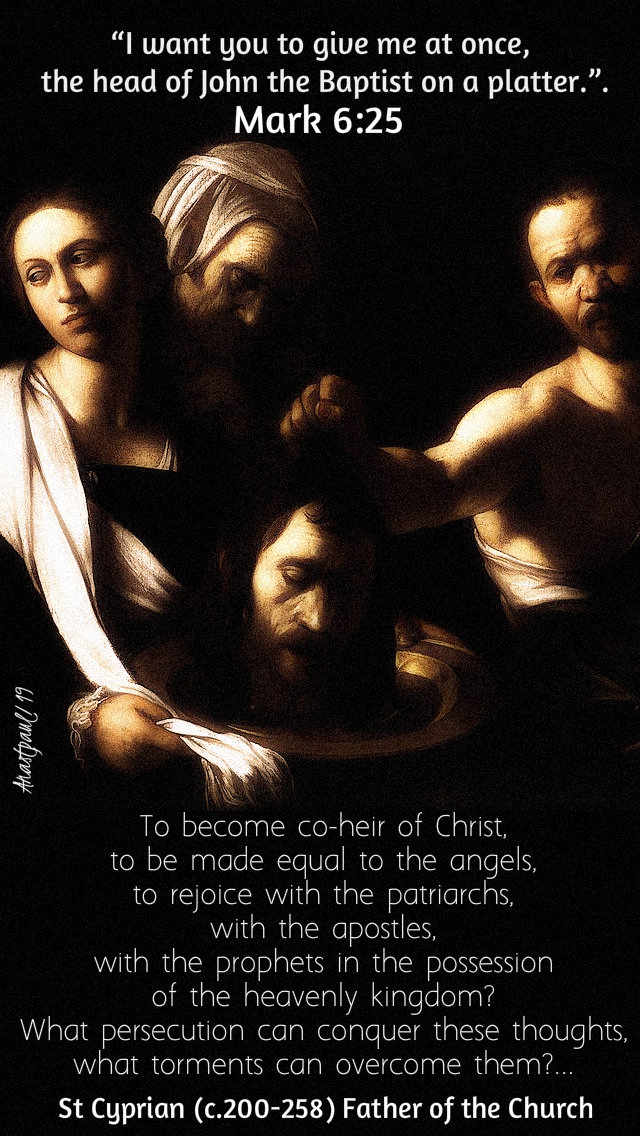
“I want you to give me at once the head of John the Baptist on a platter.”…Mark 6:25

REFLECTION – “If it is glorious for the soldiers of this world to return to their fatherland triumphant, after vanquishing the enemy, how much better and greater is the glory for one who, after overcoming the devil, returns triumphant to heaven and after laying him low who had formerly deceived us, brings back the trophies of victory there, whence Adam, the sinner, had been ejected?   To offer the Lord the most acceptable gift of an uncorrupted faith, an unshaken virtue of the mind, an illustrious praise of devotion?… To become co-heir of Christ, to be made equal to the angels, to rejoice with the patriarchs, with the apostles, with the prophets in the possession of the heavenly kingdom?   What persecution can conquer these thoughts, what torments can overcome them?…

The lands are shut off in persecutions, heaven is open… How great a dignity and, how great a security it is to go forth hence happy, to go forth glorious in the midst of difficulties and affliction!   For a moment to shut the eyes with which men and the world are seen, to open them immediately that God and Christ may be seen!… If persecution should come upon such a soldier of God, virtue made ready for battle will not be able to be overcome him.   Or if the summons should come beforehand, the faith which was prepared for martyr­dom will not be without its reward…  In persecution, God crowns loyal military service, in peace, purity of conscience is crowned.”…St Cyprian (c.200-258) Bishop and Martyr, Father of the Churchmark 6 25 I want you to give me at once the head of john - to become co-heirs with christ - st cyprian 8 feb 2019.jpg

PRAYER– Father of mercy, You chose St Jerome Emiliani to be a father to orphans in their need.   Grant that through his prayer, we may keep faithfully the spirit of sonship, by which we are not only called but really are Your children.   Help us to imitate his love and faith, manifesting by our commitment to Your commandments, our true faith.   May we be filled with strength and grace as we face persecution and animosity in Your service.   We make our prayer through Jesus, our Lord in the unity of the Holy Spirit, God forever, amenst-jerome-emiliani-pay-for-us-8-feb-2018.jpg

Posted in PATRONAGE - ORPHANS,ABANDONED CHILDREN, SAINT of the DAY

Saint of the Day – 8 February – St Jerome Emiliani (1486–1537) Confessor

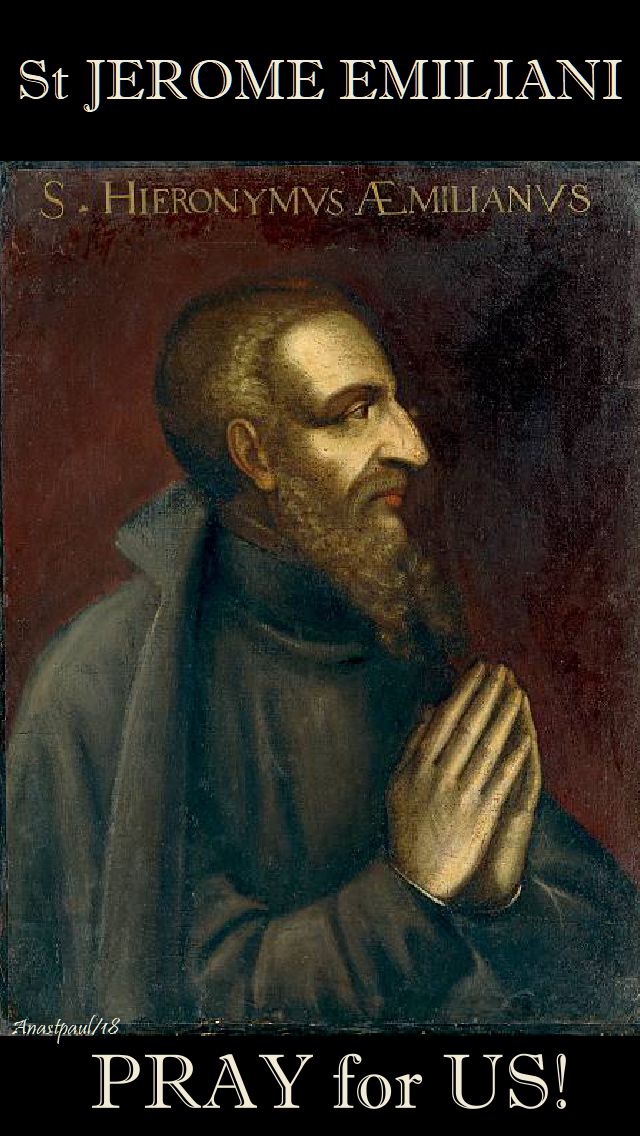
Saint of the Day – 8 February – St Jerome Emiliani (1486–1537) Confessor, Layman, Founder of the Somascan Fathers, Apostle of the poor, orphans, the sick, Catechist, Apostle of prayer – born Gerolamo Emiliani (also known as Jerome Aemilian, Hiëronymus Emiliani) in 1486 at Venice, Italy and died on 8 February 1537 of the plague caught whilst tending the sick. Patronages – the Somaschians, orphans, abandoned children.jerome and the cross.jpg
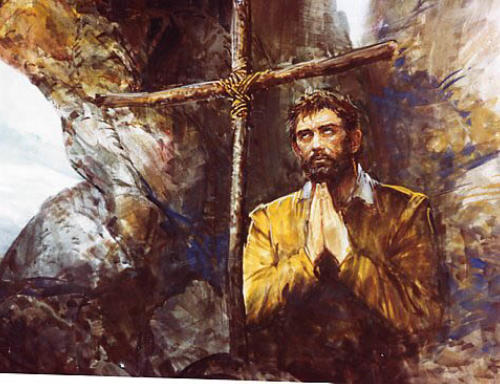
Jerome was born of one of the patrician families of Venice, the son of Angelo Emiliani (popularly called Miani) and Eleonore Mauroceni.   His father died when he was a teenager and Jerome ran away at the age of 15 to join the army.   In 1508, he participated in the defence of Castelnuovo against the League of Cambray.   He was appointed governor of a fortress in the mountains of Treviso and while defending his post was taken prisoner.

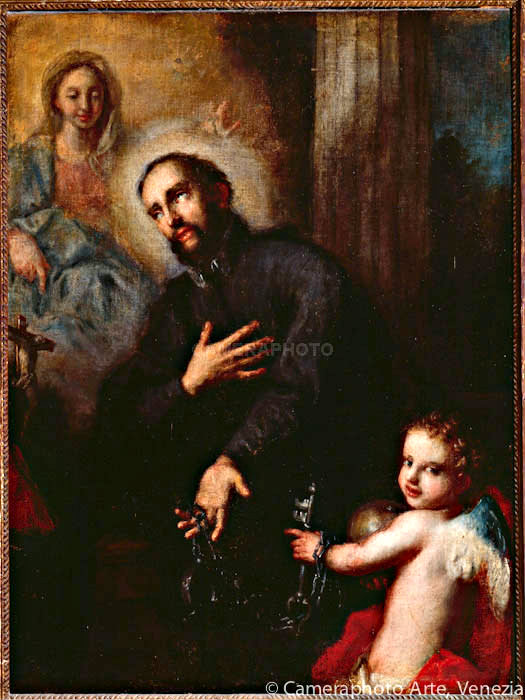
In the misery of his dungeon he invoked the great Mother of God and promised, if she would set him free, to lead a new and a better life.   Our Lady appeared, broke his fetters and led him forth through the midst of his enemies.   At Treviso he hung up his chains at her altar, dedicated himself to her service and on reaching his home at Venice devoted himself to a life of active charity.the-virgin-appears-to-st-jerome-emiliani_1276_2_zoom
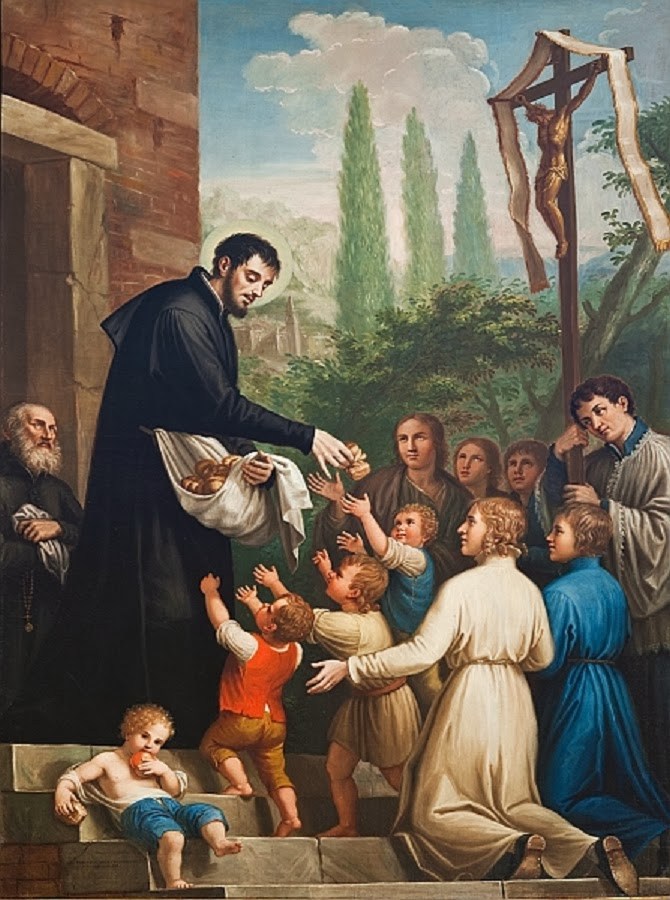
He was then appointed podestà (Venetian magistrate) of Castelnuovo but after a short time returned to Venice to supervise the education of his nephews.   All his spare time was devoted to the study of theology and to works of charity.   In the year of plague and famine (1528), he seemed to be everywhere and showed his zeal, especially for the orphans, whose number had so greatly increased. Jerome began caring for the sick and feeding the hungry at his own expense.  Saint_Jerome_Emilian
He rented a house for them near the church of St Rose and, with the assistance of some pious laymen, ministered to their needs.   To his charge was also committed the hospital for incurables, founded by St Cajetan (1480 –1547).   In 1531 he went to Verona and induced the citizens to build a hospital, in Brescia, Bergamo, Milan and other places in northern Italy,  he erected orphanages, for boys and for girls.   At Bergamo, he also founded a hostel for repentant prostitutes.San_Girolamo_Emiliani-Miani
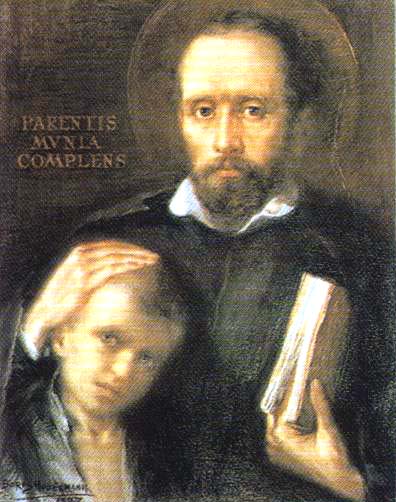
Two priests, Alessandro Besuzio and Agostino Bariso, then joined him in his labours of charity and in 1532 Gerolamo founded a religious society, the Congregation of Regular Clerics.   The motherhouse was at Somasca, a secluded North Italian hamlet in the Comune of Vercurago between Milan and Bergamo, after which the members became known as Somascans.

In the Rule of this Society, Jerome stated the principal work of the community was the care of orphans, poor and sick and demanded that dwellings, food and clothing would bear the mark of religious poverty.   Devoted to the Guardian Angels, Jerome entrusted the Company to the protection of the Virgin, the Holy Spirit and the Archangel Raphael.

The Congregation was approved in 1540 by Pope Paul III and the Order, which has as its official name “Clerici Regulares S. Majoli Papiae Congregationis Somaschae,” spread throughout Italy and the world.  jerome emiliani life
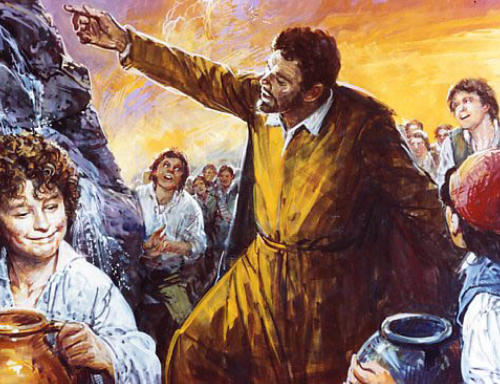
Through calamities and difficulties of any kind that have developed during the four centuries of history the Somascan Order has never ceased its apostolate for the needy youth.   St Jerome has now on earth these numerous hands and arms of which he has dreamed.   His disciples have founded seminaries, houses of education, colleges, professional schools, workshops in Italy, in Switzerland, in Spain, in Central America, in Mexico, in Colombia, in Brazil and in the United States of America.   In Belgium there exists a branch of the Somascan Order, known as the “Hieronymieten” who dedicate themselves to teaching and to the care of the sick under the patronage of St Jerome Emiliani.   They are established in the Oriental Flanders, at St Nicholas-Waas, Gand, Beveren-Waas, Lokeren, Maldegem, Sleidinge, Stekene.   These religious members address to the Founder of the Congregation of the Servants of the Poor this beautiful prayer:  “Your hands were instruments of prayer and charity.   Teach us to pray and love in spirit and truth.”your hands were instruments of prayer and charity- st jerome emiliani - 8 feb 2019
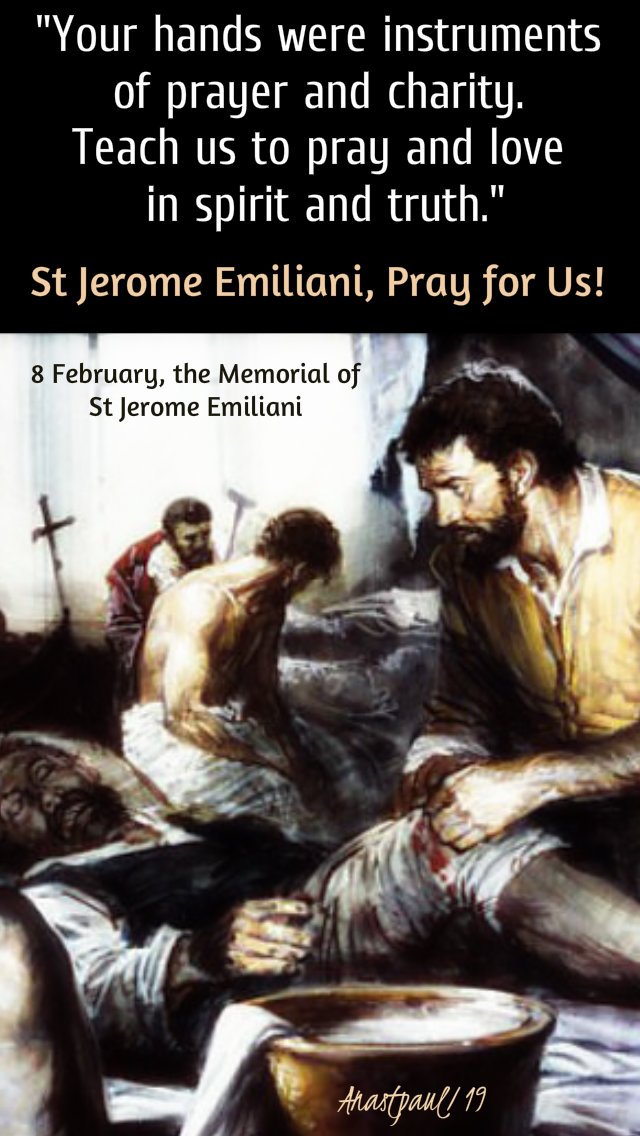
During an epidemic, Jerome was assisting the sick when he contracted the plague. He died in Somasca, 8 February 1537.

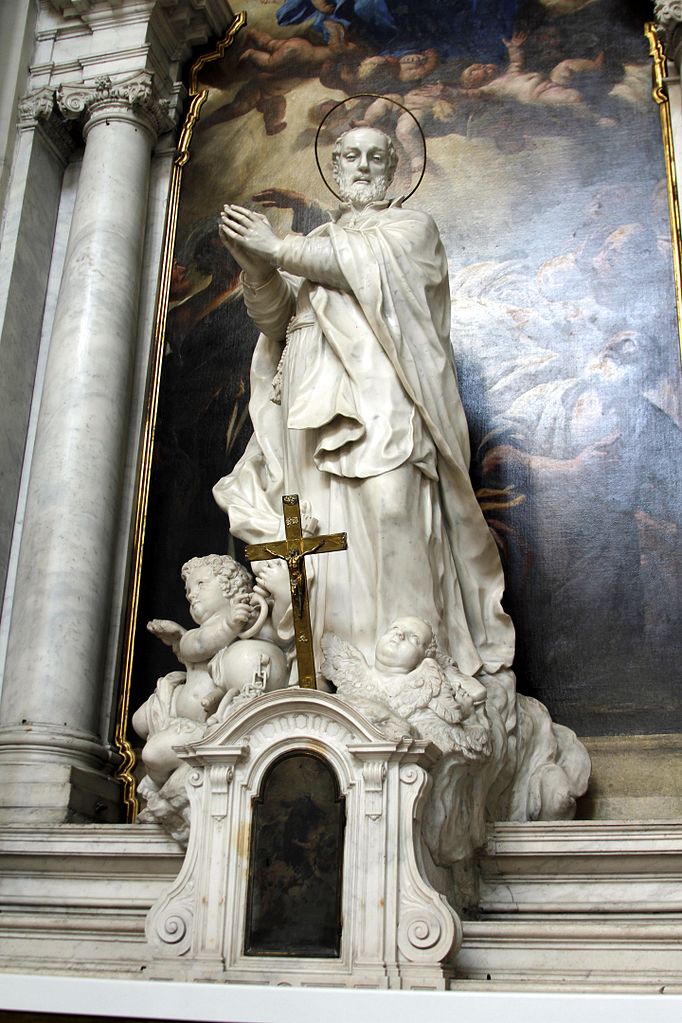
He was Beatified in 1747 by Pope Benedict XIV and Canonised in 1767 by Pope Clement XIII. Below is the Founder Statue of St Jerome at St Peter’s Basilica.

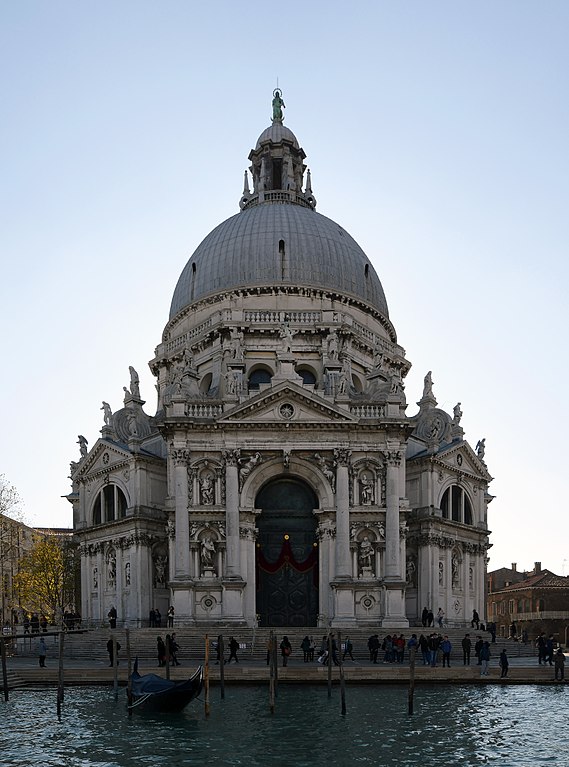
The Santa Maria della Salute (Saint Mary of Health), commonly known simply as the “Salute”, is a minor basilica located at Punta della Dogana in the Dorsoduro sestiere of the city of Venice, Italy.

It stands on the narrow finger of Punta della Dogana, between the Grand Canal and the Giudecca Canal, at the Bacino di San Marco, making the church visible when entering the Piazza San Marco from the water.   The Salute is part of the parish of the Gesuati and is the most recent of the so-called plague churches.

In 1630, Venice experienced an unusually devastating outbreak of the plague.   As a votive offering for the city’s deliverance from the pestilence, the Republic of Venice vowed to build and dedicate a church to Our Lady of Health (or of Deliverance, Italian: Salute).   The church was designed in the then fashionable baroque style by Baldassare Longhena, who studied under the architect Vincenzo Scamozzi.   Construction began in 1631.   Most of the objects of art housed in the church bear references to the Black Death and includes the statue below of St Jerome Emiliani, who before himself, dying of the Plague, assisted so many the victims and is a patron of the “Salute”.569px-Santa_Maria_della_Salute_(Venice).jpgSaint_Gerolamo_Emiliani_(Morleiter,_1767)_-_Santa_Maria_della_Salute_-_Venice_2016_(2).jpg
Posted in SAINT of the DAY

Memorials of the Saints – 8 February

St Jerome Emiliani CRS (1486–1537) (Optional Memorial)

St Josephine Bakhita FDCC (1869-1947) (Optional Memorial) today is the FIFTH WORLD DAY OF PRAYER AND AWARENESS AGAINST TRAFFICKING IN PERSONS UNDER THE PATRONAGE OF ST BAKHITA

Biography: https://anastpaul.wordpress.com/2018/02/08/saint-of-the-day-8-february-st-josephine-bakhita-1869-1947/

St Cointha of Alexandria
St St Cuthman
St Cyriacus of Rome
St Dionysus of Armenia
St Elfleda of Whitby
St Emilian of Armenia
Bl Esperanza de Jesus
St Giacuto
St Gisela
St Honoratus of Milan
St Invenzio of Pavia
St Isaias Boner
St Jacoba
Bl Josephina Gabriella Bonino
St Kigwe
St Lucius of Rome
St Meingold
St Mlada of Prague
St Nicetius of Besançon
St Oncho of Clonmore
St Paul of Rome
St Paul of Verdun
Bl Peter Igneus
St Sebastian of Armenia
St Stephen of Muret

Martyrs of Constantinople: Community of 5th century monks at the monastery of Saint Dius at Constantinople. Imprisoned and martyred for loyalty to the Vatican during the Acacian Schism. 485 in Constantinople.

Martyrs of Persia: An unknown number of Christians murdered in early 6th-century Persia. Legend says that so many miracles occurred through the intercession of these martyrs that the king decreed an end to the persecution of Christians.

Posted in QUOTES of the SAINTS, QUOTES on the CHURCH, SAINT of the DAY

Quote of the Day – 7 February

Quote of the Day – 7 February – The Memorial of Blessed Pope Pius IX (1792-1878)

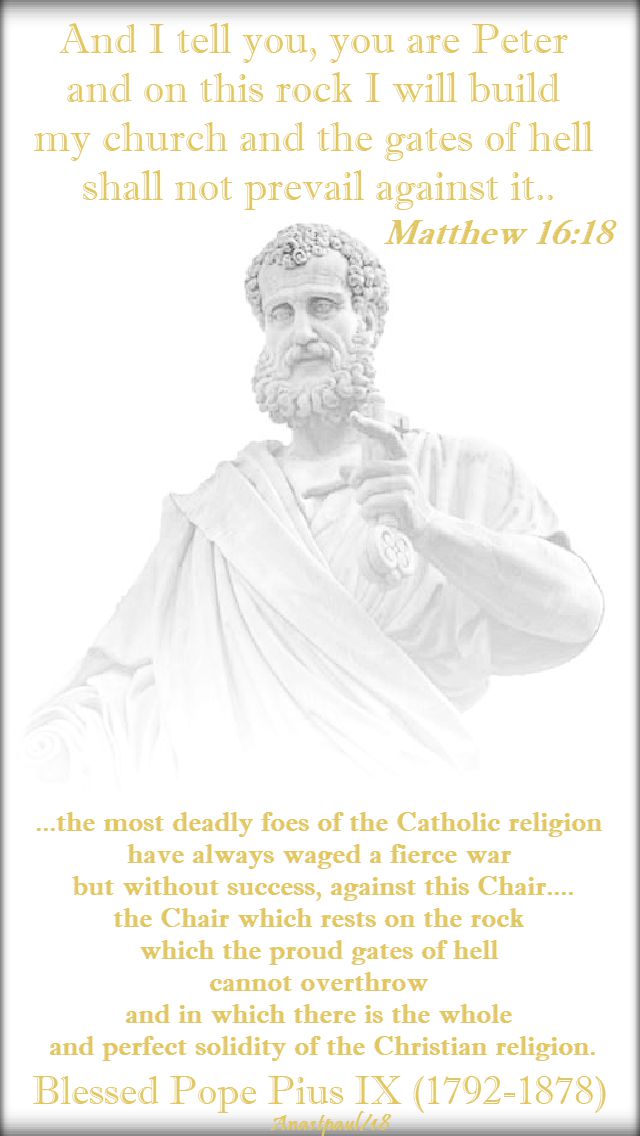
And I tell you, you are Peter and on this rock I will build my church and the gates of hell shall not prevail against it…Matthew 16:18

“Now you know well that the most deadly foes of the Catholic religion
have always waged a fierce war but without success, against this Chair;
they are by no means ignorant of the fact,
that religion itself can never totter and fall while this Chair remains intact,
the Chair which rests on the rock which the proud gates of hell cannot overthrow
and in which there is the whole and perfect solidity of the Christian religion.”

Blessed Pope Pius IXthe-most-deadly-foes-of-the-catholic-church-bl-pope-pius-ix-7-feb-2018.jpg

More quotes from Blessed Pius – https://anastpaul.wordpress.com/2018/02/07/quote-s-of-the-day-7-february-the-memorial-of-blessed-pope-pius-ix-1792-1878/

Posted in franciscan OFM, SAINT of the DAY

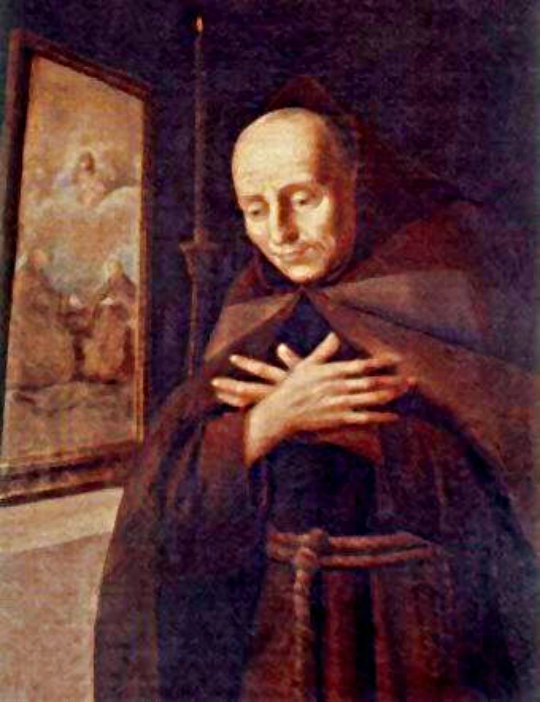
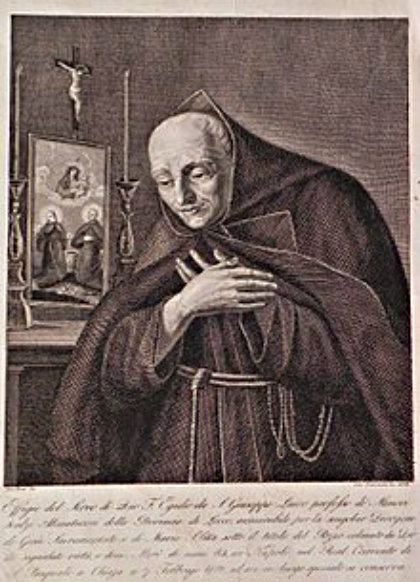
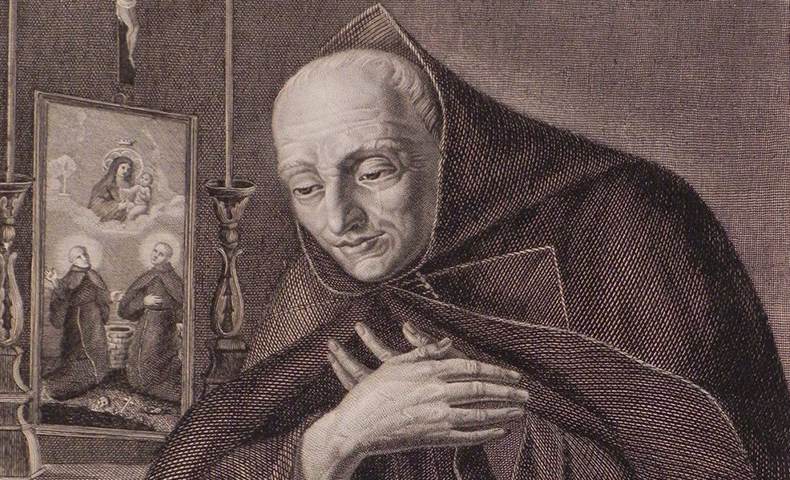
Saint of the Day – 7 February – St Giles Mary of St Joseph OFM (1729-1812)

Saint of the Day – 7 February – St Giles Mary of St Joseph OFM (1729-1812) Religious Franciscan Friar, Apostle of Charity and Prayer, Marian devotee – known as the “Consoler of Naples” and the “Saint of the Little Way” (also known as Egidio Maria da Taranto, Egidio Maria de Saint Giuseppe, Egidio Maria of Saint Joseph and Francesco Postillo).

St Giles Mary was born on 16 November 1729 at Taranto, Apulia, Italy and died on 7 February 1812 at Naples, Italy of natural causes while at prayer.   Patronage – Taranto, Italy (chosen on 29 June 1919 by Archbishop Orazio Mazzella of Taranto).st giles mary.jpg

Francesco Postillo was born in Taranto to a very poor family.   Cataldo Postillo, his father and Grazia Procaccio, his mother.   Three siblings later followed him.   He was baptised as Francesco Domenico Antonio Pasquale Postillo.

His father’s death died in 1747 left the 18-year-old Francesco to care for the family. Francesco had to abandon his hope of education and to seek work to provide for his widowed mother and siblings.   For a brief period of time he worked as a rope maker.

Although his desire was to become a priest, his lack of education meant that he was unable to fulfil this desire and served instead as a professed religious in the Order of Friars Minor in Naples.   He applied to enter the order on 27 February 1754 and made his solemn profession of vows on 28 February 1755 at the convent of Santa Maria delle Grazie in Galatone.   He assumed the religious name of “Giles of the Mother of God” but he later altered this instead to “Giles Mary of Saint Joseph”.

For 53 years he served at St Paschal’s Hospice in Naples in various roles, such as cook, porter or most often as official beggar for that community.   He often travelled outside the confines of his convent to beg for alms and to aid those who were shunned and isolated, especially the lepers.

“Love God, love God” was his characteristic phrase as he gathered food for the friars and shared some of his bounty with the poor—all the while consoling the troubled and urging everyone to repent.  He invited men and women to recognise their own gifts and to live out their dignity as people made in God’s divine image. 220px-Sant'Egidio_Maria_di_San_Giuseppe.JPG

The charity which he reflected on the streets of Naples was born in prayer and nurtured in the common life of the friars.  St Giles often carried an icon of the Blessed Virgin Mary in a depiction known as Our Lady of the Well when he made sick calls.   The people whom Giles met on his begging rounds nicknamed him the “Consoler of Naples.”

In the same year that a power-hungry Napoleon Bonaparte led his army into Russia, Giles Mary of St Joseph ended a life of humble service to his Franciscan community and to the citizens of Naples.   The date was 7 February 1812. Huge crowds turned out for his funeral, lamenting the loss of their Consoler.

His relics are enshrined in an urn next to the icon of Our Lady of the Well in the church of San Pasquale Baylón in Taranto.

He was Canonised on 2 June 1996 by St Pope John Paul II.   His canonisation miracle involved the cure of Mrs Angela Mignogna in 1937.SOD-0213-SaintGilesMaryofStJoseph-790x480.jpg

Posted in SAINT of the DAY

Memorials of the Saints – 7 February

Bl Adalbert Nierychlewski
St Adaucus of Phrygia
St Amulwinus of Lobbes
St Anatolius of Cahors
Bl Anna Maria Adorni Botti
Bl Anselmo Polanco
Bl Anthony of Stroncone
St Augulus
St Chrysolius of Armenia
Bl Eugenie Smet
St Fidelis of Merida
Bl Felipe Ripoll Morata
St Giles Mary of Saint Joseph OFM (1729-1812)

Bl Jacques Sales
St John of Triora
St Juliana of Bologna
Bl Klara Szczesna
St Lorenzo Maiorano
St Luke the Younger
St Maximus of Nola
St Meldon of Péronne
St Moses the Hermit
St Parthenius of Lampsacus
Bl Peter Verhun
Bl Pope Pius IX (1792-1878)
All about Blessed Pope Pius IX: https://anastpaul.wordpress.com/2018/02/07/saint-of-the-day-blessed-pope-pius-ix-1792-1878/

St Richard the King
Bl Rizziero of Muccia
Bl Rosalie Rendu (1786-1856)
St Theodore Stratelates
Bl Thomas Sherwood (1551–1578) Martyr
Biography: https://anastpaul.wordpress.com/2017/02/07/saint-of-the-day-7-february-bl-thomas-sherwood/

St Tressan of Mareuil
Bl William Saultemouche

Posted in QUOTES of the SAINTS, SAINT of the DAY

Thought for the Day – 6 February – “On the Holy Mountain”

Thought for the Day – 6 February – The Memorial of St Paul Miki S.J. (c 1564-1597) & Companions – 26 Martyrs of Nagasaki

When the first missionaries, like St Francis Xavier, came to Japan in 1549 they were welcomed.   Many Japanese became Christians.   When the leader Hideyoshi took command, he feared that Christians would take over the government.   In 1587, he banished them and destroyed many of their churches.   Some missionary priests stayed and went into hiding, dressing like Japanese in order to minister to the Christians.

More than 3,000 Christians were martyred in Japan.   On 8 December 1596, Hideyoshi arrested and condemned to death the friars of Miako.   Among them were three Japanese Jesuits, six Franciscans (four of them Spanish) and seventeen Japanese laymen.   Charged with attempting to harm the government, they were sentenced to crucifixion.   Some of these men were very young – Louis was 10, Anthony, 13, Thomas, 16 and Gabriel, 19.   The best known is Paul Miki, who was a Japanese of a noble family, a Jesuit brother and a brilliant preacher.

The twenty-six men were tortured and then forced to walk more than 300 miles from Miako to Nagasaki through snow and ice and freezing streams.   Along the way they preached to the people who had come out to see them.   They sang psalms of praise and joy.   They prayed the rosary and told the people that such a martyrdom was an occasion of rejoicing, not of sadness.   Finally, on 5 February they reached Nagasaki, where twenty-six crosses awaited them on a hill now called the Holy Mountain.   It is said that the Christians ran to their crosses, singing.   St Paul Miki said –

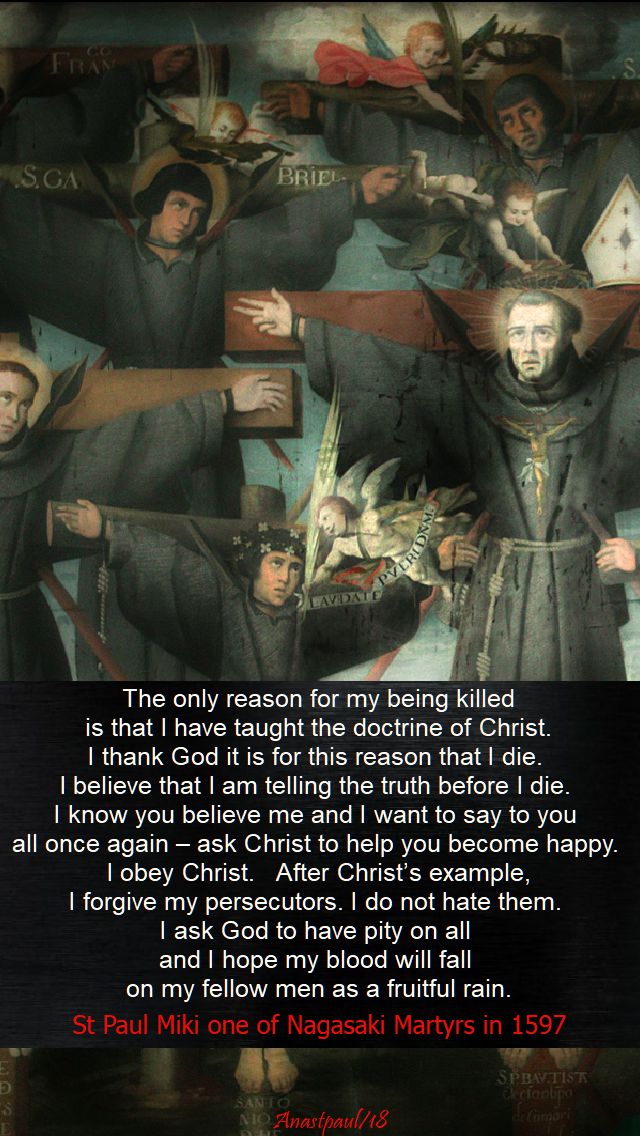
“The only reason for my being killed, is that I have taught the doctrine of Christ.    I thank God it is for this reason that I die.    I believe that I am telling the truth before I die.   I know you believe me and I want to say to you all once again – ask Christ to help you become happy.    I obey Christ.   After Christ’s example, I forgive my persecutors. I do not hate them.   I ask God to have pity on all and I hope my blood will fall on my fellow men as a fruitful rain.”the-only-reason-st-paul-miki-nagasaki-martyr-6-feb-2018.jpg

Soldiers bound them to the crosses with iron bands at their wrists, ankles and throats.  Then they thrust them through with lances.   Many people came to watch the cruel deaths.   Hideyoshi and his solders had hoped the example would frighten other Christians.   Instead, it gave them the courage to profess their faith as the martyrs had.

These martyrs died an horrendous and agonising death in witness to their faith in Jesus Christ.   We may not be asked to make this sacrifice but we are all called upon to bear witness to our faith, sometimes in ways that are very difficult – yes even in our parishes, neighbourhoods and schools.   Could we witness thus?

In 1858, Japan again permitted Christianity in Japan.   Missionaries found thousands of Christians still in Japan.   For two hundred years they had carried on the faith in secret.   

Paul Miki was born in Japan and educated by the Jesuits.   He would have been the very first Japanese priest if he had escaped arrest, for he had already completed his studies for the priesthood.   From his cross he forgave his persecutors and told the people to ask Christ to show them how to be truly happy.

St Paul Miki and the Martyrs of Nagasaki, Pray for Us!st paul miki and the nagasaki martyrs - pray for us 6 feb 2019.jpg

Posted in JESUIT SJ, QUOTES of the SAINTS, QUOTES on the CROSS of CHRIST, SAINT of the DAY

Quote of the Day – 6 February – St Paul Miki SJ (c 1564-1597) Martyr

Quote of the Day – 6 February – The Memorial of St Paul Miki SJ (c 1564-1597) & Companions – 26 Martyrs of Nagasaki

“Like my Master I shall die upon the cross.
Like Him, a lance will pierce my heart,
so that my blood and my love,
can flow out upon the land
and sanctify it to His name.”

St Paul Miki (c 1564-1597)like my master - st payl miki - 6 feb 2019.jpg

Posted in MORNING Prayers, QUOTES of the SAINTS, SAINT of the DAY, The WORD

One Minute Reflection – 6 February – “Is not this the carpenter?”…Mark 6:3

One Minute Reflection – 6 February – Wednesday of the Fourth week in Ordinary Time, Year C, Gospel: Mark 6:1–6 and the Memorial of St Dorothy of Caesarea (Died 311) and St Paul Miki SJ (c 1564-1597) & Companions/Martyrs of Nagasaki – Martyrs

“Is not this the carpenter?”…Mark 6:3

REFLECTION – “Joseph loved Jesus as a father loves his son and he cared for Him, giving Him the best he had.   Joseph took charge of this child as he had been commanded and turned Jesus into a workman, passing on his craft to Him.   That is why their neighbours in Nazareth, when they spoke of Jesus, called Him, roughly speaking, a “carpenter” or “the son of a carpenter” (Mt 13:55)…
Jesus must have resembled Joseph in His traits of character and ways of working and talking.   His realism, His powers of observation, His way of sitting at table and breaking bread, His attraction for explaining His teaching in a concrete way by taking His examples from everyday things, reflect what Jesus’ childhood and youth were like and therefore His relationship with Joseph.   What depths there are in this mystery!   This Jesus, who is a man, who speaks with the accent of a particular region of Israel, who resembles a workman named Joseph, is indeed the Son of God.   And who can teach God anything?   Nevertheless, He is truly man and His life is a normal one – first a child, then a young man who helps Joseph in the workshop and finally, a mature man in the fullness of age:  “Jesus advanced in wisdom and grace before God and men” (Lk 2:52).
At the human level Joseph was Jesus’ master.   Day by day he surrounded Him with tender affection and cared for Him with joyful self-denial.   Is this not a very good reason for thinking this man to be just (Mt 1:19) – this saintly patriarch in whom the Old Testament faith reaches its climax as a master of the interior life?”…St Josémaria Escriva de Balaguer (1902-1975)

“According to the people of Nazareth, God is too great to humble Himself to speak through such a simple man!   It is the scandal of the Incarnation – the unsettling event of a God made flesh, who thinks with the mind of a man, works and acts with the hands of a man, loves with a human heart, a God who struggles, eats and sleeps like one of us.
The Son of God overturns every human framework – it is not the disciples who washed the feet of the Lord but, it is the Lord who washed the feet of the disciples (cf. Jn 13:1-20). This is a reason for scandal and incredulity, not only in that period but in all ages, even today.”…Pope Francis – Angelus, 8 July 2018mark 6 3 is not this the carpenter - the son of God overturns - pope francis 6feb2019.jpg

PRAYER – Lord God, source of strength and grace, grant us eyes to see and ears to hear and hearts to love the Word of Your Son.   Make us recognise Your Son in our daily lives and be generous in sharing our faith to all we meet.   Grant, we pray, that the prayers of St Dorothy of Caesarea and St Paul Miki and companions, may help us to manifest zeal and courage.   Through Jesus Christ, our Lord, in unity with the Holy Spirit, God forever, amen.

st dorothy of caesarea pray for us 6 feb 2019.jpg

MARTYRS OF NAGASAKI PRAY FOR US.jpg