Posted in SAINT of the DAY

Memorials of the Saints – 11 December

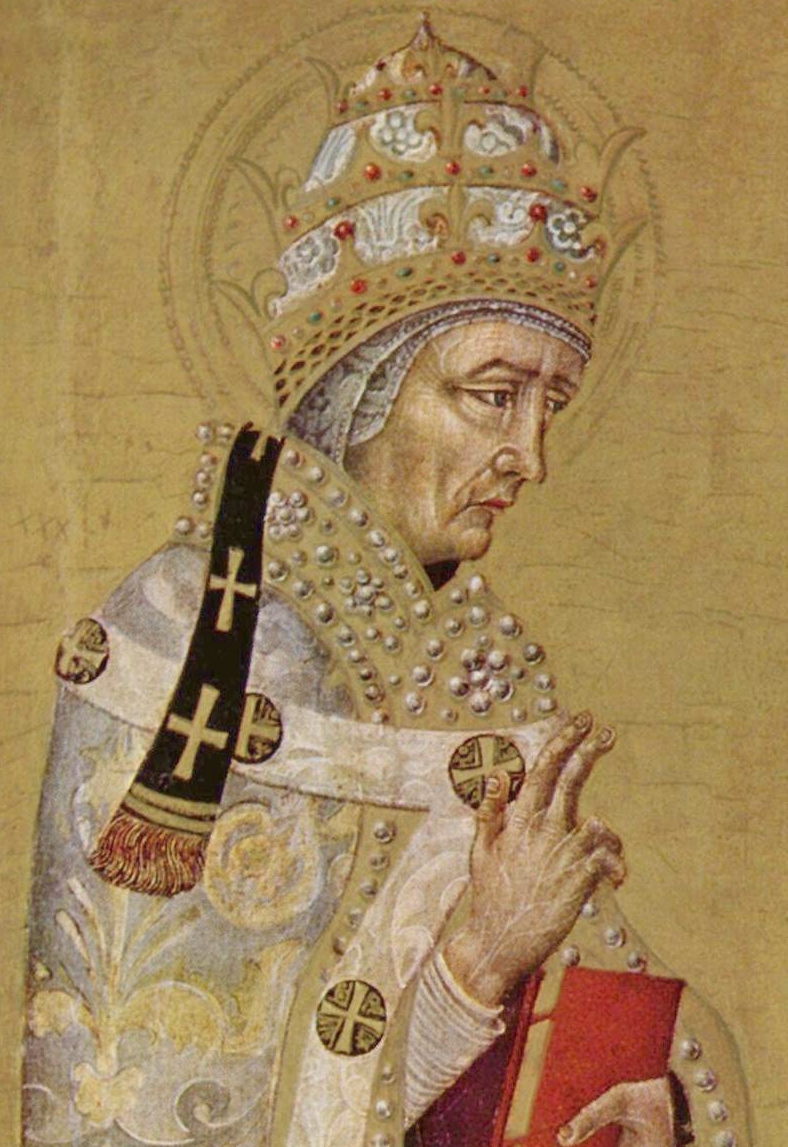
St Pope Damasus I (c. 305-384) (Optional Memorial)
Biography: https://anastpaul.wordpress.com/2017/12/11/saint-of-the-day-11-december-st-pope-damasus-i-c-305-384/

St Aithalas of Arbela
St Apseus of Arbela
Bl Arthur Bell
Barsabas of Persia
St Cian
St Daniel the Stylite
Bl David of Himmerod
Bl Dominic Yanez
St Eutychius the Martyr
St Fidweten
Bl Franco of Siena
Bl Hugolinus Magalotti
Bl Jean Laurens
Bl Kazimierz Tomasz Sykulski
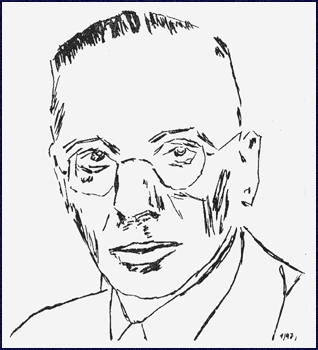
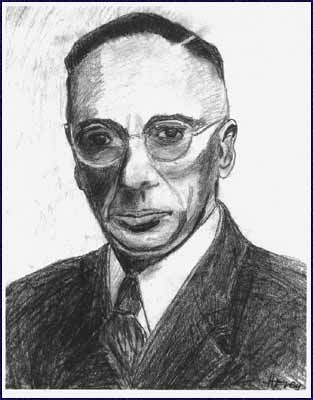
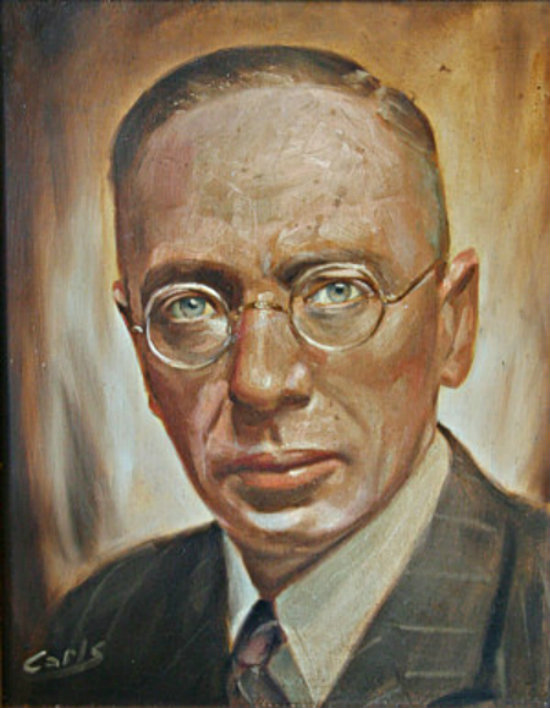
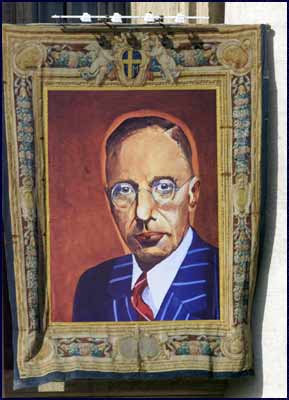
St María Maravillas de Jesús OCD (1891-1974)

Bl Martín Lumbreras Peralta
Bl Martino de Melgar
Bl Melchor Sánchez PérezPens
Bl Pilar Villalonga Villalba
Bl Severin Ott
Martyrs of Saint Aux-Bois – (3 saints): Two Christian missionaries and one of their local defenders who faith in the persecutions of governor Rictiovarus – Fuscian, Gentian and Victoricus. They were beheaded in 287 in Saint Aux-Bois, Gaul (in modern France).

Martyrs of Rome – (3 saints): Three Christians murdered in the persecutions of Diocletian for giving aid to Christian prisoners – Pontian, Practextatus and Trason. They were imperial Roman citizens. They were martyred in c 303 in Rome, Italy.

Posted in MARIAN DEVOTIONS, MARIAN TITLES, SAINT of the DAY, The BLESSED VIRGIN MARY

Thought for the Day – 10 December – The Feast of Our Lady and the Holy House of Loreto

Thought for the Day – 10 December – The Feast of Our Lady and the Holy House of Loreto

There are some curious facts about the Holy House.

The stone on which the original walls are built and the mortar used in their construction have never been indigenous to the neighborhood of Loreto.   But both stone and mortar are alleged to be chemically identical with the materials most commonly found in Nazareth.

The Holy House does not rest and has never rested upon foundations sunk into the earth where it now stands.   The point was formally investigated in 1751 under Pope Benedict XIV.   What was then found is, therefore, fully in accord with the tradition of a building transferred whole from some more primitive site.

There are other strange facts in The House of the Virgin Mary.   So much is this the case, that when one turns the final page, the Holy House of Loreto continues to be as enigmatic as when one started reading.   In fact, it remains as puzzling, perhaps, as when it first appeared so far from the Holy Land.   It holds its secrets yet.   For those who come as pilgrims, however, it leaves its mark.   Our faith is tied to Mystery and this is one of them!

Our Lady of Loreto, Pray for Us!our lady of loreto pray for us - 10 dec 2017

Posted in MARIAN DEVOTIONS, MARIAN QUOTES, MARIAN TITLES, QUOTES of the SAINTS, QUOTES on FAITH, SAINT of the DAY

Quote of the Day – 10 December – Bl John Henry Newman on the Holy House of Loreto

Quote of the Day – 10 December –

The Feast of Our Lady and the Holy House of Loreto

“I went to Loreto with a simple faith,
believing what I still believe,
even more so after having seen.
Now I no longer have any doubts.”

Blessed Cardinal Henry John Newman (1801-1890)
Written in 1848i-went-to-loreto-bl-john-henry-newman-10-dec-2018 no 3

Posted in MARIAN DEVOTIONS, MARIAN PRAYERS, MARIAN TITLES, PAPAL PRAYERS, SAINT of the DAY, The BLESSED VIRGIN MARY

Our Morning Offering – 10 December – The Feast of Our Lady and the Holy House of Loreto

Our Morning Offering – 10 December – The Feast of Our Lady and the Holy House of Loreto

Prayer to Our Lady of Loreto
By Pope Benedict XVI

Mary, Mother of the “Yes”, you listened to Jesus,
and know the tone of His voice
and the beating of His heart.
Morning Star, speak to us of Him,
and tell us about your journey
of following Him on the path of faith.

Mary, who dwelt with Jesus in Nazareth,
impress on our lives your sentiments,
your docility, your attentive silence,
and make the Word flourish in genuinely free choices.

Mary, speak to us of Jesus,
so that the freshness of our faith
shines in our eyes and warms
the heart of those we meet,
as you did when visiting Elizabeth,
who in her old age rejoiced with you for the gift of life.

Mary, Virgin of the Magnificat
help us to bring joy to the world and, as at Cana,
lead every young person involved in service of others
to do only what Jesus will tell them.

Mary, look upon the Agora of youth,
so that the soil of the Italian Church will be fertile.
Pray that Jesus, dead and Risen, is reborn in us,
and transforms us into a night full of light, full of him.

Mary, Our Lady of Loreto, Gate of Heaven,
help us to lift our eyes on high.
We want to see Jesus, to speak with Him,
to proclaim His love to all.

BENEDICTUS PP. XVI
4 October 2012prayer-to-our-lady-of-loreto-by-pope-benedict-2012-made-10-dec-2017

Posted in SAINT of the DAY

Saint of the Day – 10 December – St Pope Gregory III (Died 741)

Saint of the Day – 10 December – St Pope Gregory III (Died 741) Cardinal Deacon until his Papal Ascension on 11 February 731 – 28 November 741, on his death of natural causes.

As the funeral procession of St Gregory II moved slowly along, there was a sudden outcry.   The clergy and people shouted that Gregory, a Syrian who was walking with the Pope’s bier, should be the next pope.   And they hurried him off without further ado and elected him.   The man who could arouse such unusual and universal enthusiasm must have been a striking personality.   And indeed the biographer of Gregory paints him in glowing colours.   He was an educated man who knew both Latin and Greek, polished in style, learned in Holy Scripture, pious, zealous for the faith and a lover of the poor.SaintGregoryIII

Consecrated on 18 March 731, Gregory immediately appealed to the Byzantine Emperor Leo III to moderate his position on the iconoclastic controversy.   When Gregory’s representative was arrested on the orders of the emperor, Gregory called a synod in November 731, which condemned iconoclasm outright.   Leo responded by trying to bring the Pope under control, although the fleet he sent to enforce the imperial will was shipwrecked in the Adriatic Sea.    He then proceeded to appropriate papal territories in Sicily and Calabria and transferred ecclesiastical jurisdictions in the former praetorian prefecture of Illyricum to the Patriarch of Constantinople.   However, his attempt to force the Duke of Naples to enforce an imperial decree to confiscate papal territory in the duchy failed, as the duke was supportive of the pope’s stand.

Gregory, in the meantime, demonstrated his opposition to iconoclasm by emphasising his veneration of icons and relics.   He repaired or beautified numerous churches, which involved their decoration with icons and images of Jesus Christ, the Virgin Mary and the saints.    He ordered to be erected in the heart of St Peter’s Basilica an iconostasis, situated between six onyx and marble columns which had been sent to Gregory as a gift from the exarch Eutychius.

He built a new oratory in St Peter’s Basilica to house the relics of a number of saints, convoking a synod in 732 in order to regulate the prayers and masses to be said there.  Gregory was an enthusiastic supporter of monasticism, he established the monastery of St Chrysogonus and rebuilt the hospice of Saints Sergius and Bacchus, near St. Peter’s, endowing it for the support of the poor._st pope gregory III my edit

The Emperor also transferred the Church in Calabria, Sicily, and Illyricum from the jurisdiction of the bishop of Rome as patriarch to the jurisdiction of the patriarch of Constantinople.   This arbitrary act was a remote cause of the unhappy Eastern Schism.   It made the patriarchate of Constantinople practically coterminous with the Eastern Empire.   And in spite of the fact that it had been thus arbitrarily given to them by a heretical emperor, the patriarchs of Constantinople clung to their increased jurisdiction.

Gregory promoted the Church in northern Europe.   He supported the continuing mission of Saint Boniface (c 675-754) in Germany, elevating him to the rank of archbishop of Germany in 732 and, after a personal visit to Rome from Boniface in 737, where he was meant to attend a synod which does not appear to have been held, Gregory made Boniface a papal legate in Germany and asked him to reorganise the episcopal sees in Germany.   Gregory sent Boniface back to Bavaria with three letters. One commanded the bishops and higher ecclesiastical officers to provide Boniface with as much help as they could.   A second was addressed to the nobles and people of Germany, urging them to obey Boniface.   A third, addressed to the bishops in Alamannia and Bavaria, confirmed Boniface’s status as the papal vicarus, ordering them to assemble in a council twice a year at Augsburg under Boniface’s authority.   Gregory promoted the mission of St Willibald (c 700-c 787) in Germany.

Once more a pope was troubled by the Lombards.   Liutprand, King of the Lombards, strove to break the Lombard Dukes of Spoleto and Benevento and to overrun all Italy.  He ravaged Ravenna and marched south.   The Dukes allied themselves with Pope Gregory but nothing could stop Liutprand.   Once more the Lombards ravaged Roman territory. The Pope, at a loss, appealed to Charles Martel, the Frankish “hammer.”   Charles sent an embassy to Rome but no help.   Actually he could do little, for his health was failing.

In the middle of all this trouble, late in 741, St. Gregory III died. He was succeeded by Pope Zachary. He was buried in St Peter’s Basilica, in the oratory he had built at the start of his pontificate.st pope gregory III edit

Posted in MARIAN TITLES, SAINT of the DAY

Feast of Our Lady and the Holy House of Loreto and Memorials of the Saints – 10 December

Our Lady of Loreto 10 December – The title Our Lady of Loreto refers to the Holy House of Loreto, the house in which Mary was born and where the Annunciation occurred and to an ancient statue of Our Lady which is found there. Tradition says that a band of angels scooped up the little house from the Holy Land and transported it first to Tersato, Dalmatia in 1291, then Recanati, Italy in 1294 and finally to Loreto, Italy where it has been for centuries. It was this flight that led to her patronage of people involved in aviation and the long life of the house that has led to the patronage of builders, construction workers, etc. It is the first shrine of international renown dedicated to the Blessed Virgin, and has been known as a Marian center for centuries. Popes have always held the Shrine of Loreto in special esteem and it is under their direct authority and protection.loreto-statue3.jpg

The Holy House of Loreto – The feast is so named from the tradition that the house where the Holy Family lived in Nazareth, was transported by angels to the city of Loreto, Italy. The Holy House is now encased by a basilica. It has been one of the famous shrines of the Blessed Virgin since the 13th century.
A complete background here: https://anastpaul.wordpress.com/2017/12/10/the-feast-of-the-our-lady-of-loreto-and-the-holy-house-10-december/

St Abundius
St Albert of Sassovivo
St Angelina of Serbia
Bl Brian Lacey
BL Bruno of Rommersdorf
St Caesarius of Epidamnus
St Carpophorus
St Deusdedit of Brescia
St Edmund Gennings
St Emérico Martín Rubio
St Eulalia of Merida
St Eustace White
St Florentius of Carracedo
St Fulgentius of Afflighem
St Gemellus of Ancyra
St Gonzalo Viñes Masip
St Pope Gregory III (Died 741)
Bl Guglielmo de Carraria
St Guitmarus
St Hildemar of Beauvais
Bl Jerome Ranuzzi
Bl John Mason
St Julia of Merida
St Lucerius
Bl Marco Antonio Durando
St Maurus of Rome
St Mercury of Lentini
St Pope Miltiades
St Polydore Plasden
Bl Sebastian Montanol
Bl Sidney Hodgson
St Sindulf of Vienne
St Swithun Wells
St Thomas of Farfa
Bl Thomas Somers
St Valeria
Martyrs of Alexandria – 3 saints – A group of Christians murdered for their faith in the persecutions of Galerius Maximian – c312. The only details that have survived are three of the names – Eugraphus, Hermogenes and Mennas.

Posted in MARIAN DEVOTIONS, MARIAN PRAYERS, MARIAN QUOTES, MARIAN TITLES, MORNING Prayers, PAPAL SERMONS, QUOTES of the SAINTS, SAINT of the DAY, The BLESSED VIRGIN MARY

Thought for the Day – 9 December – The Memorial of St Juan Diego Cuauhtlatoatzin (1474-1548)

Thought for the Day – 9 December – The Memorial of St Juan Diego Cuauhtlatoatzin (1474-1548) “The eagle who speaks”.

At the dawn of Mexican evangelisation Saint Juan Diego holds a place all by himself; according to tradition, his indigenous name was Cuauhtlatohuac, “The eagle who speaks”.

His lovable figure is inseparable from the Guadalupe event, the miraculous maternal manifestation of the Virgin, Mother of God, both in iconographic and literary memorials as well as in the centuries-old devotion which the Mexican Church has shown for this Indian so loved by Mary.

Similar to ancient Biblical personages who were collective representations of all the people, we could say that Juan Diego represents all the indigenous peoples who accepted the Gospel of Jesus, thanks to the maternal aid of Mary, who is always inseparable from the manifestation of her Son and the spread of the Church, as was her presence among the Apostles on the day of Pentecost.

The information about him that has reached us praises his Christian virtues – his simple faith, nourished by catechesis and open to the mysteries, his hope and trust in God and in the Virgin, his love, his moral coherence, his unselfishness and evangelical poverty. Living the life of a hermit here near Tepeyac, he was a model of humility.

The Virgin chose him from among the most humble as the one to receive that loving and gracious manifestation of hers which is the Guadalupe apparition.   Her maternal face and her Saint image which she left us as a priceless gift is a permanent remembrance of this.   In this manner she wanted to remain among you as a sign of the communion and unity of all those who were to live together in this land.   The recognition of the cult which for centuries has been paid to the layman Juan Diego takes on a special importance.   It is a strong call to all the lay faithful of this nation to assume all their responsibilities, for passing on the Gospel message and witnessing to one faith active and working in the sphere of Mexican society.the-virgin-chose-juan-st-john-paul-9-dec-2017.jpg

From this privileged spot of Guadalupe, ever-faithful heart of Mexico, I wish to call on all the Mexican laity, to commit themselves more actively to the re-evangelisation of society. The lay faithful share in the prophetic, priestly and royal role of Christ (cf. Lumen Gentium, 31) but they carry out this vocation in the ordinary situations of daily life.   Their natural and immediate field of action extends to all the areas of human coexistence and to everything that constitutes culture in the widest and fullest sense of the term.   As I wrote in the Apostolic Exhortation Christifideles Laici: “In order to achieve their task directed to the Christian animation of the temporal order, in the sense of serving persons and society, the lay faithful are never to relinquish their participation in public life, that is, in the many different economic, social, legislative, administrative and cultural areas, which are intended to promote organically and institutionally the common good” (n. 42).

Catholic men and women of Mexico, your Christian vocation is, by its very nature, a vocation to the apostolate (cf. Apostolicam Actuositatem, 3).   Therefore, you cannot remain indifferent before the suffering of your brothers and sisters, before the poverty, corruption and outrages committed against the truth and human rights.   You must be the salt of the earth and the light of the world (cf. Matthew 5:13-14).

Thus the Lord says once more to us today: “Let your light shine before men that they may see your good works and glorify your Father who is in heaven” (Matthew 5:16).   Juan Diego too shines before you, raised by the Church to the honours of the altar, we can invoke him as the protector and the advocate of the indigenous peoples.

Beloved Juan Diego, “the talking eagle”! 
Show us the way,
that leads to the “Dark Virgin” of Tepeyac, 
that she may receive us in the depths of her heart, 
for she is the loving, compassionate Mother,
who guides us to the true God.

Pope John Paul II at the beatification of Saint Juan Diego, 6 May 1990beloved-st-juan-st-john-paul-9-dec-2017

“Let not your heart be disturbed. 
Do not fear that sickness, 
nor any other sickness or anguish. 
Am I not here, who is your Mother? 
Are you not under my protection? 
Am I not your health? 
Are you not happily within my fold? 
What else do you wish? 
Do not grieve nor be disturbed by anything.”

Our Lady to Juan Diego, 9 December 1531let-not-your-heart-be-disturbed-our-lady-guadalupe-9-dec-2017

St Juan Diego, Pray for us all!st-juan-diego-pray-for-us - 9 dec 2017

Posted in SAINT of the DAY

Saint of the Day – 9 December – St Peter Fourier C.R.S.A. (1565-1640)

Saint of the Day – 9 December – St Peter Fourier C.R.S.A. (1565-1640) Priest, Founder, Reformer, Confessor, Theologian, Teacher, Preacher, Apostle of Prayer, Penance and Charity, Marian devotee  – “the Good Father of Mattaincourt” “le bon pere de Mattaincourt” – born Pierre Fourier and died on 9 December 1640 at Gray, Haute-Saone (modern France) of natural causes.

ST Pierre_Fourier_09061

Peter Fourier was born at Mirecourt, Lorraine, on 30 November 1565.   At fifteen he was sent to the University of Pont-à-Mousson.   His piety and learning led many noble families to ask him to educate their sons.   He became a Canon Regular in the Abbey of Chaumousey and was ordained in 1589.   By order of his abbot he returned to the university and became proficient in patristic theolog – he knew the “Summa Theologica” of St Thomas by heart.

Before saying his first Mass he passed several months of retreat in the exercises of prayer, penance and tears.   He was then sent to complete his theological studies at the university of Pont-au-Mousson, also in Lorraine.   There Father Jean Fourier, a relative who was Rector of that University, directed him admirably.   His progress in virtue and the sacred sciences placed him high in the opinion of the Cardinal of Lorraine and Bishop of Metz, who desired to have him in his diocese;  he offered him a parish where his talents would bring him advancement.   But the young priest, wishing to flee all honours, declined, to return to his Abbey.Saint-Peter-Fourier-1

After his return to his canonical community, however, he was subjected to two years of hostility and abuse by his fellow canons, even by some accounts a case of attempted poisoning.   He chose not to confront his abbot with the situation and accepted this persecution patiently.   The care of local parishes in that region of France was routinely entrusted to the many abbeys and priories of canons.   In 1597, when his abbot was assigning him a post, Fourier passed over two prestigious options and accepted the post of vicar of the parish of Mattaincourt in order to combat the indifference to religion widespread in the town, and to counter nascent Calvinism in the area. He went on to spend the next twenty years of his life serving its people.

To this end, Fourier instituted two major reforms that showed his intelligence and concern for his flock.   The first of these was to improve the financial lives of his community by setting up a community bank, from which the townspeople could borrow without interest.   His motto in serving the parish was ‘to feed only one person, was to to be of use to all.’  His second innovation was in his preaching style, where he employed dialogues with small groups of his parishioners to explain better their Catholic faith to them.   He had his pupils engage in dialectics on Sundays on the various virtues and vices in practice by the congregation.   This style proved immensely successful.

Fourier led an extremely ascetic way of life while serving the people of his parish. He would spend much of the night in prayer.   He refused the services of a housekeeper, even when his own stepmother offered to provide his care.   His severe self-denial enabled him to direct much of the income of the parish to the needy of the town.   He himself would often spend the night nursing the sick of the town.

541px-SaintPierreFourier
18th-century statue in the former Abbey Church of Moyenmoutier, Vosges, France

The success of Fourier’s pastorate in inspiring his flock to a greater fidelity to the faith was brought to the attention of the local bishops of the region.   They prevailed upon him to go about to different parishes to preach to the people.   He did so and, as a result of seeing the situation of the populace throughout the region, he was struck by the depths of their ignorance and superstition.

Together with the Blessed Alix Le Clerc, in 1597, Fourier founded the Congregation of Notre Dame of Canonesses Regular of St Augustine, who were committed to the free education of children, taking a fourth vow to that goal.   Soon there were six schools run by his spiritual daughters.   He played an active role in their education, being credited with the invention of the blackboard and its use in the classroom, as well as the division of students into classes of a similar level of instruction.   By the time of his death, the number of schools run by the canonesses had grown to forty.   They went on to spread throughout France, Germany and England.

st peter fourier 497px-Coulaures_église_vitrail_(8)
Stained glass window depicting St Peter Fourier, C.R.S.A., with the white sarozium of a canon regular
Church of Saint Martin, Coulaures, Dordogne, France

Fourier’s vision also extended to the life of his own Order.   He sought to revive a spirit of fervour and discipline in the communities of the canons regular.   In 1621 the Bishop of Toul, Jean des Porcellets, chose him to organise the canonical communities in his diocese. He, therefore, entrusted the ancient Abbey of St Remy in that city to Fourier and six companions, where they could lead the way of life he envisioned.   Within four years, eight houses of the Order had embraced his reform.   In 1625 they were formed into a new congregation of all the priories of canons in the duchy.   To reinforce the reform, any canons who wished to join had to undergo a new novitiate and profession of vows. Otherwise they could retire with a pension from the canonical life.   On 11 February 1628 they were officially named the Congregation of Our Saviour by the Holy See.st peter fourier

The method of reform established by Fourier served as a model for the reform of the canons regular in the Kingdom of France, where, with the support of Cardinal Rochefoucauld, the Congregation of France was established with these same conditions. In 1625, Fourier was charged with preaching to the people of the Principality of Salm-Salm, which had embraced Calvinism.   Within six months his gentle persuasion and efforts were rewarded with the re-establishment of Catholicism in the realm.

Fourier himself was elected as Abbot General of the congregation in 1632.   He hoped to guide his fellow canons to caring for children, as the canonesses were doing.   This vision never took root among the men, however.

After the invasion by the Kingdom of France of the Duchy of Lorraine in 1632 under Cardinal Richelieu, Fourier refused to swear an oath of loyalty to King Louis XIII of France.   Thus he and his community were forced to flee their monastery in 1636, taking refuge in the town of Gray in the neighbouring County of Burgundy.   Fourier and the canons with him were occupied in that city nursing plague victims.   It was there that he died on 9 December 1640.

His spiritual sons, his spiritual daughters, the good people of Gray in Bourgogne, who had welcomed him and whom he had served admirably during an epidemic of the pestilence, all wanted the honour of possessing his mortal remains.   But so did also the parish of Mattaincourt. To the reformed Order of Saint Augustine this privilege was granted officially but the pious women of Mattaincourt, blocking the church door, would not permit the Canons to resume their journey with the coffin, after they had stopped in his former parish for a day or so.   His heart had already been left to the parish of Gray.

St Peter spread everywhere devotion to the Immaculate Conception of the Blessed Virgin. More than two centuries before the Miraculous Medal in 1830 and the proclamation of the dogma in 1854, he saw to the distribution of large quantities of a medal he had struck, on which were engraved the words – “Mary was conceived without sin.”st-peter-fourier

Miracles abounded at his tomb, as they did during his lifetime, by his prayers.   He was Beatified by Pope Benedict XIII in 1730 and Canonised by Pope Leo XIII in 1897.   St Peter Fourier is honoured by a statue of him in St Peter’s Basilica among the founders of religious orders.

The vision of Fourier was exported to Canada in 1654 by St Marguerite Bourgeoys CND (1620-1700), who was the president of a sodality of volunteers associated with the work of the cloistered canonesses.   Moving to New France at the invitation of its governor, she became one of the early founders of the new colony.   There she established the Congregation of Notre Dame of Montreal, which was the first to provide education to the children of the colonists, as well as to the Native American children.   Her work has been highly successful both there and in the United States of America.

Posted in SAINT of the DAY

The Second Sunday of Advent 2018 & Memorials of the Saints – 9 December

The Second Sunday of Advent (2018)
St Juan Diego Cuauhtlatoatzin (1474-1548) (Optional Memorial)
About: https://anastpaul.wordpress.com/2017/12/09/saint-of-the-day-9-december-st-juan-diego-cuauhtlatoatzin-1474-1548/
And About the Tilma: https://anastpaul.wordpress.com/2017/12/09/st-juan-diegos-tilma-9-december-2/

St Adam Scotus
Bl Agustín García Calvo *
Bl Antonio Martín Hernández *
St Auditor of Saint-Nectaire
St Balda of Jouarre
St Bernhard Mariea Silvestrelli
St Budoc of Brittany
Bl Carmen Rodríguez Banazal *
St Caesar of Korone
St Cephas
Bl Clara Isabella Fornari
St Cyprian of Perigueux
Bl Dolores Broseta Bonet *
Bl Estefanía Irisarri Irigaray *
St Ethelgiva of Shaftesbury
St Gorgonia
Bl Isidora Izquierdo García *
Bl José Ferrer Esteve *
Bl José Giménez López *
Bl Josefa Laborra Goyeneche *
Bl Josep Lluís Carrera Comas *
St Julian of Apamea
Bl Julián Rodríguez Sánchez *
St Leocadia of Toledo
St Liborius Wagner
Bl María Pilar Nalda Franco *
St Michaela Andrusikiewicz
St Nectarius of Auvergne
St Peter Fourier C.R.S.A. (1565-1640)
St Proculus of Verona
Bl Recaredo de Los Ríos Fabregat *
St Syrus of Pavia
St Valeria of Limoges
St Wulfric of Holme

Blessed Mercedarian Fathers – (10 beati): The memorial of ten Mercedarian friars who were especially celebrated for their holiness.
• Arnaldo de Querol • Berengario Pic • Bernardo de Collotorto • Domenico de Ripparia • Giovanni de Mora • Guglielmo Pagesi • Lorenzo da Lorca • Pietro Serra • Raimondo Binezes • Sancio de Vaillo

Martyred Salesians of Valencia – (5 beati)
Martyrs of North Africa – (4 saints): Twenty-four Christians murdered together in North Africa for their faith. The only details to survive are four of their names – Bassian, Peter, Primitivus and Successus.

Martyrs of Paterna – (7 beati)
Martyrs of Samosata – (7 saints): Seven martyrs crucified in 297 in Samosata (an area of modern Turkey) for refusing to perform a pagan rite in celebration of the victory of Emperor Maximian over the Persians. They are – Abibus, Hipparchus, James, Lollian, Paragnus, Philotheus and Romanus. They were crucified in 297 in Samosata (an area in modern Turkey).

Martyrs of the Spanish Civil War – (13 beati):
• Blessed Agustín García Calvo
• Blessed Antonio Martín Hernández
• Blessed Carmen Rodríguez Banazal
• Blessed Dolores Broseta Bonet
• Blessed Estefanía Irisarri Irigaray
• Blessed Isidora Izquierdo García
• Blessed José Ferrer Esteve
• Blessed José Giménez López
• Blessed Josefa Laborra Goyeneche
• Blessed Josep Lluís Carrera Comas
• Blessed Julián Rodríguez Sánchez
• Blessed María Pilar Nalda Franco
• Blessed Recaredo de Los Ríos Fabregat

Posted in CATHOLIC DEVOTIONS of the Month, DOCTORS of the Church, DOGMA, MARIAN QUOTES, MARIAN TITLES, QUOTES of the SAINTS, SAINT of the DAY, The BLESSED VIRGIN MARY

Thought for the Day – Virgin Mary, all Nature is Blessed by You – St Anselm

Thought for the Day – 8 December – The Solemnity of the Immaculate Conception

Virgin Mary, all Nature is Blessed by You

From a sermon by Saint Anselm of Canterbury (1033-1109)
Bishop and Doctor of the Church

“Blessed Lady, sky and stars, earth and rivers, day and night – everything that is subject to the power or use of man – rejoice that through you they are in some sense restored to their lost beauty and are endowed with inexpressible new grace.   All creatures were dead, as it were, useless for men or for the praise of God, who made them.   The world, contrary to its true destiny, was corrupted and tainted by the acts of men who served idols.   Now all creation has been restored to life and rejoices that it is controlled and given splendour by men who believe in God.   The universe rejoices with new and indefinable loveliness.   Not only does it feel the unseen presence of God Himself, its Creator, it sees Him openly, working and making it holy.   These great blessings spring from the blessed fruit of Mary’s womb.

Through the fullness of the grace that was given you, dead things rejoice in their freedom and those in heaven are glad to be made new.   Through the Son who was the glorious fruit of your virgin womb, just souls who died before His life-giving death rejoice as they are freed from captivity and the angels are glad at the restoration of their shattered domain.

Lady, full and overflowing with grace, all creation receives new life from your abundance.   Virgin, blessed above all creatures, through your blessing all creation is blessed, not only creation from its Creator but the Creator Himself has been blessed by creation.

To Mary, God gave His only-begotten Son, whom He loved as Himself.   Through Mary, God made Himself a Son, not different but the same, by nature Son of God and Son of Mary.   The whole universe was created by God and God was born of Mary.   God created all things and Mary gave birth to God.   The God who made all things gave Himself form, through Mary and thus He made His own creation.   He who could create all things from nothing would not remake His ruined creation, without Mary.

God, then, is the Father of the created world and Mary the mother of the re-created world.   God is the Father by whom all things were given life and Mary the mother through whom all things were given new life.   For God begot the Son, through whom all things were made and Mary gave birth to Him as the Saviour of the world.   Without God’s Son, nothing could exist;  without Mary’s Son, nothing could be redeemed.

Truly the Lord is with you, to whom the Lord granted that all nature should owe as much to you as to Himself.
Holy Mary, Blessed Virgin of the Immaculate Conception, Mother of God and Mother of Jesus Christ our Saviour and Redeemer, pray for us!”blessed virgin mary immaculate mother - pray for us - 2 sept 2018

Posted in DOCTORS of the Church, DOGMA, FATHERS of the Church, FEASTS and SOLEMNITIES, MARIAN DEVOTIONS, MARIAN QUOTES, MARIAN TITLES, QUOTES of the SAINTS, SAINT of the DAY, The BLESSED VIRGIN MARY

Quote of the Day – 8 December – The Solemnity of the Immaculate Conception

Quote of the Day – 8 December – The Solemnity of the Immaculate Conception

“This Virgin Mother of the Only begotten of God, is called Mary,
worthy of God, immaculate of the immaculate,
one of the one.”

Origen (c185-253)
(244)this virgin mother-origen-8dec2018

“Thou alone and Thy Mother
are in all things fair;
there is no flaw in Thee
and no stain in Thy Mother.”

St Ephrem (306-373) Doctor of the Church
(270)thou alone and thou mother - st ephrem 8dec2018

“Mary, a Virgin,
not only not only UNDEFILED
but a Virgin whom grace
has made INVIOLATE,
FREE from EVERY STAIN of SIN.”

St Ambrose (340-397) Father and Doctor
Sermon 22, in the year 338m,ary, a virgin - st ambrose - 8dec2018

Posted in CONSECRATION Prayers, DOGMA, FEASTS and SOLEMNITIES, MARIAN DEVOTIONS, MARIAN PRAYERS, MARIAN TITLES, Our MORNING Offering, PRAYERS of the SAINTS, SAINT of the DAY, The BLESSED VIRGIN MARY

Our Morning Offering – 8 December – Act of Consecration to the Immaculate Conception

Our Morning Offering – 8 December – Act of Consecration to the Immaculate Conceptionin-the-presence-of-god-almight-act-of-consecration-immaculate-conception-8-dec-2017

Act of Consecration
By St Maximillian Kolbe (1894-1941)

O Immaculate, Queen of heaven and earth,
Refuge of sinners and our most loving Mother,
God has willed to entrust the entire order of mercy to You,
I, an unworthy sinner, cast myself at Your feet,
humbly imploring You
to take me with all that I am and have,
wholly to Yourself as Your possession and property.
Please make of me,
of all my powers of soul and body,
of my whole life, death and eternity,
whatever pleases You.
If it pleases You,
use all that I am and have without reserve,
wholly to accomplish what has been said of You:
“She will crush your head”,
and “You alone have destroyed all heresies in the whole world.”
Let me be a fit instrument in Your immaculate
and most merciful hands for introducing and increasing Your glory
to the maximum in all the many strayed and indifferent souls
and thus help extend as far as possible,
the blessed Kingdom of the Most Sacred Heart of Jesus.
For, wherever You enter,
You obtain the grace of conversion and sanctification,
since it is through Your hands,
that all graces come to us.
from the Most Sacred Heart of Jesus.

V.Allow me to praise You, O most holy Virgin.

R. Give me strength against Your enemies.
Amenact-of-consecration-8-dec-2017

Posted in DOGMA, MARIAN TITLES, PAPAL SERMONS, SAINT of the DAY, The BLESSED VIRGIN MARY, VATICAN Resources

8 December – The Solemnity of the Immaculate Conception

Today, 8 December, we celebrate the Solemnity of the Immaculate Conception. I wish you all a Blessed and Holy Feast Day!

bartolomc3a9-esteban-murillo-1678
Murillo 1678

Pope Benedict XVI, Angelus, 8 December 2012

“I would like to emphasise that Mary is Immaculate through a freely given gift of God’s grace, which, however, found perfect willingness and cooperation in her.   It is in this sense that she is “blessed” because “she believed” (Lk 1:45) and because she had steadfast faith in God.   Mary represents that “remnant of Israel”, that holy root which the Prophets proclaimed.   The promises of the Old Covenant find a ready welcome in her.   In Mary, the Word of God is met with listening, acceptance and a response, He encounters that “yes” which enables Him to take flesh and to come and dwell among us.

IMM CONCEPTION - MARY Prado0048
Prado

In Mary, humanity and history are truly opened to God, they welcome His grace and are prepared to do His will.   Mary is a genuine expression of Grace.   She represents the new Israel, which the Scriptures of the Old Testament describe with the symbol of the bride. And St Paul takes up this language in his Letter to the Ephesians where he speaks of marriage and says “Christ loved the Church and gave himself up for her, that he might sanctify her, having cleansed her by the washing of water with the word, that he might present the Church to himself in splendour, without spot or wrinkle or any such thing, that she might be holy and without blemish” (5:25-27).   The Fathers of the Church developed this image and thus the Doctrine of the Immaculate Virgin first came into being with reference to the Church virgin-mother and, subsequently, to Mary.   Thus Ephraim the Syrian writes poetically:  “Just as [it was] because these bodies themselves have sinned and are themselves dying, that the earth, their mother was also accursed (cf. Gen 3:7-19), because of this body which is the incorruptible Church, her land was blessed from the outset.   This land is the body of Mary, a temple in which a seed was sown” (Diatessaron 4, 15: sc 121, 102).

Francesco de Mura imm conception
Francesco de Mura

The light that shines from the figure of Mary, also helps us to understand the true meaning of original sin.   Indeed that relationship with God which sin truncates is fully alive and active in Mary.   In her there is no opposition between God and her being, there is full communion, full understanding.   There is a reciprocal “yes” – God to her and her to God.   Mary is free from sin because she belongs entirely to God, she empties herself totally for Him.   She is full of His Grace and of His Love.

To conclude, the Doctrine of the Immaculate Conception of Mary expresses the certainty of faith that God’s promises have been fulfilled and that His Covenant does not fail but has produced a holy root from which came forth the blessed Fruit of the whole universe, Jesus the Saviour.   The Immaculate Virgin shows that Grace can give rise to a response, that God’s fidelity can bring forth a true and good faith.”

Imm Conception Jusepe de Ribera (1637) tumblr_mcpufmupix1rpq8j1o1_540
Jusepe de Ribera (1637)

Room of the Immaculate Conception

Following the proclamation of the dogma of the Immaculate Conception by Pius IX, which took place on 8 December 1854, the pontiff decide to celebrate the event with a cycle of frescoes.
The large room adjacent to the Raphael Rooms was chosen and the task was assigned to Francis Podesti (1800-1895), a painter originally from Ancona but rooted in the Roman artistic and academic panorama.   The artist, along with his team of workers, worked on the commission from 1856 to 1865, planning it and following its execution in all its aspects –  the wooden doors and window frames and the inlaid marble work, as well as the installation of the Roman mosaic from Ostia Antica, purchased specifically for this space.
The pictorial decoration proceeds from the ceiling, with allegorical scenes alluding to the virtues of the Virgin;  it continues along the northern wall with the homage of the continents to the Church enthroned;  it continues on the west wall, devoted to the Discussion of dogma in St Peter’s Basilica and concludes on the east wall, with the Coronation of the Image of Mary, an event following the Proclamation, which took place in St Peter’s.   Podesti, who was present, included a self-portrait here.ROOM OF THE IMM CONCEPTION.png

Posted in DOGMA, FEASTS and SOLEMNITIES, MARIAN TITLES, SAINT of the DAY

The Solemnity of the Immaculate Conception and Memorials of the Saints – 8 December

Immaculate Conception (Solemnity)
Here: https://anastpaul.wordpress.com/2017/12/08/the-feast-of-the-immaculate-conception-solemnity-8-december/

Bl Alojzy Liguda
St Anastasia of Pomerania
St Anthusa of Africa
St Antonio García Fernández
St Casari of Villeneuve-lès-Avignon
St Eucharius of Trier
St Pope Eutychian
St Gunthildis of Ohrdruf
Bl Jacob Gwon Sang-yeon
Bl Johanna of Cáceres
Bl José María Zabal Blasco
St Macarius of Alexandria
St Marin Shkurti
St Noel Chabanel
St Patapius
Bl Paul Yun Ji-chung
St Rafael Román Donaire
St Romaric of Remiremont
St Sofronius of Cyprus

Posted in DIVINE Mercy, Goodness, Patience, DOCTORS of the Church, FATHERS of the Church, PAPAL SERMONS, QUOTES of the SAINTS, QUOTES on CONVERSION, QUOTES on DEATH, QUOTES on ETERNAL LIFE, QUOTES on FAITH, QUOTES on FEAR, QUOTES on GRACE, QUOTES on HEAVEN, QUOTES on HOPE, QUOTES on LOVE, QUOTES on REPENTANCE, QUOTES on SANCTITY, QUOTES on SUFFERING, QUOTES on TEMPTATION, QUOTES on TRUST and complete CONFIDENCE in GOD, SAINT of the DAY

Thought for the Day – 7 December – The Memorial of St Ambrose (c 340-397)- Father and Doctor of the Church

Thought for the Day – 7 December – The Memorial of St Ambrose (c 340-397)- Father and Doctor of the Church

“Holy Bishop Ambrose – about whom I shall speak to you today – died in Milan in the night between 3 and 4 April 397.   It was dawn on Holy Saturday.   The day before, at about five o’clock in the afternoon, he had settled down to pray, lying on his bed with his arms wide open in the form of a cross.   Thus, he took part in the solemn Easter Triduum, in the death and Resurrection of the Lord.   “We saw his lips moving”, said Paulinus, the faithful deacon who wrote his Life at St Augustine’s suggestion, “but we could not hear his voice”.   The situation suddenly became dramatic.   Honoratus, Bishop of Vercelli, who was assisting Ambrose and was sleeping on the upper floor, was awoken by a voice saying again and again, “Get up quickly! Ambrose is dying…”.   “Honoratus hurried downstairs”, Paulinus continues, “and offered the Saint the Body of the Lord.   As soon as he had received and swallowed it, Ambrose gave up his spirit, taking the good Viaticum with him.   His soul, thus refreshed by the virtue of that food, now enjoys the company of Angels” (Life, 47).

On that Holy Friday 397, the wide open arms of the dying Ambrose expressed his mystical participation in the death and Resurrection of the Lord.   This was his last catechesis – in the silence of the words, he continued to speak with the witness of his life.

Like the Apostle John, Bishop Ambrose – who never tired of saying: “Omnia Christus est nobis! To us Christ is all!” – continues to be a genuine witness of the Lord.   Let us thus conclude our Catechesis with his same words, full of love for Jesus:  “Omnia Christus est nobis!   If you have a wound to heal, He is the doctor;  if you are parched by fever, He is the spring;  if you are oppressed by injustice, He is justice;  if you are in need of help, He is strength;  if you fear death, He is life;  if you desire Heaven, He is the way;  if you are in the darkness, He is light….   Taste and see how good is the Lord, blessed is the man who hopes in Him!” (De Virginitate, 16, 99).   Let us also hope in Christ.   We shall thus be blessed and shall live in peace.”
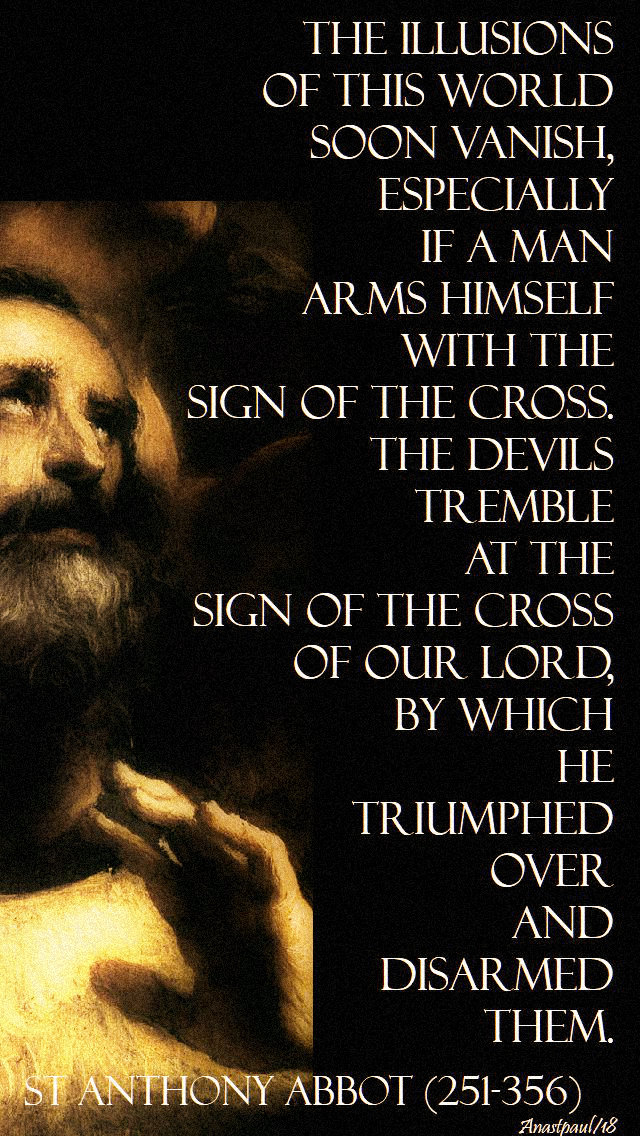
Pope Benedict – Excerpt, General Audience, Catechesis on St Ambrose, 24 October 2007

St Ambrose, Pray for us!st-ambrose-pray-for-us-2- 7dec2017

Posted in CHRIST the KING, DOCTORS of the Church, FATHERS of the Church, QUOTES of the SAINTS, QUOTES on CONVERSION, QUOTES on FAITH, QUOTES on SANCTITY, QUOTES on the CHURCH, QUOTES on the PRIESTHOOD, SAINT of the DAY, The HOLY EUCHARIST / The HOLY MASS

Quote/s of the Day -– 7 December – The Memorial of St Ambrose (c 340-397)- Father and Doctor of the Church

Quote/s of the Day -– 7 December – The Memorial of St Ambrose (c 340-397)- Father and Doctor of the Church

Note:  I am still unable to make images so these are taken from this site.

“Rise, you who were lying fast asleep…
Rise and hurry to the Church:
here is the Father,
here is the Son,
here is the Holy Spirit.”

rise-you-who-were-lying-fast-asleep-st-ambrose-my-pic-2017

“The Church of the Lord is built upon the rock
of the apostles among so many dangers in the world;
it therefore remains unmoved.
The Church’s foundation is unshakeable and firm
against assaults of the raging sea.
Waves lash at the Church but do not shatter it.
Although the elements of this world, constantly beat
upon the Church with crashing sounds,
the Church possesses the safest harbour
of salvation for all in distress.”

the-church-of-the-lord-st-ambrose-7-dec-2017

“All the children of the Church are priests.
At Baptism, they received the anointing
that gives them a share in the priesthood.
The sacrifice that they must offer to God
is completely spiritual – it is themselves.”

all-the-children-of-the-church-st-ambrose-7-dec-2017

“Let your door stand open
to receive Him,
unlock your soul to Him,
offer Him a welcome in your mind
and then you will see
the riches of simplicity,
the treasures of peace,
the joy of grace.
Throw wide the gate of your heart,
stand before the sun of the everlasting light.”

let-your-door-stand-open-st-ambrose-7-dec-2017

“If it is “daily bread,” why do you take it once a year? . . .
Take daily what is to profit you daily.
Live in such a way that you may deserve
to receive it daily.
He who does not deserve to receive it daily,
does not deserve to receive it once a year.”

if-it-ias-daily-st-ambrose-7-dec-2017

“When we speak about WISDOM,
we are speaking about CHRIST.
When we speak about VIRTUE,
we are speaking about CHRIST.
When we speak about JUSTICE,
we are speaking about CHRIST.
When we speak about PEACE,
we are speaking about CHRIST.
When we speak about TRUTH,
and LIFE and REDEMPTION,
we are speaking about CHRIST.”

St Ambrose (c 340-397)- Father and Doctor of the Churchwhen we speak - st ambrose - 7 dec 2017.jpg

Posted in DOCTORS of the Church, FATHERS of the Church, Our MORNING Offering, PRAYERS of the SAINTS, SAINT of the DAY

Our Morning Offering – 7 December – The Memorial of St Ambrose (c 340-397)- Father and Doctor of the Church

Our Morning Offering – 7 December – The Memorial of St Ambrose (c 340-397)- Father and Doctor of the Church

O Lord, Give me a Heart to Love You
Prayer of St Ambrose (c 340-397) Father and Doctor of the Church

O Lord, who has mercy upon all,
take away from me my sins
and mercifully kindle in me
the fire of Your Holy Spirit.
Take away from me the heart of stone
and give me a heart of flesh,
a heart to love and adore You,
a heart to delight in You,
to follow and enjoy You,
for Christ’s sake.
Ameno-lord-give-me-a-heart-to-love-you-prayer-of-st-ambrose-7-dec-2017 (1)

Posted in DOCTORS of the Church, DOMESTIC ANIMALS, FATHERS of the Church, Of BISHOPS, Of Catholic Education, Students, Schools, Colleges etc, SAINT of the DAY

Saint of the Day – 7 December – St Ambrose (c 340-397) – Father and Doctor of the Church

Saint of the Day – 7 December – St Ambrose (c 340-397) – Father and Doctor of the Church

Today the Catholic Church celebrates the memory of St Ambrose, the brilliant Bishop of Milan who influenced St Augustine’s conversion and was named a Doctor of the Church.

Like Augustine himself, the older Ambrose (born around 340) was a highly educated man who sought to harmonise Greek and Roman intellectual culture with the Catholic faith. Trained as a lawyer, he eventually became the governor of Milan.  He manifested his intellectual gifts in defence of Christian doctrine even before his baptism.st ambrose

While Ambrose was serving as the governor of Milan, a bishop named Auxentius was leading the diocese.   Although he was an excellent public speaker with a forceful personality, Auxentius also followed the heresy of Arius, which denied the divinity of Christ.   Although the Council of Nicaea had reasserted the traditional teaching on Jesus’ deity, many educated members of the Church – including, at one time, a majority of the world’s bishops – looked to Arianism as a more sophisticated and cosmopolitan version of Christianity.   Bishop Auxentius became notorious for forcing clergy throughout the region to accept Arian creeds.

At the time of Auxentius’ death, Ambrose had not yet even been baptised.   But his deep understanding and love of the traditional faith were already clear to the faithful of Milan.   They considered him the most logical choice to succeed Auxentius, even though he was still just a catechumen.   With the help of Emperor Valentinan, who ruled the Western Roman Empire at the time, a mob of Milanese Catholics virtually forced Ambrose to become their bishop against his own will.   Eight days after his baptism, Ambrose received episcopal consecration on 7 December 374.   The date would eventually become his liturgical feast.

St. Ambrose ordained as Bishop. Painting by Juan de Valdés.
St Ambrose consecrated as Bishop

Bishop Ambrose did not disappoint those who had clamoured for his appointment and consecration.   He began his ministry by giving everything he owned to the poor and to the Church.   He looked to the writings of Greek theologians like St Basil for help in explaining the Church’s traditional teachings to the people during times of doctrinal confusion.

Like the fathers of the Eastern Church, Ambrose drew from the intellectual reserves of pre-Christian philosophy and literature to make the faith more comprehensible to his hearers.   This harmony of faith with other sources of knowledge served to attract, among others, the young professor Aurelius Augustinus – a man Ambrose taught and baptised, whom history knows as St Augustine of Hippo.

STS AUGUSTINE AND AMBROSE
St Augustine and St Ambrose

Ambrose himself lived simply, wrote prolifically and celebrated Mass each day.   He found time to counsel an amazing range of public officials, pagan inquirers, confused Catholics and penitent sinners.   The people of Milan never regretted their insistence that the reluctant civil servant should lead the local church.   His popularity, in fact, served to keep at bay those who would have preferred to force him from the diocese, including the Western Empress Justina and a group of her advisers, who sought to rid the West of adherence to the Nicene Creed.   Ambrose heroically refused her attempts to impose heretical bishops in Italy, along with her efforts to seize churches in the name of Arianism.st ambrose 1435

Ambrose also displayed remarkable courage when he publicly denied communion to the Emperor Theodosius, who had ordered the massacre of 7,000 citizens in Thessalonica. The chastened emperor took Ambrose’s rebuke to heart, publicly repenting of the massacre and doing penance for the murders.

“Nor was there afterwards a day on which he did not grieve for his mistake,” Ambrose himself noted when he spoke at the emperor’s funeral.   The rebuke spurred a profound change in Emperor Theodosius.   He reconciled himself with the Church and the bishop, who attended to the emperor on his deathbed.

St. Ambrose died in 397.   His 23 years of diligent service had turned a deeply troubled diocese into an exemplary outpost for the faith.   His writings remained an important point of reference for the Church, well into the medieval era and beyond.st ambrose

At the Catholic Church’s Fifth Ecumenical Council – which took place at Constantinople in 553, and remains a source of authoritative teaching for both Catholics and Eastern Orthodox Christians – the assembled bishops named Ambrose, along with this protege St Augustine, as being among the foremost “holy fathers” of the Church, whose teaching all bishops should “in every way follow.4 original latin fathes - jerome, gregory, ambrose, augustine - 3 sept 2018

4 ORIGINAL LATIN FATHERS - JEROME, AMBROSE, GREGORY & AUGUSTINE

Posted in DOCTORS of the Church, FATHERS of the Church, SAINT of the DAY

Memorials of the Saints – 7 December

St Ambrose of Milan (c 340-397) – Father and Doctor of the Church (Memorial)
Biography: https://anastpaul.wordpress.com/2016/12/07/saint-of-the-day-7-december/
And More: https://anastpaul.wordpress.com/2017/12/07/more-on-todays-saint-st-ambrose-c340-397-father-and-doctor-of-the-church/

St Agatho of Alexandria
St Anianas of Chartres
St Antonius of Siya
St Athenodoros of Mesopotamia
St Buithe of Monasterboice
St Burgundofara
St Charles Garnier
St Diuma
St Geretrannus of Bayeux
Bl Humbert of Clairvaux
St John the Silent
St Martin of Saujon
St Mary Joseph Rosello
St Nilus of Stolbensk
St Polycarp of Antioch
St Sabinus of Spoleto
St Servus the Martyr
St Theodore of Antioch
St Urban of Teano
St Victor of Piacenza

Posted in ALTAR BOYS, DEACONS, SACRISTANS, BREWERS, BRIDES and GROOMS, ENGAGED COUPLES, Of BACHELORS, Of BANKERS, Of BEGGARS, the POOR, against POVERTY, Of Catholic Education, Students, Schools, Colleges etc, Of FISHERMEN, FISHMONGERS, Of GARDENERS, Horticulturists, Farmers, Of LAWYERS & CANON Lawyers, Attorneys, Solicitors, Barristers, Notaries, Para-Legals, Of PHARMACISTS / CHEMISTS, Of TRAVELLERS / MOTORISTS, PATRONAGE - HAPPY MARRIAGES, of MARRIED COUPLES, PATRONAGE - ORPHANS,ABANDONED CHILDREN, PATRONAGE - PENITENTS, PATRONAGE - PRISONERS, PATRONAGE - VINTNERS, WINE-FARMERS, PATRONAGE-INFERTILITY & SAFE CHILDBIRTH, SAILORS, MARINERS, NAVIGATORS, SAINT of the DAY, Spinsters - Single LAYWOMEN

Saint of the Day – 6 December – St Nicholas (270-343) Bishop

Saint of the Day – 6 December – St Nicholas (270-343) Bishop

The absence of the “hard facts” of history is not necessarily an obstacle to the popularity of saints, as the devotion to Saint Nicholas shows.   Both the Eastern and Western Churches honour him and it is claimed that after the Blessed Virgin, he is the saint most pictured by Christian artists.   And yet historically, we can pinpoint only the fact that Nicholas was the fourth-century bishop of Myra, a city in Lycia, a province of Asia Minor.st nicholas - Jaroslav_Čermák_(1831_-_1878)_-_Sv._Mikuláš.jpg

As with many of the saints, however, we are able to capture the relationship which Nicholas had with God through the admiration which Christians have had for him—an admiration expressed in the colourful stories which have been told and retold through the centuries.

Perhaps the best-known story about Nicholas concerns his charity toward a poor man who was unable to provide dowries for his three daughters of marriageable age.   Rather than see them forced into prostitution, Nicholas secretly tossed a bag of gold through the poor man’s window on three separate occasions, thus enabling the daughters to be married.   Over the centuries, this particular legend evolved into the custom of gift-giving on the saint’s feast.

ANGELICO_Fra_Story_Of_St_Nicholas_Giving_Dowry_To_Three_Poor_Girls
Fra Angelico’s St Nicholas donating the dowries

In the English-speaking countries, Saint Nicholas became, by a twist of the tongue, Santa Claus—further expanding the example of generosity portrayed by this holy bishop.saint-nicholas4st nicholas - glass

Posted in SAINT of the DAY

Memorials of the Saints – 6 December

St Nicholas (270-343) (Optional Memorial)
Full Biogrpahy here: https://anastpaul.wordpress.com/2017/12/06/saint-of-the-day-6-december-st-nicholas-270-343/

St Abraham of Kratia
St Aemilianus the Martyr
Bl Angelica of Milazzo
St Asella of Rome
St Boniface the Martyr
St Dativa the Martyr
St Dionysia the Martyr
St Gerard of La Charite
St Gertrude the Elder
St Giuse Nguyen Duy Khang
St Isserninus of Ireland
Bl Janos Scheffler
St Leontia the Martyr
St Majoricus the Martyr
Bl Peter Pascual
St Polychronius
St Tertus

Martyred in the Spanish Civil War:
• Blessed Esteban Vázquez Alonso
• Blessed Florencio Rodríguez Guemes
• Blessed Gregorio Cermeño Barceló
• Blessed Heliodoro Ramos García
• Blessed Ireneo Rodríguez González
• Blessed Juan Lorenzo Larragueta Garay
• Blessed Luis Martínez Alvarellos
• Blessed Luisa María Frías Cañizares
• Blessed Miguel Lasaga Carazo
• Blessed Narciso Pascual y Pascual
• Blessed Pascual Castro Herrera
• Blessed Vicente Vilumbrales Fuente

Martyred Salesians of Guadalajara (Spanish Civil War) – 7 beati:
• Blessed Gregorio Cermeño Barceló
• Blessed Ireneo Rodríguez González
• Blessed Luisa María Frías Cañizares
• Blessed Narciso Pascual y Pascual
• Blessed Vicente Vilumbrales Fuente

Posted in All THEOLOGIANS, Moral Theologians, ARTISTS, PAINTERS, DOCTORS of the Church, FATHERS of the Church, Of Catholic Education, Students, Schools, Colleges etc, Of PHARMACISTS / CHEMISTS, SAINT of the DAY

Saint of the Day – 4 December – St John Damascene (675-749) C onfessor, Father & Doctor of the Church

Saint of the Day – 4 December – St John Damascene (675-749) Confessor,  Father & Doctor of the Church – Priest, Monk, Theologian, Writer, Defender of Iconography, Poet, a Polymath whose fields of interest and contribution included law, theology, philosophy, music, Marian devotee.  Also known as – Johannes Damascenus, John Chrysorrhoas (“golden-stream”), John of Damascus.   Born in c 675 at Damascus, Syria and died in 749 of natural causes.   Patronages –  pharmacists, artists, theologians and theology students.st john damascene lg

While the Churches of Rome and Constantinople were still united during St John’s life, the Byzantine Emperor Leo III radically separated from the ancient tradition of the Church, declaringthat the veneration of Sacred Imagery was a form of idolatry.

Saint John was born in the late 7th Century and is the most remarkable of the Greek writers of his time.   His father was a Civil Authority who was Christian amid the Saracens of Damascus, whose caliph made him his minister.   This enlightened man found, in the public square one day, amid a group of sad Christian captives, a Priest of Italian origin who had been condemned to slavery, he ransomed him and assigned him to his young son to be his tutor.   Young John made extraordinary progress in grammar, dialectic, mathematics, music, poetry, astronomy but, above all, in theology, the discipline imparting knowledge of God.   John became famous for his encyclopedic intellect and theological method, later a source of inspiration to Saint Thomas Aquinas.

During the 720s, the upstart theologian began publicly opposing the Emperor’s command against Sacred Images in a series of writings.   The heart of his argument was twofold – firstly, that Christians did not actually worship images but rather, through them they worshipped God and honoured the memory of the Saints.   Secondly, he asserted that by taking an incarnate physical form, Christ had given warrant to the Church’s depiction of Him in images.StJohnDamascene

By 730, the young public official’s persistent defence of Christian artwork had made him a permanent enemy of the emperor, who had a letter forged in John’s name offering to betray the Muslim government of Damascus.   The ruling caliph of the city, taken in by the forgery, is said to have cut off John’s hand.   The saint’s sole surviving biography states that the Virgin Mary acted to restore it miraculously.   John eventually managed to convince the Muslim ruler of his innocence, before making the decision to become a monk and later a priest.

Although a number of imperially-convened synods condemned John’s advocacy of Christian iconography, the Roman church always regarded his position as a defence of apostolic tradition.   Years after the priest and monk died, the Seventh Ecumenical Council vindicated his orthodoxy and ensured the permanent place of holy images in both Eastern and Western Christian piety.st-john-damascene

St John Damascene’s other notable achievements include the “Exact Exposition of the Orthodox Faith,” a work in which he systematised the earlier Greek Fathers’ thinking about theological truths in light of philosophy.   The work exerted a profound influence on St Thomas Aquinas and subsequent scholastic theologians.   Centuries later, St John’s sermons on the Virgin Mary’s bodily assumption into heaven were cited in Pope Pius XII’s dogmatic definition on the subject.

The saint also contributed as an author and editor, to some of the liturgical hymns and poetry that Eastern Orthodox and Eastern Catholics still use in their celebrations of the liturgy.

“Show me the icons that you venerate, that I may be able to understand your faith.” – Saint John of Damascus.st john damascene

Posted in SAINT of the DAY

Memorials of the Saints – 4 December

St John Damascene (675-749) Father & Doctor of the Church (Optional Memorial)

St Ada of Le Mans
St Adelmann of Beauvais
Bl Adolph Kolping
St Anno II
St Apro
St Barbara
St Bernardo degli Uberti
St Bertoara of Bourges
St Christianus
St Clement of Alexandria
St Cyran of Brenne
St Eraclius
St Eulogio Álvarez López
St Ezequiel Álvaro de La Fuente
St Felix of Bologna
Bl Francis Galvez
St Francisco de la Vega González
St Giovanni Calabria
St Heraclas of Alexandria
St Jacinto García Chicote
Bl Jerome de Angelis
St John the Wonder Worker
St Maruthas
St Melitus of Pontus
St Osmund of Salisbury
Bl Pietro Tecelano
St Prudens
St Robustiano Mata Ubierna
St Sigiranus
Bl Simon Yempo
St Sola
St Theophanes

Martyred in the Spanish Civil War:
• Blessed Eulogio Álvarez López
• Blessed Ezequiel Álvaro de La Fuente
• Blessed Francisco de la Vega González
• Blessed Jacinto García Chicote
• Blessed Robustiano Mata Ubierna

Posted in JESUIT SJ, MIRACLES, QUOTES of the SAINTS, SAINT of the DAY

Thought for the Day – 3 December – The Memorial of St Francis Xavier SJ (1506-1552) – “A near perfect imitation of Christ”

Thought for the Day – 3 December – The Memorial of St Francis Xavier SJ (1506-1552)

“A near perfect imitation of Christ”

Francis Xavier believed no one was more ill-equipped than he to take the gospel overseas.   But he was wrong.   En route from Lisbon to Goa, Francis already displayed the cheerfulness and generosity that would become the trademarks of his work.  Through his personal charm, he made friends with the toughest seamen on the ship. Then he engaged them in “apostolic conversations,” seeking to win them for Christ.

But Miracles, occurred frequently in his evangelisation to poor villages.   Once, while travelling through a pagan territory, Francis learned of a woman who had been in labour for three days and was probably near death.   Midwives and sorcerers were treating her with superstitious incantations.   Xavier went to the woman’s home and called on the name of Christ to heal her.   “I began with the Creed,” he wrote to Ignatius, “which my companion translated into Tamil.   By the mercy of God, the woman came to believe in the articles of faith.   I asked whether she desired to become a Christian and she replied that she would most willingly become one.   Then I read excerpts from the Gospels in that house where, I think, they were never heard before.   I then baptised the woman.” As soon as Francis baptised the woman, she was healed and gave birth to a healthy baby.

The woman’s family was so touched by this divine intervention that they invited Francis to instruct and baptise all of them, including the newborn.   News then travelled quickly throughout the village.   A representative of the Raja, the overlord, gave the village elders clearance to allow Francis to proclaim Christ there.   “First, I baptised the chief men of the place and their families,” he wrote, “and afterwards the rest of the people, young and old.”

In another village, crowds besieged Francis, begging him to pray for ailing family members.   Missionary and teaching duties overwhelmed him, so he enlisted some enthusiastic children to minister to the sick.   He sent the children to the homes of the ill and had them gather the family and neighbours.   He trained them to proclaim the creed and to assure the sick that if they believed, they would be cured.   Thus, Xavier not only responded to requests for prayer but he managed to spread Christian doctrine throughout the village.   Because the sick and their families had faith, he said, “God has shown great mercy to them, healing them in both body and soul.”   The children of the village had become little miracle workers.

In his passion for spreading the gospel, in his simple obedience, in his humble disregard for himself, the saint was a near perfect imitation of Christ!

St Francis Xavier, Teach us, Inspire us, Help us,

Pray for Us!st francis xavier pray for us 3 dec 2018

Posted in MARIAN QUOTES, PRACTISING CATHOLIC, QUOTES of the SAINTS, QUOTES on EVANGELISATION, QUOTES on FAITH, QUOTES on JOY, QUOTES on LOVE, QUOTES on PERSEVERANCE, QUOTES on PRAYER, QUOTES on WORK/LABOUR, SAINT of the DAY, The BLESSED VIRGIN MARY

Quote/s of the Day – 3 December – The Memorial of St Francis Xavier SJ (1506-1552)

Quote/s of the Day – 3 December – The Memorial of St Francis Xavier SJ (1506-1552)

“It is impossible
to find a saint
who did not take
the “two P’s” seriously –
Prayer and Penance.”it is impossible - st francis xavier - 3 dec 2018

“I am in a country
where all the niceties of life are lacking.
But I am filled with many inner consolations.
Indeed, I run the risk of crying my eyes out
because of my tears of joy!”i am in a country - saint-francis-xavier-3 dec 2017

“It is not the actual physical exertion
that counts towards a one’s progress,
nor the nature of the task but by the
spirit of faith with which it is undertaken.”it is not the actual physical - st francis xavier - 3 dec 2018

“When trying to evangelise,
no tool is more effective,
than that of personal witness.
…People can argue with points of doctrine
but no-one can argue,
with a personal testimony!”when trying to evangelise - st francis xavier 3 dec 2018

“Prayer is powerful!
It fills the earth with mercy,
it makes the Divine clemency
pass from generation to generation,
right along the course of the centuries.
wonderful works have been achieved.
through prayer.”prayer is powerful - st francis xavier - 3 dec 2018

“If you are in danger,
if your hearts are confused,
turn to Mary!”

St Francis Xavier SJ (1506-1552)if you are in danger, if your hearts are confused, turn to mary - st francis xavier 3 dec2018

Posted in JESUIT SJ, Our MORNING Offering, PRAYERS to the SAINTS, SAINT of the DAY

Our Morning Offering – 3 December – I Love Thee, God, I love Thee

Our Morning Offering – 3 December – The Memorial of St Francis Xavier SJ (1506-1552)

I Love Thee, God, I love Thee
By St Francis Xavier
Translated by Gerard Manley Hopkins SJ (1844-1889)

I love Thee, God, I love Thee—
Not out of hope for heaven for me
Nor fearing not to love and be
In the everlasting burning.
Thou, my Jesus, after me
Didst reach Thine arms out dying,
For my sake suffered nails and lance,
Mocked and marred countenance,
Sorrows passing number,
Sweat and care and cumber,
Yea and death and this for me,
And Thou could see me sinning.
Then I, why should not I love Thee,
Jesu so much in love with me?
Not for heaven’s sake, not to be
Out of hell by loving Thee,
Not for any gains I see,
But just the way that Thou didst me
I do love and will love Thee.
What must I love Thee, Lord, for then?
For being my king and God.
Ameni love thee god i love thee - st francis xavier - 3 dec 2018

Posted in Against EPIDEMICS, INCORRUPTIBLES, JESUIT SJ, MISSIONS, MISSIONARIES, SAILORS, MARINERS, NAVIGATORS, SAINT of the DAY

Saint of the Day – 3 December – St Francis Xavier SJ (1506-1552) – One of the greatest Missionaries since St Paul

Saint of the Day – 3 December – St Francis Xavier SJ (1506-1552 – aged 46) – Priest, Missionary, co-Founder with St Ignatius Loyola (1491-1556) and St Peter Faber (1506-1546) of the Society of Jesus (the Jesuits) – he was born Francisco de Jasso y Azpilicueta on 7 April 1506 at Javier, Spanish Navarre, Basque region and died on 3 December 1552 at Sancian, China of a fever contracted on a mission journey.    Patronages:  African missions, black missions, foreign missions (proclaimed on 25 March 1904 by St Pope Pius X), missionaries, sailors, navigators, parish missions, plague epidemics, World Youth Day 2011, Australia, Borneo, Brunei, China, East Indies, India, Japan, Kenya, New Zealand, South Africa, Apostleship of Prayer, Congregation for the Propagation of the Faith, Fathers of the Precious Blood, Missioners of the Precious Blood, University of Saint Francis Xavier, 6 cities, 16 dioceses.  His body is incorrupt.st francis xavier info
St Francis was a companion of Saint Ignatius of Loyola and one of the first seven Jesuits who took vows of poverty and chastity at Montmartre, Paris, in 1534.   He led an extensive mission into Asia, mainly in the Portuguese Empire of the time and was influential in evangelisation work, most notably in India.   He also was the first Christian missionary to venture into Japan, Borneo, the Maluku Islands and other areas.   In those areas, struggling to learn the local languages and in the face of opposition, he had less success than he had enjoyed in India.   Xavier was about to extend his missionary preaching to China when he died on Shangchuan Island.ST FRANCES XAVIER

He was Beatified by Pope Paul V on 25 October 1619 and Canonised by Pope Gregory XV on 12 March 1622.   In 1624 he was made co-patron of Navarre.   Known as the “Apostle of the Indies” and “Apostle of Japan”, he is considered to be one of the greatest missionaries since Saint Paul.   In 1927, Pope Pius XI published the decree “Apostolicorum in Missionibus” naming Saint Francis Xavier, along with Saint Thérèse of Lisieux, co-patron of all foreign missions.   He is now co-patron saint of Navarre with San Fermin. The Day of Navarre (Día de Navarra) in Spain marks the anniversary of Saint Francis Xavier’s death, on 3 December 1552.

A young Spanish gentleman, in the dangerous days of the Reformation, was making a name for himself as a professor of philosophy at the University of Paris.   He was aspiring, apparently, to a high dignity, until Saint Ignatius of Loyola decided to undertake the spiritual conquest of this ardent soul.   What does it profit a man to gain the entire world, if he suffers the loss of his soul?   Ignatius often repeated to the brilliant teacher. The words of Christ, joined to the example of Ignatius and his disciples, prevailed.   It was not long before his gifted friend decided to labour for the glory of God, by adopting the evangelical life of an apostle, to which he was indeed called.   He was among the first members of the Society of Jesus, those who with Ignatius made their religious vows in the church of Montmartre in Paris, on the feast of the Assumption in 1534.

st ignatius, st francis and st peter - First Companions
St Ignatius, St Peter & St Francis
st francis st ignatius st peter
St Francis, St Ignatius, St Peter

On his way to Rome with the others, handicapped by severe penances he had imposed on himself, he remained in Venice and exercised a brief apostolate by caring for the sick in the city hospital.   The others waited for him to regain his ability to walk.   These first fervent Jesuits were intending to embark for the Holy Land but were prevented by a war.   In Rome, Francis again went to a hospital to serve the sick and visited the prisons to encourage and console the poor inmates, while preparing for ordination with the others, according to the desire of the Pope.ST FRANCIS XAVIER LG

Saint Ignatius having remained in Venice, the other five returned there afterwards. Francis was sent by Saint Ignatius to the Orient in 1534, where for twelve years he laboured unceasingly to win souls, sleeping only three hours a night, eating very little, and bearing the Gospel to Hindustan, to Malacca and as far as Japan.   At all times thwarted by jealousy, covetousness and the carelessness of those who should have helped and encouraged him, he did not slacken in his apostolic endeavours despite opposition and the difficulties of every sort which he encountered.st francis xavier lg new

Miracles accompanied him everywhere, he resurrected several who had died.    His inexhaustible kindness was not the least of his assets in winning thousands of pagans to the Faith.   He baptised so many that his arm became virtually disabled, ten thousand in a single month in the kingdom of Trevancor, where in the same space of time he saw to the building of forty-five churches.   At Meliapour, site of the martyrdom of Saint Thomas, he found the marble on which the Apostle was sacrificed and which exuded blood the first time Mass was said upon it.   Passing through various islands, cities and provinces of India, he strengthened his first conquests by additional preaching.   He planted crosses in the public squares and overcame all obstacles.saint-francis-xavier-andrea-pozzo-1701

Saint Francis is called Apostle of Japan as well as of India.   There the pagan priests opposed and calumniated him and tried without success to outwit him in debates. Humiliated, they used subtle means to instil dislike for him in the minds of the court authorities.   But he won the love as well as the respect of those he evangelised, blessing them with such miracles as filling the hitherto sterile sea of Cangoxima with inexhaustible reserves of fish.   The vast kingdom of China appealed to his charity and he was resolved to risk his life to force an entry, when God took him to Himself.   It was on 2 December 1552, that the Apostle of the Indies died on Sancian, an island facing the city of Canton in China, like Moses, in sight of the land of promise.

StFrancisXavier-SouthColonnade-a
St Francis on the South Colonnade at St Peter’s Rome
st francis xavier charles bridge prague statue
St Francis on the Charles Bridge, Prague

beautiful statue saint-francis-xavier

St Francis was first buried on a beach at Shangchuan Island, Taishan, Guangdong.   His incorrupt body was taken from the island in February 1553 and was temporarily buried in St Paul’s church in Portuguese Malacca on 22 March 1553.   An open grave in the church now marks the place of Xavier’s burial.   Pereira came back from Goa, removed the corpse shortly after 15 April 1553 and moved it to his house.   On 11 December 1553, Xavier’s body was shipped to Goa.   The body is now in the Basilica of Bom Jesus in Goa, where it was placed in a glass container encased in a silver casket on 2 December 1637. This casket, constructed by Goan silversmiths between 1636 and 1637, was an exemplary blend of Italian and Indian aesthetic sensibilities.   There are 32 silver plates on all the four sides of the casket depicting different episodes from the life of the Saint.   The right forearm, which Xavier used to bless and baptise his converts, was detached by Superior General Claudio Acquaviva in 1614.   It has been displayed since in a silver reliquary at the main Jesuit church in Rome, Il Gesù.

684px-Casket_of_Saint_Francis_Xavier
Casket of Saint Francis Xavier in the Basilica of Bom Jesus in Goa, India
incorrupt arm of francis xavier at gesu At Rome's Church of the Gesu' (brought to Rome in 1614).
St Francis’ Incorrupt arm at the Jesuit Church of the Gesu, Rome
Posted in JESUIT SJ, SAINT of the DAY, Uncategorized

Memorials of the Saints – 2 December

St Francis Xavier SJ (1506-1552) (Memorial)

St Abbo of Auxerre
St Abran
St Agapius
St Agricola of Pannonia
St Alvaro González López
St Anthemius of Poitiers
St Attalia of Strasbourg
Bl Bernard of Toulouse
St Birinus of Dorchester
St Cassian of Tangiers
St Claudius of Africa
St Claudius the Martyr
St Crispin of Africa
St Edward Coleman
St Eloque of Lagny
St Emma of Bremen
St Ethernan
St Francisco Delgado González
St Francisco Fernández Escosura
St Hilaria the Martyr
St Jason the Martyr
Bl Johann Nepomuk von Tschiderer
St John of Africa
St Juan Bautista Ferris Llopis
St Julián Heredia Zubia
Bl Ladislao Bukowinski
St Lucius
St Lucy the Chaste
St Magina of Africa
St Mamas
St Manuel Santiago y Santiago
St Marcos García Rodríguez
St Maurus the Martyr
St Seleucus
St Stephen of Africa
St Theodore of Alexandria
St Theodulus of Edessa
St Valeriano Rodríguez García
St Veranus
Zephaniah the Prophet

Martyrs of Nicomedia: Christians martyred together in the persecutions of Diocletian – Ambicus, Julius and Victor. c 303 in Nicomedia, Bithynia (modern Izmit, Turkey).

Martyred in the Spanish Civil War: Thousands of people were murdered in the anti-Catholic persecutions of the Spanish Civil War from 1934 to 1939.
• Blessed Alvaro González López
• Blessed Francisco Delgado González
• Blessed Francisco Fernández Escosura
• Blessed Juan Bautista Ferris Llopis
• Blessed Julián Heredia Zubia
• Blessed Manuel Santiago y Santiago
• Blessed Marcos García Rodríguez
• Blessed Valeriano Rodríguez García

Posted in GOD the FATHER, QUOTES of the SAINTS, QUOTES on DIVINE PROVIDENCE, QUOTES on ETERNAL LIFE, QUOTES on FAITH, SAINT of the DAY

Quote/s of the Day – 2 December – The Memorial of Bl John van Ruysbroeck (c 1293-1382)

Quote/s of the Day – 2 December – The Memorial of Bl John van Ruysbroeck (c 1293-1382)

“Even as God is common to all,
the sun shines upon all trees.”
(The Adornment of the Spiritual Marriage)

“Knowledge of ourselves teaches us
whence we come,
where we are
and whither we are going.
We come from God
and we are in exile.”
[Ruysbroeck the Admirable (1925)]

“God is more interior to us
than we are to ourselves.
His acting in us,
is nearer and more inward,
than our own actions.
God works in us,
from inside outwards,
creatures work on us,
from the outside.”
(Spiritual Espousals)even as god, god is more interior, knowledge of ourselves - 2 dec 2018 bl john van ruysbroeck

“If we would God discern
The world we must despise,
His love and hate must learn,
See all things with His eyes.
And we must self forgo
If God we would attain,
His grace must in us grow
And ease us from all pain.
So shall we sing His praise
And be at one with Him,
In peace our voices raise
In the celestial hymn,
That with quadruple harmony
And all mellifluous melody,
In Heaven resounds eternally.
(The Seven Steps of the Ladder of Spiritual Love)

Bl John van Ruysbroeck (c 1293-1382)if we would god discern - john van ruysbroeck - 2 dec 2018

Posted in MYSTICS, SAINT of the DAY

Saint of the Day – 2 December – Blessed Jan van Ruysbroeck (c 1293-1381)

Saint of the Day – 2 December – Blessed Jan van Ruysbroeck (c 1293-1381) – Priest, Hermit, Mystic, Spiritual Director and Spirtual Writer – born in c 1293 near Brussels, Belgium and died on 2 December 1381 at Groenendael, Belgium, of natural causes.   Known as John  “the Admirable”  “the Ecstatic Doctor,” “the Divine Doctor.”Blessed John Ruysbroeck

Jan van Ruysbroeck was a Flemish mystical writer who greatly influenced mystical teaching in the late Middle Ages and whose name is associated with the religious renewal in the Lowlands that also produced, The Imitation of Christ.   He was born near Brussels in 1293 and was raised by a devout mother who trained him in a life of holiness.
At the age of eleven, he went to Brussels to live with an uncle, Jan Hinckaert, a Priest and Canon of St Gudule’s.   Jan studied for the Priesthood and was Ordained in 1317. Under his uncle’s roof he continued to live a life of retirement and study and began the writings that were to be the basis of his spiritual teaching: The Spiritual Espousals, The Kingdom of Lovers, and The Tabernacle.

Together with his uncle and another Canon, Francis van Coudenberg, Blessed Jan Ruysbroeck withdrew to a hermitage near Soignes for a life of greater solitude and a number of disciples joined them.   They decided to inaugurate a formal religious institute and adopted the Rule of the Canons of St Victor.   John was made the Prior of the new institute.x-ruysbr2

This period, from his religious profession (1349) to his death (1381), was the most active and fruitful of Ruysbroeck’s career.   During this time, his fame as a man of God, as a sublime contemplative and a skilled director of souls, spread beyond the bounds of Flanders and Brabant to Holland, Germany and France.   He had relations with the nearby Carthusian house at Herne and also with several communities of Poor Clare Franciscans.

Excellent writings continued to come forth from his pen: The Book of the Sparkling Stone, The Little Book of Enlightenment, and The Book of the Twelve Beguines.   Literally, Ruysbroeck wrote as the spirit moved him.   He loved to wander and meditate in the solitude of the forest adjoining the cloister;  he was accustomed to carry a tablet with him and on this to jot down his thoughts as he felt inspired so to do.   Late in life he was able to declare that he had never committed anything to writing save by the motion of the Holy Spirit.

Jan van Ruysbroeck’s writings are considered classics of spirituality, anticipating the writings of St John of the Cross in their clarity and doctrine.   He strongly opposed the quietist tendencies of many of his contemporaries.   His solid theological background and his ability to make clear the sure path of spiritual progress gave him a wide reading and his books are lucid commentaries on the Augustinian doctrine of the life of grace.

For several years before his death, Jan lived in a small cell, just outside the cloister of his monastery.   In his eighty-eighth year, he asked to be taken to the community infirmary, where he prepared himself for death.   He died on 2 December1381.

After Jan’s death in 1381, his relics were carefully preserved and his memory honoured as that of a saint. Many of his spiritual children called him the  “the Admirable”, Ecstatic Doctor or Divine Doctor.

When Groenendaal Priory was suppressed by Joseph II in 1783, his relics were transferred to St Gudule’s, Brussels, where, however, they were lost during the French Revolution.   John was Beatified on 1 December 1908, by St Pope Pius X.10-francs-1981-jan-van-ruusbroec_74_0510440474168ef05L

No authentic portrait of Jan is known to exist but the traditional picture represents him in the canonical habit, seated in the forest with his writing tablet on his knee, as he was in fact found one day by the brethren—rapt in ecstasy and enveloped in flames, which encircle without consuming the tree under which he is resting.