St Agnes De
St Andreas the Soldier
St Ansbald of Prum
St Balay
St Clement Ignatius Delgado Cebrian
Bl David Gonson
St Epiphana
St Faustus the Soldier
St Felix of Milan
St Fortunatus of Aquileia
St Hermagorus of Aquileia
St Hilarion of Ancyra
St Jason of Tarsus
Bl Jeanne-Marie de Romillon
St John Gualbert
St John Jones
St John the Georgian
Bl Lambert of Cîteaux
St Louis Martin (18231894)
St Marie-Azélie Guérin / ZELIE Martin (1831 –1877)
Bl Madeleine-Thérèse Talieu
Bl Marguerite-Eléonore de Justamond
Bl Marie Cluse
St Menas the Soldier
St Menulphus of Quimper
St Nabor of Milan
St Paternian of Bologna
St Paulinus of Antioch
St Phêrô Khan
St Proclus of Ancyra
St Proculus of Bologna
St Uguzo of Carvagna
St Veronica
St Viventiolus of Lyons
—
Martyrs of Nagasaki – 8 beati: Additional Memorial – 10 September as one of the 205 Martyrs of Japan
Eight lay people, many them related to each other, who were martyred together:
• Catharina Tanaka
• Ioannes Onizuka Naizen
• Ioannes Tanaka
• Ludovicus Onizuka
• Matthias Araki Hyozaemon
• Monica Onizuka
• Petrus Araki Chobyoe
• Susanna Chobyoe
12 July 1626 in Nagasaki, Japan
Beatified on 7 May 1867 by Pope Blessed Pius IX.
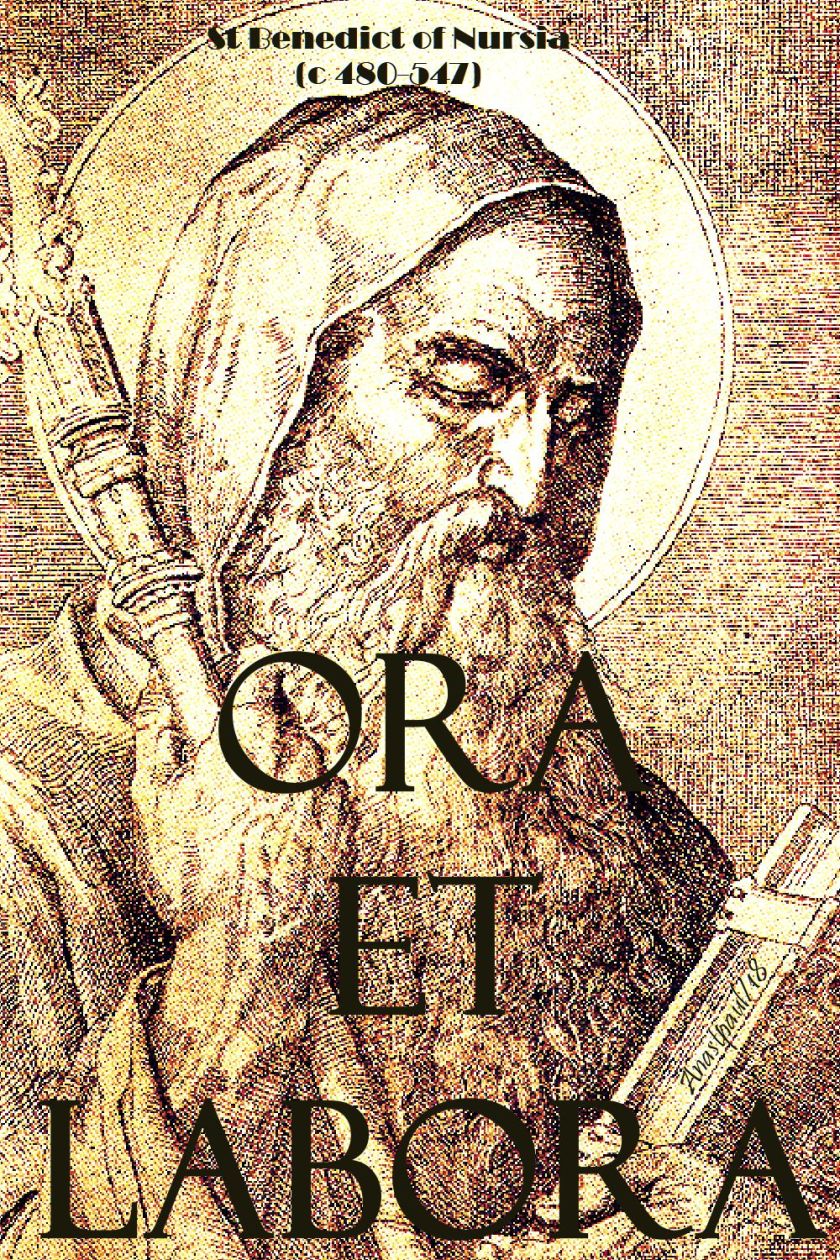
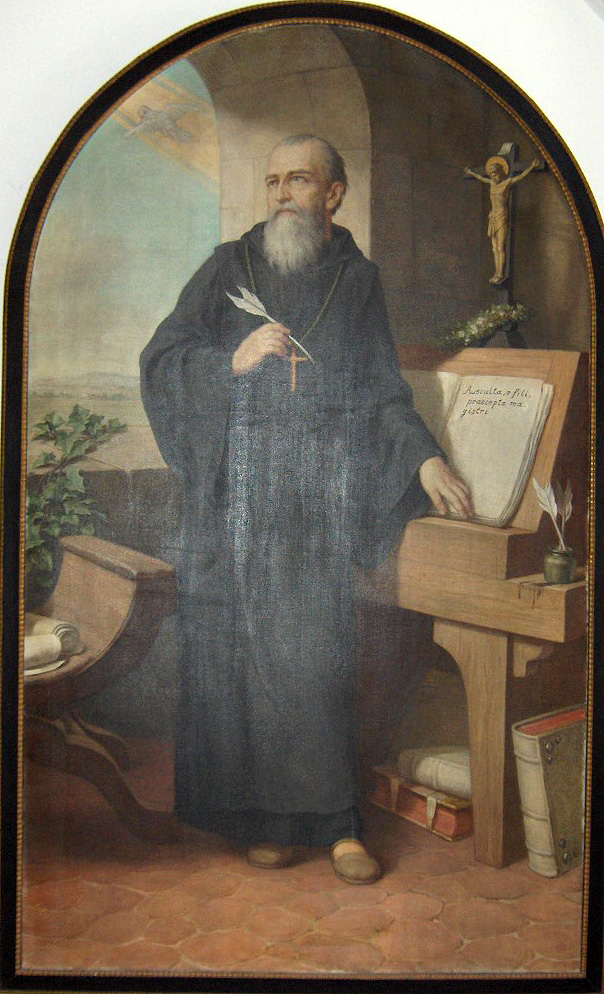
Thought for the Day – 11 July – The Memorial of St Benedict of Nursia OSB (c 480-547)
Excerpt from the Homily of Pope Benedict
General Audience, 9 April 2008
“Today, I would like to speak about Benedict, the Founder of Western Monasticism and also the Patron of my Pontificate.
I begin with words that St Gregory the Great wrote about St Benedict: “The man of God who shone on this earth among so many miracles was just as brilliant in the eloquent exposition of his teaching” (cf. Dialogues II, 36). The great Pope wrote these words in 592 AD. The holy monk, who had died barely 50 years earlier, lived on in people’s memories and especially in the flourishing religious Order he had founded. St Benedict of Nursia/Norcia, with his life and his work, had a fundamental influence on the development of European civilisation and culture. The most important source on Benedict’s life is the second book of St Gregory the Great’s Dialogues. It is not a biography in the classical sense. In accordance with the ideas of his time, by giving the example of a real man – St Benedict, in this case – Gregory wished to illustrate the ascent to the peak of contemplation which can be achieved by those who abandon themselves to God. He therefore gives us a model for human life in the climb towards the summit of perfection. St Gregory the Great also tells in this book of the Dialogues of many miracles worked by the Saint and here too he does not merely wish to recount something curious but rather to show how God, by admonishing, helping and even punishing, intervenes in the practical situations of man’s life. Gregory’s aim was to demonstrate that God is not a distant hypothesis placed at the origin of the world but is present in the life of man, of every man.
Throughout the second book of his Dialogues, Gregory shows us how St Benedict’s life was steeped in an atmosphere of prayer, the foundation of his existence. Without prayer there is no experience of God. Yet Benedict’s spirituality was not an interiority removed from reality. In the anxiety and confusion of his day, he lived under God’s gaze and in this very way never lost sight of the duties of daily life and of man with his practical needs. Seeing God, he understood the reality of man and his mission. In his Rule he describes monastic life as “a school for the service of the Lord” (Prol. 45) and advises his monks, “let nothing be preferred to the Work of God” [that is, the Divine Office or the Liturgy of the Hours] (43, 3).
However, Benedict states that in the first place prayer is an act of listening (Prol. 9-11), which must then be expressed in action. “The Lord is waiting every day for us to respond to his holy admonitions by our deeds” (Prol. 35). Thus, the monk’s life becomes a fruitful symbiosis between action and contemplation, “so that God may be glorified in all things”(57, 9). In contrast with a facile and egocentric self-fulfilment, today often exalted, the first and indispensable commitment of a disciple of St Benedict is the sincere search for God (58, 7) on the path mapped out by the humble and obedient Christ (5, 13), whose love he must put before all else (4, 21; 72, 11) and in this way, in the service of the other, he becomes a man of service and peace . In the exercise of obedience practised by faith inspired by love (5, 2), the monk achieves humility (5, 1), to which the Rule dedicates an entire chapter (7). In this way, man conforms ever more to Christ and attains true self-fulfilment as a creature in the image and likeness of God.
Benedict describes the Rule he wrote as “minimal, just an initial outline”(cf. 73, 8); in fact, however, he offers useful guidelines not only for monks but for all who seek guidance on their journey toward God. For its moderation, humanity and sober discernment between the essential and the secondary in spiritual life, his Rule has retained its illuminating power even to today.
By proclaiming St Benedict Patron of Europe on 24 October 1964, Paul VI intended to recognise the marvellous work the Saint achieved with his Rule for the formation of the civilisation and culture of Europe.
Having recently emerged from a century that was deeply wounded by two World Wars and the collapse of the great ideologies, now revealed as tragic utopias, Europe today is in search of its own identity. Of course, in order to create new and lasting unity, political, economic and juridical instruments are important, but it is also necessary to awaken an ethical and spiritual renewal which draws on the Christian roots of the Continent, otherwise a new Europe cannot be built. Without this vital sap, man is exposed to the danger of succumbing to the ancient temptation of seeking to redeem himself by himself – a utopia which in different ways, in 20th-century Europe, as Pope John Paul II pointed out, has caused “a regression without precedent in the tormented history of humanity” (Address to the Pontifical Council for Culture, 12 January 1990).
Today, in seeking true progress, let us also listen to the Rule of St Benedict as a guiding light on our journey. The great monk is still a true master at whose school we can learn to become proficient in true humanism.
One Minute Reflection – 11 July – The Memorial of St Benedict of Nursia OSB (c 480-547)
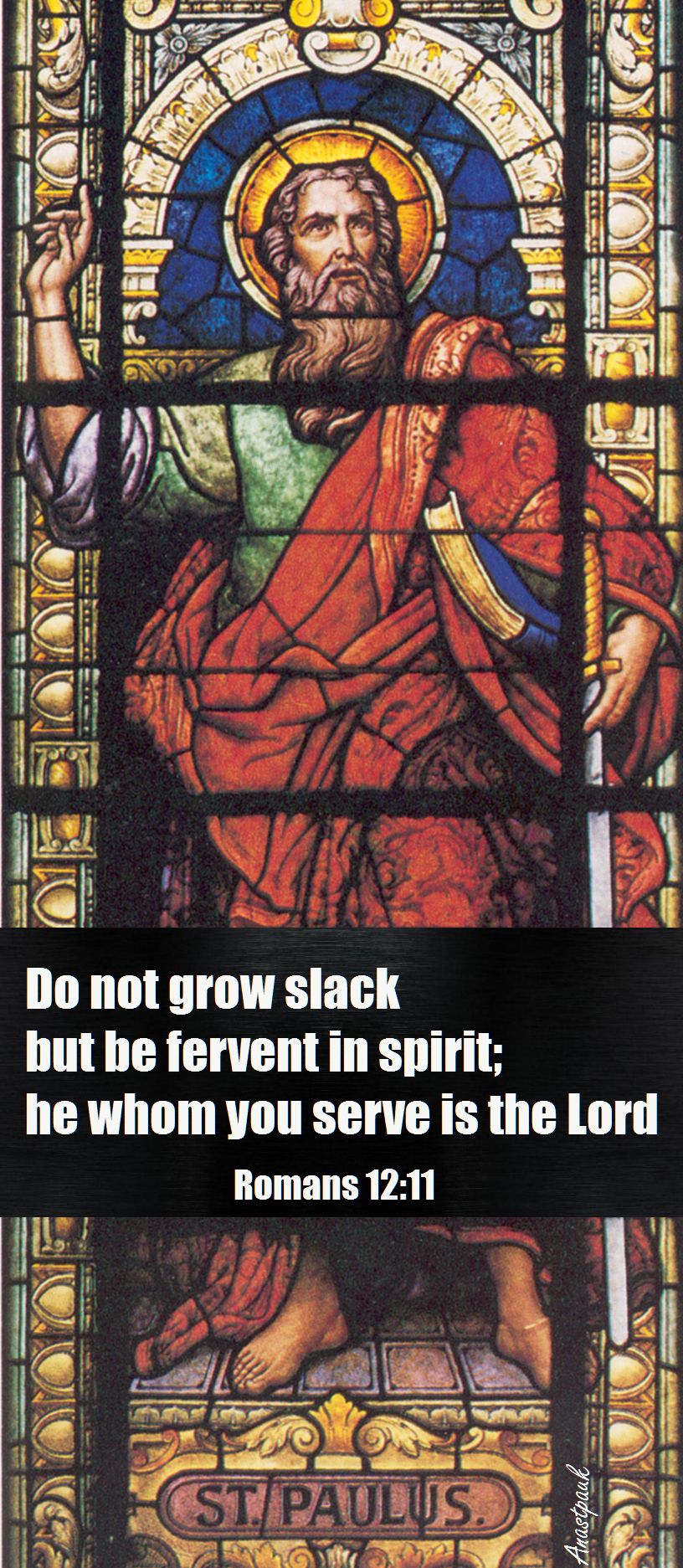
Do not grow slack but be fervent in spirit; he whom you serve is the Lord…….Romans 12:11
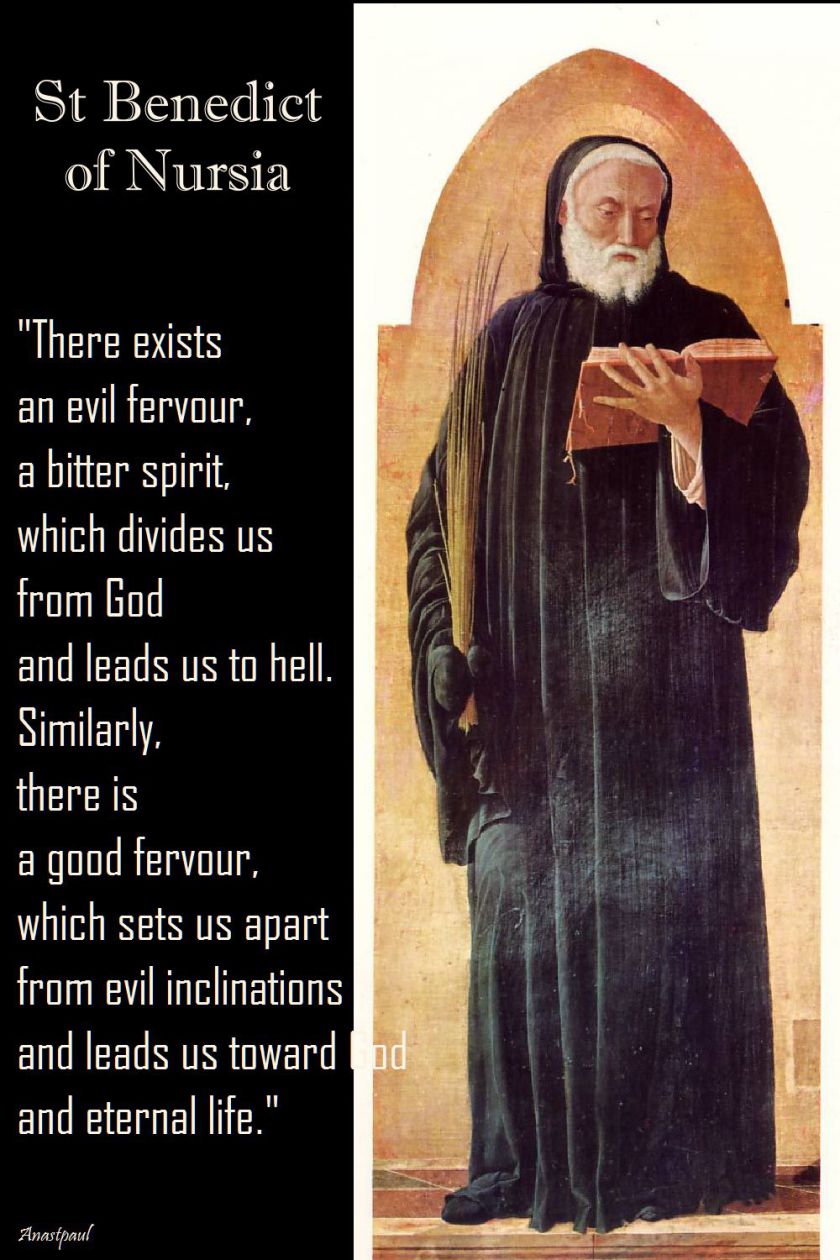
REFLECTION – “There exists an evil fervour, a bitter spirit, which divides us from God and leads us to hell. Similarly, there is a good fervour, which sets us apart from evil inclinations and leads us toward God and eternal life.”…St Benedict
PRAYER – Loving Father, grant me to have a true fervour in Your service. Let me never tire of following Your Son’s example and avoiding evil. Grant that by the intercession of St Benedict, we may grow in holiness and attain our eternal home with You. We ask this through our Lord, Jesus Christ and the Holy Spirit, God forever, amen.
Our Morning Offering – 11 July – St Benedict of Nursia OSB (c 480-547)
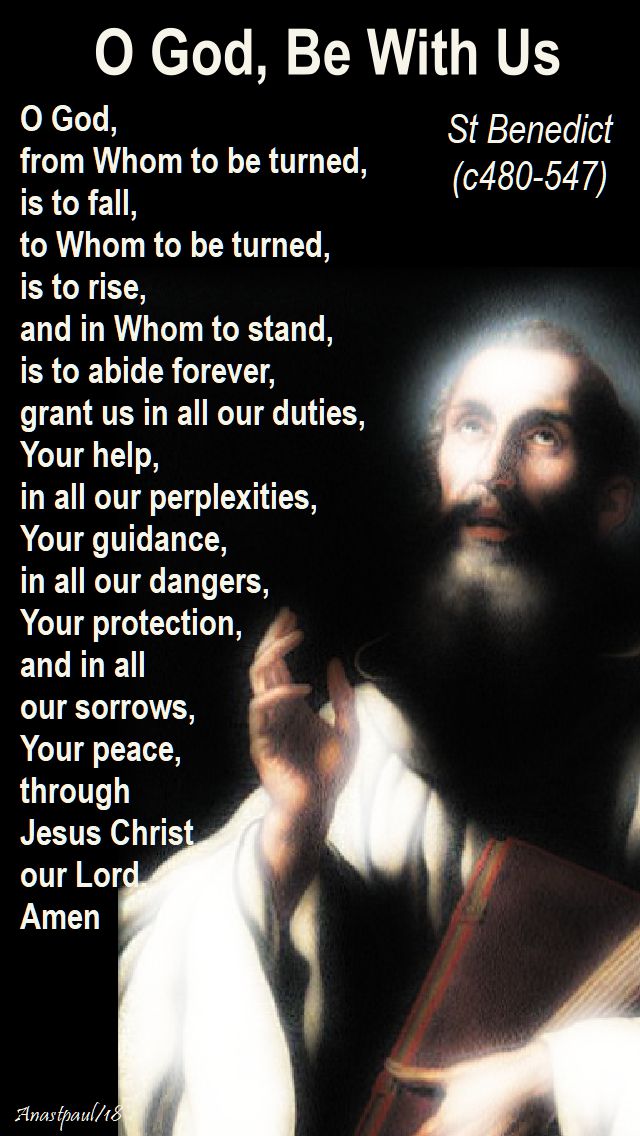
O God, Be With Us St Benedict (c480-547)
O God,
from Whom to be turned, is to fall,
to Whom to be turned, is to rise,
and in Whom to stand, is to abide forever,
grant us in all our duties, Your help,
in all our perplexities, Your guidance,
in all our dangers, Your protection,
and in all our sorrows, Your peace,
through Jesus Christ our Lord.
Amen
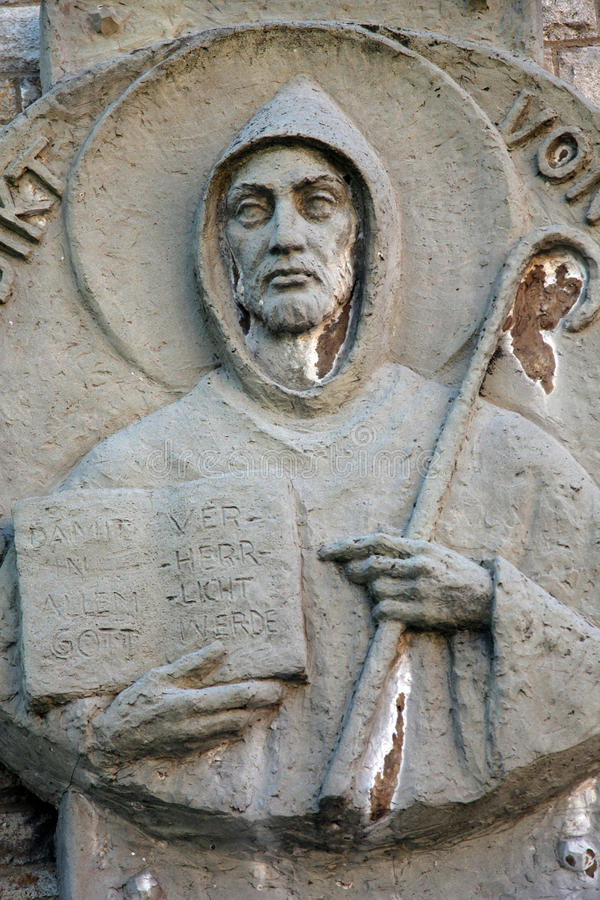
Saint of the Day – 11 July – St Benedict of Nursia OSB (c 480-547) Patron of Europe and Founder of Western Monasticism. Some of his many Patronages – of Europe, Against Poison, Against Witchcraft, Agriculture, Cavers, Civil Engineers, Coppersmiths, Dying People, Farmers, Fevers, Inflammatory Diseases, Kidney Disease, Monks, Religious Orders, Schoolchildren, Temptations.
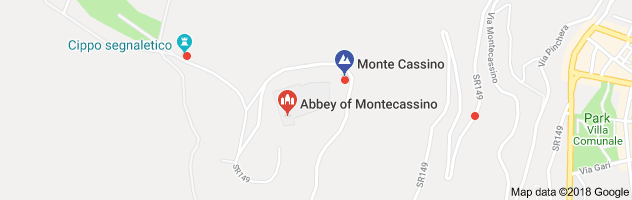
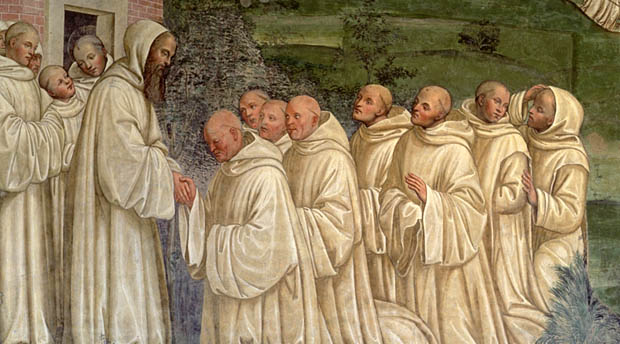
St Benedict founded twelve communities for monks about 40 miles east of Rome, before moving to Monte Cassino, in the mountains of southern Italy. St Benedict’s main achievement is his “Rule”, containing precepts for his monks. The unique spirit of balance, moderation and reasonableness influences it and this persuaded most religious communities founded throughout Middle Ages, to adopt it. As a result, the Rule of St Benedict became one of the most influential religious rules in western Christendom. For this reason, Benedict is often called the “founder” of western Christian Monasticism.
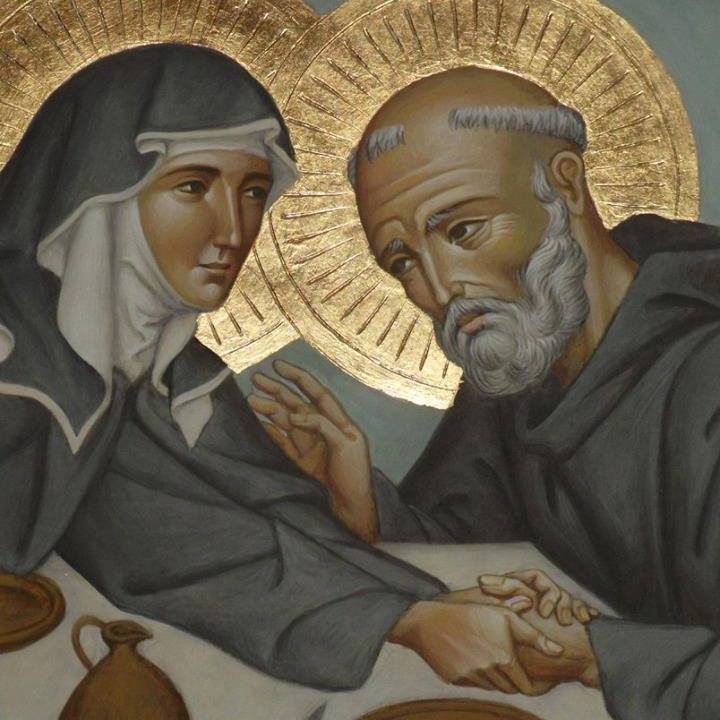
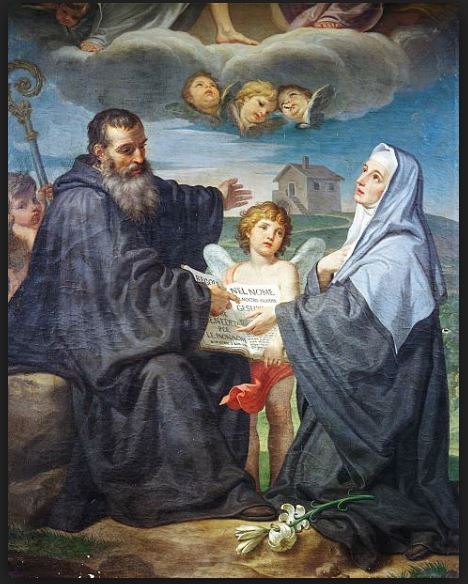
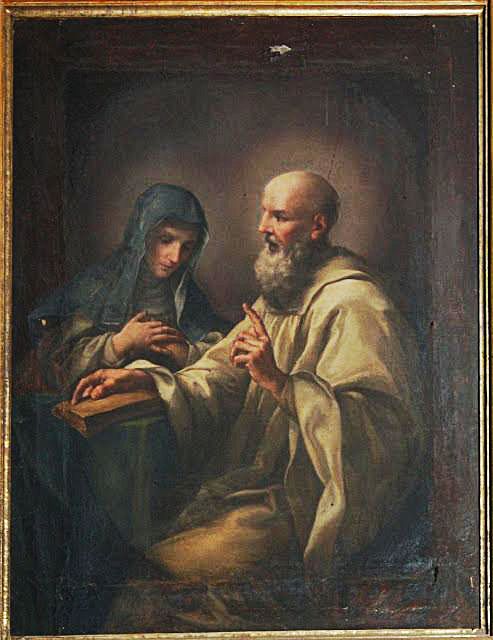
St Benedict is the twin brother of St Scholastica and is considered patron of many things. He was born in Nursia, Italy and educated in Rome.
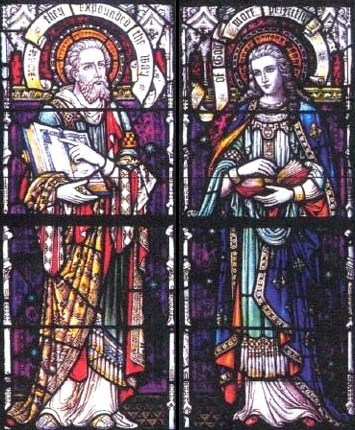
St Benedict and hisd twin sister, St Scholastica
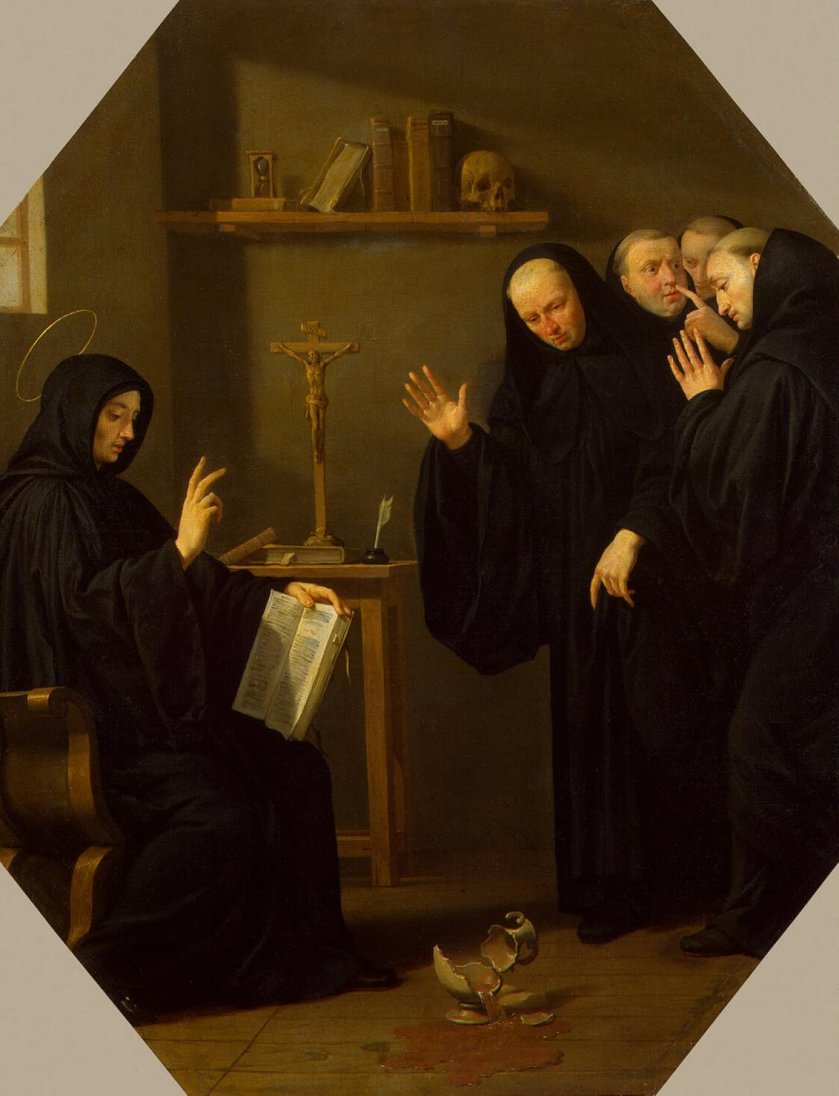
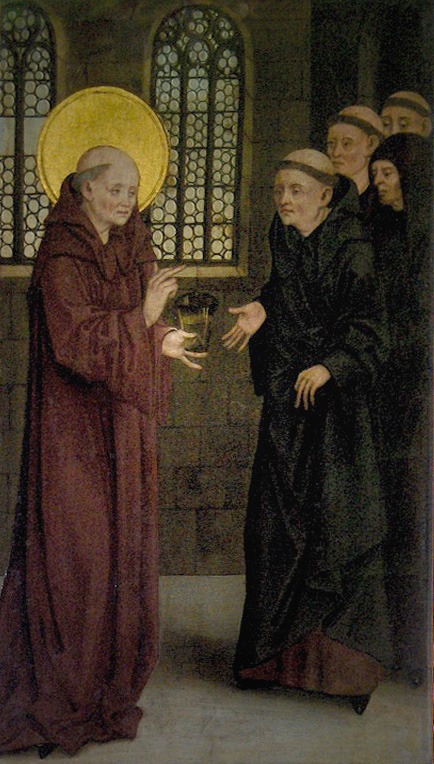
He was repelled by the vices of the city and around 500, fled to Enfide – thirty miles away. He decided to live the life of a hermit and lived in a cave for three years. Despite Benedict’s desire for solitude, his holiness became known and he was asked to be the Abbot by a community of monks at Vicovaro. He accepted but when the monks resisted his strict rule and tried to poison him, he returned to Subiaco and became a centre of spirituality and learning.
St Benedict and the Cup of Poison
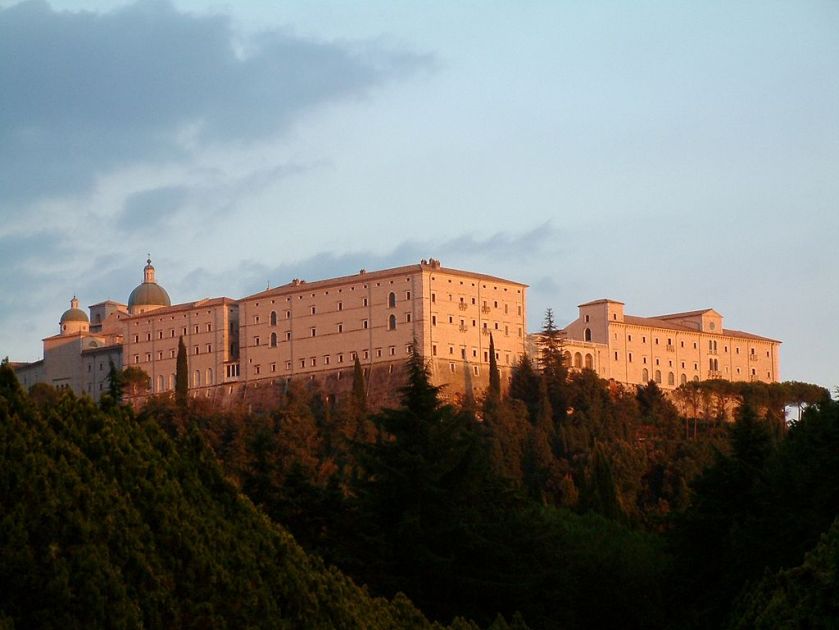
He eventually moved back to Monte Cassino and destroyed a temple to Apollo on its crest and brought the people of the neighbouring area back to Christianity. In 530 he began to build the monastery that was to be the birthplace of western monasticism.
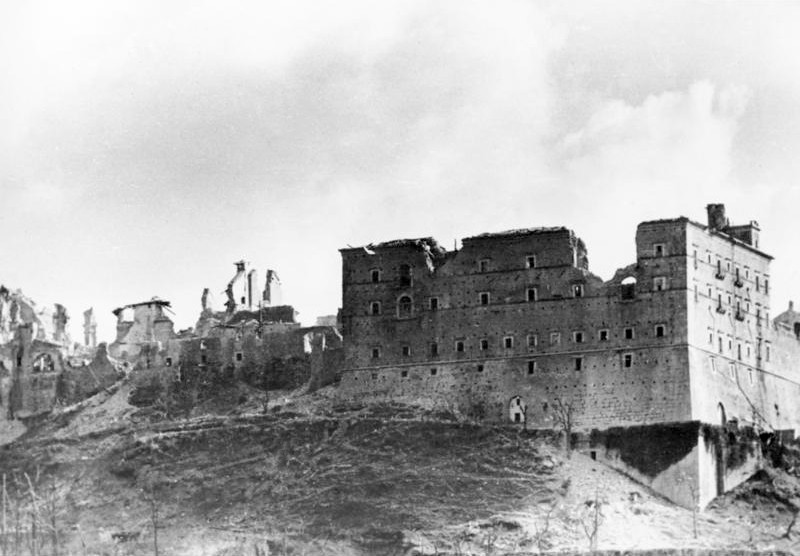
Monte Cassino in ruins after Allied bombing in February 1944.Rebuilt Abbey
Soon, disciples again flocked to him as his reputation for holiness, wisdom and miracles spread far and wide. It wasn’t long and he organised his monks into a single monastic community and wrote his official Rule, prescribing common sense, a life of moderate asceticism, prayer, study, work and community under one superior. It stressed obedience, stability, zeal and had the Divine Office as the centre of monastic life. While ruling his monks, most of whom – including Benedict, were not ordained, he counselled rulers and Popes and ministered to the poor and destitute. He died at Monte Cassino on 21 March 547 and was named patron protector of Europe by Pope Paul VI in 1964. The Universal Church celebrates his feast day today.
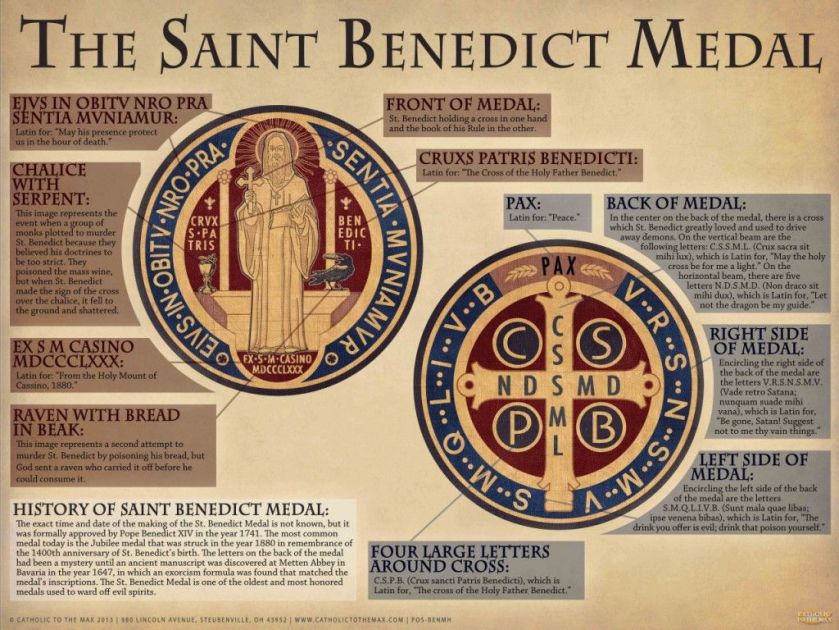
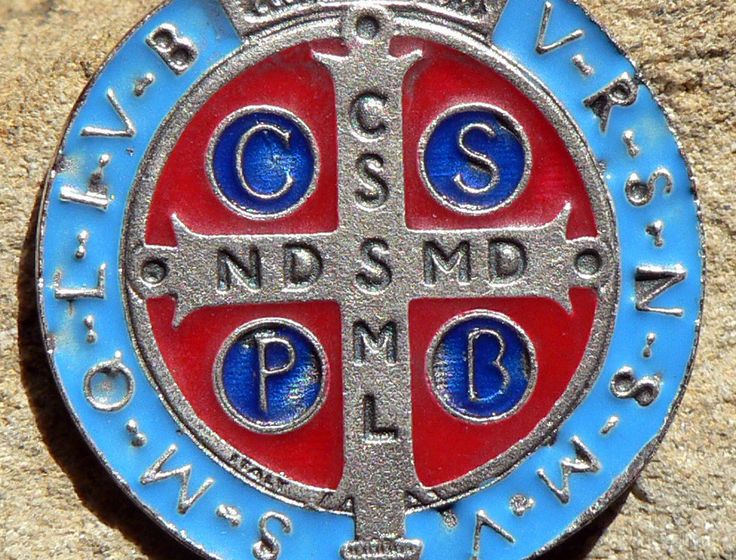
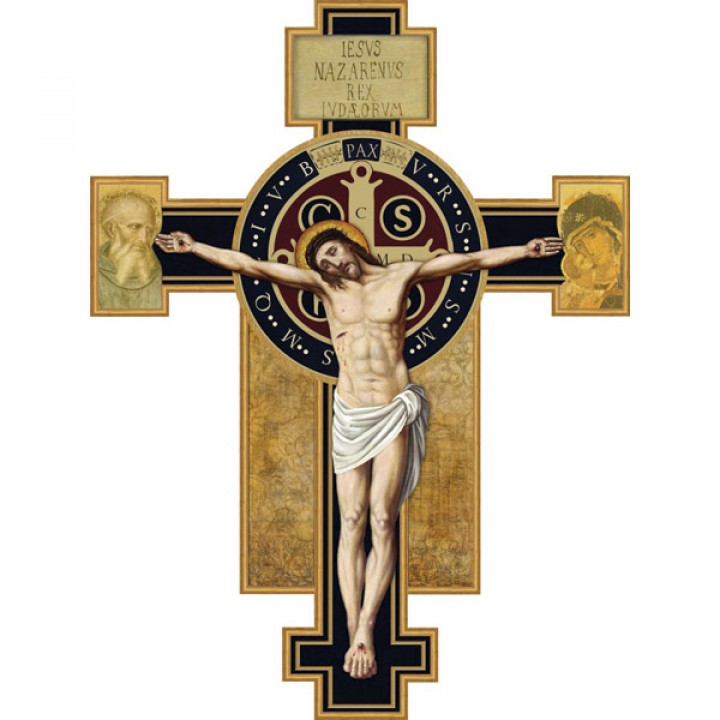
The St Benedict medal is very popular among Christians to this day and are hung above doors and windows, for protection against evil. It is believed that evil cannot enter your house if you protect every opening with a St Benedict medal and Crucifix. The medal has an image of St Benedict, holding the Holy Rule in his left hand and a cross in his right. There is a raven on one side of him, with a cup on the other side. Around the medal’s outer margin are the words “Eius in obitu nostro praesentia muniamur” – “May we, at our death, be fortified by His presence”. The other side of the medal has a cross with the initials CSSML on the vertical bar which signify “Crux Sacra Sit Mihi Lux”“May the Holy Cross be my light” and on the horizontal bar are the initials NDSMD which stand for “Non Draco Sit Mihi Dux”“Let not the dragon be my overlord”. The initials CSPB stand for “Crux Sancti Patris Benedicti”“The Cross of the Holy Father Benedict” and are located on the interior angles of the cross. Either the inscription “PAX” Peace or the Christogram “HIS” may be found at the top of the cross in most cases. Around the medal’s margin on this side are the initials VRSNSMV which stand for “Vade Retro Satana, Nonquam Suade Mihi Vana” ”Begone Satan, do not suggest to me thy vanities” then a space followed by the initials SMQLIVB which signify “Sunt Mala Quae Libas, Ipse Venena Bibas”“Evil are the things thou profferest, drink thou thy own poison”.
The Medal of St Benedict can serve as a constant reminder of the need for us to take up our cross daily and “follow the true King, Christ our Lord,” and thus learn “to share in his heavenly kingdom,” as St. Benedict urges us in the Prologue of his Rule.
More on St Benedict, his Rule and the Medal here: https://anastpaul.wordpress.com/2017/07/11/saint-of-the-day-11-july-st-benedict-of-nursia-o-s-b-abbot-patron-of-europe-patronus-europae/
St Benedict of Nursia OSB (c 480-547) (Memorial) Patron of Europe and Founder of Western Monasticism
St Abundius of Ananelos
St Amabilis of Rouen
St Anna An Jiaoshi
St Anna An Xingshi
Bl Antonio Muller
St Berthevin of Lisieux
St Cindeus
St Cowair
St Cyprian of Brescia
St Cyriacus the Executioner
St Drostan
St Hidulf of Moyenmoutier
St Januarius
St John of Bergamo
Bl Kjeld of Viborg
St Leontius the Younger
St Marcian of Lycaonia
St Marciana of Caesarea
Maria An Guoshi
Maria An Linghua
Bl Marie-Clotilde Blanc
Bl Marie-Elisabeth Pélissier
Bl Marie-Marguerite de Barbégie d’Albrède
St Olga of Kiev
St Pelagia
St Pius I, Pope
St Placid of Dissentis
Bl Rosalie-Clotilde Bes
St Sabinus of Brescia
St Sabinus of Poitiers
St Sidronius
St Sigisbert of Dissentis
Bl Thomas Hunt
Bl Thomas Sprott
St Thurketyl
One Minute Reflection – 10 July – Tuesday of the Fourteenth Week of Ordinary Time, Year B – Today’s Gospel: Matthew 9:32-38
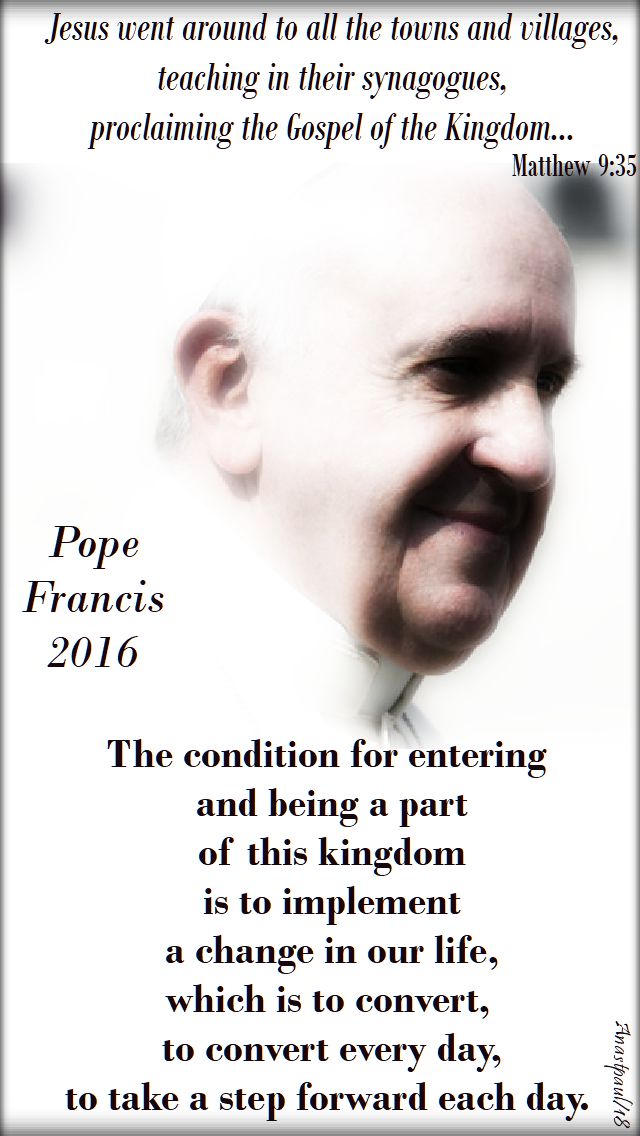
Jesus went around to all the towns and villages, teaching in their synagogues, proclaiming the Gospel of the Kingdom..…Matthew 9:35
REFLECTION – “This is the central message of every Christian mission. When a missionary goes, a Christian goes to proclaim Jesus, not to proselytise, as if he were a fan trying to drum up new supporters for his team. No, he goes simply to proclaim: “The kingdom of God is in our midst!”.
But what is this kingdom of God, this kingdom of heaven? They are synonymous. We think immediately of the afterlife: eternal life. Of course this is true, the kingdom of God will extend without limit beyond earthly life but the good news that Jesus brings us — and that John predicts — is that we do not need to wait for the kingdom of God in the future: it is at hand. In some way it is already present and we may experience spiritual power from now on.
The condition for entering and being a part of this kingdom, is to implement a change in our life, which is to convert, to convert every day, to take a step forward each day. It is a question of leaving behind the comfortable but misleading ways of the idols of this world: success at all costs, power to the detriment of the weak, the desire for wealth, pleasure at any price. And instead, preparing the way of the Lord: this does not take away our freedom but gives us true happiness…Pope Francis (Angelus, Dec 4, 2016)
PRAYER – All-powerful God, to serve You is to reign. Your love gave the saints Victoria and Anatolia the courage to proclaim the truth of Christ and by their mission of preaching of the Kingdom, to suffer a cruel martyrdom. Grant that by their prayers, our lives bear witness to the faith we profess and our love bring others, to the peace and joy of your gospel. Through our Lord Jesus Christ, Your Son, who lives and reigns with You in the unity of the Holy Spirit, one God, forever and ever. Amen
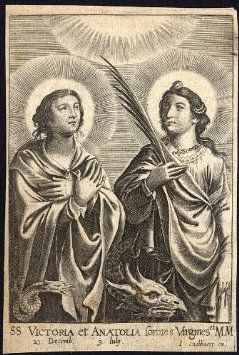
Saints of the Day – St Anatolia & Victoria (Died 250) Martyrs – Sisters who gave their lives for Christ.
Patronages – against earthquakes, against lightning, against severe weather, 18 cities. Anatolia was first mentioned in the De Laude Sanctorum composed in 396 by Victrice (Victricius), bishop of Rouen (330-409) and they are both mentioned together in the Martyrologium Hieronymianum under 10 July. The two saints appear in the famous mosaics of Basilica of Sant’Apollinare Nuovo, at Ravenna (see image below – 22 martyrs shown offering their crowns of martyrdom to the Christ. ), between Saints Paulina and Christina. A Passio Saints Anatoliae et Audacis et Saint Victoriae of the 6th or seventh century, which added the name of Audax, was mentioned by Aldhelm (died 709) and Bede (died 735), who list the saints in their martyrologies. Caesar Baronius lists Anatolia and Audax under 9 July and Victoria under 23 December.
Saint Victoria and her sister Saint Anatolia are remembered as beautiful Catholic noble women who lived during the reign of Emperor Decius 249-251. They were promised in marriage to noble pagan men who were far from pleased at having heard that they were practising Catholics. Saint Victoria was initially content with marrying the pagan, as she hoped that she would be able to convert him but her sister refused to marry and convinced St Victoria to do the same. They both sought to devote their lives solely to God.
The noble pagan suitors both managed to strike a deal with Roman authorities that allowed them to imprison each sister in their respective houses, in order to hopefully convince them to denounce their faith. Both sisters responded by selling all of their possessions, giving all of their money to the poor and devoting themselves to God. Both sisters, during their imprisonment, converted all of the guards, maids and servants in their respective houses.
Needless to say, the suitors were both furious at the sister’s failure to denounce their faith and acts of converting the guards, maids, etc. Saint Anatolia’s suitor, Titus Aurelius, was furious and hired St Audace, to execute her. He initially locked her in a room with a venomous snake which failed to harm her. Upon seeing this, St Audace converted and was later martyred. Saint Anatolia’s suitor was violently angry and became her murderer himself, by stabbing her to death.
Saint Victoria’s suitor, Eugenius, soon heard of this murder of Anatolia but continued to try and convince Victoria to aposthasise. He went through periods of great kindness towards her followed with periods of extreme ill-treatment. Eventually he renounced his suite and stabbed her to death himself, in a fit of rage. According to legend, he was instantly struck with leprosy and died 6 days later eaten by worms.
The relics of Saint Victoria are enshrined in the church of Santa Vittoria in Metanano, Italy and the relics of Saint Anatolia, as well as those of Saint Audace, are enshrined in the Basilica of Saint Scholastica in Subiaco.
St Amalberga of Mauberge (Died 690)
St Anatolia & Victoria (Died 250) Martyrs
St Antôn Nguyen Huu Quynh
St Apollonius of Sardis
Bl Arnold of Camerino
St Bianor of Pisidia
St Cuán of Airbhre
St Elilantus
St Etto
Bl Euménios
St Knud of Denmark
St Lantfrid
Bl Marie-Gertrude de Ripert d’Alauzier
Bl Parthenios
St Pascharius of Nantes
St Peter Vincioli
St Phêrô Nguyen Khac Tu
St Rufina of Rome
St Secunda of Rome
St Sylvanus of Pisidia
Bl Sylvie-Agnès de Romillon
St Waltram
—
Martyrs of Africa – 4 saints: A group of Christians martyred together in Africa. The only information that has survived are four of their names – Felix, Januarius, Marinus and Nabor.
Martyrs of Antioch – 10 saints: A group of ten Christians martyred together. We have no details about them but the names – Diogenes, Domnina, Esicius, Macarius, Maxima, Maximus, Rodigus, Timoteus, Veronia and Zacheus. They were martyred in Antioch, date unknown.
Martyrs of Damascus – 11 beati: A group of Franciscans and laymen ordered by Druz Muslims to convert to Islam. They refused and were hacked to pieces.
• ‘Abd Al-Mu’ti Masabki
• Carmelo Bolta Bañuls
• Engelbert Kolland
• Francisco Pinazo Peñalver
• Fransis Masabki
• Juan Jacobo Fernández y Fernández
• Manuel Ruiz López
• Nicanor Ascanio de Soria
• Nicolás María Alberca Torres
• Pedro Soler Méndez
• Rufayil Masabki
They were cut to pieces on 9-10 July 1860 in Damascus, Syria.
Beatified on 10 October 1926 by Pope Pius XI.
Martyrs of Nicopolis – 45 saints: A group of 45 Christians tortured and martyred together in the persecutions of emperor Licinius. We know nothing else but six of their names – Anicetus, Anthony, Daniel, Leontius, Mauritius and Sisinno. c 329 in Nicopolis, Armenia (modern Koyulhisar, Turkey).
Martyrs of Nitria – 5 saints: Fathers of Nitria – Four monks and the bishop of Alexandria, Egypt who were martyred by heretics. Saint John Chrysostom wrote about them but their names have not come down to us. They were martyred in the 4th century in Nitria, Egypt.
Quote/s of the Day – 9 July – The Memorial of Blessed Adrian Fortescue T.O.S.D. (1476-1539) Martyr
“In Husbands Bosworth Hall, the residence of Miss Fortescue-Turville, the last direct descendant of the blessed martyr, was found some years ago a very precious relic, being nothing less than the Book of Hours which he habitually used.
The manuscript has suffered a good deal from time and careless handling but on the outer leaf can still be read another series of maxims, a kind of rule of life written and signed by the martyr’s own hand. It will be seen how, while yet in the days of his prosperity, this truly Christian knight was preparing all unconsciously for the martyr’s crown and palm.
The Book of Hours is now reverently preserved as a relic in the beautiful little Catholic church adjoining the old hall of Husbands Bosworth :”
Quotations (slightly updated – from his famous Book of Hours)
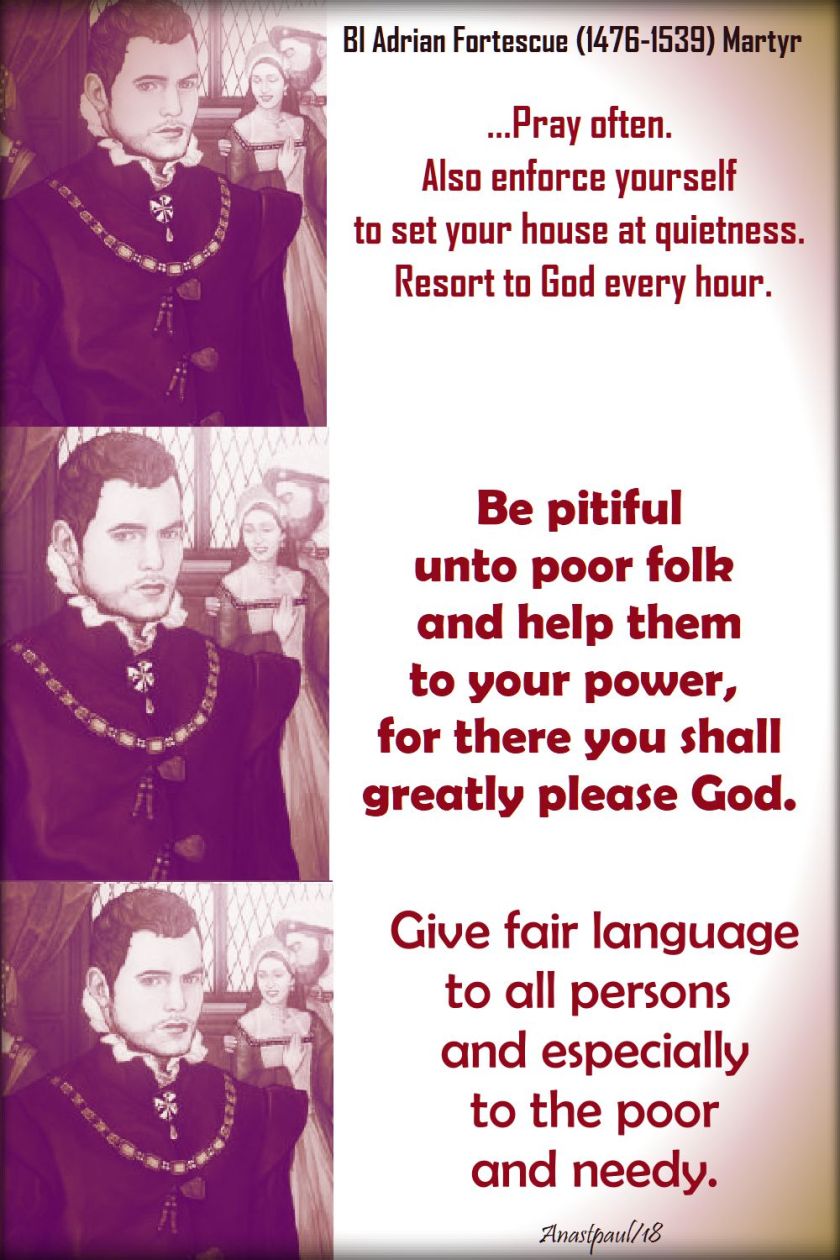
…”Pray often. Also enforce yourself to set your house at quietness. Resort to God every hour.”
“Be pitiful unto poor folk and help them to your power, for there you shall greatly please God.”
“Give fair language to all persons and especially to the poor and needy.”
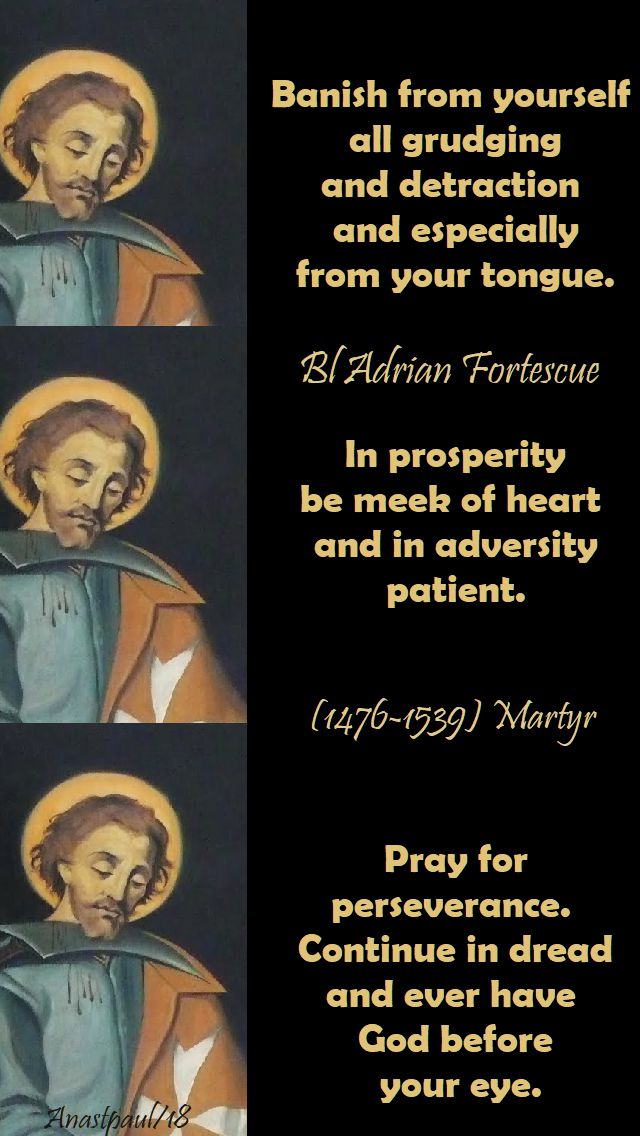
“Banish from yourself all grudging and detraction and especially from your tongue.”
“In prosperity be meek of heart and in adversity patient.”
“Pray for perseverance. Continue in dread and ever have God before your eye.”
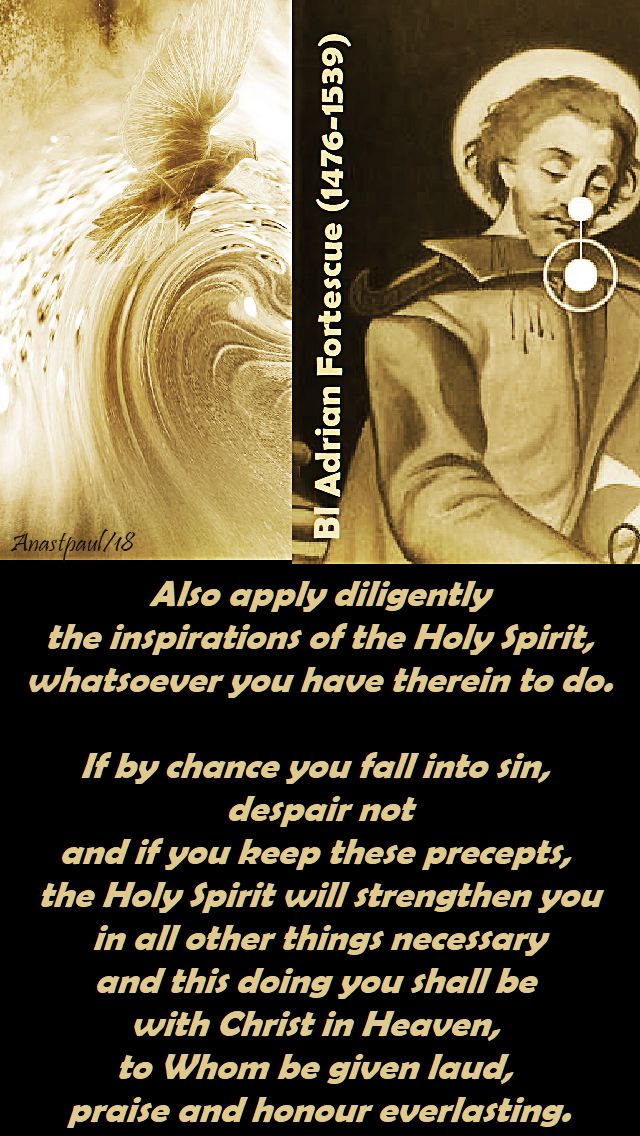
“Also apply diligently the inspirations of the Holy Spirit, whatsoever you have therein to do.”
“If by chance you fall into sin, despair not and if you keep these precepts, the Holy Spirit will strengthen you in all other things necessary and this doing you shall be with Christ in Heaven, to Whom be given laud, praise and honour everlasting.”
Our Morning Offering – 9 July – The Memorial of Blessed Adrian Fortescue T.O.S.D. (1476-1539) Martyr
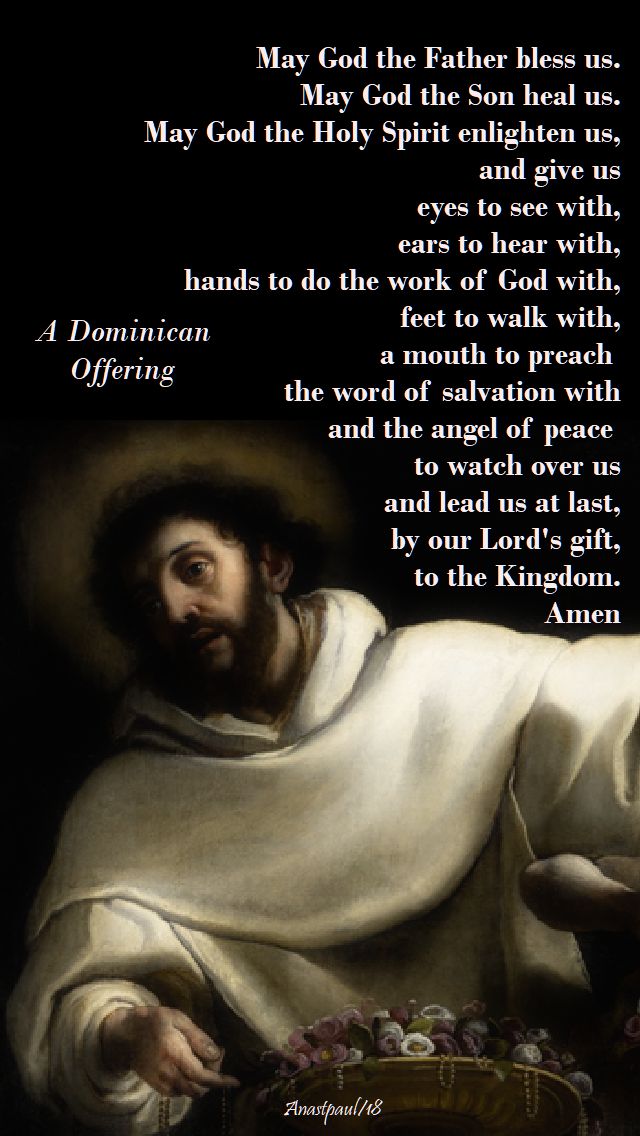
A Dominican Offering
May God the Father bless us.
May God the Son heal us.
May God the Holy Spirit enlighten us,
and give us
eyes to see with,
ears to hear with,
hands to do the work of God with,
feet to walk with,
a mouth to preach
the word of salvation with,
and the angel of peace
to watch over us and lead us at last,
by our Lord’s gift, to the Kingdom.
Amen
Saint of the Day – Blessed Adrian Fortescue (1476-1539) Martyr
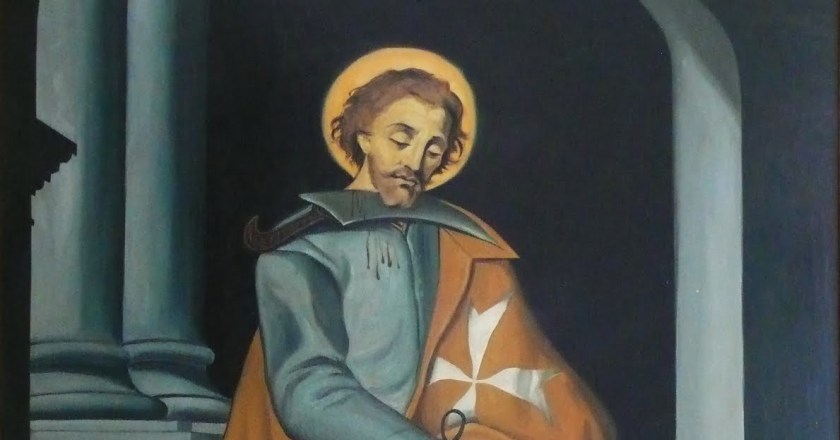
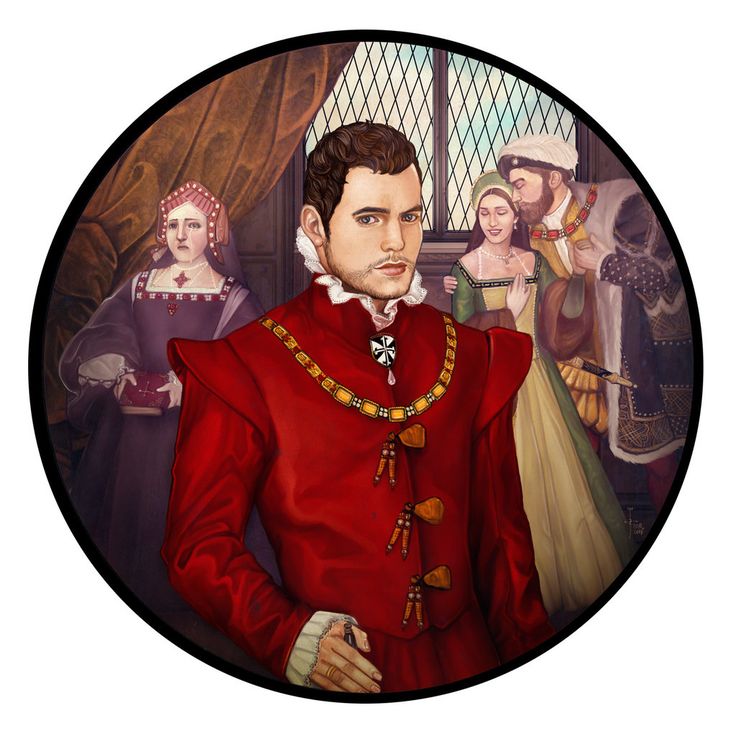
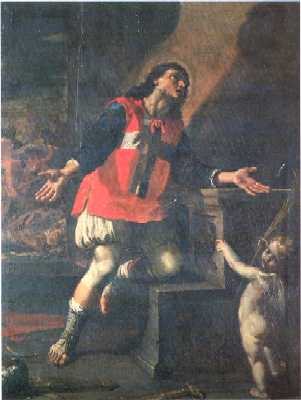
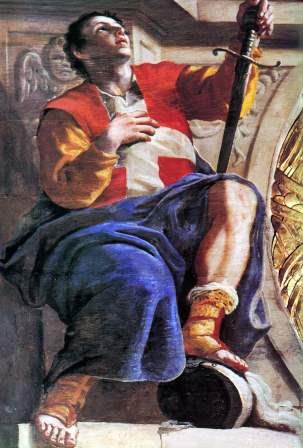
After a remarkable life, Bl. Adrian Fortescue died a martyr at the strike of an executioner’s blade at Tower Hill in 1539. A husband and father, a Justice of the Peace, a Knight of the Realm, a Knight of Malta and a Dominican Tertiary (Lay Dominican),he was at once a loyal servant of the Crown so far as he could be but still more, he was a man of unshakeable faith.
The House of Fortescue into which Adrian was born is said to date from the Battle of Hastings where Richard le Fort saved William the Conqueror’s Life by the shelter of his “strong shield” and, thereafter, was called “Fort – Escu”. His family had a history of service to the Crown although this was later complicated by the dynastic battles of The Wars of the Roses. Vicissitudes notwithstanding, his great uncle, Sir John Fortescue (d.1479) became Chief Justice of the King’s Bench (1442-61). Sir John’s writings on the law and politics of England were arguably the most significant contribution of the fifteenth century and are still studied by lawyers and political theorists today. Adrian’s father, also named Sir John, fought for the victorious Lancastrians at the Battle of Bosworth in 1485 when Adrian was but a young boy. And later in his life, Adrian’s first cousin, Anne Boleyn, became King Henry VIII’s second wife (before her eventual beheading in 1536). We can say with some justification then that the Fortescues occupied a privileged position at the Rroyal court.
The first mention of Adrian Fortescue is in 1499, by which time, aged about 23, he was already married to Anne Stonor. He lived at his wife’s family seat at Stonor Park in Oxfordshire. This estate would later become the subject of an acrimonious legal dispute between him and his relative. In 1503, on Prince Henry becoming Prince of Wales (after Prince Arthur’s death) Adrian was made a Knight of the Order of Bath. Sir Adrian took the motto Loyalle Pensée; his loyalty was indeed to be tested.
Like his forebears, Adrian served King Henry VIII in his ambitious military campaigns. He helped to rout the French the Battle of Spurs in 1513, and fought again in 1523. King Henry rewarded his support and in 1520 invited him to the splendorous Field of the Cloth of Gold where Henry famously wrestled with the King of France. Closer to home, Sir Adrian was made a Justice of the Peace of the county of Oxfordshire. In this period of history, royal favour could also take more peculiar forms. Sir Adrian had the dubious honour of being made a Gentleman of the King’s Privy Chamber, forerunner to the august body now known as the Privy Council.
In addition to being an assiduous servant of the Crown, Sir Adrian was evidently also a man of strong religious conviction and charity. His accounts reveal a number of benefactions to clergy and religious foundations. In 1532, he became a Knight of Devotion in the Order of Malta. The following year in July of 1533, he was admitted as a Dominican Tertiary at Blackfriars, Oxford, which he would visit from Stonor. But he also had a strong association with the Dominican Priory in London. His lodgings in the capital were in the precincts of the Blackfriars, close to the present eponymous tube station.
Not long after becoming a Lay Dominican, began what Adrian called his “trobilles”. At the start of Summer 1533, he assisted in the Coronation of his cousin, Anne Boleyn – then six months pregnant – as Queen of England. He must have realised that the marriage was not valid but perhaps thought, at that stage at least, that in the words of Sir Thomas More, it was not his business “to murmur at it or dispute upon it”. This narrow compromise was to prove short-lived.
The King’s infidelity and presumption were rebuked when the Pope refused to grant an annulment declaring Henry’s marriage to Catherine as valid on 23rd March 1534. The following month on 13th April, Bishop Fisher and Sir Thomas More refused to take the Oath of Succession. Sir Adrian was similarly arrested that same year but he was released without explanation, probably in the Spring of 1535. Fisher and More were afforded no such clemency and the two Saints were executed in Summer 1535.
The Act of Supremacy was also passed in 1535, making Henry supreme Head of the Church “immediately under God”. As a matter of law, Henry expressly denied the Pope’s authority. A writ affirming this and dated the following year can be found in Sir Adrian’s extant Missal. Tellingly, perhaps, it has with a line struck through it: apparent evidence of his disapproval. The die, it seems, was cast.
In February 1539, Sir Adrian was again arrested and imprisoned in the Tower of London. In the sitting of Parliament that Spring, a number of laws were passed in what has been described as the most servile Parliamentary session in history. Among the draconian laws enacted was a novel provision whereby a sentence of death might be passed without any trial of the accused. Under this procedure, no evidence was needed, neither could a defence be heard. Ironically, the architect of the law, Thomas Cromwell (then Lord Chancellor) was himself condemned by the same measure a year later leading to his own execution. This device was put to use on 11th May 1535 when a Bill of Attainder was passed condemning fifty people of High Treason who opposed Henry’s ecclesiastical policies. The names included Sir Adrian, Reginald Cardinal Pole, and the Countess of Salisbury.
Sir Adrian’s Book of Hours contains a Rule of Life written in his own hand and giving an insight into the interior life of a man who exemplified holiness and virtue in his conduct. He led a life of asceticism and honour, trying to follow God’s will in all things and daily seeking the guidance of the Holy Spirit. His pursuit of God’s truth brought him to a martyr’s death on 8th July 1539 (but possibly 9th or 10th) when he was beheaded at Tower Hill. His servants were also killed for treason on the same day but were hanged, drawn and quartered at Tyburn. As one later account neatly puts it, “Sir Adrian Fortescue died for his faith in Him whose acts Parliament was not competent to repeal”.
Pope Leo XII declared Adrian Fortescue blessed on 13th May 1895 and as a layman, he ranks among the great Dominicans as an outstanding example to all Christians. … By Br Samuel Burke O.P.
Br Samuel Burke is a deacon based in Rome where he is completing his studies at the Angelicum
St Augustine Zhao Rong and his 119 companions or Martyrs of China (Optional Memorial; 119 Companions): 25 priests, friars, nuns, seminarians and lay people. The 87 Chinese Catholics and 33 Western missionaries, from the mid-17th century to 1930, were martyred because of their ministry and, in some cases, for their refusal to apostatise.
Many died in the Boxer Rebellion, in which xenophobic peasants slaughtered 30,000 Chinese converts to Christianity along with missionaries and other foreigners.
Canonised on 1 October 2000 by Pope John Paul II in Rome.
Bl Adrian Fortescue T.O.S.D. (1476-1539) Martyr
St Agrippinus of Autun
St Alexander of Egypt
St Audax of Thora
St Brictius of Martola
St Copra of Egypt
St Cyril of Gortyna
Bl Dionysius the Rhetorician
St Everild of Everingham
St Faustina of Rome
St Felician of Sicily
Bl Fidelis Chojnacki
St Floriana of Rome
St Hérombert of Minden
Bl Jane Scopelli
St Joachim Ho
Bl Luigi Caburlotto
Bl Marguerite-Marie-Anne de Rocher
Bl Marie-Anne-Madeleine de Guilhermier
Bl Marija Petkovic
St Patermutius of Egypt
St Paulina do Coração Agonizante de Jesus
St Ursula/Veronica Giuliani
—
Four Holy Polish Brothers – 4 saints: Four brothers who became hermits, Benedictine monks and saints – Andrew, Barnabas, Benedict and Justus. They were born in Poland and died in 1008 of natural causes.
Martyrs of Gorkum – 19 saints: Nineteen martyrs killed by Calvinists for loyalty to the Pope and for their belief in the Real Presence in the Eucharist. They are –
• Adrianus van Hilvarenbeek • Andreas Wouters • Antonius van Hoornaar • Antonius van Weert • Cornelius van Wijk • Francisus de Roye • Godfried van Duynen • Godfried van Melveren • Hieronymus van Weert • Jacobus Lacops • Joannes Lenaerts • John of Cologne • Leonardus van Veghel • Nicasius Janssen van Heeze • Nicolaas Pieck • Nicolaas Poppel • Petrus van Assche • Theodorus van der Eem • Willehad van Deem •
They werehanged on 9 July 1572 in Brielle, Zuid-Holland, Netherlands.
Beatified on 24 November 1675 by Pope Clement X and Canonised on 29 June 1867 by Pope Pius IX.
Martyrs of Orange – 32 beati: 32 nuns from several orders who spent up to 18 months in prison and were finally executed for refusing to renounce Christianity during the persecutions of the French Revolution.
• Anne Cartier • Anne-Andrée Minutte • Dorothée-Madeleine-Julie de Justamond • élisabeth Verchière • élisabeth-Thérèse de Consolin • Jeanne-Marie de Romillon • Madeleine-Françoise de Justamond • Madeleine-Thérèse Talieu • Marguerite-Eléonore de Justamond • Marguerite-Marie-Anne de Rocher • Marguerite-Rose de Gordon • Marguerite-Thérèse Charensol • Marie Cluse • Marie-Anastasie de Roquard • Marie-Anne Béguin-Royal • Marie-Anne Depeyre • Marie-Anne Doux • Marie-Anne Lambert • Marie-Anne-Madeleine de Guilhermier • Marie-Claire du Bac • Marie-Clotilde Blanc • Marie-Elisabeth Pélissier • Marie-Gabrielle-Françoise-Suzanne de Gaillard de Lavaldène • Marie-Gertrude de Ripert d’Alauzier • Marie-Marguerite Bonnet • Marie-Marguerite de Barbégie d’Albrède • Marie-Rose Laye • Rosalie-Clotilde Bes • Suzanne-Agathe Deloye • Sylvie-Agnès de Romillon • Thérèse-Henriette Faurie
They were guillotined between 6 July and 26 July 1794 at Orange, Vaucluse, France.
Beatified on 10 May 1925 by Pope Pius XI.
Martyrs of the Baths – 10,204 saints: A group of Christians enslaved by Diocletian to build the gigantic baths in imperial Rome, Italy. The end of their labours coincided with the beginning of the great persecutions of Diocletian and they were all executed. Ancient records indicated there were 10,204 of them; Zeno of Rome is the only one whose name has come down to us and we know nothing else about any of their individual lives.
c 304.
Quote/s of the Day – 8 July – The Memorial of Sts Priscilla and Aquila – Patrons of Catholic Marriage and Families
Speaking of Marriage and the Family
“Authentic married love is caught up into divine love . . . so that this love may lead the spouses to God . . . and in God, they find the strength, to carry on their roles and responsibilities.”
Gaudium et Spes (Joy and Hope, the Pastoral Constitution on the Church in the Modern World), 48
“Merciful love is supremely indispensable between those who are closest to one another: between husbands and wives, between parents and children, between friends and it is indispensable in education and in pastoral work.”
“The future of humanity passes by way of the family. It is therefore indispensable and urgent, that every person of good will should endeavour to save and foster the values and requirements of the family. I feel that I must ask for a particular effort in this field, from the sons and daughters of the Church. Faith gives them full knowledge of God’s wonderful plan, they, therefore, have an extra reason for caring for the reality that is the family in this time of trial and of grace. They must show the family special love. This is an injunction that calls for concrete action.”
St Pope John Paul (1920-2005)
“We speak a lot about behavioural problems, mental health, the well-being of the child, the anxiety of the parents and the children— but do we even know what a wound of the soul is? Do we feel the weight of the mountain that crushes the soul of a child in those families, where members mistreat and hurt one another to the point of breaking the bonds of marital fidelity? What effect do our choices — often poor choices— have on the souls of children?”
Pope Francis
24 June 2015
“During these days, we will reflect in particular on the family, which is the fundamental cell of society. From the beginning the Creator blessed man and woman, so that they might be fruitful and multiply and so the family then, is an image of the Triune God in the world.”
Thought for the Day – 8 July – The Memorial of Sts Priscilla and Aquila
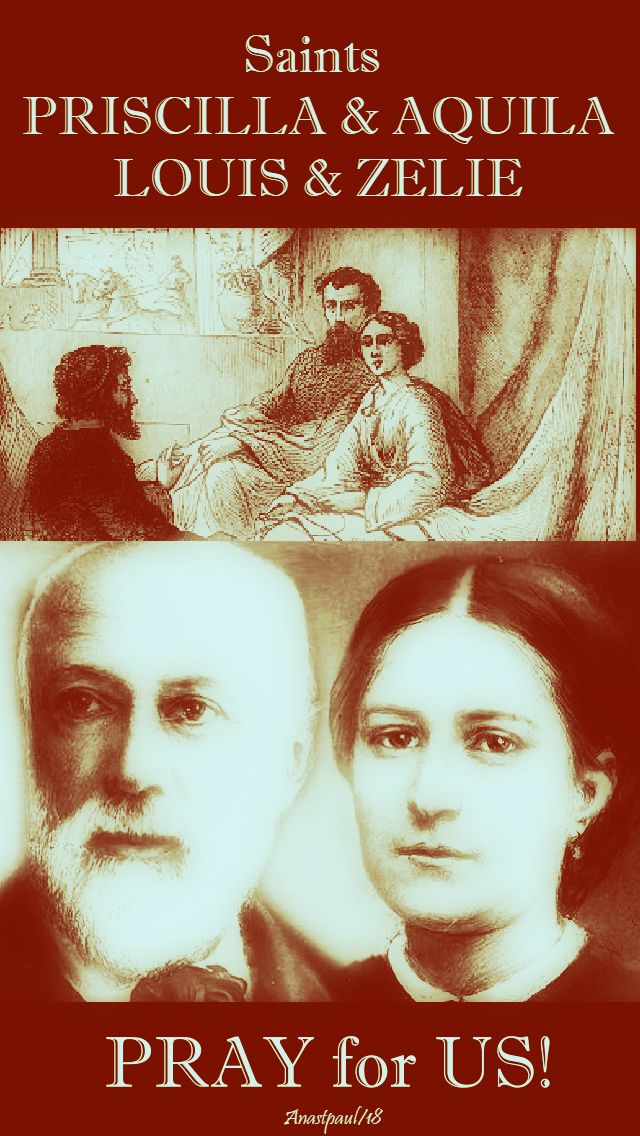
It is appropriate that today, on the Memorial of Saints Priscilla and Aquila that we remember the parents of “the Little Flower”, the first married couple to be formally canonised together, Louis and Zelie Martin.
Louis and Zélie Martin, parents of St Thérèse of Lisieux (“The Little Flower”), were the first married couple to be canonised together and just three weeks after the annual feast day of Thérèse. Their canonisation coincided with the Ordinary Synod on the Family in Rome.
Though the Martins were known as a typical French family of their time, Louis and Zélie espoused and upheld a rare and unblemished love for God, each other and their children.
Although Louis intended to become a monk, wishing to enter the Augustinian Great St Bernard Monastery, he was rejected because he did not succeed at learning Latin. Later he decided to become a watchmaker and studied his craft in Rennes and in Strasbourg.
Zélie wanted to become a nun but was turned away by the Sisters of Charity of Saint Vincent de Paul due to respiratory difficulties and recurrent headaches. She then prayed for God to give her many children and that they would be consecrated to God. She later decided to become a lacemaker, manufacturing Alençon lace. She fell in love with the watchmaker Louis Martin in 1858 and married him, only three months later, on 12 July 1858, at the Basilica of Notre-Dame in Alençon. Zélie’s business became so successful that, in 1870, Louis sold his watchmaking business to go into partnership with her.
The couple nurtured their marriage and maintained a joyful Catholic home, while balancing the demands of business and day-to-day life with their children. Mr and Mrs Martin exemplified the multi-faceted vocation of being married Catholics and astute parents – putting God first; mentoring, educating and disciplining their children; being honourable business owners and employers; helping local families destitute and in need; and persevering in faith through loss of children, Zélie’s breast cancer and her early death.
As a father, Louis loved nature with a deep sentimental enthusiasm . It was from him that Thérèse inherited her passion for flowers and meadows and for her native landscape, clouds, thunderstorms, the sea and the stars. He made pilgrimages to Chartres and Lourdes, went to Germany and Austria, travelled twice to Rome and even to Constantinople and planned but did not live to carry out, a pilgrimage to the Holy Land. Along with this desire for adventure was an impulse towards withdrawal; in Lisieux Louis arranged a little den for himself high up in the attic, a true monastic cell for praying, reading and meditation. Even his daughters were allowed to enter it only if they wished spiritual converse and self-examination. As in a monastery, he divided the day into worship, garden work and relaxation. As a jeweller and watchmaker, Louis loved the precious things with which he dealt. To his daughters he gave touching and naïve pet names: Marie was his “diamond”, Pauline his “noble pearl”, Céline “the bold one” and “the guardian angel”. Thérèse was his “little queen … to whom all treasures belonged”
On 18 October 2015, Louis and Azélie-Marie Martin were canonised as saints by Pope Francis.
“The holy spouses Louis Martin and Marie-Azélie Guérin practised Christian service in the family, creating day by day an environment of faith and love which nurtured the vocations of their daughters, among whom was Saint Therese of the Child Jesus.
The radiant witness of these new saints inspires us to persevere in joyful service to our brothers and sisters, trusting in the help of God and the maternal protection of Mary. From heaven may they now watch over us and sustain us by their powerful intercession.”…Pope Francis
Indeed we cry out to God, “Call down your mercy on marriage!
Sts Priscilla and Aquila, Louis and Zélie, pray for all married couples, pray for the sanctity of marriage and for us all!
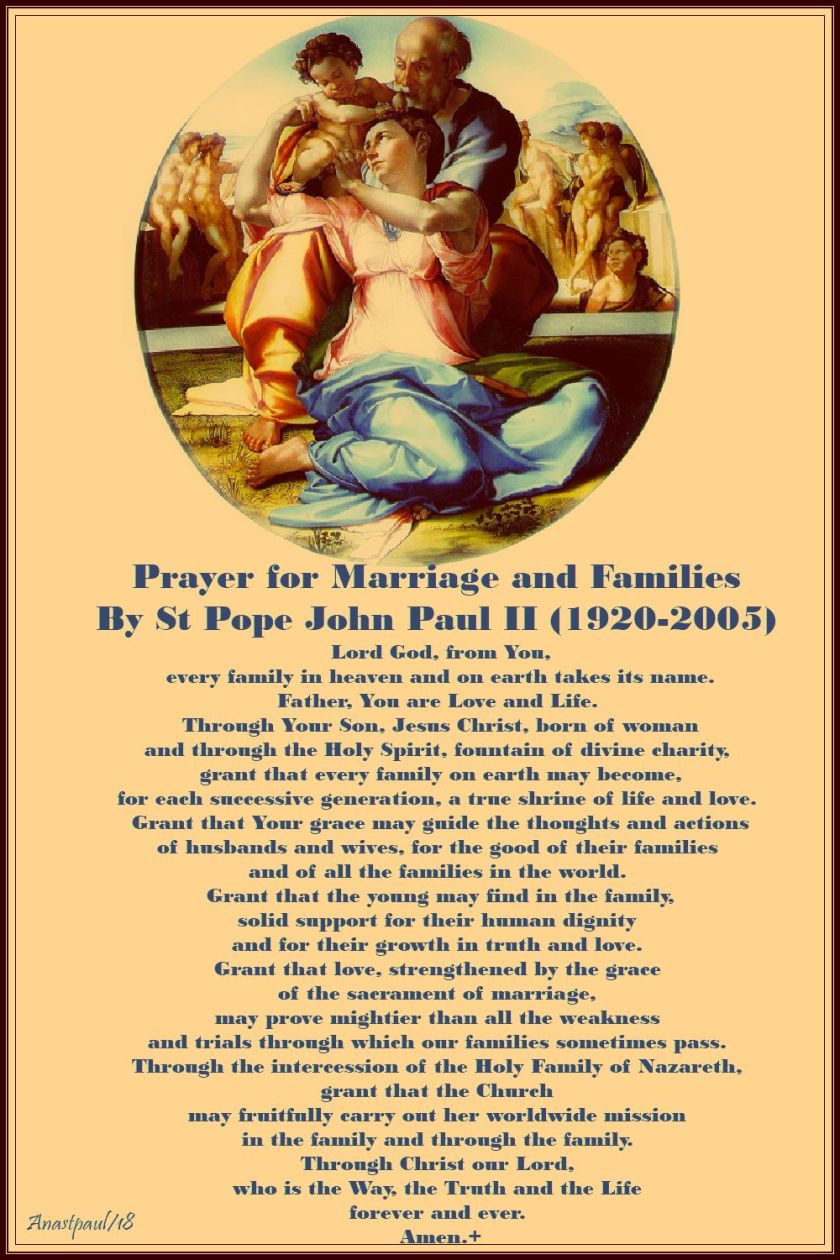
Prayer for Marriage and Families By St Pope John Paul II (1920-2005)
Lord God, from You,
every family in heaven and on earth takes its name.
Father, You are Love and Life.
Through Your Son, Jesus Christ, born of woman
and through the Holy Spirit, fountain of divine charity,
grant that every family on earth may become,
for each successive generation, a true shrine of life and love.
Grant that Your grace may guide the thoughts and actions
of husbands and wives, for the good of their families
and of all the families in the world.
Grant that the young may find in the family,
solid support for their human dignity
and for their growth in truth and love.
Grant that love, strengthened by the grace
of the sacrament of marriage,
may prove mightier than all the weakness
and trials through which our families sometimes pass.
Through the intercession of the Holy Family of Nazareth,
grant that the Church
may fruitfully carry out her worldwide mission
in the family and through the family.
Through Christ our Lord,
who is the Way, the Truth and the Life
forever and ever.
Amen.+
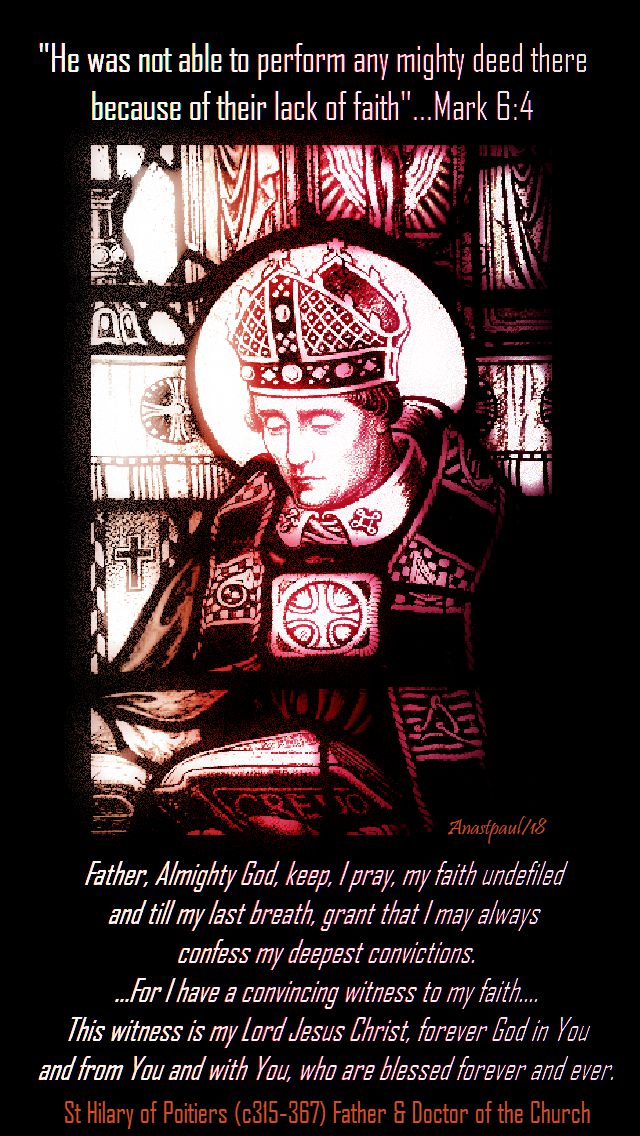
One Minute Reflection – 8 July – – Fourteenth Sunday in Ordinary Time, Year B – “He was not able to perform any mighty deed there because of their lack of faith”...Mark 6:4
And he could do no mighty work there, except that he laid his hands upon a few sick people and healed them. And he marvelled because of their unbelief...Mark 6:5-6
REFLECTION – “Father, Almighty God, keep, I pray, my faith undefiled and till my last breath, grant that I may always confess my deepest convictions. May I ever hold fast to everything which I professed in the creed of my new birth, when I was baptised in the Father and the Son, and the Holy Spirit. May I always adore You our Father and your Son who is one with You; give me always Your Holy Spirit, who proceeds from You, through Your Only-begotten Son.
For I have a convincing witness to my faith, who says, “Father, everything of mine is yours and everything of yours is mine” (Jn 17:10). This witness is my Lord Jesus Christ, forever God in You and from You and with You, who are blessed forever and ever. Amen”…Saint Hilary (c315-367) Bishop of Poitiers, Father & Doctor of the Church (De Trinitate, XII, final prayer)
PRAYER – Lord Holy God and Father of all, hold us always in Your Heart, keep us near to Your Son, that our faith may never fail us! Grant that by the prayers of Sts Aquila and Priscilla, we may hold fast to our Saviour, even in times of distress, hardship, persecution and humiliation, when this world assails us. Through Christ our Lord, in the unity of the Holy Spirit, one God forever amen.
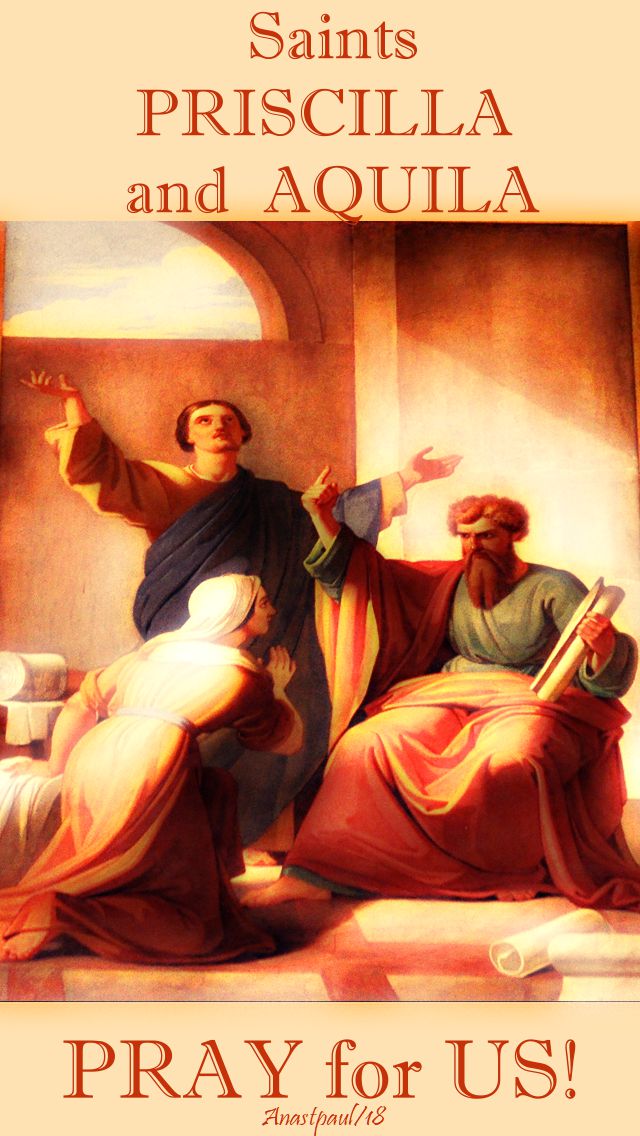
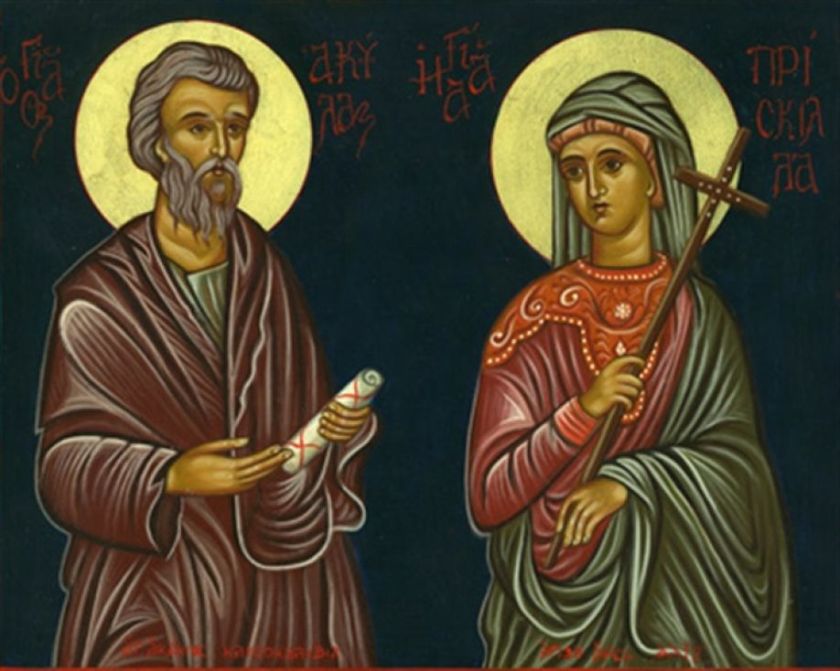
Saints of the Day – 8 July – Priscilla and Aquila – Continuing his catechesis on the early witnesses of the Christian faith, Pope Benedict XVI dedicated his 7 February 2007 General Audience Address to the Roman couple Priscilla and Aquila, who collaborated with St Paul in Corinth.
Dear Brothers and Sisters,
Taking a new step in this type of portrait gallery of the first witnesses of the Christian faith which we began some weeks ago, today we take into consideration a married couple.
The couple in question are Priscilla and Aquila, who take their place, as we already mentioned briefly last Wednesday, in the sphere of numerous collaborators who gravitated around the Apostle Paul. Based on the information in our possession, this married couple played a very active role in the post-Paschal origins of the Church.
The names Aquila and Priscilla are Latin but the man and woman who bear them were of Hebrew origin. At least Aquila, however, geographically came from the diaspora of northern Anatolia, which faces the Black Sea – in today’s Turkey – while Priscilla was probably a Jewish woman from Rome (cf. Acts 18: 2).
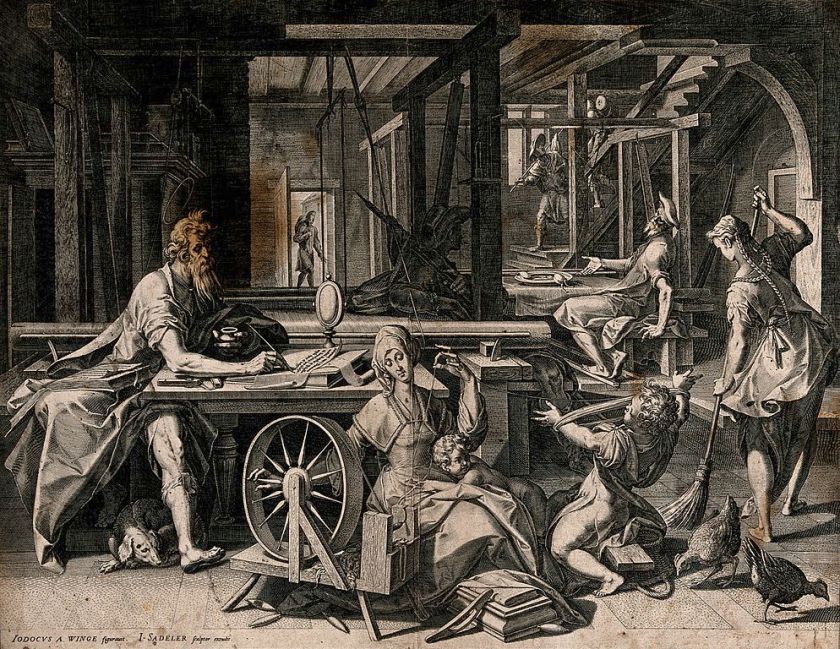
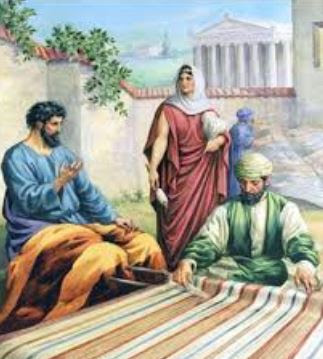
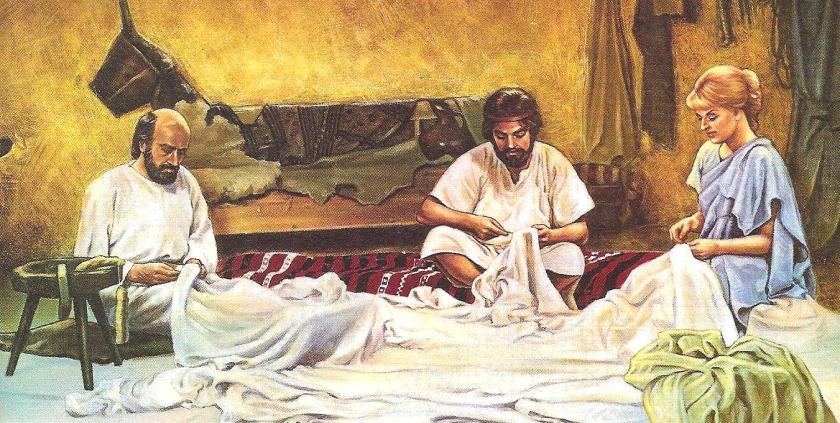
However, it was from Rome that they reached Corinth, where Paul met them at the beginning of the 50s. There he became associated with them, as Luke tells us, practising the same trade of making tents or large draperies for domestic use and he was even welcomed into their home (cf. Acts 18: 3). The reason they came to Corinth was the decision taken by the Emperor Claudius to expel from Rome, the city’s Jewish residents. Concerning this event the Roman historian Suetonius tells us that the Hebrews were expelled because “they were rioting due to someone named Chrestus” (cf. “The Lives of the Twelve Caesars, Claudius”, n. 25).
One sees that he did not know the name well – instead of Christ he wrote “Chrestus” – and he had only a very confused idea of what had happened. In any case, there were internal discords within the Jewish community about the question if whether Jesus was the Christ. And for the Emperor, these problems were the reason to simply expel all Jews from Rome.
One can deduce that the couple had already embraced the Christian faith in the 40s and now they had found in Paul, someone who not only shared with them this faith – that Jesus is the Christ – but who was also an Apostle, personally called by the Risen Lord. Therefore, their first encounter is at Corinth, where they welcomed him into their house and worked together making tents.
In a second moment, they transferred to Ephesus in Asia Minor. There they had a decisive role in completing the Christian formation of the Alexandrian Jew Apollo, who we spoke about last Wednesday. Since he only knew the faith superficially, “Priscilla and Aquila… took him and expounded to him the way of God more accurately” (Acts 18: 26). When Paul wrote the First Letter to the Corinthians from Ephesus, together with his own greeting, he explicitly sent those of “Aquila and Prisca, together with the church in their house” (16: 19). Hence, we come to know the most important role that this couple played in the environment of the primitive Church: that of welcoming in their own house the group of local Christians when they gathered to listen to the Word of God and to celebrate the Eucharist. It is exactly this type of gathering that in Greek is called “ekklesìa” – the Latin word is “ecclesia”, the Italian “chiesa” – which means convocation, assembly, gathering. In the house of Aquila and Priscilla, therefore, the Church gathered, the convocation of Christ, which celebrates here the Sacred Mysteries.
Thus, we can see the very birth of the reality of the Church in the homes of believers. Christians, in fact, from the first part of the third century did not have their own places of worship. Initially it was the Jewish Synagogue, until the original symbiosis between the Old and New Testaments dissolved and the Church of the Gentiles was forced to give itself its own identity, always profoundly rooted in the Old Testament. Then, after this “break”, they gathered in the homes of Christians that thus become “Church”. And finally, in the third century, true and proper buildings for Christian worship were born. But here, in the first half of the first century and in the second century, the homes of Christians become a true and proper “Church”. As I said, together they read the Sacred Scripture and celebrate the Eucharist.
That was what used to happen, for example, at Corinth, where Paul mentioned a certain “Gaius, who is host to me and to the whole church” (Rom 16: 23), or at Laodicea, where the community gathered in the home of a certain Nympha (cf. Col 4: 15), or at Colossae, where the meeting took place in the house of a certain Archippus (cf. Phlm 2).
Having returned subsequently to Rome, Aquila and Priscilla continue to carry out this precious function also in the capital of the Empire. In fact, Paul, writing to the Romans, sends this precise greeting: “Greet Prisca and Aquila, my fellow workers in Christ Jesus, who risked their necks for my life, to whom not only I but also all the churches of the Gentiles, give thanks; greet also the church in their house” (Rom 16: 3-5).
What extraordinary praise for these two married persons in these words! And it is none other than Paul who extends it! He explicitly recognises in them, two true and important collaborators of his apostolate.
The reference made to having risked their lives for him is probably linked to interventions in his favour during some prison stay, perhaps in the same Ephesus (cf. Acts 19: 23; I Cor 15: 32; II Cor 1: 8-9). And to Paul’s own gratitude, even that of all the Churches of the Gentiles, is joined. Although considering the expression perhaps somewhat hyperbolic, it lets one intuit how vast their ray of action was and therefore, their influence for the good of the Gospel.
Paul with Priscilla and Aquila, 1857-60
Later hagiographic tradition has given a very singular importance to Priscilla, even if the problem of identifying her with the martyr Priscilla remains. In any case, here in Rome we have a Church dedicated to St Prisca on the Aventine Hill, near the Catacombs of Priscilla on Via Salaria. In this way, the memory of a woman who has certainly been an active person and of great value in the history of Roman Christianity is perpetuated. One thing is sure: together with the gratitude of the early Church, of which St Paul speaks, we must also add our own, since thanks to the faith and apostolic commitment of the lay faithful, of families, of spouses like Priscilla and Aquila, Christianity has reached our generation.
It could grow not only thanks to the Apostles who announced it. In order to take root in people’s land and develop actively, the commitment of these families, these spouses, these Christian communities, of these lay faithful was necessary in order to offer the “humus” for the growth of the faith. As always, it is only in this way that the Church grows.
This couple in particular demonstrates how important the action of Christian spouses is. When they are supported by the faith and by a strong spirituality, their courageous commitment for the Church and in the Church becomes natural. The daily sharing of their life prolongs and in some way is sublimated, in the assuming of a common responsibility, in favour of the Mystical Body of Christ, even if just a little part of it. Thus it was in the first generation and thus it will often be.
A further lesson we cannot neglect to draw from their example: every home can transform itself in a little church. Not only in the sense that in them must reign the typical Christian love made of altruism and of reciprocal care but still more in the sense that the whole of family life, based on faith, is called to revolve around the singular lordship of Jesus Christ.
Not by chance does Paul compare, in the Letter to the Ephesians, the matrimonial relationship to the spousal communion that happens between Christ and the Church (cf. Eph 5: 25-33). Even more, we can maintain that the Apostle indirectly models the life of the entire Church on that of the family. And the Church, in reality, is the family of God.
Therefore, we honour Aquila and Priscilla as models of conjugal life responsibly committed to the service of the entire Christian community. And we find in them the model of the Church, God’s family for all times.…by Pope Benedict XVI – General Audience Address 7 February 2007
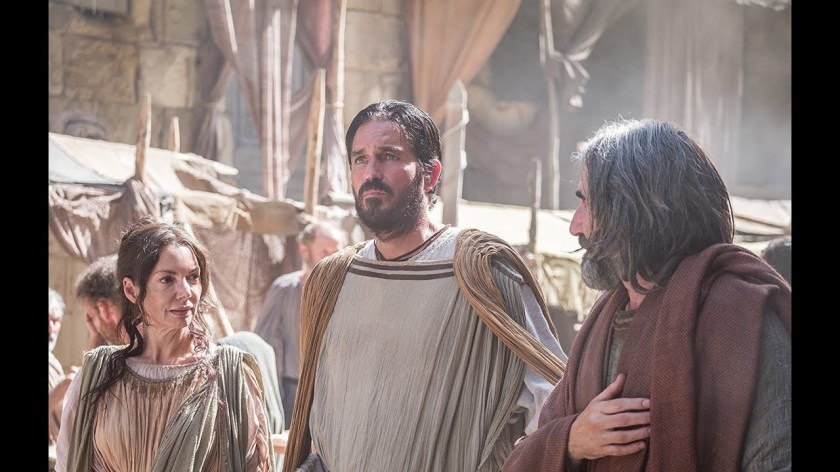
From the Movie ‘St Paul” – St Luke with Priscilla and Aquila in Rome
St Abraham the Martyr
Bl Adolf IV of Schauenburg
St Pope Adrian III
St Ampelius of Milan
St Apollonius of Benevento
Sts Aquila & Priscilla – the Tentmakers
St Arnold
St Auspicius of Toul
St Auspicius of Trier
Brogan of Mothil
St Colman of Thuringia
St Doucelin
St Edgar the Peaceful
Bl Pope Eugene III
St Glyceria of Heraclea
St Grimbald
St Ioannes Wu Wenyin
St Ithier of Nevers
St Killian (c 640-689) Martyr
St Landrada
Bl Mancius Araki Kyuzaburo
St Morwenna
St Pancras of Taormina
Bl Peter the Hermit
St Procopius of Ceasarea
St Sunniva of Bergen
St Thibaud de Marly
St Totnan of Thuringia
—
Abrahamite Monks/Martyrs of Constantinople: A group of monks in a monstery founded by Saint Abraham of Ephesus. Martyred in the iconoclast persecutions of emperor Theophilus. In c 835 in Constantinople.
Martyrs of Shanxi – 7 saints: In 1898 seven sisters of the Franciscan Missionaries of Mary were sent to the Shanxi diocese in China to serve the poor in hospitals and care for the unwanted or other destitutes in orphanages. They were –
• Anne-Catherine Dierks
• Anne-Francoise Moreau
• Clelia Nanetti
• Irma Grivot
• Jeanne-Marie Kuergin
• Marianna Giuliani
• Pauline Jeuris
There they all died in one of the periodic crackdowns against foreign missionaries.
They were beheaded on 9 July 1900 at Taiyuanfu, China- Beatified on 24 November 1946 by Pope Pius XII and Canonised on 1 October 2000 by Pope John Paul II.
Martyrs of Syrmium – 5 saints: Five Christians martyred together for their faith. We know nothing else about them but the names – Cecilia, Eperentius, Eraclius, Sostratus and Spirus. They were martyred in the 4th century in Syrmium, Pannonia (modern Serbia).
Thought for the Day – 7 July – The Memorial of Blessed Maria Romero Meneses F.M.A. (1902-1977)
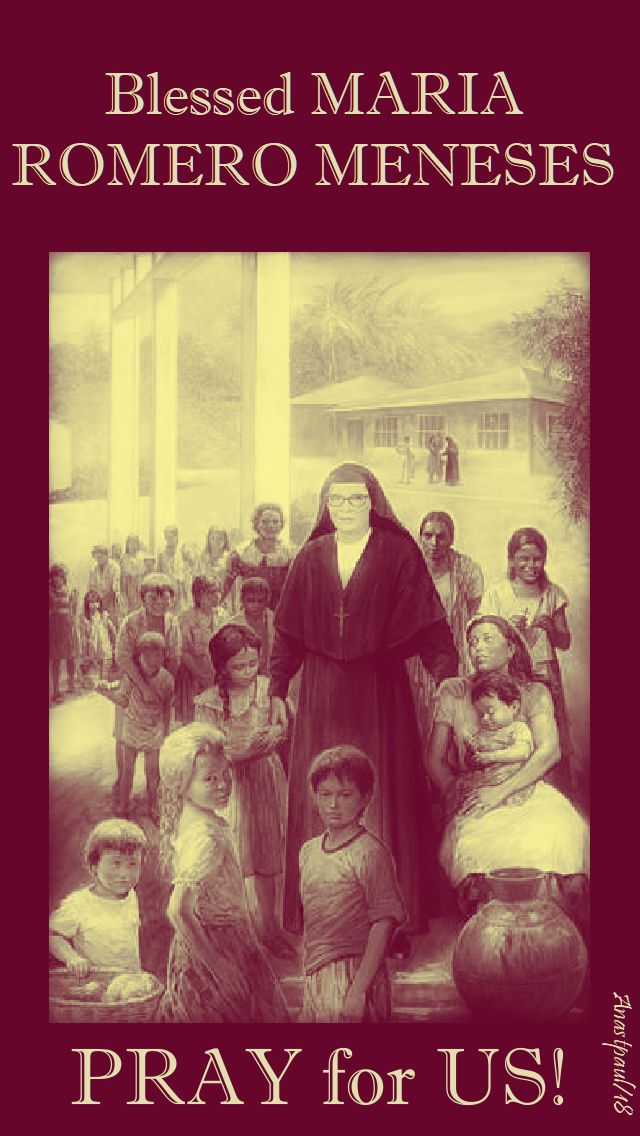
Sister María Romero Meneses, Daughter of Mary Help of Christians, knew how to reflect the Face of Christ which He made her recognise in the sharing of the bread. Born in Nicaragua, she received her religious formation in El Salvador and passed the greatest part of her life in Costa Rica. Those beloved Central American peoples, united in the joy of her beatification, can find in the new Blessed who loved them so much, an abundance of example and teaching to renew and confirm their Christian life, deeply rooted in their countries.
With a passionate love for God and an unlimited confidence in the assistance of the Blessed Virgin Mary, Sr María Romero was an exemplary religious, apostle and mother of the poor people, who were her real favourites. May her memory be a blessing for all and may the works she founded, among which the “House of the Virgin” in San José, continue in fidelity to the ideal that led to their being started….Beatification Homily, St Pope John Paul – Sunday 14 April 2002
May we all too reflect the Face of Christ and trust in our Holy Mother Mary, amen!
Quote/s of the Day – 7 July – The Memorial of Maria Romero Meneses F.M.A. (1902-1977)
“My secret: Live making continuous Acts of love of God.”
“Prayer is like air is for the lungs. For this reason, the one who prays is saved.”
“As God gave all the animals the instinct of self-defence, He gave humans that of prayer.”
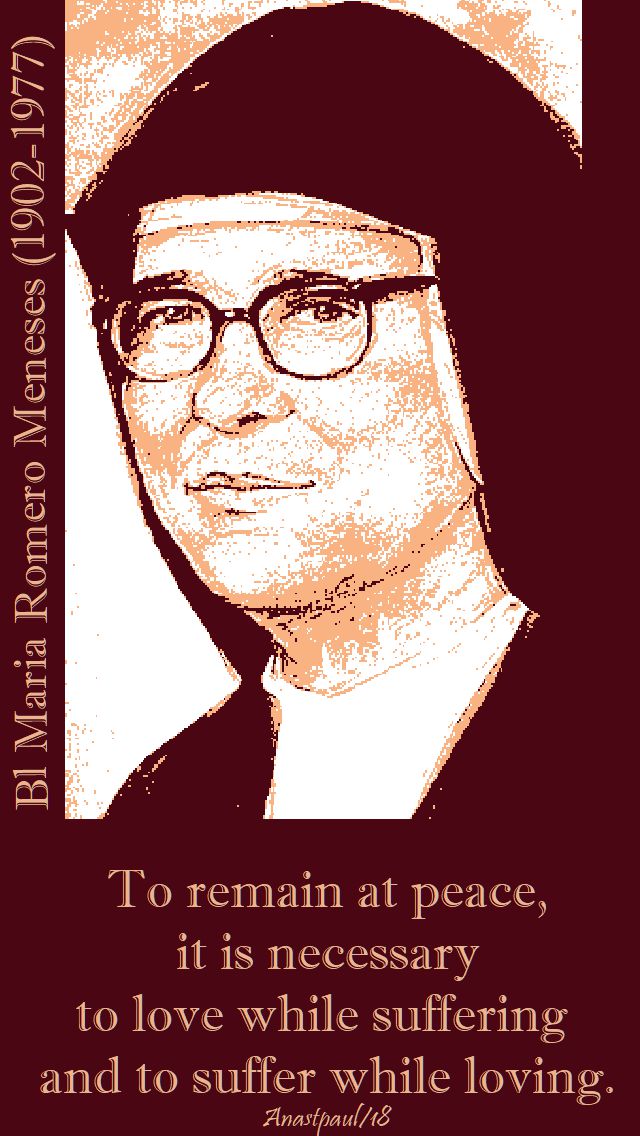
“To remain at peace, it is necessary to love while suffering and to suffer while loving.”
“Faith produces miracles, it is not miracles that produce faith.”
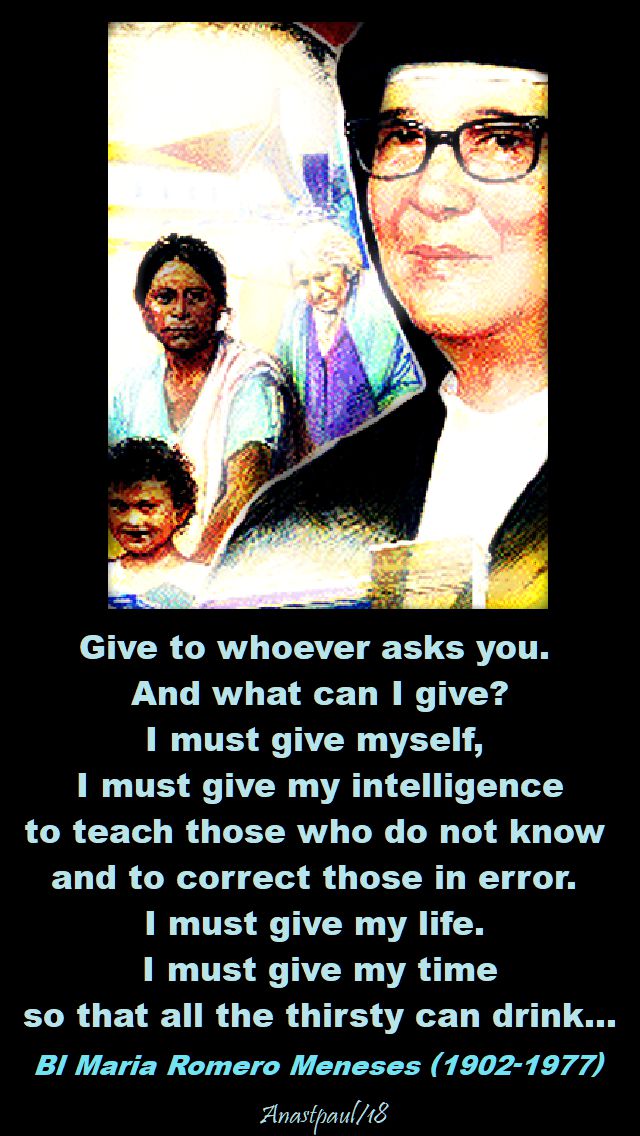
“Give to whoever asks you. And what can I give? I must give myself, I must give my intelligence to teach those who do not know and to correct those in error. I must give my life. I must give my time so that all the thirsty can drink…”
One Minute Reflection – 7 July – Saturday of the Thirteenth Week of Ordinary Time, Year B – Today’s Gospel Matthew 9:14-17.
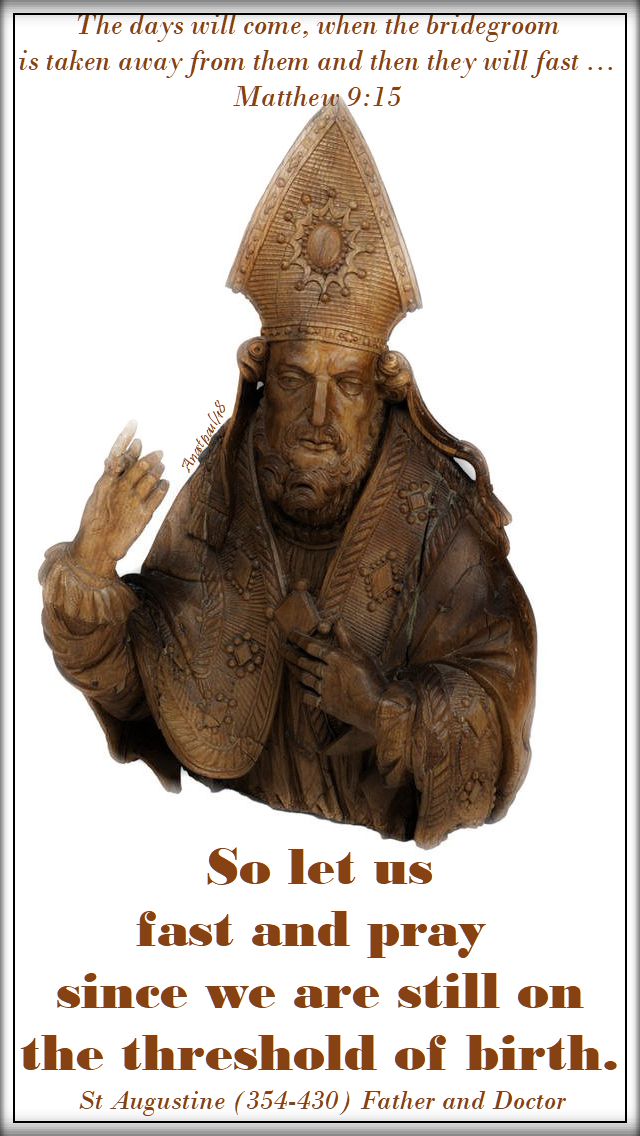
And Jesus said to them, “Can the wedding guests mourn as long as the bridegroom is with them? The days will come, when the bridegroom is taken away from them, and then they will fast...Matthew 9:15
REFLECTION – “However, our mourning is right if we burn with desire to see Him. How happy they were who were able to enjoy His presence before His Passion, to question Him as they wished and listen to Him as necessary… As for us, we see the fulfilment of what He said: “The days are coming when you will long to see one of the days of the Son of Man, and you will not see it” (Lk 17:22)…A little while and you will no longer see me and again a little while and you will see me” (Jn 16:19). But now this is the hour of which He said: “You will weep and mourn but the world will rejoice… But, He added, I will see you again and your hearts will rejoice and no one will take your joy away from you” (v.22). The hope thus given us by Him, who is faithful in His promises, never now leaves us, without a certain joy — until that overwhelming joy comes on the day when we will be like Him because we will see Him as he is (1Jn 3:2)… “When a woman is in labour, she has pain because her hour has come,” says the Lord, “but when her child is born, she no longer remembers the anguish because of the joy of having brought a human being into the world” (Jn 16:21). This is the joy no one can take away from us and with which we will be satisfied when we pass to eternal light from our present conception in faith. So let us fast and pray since we are still on the threshold of birth.“…St Augustine (354-430) Father and Doctor
PRAYER – Father almighty, as we wait and work and pray and fast in joyful hope of our eternal life with You, grant we pray that we may always remain steadfast in Your love. Blessed Maria Romero Meneses, pray for us that we will fully utilise the many gifts our Almighty God has bestowed on us as we journey home. We make our prayer through Jesus Christ our Lord, in union with You and the Holy Spirit, one God forever, amen.
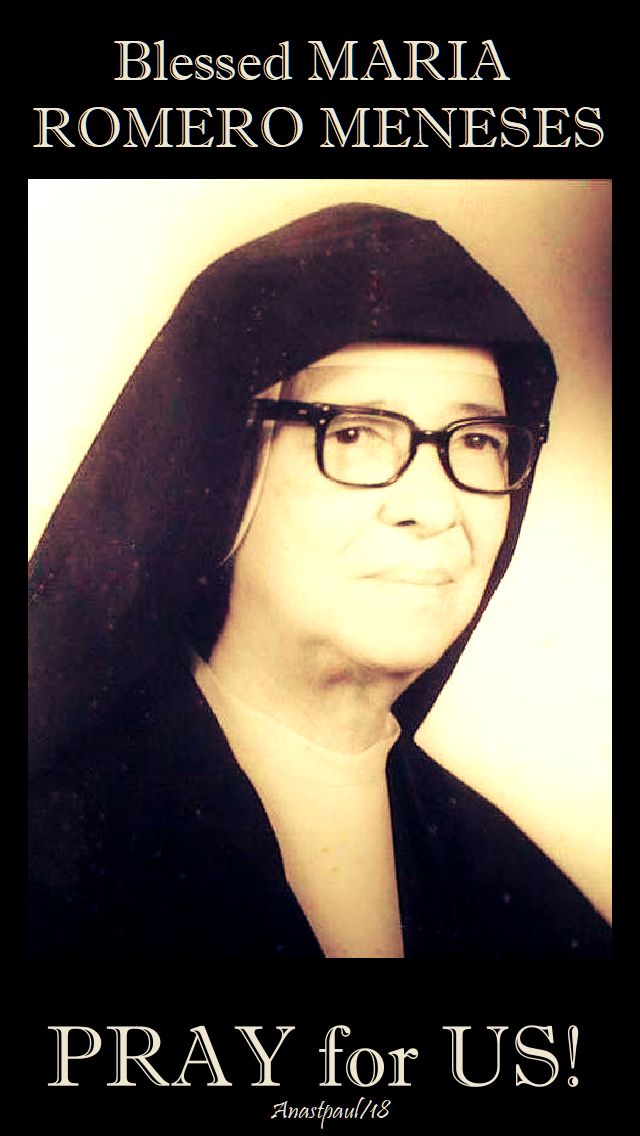
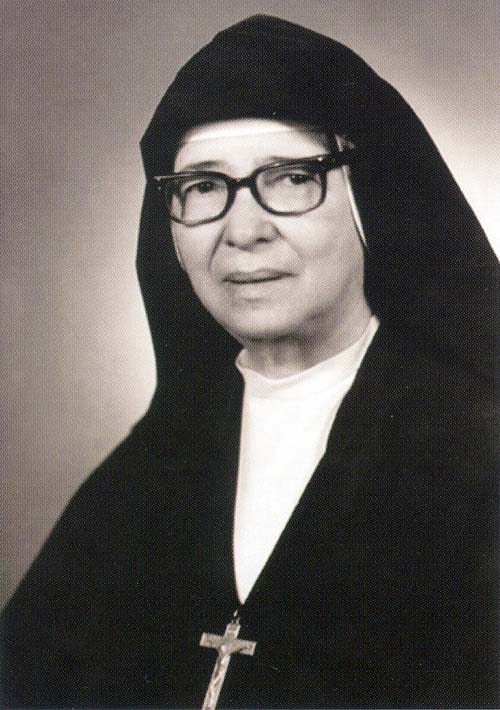
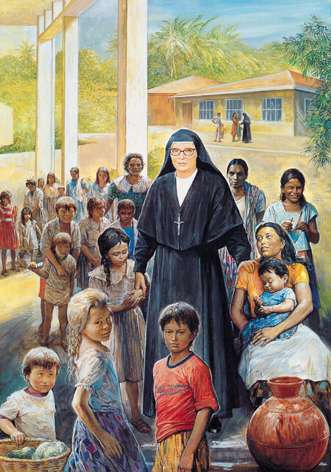
Saint of the Day – 7 July – Blessed MARÍA ROMERO MENESES (1902-1977) “The Social Apostle of Costa Rica” and “The Female John Bosco” – a Salesian Religious, Apostle of Charity and Social Reform, Teacher, Catechist, establishing whole villages with work opportunities for the poor, Mystic and Apostle of the Holy Eucharist and of Mary, Mother of God – born on 13 January 1902 at Granada, Nicaragua and died on 7 July 1977 in Las Peñitas, León, Nicaragua of a heart attack.
In Costa Rica, Blessed María was a social apostle though a multiplicity of initiatives designed for the needs of the poor, starting with teaching catechism and vocational skills and finishing with a medical centre, a school for teaching the social doctrine of the Church and seven villages for poor families.
She was one of eight children of an upper class family of Nicaragua. She was beautifully educated by her aunts and her parents. Since she had artistic talent, her parents had María trained in drawing and painting as well as in piano and violin by outstanding teachers. She was also enrolled in the Salesian Sisters’ school. In 1914 when she was 12, she underwent a year of sickness whose miraculous cure led to her total confidence in Our Lady, Help of Christians and to the vision of her Salesian vocation.
María came down with a serious form of rheumatic fever that paralysed her for six months, a real source of trial and suffering because it made her miss a year at her beloved school. However, during this trial, María already showed a mature faith, character and will. She called her sufferings “gifts of God”. Even when a doctor informed her that her heart had been seriously damaged, she did not complain but put her confidence for a complete recovery in Our Lady, Help of Christians.
To a school friend who visited her, she said after receiving heavenly guidance, “I know that the Blessed Virgin will cure me”.A few days later, María returned to school in good health, no-one could believe she had ever been so sick.
On 8 December 1915, María joined the Marian Association “Daughters of Mary” offering herself with great confidence to the Mother of God. Her Salesian spiritual director Don Emilio Bottari helped her discern her vocation and her mystical experiences. In 1920, at age 18, María joined the Daughters of Mary, Help of Christians. Her spiritual director gave her a prophetic recommendation: “Even though difficult moments will come and you will feel torn to pieces, be faithful and strong in your vocation”. For María, these words sustained her for the rest of her religious life.
On 6 January 1929 in Nicaragua, María made her final profession. Her interior life unfolded as each day she strived to live joyful union with God as his instrument, after the example of Don Bosco as is apparent from her spiritual writings.
In 1931 she was sent to San José, Costa Rica, which became her second country. In 1933 she was teaching music, drawing and typing to the rich girls in the school, while beginning in the barrios with catechetics and practical trades. In 1934 Sr María began to win over the young girls who were her students in the school (misioneritas) to join her in the work of evangelising, catechising and advancing materially the oppressed, isolated and abused. She found the shape of her life’s work: bringing about the revolution of charity by inspiring the have’s to help the have-not’s. In 1945 she began to set up recreational centres; in 1953 centres for the distribution of food. In 1961 she opened a casita as a school for poor girls. In 1966 a clinic where God’s Providence helped her with the volunteer services of fine doctors and donations of needed medicines. Soon she started to plan a village so poor families could have decent homes. On a piece of land outside the city, María began to build homes. In 1973, the first seven homes were built in the Centro San José. Then a farm and a market along with school space for religious formation, catechesis and job training.
There was also a church dedicated to Our Lady, Help of Christians. María always joined love and devotion to the Eucharist and Mary with her social apostolate. María was very “limited” in terms of available funding; but, with total confidence, she always left everything in the hands of Our Lady since it was God’s work. In her old age, she retired from full time teaching but never from catechesis of young and old. On 7 July 1977, in Leon, Nicaragua in the Salesian house where she had been sent for a good rest, María died of a fatal heart attack at age 75. Her mortal remains were sent back to San José Costa Rica, to be buried in the Salesian Chapel. She was Beatified by St Pope John Paul on 14 April 2002.
St Alexander
St Angelelmus of Auxerre
St Antonino Fantosati
St Apollonius of Brescia
Bl Pope Benedict XI
Bl Bodard of Poitiers
St Bonitus of Monte Cassino
St Carissima of Rauzeille
St Eoaldus of Vienne
St Ethelburga of Faremoutier
Bl Francisco Polvorinos Gómez
St Hedda of Wessex
Bl Joseph Juge de Saint-Martin
Bl Juan Antonio Pérez Mayo
Bl Juan Pedro del Cotillo Fernández
Bl Justo González Lorente
St Maelruan
Bl Manuel Gutiérrez Martín
St Marcus Ji Tianxiang
Bl María del Consuelo Ramiñán Carracedo
Bl Maria Romero Meneses F.M.A. (1902-1977)
Bl Marie-Gabrielle-Françoise-Suzanne de Gaillard de Lavaldène
St Medran
St Merryn
Bl Oddino Barrotti
St Odo of Urgell
St Odran
St Palladius of Ireland
St Pantaenus of Alexandria
St Partinimus
Bl Pascual Aláez Medina
Bl Peter To Rot (1912-1945)
St Prosper of Aquitaine
St Syrus of Genoa
St They
St Willibald of Eichstatt
—
Martyrs of Durres – 7 saints: Also known as – Martyrs of Dyrrachium/ Martyrs of Durazzo. A group of seven Italian Christians who fled Italy to escape the persecutions of emperor Hadrian. Arrived in Dyrrachium, Macedonia to find Saint Astius tied to a cross, covered in honey, laid in the sun and left to be tortured by biting and stinging insects. When they expressed sympathy for Astius, they were accused of being Christians, arrested, chained, weighted down, taken off shore and drowned. We know little more about each of them than their names – Germaus, Hesychius, Lucian, Papius, Peregrinus, Pompeius and Saturninus. T hey were born in Italy and were martyred at sea c117 off the coast of Dyrrachium (Durazzo), Macedonia (modern Durres, Albania).
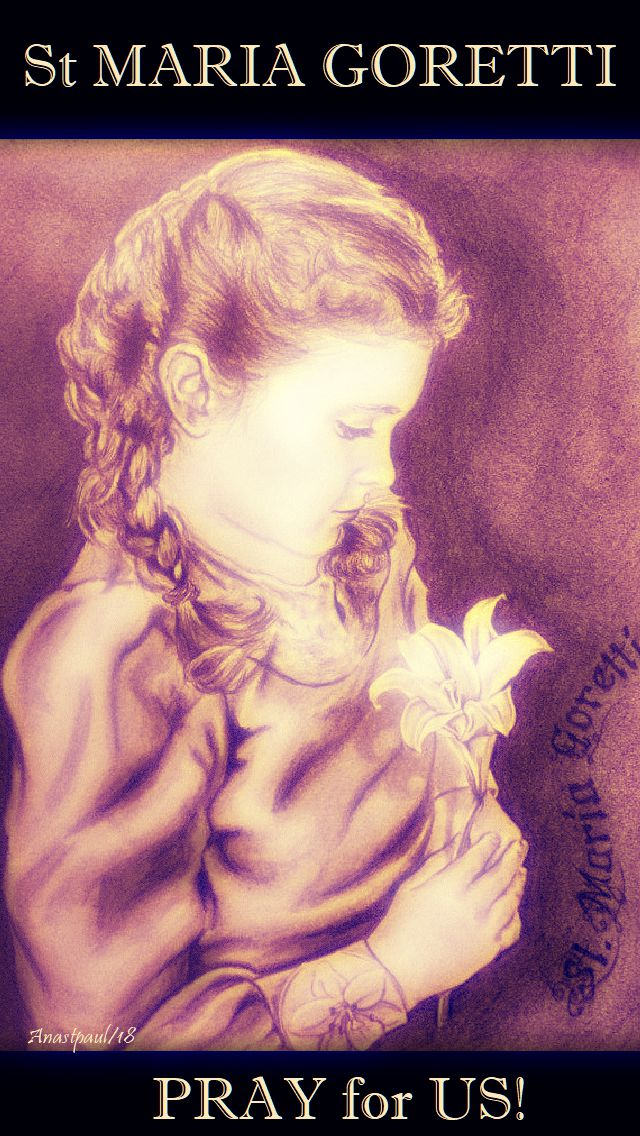
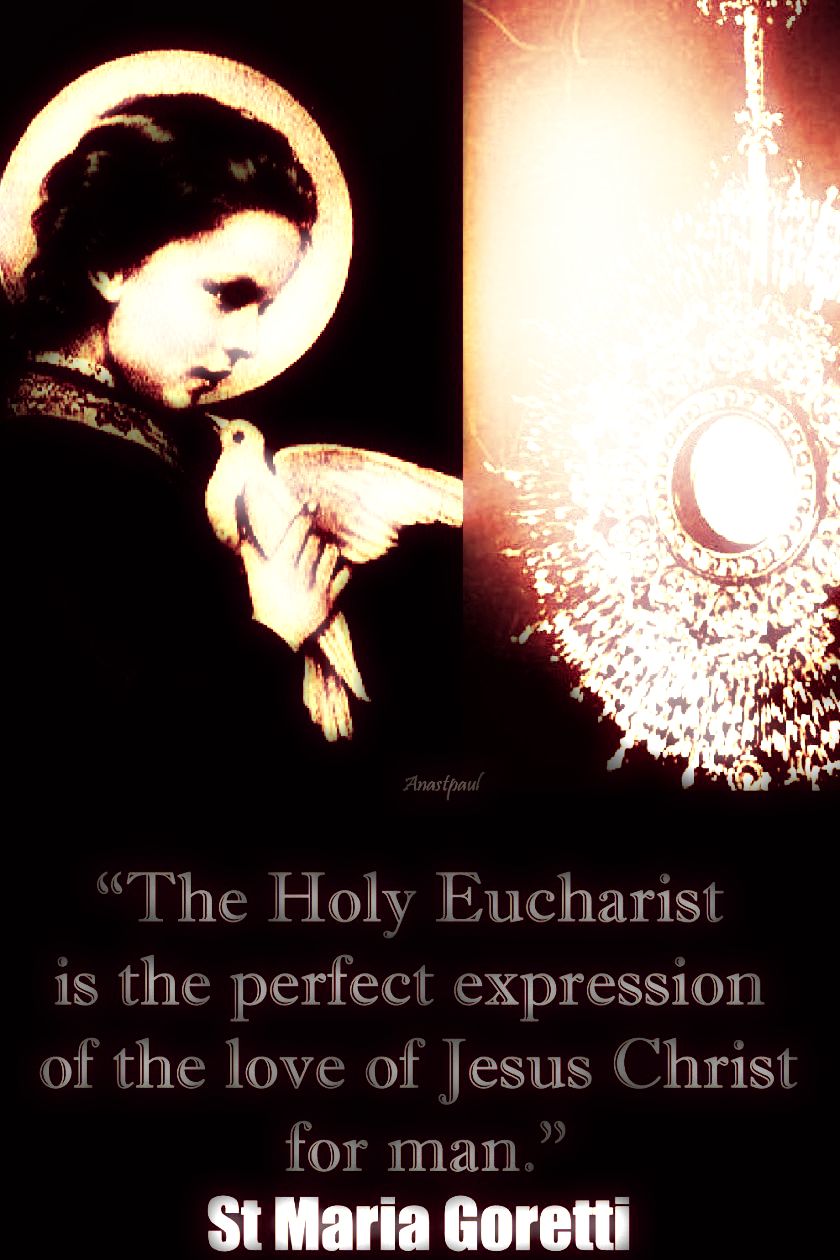
Thought for the Day – 6 July – The Memorial of St Maria Goretti (1890-1902)
One of the largest crowds ever assembled for a canonisation—250,000—symbolised the reaction of millions touched by the simple story of Maria Goretti. She was the daughter of a poor Italian tenant farmer, had no chance to go to school, never learned to read or write. When Maria made her First Communion not long before her death at age 12, she was one of the taller and somewhat backward members of the class.
Maria may have had trouble with catechism but she had no trouble with faith.
God’s will was holiness, decency, respect for one’s body, absolute obedience, total trust. In a complex world, her faith was simple: it is a privilege to be loved by God and to love Him—at any cost . Oh, that we too may always remember this!
One Minute Reflection – 6 July – The Memorial of St Maria Goretti (1890-1902)
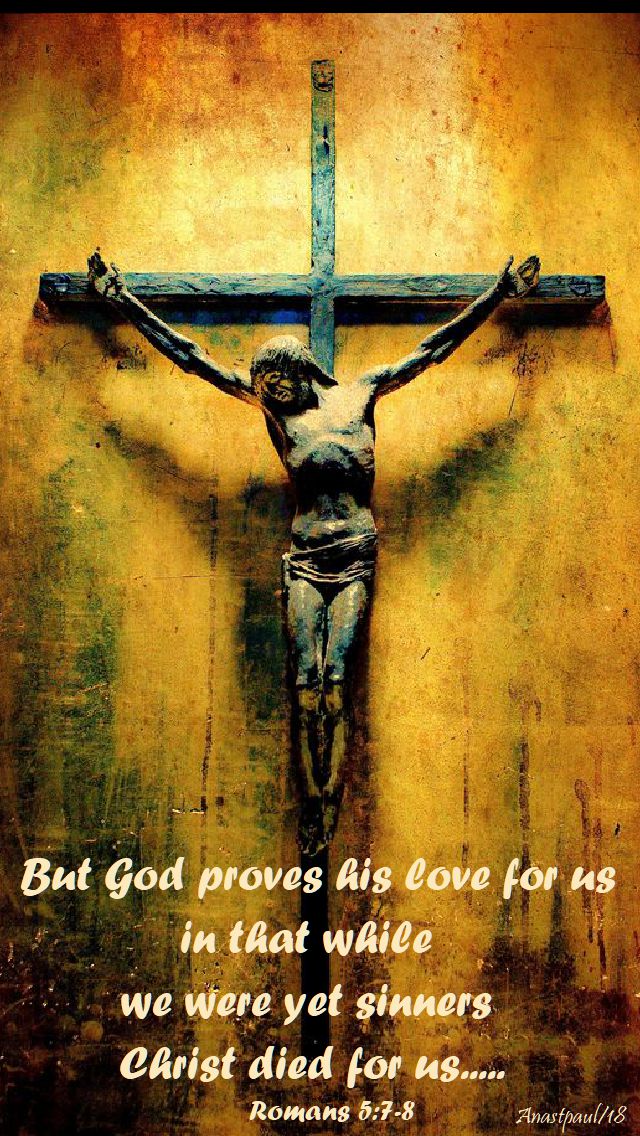
Why, one will hardly die for a righteous man—though perhaps for a good man, one will dare even to die. But God proves his love for us in that while we were yet sinners Christ died for us………..Romans 5:7-8
REFLECTION – “The new commandment, “Love one another as I have loved you” (Jn 15:12), urges us to pattern our love on the example of Jesus, who dies that we may live.
If our ability to love in a divine way seems unfairly offset by an impossible ideal—in other words, that Jesus can love like God because He is God but we can’t—then we have to reckon with the violent, yet highly avoidable death of an eleven-year-old girl. When you find a mere human being, loving as God loves by dying as God dies and forgiving as God forgives, you encounter someone who understands not only the force of the new commandment – but also of the extent of the self-sacrifice involved in loving like Jesus.”………Fr John Henry Hanson, O. Praem.
PRAYER – Lord God, You alone can give the grace of innocence and love . By Your grace, St Maria Goretti, though as yet but a young child, was able to offer herself in death for Your sake. As You crowned her virginity with martyrdom, grant us, by her intercession, constancy in Your love. We make our prayer through Christ our Lord, in union with the Holy Spirit, one God forever and ever – St Maria pray for us! amen.
Our Morning Offering – 6 July – The Memorial of St Maria Goretti (1890-1902)
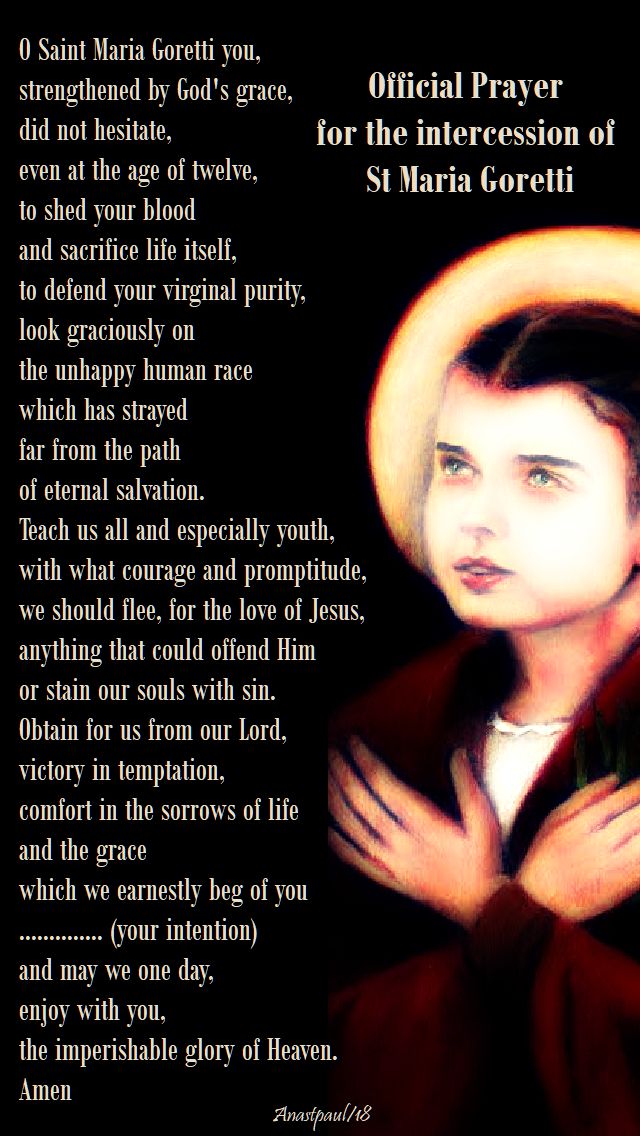
Official Prayer for the intercession of St Maria Goretti
O Saint Maria Goretti you,
strengthened by God’s grace,
did not hesitate,
even at the age of twelve,
to shed your blood
and sacrifice life itself,
to defend your virginal purity,
look graciously on
the unhappy human race
which has strayed
far from the path
of eternal salvation.
Teach us all and especially youth,
with what courage and promptitude,
we should flee, for the love of Jesus,
anything that could offend Him
or stain our souls with sin.
Obtain for us from our Lord,
victory in temptation,
comfort in the sorrows of life
and the grace
which we earnestly beg of you
…………………… (your intention)
and may we one day,
enjoy with you,
the imperishable glory of Heaven.
Amen
St Maria Goretti (1890-1902) (Optional Memorial) – all about St Maria here: https://anastpaul.wordpress.com/2017/07/06/saint-of-the-day-6-july-st-maria-goretti/
Bl Angela of Bohemia
Bl Augustin-Joseph Desgardin
Bl Christopher Solino
St Cyril of Thessaloniki
St Dominica of Campania
St Gervais
St Giusto of Condat
St Goar of Aquitaine
St Godelieve
Bl Maria Theresia Ledóchowska
St Monenna
Bl Nazaria Ignacia March y Mesa (1889-1943) – To be Canonised on 14 October 2018, together with Blessed Pope Paul VI and Blessed Oscar Romero and others
St Noyala of Brittany
St Petrus Wang Zuolung
St Romulus of Fiesole
St Saxburgh of Ely
St Sisoes the Great
Bl Suzanne Agathe de Loye
St Thomas Alfield
St Tranquillinus of Rome
—
Martyrs of Campania – 23 saints: A group of 23 Christians arrested, tortured and then beheaded together in the later 3rd century by order of governor Rictiovarus in the persecutions of Diocletian. The names that have come down to us are – Antoninus, Arnosus, Capicus, Cutonius, Diodorus, Dion, Isidore, Lucia, Lucian, Rexius, Satyrus and Severinus.
Martyrs of Fiesole – 5 saints: Five Christians martyred together in the persecutions of emperor Domitian – Carissimus, Crescentius, Dulcissimus, Marchisianus and Romulus. c 90 near Fiesole, Italy.
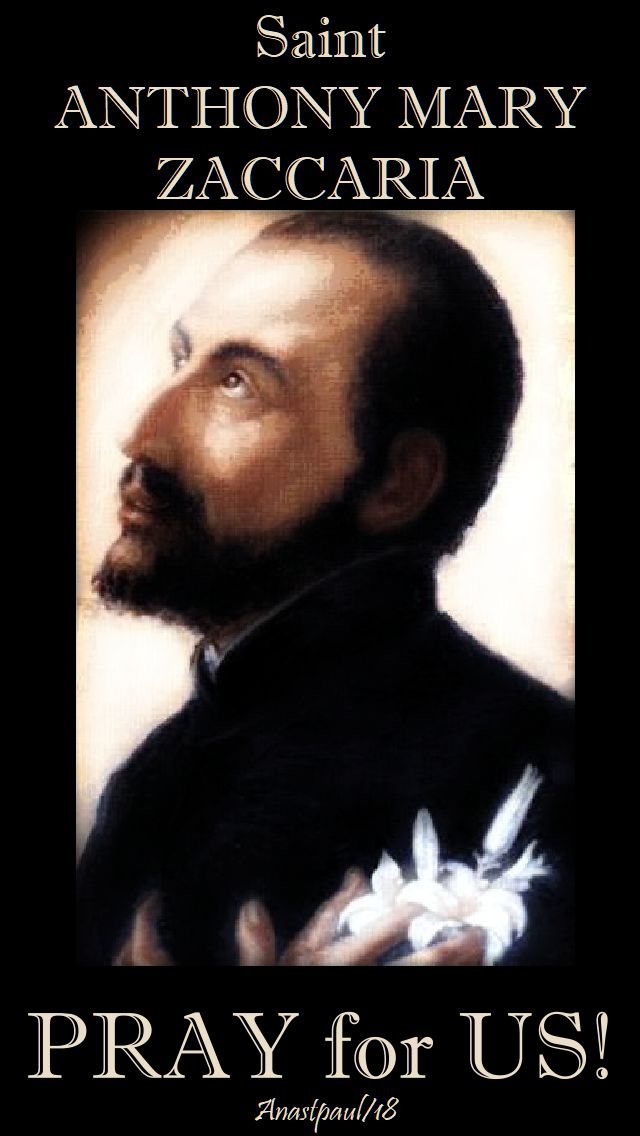
Thought for the Day – 5 July – The Memorial of St Anthony Mary Zaccaria (1502-1539)
Compassion for the sick and the poor led Dr Anthony Mary Zaccaria to see beyond the sick bodies of his patients and recognise the need for a different kind of healing. After becoming “Fr” Zaccaria, he tried to fill that need and dedicated the rest of his life to doing so. …….the Pauline ardour of his preaching would probably “turn off” many people today. When even some psychiatrists complain at the lack of a sense of sin, it may be time to tell ourselves that not all evil is explained by emotional disorder, subconscious and unconscious drives, parental influence and so on. The old-time “hell and damnation” mission sermons have given way to positive, encouraging, biblical homilies. We do indeed need assurance of forgiveness, relief from existential anxiety and future shock. But we still need prophets to stand up and tell us, “If we say ‘We are without sin,’ we deceive ourselves and the truth is not in us” (1 John 1:8). (Fr Don Miller OFM). St Anthony was such a prophet, he let God step in and lead him to a whole new set of plans. May we too allow God room in our boat to navigate us to a new way of life!
“We are fools for Christ’s sake:
our holy guide and most revered patron, was speaking about himself and the rest of the apostles and about the other people who profess the Christian and apostolic way of life.
But there is no reason, dear brothers, that we should be surprised or afraid; for the disciple is not superior to his teacher, nor the slave to his master. We should love and feel compassion for those who oppose us, rather than abhor and despise them, since they harm themselves and do us good and adorn us with crowns of everlasting glory while they incite God’s anger against themselves. And even more than this, we should pray for them and not be overcome by evil but overcome evil by goodness.
We should heap good works like red-hot coals of burning love upon their heads, as our Apostle urges us to do, so that when they become aware of our tolerance and gentleness they may undergo a change of heart and be prompted to turn in love to God.”











 Br Samuel Burke is a deacon based in Rome where he is completing his studies at the Angelicum










You must be logged in to post a comment.