Posted in SAINT of the DAY

Memorials of the Saints – 4 April

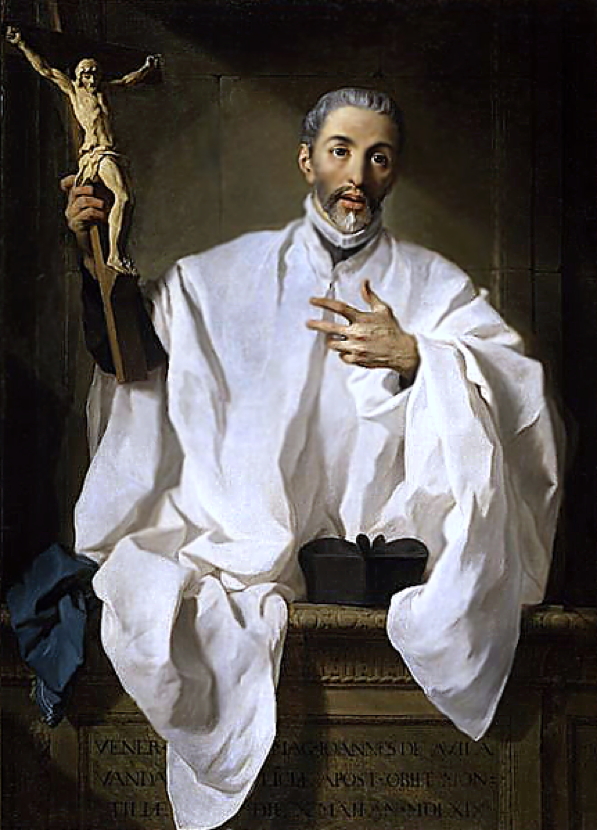
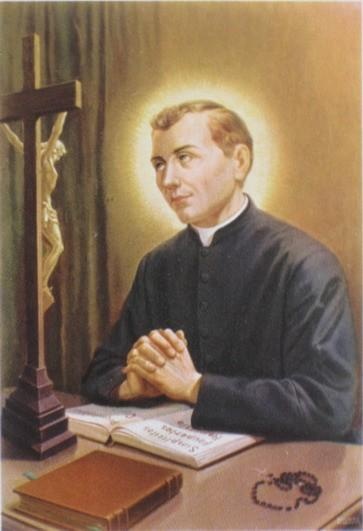
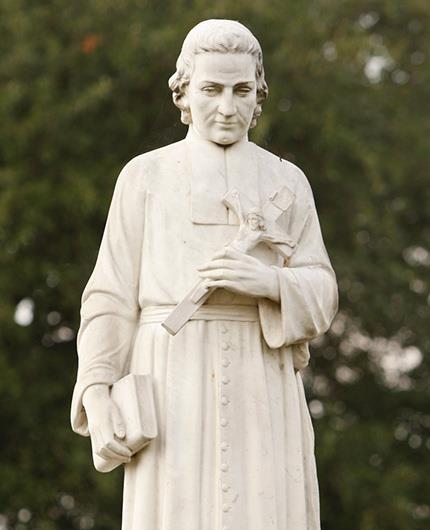
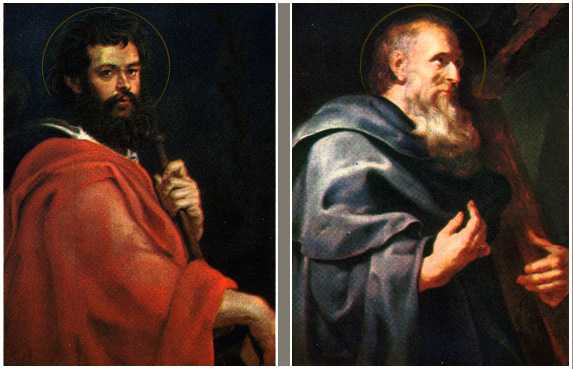
St Isidore of Seville (c 560-636) (Optional Memorial) Father & Doctor of the Church

Bl Abraham of Strelna
St Agathopus of Thessalonica
St Aleth of Dijon
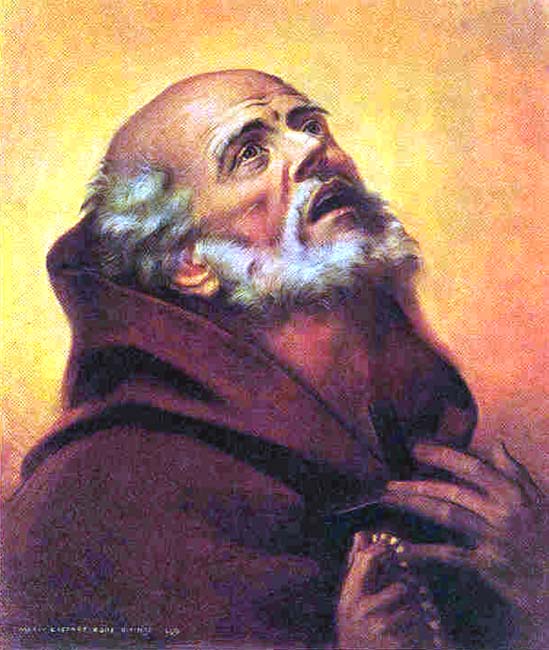
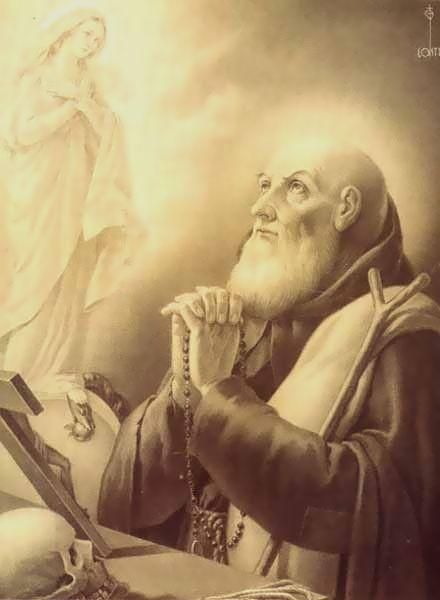
St Benedict of Sicily O.F.M. (1526-1589)

St Gaetano Catanoso
Bl Giuseppe Benedetto Dusmet
St Gwerir of Liskeard
St Henry of Gheest
St Hildebert of Ghent
St Peter of Poitiers
St Plato
St Theodulus of Thessalonica
St Theonas of Egypt
St Tigernach of Clogher
St Zosimus of Palestine

Posted in EASTER, MORNING Prayers, QUOTES of the SAINTS, QUOTES on CHARITY, QUOTES on CONVERSION, QUOTES on FASTING, QUOTES on PRAYER, QUOTES on REPENTANCE, SAINT of the DAY, The APOSTLES & EVANGELISTS, The WORD

One Minute Reflection – 3 April – Easter Tuesday and The Memorial of St Richard of Chichester (1197-1253)

One Minute Reflection – 3 April – Easter Tuesday and The Memorial of St Richard of Chichester (1197-1253)

Now when they heard this, they were cut to the heart and said to Peter and the rest of the apostles, “Brethren, what shall we do?”   And Peter said to them, “Repent and be baptised every one of you, in the name of Jesus Christ, for the forgiveness of your sins and you shall receive the gift of the Holy Spirit...Acts 2:36-38acts 2 36-38

REFLECTION – “Satisfaction consists in the cutting off of the causes of the sin.   Thus, fasting is the proper antidote to lust; prayer to pride, to envy, anger and sloth; alms to covetousness.”…St Richard of Chichestersatisfaction consists in cutting off - st richard of chichester - 2017

PRAYER – Grant us O God, our Father, Your grace, that we may constantly work to repair the damage caused by our sin that we may seek forgiveness and then go forth to sin no more, always amending what earthly damage we have caused.   St Richard of Chichester, may your prayers, assist us on our journey to our heavenly home.   We make our prayer through our Lord Jesus Christ, in unity with the Holy Spirit, one God forever and ever, amen.st richard of chichester pray for us - 3 april 2018

Posted in MORNING Prayers, PRAYERS of the SAINTS, SAINT of the DAY

Our Morning Offering – 3 April – Easter Tuesday & The Memorial of St Richard of Chichester (1197-1253)

Our Morning Offering – 3 April – Easter Tuesday & The Memorial of St Richard of Chichester (1197-1253)

May I Love You More Dearly
St Richard of Chichester (1197-1253)

Thanks be to You,
my Lord Jesus Christ
For all the benefits
You have given me,
For all the pains and insults
You have borne for me.
O most merciful Redeemer,
friend and brother,
May I know You more clearly,
Love You more dearly,
Follow You more nearly.
Amen

St Richard recited this prayer on his deathbed, surrounded by the clergy of the diocese. The words were transcribed, in Latin, by his confessor Ralph Bocking, a Dominican friar and were eventually published in the Acta Sanctorum, an encyclopedic text in 68 folio volumes of documents examining the lives of Christian saints.   The British Library copy, contains what is believed to be Bockings transcription of the prayer:

Gratias tibi ago, Domine Jesu Christe, de omnibus beneficiis quae mihi praestitisti;
pro poenis et opprobriis, quae pro me pertulisti;
propter quae planctus ille lamentabilis vere tibi competebat.
Non est dolor similis sicut dolor meusthanks be to you my lord jesus christ - st richard of chichester - 3 april 2018

Posted in SAINT of the DAY

Saint of the Day – 3 April – St Richard of Chichester (1197-1253)

Saint of the Day – 3 April – St Richard of Chichester (1197-1253) also known as Richard de Wych – born in 1197 at Droitwich, Worcestershire, England as Richard de Wych – 3 April 1253 at Dover, Kent, England of natural causes.   Bishop, Teacher, Reformer, apostle of charity, Writer, Miracle Worker.   Patronages – coachmen, diocese of Chichester, England, Sussex, England.   Attributes – Bishop with a chalice on its side at his feet because he once dropped the chalice during a Mass and nothing spilled from it;  kneeling with the chalice before him;  ploughing his brother’s fields; a bishop blessing his flock with a chalice nearby.HEADER - ST RICHARD OF CHICHESTER

Richard was born, c 1197, in the little town of Wyche, eight miles from Worcester, England.   He and his elder brother were left orphans when young and Richard gave up the studies which he loved, to farm his brother’s impoverished estate.   His brother, in gratitude for Richard’s successful care, proposed to make over to him all his lands but he refused both the estate and the offer of a brilliant marriage, to study for the priesthood at Oxford.

In 1235 he was appointed, for his learning and piety, chancellor of that University and afterwards, by St Edmund of Canterbury, chancellor of his diocese.   He stood by that Saint in his long contest with the king and accompanied him into exile.   After St. Edmund’s death Richard returned to England to toil as a simple curate but was soon elected Bishop of Chichester in preference to the worthless nominee of Henry III.   The king in revenge refused to recognise the election and seized the revenues of the see.  Thus Richard found himself fighting the same battle in which St Edmund had died.   He went to Lyons, was there consecrated as Bishop by Innocent IV in 1245 and returning to England, in spite of his poverty and the king’s hostility, exercised fully his episcopal rights and thoroughly reformed his see. After two years his revenues were restored.

Young and old loved St Richard.   He gave all he had, and worked miracles, to feed the poor and heal the sick but when the rights or purity of the Church were concerned he was inexorable.   When a priest of noble blood polluted his office by sin, Richard deprived him of his benefice and refused the king’s petition in his favour.   On the other hand, when a knight violently put a priest in prison, Richard compelled the knight to walk round the priest’s church with the same log of wood on his neck to which he had chained the priest and when the burgesses of Lewes tore a criminal from the church and hanged him, Richard made them dig up the body from its unconsecrated grave and bear it back to the sanctuary they had violated.

Richard died in 1253, while preaching, at the Pope’s command, a crusade against the Saracens.   He was Canonised in 1262 by Pope Urban IV at Viterbo, Papal States (part of modern Italy).large - st richard of chichester

Richard is widely remembered today for the popular prayer ascribed to him:

Thanks be to Thee, my Lord Jesus Christ

For all the benefits Thou hast given me,
For all the pains and insults Thou hast borne for me.
O most merciful Redeemer, friend and brother,
May I know Thee more clearly,
Love Thee more dearly,
Follow Thee more nearly.

Richard recited this prayer on his deathbed, surrounded by the clergy of the diocese. The words were transcribed, in Latin, by his confessor Ralph Bocking, a Dominican friar and were eventually published in the Acta Sanctorum, an encyclopedic text in 68 folio volumes of documents examining the lives of Christian saints. The British Library copy, contains what is believed to be Bockings transcription of the prayer:

Gratias tibi ago, Domine Jesu Christe, de omnibus beneficiis quae mihi praestitisti;
pro poenis et opprobriis, quae pro me pertulisti;
propter quae planctus ille lamentabilis vere tibi competebat.
Non est dolor similis sicut dolor meusheader 2 - st richard

Shrine
Many miracles were wrought at Richard’s tomb in Chichester cathedral, which was long a popular place of pilgrimage and in 1262, just 9 years after his death, he was canonizsed at Viterbo by Pope Urban IV.    During the episcopate of the first Anglican bishop of Chichester, Richard Sampson, King Henry VIII of England, through his Vicar-General, Thomas Cromwell ordered the destruction of the Shrine of St Richard in Chichester cathedral in 1538.

“Forasmuch as we have lately been informed that in our cathedral church of Chichester there hath been used long heretoforeand yet at this day is used, much superstition and a certain kind of idolatry about the shrine and bones of a certain bishop of the same, whom they call Saint Richard and a certain resort there of common people, which being men of simplicity are seduced by the instigation of some of the clergy, who take advantage of their credulity to ascribe miracles of healing and other virtues to the said bones, that God only hath authority to grant. . . . . We have appointed you, with all convenient diligence to repair unto the said cathedral church and to take away the shrine and bones of that bishop called Saint Richard, with all ornaments to the said shrine belonging, and all other the reliques and reliquaries, the silver, the gold and all the jewels belonging to said shrine and that not only shall you see them to be safely and surely conveyed unto our Tower of London there to be bestowed and placed at your arrival but also ye shall see both the place where the shrine was kept, destroyed even to the ground and all such other images of the said church, where about any notable superstition is used, to be carried and conveyed away, so that our subjects shall by them in no ways be deceived hereafter but that they pay to Almighty God and to no earthly creature such honour as is due unto him the Creator. . . . . Given under our privy seal at our manor of Hampton Court, the 14th day of Dec., in the 30th year of our reign (1538).   Document issued by Thomas Cromwell on behalf of Henry VIII.”

The document ordering the destruction of the shrine was issued to a Sir William Goring of Burton and a William Ernley.   They received £40 for carrying out the commission on 20 December 1538.   The Shrine of St. Richard had, up to this point, enjoyed a level of popularity approaching that accorded to Thomas Becket at Canterbury.   It seems that someone associated with the parish of West Wittering in Sussex, possibly William Ernley, using his position as royal commissioner for the destruction of St Richard’s Shrine, may have spirited away the relics and bones of St Richard and hidden them in their own parish church, as there are persistent legends of the presence there, of the remains of the saint:

The Lady Chapel not only contains the Saxon Cross but also an ancient broken marble slab engraved with a Bishop’s pastoral staff and a Greek cross believed to have come from a reliquary containing the relics of St Richard of Chichester, a 13th century bishop who often visited West Wittering.  Part of his story is shown in the beautiful red, white and gold altar frontal presented by Yvonne Rusbridge in 1976.   On the left St Richard is shown feeding the hungry in Cakeham and on the right leading his followers from the church, his candle miraculously alight despite the gust of wind which blew out all the other candles.

st richard statue 2

The modern St Richard’s Shrine is located in the retro-quire of Chichester cathedral and was re-established in 1930 by Dean Duncan Jones.   In 1987 during the restoration of the Abbey of La Lucerne, in Normandy, the lower part of a man’s arm was discovered in a reliquary, the relic was thought to be Richard’s.  After examination, to establish its provenance, the relic was offered to Bishop Eric Kemp and received into the cathedral on 15 June 1990.   The relic was buried in 1991 below the St Richard altar.   A further relic, together with an authentication certificate, was offered from Rome at the same time and is now housed at the bishops chapel in Chichester.   The modern shrine of Richard contains an altar that was designed by Robert Potter, a tapestry designed by Ursula Benker-Schirmer (partly woven in her studio in Bavaria and partly at the West Dean College) and an icon designed by Sergei Fyodorov (image below) that shows St Richard in episcopal vestments, his hand raised in blessing towards the viewer but also in supplication to the figure of Christ who appears to him from heaven.shrine of st richardst richard of chichester 3

Posted in SAINT of the DAY

Memorials of the Saints – 3 April

Bl Alexandrina di Letto
St Attala of Taormina
St Benatius of Kilcooley
St Benignus of Tomi
St Burgundofara
St Chrestus
St Comman
St Evagrius of Tomi
Bl Francisco Solís Pedrajas
Bl Gandulphus of Binasco
Bl Iacobus Won Si-bo
St John I of Naples
Bl John of Penna
St Joseph the Hymnographer
Bl Juan Otazua Madariaga
Bl Lawrence Pak Chwi-deuk
St Luigi Scrosoppi of Udine
Bl Maria Teresa Casini
St Nicetas of Medicion
St Papo
Bl Piotr Edward Dankowski
St Richard of Chichester (1197-1253)

Bl Robert Middleton
St Sixtus I, Pope
Bl Thurstan Hunt
St Vulpian of Tyre

Posted in Against EPIDEMICS, Against STORMS, EARTHQUAKES, THUNDER & LIGHTENING, FIRES, DROUGHT / NATURAL DISASTERS, franciscan OFM, INCORRUPTIBLES, Of TRAVELLERS / MOTORISTS, PATRONAGE-INFERTILITY & SAFE CHILDBIRTH, SAILORS, MARINERS, NAVIGATORS, SAINT of the DAY

Saint of the Day – 2 April – St Francis of Paola O.M. (1416-1507)

Saint of the Day – 2 April – St Francis of Paola O.M. (1416-1507) also known as “Saint Francis the Fire Handler” – Monk and Founder, inspired with the Gift of Prophecy and still called the “Miracle-Worker“, Apostle of the poor, Peacemaker – born on 27 March 1416 at Paola, Calabria, Kingdom of Italy (part of modern Italy) and died on 2 April 1507 (Good Friday) at Plessis, France of natural causes.   He was an Italian mendicant Friar and the Founder of the Order of Minims.   Unlike the majority of founders of men’s religious orders and like his Patron Saint, Francis was never Ordained a Priest  In 1562 Huguenots broke open his tomb, found his body incorrupt and burned it. The bones were salvaged by Catholics and distributed as relics to various churches.    Patronages – against fire, against plague/epidemics, against sterility,  mariners, sailors,  naval officers, travellers, 7 Cities.

Festa di S. Francesco di Paola 1
St Francis founded the Hermits of St Francis which Rule was formally approved by Pope Alexander VI, who, however, changed their title into that of “Minims”.   Their name refers to their role as the “least of all the faithful”.   Humility was to be the hallmark of the brothers as it had been in Francis’s personal life.   bstinence from meat and other animal products became a “fourth vow” of his religious order, along with the traditional vows of poverty, chastity and obedience.   Francis instituted the continual, year-round observance of this diet in an effort to revive the tradition of fasting during Lent, which many Roman Catholics had ceased to practice by the 15th century.   The rule of life adopted by Francis and his religious was one of extraordinary severity.   He felt that heroic mortification was necessary as a means for spiritual growth.   They were to seek to live unknown and hidden from the world.   After the approbation of the order, Francis founded several new monasteries in Calabria and Sicily.   He also established monasteries of nuns and a third order for people living in the world, after the example of St Francis of Assisi.HEADER - StFrancisdePaola-FounderStatue

Francis was born in the town of Paola, which lies in the southern Italian Province of Cosenza, Calabria.   In his youth he was educated by the Franciscan friars in Paola.   His parents were remarkable for the holiness of their lives, having remained childless for some years after their marriage, they had recourse to prayer and especially commended themselves to the intercession of St Francis of Assisi, after whom they named their first-born son.   Two other children were eventually born to them.

When still in the cradle, Francis suffered from a swelling which endangered the sight of one of his eyes.   His parents again had recourse to Francis of Assisi and made a vow that their son should pass an entire year wearing the “little habit” of St Francis in one of the friaries of his Order, a not-uncommon practice in the Middle Ages.   The child was immediately cured.

From his early years Francis showed signs of extraordinary sanctity and at the age of 13, being admonished by a vision of a Franciscan friar, he entered a friary of the Franciscan Order to fulfil the vow made by his parents.   Here he gave great edification by his love of prayer and mortification, his profound humility and his prompt obedience.   At the completion of the year he went with his parents on a pilgrimage to Assisi, Rome, and other places of devotion.   Returning to Paola, he selected a secluded cave on his father’s estate and there lived in solitude;  but later on he found an even-more secluded cave on the sea coast.   Here he remained alone for about six years, giving himself to prayer and mortification.

st francis of paola 2

Soon others joined him and they took the name Hermits of Saint Francis of Assisi and followed the practices of the Franciscans, or the Franciscan Minim Friars.   The order attracted many candidates within a sort space of time.

Francis later felt God calling him to defend those who were poor and oppressed.   He scolded King Ferdinand of Naples and his sons for their wrongdoing.   In 1482, when King Louis XI of France was dying, he begged that Francis come to cure him.   Francis at first refused but Pope Sixtus IV ordered him to care for the king and prepare him for death.   When the king saw Francis, he pleaded for a miracle.   Francis rebuked him, saying that the lives of kings are in the hands of God.   Francis restored peace between France and Great Britain and between France and Spain.jusepe-de-ribera-saint-francis-of-paolast francis of paola

Famous Miracles:

According to a famous story, in the year 1464, he was refused passage by a boatman while trying to cross the Strait of Messina to Sicily.   He reportedly laid his cloak on the water, tied one end to his staff as a sail and sailed across the strait with his companions following in the boat.   The second of Franz Liszt’s “Legendes” (for solo piano) describes this story in music.

After his nephew died, the boy’s mother—the saint’s own sister—appealed to Francis for comfort and filled his apartment with lamentations.   After the Mass and divine office had been said for the repose of his soul, St Francis ordered the corpse to be carried from the church into his cell, where he continued praying until, to her great astonishment, the boy’s life was restored and Francis presented him to his mother in perfect health.   The young man entered his order and is the celebrated Nicholas Alesso who afterwards followed his uncle into France and was famous for sanctity and many great actions.St_Francis_of_Paola_Blessing_the_Son_of_Louisa_of_Savoy

St Francis also raised his pet lamb, Martinello, from the dead after it had been eaten by workmen. “Being in need of food, the workmen caught and slaughtered Francis’ pet lamb, Martinello, roasting it in their lime kiln.   They were eating when the Saint approached them, looking for his lamb.   They told him they had eaten it, having no other food.   He asked what they had done with the fleece and the bones.   They told him they had thrown them into the furnace.   Francis walked over to the furnace, looked into the fire and called ‘Martinello, come out!’   The lamb jumped out, completely untouched, bleating happily on seeing his master.”

Pope Leo X canonised him in 1519.   He is considered to be a patron saint of boatmen, mariners and naval officers.   His liturgical feast day is celebrated by the universal Church today, the day on which he died. In 1963, Pope John XXIII designated him as the patron saint of Calabria.   Though his miracles were numerous, he was canonised for his humility and discernment in blending the contemplative life with the active one.

Devotion of the Thirteen Fridays:
Pope Clement XII, in the brief “Coelestium Munerum Dispensatio” of 2 December 1738, promulgated an indulgence to all the faithful who, upon 13 Fridays continuously preceding the Feast of St Francis of Paola (2 April), or at any other time of the year, shall, in honour of this Saint, visit a church of the Minims and pray there for the Church.   In this brief, mention is made of a devotion which originated with St Francis himself, who, on each of 13 Fridays, used to recite 13 Pater Nosters (Our Fathers) and as many Ave Marias (Hail Marys) and this devotion he promulgated by word of mouth and by letter to his own devout followers, as an efficacious means of obtaining from God the graces they desired, provided they were for the greater good of their souls

Posted in franciscan OFM, SAINT of the DAY

Memorials of the Saints – 2 April

St Francis of Paola O.M. (1416-1507) (Optional Memorial)

St Abundius of Como
St Agnofleda of Maine
St Appian of Caesarea
St Bronach of Glen-Seichis
St Constantine of Scotland
St Ðaminh Tuoc
Bl Diego Luis de San Vitores-Alonso
St Ebbe the Younger
St Eustace of Luxeuil
St Francis Coll Guitart
St John Payne
Bl Leopold of Gaiche
St Lonochilus of Maine
St Musa of Rome
Bl Mykolai Charnetsky
St Nicetius of Lyon
St Pedro Calungsod
St Rufus of Glendalough
St Theodora of Tiria
St Urban of Langres
St Victor of Capua
Bl Vilmos Apor

Posted in SAINT of the DAY

Memorials of the Saints – 31 March

St Abda
St Acacius Agathangelos of Melitene
St Agigulf
St Aldo of Hasnon
St Balbina of Rome
St Benjamin the Deacon
Bl Bonaventure Tornielli of Forli
Bl Christopher Robinson
St Daniel of Venice
St Guy of Pomposa
Bl Guy of Vicogne
Bl Jane of Toulouse
St Machabeo of Armagh
Bl Mary Mamala
St Mella of Doire-Melle
Bl Natalia Tulasiewicz
St Renovatus of Merida

Martyrs of Africa – 4 saints: A group of Christians martyred together for their faith. No details have survived except for of their names – Anesius, Cornelia, Felix and Theodulus. They were martyred in Roman pro-consular Africa.

Posted in DOCTORS of the Church, FATHERS of the Church, HOLY WEEK, MORNING Prayers, PAPAL SERMONS, QUOTES - J R R Tolkien and MORE, QUOTES of the SAINTS, QUOTES on DEATH, QUOTES on ETERNAL LIFE, QUOTES on FAITH, QUOTES on LOVE, QUOTES on SANCTITY, QUOTES on SUFFERING, QUOTES on the CROSS of CHRIST, SAINT of the DAY, St PAUL!, The HOLY CROSS, The PASSION

Quote/s of the Day – 30 March 2018 – Good Friday of the Passion of the Lord

Quote/s of the Day – 30 March 2018 – Good Friday of the Passion of the Lord

“But far be it from me to glory,
except in the Cross of our Lord Jesus Christ,
by which the world has been crucified to me
and I to the world.”

St Paulbut far be it from me - st paul - good friday 30 march 2018

“We give glory to You, Lord,
who raised up Your Cross to span the jaws of death
like a bridge by which souls might pass
from the region of the dead to the land of the living. ..
You are incontestably alive.
Your murderers sowed Your living body in the earth
as farmers sow grain but it sprang up
and yielded an abundant harvest of men
raised from the dead.”

St Ephrem the Syrian (306-373) Father & Doctor of the Churchwe give glory to you lord - st ephrem - 30 march 2018 - good friday

“Mount Calvary is the academy of love.”

St Francis de Sales (1567-1622) Doctor of the Churchmount calvary is the academy of love - st francis de sales - 30 march 2018 - good friday

” …Let us direct today our gaze toward Christ,
a gaze frequently distracted by scattered
and passing earthly interests.
Let us pause to contemplate His Cross.
The cross, fount of life and school of justice and peace,
is the universal patrimony of pardon and mercy.
It is permanent proof of a self-emptying and infinite love
that brought God to become man,
vulnerable like us, unto dying crucified.”

Pope Benedict XVI – 21 March 2008pope benedict - let us direct our gaze - good friday - 30 march 2018

Posted in SAINT of the DAY

Memorials of the Saints – 30 March

Bl Amadeus of Savoy
St Clinius of Pontecorvo
St Cronan Mochua
St Damiano
St Domnino of Thessalonica
St Fergus of Downpatrick
St Irene of Rome
Bl Joachim of Fiore
St John Climacus
St Julio Álvarez Mendoza
St Leonard Murialdo
St Ludovico of Casoria
St Mamertinus of Auxerre
St Marie-Nicolas-Antoine Daveluy
Bl Maria Restituta Kafka
St Osburga of Coventry
St Pastor of Orléans
St Patto of Werden
St Peter Regulatus
St Quirinus the Jailer
St Regulus of Scotland
St Regulus of Senlis
St Secundus of Asti
St Tola
St Zozimus of Syracuse

Martyrs of Constantinople:  ourth-century Christians who were exiled, branded on the forehead, imprisoned, tortured, impoverished and murdered during the multi-year persecutions of the Arian Emperor Constantius.   They were martyred
between 351 and 359 in Constantinople.

Martyrs of Korea:
Marie-Nicolas-Antoine Daveluy
Iosephus Chang Chu-gi
Lucas Hwang Sok-tu
Martin-Luc Huin
Pierre Aumaître

Posted in SAINT of the DAY

Memorials of the Saints – 29 March

St Acacia of Antioch
St Archmimus of Africa
St Armogastes of Africa
St Barachasius
Bl Bertold of Mount Carmel
St Constantine of Monte Cassino
St Eustachio of Naples
St Firminus of Viviers
St Gladys
St Gwynllyw
Bl Hugh of Vaucelles
Bl John Hambley
St Jonas of Hubaham
St Lasar
St Ludolf of Ratzeburg
St Mark of Arethusa
St Masculas of Africa
St Pastor of Nicomedia
St Saturus of Africa
St Simplicius of Monte Cassino
St Victorinus of Nicomedia
St William Tempier

Posted in HOLY WEEK, MORNING Prayers, SAINT of the DAY, The APOSTLES & EVANGELISTS, The WORD

One Minute Reflection – 28 March – Wednesday of Holy Week 2018 & The Memorial of St Stephen Harding (1050-1134) 

One Minute Reflection – 28 March – Wednesday of Holy Week 2018 & The Memorial of St Stephen Harding (1050-1134)

Then one of the twelve, who was called Judas Iscariot, went to the chief priests and said, “What will you give me if I deliver him to you?”   And they paid him thirty pieces of silver. And from that moment he sought an opportunity to betray him…Matthew 26:14-16matthew 26 14-16

REFLECTION – “Judas is neither a master of evil nor the figure of a demoniacal power of darkness but rather a sycophant who bows before the anonymous power of changing moods and current fashions.   But it is precisely this anonymous power that crucified Jesus, for it was anonymous voices that cried ‘away with him! Crucify him!'”…Pope Benedict XVI
judas is neither a master of evil - pope benedict - 28 march 2018

PRAYER – Father of mercy, hear the prayers of Your repentant children, who call on You in love.   Englighten our minds, sanctify our hearts, grant us right judgement and lead us away from the idols of the world.   St Stephen Harding, as you abandoned the world and helped many to follow you, intercede for us.   Through Jesus Christ our Saviour, in union with the Holy Spirit, one God forever and ever, amen.

st stephen harding pray for us - 28 march 2018

Posted in SAINT of the DAY

Saint of the Day – 28 March – St Stephen Harding O.Cist (c 1050-1134)

Saint of the Day – 28 March – St Stephen Harding O.Cist (1050-1134) Monk, priest, Abbot, Reformer and co-founder of the Cistercian Order.   He was born in c 1050 in Meriot, Sherborne, England and died on 28 March 1134 at Citeaux, France of natural causes.  His remains are buried at Citeaux Abbey, France.   He was Canonised in 1623 by Pope Urban VIII.1200px-Sv._Stevan_Harding,_Stevanovska_cirkev

Stephen Harding was an Englishman of an honourable family and heir to a large estate. Born in Dorset, he was educated at the monastery of Sherborne and spoke English, Norman, French and Latin.

Desirous of seeking a more perfect way of Christian perfection, he, with a devout companion, travelled into Scotland and afterwards to Paris and to Rome.   On their return journey, the two travellers chanced upon a collection of huts in the forest of Molesme in Burgundy, where monks lived in great austerity.   Struck by their way of life and finding kindred spirits in Robert the Abbot and Alberic the Prior, he bid his friend goodbye and threw in his lot with the monks.

Robertus-Albericus-Stephanus21-203x300

After some years, finding that religious fervour had waned considerably, Stephen, Robert, Alberic and others went to Lyons and with the support of Bishop Hugh struck a new foundation in the forest of Citeaux sponsored by Rainald, Lord of Beaune and Odo, Duke of Burgundy.   Later Robert returned to his monks of Molesme who reclaimed him as their abbot, and upon the death of Alberic, in 1109, Stephen succeeded him as Abbot of Citeaux.

citeauxcitcistercian monastery at citeaux

He immediately instituted such austere measures to keep the spirit of the world out that he alienated the support of many who had helped to establish the abbey.   Novices ceased applying and to make matters worse, a mysterious disease decimated his monks to the point that even Stephen’s stout heart began to quiver wondering if he were really doing God’s will.

God answered him dramatically when thirty noblemen knocked at the abbey’s door seeking admittance.   They were headed by young St Bernard (1090-1153) Doctor of the Church, who in his zeal had convinced his brothers, uncles and a number of his acquaintances to give up the world with him.

Apr+17+Stephen+Harding+1

Increasing numbers called for additional foundations and the first two were made at Morimond and Clairvaux.   To the general surprise, Stephen appointed twenty-four-year-old Bernard as Abbot of Clairvaux.   When nine abbeys had sprung from Citeaux, Stephen drew up the statutes of his Charter of Charity which officially organised the Cistercians into an order.

St Stephen died in 1134, advanced in age and nearly blind and having served as Abbot of Cîteaux for twenty-five years.  Whilst he was in his agony, he heard many whispering that, after so virtuous and penitential a life, he could have nothing to fear in dying:  at this he said to them, trembling, “I assure you that I go to God in fear and trembling. If my baseness should be found to have ever done any good, even in this I fear, lest I should not have preserved that grace with the humility and care I ought.”   He was interred in the tomb of Blessed Alberic, in which also many of his successors lie buried, in the cloister, near the door of the church.   His Order keeps his memorial as of the first class, with an octave and with greater solemnity than those of St Robert or St Bernard, having always looked upon him as the principal of its founders.
st-stephen-harding

In the words of author Stephen Tobin, “Stephen Harding found Cîteaux just another reformed abbey and left it the head of the first (European) religious order … Nothing like it had ever been seen before … At the head of a flourishing family of daughter houses, with a clearly defined manifesto and full legal constitution, Cîteaux was a force for change and a force to be reckoned within a world where (other leaders) vied to outdo each other in accruing and displaying wealth and power.”

st stephen harding - glass - 2

Posted in SAINT of the DAY

Memorials of the Saints – 28 March

St Alkelda of Middleham
Bl Antonio Patrizi
St Castor of Tarsus
Bl Christopher Wharton
Bl Conon of Naso
St Cyril the Deacon
Bl Dedë Maçaj
St Donal O’Neylan
St Dorotheus of Tarsus
St Gundelindis of Niedermünster
St Guntramnus
St Hesychius of Jerusalem
St Hilarion of Pelecete
Bl Jean-Baptiste Malo
Bl Jeanne Marie de Maille
St Joseph Sebastian Pelczar
St Proterius of Alexandria
Bl Renée-Marie Feillatreau épouse Dumont
St Rogatus the Martyr
St Stephen Harding O.Cist (1050-1134)
St Successus the Martyr
St Tutilo of Saint-Gall
Bl Venturino of Bergamo

Posted in HOLY WEEK, MORNING Prayers, PAPAL SERMONS, PRAYERS for PRIESTS, PRAYERS of the CHURCH, SAINT of the DAY

Thought for the Day – 27 March – Tuesday of Holy Week 2018

Thought for the Day – 27 March – Tuesday of Holy Week 2018

In many countries of the world, the Chrism Mass is celebrated separately today or tomorrow, together with the renewal of the local Priests’ vows.   In my particular Diocese, this is so, therefore I hope you will join me in praying for all our priests.

“Dear brothers and sisters, each year the Chrism Mass exhorts us to return to that “yes” to the call of God which we pronounced on the day of our priestly ordination. “Adsum – here I am!”, we said like Isaiah, when he heard the voice of God, who asked him:  “Whom shall I send?   Who will go for us?”  “Here I am, send me!”, Isaiah replied (Isaiah 6:8).   Then the Lord Himself, through the hands of the bishop, laid His hands upon us and we gave ourselves to His mission.   Since then, we have travelled down various roads in following His call.   Can we always claim what Paul, after years of a service of the Gospel that was often labourious and marked by sufferings of all kinds, wrote to the Corinthians: “Therefore, since we have this ministry through the mercy shown us, we are not discouraged” (2 Cor. 4:1)?   “We are not discouraged.”   Let us pray today that our zeal may always be rekindled, so that it is constantly fed by the living flame of the Gospel.”…Pope Benedict 20 March 2008

Let us pray:

LORD JESUS CHRIST,

Eternal High Priest, you offered yourself to the
Father on the altar of the Cross and through the
outpouring of the Holy Spirit gave your priestly
people a share in your redeeming sacrifice.
Hear our prayer for the sanctification of our priests.
Grant that all who are ordained to the ministerial
priesthood may be ever more conformed to you,
the divine Master. May they preach the
Gospel with pure heart and clear conscience.
Let them be shepherds according to your own Heart,
single- minded in service to you and to the Church
and shining examples of a holy,simple and joyful life.
Through the prayers of the Blessed Virgin Mary,
your Mother and ours,draw all priests and the flocks
entrusted to their care to the fullness of eternal life where
you live and reign with the Father and the Holy Spirit,
one God, for ever and ever.

AMEN

BENEDICTUS PP. XVIpope-benedicts-prayer-for-priests-19-oct-2017

Holy Priest of God, Blessed Louis-Edouard Cestac, please pray for all our priests, amen.blessed louis-edouard cestac - pray for us no 2- 27 march 2018

Posted in DOCTORS of the Church, HOLY WEEK, MORNING Prayers, QUOTES of the SAINTS, QUOTES on CONVERSION, QUOTES on SANCTITY, SAINT of the DAY, The APOSTLES & EVANGELISTS, The WORD

One Minute Reflection – 27 March – Tuesday of Holy Week 2018

One Minute Reflection – 27 March – Tuesday of Holy Week 2018

Peter said to him, “Lord, why cannot I follow you now? I will lay down my life for you.” Jesus answered, “Will you lay down your life for me? Truly, truly, I say to you, the cock will not crow, till you have denied me three times…John 13:37-38

REFLECTION – “We too often forget that maxim of the Saints which warns us to consider ourselves as each day recommencing our progress towards perfection.   If we consider it frequently we shall not be surprised at the poverty of our spirit, nor how much we have to refuse ourselves.   The work is never finished, we have continually to begin again and that courageously.   What we have done so far is good but what we are going to commence will be better and when we have finished that, we shall begin something else that will be better still and then another – until we leave this world to begin a new life that will have no end because it is the best that can happen to us.
It is not then a case for tears that we have so much work to do for our souls, for we need great courage to go ever onwards (since we must never stop) and much resolution to restrain our desires.   Observe carefully this precept that all the Saints have given to those who would emulate them: to speak little, or not at all, of yourself and your own interests.”…St Francis de Sales (1567-1622) Doctor of the Churchit is not then a case for tears - st francis de sales - tuesday of holy week - 27 march 2018

PRAYER – All-powerful, everliving God, may our sacramental celebration of the Lord’s passion bring us Your forgiveness, Your love and Your help.   Grant that through the prayers of Blessed Louis-Edouard Cestac, Your servant, we may constantly grow in sanctity, zeal and fortitude. T  hrough our Lord Jesus Christ, in union with the Holy Spirit, one God forever, amen.blessed louis-edouard cestac - pray for us - 27 march 2018

Posted in SAINT of the DAY

Saint of the Day – 27 March – Blessed Louis-Édouard Cestac (1801-1868)

Saint of the Day – 27 March – Blessed Louis-Édouard Cestac (6 January 1801 – 27 March 1868) – Priest and Founder, Apostle of Charity.   Patronage – Servants of Mary.   Bl Louis was a French Roman Catholic priest and alongside his sister Marie-Louise-Élise co-founded the Serviteurs de Marie/Servants of Mary.   Cestac was dedicated to the needs of the poor and he met with them on a frequent basis in order to get to know them better and to know how he could better serve them in terms of their material and spiritual needs.   But he was concerned for girls who were poor and destitute and so decided to provide them with a stable environment.   He enlisted the aid of his sister and the two founded a religious order that would be dedicated to helping them.   His beatification received approval in mid-2014 from Pope Francis after the pontiff approved a miracle that had been found to have been attributed to his intercession. Cardinal Angelo Amato beatified Cestac in mid-2015 on the pope’s behalf.bl louis edouard cestac - header

Louis-Édouard Cestac was born in 1801 in France to Dominique Cestac and Jeanne Amitessarobe at number 45 on the Rue Mayou;  his siblings were Marianne and the Servant of God Marie-Louise-Élise (14 March 1811-17 March1849).   His mother Jeanne was Basque-Spanish.   Marianne (b. circa 1795) was the eldest while Élise was the last, meaning Cestac was the middle sibling;  he was Élise’s godfather at her baptism.
In his childhood he suffered an incurable neuralgia and complete mutism for a duration of three years.   His mother decided to consecrate him to the Mother of God and Cestac’s condition improved to the point where he was healed.   His healing was credited to the intercession of the Blessed Virgin.   The Cestac’s later moved to Puntous due to the Peninsular War.

Cestac underwent his ecclesial studies from 1816 at Aire-sur-l’Adour and Paris where he befriended Saint Michel Garicoïts 1797-1863 (Memorial 14 May).   He received the minor orders on 25 December 1821 and in 1822 was back to his studies and formation after recovering from a serious illness.   He was ordained to the diaconate on 26 June 1825 before being ordained to the priesthood on 17 December 1825.   He served as a professor in Larressore from 1826 until 1831.   Father Cestac was later appointed as the vicar of the diocesan cathedral on 27 August 1831 and gave his full attention to the poor and met with them on a frequent basis in order to better serve them and to know them better.

Louis-Edouard_Cestac_jeune

In 1836 he established a home for poor girls.   He and his sister Marie-Louise Élise together co-founded – on 6 January 1842 – their own religious congregation known as the Serviteurs de Marie.   Two other women joined at the time of the order’s founding while Élise became Sister Marie Magdalene.   There was once an occasion when Empress Eugénie de Montijo came to Cestac asking him to pray for her to have a son but the priest assured her that she would indeed bear a son – the empress did indeed have a son.

His sister and Servant of God Marie-Louise-Élise Cestac.
His sister and Servant of God Marie-Louise-Élise Cestac.

On 13 January 1864 a profound experience struck when a beam of light hit Cestac and caused him to see devils scattered across the globe causing grave damage.   He was horrified but was relieved to see the Mother of God before him and who told him that those devils had been let loose.   Yet she added that the time had come for the world to request her intercession to fight and end the grave powers of Hell.   From her the priest received the prayer known as the “August Queen”.   He presented this to Bishop François Lacroix and also had 500, 000 copies printed to be sent.   At the time of the first printing the printing press broke down twice.

August Queen

August Queen of Heaven,
Sovereign Mistress of the Angels,
you, who from the beginning,
has received from God
the power of the mission
to crush the head of Satan,
we humbly implore you,
to send your holy legions,
so that under your command
and by your power,
they may drive the devils away,
everywhere, fight them,
subduing their boldness
and thrust them down into the abyss.

Who is like unto God?
O good and tender Mother,
you will always be our love and our hope.
O divine Mother,
send your holy angels to defend me
and drive far away from me the cruel enemy.
Holy Angels and Archangels defend us, keep us.
Amen


His dedication to social and agricultural reform won him praise and it even earned him the Legion of Honour from Napoleon III in 1865 for his contributions to schooling and agriculture.   He died on 27 March 1868 in Bayonne, Pyrénées-Atlantiques France of natural causes.

Posted in SAINT of the DAY

Memorials of the Saints – 27 March

Bl Aimone of Halberstadt
St Amphilochius of Illyria
St Alexander of Drizipara
St Alexander of Pannonia
St Alkeld the Martyr
St Amator the Hermit
St Augusta of Treviso
St Claudio Gallo
St Cronidas of Illyria
St Ensfrid of Cologne
Bl Francesco Faà di Bruno
Bl Frowin of Engelberg
St Gelasius of Armagh
St John of Lycopolis
Bl Louis-Édouard Cestac (1801-1868)
St Matthew of Beauvais
St Macedo of Illyria
St Panacea de’Muzzi of Quarona
Bl Pellegrino of Falerone
Bl Peter Jo Yong-sam
St Philetus
St Romulus the Abbot
St Rupert of Salzburg
St Suairlech of Fore
St Theoprepius

Martyrs of Bardiaboch: A group of Christians who were arrested, tortured and executed together for their faith during the persecutions of Persian king Shapur II. Martyrs. – Abibus, Helias, Lazarus, Mares, Maruthas, Narses, Sabas, Sembeeth and Zanitas. 27 March 326 at Bardiaboch, Persia.

Posted in HOLY WEEK, MORNING Prayers, QUOTES of the SAINTS, QUOTES on CONVERSION, QUOTES on REPENTANCE, QUOTES on SANCTITY, QUOTES on SIN, QUOTES on SUFFERING, SAINT of the DAY, The HOLY CROSS, The PASSION

One Minute Reflection – 26 March 2018 – Monday of Holy week and the Memorial of St Braulio (590-651)

One Minute Reflection – 26 March 2018 – Monday of Holy week and the Memorial of St Braulio (590-651)

Mary brought in a pound of very costly ointment, pure nard, and with it anointed the feet of Jesus, wiping them with her hair; the house was filled with the scent of the ointment…John 12:3

john 12 3

REFLECTION – “O souls! Seek a refuge, like pure doves, in the shadow of the crucifix. There, mourn the Passion of your divine Spouse and drawing from your hearts flames of love and rivers of tears, make of them a precious balm with which to anoint the wounds of your Saviour.”…St Paul of the Cross (1694-1775)o souls, seek a refuge - st paul of the cross - 26 march 2018

PRAYER – Almighty God, grant that we who are constantly betrayed by our own weakness, may draw the breath of new life from the passion and death of Your only-begotten Son.   St Braulio, you who worked so zealously to assist those in weakness, both in body and soul, please pray for us too.   Through our Lord and Saviour, who suffered and died for us, in unity with the Holy Spirit, one God forever, amen.st braulio - pray for us - 26 march 2018

Posted in DOCTORS of the Church, SAINT of the DAY

Saint of the Day – 26 March – Braulio (590-651)

Saint of the Day – 26 March – Braulio (590-651) –  (also known as Saint Braulius) – Bishop of Saragossa, Monk, Confessor, Reformer, Scholar, Advisor, Writer, eloquent Preacher, Apostle of Charity.   Saint Braulio was friend and disciple to Saint Isidore of Seville (560-636) Doctor of the Church (feast celebrated 4 April) and a prolific writer of letters, hymns, martyrologies, hagiographies and history.   He fought against heresy and provided both strength and encouragement in the faith to his congregation.

St Isidore recognised the young nobleman Braulio as an outstanding graduate of his college at Seville in Spain and took him under his wing.   He made Braulio his colleague, a peer to whom he submitted his books for editing.   Isidore ordained him and appointed him bishop of Saragossa in 631.

St Braulio maintained the pattern of life he had learned earlier as a monk.   He lived simply, dressed in rough clothes, ate sparingly and gave alms generously.   He collaborated with Isidore in completing the conversion of the Visigoths from Arianism and in renewing church order in Spain.

Forty-four of Braulio’s letters that have survived give us a good picture of the saint and his ministry.  He counselled priests on liturgical and pastoral questions.   Sometimes he discussed complex theological matters like the resurrection of the body.   Often he consoled relatives and friends on the death of loved ones.   In his most famous letter he defended the Spanish bishops to Pope Honorius I, who had accused them of laxity. Braulio’s sense of humour bursts forth in letters requesting manuscripts, teasing friends who failed to visit and lightly reprimanding an arrogant young priest who was to succeed him.

Braulio is remembered as an eloquent preacher.   We can almost hear the power of his voice in this letter to his brother Frominian, who wanted to resign his office as abbot:

I am shocked that you are so upset by all these routine scandals that you prefer to spend your life in silence rather than to stay in the duties entrusted to you.   Where will your blessed perseverance be if your patience fails?  Remember the apostle who said: “All who want to live piously in Christ Jesus will suffer persecution” (see 2 Timothy 3:12).   Endurance exists not only in confessing the name of Christ by sword and fire and various punishments.   But differences in customs, insults of the disobedient and barbs of wicked tongues and various temptations are also included in this kind of persecution.   There is not a single occupation that is without its dangers…Who will guard against wolves if the shepherd does not watch?   Or who will drive away the robber if the watchman sleeps?   You must stick by the work entrusted to you and the task you have undertaken.   You must hate the sins, not the people.   Even though tribulation brings us more than we can endure, let us not be afraid as if we were resisting with our own strength.   We must pray with the apostle that God give us “the way out with the temptation” (see 1 Corinthians 10–13)…

He prepared a list of the works of St Isidore and reportedly completed some of his master’s unfinished works.   St Braulio went partially blind in 650 and died in the same year.  He was buried in what is now the church of Nuestra Señora del Pilar in Saragossa. He was succeeded as bishop of Zaragoza by Taius (Taio), who had been his pupil. Later his remains were translated to La Seo Cathedral, Saragossa – images and statue below.

Posted in SAINT of the DAY

Memorials of the Saints 26 March

St Basil the Younger
St Bathus
St Bercharius
St Braulio (590-651)
St Castulus of Rome
St Eutychius of Alexandria
St Felicitas of Padua
St Felix of Trier
St Garbhan
St Govan
St Ludger of Utrecht
Bl Maddalena Caterina Morano
St Maxima the Martyr
St Mochelloc of Kilmallock
St Montanus the Martyr
St Peter of Sebaste
St Sabino of Anatolia
St Sincheall of Killeigh
St Wereka

Martyrs of Rome – 5 saints: A group of Christians martyred together. The only details to survive are the names – Cassian, Jovinus, Marcian, Peter and Thecla. Rome, Italy, date unknown.

Posted in QUOTES of the SAINTS, SAINT of the DAY

Saint of the Day – 25 March – Blessed Emilian Kovch (1884-1944) Martyr

Saint of the Day – 25 March – Blessed Emilian Kovch (1884-1944) Martyr and Priest, Husband and Father – born (born Оmelyan) on 20 August 1884 near Kosiv, Ivano-Frankivs’ka oblast, Ukraine – gassed and burned on 25 March 1944 in the ovens of the Nazi death camp at Majdanek, Lubelskie, Poland.   Beatified on 27 June 2001 by St Pope John Paul II at Ukraine.

web3-blessed-emilian-kolvich-icon-nashastudiya-cc-via-wikipedia

Emilian Kovch, was born in The Ukraine on 20 August 1894, in Kosmach near Kosiv.   His, was a family that had produced several priests.   His father, was Father Gregory Kowcz, a Greek Catholic parish priest.   Blessed Emilian completed school in Lviv and then from 1905 to 1911, he studied theology in Rome.   In 1911 he married Maria-Anna Dobrzynska, and the next year he was ordained a priest.

There was a war between Poland and the Ukraine, which was a multi-sided war that saw seven different nations take the battlefield.   In this war, Father Emilian served as a military chaplain from 1919-1921.   He had said at the time, “I know that the soldier on the front line feels better when he sees the doctor and the priest also there . . You know, lads, that I am consecrated, and a bullet doesn’t take a consecrated man easily.”   He was captured, held prisoner briefly and then released and appointed parish priest at Peremyslany, a small town 30 miles from Lviv.
His activity then was devoted to parish life.   He cared for the spiritual, material and physical needs of his parishioners.  He organised Eucharistic congresses, bought shoes and books for poor children, supported local cooperative movements and the Ukrainian independence movement.  This brought him attention from the local Polish administration, who searched his house over 40 times.   He was fined and imprisoned in a monastery.   He and his wife had six children of their own and many times gave shelter to orphans as well.

Father Emilian’s support of independence for Ukraine did not mean that he had animosity towards the Polish people.   After the Molotov-Ribbentrop pact of 1939 and Stalin’s invasion of the west Ukraine and eastern Poland, he severely scolded some of his parishioners for looting Polish homes and he prevented further thefts.   He said to them, “I thought that I had taught you to be good parishioners..now I am ashamed of you before God.”
Father Emilian organised help for Polish widows and orphans.   In the first two years of Soviet occupation, the secret police murdered or deported over 300,000 persons from west Ukraine.   In 1941 mass arrests were carried out in Peremyslany, including Father Emilian and two of his daughter’s.   Miraculously, they escaped just as the Nazi invaders reached their town, but, as Father Emilian Kowcz celebrated his first Mass back in his parish, the news arrived that all of the other prisoners had been killed by the retreating communists.

Many of the Ukrainian people hoped that Hitler would liberate them from the Bolshevik oppressors and grant them some measure of independence, but, those hopes were short lived.   Father Emilian urged the young people to not become involved in criminal deeds and to resist the urging of anti-semitism by the Nazi’s and their newly formed police force under Nazi control.   He never ceased to condemn publicly the deeds of the Nazi Fascist regime, which treated the Slavs as sub-human and began deporting them to German factories and labour camps.
BL EMILIAN KOVCH - 25 MARCH
The treatment of the Jews became a very serious matter.   A detachment of the SS drove some Jews into a local Synagogue and began throwing firebombs inside with the intention of burning them alive. Somehow made aware by some Jews of what was taking place, Father Emilian, along with some of his parishioners, rushed to the Synagogue and blocked the doors preventing the Nazi’s from throwing more firebombs inside.   Fluent in German, Father Emilian shouted at the Nazi’s to go away and by another miracle, they did.   Father Emilian and the parishioners then went into the already burning building, and saved as many as possible.

The Jews were the majority of the population of Peremyslany and any attempt to save Jewish lives en masse from the Nazi’s was impossible.   Some of the Jewish population came to Father Emilian asking for baptism, in the hope that would save them from Nazi extermination and he catechised and baptised them, at first individually.   As the Nazi persecution became more intense, a group representing 1,000 Jews came to Father Emilian asking for baptism.   Father Emilian then consulted Archbishop Andrei Sheptytsky (who was sheltering over 1,000 Jews himself) as to what action to take.   As time was getting short, on his return, Father Emilian then administered a short catechesis and mass baptism.
This was entirely against Nazi law but, Father Emilian ignored their warnings and further, after the closing of the ghetto, he applied to the Nazi’s for permission to enter the ghetto to baptise any who desired it.   The records indicate that the newly baptised Jews formed their own Christian community even within the ghetto.   Father Emilian even wrote a letter to Adolph Hitler denouncing the Nazi crimes!
The Nazi’s could not allow such activity to go unpunished and so in December 1942, Father Emilian Kowcz was arrested, imprisoned, and interrogated by the Gestapo. During interrogation, Father Emilian admitted to baptising Jews and refused to sign a document saying he would not do so in the future, even if it was contrary to Nazi law. The record of this interrogation still exists and says in part:
Officer: “Did you know that it is prohibited to baptize Jews?”
Fr. Kovch: “I didn’t know anything.”
Officer: “Do you now know it?”
Fr. Kovch: “Yes.”
Officer: “Will you continue to do it?”
Fr. Kovch: “Of course.”
 
Unable to get compliance from Father Emilian, the Gestapo sent him to Majdanek concentration camp in Lublin.   There, Blessed Father Emilian Kowcz brought comfort to his fellow prisoners, no matter what their race, no matter what their faith.   He saw his situation as a mission and a Gift from God, as well as a responsibility to be fulfilled.   He would celebrate the Liturgy in a corner of the barracks.   When his daughters and other family members attempted to secure his release he wrote these words to them:
I thank God for His goodness to me.   Apart from heaven, this is the one place where I wish to remain.   Here we are all equal: Poles, Jews, Ukrainians, Russians, Latvians and Estonians.   Of all these here I am the only priest. I cannot even imagine how it would be here without me.   Here I see God, who is the same for us all, regardless of our religious distinctions.   Perhaps our churches are different, but the same great and Almighty God rules over us all.   When I celebrate the Divine Liturgy, they all join in prayer. . .
 
They die in different ways, and I help them to cross over this little bridge into eternity. Is this not a blessing?   Isn’t this the greatest crown which God could have placed upon my head? It is indeed. I thank God a thousand times a day for sending me here. I do not ask him for anything else.   Do not worry, and do not lose faith at what I share. Instead, rejoice with me.
 
Pray for those who created this concentration camp and this system. They are the only ones who need prayers . . May God have mercy upon them.”
 
Father Emilian’s health began to deteriorate and after Christmas 1943, he became seriously ill from stomach problems he couldn’t hide.   He was sent to the camp “hospital” where it was well known by his fellow prisoners that healing treatment was extremely rare and that the Nazi “doctors” helped speed death along by injection or starvation.   Father Emilian was last seen by his fellow prisoners in the spring but, afterwards, they did not know what became of him.   It was not until 1972 that his daughters managed to obtain his death certificate, where the records indicate that he died of infection and inflammation to his right leg that blocked circulation.   Some records also indicate that he was gassed and burned in the ovens of the Majdanek concentration camp.   Father Emilian Kowcz died on 25 March 1944.
On the night before his death, he wrote the following to his family:
I understand that you are trying to get me released.   But I beg you not to do this. Yesterday they killed fifty people.   If I am not here, who will help them to get through these sufferings?   They would go on their way to eternity with all their sins and in the depths of unbelief, which would take them to hell.   But now they go to death with their heads held aloft, leaving all their sins behind them.   And so they pass over to the eternal city.”
 
Blessed Father Emilian Kovch through his example of faith and courage, showed all what Love of Christ, Faith in Christ, and Hope in Christ is and how that love, faith, and hope is to all people, no matter who they are, or what their station in life.
On 9 September 1999, Blessed Emilian Kovch was recognised as a Righteous Ukrainian by the Jewish Council of Ukraine.
BL EMILIAN KOVCH - 25 MARCH - SNIP
Posted in DOGMA, FEASTS and SOLEMNITIES, HOLY WEEK, MARIAN TITLES, SAINT of the DAY

25 March 2018, Palm Sunday, the Solemnity of the Annunciation and Memorials of the Saints

Palm Sunday (2018)

Annunciation of the Blessed Virgin Mary (Solemnity): The Annunciation to the Blessed Virgin Mary by Gabriel the Archangel that she was to be the Mother of God (Luke 1), the Word being made flesh through the power of the Holy Spirit.   The feast probably originated about the time of the Council of Ephesus, c 431 and is first mentioned in the Sacramentary of Pope Gelasius (died 496).   The Annunciation is represented in art by many masters, among them Fra Angelico, Hubert Van Eyck, Jan Van Eyck, Philippe de Champaigne (1 and 2 below), Ghirlandajo, Holbein the Elder, Lippi, Pinturicchio, Titian (2nd last below), Tintoretto (last below) and Del Sarto.Annunciation_Philippe de Champaigneannunciation-philippe-de-champaignethe annunciation - paolo de matteis 1712the-annunciation1200px-Zwiastowanie_Tintoretta

Our Lady of Betania:   Actually the name Betania means Bethany in Spanish. It was originally given this name by Maria Esperanza and was the site of their farm, in Venezuela.   Apparitions of the Blessed Virgin Mary were reported and eventually a small chapel was built here and the faithful began to gather, especially on Feast Days but throughout the year.

St Alfwold of Sherborne
St Barontius of Pistoia
St Desiderius of Pistoia
St Dismas
St Dula the Slave
Bl Emilian Kovch
Bl Everard of Nellenburg
Bl Herman of Zahringen
St Hermenland
St Humbert of Pelagius
Bl James Bird
Bl Josaphata Mykhailyna Hordashevska
St Kennocha of Fife
St Lucia Filippini
St Margaret Clitherow
Bl Margaretha Flesch
St Mariam Sultaneh Danil Ghattas
St Matrona of Barcelona
St Matrona of Thessaloniki
St Mona of Milan
St Ndre Zadeja
Bl Pawel Januszewski
St Pelagius of Laodicea
Bl Placido Riccardi
St Procopius
St Quirinus of Rome
Bl Tommaso of Costacciaro

262 Martyrs of Rome: A group 262 Christians martyred together in Rome. We know nothing else about them, not even their names.

Posted in MORNING Prayers, QUOTES of the SAINTS, QUOTES on CHARITY, QUOTES on JUSTICE, QUOTES on PEACE, QUOTES on SANCTITY, QUOTES on SUFFERING, SAINT of the DAY

Quote/s of the Day – – 24 March – The Memorial of Bl Óscar Arnulfo Romero y Galdámez (1917–1980) to be Canonised this year, 2018.

Quote/s of the Day – – 24 March – The Memorial of Blessed Óscar Arnulfo Romero y Galdámez (1917–1980) to be Canonised this year, 2018.

“Peace is not the product of terror or fear.
Peace is not the silence of cemeteries.
Peace is not the silent result of violent repression.
Peace is the generous, tranquil contribution of all to the good of all.
Peace is dynamism.
Peace is generosity.
It is right and it is duty.”peace is not - bl oscar romero - 24 march 2018

“I don’t want to be an anti, against anybody.
I simply want to be the builder of a great affirmation:
the affirmation of God,
who loves us and who wants to save us.”

“If we are worth anything,
it is not because we have more money or more talent,
or more human qualities. Insofar as we are worth anything,
it is because we are grafted onto Christ’s life,
His cross and resurrection.
That is a person’s measure.”i don't want to be an anti - bl oscar romero - 24 march 2018

“There are many things that can only be seen through eyes that have cried.”

Blessed Óscar Arnulfo Romero y Galdámez (1917–1980)there are many things - bl oscar romero - 24 march 2018

Posted in MORNING Prayers, PAPAL MESSAGES, QUOTES of the SAINTS, SAINT of the DAY, The WORD

One Minute Reflection – – 24 March – The Memorial of Bl ÓSCAR ROMERO (1917-1980) Martyr

One Minute Reflection – – 24 March – The Memorial of Bl ÓSCAR ROMERO (1917-1980) Martyr

“anyone who wants to be great among you must be your servant and anyone who wants to be first among you, must be your slave, just as the Son of Man came not to be served but to serve.”… Matthew 20:26-28

REFLECTION – “Archbishop Romero invites us to good sense and reflection, to respect for life and harmony.   It is necessary to renounce “the violence of the sword, of hate” and to live “the violence of love, that left Christ nailed to the Cross, that makes each one of us overcome selfishness and so that there be no more such cruel inequality between us”.   He knew how to see and experienced in his own flesh “the selfishness that hides itself in those who do not wish to give up what is theirs for the benefit of others”. And, with the heart of a father, he would worry about the “poor majority”, asking the powerful to convert “weapons into sickles for work”.
May those who hold Archbishop Romero as a friend of faith, those who invoke him as protector and intercessor, those who admire his image, find in him the strength and courage to build the Kingdom of God, to commit to a more equal and dignified social order.”…Pope Francis 23 May 2015 (Letter of Pope Francis on the Beatification of Bl Óscar Romero)archbishop romero invites us to good sense - pope francis - 24 march 2018

PRAYER – Almighty and everlasting God, You gave Blessed Óscar Romero, grace to fight to the death for the true faith.   Let his prayer enable us to endure every trial for love of You and to make all haste on our way to You, in whom alone is life.   We make our prayer, through our Lord Jesus Christ, our Saviour and Redeemer, in the unity of the Holy Spirit, one God, forever, amen.bl oscar romero - pray for us -no 2. - 24 march 2018

Posted in MORNING Prayers, QUOTES of the SAINTS, SAINT of the DAY

Thought for the Day – 24 March – The Memorial of Bl Óscar Arnulfo Romero y Galdámez (1917–1980) Martyr – Every now and then it helps us to take a step back and to see things from a distance.

Thought for the Day – 24 March – The Memorial of Bl Óscar Arnulfo Romero y Galdámez (1917–1980) Martyr – Every now and then it helps us to take a step back and to see things from a distance.

Every now and then it helps us to take a step back
and to see things from a distance.
The Kingdom is not only beyond our efforts,
it is also beyond our visions.
In our lives, we manage to achieve only a small part
of the marvellous plan that is God’s work.
Nothing that we do is complete,
which is to say that the Kingdom is greater than ourselves.
No statement says everything that can be said.
No prayer completely expresses the faith.
No Creed brings perfection.
No pastoral visit solves every problem.
No programme fully accomplishes the mission of the Church.
No goal or purpose ever reaches completion.
This is what it is about:
We plant seeds that one day will grow.
We water seeds already planted,
knowing that others will watch over them.
We lay the foundations of something that will develop.
We add the yeast which will multiply our possibilities.
We cannot do everything,
yet it is liberating to begin.
This gives us the strength to do something and to do it well.
It may remain incomplete but it is a beginning, a step along the way.
It is an opportunity for the grace of God to enter and to do the rest.
It may be that we will never see its completion
but that is the difference between the master and the labourer.
We are labourers, not master builders,
servants, not the Messiah.
We are prophets of a future that does not belong to us.

Blessed Óscar Romero (1917–1980) Martyr, Pray for us!bl oscar romero - pray for us - 24 march 2018

Posted in MORNING Prayers, PRAYERS of the SAINTS, SAINT of the DAY

Our Morning Offering – 24 March – The Memorial of Bl ÓSCAR ROMERO (1917-1980) Martyr

Our Morning Offering – 24 March – The Memorial of Bl ÓSCAR ROMERO (1917-1980) Martyr

Your Soldiers
Blessed John Henry Newman (1801-1890)

O Lion of the Tribe of Judah,
the Root of David,
Who fights the good fight
and has called on all ment to join You,
give Your courage and strength
to all Your soldiers over the whole earth,
who are fighting under the standard of Your Cross.
Be with Your missionaries in pagan lands,
put right words into their mouths,
prosper their labours
and sustain them under their sufferings
with Your consolations
and carry them on,
even through torments
and blood (if it be necessary)
to their reward in Heaven.
Ameno lion of the tribe of judah - your soldiers - bl john henry newman - prayer for martyrs - 28 aug 2018 and 24 march 2018


Posted in SAINT of the DAY

Saint of the Day – 24 March – Blessed Óscar Arnulfo Romero y Galdámez (1917–1980) Martyr

Saint of the Day – 24 March – Blessed Óscar Arnulfo Romero y Galdámez (1917–1980) Martyr (soon to be Canonised) Bishop, Martyr, Apostle of the Poor and suppressed, Social Justice campaigner, Preacher, radio broadcaster – born on 15 August 1917 in Ciudad Barrios, San Miguel, El Salvador – martyred by being shot by a government-affiliated death squad on the morning of 24 March 1980 in the chapel of La Divina Providencia Hospital in San Salvador, El Salvador while celebrating Mass.   Bl Oscar was Beatified on 23 May 2015 by Pope Francis.   Recognition celebrated at Plaza Divino Salvador del Mundo, San Salvador, El Salvador, Cardinal Angelo Amato, prefect of the Congregation for Causes of the Saints, chief celebrant.   On 6 March 2018, Pope Francis promulgated a decree of a miracle obtained through the intercession of Blessed Oscar, making way for his Canonisation later this year.   Patronages – Christian communicators, El Salvador, The Americas, Archdiocese of San Salvador, Persecuted Christians, Caritas International (co-patron).

Romero_building-canvas_800x500-720x380bl oscar romero - large

Early life
Oscar Romero was born into a large family on 15 August 1917 in El Salvador.
Although they had more money than many of their neighbours, Oscar’s family had
neither electricity nor running water in their small home and the children slept on the
floor.  Oscar’s parents could not afford to send him to school after the age of twelve, so he went to work as an apprentice carpenter.   He quickly showed great skills but Oscar was already determined to become a priest.   He entered the seminary at the age of
fourteen and was ordained a priest when he was 25 in 1942.

Recognising the power of radio to reach the people, he convinced five radio stations
to broadcast his Sunday sermons to peasant farmers who believed they were
unwelcome in the churches.

In 1970, he became Auxiliary Bishop in San Salvador.   In 1974 he became Bishop of Santiago de Maria.    At this time, Oscar Romero was described as a conservative, not wanting to break from tradition.   He supported the hierarchy who encouraged conformity.   He was uncomfortable with social action that challenged political leaders.
Growing awareness during his two years as Bishop of Santiago de Maria, Romero was horrified to find that children were dying because their parents could not pay for simple medicines.   He began using the resources of the diocese and his own personal resources to help the poor but he knew that simple charity was not enough.   He wrote in his diary that people who are poor should not just receive handouts from the Church or the government but participate in changing their lives for the future.

In 1977, Romero became Archbishop of San Salvador, the capital city.   The situation in El Salvador was becoming worse and he couldn’t remain silent any longer.   The military were killing the Salvadorian people – especially those demanding justice such as teachers, nuns and priests – including Romero’s good friend, Fr Rutilio Grande.
Thousands of people began to go missing.   Romero demanded that the President of El Salvador thoroughly investigate the killings but he failed to do so.

Voice of the voiceless
In his actions and words, Oscar demanded a peace that could only be found by ensuring people had access to basic needs and their rights upheld.   He raised awareness globally about the people in his country who had been killed or “disappeared”.   When he visited the Vatican in 1979, Oscar Romero presented the Pope with seven detailed reports of murder, torture, and kidnapping throughout El Salvador.   In 1979, the number of people being killed rose to more than 3000 per month.   Oscar Romero had nothing left to offer his people except faith and hope.   He continued to use the radio broadcast of his Sunday sermons to tell people what was happening throughout the country, to talk about the role of the Church and to offer his listeners hope that they would not suffer and die in vain.

Martyrdom
On March 23, 1980, after reporting the previous week’s deaths and disappearances, Oscar Romero began to speak directly to soldiers and policemen:  “I beg you, I implore you, I order you… in the name of God, stop the repression!”   The following evening, while saying Mass in the chapel of Divine Providence Hospital, Archbishop Oscar Romero was shot by a paid assassin.
Only moments before his death, Romero spoke these prophetic words: “Those who surrender to the service of the poor through love of Christ will live like the grain of wheat that dies… The harvest comes because of the grain that dies.”   Like many great leaders who have fought for truth, Oscar Romero was killed and became a martyr but his voice could not be silenced.   He is a symbol of hope in a country that has suffered poverty, injustice and violence.

To date, no one has ever been prosecuted for the assassination, or confessed to it.   The gunman has not been identified.oscar romero - bio -my snip.JPG

Funeral
Romero was buried in the Metropolitan Cathedral of San Salvador (Catedral Metropolitana de San Salvador).   The Funeral Mass on 30 March 1980 in San Salvador was attended by more than 250,000 mourners from all over the world.   Viewing this attendance as a protest, Jesuit priest John Dear has said, “Romero’s funeral was the largest demonstration in Salvadoran history, some say in the history of Latin America.”

At the funeral, Cardinal Ernesto Corripio y Ahumada, speaking as the personal delegate of St Pope John Paul II, eulogised Romero as a “beloved, peacemaking man of God,” and stated that “his blood will give fruit to brotherhood, love and peace.”

Massacre at Romero’s funeral
During the ceremony, smoke bombs exploded on the streets near the cathedral and subsequently there were rifle shots that came from surrounding buildings, including the National Palace.   Many people were killed by gunfire and in the stampede of people running away from the explosions and gunfire;  official sources reported 31 overall casualties, while journalists recorded that between 30 and 50 died.   Some witnesses claimed it was government security forces that threw bombs into the crowd and army sharpshooters, dressed as civilians, that fired into the chaos from the balcony or roof of the National Palace.   However, there are contradictory accounts as to the course of the events and “probably, one will never know the truth about the interrupted funeral.”

As the gunfire continued, Romero’s body was buried in a crypt beneath the sanctuary. Even after the burial, people continued to line up to pay homage to their martyred prelate.

Spiritual life
Bl Oscar Romero noted in his diary on 4 February 1943:  “In recent days the Lord has inspired in me a great desire for holiness.   I have been thinking of how far a soul can ascend if it lets itself be possessed entirely by God.”   Commenting on this passage, James R Brockman, S.J., Romero’s biographer and author of Romero:  A Life, said that “All the evidence available indicates that he continued on his quest for holiness until the end of his life.   But he also matured in that quest.”
According to Brockman, Romero’s spiritual journey had some of these characteristics:

  1. love for the Church of Rome, shown by his episcopal motto, “to be of one mind with the Church,” a phrase he took from St Ignatius’ Spiritual Exercises;
  2. a tendency to make a very deep examination of conscience;
  3. an emphasis on sincere piety;
  4. mortification and penance through his duties;
  5. providing protection for his chastity;
  6. spiritual direction;
  7. “being one with the Church incarnated in this people which stands in need of liberation”;
    eagerness for contemplative prayer and finding God in others;
  8. fidelity to the will of God;
  9. self-offering to Jesus Christ.
  10. Romero was a strong advocate of the spiritual charism of Opus Dei.   He received weekly spiritual direction from a priest of the Opus Dei movement.   In 1975 he wrote in support of the cause of Canonisation of Opus Dei’s founder, St Josemaria Escrivá (1902-1975), “Personally, I owe deep gratitude to the priests involved with the Work, to whom I have entrusted with much satisfaction the spiritual direction of my own life and that of other priests.”

    oscar romero - protesto-ROMERO-facebook

Posted in SAINT of the DAY

Memorials of the Saints – 24 March

St Agapitus of Synnada
St Aldemar the Wise
St Bernulf of Mondovi
Bl Bertha de’Alberti of Cavriglia
Bl Bertrada of Laon
Bl Brian O’Carolan
St Caimin of Lough Derg
St Cairlon of Cashel
St Catherine of Sweden
Bl Diego José of Cádiz
St Domangard of Maghera
St Epicharis of Rome
St Epigmenius of Rome
St Hildelith of Barking
Bl John del Bastone
St Latinus of Brescia
St Macartan of Clogher
Bl Maria Serafina of the Sacred Heart
St Mark of Rome
Bl Óscar Arnulfo Romero y Galdámez (1917–1980) to be Canonised this year, 2018.

St Pigmenius of Rome
St Romulus of North Africa
St Secundus of North Africa
St Seleucus of Syria
St Severo of Catania
St Timothy of Rome

Martyrs of Africa – 9 saints: A group of Christians murdered for their faith in Africa, date unknown. The only details about their that survive are the names – Aprilis, Autus, Catula, Coliondola, Joseph, Rogatus, Salitor, Saturninus and Victorinus.

Martyrs of Caesarea – 6 saints: A group of Christians martyred together in the persecutions of Diocletian. We know little else but six of their names – Agapius, Alexander, Dionysius, Pausis, Romulus and Timolaus. They were martyred by beheading in 303 at Caesarea, Palestine.

Posted in DOMINICAN OP, MORNING Prayers, ON the SAINTS, QUOTES of the SAINTS, SAINT of the DAY

Thought for the Day – 23 March – The Memorial of St Turibius of Mogrovejo (1538-1606)

Thought for the Day – 23 March – The Memorial of St Turibius of Mogrovejo (1538-1606)

Nothing gave our saint so much pleasure as the greatest labours and dangers, to procure the least spiritual advantage to one soul.   Burning with the most vehement desire of laying down his life for his flock and of suffering all things for Him who died for us, he feared no dangers.   When he heard that poor Indians wandered in the mountains and deserts, he sought them out;  and to comfort, instruct, or gain one of them he often suffered incredible fatigues and dangers in the wildernesses and boldly travelled through the haunts of wild animals.
The ardour of his faith, his hope, his love of his Creator and Redeemer, his resignation and perfect sacrifice of himself, gathered strength in the fervent exercises and aspirations which he repeated almost without ceasing in his illness.   By his last will he ordered what he had about him to be distributed among his servants and whatever else he otherwise possessed to be given to the poor.
His body when translated the year after his death to Lima, was found incorrupt, the joints flexible, and the skin soft.
The Lord indeed writes straight with crooked lines.   Against his will and from the unlikely springboard of an Inquisition tribunal, this man became the Christlike shepherd of a poor and oppressed people.   God gave him the gift of loving others as they needed it. St Turibius, pray for us!st turibius pray for us - 23 march 2018-no 2

“Remember that you will derive strength
by reflecting that the saints
yearn for you
to join their ranks;
desire to see you fight bravely,
and behave like a true knight
in your encounters
with the same adversities
which they had to conquer,
and that breathtaking joy
is their eternal reward
for having endured a few years
of temporal pain.
Every drop of earthly bitterness
will be changed into
an ocean of heavenly sweetness.”

Blessed Henry Suso O.P. (1290-1365)remember that you will - bl henry suso - 23 march 2018