Posted in MYSTICS, SAINT of the DAY

Saint of the Day – 30 April – St Marie Guyart of the Incarnation O.S.U.

Saint of the Day – 30 April – St Marie Guyart of the Incarnation O.S.U. (1599-1672) – Missionary, Mystic, Widow, Religious Nun, Foundress of the Ursuline Order in Canada. Also known as Marie Guyard, Marie Guyart of the Incarnation, Marie Guyart, Marie de l’Incarnation, Marie of the Ursulines, Mother of New France, Theresa of the New World.
Saint Marie of the Incarnation, the most significant leader to establish the Ursuline Convent in Quebec.


She was born as Marie Guyart in Tours, France in 1599. At about 14 years of age she saw that she could join the convent, but she sensed her mother did not share the same vision. She ended up marrying a silk merchant named Claude Martin and together they had a son.
Unfortunately, when their baby was only six-months-old, Marie became a widow. Called again by God, after much discerning, she got rid of the family business and entrusted her son to her sister and brother-in-law to take the Ursuline veil.
Who was Marie of the Incarnation?
Already very close to God as a young girl, she said she saw the heavens open and Jesus went to her and kissed her asking, “Will you be mine?” To which she replied, “Yes!”
She is considered a mystic of the Church as she had extraordinary encounters with our Lord and our Lady, which directed her in the path to bring the Faith to the peoples of New France.

Among her many accomplishments, Saint Marie learned the languages in her surrounding areas and even developed dictionaries in Algonquin and Iroquois, a sacred history in Algonquin, and a catechism in Iroquois.
She was among the first women missionaries in North America. Her life and her spirituality have inspired many people around the world, spanning from other regions of Quebec, Peru, Japan and the Philippines. In Quebec you can find the Marie of the Incarnation Centre.
In June 22, 1980, Pope John Paul the II declared her Blessed. She was Canonised on 3 April 2014 by Pope Francis (equipollent canonisation)

Note: To read about the equipollent canonisation of St Marie Guyart go here: http://en.radiovaticana.va/news/2014/10/11/what_is_equipollent_canonization/1108383

Posted in SAINT of the DAY

Saints – 30 April

3rd Sunday in Easter (2017)
St Marie Guyart of the Incarnation (Optional Memorial)

St Adjutor of Vernon
St Aimo of Savigny
St Amator of Córdoba
St Aphrodisius of Alexandria
St Cynwl
St Dedë Plani
St Diodoro of Aphrodisias
St Donatus of Euraea
St Erconwald of London
St Eutropius of Saintes
St Forannan
St Genistus of Limoges
St Giuse Tuân
Bl Gualfardus of Augsburg
Bl Hildegard the Empress
St Joseph Benedict Cottolengo
St Lawrence of Novara
St Louis of Córdoba
St Mariano of Acerenza
St Maximus of Ephesus
St Mercurialis of Forlì
St Peter of Córdoba
St Pomponius of Naples
St Quirinus of Rome
St Rodopiano of Aphrodisias
St Sophia of Fermo
St Swithbert the Younger
Bl Ventura of Spello
Bl William Southerne

Posted in DOCTORS of the Church, FATHERS of the Church, MORNING Prayers, QUOTES of the SAINTS, SAINT of the DAY

One Minute Reflection – 30 April

One Minute Reflection – 30 April

Blest are they who have not seen and yet have believed……….John 20:29

john 20-29

REFLECTION – “This Gospel text certainly applies to us – but only if we confirm our faith by our works!
Those truly believe who carry out in practice what they believe.”………..St Gregory the Great

ST GREGORY THE GREAT - THIS GOSPEL TEXT

PRAYER – Jesus my Lord and my God, help me to believe in You with all my might. And let me translate that belief into practice by obeying Your commands each moment of each day. St Marie Guyart of the Incarnation you were truly a shining example to us all of how to confim our faith by our works! Please pray for us, amen.

ST MARIE GUYART OF THE INCARNATION - PRAY FOR US

Posted in SAINT of the DAY

Saints – 29 April

St Catherine of Siena (Memorial)
Abbots of Cluny: A feast that recognizes the great and saintly early abbots of Cluny Abbey.
• Saint Aymardus of Cluny
• Saint Berno of Cluny
• Saint Hugh of Cluny
• Saint Mayeul
• Saint Odilo of Cluny
• Saint Odo of Cluny
• Saint Peter the Venerable
Madonna del sangue

St Antonius Kim Song-u
St Ava of Denain
St Daniel of Gerona
St Dichu
St Endellion of Tregony
St Fiachan of Lismore
St Hugh of Cluny
St Gundebert of Gumber
St Joseph Benedict Cottolengo
St Paulinus of Brescia
St Peter Verona
Bl Robert Gruthuysen
St Senan of Wales
St Severus of Naples
St Theoger
St Torpes of Pisa
St Tychicus
St Wilfrid the Younger

Martyrs of Cirta: A group of clergy and laity martyred together in Cirta, Numidia (in modern Tunisia) in the persecutions of Valerian. They were – Agapius, Antonia, Emilian, Secundinus and Tertula, along with a woman and her twin children whose names have not come down to us.

Martyrs of Corfu: A gang of thieves who converted while in prison, brought to the faith by Saint Jason and Saint Sosipater who were had been imprisoned for evangelizing. When the gang announced their new faith, they were martyred together. They were – Euphrasius, Faustianus, Insischolus, Januarius, Mammius, Marsalius and Saturninus. They were boiled in oil and pitch in the 2nd century on the Island of Corcyra (modern Corfu, Greece.
Also known as:
• Martyrs of Corcyra
• Seven Holy Thieves
• Seven Holy Robbers
• Seven Robber Saints

Posted in MORNING Prayers, SAINT of the DAY

Thought for the Day – 28 April

Thought for the Day – 28 April

Success or failure is often not completely in our hands and sometimes, we have to face what seems almost certain failure.   But success is not required of us, only fidelity.   St Peter Chanel’s work ended in his own death in the face of what seemed total failure.   Out of that ‘failure’, God brought about the success Peter was seeking AND brought Peter himself to sainthood and eternal joy and sublime success!

St Peter Chanel, pray for us!

ST PETER CHANEL - APRIL 28

Posted in DOCTORS of the Church, MORNING Prayers, QUOTES of the SAINTS, SAINT of the DAY

Quote/s of the Day – 28 April

Quote/s of the Day – 28 April

“To go to Jesus, we must go to Mary.
She is our Mediatrix of intercession.
To go to God our Father,
we must go to Jesus, for He is our
Mediator of Redemption.”

TO GO TO JESUS-ST LOUIS DE MONTFORT

“The Son of God became man for our salvation
but only in Mary and through Mary.”

the son of god - st louise de montfort

“Take advantage of little sufferings
even more than of great ones.
God considers not so much what we suffer,
as how we suffer. . . Turn everything to profit
as the grocer does in his shop.”

take advantage of little sufferings - st l de montfort

St Louis de Montfort

Posted in MORNING Prayers, QUOTES of the SAINTS, SAINT of the DAY, The WORD

One Minute Reflection – 28 April

One Minute Reflection – 28 April

But you are “a chosen race, a royal priesthood, a holy nation, a people of his own, so that you may announce the praises” of him who called you out of darkness into his wonderful light.……….1 Peter 2:9

REFLECTION – “Chosen soul, how will you bring this about?   What steps will you take to reach the high level to which God is calling you?   The means of holiness and salvation are known to everybody, since they are found in the Gospel; the masters of the spiritual life have explained them; the Saints have practised them…  These means are: sincere humility, unceasing prayer, complete self-denial, abandonment to Divine Providence, and obedience to the will of God.”…………………………St Louis de Montfort

PRAYER – Heavenly Father, through your saints we find inspiration to wonderfully enhance our way with light. Your great Apostle and son of Our Lady, St. Louis de Montfort’s only desire was to set aflame the world with the love of Jesus through Mary. Assist us too we pray, to reach our heavenly goal. St Louis pray for us, amen.

1 PETER 2-9CHOSEN SOUL - ST LOUIS DE MONFORTST LOUIS DE MONTFORT PRAY FOR US

Posted in DOCTORS of the Church, MORNING Prayers, PRAYERS of the SAINTS, SAINT of the DAY

Our Morning Offering – 28 April

Our Morning Offering – 28 April – The Memorial of St Louis Marie Grignion de Monfort “Proposed Doctor of the Church” – The cause for his declaration as a Doctor of the Church is now far advanced.

PRAYER TO JESUS
By St Louis Marie Grignion de Montfort

Saint Louis de Montfort’s Prayer to Jesus is a reflection of his philosophy of “total consecration to Jesus Christ through Mary.”   Although St Louis is perhaps best known for his Mariology and devotion to the Blessed Virgin Mary, his spirituality is founded on the mystery of the Incarnation of Jesus Christ and is centred on Christ, as reflected in his collected works God Alone.

As the prayer suggests, St. Louis introduced the key concepts that underlie Roman Catholic Mariology today: that Jesus and Mary are son and mother, redeemer and redeemed and that the path to Jesus is through Mary. Theologically, the prayer reflects the inherent inclusion of Mariology in Christology.[3] This concept was echoed by Pope John Paul II about his reading of Montfort’s works:

“Then I understood that I could not exclude the Lord’s Mother from my life without neglecting the will of God-Trinity.”

LET US PRAY:
O most loving Jesus, deign to let me pour forth my gratitude before You,
for the grace You have bestowed upon me in giving me to Your holy Mother
through the devotion of Holy Bondage, that she may be my advocate
in the presence of Your majesty and my support in my extreme misery.
Alas, O Lord! I am so wretched that without this dear Mother
I should be certainly lost. Yes, Mary is necessary for me at Your side
and everywhere that she may appease Your just wrath,
because I have so often offended You; that she may save me from the eternal
punishment of Your justice, which I deserve; that she may contemplate You,
speak to You, pray to You, approach You and please You;
that she may help me to save my soul and the souls of others;
in short, Mary is necessary for me that I may always do Your holy will
and seek Your greater glory in all things.
Ah, would that I could proclaim throughout the whole world
the mercy that You hast shown to me!
Would that everyone might know I should be already damned,
were it not for Mary!
Would that I might offer worthy thanksgiving for so great a blessing!
Mary is in me.
Oh, what a treasure! Oh, what a consolation!
And shall I not be entirely hers?
Oh, what ingratitude! My dear Saviour, send me death rather than
such a calamity, for I would rather die than live without belonging entirely to Mary.
With St. John the Evangelist at the foot of the Cross,
I have taken her a thousand times for my own and as many times
have given myself to her but if I have not yet done it as You, dear Jesus, wishes,
I now renew this offering as You desire me to renew it.
And if You see in my soul or my body anything that does not belong to this august Princess,
I pray to You to take it and cast it far from me,
for whatever in me does not belong to Mary is unworthy of You.
O Holy Spirit, grant me all these graces.
Plant in my soul the Tree of true Life, which is Mary; cultivate it and tend it
so that it may grow and blossom and bring forth the fruit of life in abundance.
O Holy Spirit, give me great devotion to Mary, Your faithful spouse;
give me great confidence in her maternal heart and an abiding refuge in her mercy,
so that by her You may truly form in me Jesus Christ,
great and mighty, unto the fullness of His perfect age. Amen.

PRAYER TO JESUS - ST LOUIS DE MONTFORT

Posted in SAINT of the DAY

Saint of the Day – 28 April – St Peter Chanel, Priest and Martyr

Saint of the Day – 28 April – St Peter Chanel SM- Protomartyr of Oceania – Priest, Missionary, Martyr (1803-1841 (martyred aged 37).   Born on 12 July 1803 at Cuet, Ain, France as Peter Louis Mary Chanel and died by being beaten to death with clubs on 28 April 1841 at Poi, Uvea, Fortuna Island, New Hebrides.    Patronage – of Oceania.st peter chanel header

Born on July 12th 1803 in the hamlet of La Botiere near Montrevel (Ain) of a small-farming family, Peter Chanel spent part of his schooling at Cras and there was noticed by the parish priest, Fr Trompier who took him and a companion into the presbytery and began to teach them Latin.

When in 1815 he moved to Monsols the boys went with him and returned with him again a year later to Cras.    From here Peter went on to study at the minor seminary of Meximieux in 1819 and in 1824 after some months at the college in Belley entered the major seminary of the Diocese at Brou, being Ordained Priest on 15 July 1827.

His first posting was as curate to Amberieu where the seminarian Claude Bret, his later friend, fellow Marist and companion on the voyage to Oceania was active in the school.

Since the age of 14, Chanel had been intent on the foreign missions and his intention was strengthened by the letters that arrived at Amberieux from a former curate, now a missionary in India.

The following year he applied to the Bishop of Belley for permission to go to the missions but was instead appointed parish priest of Crozet, where he found scope for missionary work.    The previous Priest had alienated his parishioners and he had a hard struggle to win back their confidence and goodwill.

Having learnt of the Marists in the meanwhile, then the only alternative in the diocese to the Diocesan clergy, he received permission in 1831 to join them at Belley and in September that year took with them a vow to work for the establishment of the Society of Mary.st Peter_Chanel

In November of that year his sister Francoise who had been his housekeeper at Crozet joined the Marist Sisters at Bon-Repos. In 1832 Peter became spiritual director of the college, in 1833 accompanied Fathers Colin and Bourdin on their journey to Rome to promote the Society’s cause and after his return in 1834 became vice-superior and effective head of the college.    In this position he was not exactly a success, a fact of which he was himself painfully aware.

With the offer of the Oceania mission in 1836, he offered his name and was one of the first group of Marists who met for the retreat which culminated in the election of Jean-Claude Colin as General and the first professions on September 24th.

Having visited his family and slipped away in the early morning, he made for Lyons and on October 15th with his companions took part in a service of consecration to Mary before her statue in the shrine of Fourviere.    Finally, after a long wait in Le Havre, the band set forth on Christmas eve.

ST PETER CHANEL MOD ARTWORL ICON

The journey took almost a year, round the Horn and up to Valparaiso on the Pacific coast of South America.    In March 1837, Peter’s friend Bret died off the Canary Isles and was buried at sea.

Having left Fr. Bataillon and Brother Joseph on the island of Wallis, Pompallier sailed 140 miles further to Futuna and there deposited Chanel and Brother Marie-Nizier (Jean-Marie Delorme, aged 21), trained like all the Brothers at that period by Father Champagnat.

The party was well received by the king of one of the two factions into which the islanders were split and they were allowed to stay.    Pompallier left, promising to return with another missionary in six months, a promise he proved unable to keep and which seriously undermined the missionaries’ position in the eyes of the islanders.

On the island were also some white English traders and they had the assistance of Thomas Boag an English Protestant and widower of a Futunan woman.   Progress was painfully slow and uncertain being mainly a running battle against sickness and malnutrition and later petty persecution.    They tried to help the islanders with primitive medicine, to discourage tribal warfare, such practices as abortion and to seize whatever opportunities arose for giving instruction and administering baptism.   lost_in_the_snow ST PETER CHANEL GLASS

Some progress was registered however but the news that the king’s son had been won over proved Chanel’s death warrant and the king consented to his murder.ST PETER CHANEL MARTYRDOM

Brother Marie-Nizier escaped to bring the news to Pompallier who hastened from New Zealand with his schooner and a French frigate.    There they confronted the terrified islanders.    In the meantime, however, the atmosphere had changed, for the king and some others had died of a dreadful disease and in hindsight many recognised their debt to the murdered priest.    The whole island was converted.

St Peter was Beatified on 17 November 1889, Rome by Pope Leo XIII and Canonised on 12 June 1954, Rome by Pope Pius XII.

Taylor-St-Peter-Chanel-Statue-Studio-of-St-John-the-Baptist


Posted in SAINT of the DAY

Saints – 28 April

St Gianna Beretta Molla (Optional Memorial)
St Louis Marie Grignion de Montfort (Optional Memorial)
St Peter Chanel (Optional Memorial)

St Pope Pius V (Optional Memorial)

St Adalbero of Augsburg
St Agapio of Cirtha
St Artemius of Sens
St Benedict of the Bridge
St Cronan of Roscrea
St Cyril of Turov
Bl Gerard of Bourgogne
Bl Józef Cebula
Bl Luchesius
St Pamphilus of Sulmona
St Prudentius of Tarazona

St Alexander
St Aphrodisius of Beziers
St Berthold
St Buonadonna
Carino Peter of Balsamo
St Firmiano
St Germaine
St Guido Spada
St Luchtighern of Ennistymon
St Marie Louise Trichet Jesus
St Mark of Galilee
St Peter of Bearn
St Primianus
St Probe
St Tellurium

Martyrs of Alexandia
Didymus
Theodora

Martyrs of Durostorum
Dada
Maximus
Quintilian

Martyrs of Languedoc
Agapius
Aphrodisius
Caralippus
Eusebius

Martyrs of Nicomedia
Caralampo
Eusebius

Martyrs of Prusa
Acacius
Menander
Patritius
Polyenus

Martyrs of Ravenna
Ursicinus
Valeria
Vitalis

Martyrs of Vietnam
Gioan Baotixta Ðinh Van Thành
Phaolô Pham Khac Khoan
Phêrô Nguyen Van Hien

Pilgrims of Gallinaro
Arduin
Bernhard
Gerard
Hugh

Posted in MORNING Prayers, SAINT of the DAY

Thought for the Day – 27 April

Thought for the Day – 27 April

Her work was part of her religion and she often remarked that a lazy servant was lacking in a religious spirit.   She was put in charge of the children of the house and in time was appointed housekeeper. But she did not limit her work to household duties.  She visited prisons, the sick and the poor and was the only one in the house who could subdue the violent tempr of the head of the household.   She became a familiar figure in Lucca, making her rounds and extending love to as many as she could.
The life of St Zita shows that fidelity to ordinary duties is a sure way to holiness.    She was simply a servant girl but she made her work a song of praise to God and her whole life an expression of religious devotion.    Her life was full of the ordinary and this is what made her a saint.   That kind of holiness is within the reach of all of us!

St Zita, pray for us!

ST ZITA PRAY FOR US 2

ST ZITA - APRIL 27

Posted in MORNING Prayers, QUOTES of the SAINTS, SAINT of the DAY, The WORD

One Minute Reflection – 27 April

One Minute Reflection – 27 April

Comfort and upbuild one another as indeed you are doing…..1 Thes 5:11

REFLECTION – “If on any particular day we do nothing more than give a little joy to a neighbour, that day will not be wasted. For we have succeeded in giving comfort to an immortal soul.”………Bl Contardo Ferrini T.O.S.F.

Bl Contardo Ferrini - quote

PRAYER – God of all consolation, teach me to put all my trust in You. Grant me the grace to then go and offer my neighbour all the Christian consolation and assistance in every tribulation. Be my help in all things my God and allow me to pass Your help to others in need St Zita you were a true light to all those more in need than yourself, although you suffered, you never complained but instead gave good for evil. Please pray for us all, amen.

ST ZITA AND 1 THES 5-11


Posted in INCORRUPTIBLES, PATRONAGE - HOUSEWIVES, PATRONAGE - LOST KEYS/LOST ARTICLES

Saint of the Day – 27 April – St Zita of Lucca

Saint of the Day – 27 April – St Zita of Lucca (1212-1272) Virgin, Apostle of the needy and poor. Also know as Cita, Sita, Citha, Sitha. P atronages – housewives, butlers, housemaid, domestic servants (proclaimed by Pope Pius XII), housemaid, lost keys, maids, manservants, people ridiculed for their piety,rape victims, servants, servers, single laywomen, waiters, Lucca, Italy. Her body is incorrupt.

Saint Zita was born in Tuscany in the village of Monsagrati, not far from Lucca where, at the age of 12 she became a servant in the Fatinelli household.    For a long time, she was unjustly despised, overburdened, reviled and often beaten by her employers and fellow servants for her hard work and obvious goodness.    The incessant ill-usage, however, was powerless to deprive her of her inward peace, her love of those who wronged her, and her respect for her employers.    By this meek and humble self-restraint, Zita at last succeeded in overcoming the malice of her fellow-servants and her employers, so much so that she was placed in charge of all the affairs of the house.    Her faith had enabled her to persevere against their abuse and her constant piety gradually moved the family to a religious awakening.

Zita often said to others that devotion is false if slothful.    She considered her work as an employment assigned to her by God and as part of her penance and obeyed her master and mistress in all things as being placed over her by God.    She always rose several hours before the rest of the family and employed in prayer a considerable part of the time which others gave to sleep.    She took care to hear Mass every morning with great devotion before she was called upon by the duties of her station, in which she employed the whole day, with such diligence and fidelity that she seemed to be carried to them on wings and studied when possible to anticipate them.

One anecdote relates a story of Zita giving her own food or that of her master to the poor. On one morning, Zita left her chore of baking bread to tend to someone in need.    Some of the other servants ensured the Fatinelli family was aware of what happened; when they went to investigate, they claimed to have found angels in the Fatinelli kitchen, baking the bread for her.
St. Benita Zita died peacefully in the Fatinelli house on April 27, 1272.    It is said that a star appeared above the attic where she slept at the moment of her death.    She was 60 years old and had served and edified the family for 48 years.   By her death, she was practically venerated by the family.    After one hundred and fifty miracles wrought in the behalf of such as had recourse to her intercession were juridically proven, she was canonised in 1696.

Her body was exhumed in 1580, discovered to be incorrupt   St Zita’s body is currently on display for public veneration in the Basilica di San Frediano in Lucca.

To this day, families bake a loaf of bread in celebration of St. Zita’s feast day.    Soon after Zita’s death a popular cult grew up around her, centring on the church of St Frigidian in Lucca.    This was also joined by prominent members of the city.    Pope Leo X sanctioned a liturgical cult within the church in the early 16th century, and was confirmed upon her canonisation.    In 1748, Pope Benedict XIV added her name to the Roman Martyrology.

During the late medieval era, her popular cult had grown throughout Europe.    In England she was known under the name Sitha and was popularly invoked by maidservants and housewives, particularly in event of having lost one’s keys, or when crossing rivers or bridges.    Images of St. Zita may be seen in churches across the south of England.    The church of St Benet Sherehog in London had a chapel dedicated to her,and was locally known as St. Sithes.

Posted in FEASTS and SOLEMNITIES, SAINT of the DAY

Saints and Feasts – 27 April

Our Lady of Montserrat

St Adelelmus of Le Mans
St Asicus of Elphin
St Castor of Tarsus
St Enoder
St Floribert of Liege
Bl Hosanna of Cattaro
Bl Jakov Varingez
St John of Kathara
St Joseph Outhay Phongphumi
St Laurensô Nguyen Van Huong
St Liberalis of Treviso
St Maughold
Bl Nicolas Roland
St Noël Tenaud
Bl Peter Armengol
St Pollio of Cybalae
St Simeon of Jerusalem
St Stephen of Tarsus
St Tertullian of Bologna
St Theophilus of Brescia
St Winewald of Beverley
St Zita of Lucca

Martyrs of Nicomedia: A group of Christians murdered together for their faith. In most cases all we have are their names – Dioscurus, Evanthia, Felicia, Felix, Germana, Germelina, Johannes, Julius, Laetissima, Nikeforus, Papias, Serapion and Victorinus. They died at Nicomedia, Bithynia, Asia Minor (modern Izmit, Turkey)

Posted in SAINT of the DAY

Saint of the Day – 26 April – St Pope Anacletus

Saint of the Day – 26 April – St Pope Anadletus (c25-c89) 3rd Bishop of Rome and MARTYR – Also known as – Cletus and Celto – Relics reside in relics in Saint Linus Church, Vatican City

St Pope Analetus led the fledgling Church during the reign of Emperors Vespasian and Domitian.    The name Cletus, in ancient Greek, means “one who has been called.” Pope Saint Anacletus is remembered as having been converted by St Peter and ordained by the first Pope as well.    His name is included in the Roman Canon of the Mass.   Saint Cletus/Anacletus is traditionally said to have been born and raised a Roman, and following his ordination and ascension, served the Church for twelve years as the third Pope.    During that time, he is said to have divided Rome into twenty-five parishes, as well as ordained a significant number of priests to serve the growing Church.    He is also the first pope to build a shrine over the relics of Saint Peter, which would eventually become the basilica that stands today.

The canon of the Roman mass, St Bede, St Augustine and other Martyrologists, style him a Martyr, although the direct events of his death for the faith have been lost to history.   He was Martyred in the persecutions of Domitian.

Posted in SAINT of the DAY

Saints – 26 April

Our Lady of Good Counsel (Memorial)

Bl Alda of Siena
St Antoninus of Rome
St Basileus of Amasea
St Clarence of Venice
St Claudius of Rome
St Pope Cletus
St Cyrinus of Rome
St Exuerantia of Troyes
Bl Gregory of Besians
Bl Juli Junyer Padern
St Lucidius of Verona
St Pope MarcellinusSt
Paschasius Radbertus
St Pelligrino of Foggia
St Peter of Braga
St Primitive of Gabi
St Rafael Arnáiz Barón
St Richarius of Celles
Bl Stanislaw Kubista
St Trudpert of Munstertal
St William of Foggia
Bl Wladyslaw Goral

Mercedarian Martyrs of Auterive

Posted in FEASTS and SOLEMNITIES, MORNING Prayers, SAINT of the DAY

Thought for the Day – 25 April

Thought for the Day – 25 April

St Mark was the inadvertent cause of a quarrel between St Paul and St Barnabas.   Saints are not immune to human failings and it is good to know that saints sometimes struggle to get along in peace and harmony – they argue!   So, we should not be too discouraged by our own failings – rather, we should try to turn all things to the good.   God writes straight with crooked lines and St Mark fulfilled in his life what every Christian is called to do:  proclaim to all people the Good News that is the source of salvation – this is our job too!

St Mark Pray for us!

ST MARK PRAY FOR US

Posted in FEASTS and SOLEMNITIES, MORNING Prayers, QUOTES of the SAINTS, SAINT of the DAY, The WORD

Quote of the Day – 25 April

Quote of the Day – 25 April

Jesus appeared to the Eleven and said to them:
“Go into the whole world
and proclaim the Gospel to every creature.
Whoever believes and is baptised will be saved;
whoever does not believe will be condemned.
These signs will accompany those who believe:
in my name they will drive out demons,
they will speak new languages.
They will pick up serpents with their hands,
and if they drink any deadly thing, it will not harm them.
They will lay hands on the sick, and they will recover.”

Mark 16:15-18

MARK 16-15-18


Posted in DOCTORS of the Church, FEASTS and SOLEMNITIES, MORNING Prayers, QUOTES of the SAINTS, SAINT of the DAY, The WORD

One Minute Reflection – 25 April

One Minute Reflection – 25 April

At once the man’s ears were opened; he was freed from the impediment and began to speak plainly……….Mark 7:35

MARK 7-35

REFLECTION – “The knot in his tongue was untied
and he spoke plainly. You too have the tongue
untied and can use it when you wish.
Why do you use it for evil rather than for good?
You take care to choose among foods,
what you wish to eat.
You should be just as careful to choose
what you want to say!”……….St Augustine

HIS TONGUE WAS UNTIED-ST AUGUSTINE

PRAYER – Heavenly Father, help me to realise the wonderful way of communicating with others that You have given to me. Let me always use for good and for Your glory. Almighty Father, You chose St Mark the Evangelist and ennobled him grace to preach the Gospel. May his teaching help us in our lives, that we may walk faithfully in the footsteps of Christ, Your Son. St Mark, pray for us, amen!

ST MARK PRAY FOR US 2

Posted in FEASTS and SOLEMNITIES, Of LAWYERS & CANON Lawyers, Attorneys, Solicitors, Barristers, Notaries, Para-Legals, PATRONAGE - PRISONERS, SAINT of the DAY

Saint of the Day – 25 April – St Mark the Evangelist – Solemnity

Saint of the Day – 25 April – St Mark the Evangelist (1st century -martyred 25 April 68 at Alexandria, Egypt) Evangelist, Martyr, Missionary, Preacher, Teacher, friend and assistant to St Peter, St Paul, cousin of St Barnabas – also known as John Mark. Patronages: – against unrepentance, against insect bites, Lawyers, notaries, prisoners, lions, glaziers and stained glass artists, of Egypt, Iona Islands, Arezzo-Cortona-Sansepolcro, Italy, Diocese of, Arica, Chile, Diocese of, Cortona, Italy, Diocese of Infanta, Philippines, Prelature of, Venice, Florida, Diocese of, 45 Cities – Attributes:  lion, winged lion, bishop on a throne decorated with lions, man helping Venetian sailors, man holding a book with pax tibi Marce written on it, man holding a palm and book, man with a book or scroll accompanied by a winged lion, man with a halter around his neck, man writing or holding his gospel, rescuing Christian slaves from Saracens, winged lion.   Major shrine – Venice, Italy.

St. Mark was an evangelist, or Gospel writer.    In fact, he was the pioneer in Gospel writing.    His is the shortest and the oldest of the Gospels.   Little is known of Mark except from the New Testament.    He was not one of the twelve apostles but was a member of the first Christian community. Mark had firsthand experience of the early Church and apostolic life.    He was a traveling companion and assistant of Paul and Barnabas on the first missionary journey.    Something happened to Mark on that journey, perhaps homesickness, so he returned to Jerusalem.    The incident caused a quarrel between Paul and Barnabas. Barnabas, Mark’s cousin, was sympathetic toward Mark but Paul would not hear of Mark accompanying them again.    Later Paul and Mark must have been reconciled, because when Paul wrote to Timothy during his final imprisonment, he asked for Mark’s help.

Like another Gospel writer Luke, Mark was not one of the 12 apostles.    We cannot be certain whether he knew Jesus personally.    Some scholars feel that the evangelist is speaking of himself (so he then did know Jesus) when describing the arrest of Jesus in Gethsemane:  “Now a young man followed him wearing nothing but a linen cloth about his body.    They seized him, but he left the cloth behind and ran off naked” (Mark 14:51-52).   Mark’s Gospel was a great contribution to the Church.   It included oral and written tradition concerning the words and deeds of Jesus.    Mark probably secured some of his material from St. Peter.   He shows Jesus as the suffering Son of God.    Mark knew that to accept the Risen Jesus meant to come to terms with the cross.    Jesus was glorified because he willingly allowed himself to suffer death for our salvation.    Mark writes that anyone who wishes to follow Jesus must accept the cross.

Mark wrote to proclaim the Good News to a community of both Jewish and Gentile Christians.   His Gospel is direct and simple to read.    He speaks to Christians about Jesus, who understands their difficulties and sufferings and will one day bring them to share with him eternal joy and glory.

Traditionally Mark is thought to have been founder and bishop of the church of Alexandria, Egypt, where he was martyred.

Over the years artists have given a symbol to each of the evangelists.    Mark’s symbol is a winged lion because his Gospel begins with the story of John the Baptist who, like a roaring lion, called people to repent.   The lion derives from Mark’s description of John the Baptist as a “voice of one crying out in the desert” (Mark 1:3), which artists compared to a roaring lion.    The wings come from the application of Ezekiel’s vision of four winged creatures to the evangelists.

Posted in FEASTS and SOLEMNITIES, SAINT of the DAY

Saint’s Memorials and Feasts – 25 April

St Mark the Evangelist (Feast)

St Agathopodes of Antioch
Bl Andrés Solá Molist
St Anianus of Alexandria
Bl Antonio Pérez Lários
St Callista of Syracuse
St Clarentius of Vienne
St Ermin of Lobbes
St Evodius of Syracuse
St Franca Visalta
St Giovanni Piamarta
St Heribaldus of Auxerre
St Hermogenes of Syracuse
Bl José Trinidad Rangel y Montaño
St Kebius
St Macaille
St Macedonius
St Mario Borzaga
St Pasicrate of Mesia
St Paul Thoj Xyooj
Pedro de San Jose Betancur
Phaebadius of Agen
Philo of Antioch
Robert of Syracuse
Bl Robert Anderton
Stefano of Antioch
St Valenzio of Mesia
Bl William Marsden

Martyrs of Yeoju – 3 saints: Three Christian laymen martyred together in the apostolic vicariate of Korea. 25 April 1801 in Yeoju, Gyeonggi-do, South Korea
They were Beatified15 August 2014 by Pope Francis
• Ioannes Won Gyeong-do
• Marcellinus Choe Chang-ju
• Martinus Yi Jung-bae

Posted in franciscan OFM, MORNING Prayers, SAINT of the DAY

Thought for the Day – 24 April

Thought for the Day – 24 April

Many saints, like St Fidelis of Sigmaringen, realise that they are wasting their time in the midst of greed and foolish ambition and decide on another course.   Their gifts were turned to doing good and to this they devote the whole of their lives.   Sometimes, it is often easily apparent, that a change is demanded in our lives – feeling miserable, unsatisfied, uneasy, worried by the greed of the world, it’s lukewarmness or apathy and more!   Courage now is needed and that courage comes from he grace of God in prayer.   ‘You become what you love’ – what is it that you love?

St Fidelis of Sigmaringen, Pray for us!

ST FIDELIS PRAY FOR US 2ST FIDELIS OF SIGMARINGEN - APRIL 24

Posted in franciscan OFM, MORNING Prayers, QUOTES of the SAINTS, SAINT of the DAY

Quote of the Day – 24 April

Quote of the Day – 24 April

“Woe to me if I should prove myself
but a half-hearted soldier in the service
of my thorn-crowned Captain.”

St Fidelis of Sigmaringen

WOE TO ME-ST FIDELIS

Posted in franciscan OFM, MORNING Prayers, QUOTES of the SAINTS, SAINT of the DAY, The WORD

One Minute Reflection – 24 April

One Minute Reflection – 24 April

And so I say to you, you are Peter
and upon this rock I will build my church
and the gates of the netherworld
shall not prevail against it……….Matthew 16:18

REFLECTION – “O Catholic faith, how solid, how strong you are!   How deeply rooted, how firmly founded on a solid rock!   Heaven and earth will pass away but you can never pass away.    From the beginning the world opposed you but you mightily triumphed over everything.   This is the victory that overcomes the world, our faith.    It has subjected powerful kings to the rule of Christ;  it has bound nations to His service. What made the holy apostles and martyrs endure fierce agony and bitter torments, except faith and especially faith in the resurrection?   What is it that today makes true followers of Christ cast luxuries aside, leave pleasures behind and endure difficulties and pain?    It is living faith that expresses itself through love.   It is this that makes us put aside the goods of the present in the hope of future goods.   It is because of faith that we exchange the present for the future.”…………………St Fidelis of Sigmaringen

PRAYER – Father, Son and Holy Spirit, we praise You and give You glory:  we bless You for calling us to be Your holy people.    Remain in our hearts and guide us in our love and service.    Help us to let our light shine before others and lead them to the way of faith.
Holy Trinity of love, we praise You now and for ever.   St Fidelis man of courage and true faith, pray for us, amen!

MATTHEW 16-18O CATHOLIC FAITH-ST FIDELISST FIDELIS PRAY FOR US

Posted in franciscan OFM, MORNING Prayers, PRAYERS of the SAINTS, SAINT of the DAY

Our Morning Offering – 24 April

Our Morning Offering – 24 April

Prayer in front of the Crucifix of San Damiano
Francis used to recite this prayer already in 1205-1206, during the period of his vocational discernment, when he would visit the small abandoned church of San Damiano, where there was a Byzantine Crucifix which is nowadays venerated in the Basilica of Santa Chiara in Assisi.

Most High, glorious God,
enlighten the darkness of my heart
and give me true faith,
certain hope
and perfect charity,
sense and knowledge, Lord,
that I may carry out
Your holy and true command. Amen

SAN DAMIANO PRAYER - ST FRANCIS

Posted in franciscan OFM, SAINT of the DAY

Saint of the Day – 24 April – St Fidelis of Sigmaringen OFM Cap (1577-1622) Martyr

Saint of the Day – 24 April – St Fidelis of Sigmaringen OFM Cap (1577-1622) Priest of the Capuchins of the Friar’s Minor and Martyr, Lawyer, Philosopher, Teacher, Apostle of Eucharistic Adoration and charity –   Major Shrine at the Capuchin Friary of Weltkirchen (Feldkirch), Austria, the image below.

Austria-Feldkirch-Kapuzinerkloster-Capuchin-Monastery-attracts-pilgrims-who-wish-to-get-rid-of-headaches

St Fidelis was born as Mark Rey in 1577 in Sigmaringen, a town in modern-day Germany, then under the Principality of Hohenzollern-Sigmaringen.    His father’s name was John Rey.    He studied law and philosophy at the University of Freiburg.   Mark ultimately earned the degree of Doctor of Law and subsequently taught philosophy at this University,.    During his time as a student, he did not drink any alcoholic beverages and wore a hair-shirt in penance for his own and the sins of those around him.    He was known for his modesty, meekness and chastity.

In 1604, Mark accompanied, as preceptor (teacher-mentor), three young Swabian gentlemen on their travels through the principal parts of Europe.    During six years of travel, he attended Mass very frequently.    In every town they came to, he visited the hospitals and churches, passed several hours on his knees in the presence of the Blessed Sacrament and was generous to the poor, sometimes giving them the very clothes off his back.

Upon his return, he practiced law at Colmar, in Alsace where he came to be known as the ‘poor man‘s lawyer’.    He scrupulously forbore all invectives, detractions and whatever might affect the reputation of any adversary.    Disenchanted with the evils associated with his profession, he was determined to enter the religious life as a member of the Capuchin friars.

As soon as Fidelis finished his course of theology, he was immediately employed in preaching and in hearing confessions.    After becoming guardian of the Capuchin friary in Weltkirchen, Feldkirch (in present-day Austria), many residents of the town and neighbouring places were reformed by his zealous labours and several Calvinists were converted.   The Congregation of the Doctrine of the Faith commissioned Fidelis to preach in the Graubünden region of eastern Switzerland.   Eight other Capuchin friars were to be his assistants and they laboured in this mission under his direction.

3355

The Calvinists of that territory, being incensed at his success in converting their brethren, loudly threatened Fidelis’ life and he prepared himself for martyrdom.   Fidelis and his companions entered into Prättigau, a small district of Graubünden, in 1622, on the Feast of the Epiphany, January 6.    The effects of his ardent zeal, where the Bishop of Coire sent a lengthy and full account to the Congregation for the Propagation of the Faith, enraged the Calvinists in that province.

On 24 April 1622, Fidelis made his confession, celebrated Mass and then preached at Grüsch.    At the end of his sermon, which he had delivered with more than ordinary zeal, suddenly he stood silently, with his eyes fixed upon Heaven, in ecstasy.    He foretold his death to several persons in the clearest terms and began signing his letters, “P. Fidelis, prope diem esca vermium” (“Father Fidelis, in days ahead to become food for worms“).    After the service at Grüsch he and several companions travelled to Seewis.    His companions noted that he was particularly cheerful.

On 24 April, in a campaign organised by the Habsburgs, Fidelis was preaching under protection of some Austrian imperial soldiers in the Church at Seewis with the aim of re-convert the people of Seewis to Catholicism.   During the sermon, his listeners were called “to arms” by the Calvinist agitators outside.    Some of the people went to face the Austrian troops outside the Church.    Fidelis had been persuaded, by the remaining Catholics, to immediately flee with the Austrian troops out of Seewis, which he did but then returned alone to Grüsch.    On his way back he was confronted by 20 Calvinist soldiers who demanded, unsuccessfully,, that he renounce the Catholic faith and when he refused, they subsequently murdered him.

A local account:

From Grüsch he went to preach at Seewis, where, with great energy, he exhorted the Catholics to constancy in the faith.    After a Calvinist had discharged his musket at him in the Church, the Catholics entreated him to leave the place.    He answered that death was his gain and his joy, and that he was ready to lay down his life in God’s cause.    On his road back to Grüsch, he met twenty Calvinist soldiers with a minister at their head. They called him a false prophet and urged him to embrace their sect.    He answered: “I am sent to you to confute, not to embrace your heresy. The Catholic religion is the faith of all ages, I fear not death.”    One of them beat him down to the ground by a stroke on the head with his backsword.    Fidelis rose again on his knees and stretching forth his arms in the form of a cross, said with a feeble voice “Pardon my enemies, O Lord: blinded by passion they know not what they do. Lord Jesus, have mercy on me. Mary, Mother of God, succour me!.”   Another sword stroke clove his skull and he fell to the ground and lay in a pool of his own blood.    The soldiers, not content with this, added many stab wounds to his body with their long knives and hacked-off his left leg, as they said, to punish him for his many journeys into those parts to preach to them.

It is said that a Catholic woman lay concealed near the place of Fidelis’ martyrdom as the saint was slain.    After the soldiers had left, she came out to assess the incident and found the martyr’s eyes open, fixed on the heavens.    He was buried by Catholics the next day.

martyrdom of st fidelis

The rebels were soon after defeated by the imperial troops, an event which the martyr had foretold them.    The Protestant minister who had participated in Fidelis’ martyrdom, was converted by this circumstance, made a public abjuration of Calvinism and was received into the Catholic Church.

After six months, the martyr’s body was found to be incorrupt but his head and left arm were separated from his body.    The body parts were then placed into two reliquaries, one sent to the Cathedral of Coire, at the behest of the bishop and laid under the High Altar; the other was placed in the Capuchin church at Weltkirchen, Feldkirch, Austria.

COIRE -ST FIDELIS

St Fidelis was Beatified on 24 March 1729 by Pope Benedict XIII and Canonised on 29 June 1746, Rome by Pope Benedict XIV

Posted in SAINT of the DAY

Saints – 24 April

St Fidelis of Sigmaringen (Optional Memorial)
Our Lady of Bonaria: Devotion to the Blessed Virgin Mary in the form of a statue of Mary and the Christ Child that was washed up at a Mercedarian monastery near Cagliari, Italy on 25 April 1370, apparently from a shipwreck the night before. Legend says that the locals tried to open the crate it was in, but only one of the Mercedarian monks could get the it open. Patron of Sardinia, Italy
Our Lady of Buenos Aires

St Alexander of Lyon
St Anthimos of Nicomedia
St Authairius of La Ferté
St Benedetto Menni
St Bova of Rheims
St Deodatus of Blois
St Diarmaid of Armagh
St Doda of Rheims
St Dyfnan of Anglesey
St Egbert of Rathemigisi
St Eusebius of Lydda
St Gregory of Elvira
St Honorius of Brescia
St Ivo of Huntingdonshire
St Leontius of Lydda
St Longinus of Lydda
St Mary Euphrasia Pelletier
St Mary of Cleophas
St Mary Salome
St Mellitus of Canterbury
St Neon of Lydda
St Sabas the Goth of Rome
St Tiberio of Pinerolo
St William Firmatus

Mercedarian Martyrs of Paris

Posted in ART DEI, MORNING Prayers, SAINT of the DAY

Thought for the Day – 23 April

Thought for the Day – 23 April

The Christian hero is not the slayer of dragons or the knight who wields the sword.
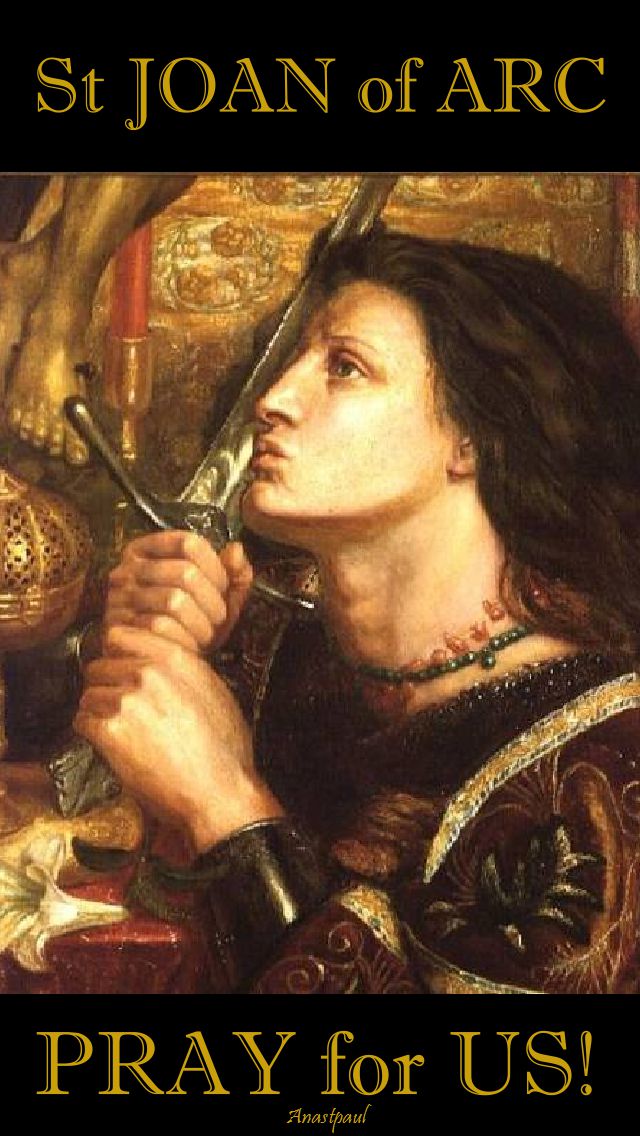
The Christian hero is the saint, although saints like St Joan of Arc, could and did wield the sword too.
St George, whose Memorial it is today, got lost in legends and folklore but he was a real soldier who gave his life in witness to Christ.   He was a Martyr for Christ – the ultimate act of heroism.   If only we remembered him correctly and with honour, for this martyrdom for the One who saved us!

martyrdom-of-saint-george

Martyrdom of Saint George, c.1564 – Paolo Veronese

St George pray for us and we pray that your memory may be restored!

ST GEORGE - APRIL 23

Posted in EASTER, FEASTS and SOLEMNITIES, MORNING Prayers, PRAYERS of the SAINTS, QUOTES of the SAINTS, SAINT of the DAY, The WORD

One Minute Reflection – 23 April Octave and Divine Mercy Sunday

One Minute Reflection – 23 April
Octave and Divine Mercy Sunday

DAILY MEDITATION: Kindle the faith of your people and show us Your Mercy!

But you are “a chosen race, a royal priesthood, a holy nation, a people of his own, so that you may announce the praises” of him who called you out of darkness into his wonderful light.    Once you were “no people” but now you are God’s people; you “had not received mercy” but now you have received mercy………………..1 Peter 2:9-10

REFLECTION – “How much the world is in need of the mercy of God today!   In every continent, from the depths of human suffering, a cry for mercy seems to rise.   In those places where hatred and the thirst for revenge are overwhelming, where war brings suffering and the death of innocents, one needs the grace of mercy to pacify the minds and the hearts and make peace spring forth.   In those places where there is less respect for life and human dignity, one needs the merciful love of God, in whose light we see the ineffable value of every single human being.   Mercy is needed to ensure that every injustice may find its solution in the splendour of truth. …..As a gift to humanity, which sometimes seems bewildered and overwhelmed by the power of evil, selfishness, and fear, the Risen Lord offers His love that pardons, reconciles, and reopens hearts to love. It is a love that converts hearts and gives peace.   How much the world needs to understand and accept Divine Mercy!”…………St John Paul

PRAYER – “Lord, who reveal the Father’s love by Your death and Resurrection, we believe in You and confidently repeat to You today: Jesus, I trust in You, have mercy upon us and upon the whole world. Amen.” – St John Paul (During his last journey to Poland in August of 2002) St Adalbert of Prague pray for us!

1 PETER 2-10AS A GIFT TO HUMANITY-ST JOHN PAULst adalbert of prague pray for us

Posted in SAINT of the DAY

Saint of the Day – 23 April – St Adalbert of Prague, Bishop and Martyr

Saint of the Day – 23 April – St Adalbert of Prague (c 956-997) Bishop and Martyr, Missionary – also known as Adalbert of Praha, Apostle of Bohemia, Apostle of the Prussians, Apostle of the Slavs  – Patronages – of Poland, Hungary, Bohemia, Czech Republic, Archdiocese of Prague, Czech Republic, Prussia.

Heiliger-Adalbert-Heiligenbildchen

St Adalbert was born circa 956, in modern-day Czech Republic, with the given name of Vojtech.    He came from a large, noble family and was one of seven sons to Prince Slavnik.    Vojtech survived a serious illness as a child and was consecrated for service to God.    He studied in Magdeburg, under St Adalbert of Magdeburg and Vojtech took his mentor’s name at his confirmation.    The younger St Adalbert returned home and was Ordained a Priest and soon became Bishop of Prague at the age of 27.  Adalbert was consecrated as the Bishop of Prague just months after becoming a priest.   “It is an easy thing to wear the mitre and a cross,” Adalbert reflected, “but it is a most dreadful circumstance to have an account to give of a bishopric to the Judge of the living and the dead.”22 st adalbert

Bohemia was still a mostly pagan area at the time and Adalbert condemned their practices of polygamy, idolatry and slavery.    He tried to protect a woman accused of adultery but was unsuccessful and the woman was killed.    St Adalbert excommunicated the murderers and was soon forced to exile in Hungary.    He was welcomed by King Boleslaw I and made bishop of Gnesen.    Here, he baptised St Stephen of Hungary and converted many pagans.   St Adalbert 1 of 1

St Adalbert eventually resigned from the See to become a missionary in modern-day Poland.    He converted many and angered pagan priests in the process.    St Adalbert was Martyred in April of 997 and the king paid his weight in gold to have the body returned.455px-Szt-adalbert

A few years after his Martyrdom, Adalbert was Canonised as St Adalbert of Prague.    His life was written in Vita Sancti Adalberti Pragensis by various authors, the earliest being traced to imperial Aachen and the Bishop of Liège, Notger von Lüttich, although it was previously assumed that the Roman monk John Canaparius wrote the first Vita in 999. Another famous biographer of St Adalbert was St Bruno of Querfurt who wrote a hagiography of him in 1001-4.

Notably, the Přemyslid rulers of Bohemia initially refused to ransom St Adalbert’s body from the Prussians who murdered him and therefore it was purchased by Poles.    This fact may be explained by the Saint belonging to the Slavniks family which was rival to the Přemyslids.    Thus St Adalbert’s bones were preserved in Gniezno, which assisted Boleslaus I of Poland in increasing Polish political and diplomatic power in Europe.

ST ADALBERT'S COFFIN Catedral_de_Gniezno,_Gniezno,_Polonia,_2014-09-17,_DD_25-27_HDR
Silver coffin of St Adalbert, Cathedral in Gniezno

According to Bohemian accounts, in 1039 the Bohemian Duke Břetislav I looted the bones of St Adalbert from Gniezno in a raid and translated them to Prague.    According to Polish accounts, however, he stole the wrong relics, namely those of St Gaudentius, while the Poles concealed St Adalbert’s relics and consequently remain in Gniezno.    In 1127 his severed head, which was not in the original purchase according to Roczniki Polskie, was discovered and translated to Gniezno.    In 1928, one of the arms of St Adalbert, which Bolesław I had given to Holy Roman Emperor Otto III in 1000, was added to the bones preserved in Gniezno.    Therefore, today St Adalbert has two elaborate shrines in the Prague Cathedral and Royal Cathedral of Gniezno, each of which claims to possess his relics, but which of their bones are his authentic relics, is unknown.    For example, pursuant to both claims the Saint has two skulls.    The one in Gniezno was stolen in 1923.   However in the 1970s the relics in Prague, below, were examined by anthropologists and confirmed as belonging to St Adalbert.

relics of st adalbert inprague
The Relics of St Adalbert in Prague Cathedral

st-vitus-st-wenceslas-st-adalbert-cathedral-chapelle-saint-venceslas-prazsky-hrad-53 (1)
The Shrine of St Adalbert in St Vitus Cathedral, Prague

The massive bronze doors of Gniezno Cathedral, dating from around 1175, are decorated with eighteen reliefs of scenes from the Saint’s life.    They are the only Romanesque ecclesiastical doors in Europe depicting a cycle illustrating the life of a saint and therefore are a precious relic documenting Adalbert’s martyrdom.

BRONZE DOORS OF GNIEZNO CATHEDRAL

23 April 1997 was the one thousandth anniversary of St Adalbert’s martyrdom.   It was commemorated in Poland, Czech Republic, Germany, Russia and other nations. Representatives of Roman Catholic, Greek Orthodox and Evangelical churches travelled on a pilgrimage to the Saint’s tomb located in Gniezno.    St Pope John Paul II visited the Cathedral and celebrated a Liturgy there in which heads of seven European nations and approximately one million faithful participated.069_saint_adalbert

A ten-meter cross was erected near the village of Beregovoe (formerly Tenkitten), Kaliningrad Oblast where St Adalbert is thought to have been martyred by the Prussians.

Adalbert_of_Prague
St Adalbert in Prague

st adalbert and his brother Socha_Svateho_Vojtecha_a_Radima
Monument to St Adalbert and his brother Gaudentiu in the Czech Republic