
Quote of the Day – 4 February
“When we suffer anything, we give proof of our love.”
~~~ St Joseph of Leonissa
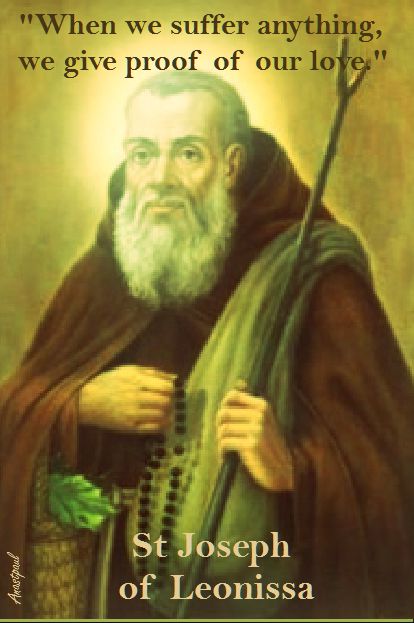
Quote of the Day – 4 February
“When we suffer anything, we give proof of our love.”
~~~ St Joseph of Leonissa
One Minute Reflection – 4 February
Clearly you are a letter of Christ which I have delivered, a letter written not with ink
but by the Spirit of the living God, not on tablets of stone but on tablets of flesh in the heart. ………….2 Corinthians 3:3
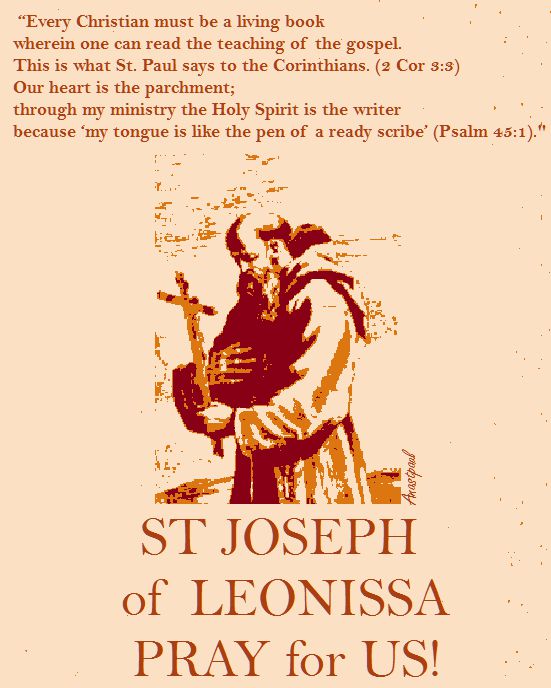
REFLECTION – “Every Christian must be a living book wherein one can read the teaching of the gospel. This is what St. Paul says to the Corinthians. (2 cOR 3:3)
Our heart is the parchment; through my ministry the Holy Spirit is the writer
because ‘my tongue is like the pen of a ready scribe’ (Psalm 45:1).” …….St Joseph of Leonissa
PRAYER – Almighty God, You made Saint Joseph of Leonessa, an illustrious preacher of the gospel. Through his prayers inflame us with love and with his zeal for souls that we may serve You alone. St Joseph of Leonissa, pray for us, amen.
Our Morning Offering – 4 February
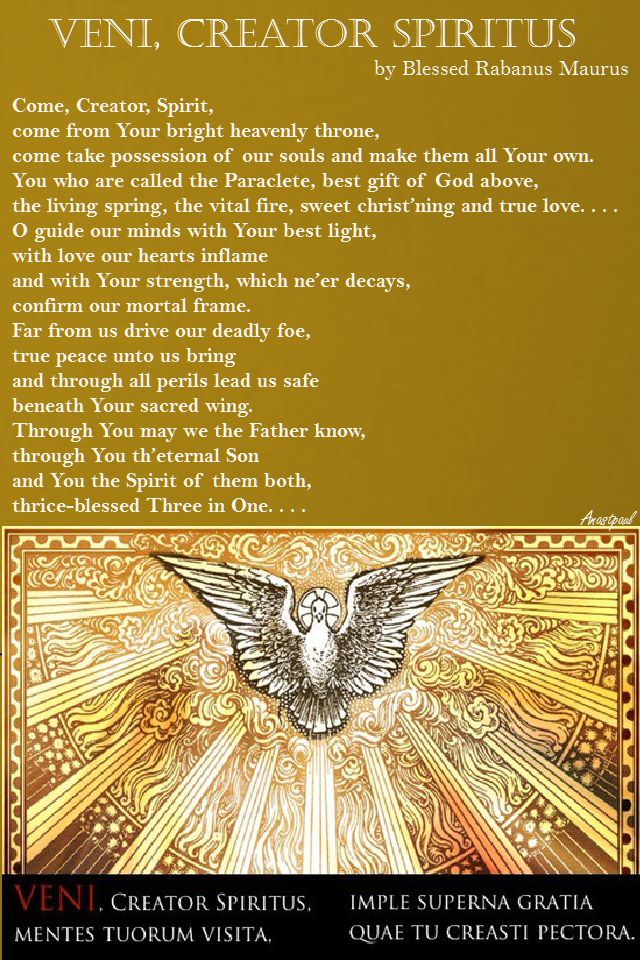
Veni, Creator Spiritus
Come, Creator, Spirit,
come from Your bright heavenly throne,
come take possession of our souls
and make them all Your own.
You who are called the Paraclete,
best gift of God above,
the living spring,
the vital fire,
sweet christ’ning and true love. . . .
O guide our minds with Your best light,
with love our hearts inflame
and with Your strength,
which ne’er decays,
confirm our mortal frame.
Far from us drive our deadly foe,
true peace unto us bring
and through all perils lead us safe
beneath Your sacred wing.
Through You may we the Father know,
through You th’eternal Son
and You the Spirit of them both,
thrice-blessed Three in One. . . .
— Blessed Rabanus Maurus
Today – 4 February – is also the Memorial of Bl Rabanus
St Rabanus Maurus had three careers. He was a schoolmaster, then an abbot, and finally an archbishop. He lived during the reign of Charlemagne when Christianity was being established in Europe. We are indebted to Rabanus and saints like him, for they built the church from which most of us received our gift of faith.

In 799 he was ordained deacon and in 815 became a priest. Sometime during that period he was appointed master of Fulda’s school. In that office he had the opportunity to form young monks who would help create a tradition of Christian learning in the West. He became the abbot at Fulda in 822. During this, his second career, he probably wrote most of his works, including a martyrology and numerous commentaries on Scripture. He was in constant demand as an expert at synods and councils. However, care for the monks caused him to hone his pastoral and administrative gifts. He completed Fulda’s buildings and founded other monasteries.
After a brief retirement, Rabanus unexpectedly took up a third career. In 847, at age 71, he was appointed archbishop of Mainz. He undertook the job aggressively. With a team of priests, Rabanus went about the diocese teaching, preaching, and administering the sacraments. He held synods that called Christians to a stricter observance of church laws and that condemned a local heresy. Once during a famine he fed 300 people a day from his house. With great energy he led the diocese and continued his writing until his death in 856.
Special among Rabanus’s gifts to the church is the Veni, Creator Spiritus. Monks carried the hymn to communities throughout the continent and it became part of the Pentecost liturgy. Praying the Come, Creator Spirit seems to have occasioned life-changing moments for numerous saints, including Lutgarde, Clare and Teresa of Ávila. Apparently, Rabanus’s hymn is extraordinarily effective in releasing the gifts of the Spirit, so when we pray it we can expect God to act.
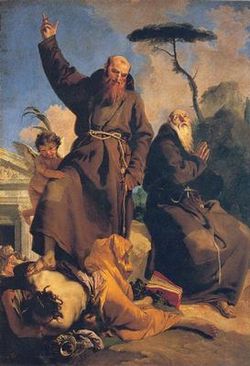
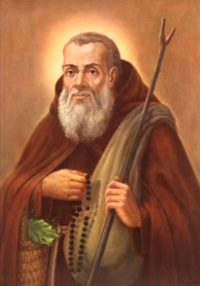
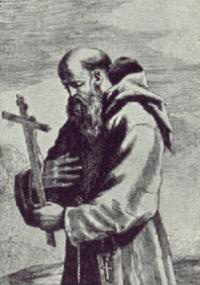
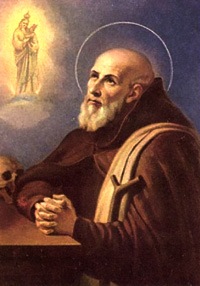
Saint of the Day – 4 February – St Joseph of Leonissa OFM (Cap) (1556-1612) aged 56, Friar of the Capuchin branch of the Friars Minor of St Francis, wandering Missionary Preacher. Born on 8 January 1556 as Eufranio Desiderio at Leonessa, a small town then in Umbria, Italy and died on Saturday 4 February 1612 at Umbria, Italy of natural causes. Patron of Leonissa, Italy.
It is said that from his infancy he showed a remarkably religious bent of mind; he used to erect little altars and spend much time in prayer before them, and often he would gather his companions and induce them to pray with him. Whilst yet a boy he used to take the discipline on Fridays in company with the Confraternity of the Holy Saviour. He was educated by his uncle, who had planned a suitable marriage for him but in his sixteenth year he fell sick of a fever and upon his recovery, without consulting his guardian, he joined the Capuchin reform of the Franciscan Order. He made his novitiate at the friary of the Carcerelle near Assisi.
As a friar he was outstanding for his great abstinence. “Brother Ass“, he would say to his body, “there is no need to feed thee as a noble horse would be fed: thou must be content to be a poor ass.” In 1599, the year before the Jubilee year, he fasted the whole year by way of preparation for gaining the indulgence.
In 1587 he was sent by the Minister General of his Order to Constantinople to minister to the Christians held captive there. Arrived there he and his companions lodged in the Galata district in a derelict house of Benedictine monks, actually the St. Benedict high school. The poverty in which the friars lived attracted the attention of the Turks, who went in numbers to see the new missionaries. He was very solicitous in ministering to the captive Christians in the galleys of the Ottoman Empire’s navy. Every day he went into the city to preach and he was at length thrown into prison and only released at the intervention of the Venetian agent.
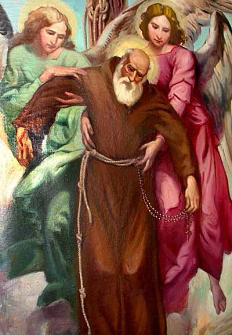
Urged on by zeal he at last sought to enter the palace to preach before Sultan Murad III but he was seized and condemned to death. For three days he hung on the gallows, held up by two hooks driven through his right hand and foot; his legends state that he was then miraculously released by an angel.
Returning to Italy, he took with him a Greek archbishop who had apostatized and who was reconciled to the Church on their arrival in Rome. Joseph now took up the work of home missions in his native province, sometimes preaching six or seven times a day. In the Jubilee year of 1600 he gave the Lenten sermons at Otricoli, a town through which crowds of pilgrims passed on their way to Rome. Many of them being very poor, Joseph supplied them with food; he also washed their clothes and cut their hair. At Todi he cultivated with his own hands a garden, the produce of which was for the poor.
He died at Amatrice in 1612.
He was canonized by Pope Benedict XIV in 1746.
St Aldate of Gloucester
Bl Alfonso de Meneses
St Aquilinus of Fossombrone
St Aventinus of Chartres
St Aventinus of Troyes
St Cuanna of Lismore
Bl Dionisio de Vilaregut
St Donatus of Fossombrone
St Eutychius of Rome
St Filoromus of Alexandria
St Firmus of Genoa
Bl Frederick of Hallum
St Gelasius of Fossombrone
St Geminus of Fossombrone
St Gilbert of Sempringham
St Isidore of Pelusium
St Jane of Valois
St John de Britto
St John of Irenopolis
Bl John Speed
St Joseph of Leonissa
St Liephard of Cambrai
St Magnus of Fossombrone
St Modan
St Nicholas Studites
St Nithard
St Obitius
St Phileas of Alexandria
Bl Rabanus Maurus
St Rembert
St Themoius
St Theophilus the Penitent
St Vincent of Troyes
St Vulgis of Lobbes
—
Jesuit Martyrs of Japan
Martyrs of Perga – 4 saints
Thought for the Day – 3 February
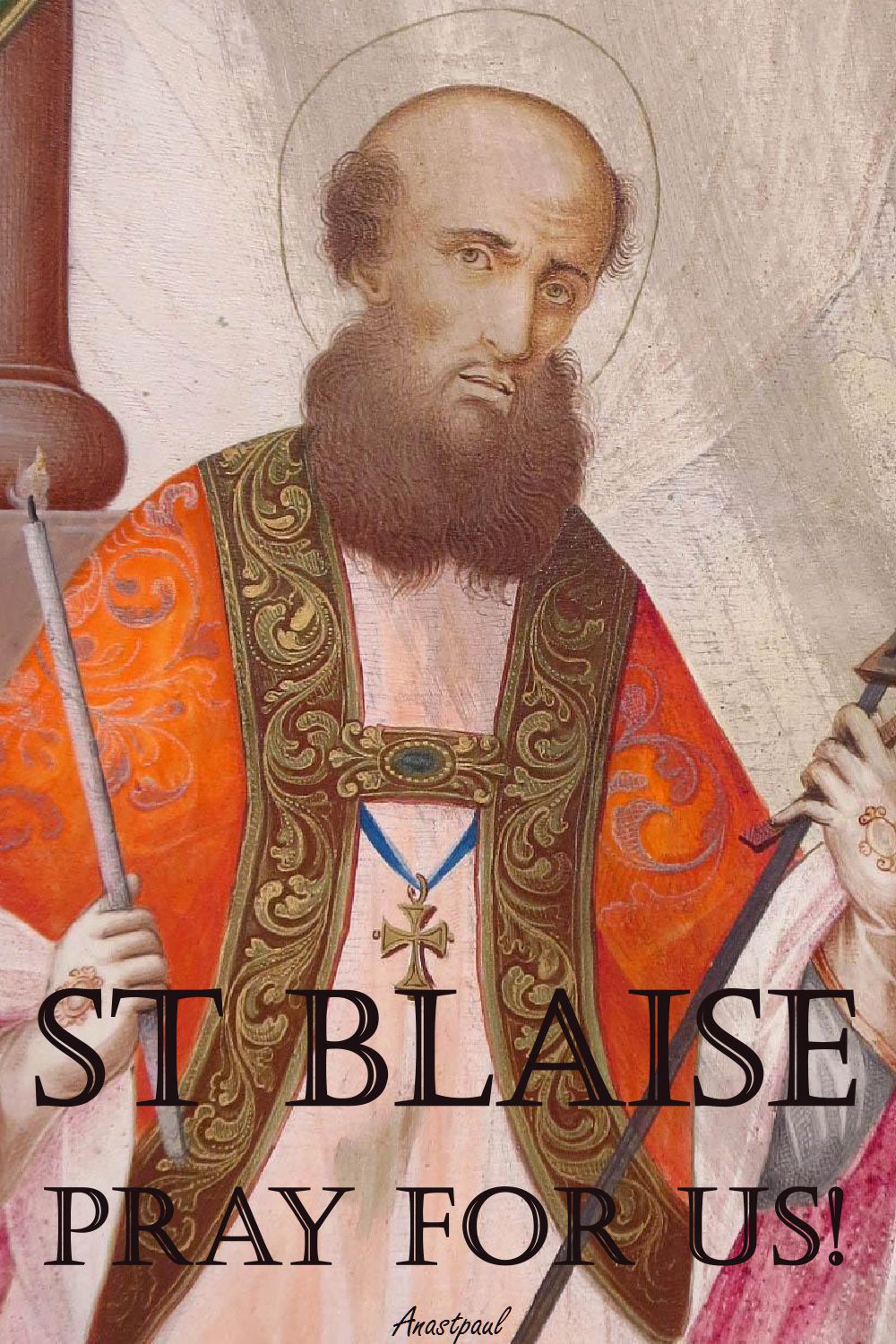
We know that Bishop Blaise was martyred in his episcopal city of Sebastea, Armenia, in 316. The legendary Acts of St. Blaise were written 400 years later. According to them Blaise was a good bishop, working hard to encourage the spiritual and physical health of his people. Although the Edict of Toleration (311), granting freedom of worship in the Roman Empire, was already five years old, persecution still raged in Armenia. Blaise was apparently forced to flee to the back country. There he lived as a hermit in solitude and prayer, but he made friends with the wild animals. One day a group of hunters seeking wild animals for the amphitheater stumbled upon Blaise’s cave. They were first surprised and then frightened. The bishop was kneeling in prayer surrounded by patiently waiting wolves, lions and bears.
400 years went by before St Blaise’s life was chronicled, thus there was ample time for fiction to creep in with fact. Who can be sure how accurate Blaise’s biographer was? But biographical details are not essential. Blaise is seen as one more example of the power those have who give themselves entirely to Jesus. As Jesus told his apostles at the Last Supper, “If you remain in me and my words remain in you, ask for whatever you want and it will be done for you” (John 15:7). With faith we can follow the lead of the Church in asking for Blaise’s protection.
St Blaise Pray for us!
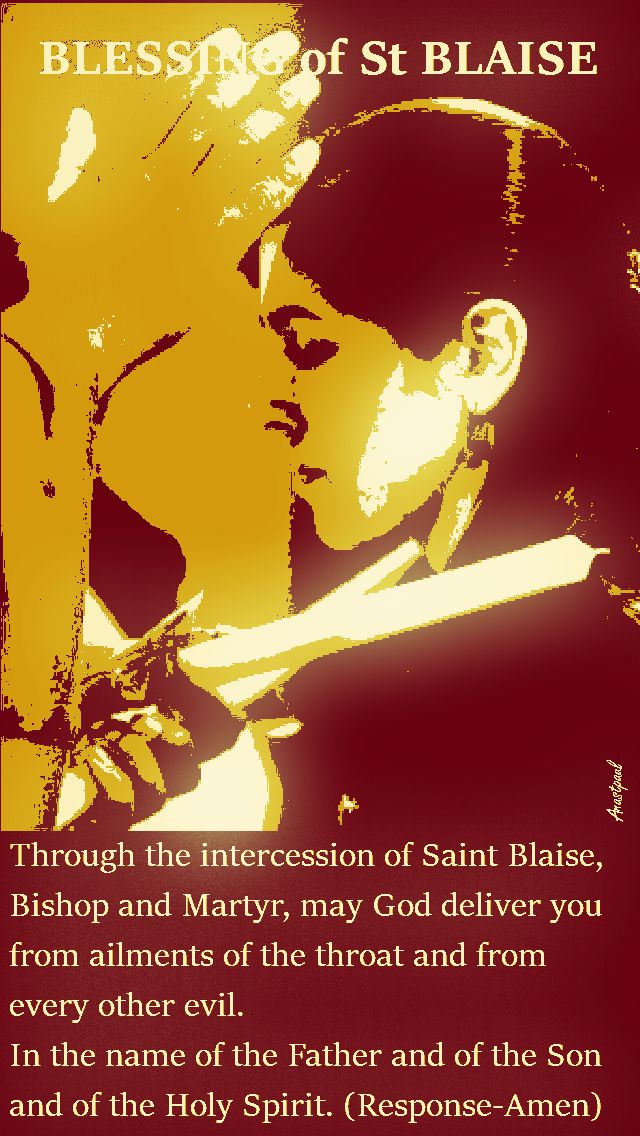
It’s an ancient custom of the Church to bless the sick, rooted in the ministry of Christ and his apostles. According to the Pastoral Care of the Sick: Rites of Anointing and Viaticum, the annual blessing of throats is a traditional sign of the struggle against illness in the life of the Christian. The blessing is ordinarily given during Mass or a celebration of the Word of God on February 3, the memorial of St. Blaise, following Candlemas, the feast of the Presentation of the Lord.
BLESSING of ST BLAISE
Through the intercession of Saint Blaise,
bishop and martyr, may God deliver you
from ailments of the throat and from
every other evil.
In the name of the Father and of the Son
and of the Holy Spirit. Amen
One Minute Reflection – 3 February
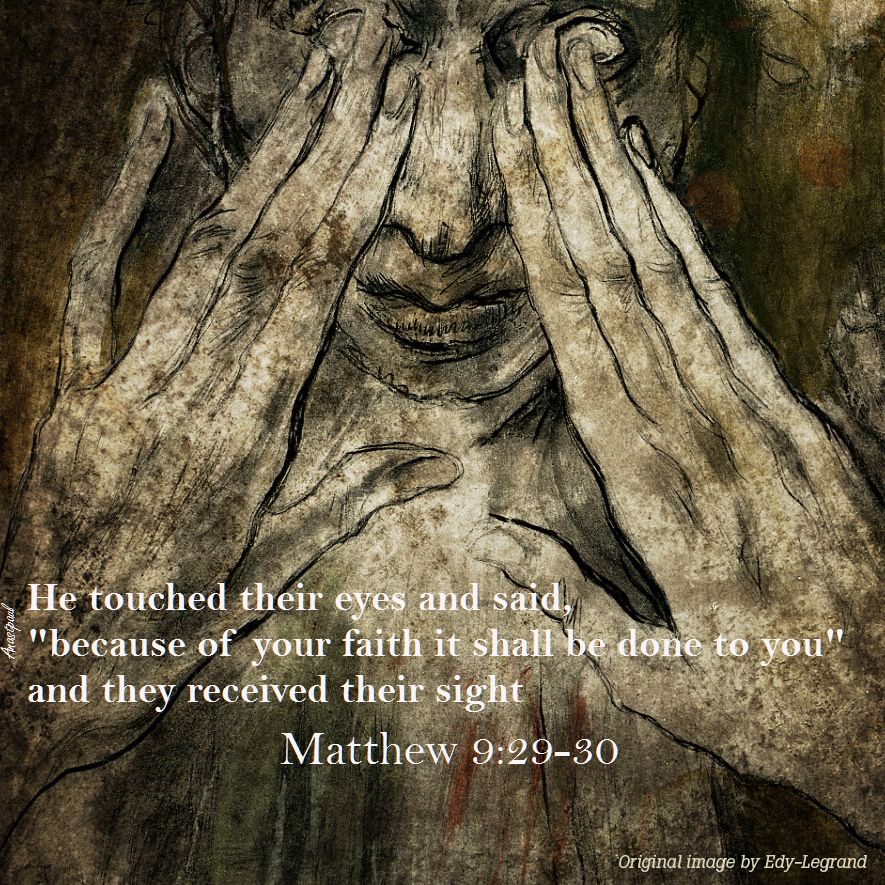
He touched their eyes and said, “because of your faith it shall be done to you” and they received their sight………..Matthew 9:29-30
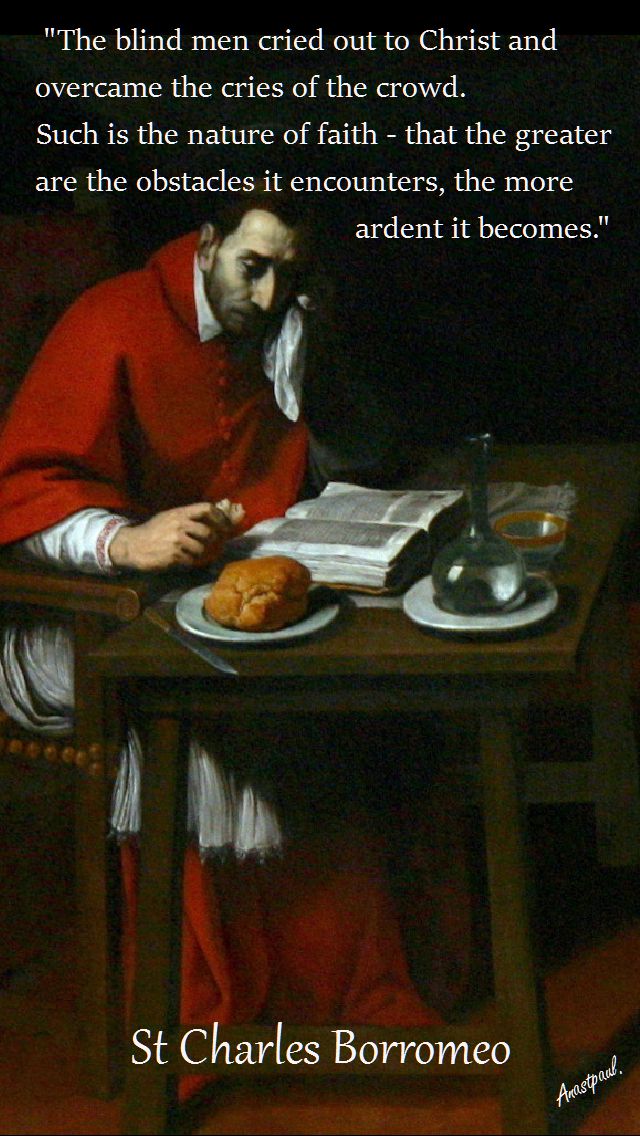
REFLECTION – The blind men cried out to Christ and overcame the cries of the crowd. Such is the nature of faith that the greater are the obstacles it encounters, the more ardent it becomes…………..St Charles Borromeo
PRAYER – Heavenly Father, grant me a living faith in the Good News of Christ. Let it overcome all obstacles and become deeper every day of my life. Let my faith in You withstand all the evils of the world around me and reach out to inspire others. St Blaise, you were and are a light of faith and help to all, pray for us, amen!
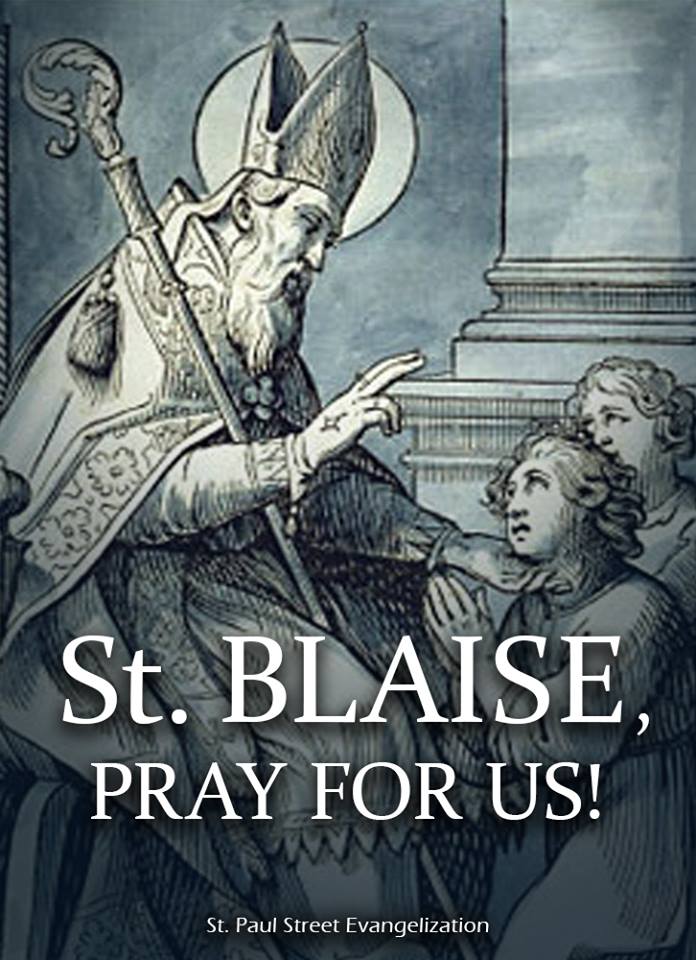
Saint of the Day – 3 February – St Blaise – Hieromartyr/ Holy Helper/Bishop/Physician/ (Died in 316) – Patron against angina,against bladder diseases, against blisters, against coughs, against dermatitis, against dropsy, against eczema, against edema, against fever, against goitres, against headaches, against impetego, against respiratory diseases, against skin diseases, against snake bites, against sore throats, against stomach pain, against storms, against teething pain, against throat diseases, against toothaches, against ulcers, against whooping cough, against wild beasts, of angina sufferers, animals, cattle, children, healthy throats, motorists, pack horses, pets, pigs, bakers, brick layers, builders, carvers, cobblers, show makers, construction workers, cowherds, farm workers, hat makers, hatters, millers, musicians who play wind instruments, plasterers, sock makers, stocking makers, stone cutters, stone masons, swineherds, tailors, tanners, veterinarians, wool-combers, wool weavers, Dalmatia,Paraguay, 21 cities = 80 Patronages)
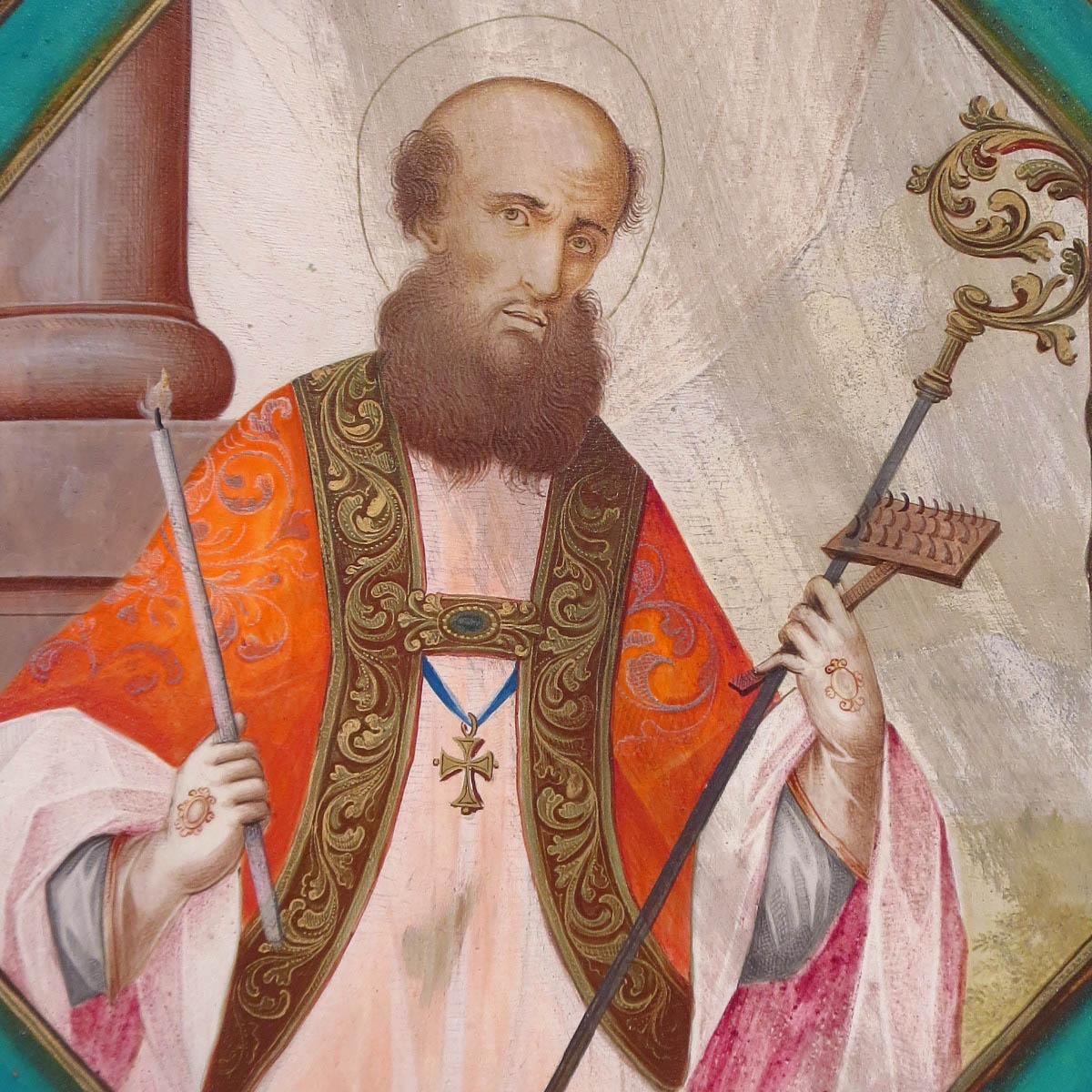
The first reference we have to him is in manuscripts of the medical writings of Aëtius Amidenus, a court physician of the very end of the 5th or the beginning of the 6th century; there his aid is invoked in treating objects stuck in the throat. Marco Polo reported the place where “Meeser Saint Blaise obtained the glorious crown of martyrdom”, Sebastea;[3] the shrine near the citadel mount was mentioned by William of Rubruck in 1253. However, it appears to no longer exist.
From being a healer of bodily ailments, Saint Blaise became a physician of souls, then retired for a time to a cavern where he remained in prayer. As bishop of Sebastea, Blaise instructed his people as much by his example as by his words, and the great virtues and sanctity of the servant of God were attested by many miracles. From all parts, the people came flocking to him for the cure of bodily and spiritual ills. He is said to have healed animals (who came to the saint on their own for his assistance) and to have been assisted by animals.
In 316, the governor of Cappadocia and Lesser Armenia Agricolaus began a persecution by order of the Emperor Licinius and Saint Blaise was seized. After his interrogation and a severe scourging, he was hurried off to prison and subsequently beheaded.
The legendary Acts of St. Blaise were written 400 years later. The Acts of St. Blaise, written in Greek, are medieval. The legend as given in the Grande Encyclopédie is as follows:
Blaise, who had studied philosophy in his youth, was a doctor in Sebaste in Armenia, the city of his birth, who exercised his art with miraculous ability, good-will and piety. When the bishop of the city died, he was chosen to succeed him, with the acclamation of all the people. His holiness was manifest through many miracles: from all around, people came to him to find cures for their spirit and their body; even wild animals came in herds to receive his blessing. In 316, Agricola, the governor of Cappadocia and of Lesser Armenia, having arrived in Sebastia at the order of the emperor Licinius to kill the Christians, arrested the bishop. As he was being led to jail, a mother set her only son, choking to death of a fish-bone, at his feet and the child was cured straight away. Regardless, the governor, unable to make Blaise renounce his faith, beat him with a stick, ripped his flesh with iron combs, and beheaded him.
Blaise is one of the Fourteen Holy Helpers, saints who were patrons for almost every aspect of life. People in the Middle Ages showed devotion to these saints as a group


Presentation of the Lord (Feast)
Our Lady of Candelaria
World Day for Consecrated Life
—
St Adalbald of Ostrevant
St Adeloga of Kitzingen
St Agathodoros of Tyana
St Andrea Carlo Ferrari
St Apronian the Executioner
St Bruno of Ebsdorf
St Burchard of Wurzburg
St St Candidus the Martyr
Catherine del Ricci
St Columbanus of Ghent
St Cornelius the Centurion
St Felician the Martyr
St Feock
St Firmus of Rome
St Flosculus of Orléans
St Fortunatus the Martyr
St Giovanni Battista Clemente Saggio
St Hilarus the Martyr
St Jean Theophane Venard
St Jeanne de Lestonnac
St Lawrence of Canterbury
Bl Louis Alexander Alphonse Brisson
Bl Maria Domenica Mantovani
St Marquard of Hildesheim
St Mun
Bl Peter Cambiano
St Rogatus the Martyr
St Saturninus the Martyr
St Sicharia of Orleans
St Simon of Cassia Fidati
Bl Stephen Bellesini
St Theodoric of Ninden
St Victoria the Martyr
—
Martyrs of Ebsdorf
In a video message, the spokesperson for the Southern Africa Catholic Bishops Conference, Father Smilo Mngadi, offered a wonderful summary of the significance of the beatification of Benedict Daswa, not just to the Church, but to the whole of South African society and the world:
“While at the Southern tip of South Africa, F.W. de Klerk was announcing the new liberation and the new dispensation of our country, on the northern tip of our country in Limpopo, in Thohoyandou, Benedict Daswa was giving his life to liberate us from the oppression, from the troubles of witchcraft in our country and in our world. So let us go and celebrate him but above all, take him as our model of Christian living and say ‘NO’ to witchcraft and all pagan practices and ‘YES’ to Jesus Christ.”
Pope Francis also praised Blessed Daswa’s witness during his Angelus address on Sunday. The Holy Father lauded Daswa’s “great consistency, courageously taking on Christian attitudes and refusing worldly and pagan habits.” His testimony, the Pope added, is united with “the testimony of so many of our brothers and sisters—young, old, children—persecuted, driven out, killed for confessing Jesus Christ.”
We all KNOW that we too are open and subject to many PAGAN practices wherever we are in the world – let us open our eyes and not think witchcraft is confined to only certain countries. Satanism, paganism, witchcraft are on the rise everywhere – just open a newspaper, go online, switch on your TV. Do YOU read your daily ‘horoscope’?
Bl Benedict Daswa Pray for us!
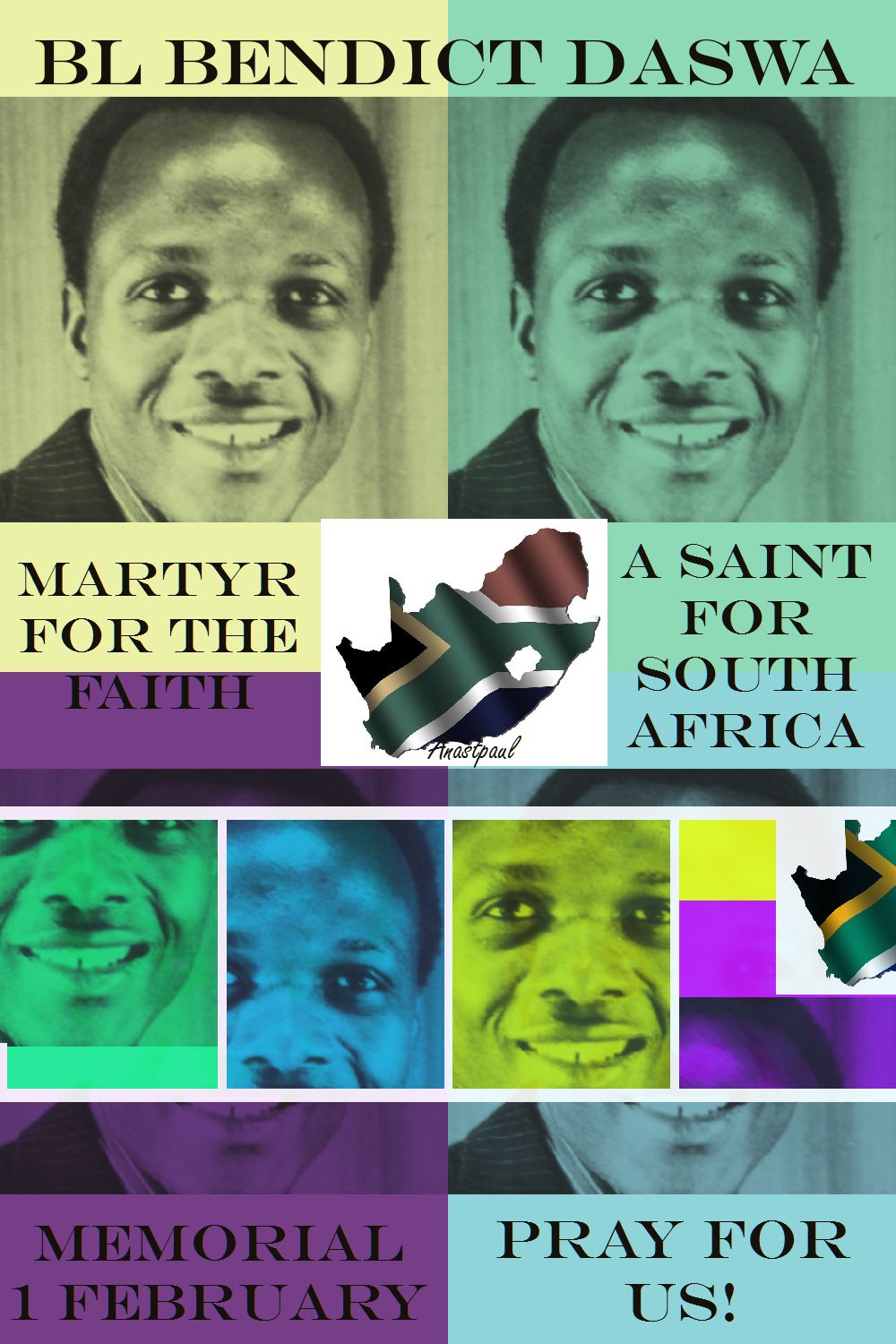
Quote of the Day – 1 February
– Bl Benedict Daswa’s last words

Saint of the Day – 1 February -Blessed Benedict Daswa (1946-1990 aged 43) Layman/MARTYR/Teacher – Patron of against the occult, against witchcraft, persecuted Christians, teachers, School principals, fathers

Born Tshimangadzo Samuel Daswa, was a South African school teacher and principal. He was given the name of “Samuel” by his parents when he started to attend school and assumed the name “Benedict” upon his conversion. A local mob murdered him when he refused to fund their anti-Catholic witchcraft superstitions. He had been viewed as a martyr after his death and his martyrdom was confirmed in 2015, paving the way for his beatification. He was beatified in Limpopo on 13 September 2015. Cardinal Angelo Amato – on behalf of Pope Francis – presided over the beatification Mass.
Benedict was a member of the Lemba tribe. He the first child born to Tshililo Petrus Daswa (Bakali) and Thidziambi Ida Daswa (Gundula). This tribe followed Jewish rituals and laws. Daswa had three younger brothers and one sister: Thanyani Mackson, Muvhulawa Calson, Thinavhuyo Mavis and Humbulani Innocent. Daswa worked as a herd boy before he attended school which started at Vondwe Primary School in 1957 which was followed by secondary school at Mphaphuli High School. After his father’s accidental death, it fell to him to provide for his siblings and did this by paying for their education while in the workforce. In the workforce, he helped pay for his siblings’ education and constantly encouraged them to take pride in their studies.
Daswa was exposed to Roman Catholicism through a friend he met while in Johannesburg while living with an uncle there. He learnt about the Catholic faith and learnt catechism every Sunday from Benedict Risimati. After two years of instruction, Daswa was baptized on 21 April 1963 by Father Augustine O’Brien. He took the name of “Benedict” due to the fact that he was inspired by Saint Benedict of Nursia, also selecting as his life motto “Ora et labora” (pray and work). He was confirmed by Abbot Bishop F. Clemens van Hoek, O.S.B. three months later on 21 July 1963.
He became an active member of the church in South Africa. Daswa went to Venda Teacher Training College to do a primary teacher’s certificate and later obtained his matriculation through correspondence in 1973. He served as a teacher and catechist as he worked with adolescents and he assisted families that endured economic hardship. He was a highly respected individual in his local community and became known for his honesty, truthfulness and integrity, even known to fetch students who decided to skip schools. Daswa later helped to build the first church in his area and later became the principal of the school that he taught at on 1 January 1979 at Nweli Primary School.
Daswa married Shadi Eveline Monyai (d. 2008) in 1974 and the pair had a total of eight children, including Lufuno (b. 1977) who was the eldest, Benedicta (b. 1990), Helen and Faith. He would help his wife with household chores, unheard of at that time in his area, and he valued his family to the point of hosting Daswa Family Days each 16 December where gifts would be exchanged and a meal held. For his family, he personally built his brick house. Daswa also established a soccer team called the Mbahe Eleven Computers and left this team when members wanted to use “muti” (medicine) in order to win games. He started a new team, Mbahe Freedom Rebels.
In November 1989, heavy rains and lightning strikes plagued the area. When his village suffered strong storms again in January 1990, the elders decided that the lightning occurred due to magic and thus demanded a tax from all their residents to pay for a sangoma to “sniff out” the witch who caused the storms. Refusing to believe this, Daswa said they were just a natural phenomenon and declined to pay the tax.
On 2 February 1990, Daswa drove his sister-in-law and her sick child to a doctor in Thohoyandou and en route, picked up a man who asked for his help to take a bag of mealie meal to his home in a town next to Mbahe. At around 7:30pm, he returned to Mbahe where he left his sister-in-law and child near their home. He told his daughter that he would soon return after taking the passenger to the next village.
Returning home, found his path blocked by fallen trees an as he attempted to clear the road he was ambushed by a mob of young men. Bleeding as a result of stoning, he left his damaged car and ran for assistance at a woman’s hut. However, the woman revealed where he was when the mob threatened to kill her if she did not comply. As a result of this, he was beaten and clubbed over the head. Boiling water was poured over him in his ears and nostrils after he was attacked to ensure that he was dead. His final words were, “God, into Your hands receive my spirit”. The woman of the hut informed Daswa’s brother what had happened and the latter remained with his dead brother for the night.
The funeral took place on Saturday, 10 February 1990. The funeral procession commenced at Daswa’s home and then proceeded to Nweli Church. Celebrants wore red vestments to indicate their belief that Daswa died at the hands of his attackers in hatred of his faith.
The cause of beatification commenced on 10 June 2008 on a diocesan level in Tzaneen which concluded in 2009 with the commencement of the “Roman Phase”. The cause had to be ratified to ensure the process was valid and performed its duties as required and this occurred in Rome on 5 November 2010. The opening of the cause granted him the title Servant of God. The postulator assigned was Father Jean-Louis Chassem, MSC. The Positio – documenting his life and evidence to suggest he was killed for his faith – was submitted to the Congregation for the Causes of Saints in 2013.
Pope Francis approved a decree that recognized his martyrdom on 22 January 2015 which allowed for his beatification. A possible date for the beatification, as stated by the Archbishop of Pretoria William M. Slattery, was October 2015 and as late as 1 November.
The beatification was celebrated by Cardinal Angelo Amato in Limpopo on 13 September 2015; the beatification date was confirmed in March 2015. Present at the celebration was Daswa’s mother and children as well as Father Augustine O’Brien who baptized him. Approximately 35,000 people attended the beatification.
Daswa’s remains were exhumed from his grave on 24 August 2015 in the presence of the police, a nurse and a doctor. he exhumation took more than four hours due to the secure burial with several layers of thick cement between layers of soil; the steel coffin was reported to be in good condition. At the behest of the family, his remains were taken to the grave of his wife and the coffin opened to reveal Daswa’s skeletal remains intact. The family desired the remains to be left undisturbed in the original coffin for reinterment, which was cleaned and covered in white material and colored traditional Venda cloth. A document to testify to the exhumation was placed in the coffin. His remains were relocated to a grave in a church in Mbahe and a toe and a piece of the garment he was wearing was removed and was sent away to be used as relics.


St Agrepe
Bl Andrew of Segni
Bl Anthony Manzoni
St Asclepiades
St Autbert of Landevenec
St Barbara Ch’oe Yong-i
Bl Benedict Daswa
St Brigid of Fiesole
St Brigid of Ireland
St Cecilius of Granada
St Cinnia of Ulster
St Clarus of Seligenstadt
Bl Conor O’Devany
St Crewenna
St Darlaugdach of Kildare
St Henry Morse
St Ioannes Yi Mun-u
St Jarlath
Bl John of the Grating
St Kinnia
Bl Luigi Variara
Bl Patrick O’Lougham
St Paul of Trois-Châteaux
St Paulus Hong Yong-ju
St Raymond of Fitero
St Sabinus
St Severus of Avranches
St Severus of Ravenna
St Sigebert III of Austrasia
St Tryphon of Lampsacus
St Ursus of Aosta
St Veridiana
—
Martyrs of Avrillé – 47 beati
Thought for the Day – 31 January
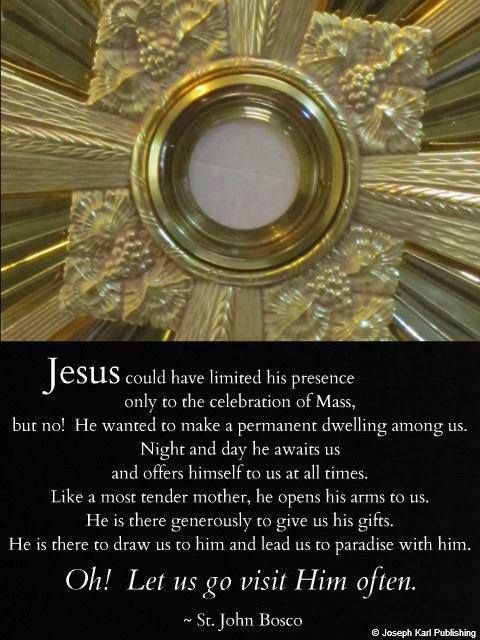
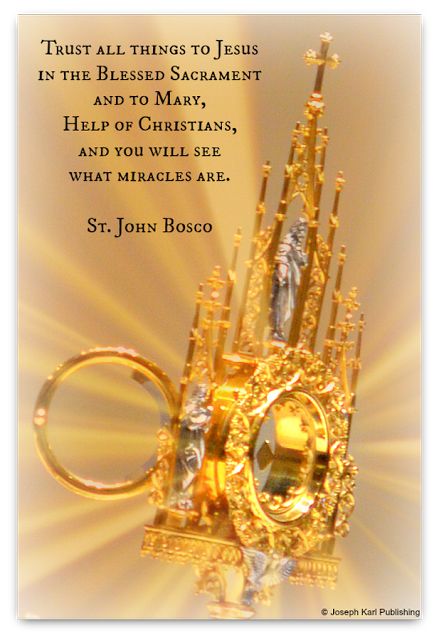
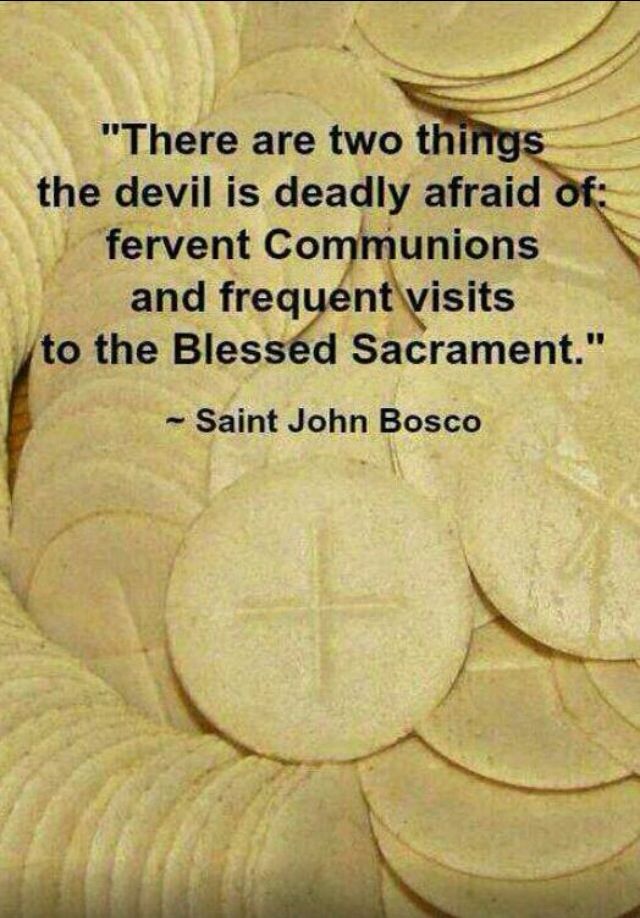
In the beginning, Don Bosco’s work was disappointing and seemingly impossible. He had little money, no collaborators and hundreds of boys to take care of. But he persisted, overcame all obstacles including persecution and saw one of his boys become a Saint – Dominic Savio. He cried to God in the Blessed Sacrament and to Mary, help of all of us and neither disappointed him!
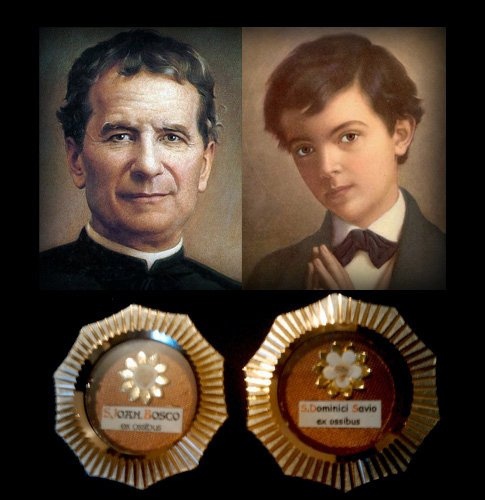
His ethos was to educate the whole person—body and soul united. He believed that Christ’s love and our faith in that love should pervade everything we do—work, study, play. For John Bosco, being a Christian was a full-time effort, not a once-a-week, Mass-on-Sunday experience. It is searching and finding God and Jesus in everything we do, letting their love lead us. Yet, because John realised the importance of job-training and the self-worth and pride that come with talent and ability, he trained his students in the trade crafts, too. For it is the whole of us which becomes our eternal prayer to our Lord, it is every breath we take and every deed we accomplish!
St John Bosco Pray for us!


~~~ St John Bosco (Saint of the Day)
One Minute Reflection – 31 January
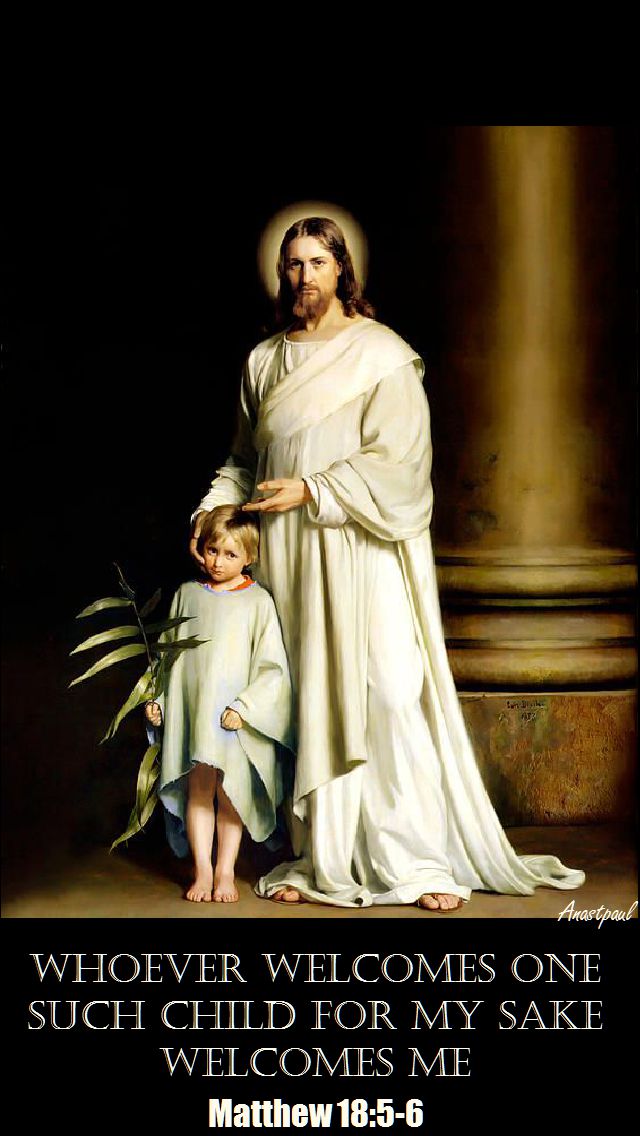
Whoever welcomes one such child for my sake welcomes me….Mt 18:5-6
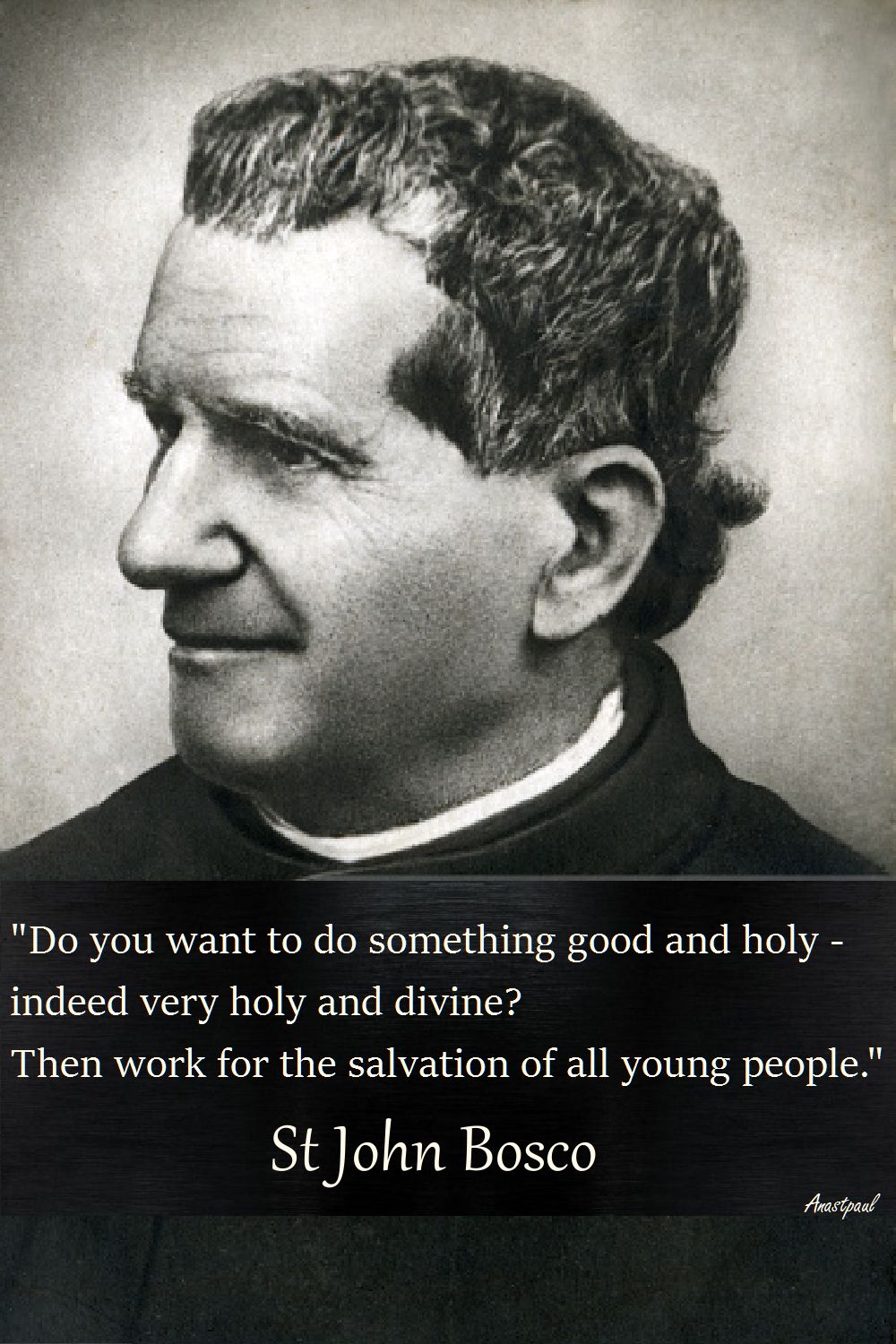
REFLECTION – “Do you want to do something good and holy – indeed very holy and divine? Then work for the salvation of all young people.”…..St John Bosco
PRAYER – Heavenly Father, help me to see You in all children as well as in all human beings. And let me work to bring forth Your image and likeness in them. St John Bosco has been an example to us all – help us to heed his words. St John Bosco, pray for us, amen!
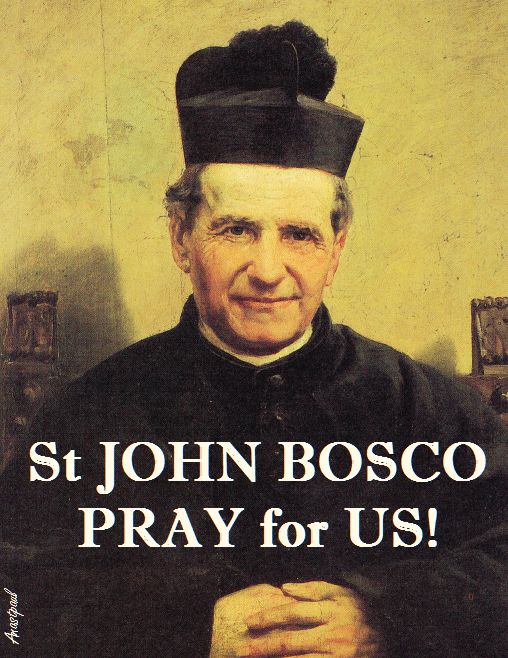
Blessed Memorial of St John Bosco/Don Bosco (1815-1888 aged 72) Priest, Confessor, Founder, “Father and Teacher of Youth” – Patron of Christian apprentices, editors, publishers, schoolchildren, young people, magicians, juvenile delinquents, Mexican youth.
Giovanni Melchiorre Bosco; 16 August 1815– 31 January 1888 popularly known as Don Bosco was an Italian priest, educator and writer of the 19th century. While working in Turin, where the population suffered many of the effects of industrialisation and urbanisation, he dedicated his life to the betterment and education of street children, juvenile delinquents and other disadvantaged youth. He developed teaching methods based on love rather than punishment, a method that became known as the Salesian Preventive System.
A follower of the spirituality and philosophy of Saint Francis de Sales, Bosco was an ardent Marian devotee of the Blessed Virgin Mary under the title Mary Help of Christians. He later dedicated his works to De Sales when he founded the Salesians of Don Bosco, based in Turin. Together with Maria Domenica Mazzarello, he founded the Institute of the Daughters of Mary Help of Christians, a religious congregation of nuns dedicated to the care and education of poor girls.
In 1876 Bosco founded a movement of laity, the Association of Salesian Co-operators, with the same educational mission to the poor. In 1875 he began to publish the Salesian Bulletin. The Bulletin has remained in continuous publication and is currently published in 50 different editions and 30 languages.
Bosco established a network of organizations and centres to carry on his work. Following his beatification in 1929, he was canonised as a saint by Pope Pius XI in 1934.
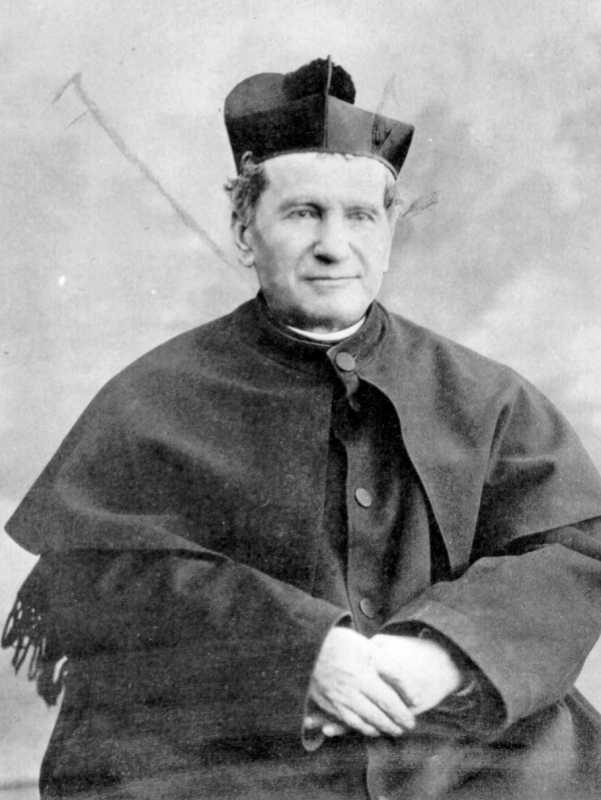
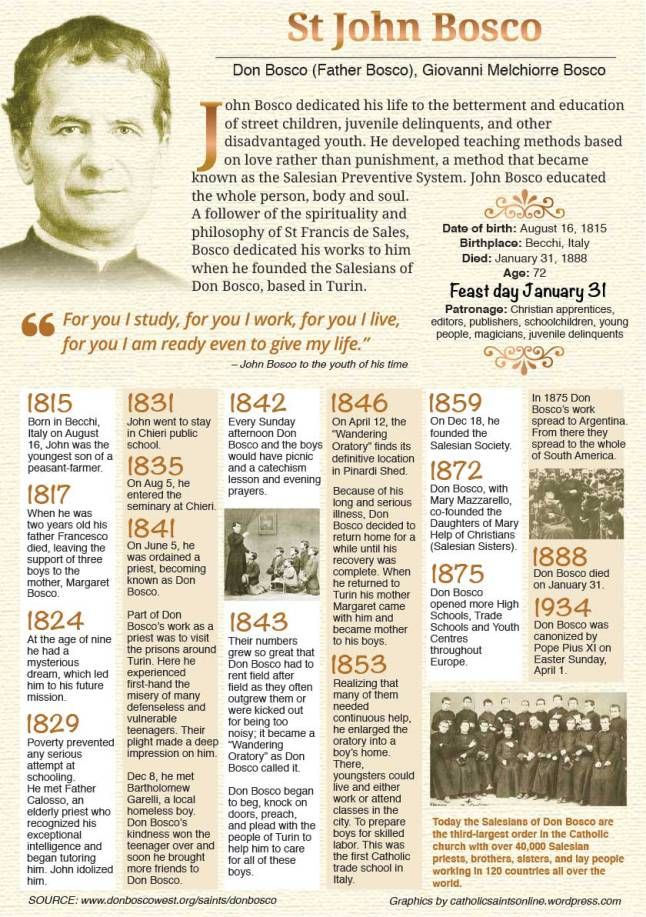
John was the youngest son of a peasant family. His father died when John was two and the family became very poor. As a youngster, John taught religion to other boys and got them to go to church. His acrobatics and magic tricks fascinated them. Encouraged by a priest, John entered the seminary wearing clothes provided by charity.
Priests at the seminary saw that John was a natural leader and encouraged him to use his gifts to keep other young people out of trouble. John started gathering boys together on Sunday for a day in the country. They would begin with Mass, followed by breakfast and games. The afternoon would include a picnic, a catechism lesson and evening prayers. The group grew larger because John Bosco loved the boys. He made each one feel important. He had a gift for handling difficult boys.
John was able to get a house for himself and forty boys. His mother became the housekeeper. In the first six years the number of boys at the house grew to 150. John Bosco gave a father’s care to rowdy, neglected boys. He is known as the “friend of boys” and is often called Don, which means Father.
Don Bosco opened workshops to train boys to be shoemakers and tailors. He saw that in addition to getting a religious education the boys learned to play musical instruments, perform in plays and engage in sports. He also wrote and printed books on Christian faith for boys.
At that time the state did not favour the Church and for four years men tried to assassinate John Bosco. Once they tried to shoot him while he was teaching. At other times they tried to poison him and attacked him on the street. Eventually, however, because of his good work, even his enemies began to support him.
John Bosco knew God wanted him to work with boys because of a dream he had when he was young. In this dream, boys who had been playing roughly suddenly began playing together as happily as lambs. John heard a voice saying, “Teach them right from wrong. Teach them the beauty of goodness and the ugliness of sin.” When John told his mother about his dream, she said it might mean God wanted him to be a priest and care for some of the sheep in his flock.
John Bosco spent so much time working that people who knew him well became worried about his health. They said he should take more time for rest and sleep. John replied that he’d have enough time to rest in heaven. “Right now,” he said, “how can I rest? The devil doesn’t rest from his work.”
When John died, 40,000 people came to his wake.


St John Bosco (Memorial) (VIDEO APOSTLESHIP OF PRAYER – https://www.youtube.com/watch?v=eP0vfLWM27A
—
St Abraham of Abela
Bl Adamnan of Coldingham
St Aedan of Ferns
St Aiden
St Athanasius of Modon
St Bobinus of Troyes
St Eusebius of Saint Gall
St Francesco Saverio Maria Bianchi
St Geminian of Modena
Bl John Angelus
St Julius of Novara
Bl Louise degli Albertoni
Bl Luigi Talamoni
St Madoes
St Marcella
Bl Maria Cristina di Savoia
St Martin Manuel
St Nicetas of Novgorod
St Tryphaena of Cyzicus
St Tysul
St Ulphia of Amiens
St Waldo of Evreux
St Wilgils
—
Martyrs of Corinth – 14 saints
Martyrs of Canope
Athanasia
Cyrus the Physician
Eudoxia
John the Physician
Theoctista
Theodotia
Martyred in Alexandria, Egypt
Cyriacus
Metranus
Saturninus
Tarskius
Thyrsus
Victor
Zoticus
Martyred in the Spanish Civil War
José Acosta Alemán
Juan José Martínez Romero
Pedro José Rodríguez Cabrera
Martyrs of Korea
Agatha Kwon Chin-I
Agatha Yi Kyong-I
Augustinus Park Chong-Won
Magdalena Son So-Byok
Maria Yi In-Dok
Petrus Hong Pyong-Ju
Thought for the Day – 30 January
A Christian, who seriously considers that he is to live here but a moment and will live eternally in the world to come, must confess that it is a part of wisdom to refer all his actions and views to prepare himself for that everlasting dwelling, which is his true country. Our only and necessary affair is to live for God. to do His will and to sanctify and save our souls. If we are employed in a multiplicity of exterior business, we must imitate St Bathilde, when she bore the whole weight of the state. In all we do, God and His holy will must be always before our eyes and to please Him must be our only aim and desire.
Shunning the anxiety of Martha and reducing all our desires to this one of doing what God requires of us, we must with her call in Mary to our assistance. In the midst of action, while our hands are at work, our mind and heart ought to be interiorly employed on God, at least virtually, that all our employments may be animated with the spirit of piety: and hours of repose must always be contrived to pass at the feet of Jesus, where in the silence of all creatures we may listen to His sweet voice, refresh in Him our wearied souls and renew our fervour.
While we converse with the world, we must tremble at the sight of its snares, and be upon our guard that we never be seduced so far as to be in love with it, or to learn its spirit. o love the world, is to follow its passions; to be proud, covetous and sensual, as the world is. The height of its miseries and dangers, is that blindness by which none who are infected with its spirit, see their misfortune, or are sensible of their disease. Happy are they who can imitate this holy queen in entirely separating themselves from it! Not only a slave but a queen – St Bathilde was both and yes, BOTH MAY BE SAINTS!
St Bathilde PRAY FOR US!
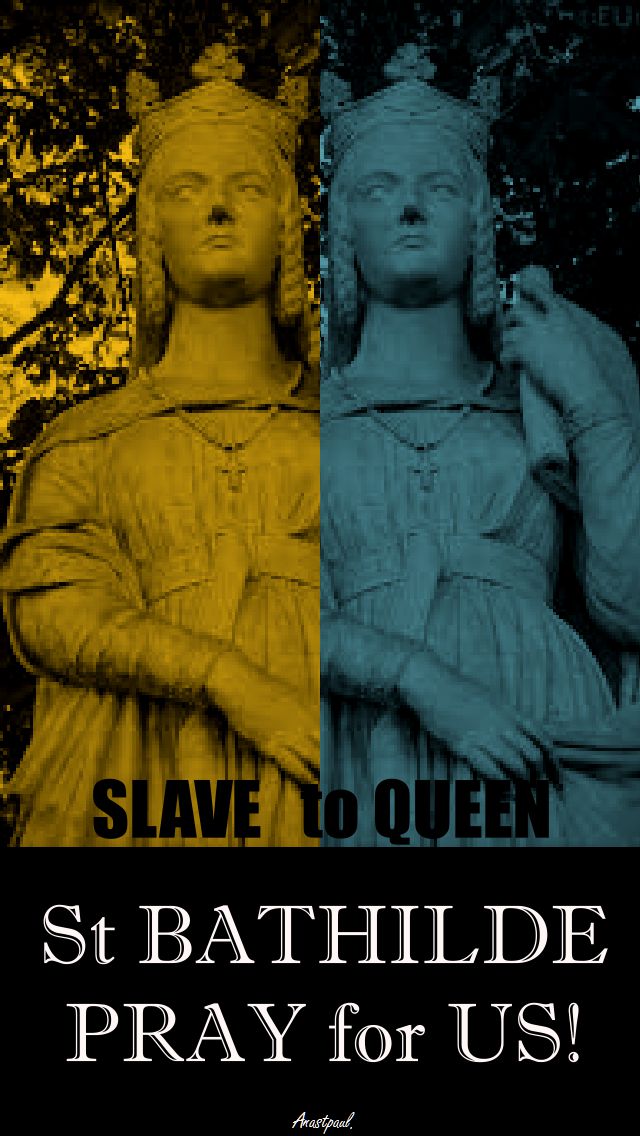
(Partially taken from Vol. I of “The Lives of the Fathers, Martyrs and Other Principal Saints” by the Rev. Alban Butler, the 1864 edition published by D. & J. Sadlier, & Company)
Saint of the Day – 30 January – St Bathilde (also known as Baldechilde, Baldhild, Bathild, Bathildes, Bathildis, Bauteur) (c630-680). Queen
It is certain that ST Bathilde was a slave in the service of the wife of Erchinoald, mayor of the palace of Neustria. Her unusual qualities of mind and her virtues inspired the confidence of her master who gave many of the affairs of the household into her charge and, after the death of his wife, wished to marry her. At this the young girl fled and did not return until Erchinoald had married again. About this time Clovis II met her at the house of the mayor of the palace, and was impressed by her beauty, grace and the good report he had of her. He freed and married her, 649. This sudden elevation did not diminish the virtues of Bathilde but gave them a new lustre. Her humility, spirit of prayer and large-hearted generosity to the poor were particularly noticeable.
Seven years after their marriage Clovis II died, 656, leaving Bathilde with three sons, Clothaire, Childeric, and Thierry. An assembly of the leading nobles proclaimed Clothaire III, aged five, king under the regency of his mother, Bathilde. Aided by the authority and advice of Erchinoald and the saintly bishops, Eloi (Eligius) of Noyon, Ouen of Rouen, Leéger of Autun, and Chrodebert of Paris, the queen was able to carry out useful reforms. She abolished the disgraceful trade in Christian slaves, and firmly repressed simony among the clergy. She also led the way in founding charitable and religious institutions, such as hospitals and monasteries. Through her generosity the Abbey of Corbey was founded for men, and the Abbey of Chelles near Paris for women. At about this date the famous Abbeys of Jumièges, Jouarre, and Luxeuil were established, most probably in large part through Bathilde’s generosity. Berthilde, the first Abbess of Chelles, who is honoured as a saint, came from Jouarre. The queen wished to renounce her position and enter the religious life, but her duties kept her at court. Erchinoald died in 659 and was succeeded by Ebroin. Notwithstanding the ambition of the new mayor of the palace, the queen was able to maintain her authority and to use it for the benefit of the kingdom. After her children were well established in their respective territories, Childeric IV in Austrasia and Thierry in Burgundy, she returned to her wish for a secluded life and withdrew to her favourite Abbey of Chelles near Paris.
On entering the abbey she laid down the insignia of royalty and desired to be the lowest in rank among the inmates. It was her pleasure to take her position after the novices and to serve the poor and infirm with her own hands. Prayer and manual toil occupied her time, nor did she wish any allusion made to the grandeur of her past position. In this manner she passed fifteen years of retirement. At the beginning of the year 680 she had a presentiment of the approach of death and made religious preparation for it. Before her own end, that of Radegonde occurred, a child whom she had held at the baptismal font and had trained in Christian virtue. She was buried in the Abbey of Chelles and was canonized by Pope Nicholas I.


St Adelelmus
St Aldegundis
St Alexander of Edessa
St Amnichad of Fulda
St Armentarius of Antibes
St Armentarius of Pavia
St Barsen
St Barsimaeus of Edessa
St Bathilde
Bl Carmen Marie Anne García Moyon
St David Galván-Bermúdez
St Felician of Africa
St Felix IV, Pope
Bl Francis Taylor
Bl Haberilla
St Hippolytus of Antioch
St Hyacintha of Mariscotti
Bl Margaret Ball
Bl Maria Bolognesi
St Martina of Rome
St Matthias of Jerusalem
St Mutien Marie Wiaux
St Paul Ho Hyob
St Philippian of Africa
St Savina of Milan
Bl Sebastian Valfrè
St Theophilus the Younger
St Tôma Khuông
St Tudclyd
Bl Zygmunt Pisarski
Martyrs of Corinth
Thought for the Day – 29 January
St Gildas the Wise lived in difficult times when the light of Christianity seemed to be dying and a whole nation was lost to the faith. Yet he himself kept the faith and managed to live a holy life amidst the ruins. The man of faith walks by the light of Christ and St Gildas is a true example that the darkness of the world does not affect our progress and our sight, for Christ is our vision.
St Gildas the Wise, Pray for us.

Our Morning Offering – 29 January
Be Thou my vision, O Lord of my heart;
Naught be all else to me save that Thou art.
Thou my best thought by day or by night,
Waking or sleeping Thy presence my light.
Be Thou my wisdom and Thou my true Word;
I ever with Thee and Thou with me, Lord;
Thou my great Father, I Thy true son;
Thou in me dwelling and I with Thee one.
Be Thou my battle-shield, sword for my fight,
Be Thou my dignity, Thou my delight.
Thou my soul’s shelter, Thou my high tower.
Raise Thou me heavenward, O Power of my power.
Riches I heed not, nor man’s empty praise,
Thou mine inheritance, now and always;
Thou and Thou only, first in my heart,
High King of heaven my Treasure Thou art.
High King of heaven, my victory won,
May I reach heaven’s joys, O bright heaven’s son,
Heart of my heart, whatever befall
Still be my vision, O ruler of all.
Today, 29 January, is also the Memorial of St Dallan Forghaill (c530- 598)
Born in Connaught, Ireland, he was known for his learning and reputedly went blind because of his intensive studying. St Dallan was an early Christian Irish poet known as the writer of the “Amra Choluim Chille” (“Elegy of Saint Columba”) and “Rop Tú Mo Baile”(“Be Thou My Vision”). He died at the hands of pirates at Inis-coel. Legend has it that St. Dallan made his own head reattach to his body after he was beheaded and thrown into the sea.
Here is a version by Audrey Assad of Be Thou My Vision – St Dallan – https://www.youtube.com/watch?v=Optrm7lF16s

Saint of the Day – 29 January -St Gildas the Wise – also known as Badonicus and Gildas Sapiens(c500-570) Priest and Abbot – Patron of Welsh historians, bell founders.
St Gildas was a 6th-century British monk best known for his scathing religious polemic De Excidio et Conquestu Britanniae, which recounts the history of the Britons before and during the coming of the Saxons. He is one of the best-documented figures of the Christian church in the British Isles during the sub-Roman period and was renowned for his Biblical knowledge and literary style. In his later life, he emigrated to Brittany where he founded a monastery known as St Gildas de Rhuys.
Gildas was born in Scotland on the banks of the Clyde (possibly at Dumbarton), of a noble British family. His father’s name was Cau or Nau, his brother’s, Huel or Cuil. He was educated in Wales under St Iltut and was a companion of St. Samson and St. Peter of Léon. Having embraced the monastic state, he passed over to Ireland, where he was advanced to the priesthood. He is said to have lived some time in Armagh and then to have crossed to North Britain, his teaching there being confirmed by miracles.
On his return to Ireland, at the invitation of King Ainmire, he strengthened the faith of many and built monasteries and churches. The Irish annalists associate him with David and Cadoc in giving a special liturgy or Mass to the second order of Irish saints. He is said to have made a pilgrimage to Rome. On the homeward journey his love of solitude caused him to retire to the Isle of Houat, off Brittany, where he lived a life of prayer, study and austerity. His place of retreat having become known, the Bretons induced him to establish a monastery at Rhuys on the mainland whither multitudes flocked (Marius Sepet, “St. Gildas de Rhuys”, Paris, s.d.).
It was at Rhuys he wrote his famous epistle to the British kings. His relics were venerated there till the tenth century, when they were carried for safety into Berry. In the eighteenth century they were said to be preserved in the cathedral of Vannes. He is the patron of several churches and monasteries in Brittany and elsewhere. His feast is locally observed on 29 January; another feast, 11 May, commemorates the translation of his relics.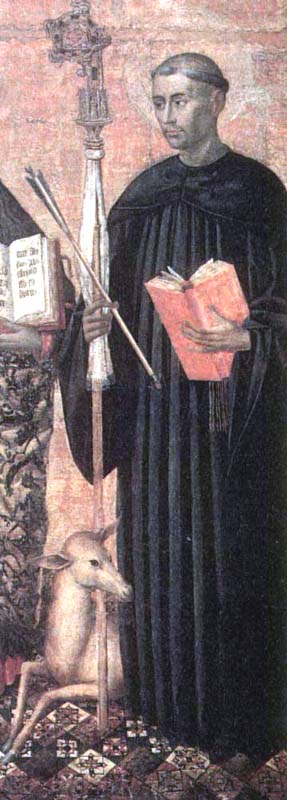
The authentic work of St Gildas, “De excidio Britannae liber querulus”, is now usually divided into three parts: (1) The preface; (2) A sketch of British history from the Roman invasion to his own time; (3) An epistle of severe invective addressed to five petty British kings — Constantine, Vortipor, Cyneglas, Cynan, and Maelgwn. In the same epistle he addresses and rebukes the clergy whom he accuses of sloth and simony. His writings are clearly the work of a man of no ordinary culture and sanctity and indicate that the author was thoroughly acquainted with the Sacred Scriptures.
Gildas is regarded as the earliest British historian and is quoted by Bede and Alcuin. Two Manuscript copies of his writings are preserved in Cambridge University library.


St Abundantia the Martyr
St Aphraates
St Aquilinus of Milan
St Barbea of Edessa
St Blath of Kildare
Bl Boleslawa Maria Lament
Bl Bronislaw Markiewicz
St Caesarius of Angoulême
Bl Charles of Sayn
St Constantius of Perugia
St Dallan Forghaill
St Gelasius II, Pope
St Gildas the Elder
St Gildas the Wise
St Juniper
St Maurus of Rome
St Papias of Rome
St Sarbellius
St Serrano
St Sulpicius Severus
St Valerius of Trier
St Voloc
Thought for the Day – 28 January
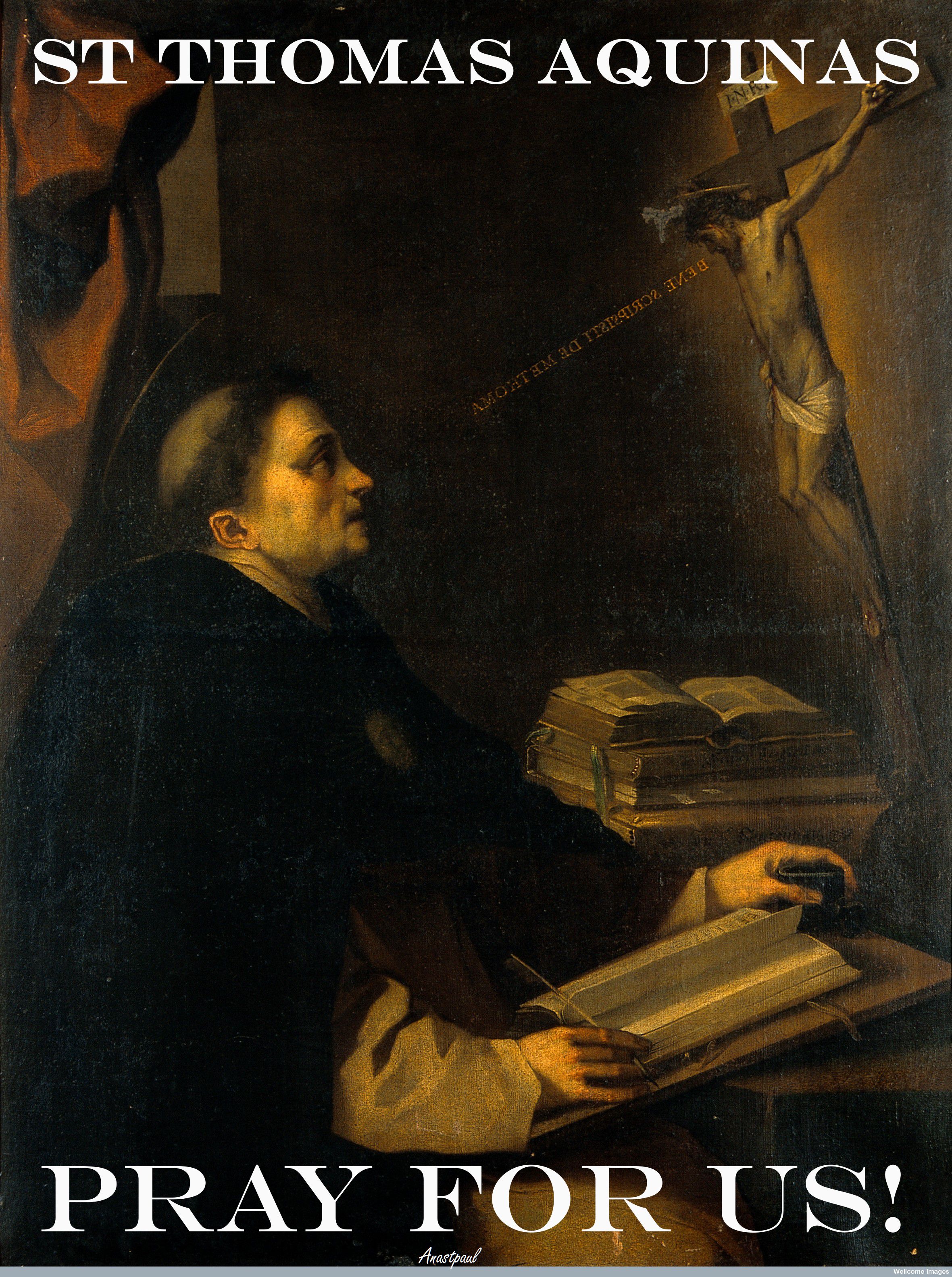
For St Thomas, the goodness of God can be seen in everything and the whole of creation is a mighty love song of God. He learned more at the foot of the Crucifix and before the Blessed Sacrament, he said, than in all his readings and writings. We can look to Thomas Aquinas as a towering example of Catholicism in the sense of broadness, universality and inclusiveness. We should be determined anew to exercise the divine gift of reason in us, our power to know, learn and understand. At the same time we should thank God for the gift of His revelation, the incarnation of His Son, Jesus Christ who is here with us always in the Holy Sacrament.
St Thomas Aquinas Pray for us!
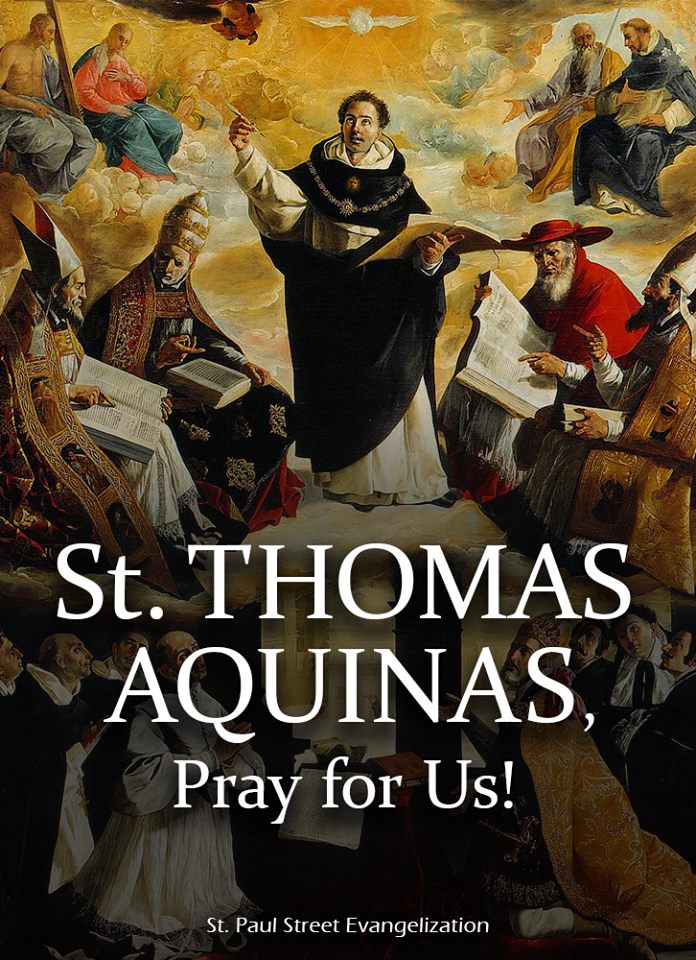
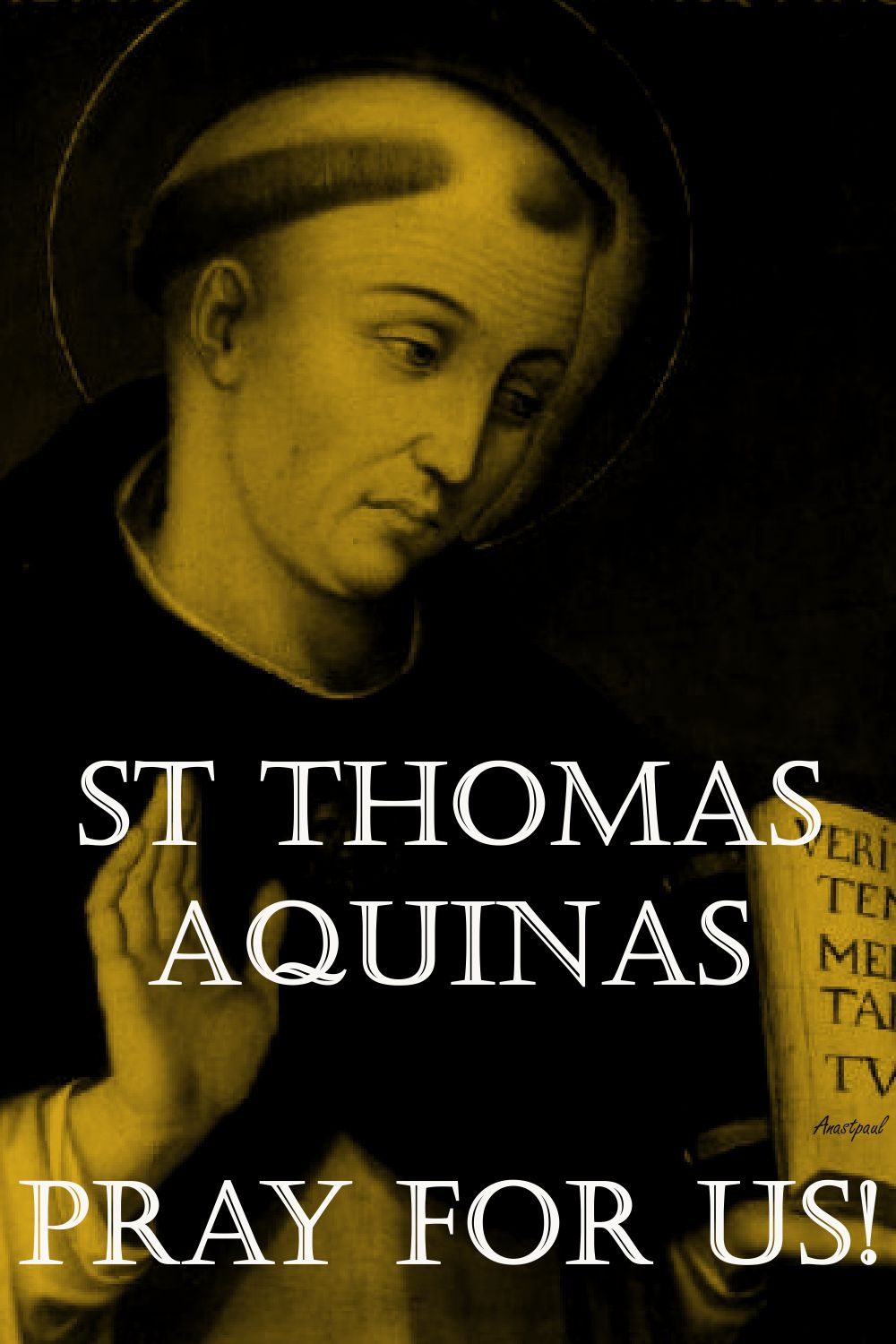
Saint of the Day – 28 January – St Thomas Aquinas O.P. (1225-1274 aged 49) THE ANGELIC DOCTOR – DOCTOR of the CHURCH/Priest, Religious, Theologian, Philosopher, Write, Teacher, Jurist. Also known as: Angelic Doctor/Doctor Angelicus/Doctor Communis/Great Synthesizer/The Dumb Ox/The Universal Teacher. Patron of Academics, Theologians, against storms; against lightning; apologists; book sellers; Catholic academies, Catholic Schools – (proclaimed on 4 August 1880 by Pope Leo XIII), Catholic universities, Catholic Colleges, chastity, learning; pencil makers, philosophers; publishers; scholars; students; University of Vigo and of St. Tomas;, Batangas; theologians, Aquino, Italy; Belcastro, Italy, Diocese of Aquino, Falena, Italy.
St Thomas Aquinas was an Italian Dominican friar, Catholic priest and Doctor of the Church. He was an immensely influential philosopher, theologian and jurist in the tradition of scholasticism, within which he is also known as the Doctor Angelicus and the Doctor Communis. The name Aquinas identifies his ancestral origins in the county of Aquino in present-day Lazio.
He was the foremost classical proponent of natural theology and the father of Thomism. His influence on Western thought is considerable, and much of modern philosophy developed or opposed his ideas, particularly in the areas of ethics, natural law, metaphysics and political theory. Unlike many currents in the Church of the time, Thomas embraced several ideas put forward by Aristotle—whom he called “the Philosopher”—and attempted to synthesize Aristotelian philosophy with the principles of Christianity. The works for which he is best known are the Summa Theologiae and the Summa contra Gentiles. His commentaries on Scripture and on Aristotle form an important part of his body of work. Furthermore, Thomas is distinguished for his eucharistic hymns, which form a part of the Church’s liturgy.
The Catholic Church honours Thomas Aquinas as a saint and regards him as the model teacher for those studying for the priesthood, and indeed the highest expression of both natural reason and speculative theology. In modern times, under papal directives, the study of his works was long used as a core of the required program of study for those seeking ordination as priests or deacons, as well as for those in religious formation and for other students of the sacred disciplines (philosophy, Catholic theology, church history, liturgy, and canon law).
Thomas Aquinas is considered one of the Catholic Church’s greatest theologians and philosophers. Pope Benedict XV declared: “This (Dominican) Order … acquired new luster when the Church declared the teaching of Thomas to be her own and that Doctor, honoured with the special praises of the Pontiffs, the master and patron of Catholic schools.”
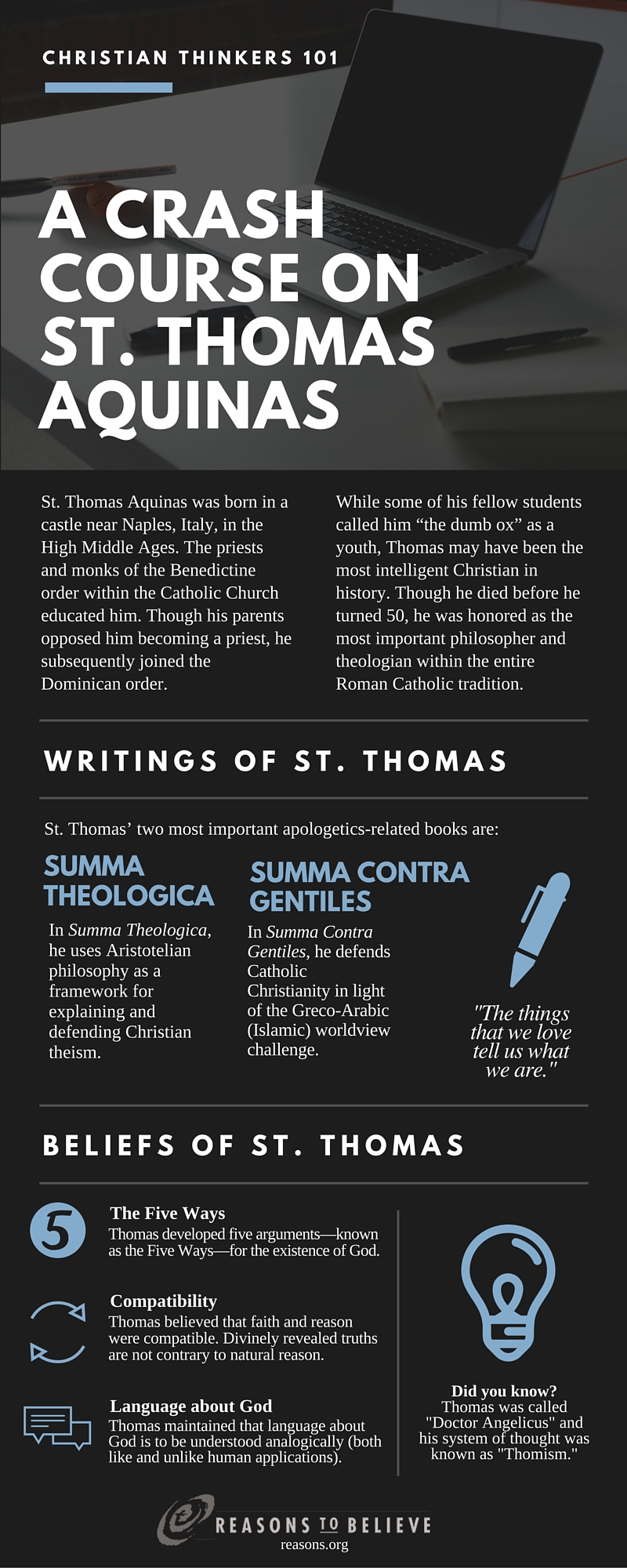
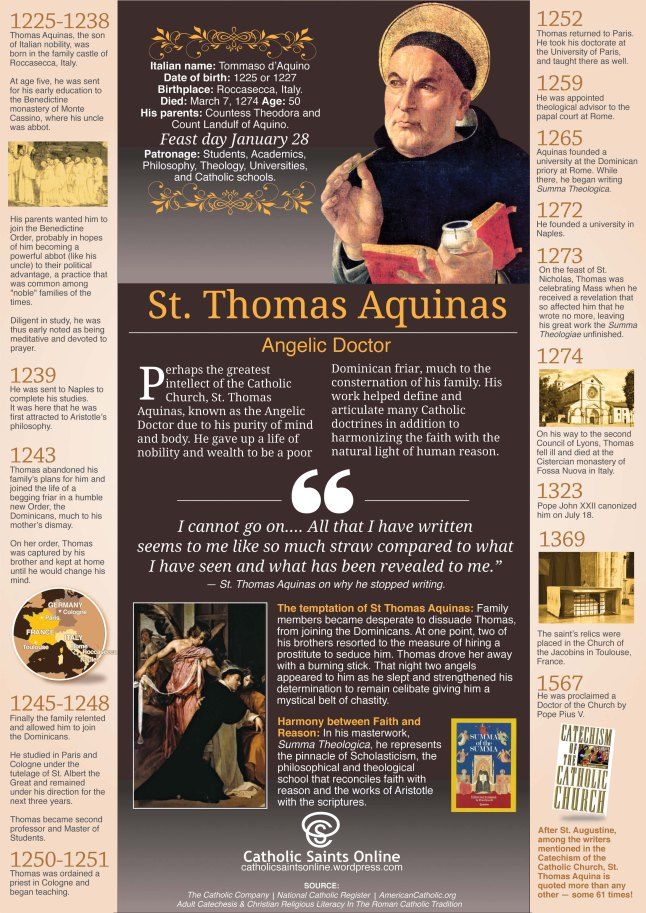
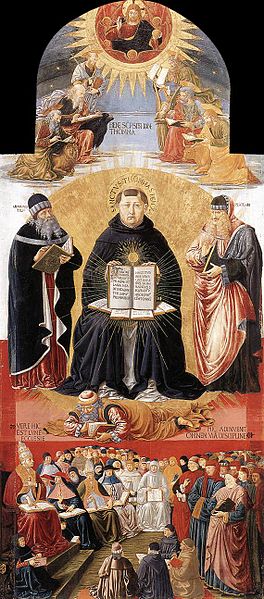
By universal consent, Thomas Aquinas is the preeminent spokesman of the Catholic tradition of reason and of divine revelation. He is one of the great teachers of the medieval Catholic Church, honoured with the titles Doctor of the Church and Angelic Doctor. (Image below – Benozzo Gozzoli – Triumph of St Thomas Aquinas)
At five he was given to the Benedictine monastery at Monte Cassino in his parents’ hopes that he would choose that way of life and eventually became abbot. In 1239, he was sent to Naples to complete his studies. It was here that he was first attracted to Aristotle’s philosophy. By 1243, Thomas abandoned his family’s plans for him and joined the Dominicans, much to his mother’s dismay. On her order, Thomas was captured by his brother and kept at home for over a year. Once free, he went to Paris and then to Cologne, where he finished his studies with Albert the Great. In class, his silence during discussions and his large size earned him the nickname “the dumb ox.” He held two professorships at Paris, lived at the court of Pope Urban IV, directed the Dominican schools at Rome and Viterbo, combated adversaries of the mendicants, as well as the Averroists and argued with some Franciscans about Aristotelianism.
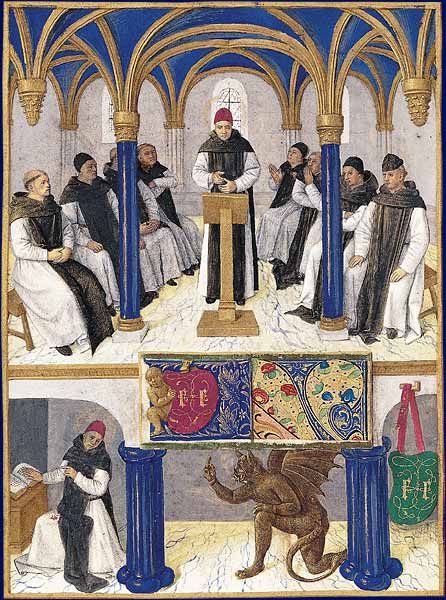
His greatest contribution to the Catholic Church are his writings. The unity, harmony and continuity of faith and reason, of revealed and natural human knowledge, pervades his writings. One might expect Thomas, as a man of the gospel, to be an ardent defender of revealed truth. But he was broad enough, deep enough, to see the whole natural order as coming from God the Creator, and to see reason as a divine gift to be highly cherished.
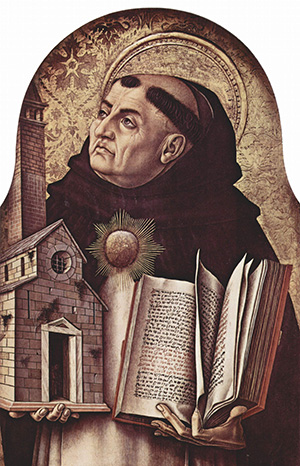
The Summa Theologiae, his last and, unfortunately, uncompleted work, deals with the whole of Catholic theology. But this brilliant man was very humble. He knew that all his gifts came from God. While celebrating Mass on December 6, 1273, he received a revelation from God. After that, he stopped writing. He said “I cannot go on…. All that I have written seems to me like so much straw compared to what I have seen and what has been revealed to me.” Thomas died at age 49 on his way to the Council of Lyons, France. Pope Gregory X had asked him to come. When asked why he stopped writing, he replied, He died March 7, 1274.


Quote/s of the Day – 28 January
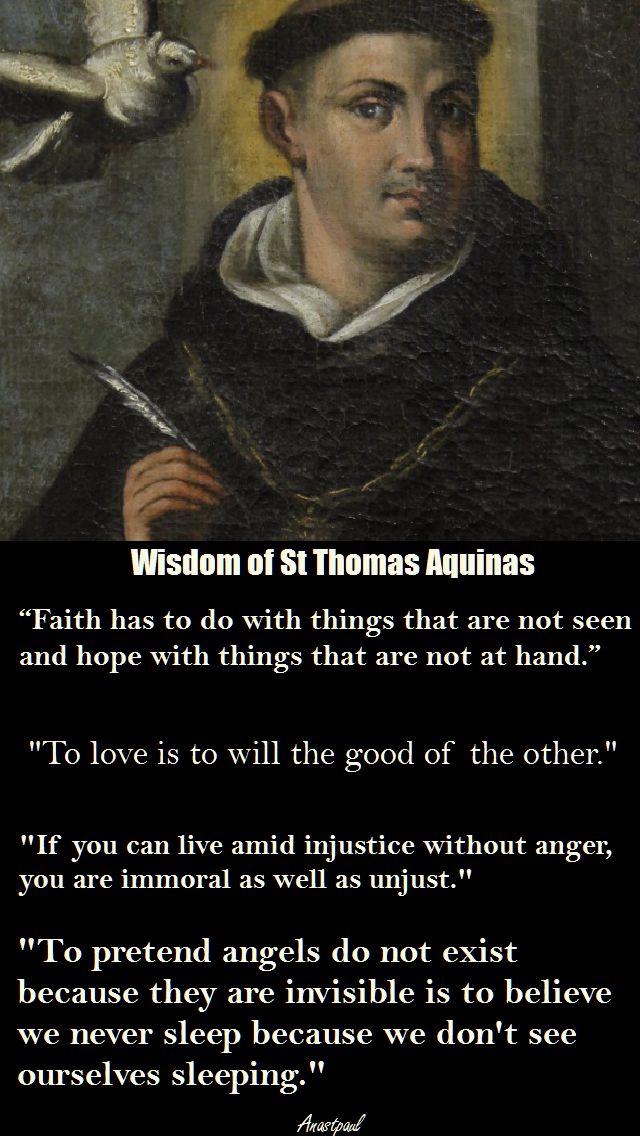
“Faith has to do with things that are not seen
and hope with things that are not at hand.”
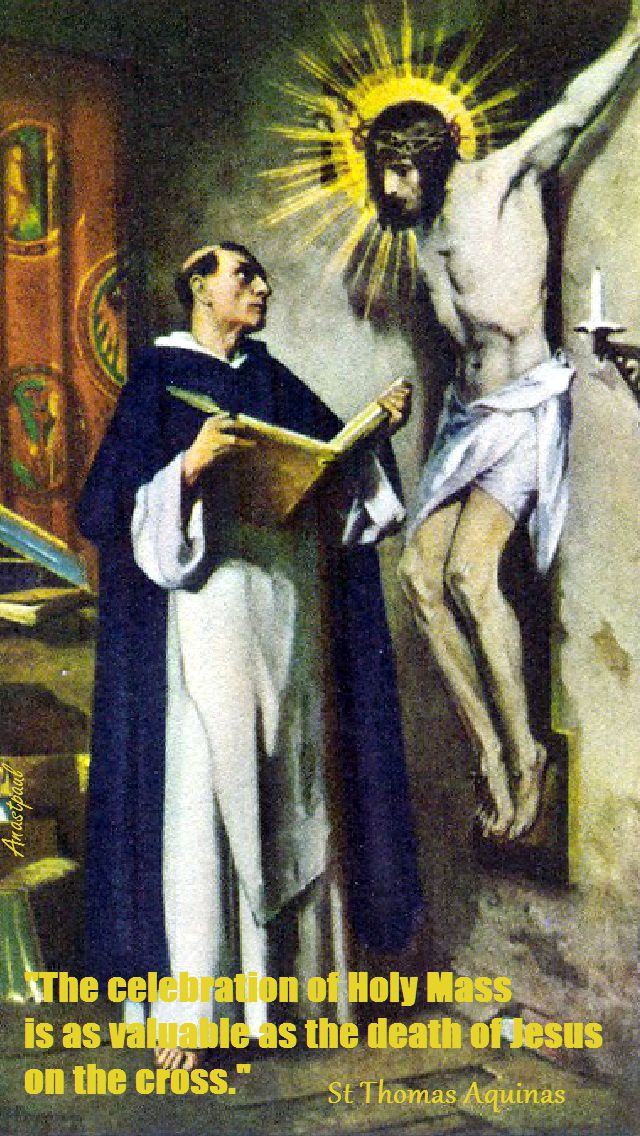
“The celebration of Holy Mass is as valuable
as the death of Jesus on the cross.”
“To love is to will the good of the other.”
“If you can live amid injustice without anger,
you are immoral as well as unjust.”
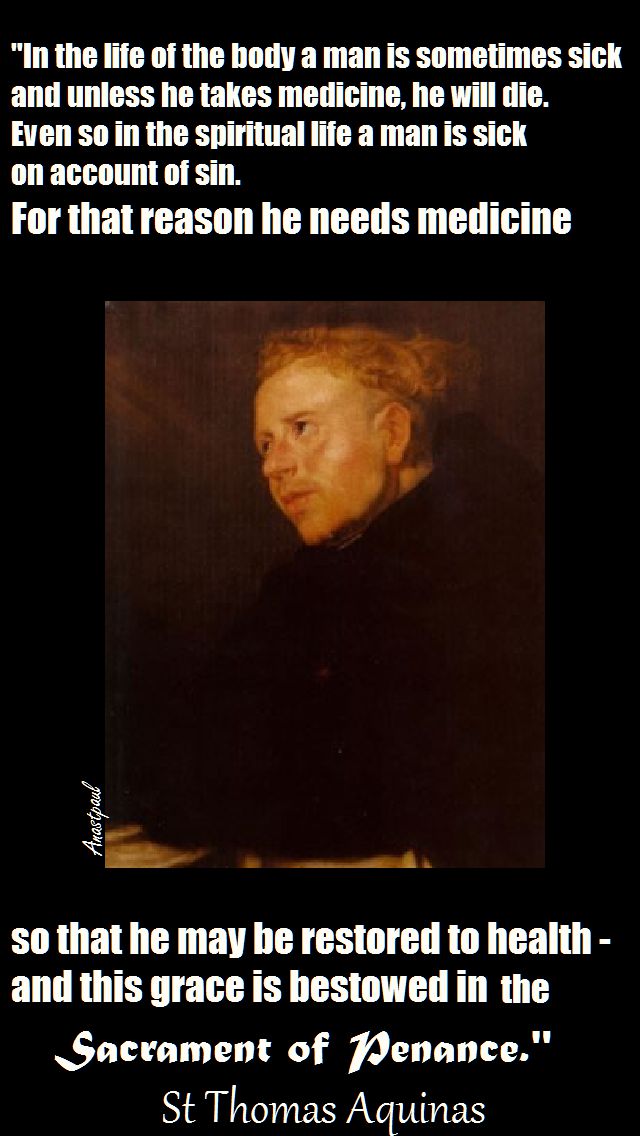
“In the life of the body a man is sometimes sick
and unless he takes medicine, he will die.
Even so in the spiritual life a man is sick
on account of sin.
For that reason he needs medicine
so that he may be restored to health –
and this grace is bestowed in the Sacrament of Penance.”
“To pretend angels do not exist
because they are invisible is to believe
we never sleep because we don’t see
ourselves sleeping.”
“To bear with patience wrongs done to oneself
is a mark of perfection but to bear with patience
wrongs done to someone else is a mark of imperfection
and even of actual sin.”
“All the efforts of the human mind
cannot exhaust the essence of a single fly.”
~~~ ST THOMAS AQUINAS (Saint of the Day)
One Minute Reflection – 28 January
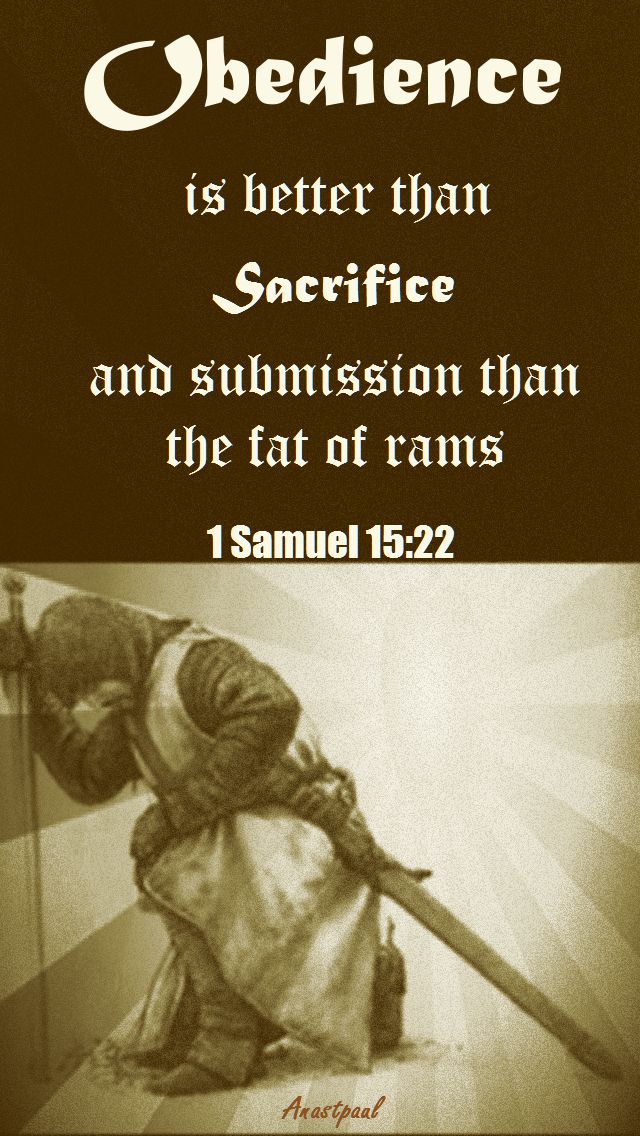
Obedience is better than sacrifice and submission than the fat of rams………….1 Sm 15:22
REFLECTION – “Obedience unites us so closely to God that it in a way, transforms us into Him, so that we have no other will but His. If obedience is lacking, even prayer cannot be pleasing to God.”………….St Thomas Aquinas (Saint of the Day)
PRAYER – Omniscient Lord, teach me to value obedience to Your laws and Your will. Grant that I may be completely obedient to You in all things. St Thomas Aquinas pray for us, amen!

 AnaStpaul
You must be logged in to post a comment.