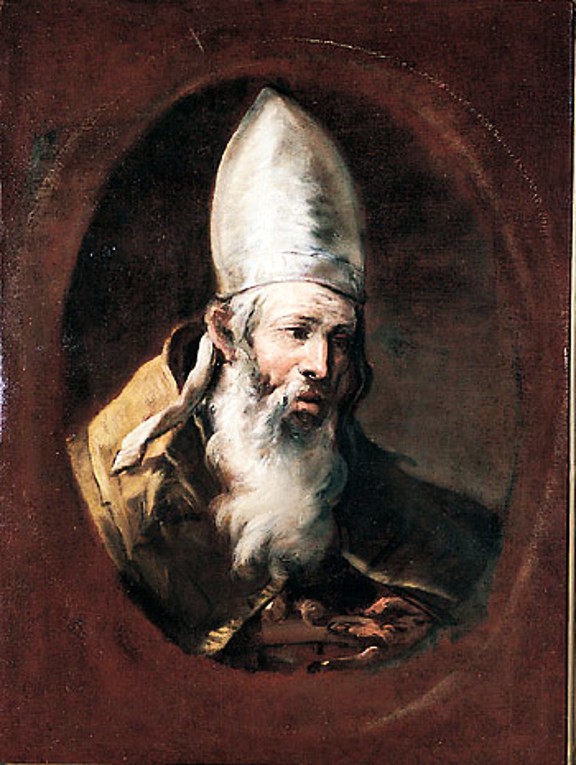
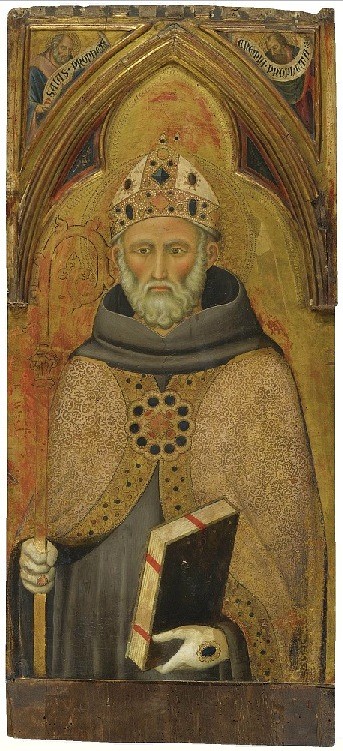
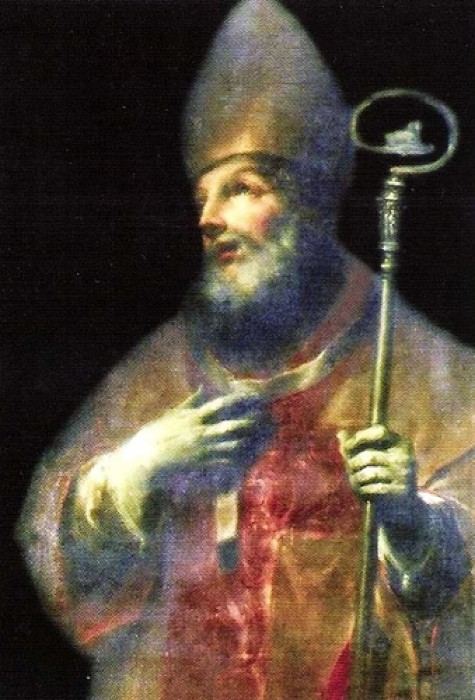
Saint of the Day – 8 December – Saint Eucharius of Trier (Died 3rd Century) the First Bishop of Trier, Germany, Date and place of birth are unknown but Eucharius is believed to have been of Italian origin. Patronages – against plague and epidemics, of Trier, Germany. Also known as Eucherius, Euchario. Additional Memorial in Limburg, Germany of the 3 Bishops sent by St Peter, occurs on 11 September. –
The Roman Martyrology reads: “At Treves, St Eucharius, disciple of the blessed Apostle Peter and the first Bishop of that City.”
Saint Eucharius is the First Bishop of Trier. This name opens the list of Bishops of the oldest See in Germany. The shepherds of that Diocese have been documented since the first half of the 3rd Century.
The first Bishops, St Eucherius and St Valerius are attested by an ancient inscription from the end of the 5th Century, while the first historically documented Bishops are St Maternius who became the Archbishop of Cologne and St Agrizius mentioned in 314, who participated in the Council of Arles.
The Trier Seal
The Holy Tunic is preserved in the Trier Cathedral which was worn by Jesus before His Crucifixion. The Tunic was discovered by Saint Helena and was donated by Bishop Agrizius. The first mention of the Sacred Relic dates to 1196, when Archbishop John Consecrated the Altar where it was kept.
We know very little about our Saint today but it is assumed that he governed the Diocese at the end of the 3rd Century especially because, Saint Eucharius was a disciple of Saint Peter, who sent him with Valerius and Maternus to evangelise Gaul.
It is said that the Bishop resurrected his companion Maternus from his sarcophagus, using the “pastoral staff of Saint Peter.” To confirm the existence of this legend, there is an ancient seal from Trier which shows the Saint receiving the keys to the City from Saint Peter. Another tradition about St Eucharius of Trier tells us that he destroyed a statue of Venus and placed the current Cross in its place which remains to this day.
The cult of this holy Bishop has been proven since 455 and is widespread in western Germany, Switzerland and many other surrounding regions. An image of him is found carved in relief in the Porta Nuova in Trier, where we see him holding the model of the City placed under his protection.
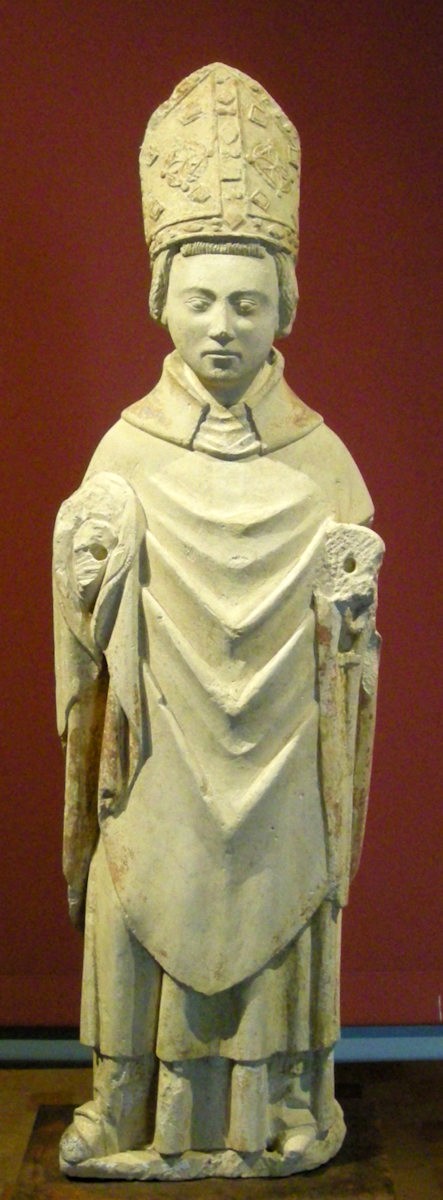
Sculptures of the first three Bishops: Saint Eucharius, Saint Valerius and Saint Maternus
Furthermore, there is a 16th Century Statue of him in Balg and a painting preserved in the Unterlinden Museum in Coilmar. In 457, Saint Cyril, the Thirteenth Bishop of Trier, had two Sarcophagi built, one for Saint Valerius and the other for Saint Eucharius. The Sarcophagi are located in the Benedictine Abbey of St Matthias in Trier which had originally been named for him until some Relics of St Matthias were obtained there.
The first Martyrologies which bear his name, are those of Rabano Mauro (856) and Notkero (912).
There are various celebrations in memory of the Bishop. In Limburg the feast of the Bishops Eucharius, Valerius and Maternus occurs on 11 September. In the Roman Martyrology his Feast day was set on 8 December.
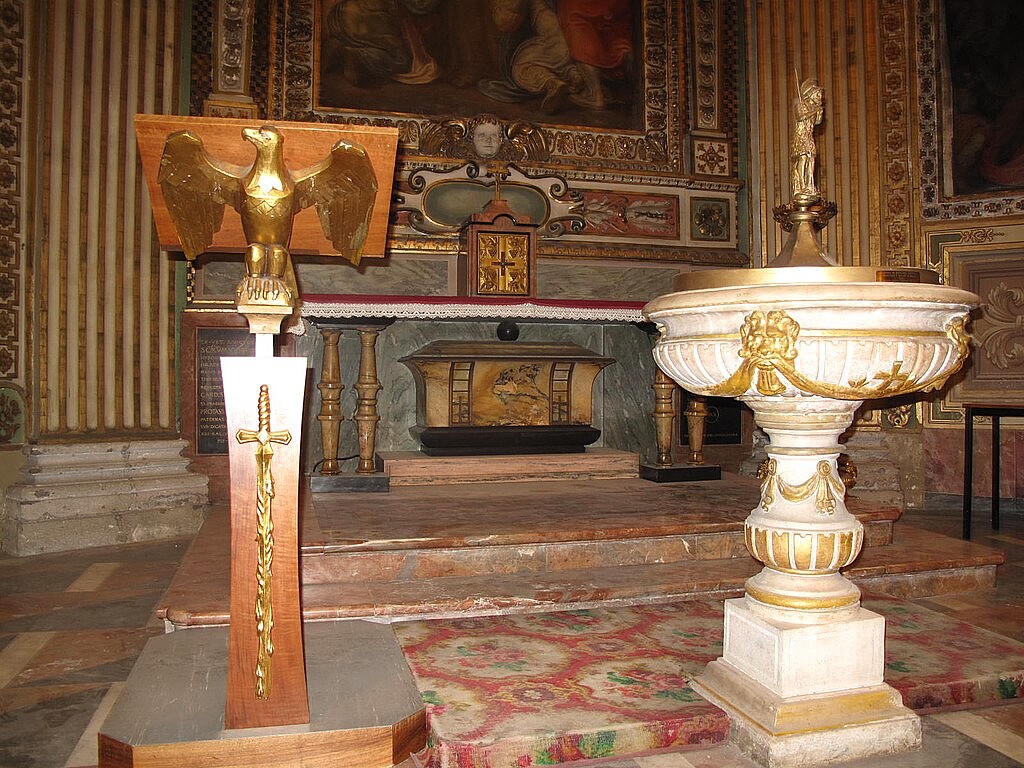
The Tombs of St Eucharius and St Valerius at the Abbey of St Matthias
St Anastasia of Pomerania St Anthusa of Africa St Antonio García Fernández St Casari of Villeneuve-lès-Avignon St Eucharius of Trier (Died 3rd Century) Bishop
St Gunthildis of Ohrdruf Bl Johanna of Cáceres St Macarius of Alexandria St Patapius St Rafael Román Donaire
St Romaric (Died 653) Married French noble layman, Abbot, Founder of the renowned Remiremont double Monastery in north-eastern France. Died in 653 of natural causes. He was Canonised on 3 December 1049 by Pope Leo IX. The Roman Martyrology reads today: “In the Monastery of Luxeuil, St Romericus, Abbot, who left the highest station at the Court of King Theodebert, renounced the world and surpassed all others in the observance of monastic discipline.” About St Romaric: https://anastpaul.com/2022/12/08/saint-of-the-day-8-december-saint-romaric-died-653-abbot/
Quote/s of the Day – 7 December – St Ambrose (340-397) – Confessor, Bishop, Father and Doctor of the Church
“O, that the soul of Mary were in us, to glorify the Lord! That the spirit of Mary were in us, to rejoice in God. May the life of Blessed Mary be ever present to our awareness. In her, as in a mirror, the form of virtue and beauty of chastity, shine forth. She was Virgin, not only in body but in mind and spirit. She never sullied the pure affection of her heart by unworthy feelings. She was humble of heart. She was serious in her conversations. She was prudent in her counsels. She preferred to pray rather than to speak. She united in her heart the prayers of the poor, and avoided the uncertainty of worldly riches. She was ever faithful to her daily duties, reserved in her conversations and always accustomed to recognise God as the witness of her thoughts. Blessed be the Name of Jesus!”
(On Virginity II 2.7)
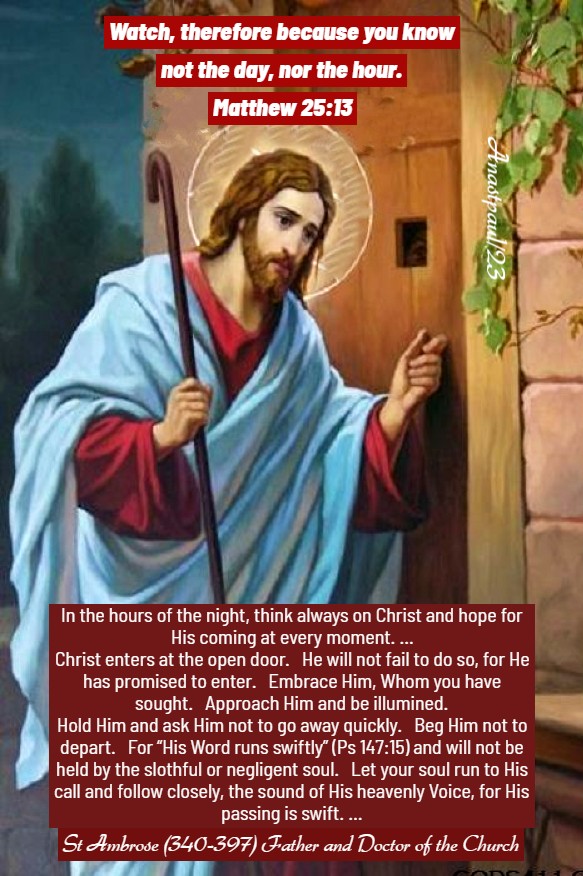
“Watch, therefore because you know not the day, nor the hour.” Matthew 25:13
“ In the hours of the night, think always on Christ and hope for His coming at every moment. … Christ enters at the open door. He will not fail to do so, for He has promised to enter. Embrace Him, Whom you have sought. Approach Him and be illumined. Hold Him and ask Him not to go away quickly. Beg Him not to depart. For “His Word runs swiftly” (Ps 147:15) and will not be held by the slothful or negligent soul. Let your soul run to His call and follow closely, t he sound of His heavenly Voice, for His passing is swift. …”
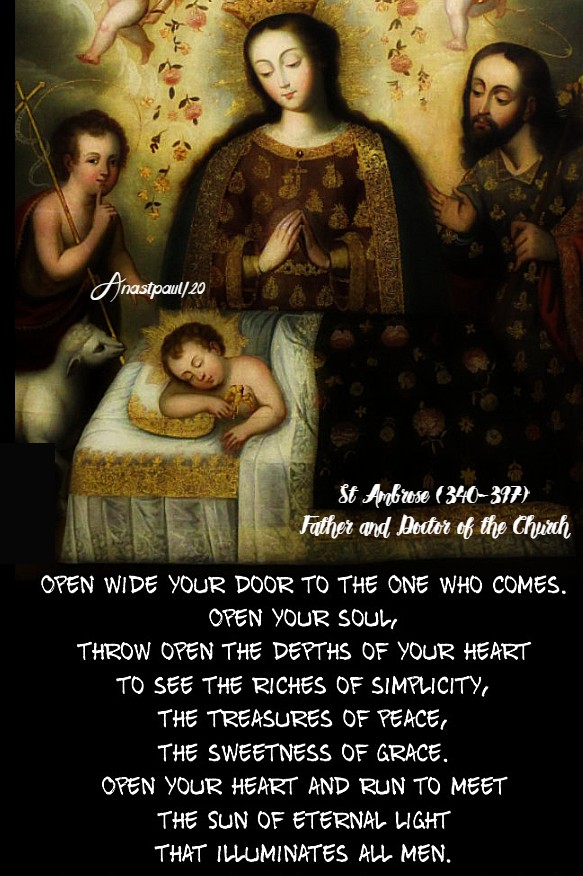
“Open wide your door to the One who comes. Open your soul, throw open the depths of your heart to see the riches of simplicity, the treasures of peace, the sweetness of grace. Open your heart and run to meet the Sun of Eternal Light Who illuminates all men.”
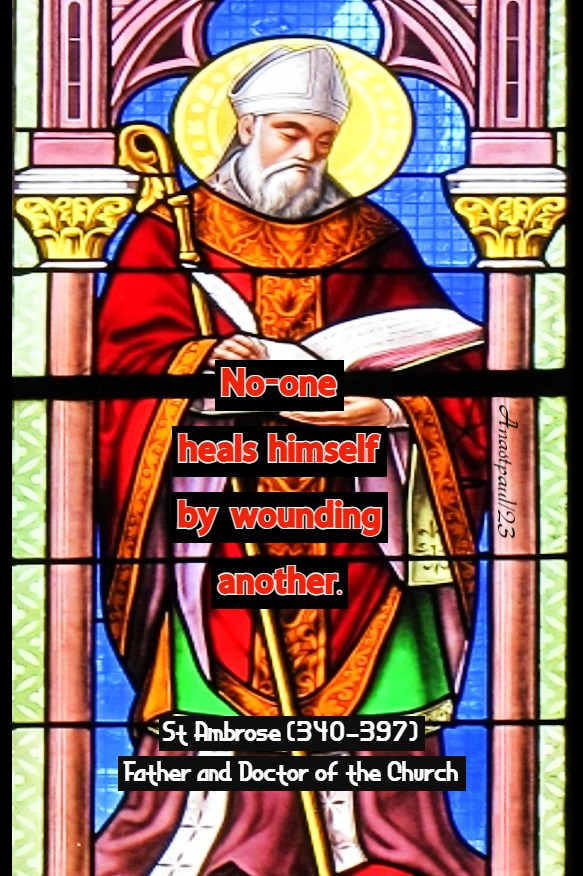
“No-one heals himself by wounding another.”
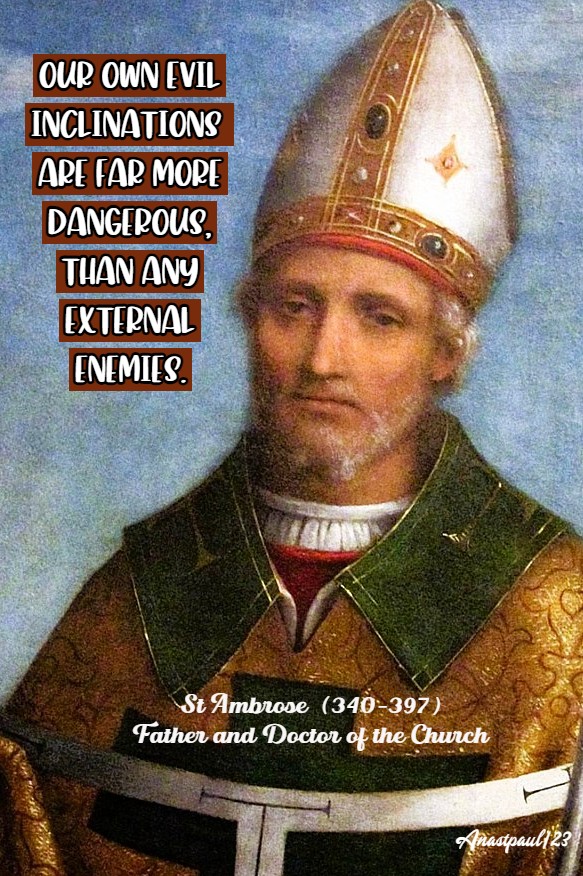
“Our own evil inclinations are far more dangerous, than any external enemies. ”
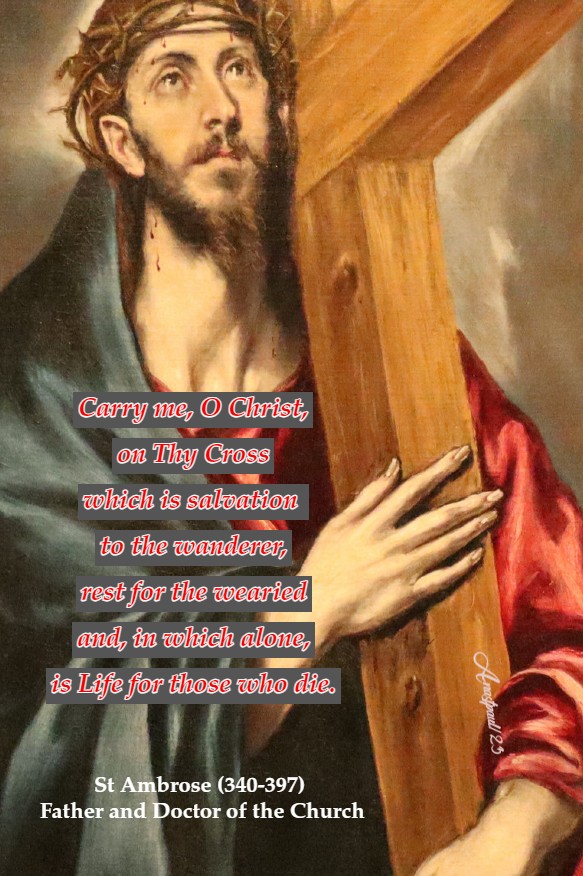
“Carry me, O Christ, on Thy Cross which is salvation to the wanderer, rest for the wearied and, in which alone, is Life for those who die.”
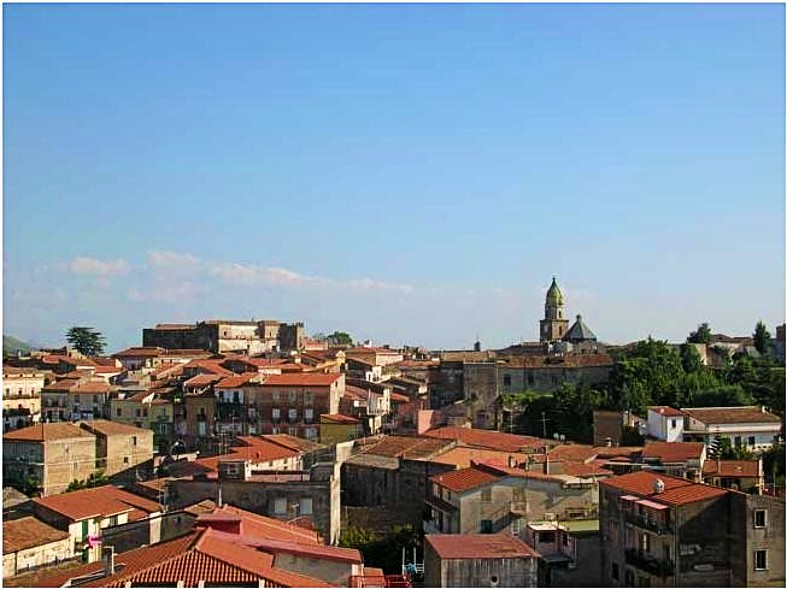
Saint of the Day – 7 December – Saint Urbanus of Teano (Died circa late 4th Century) Confessor, the Third Bishop of Teano, Peacemaker, Apostle of the poor and needy, Miracle-worker. Born and died in Teano, Italy. Patronage – Teano, Italy. Also known as – Urban, Urbano, Urbanius.
The Roman Martyrology reads today: “At Teano in Campania, Saint Urbanus, Bishop.”
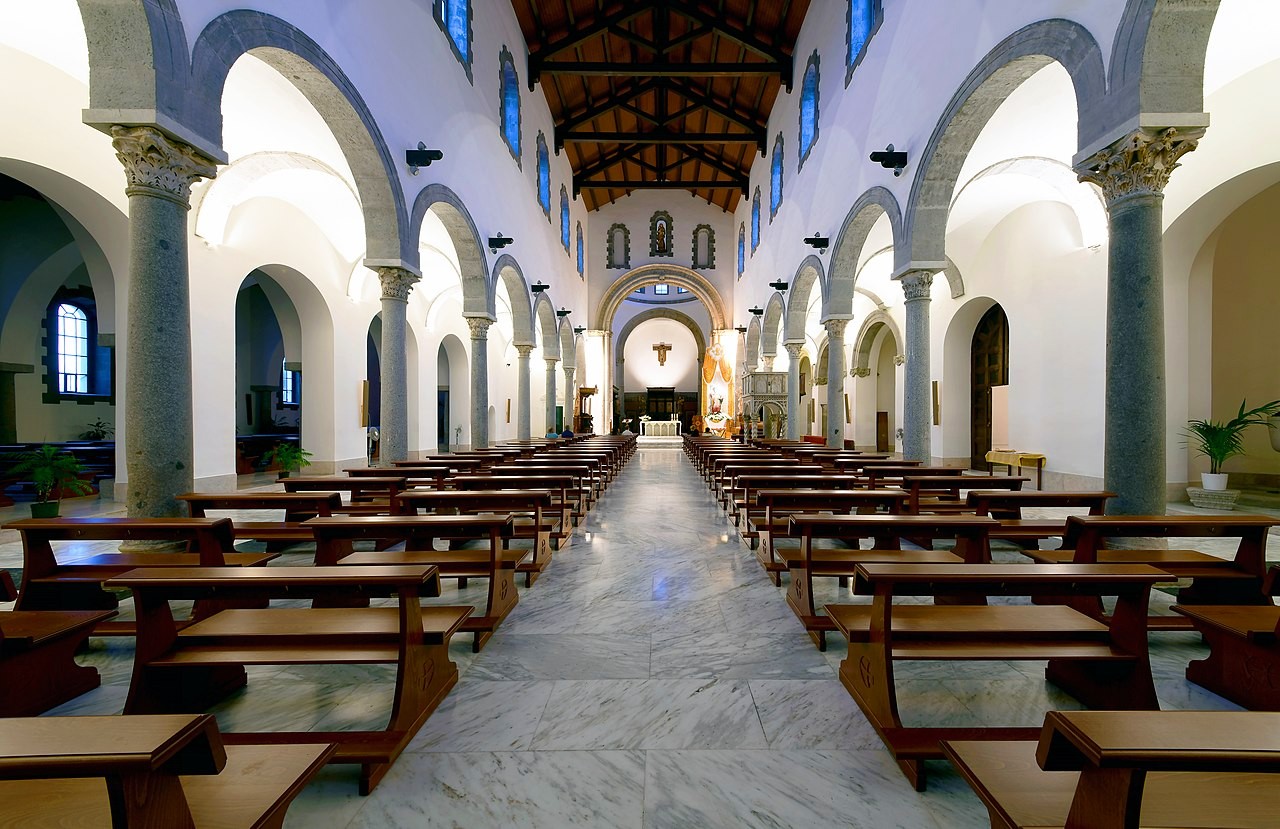
Interior of the Teano Cathedral
In the Diocese of Teano, the first Three Bishops are Saints: Paris, Amasius and Urbanus. The records after these, became incomplete until the second half of the 9th Century.
He is called a great Confessor, Native of the place, he was a disciple and Deacon of the First Bishop of Teano, San Paris (Died c346). Upon his death, the people wanted Urbanus as their Bishop by popular acclaim. But he managed to avoid the election in favour of Amasius (Died c356). When the latter also died, he had to accept the nomination as Bishop.
He exercised his pastoral function with great sanctity. It is said that he performed many miracles which attracted numerous crowds to him. He spent all his energy to visit the faithful of his Diocese, to create Churches and revive Christian worship. He acted as peacemaker during discords, he was assiduous in assisting the poor and needy.
The chronology of his predecessors who died respectively in 346 and 356, allows us to place his Episcopate in the second half of the 4th Century.
The lessons of the Office of the Diocese, published in 1533, deal with him, where he is described as a holy Bishop with great piety and devotion and all the essential elements of a holy Bishop.
There is a little information handed down to us in the 6th Century “Vitae” of his predecessors. Only the Author, Lanzoni thinks that the cult of the first three Bishops of that Church in Teano, derives from an authentic Episcopal catalogue.
Urbanus died very old on 7 December, as he had previously predicted. He was buried in a tomb which he, himself, had built between the southern gate of the City and the Savone river, probably in the ancient Cemetery, where today the Diocesan Church dedicated to San Paris is located.
The name of St Urbanus was added to the Roman Martyrology with a Feast Day of 7 December.
A Day of Fasting and Abstinence, for the Holy Day tomorrow
Vigil of the Immaculate Conception of the Blessed Virgin Mary – 7 December: On this Vigil day, Catholics stand in the remains of the night as the dawn makes its appearance. This resplendent dawn is that Singular Conception, the Immaculate Conception, who ushers in the Light of Christ. A day of Fast and Abstinence following the Rubrics of Pope Pius X for the Universal Calendar of the Church.
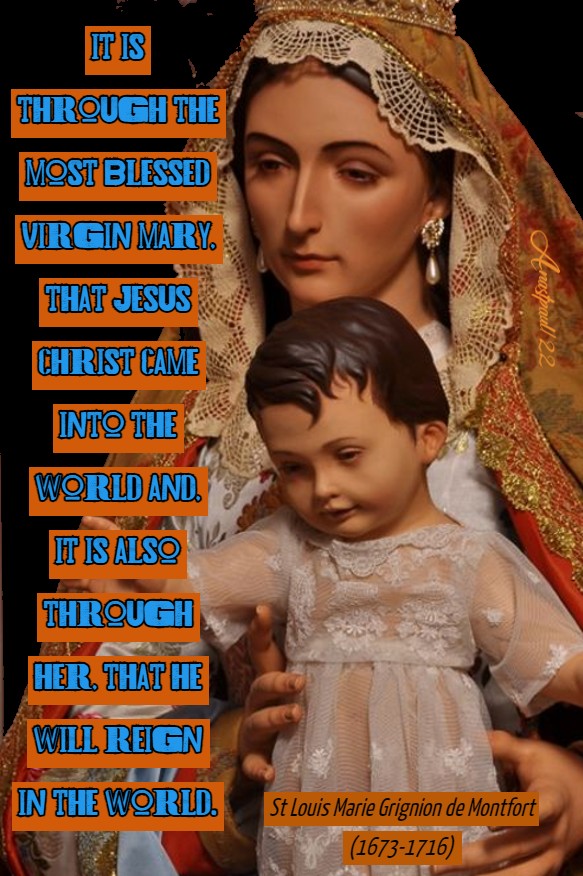
“It is through the most Blessed Virgin Mary, that Jesus Christ came into the world and, it is also through her, that He will reign in the world.” – St Louis Marie Grignion de Montfort (1673-1716)
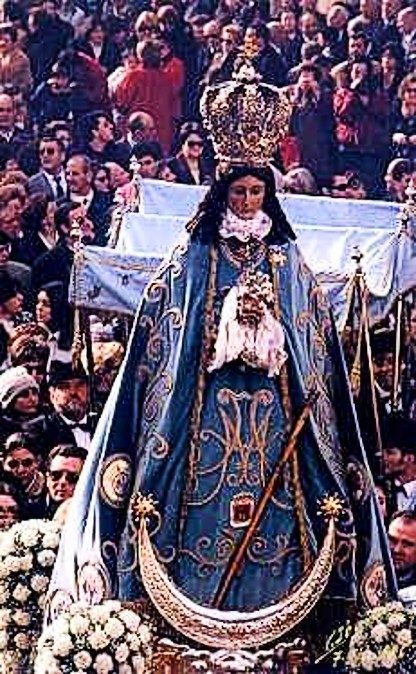
Virgen del Castillo, Inmaculada Concepción / Virgin of the Castle, Yecla, Spain (1642) – 7 and 8 December:
Saint of the Day – 6 December – Blessed Angelica Leonti of Milazzo TOM (1519-1559) Virgin, Lay Tertiary of the Order of the Minim. Also known as – Angela.
Blessed Angelica was born in 1519 in Milazzo in the Province of Messina on the western tip of Sicily in southern Italy. Her parents were Domenico Leonti and Bernarda Maiolino. She had two sisters, Blasia and the Blessed Pelagia (Died 1591).
Milazzo was an ancient City that was important in the Middle Ages and the Renaissance, as a port for trade and a manufacturing centre but also, as a well-equipped military base. There the cult of Saint Francis of Paola (1416-1507) was particularly lively.
Angelica lived in constant struggle against the attractions of the world. Not its temptations per se but, the legitimate and human concerns of those, who wished her to live a normal and happy life, where she was respected and satisfied. She was beautiful, sensitive and virtuous and against her family’s wishes, she followed the fate of so many other girls of her age, by forgoing a spouse. It was not easy because she was exposed to constant pressure but she stubbornly resisted both flattery and threats.
In moments of most serious tension, she resorted to the Crucifix, imploring His help. She was granted, by the Cross a cross, that is, a very serious illness which put her very life in danger. It was then that she, by vow, wore the Habit of the Third Order of San Francesco di Paola. In that dress, as if inside a mystical armour, she felt sure that she could remain in the desired state forever.
When she recovered, she, like her two sisters, became a Tertiary in the Third Order of the Mimins, (Tertius Ordo Minimorum – TOM), a branch of the Saint Francis of Paola Order of the Friars Minor (OM or Ordo Minim), open to laypeople of both sexes. It was said of the three sisters that “fasting was their sustenance, prayer their recreation and assistance to the poor and sick their favourite activity”. “The City hailed Angela as holy and it was often said that when she was seen in the street with her sister, they were accompanied by two angels in human form, their faces shining with heavenly splendour.”
But Angelica was eaten up from within by a malignant tumour and her beauty was transformed into hideousness and, as the suffering became more and more unbearable, she honed the spirit that filled her body like a consuming fire. Angelica died in Milazzo, according to Piazza in Memorie della Città di Milazzo, on 1 November 1559, aged only forty. From this day Angelica Leonti was called Beata Angelica by the people of Milazzo. Her memorial day is 6 December. Her sister, Pelagia died in 1591.
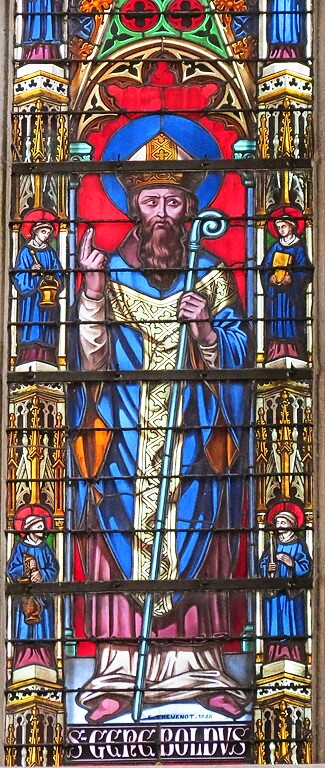
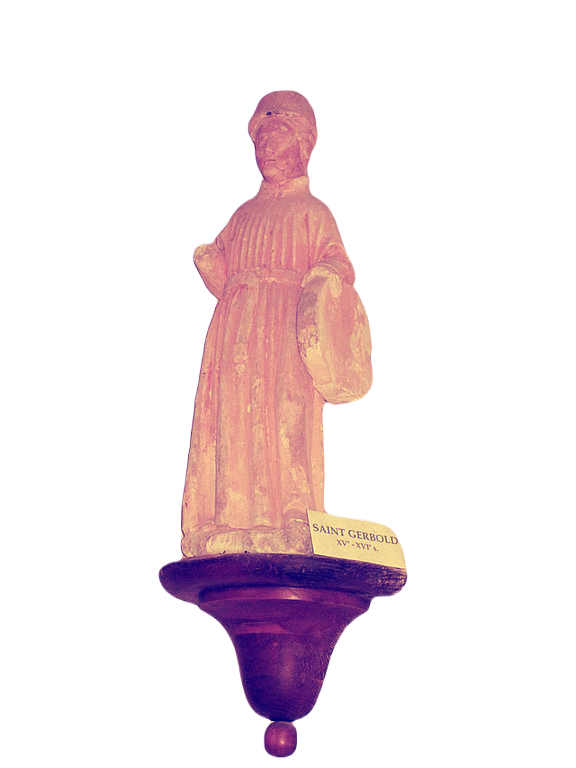
Saint of the Day – 5 December – St Gerbold (Died c691) Bishop of Bayeux in Normany, France, Hermit, Founder of the Monastery of Livry in Normandy. Also known as – Gerbaud, Gerebaud, Gereboldus, Gerhold of of Bayeux. Died in c691 of natural causes. Patronages – against dysentery (popularly – St Gerbold’s Disease), hemorrhoids, headaches.
Gerbold became the Bishop of Bayeux in 689. According to some records and traditions, he took part in the Synod in Rouen in 692 or 693 and founded a Monastery in Livry – on the site of the current Chapel dedicated to St Sulpicius of Bayeux. The Bishops’ list puts Gerbold’s death at 691.
According to tradition, Gerbold became a Steward for a wealthy lord in England. There, the lord’s wife made advances to Gerbold which he rejected, whereupon the disappointed woman complained about him to her husband, probably reversing the story.
Gerbold fell into disgrace, his master imprisoned him and then threw him into the sea, weighed down with a millstone! But miraculously it turned into cork, allowing Gerbold to cross the English Channel and land in Ver-sur-Mer near Bayeux. There – or in nearby Crépon – he lived as a Hermit. His miraculous deeds persuaded the people of Bayeux to appoint him as their Bishop.
As Bishop, Gerbold’s moral strictness turned the people against him and they drove him out of the City. He travelled on pilgrimage to Rome until the people of Bayeux were scourged with the diseases of dysentery and hemorrhoids. They recalled their Bishop, in haste, begged forgiveness for their sins, whereupon the illnesses immediately ceased.
Blessed Bartholomew Fanti of Mantua O.Carm. (c 1428-1495) Carmelite Priest, renowned Preacher. Humble and gentle, Bartholomew gave an example to everyone of a life of prayer, of loving kindness and generosity to all and of faithful service to the Lord. He was remembered and revered, even during his life, for his great love ot the Blessed Sacrament, which was the source and the summit of his apostolic life, together with his love and devotion to the Virgin Mother. His Beatification received the Papal approval of Pope Pius X on 18 March 1909. Biography: https://anastpaul.com/2021/12/05/saint-of-the-day-5-december-blessed-bartholomew-fanti-o-carm-c-1443-1495/
St Basilissa of Øhren St Bassus of Lucera St Bassus of Nice St Cawrdaf of Fferreg St Christina of Markyate St Consolata of Genoa St Crispina St Cyrinus of Salerno St Dalmatius of Pavia St Firminus of Verdun
St Gerbold (Died c691) Bishop St Gratus Bl Giovanni Gradenigo St Justinian St Martiniano of Pecco St Nicetius of Trier St Pelinus of Confinium
Martyrs of Thagura – 12 Saints: A group of twelve African Christians who were Martyred together in the persecutions of Diocletian. The only details about them that have survived are five of their names – Crispin, Felix, Gratus, Juliua and Potamia. They died in 302 in Thagura, Numidia
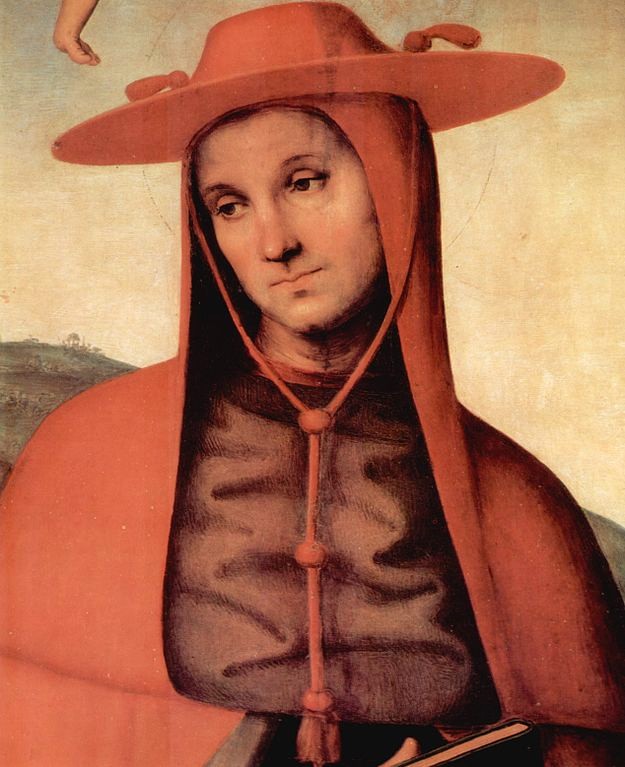
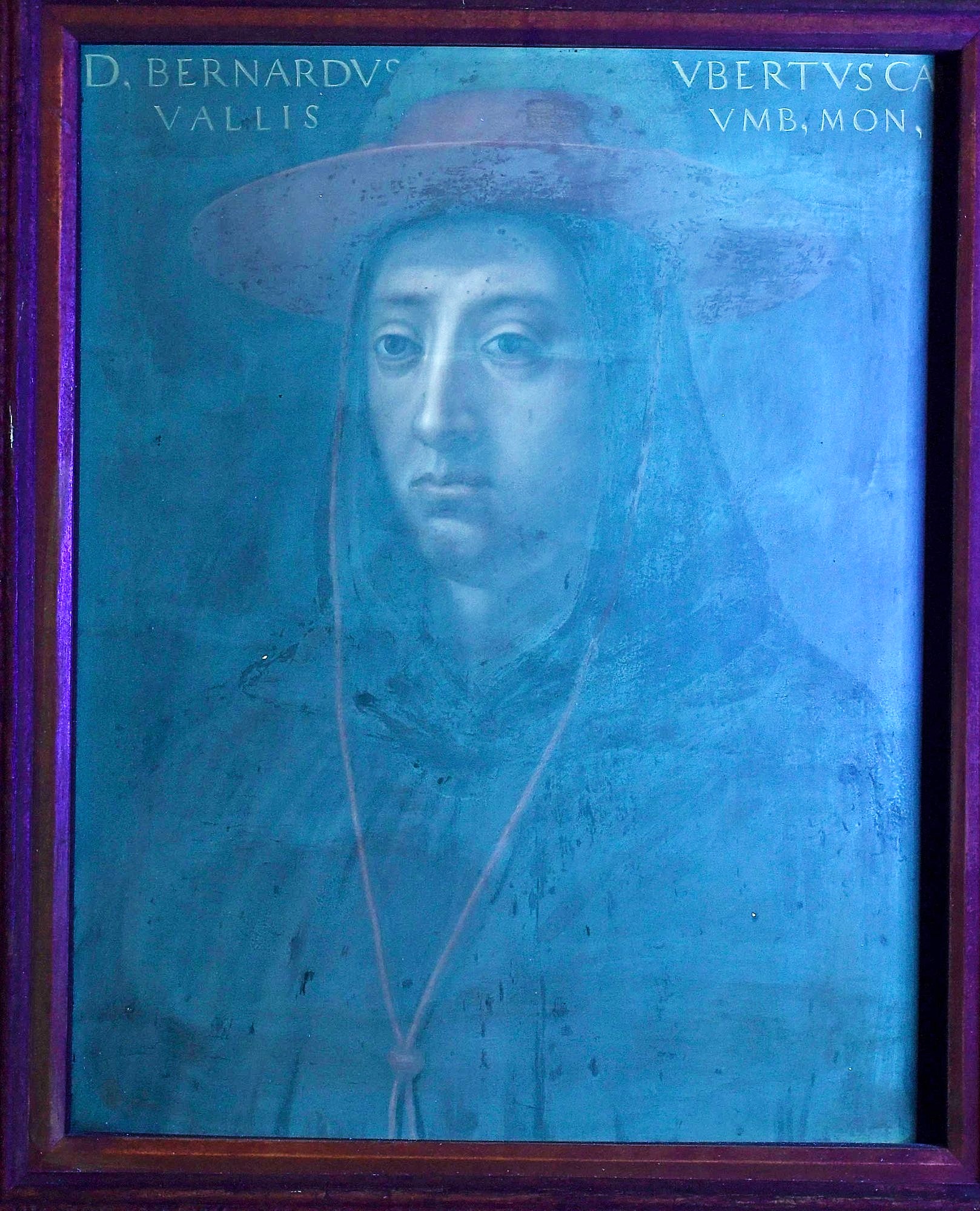
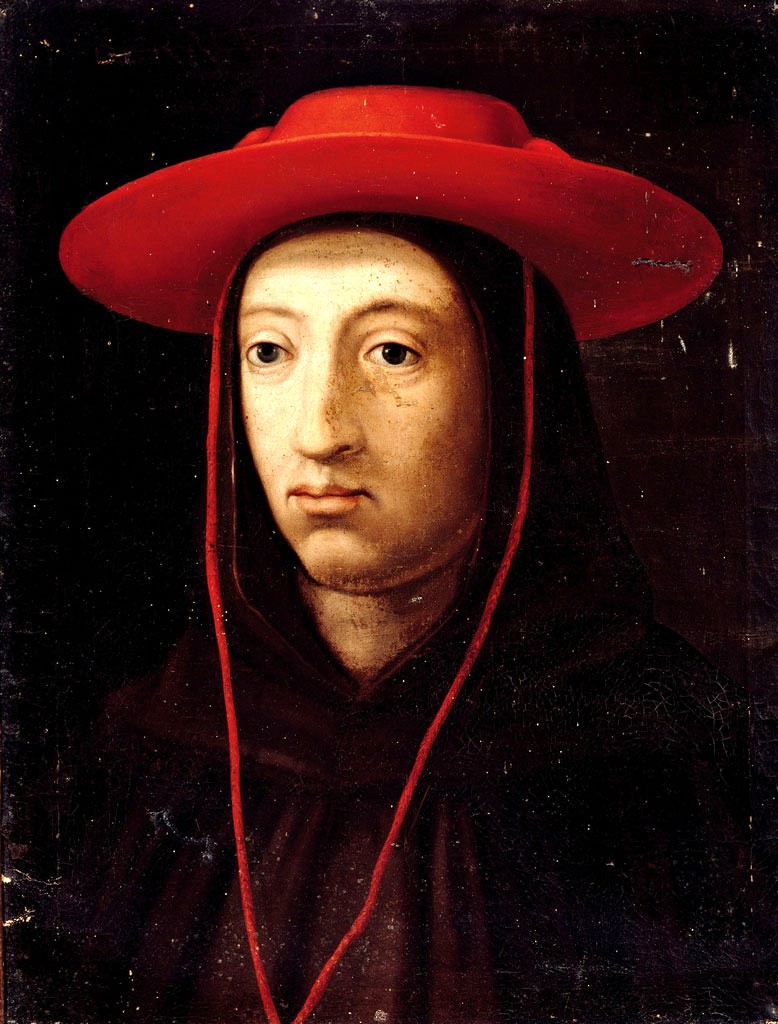
Saint of the Day – 4 December – St Bernardo degli Uberti OSB Vall. (c1060-1133) Cardinal Bishop, Benedictine Vallombrosan Monk, Abbot of San Salvi Monastery, Abbot-General of the Vallombrosans. Created a Cardinal by Pope Urban II in 1097. Papal legate, Bishop of Parma, Italy in 1106. Exiled twice during disputes with Anti–Papal forces opposing Pope Saint Gregory VII. Born in c1060 in Florence, Italy and died on 4 December 1133 in Parma, Italy of natural causes. Patronage – of Pavia. – A fascinating Saint who even Pablo Picasso could not resist painting (2nd image below – maybe Senor Picasso’s ‘Blue Period?’
Bernardo was born around 1060 in Florence in the region of Tuscany in central Italy. His father’s name was Bruno and he came from a noble family which, in the following Century, took the name Uberti. But Bernardo gave up a life of power and luxury and, in July 1085, gave his inheritance to relatives, friends and the Town’s Monastery of San Salvi. He himself became a Monk in the Vallombrosan Order in the Mother house Monastery in Vallombrosa. It was an ascetic community, founded not long before, by Saint John Gualbertus .
In time, Bernardo was elected Abbot of San Salvio and then the 4th or 5th Abbot-General of the Vallombrosan Order. Under his leadership, the Order spread from Tuscany into Emilia Romagna and Lombardy. In 1097, while holding Office as Abbot-General, he was appointed Cardinal by the Blessed Pope Urban II (1088-1099) and he was entrusted with various assignments as Papal Vicar in northern Italy and Legate of Canossa. On behalf of Pope Paschalis II (1099-1118), he promoted the Ecclesiastical reform in many Cities in northern Italy. In 1106, on the occasion of the Consecration of the new Cathedral, Pope Paschalis II appointed Bernardo as the Bishop of Parma. Pope Paschalis himself, Consecrated Bernardo and under his guidance and governance, Parma became a centre of the reform movement.
At a time when many Bishops, not only accepted but sought secular power, Bernardo renounced all the secular power which his predecessors in the Episcopate had received. He never forgot and did not let others forget that he had been trained as a Monk in a very ascetic school and, so far as was compatible with his duties, he maintained his monastic observances.
Parma was, at this time, seriously affected by several schisms. First, on 28 October 1061, Bishop Peter Cadalus of Parma had established himself as antipope Honorius II (1061-1072) and then there were other Bishops who supported Archbishop Guibert (Wibert) of Ravenna, who, on 25 June 1080, also established himself as antipope Clement III (1080-1100). Bernardo was a zealous supporter of the true Pope, Saint Gregory VII (1073-1085) and his reforms. He was a particular opponent of simony which was widespread in his Diocese. He proved a very successful Bishop but was twice banished from Parma. The first time was in 1104 by the followers of the antipope Maginulf or Sylvester IV (1105-1111), who arrested him at the Altar, on 15 August 1104. He was in exile for two years.
In 1124, for the Vallombrosan Order, Bernardo obtained protection from Emperor Henry V (1106-1125) Emperor from 1111. In the investiture dispute, Bernardo took an intermediate position but nevertheless, he was arrested, together with the Pope, by Emperor Henry V.
In 1127 there was a civil war in Germany and the Hohenstaufen elevated Duke Frederick II of Swabia’s brother, Konrad of Staufen (Henry V’s nephew), to counter-king (1127-35) against Lothar III (1125-1137). Pope Honorius II (1124-1130) Excommunicated Konrad in 1128, along with Archbishop Anselm of Milan, who had crowned him King of Lombardy. Bernardo also protested against the elevation of Konrad and he was, therefore, then again driven into exile. In 1133, Lothar came to Rome to be crowned Emperor . Bernardo continued to attempt a mediatation and while he was already suffering in his last illness, he received Lothar in Verona, on his way to Rome.
Bernardo had returned to his See, when, on 4 December 1133, he died in Parma. The Vallombrosans immediately began to venerate him as a Saint and his Relics were already elevated, on 3 December 1139 by his successor as Bishop, Lanfranc. At the time, this was equivalent to a Canonisation. His Memorial day is the day of his death on 4 December and his name appears in the Martyrologium Romanum. His tomb is in the Chancel of the Cathedral in Parma and Relics are found in Vallombrosa, Florence and Parma.
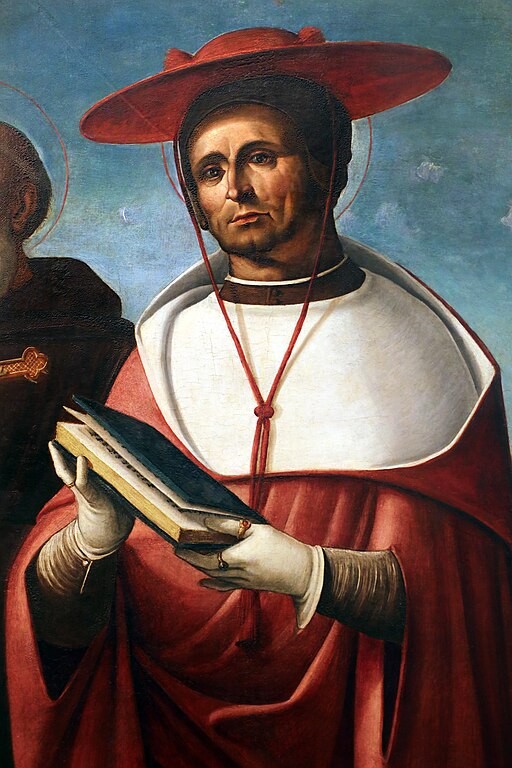
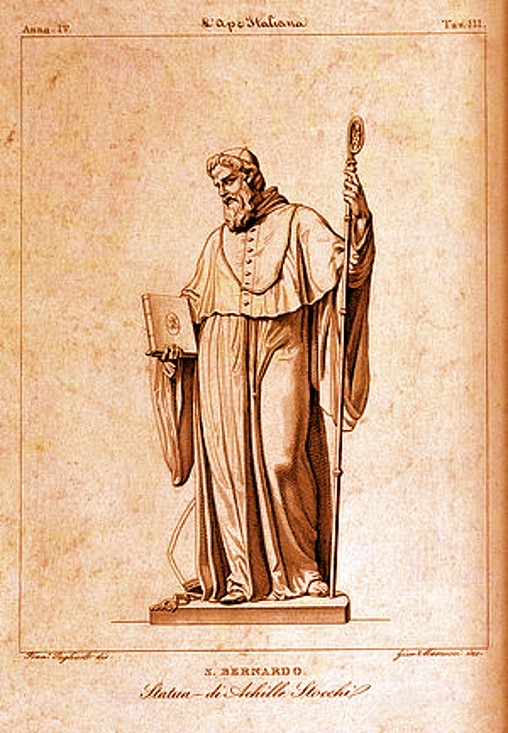
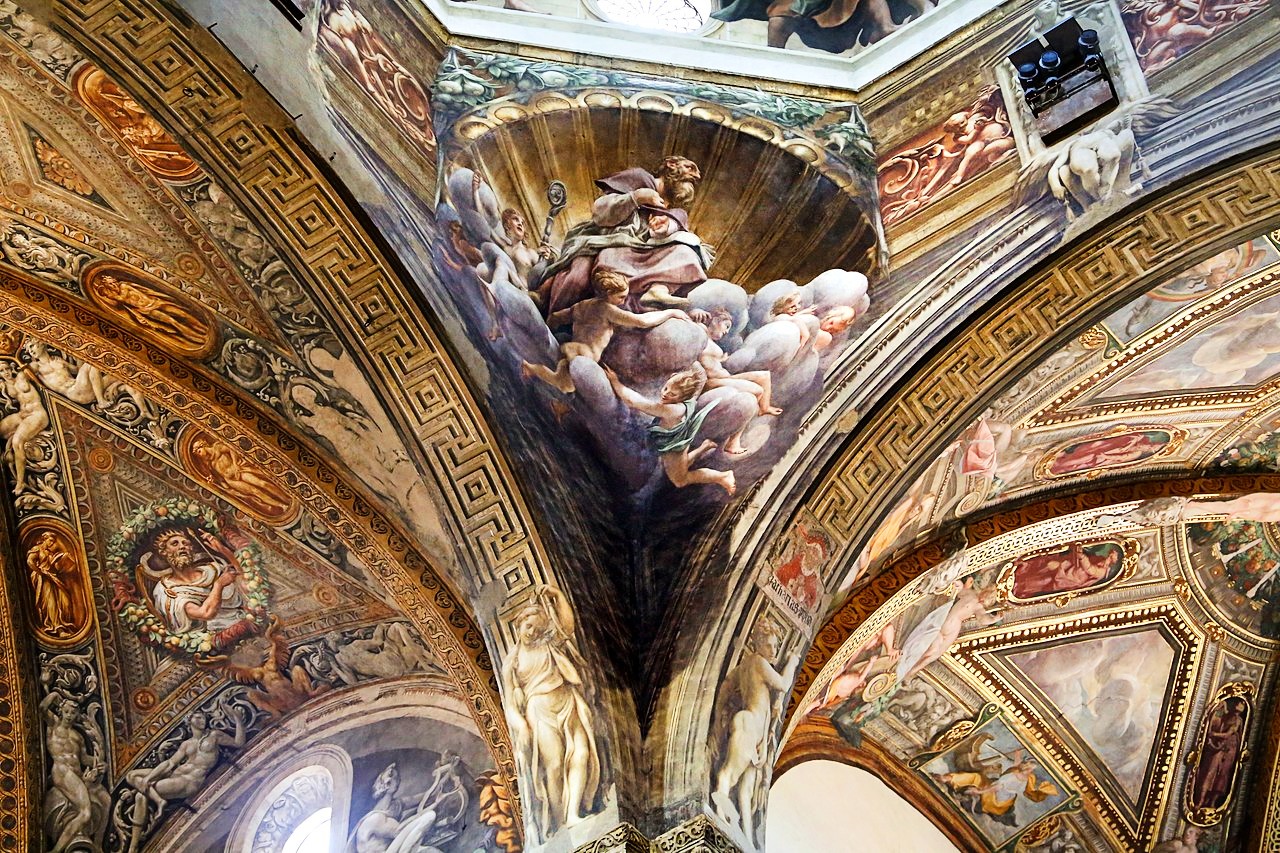
The Vallombrosans consider St Bernardo as their “third father” after Saints Benedict of Nursia and John Gualbertus. In art, he is most often portrayed as a Cardinal, sometimes being carried to Heaven by Angels. He is sometimes depicted preaching, giving alms, blessing, casting out demons, or appearing to devoted followers after his death.
St Bernardo being carried to Heaven by Angels – the ceiling of Pavia Cathedral
St Peter Chrysologus (c 400-450) “Golden Words” Confessor,, Father & Doctor of the Church – Bishop of Ravenna, Italy. Today we celebrate the Memorial of Saint Peter Chrysologus, a fifth-century Italian Bishop known for testifying courageously to Christ’s full humanity and divinity during a period of the heresy called “Monophysite.” The saint’s title, Chrysologus, signifies “golden speech” in Greek. Named as a Doctor of the Church in 1729 by Pope Benedict XIII., he is distinguished as the “Doctor of Homilies” for the concise but theologically rich reflections he delivered during his time as the Bishop of Ravenna. 176 of his sermons have survived – it is the strength of these beautiful explanations of the Incarnation, the Creed, the place of Mary and John the Baptist in the great plan of salvation, Mary’s perpetual Virginity, the penitential value of Lent, Christ’s Eucharistic presence and the Primacy of St Peter and his successors in the Church. FEAST DAY: 4 December (General Roman Calendar 1729-1969) https://anastpaul.com/2018/07/30/saint-of-the-day-30-july-st-peter-chrysologus-c-400-450-golden-words/
St Apro St Bernardo degli Uberti OSB Vall. (c1060-1133) Cardinal Bishop St Bertoara of Bourges St Christianus St Clement of Alexandria St Cyran of Brenne St Eraclius St Ezequiel Álvaro de La Fuente St Felix of Bologna Bl Francis Galvez St Heraclas of Alexandria Bl Jerome de Angelis St John the Wonder Worker St Maruthas St Melitus of Pontus
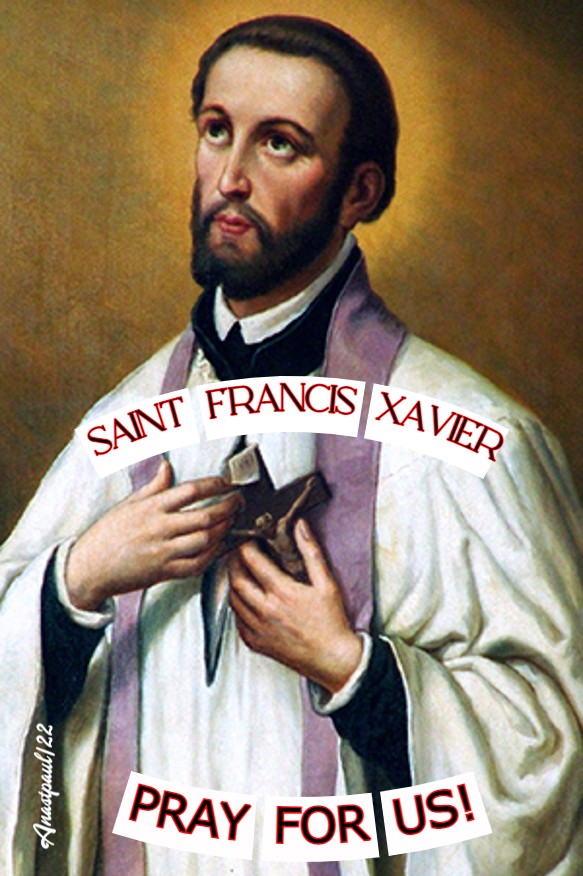
One Minute Reflection – 3 December –The First Sunday of Advent – St Francis Xavier SJ (1506-1552) Confessor – Romans 13:11-14; Luke 21:25-33 – Scripture search here: https://www.drbo.org/
“Look at the fig tree and all the trees, when they produce their fruit you know that summer is near. So too, when you see these things happening, know that the Kingdom of God is near.” – Luke 21:29-31
REFLECTION – “Look at the fig tree and all the trees, when they produce their fruit you know that summer is near. So too, when you see these things happening, know that the Kingdom of God is near.” He means that just as the coming of summer is recognised by the fruit on the trees, so is the nearness of the Kingdom of God recognised by the destruction of the world. These words show that the fruit of the world is destruction – it increases only to fall, it produces, only to destroy by its disasters whatever it produces. The Kingdom of God is aptly compared to summer, because it is then that the clouds of our sorrow pass away and the days of life shine with the brightness of the Eternal Sun. …
“Heaven and earth will pass away but My words will not pass away.” Nothing among material realities is more lasting than the heavens and the earth and nothing among realities, passes away, as quickly as an utterance. … Therefore, the Lord declares: “Heaven and earth will pass away but My words will not pass away.” He means: “Nothing that is lasting in your world lasts for eternity without change and everything that in Me, is perceived as passing away, is kept firm, without passing away. My utterance, which passes away, expresses thoughts that endure without change.” …
Therefore, my friends, do not love what you see cannot long exist. Keep in mind the Apostle John’s precept, in which he counsels us not “to love the world or the things in the world because, if anyone loves the world, the love of the Father is not in him” (1 Jn 2:15). – St Gregory the Great (540-604) Pope, Father and Doctor of the Church (Sermons on the Gospels No 1 )
PRAYER – O God, Thou Who were pleased to gather into Thy Church the peoples of the Indies by the preaching and miracles of blessed Francis, mercifully grant that we, who honour his glorious merits, may also imitate the example of his virtues. Through Jesus Christ, Thy Son our Lord, Who lives and reigns with Thee, in the unity of the Holy Ghost, God, world without end. Amen (Collect).
Saint of the Day – 3 December – Saint Mirocles (Died c316) Confessor, the 6th Bishop of Milan from before 313 to c316.. Mirocles was one of the originators of the Ambrosian Liturgy and Chant. His life and works were praised by Saint Ambrose. Unknown birth date butit is thought he was born in Pavia, Italy – he died in Milan on 30 November c316 of natural causes. Also known as – Merocles, Mirocle, Mirocleto.
The Roman Martyrology reads: “At Milan, St Mirocles, Confessor and Bishop, sometimes mentioned by St Ambrose.”
Almost nothing is known about the life of Mirocles. He was elected as the Bishop of Milan before 313 and he reigned until his death in c316. He perhaps was born to a family of Pavia, of which family St Epiphanius would be born over 100 years later as his relative on his mother’s side.
Mirocles was the Bishop of Milan when, in 313, the Emperors Constantine I and Licinius, issued the Edict of Milan which proclaimed the religious toleration in the Roman Empire. After the Edict of Milan, Mirocles started the erection of the Basilica, which was the first Cathedral of the City and, was built on the same site as that occupied today, by the present Cathedral of Milan.
Sources record, the presence of Mirocles at the Lateran Council held in October 313 in Rome, under Pope Miltiades, which took a stand in the Donatism heresy, condemning Donatus Magnus charged to re-baptising those who had lapsed and which sided with Caecilianus, the Bishop of Carthage. Mirocles participated also in the following Council of all the Western Bishops held in Arles on 1 August 314, which confirmed the condemnation of Donatus and ruled in matters regarding Canon Law.
Mirocles possibly also founded the Church of San Vittore al Corpo in Milan (rebuilt many times during the next Centuries) in honour of Saint Victor Maurus, who was Martyred during the terrors of the reign of Emperor Diocletian in c303.
Mirocles died on the 30 November of about 316 but his Feast day was set on 3 December. His body was buried in Milan in the Church of San Vittore al Corpo.
St Ethernan St Hilaria the Martyr St Jason the Martyr St John of Africa St Lucius, King St Lucy the Chaste St Magina of Africa St Mamas St Marcos García Rodríguez St Maurus the Martyr St Mirocles (Died c316) Confessor, Bishop of Milan from before 313 to c316. St Seleucus St Stephen of Africa St Theodore of Alexandria St Theodulus of Edessa St Veranus Zephaniah the Prophet
Martyrs of Nicomedia: Christians Martyred together in the persecutions of Diocletian – Ambicus, Julius and Victor. c 303 in Nicomedia, Bithynia (modern Izmit, Turkey).
Saint of the Day – 2 December – Saint Oderisius de Marsi OSB (Died 1105) Italian Deacon and Cardinal, Abbot of Montecassino, Count of the great noble family of the Marsi. Born at Marsi, Italy and died in 1105 of natural causes at Montecassino. Also known as – Oderisius I, Oderisius of Montecassino, Oderisius of Monte Cassino, Odorisio, Odorisius.
In the ancient and historic centre of Naples, is an area of great artistic and archaeological interest and, therefore, declared a world heritage site, in a narrow alley, behind the large Basilica complex, there is the Sansevero Chapel. Initially, in 1500, it was a Votive Chapel, (a Chapel built in thanksgiving) then, in 1750, it became the burial Chapel of the Princes of Sansevero dei Marsi and Sangro. , by the munificent, wise, scientist and mysterious Raimondo de Sangro, prince of Sansevero.
In this Chapel, resides a concentration of sculptural and architectural works which are famous throughout Europe. The six Saints descended from this ancient Princely House are depicted in the vault: St Randisio – Cardinal, St Berardo (Died 1123) Bishop, Rosalia (Died 1166), Bl Philippa (c1190-1236), St Pietro and our Saint Odorisius.
For Odorisius there is also a magnificent Altar dedicated to him, with a Statue created by the sculptor Francesco Queirolo which depicts him in a mystical attitude, kneeling on a ushion, with the Cardinal’s hat next to him.
Odorisius, was the Count of the Marsi and was created Cardinal Deacon by Pope Alexander II. In 1087 he became the 39th Abbot of the Benedictine Monastery of Montecassino. Emulating the great Abbot Desiderius, his predecessor, he continued his artistic works for the Abbey, demonstrated zeal and favour for the Crusaders whom he welcomed in Montecassino, supporting them with letters sent to the Emperor Alexius of Constantinople.
He had great pity for the deceased, he established a devout and charitable tradition in the Monastery whereby, after the death of each Monk, a poor person would be fed in his place, for thirty days, a custom still in force, as recounted in a 1977 text. There is also, a whole series of prayers and singing of psalms, in suffrage of the deceased which he established for the Cassino community, to be recited everyday. Every Friday he established the custom of the celebration of a Holy Mass for the specific intention of the Faithful Departed.
During his government, the 11th Century ended which had seen the maximum splendour of Montecassino, while continuing the terrible fight against the Muslim invasion.
He died on 2 December 1105 and was buried in Montecassino.
St Lupus of Verona St Nonnus of Edessa (Died late 4th Century) Bishop St Oderisius de Marsi OSB (Died 1105) Italian Deacon Cardinal, Abbot of Montecassino. St Pimenio in Rome St Pontian
Blessed Robert of Matallana O.Cist. (Died 1185) Abbot St Silvanus
Greek Martyrs of Rome – 9 Saints: Several Greek Christians Martyred in the persecutions of Valerian – Adria, Aurelia, Eusebius, Hippolytus, Marcellus, Mary Martana, Maximus, Neon and Paulina. They were martyred by various means between 254 and 259 in Rome, Italy and are buried in the Callistus catacombs, Rome.
Martyrs of Africa – 4 Saints: Four Christians Martyred in Africa in the persecutions of Arian Vandals – Januarius, Securus, Severus and Victorinus.
Saint of the Day – 1 December – Saint Evasius of Asti (Died c362) the First Bishop of Asti in Piedmont, Italy, Martyr, Missionary., Miracle-worker Born at Benevento, Italy and died in c362 at Casale Monferrato, Italy probably by beheading. Patronages of the following in Italy – Bizzarone, Casale Monferrato, City of Casale Monferrato, Diocese of Pedrengo, Rocchetta Palafea. Additional Memorial – 12 November in Casale Monferrato, Italy (translation of relics).
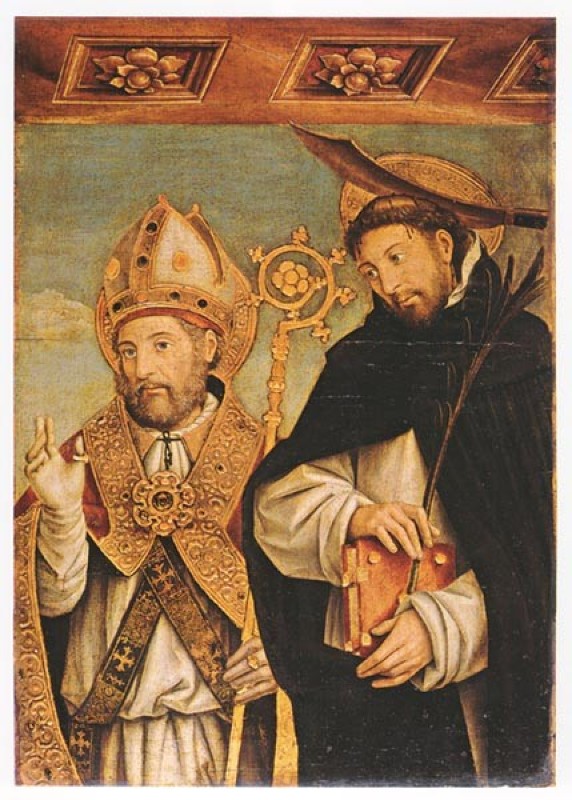
The Saints Evasius and Peter Martyr. Artist – Giovanni Martino Spanzotti, Oil on wood, c1595–1600.
Evasius is considered in tradition, to be the first Bishop of Asti, Consecrated around 330 – the earlier Cathedral was the current Church of San Secondo. Evasius, converted the main temple of Asti, dedicated to the goddess Minerva, into a Church, brought Monks to the – now abandoned – Monastery of the Santi Apostoli and converted many people. But the powerful supporters of Arianism, enraged by this, forced him and his companions – Saint Projectus of Casale and St Natalis ,to flee the City.
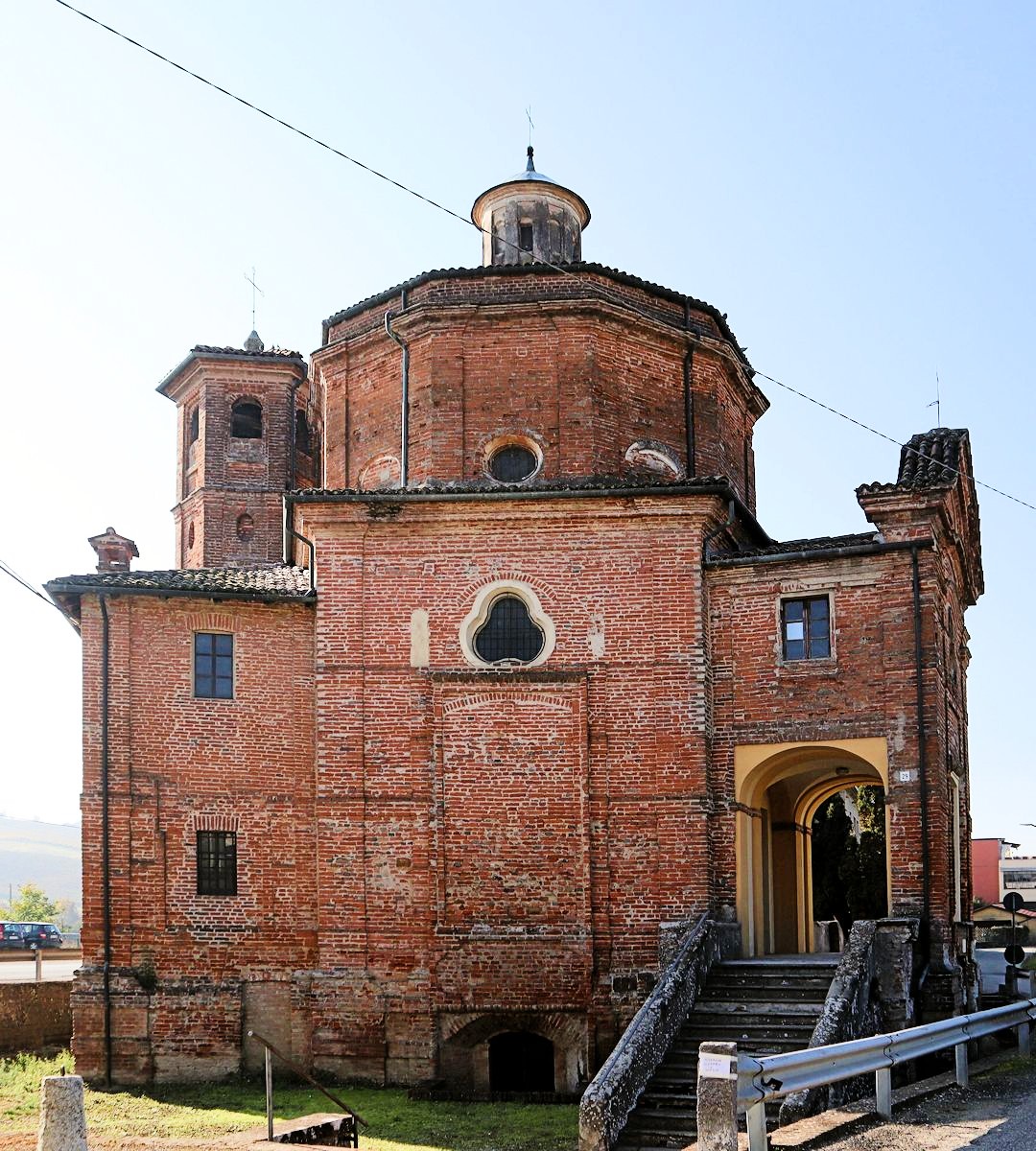
Church dedicated to Evasius in Pozzo Sant’Evasio
The three Saints found refuge in the Cornea forest – on the site of the Church in today’s Pozzo Sant’Evasio district near Casale Monferrato, where Evasius caused a spring to rise which is considered to have miraculous powers of curing sickness.
St Evasius Altarpiece in the Parish Church in Borgo Vercelli
There, according to legend, Atubalo, the Prefect of the City of Sedula, incited by the Arians, had them arrested along with another 145 of the lay faithful and then beheaded.
Fresco in the Cathedral at Asti
According to tradition, the Martyrs were buried in the Church of San Lorenzo – today’s Cathedral – in Casale Monferrato. In the Middle Ages the City was called Casale Sant’Evasio in honour of their Patron Saint Evasius . Today’s Cathedral was first mentioned in a document in 974 as a Church dedicated to him.
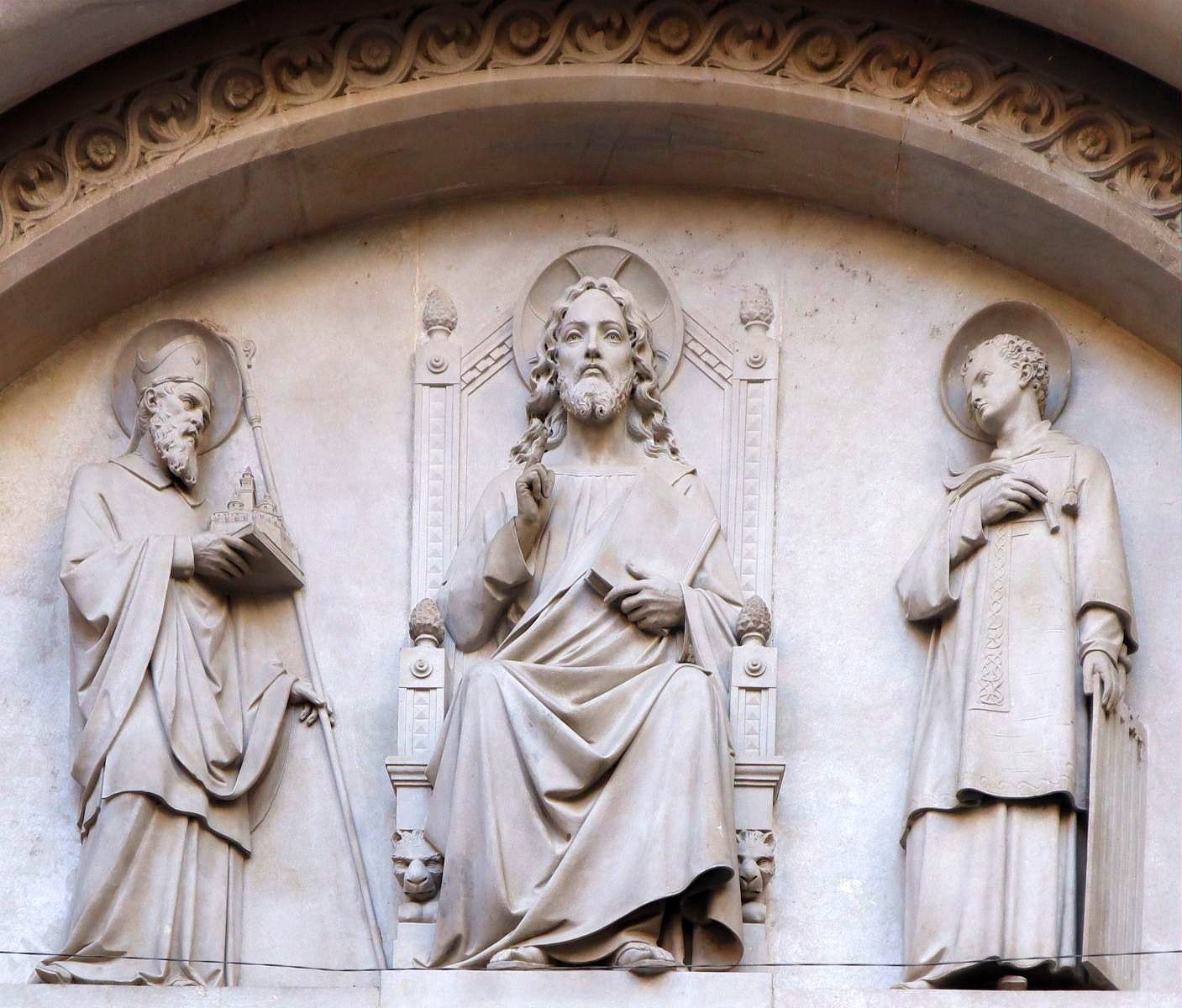
St Evasius (left), Christ and St Lawrence of Rome, Relief at the Cathedral in Casale Monferrato
There is much doubt about our Saint’s period of life and Episcopal governance. In fact, it is believed that Anianus, who reigned around 400, was the First Bishop in Asti, according to studies by Guglielmo Visconti in 2006 and by Fr S Dacquino in 1979. According to the list of Bishops of Asti, Evasius was the Bishop of the City from 685 to 713.
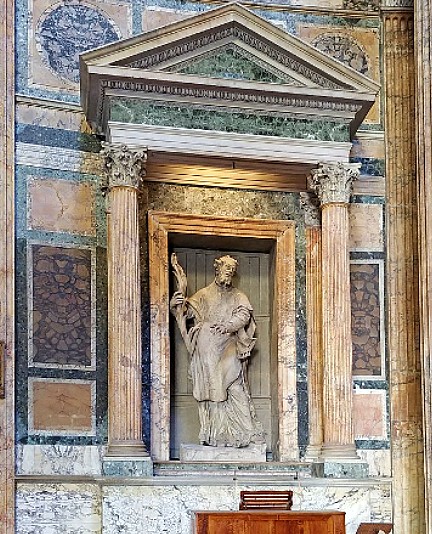
Statue of St Evasius at the Pantheon in Rome
Evasius’ remains were transferred to the Cathedral in Casale Monferrato. The Diocese of Casale Monferrato was only established in 1474 by Pope Sixtus IV. Relics also came to Borgo Vercelli, where Evasius’ intercession saved the inhabitants from an epidemic.
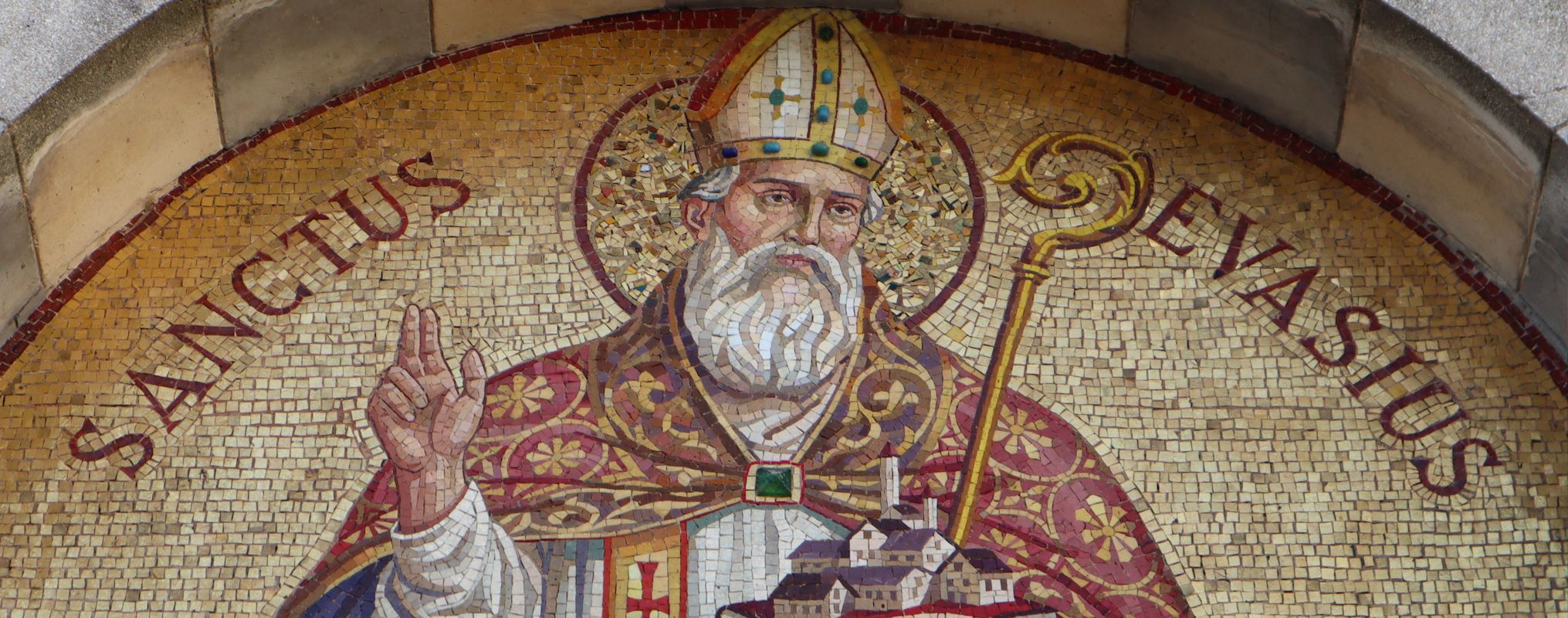
Mosaic of St Evasius, above the door of the Parish Church in Borgo
St Evasius’ Sarcophagus in the Cathedral in Casale Monferrato
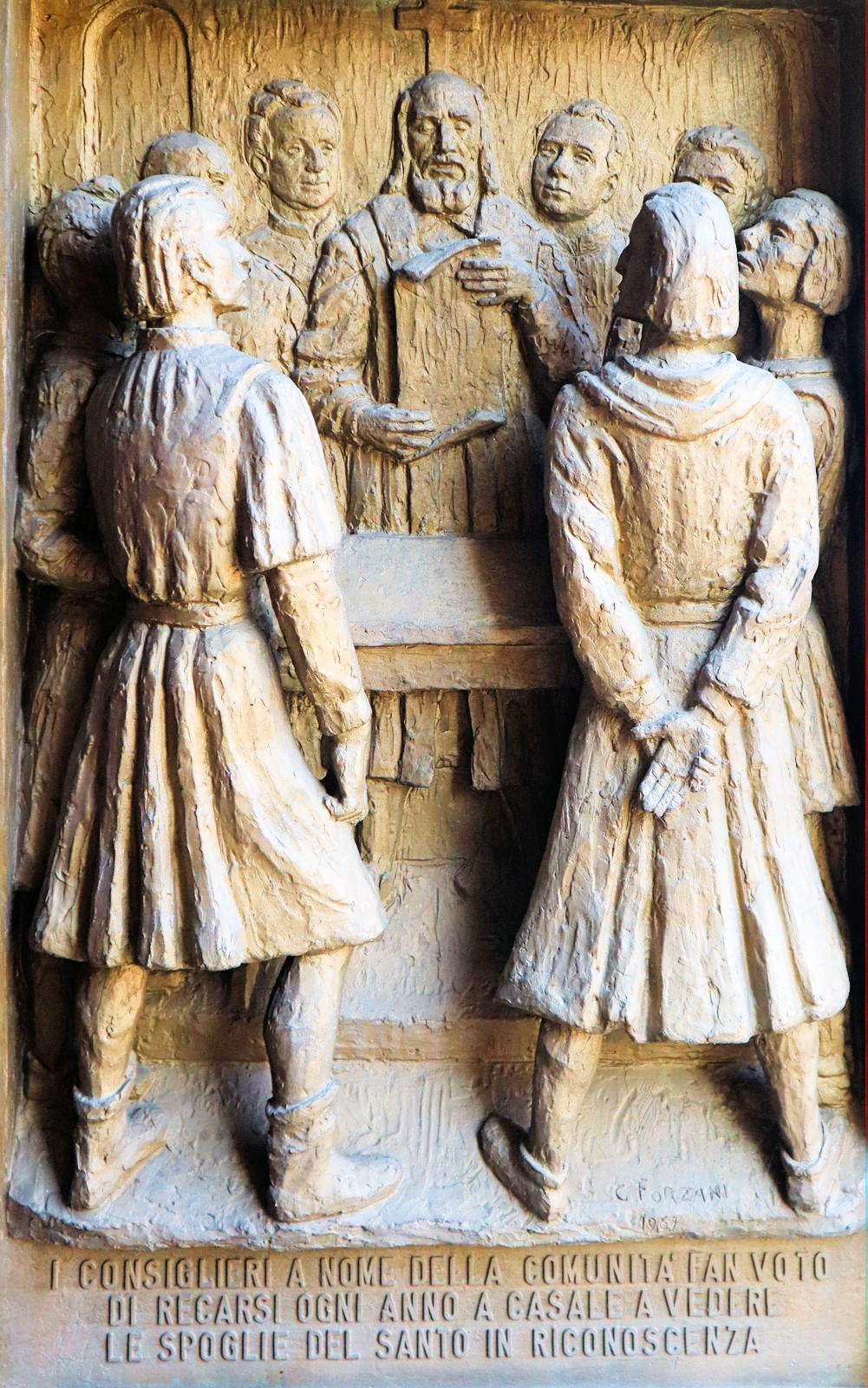
The elevation of the Relics of Evasius in Casale Monferrato, Bronze Relief on the door of the Parish Church in Borgo Vercelli
DECEMBER: Month of Devotion to The DIVINE INFANCY and The IMMACULATE CONCEPTION of the BLESSED VIRGIN MARY
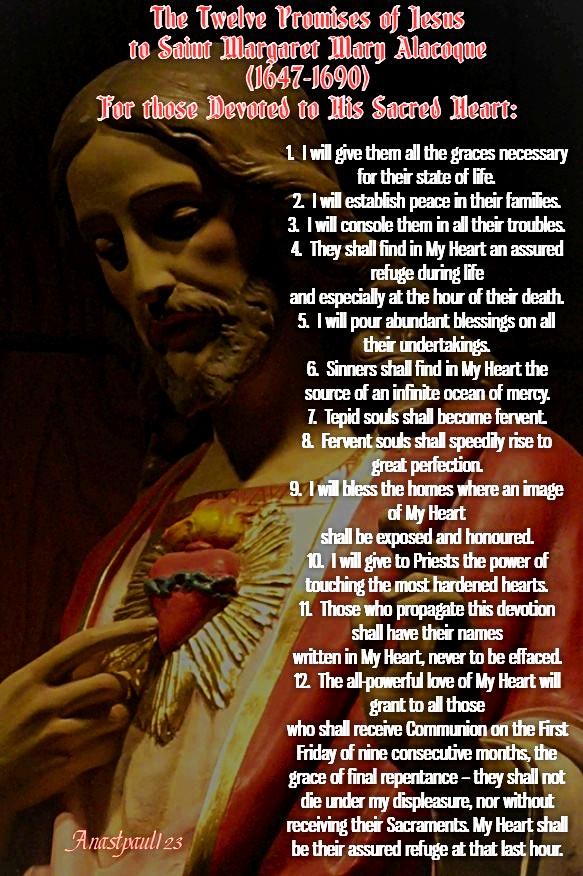
First Friday of the Month: “I promise you, in the excessive mercy of my Heart that my all powerful love, will grant to all those who receive Holy Communion on the First Friday, for Nine Consecutive Months, the grace of final repentance; they shall not die in my disgrace, nor without receiving the Sacraments; my Divine Heart shall be their safe refuge, in that last moment.” — Our Lord to St Margaret Mary
How to complete the First Friday’s Devotion:
Receive Holy Communion on each First Friday;
The Nine Fridays must be consecutive;
They must be made in honour and in reparation to His Sacred Heart.
St Agericus of Verdun St Agnofleta St Alexander Briant St Ambon of Rome St Ananias of Arbela St Ansanus the Baptizer Bl Antony Bonfadini St Candida of Rome St Candres of Maestricht St Cassian of Rome St Castritian of Milan Bl Christian of Perugia St Constantine of Javron St Declan St Didorus St Domnolus of Le Mans
St Latinus of Rome St Leontius of Fréjus St Lucius of Rome St Marianus St Marina of Rome St Martinus St Nahum the Prophet St Natalia of Nicomedia St Olympiades St Proculus of Narni St Resignatus of Maastricht Bl Richard Langley St Rogatus of Rome St Simon of Cyrene St Superatus of Rome St Ursicinus of Brescia
Martyrs of Oxford University: A joint commemoration of all the men who studied at one of the colleges of Oxford University and who were later Martyred for their loyalty to the Catholic Church during the official persecutions in the Protestant Reformation in England under Elizabeth I. They are: Blessed Edward James • Blessed Edward Powell • Blessed Edward Stransham • Blessed George Napper • Blessed George Nichols • Blessed Hugh More • Blessed Humphrey Pritchard • Blessed James Bell • Blessed James Fenn • Blessed John Bodey • Blessed John Cornelius • Blessed John Forest • Blessed John Ingram • Blessed John Mason • Blessed John Munden • Blessed John Shert • Blessed John Slade • Blessed John Storey • Blessed Lawrence Richardson • Blessed Mark Barkworth • Blessed Richard Bere • Blessed Richard Rolle de Hampole • Blessed Richard Sergeant • Blessed Richard Thirkeld • Blessed Richard Yaxley • Blessed Robert Anderton • Blessed Robert Nutter • Blessed Robert Widmerpool • Blessed Stephen Rowsham • Blessed Thomas Belson • Blessed Thomas Cottam • Blessed Thomas Pilcher • Blessed Thomas Plumtree • Blessed Thomas Reynolds • Blessed William Filby • Blessed William Hart • Blessed William Hartley • Saint Alexander Briant • Saint Cuthbert Mayne • Saint Edmund Campion • Saint John Boste • Saint John of Bridlington • Saint John Roberts • Saint Ralph Sherwin • Saint Thomas Garnet • Saint Thomas More.
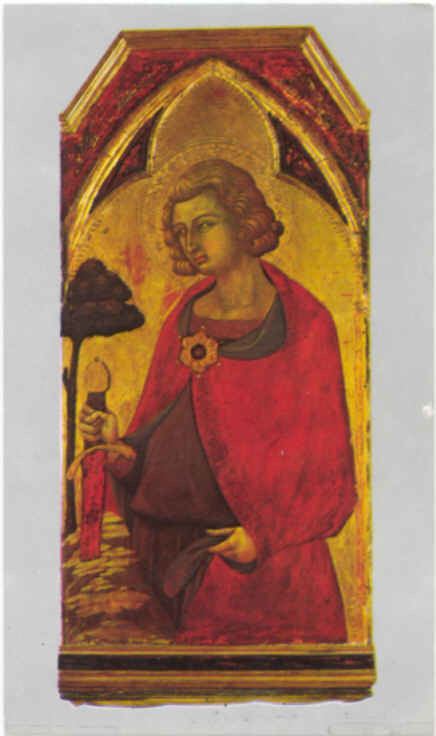
Saint of the Day – 30 November – Saint Galganus Guidotti (1148-1181) Hermit of The Sword in the Stone fame. Born in Chiusdino, Siena) in 1148 and died in 1181 at Monte Siepe, Tuscany, Italy of natural causes. Also known as – Galgano. Our Saintwas Canonised only 3 years after his death in 1185, by Pope Lucius III.
The Roman Martyrology reads today: “Near Mount Siepi in Tuscany, Saint Galganus Guidotti, a Hermit, who, having converted to God after a dissipated youth, spent the rest of his life in voluntary mortification of the body.”
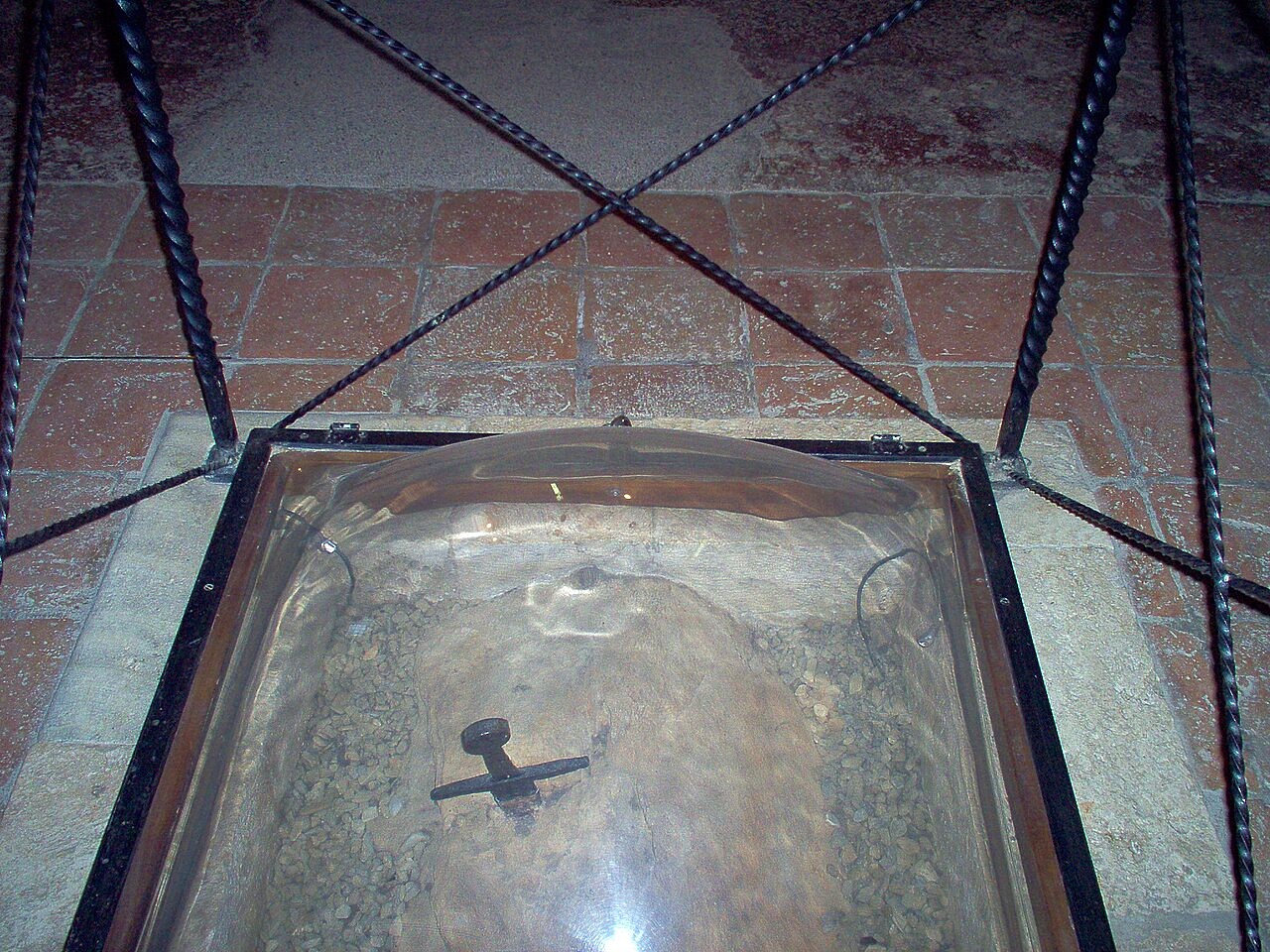
About 30 km (20 miles) southwest of Siena, in beautiful Tuscany, Italy, stands the ruins of a Cistercian Abbey. In a nearby Chapel is one of the strangest Relics ever – the sword of Saint Galganus, seemingly thrust into the bedrock to the hilt. How did it end up there?
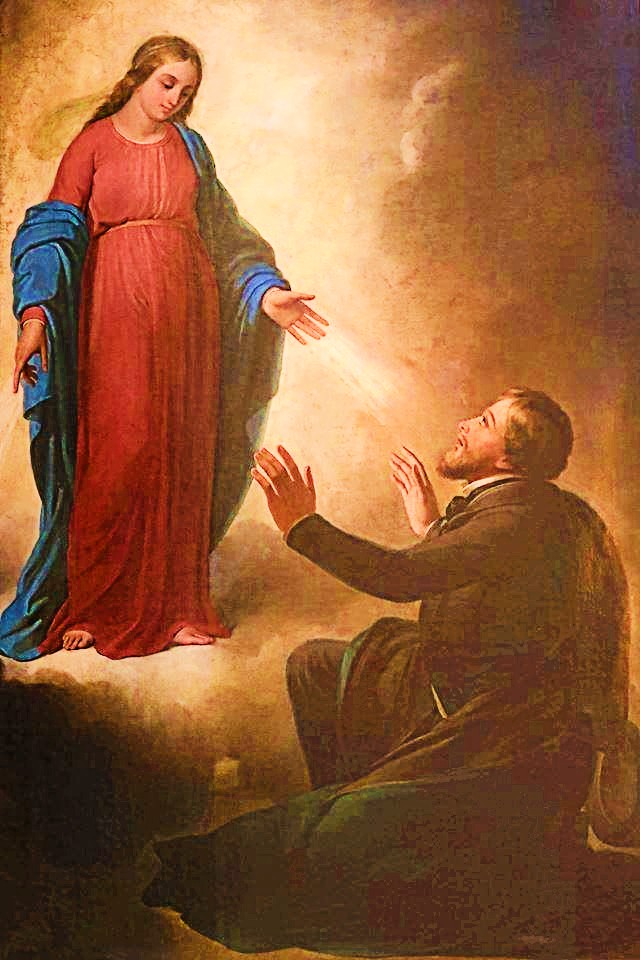
Galganus Guidotti was born in 1148, the son of a minor noble and one of those dissipated young knights constantly seeking worldly pleasures. One day when he least expected it, Archangel Michael appeared before him and showed him the way to salvation and kindly provided him with directions. The next day, Galganus announced that he was going to become a Hermit and took up residence in a cave. His friends and relatives ridiculed him and Dionisia, his mother, bade him to wear his expensive nobleman’s clothes and at least, pay a last visit to his fiancée. On his way there, his horse reared, throwing Galganus. Spitting road dust, he suddenly felt as if he was being lifted to his feet by an invisible force and a seraphic voice and a will he was unable to resist, led him to Monte Siepi, a rugged hill close to his home town of Chiusdino.
The voice bade him stand still and look at the top of the hill. Galganus saw a round Church with Jesus and Mary surrounded by the Apostles. The voice told him to climb the hill and while doing so, the vision faded away. When he reached the top the voice spoke again, inviting him to renounce his loose, easy living. Galganus replied that it was easier said than done, about as easy as splitting a rock with a sword. To prove his point, he drew his blade and thrust at the rocky ground. With miraculous ease, the sword penetrated the living bedrock to the hilt! Galganus immediately prostrated himself in awe and took up permanent residence on that hill as a humble Hermit.
There he led a life of poverty, visited by the occasional peasant looking for a blessing. He befriended wild animals and once, when the Devil sent an assassin in the guise of a Monk, the wild wolves living with Galganus attacked the killer, sending him speedily running with them after him – it is said and “his bones were gnawed.”
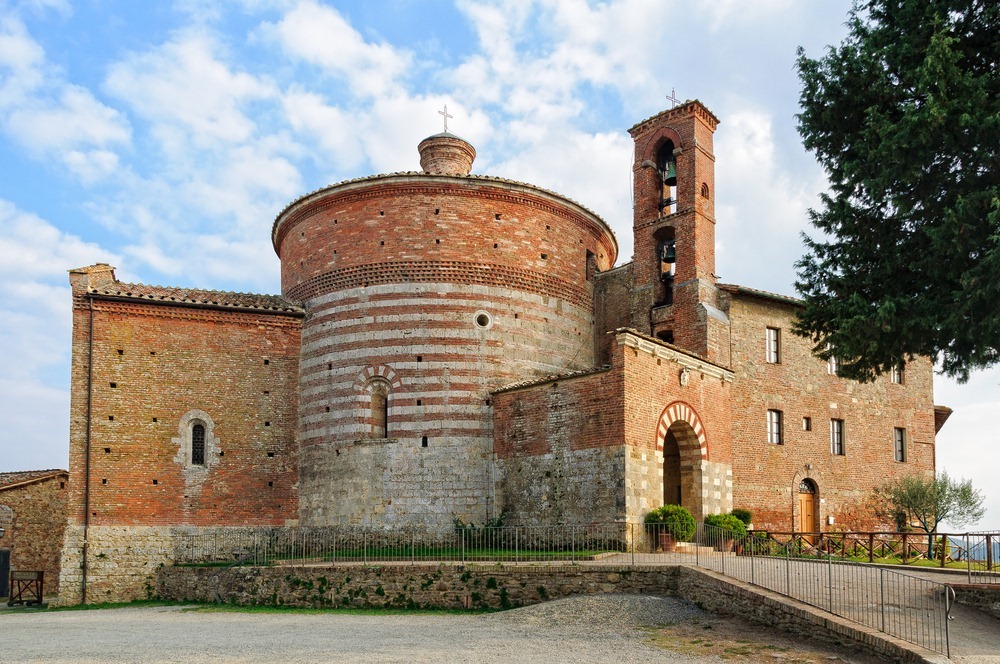
Galganus Guidotti died in 1181, at the age of 33 years and was Canonised four years later. His funeral was a major event, attended by Bishops and three Cistercian Abbots, including one who had been lost while on his way to Rome. The next year, the Bishop of Volterra gave Monte Siepi to the Cistercian Monks, aware that they would build a Shrine to Galganus’ memory. They began building in 1185, erecting a round Chapel that became known as the Cappella di Monte Siepi, on the hill above the main Abbey, with the sword forming the centrepiece.
The Sword “Excalibur”
The Cappella offers a breathtaking view of the Abbey, the neighbouring buildings and the beautiful surrounding countryside. Galganus’ body was for some reason lost after the funeral, although his head, which is said to have grown golden curls for many years following his death, was placed in one side Chapel and the chewed bones of the arms of the assassin in another.
The beautiful Capella
Saint Galganus’ head is now preserved as a Relic in the Museo dell’Opera del Duomo in Siena, while the skeletal arms are still in place. The crowds of pilgrims were so numerous that the Cistercians were authorised to build another Monastery named after the Saint a short distance away. It was to be one of the most beautiful Gothic buildings in Italy and one of the Cistercians’ two largest Italian foundations. The Monastery soon became both powerful and respected. Monks from San Galganus were appointed to high offices throughout Tuscany.
In the 14th Century, a Gothic side Chapel was added to the original Romanesque Cappella and in the 18th Century, a rectory was added. The side Chapel has the remains of some frescoes by Ambrogio Lorenzetti, including a faint picture of Galganus offering the sword in the stone to Saint Michael. The Abbey was sacked by the (in)famous English mercenary Captain Sir John Hawkwood and his White Company and by 1397 the Abbot was its only inhabitant. The Abbey deteriorated over the Centuries, becoming the impressive ruins seen today.
It is often argued that the legend of Saint Galganus formed the inspiration for the medieval legends about King Arthur and the Sword in the Stone, with which he proved his birthright. A story like that of Saint Galganus could travel all over Europe and, it is interesting to note that the first story about Arthur pulling a sword from a stone, (or more exactly an anvil on top of the stone), appears in the decades following Saint Galganus’ Canonisation in one of the poems by the Burgundian poet Robert de Boron. So, in the ever-changing legends of Arthur, it is it not unlikely that him pulling the sword out of the stone. was inspired by the act of a reformed Italian knight who became a Saint!
St Abraham of Persia St Anders of Slagelse Bl Andrew of Antioch Bl Arnold of Gemblours
St Castulus of Rome (c288) Martyr, married to Saint Irene of Rome (the woman who assisted St Sebastian after he had been wounded by the Imperial archers) and father of 2 children, Military Officer and he was the Chamberlain (or officer, valet) of Emperor Diocletian. His Feast day was moved to 26 March in 1969. His Life and Death: https://anastpaul.com/2021/03/26/saint-of-the-day-26-march-saint-castulus-of-rome-died-c-288-martyr/ St Constantius of Rome St Crider of Cornwall
Bl Joscius Roseus St Justina of Constantinople St Mahanes the Persian St Maura of Constantinople St Merola of Antioch St Mirocles of Milan St Sapor St Simeon of Persia St Trojan St Tudwal of Tréguier Bl William de Paulo Zosimus the Wonder Worker
Martyrs of Saxony – 6 Saints: Missionaries who worked with Saint Willehad of Bremen. Martyrs. – Attroban, Benjamin, Emmingen, Folkard, Gerwald and Grisold. They were martyred on 30 November 782 at River Weser, Lawer Saxony, Germany.
Saint/s of the Day – 29 November – Saint Saturninus of Rome (Died c304) + Priest and Martyr and Saint Sisinius of Rome (Died c304) + Deacon and Martyr. Both our Saints were born in Carthage and died by being finally beheaded in c304 on the Via Nomentana, 2 miles outside Rome, during the persecutions of Diocletian and Maximian and after years of slave labour and horrific tortures. Saturninus is also known as – Saturninus of Carthage, Saturninus the Elderly. Sisinius is also known as Sysinnius. Their Feast is celebrated on the day of the final translation of their Relics – 29 November. NB – (not to be confused with Saint Saturninus of Toulouse, a Bishop and Martyr in France, whose Feast is also today).
The Roman Martyrology reads: “At Rome, on the Salarian road, the birthday of the holy Martyr Saturninus, an aged man and the Deacon Sisinius, in the time of the Emperor Maximian. After a long imprisonment, they were, by order of the Prefect of the City, placed on the rack, distended with ropes, scourged with rods and whips garnished with metal, then exposed to the flames, taken down from the rack and beheaded.”
According to legend, Saturninus came from Carthage in North Africa and served as a Priest in Rome. He is described as an old man. Together with his Deacon Sisinnius, he was arrested and tortured during Christian persecutions. They were buried in the Cemetery of Saint Thraso on Via Salaria.
From the 1640 ‘General Legend of the Saints’ we read their story as follows:
“When the Emperors Diocletian (284-305) and Maximian (284-305) perceived that no torture or capital punishment could exterminate the Christians, nay, that the blood of the Martyrs was like seed, in which the life of one victim was in turn a hundred new believers, they invented a new way to oppress the Christians with long and painful tortures.
They had to carry stones and dig sand and do all the work necessary for the construction of public buildings. It was officially forbidden to sentence members of the nobility and soldiers to slave labour. But, precisely to humiliate the Christian faith even more, all Christians were sentenced, without respect to persons, to the slave labour of construction.
For example, Saturninus was among those in Rome who contributed to the construction of the bathhouses which Emperor Maximian had built for Diocletian because he had made him equal in rank to himself. Saturninus was already an elderly man and he was simply unable to do the heavy workwhich the overseers imposed on him. That is why he was helped by fellow Christians, especially by the Deacon Sisinnius. In his zeal, in addition to the burden imposed on himself, he also shouldered the burden of Saturninus. So he trudged to and fro, happily singing his Psalms to the Lord.
The imperial officials watched with great amazement at the great love and joy radiating from Sisinnius during his painful labours. They reported it to their Commander Espurius, who in turn, reported it to Emperor Maximian. He had Sisinnius and Saturninus brought before him. In vain he tried to have them sacrifice to idols under threats. When this came to nothing, he entrusted them to the Commander Landicius, with orders to force them to make sacrifices or else put them to death with his own hands. The Ruler threw them into prison. There they sat for several days, converting many pagans who came to visit them to the Christian faith. After thirty-three days the superior had them appear before him with their hands shackled and their feet bare. He perceived that they were still as steadfast and that they would rather die a thousand deaths, than deny Jesus Christ. He had an idol set up for them to worship. But Saturninus said, raising his voice: “May the Lord put to shame the gods of the heathen.” Immediately the statue fell to smithereens on the ground. At the same time two soldiers, named Papias and Maurus, began to shout that the Jesus Christ whom Saturninus and Sisinnius worshiped must be the true God!
The superior condemned the two Saints to the rack – then he had them lifted up, beaten with sharp scourges and torn their bodies apart with the instrument of torture, called the scorpion. But they sang with great joy, “Glory to Thee, Jesus Christ because Thou hast given us part in the glory of Thy servants.” When Papias and Maurus saw all this, they too began to long for the Martyr’s crown. They flew into a holy rage against the executioners and shouted, “How is it possible that the devil has such great power over you that he makes you so cruel to these two holy men?”
This angered Commander Landicius. He had them struck in the mouth with stones and then thrown into prison. In the days following, they were subjected to all kinds of torture. Meanwhile, he had the sides of Saturninus and Sisinnius scorched with flaming torches. But when he saw that this did nothing to their perfect faith either and that they were undergoing all this with joy, praising the Lord, he decided to have them taken half a mile outside Rome, to be beheaded along the road to Nomentana.
Their bodies were recovered by a rich, powerful and very devoted man named Thrassus; he spent all his possessions to support the Christians and assist the workers at the bathhouses. He buried them in his own yard. That happened on the twenty-ninth day of November. The Catholic Church has commemorated them on this day ever since. They were Martyred five years after the start of work on the construction of the bathhouses.‘”
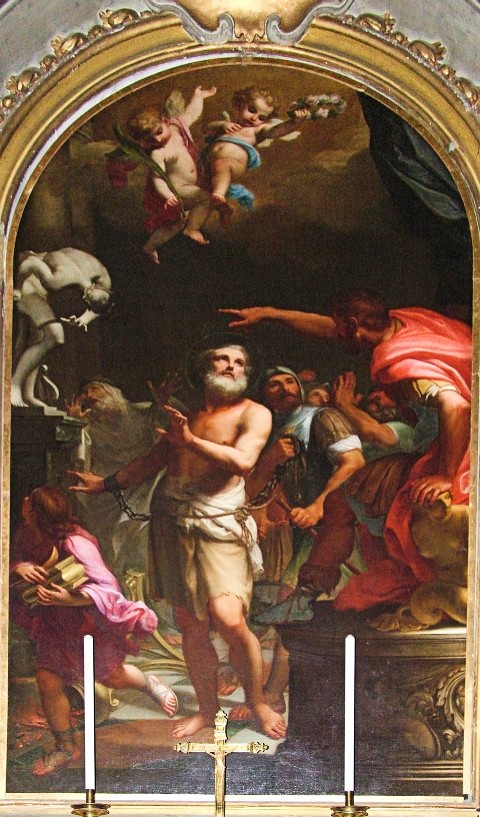
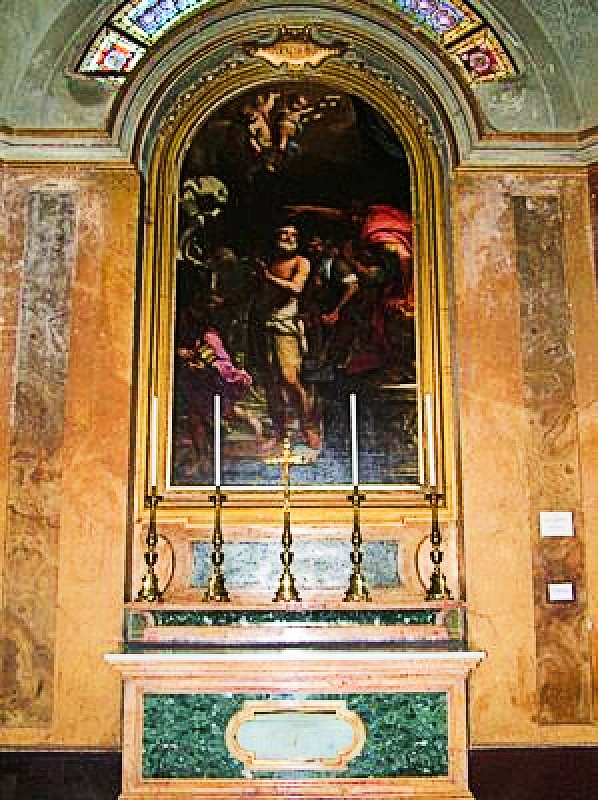
The Altar of St Saturinus at the Basilica of Sts John and Paul
The only definitive information which can be said with historical certainty is that Saturninus is a Martyr of the first Centuries of Christianity and that his feast was traditionally celebrated on 29 November at his grave on Via Salaria. On their grave stood a Church that fell into ruins in the Middle Ages.
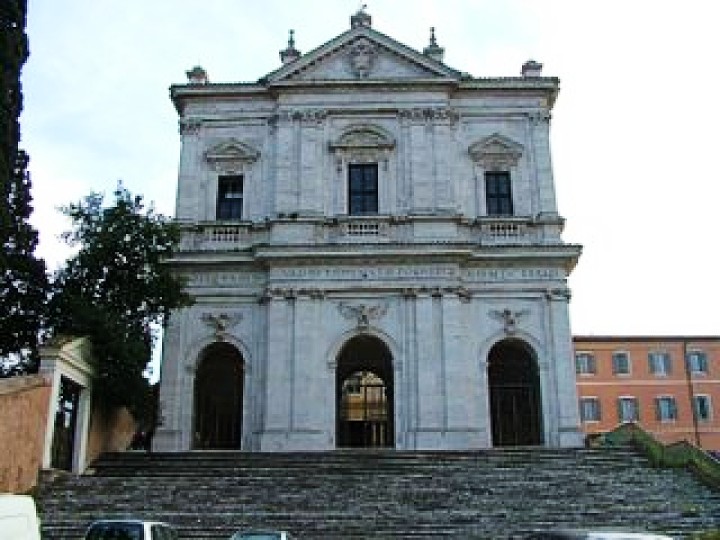
Their Relics were re-enshrined in the Church of Saints John and Paul (the ones mentioned in the Roman Canon). Finally, on 29 November 1987, most of the Relics were moved to the Church of St Gregory the Great and St Saturninus, in Rome, to an Altar newly dedicated in his honour. The image above resides above the Altar where some his Relics remain at Sts John and Paul.
The Church of St Gregory the Great and Saturinus in Rome
All Saints of the Seraphic Order (Franciscan): the Church celebrates the many Franciscan Saints who followed in the footsteps of St Francis. It is a special day for all Franciscans to celebrate the Feast of ‘All the Saints of the Seraphic Order.’ Also on this day in 1223, the final Rule of life for Franciscan Friars was approved. To commemorate this and all the saintly examples produced in the Franciscan Order, on this day all the Saints of the Seraphic order are remembered at Franciscan Churches throughout the world.
Bl Frederick of Ratisbon St Hardoin of Brittany St Illuminata of Todi St James of Saroug Bl Jutta of Heiligenthal St Paphnutius of Heracleopolis St Paramon St Philomenus of Ancyra St Radbod of Utrecht
St Sadwen of Wales St Saturninus of Rome (Died c304) + Priest and Martyr St Saturninus of Toulouse St Sisinius of Rome (Died c304) + Deacon and Martyr St Walderic of Murrhardt
Saint of the Day – 28 November – St Sosthenes (1st Century) the first Bishop of Colophon, Asia Minor, probably a Martyr, Jewish Ruler in Corinth, converted by St Paul and became his disciple, who is mentioned by him in his First Epistle to the Corinthians (1 Corinthians 1:1–2) and by St Luke in Acts 18:12–17. Also known as – Sosthenes of Corinth, Sosthenes of Colophon, Sostene…
The Roman Martyrology reads: “At Corinth, the birthday of St Sosthenes, fisciple of the blessed Apostle Paul, who is mentioned by that Apostle in his first Epistle to the Corinthians. He was chief of the synagogue when converted to Christ and, as a glorious beginning, consecrated the first fruits of his faith by being scourged in the presence of the Proconsul, Gallio.”
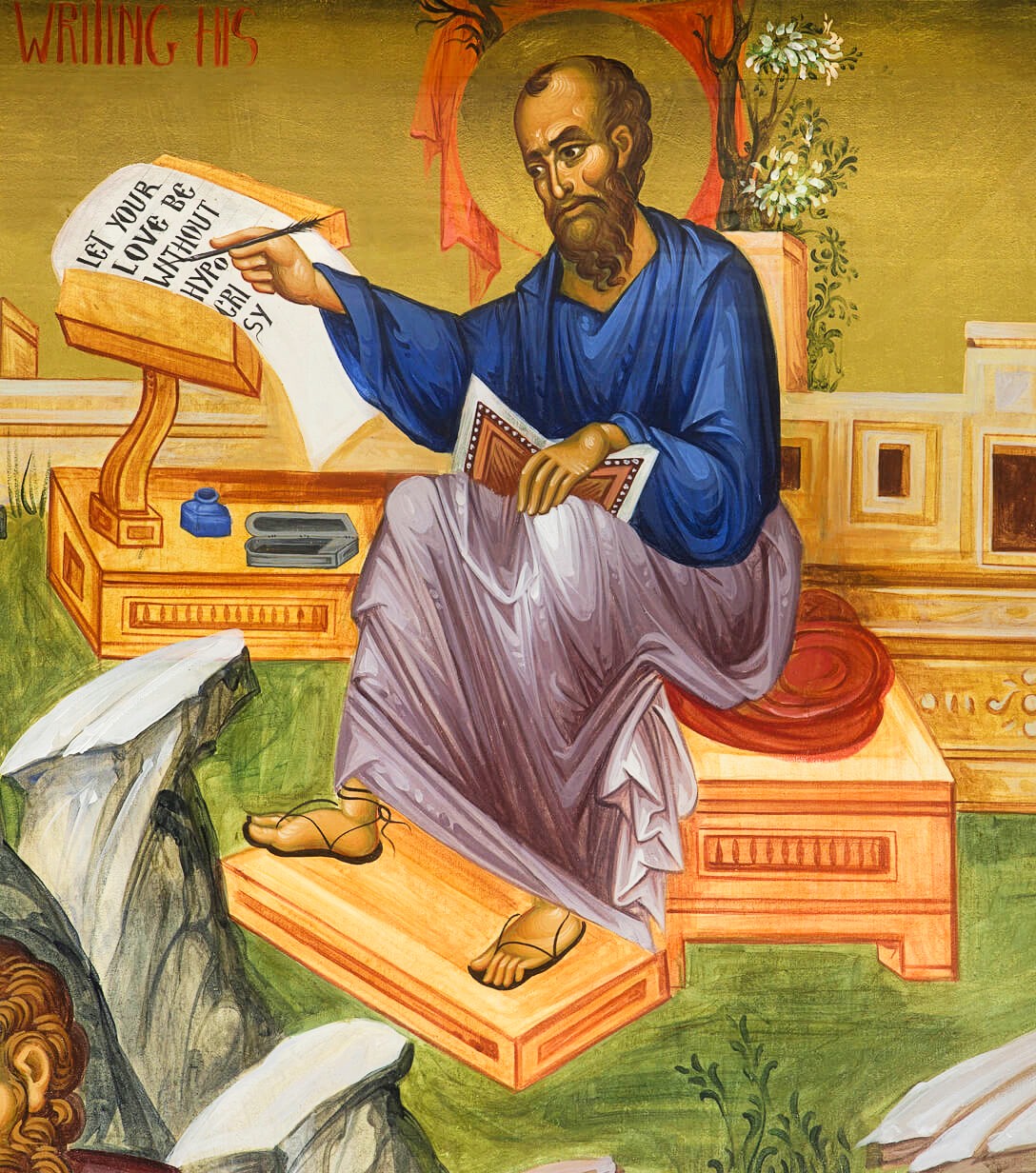
St Paul
During the long stay of the Apostle St Paul in Corinth, an event occurred which was not only sensational but, at least for us, difficult to explain, although reported with the usual clarity by St Luke, the Chronicler of the Acts of the Apostles:
“Gallio, being then Proconsul of Achaia (i.e. of the region in which Corinth was located) – we read – “the Jews, all in agreement, rose up against Paul and took him to the Tribunal, saying: ‘This man persuades the people to give God a cult, contrary to the law.’ And as Paul was there ready to speak, Gallio said to the Jews: ‘If it were a question of some crime, of some serious misdeed, I, Jews, would listen to you as reason dictates but, since it is a question of questions of words and names and they belong to your law, think about it – I do not want to be judge of these things!’ And he sent them away from the court. They all then took Sosthenes, the Ruler of the Synagogue and beat him before the tribunal and Gallio did not care at all. ”
St Sosthenes
The first part of the episode is quite clear – the Roman Proconsul, in a City which, after all, was in Greece and not in Palestine, cleverly refuses to be the judge of a doctrinal question which interests and concerns, only a minority of his subjects.
It is, again, the tactic of washing one’s hands, adopted by Pilate towards Jesus, with the difference that Corinth was not Jerusalem and, therefore, the “abstaining, so to speak, of the Roman Governor, saves Paul from accusations and threats of his enemies, without the Apostle even opening his mouth.
Except, here’s the unexpected fact – instead of Paul, his accusers, in that same Court, take and beat our Saint Sosthenes, who had nothing to do with Paul and who was, indeed, the Ruler of the local Synagogue. Why did this happen? Why was Sosthenes beaten instead of Paul? Scholars have failed to give a convincing answer to this question. Probably, the head of the Synagogue was the one who had incited his fellow Jews to demonstrate against Pau, and the Jews released their fury upon him when they saw that their entire design to attach St Paul had been destroyed by the Governor.
According to some, however, the resentment of the Jews related to the fact that Sosthenes’ converssion by St Paul had alreay taken place and was known by his fellow Jews.
But the Acts do not mention the conversion of Sosthenes, Ruler of the Synagogue of Corinth. Shortly afterwards, however, his name appears again in the address of the letter twhich St Paul wrote from Ephesus to the restless Christians of Corinth and, of which, Sosthenes seems to have been the bearer.
“Paul, called to be an Apostle of Jesus Christ by the will of God and Sosthenes, a brother, To the Church of God which is at Corinth, to them that are sanctified in Christ Jesus, called to be saints, with all that invoke the name of our Lord Jesus Christ, in every place of theirs and ours.” – 1 Corinthians 1:1-2
It was so natural to think that the ancient leader of the Synagogue, beaten by his fellow believers, was actually converted by Saint Paul, becoming his disciple, responsible for maintaining contacts between the Apostle and the community of Corinth, where he was well known and respected.
This hypothesis, is probable but not certain, was accepted by the compilers of the Martyrologies, who today remember Sosthenes among the Saints, as a disciple of Saint Paul and former Ruler of the Synagogue of Corinth. With the beatings before the tribunal, he would have “consecrated the first fruits of his faith with a glorious beginning”, and then matured that faith as Bishop of Colophonia, in Asia Minor. But this is traditional understanding which no historical testimony is completely able to confirm.
Bl Calimerius of Montechiaro St Fionnchu of Bangor
St Pope Gregory III (Died 741) Bishop of Rome 11 February 731 until his death on 28 November 741. (His Feast was moved to 10 December in 1969), The Roman Martyrology states: “St Rome, the blessed Pope Gregory III, who departed for Heaven with a reputation for great sanctity and miracles.“ His Life: https://anastpaul.com/2021/11/28/saint-of-the-day-28-november-saint-pope-gregory-iii-died-741/
St Hilary of Dijon St Hippolytus of Saint Claude St Honestus of Nimes St Irenarcus
St James of the Marches OFM Conv. (1391-1476) Priest of the Friars Minor Conventional, Confessor, brilliant Preacher, Penitent, Reformer, Writer, Papal legate, Inquisitor, founder of several monasteries in Bohemia, Hungary and Austria. St James was Canonised on 10 December 1726 by Pope Benedict XIII. His body is Incorrupt. About St James: https://anastpaul.com/2019/11/28/saint-of-the-day-28-november-saint-james-of-the-marches-ofm-1391-1476/
St Papius St Quieta of Dijon St Rufus St Simeon the Logothete St Sosthenes (1st Century) Bishop, Martyr, Jewish Ruler in Corinth, Converted by St Paul. St Stephen the Younger Bl Theodora of Rossano
Martyrs of Constantinople – 8 Saints: A group of over 300 Christians Martyred during the persecutions of the Iconoclast Emperors. We have a lot of information on Saint Stephen the Younger, but for the others we have nothing but seven of their names – Andrew, Auxentius, Basil, Gregor, John, Peter and Stefan. They were scourged, stoned and/or dragged to death through the streets of Constantinople in 764.
Martyrs of North Africa – 13 Saints: A group of thirteen Clerics killed or exiled in the persecutions of Arian Vandals in North Africa – Crescens, Crescentian, Cresconius, Eustace, Felix, Florentian, Habetdeum, Hortulanus, Mansuetus, Papinianus, Quodvultdeus, Urban and Valerian.
Martyrs of Tiberiopolis – 14 Saints: A group of fourteen Christian Laymen, Deacons, Priests and Bishops who were Martyred together in the persecutions of Julian the Apostate – Basil, Chariton, Comasios, Daniel, Etymasius, Hierotheos, John, Nicephorus, Peter, Sergius, Socrates, Theodore, Thomas and Timothy. 361 at Tiberiopolis, Phyrgia (in modern Turkey)
Saint of the Day – 27 November – Saint Maximus of Riez (Died 460) Bishop of Riez, France, Confessor, Abbot, Hermi, zealous and highly efficient leader, Miracle-worker. Born in Decom, Provence (modern Châteauredon, France) and died in Reiz in 460 of natural causes. Patronages – children, the dying, Agliè, Italy, Boulogne-sur-Mer, France.
The Roman Martyrology reads: “At Riez, in France, St Maximus, Bishop and Confessor, who, from his tender years, was endowed with every grace and virtue. Being first the Superior of the Monastery of Lérins and afterwards, Bishop of the Church of Riez, he was celebrated for the working of miracles and prodigies.”
Saint Maximus was born in Decomer in Provence in France and was duly Baptised as a very young infant by deeply pious parents. He was thus brought up in a similar manner observing all the devotions and duties of a Christian home. There, at home, he began to live as a kind of recluse, to mortify his senses and practice self-deniel, solitude and prayer.
When he was an adult, he chose the religious life and became a Monk in the Monastery of Lérins, where he was under the Founder, Saint Honoratius.
When, in 426, St Honoratus became the Archbishop of Arles, Maximus was elected as the Monastery’s second Abbot. Saint Sidonius writes that the Monastery received a new spiritual gift due to Saint Maximus’ wise leadership and shining example. The Monks obeyed him with joy and did not complain about the rigour of the religious life.
Maximus was also known for numerous miracles which naturally only increased his reputation as a saint. So many came to ask him for advice and to seek his spiritual counsel that finally, he had to find a home in the forest to concela himself from unwanted renown and to hide from those who wanted him to appoint him as the Bishop of Fréjus.
But later he still, in humble obedience, accepted the elevated role of a Bishop but of Riez in Provence. In 434 he was Ordained by Saint Hilarius (he had been tracked down, after he had first fled along the coast and into Italy, to escape appointment). He became one of the most prominent of the French Bishops, of the time. Even as a Bishop, he continued to wear a hair shirt and Monk’s Habit and followed the Monastic Rule as far as was compatible with his Episcopal obligations.
Some of the sermons formerly attributed to Eusebius of Emesa are now believed to have been by Saint Maximus. He attended the Synods of Riez in 439, Orange I in 441 and Arles in 454. Our Saint died in 460 and is buried in Riez.
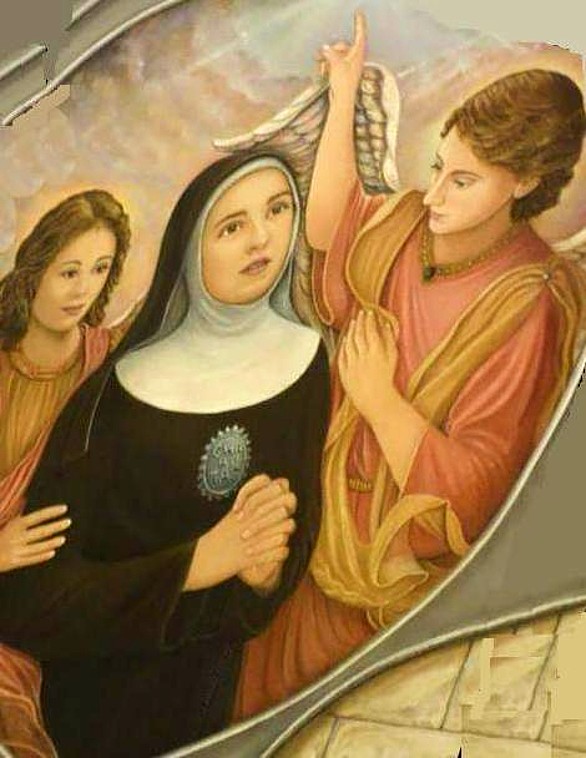
Two of the most famous conversions due to the Miraculous medal was that of Fr Alphonse Ratisbonne NDS (1814-1884), an anti-Catholic Jewish banker and Claude Newman (1923-1944). Fr Alphonse Ratisbonne received a vision of Our Lady of the Miraculous Medal. After his conversion, he became a Priest and worked for the conversion of the Jewish people.
St Acacius of Sebaste St Acharius of Noyon St Apollinaris of Monte Cassino St Barlaam
Blessed Bernardine of Fossa OFM (1420-1503) Priest, Friar of the Friars Minor, Missionary in Italy and a renowned Preacher, noted Historian, Lawyer, Ascetical Writer, rising within the Order to important positions. His cult was later confirmed by the Beatification of Pope Leo XII on 26 March 1828. The Roman Martyrology states: “At L’Aquila, blessed Bernardino da Fossa (Giovanni) Amici, Priest of the Order of Minors, who preached the Catholic Faith in many Provinces of Italy.“ Biography: https://anastpaul.com/2021/11/27/saint-of-the-day-27-november-blessed-bernardine-of-fossa-ofm-1420-1503/
St Bilhild of Altmünster St Eusician St Facundus St Fergus the Pict St Gallgo of Wales St Gregory of Sinai St Gulstan St Hirenarchus of Sebaste St James Intercisus St John Angeloptes St John of Pavia St Laverius
St Maximus of Riez (Died 460) Bishop, Confessor, Abbot, Hermit St Primitivus of Sahagun
Martyrs of Antioch – 3 Saints: A group of Christians Martyred together for their faith. Little information has survived except for their names – Auxilius, Basileus and Saturninus.
Martyrs of Nagasaki – 11 Beati: A group of eleven Christians Martyred together for their faith during a period of official persecution in Japan. They are: Blessed Alexius Nakamura Blessed Antonius Kimura Blessed Bartholomaeus Seki Blessed Ioannes Iwanaga Blessed Ioannes Motoyama Blessed Leo Nakanishi Blessed Matthias Kozasa Blessed Matthias Nakano Blessed Michaël Takeshita Blessed Romanus Motoyama Myotaro Blessed Thomas Koteda Kyumi They were Martyred on 27 November 1619 in Nagasaki, Japan and Beatified on 7 May 1867 by Pope Pius IX.
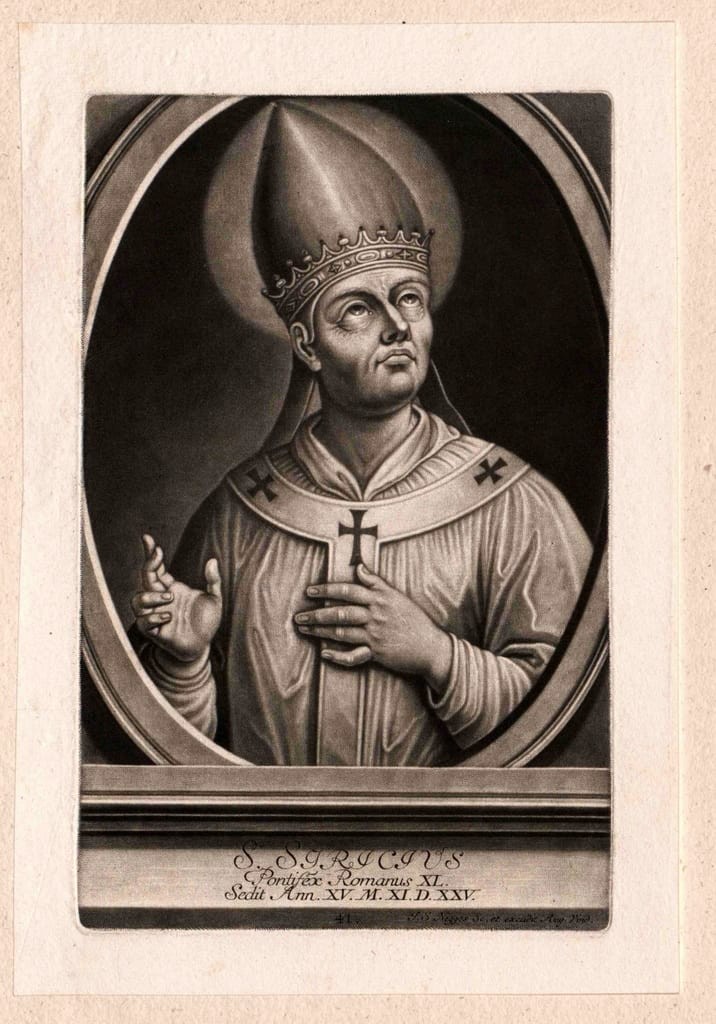
Saint of the Day – 26 November – St Pope Siricius (c334-399) the 38th Bishop of Rome from December 384 until his death on 26 November 399, Confessor, Defender of the Faith against heresies, Reformer of clerical discipline, Born in Rome and died there of natural causes aged around 64. In response to inquiries from Bishop Himerius of Tarragona, Siricius issued the Directa Decretal, containing Decrees of Baptism, Church discipline and other matters. His are the oldest completely preserved Papal Decrees. He is sometimes said to have been the first Bishop of Rome to call himself “Pope or Papa” – the word derived from the Greek, Papa, meaning Father.
The Roman Martyrology reads today: “At Rome, St Siricius, Pope and Confessor, celebrated for his learning, piety and zeal for religion, who condemned various heretics and published salutary laws concerning Ecclesiastical discipline.”
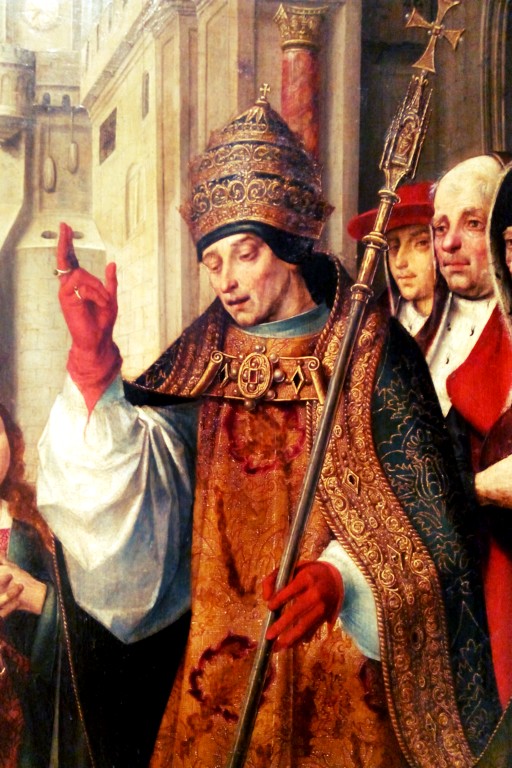
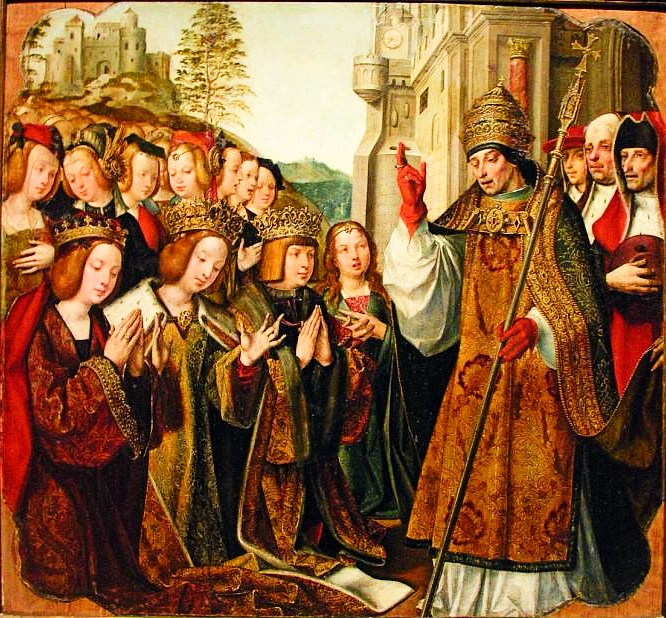
Image from the Saint Auta Altarpiece (Lisbon) of Pope Siricius blessing Saint Auta – see complete image below.
Saint Siricius was, a Roman and the son of Tiburtius. He entered the service of the Roman Church as a young man, most during the Pontificate of Liberius , first as Lector and later as Deacon. He was also a Deacon under Pope Damasus.
Although the antipope. Ursinus again stood as a candidate, in December 384 (the 15th?) Siricius was unanimously elected as Damasus’ successor. The election was confirmed with apparent satisfaction by the Emperor Valentinian II (375-392) in an edict of 25 February 385, probably mostly to cut off any intrigues in the Ursinian camp.
The Emperor gave further evidence of his approval by providing funds for the restoration and expansion to approximately its present size, of St Paul’s Basilica . The Pope Consecrated it in 390. A modern column outside the northern colonnade commemorates his Consecration of the Basilica.
The Church Father and Doctor, St Jerome or Hieronymus, had a justified hope of becoming Pope Damasus’ successor himself but he was banished from Rome, in an action Siricius must have, at least consented to. The disappointed Jerome describes the Pope as a simple man, gullible and easily deceived, while St Paulinus of Nola complained about his haughty unapproachability. In reality, he was an experienced and powerful Pope and, although he was as conscious as Damasus of the primacy of Rome and his own role as Peter ‘s successor, he was inevitably overshadowed by the contemporary St Ambrose, Bishop of Milan (340-397).
Siricius was probably not the first Pope to issue decretal speeches but his are the oldest preserved. A decretal speech is a directive or an authoritative decision on disciplinary matters. They were no longer in a tone of fraternal exhortation but held in the same authoritative style of imperial edicts and like them, had the same legal force as laws. The oldest preserved decretal speeches are from 11 February 385 and addressed to Himerius, Bishop of Tarragona in Spain, who had brought fifteen questions aconcerning Ecclesiastical discipline to Damasus I. They open with the demand that the Pope, or rather the Apostle Peter present in the papacy, bears the heavy burden of giving categorical rules in matters of Ecclesiastical discipline and Liturgical ordinances.
Siricius confirmed that Arians who were re-admitted to the Catholic Church were not to be re-Bbaptised and that Baptism could only be performed, in exceptional cases, at times other than Easter and Pentecost which had, nevertheless, previously been an old custom. Furthermore, he gave rules for age and qualifications before Ordination, insisted on Clerical abstinence and celibacy and gave rules for the discipline of penance. Siricius demanded that these general Decrees (decretalia generalia) which should be as binding as decisions (cwith a series of Canons) from Synods, should be communicated to the neighbouring Provinces in Africa, Spain and Gaul.
On 6 January 386, a Synod was held in Rome “at the Relics of the Apostle Peter” attended by 80 Bishops. A number of disciplinary decisions were made and the Pope sent nine Canons which were adopted at the Synod, to Africa and other Churches. They decided, inter alia that no Bishop should be Consecrated without “the knowledge of the Apostolic See” or by just a single Consecrator. Similarly, Siricius responded to requests from the Bishops of Gaul, with a series of Canons .
We believe that Siricius was the first Pope to reserve the exclusive right to use the title Pope/Papa. The word can also be seen as an anagram made from the initials of the words Petri Apostoli Potestatem Accipens (“He who has received power from the Apostle Peter”).
Siricius was no opponent of asceticism, as is sometimes misleadingly claimed. But around 388 the Monk Jovinian, who had had a great reputation for his strict life, came to Rome. Now, he began to assert that, after all, an austere life was a waste and that vows, chastity, fasting and good works, were of little use. In addition, he claimed that the Virgin Mary had lost her virginity when she gave birth to the Saviour. As a consequence of this vision, Jovinian, himself gave up his ascetic life and began to persuade many mMnks and Nuns to give up asceticism and get married. Shocked lay people asked the Pope to intervene. Siricius then held a Synod which condemned Jovinian’s theories and excommunicated him and his leading followers. The Pope sent three Priests to Milan to tell Saint Ambrose about the Synod. Ambrose himself held a Synod praising the Pope for his care and repeating the condemnation of Jovinian.
Later, the Pope condemned the view of Bonosus, bishop of Naissus that the Blessed Virgin had given birth to Joseph’s child after the birth of the Lord, leaving it to the bishop of Illyria, to judge the man himself.
The Pope also received a delegation from the East asking him to put an end to the long-standing schism over the Episcopate of Antioch. For years, two Bishops and their successors had been quarreling over the Episcopate. Siricius granted their plea to recognise the last survivor, Flavian, as a true Bishop and readmitted him to communion. On the Pope’s advice, a Council at Caesarea in Palestine,recognised that Flavian and not Evagrius, was the rightful Bishop.
In the mid-390s, Siricius incurred the wrath of St Jerome. St Jerome, who had now settled in Bethlehem and his friends in Rome, were enraged by the Pope’s positive attitude towards Bishop John of Jerusalem (died 417) and, towards Rufinus of Aquileia (died 410), both of whom, were at this time in St Jerome’s deepest displeasure.
During Siricius’ Pontificate, the great St Augustine became the Bishop of Hippo and wrote his Confessions.
The Eastern Emperor Theodosius I, who was very religious, came under the strong influence of St Ambrose. In 384 he issued a ban on pagan feasts and in 391 pagan sacrifices were banned. Violation of the ban was declared crimen maiestatis, treason. It led to a pagan revolt led by Rome. But Theodosius crushed the rebel army in a battle at Aquileia in 384, after which all the temples of Rome were closed and all the Senators forcibly Baptised. Christianity had finally and definitively, become the state religion. For Christianity, 392 is a special year. Then Emperor Theodosius announced that he would tolerate only one religion in his vast Empire. Both Christian heresy and pagan worship were banned.
Siricius died on 26 November 399 and was buried in the Basilica of Silvester near the Catacomb of Priscilla.
Although he was venerated as a Saint in the earliest Centuries, he was not included in the first edition (1584) of the Roman Martyrology, due to the criticism of Jerome and Paulinus of Nola. His name was added in 1748 by Pope Benedict XIV, who wrote a treatise to prove his holiness.
St Leonard of Port Maurice OFM (1676-1751) Confessor, Priest and Friar of the Friars Minor, reacher – in particular Parish Mission Preacher, Ascetic Writer, Spiritual Director. St Leonard founded many pious societies and confraternities and exerted himself to spread devotion to the Sacred Heart of Jesus, the Perpetual Adoration of the Most Blessed Sacrament, the Blessed Virgin Mary and the Passion of Christ. He was among the few to insist that the concept of the Immaculate Conception of Mary be defined as a Dogma of the Faith. He was Beatified on 19 June 1796 by Pope Pius VI and Canonised on 29 June 1867 by Pope Pius IX. Biography: https://anastpaul.com/2018/11/27/saint-of-the-day-27-november-st-leonard-of-port-maurice-ofm-1676-1751/
St Bertger of Herzfeld St Conrad of Constance Bl Delphine of Glandèves St Egelwine of Athelney St Ida of Cologne St James the Hermit St Magnance of Ste-Magnance St Marcellus of Nicomedia St Martin of Arades St Nicon of Sparta Bl Pontius of Faucigny St Sabaudus of Trier St Siricius, Pope (c334-399) Confessor, Bishop of Rome from December 384
St Stylinus St Vacz
Martyrs of Alexandria – 650+- Saints: A group of approximately 650 Christian Priests, Bishops and Laity Martyred together in the persecution of Maximian Galerius. We have the names and a few details only seven of them – Ammonius, Didius, Faustus, Hesychius, Pachomius, Phileas and Theodore. The were born in Egypt and were martyred there in c 311 in Alexandria, Egypt.
Martyrs of Capua – 7 Saints: A group of seven Christians Martyred together. The only details about them to survive are the names – Ammonius, Cassianus, Felicissimus, Nicander, Romana, Saturnin and Serenus. They were martyred in Capua, Campania, Italy, date unknown.
Martyrs of Nicomedia – 6 Saints: A group of six Christians Martyred by Arians. Few details have survived except their names – Marcellus, Melisus, Numerius, Peter, Serenusa and Victorinus. Martyred in 349 in Nicomedia, Bithynia, Asia Minor (modern Izmit, Turkey).
Saint of the Day – 25 November – Saint Moses of Rome (Died c251) Priest Martyr, Confessor. Born in Rome, Italy and died in c251 as a result of the lengthy confinement under the inhuman conditions in prison. It is said that our Saint was not a true Martyr in the usual sense of their deaths but since those times, many others too have been granted the title for similar deaths during imprisonment.
The Roman Martyrology reads today: “At Rome, St Moses, Priest and Martyr, who, with others detained in prison, was often consoled by the letters of St Cyprian (Martyr). After he had withstood, with unbending courage, not only the pagans but, also the Novatian schismatics and heretics, he was finally, in the persecutions of Decius, crowned with a Martyrdom which fills the mind with adminration, according to the words of Pope St Cornelius (Martyr).”
Prison of Ancient Rome by Giovanni Battista Piranesi (1760)
St Moses, who might have been of Jewish origin was born in Rome and ministered there during the times of the persecution of the Emperor Decius, in the mid-3rd Century.
Decius’ persecution also affected the leaders of the Church – Bishops and Pope Fabian himself. For many months it was impossible to elect a new Pontiff. For this reason, the Roman Church was administered by a college of Priests, among whom Moses, distinguished himself by his devotion and zealous confession of Christ and His Church.
During the persecution, many Christians had denied their faith. Extreme controversies arose between those who supported an intransigence line and those, like Moses, who held more moderate positions, calling for tolerance for those who had renounced or had prudently avoided the dangers.
Moses died in 251, the victim of a long imprisonment. He confessed Christ and testified to his faith until his death in chains.
Bl Adalbert of Caramaico St Alanus of Lavaur St Audentius of Milan
Blessed Beatrice d’Ornacieux O.Cart (c 1260–1303) Virgin, Carthusian Nun, Mystic, Founded a Monastery at Eymeu on France. The Roman Martyrology states: “In the territory of Valence in France, Blessed Beatrice d’Ornacieux, Virgin of the Carthusian Order, who, famous for her love for the Cross, lived and died in extreme poverty in the Monastery of Eymeu which she founded.” Biography: https://anastpaul.com/2021/11/25/saint-of-the-day-25-november-blessed-beatrice-dornacieux-o-cart-c-1260-1303/
St Bernold of Ottobeuren Bl Conrad of Heisterbach Bl Ekbert of Muensterschwarzach
St Erasmus of Antioch Bl Garcia of Arlanza Bl Guido of Casauria St Imma of Wurzburg St Jucunda of Reggio Aemilia St Mercurius of Caesarea St Moses of Rome (Died c251) Priest MartyrConfessor
Martyrs of Africa – 13 Saints: A group of 13 Christians murdered together for their faith in Africa, date unknown. The only details to have survived are their names – Claudian, Cyprian, Donatus, Felix, Januarius, Julian, Lucian, Marcian, Martialis, Peter, Quirianus, Victor and Vitalis.
























 AnaStpaul
You must be logged in to post a comment.