Saint of the Day – 24 November – Saint Chrysogonus (Died 304) Priest Martyr. Died on 23 November 304 at Aguilera, Italy by beheading. Patronage – the City and Diocese of Zadar in Croatia. Also known as – Crisogono, Grisogono, Chrysogonius. Additional Memorial – 31 May in Aquileia, Italy, although Chrysogonus died on 23 November, his Feast is celebrated on 24 November, the anniversary of the Dedication of the Church in Rome which bears his name. The meaning of our Saint’s name, Chrysogonus, is a golden or precious birth. He is sometimes depicted as a Soldier or Official of the Roman Court which could relate to his history as the teacher of St Anastasia, the daughter of a Roman Prefect.
San Crisogono, by Michele Giambono (San Trovaso, Venice)
The Roman Martyrology reads: “The birthday of St Chrysogonus, Priest Martyr. After a long imprisonment in chains for the constant confession of Christ, he was, by order of Diocletian, taken to Aquileia, where he terminated his Martyrdom by being beheaded and thrown into the sea.”
Chrysogonus was a Greek but spent his life in Rome. There is some evidence that he was the iteacher of Saint Anastasia, the daughter of a noble Roman Praetextatus and befriended her when persecution struck her.
During the reign of Diocletian he was imprisoned for two years and then beheaded. His body was cast into the sea but was afterwards recovered and buried at Zara – now Zadar in Dalmatia/Croatia, where his Relics are still venerated.
Very early indeed, the veneration of this Martyr of Aquileia was equally regarded in Rome, where in Trastevere, a titular Church bears his name. A portion of his head is preserved and enshrined in a golden Reliquary there. He is held in great veneration by the Romans and by the Greeks, who call him “The Great Martyr.”
St Chrysogonus Church in Rome
The name of this holy Martyr, occurs in the Roman Canon of the Mass and is mentioned in the ancient Calendar of Carthage of the 5th Century and in all Western Martyrologies since that time. The Church in Rome of which he is Titular Saint, is mentioned in a Council held by Pope Symmachus (dIED 514) and in the Epistles of Saint Gregory the Great, it gives title to a Cardinal Priest.
Bl Conrad of Frisach St Crescentian of Rome St Eanfleda of Whitby St Felicissimus of Perugia St Firmina of Amelia St Flora of Cordoba St Hitto of Saint-Gall St Kenan of Damleag St Leopardinus of Vivaris St Marinus of Maurienne St Mary of Cordoba St Portianus of Miranda St Protasius of Milan St Romanus of Le Mans
Saint of the Day – 23 November – Saint Amphilochius of Iconium (c339-400) Bishop, Lawyer and Rhetorician, Poet, Writer and Theologian, Defender of Orthodoxy against heretics, Miracle-worker. First Cousin of St Gregory of Nazianzen and his great friend and so too, a close friend and confidante of St Basil the Great. Born in c339 in Cappadocia, Asia Minor (in modern Turkey) and died in 400 in Konya (in modern Turkey) of natural causes. Also known as – Amfilokius, Amphilochus, Anfilochio, Anfiloquio.
The Roman Martyrology reads today: “At Iconium, in Lycaonia, the holy Bishop, Amphilochius, who was the companion of St Basil the Great and of St Gregory Nazianzen in the desert and their colleague in the Episcopate. After many combats for the Catholic Faith, he rested in peace, with the reputation of a holy and learned Prelate.”
Amphilochius was born in c339 in Cappadocia in Asia Minor (now Turkey). He was a cousin of Saint Gregory of Nazianzen and a close friend and fellow student of Saint Basil the Great. The most important source of our information aregarding our Saint, is his correspondence with these two friends.
Amphilochius’ father was an eminent lawyer and his mother Livia, was remarkable for gentleness and wisdom. He was brought up in the highly religious atmosphere of the Christian aristocracy of his native Province.
He studied law and rhetoric in Antioch, under the renowned Libarius and, as a young man, he taught rhetoric in Constantinople. He was still young when he ran decided to retire to the country to seek spiritual solitude. He left the City in favour of a place near Nazianzen. There, he could live a quiet life, while taking care of his elderly father. We get a little insight into his life at this time, in a letter from Gregory, who seems to have supplied them with grain, in return for vegetables, from his Amphilochius’ family land.
He was soon drawn within the circle of influence around St Basil the Great and seems to have been, for a while, a member of the Christian “City of the Poor” which Basil had built at Cæsarea.
In 374, when Amphilochius was about 35 years old, he was appointed Bishop of Iconium (now Konya in Turkey). He was aware of what this position would entail and accepted with great reluctance. When his father complained to Gregory that he was going to miss his son’s care, Gregory replied that he was not to blame for the appointment and, in any case, he himself would miss Amphilochius’ company. Basil, who may well have been responsible for the appointment, wrote to encourage his friend, exhorting him to lead others and not be led by them. Amphilochius often consulted Basil and it was to him that Basil wrote his treatise on the Holy Ghost and, it was our Saint, Amphilochius, who gave the Eulogy at Basil’s funeral.
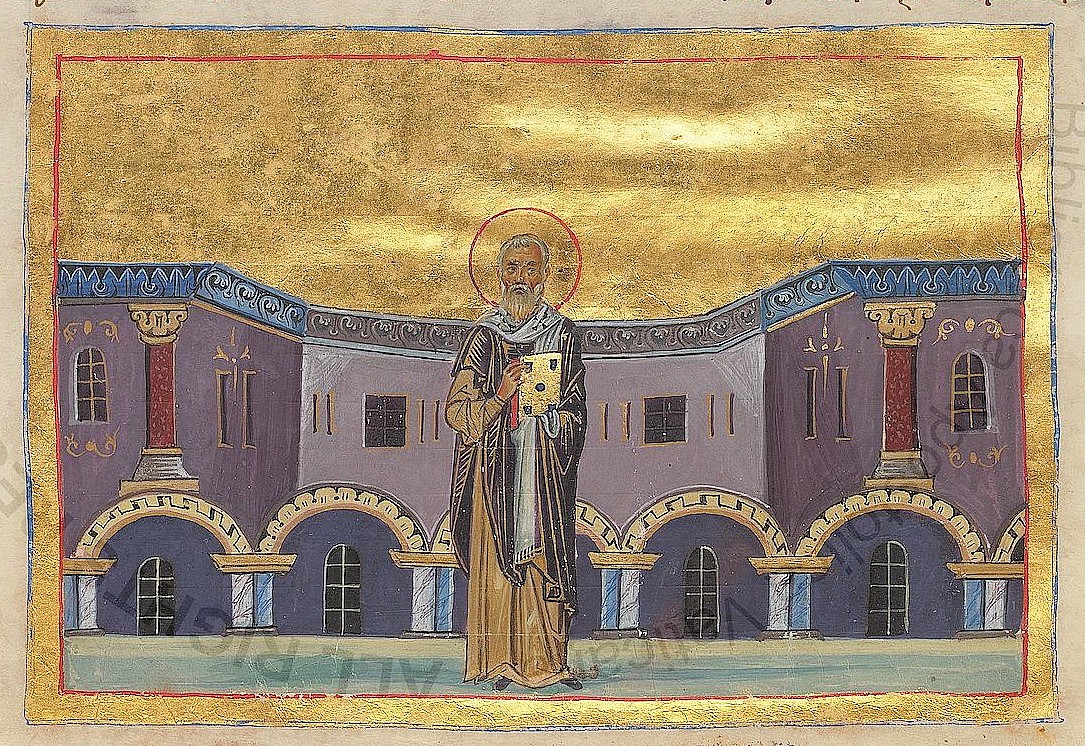
St Amphilochius Bishop of Iconium
Amphilochius was always zealous for the cause of orthodoxy and in 376 he held a Council at Iconium to condemn the Macedonian heresy which denied the deity of the Holy Ghost. In that connection, he wrote a book treating of the HolyGhost which was praised by Saint Jerome. He was present when Macedonianism was condemned at the Council of Constantinople in 381. He also urged Emperor Theodosios I (379-395) to forbid the Arians from holding their assemblies. At first, Theodosios refused because he considered such a measure, would be unnecessarily severe but Amphilochius eventually prevailed and persuaded him to promulgate a law making it illegal for Arians to meet in public or in private.
He was equally zealous in his opposition to the teachings of the Messalians, an Illuminist and Manichean sect which held that prayer alone is the essence of religion and the only way to salvation. In 394 he presided over a Synod at Sida in Pamphylia, where these heretics and their heresies were condemned.
Amphilochius wrote 333 verses in classical Greek poetry about the Christian life, several biblical commentaries and a writing against pseudo-ascetic practices.St Gregory Nazianzen described Amphilochius as a “herald of truth” and an exemplary and irreproachable Bishop and, his father confirmed that sick people had been healed by his prayers. He died in the year 400. His memorial day is 23 November.
In the history of theology. Amphilochius occupies a place of prominence for his defence of the divinity of the Holy Ghost, sadly this work is now lost, however, he read it to St Jerome on the occasion of their meeting at Constantinople. Most of Amphilochius’ works have been lost. Eight sermons have survived, including the oldest known sermon on the Feast of the Purification of the Blessed Virgin and the Presentation of Our Lord. His style and concern for historical accuracy puts Amphilochius in the place of a predecessor to St John Chrysostom, who may have been influenced by him.
St Adalbert of Casauria St Alexander Newski St Amphilochius of Iconium (c339-400) Bishop, First Cousin of St Gregory of Nazianzen and his great friend and so too, a close friend and confidante of St Basil the Great. St Augusta of Alexandria St Clement of Metz Bl Detlev of Ratzeburg St Falitrus of Chabris St Faustina of Alexandria St Gregory of Girgenti Bl Guy of Casauria St Loëvan of Brittany St Lucretia of Mérida Bl Margaret of Savoy St Mustiola of Chiusi St Paternian of Fano St Paulinus of Whitland St Rachildis of Saint-Gall St Severin of Paris St Sisinius of Cyzicus St Trudo of Hesbaye St Wilfetrudis of Nivelless
Saints of the Day – 22 November – Saint Philemon + (1st Century) Lay Martyr, Disciple of St Paul, his wife, Saint Appia (also known as Apphias, Affia, Apphia) and their son, Archippus. Many scholars believe that Pilemon was a Bishop or the Archbishop of Colossae.
The Roman Martyrology reads: “At Colossae, in Phrygia, during the reign of Nero, Saints Philemon and Apphias, disciples of St Paul. When the Christians ran to the Church for protection on a pagan feast, they were arrested and, by the command of the Governor, Artocles, were scourged, let down into a pit up to their waists and overwhelmed with stones.”
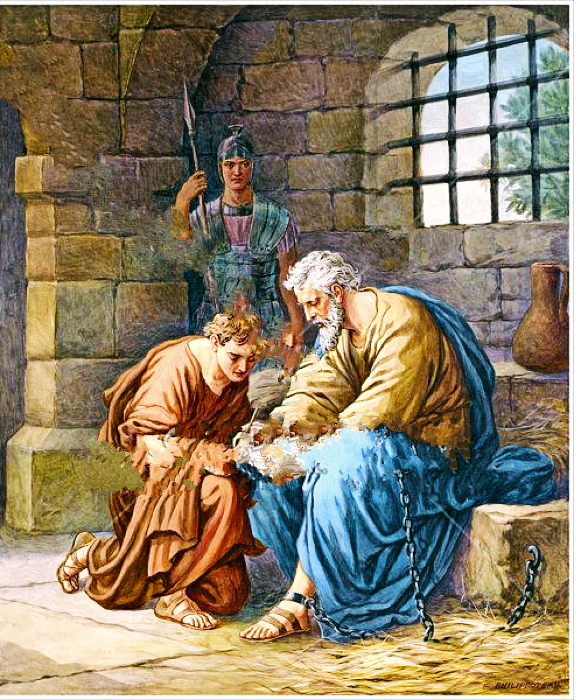
St Paul writing to St Philemon with St Timothy
Philemon of Colossae in Phrygia, was a disciple of St Paul. To him, the Apostle wrote the shortest of his Epistles, one of the four which he sent from Roman captivity (Eph, Phil, Col, Philem).
He was a wealthy Colossian, owner of buildings and slaves. Since St Paul had not been to Colossae, Philemon must have met him in Ephesus (cf Acts 19, 10-11), or during a tour through the interior of the Province of Asia (Acts 19, 26; I Cor. 16, 19). Philemon was converted and Baptised by St Paul together with his followers, probably during his long Ephesian labours between 54 and 57. (Philem. 19: “thou owe thyself to me too”).
Appia, from the beginning of the St Paul’s letter, is placed by him alongside Philemon “beloved brother” and greeted as “sister beloved”as found in the Vulgate or “dearest” in translation to English. St John Chrysostom, Theodoret and others following them, held, with good reason, that Apphia was the wife of Philemon. She certainly belonged, to his family, as did Archippus, named last among the three recipients of the letter (ibid. 1-2) who formed a family group very dear to Paul. Archippus must have been the son of Philemon and Appia. Their friendly house was at the Apostle’s disposal (ibid. 22). The three, together with their converted slave, Onesimus, who is the object, and (with Tychicus), bearer of the Epistle to Philemon, are commemorated in the Latin Martyrologies, on 22 November. All four wouldhave bene Martyred together at Colossae.
St Apphia
Epistle of St Paul to Philemon
He commends the faith and charity of Philemon and sends back to him, his fugitive servant, whom he had converted in prison.
“1 Paul, a prisoner of Christ Jesus and Timothy, a brother, to Philemon, our beloved and fellow labourer. 2 And to Appia, our dearest sister and to Archippus, our fellow soldier and to the church which is in thy house, 3 grace to thee and peace from God our Father and from the Lord Jesus Christ. 4 I give thanks to my God, always making a remembrance of thee in my prayers. 5 Hearing of thy charity and faith, which thou hast in the Lord Jesus and towards all the saints 6 That the communication of thy faith may be made evident, in the acknowledgment of every good work that is, in thee in Christ Jesus.
7 For I have had great joy and consolation in thy charity because the bowels of the saints have been refreshed by thee, brother. 8 Wherefore, though I have much confidence in Christ Jesus, to command thee that which is to the purpose, 9 for charity’s sake I rather beseech, whereas thou art such a one, as Paul, an old man and now a prisoner also of Jesus Christ. 10 I beseech thee for my son, whom I have begotten in my bands, Onesimus, 11 Who hath been, heretofore, unprofitable to thee but now, is profitable, both to me and thee, 12 whom I have sent back to thee. And do thou receive him as my own bowels. 13 Whom I would have retained with me that, in thy stead, he might have ministered to me, in the bands of the gospel 14 But, without thy counsel, I would do nothing that thy good deed, might not be, as it were of necessity but voluntary. 15 For perhaps he, therefore, departed for a season from thee that thou, mightest receive him again forever, 16 Not now as a servant but, instead of a servant, a most dear brother, especially to me but how much more to thee, both in the flesh and in the Lord?
17 If, therefore, thou count me a partner, receive him as myself. 18 And if he hath wronged thee in anything, or is in thy debt, put that to my account. 19 I Paul,have written it with my own hand, I will repay it, not to say to thee that thou owest me thy own self also. 20 Yea, brother. May I enjoy thee in the Lord. Refresh my bowels in the Lord.
21 Trusting in thy obedience, I have w,ritten to thee, knowing that thou wilt also do more than I say. 22 But withal, prepare me also a lodging. For I hope that through thy prayers, I shall be given unto thee. 23 There, salute thee Epaphras, my fellow prisoner in Christ Jesu,; 24 Mark, Aristarchus, Demas and Luke, my fellow labourers. 25 The grace of our Lord Jesus Christ be with thy spirit. Amen.”
Tradition tells us that all St Paul’s wishes in regard to St Onesius were joyfully carried out by our Saint Philemon.
St Agabbas of Syria St Amphilochius of Iconium St Ananias of Arbela St Appia + (1st Century) Lay Martyr, Disciple of St Paul St Archippus + (1st Century) Lay Martyr, Disciple of St Paul St Eugenia of Matera St Christian of Auxerre St Dayniolen the Younger St Joan of Montefalco St Mark of Antioch St Maurus of North Africa St Philemon + (1st Century) Lay Martyr, Disciple of St Paul
Quote/s of the Day – 21 November – The Memorial of St Pope Gelasius I (Died 496) Bishop of Rome from 1 March 492 until his death on 19 November 496.
“There are two powers, by which chiefly, this world is ruled – the Sacred authority of the Priesthood and the authority of Kings. And of these, the authority of the Priests is, so much the weightier, as they must render, before the tribunal of God, an account, even for the Kings of men.”
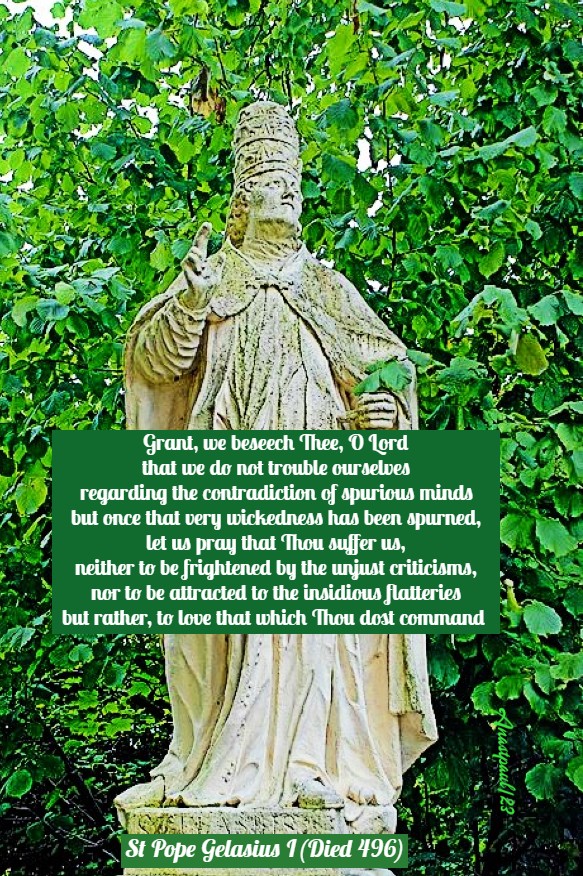
“Grant, we beseech Thee, O Lord that we do not trouble ourselves regarding the contradiction of spurious minds but once that very wickedness has been spurned, let us pray that Thou suffer us, neither to be frightened by the unjust criticisms, nor to be attracted to the insidious flatteries but rather, to love that which Thou dost command …”
(In 1751, Pope Benedict XIV published this Prayer within his Apostolic Constitution “Providas” which exposed the evils of freemasonry.)
Saint of the Day – 21 November – St Gelasius I (Died 496) Bishop of Rome. Papal Ascension 1 March 492 until his death on 19 November 496 in Rome, Italy. Gelasius was learned Scholar and a prolific Author, Defender of orthodoxy and of the See of Peter. Zealous Apostle of the poor and needy and of the Majesty of the Liturgical Worship, including the discipline of Hymn and Prayer within his scholastic orbit of Author. The Feast of St Gelasius is kept on 21 November which is the anniversary of his Interment, although many writers give this as the day of his death which actually occurred on 19 November as stated above.
The Roman Martyrology reads today: “At Rorme, the birthday of St Gelasius, Pope, distinguished for learning and sanctity.”
There is a difference of opinion and understanding of where our Saint was born – either in Rome but of African parents of Roman citizenship or, in Africa and then returned to Rome as their natural home with his parents. Either way he, himself, states that he was “Roman by nature.” Before his election as Pope on 1 March, 492, Gelasius had been greatly employed by his predecessor, Felix II, especially in drawing up Ecclesiastical documents which has led some scholars to confuse the writings of the two Pontiffs.
Upon his election to the Papacy, Gelasius at once showed his strength of character and his lofty conception of his position, by his firmness in dealing with the adherents of the Patriarch of Constantinople. Despite all the efforts of the otherwise orthodox Patriarch, Euphemius of Constantinople and the threats and wiles, by which the Emperor Anastasius tried to obtain recognition from the Apostolic See, Gelasius, though hard-pressed by difficulties at home, would make no peace which compromised. in the slightest degree. the rights and honour of the Chair of Peter!
The constancy with which he combated the pretensions, lay and Ecclesiastical, of the New Rome; the resolve, with which he refused to allow, the civil or temporal pre-eminence of a City, to determine its Ecclesiastcal rank; the unfailing courage with which he defended the rights of the “second” and the “third” Sees i.e. Alexandria and Antioch – these, are some of the most striking features of his Pontificate. It has been well said that nowhere, at this period, can be found stronger arguments for the Primacy of Peter’s See, than in the works and writings of our St Gelasius. He is never tired of repeating – that Rome owes its Ecclesiastical Princedom, not to an Ecumenical Synod, nor to any temporal importance it may have possessed but solely, to the Divine Institution of Christ Himself, Who conferred the Primacy over the whole Church upon Peter and his successors!
Gelasius’ Pontificate was too short to effect the complete submission and reconciliation of the ambitious Church of Byzantium. Not until Hormisdas (514-523) did the contest end in the return of the East to its old allegiance. Troubles abroad were not the only occasions to draw out the energy and strength of Gelasius. The Lupercalia, a superstitious and somewhat licentious vestige of paganism in Rome, was finally abolished by the Pope after a long contest.
Image created in c870, featuring the Coronation of Charles the Bald, flanked by Gelasius I on the left and Gregory the Great (540-604). Gelasius’ Pontificate and his writing, in particular, gave him an acclaimed status within Pontifical history.
A stanch upholder of the old traditions, Gelasius, nevertheless, knew when to make exceptions or modifications. An excellent example of his brilliance was his Decree obliging the reception of the Holy Eucharist under both kinds. This was done as the only effective way of detecting the Manichæans, who, although present in Rome in large numbers, sought to divert attention from their hidden propaganda and subversive plans, by feigning Catholicism. But as they held wine to be impure and essentially sinful, they would refuse the Chalice and thus, be recognised. Later, with the change of conditions, the old normal method of receiving Holy Communion under the form of bread alone, returned.
In his zeal for the beauty and majesty of Divine worship, Gelasius composed many Hymns, Prefaces and Collects and arranged a standard Mass-book, although the Missal which has commonly adopted his name, the “Sacramentarium Gelasianum” belongs properly, to the next Century. How much of it is the work of our Saint, is still subject to uncertainty.
Gelasius, although Pope but for four and a half years, exerted a deep influence on the development of Church polity, of the Liturgy and Ecclesiastical discipline. A large number of his Decrees have been incorporated into the Canon Law.
In his private life, Gelasius was, above all, conspicuous for his spirit of prayer, penance and study. He took great delight in the company of Monks and was a true father to the poor, dying empty-handed, as a result of his lavish charity. Dionysius Exiguus (c470-c544) the renowned Canonist, in a letter to his friend, the Priest Julian gives a glowing account of Gelasius as he appeared to his contemporaries.
As a Writer, Gelasius takes high rank for his period. His style is vigorous and elegant, though occasionally, obscure. Comparatively little of his literary work has come down to us, although he is said to have been the most prolific writer of all the Pontiffs of the first five Centuries. There are extant – forty-two letters and fragments of forty-nine others, besides six treatises, of which three are concerned with the Acacian schism, one with the heresy of the Pelagians, another with the errors of Nestorius and Eutyches, while the sixth is directed against the Senator Andromachus and the advocates of the Lupercalia. The best edition is that of Thiel.
St Celsus the Martyr St Clement the Martyr St Demetrius of Ostia St Digain St Pope Gelasius I (Died 496) Papal Ascension 1 March 492 until his death on 21 November 496 in Rome, Italy.
St Heliodorus of Pamphylia St Hilary of Vulturno St Honorius of Ostia
St Maurus of Porec St Maurus of Verona St Rufus of Rome
Martyrs of Asta – 3 Saints: Three Christians Martyred together for their faith during the persecutions of Diocletian. The only details about them to survive are their names – Eutychius, Honorius and Stephen. They were Martyred in c300 at Asta, Andalusia, Spain.
Saint of the Day – 10 November – Saint Baudolino (c700–c740) Hermit, Pilgrim. Mystic, Miracle-worker. Born in c700 and died in c740 of natural causes. Patronages -Alessandria, Italy, City of (proclaimed in 1786), Diocese of Alessandria, Italy, (proclaimed in 1786). Also known – Baudilio.
Baudolino lived at the time of the Lombard King Liutprand (712-744) and the oldest testimony which speaks of him is given to us by the historian Paolo Diacono, a Lombard Benedictine Monk (c720-799) practically a contemporary of the Saint.
Baudolino is called “man of wonderful sanctity,” he was a Hermit, gifted with the gift of miracles and prophecies and lived in Foro (now Villa del Foro, a Town on the bank of the Tanaro, near Alessandria). Legend has it that geese, deer and other animals would gather around him to listen to him in his hermitage, therefore, he is sometimes depicted surrounded by these animals.
Paolo Diacono, in his “Historia Langobardorum” reports, among other things, an episode as testimony to the supernatural gifts which Baudolino prossessed. During a hunting trip, an Earl, while trying to shoot a deer with his bow, missed the shot and instead hit Anfuso, the nephew of King Liutprand. The wound was serious and the King sent a messenger to Baudolino to ask the Lord for the healing of his young nephew.
In the meantime, Anfuso died and when the messenger reached Baudolino in his hermitage, before he spoke, the latter told him that he knew everything he wanted and he was sorry because he could not do anything, as the young man was already dead but he would pray for his soul.
The holy hermit died around 740 and was buried in Villa del Foro. When Alessandria was founded in 1168, the inhabitants of Villa del Foro moved there, also bringing the Relics of the Saint, who became their Patron. His patronage continued, according to tradition, when in 1174 he appeared on the City’s defence bastions, putting the Ghibelline besiegers to flight.
In 1189 a Church was built in his honour which was entrusted to the Humiliati and upon their suppression, in 1571, it passed to the Dominicans. Over time, the scant information about him, grew and increased, so that the legend of his life were gradually mixed with other decidedly fantastical information.
Furthermore, it was said that the Bishops of Tortona and Acqui, given the great popularity enjoyed by the Hermit Saint, considered him a Bishop, there was no shortage of those who defined him as bishop of Alessandria, which is why he is also depicted in bishop’s clothes.
In 1803 when the Dominican Church was closed, the Relics of the Saint were taken to the Church of St Alessandro and then, in 1810, transferred to the Cathedral and placed in a Chapel dedicated to our Saint Baudolino. There has been devotion and a vow in his honour since 1189, a vow renewed in 1599 and ratified by the Diocesan Synod of 1602. St Baudolino was proclaimed the main Patron of the City and the Diocese of Alessandria with his Feast being celebrated on 10 November.
St Baudolino’s Sarcophagus in the Cathedral of Alessandria
St Aedh Mac Bricc St Anianus the Deacon St Baudolino (c700–c740) Hermit St Demetrius of Antioch St Elaeth the King St Eustosius of Antioch St Grellen St Guerembaldus St Hadelin of Sees St John of Ratzenburg St Joseph the Martyr
St Leo of Melun St Monitor of Orleans St Narses of Subagord St Nonnus of Heliopolis St Orestes of Cappadocia St Probus of Ravenna Bishop St Theoctiste St Tryphaena of Iconium St Tryphosa of Iconium
Martyrs of Agde – 3 Saints: A group of Christians who were tortured and Martyred together in the persecutions of Diocletian. The only about them to survive are the names – Florentia, Modestus and Tiberius. Martyred c 303 in Agde, France.
Saint of the Day – 9 November – Saint Benignus of Armagh (Died 467) Bishop, Disciple of and Successor to St Patrick (c386-461) as the Bishop, Musician, Also known as – “Patrick’s Psalm Singer” Benignus of Ireland, Benen of….
Benignus was the son of Sesenen a pagan Irish chieftain. He was Baptised into the Catholic Faith by St Patrick and became his favourrf disciple and, in around 450, his administrative assistant in the Diocese of Armagh and upon St Patrick’s death in 461, becoming the Bishop there.
He had a gentle and lovable disposition and was named Benen (Latinised as Benignus). He followed St Patrick in all his travels and helped him in all his evangelisation and with missionary work, especially assisting him in the formation of Choirs for Liturgical music. From his musical talents he was known as “Patrick’s Psalm Singer.”
As Benignus had been trained by St Patrick in sacred learning from his youth and was well versed in the language and culture of his native land, he was appointed Secretary to the Commission of Nine which had been directed to compile the Brehon Laws, (Laws governing everyday life) a few years before
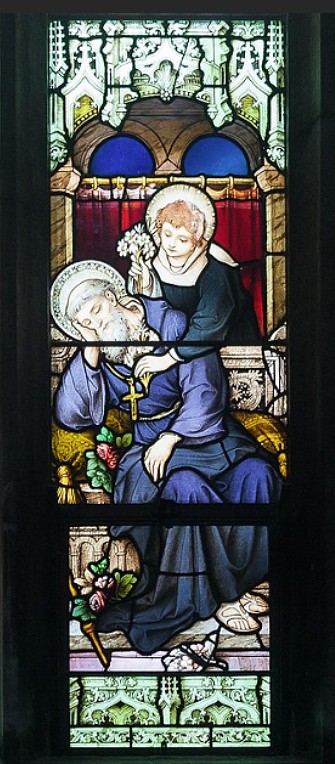
Armagh Cathedral of St Patrick West Aisle Window- St Benignus places flowers on the sleeping St Patrick
Benignus also contributed materials for the “Psalter of Cashel” and the “Book of Rights.” He was present at the Synod which passed the Canon recognising the “See of the Apostle Peter” as the final court of appeal in difficult cases – this Canon is to be found in the Book of Armagh.
He established a Monastery in today’s Drumbannon and also in today’s Kilbonane. During the Eastertide of 433, St Patrick clashed with King Laoghaire at Tara, over Religion and legend has it that a trial by fire was proposed. A pagan and Benignus were tied inside a burning timber building; the pagan was reduced to ash while St Benignus was untouched. At this point, Christian teaching was established throughout the region. St Benignus resigned hisBishopric in 467 and died at the end of that same year.
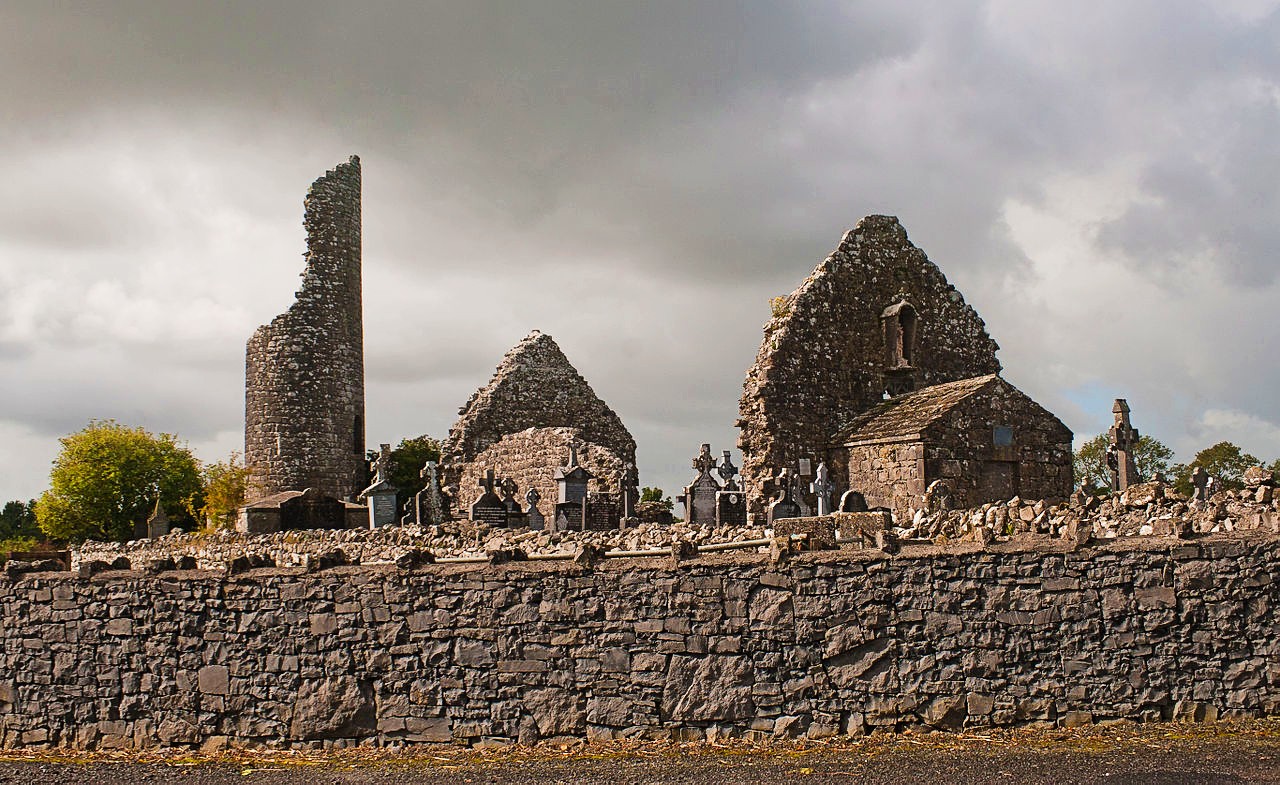
The ruins of St Benignus’ foundation of the Monastery of Kilbennan in East Galway.
The Martyrology of Marianus O’Gorman refers to “bright Benignus, a dear scion” on this day but he has a fuller entry in the Martyrology of Donegal which Archbishop John Healy quotes below. This extract on Saint Benignus/Benen has been taken from his 1905 book “The Life and Writings of Saint Patrick.”
“BENIGNUS, i.e., Benen, son of Sescnen, disciple of Patrick and his successor, that is, Primate of Ard-Macha (Armagh). He was of the race of Cian, son of Oilioll Olum. Sodelbh, daughter of Cathaoir, son of Feidhlimidh Firurghlais, of Leinster, was his mother. The holy Benen was benign, was devout – he was a virgin without ever defiling his virginity; for, when he was psalm-singer at Ard-Macha along with his master, St Patrick, Earcnat, daughter of Daire, loved him and she was seized with a disease, so that she died suddenly and Benen brought consecrated water to her from Patrick and he shook it upon her and she arose alive and well and she loved him spiritually afterwards and she subsequently went to Patrick and confessed all her sins to him and she offered her virginity afterwards to God, so that she went to Heaven and the name of God, of Patrick and of Benen, was magnified through it.”
Armagh Cathedral of St Patrick West Aisle Window- St Benignus places flowers on the sleeping St Patrick
St Agrippinus of Naples St Alexander of Salonica St Aurelius of Riditio St Benignus of Armagh (Died 467) Bishop, Disciple of and Successor to St Patrick
St Eustolia
Blessed Gabriel Ferretti OFM (1385-1456) Priest, Friar of the Order of Friars Minor, Provincial Superior, Mystic. renowned missionary Preacher. He was zealous in the restoration and establishment of new Convents. He was an ancestor to both Cardinal Gabriele Ferretti and Blessed Pope Pius IX, having been descended from a long noble lineage. Patronage – Ancona. His body is incorrupt. He was Beatified on 19 September 1753 by Pope Benedict XIV. Biography: https://anastpaul.com/2021/11/09/saint-of-the-day-9-november-blessed-gabriel-ferretti-ofm-1385-1456/
Blessed George Napper (1550-1610) Priest Martyr Beatified by Pope Pius XI on 15 December 1929
St Pabo St Sopatra St Theodore Stratelates St Ursinus of Bourges St Vitonus of Verdun
Martyrs of Constantinople – 3 Saints: A group of ten Christians who tried to defend an image of Jesus over the Brazen Gate of Constantinople from an attack by Iconoclasts during the persecutions of Emperor Leo the Isaurian. The group of was seized by soldiers, condemned by judges for opposing the emperor, and Martyred. The only details that have survived are three of their names – Julian, Marcian and Maria. They were martyred in 730 at Constantinople (modern Istanbul, Turkey).
Saint of the Day – 8 November – Saint Adeodatus I, Pope (Died 618) Bishop of Rome from 19 October 615 to 8 November 618 and serving for just over 2 years. Born in Rome and died there in November 618. Also known as – Adeodato, Diosdado, Deusdedit.
The Roman Martyrology reads: “At Rome, St Deusdedit, Pope, whose merit was so great that he cured a leper by kissing him.”
Adeodatus was born in Rome, the son of a Subdeacon named Stephen. He served as a Priest for 40 years before his election and was the first Priest to be elected Pope since John II in 533.
Almost nothing is known about Adeodatus I’s Pontificate. He encouraged and supported the Clergy, who were impoverished in consequence of the political troubles of the time. Our Saint today reversed the practice of his predecessor, Boniface IV, of filling the Papal administrative ranks with Monks by recalling the Clergy to such positions and by Ordaining some 14 Priests, the first Ordinations in Rome since St Gregory the Great’s Pontificate.
According to tradition, Adeodatus was the first Pope to use lead seals (bullae) on Papal documents which, in time, came to be called “Papal Bulls.” One Bull, dating from his reign, is still preserved, the obverse of which represents the Good Shepherd in the midst of His sheep, with the letters Alpha and Omega underneath, while the reverse bears the inscription: Deusdedit Papæ.
In August 618, an earthquake struck Rome, followed by an outbreak of Leprosy. Adeodatus was the first to rally the Church, to help those in need, setting an example by himself going into the streets to assist the suffering. Adeodatus died on 8 November 618 and was eventually succeeded by Boniface V.
Four Crowned Martyrs: Saint Castorus, Saint Claudius, Saint Nicostratus and Saint Simpronian. Skilled stone carvers in the 3rd century quarries. Martyred when they refused to carve an idol of Aesculapius for Diocletian. They were drowned in the River Sava in 305. Patronages – against fever, cattle, sculptors, stone masons, stonecutters.
St Adeodatus I, Pope (Died 618) Bishop of Rome from 19 October 615 to 8 November 618 St Clair of Tours St Cybi of Caenarvon St Drouet
All Deceased Dominicans All Saints of Bologna, Italy All Saints of Wales Augustinian Martyrs of Spain
All Saints of the Diocese of Evry: A regional memorial of all the Saints and Beati of the calendar who have a connection to the Diocese of Evry-Corbeil-Essonnes, France.
Blessed Isabella of France, founded the Longchamp monastery
Blessed Nicolas Gaudreau, pastor of Vert-le-Petit
Blessed Pierre Bonse, pastor of Massy
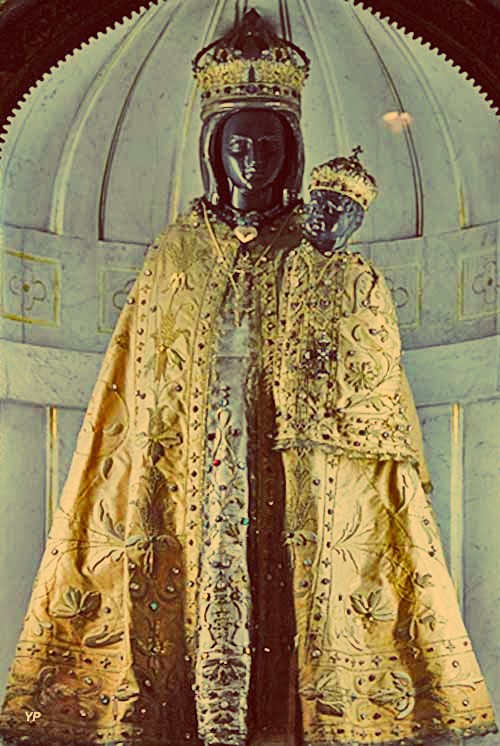
Our Lady of Good Guard, patron saint of the diocese, venerated in Longpont-sur-Orge, France
Saint Corbinian, born in Saint-Germain-lès-Arpajon
Saint Denis of Paris, evangelizer of part of Essonne and revered ni Longpont-sur-Orge
Saint Eloi, who lived in Chilly-Mazarin
Saint Germain of Paris
Saint William of Bourges, son of Count Baldwin IV of Corbeil
Saint William of Aebelholt, pastor of Brunoy
Saint Wulfran of Sens, born in Milly-la-Forêt
Blessed Nativelle, vicar of Longjumeau
Blessed René Le Bris, pastor of Bris-sous-Forges
Saint Spire of Bayeux, whose relics are in Corbeil in the cathedral that bears his name
Saint of the Day – 7 November – Saint Achillas (Died 313) Bishop of Alexandria, Egypt, Confessor, Scholar particularly in Philosophy and Theology. St Theonas had Ordained him to the Priesthood and appointed Achillas as the Head of the Catechetical School of Alexandria upon the departure of St Pierius, whom we celebrated on 4 November. Born in Alexandria, Egypt and died there in 313 of natural causes. Also known as – Archelaus, Achillas of Alexandria, … of Egypt, “Achillas the Great.”
The Roman Martyrology states of him today: “At Alexandria, blessed Achillas, a Bishop renowned for erudition, faith and purity of life.”
Achillas is less well-known than his contemporary, Arius. But, while one has gone down in history as one of the most notorious of all heretics, the other is honoured, as one who kept the True Faith to the end.
Achillas was, a complete Alexandrian, where he was born some time in the 3rd Century. The City was one of the theological centres of Christendom – which made it an attractive target for heretics. Sabellius came to Alexandria in the early 3rd Century, teaching the heresy that the Father, Son and Holy Spirit were all just different modes of one Divine person.
St Theonas, excommunicated Sabellius. His successor, Peter, had to contend with Meletius, who preached that those who had fallen away in persecution would have to be re-Baptised. Peter also had to discipline Arius. Before Peter was Martyred he nominated Achillas to succeed him.
As a former Head of Alexandria’s Catechetical School, Achillas was unlikely to be deceived by theological error. But, he was able to be deceived by his own kindness and merciful gentleness towards repentant sinners and by such a clever and wily man as Arius. Arius seems to have convinced Achillas that he, Arius, had changed and should be allowed back into the fold of the Church. Achillas eventually realised his mistake and started to oppose Arius publicly. He died without seeing the final victory of orthodoxy. After his death, Arius nominated himself to become Bishop of Alexandria but the clergy and the people, chose Alexander.
St Jerome lamented that “because, as a spark in Alexandria, he was not extinguished, Arius became a conflagration which laid waste the world!” But, for his efforts, Achillas has, nevertheless, been recognised as a Saint. St Athanasius (297-373), later the Archbishop of Alexandria and, the Doctor of the Church, described our St Achillas by the honourific “Achillas the Great.”
The Feast of All Saints of the Order of Preachers: “Fountain of all holiness, You stirred up in our holy brothers and sisters an extraordinary love of truth, conformity to Christ Crucified and a thirst for the salvation of souls: may we imitate them in offering You thanksgiving on account of the way of life they gave us.” — From the Intercessions at Lauds for the Feast of All Saints of the Order of Preachers. HERE: https://anastpaul.com/2019/11/07/thought-for-the-day-7-november-feast-of-all-dominican-saints/
St Achillas (Died 313) Bishop of Alexandria, Egypt. St Amarand St Amaranthus
Blessed Anthony Baldinucci SJ (1665-1717) Priest of the Society of Jesus, Preacher, Writer and Missionary. Fr Baldinucci was Beatified by Pope Leo XIII on 25 March 1893. Biography here: tps://anastpaul.wordpress.com/2017/11/07/saint-of-the-day-blessed-anthony-baldinucci-s-j-1665-1717/
St Athenodorus of Neo-Caesarea St Auctus of Amphipolis St Baud of Tours St Blinlivet St Congar
St Gebetrude of Remiremont St Herculanus of Perugia St Hesychius of Mytilene St Hieron of Mytilene Bl Hyacinth Castañeda Puchasons St Lazarus the Stylite Bl Lucia of Settefonti St Nicander of Mytilene Bl Peter Ou St Prosdocimus of Padua St Prosdocimus of Rieti St Raverranus of Séez St Rufus of Metz St Taurion of Amphipolis St Thessalonica of Amphipolis St Tremorus of Brittany
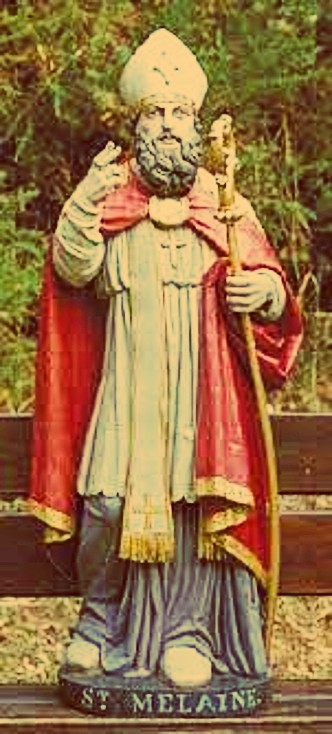
Saint of the Day – 6 November – Saint Melaine of Rennes (Died c535) Bishop of Rennes in Brittany, France, Confessor, previously a Monk and Abbot, Royal Advisor, Miracle-worker. Born in Placet, Brittany and died in c535 of natural causes. Also known as – “Apostle of France” • Melan, Melanie, Melanio, Melanius, Melen, Mellion, Mullion. Additional Memorials – 6 January and 11 October – both dates seeming to be in regard to the translation of his Relics. Patronages – Mullion, Cornwall and Saint Mellyan, Cornwall, England.
The Roman Martyrology reds: “At Rennes, in France, St Melanius, Bishop and Confessor, who displayed innumerable virtues and with his thoughts ever fixed on Heaven, passed from the world in glory.”
Melaine grew up at Plaz in Brain, near Redon in Brittany, northwest modern France. He was a pious child, often being punished for spending too long at his prayers. He became a Monk and then Abbot. He was nominated the successor to Bishop St Amand of Rennes. Traditions state that on the death of Amand, he was compelled, by the local population, to become the next Bishop, accepting the role with great reluctance.
It is also recorded that Melaine performed many miracles and put an end to heathen practices in his Diocese. During his rule, King Clovis I began his reign and Melaine became his trusted advisor. He opposed immigration from Britain and attended the First Council of Orléans in 511.
Melaine died at Rennes in c535 and was buried in the Abbey Church of Notre-Dame-en-Saint-Melaine, see below, which was built around his tomb.
In Wales, his Feast is celebrated locally on 10 October rather than 11 October at St Mellons, in modern-day Cardiff, although there is serious doubt over whether Melaine is the same Saint ‘Mellonius’ said to have been born there.
In Cornwall, he is the patron of the villages of St Mellion and Mullion, where there is a tradition of his visit.
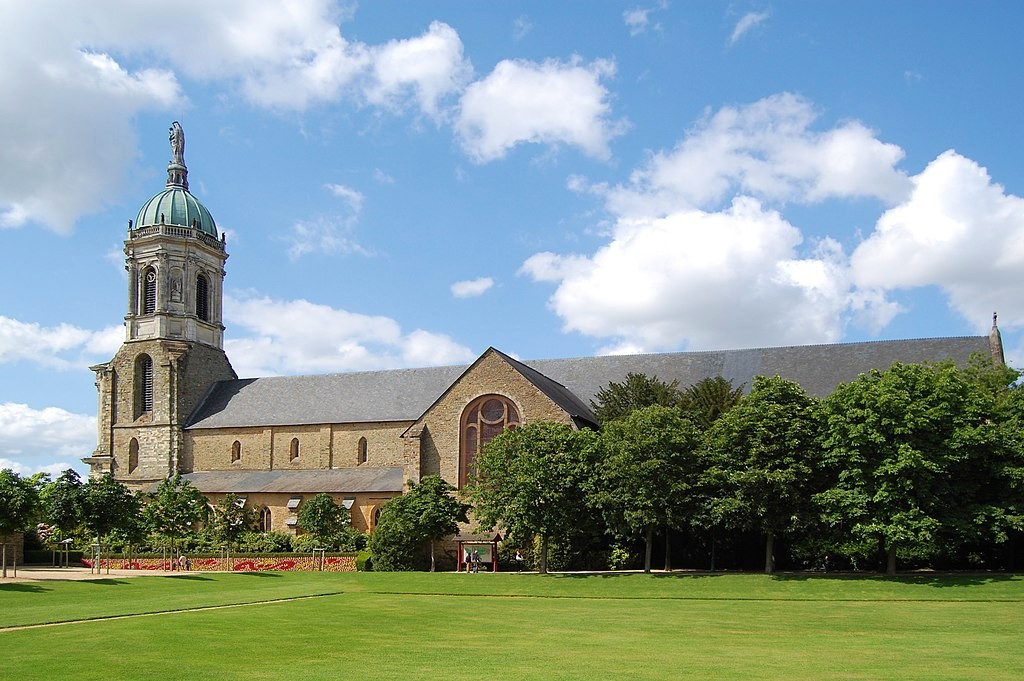
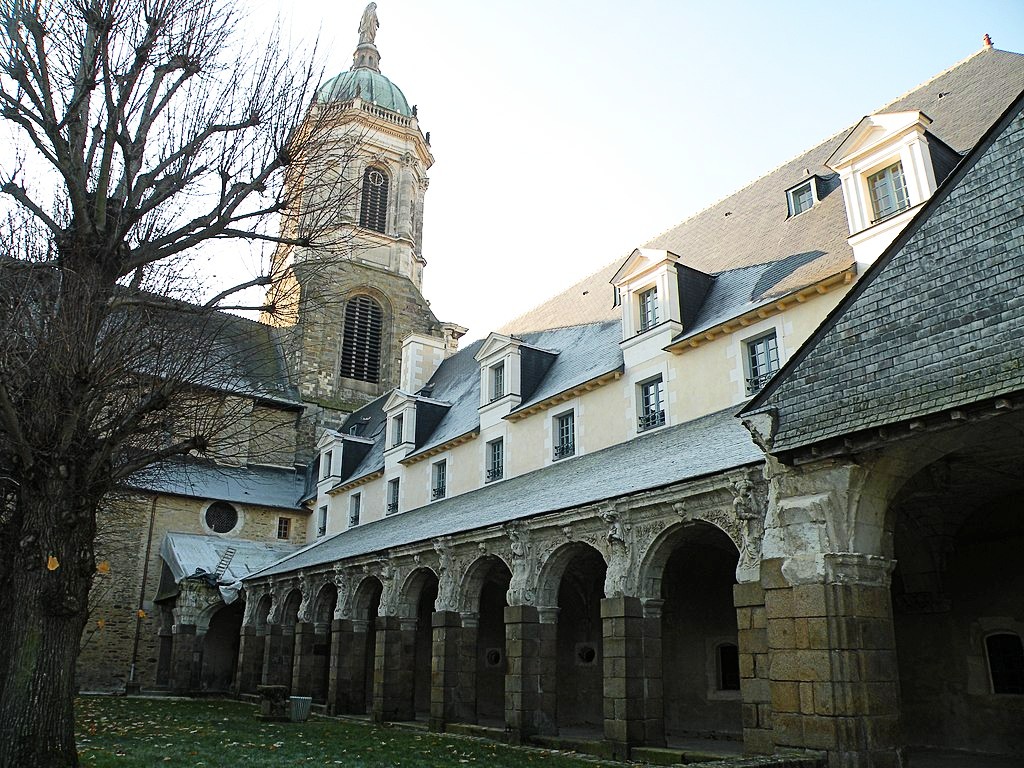
The Abbey of St Melaine and the back of the Church
St Demetrian of Cyprus St Edwen of Northumbria St Efflam of Brittany St Emilian of Faenza St Erlafrid of Hirschau St Felix of Fondi St Felix of Genoa St Felix of Thynissa St Illtyd St Israel of Limoges
St Leonard of Reresby Bl Leonianus of Autun St Melaine of Rennes (Died c535) Bishop Confessor St Paul of Constantinople St Pinnock St Protasius of Lausanne St Severus of Barcelona Bl Simon of Aulne St Stephen of Apt St Theobald of Dorat St Valentine of Genoa
Martyrs of Antioch – 10 Saints: Ten Christians murdered together by Arabs after their seizure of Antioch, Syria. No names or other details about them have come down to us. 637 in Antioch, Syria.
Martyrs of Gaza – 9 Saints: A group of Christian soldiers who were captured by Saracens invading the area of Gaza in Palestine. When the men continued to profess their Christianity, they were executed. We know the names of some of the Martyrs – Himerius, John (2 of them), Kallinikos (Callinoco), Paul, Peter, Stephen and Theodore (2 of them). They were beheaded in Gaza, Palestine.
Saint of the Day – 5 November – Saint Gerald of Béziers OSA (1070–1123) Bishop of Béziers from 1121 until the day of his death, Canon Regular of St Augustine and the 2nd Prior of the community at Cassan Abbey, Apostle of the poor and sick, Gerald built a Hospital and restored and extended the Abbey, Miracle-worker. Born around 1070 in Puissalicon and died on 5 November 1123 in Béziers in France of natural causes. Patronages – Puissalicon and the town of Saint-Guiraud and of children suffering from eye diseases. Also known as – Gerald of Puissalicon, Guiraud, Geraud, Geraldo.
Gerald was born in Puissalicon in 1070. Several acts and charters bear the signature “Guiraud of Puissalicon.” This proves that he was from the noble family of thePuissalicons. Tradition reports that his mother carried him for only 7 months and then, when he was Baptised, the Baptismal’s water began to boil as if some red-hot iron had been planted within it. This miracle was considered as forerunner of the holiness of the child.
Before 1085, being only around 15 years old, he joined the Canons Regular of St Augustine, where , in around 1094, he was Ordained a Deacon. Seven years later, in 1101, aged 31, Gerald was Ordained to the Priesthood.
Between 4 May 1105 and 6 August 1106, he was elected Prior of the Monastery in Cassan near Roujan , which, as Prior, he restored to its former glory. He built many new buildings, including a Hospital. On 5 October 1115, a new Church outside the Cassan Monastery was Consecrated.
Gerald was known for his piety, sincerity and simplicity, He devoted much of his time to the poor and sick and in 1121 he accepted the Bishopric of the Diocese of Béziers. He held this office for only around 2 years before Gerald died at the age of approximately 53 as a result of illness.
He was buried, as requested, next to Saint. Aphrodisius, first bishop of Béziers. His Relics were transferred on 11 November 1259 to the no longer existing Monastery of the Poor Clares . This building was a place of worship until the French Revolution, during which the Relics of our Saint were destroyed. His miraculous Silver Amethyst Ring was stored in Reujan and was stolen in 1980 by unknown perpetrators. The ring had great supernatural powers, especially for children with eye diseases.
The French Town of Saint-Guiraud is named after him .
The 23rd Sunday after Pentecost Within the Octave of All Saints
Feast of the Holy Relics: https://anastpaul.com/2022/11/05/feast-of-the-holy-relics-5-november-2/ AND: About: https://anastpaul.wordpress.com/2017/11/05/feast-of-the-holy-relics-5-november/ Protestantism pretends to regard the veneration which the Church pays to the Relics of the Saints, as a sin and contends that this pious practice is a remnant of paganism. The Council of Trent, on the contrary, has decided that the bodies of the Martyrs and other Saints, who were living members of Jesus Christ and temples of the Holy Ghost, are to be honoured by the faithful. This decision was based upon the established usage of the earliest days of the Church and upon the teaching of the Fathers and of the Councils. The Council orders, however, that all abuse of this devotion is to be careffully avoided and forbids any Relics to be exposed which have not been approved by the Bishops and, these Prelates are recommended, to instruct the people faithfully, in the teaching of the Church on this subject. While we regret, then, the errors of the impious and of heretics, let us profit by the advantages which we gain, by hearkening to the voice of the Church!
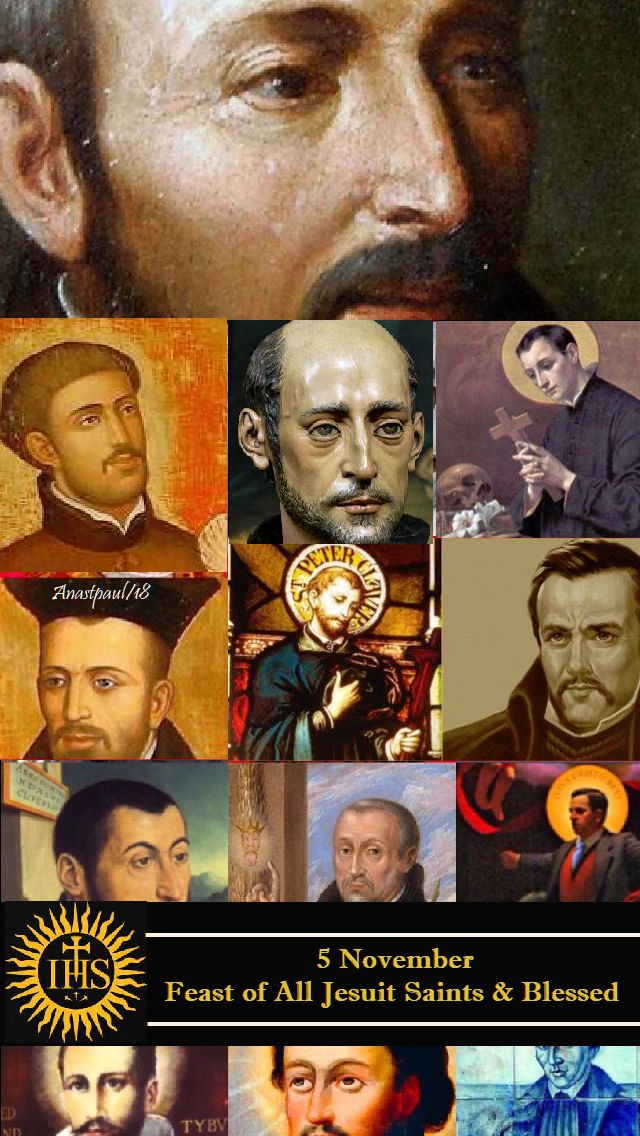
All Saints and Blesseds of the Society of Jesus: The Society of Jesus, commonly known as the Jesuits, was Founded in 1534 by Saint Ignatius Loyola (1491-1556) at Montmartre, Paris, France. A body of clerics regular organised for Apostolic work, following a religious rule and relying on alms for their support. It was the chief instrument of the Catholic Reformation. Pope Paul III approved the new rule in 1540 and Ignatius was elected the first general of the order in 1541. The constitutions, drafted by him and based on his Spiritual Exercises were adopted in 1558. It was the first order which enjoined by its constitutions devotion to the cause of education. The ministry of the Society consists chiefly in preaching. teaching catechism. administering the sacraments. conducting missions in parishes, taking care of parishes. organising pious confraternities, teaching in schools of every grade, writing books, pamphlets, periodical articles, going on foreign missions and special missions when ordered by the current Holy Father, to whom they take a vow of total obedience. Our current Holy Father, Pope Francis is a Jesuit and has jokingly wondered aloud who is boss of whom in his Order. The general resides at Rome, Italy and has a council of assistants. The motto of the Society is Ad Majorem Dei Gloriam (For the greater glory of God). All Jesuit Saints and Blesseds: https://anastpaul.com/2018/11/05/feast-of-all-the-saints-and-blesseds-of-the-society-of-jesus/
St Canonica St Comasia St Dominator of Brescia St Elizabeth St Domninus the Physician St Epistemis St Eusebius of Terracina St Felix of Terracina St Fibitius St Galation St Gerald of Béziers OSA (1070–1123) Bishop Bl Gomidas Keumurjian Bl Gregory Lakota St Guetnoco St Hermenegild St Idda St Juan Antoni Burró Mas St Juan Duarte Martín St Kanten St Kea St Laetus of Orleans St Magnus of Milan St Mamete St Marco of Troia St Spinulus of Moyen-Moûtier St Sylvanus of Syria St Zachary
Martyrs of Caesarea Maritima – 4 Saints: Four young Christian men who were Martyred together is the persecutions of Maximian – Aussenzius, Philotheus, Timothy and Theotimus. They were martyred in the arena at Caesarea Maritima, Palestine.
Saint of the Day – 4 November – St Pierius (Died c309) Priest, Confessor, Co-Director with Achilas of the Catechetical School of Alexandria in Egypt,Scholar, renowned Preacher and Exegetical Writer.. He died in Rome in c309 of natural causes which St Jerome assures us of. Also known as – Pierio, “The Younger Origen”
The Roman Martyrology reads today: “The birthday of St Pierius, Priest of Alexandria, who, being deeply versed in the Sacred Scriptures, leading a very pure life and freed from all impediments in order to apply to Christian philosophy, taught the people with great renown and published various treatise, under the Emperors Carus and Diocletian, when St Theonas governed the Church of Alexandria. After the persecutions, he spent the remainder of his life at Rome, where he rested in peace in the Lord.”
Pierius was Ordained a Priest in the late 3rd Century by St Theonas, the Bishop of Alexandria. Thereafter, Pierius served as the Director of the Catechetical School of Alexandria.
He was a gifted preacher and excelled in the fields of Scripture studies and philosophy. Pierius lived austerely and temperately, practising the Evangelical Counsel of poverty.
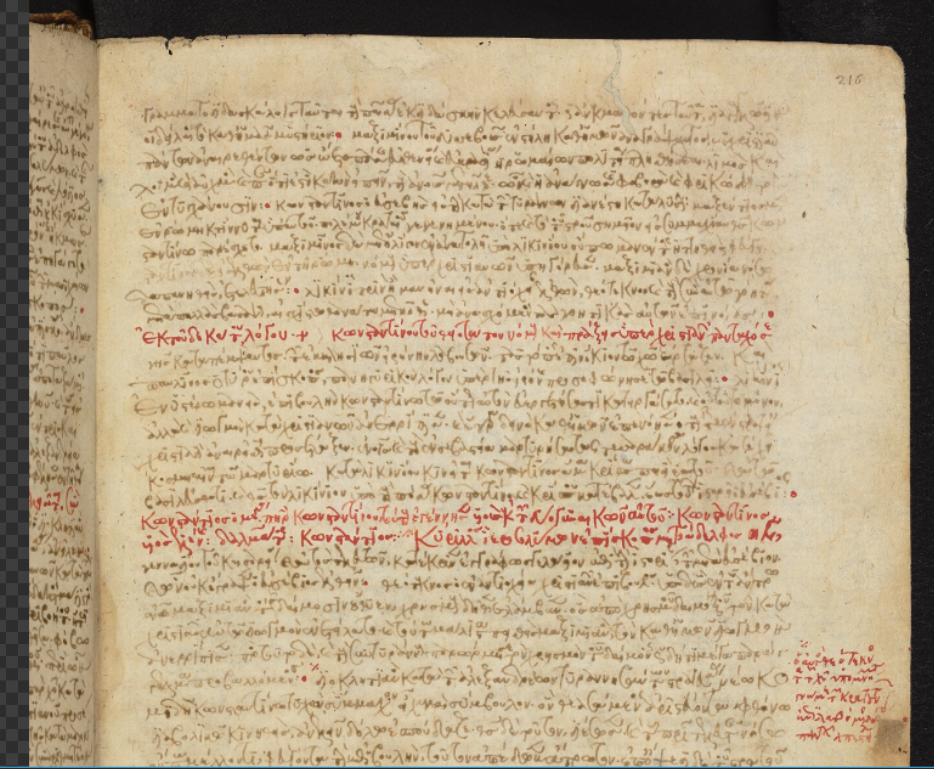
His known published Works are – one on the Gospel of St Luke, an Easter Sermon on Osee (Hosea); a Treatise on the Mother of God; a few other Easter Sermons and an Eulogy on St Pamphilus, who had been one of his disciples. Only fragments of these writings are extant all the rest have been lost to us. Below is an image of this fragment.
St Vitalis (Died c 304) Martyr and St Agricola (Died c 304) Latmen Martyrs. Martyrs, Laymen. They died in c 304 in Bologna, Italy in the persecution of Diocletian. Patronage – Bologna. The Roman Martyrology reads: “In Bologna, Saints Vitalis and Agricola, Martyrs, of whom, according to what Saint Ambrose recounts, the first was first a slave to the other, then a companion in Martyrdom: Vitalis, in fact, suffered such torments that there was no longer any part of his body without wound. Agricola, not at all terrified by the torture of his slave, imitated him in Martyrdom by undergoing crucifixion.” Their Lives and Deaths: https://anastpaul.com/2022/11/04/saints-of-the-day-4-november-st-vitalis-died-c-304-and-st-agricola-died-c-304-martyrs/
St Amandus of Avignon St Amandus of Rodez St Birstan St Clarus the Hermit St Clether
Bl Frances d’Amboise St Gerard de Bazonches St Gregory of Burtscheid Bl Helen Enselmini Bl Henry of Zweifalten St Hermas of Myra St Joannicus of Mount Olympus St John Zedazneli St Modesta of Trier St Nicander of Lycia St Patrobas St Perpète St Philologus St Pierius (Died c309) Priest, Director of the Catechetical School of Alexandria
Saint of the Day – 3 November – Saint Rumwold of Buckingham (c650-650) Infant Saint, born with miraculous adult abilities and mystical gifts. Born in c650 at King Sutton, Northants, England and died three days later in the same place. Also known as – Rumwold of Brackley, Rumbald of…. Rumbold of…. Rumwald of….
Tucked away in an almost-forgotten 11th Century manuscript is the extraordinary tale of St Rumwold, an infant saint who lived on this earthly plane for only three days. But in that short time, he not only spoke with the eloquence of a grown and educated man but he declared himself a Christian and gave a sermon to those who had gathered for his birth. The Author of that manscript, was Bishop St Wulfstan of Worcester (c 1008–1095),1070s,
Rumwold was born in the District of King’s Sutton sometime in the 7th Century, the son of the King of Northumberland (also known as Northumbria, in northern England) and his wife, who was a daughter of Penda of Mercia. The hagiography of his short life states that his parents were en-route to visit Penda for the birth of their first child, the infant Rumwold.
Before they could reach their destination, the party was forced to make camp by the roadside in a meadow, as the Princess of Mercia had entered labour. Rumwold was born in the meadow, near to the place that would become known as Sutton and then later as King’s Sutton. Sadly the infant lived only for a short time and died on the third day after his birth. Rumwold was buried in Sutton.
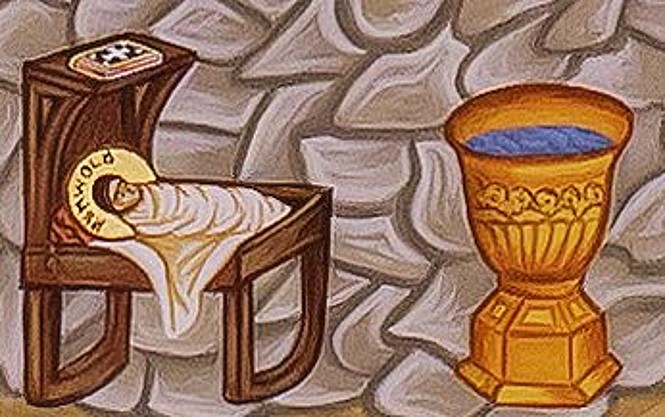
Not an unusual story so far, but it is the events following Rumwold’s birth which begin to move into the realm of miracles. St Wulfstan tells of how Rumwold’s birth was “desired by many and sanctified by God” and that upon being born, the infant proclaimed three times “I am a Christian!” The child then asked the two Priests who attended the royal party, Widerin and Edwold, to Baptise him and grant him the grace of receiving Holy Communion. Seeing as there was no Baptismal Font nearby, he directed the Priests to a nearby bowl-shaped stone. The men were miraculously able to lift it and carry it to the meadow to use for the Baptism. The sBaptismal Font can still be seen in King’s Sutton Church.
St Rumwold’s original stone Baptismal Font
Following the ceremony, Rumwold proceeded to give a lengthy sermon about the need for virtuous living to all those present. He finished by decreeing that after his death, his body should lay for one year at the place which would be called Sutton, for two years at a place to be named Brackley, before coming to his final resting place which would be known as Buckingham. None of these place-names existed at the time of Rumwold’s birth. Rumwold died, as he prophesied, on the third day of his life, the 3rd of November.
Accounts of Rumwold’s miraculous life were widely circulated in the Middle Ages and his Tomb and Shrine in the old Church of Buckingham became an important focus for pilgrims. Many came to take the curative waters of St Rumbold’s Well close to the Town. The earliest Inns of Buckingham were reputedly founded and flourished on the pilgrims’ trade.
Unfortunately Pilgrimages to Buckingham ceased after the Reformation and St Rumwold’s Shrine and Tomb seem to have been demolished when the old Buckingham Church decayed and collapsed in 1776. Regrettably nothing was transferred to the present-day Church. However, there is a recently-erected Memorial in the old Churchyard which reads:
“Near this spot within the old Church of Buckingham, was the Tomb and Shrine of the Infant Saint Rumbold, who lived and died in c650.”
St Rumwold’s Well has been protected and its site still remains.
St Acepsimas St Acheric of Vosges Bl Alphais of Cudot Bl Berardo dei Marsi Bl Berchtold of Engelberg St Caesarius St Cecilio Manrique Arnáiz St Clydog St Cristiolus St Domnus of Vienne St Elerius St Englatius St Florus of Lodeve St Gaudiosus of Tarazona St Germanus St Guenhael St Hermengaudius of Urgell St Hilary of Viterbo
St Sylvia Mother of St Gregory the Great, Pope St Theophilus St Valentine of Viterbo St Valentinian St Vitalis St William of Vosges St Winifred of Wales St Wulganus
Innumerable Martyrs of Saragossa: A large group of Christians martyred in Zaragoza, Spain by Dacian during the persecutions of Diocletian. Dacian ordered all Christians of the city into exile under pain of death; when they were assembled to leave, Dacian ordered imperial soldiers to massacre the lot of them. They were Martyred in 304.
Saint of the Day – 2 November – Blessed John Bodey (1549-1583) Layman, Martyr, Husband and Schoolmaster. Born in 1549 at Wells, Somerset, England and died on 2 November 1583 at Andover, England by being hanged, drawn and quartered for the crime of being a Catholic and refusing to accept Elizabeth I, Queen of England, as the Head of the Church. Blessed John was Beatified on 15 December 1929 together with Blessed John Slade (feast day 30 October), by Pope Pius XI. Additional Memorial – 29 October as one of the Martyrs of Douai, 1 December as one of the Martyrs of Oxford University
John was born in Wells, England, the son of a wealthy merchant and former Mayor. He studied at Winchester and then at Oxford and became an Oxford Fellow of New College, in 1568 at the age of 19. In 1576, John, along with seven others, was deprived of his fellowship for being a Roman Catholic by the Anglican Bishop of Winchester.
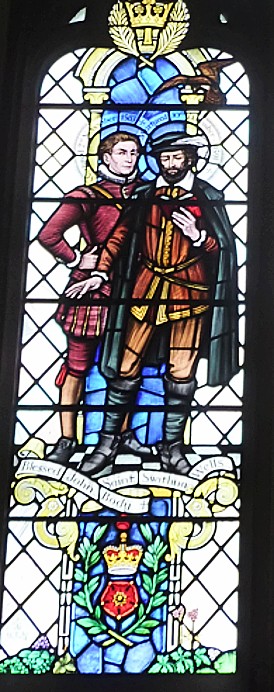
Bl John Bodey left and St Swithun Wells, right at Winchester Catholic Cathedral
In 1577, John travelled to Douay College to study Civil Law but returned to England in February, 1578 when he discovered that his studies could reap no benefits in England as Catholics were forbidden to practice the Legal Profession in any way or under any circumstances.
In 1580, John, by this time married and a schoolmaster, was arrested for continuing to practice the Catholic Faith and rejecting England’s newly-established heretical Church of England or the Anglican Church under the supreme power of the Royal leader.
He was kept in iron shackles in the prison as a “dangerous” prisoner, at Winchester, for three years, which he called his “school of patience.” In 1583 he was tried for treason, both for being a faithful Roman Catholic and for repudiating King Henry VIII’s claim of Royal supremacy of the Church in England, over and above that of the Holy Father in Rome. He was condemned to death in April, 1583, together with John Slade, a fellow layman. There was, apparently, a protest that this Sentence was unjust and illegal, leading to a retriel. But, the two holy men were condemned again—at Andover, Hampshire, in August 1583. Their bravery and perseverance in suffering so impressed their fellow inmates and even the guards that more than one conversion was made – by both Johns, by their virtue and charity!
After the Second Trial – Blessed John Bodey wrote, on behalf of Blessed John Slade and himself:
“We consider that iron for this cause, borne on earth, shall surmount gold and precious stones in Heaven. This is our mark this is our desire. In the mean season we are threatened daily and do look still, when the hurdle shall be brought to the door. I beseech you, for God’s sake that we want not the good prayers of you all for our strength, our joy and our perseverance unto the end. … From our school of patience the 16th September 1583.”
John Bodey was hanged, drawn and quartered at Andover on 2 November 1583. At his Martyrdom, Bodey kissed the halter, saying, “O blessed chain, the sweetest chain and richest that ever came about any man’s neck” and when told he died for treason, exclaimed:
“Indeed, I have been sufficiently censured, for I have been condemned twice; if you may make the hearing of a Blessed Mass – treason, or the saying of an Ave Maria – treason, you may make what you please – treason! … but, I have committed no treason, although, indeed, I suffer the punishment due to treason.”
He then exhorted the people to obey Queen Elizabeth as their worldly ruler: “I acknowledge her as my Lawful Queen in all temporal causes and none other … Ye shall understand, good people all, I suffer death, not for not granting her Majestie to be supreme head of Christ’s Church in England which I may not and will not grant; I pray God long to preserve her Majestie in tranquility over you, even Queen Elizabeth, your Queen and mine; I desire you to obey none other.”
He died saying:
“Jesu, Jesu, esto mihi, Jesu!” “Jesus, Jesus, be for me, Jesus!”
His mother arranged a great feast upon the occasion of her son’s happy death, to which she invited her neighbours, rejoicing at his death as at his marriage, by which his soul was happily and eternally espoused to the Lamb!
Blessed John’s brother Gilbert, was arrested with Alexander Briant on 28 April 1581. He was scourged at Bridewell and afterwards confined in prison. He was released on bail and when not called to appear, escaped to Rheims.
All Souls Day – The Commemoration of All the Faithful Departed: Commemoration of the faithful departed in Purgatory. Abbot Odilo of Cluny instituted it in the Monasteries of his congregation in 998, other religious orders took up the observance and it was adopted by various Diocese and gradually by the whole Church. The Office of the Dead must be recited by the clergy on this day and Pope Benedict XV granted to all Priests, the privilege of saying three Masses of requiem –
St Ambrose of Agaune St Ambrose of Agaune St Amicus of Fonte Avellana St Amicus of Rambone St Baya of Scotland St Domninus of Grenoble St Erc of Slane St Eustochium of Tarsus St George of Vienne
Blessed John Bodey (1549-1583) Layman, Martyr
St Jorandus of Kergrist St Justus of Trieste St Marcian of Chalcis
Martyrs of Isfahan – 5+ Saints: Acindynus, Pegasius and Anempodistus were Persian priests who were imprisoned, tortured, interrogated and Martyred in the persecutions of king Sapor II of Persia; he considered any Christian to be a Roman spy and anti-Persian.
Martyrs of Sebaste – 10 Saints: A group of ten soldiers in the imperial Roman army of Emperor Licinius Licinianus who were executed together for refusing to burn incense as a sacrifice to the emperor. The only details that have survived are five of their names – Agapius, Cartherius, Eudoxius, Styriacus and Tobias. They were burned at the stake in 315 in Sebaste (in modern Turkey).
Saint of the Day – 1 November – Saint Austremonius (3rd-4th Century) Bishop of Clermont, France, and Apostle of Auvergne, Missionary. Born in the 3rd Century and died in the early 4th Century of natural causes. Patronage – the Archdiocese of Clermont. Also known as – Austromoine, Stramonius, Stremonius.
The Roman Martyrology reads today: “At Clermont in Auvergne, France, Saint Austremonius, the first Bishop of that City.”
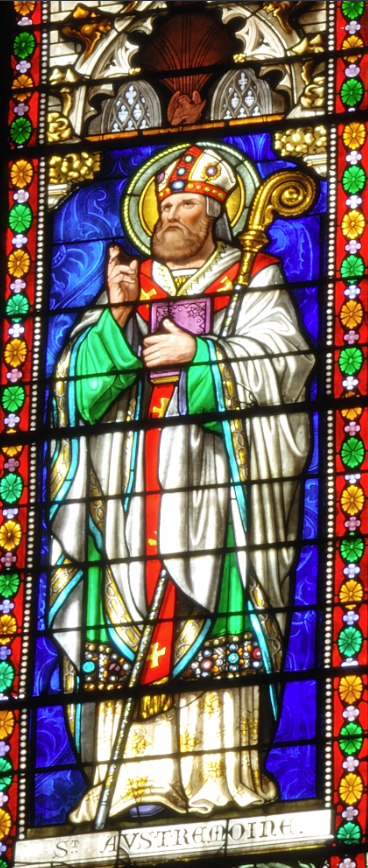
Stained glass of St Austremonius at the Church of Saint-Eutrope in Clermont
Most of what is known about our Saint Austremonius, is deduced from a few brief sentences in the writings of St Gregory of Tours. According to this authorit, he was one of the seven Bishops sent from Rome into Gaul during the years in the mid 3rd Century.
Stained glass of St Austremonius at the Church of Saint-Eutrope in Clermont
He laboured tirelessly for the conversion of the pagans in Auvergne and is believed to have been the first Bishop of Clermont. Another tradition states that Austremonius was martyred by a Jewish rabbi for converting the man’s son, however this is not repeated in the Martyrology.
Also sent to preach the Gospel in Gaul were Gatien to Tours, Trophimus to Arles, Paul to Narbonne, Saturninus to Toulouse, Denis to Paris and Martial to Limoges.
At Clermont St Austremonius converted the Senator Cassius of Clermont and the pagan priest Victorinus. He also sent St Serenus to Thiers, St Marius to Salers and Antoninus into other parts of Auvergne, to further the evangelisation of Gaul. A tradition states that Saint Austremonius instructed St Nectarius of Auvergne to Christianise the peoples living on the plain of Limagne.
Austremonius was a contemporary of the three Bishops of Aquitaine, who attended the Council of Arles in 314.
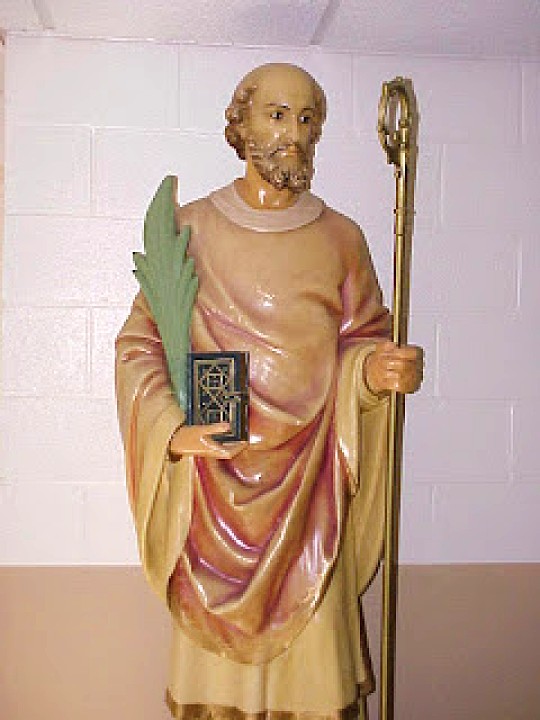
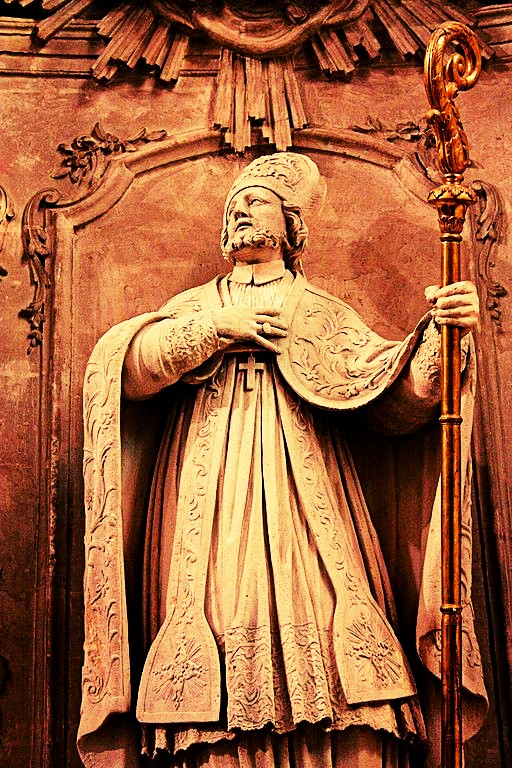
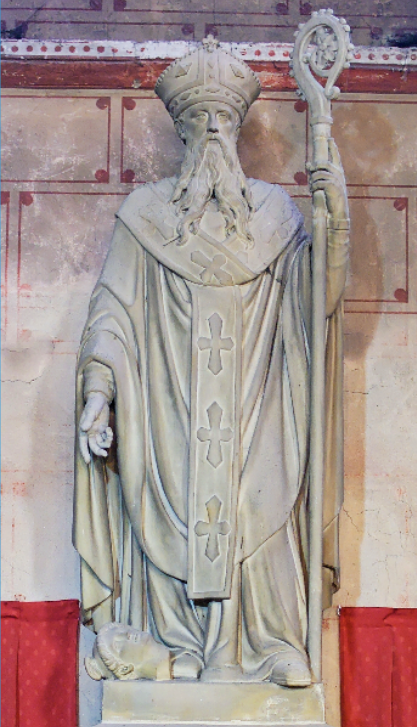
Statue of St Austremonius, Apostle and Bishop of Auvergne. Church Saint-Austremonius at Issoire, Auvergne, France.
Veneration of Saint Austremonius found its origin in a biography of the Saint written in the 10th Century in the Abbey of Mozac, where his body was transferred in 761. The Vita was rewritten and amplified by the Monks of Issoire, who retained the Saint’s head as a Relic. There is a further elaborated Vita of the late 11th Century. The tomb was opened in 1197.
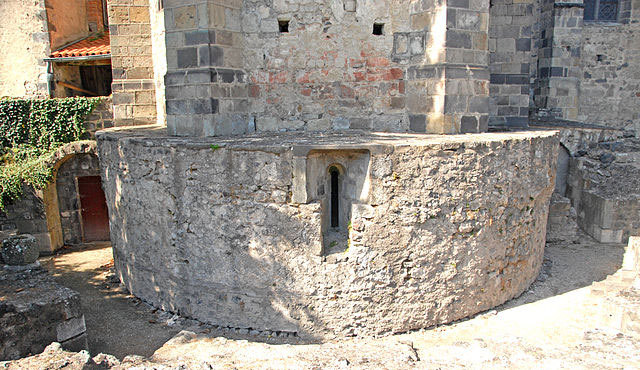
Crypt at the Abbey of Mozac, a former Cluniac Monastery near Riom in Auvergne, France.
St Gregory of Tours, who was born in Auvergne in 544 and was well versed in the history of that country, looks upon St Austremonius as one of the seven envoys who, about evangelised Gaul. He relates how the body of our Saint was first interred at Issoire, being there the object of great veneration, before the body, though not the head, was translated to Clermont, where he is greatly venerated as the Patron of that Diocese.
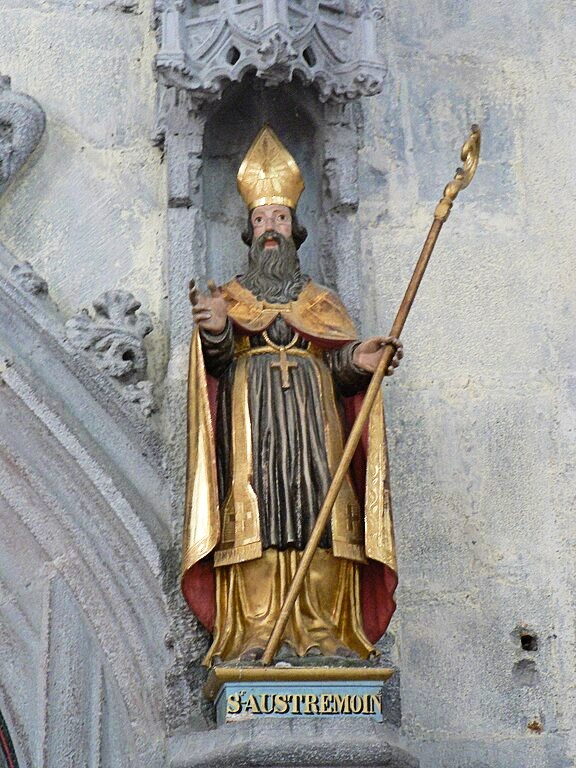
Statue of St Austremonius at the Abbey Church of Mozac
November “The Month of the Holy Souls in Purgatory”
All Saints Day – (a Holy Day of Obligation) Instituted to honour all the saints, known and unknown. It owes its origin in the Western Church to the dedication of the Roman Pantheon in honour of the Blessed Virgin Mary and all the Martyrs by Pope Saint Boniface IV in 609, the anniversary of which was celebrated at Rome on 13 May. Pope Saint Gregory III Consecrated a Chapel in the Vatican Basilica in honour of All Saints, designating 1 November as their feast. Pope Gregory IV extended its observance to the whole Church. It has a Vigil and Octave and is a Holy Day of Obligation – the eve is popularly celebrated as Hallowe’en. Patronage – Arzignano, Italy. ABOUT: https://anastpaul.com/2019/11/01/solemnity-of-all-saints-1-november/ AND: https://anastpaul.com/2018/11/01/1-november-solemnity-of-all-saints/ AND: https://anastpaul.wordpress.com/2017/11/01/1-november-the-feast-of-all-the-saints/
St Austremonius (3rd-4th Century) Bishop and Apostle of Auvergne St Benignus of Dijon St Cadfan St Caesarius of Africa St Caesarius of Damascus St Ceitho St Cledwyn of Wales Bl Clemens Kyuemon St Cyrenia of Tarsus St Dacius of Damascus St Deborah the Prophetess St Dingad Bl Dionysius Fugixima St Floribert of Ghent St Gal of Clermont St Genesius of Lyon St Germanus of Montfort St Harold the King St James of Persia St John of Persia St Julian of Africa St Juliana of Tarsus St Lluís Estruch Vives St Marcel of Paris St Mary the Slave St Mathurin St Meigan St Nichole St Pabiali of Wales Bl Pere Josep Almató Ribera Auras St Peter Absalon Bl Peter Paul Navarra Bl Petrus Onizuka Sadayu St Rachel the Matriarch
Saint of the Day – 31 October – Saint Arnulf of Novalesa OSB (Died c840) (Ordo Sancti Benedicti – OSB) Monk, Martyr. Also known as – Arnolfo, Arnulfo. Additional Memorial – 13 March on some calendars.
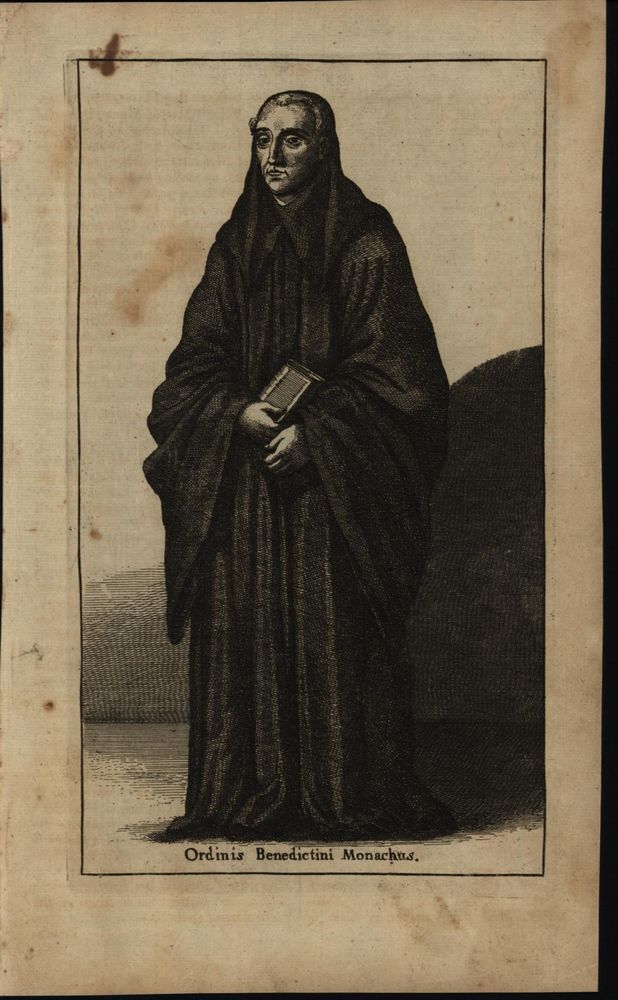
A Benedictine Monk
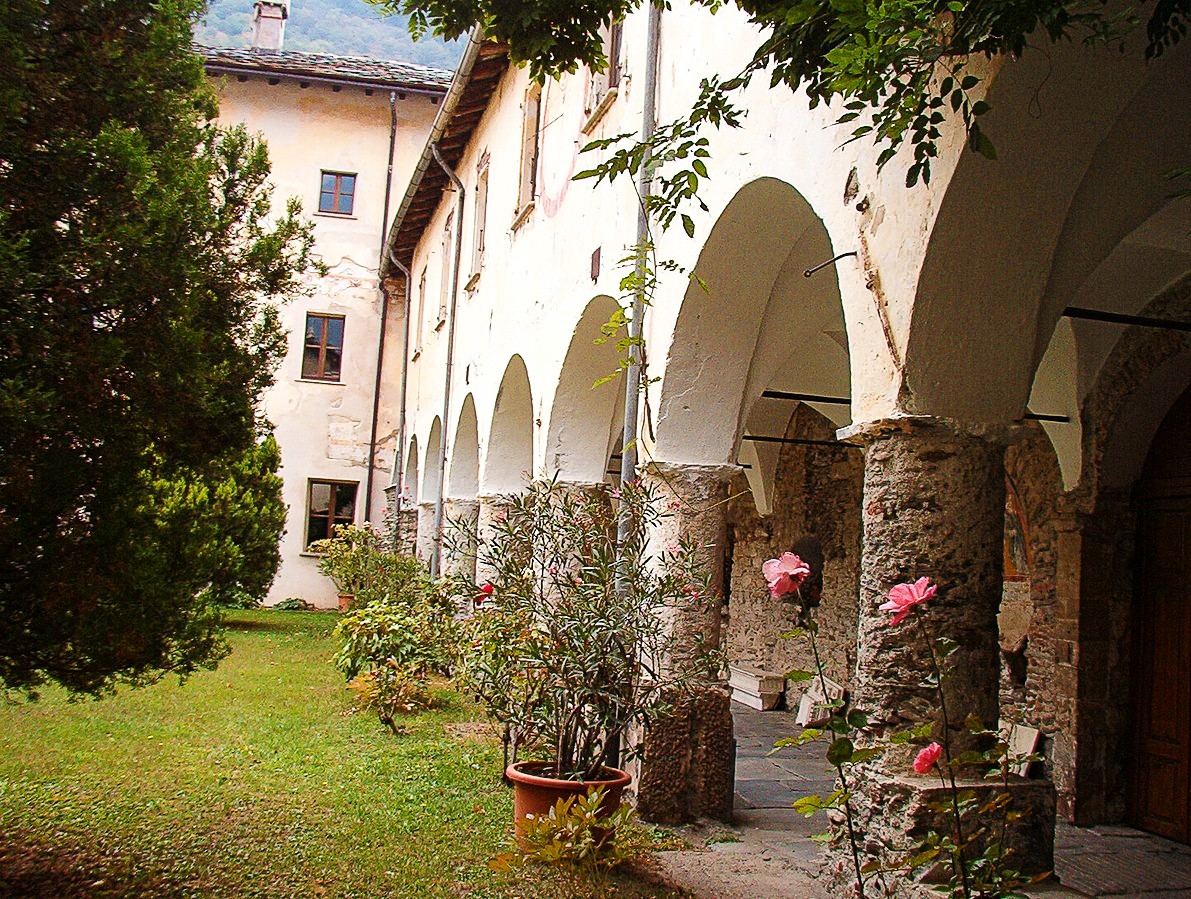
Arnulf was a Benedictine Monk in the Benedictine Monastery of Novalesa in Piedmont, Italy. It was located at the foot of the Alps and at the mouth of the Susa Valley on the Italian side of Mont Cenis in the Piedmont region of Northern Italy and boasted a large community of 500 Monks.
Arnulf is said to have been murdered around 840 by the Saracens, the medieval term for Muslims. His and Saint Heldrad ‘s Relics were transferred to the Parish Church in Novalesa upon the arrival of the French troops in 1794. His memorial day is 31 October, together with St Heldrad (on the Benedictine calendar) but St Heldrad is remembered on 13 March on the universal calendar.
The still active Abbey today
Some sources date his Martyrdom to the early 10th Century, which seems likely. In 906 Italy was invaded by the Saracens. A group of them moved from Frassineto (near today’s Saint-Tropez) in the direction of the Monastery in Novalesa. Abbot Donniverto heard of the impending danger, so together with most of the Monks he made it to safety in the Church of Sts Andrew and Clement (today’s Consolata) in Turin and brought with him the most sacred, indispensable and valuable objects as well as manuscripts from the library. The Saracens looted the Monastery and set fire to the buildings.
Some Monks from Novalesa had sought shelter in the Monastery of Oulx in the Susa Valley on the present border with France but there they were discovered and slaughtered. Two Monks escaped, Saints Justus and Flavian, who hid in a cave in the Arbour above Beaulard. From there they saw the Martyrdom of their brothers and that Angels brought their souls to Heaven. Then, they decided to go down into the Valley again and join their fellow brothers, where they too suffered Martyrdom. The Novalesa Monastery was rebuilt only in the 11th Century.






























 AnaStpaul
You must be logged in to post a comment.