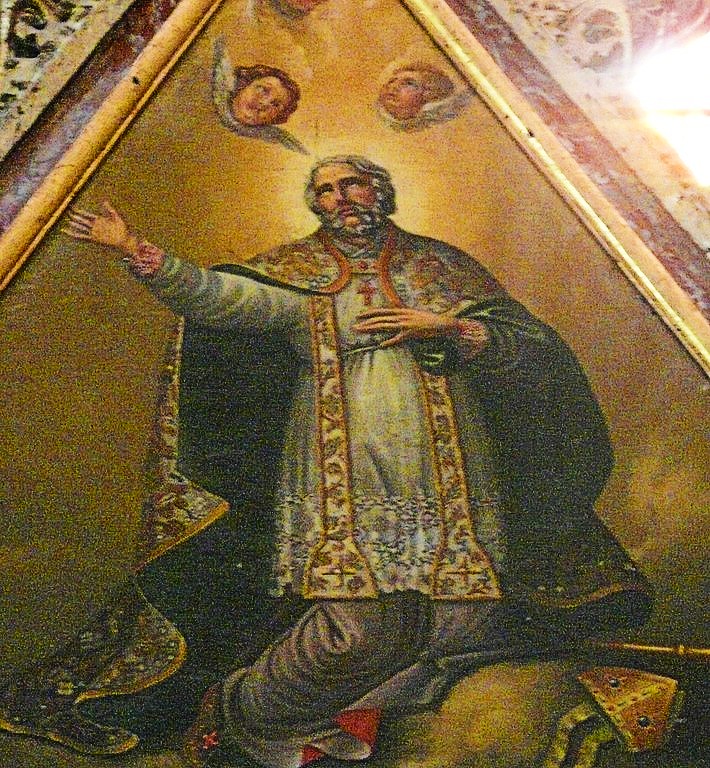
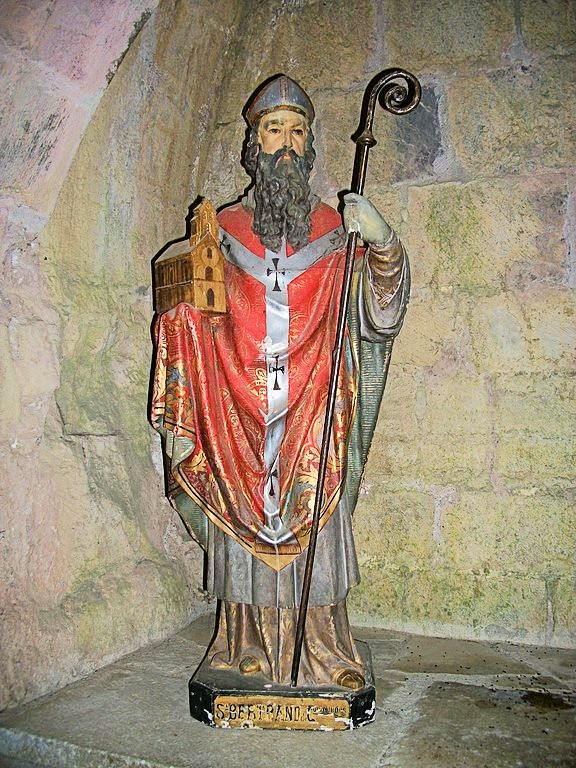
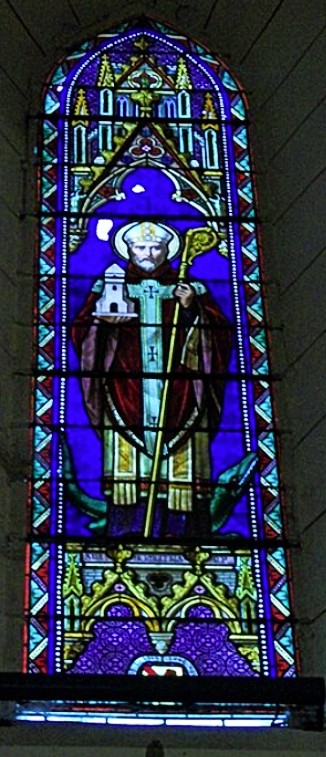
Saint of the Day – 16 October – Saint Bertrand of Comminges (c1050-1123) Bishop of Comminges, in the Archdiocese of Toulouse, France, Reformer – both religious and civil, Peace-maker, Miracle-worker. Born as Bertrand de l’Isle in c1050 in France and died on 16 October 1123 of natural causes. Patronage – of the Town named after him, Saint-Bertrand-de-Comminges, France. He was Canonised in 1222 by Pope Alexander III.
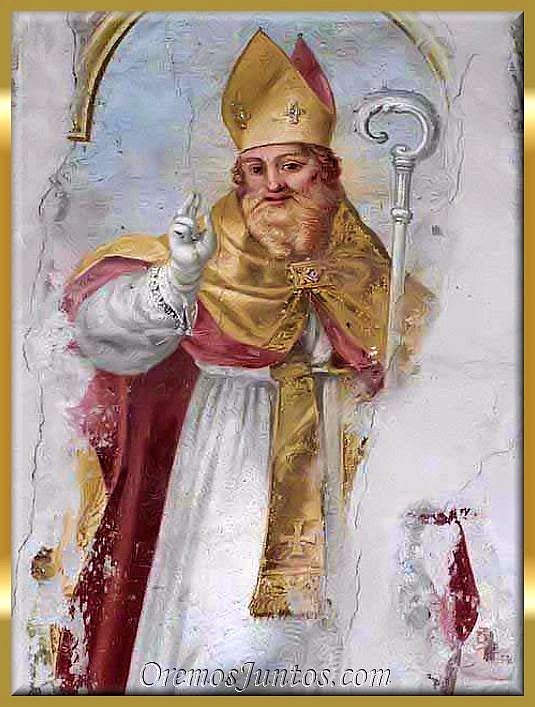
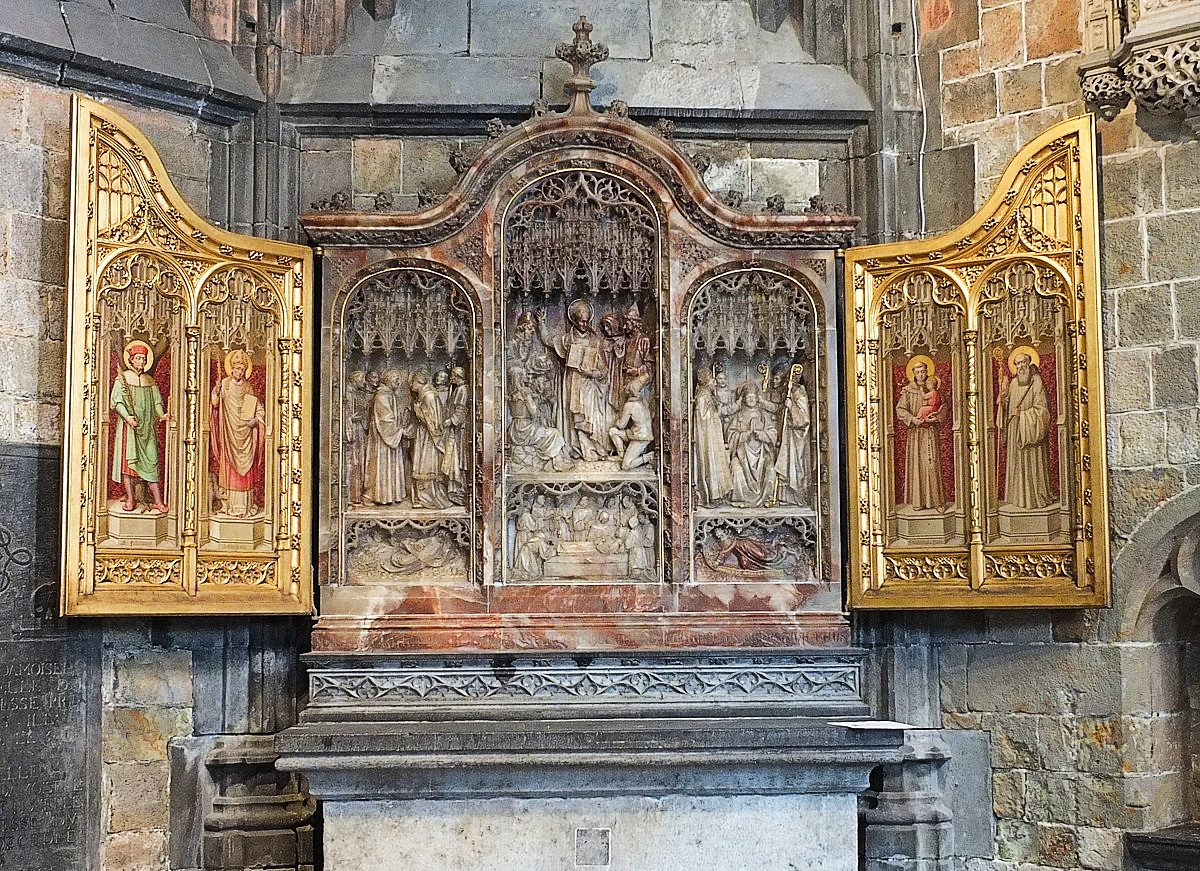
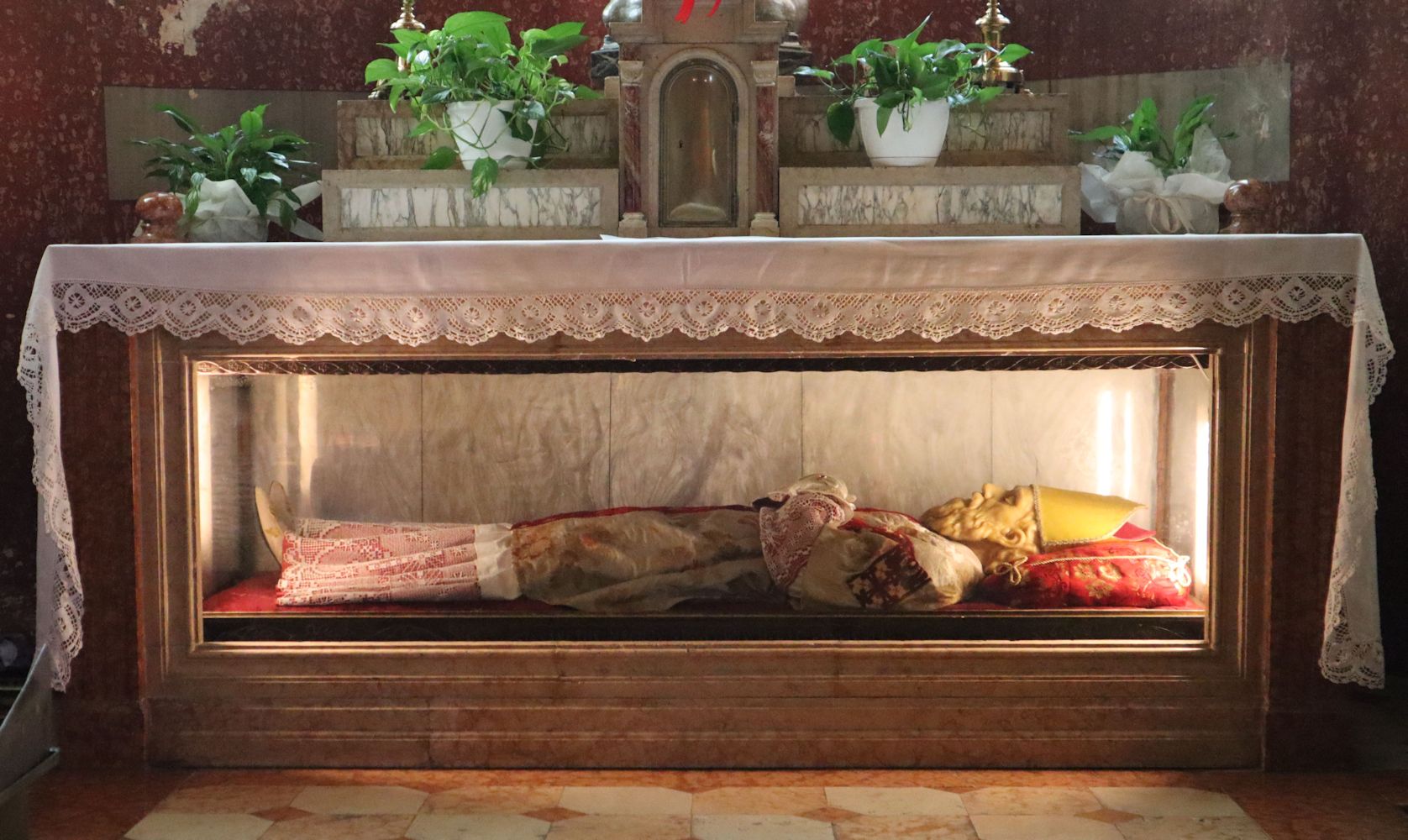
St Bertrand of Comminges, as depicted on panel above his tomb, in Saint-Bertrand-de-Comminges Cathedral, Haute-Garonne
Bertrand was born around 1050 at the Castle of L’Isle-Jourdain. Belonging to the high nobility, the young man initially devoted himself to the ideal of chivalry but, as an adult, he was Ordained a Priest and requested admission into the “Chapter of Canons” of Saint Stephen Cathedral.
In 1083, the Clergy and people of Comminges were looking for a new Bishop for thir City. They chose this young Canon who brought together the rare qualities of a respected southern Lord, capable of bringing back prosperity, since he was involved in the Reform of his time. To his gifts were added a gentle and kindly temperament and a quality of deep faith, whose richness the future would prove.
His effort focused on the reform of the Clergy by imposing community life upon the Canons – a life of poverty, prayer and study. He thus made the Chapter a radiant and exemplary home of evangelical life. He brought civil order to his Diocese, he administered justice but above all, he restored the Church.
He becomes a builder – to restore and rebuild this City which lived in poverty and great violence. With resolution, he enforced the peace of Christ throughout Comminges, as well as in the Hautes-Pyrénées, to ensure peace and security reigned there.
Many miracles are attributed to Bertrand who put himself at the service of liberating people, removing the handcuffs worn by everyone, liberating hearts as much as bodies. As well as the miraculous deliverance by Saint Bertrand, who was already in Heaven, of Sancho Parra, a minor Lord and a bandit, imprisoned in Barcelona.
Bertrand was very close to his faithful especially to the smallest and poor, constantly visiting them with attention and charity, both on a temporal and spiritual level. He set up land called “sauvétés” (which, having become villages and towns, took the name of “suveterre” or “salvetat”) to shelter the populations of the poor, the marginalised, the outlaws, fugitives so that they caouldfind refuge and security there.
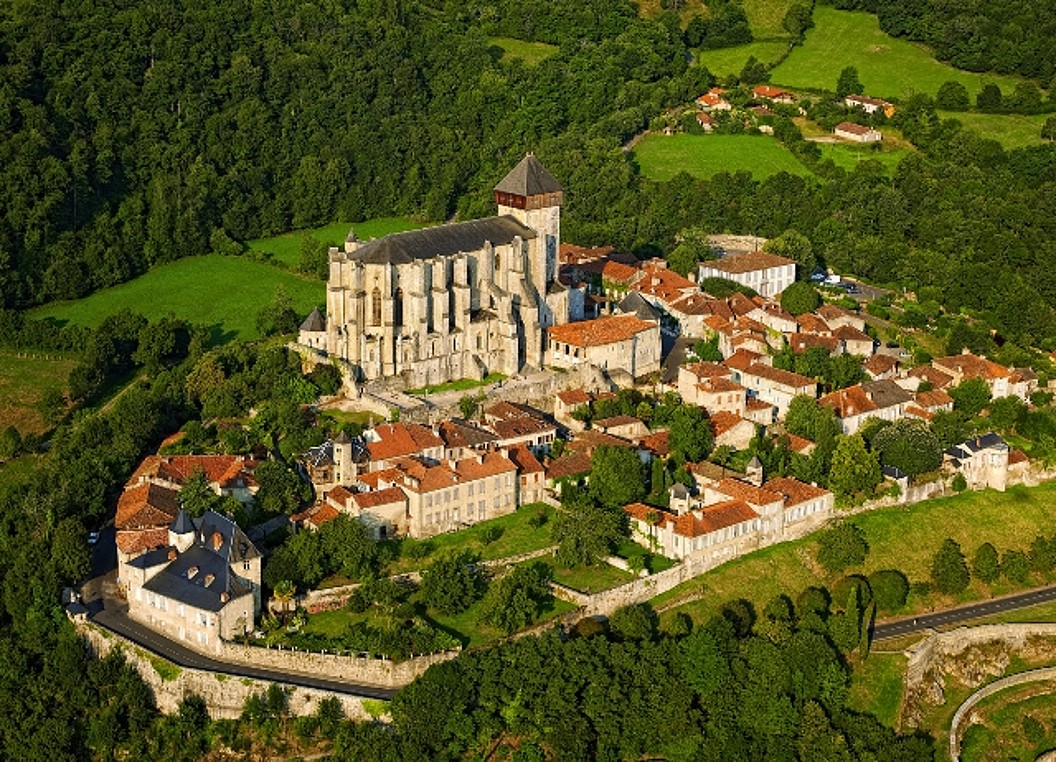
The Cathedral and Village of Saint-Bertrand de Comminges
From his death on 16 October 1123, Bertrand was considered a saint throughout the Pyrenees region and since his Canonisation in 1222, the village took the name and Partronage – “Saint-Bertrand de Comminges.”
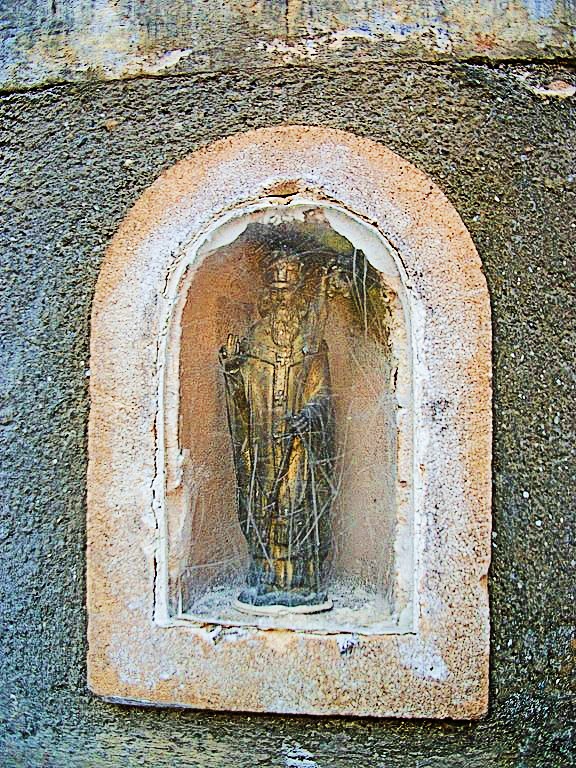
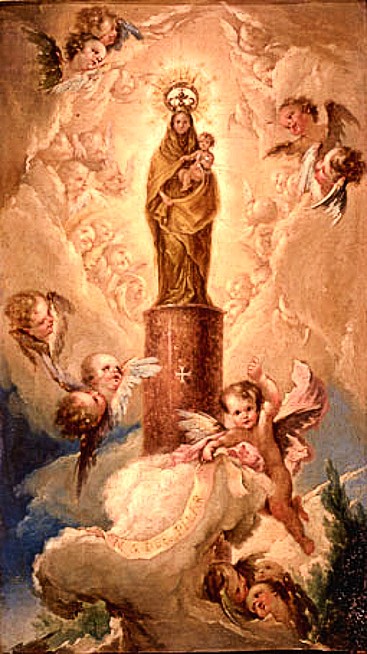
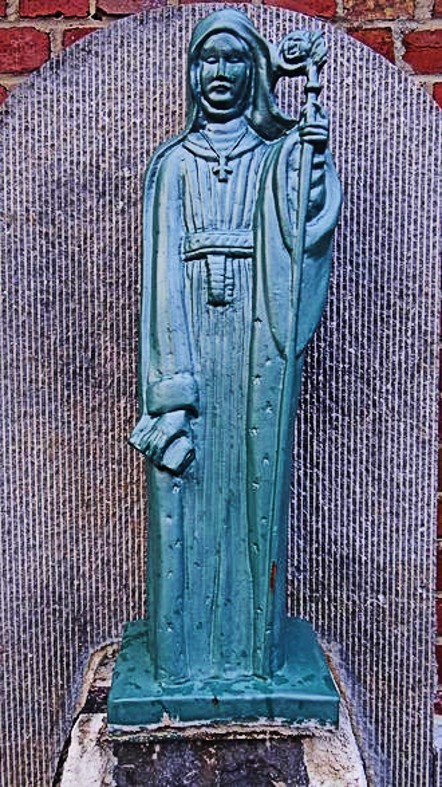
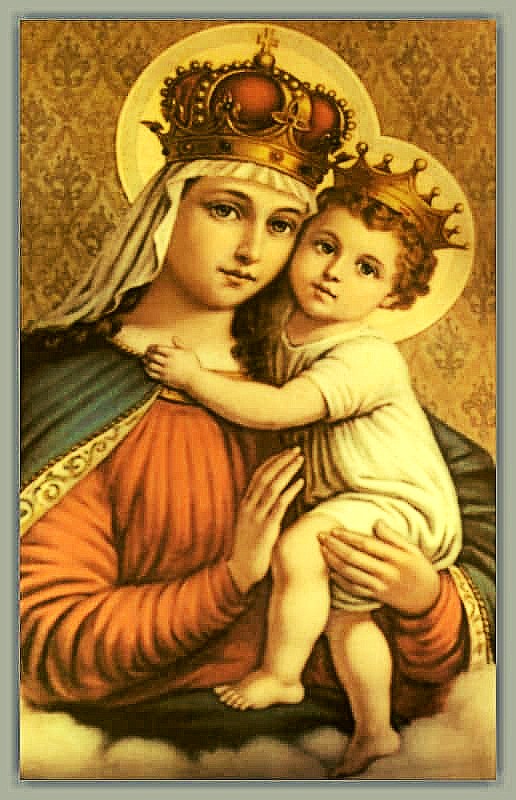
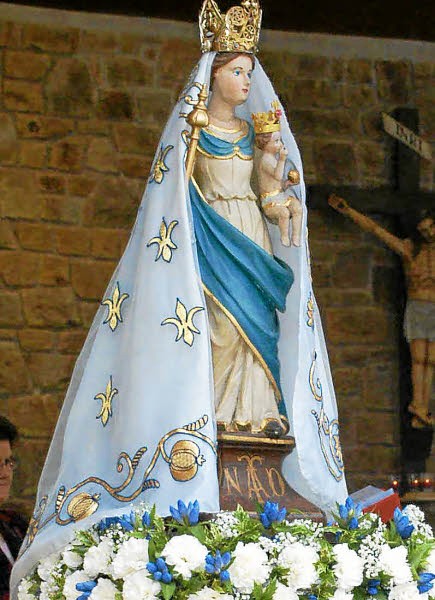
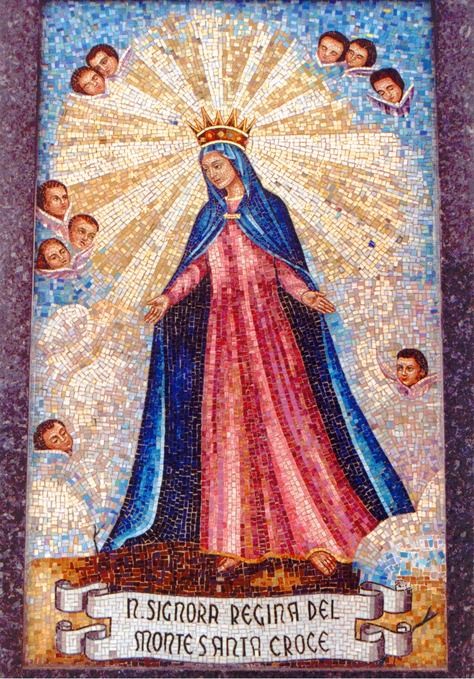
Shrine to the Blessed Virgin and St Bertrand, in the Village of “Saint-Bertrand de Comminges.”
St Amandus of Limoges St Ambrose of Cahors St Balderic St Baldwin St Bertrand of Comminges (c1050-1123) Bishop St Bolonia St Conogon of Quimper St Dulcidius of Agen St Eliphius of Toul St Eremberta of Wierre St Florentinus of Trèves (Died 4th Century) (Bishop
St Gerald of Clairvaux O.Cist (Died 1177) Abbot regarded as the first Cistercian Martyr St Junian St Lull St Magnobodus of Angers St Martinian of Mauretania St Mummolinus St Saturian of Mauretania St Silvanus of Ahun St Victor of Cologne St Vitalis of Noirmoutier
Martyrs in Africa – 220 Saints: A group of 220 Christians Martyrs about whom we know nothing but that they died for their faith.
Martyrs of North Africa – 365 Saints: A group of 365 Christians who were Martyred together in the persecutions of the Vandal king Genseric. The only details that have survived are the names of two of the Martyrs – Nereus and Saturninus. 450 in North Africa.
Saint of the Day – 15 October – Saint Antiochus of Lyons (Died c410) Archbishop of Lyons. Also known as – Antioch or Andéol,
The Roman Martyrology states: “At Lyons, St Antiochus, Bishop, who entered the heavenly kingdom after having courageously fulfilled, the duites of high station, to which he had been called.”
Antiochus was a Priest in Lyons, when his Bishop, St Justus of Lyons (Died c390), resigned his See after an incident which led him to believe that he was unworthy of the position of Shepherd of the faithful of Lyons and he resolved to devote the remainder of his life to penance. He travelled to the Desert in Egypt to pursue a life of solitude, penance and prayer. See the full story here:https://anastpaul.com/2023/09/02/saint-of-the-day-2-september-st-justus-of-lyons-died-c390-bishop-confessor/
The City faithful being eager to regain their Bishop, sent a delegation led by Antiochus, to find him and bring him back to his Diocese. Antiochus found but could not convince the saintly Hermit Bishop to return. Antiochus returned to Gaul and was later himself, appointed Bishop of Lyons.
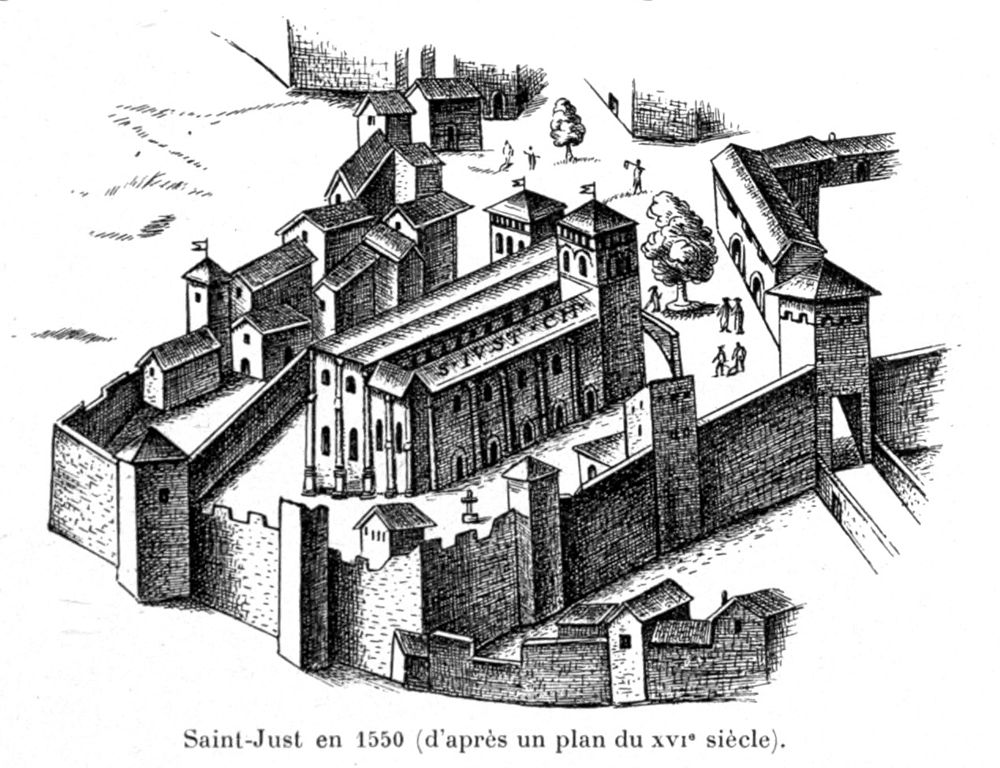
As Bishop, Antiochus arranged to bring the Relics of Bishop Justus back to Lyons and solemnly buried them in the Basilica of the Maccabees, renmaed in honour of St Justus , where he himself would later too be interred.
Martyrs of Cologne: A group of 360 Christian soldiers Martyred together in the persecutions of Diocletian and Maximian. They were Martyred in 303 outside the City walls of Cologne, Germany.-
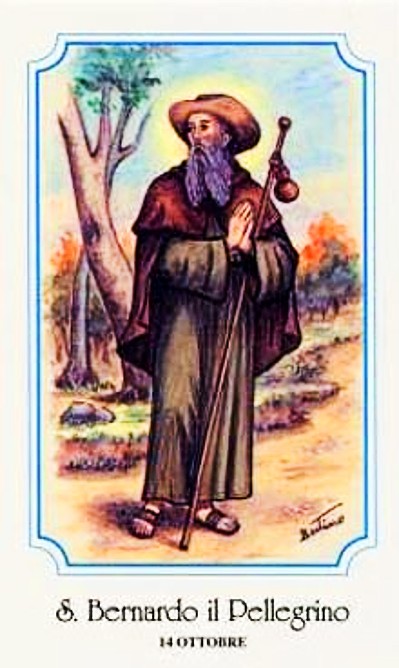
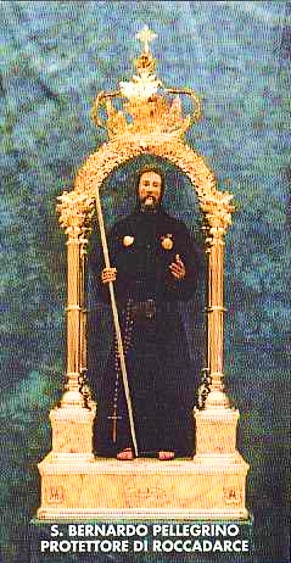
Saint of the Day – 14 October – Saint Bernard of Roccadarce (Died 8th Century) Pilgrim. Born in England (or France) in the 8th Century and died of natural causes in Roccadarce in Campagna in Italy. Also known as – Berhard of Arce, Bernardo. Additional Memorial – 26 June (recovery of the Relics), 13 September (translation of his Relics). Patronage – Roccadarce, Italy.
The details of the “Life of Saint Bernard” are deduced from the “Inventarium Originalis Ecclesiae Parochialis Sanctae Mariae Roccae Arcis” of 1698, by the hands of the Archpriest of the same Parish, Don Antonio Nardone of Arce (Roccadarce today).
Bernard, from the City of Silloth (sometimes known as Silloth-on-Solway, in Cumberland, Cumbria) in England, decided to walk the world, together with Saint Gerard, Saint Fulk and Saint Arduin, brothers in Christ and to visit the holy places of Jerusalem and the Holy Land, the Grotto of Saint Mary Magdalene in Marseilles, of St James in Galicia, of St Nicholas in Bari, of St Michael the Archangel in Puglia on Mount Gargano and the holy places of Rome, as in fact, they did.
These saintly pilgrims were moved too, by a very great need to escape from their land, from the Kingdom of England, unable to tolerate the tyranny and heresies spread there. Since those Saints were similar to four candlesticks of Holy Church, they could not shine in the darkness and the light of their good works did not shine in that place darkened by the thick darkness of sins.
The four Saints, therefore, walked through all the aforementioned places, until, coming from the Sanctuary of the Archangel in Puglia, they arrived in the City of Atina. Here, Saint Gerard, one of these four, fell ill and died on 11 August . Then, when St Bernard in Arpino, St Fulk in Santopadre and St Arduin in Ceprano, fell ill, they all died in a short space of time, one after the other, in the aforementioned places. To this day, their bodies rest in each of those Towns and where they are exposed to devotion, with great veneration, by all of the faithful.
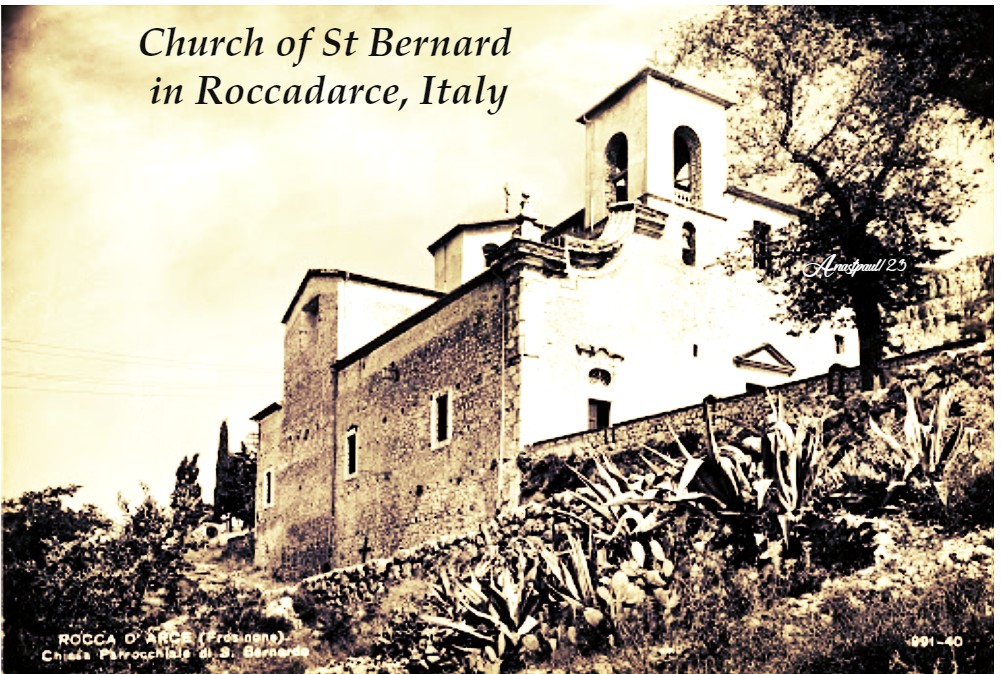
Only Bernhard would not lie still. According to tradition, he appeared in a dream to a man and asked that he be moved from his tomb in Arpino to Rocca d’Arce (now Roccadarce). Then his remains were exhumed from the tomb in the Chapel of San Giovanni in Arpino and transferred to the Parish Church of Santa Maria Assunta in Roccadarce, where he still rests, surrounded by miracles.
These events are commemorated on14 October. In the current year 1698, on 26 June, the works for the construction of a new Chapel having begun, by order of Monsignor Giovanni Ferrari, Bishop of Aquino, the Holy Body was found there, which the aforementioned Bishop showed to the people, Consecrating and dedicating the Chapel and celebrating the Saint’s Mass there. Then he placed the body of the Saint again in a lead coffin, donated by the Duke, Antonio Boncompagni. ,The Archpriest of the aforementioned Church, Don Antonio Nardone of Arce, filled the lead coffin with a lining of cottonwool, on which the body would rest and placed the whole inside another wooden coffin . Meanwhile, the new Altar was completed and the coffin was placed in its centre, which was surrounded by iron on all sides and the construction of the entire Chapel was completed in the aforementioned year 1698, in the month of August, with an expense of 886 ducats.
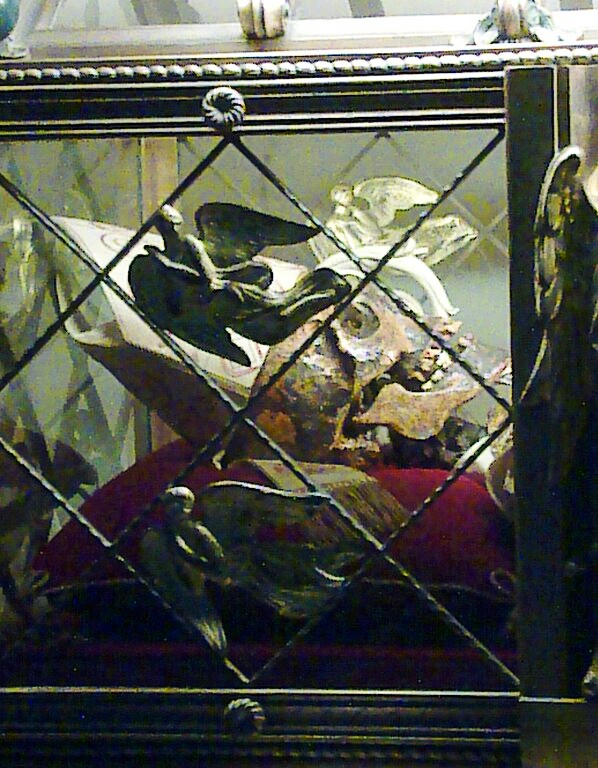
In Roccadarce, they have several celebrations of their Patron Saint. On 13 September, the translation of Bernhard’s Relics is celebrated and this is the Town’s main festival. His Relics have been identified several times – in 1585 (assumed) and in 1698 and in 1901 (documented). The last time the Relics were identified was in 2001, when they were placed in a new casket with reinforced glass and laid to rest under the Altar in the Chapel of St Bernard.
On 14 October, Bernhard’s death is celebrated in Arpino on the border of Roccadarce and there is a religious festival combined with a market for goods and cattle. On 26 June, the recovery of the Relics in 1698, is celebrated with a new religious festival.
Saint Fortunatus of Todi (Died 537) Bishop, Confessor, miracle-worker. An entry in the Roman Martyrology under 14 October records: “At Todi in Umbria, St Fortunatus, Bishop, who, as is mentioned by blessed Gregory, was endowed with an extraordinary gift for casting out unclean spirits.” About St Fortunatus: https://anastpaul.com/2020/10/14/saint-of-the-day-14-october-saint-fortunatus-of-todi-died-537/
St Gaudentius of Rimini St Gundisalvus of Lagos St Lupulo of Capua St Lupus of Caesarea St Manacca St Manehildis St Modesto of Capua St Rusticus of Trier St Saturninus of Caesarea St Venanzio of Luni
Martyrs of Caesarea – 4 Saints: Three brothers and a sister Martyred together in the persecutions of Diocletian – Carponius, Evaristus, Fortunata and Priscian. In 303 in Caesarea, Cappadocia (in modern Turkey) – their relics enshrined in Naples, Italy.
Saint of the Day – 13 October – Saint Theophilus of Antioch (Died c184) Confessor, Bishop of Antioch from 169 until 182, Scolar and Writer, Theologian, Apologist, Defender of the Faith against heresy. His writings (the only remaining extant being his apology to Autolycus) indicate that he was born a pagan, not far from the Tigris and Euphrates Rivers in Mesopotamia (modern Middle East) and was led to embrace Christianity by studying the Sacred Scriptures. Also known as – Teofilo.
The Roman Martyrology reads today: “At Antioch, the holy Bishop, Theophilus, who held the pontificate in that Church and City, the sixth after the blessed Apostle, Peter.”
Theophilus, Bishop of Antioch, was the Author of many works, one of which has survived, while we only know the titles of others. From the pages of this work, we can once again hear the words of the Saint, in defence of Christian doctrine and faith, even then the subject of accusations by unbelievers and the vicious.
“But, if you tell me” – wrote the ancient Bishop – “Show me your God,” I will say to you: “Show me your man and I will show you my God. Show me, therefore, that they see clearly, the eyes of your soul and that the ears of your heart hear well… God shows Himself to those who can see Him, when they have opened the eyes of the soul. Everyone has their good eyes but someone has veiled them, incapable of seeing the light of the sun. However, the fact that the blind do not see, does not show at all, how the light of the sun does not appear. The blind blame themselves and their eyes. In the same way, my son, if you have the eyes of your soul veiled by your faults and your bad habits, you will not be able to see the light. Like a clear mirror – this is how man must keep his soul pure. If the mirror is rusty, the face of man does not appear on its surface. In the same way, if man is a sinner, this man cannot contemplate God.”
The Author of these phrases, which St Augustine himself would later take up, was born in a region of the East, near the Tigris and the Euphrates. He was a pagan and received a Greek education. He converted by observing the customs of Christians, clearly superior to those of pagans and, by reading the Sacred Scriptures. He would then skilfully use his experiences as a convert and his knowledge of profane culture, in his polemics against unbelievers and philosophers.
He was elected Bishop of Antioch in 169 and still held the pastoral care of the great City, where Saint Peter himself had had his first Chair at the death of Marcus Aurelius, in 180. His apostolic care, in the midst of one of the most populous and most agitated communities of the early Christian world, did not distract him from his studies and intellectual activity.
Eusebius of Caesarea, the Historia (Died 339), speaks of the zeal which he and the other chief Shepherds displayed in driving away the heretics who were attacking Christ’s flock, with special mention of his work against Marcion.
He made contributions to Christian literature, writing polemical works against the heretics of the time, works of catechesis, commenting on the Scriptures, works of history, to clear away pagan myths. In short, he was a Bishop who left a strong imprint of his intelligence and culture in the history of his time, just as he left traces of his charity and mercy in the souls entrusted to him.
St Jerome and Eusebius mention numerous works of St Theophilus existing in their time. They are:
the existing Apologia addressed to Autolycus;
a work against the heresy of Hermogenes;
against that of Marcion;
some catechetical writings;
St Jerome also mentions having read some commentaries on the Gospels and on Proverbs, which bore Theophilus’ name but which he regarded as inconsistent with the elegance and style of his other works.
The one undoubted extant work of St Theophilus, the 7th Bishop of Antioch, is his Apology to Autolycus (Apologia ad Autolycum), a series of books defending Christianity written to a pagan acquaintance.
St Benedict of Cupra St Berthoald of Cambrai St Carpus of Troas St Chelidonia St Comgan the Monk St Florence of Thessalonica St Fyncana St Fyndoca Bl Gebrand of Klaarkamp
St Theophilus of Antioch (Died c184) Bishop St Venantius
Three Crowns of Cordoba – (3 Saints): Three Christian men Martyred in the persecutions of Diocletian – Faustus, Januarius and Martial. They were burned to death in 304 in Cordoba, Spain.
Saint of the Day – 12 October – Saint Monas of Milan (Died c249) the 15th Bishop of Milan, who occupied the Seat for 59 years. Died on25 March in c249 of natural causes. Additional Memorial – 25 March on some calendars.
The Roman Martyrology reads: “At Milan, St Monas, Bishop. He was chosen as head of that Church because a miraculous light from Heaven surrounded him whilst they were deliberating on the choice of a Bishop.”
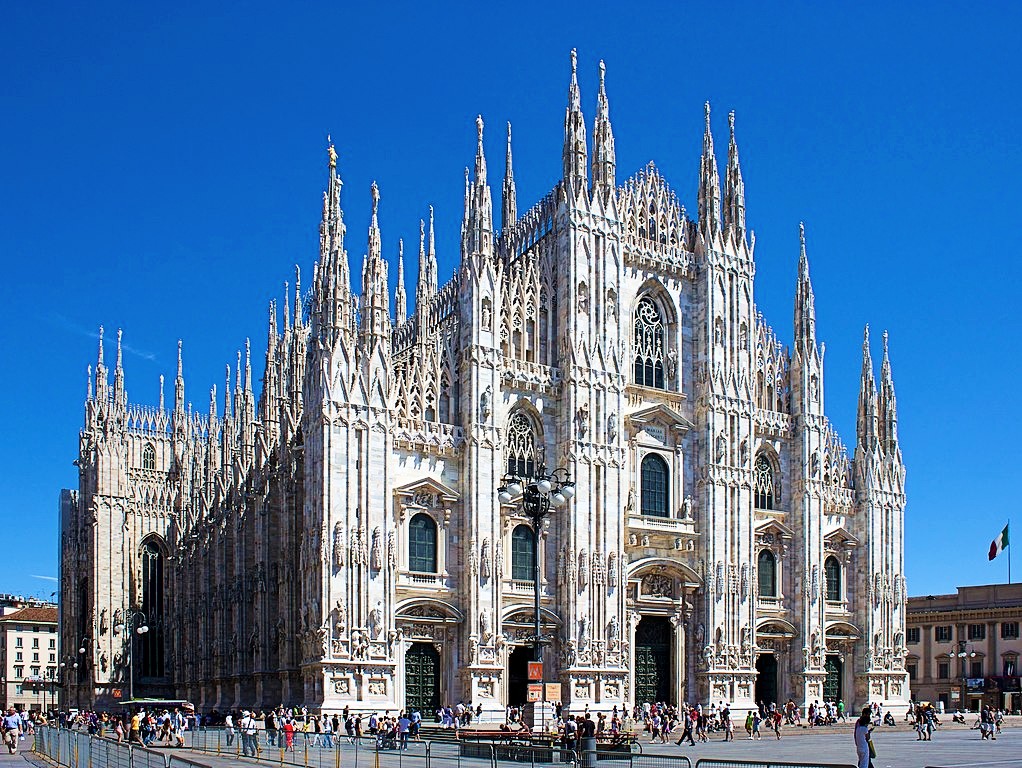
As we know, a large group of Shepherds who have alternated on the Episcopal Seat of Milan, have deserved the halo of sanctity. Among these we find St Monas, Fifteenth Bishop of the Lombard Capital.
His Episcopate is placed between those of St Calimerius and St Mirocles. The latter appears to have participated in the Synods of Rome in 313 and of Arles, in 314. The narrative of the History of the Church of Milan which places the date of his death around 249, after fifty nine years of Episcopacy.
Bishop Monas, therefore, would have founded what are now considered the oldest Parishes scattered throughout the Milanese countryside.
As for the day of death, the ancient records of the Milanese Bishops indicate 25 March, an anniversary still reported today, while the Ambrosian liturgical calendar, to avoid the concomitance with the Lenten season, moved the Saint’s Feast day to 12 October, the Anniversary of recognition of the Relics, which apparently took place in the 11th Century by Archbishop Arnolfo. St Monas was initially buried in the Basilica Fausta, then known as the Church of St Vitales but, St Borromeo transferred his Relics to the Cathedral on 6 February 1576, where they remain today.
St Eustachius The Syrian Priest and Confessor St Evagrius the Martyr St Felix St Herlindis St Juan Osiense St Maximilian of Celeia St Meinards St Monas of Milan (Died c249) Bishop
St Serafino of Montegranaro OFM Cap (1540-1604) Confessor, Franciscan Capuchin Lay Friar, gifted with the Charism of prophecy, Mystic, Apostle of the poor, Spiritual Advisor, devoted to the Blessed Sacrament, the Holy Rosary and to the Blessed Virgin Mary, Miracle-worker. The Roman Martyrology states: “At Ascoli, St Seraphinus, Confessor, of the Order of Minorite Capuchins, distinguished by holiness of life and humility. Hre was enrolled among the Saints by the Sovereign Pontiff Clement XIII.” Holy St Serafino: https://anastpaul.com/2021/10/12/saint-of-the-day-12-october-st-serafino-of-montegranaro-ofm-cap-1540-1604/
Martyrs of Arian North Africa: Commemoration of the 4,996 Martyrs who died in the persecutions of the Vandals in Africa mandated by the Arian King Huneric. The persecuted Christians include Bishops, Priests, Deacons and thousands of the lay faithful. They died in 483 at various locations in North Africa. (Would we follow Christ and stand true to the Faith today?)
Saint of the Day – 11 October – Saint Ethelburga of Barking (Died c782) Virgin, First Abbess of the double Monastery (for men and women) at Barking, in Essex, England, founded by her brother, Miracle-worker. Sister of St Erconwald of London (Died c 693, Bishop of London and known as “The Light of London.” Ethelburga is one of a significant number of female religious leaders who played an important role in the first Century of the Anglo-Saxon Church. Also known as – Adilburga, Æthelburh, Edilburge, Etelburg, Ethelburgh. Ethelburge. Additional Memorial – 12 October in the Diocese of Brentwood of which Barking forms a part
Not much is known about the family origin of these two saintly siblings but their names suggest they might have been connected to the Kentish Royal family. The main source for Ethelburga’s life is St Bede’s Historia Ecclesiastica Gentis Anglorum which recounts the foundation of Barking Monastery, early miracles there and Ethelburga’s death. St Bede describes Ethelburga as “upright in life and constantly planning for the needs of her community.”
Some time before he became the Bishop of London in 675, Erconwald founded a double Monastery at Barking for his sister and a Monastery at Chertsey for himself. Barking appears to have already been established by the time of the plague in 664.
Around the same year, 675, Ethelburga founded the Church of All Hallows Berkyngechirche (now known as All Hallows Barking or All Hallows by the Tower) in the City of London on land given to her by her brother.
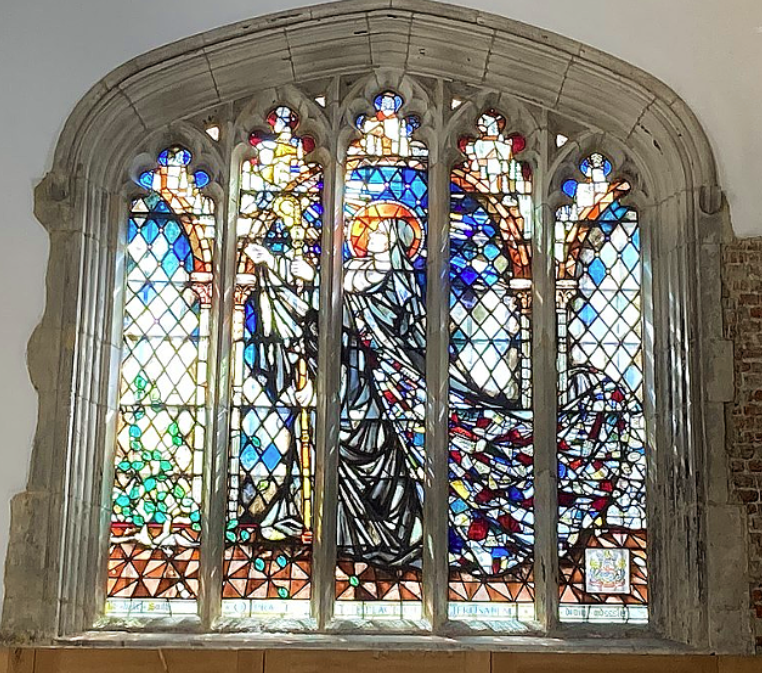
St Ethelburga at the All Hallows Church
St Bede writes:
“In this Convent many proofs of holiness were effected which many people have recorded, from the testimony of eyewitnesses, in order that the memory of them might edify future generations. I have, therefore, been careful to include some in this history of the Church …
When Ethelburga, the devout Mother of this God-fearing community, was herself about to be taken out of this world, one of the sisters, whose name was Tortgyth, saw a wonderful vision. This nun had lived for many years in the Convent, humbly and sincerely striving to serve God and had helped the Mother to maintain the regular observances, by instructing and correcting the younger sisters.
In order that Ethelburga’s strength might be ‘made perfect in weakness’ as the Apostle says, she was suddenly attacked by a serious disease. Under the good Providence of our Redeemer, this caused her great distress for nine years, in order that any traces of sin which remained among her virtues, through ignorance, or neglec,t might be burned away, in the fires of prolonged suffering. Leaving her cell one night at first light of dawn, this Sister saw distinctly, what appeared to be a human body wrapped in a shroud and shining more brightly than the sun. This was raised up and carried out of the house where the Sisters used to sleep. She observed closely to see how this appearance of a shining body was being raised and saw, what appeared to be cords, brighter than gold which drew it upwards until it entered the open heavens and she could see it no longer. When she thought about this vision, there remained no doubt in her mind that some member of the Community was shortly to die and that her soul would be drawn up to Heaven by her good deeds as though by golden cords. And so it proved not many days later, when God’s beloved Ethelburga, the Mother of the Community, was set free from her bodily prison. And none, who knew her holy life, can doubt that when she departed this life, the gates of our heavenly home opened at her coming.
In the same convent there was also a Nun of noble family in the world, who was yet more noble in her love for the world to come. For many years she had been so crippled that she could not move a single limb and hearing that the venerable Abbess’ body had been carried into the Church until its burial, she asked to be carried there, and to be bowed towards it, in an attitude of prayer. Then she spoke to Ethelburga as though she were still alive and begged her to pray to God on her behalf and ask Him of His mercy to release her from her continual pain. Her request received a swift reply; for twelve days later she was set free from the body and exchanged her earthly troubles for a heavenly reward.
Three years after the death of the Abbess, Christ’s servant Tortgyth, was so wasted away by disease … that her bones scarcely held together, until finally, as death drew near, she lost the use of her limbs and even of her tongue. After three days and nights in this condition, she was suddenly refreshed by a vision from Heaven, opened her eyes and spoke. Looking up to Heaven, she began to address the vision …: “I am so glad that you have come; you are most welcome.” She then remained silent for a while, as if awaiting an answer from the person whom she saw and spoke to; then, seeming a little displeased, she said, “This is not happy news.” After another interval of silence, she spoke a third time: “If it cannot be today, I beg that it may not be long delayed.” Then she kept silent a little while as before and ended: “If this decision is final and unalterable, I implore that it may not be delayed beyond the coming night.” When she had finished, those around her asked her to whom she had spoken. “To my dearest Mother Ethelburga,” she replied and, from this they understood that she had come to announce the hour of her passing was near. So after a day and a night her prayers were answered and she was delivered from the burden of the body and entered the joys of eternal salvation.”
Several more miracles are also recorded, relating to an outbreak of plague in the community. In Ethelburga’s time, Barking Abbey was a double Monastery as was common in the earlier Anglo-Saxon period but it’s the bonds of community and affection between Ethelburga and her Nuns which emerge most memorably from St Bede’s account – ‘golden cords’ of another kind than those Tortgyth saw in her vision.
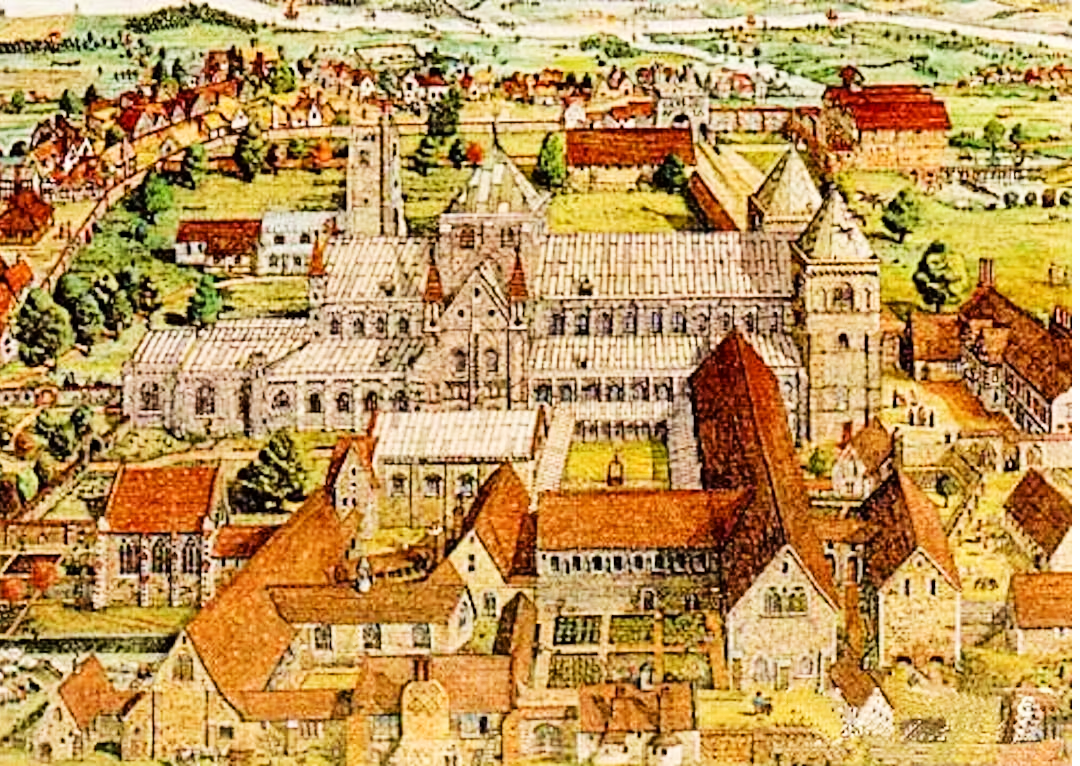
Barking Abbey
Barking Abbey grew to be one of the most important Monasteries in the country and, at the time of the Dissolution, it was the third richest in England. It was closely associated with a number of powerful Royal and noble women, including the wives and sisters of Kings – and, even St Thomas à Becket’s sister. The Abbess of Barking was not only an important landowner but a baroness in her own right, required to supply the king with soldiers in wartime like any secular lord. Barking also had a strong literary and educational tradition which continued throughout the medieval period- learned authors such as St Aldhelm (in the 8th Century) and Goscelin (in the 11th) wrote Latin works for the Nuns of Barking and several Nuns composed their own poetry and prose. Perhaps the first female author from England whom we can name was Clemence of Barking Abbey, who wrote a Life of St Catherine in Anglo-Norman, in the twelfth Century; a Nun of Barking (either Clemence or someone else) also wrote a Life of St Edward the Confessor, around the same time. Barking Abbey has been described as “perhaps the longest-lived, albeit not continuously recorded, institutional centre of literary culture for women in British history.” And it all began with our Saint Ethelburga.
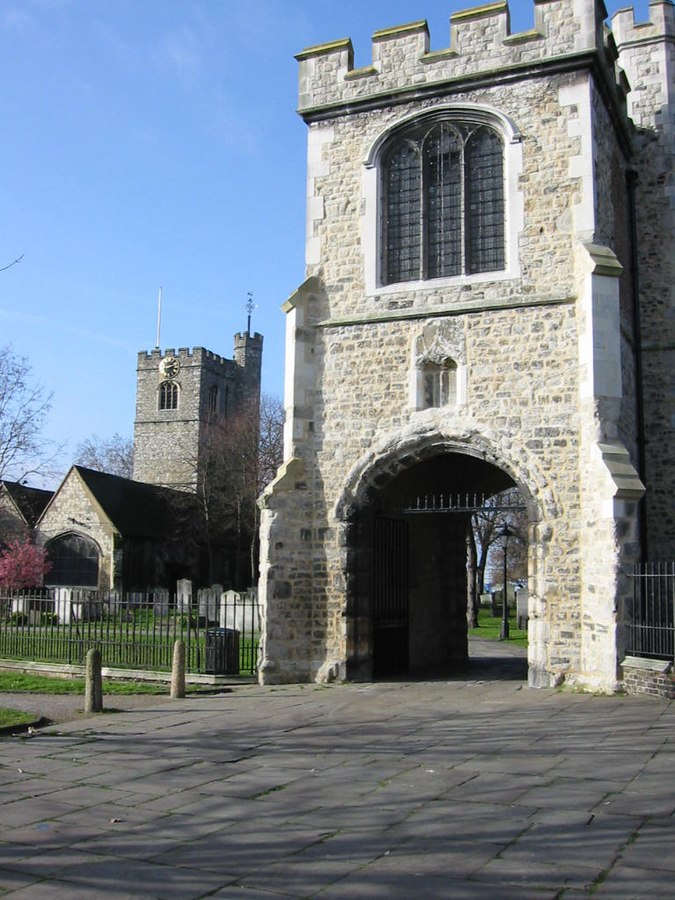
Barking Abbey – Curfew Tower with St Margaret’s Church in background
Ethelburga was buried at Barking Abbey. The Old English Martyrology records her Feast day as 11 October. There are many Churches across England dedicated to St Ethelburga and many regions, streets, estates, schools and institutions too.
Feast of the Divine Maternity – Second Sunday in October or 11 October: The object of this Feast is to commemorate the dignity of the Mary as Mother of God. Mary is truly the Mother of Christ, who in One Person unites the Human and Divine Nature. This title was solemnly ratified by the Council of Ephesus on 22 June 431. It was first granted to Portugal, Brazil and Algeria in 1751; it is now of almost universal observance. Under this title Poland celebrates the Feast of the Blessed Virgin Mary, Queen of Poland. At present the Feast is not found in the Universal Calendar of the Church but nearly all Diocesan calendars have adopted it. Patronage – Trinitarian. HERE: https://anastpaul.com/2022/10/11/feast-of-the-divine-maternity-and-memorials-of-the-saints-11-october/
St Agilbert of Paris
St Alexander Sauli CRSP (1534-1592) Bishop “The Apostle of Corsica,” Clerk Regular of the Congregation of Saint Paul (The Barnabites) – St Alexander is referred to as “The Second Founder,” Missionary, Writer, Teacher of philosophy and theology at the University of Pavia, Reformer, Evangeliser, Confessor, Superior-General of the Barnabites in 1565. In addition, St Alexander Sauli was both friend, advisor and spiritual comfort to St Charles Borromeo, who held him in very high esteem. His Life: https://anastpaul.com/2020/10/11/saint-of-the-day-11-october-saint-alexander-sauli-crsp-1534-1592/
St Anastasius V St Anastasius the Apocrisarius St Andronicus of Ephesus St Andronicus the Soldier St Ansilio St Canice St Digna of Sicily St Dionisio de Santarem St Emilian of Rennes St Ethelburga of Barking (Died c782) Virgin, Abbess St Eufridus St Firminus of Uzes St Germanus of Besancon St Gratus of Oloron St Guiadenzio of Gniezno
St Juliana of Pavilly St Nectarius of Constantinople St Philip the Deacon St Philonilla St Placidia St Probus of Side St Santino of Verdun St Sarmata St Taracus of Cladiopolis St Zenaides
Martyrs of Vilcassin – 4 Saints: Four Christians who were Martyred together. We know little more than the names – Nicasius, Pienza, Quirinus and Scubicolus. Their martyrdom occurred in Vexin Lugdunense territory of Gaul (modern Vilcassin, France), date unknown.
Martyrs of Sicily: A group of eight Christians who were Martyred together. We know little more than the names – • Ampodus, • Anastasius, • Faustus, • Januarius, • Jovinian, • Marcellus, • Martialis and • Placidus. They died in Sicily, Italy,
Martyrs of Vilcassin: Four Christians who were Martyred together. We know little more than the names – Nicasius, Pienza, Quirinus and Scubicolus. They died in the Vexin Lugdunense territory of Gaul (modern Vilcassin, France).
Saint of the Day – 10 October – St Francis Borgia SJ (1510-1572) Confessor, Priest of the Society of Jesus, Advisor, Missionary, Evangelist, Administrator par excelleance. Francisco de Borja y Aragon was the 4th Duke of Gandía, was a Grandee of Spain, a Spanish Jesuit and third Superior General of the Society of Jesus
A continuation of the life of St Francis Borgia – an entire year has slipped by, for which I should apologise, however, each day brings its own duties to the Saints being venerated on that particular day. Time runs away … Let us continue with a little more from Fr Alban Butler (1711-1773) who wrote his portrayal of our Saint from:
“The life, compiled by Fr Ribadeneira, who was for nine years, his Confessor, is the master-piece of that pious author, who, by his acquaintance with the holy man and his own experience in an interior life, was excellently qualified to animate, in his expression, the narrative of the actions of the Saint with that spirit with which they were performed.”
We continue – ST FRANCIS at COURT and his MARRIAGE until the DEATH of the EMPRESS – his “DAMASCUS MOMENT”:
Francis, although he delighted chiefly in the company of the most virtuous, was courteous and obliging to all, never spoke ill of anyone, nor ever suffered others to do it in his presence.
He was a stranger to envy, ambition, gallantry, luxury and gaming – vices which are often too fashionable in Courts and against which he armed himself with the utmost precaution. He not only never played but would never see others playing, saying that a man commonly loses by it four things – his money, his time, the devotion of his heart to God and his conscience.
One of his servants discovered, that on the days on which he was obliged to visit company in which ladies made a part, he wore a hair-shirt. In him it appeared, that there is no readier way to gain the esteem of men, though without seeking it, than by the heroic practice of Christian virtue. Nothing is so contemptible even amongst men of the world, as insolence, pride, injustice, or anger; nothing so hateful as one who loves nobody but himself, refers everything to himself and makes himself the centre of all his desires and actions.
Nor is there anything more amiable than a man who seeks not himself but refers himself to God and seeks and does all things for God, and the service of others; in which Christian piety consists. The wicked themselves, find no more solid comfort or protection in affliction, than the friendship of such a person; even those who persecute him,because his virtue is a censure of their irregularities, nevertheless admire in their breasts that sincere piety which condemns them. This is more conspicuous when such a virtue shines forth in an exalted station. It is not, therefore, to be wondered that Francis was honoured and beloved by all the Court, particularly by the Emperor, who called him the miracle of Princes!
… The Empress had so great an esteem for him and so high an idea of his merit, that she fixed her eye on him to marry Eleanor de Castro, a Portuguese lady of the first rank, a person of great piety and accomplishments, her principal favourite, who had been educated with her and whom, she had brought with her out of Portugal. The marriage was solemnised in the most Christian manner, to which state the Saint brought the best preparation – innocence of life with unsullied purity and an ardent spirit of religion and devotion. The Emperor on that occasion created him Marquis of Lombay and Master of the Horse to the Empress and having had experience of his wisdom, secrecy and fidelity, not only admitted him into his Privy-Council but took great delight in conferring, often privately, with him upon his most difficult undertakings and communicated to him his most important designs. …
Cristobal de Villalpando, Portrait of St. Francis Borgia , c1690
In 1537, being at the Court, which was then at Segovia, he fell ill of a dangerous quinsy, in which he never ceased praying in his heart, though he was not able to pronounce the words. These accidents were Divine graces which weaned Francis, daily more and more, from the world; although, whilst it smiled upon him, he saw the treachery, the shortness and the dangers of its flattering enjoyments, through that gaudy flash, in which it danced before his eyes.
… God blessed his marriage with a numerous and happy offspring – five boys and three girls: Charles, the eldest, who was Duke of Gandia, when Ribadeneira wrote the life of ourSaint; Isabel, John, Alvarez, Johanna, Fernandez, Dorothy and Alphonsus. Dorothy died young as a Poor Clare at Gandia; the rest all married, enjoyed different titles and posts of honour,and left families behind them.
St Francis was much affected, in 1537, by the death of his intimate friend, the famous poet, Garcilas de Vega, who was killed at the siege of a castle in Provence. The death of the pious Empress Isabel, happened two years after, on the 1st of May, 1539, whilst the Emperor was holding the states of Castile at Toledo, with the utmost pomp and magnificence. His majesty was much afflicted by the loss of so virtuous a consort. The Marquis and Marchioness of Lombay, were commissioned, by him, to attend her corpse to Granada, where she was to be buried. When the funeral convoy arrived at Granada and the Marquis delivered the corpse into the hands of the Magistrates of that City, they were on both sides, to make oath that it was the body of the late Empress. The coffin of lead was, therefore, opened and her face was uncovered but appeared so hideous and so much disfigured that no-one knew it and the stench was so noisome that everyone made, what haste he could away. Francis not knowing the face, would only swear it was the body of the Empress because, from the care he had taken, he was sure no-one could have changed it upon the road.
Being exceedingly struck at this spectacle, he repeated to himself:
“What is now become of those eyes, once so sparkling? Where is now the beauty and graceful air of that countenance which we so lately beheld? Are you her sacred majesty, Donna Isabel? Are you my Empress and my lady, my mistress?”
The impression which this spectacle made on his soul remained strong and lively during the thirty-three years by which he survived it, to his last breath!
Returning that evening from the Royal Chapel to his lodgings, Francis locked himself in his chamber and passed the whole night without a wink of sleep. Prostrate on the floor, shedding a torrent of tears, he said to himself,
“What is it, my soul, that I seek in the world? How long shall I pursue and grasp at shadows? What is she already become, who was lately so beautiful, so great, so much revered? This death which has thus treated the imperial diadem, has already levelled his bow to strike me. Is it not prudent, to prevent its stroke, by dying now to the world that at my death. I may live to God?”
St Aldericus St Cassius St Cerbonius of Populonia St Cerbonius of Verona St Clarus of Nantes Bl Demestrius of Albania Bl Edward Detkens St Eulampia St Eulampius St Florentius the Martyr St Fulk of Fontenelle St Gereon St Gundisalvus Bl Hugh of Macon
Bl Pedro de Alcantara de Forton de Cascajares St Pinytus of Crete Bl Pontius de Barellis St Tanca St Teodechilde St Victor of Xanten
Martyrs of Ceuta – 7 Beati: A group of seven Franciscan Friars Minor missionaries to Muslims in the Ceuta area of modern Morocco. Initially treated as madmen, within three weeks they were ordered to convert to Islam and when they would not they were first abused in the streets, then arrested, tortured and executed. Angelo, Daniele di Calabria, Donnolo, Hugolinus, Leone, Nicola, Samuele. They were beheaded in 1227 in Mauritania Tingitana (Ceuta, Morocco). Local Christians secreted the bodies away and gave them proper burial in Ceuta. They were Beatified in 1516 by Pope Leo X.
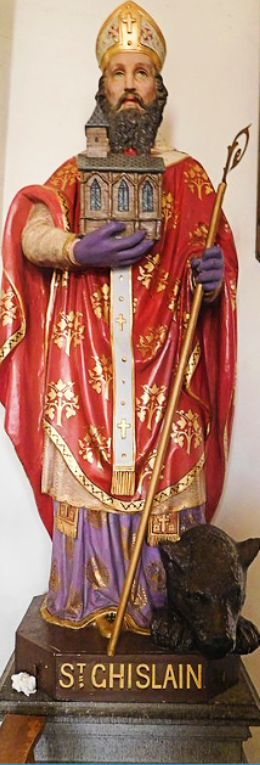
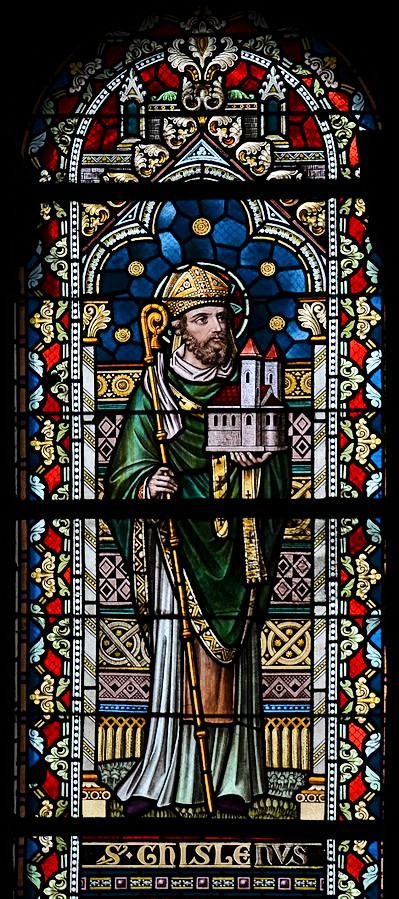
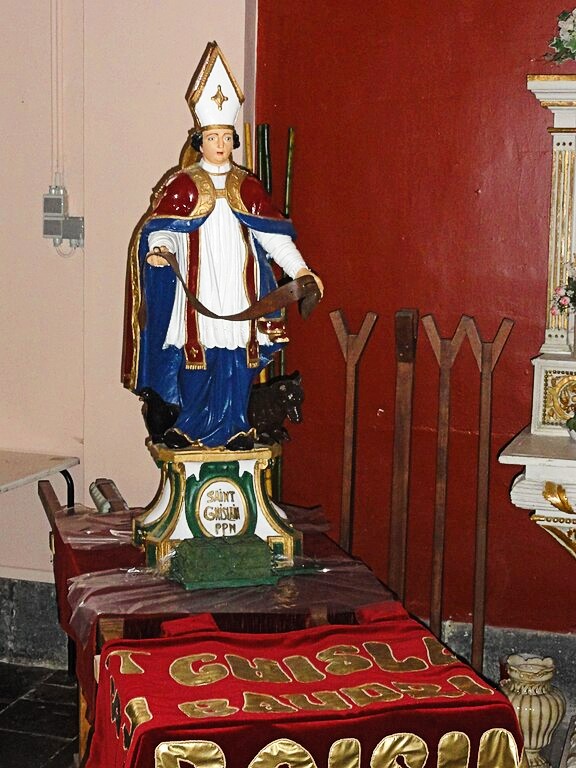
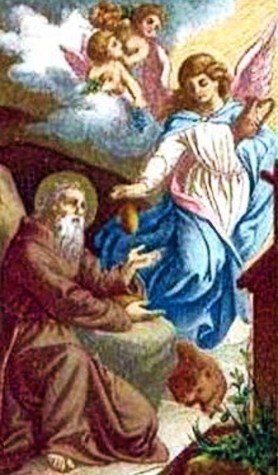
Saint of the Day – 9 October – Saint Gislenus (Died c680) Priest, Basilian Monk, Abbot of the Monastery of Hainault, which he founded, Hermit, Missionary and friend of bears! Born either in Germany or in Greece (records differ but the name Gislenus is of Germanic origin) in the early 600s and died in c680, of natural causes, in the Town named after him, Saint-Ghislain, in modern day Belgium. Also known as – The Apostle of Hainault, Ghislain, Gislain, Gisleno, Gisileno, Guislain. Patronages – Saint-Ghislain, against epilepsy, also known as “St Gislenus’ disease” children’s illnesses and during difficult births.
St Gislenus with his bear
The Roman Martyrology states: “In the Hainault region of Austrasia, in today’s Belgium, Saint Gislenus, who led a monastic life in a cell he built himself [and later extended into a Monastery of which he was the first Abbot.]”
Gislenus completed his studies and then abandoned the world to follow the Rule of St Basil. He was later Ordained a Priest. He travelled to Rome, where the Pope sent him, together with his disciples, Lambert and Berler (both of these too are Saints), to Belgium. as Missionaries.
He made a clearing in the vicinity of Mons, in Hainault, later moving his abode at a place called Ursidongus,- meaning “Bear’s den” and named for our Saint and his friend, the Bear, who had chosen the site – where he built a Chapel and Monastery dedicated to the Princes of the Apostles, Saints Peter and Paul.
Many Bishops had deep esteem and veneration for him – StAubert, the Bishop of Cambrai (Died c720) protected him in a particular way. St Waltrude (c612-686) Widow, gave him a gift of lands and Gislenus influenced her to supply the funds to build a Monastery.
Gislenus exerted a strong influence on the women of the nobility and stimulated them to enter monastic life. These included StAldegonda, St Aldetrude, St Madelberta and of course, the most renowned, St Waltrude.
He died at an advanced age on 9 October between 680 and 685 at his Monastery which later took his name. The cult was already witnessed in the 9th Century. The Saint is particularly invoked against epilepsy, also known as “St Gislenus’ disease” children’s illnesses and during difficult births. The two disciples of the Saint, Lambert and Berler are generally commemorated with him.
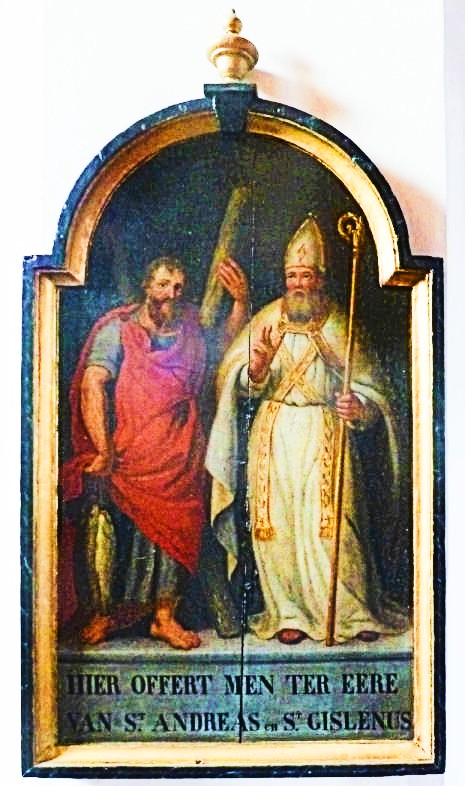
St Gislenus right with St Andrew Apostle
The Relics of the Saint were first disinterred in c929. They were translated to Grandlieu, near Quaregnon, about the end of the tenth century or the beginning of the eleventh and, in 1025, Gerard of Florennes, Bishop of Cambrai, removed them to Le Cateau-Cambrésis. They were visited several times in the course of the Middle Ages by the Bishops of Cambrai.
In 1647 they were removed to St-Ghislain, of which place he is Patron.
In iconography he is frequently represented with a bear or bear’s cub beside him. This relates to the wonderful prodigy of the a bear, who being pursued in the chase by King Dagobert I, sought refuge with Gislenus and later showed him the place where he should establish a Monastery. Moreover, the site of the Saint’s cell was called Ursidongus, “Bear’s den,” He is also frequently represented holding a Church.
There is a Rue Saint-Ghislain/Sint-Gissleinsstraat in Brussels.
The Life of St Gislenus Altarpiece at St Waltrude’s Church in Mons
St Aron of Kracow St Abraham the Patriarch St Alfanus of Salerno St Andronicus of Antioch St Athanasia of Antioch Bl Bernard of Rodez St Demetrius of Alexandria St Deusdedit of Montecassino St Domninus St Dorotheus of Alexandria
Martyrs of Laodicea – Three Christians Martyred together in Laodicea but no other information about them has survived but their names – Didymus, Diodorus and Diomedes. They Died in Laodicea, Syria.
Saint of the Day – 8 October – Saint Ragenfrida Virgin, Abbess (Died 9th Century). Daughter of Adalbert, Count of Ostrevant and Regina, who is also remembered as a Saint. Patronage – of Denain, Northern France, where her Monastery was. Also known as – Ragenfréde, Ragenfreda, Rainfroy, Refroy, Reginfreda, Renfrida, Renfroie.
The Roman Martyrology: “In Denain in Hainault, in today’s France, Saint Ragenfrida, Abbess, who built a Monastery in this place with her assets, of which she was a worthy guide.”
Ragenfrida was the Founder and Abbess of the Monastery of Denain, in the Diocese of Cambrai, as expressly recalled in a record from Charles the Bald (Charles II (823-877), King) dated 13 August 877. Even the Author of the Gesta Episcoporum Cameracemium, in 1041-1042, says that the blessed Ragenfrida had founded a Monastery in her region, located on the banks of the Escaut, in Denain and had become the Abbess of it. A little later, contrary to ancient documents, the Life of Saint Regina (our Saint’s mother), written on behalf of Abbess Fredessenda, declares that the Founders had been Adalbert, Count of Ostrevant and his wife, Regina.
Their marriage had been blessed with the birth of ten daughters (including Ragenfrida) and, in agreement with them, the two spouses had founded a Monastery in Denain, whose Church was dedicated to Our Lady. The ten virgins, however, to satisfy a greater desire for perfection, set out on a pilgrimage – five went to Jerusalem and died there, the other five reached Rome where they too were to find eternal rest, except for Ragenfrida who returned to Denain. During the absence of the pilgrims, Regina, their mother, had retreated to the Monastery because Adalbert had died (or, as a later version would say, with his consent) and she governed it until her death. She was succeeded by Ragenfrida.
The Monastery of Denain was founded, towards the end of the 8th Century but this date appears too late because the cult of Ragenfrida was already attested in the 9th Century. It seems that, at the beginning its inhabitants were Nuns who followed the Benedictine rule, although it has been wondered whether Denain was not instead a Monastery of Canonesses, as established in 816 by the Council of Aachen. However, later the community was made up of Canonesses and not Nuns. Canonesses, uUnlike Nuns, took no permanent vows and were not committed to a life of poverty, or to a common life for eating and sleeping. These ladies were usually Aritocrats of noble birth.
The elevation of the body of the holy Abbess took place already in 845, at the time of the blessed Ava, who, blind, had recovered her sight by praying on Ragenfrida’s tomb; after which, she gave all her goods to St Ragemfroda’s Monastery and consecrated herself to the Lor. Ava, having become Abbess, promoted the cult of our Saint. At the time of the destruction of the Monastery by the Normans, Ragenfrida’s Relics, sold by clerics greedy for money, were then recovered,, thanks to the cunning of a Nun and remained in Denain until 1793.
From the 9th Century St Ragenfrida had a celebration in calendars and sacramentaries and her name is found in the litanies of the same period on 8 October, in the Diocese of Cambrai and Tournai, as well as in the Abbey of St-Amand. She is venerated on the same date in Honnepel, a Town near Xanten, where the Monastery of Denain had properties and the same was true for Xanten. After the 13th Century, in Cologne, she had her Feast day, on 20 November. In Denain, of which the Saint was the main Patron, she was celebrated on 2 September and with a relatio corporis on 11 June. Ragenfrida’s memory is found in the Benedictine Martyrologies on 8 October.
St Felix of Como (Died 390) the first Bishop of Como. Felix was a friend of Saint Ambrose, who praised him for his missionary activity and Ordained him a Priest in 379 and Consecrated him as Bishop in 386. St Ambrose sent him to evangelise the City of Como, as a testimony to the great missionary drive of the Church of Milan. St Felix is honoured as a zealous shepherd of souls. More about St Felix: https://anastpaul.com/2021/10/08/saint-of-the-day-8-october-saint-felix-of-como-died-390/
Saint of the Day – 7 October – Saint Gerold of Cologne (c1201-1241) Layman Pilgrim. Born in Cologne, Germany and died in Cremona, Italy by being murdered by robbers. He is venerated by both Cologne and Cremona as their own special Saint and is regarded as a Martyr, although it is doubtful that he was killed for the Faith. Also known as – St Gerold of Cremona.The image is the only one available but has no explanation accompanying it.
Gerold was born in Cologne. a City also a destination for pilgrimages, for the devotion of Saint Ursula and her fabulous eleven thousand companions and for the Relics of the Three Kings, preserved in the famous Cathedral which is, itself, a destination of pilgrims.
Gerold was, so to speak, a professional pilgrim, who progressively extended the scope of his journeys which became increasingly longer and more difficult, in pursuit of sanctity and perfection.
He was in Rome, travelling along the road to pray in the Basilicas and venerate the linen of Veronica. He arrived at St James of Compostella, staff in hand and shell on his chest, to pay homage to the “baron” of Galicia, St James. Finally, he set sail, holding the palm, for the distant Holy Land, the land of the Lord.
Those who went on pilgrimage to Jerusalem made a will before leaving home because the chances of returning were rather slim. Our saint, however, was among those who returned from the East to Italy. But for him, the most dangerous road was much nearer home. In 1241, while crossing the Alps into what is now Italy, he was attacked by robbers, who left him to die. The remains were collected by some passers-by and taken to Cremona, where the cult for the devout pilgrim was ignited by the veneration paid the holy man and the miracles granted by his intercession.
St Adalgis of Novara (Died c 850) Bishop St Apuleius of Capua
St Augustus of Bourges (Died c 560) Priest and Abbot. The Roman Martyrolog states of him today: “Near Bourges in Aquitaine, France, Saint Augustus, Priest and Abbot, who had his hands and feet so contracted that he could not support himself except with his knees and elbows. He was healed through the intercession of St Martin of Tours. He gathered around himself some Monks and waited intently on prayer.” His Life: https://anastpaul.com/2021/10/07/saint-of-the-day-7-october-saint-augustus-of-bourges-died-c-560/
St Canog ap Brychan St Dubtach of Armagh St Gerold of Cologne (c1201-1241) Layman Pilgrim St Helanus
St Justina of Padua (Died c 304) Virgin and Martyr. The Roman Martyrology states today: “At Padua, Saint Justina, Virgin and Martyr, who was Baptised by blessed Prosdocimus, disciple of St Peter. As she remained firm in the faith of Christ, she was put to the sword by order of the Governor Maximus and thus went to God.” Her Life and Death: https://anastpaul.com/2022/10/07/saint-of-the-day-7-october-saint-justina-of-padua-died-c-304-virgin-and-martyr/
St Marcellus of Capua (Died Third or Fourth Century) Martyr St Martin Cid St Osith St Palladius of Saintes St Quarto of Capua St Rigaldo
St Sergius and Companions – Martyrs
Mercedarian Nuns of Seville: Five Mercedarian Nuns at the Monastery of the Assumption in Seville, Spain noted for their piety – Sisters Agnese, Bianca, Caterina, Maddalena and Marianna.
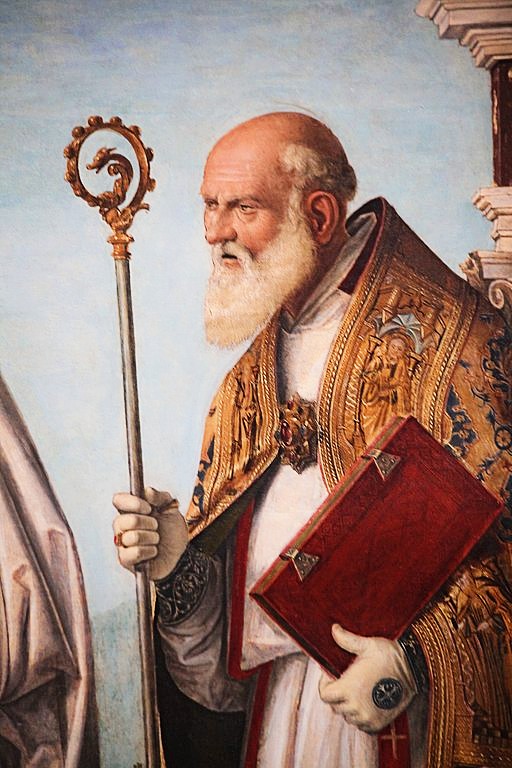
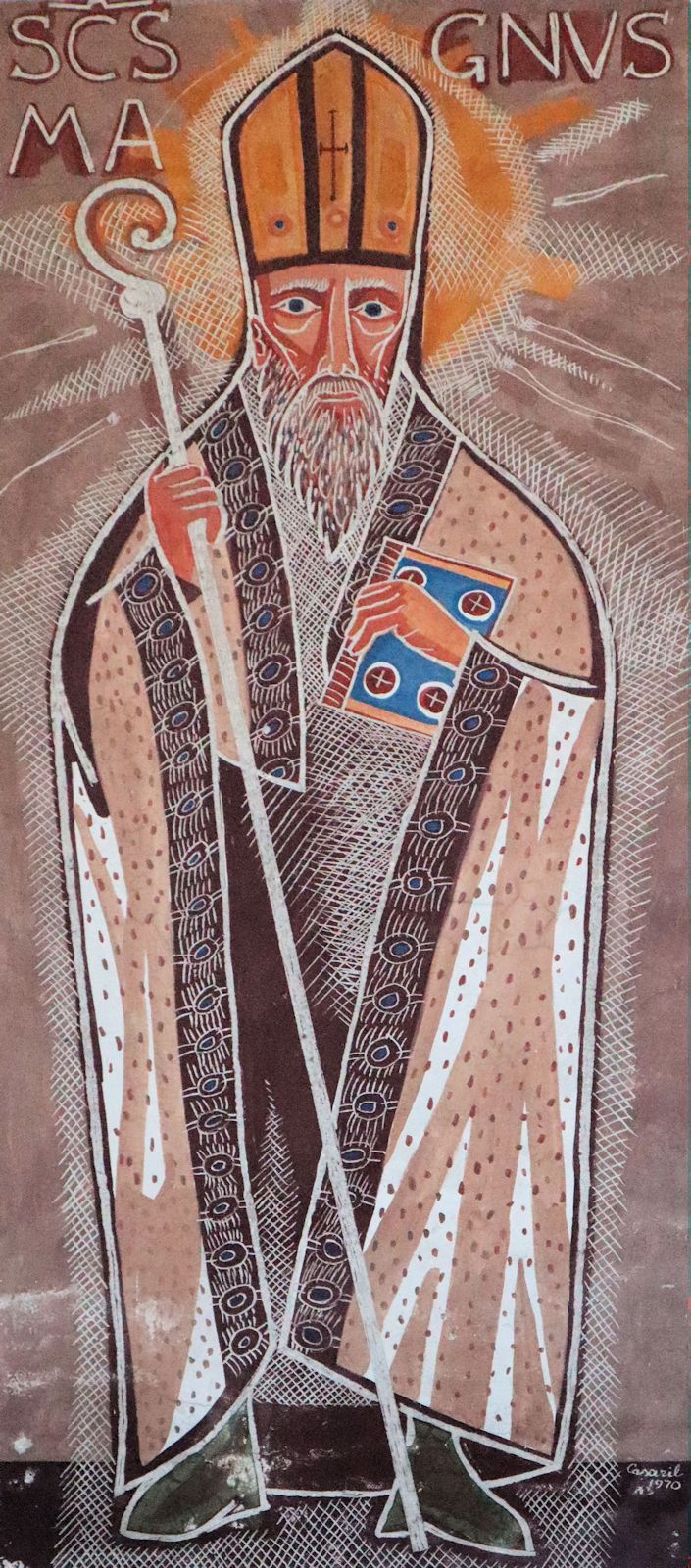
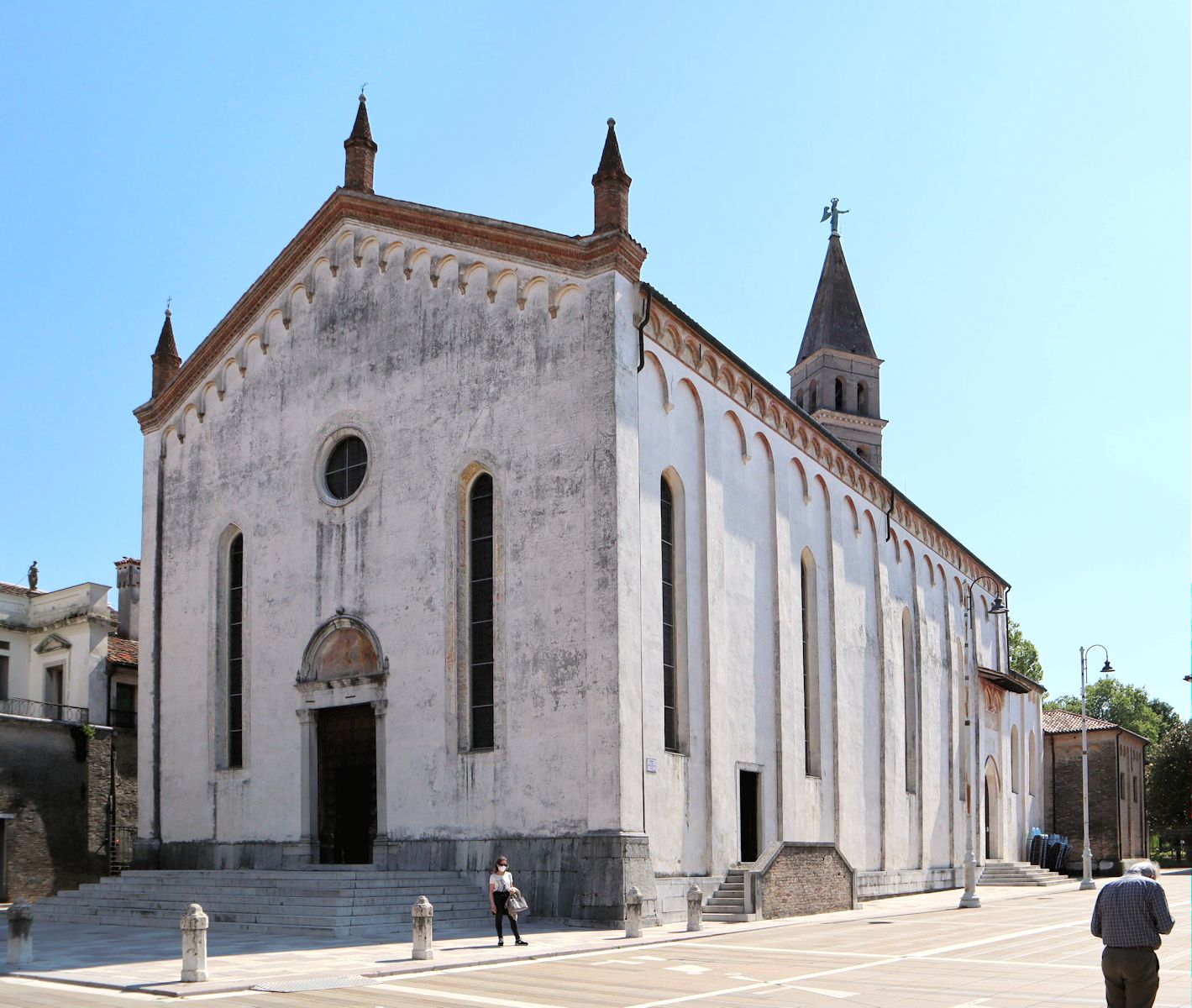
Saint of the Day – 6 October – Saint Magnus Frigeria of Orderzo (c580–c670) Bishop of Oderzo and Eraclea in greater Venice, Founder and builder of 8 Churches in the region. Born in Altino near the City of Venice and died in c670 in Heraclea, today Cittanova, district of Eraclea near Venice in Italy. Patronage – Venice.
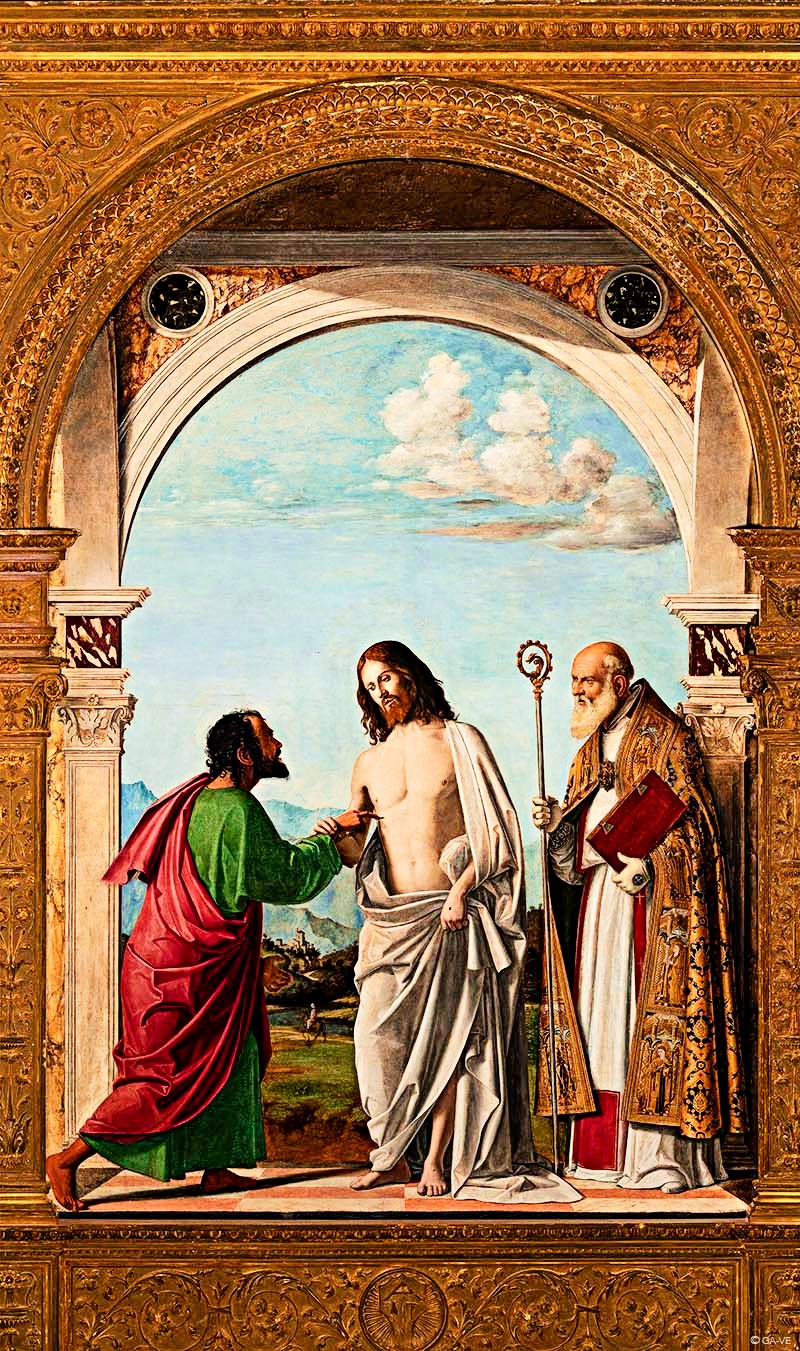
Detail taken from The Incredulity of St Thomas with Bishop Magno by Cima da Conegliano – Altarpiece.
Magnus was the son of the noble Frigeria family, which was important in the Venetian Republic. In around 633, he became the Bishop of Opitergium – today’s Oderzo – near Venice as the successor to Bishop Titian .
In 641, after the Lombard King Rothari conquered and devastated this City which was dominated by the Byzantines – today’s Ístanbul – the inhabitants fled with their Bishop. They founded a new City on the site of today’s hamlet of Cittanova – a district of Eraclea near Venice – which they called Heraclea in honour of the Eastern Roman Emperor, Heraclius. They also fled to preserve their faith because the Lombards were followers of Arianism.
Mural of St Magnus in the Church of Altino
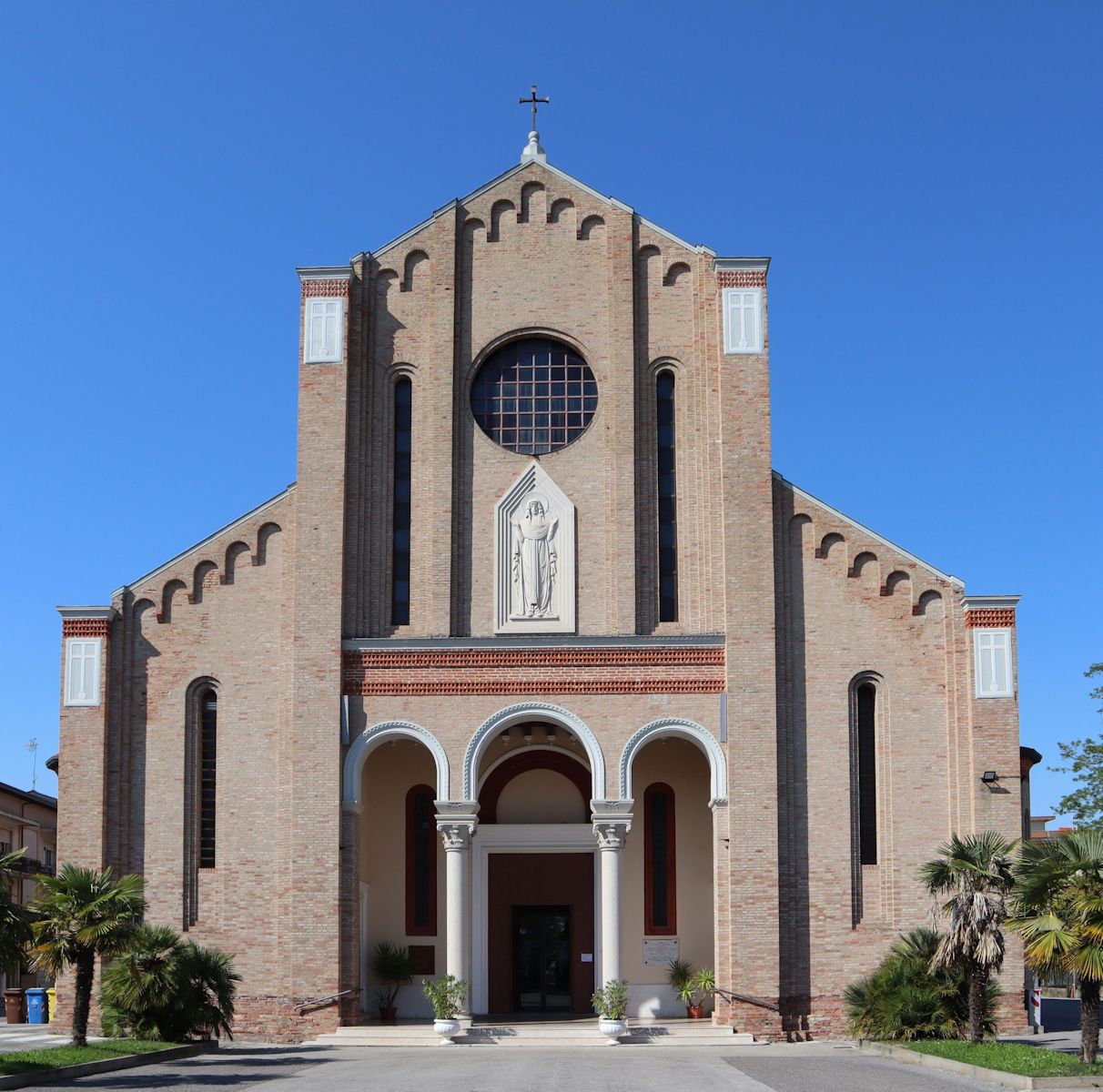
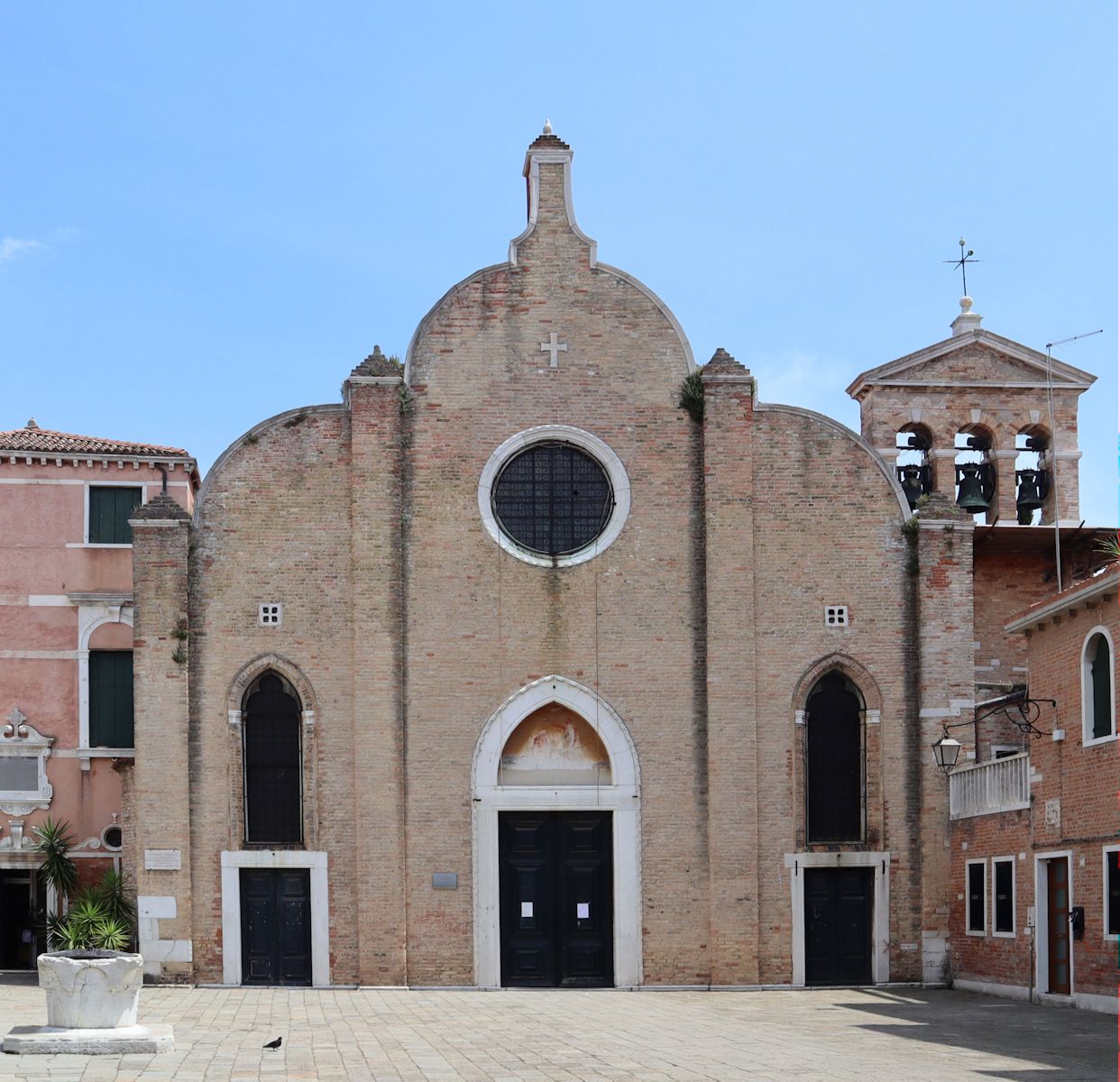
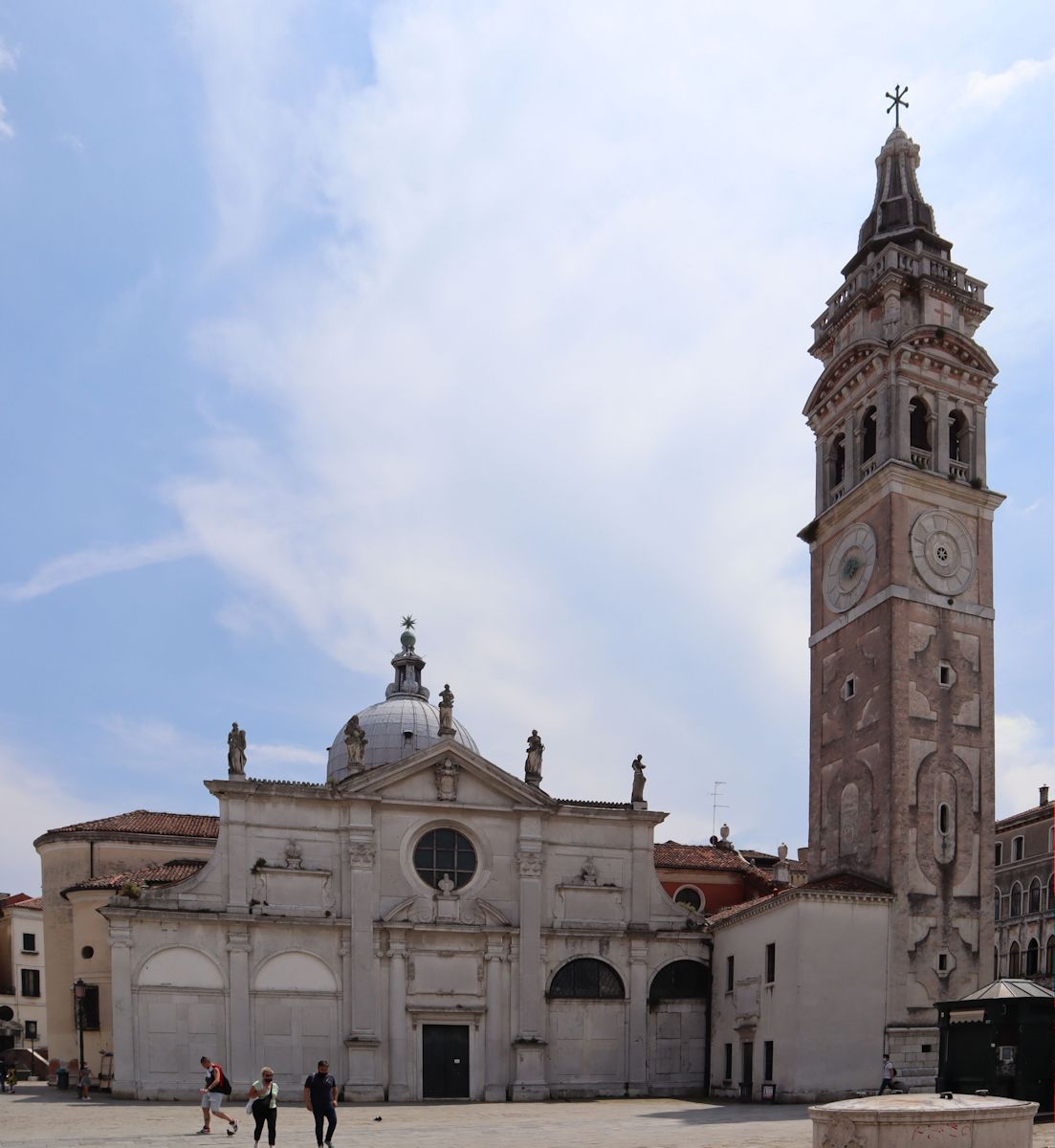
Pope Severinus confirmed this transfer of the Episcopal See. Magnus immediately had the then Cathedral, dedicated to St Peter, built in Heraclea. He is also considered the Founder of eight early Churches in what is now the City of Venice, namely the Churches of Santi Apostoli on Cannaregio, San Pietro di Castello and Santa Maria Formosa, the then Church of Santa Giustina – today the High School GB Benedetti, only the facade remains – as well as the Churches of San Giovanni in Bragora, San Zaccaria, San Salvador / Santissima Salvatore and San Raffaele Arcangelo.
Church of San Giovanni in Bragora
All eight Churches built by our Saint Magnus, still exist and all are active Churches except for Santa Guistina which is deconsecrated and now a high school, although as mentioned above, the facade of the Church is still there. All of them have been restored numerous times but that is understandable and necessary, I am sure you will agree, over 1400+ years! St Magnust pray for the Universal Church!
Church of the new Eraclea
Church of San Giovanni in Bragora in Venice
Church of Santa Maria Formosa in Venice
The historical Heraclea lost its importance in the 8th Century, at the latest around 811, after the Doges moved their headquarters to Venice. After the place was abandoned due to increasing floods, On 6 October 1206, Magnus’ remains were transferred to the Church of San Geremia – today Santi Geremia e Lucia – in Venice, where his Relics are greatly overshadowed by the body of a more famous Saint, Santa Lucia. It’s interesting that he was not buried in one of the Churches he founded but evidently, this was his Parish.
. In 1563 an arm Relic was brought to the Cathedral of San Marco. In 1956 the remains returned to the Church of the new Eraclea .
The Incredulity of St Thomas Altarpiece with Bishop Magno by Cima da Conegliano
Given the quite huge profile of our Saint in Venice, it seems surprising that there was never a church built FOR him and dedicated TO him, since so many other Saints are honoured in the hundreds of Churches in Venice. But, in 1454, the Venetian Senate named San Magno as Patron Saint of the Republic, honouring him alongside the existing Patrons – Marco and Teodoro.
St Pardulf St Renato of Sorrento St Romanus of Auxerre St Sagar of Laodicea
Martyrs of Capua – 4 Saints: A group of Martyrs who were either killed in Capua, Italy, or that’s where their relics were first enshrined. We now know nothing but their names – Aemilius, Castus, Marcellus and Saturninus.
Martyrs of Trier: Commemorates the large number of Martyrs who died in Trier, Germany in the persecutions of Diocletian.
St Placidus and Companions OSB (Martyrs of Messina) – 30 Saints: A group of about 30 Benedictine Monks and Nuns, some blood relatives, who were sent in the early days of the Order to establish Monasteries in the vicinity of Messina, Sicily, Italy and who were Martyred. We know the names, and a few details, about seven of them – Donatus, Eutychius, Faustu, Firmatus, Flavia, Placidus, Victorinus. 6th Century Messina, Sicily, Italy.
St Alexander of Trier St Anna Schaeffer St Apollinaris of Valence St Attilanus of Zamora St Aymard of Cluny St Boniface of Trier St Charitina of Amasa St Eliano of Cagliari
Blessed Felicia Meda OSC (1378-1444) Virgin
St Firmatus of Auxerre St Flaviana of Auxerre Bl Flora of Beaulieu St Gallo of Aosta St Jerome of Nevers Bl John Hewett St Magdalveus of Verdun St Mamlacha St Marcellinus of Ravenna
Blessed Pietro of Imola (c1250-1320) Knight of the Order of St John of Jerusalem and Grand Prior , Lawyer, Jurist, Mediator, Peace-maker. The Roman Martyrology states: “In Florence, blessed Pietro da Imola, who, a Knight of the Order of St John of Jerusalem, took care of the sick with pious charity.” Biography: https://anastpaul.com/2021/10/05/saint-of-the-day-5-october-blessed-pietro-of-imola-c1250-1320/
Blessed Raymond of Capua OP (c 1330-1399) Priest, “The Second Founder” of the Dominican Order of Preachers, Reformer, Spiritual Director, he worked with St Agnes of Montepulciano and St Catherine of Siena, Hagiographer, Teacher. The important Mystic, Reformer, Doctor of the Church, St Catherine of Siena, accepted him as her spiritual director because of his burning passion for the Church and for the revival of religious life, most especially in their own Order. In 1899 Pope Leo XIII Beatified him, on the 500th anniversary of his death. About Blessed Raymond: https://anastpaul.com/2020/10/05/saint-of-the-day-5-october-blessed-raymond-of-capua-op-c-1330-1399/
Bl Robert Sutton Bl Sante of Cori St Thraseas of Eumenia Bl William Hartley
Saint of the Day – 4 October – Saint Aurea of Paris (Died 666) Virgin, Abbess of Saint Martial Convent in Paris during the reigns of King Dagobert I and King Clovis II which Aurea ruled for 33 years, known as a Miracle-worker both before and after her death. Also known as – Aure. On some calendars, particularly in the Proper of Paris, St Aurea is venerated on 5 October owing to the conflict with St Francis’ Feast today.
The Roman Martyrology reads: “In Paris, still in France, Saint Aurea, Abbess, whom Saint Eligius placed at the head of a Monastery which he himself founded in this City under the rule of Saint Columba, in which he had gathered three hundred virgins.”
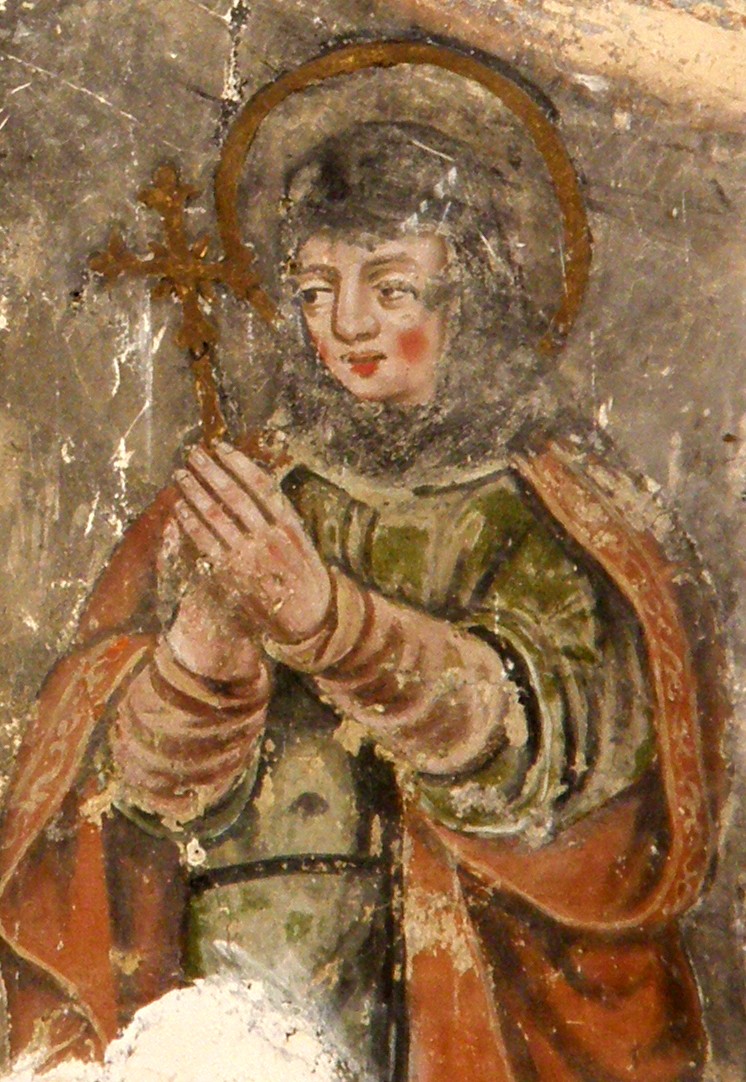
St Aurea in a 17th Century mural carrying a miniature Crucifix. At the Church in Tohogne, Belgium.
Daughter of Maurino and Quiria. St Aurea appears in works by two writers, St Wudoin and St Jonas of Bobbio (the renowned Abbot and disciple of St Columba and later Author of the Life of St Columba), in their Hagiographies of St Eligius and St Eustace. Both writers state that she was an immigrant to Paris from Syria.
In 633, Aurea was placed, by Saint Eligius (c588-660), at the head of a female Monastery, which he founded in Paris donating his own property for the founding of the first female Monastery in the region.
Aurea was in office from 633 to 666, the year in which she died on 3 (or 4) October, victim of a furious plague which caused the death of one hundred and sixty of her Nuns.
Her remains, were initially placed in the Church of St Paul, where the Nuns were then buried and were then taken to the Oratory of St Marziale. They were again transferred to St Paul’s and finally, in 1421, brought back to St Marziale but in 1792, during the Revolution, they were removed and distroyed, except for a portion of her Relics which were transferred to safety in Normandy. These might be those that are still safely held and venerated at the Church of St Eligius in Paris. In the same Church, there is also a mural of her receiving the veil from the hands of St Eloigius.
Many miracles were recorded through St Aurea’s prayers and intercession. She brought a woman back to life, in order to release a key from her dead hands. Aurea swept red-hot ashes out of an empty oven, causing perfectly baked loaves to appear and, long after her death, St Aurea cured and restored the sight of a blind woman with the touch of her cut-off (and freshly bleeding) arm.
St Aurea of Paris (Died 666) Virgin, Abbess St Berenice St Caius of Corinth St Callisthene of Ephesus St Crispus of Corinth St Damaris of Athens St Diogenes of Milan St Domnina St Hierotheus Bl Julian Majali St Lucius of Alexandria St Peter of Damascus
Martyrs of Alexandria: A group of Christians, men and women, young and old, murdered together for their faith.The only names that have come down to us are the brothers Mark and Marcian.
Saint of the Day – 3 October – Saint Adalgott of Chur O.Cist. (Died 1160) Bishop, Monk in Citeaux, then disciple of Saint Bernard at Clairvaux,, Abbot at Disentis in Switzerland and then Bishop of Chur, Reformer of monastic life and of the Clergy, Apostle of the sick and founder of a Hospital in his Diocese. Date and place of birth unknown – died on 3 October 1160 at Chur of natural causes. Also known as – Adalgott of Discentis, Adalgotto, Algott, Adelgorio.
The Roman Martyrology reads: “In Chur in Switzerland, blessed Adalgotto, Bishop, who, disciple of Saint Bernard in Clairvaux, was a great lover of monastic discipline.”
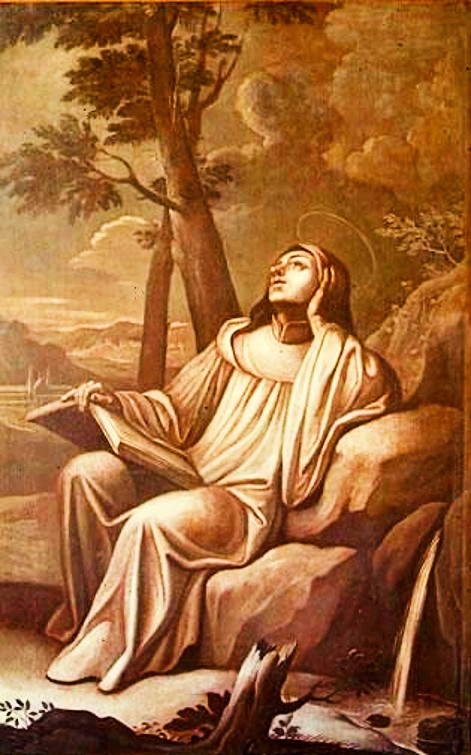
St Adalgott in his Cistercian Habit
In 1150, Adalgott was requested to become the Bishop of Chur by the faithful and Clergy of the Diocese. Some believe that this request was engendered because he was probably originally from that area. He was consecrated there in 1151 by the Archbishop of Mainz.
Adalgott gave his private life and his Episcopate an imprint of austerity – he reformed the Clergy, returned the Monasteries under his jurisdiction to a more rigid observance of the Rule, monitored the good morals of the population.
He was in political relations with Pope Stephen III and Emperor Frederick I but never compromised on anything concerning the rights of the Church. He restored Churches and Monasteries, including Cazis, Schännis, Munster, Müstail. Adalgott particularly supported the Premonstratensian Monastery of St Lucius in Chur which was founded in 1140/42 by the Cistercian Pope Eugene III.
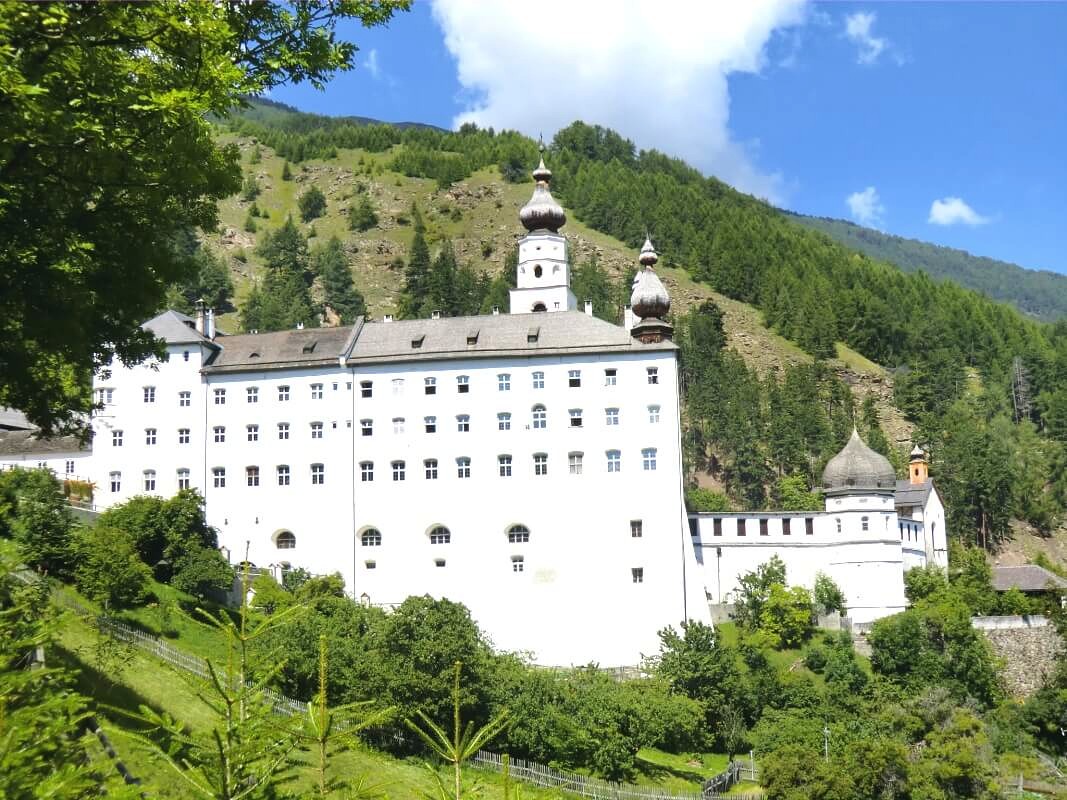
Marienberg Monastery near Mals in South Tyrol
Adalgott was known throughout his life for his concern for and ministry to the sick and his use of position and title to assist them however possible. When Adalgott was named Bishop of Chur, he conducted an apostolate for the suffering of the region and, in the same year, he founded a Hospital at Chur specifically to attend to needs of the poor.
On 11 June 1160 Adalgott Consecrated the Marianberg Crypt, as evidenced by an inscription and it was probably he who promoted the construction of the beautiful Cathedral of Chur which is now dedicated to him.
He died at an advanced age on 3 October 1160. His Relics which soon became an object of veneration and the prayers at his tomb resulted in many miracles. In 1492, Adalgott’s name was included in the Catalogue of Cistercian Saints and Blesseds, compiled by the Abbot of Citeaux, John of Cirey, where some variants of his name are also recorded: Algott, Adelgorio.
On 4 May 1881 the Congregation of Rites approved Adalgott’s cult ab immemorial. The Cistercian Congregations of Mehrerau and San Bernardo in Italy remember him on 3 October.
Statue of St Adalgott in the Monastery Church of Eschenbach in Lucerne
St Adalgott of Chur O.Cist. (Died 1160) Bishop Bl Agostina of the Assumption St Candidus the Martyr St Cyprian of Toulon Bl Damian de Portu St Dionysius the Aeropagite Bl Dominic Spadafora Bl Edmund of Scotland St Ewald the Black St Ewald the Fair St Froilan
Martyrs of Alexandria – 9 Saints: A number of Christian Martyrs remembered together. We know the names Caius, Cheremone, Dionysius, Eusebio, Fausto, Lucio, Maximus, Paul, Peter and that there were at least two more whose names have not come down to us, and that’s about all we know.
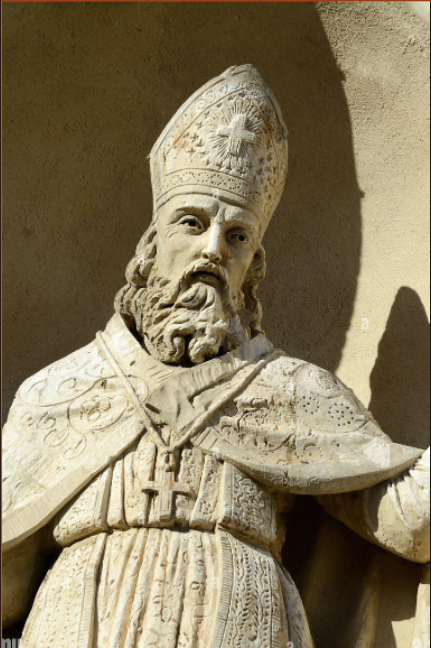
Saint of the Day – 2 October – Saint Ursicinus II (Died 760) Bishop of Chur in Switzerland, Monk, Abbot, Hermit, Restorer of the Monastery of Disentis and Architect and builder of 3 Churches in the Diocese. Unknown date and place of birth but died on 2 October in 769 in Disentis, Switzerland of natural causes. Also known as – Ursicinus di Coira, Ursicinus of Chur, Ursicino… Additional Memorial – 3 October in the Diocese of Chur together with the Blessed Bishop Algarotto II. The Image of the Statue of a Bishop is NOT our Saint but an unknown Bishop.
The Roman Martyrology states: “In the territory of today’s Switzerland, Saint Ursicinus, Bishop of Chur and first Abbot of the Monastery of Disentis which he founded.”
Unknown Bishop
We do not know when and where he was born, although his name has Latin/Italian roots and means “bear” but there is little certain data about him.
We do know that Ursicinus was educated in the Monastery of Saint Lucius of Chur, in Switzerland and, after that period, in 721 he entered the Benedictines of the Monastery of Disentis, whose first monastic nucleus was, according to tradition, erected around the year 700, by St Sigisbert.
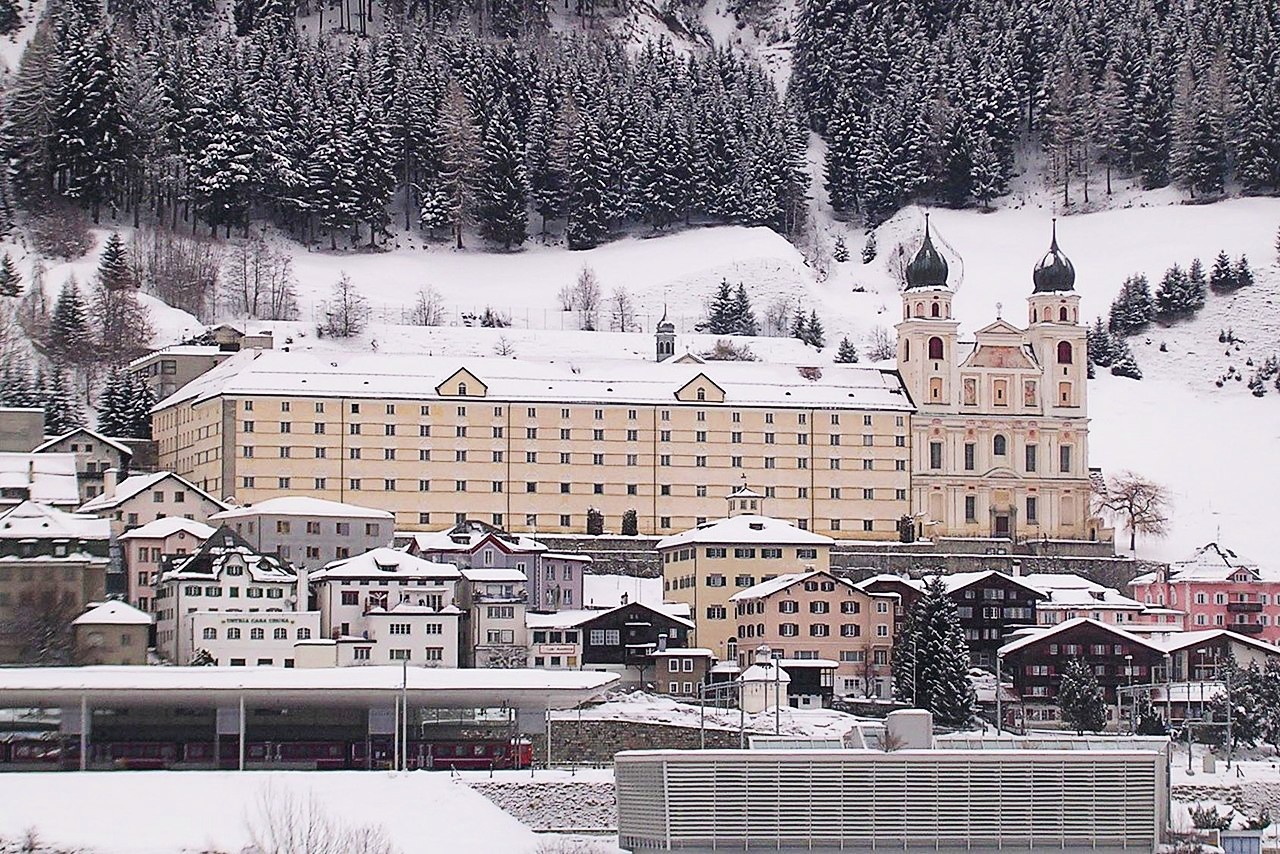
The Disentis Monastery
Ursicinus was elected Abbot of the Abbey of Disentis in 730. Nine years later, around 739, thanks to the help of the Bishops, Victor II and Vigilius, he managed to rebuild the Monastery and became the Architect and builder of the erection of the Churches of St Maria, St Martin and St Peter.
In 754, against his will, Ursicinus was elected Bishop of Chur which he ruled for only four years. He does not appear in the chrontaxes of the Bishops of the Diocese, whose list in that period, shows many gaps
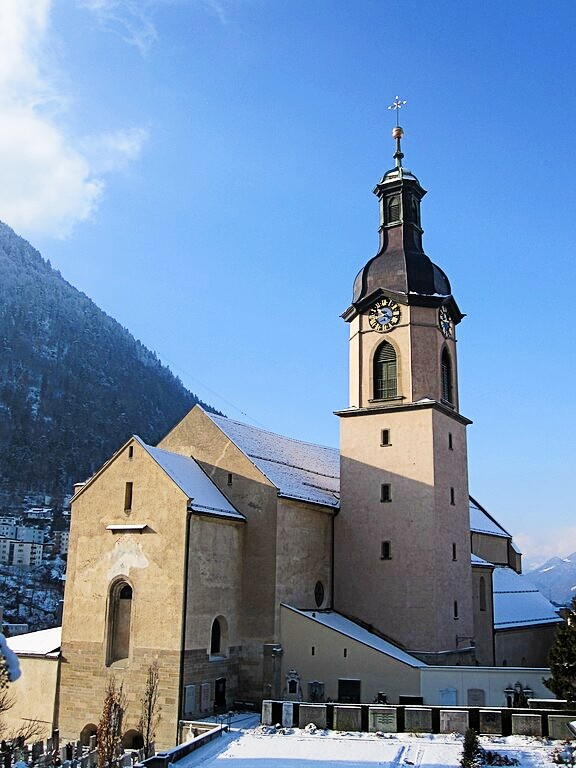
The Cathedral of Chur
In 758, Ursicinus, now elderly, renounced his role and retired as a simple Monk to the Monastery of Disentis, where. according to some, he died on 2 October 760.
Furthermore, we do not know if and in what period he became a Monk of the important Abbey of Reichenau on Lake Constance, given that his name appears in their “Liber confraternitatum” at the head of all the Monks with the words “Ursicinus Episcopus.”
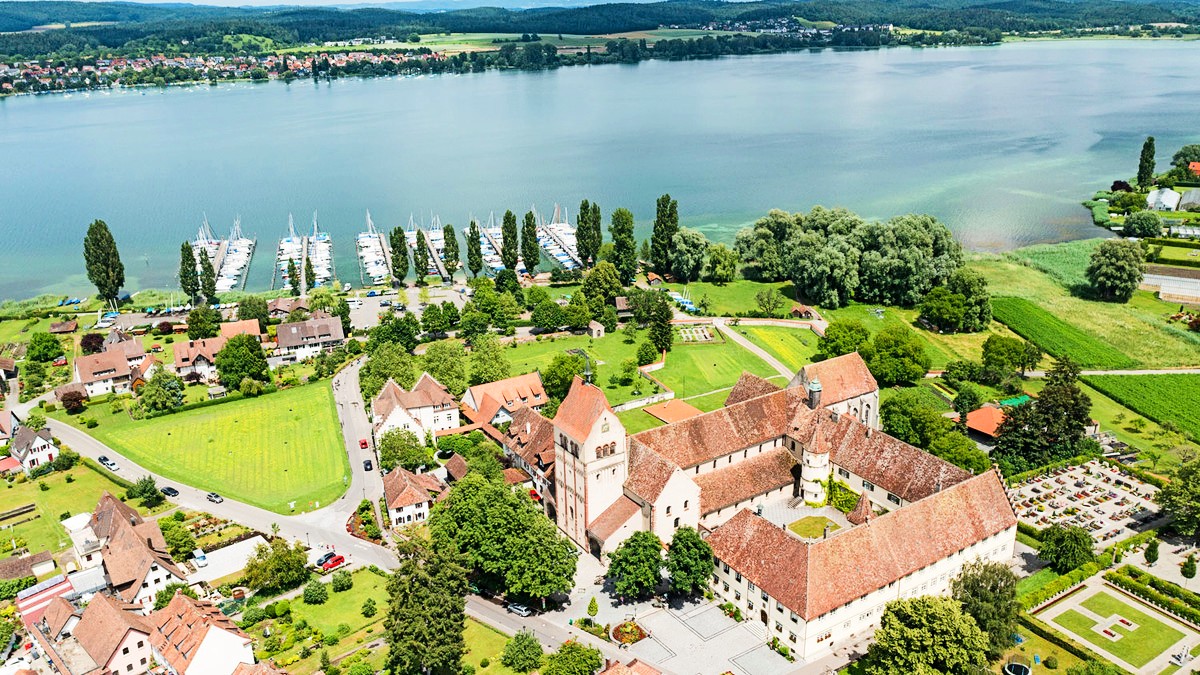
Reichenau Abbey on Lake Constance
Throughout the region, Ursicinus II enjoyed a great reputation for sanctity. In the Diocese of Chur, he is remembered by being celebrated together with Blessed Adalgotto II on 3 October. Saint Ursicino II Bishop, is remembered and celebrated in the Reichenau Obituary, in the Disentis Proper of 1690 and, in the Roman Martyrology on 2 October.
St Leudomer St Modesto of Sardinia St Saturius of Soria St Theophilus of Bulgaria
St Thomas de Cantilupe of Hereford (c1218-1282) Bishop of Hereford, Confessor, learned Scholar, known for his care of the poor and his protection of them against feudal landlords, Miracle-worker, Chancellor of Oxford University, Lord Chancellor of England. Thomas de Cantilupe was the last Englishman Canonised before the Reformation. An amazing Life and in death, a wondrous Miracle-worker: https://anastpaul.com/2021/10/02/saint-of-the-day-2-october-saint-thomas-de-cantilupe-of-hereford-c-1218-1282/
St Ursicinus II (Died 760) Bishop
Martyred in Nagasaki, Japan: A husband, wife and two sons, who were all martyred together in the persecutions in Japan. They were beheaded on 2 October 1622 in Nagasaki, Japan and Beatified by Pope Pius IX on 7 May 1867. Blessed Andreas Yakichi Blessed Franciscus Yakichi Blessed Lucia Yakichi Blessed Ludovicus Yakichi
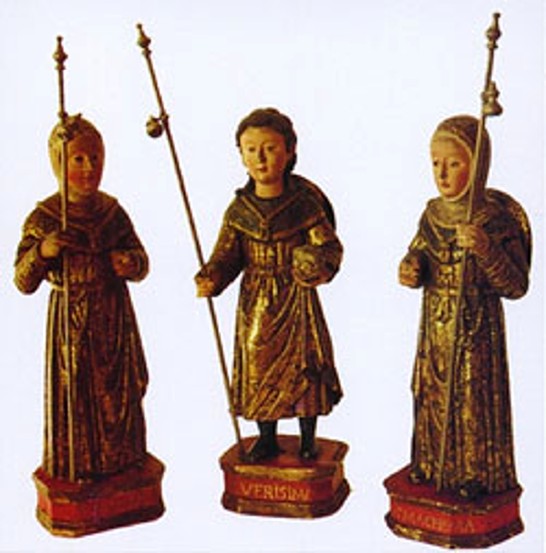
Saints of the Day – 1 October – The Holy Martyrs of Lisbon (Died c303) St Verissimus, St Maxima, St Julia. (Portuguese: Santos Mártires de Lisboa) were three siblings, the brother Verissimus and his two sisters , Maxima and Julia, who were Martyred n the Roman Province of Lusitania (modern-day Lisbon, Portugal) during the persecutions of Emperor Diocletian.
The Roman Martyrology reads: “At Lisbon, in Portugal, the holy Martyrs Verissimus and his tow sisters, Maxima and Julia, who suffered in the persecution of Diocletian.”
The first known historical references to the three Saints is found in the 8th Century Martyrology of Usuard. Thefaithful of Lisbon’s ancient devotion to the Martyrs is also attested in De expugnatione Lyxbonensi, an account of the Siege of Lisbon at the start of the Second Crusade in 1145.
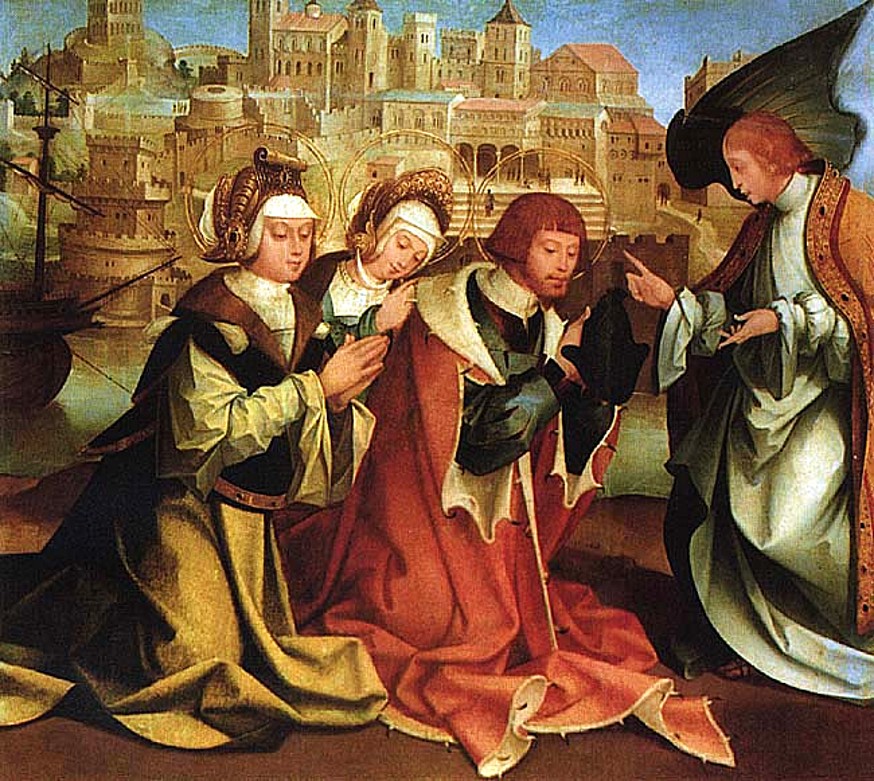
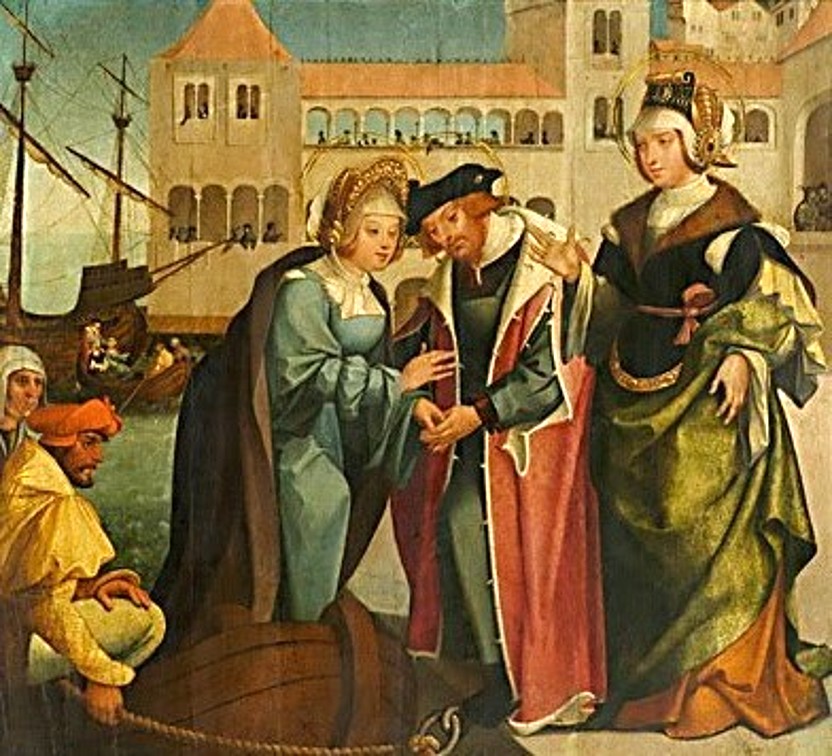
Most accounts of the lives of the Holy Martyrs of Lisbon, maintain that the three siblings were in Rome when an Angel appeared unto them and told them to go to Olisipo, where they “would achieve the Crown of Martyrdom which they so eagerly sought.” They journeyed by boat to the City and soon enough were arrested for being Christians and taken into the presence of Tarquinius, the Roman Governor under Diocletian. Having voiced their will to uphold the Christian Faith even it be necessary to suffer Martyrdom therefore, Tarquinius subjected them to a series of torments after which they were stoned and their throats slit.
The Martyrdom of Verissimus, Maxima and Julia, is the subject of a series of paintings by Garcia Fernandes, painted in c1530, see above.


























 AnaStpaul
You must be logged in to post a comment.