Saint of the Day – 21 June – Feast of the Eucharistic Heart of Jesus
“Jesus, knowing His hour was come, that He should pass out of this world to the Father, having loved His own who were in the world, He loved them unto the end.” John 13:1
Today we celebrate a Feast which is all too little known – the Feast of the Eucharistic Heart of Jesus. This feast falls after the second Thursday after Corpus Christi and, appropriately, within the Octave of the Sacred Heart. This Feast calls to mind the inexhaustible Love which beats from the Sacred Heart, found in the Holy Eucharist and of the continual gift of Himself which He wishes us to receive in Holy Communion, so that our heart may be untied to His.
On 9 November 1921, Pope Benedict XV (1854-1922) instituted the Feast of the Eucharistic Heart of Jesus to be celebrated on the Thursday within the Octave of the Sacred Heart with a Proper Mass and Office. The Feast continues to be celebrated in some places and by some communities, notably by the Redemptorists, who maintain it in their Proper Calendar. In instituting the Feast, Pope Benedict XV wrote:
“The chief reason of this Feast, is to commemorate the love of Our Lord Jesus Christ in the Mystery of the Eucharist. By this means the Church wishes, more and more, to excite the faithful to approach this Sacred Mystery with confidence and, to inflame their hearts with that Divine Charity which consumed the Sacred Heart of Jesus, when, in His Infinite Love, He instituted the Most Holy Eucharist, wherein the Divine Heart guards and loves them by living with them, as they live and abide in Him. For in the Sacrament of the Holy Eucharist, He offers and gives Himself to us as Victim, Companion, Nourishment, Viaticum and Pledge of our future glory!”
The adorable Mystery of the Eucharist embodies, contains and communicates to us the entire Mystery of Christ – His Incarnation, Life, Passion, Death, Resurrection and Ascension and outpouring of the Holy Spirit. If you seek the open Side of the glorious ascended Christ, you will find it in the Eucharist. If you seek the pierced Heart of Christ, beating with love for the Father and with mercy for sinners, you will find it in the Eucharist. “Behold I am with you all days, even to the consummation of the world” (Mt 28:20).
O Lord Jesus Christ, Who hast poured forth the riches of Thy love for men in instituting the Sacrament of the Eucharist, help us, we beseech Thee, to love Thy most loving Heart and ever to make worthy use of so great a Sacrament. Who livest and reignest …. Collect of the Mass of the Feast of the Eucharistic Heart of Jesus
Eucharistic Heart of Jesus, lonely Heart, humiliated Heart, abandoned Heart, forgotten Heart, despised Heart, outraged Heart, Heart ignored by men, Heart which loves our own hearts; Heart pleading for our love, Heart so patient in waiting for us, Heart so eager to listen to our prayers, Heart so anxious for our requests, Heart, unending source of new graces, Heart so silent, yet desiring to speak to souls, Heart, welcome refuge of the hidden life, Heart, teacher of the secrets of union with God, Heart of Him Who sleeps but watches always, Eucharistic Heart of Jesus, have mercy on us.
St Paulinus of Nola (c 354-431) Bishop, Confessor, Poet, Writer, Apostle of Charity, Preacher, Orator, Senator and Governor. St Paulinus was an inspiration to many—including six great Saints of the Church, who referenced him in letters of encouragement to others: St Augustine, St Jerome, Melania, St Martin of Tours, St Gregory and St Ambrose. St Augustine wrote, “Go to Campania– there study Paulinus, that choice servant of God. With what generosity, with what still greater humility, he has flung from himself the burden of this world’s grandeurs to take on him the yoke of Christ and in His service how serene and unobtrusive his life!” This glorious Saint Paulinus!: https://anastpaul.com/2018/06/22/saint-of-the-day-22-june-st-paulinus-of-nola-c-354-431/ AND: https://anastpaul.com/2022/06/22/saint-of-the-day-22-june-st-paulinus-of-nola-c-354-431-2/
St Aaron of Brettany St Aaron of Pais-de-Laon St Alban of Britain Bl Altrude of Rome St Consortia St Cronan of Ferns St Eberhard of Salzburg St Eusebius of Samosata St Exuperantius of Como St Flavius Clemens St Gregory of Agrigento St Heraclius the Soldier St Hespérius of Metz
Blessed Pope Innocent V OP (c 1225-1275) Papal Ascesion 21 January 1276 unril 22 June 1276 (the date of his death. Friar of the Order of Preachers, Theologian, renowned Preacher, Scholar, Writer,, Dominican Office bearer, disciple of St Albert the Great and collaborator and friend of St Thomas Aquinas.and St Bonaventure. His Life: https://anastpaul.com/2021/06/22/saint-of-the-day-22-june-blessed-pope-innocent-v-op-c-1225-1275/
St John IV of Naples St Julius of Pais-de-Laon Bl Kristina Hamm Bl Marie Lhuilier St Nicetas of Remesiana St Precia of Epinal St Rotrudis of Saint-Omer St Rufinus of Alexandria
Martyrs of Samaria – 1480 Saints: 1480 Christians massacred in and near Samaria during the war between the Greek Emperor Heraclius and the pagan Chosroas of Persia. c 614 in the vicinity of Samaria, Palestine.
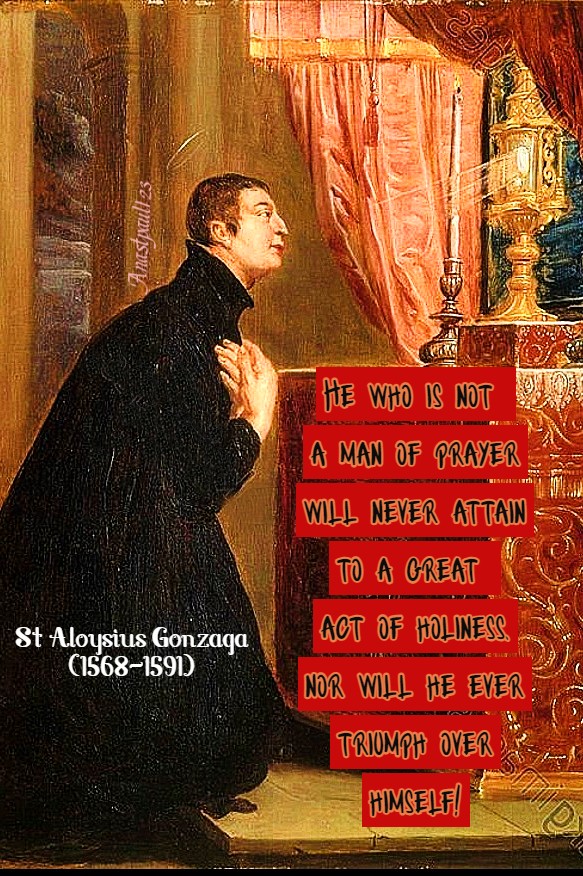
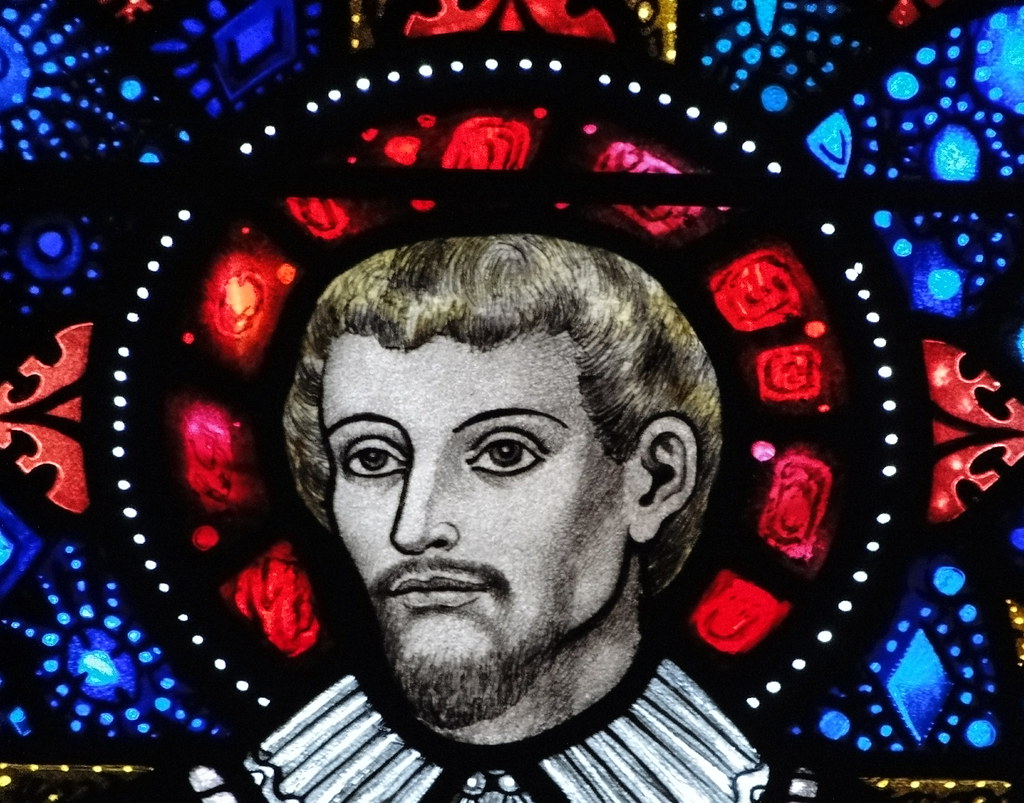
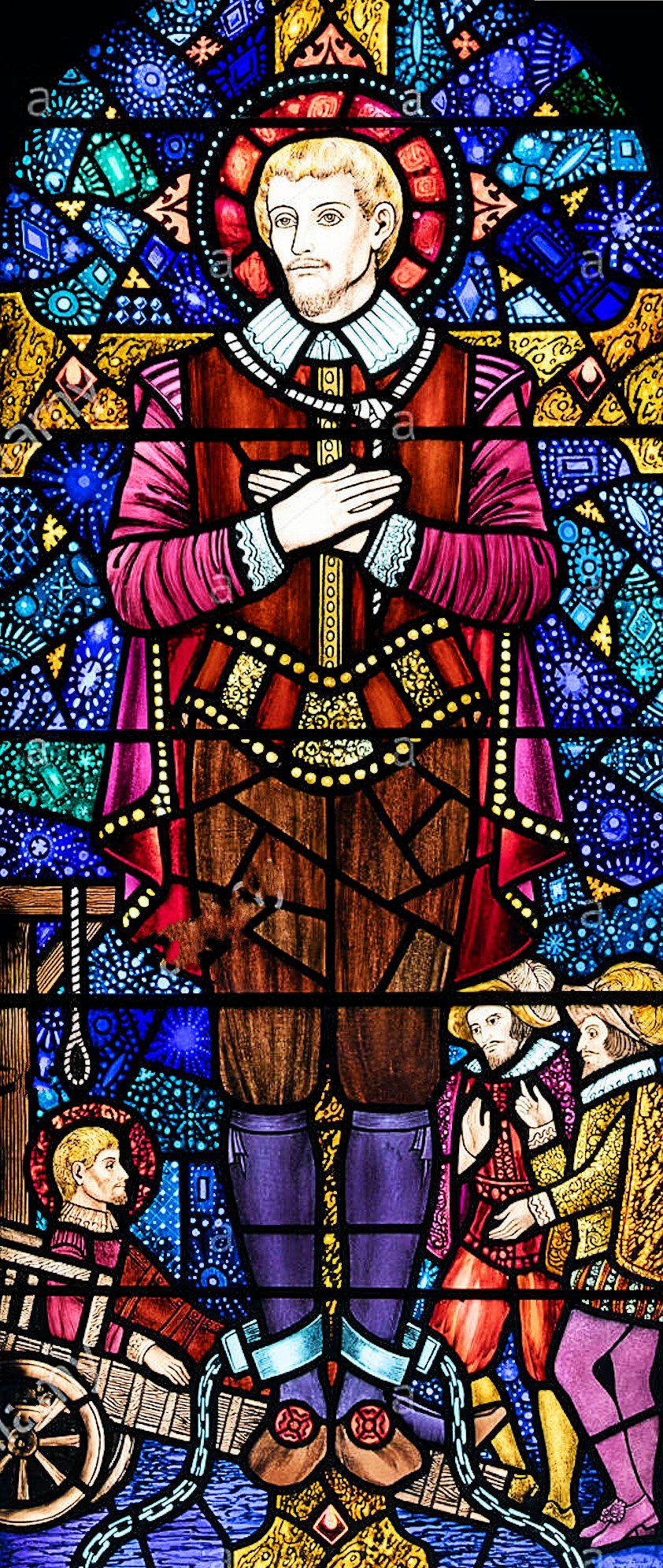
Saint of the Day – 21 June – Saint John Rigby (1570-1600) Martyr, Confessor, Layman. Born in 1570 at Harrack Hall, Wigan, Lancashire, England and died on 21 June 1600 at Southwark, London, England. His body was chopped up and scattered around Southwark. Patronages – of bachelors, of torture victims. Also venerated on 25 October as one of the Forty Martyrs of England and Wales. Also known as Thomas Rigby but this is merely an error in printing.
The Roman Martyrology reads: “In London, England, St John Rigby, Martyr, who, arrested and sentenced to death under Queen Elizabeth I for reconciling with the Catholic Church, was hanged in Southwark and disemboweled while still alive.”
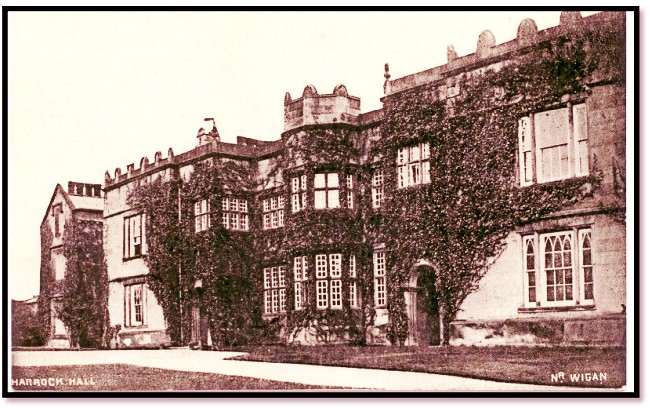
John Rigbywas born in 1570. His father one of a long succession of Nicholas Rigby, who could trace their ancestry to the early Catholic Plantagenet Kings. His mother Mary, the daughter of Oliver Breres of Preston, was also from a Catholic family. The family home, Harrock Hall, was in the Parish of Eccleston, Lancashire and was fairly typical of that owned by the Lancashire gentry. The present Hall was probably rebuilt shortly after John Rigby’s time.
Harrock Hall St John Rigby’s family home and birthplace
In 1600 John was working as a Steward for Sir Edmund Huddleston. Sir Edmund sent him to the sessions house of the Old Bailey Court House, to plead illness for the absence of his daughter, the widow Mrs. Fortescue, who had been summoned on a charge of recusancy. A commissioner then questioned John about his own religious beliefs, whereupon John acknowledged that he was a Catholic.
He was immediately arrested and sent to Newgate Prison. The next day, the feast day of St Valentine, he signed a confession saying that since he had been reconciled to the Roman Catholic Faith by Saint John Jones, a Franciscan Priest, some two or three years earlier, he had not attended Anglican services. Twice he was given the chance to recant, his confession but twice refused. He told the Judge that his sentence to die for treason “is the thing which I desire.”
His sentence was carried out. He gave the Executioner, who helped him up to the cart, a piece of gold, saying, “Take this in token that I freely forgive thee and others, who have been accessory to my death.”
John was hanged, drawn and quartered at St Thomas Waterings, in London on 21 June 1600. However, he was cut down too soon, being still alive, he landed on his feet but was thrown down and held, while he was disembowelled. According to Bishop Richard Challoner, “The people, going away, complained bitterly of the barbarity of the execution.”
St John Rigby had died 2 years later but in the same manner and at the same place as his revered Confessor, St John Jones, who had reconciled him to the Church.
John was Beatified by Pius XI on 15 December 1929 and included in the Canonisation by Paul VI of the 40 Martyrs in 1970.
St Apollinaris of Africa St Colagia St Corbmac St Cyriacus of Africa St Demetria of Rome St Dominic of Comacchio St Engelmund St John Rigby (1570-1600) Martyr, Confessor, Layman St Juan of Jesus St Lazarus the Leper St Leutfridus of La-Croix St Martia of Syracuse St Martin of Tongres St Melchiorre della Pace St Mewan of Bretagne Bl Nicholas Plutzer
St Raymond of Barbastro St Rufinus of Syracuse St Suibhne the Sage St Terence St Ursicenus of Pavia
Martyrs of Taw – 3+ Saints: Three Christians of different backgrounds who were Martyred together – Moses, Paphnutius, Thomas. They were beheaded in Taw, Egypt, date unknown.
Saint of the Day – 20 June – Saint Novatus of Rome (Died c151) Confessor, Layman.
The Roman Martyrology reads today: “At Rome, the demise of St Novatus, son of the blessed Senator, Puden and brother of the saintly Priest, Timothy and of the Holy Virgins of Christ, Pudentiana and Praxedes, who were instructed in the Faith by the Apostles. Their house was converted into a Church and bore the title of Pastor.”
St Novatus by Bernardino Nocchi (1803), Church of Santa Pudenziana, Rome.
Novatus, who is mentioned on 20 June with his brother, the Martyr Timothy, was the son of St Pudens and Claudia Rufina and the brother of Sts Pudentiana and Praxedes.
His paternal grandfather was Quintus Cornelius Pudens, the Roman Senator, who with his wife, Priscilla, was among St Peter’s earliest converts in Rome and in whose house the Apostle dwelt while in that City.
Sts Timothy and Novatus also at the Church of Santa Pudenziana, Rome.
A portion of the superstructure of the modern Church of St Pudentiana (on the Via Urbana) is thought to be part of the Senatorial Palace or of the baths built by Novatus, see the Church below.
St Bagne of Thérouanne St Edburga of Caistor St Florentia of Seville
Blessed Francisco Pacheco SJ (1566-1626) Martyr, Priest of the Society of Jesus, Missionary to India, China and Japan, Provincial Superior. Fr Pacheco and his eight Jesuit companions, together with the nine lay Christians, were included among the 205 Martyrs Beatified by Blessed Pope Pius IX on 7 May1867. His Life and Death: https://anastpaul.com/2021/06/20/saint-of-th-day-20-june-blessed-francisco-pacheco-sj-1566-1626/
St Gemma of Saintonge St Goban of Picardie St Helen of Öehren
Blessed Michelina of Pesaro TOSF (1300-1356) Widow, Religious of the Third Order of the Friars Minor, Stigmatic, Penitent, Apostle of all in need, Founder of the Confraternity of the Annunciation, to care for the poor, nurse the sick and bury the dead. Patronages – Pesaro, widows, against mental illness, against death of children. Beatified on 13 April 1737 by Pope Clement XII. Her Holy Life: https://anastpaul.com/2022/06/20/saint-of-the-day-20-june-blessed-michelina-of-pesaro-tosf-1300-1356/
St Novatus of Rome (Died c151) Confessor
Martyred in London: Bl Anthony Turner Bl John Fenwick Bl John Gavan BL Thomas Whitbread Blessed William Harcourt
Irish Martyrs – 260 Beati – This is the collective title given to the 260 or more persons who are credited with dying for the Faith in Ireland between 1537 and 1714.
Martyrs of Lower Moesia: Martyred on the Black Sea at Lower Moesia (in modern Bulgaria), date unknown. St Cyriacus St Paul
Martyred in Nagasaki: 9 Beati : burned alive on 20 June 1626 in Nagasaki, Japan. Their ashes were thrown into the sea and no relics remain. They were Beatified on 7 May 1867 by Pope Pius IX.
Saint of the Day – 18 June – Blessed Hermann of Floreffe O.Praem (Early 12th Century- 1193) Abbot, the 4th Abbot of Floreffe Abbey in Belguim (the same which **St Istfrid restored) and Canon of the Premonstratensians or Norbertines.
Blessed Hermann was born in the early 12th century in Germany. He joined the Premonstratensians which is also called the Norbertines after its founder, Saint Norbert of Xanten (ca. 1080-1134), or White Canon after the colour of the Order’s Habit. He became a Canon in their Monastery Floreffe near Namur in present-day Belgium. As one of the first Premonstratensian Abbeys, Floreffe was among the Order ‘s Primarii inter pares, or ‘Senior’ houses.
In 1173, Hermann was elected the fourth Abbot of Floreffe, a position he held for twenty years until his death. He was a pious and wise man who was very famous. Count Henrik of Namur chose him as his Confessor. Henrik so admired Him and the Monastery that he had a new Monastery Church built for our saint.
Hermann is also credited with a miraculous spring which springs up at the Church’s main portal. The water from this spring has cured many of the sick and lame and continues to do so.
During Hermann’s time as Abbot of Floreffe, the Monastery was severely damaged due to the war between Count Baudoin of Hainaut and Count Henrik of Namur. The community had to live scattered for six months. The holy Bishop **St Isfrid of Ratzeburg visited the Monastery after this catastrophe and assisted Hermann in the restoration work and succeeded in gathering the scattered Monks. St Istfrid also Consecrated the new Monastery Church in 1190.
After twenty years of fruitful labour, Abbot Hermann died in 1193. In Floreffe, a picture has been preserved that depicts him as blessed, with a spring at his feet. He is honoured as Blessed by the Premonstratensians with a memorial day on 18 June.
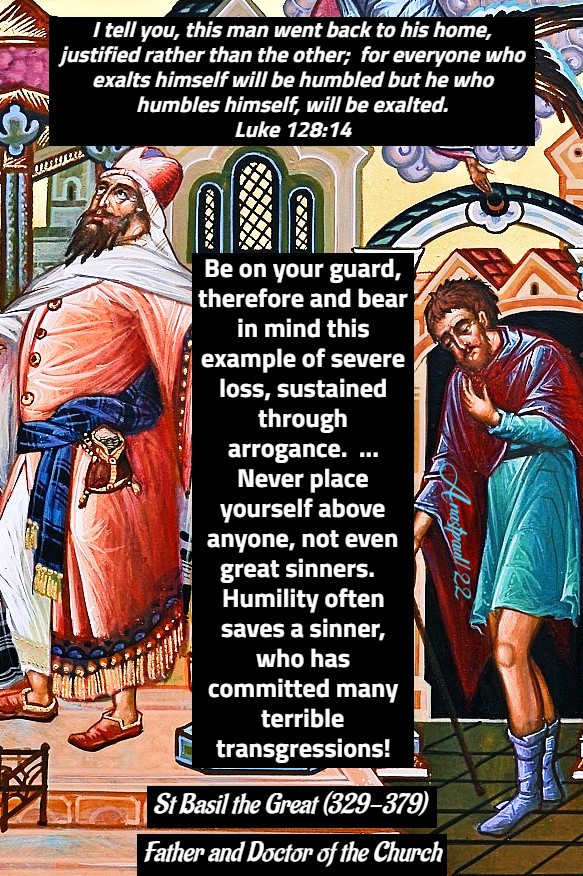
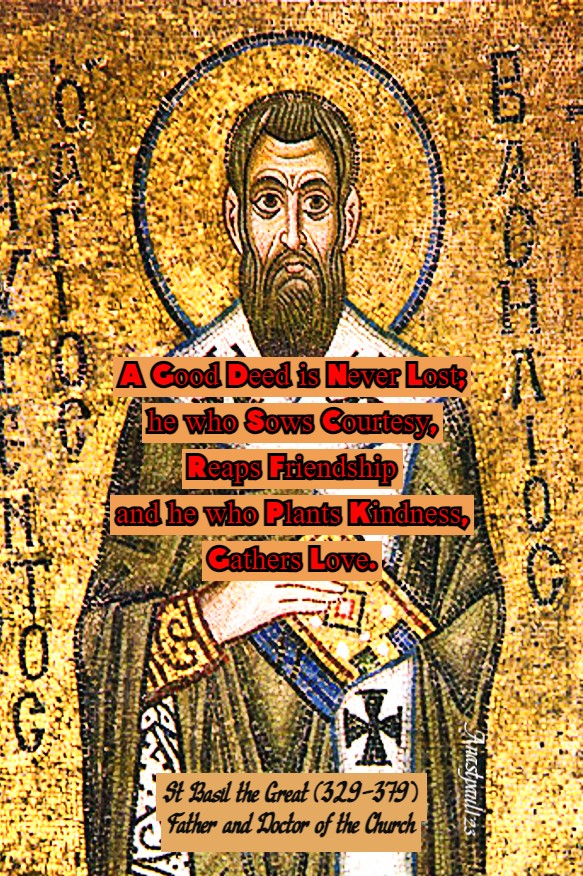
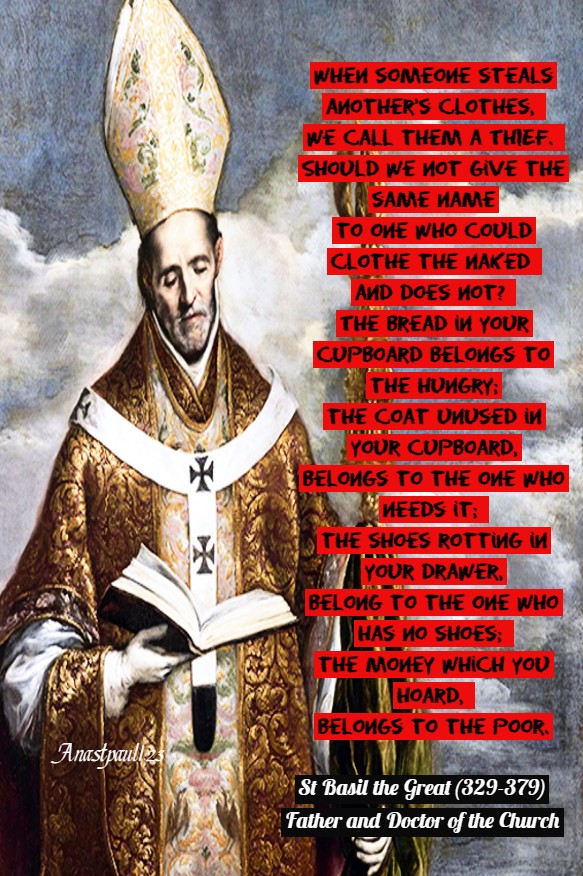
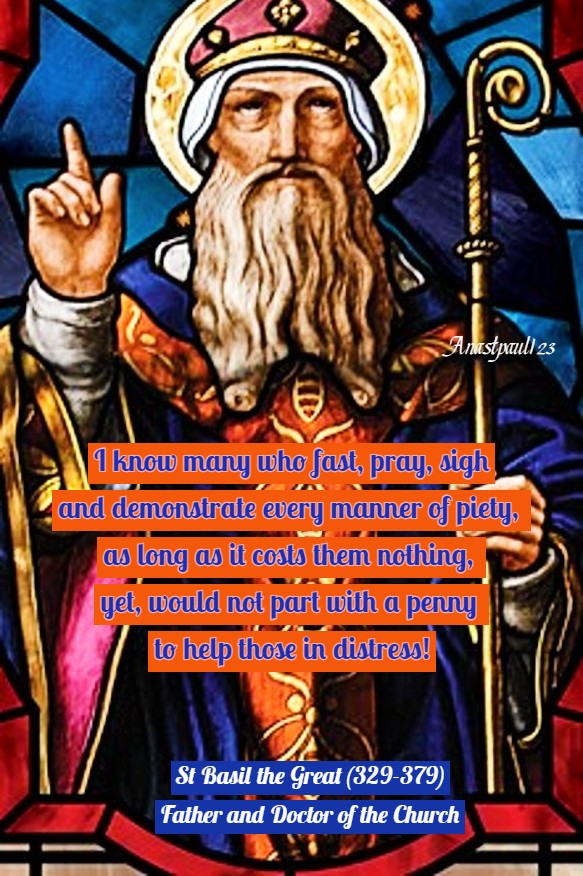
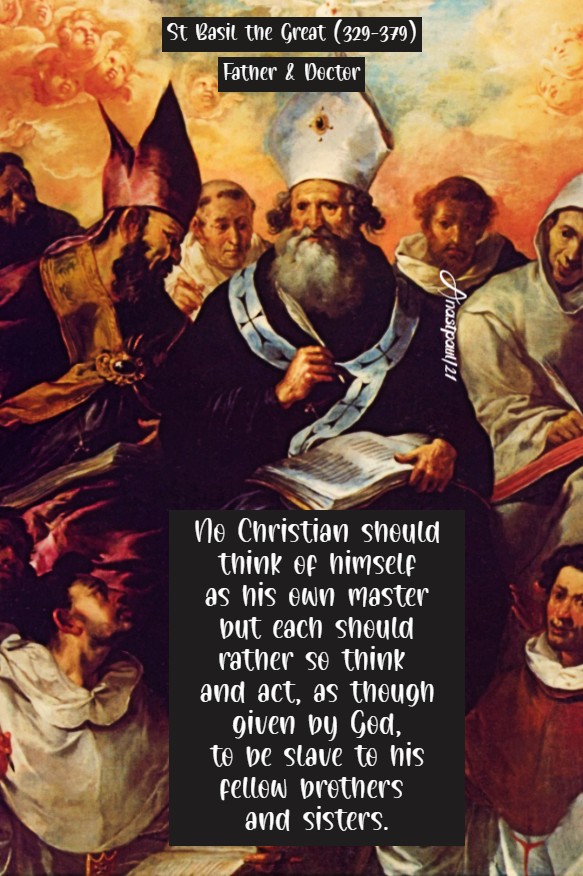
Quote/s of the Day – 14 June – “The Month of the Sacred Heart of Jesus” – Feast of St Basil the Great (329-379) Bishop of Caesarea, Confessor, Father and Doctor of the Church.
“I tell you, this man went back to his home justified, rather than the other; for everyone who exalts himself will be humbled but he who humbles himself, will be exalted” Luke 18:14
“Be on your guard, therefore and bear in mind, this example of severe loss, sustained through arrogance. … Never place yourself above anyone, not even great sinners. Humility often saves a sinner, who has committed many terrible transgressions!”
“A good deed is never lost; he who sows courtesy, reaps friendship and he who plants kindness, gathers love.”
“When someone steals another’s clothes, we call them a THIEF. Should we not give the same name to one who could clothe the naked and does not? The bread in your cupboard belongs to the hungry; the coat unused in your cupboard, belongs to the one who needs it; the shoes rotting in your drawer, belong to the one who has no shoes; the money which you hoard, belongs to the poor.”
“I know many who fast, pray, sigh and demonstrate every manner of piety, as long as it costs them nothing, yet, would not part with a penny to help those in distress!”
“No Christian should think of himself as his own master but each should rather so think and act, as though given by God, to be slave to his fellow brothers and sisters.”
Our Morning Offering – 14 June – “The Month of the Sacred Heart of Jesus” – Feast of St Basil the Great (329-379) Bishop of Caesarea, Confessor, Father and Doctor of the Church.
Lord, I Know that I Am Not Worthy Prayer before Holy Communion By St Basil the Great (329-379) Father and Doctor of the Church
Lord, I know that I am not worthy to receive Thy Holy Body and Precious Blood; I know that I am guilty and that I eat and drink condemnation to myself, not discerning the Body and Blood of Christ, my God. But trusting in Thy loving kindness, I come to Thee, Who hast said – ‘Whoever eats My Body and drinks My Blood, will dwell in Me and I in him’; Therefore, Lord, have compassion on me and do not put to shame Thy sinful servant But deal with me according to Thy great mercy And grant that these Holy Gifts, may be for me, healing, cleansing, enlightenment, protection, salvation and sanctification of soul and body. May they cast out from me every dark delusion, sinful deed or work of the evil one. May they move me to trust and love Thee always, to amendment of life, increase of virtue, obedience to Thy commandments, communion of the Holy Spirit, provision for my final journey and a good defence before the dreadful seat of judgement. Amen.
Saints of the Day – 14 June – St Valerius and St Rufinus of Soissons (Died 4th Century) Laymen, Martyrs.
The Roman Martyrology reads: “At Soissons in Belgic Gaul, today in France, the Holy Martyrs – Saints Valerius and Rufinus, who after enduring many torments, were condemned to be beheaded by the Governor, Rictiovarus, in the persecution of Diocletian.”
The Martyrdom of Sts Valerius and Rufinus
The two Martyred companions who are remembered on 14 June – Rufinus and Valerius, according to a legendary account of their Martyrdom, lived in the 4th century at the time of the Emperors Diocletian and Maximian.
They were warehousemen, in charge of supervising the imperial granaries, located in Braine downstream of Basoche (France), on the road which led from Rome to the sea to England.
They were fervent Christians and apostles of the Gospel but their profuse zeal caused the hatred of the barbarian leader Rictiovarus, who decided to eliminate them and hence travelled to Basoche. But the two Christians, having learnt of his intention in time, had fled, taking refuge in a nearby cave.
But a search discovered them, they were beheaded and their bodies thrown into the Vesle river. Christians rescued them and buried them in a marked grave. Although the date of their death is unknown, it must be placed at the beginning of the fourth century.
In c525, the Bishop of Soissons, a certain Bishop Wolf, founded a Chapter of Clerics to whom he entrusted the custody of the bodies of the Martyrs and where a Church was built over their graves. The Relics are currently placed in the Cathedral of Soissons.
St Anastasius of Córdoba St Burchard of Meissen St Caomhán of Inisheer St Castora Gabrielli St Cearan the Devout Bl Constance de Castro St Cyprien St Cyriacus of Zeganea St Davnet St Digna of Córdoba St Dogmael of Wales St Elgar of Bardsey
St Nennus of Arran Bl Peter de Bustamante St Protus of Aquileia St Quintian St Richard of Saint Vannes St Rufinus of Soissons * (Died 4th Century) Layman, Martyr St Theopista St Valerius of Soissons * (Died 4th Century) Layman, Martyr
Thought for the Day – 13 June – Meditations with Father Francis Xavier Weninger SJ (1805-1888) (Austrian Jesuit Missionary and Author).
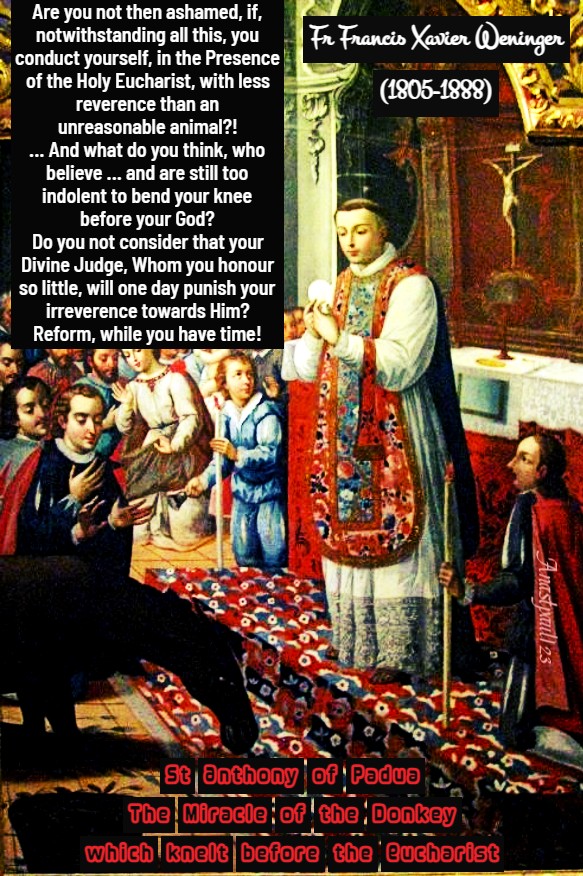
Practical Considerations on the Life of St Anthony of Padua The Miracle of the Donkey which knelt before the Eucharist
“St Antony commands a senseless animal to fall down before the Blessed Eucharist and to honour it – the animal obeys and thus honours its Creator. You have, in the Holy Sacrament, your Lord and God, your Redeemer and Judge before you. You know the command of the Most High – “The Lord, thy God, thou shalt adore” (St Mark 4). “For every knee shall be bowed to Thee ” (Isaiah 45). The Church of Christ says to you … “Come, let us bow down and worship God; let us weep before God Who has created us because He is our God and we are His people.”
Are you not then ashamed, if, notwithstanding all this, you conduct yourself, in the Presence of the Holy Eucharist, with less reverence than an unreasonable animal?! That those who are not Catholics should not manifest due honour to the Blessed Sacrament is wrong in them but they have, at least before man, the excuse that they do not believe in the Real Presence of Christ. But how can you excuse yourself, either before God or man, you who believe in the Presence of Christ and yet, give no due honour to your God? “If I believed,” said a Turkish Ambassador, one day, speaking of the little respect evinced by some Catholics in the Church, “that my God were substantially here, I would humble myself to the ground and if possible, even beneath it! ”
And what do you think, who believe it and are still too indolent to bend your knee before your God? Do you not consider that your Divine Judge, Whom you honour so little, will one day punish your irreverence towards Him? Reform, while you have time!”
Quote/s of the Day – 13 June – The Feast of St Anthony of Padua (1195-1231) Cpmfessor, Evangelical Doctor of the Church
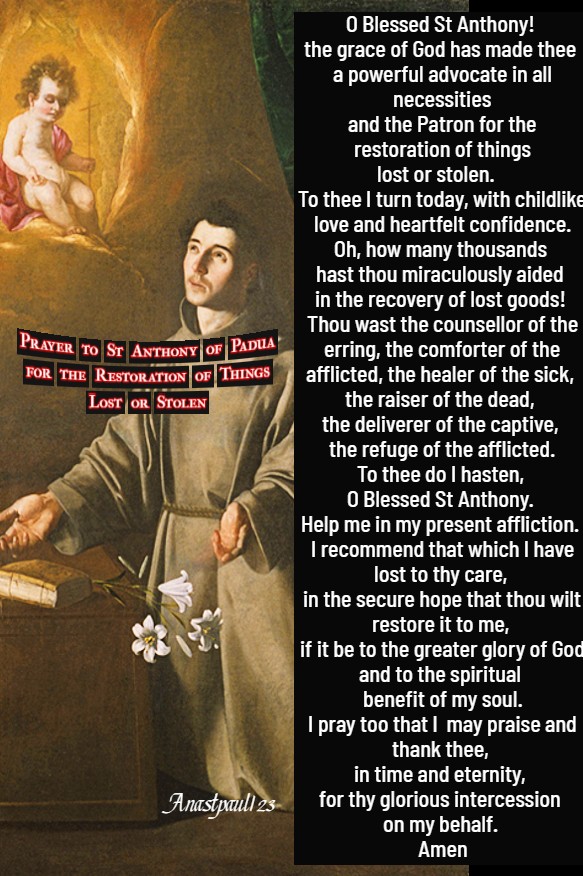
Prayer to St Anthony of Padua for the Restoration of Things Lost or Stolen
O Blessed St Anthony! the grace of God has made thee a powerful advocate in all necessities and the Patron for the restoration of things lost or stolen. To thee I turn today, with childlike love and heartfelt confidence. Oh, how many thousands hast thou miraculously aided in the recovery of lost goods! Thou wast the counsellor of the erring, the comforter of the afflicted, the healer of the sick, the raiser of the dead, the deliverer of the captive, the refuge of the afflicted. To thee do I hasten, O Blessed St Anthony. Help me in my present affliction. I recommend that which I have lost to thy care, in the secure hope that thou wilt restore it to me, if it be to the greater glory of God and to the spiritual benefit of my soul. I pray too that I may praise and thank thee, in time and eternity, for thy glorious intercession on my behalf. Amen
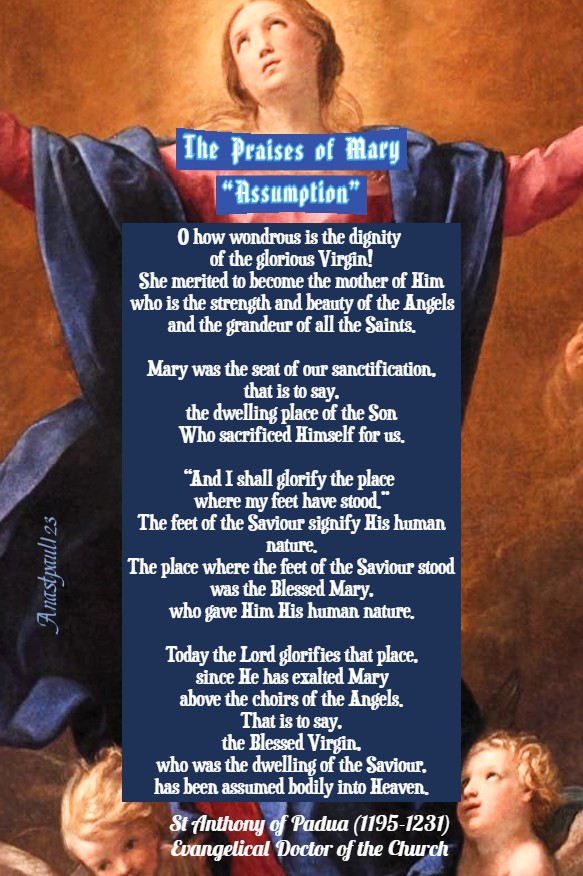
The Praises of Mary “Assumption” Poem by Saint Anthony
O how wondrous is the dignity of the glorious Virgin! She merited to become the mother of Him who is the strength and beauty of the Angels and the grandeur of all the Saints.
Mary was the seat of our sanctification, that is to say, the dwelling place of the Son Who sacrificed Himself for us.
“And I shall glorify the place where my feet have stood.” The feet of the Saviour signify His human nature. The place where the feet of the Saviour stood was the Blessed Mary, who gave Him His human nature.
Today the Lord glorifies that place, since He has exalted Mary above the choirs of the Angels. That is to say, the Blessed Virgin, who was the dwelling of the Saviour, has been assumed bodily into Heaven.
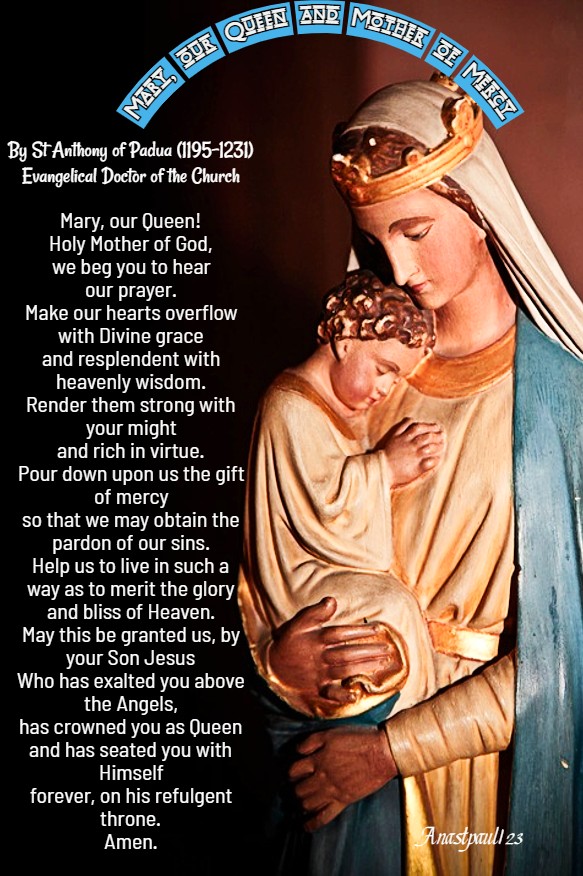
Mary, our Queen and Mother of Mercy By St Anthony of Padua (1195-1231) Evangelical Doctor of the Church
Mary, our Queen! Holy Mother of God, we beg you to hear our prayer. Make our hearts overflow with Divine grace and resplendent with heavenly wisdom. Render them strong with your might and rich in virtue. Pour down upon us the gift of mercy so that we may obtain the pardon of our sins. Help us to live in such a way as to merit the glory and bliss of Heaven. May this be granted us, by your Son Jesus Who has exalted you above the Angels, has crowned you as Queen and has seated you with Himself forever, on his refulgent throne. Amen.
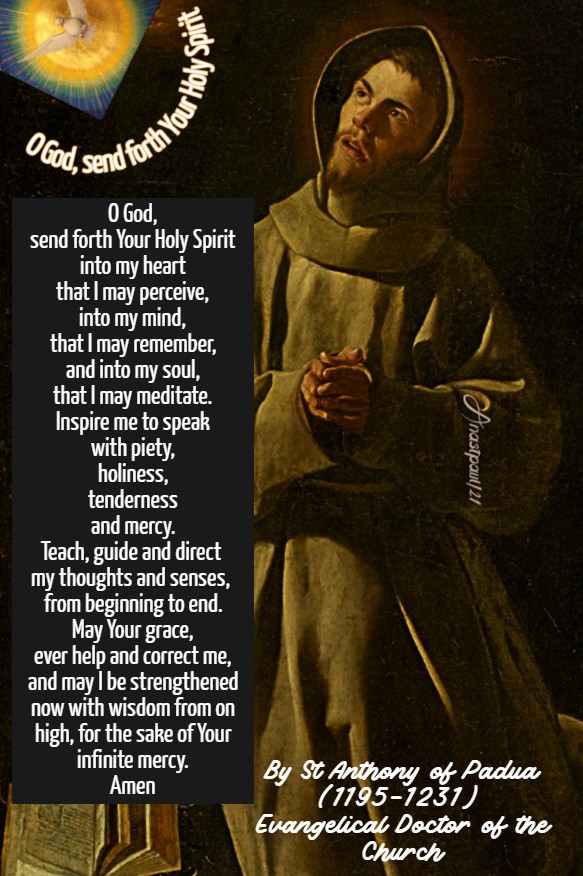
O God, Send Forth Your Holy Spirit By St Anthony of Padua (1195-1231)
O God, send forth Your Holy Spirit into my heart that I may perceive, into my mind, that I may remember, and into my soul, that I may meditate. Inspire me to speak with piety, holiness, tenderness and mercy. Teach, guide and direct my thoughts and senses, from beginning to end. May Your grace, ever help and correct me, and may I be strengthened now with wisdom from on high, for the sake of Your infinite mercy. Amen
One Minute Reflection – 13 June – “The Month of the Sacred Heart of Jesus” – The Feast of St Anthony of Padua (1195-1231) Cpmfessor, Evangelical Doctor of the Church – 2 Timothy 4:1-8, Matthew 5:13-19 – Scripture search here: https://www.drbo.org/
“I have come, not toabolishbut to fulfil.” … Matthew 5:17
REFLECTION – “In Him, the promise made through the shadows of prophecy, stands revealed, along with the full meaning of the precepts of the law. He is the One Who teaches the Truth of prophecy, through His Presence and makes obedience to the commandments possible, through grace. In the preaching of the holy Gospel all should receive a strengthening of their faith. No-one should be ashamed of the Cross of Christ, through which the world has been redeemed. No-one should fear to suffer for the sake of justice, no-one should lose confidence in the reward that has been promised. The way to rest is through toil, the way to life is through death. Christ has taken on Himself the whole weakness of our lowly human nature. If then, we are steadfast in our faith in Him and in our love for Him, we win the victory that He has won, we receive what He has promised. When it comes to obeying the commandments or enduring adversity, the words uttered by the Father should always echo in our ears – “This is my Son, the beloved, in whom I am well pleased, listen to Him.” … St Pope Leo the Great (400-461) Father and Doctor of the Church (An excerpt from Sermo 51).
PRAYER – May the solemn feast of blessed Anthony, Thy Confessor and Doctor, make Thy Church rejoice, O God, so that, ever sustained by spiritual help, she may deserve to reap everlasting joy. Through Jesus Christ, Thy Son our Lord, Who lives and reigns with Thee, in the unity of the Holy Ghost, God, world without end. Amen (Collect).
MAY the Heart of JESUS in the most Blessed Sacrament be praised, adored and loved with grateful affection, at every moment, in all the Tabernacles of the world, even to the end of time. Amen. Indulgence 100 Days, Once a day. Raccolta 161 Pius IX, 29 February 1868.
Our Morning Offering – 13 June – “The Month of the Sacred Heart of Jesus” and the Feast Day of St Anthony of Padua OFM (1195-1231) Confessor, Doctor of the Church
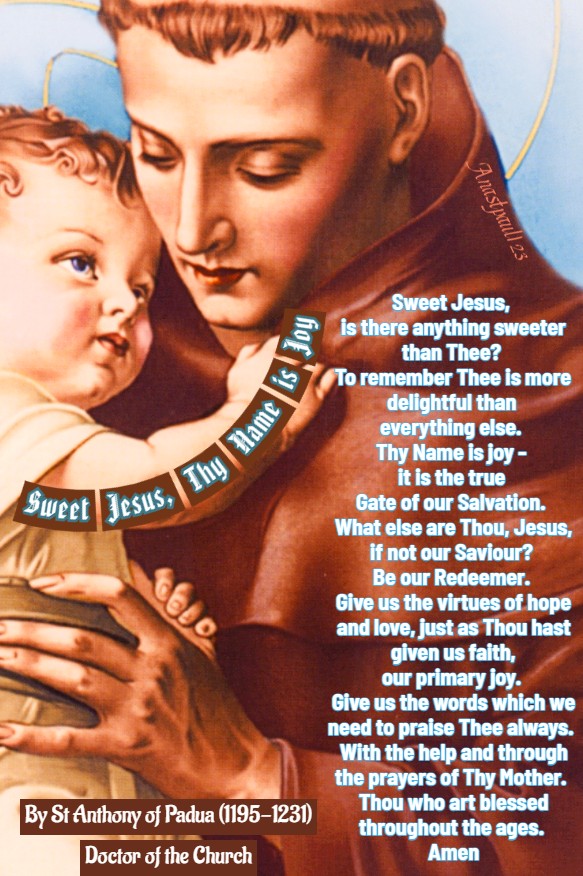
Sweet Jesus, Thy Name is Joy By St Anthony of Padua OFM (1195-1231) Doctor of the Church
Sweet Jesus, is there anything sweeter than Thee? To remember Thee is more delightful than everything else. Thy Name is joy – it is the true Gate of our Salvation. What else are Thou, Jesus, if not our Saviour? Be our Redeemer. Give us the virtues of hope and love, just as Thou hast given us faith, our primary joy. Give us the words which we need to praise Thee always. With the help and through the prayers of Thy Mother. Thou who art blessed throughout the ages. Amen
Saint of the Day – 13 June – St Wilicarius of Vienne (Died 765) Archbishop of Vienne, France, Monk. Wilicarius was the 45th Bishop of Vienne in Dauphiné in south-eastern France. Also known as – Wilicaire.
We have little information on the life of our Saint today. He is the last in the line of the first 45 Bishops of Vienne, to be venerated as Saints.
Wilicarius was Consecrated as the Bishop of Vienne around the year 740. He received the Palium from St Gregory III, whose reign was from 731-741.
According to historical reports, Wilicarius solemly translated the Relics of Saints Ferreol and Julien to Vienne when the Basilica housing them had been razed by invading Saracens.
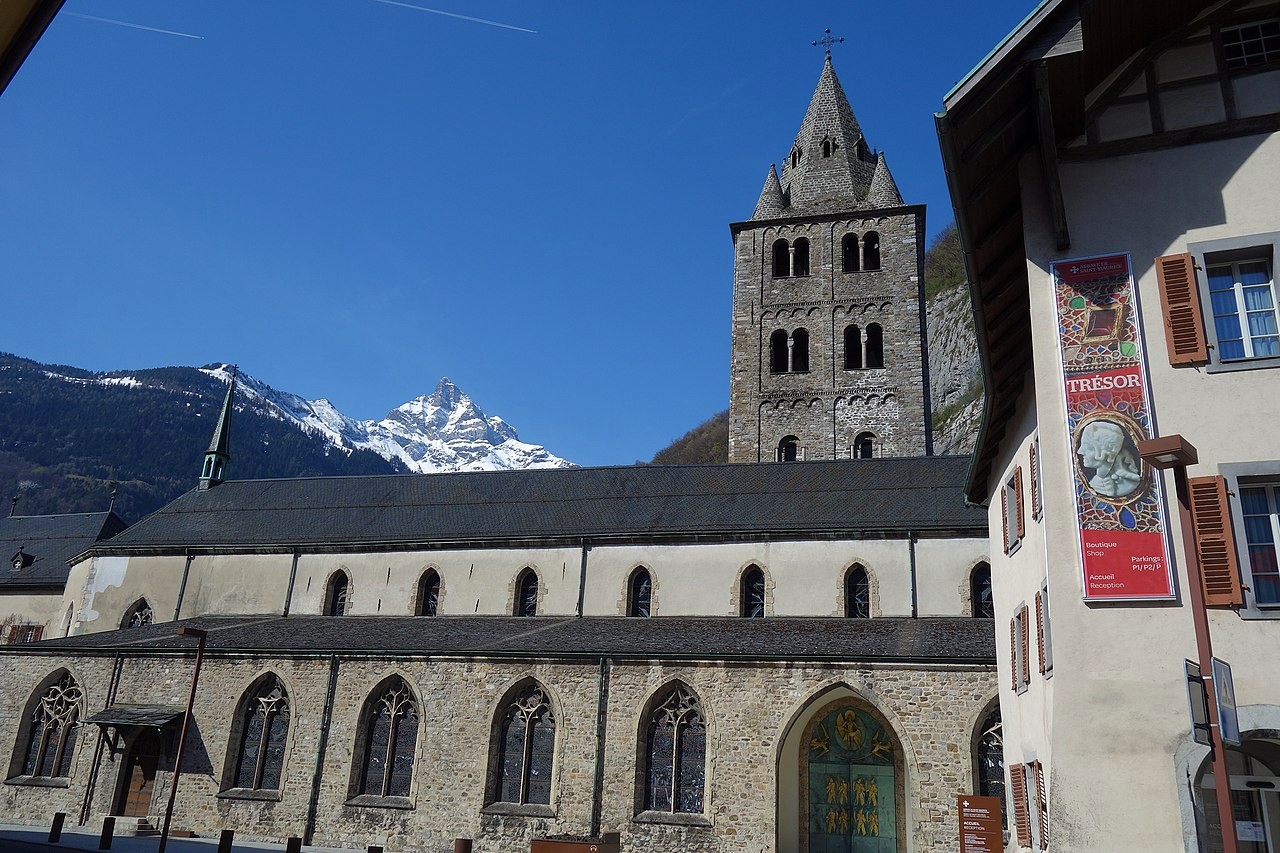
Wilicarius resigned from his See in c752 when it fell under Frankish persecution. He took refuge in Rome and then finally retired to the Monastery of St Maurice d’Agaune in Valais, where he became the Abbot, being highly revered for his holiness.
During the Council of Attigny, convened around 762 by King Pepin, Wilicarius was present and signed the various Decrees as Abbot of the Abbey of St Maurice.
He should not be confused with Abbot Willicaire d’Agaune, who became Archbishop of Sens in 769.
There is some confusion about our Saint’s death – some say 765 and others 782. This latter date places him on the list of Abbots of St Maurice as having reigned from 760 to 782.
St Anthony of Padua OFM (1195-1231) Confessor, Evangelical Doctor of the Church, Priest and Friar of the Order of Friars minor,Known as theHammer of Heretics – Professor of Miracles – Wonder-Worker – Ark of the Testament – Repository of Holy Scripture . Patronages – against sterility, against shipwreck, against starvation, American Indians, amputees, animals – both wild and domestic, asses, mariners, elderly people, expectant mothers, for faith in the Blessed Sacrament, fishermen, for good harvests, horses, lost articles, seekers of lost articles, posted articles, oppressed people, poor people, swineherds, travel guides, travellers, Brazil, Portugal, Tigua Indians, 4 Diocese, 17 Cities. Noted by his contemporaries for his forceful preaching, expert knowledge of Scripture and undying love and devotion to the poor and the sick, he was one of the most-quickly Canonised Saints in Church history. He was proclaimed a Doctor of the Church by Pope Pius XII on 16 January 1946. The wonderful St Anthony: https://anastpaul.com/2017/06/13/saint-of-the-day-13-june-st-anthony-of-paduao-f-m-evangelical-doctor-hammer-of-heretics-professor-of-miracles-wonder-worker-ark-of-the-covenant/ AND: https://anastpaul.com/2018/06/13/saint-of-the-day-13-june-st-anthony-of-padua-o-f-m-evangelical-doctor-hammer-of-heretics-professor-of-miracles-wonder-worker-ark-of-the-tes/ AND A SERMON BY ST ANTHONY: Actions Speak Louder than Words: https://anastpaul.com/2019/06/13/thought-for-the-day-13-june-actions-speak-louder-than-words/
Bl Achilleo of Alexandria Bl Alfonso Gomez de Encinas Bl Anthony of Ilbenstadt St Aquilina of Syria St Aventino of Arbusto St Damhnade St Diodorus of Emesa
St Fandilas of Penamelaria St Felicula of Rome St Fortunatus of North Africa
Blessed Gerard of Clairvaux (Died 1138) – was the elder brother of Saint Bernard of Clairvaux. He was a Soldier. When he was wounded in combat at the siege of Grancy, Gerard resolved to become a Monk. He became a Benedictine Cistercian Monk at Citeaux. He worked with Saint Bernard at Clairvaux and became his closest confidant. He died in 1138 of natural causes.
St Lucian of North Africa St Mac Nissi of Clonmacno St Maximus of Cravagliana St Nicolas Bùi Ðuc The St Peregrinus of Amiterno St Rambert St Salmodio Bl Servatius Scharff St Thecla
Saint of the Day – 12 June – Blessed Guy Vignotelli of Cortona OFM (c1185-1250) Priest of the Friars Minor, Miracle-worker. Born in c1185 in Cortona, Italy and died in 1250 at the Franciscan Convent at Cortona, of natural causes. Also known as Guido, Giles. Blessed Guy was Beatified in 1583 by Pope Gregory XIII.
In the year 1211, when our holy Father St Francis of Assisi was preaching in Cortona on his first missionary journey through Italy, a certain young man was so touched by his words that, after the sermon, he entreated St Francis to dine at his house. The Saint accepted the invitation. When the young man learned further details about the newly founded Order, and witnessed the edifying conduct of the Founder, he fell at hs feet and begged for the Habit of the Order.
The young man was Guy, or Giles, first-born son of a distinguished family in Cortona. He had been reared in piety and virtue and was quite accomplished in the sciences. Francis directed Guy to distribute his wealth among the poor and gave him the holy Habit in the Parish Church of Cortona in the presence of a great concourse of people. Then Francis chose a spot in a secluded valley near Cortona, where, with the assistance of some devout persons, he built a poor Convent. For a few months the Saint himself instructed Guy and several other Novices there. At his departure, he entrusted to the blessed Gather Sylvester, his companion, the direction of the Novices, especially of young Guy, whose eminent holiness he foresaw.
In fasting, prayer and all the religious exercises, Guy evinced such perfection that he could be raised to the other Novices as a model. He would have preferred to spend all his life in the holy seclusion of the Convent but when he was Ordained to the Priesthood, St Francis commissioned him to go out and preach, for in accordance with the vocation of the Order, he was to sanctify not only himself but other souls too.
Filled with zeal for the salvation of souls, Guy left his seclusion. His words had great influence over the hearts of sinners, his holy life edified everybody and Almighty God confirmed his activities with extraordinary miracles. Once, Guy was quite ill with exhaustion and nothing but water was at hand by way of medicine. Guy made the Sign of the Cross over it and it became the most choice wine, which restored his health and what was lef, later healed the infirmities of others.
After a most blessed and successful career, Almighty God announced to Guy, in the sixtieth year of his life that his death was near at hand. St Francis, who had long ago entered into heavenly bliss, appeared to him and said:
“My son, after three days, at nine o’clock, I shall return and escort your soul to the eternal dwellings.”
His already decreasing strength then began to ebb rapidly. On the third day he received the last Sacraments with great devotion and when the appointed hour arrived, he called out:
“Behold our holy Father Francis! Arise, let us go to meet him!”
With these words he jubilantly surrendered his pure soul into the hands of his Maker. It was 12 May 1250.
Upon receiving the news of his death, the people of Cortona came to bury Guy’s precious remains in the Parish Church. Amid the festive pealing of bells, with palm branches in their hands and singing hymns, they transported the holy body, in a long procession to the Town. There the remains were entombed in the principal Church. Many miracles were wrought through his intercession.
After some time enemies invaded the City, the Church was pillaged and the precious coffin containing the body of Blessed Guy of Cortona was carried away, although the sacristan hastily wrapped the head in linen cloths and hid it in a well near the Church. At the end of three years, when the Church was being restored, a mysterious light radiated from the well. Upon investigation, the head was found, not even moistened by the water! Amid the jubilation of the entire City, it was again emshrined in the Church.
Pope Benedict XIII approved a proper Mass and Office in honour of Blessed Guy of Cortona, for the Diocese of Cortona. Pope Innocent XII extended it to the entire Franciscan Order.
St Amphion of Nicomedia Bl Antonio de Pietra St Arsenius of Konev St Christian O’Morgair of Clogher St Chrodobald of Marchiennes St Cominus Bl Conrad of Maleville St Cunera St Cuniald St Cyrinus of Antwerp St Eskil St Galen of Armenia St Gerebald of Châlons-sur-Seine St Geslar
Blessed Guy Vignotelli of Cortona OFM (c1185-1250) Priest of the Friars Minor, Miracle-worker.
St Pope Leo III (c 750-816) Bishop of Rome and Ruler of the Papal States from 26 December 795 to his death. Defender of the City ad peoples of Rome and of the Church. Peacemaker and restorer of Churches and Monasteries, Patron of the Arts and Apostle of the poor. Know as “Charlemagne’s Pope” His Life: https://anastpaul.com/2021/06/12/saint-of-the-day-12-june-st-pope-leo-iii-c-750-816/
St Odulf of Utrecht St Olympius of AEnos St Onuphrius of Egypt Bl Pelagia Leonti of Milazzo St Peter of Mount Athos St Placid of Val d’Ocre St Ternan of Culross St Valerius of Armenia
Martyrs of Bologna: Three Christians who were martyred at different times and places, but whose relics have been collected and enshrined together – Celsus, Dionysius, and Marcellinus. Their relics were enshrined in churches in Bologna and Rome in Italy.
St Basilides and Companions / cMartyrs of Rome: Four members of the Imperial Roman nobility. They were all soldiers, one or more may have been officers, and all were Martyred in the persecutions of Diocletian – Basilides, Cyrinus, Nabor and Nazarius. They were martyred in 304 outside Rome, Italy and buried along the Aurelian Way.
Three Holy Exiles: Three Christian men who became Benedictine Monks at the Saint James Abbey in Regensburg, Germany, then Hermits at Griestatten and whose lives and piety are celebrated together. – Marinus, Vimius and Zimius.
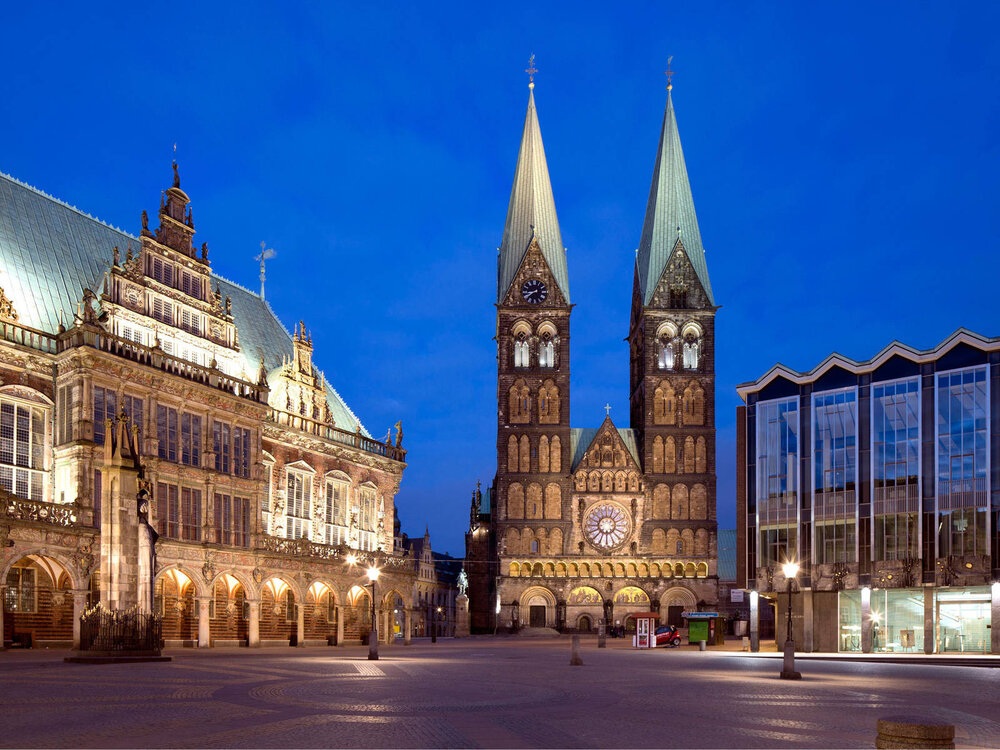
Saint of the Day – 11 June – St Rembert of Hamburg (c830-888) Archbishop of Hamburg-Bremen, Missionary, Miracle-worker, Founder of Churches and Monasteries, Disciple of St Ansgar (801-865) “The Apostle of the North.” Born in c830 in Denmark (probably) and died on 3 February in 862 or 888 of natural causes. St Rembert most famously wrote the Hagiography about the life Ansgar, the Vita Ansgari, one of the most popular hagiographies of middle ages. Patronage s- of the blind and those with eye diseases, against storms at sea. Also known as – Rembert, Rembertus, Rimbert. Additional Memorial 4 February the day on which St Rembert was chosen as the Archbishop. St Ansgar’s life here: https://anastpaul.com/2019/02/03/saint-of-the-day-3-february-saint-ansgar-osb-801-865-apostle-of-the-north/
The Roman Martyrology reads : “In Bremen in Saxony, in today’s Germany, Saint Rembert, Bishop of Hamburg and Bremen, who, a faithful disciple of Saint Ansgar and his successor, extended his ministry to the regions of Denmark and Sweden and, at the time of the invasions of the Normans, he took care of the ransom of the Christian prisoners.”
Engraving in the Austrian National Library in Vienna
Little is directly known about Rimbert, much of the information available regarding his life comes from the Vita Rimberti, a Hagiography written by an unknown author, likely produced some time in the 10th Century. We believe that Rembert might have been a Dane. He studied under St Ansgar near Bruges in the neighbouring Monastery of Turholt. St Ansgar called him to his assistance in his missionary labours and, in his last sickness, recommended him to be his successor, saying: “Rembert is more worthy to be Archbishop, than I to discharge the office of his Deacon.”
After St Ansgar’s death, in 865, Rembert was unanimously chosen as the Archbishop of Hamburg-Bremen and evangelised, governed and administered all the Churches of Sweden, Denmark and Lower Germany, finishing the work of their conversion. Rembert continued much of the missionary labours begun under St Ansgar, despite the lack of Royal or Papal support.
As Archbishop, he maintained the poorhouse in Bremen which had been established by St Ansgar and founded a Monastery at Bücken. Rembert, furthermore, obtained market, coinage and toll rights for the City of Bremen.
He also began the conversion of the Sclavi and the Vandals, now called Brandenburghers. He sold the Sacred Vessels to redeem captives from the Normans and gave the horse on which he was riding, for the ransom of a virgin taken by the Sclavi.
In 884 Rembert personally led a Frisian army against the Vikings and following the victorious Battle of Norditi, was able to drive them permanently out of East Frisia! This indeed, was a Saint of many talents.
It was also chronicled in the Vita Rimberti that our Saint had performed numerous miracles, many of which are associated with his missionary work in Sweden. The miracles attributed to him include calming stormy seas, restoring sight to the blind and in one instance, performing an exorcism on the son of Louis the German.
He was most careful never to lose a moment of time from serious duties and prayer and never to interrupt the attention of his mind to God in his exterior functions.
Rembert died on 3 February in 888 (or 862) but is commemorated also on the 4th of February, the day on which he was chosen Archbishop. Hewas buried on the outer wall of Bremen Cathedral next to St Willehad.
His life of St Ansgar is admired, both for the Author’s accuracy and piety and for the elegance and correctness of the composition. His letter to St Walburga, the first Abbess of Nienherse, is a vulnerable exhortation to humility and virginity.
St Herebald of Bretagne Bl Hugh of Marchiennes Bl Jean de Bracq
Bl Kasper of Grimbergen St Maximus of Naples
St Parisius ECMC (c 1160-1267) Priest and Monk of the Camaldolese Hermits of Mount Corona, Spiritual Director, Reformer, Miracle-worker during his life and after his death. A very long life of humble and loving service, for the glory of God!: The Roman Martyrology reads: “In Treviso, Saint Parisio, Priest of the Camaldolese Order, who for seventy-seven years took care of the spiritual direction of the Nuns with healthy advice, dying at the age of one hundred and eight.” https://anastpaul.com/2022/06/11/saint-of-the-day-11-june-st-parisius-ecmc-c-1160-1267-a-very-long-life-of-humble-and-loving-service-for-the-glory-of-god/
St Rembert of Hamburg (c830-888) Archbishop St Riagail of Bangor Bl Stephen Bandelli OP St Tochumra of Kilmore St Tochumra of Tuam
Martyrs of Tavira – 7 Beati: Members of the Knights of Santiago de Castilla. During the re-conquest of the Iberian peninsula from the Muslims by Christian forces, in a period of truce between the armies, the group was allowed to leave the Portuguese camp to hunt. Near Tavira, Portugal, he and his companions were ambushed and killed by a Muslim force. Making a reprisal attack, the Portuguese army took the city of Tavira. The murdered knights were considered to be martyrs as they died in an action defending the faith. They were – Blessed Alvarus Garcia, Blessed Beltrão de Caia, Blessed Damião Vaz, Blessed Estêvão Vasques, Blessed Garcia Roiz, Blessed Mendus Valle, Blessed Pedro Rodrigues’ They were Martyred in 1242 outside Tavira, Faro, Portugal. Their relics are enshrined under the altar of Saint Barnabas in the Church of Our Lady, Queen of the Angels (modern Santa Maria do Castelo) in Tavria, Portugal.
Mercedarian Martyrs of Damietta: Three Mercedarian Lay Knights who worked to ransom Christians enslaved by Muslims. During the 7th Crusade, a plague swept through the Christian army and these knights volunteered to work with the sick. During this work they were captured by Muslims and ordered to convert to Islam; they refused. They were tortured, taken to Damietta, Egypt where they were murdered for their faith. They were thrown from a tower in the mid-13th century in Damietta, Egypt.
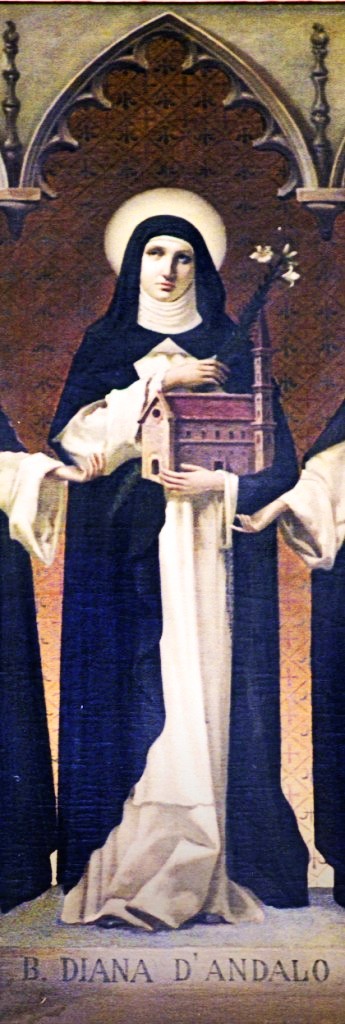
Saint of the Day –10June – Blessed Diana d’Andalo OP (1201-1236) Virgin, Nun of the Order of Preachers Born in 1201 near Bologna, Italy and died on 9 January 1236 in Bologna of natural causes. Beatified on 8 August 1888 by Pope Leo XII. Also known as – Diana degli Andalò.
The Roman Martyrology states: “In Bologna, blessed Diana d’Andalò, Virgin, who, having overcome all the impediments posed by her family, took a vow of cloistered life in the hands of Saint Dominic himself, entering the Monastery of Saint Agnes, which she founded.”
Diana was born into a powerful Roman family in Bologna, Italy in 1201. Nothing is known of her childhood but she was described as “rather spoiled.” She was “of outstanding beauty,” charming, eloquent, well-educated, high spirited, courageous and had good judgement. Dominican scholar Gerald Vann also called her “full of the joy of living, full too of the joy of her own beauty and the power it gave her.”
In 1218, Diana heard the Dominican Scholar and Preacher, Blessed Reginald of Orléans speak in Bologna. His sermons inspired her to give up her worldliness and devote herself to prayer. Following Reginald’s advice, she remained at her family’s home and continued to wear the clothes appropriate to her standing, although she wore an iron chain and hairshirt under them.
In 1219, St Dominic , himself, came to Bologna and to him she vowed her perpetual virginity and she proclaimed her intention to join the Dominican Order as soon as a Convent was established in Bologna.
She persuaded her father to purchase the lands to build a Convent but he refused to allow her to enter it, probably because the family intended that she marry into another prominent family and the Bishop denied permission to build on the site chosen.
In 1222, she ran away to an Augustinian Convent in Ronzano. Her family forcibly removed her and brought her back home;. In the struggle, one of her ribs was broken, an almost fatal injury from which she never fully recovered. St Dominic died shortly afterwards but after she recovered sufficiently in 1223, she again escaped to Ronzano, although her family did not pursue her a second time.
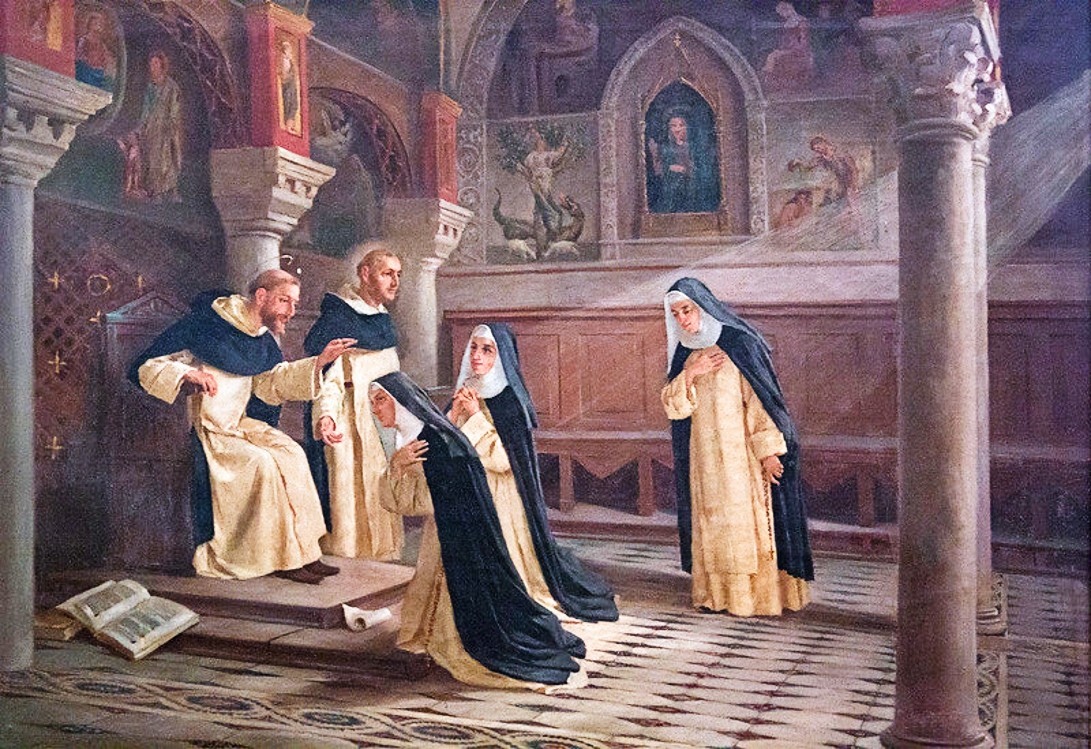
The 3 Sisters make their vows at the new Convent
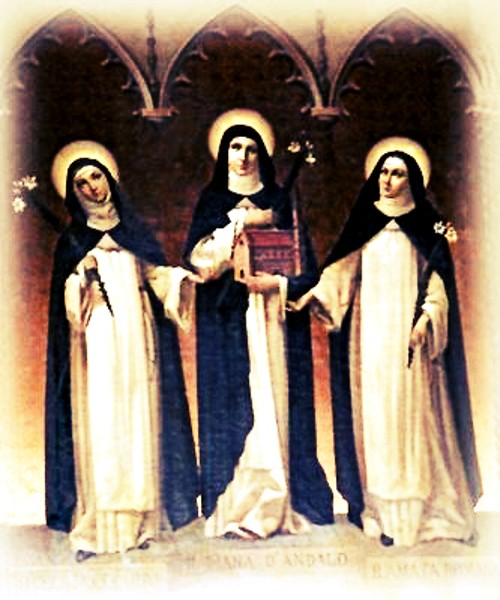
Shortly after St Dominic’s death, Blessed Jordan of Saxony, St Dominic’ Successor, as leader of the Order, met Diana when he came to Bologna. With his assistance, Diana reconciled with her family, her father agreed to allow her to enter religious life and the Bishop agreed to another site for the Convent. In 1223, the Convent was dedicated to St Agnes in Bologna and Diana entered the Dominican Order there. Four other nuns were also brought from the Convent of St Sixtus in Rome, including the Blessed Cecilia Cesarini, who was made Prioress, and Blessed Amata. The three are always associated together.
Blesseds Cecilia, Diana, Amarta
Diana remained at St Agnes until her death in 1236 and was buried there, along with the remains of Cecilia and Amata. Their Relics were moved several times but always together. Diana’s head was placed in a Reliquary near St Dominic’s Tomb. Diana, along with Cecilia and Amata, were Beatified on 8 Augus 1888, by Pope Leo XIII.
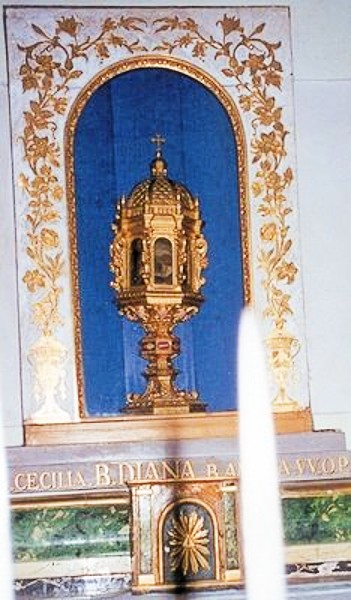
The Reliquary containing Blessed Diana’s skull
Diana is known for a series of letters written to her and to the other Sisters at St Agnes, by Blessed Jordan of Saxony. 37 of the 50 letters that have survived were written directly to her. They are “evidence of the deep friendship shared by Diana and Jordan and demonstrate the possibility of warm affection” between Priests and the cloistered Nuns who pray for them and their work. The letters are also a record of the early history of the Dominican Order. Gerald Vann, Author of the book To Heaven with Diana! a compilation of the correspondence between the two Blesseds, Diana and Jordan, calls the letters “a wonderful treatise on Christian friendship.”
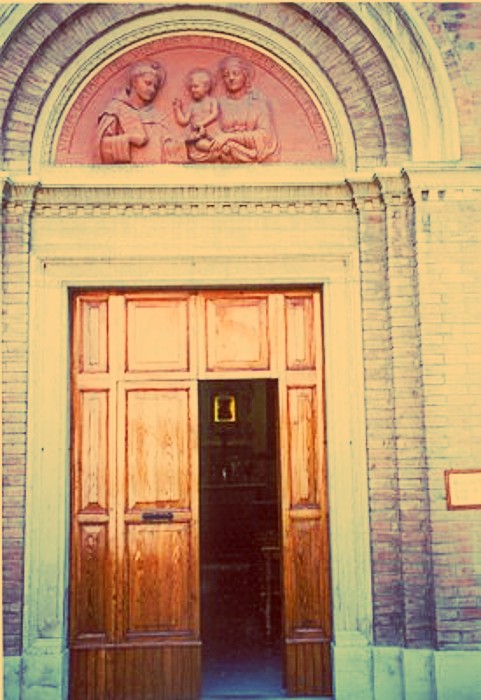
The entrance to St Agnes Convent, built by Bl Diana’s family in Bologna
St Margaret of Scotland (1045-1093) Queen consort of Scotland, Wife and Mother, Apostle of the poor, Reformer. Saint Margaret’s name signifies “pearl” “a fitting name,” says Bishop Turgot, her Confessor and her first Biographer, “for one such as she.” Her soul was like a precious pearl. A life spent amidst the luxury of a Royal Court never dimmed its lustre, or stole it away from Him who had bought it with His Blood. Pope Innocent IV Canonised St Margaret in 1250 in recognition of her personal holiness, fidelity to the Roman Catholic Church, work for Ecclesiastical reform and charity. In 1693 Pope Innocent XII moved her feast day to 10 June but it was changed after Vatican II to 16 November. Wonderful St Margaret: https://anastpaul.com/2018/11/16/saint-of-the-day-16-november-st-margaret-of-scotland-1045-1093-queen/ AND: https://anastpaul.com/2022/06/10/saint-of-the-day-10-june-st-margaret-of-scotland-1045-1093/
Bl Amata of San Sisto St Amantius of Tivoli St Asterius of Petra St Bardo of Mainz
St Caerealis of Tivoli St Censurius of Auxerre (Died 486) Bishop St Crispulus of Rome Blessed Diana d’Andalo OP (1201-1236) Nun of the Order of Preachers Beatified on 8 August 1888 by Pope Leo XII. Bl Elisabeth Hernden Bl Elizabeth Guillen St Evermund of Fontenay St Faustina of Cyzicus Bl Gerlac of Obermarchtal St Getulius of Tivoli
St Landericus of Novalese St Landericus of Paris Bl Mary Magdalene of Carpi St Maurinus of Cologne St Primitivus of Tivoli St Restitutus of Rome Bl Thomas Green St Timothy of Prusa Bl Walter Pierson St Zachary of Nicomedia
Martyrs of North Africa – 17 Saints: A group of seventeen Christians Martyred together in North Africa; the only surviving details are two of their names – Aresius and Rogatius. Both the precise location in North Africa and the date are unknown.
Martyrs of the Aurelian Way – 23 Saints: A group of 23 Martyrs who died together in the persecutions of Aurelian. The only details that survive are three of their names – Basilides, Mandal and Tripos. c.270-275 on the Aurelian Way, Rome, Italy.
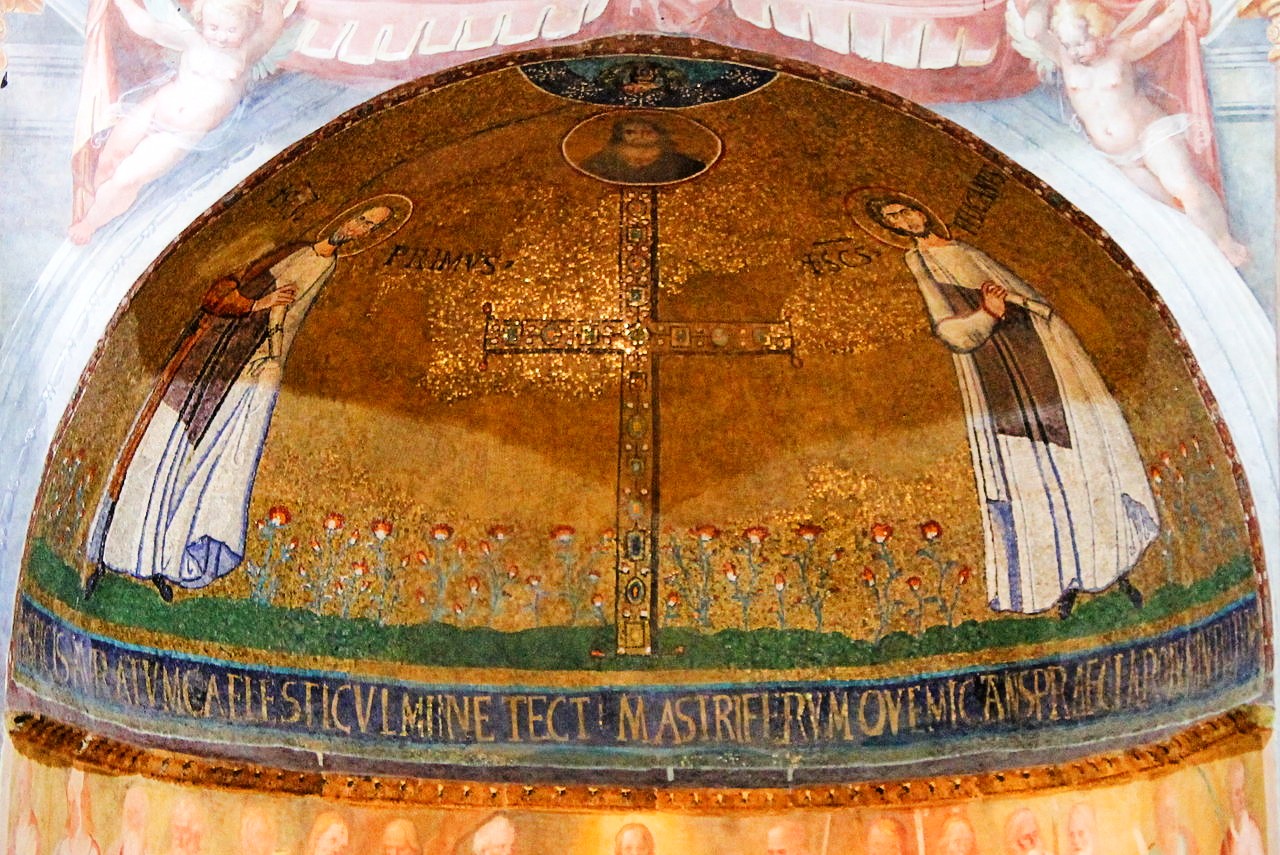
Saints of the Day – 9 June – Saints Primus and Felicianus (Died c304) Brother Lay Martyrs, Confessors. Martyred during the Diocletian persecution. The Martyrologium Hieronymianum gives under 9 June the names of Primus and Felician who were buried in the Church of Saint Stephen on Mount Celio, Rome.
The Roman Martyrology reads today: “At Rome, on Mount Caelius, the birthday of the holy Martyrs, Primus and Felician, under the Emperor Diocletian and Maximian. These glorious Martyrs lived long in the service of the Lord and endured sometimes together, sometimes separately, various cruel torments. They were finally beheaded by Promotus, Governor of Nomentum and thus happily ended their combat.”
Saints Primus and Felicianus (Died c304) Martyrs By Fr Francis Xavier Weninger ,SJ (1805-1888)
“Primus and Felicianus, two holy Martyrs, were brothers and natives of Rome. They were renowned on account of their birth and wealth but still more, on account of the blameless life they led and their determination to remain constant in the True Faith, although they knew the suffering which was in store for them, even from their pagan parents, as from other persecutors of the Christian faith. At that period the Emperors Dioclesian and Maximian reigned and the Christians were most cruelly persecuted. Many of them were cast into prison, while others were put to death by the most barbarous torments.
The two zealous brothers visited the imprisoned Christians frequently and sacrificed all their possessions to comfort them, while they cheered and encouraged those that were led to execution, exhorting them to remain faithful to Christ. The idolatrous priests could not endure this, and incited the people against the two holy brothers, as against two sworn enemies of the gods and accused them before the Emperor, demanding their execution.
Both were brought before the Emperor and called upon to renounce their Faith, They, however, said fearlessly, that they would rather die, than obey the Emperor in this point. They were cast into a dungeon and heavily chained. But during the first night an Angel appeared to them, who loosed their fetters and set them free.
They immediately returned to their former kind deeds not willing to save their lives by flight, as many advised them to do. The Emperor, being informed of this, summoned them into his presence and endeavoured, more than before, by promises and menaces to persuade them to abjure their Faith and, at last, sent them to the temple of Hercules to offer incense to this idol. Both brothers refused to obey and the Emperor gave orders that after having been scourged, they should be taken to the Governor of Momentum, a village about 12 miles from Rome and very hostile to the Christians. Before they were led there an Angel again appeared and healed their wounds. No sooner had the two Christian heroes appeared before Promotus, the cruel Governor of the town, than he ordered them to be beaten with clubs until they should change their minds. This was a punishment ordained by law only for slaves and other low people and the tyrant had it executed upon the two noble brothers, in derision of their Faith.
It was a most painful punishment, as the clubs were scourges twisted together of many cords, with leaden balls fastened at the end. With these, the condemned were whipped on the bare back and neck. The two holy brothers had to endure this torment and were more cruelly whipped than the greatest criminals. They, however, manifested no sign of pain but encouraging each other, they united in praising God, humbly begging His assistance:
“Strengthen us, O God!” cried they; “be with us O God! Our only hope, strengthen us that all may recognise Thee as the only true God.”
Our Saints on the Dome of St Stephen’s their resting place
The torture was prolonged until the executioners, tired with whipping, were no longer able to torment the Saints. The Governor wondered at the constancy, or, as he said, the obstinacy of the two brothers and to cause them sooner to obey him, he separated them and had them confined in different prisons.
A few days later, he had Felicianus alone brought before him, to whom he said: “Is it not a contemptible blindness that you should persist in ending your days in agony,” (Felicianus was 80 years old) “when, by obeying the Emperor, you have the opportunity of closing your life, honoured and favoured by him?” The Saint replied: “Is it not a much more contemptible blindness that you, a man of so much mind and importance, should worship a piece of wood as God and thus cast yourself, after the few short days of life, into never-ending pains and torments, while you have the opportunity, by receiving the True Faith, to make yourself eternally happy with the true God?” These fearless words enraged the Governor beyond endurance and he ordered the Saint to be fastened to a pole by an iron nail and there to be left hanging. The Saint, casting his eyes towards Heaven, said: “I have placed my trust in God; I shall not fear the hand of man.”
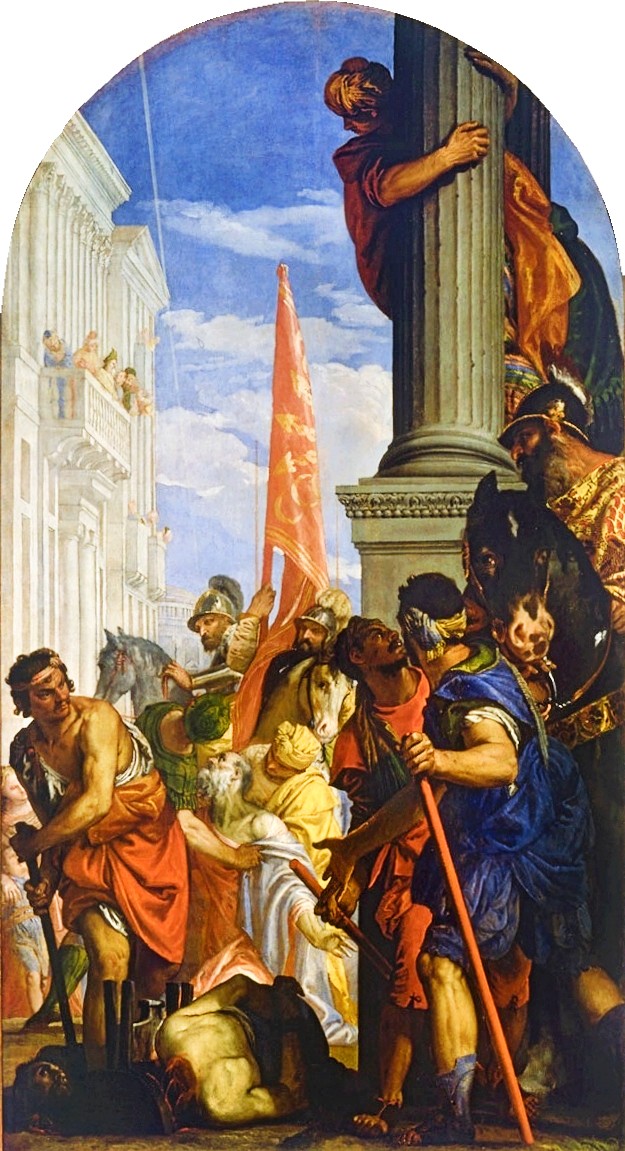
The M artyrdom of Sts Primus and Felicianus by Veronese
Three days the hero had to remain on the pole, after which he was taken back to prison. Meanwhile. Promotus had Primus brought before him and said to him that at last the eyes of his brother. Felicianus had been opened and that he had sacrificed to Jupiter, for which reason, the Emperor had raised him to the highest dignities and. that Primus might expect the same favours, if he followed his brother’s example. But Primus knew the constancy of his brother, as an Angel had confirmed it to him. Hence, he reproved Promotus with earnest words. Enraged at this, the Governor said: “Either you will immediately sacrifice to Jupiter, or I shall deal with you more cruelly than with all the others.” “I sacrifice to the true God only,” replied Primus “and fear not your cruelties.“
Hardly had these words passed his lips, when the tyrant gave orders to scourge him with hard thongs, until his whole body was one great wound. After this they burned him for a long time with torches. Primus’ countenance was bright and cheerful during this inhuman torture. To prevent this, by command of the tyrant, they poured melted lead into his mouth. How terrible must have been this suffering is easily to be conceived. …
Primus was sentenced to this suffering in order that he might no longer praise the true God. He, however, swallowed the lead without the least sign of pain and then turning to Promotus, said: “ Acknowledge at length, unhappy man, the omnipotence of my God and be converted to Him that you may not go to eternal damnation.” Promotus, furious and unwilling to hear more, ordered the brothers to to be cast to the wild beasts. The order was obeyed but neither the fiercely roaring lion, nor the cruel bear, which they let loose upon them, harmed either of them but crouching at their feet, thus evinced their reverence for the holy men.
Many of the heathens, who witnessed this spectacle, were so deeply touched by the miracle that they cried: “Great is the God of the Christians and He alone is the true God!” Promotus, fearing an insurrection, had both the valiant Confessors decapitated without loss of time and thus they, both, after many heroic battles, obtained the Crown of immortality in Heaven.”
St Comus of Scotland St Cumian of Bobbio St Cyrus Bl Diana d’Andalo OP St Diomedes of Tarsus St Felicianus * and St Primus * (Died c304) Brothers, Lay Martyrs Bl Henry the Shoemaker St Julian of Mesopotamia St Luciano Verdejo Acuña St Maximian of Syracuse St Pelagia of Antioch St Primus * St Richard of Andria Bl Robert Salt Bl Sylvester Ventura St Valerius of Milan St Vincent of Agen
Martyrs of Arbil – 5 Saints: Five Nuns who were Martyred together in the persecutions of Tamsabur for refusing to renounce Christianity for sun-worship – Amai, Mariamne, Martha, Mary and Tecla. They were beheaded on 31 May 347 at Arbil, Assyria (in modern Kurdistan, Iraq).
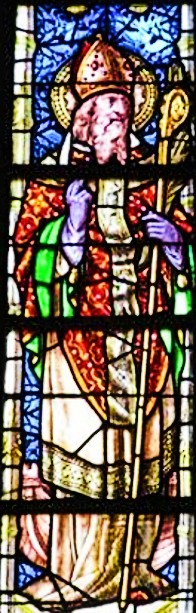
Saint of the Day – 8 June – St Maximinus of Aix (1st Century) The first Bishop of Aix-en-Provence, in southern France. Maximinu reportedly one of Christ’s seventy-two disciples and a companion of Sts Mary Magdalen, Mary Cleopas, Martha and Lazarus. In one account, Maximinus is called “the man who had been blind from birth.” Patronage – the Diocese of Aix-en-Provenc. Also known as – “the man who had been blind from birth, Maximin, Massimino.
The Roman Martyrology reads: “In Aix-en-Provence in France, Saint Maximinus, who is believed to have been a disciple of Our Lord and to whom the beginnings of Christianity in this City are attributed.”
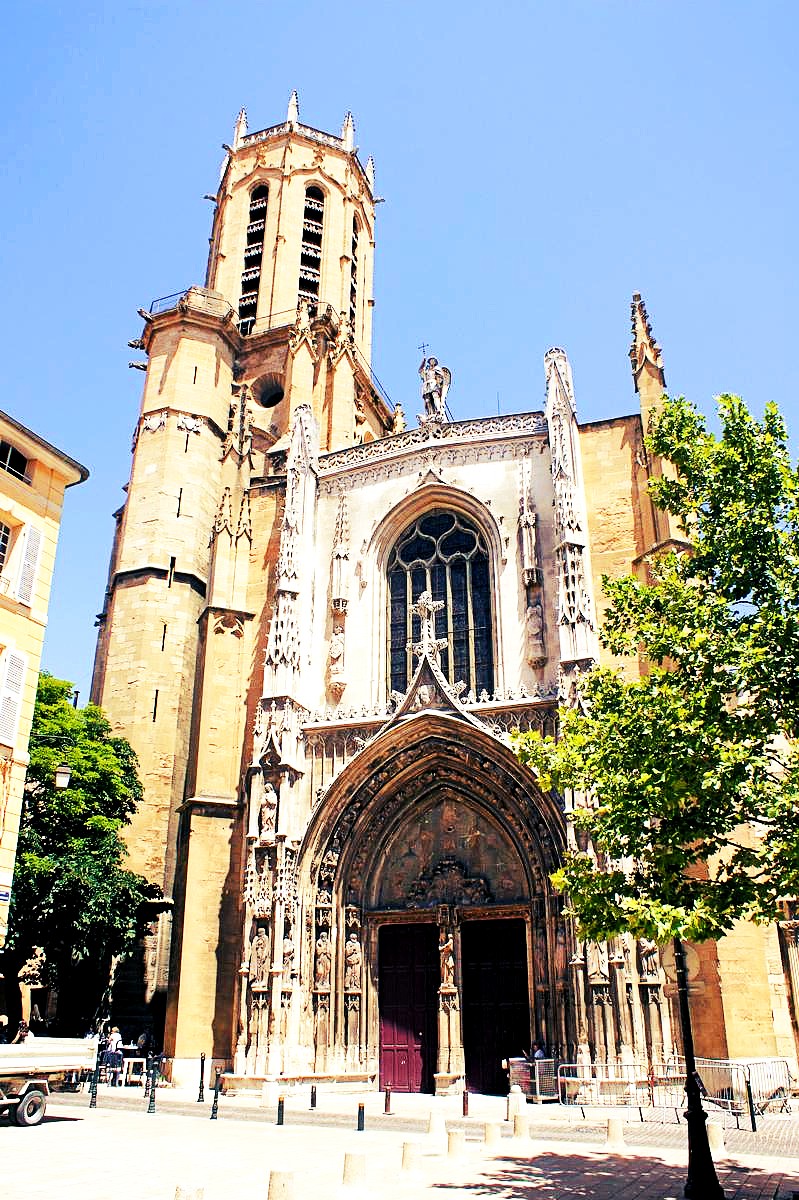
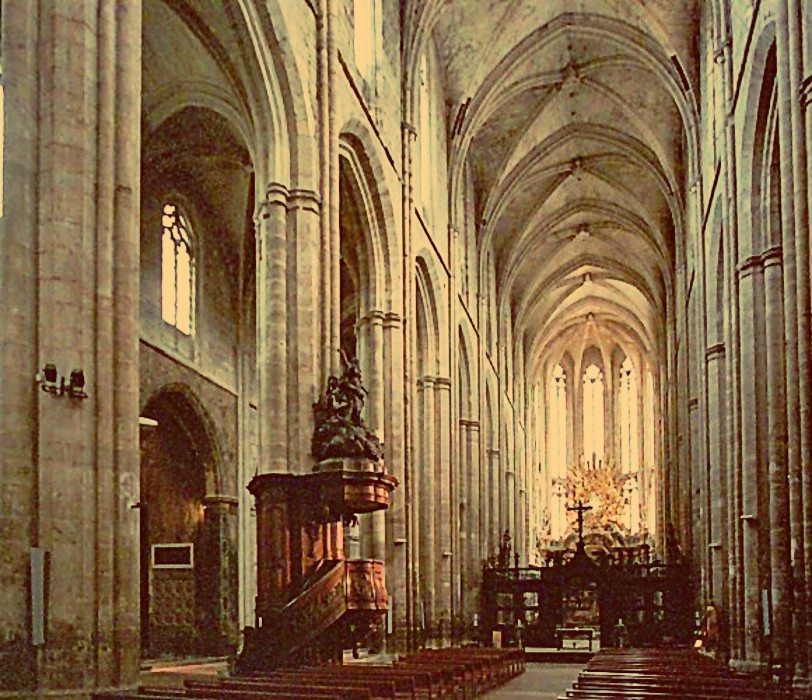
According to the Christian tradition, the first Church on the site of Aix Cathedral, was founded by Saint Maximinus of Aix, who arrived in Provence from Bethany, a village near Jerusalem, with Mary Magdalene on a boat belonging to Lazarus. Maximinus built a modest Chapel on the site of the present Cathedral and dedicated it to the Holy Saviour.
Aix Cathedral
Mary Magdalene later left him to continue his apostolate alone when she withdrew to the solitude of a cave, which later became a renowned pilgrimage site – Sainte-Baume. On the day she knew she was to die she descended into the plain so that Maximinus could give her Holy Communion and arrange her burial. Her sarcophagus is now at the Basilica of St Mary Magdalene at Saint-Maximin-la-Sainte-Baume, along with that of Saints Sidonius, Marcelle, Suzanne and Maximinus himself, after whom the town was subsequently named.
Church of St Maximinus
Maximinus died on 8 June, now the day of his feast. In the 3rd or 4th century his remains were placed in a sarcophagus.
Saint Sidoine succeeded him as the Bishop of Aix.
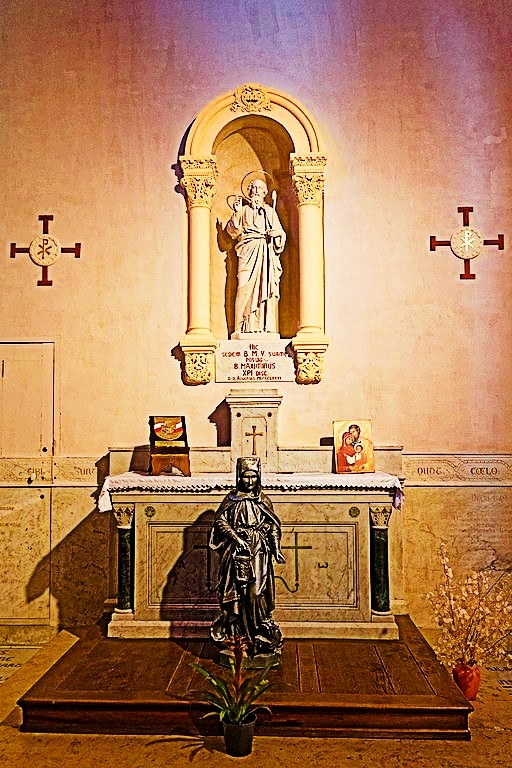
Statue of Maximinus of Aix in the Church of Notre-Dame de la Seds in Aix-en-Provence
Corpus Christi The Feast is liturgically celebrated on the Thursday after Trinity Sunday or, “where the Solemnity of The Most Holy Body and Blood of Christ is not a Holy Day of Obligation, it is assigned to the Sunday after the Most Holy Trinity, as its proper day.” (Sanctissimi Corpus et Sanguis Christi.)
Bl Armand of Zierikzee St Bron of Cassel St Calliope St Clodulf of Metz Bl Engelbert of Schäftlarn St Eustadiola of Moyen-Moutier St Fortunato of Fano
St Gildard of Rouen (c 456-c 545 Bishop of Rouen, Confessor * Twin Brother of St Medard below. The Roman Martyrology states of St Medard and his twin brother, St Gildard, today: “At Soissons, in France, the birthday of St Gildard, Bishop of Rouen, whose life and precios death are illustrated by glorios miracles – at Rouen, St Gildard, Bishop, twin brother of St Medard,who was born with his brother on the same day, Consecrated Bishops at the same time and being taken away from this life, also on the same day, they entered Heaven together!” About St Gildard: https://anastpaul.com/2022/06/08/saint-of-the-day-8-june-st-gildard-of-rouen-c-456-c-545/
Bl Giorgio Porta Bl Giselbert of Cappenberg St Heraclius of Sens Bl John Davy O.Cart. (Died 1537) Deacon Martyr Bl essedJohn Rainuzzi Bl Maddallena of the Conception St Maximinus of Aix (1st Century) The first Bishop of Aix-en-Provence, France, in the 1st Century.
St Medard (c 456-545) Bishop and Convessor * Twin Brother of St Gildard above About this iluustrious Saint: https://anastpaul.com/2020/06/08/saint-of-the-day-8-june-saint-medard-c-456-545-bishop/ The Roman Martyrology states of St Medard and his twin brother, St Gildard, today: “At Soissons, in France, the birthday of St Medard, Bishop of Novon, whose life and precios death are illustrated by glorious miracles – at Rouen, St Gildard, Bishop, twin brother of St Medard,who was born with his brother on the same day, Consecrated Bishops at the same time and being taken away from this life, also on the same day, they entered Heaven together!”
St Melania the Elder St Muirchu St Pacificus of Cerano Bl Peter de Amer Bl Robert of Frassinoro St Sallustian St Syra of Troyes St Victorinus of Camerino
St Gotteschalk St Justus of Condat St Landulf of Yariglia St Lycarion of Egypt
Venerable Matt Talbot (1856 – 1925) (born Matthew Talbot) – Layman, Ascetic, Mystic – known as the “Saint in Overalls” and “the Workers’ Saint” disciple of Eucharistic Adoration and the Blessed Virgin – Patron of Struggling and Recovering Addicts and Alcoholics and many addiction treatment programs, retreats and centres throughout the world bear his name. On 6 November 1931, Edward Joseph Byrne, Archbishop of Dublin, opened a sworn inquiry into the alleged claims of holiness of the former dock worker. He was declared Venerable in 1975. The Matt Talbot Story: https://anastpaul.com/2017/06/07/saint-of-the-day-7-june-venerable-matt-talbot-ofs/
St Meriadoc I of Vannes St Meriadoc II of Vannes St Odo of Massay St Potamiaena of Alexandria the Younger St Quirinus of Cluny
St Robert of Newminster O.Cist. (c 1100–1159) English Priest, Abbot, Apostle of the poor, Miracle-worker. He was one of the Monks who founded Fountains Abbey in North Yorkshire, England, another at Newminster, Northumbria and 3 other Monasteries Robert ruled and directed the Monks at Newminster for 21 years. St Robert’s Life: https://anastpaul.com/2021/06/07/saint-of-the-day-7-june-saint-robert-newminster-o-cist-c-1100-1159/
St Sergius of Cluny St Vulflagius of Abbeville
Martyrs of Africa – 7 Saints: A group of seven Christians who were Martyred together. No details about them have survived except the names – Donata, Evasius, Guirillus, Januaria, Privata, Spisinna, Victurus. The precise location in Africa and date are unknown.
Martyred in Córdoba, Spain: Habentius of Córdoba Jeremiah of Córdoba Peter of Córdoba Sabinian of Córdoba Wallabonsus of Córdoba Wistremundus of Córdoba
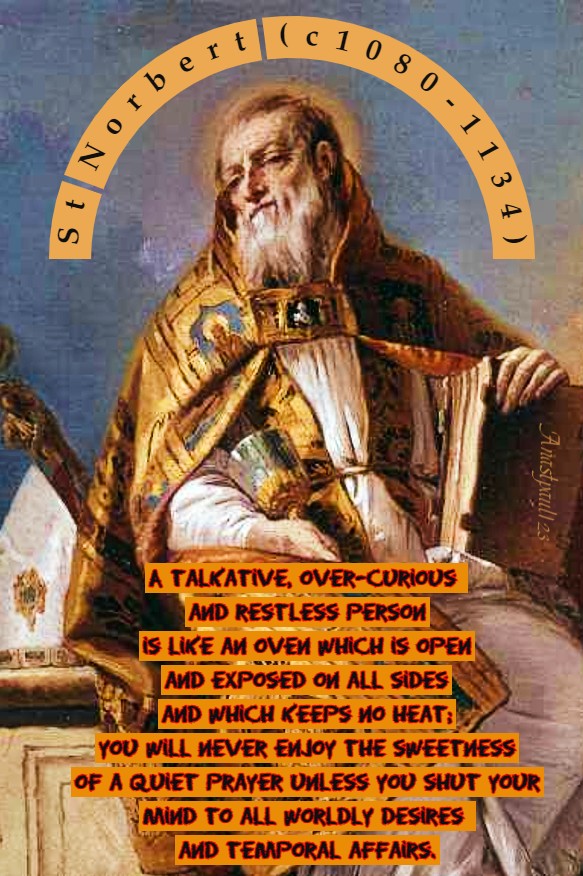
Quote/s of the Day – 6 June – St Norbert (c 1080-1134) Bishop, Confessor, Patron for peace, invoked during childbirth for safe delivery, of infertile married couples.
“A talkative, over-curious and restless person is like an oven which is open and exposed on all sides and which keeps no heat; you will never enjoy the sweetness of a quiet prayer unless you shut your mind to all worldly desires and temporal affairs.”


























 AnaStpaul
You must be logged in to post a comment.