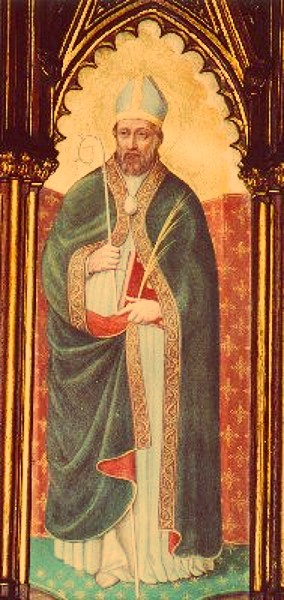
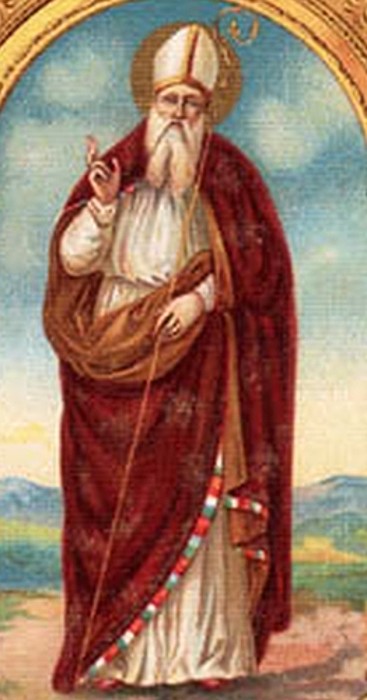
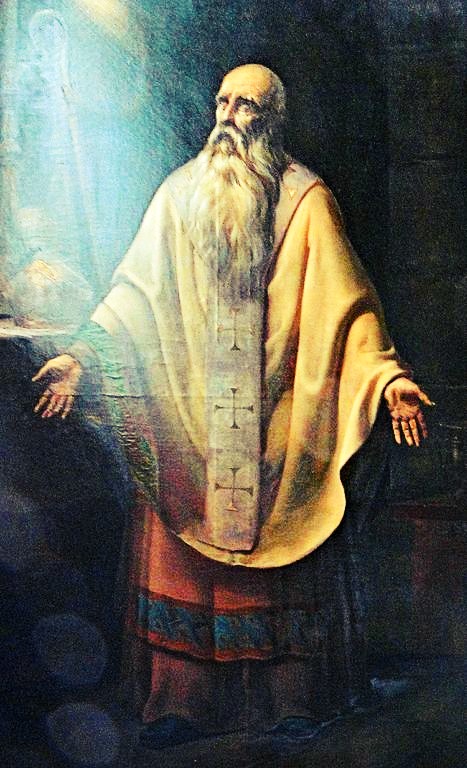
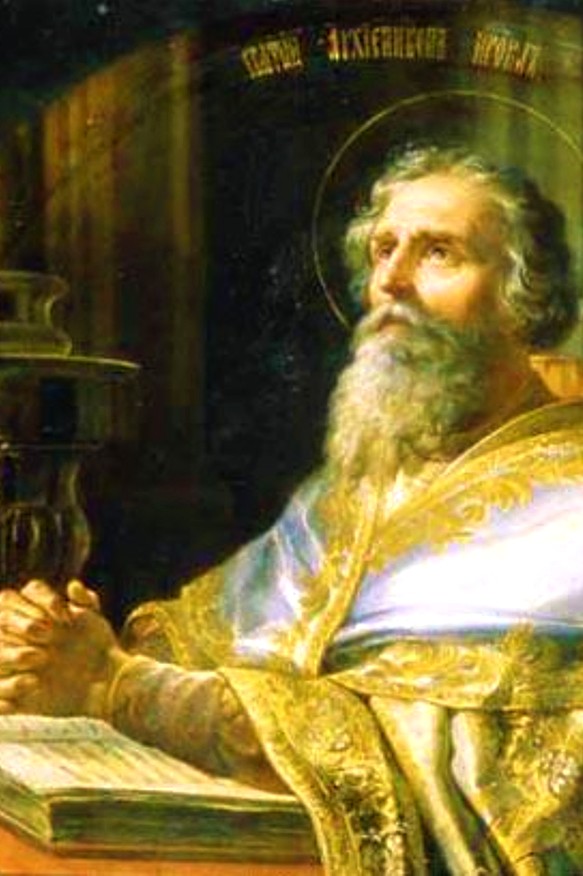
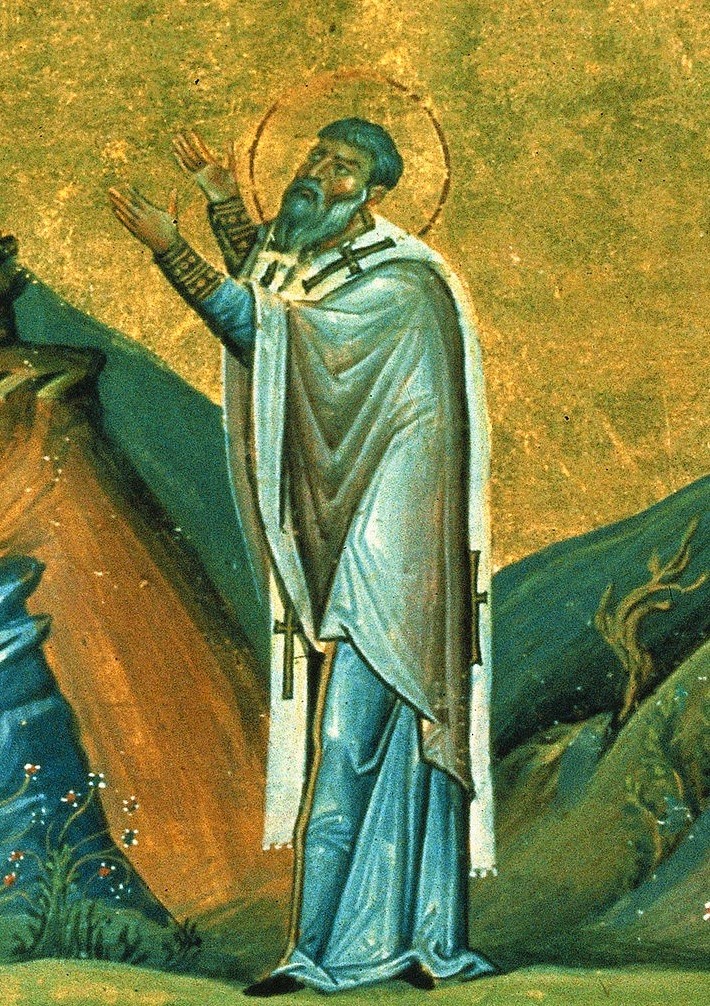
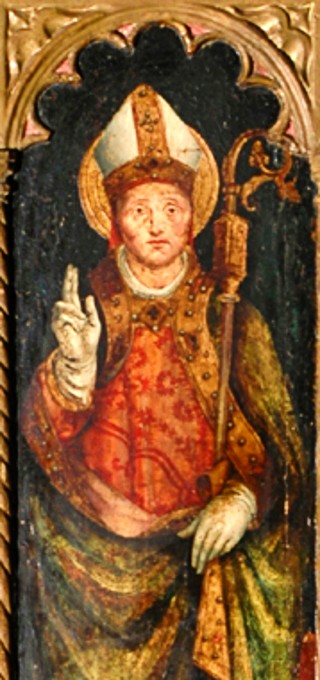
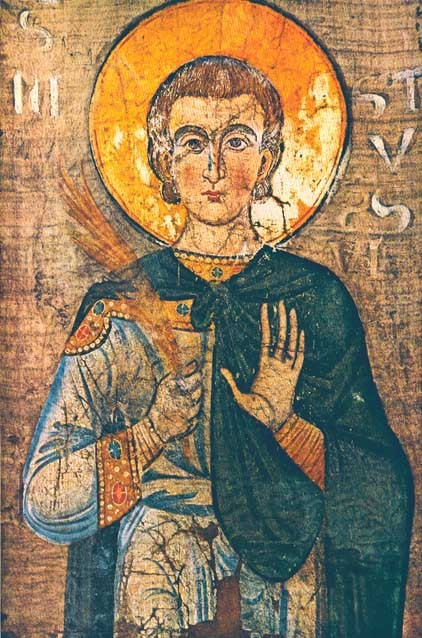
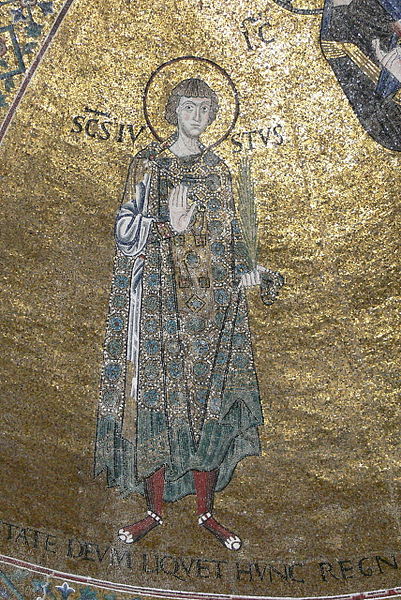
Saint of the Day – 31 October – St Stachys (1st Century) the 1st Bishop of Constantinople.
The Roman Martyrology reads today: “At Constantinople, St Stachys, Bishop, who was Consecrated as the first Bishop of that City by the blessed Apostle, Andrew.”
Stachys is a Greek name, meaning “ear of corn, or fruit.” He is mentioned in Romans 16:9: “Greet Urban and my dear Stachys.”
We know nothing else about him except the accounts handed down to us by the Greeks – the Apostle St Andrew Consecrated him as the first Bishop of Byzantium or Argyropolis. Stachys founded a Church at Argyropouli, and many people gathered there to hear him preach.
It is not clear if Stachys was the same person whom Paul calls “dear” in the Epistle to the Romans but he is always associated in traditions with five other disciples, (Ampliatus, Urban of Macedonia, Apelles of Heraklion, Aristobulus of Britannia and Narcissus of Athens) that are the very same names mentioned together with him by Paul in Romans 16:8–11.
Vigil of All Saints Day or All Hallow’s Eve: Eve of the Feast of All Hallows, that is, All Saints Day. Halloween is a day on which many quaint customs are revived. It is popular in the United States and Scotland and in the US has become the second largest secular holiday of the year.
St Lucilla of Rome Bl Maria de Requesens St Narcissus
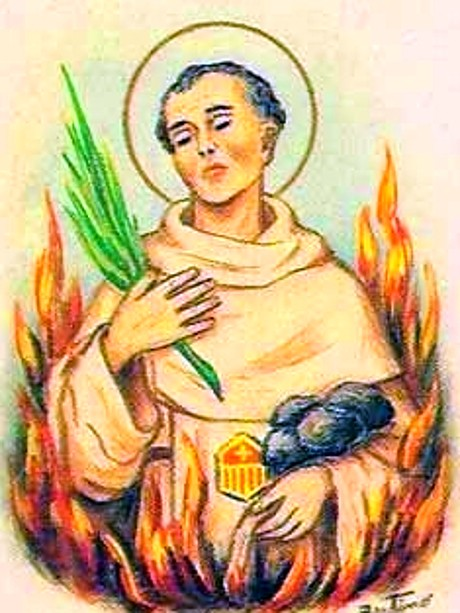
St Quentin (Died c287 Martyr, Roman Senator, Missionary. Died in c287 after horrible torments he was finally beheaded. Patronages – against coughs, whooping courgh, colds, against dropsy, against sneezing, of bombardiers, of Chaplains, locksmiths, porters, surgeons, tailors, various Italian Towns. The Roman Martyrology reads today: “At Saint Quentin, in France, St Quentinus, a Roman citizen and Senator, who endured Martyrdom under the Emperor Maximian. By the revelation of an Angel, his body was found incorrupt after the lapse of 55 years.” Wonderful St Quentin: https://anastpaul.com/2024/10/31/saint-of-the-day-31-october-saint-quentin-died-c287-martyr/
St Wolfgang (c934 –994) “The Great Almoner,” Bishop of Regensburg , Monk, Missionary, Ascetic, Apostle of Charity. He is regarded as one of the three great German Saints of the 10th Century, the other two being Saint Ulrich and Saint Conrad of Constance. He was Canonised in 1052 by Pope Leo IX. St Wolfgang’s life: https://anastpaul.com/2019/10/31/saint-of-the-day-31-october-saint-wolfgang-of-regensburg-c-934-994/
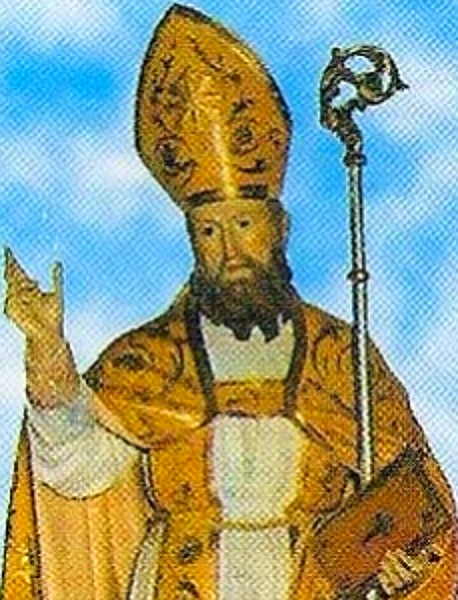
Saint of the Day – 30 October – Saint Serapion (Died 211) Bishop of Antioch, Scholar and a learned Theologian. He served as the Bishop of Antioch from 191 until his death in 211. He is known through his theological writings, although sadly all but a few fragments of his works have perished.
The Roman Martyrology reads today: “At Antioch, St Serapion, a Bishop, very celebrated for his learning.”
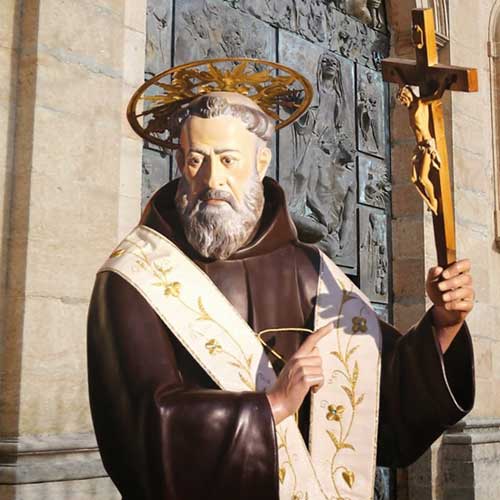
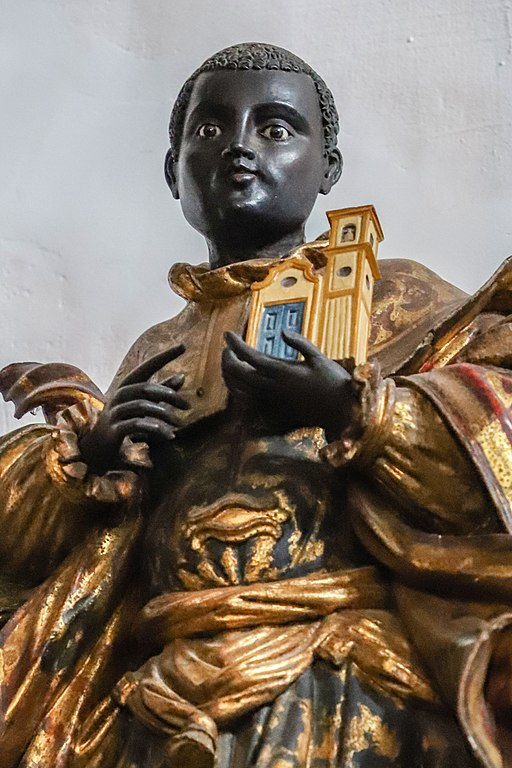
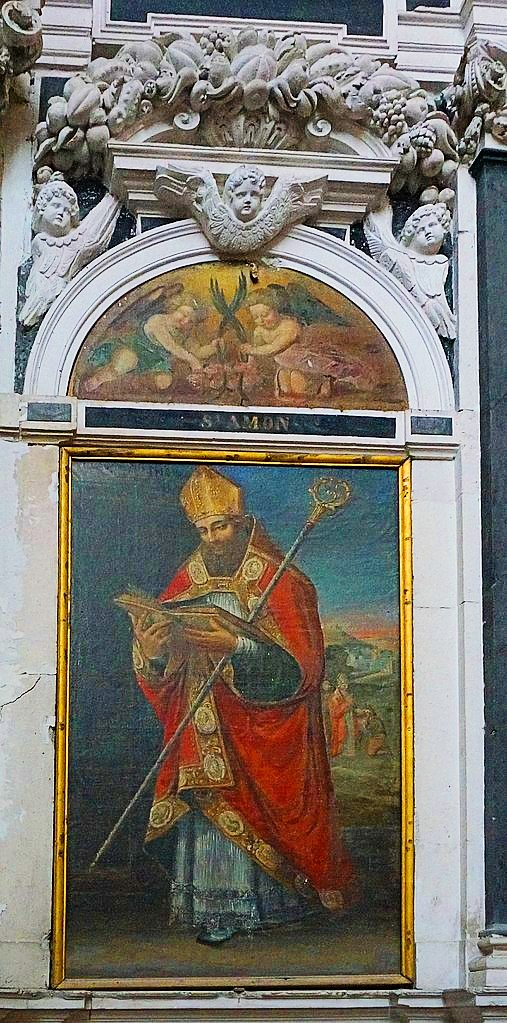
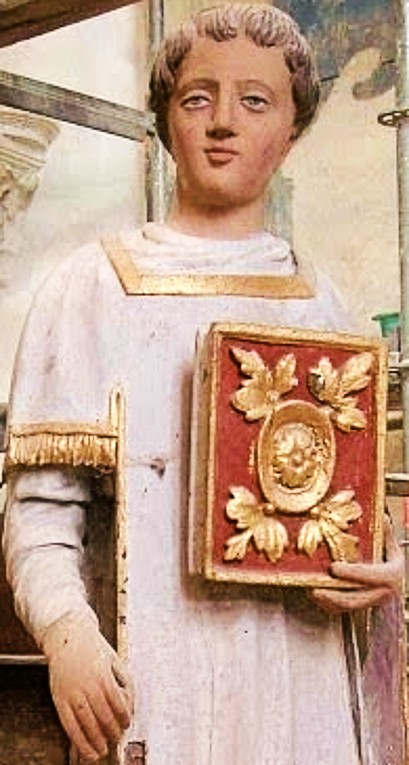
St Serapion of Antioch in the Església de Sant Antoni Abat (València)
Serapion was considered one of the major Theologians of his day. St Eusebius of Caesarea (c260-339) refers to three of his works in his history but agrees that others probably existed – firstly, is a private letter addressed to Caricus and Pontius against Montanism, from which Eusebius quotes an extract (Historia ecclesiastica V 19), as well as proofs, showing that it was circulated amongst Bishops in Asia and Thrace; next is a work addressed to a certain Domninus, who in time of persecution abandoned Christianity for the error of ‘Jewish will-worship’ (Hist. Eccles, VI 12).
Lastly, St Eusebius quotes (vi 12:2) from a pamphlet Serapion wrote concerning the heretical Docetic teaching of Peter, in which Serapion presents an argument to the Christian community of Rhossus, in Syria, against this heresy and condemns it. He recalls the permission to read this apocryphal work given in ignorance of its true character and expresses his intention to visit the Church to strengthen them in the True Faith.
Eusebius also alludes to a number of personal letters Serapion wrote to Pontius, Caricus and others, about this heretical Docetic teaching.
Serapion also acted with the support of St Pantaenus against the influence of Gnosticism in Osroene, by consecrating Mari of Edessa as the Bishop of Edessa, where Mari addressed the increasingly Gnostic tendencies, the Syrian Bardesanes, was introducing to its Christian community. He Ordained St Pantaenus as a Priest or Bishop in Edessa.
Serapion was succeeded as the Bishop of Antioch by St Asclepiades (Eusebius Historia Ecclesiastica VI 11:4).
St Germanus (Died c541) Bishop of Capua, Italy, Confessor, Papal Legate. St Germanus was a close friend of St Benedict of Nursia. The Roman Martyrology states: St Germanus, Bishop and Confessor, a man of great sanctity, whose soul, at the hour of death, was seen by St Benedict taken to heaven by angels. His Life: https://anastpaul.com/2020/10/30/saint-of-the-day-30-october-saint-germanus-of-capua-died-c-541/
St Herbert of Tours
Blessed John Slade (Died 1583) Layman Martyr. Beatified on 15 December 1929 by Pope Pius XI. The Roman Martyrology: “At Winchester in England, blessed John Slade, Martyr, who was hanged on the gallows and cruelly disemboweled for having refused the power of Queen Elizabeth I in spiritual matters.” His Life and Death: https://anastpaul.com/2023/10/30/saint-of-the-day-30-october-blessed-john-slade-died-1583-layman-martyr/
St Maximus of Cumae St Nanterius of Saint-Mihiel Bl Raymond of Cardona St Saturninus of Cagliari St Serapion (Died 211) Bishop of Antioch St Talarica of Scotland Bl Terrence Albert O’Brien St Theonestus of Philippi (Died 425) Bishop, Martyr St Zenobia of Aegea St Zenobius of Aegea
Martyrs in Africa: A group of 100 to 200 Christians murdered in the early persecutions and about whom we know nothing except that they died for their faith.
Saint of the Day – 29 October – Saint Dodone (8th Century) Abbot of the Monastery at Wallers-en-Fagne, France, Hermit. Born in Vaux, France and died in around mid Century in his Hermitage at Moustiers-en-Fagne, northern France. Also known as Dod, Doddone, Dodonis, Dodonus.
St Folcuin, the Abbot of Lobbes (Died 990), devotes a chapter to St Dodon, a disciple of Saint Ursmar (Died 713), in his “The Acts of the Abbots of Lobbes – Gesta Abbatum Lobiensium.”
Shortly after 980, a Monk of Lobbes took up these records and compiled a Vita Dodone, in which only the account of the two elevations of the Saint’s Relics and their translations can be confirmed.
Finally, we note that the report in the Ecclesiastical records of the region, Dodone was sent to Wallers by St Landelin, (2 centuries earlier) and not by St Ursmar.
Originally from the Village of Vaux, he was entrusted by his parents to St Ursmar, the Abbot of Lobbes, who Baptised and educated him.
Distinguished by his aptitude and piety, Dodone was sent as the Superior to the Abbey of Wallers, a dependency of Lobbes. But, preferring the Hermit life, Dodon soon withdrew a little way north of his Abbey, to the site of the current Moustiers-en-Fagne and died there around the middle of the 8th Century.
His remains were exhumed in 888 under the Bishop of Cambrai, Dodilo (died after 901) and were interred in the Church of the Priory of Wallers. Around 930, they were then disinterred again and raised on the Altar of the Priory Church. They rest today in the small Church of Moustiers-en-Fagne, see below.
St Abraham of Rostov St Anne of Mount Olympus St Colman of Kilmacduagh St Dodone (8th Century) Abbot of the Monastery at Wallers-en-Fagne St Donatus – In the year 600, Saint Gregory the Great (540-604), had the Relics of St Donatus enshrined onthe Island of Corfu. No further information has survived. St Ermelinda of Meldaert St Eusebia Virgin Martyr of Bergamo St Felician of Carthage St Honoratus of Vercelli St John Bishop and Confessor of Autun St Colman of Kilmacduagh
St Kennera St Mary of Edessa St Narcissus of Gerona
St Sigolinus of Stavelot St Stephen of Cajazzo St Terence of Metz
St Theodore (Died c575) Abbotof Vienne, Priest, Hermit, Miracle-worker, disciple of St Caesarius of Arles (470-543). He passed his whole life in the doing of good works and to him the Diocese of Vienne owes the erection of several Churches and Monasteries. The Roman Martyrology reads today: “At Vienne, the departure from this world of the blessed St Theodore, Abbot.” His Life of Holy Activity: https://anastpaul.com/2024/10/29/saint-of-the-day-29-october-saint-theodore-of-vienne-died-c575-abbot-2/
St Zenobius of Sidon
Martyrs of Douai – 160 Saints and Beati: 160 Priests, Laymen and Religious who studied at the English College in Douai, France, then returned to minister to covert Catholics in England during a period of government persecution of the Church and were murdered for their work.
Martyrs of Lucania – 4 Saints: A group of Christians executed together for their faith. Only their names have survived – Felician, Hyacinth, Lucius and Quintus. Their Martyrdom occurred in Lucania, southern Italy.
Saint of the Day – 28 October – Saint Cyrilla (3rd Century) Virgin Martyr of Rome. Cyrilla was the daughter of Emperor Decius and St Tryphonia.
The Roman Martyrology reads today: “At Rome, in the reign of Claudius, St Cyrilla, Virgin daughter of St Tryphonia, who was pierced through the throat for the faith of Christ.”
Although we have little information of St Cyrilla, tradition recalls her works of charity and almsgiving.
She, together with her mother converted 46 soldiers and their families. When she refused to sacrifice to the pagan gods, she was Martyred by the sword.
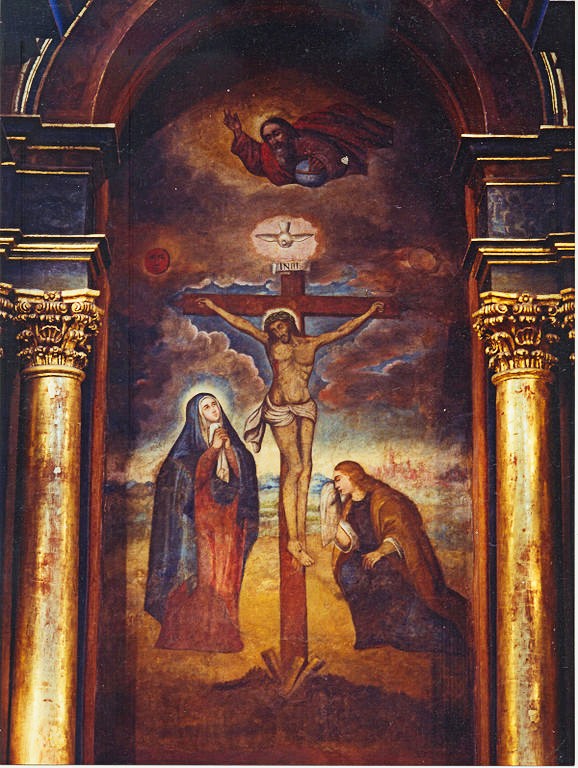
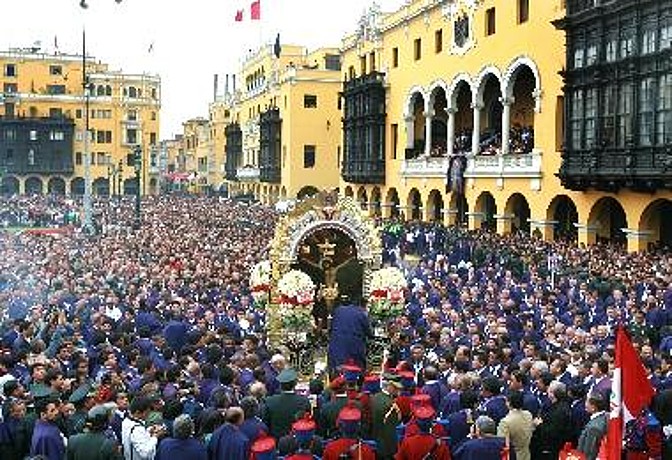
Lord of Miracles/Señor de los Milagros de Nazarenas – A mid-17th-century painting of the Crucifixion which is venerated in Lima, Peru and its celebration involves one of the largest processions in the world. It was painted by an unnamed African taken to Peru as a slave from what is now Angola. Above the Cross is the Holy Ghost and God the Father. Below and to the right of Jesus, is His mother, the Virgin Mary with her heart pierced by a Sword of Sorrow. Kneeling and weeping at the foot of the Cross is St Mary Magdalene. The name originated on 13 November 1655 when everything around it was destroyed in an earthquake which left the painting standing and undamaged. Christ is shown enduring the pain of Crucifixion. Every year in October, hundreds of thousands of devotees participate in a procession honouring the imag,e through the streets of Lima. Boulevards are decorated in purple from 18 or 19 and the final Feast 28 October, to celebrate the Lord of Miracles.
St Abdias of Babylon St Abraham of Ephesus St Alberic of Stavelot St Anastasia the Elder St Anglinus of Stavelot St Cyril of Rome St Cyrilla (3rd Century) Virgin Martyr of Rome St Diomedes the Younger St Dorbhene of Iona
St Gaudiosus (Died c453) Bishopof Abitinae in North Africa, Monk and founder of a Monastery where he introduced the Rule of St Augustine. The Roman Martyrology reads: “At Naples, St Gaudiosus, an African Bishop, who came to Campania because of the persecution of the Vandals and closed his holy career peacefully in a Monastery near that City.” His Holy Life: https://anastpaul.com/2023/10/28/saint-of-the-day-28-october-saint-gaudiosus-of-naples-died-c453-bishop/
St Genesius of Thiers Bl Germain of Talloires St Godwin of Stavelot
St Maria Ascuncion St Remigius of Lyons St Rodrigo Aguilar Aleman St Salvius of Amiens
Martyrs of Avila – 3 Saints: Two sisters and a brother who, during a period of persecution, fled Talavera de la Reina, Spain, were caught and executed. Martyrs: Christeta, Sabina and Vincent. 303 in Avila, Spain.
Saint of the Day – 27 October – St Desiderius (Died c623) Bishop of Auxerre, France. Desiderius was the 19th Bishop of Auxerre. Born in Aquitaine, in modern France and died in Auxerre.
In the list of shepherds of the Diocese, he appears after Saint Aunarius and before Saint Palladius. Ancient texts say he was born in Aquitaine to Nectaria, a noblewoman related to Queen Brunechilde.
Desiderius is mentioned in the text “Gesta pontificum Autissiodorensium – The Acts of the Pointiffs of Autissio” in the Chronicle of Fredegar.
He was Consecrated as the Bishop on 3 October 605 and governed the Diocese of Auxerre for eighteen years with wisdom and pastoral care. Saint Desiderius was present at the Council of Paris in 614.
It is said that he made numerous donations to the Churches of Auxerre, Toulouse, Cahors and Burges. Many Monasteries also benefited from his donations, including that of Saint Julien. He is also said to have been responsible for the liberation of many serfs.
He died on 27 October c623 and was buried in the Basilica of Saint Germanus, in the Tomb of his predecessor, Saint Aunarius.
His Relics were translated twice – the first, in 859, to a new crypt in the same Church and a second in 939, to the Church of Notre Dame de Moutiers in Yonne.
In the proper of the Diocese of Sens, he is commemorated on 27 October, the day of his death.
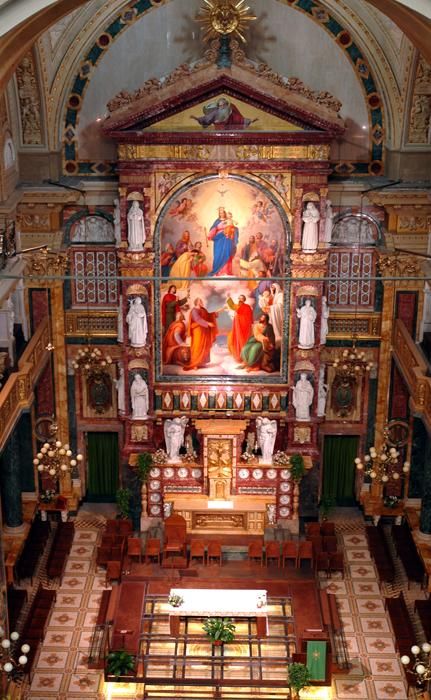
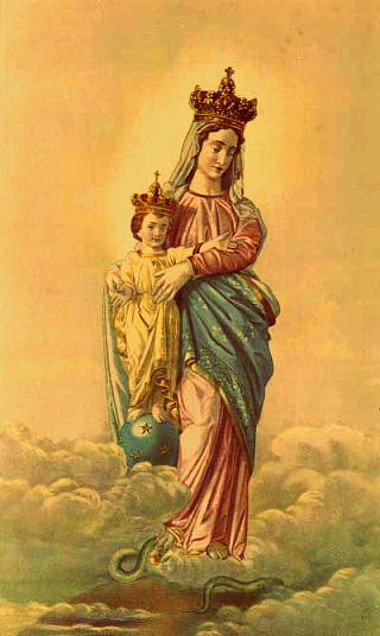
Dedication of the Basilica of Auxilium Christianorum / Our Lady Help of Christians, Turin, Italy, built by St John Bosco (1868) – 27 October: HERE: https://anastpaul.com/2021/10/27/88503/
St Capitolina St Colman of Senboth-Fola St Colman of Templeshambo St Desiderius (Died c623) Bishop of Auxerre
St Elesbaan (Died c555) King of Ethopia, Confessor, Penitent Hermit and Monk. The Roman Martyrology states today: “St Elesbaan, King, who after having defeated the enemies of Christ and sent his Royal Diadem to Jerusalem, in the time of Emperor Justin, led a monastical life, as he had vowed and went to his reward.” Holy Elesbaan: https://anastpaul.com/2021/10/27/saint-of-the-day-27-october-saint-elesbaan-of-ethiopia-died-c-555/
DISCLAIMER: Please note: I cannot control the content of the Advertisements on this Site, or of pop-ups which may appear, The revenue from the Advertisements, however, does provide a little assistance in the support of the Site. I do apologise for any inappropriate content.
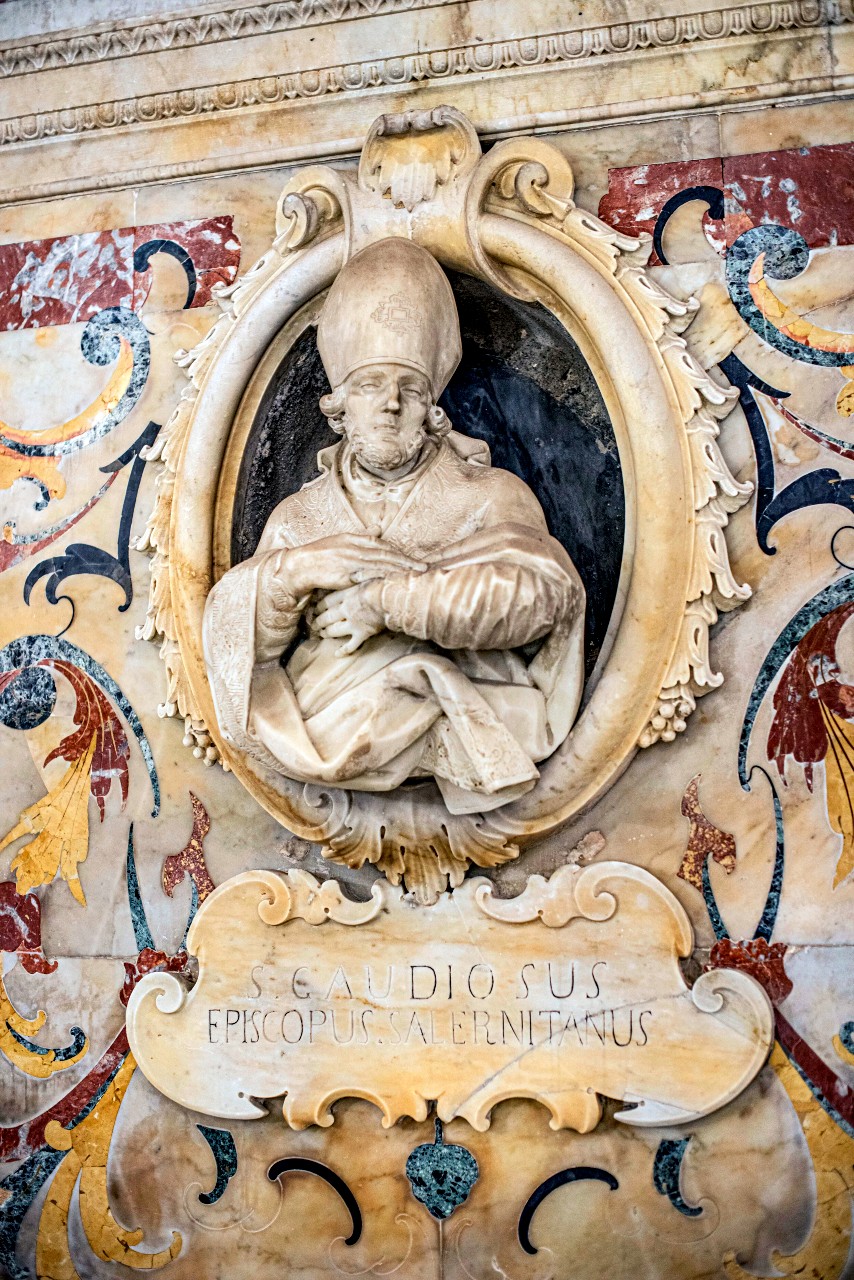
Saint of the Day – 26 October – Saint Gaudiosus (7th Century) Bishop of Salerno, Campania, Italy. Known as a worthy and zealous Bishop and a courageous defender of his flock from the Lombards and the Barbarians. Also known as – Gaudioso, Gaudino.
The Roman Martyrology reads today: “At Salermo, St Gaudiosus, Bishop.”
Gaudiosus was the son or grandson of Theophylact, the Duke of Naples (666-670). He was enrolled in the Clergy of the Neapolitan Basilica of Santa Maria Maggiore (after Bishop St Pomponius).
Tradition presents him, thereafter, as a diligent Bishop of the City of Salerno in Campania. This City he defended from barbarian invasions, especially during the war of the Lombards of Benevento.
Having died at the age of fifty, before 649, a few years later, a Master of the Soldiers of Naples, his blood relative, received his body from a certain Grimoald, Duke of Benevento and Lord of Salerno (I or II of that name), who placed it in a Church in Naples, dedicated to him.
A 17th Century Neapolitan historian reports that in 1606, Cardinal Archbishop Ottavio Acquaviva opened the Tomb beneath the High Altar of the Church of St Gaudiosus to extract a Relic to enclose in the silver bust. . In honor of the saint and in memory of the Relics, Hymns were composed for the Proper Office of our Saint for his Feast Day on 26 October.
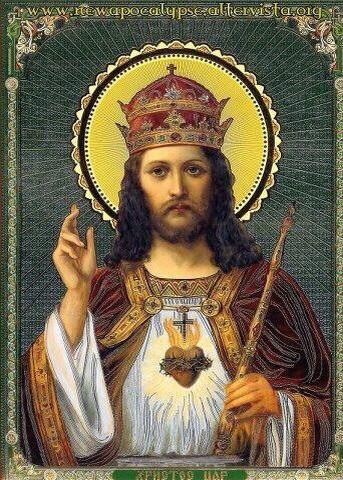
CHRIST the KING “Therefore, by our Apostolic authority, we appoint the Feast of Our Lord Jesus Christ the King, annually, on the last Lord’s day in the Month of October that is to say, on the Sunday which immediately precedes the Feast of All Saints, to be observed everywhere in the world. Likewise we enjoin, that the dedication of the human race to the Most Sacred Heart of Jesus, be annually renewed upon that selfsame day.” From the Encyclical Letter of Pope Pius XI Quas Primas; 11 December 1925 https://anastpaul.com/2018/11/25/25-november-the-solemnity-of-our-lord-jesus-christ-king-of-the-universe/ AND: https://anastpaul.com/2022/10/30/30-october-christ-the-king/
St Adalgott of Einsiedeln St Alanus of Quimper St Albinus of Buraburg
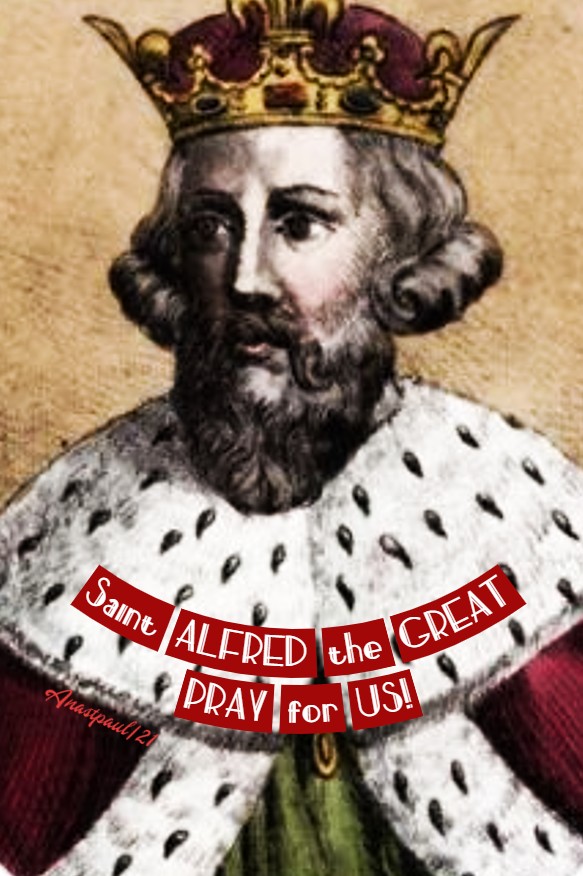
St Alfred the Great (849-899) King of Wessex, Confessor, Scholar, Writer and Translator, negotiator. He administered justice with insight and fairness, protected the poor, and encouraged art and the crafts. He tried in all that he did, to rule as a model Christian King. For all this, he alone among the rulers of England is called “the Great.” This Great Saint’s Life: https://anastpaul.com/2021/10/26/saint-of-the-day-26-october-saint-alfred-the-great-849-899/
St Alorus of Quimper St Amandus of Strasburg St Amandus of Worms St Aneurin St Aptonius of Angouleme St Arnold of Queralt St Bean of Mortlach St Bernard de Figuerols
St Gaudiosus (7th Century) Bishop of Salerno St Gibitrudis St Gwinoc St Humbert St Lucian Martyr of Nicomedia and Companions St Marcian St Quadragesimus of Policastro St Quodvultdeus St Rogatian of Carthage
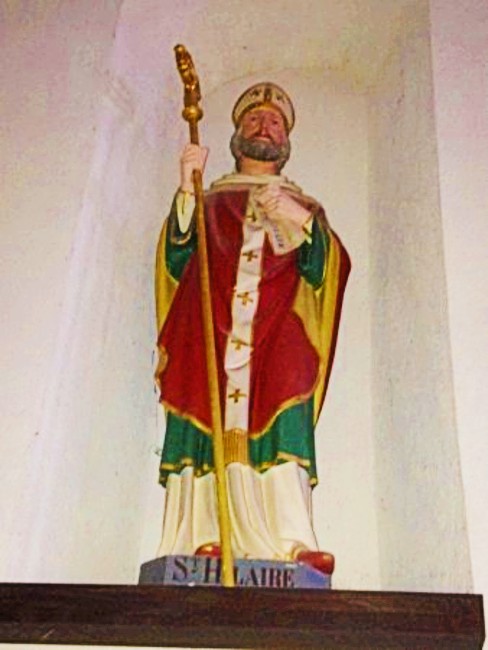
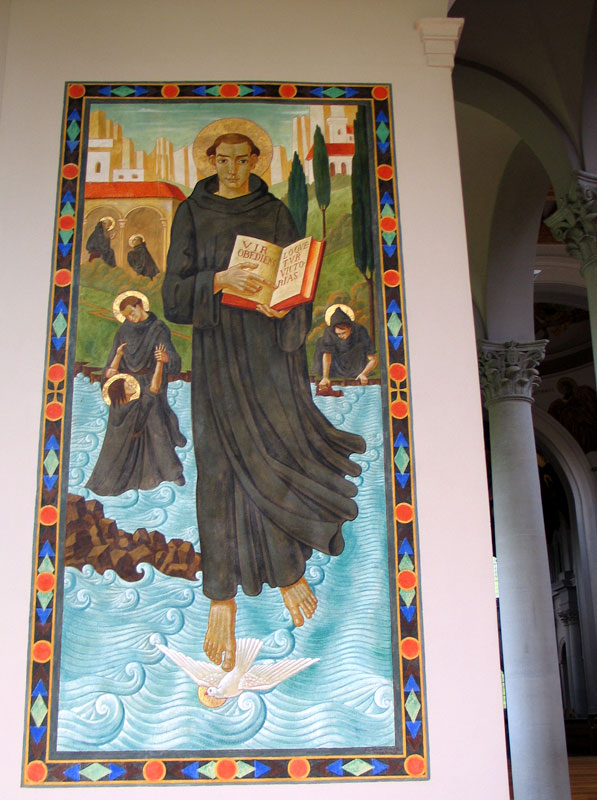
Saint of the Day – 25 October – Saint Hilary (Died c540) Bishop of Mende, France, previously having been a Monk at the renowned Lérins Abbey. and then the Abbot of a Monastery he had founded, Miracle-worker and a zealois evangeliser of the psgans in hid See and region. Born in Mende, southern France and died there in c540. Also known as – Hilary of Javols, Chély… Hilaire… Ilaro… Ilario…
The Roman Martyrology reads today: “At Javols, St Hilary, Bishop.”
Hilary was the Bishop of the ancient See of Javols, in the Province of Gévaudan, in the first half of the 6th Century. In 528 he welcomed Saint Lubin of Chartres, then in exile. In 535 he took part in a Council held in Auvergne.
He built a Monastery, in which Saint Enzyme took refuge, and which, from then on, changed its patron.
Among the miracles or other exceptional events, some have come down to us. Thus, one evening as he was returning from the crypt of Saint-Privat, he was carried into the air by a gust of wind. His companions found him praying in a clearing three days later. The place was inaccessible and it was necessary to clear a path with blows of an axe.
He was also able to make water flow from a well which had been dry for seven years.
Hilar certainly died around 540, since in 541, the name of his successor is already found at the 4th Council of Orleans.
In 636 his body was translated to Saint Denis near Paris and then, in 777, under Abbot Fulrad, to Salones in the Diocese of Metz. Around 815 the Relics returned to Saint Denis where they were still located in 1625. They were dispersed during the Revolution in 1793. Some, however, had returned to Mende in 1608, where the See of Javols had been transferred.
Remembered in the Roman Martyrology today, Hilary is celebrated in the Proper of the Diocese of Mende.
Hilary gave his name and Paronage to three Villages in Lozère and Aveyron: Saint Chély d’Apchèr, Saint Chély du Tarn (canton of Ste-Enimie) and Saint Chély d’Aubrac.
St Fronto (1st-2nd Centuries) Bishop of Périgueux, consecrated by St Peter Apostle, Confessor, Missionary, Miracle-worker. Born at an unknown date in Lycaonia, Asia Minor and died in Périgueux, France of natural causes. The Roman Martyrology reads today: “At Périgueux in France, St Fronto, who, being made Bishop by the blessed Apostle Peter, with a Priest named George, converted to Christ a large number of the people of that place and renowned for miracles, rested in peace.” St Fronto’s Life of Service: https://anastpaul.com/2023/10/25/saint-of-the-day-25-october-saint-fronto-of-perigueux-1st-2nd-centuries-bishop-confessor/
St Fructus of Segovia
St Gaudentius (Died 410) Bishop of Brescia, renowned Preacher, Theologian, Diplomatic Mediator, The Roman Martyrology states today: “In Brescia, Saint Gaudentius, Bishop, who, Ordained by Saint Ambrose, shone among the prelates of his time for doctrine and virtue, instructed his people with words and writings and founded a Basilica which he called the ‘Council of Saints.‘” A Holy and Zealous Shepherd: https://anastpaul.com/2021/10/25/saint-of-the-day-25-october-st-gaudentius-of-brescia-died-410/
St George of Périgueux (1st-2nd Centuries) Priest, assistant to St Fronto St Goeznoveus of Leon St Guesnoveus Bl Henry of Segusio St Hilary (Died c540) Bishop of Mende, France St Hildemarca of Fecamp St Januarius of Sassari St Lucius of Rome St Lupus of Bayeux St Mark of Rome
St Miniato of Florence St Peter of Rome St Protus of Sassari St Recaredo Centelles Abad St Tabitha
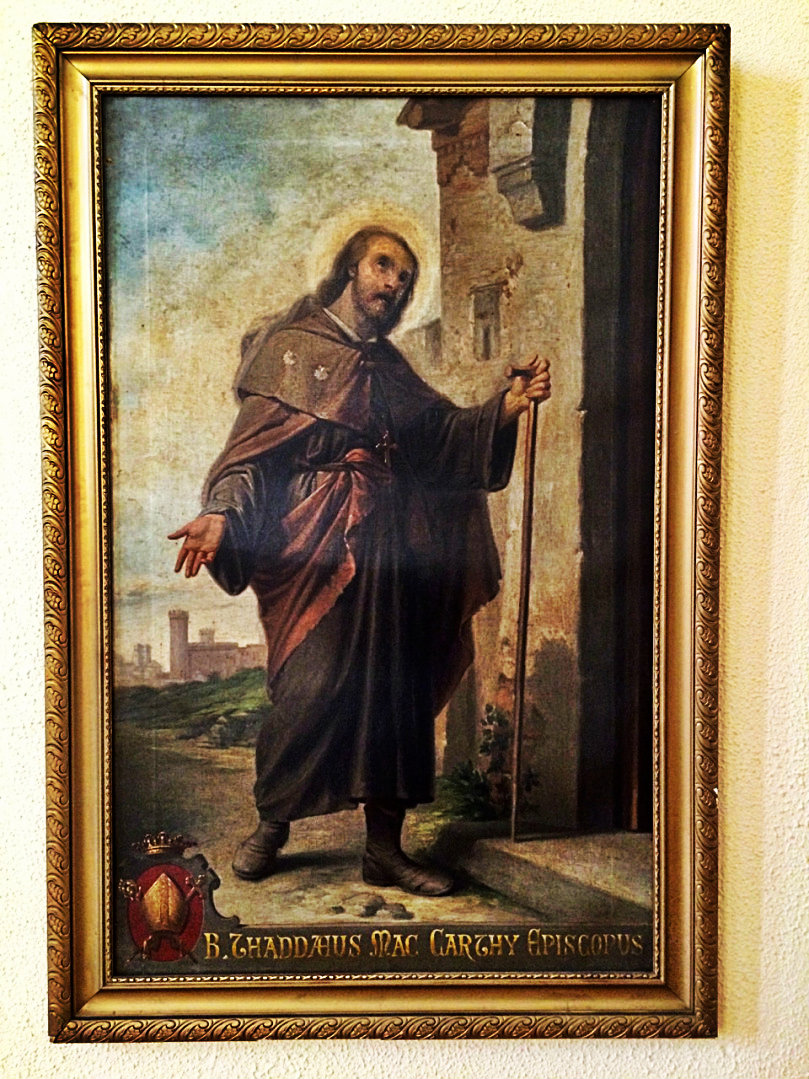
Blessed Thaddeus McCarthy (c1455–1492) “White Martyr of Munster” – Bishop. He was a Bishop who never ruled his See/s, even though he was appointed to two of them – Bishop of Ross, Ireland in 1482 and Bishop of Cork and Cloyne in 1490. Patronages – exiles, the homeless, those suffering calumny, rejection and persecution, pilgrims. The Pain of Earthly Rejection but Beloved of the Lord: https://anastpaul.com/2019/10/25/saint-of-the-day-25-october-blessed-thaddeus-mccarthy-c-1455-1492-the-white-martyr-of-munster/
St Theodosius of Rome
Martyrs of Rome – A group of 46 soldiers and 21 civilians Martyred together in the persecutions of Claudius II. 269 in Rome, Italy.
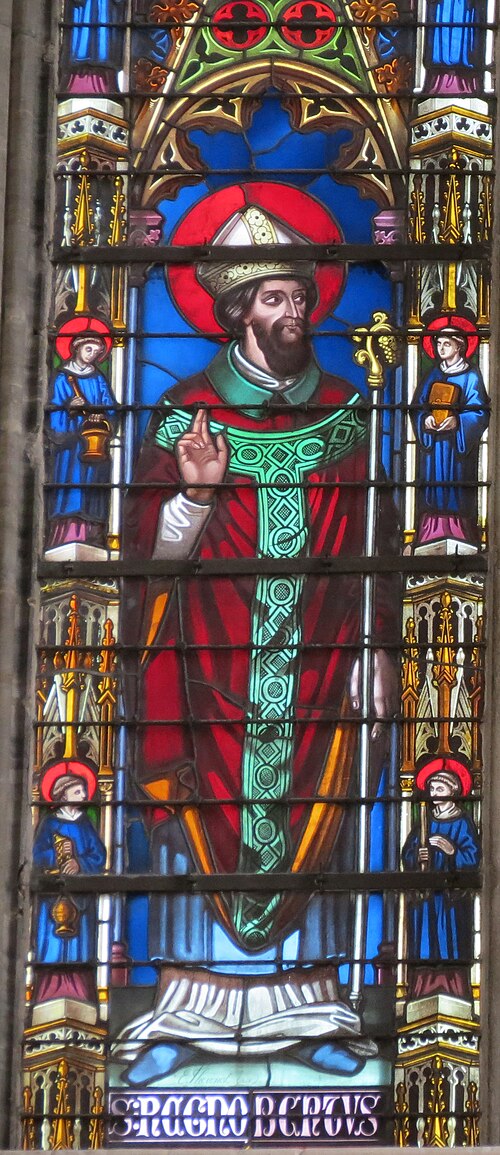
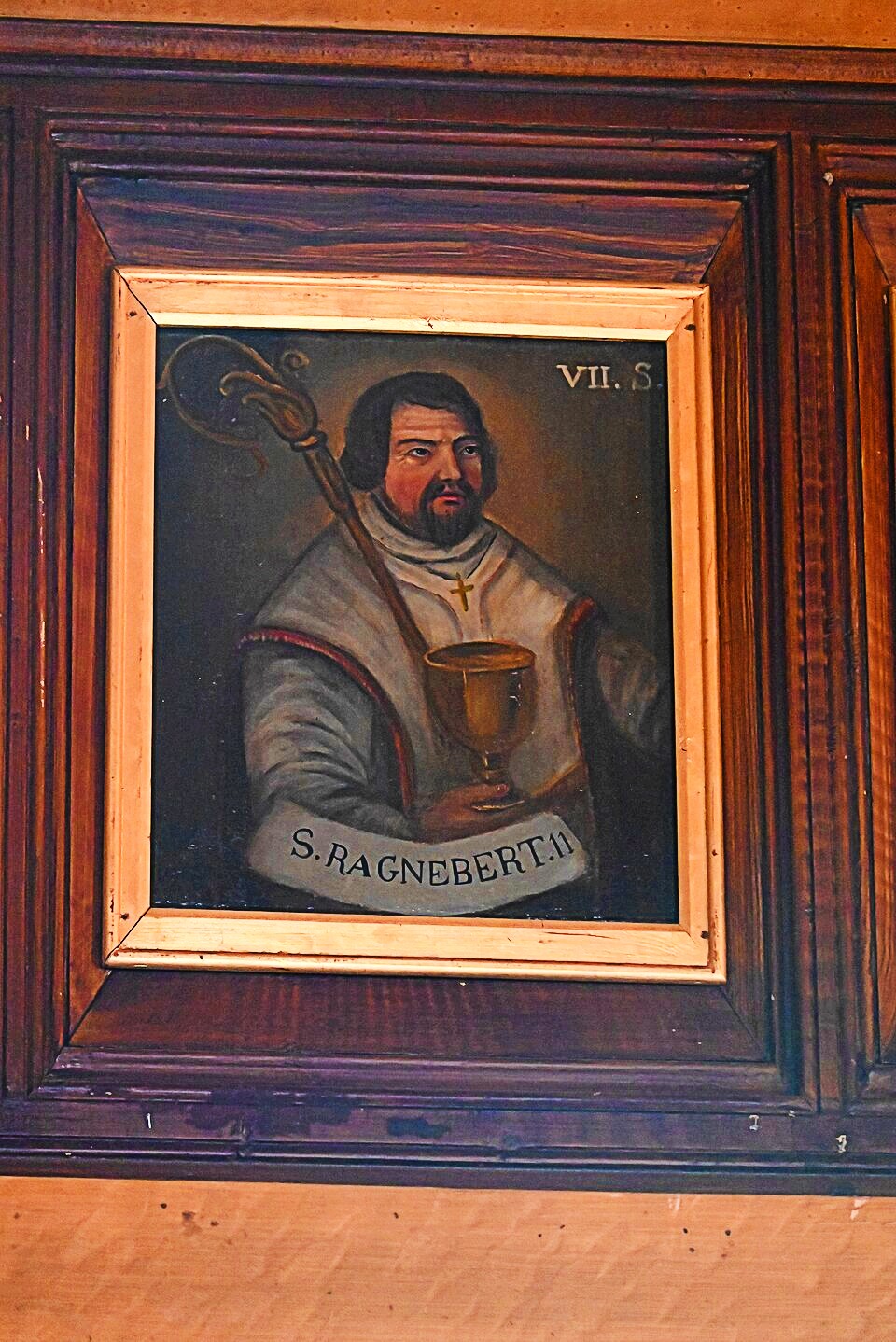
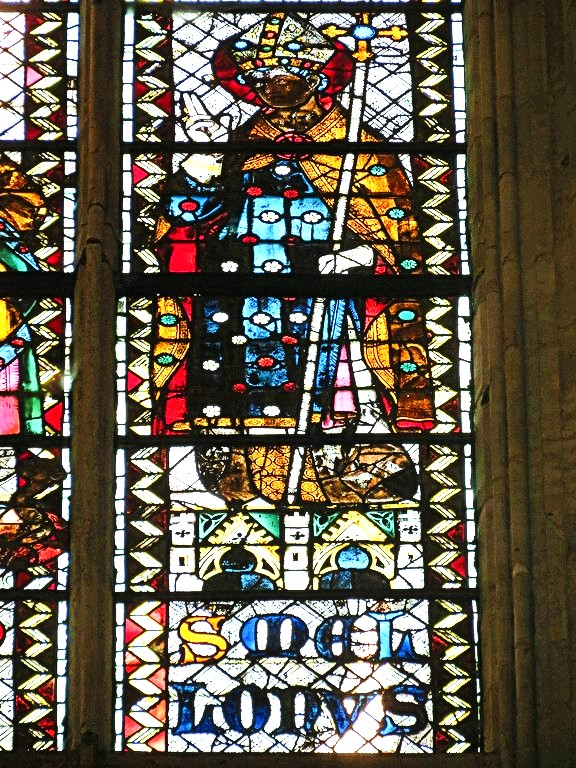
Saint of the Day – 24 October – Saint Regnobert (7th Century) Bishop of Bayeux, France,“ The Second Apostle of Bessin” Founder of Churches, Born in Noron-la-Poterie, a Village southwest of Bayeux and died there in c666. Patronage – of Caen, France. Also known as – Ragnobertus, Raimbert, Regnoberto, Rennobert, Renobert, Rénobert.
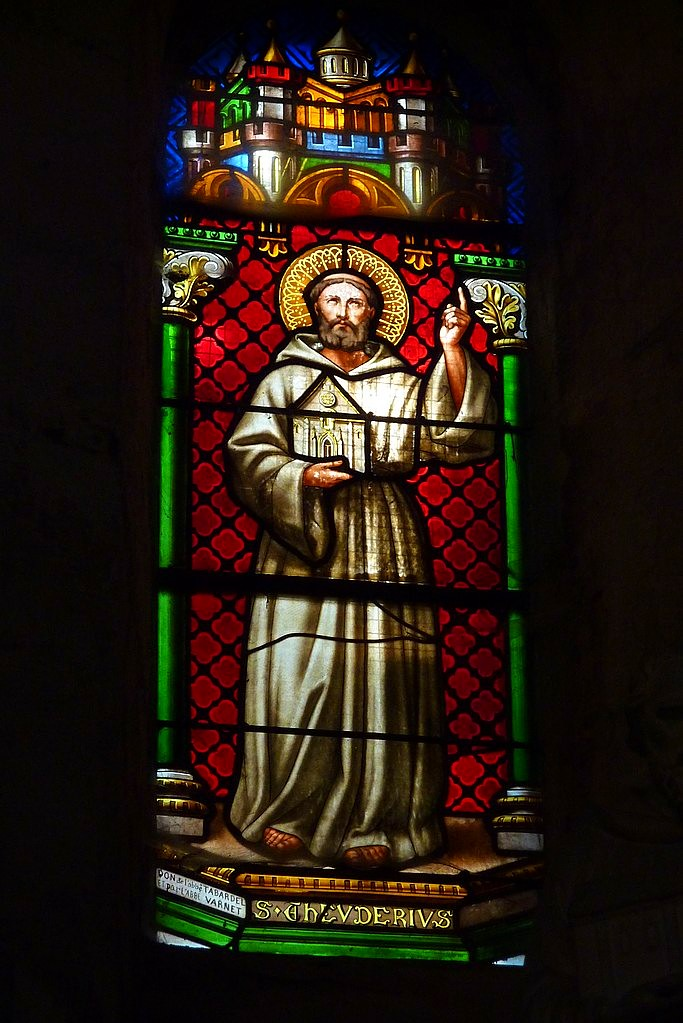
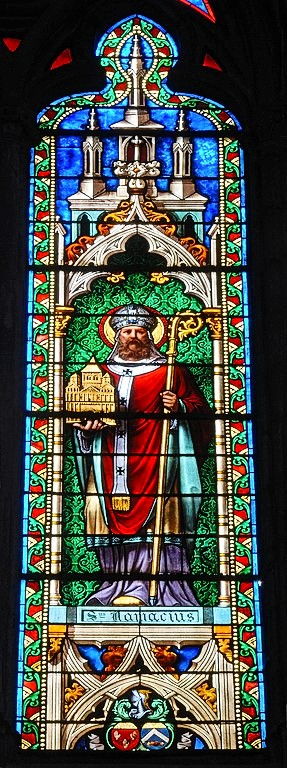
St Regnobert portrayed in a stained glass window in Notre-Dame Cathedral, Bayeux
Regnobert is described as “ The Second Apostle of Bessin”having completed the work begun by Saint Exuperius, the conversion of the Saxons in the 620s.
Regnobert was the Founder of four Churches in the region – St Saviour, Notre Dame, Saint Pierre and Saint Jean. He is also credited with founding the Chapel at the origin of the pilgrimage to the Délivrande.
In c627 Ragnobert was appointed the Bishop of Bayeux. He was present at the Council of Clichy in the same year.
He died around 666. His Feast day is celebrated on 24 October.
In the times of the invasion of the Vikings, Regnobert’s Relics were translated from Bayeux and eventually were deposited at Corbeil; the Saint-Spire Cathedral in Corbeil-Essonnes is dedicated to him. T hose kept in Corbeil were thrown into the Seine by the revolutionaries in 1793. egnobert is sometimes called a Bishop of Corbolium (Corbeil) as a result of this translation.
Saint Raphael the Archangel The Feast day of Saint Raphael was included for the first time in the General Roman Calendar in 1921, for celebration on 24 October. With the 1969 revision of the General Roman Calendar, the Feast was transferred to 29 September for celebration together with Archangels Saints Michael and Gabriel. St Raphael: https://anastpaul.com/2021/10/24/saint-of-the-day-24-october-st-raphael-the-archangel/
St Audactus of Thibiuca St Cadfarch St Ciriacus of Hierapolis St Claudian of Hierapolis St Ebregislus of Cologne St Felix of Thibiuca St Fortunatus of Thibiuca St Fromundus of Coutances
St Maglorius (Died 575) Bishop of Dol and Solitaire in France, Confessor, Monk, Missionary, Abbot, Miracle-worker, “Apostle to Guernsey and Sark” (Sark, French “Sercq” one of the Channel Islands, a dependency of Guernsey, located in the English Channel, south of England’s coast. S St Maglorius\ Life of Grace: https://anastpaul.com/2023/10/24/saint-of-the-day-24-october-saint-maglorius-of-wales-died-c575-bishop/
St Marcius of (Died c679) Hermit St Mark of Campania Hermit
St Regnobert (7th Century) Bishop of Bayeux, France
St Senoch (536-576) Abbot, Priest, Ascetic, Apostle of the needy, the poor, of slaves, Founder of a Monastery , Miracle-worker granted the charism of curing the sick, especially the blind, those sick in soul and body. Born in 536 in Tiffauges, Poitou, Gaul (in modern France) and died in 576 aged 40, Touraine, France from a fever. Patronages – against eye diseases, of the blind, Saint-Senoch, France, Sassenay, France. His Holy Life: https://anastpaul.com/2024/10/24/saint-of-the-day-24-october-st-senoch-536-576-abbot/
St Senócus of Tours St Septimus of Thibiuca
Martyrs of Ephesus – 3 Saints: Three Christians Martyred together. All we know about them are the names Mark, Sotericus and Valentina. They were stoned to death near Ephesus, Asia Minor (in modern Turkey). Their relics are enshrined on the island of Tasos.
Saint of the Day – 23 October – St Domitius (8th Century) Priest (?) or Deacon, in Picardy, France. Amiens is the regional Capital of the Province of Picardy. Also known as – Domica, … of Picardy, … of Amiens.
The Roman Martyrology reads today: “In Picardy, St Domitius, Priest.”
A former Canon of Notre-Dame of Amiens, Domitius had given up his prebend, to live a solitary life. Based on the readings for his Feast, Hagiographer and Historian, the 16th Century Carthusian Priest and Monk, Laurentius Surius says that Domitius was not a Priest but a Deacon of the Church of Amiens, who became a Hermit at Saint-Acheul, along the banks of the Avre River.
Domitius is remembered for providing spiritual guidance to Saint Ulphia, an 8th Century Consecrated Virgin and Recluse, who is celebrated on 31 January.
One of the Statues in the portal of Amiens Cathedral has been identified as Domitius. There is also a painting of St Domitius with St Ulphia in the Cathedral. The painting is attributed to the 19th Century Artist, Jean de Franqueville.
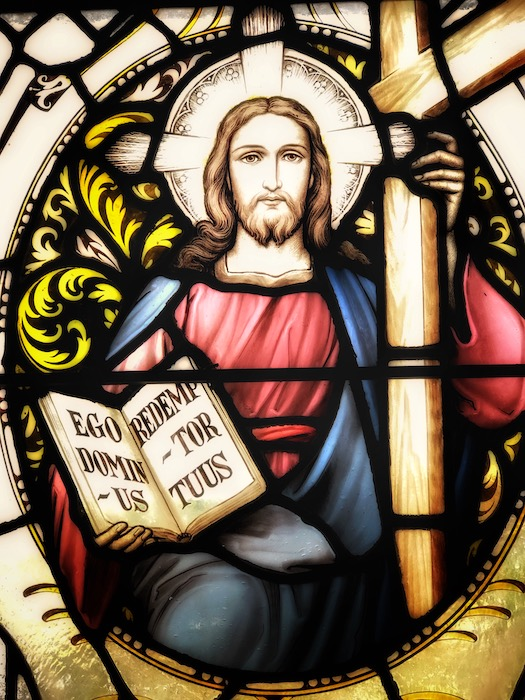
Feast of the Most Holy Redeemer – The Feast of the Most Holy Redeemer is a Liturgical Feast. It is celebrated in Venice as the Festa del Redentore. It is also celebrated by the Redemptorists and was celebrated in the City of Rome. The Feast is found only in the special calendar of some Diocese and religious Orders and is celebrated with proper Mass and Office either on the third Sunday of July or on 23 October. https://anastpaul.com/2019/10/23/the-feast-of-the-most-holy-redeemer-23-october/
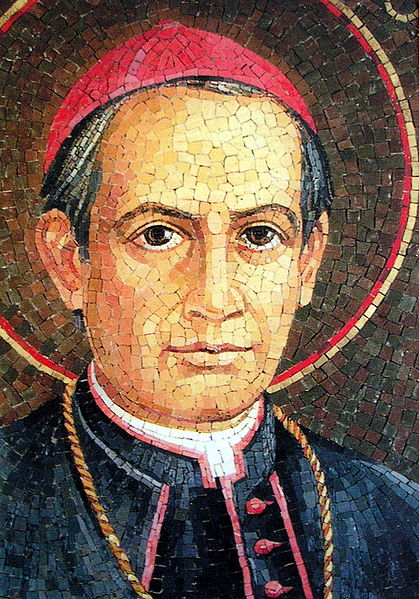
St Anthony Mary Claret CMF (1807-1870) Known as “The Spiritual Father of Cuba.” In the first years, records show, that he Confirmed 100,000 people and performed 9,000 Sacramental Marriages.Archbishop of Cuba, one of the Fathers of the First Vatican Council,Confessor to the Queen of Spain, Missionary, Founder of the Congregation of Missionary Sons of the Immaculate Heart of Mary, commonly called the Claretians, Confessor, Mystic, Social Reformer, Spiritual Director, Writer, Publisher, Preacher, Apostle of Charity. He was declared venerable by Pope Leo XIII in 1899. He was Beatified in 1934 and in 1950, Canonised by Pope Pius XII. His heart is incorrupt. The 1969 revision of the calendar moved St Anthony Feast to the day of his death, 24 October (from the 23rd) but the 24th is and had been the Feast of Saint Raphael the Archangel since 1921. About St Anthony Mary here: https://anastpaul.wordpress.com/2017/10/24/saint-of-the-day-24-october-st-anthony-mary-claret-1807-1870-cmf/
St Arethas of Negran St Benedict of Sebaste St Clether St Domitius (8th Century) Priest St Elfleda St Ethelfleda Sts Germanus and Servandus of Cadiz St Gratien of Amiens Bl Henry of Cologne OP (Died 1225) Priest and Friar of the Order of Preachers, one of the first Disciples of St Dominic St Ignatius of Constantinople
St Severinus of Cologne (c330-c400) the 3rd Bishop of Cologne, Confessor, Defender of the Faith against heretics, Miracle-worker. He heard about the death of St Martin of Tours by the message of Angels’ voices. He founded a Monastery in honour of the Martyrs, Saints Cornelius and Cyprian, which is nowadays the Basilica of St. Severinus. This Zealous Patron of Cologne: https://anastpaul.com/2023/10/23/saint-of-the-day-23-october-saint-severinus-of-cologne-c330-c400-bishop-confessor/
St Syra of Faremoutiers St Theodoret of Antioch Blessed Thomas Thwing Priest Martyr Beatified on 15 December 1929 by Pope Pius XI St Verus of Salerno
Martyrs of Nicaea – 3 Saints Euerotas Socrates Theodota
Martyrs of Valenciennes – 6 Beati: A group of Urusuline and Briggittine nuns murdered together in the anti-Christian excesses of the French Revolution. They were guillotined on 23 October 1794 in Valenciennes, Nord, France and Beatified on 13 June 1920 by Pope Benedict XV. Anne-Joseph Leroux Clotilde-Joseph Paillot •Jeanne-Louise Barré Marie-Augustine Erraux Marie-Liévine Lacroix Marie-Marguerite-Joseph Leroux
Saint of the Day – 22 October – Saint Abericus (Died 2nd Century) Bishop of Hierapolis in Phrygia. Also known as – Abercius of Geropoli, Abercius of Hieropolis, Abercio…
The Roman Martyrology reads today: “At Hierapolis, in Phrygia, St Abericus, Bishop, who flourished under the Emperor Marcus Antonius.”
The life of Saint Abericus was written in the 4th Century, two centuries after his death. Naturally, elements were added to the actual events, about which perhaps, little was known. This rendered certain harsh responses from secular historians, considering Abericus a figure little more than fictional.
But Abericus would be vindicated when in 1882, in Kelendre, near ancient Hierapolis, the Capital of Salutari Phrygia, the Archaeologist William Ramsay, discovered a Greek inscription embedded in a pillar. They were precisely the beginning and end of the Epitaph of Bishop Abericus which had been preserved from his lifetime.
The following year, 1883, Ramsay himself discovered two more fragments of the central part of the Epitaph which was thus fully confirmed. The prestigious Relic was donated to Pope Leo XIII in 1892, on the occasion of his Jubilee and is, therefore, now preserved in the Lapidary Gallery of the Lateran Museum in Rome. The text of this Epitaph is one of the most precious documents for the history of Christianity, as it attests to its diffusion and, certain dogmatic and liturgical characteristics, at a time which is certainly not later than 216.
Here is this important Relic: “Citizen of a chosen city, I have made this monument to myself while alive, to have here a worthy burial for my body. I am called Abericus, disciple of the Chaste Shepherd Who feeds flocks of sheep on mountains and plains; He has large eyes which look down on everything. He taught me the Scriptures, worthy of faith; He sent me to Rome to contemplate the palace and see a Queen with golden robes and shoes; I saw there, a people who wear a shining seal. I also visited the plain of Syria and all its cities and, beyond the Euphrates, Nisibis and, everywhere I found brothers … having Paul with me and faith guided me everywhere and He gave for food the very large, pure fish from the stream, which the chaste Virgin Mother is accustomed to catch and offer to her faithful friends everyday for eating, having an excellent wine which she is accustomed to give with the bread. I, Abercius, have had these things written here, in my presence, being seventy-two years old. Whoever understands what I say and thinks as I do, let him pray for Abericus. Let no-one place another in my Tomb, otherwise he will pay two thousand gold coins to the Roman treasury and one thousand to my beloved country.”
St Abericus (Died 2nd Century) Bishop St Alodia of Huesca St Apollo of Bawit St Benedict of Macerac St Bertharius of Monte Cassino St Cordula
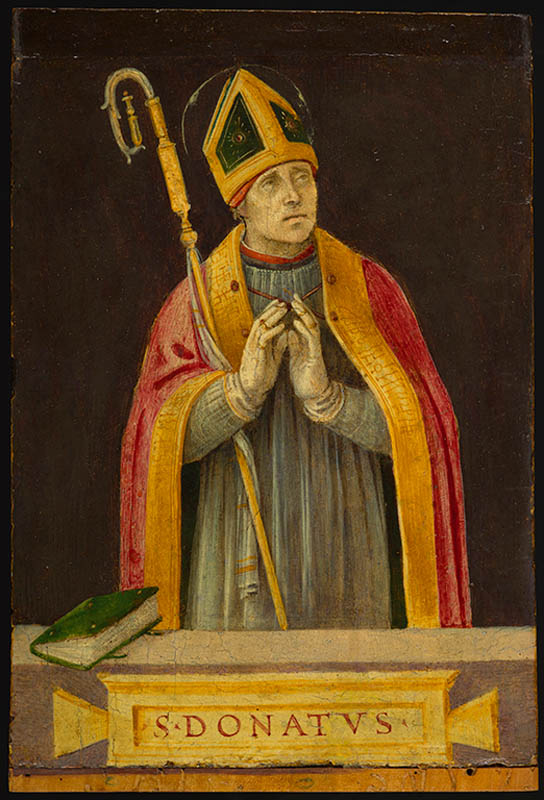
St Donatus (Died 874) Bishop of Fiesole, Confessor, Irish Nobleman, Monk, Priest, Poet, Writer, Scholar, Professor, Adviser to Emperors Louis the Pious and Lothair I, Founder of San Martino a Mensola Abbey and leader of two military expeditions against the Saracens. His Life: https://anastpaul.com/2020/10/22/saint-of-the-day-22-october-st-donatus-of-fiesole-died-874/
Bl Esclaramunda of Majorca St Hermes of Adrianople St Ingbert St Leothade of Auch
St Moderan of Rennes St Nepotian of Clermont (Died c388) Bishop St Nunctus of Mérida St Nunilo of Huesca St Philip of Adrianople St Philip of Fermo St Rufus of Egypt
St Verecundus Bishop and Confessor of Verona. The details of his labors are lost but the Goths ruled Verona at the time. St. Valens succeeded him.
Martyrs of Heraclea – 4 Saints: A group of four clerics in Heraclea (modern Marmara Ereglisi, Turkey) who were arrested in the persecutions of Diocletian. They were imprisoned, abused and ordered to turn over all the Scriptures they had hidden from authorities; they refused and were executed together. Martyrs. – Eusebius, Hermes, Philip and Severus. They were burned at the stake in 304 in Adrianople (modern Edirne, Turkey).
Saint of the Day – 21 October – Saint Malchus (Died c390) Monk and Hermit of Syria. Born around the 4th Century near Antioch, Syria and died there in c390. Malchus is the subject of Saint Jerome’s “Life of Malchus the Captive Monk” (Vita Malchi Monachi Captivi), written in Latin around 391. Also known as – Malchus of Chalcis, Malchus of Maronia.
The Roman Martyrology reads today: “At Marconia near Antioch, in Syria, St Malchus, Monk.”
In 375, Saint Jerome retired to Maronia (a small village around 50 kms south of Antioch), on the estates of his friend St Evagrius Ponticus (c345-399), to lead a Hermit’s life. There he met the Monk Malchus, who recounted the romantic details of his life.
A few years later (390-391), St Jerome recounted these events in the “Vita Malchus Monachi Captivi.” The work, as St Jerome himself states, has the feel of a literary exercise (“I wish to try my hand at a small work and thus, put aside a certain rustiness of the tongue”) and has a parenetic-ascetic purpose (“I expose to chaste people, a tale about chastity… You tell this to posterity, so that they may know that, among swords and deserts and wild beasts, modesty is never enslaved and, the man consecrated to God, can die and never be defeated”).
From a literary perspective, it is highly valuable. Perhaps based on a historical figure he knew, St Jerome composed the Vita with a purposes in favor of monasticism and chastity.
According to the Vita Malchus, descended from a noble family, had retreated to the desert of Chalcis to devote himself to monastic life, despite his father’s staunch opposition. In the Monastery, however, he clashed with the Abbot because, following his father’s death, he intended to take possession of the family property to distribute it to the poor and build a Monastery.
For this attachment to worldly things, Ma;chus was punished; in fact, having left the Monastery, he fell in with a group of Bedouins in the desert, who sold him to a landowner from a distant region. He was entrusted with the care of the flock, a task he did not dislike, as in the midst of the pastures he was able to pray and enrich his spiritual life by contemplation.
In recognition of his faithfulness and excellent service, his master intended to marry him to a slave who had been violently separated from her husband. The idea of an adulterous marriage aroused a sense of despair in Malchus but the woman proposed a sham marriage, living in absolute chastity. They spent some time together, then attempted an escape. St Jerome’s narrative at this point takes on romantic overtones. The two, joined in the desert by their master and a servant, took refuge in the den of a lioness, who first mauled the servant and then the master. Malchus and the woman, using the camels of the slain, reached the Monastery where Malchus had begun his monastic life. Having been rejected, Malchus moved, followed by the woman, to Maronia, where he met St Jerome . There, the woman retired to a Convent.
The episode of the spouses, who lived in perfect chastity, is a very common motif in ancient hagiography. St Jerome’s work was translated into verse by Jean de la Fontaine, a 17th Century French Poet. Three ancient versions of the Vita exist (Latin, Greek, Syriac) which differ only marginally.
St Malchus’ cult spread widely in the East, where the he is remembered on 26 March and in the West on 21 October.
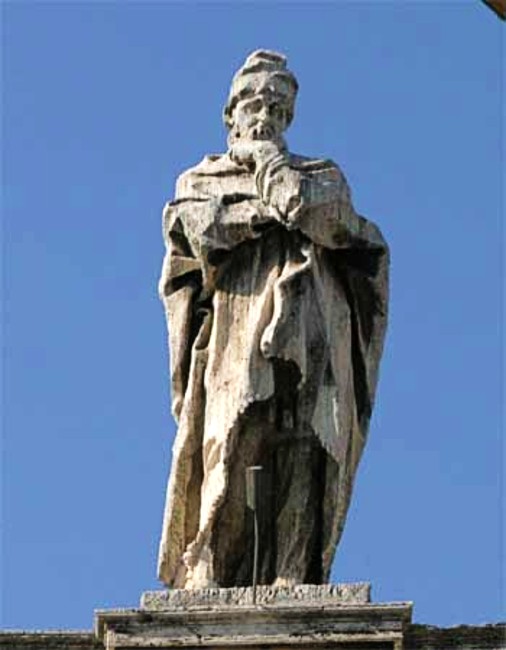
St Malchus on the North Colonnade at St Peter’s Basilica
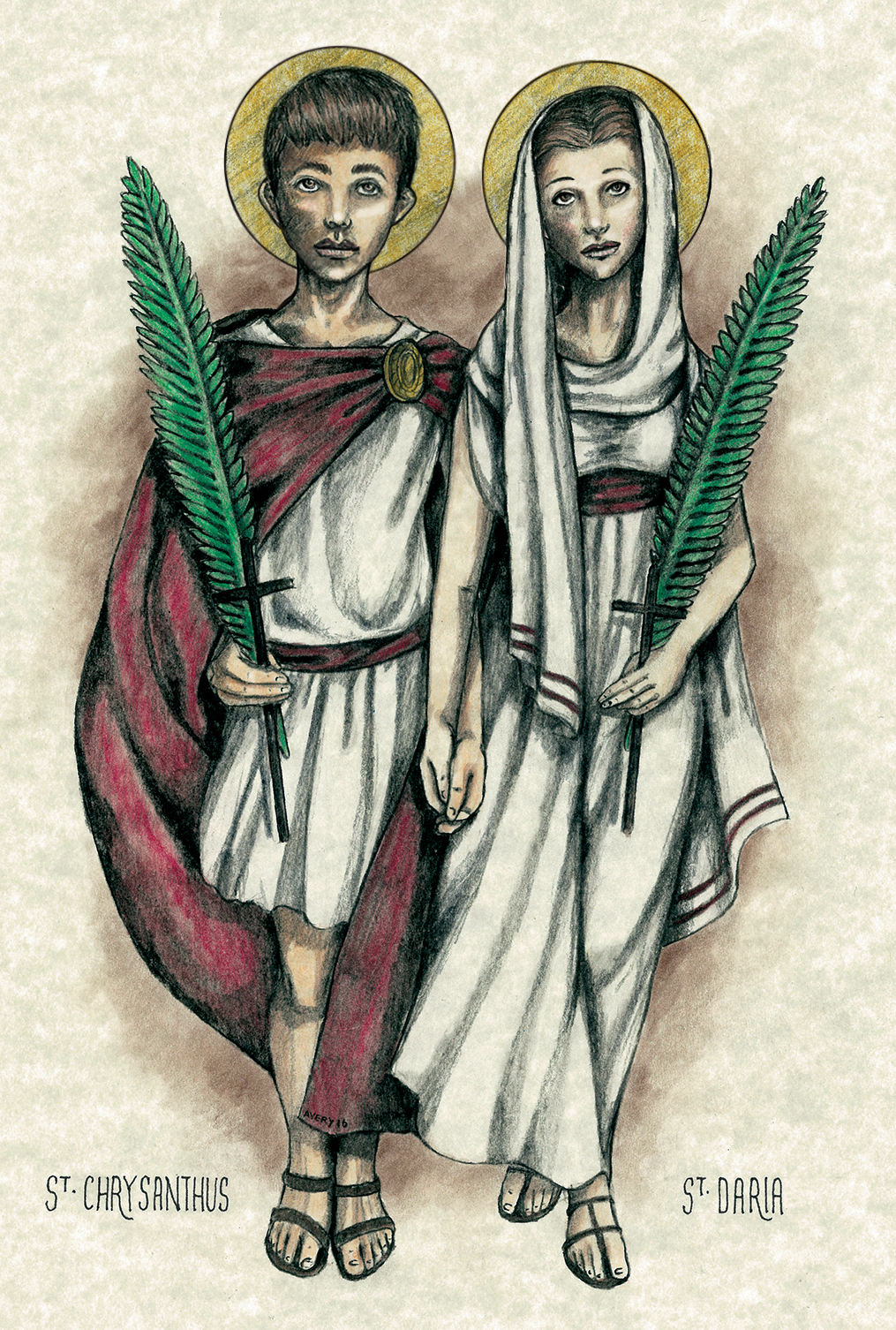
Saint Ursula and Companions: (Died c238) Virgin Martyrs This Amazing Story: https://anastpaul.com/2022/10/21/saint-of-the-day-21-october-saint-ursula-and-companions-died-c-238-virgin-martyr/ There are other Saints closely associated with Ursula and her story – travelling companions who were Martyred with her. They are: Antonia of Cologne Cesarius of Cologne Cyriacus of Cologne Daria Fiolanus of Lucca Ignatius of Cologne James of Antioch Mauritius of Cologne Pontius of Cologne Sulpitius of Ravenna Vincent of Cologne Travelling companion, but escaped the massacre: Cunera Led by a dove to the lost tomb of St Ursula: Cunibert of Cologne.
St Agatho the Hermit St Asterius of Périgord St Asterius of Rome
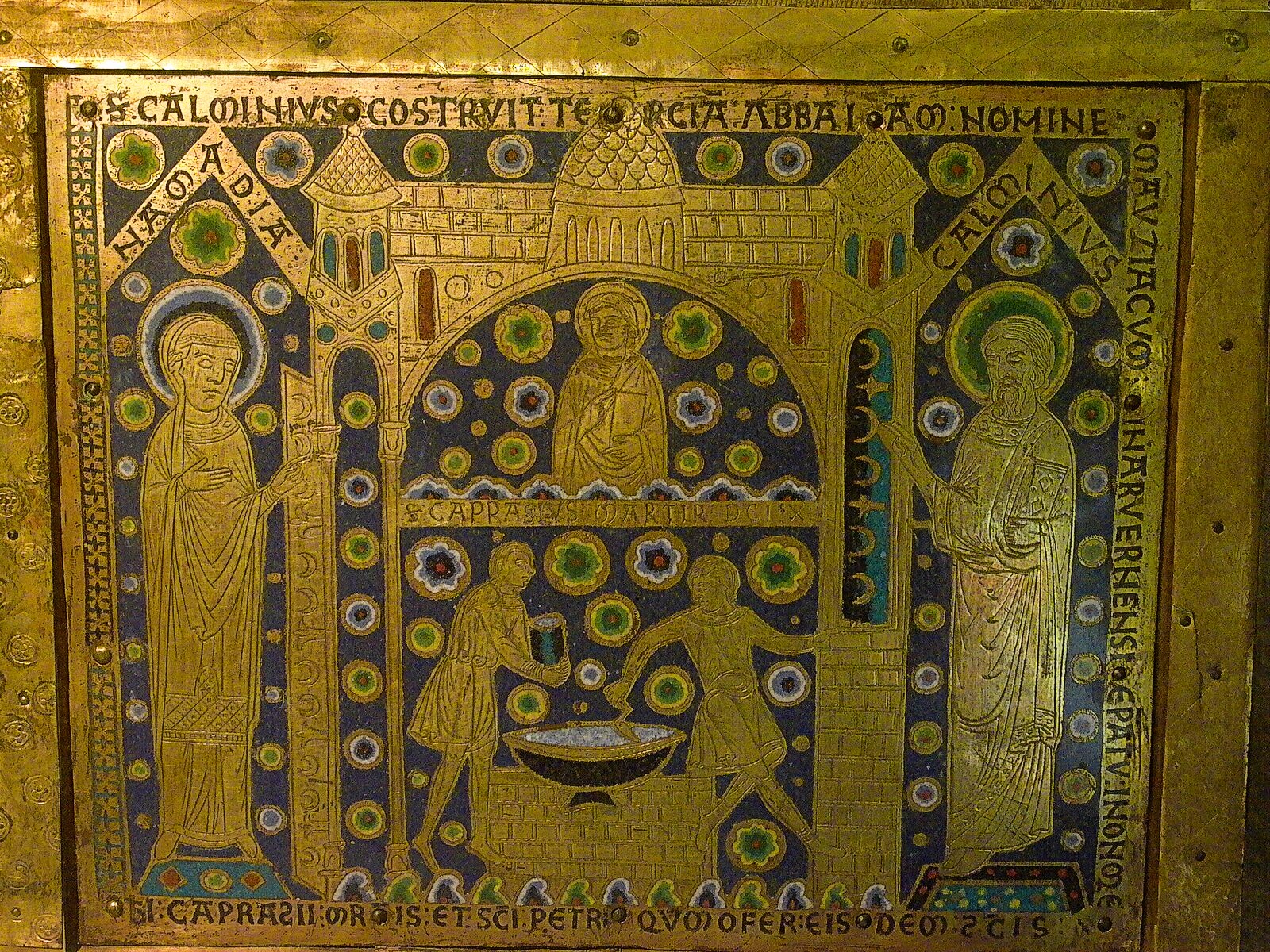
Saint of the Day – 20 October – Saint Caprasius (Died c303) Martyr of Agen. Born in France and died there by being beheaded in c303. Born in France he is known as St Capraise. Some sources consider him to have been the 1st Bishop of Agen but there are no records to substantiate this claim. However, St Caprasius is most often depicted as a Bishop.
The Roman Martyrology reads today: “At Agen in France, St Caprasius, Martyr. As he was hiding himself in a cavern, to avoid the violence of the persecution, the report of the blessed virgin Faith’s courage in suffering for Christ, animated him to endure torments and he prayed to God that, if he were deemed worthy of the glory of Martyrdom, clear water might flow from the rock of his cavern. God, having granted his prayer, he went with confidence to the scene of combat and, after a valiant struggle, merited the Palm of Martyrdom under Maximian.”
On 20 October, in the additions to the Martyrology of St Jerome, Caprasius is commemorated, to whom, as St Gregory of Tours recalls, a Church was dedicated which later, after various vicissitudes and following the Concordat of 1801, became the Cathedral of Agen.
Unfortunately, information regarding Caprasius has been transmitted through hagiographic legends no earlier than the 9th Century, in which it is difficult to distinguish truth from embellishment. In a 10th Century codice, there is a Passion of Caprasius which, however, is a pure and simple reproduction of that of St Symphorian of Autun; in general, however, all the other codici narrate the events of Caprasius together with those of St Faith, also a Martyr in Agen.
According to these texts, therefore, Caprasius, to escape Diocletian’s persecution, had retreated to a cave. Upon learning of Faith’s Martyrdom, he desired to share it and, encouraged by a miracle, presented himself to the Judge Dacianus, who, flattering him, initially tried to persuade him to apostatise but then, seeing his steadfastness, handed him over to the executioners.
Statue of St Caprasius in the Cathedral of Agen
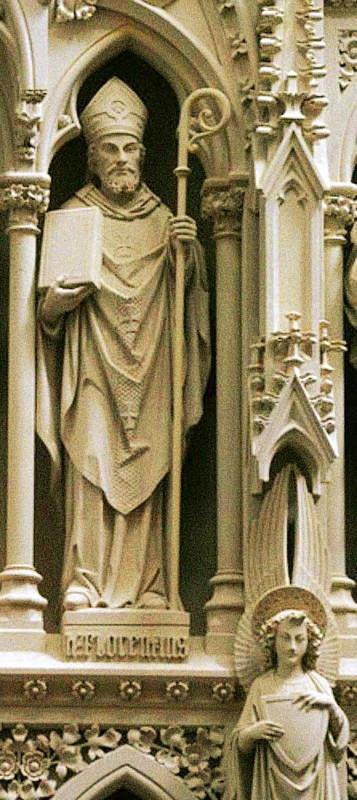
While the Martyr was being tortured, two brothers, Primus and Felicianus, converted and, along with Faith and Caprasius, were beheaded on 6 October. The bodies of the four, displayed in a square, were stolen by Christians and buried honourably. They were later transferred by Bishop Dulcitius, to the Church dedicated to the Virgin Mary.
After the discovery of the body (5th Century), the cult of St Caprasius flourished, so much so that, in the 14th Century, he was considered the 1st Bishop of Agen.
Blessed James Strepar OFM (c1340-1409) Archbishop of Halicz, Poland from 1392 until his death Religious Priest of the Order of Friars Minor, Missionary. St Pius X proclaimed Blessed James, along with St Anthony of Padua, the Patrons of the Conventual Franciscan Order of Krakow Province. He was given the title of “Protector of the Kingdom, Defender and Guardian of the Homeland,” for his exceptional merits, including civil ones. Such was he considered by all. He was Canonised by by Pope Pius VI on 11 September 1791. His body is incorrupt. His Life: https://anastpaul.com/2020/10/20/saint-of-the-day-20-october-blessed-james-strepar-ofm-c-1340-1409/
St Leopardo of Osimo St Lucas Alonso Gorda St Martha of Cologne + Virgin Martyr
St Maximus of Aquila (c228-c250) Deacon Martyr. The Roman Martyrology reads: “At Aveia, near Aquila in Abruzzo, Italy, the birthday of blessed Maximus, Deacon and Martyr, who, through the desire of suffering, presented himself to the persecutors who sought him. After answering with great constancy, he was racked and tortured, then beaten with rods and finally, he died by being precipitated from an elevated place.” His Life and Death: https://anastpaul.com/2023/10/20/saint-of-the-day-20-october-saint-maximus-of-aquila-c228-c250-deacon-martyr/
St Orora St Saula of Cologne + Virgin Martyr St Sindulphus of Rheims St Usthazanes St Vitalis of Salzburg (Died c730) Bishop
DISCLAIMER: Please note: I cannot control the content of the Advertisements on this Site, or of pop-ups which may appear, The revenue from the Advertisements, however, does provide a little assistance in the support of the Site. I do apologise for any inappropriate content.
Saint of the Day – 19 October – Saint Veranus (Died 589) Bishop of Cavaillon, France, Hermit, a protector of monastic life and Monasteries, apostle of the poor and ill, Miracle-worker. Born in Vaucluse in France and died in Arles, France in 589 of the Plague. Patronage – Cavaillon and Saint-Veran and Saont-Verain, in France; Abbadia Alpina and Peccioli, 2 Citiess in Italy. Also known as – Uranus, Verain, Veranus, Verà del Gavalda, Vrain of Cavaillon, Wrain of Cavaillon.
The Roman Martyrology reads today: “In the Diocese of Orleans, the departure from this world of St Veranus, Bishop.”
The little information known about his life are sufficient to provide a portrait. A contemporary of St Gregory of Tours, Veranus was Ordained a Priest in 540. Having retired to his hermitage in Vaucluse, he undertook a pilgrimage to Rome passing through Embrun , Briançon Ravenna, Milan and, on his return, through Albenga and Cassis, of which City he is now the Patron.
In 568, Sigebert I , who had created the chose him as the Bishop of Cavaillon, as we learn from the ‘Orléans Manuscript.’
The following year, 569, Fredegonda, having had Praetextatus, the Archbishop of Rouen assassinated during a Sunday Office, Veranus reproach him for the murder. This earned him the position of Godfather of the future Merovingian King Theodoric II, son of Childebert II. In 577, the Baptism took place, in Orléans.
St Gregory of Tours writes of miracles performed by Veranus, including the expulsion of a dragon. He is also remembered as a leader in charitable works and as a patron of local Monasteries, not only in France but also in Italy, particulaly in the City of Albenga, where he was instrumental in the conversion of the people to Christianity.
In the early 11th Century, some of his Relics were transferred from his place of burial to Orléans. In the 13th Century, most were transferred again, to Cavaillon Cathedral which is dedicated to him but some were sent to Albenga Cathedral in Liguria, where they are still preserved in a Shrine dedicated to him as the Patron of that City.
The French Villages of Saint-Véran and Saint-Verain are named after him. In Fontaine de Vaucluse, there is a Church dedicated to our Saint. It was the place of his birth and in the small Church there is a Tomb reputed to be his.
St Altinus St Aquilinus of Evreux St Asterius of Ostia St Beronicus of Antioch St Columban — Priest in Tours, France. Listed in the Martyrology of St Jerome. No other details have survived.
St Desiderius of Longoret St Ednoth St Ethbin St Eusterius of Salerno
St Frideswide (c665-735) Virgin, Abbess, Founder of the St Mary’s Convent, Miracle-worker The Convent is now Christ Church College, University of Oxford and the Convent Church became Oxford Cathedral. Patronage – of the City of Oxford, England and of the University of Oxford. Her Holy and Zealous Life: https://anastpaul.com/2024/10/19/saint-of-the-day-19-october-saint-frideswide-c665-c735-virgin/
St Laura of Cordoba St Lucius of Rome St Lupus of Soissons St Pelagia of Antioch
St Varus and 6 Companions (Died c307) Martyrs, Soldier. Died in c307 by being tortured and then hanged from a tree on 19 October 307 in Kemet, Upper Egypt. The Roman Martyrology reads: “In Egypt, St Varus, Solder under the Emperor Maximinus. He used to visit and comfort seven saintly Monks, detained in prison, when one of them happening to die, he wished to take his place and having suffered cruel afflictions, with them, he obtained the Palm of Martyrdom.” Their Lives and Deaths: https://anastpaul.com/2023/10/19/saint-of-the-day-19-october-saint-varus-and-six-companions-died-c307-martyrs/
Saint of the Day – 18 October – St Tryphonia (3rd Century) Widow of Rome. Some sources believe she might have been a Martyr. Also known as – Tryfonia, Tryphona.
The Roman Martyrology reads today: “At Rome, St Tryphonia, at once time the wife of the Caesar Decius. She was buried in a crypt near St Hippolytus.”
Tradition states that she may have been the widow of the Christian enemy, Emperor Trajanus Decius or the widow of his son. It is unclear whether she was Martyred.
Martyrs of Africa – 9 Saints: A group of Christians Martryed together in Africa. The only details that have survived are the names – Beresus, Dasius, Faustinus, Leucius, Lucius, Martialis, Victoricus, Victrix and Viktor. They were Martyred in c300 in Africa.
Saint of the Day – 16 October – Saint Florentinus (Died 4th Century) Bishop of Trèves. Also known as – Florentinus of Trèves, Florentius of…
The Roman Martyrology reads today: “At Trèves, St Florentinus, Bishop,”
Upon being Consecrated as the Bishop of Cahors, in France, Florentins received a congratulatory letter from his friend, Saint Paulinus of Nola, who was later to become a Bishop himself.
Paulinus praises Florentinus as a man of great humility and meekness of heart, with the gentleness and the innocence of a lamb and imbued with “the sweetness of the Lord.”
In reference to Florentinus’ Episcopal vocation, Paulinus observes that God had chosen him for “the role of his apostles” to “become a fisher of men,” who would “with the net of the saving Word, draw from the bitter, deep waves of this world a haul which God can invest with life rather than destruction.”
















 AnaStpaul
You must be logged in to post a comment.