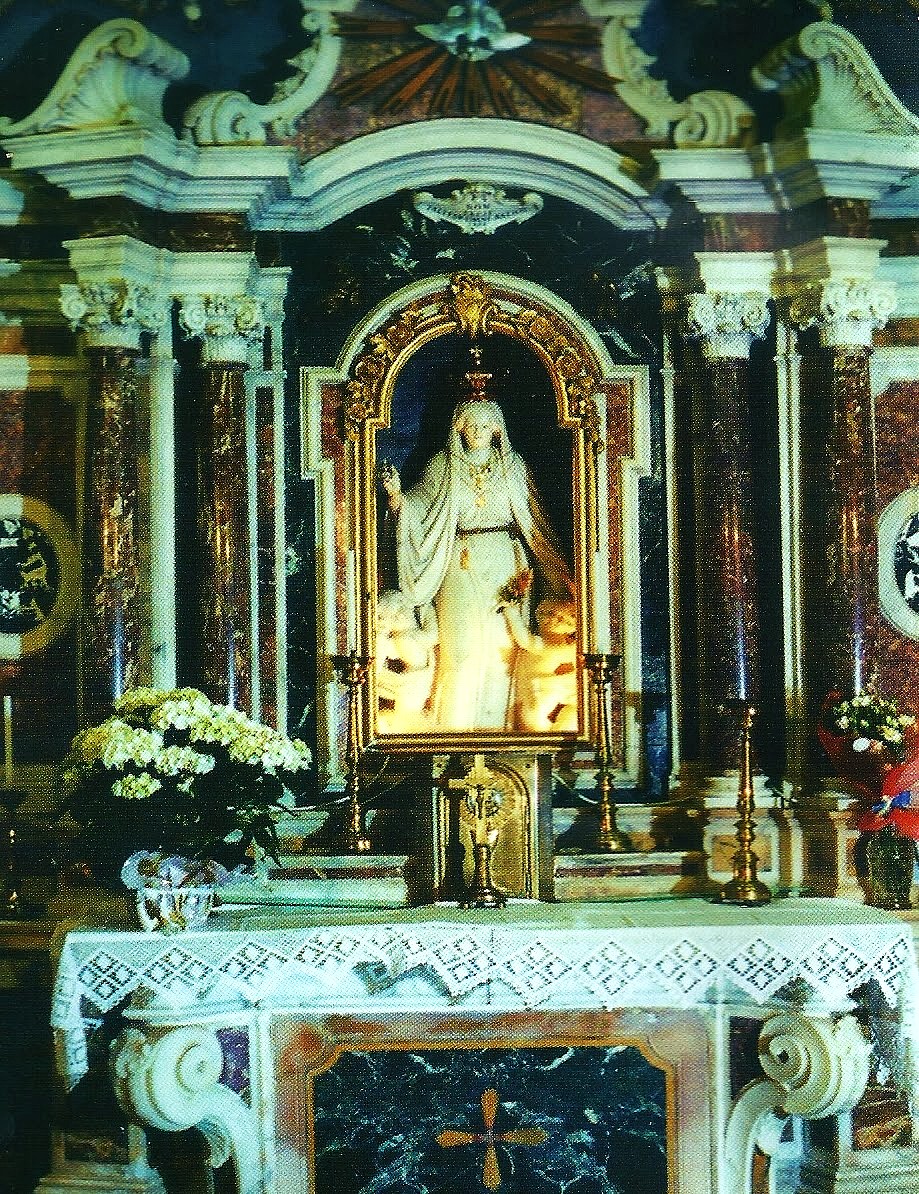
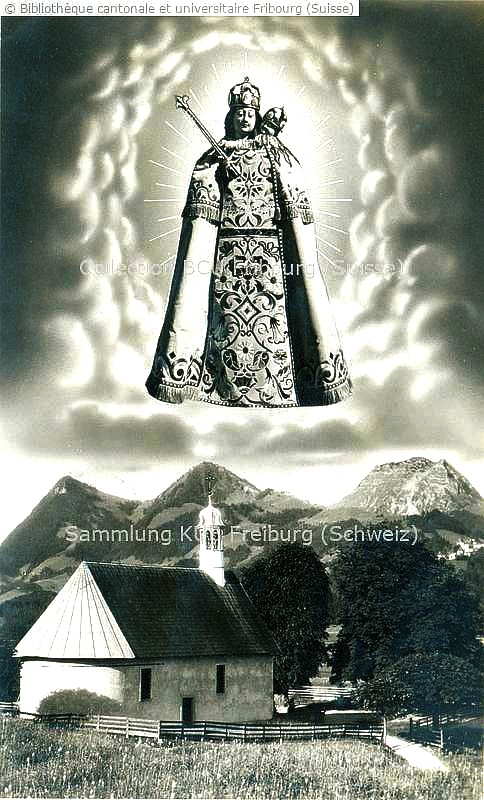
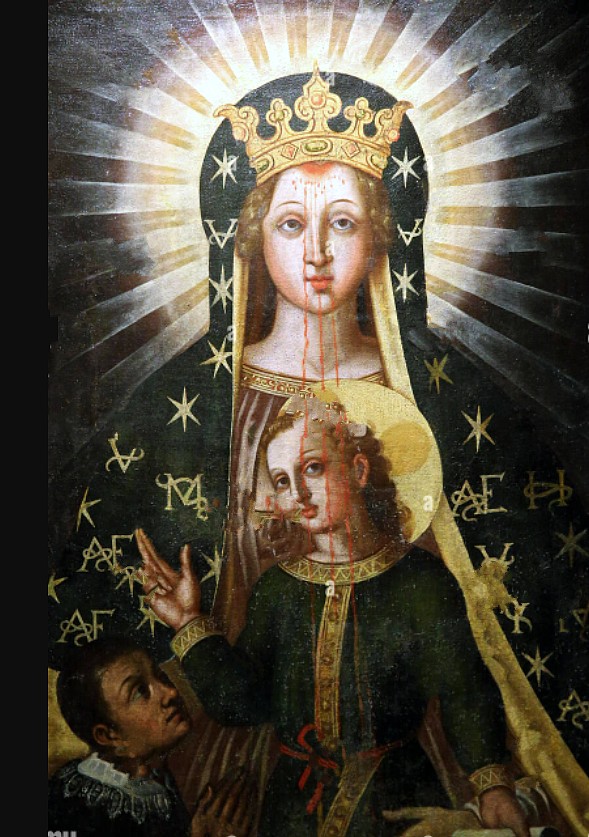
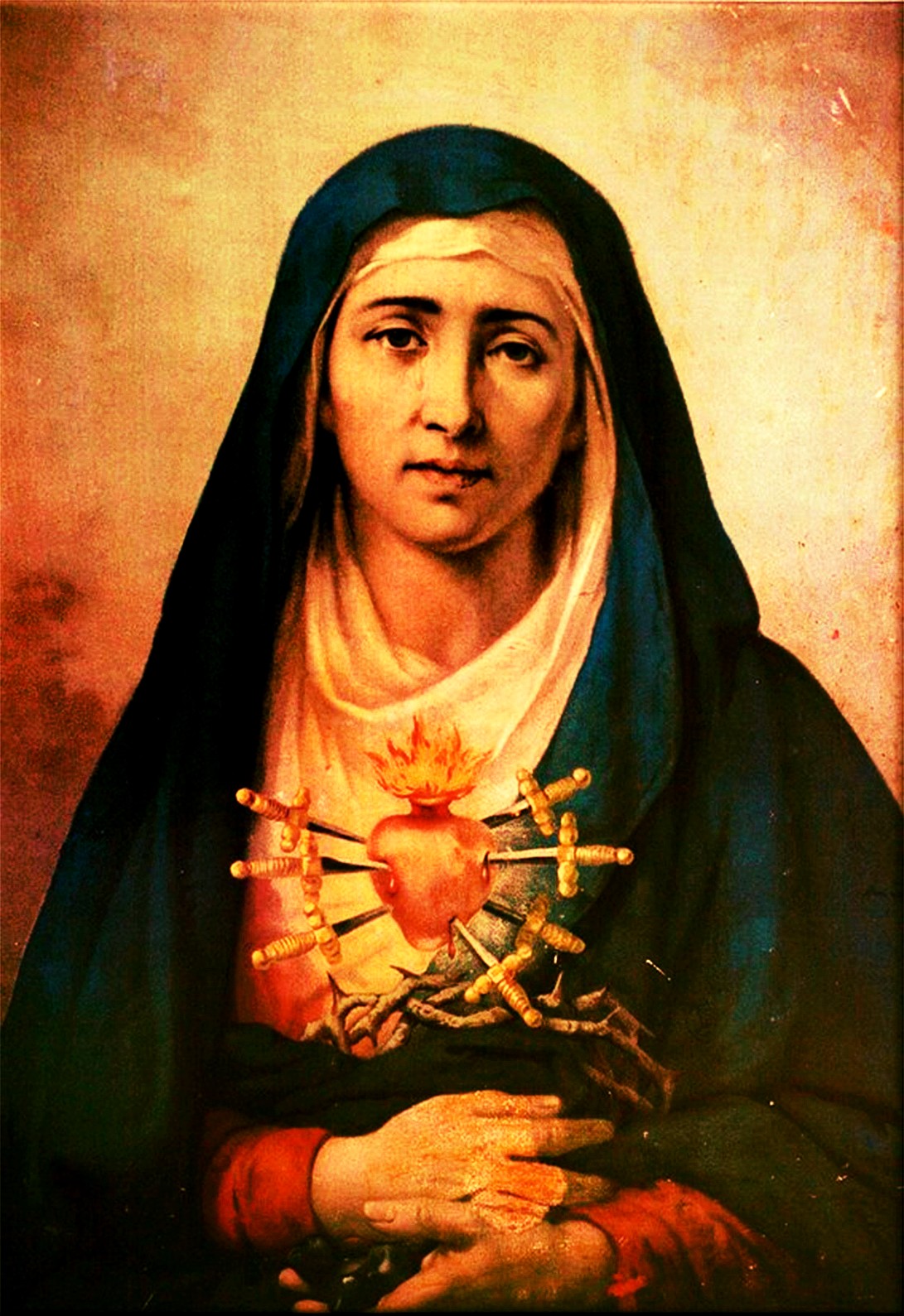
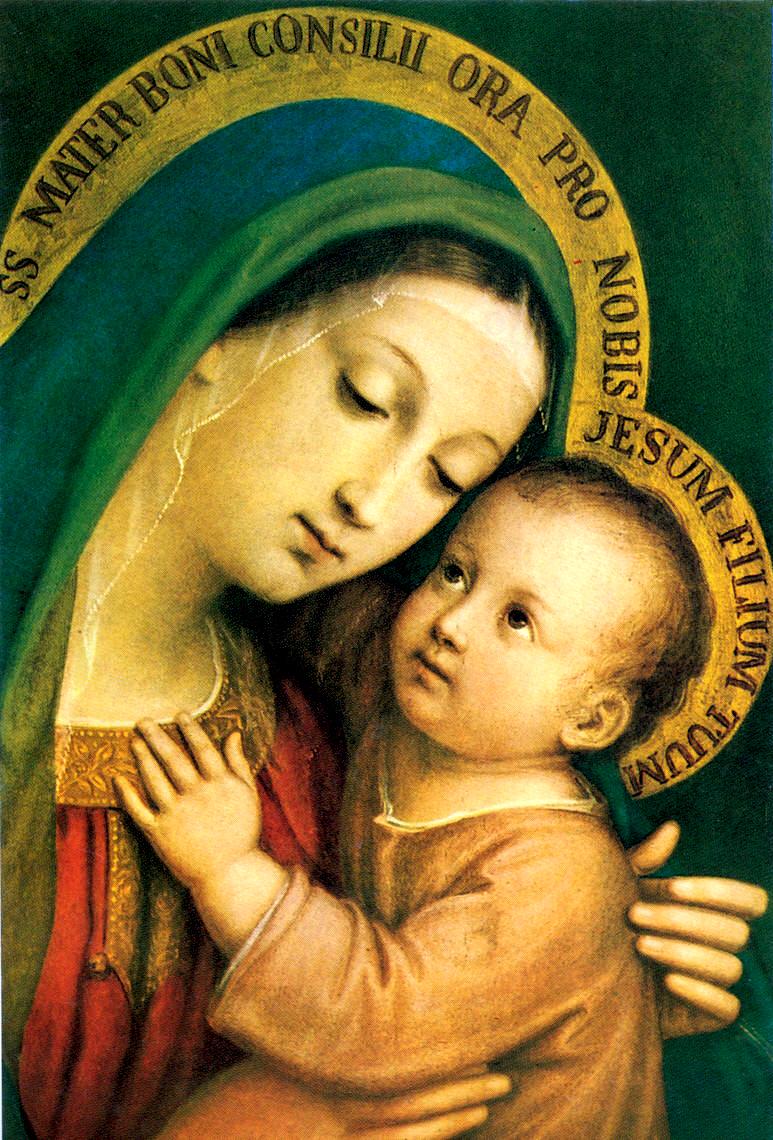
Our Lady of China: Our Lady of China is a title for the Virgin Mary in China who is believed to have appeared at the small village of Donglu in 1900. In Chinese she is called Zhōnghuá Shèngmǔ. She is also known as Our Lady of Donglu.
St Afra of Brescia Bl Benedict of Cassino
St David, King of Scotland (1085-1183) King David was a social and religious Reformer, a man of great administrative skills, apostle of charity and of holy piety. He transformed his Kingdom by the widespread introduction of Catholic Churches and Monasteries, thus also assisting in the international diplomatic influence of his country, it’s farming and agricultural wealth and it’s education. He was the main force and instrument of God in Christianising Scotland. St David’s life: https://anastpaul.com/2020/05/24/saint-of-the-day-24-may-st-david-king-of-scotland-1085-1183/
Bl Diego Alonso St Donatian of Nantes St Gennadius of Astroga St Hubert of Bretigny St Joanna the Myrrhbearer Bl John del Prado Bl John of Montfort Bl Juan of Huete St Manahen St Marciana of Galatia St Meletius the Soldier Bl Nicetas of Pereslav St Palladia St Patrick of Bayeux
St Rogatian of Nantes St Sérvulo of Trieste St Simeon Stylites the Younger
St Susanna Martyr (Died 2nd Century) One of a group of wives of 2nd century Martyred soldiers under the command of Saint Meletius. Following the death of the soldiers, the wives and children were Martyred, as well.
Martyrs of Istria: A group of early Martyrs in the Istria peninsula. We know little more than some names – Diocles, Felix, Servilius, Silvanus and Zoëllus.
Bl Thomas Vasière St Vincent of Lérins (Died c445) Monk, Ecclesiatical Writer St Vincent of Porto Romano
Martyrs of Plovdiv: 38 Christians Martyred together in the persecutions of Diocletian and Maximian. We don’t even known their names. They were beheaded in Plovdiv, Bulgaria.
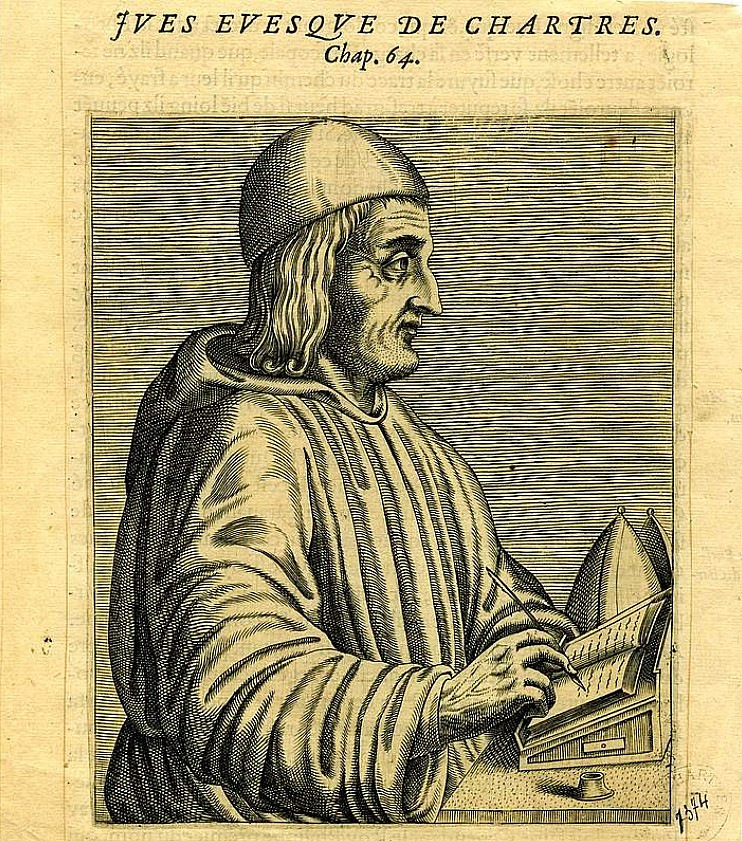
Saint of the Day – 23 May – Saint Ivo of Chartres (1040-1116) Bishop of Chartres from 1090 until his death, Confessor, renowned Scholar, Writer, Expert in Canon Law. Ivo was an important Canon Lawyer during the Investiture Crisis. He left extensive Canon writings as well as much correspondence and wonderful sermons. Born in 1040 in Beauvais, France and died on 23 December in 1116 of natural causes at Chartres. Also known as – Ives, Yves, or Yvo.Patronages – of Canon Lawyers, Lawyers. . He was Canonised on 18 December 1570 by St Pius V. Additional Memorials – 20 May and 23 December, on some Calendars.
Ivo was born of a noble family in Beauvais. From the neighbourhood of Beauvais, his native country, he went for his studies first to Paris and thence to the Abbey of Bee in Normandy, at the same time as St Anselm of Canterbury, to attend the lectures given by St Lanfranc.
In about 1080 he became, at the desire of his Bishop, Prior of the Canons of St-Quentin at Beauvais. He was then one of the best teachers in France and so prepared himself to infuse a new life into the celebrated schools of Chartres, of which City he was appointed Bishop in 1090, his predecessor, Geoffroy, having been deposed for simony.
His Episcopal government, ranged over a period of twenty-five years. No man, perhaps, is better portrayed in his writing than is Ivo in his letters and sermons – in both, he appears as a man always faithful to his duties, high-minded, full of zeal and piety, sound in his judgements, a keen jurist, straight-forward, mindful of others’ rights, devoted to the Papacy and to his country, at the same time, openly disapproving of all which he considered wrong and which IS wrong by Sacred Scripture. Very often, Ivo was consulted on Theological, Liturgical, Political and especially Canonical matters. Ivo was regarded as a moral and intellectual authority by many Prelates in northern Europe.
During his Episcopacy, he wrote the majority of his extant works, for which he later became famous and is considered among the greatest scholars of the mediaeval era.
Of his life, little more is known than may be gathered from his own letters. As Bishop, he strongly opposed Philip the First, who wished to desert Bertha, his legitimate wife and marry Bertrade of Anjou (1092) – his opposition gained him a prison cell.
In the Investiture struggle then raging in France and especially in Germany, Ivo represented the moderate party. Although he died too early to witness the final triumph of his ideas, with the Concordat of Worms (1122), his endeavours and his doctrines may be said to have paved the way for an agreement satisfactory to both sides. His views on the subject are fully expressed in several of his letters, especially those of the years 1099, 1106 and 1111. These letters are still of interest as to the question of the relationship between Church and State, the efficacy of the Sacraments administered by heretics, the sin of simony and much more.
The printed works of Ivo of Chartres may be arranged into three categories – canonical writings, letters and sermons. Some of his works had great influence and his letters are a valuable reflection of his era. Many of his letters and sermons circulated already in his lifetime and were copied widely, especially in the mid-twelfth century. The same is true for the canonical collections; they were copied frequently and used in the making of other collections.
His works are replete with treatments of charity and dispensation in a pastoral manner regarding the Holy See. He believed that caritas was the solution for sin and not harsh punishment without contrition. This theme is most evident in his Prologus, which is most often compared to the teachings of the Church Fathers than those of the scholars of his day. Paul’s message of loving one’s fellow man as one would oneself, is particularly prevalent in Ivo’s works:
“He was called to teach. His lesson was love. It was all that mattered.” Saint Ivo of Chartres (1040-1116)
Martyrs of Béziers: 20 Mercedarian Friars murdered by Huguenots for being Catholic. Martyrs. 1562 at the Mercedarian convent at Béziers, France.
Martyrs of Cappadocia: A group of Christians tortured and Martyred in the persecutions of Diocletian and Galerius. Their names and the details of their lives have not come down to us. They were crushed to death in c.303 in Cappadocia (in modern Turkey).
Martyrs of Carthage: When a civil revolt erupted in Carthage in 259 during a period of persecution by Valerian, the procurator Solon blamed it on the Christians, and began a persecution of them. We know the names and a few details about 8 of these martyrs – Donatian, Flavian, Julian, Lucius, Montanus, Primolus, Rhenus and Victorius. They were beheaded in 259 at Carthage (modern Tunis, Tunisia).
Martyrs of Mesopotamia: A group of Christians Martyred in Mesopotamia in persecutions by imperial Roman authorities. Their names and the details of their lives have not come down to us. They were suffocated over a slow fire in Mesopotamia.
Martyrs of North Africa: A group of 19 Christians Martyred together in the persecutions of the Arian Vandal King Hunneric for refusing to deny the Trinity. We know little more than a few of their names – Dionysius, Julian, Lucius, Paul and Quintian. c430.
Quote/s of the Day – 22 May – St Rita of Cascia (1386-1457) Mother, Widow, Stigmatist, Consecrated Religious, Mystic
Saint Rita (1381-1457) was born at Cascia in Umbria, Italy. At the age of twelve she was forced to marry an ill-tempered nobleman, who was a heavy cross to her for many years. After his death she joined the Augustinian nuns. Our Lord sealed His love for her by piercing her brow with a thorn from His sacred Crown. Saint Rita is almost without equal as the shining model of the unmarried, of wives and mothers and of religious. Her Patronage extends to Impossible Causes and Wives in Abusive Marriages.
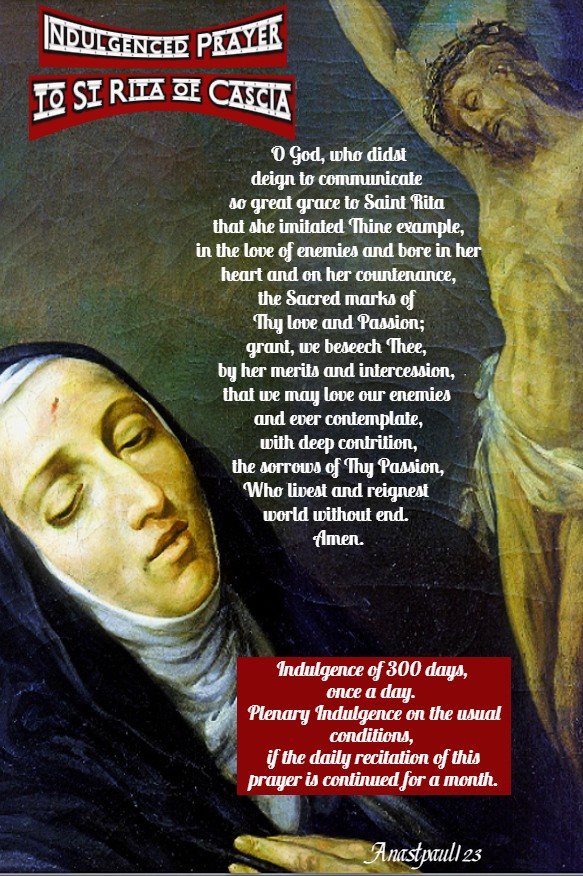
Indulgenced Prayer to St Rita
O God, who didst deign to communicate so great grace to Saint Rita that she imitated Thine example, in the love of enemies and bore in her heart and on her countenance, the Sacred marks of Thy love and Passion; grant, we beseech Thee, by her merits and intercession, that we may love our enemies and ever contemplate, with deep contrition, the sorrows of Thy Passion, Who livest and reignest world without end. Amen.
Indulgence of 300 days, once a day. Plenary Indulgence on the usual conditions, if the daily recitation of this prayer is continued for a month.
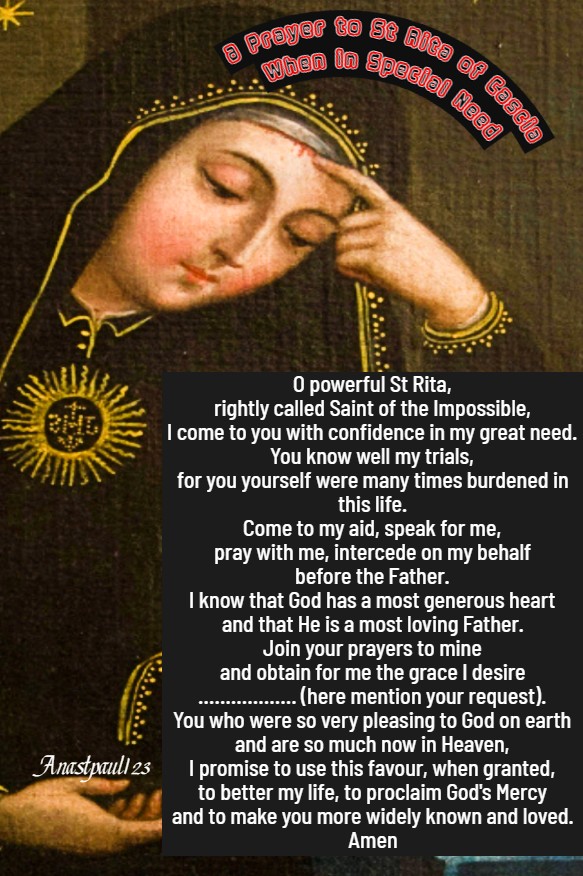
A Prayer to St Rita When in Special Need
O powerful St Rita, rightly called Saint of the Impossible, I come to you with confidence in my great need. You know well my trials, for you yourself were many times burdened in this life. Come to my aid, speak for me, pray with me, intercede on my behalf before the Father. I know that God has a most generous heart and that He is a most loving Father. Join your prayers to mine and obtain for me the grace I desire ……………… (here mention your request). You who were so very pleasing to God on earth and are so much now in Heaven, I promise to use this favour, when granted, to better my life, to proclaim God’s Mercy and to make you more widely known and loved. Amen.
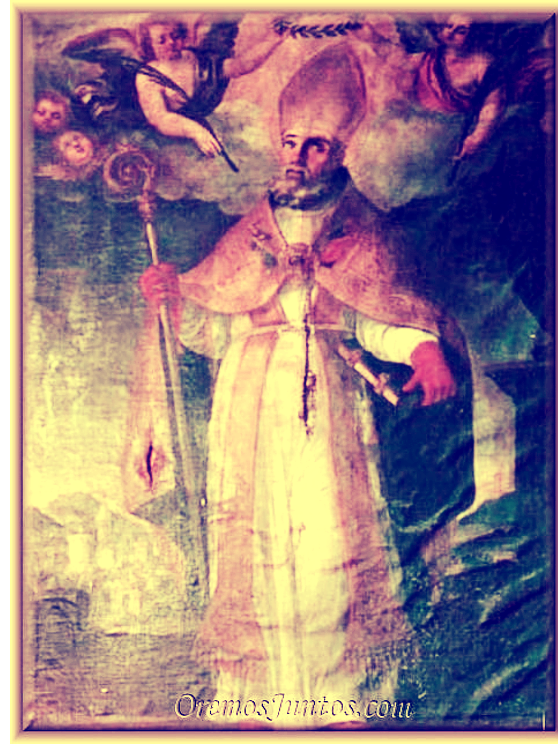
Saint of the Day – 22 May – Saint Fulgentius of Otricoli (Mid 6th Century) Bishop., Miracle-worker, remembered by St Gregory the Great in his Dialogues. Died in the mid 6th Century in Otricoli, Terni, Italy of natural causes. Also known as – Fulgenzio, Fulgencio.
In the Town of Otricoli in the Province of Terni, an ancient inscription is preserved, which recalls its Bishop, Fulgentius, who found the body of the holy Martyr Victor and built an Altar for it. The said epigraph is still preserved in the collegiate Church of St Maria, which already existed in the 12th Century.
Fulgentius, the Bishop of Otricoli, who is remembered by St Gregory the Great (535-604), in his ‘Dialogues.’ The holy Pope reports a miracle worked by Fulgentius, told to him by an old cleric, still alive when he wrote his work about him.
Totila, King of the Ostrogoths from 541 to 552, in his descent into Italy, defeating the Byzantines, passed through Otricoli and here he received some gifts from the Bishop Fulgentius, who thus tried to mitigate the insane fury of the barbarian King, so that he would spare the population of that City.
But Totila, despising the homage, had the Bishop placed in custody to then submit him to trial/ Those guarding him thus placed him within a circle traced on the ground, forbidding him to go beyond it. The Bishop suffered from the heat of the scorching sun, from which he could not shelte. Then the weather changed and it began to rain heavily but the place where Fulgentius was sitting remained dry!
This fact was reported to Totila, who then transformed his hatred into admiration.
This miracle has been told and depicted in all the hagiographic works which have come down to us. His feast day falls on 22 May.
St Boethian of Pierrepont St Castus the Martyr St Conall of Inniscoel Bl Diego de Baja Bl Dionisio Senmartin St Emilius the Martyr St Faustinus the Martyr St Fulgentius of Otricoli (Mid 6th Century) Bishop Bl Fulk of Castrofurli Bl Giacomo Soler Bl Giusto Samper St Helen of Auxerre
St Lupo of Limoges St Marcian of Ravenna St Margaret of Hulme Bl Pedro of the Assumption St Quiteria St Romanus of Subiaco St Timothy the Martyr St Venustus the Martyr
Saint of the Day – 21 May – Saint Collen of Denbighshire (Died c600) Welsh Abbot and Founder of a Monastery in Wa;es, Hermit. Also known as – Gollen, Colan, Gollen.
Collen was a Monk in Wales, Brittany and Cornwall. It is believedthat he travelled to Rome too. Collen lived as a Hermit in a small cave near Glastonbury Abbey.
He became the Abbot of a Monastery in Wales. The Welsh town of Llangollen (Collen’s Enclosure), is named for him, indicating that it formed around his hermitage and Church.
Collen was at the right time and place to be a transitional figure in the folklore of the region. There are tales of him slaying a Welsh giantess to save the people of Llangollen (the Church there still has an image of him in this triumph and of fighting a duel with a Saracen in front of the Pope. Stories have him being taken to the land of faerie but always as a Christian and always showing the power of God over the old ways.
Legend says that Collen was once invited to dine with the King of the Fairies; some say he was asked by a man, some say by a fairy and some say by a talking peacock; I cannot say. The Saint declined three time but finally accepted. Although the king appeared to live in an enormous castle, wealthy and fair, surrounded by courtiers and servants and seated before a table groaning under the weight of good eatings. Collen, however, knew him for the lying spirit he was. The Saint reminded the king of the fate of the Godless, then sprinkled holy water in all directions – in an instant, there was nothing left but an angry, demonic bird, flying away from the scene!
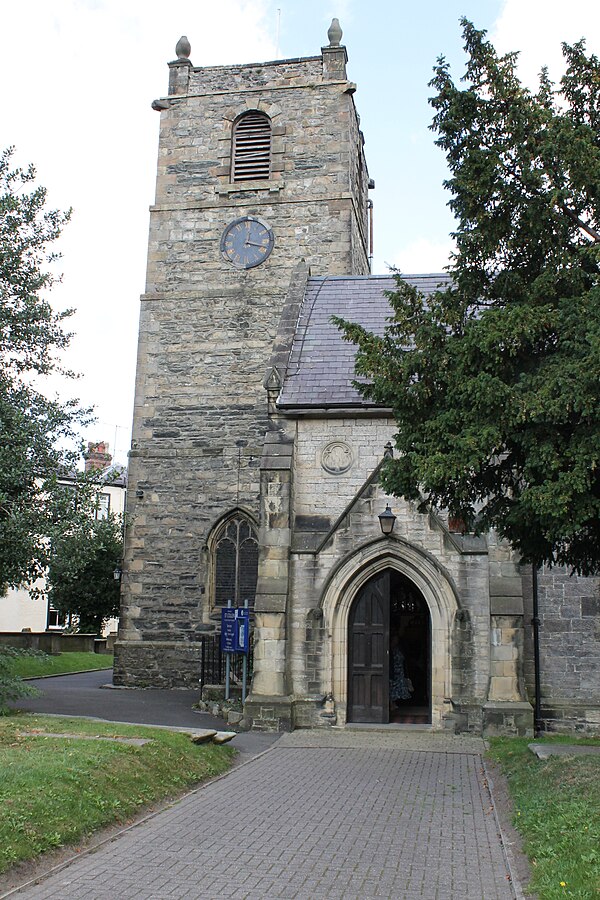
Llangollen is internationally famous as a beauty spot, for its Eisteddfod and the 13th Century bridge, which is reckoned as one the Seven Wonders of Wales. TheParish Church has been much restored over the Centuries but it still stands on the site of the Saint’s tomb. In all the Welsh Calendars, St.Collen is commemorated on 21 May but in Cornwall his Parish keeps festival on the Sunday after the first Thursday in May. At Langolen in Brittany, his Feast is held on the second Sunday in August.
St Polieuctus of Caesarea St Polius of Mauretania St Restituta of Corsica St Rodron of Bèze St Secundinus of Cordova St Secundus of Alexandria St Serapion the Sindonite St Sifrard of Bèze Bl Silao St Synesius St Theobald of Vienne St Theopompus St Timothy of Mauretania St Valens of Auxerre St Vales St Victorius of Caesarea
Martyrs of Egypt: Large number of Bishops, Priests, Deacons and lay people banished when the Arian heretics seized the diocese of Alexandria, Egypt in 357 and drove out Saint Athanasius and other orthodox Christians. Many were old, many infirm and many, many died of abuse and privations while on the road and in the wilderness. Very few survived to return to their homes in 361 when Julian the Apostate recalled all Christians and then many of those later died in the persecutions of Julian.
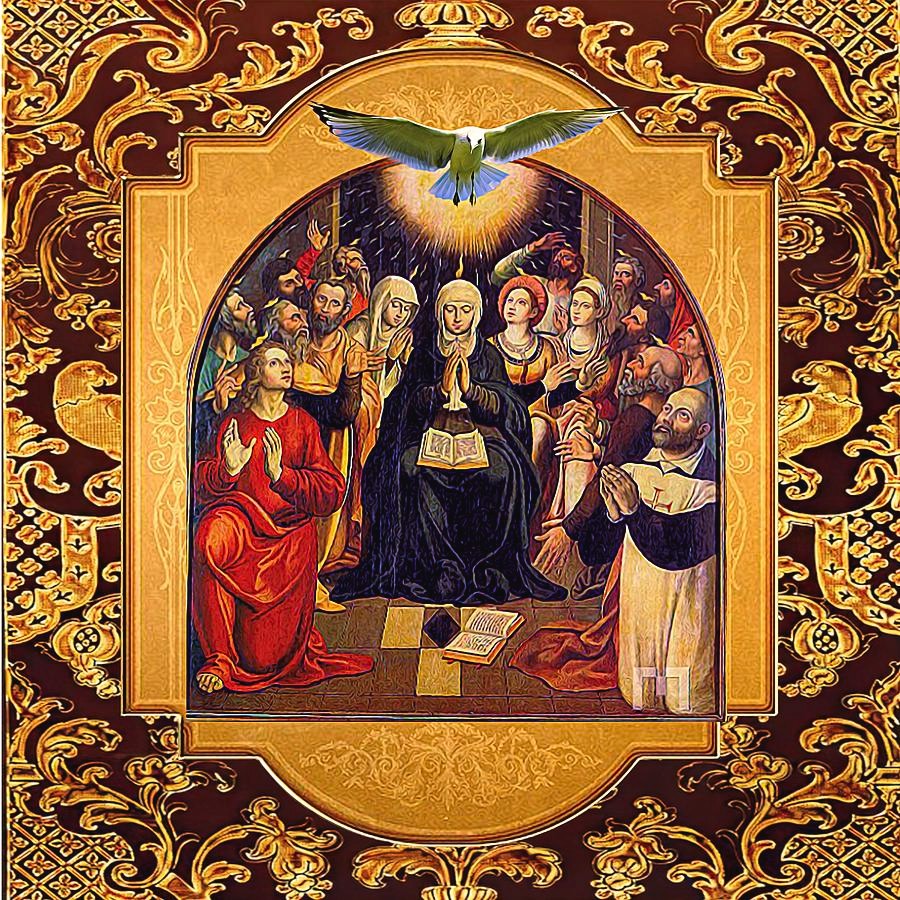
Martyrs of Pentecost in Alexandria: An unspecified number of Christian clerics and lay people who, on Pentecost in 338, were rounded up by order of the Arian bishop and Emperor Constantius and were either killed, or exiled, for refusing to accept Arian teachings. 339 in Alexandria, Egypt.
Saint of the Day – 20 May – St Plautilla of Rome (Died 67) A Roman Widow, Mother of St Flavia Domitilla. She was Baptised by St Peter and is believed to have seen the Martyrdom of St Paul.
The Roman Martyrology reads today: “At Rome, St Plautilla, wife of an ex-Consul and mother of the blessed Flavia Domitilla. She was Baptised by the Apostle, St Peter and after giving the example of all virtues, rested in peace.”
A Roman widow, reputedly the mother of St. Flavia Domitilla and the wife of Emperor Vespasian, who was exiled by Emperor Domitian for being a Christian.
It is, however, unlikely that Plautilla was Flavia’s mother, as history records her mother to be Flavia Domitilla, wife of Vespasian.
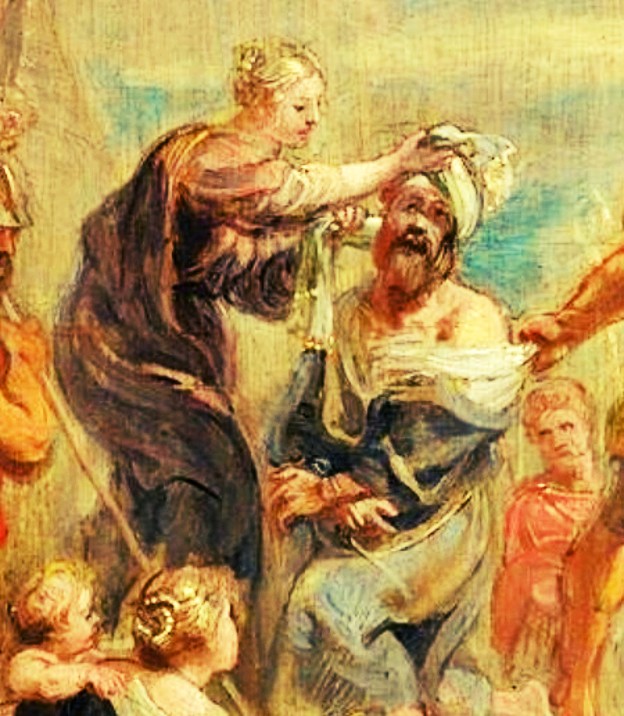
Our Saint is recorded as being converted and Baptised by St Peter and assisting St Paul during his Martyrdom. The image above shows Plautilla winding her veil around St Paul in The Martyrdom of Saint Paul by Peter Paul Ruben.
St Abercius Bl Albert of Bologna St Alexander of Edessa St Althryda St Anastasius of Brescia St Aquila of Egypt Bl Arnaldo Serra and Companions St Asterius of Edessa St Austregisilus of Bourges St Basilla of Rome St Baudelius of Nîmes St Codrato
Bl Guy de Gherardesca St Helena St Hilary of Toulouse St Lucifer of Caglieri St Marcello St Plautilla of Rome (Died 67) A Roman Widow, Mother of St Flavia Domitilla. She was Baptised by St Peter and is believed to have seen the Martyrdom of St Paul. St Talaleo of Egea St Thalalaeus of Edessa St Theodore of Pavia
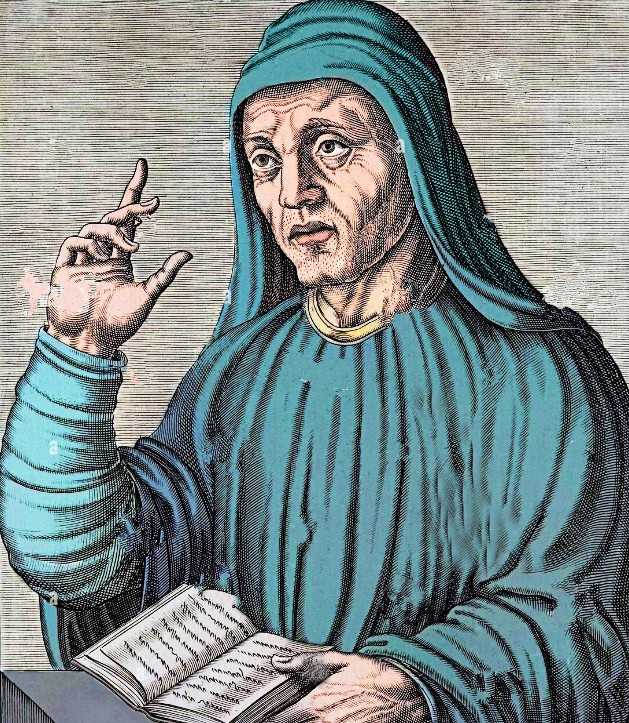
Saint of the Day – 19 May – Saint Alcuin of York (c735-804) “The Schoolmaster of Europe.” Deacon, Confessor, Scholar, Teacher, Reformer, Defender of Catholic Doctrine, Founder of educational institutions in Monasteries and Cathedral Chapters, renowned Poet, Theologian and Writer. Accrdited with the the invention of cursive script, Alcuin established Scriptoria dedicated to copying and preserving ancient manuscripts, both pagan and Christian- that we have as much as we do, of the writings of classical Roman authors, is largely due to Alcuin and his scribes. Alcuin a;so revised and organised the Latin liturgy, preserved ancient prayers and helped develop plain chant. He advocated the Doctrine that the Holy Ghost proceeds from the Father and the Son jointly. Unfortunately, the East resented Blessed Charlemagne‘s assumption of the title of Holy Roman Emperor; this hardened their opposition to the Doctrine and contributed to the rift between East and West. Born in c735 at York, England and died on 19 May 804 at Tours, France of natural causes.
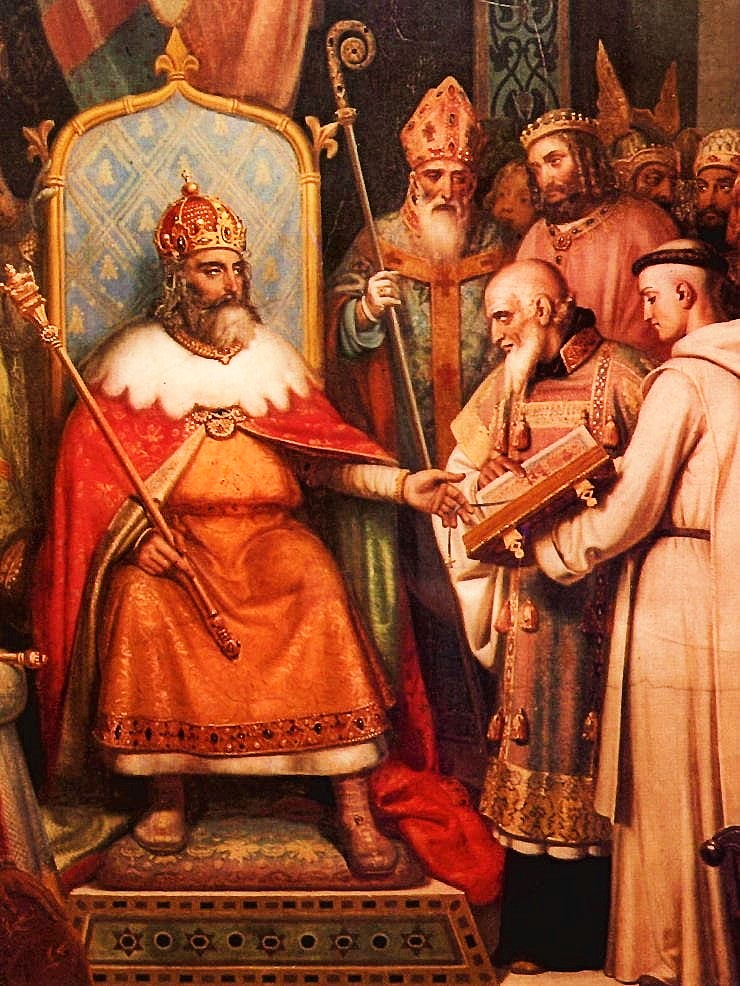
St Alcuin and King Charlemagne
At the invitation of the Blessed Charlemagne, he became a leading scholar and teacher at the Carolingian Court, where he remained a figure in the 780s and 790s. Before that, he was also a Court Chancellor in Aachen.
“The most learned man anywhere to be found,”according to Einhard’s Life of Charlemagne. This bold statement from Einhard, the Frankish scholar and Courtier to Charlemagne, is a touching assessment of Alcuin of York’s reach academically, spiritually and culturally. Alcuin is considered among the most important intellectual architects of the Carolingian Renaissance. Among his pupils were many of the dominant intellectuals of the era.
In the last half of the eighth century, Charlemagne presided over a revival of learning in the Frankish empire. Alcuin of York, a scholar Saint, was largely responsible for generating this cultural renewal – now called the Carolingian Renaissance. In 767, Alcuin became the Rector of the Minster school at York, where he had studied. An innovative educator, he improved the school, made its library one of England’s best and attracted outstanding students.
St Alcuin conferring with Charlemagne
Charlemagne brought Alcuin to Aachen in 781 and appointed him as his Ecclesiastical and Educational Adviser. Later, although Alcuin was not a Priest and probably was not a Monk, Charlemagne installed him as the Abbot of the Monastery of St Martin at Tours. As Head of the Palace school, Alcuin elevated the culture at Court and sponsored educational enterprises throughout the realm. And, under his guidance, the Abbey at Tours became famous as a centre of learning. Alcuin also won his reputation as a Theologian and Liturgist. He wrote and spoke against the Adoptionists, heretics who claimed that Jesus was God’s adopted son. And Alcuin conducted a Liturgical reform which left its mark on the Roman style of worship. He revised the Roman Lectionary, the book of readings used in worship and put together a new Sacramentary, the book of formulas for Baptism and the other Sacraments.
He also wrote verse, textbooks and innumerable letters. As Adviser to Charlemagne, he played a special role in the education of the Royal family. As the following letter to one of Charlemagne’s sons shows, he held his heirs to a high Christian ideal:
“I rejoice my dearest son, in your devoted goodwill regarding both your generous almsgiving and your gentle rule. All this surely pleases God and deserves the mercy of His perpetual blessing. Always work to the utmost for the honour of God Almighty. In goodness and piety, follow the example of your most excellent father, so that by Christ’s Divine Clemency, you may inherit is blessings.
Listen faithfully to the poor and judge their cause with absolute justice. Do not permit the judges under you to judge for presents and gifts. For Holy Scripture says, gifts blind the hearts of the wise and subvert the words of the just. Hold in honour those who are true servants of God, for some come in sheep’s clothing but inwardly, are ravening wolves. Be prudent in thought and cautious in speech. Always set your hope on God, for He never fails them whose hope is set on Him. ”
St Alcuin with Emperor Charlemagne
Many of the ideas discussed within the Court found themselves in Alcuin’s correspondence to Charlemagne, to other members of the Court and those he maintained contact with in England. His letters express his interest in a range of pressing Theological and social issues of the day. In total, he left behind around 300 Latin letters which are invaluable as a source for this early medieval period. In one particular correspondence he discusses his discovery of the sad fate of Lindisfarne’s status as a cultural and religious sanctuary, altered forever by the Viking raid in 793. He expressed his great sorrow and analysed the event as God’s punishment for the behaviour of the people of Northumbria.
For his vast efforts as an educational reformer, history recognises Alcuin as “The Schoolmaster of Europe.” He died at the Abbey of Tours in 804, some 10 years before the Emperor and was buried at St Martin’s Church under an Epitaph which partly read:
“Dust, worms and ashes now … Alcuin my name, Wisdom I always loved, Pray, reader, for my soul.”
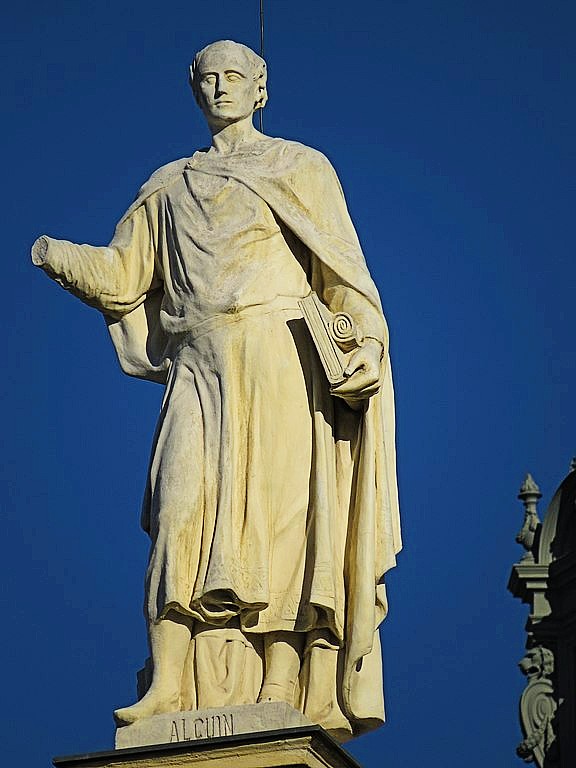
St Alcuin of York (c735-804) Deacon, Confessor, Teacher, Founder of educational institutions in Monasteries and Cathedral Chapters. Accredited with the the invention of cursive script.
St Calocerus of Rome St Crispin of Viterbo St Cyriaca of Nicomedia and Companions St Cyril of Trèves St Dunstan of Canterbury St Evonio of Auvergne St Hadulph of Saint-Vaast Bl Humiliana de’ Cerchi
Saint of the Day – 18 May – Blessed Nicholas Denise of Beuzeville OFM (Died 1509) Priest, renowned Preacher and Friar of the Order of Friars Minor, Vicar General if tge Diocese of Coutance, France. The Blessed Father Nicholas became a noted preacher in the region, and many of his sermons and theological writings have survived.
We have no information of Nicholas’ early life besides knowing that he had received a very good education. He became a Canon of the Cathedral of Coutance and then was appointed as the Vicar General ar of Bishop Goffred.
Finding himself increasingly drawn to the life of St Francis, he abandoned his role under Bishop of Coutance in order to follow in the footsteps of Saint Francis, wearing the Habit of the Minor Friars, in the Convent of Valognes.
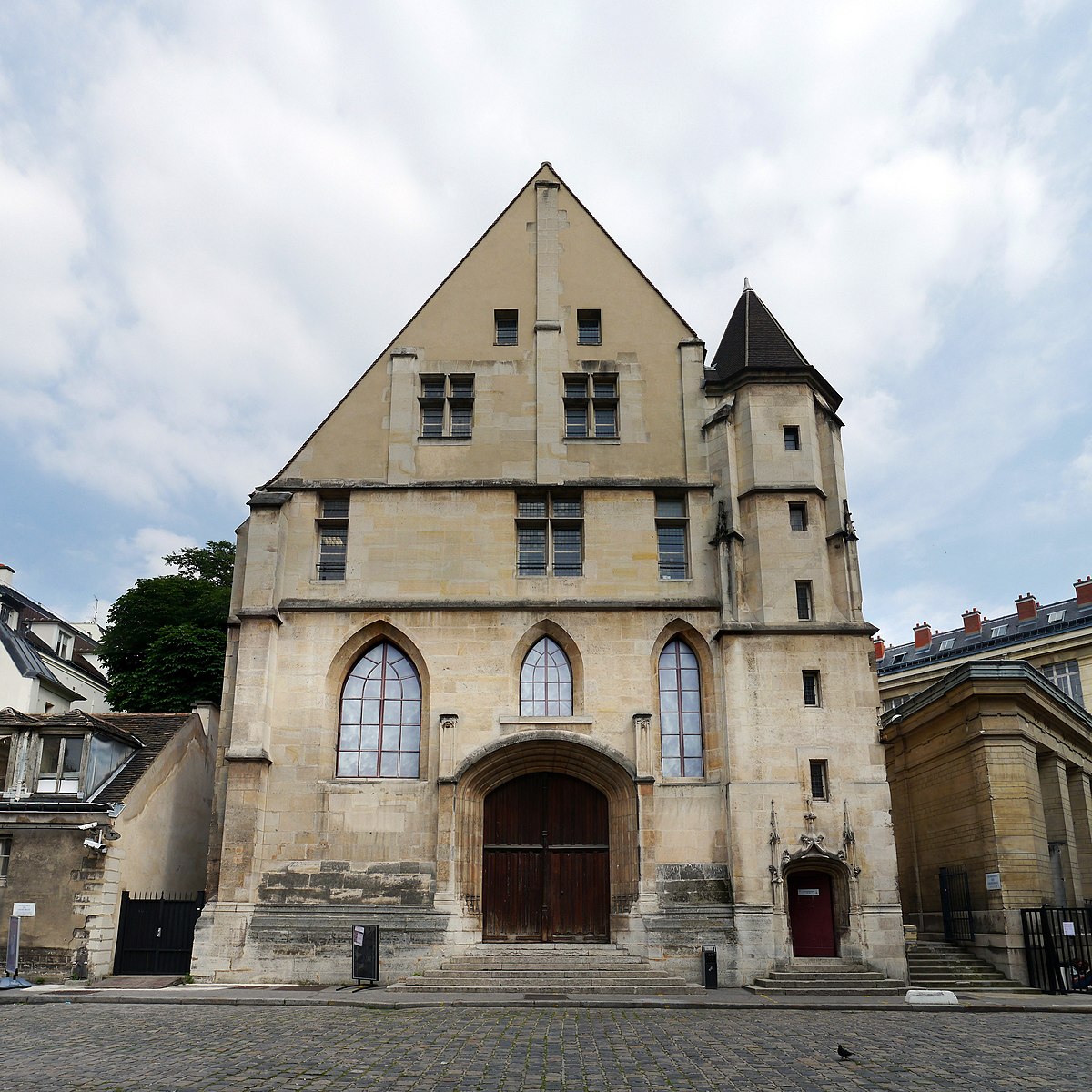
A Franciscan Convent in Paris
In the congregation he became the Vicar-Provincial of the Parisian Province and did not support General Egidius Delphin, in his questionable project of re-unification of the Franciscan Order.
An educated man and a famous preacher, he was considered a saint by all. He died in 1509, while holding the position of Guardian of the Convent of Rouen. Upon his death, his tomb became the object of great demonstrations of popular veneration.
Various sermons and various theological works by Blessed Nicholas are preserved. In the Franciscan Martyrologies, the feast and remembrance for Father Nicola Denise of Beuzeville is fixed for today, 18 May.
St Felix of Spoleto St Feredarius of Iona St Merililaun Blessed Nicholas Denise of Beuzeville OFM (Died 1509) St Ortasio of Alexandria St Potamon of Heraclea St Serapione of Alexandria
Martyrs of Ancyra – 8 Saints: Seven nuns Martyred in the persecutions of Diocletian and the innkeeper who was executed for giving them a Christian burial: Alexandria, Claudia, Euphrasia, Julitta, Matrona, Phaina, Thecusa and Theodatus. c.304 in Ancyra, Galatia (in modern Turkey).
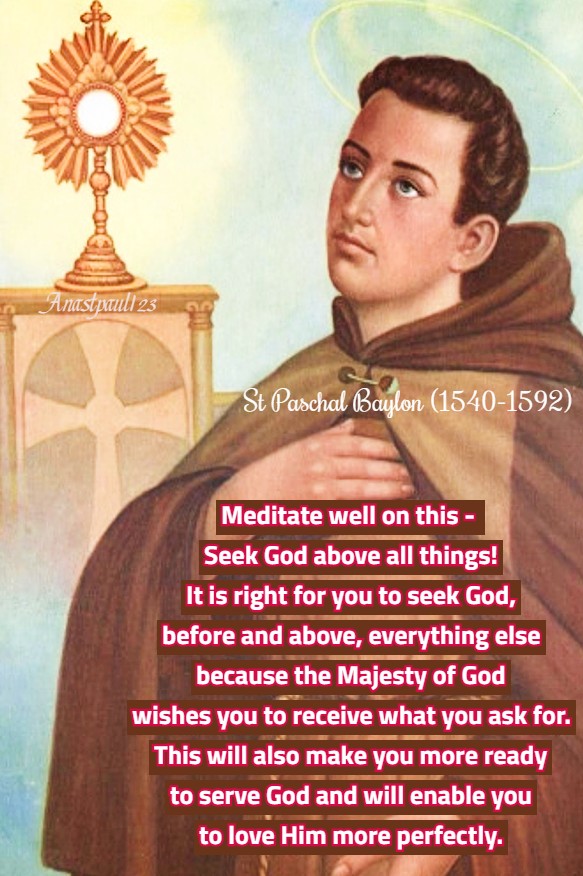
Quote/s of the Day – 17 May – The Memorial of St Paschal Baylon OFM (1540-1592) Confessor, “Seraph of the Eucharist,” “Saint of the Blessed Sacrament,” “Servant of the Blessed Sacrament.” Franciscan Lay Brother.
“Meditate well on this – Seek God above all things! It is right for you to seek God, before and above, everything else because the Majesty of God wishes you to receive what you ask for. This will also make you more ready to serve God and will enable you to love Him more perfectly.”
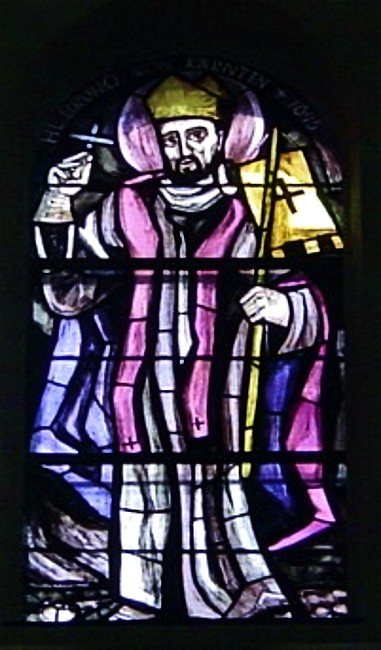
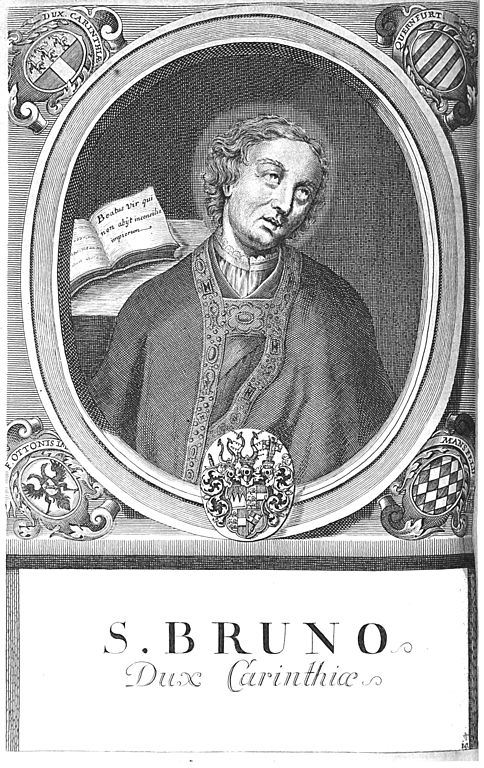
Saint of the Day – 17 May – St Bruno of Würzburg (c1005-1045) Bishop and Confessor, Prince, Imperial Chancellor of Italy from 1027 to 1034.
Bruno, son of Conrad I of Carinthia and cousin of Emperor Conrad II, was probably educated in Salzburg. He was a member of the Royal Chapel, the Imperial Chancellor of Italy and an intimate adviser of Conrad II and Emperor Henry III, before being elected Bishop of Würzburg. He also accompanied Henry on his second Hungarian Campaign.
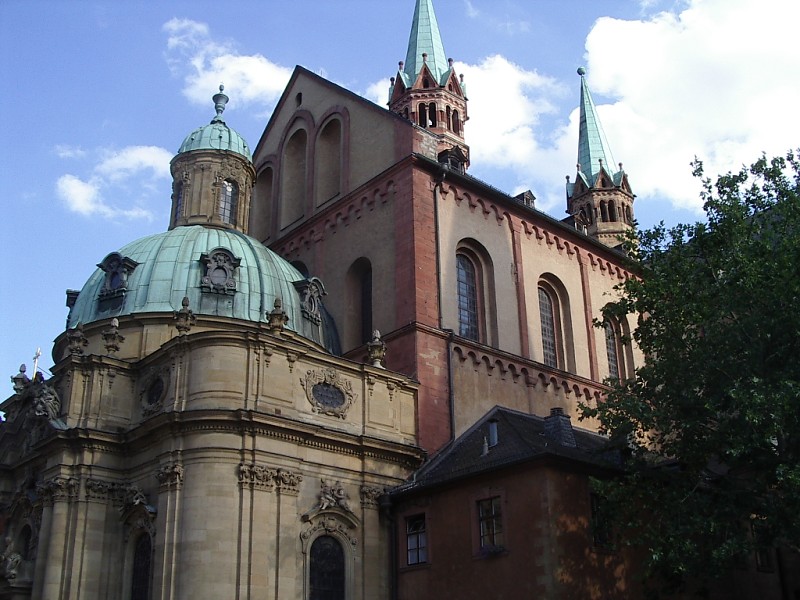
Bruno rebuilt the existing Cathedral, constructed many new churches and improved education, to which purpose he composed a well-known exegesis on the Psalms to which he appended an analysis of ten Biblical hymns, consisting of extracts from the writings of the Church Fathers. Under his direction the Cathedral school flourished.
In 1040 Bruno began the construction of Würzburg Cathedral. The Consecration of the Cathedral on 16 June 1045 was combined with his burial. Bruno died accidentally, en route to Hungary with Henry III and was buried in Würzburg Cathedral crypt. Below is the interior and exterior of the Cathedral.
His cult spread in Germany, and though never formally Canonised, he appears in the Roman Martyrology of 1616.
St Madron of Cornwall St Maildulf of Malmesbury St Maw
St Paul of Noviodunum Bl Peter Lieou St Rasso of Grafrath St Restituta of Carthage St Silaus of Lucca St Solochanus of Chalcedon St Thethmar St Victor Roma
Martyrs of Alexandria – 3 Saints: Three Christians Martyred together; no details about them have survived except their names: Adrio, Basilla and Victor. 4th century Alexandria, Egypt.
Martyrs of Nyon: A group of Christians Martyred together in the persecutions of Diocletian. We know little more than three of their names: Aquilinus, Heradius and Paul. 303 at Noyon, Switzerland.
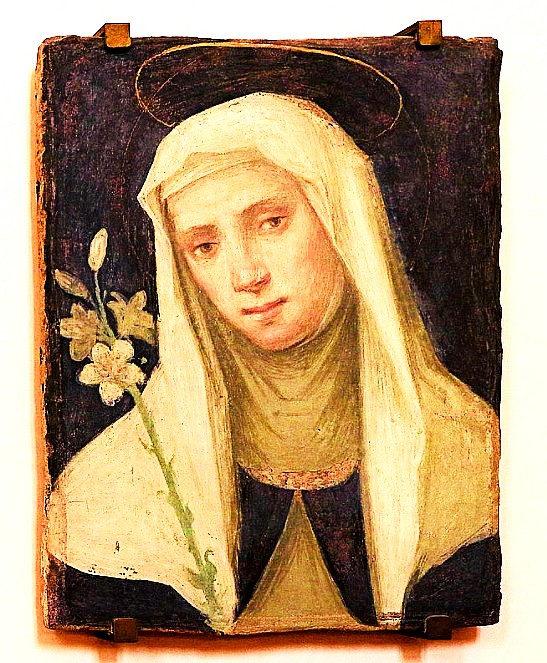
Quote/s of the Day –30 April – Prayers by St Catherine of Siena (1347-1380)
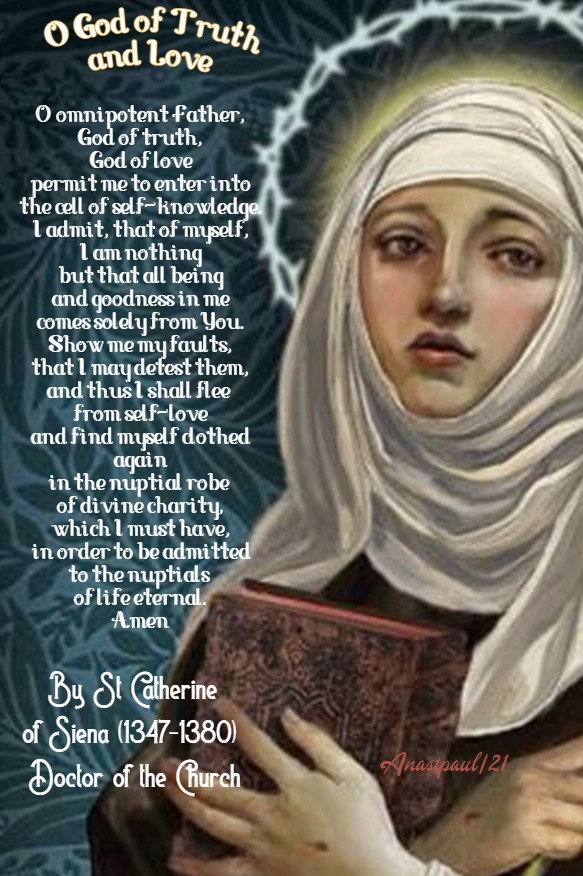
O God of Truth and Love
O omnipotent Father, God of truth, God of love permit me to enter into the cell of self-knowledge. I admit, that of myself, I am nothing but that all being and goodness in me comes solely from You. Show me my faults, that I may detest them, and thus I shall flee from self-love and find myself clothed again in the nuptial robe of divine charity, which I must have, in order to be admitted to the nuptials of life eternal. Amen
Holy Trinity, Holy Love
Holy Spirit, come into my heart; draw it to Thee by Thy power, O my God, and grant me charity with filial fear. Preserve me, O beautiful love, from every evil thought, warm me, inflame me with Thy dear love and every pain will seem light to me. My Father, my sweet Lord, help me in all my actions. Jesus, love, Jesus, love. Amen.
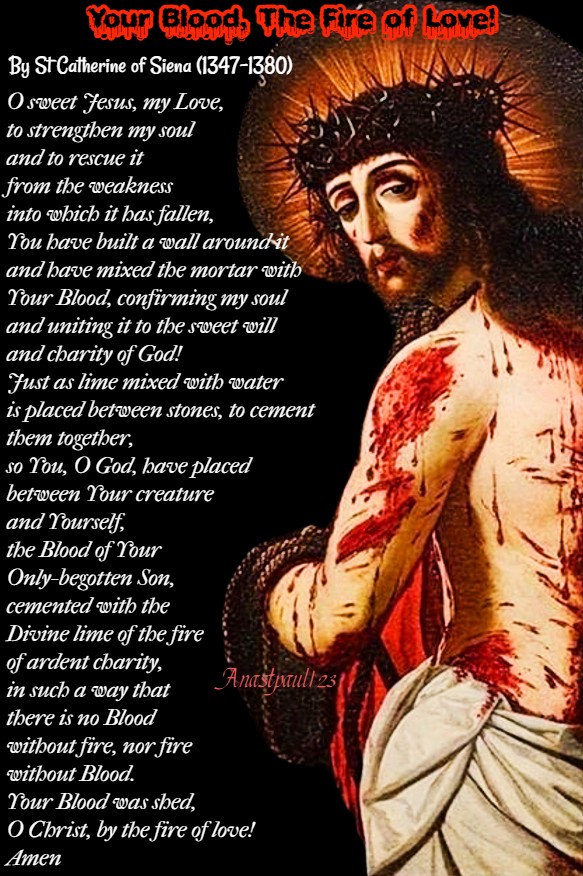
Your Blood, The Fire of Love!
O sweet Jesus, my Love, to strengthen my soul and to rescue it from the weakness into which it has fallen, You have built a wall around it and have mixed the mortar with Your Blood, confirming my soul and uniting it to the sweet will and charity of God! Just as lime mixed with water is placed between stones, to cement them together, so You, O God, have placed between Your creature and Yourself, the Blood of Your Only-begotten Son, cemented with the Divine lime of the fire of ardent charity, in such a way that there is no Blood without fire, nor fire without Blood. Your Blood was shed, O Christ, by the fire of love! Amen
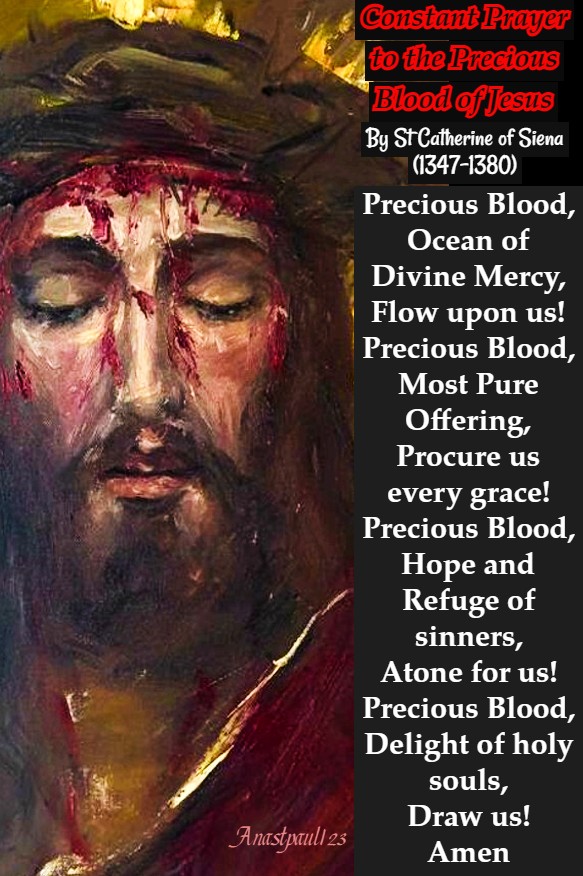
Constant Prayer to the Precious Blood of Jesus
Precious Blood, Ocean of Divine Mercy, Flow upon us! Precious Blood, Most Pure Offering, Procure us every grace! Precious Blood, Hope and Refuge of sinners, Atone for us! Precious Blood, Delight of holy souls, Draw us! Amen
Saint of the Day – 30 April – St Catherine of Siena OP (1347-1380) Virgin. Revisiting St Catherine with Fr Weninger.
St Catherine of Sienna, Virgin By Fr Francis Xavier Weninger SJ (1805-1888)
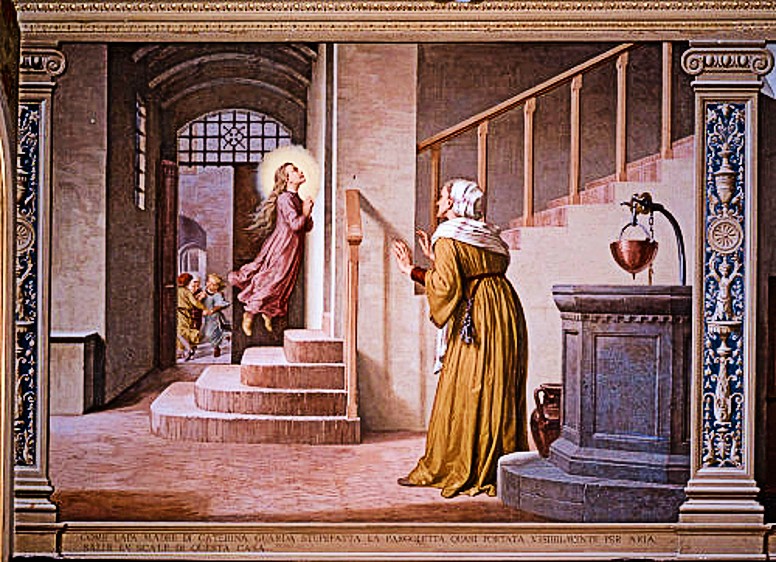
Sienna, in the Tuscan District, is the favoured place where, in 1347, Caterina / Catherine, first saw the light of this world. Her life from her childhood, was a continual exercise of the choicest virtues but, at the same time, a perpetual communication of Divine Grace. When scarcely five years of age, she was called “the little Saint” on account of her quietness and her love of prayer. Already, at that time, she greeted the Virgin Mother upon every step of the staircase with the words of the Angels: “Ave Maria!” When six years old, our Lord appeared to her with the Apostles Peter, Paul and John, together with St Dominic, looked tenderly at her and gave His blessing. This was the beginning of many and extraordinary visions with which the holy virgin was graced until her death. Her heart from this time was filled with intense love of God. She read most carefully the lives of the Saints and endeavoured to follow their example. In her seventh year she Consecrated her virginity to God. Her only pleasure was solitude, prayer, work and self-immolation.
Catherine’s Mother Sees Her Daughter Climbing the Stairs Suspended in the Air, by Alessandro Franchi and Gaetano Marinelli
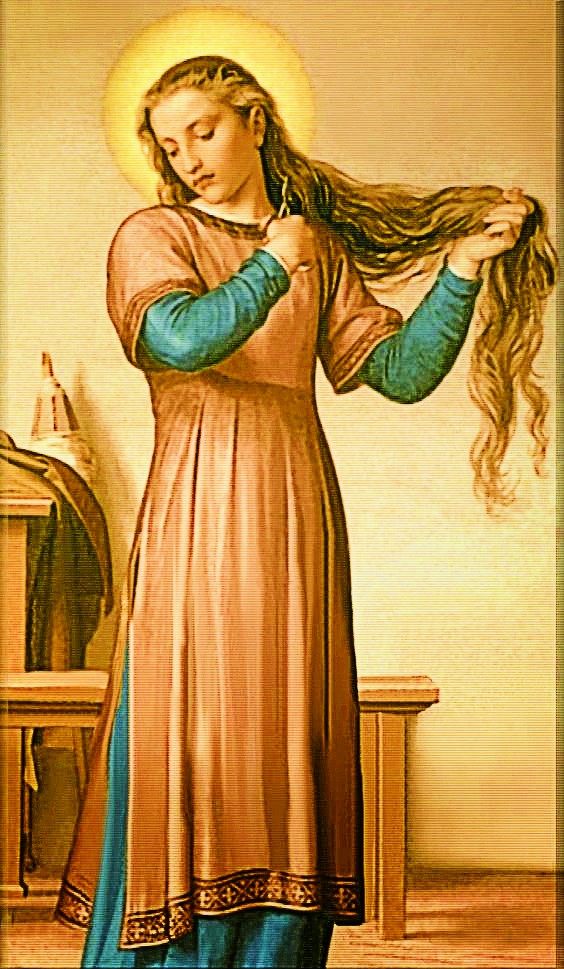
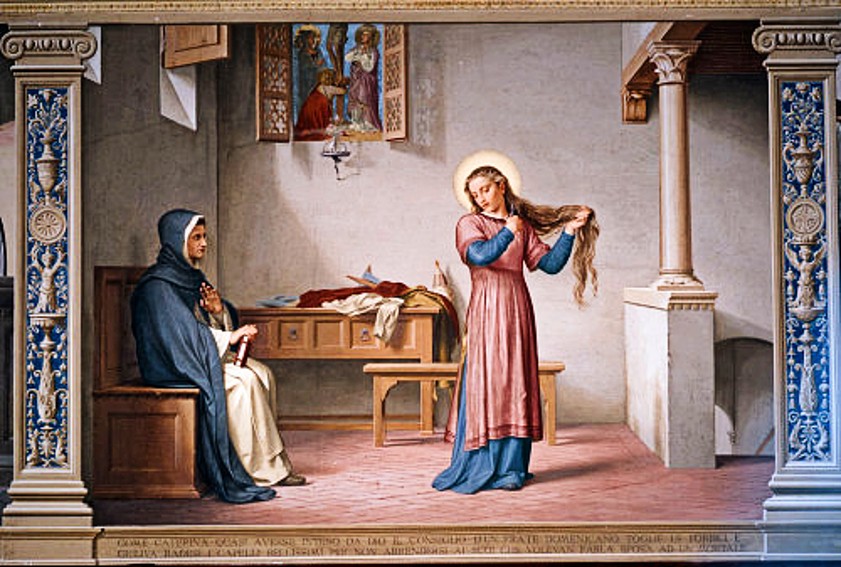
Persuaded by her sister, she once began to pay more attention to her dresses and to curl her hair after the prevailing fashion of the world. This lasted, however, only a short while, for she became aware, during her prayers, how much God was displeased with such vanities and how long her pious sister would have to suffer, on account of it in purgatory. Hencfprward, she refrained from it and repented of her folly, as long as she lived. Her parents desired her to marry but she replied: “I am already wedded to a most noble Spouse and shall never bestow my love on a human being” and cutting off her hair, she covered her head with a veil.
Catherine Cutting Off her Long Hair, by Alessandro Franchi and Gaetano Marinelli
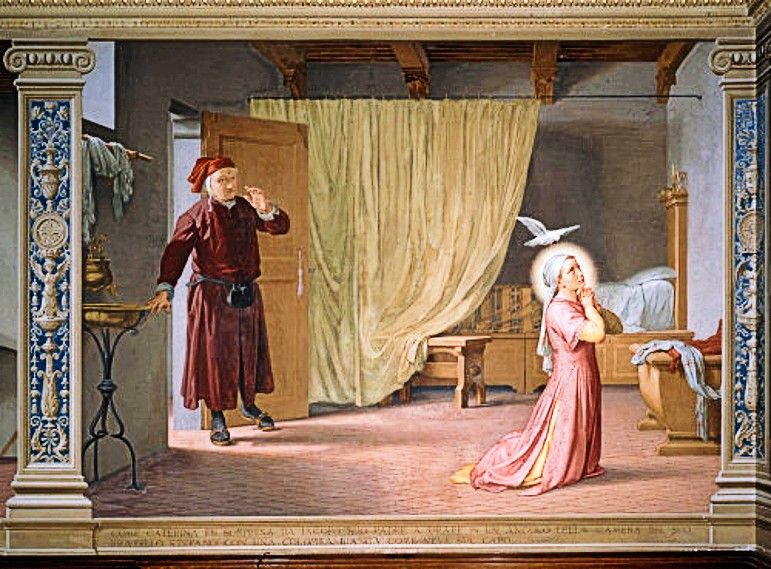
To drive all thoughts of entering a Convent out of her mind, her parents burdened her with the entire care of the house, as well as the most difficult work, so that no leisure was left her, either for prayer, or devotional reading. This was at first a sore trial to her,but she was told by Chris, to build a cell in her heart, where, in the midst of her employments, she might pray, namely, by offering her work to God and by pious ejaculations. Following these directions of Christ, her soul became filled with sweet consolation and she manifested, under the greatest drudgery, a most extraordinary happiness. This caused her parents to change their resolution and they permitted her to live according to her vocation. Hence, she now began to live in a more retired manner and with more austerity than before.
Catherine’s Father Finds Her Praying with the Dove of the Holy Ghost Above her Head,by Alessandro Franchi and Gaetano Marinelli
Bread, herbs and water were her only nourishment, two bare boards her bed. She was girded by a pointed chain which she continued to wear until a few hours before her death, when at the instance of her Confessor, she laid it aside. She only allowed herself one or two hours of sleep during the nigh,; the remainder she employed in prayer or in the contemplation of the Divine Mysteries. She scourged herself three times daily, sometimes until she drew blood. These austerities she observed from her eighteenth year until her death. After she had been received into the Third Order of St Dominic, she aspired most fervently after sanctification but Satan endeavoured, with the most loathsome imaginings and temptations, to trouble the repose of her soul and pervert her thoughts. Catherine, however, increasing her penance and her prayers, withstood him bravely but still, without feeling more relieved or more quiet. At length, when, one day, Christ appeared to her, she said: “O Lord, why hast Thou forsaken me?” “I was in thy heart,” answered the Saviour. “What” said she, “hast Thou been in my heart which was filled with such abominable thoughts? Hast thou then consented to them?!” “Hast thou been pleased with them?” asked Christ. “Oh, no!” replied Catherine, “it was most painful to me to be afflicted with them.” “And this was thy merit” said Christ “I have seen how thou hast battled and I have assisted thee.“ Thus ended her temptations which were succeeded by the most comforting visions of our Lord, His Blessed Mother and other Saints, the number of which is known only to God.
She frequently saw Christ as a lovely little Child in the holy Sacrament, for which Divine Mystery she entertained the most fervent devotion. She partook of it almost daily but always with renewed piety and shedding a flood of tears. It was very remarkable that the receiving of it preserved also her temporal life, for it is a fact that one year she partook of nothing else but the Blessed Eucharist from Ash Wednesday until Ascension day. When she was required, as an act of obedience, to take some food, she suffered so greatly by so doing that the request was not repeated.
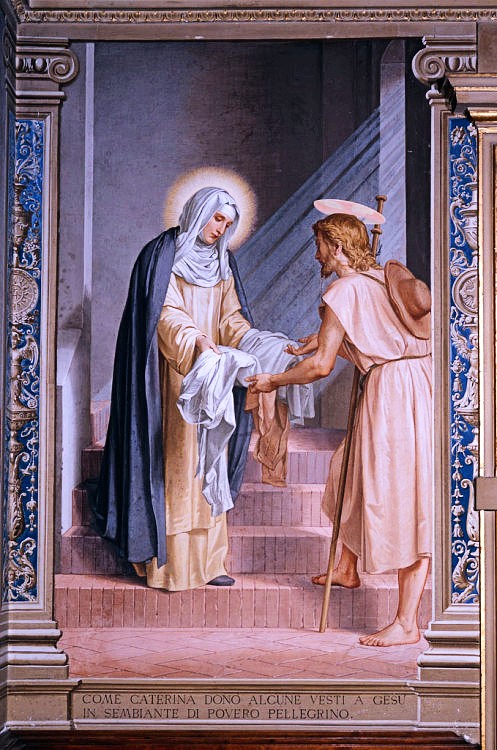
After some time, Christ commanded her to be kind and charitable to her neighbours and she began to nurse the sick with an indescribable loving care. Among others, she attended to two women, of whom one was afflicted with leprosy, the other with cancer. In nursing them, she evinced the most perfect self-control. She pressed the offensive matter out of the sores and cleansed them with water. Feeling disgust, she drank the purulent matter which she had kept in a vessel mixed with water, saying to her Confessor that she had never tasted anything more agreeable. Christ appeared to her on the following night, praised her self-mortification and rewarded her with great interior peace and tranquillity.
Catherine Gives her Cloak to Jesus in the Guise of a Poor Man, by Alessandro Franchi and Gaetano Marinelli
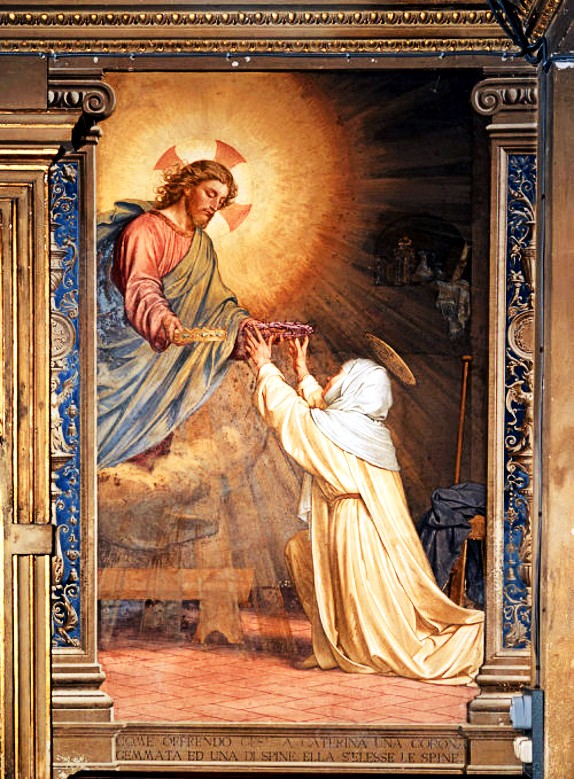
It was an awful cross for her to bear, when this very woman, whom she had so tenderly nursed, instigated by Satan, not only complained of her but slandered her in the whole City. But Christ visited her and presenting to her two crowns, one of gold, the other of thorns, said: “Which of these two do you desire?” Catherine answered: “Lord, I desire to resemble Thee in this life and it is a joy to me to suffer as Thou didst:” and with these words she took the crown of thorns and pressed it upon her head. Christ, upon this, commanded her to continue her charity towards the sick which she did with unprecedented patience and kindness.
Jesus Offering Catherine a Crown of Gold and a Crown of Thorns, by Alessandro Franchi and Gaetano Marinelli
Her love towards those whose souls were diseased, was still more tender and she offered for such, her prayers and many penances, through which means, she obtained from God, the conversion of many sinners, who otherwise would have gone to destruction. She prayed three whole days for a certain woman who was dangerously ill and, who hated the Saint most bitterly. At last, she said to Christ: “I will not move from this place until Thou givest me this soul.” He graciously complied with her request by converting the woman and giving her a happy death.
She was also gifted by God with the grace of reading the inmost thoughts of those who approached her, hence, her exhortations were always addressed to their weakest spot. If a lascivious person came near her, she always perceived so terrible an odour that she had to cover her nose and mouth. Many other graces God had bestowed upon her, to relate all of which would take too much space.
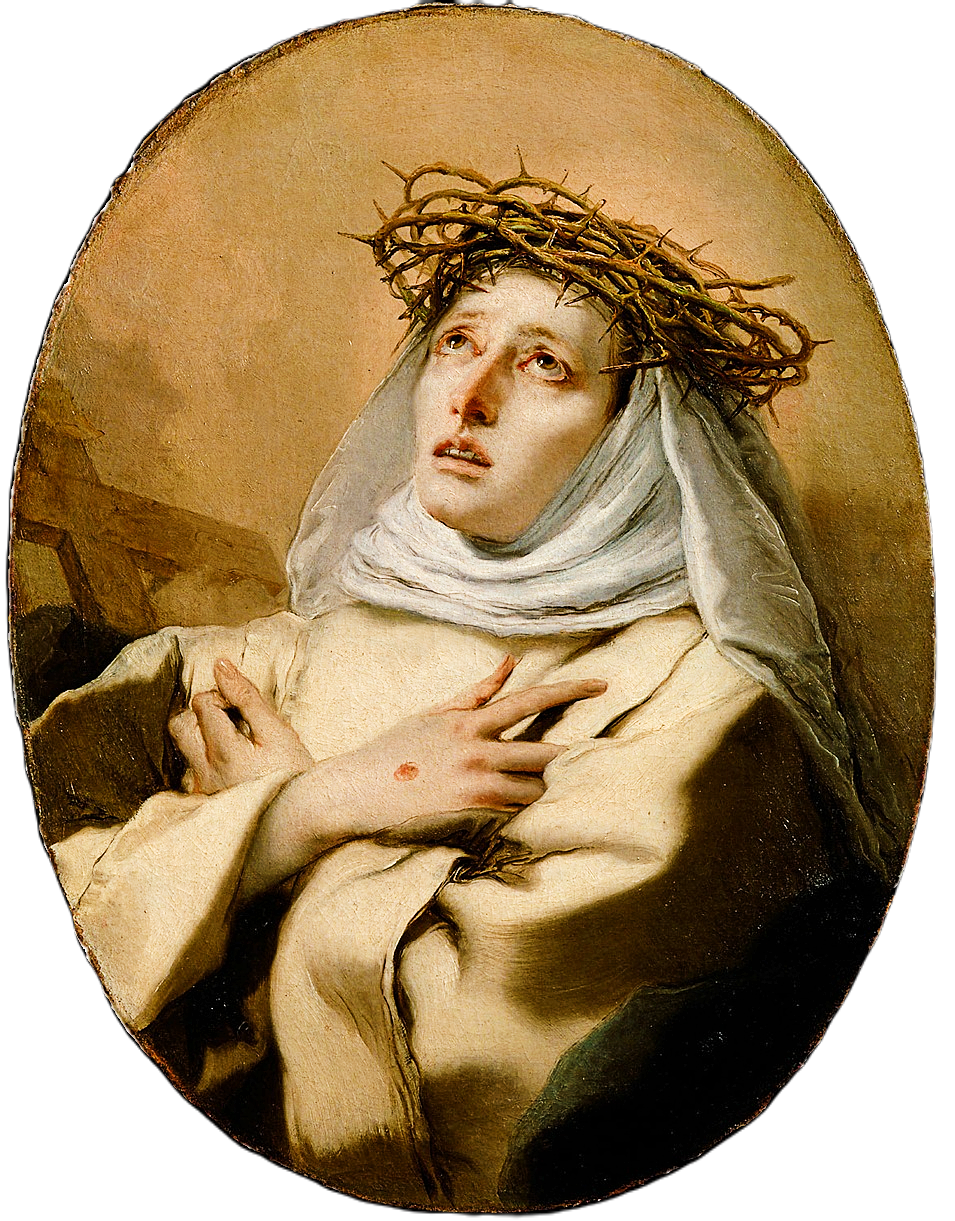
One of the most remarkable of these was, that Christ had impressed the marks of His Five Holy Wounds upon her but in such a manner that, exteriorly, nothing was to be seen, while she suffered all their pains. She had prayed to Christ for this grace in order that it might remain unknown to the world. The many miracles which she performed on the sick and possessed and the heavenly wisdom with which she was filled, secured her, not only the highest regard of the people but also of the prelates of the Church, as well as of worldly princes. She was even sent in times of strife and contention, as a messenger of peace and the effect of her wonderful talents, more than surpassed all expectations.
By Giovanni Battista Tiepolo
At Rome, whither she had been called by the Pope, she became dangerously sick and during four months, she suffered excruciating pain. She ceased not, however, praising and giving thanks to God. The Almighty, whose judgement, although inscrutable, is always just, sent her a last bitter trial after she had received the holy Sacrament – Satan reproached her that in her actions and ecstasies, she had only sought her own aggrandisement. But she overcame the enemy of her peace and, after this anguish of soul, she had a most consoling and tender discourse with Christ, Who visibly appeared to her and into Whose Hands she breathed her chaste soul, in the thirty-third year of her life. Her last words were: “Lord, into Thy Hands I commend my spirit.“
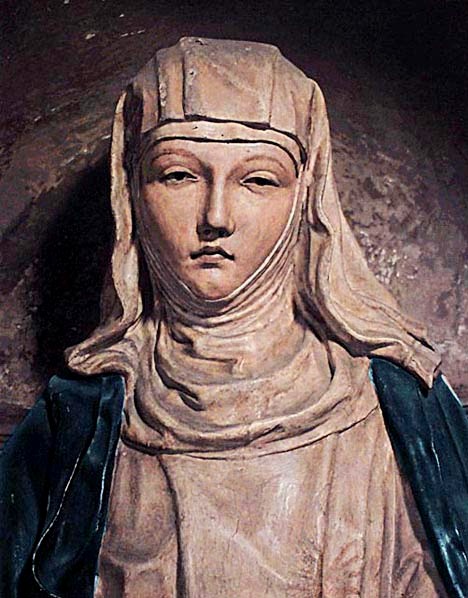
Statuette by Neroccio di Bartolomeo de’ Landi,(1475)
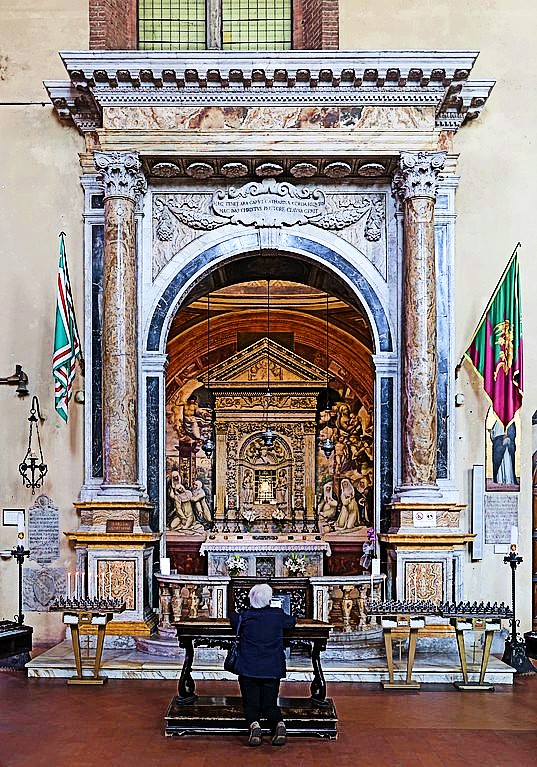
The Chapel of Saint Catherine, Basilica of San Domenico in Siena
Bl Hildegard the Empress St Lawrence of Novara St Louis of Córdoba St Mariano of Acerenza St Maximus of Ephesus St Mercurialis of Forlì St Peter of Córdoba St Pomponius of Naples St Quirinus of Rome St Rodopiano of Aphrodisias St Sophia of Fermo St Swithbert the Younger Bl Ventura of Spello
Martyrs of Montpellier: A group of 70 Mercedarian Friars, led by Blessed Luigi Puell, who were Martyred by Huguenots for trying to bring people back to the Catholic Church. They were Martyred in 1567 in Montpellier, France.
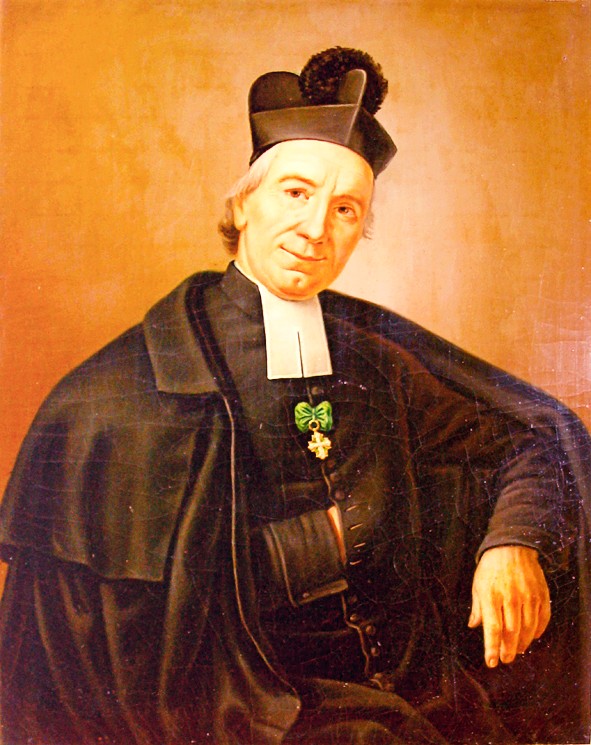
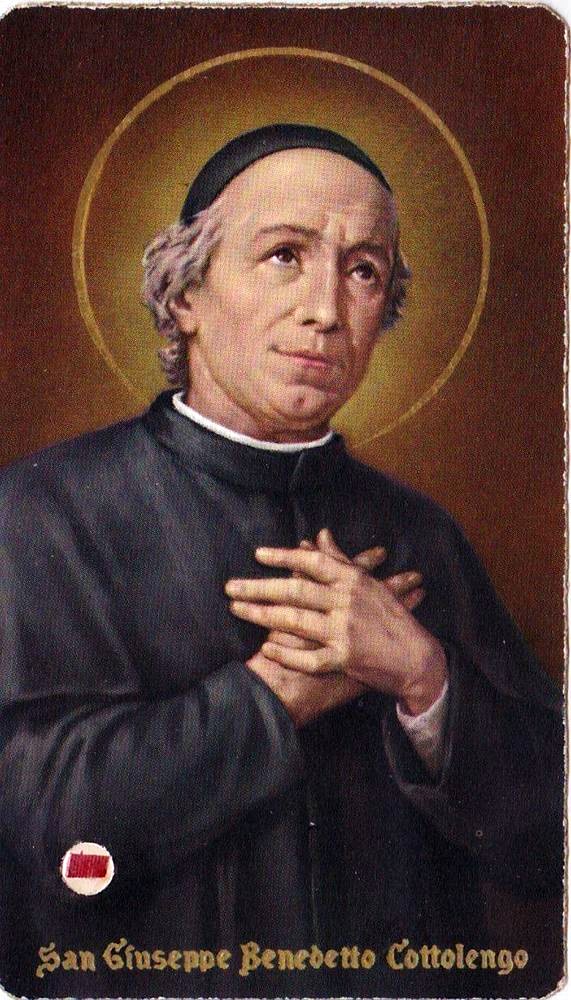
Saint of the Day – 29 April – St Joseph Benedict Cottolengo (1786-1842) Priest, Founder, Confessor, Apostle of Charity.
It is the glory of the City of Turin that for almost one hundred years, it possessed a line of saintly Tertiary Priests ,who have been raised to the honours of the Altar. One of these is Saint Joseph Benedict Cottolengo, the man who more than any other, in the nineteenth Century at least, was instrumental in inducing men “to love, bless and invoke that sweet and ever active Providence which rules over the universe and provides for the needs of every man, on his way through the toils of life, to the rest of the eternal blessedness.”
Joseph Benedict was born in the little town of Piedmont called Bra, on the 3rd of May,1786. His parents were poor in the goods of this world but rich, by virtue of noble traits of mind and character. Twelve children were born to this worthy couple. Joseph was the eldest and was so frail in his infancy that his mother was in constant dread of losing him but, her fervent prayers and faithful car, in time brought him health and strength. As soon as he was able to understand, she filled his mind with thoughts of God and of our Lady and was careful to train him to deeds of charity to the poor.
In preparing His servant for his life work, Almighty God provided Joseph Benedict Cottolengo with the greatest need of the human soul – that “one in ten thousand” who St Francis de Sales recommends Phiothea, to choose for her Confessor. The Parish Priest of St Andrew the Apostle, besides being a Priest who possessed more than ordinary zeal, eloquence and piety, had a special love for the poor and the afflicted. He allowed this gentle and pure child to receive his First Holy Communion at the then unusual age, of nine years.
At school, Joseph was much grieved to find himself always at the bottom of his class. Some Priests advised him to pray to the great St Thomas Aquinas, after which he went from the foot to the head of the class. Recognising the event as a special blessing from God, he was desirous of reciprocating, to the best of his ability and so, he frequently declared, “I will strive to become a saint.”
In spite of the various obstacles that came in his way when preparing for the holy Priesthood, he, nevertheless, succeeded in passing the various tests of his vocation and on 8 June 1811, aged 25 years, he was Ordained a Priest in the Church of the Immaculate Conception in Turin. He devoted himself with much ardour to all his priestly duties and especially to the poor and the sick; still, his heart was not satisfied, for he felt that God intended him for some special work.
As Canon of the Collegiate Church of Corpus Christi in Turin, he was inspired, by the sight of the misery everywhere apparent and by the reading of the life of St Vincent de Paul, to take a hand in alleviating human suffering. After having witness the death of a mother of three children who was very sick. yet was denied admission in any hospital, he was inspired to spend his life in the service and the welfare of the poor. To serve and help them he founded the Little House of Divine Providence, in Turin on 27 April 1832. He founded the communities of Sisters, Brothers, and Priests. His first steps were to provide care and shelter for the destitute sick of the Parish, by renting some rooms for a hospital and interesting some young women in the work.
In 1832 there was founded at Valdocco, what became known as the House of Providence. Pope Pius IX called it the “House of Miracles” and popularly it was styled the “University of Charity” on account of the diversified work of charity which the Saint began there, with no income or outlook but an heroic trust in the merciful Providence of God. By the time of his death in 1842, the work, as it may still be seen today, was practically complete, with all its various hospitals, workshops, schools, seminaries, cloistered and non-cloistered Convents, asylums for the old, the feebleminded and the insane, the crippled, epileptic, blind, deaf and dumb and the like! All this in just 10 years – only the Hand of God in His Divine Providence using His lowly tool, Joseph, could have accomplished such an immense achievement!
Saint Joseph of Cottolengo purchased food for his destitute patients on credit and once forgot to pay the bill after a series of months. The creditor, naturally upset, personally presented the bill for payment. The Saint had no money and proved it by emptying his pockets and all the drawers in the house. The creditor became so enraged that he began to strike St Joseph, when the Saint once again reached into his pocket. This time he drew out several gold coins that had not been there a moment before and paid the surprised creditor with them.
At Saint Joseph Benedict Cottolengo’s Beatification in 1917, this “City of Charity” numbered some eight thousand people and these had resolutely resisted any attempt to settle fixed revenues on the Institution, so that it might remain, forever, what it was at the outset, a monument to Divine Providence.
While still a young man, Joseph had been received into the Third Order of St Francis and had distinguished himself by his spirit of perfect poverty. He assiduously strove also, to foster in himself and in others, love towards the Blessed Sacrament and the sufferings of Jesus Christ. Along with supreme trust in God’s Providence, good humour adorned the Saint, which no opposition, no storms, nor hardships could shake.
When the authorities of the City of Turin, giving way to protests from the people, ordered the closing of the original house, the Saint smilingly complied and moved the Infirmary countryward saying: “Cabbages thrive better for being transplanted.” His vast settlement with all its departments he referred to as “Noah’s Ark.”
Confidence in God did not, however, cause him to cross his arms and observe. He slept only a few hours, often on a chair or bench and then returned to his daily labour, work and prayer. But Saint Joseph Benedict was exhausting his strength. In 1842, the doctors decided that he should go to visit his brother in Chieri. When he entered the carriage, one of the Sisters cried out in tears: “Father,, you are sick,what will become of us?” “Be at peace,” he answered. “When I am in Heaven, where one can do everything, I will help you more than I now do. I will hold to the cloak of the Mother of God and keep my eyes fixed on you. Do not forget what I, a poor old man, say to you today!”
Saint Joseph Benedict Cottolengo was only in his fifty-sixth year when he was called to his great reward. His last hours were spent in fervent prayer. He died on the evening of 30 April 1842. The final word of this great Saint was that of the Psalm: “I rejoiced when it was said unto me, Let us go unto the House of the Lord!”
Many miracles occurred at his tomb, including many cures of bodily ills and maladies of the soul. Some have even seen his visible presence. Pope Pius XI enrolled him among the Saints of the Church on 19 March 1934.
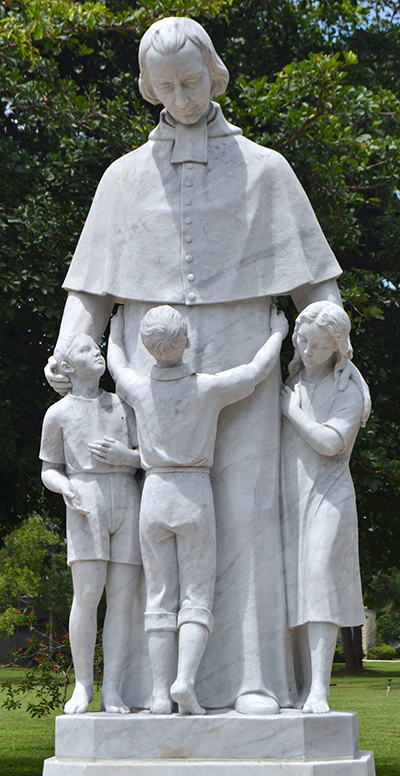
Statue of the 19th century St Joseph Benedict Cottolengo stands in the 50-acre campus of the Marian Center.
St Peter Martyr/ of Verona OP (1205–1252) Martyr, Priest and Friar of the Order of Preachers, , a celebrated Preacher, Miracle-worker, Marian devotee. He served as Inquisitor in Lombardy, was murdered by an assassin and was Canonised 11 months after his death, making his the fastest Canonisation in history. His Life: https://anastpaul.com/2019/04/29/saint-of-the-day-29-april-st-peter-of-verona-op-1205-1252/
Abbots of Cluny: A feast that recognises the great and saintly early Abbots of Cluny Abbey:
Saint Aymardus of Cluny
Saint Berno of Cluny
Saint Hugh of Cluny
Saint Mayeul
Saint Odilo of Cluny
Saint Odo of Cluny
Saint Peter the Venerable
St Ava of Denain St Daniel of Gerona St Dichu St Endellion of Tregony St Fiachan of Lismore
St Hugh of Cluny (1024-1109) St Hugh the Great, Priest and Royal Prince, Abbot of Cluny from 1049 until his death., Founder-builder of numerous Monasteries, Convents , Hospitals and the biggest Church in Europe (the Abbey Church at C luny) prior to the building of St Peter’s, apostle of the poor, the sick, the marginalised by the feudal system, ecclesiastical Reformer, holy father to his Monks and servant to all who needed him,. He was one of the most influential leaders of the monastic orders from the Middle Ages. St Hugh the Great: https://anastpaul.com/2021/04/29/saint-of-the-day-29-april-st-hugh-of-cluny-1024-1109-st-hugh-the-great/
St Gundebert of Gumber St Juan Vargas St Paulinus of Brescia Bl Robert Gruthuysen St Senan of Wales
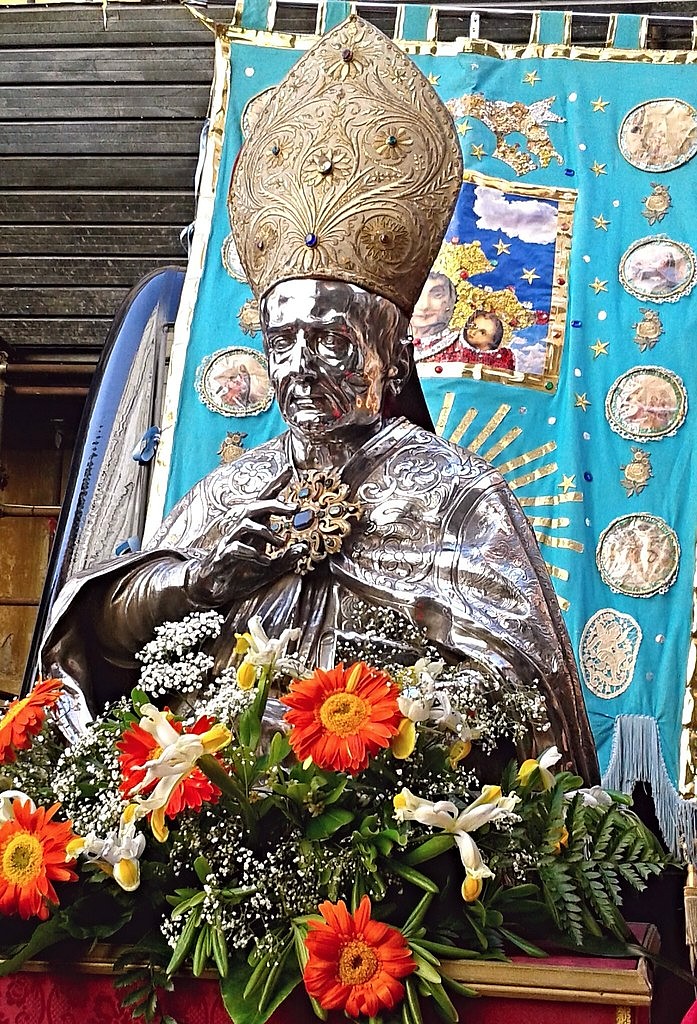
St Severus of Naples (Died 409) Bishop of Naples for 46 years, Confessor, friend of St Ambrose, constructor of four Basilicas and the first Baptistry in the West. The Roman Martyrology reads: “In Naples, St Severus, Bishop, loved by St Ambrose, as a brother and, by his Church ,as a father.” Fascinating fact: The City of Naples has more than 50 official Patron Saints, although its principal Patron is the Martyr Bishop, Saint Januarius.(Died c 304). His life here: https://anastpaul.com/2017/09/19/saint-of-the-day-19-september-st-januarius/ St Severus is one of those 50 and the full list is contained in his biography, below. His Life: https://anastpaul.com/2022/04/29/saint-of-the-day-29-april-saint-severus-of-naples-died-409/
St Theoger St Torpes of Pisa St Tychicus St Wilfrid the Younger
Martyrs of Cirta: A group of Clergy and Laity Martyred together in Cirta, Numidia (in modern Tunisia) in the persecutions of Valerian. They were – Agapius, Antonia, Emilian, Secundinus and Tertula, along with a woman and her twin children whose names have not come down to us.
Martyrs of Corfu: A gang of thieves who converted while in prison, brought to the Faith by Saint Jason and Saint Sosipater who had been imprisoned for evangelising. When the gang announced their new Faith, they were Martyred together. They were – Euphrasius, Faustianus, Insischolus, Januarius, Mammius, Marsalius and Saturninus. They were boiled in oil and pitch in the 2nd century on the Island of Corcyra (modern Corfu, Greece. Also known as: Martyrs of Corcyra, Seven Holy Thieves, Seven Holy Robbers, Seven Robber Saints.
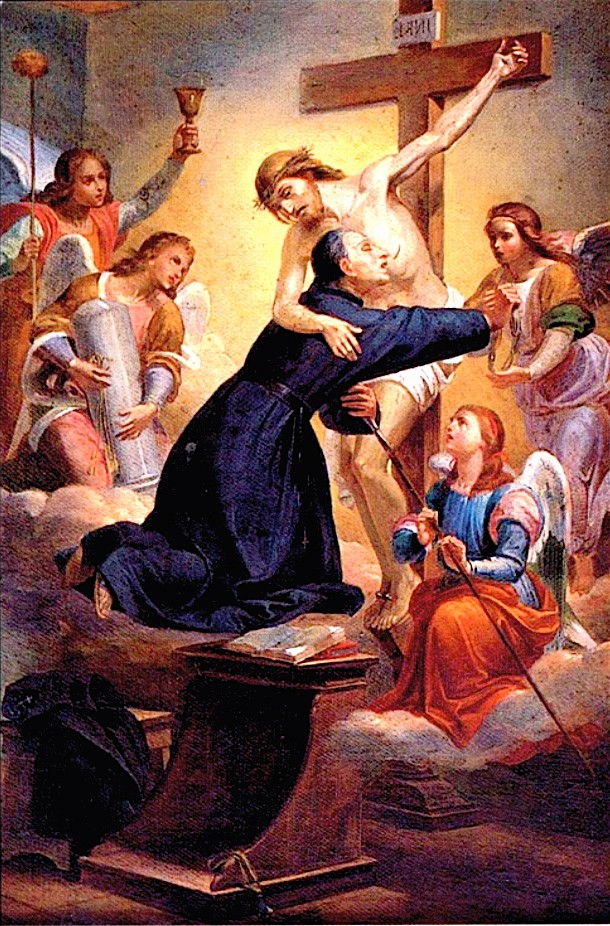
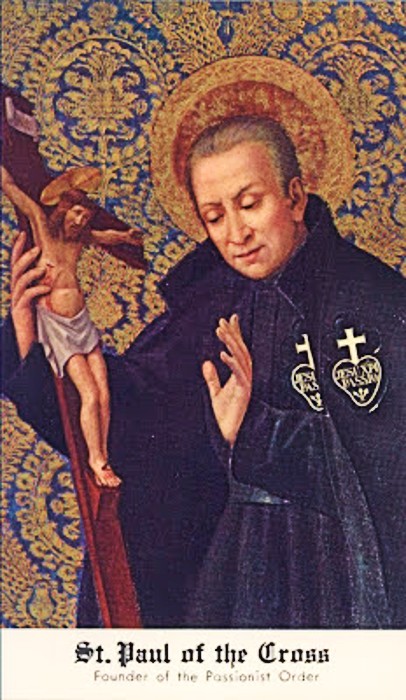
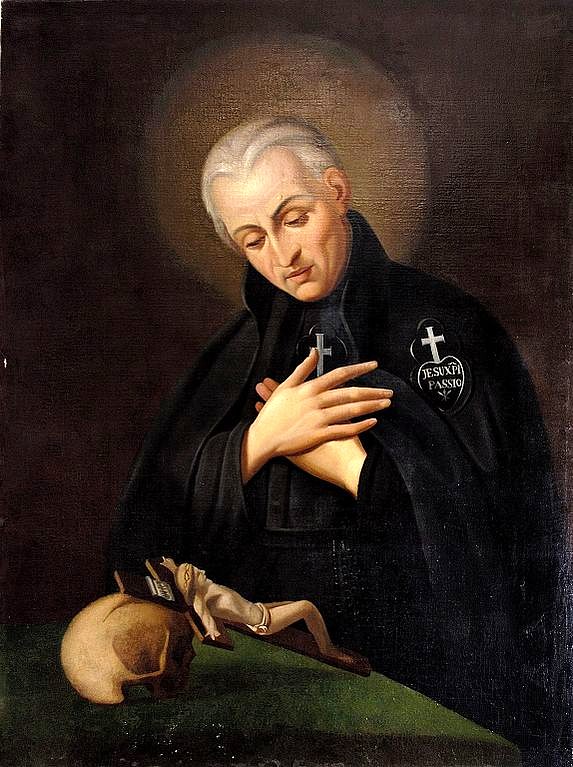
Saint of the Day – 28 April – St Paul of the Cross CP (1604-1775) Confessor, Priest, Mystic, Preacher, endowed with miraculous powers of healing and prophecy, Founder of the Congregation of the Passion of Jesus Christ – the Passionists. Born Paolo Francesco Danei on 3 January 1694, in the Town of Ovada, Italy and died at the age of 81 on 18 October 1775, at the Retreat of Saints John and Paul. St Paul’s Major Shrine is at the Basilica of Saints Giovanni e Paolo, Rome, Italy. St Paul called his Monasteries “Retreats” to underline the life of solitude and contemplation which, he believed was necessary, for someone who wished to preach the message of the Cross. In addition to the communal celebration of the Divine Office, members of hisOrder were to devote at least three hours to contemplative prayer each day.
St Paul of the Cross From the Roman Breviary
St Paul of the Cross was born at Ovada in Liguria [Northern Italy] and was descended from a noble family of Castellazzo near Alessandria [Piedmont]. The brilliance of his future holiness was foreshown, by a wonderful light which filled his mother’s room at night, while she was in labour and, by a remarkable favour of the august Queen of Heaven, who delivered him unhurt, from certain destruction, when he fell into a river as a child.
From the dawn of reason, he was filled with an ardent love for Jesus Christ Crucified and began to devote much time to contemplation of His Passion. He chastised his innocent flesh with watchings, scourgings and fasting, on Fridays drank vinegar mingled with gall and practiced all kinds of severe penances. Burning with desire for Martyrdom, he enlisted in the army which was being raised at Venice, to fight against the Turks. After he learned, in prayer, the will of God, he gave up the career of arms to serve in a nobler army which was, to defend the Church and strive with all his might for the eternal salvation of men. When he returned home he refused a very honourable marriage and the inheritance left him by his uncle; he wished to enter upon the narrower way of the Cross and to receive a coarse tunic from his Bishop. Then, by command of the Bishop, because of his eminent holiness of life and knowledge of Divine things, although not yet a cleric, he tilled the Lord’s field by preaching the Divine Word, with great profit to souls.
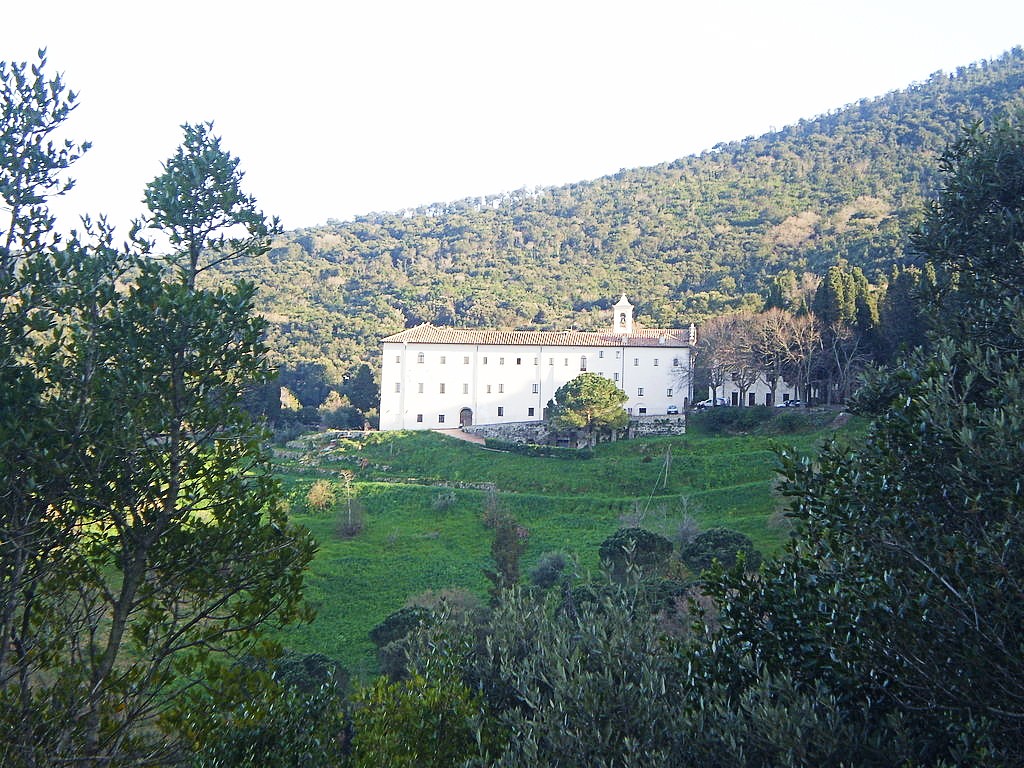
He went to Rome and after having studied the regular course in Theology, he was Ordained Priest by command of the Supreme Pontiff, Benedict XIII, who also gave him permission to gather companions around him. He withdrew to the solitude of Mount Argentaro, where he had already been summoned by the Blessed Virgin, who had also shown him a black habit bearing the emblems of the Passion of her Son and there, he laid the foundations of a new Congregation.
Retreat/Monastery of the Presentation in Monte Argentario, Tuscany
In a short time by God’s blessing, it increased very much, sustained by his arduous labours and attracted eminent men. It received the confirmation of the Apostolic See more than once, together with the Rules which Paul had himself received from God in prayer and, the addition of a Fourth Vow – to promote the blessed remembrance of the Passion of the Lord. He also founded a Congregation of holy Virgins, who would constantly meditate upon the surpassing love of the Divine Spouse.
In all these works, his untiring love of souls never caused him to weary in the preaching of the Gospel and he led almost countless men, even the most abandoned and those who had fallen into heresy, onto the footpath of salvation. Wonderful was the power of his eloquence, especially when he spoke of the Passion of Christ, so that, both he and his hearers, would shed tears and the most hardened hearts were moved to repentance.
The flame of the love God, so burnt in breast that the garment which was nearest to his heart, often seemed to be scorched if by fire and two of his ribs seemed to protrude. He could not restrain his tears, particularly when saying Mass and he was seen to experience frequent ecstasies, during which there was a remarkable elevation of his body and his face shone with light from Heaven. Sometimes, when he was preaching, a heavenly voice was heard promting him and at other times, his words could be heard at the distance of several miles! He was distinguished for gifts of prophecy, languages, reading the heart, power over evil spirits, diseases and the elements. Though even the Supreme Pontiffs regarded him with affection and veneration, he looked upon himself as an unprofitable servant and a worthless sinner, upon whom devils might well trample.
At length, having persisted in his most austere mode of life until extreme old age, in 1775 at Rome, he pass,ed to Heaven on the very day he had predicted, after he had addressed to his followers, some most beatiful exhortations, as it were bequeathing them the heritage of his spirit and fortified with the Sacraments of the Church and with a heavenly vision.
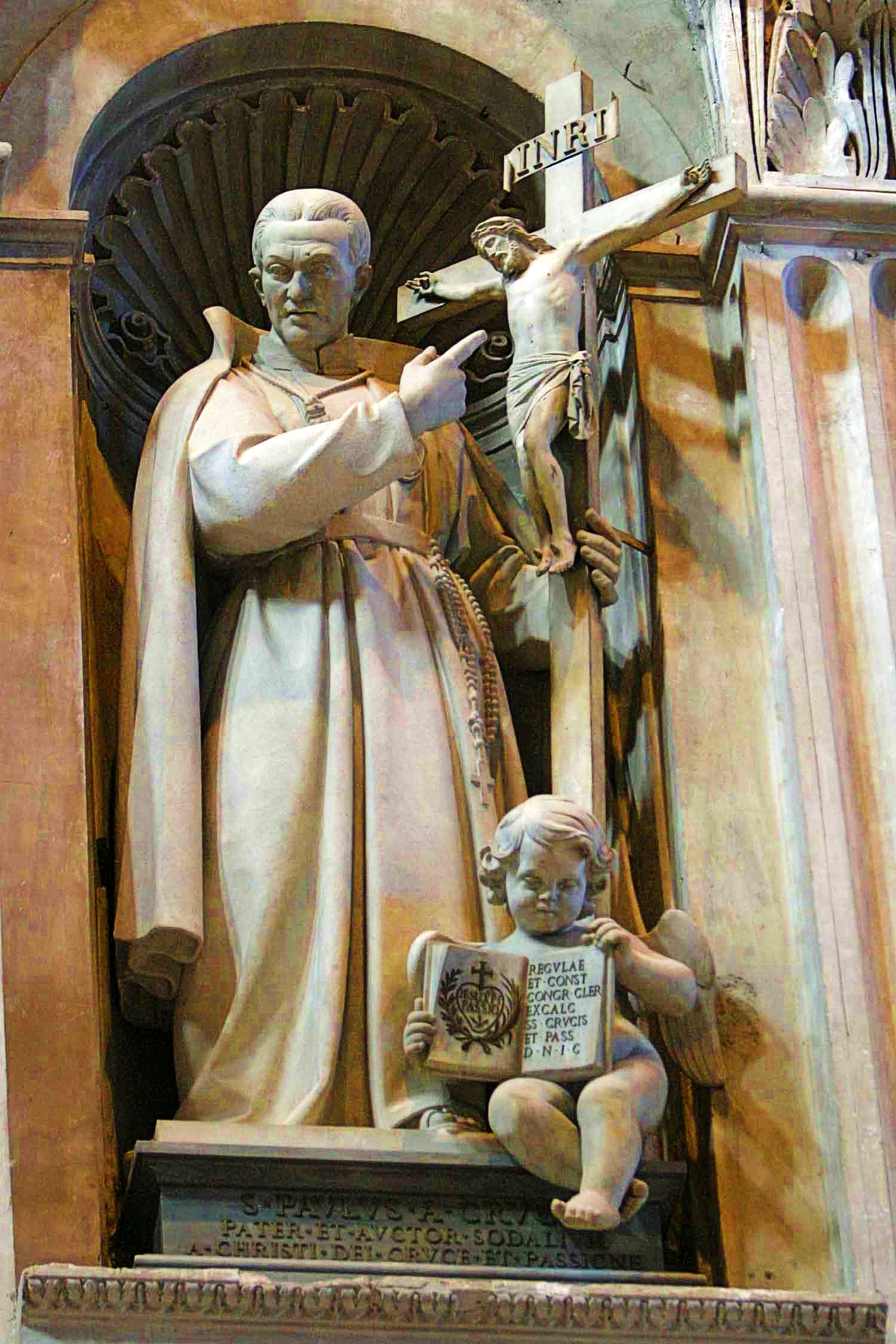
Founder’s Statue at St Peter’s Basilica, Rome
The Supreme Pontiff Pius IX enrolled him among the blessed and after renewed signs and wonders, among the Saints.
Shrine is at the Basilica of Saints Giovanni e Paolo, Rome, Italy.
St Vitalis of Ravenna (Died c 171) Martyr, Layman, Husband and father. The Roman Martyrology states of him today: “At Ravenna, the birthday of St Vitalis, Martyr, father of the Saint Gervasius and Protasius. When he had taken up and reverently buried the body of blessed Ursicinus, he was arrested by the ex-consul Paulinus and after being racked and thrown nto a deep pit, was overwhelmed with earth and stones and by this kind of martyrdom, went to Christ.” His Life and Death: https://anastpaul.com/2021/04/28/saint-of-the-day-28-april-saint-vitalis-of-ravenna-died-c-171-martyr/
Saint of the Day – 27 April – Saint John of Kathara (c770-c835) Priest, Abbot, Defender of Sacred Images. Born in c770 at Irenopolis, Isaurian Decapolis (modern Greece) and died in c835 on the prison island of Aphousia (modern Avsa, Balikesir, Turkey) of natural causes. Also known as – John di Catari, John of Cathare, John of Constantinople.
The Roman Martyrology states [somewhat erroneously * see below]: “At Constantinople, the Abbot St John, who combated vigorously, for the worship of holy images, under Leo the Isaurian.”
At the age of nine John embraced the monastic life. His master became attached to him and took him with him to the second Council of Nicaea (787) and then again when he left for Constantinople, where he became Superior of the Monastery known as the Dalmatian. Here John was Ordained to the Priesthood.
In Lent of 805, the Emperor Nicephorus (802-811) sent John to govern the Cathar Monastery in Bithynia and in the summer of 808, his convent separated from St. Theodore the Studite, probably because John had accepted the re-establishment of the Priest Giuseppe, made famous in the ‘Mechian’ controversy.
He had been Abbot for just over ten years when the iconoclast persecution, unleashed by Leo the Armenian (813-820), removed him from his Convent (April – May 815). Taken to Constantinople before the Emperor, he was scourged, then relegated to his residence where he remained for three months. He was finally exiled and imprisoned in the fortress of Pentadactylos in the region of Lampe, near Apamea.
During this confinement, he joined, together with other iconodule Abbots and Monks, the appeals addressed to Rome, in 816 and 817, by Saint Theodore the Studila. After ten months of detention, he had to appear again, in the capital (around April 817), before the Emperor and the usurping Bishop Theodotus.
John resisted magnificently and was exiled again (June 819) to the fort of Criautoros. Early in the reign of Michael the Stutterer, Leo’s successor, John was freed (after 25 December 820) and returned to Chalcedon but was not allowed to enter the capital. Perhaps he reached his Monastery. But when the Emperor Theophilos unleashed a new offensive against the cult of images (after October 832), John tried to rally the iconophile Monks around him. Therefore, he was again exiled to the island of Afusia,, where he died on 27 April 835.
* On 27 April, the Roman Martyrology contains a praise of the Saint which needs rectification – it speaks of Leo the Isaurian instead of Leo the Armenian; moreover, in fixing the place of John’s death at Constantinople, leading many to believe that the Saint had been the Abbot of the Cathar Monastery existing in the capital of the Byzantine Empire.
St Peter Canisius SJ (1521-1597) – The Known as “The Hammer of Protestantism,” “Second Apostle of Germany” – Confessor, Doctor of the Church, Dutch Priest of the Society of Jesus, Reformer, Teacher, Writer, Apostle of Charity. Patronages – Catholic Press, Germany, Catechists. The restoration of the Catholic Church in Germany after the Protestant Reformation is largely attributed to the work there of the Society of Jesus, which he led. “Peter Canisius was the first publisher, the first author, the first editor of the Society of Jesus. By now, Jesuits have followed in his footsteps to the tune of having published in 400 years, thousands of books. From the time of Canisius, and his name is first in the bibliography of Jesuit writers, from Peter Canisius to the end of the l9th century, that is to 1900, there are about twenty volumes of bibliography, each volume about two inches thick, stands about eighteen inches high, filled just with authors and titles, thousands and thousands and thousands, no other religious institute in the Church publishes as much as members of the Society. It was all started by Peter Canisius.” (Ven Servan of God Fr John A Hardon SJ) His Feast day is 27 April (General Roman Calendar, 1926–1969. Biography: https://anastpaul.com/2017/12/21/saint-of-the-day-21-december-st-peter-canisius-s-j-1521-1397-doctor-of-the-church/ AND: https://anastpaul.com/2018/12/21/saint-of-the-day-21-december-st-peter-canisius-s-j-1521-1397-the-second-apostle-of-germany-doctor-of-the-church/
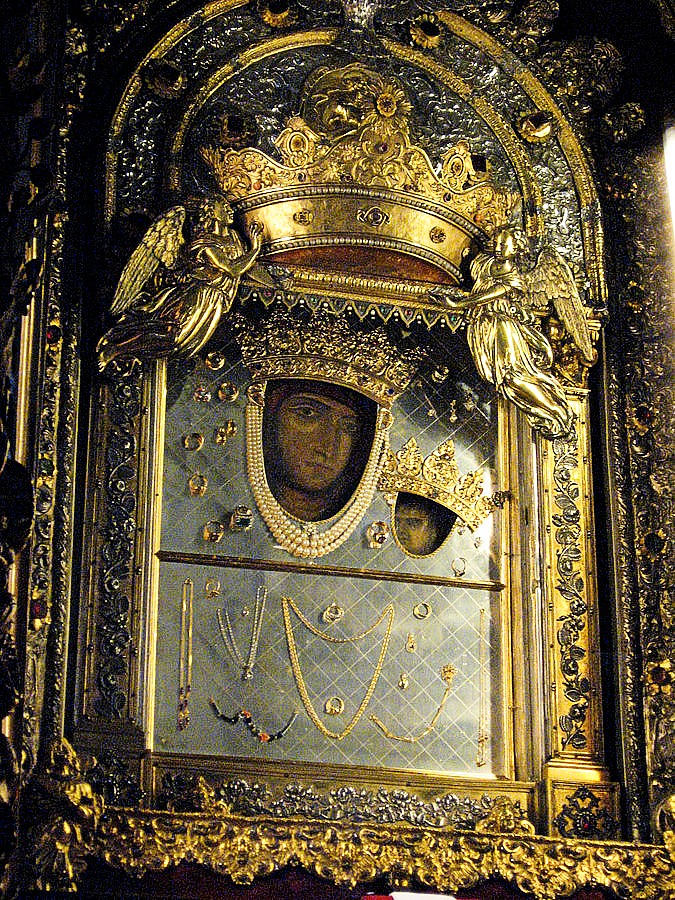
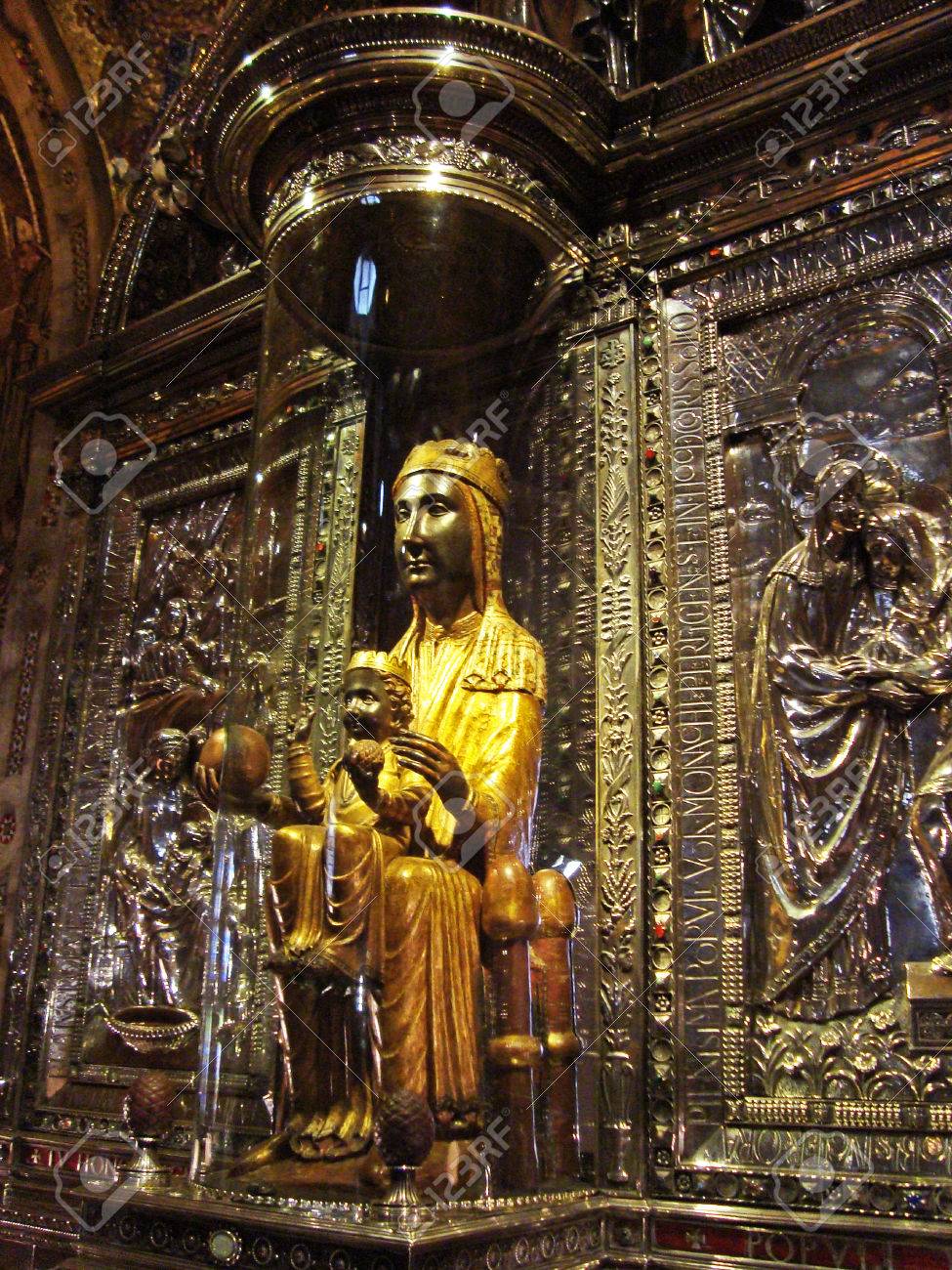
Our lady of Montserrat, patroness of Catalonia. The statue of the black Madonna is in the Church of Santa Maria de Montserrat Abbey, Catalonia, Spain. Photographed from 21.07.2015.
St Adelelmus of Le Mans St Asicus of Elphin St Castor of Tarsus St Enoder St Floribert of Liege
Blessed Jakov Varingez OFM (c 1400–1496) Croatian professed religious of the Order of Friars Minor, Apostle of charity, Mystic with a great devotion to the Cross of Christ, Marian devotee, he was noted as a miracle worker and levitated. He was Beatified on 29 December 1700 by Pope Clement XIH. His body is incorrupt. His Life: https://anastpaul.com/2019/04/27/saint-of-the-day-27-april-blessed-jakov-varingez-ofm-c-1400-1496/
St John of Kathara (c770-c835) Priest, Abbot St Liberalis of Treviso St Maughold
St Peter Armengol OdeM (c 1238-1304) “The Martyr who Wasn’t,” “The Unconquerable Martyr of Jesus Christ,” “The Gangster Saint,”Spanish Priest of the Mercedarian Friars, Penitent, Mystic. Beatified on 28 March 1686, by Pope Innocent XI and Canonised on 8 April 1687, by the same Pope. His body was incorrupt until it was destroyed during the horrors of the Spanish Civil War. A Miraculous Life: https://anastpaul.com/2022/04/27/saint-of-the-day-27-april-saint-peter-armengol-odem-c-1238-1304-the-martyr-who-wasnt/
St Pollio of Cybalae St Simeon of Jerusalem St Stephen of Tarsus St Tertullian of Bologna St Theophilus of Brescia St Winewald of Beverley
St Zita of Lucca (1212-1272) Virgin, Laywoman, Apostle of the Poor. – Her reputation was such that Dante in the Inferno referred to the City of Luccam, her birthplace and home, as “Santa Zita.” P atronages – housewives, butlers, housemaid, domestic servants (proclaimed by Pope Pius XII), housemaid, lost keys, maids, manservants, people ridiculed for their piety, rape victims, servants, servers, single laywomen, waiters, Lucca, Italy. Her body is incorrupt. Biography:. https://anastpaul.wordpress.com/2017/04/27/saint-of-the-day-27-april-st-zita-of-lucca/
Martyrs of Nicomedia: A group of Christians murdered together for their faith. In most cases all we have are their names – Dioscurus, Evanthia, Felicia, Felix, Germana, Germelina, Johannes, Julius, Laetissima, Nikeforus, Papias, Serapion and Victorinus. They died at Nicomedia, Bithynia, Asia Minor (modern Izmit, Turkey).
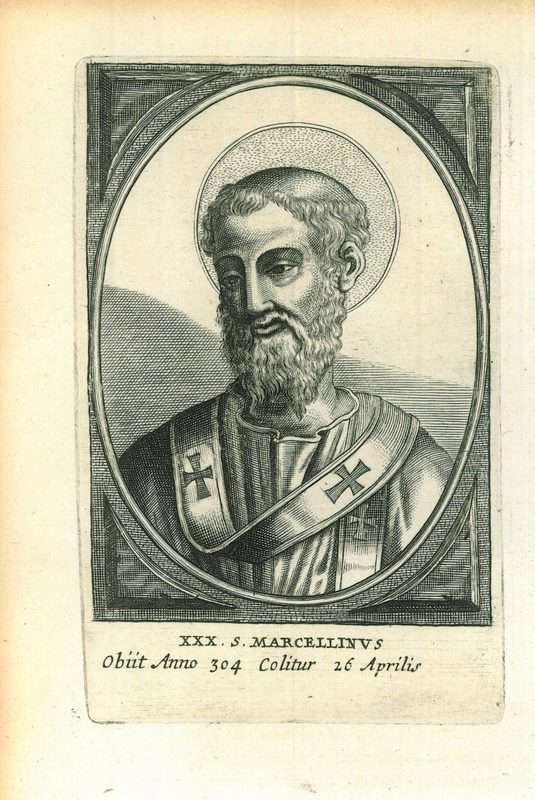
Saint of the Day – 26 April – Saint Pope Marcellinus (Died 304) Martyr, Bishop of Rome from 30 June 296 to his death in 304.
The Roman Martyrology reads: “In the same City [Rome], in the time of Maximian, St Marcellinus, Pope and Martyr, who was beheaded for the Faith of Christ, with Claudius, Cyrinus and Antoninus. So great was the persecution at this time that, within a month, seventeen thousand Christians were crowned with Martyrdom.”
Marcellinus was a Roman, the son of Projectus. He succeeded Caius as Bishop of Rome. We know little about his Pontificate except that a certain heretic of the 6th Century accused Marcellinus of having apostised but almost immediately repenting. St Augustine refutes and denies this allegation.
Marcellinus was beheaded with three others and their bodies remained without burial in the forum for thirty six days, to strike fear into the hearts of their fellow-Christians.
It was on the 26th of April in the year 304 that a Priest named Marcel, came at night, with other Priests and Deacons of Rome, to gather up their Relics which they laid to rest in the Priscilla Catacomb.
After a considerable interval, he was succeeded by Marcellus, with whom he has sometimes been confused
Bl Alda of Siena St Antoninus of Rome St Basileus of Amasea St Clarence of Venice St Claudius of Rome St Cyrinus of Rome St Exuerantia of Troyes Bl Gregory of Besians Bl Juli Junyer Padern St Lucidius of Verona
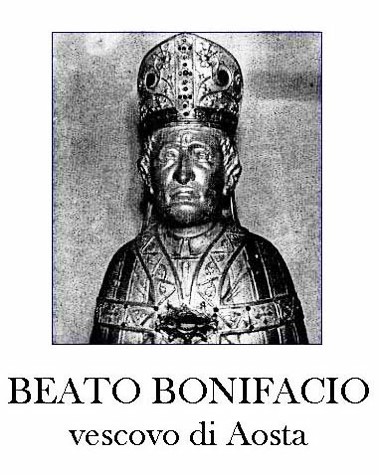
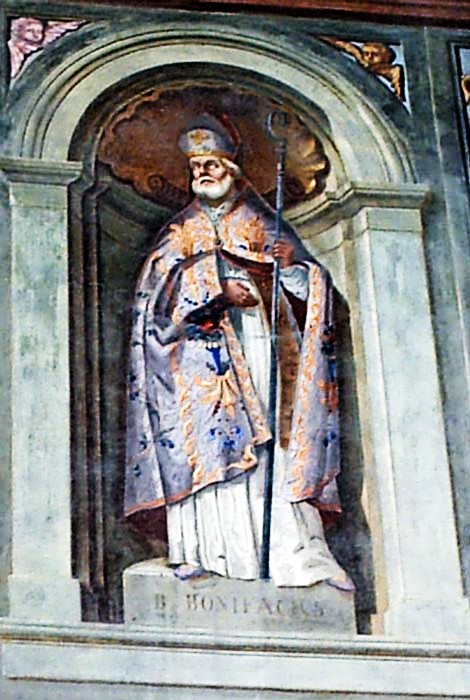
Saint of the Day – 25 April – Blessed Boniface of Valperga (Died 1243) Bishop, distinguished by his love for the poor and his great humility -his spiritual depth and holiness of life, made him very popular, even among the simplest people. Born in the latter 12th Century in Turin, Italy and died on 25 April 1243 in Aosta, Italy of natural causes.
Boniface was born into a noble family of the Canavese, the Counts of Valperga, which claimed descent from the King of Italy, Arduino d’Ivrea. Having received a first basic Christian education in the family, he was, therefore, sent to his paternal uncle Arduino, Bishop of Turin, who provided for his wider education, as well as the growth of Christian virtues.
Having reached a certain age, Bonifacio decided to undertake religious life, wearing the monastic Habit in the Benedictine Abbey of Fruttuaria, today’s San Benigno Canavese. He then moved to the Monastery-Collegiate Church of Sant’Orso of the Regular Canons of Aosta, shining here too for his doctrine and the sanctity of his life.
Soon, around 1210, he was made Prior. In this capacity he undertook a vigorous spiritual and temporal direction of the community, attracting popular admiration and esteem upon himself. This also meant that the faithful took the fate of the Convent more to heart, intervening more and more frequently, with substantial donations.
When Bishop Giacomo was transferred to Asti, on 17 July 1219, Boniface was elected Bishop of Aosta, an office which he retained until his death nearly 24 years later, on 25 April 1243.
The numerous donations in favour of the Bishop’s canteen testify to the good administration of Diocesan assets which he was able to implement and the trust he inspired in his faithful. He poured out all his strength as Shepherd of the flock entrusted to him for twenty-four years, always distinguishing himself by his humility, his love for the poor, for his concern and zeal in the care of souls.
Bonifacio died on 25 April 1243 and was buried at first in the Collegiate Church of Sant’Orso. His body was then transferred to the Cathedral Church of Aosta, to the Chapel of St Antonio.
Around 1302, a marble Statue of Boniface was erected and finally, there was a triple recognition of his mortal remains in 1551, in 1783 and in 1817. On this last occasion the Urn of Relics was placed in a niche between the main Altar and the right aisle of the Aosta Cathedral, where they are still exposed to public veneration today, alongside those of the Blessed Emeric of Quart.
On 28 April 1890 Pope Leo XIII Confirmed his Beatification which had taken place in 1885 by an Ecclesiastical Court in Aosta, Iwhich was specifically called to consider the matter.
St Anianus of Alexandria (Died c 86) 2nd Bishop of Alexandria, after St Mark and succeeding him. Consecrated by St Mark and disciple of St Mark. He was Ordained by Saint Mark and was also the first convert Mark won for Christ in the region, in c 48. As St Mark was entering Rakotis, a suburb of Alexandria, the strap of his sandal broke. He found a cobbler, St Anianus, to repair it. While he was working on the sandal, the awl slipped in Anianus’ hand, piercing it. Anianus cried ‘“Heis ho Theos” (“God is one”) in response to the pain. Mark took the opportunity to preach the Gospel of Christ to him, at the same time. https://anastpaul.com/2021/04/25/saint-of-the-day-25-april-st-anianus-of-alexandria-died-c-86-sucessor-and-disciple-of-st-mark-the-evangelist/
The Healing of Anianus by Cima da Conegliano
Blessed Boniface of Valperga (Died 1243) Bishop St Callista of Syracuse St Clarentius of Vienne St Ermin of Lobbes St Evodius of Syracuse St Heribaldus of Auxerre St Hermogenes of Syracuse St Kebius St Macaille St Macedonius St Mario Borzaga St Pasicrate of Mesia St Phaebadius of Agen St Philo of Antioch St Robert of Syracuse Bl Robert Anderton Stefano of Antioch St Valenzio of Mesia Bl William Marsden


























 AnaStpaul
You must be logged in to post a comment.