St Adrian of Maastricht St Alkmund of Northumbria St Amantius of Wintershoven Blessed Andrea Gallerani (Died 1251) Layman, Penitent. St Apollonius of Braga St Auxilius of Ireland Bl Clement of Dunblane St Colocer of Saint-Brieuc St Corbasius of Quimperlé St Cuthbert of Brittany St Gemus
Martyrs of Sorrento: A group of three sisters and a brother who were Martyred together. We have little more than their names – Mark, Quartilla, Quintilla and Quintius. They were martyred in Sorrento, Italy, date unknown. Mark Quartilla Quintilla Quintius
Martyred in the Spanish Civil War: • Blessed Alberto Linares de La Pinta • Blessed Jaume Trilla Lastra
St Braulio of Saragossa Bl Celestine of the Mother of God Bl Christian O’Conarchy St Edward the Martyr (962-978) Child King of England St Egbert of Ripon St Eucarpius of Nicomedia St Felix of Gerona St Finan of Aberdeen St Frigidian of Lucca Bl John Thules St Leobard of Tours St Narcissus of Gerona Bl Roger Wrenno St Salvator of Horta St Trophimus of Nicomedia
Martyrs of Nicomedia – Commemorates the Christians who were Martyred anonymously, either singly and in small groups, by local pagans in the area of Nicomedia prior to the year 300 and who may have been over-looked in the waves of Diocletian persecutions that resulted in the deaths of thousands.
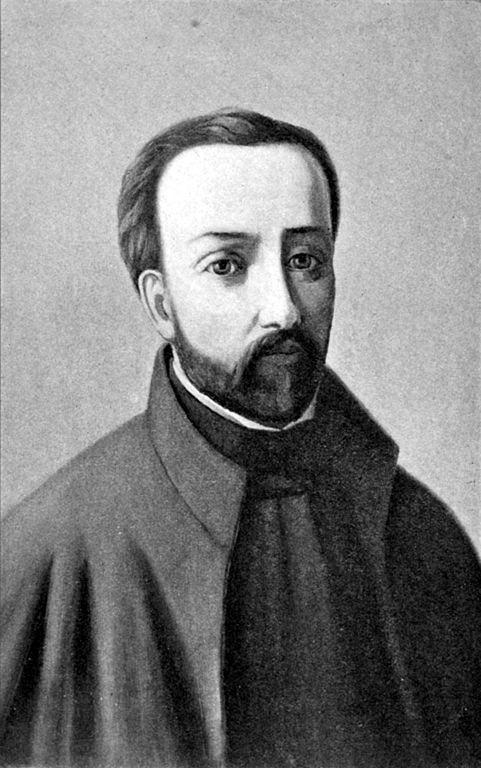
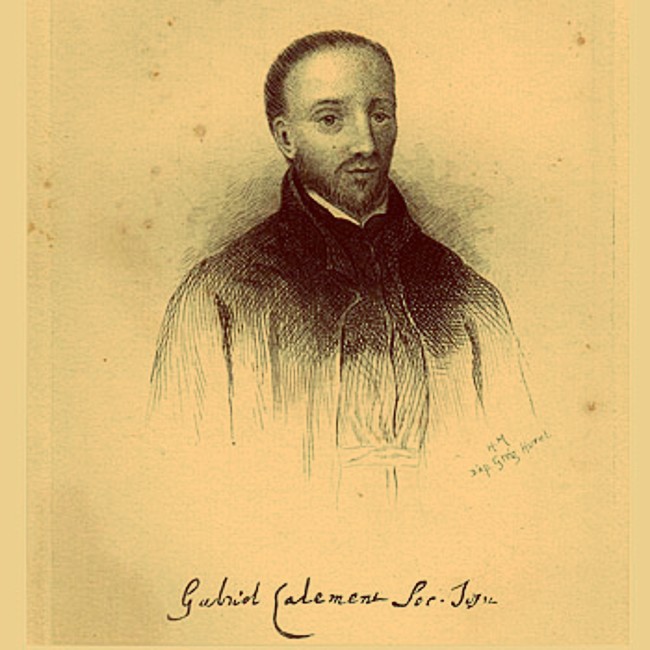
Saint of the Day – 17 March – St Gabriel Lalemant SJ (1610-1649) Martyr, French Priest of the Society of Jesus, Missionary, Professor. Born on 3 October 1610 at Paris, France and died by being tortured to death over the course of three hours on 17 March 1649 at the Saint Ignatius mission in the Huron country, Canada. Additional Memorial – 26 September (Canada) and 19 October as one of the Martyrs of North America.
Gabriel was born in Paris, on 3 October 1610, the son of a French lawyer and his wife. He was the third of six children, five of whom entered religious life. Two of Gabriel’s uncles served the Jesuits in New France – Father Charles Lalemant as the first Superior of the Jesuit missions in Canada, and Jérôme Lalemant as the Vicar-General of Quebec.
In 1630 Gabriel joined the Jesuits and in 1632 he took the vow to devote himself to foreign missions. He taught at the Collège in Moulins from 1632 to 1635. He was at Bourges from 1635 to 1639 studying theology and was Ordained there in 1638. He taught at three different schools, being Professor of Philosophy at Moulins. His repeated requests to go to New France were declined by his Superiors, partly because of his poor health. Eventually, his Uncle Jérôme, head of the Canadian mission, intervened on his behalf.
In September 1646 Gabriel arrived in Quebec, where he spent the first few months studying the Huron language and customs. Father François-Joseph Bressani, a fellow missionary in New France, referred to him as a man of extremely frail constitution. For the first two years Gabriel worked in and around Quebec and the trading centre of Trois Rivières (Three Rivers). In September 1648 he was sent to Wendake, the land of the Wyandot (Huron), as an assistant to St Jean de Brébeuf and posted to the mission at Sainte-Marie among the Hurons. In February 1649 he replaced Noël Chabanel at the mission of Saint Louis.
Only six months after he came to Sainte-Marie, he set out with St Jean de Brébeuf for the village of Saint-Louis. During the night the Iroquois attacked another village not far away and the two Jesuits knew that Saint-Louis would probably be next. On the morning of 16 March, the Iroquois attacked the Huron village and easily overcame the defences. The two Jesuits were taken prisoner because they had refused to flee into the forest before the attack. Attackers pulled out the finger nails of the two Priests and chewed their fingers before forcing them to run naked through the snow to a another village, where other Iroquois warriors waited. The captives had to run the gauntlet and then the two Jesuits were led to two posts where they were to be killed. Apparently Gabriel had to watch the torments that Brébeuf suffered, before the time came for his own torture at six in the evening. His tormentors set a fire around his feet, then burned him with heated metal hatchets and poured scalding water over his head. After they cut off his hands and gouged out his eyes, they placed hot coals in the sockets. Then they stopped for the night so that their victim could endure another day of torture. The next day they shoved burning wood into his mouth and sliced off his tongue but Father Gabriel proved as courageous as his Jesuit companion, St Jean and refused to scry out for mercy. Finally, they tore his heart out and ate it to gain his courage. The young Jesuit, only 36 years-old, died after 15 hours of unbelievable torment
After the withdrawal of the Iroquois war party from the area on 19 March, seven Frenchmen went to St Ignace to retrieve the bodies of the Jesuits and Huron. They returned them to Sainte-Marie where they were buried. Their relics are now housed at the Martyrs’ Shrine in Midland, Ontario.
Gabriel was Canonised by Pope Pius XI on 29 June 1930
St Jan Sarkander (1576-1620) Priest and Martyr of the seal of confession, Confessor – born on 20 December 1576 at Skotschau (Skoczow), Austrian Silesia (in modern Poland) and died by being covered in flammable material and set on fire on 17 March 1620 at Olomouc, Moravia (in the modern Czech Republic). Patronages – the Seal of Confession, Confessors, Moravia, Persecuted Christians. This amazing Saint’s Life and Death: https://anastpaul.com/2020/03/17/saint-of-the-day-17-march-saint-jan-sarkander-1576-1620-priest-and-martyr-of-the-seal-of-confession/
St Llinio of Llandinam Bl Maria Bárbara Maix St Paul of Cyprus St Stephen of Palestrina St Theodore of Rome St Thomasello St Withburga of Dereham
Martyrs of Alexandria – Also known as Martyrs of Serapis: An unknown number of Christians who were Martyred together by a mob of worshippers of the Graeco-Egyptian sun god Serapis. They were Martyred in c 392 in Alexandria, Egypt.
Saint of the Day – 16 March – St Benedicta of Assisi OSC i (Died 1260) Poor Clare Nun, Abbess Died 1260 of natural causes. The Franciscan Martyrology affirms, that her life shone out in singular prudence and a great reputation for virtues and miracles.
Benedicta entered the Poor Clares of Assisi in 1214, she succeeded St Clare in the government of the Monastery of St Damiano, remaining in that office until 1260.
She almost certainly is the same one we find Abbess in 1227 in Siena and from 1240 to 1248 in Vallegloria near Spello.
Benedicta was present at the process and Canonisations of St. Clare in November 1253. After Clare’s death, Brother Leone and Brother Angelo entrusted the Breviary used by St Francis to Benedicta.
She witnessed the beginning of the construction of the Basilica in honour of St Clare (1257), the transfer of the Poor Clares from St Damiano to the abuilding annexed to the old Church of St George and perhaps also, the transfer of the body of St Clare from the Church: of St George to the new Basilica, if one accepts, with the Bollandists, as the date of death on 19 October instead of 16 March. 1260.
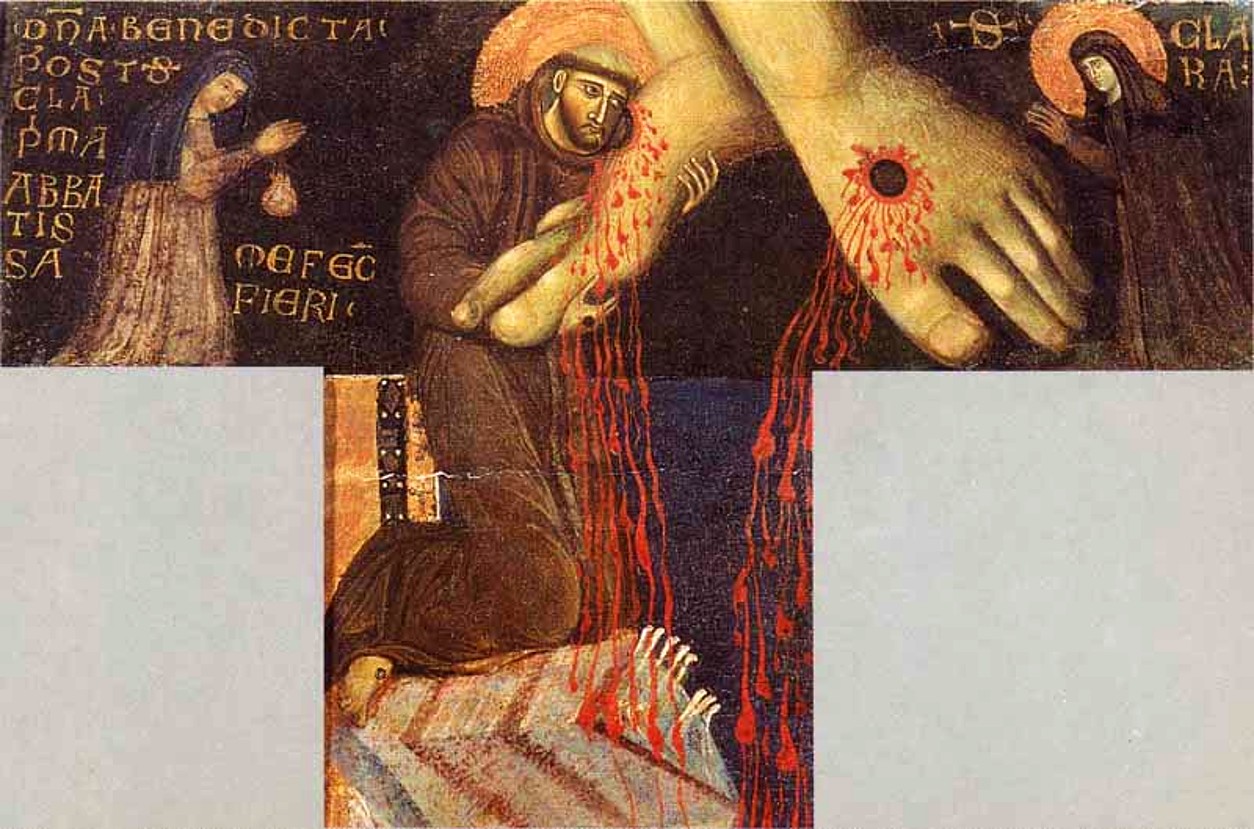
She was buried in the Church of St George. In 1602 the Bishop of Assisi, Crescenzi, had her relics placed with those of the blessed Amata and of St Agnes of Assisi in the Chapel dedicated to the latter, in the Basilica of St Clare. In it, above the main Altar, a large shaped cross is venerated, with St Clare and the blessed Benedetta and with the following legend in Gothic characters: “Domina Benedicta post Sanctam Claram before Abbatissa me fecit fieri,” – “Blessed Woman, first Abbess after St Clare.”
St Abban of Kill-Abban St Abraham Kidunaia St Agapitus of Ravenna St Aninus of Syria St Benedicta of Assisi OSC (Died 1260) Poor Clare Nun St Dionysius of Aquileia St Dentlin of Hainault Bl Eriberto of Namur St Eusebia of Hamage St Felix of Aquileia
St Hilary of Aquileia Bl Joan Torrents Figueras Bl John Amias St Julian of Anazarbus St Largus of Aquileia St Malcoldia of Asti St Megingaud of Wurzburg
Saint of the Day – 13 March – Saint Ansovinus of Camerino (Died 868) Bishop, Hermit, Peace-maker, Spiritual Adviser and Confessor to the Holy Roman Emperor, Miracle-worker. Born at Camerino, Italy and died in 868 at Camerino, Italy from a fever contracted at Rome. Also known as – Ansovino, Ansuinus, Answin, Oswin. Patronages – gardeners, protection of crops, Diocese of Camerino-San Severino Marche, Italy.
St Ansovinus and St Jerome(detail), Carlo Crivelli
Ansovinus was educated at the Cathedral school of Pavia. After Ordination to the Priesthood, he became a Hermit at Castel Raimondo near Torcello. Before being elected Bishop of Camerino, he served as Confessor to Louis II, Holy Roman Emperor. Ansovinus refused to accept the office of Bishop until Louis was agreed that his See be kept exempt from the conscription of the locals into the army. During this time, Bishops were often required to be responsible for recruiting men for the imperial army.
He was Consecrated at Rome by Pope Leo IV and returned to this City for the Council of Rome held by Pope Nicholas I in 861, where records show that he signed as Ansuinus Camerinensis. His Episcopate was characterised by his generosity to the poor and his pacification of the City’s various warring factions.
The gift of multiplying food was attributed to Ansovinus. He fed thousands of starving people from the regional granary at Castel Raimondo but the grain never ran out.
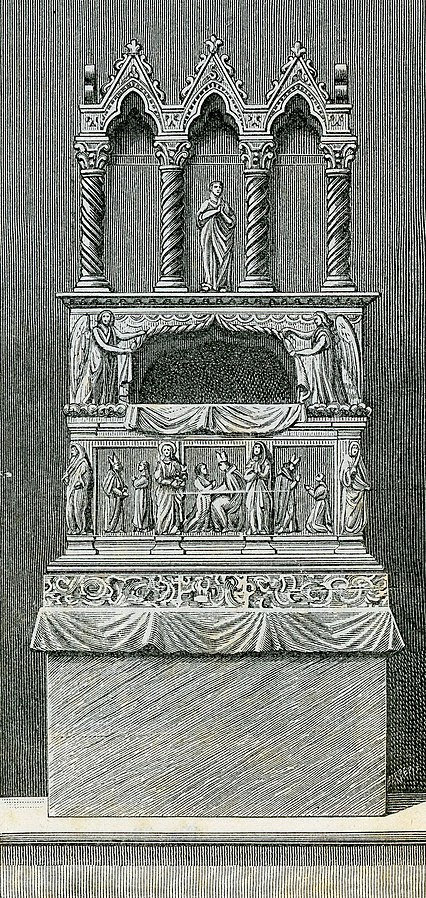
The Cathedral at Camerino includes the marble medieval arch of St Ansovinus. A monumental sarcophagus erected around 1390 holds his relics. His festival was once celebrated by Camerino and the nobles of other castles in the region. The Church of Santi Venanzio e Ansovino at Rome was dedicated to him. Additionally, there are rural Churches dedicated to him at Avacelli, Casenove, Bevagna and Monsammartino.
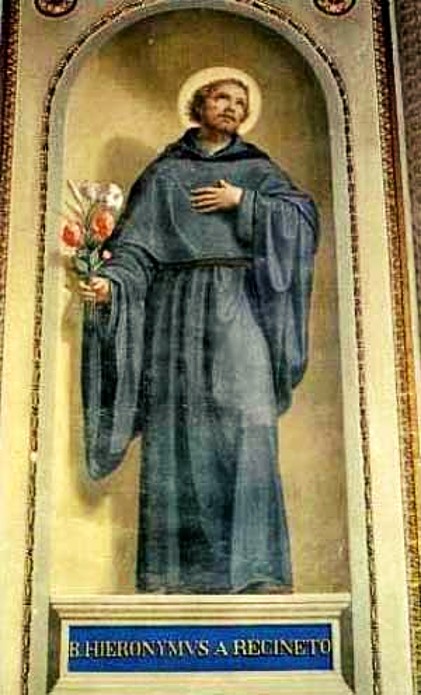
Saint of the Day – 12 March – Blessed Jerome of Recanati OSA (Died 1350) Priest, Friar of the Hermits of Saint Augustine, peacemaker. Died on 12 March 1350 in Recanati, Piceno, Italy of natural causes.
The Roman Martyrology reads : “In Recanati in the Marche, Blessed Girolamo Gherarducci, Priest of the Order of the Hermits of St Agustine, who worked for peace and harmony between peoples.”
Blessed Jerome of Recanati lived in the Augustinian Convent in his hometown, where he died on 12 March 1350. Very little is known about his life. Certainly he lived in a period of flowering of holiness in the Marches, just think of his most famous example: St Nicholas of Tolentino (1254-1305).
In addition to the life of prayer, a peculiar characteristic of his apostolate, was the fact that he was a man who devoted himself to the pacification of souls in times of fratricidal struggles. As part of his ministry, he mediated numerous disputes between families and the City. It is said that he brought peace to the Cities of Ascoli and Fermo, which had been at war with each other for many a long year.
To remember and imitate him, as early as 1369, the Town of Recanati was publicly celebrating the Feast of the blessed Jerome on the Second Sunday of Lent. On this occasion, until recent times, it choose twelve peacemakers from among the populace, six men and six women, whose responsibility it was, to settle disputes among the citizens.
Pope Pius VII confirmed the cult of Jerome in 1804. His mortal remains are venerated in the Church of St Augustine in Recanati.
St Almut of Wetter St Alphege the Bald Bl Angela Salawa St BasilissS of Asia Bl Beatrix of Engelport St Bernard of Carinola Bl Claudius the Minor St Egdunus St Fechno
Blessed Jerome of Recanati OSA (Died 1350) Priest, Friar of the Hermits of Saint Augustine.
St Heiu of Hartlepool St Indrecht of Iona St Pope Innocent I St Joseph Zhang Dapeng
St Luigi Orione FDP (1872-1940) “The Advocate of the Poor and of Orphans” Priest, Preacher, Confessor, Writer, Apostle of Charity, Apostle of Eucharistic Adoration, Marian Devotee and Founder of Sons of Divine Providence Congregation, the Congregation of the Little Missionary Sisters of Charity, Blind Sisters, Adorers of the Blessed Sacrament, Contemplative Sisters of Jesus Crucified. About St Luigi: https://anastpaul.com/2019/03/12/saint-of-the-day-12-march-st-luigi-orione-fdp-1872-1940/
St Maximilian of Thebeste St Mura McFeredach St Paul Aurelian St Peter the Deacon
Martyrs of Nicomedia – 8 Saints: Christians who were Martyred in succession in a single incident during the persecutions of Diocletian. First there were the eight imprisoned Christians, Domna, Esmaragdus, Eugene, Hilary, Mardonius, Maximus, Mígdonus and Peter, about whom we know little more than their names. Each day for eight days one of them would be strangled to death in view of the others so that they would spend the night in dread, not knowing if they were next. Peter was the chamberlain or butler in the palace of Diocletian. When he was overheard complaining about this cruelty, he was exposed as a Christian, arrested, tortured and executed by having the flesh torn from his bones, salt and vinegar poured on the wounds and then being roasted to death over a slow fire. Gorgonio was an army officer and member of the staff in the house of emperor Diocletian, Doroteo was a staff clerk. They were each exposed as Christians when they were overhead objecting to the torture and murder of Peter. This led to their own arrest, torture and executions. Died in 303 in Nicomedia, Bithynia (in modern Turkey) Additional Memorial – 28 December as part of the 20,000 Martyrs of Nicomedia.
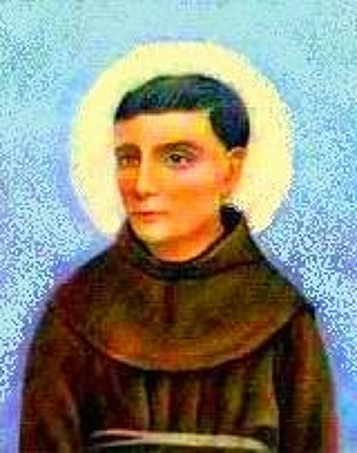
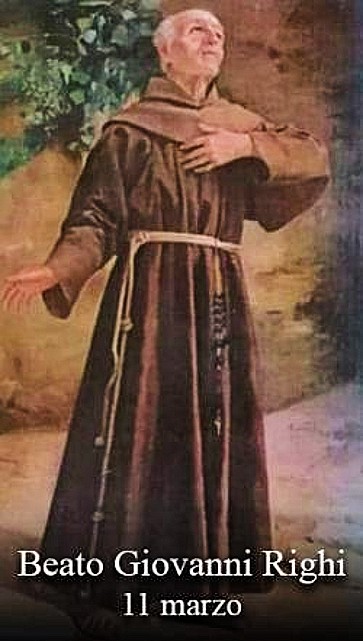
Saint of the Day – 11 March – Blessed John Baptist Righi of Fabriano OFM (1469–1539) Priest, Confessor, Friar of the Friars Minor, Ascetic, Ecstatic, renowned Preacher, Peace-maker, Hermit. Born as Giovanni Battista Righi in 1469 at Fabriano, Ancona, Italy and died on 11 March 1539 of natural causes. Also known as – Giovanni Battista da Fabriano, Giovanni da Fabriano, Giovanni Righi, Joannes de Fabriano, Johannes Baptista Righi, John Baptist of Fabriano. His body is incorrupt.
John was born in Fabriano of the Righi family. From an early age, he was very obedient to the teachings he received in his family. Reading the life of St Francis of Assisi, he decided to become a Franciscan Friar. And so, in the prime of his youth, our Blessed wore the Franciscan habit in the Convent of Forano, near Rieti. After his profession, he devoted several years to the study of philosophy and theology before being Ordained a Priest. For many years he was a very obedient and humble Friar. It is assumed that the young professed went from Forano to the solitary Convent of La Romita, a former Monastery of the Camaldolese.
Giovanni spent practically the rest of his life, about fifty years, up there in Romita, sometimes dedicated to the apostolate and more often, to silence and prayer, penance, reading the works of the Holy Fathers of the Church. In the solitude of La Romita, our blessed found what his heart desired. In the Church, there was a venerable image of Jesus Crucified, which belonged to St John of the Marches – John made it the object of frequent visits, ardent prayers, profound meditations and even,, by permission of the Lord, not rare ecstasies.
Emulating his seraphic Father, he ardently wanted to unite himself to the sufferings of Jesus, to transform himself into the Crucified Love, so little loved by much of the world. He found another object that touched his heart and fueled his filial piety: a terracotta image, which represented the Blessed Virgin contemplating the Child Jesus lying on her lap and which was flanked by the figures of the Apostle St James the Greater and St Francis of Assisi. And so, the solitary devotee spent long hours at the foot of the new and captivating image of the Mother of the Lord, exchanging affections and feelings. In the evening, after the Matins prayer, when his brothers retired to rest, he remained in the choir to continue his prayers which often ended in ecstasy. exchanging affections and feelings. In the evening, after the Matins prayer, when his brothers retired to rest, he remained in the choir to continue his prayers which often ended in ecstasy. exchanging affections and feelings.
In the dense forest that surrounded the solitary Convent, there was and still is, a small cave, like a hermitage inside the hermitage, where John went to devote himself to prayer and penance . For our blessed, Heaven on earth was in his retreat and solitude. But charity and obedience required him, from time to time, to undertake long journeys.
At that time, the different lords and noble families of the region were in conflict. Society and the Church experienced the ups and downs of the progress of a rebirth in all orders. And in high society, as well as among soldiers and ordinary people, demoralisation and the decline of good manners was the norm. John was not an eloquent orator but with his simple and persuasive word he managed to touch hearts and lead them to conversion.
He embarked on long journeys with joy of spirit to pacify the belligerents or to exhort both warring parties to convert and change their lives. When he travelled, always accompanied by another friar as was obligatory, he brought with him nothing but his peaceful poverty and his firm trust in God. his word was always a warm exhortation to the fulfillment of the divine Commandments, to the frequency of the Sacraments, to love one’s neighbour, to free the world from slavery. And he spoke with such zeal and persuasion that many were converted to God, reconciled, confessed, they did penance for their sins. The fame of the simple Friar spread throughout the Marches of Ancona.
Great was the charity of John with all those who met him on his travels or with those who came to him for spiritual guidance and Confession.. But what he practiced with the Friars of his Convent was even greater. He was attentive to their wants and needs and his greatest joy was to serve the sick, giving them every care promptly and gently.
His love for Jesus Crucified, the constant object of his love and contemplation, led him to practice the austerities and penances typical of the ancient anchorites, whose writings he read with pleasure, in particular those of St John Climacus. He continually fasted on bread and water, eating only one meal a day and even less during Lent. As a true son of St Francis, he loved poverty and practiced it, contenting himself with the patched tunic and the Breviary for the liturgical praise of the Lord. His cell, later transformed into an oratory, was small and sober. Indeed, his reputation for holiness soon spread throughout the region and when our Friar travelled, sick people were brought to him even from distant regions, to bless them,and there were numerous votive offerings that were and still are displayed.
One day he was seized by a great malaise. The Friars came, gave him first aid and looked after him until it seemed to them that the danger had passed, then they withdrew . Soon after, left alone in his small cell, he fell asleep peacefully in the Lord. His body was buried in the cemetery of the Convent but, ten years later, it was unearthed, found incorrupt and placed in an urn under the Altar of the Holy Christ. And there, in the Church of San Giacomo della Romita, he is still preserved and venerated today. His cult was confirmed by Pope Leo XIII on 7 September 1903.
The Church where the Body of Blessed John Righi is enshrined
St Aengus the Culdee St Alberta of Agen St Alexius U Se-Yong St Amunia St Aurea of San Millán
St Benedict Crispus of Milan (Died 725) Archbishop of Milan from c 685 until his death. A poem written about ten years after his death, De laudibus Mediolani- In Praise of Milan, praises him and remembers his veneration by the entire land and informs us that he was buried in the Basilica of Saint Ambrose. His Life: https://anastpaul.com/2020/03/11/saint-of-the-day-11-march-saint-benedict-crispus-of-milan-died-725/
St Candidus the Martyr St Constantine II St Constantine of Carthage St Ðaminh Cam
St Firmian the Abbot St Firmus the Martyr St Gorgonius the Martyr St Heraclius of Carthage Bl John Kearney Blessed John Baptist Righi of Fabriano OFM (1469–1539) Priest, Friar of the Friars Minor St Marcus Chong Ui-Bae St Peter the Spaniard St Pionius St Piperion the Martyr St Rosina of Wenglingen St Sophronius of Jerusalem St Thalus the Martyr Bl Thomas Atkinson St Trophimus the Martyr St Vigilius of Auxerre St Vincent of Leon
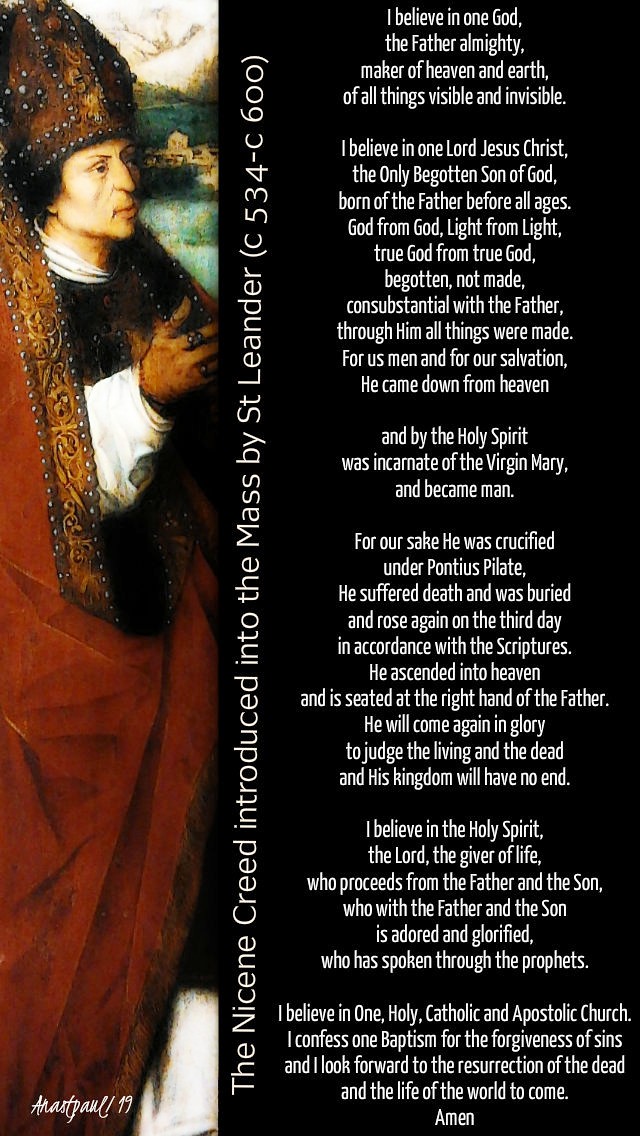
Saint of the Day – 10 March – Saint Macarius (Died c 335) Bishop of Jerusalem from 312 until his death, Defender of the Faith against Arianism, founder of the True Cross with St Helena, organiser and manager of the building of the Sacred Basilicas, including the Church of the Holy Sepuchre in Jerusalem, paid for by St Constantine the Great, St Helena’s son. Also of great import is the fact that Bishop Macarius was one of the two main authors of the Nicene Creed, that is, of the Creed that we still pronounce in Mass today, professing faith “In one God, the Father Almighty” and “In one Lord, Jesus Christ. .. True God from true God.” Died c 335 of natural causes. Also known as – Macario.
The Roman Martyrology states of him today: “The commemoration of St Macarius, Bishop of Jerusalem, on whose exhortation the holy places were brought to light by Constantine the Great and his mother, St Helena and ennobled with, the construction of the Sacred Basilicas.”
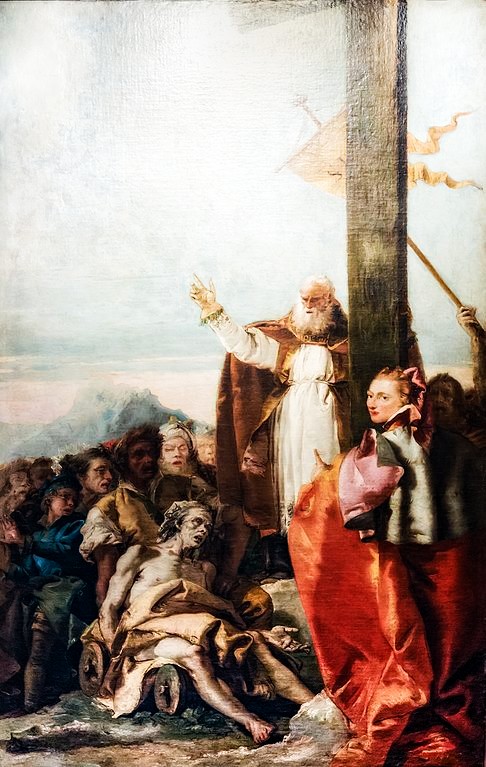
The Finding of the True Cross (Giandomenico Tiepolo), where Bishop Macarius blesses the sick with the True Cross
St Athanasius, in one of his orations against Arianism, refers to Macarius as an example of “the honest and simple style of apostolic men.” The date 312 for Macarius’s accession to the Episcopate is found in St Jerome’s version of Eusebius of Caesarea’s Chronicle. And Macarius is listed as one of the Bishops to whom St Alexander of Alexandria wrote warning against Arias.
Macarius accompanied St Helena Augusta, the mother of St Constantine I, in her search in Jerusalem for relics of the Passion of Jesus, including the Sacred Cross on which Jesus was Crucified.
According to Eusebius, he received a long letter from Constantine with reference to the building of the Basilica of the Holy Sepulchre at Jerusalem: “Such is our Saviour’s grace, that no power of language seems adequate to describe the wondrous circumstance to which I am about to refer. For, that the monument of His most holy Passion, so long ago buried beneath the ground, should have remained unknown for so long a series of years, until its reappearance to His servants now set free through the removal of him who was the common enemy of all, is a fact, which truly surpasses all admiration … And as to the columns and marbles, whatever you shall judge, after actual inspection of the plan, to be especially precious and serviceable, be diligent to send information to us in writing, in order that whatever quantity or sort of materials we shall esteem from your letter to be needful, may be procured from every quarter, as required, for it is fitting that the most marvellous place in the world should be worthily decorated.”
Church of the Holy Sepulchre, Jerysalem
Macarius took part in the Council of Nicaea (325), and two concl;usions as to the part he played there are worth mentioning. The first is that there was a passage of arms between him and his Archbishop, St Eusebius of Caesarea, concerning the rights of their respective Sees. The seventh Canon of the Council — “As custom and ancient tradition show that the Bishop of Ælia [Jerusalem] ought to be honoured, he shall have precedence; without prejudice, however, to the dignity which belongs to the Metropolis” — by its vagueness suggests that it was the result of a drawn battle. The second conclusion, is that Macarius, together with St Eustathius of Antioch, had a good deal to do with the drafting of the Nicene Creed finally adopted by the First Council of Nicæa in 325 and which was introduced into the Mass by St Leander (534-600).
The vigour of his opposition to the Arianists is suggested by the abusive manner in which Arias writes of him in his letter to Eusebius of Nicomedia. Macarius’s name appears first among those of the Bishops of Palestine who subscribed to the Council of Nicæa. Athanasius, in his encyclical letter to the Bishops of Egypt and Libya, places the name of Macarius (who had been long dead at that time) among those Bishops renowned for their orthodoxy. Macarius here at the Council, also appointed Maximus, who afterwards succeeded him, Bishop of Lydia and that the appointment did not take effect because the people of Jerusalem refused to part with Maximus. He also gives another version of the story, to the effect that Macarius himself changed his mind, fearing that, if Maximus was out of the way, an unorthodox Bishop would be appointed to succeed him. The fact that Macarius was then nearing his end would explain the reluctance, whether on his part or that of his flock, to be deprived of Maximus.
After the Council Constantine requested Macarius to search for the sites of the Resurrection and the Passion and the True Cross. It is likely that this is what happened, for excavations were begun very soon after the Council and, completely under the management of Macarius.
The huge mound and stonework with the temple of Venus on the top, which in the time of Hadrian had been piled up over the Holy Sepulchre, were demolished,and “when the original surface of the ground appeared, forthwith, contrary to all expectation, the hallowed monument of our Saviour’s Resurrection was discovered”. On hearing the news Constantine wrote to Macarius giving lavish orders for the erection of a Church on the site. Later on, he wrote another letter “To Macarius and the rest of the Bishops of Palestine” ordering a Church to be built at Mambre, which also had been defiled by a pagan shrine. St Macarius also oversaw and arranged the building of the Churches n the sites of the Nativity and Ascension.
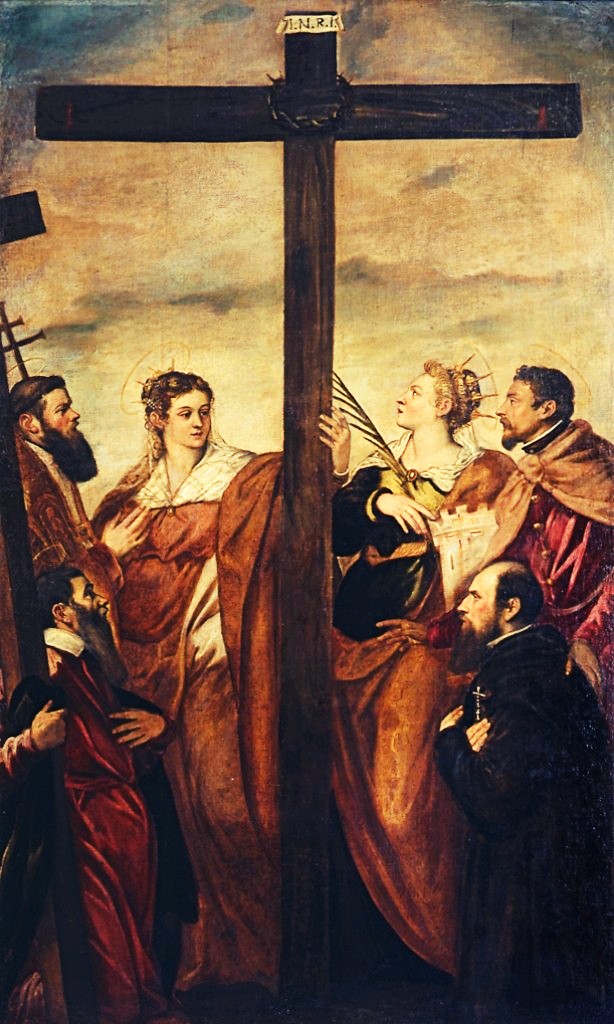
The True Cross with St Helena, right St Barbara, left, St Macarius kneeling, St Andrew far left and another Saint
Forty Martyrs of Sebaste, Armenia (Died 320) – Forty Christian soldiers of the Thunderstruck Legion of the Imperial Roman army who were tortured and murdered for their faith during the persecutions of Emperor Licinius. They were exposed naked on a frozen pond to freeze to death at Sebaste, Armenia in 320 and their bodies afterward were burned. THE FULL STORY HERE: https://anastpaul.com/2021/03/10/saints-of-the-day-10-march-the-forty-martyrs-of-sebaste-armenia-died-320/
St Alexander of Apema St Anastasia the Patrician St Andrew of Strumi St Attalas of Bobbio St Blanchard of Nesle-la-Réposte St Caius of Apema St Cordratus of Nicomedië St Droctoveus of Paris Bl Elias del Socorro Nieves St Emilian of Lagny St Failbhe the Little St Gustav the Hermit St Himelin Bl Jean-Marie Joseph Lataste
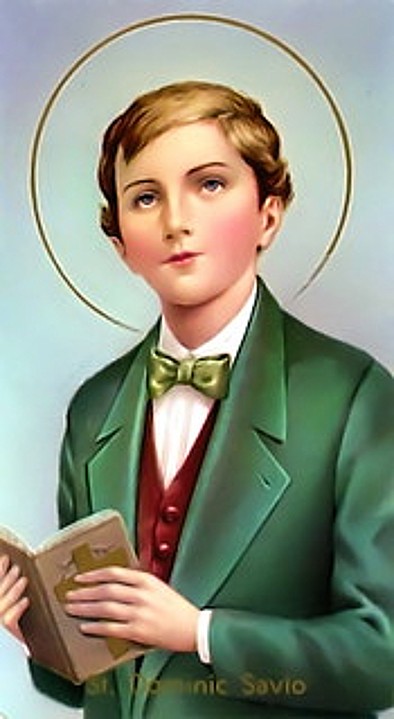
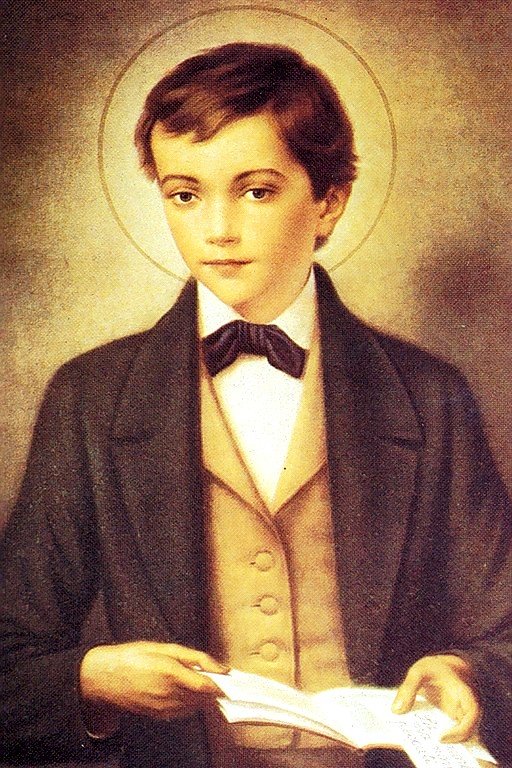
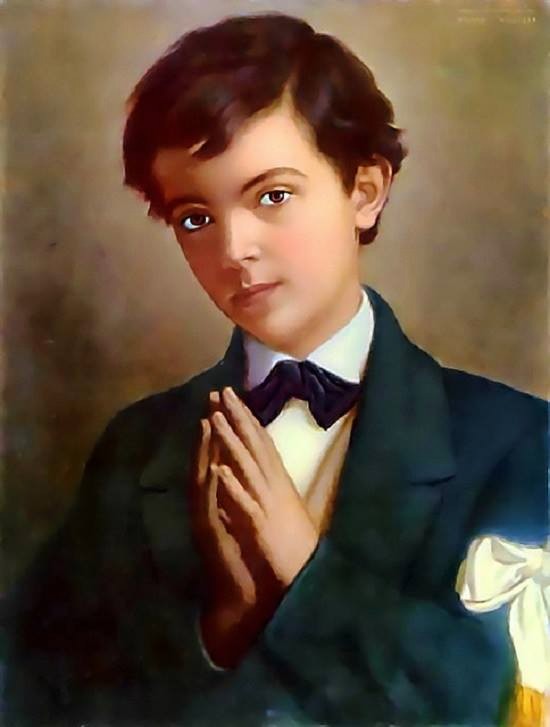
Saint of the Day – 9 March – St Dominic Savio (1842-1857) “The Little Giant”, Student of Saint John Bosco. He was studying to become a priest when he became ill and died at the age of 14. Born on 2 April 1842 at Riva di Chieri, Turin, Italy and died on 9 March 1857 at Mondonio, Italy of natural causes. Patronages – boys, children’s choirs, choir boys (given on 8 June 1956 by Pope Pius XII), choirs, falsely accused people, juvenile delinquents, Pueri Cantors, Colegio Santo Domingo, Bogotá, Colombia (chosen in January 1977), singers.
Dominic was born on 2 April 1842, in San Giovanni di Riva, near Chieri (Turin). On the occasion of his First Communion, at the age of seven, he set out his life’s program: “I will go to Confession frequently and Communion as often as my Confessor allows. I want to make Sundays and feast days holy. My friends will be Jesus and Mary. Death but not sin!”
At the age of twelve, he was accepted by Don Bosco into the Oratory of St Francis de Sales in Turin and Dominic asked his help in order to “become a saint.” Gentle, serene and happy, he put great effort into fulfilling his duties as a student and helping his companions in every way he could, teaching them Catechism, assisting the sick and settling quarrels.
One day he said to a companion who had just arrived in the Oratory: “You should know that here we make holiness consist in being always joyful. We try to avoid sin, which is the great enemy that robs us of the grace of God and peace of heart and, we try to fulfil our duties exactly.” He was very faithful to his program of work, sustained by intense participation in sacramental life, by a filial devotion to Mary and by joyful sacrifice. God enriched him with many special gifts.
On 8 December 1854, when Pope Pius IX proclaimed the Dogma of the Immaculate Conception, Dominic consecrated himself to Mary and began to advance rapidly in holiness. In 1856, he founded the Immaculate Conception Sodality among his friends. This was a group dedicated to apostolic action and peer ministry.
Mamma Margaret, St John Bosco’s Mother, who had come to Turin to help her Priest son, one day said to John “You have many good boys, but no-one surpasses the beauty of heart and soul of Dominic Savio.” And she explained: “I see him always praying, even remaining in Church after the others. Everyday he leaves recreation to visit the Blessed Sacrament; when he is in Church, he is like an angel in Heaven.”
He died in Murialdo on 9 March 1857, possibly of pleurisy. Pope Pius XI defined him as “a little, or rather, a great giant of the Spirit.”
St John Bosco regarded Savio very highly and wrote a Biography of his young student, The Life of Dominic Savio. This volume, along with other accounts of hims life were critical factors in his cause for sainthood. Dominic was Beatified on 5 March 1950 and Canonised on 12 June 1954, both by Pope Pius XII. He is the youngest non-martyr to be Canonised.
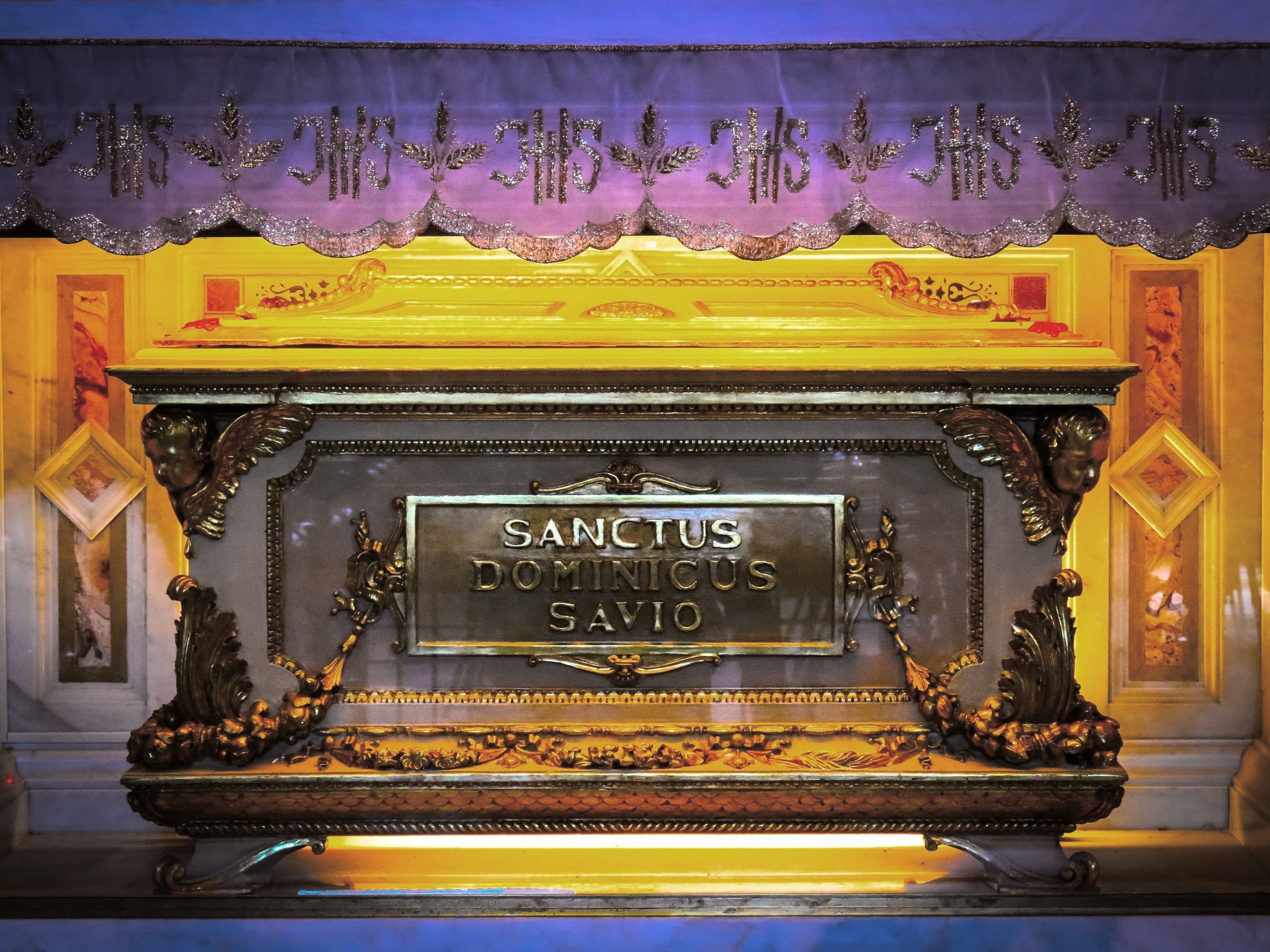
His birthplace is now a retreat house for teenagers and the home where he grew up in Morialdo is now a retreat house for children. The final house in which he lived is the home in Mondonio where the Savio family moved when he was 10 and where he eventually died. Here. you can see his father‘s metal shop and his mother‘s tailoring shop. His tomb is in the Basilica of Mary, Help of Christians in Turin, not far from the tomb of his mentor, teacher and biographer, Saint John Bosco.
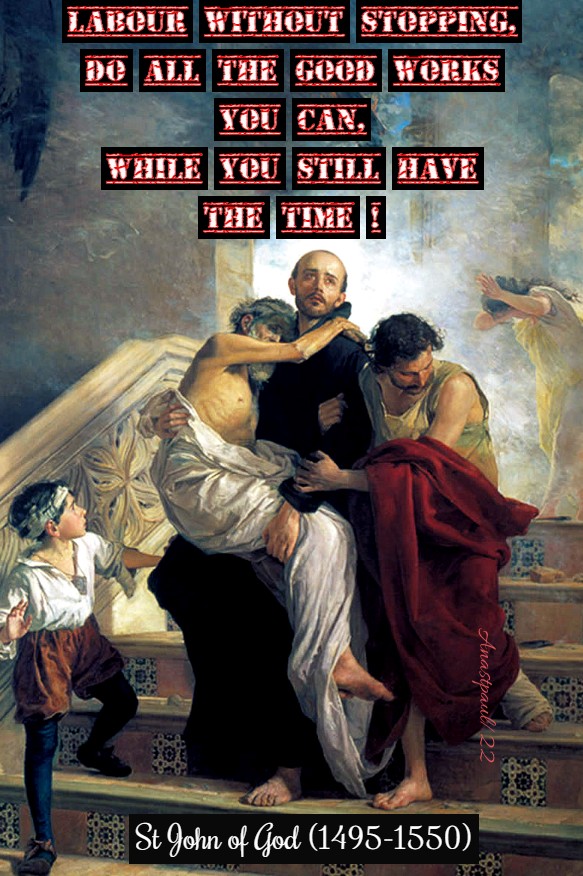
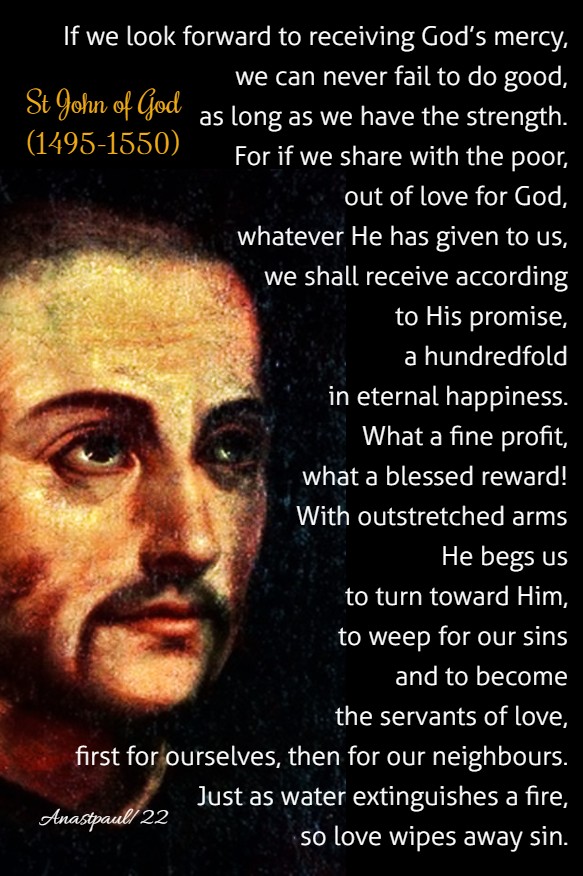
Quote/s of the Day – 8 March – Tuesday of the First Week of Lent and the Memeorial of St John of God (1495-1550)
“Labour without stopping, do all the good works you can, while you still have the time!”
“If we look forward to receiving God’s mercy, we can never fail to do good, as long as we have the strength. For if we share with the poor, out of love for God, whatever He has given to us, we shall receive according to His promise, a hundredfold in eternal happiness. What a fine profit, what a blessed reward! With outstretched arms He begs us to turn toward Him, to weep for our sins and to become the servants of love, first for ourselves, then for our neighbours. Just as water extinguishes a fire, so love wipes away sin.”
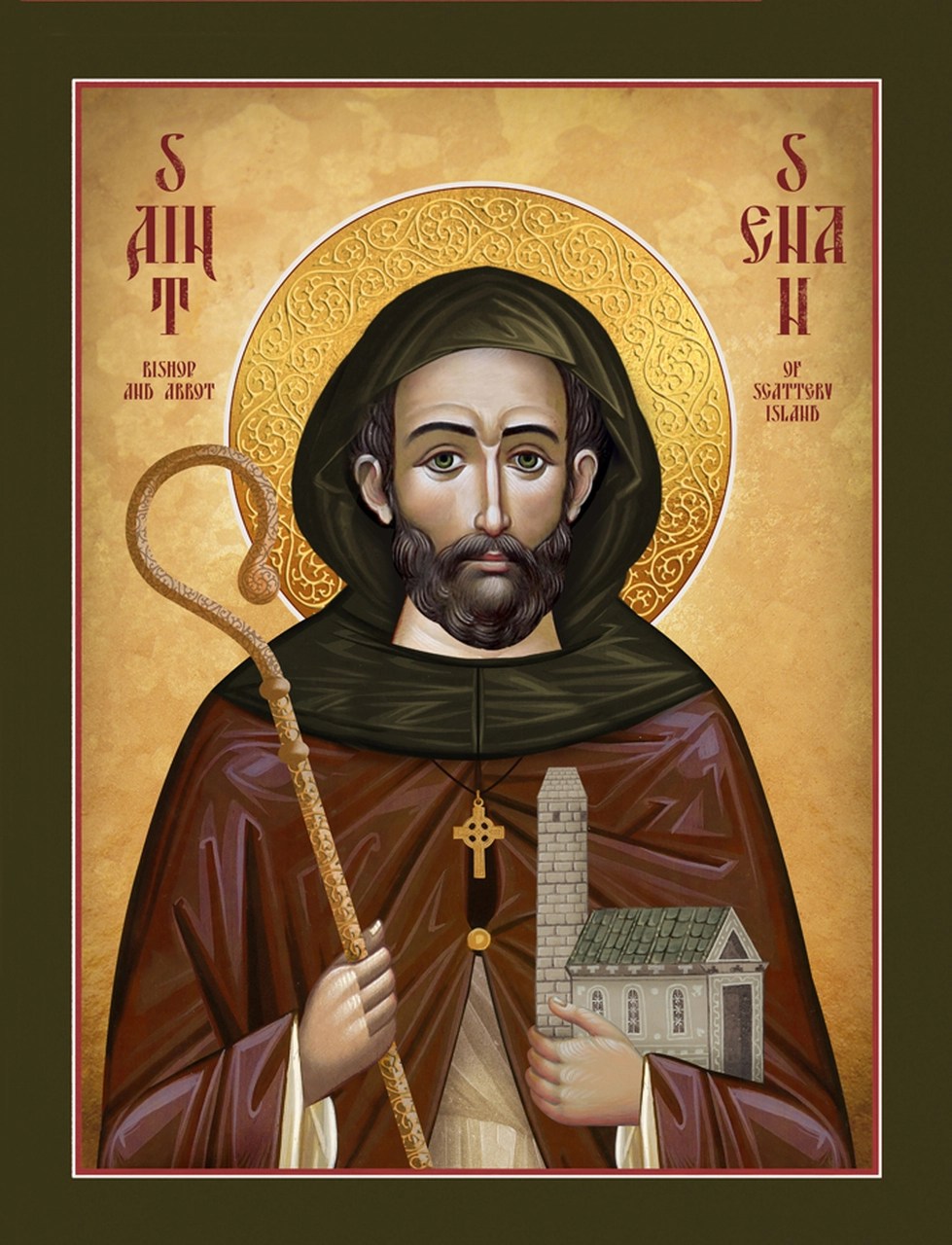
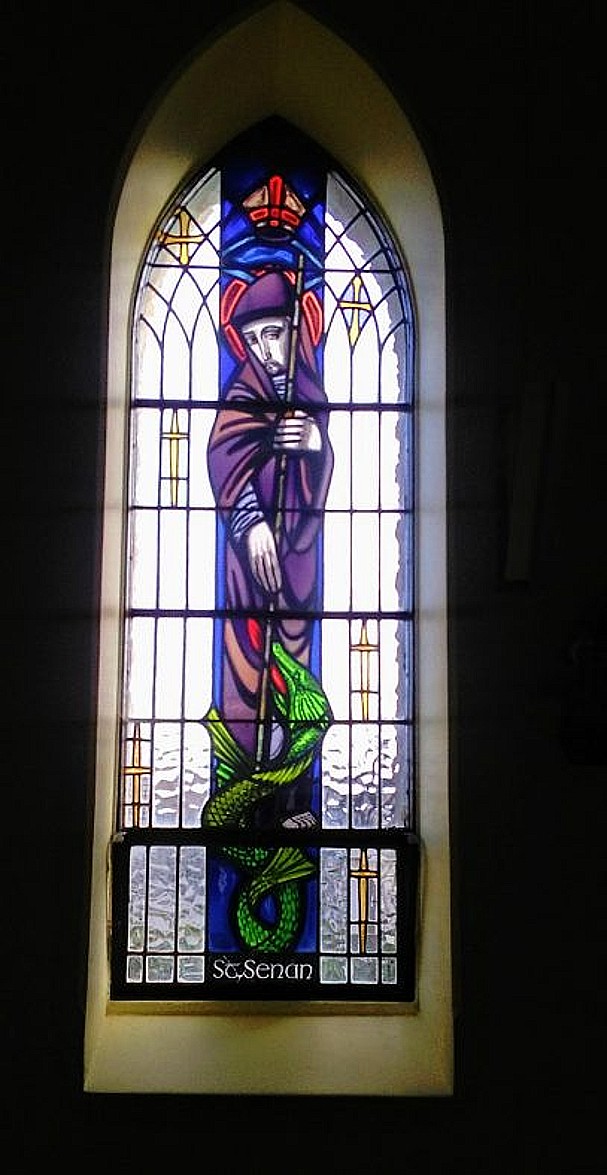
Saint of the Day – 8 March – Saint Senan of Scattery (c 488-541) Monk, Abbot, Founder of many Monasteries and Churches. miracle-worker, one of the Twelve Apostles of Ireland. Born in c 488 at Corca Bhaisin, County Clare, Ireland, tradition says that Saint Patrick foretold his birth and saintliness and died on 8 March 544 at Inish Cathaig, Ireland of natural causes. Patronages – sailors and bodily afflictions. Also known as – Senan of Inis Cathaigh, Senames… Additional Memorial – 6 January as one of the Twelve Apostles of Ireland.
Senan was born in Corca Bhaisin, County Clare about 488. It seems that Senan’s family had two farms, one at Moylough and the other at a place called Tracht Termainn.
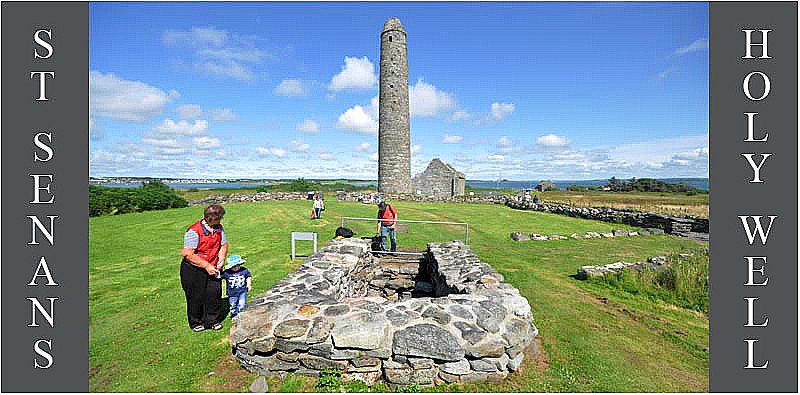
He placed himself under the Abbot Cassidan and took the monastic Habit. Cassidan was originally from South-west Cork. Senan then went to the Monastery of Kilmanagh (Ossory) to continue his preparations for the religious life. There he was credited with the performance of many miracles. He is next heard of having established a Church at Enniscorthy. The Book of Lismore states that Senan went to Rome and from there to Tours, which was at that time, the great monastic establishment in West Europe. Returning to Ireland,Senan established a Church and Monastery at Inniscarra, in Cork. Returning to his native district, he began his work on the islands of the Fergus . He crossed to Mutton Island, then to Bishop’s Island, south of Kilkee. Finally, about 534, he established himself at Scattery, the low green island about a mile off the coast off Kilrush.
Before Senan arrived on Scattery, also called Inis Cathaig, a legendary monster called “The Cathach” inhabited the island and terrorised the people who were afraid to approach the island. Sometimes referred to as the “peist” or sea-serpent, the Cathach was depicted on a carving in the old chapel of Kilrush as the “Cata.” On his arrival in the island, the Angel Raphael led Senan to the highest hill from which he was able to locate the Cathach. He then faced the monster and ordered it, in the name of the Trinity, to depart from the island. The Cathach obeyed immediately and “neither stopped nor stayed” until he reached the dark waters of Doolough Lake at the foot of Mount Callan.
Little is known of the Saint’s life in Scattery beyond the miracles recorded and the fact that the rule of his monastery was austere in the extreme. Apparently, no woman was allowed to live in or even land on the island. St Cainir, a relation of enans, had a convent to the West of Ballylongford. She crossed the river and hoped to end her days on Scattery Island but Senan forbade her to come ashore. She requested the last sacraments and a grave on the island. Senan agreed to this and she was buried at high water mark.
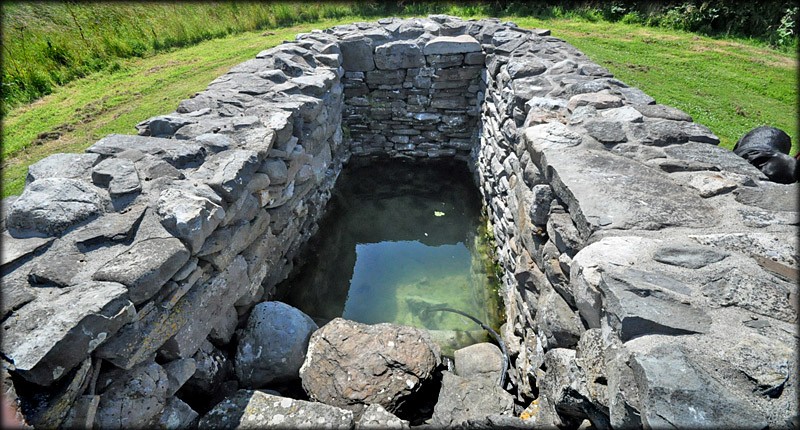
Senan died on 8 March 544. The river Shannon is believed to be named after him. His patron day on 8 March is an important day of pilgrimage to Inis Cathaig. He is buried on Scattery Island. The grave is supposed to be the site of miraculous cures as well as the miraculous holy well. Stones from St Senan’s Bed (his grave) were regarded as relics and a protection against diseases and especially drowning. In the folklore of West Clare the cult of Senan still survives.
In 1864 it is reported, that the Saint appeared in a vision to a paralysed woman who had visited Senan’s grave on the island. He came to her in a dream and asked her why she had come. She told the bearded man she wanted to be cured of her disease and trusted in the intercession of St Senan whom she had invoked. The next morning she awoke and found herself completely healed!
The above statue of St Senan came all the way from Australia and now rests in the parish of Doonbeg in West Clare.
St Apollonius of Antinoë St Arianus of Alexandria St Beoadh of Ardcarne St Duthus of Ross St Felix of Burgundy St Humphrey of Prüm St Jon Helgi Ogmundarson St Litifredus of Pavia St Philemon of Antinoë St Pontius of Carthage St Provinus of Como St Quintilis of Nicomedia St Rhian St Senan of Scattery (c 488-541) Monk, Abbot, Founder of many Monasteries and Churches.
St Stephen of Obazine St Theophylact of Nicomedia St Theoticus of Alexandria St Veremundus of Irache
Martyrs of North Africa – 9 Saints – A Bishop and some of his flock who were Martyred together in North Africa. The only details that have survived are nine of the names – Beata, Cyril, Felicitas, Felix, Herenia, Mamillus, Rogatus, Silvanus, Urban.
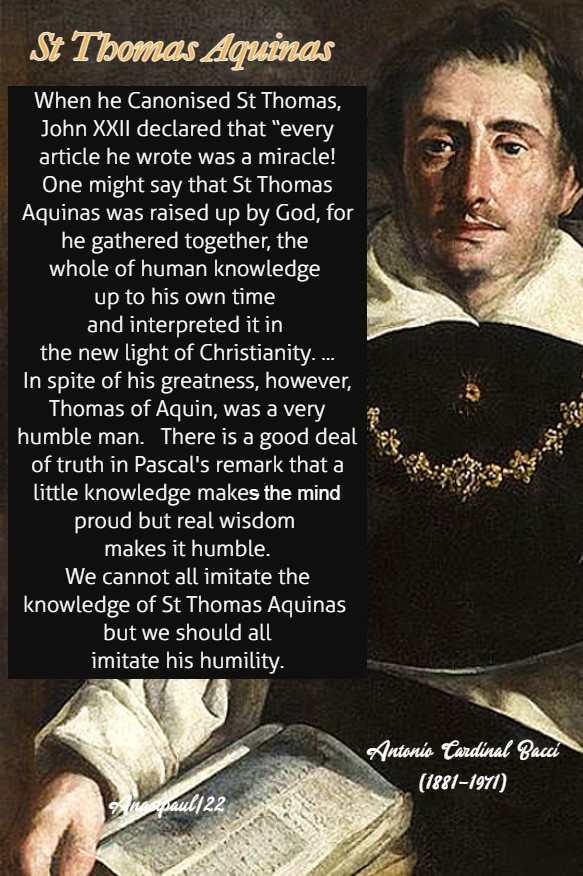
Thought for the Day – 7 March – Meditations with Antonio Cardinal Bacci (1881-1971)
ST THOMAS AQUINAS
“It is generally recognised that St Thomas Aquinas was a great Philosopher and Theologian. The Cartesian Philosopher, Jourdain , said of him, that no other man had come so near to being infallible! The eclectic Philosopher, Cousin, referred to the Summa Theologiae, as one of the greatest masterpieces of human genius. Dante celebrated in immortal verse, this wonderful synthesis of thought. When he Canonised St Thomas, John XXII declared that “every article he wrote was a miracle!”
One might say that St Thomas Aquinas was raised up by God, for he gathered together, the whole of human knowledge up to his own time and interpreted it in the new light of Christianity. He ordered it into a complete compact body of philosophical and theological doctrine, to serve as an impregnable defence against the errors of his own and later times.
In spite of his greatness, however, Thomas of Aquin, was a very humble man. There is a good deal of truth in Pascal’s remark that a little knowledge makes the mind proud but real wisdom makes it humble.
We cannot all imitate the knowledge of St Thomas Aquinas but we should all imitate his humility.”
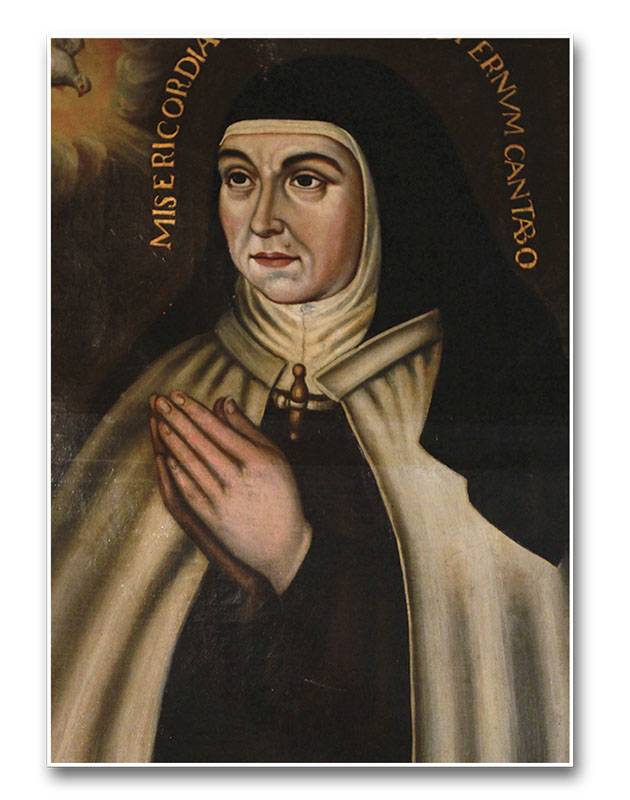
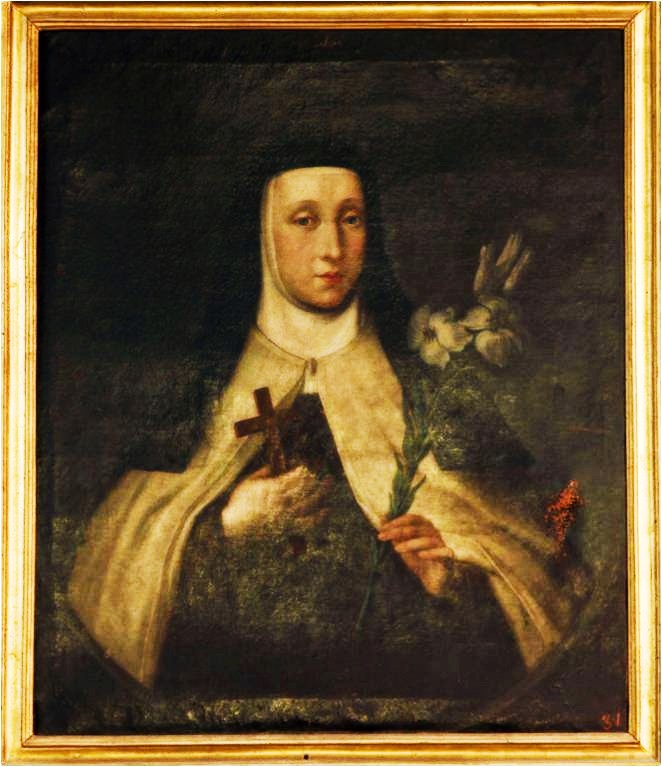
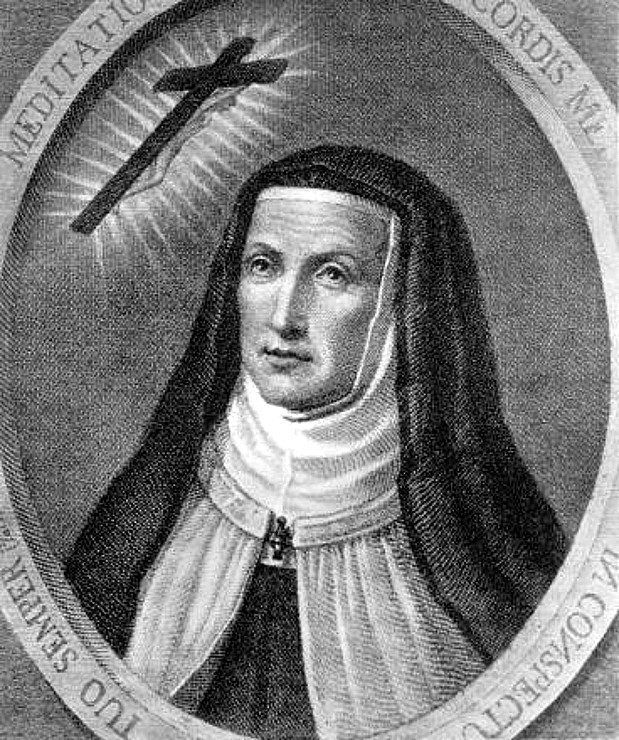
Saint of the Day – 7 March – Saint Teresa Margaret Redi of the Sacred Heart OCD (1747– 1770) Virgin, Nun of the Order of the Discalced Carmelites, Mystic. Born on 15 July 1747 at Arezzo, Tuscany, Italy as Anna Maria Redi and died on 7 March 1770 at Florence, Italy of a severe and painful abdominal disorder, aged just 22. Also known as – Ann Maria Redi, Anna Maria Redi, Anne Mary Redi. Teresa Margherita Redi of the Sacred Heart.
The Roman Martyrology states: “In Florence, Saint Teresa Margherita Redi, a Virgin, who, having entered the Order of the Discalced Carmelites, travelled an arduous path of perfection and was struck by premature death.”
“Eu sou Teresa de Jesus e te quero entre as minhas filhas!” – Santa Teresa de Ávila, Mosteiro de São José, Ávila (Espanha) – Foto: Francisco Lecaro
Anna was born into a large, noble and devout family in Arezzo Italy in 1747. From the earliest days of her childhood, Anna was filled with a deep love of God questioning the adults around her as to “Who is God?” Already she was dissatisfied with answers given her. Only the contemplative life of a Carmelite nun could begin to quench her thirst to know and give herself completely to God. Her entire life was driven by the desire to “return love for love.”
She entered the Carmelite convent in Florence at the age of seventeen, advanced rapidly in holiness and died an extraordinary death at twenty-two.
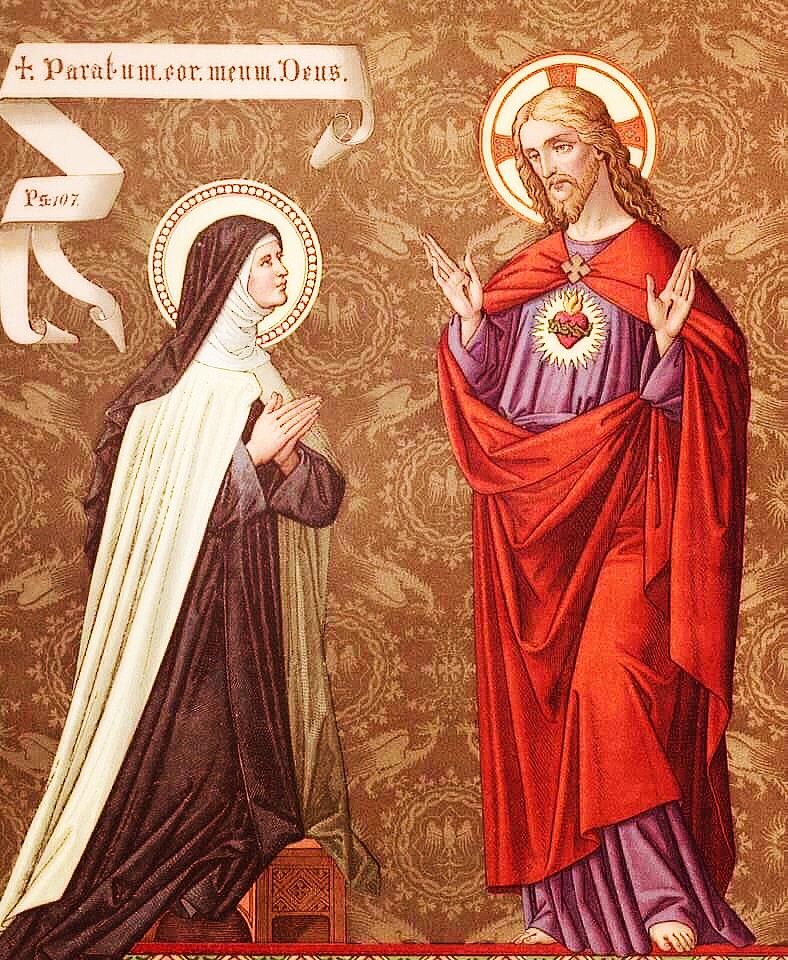
She was a model religious with an astonishing depth of spirituality, purity of heart, humility and ardent love for the Sacred Heart of Jesus. She was given a special contemplative experience of the words of St John, “God is love” and she lived in fidelity to this experience by a hidden life of love and self-gift.
Christ crucified was always in her mind, “the captain of love,” who held aloft “the standard of the Cross.” After her 1758 spiritual retreat, she proposed in all her actions not to be motivated other than by love and to unite her will with that of God. She was assiduous in small services to the sisters and would not allow gossip or criticism. She exclaimed constantly, “God is love.”. Her life was one of continuous thanksgiving, “which would prove to the person who does not believe in Him or not dare to approach Him, the goodness and generosity of our most loving God!”
Her love of God was powerfully expressed in her love for her sisters, to whom she gave herself in dedication and service. Appointed Infirmarian, she cared for the ill and elderly of her community, even the most difficult, with gentleness, equanimity, and patience.
True to the tradition of the Order, Teresa Margaret was utterly devoted to Our Lady whom she regarded as the model and protectress of her own virginal purity.
The cornerstone of St Teresa Margaret’s spirituality was to remain hidden, to appear just like everyone else’ in spite of her heroic virtue. To our loss, she has remained very much hidden even after her death. Fr Gabriel of St. Mary Magdalen commented “This is an odd fact, for we do not hesitate to rank her among the primary figures who represent the glory of Carmel – among Teresa of Jesus, John of the Cross and Thérèse of the Child Jesus.”
Although St.Teresa Margaret led a life of exquisite holiness and purity, it was also a life that is whollyone of imitation. In her were combined Martha and Mary, as she served her community as a nurse in the Infirmary, while reaching the heights of contemplation. N
After her death all the swelling and discoloration in her body disappeared, her body was incorrupt several weeks later, had a healthy glow and exuded an odour of perfume. Pope Pius XI Canonised her on 13 March 1934.
St Ardo of Aniane St Deifer of Bodfari St Drausinus of Soissons St Enodoch St Esterwine of Wearmouth St Eubulus of Caesarea St Gaudiosus of Brescia Bl Henry of Austria
St Paul of Prusa St Paul the Simple St Reinhard of Reinhausen St Teresa Margaret Redi of the Sacred Heart OCD (1747– 1770) Virgin, Nun of the Order of the Discalced Carmelites, Mystic. Bl William of Assisi
Martyrs of Carthage – 4 Saints: A catechist and three students Martyred together for teaching and learning the faith. We know little more than their names – Revocatus, Saturninus, Saturus and Secundulus. Mauled by wild beasts and beheaded 7 March 203 at Carthage, North Africa
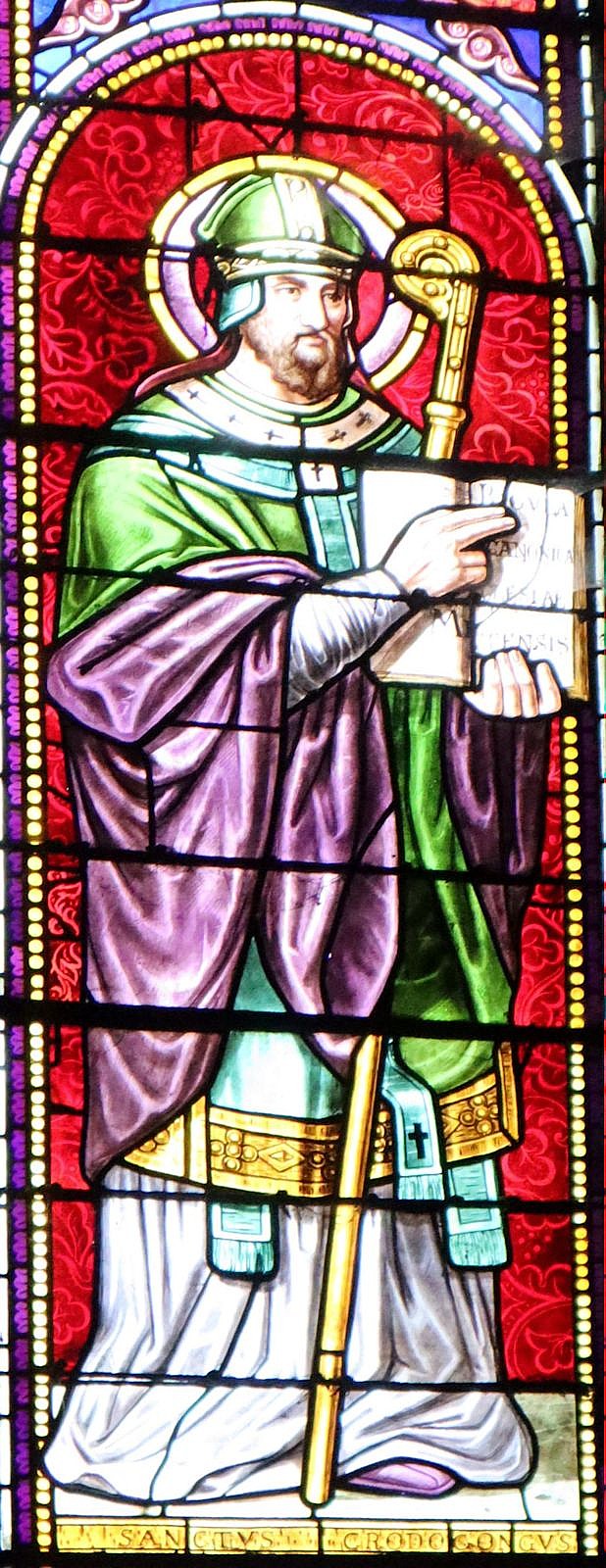
Saint of the Day – 6 March – Saint Chrodegang of Metz (c 714-776) First Bishop of Metz, Protector and Father of the poor and orphans, Reformer of the Clergy, a relative of King Pepin and of Prince Charles Martel, both of whom he was Court Chancellor, Royal Diplomat, Saint Opportuna of Montreuil was his brother. Born in c 714 at Hesbaye, Brabant, near Liege, Belgium and died on 6 March 776 at Metz, France. Also known as – Chrodegand, Chrodegangus, Chrodegrang, Chrodegrangus, Chrodogand, Chrodogandus, Chrotgang, Chrotgangus, Droctegangus, Godegrand, Godegrandus, Grodegandus, Grodegangus, Grodogangus, Gundigran, Krodegandus, Ratgang, Rodigang, Rudigangus, Ruggandus, Ruodgangus, Ruotgangus, Rutgangus, Sirigang and Sirigangus. Additional Memorial – 3 October (Augustinians).
The Roman Martyrology states: “In Metz in Austrasia, in today’s France, St Crodegango, Bishop, who arranged for the Clergy to live as if within the walls of a cloister under an exemplary rule of life and greatly promoted liturgical chant.”
Chrodegang was born in c 714 at Hesbaye, Brabant, near Liege, Belgium into a noble family. His parents, of Frankish origin, sent him to be educated at the Benedictine Abbey of Saint-Trond.
Chrodegang was good-looking young man, very educated and an excellent linguist. Charles Martell, Duke and Prince, noticed his great skills and appointed him head of the diplomatic and juridical corps at his service. When Charles Martel died in 742, his successor, Charlemagne, also appointed him Bishop of Metz. Codregando, however, was still a layman and, therefore ,had to receive Diaconal and Priestly Ordinations and Episcopal Consecration. He retained his political office and took advantage of the prestige achieved by the exercise of the two offices and exploited his influence for a good purpose.
As King Pepin’s Ambassador to Pope Stephen II, Chrodegang carried out a profound reform of the Clergy, which at that time was in a deadly moral crisis. Determined to intervene in the difficult situation, he began with the Priests of his City. He ,therefore, gathered all the Clergy in houses and established for them a rule of life inspired by that of St Benedict. The code that he applied to Metz was made up of thirty-four chapters and everyday, in the presence of the whole community, one was read – hence these meetings took the name of “Chapter.” Soon, this name was extended to the people who attended the readings, while all those who were linked to the canons were called “Canons” and those who followed a rule began to define themselves as “Regular,”
Other norms of community life were inserted later, concerning enclosure, domicile, study, liturgy, dress and meals and were aimed at providing the ecclesiastics with mutual support in remaining faithful to the vow of chastity and other commitments proper to the Clergy. The main difference from the friars was in the possibility of retaining their possessions, a habit that was later questioned. The Rule of Chrodegang was then adopted by other Diocese and finally, extended by Charlemagne to all Priests, who were thus required to be either Monks or Canons. This Rule also found success abroad and over the centuries it repeatedly returned to vogue, albeit not in its original form.
On the initiative of Chrodegang, the Roman Rite and Chant were also introduced in Metz, the repertoire of which returned to Rome enriched by French compositions and from there, spread throughout Europe. The “schola cantorum” – “School of Singers'” of Metz, fame lasted for centuries. In 805 Charlemagne even ordered that all singing teachers should be trained in Metz.
Chrodegang laboured earnestly for the welfare of Church and State and was ever solicitous of strengthen the bonds of union between the temporal and spiritual Rulers. He founded (748) the Abbey of Gorze (near Metz), and remained its friend and protector. He also established St Peter’s Abbey, on the Moselle and did much for the Abbeys of Gengenbach and Lorsch. For the latter, he is said to have obtained the relics of St Nazarius, and for Gorze those of St Gorgonius The holy Bishop also distinguished himself in the construction and restoration of Churches, Monasteries and charitable institutions. After the death of St Boniface, Pope Stephen conferred the Pallium on Chrodegang (754-755), thus making him an Archbishop but not elevating the See of Metz.
Chrodegang was a man of imposing appearance, of a mild, though firm, character, of great liberality to the poor, and of more than ordinary abilities in many fields and was extremely well versed in Latin and German.
In 762, during a dangerous illness, he introduced among his Priests a Confraternity of Prayer, known as the League of Attigny. The ‘Rule of Chrodegang‘ spread far and wide and it seems probable that the Rule was brought by Irish monks to their native land from the Monasteries of north-eastern Gaul and that Irish anchorites originally unfettered by the rules of the cloister bound themselves by it. In the course of the 9th century mention is made of nine places in Ireland (including Armagh, Clonmacnoise, Clones, Devenish and Sligo) where communities of Culdees were established as a kind of annex to the regular Monastic institutions. They seem especially to have had the care of the poor and the sick and were interested in the musical part of worship.
On his death, on 6 March 766, he received burial at the Abbey of Gorze, which he himself had founded and loved more than any other. Tradition has it that some of his relics are also kept at the Saint-Symphorien Church in Metz.
St Aetius St Bairfhion St Baldred of Strathclyde St Baldred the Hermit St Balther of Lindisfarne St Basil of Bologna St Cadroë St Chrodegang of Metz (c 714-776) Bishop
St Cyriacus of Trier St Cyril of Constantinople St Evagrius of Constantinople St Fridolin Vandreren of Säckingen Bl Guillermo Giraldi St Heliodorus the Martyr Bl Jordan of Pisa St Julian of Toledo St Kyneburga of Castor St Kyneswide of Castor St Marcian of Tortona Bl Ollegarius of Tarragona St Patrick of Malaga St Sananus
Martyrs of Amorium – 42 Saints – Also known as Martyrs of Syria and Martyrs of Samarra; A group of 42 Christian senior officials in the Byzantine Empire who were captured by forces of the Abbasid Caliphate when the Muslim forces overran the City of Amorium, Phrygia in 838 and massacred or enslaved its population. The men were imprisoned in Samarra, the seat of the Caliphate, for seven years. Initially thought to be held for ransom due to their high position in the empire, all attempts to buy their freedom were declined. The Caliph repeatedly ordered them to convert to Islam and sent Islamic scholars to the prison to convince them; they refused until the Muslims finally gave up and killed them. Martyrs. We know the names and a little about seven of them: • Aetios • Bassoes • Constantine • Constantine Baboutzikos • Kallistos • Theodore Krateros • Theophilos but details about the rest have disappeared over time. However, a lack of information did not stop several legendary and increasingly over-blown “Acts” to be written for years afterward. One of the first biographers, a monk name Euodios, presented the entire affair as a judgement by God on the empire for its official policy of Iconoclasm. Deaths: • beheaded on 6 March 845 in Samarra (in modern Iraq) on the banks of the Euphrates river by Ethiopian slaves • the bodies were thrown into the river, but later recovered by local Christians and given proper burial.
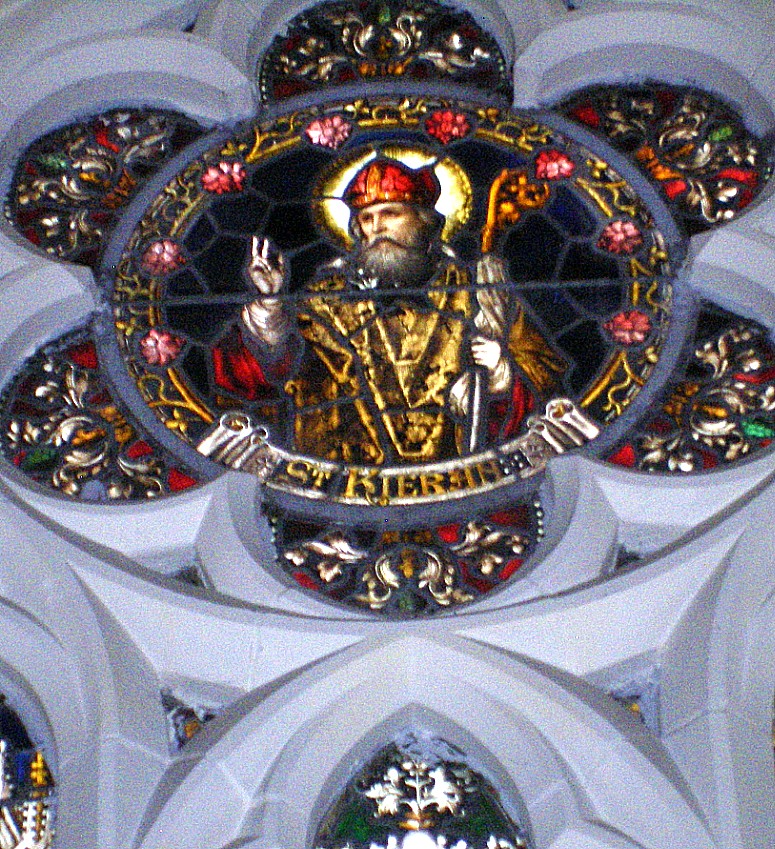
Saint of the Day – 5 March – Saint Kieran (Died c 530) Bishop, one of the Twelve Apostles of Ireland born in Corca-Laighde (modern Cape Clear), Ireland and died c 530 of natural causes. Patronage – Diocese of Ossory, Ireland. Also known as – Kieran of Saighir, Kieran of Seirkeiran, Kieran the Elder, Kieran Saighir, Kieran mac Luaigne, First-born of the Saints of Ireland, Ceran, Chierano, Ciarán, Ciarano, Ciaranus, Kenerin, Kerrier, Kevin, Kieren, Kiernan, Kieron, Kyran, Queran, Queranus. Additional Memorial ON 6 January as one of the Twelve Apostles of Ireland. Kieran is the first person born in Ireland to be Canonised.
Kieran was born in Ireland, possibly on Cape Clear Island. Historians disagree on his date of birth, although most sources place him in the fifth or sixth century. His father’s name was Laighne and his mother was Liadain. At that time, the Irish were pagans. Many legends exist concerning the events of Kieran’s life. One says that when his mother was pregnant with Kieran, she had a dream that a star fell from heaven and came to rest upon her. People said this meant tthat he baby she carried would have a special purpose.
When Kieran was a child, he was kind and gentle. He loved animals and they, in turn, trusted him. Several of the stories about Kieran tell of his ability to tame wild animals and he is often shown with a badger, a doe and a fox.
Kieran wanted to learn more about God, so when he was thirty years old he went to Rome, the centre of Christianity. He spent several years there, studying. Kieran was Baptised a Christian and later Ordained a Priest. Legends disagree about whether Kieran was Consecrated a Bishop in Rome or later in Ireland. Many stories say that St. Patrick (c 386-461) met with Kieran in Rome and commissioned him to return to Ireland and build a Monastery. One legend tells of St. Patrick giving Kieran a bell that rang for the first time when he reached the sight of a holy well in Saighir and there he built his Church. This became renowned as a holy place and many of the ancient Kings of Ossory were buried there.
Legend tells that Kieran had hoped to live a life of solitude and upon his return to Ossary he dwelt in a cave where he spent much of his time in prayer. As the story goes, he befriended the animals who come to him when they were ill or hurt. People began to hear of his powers of healing. He ministered to the people and soon had a following. Kieran built a Monastery in Ossary and the Town of Saighir grew up around it. Kieran served the people as Bishop of Ossory until his death.
The ruins of the original Church, the well round the fountain and other holy sites related to St Kieran can be seen today in Saighir, Ossory, Ireland. In Ireland, his name is spelled Ciaran, pronounced “Kigh-ran” of “Sigh-gear.” He is also called St. Kieran the Elder, to distinguish from Saint Kieran of Clonmacnoise.
St Adrian of Caesarea St Caron St Carthach the Elder Bl Christopher Macassoli of Vigevano St Clement of Santa Lucia St Colman of Armagh St Conon of Pamphylia Bl Conrad Scheuber St Eusebius of Cremona St Eusebius the Martyr St Gerasimus Bl Giovanna Irrizaldi Bl Ion Costist
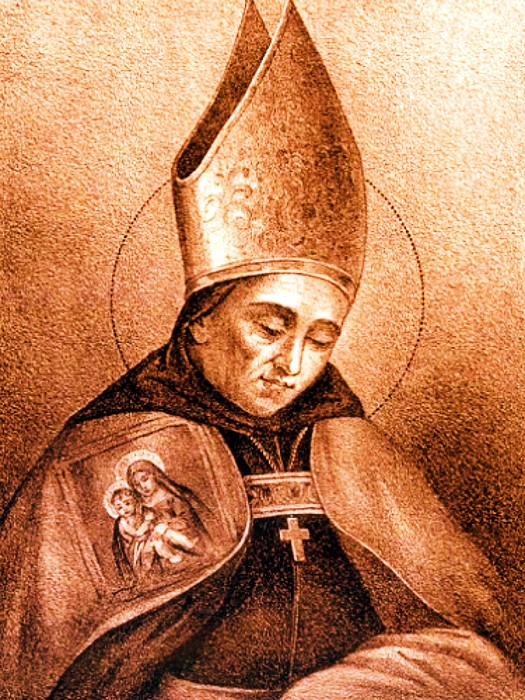
Saint of the Day – 4 March – Saint Peter of Pappacarbone (c 1038-1123) Bishop, Abbot, Reformer. Born in Salerno, Italy and died in 1123 of natural causes. Patronage – Policastro, Italy. Also known as – Pieror de Cava, Peter of La Cava, Peter I of Cava.
The Roman Martyrology reads: “In the Monastery of Cava de Tirreni in Campania, St Peter, Abbot, admirably renewed the discipline.”
Peter was a native of Salerno in Italy, a nephew of St Alferius, founder of the Monastery of Cava. Peter entered the religious life at a very early age under St Leo, the 2nd Abbot of Cava. He distinguished himself at once by his piety, mortifications and love of solitude.
At this time, the fame of the Abbey of Cluny had spread far and wide, and the young monk was so attracted by what he had heard, that in about 1062 he obtained Permission to leave Cava and go to France to investigate the way of life at Cluny When the older Monks at Cluny would have sent him to the school to be trained, their Abbot, St Hugh disagreed, saying that Peter might be young in years but that he was a full-grown man in devotion. The Abbot’s opinion was abundantly justified, for Peter proved himself well amongst that household of holy men and he remained there for some six years.
He was then recalled to Italy, having been released by St Hugh apparently at the request of the Archdeacon of Rome, Hildebrand (who was afterwards Pope St Gregory VII). Peter was appointed the first Bishop of Policastro but he found himself unfitted for the turmoil of the world and for the secular cares which devolved upon him. He obtained permission to resign and retired to Cava, where Abbot Leo, realising that he himself was becoming too old to govern, nominated him as his successor and withdrew. The Monks, by their votes, had confirmed the election of their new superior but soon found the strict rule he had brought from Cluny extremely irksome: they began to murmur and rebel and some of them carried their complaints to the aged Leo in his retirement.
Peter, far from resisting and equally far from relaxing the rule, quietly left and betook himself to another Monastery. It was not long before the Monks of Cava, urged by Abbot Leo, came to entreat Peter to return, which he consented to do. Thereafter it was remarked, that those who had the most vehemently opposed him ,were now foremost in welcoming the rule they had previously spurned.
Under the government of Abbot Peter the Monastery flourished amazingly. Not only did numbers of aspirants to the religious life, flock to him from all sides but men and women in the world, showered money and lands upon the community, which was then enabled to minister far and wide, to the sick and the poor. The Abbey itself had to be enlarged to admit the new members and a new Church was built, to the dedication of which, came Pope Urban II, who had been with Peter at Cluny and had remained his close friend. The description of this occasion was preserved in the chronicles of Cava, where it is stated that Blessed Urban talked freely with the Abbot and Monks, as though “forgetting that he was the Pope.”
Peter lived to a great age and died in 1123. He was succeeded by St Constabilis, who had served as Peter’s Assistant and Auxiallary.
The Abbey of Cava still exists and in 1912 the Monks gave proof of their devotion to the Founders of their observance by reprinting, from the unique ancient manuscript in their possession, the Lives of the Saints Alferius, Peter and two other early Sainted Abbots, purporting to be written by Hugh of Venosa, a younger contemporary of St Peter. It is to this biography, which may be found in the Acta Sanctorum (March, vol. i), that we owe all our knowledge of St Peter of Cava.
The first four Abbots of Cava were officially recognised and Canonised as Saints on 21 December 1893, by Pope Leo XIII. They are Alferius, the Founder and first Abbot (1050), Leo I (1050–79), Peter of Pappacarbone (1079–1123) and Constabilis (1122-1124). Their relics rest in the Abbey Church in the Chapel of the Saintly Fathers.’
St Adrian of May St Adrian of Nicomedia Bl Alexander Blake St Appian of Comacchio St Arcadius of Cyprus St Basinus of Trier Bl Christopher Bales St Felix of Rhuys St Gaius of Nicomedia Bl Humbert III of Savoy St Leonard of Avranches St Nestor the Martyr St Owen Bl Paolo of Brescia St Peter of Pappacarbone (c 1038-1123) Bishop
Martyrs on the Appian Way – 900 Saints – Group of 900 Martyrs buried in the Catacombs of Saint Callistus on the Appian Way, Rome, Italy.c 260
Martyrs of Nicomedia – 20 Saints – A group of 20 Christians murdered together for their faith. The only details about them to survive are three of their names – Archelaus, Cyrillos and Photius. Nicomedia, Bithynia (in modern Turkey)
Martyrs of the Crimea – 7 Saints – A group of 4th century missionary Bishops who evangelised in the Crimea and southern Russia, and were Martyred for their work. We know little else beyond the names – Aetherius, Agathodorus, Basil, Elpidius, Ephrem, Eugene and Gapito.
Martyred in the Spanish Civil War: Bl Pedro Ruiz Ortega, Bl Pere Roca Toscas
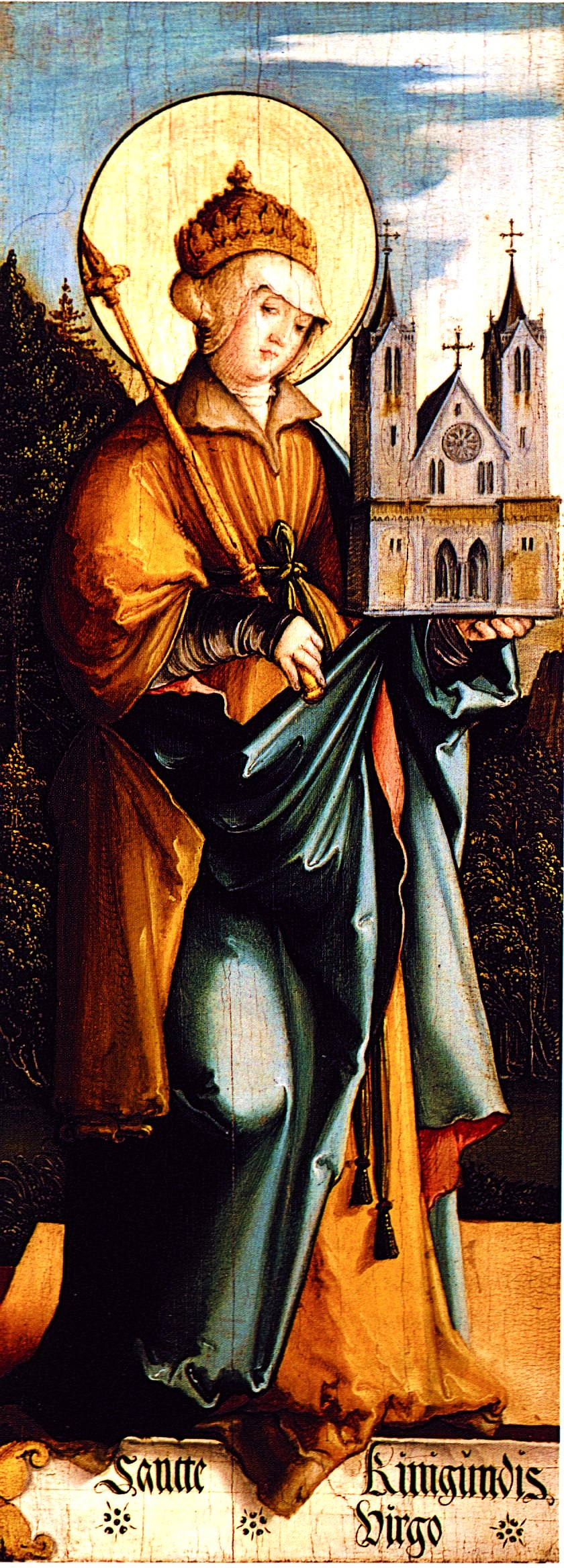
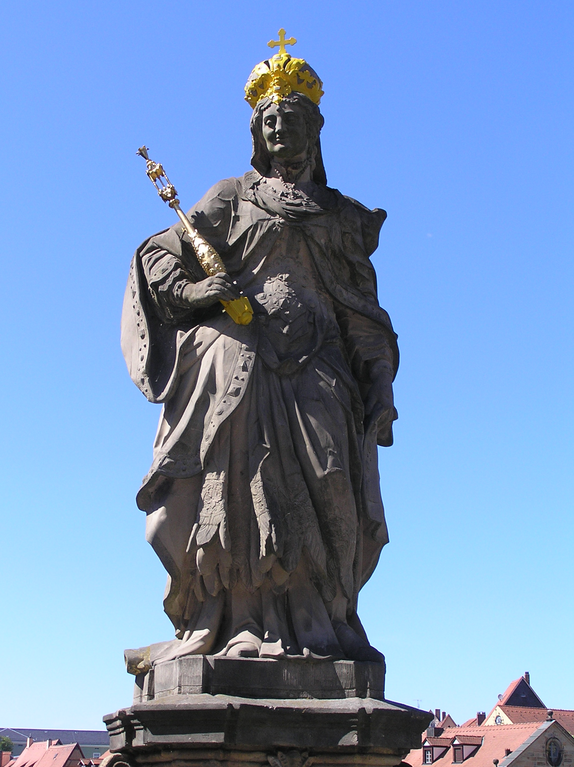
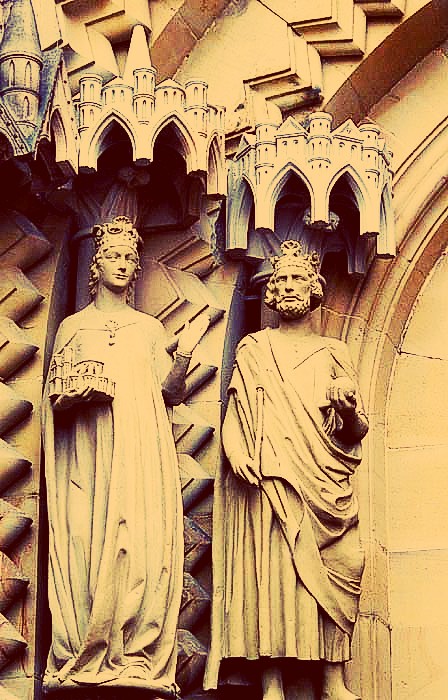
Saint of the Day – 3 March – St Cunegundes (c 975-1040) Empress of the Holy Roman Empire, Nun, she took a vow of Virginity before her marriage, which, after a miracle was upheld by her husband, the King (also a Saint). Founder of Monasteries and Churches, Nun in one of her Convents, Apostle of Charity. Born in c 975 and died in 1040 of natural causes. Patronages – Bamberg, Germany, Archdiocese of, Luxembourg, Lithuania.Also known as – Cunegundes of Luzembourg, Chunigundis, Cunnegunda, Cunigunde, Cunegonda, Kinga, Kunegunda, Kunigunde.
Saint Cunegundes was the daughter of Siegfried I, one of eleven children. Siegfried was the first Count of Luxemburg and his pious wife was Hadeswigee. From her cradle, her virtuous parents instilled into their daughter the most tender sentiments of piety.
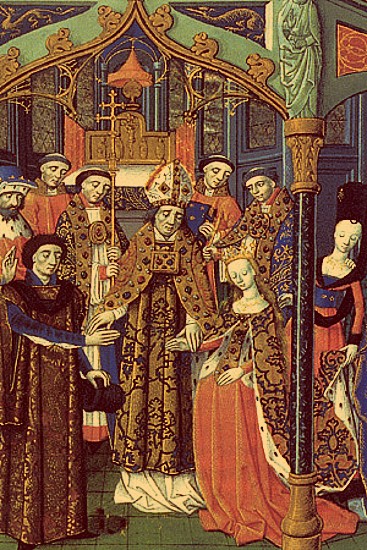
When she was of an age to marry, they chose for her spouse Saint Henry, Duke of Bavaria, who at the death of the Emperor Otto III, was named King of Bavaria and the Holy Romans and was crowned on 6 June 1002. Queen Cunegundes was crowned at Paderborn on Saint Laurence’s day.
In the year 1014 she went with her husband to Rome and they received the Imperial Crown from the hands of Pope Benedict VIII. With Saint Henry’s consent, before their marriage, she had made a vow of perpetual Virginity. Afterwards, certain vile accusations were made against her chastity and the holy Empress, to remove the scandal of such a slander, trusting in God to prove her innocence, walked over red-hot ploughshares without being hurt. The Emperor in turn, renounced and condemned, his own too scrupulous fears and credulity and from that time on, they lived in the strictest union of heart, working together to promote piety and God’s honour in every sphere.
The Crowning of Sts Henry and Cunegonde’s by Pope Benedict VIII
Going once to make a retreat in Hesse, Saint Cunegonde’s fell dangerously ill and she made a vow to found a Monastery at Kaffungen, in the Diocese of Paderborn, if she recovered. This she executed in a stately manner and gave it to Nuns of the Order of Saint Benedict. Before it was finished, Saint Henry died in 1024. She earnestly recommended his soul to the prayers of the empire and especially to her dear Nuns and expressed her longing desire to join the Sisters.
She had already exhausted her treasures in founding Bishoprics, Churches and Monasteries and in relieving the poor, and she had, therefore,little left to give. But intending to embrace perfect evangelical poverty, to renounce all things in order to serve God without obstacle, she assembled a great number of prelates at the dedication of her Church of Kaffungen, on the anniversary day of her husband’s death in 1025. After the Gospel was sung at Mass, she offered on the Altar a relic of the True Cross and then, putting off her imperial robes, clothed herself with a poor habit. Her hair was cut off and the Bishop gave her the Veil and a ring as a pledge of her fidelity to her heavenly Spouse.
After Cunegonde’s was consecrated to God in religion, she seemed to forget entirely that she had been an Empress and served as the least in the Convent, being persuaded that she was such, before God. She prayed and read a great deal, worked with her hands and took singular pleasure in visiting and comforting the sick. In this way, she passed the last fifteen years of her life.
When her last hour was drawing near, perceiving that they were preparing a cloth fringed with gold to cover her corpse after her death, she ordered it to be taken away and she could not rest until the promise was given, that she would be buried as a poor religious in her Habit. She died on the 3rd of March, 1040. Her body was carried to Bamberg and buried near that of her husband. She was solemnly Canonised by Pope Innocent III, in 1200.
St Anselm of Nonantola St Arthelais of Benevento Bl Benedetto Sinigardi da Arezzo St Calupan St Camilla St Cele-Christ St Cunegundes (c 975-1040) Empress of the Holy Roman Empire, Nun
St Foila Bl Frederick of Hallum St Gervinus Bl Innocent of Berzo Bl Jacobinus de’ Canepaci St Lamalisse St Non
Bl Pierre-René Rogue St Sacer St Teresa Eustochio Verzeri St Titian of Brescia St Winwallus of Landévennec
40 Martyrs in North Africa – A group of Christians martyred together in North Africa, date unknown. No details have survived, but we know these names – Antonius, Artilaus, Asclipius, Astexius, Basil, Bosimus, Carissimus, Castus, Celedonius, Claudianus, Cyricus, Donata, Emeritus, Emeterius, Euticus, Felix, Fortunatus, Frunumius, Gajola, Georgius, Gorgonius, Hemeterus, Isicus, Janula, Julius, Luciola, Luciolus, Marcia, Marinus, Meterus, Nicephorus, Papias, Photius, Risinnius, Sabianus, Savinianus and Solus
Martyrs of Pontus – 3+ Saints – A large group of Christians Martyred together in the persecutions of Emperor Maximian Galerius and governor Ascleopiodato. We have some details on three of them – Basiliscus, Cleonicus and Eutropius. 308 in Pontus (in modern Turkey) Martyrs of Caesarea; Asterius Marinus
Martyrs of CalahorraL Cheledonius Emeterius
Martyrs of Gondar, Ethiopia: Bl Antonio Francesco Marzorati Bl Johannes Laurentius Weiss Bl Michele Pío Fasol
Saint of the Day – 2 March – Saint Luke Casali of Nicosia (Died c 800) Priest, Abbot Born in Nicosia, Sicily, Italy and died in c 800 at the Monastery of Saint Philip in Agira, Sicily, Italy of natural causes. Also known as – Luke Casalius, Lucad Casali. Lucad of Nicosia. Patronages – Nicosia, Sicily, Italy.
The Roman Martyrology reads: “In Agíra in Sicily, Saint Luke Casale of Nicosía, a Monk, full of humility and virtue.”
Luke Casali was born in Nicosia in Sicily in the ninth century. At around the age of twelve, he was led by a Monk to the Monastery of Santa Maria Latina di Agira, where he took the Habit and was later Ordained Priest. He grew up and lived endowed with spiritual virtues and the population of the faithful willingly went to the Monastery to consult him.
In adulthood he was elected Abbot of the Monastery of Agira, but he refused the position out of humility. However, the Monks did not surrender and asked the Pope to intervene. Luke then accepted out of obedience.
Years passed, in which he showed great humility and prudence in the office of Abbot, until he was struck by blindness but this serious limitation, especially for those times, did not stop him and he continued to carry out his apostolate, by being accompanied in his travels by his confreres.
His holiness was revealed to the incredulous Monks, when one day, returning from Nicosia where he had visited his relatives, he was made to believe that he had a large crowd of faithful in front of him and he began to preach. But there was no-one before him and the place was deserted! At the end of the sermon, he gave the blessing, to which the stones responded with a resounding “Amen!” Faced with this prodigy, the Monks who accompanied him, asked him for forgiveness.
He died a holy death in sanctity and peace in the Monastery of Agira,and was buried in the Church of St Philip. His fame as a Saint grew so much, that his body was placed in the same urn as St Philip of Agira, a great Exorcist Priest, who died in Agira around 453. Later the memory of his sepulchre was lost but the cult continued. In 1575 at the end of the plague epidemic, the people and the Senate of the City of Nicosia, in gratitude to St Luke Casali, decided to celebrate his feast at the expense of the Municipality, asking the Pope to recognise him as the Patron saint of the City.
Twenty years later in 1596, during some renovations, the remains of sSt Luke Casali, of St Eusebius, a Monk and of St Philip of Agira, evidently hidden at the time of the Saracen invasions,were found. On that occasion, St Luke’s birthplace Nicosia, asked for and obtained, a relic of the holy Abbot, which was received with great solemnity.
For the rest, the historical sources concerning hSt Luke differ; the year of his death according to some scholars is in the year c 900. others say around 1164, however, he seems to have lived before the Arab invasions in Sicily, which began in 827. Even the religious Order to which he belonged is questioned, there are those who consider him a Benedictine, others a Basilian. But, none of these details truly matter. St Luke’s efficacious intercession has been experienced by the faithful of Nicosia for centuries – he is always there to help when needed and the City celebrates him each year on his Feast Day today.


























 AnaStpaul
You must be logged in to post a comment.