Bl Juan de Luca Bl Juan de Montesinos Bl Leonard da Recanati Bl Mariano Brandi St Phocas the Gardener (Died c 303) Layman Martyr St Primitiva of Rome St Rasyphus of Macé St Rasyphus of Rome St Ravennus of Macé St Redempta of Rome St Romula of Rome St Severus of Bizye St Theophilus of Rome St Trophimus of Rome St Valerian of Cimiez
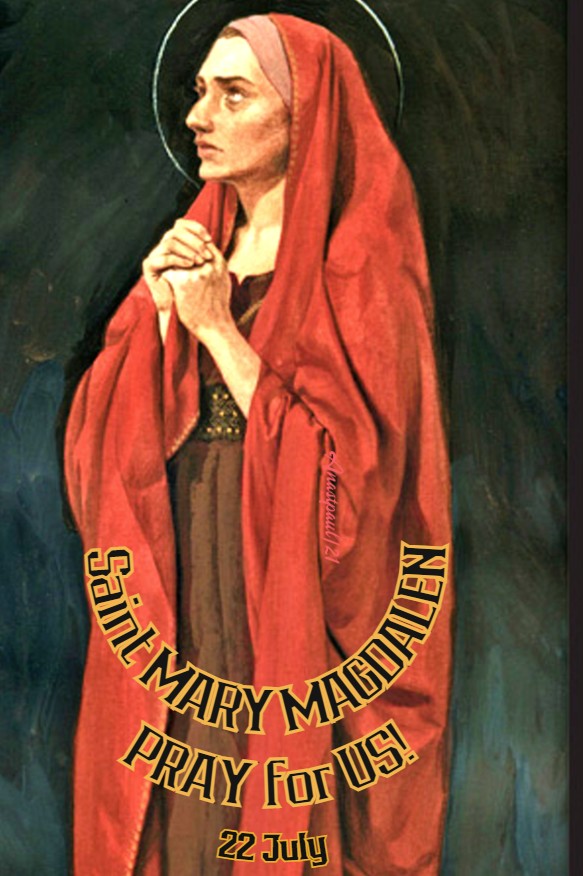
One Minute Reflection – 22 July – “The Month of the Precious Blood” – St Mary Magdalen (1st Century) Penitent – Song 3:2-5; 8:6-7, Luke 7:36-50.
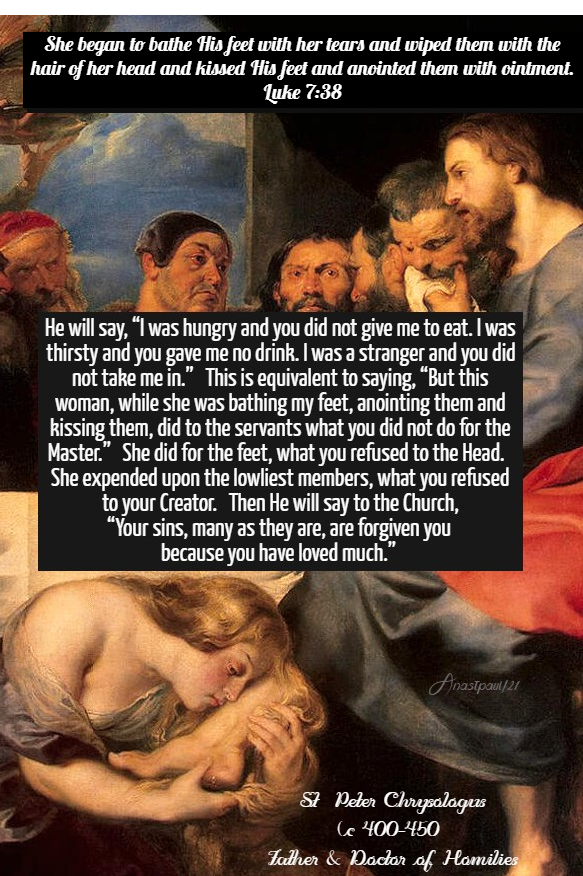
“She began to bathe His feet with her tears, and wiped them with the hair of her head and kissed is feet and anointed them with ointment.” – Luke 7:38
REFLECTION – “With her hands of good works, she holds the feet of those who preach His Kingdom. She washes them with tears of charity, kisses them with praising lips and pours out the whole ointment of mercy, until He will turn her. This means that He will come back to her and say to Simon, to the Pharisees, to those who deny, to the nation of the Jews, “I came into your house. You gave me no water for my feet.”
When will He speak these words? He will speak them when He will come in the Majesty of His Father and separate the righteous from the unrighteous, like a shepherd who separates the sheep from the goats. He will say, “I was hungry and you did not give me to eat. I was thirsty and you gave me no drink. I was a stranger and you did not take me in.” This is equivalent to saying, “But this woman, while she was bathing my feet, anointing them and kissing them, did to the servants, what you did not do for the Master.” She did for the feet, what you refused to the Head. She expended upon the lowliest members, what you refused to your Creator. Then He will say to the Church, “Your sins, many as they are, are forgiven you because you have loved much.”– St Peter Chrysologus (c 400-450) Bishop of Ravenna, Father and “Doctor of Homilies” (Sermon 95).
PRAYER – May the prayers of blessed Mary Magdalen help us, O Lord, Who was moved by her prayers, her love and peniteance, that we too may learn true repentance and sorrow for our sins..Through the same Jesus Christ, Thy Son our Lord, Who lives and reigns with Thee, in the unity of the Holy Ghost, God, world without end. Amen (Collect).
Saint of the Day – 22 July – St Joseph of Palestine (Died c 356) Layman, Convert from Judaism, a contemporary of Emperor Constantine, a Rabbinical scholar, member of the Sanhedrin and a disciple of Hillel II. Following his conversion, Emperor Constantine gave him the rank of Count, appointed him as supervisor of the Churches in Palestine and gave him permission to build Churches in the Galilee. Patronages – converts, guardians. Also known as – Count Joseph, sJoseph of Tiberias.
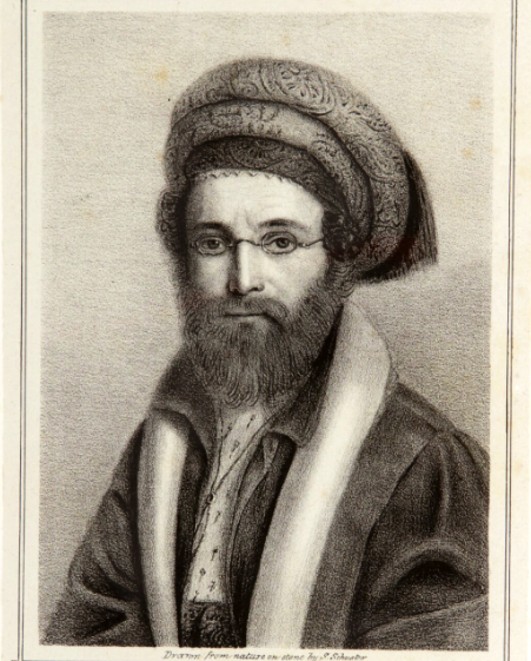
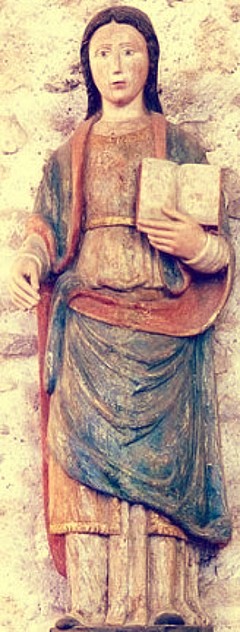
This is not St Joseph, of whom there are no representations in art. This is a young Rabbinical Scholar.
After the destruction of Jerusalem, the Jews erected two academies, the one at Babylon, the other at Tiberias, a City on the lake of Genesareth, rebuilt by Herod, in honour of the Emperor Tiberius. Both these schools flourished until the Saracen empire overran those countries. That of Tiberias produced the Massoretes or Massoretic doctors, so famous for the invention of the vowel points in the Hebrew tongue and their care, in preserving the genuine text of the Sacred Scriptures.
Although the Jews then retained no sort of jurisdiction or form of government, yet they chose one among their chief doctors, to whom they gave the title of patriarch or prince of the captivity. The most celebrated person who ever bore this honour among them, was Hillel, whose name is still in great veneration amongst the Jews and who was their most learned oracle and the principal founder and ornament of their academy at Tiberias. This Hillel, a few days before his death, sent for a Christian Bishop in the neighbourhood, under the character of a physician, who ordered a bath to be prepared in his chamber, as if it had been for his health and Baptised him in it. Hillel received the Divine Mysteries, and died.
Joseph, one of his assistants, called Apostoli, whose life we are writing, was witness to this secret transaction and, having always been the confidant of Hillel, had the care of his son Judas, who succeeded him in the dignity of patriarch of the Jews. Joseph found the Holy Gospels in Hillel’s treasures and read them with incredible pleasure.
The young patriarch fell into evil ways and employed magical arts, to seduce a Christian woman but the Sign of the Cross made his charms of no effect. Joseph was surprised to hear this prodigy. He seemed in a dream one night, to see Christ and to hear from His mouth these words: “I am Jesus whom thy fathers Crucified; believe in Me.”
He relished our Holy Faith more than ever,and going into Cilicia to collect the tenths (tithes) for the patriarch, he borrowed again the Holy Gospels. The Jews, already dissatisfied with his conduct, finding him with this Holy Book, dragged him to their synagogue and cruelly scourged him. They were preparing worse treatment for him, when the Bishop rescued him out of their hands. Joseph having already begun to suffer for Christ, was soon disposed to receive Baptism.
Constantine the Great became master of the East in 323. He gave Joseph the title and rank of Count, with authority to build Churches all over Palestine, wherever he should judge proper. Joseph began to raise one at Tiberias. The Jews employed many artifices to hinder the work and stopped his lime-kilns from burning by enchantments but he, making the Sign of the Cross upon a vessel of water and invoking the Name of Jesus, poured it on the kilns and the fire instantly burst forth and burned with great activity.
Count Joseph showed no less zeal against the Arians than against the Jews and both conspired together to persecute him;but he was protected by his dignity of Count, which gave him a superior command and authority. Joseph, however, when the Emperor Constantius persecuted the orthodox prelates, retired from Tiberias to the neighbouring City, Scythopolis, where, in 355, he lodged St Eusebius of Vercelli, banished by the Arians. His was the only Catholic house in that Town. He harboured many other illustrious servants of God and among the rest, St. Epiphanius, who had from his own mouth the particulars here related. Joseph was then seventy years of age. He died soon after, about the year 356. The Greeks and Latins both mention his name in their Martyrologies. St Joseph’s guardianship of holy writings and holy men led to his association with and patronage of guardians in general.
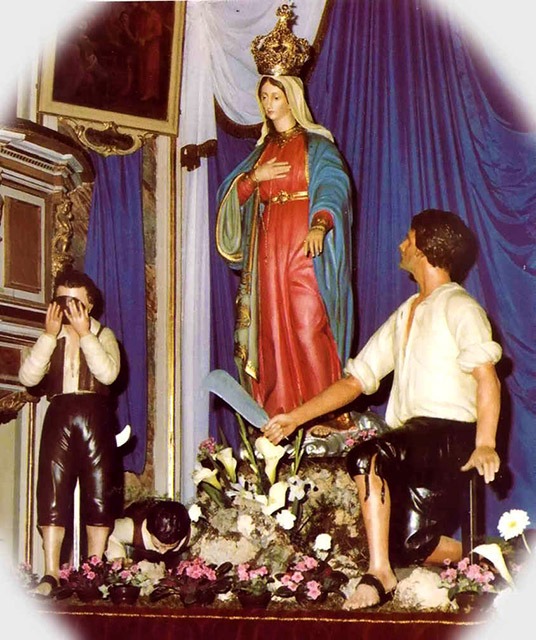
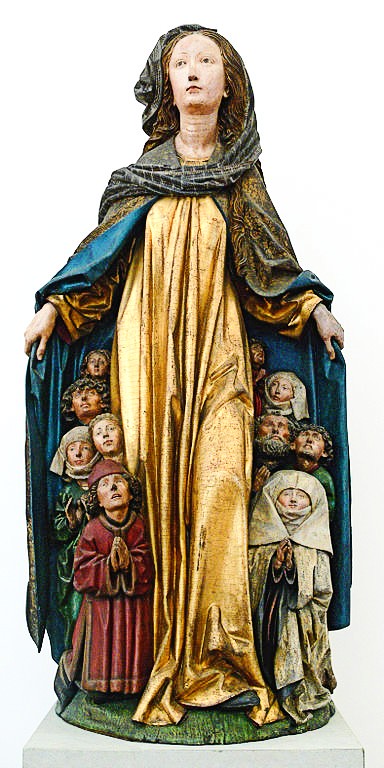
The only Marian Feast I can find for today seems to be unverified, in other words, I can find absolutely no references online relating to this invisible Shrine.There is also a Marian Title relating to the Orthodox Church which is not recognised by the Catholic Church.
St Baudry of Montfaucon St Claudius Marius Victorinus of Saussaye St Cyril of Antioch St Dabius St John Lloyd St Joseph of Palestine (Died c 356) Layman, Convert from Judaism St Lewine St Maria Wang Lishi St Meneleus of Ménat St Movean of Inis-Coosery St Pancharius of Besancon Bl Paolo de Lara
Martyrs of Marula/Massylis: – 3 Saints: Three Christians Martyred together. We know nothing else about them but the names – Ajabosus, Andrew and Elian. They were martyred in Massylis (Marula), Numidia (in modern Algeria).
Martyrs of Massilitani: A group of Christians Martyred together in northern Africa. Saint Augustine of Hippo wrote about them.
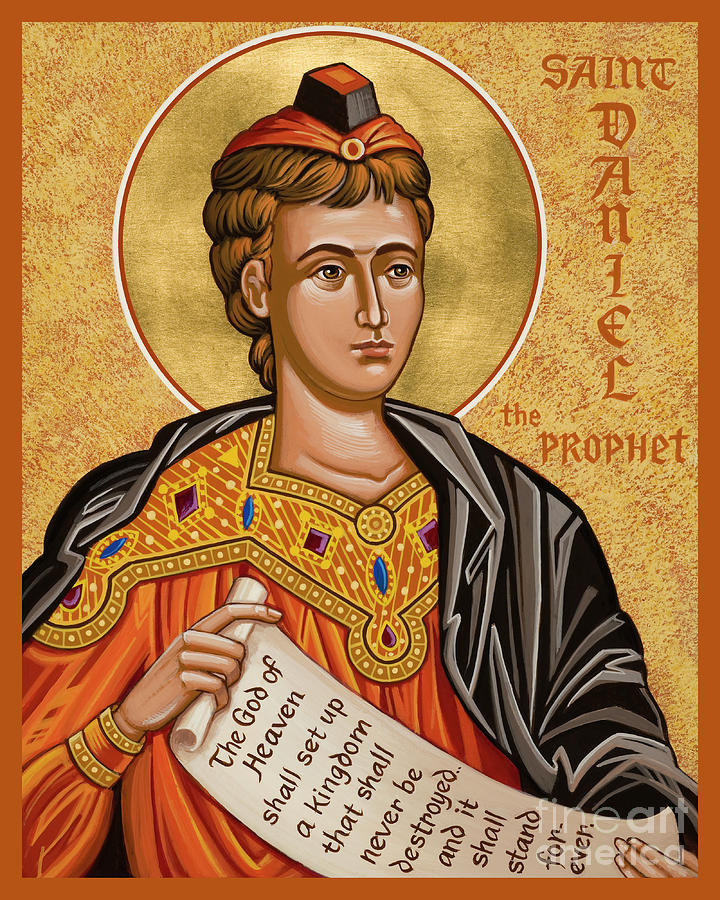
Saint of the Day – 21 July – St Daniel the Prophet (Died 5th-century BC). Daniel means ‘God is my Judge. One of the four Great Prophets in the Old Testament and the Writer of the book of Sacred Scripture which bears his name. Died 5th-century BC in Babylon of natural causes. Patronage – Ledeberg, Belgium.
Daniel was a noble Jewish youth of Jerusalem taken into captivity by Nebuchadnezzar II of Babylon, serving the king and his successors with loyalty and ability until the time of the Persian conqueror Cyrus, all the while remaining true to the God of Israel. Daniel is not a Prophet in Judaism but the rabbis regard him to be the most distinguished member of the Babylonian diaspora, unsurpassed in piety and good deeds, firm in his adherence to the Law ,despite being surrounded by enemies, who sought his ruin.
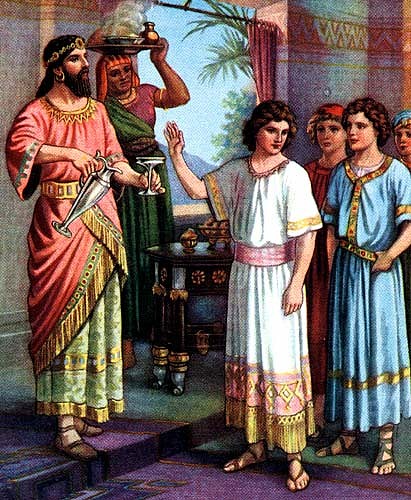
The canon of Sacred Scripture contains the Book of Daniel as part of the Old Testament. In it we hear the tale of Daniel and his three companions carried off to Babylon following the capture of the city by Nebuchadnezzar. They were to be trained in the court and are given new names. In observance of Jewish dietary law, they refuse the food and wine provided by the King.
St Daniel refusing to eat the food of the King
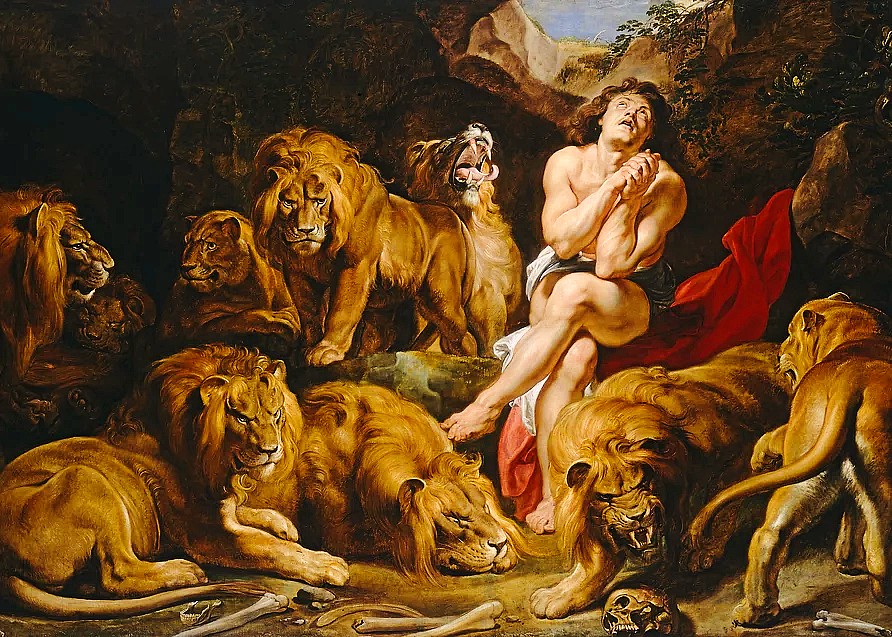
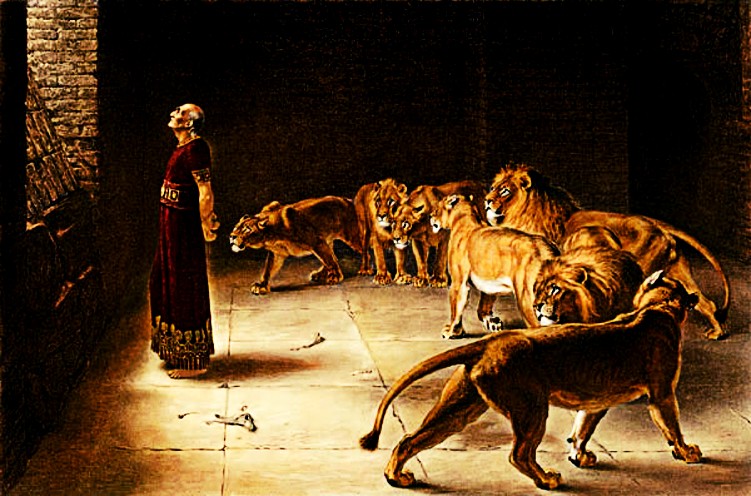
Daniel and his friends gain a reputation for great wisdom. In a number of instances Daniel is the only one who can interpret the dreams of the King, including a dream which foretells the fall of the King’s rule to the rule of the Medes and Persians. Under the new rule, Daniel is appointer to a high position; jealous rivals seek to destroy him by accusing him of worshiping God instead of the King. He is thrown into a den of lions where they assume he will be torn to pieces but he is rescued from the lions den through his trust in the Lord.
Daniel had a number of visions and in the New Testament ,in Matthew 24:15, Jesus recognises Daniel as a Prophet of God.
This statue at St. Daniel the Prophet Parish in Scottsdale depicts the Old Testament author with the lions that were used in an attempt to kill him. (Ambria Hammel/CATHOLIC SUN)
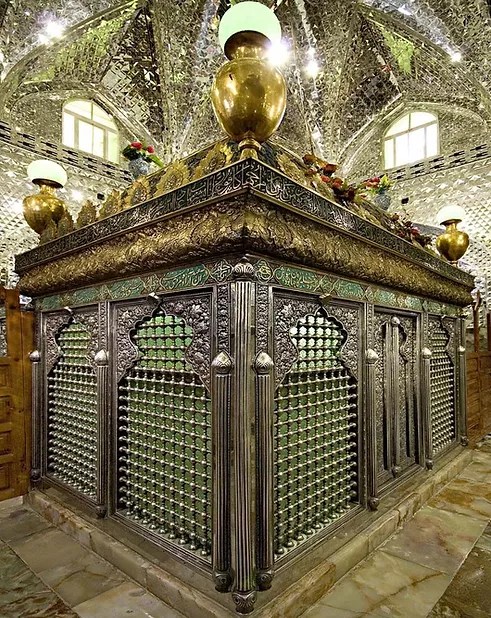
The last mention of Daniel in the Book of Daniel is in the third year of Cyrus (Daniel 10:1). Rabbinic sources suppose that he was still alive during the reign of the Persian King Ahasuer,us (better known as Artaxerxes – Babylonian Talmud, Megillah 15a, based on the Book of Esther 4, 5) but he was killed by Haman, the wicked Governor of Ahasuerus (Targum Sheini on Esther, 4, 11). The 1st century Jewish writer Josephus, reported that Daniel’s body lay in a tower in Ecbatana in Parthia, alongside the bodies of the Kings of the Medes and Persians; later Jewish authorities said he was buried in Susa and that near his house were hidden the vessels from the Temple of Solomon. Muslim sources reported that the Muslims had discovered his body, or possibly only a box containing his nerves and veins, together with a book, a jar of fat and a signet ring, engraved with the image of a man being licked by two lions. The corpse was reburied, and those who buried it decapitated it, to prevent them from revealing the spot.
Today six cities claim Daniel’s Tomb – Babylon, Kirkuk and Muqdadiyah in Iraq, Susa and Malamir in Iran and Samarkand in Uzbekistan. The most famous is that in Susa, (Shush, in southern Iran), at a site known as Shush-e Daniyal. According to Jewish tradition. the rich and poor of the city quarrelled over possession of the body and the bier was, therefore, suspended from a chain over the centre of the river. A house of prayer open to all who believed in God, was built nearby and fishing was prohibited for a certain distance up and down the river. Fish that swam in that section of the river had heads that glinted like gold and ungodly persons who entered the sacred precinct, would miraculously drown in the river. To this day the tomb is a popular site of pilgrimage.
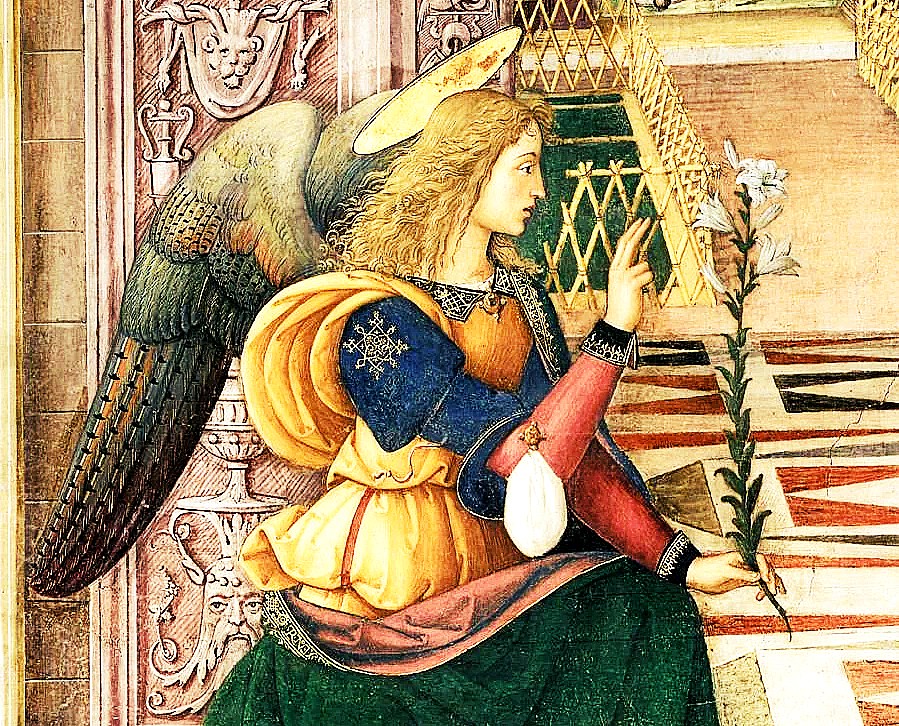
The Archangel Gabriel visited Daniel:
The Archangel St Gabriel, appears to the Prophet Daniel and explains his visions (Daniel 8:15–26, 9:21–27). The Gospel of Luke relates the stories of the Annunciation, in which the angel Gabriel appears to Zechariah and the Virgin Mary, foretelling the births of St John the Baptist and Jesus, (Luke 1:11–38) (The Annunciation: Luke 1:26-45, 57-60).
Daniel 7:13–14
13 “I was watching in the night visions, And behold, One like the Son of Man, Coming with the clouds of heaven! He came to the Ancient of Days, And they brought Him near before Him. 14 Then to Him was given dominion and glory and a kingdom, That all peoples, nations and languages, should serve Him. His dominion is an everlasting dominion, Which shall not pass away, And His kingdom the one, Which shall not be destroyed.”
St Daniel the Prophet (Died 5th-century BC) One of the four Great Prophets in the Old Testament and the Writer of the book of Sacred Scripture which bears his name.
St Barhadbescialas St Benignus of Moyenmoutier Bl Claudius of Avignon St Claudius of Troyes St Corona of Marceille Bl Cristóbal López de Valladolid Orea Bl Daniel Molini St Eleutherius of Marseille St Eternus of Evreaux Bl Gabriel Pergaud St Iosephus Wang Yumei St John of Edessa St John of Moyenmoutier Bl Juan de Las Varillas Bl Juan de Zambrana St Jucundinus of Troyes St Julia of Troyes St Justus of Troyes Bl Parthenius of Thessaly St Praxedes of Rome St Simeon Salus
Martyrs of Africa – 6 Saints: Six Christians who were Martyred together. We know no other details about them but the names – Emilian, Hugal, Motanus, Saphus, Stercorius and Victor. They were martyred in an unknown location in Africa, date unknown.
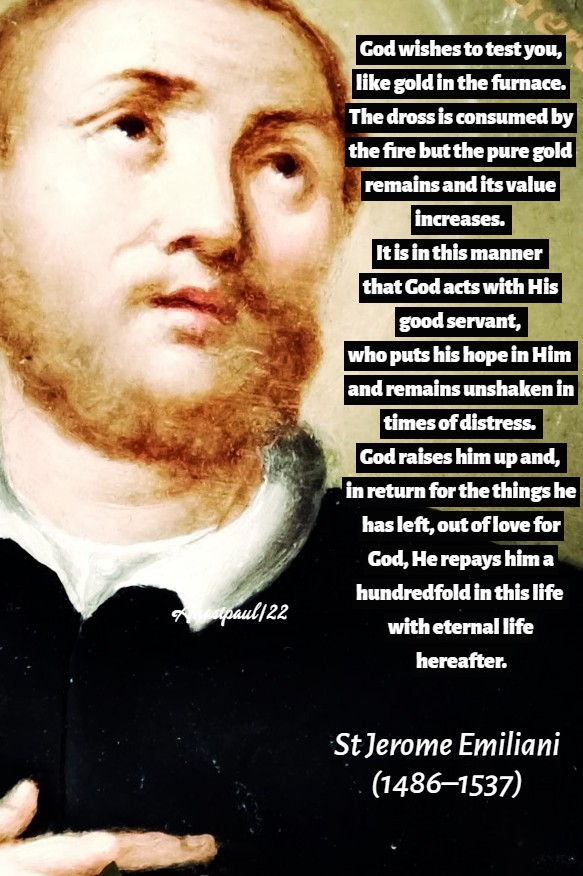
Quote/s of the Day – 20 July – “The Memorial of St Jerome Emiliani (1486–1537) Confessor – Isaias 58:7-11, Matthew 19:13-21
“God wishes to test you, like gold in the furnace. The dross is consumed by the fire but the pure gold remains and its value increases. It is in this manner that God acts with His good servant, who puts his hope in Him and remains unshaken in times of distress. God raises him up and, in return for the things he has left, out of love for God, He repays him a hundredfold in this life with eternal life hereafter.”
Our Morning Offering – 20 July – The Memorial of St Jerome Emiliani (1486–1537) Confessor
O Mary, Twice Mother of Mercy By St Jerome Emiliani (1486–1537)
O Mary, thou art twice Mother of Mercy because thou hast been made Mother of our most merciful Saviour, and, furthermore because, thou hast given to us so many signs of thy maternal care and love. Turn upon us, we beseech thee, thy glance of compassion and grant, that we may always live free from sin, which is the only impediment to receiving the fruits of the Divine Mercies. Amen.
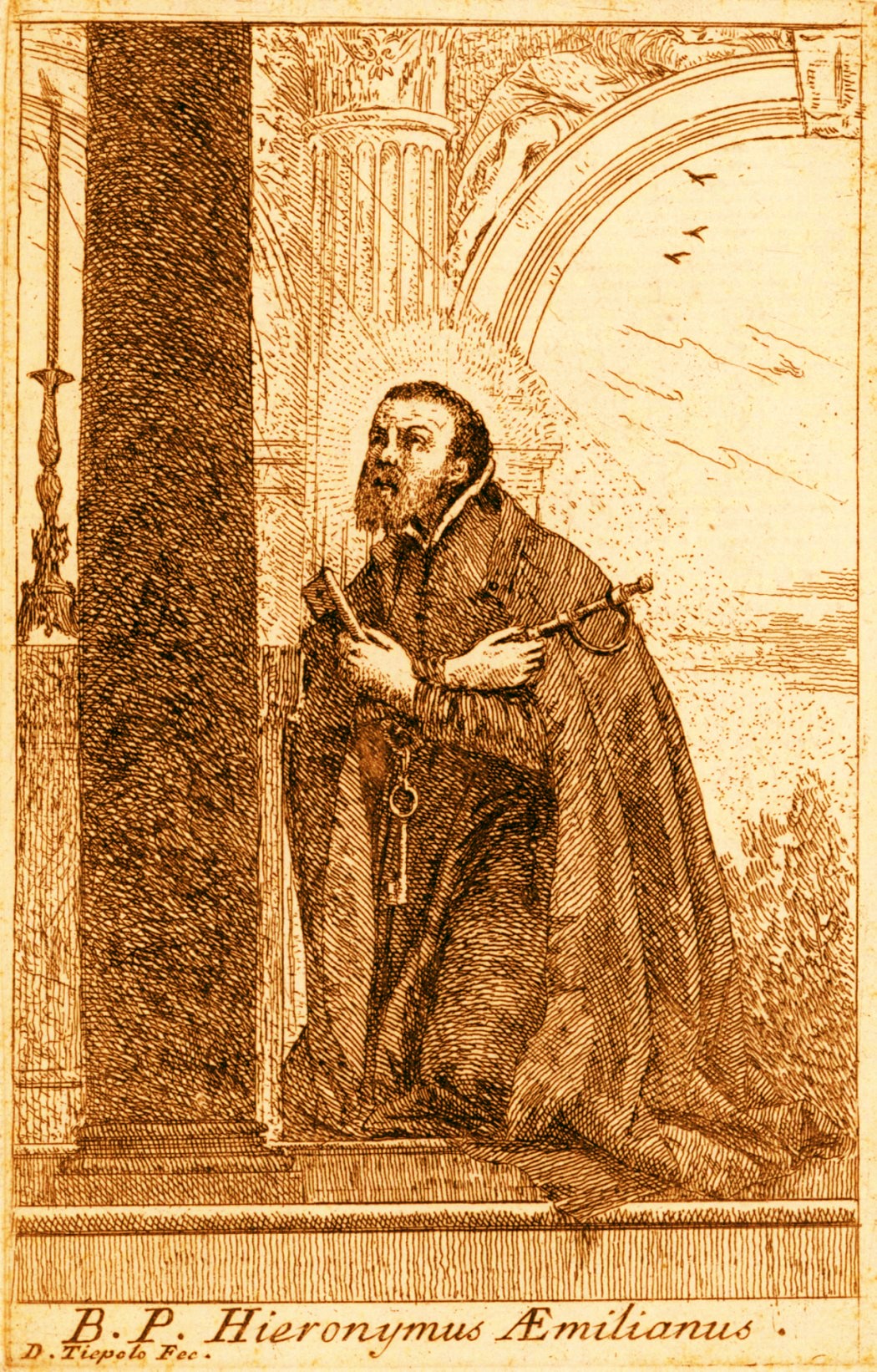
Saint of the Day – 20 July – St Jerome Emiliani (1486–1537) Confessor, Layman, Founder of the Somascan Fathers, Apostle of the poor, orphans, the sick, Catechist, Founder of countless Orphanages, Teaching institutions and Homes for converted street woman, Apostle of prayer. He was Beatified in 1747 by Pope Benedict XIV and Canonised in 1767 by Pope Clement XIII. Patronages – Orphans and Abandoned Children
Ca’Rezzonico – Cappella di Zianigo – San Girolamo Miani – Giandomenico Tiepolo
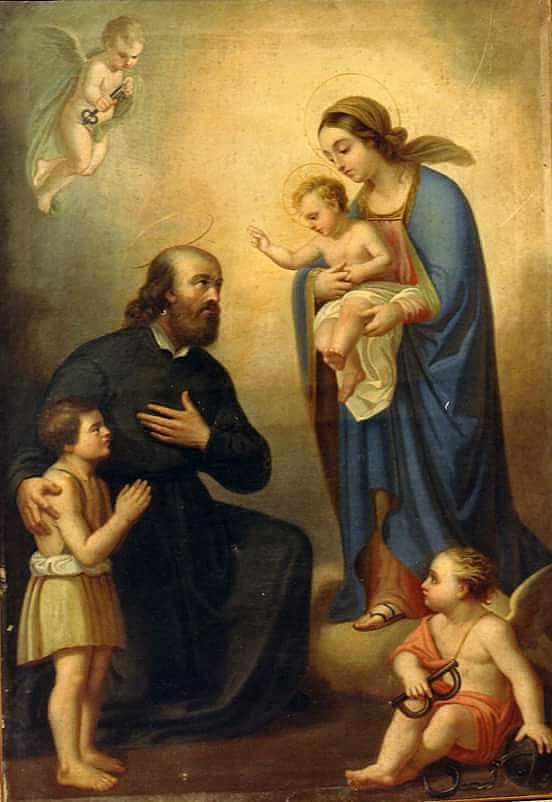
Jerome was bora at Venice, of the patrician family of the Emiliani and from his boyhood embraced a military life. At a time when the Republic was in great difficulty, he was placed in command of Castelnovo, in the territory of Quero, in the mountains of Tarviso. The fortress was taken by the enemy and Jerome was thrown, bound hand and foot, into a horrible dungeon. When he found himself thus destitute of all human aid, he prayed most earnestly to the Blessed Virgin, who mercifully came to his assistance. She loosed his bonds and led him safely through the midst of his enemies, who had possession of every road, till he was within sight of Tarviso. He entered the town; and, in testimony of the favour he had received, he hung up at the Altar of our Lady, to whose service he had vowed himself, the manacles, shackles and chains which he had brought with him.
On his return to Venice he gave himself with the utmost zeal to exercises of piety. His charity towards the poor was wonderful but he was particularly moved to pity, for the orphan children who wandered poor and dirty about the town. He received them into houses which he hired, where he fed them at his own expense and trained them to lead Christian lives.
At this time Blessed Cajetan and Peter Caraffa, who was afterwards Paul IV., disembarked at Venice. They commended Jerome’s spirit and his new institution for gathering orphans together. They also introduced him into the hospital for incurables, where he would be able to devote himself with equal charity to the education of orphans and to the service of the sick. Soon, at their suggestion, he crossed over to the Continent and founded orphanages, first at Brescia, then at Bergamo and Como. At Bergamo his zeal was specially prolific, for there, besides two orphanages, one for boys and one for girls, he opened a house, an unprecedented thing in those parts, for the reception of fallen women, who had been converted.
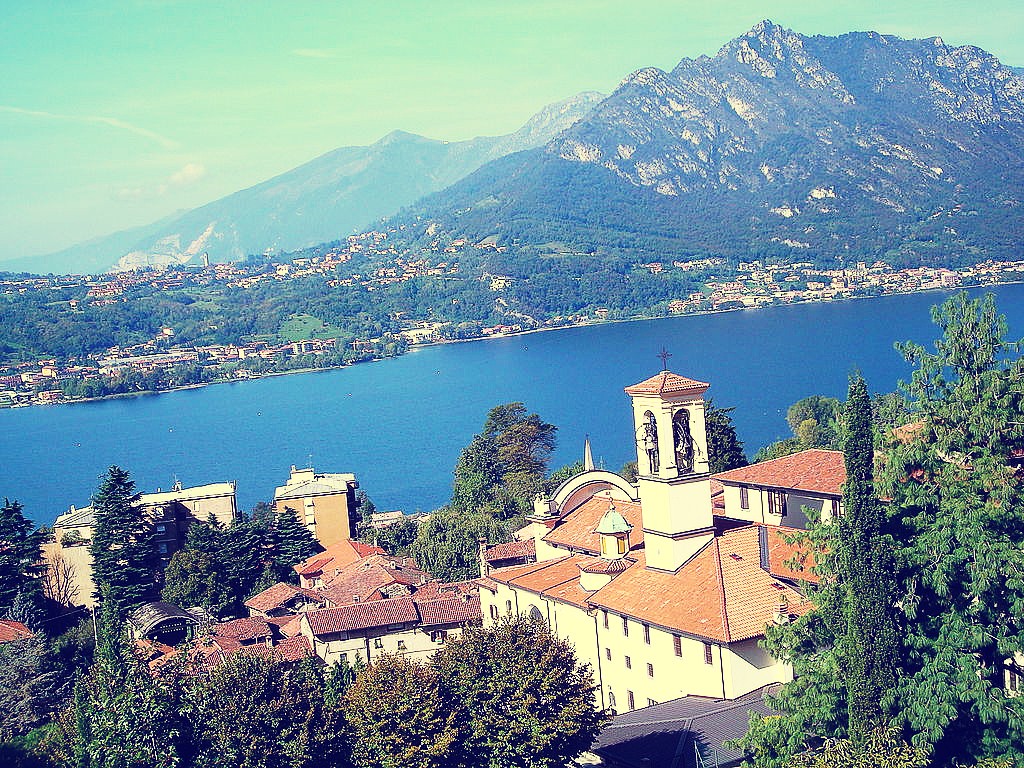
Finally he took up his abode at Somascha, a small village in the territory of Bergamo, near to the Venetian border and this he made his headquarters; here, too, he definitely established his Congregation, which, for this reason, received the name of Somasques. In course of time it spread and increased and, for the greater benefit of the Christian Republic, it undertook, besides the ruling and guiding of orphans and the taking care of Sacred buildings, the education, both secular and moral, of young men in Colleges, Academies and Seminaries.
Somasques. Italy
Pius V. enrolled it among religious Orders and other Roman Pontiffs have honoured it with privileges. Entirely devoted to his work of rescuing orphans, Jerome journeyed to Milan and Pavia and in both Cities, he collected numbers of children and provided them, through the assistance given him by noble personages, with a home, food, clothing and education. He returned to Somascha and, making himself all to all, he refused no labour which he saw might turn to the good of his neighbour. He associated himself with the peasants scattered over the fields and while helping them, with their work of harvesting, he would explain to them the mysteries of faith. He used to take care of children with the greatest patience, even going so far as to cleanse their heads and he dressed the corrupt wounds of the village folk, with such success, that it was thought he had received the gift of healing. In 1928 Pope Pius XI proclaimed St Jerome as the Universal Heavenly Patron of Orphans and abandoned children.
On the mountain which overhangs Somascha, he found a cave in which he hid himself and there, scourging himself, spending whole days fasting, passing the greater part of the night in prayer and snatching only a short sleep on the bare rock, he expiated his own sins and those of others. In the interior of this grotto, water trickles from the dry rock, obtained, as constant tradition says, by the prayers of the Servant of God. It still flows, even to the present day and being taken into different countries, it often gives health to the sick.
At length, when a contagious distemper was spreading over the whole valley and he was serving the sick and carrying the dead to the grave, on his own shoulders, he caught the infection and died at the age of fifty-six. His precious death, which he had foretold a short time before, occurred in the year 1537. He was illustrious both in life and death for many miracles. Benedict XIV. enrolled him among the Blessed,and Clement XIII. solemnly inscribed his name on the catalogue of the Saints.
Bl Anne Cartier St Ansegisus St Aurelius of Carthage St Bernward of Hildesheim St Cassian of Saint Saba St Elijah the Prophet
St Elswith St Frumentius of Ethiopia
Blessed Gregory Lopez (1542-1596) “The Mystery Man” – Hermit, Spiritual Advisor, Writer. Around 1585, word of a “Mystery Man” began to leak into Mexico City, a strange hermit who lived out in the lonely valley of Guesteca, who walked miles to go to Mass, lived totally subject to “Lady Poverty” and had travelled from the Shrine of Our Lady of Guadalupe in Spain (which dates from 712), to her Shrine in Mexico (which dates from 1531). Biography: https://anastpaul.com/2018/07/20/saint-of-the-day-20-july-blessed-gregory-lopez-1542-1596/
St Joseph Barsabbas the Just (1st Century) Disciple of Jesus, Bishop, Martyr. The Roman Martyrology states today: “The birthday of the blessed Joseph, surnamed the Just, whom the Apostles selected with the blessed Matthias, for the Apostleshop in the place of the traitor, Judas. The lot having fallen upon Matthias, Joseph, notwithstanding, continued to preach and advance in virtue and after having sustained from the Jews, many persecutions for the Faith of Christ, happoily ended his life in Judea.” His Life and Death: https://anastpaul.com/2021/07/20/saint-of-the-day-20-july-saint-joseph-barsabbas-the-just-1st-century-disciple-of-jesus/
St Mère St Paul of Saint Zoilus St Rorice of Limoges St Severa of Oehren St Severa of Saint Gemma St Wulmar
Martyrs of Corinth – 22 Saints: 22 Christians who were Martyred together. We know nothing else about them but the names – • Appia • Calorus • Cassius • Celsus • Cyriacus • Donatus • Emilis • Felix • Fructus • Magnus • Maximus • Nestita • Partinus • Pasterus • Paul • Romanus • Spretus • Tertius • Theodolus • Ueratia • Valerian • Victor. They were martyred in Corinth, Greece.
Martyrs of Damascus – 16 Saints: 16 Christians who were Martyred together. We know the names of six of then, but no details about any of them – Cassia, Julian, Macrobius, Maximus, Paul and Sabinus. They were martyred in Damascus, Syria, date unknown.
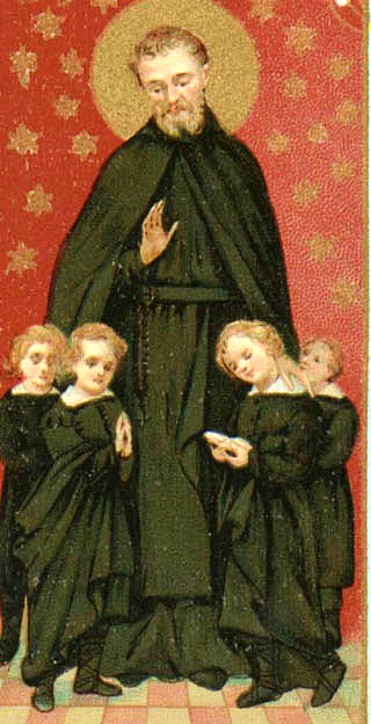
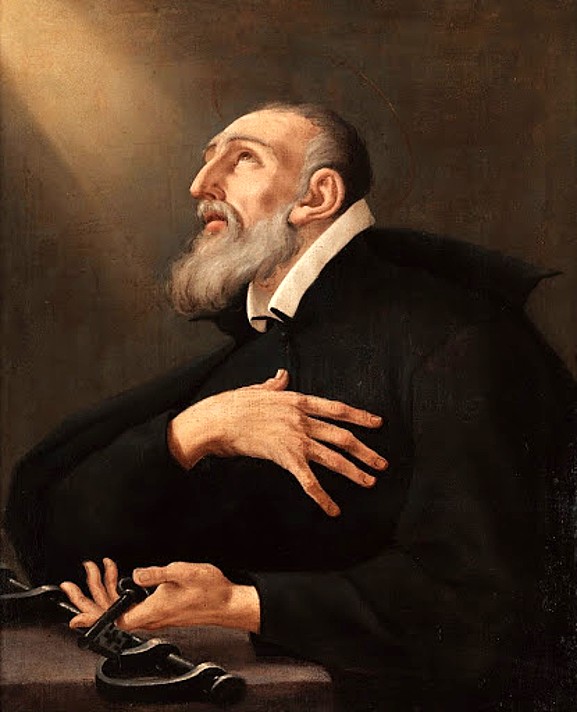
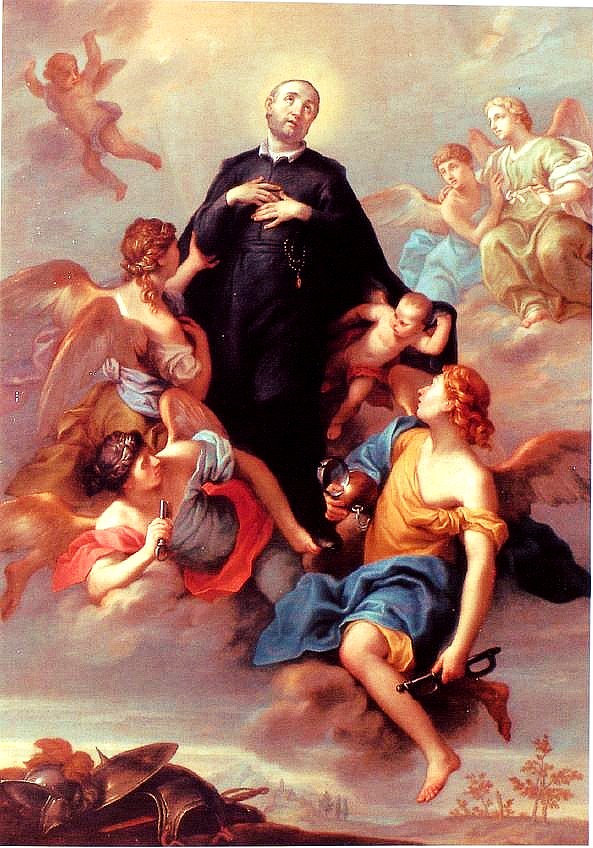
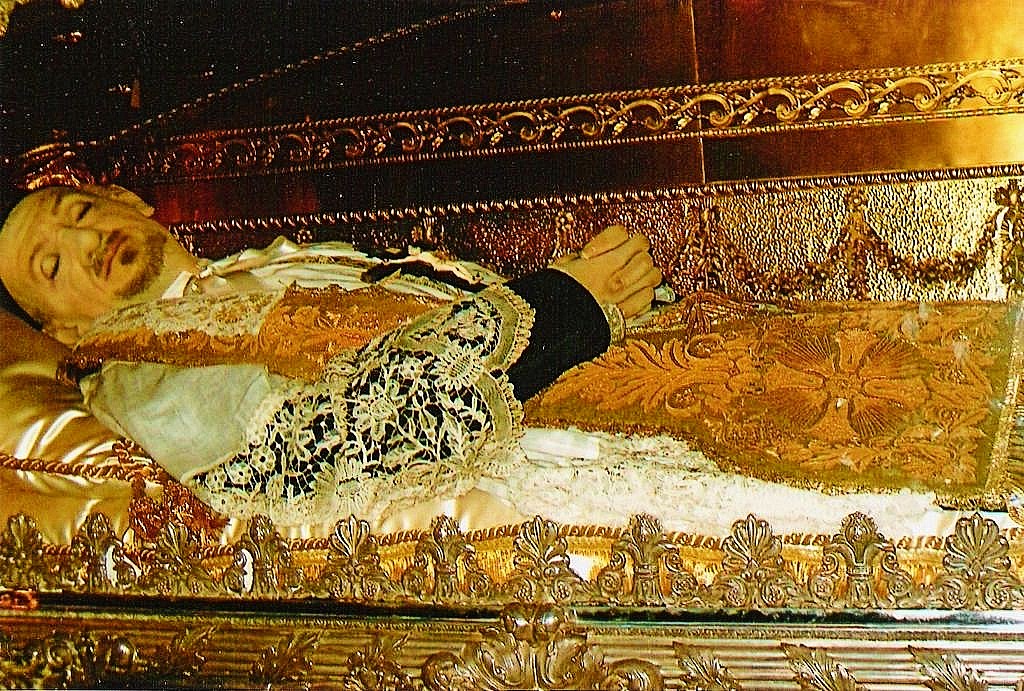
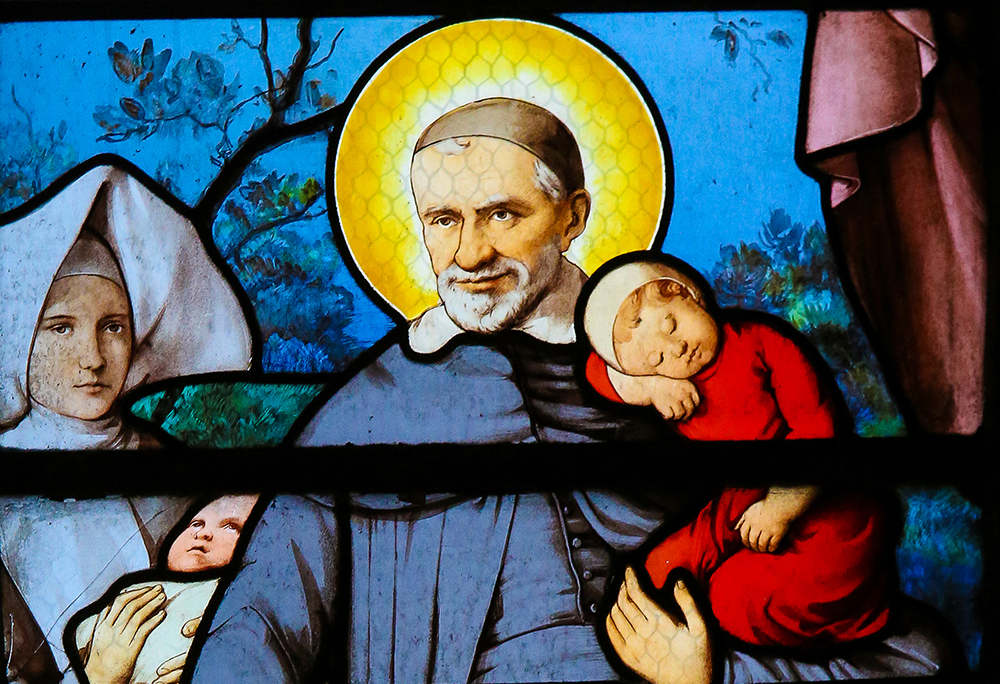
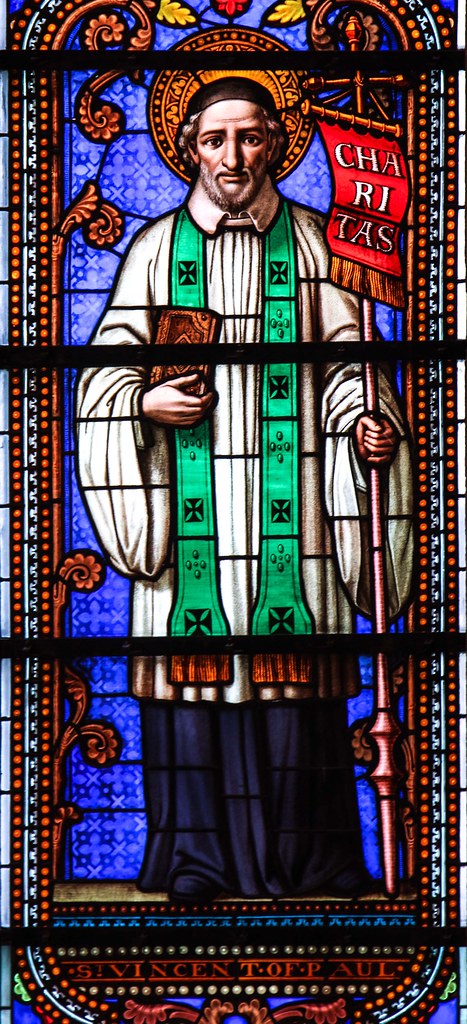
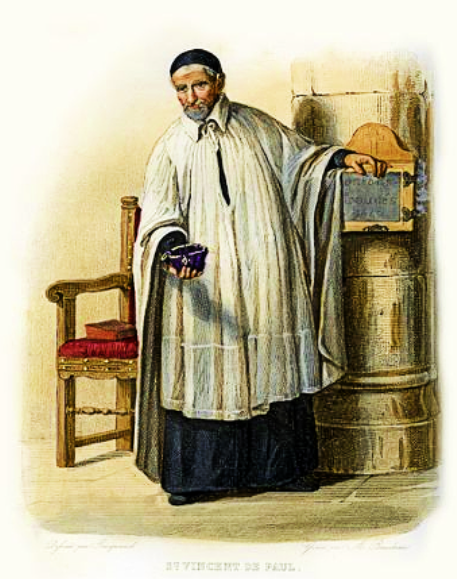
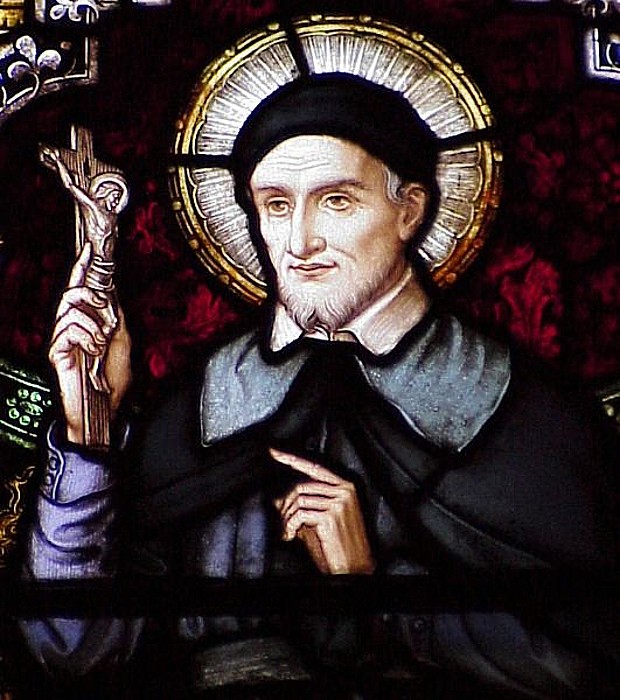
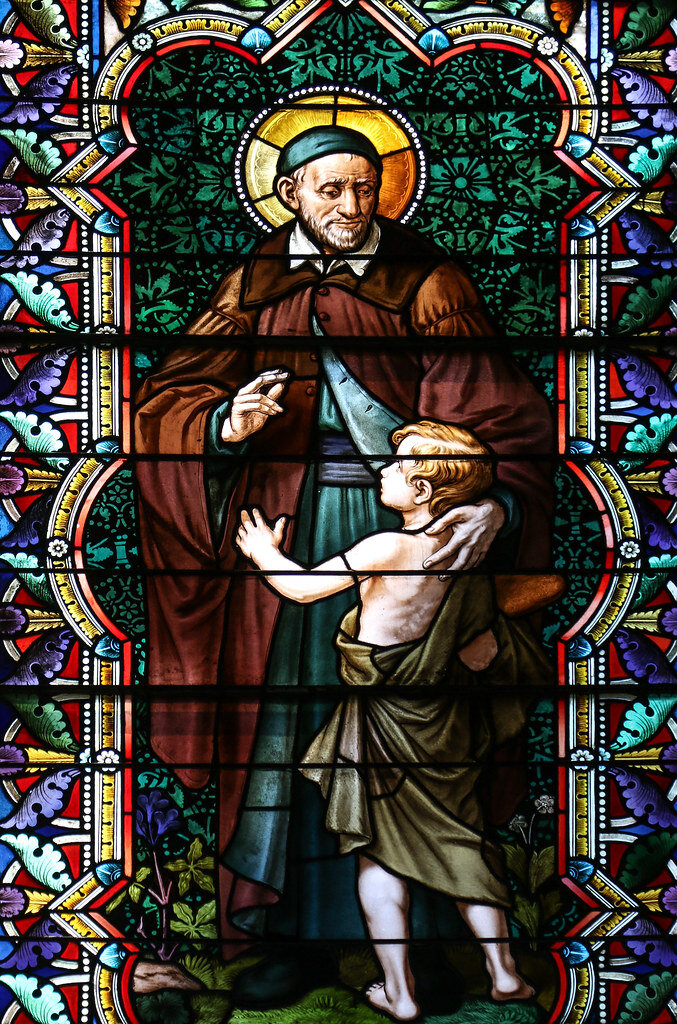
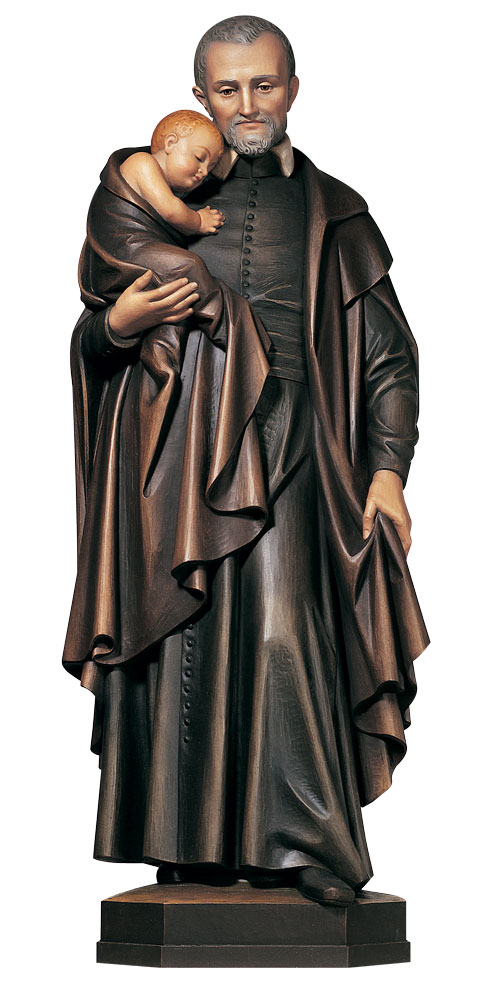
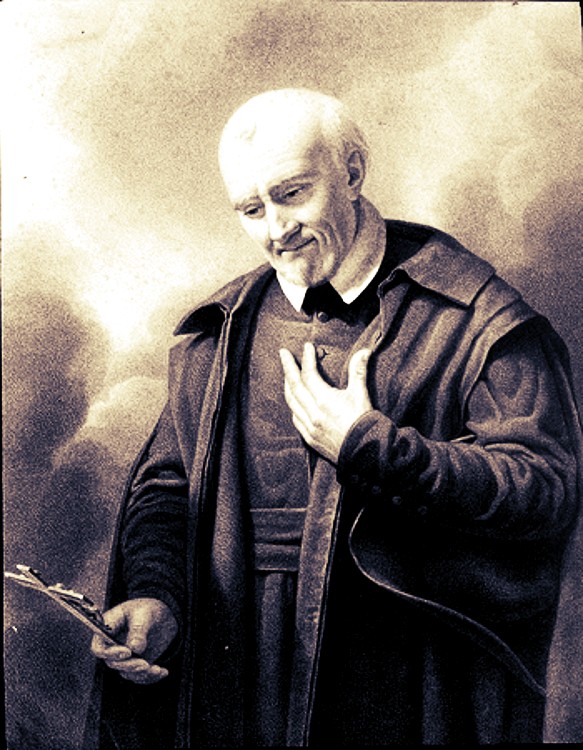
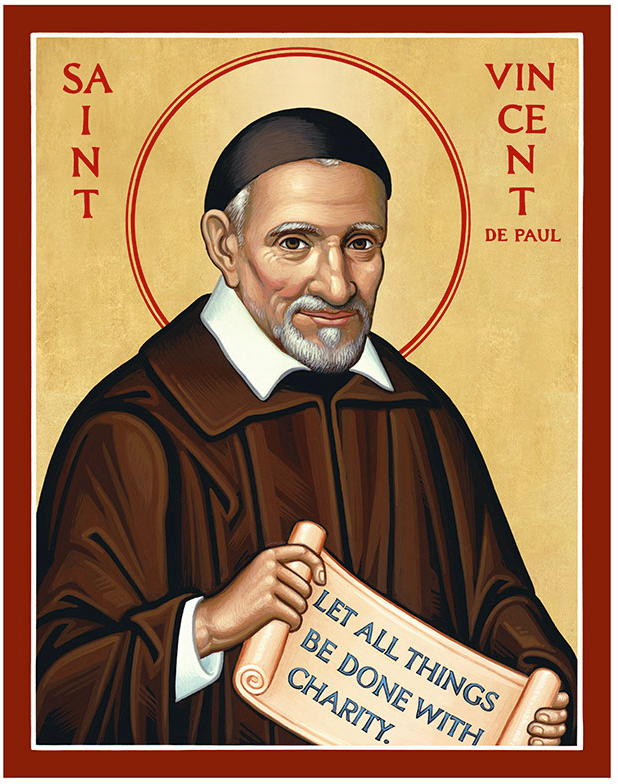
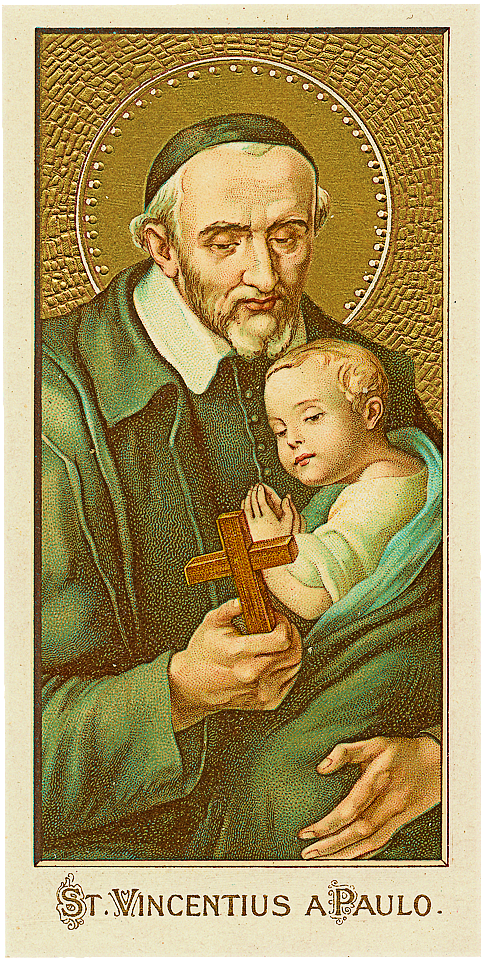
Saint of the Day – 19 July – St Vincent de Paul (1581-1660) Confessor. “Holy Hero of Divine Charity.” The Roman Martyrology states of him today: “St Vincent de Paul, Confessor, who slept in the Lord on 27 September, Leo XIII declared the Heavenly Patron before the Thron of God, of all Charitable Organisations throughout the Catholic world, owing in any manner, their origin to him.” Vincent’s body was exhumed in 1712, 53 years after his death. The written account of an eyewitness states that “the eyes and nose alone showed some decay“. However, when it was exhumed again during the Canonisation in 1737, it was found to have decomposed due to an underground flood . His bones have been encased in a waxen figure which is displayed in a glass Reliquary in the Chapel of the headquarters of the Vincentian fathers in Paris,
St Vincent de Paul (1581-1660) Confessor, Founder of the Congregation of the Mission (Vincentians) and Co-Founder of the Sisters of Charity, is an outstanding example of great love for the poor and unfortunate and the Celestial Patron of all Catholic Charitable Societies. (added by Pope Leo XIII). By Fr Francis Xavier Weninger SJ (1805-1888)
Vincent de Paul, a Frenchman, was born at Pouy, not far from Dax, in Gascony and from his boyhood, was remarkable for his exceeding charity towards the poor. From the care of his father’s flocks, he was sent to study letters. He learned the humanities at Dax and Theology first at Toulouse, then at Saragossa. Having been Ordained Priest and having taken a Degree in Theology, he fell into the hands of the Turks and was led captive by them, into Africa. But being sold into slavery, he won his owner (an apostate) back to Christ. By the help of the Mother of God, therefore, Vincent and his owner hurried away from the shores of the barbarians. Then Vincent undertook a journey to Rome, to visit the thresholds of the Apostles.
Having returned to France, he governed, in a most saintly manner, first, the Parish of Clichy and then, that of Chatillon. He was appointed by the King as Principal Chaplain of the French galleys and showed marvellous zeal in striving for the salvation of both the drivers and the rowers. The holy Francis de Sales, appointed him Superior of the Nuns of the Visitation, whom he ruled for nearly forty years, with so great prudence that he amply justified the opinion of their most holy Founder, who confessed that he knew no worthier Priest than Vincent.
To the preaching of the Gospel unto the poor, especially to the country people, he devoted himself unweariedly, until he was disabled by old age. To this apostolic work he obligated both himself and the members of the Congregation, which he specially founded under the name of Secular Priests of the Mission, by a perpetual vow confirmed by the Holy See. And how greatly he laboured for bettering the discipline of the clergy, is attested by the Seminaries erected for senior clerics, by the frequency of sacred conferences among the Priests and by the religious exercises preparatory to the Sacrament of Holy Orders; for which purposes, as well as that of giving pious retreats for laymen, he desired that the Houses of his Institute, should be freely opened. Moreover, for the extension of faith and piety, he sent evangelical labourers, not only into the Provinces of France but also into Italy, Poland, Scotland, Ireland and even to Barbary and to the Indies.
And at the death of Louis XIII, whom he had attended and exhorted on his deathbed, Vincent himself was summoned by the Queen, Anne of Austria, mother of Louis XIV and made a member of the young King’s Council of Conscience. In this position, he most zealously urged that only the more worthy men should be placed in authority over the Churches and Monasteries; that civil discords, single combats, slowly-spreading false doctrines, which he both perceived and dreaded, should be ended; and that due obedience should be rendered by all, to the apostolic decisions.
There was no kind of misfortune which he did not, with fatherly tenderness, endeavour to relieve . The faithful groaning beneath the Turkish yoke, infants which had been abandoned, wayward youths, maidens exposed to danger, Nuns driven from their Convents, fallen women, convicts condemned to the galleys, infirm strangers, disabled workmen and even lunatics and beggars without number, all these he received and devoutly assisted with resources and in hospices, which have lasted to this day. When Lorraine, Champagne, Picardy and other Provinces were devastated by plague, famine and war, he relieved their necessities with an open hand. He founded many societies for seeking out and alleviating the lot of the wretched, among them, a celebrated association of matrons, widely spread under the name of Sisters of Charity. He likewise promoted the foundation of the Daughters of the Cross, of Providence and of St Genevieve, for the education of the weaker sex.
Amid these and other most important affairs, he was ever intent upon God, affable to everyone and always true to himself, simple, upright, lowly and ever shrank from honours, riches and luxuries. He was heard to say that in nothing was there any pleasure for him, except in Christ Jesus, Whom he desired to imitate in all things.
At length, worn out with bodily pains, labours and old age, on 27 September in the year of salvation 1660 and, in the eighty-fifth year of age, at Paris, in the House of St Lazare, which is the Motherhouse of the Congregation the Mission, he calmly fell asleep.
Since he became illustrious for virtues, merits and miracles, Clement XII placed him among the Saints, assigning 19 July as his annual feast. And Leo XIII, at the earnest request of many Bishops, claimed and appointed this notable hero of divine charity, who has deserved so exceedingly well, of every class of men, the special Patron before God, of all the Charitable Societies existing in the entire Catholic world and in any way soever, emanating from his foundation.
St Vincent de Paul CM (1581-1660) Confessor, known as the “Great Apostle of Trumpets” – Priest, Founder, Apostle of Charity, Doctor of Canon Law, Reformer of Society and Priests, founder of Hospital and Orphanages. St Vincent was Beatified on 13 August 1729 by Pope Benedict XIII and Canonised on 16 June 1737 by Pope Clement XII. His Body is incorrupt. Biography: https://anastpaul.com/2017/09/27/saint-of-the-day-27-september-st-vincent-c-m-1581-1660/
St Ambrose Autpertus Bl Antonio of Valladolid St Aurea of Cordoba
St Arsenius the Great (c 354-c 449) Deacon, Hermit, Desert Father, Theologian, writer. Arsenius one of the most highly regarded of the Desert Fathers, whose teachings were greatly influential on the development of asceticism and the contemplative life. His contemporaries so admired him as to surname him “the Great”. His Lifestory: https://anastpaul.com/2021/07/19/saint-of-the-day-19-july-saint-arsenius-the-great-c-354-c-449/
Bl Bernhard of Rodez St Daria of Constantinople St Epaphras of Colosse St Felix of Verona
St Macrina the Younger (c 327-379) Virgin, Ascetic. With charm and grace, St Macrina ruled the roost in a family of saints. St Basil the Elder and St Emmelia, her parents, had ten children including the younger St Basil the Great (329-379) Father and Doctor of the Church, St Gregory of Nyssa (c 335–C 395) Father of the Church and St Peter of Sebaste Bishop (c 340–391). As the eldest child, Macrina exercised a formative influence on her more famous brothers and even on her mother. Her Life: https://anastpaul.com/2019/07/19/saint-of-the-day-19-july-saint-macrina-the-younger-c-327-379/
St Martin of Trier St Michael the Sabaitè Bl Pascasio of Lyon
St Romain of Ryazan St Pope Symachus St Vicente Cecilia Gallardo
Martyrs of Meros – 3 Saints: Three Christians tortured and Martyred together in the persecutions of emperor Julian the Apostate and governor Almachio. We know nothing else about them but the names – Macedoniuis, Tatian and Theodule. They were burned to death on an iron grill in Meros, Phrygia (in modern Turkey).
Martyrs of China: 3 Beati Elisabeth Qin Bianshi Elisabeth Ioannes Baptista Zhu Wurui Simon Qin Chunfu
Saint of the Day – 18 July – St Scariberga of Yvelines (c 495-c 550) Chaste wife and widow of St Arnulf of Bishop of Tours, Recluse. Born in c 495 in Gaul (in modern France) and died in c 550 in the forest of Yvelines in France of natural causes. Also known as – Scariberg, Scariberge.
The holy Scariberga was born around 495 in Gaul. She was descended from a noble family and the sources call her a niece of the first Christian Frankish King, Clovi I (481-511).
While still young, her uncle married her to Saint Arnulf , later the Bishop of Tours and Martyr. When Arnulf became a Bishop, he also gave his chaste wife, Scariberg, the veil.
When Arnulf was murdered in 535, she had him buried at the place where his Martyrdom had happened, in the forest Yvelines in Aquilina between Paris and Chartres. Over his grave she built a cell, where she lived the rest of her life in prayer and meditation.
She died around the middle of the 5th century. Her memorial day is today, the same day as her husband but 2 October is also mentioned.
Around Arnulf’s tomb grew the present Municipality of Saint-Arnoult-en-Yvelines in the department of Yvelines in the Île-de-France region.
St Symphorosa and her seven sons / Also known as – The Martyrs of Tivoli – 8 Saints: A widow, St Symphorosa and her seven sons ( Crescens, Eugene, Julian, Justin, Nemesius, Primitivus and Stracteus) Martyred in Tivoli, Italy in the 2nd-century persecutions of Hadrian.
St Aemilian of Dorostorium St Alanus of Sassovivo St Alfons Tracki Blessed Angeline of Marsciano Bl Arnold of Amiens St Arnold of Arnoldsweiler St Arnoul the Martyr
St Goneri of Treguier St Gundenis of Carthage Bl Herveus St Marina of Ourense St Maternus of Milan St Minnborinus St Pambo of the Nitrian Desert St Philastrius of Brescia St Rufillus of Forlimpopoli
St Scariberga of Yvelines (c 495-c 550) Chaste wife of St Arnulf of Bishop of Tours, Nun, Recluse.
Martyrs of Silistria – 7 Saints: Seven Christians who were Martyred together. No details about them have survived but the names – Bassus, Donata, Justus, Marinus, Maximus, Paulus and Secunda. They were martyred in Silistria (Durostorum), Moesia (in modern Bulgaria), date unknown.
Martyrs of Compiegne (16 Carmelite Beati): Sixteen Blessed Teresian Martyrs of Compiègne. Eleven Discalced Carmelite nuns, three lay sisters and two lay women servants who were Martyred together in the French Revolution. They were the earliest martyrs of the French Revolution that have been recognised. • Angelique Roussel • Anne Pelras • Anne-Marie-Madeleine Thouret • Catherine Soiron • élisabeth-Julitte Vérolot • Marie Dufour • Marie Hanniset • Marie-Anne Piedcourt • Marie-Anne-Françoise Brideau • Marie-Claude-Cyprienne Brard • Marie-Françoise de Croissy • Marie-Gabrielle Trezel • Marie-Geneviève Meunier • Marie-Madeleine-Claudine Lidoine • Rose-Chretien de Neuville • Thérèse Soiron • They were guillotined on 17 July 1794 at the Place du Trône Renversé (modern Place de la Nation) in Paris, France. The 16 Martyrs Story: https://anastpaul.com/2017/07/17/saints-of-the-day-17-july-the-carmelite-martyrs-of-compiegne-o-c-d/
Bl Arnold of Himmerod Bl Bénigne Bl Biagio of the Incarnation
Bl Carlos de Dios Murias OFM Conv (1945-1976) Priest Martyr St Clement of Ohrid St Cynllo St Ennodius of Pavia St Fredegand of Kerkelodor St Generosus St Gorazd St Hyacinth of Amastris St Kenelm St Pope Leo IV St Marcellina St Nerses Lambronazi Bl Sebastian of the Holy Spirit Bl Tarsykia Matskiv St Theodosius of Auxerre St Theodota of Constantinople St Turninus
Martyrs of Scillium (12 Saints): A group of twelve Christians Martyred together, the final deaths in the persecutions of Emperor Marcus Aurelius. Upon their conviction for the crime of being Christians, the group was offered 30 days to reconsider their allegiance to the faith; they all declined. Their official Acta still exist. Their names : • Acyllinus • Cythinus • Donata • Felix • Generosa • Januaria • Laetantius • Narzales • Secunda • Speratus • Vestina • Veturius They were beheaded on 17 July 180 in Scillium, Numidia (in North Africa).
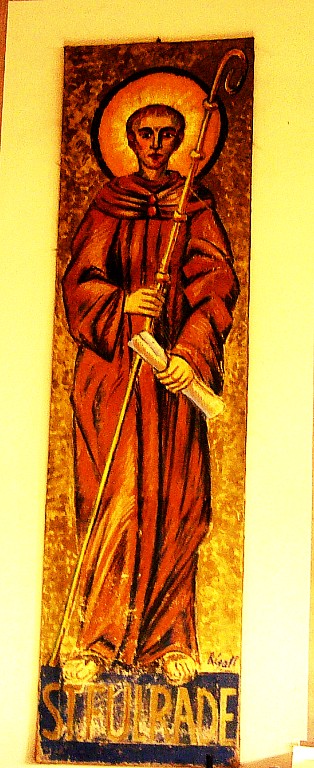
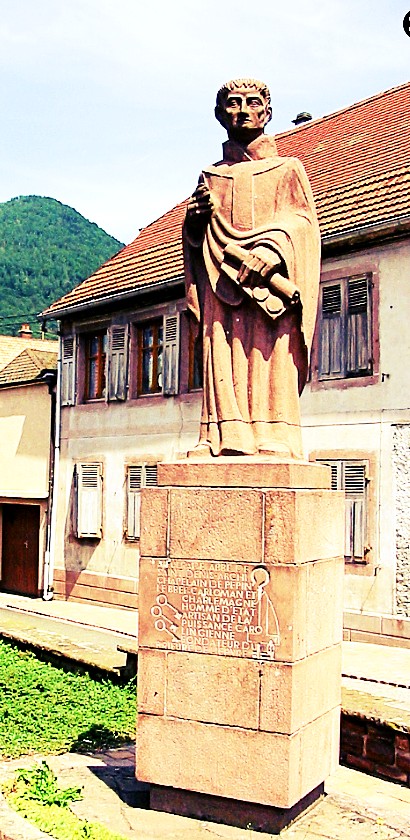
Saint of the Day – 16 July – Saint Fulrad of Saint Denis (c 710-784) Abbot of Saint Denis Monastery, Chaplin and Counsellor of both King Pippin the Younger and King and Emperor Charlemagne, Founder of numerous Monasteries, Writer/Historian,, he oversaw the construction of a Basilica at St Denis. Born in c 710 in Alsace, France and died on 16 July 784 of natural causes. Also known as – Fulrade, Fulradus.
Stained glass window in the in the Parish Church at Lièpvre
Fulrad was the son of Riculf and Ermengard, who had rich estates in Alsace and the Meuse-Moselle region of modern France and was closely connected to the powerful families and the Carolingians. In 749, he was already one of the closest confidants of Hausmeier Pippin the Younger, who, together with Bishop Burkard of Würzburg, entrusted him with the highly important journey to Rome that initiated the disempowerment of the Merovingians and assisted Pippin’s rise to the throne.
Fulrad entered the Monastery of St-Denis and in 750 Fulrad received – apparently in gratitude for this service – the dignity of Abbot of the powerful Royal Abbey. When Pippin was actually made King in 751, he appointed Fulrad to lead his Court orchestra. Fulrad maintained ties with the Pope and served as an expert on Italy for Pippin and then for Charlemagne .
In his new position, Fulrad increased the size of the Abbey with his inheritance from his parents;. As a Benedictine Abbot of St-Denis , Fulrad regained many territories lost to his Monastery and gained new ones, often using his own inheritance to acquire land and build Monasteries. In these regions, he founded Monasteries which became centres of radiance and devotion. In the beginning, Fulrad administered the new Monasteries himself. The Monasteries were located in Alsace-Lorraine and Alemannia. Each Monastery possessed relics, which made them pilgrimage destinations.
St Fulrad receives the Relics of St Hippolytes from Pope Stephen
Fulrad’s Testament, gives an account of early Carolinian society. In the “Testament”, Fulrad presents a survey of certain places and gives a detailed account of the religious, political and economic differences between the towns.
Abbot Fulrad was the Chaplin and Counsellor of King Pippin III, the Younger. The connection between these two figures goes beyond just friendship but, as two strong figures who helped each other and had great respect for each other’s service. Historians have written about this great friendship, and examples of it are seen in distinctively in certain dealings with the Papacy and with Pippin’s burial. Fulrad had such an impact on Pippin that the latter’s final wishes and resting place were all connected to Fulrad and his Abbey of S-Denis. Pippin became very ill at his campaign in the City of Saintes. He managed to travelled to St-Denis where he would be buried. Pippin, at his own request, asked to be buried at Saint-Denis next to the saint; also he wanted to be buried at the Abbey where Fulrad, his Arch-Chaplin and “one of his staunchest allies” was the Abbot.
Fulrad was also the Arch-Chaplin and Counsellor to Charlemagne. Charlemagne gave Fulrad’s Abbey many riches and more land. Fulrad’s Monastery of St-Denis became the “Royal Mausoleum” of the Frankish Kings. Fulrad oversaw the new construction of the Basilica of St-Denis. Construction began in 754 and was completed under Charlemagne, who was present at its Consecration in 775.
Abbot Fulrad died on 16 July 784 and was buried at St-Denis, where his tomb became a pilgrimage site. St Alcuin of York wrote St Fulrad’s epitaph.
When Fulrad died, Charlemagne chose Angilram, the Bishop of Metz to be the new Abbots of St-Denis and to carry on the work of the zealous and holy Abbot Fulrad.
St Andrew the Hermit St Antiochus of Sebaste Bl Arnold of Clairvaux Bl Arnold of Hildesheim St Athenogenes of Sebaste
St Bartholomew of Braga OP – ArchBishop of Braga also known as Bl Bartholomew of the Martyrs (Bartolomeu Fernandez dei Martiri Fernandes) (1514-1590) Portuguese Dominican Friar and Priest, Writer, Theologian, Advisor, Teacher and Catechetical writer, Apostle of Charity founding a series of hospitals and hospices in Braga and surrounds. St Bartholomew: https://anastpaul.com/2018/07/16/saint-of-the-day-16-july-blessed-bartholomew-of-the-martyrs-1514-1590/
St Domnin St Domnio of Bergamo Bl Dorothée-Madeleine-Julie de Justamond St Elvira of Ohren St Eugenius of Noli St Faustus St Faustus of Rome and Milan St Fulrad of Saint Denis (c 710-784) Abbot St Generosus of Poitou St Gobbán Beg St Gondulf of Tongeren-Maastricht St Gondolf of Saintes St Grimoald of Saintes St Helier of Jersey Bl Irmengard St Landericus of Séez Bl Madeleine-Françoise de Justamond Bl Marguerite-Rose de Gordon Bl Marguerite-Thérèse Charensol Bl Marie-Anne Béguin-Royal Bl Marie-Anne Doux
St Marie-Madeline Postel (1756-1846) Religious Sister and Founder of the Sisters of Christian Schools of which she is the Patron, Teacher, Franciscan tertiary. Pope Pius X later signified on 22 January 1908 his approval to two investigated miracles attributed to her intercession and so Beatified her on 17 May 1908. Pope Pius XI confirmed two additional miracles and Canonised Blessed Marie-Madeline on 24 May 1925. Her Life: https://anastpaul.com/2019/07/16/saint-of-the-day-16-july-st-marie-madeline-postel-
Bl Marie-Rose Laye Bl Milon of Thérouanne St Monulphus of Tongeren-Maastricht Bl Ornandus of Vicogne
Martyrs of Antioch – 5 Saints: Five Christians who were Martyred together. No details about them have survived by the names – Dionysius, Eustasius, Maximus, Theodosius and Theodulus. They were Martyred in Antioch, Syria, date unknown.
Saint of the Day – 15 July – St Athanasius of Naples (c 830-c 872) Confessor, Bishop of Naples from 849 until his death, Papal Legate, Reformer and restoring of Monasteries, he built a Hospice for pilgrims and a new Monastery, a man of austerity and prayer. This Athanasius should not be confused with his nephew, Athanasius II, also the Bishop of Naples. Born in c 830 in Naples, Italy and died in c 872 at Veroli, Italy of natural causes. Patronage – of Naples.
Athanasius was the second son of Sergius I of Naples and not quite twenty years old when he became Bishop of Naples in 849. At the same time, his brother, Gregory, became Co-Duke. He was Consecrated Bishop in Rome by Pope Leo IV.
Athanasius led a life of austerity and prayer and was particular concerned with the proper education and training of the Clergy in his Diocese. He oversaw the restoration of the Monastery of the Most Holy Saviour and established a Monastery dedicated to Sts.Januarius and Agrippinus. He also established a hospice for pilgrims, and set up a process for ransoming prisoners captured by the Saracens.
He attended the Lateran Council of 863.[2]
Athanasius was an intimate of both the Court of the Western Emperor and that of the Pope. He was a relative of Emperors Lothair I and Louis II and was made a Papal legate because of his connections with the Roman Curia.
Before dying, Sergius, his father, bade Gregory , his brother the Duke, to follow the counsel of his brother the Bishop. Gregory did but his son, Sergius II, did not. He persecuted Athanasius, who was opposed to the alliance with the Aghlabids of Sicily and took possession of the treasures of the Cathedral. In 870 Duke Sergius II imprisoned his uncle Caesar, Admiral of the Neapolitan fleet, who similarly, opposed his closeness to the Aghlabids, Caesar died in prison.
The Bishop was exiled to a small island, only to be rescued by ships sent by the Emperor Louis. While travelling to Rome, Athanasius died at Veroli and was buried at Monte Cassino. His body was soon afterwards translated to the Cathedral of Naples.[6]
He is regarded as the Co-Patron Saint of the City of Naples. A Vita of Athanasius was written by John the Deacon in 872.
St Henry II (972-1024) Holy Roman Emperor ,Henry was well known for his Missionary spirit and for his protection of the Pope in times of trouble. Henry ruled with a spirit of great humility and always sought to give the glory to God. He used his position to promote the work of the Church and the peace and happiness of the people. Another Saints whose Feast was moved in 1969 from today, 15 July to 13 July. Biography: https://anastpaul.wordpress.com/2017/07/13/saint-of-the-day-13-july-st-henry-ii-holy-roman-emperor/
Dispersion of the Apostles – Divisio Apostolorum: Commemorates the missionary work of the Twelve Apostles. It was first mentioned in the 11th century and was celebrated in the northern countries of Europe during the Middle Ages. It is now observed in Germany, Poland and some Diocese of England, France and the United States.
St Abundantia of Spoleto St Abudemius of Bozcaada St Adalard the Younger
Blessed Anne-Mary Javouhey (1779-1851) “The Mother of the Slaves,” Religious Sister, Missionary and Founder of the Sisters of Saint Joseph of Cluny. Imagine a Mother Teresa in the France of Napoleon’s day and you will have a picture of Anne-Marie Javouhey. Nanette, as she was called, was a “velvet brick,” a thin layer of gentleness covering her determined core. A competent leader, Nanette dominated every scene in her adventurous life. Blessed Anne-Marie was Beatified on 15 October 1950 by Ven Pope Pius XII. Biography: https://anastpaul.com/2019/07/15/saint-of-the-day-15-july-blessed-anne-mary-javouhey-1779-1851/
St Apronia St Athanasius of Naples (c 830-c 872) Bishop St Antiochus of Sebaste St Benedict of Angers
Blessed Bernard of Baden TOSF (1428-1458) Margrave of Baden, Germany (Margrave was originally the medieval title for the military commander assigned to maintain the defence of one of the border provinces of the Holy Roman Empire.) Tertiary of the Order of St Francis, Apostle of the poor and the needy. Bernard was Beatifed on 16 September 1769 by Pope Clement XIV. His Canonisation process continues, at present, the second miracle required is being investigated. Blessed Bernard’s Life: https://anastpaul.com/2021/07/15/saint-of-the-day-15-july-blessed-bernard-of-baden-tosf-1428-1458/
Bl Ceslas Odrowaz St David of Sweden St Donivald St Eberhard of Luzy St Edith of Tamworth St Eternus St Felix of Pavia St Gumbert of Ansbach St Haruch of Werden St Jacob of Nisibis St Joseph Studita of Thessalonica Bl Peter Aymillo St Plechelm of Guelderland Bl Roland of Chézery St Valentina of Nevers St Vladimir I of Kiev
Martyred Jesuit Missionaries of Brazil – 40 Beati: A band of forty Spanish, Portugese and French Jesuit Missionaries Martyred by the Huguenot pirate Jacques Sourie while en route to Brazil. They are – • Aleixo Delgado • Alonso de Baena • álvaro Borralho Mendes • Amaro Vaz • André Gonçalves • António Correia • Antônio Fernandes • António Soares • Bento de Castro • Brás Ribeiro • Diogo de Andrade • Diogo Pires Mimoso • Domingos Fernandes • Esteban Zuraire • Fernando Sánchez • Francisco Alvares • Francisco de Magalhães • Francisco Pérez Godoy • Gaspar Alvares • Gonçalo Henriques • Gregorio Escribano • Ignatius de Azevedo • Iõao • João Fernandes • João Fernandes • Juan de Mayorga • Juan de San Martín • Juan de Zafra • Luís Correia • Luís Rodrigues • Manuel Alvares • Manuel Fernandes • Manuel Pacheco • Manuel Rodrigues • Marcos Caldeira • Nicolau Dinis • Pedro de Fontoura • Pedro Nunes • Simão da Costa • Simão Lopes • They were Martyed on 15 and 16 July 1570 on the ship Santiago near Palma, Canary Islands. They were Beatified on 11 May 1854 by Pope Pius IX.
Martyrs of Alexandria – 13 Saints: Thirteen Christians who were Martyred together. We know the names of three, no details about them and the other ten were all children. – Narseus, Philip and Zeno. Martyred in the early 4th-century in Alexandria, Egypt.
Martyrs of Carthage – 9 Saints: A group of nine Christians who were Martyred together. We know nothing else but their names – Adautto, Catulinus, Felice, Florentius, Fortunanziano, Januarius, Julia, Justa and Settimino. They were Martyred in Carthaginian and their relics at the Basilica of Fausta at Carthage.
Martyrs of Pannonia – 5 Saints: Five 4th-century Martyrs killed together. No information about them has survived except the names – Agrippinus, Fortunatus, Martialis, Maximus and Secundinus.
Saint of the Day – 14 July – PATRONAGES – Blessed Boniface of Canterbury O.Cart. (c 1207-1270) Carthusian Monk and Prior, the forty sixth Archbishop of Canterbury. Reformer, Mediator. Born in c 1207 near Sainte-Hélòne-du-Luc in the Savoy region of modern France and died on 18 July 1270 at the Sainte-Hélòne des Milliere Castle in Hautecombe, Savoy, France of natural causes. Also known as – Boniface of Savoy. Beatified on 7 September 1838 by Pope Gregory XVI. His body is incorrupt.
Born to the nobility as a member of the Ducal House of Savoy. Boniface was the eleventh child of Count Thomas of Savoy and the brother of Queen Beatrix of Savoy, as well as the Uncle of Queen Eleanor of England.
Boniface became a Carthusian Monk at the Grande Chartreuse at a very young age. As a young man he was appointed as the Prior of the Carthusian Monastery in Natua, France.
In 1233, as a Sub-Deacon, he was elected Bishop of Belley in Burgundy and, in 1241, Boniface administered the Diocese of Valence, as well. In 1245, Boniface was chosen as the forty sixth Archbishop of Canterbury, England by Pope Innocent IV. In the same year, he attended the Council of Lyon.
As the Archbishop, Boniface revised the Court, eliminated unnecessary offices in the Archdiocese and worked to solve the fiscal problems of the nearly bankrupt Diocese. Boniface exerted diplomacy and mediation in order to reduce the Royal interference in the Church’s internal affairs and the control of Eccleasiastical appointments.
Boniface proceeded to implement reforms in a number of the Monasteries in his Diocese but many refused to recognise him or permit his visits. Some of the disputes actually led to violence and he was forced to excommunicate some Clerics in order to implement compliance. Others, however, welcomed his reform efforts, and were impressed with his personal piety, his charity, and his simple lifestyle.
In 1258 he was chosen the leader of a group of the King‘s Counsellors who represented the interests of the English Barons against the King. In May 1261 he called a Council at Lambeth Castle which led to declarations explaining that the Church had the right to oppose worldly forces and interventions. However, Pope Urban IV needed the support of King Henry and refused to ratify these Decrees.
Boniface went into voluntary exile in France from 1262 to 1266, administering his Archdiocese as best he could, from across the Channel and continued to oppose Henry’s unilateral appointments to Ecclesiastical offices and his taxation of Church property. But he sided with the King on other matters, especially when the Barons resorted to civil war. On the triumph of the King’s party in 1265, he returned to England, arriving there in May 1266.
Boniface even briefly served as Regent of England and accompanied the King on diplomatic expediations to France.
Boniface died while trying to settle family business and end feuds between family factions. Later English historians complained of his excessive involvement in worldly politics and his family affairs but. in France, he was far more appreciated by those who knew his true holiness and zeal for the Church of Christ.
Boniface was buried with his family in the Cistercian Abbey of Hautecombe in Savoy. In his will, he left legacies to all the houses of the Franciscans and Dominicans in the Diocese of Canterbury. His will had differing provisions for his burial depending on whether he died in England, France, or near the Alps.
After his death, Boniface’s tomb was the center of a cult, and when the tomb was opened in 1580, his body was found to be perfectly preserved
Blessed Angelina di Marsciano Blessed Boniface of Canterbury O.Cart. (c 1207-1270) Carthusian Monk and Prior, Archbishop of Canterbury. Beatified on 7 September 1838 by Pope Gregory XVI. His body is incorrupt.
St Colman of Killeroran St Cyrus of Carthage St Deusdedit of Canterbury St Donatus of Africa
Blessed Gaspar de Bono OM (1530– 1604) Spanish Priest, Friar of the Order of Minims, Vicar Provincial of the Order. He was noted for his particular devotion to the Passion of Christ, carrying his Crucifix everywhere as a means of evangelisation and to be able to constantly immerse himself in his Saviour’s sufferings. His Loving Life: https://anastpaul.com/2021/07/14/saint-of-the-day-14-july-blessed-gaspar-de-bono-om-1530-1604/
Bl Giorgio of Lauria Bl Hroznata of Bohemia Bl Humberto of Romans St Idus of Ath Fadha St Just St Justus of Rome St Liebert St Marciano of Frigento St Marchelm Bl Michael Ghebre St Optatian of Brescia St Papias of Africa Bl Richard Langhorne Bl Toscana of Verona St Ulric of Zell St Vincent Madelgaire
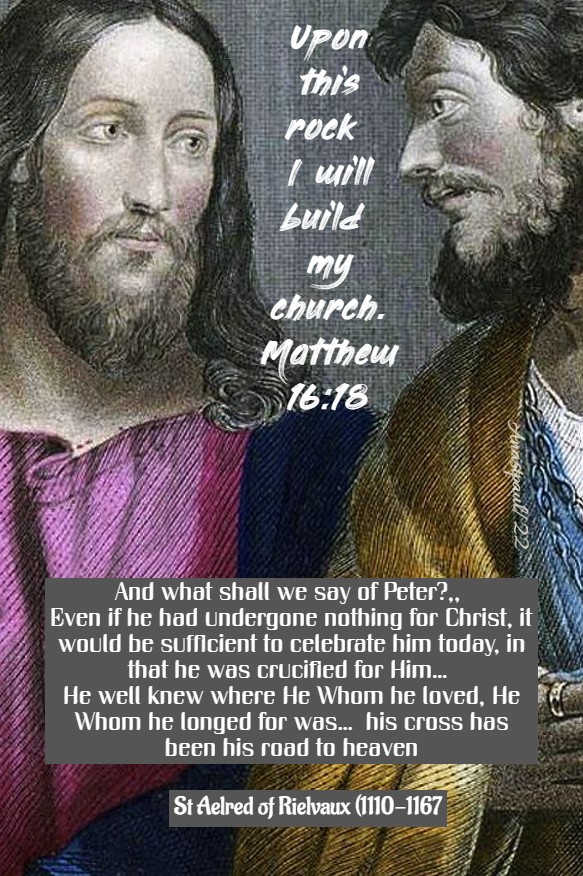
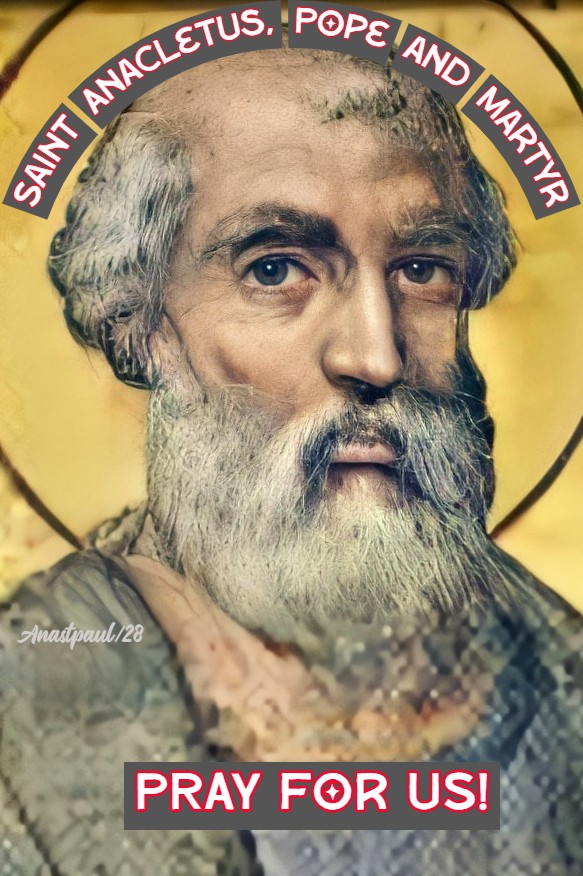
One Minute Reflection – 13 July – “The Month of the Precious Blood” – The Memorial of St Anacletus (c25-c89) 3rd Bishop of Rome and Martyr – 1 Petet 5:1-4; 5:10-11, Matthew 16:13-19
“Upon this rock I will build my church” – – Matthew 16:18
REFLECTION – “Although the earth and all who dwell in it quake, I have set firm its pillars” (Ps 74[75],40). All the Apostles are pillars of the earth but, at their head, the two whose Feast we are celebrating. They are the two pillars who support the Church with their teaching, their prayer and the example of their steadfastness. The Lord Himself strengthened these pillars. For at first they were weak, completely incapable of supporting either themselves or others. And in this the Lord’s great design appears: it they had always been strong, people could have thought their strength came from themselves. That is why the Lord wanted to show what they were capable of, before strengthening them, so that all might know, that their strength came from God… Peter was thrown to the ground by the voice of a mere servant… and the other pillar was very weak too: “I was once a blasphemer and persecutor and an arrogant man” (1Tm 1,13)…
Hence we ought to praise these Saints with all our heart: our Fathers who bore such trials for the Lord’s sake and who persevered, with such determination. It is nothing to persevere in joy, happiness and peace. But this is what is great – to be stoned, scourged, struck for Christ (2 Cor 11,25) and in all this, to persevere with Christ. With Paul it is a great thing to be cursed and to bless, to be persecuted and to endure, to be slandered and to console, to be like the world’s rubbish and to draw glory from it (1 Cor 4,12-13)… And what shall we say of Peter? Even if he had undergone nothing for Christ, it would be sufficient to celebrate him today in that he was crucified for Him… He well knew where He Whom he loved, He Whom he longed for was…: his cross has been his road to Heaven.” – St Aelred of Rielvaux (1110-1167) Cistercian Monk Sermon 18, for the feast of S (ints Peter and Paul ; PL 195, 298).
PRAYER – Look forgivingly on thy flock, Eternal Shepherd, and keep it in thy constant protection, by the intercession of blessed Anacletus thy Martyr and Sovereign Pontiff, whom thou didst constitute Shepherd of the whole Church.Through the same Jesus Christ, Thy Son our Lord, Who lives and reigns with Thee, in the unity of the Holy Ghost, God, world without end. Amen (Collect).
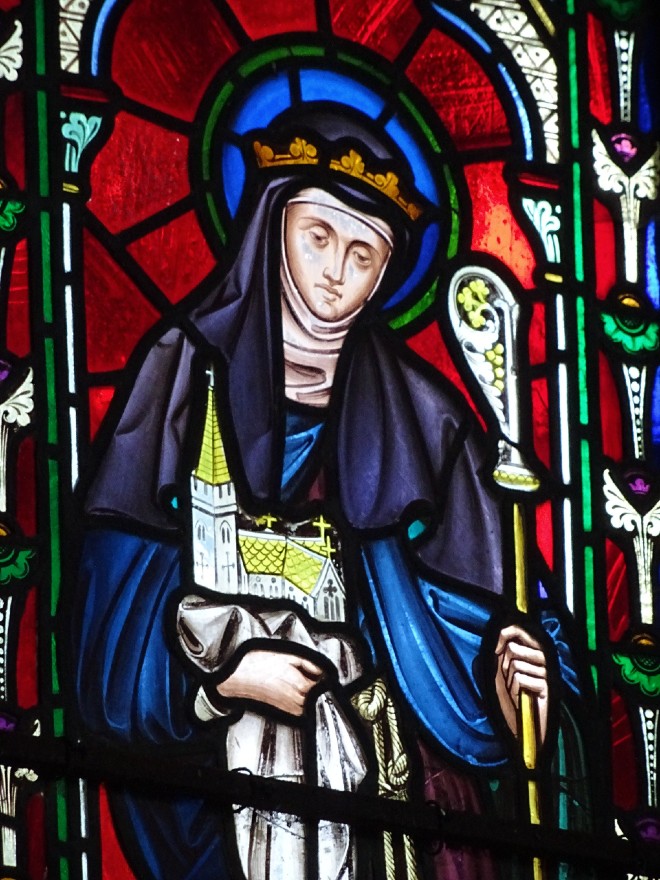
Saint of the Day – 13 July – St Mildred of Thanet OSB (Died c 700) English Benedictine Nun and Abbess, Born as an Anglo-Saxon Princess and died in c.700 of natural causes. Patronage – the Island of Thanet, Kent, England. Also known as – “The Fairest Lily of the English,” Mildred of Minster, Mildryth, Mildthryth. Additional Memorials – 18 May (translation of relics), 20 February (translation of relics).
Mildred was the daughter of King Merewalh of Magonsaete, an area similar to the present day Herefordshire, a sub-kingdom of Mercia. Her mother was Domne Eafe (also sometimes named as Saint Eormenburga), herself a great-granddaughter of Æthelberht of Kent and as such, appears in the Kentish Royal Legend.
Her sisters Milburga of Much Wenlock and Mildgyth, are also Saints and Mildred, along with her extended family, also feature in the Kentish Royal Legend. In the 11th Century, Goscelin wrote a hagiography of Mildred, the Vita Mildrethae. Another work, the Nova Legenda Anglie of 1516, gives an extensive account of her life.
Mildred was educated at the prestigious Merovingian Royal Abbey of Chelles. She entered the Abbey of Minster-in-Thanet, which her mother had established and became Abbess there by 694. A number of dedications to Mildred exist in the Pas-de-Calais, including at Millam, thereby suggesting that ties to Gaul were maintained. Mildred died at Minster-in-Thanet some time after 700 and was buried there in the Abbey Church of St Mary.
Mildrith’s successor as Abbess, Eadburg, also known as Edburga of Minster-in-Thanet, a correspondent of Saint Boniface, built a new Abbey Church, dedicated to Saints Peter and Paul and translated Mildred’s relics there, not later than 748. The Shrine within the Abbey became a popular place of local pilgrimage, with Mildred becoming a much-loved local Patron Saint.
The last Abbess of Minster in Thanet was Leofruna, who was captured by Danes in 1011. The Abbey was abandoned and the Church downgraded to a Parish Church. n 1030, Mildred’s remains, despite fierce local opposition, were translated to St Augustine’s Abbey, Canterbury, an event commemorated on 18 May. St Mildred’s Church, within the town walls at Canterbury, dates back to this time.
In the 11th Century, some of her relics were given, to a Church at Deventer, Netherlands. In 1881 St Mildred’s Feast Day was officially reinstated by Pope Leo XIII.n 1882, following a refounding of the Benedictine Convent at Minster in Thanet, the nuns petitioned the Archbishop of Utrecht, who granted their return to Thanet. In 1937, Minster Abbey was bought by Nuns of the Benedictine Order, and in 1953, a relic of St Mildred was brought there.
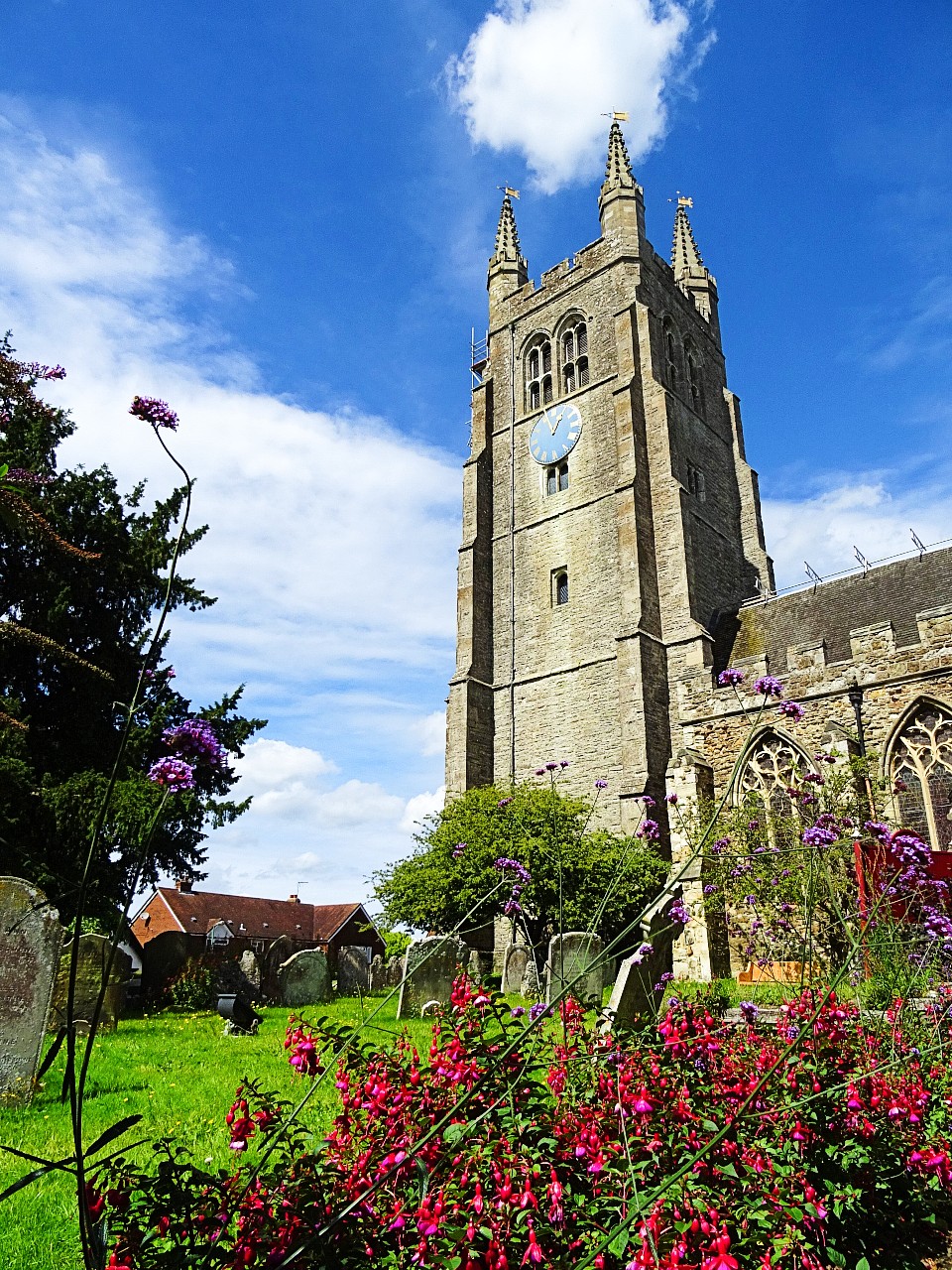
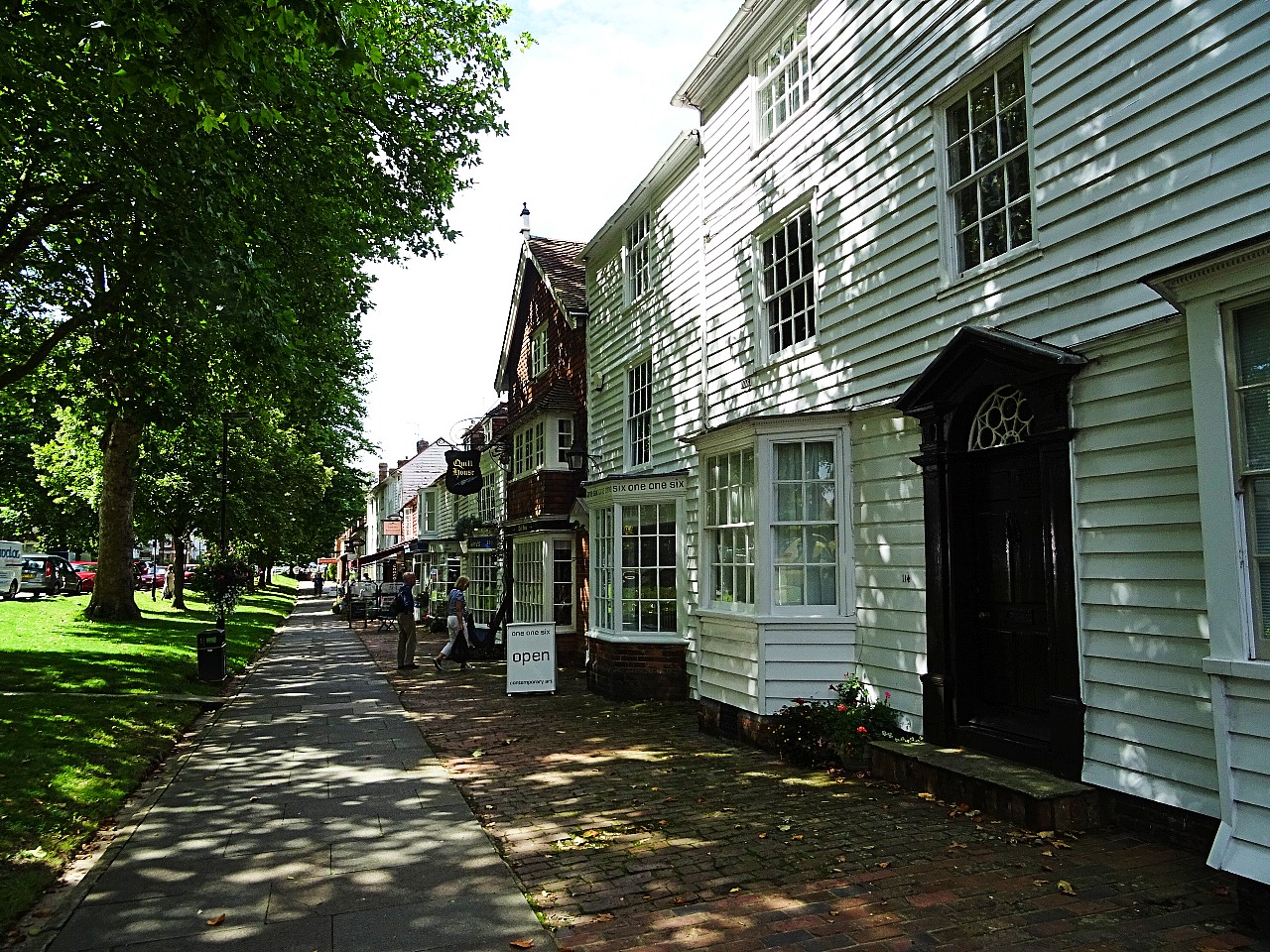
There are numerous medieval Churches dedicated to St Mildred of Thanet, most of them in Kent. This one is in pretty Tenterden (whose name means ‘woodland pasture of the people of Thanet.’ (I have many times visited this Tenterden, a very pretty Town indeed and have visited this Church.)
Bl Anne-Andrée Minutte St Arno of Würzburg Bl Berthold of Scheide St Dogfan Bl Élisabeth Verchière St Esdras the Prophet St Eugene of Carthage St Giustina of Arzano
St Henry (972-1024) Holy Roman Emperor ,Henry was well known for his Missionary spirit and for his protection of the Pope in times of trouble. Henry ruled with a spirit of great humility and always sought to give the glory to God. He used his position to promote the work of the Church and the peace and happiness of the people. Biography: https://anastpaul.wordpress.com/2017/07/13/saint-of-the-day-13-july-st-henry-ii-holy-roman-emperor/
St Iosephus Wang Kuiju
Blessed James of Voragine OP (c 1226 – 3 or 16 July 1298) Italian Archbishop of Genoa, Author of the ‘Golden Legend’ (a collection of lives of Saints and treatises on Christian festivals, one of the most popular religious works of the Middle Ages and is still published and referred to today – completed 1265), Priest and Friar of the Order of Preachers of St Dominic, Writer, Scholar of great genius, Prior and Provincial General of the Order. Blessed James was Beatified on 11 May 1816 by Pope Pius VII. Biography: https://anastpaul.com/2021/07/13/saint-of-the-day-13-july-blessed-james-of-voragine-op-c-1226-1298-author-of-the-golden-legend/
Bl Jean of France St Joel the Prophet Bl Marie-Anastasie de Roquard Bl Marie-Anne Depeyre Bl Marie-Anne Lambert St Mildred of Thanet OSB (Died c 700) English Benedictine Nun and Abbess.
St Muritta of Carthage St Myrope St Salutaris of Carthage St Sarra of Egypt St Serapion of Alexandria Serapion of Macedonia Bl Thérèse-Henriette Faurie Bl Thomas Tunstal St Turian
Martyrs of Cyprus – 300 Saints: 300 Christians who retired to Cyprus to live as cave Hermits, devoting themselves to prayer and an ascetic life devoted to God. Tortured and Martyred for their faith and their bodies thrown into the various caves in which they had lived. We know the names of five of them but no other details even about them – Ammon, Choulélaios, Epaphroditus, Eusthénios and Héliophotos. They were beheaded in the 12th century on Cyprus and their bodies dumped in the cave where they had lived and only rediscovered long afterwards.
Martyrs of Philomelio – 31 Saints: 31 soldiers Martyred for their faith in the persecutions of prefect Magno, date unknown. The only name that has come down to us is Alexander. In Philomelio, Phrygia (in modern Turkey).
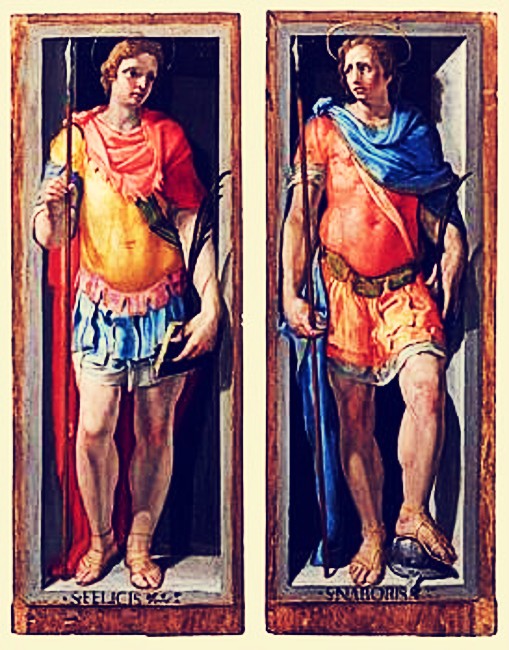
Saints of the Day – 12 July – Saints Nabor and Felix of Milan (Died c 304) Martyrs, Roman Soldiers. lLymen Soldiers Martyred during the Persecution under the Roman emperor Maximian.
12 July is traditionally the Feast day of two early Martyrs of the Church of Milan, Saints Nabor and Felix, who have long occupied a prominent place in the Ambrosian Rite. Together with their fellow Soldier St Victor, they are named in the Communicantes of the Ambrosian Canon. In the Roman Rite, they have been kept as a commemoration on the Feast of St John Gualbert, since the early 17th century.
The Hymn for Vespers of their Feast, which was composed by St Ambrose himself, refers to them as “Mauri genus – Moors by birth,”,since they were from the Roman Province of Mauretania in Africa. It is also sung on the Feast of St Victor on 8 May, as he was also a Moor and Martyred in the same persecution – they may have all belonged to a Berber tribe known as the Gaetuli, a great many of whom served in the Roman armies in the 3rd and 4th centuries. A later tradition associates all three of them with the Theban Legion, partly because they were in Milan in service to the Emperor Maximian, who made his headquarters in that City and was the persecutor of that legion.
Their 5th century Acts recount that they refused to sacrifice to the gods worshipped by the Empire and the army and were, therefore, beheaded at the City of Laus Pompeia (now called Lodi Vecchio). A noblewoman named Savina, a native of Milan married to a Patrician of Laus Pompeia, is said to have comforted them in prison and then to have secretly buried them in her own home after their execution. Once the persecution had ceased, in the year 310, she brought their relics to Milan, where they were laid to rest in the Chapel of her family, the Valerii. This Chapel then came to be known as the Basilica Naboriana.
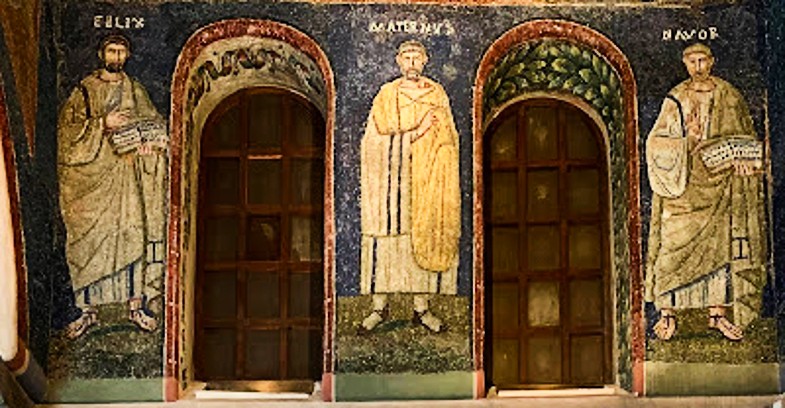
Within the Basilica of St Ambrose in Milan, the Chapel known as “San Vittore in Ciel d’Oro – St Victor in the Heaven of Gold” contains a mosaic portrait of the Bishop of Milan at the time of this translation, St Maternus, with the Mart,yrs to either side of him. On the opposite wall are St Ambrose with Ss Gervasius and Protasius, underlining the parallels between the two Bishops in their devotion to the Martyrs. And in point of fact, the place where St Ambrose discovered the relics of Gervasius and Protasius, was very close to the Basilica Naboriana.
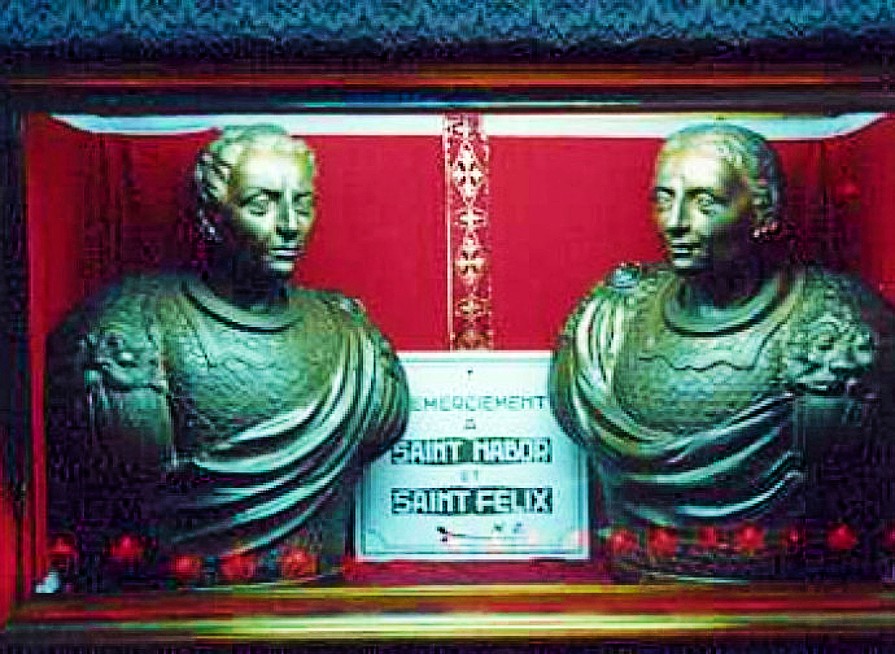
By 1249, the ancient Church was in very poor condition, and it was decided to entrust it to the then very new order of the Franciscans, recently arrived in Milan. A much larger Church was built to replace it, which was long known as San Francesco Grande. Devotion to the Martyrs was renewed, to such an extent, that in 1396, their Feast was declared a public holiday in Milan. In 1472, the relics were moved to be closer to the High Altar – the skulls of the two Martyrs were separated from the other bones and placed in their own bust-shaped Reliquaries, which were traditionally exposed on the Altar on major Feast days.
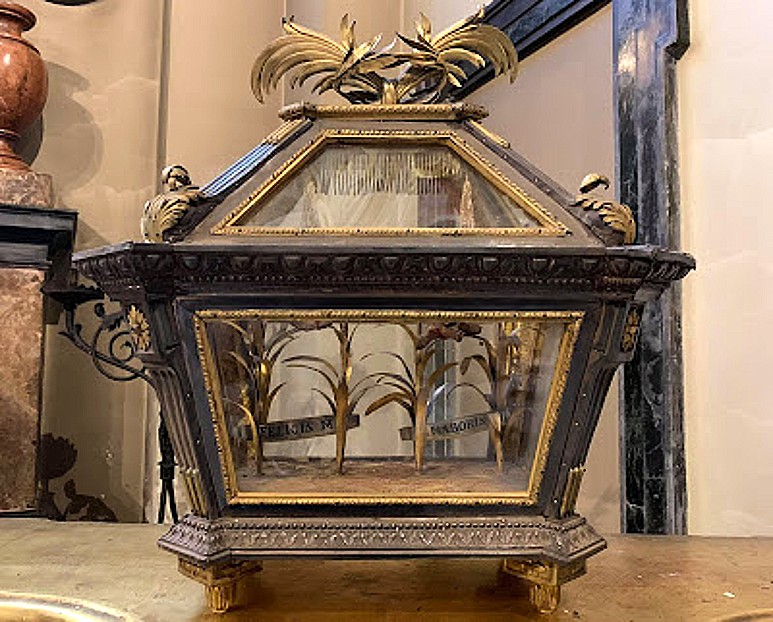
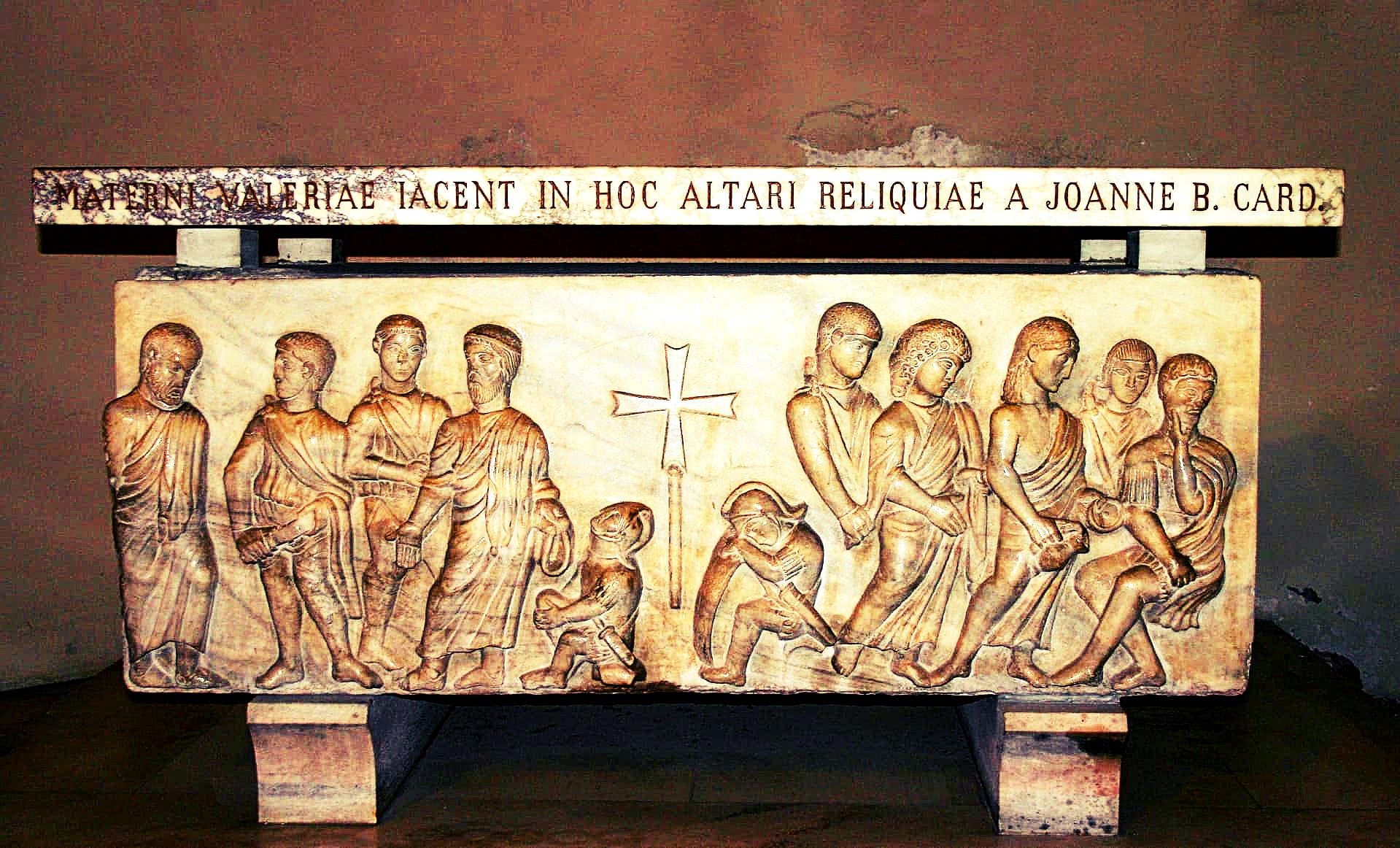
In 1798, when the French armies under Napoleon invaded northern Italy and the religious Orders were suppressed throughout the region, the Church of San Francesco Grande was destroyed. The Martyrs’ relics were fortunately saved and brought to the Basilica of St Ambrose. Since 1960, they have been enclosed within the Sarcophagus below, although some still reside in the Reliquary above.
It was probably at this point that the Reliquaries containing the skulls disappeared, most likely stolen by French soldiers. It was not until 1959 that they were rediscovered, with both the relics and authentication papers sealed and intact, in an antique shop in Namur, Belgium. The Bishop of Namur, André Charue, to whom they had been handed over, then generously returned them to Milan. the Cardinal Archbishop Giovanni Battista Montini, the future Pope Paul VI, had them installed in a new Parish built on the outskirts of the City, where they remain to this day, after solemn expositions at both Milan and Lodi.
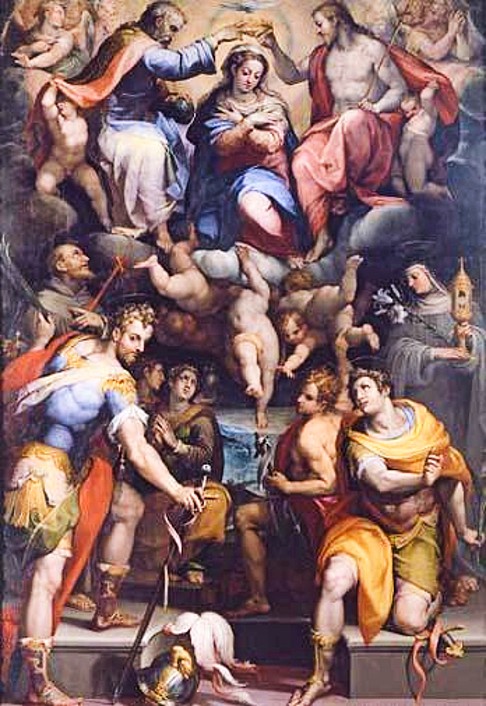
The Virgin Mary Crowned by the Holy Trinity, with Saints Francis, Claire, John the Baptist, Saint Mary Magdalene, Catherine of Alexandria and (in the foreground) Nabor and Felix; painted by Orazio Samacchini ca. 1575 for the Church of San Francesco Grande in Milan, now in the National Painting Gallery in Bologna.
Bl Conrad of Maleville Bl David Gonson St Epiphana St Faustus the Soldier St Felix of Milan * Commemorated with St Nabor St Fortunatus of Aquileia (1st Century – Died c 66) Deacon St Hermagorus of Aquileia (1st Century – Died c 66) Bishop, Disciple of St Mark the Evangelist Bl Guy Vignotelli St Hilarion of Ancyra St Jason of Tarsus Bl Jeanne-Marie de Romillon
St John the Georgian Bl Lambert of Cîteaux Bl Madeleine-Thérèse Talieu Bl Marguerite-Eléonore de Justamond Bl Marie Cluse St Menas the Soldier St Menulphus of Quimper St Nabor of Milan * Commemorated with St Felix St Paternian of Bologna St Paulinus of Antioch St Phêrô Khan St Proclus of Ancyra St Proculus of Bologna St Uguzo of Carvagna St Ultán
St Viventiolus of Lyons
Three Holy Exiles: Three Christian men who became Benedictine Monks at the Saint James Abbey in Regensburg, Germany, then Hermits at Griestatten and whose lives and piety are celebrated together. – Marinus, Vimius and Zimius.
Martyrs of Rome – Four members of the Imperial Roman nobility. They were all soldiers, one or more may have been officers, and all were Martyred in the persecutions of Diocletian – Basilides, Cyrinus, Nabor and Nazarius. Died in c 304 outside Rome, Italy and were buried there along the Aurelian Way.
Martyrs of Nagasaki – 8 Beati: Additional Memorial – 10 September as one of the 205 Martyrs of Japan Eight lay people, many them related to each other, who were martyred together: • Catharina Tanaka • Ioannes Onizuka Naizen • Ioannes Tanaka • Ludovicus Onizuka • Matthias Araki Hyozaemon • Monica Onizuka • Petrus Araki Chobyoe • Susanna Chobyoe 12 July 1626 in Nagasaki, Japan Beatified on 7 May 1867 by Pope Blessed Pius IX.
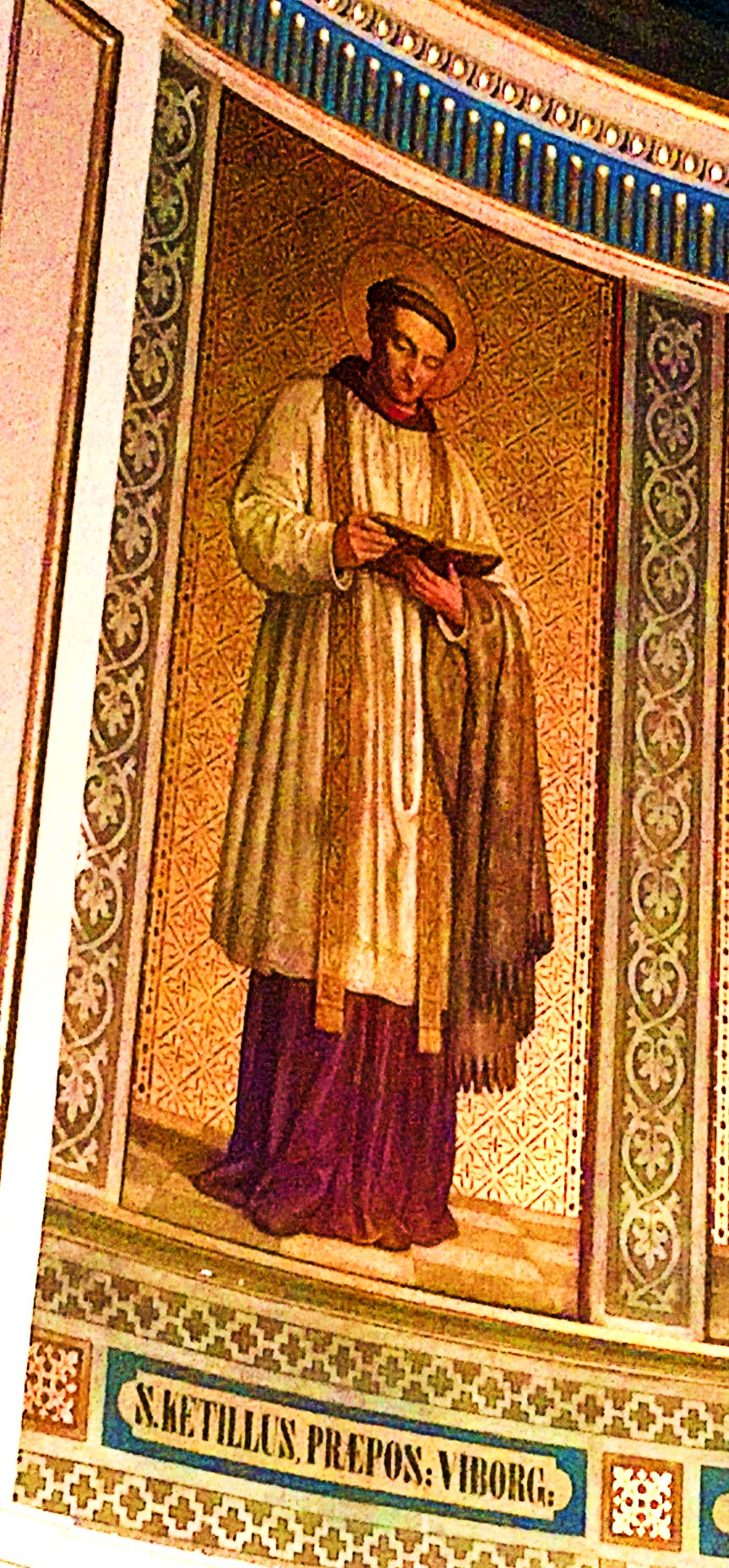
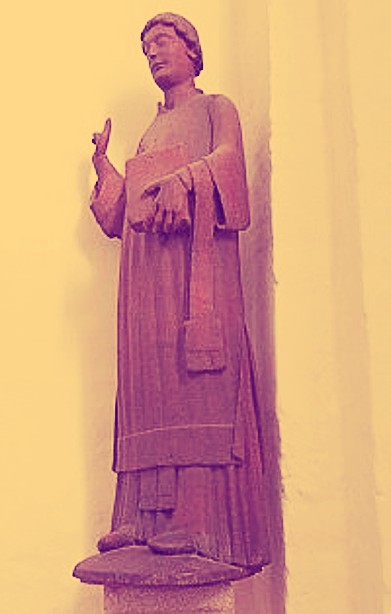
Saint of the Day – 11 July – Saint Kjeld of Viborg OSA (Died c 1150) St Francis of the North,” Priest, Apostle of the poor, needy and sick. Born in Denmark and died in c 1150 in Viborg, Denmark of natural causes. Patronage – Viborg, Denmark, of the blind and those with eye diseases. Also known as – “St Francis of Assisi of the North,” Ketil, Ketille, Kield, Exuperian.
Kjeld was born in the early 12th Century to wealthy parents, who lived on a farm in central Denmark. He was a Godly boy and it was soon decided that he should have a future in the Church. He was sent to Viborg, where he joined the Cathedral College or Chapter. The Cathedral Chapter was the place where Priests were trained and while they lived as Canons at the Cathedral, they assisted the Bishop in his administrative work. The Canons Regular lived in a community following St Augustine’s Rule and they were led by a Prior.
Kjeld thrived in the Cathedral Chapter, where he was elected as head of the Cathedral Chapter College and around 1145 he was elected Prior of the other Canons. Kjeld was a very caring, generous and compassionate man who gave all he could to the sick, poor and needy. It is told in his biography that IN 1145, when Viborg City was threatened by fire, Kjeld ran to the Tower of the Cathedral, where he prayed fervently to God to spare the City and the Church, after which the fire miraculously receded.
Despite the fact that the Canons had chosen Kjeld as their Prior, there soon came disputes between them and him, apparently because they objected to his generous distribution of the Cathedral Chapter’s funds to the poor. The Canons elected a new Prior and Kjeld moved to Aalborg for a while. Although Kjeld was popular in Aalborg he longed to spread the Christian faith and desired Martyrdom among the Wends. He went on a pilgrimage to Rome, where he visited the Tombs of the Apostles and had an audience with Pope Eugene III (1145-1153). He sought the Pope’s permission to go on a mission among the Wends but, although he received the desired authorisation, the Pope expressed the sentiment that he would rather see Kjeld return to Viborg and continue his work as Prior of the Cathedral College. The Pope wrote to the Cathedral College, who had to bow and take Kjeld back as their leader. But soon after, in 1150, Kjeld died in Viborg and was buried in the Cathedral.
Numerous miracles were granted by God at his grave. The sick became healthy after visits to the tomb and the blind especially, were granted their sight – according to the Saint’s biography, at least twelve people had their sight restored. The Church authorities now sought Kjeld’s Canonisation and they, therefore, sent a request to the Pope in Rome. In 1188 Pope Clement III (1187-1191) consented and the Archbishop Absalon celebrated Kjeld’s Canonisation locally, which occurred on 11 July 1189.
St Pius I, Pope (Died c 154) Martyr The Ninth Successor of St Peter. Papal Ascension c 142. Born at Aquileia, Italy and died in Rome. The Roman Martyrology states of him today: “At Rome, the blessed Pius, Pope and Martyr, who was crowned with Martyrdom in the persecution of Marcus Aurelius.” Biography: https://anastpaul.com/2021/07/11/saint-of-the-day-11-july-saint-pope-pius-i-died-c-154/
St Abundius of Ananelos St Amabilis of Rouen St Anna An Jiaoshi St Anna An Xingshi Bl Antonio Muller St Berthevin of Lisieux St Cindeus St Cowair St Cyprian of Brescia St Cyriacus the Executioner St Hidulf of Moyenmoutier St Januarius St John of Bergamo St Kjeld of Viborg OSA (Died c 1150) Priest St Leontius the Younger St Marcian of Lycaonia St Marciana of Caesarea Bl Maria An Guoshi Bl Maria An Linghua Bl Marie-Clotilde Blanc Bl Marie-Marguerite de Barbégie d’Albrède
St Olga Queen of Kiev (c 890-969) She was known as a ruthless and effective ruler but “when Olga was enlightened, she rejoiced in soul and body. The Bishop, who instructed her in the faith, said to her, ‘Blessed art thou among the women of Rus,’,for thou hast loved the light and quit the darkness. The sons of Rus’ shall bless thee to the last generation of thy descendants.” About St Olga: https://anastpaul.com/2020/07/11/saint-of-the-day-11-july-saint-olga-queen-of-kiev-c-890-969/
St Placid of Dissentis Bl Rosalie-Clotilde Bes St Sabinus of Brescia St Sabinus of Poitiers St Sidronius St Sigisbert of Dissentis Bl Thomas Hunt Bl Thomas Sprott St Thurketyl
St Cuán of Airbhre St Elilantus St Etto Bl Euménios St Lantfrid Bl Marie-Gertrude de Ripert d’Alauzier Bl Parthenios St Pascharius of Nantes St Peter Vincioli St Sylvanus of Pisidia Bl Sylvie-Agnès de Romillon St Waltram
Martyrs of Africa – 4 Saints: A group of Christians Martyred together in Africa. The only information that has survived are four of their names – Felix, Januarius, Marinus and Nabor.
Martyrs of Antioch – 10 Saints: A group of ten Christians Martyred together. We have no details about them but the names – Diogenes, Domnina, Esicius, Macarius, Maxima, Maximus, Rodigus, Timoteus, Veronia and Zacheus. They were martyred in Antioch, date unknown.
Martyrs of Damascus – 11 Beati: A group of Franciscans and laymen ordered by Druz Muslims to convert to Islam. They refused and were hacked to pieces. • ‘Abd Al-Mu’ti Masabki • Carmelo Bolta Bañuls • Engelbert Kolland • Francisco Pinazo Peñalver • Fransis Masabki • Juan Jacobo Fernández y Fernández • Manuel Ruiz López • Nicanor Ascanio de Soria • Nicolás María Alberca Torres • Pedro Soler Méndez • Rufayil Masabki They were cut to pieces on 9-10 July 1860 in Damascus, Syria. Beatified on 10 October 1926 by Pope Pius XI.
Martyrs of Nicopolis – 45 Saints: A group of 45 Christians tortured and Martyred together in the persecutions of emperor Licinius. We know nothing else but six of their names – Anicetus, Anthony, Daniel, Leontius, Mauritius and Sisinno. c 329 in Nicopolis, Armenia (modern Koyulhisar, Turkey).
Martyrs of Nitria – 5 Saints: Fathers of Nitria – Four Monks and the Bishop of Alexandria, Egypt who were Martyred by heretics. Saint John Chrysostom wrote about them but their names have not come down to us. They were martyred in the 4th century in Nitria, Egypt.
St Maria Goretti (1890-1902) Virgin and Martyr, known as “Saint Agnes of the 20th Century.” She was Canonised on 24 June 1950 by Pope Pius XII The ceremony was attended by 250,000 including her mother, the only time a parent has witnessed her child’s Canonisation. Her Life and Death: https://anastpaul.com/2017/07/06/saint-of-the-day-6-july-st-maria-goretti/
Blessed Adrian Fortescue TOSD (1476-1539) Martyr,. A husband and father, a Justice of the Peace, a Knight of the Realm, a Knight of Malta and a Dominican Tertiary (Lay Dominican), he was at once a loyal servant of the Crown so far as he could be but still more, he was a man of unshakeable faith. About Blessed Adrian: https://anastpaul.com/2018/07/09/saint-of-the-day-blessed-adrian-fortescue-1476-1539-martyr/
St Agrippinus of Autun St Alexander of Egypt St Audax of Thora St Brictius of Martola St Copra of Egypt St Cyril of Gortyna Bl Dionysius the Rhetorician St Everild of Everingham St Faustina of Rome St Felician of Sicily Bl Fidelis Chojnacki
Blessed Giovanna Scopelli O.Carm (1428 – 1491) Virgin, Mystic, Italian Religious of the Carmelites and established her own Convent as its first Prioress. She was known, during her lifetime as a Miracle-worker with many coming to her to ask for her assistance and prayers. Her body is incorrupt. About Blessed Giovanna: https://anastpaul.com/2021/07/09/saint-of-the-day-9-july-blessed-giovanna-scopelli-o-carm-1428-1491/
St Floriana of Rome St Hérombert of Minden St Joachim Ho Bl Luigi Caburlotto Bl Marguerite-Marie-Anne de Rocher Bl Marie-Anne-Madeleine de Guilhermier St Patermutius of Egypt St Paulina do Coração Agonizante de Jesus
Four Holy Polish Brothers – 4 Saints: Four brothers who became hermits, Benedictine Monks and Saints – Andrew, Barnabas, Benedict and Justus. They were born in Poland and died in 1008 of natural causes.
Martyrs of Gorkum – 19 Saints: Nineteen Martyrs killed by Calvinists for loyalty to the Pope and for their belief in the Real Presence in the Eucharist. They are – • Adrianus van Hilvarenbeek • Andreas Wouters • Antonius van Hoornaar • Antonius van Weert • Cornelius van Wijk • Francisus de Roye • Godfried van Duynen • Godfried van Melveren • Hieronymus van Weert • Jacobus Lacops • Joannes Lenaerts • John of Cologne • Leonardus van Veghel • Nicasius Janssen van Heeze • Nicolaas Pieck • Nicolaas Poppel • Petrus van Assche • Theodorus van der Eem • Willehad van Deem • They werehanged on 9 July 1572 in Brielle, Zuid-Holland, Netherlands. Beatified on 24 November 1675 by Pope Clement X and Canonised on 29 June 1867 by Pope Pius IX.
Martyrs of Orange – 32 Beati: 32 nuns from several orders who spent up to 18 months in prison and were finally executed for refusing to renounce Christianity during the persecutions of the French Revolution. • Anne Cartier • Anne-Andrée Minutte • Dorothée-Madeleine-Julie de Justamond • élisabeth Verchière • élisabeth-Thérèse de Consolin • Jeanne-Marie de Romillon • Madeleine-Françoise de Justamond • Madeleine-Thérèse Talieu • Marguerite-Eléonore de Justamond • Marguerite-Marie-Anne de Rocher • Marguerite-Rose de Gordon • Marguerite-Thérèse Charensol • Marie Cluse • Marie-Anastasie de Roquard • Marie-Anne Béguin-Royal • Marie-Anne Depeyre • Marie-Anne Doux • Marie-Anne Lambert • Marie-Anne-Madeleine de Guilhermier • Marie-Claire du Bac • Marie-Clotilde Blanc • Marie-Elisabeth Pélissier • Marie-Gabrielle-Françoise-Suzanne de Gaillard de Lavaldène • Marie-Gertrude de Ripert d’Alauzier • Marie-Marguerite Bonnet • Marie-Marguerite de Barbégie d’Albrède • Marie-Rose Laye • Rosalie-Clotilde Bes • Suzanne-Agathe Deloye • Sylvie-Agnès de Romillon • Thérèse-Henriette Faurie They were guillotined between 6 July and 26 July 1794 at Orange, Vaucluse, France. Beatified on 10 May 1925 by Pope Pius XI.
Martyrs of the Baths – 10,204 Saints: A group of Christians enslaved by Diocletian to build the gigantic baths in imperial Rome, Italy. The end of their labours coincided with the beginning of the great persecutions of Diocletian and they were all executed. Ancient records indicated there were 10,204 of them; Zeno of Rome is the only one whose name has come down to us and we know nothing else about any of their individual lives.




















You must be logged in to post a comment.