Saint of the Day – 17 June – Saint Ranieri Scaccero (c 1117-1161) Confessor, Pilgrim, Monk, Musician, Penitent, Ascetic, Preacher, Miracle-worker. Born in c 1117 in Pisa, Italy and died on 17 June 1161 at the Abbey of Saint Vito, Pisa, Italy of natural causes. Patronage – of Pisa, Italy. Also known as – Ranieri of Pisa, Ranieri de Aqua, Rainer, Rainerius, Rainier, Raniero, Raynerius, Regnier.
The Roman Martyrology reads today: “In Pisa, Saint Raniero, poor man and pilgrim for Christ.”
Ranieri was the son of Gandulfo Scacceri, a prosperous merchant and shipowner of Pisa and Mingarda Buzzaccherini. In his youth, he was a travelling musician. He spent a wild and sinful youth as a wandering minstrel and musician, carousing all night, sleeping by day if at all.
It was at the age of 19 that Ranieri decided to radically change his life. One evening, while performing for a merry crowd in a castle,he met a Hermit named Alberto, from Corsica “who wore a cloak of animal hair, like a goat” and had entered the Pisan Monastery of St Vitus and had become renowned for his work for the poor. This meeting led Ranieri to embrace the Faith with conviction, he burned his fiddle, and gave up the life of a minstrel. Thus he place himself, at the service of God
Desiring to visit the Holy Land, Raineri set himself up as a merchant in order to pay for his fare. The business took him to many ports and he became wealthy. His travels eventually took him to the Holy Land, where, it is said, he had a vision by which he understood that his wealth was hindering him from devoting himself to God.
At the age of 23 he decided to live in absolute poverty: he got rid of all the riches and gave them to the poor and needy. His only concern remained to imitate his teacher, Jesus Christ, as best as possible. Wearing the robe of the penitent given to all the pilgrims who went to Mount Calvary, he spent a long period with the Hermits in the Holy Land, where he performed numerous miracles.
He punished his body with long fasts, normally abstaining from food everyday of the week except Thursdays and Sundays. His austerity was so excessive, his later biographer noted, that God had to tell him to eat! The renunciation of himself and the total service to God, allowed him to overcome the numerous temptations that the evil one never ceased attacking him with during his 13-year stay in the Holy Land.
Returning to Pisa in 1154 and entered the Monastery of Saint Andrew and subsequently that of Saint Vitus. and became a renowned Preacher. Ranieri was already then, surrounded by the fame of a saint. He continued to work miracles even in his hometown. The admiration of his fellow citizens would accompany him, until the last day of his life. Ranieri died seven years after his return from the Holy Land on Friday 17 June 1161. His body was carried in a triumph through the City to the Cathedral of Pisa, its resting place.
In the eyes of the Pisans, Ranieri was a saint already in life. Once he abandoned his earthly life, one of his disciples, the Canon Benincasa, undertook to write a Life of the Saint in 1162, a text that knew a great success . In 1755 it was translated by the Carmelite Friar ,Giuseppe Maria Sanminiatelli . In 1842 it was re-published in Pisa.
The Blessed Ranieri Frees the Poor from a Prison in Florence (1437-44)
In 1632 the Archbishop of Pisa, the local clergy, the Pisan Magistrate, with the announcement of the sacred Congregation of Rites, elected Ranieri as the main Patron of the City and the Diocese. In 1689 the transfer of his body was decided, which was definitively placed on the High Altar. During the night of the translation, the Pisans illuminated their houses to pay homage to the figure of their most beloved Saint. He was Canonised by Pope Alexander III.
In 1161 or 1162, a Pisan Canon, Benincasa, wrote a long and invaluable Vita of the Saint. He says Raineri resembled the Son of God through his life of strict imitatio Christi – imitation of Christ. Benincasa wrote that Ranieri demonstrated “a royal priesthood in Christ” of which Raineri and all the Baptised are a part.
Ranieri is generally portrayed as a bearded hermit in a hairshirt holding a Rosary or Crucifix; as a young pilgrim in a hairshirt carrying a banner with the Pisan Cross; as being raised up by devils; or as dying in a hairshirt.
St Himerius of Amelia St Hypatius of Chalcedon St Molling of Wexford St Montanus of Gaeta St Nectan of Hartland Bl Paul Burali d’Arezzo Bl Peter Gambacorta Bl Philippe Papon St Prior St Rambold of Ratisbon St Ranieri Scaccero (c 1117-1161) Pilgrim, Monk St Theresa of Portugal
Martyrs of Apollonia – 7 Saints: A group of Christians who fled to a cave near Apollonia, Macedonia to escape persecution for his faith, but were caught and executed. The names we know are – Basil, Ermia, Felix, Innocent, Isaurus, Jeremias and Peregrinus. They were beheaded at Apollonia, Macedonia.
Martyrs of Aquileia – 4 Saints: Four Christian Martyrs memorialised together. No details about them have survived, not even if they died together – Ciria, Maria, Musca and Valerian. c.100 in Aquileia, Italy.
Martyrs of Chalcedon – 3 Saints: Three well-educated Christian men who were sent as ambassadors from King Baltan of Persia to the court of emperor Julian the Apostate to negotiate peace between the two states, and an end of Julian’s persecutions of Christians. Instead of negotiating, Julian imprisoned them, ordered them to make a sacrifice to pagan idols and when they refused, had them executed. Their names were Manuel, Sabel and Ismael. They were beheaded in 362 in Chalcedon (part of modern Istanbul, Turkey) and their bodies burned and no relics survive.
Martyrs of Fez – 4 Beati: A group of Mercedarians sent to Fez, Morocco to ransom Christians imprisoned and enslaved by Muslims. For being openly Christian they were imprisoned, tortured, mutilated and executed. Martyrs – Egidio, John, Louis and Paul. They were martyred in Fez, Morocco.
Martyrs of Rome – 262 Saints: A group of 262 Christians Martyred in the persecutions of Diocletian. In c303 in Rome, Italy. They were buried on the old Via Salaria in Rome.
Martyrs of Venafro – 3 Saints: Three Christian lay people, two of them imperial Roman soldiers, who were converts to Christianity and were Martyred together in the persecutions of Maximian and Diocletian – Daria, Marcian and Nicander. They were beheaded c.303 in Venafro, Italy. By 313 a basilica had been built over their graves which were re-discovered in 1930. They are patrons of Venafro, Italy.
St Berthaldus St Ceccardus of Luni St Cettin of Oran St Colman McRhoi St Crescentius of Antioch St Cunigunde of Rapperswil St Curig of Wales St Cyriacus of Iconium (c 301-c 304) Child Martyr
Blessed Donizetti Tavares de Lima (1882-1961) Priest, Apostle of the poor, the elderly and the sick, miracle-worker, known to bilocate. A prophecy related to Vatican II: “No, no, Archbishop! We won’t see this disgrace (prophesying that they both would die soon) but it will come! This was not just a dream, nor a nightmare! The darkness will fall over this world! I beg you: don’t let them destroy the Altars!” An amazing life: https://anastpaul.com/2020/06/16/saint-of-the-day-16-june-blessed-donizetti-tavares-de-lima-1882-1961/
St Elidan St Felix of San Felice St Ferreolus of Besançon St Ferrutio of Besançon Bl Gaspare Burgherre St Graecina of Volterra St Ismael of Wales
St Maurus of San Felice St Palerio of Telese St Similian of Nantes Bl Thomas Redyng St Tycho of Amathus
Martyrs of Africa: A group of five Christians Martyred together. We know nothing else but the names – Cyriacus, Diogenes, Marcia, Mica, Valeria. They were martyred in an unknown location in Africa, date unknown.
Saint of the Day – 15 June – Saint Isfrid of Ratzeburg O.Praem (c 1115-1204) Bishop of Ratzeburg, Confessor, Spiritual advisor, Missionary, Mediator and Peacemaker, a renowned Administrator and gentle corrector of his flock, whom he protected against political abuses, Defender of the Pope and the Holy See. Istfrid also built and restored Churches and Monasteries and established many new Parishes. Born in c.1125 in Germany and died on 15 June 1204 at Ratzeburg, Holstein, Germany of natural causes, aged 89. Additional Memorial – 17 February in the Diocese of Osnabrück, Germany and the Archdiocese of Hamburg, Germany. Also known as – Isfried, Isfrido.
Isfrid was born around 1115 in Germany. Nothing is known about his early years. He entered the Order of the Premonstratensians, which is also called the Norbertines, after its founder, St Norbert of Xanten (1080-1134), or White Canons, after the colour of their habit.
Istfrid became a Canon in the Monastery in Cappenberg near Selm in Westphalia. In 1159 he was elected the first Prior of the Monastery of Jerichow near Berlin. There he built a magnificent Romanesque Church.
At the request of Henrik Löwe, Duke of Saxony, the Norbertines of Magdeburg had turned their attention to the conversion of the pagan Vendors, a common name for the Slavic tribes on the Elbe and the Baltic Sea. Saint Evermod was elected by Henrik Löwe, as the first Bishop of the restored Diocese of Ratzeburg in northern Germany. Upon the death of St Evermod, Istfrid was proposed as his successor. But strife over this election led to a two-year sedis vacancy. But the battle was ended through Henrik Löwe’s intervention and in 1180, Isfrid was finally elected, as the second Bishop of Ratzeburg. The medieval chronicle describes him as sanctus sancti successor – a saint who succeeds a saint.
St Isfrid on the right, with Sts Ludolph and Evermod, the three first Bishops of Ratzeburg.
Isfrid completed the construction of the Cathedral, which was begun by Evermod. He was known for his organisational skills and created many Parishes. He also worked tirelessly for the German colonisation of the land of the Vendians. Against himself, he tended to be strict in his penance but against the rebellious, he was a gentle judge and tried to convince them and win them over through his preaching. In 1190 he visited the Monastery of Floreffe in present-day Belgium, which had been destroyed by fire. According to Arnold of Lübeck, he succeeded in recalling all the Canons who had been scattered in all directions over the past year and a half. He restored the Monastery and Consecrated seven Altars in one day. The same year, he also Consecrated the Romanesque Church in Postel, a daughter house of Floreffe.
Isfrid was the Confessor and friend of Duke Henrik Löwe, a pious layman who enthusiastically supported Isfrid in his project to continue the missionary work of the invaders that Evermod had started. But Emperor Frederick I Barbarossa (1152-90; Emperor from 1155) wrongly took from Henrik his possessions and gave them to Bernhard of Anhalt. In the battle between the imperial party stauferne and the papal party, Isfrid took the side of the defeated Henrik Löwe, as he had once sworn allegiance to him, despite all threats and protests.
Isfrid also defended the rights of his people against the intrigues of Emperor Fredrik and his vassal, Bernhard of Anhalt. Bernhard punished anyone who disliked the Emperor’s policy towards the Pope or who sympathised with Duke Henrik. Isfrid bore these persecutions with dignity and patience until Henrik was finally reconciled with the Emperor, who returned to him the duchy. Isfrid remained Duke Henrik’s Confessor and spiritual guide and when Henrik was dying in 1195, Isfrid went to him to hear his Confession, give him absolution and the last Sacraments before he died on 6 August 1195. In the old annals of Stederburg, Isfrid is called, “a man who excelled in Christian wisdom, humility and strength.”
In 1195, the Canons at the Chapter in Schwerin, which was composed of both Saxons and Wends, could not agree on the election of a Bishop. Isfrid was asked by the Pope to mediate and judge between the candidates and the choice fell on Brunward, one of the first converts to receive the Episcopal honour.
Isfrid died on 15 June 1204 in Ratzeburg, aged 89 and was buried in the choir in his Cathedral, next to his predecessor St Evermod. His reputation for holiness spread rapidly and miracles continued to occur after his death. Pope Benedict XIII (1724-1730), confirmed his cult on 26 March and 12 April 1728, along with a number of other Premonstratensians.
His memorial day is the day of his death, 15 June. In the Diocese of Osnabrück he is commemorated on 17 February with two other Bishops of Ratzeburg, Saints Evermod (1154-1178) and Ludolf (1236-1250), both of whom, were PremonstratensianS. Because Ratzeburg in the state of Schleswig-Holstein is today located in the newly established Catholic Diocese of Hamburg (1995), the three holy Bishops were transferred from the calendar of the Diocese of Osnabrück to the calendar of the Archdiocese of Hamburg. He is depicted as a Bishop, with the water that turned into wine and with the blind man for whom he prayed that his sight be restored, which God approved.
St Vitus (c 290-c 303) – Martyr, One of the Fourteen Holy Helpers. Died aged 12-13 years of age. Patronages – against animal attacks, against dog bites, against epilepsy; epileptics, against lightning, against over-sleeping, against rheumatic chorea or Saint Vitus Dance, against snake bites, against storms, against wild beasts, of actors, comedians, dancers, dogs, Bohemia, Czech Republic, Serbia, 17 cities. His very short life: https://anastpaul.com/2017/06/15/saint-of-the-day-15-june-st-vitus/
St Abraham of Saint-Cyriacus St Achaicus of Corinth St Barbara Cui Lianshi St Benildis of Córdoba
St Bernard of Montjoux/Menthon CRSA (c 1020-1081) “Apostle of the Alps” Priest, Founder of a patrol that cleared robbers from the mountains and he established hospices for travellers and pilgrims. The large dogs, trained to search for lost victims in the mountains, are named for him. Patronages – Alpinists, Alps (proclaimed by Pope Pius XI on 20 August 1923), Campiglia Cervo, Italy, mountain climbers (proclaimed by Pope Pius XI on 20 August 1923), mountaineers, skiers, travellers in the mountains (proclaimed by Pope Pius XI on 20 August 1923). Biography: https://anastpaul.com/2018/06/15/saint-of-the-day-15-june-st-bernard-of-menthon-c-r-s-a-c-1020-1081-apostle-of-the-alps/
St Constantine of Beauvais St Domitian of Lobbes St Edburgh of Winchester St Eigil St Eutropia of Palmyra St Fortunatus of Corinth
St Hadelinus of Lobbes St Hesychius of Durostorum St Hilarion of Espalion St Isfrid of Ratzeburg O.Praem (c 1115-1204) Bishop, Confessor Bl Juan Rodriguez St Julius of Durostorum St Landelin of Crespin St Leonides of Palmyra St Libya of Palmyra St Lotharius of Séez St Melan of Viviers St Orsisius Bl Pedro da Teruel Bl Peter Snow St Pierre de Cervis
Bl Ralph Grimston St Tatian of Cilicia Bl Thomas Scryven St Trillo of Wales St Vaughen of Ireland
St Vouga of Lesneven
Martyr of Lucania – 11 Saints: Eleven Christians Martyred together. We known nothing else about them but the names – Anteon, Candidus, Cantianilla, Cantianus, Chrysogonus, Jocundus, Nivitus, Protus, Quintianus, Silvius, Theodolus in Lucania (modern Basilicata), Italy, date unknown.
One Minute Reflection – 14 June – The Memorial of St Basil the Great (329-379) Bishop of Caesarea, Confessor, Father and Doctor of the Church – 2 Timothy 4:1-8, Luke 14:26-35
“If anyone comes to Me, without hating his father and mother, wife and children, brothers and sisters and even his own life, he cannot be my disciple.” – Luke 14:26
REFLECTION – “On another occasion, the Lord says, “Whoever comes to me and does not hate his father and mother, and wife and children and brothers and sisters and even his own soul, cannot be my disciple.” As a rule, this is more upsetting to the mind of new Christians, who are eager to begin at once, to live in accordance with the precepts of Christ. To those who do not fully grasp its meaning, it would seem contradictory…. He has condescended to call His disciples to the eternal Kingdom. He also called them brothers. In the Kingdom these relationships are transcended because, “there is neither Jew nor Greek, neither male nor female, neither slave nor freeman but Christ, is all things and in all.” The Lord says, “For in the resurrection, they will neither be married nor marry but will be as the Angels of God in Heaven.”
Whoever wishes to prepare himself now, for the life of that Kingdom, must not hate people but those earthly relationships, through which the present life is sustained, the temporary life that begins at birth and ends with death. Whoever does not hate this necessity, does not yet love that other life, in which there will be no condition of birth and death, the condition that makes marriages natural on earth.” – St Augustine (354-430) Bishop, Father, Doctor of Grace (Sermon on the Mount,15).
PRAYER – We beseech Thee, O Lord, hear our prayers which we offer on the festival of blessed Basil, Thy Confessor and Bishop and through his intercessory merits, who had the grace to serve Thee worthily, absolve us from all our sins. Through Jesus Christ, Thy Son our Lord, Who lives and reigns with Thee, in the unity of the Holy Ghost, God, world without end. Amen (Collect). Sweet Heart of Jesus, be my love.300 days ONCE A DAY – (Unless otherwise stated, e.g., “once a day,” a partial Indulgence may be gained any number of times in succession.) Pope Leo XIII 21 May.
Our Morning Offering – 14 June – The Memorial of St Basil the Great (329-379) Bishop, Confessor, Father and Doctor of the Church
O Christ, Our Master and Our God By St Basil the Great (329-379) Father and Doctor of the Church
O Christ, our Master and our God, King of the ages and Creator of all, I thank You for all the good things You have given to me and for the reception of your most pure and life-giving Mysteries. I pray You, therefore, O good Lover of humankind, keep me under Your protection, in the shadow of Your wings. Grant that with a pure conscience, until my last breath, I may worthily partake of Your Holy Things, for the forgiveness of sins and for life everlasting. For You are the Bread of Life, the Fountain of Holiness and the Bestower of Blessings and to You, we give glory together with the Father and the Holy Spirit, now and forever and ever, Amen.
Saint of the Day – 14 June – St Basil the Great (329-379) – Bishop of Caesarea, Confessor, Father and Doctor of the Church, Theologian, Defender of True Faith against all heresies, outstanding Scholar, Preacher and Writer, he was filled with love and kindness for the poor and the sick, building a Hospital to assist the poor sick, Miracle-worker. Born in 329 at Caesarea, Asia Minor (modern Turkey) to the nobility, his was a pious family – his mother, father and four of his nine siblings, were Canonised, including Saint Gregory of Nyssa. Grandson of Saint Macrina the Elder. He died on 1 January 379 at Caesarea, Asia Minor of natural causes. Patronages – Cappadocia, Hospital Administrators, Monks, Reformers, Cessaniti in Italy, Russia.
The Roman Martyrology says of him today: “At Caesarea, in Cappadocia, the Consecration of St Basil, Bishop and Doctor of the Church, who was eminent for learning and wisdom in the time of the Emperor Valens. Being adorned with every virtue, he was a great light in the Church and defended her, with admirable constancy, against the Arians and Macedonians.”
St Basil the Great, Bishop of Caesarea, Confessor and Doctor of the Church By Fr Francis Xavier Weninger, SJ (1805-1888) (Excerpt)
St Basil, who is called by the Holy Church, the Great because he was truly so, not only in mind, eloquence and learning but also, in courage against the heretics, in zeal for the honour of God, in holiness and in miracles, was born in Cappadocia, of noble, rich but, at the same time, holy parents. He had three brothers who are also honoured as Saints. He studied the liberal arts at Csesarea, Constantinople and lastly at Athens: – in the last place he became acquainted with St Gregory Nazianzen. St.Porphyrius, who was superior of a Convent in Egypt, instructed him in Holy Writ.
After this, he visited the holy places and was on his return, Ordained Feacon by Bishop Meletius at Antioch and began to preach in that City and afterwards continued at Cassarea, not only with the fame of great wisdom but also, with indescribable benefit to his hearers. At the latter place he was Ordained Priest. When he, however, perceived that even the Bishop became jealous of him on account of the great reputation which he gained by his sermons, he fled secretly to a desert in the land of Pontus. There he lived several years with his friend Gregory, occupied in the study of Holy Writ, praying, fasting and watching. Many came to him, desirous to live more piously. The rules he gave them to regulate their conduct, were by no one kept more punctually than by himself. He also instructed the heathen inhabitants, of the surrounding places, in the true faith and converted many of them.
Some years later, Valens, an Arian, ascended the imperial throne and persecuted the Catholics most cruelly. When St Basil was informed of this, he left the desert, repaired to Cassarea, fearlessly opposed the heretics and strengthened the Catholics in their faith. Meanwhile the Bishop of that City died and Basil, much against his inclinations, became his successor. Invested with this dignity, he changed nothing in the austerity to which he had been accustomed while living in the desert but he used the opportunities offered to him, to be still more kind and charitable to the poor. A terrible famine took place at that time, by which many lost their lives. The holy Bishop sold all that he possessed and divided the money among the poor and exhorted others, in his sermons, to be charitable to the needy. The sick he nursed with admirable humility, in a hospital which he had built for them. He hesitated not ,to give them food with his own hands and to wash and bandage their wounds. But notwithstanding all these acts of pious kindness, he neglected not to combat the Arians, both with tongue and pen and to guard his flock from their ravages.
Valens, the Emperor, sent one of his chief officers to Caesarea to induce the Saint to join the Arians, or else to drive him out of the City. Modestus, the imperial officer, summoned Basil into his presence and addressed him haughtily, in the following words: “Why do you not comply with the Emperor’s wishes and confess yourself to belong to his faith?” Basil fearlessly replied: “Because the Lord, my God, Who is infinitely greater than your Emperor, forbids it.” “Do you not fear then,” said Modestus, “the power and wrath of the Emperor? He can deprive you of all your possessions, drive you from your country, make you suffer and languish and even take your life.” The holy man answered: “Whosoever possesses nothing, fears not that anything can be taken away from him. My Country is Heaven, out of which you cannot drive me. You cannot make me suffer long, as my body is so weak that his first blow will destroy my life. Death will be a favour to me, for it will bring me sooner to my God.” Modestus, astonished at the boldness of this answer, said: “Nobody has ever dared to speak to me in such a manner.” “This may be the case because you have never spoken to a Bishop,” said Basil; “for in cases like this, all Bishops speak as I do.” “I will give you this night,” said Modestus, “to consider the wishes of the Emperor.” “And I shall be the same tomorrow as today,” replied Basil, as he went away.
The Emperor himself was filled with admiration for the Saint, when he was informed of what had taken place but the heretics left him no peace, until he gave orders that Bishop Basil should be placed in a carriage during the night and secretly carried away. Everything was in readiness to execute the Emperor’s command, when suddenly the Empress and her son, a very young child, became dangerously sick. The physician despaired of their lives and the Emperor, thinking it was a punishment sent by God because of his evil intentions against the holy Bishop, sent hastily to him to request earnestly, that he would obtain from God the health of the mother and the child. Basil promised to comply with his wish, on the condition that the Emperor would promise, that the child should be Baptised and educated in the Catholic faith. The Emperor consented, Basil prayed and the Empress and the Prince entirely recovered in the same hour. Hardly, however, had the Saint left the Emperor, when the latter, breaking his promise, had the child christened by an Arian bishop but he was almost immediately punished, for the Prince became sick again and died!
Some time later, the Emperor, again incited against the Saint intended to banish him but when he sat down to sign the order, the chair suddenly broke under him. He rose, took three pens, one after the other but was not able to write his name. None of them gave any ink but all split in his hand, which itself began to tremble and lose all life. Hence, he tore the order and left the Saint undisturbed. Many other miraculous events took place in regard to this holy Bishop, to relate all of which, would occupy too much space; as also all the labour he performed for the salvation of his flock and to the benefit of the whole Church. Neither can we relate how much he wrote in defence of the True Faith, how valiantly he opposed the heretics, how carefully he guarded the faithful. To a steward of the Emperor, who dared to dispute with him about articles of faith, he gave an answer, which, by a slight change, would serve very well in our days, for many who deem themselves wiser than they are. “Your office is,” said he, “to attend to the soup in the kitchen and to see that it is not too much salted but not ,to dispute about articles of faith.“
St Ephrem saw the Holy Ghost in the form of a dove upon the shoulder of the Saint, whispering to him what to preach or to write. A Jew, who had crept secretly into the Church during Holy Mass, saw a beautiful child in the hands of the Bishop, when he raised the Consecrated Host, which miracle caused him to embrace Christianity. With another Jew, who had considerable medical knowledge, the Saint had frequent conversations in the hope of converting him to Christ. When Basil became dangerously sick, he called the Jewish physician into his presence and asked him what hope there was of his recovery. The Jew answered; “There is no hope– this very evening, the bishop will be a corpse.” “But what would you say,” said the Saint, “if I should still be alive tomorrow?” “It is impossible,” was the Jew’s reply; “if that should happen I will become a Christian.” “I will remind you of your promise,” said Basil and turning his heart to God, he prayed fervently that his life might be prolonged for the conversion of the Jew. And in fact, on the following day, the holy Bishop arose from his bed entirely recovered. The Jew came, saw the miracle and being already sufficiently instructed in the Christian faith, was led by the Saint into the Church and amidst a crowd of people, Baptised with his whole family. This being accomplished, the Saint returned to his bed, his sickness re-appeared and a happy death soon ended his earthly pilgrimage.
Before his end, he exhorted all present to remain constant in the true faith and zealous in the practice of virtue. After this, he saw a Host of Angels, who invited him to enter Heaven. His last words were; “Into Thy hands, O Lord, I commend my spirit.” His happy death took place in the year of our Lord 379.
St Anastasius of Córdoba St Burchard of Meissen St Caomhán of Inisheer St Castora Gabrielli St Cearan the Devout Bl Constance de Castro St Cyprien St Cyriacus of Zeganea St Davnet St Digna of Córdoba St Dogmael of Wales St Elgar of Bardsey
St Nennus of Arran Bl Peter de Bustamante St Protus of Aquileia St Quintian St Richard of Saint Vannes St Rufinus of Soissons St Thecla St Theopista St Valerius of Soissons Bl Walter Eustace
Quote/s of the Day – 13 June – The Memorial of St Anthony of Padua (1195-1231) Evangelical Doctor of the Church
“When it is dark, we do not see how dusty and dirty our house is. Only when the place is flooded with sunlight, do we realise its awful condition. So, we need the light of God’s grace to show us the real state of our soul and to induce us to clean up our hearts!”
“Charity is the soul of faith and makes it alive; without love, faith dies!”
“Christ acts like a loving mother. To induce us to follow Him, He gives us Himself as an example and promises us a reward in His kingdom.”
Lord Jesus, Bind Me to Yourself
Lord Jesus, bind me to Yourself and to my neighbour, with love. May my heart not be turned away from You. May my soul not be deceived, nor my talent or mind, enticed by allurements of error, so that I may never distance myself from Your love. Thus may I love my neighbour as myself, with strength, wisdom and gentleness, with Your help, You who are blessed throughout all ages. Amen.
St Anthony of Padua (1195-1231) Evangelical Doctor of the Church
One Minute Reflection –13 June – “The Month of the Sacred Heart of Jesus” – The Memorial of St Anthony of Padua (1195-1231) Evangelical Doctor of the Church – 2 Timothy 4:1-8, Matthew 5:13-19
“I have come, not toabolishbut to fulfil.” … Matthew 5:17
REFLECTION – “In Him, the promise made through the shadows of prophecy, stands revealed, along with the full meaning of the precepts of the law. He is the One Who teaches the Truth of prophecy, through His Presence and makes obedience to the commandments possible, through grace. In the preaching of the holy Gospel all should receive a strengthening of their faith. No-one should be ashamed of the Cross of Christ, through which the world has been redeemed. No-one should fear to suffer for the sake of justice, no-one should lose confidence in the reward that has been promised. The way to rest is through toil, the way to life is through death. Christ has taken on Himself the whole weakness of our lowly human nature. If then, we are steadfast in our faith in Him and in our love for Him, we win the victory that He has won, we receive what He has promised. When it comes to obeying the commandments or enduring adversity, the words uttered by the Father should always echo in our ears – “This is my Son, the beloved, in whom I am well pleased, listen to Him.” … St Pope Leo the Great (400-461) Father and Doctor of the Church (An excerpt from Sermo 51).
PRAYER – May the solemn feast of blessed Anthony, Thy Confessor and Doctor, make Thy Church rejoice, O God, so that, ever sustained by spiritual help, she may deserve to reap everlasting joy. Through Jesus Christ, Thy Son our Lord, Who lives and reigns with Thee, in the unity of the Holy Ghost, God, world without end. Amen (Collect). MAY the Heart of JESUS in the most Blessed Sacrament be praised, adored and loved with grateful affection, at every moment, in all the Tabernacles of the world, even to the end of time. Amen.Indulgence 100 Days, Once a day. Raccolta 161 Pius IX, 29 February 1868.
Saint of the Day – 13 June – St Eulogius of Alexandria (Died c 607) Archbishop of Alexandria from 580 until his death, Confessor, Abbot, Defender of the True Faith against the heresy of Monophysitism (the denial of the two natures of Jesus), great friend and correspondent of St Gregory the Great. Born in Syrian and died in c607 of natural causes. Also known as – Eulogio.
Eulogius was a successful combatant of the heretical errors then current in Egypt, notably the various phases of Monophysitism. He was a warm friend of St Gregory the Great, corresponded with him,and received from that Pope, many flattering expressions of esteem and admiration. Among other merits the Pope makes special mention of his defence of the primacy of the Roman See.
Eulogius refuted the Novatians, some communities of which ancient sect still existed in his Diocese and vindicated the hypostatic union of the two natures in Christ, against both Nestorius and Eutyches.
The Venerable Cardinal Cesare Baronius (1538-1607), the Historian, says that Gregory wished Eulogius to survive him, recognising in him, the voice of truth.
It has been rightly said, that he restored, for a brief period to the Church of Alexandria, that life and youthful vigour characteristic of those Churches only, which remain closely united to Rome.
Besides the above works and a commentary against the various sects of the Monophysite, he left eleven discourses in defence of Leo I and the Council of Chalcedon, also a work against the Agnoetae, submitted by him before publication to St Gregory I, who, after some observations, authorised it unchanged. With exception of one sermon and a few fragments, all the writings of Eulogius have perished.
Bl Achilleo of Alexandria Bl Alfonso Gomez de Encinas Bl Anthony of Ilbenstadt St Aquilina of Syria St Aventino of Arbusto St Damhnade St Diodorus of Emesa St Eulogius of Alexandria (Died c 607) Archbishop of Alexandria, Confessor, Abbot, Defender of the True Faith against heresies. St Fandilas of Penamelaria St Felicula of Rome St Fortunatus of North Africa
Blessed Gerard of Clairvaux (Died 1138) – was the elder brother of Saint Bernard of Clairvaux. He was a Soldier. When he was wounded in combat at the siege of Grancy, Gerard resolved to become a Monk. He became a Benedictine Cistercian Monk at Citeaux. He worked with Saint Bernard at Clairvaux and became his closest confidant. He died in 1138 of natural causes.
St Lucian of North Africa St Mac Nissi of Clonmacno St Maximus of Cravagliana St Nicolas Bùi Ðuc The St Peregrinus of Amiterno St Rambert St Salmodio Bl Servatius Scharff St Thecla
St Amphion of Nicomedia Bl Antonio de Pietra St Arsenius of Konev St Christian O’Morgair of Clogher St Chrodobald of Marchiennes St Cominus Bl Conrad of Maleville St Cunera St Cuniald St Cyrinus of Antwerp St Eskil St Galen of Armenia St Gerebald of Châlons-sur-Seine St Geslar Blessed Guy Vignotelli of Cortona OFM (c 1185-1245) Priest of the Friars Minor, Hermit, Miracle-worker.
St Pope Leo III (c 750-816) Bishop of Rome and Ruler of the Papal States from 26 December 795 to his death. Defender of the City ad peoples of Rome and of the Church. Peacemaker and restorer of Churches and Monasteries, Patron of the Arts and Apostle of the poor. Know as “Charlemagne’s Pope” His Life: https://anastpaul.com/2021/06/12/saint-of-the-day-12-june-st-pope-leo-iii-c-750-816/
Bl Mercedes Maria of Jesus St Odulf of Utrecht St Olympius of AEnos St Onuphrius of Egypt Bl Pelagia Leonti of Milazzo St Peter of Mount Athos St Placid of Val d’Ocre Bl Stanislaw Kubista Bl Stefan Grelewski Bl Stefan Kielman St Ternan of Culross St Valerius of Armenia
Martyrs of Bologna: Three Christians who were martyred at different times and places, but whose relics have been collected and enshrined together – Celsus, Dionysius, and Marcellinus. Their relics were enshrined in churches in Bologna and Rome in Italy.
Martyrs of Rome: Four members of the Imperial Roman nobility. They were all soldiers, one or more may have been officers, and all were Martyred in the persecutions of Diocletian – Basilides, Cyrinus, Nabor and Nazarius. They were martyred in 304 outside Rome, Italy and buried along the Aurelian Way.
Three Holy Exiles: Three Christian men who became Benedictine Monks at the Saint James Abbey in Regensburg, Germany, then Hermits at Griestatten and whose lives and piety are celebrated together. – Marinus, Vimius and Zimius.
Saint of the Day – 11 June – St Parisius ECMC (c 1160-1267) Priest and Monk of the Camaldolese Hermits of Mount Corona, Spiritual Director, Reformer, Miracle-worker during his life and after his death. Born in c 1160 at Treviso or Bologna, Italy (records vary) and died on 11 June 1267 of natural causes, aged 108! Also known as – Parisio. Patronage: Treviso.
The Roman Martyrology reads: “In Treviso, Saint Parisio, Priest of the Camaldolese Order, who for seventy-seven years took care of the spiritual direction of the Nuns with healthy advice, dying at the age of one hundred and eight.”
Parisiu is one of the longest-lived saints known, he lived 108 years and being from the fourteenth century, it was undoubtedly a record, taking into account the average lifespan of the time, which was just over 40 years. St Parius is an example of humble and loving service for the glory of God!
At around 12 years of age, Parisius entered the Camaldolese Monastery in Bologna. He lived in the Bolognese Monastery for 24 years, leading an exemplary life, until the Prior General of the Camaldolese, assigned him as Director and Confessor to the Camaldolese female Monastery of St Cristina, near Treviso, which, at the time needed a guiding hand in many areas. It was 1187, and he was 36 years old when he was entrusted with that delicate task of reform – he would remain away from his Bologna for 80 years, until his death.
He dedicated himself humbly and subtleness to his task and, at the same time, to the care of the sick and the pilgrims of the Hospice of All Saints, annexed to the Monastery.
He was practically detached from the religious practices of the community of origin but remained faithful to all the Rules, religious obligations and penances, of his Camaldolese Order, which the Founder, St Romualdo had instituted. The fidelity with which he applied himself, even during illnesses and in very advanced old age, was regarded with veneration by the Nuns and Monks of his Order, despite the fact that Bishop Alberto Ricco (1255-1274) had dispensed him from the need to practice the rigid Rule.
Under his direction and spiritual guidance, the Monastery of St Cristina of Treviso acquired a reputation for widespread holiness, so much so, that in 1196 some devout people wanted to erect another Camaldolese female Monastery in Bologna, dedicated to St Mary of Bethlehem, placing it under the guidance of the Abbess of St Cristina of Treviso and the spiritual direction of Father Parisius. Parisius himself, 18 years later, when he judged that the new Monastery could manage itself, favoured its detachment in 1214.
He lived holy and pious life, forming generations of Camaldolese Nuns in religious life and died at the age of 108 on 11 June 1267. Just a month later, in July 1267, the Diocesan process began which ended with the Episcopal Canonisation (in use at the time) on 25 November 1268, by the Bishop of Treviso, Msgr. Alberto Rich.
The City of Treviso had always been devoted to our Saint Parisius, even during his life. After his death, the Officials of the City, annually, solemnly attended his Feast Day celebration of the Holy Mass on the tomb of the Saint, in the Church of St Cristina which, over time, also took the name of St Parisius.
His name was also adopted by the new Monastery, built following the destruction of the old one, which took place in 1355. From the time of the Napoleonic suppression, the Relics of the Camaldolese Saint, whom Treviso venerates as Co-patron, were placed in the City Cathedral. Cesare Baronio, author of the ‘Roman Martyrology’ in the sixteenth century, inserted his memory on the date of 11 June.
Bl Kasper of Grimbergen St Maximus of Naples St Parisius ECMC (c 1160-1267) Priest and Monk of the Camaldolese Hermits of Mount Corona. St Paula Frasinetti St Riagail of Bangor Bl Stephen Bandelli OP St Tochumra of Kilmore St Tochumra of Tuam
Martyrs of Tavira – 7 Beati: Members of the Knights of Santiago de Castilla. During the re-conquest of the Iberian peninsula from the Muslims by Christian forces, in a period of truce between the armies, the group was allowed to leave the Portuguese camp to hunt. Near Tavira, Portugal, he and his companions were ambushed and killed by a Muslim force. Making a reprisal attack, the Portuguese army took the city of Tavira. The murdered knights were considered to be martyrs as they died in an action defending the faith. They were – • Blessed Alvarus Garcia • Blessed Beltrão de Caia • Blessed Damião Vaz • Blessed Estêvão Vasques • Blessed Garcia Roiz • Blessed Mendus Valle • Blessed Pedro Rodrigues They were martyred in 1242 outside Tavira, Faro, Portugal. Their relics are enshrined under the altar of Saint Barnabas in the Church of Our Lady, Queen of the Angels (modern Santa Maria do Castelo) in Tavria
Mercedarian Martyrs of Damietta: Three Mercedarian lay knights who worked to ransom Christians enslaved by Muslims. During the 7th Crusade, a plague swept through the Christian army and these knights volunteered to work with the sick. During this work they were captured by Muslims and ordered to convert to Islam; they refused. They were tortured, taken to Damietta, Egypt where they were murdered for their faith. They were thrown from a tower in the mid-13th century in Damietta, Egypt.
Saint of the Day – 10 June – St Margaret of Scotland (1045-1093) Queen Consort of Scotland. Born as an English Princess in c 1045 in Hungary and died on 16 November 1093 at Edinburgh Castle, Scotland, four days after her husband and son died in defence of the Castle. Patronages – against the death of children, for students in their studies, parents of large families, queens, widows, of Scotland and of Dunfermline, Scotland. Additional Memorial – 16 June in Scotland. Also known as Margaret of Wessex. Margaret was Canonised in 1251 by Pope Innocent IV.
The Roman Martyrology reads: “In Scotland, St Margaret, Queen, celebrated for her love of the poor and of her own voluntary poverty.”
St Margaret of Scotland By Fr Francis Xavier Weninger SJ (1805-1888)
“St Margaret, Queen of Scotland, was descended by her father’s side from royalty, by her mother’s side, from imperial blood. She was born in Hungary at the time of the holy King St Stephen, at whose Court her father, Edward and her mother, Agatha resided. Her after life proved how piously she had been educated. Edward was the rightful heir to the English crown, but the power of his enemies had deprived him of it. After his death, Agatha resolved to go to England with Prince Edgar and the two Princesses Margaret and Christine, as she had been made to hope that Edgar would be placed upon the throne. A heavy storm arose when they were at sea and drove their ship to Scotland. The reigning King Malcolm, received and entertained them most kindly and making the acquaintance of the beautiful and virtuous Princess Margaret, he asked her hand in marriage. Agatha gladly consented and Margaret was obedient to her mother’s wishes. The wedding was celebrated; and Margaret, in the 24th year of her age, was crowned Queen of Scotland.
She reigned for 30 years and became famed for her wisdom and piety. On the spot where she had been crowned, she had a magnificent Church built in honour of the Holy Trinity, in order that her own and her husband’s souls might not be lost and in case she should have male heirs, she might have grace, to educate them in such a manner, that they would not sacrifice eternal life for temporal goods. She also built or restored several other Churches and Monasteries and provided them with all things necessary, She desired to have every article used in Church, most splendid and was, therefore, constantly occupied with her maids of honour, in working for the Churches.
Her conduct towards the King, her husband, was exemplary and by it, she caused him to lead a Christian life. She changed everything at the Court, in such a way, that her husband was royally served and was honoured by his subjects, with increased respect. She exhorted him particularly to be impartial in the administration of justice; to be kind and liberal to the poor but above all, to be zealous for the true faith and to uproot many abuses which had crept into his kingdom. Following her counsel, the King assembled the Bishops and represented to them, those abuses which he wished them to abolish – which was accordingly done. The Queen herself was a bright light of Christian virtues to all.
In the midst of regal splendour, she led a very austere life and was so assiduous in her prayers, that she gave to them even a part of the night. The reading of devout books was her greatest delight,and she led others to it also. To the word of God she listened with avidity and joy. She observed the prescribed fasts and besides, kept a strict abstinence of forty days before Christmas, even when she was sick. She evinced a more than motherly heart towards the poor and needy. Incredible is the amount of alms which she gave with her own hands to the poor, for whose benefit she founded many charitable institutions. She valued neither her own clothing, nor her magnificent jewels ,where the poor were concerned. Almost daily did she wash the feet of some and provide them with money Nine little orphans were at her Court, to whom she often gave food with her own hands. Three hundred poor were daily fed in the Royal hall, where she and the King frequently served them at table and at times ,kissed their feet.
The Almighty, who seldom fails to reward such deeds of kindness, even, in this life, blessed the pious Queen with many children, whom she most carefully educated. She was not content with merely giving them to the care of such, as were famed for piety and learning but, she also taught them herself, as well in reading and writing,as in virtue and the fear if God. She reproved them for the smallest faults and never allowed one to pass unpunished. One of the best admonitions which she gave them was as follows: “My children, love and fear God; for they who fear God, have not to fear death and they who love God with their whole heart, will not only be happy for the short space of time we live on this earth but, will be eternally blessed in the life to come.” She also taught them to behave most respectfully and reverentially in Church and was in this, as in all other things, a bright example to them. She would not suffer one to address a single unnecessary word to another in Church: ” For,” said she, “the Church is a place to pray and weep over our sins.”
After the pious Queen had, for many years, taken the utmost care of the education of her children and great solicitude for the welfare of the land, God revealed to her the day of her death. For nearly half a year, she suffered from a very painful sickness, which she bore with perfect submission to the divine will, manifesting an invincible patience. Having cleansed her conscience by a general confession, she told her Confessor, that she would not live much longer but that he would survive her some years. She then requested him, first, that he would remember her in saying Mass as long as he lived and secondly, that he would take all possible pains in the further instruction of her children. Four days before her death, the King was murdered, at the siege of the castle of Allwick. One of the royal Princes arrived to inform his mother of the sad news. She asked him, before he had time to speak, how her husband was but he, seeing how ill she was, would have concealed the fact from her, fearing rightly, that agitation and grief would shorten her days. She, however, said: “My son, I know the worst but request you, by the love you owe me as your mother, to acquaint me with the whole occurrence.“
These words obliged the Prince to speak. Having given her an account of the melancholy event, the Christian heroine raised her heart and eyes to Heaven and exclaimed: “I praise Thee and give thanks to Thee, O great God, that it has pleased Thee to send me this great cross before my end, in order that by patiently bearing it, I may pay the debt I still owe Thee on account of my sins.” Soon after, she repeated the most fervent exercises of virtue and said at last: “Jesus Christ! Thou Who hast given life to the world by Thy death, release me from the bonds of the flesh and take my soul into everlasting joy.”
Having pronounced these words, she ended her holy life. Her face, which from austere fasting and long sickness, was emaciated and pale, shone, soon after her death, with a wonderful beauty. The many and great miracles which God wrought in favour of those who invoked the holy Queen, prove how powerful, is her intercession at the Throne of the Almighty.”
St Margaret’s Memorial Church is the home of a precious first-class Relic of St Margaret of Scotland. This Relic (a shoulder bone of the Saint) was returned to Dunfermline on the Feast Day of St Margaret in 2008 after appropriate negotiation with Church authorities by Father David Barr, Parish Priest at the time. The relic had been in the care of the Ursuline Sisters (based in Edinburgh) for some 145 years prior to this but was now returned home. The transfer of a reliquary holding the relic was made during the solemn celebration of Mass in St Margaret’s by Cardinal Keith O’Brien together with Father Barr.
St Margaret of Scotland (1045-1093) Queen consort of Scotland, Wife and Mother, Apostle of the poor, Reformer. Saint Margaret’s name signifies “pearl” “a fitting name,” says Bishop Turgot, her Confessor and her first Biographer, “for one such as she.” Her soul was like a precious pearl. A life spent amidst the luxury of a Royal Court never dimmed its lustre, or stole it away from Him who had bought it with His Blood. Pope Innocent IV Canonised St Margaret in 1250 in recognition of her personal holiness, fidelity to the Roman Catholic Church, work for Ecclesiastical reform and charity. In 1693 Pope Innocent XII moved her feast day to 10 June but it was changed after Vatican II to 16 November. Wonderful St Margaret: https://anastpaul.com/2018/11/16/saint-of-the-day-16-november-st-margaret-of-scotland-1045-1093-queen/
Bl Amata of San Sisto St Amantius of Tivoli St Asterius of Petra St Bardo of Mainz
St Caerealis of Tivoli St Censurius of Auxerre St Crispulus of Rome Bl Elisabeth Hernden Bl Elizabeth Guillen St Evermund of Fontenay St Faustina of Cyzicus Bl Gerlac of Obermarchtal St Getulius of Tivoli
Bl José Manuel Claramonte Agut St Landericus of Novalese St Landericus of Paris Bl Mary Magdalene of Carpi St Maurinus of Cologne St Primitivus of Tivoli St Restitutus of Rome Bl Thomas Green St Timothy of Prusa Bl Walter Pierson St Zachary of Nicomedia
Martyrs of North Africa – 17 Saints: A group of seventeen Christians Martyred together in North Africa; the only surviving details are two of their names – Aresius and Rogatius. Both the precise location in North Africa and the date are unknown.
Martyrs of the Aurelian Way – 23 Saints: A group of 23 Martyrs who died together in the persecutions of Aurelian. The only details that survive are three of their names – Basilides, Mandal and Tripos. c.270-275 on the Aurelian Way, Rome, Italy.
Saint of the Day – 9 June – St Baithen of Iona (c 536-c 599) Abbot, the disciple and first successor of St Columba, an Irish Monk, especially selected by St Columba, as one of the band of Missionaries who set sail for Scotland in 563. St Baithen of Iona is generally known as Baithen Mor, to distinguish him from eight other Saints of the same name — the affix mor meaning “the Great.” This holy man was closely related to the great St Columba. They were the sons of two brothers and consequently, first cousins. Born in c 536 in Ireland and died in c 599 of natural causes . Patronage – of Tibohin, in Elphin, Ireland. Also known as – Baithéne mac Brénaind, Baithen Mor, Baithen the Great, Baithin, Boethen, Baoithin, Baithenus, Comin, Cominus.We have no images of our Saint, those below, in the main, are images of Monks of Iona.
Baithen was born in around 536, the son of Brenaron. He was an ardent disciple of St Columba and was appointed Abbot of Tiree Island, a Monastery founded by St Comgall of Bangor. St Adamnan, in recording the death of St Columba, tells us that the dying words of the Apostle of Iona, as he was transcribing the fifty-third Psalm, were: “I must stop here, let Baithen write what follows.”
Baithen had been looked on as the most likely successor of St Columba and so it happened, that on the death of that great Apostle, the Monks unanimously confirmed the choice of their Founder. St Baithen was in high esteem as a wise counsellor and his advice was sought by many Irish Saints.
According to his Acts, from the time he was a child, Baithen had been educated by St Columba. Under his holy discipline, he learned how to wage a perpetual war with idleness. As his years advanced, he grew stronger and more perfect, in the exercise of all good works. However, being a junior, by several years, he used to be always along with Columba because they were close in consanguinity and friendship, as they were thoroughly allied in the practice of holy works.
Baithen was always either reading, or praying, or serving his neighbour. Sometimes, for the latter purpose, his devotions were occasionally interrupted. When he used to eat, he was wont to say, “Deus in adjutorium meum intende,” “O God, come to my aid” between every two morsels. His devotions were so continually practised, that even when he was travelling, or working, or eating, or conversing with anyone, this holy man would still be communing with God and, under his tunic, his hands were often clasped in prayer, without anyone present knowing it. When he gathered corn along with the Monks, he held one hand up beseeching God, while the other hand was gathering the corn, as is contained in his Latin Acts, where we are informed, he would not brush away the troublesome midges from his face but rather suffer the bites and discomfort as a penance.
St Adamnan, the Biographer of St Columba, tells many interesting incidents in the life of Baithen but the mere fact of being the immediate successor of St Columba, by the express wish of that holy Apostle, is almost sufficient to attest to his great worth. The “Martyrology of Donegal” records the two following anecdotes.
Baithen also served as Prior over a Monastery connected to Iona on the Island of Tiree. The name of the place where his Monastery was located on Tiree, was Mag Luinge or Campus Luinge. The Monastery was a house for penitents from Iona. Some historians have thought that it may have supplied food to Iona.
St Adamnan also recorded a story about a voyage he took to the island, when Columba first told a Monk who was heading to Tiree, that he should not sail directly from Iona to Tiree because a great whale would frighten him but this monk did not listen to his advice and took the direct route. A huge whale came out of the water and almost destroyed the boat, which was, terrofying! When Baithen departed the following day to Tiree, Columba told him about the whale, and Baithen responded that both he and the whale were in God’s power, to which Columba responded “Go in peace, your faith in Christ will shield you from danger.” And so Baithen then took the direct route and the whale came out of the water which terrified all in the boat, except Baithen, who instead blessed the sea and the whale. The whale immediately departed, descending into the depths.
Iona todat
Baithen wrote a life of his master and some Irish poems, which are now lost but which were seen by St Adamnan. He only ruled Iona for three years, as his death took place in the year 600, though the “Annals of Ulster” give the date as 598. Perhaps the true year may be 599. Some writers assert that St. Baithen of Iona is the Patron of Ennisboyne, County Wicklow but this is owing to a confusion with St Baoithin, or Baithin mac Findech, whose feast is commemorated on 22 May. St Bathen is, however, the official Patron of Tibohin, in Elphin, Ireland.
Madonna, Madre delle Grazie / Our Lady, Mother of Grace (1610) (Also known as Our Lady of the Bowed Head) – 9 June:
Among the many miraculous images of the Mother of God through which she deigns to grant her favours, there is one in the Monastery church of the Carmelites in Vienna, entitled the Mother of Grace. In 1610 a Carmelite, Dominic of Jesus-Mary, found among the votaries of an old Altar in the Monastery Church of Maria della Scala in Rome and oil painting of the Mother of God, dust-covered and somewhat torn, which grieved him. Taking it into his hands, he shook the dust off it and kneeling down venerated it with great devotion. He had the picture renovated and placed it on the shelf in his cell, where he made it the object of his love and supplications, in favour of those who came to him in their necessities and afflictions. One night, while he was praying fervently before the picture, he noticed that some dust had settled on it. Having nothing but his course woolen handkerchief he dusted it with that and apologised:
“O pure and holiest Virgin, nothing in the whole world is worthy of touching your holy face but since I have nothing but this coarse handkerchief, deign to accept my good will.”
Fearing he was under an illusion, Dominic became troubled but Mary assured him that his requests would be heard, he could ask of her with full confidence, any favour he might desire. He fell upon his knees and offered himself entirely to the service of Jesus and Mary and asked for the deliverance of one of is benefactor’s souls in purgatory. Mary told him to offer several Masses and other good works. A short time later, when he was again praying before the image, Mary appeared to him bearing the soul of his benefactor to Heaven. Dominic begged that all who venerated Mary in this image of Our Lady of Grace might obtain all they requested. In reply the Virgin gave him this assurance:
“All those who devoutly venerate me in this picture and take refuge with me, will have their requests granted and I will obtain for them many graces but especially, will I hear their prayers for the relief and deliverance of the souls in Purgatory.”
Dominic soon after placed the image in the Church of Maria Della Scala, so that more devotees of Mary could venerate it. Many wonderful favours were obtained by those who honored and invoked Mary here. Reproductions were made of Our Lady of Grace and sent to different parts of the world. After the death of Dominic the original painting was given to Prince Maximilian of Bavaria. He gave it to the discalced Carmelites in Munich in 1631; they gave it to Emperor Ferdinand II of Austria and his wife Eleanore. After Ferdinand’s death, Eleanore entered the Carmelite Convent in Vienna and took the picture with her. During the succeeding years the image was transferred to various places. Today it is in the Monastery Church of Vienna in Doabling. On 27 September 1931, it was solemnly crowned by Pope Pius XI – its 300th anniversary of arrival in Vienna. To his great surprise, the face of the Mother of God appeared to take on life and smiling sweetly at him, she bowed her head, which thereafter remained inclined.
The Carmelite Monastery Church of Vienna in dsDoabling.
St Comus of Scotland St Cumian of Bobbio St Cyrus Bl Diana d’Andalo OP St Diomedes of Tarsus St Felicianus Bl Henry the Shoemaker St Julian of Mesopotamia St Luciano Verdejo Acuña St Maximian of Syracuse St Pelagia of Antioch St Primus St Richard of Andria Bl Robert Salt Bl Sylvester Ventura St Valerius of Milan St Vincent of Agen
Martyrs of Arbil – 5 Saints: Five nuns who were Martyred together in the persecutions of Tamsabur for refusing to renounce Christianity for sun-worship – Amai, Mariamne, Martha, Mary and Tecla. They were beheaded on 31 May 347 at Arbil, Assyria (in modern Kurdistan, Iraq).
Saint of the Day – 8 June – St Gildard of Rouen (c 456-c 545) Bishop of Rouen from 488 until his death in c 545, France, Confessor * Twin Brother of St Medard Also known as – Gildardus, Godard.
The Roman Martyrology states of St Medard and his twin brother, St Gildard, today: “At Soissons, in France, the birthday of St Gildard, Bishop of Rouen, whose life and precios death are illustrated by glorios miracles – at Rouen, St Gildard, Bishop, twin brother of St Medard,who was born with his brother on the same day, Consecrated Bishops at the same time and being taken away from this life, also on the same day, they entered Heaven together!”
St Medard left and Gildard, right
Gildard assisted at the first Council of Orleans in 511 and governed the See of Rouen with great zeal during the space of around fifteen years, although dates are rather uncertain.
He was buried at St Mary’s in Rouen, which is since called St Gildard’s, or in French St Godard’s. His remains were removed to the Abbey of St Medard in Soissons precisely because of the ibling connection; – when the Monks of St Medard discovered this link, they argued successfully with Charles the Bald, that the brothers be reunited in death. Gildard’s body was, therefore, translated to St Medard’s at Soissons and still remains there, lying in peace, side-by-side with his twin brother. And it is from here that the cult of the twin Saints spread.
That he was twin brother of St Medard was unknown to Saints Fortunatus, Gregory of Tours and other Catholic writers.
But, there are many Churches, Convents, a Museum and more named for the two Saints in France both individually and severally.
St Anne Mary Taigi St Bron of Cassel St Calliope St Clodulf of Metz Bl Engelbert of Schäftlarn St Eustadiola of Moyen-Moutier St Fortunato of Fano St Gildard of Rouen (c 456-c 545Bishop, Confessor * Twin Brother of St Medard below Bl Giorgio Porta Bl Giselbert of Cappenberg St Heraclius of Sens Bl István Sándor
Bl John Davy OC (Died 1537) Deacon Martyr Bl essedJohn Rainuzzi Bl Maddallena of the Conception Bl Mariam Thresia Chiramel Mankidiyan St Maximinus of Aix
St Medard (c 456-545) Bishop and Convessor * Twin Brother of St Gildard above About this iluustrious Saint: https://anastpaul.com/2020/06/08/saint-of-the-day-8-june-saint-medard-c-456-545-bishop/ The Roman Martyrology states of St Medard and his twin brother, St Gildard, today: “At Soissons, in France, the birthday of St Medard, Bishop of Novon, whose life and precios death are illustrated by glorious miracles – at Rouen, St Gildard, Bishop, twin brother of St Medard,who was born with his brother on the same day, Consecrated Bishops at the same time and being taken away from this life, also on the same day, they entered Heaven together!”
St Melania the Elder St Muirchu St Pacificus of Cerano Bl Peter de Amer Bl Robert of Frassinoro St Sallustian St Syra of Troyes St Victorinus of Camerino
Saint of the Day – 7 June – Saint Deochar OSB (Died 847) Monk, Abbot, Hermit, Disciple and Spiritual Student of St Alcuin, Founder of a Monastery and first Abbot in Herrieden, in modern Bavaria, Germany, Royal Messenger and as such, translated the Relics of the great St Boniface to Fulda, Germany. Born in the late 8th century, probably in Bavaria, Germany and died in 847 at his Abbey of Herriedon, Germany of natural causes. Patronages – of the blind and of those with eye diseases. Also known as – Deocarus, Deotker, Dietger, Gottlief, Theotgar, Theutger.
Deochar was a disciple of the blessed Alcuin at the Court of Emperor Charlemagne. He retired to solitude in Haserode (later Herrieden) as a Hermit. In around 782, Charlemagne built him a Chapel and later a Benedictine Monastery on the site opposite the Church in Herrieden, which Church, is dedicated to him today. Here, Deochare became a Monk and the first Abbot. In 793 King Charles visited Deochar and in 796 ,he sent his Court theologian, Alcuin to settle the Abbot’s difficulties with some of his Monks.
Since 802, Deochar was also a Royal Messenger and, therefore, in 819, he was involved, in the transfer of the Relics of the great St Boniface to Fulda. The first image above depicts this event.
In 829, Deochar headed the list of signatories to the Synod of Mainz, being an authority on Sacred Scripture and on the monastic rule,
He died at an advanced age and received his final resting place in a Shrine in the Collegiate Church of St Vitus and St Deochar in Hasareoda / Herrieden. In 1316. a part of his Relics was transferred by King Ludwig as the spoils of victory, to the Chapel in the Church of St Lorenz in Nuremberg, now named after Deochar. In 1845 they came to Eichstätt . The part of the Relics brought by King Ludwig to his residence, the Alter Hof in Munich, was destroyed in World War II.
High grave, 1482, in the Blasisus Chapel of the Basilica of St Vitus and St Deocar in Herrieden
St Deochar’s Patronage of the blind relates to a famous miracle which occurred due to his prayer on behalf of a blind boy child, who was immediately cured.
St Aventinus of Larboust Bl Basilissa Fernandez St Colman of Dromore Bl Demosthenes Ranzi St Deochar OSB (Died 847) Monk, Abbot, Hermit St Gotteschalk St Justus of Condat St Landulf of Yariglia St Lycarion of Egypt
Venerable Matt Talbot (1856 – 1925) (born Matthew Talbot) – Layman, Ascetic, Mystic – known as the “Saint in Overalls” and “the Workers’ Saint” disciple of Eucharistic Adoration and the Blessed Virgin – Patron of Struggling and Recovering Addicts and Alcoholics and many addiction treatment programs, retreats and centres throughout the world bear his name. The Matt Talbot Story: https://anastpaul.com/2017/06/07/saint-of-the-day-7-june-venerable-matt-talbot-ofs/
St Meriadoc I of Vannes St Meriadoc II of Vannes St Odo of Massay St Potamiaena of Alexandria the Younger St Quirinus of Cluny
St Robert of Newminster O.Cist. (c 1100–1159) English Priest, Abbot, Apostle of the poor, Miracle-worker. He was one of the Monks who founded Fountains Abbey in North Yorkshire, England, another at Newminster, Northumbria and 3 other Monasteries Robert ruled and directed the Monks at Newminster for 21 years. St Robert’s Life: https://anastpaul.com/2021/06/07/saint-of-the-day-7-june-saint-robert-newminster-o-cist-c-1100-1159/
St Sergius of Cluny St Vulflagius of Abbeville
Martyrs of Africa – 7 Saints: A group of seven Christians who were Martyred together. No details about them have survived except the names – Donata, Evasius, Guirillus, Januaria, Privata, Spisinna, Victurus. The precise location in Africa and date are unknown.
Martyred in Córdoba, Spain: Habentius of Córdoba Jeremiah of Córdoba Peter of Córdoba Sabinian of Córdoba Wallabonsus of Córdoba Wistremundus of Córdoba
Quote/s of the Day – 6 June – Pentecost Monday and the Memorial of St Norbert (c 1080-1134) Bishop, Confessor, Founder of the Premonstratensian or the Norbertine Canons and Sisters, “Defender of the Eucharist” and “Apostle of the Eucharist,” Exorcist, Reformer, Preacher
On the day of his ordination, St Norbert said:
“O Priest! You are not of yourself because you are of God. You are not of yourself because you are the servant and minister of Christ. You are not your own because you are the spouse of the Church. You are not yourself because you are the mediator between God and man. You are not from yourself because you are nothing. What then are you? Nothing and everything. O Priest! Take care, lest what was said to Christ on the cross be said to you: ‘He saved others, himself he cannot save!”
“You will never enjoy the sweetness of a quiet prayer, unless you shut your mind, to all worldly desires and temporal affairs.”
St Norbert (c 1080-1134)
Why is St Norbert Patron of Expectant Mothers & Infertile Married Couples?
A pious woman once approached St Norbert asking whether she and her husband ought to separate and enter Monasteries because they lived in an infertile marriage. St Norbert prophesied that they would be blessed with children, the first of whom would be dedicated to God. This child, Nicholas, did indeed become a Norbertine at Prémontré. St Norbert is traditionally invoked for a safe childbirth too. The Norbertine Canonesses at Doksany (Czech Republic) in modern times, promote this devotion to St Norbert as ‘Patron of Infertile Couples and Endangered Pregnancies’ and report hundreds of families now blessed with children, the Sisters, having well over 3,000 spiritual children as of 2012. It would be wonderful to find an updated figure 10 hears later.
A Prayer to St Norbert for a Safe Childbirth
St Norbert, great and faithful servant of God! You venerated the holy and miraculous birth of our Saviour, Whom, His Mother, the purest Virgin Mary, conceived without the loss of her virginity and gave birth, ever remaining a virgin. You connected the origin of the Premonstratensian Order with the day of the Birth of Jesus Christ. I humbly pray to you, St Norbert, as a great protector, so that God will give me the grace, through your intercession, to give birth to this conceived child. And so, that He will give me also, the grace that this child will join the Church of Christ through the Sacrament of Baptism and that he/she will serve Almighty God the whole of his/her life so that in the end we both will reach eternal salvation. Through Jesus Christ, Our Lord, in the unity of the Holy Spirit, One God forever. Amen.
(Translated from The Little Hours, 1749, by one of our Norbertine Sisters at Doksany)
Saint of the Day – 6 June – Saint Bertrand of Aquileia (c 1260– 1350) Bishop of Aquileia, Martyr, Confessor, Lawyer, Teacher, Papal Chaplain and Legate, Reformer. Apostle of the poor, Social Reformer, Founder of Monasteries and Protector of the Monks. Born in c 1260 at Saint-Geniès, Quercy, Aquitaine, France and died on 6 June 1350 by being murdered at San Giogio Richionvelda, for his stand, in protecting his people and his Diocese, against feudal rebels. Patronage – Aquileia, Italy. Also known as – Bertrando, Bertrichramnus, Bertram.
Bertrand initially practised as a Lawyer and after further studies, he was Ordained as a Priest and in 1316 became the Dean of the Cathedral Chapter of Angouleme and in 1318, a Canon of Saint Felice in Toulouse and then the Archdeacon of Noyon, France and a Papal Chaplain. At the same time, Bertrand continued to teach Law at the University of Toulouse.
Whilst compiling information for the Canonisation of St Thomas Aquinas, he was appointed as a Papal Legate.
On 4 July 1334, he was Consecrated as the Bishop of Aquileia in Italy where he ministered until his death.
As Bishop, Bertrand was noted for his austere lifestyle and works of charity for the poor. He founded Monasteries to promote learning and encouraged the work of the Benedictines, Franciscans and He worked for the moral reform in his Diocese and supported the olive and wool trade in his region, as a way to improve the lives of his people. Bertrand convened a Council of Bishops in Udine, Italy in 1335 and again, in 1339, one in Aquileia.
These Councils were followed by four Synods, in which he processed reforms in the religious life of his Diocese and established norms against the heresies which had spread in its lands.
Bertrand was also a patron of the arts – in 1334, he established the University of Cividale and restored the Udine Cathedral.
Bertrand took a strong stand against the feudal noble rebels of the region. He devoted himself to suppressing the power and the autonomies gained by the Friulian feudal lords in opposition and against the Church. They, discontented by his policies, formed an alliance against him. Bertrand, as the Papal Legate, attempted to find a diplomatic solution to their problems but once any possibility of a military victory waned, the rebels set a plot against the aged Bishop, who was assassinated by Enrico da Spilimbergo at San Giorgio della Richinvelda on 6 June 1350.
Bertrand was murdered for defending the rights of the Church and is thus considered a Martyr.
The Martyrdom of St Bertrand
He was buried in Udine, Italy and later, his Relics were enshrined in the Undine Cathedral. Bertrand was Canonised by Pope Clement XIII in 1760 and appointed Patron of Aquileia where the Basilica is dedicated to him.
St Norbert (c 1080-1134) Bishop, Confessor, Founder of the Premonstratensian or the Norbertine Canons and Sisters, “Defender of the Eucharist” and “Apostle of the Eucharist,” Exorcist, Reformer, Preacher His amazing life: https://anastpaul.com/2017/06/06/saint-of-the-day-6-june-st-norbert/
St Agobard of Lyon St Alexander of Fiesole St Alexander of Noyon St Amantius of Noyon St Anoub of Skete St Artemius of Rome St Bazalota of Abyssinia St Bertrand of Aquileia (c 1260– 1350) Bishop Martyr Confessor St Candida of Rome St Ceratius of Grenoble St Claudius of Besançon St Cocca St Colmán of Orkney Bl Daniel of Bergamo St Euphemia of Abyssinia St Eustorgius II of Milan Bl Falco of La Cava Bl Gilbert of Neufontaines St Grazia of Germagno St Gudwall Bl Gundisalvus of Azebeyro St Hilarion the Younger
Marytrs of Tarsus: A group of 20 Martyrs who were Martyred together during the persecutions of Diocletian. They were martyred in Tarsus (in modern Turkey).
Mercedarian Fathers of Avignon: Several Mercedarians from the Santa Maria Convent of Avignon, France who worked with plague victims in that city and died of the disease themselves. They died in Avignon, France of plague and are remembered together today for their great charity and commitment to their people.
St Adalar of Erfurt Bl Adalbert Radiouski Bl Adam Arakawa St Austrebertus of Vienne St Claudius of Egypt and Companions St Ðaminh Huyen St Ðaminh Toai St Dorotheus of Tyre St Elleher St Eoban of Utrecht St Eutichius of Como St Evasius of Africa St Felix of Fritzlar
Blessed Ferdinand of Portugal (1402-1443) “The Holy Prince.” Blessed Ferdinand spent as much time as he could in adoration of the Most Blessed Sacrament especially during the Easter Triduum when his habit was to be constantly in adoration, from Holy Thursday to Easter. He was the youngest of the “Illustrious Generation” of 15th-century Portuguese Princes of the House of Aviz and lay Master of the Knightly Order of Aviz. About Blessed Ferdinand: https://anastpaul.com/2021/06/05/saint-of-the-day-5-june-blessed-ferdinand-of-portugal-1402-1443-the-holy-prince/
St Franco of Assergi St Genesius, Count of Clermont St Gregory of Lilybaeum St Gundekar St Hadulph St Luke Loan Bl Meinwerk of Paderborn St Privatus of Africa St Sanctius of Córdoba St Tudno of Caernarvon St Waccar
Martyrs of Caesarea: A group of Christians who converted together, were imprisoned together, tortured together, and martyred together. We know nothing more about them but their names – Cyria, Marcia, Valeria and Zenaides. Died Caesarea, Palestine, date unknown.
Martyrs of Egypt: A group of Christians martyred together in the persecutions of Galerius Maximian. The only other information was have is three of their names – Apollonius, Marcian and Nicanor. Died in Egypt, date unknown.
Martyrs of Perugia: A group of Christians Martyred together in the persecutions of Decius. We know little more than their names – Cyriacus, Faustinus, Florentius, Julian and Marcellinus. Died beheaded in 250 in Perugia, Italy
Martyrs of Rome: 26 Christians Martyred together. We have no details about them but their names – Candida, Castula, Fappa, Felician, Felicitas (2 of), Felicula, Fortunatus, Gagus, Gregor, Hilarius, Ingenuus, Juliana, Martialis, Maurus, Mustilus, Nicander, Prima, Rogata, Rutianus, Sacrinus, Saturnin, Secundian, Secundus, Urbicus, Victurus. Died • Rome, Italy, date unknown • relics transferred to Antwerp, Belgium, date unknown.
Saint of the Day – 4 June – Saint Petroc of Cornwall (Died c 594) Confessor, Abbot, Missionary, Miracle-worker, Founder of Monasteries and Churches, Prince. Petroc also had a great affinity with all animals and had a permanet wolf companion. Born in Wales mid to late Wales and died at Treravel, Padstow, Cornwall (in modern England) of natural causes whilst travelling. Patronages – • Bodmin, Cornwall • Caernarfonshire, Wales • Cornwall, England • Devon, England • Exeter, Devonshire, England • Hollacombe, Devonshire, England • Little Petherick, Cornwall • Nansfenten, Cornwall • Llanbedrog, Wales • Lydford, Devonshire, England • Newton Saint Petrock, Devonshire, England • Padstow, Cornwall • Saint-Méen, France • South Brent, Devonshire, England • Trevalga, Cornwall • West Anstey, Devonshire, England. Also known as – Petrock, Pedrog, Perreuse, Perreux, Petrocus, Petrox.
The most venerated Saint in Cornwall, who is considered to be one of the main Apostles of the region, is St Petroc, who together with the Archangel St Michael and St.Piran, has, for many centuries been the Patron Saint of Cornwall.
An early manuscript describes Petroc as “handsome, courteous in speech, prudent, modest, burning with unceasing love, always ready for all good works for the Church.”
A great deal is known about St Petroc, there having been two ‘Lives of Petroc‘ written in the middle ages and discovered in comparatively recent times in a library in Paris. A translation of the text of ‘The Vita Petroci,‘ written in the 12th century, was published in 1930, called ‘St Petroc, Abbot and Confessor.‘
He was the younger son of King Glywys in Wales. On his father’s death, he was offered the Crown of part of the Kingdom but Petroc wanted to study for a religious life and went to Ireland with a small band of followers.
Having been educated in an Irish Monastery, the major seats of learning in those days ‘Vita Petroci’ describes their stay in Ireland. They then set pit to spread the good news of the Gospel. The winds and tides brought them to the Padstow estuary. Almost immediately, Petroc began to build at the top of the creek, first a Church, and then other buildings, in imitation of the Irish Monasteries, to make a complete Monastery with a school, infirmary, library, farm and cells for the Monks. Having established the Monastery and Church here, Petroc travelled widely, founding many Churches, first in Little Petherick and Bodmin and then in many parts of England, Wales and Brittany.
The Celtic King Constantine, ruled this area at that time and was converted to Christianity by Petroc, when the Saint rescued the deer that the King was hunting. There are many legends and tales about him of miracles, healings, wonderful miracles involving animals and the banishing of demons.
After about 30 years evangelising the region, Petroc travelled to Rome and Brittany. He returned to Britain and as he reached Newton Saint Petroc (in Devon), it began to rain. Petroc predicted it would soon stop but it rained unceasingly, for three days. As a self-imposed penance for presuming to predict God’s weather, Petroc made a penitent pilgrimage on bare feet, returning initially to Rome, then to Jerusalem, then to India where he lived seven years on an island in the Indian Ocean.
When he finally returned to Cornwall, Petroc moved still deeper into the Cornish countryside, where he discovered St Guron living in a humble cell. Guron gave up his hermitage and moved south, allowing Petroc, with the backing of King Constantine, to establish a second large Monastery called Bothmena (Bodmin – the Abode of Monks).
Bodmin Abbey Church
Petroc eventually died at Treravel, while travelling between Little Petherick and Padstow and was buried at Padstow. The Monks there later removed themselves, along with Petroc’s relics, to Bodmin, where his beautiful Norman casket Reliquary can still be seen today.
St Petroc gave his name to Padstow (Petroc’s – stow) and to Little Petherick [between Padstow and Wadebridge]. He was the Founder of Bodmin, which, for some time was an Abbey-Bishopric and remained the religious capital of Cornwall up to the end of the Middle Ages.
St Francis Caracciolo CRM (1563-1608) Priest, Co-Founder of the Congregation of the Clerics Regular Minor with Venerable John Augustine (1551-1587) the “Adorno Fathers,” Confessor, Apostle of the Eucharistic Adoration. His body was given enough preparation for a long journey to Naples. Truly, God has left His own sign on him. When the body was lanced, the blood spouted a red and scented fluid and his vital organs were incorrupt. Around his heart were printed the words of the Psalm: “The zeal of your house consumes me” (Ps 69:10). Wow!: https://anastpaul.com/2020/06/04/saint-of-the-day-4-june-saint-francis-caracciolo-crm-1563-1608/
St Aldegrin of Baume St Alexander of Verona St Alonio St Aretius of Rome Bl Boniface of Villers St Breaca of Cornwall St Buriana of Cornwall St Christa of Sicily St Clateus of Brescia St Cornelius McConchailleach St Croidan St Cyrinus of Aquileia St Dacian of Rome St Degan St Edfrith of Lindisfarne St Elsiar of Lavedan St Ernin of Cluain Bl Francis Ronci Bl Margaret of Vau-le-Duc St Medan Bl Menda Isategui St Metrophanes of Byzantium St Nennoc St Nicolo of Sardinia St Optatus of Milevis
St Petroc of Cornwall (Died c 594) Abbot St Quirinus of Croatia St Quirinus of Tivoli St Rutilus of Sabaria Saturnina of Arras St Trano of Sardinia St St Walter of Fontenelle Walter of Serviliano
Martyrs of Cilicia – 13 Saints: A group of 13 Christians who were Martyred together. The only details about them that have survived are their names – • Cama• Christa• Crescentia• Eiagonus• Expergentus• Fortunus• Italius • Jucundian• Julia• Momna• Philip• Rustulus• Saturnin They were martyred in in Cilicia, Asia Minor (in modern Turkey), date unknown
Martyrs of Nyon – 41 Saints: A group of 41 Christians Martyred together for refusing to sacrifice to imperial Roman idols. We know the names of some but no other details. • Amatus• Attalus• Camasus• Cirinus• Dinocus• Ebustus• Euticus• Eutychius • Fortunius• Galdunus• Julia• Quirinus• Rusticus• Saturnina• Saturninus • Silvius• Uinnita• Zoticus Martyred by being beheaded in Noviodunum (modern Nyon, Switzerland).

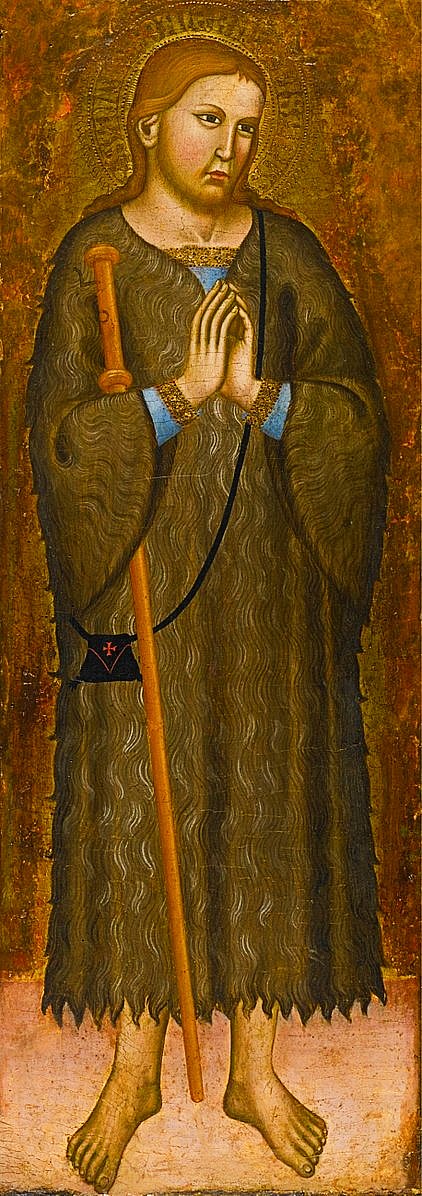
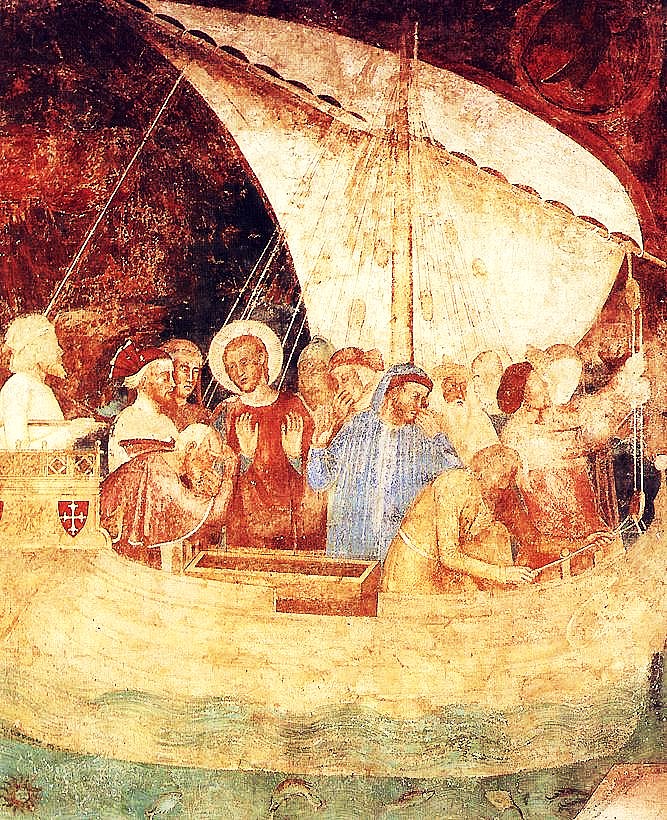
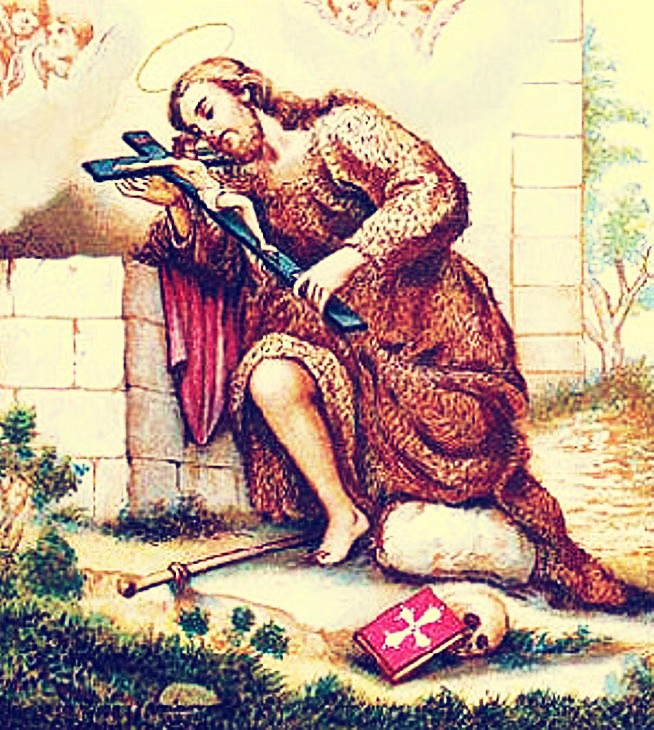
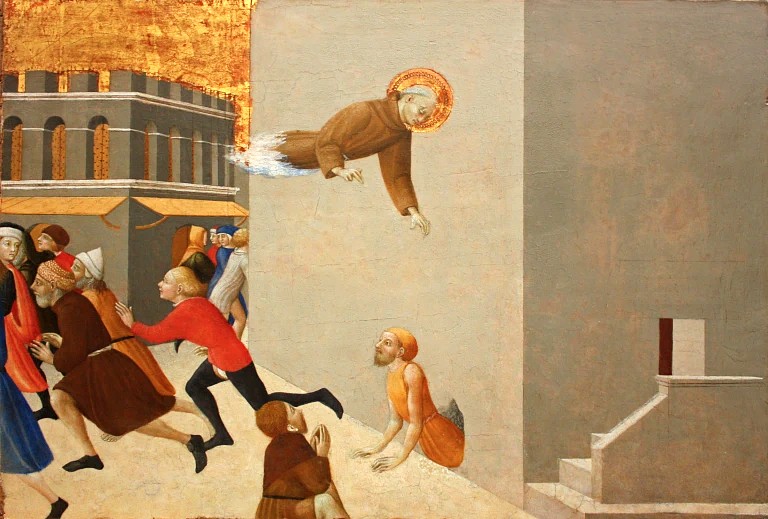
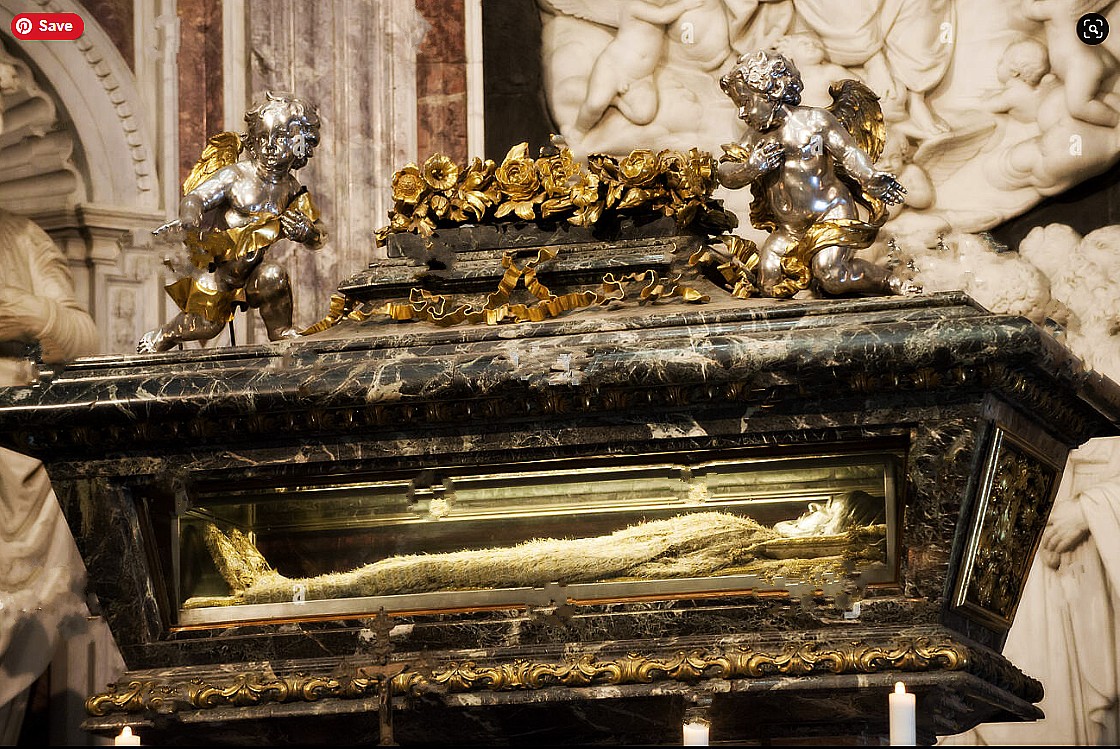
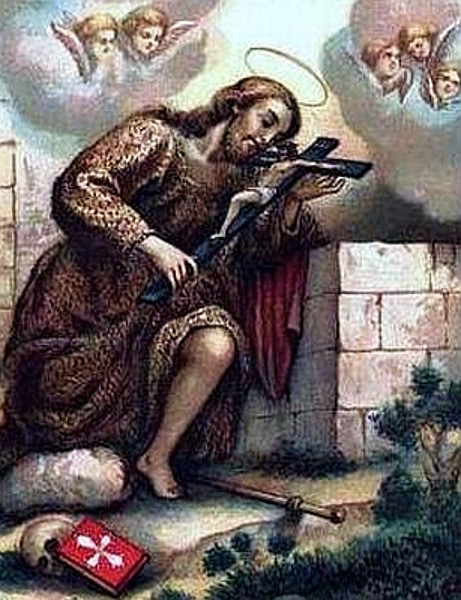


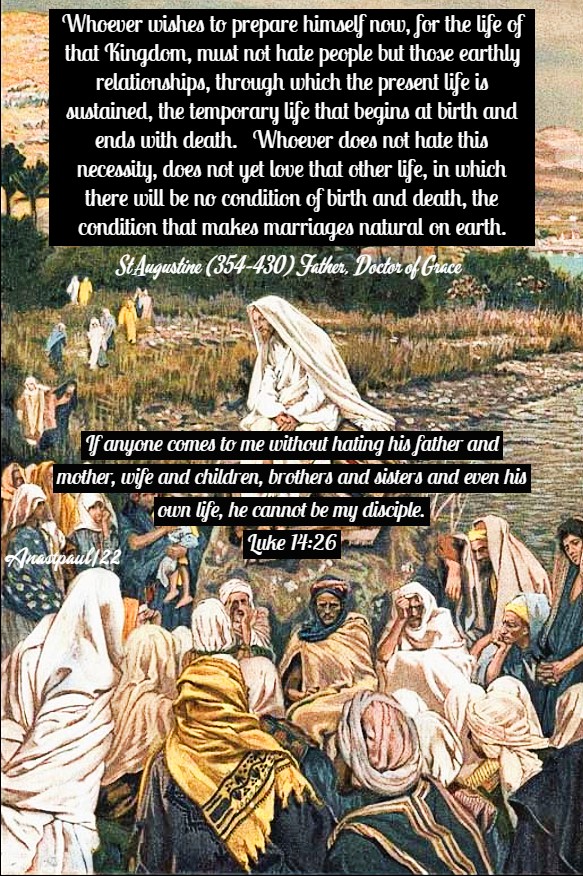
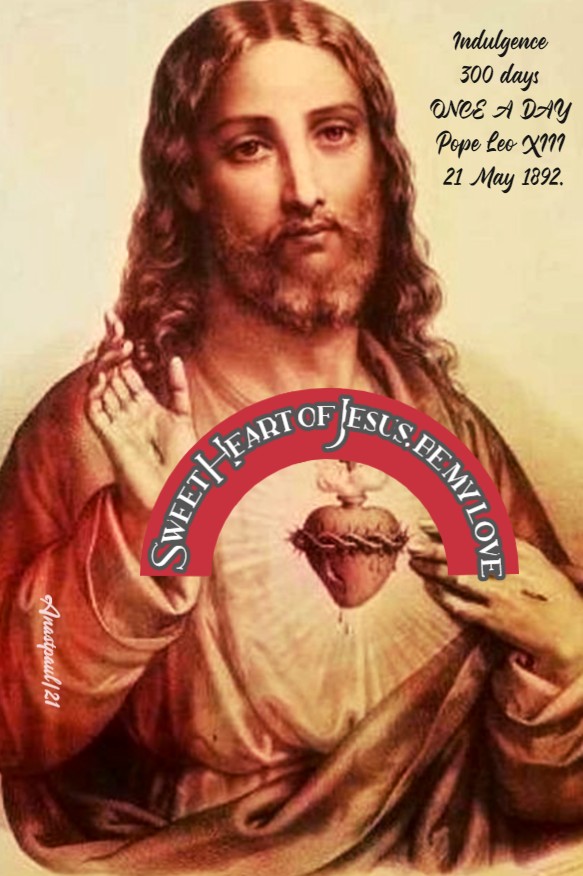
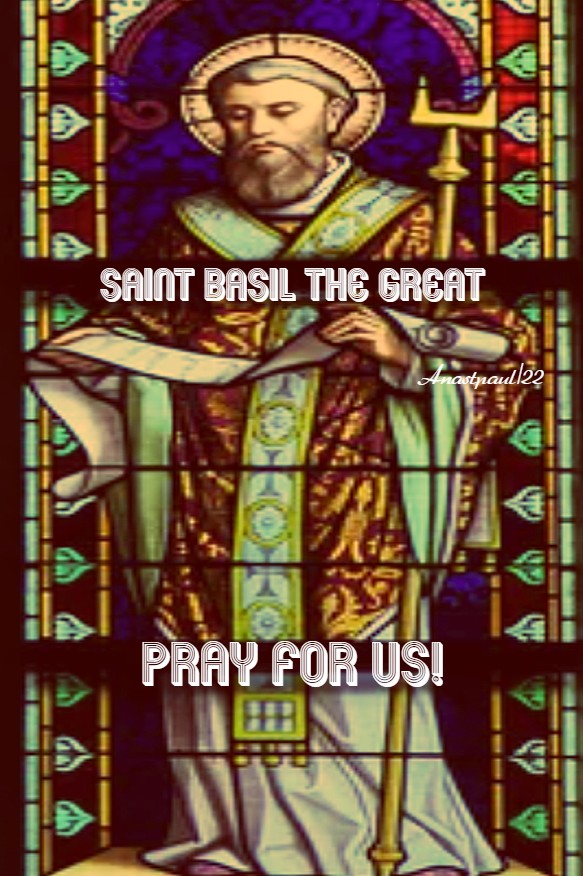
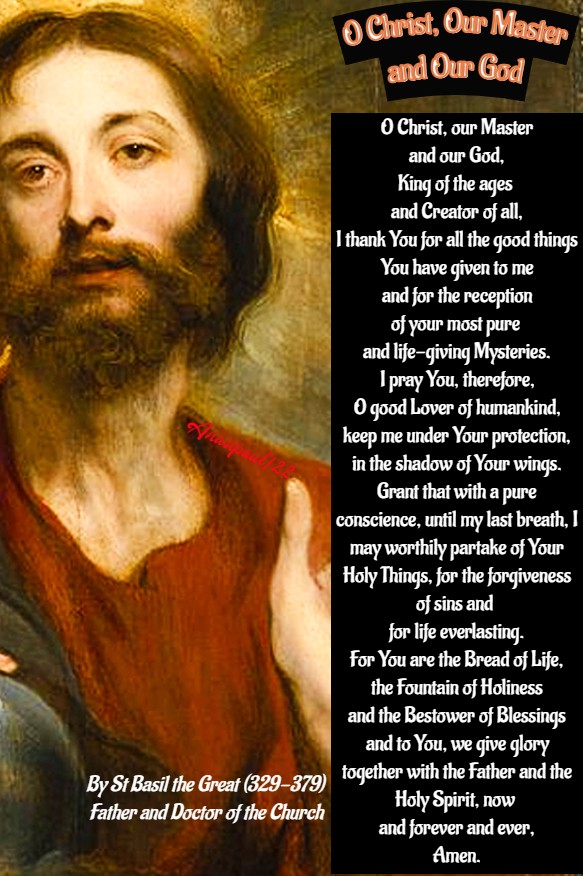
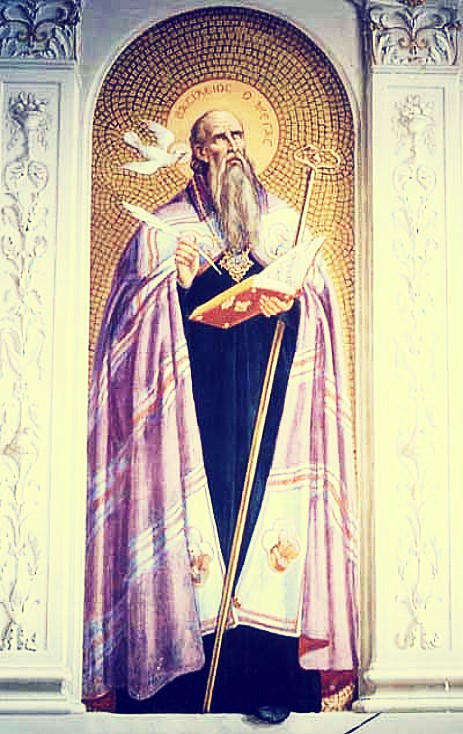
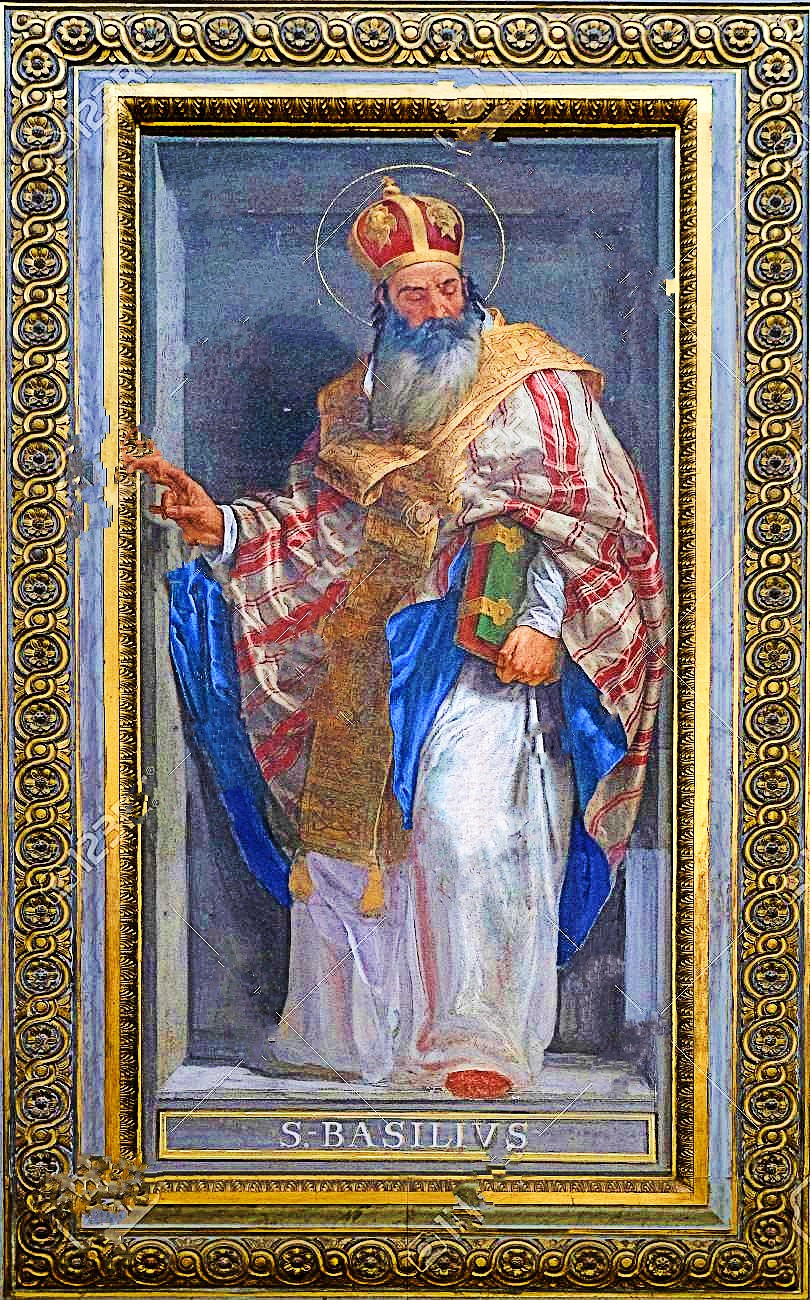
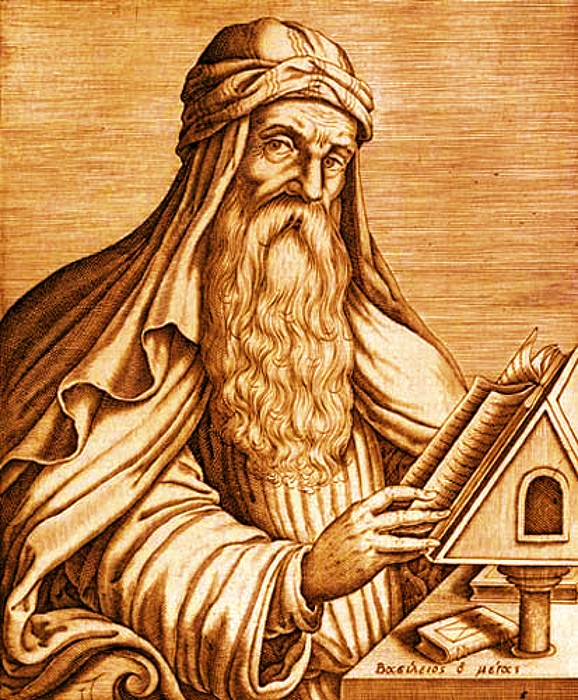
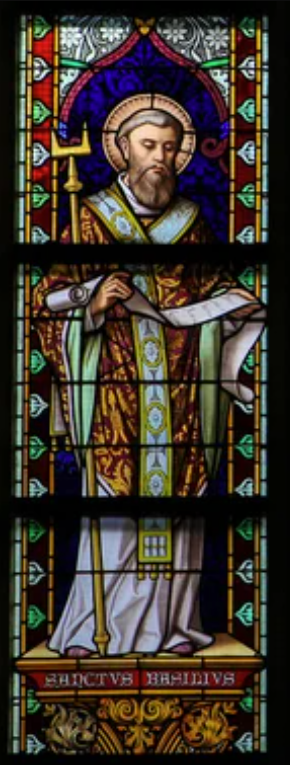
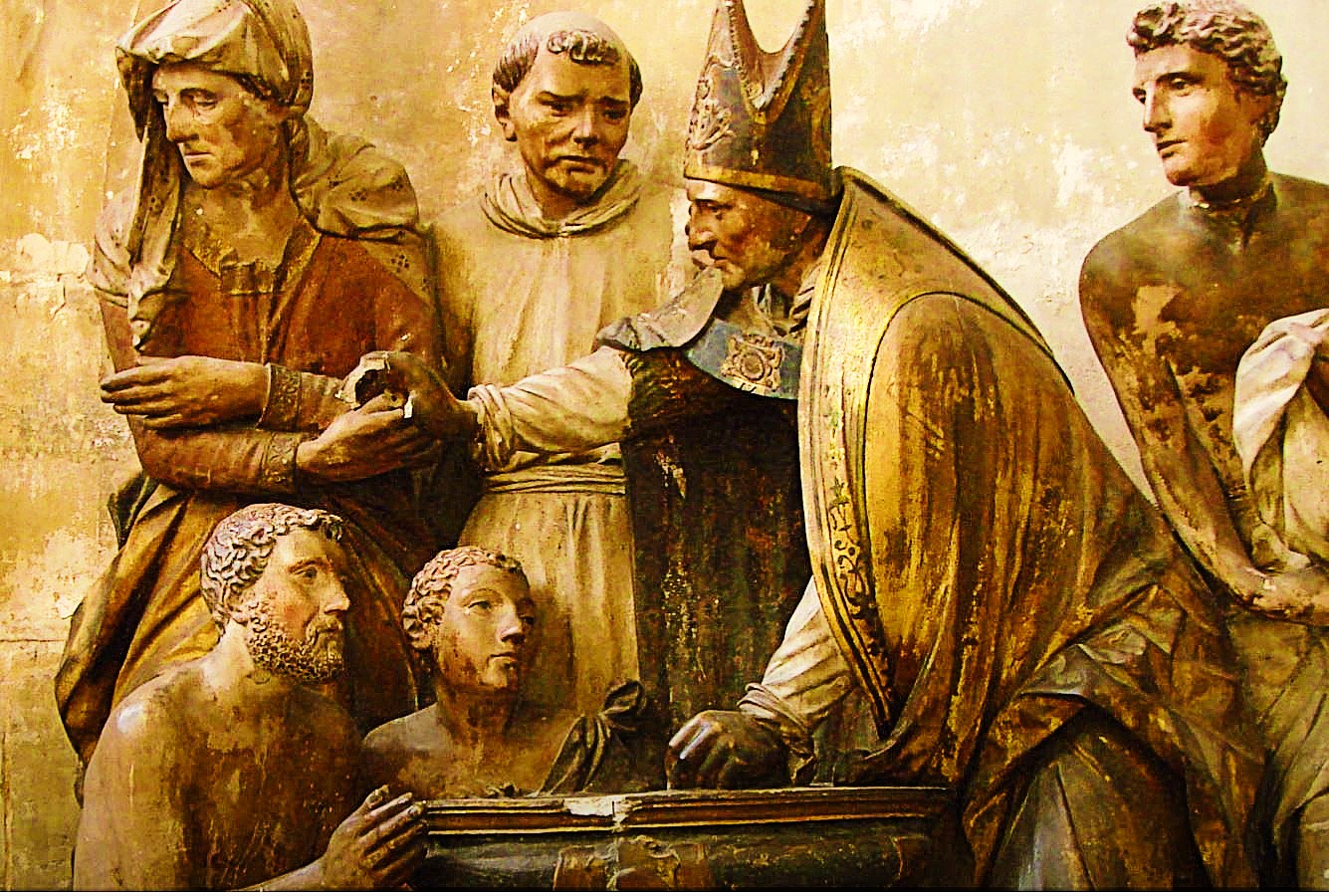
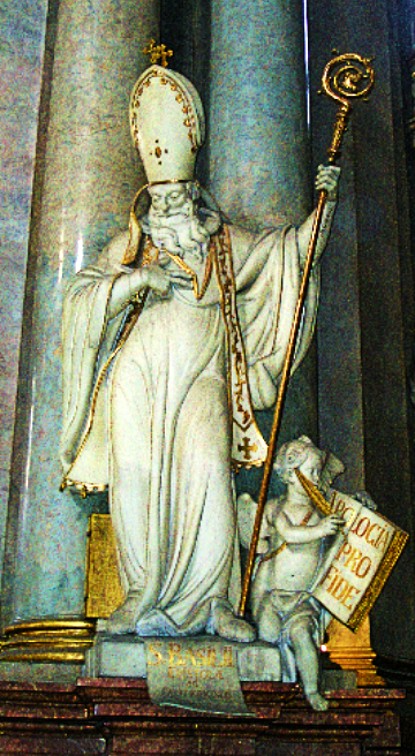
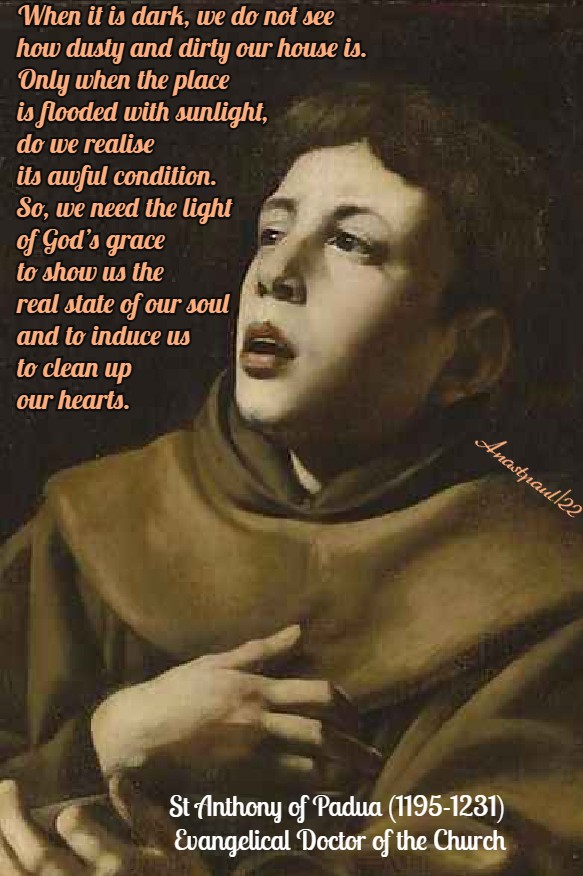
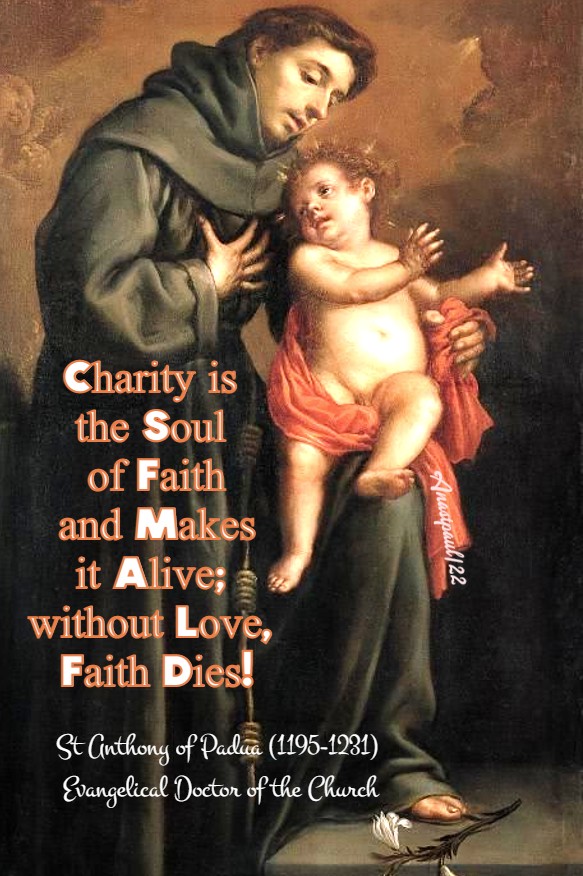

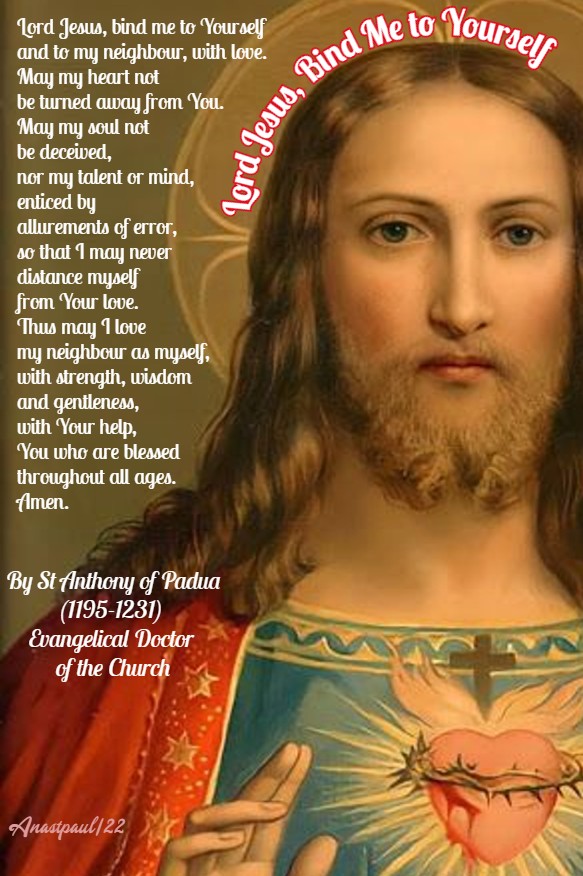





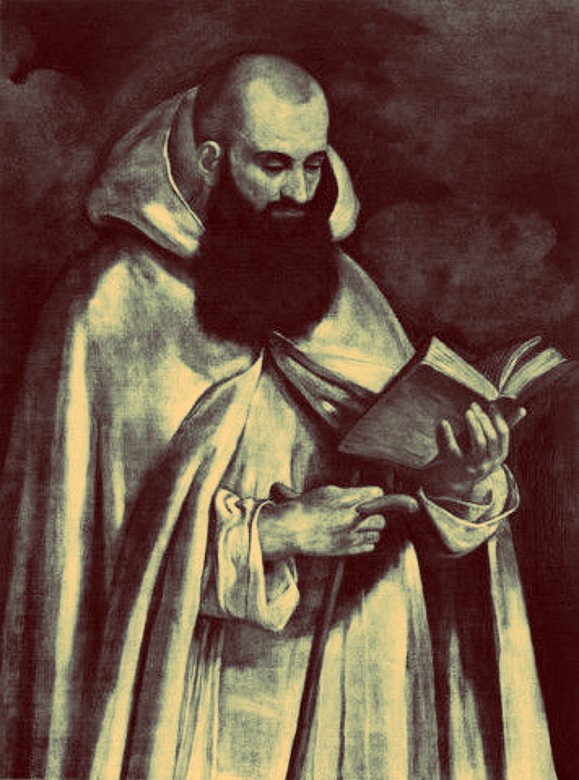
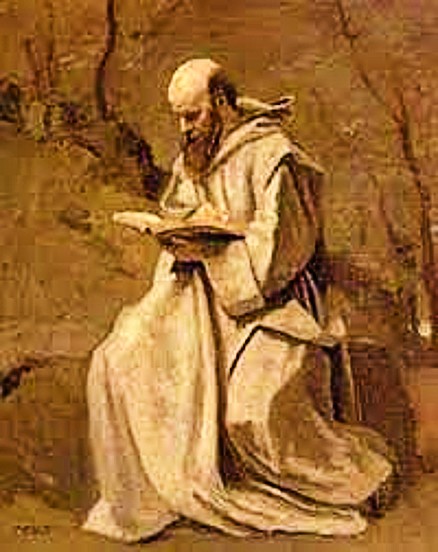
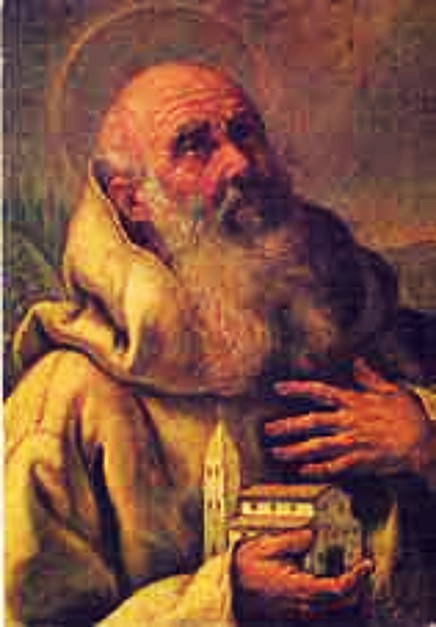
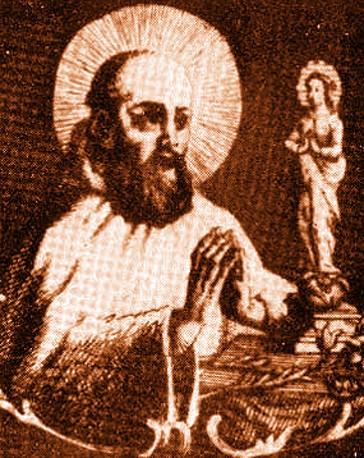
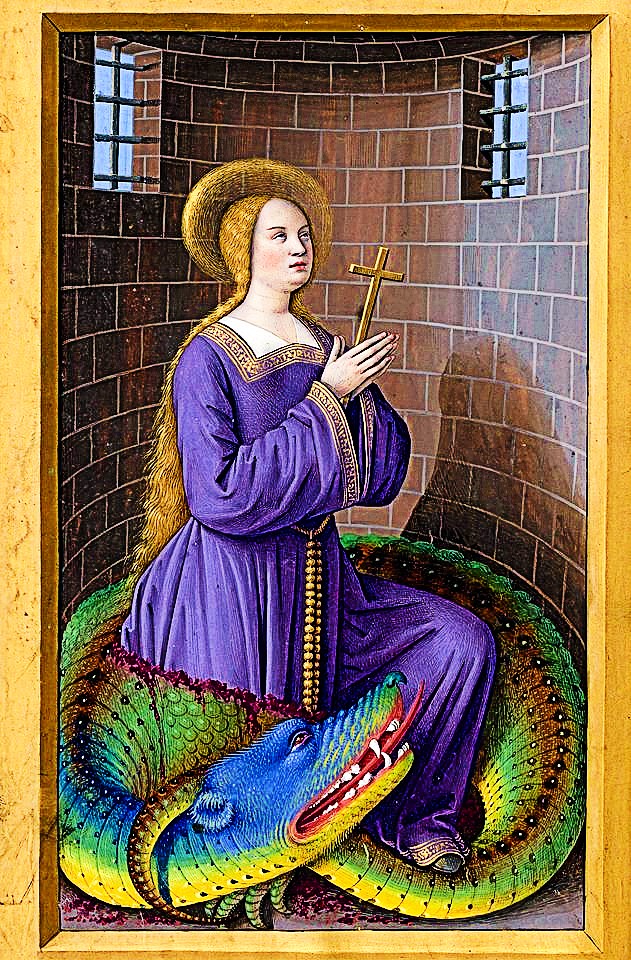
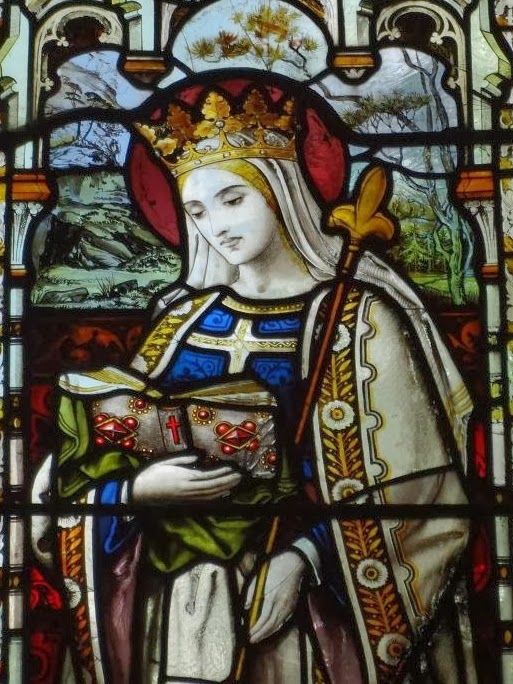
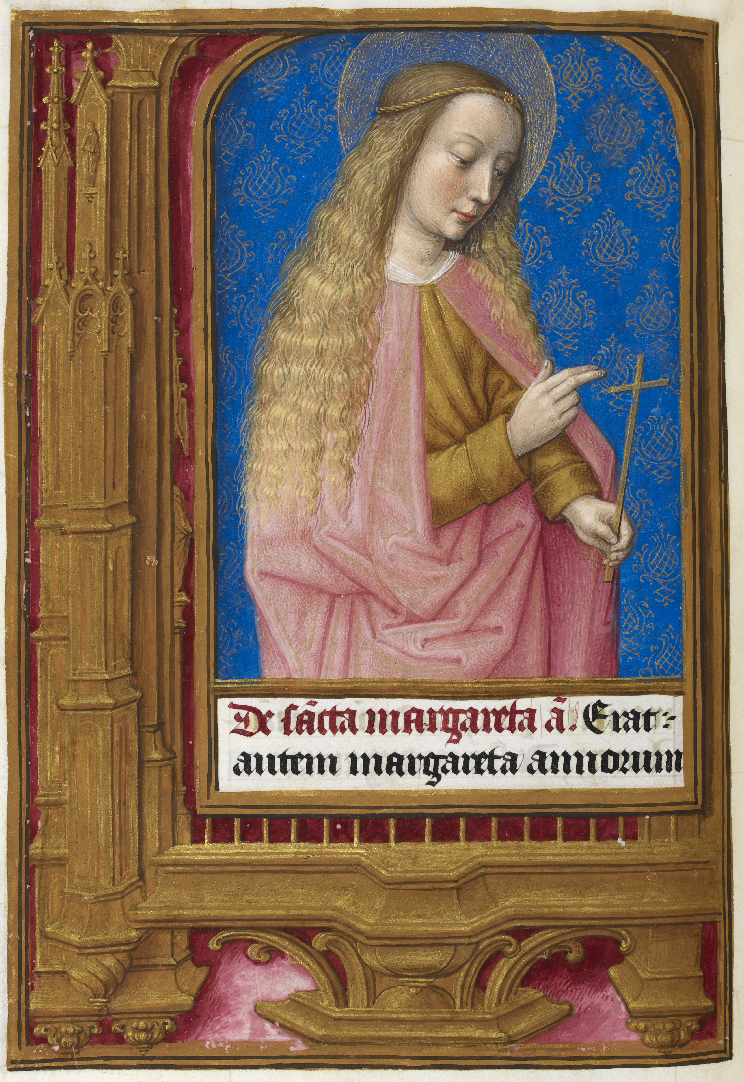
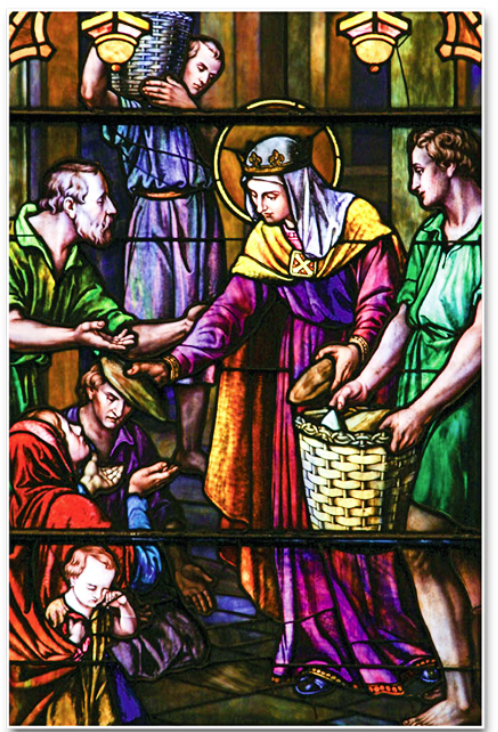
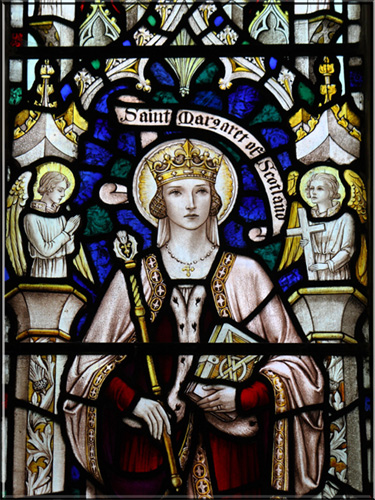
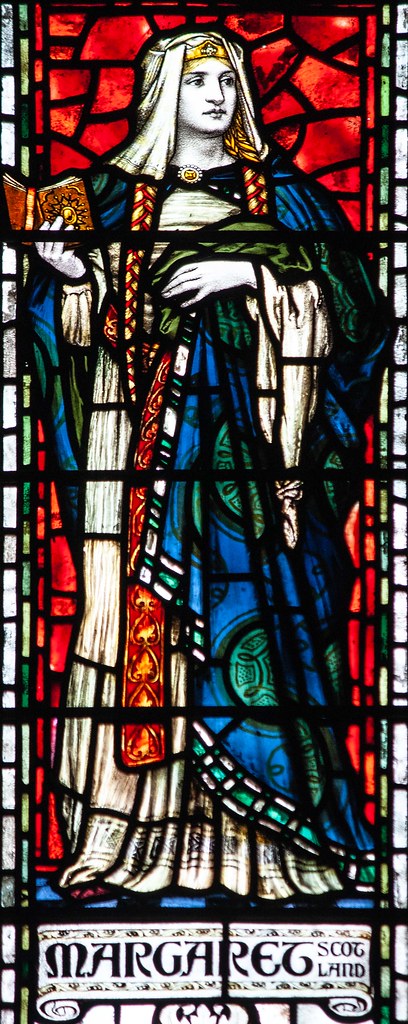
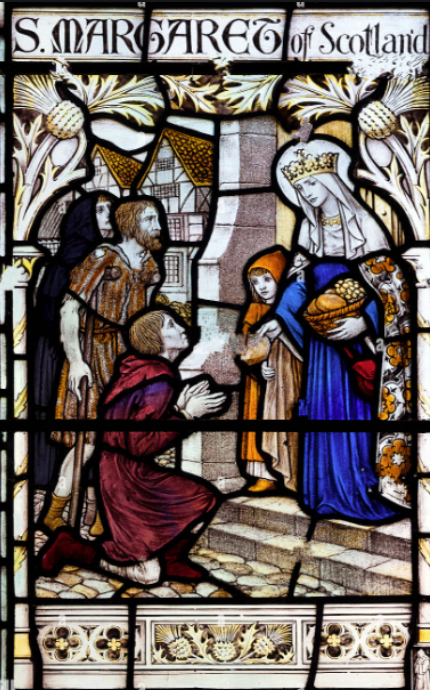
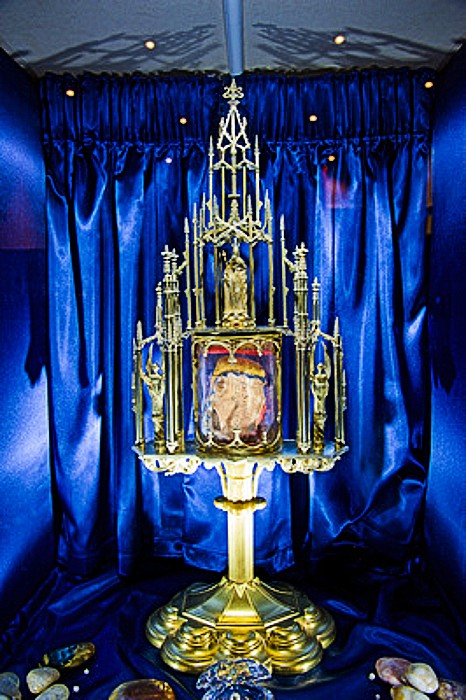
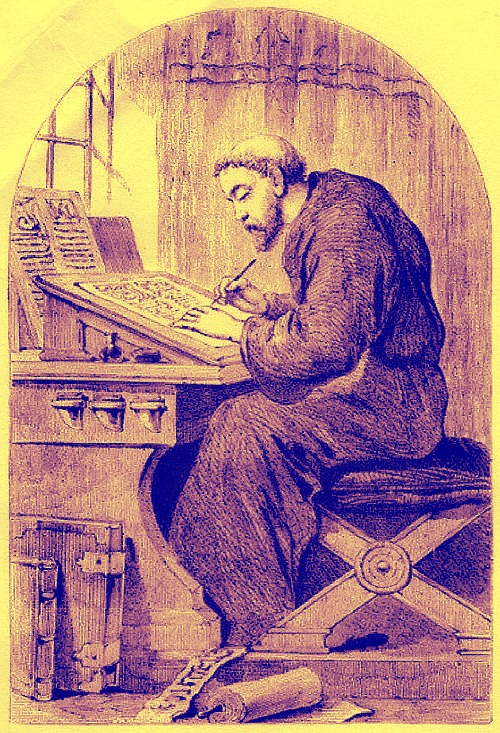
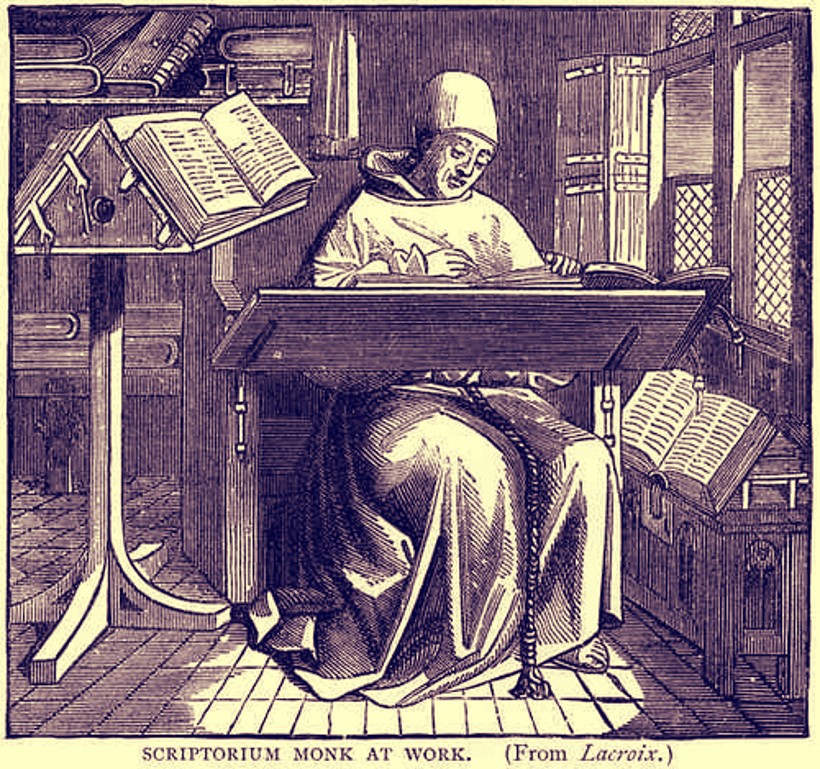
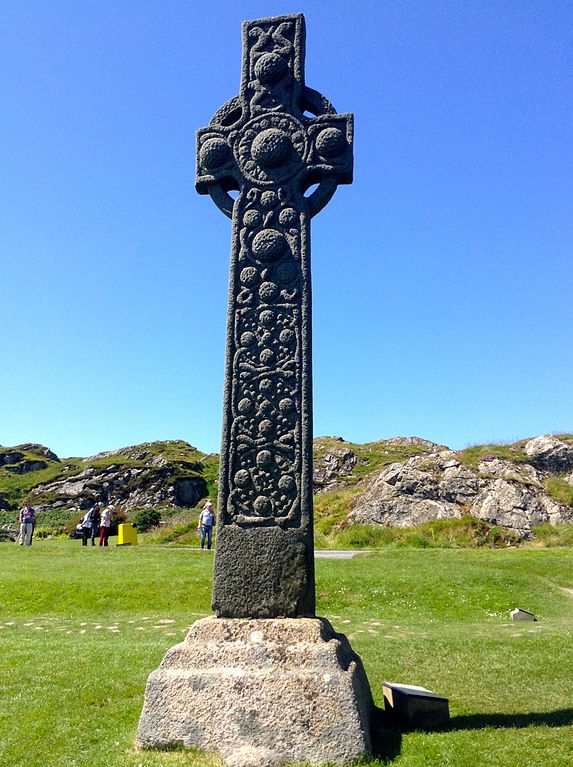
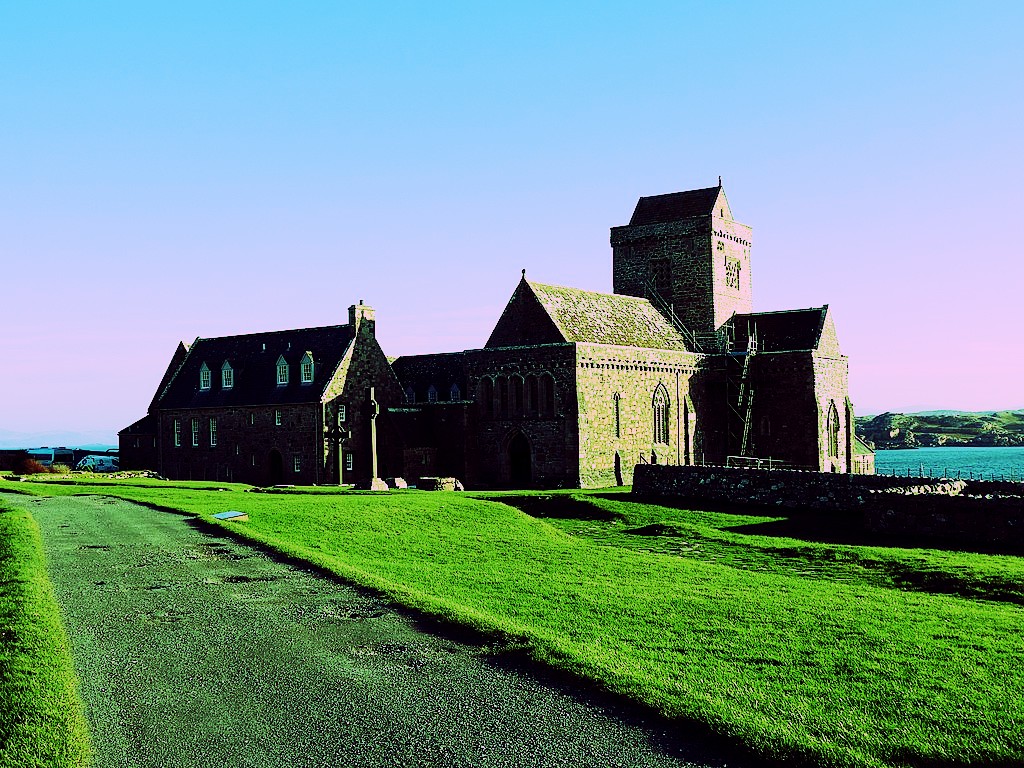
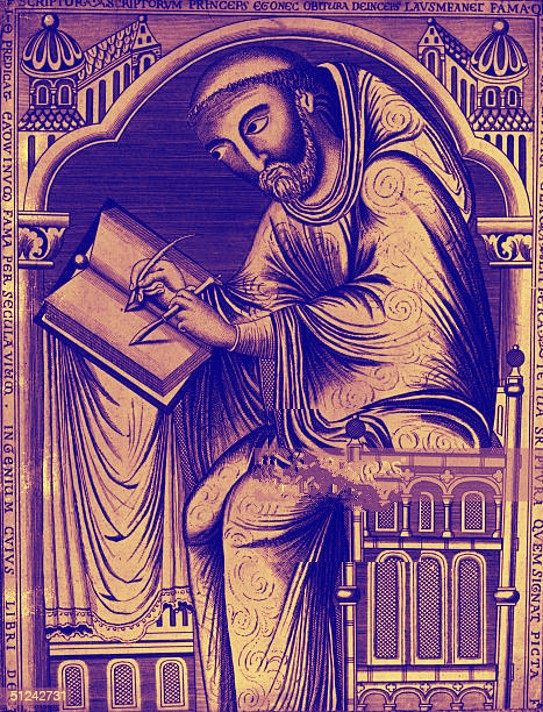

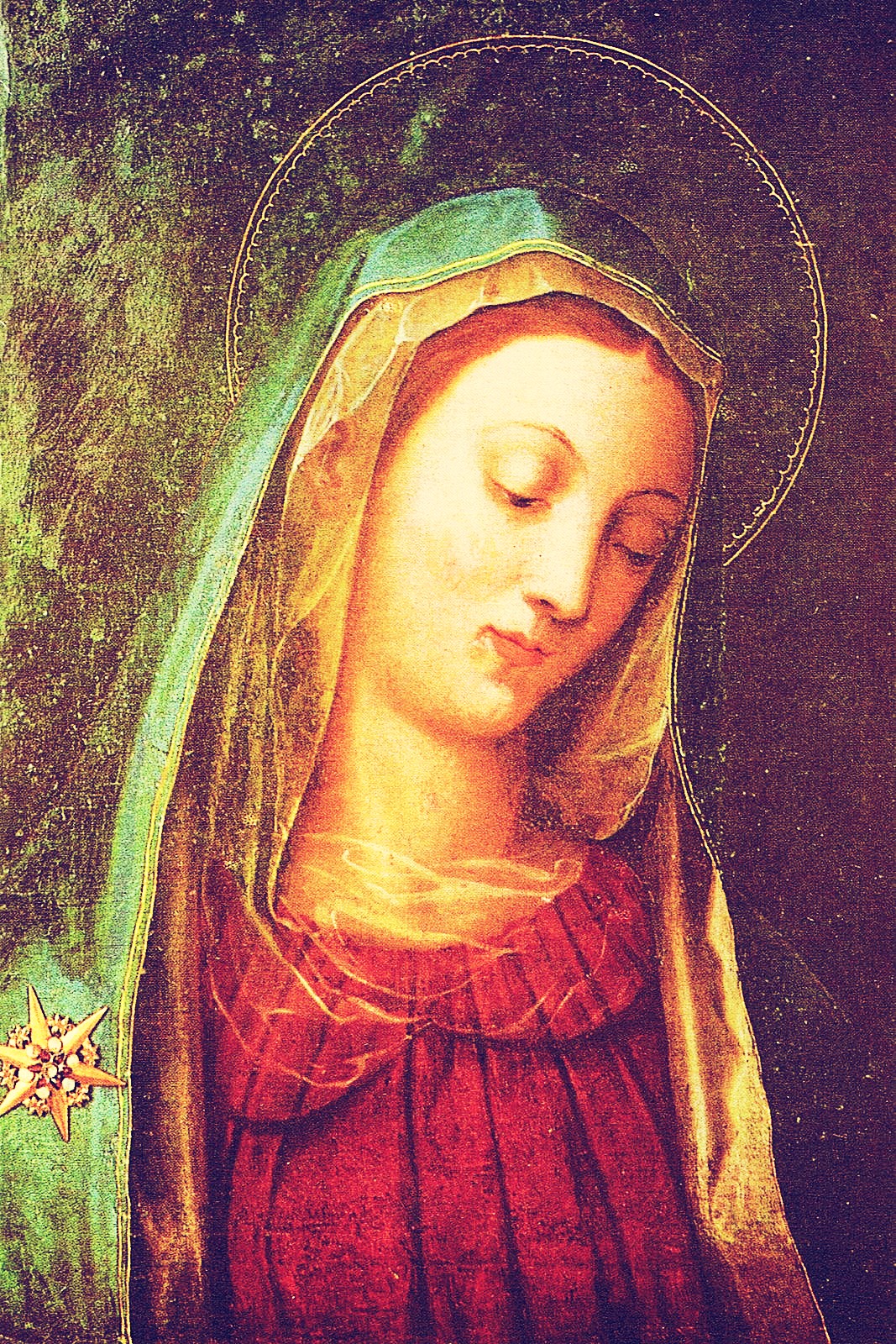
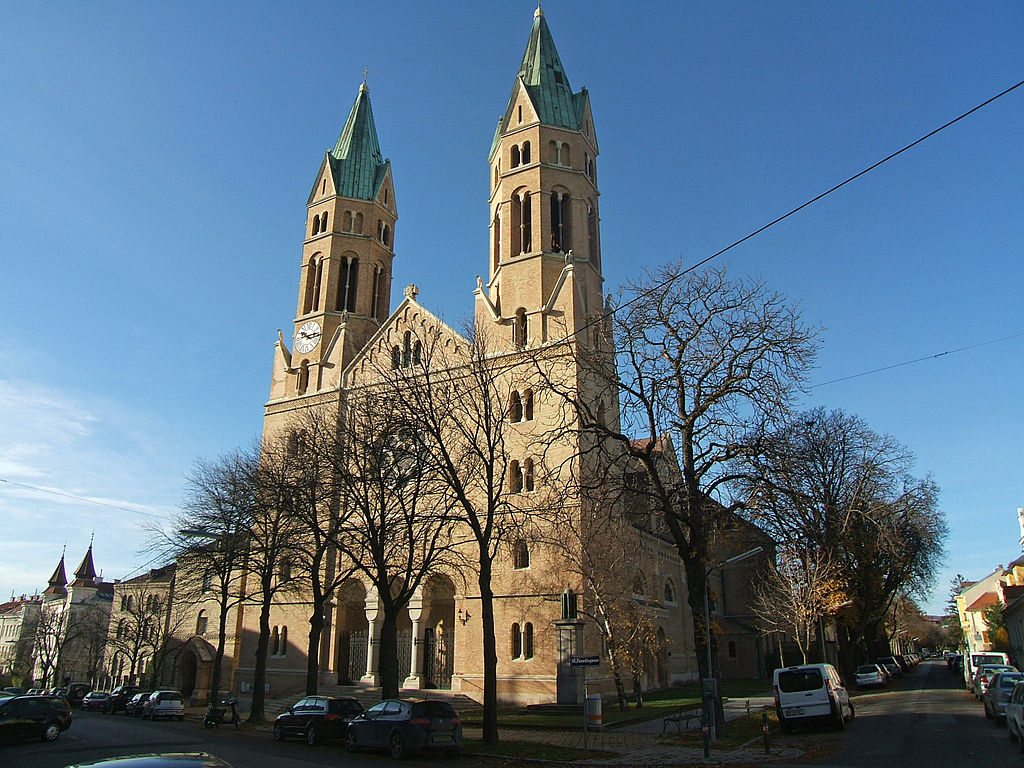
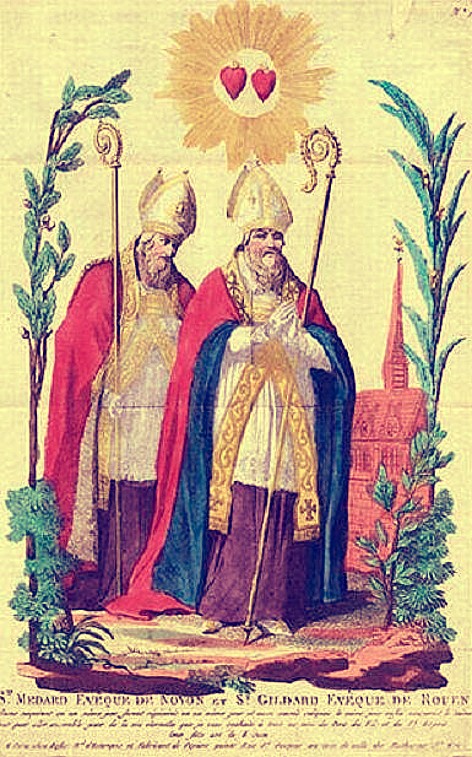
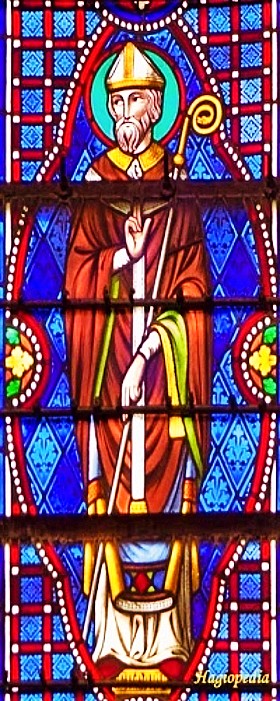
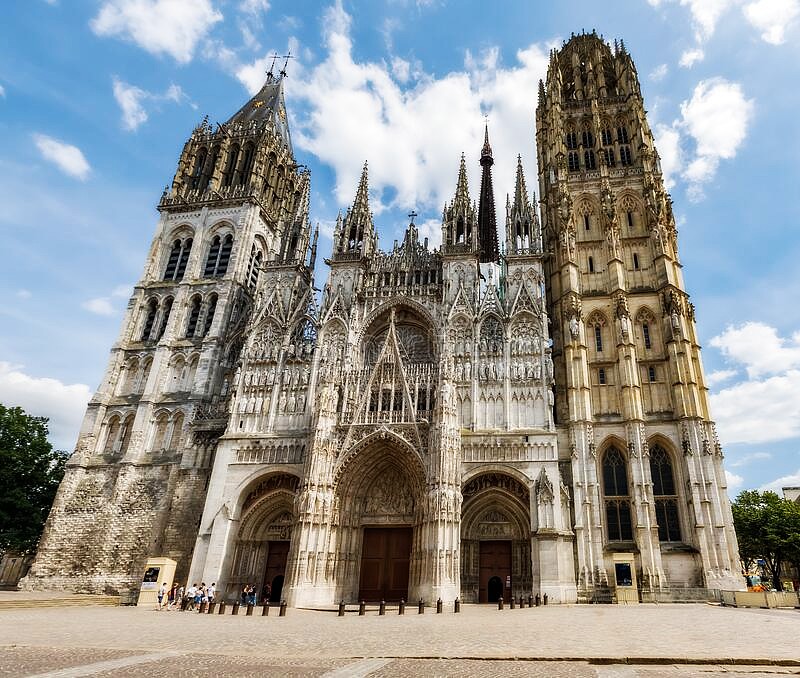
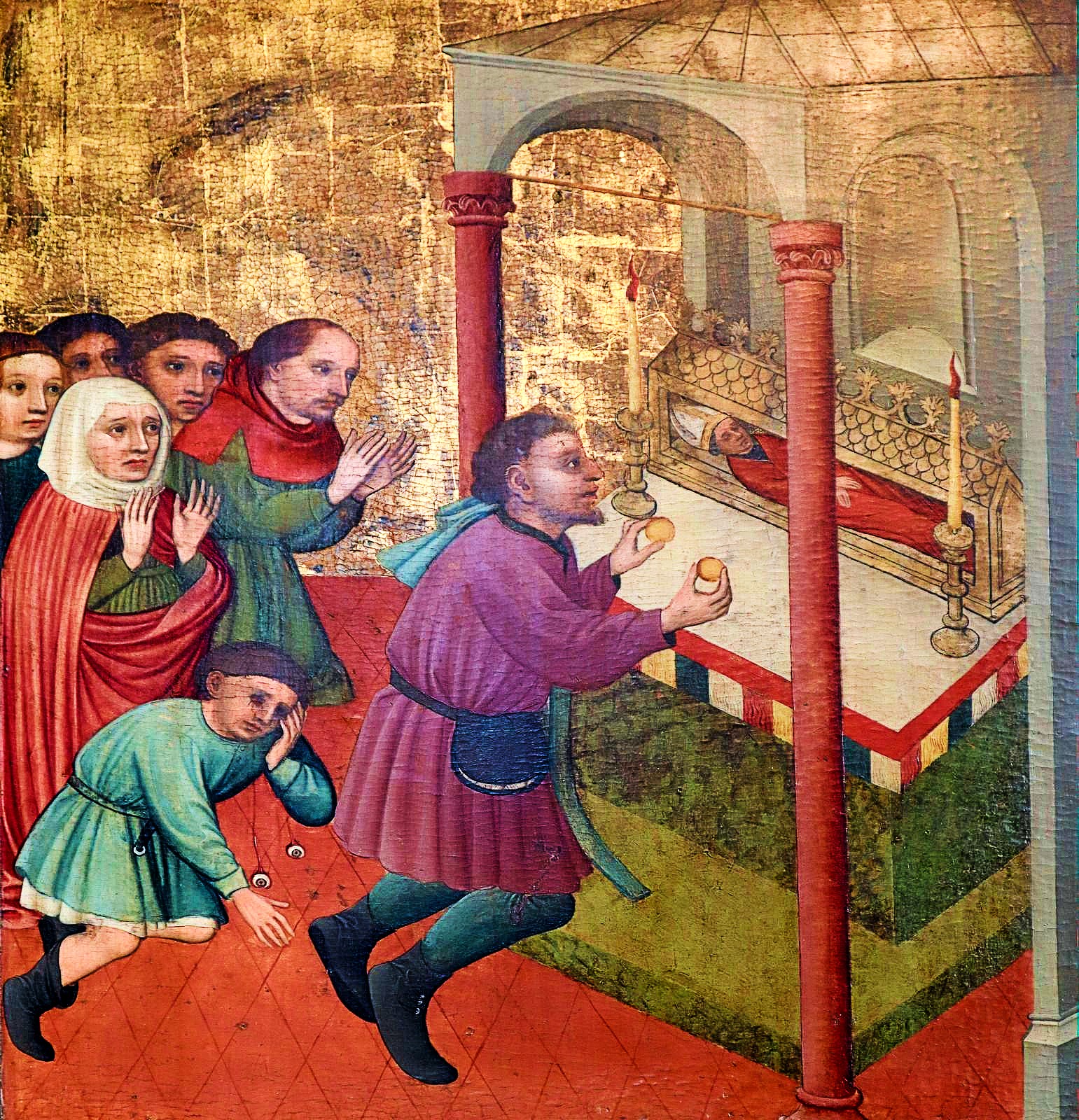
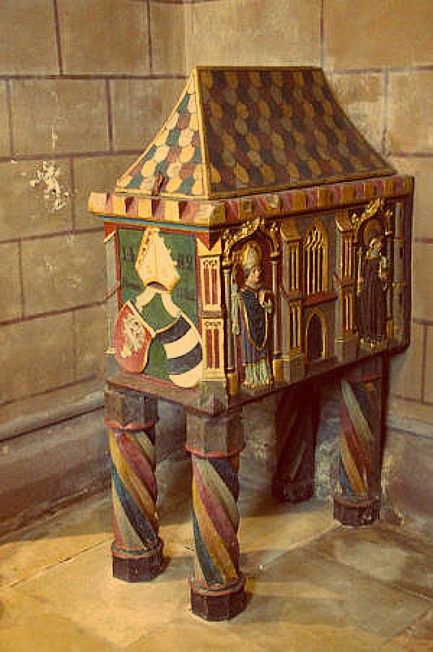
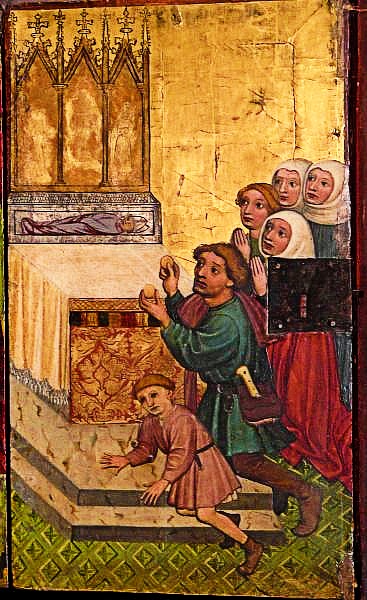
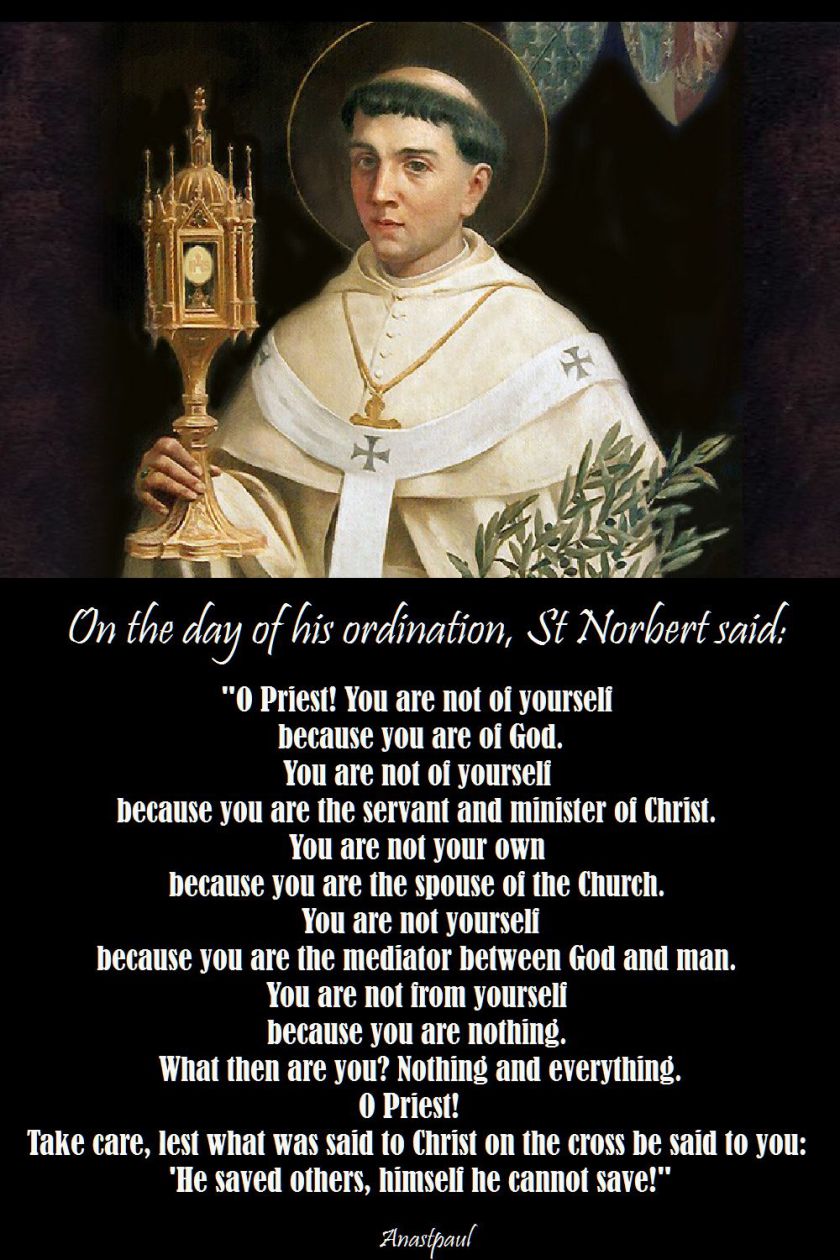
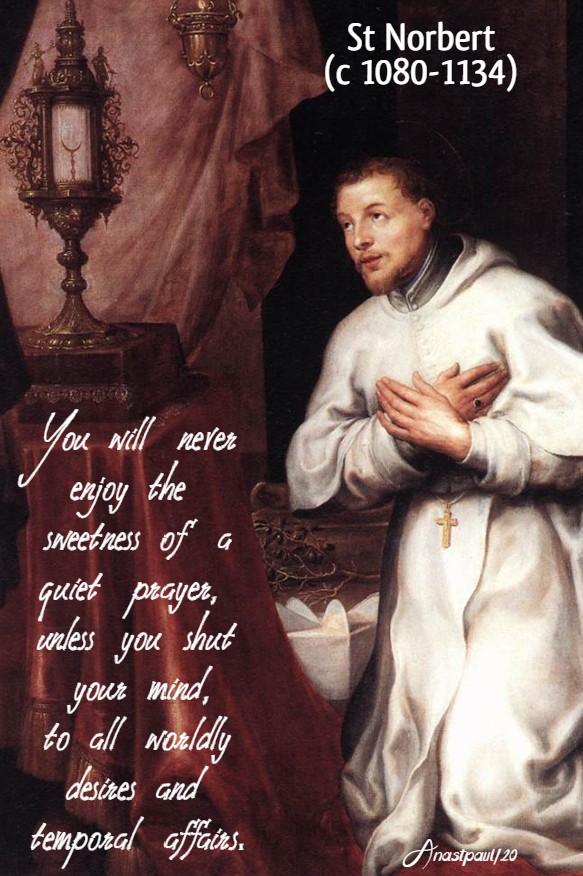
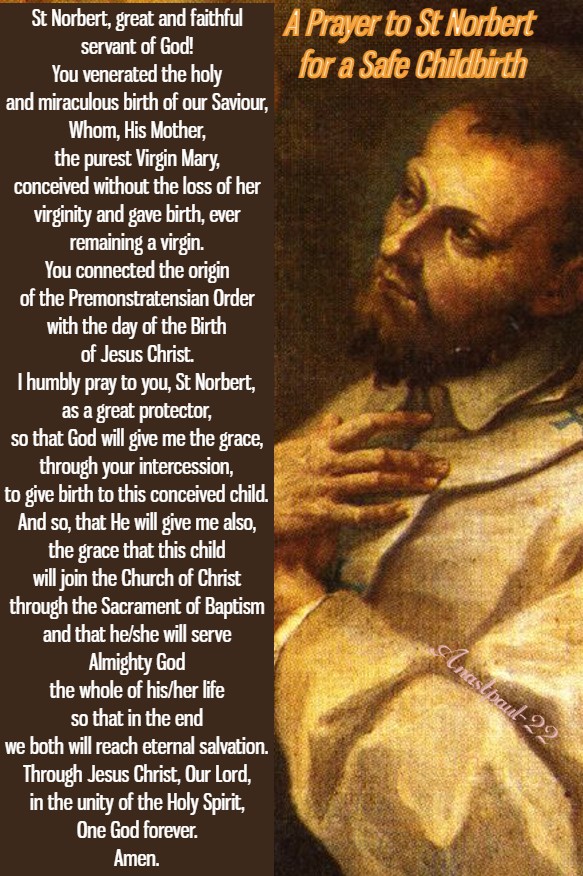
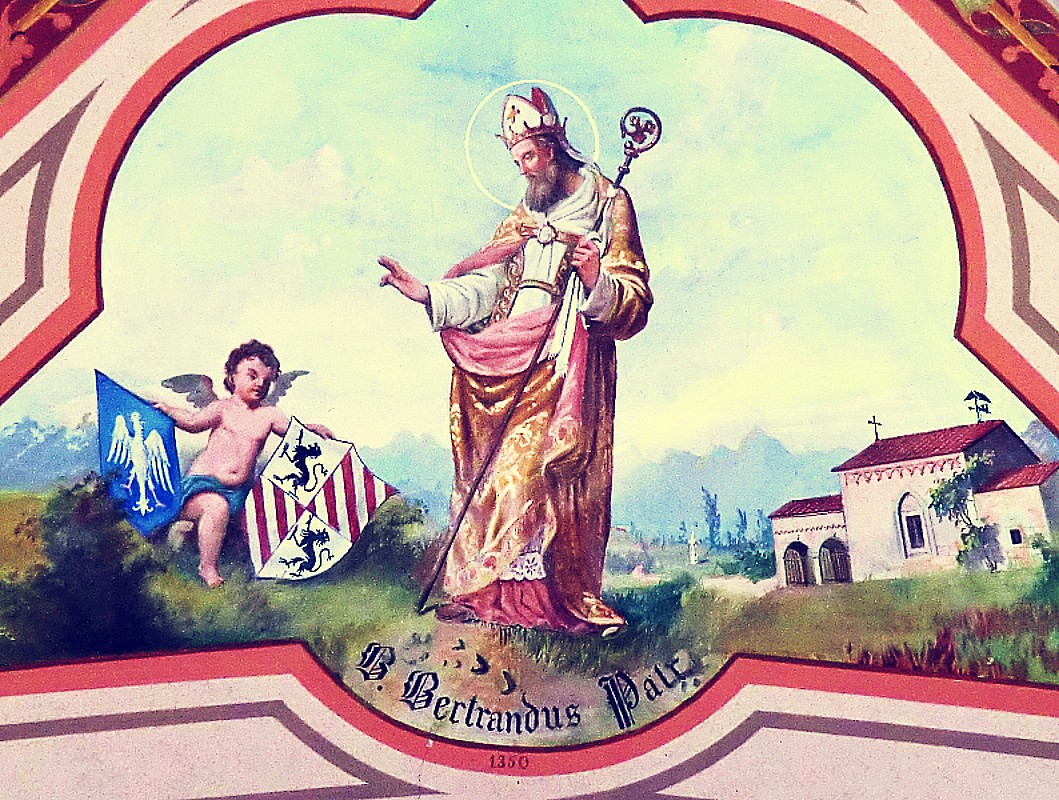
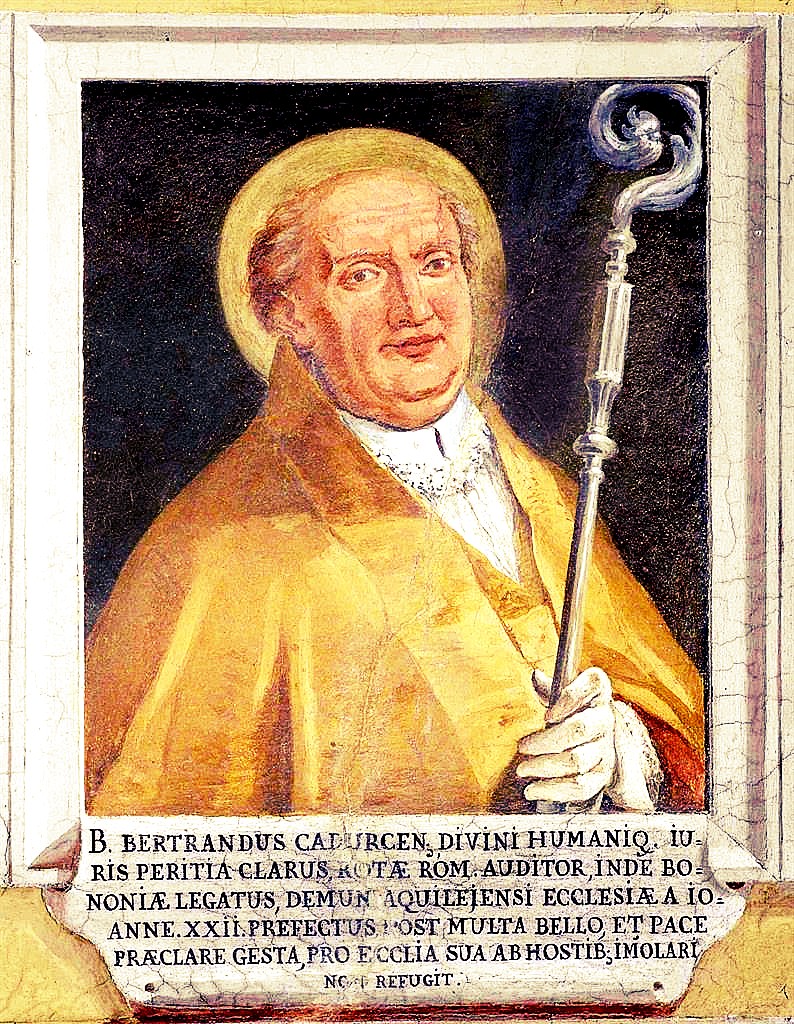
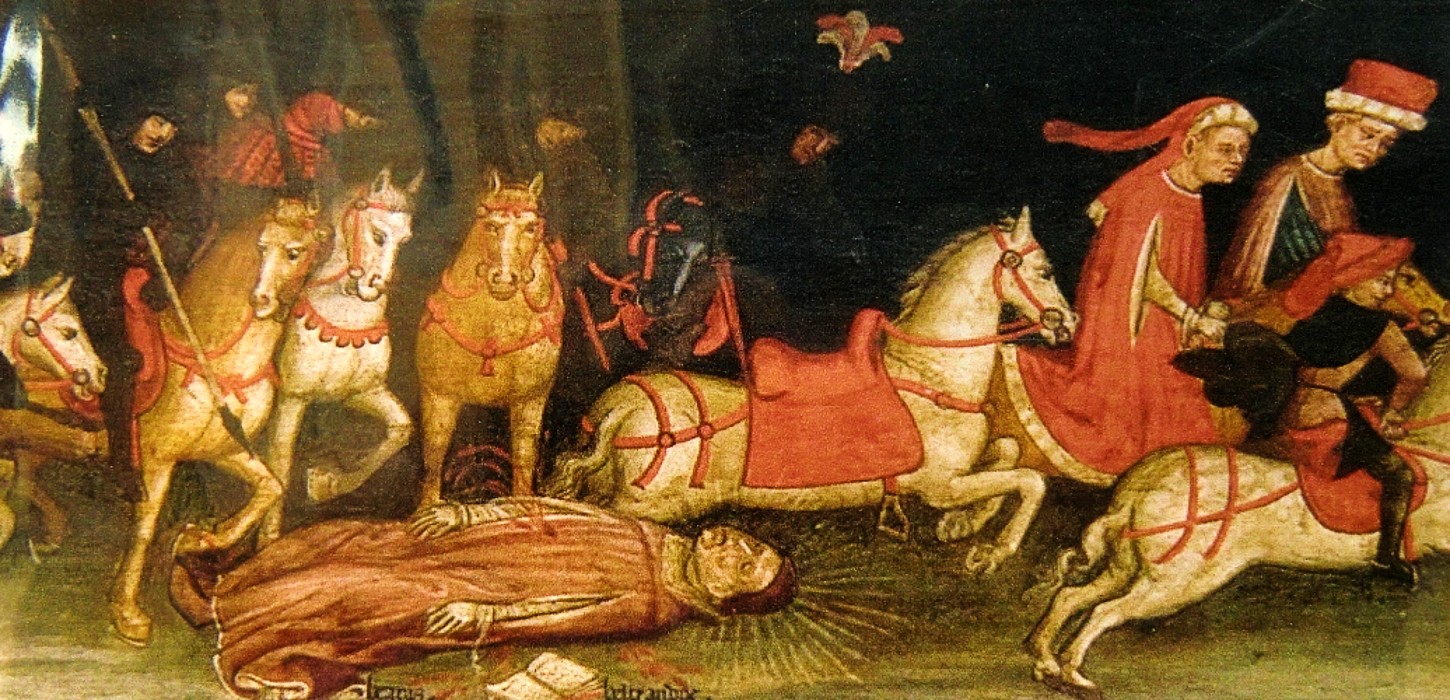

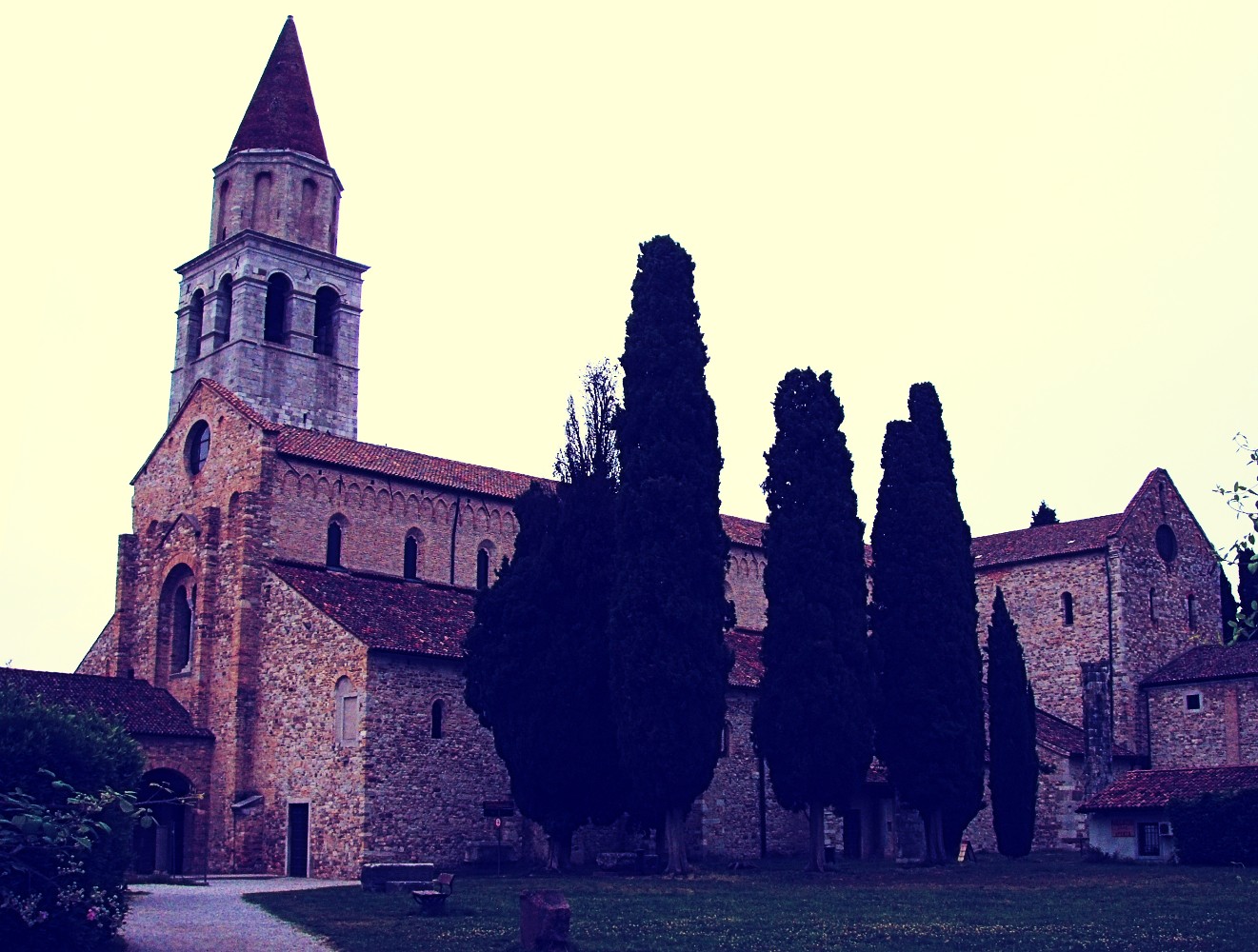

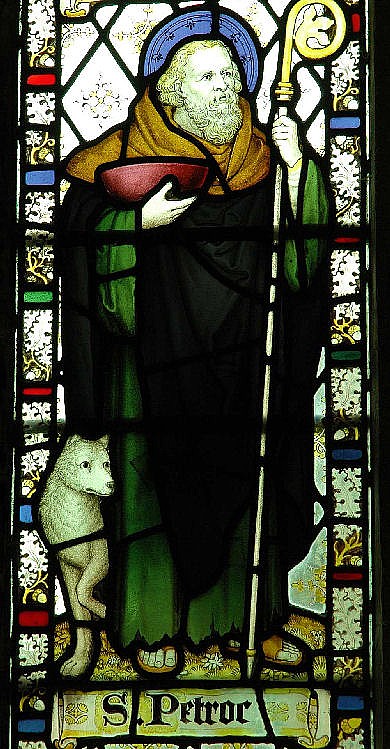
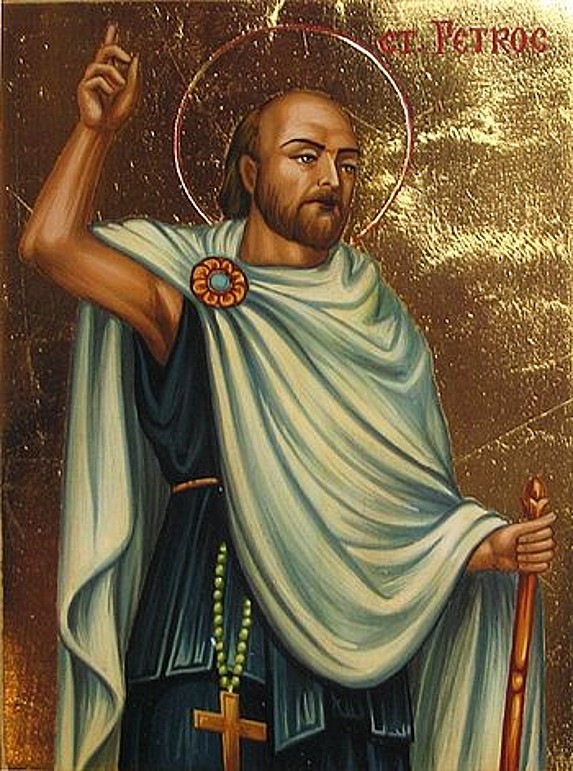

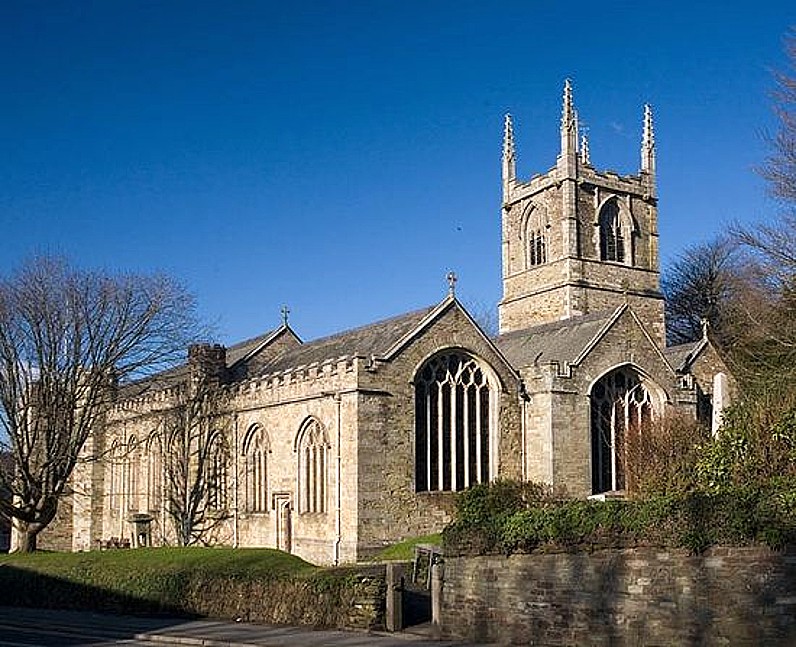
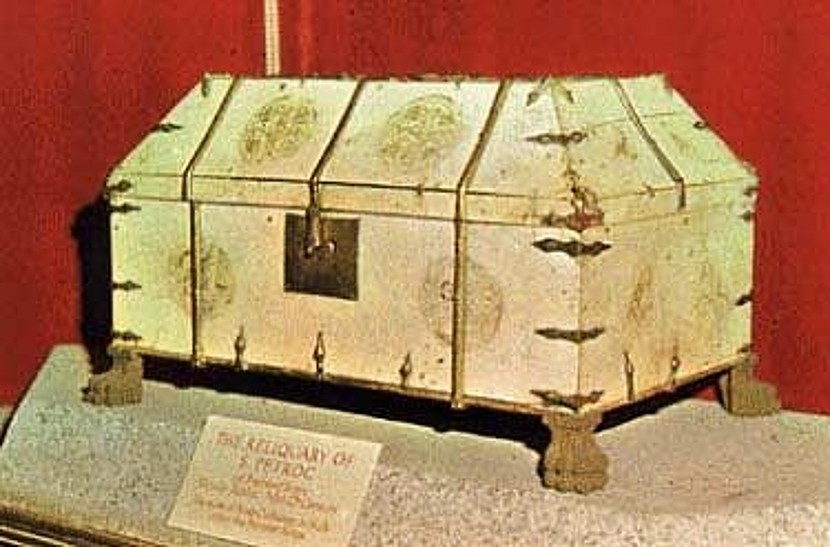


You must be logged in to post a comment.