Quote/s of the Day – 28 October – Thirtieth Sunday in Ordinary Time, Year B and the Feast of Sts Simon and Jude, Apostles of Christ
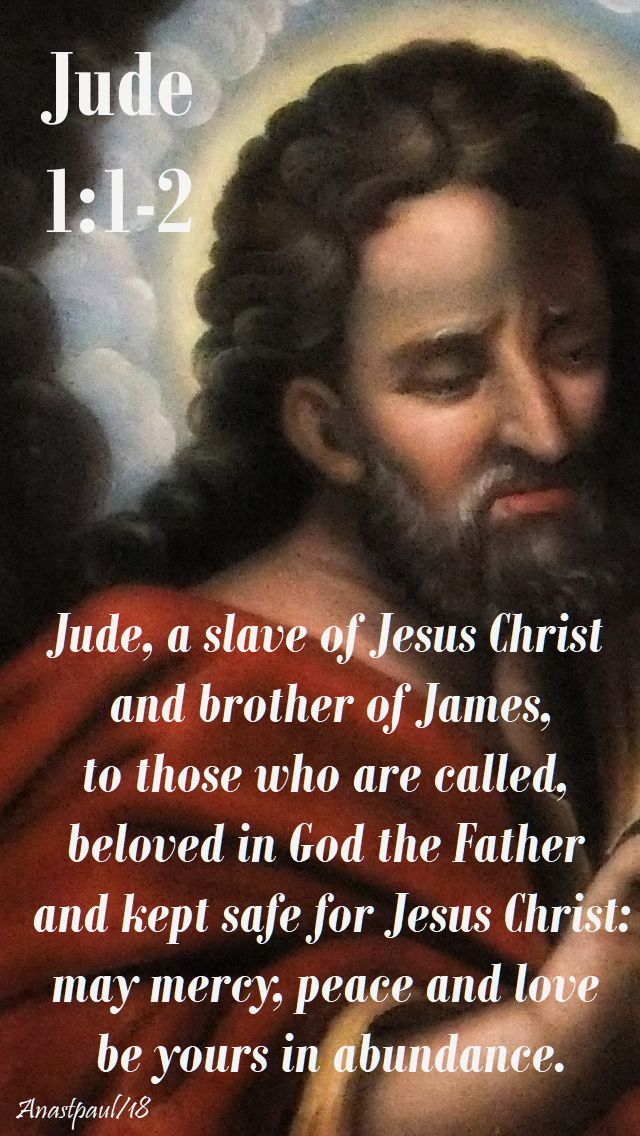
Jude, a slave of Jesus Christ and brother of James, to those who are called, beloved in God the Father and kept safe for Jesus Christ: may mercy, peace and love be yours in abundance.
Jude 1:1-2
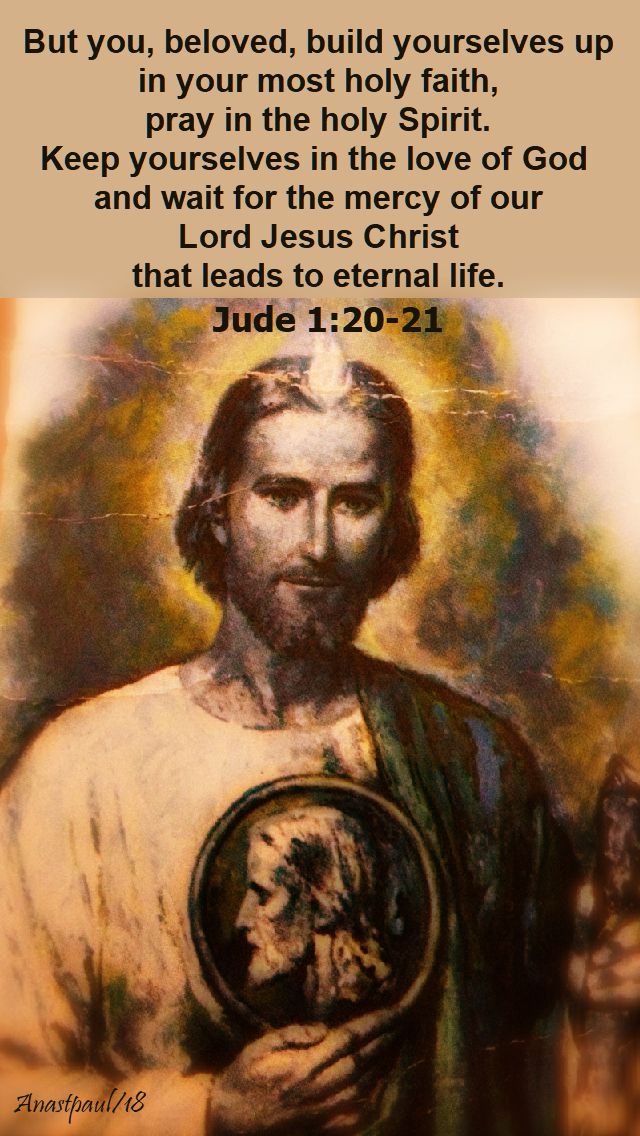
But you, beloved, build yourselves up in your most holy faith, pray in the holy Spirit. Keep yourselves in the love of God and wait for the mercy of our Lord Jesus Christ that leads to eternal life.
Feast of the Apostles – Sts Simon and Jude – 28 October
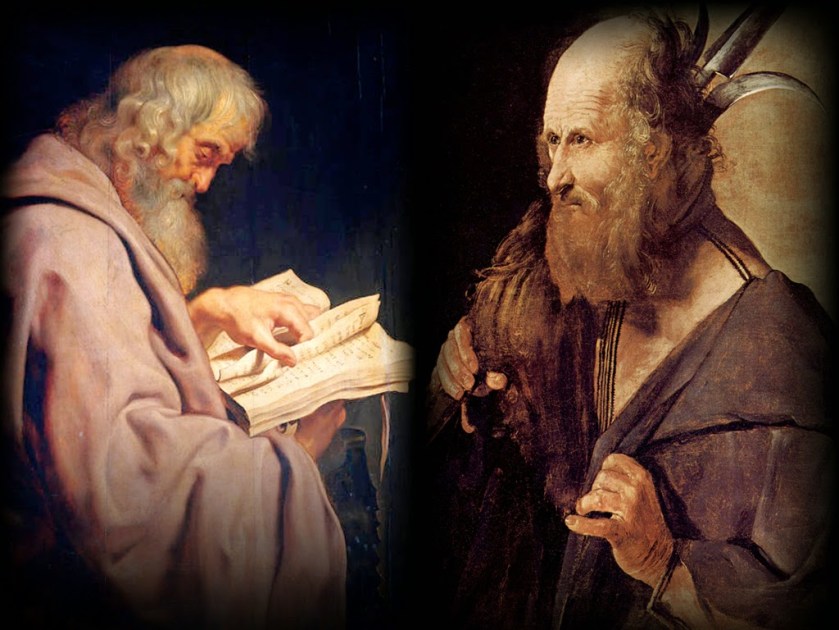
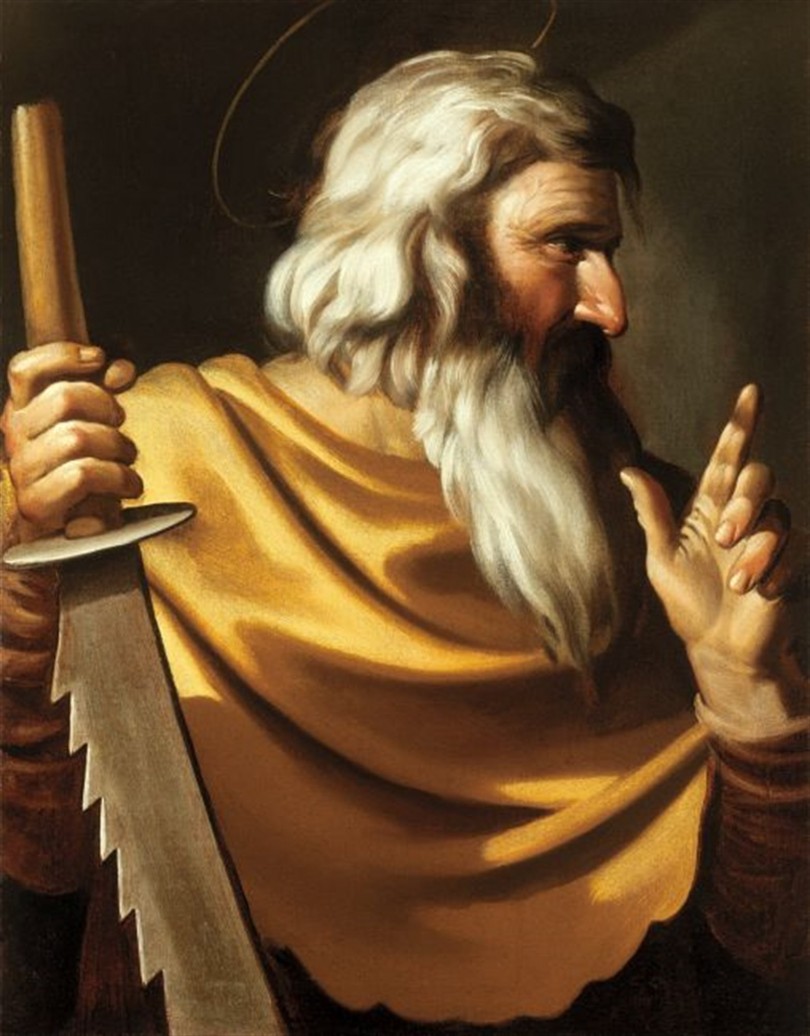
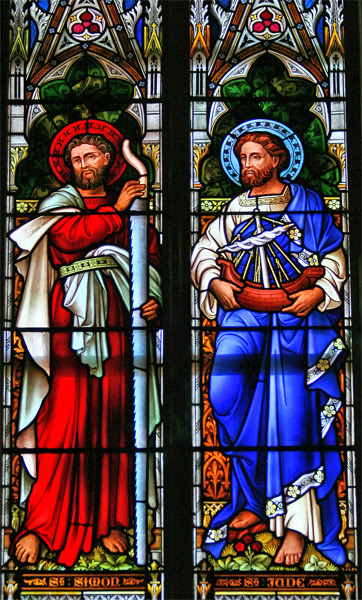
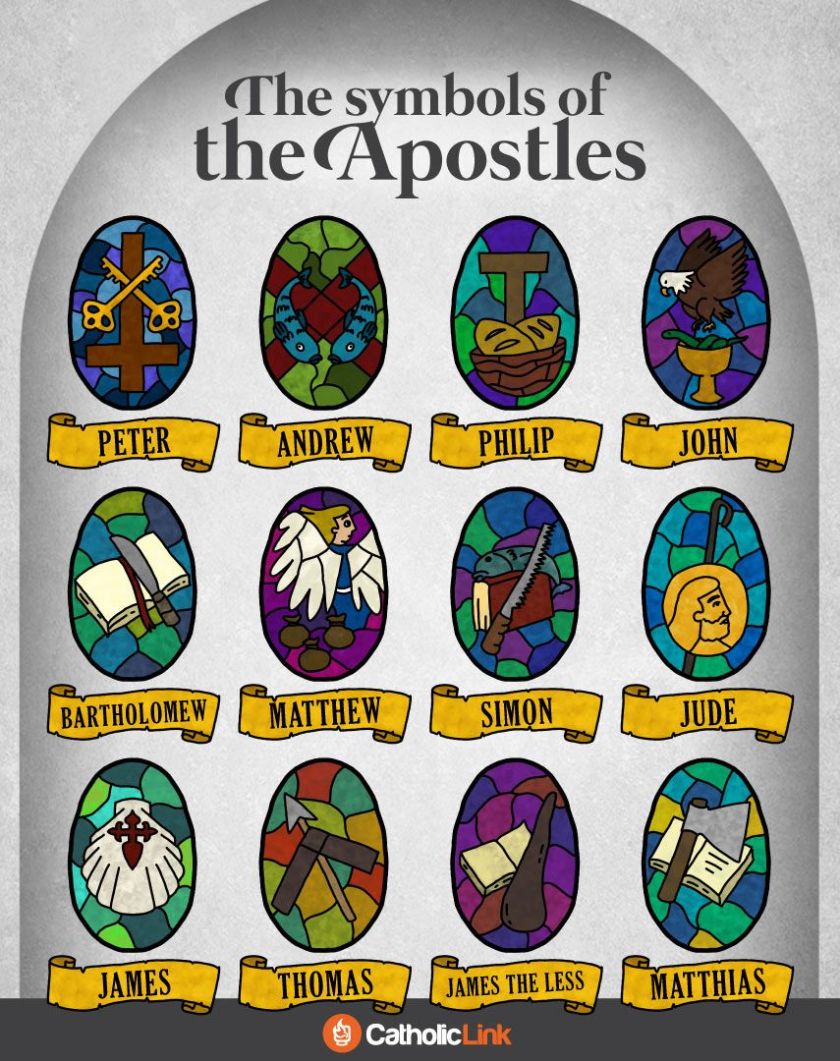
St Simon Apostle of Christ – Apostle, Martyr, Preacher, Evangelist, Missionary – also known as St Simon the Zealot. Patronages – curriers, sawmen, sawyers, tanners, woodcutters, Monterchi, Italy. St Simon was called the Cananean or Zealot because of his zeal for the Jewish law; he was not from Cana, nor a member of the Zealot party.
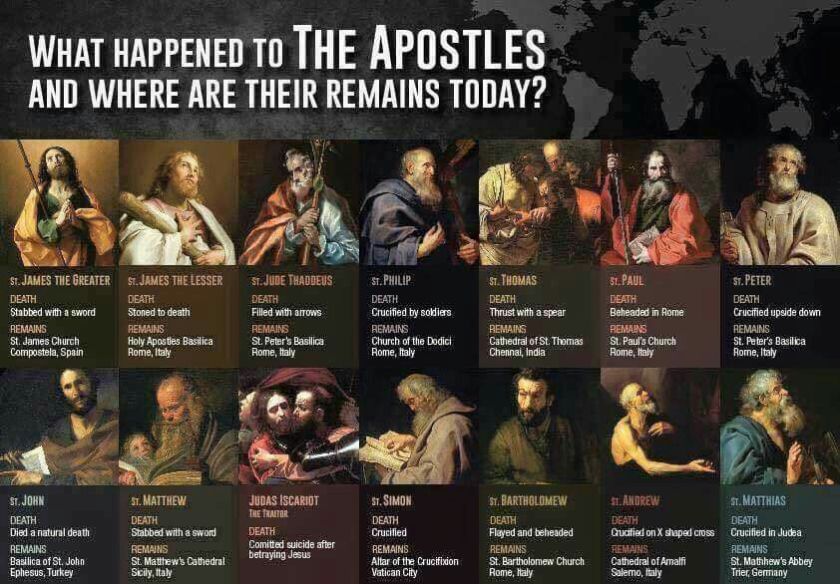
Like all the Apostles, he was a convert and was trained by Saint Peter the Apostle. He evangelised in Egypt and Mesopotamia, though there are traditions of him being in several other locations. He was a Martyr for the faith but several places claim to have been the site of his martyrdom and in several different ways too. St Simon’s main attribute is a serrated saw as it is believed that he was he was sawn in half at Suanir, Persia. Many locations claim to have relics including Toulouse, France and Saint Peter’s Basilica, Rome, Italy.
St Jude Apostle of Christ – Martyr, Evangelist, Preacher, Missionary, Writer – also known as – Jude of James, Judas Thaddaeus, Jude, brother of Jesus – Patronages – Armenia, lost cause, desperate situations, hospitals, the Chicago Police Department, 13 cities, the Philippines. Saint Jude’s attribute is a club. He is also often shown in icons with a flame around his head. This represents his presence at Pentecost, when he received the Holy Spirit with the other apostles. Another common attribute is Jude holding an image of Jesus Christ, known as the Image of Edessa. In some instances, he may be shown with a scroll or a book (the Epistle of Jude) or holding a carpenter’s rule.
His patronage of lost or impossible causes traditionally derives from confusion by many early Christians between Jude and the traitor Judas Iscariot – not understanding the difference between the names, they never prayed for Jude’s help and devotion to him became something of a lost cause.
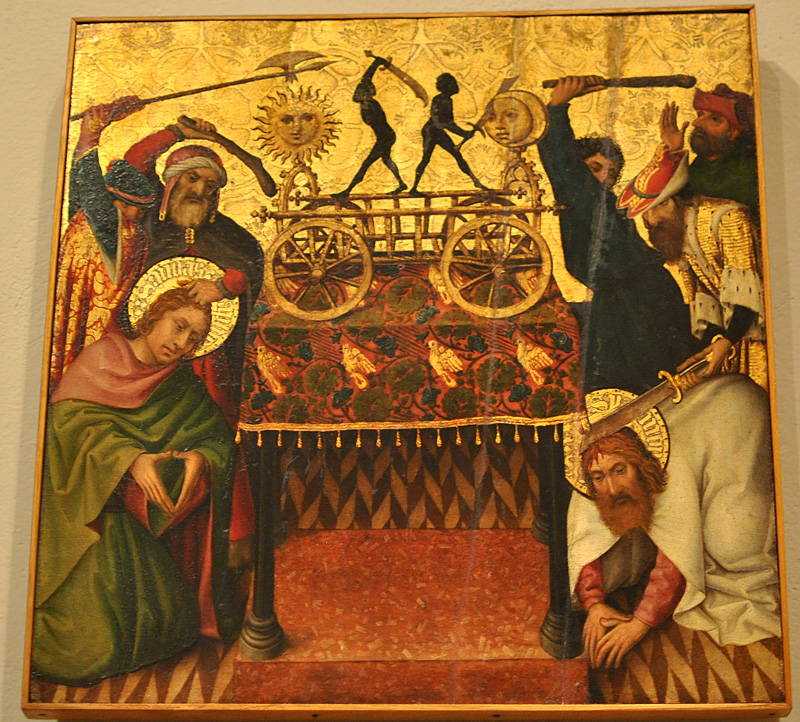
He was beaten to death with a club, then beheaded post-mortem in 1st century Persia. His relics are at Saint Peter’s Basilica, Rome, Italy, at Rheims, France and at Toulouse, France.
Simon was a simple Galilean, a brother of Jesus, as the ancients called one’s close relatives — aunts, uncles, first cousins. He was one of the Saviour’s four first cousins, with James the Less, Jude and Joseph, all sons of Mary, the wife of Alpheus, or Cleophas, either name being a derivative of the Aramaic Chalphai. The latter was the brother of Saint Joseph, according to tradition. All the sons of this family were raised at Nazareth near the Holy Family. (See the Gospel of Saint Matthew 13:53-58.) Simon, Jude and James were called by Our Lord to be Apostles, pillars of His Church and Joseph the Just was His loyal disciple.
Saint Simon the Zealot or the Zealous, was the name this Apostle bore among the twelve. He preached in Egypt, Mauritania (Spain) and Lybia, leaving behind him the fertile hills of Galilee, where he had been engaged in the healthful cultivation of the vineyards and olive gardens. He later rejoined his brother, Saint Jude, in Persia, where they laboured and died together (other traditions of their deaths in different locations exist too). At first they were respected by the king, for they had manifested power over two ferocious tigers who had terrorised the land. With the king, sixty thousand Persians became Christians and churches rose over the ruins of the idolatrous temples. But the ancient enemy, who never sleeps, rose up and when the two went elsewhere the pagans commanded them to sacrifice to the sun which led to their martyrdom.
Saint Jude has left us a short but powerful epistle, written after the death of his brother James, bishop of Jerusalem and addressed to the new Christians being tempted by false brethren and heretics.
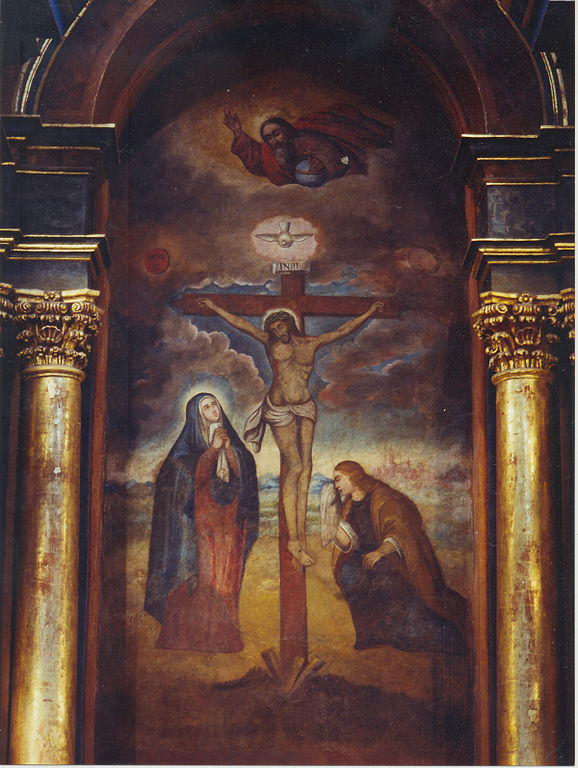
Lord of Miracles/Señor de los Milagros de Nazarenas: A mid-17th-century painting of the Crucifixion that is venerated in Lima, Peru and its celebration involves one of the largest processions in the world.
It was painted by an unnamed African taken to Peru as a slave from what is now Angola. Above the cross is the Holy Spirit and God the Father. Below and to the right of Jesus is His mother, the Virgin Mary with her heart pierced by a sword of sorrow. Kneeling and weeping at the foot of the cross is St Mary Magdalene.
The name originated on 13 November 1655 when everything around it was destroyed in an earthquake that left the painting standing and undamaged. Christ is shown enduring the pain of crucifixion.
Every year in October, hundreds of thousands of devotees from all races and economic backgrounds participate in a procession honouring the image through the streets of Lima. Boulevards are decorated in purple on 18,19 and the final Feast 28 October to celebrate the Lord of Miracles.
St Abdias of Babylon
St Abraham of Ephesus
St Alberic of Stavelot
St Anastasia the Elder
St Anglinus of Stavelot
St Cyril of Rome
St Cyrilla of Rome
St Diomedes the Younger
St Dorbhene of Iona
St Eadsin of Canterbury
St Elius of Lyon
St Faro of Meaux
St Ferrutius
St Fidelis of Como
St Genesius of Thiers
Bl Germain of Talloires
St Gioan Dat
St Godwin of Stavelot
St Maria Ascuncion
St Remigius of Lyons
St Rodrigo Aguilar Aleman
St Salvius of Amiens
—
Martyrs of Avila – 3 saints: Two sisters and a brother who, during a period of persecution, fled Talavera de la Reina, Spain, were caught and executed. Martyrs: Christeta, Sabina and Vincent. 303 in Avila, Spain.
Martyred in China:
St Francis Serrano
St Francisco Díaz del Rincón
St Joaquin Royo-Perez
St Juan Alcober Figuera
Martyred in the Spanish Civil War:
• Blessed Claudio Julían García San Román
• Blessed José Ruiz Bruixola
• Blessed Leoncio Lope García
• Blessed Salvador Damián Enguix Garés
Thought for the Day – 18 October – The Feast of St Luke the Evangelist – St Luke the Painter and the Painter in Words.
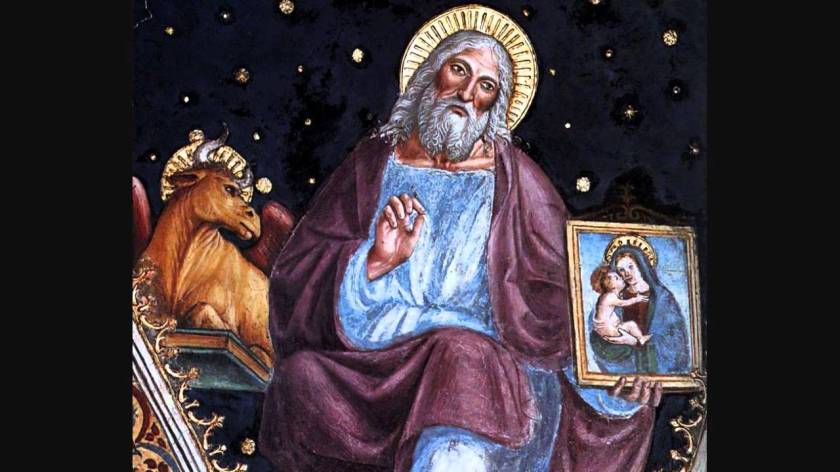
“According to a pious tradition, Luke is thought to have painted the image of Mary, the Virgin Mother. But the real portrait that Luke draws of Jesus’ Mother is the one that emerges from the pages of his work – in scenes that have become familiar to the People of God, he draws an eloquent image of the Virgin. The Annunciation, the Visitation, the Nativity, the Presentation in the Temple, life in the home of Nazareth, Jesus’ discussion with the doctors and His being lost and Pentecost have provided abundant material down the centuries for the ever new creations of painters, sculptors, poets and musicians.
What is most important however is to discover that, through pictures of Marian life, Luke introduces us to Mary’s interior life, helping us at the same time to understand her unique role in salvation history.
Mary is the one who says fiat, a personal and total “yes” to God’s invitation, calling herself the “handmaid of the Lord” (Lk 1: 38). This attitude of total assent to God and unconditional acceptance of His Word represents the highest model of faith, the anticipation of the Church as the community of believers.
The life of faith grows and develops in Mary through sapiential meditation on the words and events of Christ’s life (cf. Lk 2: 19, 51). She “ponders in her heart” to understand the deep meaning of His words, in order to assimilate it and share it with others.
The Magnificat hymn (cf. Lk 1: 46-55) shows another important aspect of Mary’s “spirituality”: she embodies the figure of the poor person, capable of putting all her trust in God, who casts down the mighty from their thrones and raises up the lowly.
Luke also describes the figure of Mary in the early Church, showing that she is present in the Upper Room as they await the Holy Spirit – “All these [the 11 Apostles] with one accord devoted themselves to prayer, together with the women and Mary the mother of Jesus, and with his brethren” (Acts 1: 14).
The group gathered in the Upper Room forms the original nucleus of the Church. Within it Mary carries out a double role: on the one hand, she intercedes for the birth of the Church through the Holy Spirit; on the other, she shares her experience of Jesus with the newborn Church.
Luke’s work thus offers the Church … a powerful stimulus to make the most of the “Marian dimension” of Christian life as she follows the way of Christ.” …St Pope John Paul 15 October 2000
Quote of the Day – – 18 October – The Feast of St Luke the Evangelist
“My soul proclaims the greatness of the Lord, my spirit rejoices in God my saviour. For he has looked upon his handmaid’s lowliness, henceforth, all generations will call me blessed.”
Our Morning Offering – 18 October – Feast of St Luke
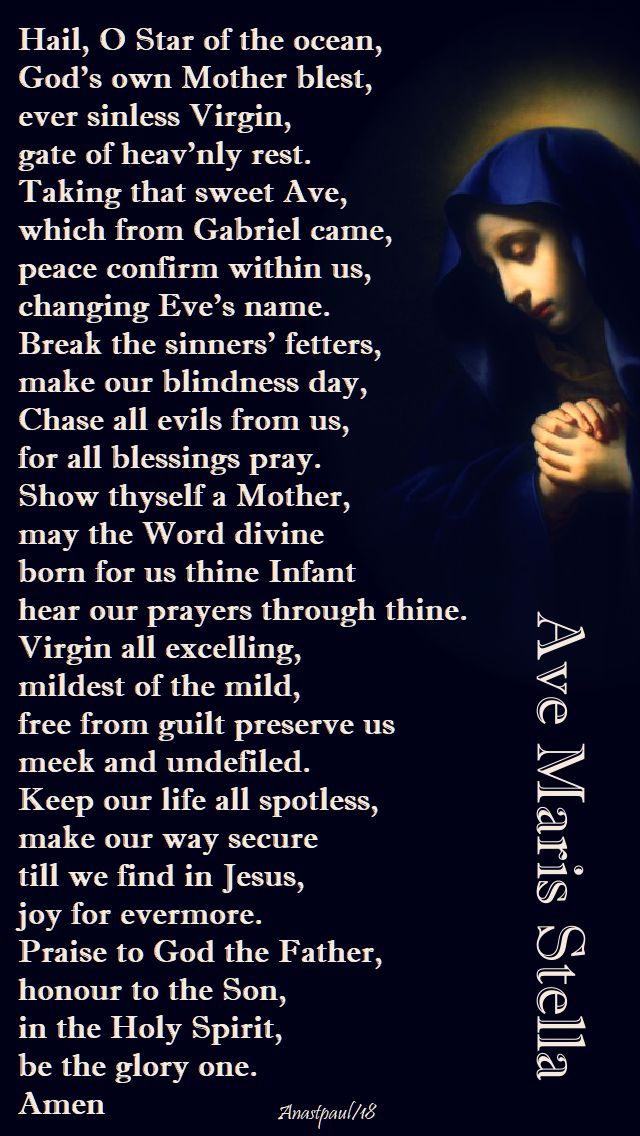
Ave Maris Stella
Hail, O Star of the ocean,
God’s own Mother blest,
ever sinless Virgin,
gate of heav’nly rest.
Taking that sweet Ave,
which from Gabriel came,
peace confirm within us,
changing Eve’s name.
Break the sinners’ fetters,
make our blindness day,
Chase all evils from us,
for all blessings pray.
Show thyself a Mother,
may the Word divine
born for us thine Infant
hear our prayers through thine.
Virgin all excelling,
mildest of the mild,
free from guilt preserve us
meek and undefiled.
Keep our life all spotless,
make our way secure
till we find in Jesus,
joy for evermore.
Praise to God the Father,
honour to the Son,
in the Holy Spirit,
be the glory one.
Amen
Saint of the Day – 18 October – St Luke the Evangelist
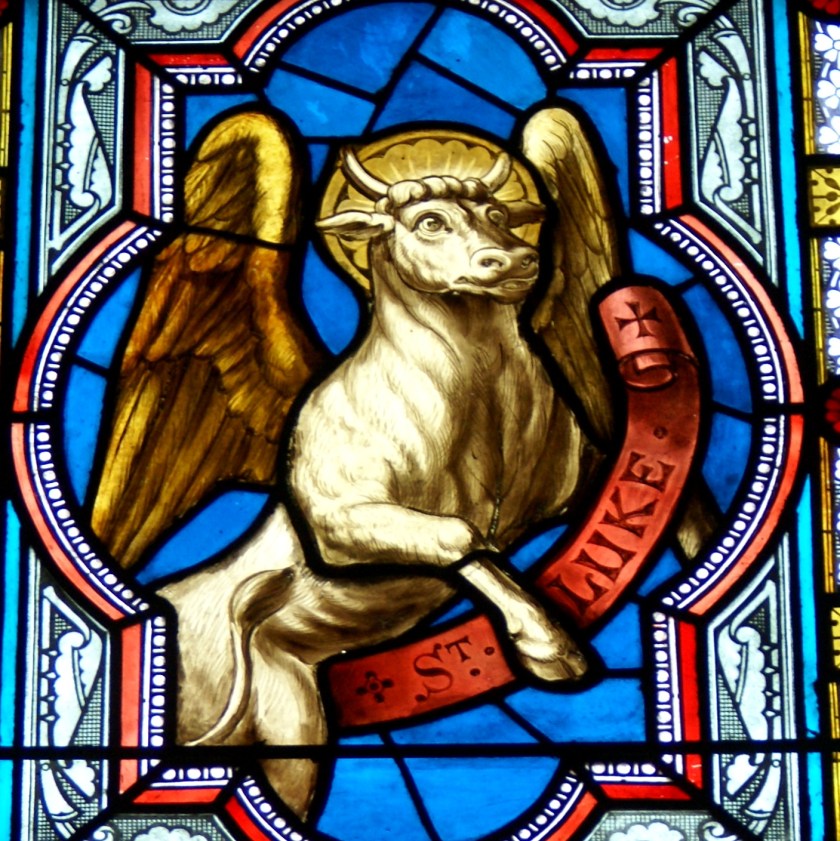
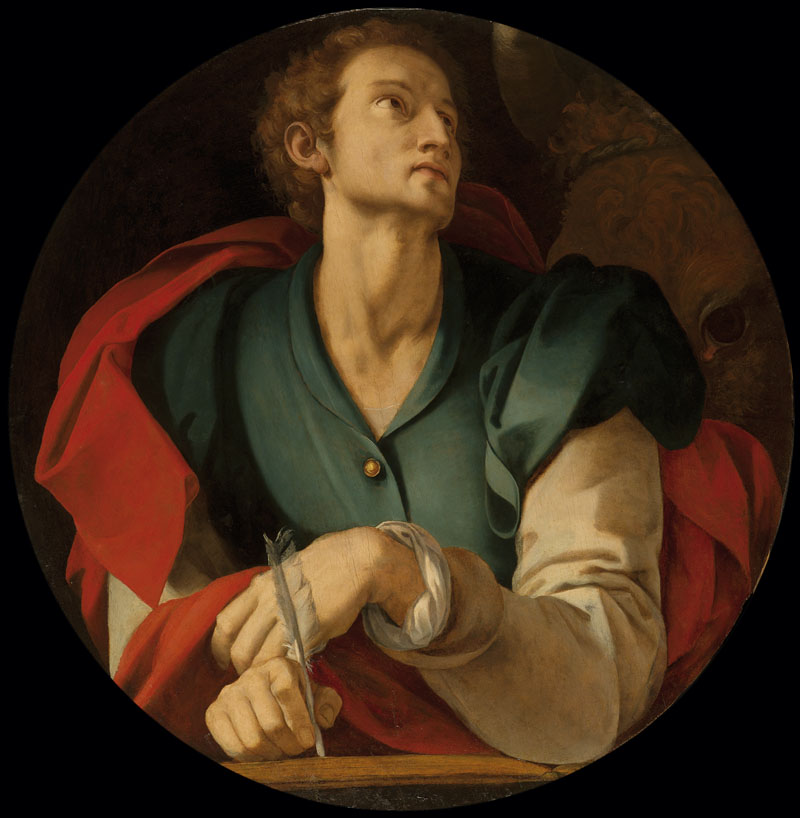
St Luke, the inspired author of the third Gospel and of the Acts of the Apostles, was a native of Antioch in Syria and a physician and one of the early converts from paganism. He accompanied St Paul on a considerable part of his missionary journey. He was also his companion while in prison at Rome on two different occasions. His account of these events, contained in the Acts, is first hand history. His symbol is a Winged Ox anticipated by Ezekiel. The ox, recognised as the animal of sacrifice, was applied to St Luke because his Gospel emphasises the atonement made by Christ’s sacrifice of Himself on the Cross. His name means “bringer of light” (= luke).
Luke’s Gospel is, above all, the Gospel of the Merciful Heart of Jesus. It emphasises the fact that Christ is the salvation of all men, especially of the repentant sinner and of the lowly. Legend says that Luke painted the Blessed Virgin’s portrait. It is certainly true that he painted the most beautiful word-picture of Mary ever written.
St Luke came from Antioch, was a practising physician and was one of the first converts to Christianity. He accompanied St Paul, who converted him, on his missionary journeys and was still with him in Rome when St Paul was in prison awaiting death. We hear no more of him afterwards and nothing is known of his last years. The Church venerates him as a Martyr.
St Luke’s Gospel is principally concerned with salvation and mercy – in it are preserved some of our Lord’s most moving parables, like those of the lost sheep and the prodigal son. Dante calls St Luke the “historian of the meekness of Christ.” It is also St Luke who tells us the greater part of what we know about our Lord’s childhood.
“According to tradition he was an artist, as well as a man of letters and with a soul alive to all the most delicate inspirations, he consecrated his pencil to the holiest use and handed down to us the features of the Mother of God. It was an illustration worthy of the Gospel which relates to the divine Infancy and it won for the artist a new title to the gratitude of those who never saw Jesus and Mary in the flesh. Hence St Luke is the patron of Christian art.” …-Excerpted from The Liturgical Year, Abbot Gueranger O.S.B.
St Luke did not personally know our Lord and like St Mark, the author of the second Gospel, he is not included among the apostles. For this reason the Gospel chosen for their feast is the account of the sending forth of the seventy-two disciples. According to St Jerome, St Luke died in Achaia (Greece) at the age of 84 and it is unknown whether or not he died a martyr’s death.
His symbol is a Winged Ox anticipated by Ezekiel. The ox, recognised as the animal of sacrifice, was applied to St Luke because his Gospel emphasises the atonement made by Christ’s sacrifice of Himself on the Cross. His name means “bringer of light” (= luke).
St Acutius of Pozzuoli
St Asclepiades of Antioch
St Brothen
Bl Burchard I of Halberstadt
St Cadwaladr of Brittany
Bl Domenico of Perpignano
St Eutychius of Pozzuoli
St Gwen
St Gwen of Tagarth
St Gwendoline
St Isaac Jogues
St Julian the Hermit
St Justus of Beauvais
Bl Margherita Tornielli
St Monon of Nassogne
St Proculus of Pozzuoli
Bl Theobald of Narbonna
St Tryphonia of Rome
—
Martyrs of Africa – 9 saints: A group of Christians martryed together in Africa. The only details that have survived are the names – Beresus, Dasius, Faustinus, Leucius, Lucius, Martialis, Victoricus, Victrix and Viktor. They were martyred in c.300 in Africa.
Martyred in the Spanish Civil War:
• Blessed Alfredo Almunia López-Teruel
• Blessed Francisco Roselló Hernández
• Blessed Isidro Juan Martínez
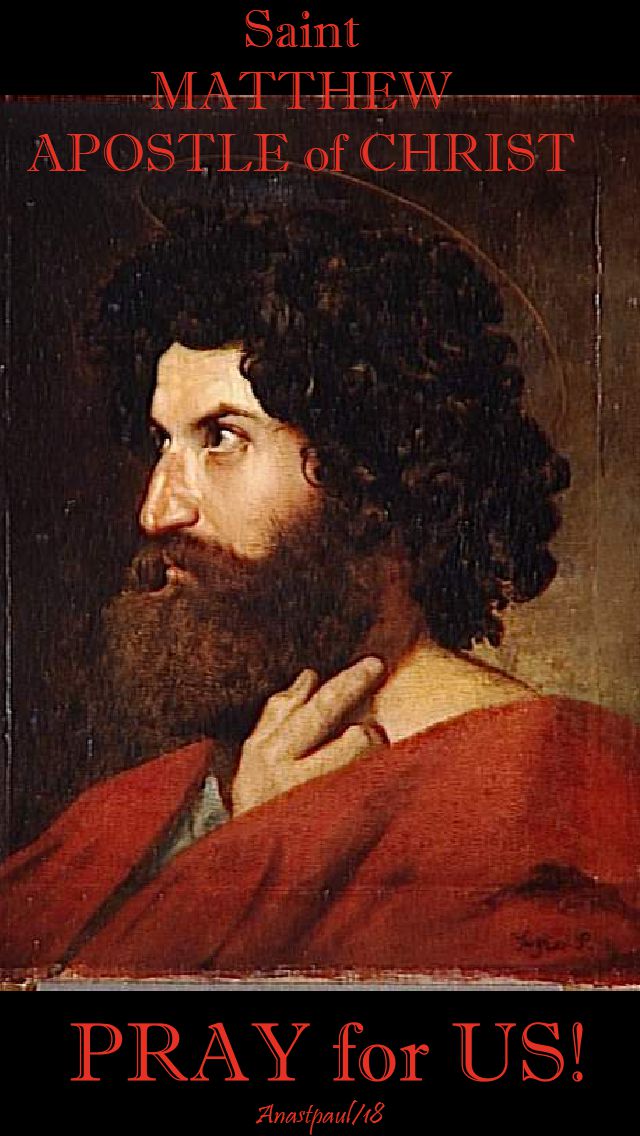
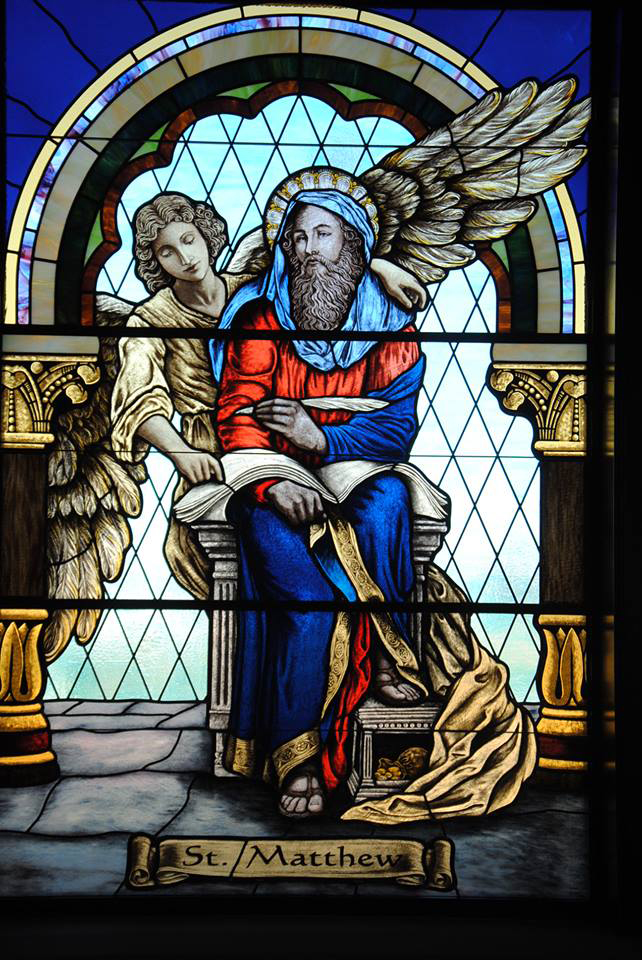
Thought for the Day – 21 September – The Feast of St Matthew, Apostle and Evangelist- Today’s Gospel: Matthew 9:9–13
Thank you, Matthew, for your story, because it is you who writes your own story. Thank you, because you were a sinner and became an Apostle. And that is very encouraging for me because I’m a sinner and have to become an Apostle. Thank you, Matthew, because you were a publican who was lining his pockets with the money of the Jews but when Jesus called you, you were ready to leave everything and follow Him.
Thank you, Matthew, because you could have stayed where you were thinking that it was crazy to leave your job, your money, your plans and your future… but you were brave enough to follow Jesus instead. And I give thanks with you to Jesus because He knew you well and was aware of the great things that you could do. While on that day some of the Jews looked at you with disdain, that Jew, Jesus of Nazareth, passed by your tax office and smiled at you. He stood there, gazing at you with affection, a loving look, the like of which a publican in Palestine had probably never experienced. And you couldn’t look anywhere else. That loving face of Jesus was inviting you to do something special with your life.
You weren’t happy and Jesus offered you Happiness. You were wasting your life and Jesus invited you to do something great with it. You only loved your money but Jesus helped you to expand your heart to love God and others more than yourself. Your talents were wasted in that tax office and millions of souls were waiting for you. Thank you, Matthew, because you said ‘yes’ to Jesus.
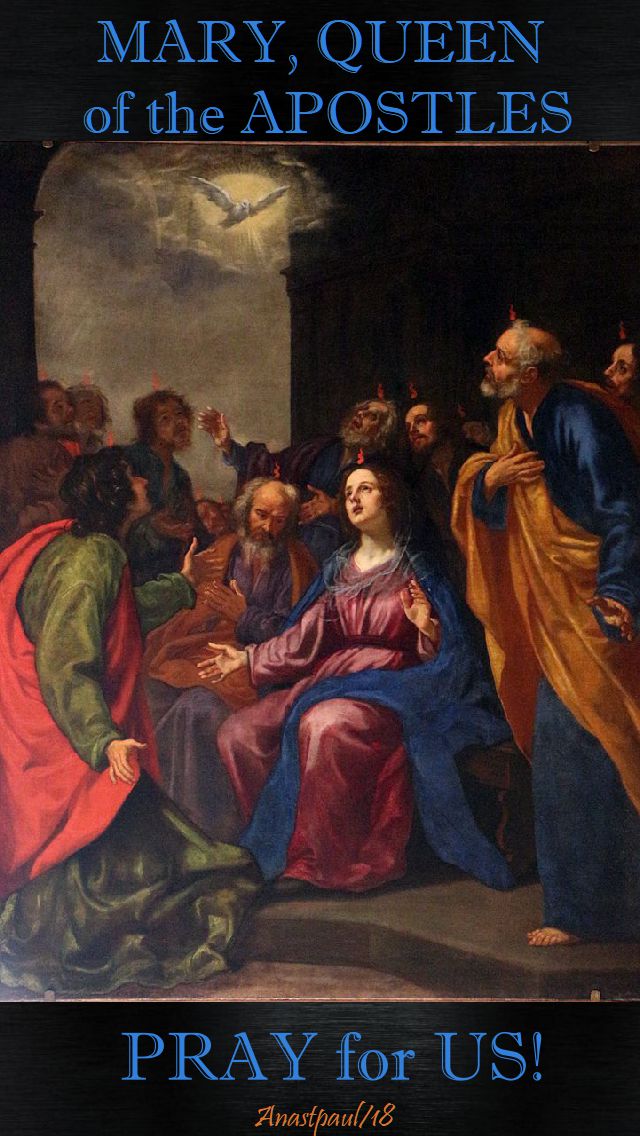
Mary, Queen of the Apostles, help me to have the courage to say ‘yes’ to Him as well and become a saint, like you, like St Matthew and please pray for us all!
Fr George Boronat M.D. S.T.D is a Catholic priest from the Prelature of Opus Dei, working in the Archdiocese of Southwark in London.
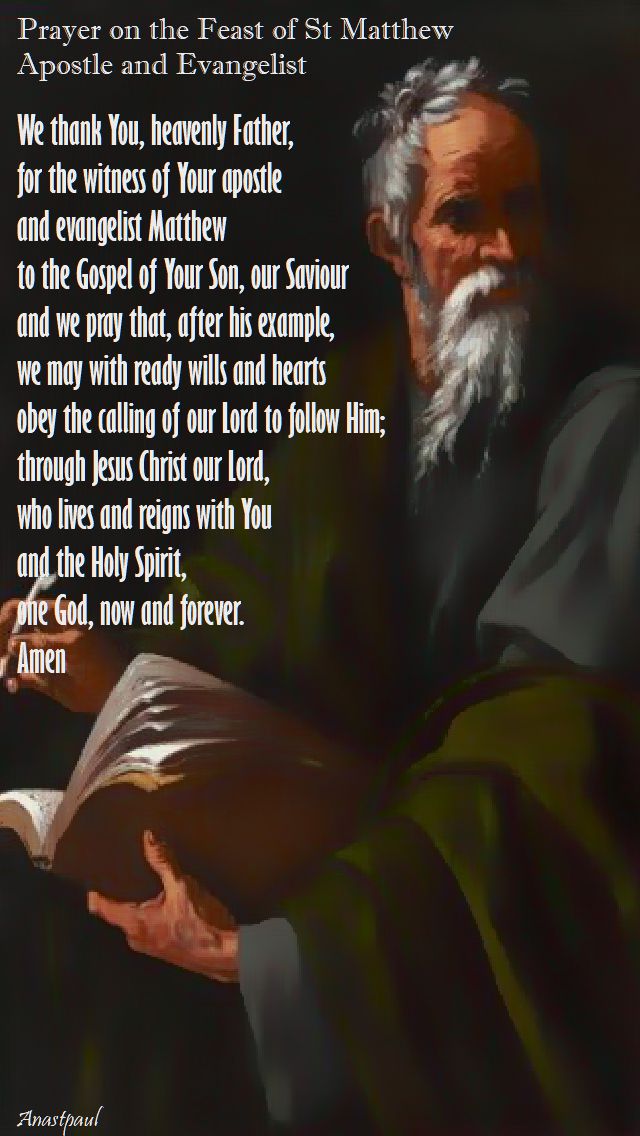
We thank You, heavenly Father, for the witness of Your apostle and evangelist Matthew to the Gospel of Your Son our Saviour and we pray that, after his example, we may with ready wills and hearts obey the calling of our Lord to follow Him; through Jesus Christ our Lord, who lives and reigns with You and the Holy Spirit, one God, now and forever. Amen
Quote/s of the Day – 21 September – The Feast of St Matthew, Apostle and Evangelist- Today’s Gospel: Matthew 9:9–13
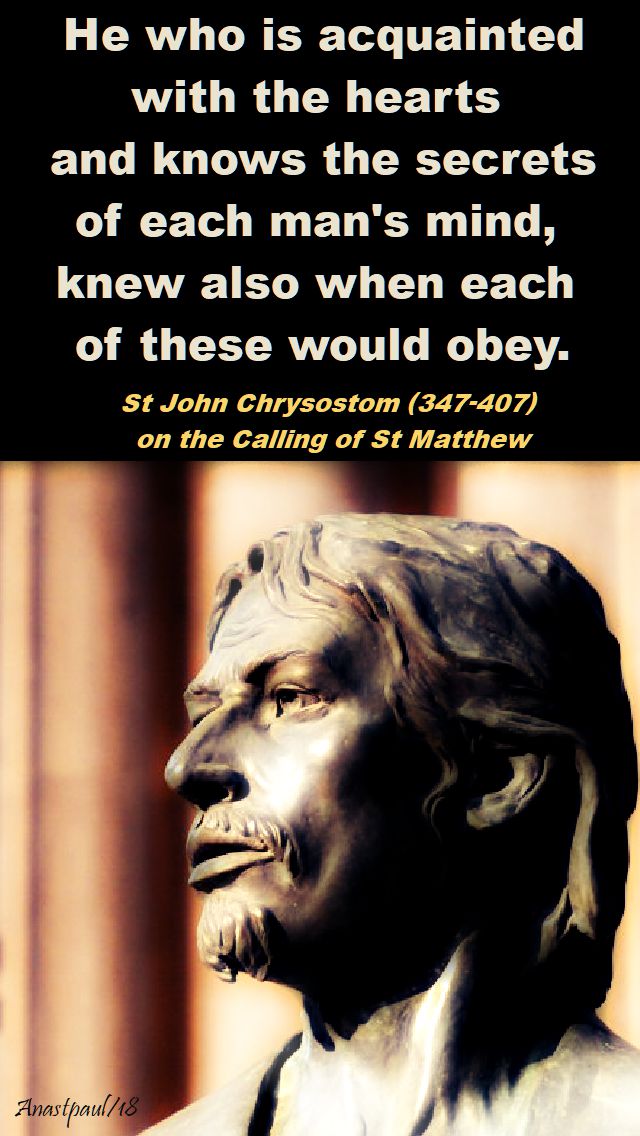
“But as you have seen the power of Him that called, so consider also the obedience of him that was called – how he neither resisted, nor disputing said, ‘What is this? Is it not indeed a deceitful calling, wherewith He calls me, being such as I am?’ nay, for this humility again had been out of season but he obeyed straightaway and did not even request to go home and to communicate with his relations concerning this matter -as neither indeed, did the fishermen but as they left their net and their ship and their father, so did he his receipt of custom and his gain and followed, exhibiting a mind prepared for all things and breaking himself at once away, from all worldly things, by his complete obedience, he bore witness, that He who called him, had chosen a good time.
…Because He who is acquainted with the hearts and knows the secrets of each man’s mind, knew also when each of these would obey.” (Homily 30 on Matthew)
St John Chrysostom (347-407) Father and Doctor of the Church
“On hearing Christ’s voice, we open the door to receive Him, as it were, when we freely assent to His promptings and when we give ourselves over to doing what must be done. Christ, since He dwells in the hearts of His chosen ones through the grace of His love, enters so that He might eat with us and we with Him. He ever refreshes us by the light of His presence insofar as we progress in our devotion to and longing for the things of heaven. He Himself is delighted by such a pleasing banquet.”
St Bede the Venerable (673-735) Doctor of the Church
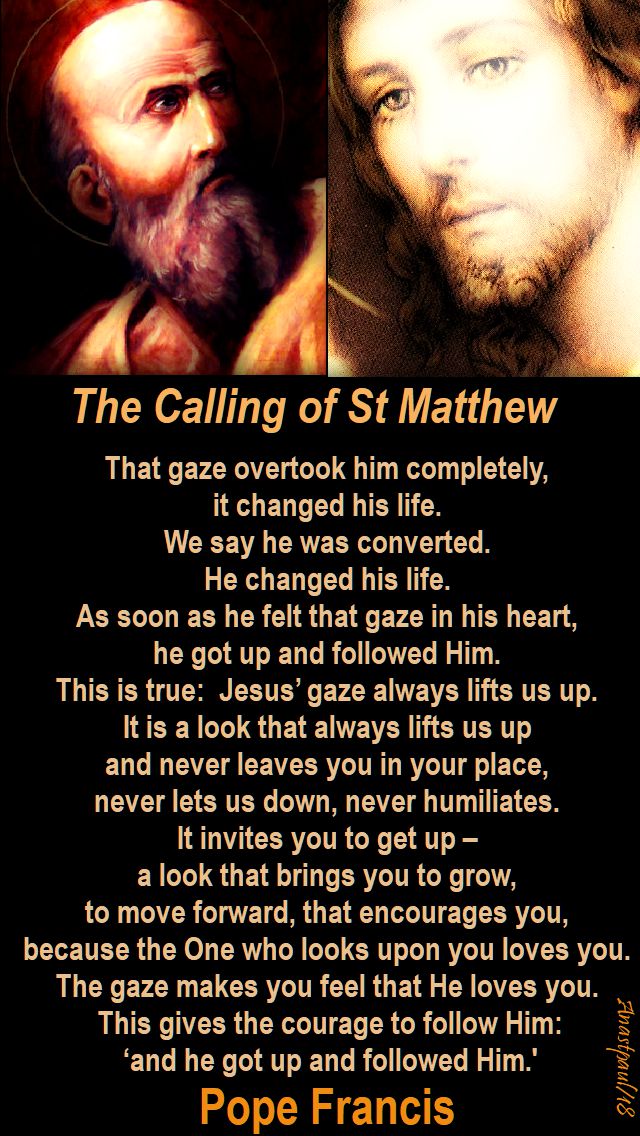
“That gaze overtook him completely, it changed his life. We say he was converted. He changed his life. As soon as he felt that gaze in his heart, he got up and followed Him. This is true – Jesus’ gaze always lifts us up. It is a look that always lifts us up and never leaves you in your place, never lets us down, never humiliates. It invites you to get up – a look that brings you to grow, to move forward, that encourages you, because the One who looks upon you loves you. The gaze makes you feel that He loves you. This gives the courage to follow Him – ‘and he got up and followed Him.’”
Pope Francis 21 September 2013
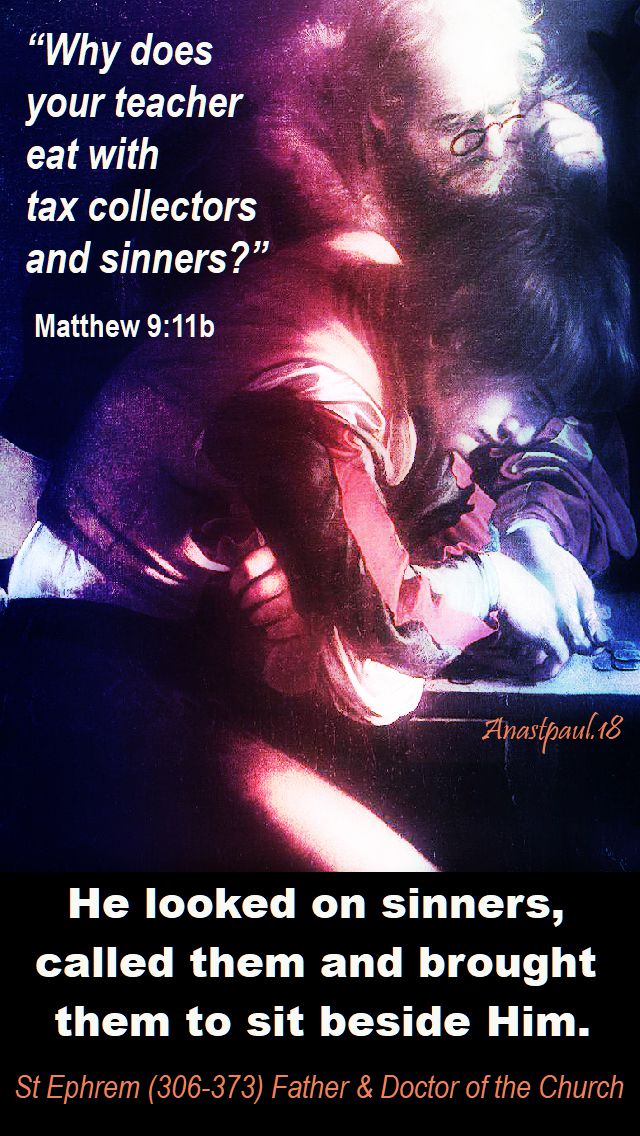
“He looked on sinners, called them and brought them to sit beside Him.”
One Minute Reflection – 21 September – The Feast of St Matthew, Apostle and Evangelist- Today’s Gospel: Matthew 9:9–13
“Why does your teacher eat with tax collectors and sinners?” …Matthew 9:11b
REFLECTION – “Our Lord chose Matthew, the tax collector, to encourage his fellows to join Him. He looked on sinners, called them and brought them to sit beside Him. What a wonderful sight! Angels stand trembling while publicans, seated, rejoice. The angels are struck with awe before the Lord’s greatness while sinners eat and drink with Him. The scribes choke with hatred and indignation, the publicans rejoice because of His mercy. The heavens saw the sight and were filled with wonder; hell saw it and was maddened. Satan saw it and was enraged; death saw it and withered; the scribes saw it and were much troubled.
There was joy in heaven and happiness among the angels because the rebellious had been persuaded, the recalcitrant quieted and sinners reformed and because publicans had been made righteous. Just as our Lord did not turn away from the shamefulness of the cross in spite of the entreaties of His friends (Mt 16:22) so he did not refuse the company of publicans in spite of the taunts of His enemies. He despised mockery and scorned praise, thus accomplishing all that is for mankind’s good.”…St Ephrem (306-373) Father & Doctor of the Church – Commentary on the Gospel, or Diatessaron, 5, 17 (SC 121, p.115 rev.)
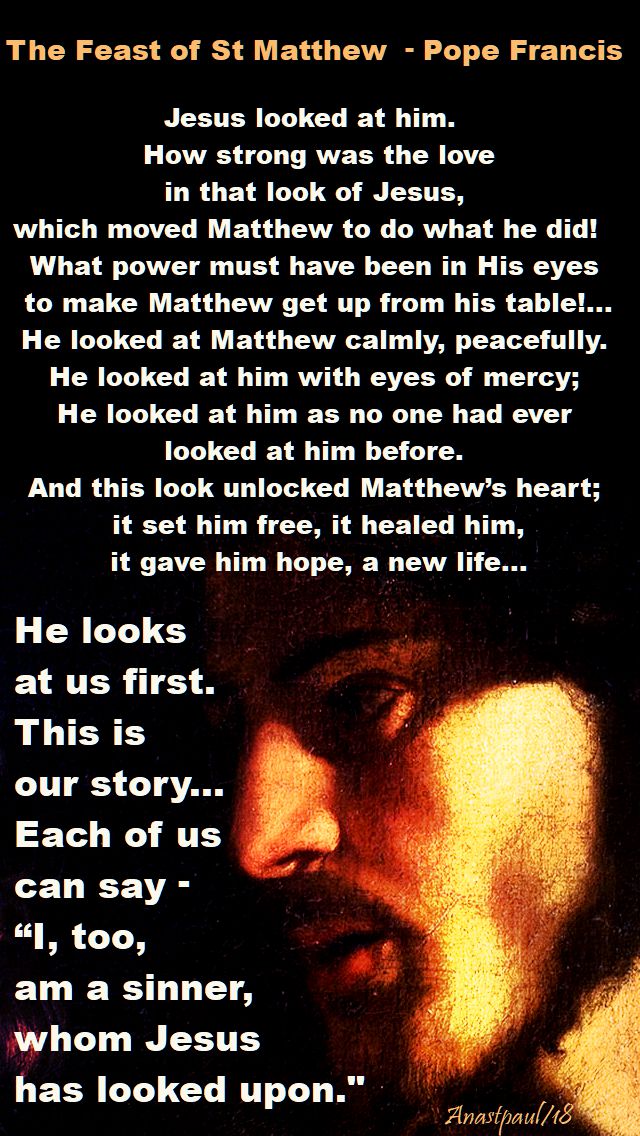
“He looked at Matthew calmly, peacefully. He looked at him with eyes of mercy; he looked at him as no one had ever looked at him before. And this look unlocked Matthew’s heart; it set him free, it healed him, it gave him hope, a new life, as it did to Zacchaeus, to Bartimaeus, to Mary Magdalene, to Peter, and to each of us. Even if we do not dare raise our eyes to the Lord, he looks at us first. This is our story, and it is like that of so many others. Each of us can say: “I, too, am a sinner, whom Jesus has looked upon”. I ask you, in your homes or in the Church, to be still for a moment and to recall with gratitude and happiness those situations, that moment, when the merciful gaze of God was felt in our lives.”…Pope Francis – 21 September 2015, The Feast of St Matthew
PRAYER – Lord, You showed Your great mercy to Matthew the tax-gatherer,by calling him to become Your Apostle,supported by his prayer and example, may we always answer Your call and live in close union with You. We make our prayer, in union with God our Father and the Holy Spirit, one God forever and ever. St Matthew, Apostle of Christ, pray for us, amen.
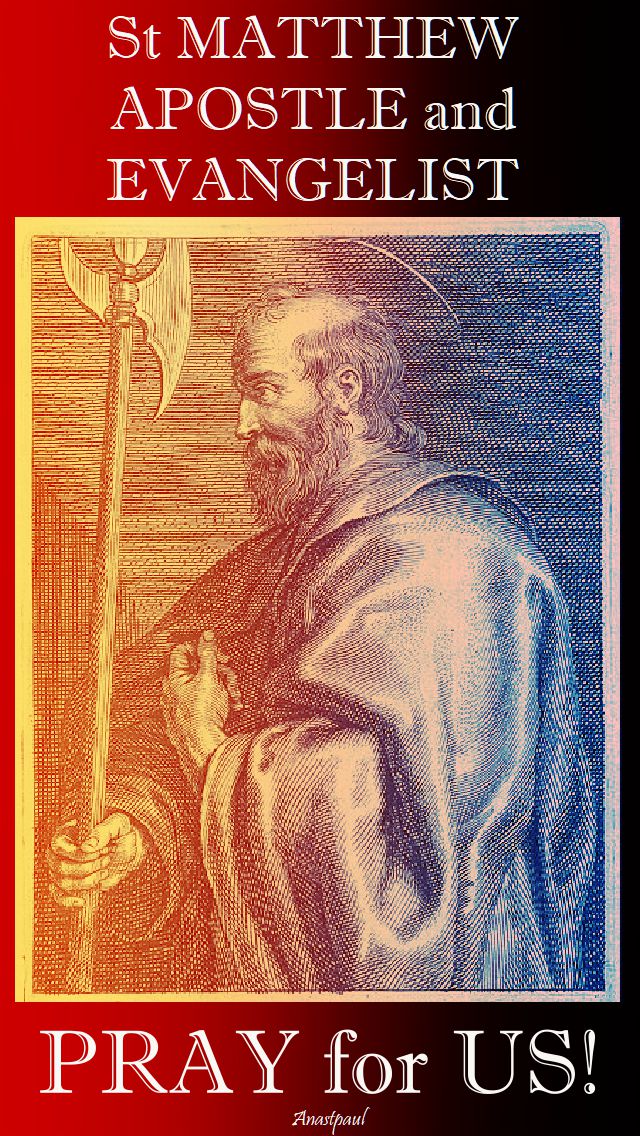
Saint of the Day – 21 September – The Feast of St Matthew – Apostle and Evangelist
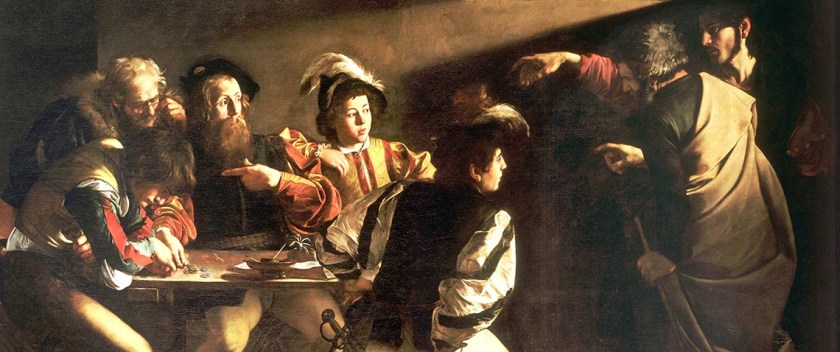
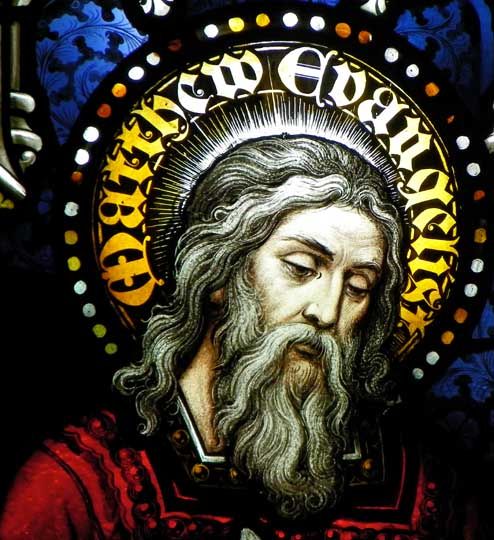
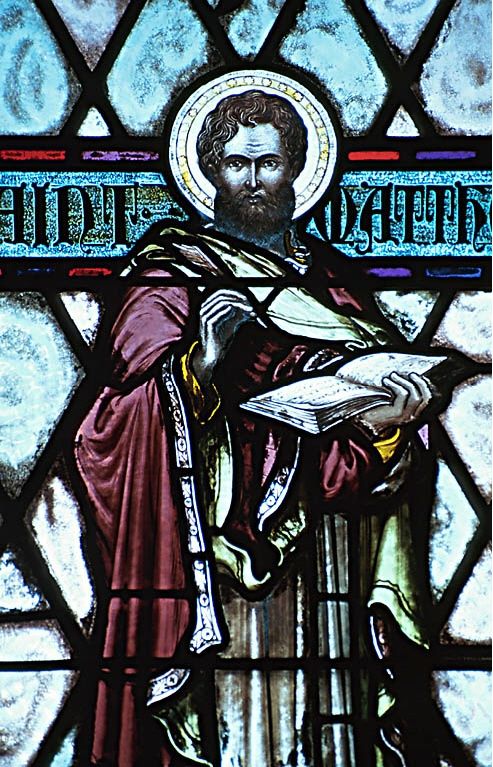
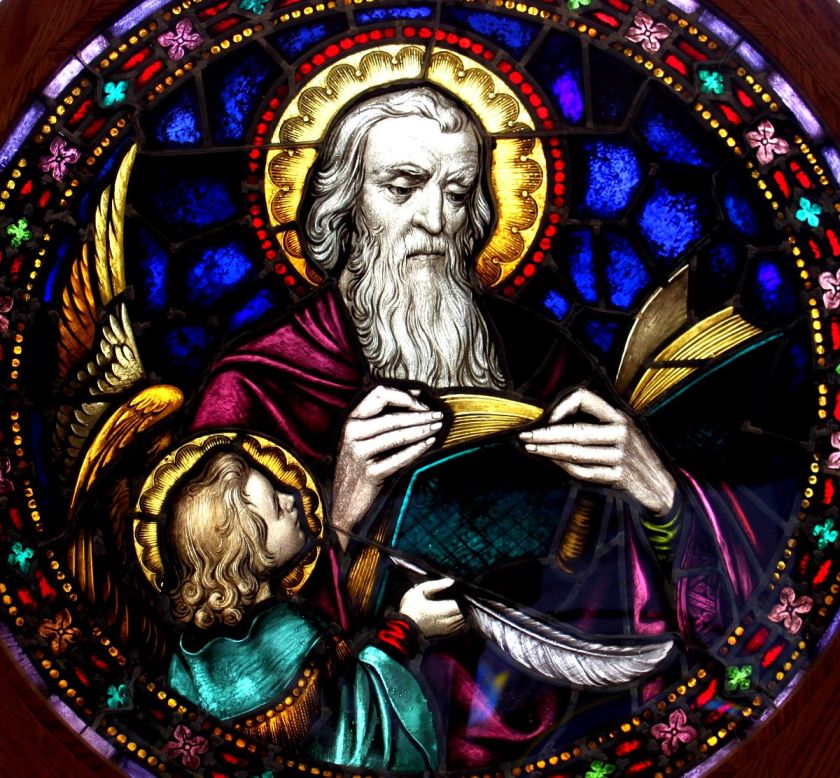
One day, while seated at his table of books and money, Jesus looked at Matthew and said two words: “Follow me.” This was all that was needed to make Matthew rise, leaving his pieces of silver to follow Christ. His original name, “Levi,” in Hebrew signifies “Adhesion” while his new name in Christ, Matthew, means “Gift of God.” The only other outstanding mention of Matthew in the Gospels is the dinner party for Christ and His companions to which he invited his fellow tax-collectors. The Jews were surprised to see Jesus with a publican but Jesus explained that he had come “not to call the just but sinners.”
Caravaggio – The Calling of Saint Matthew
Although relatively little is known about the life of St Matthew, the account he wrote of Christ’s ministry – traditionally considered to be the first of the four Gospels – is of inestimable value to the Church, particularly in its verification of Jesus as the Messiah.
The Gospel accounts of Mark and Luke, like Matthew’s own, describe the encounter between Jesus and Matthew under the surprising circumstances of Matthew’s tax-collecting duties. Jewish publicans, who collected taxes on behalf of the Roman rulers of first-century Judea, were objects of scorn and even hatred among their own communities, since they worked on behalf of the occupying power and often earned their living by collecting more than the state’s due.
Jesus most likely first encountered Matthew near the house of Peter, in Capernaum near the Sea of Galilee. The meeting of the two was dramatic, as Matthew’s third-person account in his Gospel captured: “As Jesus passed on,” the ninth chapter recounts, “he saw a man named Matthew sitting at the customs post. He said to him, ‘Follow me’. And he got up and followed him.”
Matthew’s calling into Jesus’ inner circle was a dramatic gesture of the Messiah’s universal message and mission, causing some religious authorities of the Jewish community to wonder: “Why does your teacher eat with tax collectors and sinners?” Jesus’ significant response indicated a central purpose of his ministry: “I did not come to call the righteous but sinners.”
A witness to Christ’s resurrection after death, as well as his ascension into heaven and the events of Pentecost, Matthew also recorded Jesus’ instruction for the apostles to “go, therefore, and make disciples of all nations, baptising them in the name of the Father, and of the Son and of the holy Spirit, teaching them to observe all that I have commanded you.”
Like 11 of the 12 apostles, St Matthew is traditionally thought to have died as a martyr while preaching the Gospel. The Roman Martyrology describes his death as occurring in a territory near present-day Egypt.
Both the saint himself and his Gospel narrative, have inspired important works of religious art, ranging from the ornate illuminated pages of the Book of Kells in the ninth century, to the Saint Matthew Passion of J.S. Bach. Three famous paintings of Caravaggio depicting St Matthew’s calling, inspiration and martyrdom, hang within the Contarelli Chapel in Rome’s Church of St Louis of the French.
Reflecting on St Matthew’s calling, from the pursuit of dishonest financial gain to the heights of holiness and divine inspiration, Pope Benedict said in 2006 that “in the figure of Matthew, the Gospels present to us a true and proper paradox: those who seem to be the farthest from holiness can even become a model of the acceptance of God’s mercy and offer a glimpse of its marvellous effects in their own lives.”
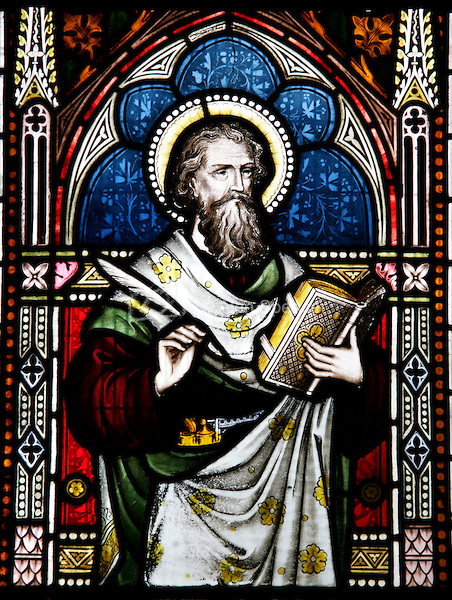
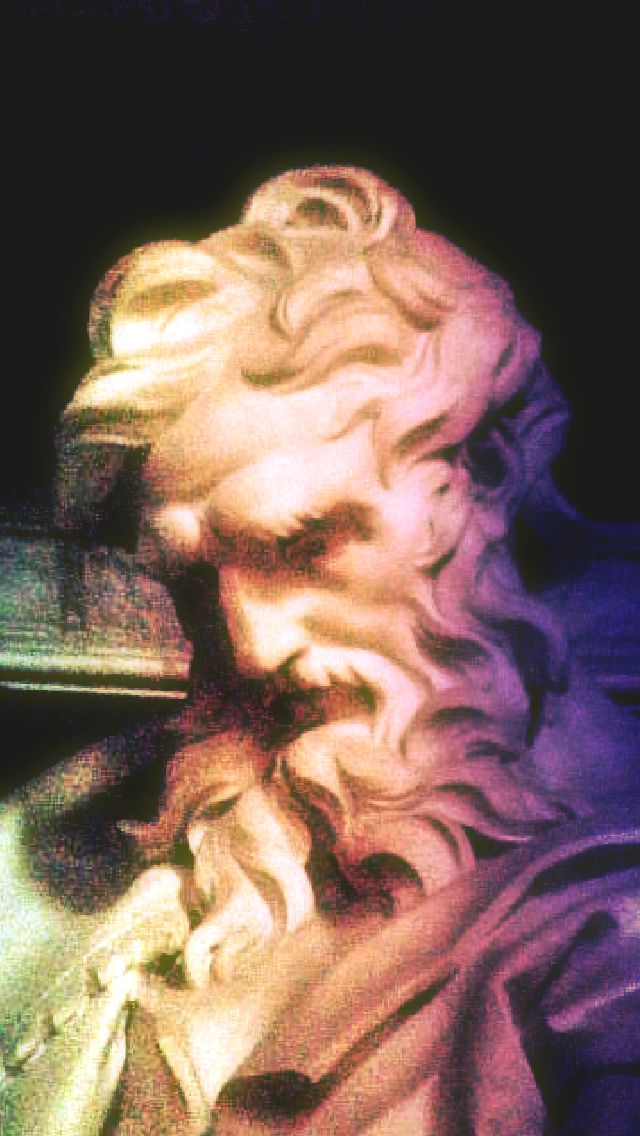
St Matthew Statue at St John Lateran – detail of face
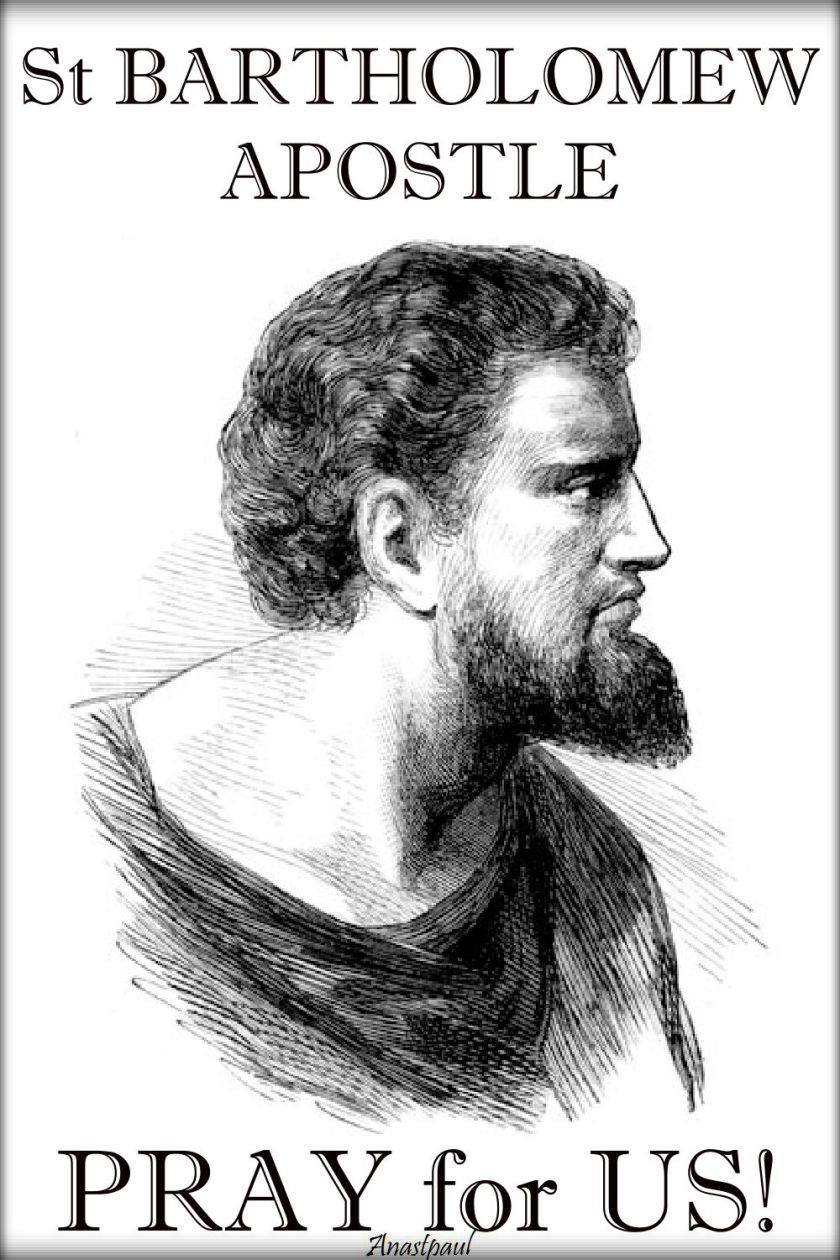
Thought for the Day – 24 August – The Feast of St Bartholomew, Apostle of Christ – Today’s Gospel: John 1:45–51
Bartholomew or Nathanael? We are confronted again with the fact that we know almost nothing about most of the apostles. Yet the unknown ones were also foundation stones, the 12 pillars of the new Israel whose 12 tribes now encompass the whole earth. Their personalities were secondary—without thereby being demeaned—to their great office of bearing tradition from their firsthand experience, speaking in the name of Jesus, putting the Word Made Flesh into human words for the enlightenment of the world. Their holiness was not an introverted contemplation of their status before God. It was a gift that they had to share with others. The Good News, was that, all are called to the holiness of being Christ’s members, by the gracious gift of God.
The simple fact is that humanity is totally meaningless unless God is its total concern. Then humanity, made holy with God’s own holiness, becomes the most precious creation of God…(via Franciscan Media)
One Minute Reflection – 24 August – The Feast of St Bartholomew, Apostle of Christ – Today’s Gospel: John 1:45–51
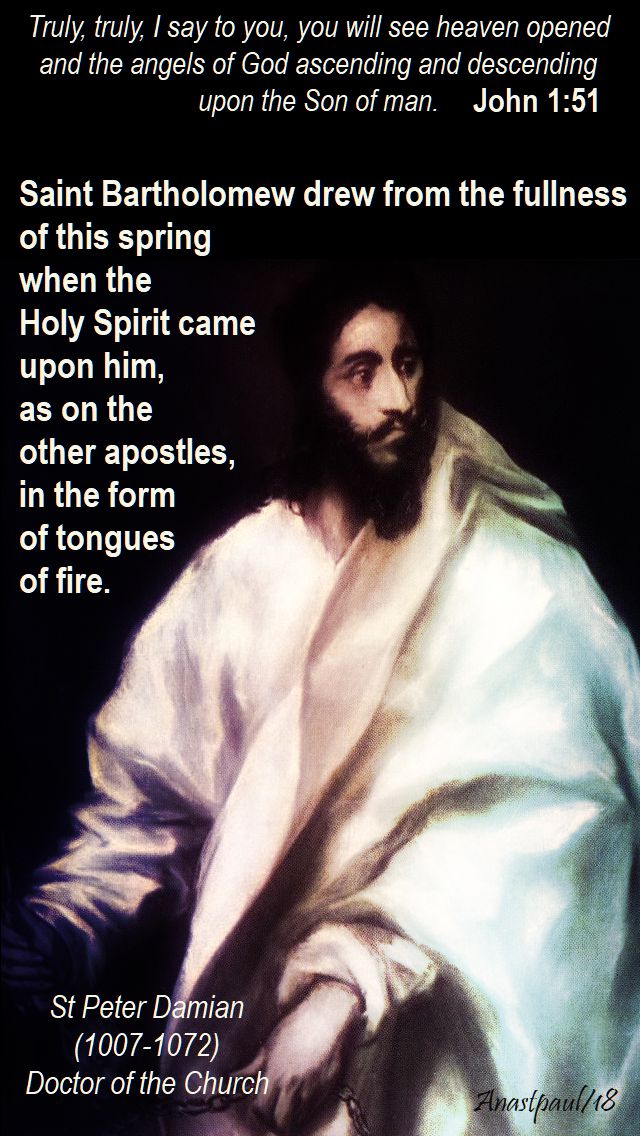
“Truly, truly, I say to you, you will see heaven opened and the angels of God ascending and descending upon the Son of man.”…John 1:51
REFLECTION – “The apostles’ glory is so indistinguishable and so bonded together by the cement of so many graces that in celebrating the feast of one of them the common greatness of all is called to our interior attention. For they share together the same authority of supreme judge, the same honourable rank and they hold the same power to bind and loose (Mt 19:28; 18:18). They are those precious pearls that Saint John tells us he beheld in the Book of Revelation out of which are constructed the gates of the heavenly Jerusalem (Rv 21:21.14)… And indeed, whenever the apostles beam divine light through their signs or miracles, they open up the heavenly glory of Jerusalem to all those peoples who have been converted to the christian faith…
Of them, too, the prophet says: “Who are these who fly along like clouds?” (Is 60:8)… God raises the minds of His preachers to contemplation of truths on high… so that they can abundantly pour down the rain of God’s word into our hearts. Thus they drink water from the spring so as to give drink to us too. Saint Bartholomew drew from the fullness of this spring when the Holy Spirit came upon him, as on the other apostles, in the form of tongues of fire (Acts 2:3).”… St Peter Damian (1007-1072) – Bishop, Doctor of the Church (Sermon 42, 2nd for Saint Bartholomew, PL 144, 726)
PRAYER – Almighty Lord and Father, strengthen in us that faith with which St Bartholomew gave himself wholeheartedly to Christ Your Son. Grant, at his intercession, that Your Church may become the Sacrament of salvation, for all the nations of the earth. We make our prayer through Jesus, our Lord and Christ, in the unity of the Holy Spirit, one God, forever, amen.
One Minute Reflection – 25 July – The Memorial of St James the Greater, Apostle of Christ – Today’s Gospel: Matthew 20:20–28
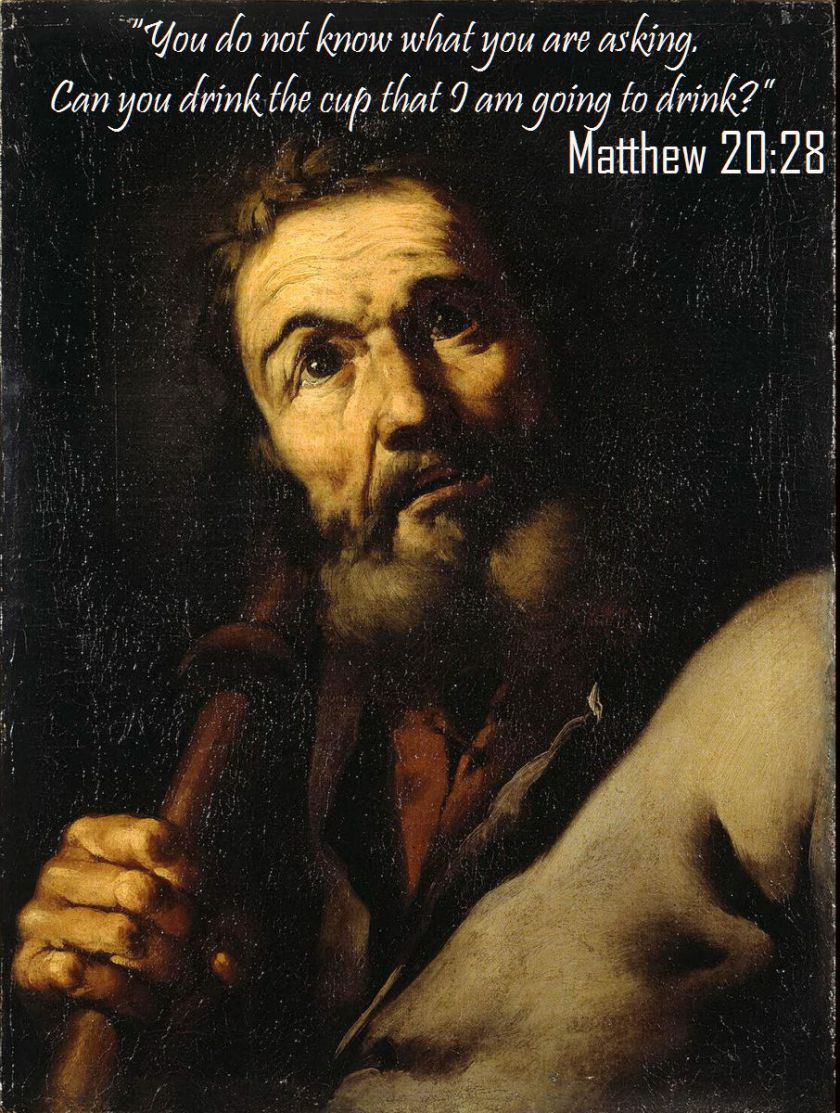
Jesus said in reply, “You do not know what you are asking. Can you drink the cup that I am going to drink?” They said to him, “We can.”……Matthew 20:28
REFLECTION – “Through their mother’s mediation, the sons of Zebedee press Christ as follows in the presence of their fellow apostles: “Command that we may sit, one at your right side and one at your left” (cf. Mk 10:35f.)… Christ hastens to free them from their illusions, telling them they must be prepared to suffer insults, persecutions, even death. “You do not know what you are asking. Are you able to drink the cup that I shall drink?” Let no one be surprised to see the apostles displaying such imperfect dispositions. Wait until the mystery of the cross has been fulfilled and the strength of the Holy Spirit given to them. If you want to see the strength of their souls, take a look at them later on and you will see them to be above all human weakness. Christ does not conceal their pettiness so you will be able to see what they become later on by the power of the grace that will transform them…”… St John Chrysostom (c 345-407) Father & Doctor of the Church
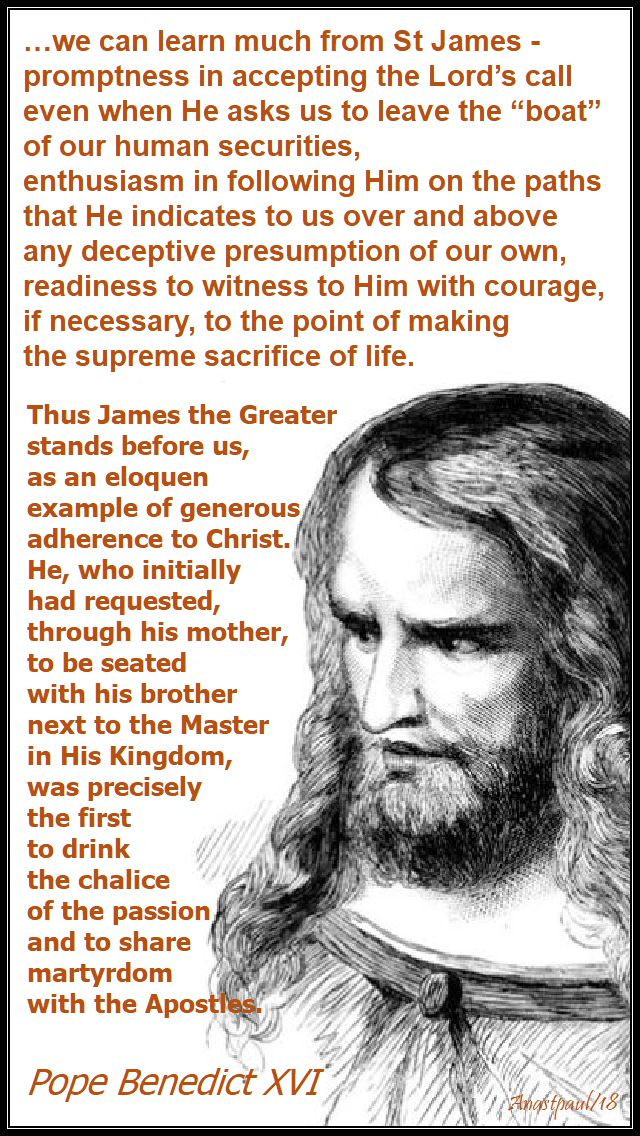
“…we can learn much from St James: promptness in accepting the Lord’s call even when He asks us to leave the “boat” of our human securities, enthusiasm in following Him on the paths that He indicates to us over and above any deceptive presumption of our own, readiness to witness to Him with courage, if necessary to the point of making the supreme sacrifice of life. Thus James the Greater stands before us, as an eloquent example of generous adherence to Christ. He, who initially had requested, through his mother, to be seated with his brother next to the Master in His Kingdom, was precisely the first to drink the chalice of the passion and to share martyrdom with the Apostles.”…Pope Benedict XVI – General Audience, 21 June 2006
PRAYER – Lord our God, You accepted the sacrifice of St James, the first of Your Apostles to give his life for Your sake. May Your Church find strength in his martyrdom and support in his constant prayer. Through our Lord Jesus Christ, your Son, who lives and reigns with you in the unity of the Holy Spirit, one God, for ever and ever. St James the Greater, Apostle of Christ, Pray for us! Amen
St James the Greater (Feast) – Son of Zebedee and Salome, brother of Saint John the Apostle. He is called “the Greater” simply because he became an Apostle before Saint James the Lesser.
All about him here: https://anastpaul.wordpress.com/2017/07/25/saint-of-the-day-25-july-feast-of-st-james-the-greater-apostle-of-christ/
Bl Alexius Worstius
Bl Antonio Lucci O.F.M.Conv. (1682-1752) Bishop of Bovino
Bl Antonio of Olmedo
St Bantu of Trier
St Beatus of Trier
St Christopher
St Cugat del Valles
Bl Darío Acosta Zurita
St Ebrulfus
St Euphrasia
St Fagildo of Santiago
St Felix of Furcona
St Florentius of Furcona
St Glodesind of Metz
St Magnericus of Trier
Bl Michel-Louis Brulard
Bl Mieczyslawa Kowalska
St Mordeyren
St Nissen of Wexford
St Olympiad of Constantinople
St Paul of Palestine
Bl Pietro Corradini of Mogliano
St Theodemir of Cordoba
—
Martyrs of Caesarea – 3 saints: Three Christians martyred together in the pesecutions of emperor Maximilian and governor Firmilian – Paul, Tea and Valentina. 309 in Caesarea, Palestine.
Martyrs of Cuncolim – 20 saints: On 15 July 1583 the group met at the church of Orlim, and hiked to Cuncolim to erect a cross and choose land for a new church. Local anti-Christian pagans, seeing the unarmed Christians, gathered their weapons and marched on them. One of the parishioners, a Portuguese emigre named Gonçalo Rodrigues, carried a firearm, but Father Alphonsus Pacheco stopped him from using it. The pagans then fell upon them, and killed them all without mercy. They were –
• Alphonsus Pacheco
• Alphonsus the altar boy
• Anthony Francis
• Dominic of Cuncolim
• Francis Aranha
• Francis Rodrigues
• Gonçalo Rodrigues
• Paul da Costa
• Peter Berno
• Rudolph Acquaviva
• ten other native Christian converts whose names have not come down to us
They were martyred on Monday 25 July 1583 at the village of Cuncolim, district of Salcete, territory of Goa, India. Beatified on 30 April 1893 by Pope Leo XIII.
Martyrs of Furci:
Martyrs of Motril – 5 beati: Four priests and a brother, all members of the Augustinian Recollects, who were martyred together in the Spanish Civil War:
• Deogracias Palacios del Río
• José Rada Royo
• José Ricardo Díez Rodríguez
• Julián Benigno Moreno y Moreno
• León Inchausti Minteguía
They were shot on 25 July 1936 in Motril, Granada, Spain and Beatified on 7 March 1999 by Pope John Paul II.
Martyrs of Toledo – 4 beati: Four brothers and a priest, all members of the Hospitallers of Saint John of God, and all martyred together in the Spanish Civil War.
• Carlos Rubio álvarez
• Eloy Francisco Felipe Delgado Pastor
• Jerónimo Ochoa Urdangarín
• Primo Martínez De San Vicente Castillo
25 July 1936 in Talavera de la Reina, Toledo, Spain. They were Beatified on 25 October 1992 by Pope John Paul II.
Martyrs of Urda – 3 beati: Three members of the Passionists who were martyred together in the Spanish Civil War.
• Benito Solana Ruiz
• Felix Ugalde Irurzun
• Pedro Largo Redondo
They were shot on 25 July 1936 in Urdá, Toledo, Spain and Beatified on 1 October 1989 by Pope John Paul II.
Martyred in the Spanish Civil War:
Antonio Varona Ortega
Bl Dionisio Pamplona-Polo
Enric Morante Chic
Higinio Roldán Iriberri
Jaume Balcells Grau
Jesús Eduard Massanet Flaquer
Jesús Juan Otero
José López Tascón
José Luis Palacio Muñiz
Josep Bardolet Compte
Josep Más Pujolrás
Juan Crespo Calleja
Bl Miquel Peiro Victori
Ricard Farré Masip
Santos López Martinez
Vicente Fernández Castrillo
Thought for the Day – 3 July – Feast of St Thomas Apostle
The weakness of Thomas’s faith
is a source of our Lord’s great blessing for the Church
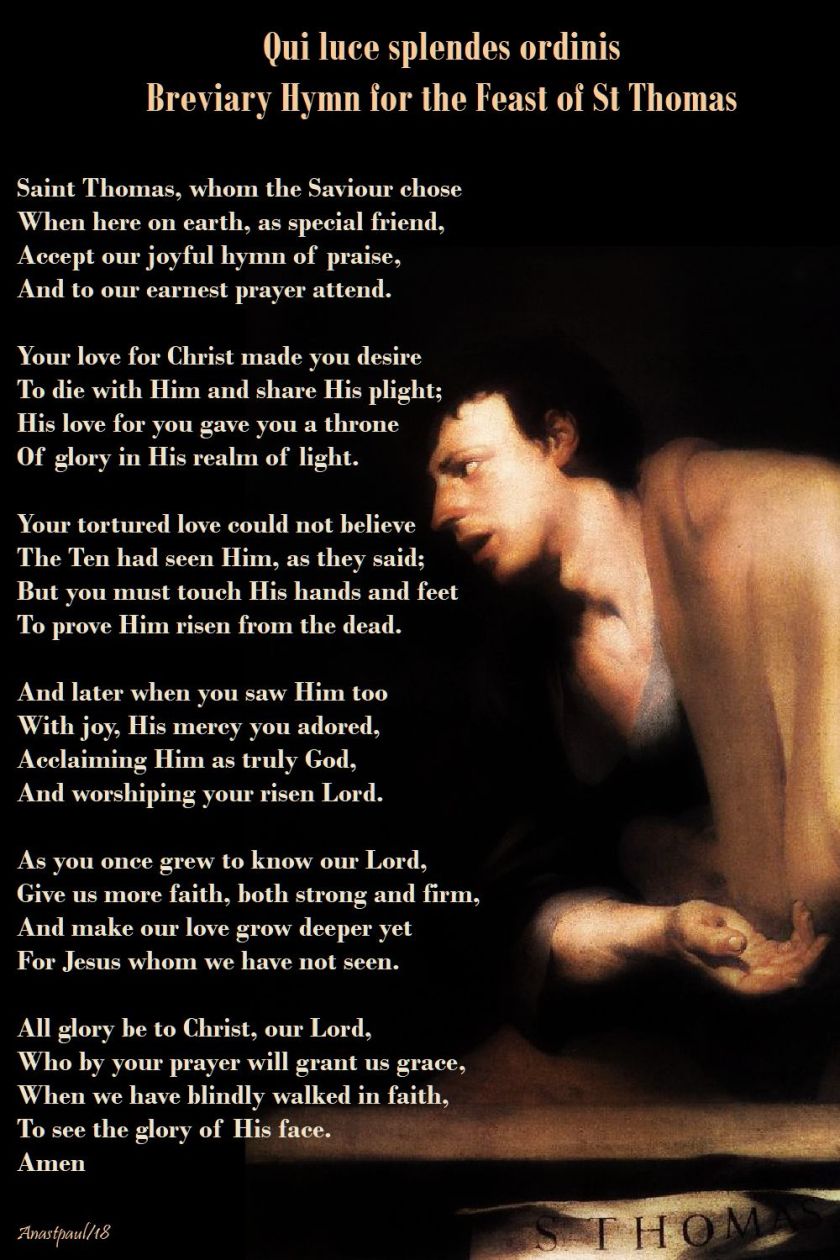
We must not suppose that St Thomas differed greatly from the other apostles. They all, more or less, mistrusted Christ’s promises when they saw Him led away to be crucified. When He was buried, their hopes were buried with Him and when the news was brought them, that He was risen again, they all disbelieved it. On His appearing to them, He “upbraided them with their unbelief and hardness of heart.” (Mark 16:14)… Thomas was convinced latest, because He saw Christ latest. On the other hand, it is certain that, though he disbelieved the good news of Christ’s resurrection at first, he was no cold-hearted follower of his Lord, as appears from his conduct on a previous occasion, when he expressed a desire to share danger and to suffer with Him…: “Let us also go, that we may die with him.” (Jn 11:16)… It was at the instance of Thomas that they hazarded their lives with their Lord.
St Thomas then loved his Master, as became an apostle and was devoted to His service; but when he saw him crucified, his faith failed for a season with that of the rest… and more than the rest. His standing out alone, not against one witness only but against his ten fellow disciples, besides Mary Magdalene and the other women is evidence of this… He seems to have required some sensible insight into the unseen state, some infallible sign from heaven, a ladder of angels like Jacob’s (Gn 28:12), which would remove anxiety by showing him the end of the journey at the time he set out. Some such secret craving after certainty beset him. And a like desire arose within him on the news of Christ’s resurrection.
While our Saviour allowed Thomas his wish and satisfied his senses that He was really alive, He accompanied the permission with a rebuke: “Because thou hast seen me, thou hast believed: blessed are they that have not seen and yet have believed.”… All His disciples minister to Him even in their weaknesses, that so He may convert them into instruction and comfort for His Church….Blessed John Henry Newman (1801-1890)PPS II, Sermon 2. “Faith without Sight”
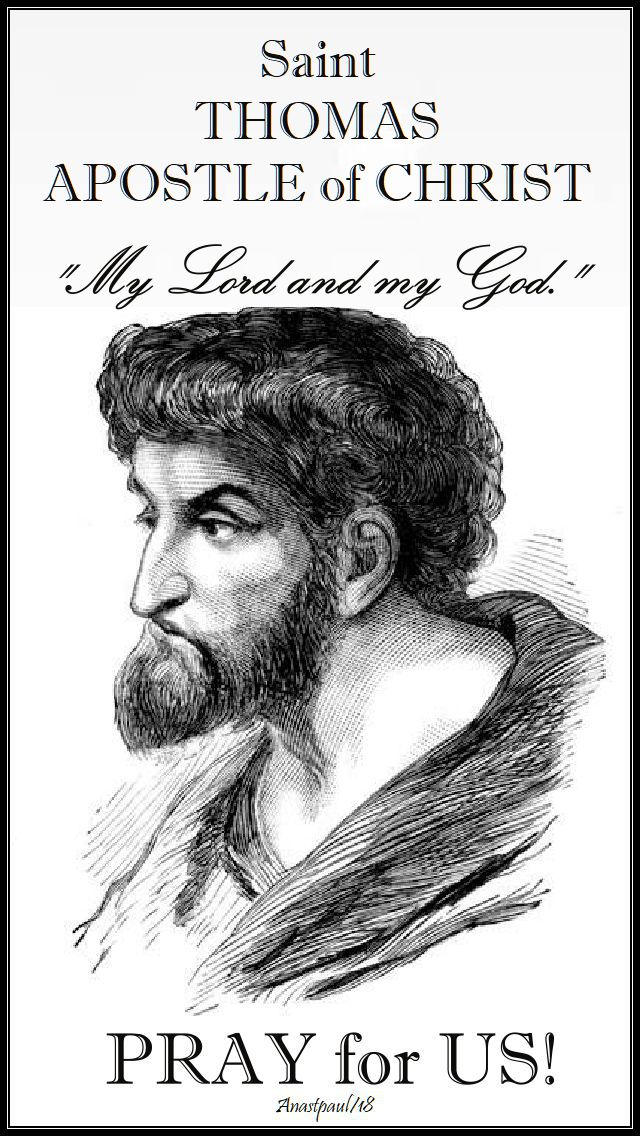
“My Lord and my God!”
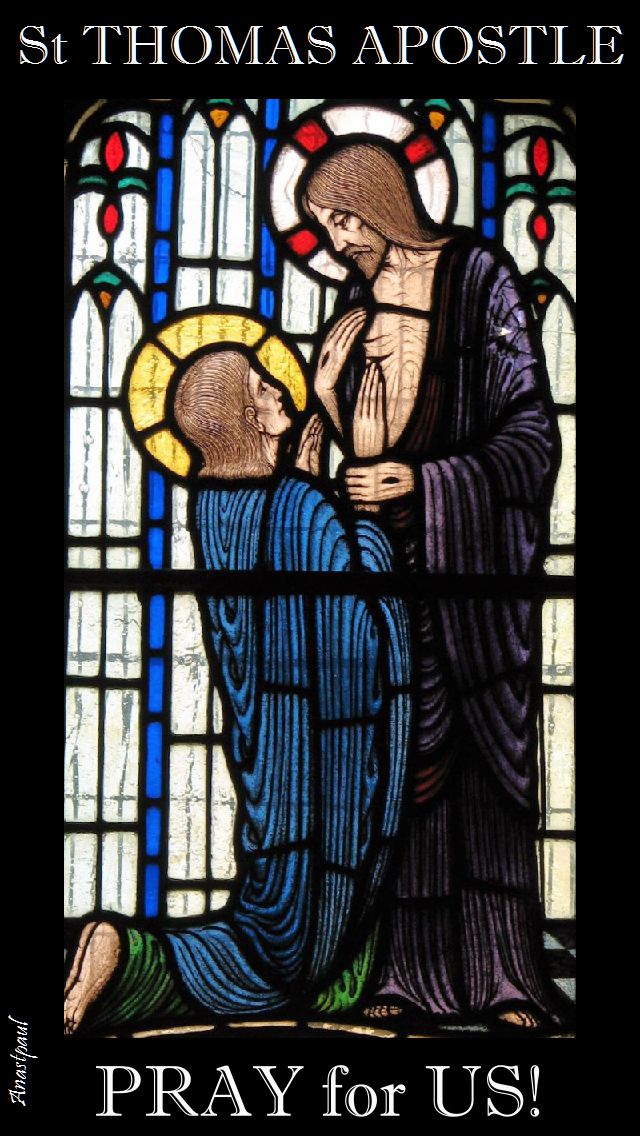
St Thomas, Pray for us that we too may so love our Lord and our God and “follow Him” to the end of time!
Quote of the Day – 3 July – Feast of St Thomas Apostle
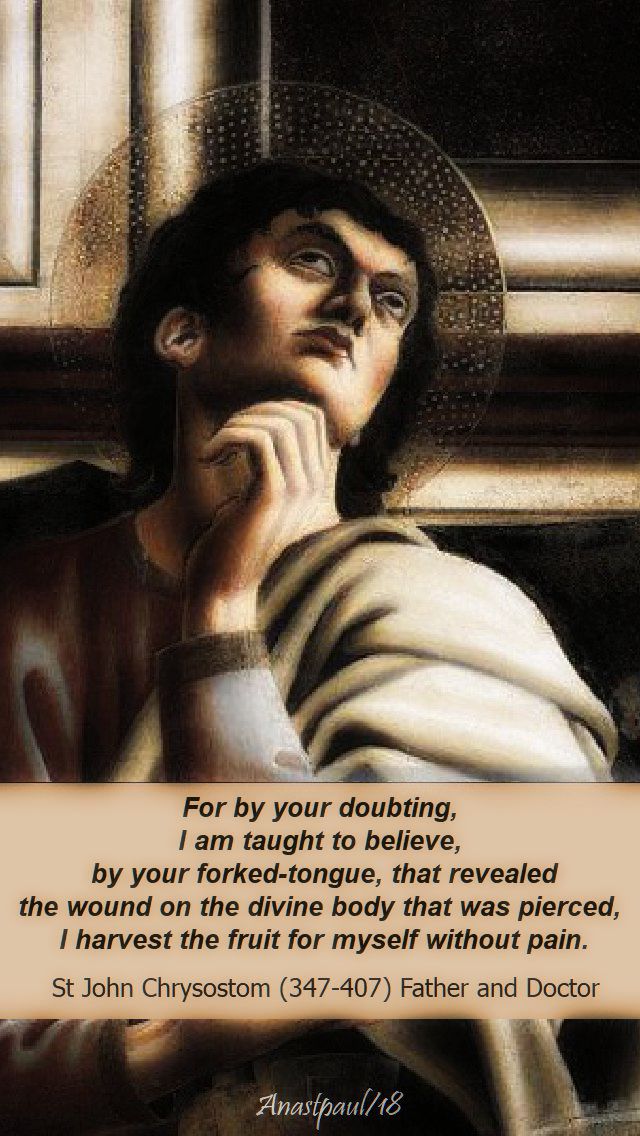
“For by your doubting, I am taught to believe, by your forked-tongue, that revealed the wound on the divine body that was pierced, I harvest the fruit for myself without pain.”
One Minute Reflection – 3 July – Feast of St Thomas Apostle – Today’s Gospel: John 20:24-29.
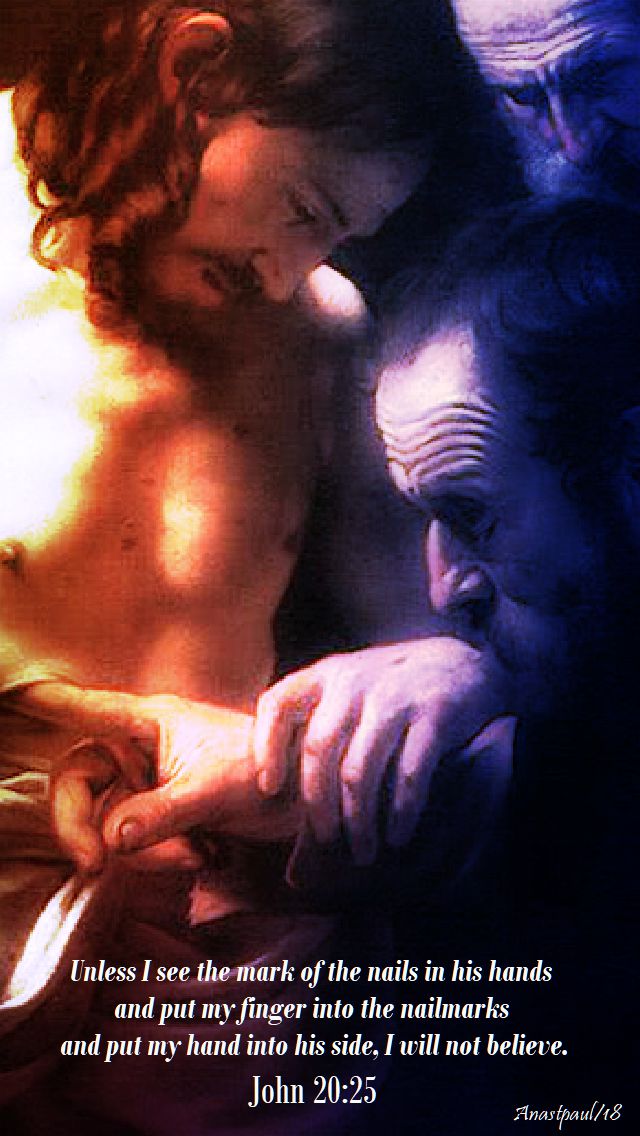
Thomas, called Didymus, one of the Twelve, was not with them when Jesus came. So the other disciples said to him, “We have seen the Lord.” But he said to them, “Unless I see the mark of the nails in his hands and put my finger into the nailmarks and put my hand into his side, I will not believe.”...John 20:24-25
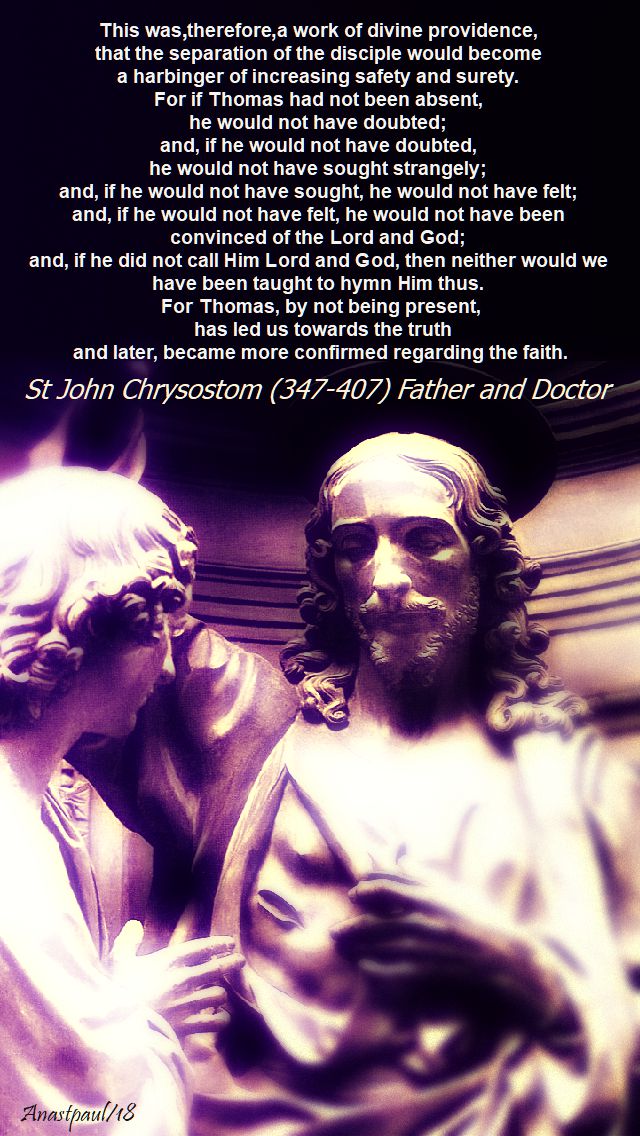
REFLECTION – “This was, therefore, a work of divine providence, that the separation of the disciple, would become a harbinger of increasing safety and surety. For if Thomas had not been absent, he would not have doubted; and, if he would not have doubted, he would not have sought strangely; and, if he would not have sought, he would not have felt; and, if he would not have felt, he would not have been convinced of the Lord and God; and, if he did not call Him Lord and God, then neither would we have been taught to hymn Him thus. For Thomas, by not being present, has led us towards the truth and later, became more confirmed regarding the faith.”… St John Chrysostom (347-407) Father and Doctor
PRAYER – Father, let our celebration on the feast of Saint Thomas the Apostle, be the source of his unfailing help and protection. Fill us with Your life-giving grace through our faith in Your Son, Jesus the Christ, whom Thomas acknowledged to be his Lord and his God. We make our prayer, through our Lord Jesus in union with the Holy Spirit, one God with You, forever and ever, amen.
Saint of the Day – 3 JULY _ Feast of St Thomas, Apostle of Christ
Thomas the twin By Pope Benedict XVI – General Audience, 27 September 2006
Dear Brothers and Sisters,
Continuing our encounters with the Twelve Apostles chosen directly by Jesus, today we will focus our attention on Thomas. Ever present in the four lists compiled by the New Testament, in the first three Gospels he is placed next to Matthew (cf. Mt 10: 3; Mk 3: 18; Lk 6: 15), whereas in Acts, he is found after Philip (cf. Acts 1: 13).
His name derives from a Hebrew root, ta’am, which means “paired, twin”. In fact, John’s Gospel several times calls him “Dydimus” (cf. Jn 11: 16; 20: 24; 21: 2), a Greek nickname for, precisely, “twin”. The reason for this nickname is unclear.
It is above all the Fourth Gospel that gives us information that outlines some important traits of his personality. The first concerns his exhortation to the other Apostles when Jesus, at a critical moment in His life, decided to go to Bethany to raise Lazarus, thus coming dangerously close to Jerusalem (Mk 10: 32).
On that occasion Thomas said to his fellow disciples: “Let us also go, that we may die with him” (Jn 11: 16). His determination to follow his Master is truly exemplary and offers us a valuable lesson: it reveals his total readiness to stand by Jesus, to the point of identifying his own destiny with that of Jesus and of desiring to share with Him the supreme trial of death.
In fact, the most important thing is never to distance oneself from Jesus. Moreover, when the Gospels use the verb “to follow”, it means that where He goes, his disciple must also go.
Thus, Christian life is defined as a life with Jesus Christ, a life to spend together with Him. St Paul writes something similar when he assures the Christians of Corinth: “You are in our hearts, to die together and to live together” (II Cor 7: 3). What takes place between the Apostle and his Christians must obviously apply first of all to the relationship between Christians and Jesus himself: dying together, living together, being in his Heart as He is in ours.
A second intervention by Thomas is recorded at the Last Supper. On that occasion, predicting his own imminent departure, Jesus announced that He was going to prepare a place for His disciples so that they could be where He is found and He explains to them: “Where [I] am going you know the way” (Jn 14: 4). It is then that Thomas intervenes, saying: “Lord, we do not know where you are going; how can we know the way?” (Jn 14: 5).
In fact, with this remark he places himself at a rather low level of understanding but his words provide Jesus with the opportunity to pronounce His famous definition: “I am the Way and the Truth and the Life” (Jn 14: 6). Thus, it is primarily to Thomas that He makes this revelation but it is valid for all of us and for every age. Every time we hear or read these words, we can stand beside Thomas in spirit and imagine that the Lord is also speaking to us, just as He spoke to him. At the same time, his question also confers upon us the right, so to speak, to ask Jesus for explanations. We often do not understand Him. Let us be brave enough to say: “I do not understand you, Lord, listen to me, help me to understand”. In such a way, with this frankness which is the true way of praying, of speaking to Jesus, we express our meagre capacity to understand and at the same time place ourselves in the trusting attitude of someone who expects light and strength from the One able to provide them.
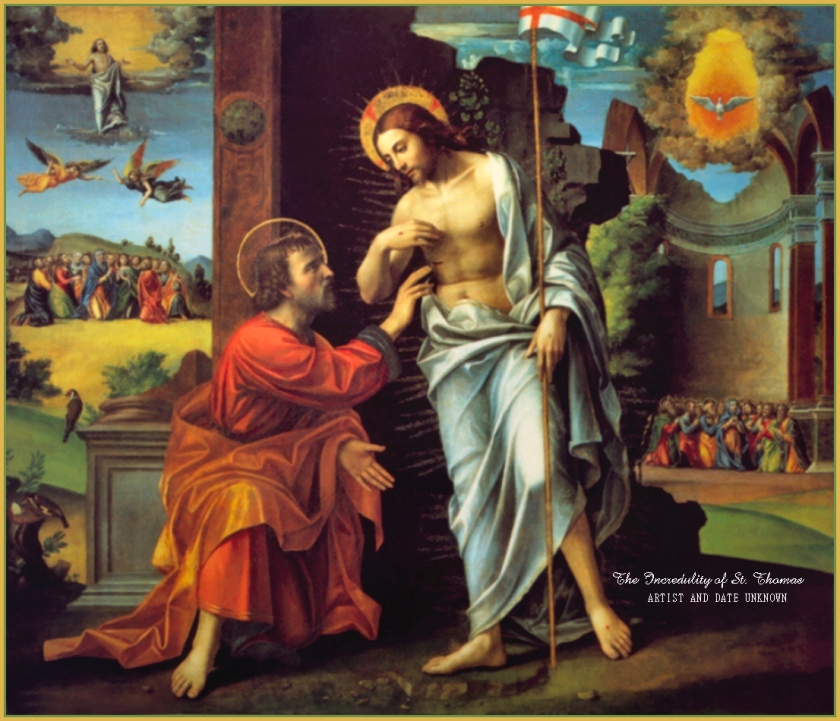
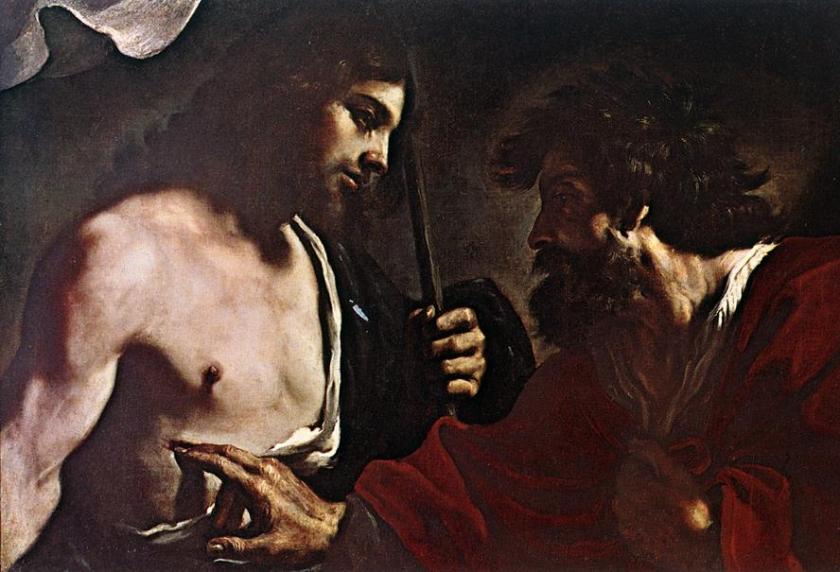
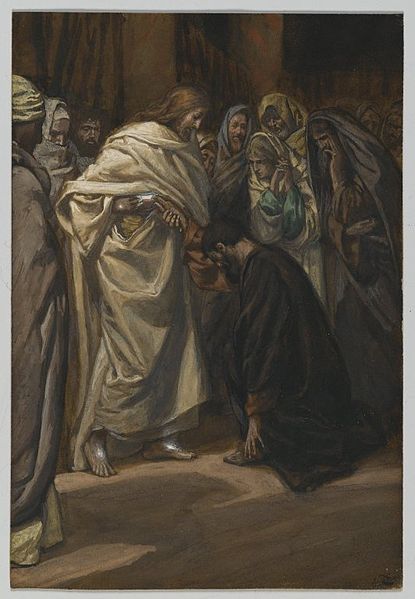
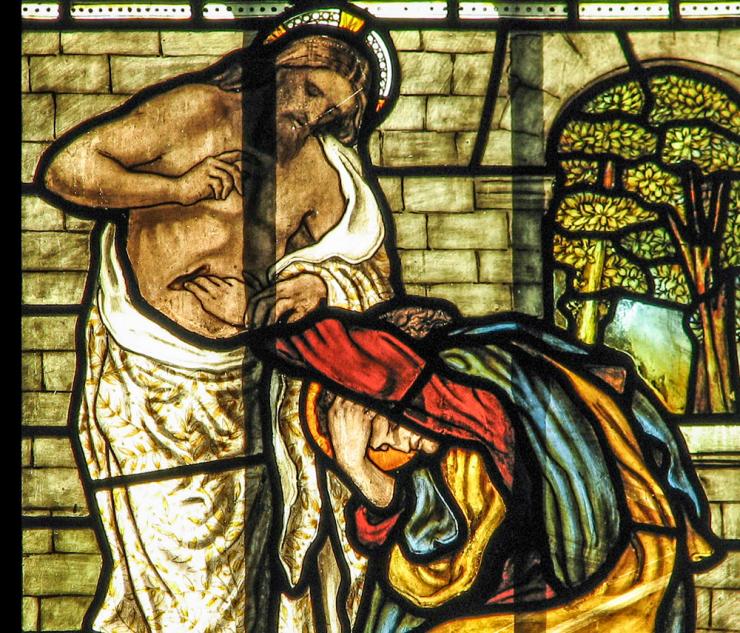
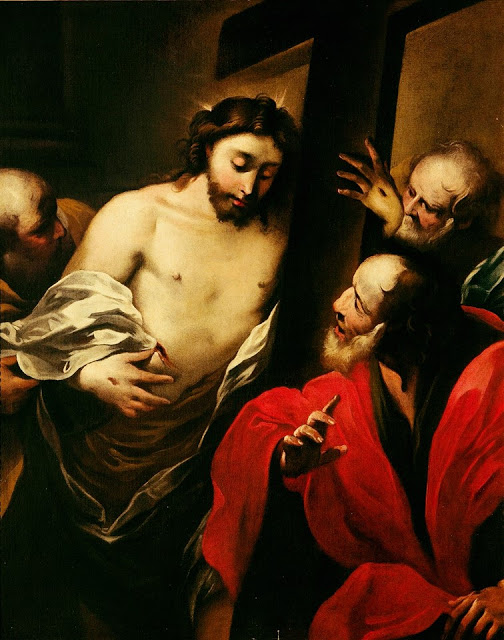
Then, the proverbial scene of the doubting Thomas that occurred eight days after Easter is very well known. At first he did not believe that Jesus had appeared in his absence and said: “Unless I see in his hands the print of the nails, and place my finger in the mark of the nails, and place my hand in his side, I will not believe” (Jn 20: 25).
Basically, from these words emerges the conviction that Jesus can now be recognised by His wounds rather than by His face. Thomas holds that the signs that confirm Jesus’ identity are now above all His wounds, in which He reveals to us how much He loved us. In this the Apostle is not mistaken.
As we know, Jesus reappeared among his disciples eight days later and this time Thomas was present. Jesus summons him: “Put your finger here, and see my hands; and put out your hand, and place it in my side; do not be faithless, but believing” (Jn 20: 27). Thomas reacts with the most splendid profession of faith in the whole of the New Testament: “My Lord and my God!” (Jn 20: 28). St Augustine comments on this: Thomas “saw and touched the man and acknowledged the God whom he neither saw nor touched but by the means of what he saw and touched, he now put far away from him every doubt and believed the other” (In ev. Jo. 121, 5).
The Evangelist continues with Jesus’ last words to Thomas: “Have you believed because you have seen me? Blessed are those who have not seen and yet believe” (Jn 20: 29). This sentence can also be put into the present: “Blessed are those who do not see and yet believe”.
In any case, here Jesus spells out a fundamental principle for Christians who will come after Thomas, hence, for all of us.
It is interesting to note that another Thomas, the great Medieval theologian of Aquinas, juxtaposed this formula of blessedness with the apparently opposite one recorded by Luke: “Blessed are the eyes which see what you see!” (Lk 10: 23). However, Aquinas comments: “Those who believe without seeing are more meritorious than those who, seeing, believe” (In Johann. XX lectio VI 2566).
In fact, the Letter to the Hebrews, recalling the whole series of the ancient biblical Patriarchs who believed in God without seeing the fulfilment of His promises, defines faith as “the assurance of things hoped for, the conviction of things not seen” (Heb 11: 1).
The Apostle Thomas’ case is important to us for at least three reasons: first, because it comforts us in our insecurity; second, because it shows us that every doubt can lead to an outcome brighter than any uncertainty and, lastly, because, the words that Jesus addressed to him remind us of the true meaning of mature faith and encourage us to persevere, despite the difficulty, along our journey of adhesion to Him.
A final point concerning Thomas is preserved for us in the Fourth Gospel, which presents him as a witness of the Risen One in the subsequent event of the miraculous catch in the Sea of Tiberias (cf. Jn 21: 2ff.).
On that occasion, Thomas is even mentioned immediately after Simon Peter: an evident sign of the considerable importance that he enjoyed in the context of the early Christian communities.
Indeed, the Acts and the Gospel of Thomas, both apocryphal works but in any case important for the study of Christian origins, were written in his name.
Lastly, let us remember that an ancient tradition claims that Thomas first evangelised Syria and Persia (mentioned by Origen, according to Eusebius of Caesarea, Ecclesiastical History 3, 1) then went on to Western India (cf. Acts of Thomas 1-2 and 17ff.), from where also he finally reached Southern India.
Let us end our reflection in this missionary perspective, expressing the hope that Thomas’ example will never fail to strengthen our faith in Jesus Christ, Our Lord and Our God. Amen…Pope Benedict, vatican.va
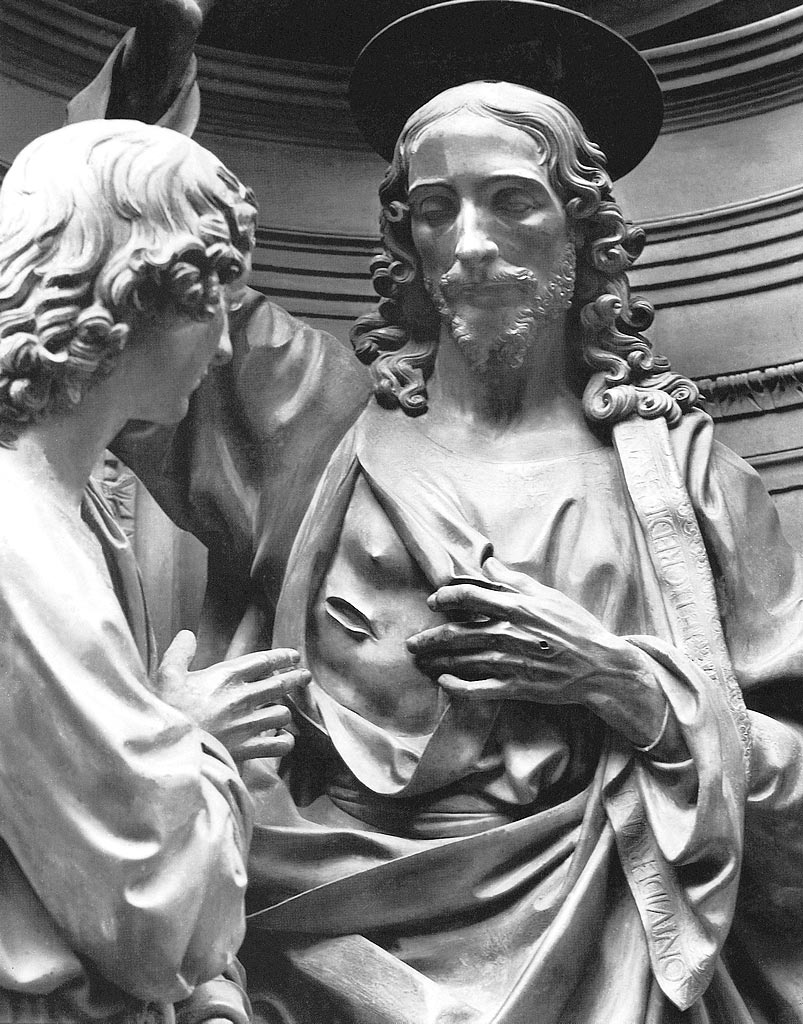
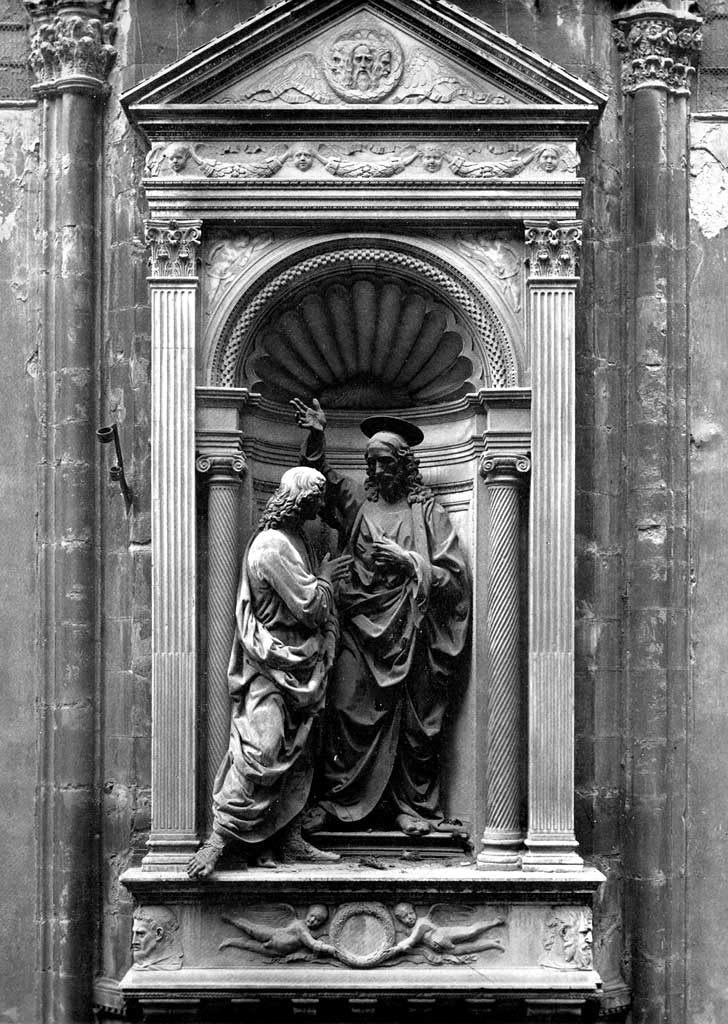
Christ and St Thomas – San Michele, Florence by Andrea del Verrocchio 1465-1483
There is a large population of native Christians who call themselves ‘the Christians of St Thomas’. They have an ancient oral tradition that he landed at Cranganoreon, the west coast and established seven churches in Malabar though his landing on the west coast is disputed today, the rest is not. He then passed eastward to the Coromandel Coast, where he was Martyred, by spearing, on the ‘Big Hill’, eight miles from Madras and was buried at Mylapore, now a suburb of that city. There are several medieval references to the tomb of St Thomas in India, some of which name Mylapore and in 1522 the Portuguese discovered the tomb there, with certain small relics now preserved in the cathedral of St Thomas at Mylapore. But the bulk of his relics were certainly at Edessa in the fourth century, as the Acta Thomae relate. They were later translated from Edessa to the island of Khios in the Aegean and from thence to Ortona in the Abruzzi, where they are still venerated.
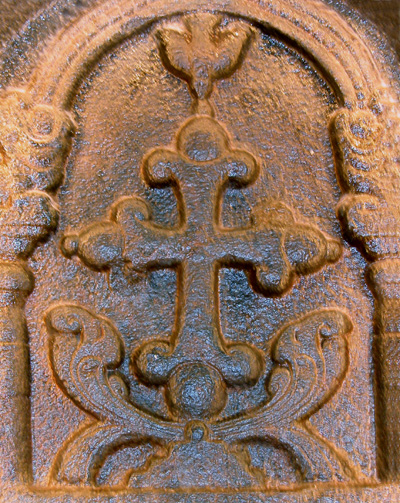
When St Francis Xavier came to India, the signs of blood were still to be seen on the cross where the murderous deed of the martyrdom of St Thomas was committed and more than once drops of blood appeared on this cross during the celebration of Mass, when crowds of people were present. St Xavier, shortly after his arrival in India, went to the tomb of St Thomas, and passed many days and nights there in prayer. He begged God fervently to bestow upon him the Spirit and zeal of this holy Apostle, that he might be able to restore the Christian faith which St Thomas had preached there but which had gradually been entirely exterminated. Before undertaking any important work, he went, if possible, to the tomb of St Thomas and when this was impossible, he invoked the holy Apostle’s intercessio, and endeavoured to follow his example in all things.
The Bleeding Cross
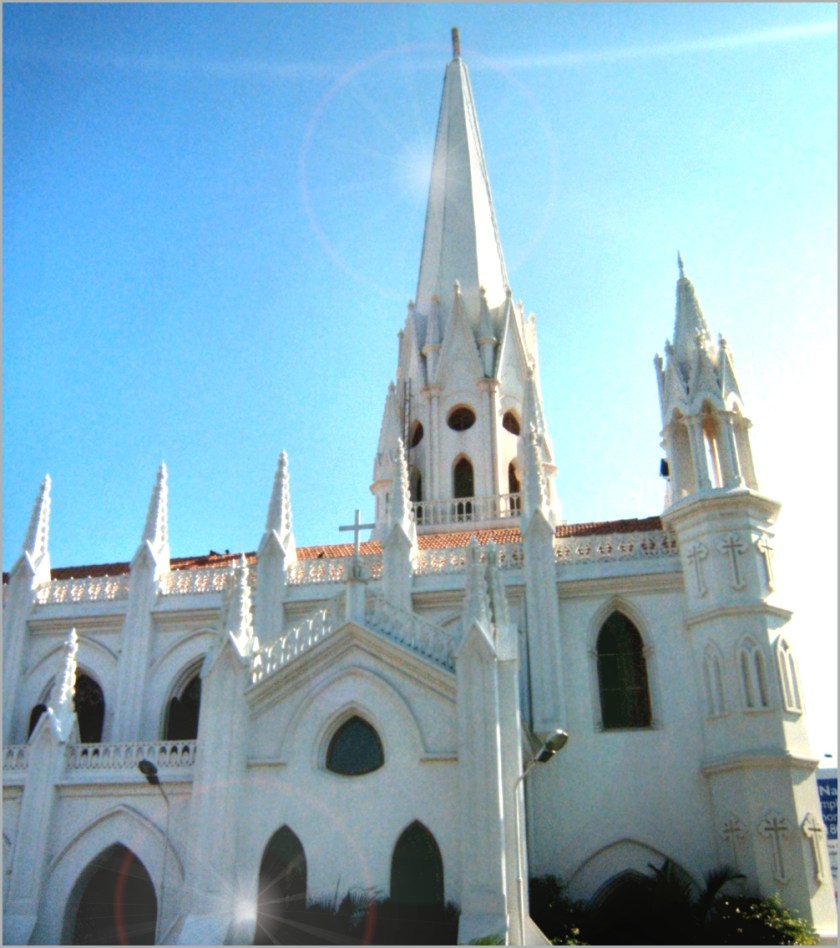
Saint Thomas was declared the “Apostle of India” by Pope Paul VI in 1972. Below is the St Thomas Cathedral in Madras, India.
More info with patronages etc and many pics here: https://anastpaul.wordpress.com/2017/07/03/saint-of-the-day-3-july-st-thomas-the-apostle-of-christ/
St Anatolius of Alexandria
St Anatolius of Constantinople
Bl Andreas Ebersbach
Bl Barbara Jeong Sun-mae
St Bladus
St Byblig
St Cillene
St Dathus of Ravenna
St Eusebius of Laodicea
St Firminus
St Firmus
Bl Gelduin
St Germanus of Man
St Giuse Nguyen Ðình Uyen
St Gunthiern
St Guthagon
St Heliodorus of Altinum
St Hyacinth of Caesarea
St Ioannes Baptista Zhao Mingxi
St Irenaeus of Chiusi
St Pope Leo II
St Maelmuire O’Gorman
St Mark of Mesia
St Mennone the Centurian
St Mucian of Mesia
St Paul of Mesia
St Petrus Zhao Mingzhen
St Philiphê Phan Van Minh
St Raymond of Toulouse
—
Martyrs of Alexandria – 13 saints: Thirteen Christian companions marytred together. No details about them have survived but the names – Apricus, Cyrion (2 of), Eulogius, Hemerion, Julian, Julius, Justus, Menelaus, Orestes, Porfyrios and Tryphon (2 of). They martyred in Alexandria, Egypt, date unknown.
Martyrs of Constantinople – 24 saints: A group of 24 Christians martyred in the persecutions of Arian emperor Valens. We know little more than their names – Acacios, Amedinos, Ammonius, Ammus, Cerealis, Cionia, Cionius, Cyrianus, Demetrius, Eulogius (2), Euphemia, Heliodoros, Heraclios, Horestes, Jocundus, Julian, Martyrios, Menelaeus, Sestratus, Strategos, Thomas, Timotheos and Tryphon. They were martyred in c367 in Constantintinople.
Theodotus and Companions – 6 saints: Six Christians who were imprisoned, tortured and martyred together in the persecutions of Trajan. Saint Hyacinth ministered to them in prison. We know nothing else about them but their names – Asclepiodotus, Diomedes, Eulampius, Golinduchus, Theodota and Theodotus. They were beheaded in c110, location
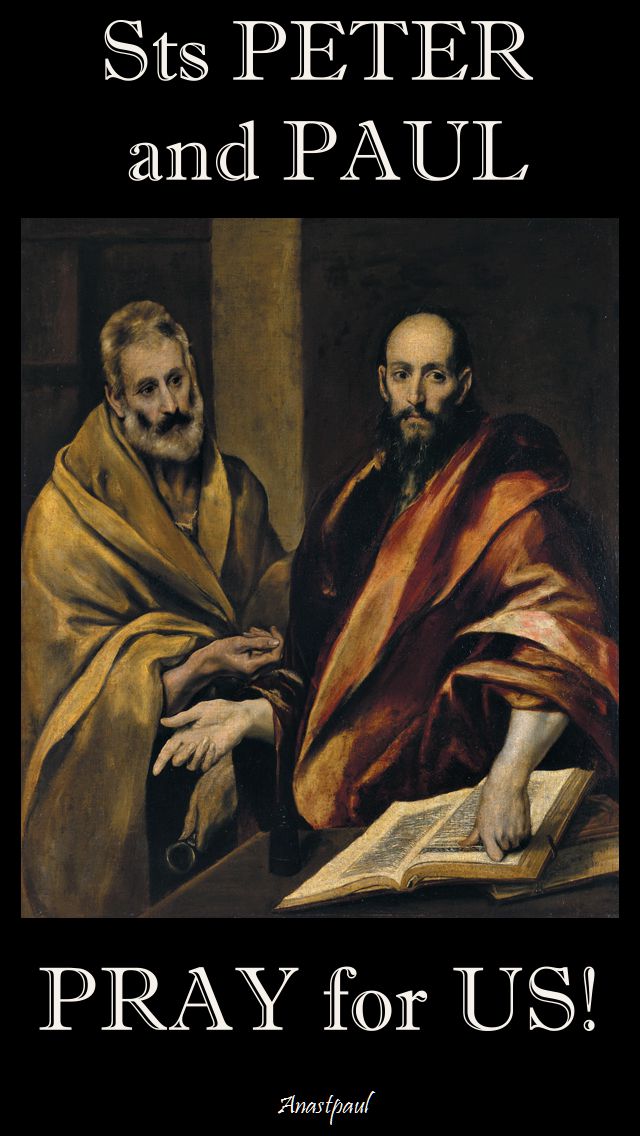
Quote/s of the Day – 29 June – The Solemnity of Saints Peter and Paul
“Their sound has gone out into all the earth and their words to the ends of the world”
Psalm 19
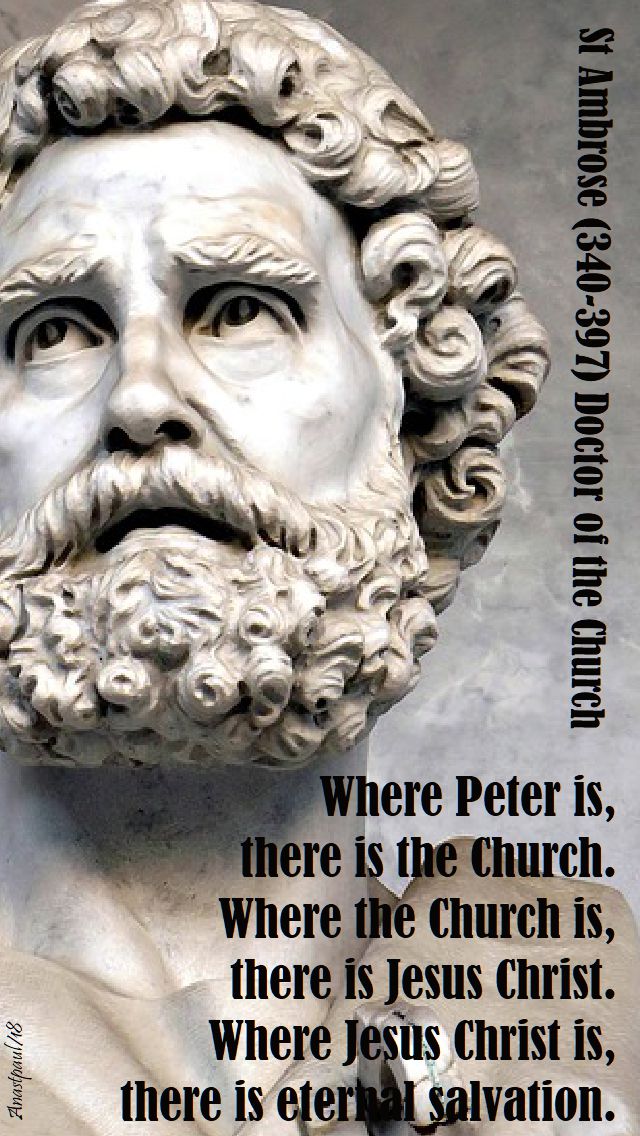
“Where Peter is, there is the Church. Where the Church is, there is Jesus Christ. Where Jesus Christ is, there is eternal salvation.”
St Ambrose (340-397)
One of the original four Doctors of the Church
“There is one day for the passion of two apostles. But these two also were as one; although they suffered on different days, they were as one. Peter went first, Paul followed. We are celebrating a feast day, consecrated for us by the blood of the apostles. Let us love their faith, their lives, their labours, their sufferings, their confession of faith, their preaching.”
St Augustine (354-430) Father & Doctor of the Church
“There must be general rejoicing, dearly beloved, over this holy company whom God has appointed for our example in patience and for our confirmation in faith. But we must glory even more in the excellence of their fathers, Peter and Paul, whom the grace of God has raised to such a height among all the members of the Church that He has set them like twin lights of eyes in that Body whose head is Christ.”
St Pope Leo the Great (400-461) Father & Doctor of the Church
Today the Lord repeats to me, to you…: Follow Me! Waste no time in questioning or in useless chattering; do not dwell on secondary things but look to what is essential and follow Me. Follow Me without regard for the difficulties. Follow Me in preaching the Gospel. Follow Me by the witness of a life shaped by the grace you received in baptism….. and holy orders. Follow Me by speaking of Me, to those with whom you live, day after day, in your work, your conversations and among your friends. Follow Me by proclaiming the Gospel to all, especially to the least among us, so that no one will fail to hear the word of life, which sets us free from every fear and enables us to trust in the faithfulness of God. Follow Me!
One Minute Reflection – 29 June – The Solemnity of Saints Peter and Paul – Today’s Gospel: Matthew 16:13–19
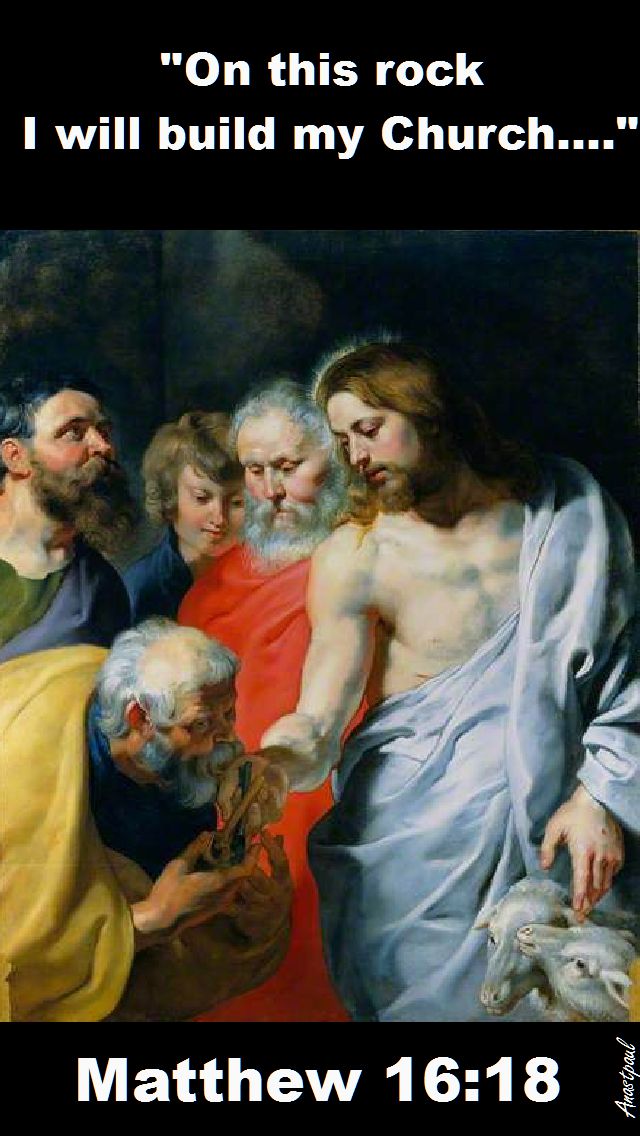
And I tell you, you are Peter and on this rock I will build my church and the powers of death shall not prevail against it. I will give you the keys of the kingdom of heaven and whatever you bind on earth shall be bound in heaven, and whatever you loose on earth shall be loosed in heaven.” …Matthew 16:18-19
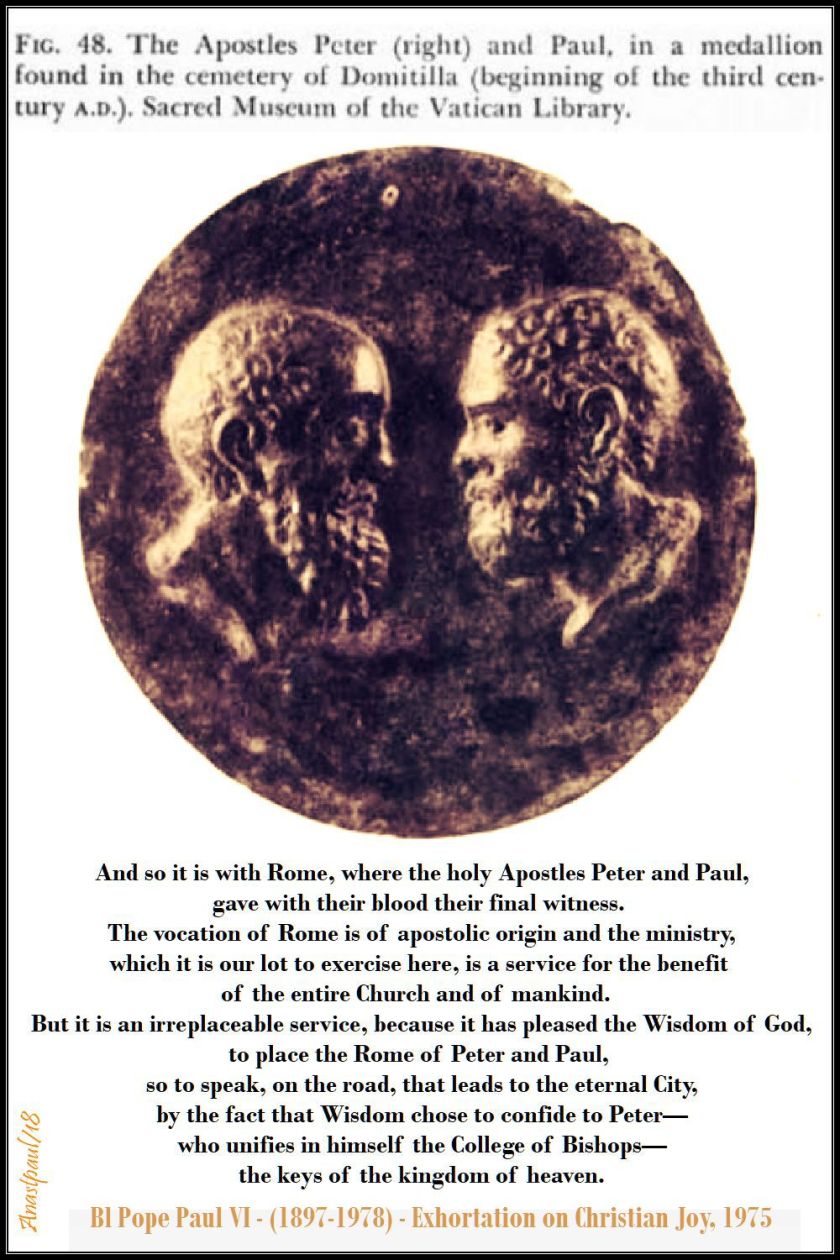
REFLECTION – “And so it is with Rome, where the holy Apostles Peter and Paul, gave with their blood their final witness. The vocation of Rome is of apostolic origin and the ministry which it is our lot to exercise here, is a service for the benefit of the entire Church and of mankind. But it is an irreplaceable service, because it has pleased the Wisdom of God to place the Rome of Peter and Paul, so to speak, on the road that leads to the eternal City, by the fact that Wisdom chose to confide to Peter—who unifies in himself the College of Bishops—the keys of the kingdom of heaven. What remains here, not through the effect of man’s will but through the free and merciful benevolence of the Father and the son and the Holy Spirit, is the soliditas Petri, such as our predecessor Saint Leo the Great extolled in unforgettable terms: “Saint Peter does not cease to preside over his See and preserves an endless sharing, with the Sovereign Priest. The firmness that he received from the Rock which is Christ, he himself, having become the Rock, transmits it equally to his successors.”…Blessed Pope Paul VI (1897-1978) – Exhortation on Christian Joy, 1975
PRAYER – Lord our God, You give us the great joy of devoting this day to the honour of the apostles Peter and Paul. Provide us, by their intercession, with help for our eternal salvation. Grant that Your Church may follow their teaching to the full, because these are the men who first taught us to worship You in Christ, Your Son, who lives and reigns with You and the Holy Spirit, one God forever, amen.
Our Morning Offering – 29 June – The Solemnity of Saints Peter and Paul
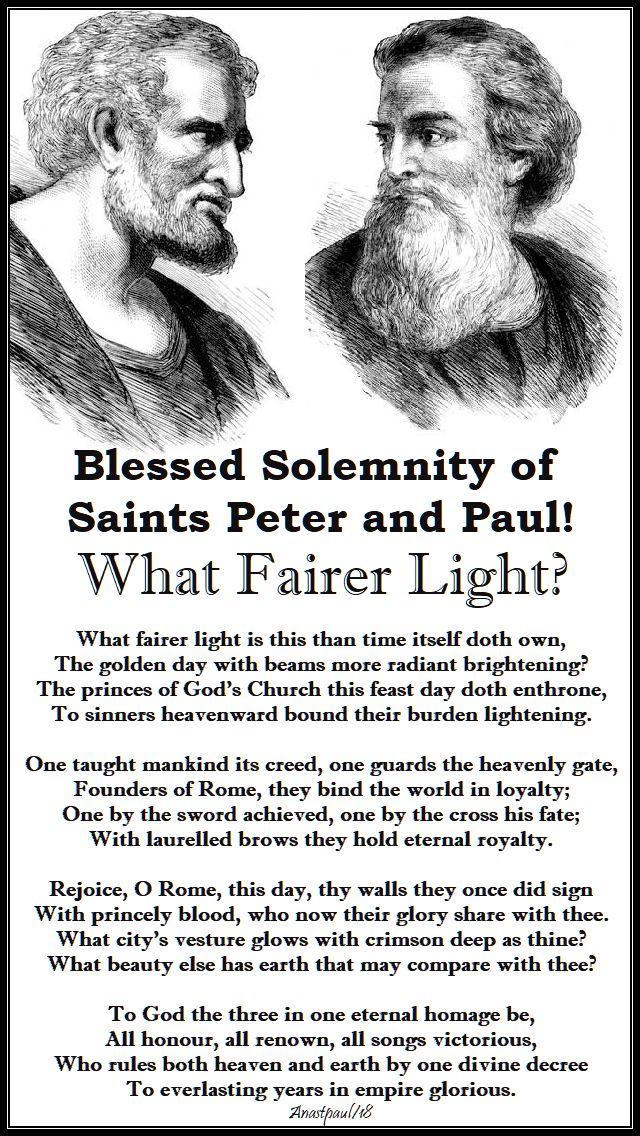
What Fairer Light?
Hymn for the Solemnity of Sts Peter and Paul Elphis, c 493, wife of Boethius c 477– 524 Translation: R A Knox, 1888-1957
What fairer light is this than time itself doth own,
The golden day with beams more radiant brightening?
The princes of God’s Church this feast day doth enthrone,
To sinners heavenward bound their burden lightening.
One taught mankind its creed, one guards the heavenly gate,
Founders of Rome, they bind the world in loyalty;
One by the sword achieved, one by the cross his fate;
With laurelled brows they hold eternal royalty.
Rejoice, O Rome, this day, thy walls they once did sign
With princely blood, who now their glory share with thee.
What city’s vesture glows with crimson deep as thine?
What beauty else has earth that may compare with thee?
To God the three in one eternal homage be,
All honour, all renown, all songs victorious,
Who rules both heaven and earth by one divine decree
To everlasting years in empire glorious.
Wishing you all a Holy and Blessed Solemnity of Saints Peter and Paul
The Solemnity of Saints Peter and Paul
St Augustine (354-430)
This day has been consecrated for us by the Martyrdom of the blessed apostles Peter and Paul. It is not some obscure martyrs we are talking about. “Their sound has gone out into all the earth and their words to the ends of the world” (Psalm 19). These martyrs had seen what they proclaimed, they pursued justice by confessing the truth, by dying for the truth.
The blessed Peter, the first of the Apostles, the ardent lover of Christ, who was found worthy to hear, “And I say to you, that you are Peter” (Matthew 16:13-20). He himself, you see, had just said, “You are the Christ, the Son of the living God.” Christ said to him, “And I say to you that you are Peter, and upon this rock I will build my Church.” Upon this rock I will build the faith you have just confessed. Upon your words, “You are the Christ, the Son of the living God,” I will build My Church, because you are Peter. Peter comes from petra, meaning a rock. Peter, “Rocky”, from “rock” not “rock” from “Rocky”. Peter comes from the word for a rock in exactly the same way as the name Christian comes from Christ.
Before His passion the Lord Jesus, as you know, chose those disciples of His whom He called apostles. Among these it was only Peter who almost everywhere, was given the privilege of representing the whole Church. It was in the person of the whole Church, which he alone represented, that he was privileged to hear, “To you will I give the keys of the kingdom of heaven.” After all, it is not just one man that received these keys but the Church in its unity. So this is the reason for Peter’s acknowledged pre-eminence, that he stood for the Church’s universality and unity, when he was told, “To you I am entrusting,” what has in fact been entrusted to all. To show you that it is the Church which has received the keys of the kingdom of heaven, listen to what the Lord says in another place to all His apostles: “Receive the Holy Spirit” and immediately afterwards, “Whose sins you forgive, they will be forgiven them; whose sins you retain, they will be retained” (John 20:22-23).
Quite rightly, too, did the Lord after His resurrection entrust His sheep to Peter to be fed (Jn. 21: 15-19). It is not, you see, that he alone among the disciples was fit to feed the Lord’s sheep but when Christ speaks to one man, unity is being commended to us. And He first speaks to Peter, because Peter is the first among the apostles. Do not be sad, Apostle. Answer once, answer again, answer a third time. Let confession conquer three times with love, because self-assurance was conquered three times by fear. What you had bound three times must be loosed three times. Loose through love what you had bound through fear. And for all that, the Lord once and again, and a third time, entrusted His sheep to Peter.
There is one day for the passion of two apostles. But these two also were as one; although they suffered on different days, they were as one. Peter went first, Paul followed.
We are celebrating a feast day, consecrated for us by the blood of the apostles. Let us love their faith, their lives, their labours, their sufferings, their confession of faith, their preaching.
O God, who on the Solemnity of the Apostles Peter and Paul
give us the noble and holy joy of this day,
grant, we pray, that Your Church
may in all things follow the teaching
of those through whom she received
the beginnings of right religion.
Through our Lord Jesus Christ, Your Son,
who lives and reigns with You in the unity of the Holy Spirit,
one God, forever and ever.
Amen
Thought for the Day – 11 June – Memorial of St Barnabas, Apostle
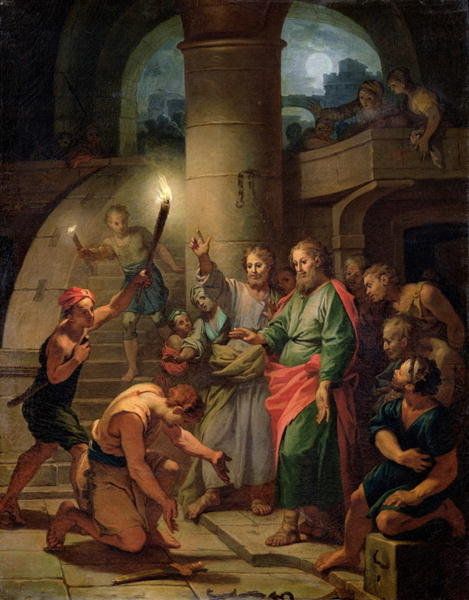
Barnabas, a Jew of Cyprus, comes as close as anyone outside the Twelve to being a full-fledged apostle. He was closely associated with Saint Paul—he introduced Paul to Peter and the other apostles—and served as a kind of mediator between the former persecutor and the still suspicious Jewish Christians.
When a Christian community developed at Antioch, Barnabas was sent as the official representative of the church of Jerusalem to incorporate them into the fold. He and Paul instructed in Antioch for a year, after which they took relief contributions to Jerusalem.
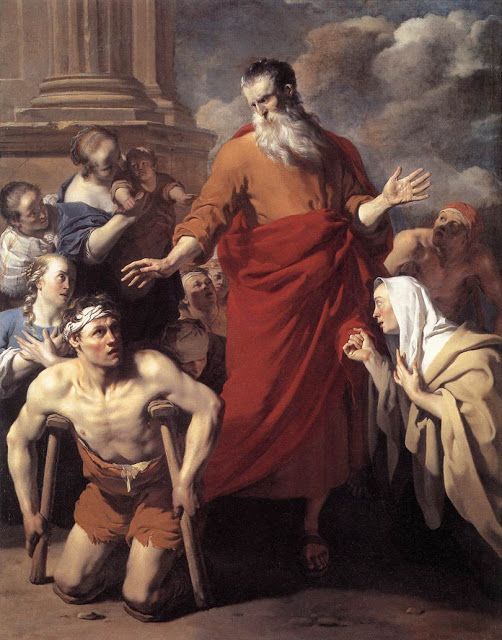
Later Paul and Barnabas, now clearly seen as charismatic leaders, were sent by Antioch officials to preach to the gentiles. Enormous success crowned their efforts. After a miracle at Lystra, the people wanted to offer sacrifice to them as gods—Barnabas being Zeus, and Paul, Hermes—but the two said, “We are of the same nature as you, human beings. We proclaim to you good news that you should turn from these idols to the living God” (see Acts 14:8-18).
But all was not peaceful. They were expelled from one town, they had to go to Jerusalem to clear up the ever-recurring controversy about circumcision and even the best of friends can have differences. When Paul wanted to revisit the places they had evangelised, Barnabas wanted to take along his cousin John Mark, author of the Gospel but Paul insisted that since Mark had deserted them once, he was not fit to take along now. The disagreement that followed was so sharp, that Barnabas and Paul separated: Barnabas taking Mark to Cyprus, Paul taking Silas to Syria. Later they were reconciled—Paul, Barnabas and Mark.
When Paul stood up to Peter for not eating with gentiles for fear of his Jewish friends, we learn that “even Barnabas was carried away by their hypocrisy” (see Galatians 2:1-13)
Barnabas is spoken of simply as one who dedicated his life to the Lord. He was a man “filled with the Holy Spirit and faith. Thereby, large numbers were added to the Lord.” Even when he and Paul were expelled from Antioch in Pisidia—modern-day Turkey—they were “filled with joy and the Holy Spirit.”
Come O Holy Spirit, come, fill the hearts of Your faithful!
One Minute Reflection – 11 June – Memorial of St Barnabas, Apostle – Today’s First Reading Acts of the Apostles 11:21b-26.13:1-3.
News of this came to the ears of the church in Jerusalem and they sent Barnabas to Antioch. When he came and saw the grace of God, he was glad and he exhorted them all, to remain faithful to the Lord, with steadfast purpose; for he was a good man, full of the Holy Spirit and of faith. And a large company was added to the Lord...Acts 11:22-24
REFLECTION – “While we cannot see God, there is something we can do, to open a way, for the eye of our understanding to come to Him. It is certain that we can see now in His servants, one whom we can in no way see in Himself. When we see them doing astonishing things, we can be sure that God dwells in their hearts… None of us can look directly at the rising sun by gazing at its orb. Our eyes are repelled as they strain to see its rays. But we look at mountains bathed in sunlight and see that it has risen. Because we cannot see the Sun of righteousness (Mal 3,20) Himself, let us see the mountains bathed in His brightness, I mean the holy apostles. They shine with virtues and gleam with miracles… The power of His divinity, is in itself, like the sun in the sky; in human beings it is like the sun shining on earth…”…St Pope Gregory the Great (c 540-604), Father & Doctor of the Church (Homilies on the Gospel, no 30)
PRAYER – O God, who decreed that Saint Barnabas, a man filled with faith and the Holy Spirit, should be set apart to convert the nations, grant that the Gospel of Christ, which he strenuously preached, may be faithfully proclaimed by word and by deed. We pray you Lord, that by the intercession of St Barnabas, we too may grow in faith and love and live to glorify Your kingdom. Through our Lord Jesus Christ, Your Son, who lives and reigns with you in the unity of the Holy Spirit, one God, forever and ever. Amen.
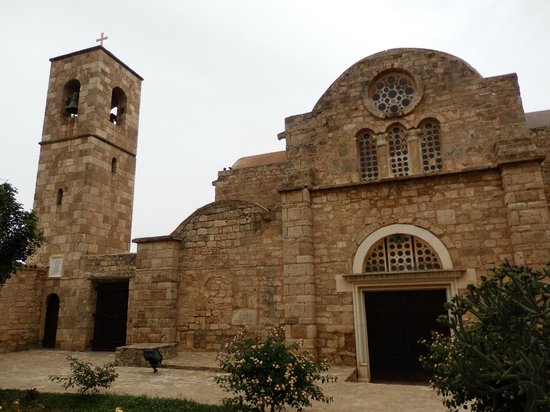
Saint of the Day – 11 June – St Barnabas, Apostle – Prophet, Disciple, Apostle to Antioch and Cyprus, Missionary and Martyr – born in Cyprus as Joseph – martyred in c 61 at Salamis. At his Baptism, when he sold all his goods and gave the money to the apostles in Jerusalem, they gave him a new name, “Barnabas”, which means “Son of Encouragement; Son of Consolation.” Patronages – Cyprus, Antioch, against hailstorms, invoked as peacemaker.
St Barnabas, was designated by the Holy Spirit to share the charge and mission of the twelve Apostles, is venerated by the Church as one of them. He played an important part in the first extension of Christianity outside the Jewish world. It was Barnabas who presented St Paul to the other Apostles when, after his long retreat in Arabia, he came to Jerusalem for the first time after his conversion, to submit for Peter’s approval, the mission to the Gentiles entrusted to him, by the Master Himself. Barnabas was Paul’s companion and helper on his first missionary journey and returned with him to Jerusalem but left him, when he set out on his second journey and went to Cyprus. The name of St Barnabas is mentioned in the Canon of the Mass.
We know nothing about St Barnabas except what Scripture tells us. St Luke says he was “a good man, filled with the Holy Spirit and faith” (Acts 11:24). No one could ask for a better recommendation! The saint was born at Cyprus, a Jew of the tribe of Levi. His given name was Joseph, but the apostles called him Barnabas, which meant “son of encouragement” (Acts 4:36). That nickname suited him to a tee, for everywhere he went he seems to have played a major supportive role in establishing the Christian community. For example, he sold his property and donated the money to the apostles for the poor.
Later the apostles sent him to care for the fledgling church at Antioch (Acts 11:20–22). He brought Paul from Tarsus to help him and the community flourished under their leadership (Acts 11:25–26). Twice Barnabas and Paul travelled to Jerusalem on behalf of the church at Antioch (Acts 11:27–30; 15:2). He also accompanied Paul on his first missionary journey that began in Cyprus and circuited through Asia Minor (Acts 13:1–2, 7).
Before the next missionary journey, however, Paul and Barnabas quarreled over some personal and pastoral matters and decided to separate. Barnabas returned to Cyprus and evangelised the island. Paul’s later references to Barnabas in his letters indicate that the two apostles were ultimately reconciled (see 1 Corinthians 9:6; Colossians 4:10).
Early Christians attributed an epistle to Barnabas but modern scholars say he probably did not write it. Tertullian and other Western writers regard Barnabas as the author of the Letter to the Hebrews. This may have been the Roman tradition—which Tertullian usually follows—and in Rome the epistle may have had its first readers. Modern biblical scholarship disagree.
It is believed that he was Martyred at Salamis in 61.
There are two ways of doctrine and authority, one of light and the other of darkness. But these two ways differ greatly. For over one are stationed the light-bringing angels of God but the angels of Satan are over the other. This, then, is the way of light: Love God who created you. Glorify God who redeemed you from death. Be simple in heart, and rich in spirit. Hate doing anything unpleasing to God. Do not exalt yourself but be of a lowly mind. Do not forsake the commandments of the Lord. Love your neighbour more than your own soul. Do not slay the child by procuring an abortion, nor destroy it after it is born. Receive your trials as good things. Do not hesitate to give without complaint. Confess your sins. This is the way of light. But the way of darkness is crooked and cursed, for it is the way of eternal death with punishment. In this way are the things that destroy the soul: idolatry, overconfidence, the arrogance of power, hypocrisy, double-heartedness, adultery, rape, haughtiness, transgressions, deceit, malice, avarice and absence of any fear of God. Also in this way are those who persecute the good, those who hate truth, those who do not attend to the widow and orphan, those who do not pity the needy, those who murder children, those who oppress the afflicted and are in every respect transgressors.
The Epistle of Barnabas
The Catholic religious order officially known as “Regular Clerics of St Paul” (Clerici Regulares Sancti Pauli – C.R.S.P.), founded in the 16th Century, was in 1538 given the grand old Monastery of Saint Barnabas by the city wall of Milan. This becoming their main seat, the Order was thenceforth known by the popular name of the Barnabites.
More about St Barnabas here: https://anastpaul.wordpress.com/2017/06/11/saint-of-the-day-st-barnabas-the-apostle-11-june/
Thought for the Day – 14 May – Monday of the Seventh Week of Eastertide – Feast of St Matthias, Apostle – Today’s Readings: Acts of the Apostles 1:15-17.20-26, Holy Gospel of Jesus Christ according to Saint John 15:9-17
“One of these men, then […] must become a witness with us to his resurrection” (Acts 1:20-22).
These were the words of Peter… My brothers and sisters, you need to become witnesses… to the resurrection of Jesus. In effect, if you do not become His witnesses in your daily lives, who will do so in your place? Christians are, in the Church and with the Church, missionaries of Christ sent into the world. This is the indispensable mission of every ecclesial community, to receive from God the Father and to offer to the world the Risen Christ, so that every situation of weakness and of death may be transformed, through the Holy Spirit, into an opportunity for growth and life.
We impose nothing, yet we propose ceaselessly, as Peter recommends in one of his Letters: “In your hearts, reverence Christ as Lord. Always be prepared to make a defence to anyone who calls you to account for the hope that is in you” (1 Pet 3:15). And everyone, in the end, asks this of us, even those who seem not to. From personal and communal experience, we know well that it is Jesus whom everyone awaits. In fact, the most profound expectations of the world and the great certainties of the Gospel meet in the ineluctable mission which is ours, for “without God man neither knows which way to go, nor even understands who he is.” In the face of the enormous problems surrounding the development of peoples, which almost make us yield to discouragement, we find solace in the sayings of our Lord Jesus Christ, who teaches us: ‘Apart from me you can do nothing’ (Jn 15:5) and who encourages us: ‘I am with you always, to the close of the age’ (Mt 28:20)” (cf.Caritas in Veritate, 78)…
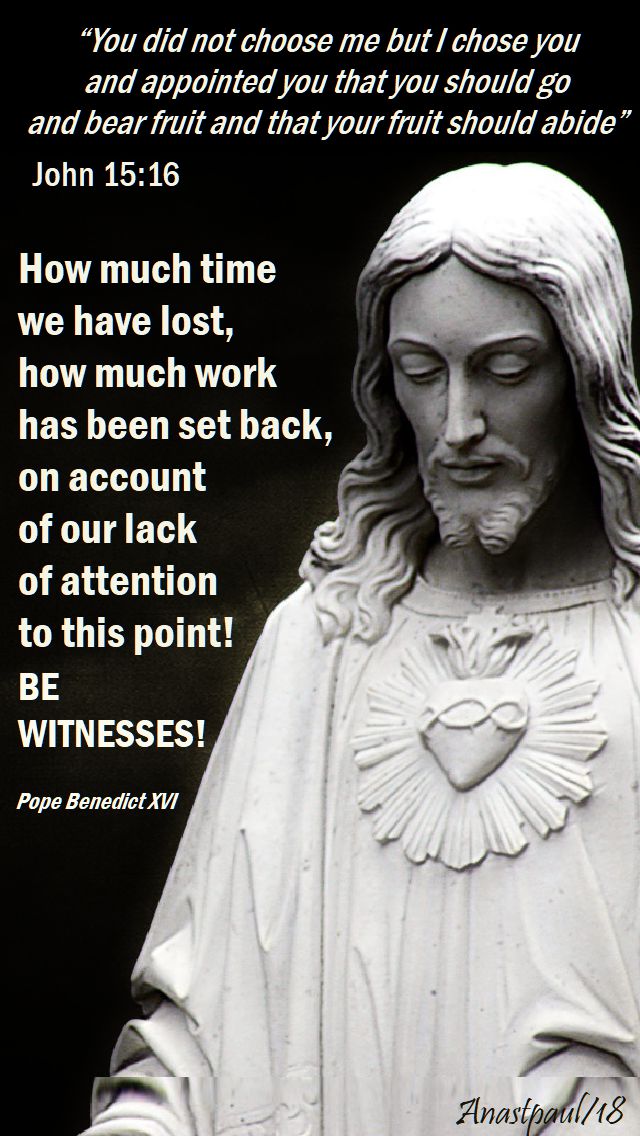
Yes! We are called to serve the humanity of our own time, trusting in Jesus alone, letting ourselves be enlightened by His word: “You did not choose me but I chose you and appointed you that you should go and bear fruit and that your fruit should abide” (Jn 15:16). How much time we have lost, how much work has been set back, on account of our lack of attention to this point! Everything is to be defined starting with Christ, as far as the origins and effectiveness of mission is concerned, we receive mission always from Christ, who has made known to us what He has heard from His Father and we are appointed to mission, through the Spirit, in the Church. Like the Church herself, which is the work of Christ and His Spirit, it is a question of renewing the face of the earth, starting from God, God always and alone!
So we say, St Matthias, today we call on you for your intercession!


















 AnaStpaul
You must be logged in to post a comment.