
St Pope Pontian Martyr (Died 235) (Optional Memorial)
St Hippolytus (170 – 235) Martyr (Optional Memorial)
Details of St Pope Pontian & St Hippolytus here: https://anastpaul.wordpress.com/2017/08/13/saints-of-the-day-13-august-st-pope-pontian-and-st-hippolytus-martyrs/
Our Lady, Refuge of Sinners/Refugium Peccatorum: St John Damascene calls Mary a city of refuge to all who flee to Her.
Blessed Antonio Baldinucci SJ (1665-1717) had a particular devotion to the Refugium Peccatorum image of Virgin Mary in the Church of the Gesu (Frascati) in Italy and commissioned a copy which he considered miraculous and carried it with him in his travels. The Jesuits spread copies of the image of the Madonna of Refuge in Mexico by the 19th century and it began to be depicted in missions there, often with clouds surrounding the lower portion of the image of the Virgin Mary holding the Child Jesus.
The term “Refugium peccatorum” is also used other works of Roman Catholic Marian art. For instance, there is a marble statue representing the Virgin Mary, on the grand staircase of the old municipal palace in Venice, Italy. The name came from the fact that the convicts were allowed to stop in front of the Virgin Mary’s statue to pray for their soul on the way to the scaffold.
The traditional feast day of Our Lady, Refuge of Sinners is today, 13 August.
St Anastasius the Monk
St Anastasius the Priest
St Benildus
St Cassian of Imola
St Cassian of Todi
St Concordia
St Conn O’Rourke
Bl Gertrude of Altenberg
St Helen of Burgos
St Herulph of Langres
Bl Jakob Gapp
Bl John of Alvernia
St John Berchmans SJ (1599-1621)
St Junian of Mairé
St Ludolph
Bl Marco d’Aviano/Mark of Aviano OFM Cap (1631-1699)
Biography:
https://anastpaul.com/2018/08/13/saint-of-the-day-13-august-blessed-mark-of-aviano-ofm-cap-1631-1699/
St Maximus the Confessor
St Nerses Glaietsi
St Patrick O’Healy
Bl Pierre Gabilhaud
St Radegund
St Radegunde
St Wigbert of Fritzlar
Bl William Freeman
—
Martyred in the Spanish Civil War:
• Blessed Francesc Castells Areny
• Blessed Inocencio García Díez
• Blessed José Bonet Nadal
• Blessed José Boher y Foix
• Blessed José Juan Perot y Juanmarti
• Blessed Jose Tàpies y Sirvant
• Blessed Josep Alsina Casas
• Blessed Luciano Hernández Ramírez
• Blessed Maria de Puiggraciós Badia Flaquer
• Blessed Mateo Despóns Tena
• Blessed Modesto García Martí
• Blessed Pascual Araguàs y Guàrdia
• Blessed Pedro Martret y Molet
• Blessed Silvestre Arnau y Pascuet
Martyred Claretians of Barbastro – 51 beati:
• Blessed Agustín Viela Ezcurdia
• Blessed Alfons Miquel Garriga
• Blessed Alfons Sorribes Teixidó
• Blessed Antolín Calvo y Calvo
• Blessed Antoni Dalmau Rosich
• Blessed Atanasio Vidaurreta Labra
• Blessed Eduardo Ripoll Diego
• Blessed Esteve Casadevall Puig
• Blessed Eusebi Maria Codina Millà
• Blessed Felipe de Jesús Munárriz Azcona
• Blessed Francesc Roura Farró
• Blessed Francisco Castán Meseguer
• Blessed Gregorio Chirivas Lacamba
• Blessed Hilario Llorente Martín
• Blessed Jaume Falgarona Vilanova
• Blessed Joan Baixeras Berenguer
• Blessed Joan Codinachs Tuneu
• Blessed José Amorós Hernández
• Blessed José Blasco Juan
• Blessed José Figuero Beltrán
• Blessed José Pavón Bueno
• Blessed Josep Maria Badía Mateu
• Blessed Josep Ormo Seró
• Blessed Josep Ros Florensa
• Blessed Juan Díaz Nosti
• Blessed Juan Echarri Vique
• Blessed Juan Sánchez Munárriz
• Blessed Leoncio Pérez Ramos
• Blessed Lluís Escalé Binefa
• Blessed Lluís Lladó Teixidor
• Blessed Lluís Masferrer Vila
• Blessed Manuel Buil Lalueza
• Blessed Manuel Martínez Jarauta
• Blessed Manuel Torras Sais
• Blessed Miquel Masip González
• Blessed Nicasio Sierra Ucar
• Blessed Pedro García Bernal
• Blessed Pere Cunill Padrós
• Blessed Rafael Briega Morales
• Blessed Ramon Illa Salvia
• Blessed Ramon Novich Rabionet
• Blessed Salvador Pigem Serra
• Blessed Sebastià Riera Coromina
• Blessed Sebastián Calvo Martínez
• Blessed Secundino Ortega García
• Blessed Teodoro Ruiz de Larrinaga García
• Blessed Tomàs Capdevila Miró
• Blessed Wenceslau Clarís Vilaregut
They were martyred on 2 August through 18 August 1936 in Barbastro, Huesca, Spain and Beatified on 25 October 1992 by Pope John Paul II.

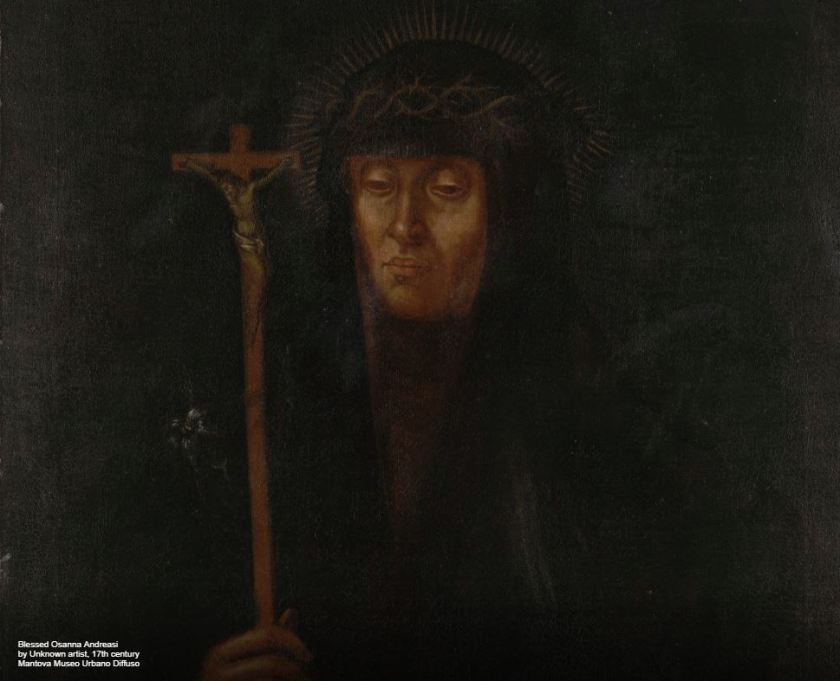
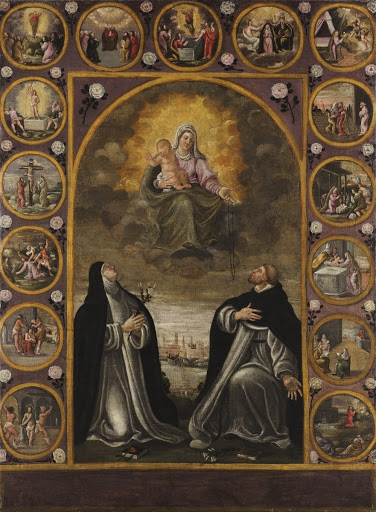
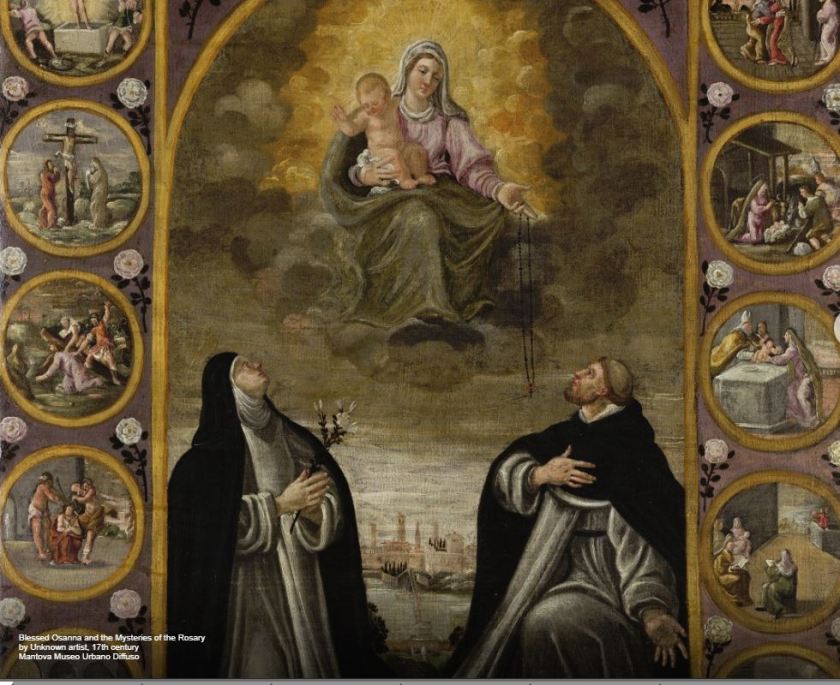
 – Set among hydrangeas, roses and officinal plants in the courtyard is a delightful porch with 15th century pink marble columns bearing the Andreasi coat of arms.
  The interior frescoes date from the 15th, 16th and, above a fireplace, 17th centuries – the decoration on the wooden coffered ceilings is still visible in parts, while the floors and stairs are made of terracotta and the doors of wood. It was purchased by nobleman Niccolò Andreasi in the mid 15th century as his family home. The house underwent minor changes in the early 16th century when Andreasi’s daughter Osanna was beatified.

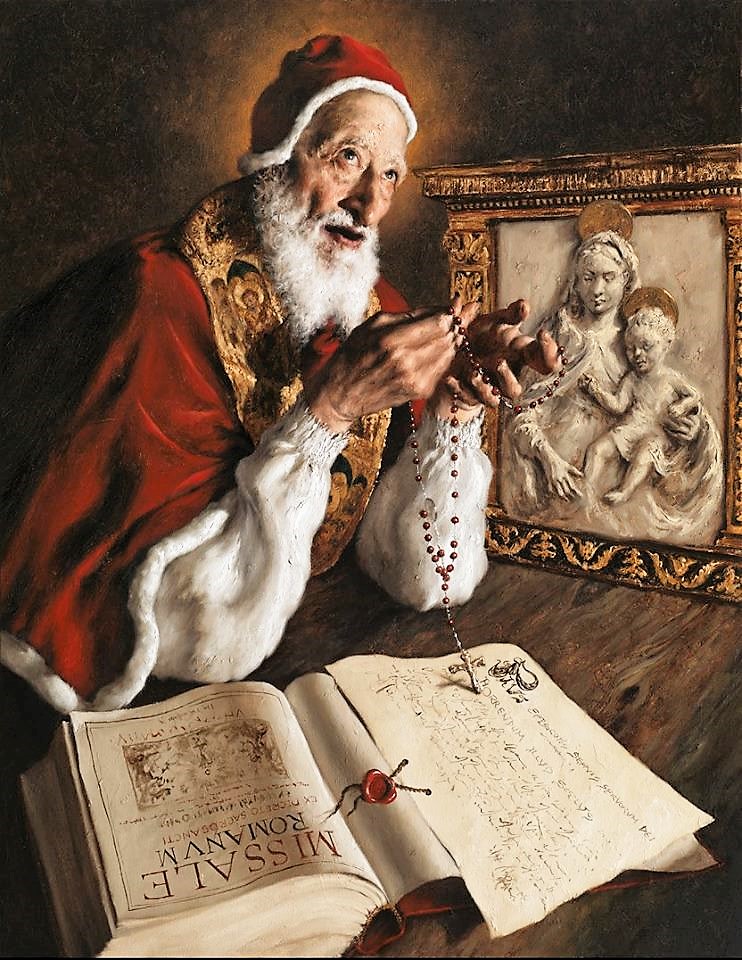 He wore a hair shirt beneath the simple habit of a Dominican friar (for which reason he is often attributed with the institution of the White cassock worn by the Holy Father) and was often seen in bare feet. In the time of a great famine in Rome he imported corn at his own expense from Sicily and France, a considerable part of which he distributed among the poor and sold the rest to the public at a very low price. After the papal election, instead of hosting an elaborate banquet, he ordered that the food be given to people in real need. Tradition holds that he once restored a beggar’s severed foot.
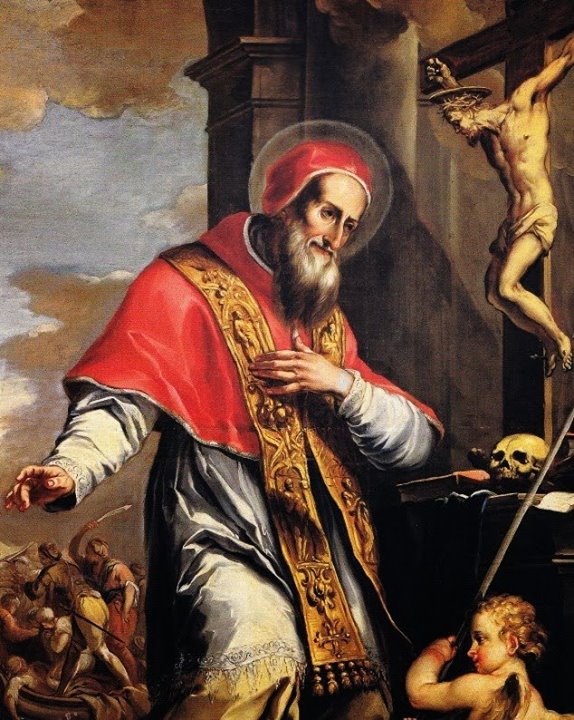
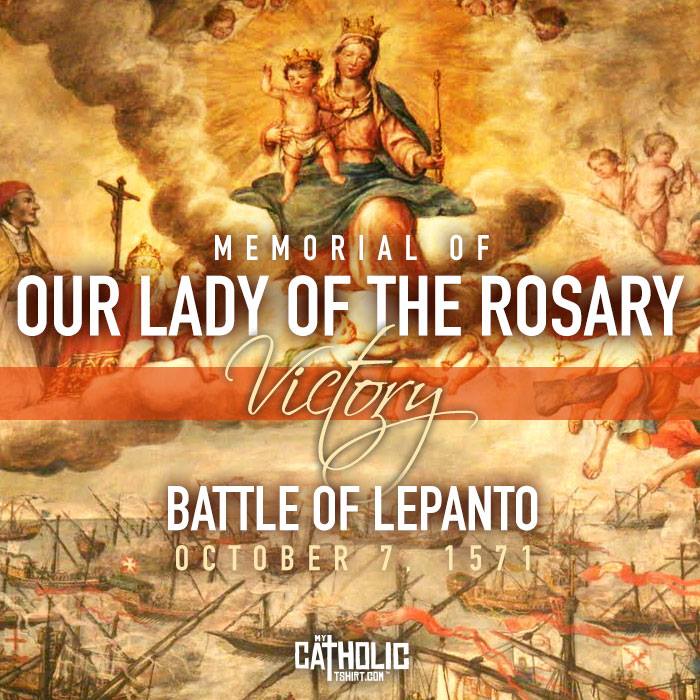
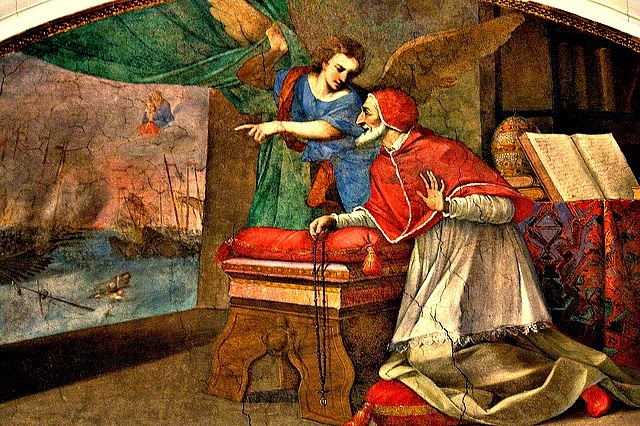 Although outnumbered, the Holy League famously defeated the Ottomans at the Battle of Lepanto in 1571. St Pius V attributed the victory to the intercession of the Blessed Virgin Mary and instituted the feast of Our Lady of Victory. Biographers report that as the Battle of Lepanto ended, Pius rose and went over to a window, where he stood gazing toward the East. “…Looking at the sky, he cried out, ‘A truce to business, our great task at present is to thank God for the victory which He has just given the Christian army’.”



























 AnaStpaul
You must be logged in to post a comment.