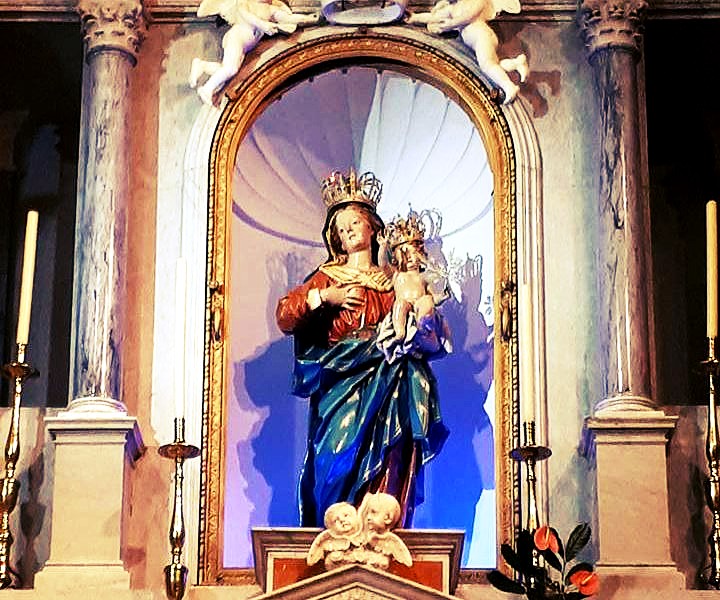
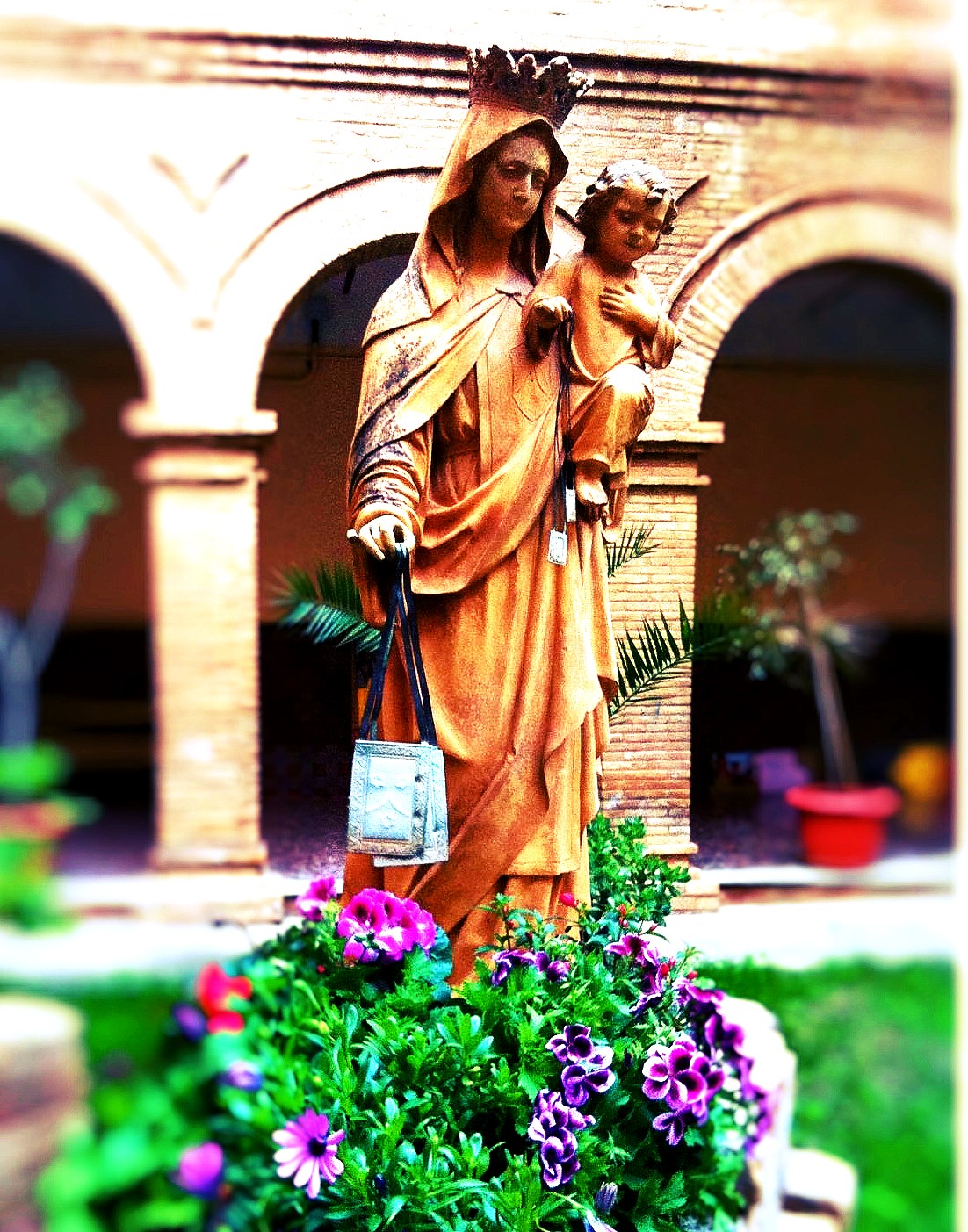
Our Morning Offering – 8 June – The Queenship of the Blessed Virgin Mary
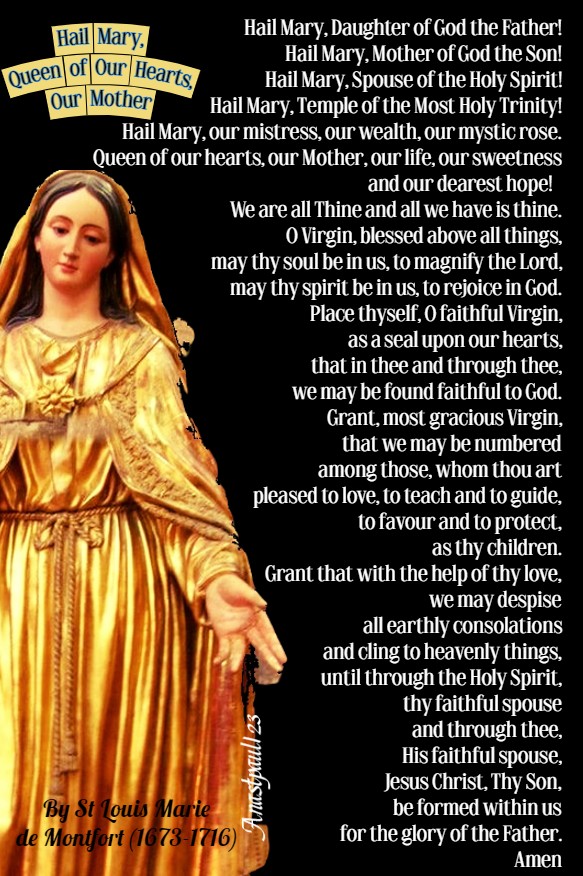
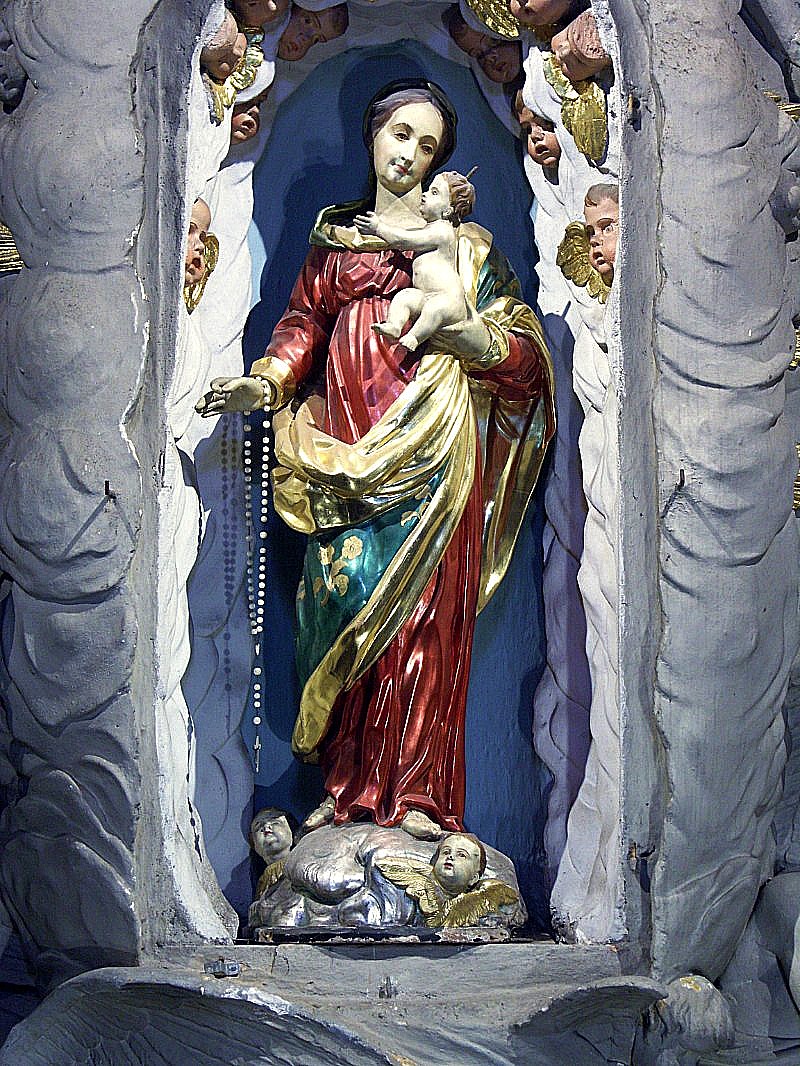
Hail Mary, Queen of Our Hearts, Our Mother Prayer in Honour of Mary By St Louis Marie de Montfort (1673-1716)
Hail Mary, Daughter of God the Father! Hail Mary, Mother of God the Son! Hail Mary, Spouse of the Holy Spirit! Hail Mary, Temple of the Most Holy Trinity! Hail Mary, our mistress, our wealth, our mystic rose. Queen of our hearts, our Mother, our life, our sweetness and our dearest hope! We are all Thine and all we have is thine. O Virgin, blessed above all things, may thy soul be in us, to magnify the Lord, may thy spirit be in us, to rejoice in God. Place thyself, O faithful Virgin, as a seal upon our hearts, that in thee and through thee, we may be found faithful to God. Grant, most gracious Virgin, that we may be numbered among those, whom thou art pleased to love, to teach and to guide, to favour and to protect, as thy children. Grant that with the help of thy love, we may despise all earthly consolations and cling to heavenly things, until through the Holy Spirit, thy faithful Spouse and through thee, His faithful Spouse, Jesus Christ, Thy Son, be formed within us for the glory of the Father. Amen
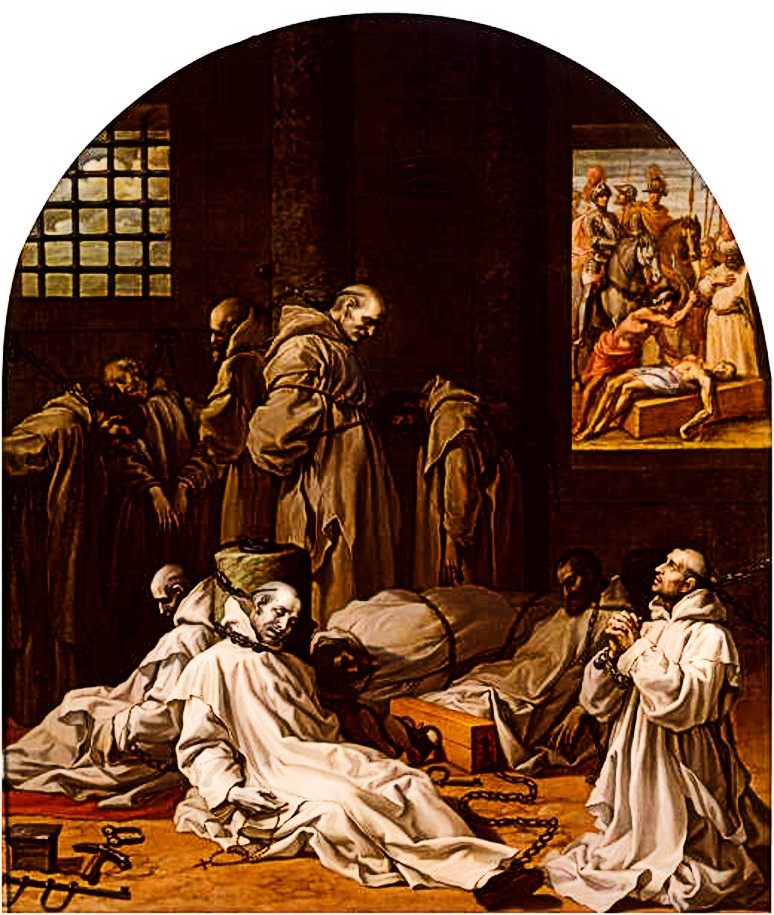
Saint of the Day – 8 June – Blessed John Davy O.Cart. (c1490-1535) Deacon of the Carthusian Order, Martyr, Born in York in c1490 and died by being chained to a wall in the Tower prison, London and starved, until his death on 8 June 1535. Also known as – John Davies. Additional Memorial – 4 May as one of the Carthusian Martyrs of London. Blessed John was Beatified on 20 December 1886 by Pope Leo XIII.
Vicente Carducho c 1626 – The Martyrdom of the Carthusians Friars
The figure of Blessed John Davy is located in the stormy landscape of 16th Century England. A Carthusian Deacon, John faced the persecutions of Henry VIII with stoic firmness, remaining faithful to the Church and the Roman Pontiff until his last breath. His story, steeped in heroism and sacrifice, makes him a shining example for all those who find themselves facing similar trials. You might think we are not facing such trials today but think again, they are mounting and growing in intensity, all over the world, by dedicated persecution.
Information on John Davy’s birth and youth is fragmentary. He is presumed to have been born in York, England, around 1490. Attracted to the contemplative life and strict discipline of the Charterhouse, he joined the Carthusian community of London in 1514. There, he distinguished himself by his piety, his zeal and his profound knowledge of tSacred Scripture and heology.
The reign of Henry VIII marked a period of profound and diabolical upheaval for the Catholic Church in England. The Sovereign, animated by political and personal aims, separated from the Holy See and proclaimed the Church of England as the sole state religion. Catholics, who did not bend to his will were persecuted ferociously. John Davy, as a Carthusian Deacon and fervent supporter of the Catholic Church, could not remain indifferent to this dramatic scenario. Together with his Brothers, he firmly opposed royal supremacy and the new doctrine imposed by the Sovereign. Their intransigence exposed them to harsh reprisals.
In 1534, Davy was arrested and imprisoned in the Tower of London. Subjected to cruel torture and a regime of extreme deprivation, he was firm to the end, never breaking under extreme torments. His will and his Faith remained fixed on Christ and His Church, Blessed John never renounced his Faith. His unwavering resistance and unswerving loyalty to the Church, further irritated his captors. On 8 June 1535, after months of torment, John Davy died in prison, exhausted by hunger and mistreatment. His death was a silent but eloquent Martyrdom, a tangible testimony of his unshakable Faith and his unshakable attachment to the his Lord and His Catholic Church.
Vicente Carducho c 1626 – The Martyrdom of the Carthusians Friars
John Davy’s reputation for sanctity quickly spread among English Catholics, who venerated him as a Martyr of the Faith. In 1888, Pope Leo XIII Beatified him, confirming his status as a heroic example for the faithful.
The Queenship of the Blessed Virgin Mary – Queen of Heaven and Earth, Holy Queen: Pope Pius XII established this Feast in 1954 with a Feast Day of 31 May. However, this year, 31 May fell within the Corpus Christi Octave and, therefore, the Feast has been transferred until today, a week later. In his 1954 Encyclical Ad Caeli Reginam – To the Queen of Heaven, Pope Pius XII points out that Mary deserves the title because she is Mother of God because she is closely associated as the New Eve with Jesus’ redemptive work, because of her preeminent perfection and because, of her intercessory power HERE: https://anastpaul.com/2022/05/31/the-queenship-of-mary-and-memorials-of-the-saints-31-may/
Blessed Armand of Zierikzee OFM (Died c1524) Friar of the Order of the Friars Minor, renowned Scriptural Scholar. St Bron of Cassel Bishop, Spiritual student of Saint Patrick. St Calliope St Clodulf of Metz Bl Engelbert of Schäftlarn St Eustadiola of Moyen-Moutier St Fortunatus of Fano Bishop
St Gildard of Rouen (c 456-c 545 Bishop of Rouen, Confessor * Twin Brother of St Medard below. The Roman Martyrology states of St Medard and his twin brother, St Gildard, today: “At Soissons, in France, the birthday of St Gildard, Bishop of Rouen, whose life and precios death are illustrated by glorios miracles – at Rouen, St Gildard, Bishop, twin brother of St Medard,who was born with his brother on the same day, Consecrated Bishops at the same time and being taken away from this life, also on the same day, they entered Heaven together!” About St Gildard: https://anastpaul.com/2022/06/08/saint-of-the-day-8-june-st-gildard-of-rouen-c-456-c-545/
Bl Giorgio Porta Bl Giselbert of Cappenberg St Heraclius of Sens Blessed John Davy O.Cart. (c1490-1535) Deacon of the Carthusian Order, Martyr Bl essedJohn Rainuzzi Bl Maddallena of the Conception
St Medard (c 456-545) Bishop and Confessor * Twin Brother of St Gildard above. About this iluustrious Saint: https://anastpaul.com/2020/06/08/saint-of-the-day-8-june-saint-medard-c-456-545-bishop/ The Roman Martyrology states of St Medard and his twin brother, St Gildard, today: “At Soissons, in France, the birthday of St Medard, Bishop of Novon, whose life and precios death are illustrated by glorious miracles – at Rouen, St Gildard, Bishop, twin brother of St Medard,who was born with his brother on the same day, Consecrated Bishops at the same time and being taken away from this life, also on the same day, they entered Heaven together!”
St Melania the Elder St Muirchu St Pacificus of Cerano Bl Peter de Amer Bl Robert of Frassinoro St Sallustian St Syra of Troyes St Victorinus of Camerino
Thought for the Day – 7 June – Meditations with Fr Richard Frederick Clarke SJ (1839-1900)
HUMILITY Meditations for a Month
What Humility Is
Humility is a realisation of our own nothingness before Almighty God. It is defined by St Bernard, as the virtue by which a man becomes vile in his own eyes, through a thorough knowledge of himself and by St Thomas, as a virtue by which a man, considering his own defects, keeps himself in the lowest place according to his degree. Think over these definitions and examine yourself whether you are humble, as judged by them.
It is not enough to be conscious of our own vileness or to esteem ourselves as nothing. We must acquiesce in and, be satisfied with, our own nothingness. Humility is not perfect until self is so obliterated, that we are willing to be esteemed according to our deserts. When we can honestly say that what we look to in all our thoughts, words and actions, is not our own advantage and interest but simply, the honour of God, quite independently of what will further our own profit, then! we may begin to thank God that we are in the way of humility.
If this is really the case, we shall not only esteem ourselves as vile but we shall desire to be treated accordingly. We shall not shrink from being humbled in the eyes of men but shall court humiliation, as it will be a satisfaction to us to be treated as we deserve. This is difficult for human nature but, it is possible for all, with the grace of God. It will not come at once but we may hope to reach it someday. Have I attained it? Do I desire it? Do I even accept humiliations, or do I chafe under them and resent them?
Quote/s of the Day – 7 June – “The Month of the Sacred Heart of Jesus” and The Solemnity of the Most Sacred Heart of Jesus, which is celebrated on the second Friday after Trinity Sunday:
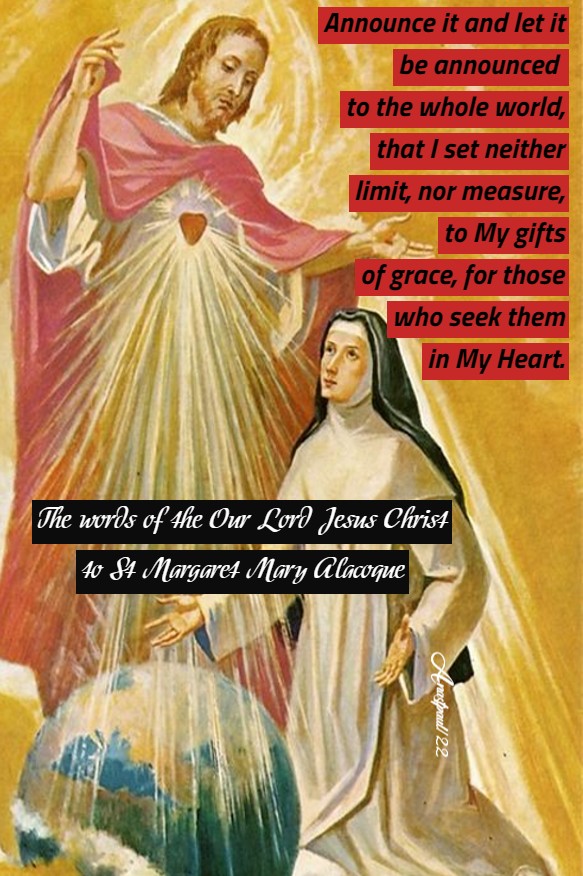
“Announce it and let it be announced to the whole world, that I set neither limit, nor measure, to My gifts of grace, for those who seek them in My Heart.”
The words of the Our Lord Jesus Christ to St Margaret Mary Alacoque
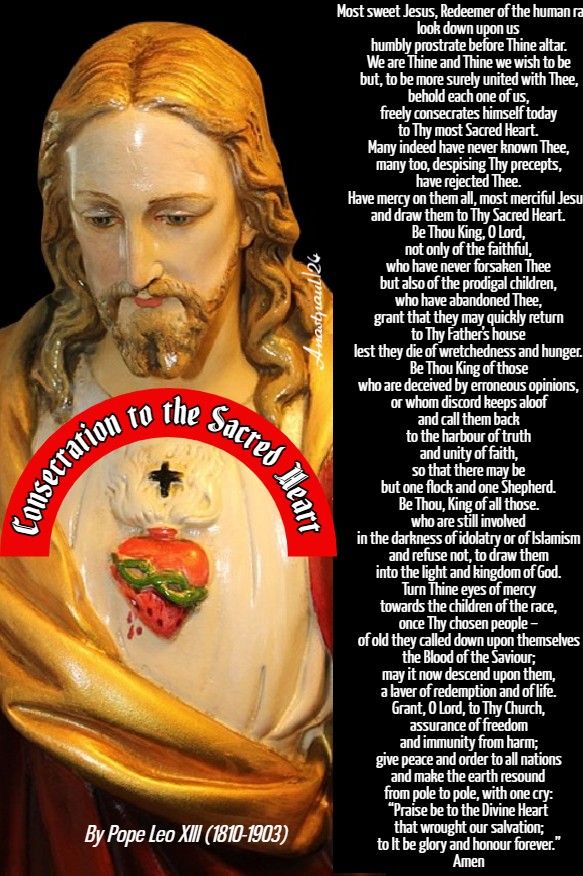
Consecration to the Sacred Heart By Pope Leo XIII (1810-1903) Pope from 1878-1903
Most sweet Jesus, Redeemer of the human race, look down upon us humbly prostrate before Thine altar. We are Thine and Thine we wish to be but, to be more surely united with Thee, behold each one of us, freely consecrates himself today to Thy most Sacred Heart. Many indeed have never known Thee, many too, despising Thy precepts, have rejected Thee. Have mercy on them all, most merciful Jesus and draw them to Thy Sacred Heart. Be Thou King, O Lord, not only of the faithful, who have never forsaken Thee but also of the prodigal children, who have abandoned Thee, grant that they may quickly return to Thy Father’s house lest they die of wretchedness and hunger. Be Thou King of those who are deceived by erroneous opinions, or whom discord keeps aloof and call them back to the harbour of truth and unity of faith, so that there may be but one flock and one Shepherd. Be Thou, King of all those. who are still involved in the darkness of idolatry or of Islamism and refuse not, to draw them into the light and kingdom of God. Turn Thine eyes of mercy towards the children of the race, once Thy chosen people – of old they called down upon themselves the Blood of the Saviour; may it now descend upon them, a laver of redemption and of life. Grant, O Lord, to Thy Church, assurance of freedom and immunity from harm; give peace and order to all nations and make the earth resound from pole to pole, with one cry: “Praise be to the Divine Heart that wrought our salvation; to It be glory and honour forever.” Amen
The above prayer, composed by Pope Leo XIII was included in the 1899 Encyclical Annum Sacrum issued by Leo XIII as he Consecrated the entire world to the Sacred Heart of Jesus. The consecration was influenced by two letters written to the Holy Father by Blessed Sister Mary of the Divine Heart, who stated that in visions of Jesus Christ, she had been told to request the Consecration.
One Minute Reflection – 7 June – “The Month of the Sacred Heart of Jesus” and the Feast of the Sacred Heart of Jesus – Ephesians 3:8-12, 14-19, John 19:31-37 – Scripture search here: https://www.drbo.org/
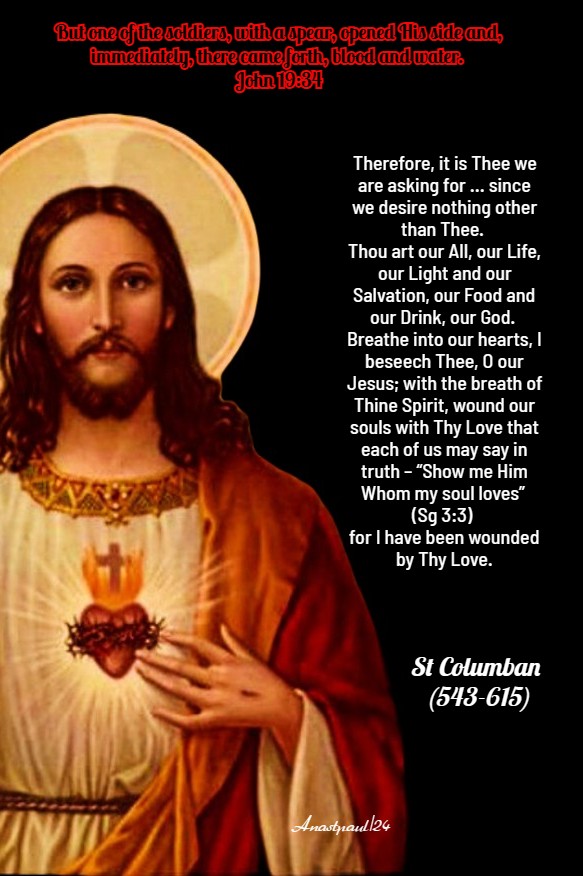
“But one of the soldiers, with a spear, opened His side and, immediately, there came forth, blood and water. ” –
REFLECTION – “Brethren, let us pursue our calling – we are called by Life to the Source of Life and this Source is a source, not just of ‘living water’ (Jn 4:10) but of eternal life, Source of Light and illumination. Indeed, all things flow from it, wisdom, life and eternal light… O Lord, Thou are Thineself this Source Who always exists and is always to be desired and, at where it is always permitted and always necessary for us to draw. ‘Lord Jesus, give us this water always’ that it may also become within us, a spring of water \welling up to eternal life’ (Jn 4:15.14). It is true that I am asking Thee for a great deal, who could deny it? But Thou, O King of glory, know well how to give great things and Thou hast promised them. There is nothing greater than Thou art and, it is Thee Thyself Who give to us, it is Thee Who gave Thyself for us.
Therefore, it is Thee we are asking for … since we desire nothing other than Thee. Thou art our All, our Life, our Light and our Salvation, our Food and our Drink, our God. Breathe into our hearts, I beseech Thee, O our Jesus; with the breath of Thine Spirit, wound our souls with Thy Love that each of us may say in truth – “Show me Him Whom my soul loves” (Sg 3:3) for I have been wounded by Thy Love.
I desire these wounds to be in me, O Lord. Happy the soul who loves wounds in this way – the soul who seeks the Source, who drinks and who, nevertheless, never ceases to thirst even as it drinks, nor to draw continually by desire, nor to continue drinking in its thirst. Thus, it always seeks in loving, for in its wound, it finds healing.” – St Columban (543-615) Father of the Church, Monk, Missionary, Founder of many Monasteries (Spiritual Instructions No 13: 2-3).
PRAYER – O God, Who in the Heart of Thy Son, wounded by our sins, mercifully lavish upon us the infinite riches of Love, grant, we beseech Thee, that as we offer Him the faithful service of our devotion, we may also show forth fitting reparation. Through Jesus Christ, Thy Son our Lord, Who lives and reigns with Thee, in the unity of the Holy Ghost, God, world without end. Amen (Collect).
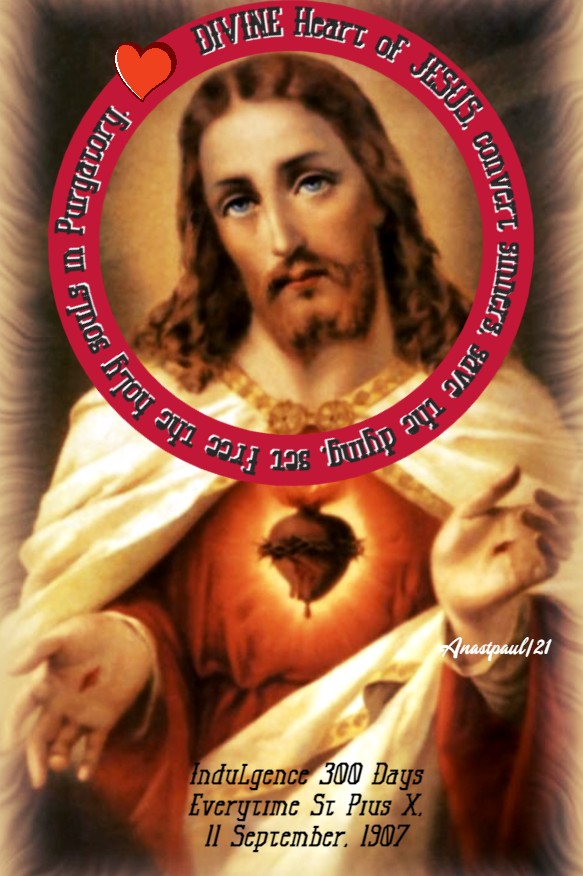
DIVINE Heart of JESUS, convert sinners, save the dying, set free the holy souls in Purgatory.Indulgence 300 Days Everytime – St Pius X, 11 September, 1907.
Our Morning Offering – 7 June – “The Month of the Sacred Heart of Jesus” – First Friday of the Sacred Heart
Act of Love to the Sacred Heart of Jesus By Servant of God Cardinal Rafael Merry del Val (1865-1930)
Reveal Thy Sacred Heart to me, O Jesus and show me Its attractions. Unite me to It forever. Grant that all my aspirations and all the beats of my heart, which cease, not even while I sleep, may be a testimonial to Thee, of my love for Thee and may it say to Thee – “Yes, Lord, I am all Thine” the pledge of my allegiance to Thee, rests forever in my heart and will never cease to be there. May Thou accept, the slight amount of good that I do and be graciously pleased, to repair all my wrong-doing – so that I may be able, to bless Thee, in time and in eternity. Amen
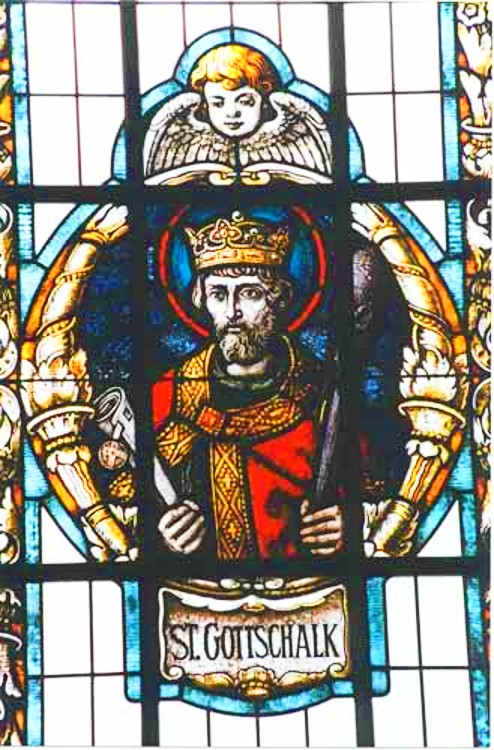
Saint of the Day – 7 June – Saint Gottschalk and his Companions (Died 1066) Lay Missionary Martyr, Prince of the Wends (Wends is a historical name for Slavs who inhabited present-day northeast Germany). Died by being murdered at the Altar with 29 fellow missionaries on 7 June 1066 in Lenzen, Pomerania, by pagan assassins. Patronages – of linguists, lost vocations, princes, translators. Also known as – Godescalcus, Godeschalc, Gotteschalk, Gotteschalc.
Son of Duke Udo, who still governed the Obodrites and the Vagris, in the early years of Emperor Conrad II, Gottschalk was educated in the Christian religion from birth, first in his family, then in the Monastery of St Michael in Liineburg. Upon the death of his father, murdered at the hands of a Saxon, who wanted to take revenge on the tyranny and cruelty of Udo, described by the chronicler Adam of Bremen, Godescalco, sacrificing his Faith to revenge, renounced Christianity and, at the head of his people, he joined other pagan Princes to go against the Saxons.
He fought against them for a long time, bringing destruction and death to their land, until, succumbing to remorse for so much pain and ruin he had caused, he surrendered to the Duke of Saxony, Bernard II, who, after holding him prisoner for some time, sent him to Denmark.
Having placed himself there in the service of King Cnut II the Great, he went with him to fight in England (c1030), where he behaved bravely, also being admired for his excellent qualities, so as to win all the esteem and consideration of the King , whose great-grand-daughter, Syritha, Gottschalk later married.
After the death of Cnut in 1035 and his son, Harold Hanfoot in 1040, Gottschalk returned to his native land and, raising an army with his people, undertook the conquest of the other Slavic populations who soon subjected them all to his dominion. At the same time, Gottschalk made himself recognised as their Lord also by a large section of the Saxon community.
By 1043, with this conquests, Gottschalk managed to form a vast and well-organised Kingdom . There was then, no ruler among the Slavs more powerful than himself, as the aforementioned Adam of Bremen wrote.
Returning again to his lapsed Faith, since the time of his first residence in Denmark, Gottschalk greatly favoured the evangelisation of the people, having many Churches built in his dominions and Ordaining Priests, always working tirelessly for the conversion of his still idolatrous subjects. To then preserve the fervour of the Christian Faith among them, he founded the Bishoprics of Oldenburg, Mecklenburg and Ratzenburg, established numerous Monasteries in various other Cities and sent armies of Missionaries to the most distant regions of his vast state., among whom John the Scot stood out for his apostolic zeal, who alone baptised thousands of pagans!
Gottschalk himself often travelled with these Missionaries, sometimes even acting as an interpreter during their preaching. Such ardent zeal in favour of the spread of the Christian Faith could not obtain a better reward than the crown of Martyrdom, hich Gottschalk, the pious King, in fact wore on 7 June 1066, when he fell victim to a violent pagan reaction and was killed out of hatred for the Catholic Faith in Lenzen on the Elbe, while he was attending Mass. With him the Priest Ebbo (or Eppone) suffered the same glorious fate, who was even murdered on the Altar, and many other Ecclesiastics and lay faithful.
Immediately venerated as a Saint, Gottschalk had a strong public cult in many Churches in northern Europe. His Feast is celebrated on 7 June, the commemorative day of his Martyrdom.
St Gottschalk and Companions (Died 1066) Lay Missionary Martyr St Justus of Condat St Landulf of Yariglia St Lycarion of Egypt
Venerable Matt Talbot (1856 – 1925) (born Matthew Talbot) – Layman, Ascetic, Mystic – known as the “Saint in Overalls” and “the Workers’ Saint” disciple of Eucharistic Adoration and the Blessed Virgin – Patron of Struggling and Recovering Addicts and Alcoholics and many addiction treatment programs, retreats and centres throughout the world bear his name. On 6 November 1931, Edward Joseph Byrne, Archbishop of Dublin, opened a sworn inquiry into the alleged claims of holiness of the former dock worker. He was declared Venerable in 1975. The Matt Talbot Story: https://anastpaul.com/2017/06/07/saint-of-the-day-7-june-venerable-matt-talbot-ofs/
St Meriadoc I of Vannes St Meriadoc II of Vannes St Odo of Massay St Potamiaena of Alexandria the Younger St Quirinus of Cluny Martyr. No other information has survived.
St Robert of Newminster O.Cist. (c 1100–1159) English Priest, Abbot, Apostle of the poor, Miracle-worker. He was one of the Monks who founded Fountains Abbey in North Yorkshire, England, another at Newminster, Northumbria and 3 other Monasteries Robert ruled and directed the Monks at Newminster for 21 years. St Robert’s Life: https://anastpaul.com/2021/06/07/saint-of-the-day-7-june-saint-robert-newminster-o-cist-c-1100-1159/
St Sergius of Cluny St Vulflagius of Abbeville
Martyrs of Africa – 7 Saints: A group of seven Christians who were Martyred together. No details about them have survived except the names – Donata, Evasius, Guirillus, Januaria, Privata, Spisinna, Victurus. The precise location in Africa and date are unknown.
Martyred in Córdoba, Spain: Habentius of Córdoba Jeremiah of Córdoba Peter of Córdoba Sabinian of Córdoba Wallabonsus of Córdoba Wistremundus of Córdoba
Thought for the Day – 6 June – Meditations with Fr Richard Frederick Clarke SJ (1839-1900)
Little Extracts from The Adorable Heart of Jesus
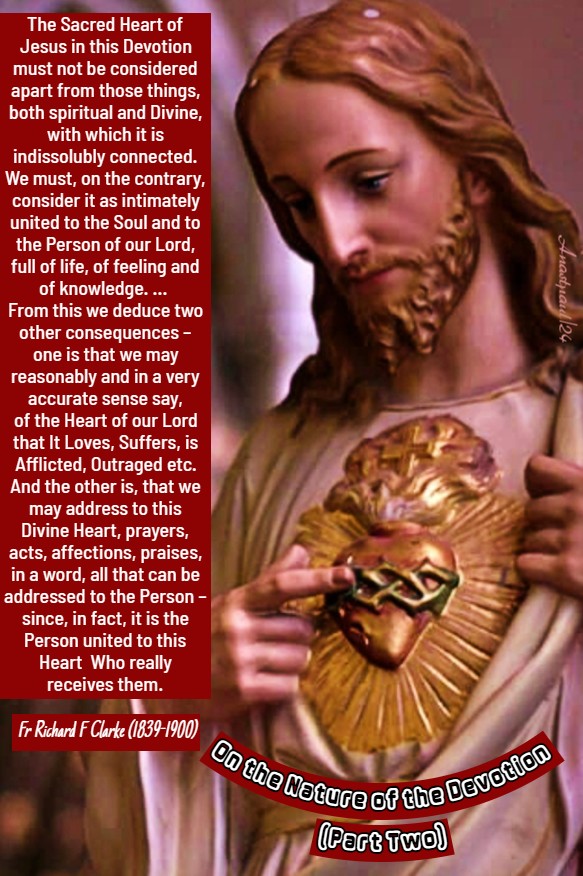
On the Nature of the Devotion (Part Two)
Having made these observations, it will be easy to give a clear and precise idea of the nature of the Devotion to the Sacred Heart of Jesus Christ. We may define it in this manner.: “It is an exercise of religion which has, for its object, the Adorable Heart of our Lord, inflamed with Love for men and outraged by the ingratitude of these same men and, for its motive, the honouring of this Divine Heart , by rendering It all the homage which love and gratitude can inspire and, more particularly, to offer reparation for the insults It receives in the Sacrament of love.”
Let us explain this definition and try to put it in the clearest light possible. … The Devotion of which we speak here, concerns His Heart. Certainly, this Divine Heart is not, in Itself, an object less worthy of the Devotion of the faithful, than the others we have named and, no objection can be brought to bear against the Devotion to the Heart which would not apply equally and with even more force , to the Devotion to the Wounds, the Cross, the Name of Jesus, as anybody will admit who is capable of judging in these matters.
But, that we may leave no occasion of error to simple, uninstructed persons and that , we may forestall any doubts which may arise, we will add another observation to those we have already made.
The Sacred Heart of Jesus in this Devotion must not be considered apart from those things, both spiritual and Divine, with which it is indissolubly connected. We must, on the contrary, consider it as intimately united to the Soul and to the Person of our Lord, full of life, of feeling and of knowledge.
From this follows a consequence worthy of remark which is, that all the honours which are paid to this Adorable Heart, do not terminate precisely and solely in the material Heart ; they terminate equally and indivisibly, in the Soul and the Person united to this Heart – as the honours rendered to a living man are not actually confined to the body or the soul but comprise, the two together, forming thus a whole which is honoured without any division.
From this we deduce two other consequences – one is that we may reasonably and in a very accurate sense say, of the Heart of our Lord that It Loves, Suffers, is Afflicted, Outraged etc. And the other is, that we may address to this Divine Heart, prayers, acts, affections, praises, in a word, all that can be addressed to the Person – since, in fact, it is the Person united to this Heart Who really receives them. This has been overlooked by those who have seemed to disapprove of this Devotion towards the Heart of Jesus and, who thus appeared to have regarded this Divine Heart as only an inanimate and insensible portion of the Body of Jesus Christ, setting aside the Intelligent and spiritual adjuncts which are united to It, as we have already observed.
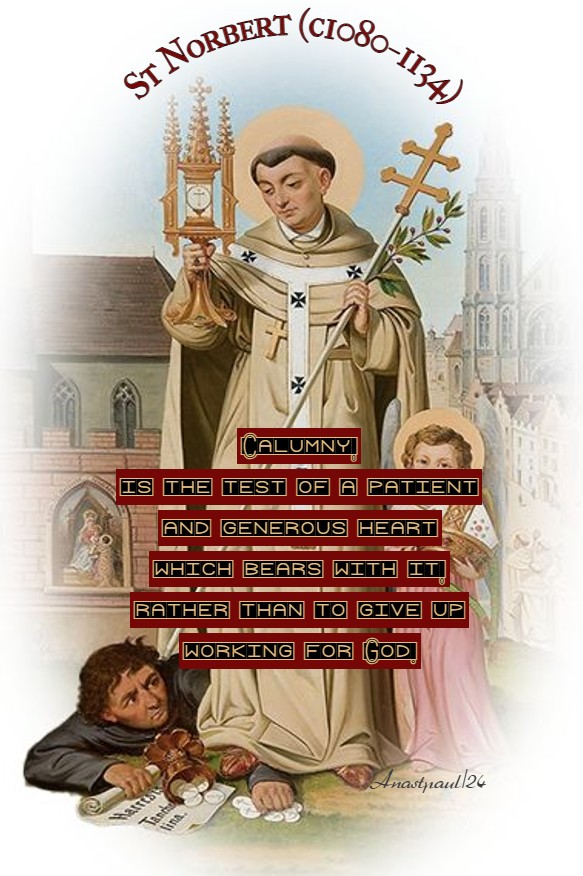
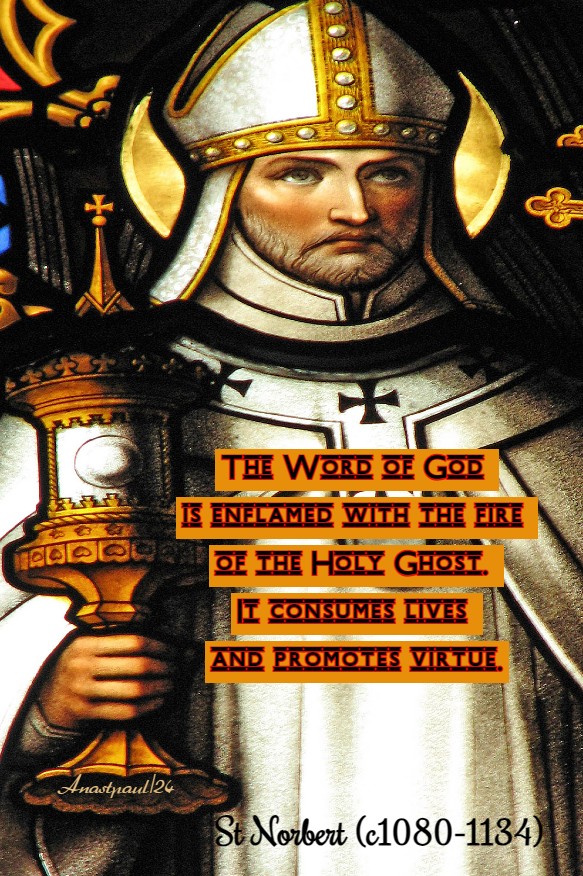
One Minute Reflection – 6 June – “The Month of the Sacred Heart of Jesus” –St Norbert O. Praem. (c 1080-1134) Bishop, Confessor, Founder of the Premonstratensians –The Octave Day of Corpus Christi – 1 Corinthians 23-29, John 6:56-59 – Scripture search here: https://www.drbo.org/
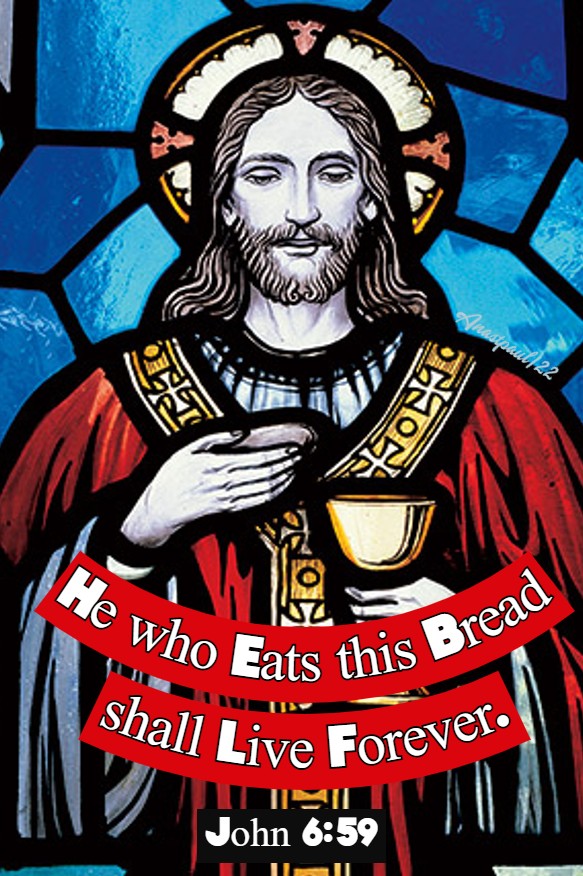
“He who eats this Bread shall live forever.” – John 6:59
REFLECTION – “Since it was the Will of God’s Only-Begotten Son that men should share in His Divinity, He assumed our nature in order that, by becoming Man. He might make men gods . Moreover, when He took our flesh. He dedicated the whole of its substance to our salvation. He offered His Body to God the Father, on the Altar of the Cross, as a sacrifice for our reconciliation. He shed His Blood for our ransom and purification, so that we might be redeemed, from our wretched state of bondage and cleansed from all sin. But to ensure that the memory of so great a gift would abide with us forever, He left His Body as food and His Blood as drink, for the faithful to consume in the form of bread and wine.
O precious and wonderful banquet which brings us salvation and contains all sweetness! Could anything be of more intrinsic value? Under the old law, it was the flesh of calves and goats, which was offered but here, Christ Himself, the True God, is set before us as our food! What could be more wonderful than this? No other Sacrament has greater healing power; through it, sins are purged away, virtues are increased and the soul is enriched with an abundance of every spiritual gift. It is offered in the Church for the living and the dead, so that what was instituted for the salvation of all, may be for the benefit of all. Yet, in the end, no-one can fully express the sweetness of this Sacrament, in which spiritual delight is tasted at its very source, and in which, we renew the memory, of that surpassing love for us, which Christ revealed in His Passion.
It was to impress the vastness of this Love, more firmly upon the hearts of the faithful, that our Lord instituted this Sacrament at the Last Supper. As He was on the point of leaving the world to go to the Father, after celebrating the Passover with His disciples, He left it as a perpetual memorial of His Passion. It was the fulfilment of ancient figures and the greatest of all His Miracles, while, for those who were to experience the sorrow of His departure, it was destined to be a unique and abiding consolation.” – St Thomas Aquinas (1225-1274) Dominican Priest and Theologian, Doctor of the Church (An excerpt from On the Feast of the Body of Christ).
PRAYER – To God, Who made blessed Norbert, Thy Confessor and Bishop, a brilliant preacher of Thy Word and through him, enriched Thy Church with a new religious family, grant, we beseech Thee, that by his prayerful intercession and Thy help, we may be able to do what he has taught us by his words and deeds. Through Jesus Christ, Thy Son our Lord, Who lives and reigns with Thee, in the unity of the Holy Ghost, God, world without end. Amen (Collect).
O HEART of love, I place all my trust in Thee; for though I fear all things from my weakness, I hope all things from Thy mercies. – Ejaculation of Saint Margaret Mary – Indulgence 300 Days, Everytime – Raccolta 180St Pius X, 3 June 1908.
Our Morning Offering – 6 June – “The Month of the Sacred Heart of Jesus” – The Octave Day of Corpus Christi
The Golden Arrow
This prayer was revealed by Jesus Himself to a Carmelite Nun of Tours in 1843 as a Reparation for Blasphemy. “This Golden Arrow will wound My Heart delightfully” He said “and heal the wounds, inflicted by blasphemy.”
May the Most Holy, Most Sacred, Most Adorable, Most Mysterious and Unutterable Name of God be always praised, blessed, loved, adored and glorified in Heaven. on earth and under the earth, by all the creatures of God and by the Sacred Heart of our Lord Jesus Christ in the most Holy Sacrament of the Altar. Amen
Saint of the Day – 6 June – Saint Gilbert of Neufontaines O.Praem. (c1076-1152) Abbot, a French Knight and Military Leader, Crusader in the 2nd Crusade , Founder of Neufontaines Monastery and Hospital for the poor ( which he populated with Canons from the Premonstratensian Abbey of Notre-Dame de Dilo), Apostle of the sick especially of ill children, Miracle-worker. Born in c1076 and died on 6 June 1152 at Neufontaines of natural causes. Patronages – of Neuffons and of Auvergne. Also known as – Gilbert of Auvergne, Gilbert of Neuffers. Additional Memorial – 26 October (in Neufontaines and Aubeterre, France).
The Knight Gilbert belonged to the high nobility of Auvergne. Following the advice of Ornifius, the Norbertine Abbot of Dilo, he participated in the Second Crusade (1147-1149) which was preached by St Bernard at Vezelay and led by the French King, Louis VII. This Crusade ended in military disaster.
Having survived this dangerous endeavour, Gilbert decided, together with his wife, Petronilla and his daughter, Ponzia, to dedicate himself to God and enter the monastic life. He distributed a portion of his considerable wealth to the poor and also founded a Convent which his wife and daughter entered. At first, Gilbert himself lived as a Hermit. After completing his novitiate in the Norbertine Abbey of Dilo, in around 1150, he founded the Abbey of Neuffontaines and became its first Abbot. Following the example of St Norbert, he also built a hospital attached to the Abbey which soon became famous because of the many miracles which occurred there.
Penitent and filled with compassion, he cared for a great number of sick and sinful people, whom he wished to cure both spiritually and physically. Children with severe illnesses were brought to him from all over , his compassion so overwhelmed him that he was able to heal with his tears. He laid his hands upon them and gave them back to their parents cured This gave rise to the later custom of parents bringing their sick children to Neuffontaines, clothed in white, seeking the intercession of St Gilbert for cures and miracles..
Gilbert died on 6 June 1152, consumed by penance and hard toil. He had expressed his desire to be buried in the cemetery of the poor who died at the Abbey. But because of the many miracles which God worked through his intercession, his earthly remains were eventually transferred to the Abbey Church of Neuffontaines and, after being lost for a time, were later rediscovered in the Abbey in October 1645. In 1791, the Relics were transferred, for greater safety, to St Didier and, nevertheless, were lost during the tumult and desecration of the French Revolution. St. Gilbert’s Feast Day (26 October) falls on the anniversary of his translation of the 17th Century. Pope Benedict XIII confirmed the veneration of St Gilbert on 22 January and 8 March 1728.
O God, who called Thy Abbot St Gilbert away from the riches of the world that he might enter into the way of poverty, grant, we beseech Thee, that entering into the way of humility, we may strive to serve our brothers. We ask this through our Lord Jesus Christ, Thy Son, Who lives and reigns with Thee in the unity of the Holy Ghost, One God forever and ever. Amen.
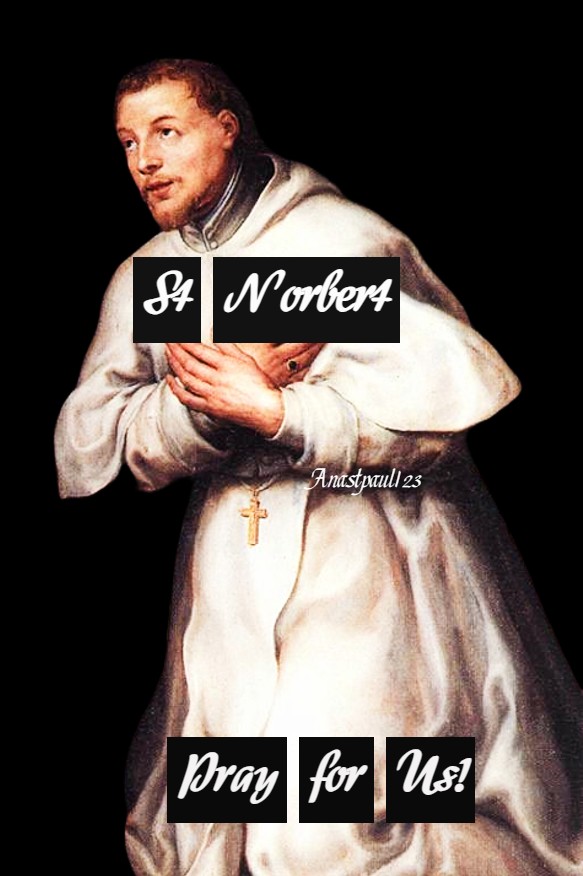
St Norbert O. Praem. (c 1080-1134) Bishop, Confessor, Founder of the Premonstratensian or the Norbertine Canons and Sisters, “Defender of the Eucharist” and “Apostle of the Eucharist,” Exorcist, Reformer, Preacher His amazing life: https://anastpaul.com/2017/06/06/saint-of-the-day-6-june-st-norbert/
St Agobard of Lyon St Alexander of Fiesole St Alexander of Noyon St Amantius of Noyon St Anoub of Skete St Artemius of Rome St Bazalota of Abyssinia
St Candida of Rome St Ceratius of Grenoble St Claudius of Besançon St Cocca St Colmán of Orkney Bl Daniel of Bergamo St Euphemia of Abyssinia St Eustorgius II of Milan Bl Falco of La Cava St Gilbert of Neufontaines O.Praem. (c1076-1152) Abbot St Grazia of Germagno St Gudwall (6th Century) Bishop Bl Gundisalvus of Azebeyro St Hilarion the Younger
Marytrs of Tarsus: A group of 20 Martyrs who were Martyred together during the persecutions of Diocletian. They were martyred in Tarsus (in modern Turkey).
Mercedarian Fathers of Avignon: Several Mercedarians from the Santa Maria Convent of Avignon, France who worked with plague victims in that city and died of the disease themselves. They died in Avignon, France of plague and are remembered together today for their great charity and commitment to their people.
Thought for the Day – 5 June – Meditations with Fr Richard Frederick Clarke SJ (1839-1900)
PATIENCE Meditations for a Month
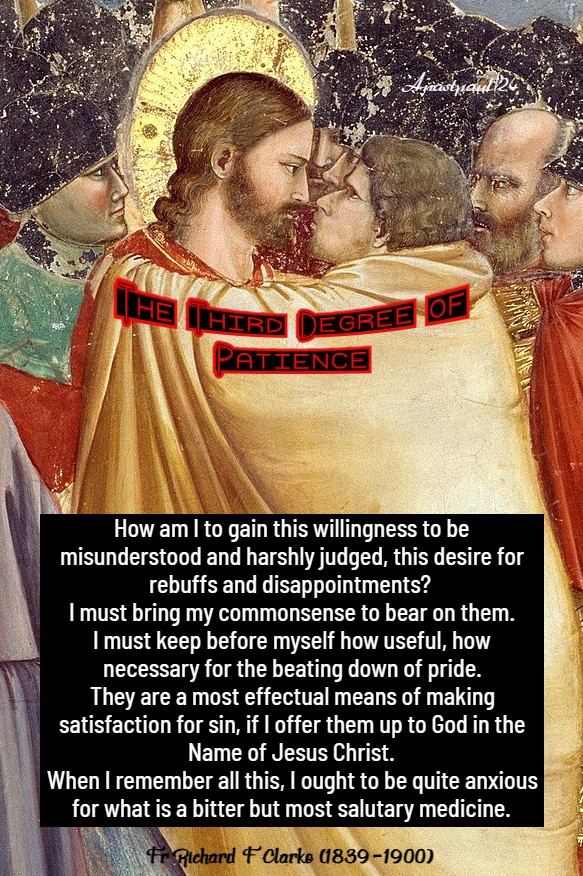
The Third Degree of Patience
When we have succeeded in suppressing all outward impatience and inward resentment, as far as it is voluntary and deliberate, we shall begin to reap the reward of our efforts. We shall find that the treatment which we once regarded as intolerable, has certain advantages resulting from it. We may hope, at last, to find a positive pleasure in being overlooked or unfairly treated, in being humbled in the eyes of men, or blamed for what we did with all good intention. I must try to aim at this. It is not out of my reach!
How am I to gain this willingness to be misunderstood and harshly judged, this desire for rebuffs and disappointments? I must bring my commonsense to bear on them. I must keep before myself how useful, how necessary for the beating down of pride. They are a most effectual means of making satisfaction for sin, if I offer them up to God in the Name of Jesus Christ. When I remember all this, I ought to be quite anxious for what is a bitter but most salutary medicine.
When I read the lives of Saints and holy men, I find there the true estimate of all things. Now, what was their attitude towards those who despised, persecuted, ill-treated them? They looked upon them as their greatest benefactors. How did they regard the reproaches, the neglect, the unkindness they had to undergo? They thanked God for them, rejoiced in them, considered it a misfortune if these were absent. If we want to resemble the Saints, we must take their view of obloquy and misunderstanding. We must strive, not only to put up with them but actually, to welcome them, rejoice in them, consider them as our greatest privilege!
Quote/s of the Day – 5 June – St Boniface (672-754) Bishop, Martyr “The Apostle of Germany,” Confessor, Bishop
“Let us continue the fight on the Day of the Lord. The days of anguish and of tribulation have overtaken us; if God so wills, let us die for the holy laws of our fathers, so that we may deserve to obtain an eternal inheritance with them.”
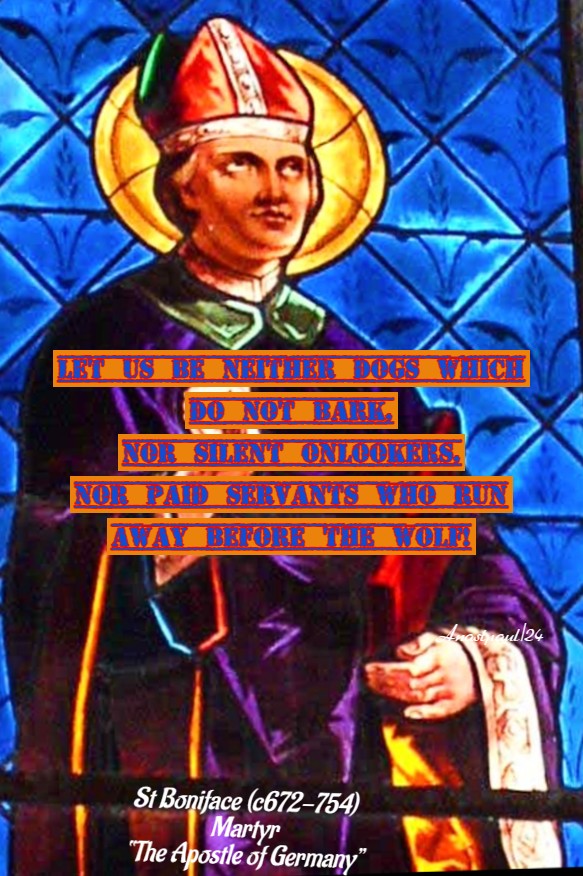
“Let us be neither dogs which do not bark, nor silent onlookers, nor paid servants who run away before the wolf!”
Eternal God, Our Refuge By St Boniface (672-754) Martyr
Eternal God, the refuge and help of all Thy children, we praise Thee for all Thou hast given us, for all Thou hast done for us, for all that Thou art to us. In our weakness, Thou art strength, in our darkness, Thou art light, in our sorrow, Thou art comfort and peace. We cannot number Thy blessings, we cannot declare Thy love – for all Thy graces, we bless Thee. May we live as in Thy presence, and love the things that Thou loves and serve Thee in our daily lives, through Jesus Christ our Lord. Amen
One Minute Reflection – 5 June – “The Month of the Sacred Heart of Jesus” – St Boniface (672-754) Martyr “The Apostle of Germany,” Confessor, Bishop – Within the Corpus Christu Octave – – 1 Corinthians 23-29, John 6:56-59.– Scripture search here: https://www.drbo.org/
“As the living Father has sent Me and as I live because of the Father, so he who eats Me, he also shall live because of Me.” – John 6:58
REFLECTION – “We believe that the Word became Flesh and that we receive His Flesh in the Lord’s Supper. How then can we fail to believe, that He really dwells within us? When He became Man, He actually clothed Himself in our flesh, uniting it to Himself forever. In the Sacrament of His Body, He actually gives us His own Flesh, which He has united to His Divinity. This is why we are all one because the Father is in Christ and Christ is in us. He is in us through His Flesh and we are in Him. With Him, we form a Unity, which is in God.
The manner of our indwelling in Him through the Sacrament of His Body and Blood, is evident from the Lord’s own Words: This world will see Me no longer but you shall see Me. Because I live ,you shall live also, for I am in My Father, you are in Me and I am in you. If it had been a question of mere unity of will, why should He have given us this explanation of the steps, by which it is achieved? He is in the Father by reason of His Divine Nature, we are in Him by reason of His Human Birth and He is in us, through the Mystery of the Sacraments. This, surely, is what He wished us to believe; this is how He wanted us to understand the perfect Unity that is achieved through our Mediator, Who lives in the Father, while we live in Him and Who,, while living in the Father, lives also in us. This is how we attain to Unity with the Father. Christ is in very truth in the Father by His Eternal Generation; we are in very truth, in Christ and He likewise is in us.
Christ Himself bore witness to the reality of His Unity, when He said: He who eats My Flesh and drinks My Blood, lives in Me and I in him. No-one will be in Christ, unless Christ Himself has been in him; Christ will take to Himself only the Flesh of those who have received His Flesh.
He had already explained the Mystery of this perfect Unity, when He said: As the living Father sent Me and I draw life from the Father, so he who eats My Flesh will draw life from Me. We draw life from His Flesh, just as He draws life from the Father. Such comparisons aid our understanding, since we can grasp a point more easily, when we have an analogy. And the point is that Christ is the well-spring of our life. Since we, who are in the flesh, have Christ dwelling in us through His Flesh, we shall draw life from Him in the same way, in which He draws life from the Father.” – St Hilary of Poitiers (315-368) Bishop of Poitiers , Father and Doctor of the Divinity of Christ (An excerpt from his On the Trinity).
PRAYER – O God, Who, through the zeal of blessed Boniface, Thy Martyr and Bishop, graciously called a multitude of people to the knowledge of Thine Name, mercifully grant that we, who keep his feast, may also enjoy his patronage.Through Jesus Christ, Thy Son our Lord, Who lives and reigns with Thee, in the unity of the Holy Ghost, God, world without end. Amen (Collect).
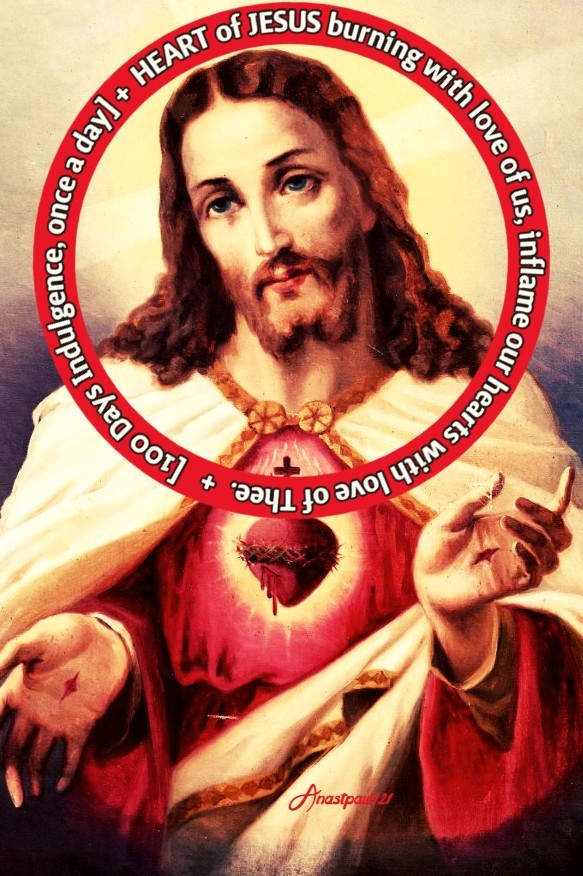
HEART of JESUS burning with love of us, inflame our hearts with love of Thee. – 100 Days, once a day. (See Instructions. – Unless otherwise stated, e.g., “once a day,” a partial Indulgence may be gained any number of times in succession.) [169 Raccolta or Collection of Indulgences, 1910] Pope Leo XIII, 16 July 1893.
Our Morning Offering – 5 June – “The Month of the Sacred Heart of Jesus”
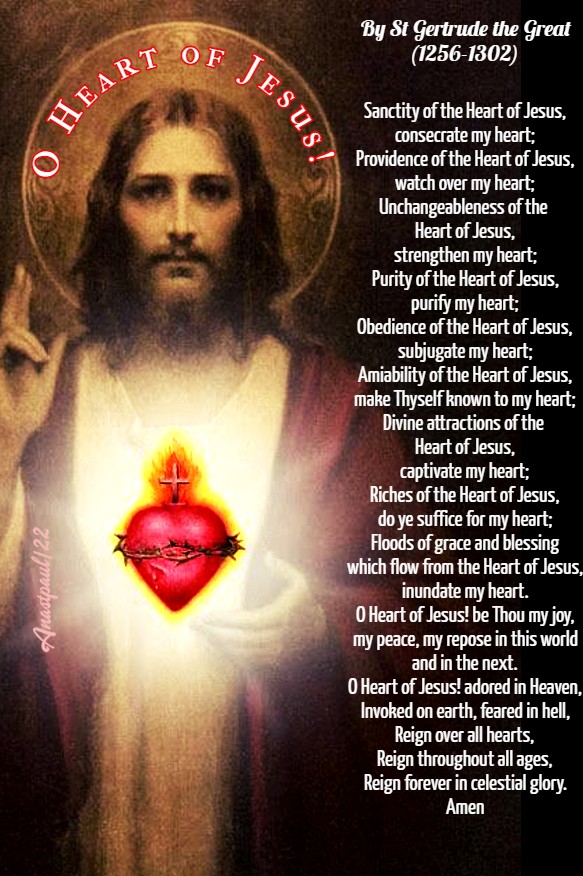
O Heart of Jesus! By St Gertrude the Great (1256-1302)
Sanctity of the Heart of Jesus, consecrate my heart; Providence of the Heart of Jesus, watch over my heart; Unchangeableness of the Heart of Jesus, strengthen my heart; Purity of the Heart of Jesus, purify my heart; Obedience of the Heart of Jesus, subjugate my heart; Amiability of the Heart of Jesus, make Thyself known to my heart; Divine attractions of the Heart of Jesus, captivate my heart; Riches of the Heart of Jesus, do ye suffice for my heart; Floods of grace and blessing which flow from the Heart of Jesus, inundate my heart. O Heart of Jesus! be Thou my joy, my peace, my repose in this world and in the next. O Heart of Jesus! adored in Heaven, Invoked on earth, feared in hell, Reign over all hearts, Reign throughout all ages, Reign forever in celestial glory. Amen
Saint of the Day – 5 June – St Eoban of Utrecht (Died 754) Bishop Martyr, Missionary as a Disciple of St Boniface, who also shared in the Martyrdom of his master. Born in England or Ireland and died on 5 June 754 at Dokkum, Freisland (modern Netherlands). Also known as – Eobáno, Eobánus. Additional Memorial – 7 July in Fulda, Germany and 19 December, the date of St Eoban’s arrival in Germany.
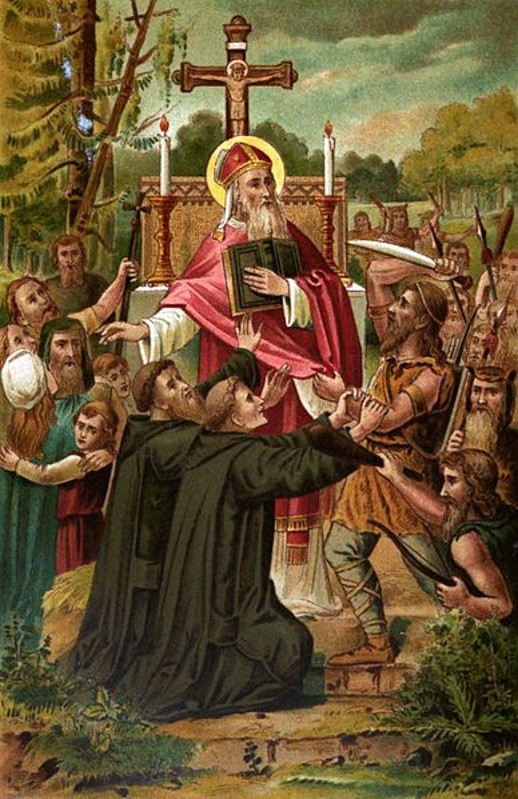
St Boniface and Companions attacked
We know almost nothing about Eoban’s early life except that he was a Monk and Priest in either Ireland or England and was selected by St Boniface to accompany him on his mission to Gerrmany.
Eoban was also chosen by St Boniface to be his assistant Bishop for Frisia and installed in 753 in Utrecht, according to the Life of Saint Boniface, written in 765 by Willibaldus.
According to the Vita Bonifatii auctore Willibaldo, on the morning of 5 June 754, Boniface and 50 others, presumably including Eoban (none of the companions are mentioned by name in the Vita), were killed at Dokkum (The Netherlands) by pagan Frisians.
The Martyrdom of St Boniface. After the fresco by Carl Hesse.
After his Martyrdom, St Eoban was buried in Utrecht, whilst the many other companions were buring in Dokkum and various places. After 756, the Relics of the Bishops of Utrecht, Eoban and Adalar, were transferred to Fulda and buried next to St Boniface.
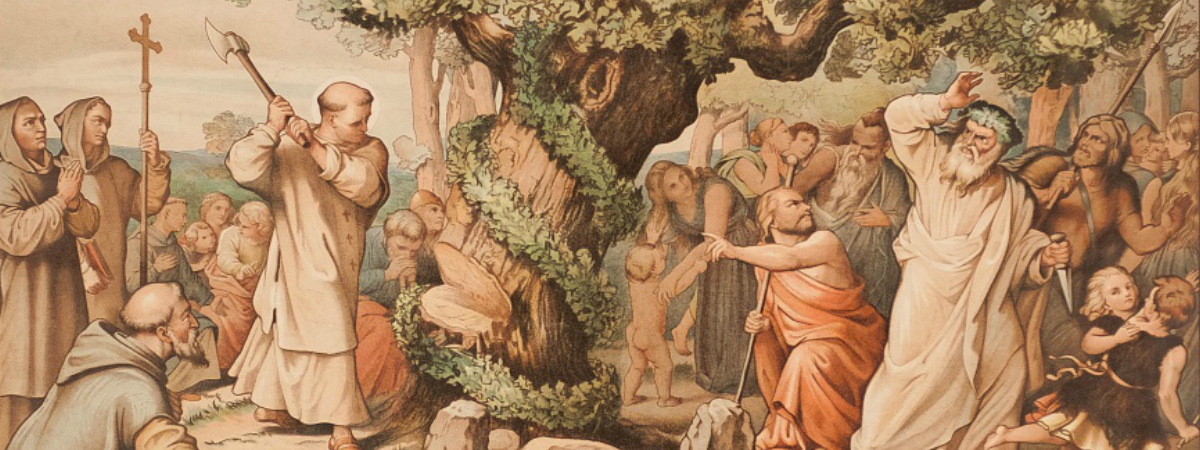
St Boniface and his disciples cutting down the pagan tree
Their Feast was initially celebrated in Mainz, Erfurt and Fulda on 26 July then, since 1915, on 7 July with the title Sts Eoban and Companion Martyrs. Eoban seems to have always had a special cult in Fulda, where an ancient calendar commemorates his arrival on 19 December. Adalar, however, is particularly honoured in Erfurt, where his own festival has been celebrated on 20 April since 1250.
The memory of Eobao’s other companions is remembered by all Martyrologists together with that of Saint Boniface on 5 June. A large Statue of St Eoban dominates the crypt of Saint Boniface’s Church in Fulda. The Sarcophagus containing some Relics of the Saints Eoban and Adalat in the Erfurt Cathedral is dated about 1350.
St Adalar of Erfurt Bl Adalbert Radiouski Bl Adam Arakawa St Austrebertus of Vienne St Claudius of Egypt and Companions St Ðaminh Huyen St Ðaminh Toai St Dorotheus of Tyre St Elleher St Eoban of Utrecht (Died 754) Bishop Martyr, Disciple of St Boniface St Eutichius of Como St Evasius of Africa St Felix of Fritzlar
Blessed Ferdinand of Portugal (1402-1443) “The Holy Prince” Blessed Ferdinand spent as much time as he could in adoration of the Most Blessed Sacrament especially during the Easter Triduum when his habit was to be constantly in adoration, from Holy Thursday to Easter. He was the youngest of the “Illustrious Generation” of 15th-century Portuguese Princes of the House of Aviz and lay Master of the Knightly Order of Aviz.The Holy Prince’s Life: https://anastpaul.com/2021/06/05/saint-of-the-day-5-june-blessed-ferdinand-of-portugal-1402-1443-the-holy-prince/
St Gregory of Lilybaeum St Gundekar St Hadulph St Luke Loan Bl Meinwerk of Paderborn St Privatus of Africa St Sanctius of Córdoba St Tudno of Caernarvon St Waccar
Martyrs of Caesarea: A group of Christians who converted together, were imprisoned together, tortured together, and Martyred together. We know nothing more about them but their names – Cyria, Marcia, Valeria and Zenaides. Died Caesarea, Palestine, date unknown.
Martyrs of Egypt: A group of Christians Martyred together in the persecutions of Galerius Maximian. The only other information was have is three of their names – Apollonius, Marcian and Nicanor. Died in Egypt, date unknown.
Martyrs of Perugia: A group of Christians Martyred together in the persecutions of Decius. We know little more than their names – Cyriacus, Faustinus, Florentius, Julian and Marcellinus. Died beheaded in 250 in Perugia, Italy
Martyrs of Rome: 26 Christians Martyred together. We have no details about them but their names – Candida, Castula, Fappa, Felician, Felicitas (2 of), Felicula, Fortunatus, Gagus, Gregor, Hilarius, Ingenuus, Juliana, Martialis, Maurus, Mustilus, Nicander, Prima, Rogata, Rutianus, Sacrinus, Saturnin, Secundian, Secundus, Urbicus, Victurus. Died • Rome, Italy, date unknown. Relics transferred to Antwerp, Belgium, date unknown.
Thought for the Day – 4 June – Meditations with Fr Richard Frederick Clarke SJ (1839-1900)
PATIENCE Meditations for a Month
The Second Degree of Patience
The repression of external signs of impatience has no value in God’s sight except, insofar as it is a step to the interior virtue. The soldier, the courtier, the servant, suppresses the exterior marks of impatience, from fear of punishment and hope of reward. The Christian must do more than this; he must have within himself, the motive of imitating the patience of Jesus Christ. Smoke is the sign of fire within but the smoke will not warm the house, unless there is the fire on the hearth; so too, external patience will not please God, unless there is also the motive of patience within the soul. Am I striving after the interior virtue? Have I even succeeded in repressing the exterior impatience for Christ’s sake?
When some unkindness or injury is done us, there arises in us a double feeling. We feel pained and hurt; in this there is no sort of sin. But we are also conscious of another feeling – a desire to retaliate, a wish to see some retribution befall the offender. We are bitter towards them, we are tempted to indulge ourselves in an animosity which approaches sometimes even to hatred! This is what has to be expelled from our souls if we are to resemble Him Who was meek and humble of heart.
What must we do to rid ourselves of this bitterness? Dislike may remain in spite of all our efforts; this we cannot help. But we must resolve that no unkind wish towards the offender shall be indulged. Then we must set to work to pray for calmness and a spirit of forgiveness and we must think of all we deserve for our offences against God and must say, from our heart: ‘Forgive us our trespasses as we forgive those who trespass against us.‘ Last of all, we must pray for the offender.
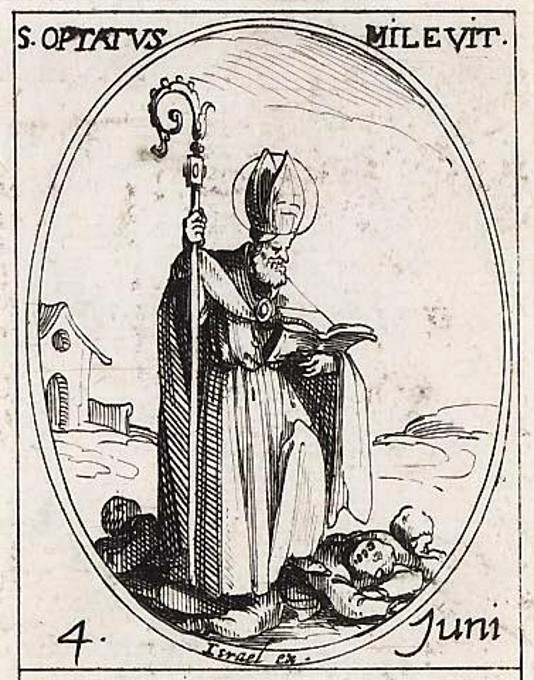
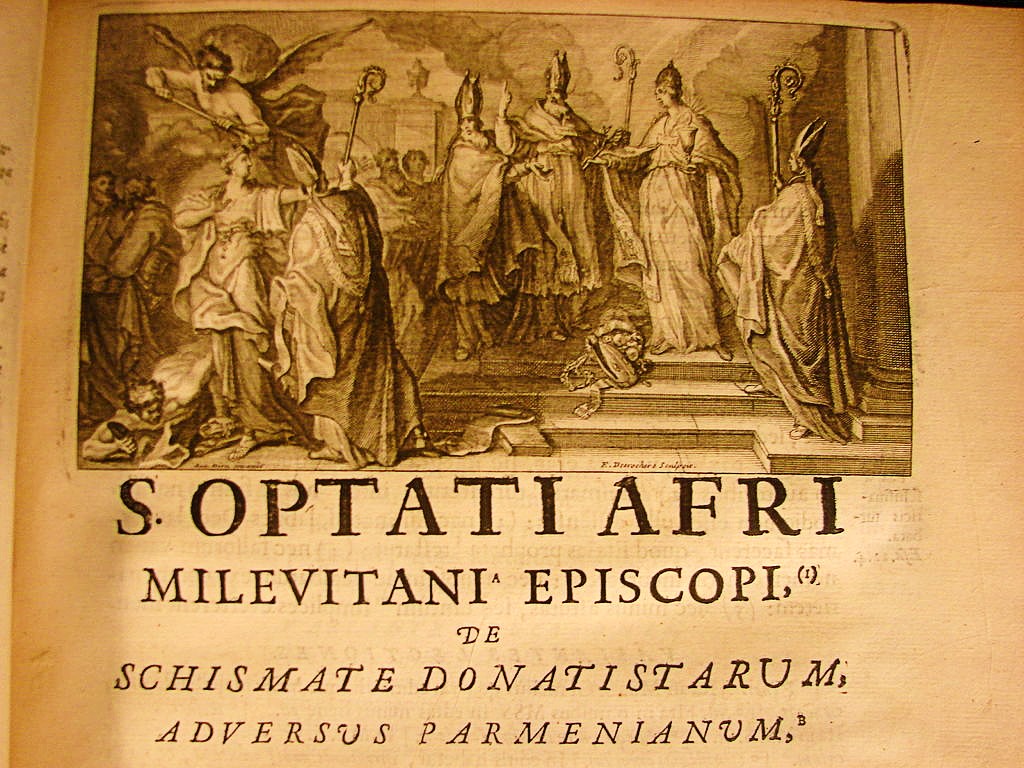
Quote of the Day – 4 June – Saint Optatus of Milevis (4th Century) Bishop, Father of the Church
“You cannot deny that you know that in the City of Rome, upon Peter first, the Chair of the Bishop was conferred, in which sat the Head of all the Apostles, Peter, whence also, he was called Cephas, in which One Chair unity should be preserved by all, lest the other Apostles should each stand up for his own chair, so that now, he should be a schismatic and a sinner who should, against this One Chair, set up another!”
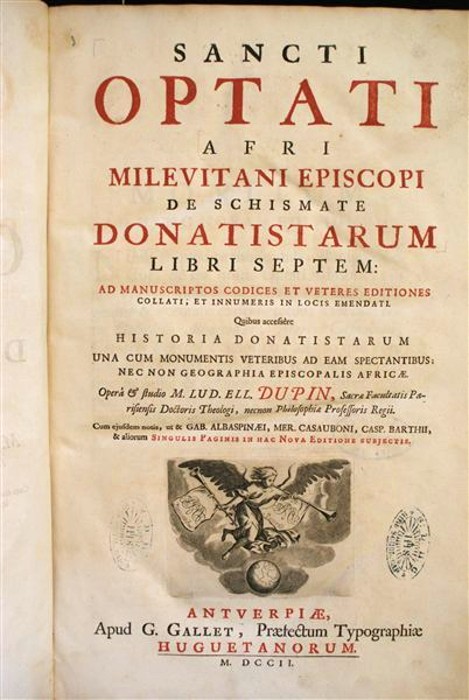
St Optatus (4th Century) Bishop of Milevis Father of the Church
One Minute Reflection – 4 June – “The Month of the Sacred Heart of Jesus” – St Francis Caracciolo CRM (1563-1608) Confessor –Within the Corpus Christi Octave – 1 Corinthians 23-29; John 6:56-59.– Scripture search here: https://www.drbo.org/
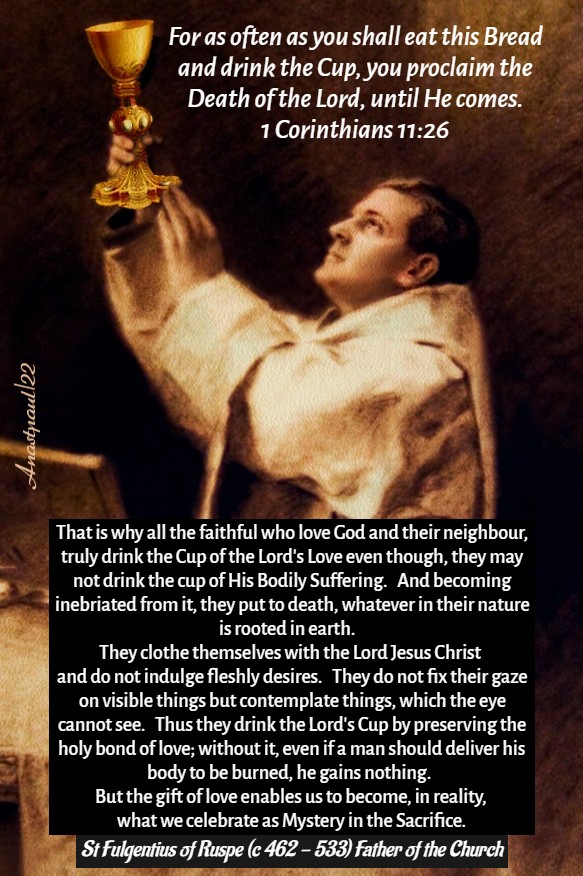
“For as often as you shall eat this Bread and drink the Cup, you proclaim the Death of the Lord, until He comes.” – 1 Corinthians 11:26
REFLECTION – “In our offering of the Holy Sacrifice we fulfil the Command of our Saviour, as recorded by the Apostle Paul: The Lord Jesus, on the night in which He was betrayed, took bread and after He had given thanks, broke it and said: This is My Body, which is given for you. Do this in remembrance of Me. The same way, after the supper, He took the Cup saying: This Cup is the New Covenant in My Blood. Do this, whenever you drink it, in remembrance of Me. For as often as you eat this Bread and drink this Cup, you shall proclaim the Death of the Lord until He comes.
This Sacrifice is offered, then, to proclaim the Lord’s Death; it is offered in remembrance of Him, Who laid down His Life for our sake. As He says: Greater love than this no man has, that he lay down his life for his friends. Because Christ died for us out of love, we ask, when we make remembrance of His Death, at the time of Sacrifice that we too may be granted love through the coming of the Holy Ghost. We pray, that by the Love which Christ had for us, when He braved the Cross, we may receive the grace of the Spirit and be crucified to the world and the world to us. The Death Christ died, He died to sin, once for all but the Life He lives, He lives to God. Let us imitate our Lord’s Death and also live a new life. Strengthened with the gift of His Love, let us die to sin and live for God.
For God’s Love has been poured out in our hearts, through the Holy Spirit, Who has been given to us. Indeed our sharing in the Lord’s Body and Blood, when we eat His Bread and drink His Cup, teaches us, that we should die to the world and that we should keep our life hidden with Christ in God, crucifying our flesh with its vices and evil desires.
That is why all the faithful who love God and their neighbour, truly drink the Cup of the Lord’s Love even though, they may not drink the cup of His Bodily Suffering. And becoming inebriated from it, they put to death, whatever in their nature is rooted in earth. They clothe themselves with the Lord Jesus Christ and do not indulge fleshly desires. They do not fix their gaze on visible things but contemplate things, which the eye cannot see. Thus they drink the Lord’s Cup by preserving the holy bond of love – without it, even if a man should deliver his body to be burned, he gains nothing. But the gift of love enables us to become, in reality, what we celebrate as Mystery in the Sacrifice.” – St Fulgentius of Ruspe (c462 – 533) Bishop, Father (An excerpt from Against Fabianus).
PRAYER – Almighty, eternal God, Thou Who have given Thy servants, in the confession of the true faith, to acknowledge the glory of the eternal Trinity and in the power of that Majesty, to adore its unity, grant, we beseech Thee, that in the firmness of this faith, we may ever be protected from all harm. And may the example and intercession of Thy Confessor, St Francis Caracciolo ever assist us on our journey to our eternal home. Through Jesus Christ, Thy Son our Lord, Who lives and reigns with Thee, in the unity of the Holy Ghost, God, world without end. Amen (Collect).
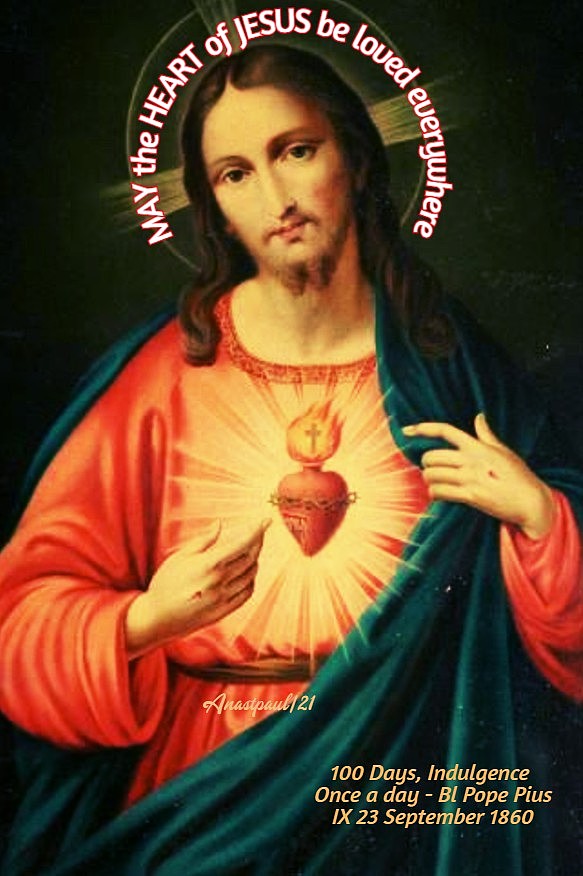
MAY the HEART of JESUS be loved everywhere.100 Days, Indulgence Once a day – Bl Pope Pius IX 23 September 1860
Our Morning Offering – 4 June – “The Month of the Sacred Heart of Jesus” – Within the Corpus Christi Octave
Daily Consecration to the Sacred Heart of Jesus Prayers to the Sacred Heart 1936 – 15th Edition, Dublin
O Sacred Heart of Jesus, filled with infinite love, broken by our ingratitude and pierced by our sins, yet loving us still, accept the Consecration we make to Thee, of all that we are and all that we have. Take every faculty of our souls and bodies, only day by day draw us, nearer and nearer to Thy Sacred Heart, and there, as we shall hear the lesson, teach us Thy Holy Way. Amen
Saint of the Day – 4 June – Saint Optatus of Milevis (4th Century) Bishop of Milevis, Numidia, in Africa, Father of the Church, the first fierce opponent of Donatism, Writer against heresy, Scholar. Also known as – Optate, Ottato.
The Roman Martyrology reads today: “At Milevis, in Numidia, in Africa, Saint Optatus, Bishop of that place, celebrated for learning and holiness.”
Optatus was a convert, as we learn from St Augustine. He is perhaps the least known of all the Fathers of the Church. He was learned with a solid cultural preparation which ranged from Scriptural exegesis to Theology, without disdaining the profane disciplines, such as rhetoric and jurisprudence. All this must have supported Optatus as he ventured into his literary and pastoral activity.
He is best known for his opposition to the heresy of Donatism and his six treatises composed against them. One of these, “Against Parmenian”, is still extant and was mentioned by St Jerome in his “De Viris Illustrius” as having been composed in six books.
The treatise stresses the need for unity and is conciliatory in tone but it criticises Donatist teachings on Baptism and stresses that the Church cannot be limited to Africa but is ‘Catholic.’
Optatus was much praised by such contemporaries as St Augustine and St Fulgentius of Ruspe.
“His treatise against the Donatists was translated into French in 1564. It is extremely improbable that, but for this exception, it has, until now, ever appeared in any language save Latin. It is quite certain that it has never yet been clothed in an English dress.
Indeed it is not too much to say that the very name of Optatus is barely known, even to many students of Theology and Ecclesiastical history. Yet his is no mean name and he cannot be ignored with safety, for he has bequeathed to the Church, material of no small value.”
The above excerpt was written by Fr O R Vassali-Phililips CSSR in his Introduction to his translation of our Saints works. His translation was published in 1917. Here is a link to the Treatise: https://www.tertullian.org/fathers/optatus_00_intro.htm
St Francis Caracciolo CRM (1563-1608) Confessor, Priest, Co-Founder of the Congregation of the Clerics Regular Minor with Venerable John Augustine (1551-1587) the “Adorno Fathers,” Apostle of the Eucharistic Adoration. His body was given enough preparation for a long journey to Naples. Truly, God has left His own sign on him. When the body was lanced, the blood spouted a red and scented fluid and his vital organs were incorrupt. Around his heart were printed the words of the Psalm: “The zeal of Thy House consumes me” (Ps 69:10). Wow!: https://anastpaul.com/2020/06/04/saint-of-the-day-4-june-saint-francis-caracciolo-crm-1563-1608/
St Aldegrin of Baume St Alexander of Verona Bishop St Alonio St Aretius of Rome Bl Boniface of Villers St Breaca of Cornwall St Buriana of Cornwall
St Christa of Sicily Martyr. No further information has survived.
St Clateus of Brescia St Cornelius McConchailleach OSA (Died 1176) Archbishop of Armagh St Croidan St Cyrinus of Aquileia St Dacian of Rome St Degan St Edfrith of Lindisfarne Bishop St Elsiar of Lavedan St Ernin of Cluain Blessed Francis Ronci (1223-1294) Bl Margaret of Vau-le-Duc St Medan Bl Menda Isategui St Metrophanes of Constantinople Bishop and Confessot St Nennoc St Nicolo of Sardinia St Optatus of Milevis (4th Century) Bishop
St Quirinus of Croatia St Quirinus of Tivoli St Rutilus of Sabaria St Saturnina of Arras St Trano of Sardinia St Walter of Fontenelle St Walter of Serviliano
Martyrs of Cilicia – 13 Saints: A group of 13 Christians who were Martyred together. The only details about them that have survived are their names – Cama• Christa• Crescentia• Eiagonus• Expergentus• Fortunus• Italius • Jucundian• Julia• Momna• Philip• Rustulus• Saturnin They were Martyred in Cilicia, Asia Minor (in modern Turkey), date unknown
Martyrs of Nyon – 41 Saints: A group of 41 Christians Martyred together for refusing to sacrifice to imperial Roman idols. We know the names of some but no other details. Amatus• Attalus• Camasus• Cirinus• Dinocus• Ebustus• Euticus• Eutychius • Fortunius• Galdunus• Julia• Quirinus• Rusticus• Saturnina• Saturninus • Silvius• Uinnita• Zoticus Martyred by being beheaded in Noviodunum (modern Nyon, Switzerland).
Thought for the Day – 3 June – Meditations with Fr Richard Frederick Clarke SJ (1839-1900)
PATIENCE Meditations for a Month
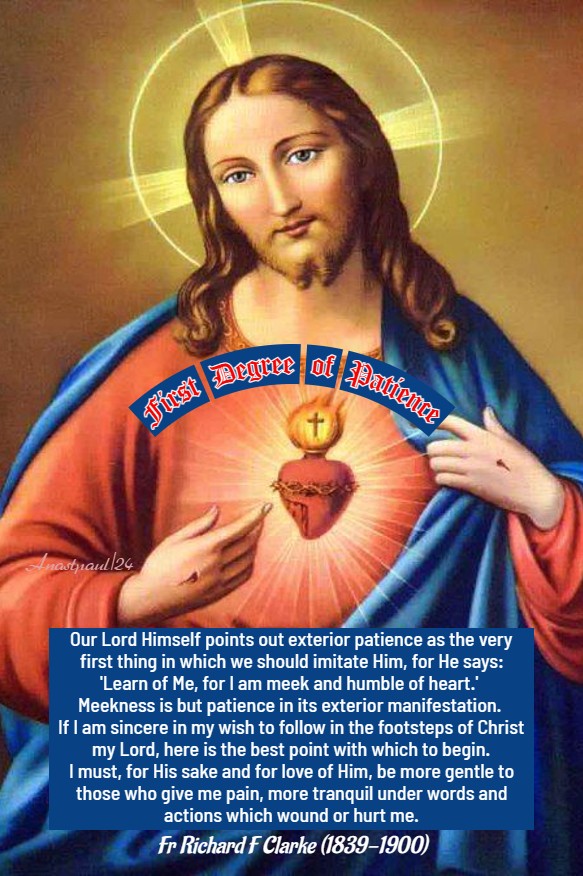
First Degree of Patience
When we are studying to acquire a virtue, it is generally the better plan to begin with external actions and thence, to proceed to the interior dispositions whence those actions proceed. In accordance with this rule, we must begin by repressing all signs of resentment and anger, when we are offended, or when someone crosses our path, or hinders some work in which we are engaged. If under all this, we can keep an unmoved and tranquil countenance and avoid all expression of personal feeling and annoyance, this is a great point gained. Am I able to do this?
Why is it important to begin with exterior patience? Firstly because, this helps enormously to calm the feelings within us, just as we can work ourselves up into a fury by raging externally. Peace will soon return if we keep a serene face and quiet demeanour. Secondly because, exterior calmness, under ill-usage, edifies others and honours Christ our Lord, just as impatience and irritability disedify and dishonour the Name of Christian. I must remember this when I am tempted to yield to my injured pride and to retaliate on those who have offended me.
Our Lord Himself points out exterior patience as the very first thing in which we should imitate Him, for He says: ‘Learn of Me, for I am meek and humble of heart.’ Meekness is but patience in its exterior manifestation. If I am sincere in my wish to follow in the footsteps of Christ my Lord, here is the best point with which to begin. I must, for His sake and for love of Him, be more gentle to those who give me pain, more tranquil under words and actions which wound or hurt me.
Quote/s of the Day – 3 June – “The Month of the Sacred Heart of Jesus” –
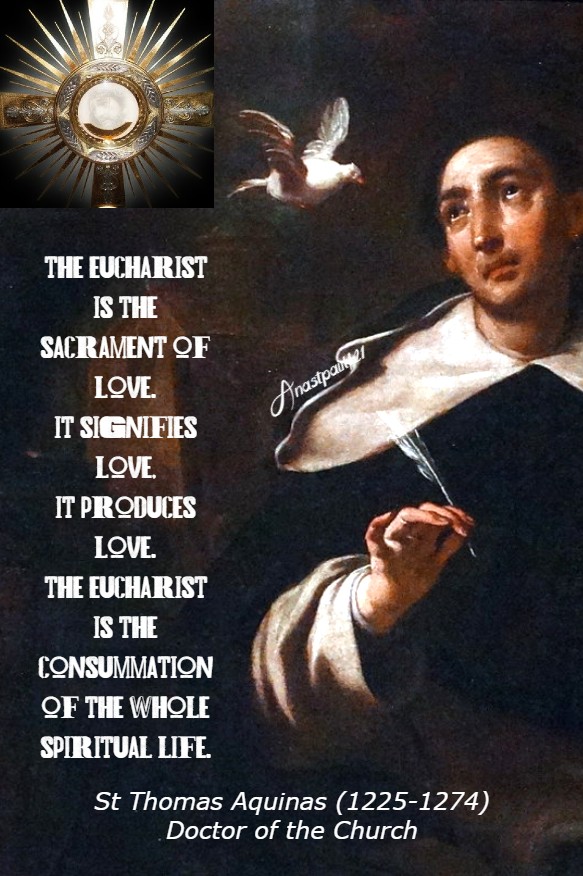
“The Eucharist is the Sacrament of Love. It signifies Love, It produces love. The Eucharist is the consummation of the whole spiritual life.”
St Thomas Aquinas (1225-1274) Doctor angelicus/Doctor communis
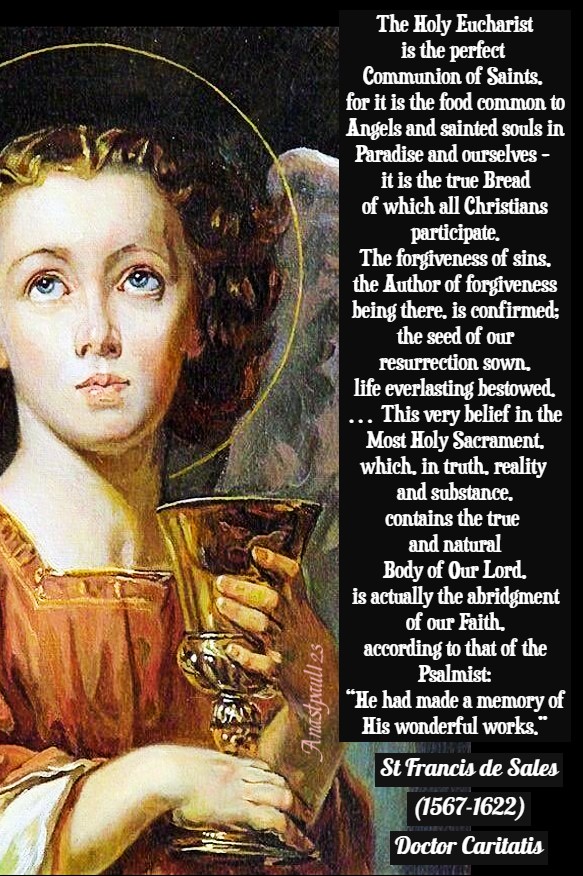
“The Holy Eucharist is the perfect Communion of Saints, for it is the food common to Angels and sainted souls in Paradise and ourselves – it is the true Bread of which all Christians participate. The forgiveness of sins, the Author of forgiveness being there, is confirmed; the seed of our resurrection sown, life everlasting bestowed. … This very belief in the Most Holy Sacrament, which, in truth, reality and substance, contains the true and natural Body of Our Lord, is actually the abridgment of our Faith, according to that of the Psalmist: “He had made a memory of His wonderful works.”
One Minute Reflection – 3 June – “The Month of the Sacred Heart of Jesus” – Within the Octave of Corpus Christi – 1 Corinthians 23-29; John 6:56-59– Scripture search here: https://www.drbo.org/
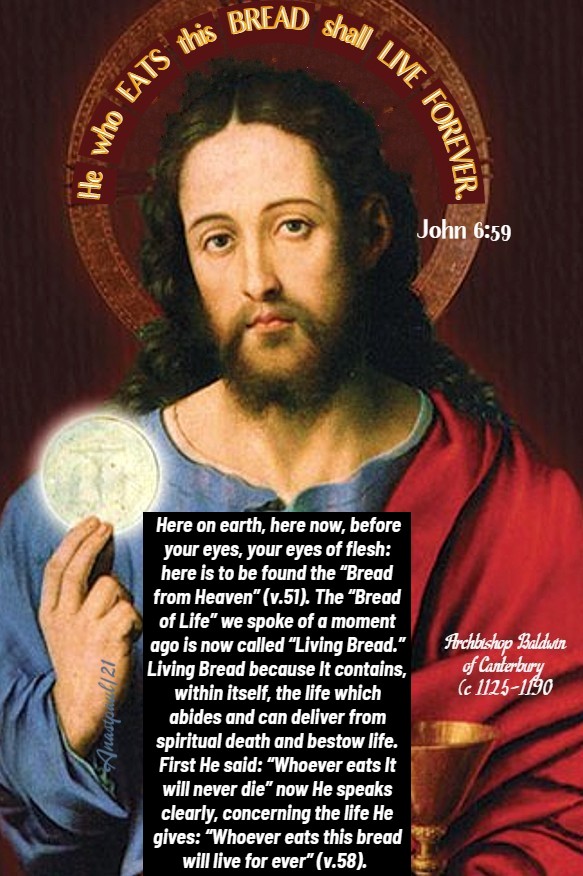
“This is the Bread that has come down from Heaven; not as your fathers ate the manna and died. He who eats this Bread shall live forever.” – John 6:59
REFLECTION – Christ is “the bread of life” for those who believe in Him: to believe in Christ is to eat the Bread of Life, to possess Christ within one, is to possess eternal life… “I am the Bread of Life,” He says; “your fathers ate manna in the wilderness and they are dead” (Jn 6:48f). By this is to be understood ,spiritual death. Why are they dead? Because they believed in what they saw and did not understand what they could not see… Moses ate manna, Aaron ate it and many others, too, who pleased God and are not dead. Why are they not dead? Because they understood, in a spiritual fashion, they were spiritually hungry, they tasted the manna spiritually, so that they might be spiritually satisfied. “This is the Bread that came down from Heaven: whoever eats It will never die” (v.50). This manna – that is to say, Christ, who Himself spoke like this … was prefigured by the manna but was able to do more than manna could. For manna could not, of itself, prevent dying spiritually… But the righteous saw Christ in the manna, they believed in His coming and Christ, of Whom manna was the symbol, grants to all who believe in Him that they should not spiritually die. Hence He says: “This is the Bread come down from Heaven; whoever eats it will never see death.” Here on earth, here now, before your eyes, your eyes of flesh: here is to be found the “Bread from Heaven” (v.51). The “Bread of Life” we spoke of a moment ago is now called “Living Bread.” Living Bread because it contains, within Itself, the life which abides and can deliver from spiritual death and bestow life. First He said: “Whoever eats It will never die” now He speaks clearly, concerning the life He gives: “Whoever eats this bread will live for ever” (v.58). Archbishop Baldwin of Canterbury (c 1125-1190) Cistercian – The Sacrament of the Altar II
PRAYER – Grant, O Lord, that we may always fear and love Thy holy Name, for Thou never fail to guide those whom Thou firmly establishes in Thine Love. Through the same Jesus Christ, Thy Son our Lord, Who lives and reigns with Thee, in the unity of the Holy Ghost, God, world without end. Amen (Collect).
SACRED Heart of JESUS, Thy Kingdom come! Indulgence 300 Days. Everytime Raccolta 178 St Pius X, 4 May 1906.



























 AnaStpaul
You must be logged in to post a comment.