Thought for the Day – 2 August – Meditations with Fr Richard Frederick Clarke SJ (1839-1900)
CHARITY Meditations for a Month
Charity in Our Actions
We have seen that charity must influence all our actions if they are to be meritorious in the sight of God. However, this does not mean that the conscious motive of promoting God’s glory must be present in our every thought but, we should aim for this end. The Saints always had God before their eyes. Their every movement and every act, however trifling, was done with the intention to please Him. Ordinary Christians can attain this only after long years practicing a close union with God. They must begin by offering up their actions to Him from time to time and by renewing the offering as often as they can. Am I striving to do this? Am I advancing in this practice of charity?
One thing we must always remember. We must always offer our actions to God when we rise in the morning. We should make the Sign of the Cross, repeat some little ejaculation consecrating the day to God. Here is an example. “O my God, I offer Thee all my actions, thoughts, words, deeds and sufferings of this day in union with those of Thy beloved Son, our Lord Jesus Christ.” I say this little prayer intending that it will last throughout the day, even though I may forget it. I will also pray that all I do may be influenced by it.
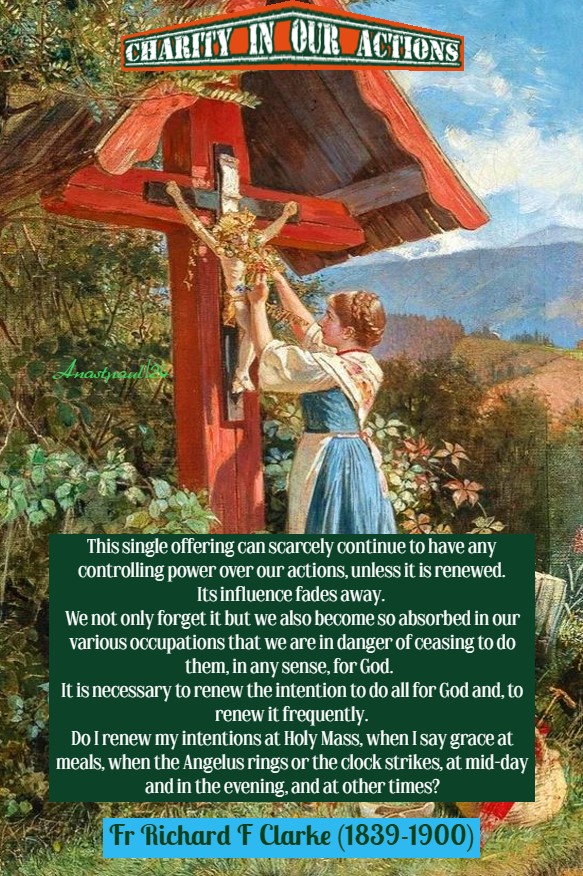
This single offering can scarcely continue to have any controlling power over our actions, unless it is renewed. Its influence fades away. We not only forget it but we also become so absorbed in our various occupations that we are in danger of ceasing to do them, in any sense, for God. It is necessary to renew the intention to do all for God and, to renew it frequently. Do I renew my intentions at Holy Mass, when I say grace at meals, when the Angelus rings or the clock strikes, at mid-day and in the evening, and at other times?
Quote/s of the Day – 2 August – St Alphonsus Maria de Liguori (1696-1787) Bishop, Confessor, Most Zealous Doctor of the Church
As you most probably are aware, the Opening Ceremony of the Olympic Games were marred by some degrading and horrible blasphemies. A parody of the Last Supper was enacted and broadcast with incredible obscenity. Let us pray St Alphonsus Act of Reparation on our knees with tears and love to Our Saviour:
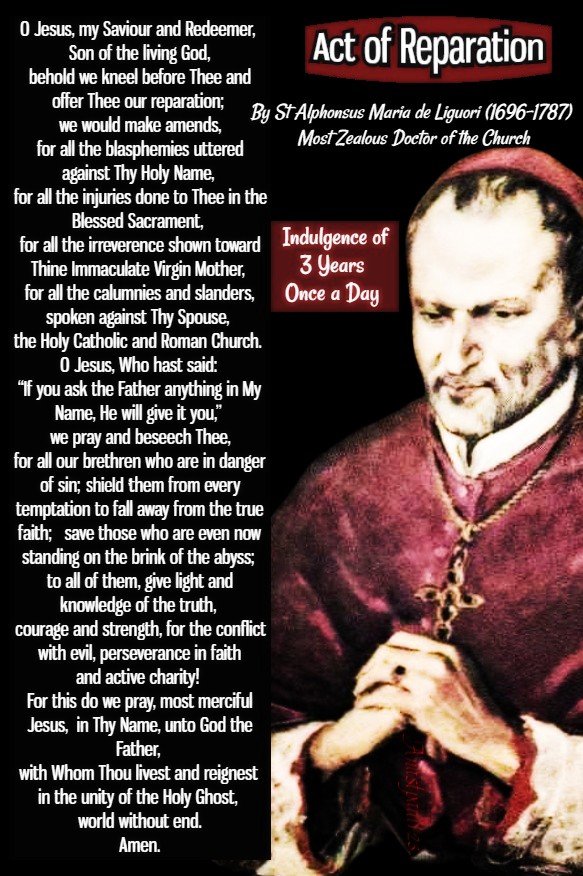
Act of Reparation By St Alphonsus Maria de Liguori (1696-1787) Most Zealous Doctor of the Church Indulgence of 3 Years – Once a Day
O Jesus, my Saviour and Redeemer, Son of the living God, behold we kneel before Thee and offer Thee our reparation; we would make amends, for all the blasphemies uttered against Thy Holy Name, for all the injuries done to Thee in the Blessed Sacrament, for all the irreverence shown toward Thine Immaculate Virgin Mother, for all the calumnies and slanders, spoken against Thy Spouse, the Holy Catholic and Roman Church. O Jesus, Who hast said: “If you ask the Father anything in My Name, He will give it you,” we pray and beseech Thee, for all our brethren who are in danger of sin; shield them from every temptation to fall away from the true faith; save those who are even now standing on the brink of the abyss; to all of them, give light and knowledge of the truth, courage and strength, for the conflict with evil, perseverance in faith and active charity! For this do we pray, most merciful Jesus, in Thy Name, unto God the Father, with Whom Thou livest and reignest in the unity of the Holy Ghost, world without end. Amen.
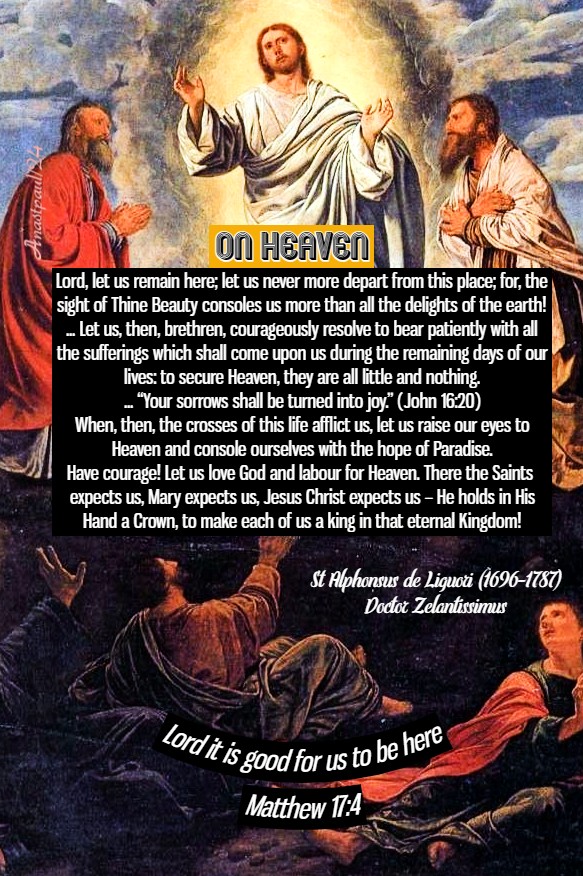
“Lord it is good for us to be here” Matthew 17:4
“Lord, let us remain here; let us never more depart from this place; for, the sight of Thine Beauty consoles us more than all the delights of the earth! Let us, then, brethren, courageously resolve to bear patiently with all the sufferings which shall come upon us during the remaining days of our lives: to secure Heaven, they are all little and nothing. “Your sorrows shall be turned into joy.” (John 16:20) When, then, the crosses of this life afflict us, let us raise our eyes to Heaven and console ourselves with the hope of Paradise. Have courage! Let us love God and labour for Heaven. There the Saints expect us, Mary expects us, Jesus Christ expects us – He holds in His Hand a Crown, to make each of us a king in that eternal Kingdom!”
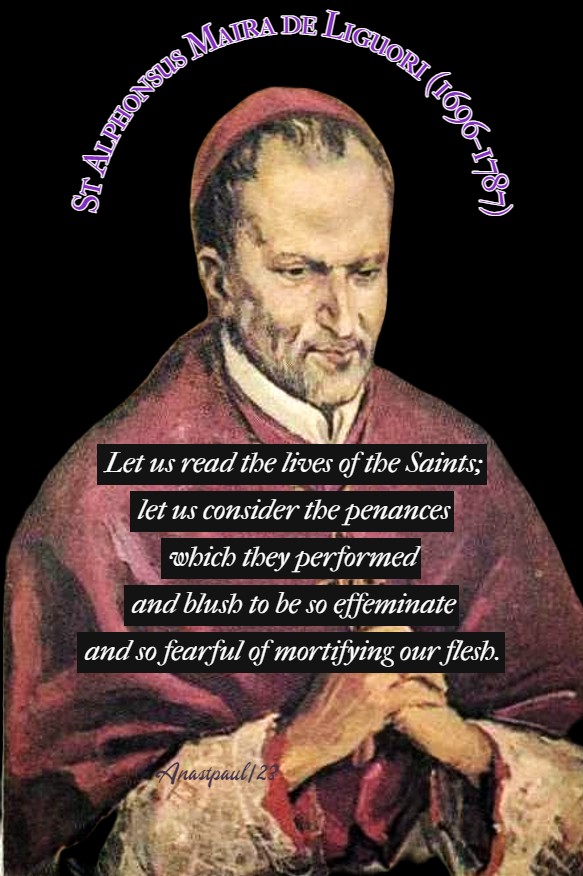
“Let us read the lives of the Saints; let us consider the penances which they performed and blush to be so effeminate and so fearful of mortifying our flesh.”
O Jesus, My Sweet Love! (I too have kept Thee suffering)
Prayer of Contrition By St Alphonsus Maria de Liguori (1696-1787) Most Zealous Doctor of the Church
O Jesus, my sweet Love! I too have kept Thee suffering through all Thy life. Tell me, then, what I must do in order to win Thy forgiveness. I am ready to do all Thou askest of me. I am sorry, O sovereign Good, for all the offences I have committed against Thee. I love Thee more than myself, or at least, I feel a great desire to love Thee. Since it is Thou Who hast given me this desire, do Thou also give me the strength to love Thee exceedingly.
It is only right that I, who have offended Thee so much, should love Thee very much. Always remind me of the love Thou hast borne me, in order that my soul may ever burn with love of Thee and long to please Thee alone. O God of love, I, who was once a slave of hell, now give myself all to Thee. Graciously accept me and bind me to Thee with the bonds of Thy love. My Jesus, from this day and forever, in loving Thee will I live and in loving Thee will I die.
O Mary, my Mother and my hope, help me to love Thy dear God and mine. This is the only favour I ask of thee and through thee, I hope to receive it. Amen
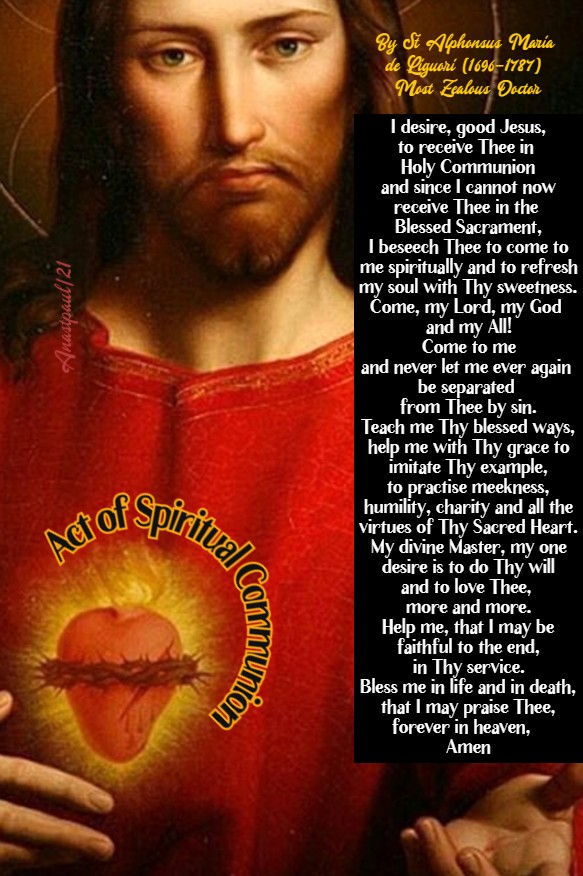
Act of Spiritual Communion By St Alphonsus Maria de Liguori (1696-1787) Most Zealous Doctor
I desire, good Jesus, to receive Thee in Holy Communion and since I cannot now receive Thee in the Blessed Sacrament, I beseech Thee to come to me spiritually and to refresh my soul with Thy sweetness. Come, my Lord, my God and my All! Come to me and never let me ever again be separated from Thee by sin. Teach me Thy blessed ways, help me with Thy grace to imitate Thy example, to practise meekness, humility, charity and all the virtues of Thy Sacred Heart. My divine Master, my one desire is to do Thy will and to love Thee, more and more. Help me, that I may be faithful to the end, in Thy service. Bless me in life and in death, that I may praise Thee, forever in heaven, Amen
One Minute Reflection –2 August – “The Month of the Immaculate Heart of Mary” – The Feast of St Alphonsus Maria de Liguori (1696-1787) Bishop, Confessor, Most Zealous Doctor of the Church – – 2 Timothy 2:1-7; Luke 10:1-9 – Scripture search here: https://www.drbo.org/
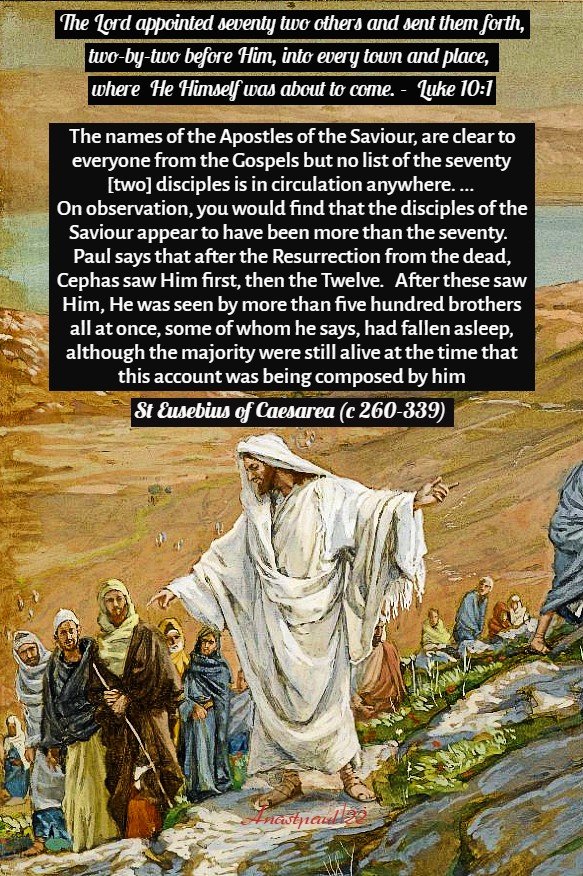
“The Lord appointed seventy two others and sent them forth, two-by-two before Him, into every town and place, where He, Himself was about to come.” – Luke 10:1
REFLECTION – “The names of the Apostles of the Saviour, are clear to everyone from the Gospels but no list of the seventy [two] disciples is in circulation anywhere. Some have said, to be sure, that Barnabas was one of them and the Acts of the Apostles and Paul writing to the Galatians, have made special mention of him. They say Sosthenes was of these too. Together with Paul, he wrote to the Corinthians. Tradition also holds that Matthias, who was listed among the Apostles in place of Judas and Joseph Justus, who was honoured with him at the same casting of lots, were considered worthy of the same calling among the seventy [two]. They say that Thaddaeus was also one of them, about whom I shall presently relate a story which has come down to us. On observation, you would find that the disciples of the Saviour appear to have been more than the seventy (two). Paul says that after the Resurrection from the dead, Cephas saw Him first, then the Twelve. After these saw Him, He was seen by more than five hundred brothers all at once, some of whom he says, had fallen asleep, although the majority were still alive at the time that this account was being composed by him.” – St Eusebius of Caesarea (c 260-339) Bishop of Caesarea, Historian, Theologian, Father (Ecclesiastical History 1.)”
PRAYER – O God, Who through blessed Alphonsus Maria, Thy Confessor and Bishop, fired with love for souls, enriched Thy Church with a new family; we beseech Thee that, taught by his saving counsels and strengthened by his example, we may be enabled, happily to come to Thee. Through the same Jesus Christ, Thy Son our Lord, Who lives and reigns with Thee, in the unity of the Holy Ghost, God, world without end. Amen (Collect).
Our Morning Offering – 2 August – “The Month of the Immaculate Heart of Mary” – St Alphonsus Maria de Liguori (1696-1787) Bishop, Confessor, Most Zealous Doctor of the Church and a Friday of the Passion
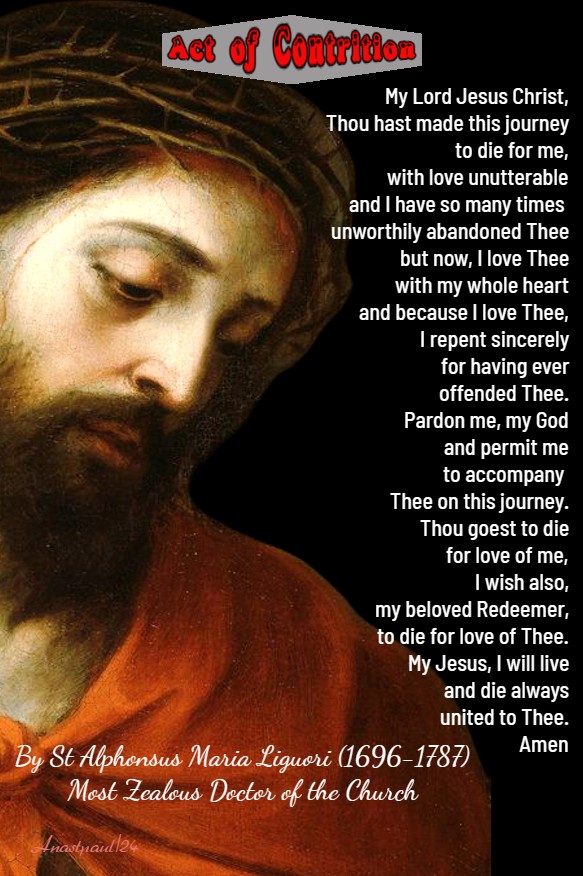
Act of Contrition By St Alphonsus Maria Liguori (1696-1787) Most Zealous Doctor of the Church
My Lord Jesus Christ, Thou hast made this journey to die for me, with love unutterable and I have so many times unworthily abandoned Thee but now, I love Thee with my whole heart and because I love Thee,, I repent sincerely for having ever offended Thee. Pardon me, my God and permit me to accompany Thee on this journey. Thou goest to die for love of me, I wish also, my beloved Redeemer, to die for love of Thee. My Jesus, I will live and die always united to Thee. Amen
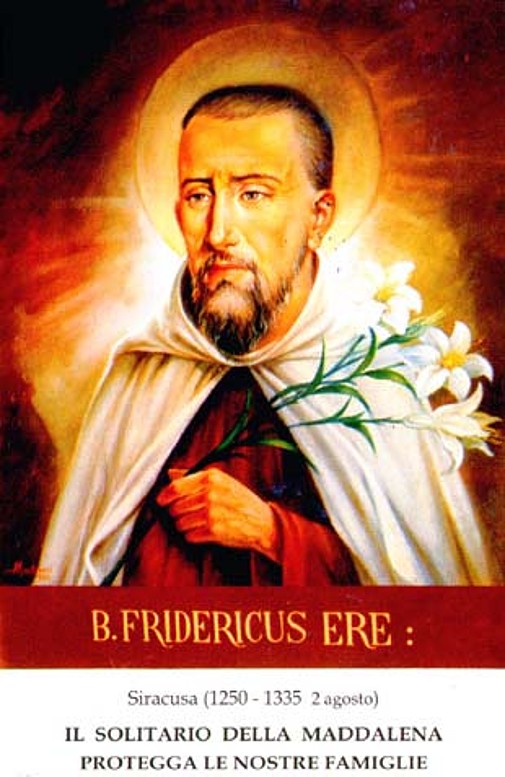
Saint of the Day – 2 August – Blessed Frederic Campisani OFM (c1255-1335) Religious of the Third Order of the Friars Minor and Hermit, Mystic, Miracle-worker, Exorcist. Born in c1255 in Syracuse, Sicily, Italy and died on 2 August 1335 of natural causes. Also known as – Frederico, Frederick.
Federic was born in Syracuse to the noble Campisani family, between 1250 and 1260. Since boyhood, he was attracted to listening to the Word of God and, as soon as he could, he wore the Franciscan Habit as a penitent.
He retired as a solitary hermit in the Maddalena Peninsula, so called by a small Church dedicated to the holy penitent St Mary Magdalene which later became the place where Blessed Federic lived.
With the view of the immense sea, he lived a life full of virtue and full of miracles which occurred through his intercession. It is said that various possessed people were freed from the devil, various illnesses were cured and a dead man was resurrected. Frederic had been granted the gift of prophecy too and many came to him seeking spiritual advice and assistance.
On 2 August 1335, the solitary of the Magdalene fell asleep in the Lord, full of merits and amid the mourning of those who turned to him for help for their body and spirit.
The first canonical process in 1336 was desired by the Bishop of Syracuse, Pietro De Montecateno and in 1761, Bishop Giuseppe Antonio De Requesens ordered the canonical recognition of the the blessed Fredric’s Relics.
The devotion and cult fof Blessed Federic has had ups and downs over the Centuries and has resurfaced in our times, almost as if to show us the path of perfection to be sought in silence, in the immense noise of modern life. But if we manage to create silence around us, the contemplation of nature will return and we will still be able to listen to the Word of God as our Blessed Frederic did from childhood until death..
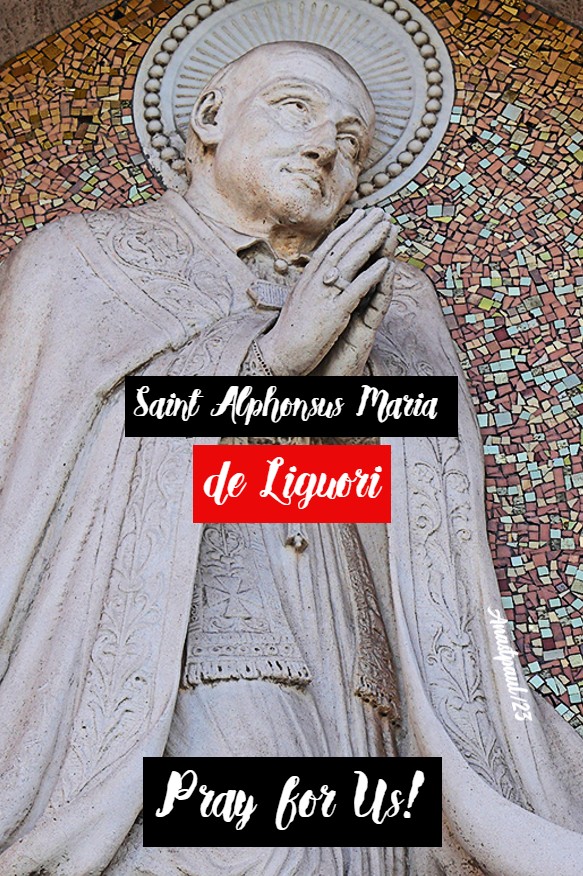
St Alphonsus Maria de Liguori (1696-1787) Bishop, Confessor, Most Zealous Doctor of the Church, Founder of the Redemptorists, Spiritual Writer, Composer, Musician, Artist, Poet, Lawyer, Scholastic Philosopher and Theologian.
St Auspicius of Apt St Betharius of Chartres (Died c623) Bishop St Etheldritha of of Croyland Blessed Frederic Campisani OFM (c1255-1335) Third Order Religious of the Friar s Minor, Hermit, Mystic, Miracle-worker. Bl Gundekar of Eichstätt Bl Joanna of Aza Bl John of Rieti St Maximus of Padua St Pedro de Osma St Plegmund St Rutilius
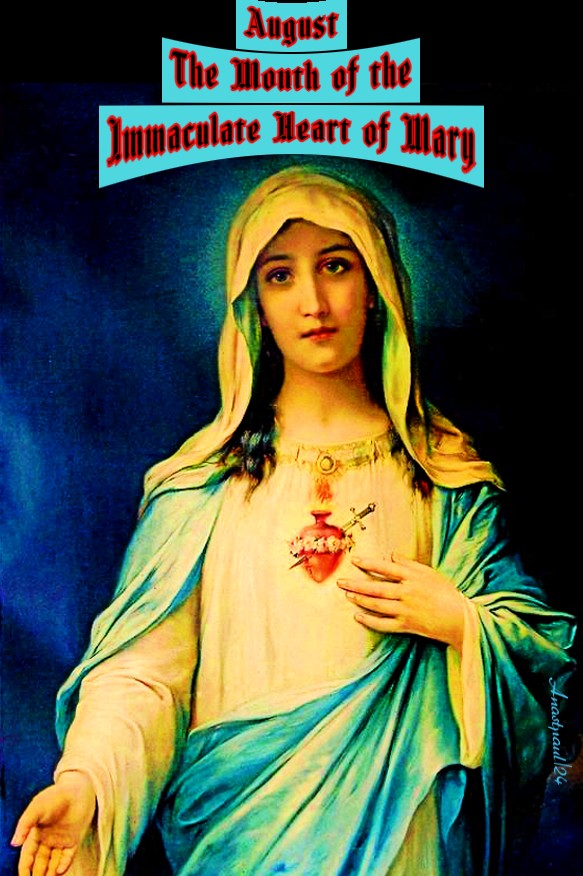
August – The Month of the Immaculate Heart of Mary
Messenger of the Sacred Heart of Jesus, 1876
Excerpt from – “Object Of This Devotion”
The object of the Devotion to the Immaculate Heart of Mary is twofold, material and spiritual; the former secondary, the latter primary. The material object is the material heart of the Mother of the Word Incarnate. The spiritual object is her spiritual heart, that is to say, the ardent charity with which she was inflamed for God, as well as that, which she bore towards men. There is neither distance, separation nor opposition between these two loves; it is precisely because she loves God that Mary loves us and, the more perfectly she loves God, the greater her affection for us.
The love which Mary bears us is similar to that manifested towards us by her Divine Son, when, while on earth, He sought sinners rather than the just; our condition as sinners, far from opposing an obstacle, is rather a claim upon her. In this point, as in all others, Mary walks faithfully in the footsteps of her Son and model and, if she loves the just with a love of complacency because of their virtues, the love of compassion and mercy which she feels for sinners, is still greater, not because they are worthy of it but because, of their greater necessities. Finally the material heart of Mary, by means of which we should raise our thoughts to the spiritual, is ordinarily represented, not only with flames escaping from it which figure her love and crowned with flowers, emblems of her virtues but also, pierced with a sword, to call our attention to her sorrows.
The end proposed by devotion to the Immaculate Heart, is to urge us to a greater love towards Mary; for this object we are invited to consider her heart which is the most perfect masterpiece which nature and grace combined, have ever formed of a simple creature – besides this, in our regard, it is the heart of the most tender of mothers who loves us far better than we love ourselves. In these two considerations is to be found her claim upon our love –can we refuse it? This general end contains several partial ones, some of which it will be well to indicate – such as gratitude towards Mary, confidence in her, lively compassion for her sufferings and imitation of her virtues.
Note: The Messenger of the Sacred Heart of Jesus is a Jesuit periodical of the Apostleship of Prayer. It is printed in Dublin, Ireland and with monthly sales of around 52,000, it is still one of the largest-selling magazines in Irelandand I believe there are versions in various countries around the world.
Thought for the Day – 1 August – Meditations with Fr Richard Frederick Clarke SJ (1839-1900)
CHARITY Meditations for a Month
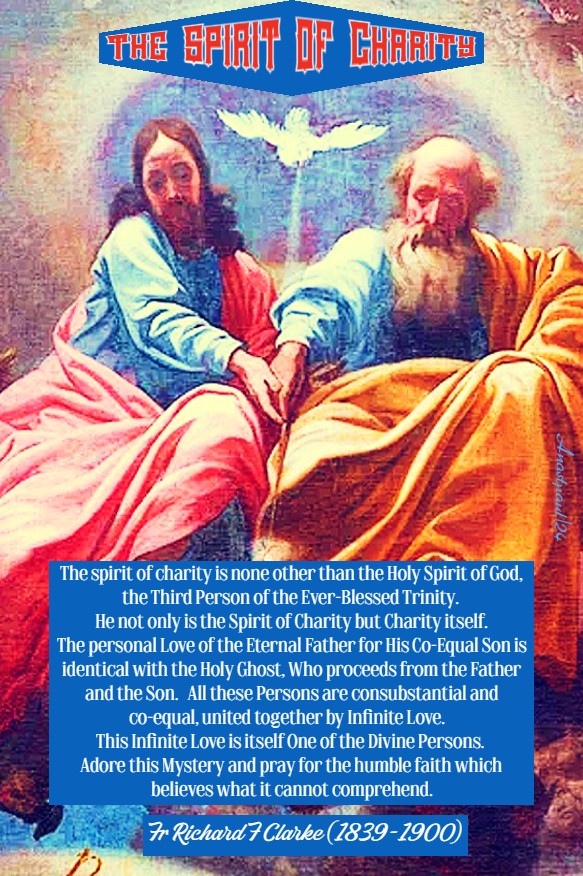
The Spirit of Charity
The spirit of charity is none other than the Holy Spirit of God, the Third Person of the Ever-Blessed Trinity. He not only is the Spirit of Charity but Charity itself. The personal Love of the Eternal Father for His Co-Equal Son is identical with the Holy Ghost, Who proceeds from the Father and the Son. All these Persons are consubstantial and co-equal, united together by Infinite Love. This Infinite Love is itself One of the Divine Persons. Adore this Mystery and pray for the humble faith which believes what it cannot comprehend.
It is from and through the Holy Ghost that the Charity of God is imparted to us. The Charity of God is poured into our hearts by the Holy Ghost. When we receive the gift of supernatural charity, we also receive, into our hearts, the Holy Spirit Himself, Who is actually present with us. His presence produces all the graces which flow from His seven-fold gifts. Reflect on the exceeding honour we thus enjoy and pray that you may never grieve the Holy Ghost by your want of charity.
Charity is also mentioned as the first and foremost of the fruits which the Holy Spirit causes to ripen in our hearts. “The fruits of the Spirit are charity, joy, peace, patience, benignity, goodness, longanimity, mildness, faith, modesty, continence, and chastity.” (Galatians 5:22,23) All these fruits are but the effects of charity. Charity brings joy because it unites us to God. It brings peace because it prevents our will from rebelling against His. Pray that the Holy Ghost may impart these fruits of His presence to you; above all, the charity whence the rest proceed.
Quote/s of the Day – 1 August – “The Month of the Immaculate Heart of Mary”
“Mary is the new Tree of Life, who, instead of the bitter fruit picked by Eve, gives to mankind that Sweet Fruit on which the whole world is fed.”
St Ephrem (306-373) Father and Doctor of the Church
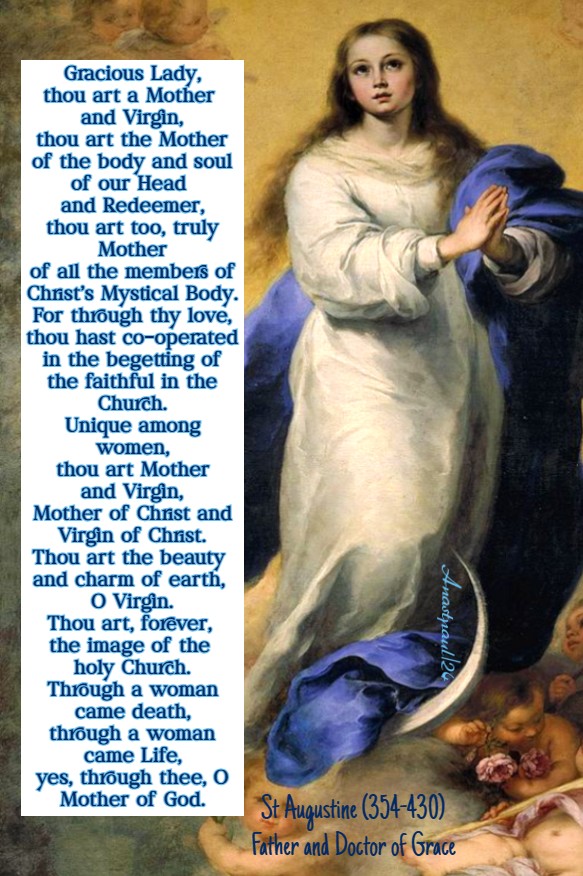
“Gracious Lady, thou art a Mother and Virgin, thou art the Mother of the body and soul of our Head and Redeemer, thou art too, truly Mother of all the members of Christ’s Mystical Body. For through thy love, thou hast co-operated in the begetting of the faithful in the Church. Unique among women, thou art Mother and Virgin, Mother of Christ and Virgin of Christ. Thou art the beauty and charm of earth, O Virgin. Thou art, forever, the image of the holy Church. Through a woman came death, through a woman came Life, yes, through thee, O Mother of God.“
St Augustine (354-430) Father and Doctor of Grace
“In the Immaculate Heart of Mary, I trust. Look to the Star, call upon Mary! In danger, in difficulty or in doubt, think of Mary, call upon Mary. Keep her name on your lips, never let it pass out of your heart.”
St Bernard (1090-1153) Mellifluous Doctor of the Church
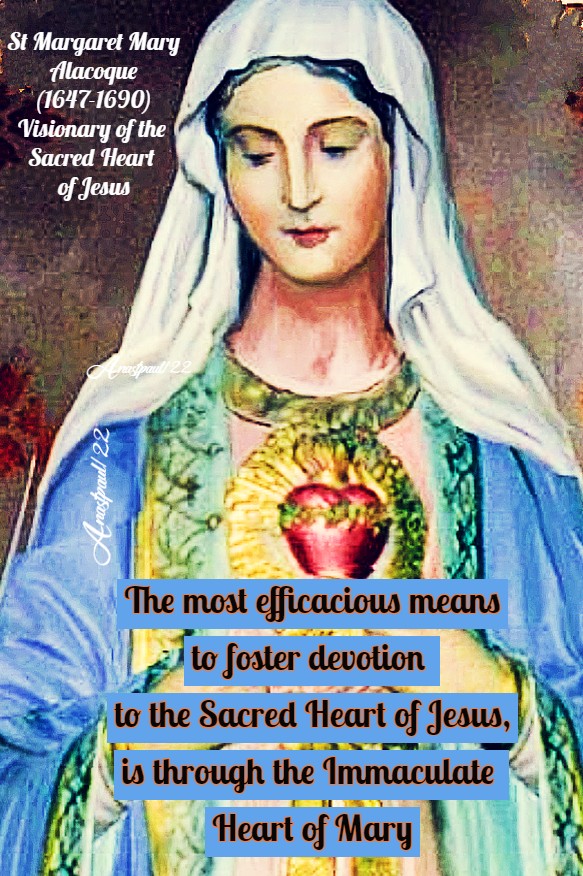
“The most efficacious means to foster devotion to the Sacred Heart of Jesus, is through the Immaculate Heart of Mary.”
St Margaret Mary Alacoque (1647-1690 Visionary of the Sacred Heart of Jesus
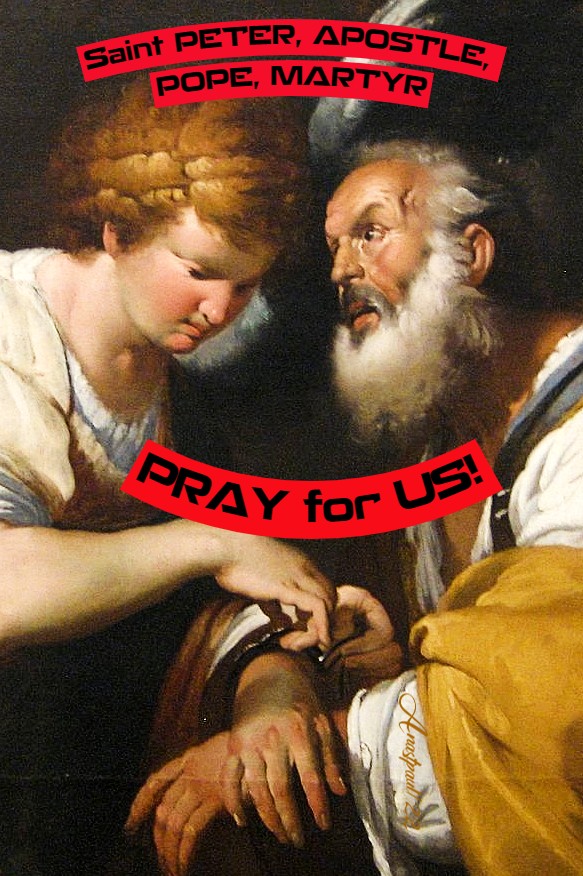
One Minute Reflection – 1 August – St Peter’s Chains – Acts 12:1-11, Matthew16:13-19 – Scripture search here: https://www.drbo.org/
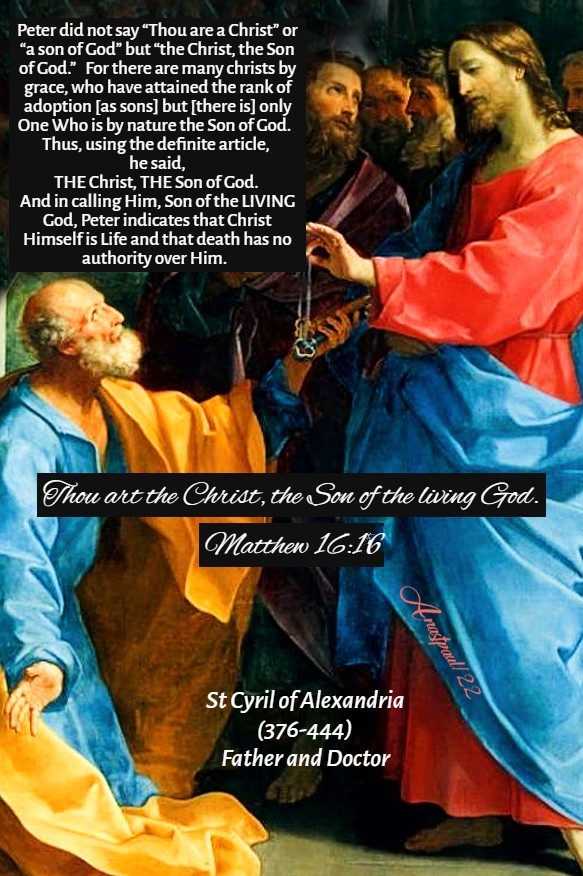
“Thou art the Christ, the Son of the living God.” – Matthew 16:16
REFLECTION – “Peter did not say “Thou are a Christ” or “a son of God” but “the Christ,the Son of God.” For there are many christs by grace, who have attained the rank of adoption [as sons] but [there is] only One Who is by nature the Son of God. Thus, using the definite article, he said, THE Christ, THE Son of God. And in calling Him, Son of the LIVING God, Peter indicates that Christ Himself is Life and that death has no authority over Him. And even if the flesh, for a short while, was weak and died, nevertheless, it rose again, since the Word, Who dwelled in it, could not be held under the bonds of death.” – St Cyril of Alexandria (376-444) Known as “The Pillar of Faith” Archbishop of Alexandria, Father and Doctor Incarnationis (Doctor of the Incarnation) (Fragment 190).
PRAYER – O God, Who didst loose the blessed Apostle, Peter, from his chains and didst make him go forth unharmed, loose, we pray, the chains of our sins and in Thy Merc, ward off from us every evil.Through Jesus Christ, Thy Son our Lord, Who lives and reigns with Thee, in the unity of the Holy Ghost, God, world without end. Amen (Collect).
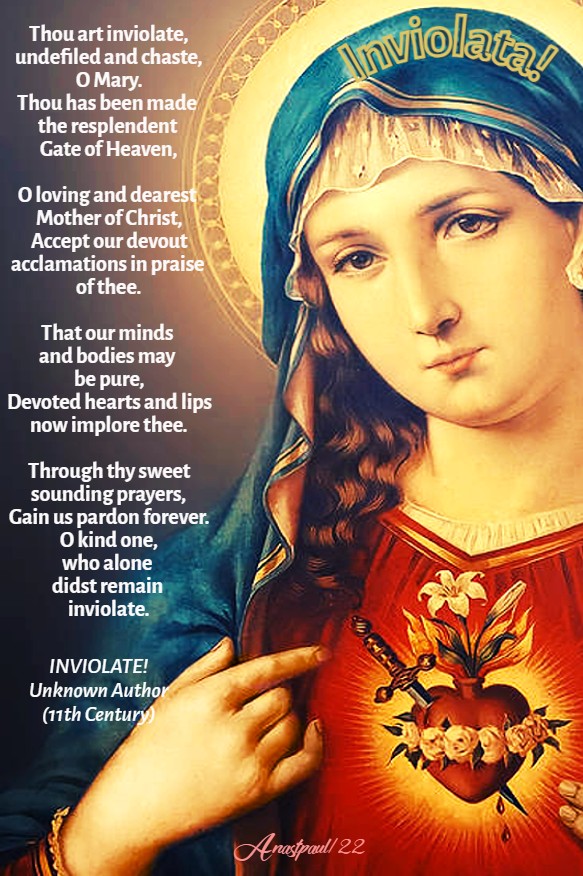
Thou art inviolate, undefiled and chaste, O Mary. Thou has been made the resplendent Gate of Heaven,
O loving and dearest Mother of Christ, Accept our devout acclamations in praise of thee.
That our minds and bodies may be pure, Devoted hearts and lips now implore thee.
Through thy sweet sounding prayers, Gain us pardon forever. O kind one, who alone didst remain inviolate.
The Hymn Inviolata has been claimed by the Carmelite Order, as a Traditional Hymn originating within their ranks. The Hymn is also used by Dominican Friars in the chanting of Compline. Its origins trace to the 11th century. It appears in Hymnals from 1860 to 1920.
Inviolata, integra, et casta es Maria, quae es effecta fulgida caeli porta.
O Mater alma Christi carissima, suscipe pia laudum praeconia.
Te nunc flagitant devota corda et ora, nostra ut pura pectora sint et corpora.
Tua per precata dulcisona, nobis concedas veniam per saecula.
O benigna! O Regina! O Maria, quae sola inviolata permansisti.
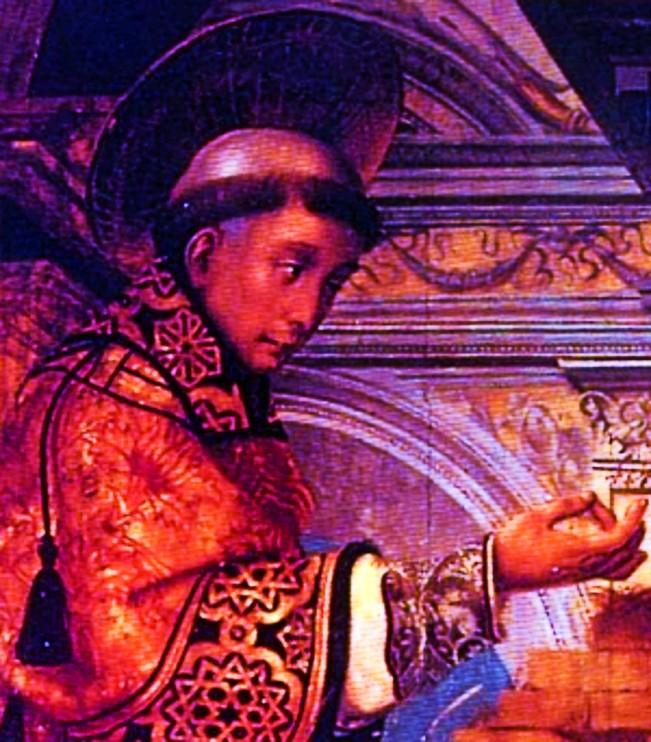
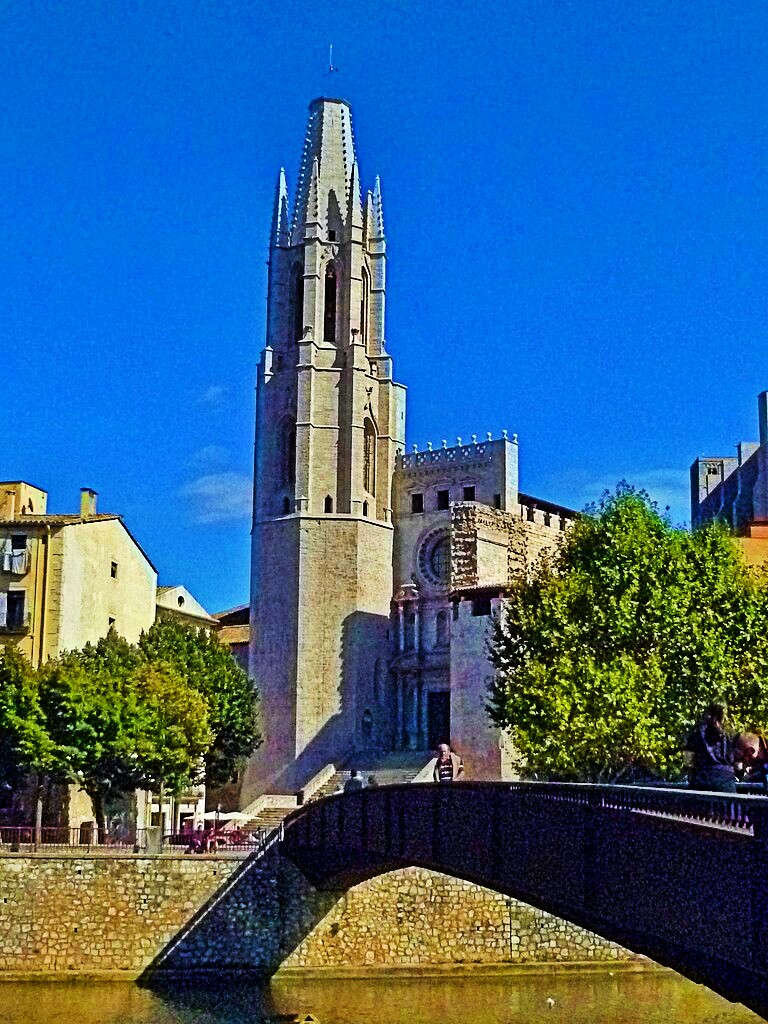
Saint of the Day – 1 August – St Felix of Gerona (Died c304) Deacon Martyr, Missionary, Preacher and courageous Evangeliser heading directly into the Diocletian persecutions. Born in Carthage in Africa and died by horrific torture at Gerona in Spain. Also known as – Feliu, Felice.
The Roman Martyrology reads: “At Gerona in Spain, the birthday of the holy Martyr Felix. After enduring various torments, by order of Daciall, he was cut with knives, until he gave his undaunted soul to Christ.”
Felix, originally from Carthage of a noble and rich family. He studied in Caesarea where he was Baptised., During the persecution of the Christians by Diocletianus at the end of the 3rd Century, he left Africa and travelled to Spain with St Cugat, the latter going to Barcelona and Felix to Gerona. (We celebrated St Cugat on 25 July).
There he converted so many heathens that his activities soon attracted the attention of the authorities and he was thrown into prison. As he refused to deny Christ, he was tortured, although he was saved from death by angelic intervention several times.
On one occasion, he was thrown into the sea with a millstone attached to his neck and a gentle breeze guided him back to shore. Eventually, he was flayed alive with iron hooks and died on the same day, in the same year, as his fellow Missionary St Cugat.
The Sarcophagus of the Saint, in St Felix Church, dating from the 4th Century, indicates that by then, the Christian community was entrenched and powerful as the marble, from which it was created is of the finest quality and were worked in Rome.
St Felix Sarcophagus
Spain became a Catholic Nation in 589, when the Spanish King, Recaredo I and all his Court, converted to Christianity. Subsequently, the King travelled to Gerona to offer a Golden Crown at the Tomb of the our Saint.
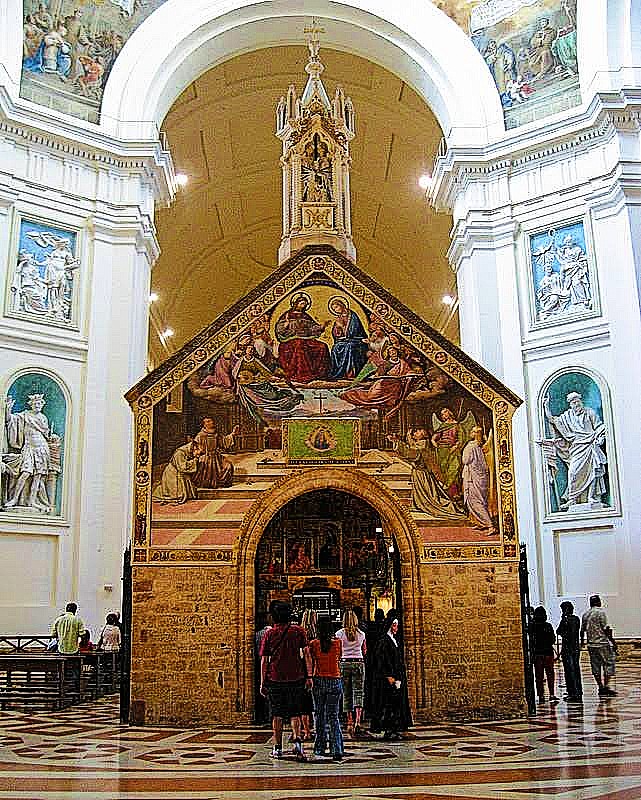
The Portiuncula Indulgence: An Indulgence which may be gained in any Church so designated by the Bishop, by all the faithful who, after Confession and Holy Communion, visit such Churches between noon of 1 August and midnight of 2 August, or on the Sunday following. The Indulgence is toties quoties and is applicable to the souls in Purgatory.
St Jonatus St Justin of Paris St Kenneth of Wales St Leontius of Perga St Maur St Nemesius of Lisieux Bl Orlando of Vallombrosa St Peregrinus of Modena St Rioch Bl Rudolph St Secundel St Secundus of Palestrina St Sophia St Verus of Vienne
Seven Holy Machabees – 8 Saints: “At Antioch, the Martyrdom of the Seven Holy Brothers, the Machabees and thei mother, who suffered under King Antiochus Epiphanes. Their relics were transferred to Rome and placed in the Church of St Peter in Chains.”
Saints Faith, Hope and Charity: The daughters of Saint Sophia. While still children, they were tortured and Martyred for their faith in the persecutions of Hadrian. They were scourged, thrown into a fire, and then beheaded.
Thought for the Day – 31 July – Meditations with Fr Richard Frederick Clarke SJ (1839-1900)
HUMILITY Meditations for a Month Today is the Last Meditation
Humility in Heaven
Is there any place for humility among the Saints in Heaven? Or is it, like faith and hope, a virtue limited to this vale of tears? It might seem that in Heaven, there are no motives for humility – no sins, no imperfections, no defects of any kind, for which to humble ourselves. Yet, only in Heaven will our humility be perfected, for only in Heaven shall we have a thorough knowledge of God and a thorough knowledge of ourselves. This knowledge will make us recognise, even more than ever, our own nothingness and God’s Infinite Perfections. Our recognition of this, will make us forget ourselves, as we never can do on earth, therefore, God will be all in all to us.
Will this appreciation of our own nothingness be painful? No, it will be a source of eternal joy! For then we shall be able to rejoice in God. Our happiness will be unclouded by any interfering thought of self. Our admiration of His perfect Beauty will absorb all our faculties. Our absolute dependence upon Him, will be the truest independence. It will make us conformed to the Image of the Son of God, the chief glory, in Whose Sacred Humanity will be the result of its dependence on His Divine Nature.
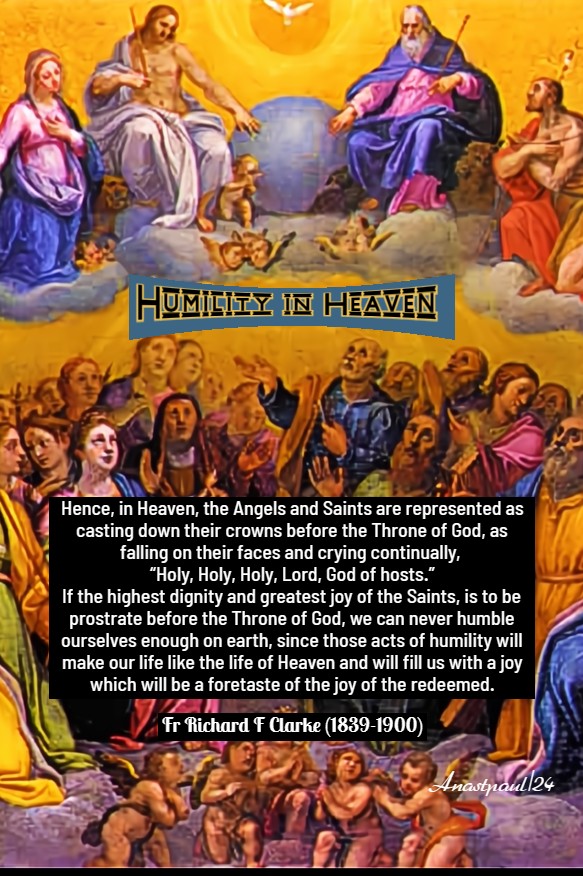
Hence, in Heaven, the Angels and Saints are represented as casting down their crowns before the Throne of God, as falling on their faces and crying continually, “Holy, Holy, Holy, Lord, God of hosts.” If the highest dignity and greatest joy of the Saints, is to be prostrate before the Throne of God, we can never humble ourselves enough on earth, since those acts of humility will make our life like the life of Heaven and will fill us with a joy which will be a foretaste of the joy of the redeemed.
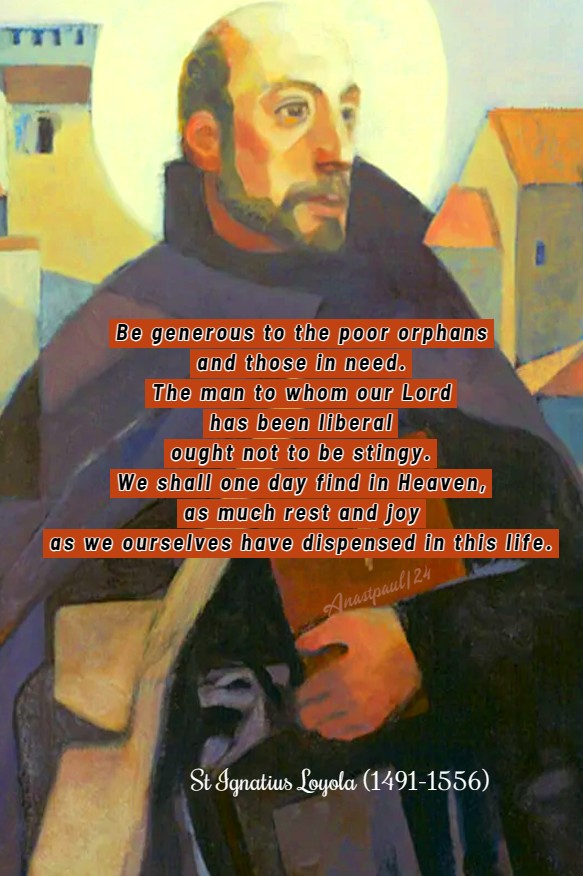
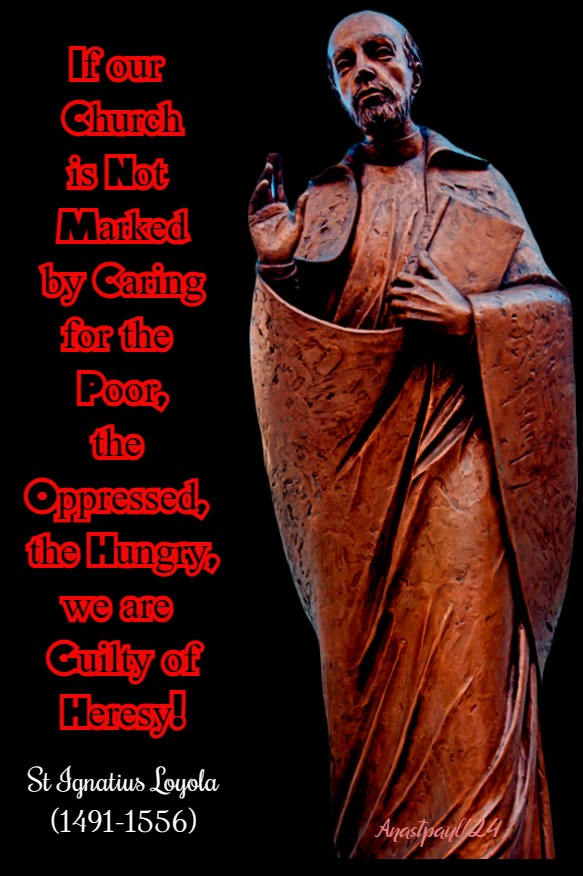
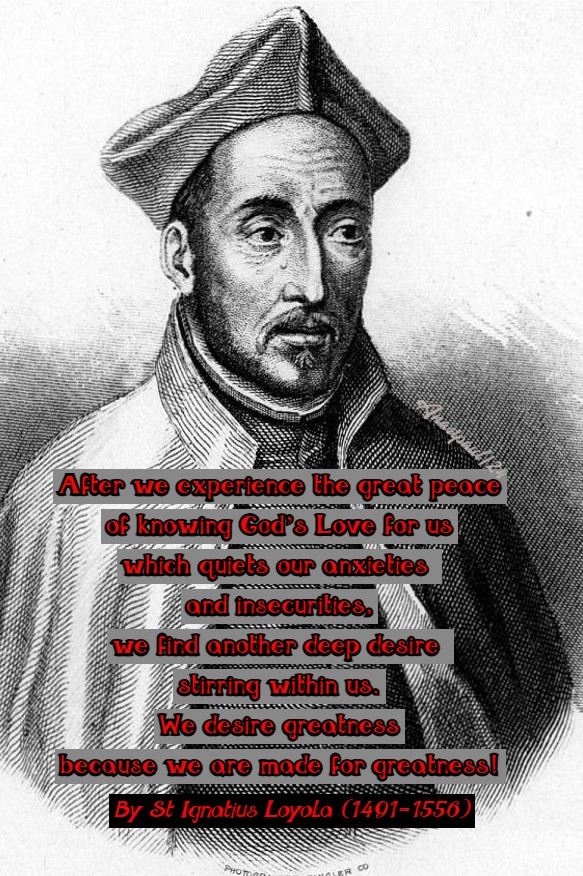
Quote/s of the Day – 31 July – St Ignatius Loyola SJ (1491-1556) Priest, Confessor, Founder, Theologian, Spiritual Writer, Mystic.
“Be generous to the poor orphans and those in need. The man to whom our Lord has been liberal ought not to be stingy. We shall one day find in Heaven, as much rest and joy as we ourselves have dispensed in this life.”
“If our Church is not marked by caring for the poor, the oppressed, the hungry, we are guilty of heresy!”
“After we experience the great peace of knowing God’s Love for us which quiets our anxieties and insecurities, we find another deep desire stirring within us. We desire greatness because we are made for greatness!”
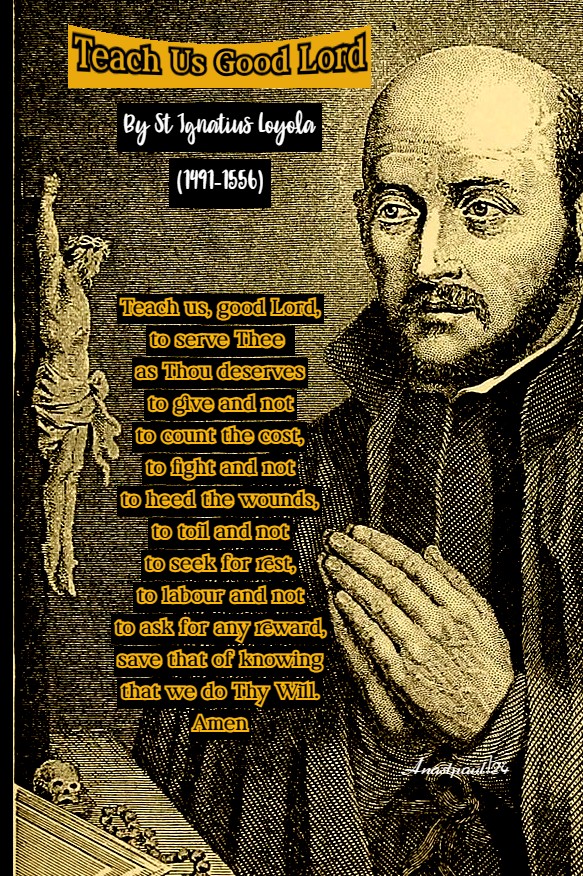
Teach Us Good Lord By St Ignatius Loyola (1491-1556)
Teach us, good Lord, to serve Thee as Thou deserves to give and not to count the cost, to fight and not to heed the wounds, to toil and not to seek for rest, to labour and not to ask for any reward, save that of knowing that we do Thy Will. Amen
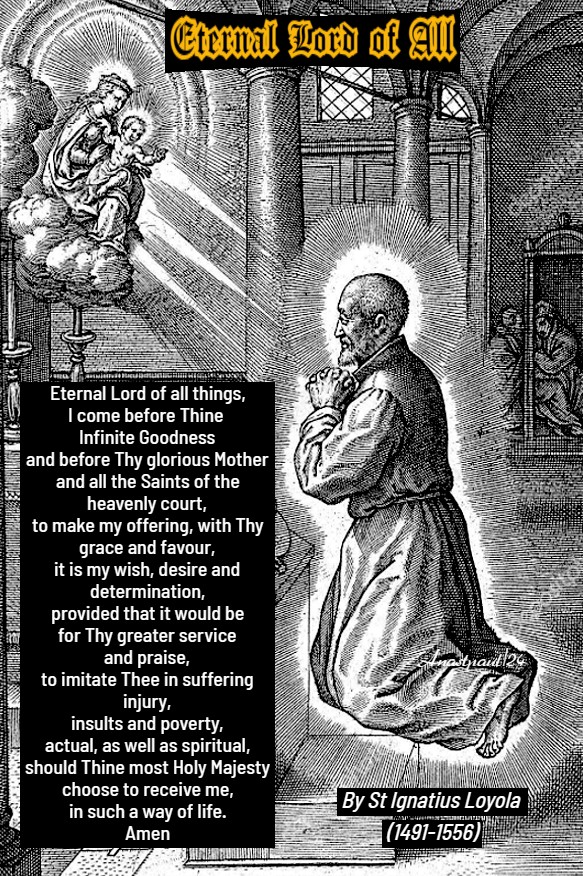
Eternal Lord of All By St Ignatius Loyola (1491-1556)
Eternal Lord of all things, I come before Thine Infinite Goodness and before Thy glorious Mother and all the Saints of the heavenly court, to make my offering, with Thy grace and favour, it is my wish, desire and determination, provided that it would be for Thy greater service and praise, to imitate Thee in suffering injury, insults and poverty, actual, as well as spiritual, should Thine most Holy Majesty choose to receive me, in such a way of life. Amen
One Minute Reflection – 31 July– “The Month of the Most Precious Blood” – St Ignatius Loyola (1491-1556) Confessor – 2 Timothy 2:8-10; 3:10-12; Luke 10:1-9. – Scripture search here: https://www.drbo.org/
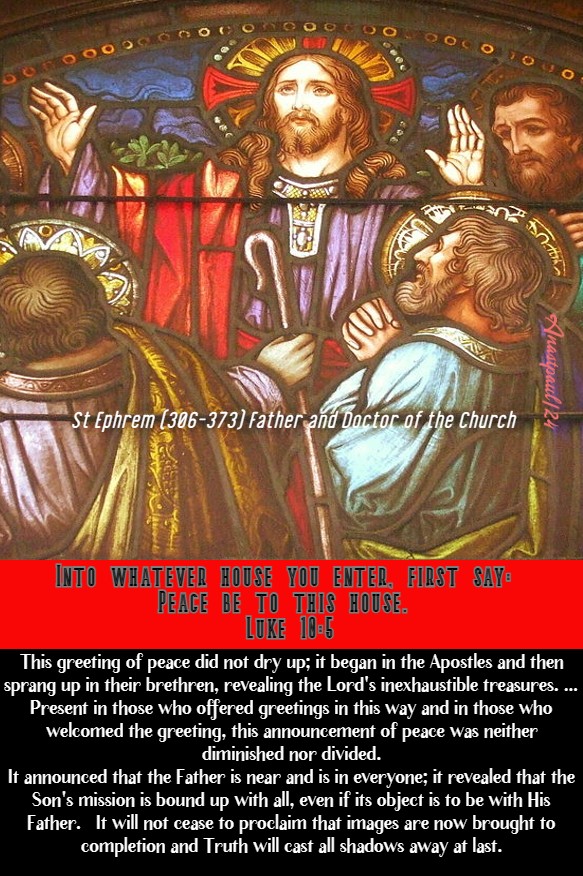
“Into whatever house you enter, first say: Peace be to this house. And, if the son of peace be there, your peace shall rest upon him but if not, it shall return to you.” – Luke 10:5-7
REFLECTION – “As you enter a house, first say, ‘Peace to this house,‘” (Lk 10:5) so that the Lord Himself might enter and remain there, as with Mary. … This greeting is the Mystery of Faith which shines forth in the world. Through it, enmity is stifled, war is ended and people acknowledge one another. The effect of that greeting was hidden by a veil in spite of the fact that it prefigures the Mystery of the Resurrection … when the light rises and dawn chases night away. From the moment Christ sent out His disciples, people began to give and receive this greeting, a source of healing and blessing. …
This greeting with its hidden power … is amply sufficient for us all. That is why Our Lord sent it out, together with His disciples, as forerunner, so that it might bring about peace and, carried by the voice of the Apostles whom He sent, prepare the way before them. It was sown in every dwelling … it entered into all who heard it, so as to separate and set apart, the children it recognised as its own. It remained in them but it denounced those who were alien to it, for they did not welcome it.
This greeting of peace did not dry up; it began in the Apostles and then sprang up in their brethren, revealing the Lord’s inexhaustible treasures. … Present in those who offered greetings in this way and in those who welcomed the greeting, this announcement of peace was neither diminished nor divided. It announced that the Father is near and is in everyone; it revealed that the Son’s mission is bound up with all, even if its object is to be with His Father. It will not cease to proclaim that images are now brought to completion and Truth will cast all shadows away at last.” – St Ephrem (306-373) Father and Doctor of the Church (Diatessaron 8: 3-4).
PRAYER – O God, Who, to spread abroad the greater glory of Thy Name through St Ignatius, strengthened the Church militant with new power; grant that we ,who are struggling on earth, may, by his help and after his example, be found worthy to be crowned with him in Heaven. Through Jesus Christ, Thy Son our Lord, Who lives and reigns with Thee, in the unity of the Holy Ghost, God, world without end. Amen (Collect).
Saint of the Day – 31 July – Revisiting St Ignatius Loyola (1491-1556) Priest, Confessor, Founder, Theologian, Spiritual Writer, Mystic. Born in 1491 at Loyola, Guipuzcoa, Spain as Inigo Lopez de Loyola and died on 31 July 1556 at Rome, Italy of fever. Also known as- Inigo Lopez de Loyola. The name Ignatius = of fire, igneous, from the Latin
The Roman Martyrology reads: “At Rome, the birthday of St Ignatius Loyola, Confessor and Founder of the Society of Jesus, renowned for sanctity and miracles and most zealous in propagating the Catholic Religion in all parts of the world.”
The founder of the Jesuits was on his way to military fame and fortune, when a cannon ball shattered his leg. Because there were no books of romance on hand to assist in passing the time, during his convalescence, Ignatius spent the time reading The Golden Legend, a collection of biographies of the Saints and the Life of Christ by Ludolph the Carthusian. His conscience was deeply touched and a long, painful turning to Christ began.
Having seen the Mother of God in a vision, on his recovery he took a vow of chastity, hung his sword before the Altar of the Virgin of Montserrat and donned a pilgrim‘s robes. He remained for almost a year at nearby Manresa, sometimes with the Dominicans, sometimes in a pauper’s Hospice, often in a cave in the hills, praying. After a period of great peace of mind, he went through a harrowing trial of scruples. There was no comfort in anything—prayer, fasting, the Sacraments, penance. At length, his peace of mind returned by the grace of Gpd.
It was during this year of conversion that Ignatius began to write the material which would later become his greatest work, “The Spiritual Exercises.” In 1523, he finally achieved his desire of visiting the Holy Land but could not remain, as he planned because of the hostility of the Turks.
In 1528 he began studying Theology in Barcelona and Alcala in Spain, and Paris, France receiving his degree on 14 March 1534. Ignatius spent the next 11 years in various European Universities, studying with great difficulty, beginning almost as a child. Like many others, his orthodoxy was questioned; Ignatius was twice jailed for brief periods.
In 1534, at the age of 43, he and six others—one of whom was Saint Francis Xavier—vowed to live in poverty and chastity and to go to the Holy Land. If this became impossible, they vowed to offer themselves to the apostolic service of the Pope. The latter became the only choice. During this time he was also Ordained to the Priesthood. In 1537, Ignatius had one of the decisive experiences of his life. He related to his companions that on a certain day, while in prayer, he seemed to see Christ with the Cross on His shoulder and beside Him, the Eternal Father, Who said, “I wish Thee to take this man for Thy servant,” and Jesus took him and said, “My will is that you should serve Us.” On Christmas Day 1538 Ignatius said his first Holy Mass at the Church of St Mary Major in Rome.
Four years later Ignatius made the association permanent. The new Society of Jesus was approved by Pope Paul III and Ignatius was elected to serve as the first General. Ignatius himself, never used the term ‘Jesuit’ which was coined as an insult by his opponents. The Society today uses the term with pride.
When companions were sent on various missions by the Pope, Ignatius remained in Rome, consolidating the new Order, instructing new members but still finding time to found homes for orphans, catechumens and penitents. He founded the Roman College, intended to be the model of all other colleges of the Society.
While General of the Order, Ignatius was frequently ill. In January 1551 he became so ill that he begged his associates, though to no purpose, to accept his resignation as Superior. Despite his condition, he continued to direct the Order until his death in July 1556. Since his days at Manresa, Ignatius had practiced a form of prayer which was later published in The Spiritual Exercises and appears to have rivaled that of the greatest Mystics. Before his death, aged 65, Saint Ignatius was nearly blind.
Ignatius Loyola was Beatified by Pope Paul V on 27 July 1609 and Canonised by Pope Gregory XV on 12 March 1622. His achievements and those of his followers form a Chapter in the history of the Roman Catholic Church that cannot be neglected by those who desire to understand this glorious Church of Christ..
Our Morning Offering – 31 July – “The Month of the Most Precious Blood” – St Ignatius Loyola (1491-1556) Confessor
Suscipe “Receive” By St Ignatius Loyola (1491-1556)
Receive, O Lord, all my liberty. Take my memory, understanding and entire will. Whatsoever I have or hold, Thou hast given it – I give all back to Thee and commit it wholly to be governed by Thy Will. Thy Love and Thy Grace give unto me and I am rich enough and ask for nothing more! Amen
Blessed Giovanni Colombini (1300-1367) Confessor, Layman, Husband and Father, Founder of the Apostolic Clerics of Saint Jerome (the Jesuati), Apostle of the poor and the sick, Penitent, Missionary, Miracle-worker. After many miracles had occurred at his tomb, Pope Gregory XIII inserted Giovanni Colombini’s name in the Roman Martyrology, fixing 31 July for the celebration of his feast His Life https://anastpaul.com/2021/07/31/saint-of-the-day-31-july-blessed-giovanni-colombini-1300-1367/
St Helen of Skofde St Neot
Martyrs of Syria – 350 Saints: 350 monks massacred by heretics for their adherence to orthodox Christianity and the decrees of the Council of Chalcedon. 517 in Syria.
Martyrs of Synnada: 3 Saints Democritus Dionysius the Martyr Secundus
Thought for the Day – 30 July – Meditations with Fr Richard Frederick Clarke SJ (1839-1900)
HUMILITY Meditations for a Month
The Fruit of Humility
There is nothing which gives such a solid peace as humility. At the beginning it is difficult and we smart under the wounds which our pride has to suffer before it can be destroyed in ourselves. But a holy perseverance in the practice of humility will spread over the soul such a sweet and calm tranquility that even in this life, the soul begins to taste the joys of the heavenly paradise. Troubles, disappointments, unkindness, injustice, insults, do not disturb the quiet happiness of one, who is really humble. One who is truly humble appreciates, continually, the truth of our Lord’s Words: “Learn of Me, for I Am meek and humble of heart and you shall find rest for your souls. … For My yoke is easy and My burden is light.”
Humility is also the best possible safeguard against the attacks of the devil. The humble man can say, as our Lord did: “The prince of this world cometh and hath nothing in Me.” Or as Saint Martin said when dying: “Why art thou here, O evil one? No malice wilt thou find in me.” Nor has the devil any chance of success in tempting the humble. Their continual disposition is one of dependence on God and, therefore, no temptation has power to lead them astray.
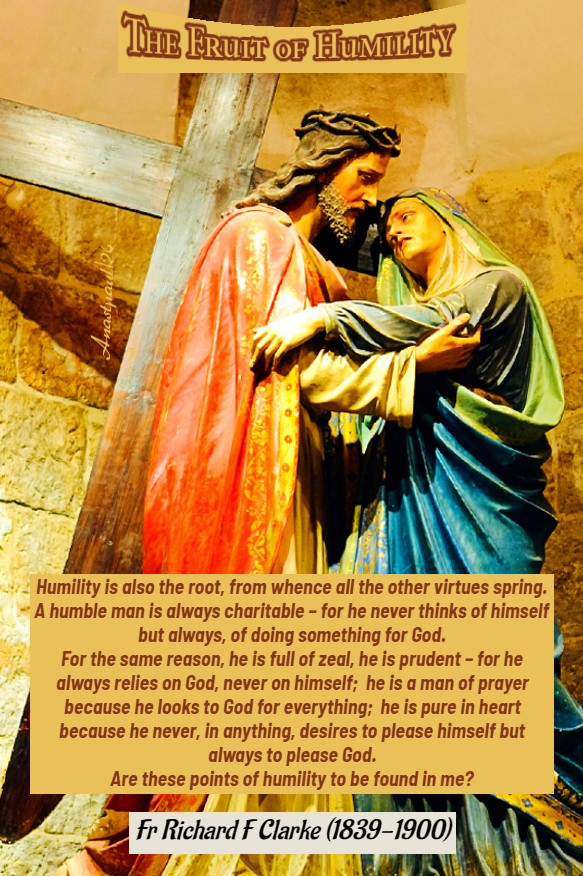
Humility is also the root, from whence all the other virtues spring. A humble man is always charitable – for he never thinks of himself but always, of doing something for God. For the same reason, he is full of zeal, he is prudent – for he always relies on God, never on himself; he is a man of prayer because he looks to God for everything; he is pure in heart because he never, in anything, desires to please himself but always to please God. Are these points of humility to be found in me?
Quote/s of the Day – 30 July – “The Month of the Most Precious Blood” – St Abdon and St Senen (Died c250) Martyrs – 2 Corinthians 6:4-10; Matthew 5:1-12 – Scripture search here: https://www.drbo.org/
“Rejoice and be glad, for your reward will be great in Heaven.”
Matthew 5:12
“I know a man in Christ— whether he was in or outside the body, I do not know, God knows— who was snatched up to the third heaven. . . and heard secret words, words which it is not granted to man to utter.”
2 Corinthians 12:2-4
“Our Lord Jesus Christ Has appeared to us from the bosom of the Father. He has come and drawn us out of the shadows And enlightened us with His joyful Light.
Day has dawned for humankind, Cast out the power of darkness. For us, a Light from His Light has arisen That has enlightened our darkened eyes.
Over the world He has made His glory arise And has lit up the deepest depths. Death is no more, darkness has ended, The gates of hell are shattered.
He has illumined every creature, All the shades from times long past. He has brought about salvation and given us Life; Next He will come in glory.
Our King is coming in His great glory: Let us light our lamps and go out to meet Him (Mt 25,6); Let us be glad in Him, as He has been glad in us And gives us gladness, with His glorious Light.
My friends, arise! make yourselves ready To give thanks to our Saviour King, Who will come in His glory and make us joyful With His joyous Light in the Kingdom.”
St Ephrem (306-373) Father of the Church (Hymn I on the Resurrection)
“You will begin to taste, even in this life, a foretaste of eternal life, for the principal beatitude of the soul in Heaven, is to be confirmed forever in the Will of the Father. Thus, it tastes the divine sweetness. But it will never taste it in Heaven, if it is not clothed with it on earth, where we are pilgrims and travellers. When it is clothed with it, it tastes God by grace in its troubles; its memory will be full of the Blood of the Lamb without blemish; its mind will be opened and contemplate the ineffable love that God has made known in the Wisdom of His Son and the love it finds, in the Holy Spirit’s goodness, casts out self-love and love for created things, to love only God. So do not be afraid … but suffer with joy, so as to conform yourself to the Will of God.””
St Francis de Sales (1567-1622) Doctor Caritatis
“Let us not strive for the rewards of Heaven, valuable though they may be but live, so as to please the God of Heaven. If God were not in Heaven, all its beauty, riches and sweetness, would be dull rather than delightful. By faith, we know, God already dwells within us. But in Heaven, we will see God face-to-face. May we so live that one day, we will be in Heaven praising and praying eternally, before our Lord and Saviour!”
One Minute Reflection – 30 July– “The Month of the Most Precious Blood” – St Abdon and St Senen (Died c250) Martyrs – 2 Corinthians 6:4-10; Matthew 5:1-12 – Scripture search here: https://www.drbo.org/
“They shall see God.” – Matthew 5:8
REFLECTION – “We want to see God, we seek to see Him, we ardently desire to see Him. Who does not desire this? But note what the Gospel says: “Blest are the pure of heart, they shall see God.” Do what is necessary in order to see Him! To compare it with something from material reality, how can you want to contemplate the rising sun if your eyes are sick? If your eyes are healthy that light will be a pleasure for you; if they are sick, it will be torture for you. You will surely not be allowed to see, with an impure heart, that which one can only see with a pure heart. You will be moved away, put at a distance, you will not see!
How often did the Lord proclaim people to be ‘blest‘? What reasons for eternal happiness did He cite, what good works, what gifts, what merits and what rewards? No other! the beatitude says, “They shall see God.” This is what the others say: “How blest are the poor in spirit, the reign of God is theirs. Blest are the lowly; they shall inherit the land. Blest are the sorrowing; they shall be consoled. Blest are they who hunger and thirst for holiness; they shall have their fill. Blest are they who show mercy; mercy shall be theirs.” So none other asserts, “They shall see God.”
The vision of God is promised ONLY to those with a pure heart. This is not without a reason, since the eyes which allow us to see God are in the heart. Those are the eyes the Apostle Paul was speaking of when he said: “May He enlighten your innermost vision” (Eph 1:18). So, at the present time because of their weakness, those eyes are enlightened by faith; later, because of their strength, they will be enlightened by vision… “Now we see indistinctly, as in a mirror; then we shall see face-to-face.” (1 Cor 13:12).” (1 Cor 13:12).” – St Augustine (354-430) Father and Doctor of the Church (Sermon 53).
PRAYER – O God, Who bestowed upon Thy Saints, Abdon and Sennen, an abundance of grace to bring them to this glory, grant to Thy servants forgiveness of their sins, so they may be found worthy to be freed from all harm, through the interceding merits of Thy Saints. Through Jesus Christ, Thy Son our Lord, Who lives and reigns with Thee, in the unity of the Holy Ghost, God, world without end. Amen (Collect).
Our Morning Offering – 30 July – “The Month of the Most Precious Blood”
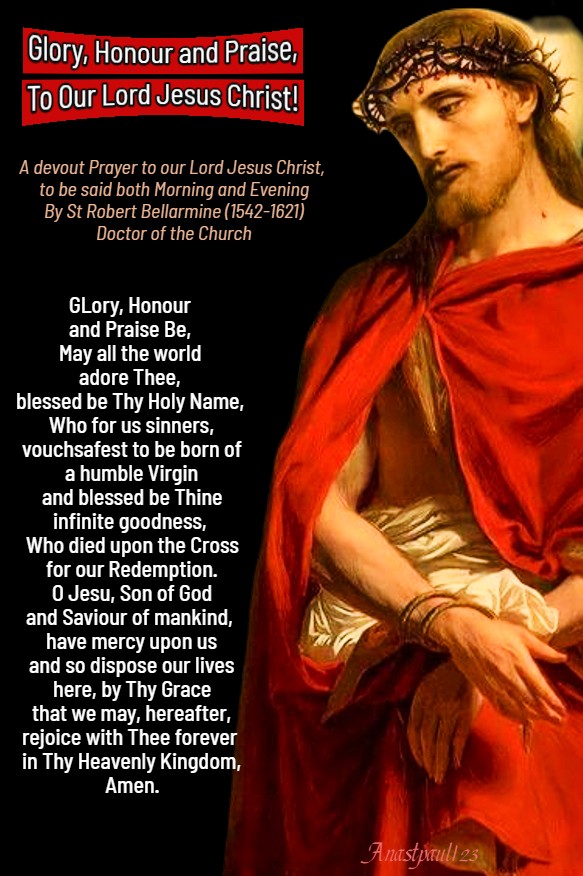
Glory, Honour and Praise, To Our Lord Jesus Christ! A devout Prayer to our Lord Jesus Christ, to be said both Morning and Evening By St Robert Bellarmine (1542-1621) Doctor of the Church (From His “A Brief Christian Doctrine”)
GLory, Honour and Praise Be, May all the world adore Thee, blessed be Thy Holy Name, Who for us sinners, vouchsafest to be born of a humble Virgin and blessed be Thine infinite goodness, Who died upon the Cross for our Redemption. O Jesu, Son of God and Saviour of mankind, have mercy upon us and so dispose our lives here, by Thy Grace that we may, hereafter, rejoice with Thee forever in Thy Heavenly Kingdom, Amen.
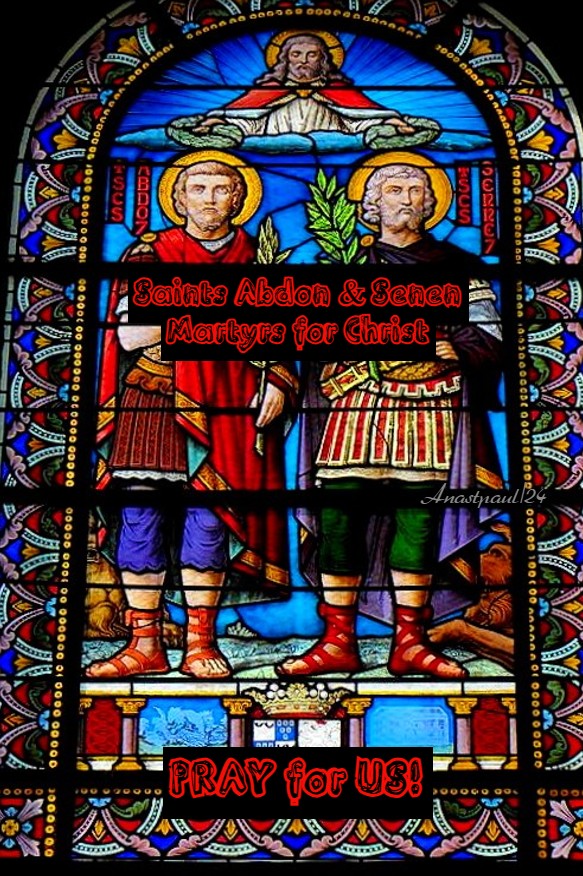
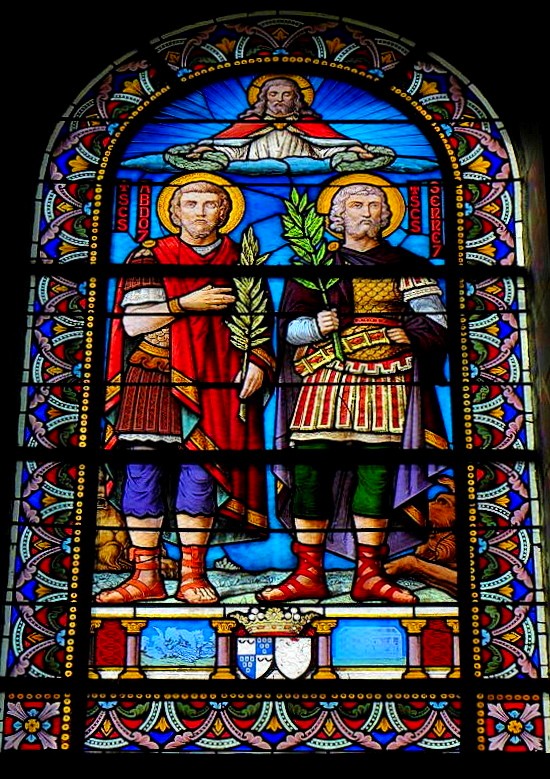
Saint/s of the Day – 30 July – Saint Abdon and Saint Senen (Died c250) Martyrs. Both our Martyrs were born in Persia and died in Rome by tortures and finally beheading around 250 under the persecutions of Emperor Decius. Patronages – against eye diseases, against rickets, against vermin, of barrel and cask makers, of blind children and children in general, of farmers and gardeners, of Arles and the Diocese of Perpignan in France, of Calasparra, in Murcia, Spain. Unfortunately, I can find no English text explaining the reasons for their various Patronages. They would naturally have related to miracles granted by the intercession of Sts Abdon and Senen before or after death. Also known as – Abdo, Abdus and Sennes, Sennis, Zennen. Additional Memorials – 20 March, and the first Sunday of May on some calendars.
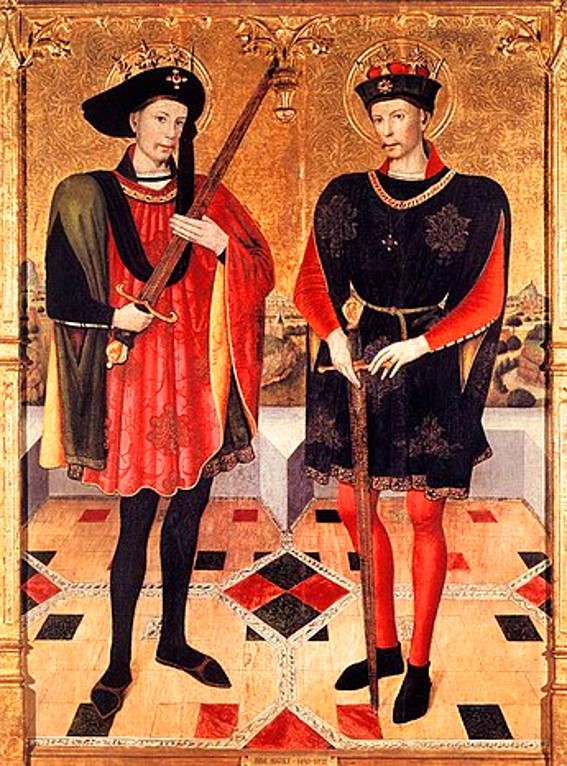
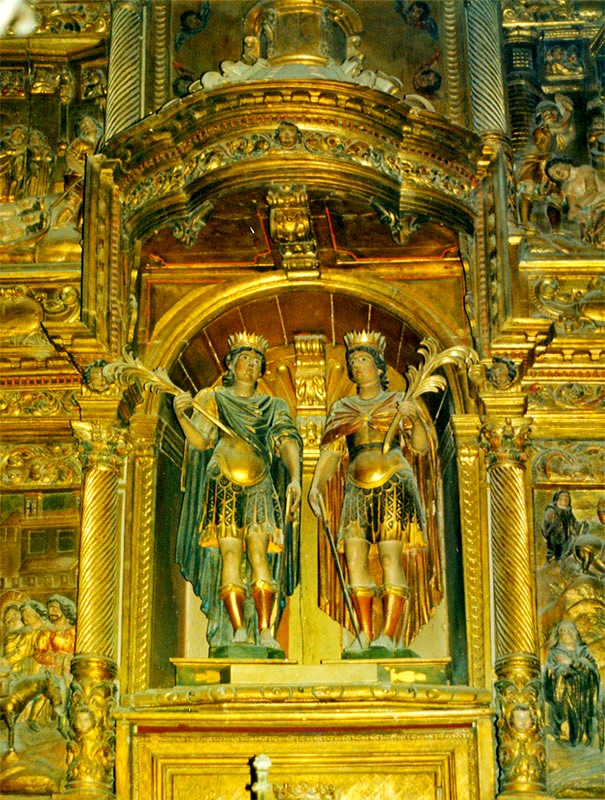
The two Saints have been the privileged object of many artistic works in various Churches and Cathedrals, in Italy and around Europe. In addition to the richness of their clothes is shown to indicate their Persian origin. They often wear a royal diadem like the one sometimes attributed to the Three Wise Men who were in fact oriental but the constant presence, is the sword, with which they were beheaded.
Saints Abdó and Senen – Diocesan Museum of the Cathedral of Tarragona – Cataloni, Spain.
The Roman Martyrology reads: “At Rome in the reign of Dec ius, the holy Persian Martyrs, Abdon and Sennen, who were bound with chains, brought to Rome, scourged with leaded whips for the Faith of Christ and then put to the sword.”
The Acts of Abdon and Sennen written for the most part prior to the 9th Century, describe them as Persian nobles, captured and taken to Rome in the 3rd Century, during a Roman army military campaign.
In Rome they converted to Christianity and helped bury the Christian dead. They came to the attention of Emperor Decius who had them taken in chains before the Roman Senate, where they refused to sacrifice to the Roman gods. They were condemned to death and taken to the Amphitheater where the Colossus of Nero stood, between the Flavian Amphitheater and the Temple of Venus, to be devoured by wild beasts. But they miraculously tamed the animals which avoided them. Abdon and Sennen were then beheaded by gladiators. Their bodies were thrown in front of the statue of the Sun, where they remained for three days, until the Deacon, Quirinius, picked them up and hid them in his house, where they remained for a very long time.
St Abdon and St Senen carrying the early Christian martyrs off for burial, Guillaume Courtois
Later, during the reign of the blessed Constantine the Great (reigned 306–337), translated to the Cemetery of Pontianus on the way to Porto, near the gates of Rome. In this Cemetery there is a 6th Century Fresco which depicts them with beards, dressed in tunics, with the Phrygian cap worn by natives of Phrygia. Above the Fresco, a Latin inscription names them unequivocally. In the Fresco, Abdon appears more mature with a short, round beard, while Sennen has a pointed beard and is certainly younger.
Still in the same Cemetery, a terracotta lamp of the 5th Century was found, with the image of a praying figure, covered by a rich Persian cloak with a short, round beard, in which Abdon was immediately identified.
Another Fresco found on a 6th Century Sarcophagus contaning their remains represents them receiving crowns from Christ.
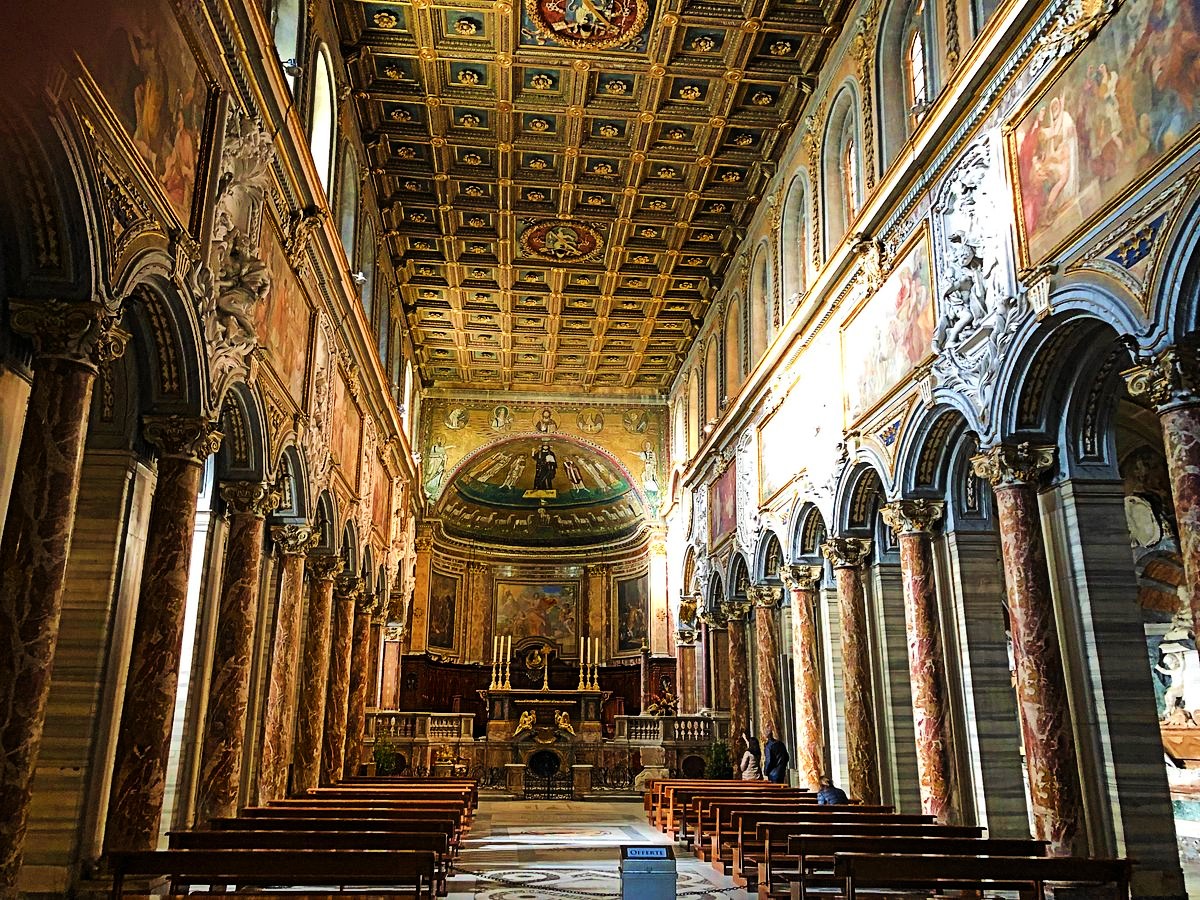
Several Cities, notably Florence and Soissons, claim possession of their bodies but the Acta Sanctorum insist that they rest in the Basilica of San Marco Evangelista al Campidoglio, Rome, having been brought there in 1474 and where there is now an Altar dedicated to them. . The Benedictine Abbey of Sainte-Marie in Arles-sur-Tech, France also claims their Tomb but it does seem that portion of their Relics have been shared in those Cities of which they are Patrons.
The Basilica of St Mark the Evangelist in Rome where Sts Abdon and Senen rest
Bl Antonio di San Pietro Bl Edward Powell St Ermengyth
St Godelieve (c 1049-1070) Flemish Laywoma. Born in c 1049 at Londefort-lez-Boulogne, France and died by murder by being strangled by her mother-in-law’s and husband’s servants on 6 July 1070 at Gistel, Belgium. Patronages – difficult marriages, against abuse and spousal abuse, against throat diseases, in-law problems, for good weather and against storms. Her Life and Sad Death: https://anastpaul.com/2022/07/30/saint-of-the-day-30-july-saint-godelieve-c-1049-1070/
Bl Richard Featherstone St Rufinus of Assisi * St Senen St Tatwine of Canterbury St Terenzio of Imola Bl Thomas Abel St Ursus of Auxerre
Martyrs of Tebourba – 3 Saints: Three girls Martyred together in the persecutions of Diocletian. We know little else about them but the names – Donatilla, Maxima and Secunda. 304 at Tebourba in North Africa.
Thought for the Day – 29 July – Meditations with Fr Richard Frederick Clarke SJ (1839-1900)
HUMILITY Meditations for a Month
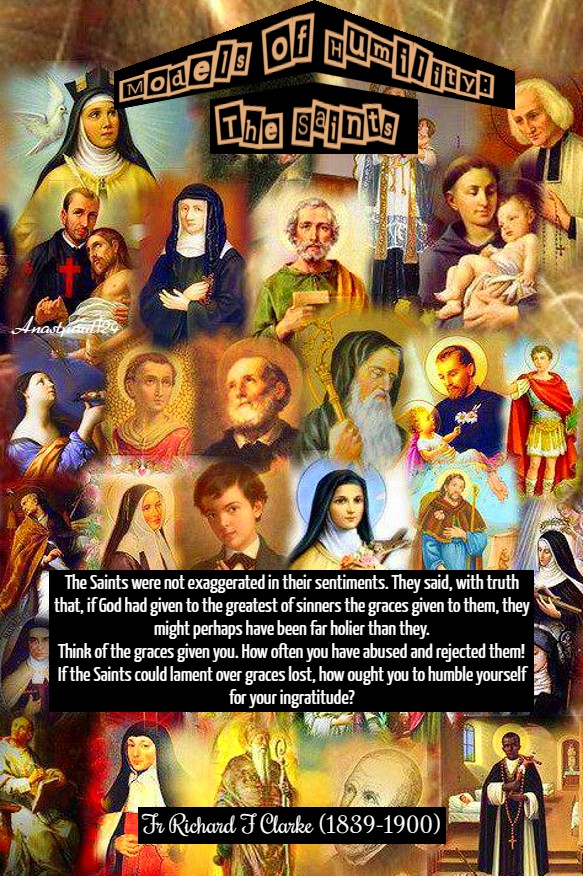
Models of Humility: The Saints
Some Saints excelled in one virtue, some in another but all were pre-eminent in humility. The heroes of the Church of God, whether under the Old or the New Dispensation, were marked off from the heroes of paganism by their humility. Thus, Abraham described himself as dust and ashes. Job, in the presence of God, expressed his abhorrence of himself. David, when visited by the Hand of God, thanks Him for having humbled him. Daniel declares that to him belongs shame and confusion of face. If, even without the example of Jesus and Mary before them, these Saints were so humble, what ought you to be? !
The Saints of the New Testament are still more conspicuous for their humility. Saint Paul believed and declared himself to be the chief of sinners. Saint Bernard expressed his astonishment that God should work miracles by the hands of one so vile as he. Saint Dominic, before entering a City, used to pray that he might not bring down judgements upon it for his sins. Saint Philip Neri used to invent ingenious methods of drawing down ridicule upon himself! Saint Francis Borgia, when someone by accident, spat in his face, merely remarked that he could not have found a more suitable place to spit upon. Compare the humility of these saints with your pride and humble yourself before God.
The Saints were not exaggerated in their sentiments. They said, with truth that, if God had given to the greatest of sinners the graces given to them, they might perhaps have been far holier than they. Think of the graces given you. How often you have abused and rejected them! If the Saints could lament over graces lost, how ought you to humble yourself for your ingratitude?
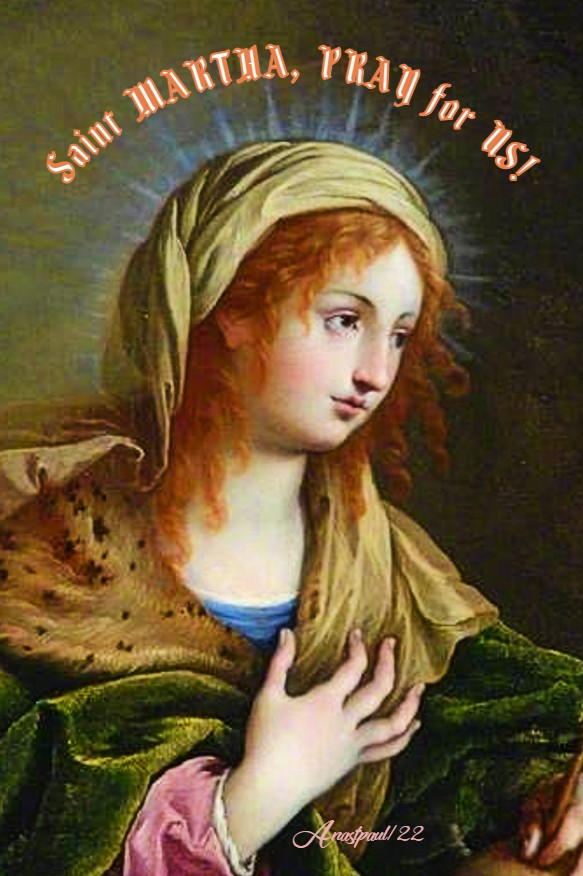
Quote/s of the Day – 29 July – St Martha, Sister of Saint Lazarus and Saint Mary of Bethany – 2 Corinthians 10:17-18; 11:1-2, Luke 10:38-42
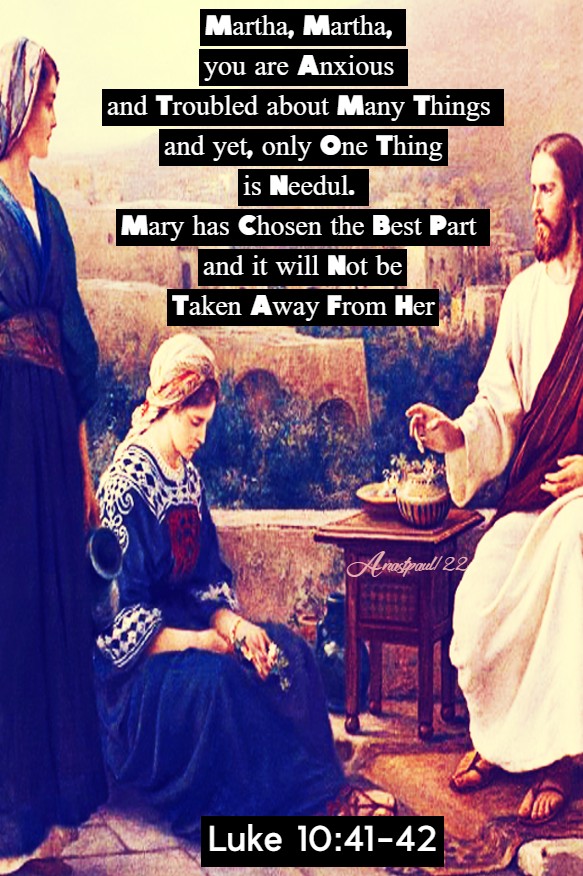
“Martha, Martha, you are anxious and troubled about many things and yet, only one thing is needful. Mary has chosen the best part and it will not be taken away from her.”
Luke 10:41-42
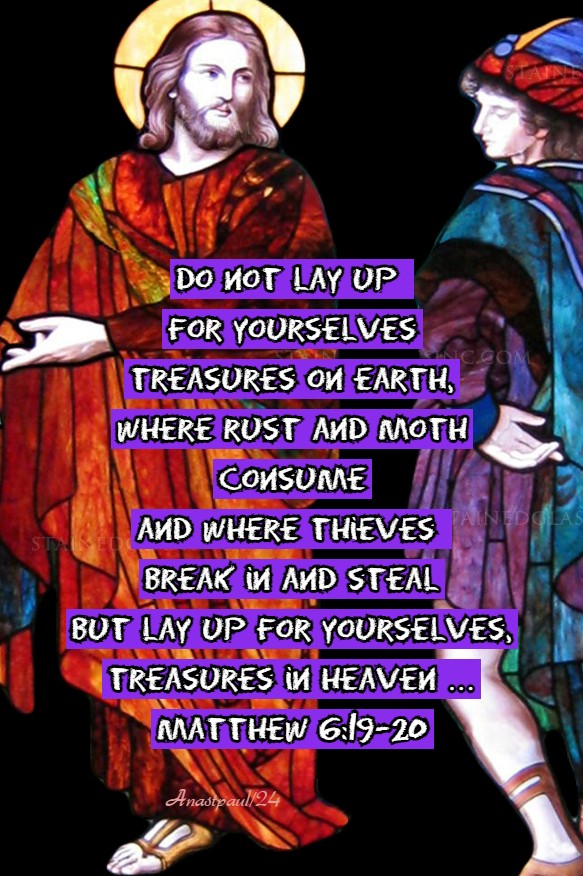
“Do not lay up for yourselves treasures on earth, where rust and moth consume and where thieves break in and steal but lay up for yourselves, treasures in Heaven …”
Matthew 6:19-20
“Sell what you possess and give alms. Make for yourselves purses which do not grow old, a treasure unfailing in Heaven, where neither thief draws near, nor moth destroys.”
Luke 12:33
“Pray in the spirit and sentiment of love, in which the royal Prophet said to Him, ‘Thou, O Lord, art my portion.’ Let others choose to themselves, portions among creatures, for my part, Thou art my portion, Thou alone I have chosen for my whole inheritance.”
St Augustine of Canterbury (Died c605) “The Apostle to the English”
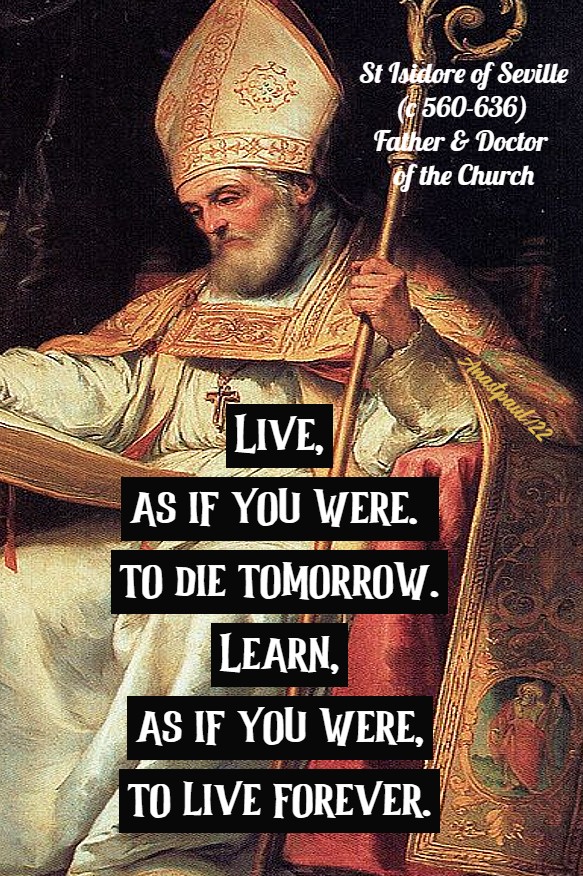
“Live as if you were to die tomorrow. Learn as if you were to live forever.”
St Isidore of Seville (c 560-636) Father & Doctor of the Church
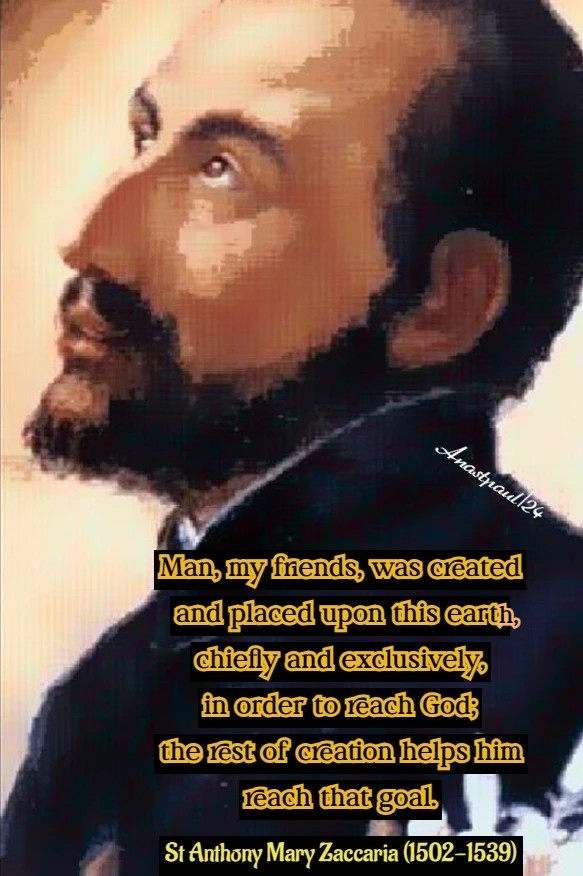
“Man, my friends, was created and placed upon this earth, chiefly and exclusively, in order to reach God; the rest of creation helps him reach that goal.”
One Minute Reflection – 29 July – “The Month of the Most Precious Blood” – St Martha, Sister of Saint Lazarus and Saint Mary of Bethany – 2 Corinthians 10:17-18, 11:1-2; Luke 10:38-42 – Scripture search here: https://www.drbo.org/
“Martha, Martha, you are anxious and troubled about many things and yet, only one thing is needful. Mary has chosen the best part and it will not be taken away from her.” – Luke 10:41-42
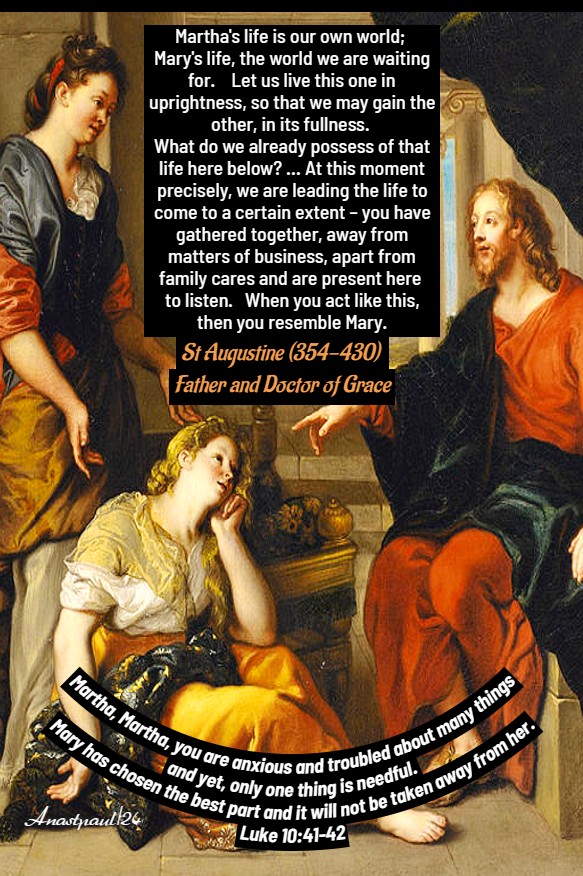
REFLECTION – “You already know, I believe that these two women, both of whom were dear to our Lord, both worthy of His Love and both His disciples. .., These two women then, are an image of two forms of life: the life of this world and the life of the world to come; the life of work and the life of rest; the life of care and life in blessedness; life in time and life in eternity.
Two forms of life – let us reflect on them at greater length. Consider what this life here below is composed of – I am not referring to a blameworthy life .., a life of debauchery and impiousness; no, that which I am talking of, is a life of work, burdened by trials, troubles and temptations, of a life without blame, the life that was very much like that of Martha … Evil was wholly absent from this house, with Martha as with Mary and, if there had been any, our Lord’s arrival would have dispersed it. And so, two women lived there, both of whom welcomed the Lord, two admirable, upright lives, one composed of work, the other of rest … One was a life of work but free from compromise – the hazard of a life devoted to action; the other, was free from indolence – the hazard of a life of rest. There, we have two lives and the very Source of Life …
Martha’s life is our own world; Mary’s life, the world we are waiting for. Let us live this one in uprightness, so that we may gain the other, in its fullness. What do we already possess of that life here below? … At this moment precisely, we are leading the life to come to a certain extent – you have gathered together, away from matters of business, apart from family cares and are present here to listen. When you act like this, then you resemble Mary. And that is easier for you than for me, who has to speak! What I am saying, however, I am drawing from Christ and this food is Christ’s Food. For He is the Bread shared by all of us and, for this reason, I am living in communion with you.” – St Augustine (354-430) Father and Doctor of Grace (Sermon 104).
PRAYER – Graciously hear us, God our Saviour, that as we rejoice in the festival of blessed Martha, Thy Virgin, so may we be nourished by the food of her heavenly teaching as to be enlightened by the fervour of her dedicated holiness.Through the same Jesus Christ, Thy Son our Lord, Who lives and reigns with Thee, in the unity of the Holy Ghost, God, world without end. Amen (Collect).
Our Morning Offering – 29 July – “The Month of the Most Precious Blood”
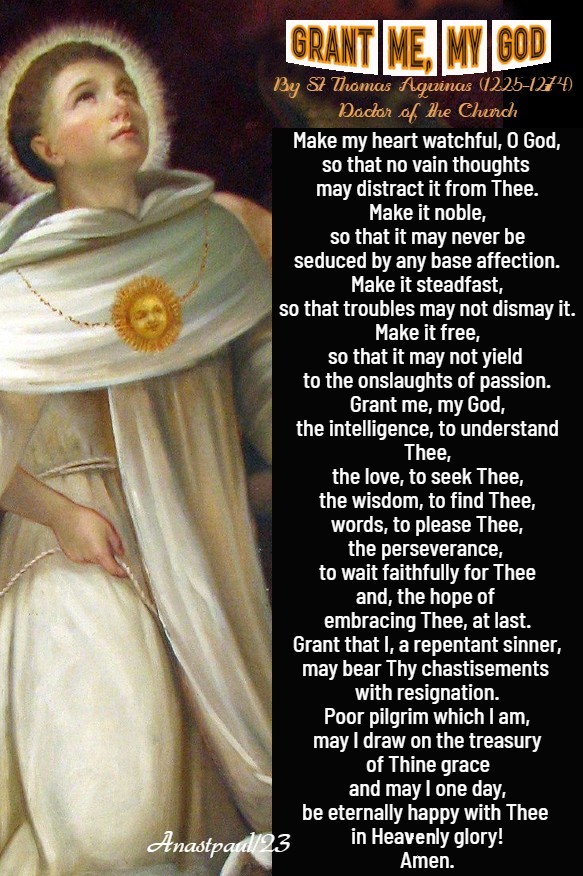
Grant Me, My God By St Thomas Aquinas (1225-1274) Angelic Doctor, Common Doctor
Make my heart watchful, O God, so that no vain thoughts may distract it from Thee. Make it noble, so that it may never be seduced by any base affection. Make it steadfast, so that troubles may not dismay it. Make it free, so that it may not yield to the onslaughts of passion. Grant me, my God, the intelligence, to understand Thee, the love, to seek Thee, the wisdom, to find Thee, words, to please Thee, the perseverance, to wait faithfully for Thee and, the hope of embracing Thee, at last. Grant that I, a repentant sinner, may bear Thy chastisements with resignation. Poor pilgrim which I am, may I draw on the treasury of Thine grace and may I one day, be eternally happy with Thee in Heavenly glory! Amen.
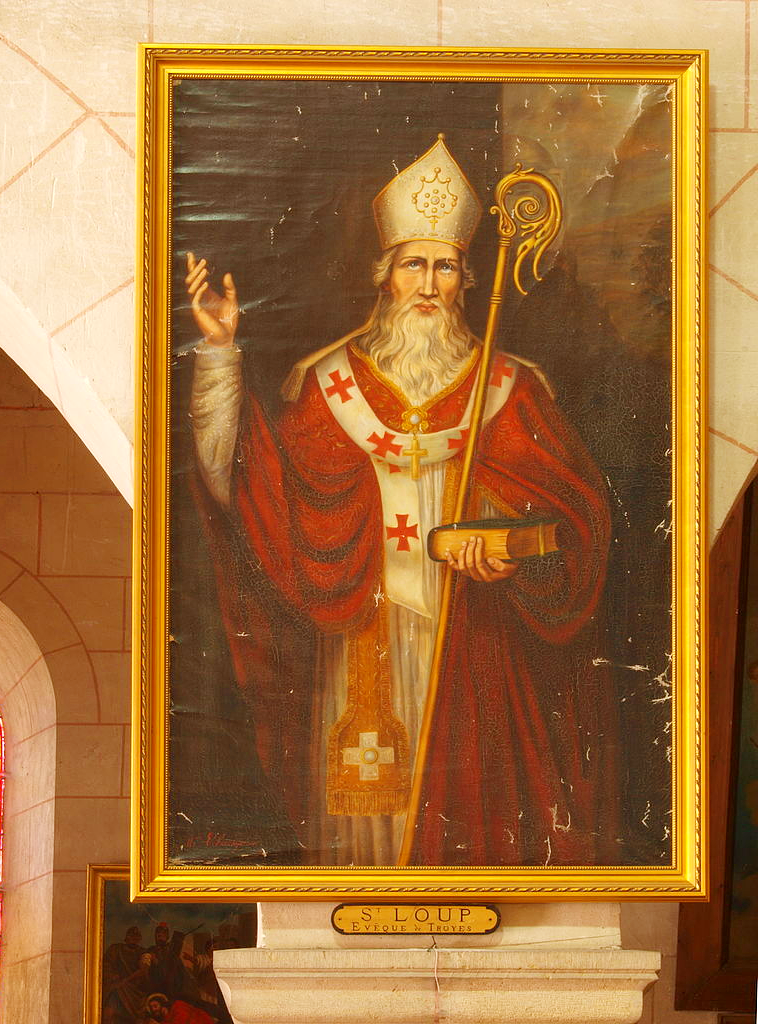
Saint of the Day – 29 July – Saint Lupus of Troyes (c383-c479) Bishop and Confessor, Defender – defended the City from the devastating fury of the Huns and strenuously fought the rampant heretical climate. He was also a friend of Bishop St Euphronius of Autun (Died c473). Born in Toulouse, Alsace, around 383 and died c479 in Troyes of natural causes. Patronages – against demonic possession, against epilepsy, against paralysis, of Benevento, and San Lupo, Italy and of Troyes, France. Also known as – Leu, Lou, Loup, Lupo.
St Sidonius Apollinaris (c430 – 489) called him “The Father of Fathers and Bishop of Bishops, the Chief of the Gallican Prelates, the Rule of Manners, the Pillar of Truth, the Friend of God and the Intercessor to Him for men.”
The Roman Martyrology reads: “At Troyes, in France, St Lupus, Bishop and Confessor who accomopanied the blessed St Germanus to England to combat the Pelagian heresy and by assiduous prayers, defencded the City of Troyes from the fury of Attila, who was debastating all of France.”
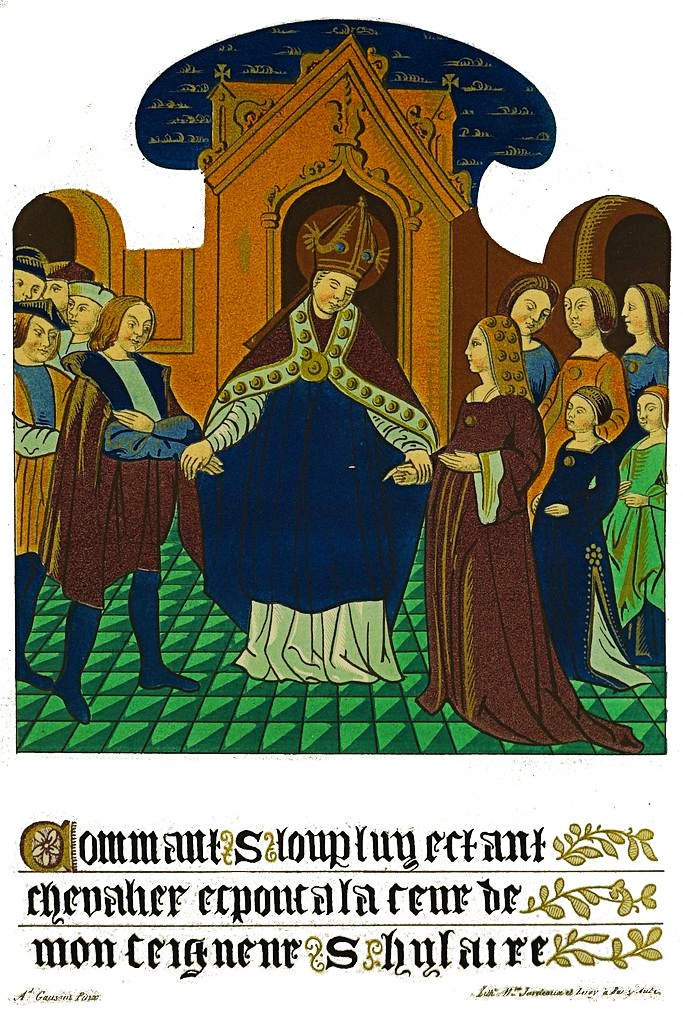
Lupus was the son of a wealthy nobleman, Epirocus of Toul. It is believed that Lupus was the brother of St Vincent of Lérins (Died c445) Monk, Ecclesiatical Writer. Having lost his parents when he was an infant, Lupus was brought up by his uncle Alistocus. He was brother-in-law to St Hilary of Arles (c400-449), as he had married one of Hilary’s sisters, Pimeniola. He held a number of estates in Maxima Sequanorum and worked as a lawyer. After six years of marriage, he and his wife parted by mutual consent to dedicate themselves to God’s service.
Lupus sold his estate and gave the money to the poor. He entered Lérins Abbey, a community founded and led by St Honoratus of Arles (c350-c429), where he stayed about a year. In 427 Honoratus was named as the Archbishop of Arles and St Hilary accompanied him to his new See. Lupus then retired to Macon where he came to the attention of St Germanus of Auxerre (c378 – c448) , who appointed him as the Bishop of Troyes. He was reluctant to assume this high and demanding office and at first declined but eventually relented.
In the autumn of 429, the Council of Arles, at the request of the Bishops of Britain, sent Lupus and Germanus to combat Pelagianism. As such, Lupus is remembered in Wales as Bleiddian and appears in early Welsh Literature. He is particularly venerated at Llanblethian in the Vale of Glamorgan.
The two Saints returned to Gaul just after Easter in the spring of 430 having achieved great success in countering and instruction against the Pelagianist heresy.
In 451, hearing of the advancing Huns, after praying for many days, Lupus, dressed in full Episcopal regalia, went to meet Attila at the head of a procession of the Clergy. Attila was so impressed with Lupus that he spared the City. Attila went onto lose the Battle of Châlons. Lupus then encountered an extremely fraught and difficult problem, when Attila asked the Bishop to accompany him and his army afterthe loss at Châlons, believing that Lupus’ presence would spare his army from extermination. Of course, Lupus had to decline. Many doubt the veracity of the account of the Attila incident. However, the historical kernel it contains is that Troyes was spared being sacked by Attila’s army and that its inhabitants considered this a miraculous deliverance by the intercession and bravery of St Lupus!
St Lupus was the Bishop of Troyes for fifty-two years and died at Troyes in c479. His Relics are enshrined in Troyes Cathedral.
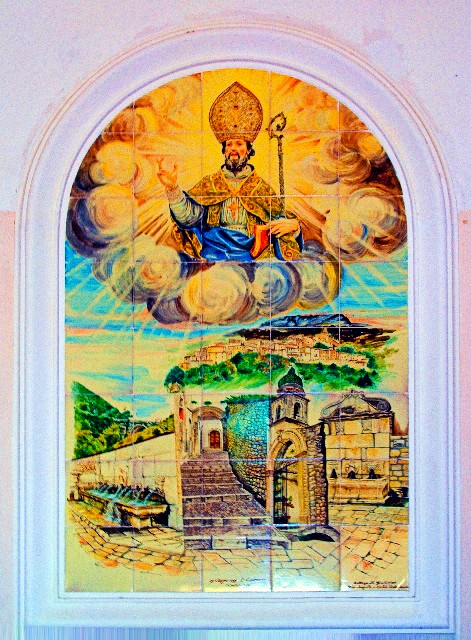
His cult in Benevento, Italy and in his own Diocese, dates to at least the 9th-10th Centuries. Already in the 9th Century, there existed in Benevento a Benedictine Abbey named after him, whose Abbots exercised spiritual and temporal jurisdiction over the fortified village of San Lupo (Archdiocese and Province of Benevento). When, in 1450, Pope Nicholas V suppressed the Abbey, its assets and jurisdiction were annexed to the metropolitan Chapter which, since then, has honoured our holy Bishop as its illustrious Patron.
Statue in Troyes
In San Lupo, Italy, our Saint is celebrated from 27-29 July each year with processions, Holy Mass and many festivities.




























You must be logged in to post a comment.