Our Morning Offering – 23 April – “The Month of the Resurrection and the Blessed Sacrament”
Prayer in Praise of God By St Francis of Assisi (c1181-1226)
Thou art Holy, Lord, the only God and Thine Deeds art wonderful. Thou art Strong. Thou art Great. Thou art the Most High. Thou art Almighty. Thou, Holy Father art King of Heaven and earth. Thou art Three and One, Lord God, all Good. Thou art Good, all Good, Supreme Good, Lord God, Living and True. Thou art Love. Thou art Wisdom. Thou art Humility. Thou art Endurance. Thou art Rest. Thou art Peace. Thou art Joy and Gladness. Thou art Justice and Moderation. Thou art all our Riches and Thou art Suffice for us. Thou art Beauty. Thou art Gentleness. Thou art our Protector. Thou art our Guardian and Defender. Thou art our Courage. Thou art our Haven and our Hope. Thou art our Faith, our great Consolation. Thou art our Eternal Life, Great and Wonderful Lord, God Almighty, Merciful Saviour. Amen
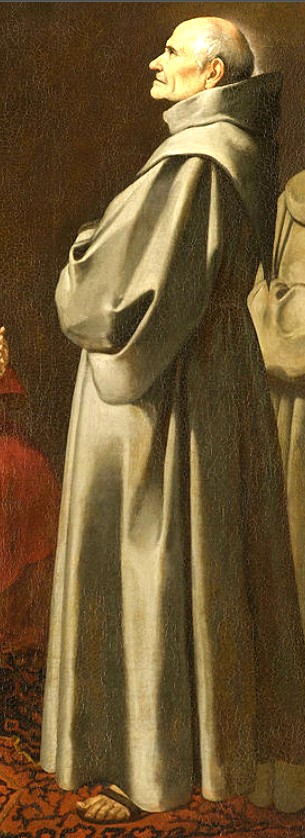
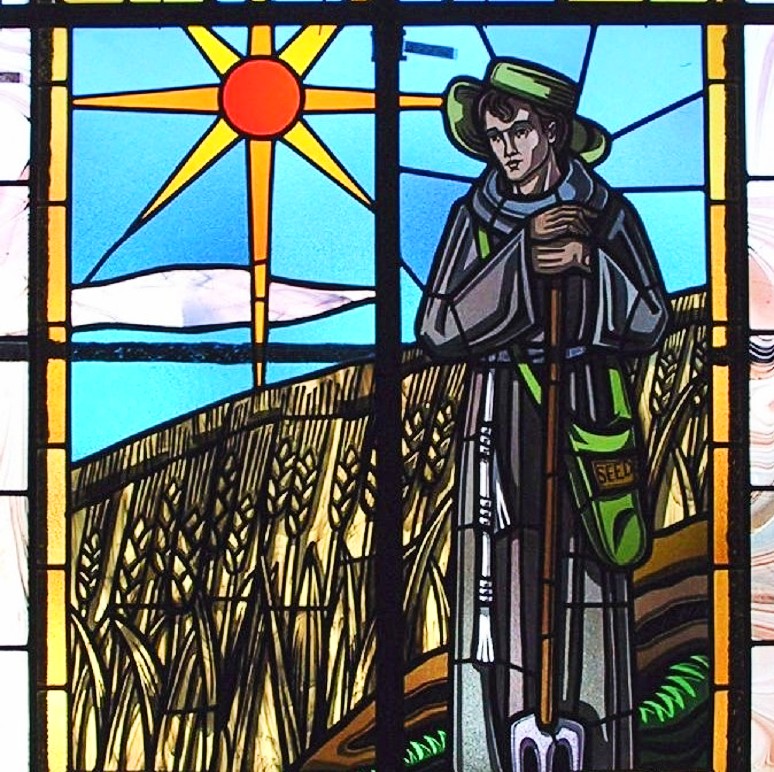
Saint of the Day – 23 April – Blessed Giles of Assisi OFM (c1190-1262) Friar and Missionary of the Order of Friars Minor, Friend and the 3rd follower of St Francis. Giles held a leading place among the original Franciscans and St Francis called him “The Knight of our Round Table.” Giles was unlearned but a man of great wisdom, so much so, that all social classes came to learn aat his feet., he was a Mystic and man of deep contemplation and prayer. Born in c1190 in Assisi, Umbria, Papal States (in modern Italy) and died on 23 April 1262 at Perugia, Italy of natural causes. Also known as – Aegidius, Egidius.
Of Giles’ origins and early life nothing certain is known, other than that he was a simple farmer. In April, 1209, moved by the example of two leading fellow-Assisians and friends, who had already become the first followers of St Francis, he begged permission to join the little band and on the Feast of St George was invested in a poor religious habit which Francis had begged for him. Almost immediately afterwards he set out with Francis to preach in the Marches of Ancona. He accompanied Francis to Rome when the first Rule was orally approved by Pope Innocent III and appears to have then received the monastic tonsure.
Pope Innocent III approves the first Rule
About 1212 Giles made a pilgrimage to the Tomb of St James at Compostella, in Spain. Shortly after his return to Assisi, he started for Jerusalem, to venerate the Holy Places, visiting on his way home, the Italian Shrines of St Michael, at Monte Gargano and St Nicholas, at Bari. He is next found in Rome and still later at Tunis.
In these journeys, Giles was always at pains to procure, by manual labour, what food and shelter he needed. At Ancona he made reed baskets; at Brindisi he carried water and helped to bury the dead; at Rome he cut wood, trod the wine-press and gathered nuts; while the guest of a Cardinal at Rieti, he insisted on sweeping the house and cleaning the knives. He said: “Happiness is to do bodily labour for the love of the Most High and not to take any lesser wages than Paradise, for the good work one does.”
During the course of these travels, Giles, a keen observer of people and events, acquired much valuable knowledge and experience which he turned to good account. He took every opportunity to preach the Gospel. His sermons were brief and heartfelt, replete with homely wisdom. He never eluded truth and spoke to all, with the same love.
After some years of missionary activity, included a period amongst the Muslims in Tunis, Giles was assigned by Francis to the Hermitage of Monteripido, outside Perugia, where he began a life of contemplation and ecstasy which continued until his death.
Giles was a stranger to theological and classical learning but engaged in constant contemplation of heavenly things. Men of all social classes were drawn to Perugia to hear Giles teach. The answers and advice these visitors received were remembered, talked over and committed to writing and thus was formed a collection of the familiar ‘Dicta’ or ‘Sayings’ of Giles. St Bonaventure held these ‘Sayings’ in high esteem and they are cited in the works of many subsequent ascetical writers. They are short, pithy, popular counsels on Christian perfection, applicable to all classes. Known for their mysticism, humanity and originality, they faithfully reflect the early Franciscan spirit and teaching.
It was in 1262, on the 52nd Anniversary of his reception into the Order of Friars Minor that this Blessed Giles died, already revered as a Saint. His immemorial cultus was confirmed by Pope Pius VI in 1777 and his Feast Day is celebrated today, the 23rd of April.
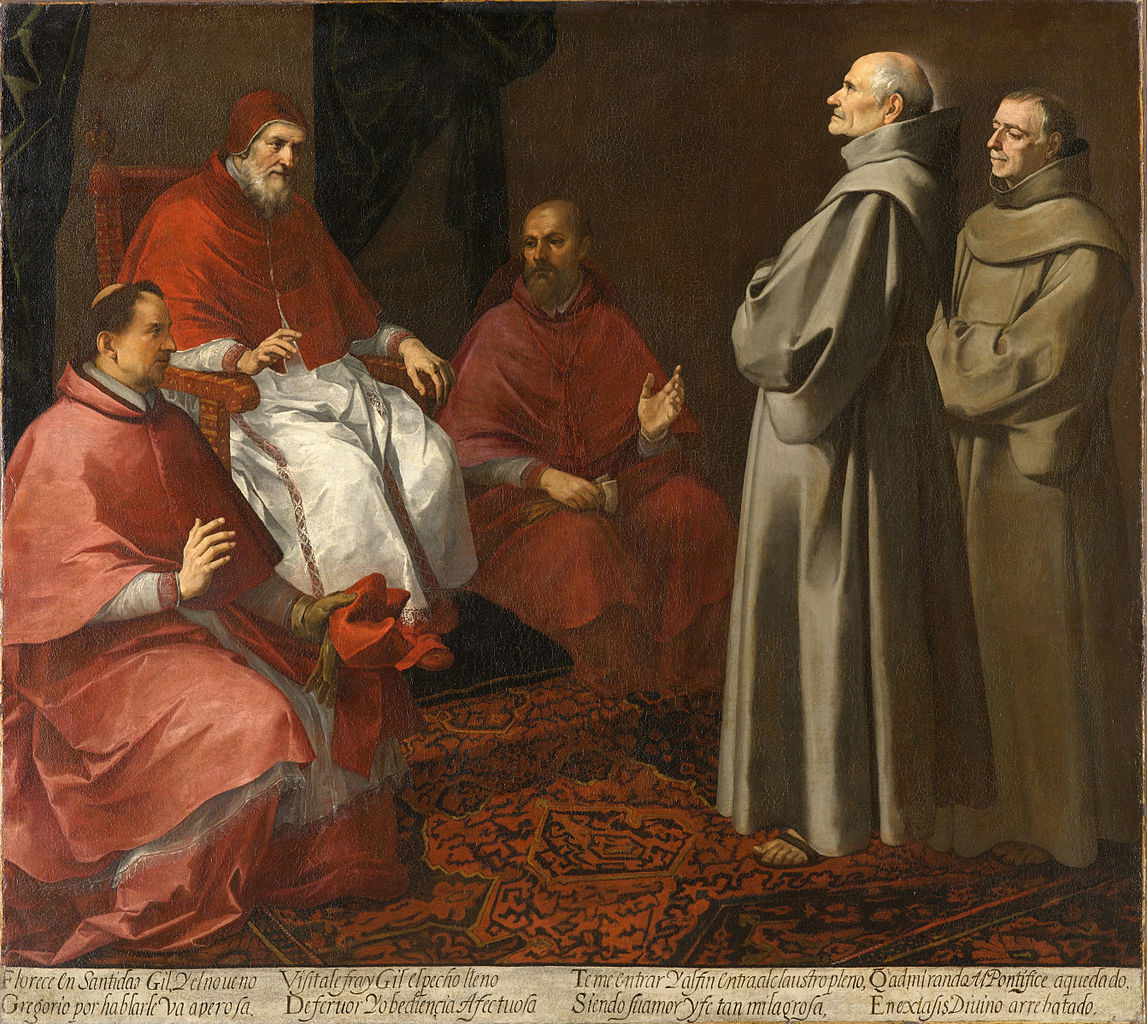
Blessed Giles before Pope Gregory IX by Bartolomé Estéban Murillo
Bl essed Giles of Assisi OFM (c1190-1262) Friar and Missionary of the Order of Friars Minor, Friend and the 3rd follower of St Francis.
Bl Giles of Saumur
St Giorgio di Suelli (Died 1117) Italian Bishop of Suelli, Apostle of the poor, Miracle-worker. For the Diocese he was a true shepherd, a lover of the poor whom he helped and of whom he had a list. He was devoted to prayer and fasting and lived a life of penitence and poverty. Biography: https://anastpaul.com/2021/04/23/saint-of-the-day-23-april-saint-giorgio-di-suelli-died-1117/
St Ibar of Meath St Marolus of Milan St Pusinna of Champagne
Martyrs of Africa: A group of Christians murdered for their faith in northern Africa. Little information has survived but their names. The ones we know are – Catulinus, Chorus, Faustinus, Felicis, Felix, Nabors, Plenus, Salunus, Saturninus, Silvius, Solutus, Theodora, Theodorus, Theon, Ursus, Valerius, Venustus, Victorinus, Victurus, Vitalis.
Thought for the Day – 22 April – The Spiritual Combat (1589) – Dom Lorenzo Scupoli OSM (c1530-1610)
“None shall be crowned who has not fought well.” 2 Tim 2: 5
LI: … Meditation on the Sufferings of Christ (Part Three)
“Moreover, as this Divine Saviour loved mankind to an ineffable degree, such an ardent and tender love must have caused Him much sorrow for the sins which would tear men from Him. For He knew that no-one could sin mortally, without destroying that sanctifying grace which is the bond between Himself and the just. And this separation would cause Jesus greater anguish of soul than dislocated limbs caused His body. For the soul, altogether spiritual and immeasurably superior to the body, is much more delicately attuned to pain. But of all the afflictions of our blessed Saviour, the most grievous, doubtless, was the sight of the damned, incapable of repentance, who must inevitably be banished, from His presence, for all eternity.
If the contemplation of such suffering moves you to compassion for your dying Jesus, meditate further and you will find that His excessive suffering was not caused by your sins alone; for His Precious Blood was shed, not only to cleanse you from the sins you have committed, but to preserve you from those you might have committed were you unaided by Heaven.
It is a fact that you will never be without motives for taking part in the sufferings of Jesus Crucified. Know, moreover, that human nature never was and never will be, subject to any affliction which was unknown to Him. He suffered from injuries, reproaches, temptations, pains, loss of goods, voluntary austerities, more acutely, than those who groan under. For, as this tender Saviour had a perfect comprehension of any affliction of mind or body to which we are prone, even to the least pain or headache. He must certainly have been moved with great compassion for us.
Who, however, can express what He felt at the sight of His Blessed Mother’s pain and grief? For she shared in all the pangs and outrages which attended His Passion and, with the same views and from the same motives. And although her sufferings were infinitely short of His, they were excruciating beyond expression. The awareness of our Lady’s agony redoubled the sorrows of Jesus and pierced His heart still deeper. Hence it was that a certain devout soul compared the heart of Jesus to a burning furnace in which He voluntarily suffered from the ardent flames of Divine love.
And after all, what is the cause of such unspeakable agony? Nothing but our sins – this is the answer. Therefore, the greatest compassion and gratitude we can possibly show towards Him, Who has suffered so much for us, is to be truly sorry for our past offences, out of pure love for Him; to detest sin with all the fervour of our soul because it is displeasing to Him and to wage ceaseless war against our evil inclinations because, they are His greatest enemies.
Thus divesting ourselves of the old man and putting on the new, we adorn our souls with virtue, in which alone, their beauty consists.”
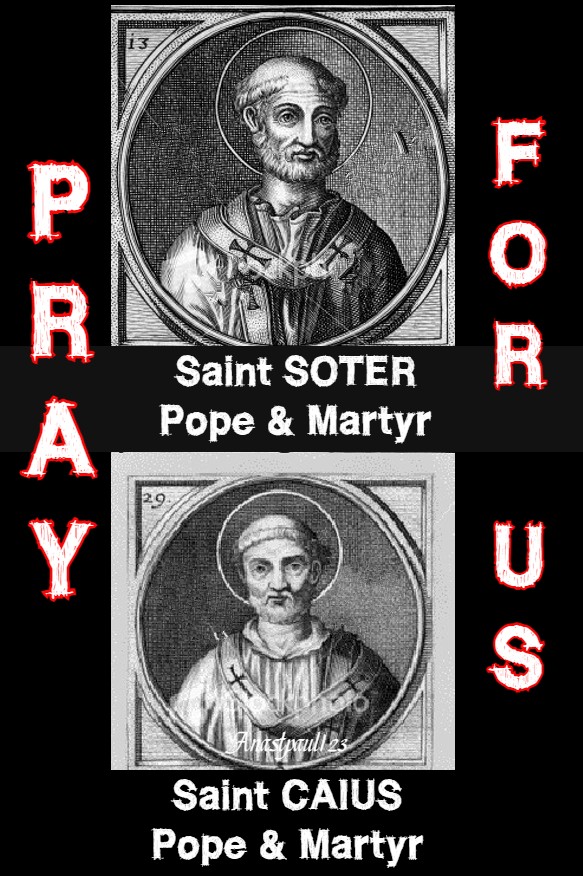
Quote/s of the Day – 22 April – St Pope Soter (Died c174) Martyr and St Pope Caius I (Died 296) Martyr – 1 Peter 5:1-4; 5:10-11; … Matthew 16:13-19 – Scripture search here: https://www.drbo.org/
“And I say to thee: That thou art Peter and upon this rock, I will build My Church and the gates of hell shall not prevail against it.”
Matthew 16:18
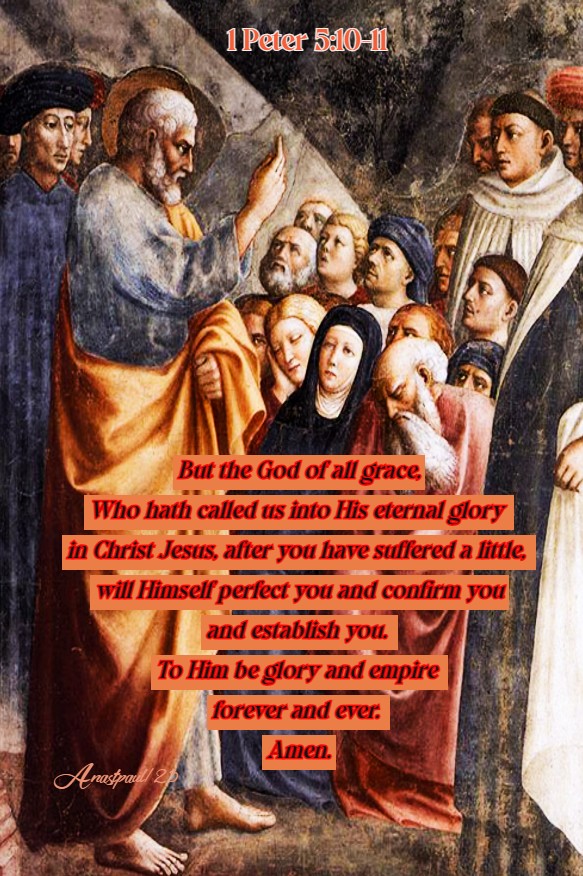
“But the God of all grace, Who hath called us into His eternal glory in Christ Jesus, after you have suffered a little, will Himself perfect you and confirm you and establish you. To Him be glory and empire forever and ever. Amen.”
1 Peter 5:10-11
“Look at the fig tree and all the trees, when they produce their fruit you know that summer is near. So too, when you see these things happening, know that the Kingdom of God is near.” Luke 21:29-31
“He means that just as the coming of summer is recognised by the fruit on the trees, so is the nearness of the Kingdom of God recognised by the destruction of the world. These words show that the fruit of the world is destruction – it increases only to fall, it produces, only to destroy by its disasters whatever it produces. The Kingdom of God is aptly compared to summer, because it is then that the clouds of our sorrow pass away and the days of life shine with the brightness of the Eternal Sun. … Therefore, my friends, do not love what you see cannot long exist. Keep in mind the Apostle John’s precept, in which he counsels us not “to love the world or the things in the world because, if anyone loves the world, the love of the Father is not in him” (1 Jn 2:15).”
St Gregory the Great (540-604) Pope, Father and Doctor of the Church
“But seek first the Kingdom of God and His righteousness and all these things shall be added to you.” Matthew 6:33
“But, [you will tell me], there is so much to do, so many household jobs, so much business in town, in the fields – work everywhere! Do we have to abandon it all, then, so as to think of nothing but God?” No – but these occupations have to be sanctified by seeking God in them and doing them to find Him in them, rather than, to see them done. What our Lord wants, is for us to seek His glory, His Kingdom, His righteousness, before all else and, for this, to make our foundation the interior life, faith, trust, love, religious exercises…, labours and sufferings, with God our Sovereign Lord in view… Once we are firmly set in the search for God’s glory, we can be assured that the rest will follow.”
One Minute Reflection – 22 April – “The Month of the Resurrection and the Blessed Sacrament” – St Pope Soter (Died c174) Martyr and St Pope Caius I (Died 296) Martyr – 1 Peter 5:1-4; 5:10-11; … Matthew 16:13-19 – Scripture search here: https://www.drbo.org/
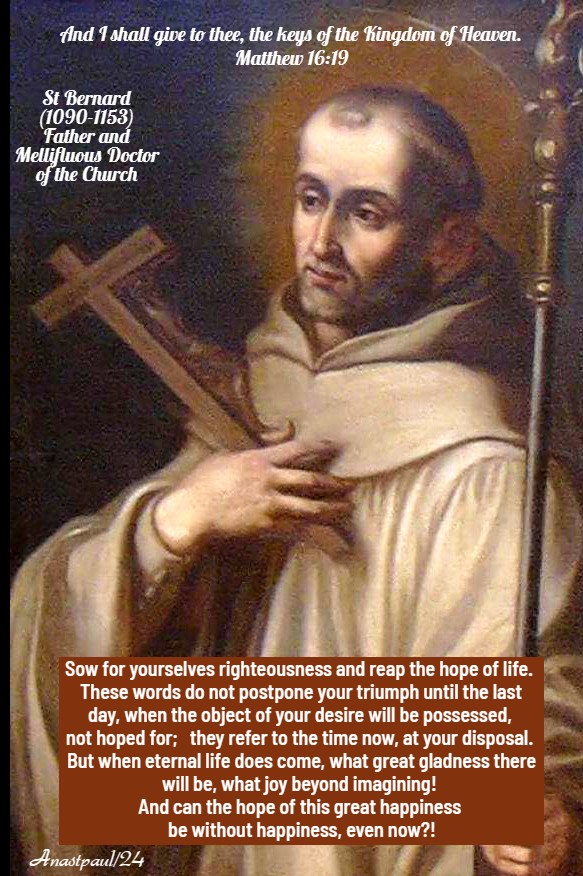
“And I shall give to thee, the keys of the Kingdom of Heaven.” – Matthew 16:19
REFLECTION – “They went forth, sowing their seeds.” But why? Shall they always weep? God forbid! “They shall come home with shouts of joy, carrying their sheaves” (Ps 125:8). And so rightly do they shout for joy, since they bring back sheaves of glory. But you say – “that is for the resurrection on the last day; a long time to wait!”
Do not permit your will to be broken, do not yield to pusillanimity; you have, in the meantime “the first-fruits of the Spirit” (2 Cor 1:22) which, even now, you may reap with joy. Sow for yourselves righteousness and reap the hope of life. These words do not postpone your triumph until the last day, when the object of your desire will be possessed, not hoped for; they refer to the time now, at your disposal. But when eternal life does come, what great gladness there will be, what joy beyond imagining! And can the hope of this great happiness be without happiness, even now?!” – St Bernard (1090-1153) Father and Mellifluous Doctor of the Church (Sermons on the Song of Songs No 37).
PRAYER – Look forgivingly on Thy flock, Eternal Shepherd and keep it in thy constant protection, by the intercession of blessed Soter and Caius, Thy Martyrs and Sovereign Pontiffs, whom Thou didst constitute Shepherds of the whole Church. Through Jesus Christ, Thy Son our Lord, Who lives and reigns with Thee, in the unity of the Holy Ghost, God, world without end. Amen (Collect).
Our Morning Offering – 22 April – “The Month of the Resurrection and the Blessed Sacrament”
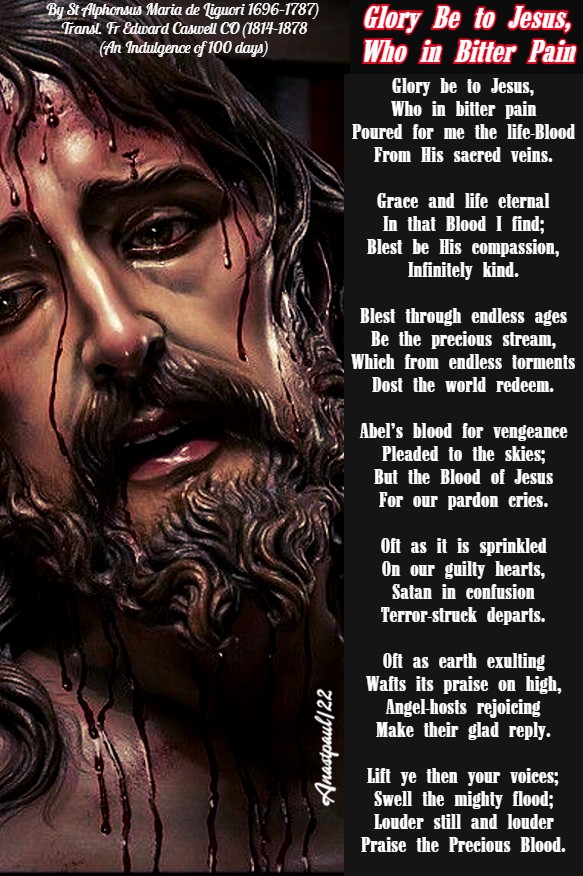
Glory Be to Jesus, Who in Bitter Pains By St Alphonsus Maria de Liguori 1696–1787) [Attrib] Transl. Fr Edward Caswell CO (1814-1878) (An Indulgence of 100 days)
Glory be to Jesus, Who in bitter pain Poured for me the life-Blood From His sacred veins.
Grace and life eternal In that Blood I find; Blest be His compassion, Infinitely kind.
Blest through endless ages Be the precious stream, Which from endless torments Dost the world redeem.
Abel’s blood for vengeance Pleaded to the skies; But the Blood of Jesus For our pardon cries.
Oft as it is sprinkled On our guilty hearts, Satan in confusion Terror-struck departs.
Oft as earth exulting Wafts its praise on high, Angel-hosts rejoicing Make their glad reply.
Lift ye then your voices; Swell the mighty flood; Louder still and louder Praise the Precious Blood.
Saint of the Day – 22 April – Blessed Wolfhelm of Brauweiler (c1020-1091) Abbot of Brauweiler Abbey, near Cologne, Theologian, Writer, Defender of the Doctrine of the Church and of the property of the Church, Miracle-worker. Born in c1020 in the Lower Rhineland (in modern Germany and died on 22 April 1091 at his Monastery of natural causes. Also known as – Wolfelmi Brunwilarensis, Wulfhelm… Wolphelmus… Name means: “the one who protects against the wolf” (Old High German). His sister Bertha, was a Nun of Vilich Abbey, who wrote a Vita of the Abbess Adelheid.
Wolfhelm was the son of a noble family from the Lower Rhine, He received his education at the Cathedral school in Cologne under Archbishop St Heribert(c970-1021) and then worked there as a teacher.
In Trier in 1036, Wolfhelm entered the Benedictine order in what was then the reform Monastery of St Maximinus. He later relocated to the Monastery in Gladbach – today’s Mönchengladbach – which was subordinate to his uncle, Abbot Heinrich of St Pantaleon in Cologne.
In 1065 he became the 3rd Abbot in Brauweiler. Wolfhelm wrote theological writings, for example in the Sacrament dispute against Berengar of Tours, who questioned the Doctrine of transubstantiation , and he campaigned emphatically for Church buildings and Monastery properties, especially the large Klotten estate on the Moselle River which was disputed between his own Monastery and the Archdiocese of Cologne. By his extreme difficult efforts, he managed to secure this inheritance from Queen Richeza for his Monastery of Brauweiler.
Even during his lifetime, numerous miracles were associated with his person. Around 1115, the Monk Konrad von Brauweiler wrote a life story with the aim of achieving Wolfhelm’s Canonisation.
Notre-Dames de Betharam / Our Lady of Betharam, France (1503) – 22 April: Saint Bernadette Soubirous frequently visited the Shrine of Betharram. In fact, the rosary beads that Bernadette used when praying with the Blessed Virgin during the first apparition at Lourdes had come from the Betharram Shrine and the priest to whom she was sent after the apparitions, was Saint Michel Garicoïts (1797-1863) the Priest of Betharram. He it was who alone believed Bernadette’s accounts of the apparitions at Lourdes. He was Canonised in 1947. About St Michel Garicoits here: https://anastpaul.com/2019/05/14/saint-of-the-day-14-may-saint-michel-garicoits-1797-1863/ HERE: https://anastpaul.com/2021/04/22/notre-dames-de-betharam-our-lady-of-betharam-france-1503/
St Pope Caius I (Died 296) Martyr, Bishop of Rome from 17 December 283 to his death in 296. Christian tradition makes him a native of the Dalmatian city of Salona, today Solin near Split, the son of a man also named Caius and a member of a noble family related to the Emperor Diocletian. Biography: https://anastpaul.com/2019/04/22/saint-of-the-day-22-april-saint-pope-caius-i-died-613/
Saint Altfried of Münster (Died 849) the Third Bishop of Münster from (839–849) and Abbot of Essen-Werden and Helmstedt. Born in the 9th Century, n Friesland (in modern Netherlands) and died on 22 April 849 of natural causes. Altfried was a nephew of St Ludger (c 742-809) and his second successor in the See of Münster, as well as a successor as Abbot of the Abbey of Essen-Werden (founded by St Ludger). The second successor was also a close relative, St Gerfried of Münster. Altfried also wrote a comprehensive Vita of St Ludger. St Altfried’s Life: https://anastpaul.com/2023/04/22/saint-of-the-day-22april-saint-altfried-of-munster-died-849/
St Apelles of Smyrna St Arwald St Epipodius of Lyon St Euflamia
Martyrs of Persia: Bishops, Priests, Deacons and Laity who were Martyred in Persia and celebrated together. Several of them have their stories related in the Acta of Saints Abdon and Sennen.
Thought for the Day – 21 April – The Spiritual Combat (1589) – Dom Lorenzo Scupoli OSM (c1530-1610)
“None shall be crowned who has not fought well.” 2 Tim 2: 5
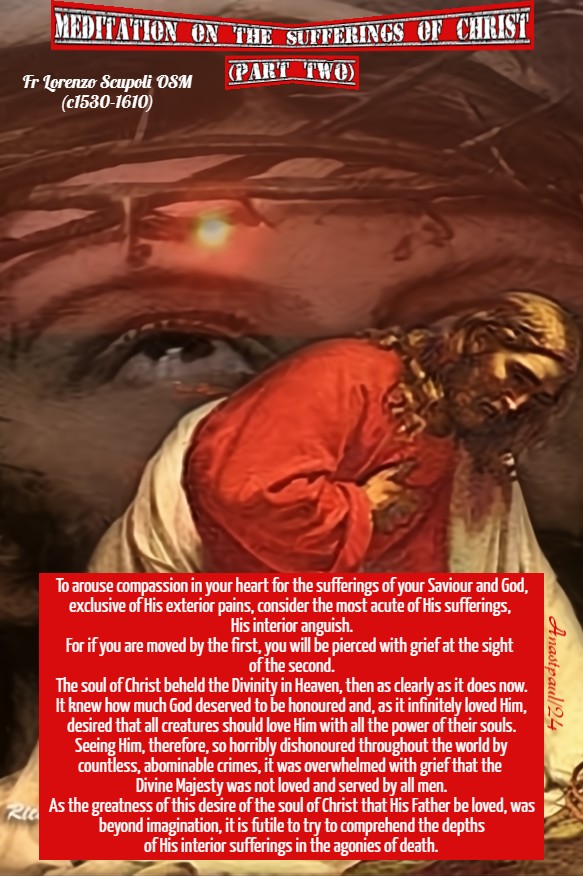
LI: … Meditation on the Sufferings of Christ (Part Two)
“If you would have a lively sorrow for your sins, let your meditation convince you that if Jesus Christ suffered so much, it was to inspire you with wholesome self-contempt and a hatred of your disorderly passions, particularly your greatest faults which are naturally most offensive to Almighty God.
And if you would excite sentiments of admiration, you need only consider that nothing is more shocking than the sight of the Creator of the universe, the Fountain of Life, butchered by His own creatures, the right of the Supreme Majesty, as it were, annihilated, Justice condemned, Beauty defiled and lost in filth, the Beloved of the Eternal Father become the hated of sinners. Light inaccessible is overwhelmed by the powers of darkness; Uncreated glory and felicity are buried under ignominy and wretchedness!
To arouse compassion in your heart for the sufferings of your Saviour and God, exclusive of His exterior pains, consider the most acute of His sufferings, His interior anguish. For if you are moved by the first, you will be pierced with grief at the sight of the second. The soul of Christ beheld the Divinity in Heaven, then as clearly as it does now. It knew how much God deserved to be honoured and, as it infinitely loved Him, desired that all creatures should love Him with all the power of their souls. Seeing Him, therefore, so horribly dishonoured throughout the world by countless, abominable crimes, it was overwhelmed with grief that the Divine Majesty was not loved and served by all men. As the greatness of this desire of the soul of Christ that His Father be loved, was beyond imagination, it is futile to try to comprehend the depths of His interior sufferings in the agonies of death.”
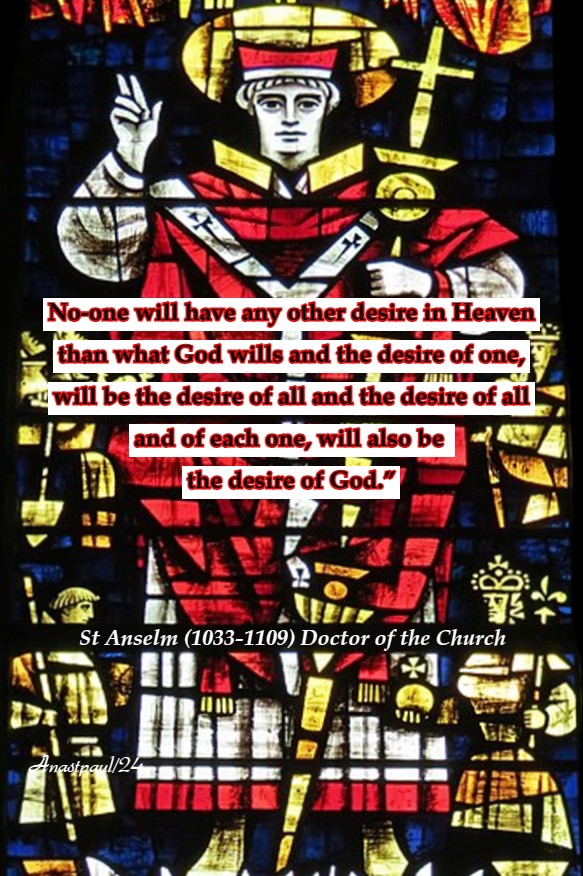
Quote/s of the Day – 21 April – St Anselm (1033-1109) ArchBishop of Canterbury, Confessor, Magnificent and Marian Doctor of the Church
“No-one will have any other desire in Heaven than what God wills and the desire of one, will be the desire of all and the desire of all and of each one, will also be the desire of God.”
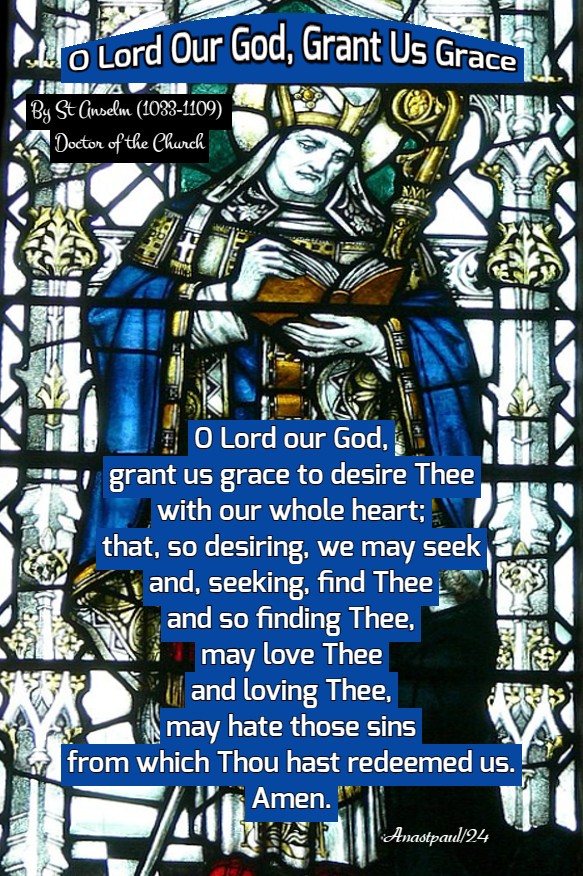
O Lord Our God, Grant Us Grace By St Anselm (1033-1109) Archbishop of Canterbury Doctor of the Church
O Lord our God, grant us grace to desire Thee with our whole heart; that, so desiring, we may seek and, seeking, find Thee and so finding Thee, may love Thee and loving Thee, may hate those sins from which Thou hast redeemed us. Amen.
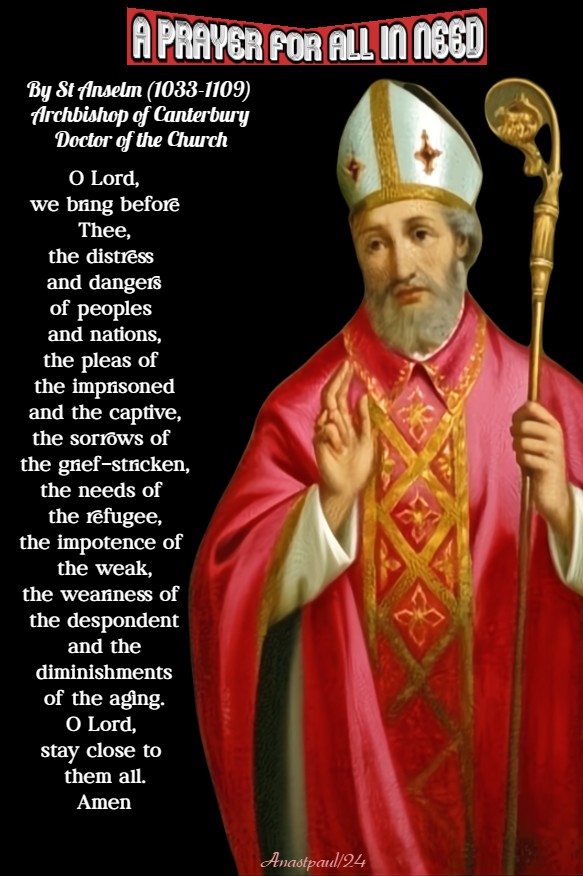
A Prayer for All in Need By St Anselm (1033-1109) Archbishop of Canterbury Doctor of the Church
O Lord, we bring before Thee, the distress and dangers of peoples and nations, the pleas of the imprisoned and the captive, the sorrows of the grief-stricken, the needs of the refugee, the impotence of the weak, the weariness of the despondent and the diminishments of the aging. O Lord, stay close to them all. Amen
One Minute Reflection – 21 April – “The Month of the Resurrection and the Blessed Sacrament” – The Third Sunday after Easter – St Anselm (1033-1109) Bishop, Confessor, Magnificent and Marian Doctor of the Church – 1 Peter 2:11-19; John 16:16-22 – Scripture search here: https://www.drbo.org/
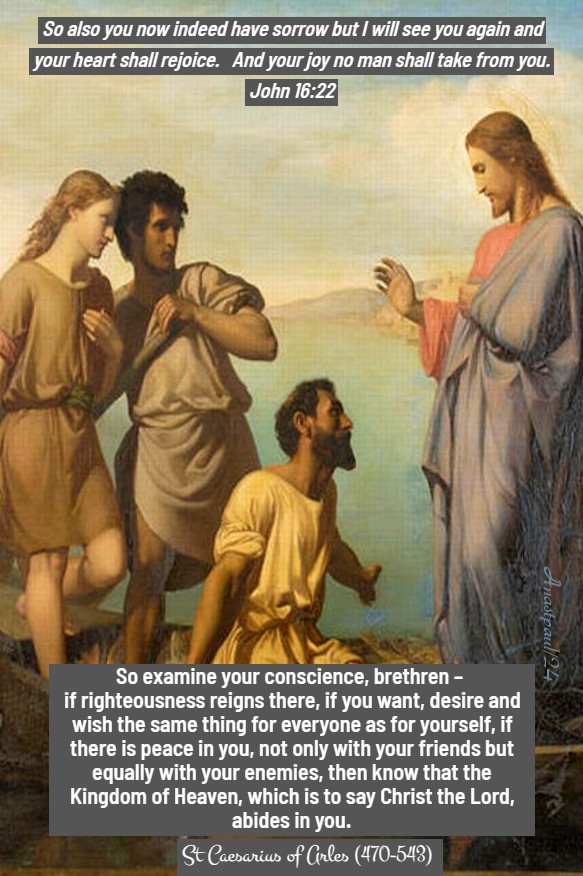
“So also you now indeed have sorrow but I will see you again and your heart shall rejoice. And your joy no man shall take from you.” – John 16:22
REFLECTION – “What is true joy, brethren, other than the Kingdom of Heaven? And what is the Kingdom of Heaven other than Christ our Lord? I know that everyone wants to have true joy. But the person who wants to be happy with his harvest, without cultivating his field, is deluding himself; the person who wants to harvest fruit without planting trees is mistaken. We cannot have true joy, without righteousness and peace … At present, respecting righteousness and having peace, we work hard for a short time like people bent over good work. But afterwards, we will rejoice without end because of the fruit of that work.
Listen to the Apostle Paul, who said of Christ: “It is He Who is our peace.” (Eph 2:14) … And speaking to His disciples, the Lord told them: “I shall see you again, then your hearts will rejoice with a joy no one can take from you.” What is that joy which no-one can take from you, other than your Lord Himself, Whom no man can take from you?
So examine your conscience, brethren – if righteousness reigns there, if you want, desire and wish the same thing for everyone as for yourself, if there is peace in you, not only with your friends but equally with your enemies, then know that the Kingdom of Heaven, which is to say Christ the Lord, abides in you.” – St Caesarius of Arles (470-543) Bishop, Father (Sermon 166).
PRAYER – O God, Who didst give blessed Anselm to be Thy people’s minister in eternal salvation, grant we pray, that we, who have him for teacher of life here on earth, may also deserve now that he is in Heaven, to have him for an advocate. Through Jesus Christ, Thy Son our Lord, Who lives and reigns with Thee, in the unity of the Holy Ghost, God, world without end. Amen (Collect).
Our Morning Offering – 21 April – “The Month of the Resurrection and the Blessed Sacrament” – St Anselm (of Canterbury) OSB (1033-1109) Bishop, Confessor, Magnificent and Marian Doctor of the Church
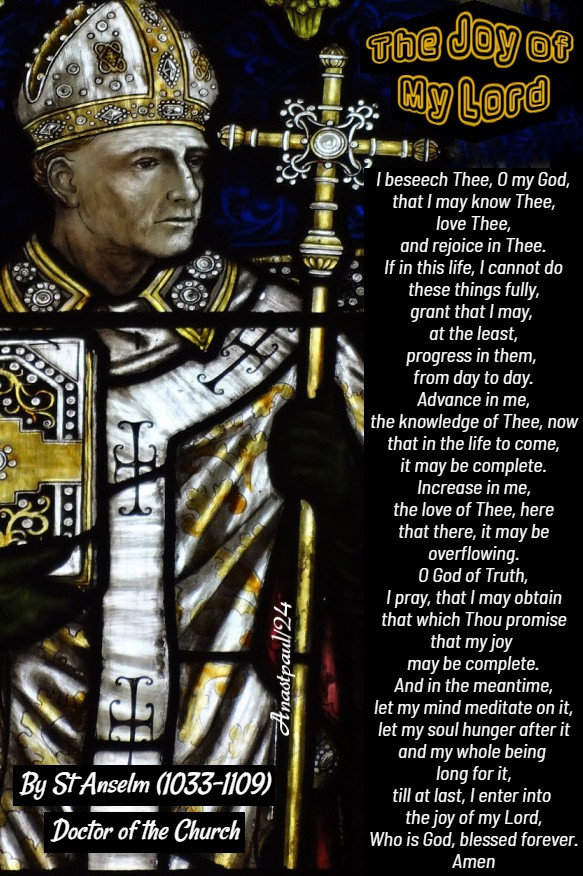
The Joy of My Lord By St Anselm (1033-1109) Doctor of the Church
I beseech Thee, O my God, that I may know Thee, love Thee, and rejoice in Thee. If in this life, I cannot do these things fully, grant that I may, at the least, progress in them, from day to day. Advance in me, the knowledge of Thee, now that in the life to come, it may be complete. Increase in me, the love of Thee, here that there, it may be overflowing. O God of Truth, I pray, that I may obtain that which Thou promise that my joy may be complete. And in the meantime, let my mind meditate on it, let my soul hunger after it and my whole being long for it, till at last, I enter into the joy of my Lord, Who is God, blessed forever. Amen
Saint of the Day – 21 April – Saint Wolbodó of Liège (c950-1021) Bishop, Chaplain to the Emperor, supporter of Monasteries and the Founder of the Monastery of St Lawrence, which became his heir and where he is buried. Born in c950 in Flanders, Belgium and died on 21 April 1021 in Liège, Belgium of natural causes. Patronage – of Students. Also known as – Fulmodo, Vilpodo, Volbodo, Wolbodon.
His biography, although sparse in detail, tells us of a man of noble Flemish lineage, whose education at the Cathedral school of Utrecht, where he became a Canon, a Professor and finally led him to assume the role of Dean of the Cathedral of Saint Martin and, later, of Chaplain to the Court of Henry II.
Appointed as the Bishop of Liège in 1018 and in November of that year he was Consecrated Bishop by St Heribert of Cologne, assisted by Bishop Gerard of Cambrai, in the presence of Emperor Henry II. He led the Diocese with wisdom and devotion until 1021, the year of his death. He was responsible for the foundation of the Abbey of St Lawrence in Liège, testimony to his religious fervour and his commitment to the spread of the cult of the Saints.
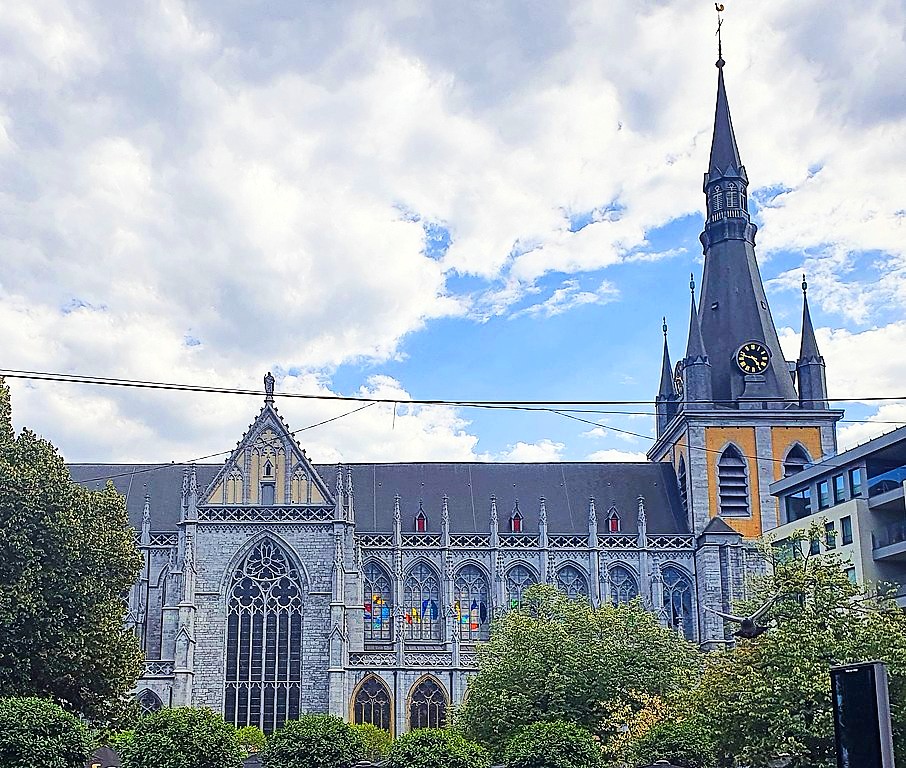
St Lawrence Abbey Church
He named Olbert of Gamblou, as head of the Abbey of St James in Liège and in 1020 deposed Ingobrand as the Abbot of Lobbes Abbey, replacing him with Richard of Saint-Vanne. In 1020 he also installed St Poppo, the Prior of the Abbey of Saint-Vaast in Cambrai, as the Abbot of Stavelot Abbey.
In the official recorded listing of the Bishops, Wolbodó appears after Baldéric de Looz and before Durand.
Wolbodó bequeathed his moveables, 300 Marks of silver and his lands in Flanders, to the Abbey of St Lawrence, Liège and was buried in the Abbey’s Crypt which, at the time, was still under construction. In 1656 his tomb was opened and his remains reburied.
Saint Wolbodó is considered the Patron Saint of Students. In Delft, Holland, the Student Society, Menschen Vereeniging Wolbodó, is named after him.
St Conrad of Parzham OFM Cap (1818-1894) Franciscan Religious Lay Friar, Devotee of Blessed Sacrament and Marian, Apostle of Charity, Miracle worker with the charism of prophecy. His heroic virtues and the miracles he performed won for him the distinction to be ranked among the Blessed by Pope Pius XI in 1930. Four years later, the same pope, approving additional miracles which had been performed, solemnly inscribed his name in the list of Saints. Biography: https://anastpaul.com/2018/04/21/saint-of-the-day-21-april-st-conrad-of-parzham-ofm-cap-1818-1894/
St Crotates of Nicomedia St Cyprian of Brescia St Felix of Alexandria St Fortunatus of Alexandria St Frodulphus St Isacius of Nicomedia St Maelrubba of Applecross
St Silvius of Alexandria St Simeon of Ctesiphon St Vitalis of Alexandria Bl Vitaliy Bayrak St Wolbodó of Liège (c950-1021) Bishop
Thought for the Day – 20 April – The Spiritual Combat (1589) – Dom Lorenzo Scupoli OSM (c1530-1610)
“None shall be crowned who has not fought well.” 2 Tim 2: 5
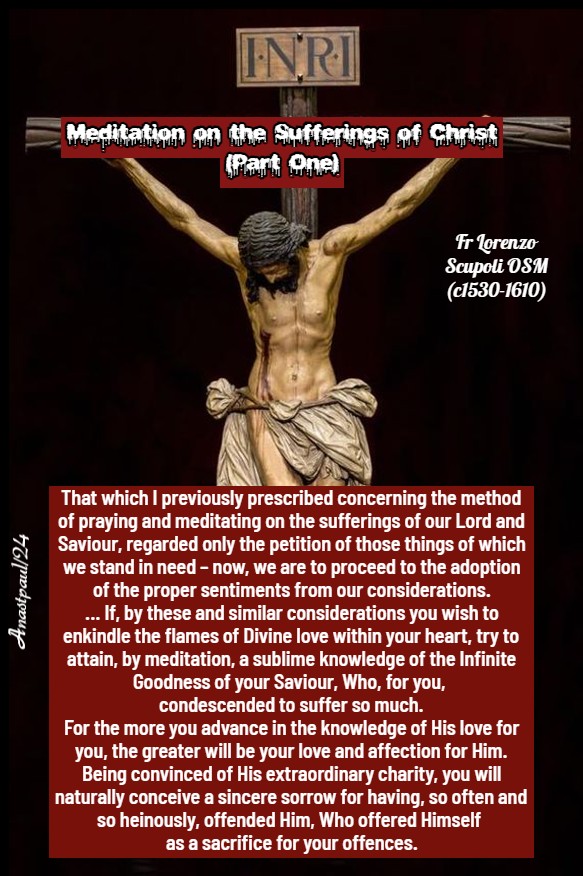
LI: … Meditation on the Sufferings of Christ (Part One)
“That which I previously prescribed concerning the method of praying and meditating on the sufferings of our Lord and Saviour, regarded only the petition of those things of which we stand in need – now, we are to proceed to the adoption of the proper sentiments from our considerations. For instance, if you have chosen the Crucifixion and its attendant circumstances, as the subject of your Meditation, you may dwell on the following considerations.
Consider firstly, the arrival of Jesus on Mount Calvary. His executioners rudely stripped Him, tearing the garments off which adhered to the torn flesh of His lacerated body. Consider next the fresh wounds made in His Sacred Head by the Crown of Thorns, removed and reset by his barbarous executioners. Next,visualise Him nailed to the Cross with spikes, driven through the flesh and bone into the wood with a large hammer. Consider that His hands, not reaching the places designed for them, were stretched so violently that all His bones were dislocated, enabling the onlookers to count His very bones [Psalm XXL:18]. Then think of the actual elevation of the Cross,and the weight of Christ’s body resting on nails which tore gaping wounds in His hands and feet, giving Him excruciating pain.
If, by these and similar considerations you wish to enkindle the flames of Divine love within your heart, try to attain, by meditation, a sublime knowledge of the Infinite Goodness of your Saviour, Who, for you, condescended to suffer so much. For the more you advance in the knowledge of His love for you, the greater will be your love and affection for Him. Being convinced of His extraordinary charity, you will naturally conceive a sincere sorrow for having, so often and so heinously, offended Him, Who offered Himself as a sacrifice for your offences.
Proceed then to make acts of hope, considering that this great God on the Cross, had no other plan than to extirpate sin from the world, to free you from the devil, to expiate your crimes, to reconcile you to His Father and to provide a resource for you in all your necessities. But if, after contemplating His passion, you consider its effects, your sorrow will be turned into joy. For observe that by Christ’s Death, the sins of humanity were blotted out, the anger of a Sovereign Judge appeased, the powers of Hell defeated, death itself vanquished and the places of the fallen Angels filed in Heaven. And the joy arising from such reflections will be increased by thinking of the joy with which the Holy Trinity, the Blessed Virgin, the Church Militant and Triumphant received the glad, tidings of the Redemption of Mankind.”
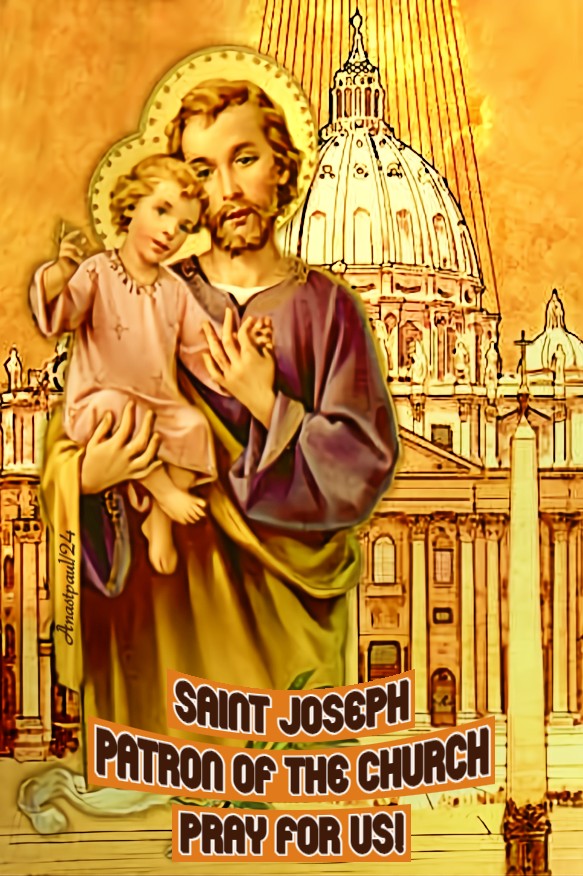
Quote of the Day – 20 April – Within the Octave of the Solemnity of the Patronage of St Joseph
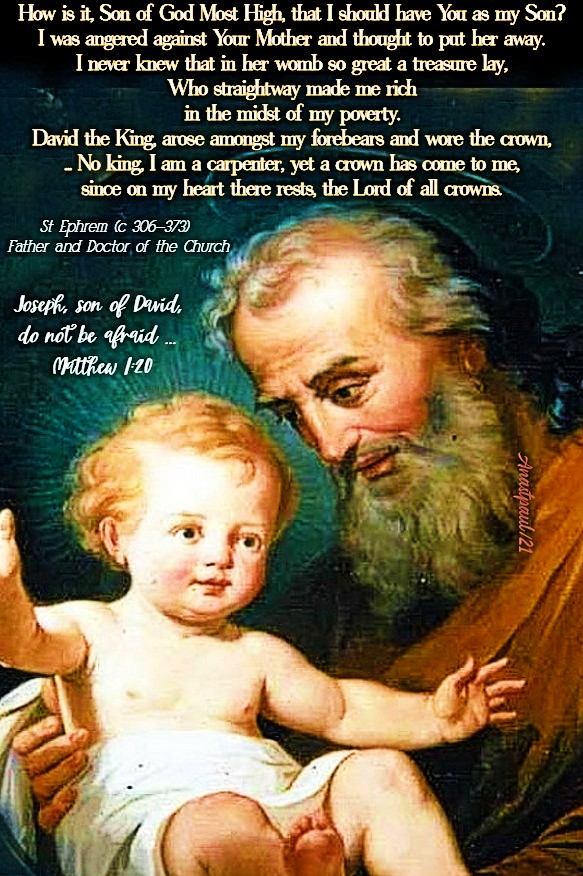
“Joseph embraced the Son of the heavenly Father as he would a newborn babe and served Him as his God. He took pleasure in this as in goodness itself and he, who was complete righteousness (Mt 1:19), worshiped Him.
Oh how great was his wonderment! “How is it, Son of God Most High, that I should have You as my Son? I was angered against Your Mother and thought to put her away. I never knew that in her womb so great a treasure lay, Who straightway made me rich in the midst of my poverty.
David the King, arose amongst my forebears and wore the crown, yet how great is the destitution to which I have come! No king, I am a carpenter, yet a crown has come to me, since on my heart there rests, the Lord of all crowns.”
St Ephrem (306-373) Father and Doctor of the Church
One Minute Reflection – 20 April – Within the Octave of the Solemnity of the Patronage of St Joseph – Genesis 49:22-26; Luke 3:21-23 – Scripture search here: https://www.drbo.org/
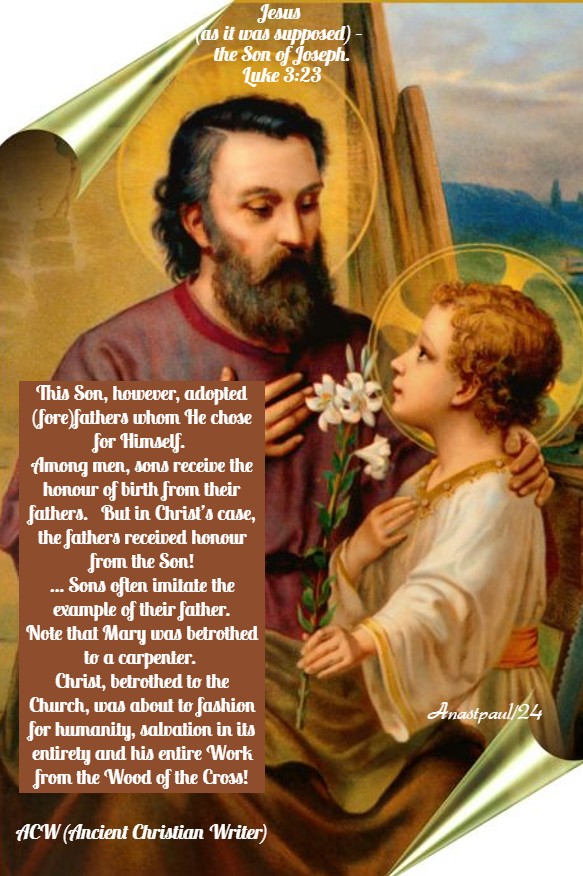
“And Jesus, Himself, was beginning about the age of thirty years, being – (as it was supposed) – the son of Joseph … ” – Luke 3:23
REFLECTION – “This is the miracle – He Who adopted and begot fathers, was born from their sons! They were made His fathers whose Son He was not! He did them a favour by being their Son. They, however, offered Him nothing by being His forefathers. Among men, fathers adopt whomever they wish to be their sons. This Son, however, adopted fathers whom He chose for Himself. Among men, sons receive the honour of birth from their fathers. But in Christ’s case, the fathers received honour from the Son!
The text reads, “Although His Mother Mary had been betrothed to Joseph, before they married, she was found to be with child by the Holy Ghost.” Subsequently, all Saints would be born from the virgin Church which is betrothed to Christ. … Sons often imitate the example of their father. Note that Mary was betrothed to a carpenter. Christ, betrothed to the Church, was about to fashion for humanity, salvation in its entirety and his entire Work from the Wood of the Cross!” – ACW (Ancient Christian Writer) (Extract from Incomplete Work on Matthew, Homily 1).
PRAYER – God, Who in thine unspeakable foreknowledge didst choose Thy blessed servant Joseph, to be the husband of Thine Own most holy Mother; mercifully grant that now that he is in Heaven with Thee, we who on earth do reverence him for our Defender, may worthily be helped by the succour of his prayers to Thee on our behalf. Through the same Jesus Christ, Thy Son our Lord, Who lives and reigns with Thee, in the unity of the Holy Ghost, God, world without end. Amen (Collect).
Our Morning Offering – 20 April – Within the Octave of the Patronage of St Joseph
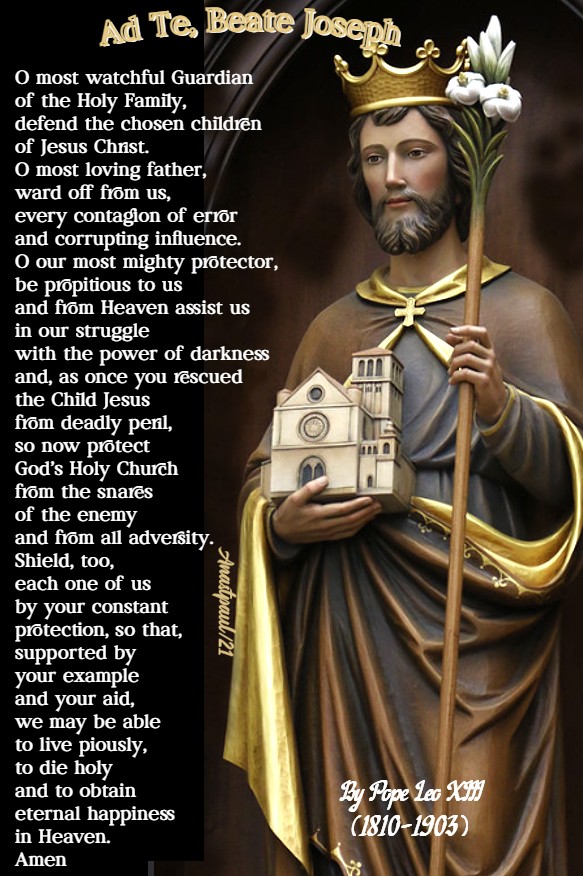
Ad Te, Beate Joseph To Thee, O Blessed Joseph By Pope Leo XIII (1810-1903)
O most watchful Guardian of the Holy Family, defend the chosen children of Jesus Christ. O most loving father, ward off from us, every contagion of error and corrupting influence. O our most mighty protector, be propitious to us and from heaven assist us in our struggle with the power of darkness and, as once you rescued the Child Jesus from deadly peril, so now protect God’s Holy Church from the snares of the enemy and from all adversity. Shield, too, each one of us by your constant protection, so that, supported by your example and your aid, we may be able to live piously, to die holy and to obtain eternal happiness in Heaven. Amen
Saint of the Day – 20 April – Saint Peter Caedwalla of Wessex (c658-689) Layman, King of Wessex. Venerable St Bede wrote of him in his Ecclesiastical History of the English People. Born in c658 in Wessex, England and died on 20 April 689 at Rome, Italy. Reign as King of Wessex, 685–688, when he abdicated. Patronages – of converts, of reformed murderers. Also known as – Caedwalla of Wales, Cadwallader, Cadwallador, Cadwalla… Cadwallon… Ceadwalla… Cedualla… Peter Caedwalla.
From St Bede’s Ecclesiastical History of the English People, we learn that Caedwalla was a nobleman of the West Saxons, exiled from his Country as a youth, who returned with an army and killed the reigning Monarch. After much plunder and bloodshed, he became the new King.
Caedwalla then conquered the pagan Isle of Wight and did his best to exterminate all the natives and replace them with settlers from his own region, although Bede states that the natives remained a majority on the island.Although not yet Baptised, Caedwalla is said to have vowed that, should he conquer the Island, he would give a quarter of all the land and his spoils to the God of the Christians. This promise was honoured when he gave the promised bounty to Bishop Wilfrid. Wilfrid appointed a Priest to preach on the Island and to Baptise all who wished to convert to the Christian Faith.
When Cædwalla first attacked the South Saxons, Wilfrid was at the court of King Æthelwealh and on Æthelwealh’s death, Wilfrid attached himself to Cædwalla. The Life of Wilfrid records that Cædwalla sought Wilfrid out as a spiritual father.
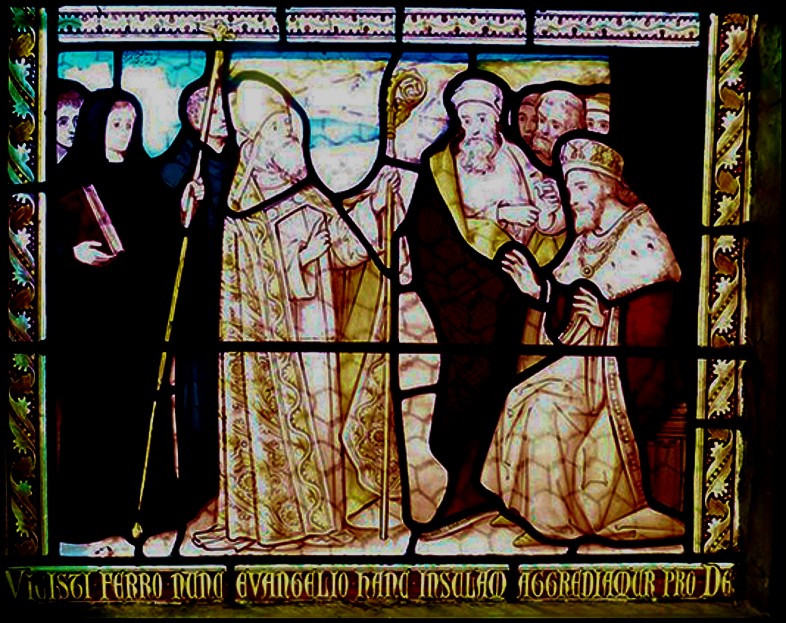
This stained glass window (above) can be seen in the south aisle of St Mary’s Church in Ryde. It was designed and installed by the Victorian Catholic artist, Nathaniel Westlake in 1882. It depicts St. Wilfrid, having landed on the Isle of Wight in 686, with Benedictine Monks, seeking permission from Caedwalla to preach the Gospel. Being granted permission and given land on the Island, St Wilfrid and his followers, built the Island’s first (wooden) Church at Brading, on the site of the present Church of St Mary the Virgin. Hence, it could be said that our St Peter Caedwalla was the first Isle of Wight Saint. (St Wilfred: https://anastpaul.com/2018/10/12/saint-of-the-day-12-october-st-wilfrid-c-633-709/).
Two young Princes, brothers of the former King, when Caedwalla invaded the Island, escaped across the Solent. They were eventually betrayed, however and ordered to be put to death. Caedwalla, at this time, was living in seclusion while he recovered from wounds received while fighting on the Isle of Wight. The Abbot of Redbridge petitioned him to allow the young Princes to receive instruction in the Christian Faith and to receive Baptism before their execution. Caedwalla consented to this request and they were duly instructed, Baptised and then executed.
In 688 Caedwalla, after governing the people of Wessex “most ably” for two years, abdicated his throne and went on pilgrimage to Rome, where he hoped to receive Baptism. He arrived in Rome during the Pontificate of Pope Sergius and was Baptised by him (and given the name of Peter on account of his devotion to the Apostle, which had inspired his pilgrimage).
On Holy Saturday 689, Peter Caedwalla fell ill while “still wearing his white robes” that is, during Easter Week when the newly Baptised were wearing the white garment received by them as a sign of their purification from sin. He died on 20 April that year and was buried in St Peter’s. The Pope directed that an Epitaph be inscribed on his tomb to preserve his memory and devotion. It was composed by the Archbishop of Milan and is given in full by St Bede. The stone was discovered in the 16th Century when the Basilica of St Peter was being rebuilt. A s 16th Century mural in Chichester Cathedral depicts St Peter Caedwalla giving land to St Wilfrid, see below.
A 16th Century Mural by Lambert Barnard in Chichester Cathedral, depicting Saint Peter Cædwalla granting land to Saint Wilfrid.
St Peter Caedwalla of Wessex (c658-689) Layman, King of Wessex. Venerable St Bede wrote of him in his History of the English Church. Bl Catwallon St Domninus of Digne Bl Gerald of Salles Bl Harduin
Blessed Hildegun of Schönau O.Cist. (Died 1188) Virgin, Cistercian Monk – yes! she was disguised as a boy as a child, for her own safety and after many frightening trials, decided to retain the identity in order to enter the Cistercian Monastery as Brother Joseph. Her true identity remained a secret until her death. Or Brother Joseph!: https://anastpaul.com/2023/04/20/saint-of-the-day-20-april-blessed-hildegun-of-schonau-died-1188-virgin/
St Marcian of Auxerre St Margaret of Amelia Bl Maurice MacKenraghty St Michel Coquelet Bl Oda of Rivreulle St Sara of Antioch St Secundinus of Córdoba St Servilian
Blessed Simon Rinalducci OSA (Died 1322) Priest, Friar of the Order of the Hermits of St Augustine, noted for his theological studies, Prior of several houses, renowned Preader, Miracle-worker. Blessed Simon was a model of humility and obedience, even in the face of great trials and obvious injustices. Simon was Beatified on 19 March 1833 by Pope Gregory XVI (cultus confirmed). His Life: https://anastpaul.com/2021/04/20/saint-of-the-day-blessed-simon-rinalducci-osa-died-1322/
St Sulpicius St Theodore Trichinas St Theotimus of Tomi St Vincent of Digne St Wiho of Osnabrück
Thought for the Day – 19 April – The Spiritual Combat (1589) – Dom Lorenzo Scupoli OSM (c1530-1610)
“None shall be crowned who has not fought well.” 2 Tim 2: 5
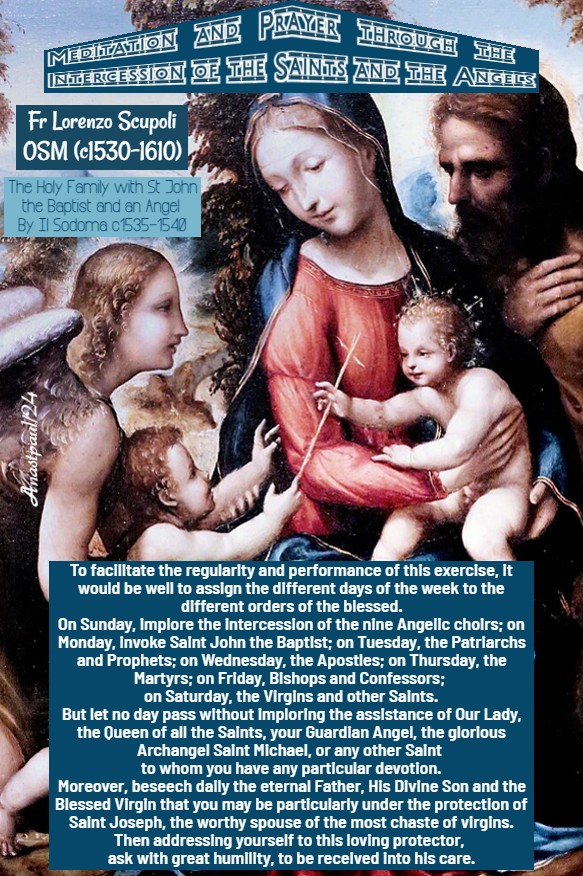
L: … Meditation and Prayer through the Intercession of the Saints and the Angels
“The TWO following METHODS of obtaining the protection of the Saints and Angels, maybe of great assistance.
The first method is to address yourself to the eternal Father, laying before Him the hymns of Heavenly choirs, the labours, persecutions and torments suffered by the Saints on earth for love of Him. Then, in recalling their fidelity and love, beseech Him to grant your petitions.
The second method is to invoke the Angels, those blessed spirits, earnestly desirous, not only of our earthly perfection but, of our greater Heavenly perfection. Earnestly beseech them to assist you in subduing your evil inclinations and conquering the enemies of your salvation and beg a particular remembrance at the hour of death.
Sometimes think over the extraordinary graces God has granted to the Saints and Angels and rejoice as if they had been bestowed upon yourself.– rather, let your joy be even greater, for His having bestowed such favours upon them, rather than upon yourself, for such was His Will and you should bless and praise God in the accomplishment of His Divine Plan.
To facilitate the regularity and performance of this exercise, it would be well to assign the different days of the week to the different orders of the blessed. On Sunday, implore the intercession of the nine Angelic choirs; on Monday, invoke Saint John the Baptist; on Tuesday, the Patriarchs and Prophets; on Wednesday, the Apostles; on Thursday, the Martyrs; on Friday, Bishops and Confessors; on Saturday, the Virgins and other Saints. But let no day pass without imploring the assistance of Our Lady, the Queen of all the Saints, your Guardian Angel, the glorious Archangel Saint Michael, or any other Saint to whom you have any particular devotion. Moreover, beseech daily the eternal Father, His Divine Son and the Blessed Virgin that you may be particularly under the protection of Saint Joseph, the worthy spouse of the most chaste of virgins. Then addressing yourself to this loving protector, ask with great humility, to be received into his care. For innumerable are the instances of assistance afforded to those who have called upon St Joseph in their spiritual or temporal necessities. Particularly, has he aided them when they stood in need of Light from Heaven and direction in their prayers.
And if God shows so much regard for the other Saints who have loved and served Him here below, how much consideration and deference will He not show, for the person He so honoured, as to pay him filial homage and obedience?”
Quote of the Day – 19 April – Within the Octave of the Solemnity of the Patronage of St Joseph
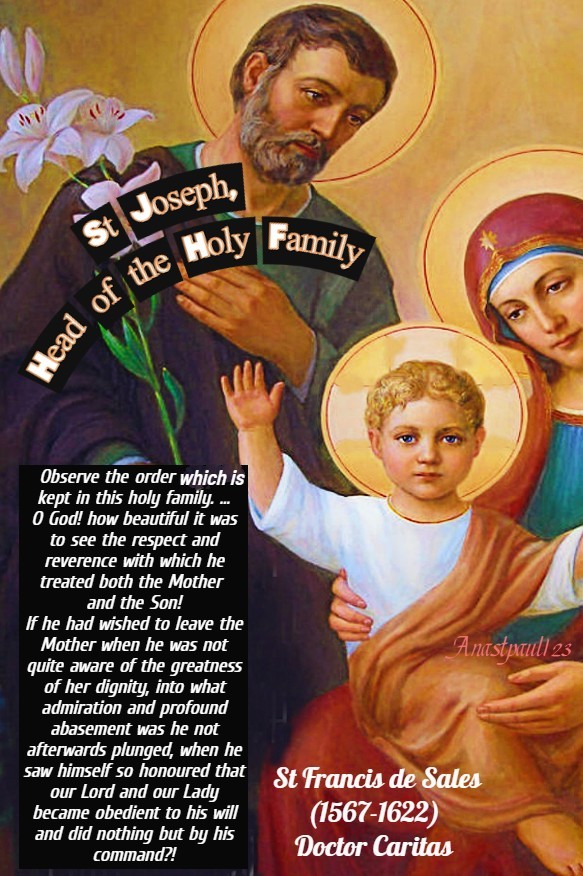
“Observe the order which is kept in this holy family. … O God! how beautiful it was to see the respect and reverence with which he treated both the Mother and the Son! If he had wished to leave the Mother when he was not quite aware of the greatness of her dignity, into what admiration and profound abasement was he not afterwards plunged, when he saw himself so honoured that our Lord and our Lady became obedient to his will and did nothing but by his command?!”
One Minute Reflection – 19 April – “The Month of the Resurrection and the Blessed Sacrament” – Within the Octave of the Solemnity of the Patronage of St Joseph – Genesis 49:22-26; Luke 3:21-23 – Scripture search here: https://www.drbo.org/
“And Jesus, Himself, was beginning about the age of thirty years, being – (as it was supposed) – the son of Joseph … ” – Luke 3:23
REFLECTION – “How faithful in humility was the great Saint we are celebrating! That cannot be said in all its perfection for, in spite of what he was, in what poverty and lowliness he lived, all the days of his life – a poverty and lowliness beneath which. he kept hidden and concealed, his great virtues and dignity! … Truly, I am free of doubt that the Angels came, beside themselves with admiration, rank upon rank, to behold and wonder at his humility, while he sheltered that dearest Child in the poor workshop where he worked at his employment, so as to feed the little Boy and the Mother entrusted to him.
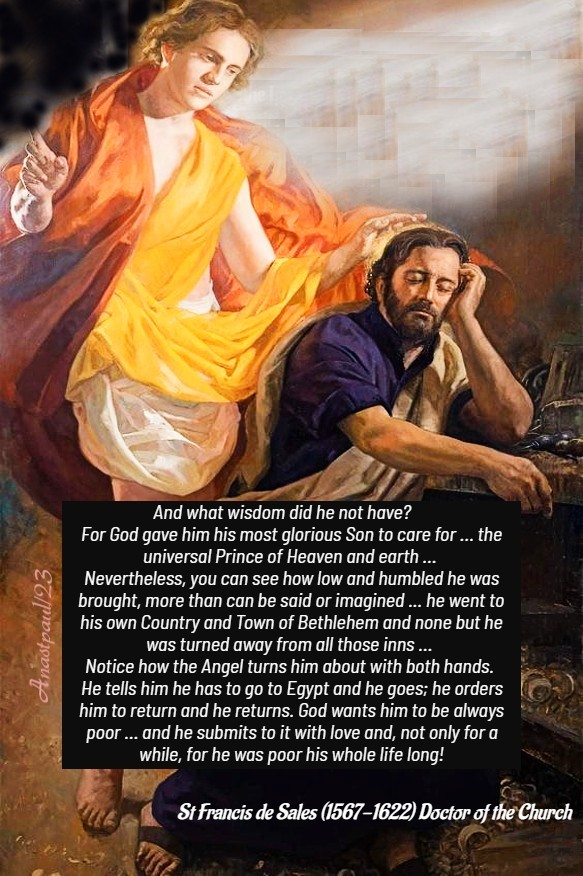
There is no doubt at all that St Joseph was braver than David and wiser that Solomon [who were his ancestors]. Nevertheless, seeing him reduced to the exercise of carpentry, who could have discerned this, unless they were enlightened by a heavenly light, so hidden did he keep the remarkable gifts with which God had favoured him? And what wisdom did he not have? For God gave him his most glorious Son to care for … the universal Prince of Heaven and earth … Nevertheless, you can see how low and humbled he was brought, more than can be said or imagined … he went to his own Country and Town of Bethlehem and none but he was turned away from all those inns … Notice how the Angel turns him about with both hands. He tells him he has to go to Egypt and he goes; he orders him to return and he returns. God wants him to be always poor … and he submits to it with love and, not only for a while, for he was poor his whole life long!” – St Francis de Sales (1567-1622) Bishop of Geneva and Doctor of the Church (Conferences No 20)
PRAYER – O God, Who in Thine unspeakable foreknowledge didst choose Thy blessed servant Joseph to be the husband of Thine Own most holy Mother; mercifully grant that now that he is in heaven with Thee, we ,who on earth, do reverence him for our Defender, may worthily be assisted by the succour of his prayers to Thee on our behalf. Who livest and reignest with God the Father, in the unity of the Holy Ghost, God, world without end. Amen (Collect)
Our Morning Offering – 19 April – Within the Octave of the Patronage of St Joseph
Glorious St Joseph! Prayer for the Intercession of St Joseph in All Our Needs By St Francis de Sales (1567-1622) Doctor Caritatis
Glorious St Joseph, Spouse of Mary, grant us thy paternal protection, we beseech thee, by the Heart of Jesus Christ. O thou, whose power extends to all our necessities and can render possible for us, the most impossible things. Open thy fatherly eyes to the needs of thy children. In the trouble and distress which afflicts us, we confidently have recourse to thee. Deign to take under thy charitable charge this important and difficult matter, cause of our worries. Make its happy outcome be for God’s glory and for the good of His devoted servants. Amen
Saint of the Day – 19 April – Saint Gerold of Saxony (c900-c978) Hermit. … Born in in Rhaetia, in the lower part of the Alps (part of modern Austria/Switzerland) and died on 16 April 978 of natural causes in Frisun, today the Town of St Gerold. Also known as – Gerold Graziato, Gerold of Einsiedeln, Gerold of Großwalsertal, Gerold of Grosswalsertal, Gerold of Vorarlberg, Adam… Geroldus…
On 1 January 949, Otto I returned to a certain Adam, involved in a conspiracy against the Sovereign and deprived him of his assets by judicial sentence, his possession which was located in present-day Vorarlberg. Otto calls Adam “vir Dei” in his act of 949 which allows us to deduce that this Adam, had consecrated himself to the service of God.
However, he is not designated as a Monk and, in Einsiedeln, tradition has never considered him such. The Einsiedeln Calendar does indeed name an Adam on 16 April but without defining him as a Monk. The tradition traced by the dean Albrecht von Bonstetten in 1494, narrates that the proscribed Adam took refuge in the solitude of the Wals Valley, where – in order not to be recognised – he lived under the name of Gerold Graziato, remained in solitude.
He donated his possessions to the Monastery of Einsiedeln and died around the year 978. The day of his death is placed on different dates. The obituary notices of Einsiedeln from the 10th Century, however, have an Adam on 16 April and the book of the anniversaries of Saint Gerold, dated to the 15th Century, indicates 19 April as the day on which his Feast is still celebrated today.
The place where Adam-Gerold lived, first called Frisun, appears in 1340 for the first time under the name of St Gerold. In Einsiedeln, the festival is celebrated on 19 April only after the exhumation of his bones which took place in 1663 and his Tomb is today preserved in the Monastery. When, in 1378, the suffragan Bishop of Chur consecrated the Altar of Saint Catherine to Saint Gerold, he granted an Indulgence for 4 June on the occasion of the commemoration of the blessed Gerolde – this proves that he was already venerated as a Saint then.
According to the tradition which makes Adam a Duke of Saxony (presumably because there is confusion with the old noble family of Sax, originally from Vorarlberg), he had two sons, Cuno (or also Chamo) and Ulrich (also called Henry), who by order of their father, became Monks of Einsiedeln. Cuno must have been dean and Ulrich custodian. After their father’s death, they both went to Frisun, where they died. Ulrich would have been buried in the provost’s Church, next to his father and Cuno in the Chapel of Saint Anthony ,next to the Church. However, there is no certain information about the two. In the Monastery, they were both venerated later (17th Century) as Blesseds, the Feast of Blessed Cuno on 8 March and that of Blessed Ulrich on 29 April.
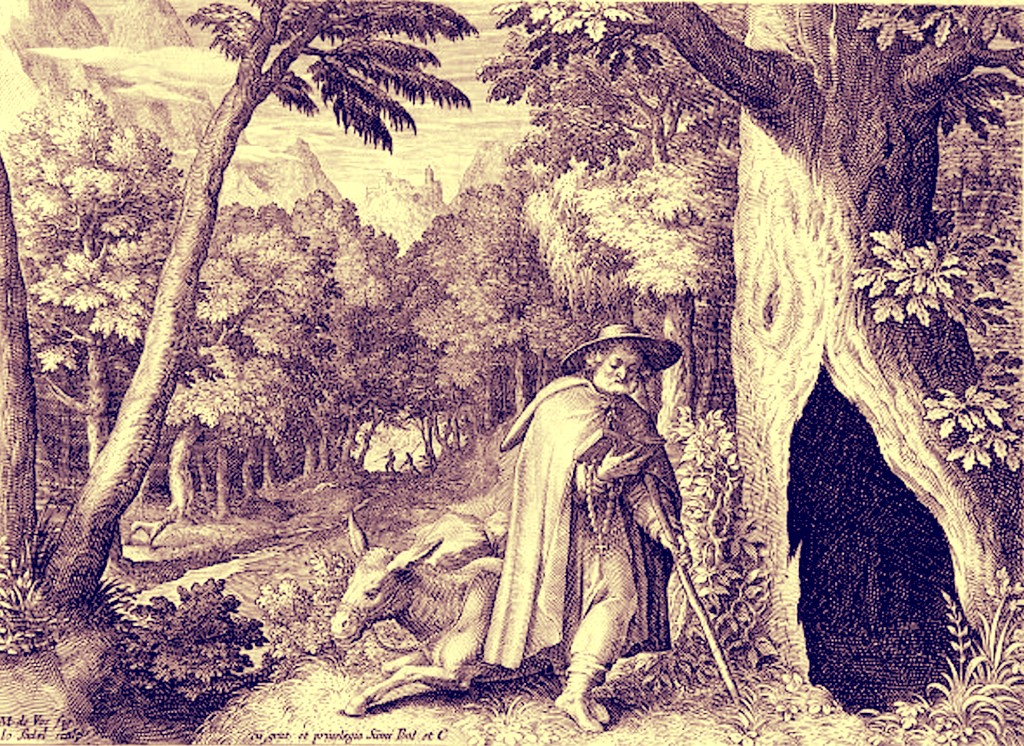
Saint Gerold is depicted as a pilgrim with a hat and staff, sometimes even with a donkey because the Saint vowed to settle where the donkey carrying all his possessions would kneel. Sometimes he is represented with a bear, who helped him in the construction of his cell. A cycle of paintings created around 1683, depicting the life of the Saint, is found in the Church of Frisun, while the painting of the main Altar (by Rodolfo Blaettler, 1877) shows him with his two sons.
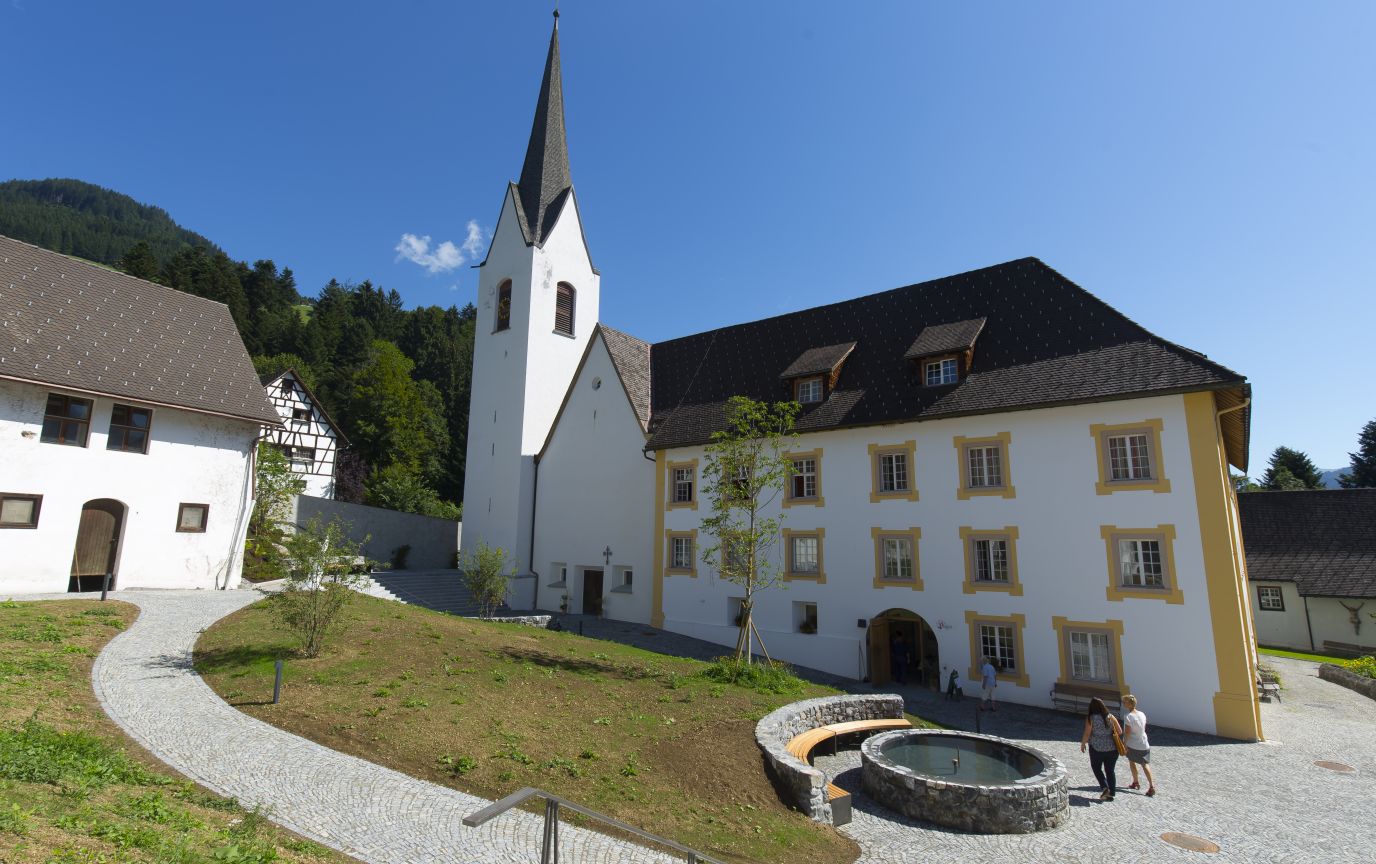
Statues in the provost’s house show the two sons as Monks and a 17th Century fresco in the Chapel of Saint Anthony represents the Blessed Cuno. Below is the Priory of St Gerold where these Statues reside although I can find no images of them.
St Apollonius the Priest St Aristonicus of Melitene
Blessed Bernard of Sithiu (Died 1182) Penitent, Pilgrim, Hermit. Patronages – of sinners, convicts, prisoners, penitents, pilgrims. The Roman Martyrology: “At the Monastery of Saint-Bertin in the territory of France in Thérouanne, lies the tomb of Blessed Bernard, penitent, who, eager to atone for the sins of his youth with an austere penitence, voluntarily chose exile and, barefooted, wearing rough garments, was a tireless pilgrim to the holy places.” Dear Blessed Bernard, pray for us!: https://anastpaul.com/2023/04/19/saint-of-the-day-19-april-blessed-bernard-of-sithiu-died-1182-layman-penitent/
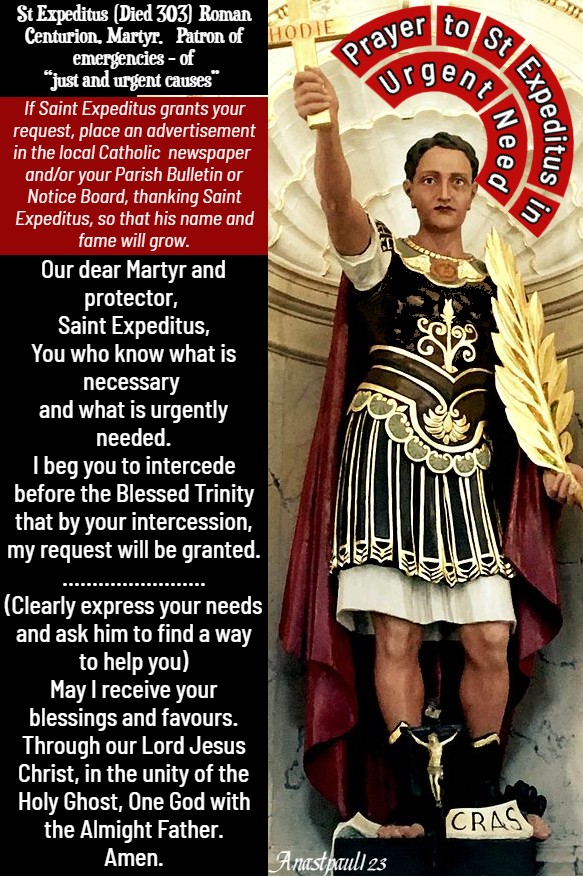
Our dear Martyr and protector, Saint Expeditus, You who know what is necessary and what is urgently needed. I beg you to intercede before the Blessed Trinity that by your intercession, my request will be granted. …………………… (Clearly express your needs and ask him to find a way to help you.) May I receive your blessings and favours. Through our Lord Jesus Christ, in the unity of the Holy Ghost, One God with the Almighty Father. Amen.
If Saint Expeditus grants your request, place an advertisement in the local Catholic newspaper and/or your Parish Bulletin or Notice Board, thanking Saint Expeditus, so that his name and fame will grow
St Gaius of Melitene St Galata of Melitene St George of Antioch St Gerold of Saxony (c900-c978)Hermit
St Pope Leo IX (1002-1054) known as “Apostolic Pilgrim” When the German Pope Damasus II died in 1048, Bishop Bruno was selected by the Emperor, Henry III, to succeed him. Bruno agreed to go to Rome and to accept the Papacy if freely elected thereto by the Roman people. He wished, at least, to rescue the See of Peter from its servitude to the German Emperors. When, in company with Hildebrand he reached Rome and presented himself to its people clad in pilgrim’s guise and barefooted but still tall and fair to look upon, they cried out with one voice that him and no other would they have as Pope. Assuming the name of Leo, he was solemnly enthronedon 12 February, 1049. Biography: https://anastpaul.wordpress.com/2018/04/19/saint-of-the-day-19-april-st-pope-leo-ix-1002-1954/
St Martha of Persia St Rufus of Melitene St Vincent of Collioure
Martyrs of Carthage – 17 Saints: A group of Christians Martyred in the persecutions of Decius. We know little more than the names – Aristo, Basso, Credula, Donato, Ereda, Eremio, Fermo, Fortunata, Fortunio, Frutto, Julia, Mappalicus, Martial, Paul, Venusto, Victorinus and Victor. Died in the year 250 in prison in Carthage, North Africa (modern Tunis, Tunisia).
Thought for the Day – 18 April – The Spiritual Combat (1589) – Dom Lorenzo Scupoli OSM (c1530-1610)
“None shall be crowned who has not fought well.” 2 Tim 2: 5
XLIX: … Considerations to Produce Confidence in the Assistance of the Blessed Virgin
“Whoever wishes to have recourse to the Blessed Virgin with confidence, must observe the following motives.
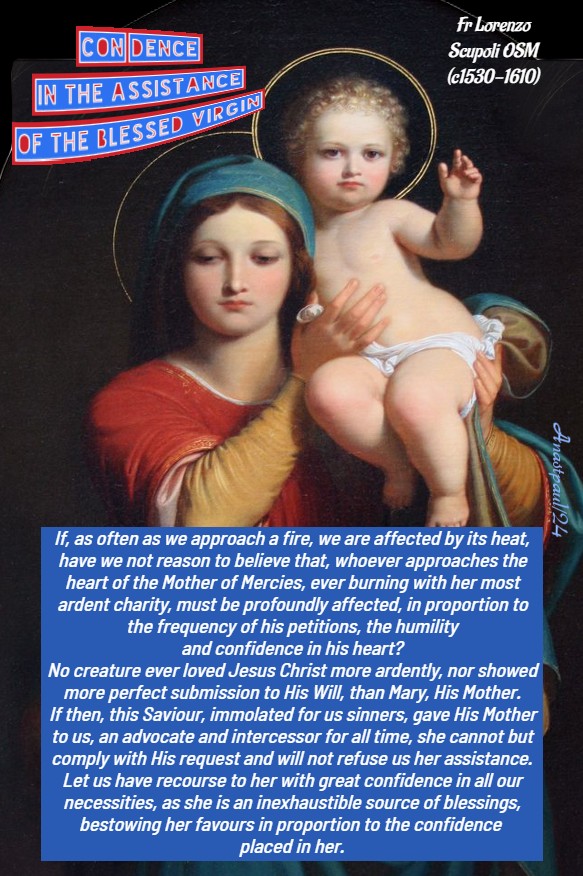
Experience teaches us that a vessel which has contained perfumes, preserves their odour, especially if the perfume is in the container for any length of time, or if any remains in it, yet here, there is but a limited power, similar to the warmth carried from a fire, the source of that warmth. If such be the case, what are we to say of the charity and compassion of the Blessed Virgin, who for nine months, bore, and still carries in her heart, the only Son of God, the uncreated charity which knows no bounds? If, as often as we approach a fire, we are affected by its heat, have we not reason to believe that, whoever approaches the heart of the Mother of Mercies, ever burning with her most ardent charity, must be profoundly affected, in proportion to the frequency of his petitions, the humility and confidence in his heart?
No creature ever loved Jesus Christ more ardently, nor showed more perfect submission to His Will, than Mary, His Mother. If then, this Saviour, immolated for us sinners, gave His Mother to us, an advocate and intercessor for all time, she cannot but comply with His request and will not refuse us her assistance.
Let us, then, not hesitate to implore her pity. Let us have recourse to her with great confidence in all our necessities, as she is an inexhaustible source of blessings, bestowing her favours in proportion to the confidence placed in her.”
Quote/s of the Day – 18 April – Within the Octave of the Patronage of St Joseph
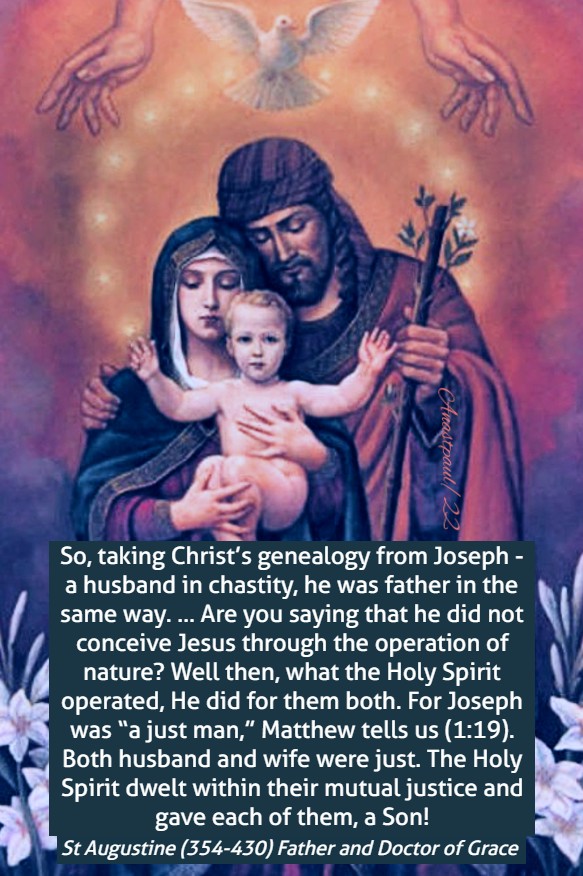
“So, taking Christ’s genealogy from Joseph – a husband in chastity, he was father in the same way. … Are you saying that he did not conceive Jesus through the operation of nature? Well then, what the Holy Spirit operated, He did for them both. For Joseph was “a just man,” Matthew tells us (1:19). Both husband and wife were just. The Holy Spirit dwelt within their mutual justice and gave each of them, a Son!”
St Augustine (354-430) Father and Doctor of Grace
“God, to Whom Angels submit themselves and Who Principalities and Powers obey, was subject to Mary and not only to Mary but Joseph too, for Mary’s sake … God obeyed a human creature; this is humility without precedent. A human creature commands God! it is sublime beyond measure!
St Bernard (1090-1153) Father & Mellifluous Doctor of the Church
“Since God could choose for the Guardian of His Son, the man in the world, the most accomplished in all sorts of perfections, according to the dignity and excellence of his Charge, Who was His most Glorious Son, the universal Prince of Heaven and earth, how could it be that being able, He did not will it and did not do it? There is, then, NO DOUBT that St Joseph was endowed with all the graces and all the gifts that were required for the care which the Eternal Father willed to give him, of the temporal and domestic economy of our Lord and of the guidance of his family … ”
One Minute Reflection – 18 April – “The Month of the Resurrection and the Blessed Sacrament” – Within the Octave of the Patronage of St Joseph – Genesis 49:22-26; … Luke 3:21-23 – Scripture search here: https://www.drbo.org/
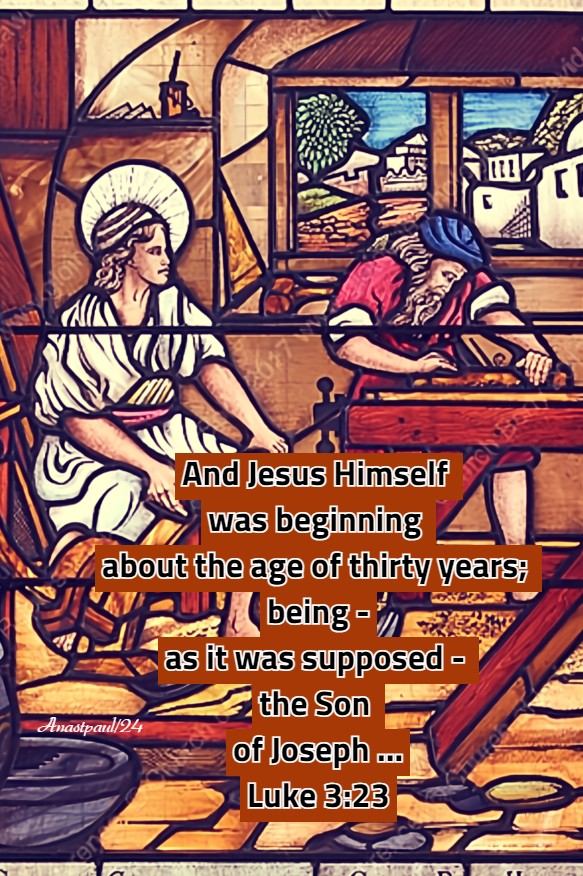
“And Jesus, Himself, was beginning about the age of thirty years, being – (as it was supposed) – the Son of Joseph … ” – Luke 3:23
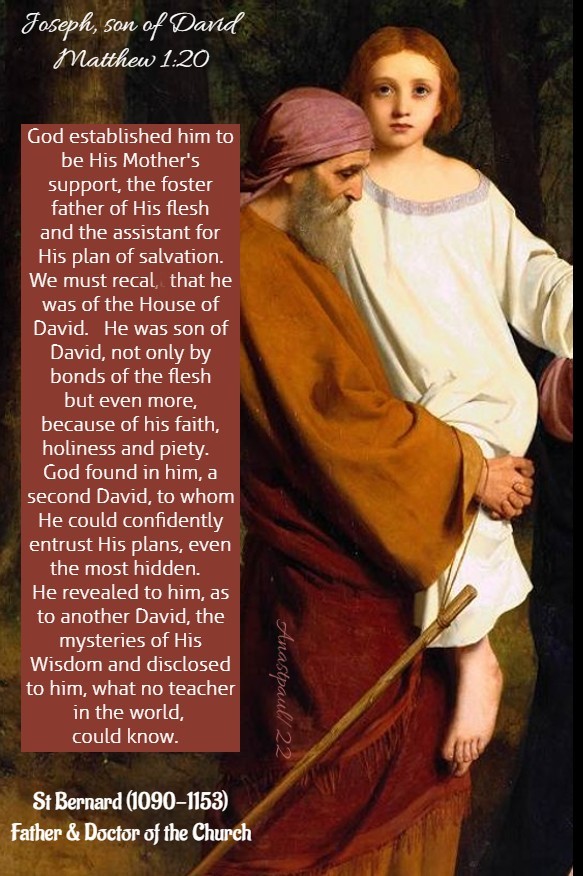
REFLECTION – “There is no doubt that Joseph was a very holy and trustworthy man, since the Mother of the Saviour was to be his wife. He was the “faithful and prudent servant” (Mt 24:45), for God established him to be His Mother’s support, the foster father of His flesh and the assistant for His plan of salvation.
We must recall, that he was of the House of David. He was son of David, not only by bonds of the flesh but even more because of his faith, holiness and piety. God found in him, a second David, to whom He could confidently entrust His plans, even the most hidden. He revealed to him, as to another David, the Mysteries of His Wisdom and disclosed to him, what no teacher in the world, could know. He allowed him to see and listen, to things that so many Kings and Prophets had wished to see and hear but which,, in spite of their desire, they had not been able to see or to hear (Mt 13:7), even more, He made him carry and guide, embrace, nurture and protect Him. Both Mary and Joseph belonged to David’s race; in Mary was fulfilled the promise once made by the Lord to David, while Joseph was the witness of this fulfilment.” – St Bernard (1090-1153) (Surname de Fontaine) Priest, Cistercian Monk, The Last Father and Doctor Mellifluus (Mellifluous Doctor) (Homily on the “Missus est”, 2, 16).
RRAYER – O God, Who in thine unspeakable foreknowledge didst choose Thy blessed servant Joseph, to be the husband of Thine Own most holy Mother; mercifully grant that now that he is in Heaven with Thee, we who on earth do reverence him for our Defender, may worthily be helped by the succour of his prayers to Thee on our behalf. Through the same Jesus Christ, Thy Son our Lord, Who lives and reigns with Thee, in the unity of the Holy Ghost, God, world without end. Amen (Collect).






























 AnaStpaul
You must be logged in to post a comment.