Thought for the Day – 14 July – Meditations with Antonio Cardinal Bacci (1881-1971)
Everlasting Salvation
“We should not be discouraged because our salvation requires so many sacrifices on our part. Jesus warned us that it would have to be so. “How narrow the gate and close the way that leads to life” (Mt 7:14). “The Kingdom of Heaven has been enduring violent assault and, the violent have been seizing it by force” (Mt 11:12). “If anyone wishes to come after Me, let him deny himself and take up his cross daily and follow Me” (Lk 9:23).
All this is required for salvation and anyone who is not prepared to meet these demands, cannot gain everlasting happiness. Nevertheless, there is no need for despondency. What is difficult for man is easy for God. If we ask God for His grace and co-operate generously with it, we shall be saved.
Quote/s of the Day – 14 July – “The Month of the Most Precious Blood of Jesus” – St Bonaventure OFM (1221-1274) Seraphic Doctor of the Church
“He is the origin of all wisdom. The Word of God in the heights, is the source of wisdom. Christ is the source of all true knowledge, for He is “the way, the truth and the life.” (Jn 14:6). … As way, Christ is the teacher and origin of knowledge … Without this Light, which is Christ, no-one can penetrate the secrets of faith.”
“… One of the soldiers opened His side with a lance and immediately there came forth blood and water. ” John 19:34
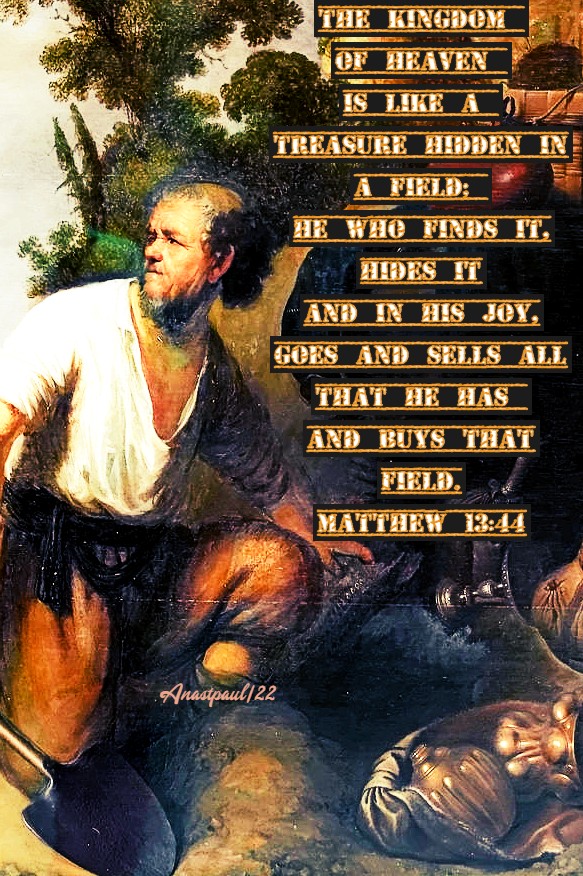
“Let us draw near to the Heart of our most sweet Lord Jesus and we shall be glad and rejoice in it. How good and how sweet it is to dwell in this Heart! This is the hidden treasure, the pearl of great price which we discover, O Jesus, when we dig in the field of Thy Body (cf Mt 13:44). Who, then, would cast aside this Pearl? Far from it! For It, I will give away all my goods and offer in exchange, all my concerns and affections. I will lay down all my cares in the Heart of Jesus, it is He Who will suffice for me and Who will, without fail, supply all I need to live on!”
O Holy Lord By St Bonaventure (1217-1274) Seraphic Doctor of the Church
O Holy Lord, Father Almighty, everlasting God, for the sake of Your bounty and that of Your Son, Who for me, endured suffering and death; for the sake of the most excellent holiness of His Mother and the merits of all His Saints, grant unto me, a sinner, unworthy of Your blessings, that I may love You only, may ever thirst for Your love, may have continually in my heart the benefits of Your Passion, may acknowledge my own wretchedness and, may desire to be trampled upon and to be despised by all men. Let nothing grieve me, save my guilt. Amen
Mother of Mercy By St Bonaventure (1217-1274) Seraphic Doctor
Virgin full of goodness, Mother of Mercy, I entrust to you my body and soul, my thoughts, my actions, my life and my death. O my Queen, help me, and deliver me from all the snares of the devil. Obtain for me the grace of loving my Lord Jesus Christ, your Son, with a true and perfect love, and after him, O Mary, to love you with all my heart and above all things. Amen
One Minute Reflection – 14 July – “The Month of the Most Precious Blood of Jesus” – St Bonaventure OFM (1221-1274) Seraphic Doctor of the Church – 2 Timothy 4:1-8, Matthew 5:13-19 – Scripture search here: https://www.drbo.org/
“You are the light of the world.” – Matthew 5:14
REFLECTION – “I shall always love and reverence the Apostles sent by Christ and their successors, in sowing the seed of the Gospel, those zealous and tireless co-operators in propagating the Word, who may justly say of themselves: Let a man so account of us as the ministers of Christ and the dispensers of the mysteries of God. For Christ, like a most watchful and most faithful householder, wished that the Gospel lamp should be lighted by such ministers and delegates, with fire sent down from Heaven and once lighted, should not be put under a measure but set upon a candlestick, so that it may spread its brightness far and wide and put to flight, all darkness and error, rife among both Jews and Gentiles.
Now it is not enough for the Gospel teacher to be a brilliant speaker in the eyes of the people; he must also be as a voice crying in the desert and endeavour, by his eloquence, to help many to lead good lives, lest, if he omit his duty of speaking, he be called the dumb dog that is not able to bark, spoken of by the prophet. Yes, he should also burn, in such a way, that, equipped with good works and love, he may adorn his evangelical office and follow the leadership of Paul. He indeed, was not satisfied with bidding the Bishop of the Ephesians: Thus command and teach: conduct thyself in work as a good soldier of Christ Jesus but he unflaggingly preached the Gospel to friend and foe alike and, said with a good conscience to the Bishops gathered at Ephesus: You know how I have kept back nothing that was for your good but have declared it to you and taught you in public and from house to house, urging Jews and Gentiles to turn to God in repentance and to believe in our Lord Jesus Christ.
Such should be the shepherd in the Church who, like Paul, becomes all things to all men, so that the sick may find healing in him; the sad, joy; the desperate, hope; the ignorant, instruction; those in doubt, advice; the penitent, forgiveness and comfort and finally, everyone, whatever is necessary for salvation. And so Christ, when He wished to appoint the chief teachers of the world and of the Church, did not limit Himself to saying to His disciples: You are the light of the world but also added these words: A city seated on a mountain cannot be hid. Neither do men light a candle and put it under a measure but upon a candlestick, that it may shine to all who are in the house. Those churchmen err, who imagine that it is by brilliant preaching, rather than by holiness of and all-embracing love, they fulfil their office.” – St Peter Canisius SJ (1521-1597) Doctor of the Church (Sermon excerpt).
PRAYER – O God, Who gave to Thy people, blessed Bonaventure, as a minister of salvation, grant, we beseech Thee, that we who cherished him on earth as a teacher of life, may be found worthy to have him as an intercessor in heaven. Through the same Jesus Christ, Thy Son our Lord, Who lives and reigns with Thee, in the unity of the Holy Ghost, God, world without end. Amen (Collect).
Our Morning Offering – 14 July – “The Month of the Most Precious Blood of Jesus,” The Friday Devotion of the Passion and Feast of St Bonaventure OFM (1221-1274) Seraphic Doctor of the Church
To Our Lady of Sorrows By St Bonaventure (1217-1274) Seraphic Doctor of the Church
O most holy Virgin, Mother of Our Lord Jesus Christ, by the overwhelming grief you experienced when you witnessed the Martyrdom, the Crucifixion and the Death, of your Divine Son, look upon me, with eyes of compassion and awaken in my heart, a tender commiseration for those sufferings and a sincere detestation of my sins, in order that, being disengaged from all undue affection for the passing joys of this earth, I may sigh after the eternal Jerusalem and that, henceforward, all my thoughts and all my actions may be directed towards this one most desirable object, the honour, glory and love of our divine Lord Jesus, and to you, the Holy and Immaculate Mother of God. Amen.
Saint of the Day – 14 July – St Bonaventure (1221-1274) – Seraphic Doctor of the Church, Confessor, Friar of the Friars Minor Order of St Francis, Bishop, Cardinal, Theologian, Philosopher, Writer, Mystic, Preacher, Teacher. One of the eaqrly Biographers of St Francis.
St Bonaventure (1221-1274) Bishop and Cardinal, Doctor of the Church By Fr Francis Xavier Weninger SJ (1805-1888)
Practical Lessons on the life of this great Doctor
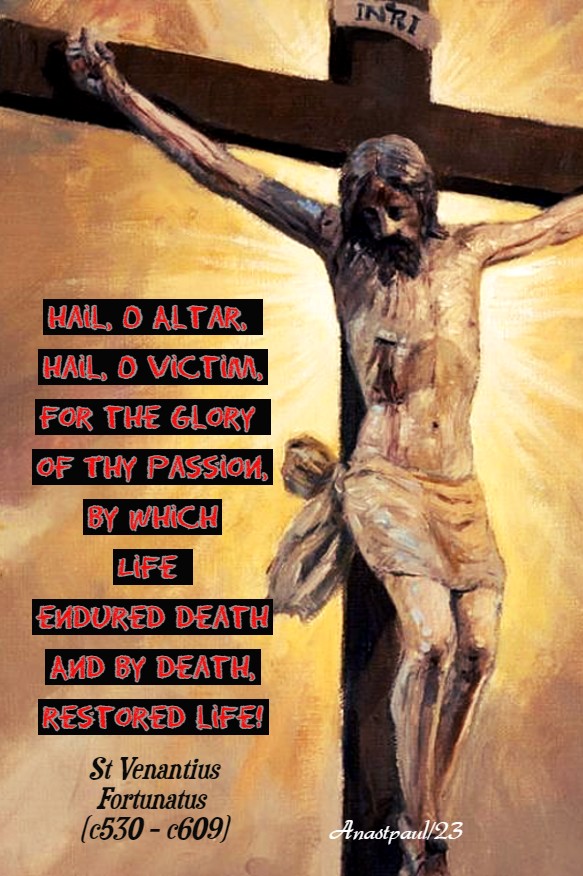
I. THE LOVE AND DEVOTION OF ST BONAVENTURE to the Passion and Death of our Lord, was great beyond description. He meditated upon them daily. The Crucifix was continually before his eyes and before it, he said his prayers, either prostrate on the ground or on bended knees.
I hope that you are not among those who are ashamed to keep an image of Christ in their room! – As in that case, I must remind you of the saying of our Lord, that, on the Judgement-day, He will be ashamed of those,, who on earth, are ashamed of Him. I will suppose, therefore, that you have a Crucifix in your room but why do you so seldom prostrate yourself before it? Why do you so seldom meditate on the Passion and Death of the Saviour? Is this a sign of love and gratitude towards Him? If any human being had suffered, for love of you, only half what Christ the Lord suffered, or, if he perhaps had died to save you from death, how would you feel towards him? And why have you not the same feelings towards your Redeemer?
Endeavour, at least, to show greater love for Him in future. Let no day pass without praying before the Crucifix, raise your eyes to it sometimes during the day and manifest, by short prayers and pious ejaculations, your love and devotion towards your suffering Saviour, for example: “With my whole heart I love Thee, O Jesus and, it is bitter grief to me that I have offended Thee, O merciful God!” Or “Cleanse my soul with Thy Precious Blood.” Or, “Jesus Christ, Who didst die for me upon the Cross, have mercy on me!”
II. ST BONAVENTURE VERY SELDOM received Holy Communion or said Mass, without shedding tears. Love to the Saviour in the most Holy Sacrament thus moved his heart.
How great is your devotion and love for the Blessed Sacrament, especially at the times when you receive it? How much time do you give to prayer before and after Holy Communion? Do you purify your soul from every stain by a sincere Confession? Do you adorn it with virtues that it may be a worthy dwelling for so great a Guest, as the only Son of the Almighty? Do you appear with due reverence at the table of the Lord? How much time do you give to thanksgiving after your dear Saviour has come to you and what is your devotion during the same? Examine yourself on these points and correct yourself where you have been negligent.
Before all things, however, take care that you never receive your Lord while in mortal sin, “For” says St James of Nisibis (Died 338) “this is a crime that cannot be excused,” a crime, the wickedness of which is so great, that it deserves no pardon, when committed voluntarily, as it offends Christ our Lord above all others. You know, you believe that He Whom you receive is not only your Saviour but also your Judge, Who has power to condemn you. Before Him you will soon appear to receive your sentence for all Eternity. How dare you, therefore, receive Him unworthily, when you know that you thus draw upon yourself, the wrath of your Judge and render yourself deserving of everlasting punishment?! Is there any crime, any blasphemy, which can be compared with this? And does there exist a punishment great enough to atone for so horrible an offence towards our dear Lord? “Woe to him, eternal woe, who dares to go unworthily to the table of the Lord,” says the Venerable Bede.
“Judas, the traitor, was the first to go to Holy Communion in mortal sin. What happened to him is known to you. At the moment he committed the Sacrilege, the devil took possession of him and incited him to betray his Lord. Guard yourself that you may not imitate his wickedness! otherwise, you will receive the same punishment. Let no one dare to approach the table of the Lord like Judas,” says St John. Chrysostom.
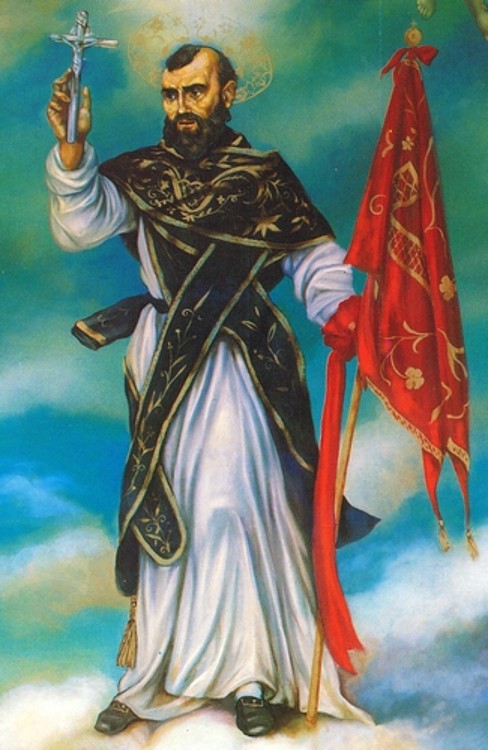
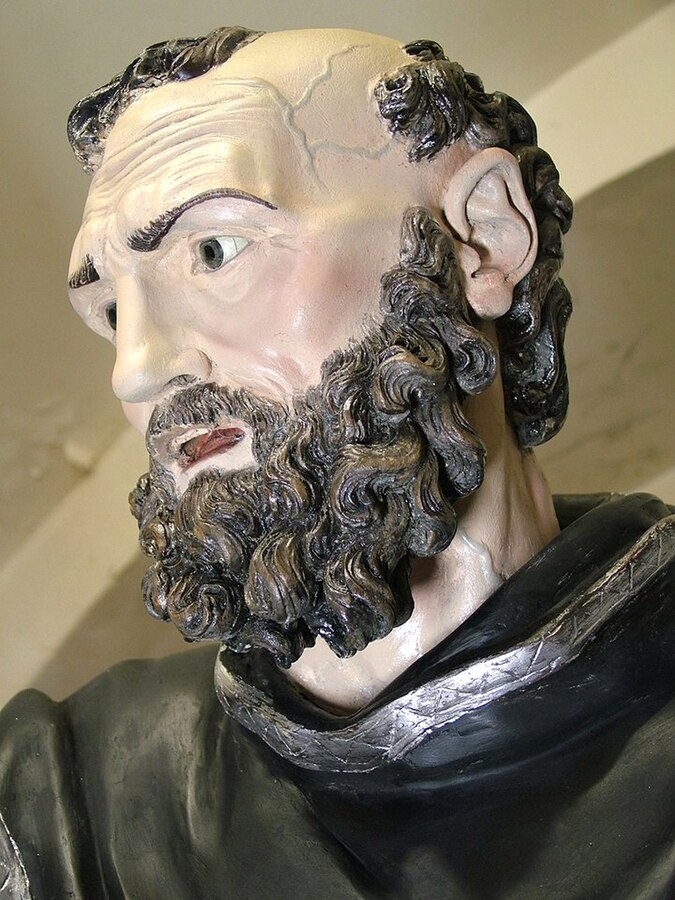
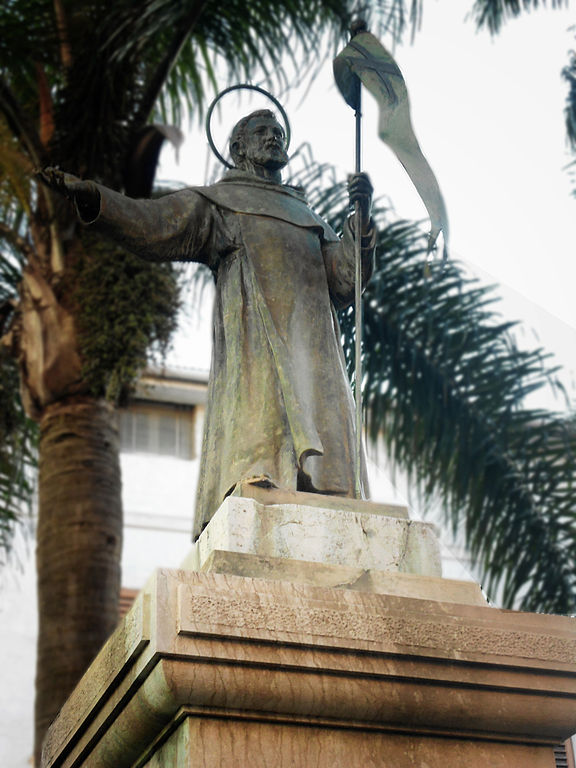
Blessed Gaspar de Bono OM (1530– 1604) Spanish Priest, Friar of the Order of Minims, Vicar Provincial of the Order. He was noted for his particular devotion to the Passion of Christ, carrying his Crucifix everywhere as a means of evangelisation and to be able to constantly immerse himself in his Saviour’s sufferings. His Loving Life: https://anastpaul.com/2021/07/14/saint-of-the-day-14-july-blessed-gaspar-de-bono-om-1530-1604/
Bl Giorgio of Lauria Bl Hroznata of Bohemia Bl Humberto of Romans St Idus of Ath Fadha St Just St Justus of Rome St Liebert St Marciano of Frigento St Marchelm Bl Michael Ghebre St Optatian of Brescia St Papias of Africa Bl Richard Langhorne Bl Toscana of Verona St Ulric of Zell St Vincent Madelgaire
Thought for the Day – 13 July – Meditations with Antonio Cardinal Bacci (1881-1971)
Accepting the Will of God
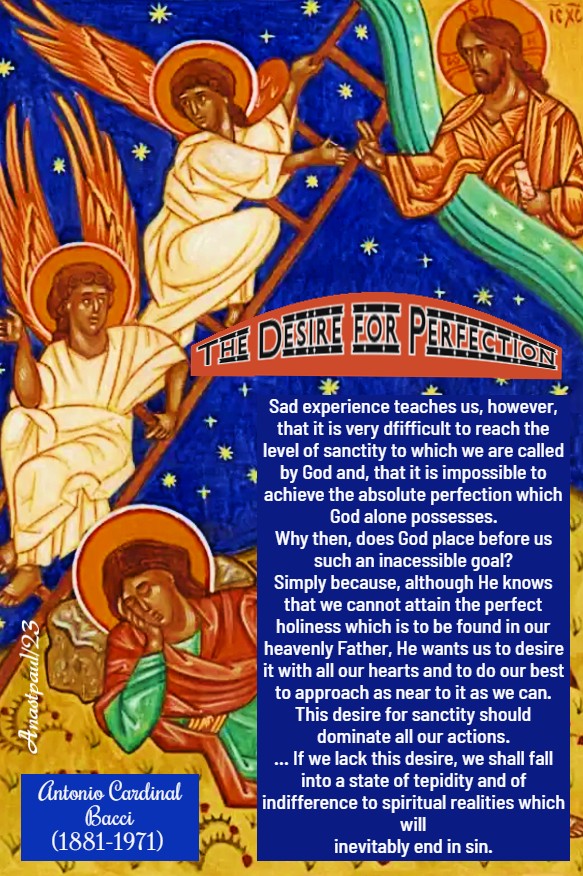
“Let us pray fervently to God for spiritual peace. Let us surrender ourselves to His Will and accept everything from His Hands, remembering that everything, joy and sorrow, sickness and health, temptation and spiritual consolation, should form a mystical ladder which will gradually bring us nearer to Heaven and finally unite us to God for evermore. Everything passes but God is unchangeable.
Sufferings have to end but the merits we gain remain, if we have offered our afflictions to God. Let us surrender ourselves completely into the hands of God, Who in His goodness, gives us some happiness on earth for our consolation and causes us to suffer, so that we may be purified and made holy.”
Quote/s of the Day – 13 July – “The Month of the Most Precious Blood of Jesus” – 1 Petet 5:1-4; 5:10-11, Matthew 16:13-19 – Scripture search here: https://www.drbo.org/
“Thou art the Christ, the Son of the living God.”
Matthew 16:16
“Hide me then in the day of evil, O Lord, in the secret place of Thy tabernacle, in the hidden recesses of Thy Face, “far from the strife of tongues” (Ps 26:5; 30:21), for Thy yoke is easy and the burden Thou hast laid on me is light (Mt 11:30). And when Thou show me the difference between Thy service and the service of the world, gently and tenderly Thou asks me if it is not better to serve Thee, the living God, than to serve strange gods (Cf 2 Chron 12:8). And I, for my part, adore the hand that lays the load, I kiss the yoke and I embrace the burden and it is very sweet to me to sweat beneath its weight. For masters other than Thee, have long possessed me… I acknowledge Thy yoke and Thy light burden which lifts me up and does not crush me down. …”
William of St Thierry O.Cist (c1075 – c1148)
“It is an old custom with the servants of God, always to have some little prayers ready and to be darting them up to Heaven frequently during the day, lifting their minds to God out of the filth of this world. He who adopts this plan, will get great fruit, with little pains.”
St Philip Neri (1515-1595)
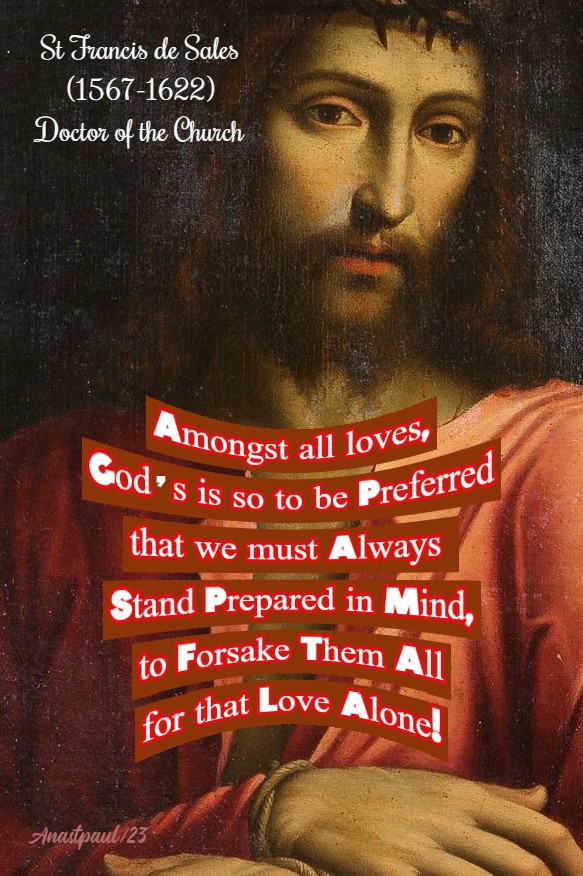
“Amongst all loves, God’s is so to be preferred that we must always stand prepared in mind, to forsake them all for that alone!”
(Treatise on the Love of God, Book 10, Chapter 7)
“Let us always belong to God, unreservedly and without interruption. May He ever live and reign in our hearts.”
(Letter to Madame de Chantal)
“He who most loves, will be most loved.”
St Francis de Sales (1567-1622) Doctor of the Church
One Minute Reflection – 13 July – “The Month of the Most Precious Blood of Jesus” – St Anacletus (c25-c89) 3rd Bishop of Rome and Martyr – 1 Petet 5:1-4; 5:10-11, Matthew 16:13-19 – Scripture search here: https://www.drbo.org/
“Upon this rock I will build My Church and the gates of hell shall not prevail against it. I will give you the keys of the Kingdom of Heaven and whatever you bind on earth shall be bound in Heaven and, whatever you loose on earth, shall be loosed in Heaven.” … Matthew 16:18-19
REFLECTION – “Peter was to receive on deposit, the keys of the Church, or rather the keys of Heaven and, he should see himself entrusted with the numerous people. What did the Lord actually say to him? “Whatever you bind on earth shall be bound in Heaven and whatever you loose on earth shall be loosed in Heaven” (Mt 16:19). For Peter had a somewhat abrupt character; if he had been without sin what sort of forgiveness would the disciples have received from him? This is why Divine Grace allowed him to fall into a certain fault, in order that his own trial should make him benevolent towards others. Do you see how God can let someone fall into sin; this Peter, the leader of the Apostles, the unshakable foundation, indestructible rock, first in the Church, impregnable harbour, unshakable tower — this same Peter, who had said to Christ: “Even though I should have to die with Thee, I will not deny Thee” (Mt 26:35), Peter who, by a divine revelation, had confessed the truth: “Thou are the Christ, the Son of the Living God” (Mt 16:16). … But as I said, God arranged it in this way and allowed Peter to sin because He had it in mind, to confer numerous people upon him and He feared, that his roughness, joined to his impeccability, might make him unsympathetic towards his brothers. He gave way to sin so that, remembering his own failure and the kindness of the Lord, he might testify to others, a grace of philanthropy in accord with the divine design conceived by God. The fall had been permitted to the one who was going to see himself entrusted with the Church, the Pillar of the Church, the Harbour of the Faith; the fall had been permitted to Peter, the Doctor of the Universe, in order that, the forgiveness received, might remain the foundation of love for others.” – (Attr) St John Chrysostom (347-407) Bishop of Constantinople, Father and Doctor of the Church (On the Apostle Peter and the Prophet Elijah).
PRAYER – Look forgivingly on thy flock, Eternal Shepherd, and keep it in thy constant protection, by the intercession of blessed Anacletus thy Martyr and Sovereign Pontiff, whom thou didst constitute Shepherd of the whole Church.Through the same Jesus Christ, Thy Son our Lord, Who lives and reigns with Thee, in the unity of the Holy Ghost, God, world without end. Amen (Collect).
Our Morning Offering – 13 July – “The Month of the Most Precious Blood of Jesus”
By the Merit of the Precious Blood of Jesus By Pope Pius VII (1742-1823) Papacy from 1800 to 1823 Indulgenced Act of Oblation to Our Father
Eternal Father! I offer Thee the merit of the Precious Blood of Jesus, Thy well-beloved Son, my Saviour and my God, for all my wants, spiritual and temporal, in aid of the Holy Souls in Purgatory and chiefly for those who most loved this Precious Blood, the price of our redemption and who were most devout to the sorrows and pains of most Holy Mary, our dear Mother.
Glory be to the Blood of Jesus, now and forever and throughout all ages. Amen.
Indulgence of 300 days, each time this prayed is offered 22 September 1817 with a Plenary Indulgence, once a month, under the usual conditions.
Note: On 15 August 1811 – the Feast of the Assumption – it is recorded that the Pope. Pius VII, celebrated Mass and was said to have entered a trance and began to levitate in a manner which drew him to the aAtar. This particular episode aroused great wonder and awe among participants which included the French Soldiers guarding him, who were ingreat wonder and awestruck disbelief, at the miraculous incident which had occurred. There is a Cause in progress and Pope Pius VII has since been elected as the Patron of the Diocese of Savona and the Patron of prisoners.
Saint of the Day – 13 July – Saint Turian (Died c750) French Abbot and Confessor, Bishop of Dol, Born in Brittany, France and died in c750 of natural causes. Also known as – Turiaf, Thivisiau, Tuien, Turiav, Turiave, Turiavus, Turien, Turiano, Turiavo, Turian of Dol.
The Roman Martyrology reads today: “In Bretagne, St Turian, Bishop and Confessor, a man of admirable simplicity and innocence.”
Turian was born in Brittany to French nobility in the Diocess of Vannes, in the neighbourhood of the Abbey of Ballon.
At a young age, Turian entered the Monastery at Dol where he was instructed in piety and learning and promoted to Holy Orders by Saint Thiarmail.
The then Bishop of Dol, St Samson, appointed him his vicar and and at his death, probably in 733, our Saint was placed in that Episcopal Seat.
Admirable was the austerity of his life, his zeal, his charity, his watchfulness, his fervour in prayer and his firmness in maintaining discipline.
A powerful lord named Rivallon having committed many acts of violence, the Bishop went to his castle at Lanncafrut and by his strong remonstrances made him sensible of the enormity of his crimes. By the Bishop’s injunction, Rivallon underwent a canonical penance for seven years and repaired all injustices and oppressions by a sevenfold satisfaction.
The Crucifix in the St Turian’s Church Square
Saint Turian died on the 13th of July, probably about the year 750, although even the year is not certain. In the wars of the Normans, Turian’s Relics were brought to Paris and are still kept in the Abbey of Saint Germain-des-Prez. The new Paris Breviary mentions that dreadful fires have been sometimes miraculously extinguished by our Saints intercession wrought by prayer at the Shrine of his Relics.
There is a Town name for him wherein the Parish Church of St Turian resides.
Bl Anne-Andrée Minutte St Arno of Würzburg Bl Berthold of Scheide St Dogfan Bl Élisabeth Verchière St Esdras the Prophet St Eugene of Carthage St Giustina of Arzano
St Iosephus Wang Kuiju
Blessed James of Voragine OP (c1226 – 3 or 16 July 1298) Italian Archbishop of Genoa, Author of the ‘Golden Legend’ (a collection of lives of Saints and treatises on Christian festivals, one of the most popular religious works of the Middle Ages and is still published and referred to today – completed 1265), Priest and Friar of the Order of Preachers of St Dominic, Writer, Scholar of great genius, Prior and Provincial General of the Order. Blessed James was Beatified on 11 May 1816 by Pope Pius VII. Biography: https://anastpaul.com/2021/07/13/saint-of-the-day-13-july-blessed-james-of-voragine-op-c-1226-1298-author-of-the-golden-legend/
Bl Jean of France St Joel the Prophet Bl Marie-Anastasie de Roquard Bl Marie-Anne Depeyre Bl Marie-Anne Lambert
St Muritta of Carthage St Myrope St Salutaris of Carthage St Sarra of Egypt St Serapion of Alexandria Serapion of Macedonia St Silas (1st Century) Disciple of Sts Paul and Barnabas Bl Thérèse-Henriette Faurie Bl Thomas Tunstal St Turian (Died c750) French Abbot and Bishop
Martyrs of Cyprus – 300 Saints: 300 Christians who retired to Cyprus to live as cave Hermits, devoting themselves to prayer and an ascetic life devoted to God. Tortured and Martyred for their faith and their bodies thrown into the various caves in which they had lived. We know the names of five of them but no other details even about them – Ammon, Choulélaios, Epaphroditus, Eusthénios and Héliophotos. They were beheaded in the 12th century on Cyprus and their bodies dumped in the cave where they had lived and only rediscovered long afterwards.
Martyrs of Philomelio – 31 Saints: 31 soldiers Martyred for their faith in the persecutions of prefect Magno, date unknown. The only name that has come down to us is Alexander. In Philomelio, Phrygia (in modern Turkey).
Thought for the Day – 12 July – Meditations with Antonio Cardinal Bacci (1881-1971)
The Grace of God
“It is astonishing to consider how much St Paul accomplished when he had been transformed by the grace of God. Formerly, a persecutor of Christians, he became the Apostle of the Gentiles. Enlightened by faith and inspired by charity, he travelled the globe, spreading everywhere, the religion of Jesus Christ.
He feared neither the anger of the hostile Jews, nor the tribunals of the Roman judges, neither long and difficult journeys, nor scourging, shipwreck and imprisonment. “The love of Christ impels us,” (2 Cor 5:14) he said. It was the love of God which drove him on and on, until he met his martyrdom. But what about ourselves? We also have received grace from God. Often we hear His voice appealing to us to abandon our sinful ways, to practise virtue, to love Him more ardently and to prove our love, by deeds. If we co-operate, we shall be able to say with St Paul: “by the grace of God, I am what I am and his grace in me has not been fruitless,” (1 Cor 15:10) and “I have laboured … yet, not I but the grace of God with me” (ibid).
It is wise to recall, however, that Judas also received special graces from God. He did not correspond with them and was probably damned for eternity. If we fail to correspond with God’s graces, the result will be tragic for ourselves.”
Quote/s of the Day – 12 July – “The Month of the Most Precious Blood of Jesus” – St John Gualbert (c985-1073) Abbot – Ecclesiasticus 45:1-6, Matthew 5:43-48 – Scripture search here: https://www.drbo.org/
“But I say to you, love your enemies …” Matthew 5:44
St John Gualbert said to his enemy, “I cannot refuse what you ask in Christ’s Name. I grant you your life and I give you my friendship. Pray that God may forgive me my sin.”
St John Gualbert (c985-1073) “The Merciful Knight”
“To the extent that you pray, with all your soul, for the person who slanders you, God will make the truth known to those who have been scandalised by the slander.”
St Maximus the Confessor (c 580–662)
“Remember the sufferings of Christ, the storms that were weathered… the crown that came from those sufferings which gave new radiance to the faith… All Saints give testimony to the truth that without real effort, no-one ever wins the crown.”
St Thomas à Becket (1118-1170) Martyr, Archbishop of Canterbury
“Above all, avoid false accusations and the distortion of truth regarding your neighbour.”
St Francis de Sales (1567-1622) Doctor of the Church
The Lord’s Prayer Jesus Matthew 6:9-13
Our Father who art in heaven, Hallowed be Thy name. Thy kingdom come. Thy will be done, On earth as it is in heaven. Give us this day our daily bread And forgive us our trespasses As we forgive those who trespass against us And lead us not into temptation but deliver us from evil. Amen
One Minute Reflection – 12 July – “The Month of the Most Precious Blood of Jesus” – St John Gualbert (c985-1073) Abbot – Ecclesiasticus 45:1-6, Matthew 5:43-48 – Scripture search here: https://www.drbo.org/
“But I say to you, Love your enemies …” Matthew 5:44
REFLECTION – “Let us pay attention, all my brothers, to what the Lord says: “Love your enemies and do good to those who hate you,” for our Lord Jesus Christ, Whose footprints we must follow (cf 1 Pt 2:21), called His betrayer “friend” (Mt 26:50) and gave Himself willingly to those who crucified Him. Our friends, then, are all those who, unjustly afflict upon us, trials and ordeals, shame and injuries, sorrows and torments, martyrdom and death! We must love them greatly for we will possess eternal life because of what they bring upon us.” – St Francis of Assisi (c1181-1226) Founder of the Friars Minor (Earlier Rule, #22).
PRAYER – May the intercession of the blessed Abbot John commend us to Thee, O Lord, so that through his merits we may obtain that which we cannot accomplish by our own. Through Jesus Christ, Thy Son our Lord, Who lives and reigns with Thee, in the unity of the Holy Ghost, God, world without end. Amen (Collect).Through the same Jesus Christ, Thy Son our Lord, Who lives and reigns with Thee, in the unity of the Holy Ghost, God, world without end. Amen (Collect).
Our Morning Offering – 12 July – “The Month of the Most Precious Blood of Jesus”
Grant Me Grace, O Merciful God Daily Prayer of St Thomas Aquinas (1225-1274) (Which he was accustomed to recite everyday before the image of Christ.) Doctor Angelicus & Doctor Communis
Grant me grace, O merciful God, to desire ardently all that is pleasing to Thee, to examine it prudently, to acknowledge it truthfully and to accomplish it perfectly, for the praise and glory of Thy Name. Amen
Saint of the Day – 12 July – Saint Leo of Cava (c990-1079) The second Abbot of the Abbey of La Trinità della Cava, Apostle of the poor and needy. Born in c990 in Lucca, Tuscany, Italy and died in 1079 at the Monastery of the Holy Trinity in La Cava de Tirreni at Salerno, Italy of natural causes.
The Roman Martyrology reads today: “In the Monastery of La Trinità della Cava in Campania, Saint Leo I, Abbot, who provided for the poor with the work of his own hands and defended them from the powerful.”
The apparition of the Virgin to St Leo
Leo. a native of Lucca, became one of the first disciples of St Alferius, the noble hermit from Salerno, while he was still living in his Arsicia cave, at the foot of Monte Finestra, today in the Municipality of Cava de ‘Tirreni.
The goodness, humility and piety which distinguished Leo, meant that the old hermit Alferius, wante him as his successor at the helm of the nascent Abbey of the Trinità di Cava, which he founded.
Leo governed the Monastery for almost thirty years, from 1050 to 1079, personally leading a very simple life’ The beginnings of his government as Abbot was troubled by the arrogance of a local Lord whose name is unknown, who even attacked the Monastery by taking the Abbot prisoner for a short time!
But Leo managed to gain the favour of the neighbouring Barons, who bestowed many donations on the Abbey of the Trinity. It is said of Leo that he often went to collect wood in the woods and then sold it in Salerno and, with the proceeds, he sought out the poor and the needy in the surrounding regions.
When he too became old, he entrusted the office of Abbot to St Peter of Pappacarbone but Leo had to resume governance of the Monastery to soften the Cluniac rigour established by Peter of Pappacarbone, which had aroused discontent among the Monks.
During his government, Pope Gregory VII solemnly confirmed the Ordo Cavensis.
He died on 12 July 1079 and was buried in the ‘Arsicia’ cave which is now incorporated into the Chapel of the Sainted Fathers, where the Relics of St Alferius and other Saints and blessed Abbots of the famous Abbey are enshrined.
In 1641, a new Altar and Mausoleum was erected in this Chapel. On 21 December 1893, the Church, through Pope Leo XIII, confirmed the cult of the first four Abbots: Saints Alferius, Leo, Peter I, Constabilis.
Bl Conrad of Maleville Bl David Gonson St Epiphana St Faustus the Soldier St Felix of Milan * Commemorated with St Nabor St Fortunatus of Aquileia (1st Century – Died c66) Deacon St Hermagorus of Aquileia (1st Century – Died c 66) Bishop, Disciple of St Mark the Evangelist Bl Guy Vignotelli St Hilarion of Ancyra St Jason of Tarsus Bl Jeanne-Marie de Romillon
St John the Georgian Bl Lambert of Cîteaux St Leo of Cava (Died 1079) The second Abbot of the Abbey of La Trinità della Cava Bl Madeleine-Thérèse Talieu Bl Marguerite-Eléonore de Justamond Bl Marie Cluse St Menas the Soldier St Menulphus of Quimper St Nabor of Milan * Commemorated with St Felix St Paternian of Bologna St Paulinus of Antioch St Phêrô Khan St Proclus of Ancyra St Proculus of Bologna St Uguzo of Carvagna St Ultán
St Viventiolus of Lyons
Three Holy Exiles: Three Christian men who became Benedictine Monks at the Saint James Abbey in Regensburg, Germany, then Hermits at Griestatten and whose lives and piety are celebrated together. – Marinus, Vimius and Zimius.
Martyrs of Rome – Four members of the Imperial Roman nobility. They were all soldiers, one or more may have been officers, and all were Martyred in the persecutions of Diocletian – Basilides, Cyrinus, Nabor and Nazarius. Died in c 304 outside Rome, Italy and were buried there along the Aurelian Way.
Martyrs of Nagasaki – 8 Beati: Additional Memorial – 10 September as one of the 205 Martyrs of Japan Eight lay people, many them related to each other, who were martyred together: Catharina Tanaka Ioannes Onizuka Naizen Ioannes Tanaka Ludovicus Onizuka Matthias Araki Hyozaemon Monica Onizuka Petrus Araki Chobyoe Susanna Chobyoe 12 July 1626 in Nagasaki, Japan Beatified on 7 May 1867 by Pope Blessed Pius IX.
So once again we had an unscheduled BLACK-OUT yesterday – hence the shortage of posts.
At least most of you know the situation in South Africa, for the rest who have not heard of the crises called Loadshedding (controlled or scheduled power outages), if I suddenly disappear mid-word – it will definitely be another ESKOM power outage, either scheduled which has simply failed to return to ON or unscheduled which, at present, seems almost as common as ‘scheduled’ – a very BIG SIGH ….
Be it light or be it dark, I never cease praying for you all … 🙏🙏🙏🤗💖 Ana
Thought for the Day – 11 July – Meditations with Antonio Cardinal Bacci (1881-1971)
The Enemies of the Soul
“The second enemy is the world. There are so many beautiful things around us reflecting the power and the goodness of God. These should be an invitation to us to love their Creator and a spiritual ladder which leads us towards Him. Unfortunately, we often go astray in the midst of the passing beauty of this world. Often we set our hearts upon this beauty, our hearts which should belong wholly to God and which can find peace and happiness in Him alone. Sometimes worldly objects deceive the senses and ensnare the will. Riches, pleasures and honours attract us and we fail to remember that everything on earth passes like a shadow and that when we shall stand before the Judgement Seat of God, only our good works will accompany us!”
Our Morning Offering – 11 July – “The Month of the Most Precious Blood of Jesus”
Heal Us, Lord God By St Albert of Trapani O.Carm. (c1240-1307)
O my God, Thou hast created the human race by Thine wonderful power. It is an act of Thy clemency which hast called us to share Thy glory and eternal life. When the first sin condemned us to suffer death, out of Thine goodness, Thou wished to redeem us through the Blood of Thy Son, To unite us to Thyself through our faith and Thy great mercy. Thou hast brought us back from the shame of our sin, Thou hast veiled our dishonour in the brightness of Thy glory. Look now and see that which Thou hast created, giving it subtle limbs and joints and made beautiful through its immortal soul, is now subject to the attack of Satan. Be pleased Lord, to reconstitute Thine work and heal it. May Thy power be glorified and may the malice of the enemy be stunned! Amen
Saint/s of the Day – 11 July – St Sigisbert (7th Century) Abbot, French Pilgrim Monk and St Placidus (7th Century) Martyr, Swiss Layman, local landowner and Councillor, both of Disentis. Their cult was confirmed by Pope Pius X in 1905.
St Placidus donated the land to St Sigisbert, on which Disentis Abbey was founded in Switzerland. He then joined it as a Monk and later was Martyred defending the Ecclesiastical rights of the Abbey. It seems from the image below of the Martyrdom of St Placidus, that he was beheaded and was a Cephalophore – a Saint who is generally depicted carrying his own severed head.
We have nothing of the lives available to us except what we find on the Benedictine Abbey site. How Sigisbert arrived at the location of this magnificent Monastery which he founded with St Placidus and how they became firstly friends and then fellow Monks, we cannot say.
St Sigisbert
The Benedictine Monastery Disentis is located high up in the Vorderrheintal valley of Grisons, at the intersection of the Lukmanier and Oberalp pass., in the beautiful Mountains of Switzerland. The Abbey was founded around the 7th century by the Franconian wandering Monk St Sigisbert with the help of the local Councillor St Placidus.
The Monastery Disentis preserves a rich cultural heritage. The baroque complex bears witness to the generous confidence of the post-reformation period and is a striking landmark in the landscape.
In addition to the excellently documented history of the Monastery, it has a comprehensive Roman library and covers the cultural and natural history of the region with a well-designed Monastery Museum. There is also a new school, including a new addition for boarders.
St Pius I, Pope (Died c 154) Martyr – The Ninth Successor of St Peter. Papal Ascension c 142. Born at Aquileia, Italy and died in Rome. The Roman Martyrology states of him today: “At Rome, the blessed Pius, Pope and Martyr, who was crowned with Martyrdom in the persecution of Marcus Aurelius.” His Life and Death: https://anastpaul.com/2021/07/11/saint-of-the-day-11-july-saint-pope-pius-i-died-c-154/
St Abundius of Ananelos St Amabilis of Rouen St Anna An Jiaoshi St Anna An Xingshi Bl Antonio Muller St Berthevin of Lisieux St Cindeus St Cowair St Cyprian of Brescia St Cyriacus the Executioner St Hidulf of Moyenmoutier St Januarius St John of Bergamo
St Leontius the Younger St Marcian of Lycaonia St Marciana of Caesarea Bl Maria An Guoshi Bl Maria An Linghua Bl Marie-Clotilde Blanc Bl Marie-Marguerite de Barbégie d’Albrède
St Olga Queen of Kiev (c 890-969) She was known as a ruthless and effective ruler but “when Olga was enlightened, she rejoiced in soul and body. The Bishop, who instructed her in the faith, said to her, ‘Blessed art thou among the women of Rus,’,for thou hast loved the light and quit the darkness. The sons of Rus’ shall bless thee to the last generation of thy descendants.” About St Olga: https://anastpaul.com/2020/07/11/saint-of-the-day-11-july-saint-olga-queen-of-kiev-c-890-969/
St Placidus of Disentis * (7th Century) Monk Bl Rosalie-Clotilde Bes St Sabinus of Brescia St Sabinus of Poitiers St Sidronius St Sigisbert of Disentis * (7th Century) Abbot St Thurketyl
Thought for the Day – 10 July – Meditations with Antonio Cardinal Bacci (1881-1971)
The Good Odour of Christ
“I ought to examine the way in which I behave in the Church, in my family and in society. When I am in the Church, my whole being should be absorbed in prayer. My mind should be occupied with God, my heart should love Him and my lips should praise and thank Him. Anyone who sees me praying, should wish to do the same.
When I am in my own home, I should promote peace and harmony by my good example. The family is like a miniature Church, in which everyone should exercise some priestly function in keeping with his position.
Finally, I should carry about, in society, ‘the good odour of Christ‘ – the fragrance of my interior holiness. I can do this if I am not ashamed of my Christian Faith and if I act constantly in perfect accordance with the evangelical precepts.
When I have examined myself on these points, I should form resolutions whicb will help me to improve my behaviour.”
Quote/s of the Day – 10 July – Proverbs 31:10-31, Matthew 12:46-50 – Scripture search here: https://www.drbo.org/
“For whoever does the will of My Father in heaven, is My brother and My sister and My mother.”
Matthew 12:50
“For patience is necessary for you that, doing the Will of God, you may receive the promise. For yet a little and a very little while and He that is to come, will come and will not delay.”
Hebrews 10:36-37
“Perfection consists in one thing alone, which is doing the will of God. For, according to Our Lord’s words, it suffices for perfection to deny self, to take up the cross and to follow Him. Now who denies himself and takes up his cross and follows Christ better, than he who seeks not to do his own will but always that of God? Behold, now, how little is needed to become a Saint? Nothing more than to acquire the habit of willing, on every occasion, what God wills.”
St Vincent de Paul (1581-1660)
“Happy the soul which detaches itself from its own pleasure, from its own will, from its own understanding. A sublime lesson is this and God will teach it, to all those who place their happiness in the Cross of Jesus Christ.”
“Whatever may happen to us, we ought not to be disturbed. Let us calmly and quietly say: ‘the will of God be done’– let us leave all to God – the Lord be blessed forever – what He wills, I will, in time and in eternity.”
One Minute Reflection – 10 July – “The Month of the Most Precious Blood of Jesus” – St Rufina and St Secunda of Rome (3rd Century) Virgin Martyrs – Proverbs 31:10-31, Matthew 12:46-50 – Scripture search here: https://www.drbo.org/
“For whoever does the will of My Father in heaven, is My brother and My sister and My mother.” – Matthew 12:50
REFLECTION – “I beg you to listen to what the Lord had to say when He stretched out His hand towards His disciples: “Here are My mother and My brethren” and, “whoever does the will of My Father in heaven, is My brother and My sister and My mother.”Are we to take it from this that the Virgin Mary did not do the will of the Father, she who by faith believed, by faith conceived; she who was chosen to bring forth salvation on our behalf and who, was by Christ created that Christ in her, might be created? Indeed and indeed, she did the Father’s will and it is a greater thing for Mary that she was Christ’s disciple, than that she was His Mother. It is a happier thing to be His disciple, than to be His Mother. Blessed then is Mary, who bore her Lord in her body, before she gave Him birth…
Mary is holy. Mary is blessed. Yet the Church is greater than she is. What reason do I bring? Mary is part of the Church. She is a holy member of the Church; she is THE holy member; she is the member above all member hut, she is still one member of the whole body… Brothers, listen very closely – you are members of Christ’s body and you are the body of Christ (1 Cor 12:27). And this is how you are what He said: “Here are My mother and My brothers.” But how does this prove you are Christ’s mother? He goes on: “Whoever hears and whoever does the will of my heavenly Father, is My brother and My sister and My mother.” – St Augustine (354-430) Father and Doctor of the Church (Sermon 25 on Saint Matthew).
PRAYER – Grant, we beseech Thee, Almighty God, that we, who know how courageously Thy holy Martyrs have confessed the faith, may experience their goodness as they intercede for us with Thee.Through the same Jesus Christ, Thy Son our Lord, Who lives and reigns with Thee, in the unity of the Holy Ghost, God, world without end. Amen (Collect).
Our Morning Offering –10 July – “The Month of the Most Precious Blood of Jesus”
I Rise In God’s Strength An Old Morning Prayer (Excerpt) From The Blossoms of the Cross — 1894 The Sisters of St Joseph
I rise In God’s strength, In God’s power, In the Agony of Christ, In the Cross of Christ, In Christ’s Precious Blood, These will sustain me against my enemies, visible and invisible. I rise in the blessing of Christ which my dearest Jesus left to the whole world. Protect me, All-Holy Trinity, God the Father, Who created me, God, the Son, Who redeemed me in His Precious Blood, God, the Holy Ghost, Who sanctified me in Holy Baptism. God, the Father, I give myself to Thee! God, the Son, I commend myself to Thee! God, the Holy Ghost, teach me! Mary, Mother of God, assist me! All you Saints of God, pray for me! All you Holy Angels, protect me! The Cross of Christ preserve me! Amen
Saint of the Day – 10 July – St Peter Vincioli (Died 1007) Abbot, Priest, Founder of a Monastery dedicated to St Peter in Perugia, Italy, Architect by profession before entering the Monastery as a Monk. Born in Perugia, Italy and died there in 1007 of natural causes. Also known as – Pietro, Petrus, Peter of Perugia.
We have no information regarding his parents, family and youth but we presume Peter was born into a reasonably wealthy family in Perugia, considering the education afforded him.
After a secular career as an Architect Peter gave himself to the service of our Lord Jesus and became a Priest. Of this timewe again have no recorded information.
Later he entered the Monastery and after a time founded, designed and built a new Monastery dedicated to St Peter. Here he became the Abbot.
Using his talents for the Church, Peter, as Architect, continued in the design, rebuilding and construction, where needed, of other structures in his Diocese. Deo Gratias.
St Cuán of Airbhre St Elilantus St Etto Bl Euménios St Lantfrid Bl Marie-Gertrude de Ripert d’Alauzier Bl Parthenios St Pascharius of Nantes St Peter Vincioli (Died 1007) Abbot, Founder of a Monastery in Perugia, Italy St Sylvanus of Pisidia Bl Sylvie-Agnès de Romillon St Waltram
Martyrs of Africa – 4 Saints: A group of Christians Martyred together in Africa. The only information that has survived are four of their names – Felix, Januarius, Marinus and Nabor.
Martyrs of Antioch – 10 Saints: A group of ten Christians Martyred together. We have no details about them but the names – Diogenes, Domnina, Esicius, Macarius, Maxima, Maximus, Rodigus, Timoteus, Veronia and Zacheus. They were martyred in Antioch, date unknown.
Martyrs of Damascus – 11 Beati: A group of Franciscans and laymen ordered by Druz Muslims to convert to Islam. They refused and were hacked to pieces. ‘Abd Al-Mu’ti Masabki Carmelo Bolta Bañuls Engelbert Kolland Francisco Pinazo Peñalver Fransis Masabki Juan Jacobo Fernández y Fernández Manuel Ruiz López Nicanor Ascanio de Soria Nicolás María Alberca Torres Pedro Soler Méndez Rufayil Masabki They were cut to pieces on 9-10 July 1860 in Damascus, Syria. Beatified on 10 October 1926 by Pope Pius XI.
Martyrs of Nicopolis – 45 Saints: A group of 45 Christians tortured and Martyred together in the persecutions of emperor Licinius. We know nothing else but six of their names – Anicetus, Anthony, Daniel, Leontius, Mauritius and Sisinno. c 329 in Nicopolis, Armenia (modern Koyulhisar, Turkey).
Martyrs of Nitria – 5 Saints: Fathers of Nitria – Four Monks and the Bishop of Alexandria, Egypt who were Martyred by heretics. Saint John Chrysostom wrote about them but their names have not come down to us. They were Martyred in the 4th century in Nitria, Egypt.
Thought for the Day – 9 July – Meditations with Antonio Cardinal Bacci (1881-1971)
Vanity
“What hast thou,” asks St Paul, “which thou hast not received? And if thou hast received it, why dost thou boast as if thou hadst not received it?” (1 Cor 4:7). Whenever we are tempted to be proud or boastful, let us reflect on these words of the Apostle of the Gentiles. In spite of the miracles which he had worked and the sacrifices which he had endured for the love of Jesus, he said: “I am nothing” (2 Cor 12:11).
If we model our lives on this outstanding example, we shall have peace on earth and an everlasting reward in Heaven.”
You must be logged in to post a comment.