Thought for the Day – 12 September – Meditations with Antonio Cardinal Bacci (1881-1971)
“All Generations Shall Call Me Blessed”
“It is related in the Gospel, that once a certain occasion, a woman in the crowd, was roused by the preaching and miracles of Jesus and cried out: “Blessed is the womb that bore thee and the breasts that nursed thee.” But Jesus replied: “Rather blessed are they who hear the word of God and keep it” (Lk 11:27-28). These words take nothing from the glory of the Mother of God. They were not intended for her but, for us. She was great and holy, not only because she was chosen to be the Mother of the Word Incarnate but also because she perfected herself in virtue by carrying out, in everything, the teaching of her divine Son, Jesus.
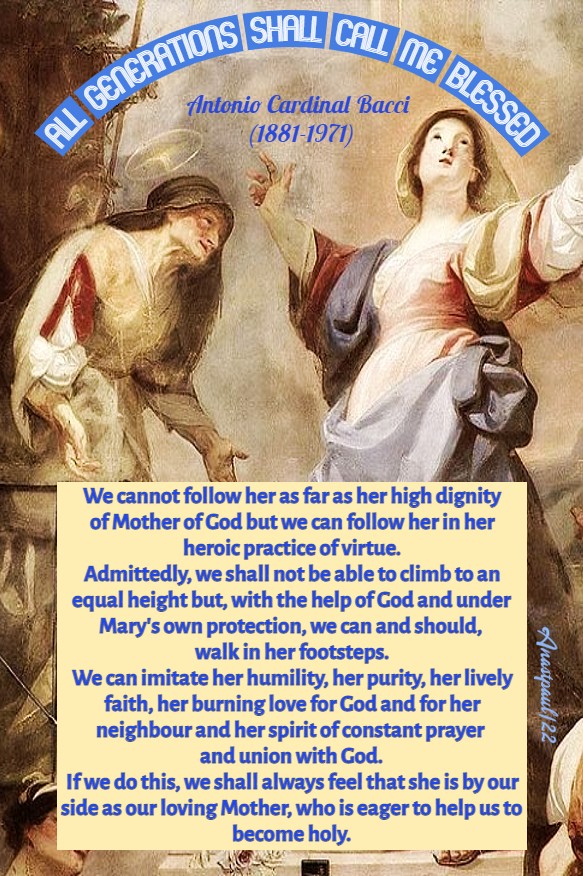
We cannot follow her as far as her high dignity of Mother of God but we can follow her in her heroic practice of virtue. Admittedly, we shall not be able to climb to an equal height but, with the help of God and under Mary’s own protection, we can and should, walk in her footsteps.
We can imitate her humility, her purity, her lively faith, her burning love for God and for her neighbour and her spirit of constant prayer and union with God. If we do this, we shall always feel that she is by our side as our loving Mother, who is eager to help us to become holy.”
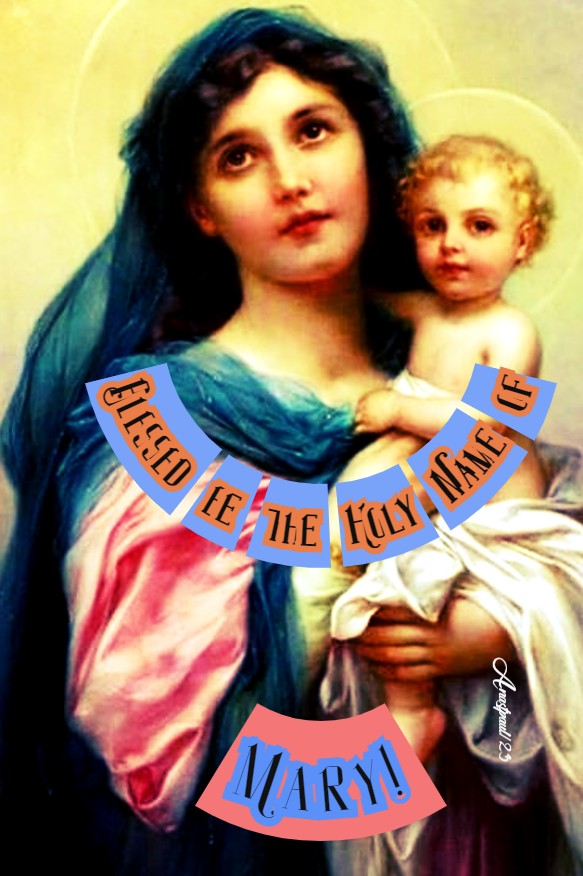
Quote/s of the Day – 12 September – The Feast of the Holy Name of Mary
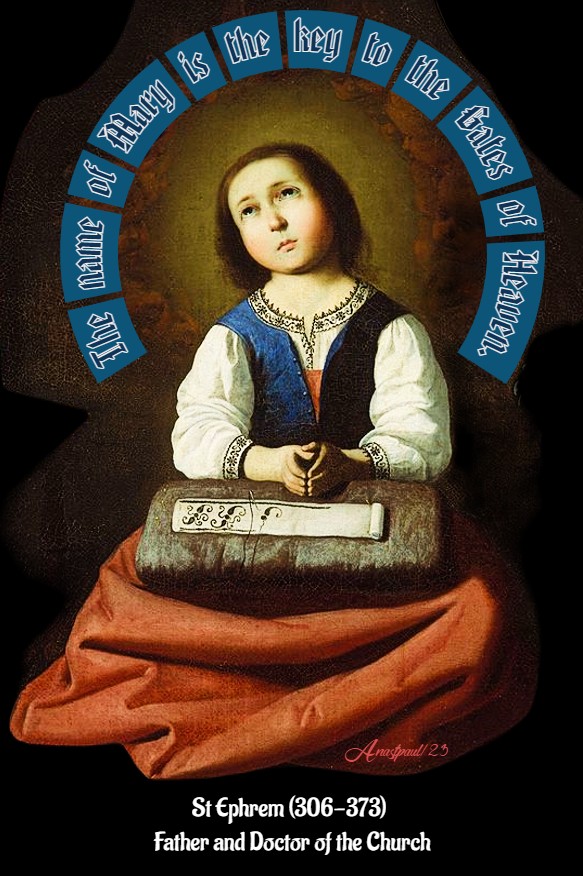
“The name of Mary is the key to the Gates of Heaven.”
St Ephrem (306-373) Father and Doctor of the Church
“O most Holy Virgin Mary! Thy name is so sweet and amiable that it cannot be pronounced, without inflaming those, who do so, with love towards thee and God.”
St Bernard (1090-1153) Mellifluous Doctor of the Church
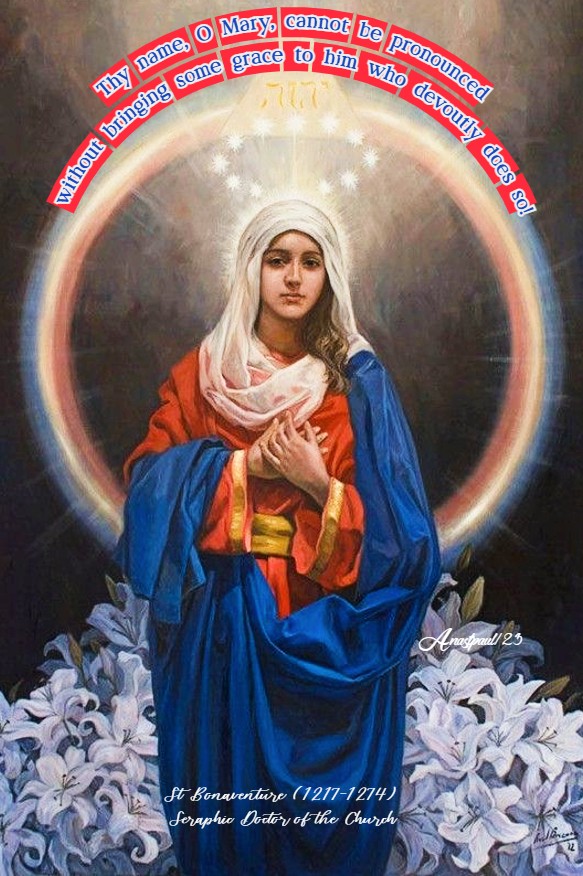
“Thy name, O Mary, cannot be pronounced without bringing some grace to him who devoutly does so!”
St Bonaventure (1217-1274) Seraphic Doctor of the Church
“The devils fear the Queen of Heaven, to such a degree that only on hearing her great name pronounced, they fly from him who does so, as from a burning fire!”
One Minute Reflection – 12 September – “Month of The Seven Sorrows of the Blessed Virgin Mary and The Holy Cross” – Feast of the Most Holy Name of Mary – Ecclesiasticus 24:23-31, Luke 1:26-38 – Scripture search here: https://www.drbo.org/
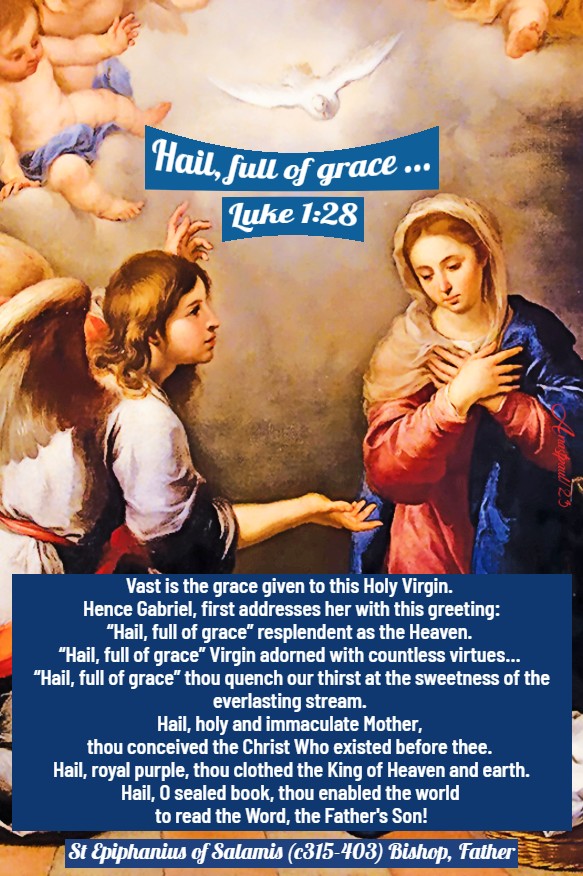
“Hail, full of grace …” – Luke 1:28
REFLECTION – “How can I speak? What praises could I possibly make of the holy and glorious Virgin? She surpasses all other beings except for God Himself. She is by nature more beautiful than the Cherubim and Seraphim and the whole Angelic Host. No language, whether of Heaven or earth, or even of the Angels, is enough to praise her. Blessed Virgin, spotless dove, heavenly bride… temple and throne of the Godhead! Christ, the Sun that shines resplendently in Heaven and on earth, belongs to thee. Thou art the luminous cloud that brought Christ down to earth, He Who is the bright streak of lightening, Who shines across the world.
Rejoice, full of grace, gate of Heaven! It was of thee, the author of the Song of Songs speaks… when he cries aloud: “A garden enclosed is my sister, my bride; an enclosed garden, a fountain sealed” (4:12)… Holy Mother of God, spotless ewe – thou gave birth to Christ, the Lamb, the Word made flesh in thee… How amazing a wonder in the heavens – a woman clothed with the sun (Apoc 12:1), carrying the light in her arms! … How amazing a wonder in the heavens – the Lord of Angels become the Virgin’s Child. Angels judged Eve; now they fill Mary with glory, since it was shewho raised Eve from her fall and brought Adam, expelled from Paradise, into Heaven.
Vast is the grace given to this Holy Virgin. Hence Gabriel, first addresses her with this greeting: “Hail, full of grace” resplendent as the Heaven. “Hail, full of grace” Virgin adorned with countless virtues… “Hail, full of grace” thou quench our thirst at the sweetness of the everlasting stream. Hail, holy and immaculate Mother, thou conceived the Christ Who existed before thee. Hail, royal purple, thou clothed the King of Heaven and earth. Hail, O sealed book, thou enabled the world to read the Word, the Father’s Son!” – St Epiphanius of Salamis (c315-403) Bishop of Salamis, known as the Oracle of Palestine and Father of the Church (Sermon No 5)
PRAYER – Grant, we beseech Thee, Almighty God, through the protection of the most holy Virgin Mary, Thy faithful people, who delight in her name may, by her loving intercession, be delivered from all evils on earth and be found worthy to attain everlasting happiness in Heaven. Through Jesus Christ, Thy Son our Lord, Who lives and reigns with Thee, in the unity of the Holy Ghost, God, world without end. Amen (Collect).
Our Morning Offering – 12 September – Feast of the Most Holy Name of Mary
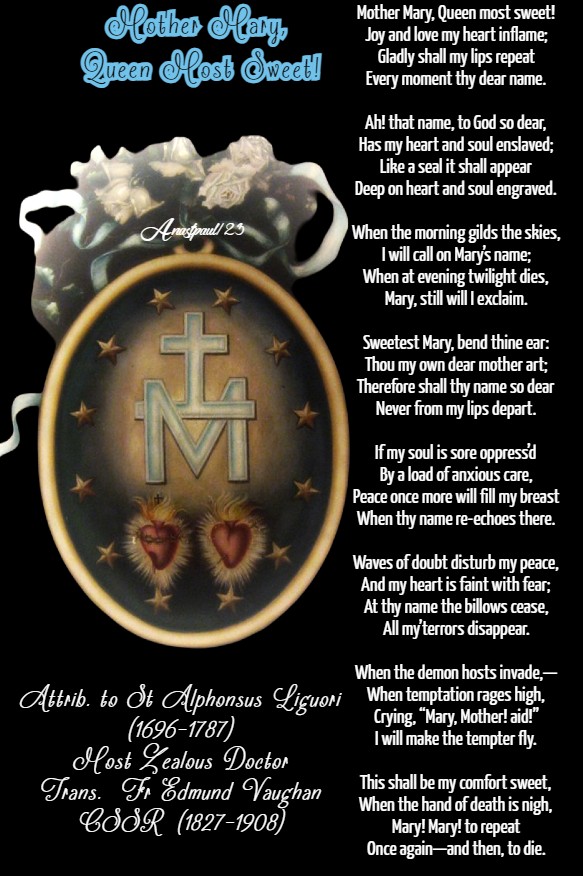
Mother Mary, Queen Most Sweet! Attrib. to St Alphonsus Liguori (1696-1787) Most Zealous Doctor Italian Hymn Trans. Fr Edmund Vaughan CSSR (1827-1908)
Mother Mary, Queen most sweet! Joy and love my heart inflame; Gladly shall my lips repeat Every moment thy dear name.
Ah! that name, to God so dear, Has my heart and soul enslaved; Like a seal it shall appear Deep on heart and soul engraved.
When the morning gilds the skies, I will call on Mary’s name; When at evening twilight dies, Mary, still will I exclaim.
Sweetest Mary, bend thine ear: Thou my own dear mother art; Therefore, shall thy name so dear Never from my lips depart.
If my soul is sore oppress’d By a load of anxious care, Peace once more will fill my breast When thy name re-echoes there.
Waves of doubt disturb my peace, And my heart is faint with fear; At thy name the billows cease, All my’terrors disappear.
When the demon hosts invade,— When temptation rages high, Crying, “Mary, Mother! aid!” I will make the tempter fly.
This shall be my comfort sweet, When the hand of death is nigh, Mary! Mary! to repeat Once again—and then, to die.
This Hymn is an Anonymous Hymn belonging to the Redemptorist tradition but Hymnary.org attributes it to St Alphonsus Liguori. “Hymns and Verses on Spiritual Subjects” (1863) notes that this is one of two Hymns, translated in that book, mentioned above, which come from a Neapolitan published collection of Mission Hymns which are attributed to St Alphonsus.
Saint of the Day – 12 September – The Feast of the Holy Name of Mary (1683 ) from the Liturgical Year, 1903
“And the Virgin’s name was Mary (St Luke 1:27).’ Let us speak a little about this name, which signifies Star of the Sea and which, so well befits the Virgin Mother. Sightly is she likened to a star – for as a star emits its ray without being spoilt, so the Virgin, brought forth her Son, without receiving any injury – the ray takes nought from the brightness of the Star, nor the Son from His Mother’s integrity. This is the noble Star risen out of Jacob, whose ray illumines the whole world, whose splendour shines in the heavens, penetrates the abyss,and traversing the whole earth, gives warmth, rather to souls than to bodies, cherishing virtues, withering vices. Mary, I say, is that bright and incomparable Star, whom we need to see raised above this vast sea and shining by her merits, giving us light by her example.
‘O whosoever thou art, that seest thyself, amid the tides of this world, tossed about by storms and tempests, rather than walking on the land, turn not thine eyes away from the shining of this Star, if thou wouldst not be overwhelmed by the hurricane. If squalls of temptations arise, or thou fall upon the rocks of tribulation, look to the Star, call upon Mary. If thou art tossed by the waves of pride or ambition, detraction or envy, look to the Star, call upon Mary. If anger or avarice or the desires of the flesh dash against the ship of thy soul, turn thine eyes towards Mary. If, troubled by the enormity of thy crimes, ashamed of thy guilty conscience, terrified by dread of the judgement, thou beginnest to sink into the gulf of sadness, or the abyss of despair, think of Mary. In dangers, in anguish, in doubt, think of Mary, call upon Mary.’ … (St Bernard)
St Peter Chrysologus adds … “Mary, in Hebrew, signifies Lady or Sovereign and truly, the authority of her Son, Who is the Lord of the world, constituted her Queen, both in fact and in name, from her very birth ”(Petr. Chrys. Sermo cxlii, de Annuntiat. Homily of the 3rd Nocturn).”
Our Lady – such is the title which befits her in every way, as that of Our Lord beseems her Son – it is the doctrinal basis of that worship of hyperdulia which belongs to her alone. She is below her Son, Whom she adores as we do but above all God’s servants, both Angels and men, inasmuch as she is His Mother. At the Name of Jesus every knee is bent; at the Name of Mary, every head is bowed. And although, the former is the only Name whereby we may be saved; yet, as the Son can never be separated from His Mother, Heaven unites their two Names in its Hymns of praise, earth in its confidence, hell in its fear and hatred!
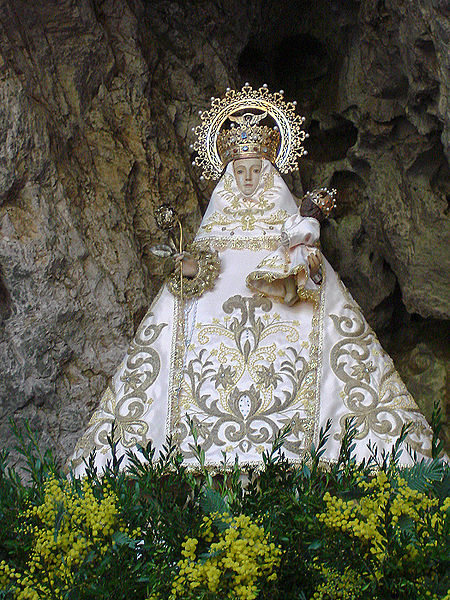
It was, therefore, in the order of Divine Providence that devotion to the most Holy Name of Mary should spread, simultaneously with the cultus of the adorable Name of Jesus, of which St Bernadine of Siena was the Apostle in the 15th Century. In 1513 the Church of Cuenca in Spain was the first to celebrate, with the approbation of the Holy See, a special Feast in honour of the Name of Mary; while the Franciscan Order had not yet succeeded in obtaining a like privilege for the Adorable Name of Jesus. The reason for this, is that the memory of that Sacred Name included in the Feast of the Circumcision, seemed to the prudence of the Pontiffs to suffice. From the same motive we find the Feast of the Most Holy Name of Mary extended to the universal Church in the year 1683 and, that of the Most Holy Name of Jesus not until 1721.
Our Lady justifies her beautiful title by partaking in the warlike exploits of the King of kings, her Son. The City of Vienna, having been delivered by her from the power of the Crescent, contrary to all hope, the venerable Innocent XI. made this Feast the memorial of universal gratitude to the liberatrix of the West.
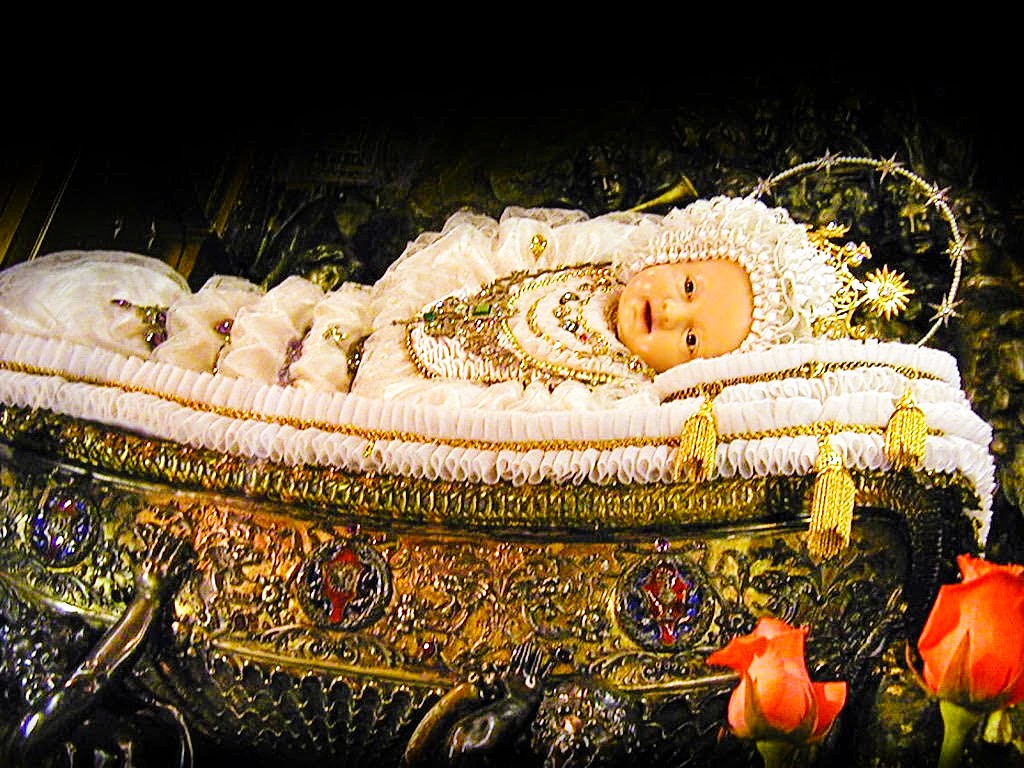
The Name of Mary, which is the joy of Angels and the terror of demons, protects man against countless evils and supports him on his way to Heaven. All the delight of Heaven, all the hopes of earth, are centred on the cradle where Mary sleeps, while her heart is watching before God.
Wisdom praises her own self – by the blessed daughter of Anne and Joachim, the loving preference shown by that Divine Wisdom from the beginning of the world, is already justified. Forevermore, it will be her delight to be with the children of men. The chosen vine, the vine of the Peaceful One is before us, announcing, by its fragrant blossom, the divine grape, whose juice, pressed out in the wine-press of the Cross, will give fruitfulness to every soul and will inebriate earth and Heaven.”
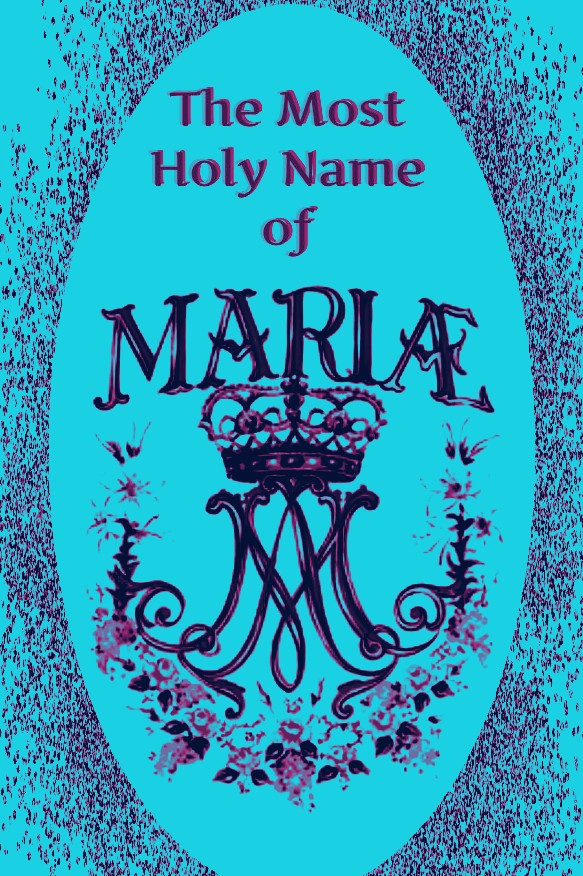
Feast of the Holy Name of Mary (1683 ) – 12 September: This Feast was first observed at Cuenca, Spain in 1513, then extended to the Universal Church and assigned to its present place and rank by Pope Innocent XI in 1683, in thanksgiving to God and the Blessed Virgin, for the liberation of Vienna, France and the signal victory over the Turks on 12 September 1683. It is the Titular Feast of the Society of Mary (Marianists) and of the Congregation of the Oblates of Mary Immaculate.
St Juventius of Pavia St Mancius of Saint Thomas St Paul of Saint Clare St Sacerdos of Lyon St Silvinus of Verona St Tomás de Zumárraga Lazcano
Martyrs of Alexandria – 6 Saints: A group of Christians Martyred in the persecutions of Diocletian. We know little more than their names – Hieronides, Leontius, Sarapion, Seleusius, Straton and Valerian. They were drowned c 300 at Alexandria, Egypt.
Martyrs of Phrygia – 3 Saints: Three Christians who were Martyred for destroying pagan idols. We know little more than their names – Macedonius, Tatian and Theodolus. They were burned to death in 362 in Phrygia (modern Turkey).
Thought for the Day – 11 September – Meditations with Antonio Cardinal Bacci (1881-1971)
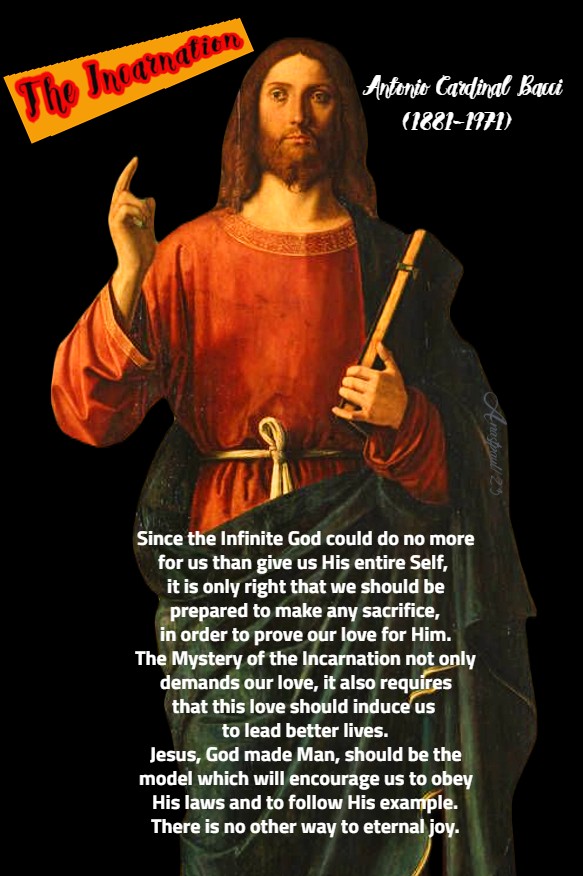
The Incarnation
“The Incarnation, which is the coming of God amongst men, in order that He might be loved more, requires that man, in return, love God and be obedient to His commandments.
Since the Infinite God could do no more for us than give us His entire Self, it is only right that we should be prepared to make any sacrifice, in order to prove our love for Him. The Mystery of the Incarnation not only demands our love, it also requires that this love should induce us to lead better lives. Jesus, God made Man, should be the model which will encourage us to obey His laws and to follow His example. There is no other way to eternal joy.”
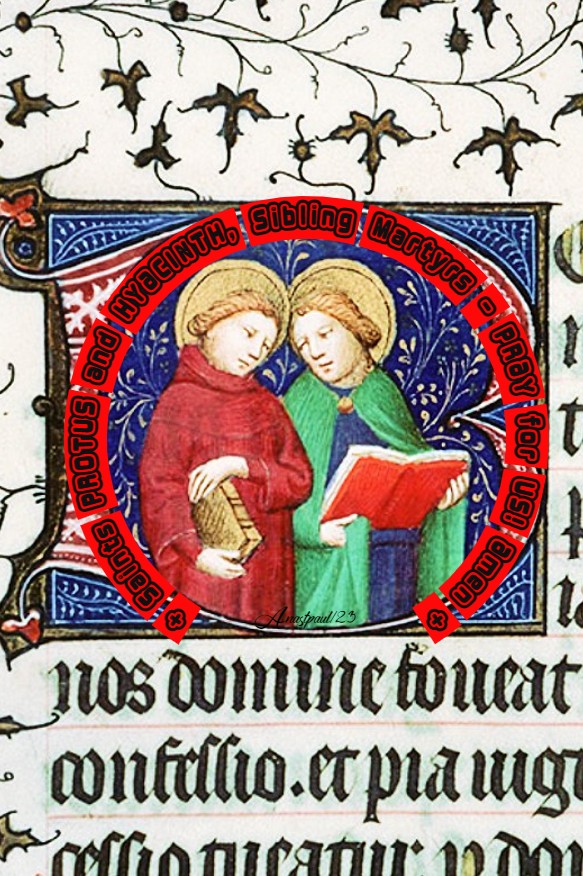
Quote/s of the Day – 11 September – “Month of The Seven Sorrows of the Blessed Virgin Mary and The Holy Cross” – St Protus and St Hyacinth (Died c257) Brother Martyrs – Wisdom 3:1-8, Luke 21:9-19 – Scripture search here:
“And you shall be hated by all men, for My Name’s sake.”
Luke 21:17
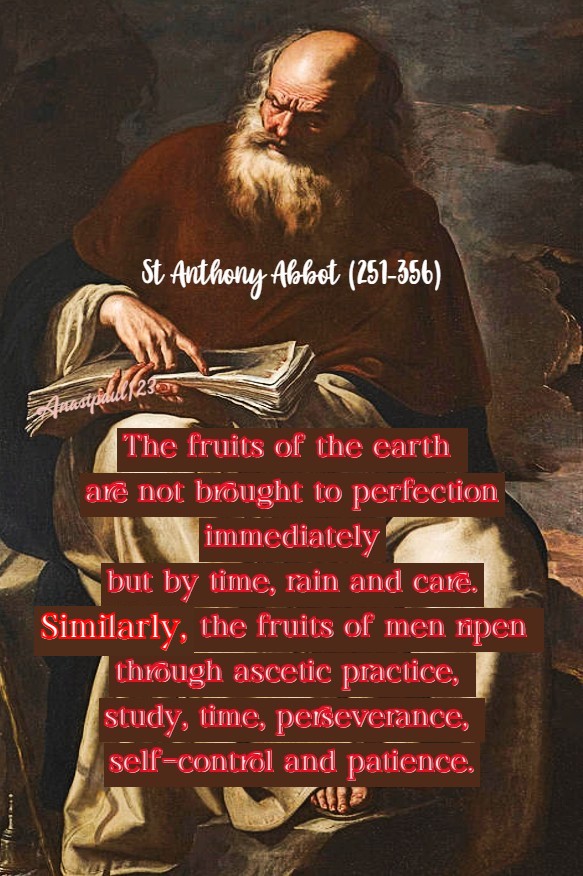
“The fruits of the earth are not brought to perfection immediately but by time, rain and care. Similarly, the fruits of men ripen through ascetic practice, study, time, perseverance, self-control and patience.”
St Anthony Abbot (251-356)
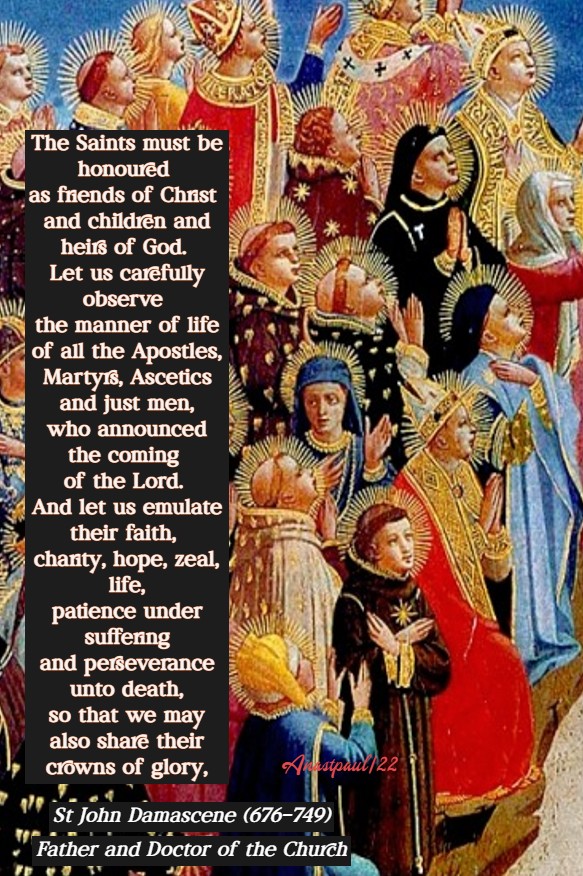
“The Saints must be honoured as friends of Christ and children and heirs of God. Let us carefully observe the manner of life of all the Apostles, Martyrs, Ascetics and just men, who announced the coming of the Lord. And let us emulate their faith, charity, hope, zeal, life, patience under suffering and perseverance unto death, so that we may also share their crowns of glory.”
St John Damascene (676-749) Father and Doctor of the Church
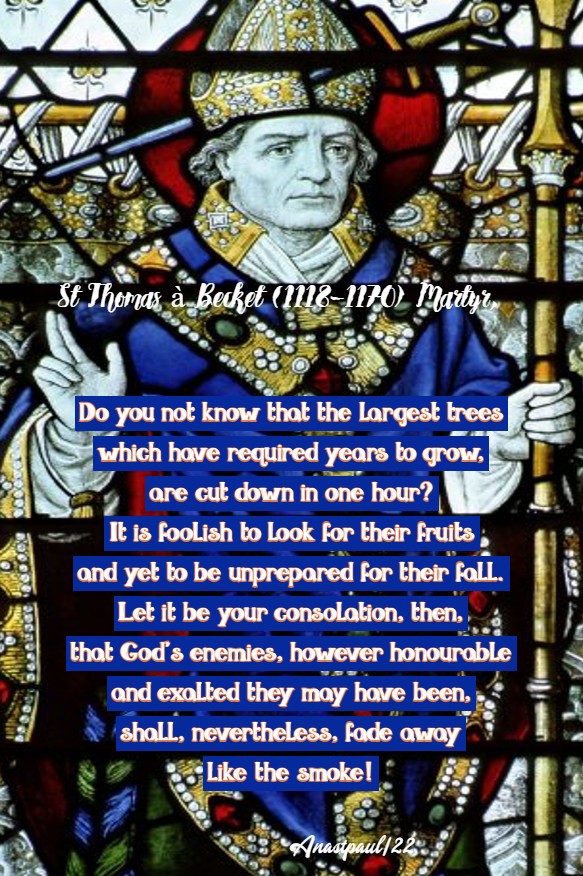
“Do you not know that the largest trees which have required years to grow, are cut down in one hour? It is foolish to look for their fruits and yet to be unprepared for their fall. Let it be your consolation, then, that God’s enemies, however honourable and exalted they may have been, shall, nevertheless, fade away like the smoke!”
St Thomas à Becket (1118-1170) Martyr, Archbishop of Canterbury
“Now, you must always persevere in firmly placing all your trust in our Lord, in the troublesome business you have in hand. It will give you a fine opportunity of laying a good foundation of submission to God’s will and peace of soul.”
St Francis de Sales (1567-1622) Doctor Caritatis
“Our Lord, Who saved the world, through the Cross, will only Work for the good of souls, through the Cross.”
St Madeleine Sophie Barat (1779-1865)
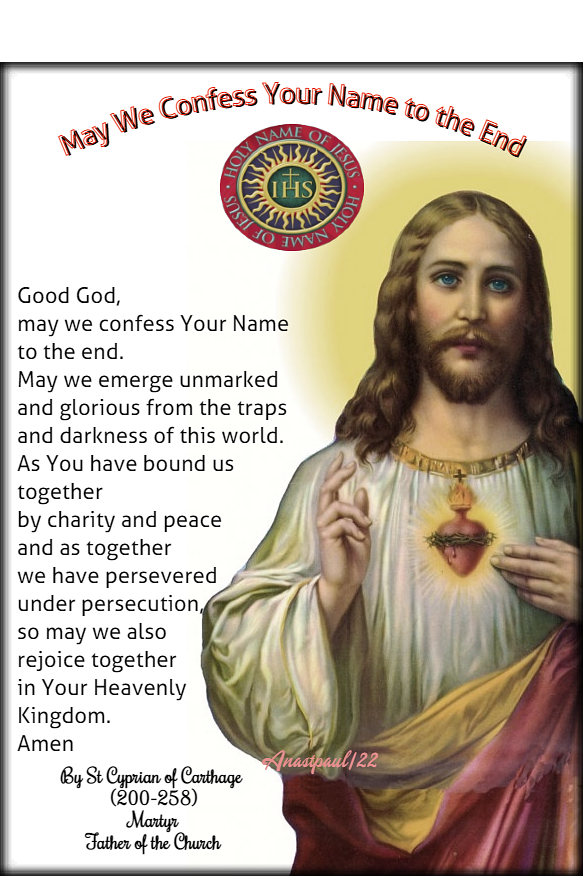
May We Confess Your Name to the End By St Cyprian of Carthage (200-258) Bishop and Martyr Apostolic Father of the Church
Good God, may we confess Your Name to the end. May we emerge unmarked and glorious from the traps and darkness of this world. As You have bound us together, by charity and peace and as together, we have persevered under persecution, so may we also rejoice together in Your Heavenly Kingdom. Amen
One Minute Reflection – 11 September – “Month of The Seven Sorrows of the Blessed Virgin Mary and The Holy Cross” – St Protus and St Hyacinth (Died c257) Brother Martyrs – Wisdom 3:1-8, Luke 21:9-19 – Scripture search here: https://www.drbo.org/
“Before all this happens, however, they will seize and persecute you, they will hand you over to the synagogues and to prisons and they will have you led, before kings and governors because of My Name …” – Luke 21:12
REFLECTION – “Jesus gives them clear and evident signs of the time when the consummation of the world draws near. He says that there will be wars, turmoil, famines and epidemics everywhere. There will be terrors from Heaven and great signs. As another Evangelist says, “All the stars shall fall and the heaven be rolled up like a scroll and its powers will be shaken.”
In the middle of this, the Saviour places what refers to the capture of Jerusalem. He mixes the accounts together in both parts of the narrative. Before all these things, He says, “They will lay their hands on you and persecute you, delivering you up to synagogues and to prisons and bringing you before kings and rulers for my name’s sake. This will be a witness to you.” Before the times of consummation, the land of the Jews was taken captive and the Roman armies overran it. They burned the temple, overthrew their national government and stopped the means for legal worship. They no longer had sacrifices, now that the temple was destroyed. The country of the Jews together with Jerusalem itself was totally laid waste. Before these things happened, they persecuted the blessed disciples. They imprisoned them and had a part in unendurable trials. They brought the disciples before judges and sent them to kings. Paul was sent to Rome to Caesar.
Christ promises, however, that He will deliver them certainly and completely. He says that a hair of your head will not perish!” – St Cyril of Alexandria (376-444) Bishop of Alexandria, Father and Doctor of the Incarnation the Church (Commentary on Luke, Homily 139).
PRAYER – May the precious witness of Thy blessed Martyrs, Protus and Hyacinth, comfort us, O Lord and may their kind intercession, continually protect us. Through Jesus Christ, Thy Son our Lord, Who lives and reigns with Thee, in the unity of the Holy Ghost, God, world without end. Amen (Collect).
Our Morning Offering – 11 September – “Month of The Seven Sorrows of the Blessed Virgin Mary and The Holy Cross”
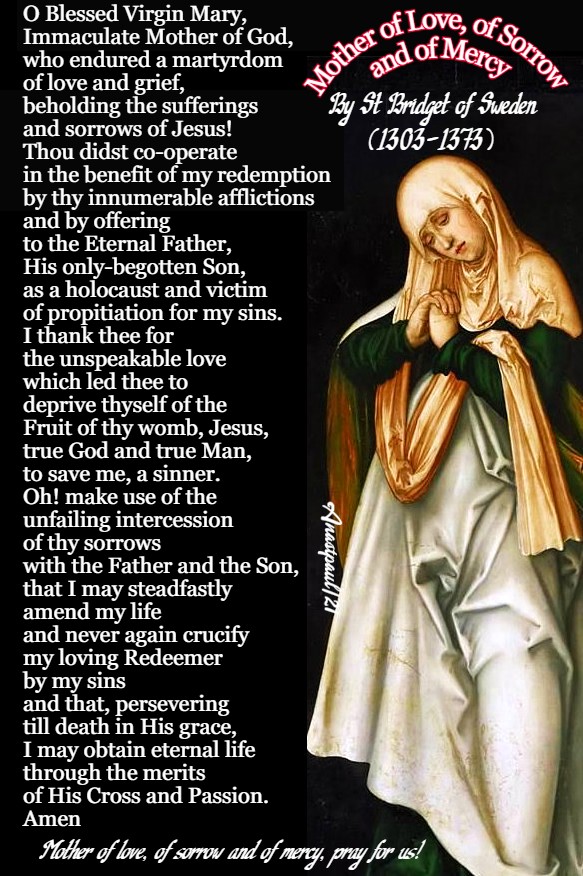
Mother of Love, of Sorrow and of Mercy By St Bridget of Sweden (1303-1373)
O Blessed Virgin Mary, Immaculate Mother of God, who endured a Martyrdom of love and grief, beholding the sufferings and sorrows of Jesus! Thou didst co-operate in the benefit of my redemption by thy innumerable afflictions and by offering to the Eternal Father, His only-begotten Son, as a holocaust and victim of propitiation for my sins. I thank thee for the unspeakable love which led thee to deprive thyself of the Fruit of thy womb, Jesus, true God and true Man, to save me, a sinner. Oh! make use of the unfailing intercession of thy sorrows with the Father and the Son, that I may steadfastly amend my life and never again crucify my loving Redeemer by my sins and that, persevering till death in His grace, I may obtain eternal life through the merits of His Cross and Passion. Amen Mother of love, of sorrow and of mercy, pray for us!
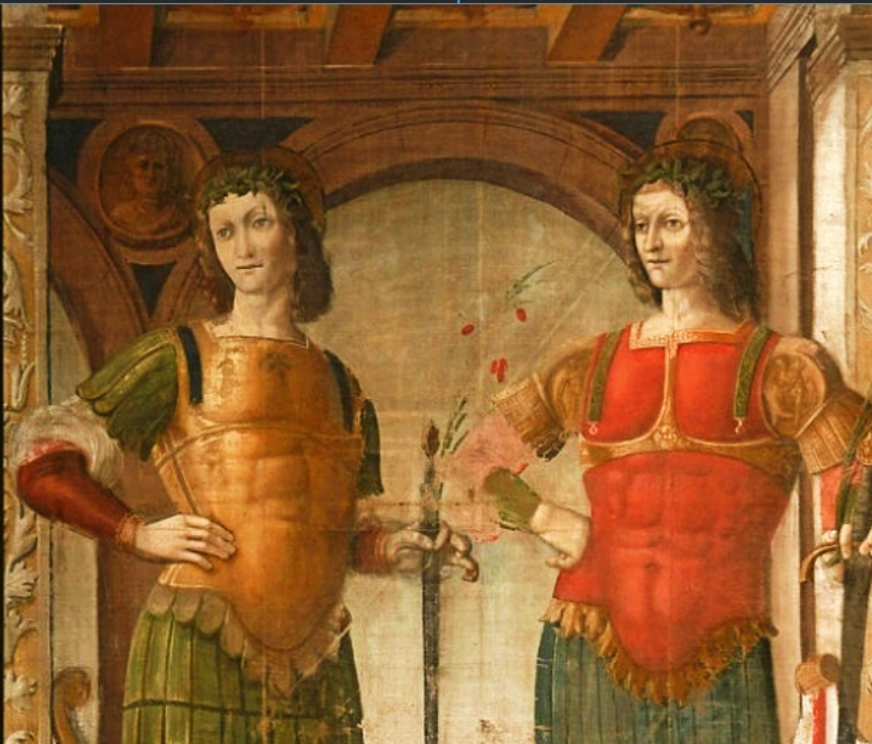
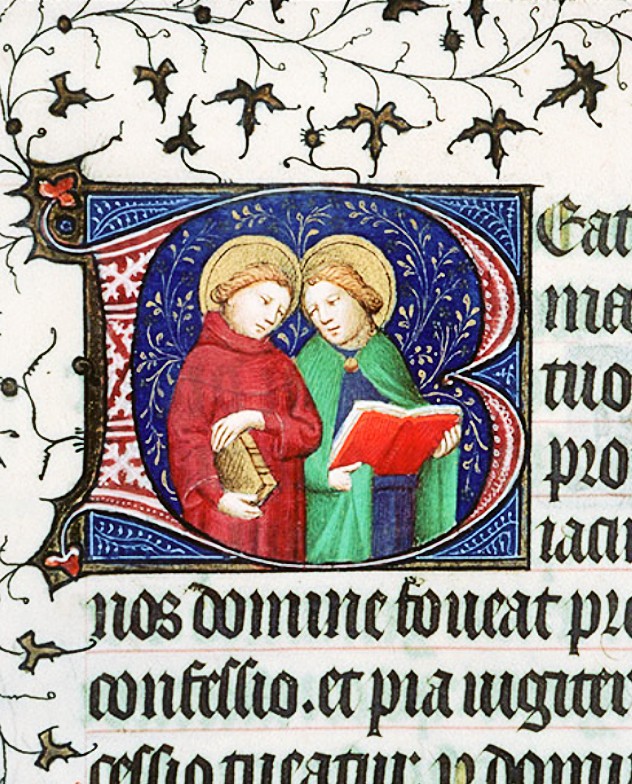
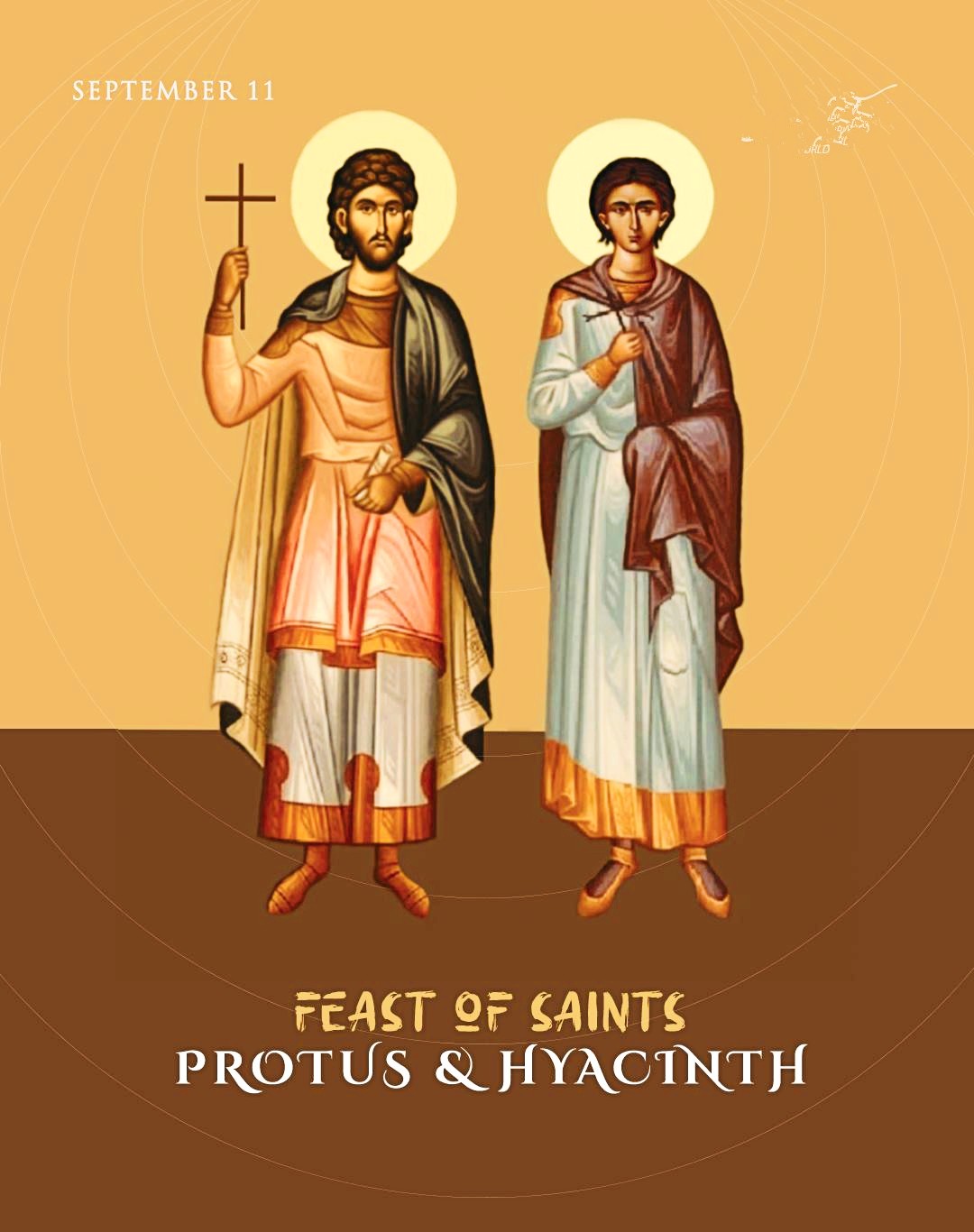
Saint/s of the Day – 11 September – St Protus and St Hyacinth (Died c257) Brother Martyrs during the persecution of Emperor Valerian (257–259), they served as household Officials to St Eugenia. Protus is also known as – Protatius, Proteus, Prothus, Prote and Proto. His name was corrupted in England as Saint Pratt. Hyacinth is sometimes called by his Latin name Hyacinthus (in French: Hyacinthe, Spanish: Jacinto and Italian: Giacinto).
The Roman Martyrology states today: “At Rome, in the Cemetery of Basilla, on the old Salarian Way, the birthday of the Holy Martyrs, Protus and Hyacinth, brothers and eunuchs in the service of the blessed Eugenia, who were arrested in the time of the Emperor Gallienus, on the charge of being Christians and urged to offer sacrifice to the gods. But as they refused, both were most severely scourged and finally, beheaded.”
Tradition holds that Protus and Hyacinth were brothers. They served as Chamberlains to Saint Eugenia, a holy Christian Virgin and Martyr and were Baptised along with her by Helenus, Bishop of Heliopolis.
Devoting themselves zealously to the study of Sacred Scripture, they lived with the hermits of Egypt and later accompanied Eugenia to Rome. There, they were arrested for their Christian Faith by Emperor Gallienus (260–268). Refusing to deny their faith, they were first scourged and then beheaded on 11 September.
In 1845, Father Marchi discovered the still undisturbed grave of St Hyacinth in a Crypt of the above-mentioned Catacomb. It was a small square niche in which lay the ashes and pieces of burned bone, wrapped in the remains of costly materials. Evidently the Saint had been burnt, a fate which many Martyrs had suffered, either dying by fire or being burnt after death. The niche was closed by a marble slab similar to that used to close a loculus (or tomb) and bearing the original Latin inscription which confirms the date in the old Roman Martyrology, mentioned above.
The day of Protus and Hyacinth’s annual commemoration is mentioned in the “Depositio Martyrum” on 11 September, in the Chronographia for the year 354.
The Chronographia also mentions their graves, in the Coemeterium of Basilla on the Via Salaria, later the Catacomb of St Hermes. The “Itineraries” and other early authorities, likewise give this as their place of burial.
St Emilian of Vercelli St Essuperanzio of Zurich St Felix of Zurich Bl Franciscus Takeya Bl François Mayaudon Bl Gaspar Koteda St Gusmeo of Gravedona sul Lario St Leudinus of Toul St Matthew of Gravedona sul Lario St Paphnutius of Thebes St Patiens of Lyon Bl Peter Taaffe Bl Petrus Kawano St Regula of Zurich St Sperandea St Theodora the Penitent
Thought for the Day – 10 September – Meditations with Antonio Cardinal Bacci (1881-1971)
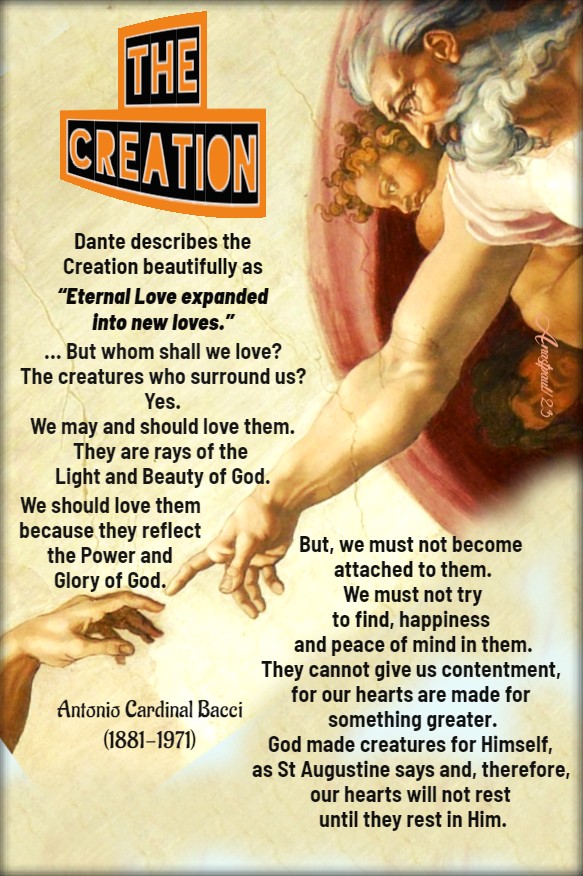
The Creation
“Dante describes the Creation beautifully as “Eternal Love expanded into new loves.” Heaven and earth, Angels and men and all created beings, are nothing more than an expansion of this Eternal Love, into new loves. Love unites and fills everything. Everywhere in Heaven and on earth, there is love, there is need of love. But whom shall we love? The creatures who surround us? Yes. We may and should love them. They are rays of the Light and Beauty of God. We should love them because they reflect the Power and Glory of God. But, we must not become attached to them. We must not try to find, happiness and peace of mind in them. They cannot give us contentment, for our hearts are made for something greater. God made creatures for Himself, as St Augustine says and, therefore, our hearts will not rest until they rest in Him.”
Quote/s of the Day – 10 September – The 15th Sunday after Pentecost – Galatians 5:25-26; 6:1-10, Luke 7:11-16 – Scripture search here:
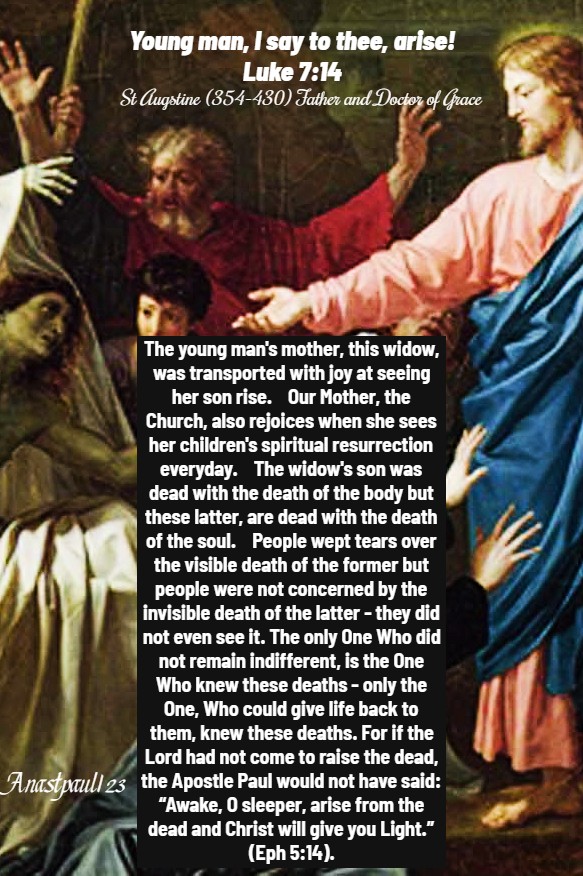
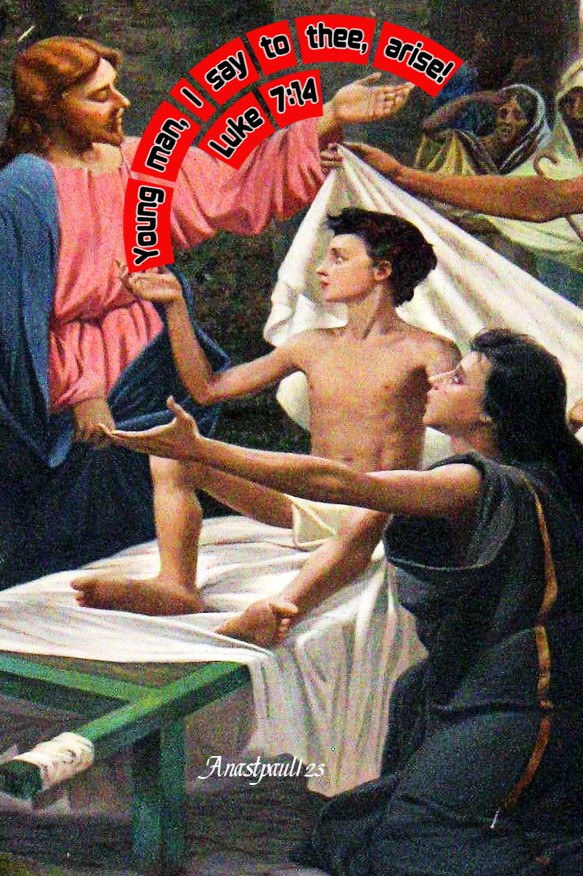
“Young man, I say to thee, arise!” Luke 7:14
“The young man’s mother, this widow, was transported with joy at seeing her son rise. Our Mother, the Church, also rejoices when she sees her children’s spiritual resurrection everyday. The widow’s son was dead with the death of the body but these latter, are dead with the death of the soul. People wept tears over the visible death of the former but people were not concerned by the invisible death of the latter – they did not even see it. The only One Who did not remain indifferent, is the One Who knew these deaths – only the One, Who could give life back to them, knew these deaths. For if the Lord had not come to raise the dead, the Apostle Paul would not have said: “Awake, O sleeper, arise from the dead and Christ will give you Light.” (Eph 5:14).”
St Augustine (354-430) Father and Doctor of Grace
“O my brethren, if only we wanted to, if only we all wanted to perceive our soul’s paralysis in all its depth! Then we would see that it is lying on a stretcher of sins, deprived of strength. Christ’s action within us, would be a source of light and we would understand that each day He sees our lack of faith, harmful as it is, that He draws us towards healing remedies and sharply presses our rebellious wills. “My son” He says, “your sins are forgiven you.”
St Peter Chrysologus (c 400-450) “Golden Words” Father & Doctor of the Church
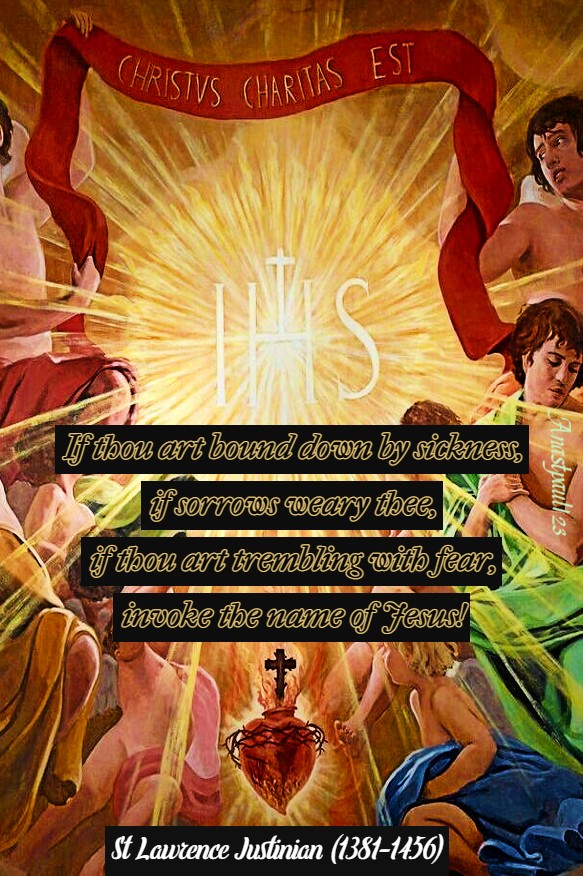
“If thou art bound down by sickness, if sorrows weary thee, if thou art trembling with fear, invoke the name of Jesus!”
St Lawrence Justinian (1381-1456)
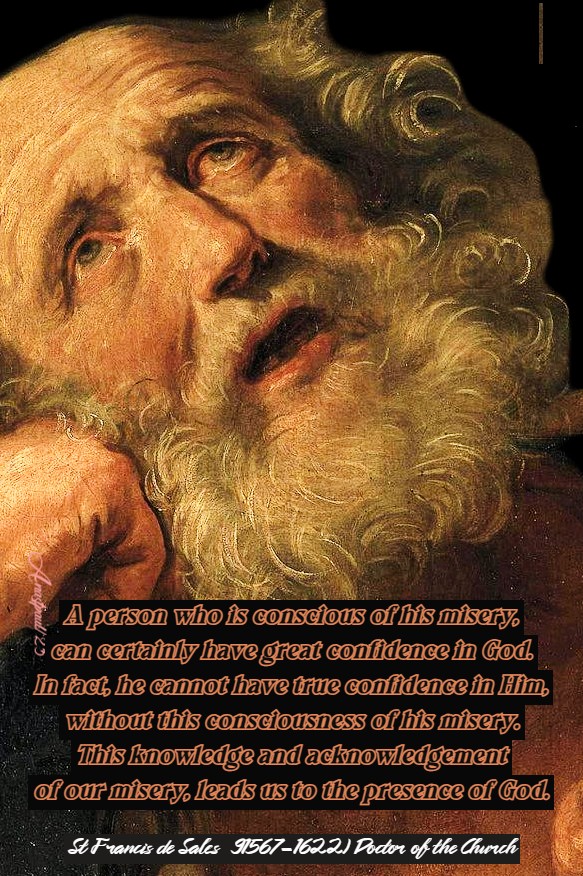
“A person who is conscious of his misery, can certainly have great confidence in God. In fact, he cannot have true confidence in Him, without this consciousness of his misery. This knowledge and acknowledgement of our misery, leads us to the presence of God.”
St Francis de Sales 91567-1622) Doctor of the Church
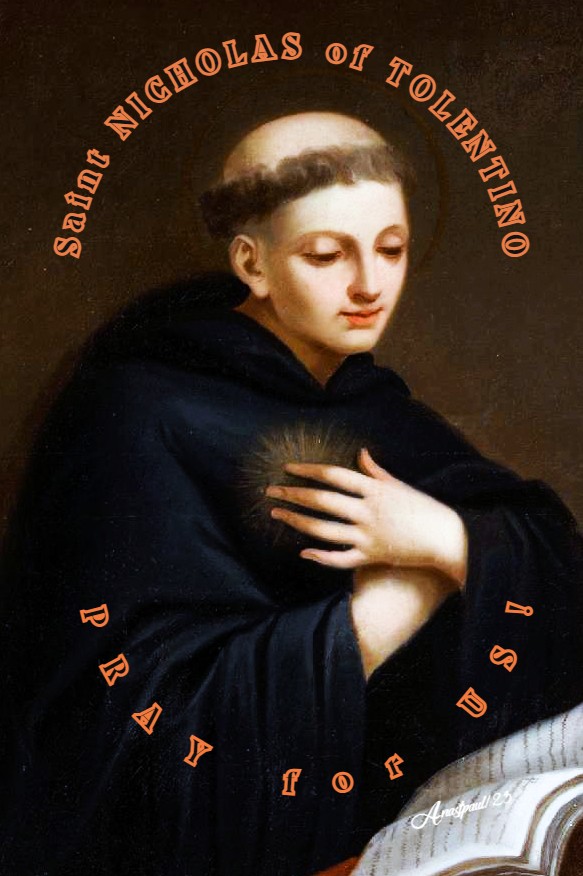
One Minute Reflection – 10 September – “Month of The Seven Sorrows of the Blessed Virgin Mary and The Holy Cross” – St Nicholas of Tolentino OSA (1245-1305) Confessor, – Galatians 5:25-26; 6:1-10, Luke 7:11-16 – Scripture search here: https://www.drbo.org/
“Young man, I say to thee, arise!” – Luke 7:14
REFLECTION – “Our Lord, the great and excellent Physician of our infirmities, announced everywhere, before coming into this world, both His arrival and the maladies He would cure; sometimes by His prophets. …”
What wonder then if, in the Gospel, we find Him surrounded by the sick, by sinners and by publicans! O vain and foolish murmuring of the Hebrews, when they said: “This man receiveth sinners.” Whom would you wish Him to receive? Is it not the honour of a Physician to be sought for by the sick and so much the more, as their maladies are considered incurable? …
Thus, how were the poor Prodigal and the unfortunate Absalom received by their fathers? And, otherwise, what would become of us, for all have sinned? Every man is a liar, that is to say, a sinner. If we say that we are without sin, we deceived ourselves. Return to the Lord, and forsake your injustice, for His Mercy is great towards those who are converted to Him. Why is He called Saviour, unless in order to save? …
But, oh, miserable that we are! We are often called and we only turn a deaf ear. “I have called and you have not heard,” says God. We are drawn and we obstinately resist Him. He complains, saying: “All the day long have I stretched out My hands to this incredulous and rebellious people! ”…
Let us then depart, let us depart from Egypt, let us approach Our Lord, let us make provision of good works; let the feet of our affections be bare, let us clothe ourselves with innocence, let us not be satisfied with crying for mercy, let us go forth from Egypt, let us delay no longer. The hour is come to arise from sleep, since we know that He receives sinners; the Angels await our repentance, the Saints pray for it!” – (Consoling Thoughts on God and Providence).
PRAYER – Be mindful, O Lord, of our humble prayers in this commemoration of Thy Saint Nicholas, so that we, who have no confidence in our own righteousness, may be assisted by the merits of those, who have been pleasing to Thee. Through Jesus Christ, Thy Son our Lord, Who lives and reigns with Thee, in the unity of the Holy Ghost, God, world without end. Amen (Collect).
Our Morning Offering – 10 September – “Month of The Seven Sorrows of the Blessed Virgin Mary and The Holy Cross” – Solemnity of the Nativity of the Most Blessed Virgin Mary
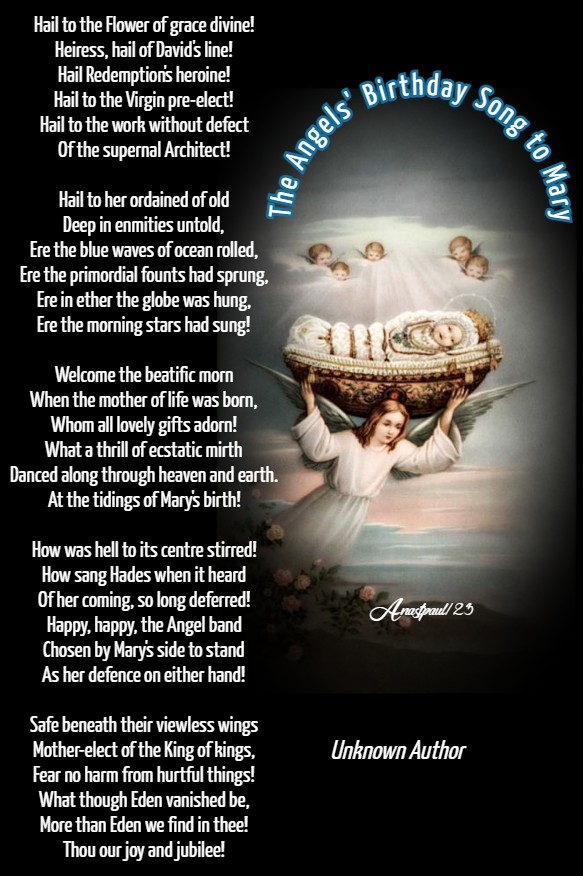
The Angels’ Birthday Song to Mary Unknown Author
“Thy nativity, O Virgin Mother of God, gives joy to the whole world, because from thee shall rise, the Sun of Justice, Christ our Lord. ”
Hail to the Flower of grace divine! Heiress, hail of David’s line! Hail Redemption’s heroine! Hail to the Virgin pre-elect! Hail to the work without defect Of the supernal Architect!
Hail to her ordained of old Deep in enmities untold, Ere the blue waves of ocean rolled, Ere the primordial founts had sprung, Ere in ether the globe was hung, Ere the morning stars had sung!
Welcome the beatific morn When the mother of life was born, Whom all lovely gifts adorn! What a thrill of ecstatic mirth Danced along through heaven and earth. At the tidings of Mary’s birth!
How was hell to its centre stirred! How sang Hades when it heard Of her coming, so long deferred! Happy, happy, the Angel band Chosen by Mary’s side to stand As her defence on either hand!
Safe beneath their viewless wings Mother-elect of the King of kings, Fear no harm from hurtful things! What though Eden vanished be, More than Eden we find in thee! Thou our joy and jubilee!
Saint of the Day – 10 September – Saint Peter Martinez (Died c1000) Archbishop of Antealares at Compostela, Monk, Abbot, leader of the Spanish Reconquista. Born in Galicia, Spain, Also Known as – Peter of Mozonzo.
Peter’s religious life began in around 950, as a Benedictine Monk at the Monastery of Saint Mary of Monzonzo where he later became the Abbot.
In 986, he was appointed the Archbishop of Saint Martin of Antealares in Compostela. Peter played an important role in the Spanish Reconquista, which drove the Moors out of Spain.
Some believe he might have been the Author of the Salve Regina although it is most widely believed that it was composed by Blessed Herman of Reichenau (1013–1054) with the Doxology being spontaneously added by the Mellifluous Doctor, Saint Bernard (1090-1153).
St Salvius of Albi St Sosthenes of Chalcedon St Theodard of Maastricht St Victor of Chalcedon
Martyrs of Bithynia – 3 Sister Saints: Three young Christian sisters Martyred in the persecutions of Emperor Maximian and governor Fronto: Menodora, Metrodora, Nymphodora. They were Martyred in 306 in Bithynia, Asia Minor (in modern Turkey).
Martyrs of Japan – 205 Beati: A unified feast to memorialise 205 Missionaries and native Japanese known to have been murdered for their Faith between 1617 and 1637.
Martyrs of Sigum – 8 Saints: A group of Nicomedian Martyrs, condemned for their faith to be worked to death in the marble quarries of Sigum. There were Priests, Bishops and Laity in the group but only a few names have come down to us: Dativus, Felix, Jader, Litteus, Lucius, Nemesian, Polyanus, Victor. They were worked to death c 257 in Sigum.
Thought for the Day – 9 September – Meditations with Antonio Cardinal Bacci (1881-1971)
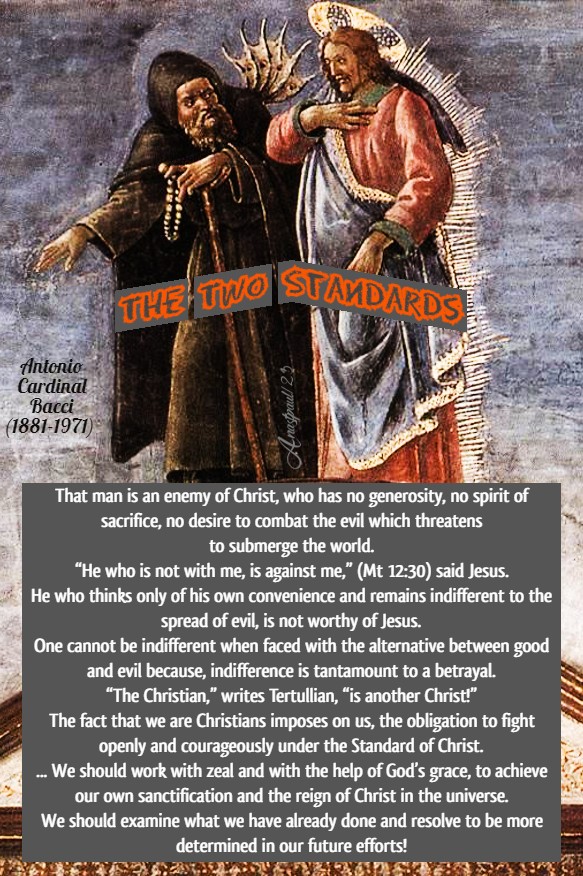
The Two Standards
“The well-known meditation of St Ignatius in his Spiritual Exercies on the two standards, remains applicable to our times. We need only glance at the world to see that it contains two different kinds of people – the good and the bad, the enemies of Christ and His faithful followers. But, there is also a third group, those who are indifferent and apathetic, those who think of their own comfort and convenience and of nothing else! When one considers it, it is plain that those people who think only of themselves – and their number seems to grow every year – belong to the rearguard of those, who fight beneath the banner of Satan. That man is an enemy of Christ, who has no generosity, no spirit of sacrifice, no desire to combat the evil which threatens to submerge the world. “He who is not with me, is against me,” (Mt 12:30) said Jesus. He who thinks only of his own convenience and remains indifferent to the spread of evil, is not worthy of Jesus. One cannot be indifferent when faced with the alternative between good and evil because, indifference is tantamount to a betrayal. “The Christian,” writes Tertullian, “is another Christ!”
The fact that we are Christians imposes on us, the obligation to fight openly and courageously under the Standard of Christ. The battle must be waged on two fronts. On one side, the struggle is internal. We must resist our rebellious inclinations and self-centred egoism. At the same time, we must make a constant effort to advance in Christian perfection. On the second front, the struggle is external. It is not sufficient to sanctify ourselves but, we must try to sanctify others. When we consider the sacrifices made in the cause of evil by the enemies of Christ, how can we remain indifferent? We should work with zeal and with the help of God’s grace, to achieve our own sanctification and the reign of Christ in the universe. We should examine what we have already done and resolve to be more determined in our future efforts!”
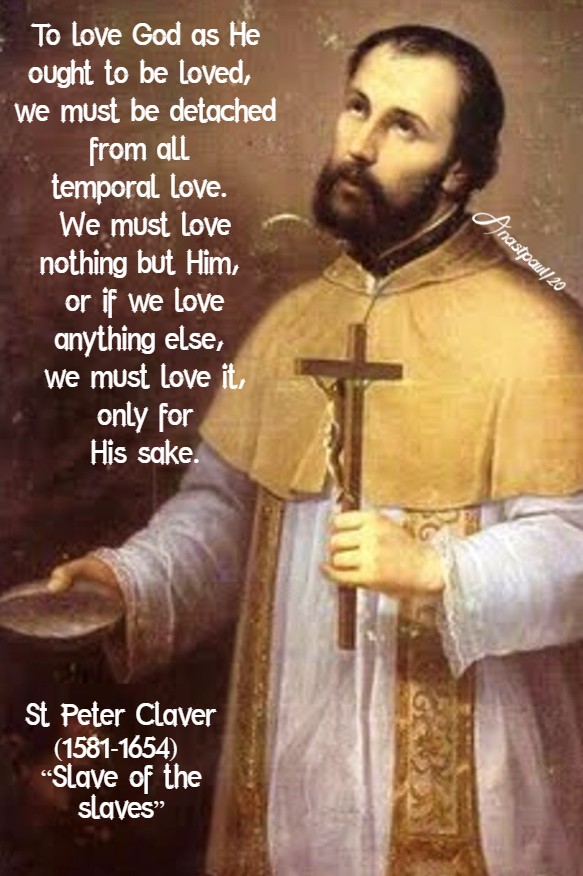
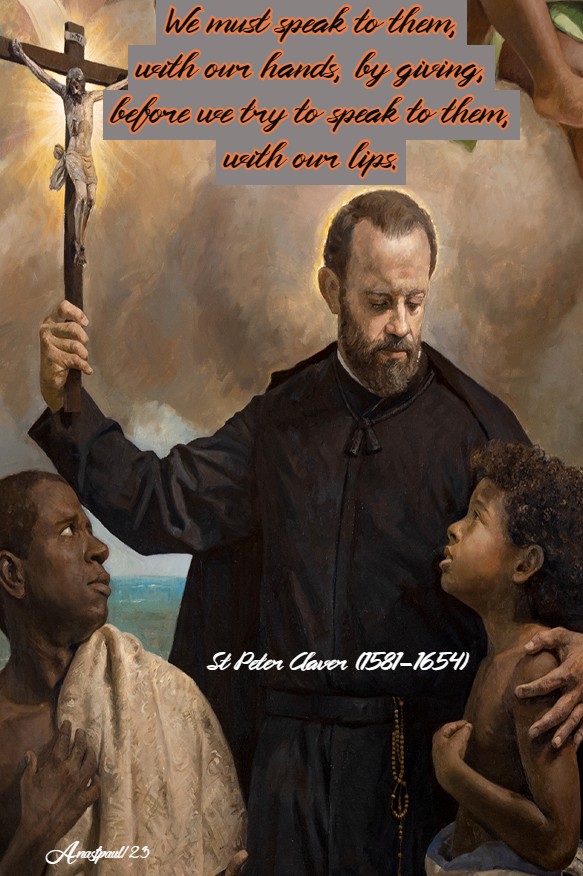
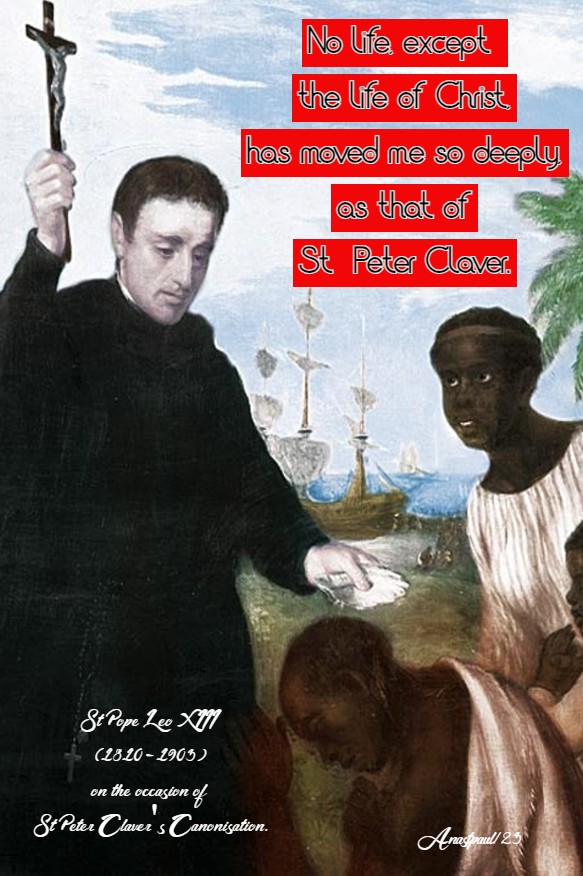
Quote/s of the Day – 9 September – St Peter Claver SJ (1581-1654) Confessor, “Slave of the slaves”
“To do the will of God, man must despise his own; the more he dies to himself, the more he will live to God.”
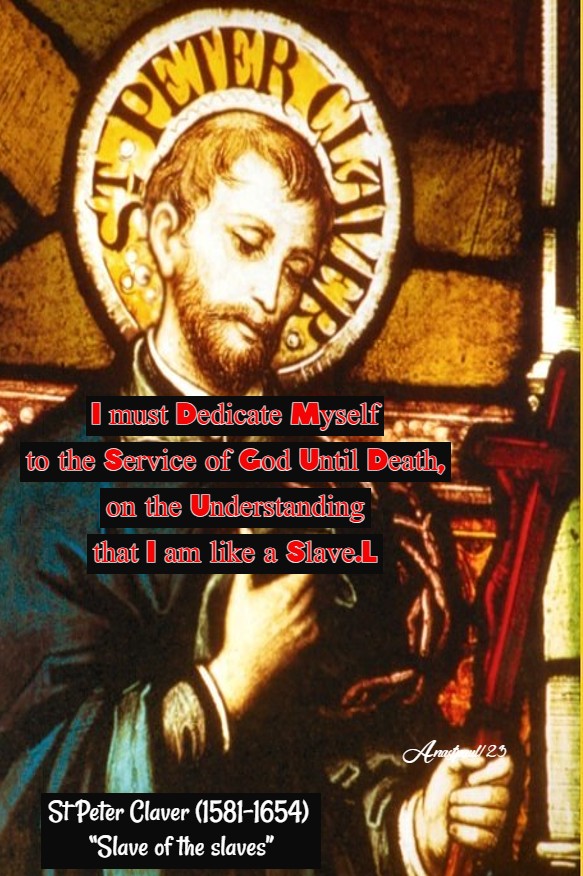
“I must dedicate myself to the service of God until death, on the understanding that I am like a slave.”
“To love God as He ought to be loved, we must be detached from all temporal love. We must love nothing but Him, or if we love anything else, we must love it, only for His sake.”
“We must speak to them, with our hands, by giving, before we try to speak to them, with our lips.”
St Peter Claver (1581-1654)
“No life, except the life of Christ, has moved me so deeply, as that of Peter Claver.”
St Pope Leo XIII (1810-1903) on the occasion of St Peter Claver’s Canonisation.
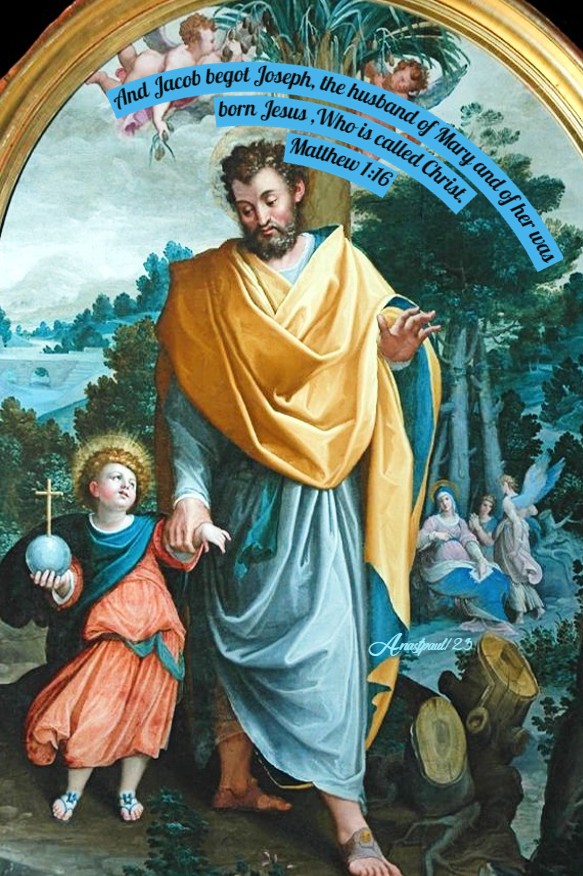
One Minute Reflection – 9 September –The Nativity of the Blessed Virgin Mary – Proverbs 8:22-35, Matthew 1:1-16 – Scripture search here: https://www.drbo.org/
“And Jacob begot Joseph, the husband of Mary and of her was born Jesus , Who is called Christ.” – Matthew 1:16
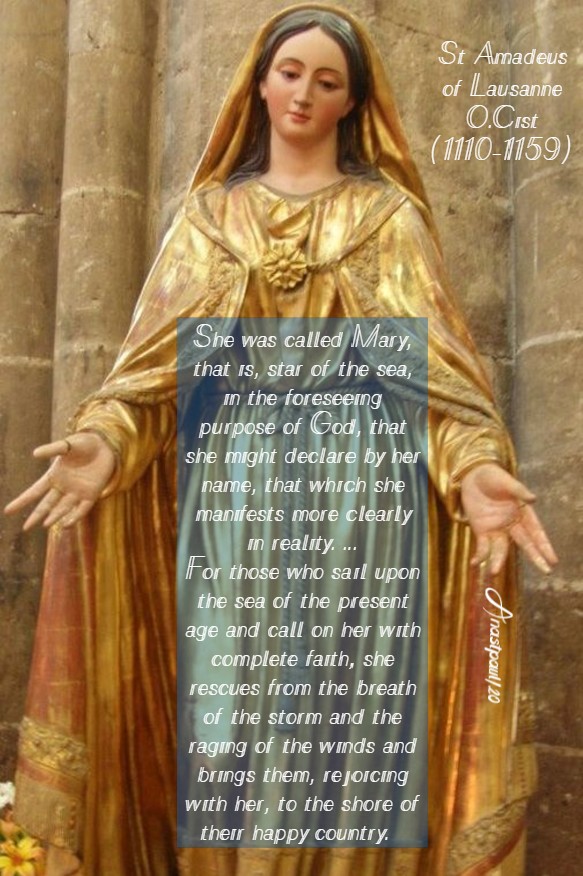
REFLECTION – “She was called Mary, that is, star of the sea, in the foreseeing purpose of God, that she might declare by her name, that which she manifests more clearly in reality. …
Robed in beauty, robed equally in strength, she has girded herself, ready to curb, with a single gesture, the extraordinary tumults of the sea (Ps 92:1,4). For those who sail upon the sea, of the present age and call on her with complete faith, she rescues from the breath of the storm and the raging of the winds and brings them, rejoicing with her, to the shore of their happy country. One cannot tell, beloved, how often some would have struck hard rocks, about to suffer shipwreck, some fall on foul sandbanks, to return no more … did not the star of the sea, Mary Ever Virgin, stand in the way with her mighty aid and, when now the rudder was broken, the deck shattered and they were without human aid, bring them, by her heavenly leading, to the haven of inner peace. Therefore, rejoicing in new triumphs in the new rescue of the boat, in the new additions of peoples, she manifests her joy in the Lord …
Indeed, glowing and and conspicuous, with this twofold love, on the one hand, she is most ardently fixed on God, to whom she clings and she is one spirit with Him (cf. 1 Cor 6:17); on the other, she gently comforts and attracts the hearts of the elect and shares with them, excellent gifts coming from the generosity of her Son.” … St Amadeus of Lausanne O.Cist (1110-1159) Bishop – Homily VIII in praise of the Blessed Virgin Mary
PRAYER – Bestow upon Thy servants, we beseech Thee, O Lord, the gift of heavenly grace that, as the child-bearing of the Blessed Virgin stood for the beginning of our salvation, so may the solemn Feast of her Nativity, bring about an increase of peace. Through the same Jesus Christ, Thy Son our Lord, Who lives and reigns with Thee, in the unity of the Holy Ghost, God, world without end. Amen (Collect).
Our Morning Offering – 9 September – “Month of The Seven Sorrows of the Blessed Virgin Mary and The Holy Cross”
My Sorrowful Mother, Help Me to Bear My Crosses By St Alphonsus Liguori (1696-1787) Most Zealous Doctor of the Church
My sorrowful Mother, by the merit of that grief which you felt at seeing your beloved Jesus led to death, obtain for me the grace to bear with patience, those crosses which God sends me. I will be fortunate if I also shall know how to accompany you with my cross until death. You and Jesus, both innocent, have borne a heavy cross and shall I, a sinner who has merited hell, refuse mine? Immaculate Virgin, I hope you will help me to bear my crosses with patience. Amen
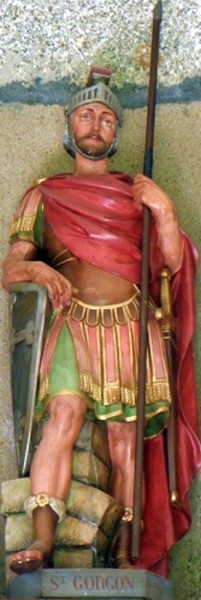
Saint of the Day – 9 September – St Gorgonius of Nicomedia (Died c303) Confessor, Martyr, Soldier, Imperial Court Official and companions, St Dorotheus. After many horrific tortures these two were finally strangled to death in 303 in Nicomedia, Bithynia (modern Izmit, Turkey).
The Roman Martyrology reads today: “At Nicomedia, the holy Martyrs, Gorgontius, Dorotheus and others. The greatest honours had been conferred on them by the Emperor Diocletian but, as they detested the cruelty which he exercised against the Christians, they were, by his orders, suspended in his presence and lacerated with whips; then their skin being torn from their bodies and vinegar and salt poured over them, they were burned on a gridiron and finally, strangled. After some time, the body of the blessed Gorgonius was brought to Rome and deposited on the Latin Way. Thence, it was transferred to the Basilica of St Peter and later some Relics went to France.”
Gorgonius held a high position in the household of the Emperor and had often been entrusted with matters of the greatest importance.
At the onset of the persecution, he was consequently, among the first to be charged and, remaining constant in the profession of the Faith, was with his companions, Dorotheus, Peter and several others, subjected to the most frightful torments and finally strangled.
Diocletian, determined that their bodies should not receive the extraordinary honours which the early Christians were wont to pay the Relics of the Martyrs (honours so great as to occasion the charge of idolatry!) ordered them to be thrown into the sea.
The Christians, nevertheless, obtained possession of them and later, the body of Gorgonius was carried to Rome, whence, in the 8th Century, it was translated by St Chrodegang, Bishop of Metz and enshrined in the Monastery of Gorze. Many French Churches obtained portions of the Saint’s body from Gorze,but in the general pillage of the French Revolution, most of these relics were lost.
Our chief sources of information regarding these Martyrs are Lactantius and Eusebius. Our Saint today and his companions are celebrated today, 9 September. There are many magnificent Churches names for our Saint in Europe, especially in France, Belgium and Germany.
St Peter Claver SJ (1581-1654) Confessor, Priest of the Society of Jesus, Missionary, Confessor, Patron of the missions to African peoples and Human Rights Defender, Apostle of Charity. Also known as “The Apostle of Cartagena” and “The Slave of the Slaves.” Biography: https://anastpaul.com/2017/09/09/saint-of-the-day-9-september-st-peter-claver-s-j/
St Alexander of Sabine St Basura of Masil St Bettelin St Dorotheus of Nicomedia (Died c303) Martyr, Soldier Bl Gaudridus St Gorgonio of Rome St Gorgonius of Nicomedia(Died c303) Martyr, Soldier St Isaac the Great St Joseph of Volokolamsk (c1439-1515) Abbot, Founder
Bl Maria Eutimia Uffing Bl Mary de la Cabeza St Omer St Osmanna St Rufinian St Peter of Nicomedia (Died c303) Martyr, Soldier St Severian St Straton St Tiburtius St Valentinian of Chur St Wilfrida St Wulfhilda
Thought for the Day – 8 September – Meditations with Antonio Cardinal Bacci (1881-1971)
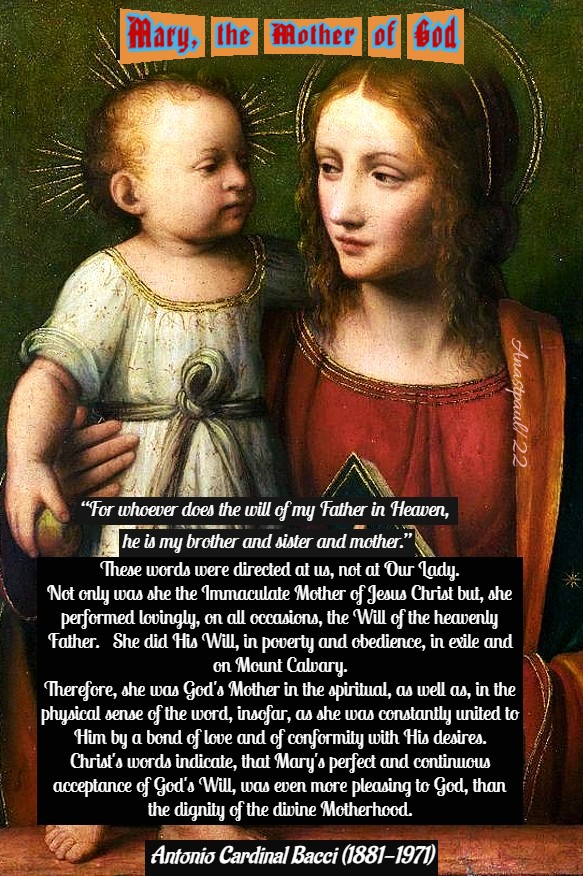
Mary, the Mother of God
“St Matthew (Cf Mt 12:46-50) and St Mark (Cf Mk 3:31-35), relate how Jesus was preaching one day in Galilee, surrounded by His Apostles and by a large crowd, when a man approached and said: “Behold, thy mother and thy brethren are standing outside, seeking thee.” “Who is my mother,” He answered, “and who are my brethren?” Then He extended His hand towards His disciples and said: “Behold, my mother and my brethren! For whoever does the will of my Father in Heaven, he is my brother and sister and mother.”
These words were directed at us, not at Our Lady. Not only was she the Immaculate Mother of Jesus Christ but, she performed lovingly, on all occasions, the Will of the heavenly Father. She did His Will, in poverty and obedience, in exile and on Mount Calvary. Therefore, she was God’s Mother in the spiritual, as well as, in the physical sense of the word, insofar, as she was constantly united to Him by a bond of love and of conformity with His desires.
Christ’s words indicate, that Mary’s perfect and continuous acceptance of God’s Will, was even more pleasing to God, than the dignity of the divine Motherhood.
We cannot equal her in dignity but, we can imitate her in this other respect. Jesus will look on us as His brothers and as worthy sons of Mary, if we carry out His Will in all things. It is not always easy to do this. It is not easy, when we are strongly tempted to commit sins of pride, anger or impurity. It is not easy, when we are overcome by sorrow or by sickness, when we are let down or misunderstood by others, when we are in want and, when we feel that we are collapsing beneath the weight of our cross. At times like these, we should pray for Mary’s spirit of complete acceptance of the Will of God.”
Quote/s of the Day – 8 September – Feast of theNativity of the Blessed Virgin Mary
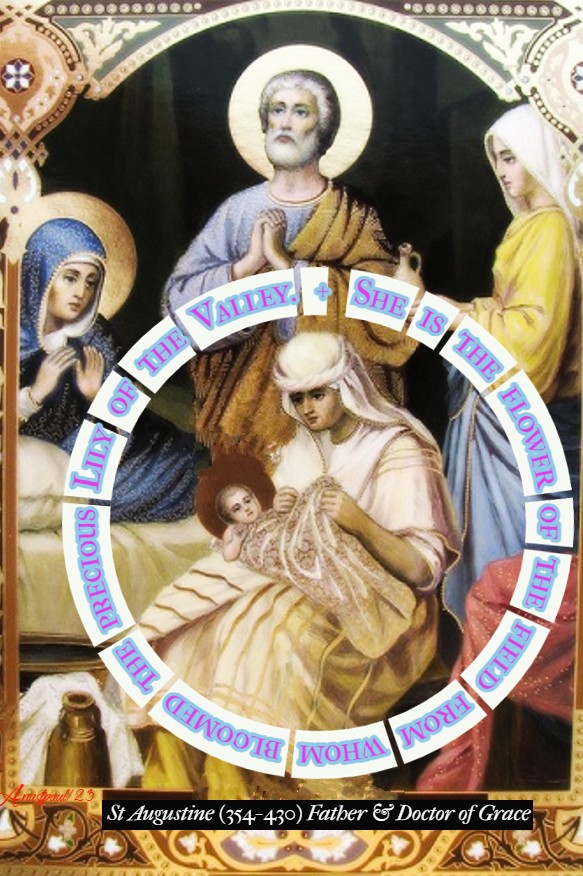
“She is the flower of the field from whom bloomed the precious Lily of the Valley.”
St Augustine (354-430) Father & Doctor of Grace
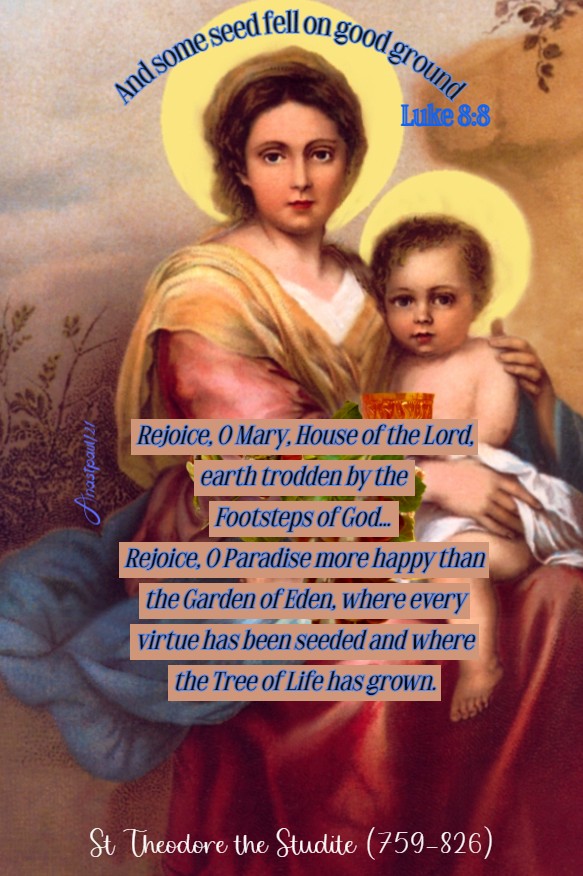
“And some seed fell on good ground” Luke 8:8
“Rejoice, O Mary, House of the Lord, earth trodden by the Footsteps of God… Rejoice, O Paradise more happy than the Garden of Eden, where every virtue has been seeded and where the Tree of Life has grown.”
St Theodore the Studite (750-826) Father, Abbot, Theologian, Writer
(Sermon 2 for the Nativity of Mary)
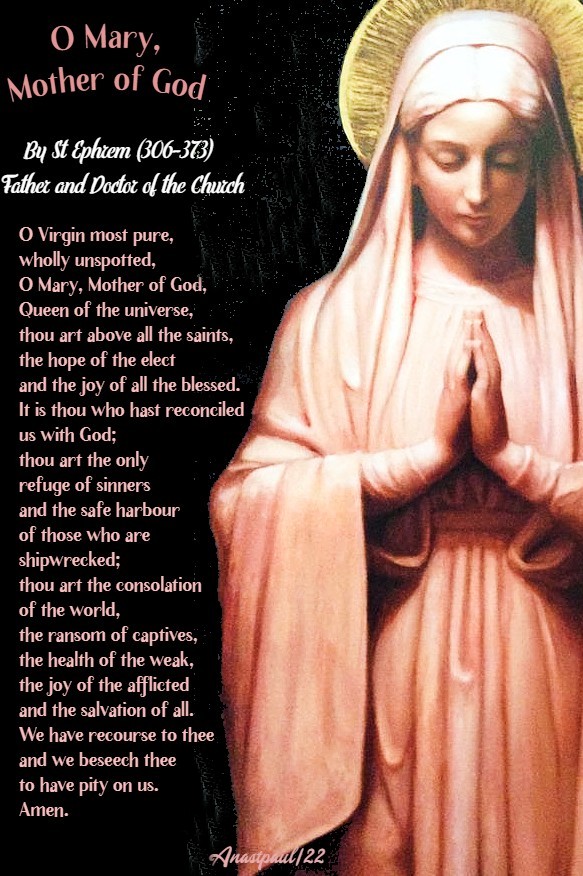
O Mary, Mother of God By St Ephrem of Syria (306-373) Father and Doctor of the Church
O Virgin most pure, wholly unspotted, O Mary, Mother of God, Queen of the universe, thou art above all the saints, the hope of the elect and the joy of all the blessed. It is thou who hast reconciled us with God; thou art the only refuge of sinners and the safe harbour of those who are shipwrecked; thou art the consolation of the world, the ransom of captives, the health of the weak, the joy of the afflicted and the salvation of all. We have recourse to thee and we beseech thee to have pity on us. Amen.
One Minute Reflection – 8 September – Feast of theNativity of the Blessed Virgin Mary – Proverbs 8:22-35, Matthew 1:1-16; 18-23 – Scripture search here: https://www.drbo.org/
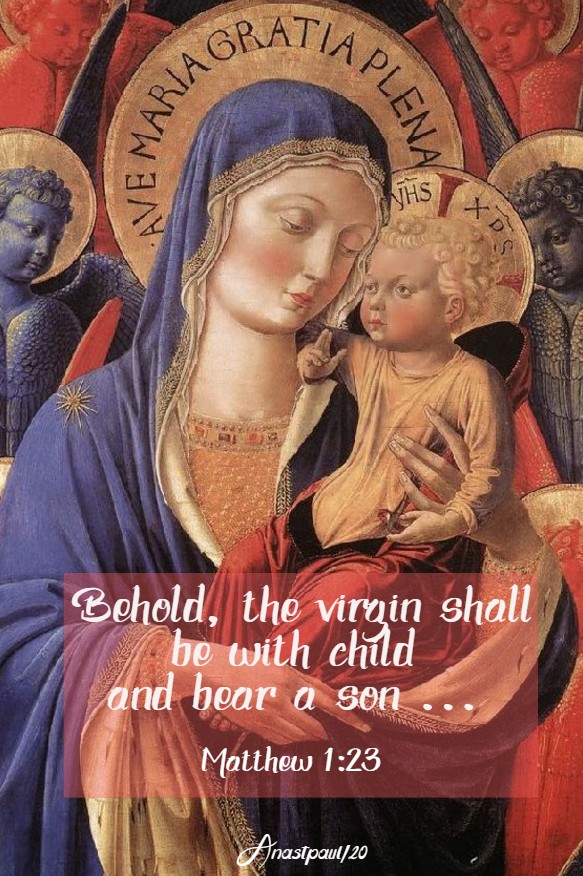
“Behold, the virgin shall be with child and bear a son … ” – Matthew 1:23
REFLECTION – “Come, you nations; come, all peoples of every race and language, every age and rank. Joyfully let us celebrate the nativity of the whole world’s joy! If even the pagans honour the birthday of their king … what ought not we to do to honour that of the Mother of God, through whom all humanity has been transformed and the pain of Eve, our first mother, has been turned to joy? For Eve heard God’s sentence: “You will bring forth children in pain” (Gn 3:16) but Mary: “Rejoice, most highly favoured … the Lord is with you” (Lk 1:28). …
Let all creation celebrate and sing the holy childbirth of a holy woman, for she has brought a lasting treasure into the world. … Through her, the creative Word of God has been united to the whole creation and we celebrate the ending of human barrenness, the ending of the sickness that kept us from possessing all our good. … Nature has given way to grace … As the Virgin Mother of God had to be born of barren Anna, so nature remained without fruit until grace had produced its own. It was to open the womb of its mother, she who would give birth to “The Firstborn of all creation” in whom “all things hold together” (Col 1:15,17).
O blessed couple, Joachim and Anna! All creation owes you thanks; through you it has offered the Creator the best of all His gifts: a Mother worthy of veneration, the only Mother worthy of the One who created her!”- St John Damascene (675-749) Monk, Theologian, Father and Doctor of the Church – Homily on the Nativity of the Virgin Mary, 1-2 (cf SC 80, p. 48)
PRAYER – Lord God, the day of our salvation dawned when the Blessed Virgin gave birth to Your Son. As we celebrate her nativity, grant us Your grace and Your peace. Through Christ, Thy Son our Lord, Who lives and reigns with Thee, in the unity of the Holy Ghost, God, world without end. Amen (Collect).
Our Morning Offering – 8 September – The Nativity of the Most Blessed and Ever-Virgin Mary, Mother of God (If anyone has more information regarding Sister Francis Marie please comment below.)
The Birthday of Our Queen By Sister Francis Marie (Hymn published in 1948).
All hail, O new world! Come and see Here in a cradle lies our Queen, Mother of God, one day to be, O come and see this heavenly scene.
A beauteous, fragrant rose-bud, Immaculate! God’s own flower, His masterpiece of royal blood Who came to earth this midnight hour!
Thousands of Angels stand to guard This mystical counterpart of God And Seraphs play sweet lullabies Upon their harps, as Cherubs laud.
Hail holy babe! Hail full of grace! With wee hands clasped, with eyelids closed She talks with God – face to face! Amen
Saint of the Day – 8 September – St Adrian (Died 306) Confessor, Lay Martyr, Royal Court Guard in Roman Imperial Court at Nicomedia in Asia-Minor during the time of Emperor Maximian in the early 4th Century. Patronages – against the plague/epidemics, against epilepsy, arms dealers, butchers, guards, soldiers. Also known as – Hadrian.
The Roman Martyrology reads this day: “At Nicomedia, St Adrian, with twenty three other Martyrs, who ended their Martyrdom on the 4th day of March by having their limbs crushed, after enduring many torments, under the Emperors Diocletian and Maximian. Their remains were carried to Byzantium by the Christians and buried with due honours. Afterwards, the body of St Adrian was taken to Rome on this day, on which his festival is celebrated.”
Adrian was a paganGuard at the Imperial Court of Nicomedia. Impressed by the courage of a group of Christians who were being tortured, he declared himself a Christian and was imprisoned with them and suffered excruciating tortures before he was put to death.
After his execution, the executioners wanted to burn the bodies of the dead but a storm arose and quenched the fire. His young wife, Natalia, who was present at his death, comforted him in his agony, recovered one of his severed hands and took it to Argyropolis near Constantinople, where she fled to escape the importunities of an Imperial Official of Nicomedia, who wanted to marry her. She died there peacefully on 1 December in the same year as her husband.
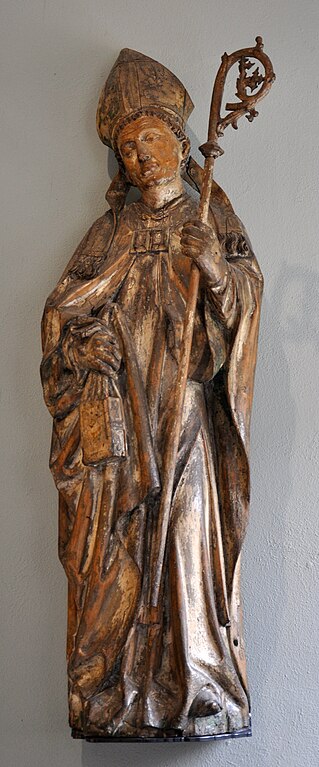
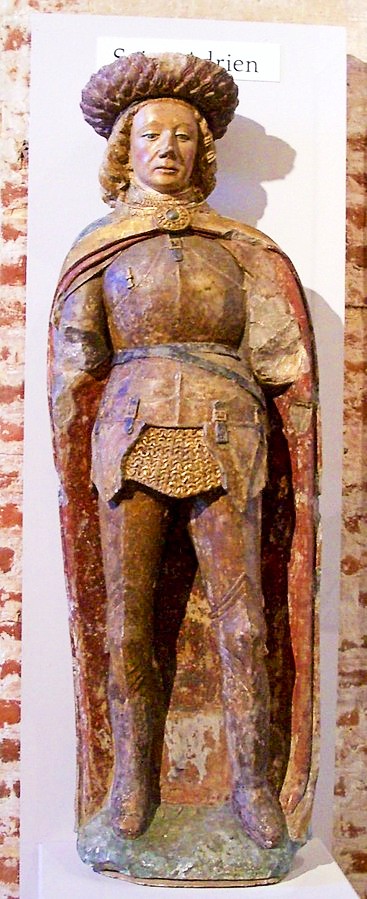
French Statue of St Adrian
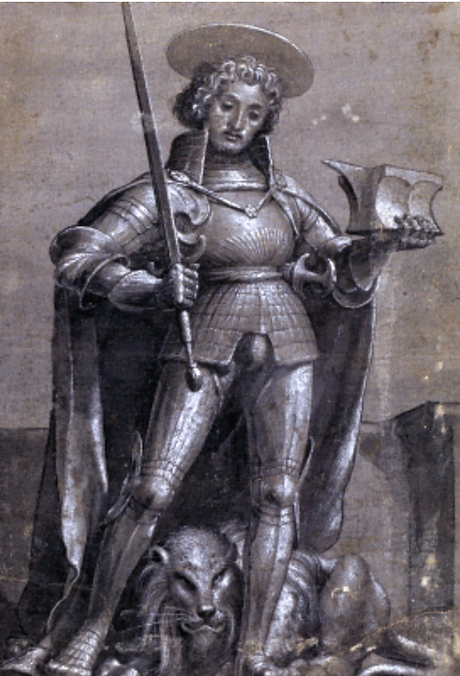
Saint Adrian/Hadrian was the chief military Saint of Northern Europe for many Centuries second only to Saint George and is much revered in Belgium, Germany and the north of France. He is usually represented armed, with an anvil in his hands or at his feet.
St Disibod of Disenberg St Ethelburgh of Kent St Faustus of Antioch St Isaac the Great Blessed István Pongrácz St Kingsmark St Peter of Chavanon Bl Seraphina Sforza
Martyrs of Alexandria – 5 Saints: A group of Christians Martyred together in the persecutions of Diocletian – Ammon, Dio, Faustus, Neoterius and Theophilus. Martyred in Alexandria, Egypt.
Martyrs of Japan – (21 Beati: A group of 21 Missionaries and Converts, who were executed together for their faith. They were: Antonio of Saint Bonaventure, Antonio of Saint Dominic, Dominicus Nihachi, Dominicus of Saint Francis, Dominicus Tomach, Francisco Castellet Vinale, Franciscus Nihachi, Ioannes Imamura, Ioannes Tomachi, Laurentius Yamada, Leo Aibara, Lucia Ludovica, Ludovicus Nihachi, Matthaeus Alvarez Anji, Michaël Tomachi, Michaël Yamada Kasahashi, Paulus Aibara Sandayu, Paulus Tomachi, Romanus Aibar, Thomas of Saint Hyacinth, Thomas Tomachi Died on 8 September 1628 in Nagasaki, Japan Beatified on 7 May 1867 by Pope Pius XI.





























You must be logged in to post a comment.