Our Lenten Journey with St Francis de Sales – 24 March – Friday of the Fourth Week in Lent and the Feast of St Gabriel the Archangel – Daniel 9:21-26, Luke 1:26-38 – Scripture search here: https://www.drbo.org/
“He hath given His Angels charge over thee, to keep thee in all thy ways.” Psalm 90:11
“At that time, the Angel Gabriel was sent from God to a town of Galilee called Nazareth, to a virgin betrothed to a man named Joseph, of the house of David, and the virgin’s name was Mary.” Luke 1:26-27
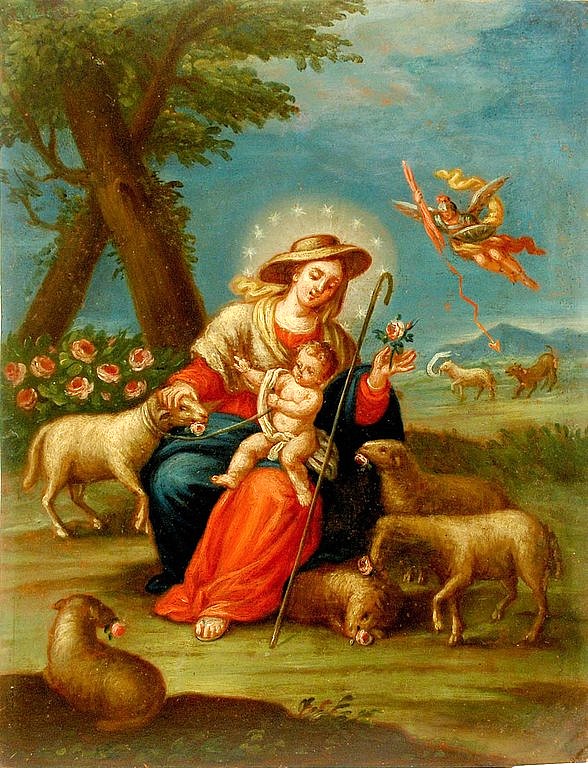
THE ANGELS St Francis de Sales (1567-1622) Doctor Caritas
“INASMUCH AS GOD continually sends us inspirations by means of His Angels, we may fittingly send back our aspirations, through the same channel. … Seek to be familiar with the Angels; learn to realise that they are continually present, although invisible. Especially love and revere the Guardian Angel of the Diocese in which you live, those of the friends who surround you and your own. Commune with them frequently, join in their songs of praise and seek their protection and help in all you do, spiritual or temporal.
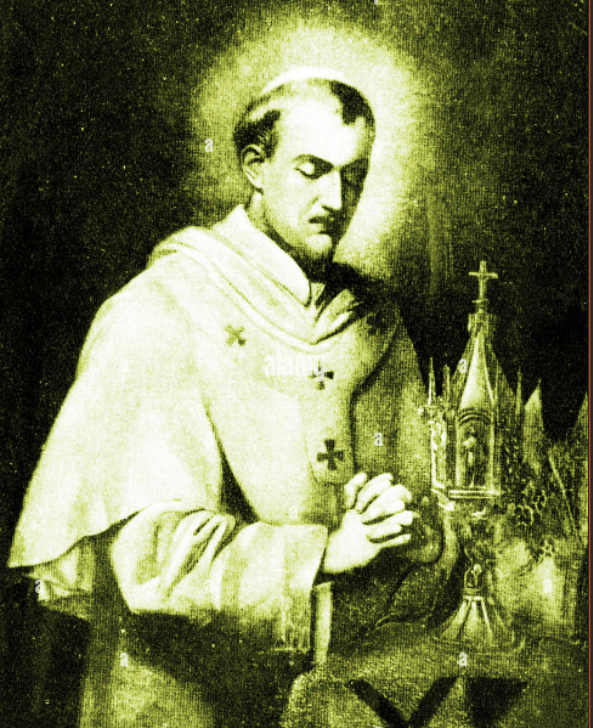
That pious man Peter Faber, the first companion of Saint Ignatius and the first Priest, first preacher and first theological teacher of the Company of the Jesuits, who was a native of our Diocese, (the French region of Savoy) once, passing through this country on his way from Germany, (where he had been labouring for God’s Glory) told, how great comfort he had found, as he went among places infested with heresy, in communing with the Guardian Angels thereof, whose help had often preserved him from danger and softened hearts to receive the Faith. He spoke with such earnestness that a lady, who, when quite young, heard him, was so impressed that she repeated his words to me only four years ago, sixty years after their utterance! with the utmost feeling.” – (Introduction to the Devout Life – PART II. Containing sundry counsels).
One Minute Reflection – 24 March – “The Month of the St Joseph” – Friday of the Fourth Week in Lent and the Feast of St Gabriel the Archangel – Daniel 9:21-26, Luke 1:26-38 – Scripture search here: https://www.drbo.org/
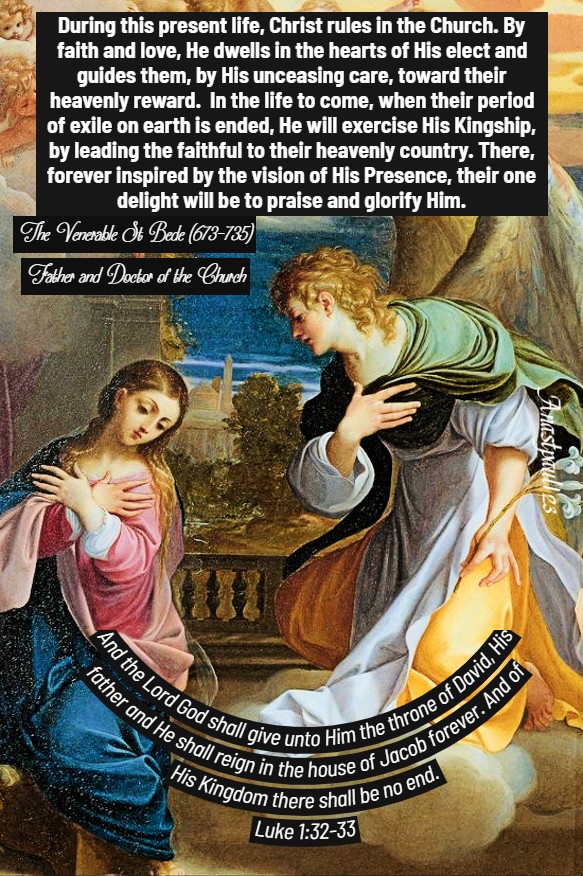
“Hail, full of grace!” – Luke 1:28
REFLECTION – “So the Lord now manifestly came to His own. Born by His own created order that He Himself bears, He by His obedience on the tree, renewed and reversed what was done by disobedience, in connection with a tree.
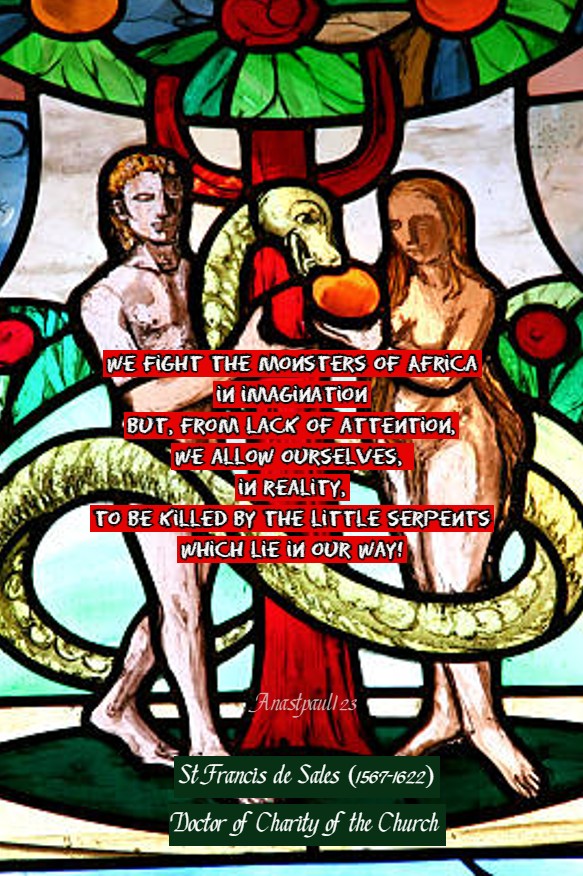
The power of that seduction, by which the virgin Eve, already betrothed to a man, had been wickedly seduced, was broken when the Angel in truth brought good tidings to the Virgin Mary, who already, by her betrothal belonged to a man. For as Eve was seduced by the word of an Angel to flee from God, having rebelled against His Word, so Mary by the word of an Angel, received the glad tidings that she would bear God, by obeying His Word.
The former was seduced to disobey God and so fell but the latter, was persuaded to obey God, so that the Virgin Mary might become the advocate of Eve.
As the human race was subjected to death through the act of a Virgin, so was it saved by a Virgin, was precisely balanced by the obedience of Another. Then indeed, the sin of the first formed man was amended by the chastisement of the First Begotten, the wisdom of the serpent was conquered by the simplicity of the Dove and the chains were broken, by which we were in bondage to death.” – St Irenaeus (130-202) Bishop of Lyons, Martyr, Father of the Church (Against Heresies, 5)
PRAYER – O God, Who, out of all the Angels, chose the Archangel Gabriel to announce the Mystery of Thy Incarnation, mercifully grant that we who keep his feast on earth, may have him as our patron in Heaven.Through the same Jesus Christ, Thy Son our Lord, Who lives and reigns with Thee, in the unity of the Holy Ghost, God, world without end. Amen (Collect).
Our Morning Offering – 24 March – Feast of the Most Precious Blood for the Friday after Laetare Sunday
By the Merit of the Precious Blood of Jesus By Servant of God Pope Pius VII (1742-1823) Papacy from 1800 to 1823 Indulgenced Act of Oblation to Our Father
Eternal Father! I offer Thee the merit of the Precious Blood of Jesus, Thy well-beloved Son, my Saviour and my God, for all my wants, spiritual and temporal, in aid of the Holy Souls in Purgatory and chiefly for those who most loved this Precious Blood, the price of our redemption and who were most devout to the sorrows and pains of most Holy Mary, our dear Mother.
Glory be to the Blood of Jesus, now and forever and throughout all ages. Amen.
Indulgence of 300 days, each time this prayed is offered 22 September 1817 with a Plenary Indulgence, once a month, under the usual conditions.
Note of Interest:On 15 August 1811 – the Feast of the Assumption – it is recorded that the Pope celebrated Mass and was said to have entered a trance and began to levitate in a manner that drew him to the Altar. This particular episode aroused great wonder and awe among attendants, which included the French soldiers guarding him, who were awestruck at what had occurred and left records of it.
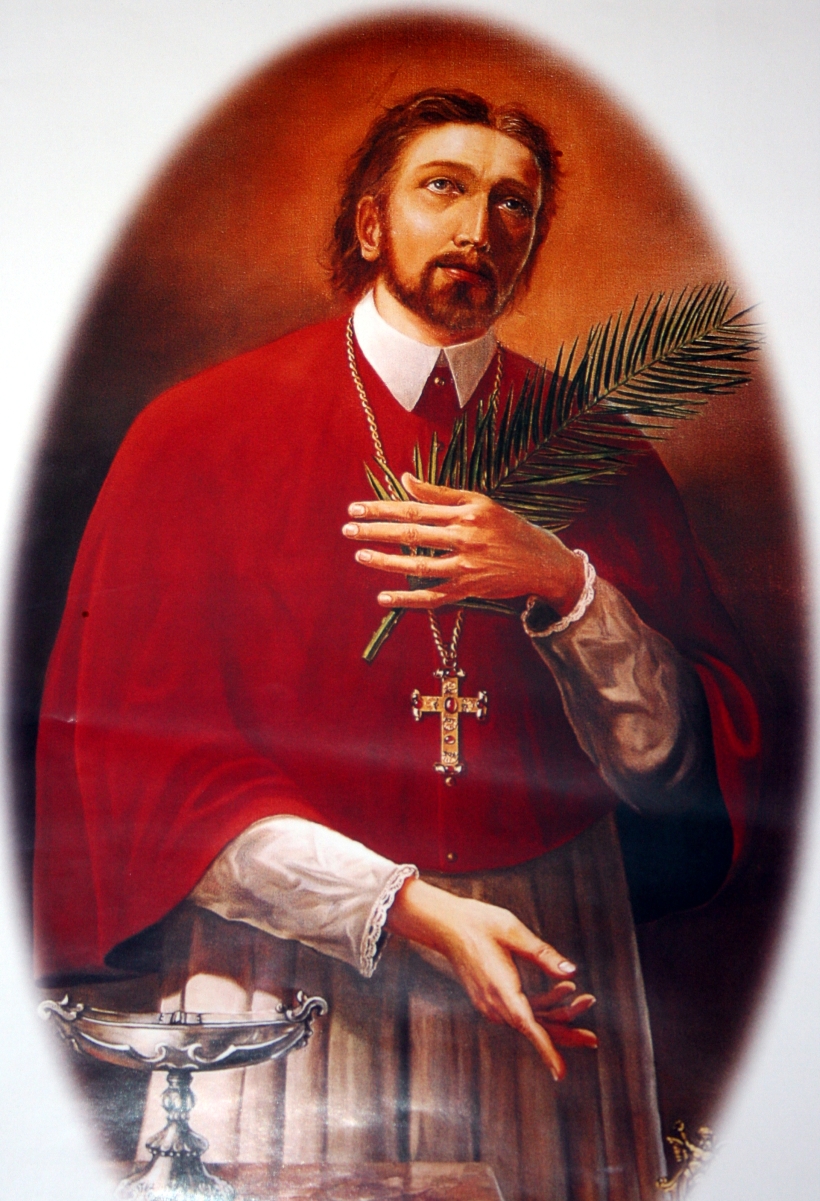
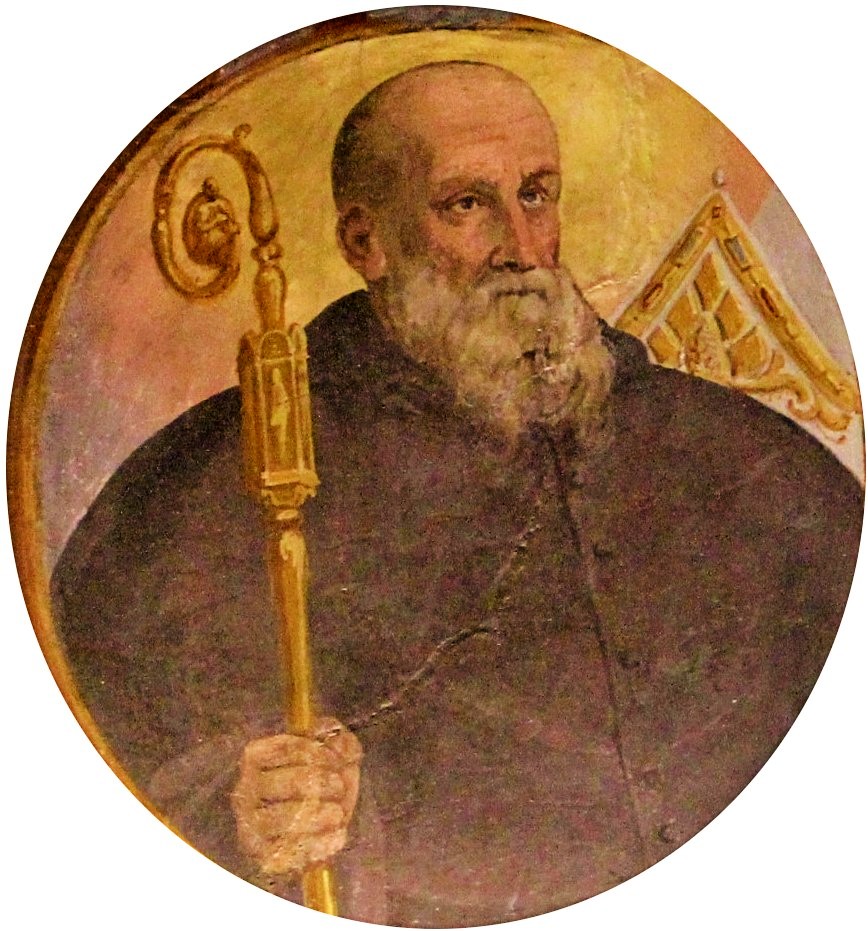
Saint of the Day – 24 March – St Aldemar the Wise OSB (985-c1080) Priest, Abbot, founder of many Monasteries, Miracle-worker. Born in 985 in Capua, Italy and died in c1080 in Bucchianico, Italy of natural causes. Patronage – of the Town of Bucchianico, Italy. Also known as – Aldemar of Capua, Aldemar of Bucchhianico, Aldemaro, Aldemario.
As a boy, Aldemar was sent to the famous Monastery founded by St Benedict, Monte Cassino. He grew in his studies and became known as “Aldemar the Wise.” As a youth he became a Monk at Monte Cassino and was Ordained Deacon.
Because of his learning and insight, a Princess, named Aloara of Capua (died 992), of a nearby region asked Aldemar to lead a new Monastery, that of the Capuan Monastery of San Lorenzo, which she had founded. He accepted and was given permission to take on the role. Here he was Ordained to the Priesthood and ruled as the Abbot.
In the course of his duties it became clear that he had been given the gift of working miracles. The wonders he worked attracted much attention, however, so his Abbot recalled him to Monte Cassino.
The Princess took offence at this and a dispute arose. Aldemar decided to escape to a different town to live with three religious brothers. One of the brothers came to dislike him and even tried to murder Aldemar.
The brother intended to shoot Aldemar with a crossbow but mishandled the weapon and wounded himself in the arm. The injury worsened until Aldemar prayed for the brother, and he was cured.
After this, Aldemar left the Convent and went first to San Liberatore and then to Farafiliorumpetri, where he built the Monastery of Santa Eufemia . Later he founded other monasteries in the region of Chieti and in Piceno. Aldemar directed all of these communities.
After his death his body was translated to Bucchianico, in the Church of Saint Urban, where it rests today and where he is venerated as the Patron Saint of the Town.
Friday of the Fourth Week in Lent – FAST AND ABSTINENCE
FEAST OF THE MOST PRECIOUS BLOOD OF JESUS is a Feast for the Fridays of Lent, which has been in the General Roman Calendar from 1849 to 1969 with the same Office as that of the Solemnity of the Precious Blood in July.. HERE: https://anastpaul.com/2022/07/10/the-solemnity-of-the-most-precious-blood-of-of-our-lord-jesus-christ-and-the-litany/ For many Diocese, there were two days to which the Office of the Precious Blood was assigned, the Office for both being the same. The reason was that the Office was at first granted only to the Fathers of the Most Precious Blood. Later, as one of the Offices of the Fridays of Lent, it was assigned to the Friday after the Fourth Sunday in Lent (Laetare Sunday) in some Diocese, including, by decision of the Fourth Provincial Council of Baltimore (1840), those in the United States.
The Solemnity in July is again the same Office and both Feasts (during Lent and in July) are kept in some Diocese. On 10 August of the same year, (1849) Pope Pius IX officially included the Feast of the Most Precious Blood of Our Lord Jesus Christ in the General Roman Calendar, for celebration on the first Sunday in July, that is the first Sunday after 30 June, which is the anniversary of the liberation of the City of Rome from the insurgents.
In reducing the number of Feasts fixed for Sundays, Pope Pius X assigned the date of 1 July to this Feast. In 1933, Pope Pius XI raised the Feast to the rank of Double of the 1st Class to mark the 1,900th anniversary of the Passion of Our Lord Jesus Christ.
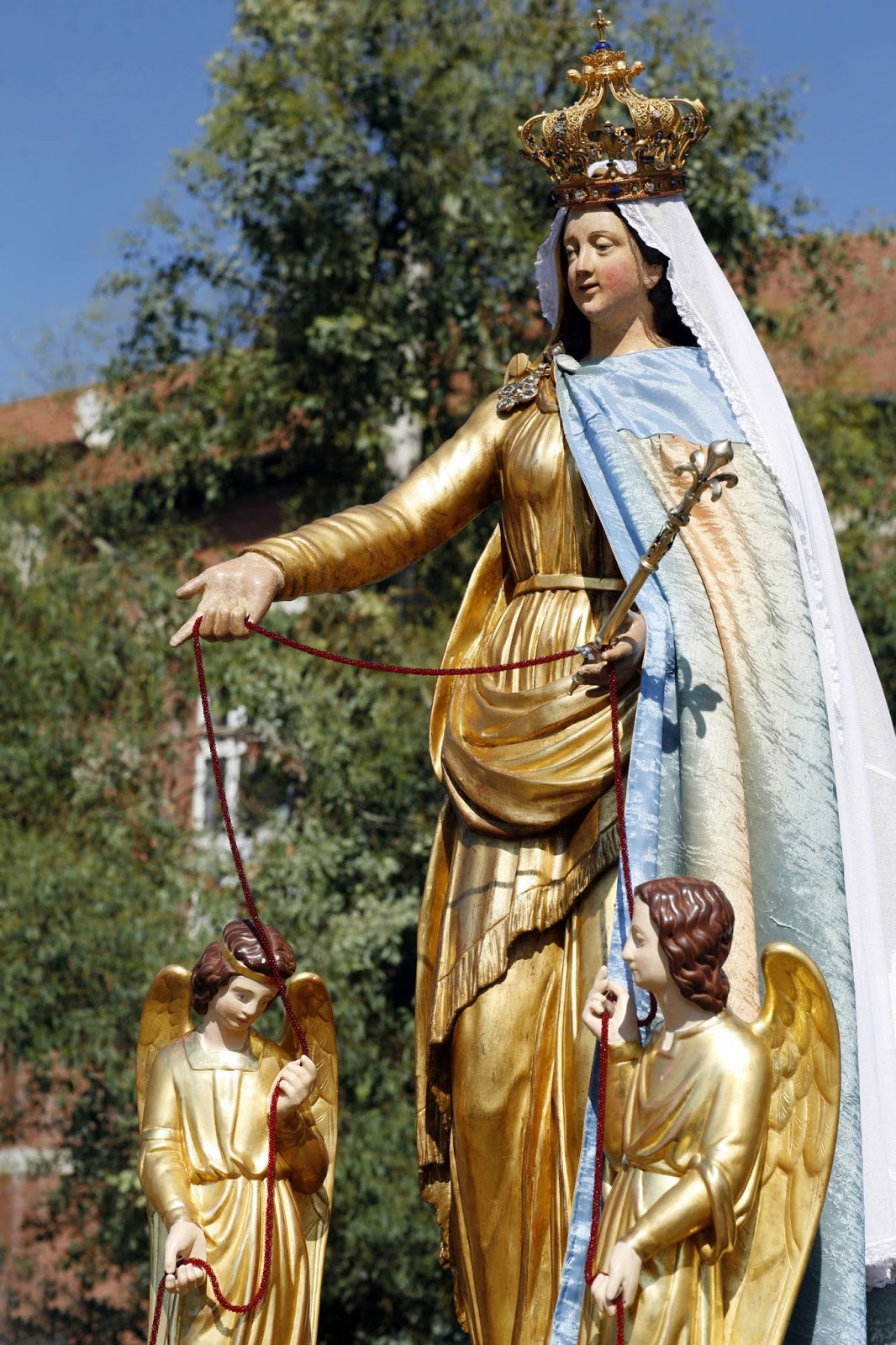
The Archangel Saint Gabriel The Feast of Saint Gabriel was included by Pope Benedict XV in the General Roman Calendar in 1921, for celebration on 24 March. The Archangel Saint Gabriel whose name means “the Power of God. ” He appeared to the prophet Daniel (Dan 8:16; 9:21), to the priest Zachary to announce the forthcoming birth of Saint John the Baptist (Luke 1:11, 19) and to the Blessed Virgin Mary to announce the birth of Our Saviour (Luke 1:26.). St Gabriel! https://anastpaul.com/2022/03/24/saint-of-the-day-24-march-the-archangel-saint-gabriel/
St Agapitus of Synnada St Aldemar the Wise OSB (985-c1080) Priest, Abbot St Bernulf of Mondov Bl Bertha de’Alberti of Cavriglia Bl Bertrada of Laon Bl Brian O’Carolan St Caimin of Lough Derg St Cairlon of Cashel
St Latinus of Brescia St Macartan of Clogher St Mark of Rome St Pigmenius of Rome St Romulus of North Africa St Secundus of North Africa St Seleucus of Syria St Severo of Catania St Timothy of Rome
Martyrs of Africa – 9 Saints: A group of Christians murdered for their faith in Africa, date unknown. The only details about their that survive are the names – Aprilis, Autus, Catula, Coliondola, Joseph, Rogatus, Salitor, Saturninus and Victorinus. .
Martyrs of Caesarea – 6 Saints: A group of Christians Martyred together in the persecutions of Diocletian. We know little else but six of their names – Agapius, Alexander, Dionysius, Pausis, Romulus and Timolaus. They were martyred by beheading in 303 at Caesarea, Palestine.
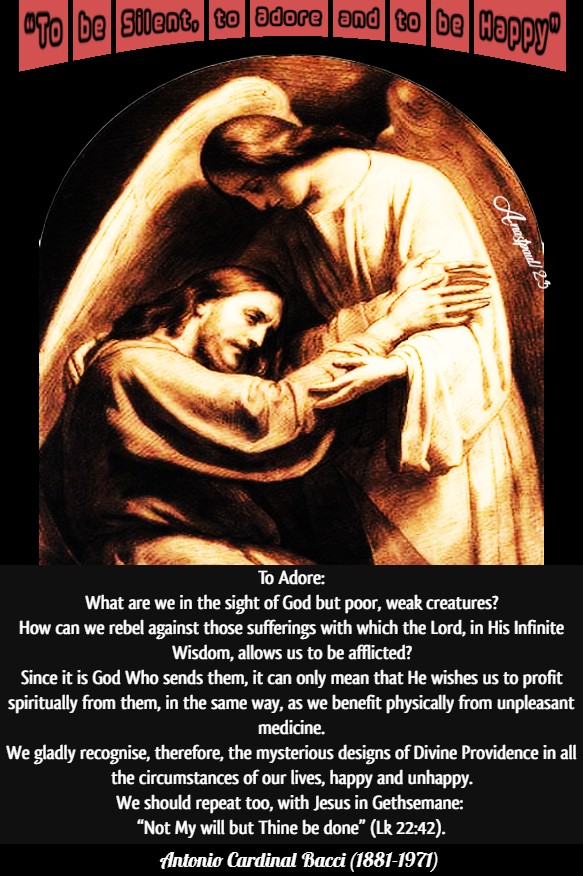
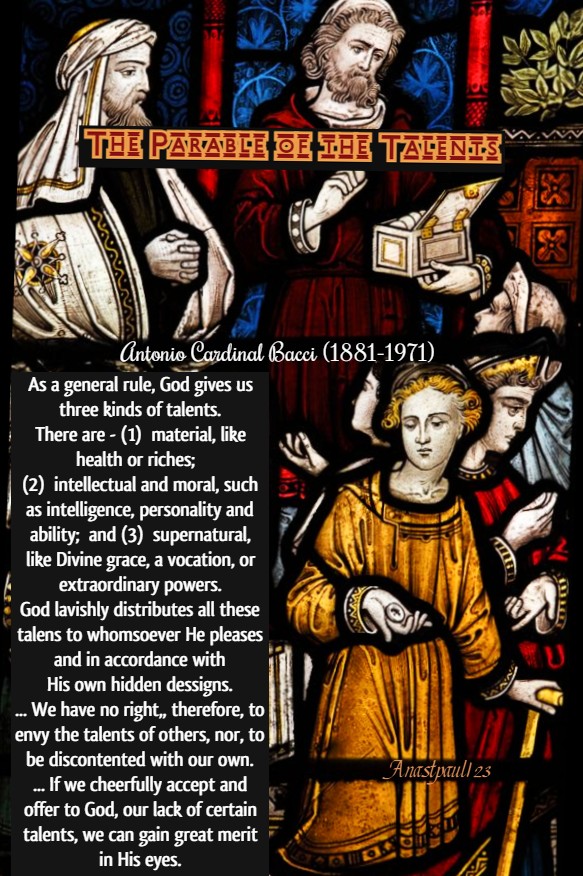
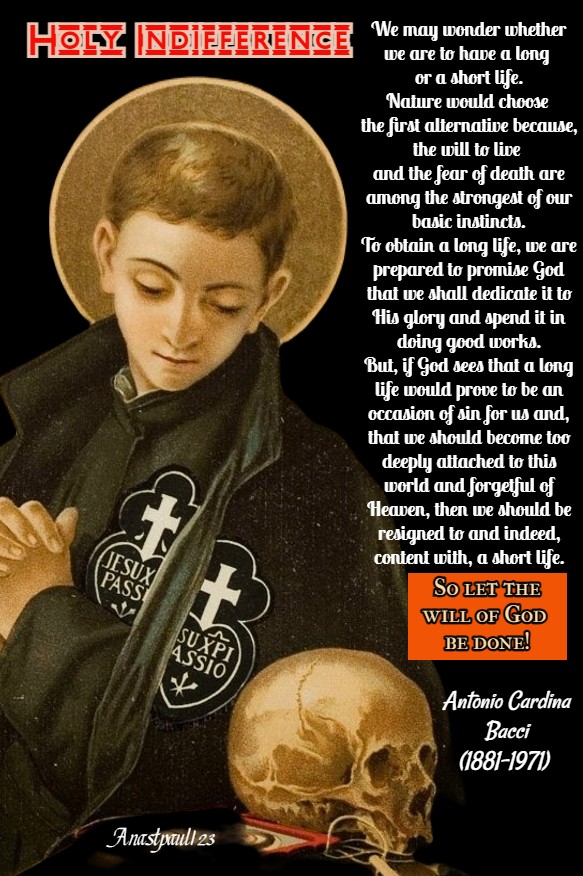
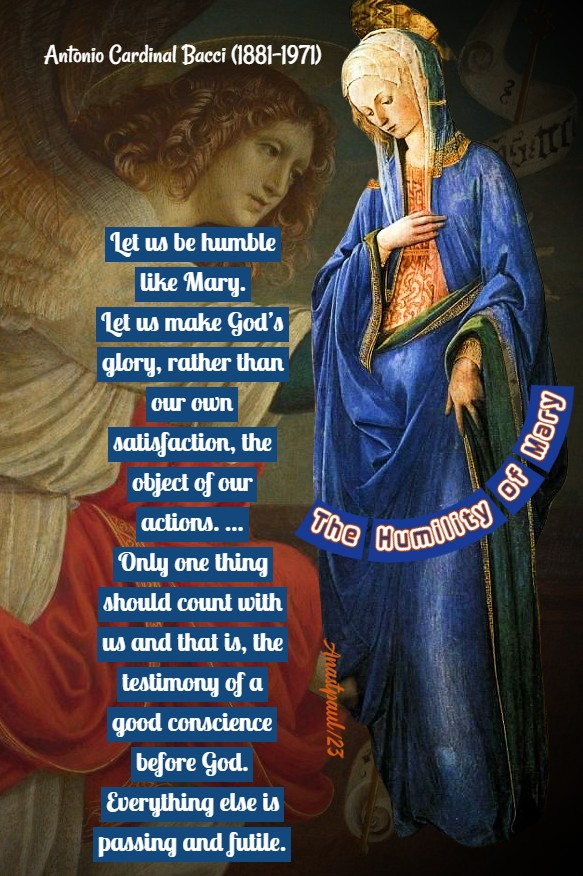
Thought for the Day – 23 March – Meditations with Antonio Cardinal Bacci (1881-1971)
Self-Denial
“This denial of ourselves to the extent of identifying our will with the Will of God, produces in us, a profound peace. The Saints scaled this height and found there that tranquility of spirit which led them to rejoice in martyrdom and dishonour.
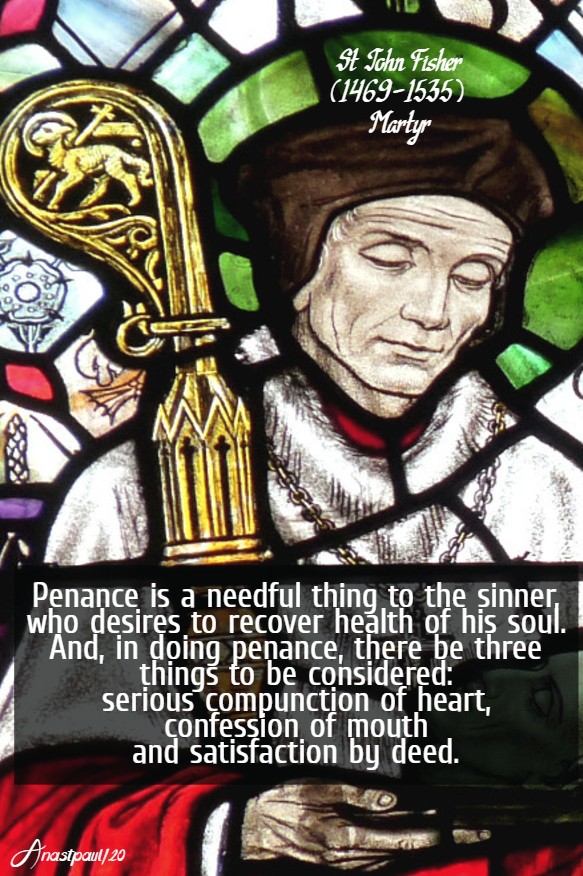
It was this peace of soul which made the dying St Aloysius Gonzaga smile and say: “I am happy to be going.” It was this which enabled the saintly, Cardinal Fisher, when he was going to the scaffold, to behold a light which does not fail and say: “Commit to the Lord your way … He will make justice dawn for you like the light (Ps 36:5-6). This too, is why, the Imitation of Christ tells us that nobody is so free, as he who knows how to deny himself!””
Quote/s of the Day – 23 March – Thursday of the Fourth Week in Lent – 4 Kings 4:25-38, Luke 7:11-16 – Scripture search here: https://www.drbo.or
“Young man, I say to thee, arise!”
Luke 7:14
“Thy sins are forgiven thee … Arise and walk.”
Luke 5:23
“My grace is sufficient for thee, for My strength is made perfect in weakness. Therefore, I will boast all the more gladly about my weaknesses, so that Christ’s power may rest on me.”
2 Corinthians 12:7
“O my brethren, if only we wanted to, if only we all wanted to perceive our soul’s paralysis in all its depth! Then we would see that it is lying on a stretcher of sins, deprived of strength. Christ’s action within us, would be a source of light and we would understand that each day He sees our lack of faith, harmful as it is, that He draws us towards healing remedies and sharply presses our rebellious wills. “My son” He says, “your sins are forgiven you.”
St Peter Chrysologus (c 400-450) “Golden Words” Father & Doctor of the Church
“If thou art bound down by sickness, if sorrows weary thee, if thou art trembling with fear, invoke the name of Jesus!”
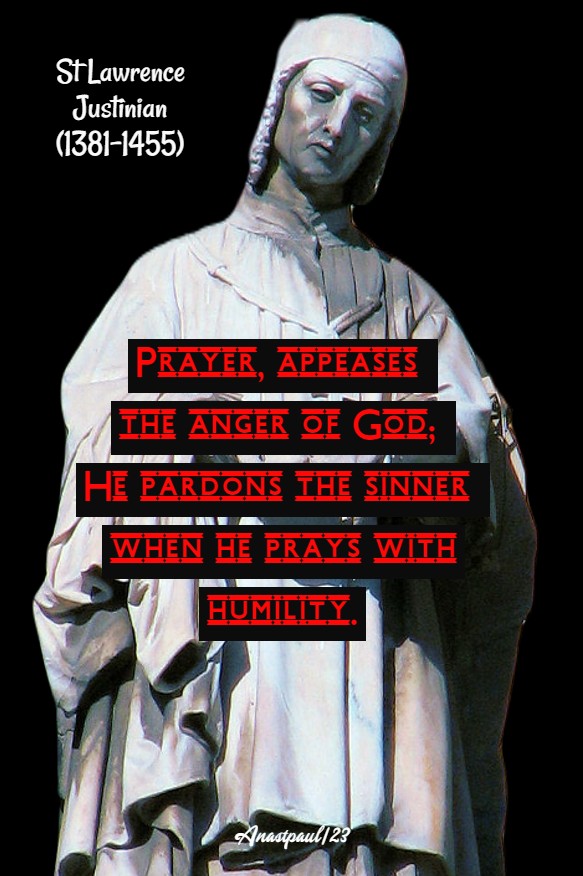
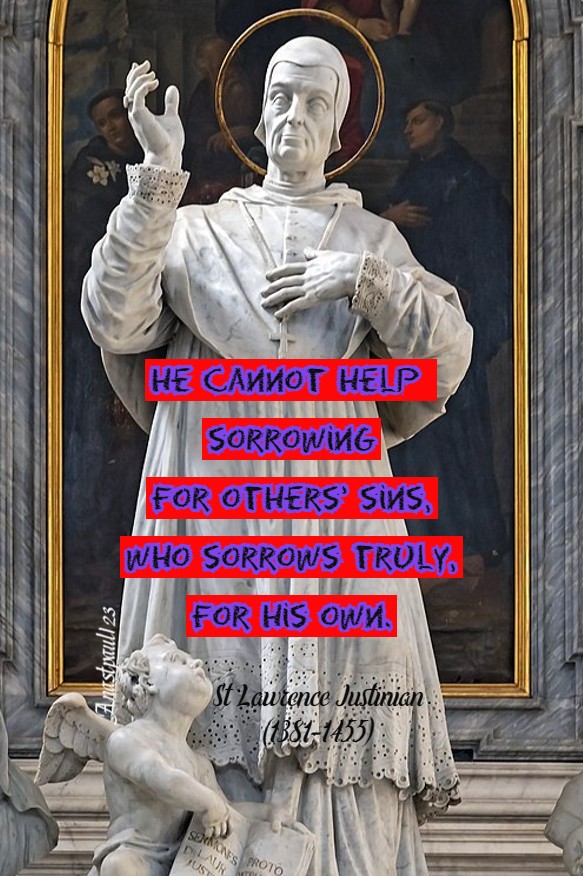
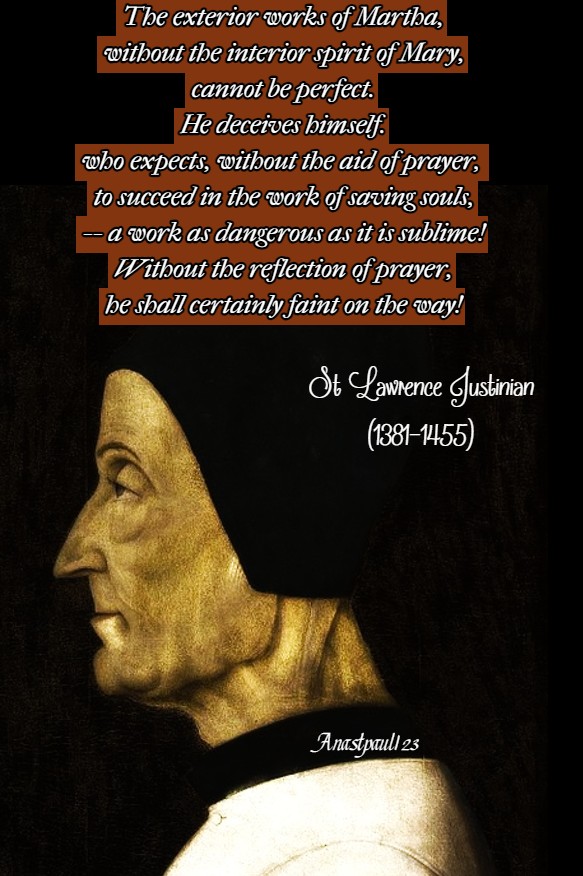
St Lawrence Justinian (1381-1456)
“The medicine of God, is Jesus Christ, Crucified and Risen, the measure of all things.”
St John Leonardi (1541-1609) Confessor, Priest, Founder
Our Lenten Journey with St Francis de Sales – 23 March – Thursday of the Fourth Week in Lent – 4 Kings 4:25-38, Luke 7:11-16 – Scripture search here: https://www.drbo.org/
“Come to Me, all ye who are weary …” Matthew 11:28
“Young man, I say to thee, arise!” Luke 7:14
THE DIVINE PHYSICIAN St Francis de Sales (1567-1622) Doctor Caritas
“Our Lord, the great and excellent Physician of our infirmities, announced everywhere, before coming into this world, both His arrival and the maladies He would cure; sometimes by His prophets. …”
What wonder then if, in the Gospel, we find Him surrounded by the sick, by sinners and by publicans! O vain and foolish murmuring of the Hebrews, when they said: “This man receiveth sinners.” Whom would you wish Him to receive? Is it not the honour of a Physician to be sought for by the sick and so much the more, as their maladies are considered incurable? …
Thus, how were the poor Prodigal and the unfortunate Absalom received by their fathers? And, otherwise, what would become of us, for all have sinned? Every man is a liar, that is to say, a sinner. If we say that we are without sin, we deceived ourselves. Return to the Lord, and forsake your injustice, for His Mercy is great towards those who are converted to Him. Why is He called Saviour, unless in order to save? …
But, oh, miserable that we are! We are often called and we only turn a deaf ear. “I have called and you have not heard,” says God. We are drawn and we obstinately resist Him. He complains, saying: “All the day long have I stretched out My hands to this incredulous and rebellious people! ”…
Let us then depart, let us depart from Egypt, let us approach Our Lord, let us make provision of good works; let the feet of our affections be bare, let us clothe ourselves with innocence, let us not be satisfied with crying for mercy, let us go forth from Egypt, let us delay no longer. The hour is come to arise from sleep, since we know that He receives sinners; the Angels await our repentance, the Saints pray for it!” – (Consoling Thoughts on God and Providence).
One Minute Reflection – 23 March – “The Month of the St Joseph” – Thursday of the Fourth Week in Lent – 4 Kings 4:25-38, Luke 7:11-16 – Scripture search here: https://www.drbo.org/
“Young man, I say to thee, arise!” – Luke 7:14
REFLECTION – “Let no-one who is Christian doubt that even now, dead people rise. Certainly, every human being has eyes, by which he can see dead people rising, in the way this widow’s son, whom we just heard about in the Gospel, arose. But not everyone can see people who are spiritually dead rise. For that, it is necessary to have already risen interiorly. It is greater to raise someone, who is to live forever than to raise someone, who will have to die again.
The young man’s mother, this widow, was transported with joy at seeing her son rise. Our Mother, the Church, also rejoices when she sees her children’s spiritual resurrection everyday. The widow’s son was dead with the death of the body but these latter, are dead with the death of the soul. People wept tears over the visible death of the former but people were not concerned by the invisible death of the latter – they did not even see it. The only One Who did not remain indifferent, is the One Who knew these deaths – only the One, Who could give life back to them, knew these deaths. For if the Lord had not come to raise the dead, the Apostle Paul would not have said: “Awake, O sleeper, arise from the dead and Christ will give you Light.” (Eph 5:14).” –St Augstine (354-430) Father and Doctor of Grace (Sermon 98).
PRAYER – Grant, we beseech Thee, Almighty God, that we who are chastising the flesh by fasting, may rejoice in this holy practice and thus, with earthly passions subdued, we may the more readily direct our thoughts to Heavenly things. Through the same Jesus Christ, Thy Son our Lord, Who lives and reigns with Thee, in the unity of the Holy Ghost, God, world without end. Amen (Collect).
Our Morning Offering – 23 March – Thursday of the Fourth Week in Lent – “The Month of the St Joseph”
Glorious St Joseph! Prayer for the Intercession of St Joseph in All Our Needs By St Francis de Sales (1567-1622) Doctor Caritas
Glorious St Joseph, Spouse of Mary, grant us thy paternal protection, we beseech thee, by the Heart of Jesus Christ. O thou, whose power extends to all our necessities and can render possible for us, the most impossible things, open thy fatherly eyes to the needs of thy children. In the trouble and distress which afflicts us, we confidently have recourse to thee. Deign to take under thy charitable charge this important and difficult matter, cause of our worries. Make its happy outcome be for God’s glory and for the good of His devoted servants. Amen.
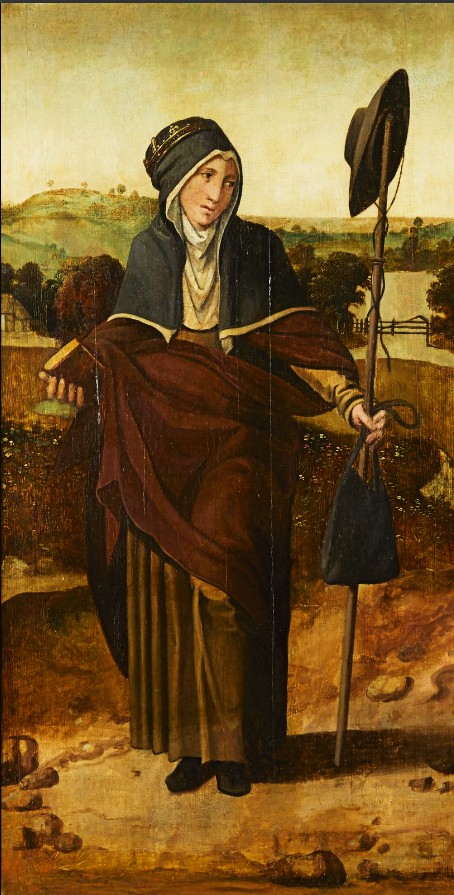
Saint of the Day – 23 March – St Ottone Frangipane (1040-1127) Layman, military Knight, Pilgrim, Ascetic, Hermit, Miracle-worker both during life and after his death. Founder of a Pilgrim’s Hospice in Ariano which later became a huge Hospital. Born in 1040 in Rome, Italy and died on 23 March 1127 in Ariano Irpino, Italy of natural causes. Patronages – the City of Ariano Irpino, Italy, the Diocese of Ariano Irpino-Lacedonia, Castelbottaccio, Italy. Also known as – Oddone, Oto, Otto.
According to the Arianesi tradition, Ottone was born in Rome, and was a member of the noble Frangipane family, a powerful baronial family occupying a prominent position in Rome. Around 1058 when Ottone was a young Knight of around 18 years, he had to leave his home on a military campaigns in defence of the Pope. In one of these campaigns,
Ottone was captured and put in chains in a cell in a tower, from which he escaped after beseeching the intercession of the Patron Saint of the imprisoned, Saint Leonard of Noblac, who appeared to him during the night and released him from his chains.
Ottonhe returned to Rome before he went on pilgrimages of thanksgiving to many Shrines in different regions across Italy.
That pilgrimage lasted about 50 years! Traditions state that at that time he wore the Benedictine habit, although he did not take the vows of a Monk and lived for some time in the Abbey of the Blessed Trinity of Cava, dedicating himself to prayer and manual labour. He later visited St William of Vercelli in Montevergine Monastery, spending time there and becoming the spiritual disciple and student of St William.
In around 1110, after the long pilgrimage, the Saint settled in Ariano. At this time the City was a place of transit for the pilgrims travelling from Naples and Benevento towards Bari, where they would take ship for the Holy Land. Ottone dedicated himself to their help and to accommodate them, he founded the Hospice of San Giacomo (Saint James).
Here Ottone worked for three years in a Hospice for pilgrims setting an example of charity, until he decided to retire to lead a life of solitary prayer about a kilometer away from the City and the Hospice near to the Church of San Pietro Apostolo, today called San Pietro dei Reclusiis
The little Hospice today is this Hospital of St Ottone Frangipane
Attached to the Church he built a small cell and there he isolated himself. He performed many miracles in the place, increased his austerities, prolonged his prayer vigils, lessened the food and increased the penances. Next to the small cell he dug a grave, as a reminder of death, as a warning to lead a holy life. After ten years of this life, he died.
The Arianesi solemnly transported his body to the Cathedral, where the Bishop had him buried with honour. The cult seems to have started right away and many miracles have been attributed to St Ottone over the centuries. In around 1220, Ottone’s Relics body was transferred to Benevento to avoid desecration in Saracen raids.
The most important miracle recorded of Ottone took place in around 1180, when the Saracens of Lucera, who were besieging Ariano were struck down by a rain of stones, by the intercession of the Saint, who appeared among the clouds. To commemorate this miraculous event, the Arianesi built the Church of Santa Maria della Ferma.
Among others who received miracles by the intercession of Ottone, was Saint Elzéar of Sabran, who became Count of Ariano and is now venerated as its joint Patron Saint.
Particularly noted is the vow made by the Arianesi in 1528 – Ariano was gripped by the plague and the inhabitants turned to Saint Ottone to be freed of it. The Saint saved the City and its faithful people, not then only but on other occasions, his intercession released the Arianesi from epidemics. St Ottone pray for us all, we beseech thee!
In art, St Ottone’s attributes are the monastic habit, a sword and a scourge.
Bl Álvaro del Portillo Díez de Sollano St Benedict of Campagna St Crescentius of Carthage St Ethelwald of Farne St Felix the Martyr St Felix of Monte Cassino St Fergus of Duleek St Fidelis the Martyr St Frumentius of Hadrumetum St Gwinear
Daughters of Feradhach: They are mentioned in early calendars and martyrologies but no information about them has survived.
Martyrs of Caesarea – 5 Saints: A group of five Christians who protested public games which were dedicated to pagan gods. Martyred in the persecutions Julian the Apostate. The only details we know about them are their names – Aquila, Domitius, Eparchius, Pelagia and Theodosia. They were martyred in 361 in Caesarea, Palestine.
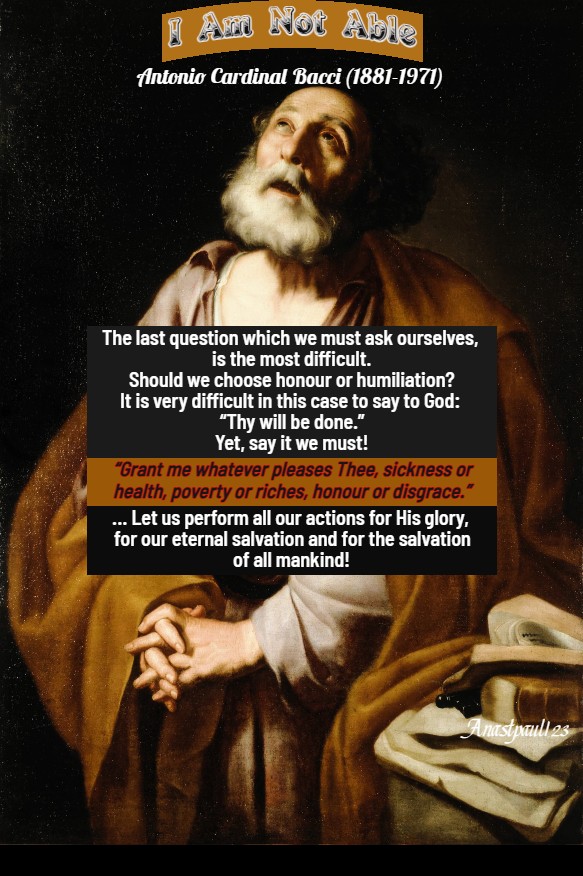
Thought for the Day – 22 March – Meditations with Antonio Cardinal Bacci (1881-1971)
The Presence of God
“A man who lives always in the Presence of God. cannot sin. When we find ourselves in the presence of a high-ranking worldly personality, do we dare to behave any other way but correctly and respectfuly? How should we dare then to behave in any other fashion, in the Presence of the Infinite Majesty of God, our Creator and Redeemer, Who will one day also be our Judge?! Could He not, in a single instant, snap the thread of our mortal life and call us before His judgement-seat, even while we are in the act of offending Him?!
Let us remember St Paul’s stern warning: “It is a fearful thing to fall into the hands of the living God” (Heb 10-:31). Let us remain always in the Presence of God and we shall be at peace and strong in His grace.”
Quote/s of the Day – 22 March – Wednesday of the Fourth Week in Lent and the Memorial of St Catherine of Genoa (1447-1510)
“We must not wish anything other than what happens from moment to moment, all the while, however, exercising ourselves in goodness.”
“And when I hear it said, that God is good and He will pardon us and then see, that men cease not from evil-doing, oh, how it grieves me! The Infinite Goodness with which God communicates with us, sinners as we are, should constantly make us love and serve Him better but we, on the contrary, instead of seeing in His Goodness an obligation to please Him, convert it into an excuse for sin, which will, of a certainty, lead in the end, to our deeper condemnation.”
“I see clearly with the interior eye, that the sweet God loves, with a pure love, the creature that He has created and has a HATRED for nothing but SIN, which is more opposed to Him, than can be thought or imagined.”
Our Lenten Journey with St Francis de Sales – 22 March – Wednesday of the Fourth Week in Lent – Isaias 1:16-19, John 9:1-38 – Scripture search here: https://www.drbo.org/
“If sin abounds in malice to destroy, grace superabounds to repair.” Romans 5:20
“One thing I know that whereas I was blind. now I see.” John 9:25
THE MERCY OF GOD ON THE RETURN OF A SINNER St Francis de Sales (1567-1622) Doctor Caritas
“THE ENTRANCE OF SIN, takes away life from the heart and from all its good works; the entrance of grace, restores life to the heart and to all its good works. A severe winter kills the plants of the field, so that, were it to continue always, they should remain forever dead.
Sin, the sad and fearful winter of the soul, kills the holy works which it finds there and, were it to continue always, never should life or vigour return. But as, on the approach of lovely spring, not only the new seeds which we cast into the earth, shoot up and bud, under the influence of this mild season of fecundity, every one according to its kind but also the old plants, which the bitterness of the preceding winter had wasted and withered, grow green again and take back their former life.
So sin being destroyed,and the grace of Divine Love coming back to the soul, not only the new affections, which the return of the sacred springtime brings, germinate and produce many merits and benedictions but also, the works faded away under the harshness of the winter of past sin, being delivered from their mortal enemy and reinvigorated and, as it were, resuscitated, flourish anew and fructify in merits for eternal life. …
God has promised an eternal recompense to the works of the just man but, if the just man turn away from His Justice by sin, God will no longer remember his justices, or the good works which he has done. But if, nevertheless, this poor man, after falling into sin, rises again and returns to Divine Love by penance, God will no longer remember his sin and, if He will no longer remember his sin, He will then remember his preceding good works and the recompense they had deserved, since sin, which alone can take them away from the Divine Memory, is effaced, abolished and annihilated.” – (Consoling Thoughts on God and Providence).
One Minute Reflection – 22 March – Wednesday of the Fourth Week in Lent and the Memorial of St Isidore the Farmer (c 1070 -1130) Confessor – Isaias 1:16-19, John 9:1-38 – Scripture search here: https://www.drbo.org/
“I am the light of the world. When He had said these things, He spat on the ground and made clay of the spittle and spread the clay upon his eyes,” – John 9:5-6
REFLECTION – “To the man who had been blind from birth He gave sight, not by means of a word but by an outward action, doing this, not without a purpose or because it so happened but that He might show forth, the Hand of God which, at the beginning had moulded man. And, therefore, when His disciples asked Him, for what cause the man had been born blind, whether for his own or his parents’ faults, He replied: “Neither hath this man sinned, nor his parents,but that the Works of God, should be made manifest in him.” Now the Work of God is the fashioning of man. For, as Scripture says, He made [man] by a kind of process: “And the Lord took clay from the earth and formed man.” (Gn 2:7). Wherefore also, the Lord spat on the ground and made clay and smeared it upon the eyes, pointing to the original fashioning, how it was effected and manifesting the Hand of God to those who can understand, by what [Hand] man was formed out of the dust…
And, inasmuch, as man, with respect to that formation which, after Adam, had fallen into transgression, needed the layer of regeneration, [the Lord] said to him [upon whom He had conferred sight], after He had smeared his eyes with the clay: “Go to Siloam and wash,” thus restoring to him, both [his perfect] confirmation and that regeneration which took place, by means of the smearing. And so, when he had washed, he emerged seeing that he might both know Him Who had fashioned him and might learn [to know] Him, Who has conferred life upon him …
But He, the very same Who formed Adam at the beginning, with Whom also the Father spoke, [saying], “Let Us make man after Our Image and Likeness,” revealing Himself in these last times to men, formed visual organs for him, who had been blind, [in that body which he had derived] from Adam.” – St Irenaeus (130-202) Bishop, Martyr, Theologian, Father of the Church (Against Heresies, V, 15, 2-4).
PRAYER – Grant us, we beseech Thee, Almighty God, through the intercession of the blessed Confessor Isidore, so to acknowledge Thee, the only true God and Jesus Christ Whom Thou have sent, that we may be found worthy to be forever numbered among the sheep who hear His Voice.Through the same Jesus Christ, Thy Son our Lord, Who lives and reigns with Thee, in the unity of the Holy Ghost, God, world without end. Amen (Collect)Through the same Jesus Christ, Thy Son our Lord, Who lives and reigns with Thee, in the unity of the Holy Ghost, God, world without end. Amen (Collect).
Our Morning Offering – 22 March – Wednesday of the Fourth Week in Lent
Grant us Thy Light, O Lord By The Venerable St Bede (673-735) Father and Doctor of the Church
Grant us Thy Light, O Lord, so that the darkness of our hearts, may wholly pass away and we may come at last, to the Light of Christ. For Christ is that Morning Star, Who, when the night of this world has passed, brings to His Saints, the promised Light of Life and opens to them, everlasting day. Amen.
Saint of the Day – 22 March – Blessed Hugolinus Zefferini OSA (c1320-1367) Priest, Friar of the Hermits of St Augustine, Hermit, Miracle-worker. Born in c1320 in Cortona, Arezzo, Italy and died in 1367 of natural causes. Also known as – Hugolinus of Cortona, Hugolinus Zephyrini, Hugolino, Ugolino. Patronage – Cortona, Italy (chosen by the citizeins in 1508). Blessed Hugolinus was Beatified in 1804 by Pope Pius VII (cultus confirmed).
Hugolinus was born into the noble Zefferini family. Whilst still a baby, his family were forced to flee Cortona due to civil unrest and strife. They moved to Mantua where, in time, Hugolinus became a Page in the Court of the Gonzagas.
But Hugolinus found himself extremely unhappy in the worldly and often dissapated life of the Court. He felt a great desire to give himself to the Lord in the religious life.
In 1336, Hugolinus joined the Augustinian Friars at the Monastery of St Agnes in Mantua. After his studies he was Ordained to the Priesthood. He lived a holy life within the Monastery in Mantua for 18 years but felt a calling to the solitary life and a closer union with his Creator. His gentle and kind nature endeared him to his brethren Friars and to all who knew him.
Obtaining permission, he returned to his hometown of Cortona and devoted himself to a life of prayer and contemplation as a Hermit. His holiness attracted many to attend him for spiritual guidance and for his prayers for their illnesses and he thus became greatly loved by all.
He died in 1367 and his body was enshrined in the Church of St Agostino in Corona, where many miracles occured. He was Beatified by his cultus being confirmed in 1804 by Pope Pius VII.
St Catherine of Genoa (1447-1510) Married laywoman, Widow, Mystic, Apostle of the sick, the poor and the needy, Writer. Her Feast Day was moved after Vatican II to 15 September but today is the date of her death. Her Life: https://anastpaul.com/2020/09/15/saint-of-the-day-15-september-st-catherine-of-genoa-1447-1510/ St Avitus of Périgord St Basil of Ancyra St Basilissa of Galatia
St Callinica of Galatia St Darerca of Ireland St Deghitche
St Epaphroditus of Terracina (1st Century) First Bishop of Terracina, Italy, Missionary, Evangelist, Disciple of the Apostles, Friend and Envoy of St Paul Apostle. St Hippolytus’ list of the Seventy Disciples includes “Epaphroditus, Bishop of Andriace.” The Roman Martyrology reads: “At Terracina, St Epaphroditus, a disciple of the Apostles, who was Consecrated Bishop of that City by the blessed Apostle Peter.” Biography: https://anastpaul.com/2022/03/22/saint-of-the-day-22-march-saint-epaphroditus-of-terracina-1st-century/
St Failbhe of Iona St Harlindis of Arland Blessed Hugolinus Zefferini OSA (c1320-1367) Priest, Hermit St Lea of Rome
Thought for the Day – 21 March – Meditations with Antonio Cardinal Bacci (1881-1971)
Why God Created Us
“If we are to reach God, Who is our goal, it is necessary for us to know, love and serve Him. Everything speaks to us of God, from the blade of grass, to the cedar of Lebanon, from the insect which glows in the darkness of the night, to the highest stars of the firmanent. In the hidden depths of our own being, we hear His Voice. The more we grow in the knowledge of God, the more we feel the need to love Him. We see how so much beauty, goodness and power is alone worthy of all our love.
As our Creator, Redeemer and Benefactor, God has the right to the undivided affection of our hearts. This love should not be empty and sterile, however, it should be active and effective. Knowing and loving God, we should feel the obligation of serving Him as our Master, in whatever He commands, even when this demands a heavy sacrifice on our part!”
Our Lenten Journey with St Francis de Sales – 21 March – Tuesday of the Fourth Week in Lent – Ecclesiasticus 45:1-6, Matthew 19:27-29 – Scripture search here: https://www.drbo.org/
“He asked life of Thee and Thou hast given him length of days forever and ever.” Psalm 20:5
“And everyone who has left house, or brethren, or sisters, or father, or mother, or wife, or children, or lands, for My Name’s sake, shall receive a hundredfold and shall possess life everlasting.” Matthew 19:29
FOLLOW ME! St Francis de Sales (1567-1622) Doctor Caritas
“WE MUST POSSESS a continual and imperturbable equanimity, amid the great variety of human occurrences and although, all things change around us, remain immovable, with our eyes fixed on God alone. And although, all things, I will not merely say around us but even within us, should turn topsy-turvy; whether our souls be joyful or sorrowful, in peace or in trouble, in light or in darkness, in temptation or in repose, in happiness or in disgust, although the sun scorch, or the dew refresh – we should always keep our will fixed on the good pleasure of God, as its sole and supreme object.
It is true that we require great confidence to abandon ourselves, without any reserve, to Divine Providence but, when we do abandon all, Our Lord takes care of all and disposes of all. But, if we reserve anything which we are unwilling to confide to Him, He leaves us, as if He would say: “You think yourselves sufficiently wise to manage that affair without Me – you can do so and see what will come of it!” ( Consoling Thoughts on God and Providence).
One Minute Reflection – 21 March – Tuesday of the Fourth Week in Lent and the Memorial of St Benedict OSB (c 480-547) Abbot – Ecclesiasticus 45:1-6, Matthew 19:27-29 – Scripture search here: https://www.drbo.org/
“And everyone who has left house, or brethren, or sisters, or father, or mother, or wife, or children, or lands, for My Name’s sake, shall receive a hundredfold and shall possess life everlasting.” – Matthew 19:29
REFLECTION – “No-one should say to himself, even when he regards others who have left a great deal behind: “I want to imitate those who despise this world but I have nothing to leave behind.” You leave a great deal behind, my friends, if you renounce your desires. Our external possessions, no matter how small, are enough for the Lord, He weighs the heart and not the substance and does not measure the amount we sacrifice for Him but the effort with which we bring it…. The Kingdom of God has no assessment value put on it but it is worth everything you have… To Peter and Andrew it was worth the nets and boat they gave up; to the widow it was worth two small coins (Lk 21:2); to another person it was worth a cup of cold water (Mt 10:42). The Kingdom of God, as I said, is worth everything you have. Think about it, my friends, what has less value when you purchase it, what is more precious when you possess it?
But perhaps a cup of cold water offered to someone who needs it, is not enough, even then the Word of God gives us assurance…: “Peace on earth to men of goodwill!” (Lk 2:4). In the sight of God, no hand is ever empty of a gift, if the deep places of the heart are filled with goodwill… Although I have no gifts to offer outwardly, yet I find within myself something to place on the Altar of Thou praise…: Thou art better pleased with an offering of our heart! (cf. Ps 55:13).” – St Gregory the Great (540-604) Pope, Father and Doctor of the Church (Sermons on the Gospel no 5).
PRAYER – May the intercession of the blessed Abbot Benedict, commend us to Thee, O Lord, so that through his merits we may obtain that which we cannot accomplish by our own. T hrough Jesus Christ, thy Son our Lord, Who lives and reigns with Thee, in the unity of the Holy Ghost, God, world without end.. Amen (Collect).
Our Morning Offering – 21 March – St Benedict OSB (c480-547) Abbot, Patron of Europe and Founder of Western Monasticism
O God, Be With Us By St Benedict (c480-547)
O God, from Whom to be turned, is to fall, to Whom to be turned, is to rise, and in Whom to stand, is to abide forever. Grant us in all our duties, Thy help, in all our perplexities, Thy guidance, in all our dangers, Thy protection, and in all our sorrows, Thy peace, through Jesus Christ our Lord. Amen.
Saint of the Day – 21 March – St Benedict OSB (c480-547) Abbot, Patron of Europe and Founder of Western Monasticism. Born in c480, at Nursia, Umbria, Italy – as the twin brother of a sister, St Scholastica and died on 21 March 547 of a fever while in prayer at Monte Cassino, Italy. Patronages – of Europe, against Poison, against Witchcraft, agriculture, Cavers, Civil Engineers, Coppersmiths, Dying People, Farmers, Fevers, Inflammatory Diseases, Kidney Disease, Monks, Religious Orders, Schoolchildren, Temptations.
The Medal or Cross of St Benedict It’s Origin, Meaning, Benefits and Privileges By Abbot Dom Prosper Guéranger OSB (1805-1875)
“Of the Letters which are Inscribed on the Medal
Besides the two figures of the Cross and of St Benedict, there are also inscribed on the Medal, a certain number of letters, each of which is the initial of a Latin word. These words compose one or two sentences, which explain the Medal and its object. They express the relationship existing between the holy Patriarch of the Monks of the West and the Sacred Sign of the salvation of mankind, at the same time that they offer the faithful a formula, which they may make use of, for employing the virtue of the Holy Cross against the evil spirits.
These mysterious letters are arranged on that side of the Medal on which the Cross is shown. Let us begin by noticing the four which are placed in the angles formed by the arms of the Cross.
C. S.P. B: They signify: Crux Sancti Patris Benedicti – in English: The Cross of Holy Father Benedict. These words explain the nature of the Medal.
On the perpendicular line of the Cross itself are these letters:– C.S.S.M.L: They stand for these words: Crux Sacra Sit Mihi Lux – in English: May the Holy Cross be my Light.
On the horizontal line of the Cross are these letters:– N. D. S. M. D: The words which they imply are: Non Draco Sit Mihi Dux – in English: Let not the Dragon be my Guide. These two lines put together form a pentameter verse, containing the Christian’s protestation that he confides in the Holy Cross and refuses to bear the yoke which the devil would put upon him.
On the rim of the Medal there are inscribed several other letters and first the well-known monogram of the Holy Name of Jesus, I. H. S. Faith and our own experience convince us of the all-powerfulness of this Divine Name. Then follow, beginning at the right hand, the following letters: —
V. R. S. N. S. M. V.S. M. Q. L. I. V. B: These initials stand for the two following verses:– VADE RETRO, SATANA; NUNQUAM SUADE MIHI VANA. SUNT MALA QUAE LIBAS; IPSE VENENA BIBAS – in English: Begone, Satan! and suggest not to me thy vain things: the cup thou profferest me is evil; drink thou thyself poison.
The poisoned Cup of wine
These words are believed to be uttered by St Benedict; those of the first verse when he was suffering the temptation in his cave and which he overcame by the Sign of the Cross and those of the second verse, at the moment of his enemies offering him the draught of death, which he discovered by his making over the poisoned cup, the Sign of Life.
The Christian may make use of these same words as often as he finds himself tormented by the temptations and insults of the invisible enemy of our salvation. Our Saviour sanctified the first of these words by Himself making use of them: “Begone, Satan!“ Vade retro, Satana. Their efficacy has thus been tested and the very Gospel is the guarantee of their power. The vain things to which the devil incites us are disobedience to the law of God. They are also the pomps and false maxims of the world. The cup proffered us by this angel of darkness is evil, that is, sin, which brings death to the soul.
And now, applying these considerations to the Medal which is the subject of these pages, we come to this conclusion, that it must be profitable to us, to use with faith the Medal of St Benedict on occasions when we have reason to fear the snares of the enemy. Its protection will infallibly prove efficacious in every kind of temptation. Numerous and undeniable facts attest its powerful efficacy on a thousand different occasions, in which the faithful had reason to apprehend a danger, either from the direct agency of Satan, or from the effects of certain evil practices.
We may also employ it in favour of others as a means of preserving or delivering them from dangers, which we foresee are threatening them.
Unforeseen accidents may happen to us on land or on sea; let us carry about us this holy Medal with faith and we shall be protected. Even in the most trivial circumstances and in those interests which regard solely man’s temporal wellbeing, the efficacy of the Holy Cross and the power of St Benedict, have been felt.
For example, the wicked spirits, in their hatred of man, sometimes molest the animals which God has created for our service, or infest the various articles of nourishment which the same Providence has given to us. Or again, it is not unfrequently the case that our bodily sufferings are caused or protracted by the influence of these our cruel enemies. Experience has proved that the Medal of St Benedict, made use of with a proper intention and with prayer, has frequently broken the snares of the devil, procured a visible improvement in cases of sickness and sometimes, even effected a complete cure.”
St John of Valence (Died 1146) Bishop, Founder of the Abbey of Bonnevaux, Monk, Abbot, Apostle of the poor, Social Reformer. The Roman Martyrology reads: “In Valence in the territory of Vienne in France, St John, Bishop, who, at first Abbot of Bonnevaux, suffered many adversities for the defence of justice and with charity took care of the peasants, the poor and the merchants ruined by debts.” His Life: https://anastpaul.com/2022/03/21/saint-of-the-day-21-march-saint-john-of-valence-died-1146/
Bl Lucia of Verona (1514-1574) Laywoman, Apostle of the Sick St Lupicinus of Condat
St Nicholas of Flue (1417-1487) Swiss Hermit and Ascetic who is the Patron Saint of Switzerland. He is sometimes invoked as Brother Klaus. A husband and father, a Mystic, a Writer, farmer, military leader, Member of the assembly, Councillor, Judge, he was respected as a man of complete moral integrity. He was Canonised on 15 May 1947 by Pope Pius XII. About St Nicholas: https://anastpaul.wordpress.com/2018/03/21/saint-of-the-day-21-march-st-nicholas-of-flue-1417-1487/St Nicholas of Flue (1417-1487)
St Serapion the Scolastic (Died c 354-370) Bishop of Thmuis, near Diospolis in the Nile delta of Egypt, Monk and Hermit, Confessor, brilliant Scholar of great learning, Theologian, Writer, a companion to St Anthony, the Desert and a close friend of St Athanasius and gave support to him against the heretic Arians in Egypt, for which action he was exiled. St Serapion’s Life: https://anastpaul.com/2021/03/21/saint-of-the-day-21-march-saint-serapion-the-scolastic-died-c-354-370-bishop/
St Philemon of Rome Bl Santuccia Terrebotti
Martyrs of Alexandria: A large but unknown number of Catholics massacred in several Churches during Good Friday services in Alexandria, Egypt by Arian heretics during the persecutions of Constantius and Philagrio. They were Martyred on Good Friday in 342 in Alexandria, Egypt.
Thought for the Day – 20 March – Meditations with Antonio Cardinal Bacci (1881-1971)
The Patronage of Saint Joseph
“St Joseph is the Universal Patron of the Church. We, who are loved children of the Church should invoke his special intercession, therefore, for the triumph and expansion of the Kingdom of God upon earth.
It is a sad but certain fact, that in every age, the Church is subject to persecution in many parts of the world, even in our own countries! There is always some nation and often, many of them, where the Church is obstructed in her mission for the salvation of souls and for the true welfare of society. Sometimes She is compelled to fight for her existence, with the weapons of the Spirit. “The weapons of our warfare are not carnal but, powerful before God …” (2 Cor 10:4).
Sometimes the Church is in bonds and the blood of her Martyrs is poured forth to become the seed, from which new Christians will spring. There is no reason for surprise at all this, for Christ Himself foretold it quite clearly. “If they have persecuted Me, they will persecute you too …” (Jn 15:20) but “the gates of hell shall not prevail against it” (Mt 16:18).
If we are loyal sons of the Church, we should pray that She may triumph. We should ask for the special intercession of St Joseph, Her Heavenly Patron.”
Quote of the Day – 20 March – “The Month of the St Joseph” and his Feast transferred from Sunday 19 March
“Since God could choose for the Guardian of His Son, the man in the world, the most accomplished in all sorts of perfections, according to the dignity and excellence of his Charge, Who was His most Glorious Son, the universal Prince of Heaven and earth, how could it be that being able, He did not will it and did not do it? There is, then, NO DOUBT that St Joseph was endowed with all the graces and all the gifts that were required for the care which the Eternal Father willed to give him, of the temporal and domestic economy of our Lord and of the guidance of his family … ”
Our Lenten Journey with St Francis de Sales – 20 March – St Joseph, Feast transferred from Sunday 19 March – Monday of the Fourth Week in Lent – Ecclesiasticus 45:1-6, Matthew 1:18-21 – Scripture search here: https://www.drbo.org/
“Blessed is the man who fears the Lord, who greatly delights in His commands.” Psalm 111:1
“And she shall bring forth a son and thou shalt call His Name Jesus …” Matthew 1:21
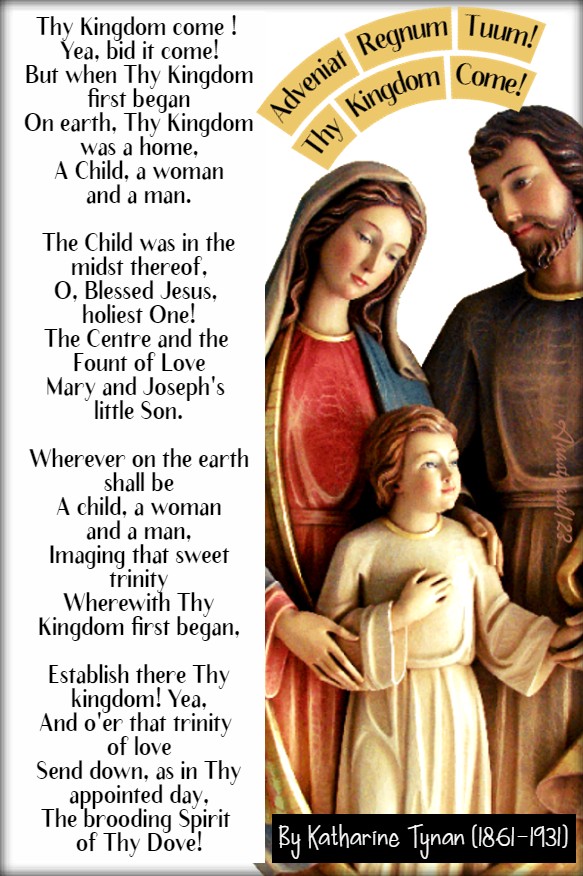
SAINT JOSEPH, HEAD OF THE HOLY FAMILY St Francis de Sales (1567-1622) Doctor Caritas
“OH, WHAT A DIVINE UNION between our Lady and the glorious St Joseph! A union which made that Good of eternal goods which is our Lord, belong to St Joseph, as he belonged to our Lady, (not by the nature that He had taken in the womb of our glorious Mistress, a nature that had been formed by the Holy Spirit of the most pure blood of our Lady) but, according to grace, which made him a partaker of all the goods of his dear Spouse and, which made him go on growing wonderfully in perfection and this was by his continual communication with our Lady, who possessed all virtues, in so high a degree, that no other pure creature can attain to it. Still the glorious St Joseph was the one who approached nearest to it. …
Observe the order which is kept in this holy family. … Who can doubt that our Lady was greater than St Joseph and that she had more discretion and qualities proper for governing, than her spouse? Yet the Angel does not address himself to her, for what is required to be done, whether it be going or coming, or anything else. Does it not seem to you that the Angel commits a great indiscretion, in addressing himself rather, to St Joseph than to our Lady, who is the head of the house, carrying with her the Treasure of the Eternal Father? Had she not reason to be offended at this proceeding and way of acting? Doubtless she might have said to her husband: “Why should I go into Egypt, since my Son has not revealed to me that I ought to do so, nor has the Angel spoken to me of it?” Now our Lady says nothing of this sort. She is not offended because the Angel addresses himself to St Joseph but she obey,s quite simply because she knows that God has so ordered it …”
O God! how beautiful it was to see the respect and reverence with which he treated both the Mother and the Son! If he had wished to leave the Mother when he was not quite aware of the greatness of her dignity, into what admiration and profound abasement was he not afterwards plunged, when he saw himself so honoured that our Lord and our Lady became obedient to his will and did nothing but by his command?!” (Sermons).
One Minute Reflection – 20 March – “The Month of the St Joseph” and his Feast transferred from Sunday 19 March – Monday of the Fourth Week in Lent – Ecclesiasticus 45:1-6, Matthew 1:18-21 – Scripture search here: https://www.drbo.org/
“Joseph, son of David ” – Matthew 1:20
REFLECTION – “There is no doubt that Joseph was a very holy and trustworthy man, since the Mother of the Saviour was to be his wife. He was the “faithful and prudent servant” (Mt 24:45), for God established him to be His Mother’s support, the foster father of His flesh and the assistant for His plan of salvation.
We must recall, that he was of the House of David. He was son of David, not only by bonds of the flesh but even more, because of his faith, holiness and piety. God found in him, a second David, to whom He could confidently entrust His plans, even the most hidden. He revealed to him, as to another David, the mysteries of His Wisdom and disclosed to him, what no teacher in the world, could know. He allowed him to see and listen, to things that so many kings and prophets had wished to see and hear but which,, in spite of their desire, they had not been able to see or to hear (Mt 13:7), even more,, He made him carry and guide, embrace, nurture and protect Him. Both Mary and Joseph belonged to David’s race; in Mary was fulfilled the promise once made by the Lord to David, while Joseph was the witness of this fulfilment.” – St Bernard (1090-1153) (Surname de Fontaine) Priest, Cistercian Monk, The Last Father and Doctor Mellifluus (Mellifluous Doctor) (Homily on the “Missus est”, 2, 16).
PRAYER – May the merits of Thy most holy Mother’s Spouse help us, we beseech Thee, O Lord, that through his intercession we may receive what we cannot obtain by our own efforts. Through the same Jesus Christ, Thy Son our Lord, Who lives and reigns with Thee, in the unity of the Holy Ghost, God, world without end. Amen (Collect).
You must be logged in to post a comment.