St Agapetus of Ruthenia Bl Alfonso Navarrete Benito Bl Arnald Arench Bl Arnold of Geertruidenberg St Atto of Oca St Candida of Whitchurch St Caprasius of Lérins St Clarus of Aquitaine St Claudius of Vienne Bl Conrad of Hesse St Conrad of Trier St Crescentinus St Cronan of Lismore St Damian of Scotland St Dionysius of Ruthenia St Donatus of Lucania St Felinus of Perugia Bl Ferdinand Ayala St Firmus St Fortunatus of Spoleto Bl Gaius Xeymon St Gaudentius of Ossero St Giuse Túc St Gratian of Perugia Bl Herculanus of Piegare St Iñigo of Oña St Ischryrion and Companions Bl James of Strepar St Jean-Baptiste-Ignace-Pierre Vernoy de Montjournal Bl John Pelingotto Bl John Storey St Juventius Bl Leo Tanaka St Melosa St Pamphilus of Alexandria St Peter of Pisa St Porphyrius of Alexandria St Proculus of Bologna St Proculus the Soldier St Ronan St Secundus of Amelia St Seleucus of Alexandria St Simeon of Syracuse St Telga of Denbighshire St Thecla of Antioch
Blessed Teobaldo Roggeri (c 1100-1150) Layman Shoemaker, Porter, Apostle of the poor and needy, Penitent, Pilgrim. The Roman Martyrology states of him today: “In Alba in Piedmont, Blessed Teobaldo, who, driven by love for poverty, gave all his possessions to a widow and became a porter out of a spirit of humility, to carry the burdens of others on himself.” Biography: https://anastpaul.com/2021/06/01/saint-of-the-day-1-june-blessed-teobaldo-roggeri-c-1100-1150/
St Thespesius of Cappadocia St Wistan of Evesham St Zosimus of Antioch
Martyrs of Alexandria – 5 Saints: A group five of imperial Roman soldiers assigned to guard a group of Egyptian Christians who were imprisoned for their faith in the persecutions of Decius. During their trial, they encouraged the prisoners not to apostatize. This exposed them as Christians, were promptly arrested and executed. Martyrs. Their names are – Ammon, Ingen, Ptolomy, Theophilis and Zeno. They were beheaded in 249 at Alexandria, Egypt.
Martyrs of Caesarea – 3 Saints: Three Christians Martyred together in the persecutions of Galerius. We know little more about them than the name – Paul, Valens and Valerius. They diedf in 309 at Caesarea, Palestine.
Martyrs of Lycopolis – 6 Saints: Five foot soldiers and their commander who were Martyred for their faith by order of the imperial Roman prefect Arriano during the persecutions of Decius. In Lycopolis, Egypt.
Martyrs of Rome – 6 Saints: A group of spiritual students of Saint Justin Martyr who died with him and about whom we know nothing else but their names – Carito, Caritone, Evelpisto, Ierace, Liberiano and Peone. In Rome, Italy.
Pentecost Novena to the Holy Spirit for the Seven Gifts
FIFTH DAY
Light immortal! Light Divine! Visit Thou these hearts of Thine, And our inmost being fill!
THE GIFT OF KNOWLEDGE
The Gift of Knowledge enables the soul to evaluate created things, at their true worth, in their relationship to God. Knowledge unmasks the pretence of creatures, reveals their emptiness and points out their only true purpose, as instruments, in the service of God. It shows us the loving care of God, even in adversity and directs us to glorify Him in every circumstance of life. Guided by its light, we put first things first, and prize the friendship of God, beyond all else. “Knowledge is a fountain of life to him that possesseth it.”
Prayer
Come, O Blessed Spirit of Knowledge and grant that I may perceive the Will of the Father; show me the nothingness of earthly things, that I may realise their vanity and use them, only for Your glory and my own salvation, looking ever beyond them to You and Your eternal rewards. Amen.
Our Father and Hail Mary – ONCE. Glory be to the Father – SEVEN TIMES.
ACT OF CONSECRATION TO THE HOLY SPIRIT To be recited daily during the Novena
On my knees, I, before the great multitude of heavenly witnesses, offer myself, soul and body to You, Eternal Spirit of God. I adore the brightness of Your purity, the unerring keenness of Your justice and the might of Your love. You are the Strength and Light of my soul. In You I live and move and am. I desire never to grieve You by unfaithfulness to grace and I pray with all my heart to be kept from the smallest sin against You. Mercifully guard my every thought and grant that I may always watch for Your light, listen to Your Voice and follow Your gracious inspirations. I cling to You and give myself to You and ask You, by Your compassion, to watch over me in my weakness. Holding the pierced Feet of Jesus, looking at His Five Wounds and trusting in His Precious Blood and adoring His opened Side and stricken Heart, I implore You, Adorable Spirit, Helper of my infirmity, t o keep me in Your grace, that I may never sin against You. Give me grace O Holy Spirit, Spirit of the Father and the Son, to say to You always and everywhere, “Speak Lord for Your servant hears.” Amen.
Thought for the Day – 31 May – Meditations with Antonio Cardinal Bacci (1881-1971)
Pray for Us … at the Hour of Our Death
“Our divine Redeemer, although He was God and did not except Himself from the law of death. It was appropriate, therefore, that His divine Mother should have been no exception either. But Mary had shared in the torments of her Son’s death upon Calvary and so obtained from Him, the privilege of a death so sweet and gentle, as hardly to justify the name at all. Her soul was separated from her body as if in an ecstasy of love and was united even more indissolubly with God. She did not die of a natural disease but, out of love for God. She had always loved God with all the ardour of the noblest of creatures and her life ended in a final outpouring of love. It was the climax of a continuous ascent towards God.
Death should be like this for us too. It can be like this if we follow her example, especially in the boundlessness of her love for God.”
Quote/s of the Day – 31 May – The Queenship of Mary
“If the Son is a King, the Mother who begot him is rightly and truly considered a Queen and Sovereign.”
St Athanasius (297-373) Father and Doctor of the Church
“She is the eldest daughter of the Great King. If you enjoy her favour, she will introduce you to the Monarch of the Universe. No-one has so great an interest with Him than Mary, who was the occasion of His coming down from Heaven to become man, for the redemption of mankind.”
St John the Merciful (c 552-c 616)
“And as Queen, she possesses, by right, the whole Kingdom of her Son.”
Rupert of Deutz OSB (c 1075- c 1130) Benedictine Abbot
“So Mary is a Queen. And, for our consolation, we ought to remember that she is a most tender and kind Queen, eager to help us in our miseries. So much so, that the Church wants us to call her in this prayer, a Queen of Mercy. Hail, Holy Queen, Mother of Mercy!”
St Alphonsus Liguori (1696-1787) Most Zealous Doctor
One Minute Reflection – 31 May – The Queenship of Mary – Eccli 24:5; 14:7; 14:9-11; 24:30-31, Luke 1:26-33
“Hail, full of grace!”– Luke 1:28
REFLECTION – “Observe how fitting it was that even before her Assumption, the name of Mary shone forth wondrously throughout the world. Her fame spread everywhere, even before she was raised above the heavens in her magnificence. Because of the honour due her Son, it was indeed fitting, for the Virgin Mother, to have first ruled upon earth and then be raised up to Heaven in glory. It was fitting that her fame be spread in this world below, so that she might enter the heights of Heaven on overwhelming blessedness. Just as she was borne from virtue to virtue, by the Spirit of the Lord, she was transported from earthly renown, to Heavenly brightness.
So it was, that she began to taste the fruits of her future reign, while still in the flesh. At one moment she withdrew to God in ecstasy; at the next she would bend down to her neighbours with indescribable love. In Heaven Angels served her, while here on earth, she was venerated by the service of men. Gabriel and the Angels waited upon her in Heaven. The virgin John, rejoicing that the Virgin Mother was entrusted to him at the Cross, cared for her with the other Apostles here below. The Angels rejoiced to see their Queen, the Apostles rejoiced to see their lady and both obeyed her, with loving devotion.
… Therefore, when the Virgin of virgins was led forth by God and her Son, the King of kings. amid the company of exulting Angels and rejoicing Archangels, with the Heavens ringing with praise, the prophecy of the psalmist was fulfilled, in which he said to the Lord: At your right hand stands the Queen, clothed in gold of Ophir.” – St Amadeus of Lausanne O.Cist (1108-1159) Bishop (Excerpt from a Sermon on Mary)
PRAYER – Grant we beseech Thee, O Lord, that we who keep the Feast of the Blessed Virgin Mary, Our Queen, safe under her protection, may be worthy to have peace now and glory, in the future. Through Jesus Christ, Thy Son our Lord, Who lives and reigns with Thee, in the unity of the Holy Ghost, God, world without end. Amen (Collect).
Our Morning Offering – 31 May – The Queenship of Mary
Queen on Whose Starry Brow Doth Rest By St Venantius Fortunatus (c 530-c 609) Translation by Monsignor Ronald A Knox (1888 – 1957)
Queen, on whose starry brow doth rest The crown of perfect maidenhood, The God who made thee, from thy brest Drew, for our sakes, His earthly food.
The grace that sinful Eve denied, With thy Child-bearing, re-appears; Heaven’s lingering door, set open wide, Welcomes the children of her tears.
Fate, for such royal progress meet, Beacon, whose rays such light can give, Look, how the ransomed nations greet The virgin-womb that bade them live!
O Jesus, whom the Virgin bore, Be praise and glory unto Thee. Praise to the Father evermore And His life-giving Spirit be. Amen!
Saint Venantius Fortunatus (c 530 – c 609) Bishop, Poet, Hymnist, Writer – born c 530 at Rreviso, Italy and died c 609 at Poitiers, modern France of natural causes. St Venantius was unique, first a travelling lay poet, he later became a Priest and then a Bishop. But he always remained a professional author of poetry, a “Troubadour” of Christ. He is the attributed author of the Ave Maris Stella, amongst many others.
Saint of the Day – 31 May – Blessed James Salomoni OP (1231-1314) Priest of the Order of Preachers, “Father of the Poor,” “Apostle of the Afflicted,” Miracle-worker graced with the ability to cure sickness. Born as Giacomo Salomoni in 1231 at Venice, Italy and died on 31 March 1314 of cancer at Forli, Italy. Patronages – cancer patients, of the sick. Also known as James the Venetian, Giacomo Salomonio, surname spelled variously as Salomone, Salomonelli, Salomonius,
James was born in Venice, in 1231, the only child of noble parents. His father died when he was very young and his mother became a Cistercian nun, leaving him to the care of his grandmother. She did well by her orphaned grandson and James became a good and studious boy, who responded eagerly to any spiritual suggestions.
Under the direction of a Cistercian Monk, he learned to meditate and on the Monk’s counsel, James became a Dominican at the Convent of Sts John and Paul, in Venice, as soon as he was old enough. He gave most of his money to the poor and arrived at the Convent with just enough left, to buy a few books. Seeing that one of the Lay Brothers there was in need of clothing, he gave his final small sum to the him and entered empty-handed.
James wore the Dominican habit with dignity and piety, if not with any worldly distinction, for sixty-six years. He was humble and good and obedient and there was nothing spectacular about his spirituality. He was well-known for his direction of souls but he fled, even from the distinction this work brought him.
Even his retiring habits did not protect him, for the people of Venice beat a path to his door. In self -defence, he transferred to another house, that of Forli. This was a house of strict observance and very poor. Nothing could suit him better. For the remainder of his life he worked and prayed in Forli, going out to visit the sick in the hospitals and spending long hours in the Confessional. His charity to the poor and the sick gave the name ” Father of the Poor.”
God granted James the grace of miracles during his lifetime. Once, while he was hearing the confession of a pious woman, she saw the Holy Spirit, in the form of a white dove, sitting on his shoulder and whispering into his ear. Another time, a young girl was cured through his prayer for her, of a terrible cancer on her leg.
James was himself afflicted with cancer, during the last four years of his life. At his death, the cancerous wound on his chest disappeared, leaving only a faint scar and from it arose a fragrant aroma.
He died on 31 May 1314, in his eighty-third year. His relics now lie in the Basilica of Sts John and Paul in Venice.
Devotion to Blessed James has been approved and encouraged by several Popes. In 1526 he was officiallt Beatified by Pope Clement VII
Prayer
O BLESSED JAMES, during your life you received, with utmost tenderness, those who came to you with their afflictions of body and soul, consoling them even to the point of working miracles on their behalf. Now that you are in Heaven, listen to my poor prayers and out of your goodness, help me in my needs with your unfailing intercession.
(Here state your intentions)
Obtain for me, I beg you, the grace to imitate your virtues, especially your generous love of God and neighbour, your profound humility, your tender devotion to our Lord in the Blessed Sacrament and to the Blessed Virgin Mary. Obtain for me too, patience in adversity, fortitude in suffering and preserve me from those dreadful ills against which you are invoked as a special protector.
May your assistance help me to live a holy life on earth, so that I may deserve to be with you some day in the glory of Heaven. AMEN
Mary is Queen by grace, divine relationship, right of conquest and singular election. Coming as a crowning event in the beautiful month of May, the Queenship of Mary, we welcome this Feast with spiritual affection and experience a sense of deep interior peace, as we gather in her presence, to rededicate ourselves to our loving Mother and Queen. The Introit of the Mass for the day tells us: “Let us all rejoice in the Lord as we celebrate the feast in honour of our Queen, the Blessed Virgin Mary, on whose solemnity the Angels rejoice and join in praising the Son of God. Alleluia, alleluia.”
The Queenship of Mary is not an empty title or an honourary distinction, showing forth her excellence of virtue, of grandeur, sanctity or glory. Mary is truly a Queen as can be seen in the Gospel of the Mass – the Angel Gabriel greeted Mary with the most startling words ever addressed to a child of Adam: “Hail thou who art full of grace, the Lord is with thee, blessed art thou among women.” Then he continues, “Do not be afraid; thou hast found favour in the sight of God. And thou shalt bear a son and call Him Jesus. He shall be great and men will know Him for the Son of God, the Most High; the Lord will give Him the throne of his father David and He shall reign over the house of Jacob eternally; His kingdom shall never end.” Here is the foundation of our belief in the Queenship of Mary – her Divine Motherhood; – she conceived a King, the King!
Mary is “Queen by grace” because she was immaculately conceived, preserved from the slightest taint of sin, while her soul was literally inundated with divine grace. “Hail, thou art full of grace.”
She is “Queen by divine relationship” for she is related in the first degree of consanguinity in the direct line to Our Lord and Saviour, Jesus Christ, the Son of God. A Queen Mother is one, whose son later becomes king. Mary’s Child, however at the moment of His conception and then His birth, was already a King, the King of the world. Spiritual writers point out for our consolation, that Mary’s maternal relationship to Jesus was more exclusive than any other mother, since He had no human father.
Our Lady is Queen also “by right of conquest;” Our Lord by His Passion and Death recaptured the human race from the slavery of Satan, conquering all as a King. Calvary was the scene of this conquest. Mary, at the foot of the Cross, shared intimately with Him in His Sacrifice and the fruits of the Redemption.
At first it may be somewhat difficult to picture Mary as a Queen, since we think in terms of royalty of the world; yet, when we think of the souls who preceded us in the household of the Faith and glance at Christian art, as it sings of her Queenship, it is not difficult at all.
Majestically, Christ said to Pilate, “My Kingdom is not of this world,” so, too, Our Lady acknowledges herself in humility as a Queen whom all generations call blessed but she, too, would add, “my kingdom is not of this world.” In the Litany of Our Lady, we address her as Queen of Angels, Patriarchs, Prophets, Martyrs, Confessors, Virgins; of Peace, of the Most Holy Rosary; conceived without original sin and, Queen assumed into Heaven. Catholic art represents her, crowned with a diadem holding a scepter, seated on a throne.
The purpose of this Feast, the Queenship of Mary, is to stir up renewed love and devotion to her, to gather before her throne in Heaven and humbly offer her our homage, unreserved, totally, prayerfully and with the simplicity of abandonment, which characterises a devoted child – “Reign over hearts and minds of men that they seek what is true; over their wills, to follow solely the good; over their hearts, to love nothing but what you love…that man may seek and know the truth and follow what is good, Oh Queen!”
St Crescentian of Sassari St Donatian of Cirta St Felice of Nicosia St Galla of Auvergne St Hermias of Comana Bl Jacob Chu Mun-mo Blessed James Salomoni OP (1231-1314) Priest of the Order of Preachers St Juan Moya Collado Bl Kasper Gerarz St Lupicinus of Verona St Mancus of Cornwall Bl Mariano of Roccacasale St Mechtildis of Edelstetten St Myrbad of Cornwall Bl Nicolas Barré Bl Nicholaus of Vangadizza Bl Nicholaus of Vaucelles St Nowa Mawaggali St Paschasius of Rome St Petronilla of Rome Bl Robert Thorpe St Silvio of Toulouse Bl Thomas Watkinson Bl Vitalis of Assisi St Winnow of Cornwall
Martyrs of Aquileia – 3 Saints: Three young members of the imperial Roman nobility and who were raised in a palace and had Saint Protus of Aquileia as tutor and catechist. To escape the persecutions of Diocletian, the family sold their property and moved to Aquileia, Italy. However, the authorities there quickly ordered them to sacrifice to idols; they refused. Martyrs all – Cantianilla, Cantian and Cantius. They were beheaded in 304 at Aquae-Gradatae (modern San-Cantiano) just outside Aquileia, Italy.
Martyrs of Gerona – 29 Saints: A group of Christians Martyred together in Gerona, Catalonia, Spain, date unknown. No details about them have survived but the names – • Agapia• Amelia• Castula• Cicilia• Donatus• Firmus• Fortunata• Gaullenus• Germanus• Honorius• Istialus• Justus• Lautica• Lupus • Maxima• Paulica• Rogate• Rogatus• Silvanus• Tecla• Teleforus• Tertula• Tertus• Victoria• Victurinus• Victurus
Martyrs of the Via Aurelia – 4 Saints: Four Christians Martyred together. No information about them has survived except their names – Justa, Lupus, Tertulla and Thecla. The martyrdom occurred in 69 on the Via Aurelia near Rome, Italy.
Pentecost Novena to the Holy Spirit for the Seven Gifts
FOURTH DAY
Thou in toil art comfort sweet, Pleasant coolness in the heat, Solace in the midst of woe.
The Gift of Fortitude
By the Gift of Fortitude, the soul is strengthened against natural fear and supported to the end, in the performance of duty. Fortitude imparts to the will, an impulse and energy, which move it to undertake, without hesitancy, the most arduous tasks, to face dangers, to trample underfoot, human respect and, to endure, without complaint. the slow martyrdom of even lifelong tribulation. “He who shall persevere unto the end, he shall be saved.”
Prayer
Come, O Blessed Spirit of Fortitude, uphold my soul in time of trouble and adversity, sustain my efforts, after holiness, strengthen my weakness, give me courage against all the assaults of my enemies, that I may never be overcome and separated from Thee, my God and greatest Good. Amen.
Our Father and Hail Mary – ONCE. Glory be to the Father – SEVEN TIMES.
ACT OF CONSECRATION TO THE HOLY SPIRIT To be recited daily during the Novena
On my knees, I, before the great multitude of heavenly witnesses, offer myself, soul and body to You, Eternal Spirit of God. I adore the brightness of Your purity, the unerring keenness of Your justice and the might of Your love. You are the Strength and Light of my soul. In You I live and move and am. I desire never to grieve You by unfaithfulness to grace and I pray with all my heart to be kept from the smallest sin against You. Mercifully guard my every thought and grant that I may always watch for Your light, listen to Your Voice and follow Your gracious inspirations. I cling to You and give myself to You and ask You, by Your compassion, to watch over me in my weakness. Holding the pierced Feet of Jesus, looking at His Five Wounds and trusting in His Precious Blood and adoring His opened Side and stricken Heart, I implore You, Adorable Spirit, Helper of my infirmity, t o keep me in Your grace, that I may never sin against You. Give me grace O Holy Spirit, Spirit of the Father and the Son, to say to You always and everywhere, “Speak Lord for Your servant hears.” Amen.
Thought for the Day – 30 May – Meditations with Antonio Cardinal Bacci (1881-1971)
Bearer of the Treasures of Grace
“According to a pious tradition, the Holy Spirit descended first on the Blessed Virgin, in the form of a ball of flame, from which emerged the tongues of fire, which alighted on the heads of all present. There is a good deal of significance in this tradition. As Mary took first place in sharing in the passion of Jesus, so, she ought to be first to share in the glory of the Redemption. St Bernard compared the Blessed Virgin to an aqueduct, bearing the treasures of grace and the gifts of the Holy Spirit, to all the faithful (Sermo de Aquaeducru). It is an apt comparison, for the Mother of the Redeemer occupies a position of supremacy in the Mystical Body of Jesus Christ. Like the Apostles, we should persevere in prayer with Mary (Cf Acts 1:14). We should ask for the light and the gifts of the Holy Spirit, for we need them very much, if we are to walk always, in the way of truth and goodness.”
One Minute Reflection – 30 May – Monday within the Octave of Ascension – Acts 1:1-11, Mark 16:14-20 and the Memorial of St Joan of Arc (1412-1431) “The Maid of Orléans” Holy Virgin
“He who believes and is baptised, shall be saved but he that believes not, shall be condemned.” – Mark 16:16
REFLECTION – “Let us work for the food which does not perish—our salvation! Let us work in the vineyard of the Lord ,to earn our daily wage in the Wisdom, which says: Those who work in me will not sin. Christ tells us: The field is the world. Let us work in it and dig up Wisdom, its hidden treasure, a treasure we all look for and want to obtain.
If you are looking for it, really look. Be converted and come. Converted from what? From your own willfulness. “But,” you may say, “if I do not find wisdom in my own will, where shall I find it? My soul eagerly desires it. And I will not be satisfied when I find it, if it is not a generous amount, a full measure, overflowing into my hands.” You are correct, for blessed is the man who finds Wisdom and is full of prudence.
Look for Wisdom while it can still be found. Call for it while it is near. Do you want to know how near it is? The Word and Wisdom is near you, in your heart and on your lips, provided that you seek it honestly. …
Happy is the man who has found Wisdom. Even more happy is the man who lives in Wisdom, for he perceives its abundance. There are three ways for Wisdom, or prudence to abound in you – if you confess your sins, if you give thanks and praise, and if your speech is edifying. Man believes with his heart and so, he is justified. He confesses with his lips and so, he is saved. In the beginning of his speech, the just man is his own accuser, next he gives glory to God and thirdly, if his wisdom extends that far, he edifies his neighbour.” – St Bernard (1090-1153) The “Last Father” and Mellifluous Doctor of the Church An excerpt from his Sermo de diversis
PRAYER – Grant, we beseech Thee, Almighty God, that as we do believe Thine Only-Begotten Son our Saviour, to have this day ascended into the Heavens, so we may also in heart and mind thither ascend and with Him continually dwell. Through Jesus Christ, Thy Son our Lord, Who lives and reigns with Thee, in the unity of the Holy Ghost, God, world without end. Amen (Collect).
Our Morning Offering – 30 May – “The Month of the Blessed Virgin Mary”
Run, Hasten O Lady! By St Bernard of Clairvaux (1090-1153) Mellifluous Doctor
Run, hasten, O Lady, and in your mercy help your sinful servant, who calls upon you, and deliver him from the hands of the enemy. Who will not sigh to you? We sigh with love and grief, for we are oppressed on every side. How can we do otherwise than sigh to you, O solace of the miserable, refuge of outcasts, ransom of captives? We are certain that when you see our miseries, your compassion will hasten to relieve us. O our Sovereign Lady and our Advocate, commend us to your Son. Grant, O blessed one, by the grace which you have merited, that He Who through you was graciously pleased, to become a Partaker of our infirmity and misery, may also, through your intercession, make us partakers of His happiness and glory. Amen.
Saint of the Day – 30 May – Saint Felix I (Died 274) Pope Martyr, the 26th Bishop of Rome from 5 January 269 to his death in 274. Born and was Martyred in Rome.
The Roman Martyrology reads: “At Rome on the Aurelian road, the birthday of St Felix, Pope and Martyr, who was crowned with Martyrdom under the Emperor Aurelian.”
A Roman by birth, Felix was chosen to be Pope on 5 January 269 in succession to Dionysius, who had died on 26 December 268.
Felix was the author of an important dogmatic letter on the unity of Christ’s Person. He received Emperor Aurelian’s aid in settling a theological dispute between the anti-Trinitarian, Paul of Samosata, who had been deprived of the Bishopric of Antioch, by a Council of Bishops, for heresy and the orthodox Domnus, Paul’s successor. Paul refused to give way and in 272 Aurelian was asked to decide between the rivals. He ordered the Church building to be given to the Bishop who was “recognised by the Bishops of Italy and of the City of Rome” (Felix). (See Eusebius, Hist. Ecc. vii. 30.)
The notice about Felix in the Liber Pontificalis ascribes to him, a Decree, that Masses should be celebrated on the tombs of Martyrs. . The author of this entry was evidently alluding to the custom of celebrating Mass privately, at the Altars near, or over the tombs of the Martyrs, in the crypts of the Catacombs (missa ad corpus). The solemn celebration always took place in the Basilicas built over the Catacombs. This practice, still in force at the end of the fourth century, dates apparently from the period when the great cemeterial Basilicas, were built in Rome and owes its origin to the solemn commemoration services of Martyrs, held at their tombs on the anniversary of their burial, as early as the third century. Felix probably issued no such decree but the compiler of the Liber Pontificalis attributed it to him because he made no departure from the custom in force in his time.
The Acts of the Council of Ephesus give Pope Felix as a Martyr; but this detail, which occurs again in the Biography of the Pope in the Liber Pontificalis, is unsupported by any authentic earlier evidence and is manifestly due to a confusion of names. According to the notice in the Liber Pontificalis, Felix erected a basilica on the Via Aurelian; the same source also adds, that he was buried there. The latter detail is evidently an error, for the fourth-century Roman calendar of feasts says that Pope Felix was interred in the Catacomb of Callixtus, on the Via Appia. The statement of the Liber Pontificalis concerning the Pope’s Martyrdom results obviously from a confusion with a Roman Martyr of the same name, buried on the Via Aurelian and over whose grave, a Church was built. In the Roman “Feriale” or calendar of feasts, referred to above, the name of Felix occurs in the list of Roman Bishops and not in that of the Martyrs.
All-in-all, we have little verified information of St Felix I. As so much confusion exists regarding St Felix I, the mention of Saint Felix I was reduced to a commemoration in the weekday Mass by decision of Pope Pius XII.
In the Church is the large icon of the Mother and Child “of Constantinople” (said to have been brought to Italy by King Baldwin of Jerusalem). Tradition holds that the original was painted by St Luke. The painting, came into the possession of the Monastery in 1310. King Baldwin was only able to take away the upper portion of the large image. The dark figures on the icon of Our Lady of Montevergine stand out strikingly from the gold background – the present lower part of the picture is a later addition. The image is quite large, with a height of over 12 feet and width of over 6 feet, showing the Blessed Virgin seated on a throne with the Divine Infant Jesus seated on her lap. The image is dark, so the icon is often referred to as one of the “Black Madonnas.” There have apparently been several renovations made to the original painting, as in 1621 two crowns were placed on the heads of the Virgin Mary and her child Jesus, and other additions were made in 1712 and 1778. During World War II the Sanctuary was used to hide the famed Holy Shroud of Turin, the burial cloth of Christ. A new Basilica was begun in 1952 in the Romanesque style and this structure was consecrated in 1961. There are over one and one half million pilgrims yearly who come to Monte Vergine to visit Our Lady of Montevergine, most notably at Whitsuntide. There have been numerous miracles attributed to this portrait of the Mother of God and her Divine Son.
St Ferdinand III of Castile (1199-1252) King of Castile and Toledo, Knight, a man of great virtue and goodness who sought sanctity in all things, a man of great justice who sought to elevate even those he conquered, a man who was a great father, bringing his children up in the fear and love of God alone, a diplomatic genius because of his great goodness, a unifier of all, he had a great devotion to Our Lady – born in 1198 near Salamanca, Spain and died on 30 May 1252 at Seville, Spain of natural causes. Patronages – authorities, governors, rulers, engineers, large families, magistrates, parenthood, paupers, poor people, prisoners, Spanish monarchy, tertiaries, Seville, Spain The Life of the Holy St Ferdinand: https://anastpaul.com/2020/05/30/saint-of-the-day-30-may-st-ferdinand-iii-of-castile-1199-1252/
St Joan of Arc (1412-1431) “The Maid of Orléans” Holy Virgin. The Church officially remembers Joan of Arc not as a Martyr but as a virgin—the Maid of Orleans. Of course, Joan was a Martyr, but not in the technical sense. Yes, she died because she did what she thought God wanted her to do. But she was killed for her politics, not for her faith. Pagans did not execute her for refusing to worship their gods. Infidels did not slay her for defying them. Political enemies burned her at the stake for defeating them at war. St Joan! https://anastpaul.com/2018/05/30/saint-of-the-day-30-may-st-joan-of-arc-1412-1431/ AND: https://anastpaul.com/2017/05/30/saint-of-the-day-30-may-st-joan-of-arc/
St Anastasius II of Pavia St Basil the Elder St Crispulus of Sardinia
Bl Elisabeth Stagel St Emmelia St Euplius St Exuperantius of Ravenna St Pope Felix I (Died 274) Martyr, the 26th Bishop of Rome from 5 January 269 to his death in 274.
St Gamo of Brittany St Gavino of Sardinia St Isaac of Constantinople Bl Lawrence Richardson St Luke Kirby St Madelgisilus St Reinhildis of Riesenbeck St Restitutus of Cagliari Bl Richard Newport Blessed Thomas Cottam SJ (Died 1549) Priest Martyr St Venantius of Lérins St Walstan of Bawburgh Bl William Filby Bl Willilam Scott
Martyrs of Aquileia – 3 Saints: Three Christians Martyred together. We have no other details than their names – Cantianus, Euthymius and Eutychius. Aquileia, Italy.
Pentecost Novena to the Holy Spirit for the Seven Gifts
THIRD DAY
Thou, of all consolers best, Visiting the troubled breast, Dost refreshing peace bestow.
The Gift of Piety
The gift of Piety begets in our hearts, a filial affection for God as our most loving Father. It inspires us to love and respect, for His sake. persons and things consecrated to Him, as well as those, who are vested with His authority, His Blessed Mother and the Saints, the Church and its visible Head, our parents and superiors, our country and its rulers. He who is filled with the gift of Piety, finds the practice of his religion, not a burdensome duty but, a delightful service. Where there is love, there is no labour.
Prayer
Come, O Blessed Spirit of Piety, possess my heart. Enkindle therein, such a love for God, that I may find satisfaction only in His service and for His sake, lovingly submit to all legitimate authority. Amen.
Our Father and Hail Mary – ONCE. Glory be to the Father – SEVEN TIMES.
ACT OF CONSECRATION TO THE HOLY SPIRIT To be recited daily during the Novena
On my knees, I, before the great multitude of heavenly witnesses, offer myself, soul and body to You, Eternal Spirit of God. I adore the brightness of Your purity, the unerring keenness of Your justice and the might of Your love. You are the Strength and Light of my soul. In You I live and move and am. I desire never to grieve You by unfaithfulness to grace and I pray with all my heart to be kept from the smallest sin against You. Mercifully guard my every thought and grant that I may always watch for Your light, listen to Your Voice and follow Your gracious inspirations. I cling to You and give myself to You and ask You, by Your compassion, to watch over me in my weakness. Holding the pierced Feet of Jesus, looking at His Five Wounds and trusting in His Precious Blood and adoring His opened Side and stricken Heart, I implore You, Adorable Spirit, Helper of my infirmity, t o keep me in Your grace, that I may never sin against You. Give me grace O Holy Spirit, Spirit of the Father and the Son, to say to You always and everywhere, “Speak Lord for Your servant hears.” Amen.
Thought for the Day – 29 May – Meditations with Antonio Cardinal Bacci (1881-1971)
The Great Exile
“God is the great exile. The majority of mankind have banished Him from public and private life. They do not want Him anymore – they do not even think of Him. There is even a minority who hates and curses Him! It is true that there are still faithful and generous communities, like oases in a vast and arid desert, who love God and even dedicate themselves to His service. But, the great majority ignore Him. If they remember Him sometimes, they do so vaguely and as a matter of form. They think of God as if He were a distant Being Who is not interested in their activities.
Obviously, therefore, men no longer live the life of God. They live mechanically and obtusely, devoid of spiritual enlightenment or thought of Heaven. Their lives are like those of blind moles which reside in darkness beneath the ground, without any desire to see the light of day. Bound to the earth as they are, they are afraid of the great concepts of eternity, the immortality of the soul, the last judgement, Heaven and Hell.
“Since men’s natural inclinations are towards worldly things,” wrote Pope Pius XII, “his inability to understand the things of the Spirit of God, is unfortunately, aggravated in our times by the entire nature of his surroundings. Very often, God is neither denied nor cursed, it is rather as if He were not there at all. There is constant and open propaganda in favour of a worldly life without God. Men live and die, as if there were no such realities as God, redemption, or the Church.” (Discourses XL, 14).
Are you or your family and friends a victim of this trend? What place does God hold in your mind and the course of your life? We are heading for inevitable ruin, if we allow ourselves to be swept away by the corruption of the world. Remember the frightening words of Jesus in the company of His disciples, “Not for the world do I pray,” he said, “but for those whom Thou hast given me because they are Thine” (Jn 17:9). Without Jesus, the world is racing towards utter destruction. It is terrifying but that is the way it is!
Holy Mary, my Mother, I place my trust in you because I know, that your intercession, is all-powerful with your Divine Son, Jesus. Help me to detach myself completely from sin and to conquer my rebellious inclinations, Grant that I may imitate the shining example of your sanctity, in such a way, that you may be truly my hope and my sure refuge, now and at the hour of my death. Amen. ”
Quote/s of the Day – 29 May – Sunday within the Octave of Ascension – The Memorial of St Maria Magdalena de’ Pazzi O.Carm (1566-1607)
“You will be consoled according to the greatness of your sorrow and affliction; the greater the suffering, the greater will be the reward.”
“By opening the door of our heart to love for God, this love dissolves all self-love in us. But we must open the door!”
“Prayer ought to be humble, fervent, resigned, persevering and accompanied by great reverence. One should consider, that he stands in the presence of God and speaks with a Lord before whom the Angels tremble, from awe and fear.”
“Never utter, in your neighbour’s absence, what you would not say, in their presence.”
One Minute Reflection – 29 May – Sunday within the Octave of Ascension – 1 Peter 4:7-11, John 15:26-27; 16:1-4 and the Memorial of St Maria Magdalena de’ Pazzi O.Carm (1566-1607)
“Yes, the hour is coming, for everyone who kills you, to think he is offering worship to God.” – John 16:2
REFLECTION – “I urge you therefore, brothers, by the mercies of God, to offer your bodies as a living sacrifice” (Rm 12,1). With this plea the Apostle Paul raises all men to participation in the priesthood… We do not look outside ourselves for something to offer God but bring with us and within us, something to sacrifice to God for our own advantage… “I urge you by the mercies of God.” Brothers, this sacrifice is in Christ’s image, He Who laid down His life here below and offered it for the life of the world. Indeed He made a living sacrifice of His Body, Who yet lives after being killed. In so great a sacrifice, death was destroyed, removed by the sacrifice… Hence martyrs are born at the time of their death and begin to live as their life ends; they live when they are killed and shine in Heaven when people on earth think they have been snuffed out…
The prophet sang: “You did not ask for sacrifice or oblation but a body you have prepared for me” (Ps 39[40],7). Become both the sacrifice that is offered and the one who offers it to God. Do not lose what God’s power has granted you. Put on the cloak of holiness. Take up the belt of chastity. May Christ be the veil over your head; the cross, the breastplate that gives you perseverance. Keep in your heart the sacrament of Holy Scripture. May your prayer burn constantly, like a sweet-smelling fragrance to God. Take up “the sword of the Spirit” (Eph 6,17), may your heart be the altar where, without fear, you may offer your whole self, your whole life…
Offer your faith, to make reparation for unbelief; offer your fasting, to put an end to voraciousness; offer your chastity, that sensuality may die; be fervent, that wrongdoing may cease; exercise mercy, to end avarice and to suppress foolishness, offer your holiness. Thus will your life become your offering, if it has not been wounded by sin. Your body lives, yes, it lives, each time that, putting evil to death within you, you offer living virtues to God. ” – St Peter Chrysologus (c 400-450) “Doctor of Homilies,” Bishop of Ravenna, Father and Doctor of the Church (Sermon 108)
PRAYER – O God, lover of chastity, Who endowed with heavenly gifts, blessed Mary Magdalena, a virgin on fire with love for You, grant that we, who keep this feast-day in her honour, may imitate her by purity and love. Through Jesus Christ, Thy Son our Lord, Who lives and reigns with Thee, in the unity of the Holy Ghost, God, world without end. Amen (Collect).
Our Morning Offering – 29 May – Sunday within the Octave of Ascension
Stay With Me, O Lord By Padre Pio (1887-1968)
Stay with me, Lord, for You are my Life and without You, I am without fervour. Stay with me, Lord, for You are my Light and without You, I am in darkness. Stay with me, Lord, so that I hear Your Voice and follow You. Stay with me, Lord, for I desire to love You very much and always be in Your company. Stay with me, Lord, if You wish me to be faithful to You. Stay with me, Lord, as poor as my soul is, I want it to be a place of consolation for You, a nest of Love. Stay with me, Jesus, for it is getting late and the day is coming to a close and life passes, death, judgement and eternity approach. It is necessary to renew my strength, so that I will not stop along the way and for that, I need You. It is getting late and death approaches, I fear the darkness, the temptations, the dryness, the cross, the sorrows. O how I need You, my Jesus, in this night of exile! Stay with me tonight, Jesus, in life with all its dangers, I need You. Let me recognise You as Your disciples did, at the breaking of the bread, so that the Eucharistic Communion be the Light which disperses the darkness, the force which sustains me, the unique joy of my heart. Stay with me, Lord, because at the hour of my death, I want to remain united to You, if not by Communion, at least by grace and love. Stay with me, Lord, for it is You alone I look for, Your Love, Your Grace, Your Will, Your Heart, Your Spirit, because I love You and ask no other reward but to love You more and more. With a firm love, I will love You with all my heart while on earth and continue to love You perfectly, during all eternity. Amen.
Saint of the Day – 29 May – St Maximinus of Trier (Died c 346) the Fifth Bishop of Trier and Confessor, Defender of the True Faith, Miracle-worker. (Died c 346) Born at Silly near Poitiers, France and died in c 346. Patronage – of the City of Trier and of the Diocese, protection against perjury, loss at sea and destructive rains. Also known as – Maximus, Maximin.
The Roman Martyrology states of him today: “At Treves, the blessed Maximinus, Bishop and Confessor, who received, with honour, the father St Athanasius, banished by the Arian persecutors.”
Maximinus was an opponent of Arianism and was supported by the courts of Constantine II and Constans, who harboured, as an honoured guest, St Athanasius twice during his exile from Alexandria. These two incidents were in 336–37 and again, in 343. In the Arian controversy, Maximinus had begun in the party of St Paul I of Constantinople; however, he took part in the Synod of Sardica convoked by Pope Julius I (c 342) and, when four Arian Bishops consequently came from Antioch to Trier, with the purpose of winning Emperor Constans to their side, Maximinus refused to receive them and induced the Emperor to reject their proposals.
He was born near Poitiers, nobly descended, and related to Maxentius, Bishop of that City before St.Hilary. The reputation of the sanctity of St Agritius, Bishop of Triers, drew him, as a young man. to Trier and after a most virtuous education, he was admitted to Holy Orders. Upon the death of Agritius, Maximinus was chosen as his successor.
When St Athanasius was banished to Triers in 336, Maximinus received him, not as a person disgraced but, as a most glorious Confessor of Christ and thought it a great happiness, to enjoy the company of so illustrious a Saint. St Athanasius stayed with him for two years; and his works bear evidence to the indefatigable vigilance, heroic courage and exemplary virtue, of our Saint, who was before that timem famous for the gift of miracles.
St Paul, Bishop of Constantinople, being banished by Constantius, found also a retreat at Triers and, in Maximinus, a powerful protector. Our saint, by his counsels, precautioned the Emperor Constans against the intrigues and snares of the Arians and on every occasion, discovered their artifice and opposed their faction.
He was one of the most illustrious Defenders of the Catholic Faith in the Council of Sardica in 347 and had the honour to be ranked, by the Arians, together with St Athanasius, in an excommunication, which they pretended to fulminate against them at Philippopolis.
He also sent Sts Castor and Lubentius as Missionaries to the valleys of the Mosel and the Lahn.
Maximinus is said to have died in Poitou in 349, having made a journey thither to see his relatives. His cult began right after his death. His feast is celebrated on 29 May, on which day his name stands in the Martyrologies of St Jerome, St Bede, St Ado,and others. Trier honours him as its Patron. In the autumn of 353 his body was buried in the Church of St John near Trier, where in the seventh century was founded the famous Benedictine Abbey of St.Maximinus, which flourished till 1802.
St Maximinus Abbey at Trier
His body was afterwards translated to Triers on the day which is now devoted to his memory. St Maximinus, by protecting and harbouring Saints, received himself the recompense of a Saint.
Notre-Dame des Ardents / Our Lady of Ardents, Arras, France (1095) – 29 May:
The Abbot Orsini wrote: “A wax candle is kept in the Cathedral of Arras, which is held to have been brought thither by Our Lady, in the year 1095.”
Our Lady of Ardents, or Notre-Dame des Ardents d’Arras in French, is a small, charming red brick Church in the lower part of Town in Arras.. It was built in the beautiful style unique to the twelfth Century, in order to celebrate the appearance of the Blessed Virgin and to commemorate the miraculous assistance, she gave to the people then living in the region. According to Tradition, there was a terrible epidemic that was given the name ‘the hellfire’ that ravaged the countryside in that year of 1105 and all men felt, that they were in the clutches of the specter of Death. The Evil of Ardent, the disease caused a kind of gangrene in the limbs and the strange sickness, caused terrible suffering in all parts of the body and laid low, both men and women and even their children, throughout the whole of the region.
There were, at that time, two minstrels, one named Itier, who lived in Brabant and the other, named Norman, who lived in the Chateau de Saint-Pol. They had vowed a mortal hatred, as Norman had killed Itier’s brother. One night they both had the same dream – the Virgin Mary, dressed in white, appeared to them and told them to go to the Cathedral. Norman, who was closer, arrived first. As he entered the Cathedral he saw all the patients who had taken refuge there. He found the Bishop and told him of the apparition but Bishop Lambert thought that Norman was mocking him and sent him away. Itier arrived the following day and also spoke to the Bishop. When the Bishop told Itier that someone named Norman had come to tell him of the same vision, Itier asked where he was because he intended to kill him on the field, to avenge his brother’s death. Bishop Lambert then understood, that the Blessed Virgin had sent the two men to be reconciled. The Bishop spoke to each separately and then put them in each other’s presence and asked them to give each other, the kiss of peace and then spend the night in prayer, inside the Cathedral.
It was Pentecost Sunday, 28 May 1105, at about three o’clock in the morning, when the Virgin Mary appeared to the two minstrels in the Cathedral. Norman and Itier witnessed a sudden light as the Blessed Virgin descended from the height of the nave, carrying a lighted candle in her hands. She gave the men the candle intended for the healing of the sick and explained to them, what they must do. A few drops of the wax that fell from the candle were to be mingled with water, giving it miraculous properties the people would then drink this water.
All who believed were healed. The two minstrels, now brothers, distributed the miraculous water and the epidemic ceased. There were many prodigies of healing that went on for hundreds of years, especially with wounds, inflammations and ulcers. All of this shows how reconciliation and prayer, are pleasing to God and can precipitate great miracles, as well as ending or preventing wars. The Bishop of Arras wanted to build a Church worthy of Our Lady of Ardents and to receive the relic of the Holy Candle. The Church was consecrated in 1876 just before the definitive establishment of the Third Republic.
The Reliquary of the Holy Candle
This relic, the Holy Candle, can still be seen today. On the eve of Corpus Christi and the four following days, the Holy Candle was lit and shown to the people. It has not diminished! The reliquary of the Holy Candle is a masterpiece of art, which preserves the relic of the Holy Candle. The content of the reliquary has been the object of veneration and every year, it is presented to pilgrims, during the time period which runs between Ascension Thursday and Pentecost.
St Maria Magdalena de’ Pazzi O.Carm (1566-1607) Carmelite Nun and Mystic, Ecstatic, she bi-located and was the intercessor of many miracles, Stigmatist. She was Beatified in 1626 by Pope Urban VIII. At her Canonisation in 1668, her body was declared miraculously incorrupt. Her Feast day was moved in 1969 to 25 May. Biography: https://anastpaul.com/2020/05/25/saint-of-the-day-25-may-saint-maria-magdalena-de-pazzi-o-carm-1566-1607/
St Bona of Pisa St Conon the Elder St Conon the Younger St Daganus St Eleutherius of Rocca d’Arce St Felix of Atares St Gerald of Mâcon Bl Gerardesca of Pisa Bl Giles Dalmasia St Hesychius of Antioch St John de Atarés
St Maximinus of Trier (Died c 346)Bishop and Confessor St Maximus of Verona St Restitutus of Rome Bl Richard Thirkeld St Theodosia of Caesarea and Companions St Votus of Atares St William of Cellone
Martyrs of Toulouse: A group of eleven Dominicans, Franciscans, Benedictines, clergy and lay brothers who worked with the Inquisition in southern France to oppose the Albigensian heresy. Basing their operations in a farmhouse outside Avignonet, France, he and his brother missioners worked against heresy. Murdered by Albigensian heretics while singing the Te Deum on the eve of Ascension. They were beaten to death on the night of 28 to 29 May 1242 in the church of Avignonet, Toulouse, France and Beatified on 1 September 1866 by Pope Pius IX (cultus confirmation). • Adhemar • Bernard of Roquefort • Bernard of Toulouse • Fortanerio • Garcia d’Aure • Pietro d’Arnaud • Raymond Carbonius • Raymond di Cortisan • Stephen Saint-Thibery • William Arnaud • the Prior of Avignonet whose name unfortunately has not come down to us. The Church in which they died was placed under interdict as punishment to the locals for the offense. Shortly after the interdict was finally lifted, a large statue of the Blessed Virgin Mary was found on the door step of church. Neither the sculptor nor the patron was ever discovered, nor who delivered it or how. The people took it as a sign that they were forgiven, but that they should never forget, and should renew their devotion to Our Lady. They referred to the image as “Our Lady of Miracles.” Until recently there was a ceremony in the church on the night of the 28th to 29th of May, the anniversary of the martyrdom. Called “The Ceremony of the Vow”, parishioners would gather in the church, kneel with lit candles, and process across the Church on their knees, all the while praying for the souls of the heretics who had murdered the Martyrs.
Martyrs of Trentino: Three missionaries to the Tyrol region of Austria, sent by Saint Ambrose and welcomed by Saint Vigilius of Trent. All were Martyred – Alexander, Martyrius and Sisinius. They were born in Cappadocia and died in 397 in Austria.
Pentecost Novena to the Holy Spirit for the Seven Gifts
SECOND DAY
Come. Father of the poor. Come, treasures which endure, Come, Light of all that live!
The Gift of Fear
The gift of Fear fills us with a sovereign respect for God and makes us dread nothing so muc, as to offend Him by sin. It is a fear that arises, not from the thought of hell but, from sentiments of reverence and filial submission to our Heavenly Father. It is the fear, which is the beginning of wisdom, detaching us from worldly pleasures, which could, in any way, separate us from God. “They who fear the Lord, will prepare their hearts and in His sight, will sanctify their souls. ”
Prayer
Come, O blessed Spirit of Holy Fear, penetrate my inmost heart, that I may set You, my Lord and God, before my face forever, help me to shun all things which may offend You and make me worthy to appear before the pure Eyes of Your Divine Majesty in Heaven, where You live and reign, in the unity of the ever Blessed Trinity, God world without end. Amen.
Our Father and Hail Mary – ONCE. Glory be to the Father – SEVEN TIMES.
ACT OF CONSECRATION TO THE HOLY SPIRIT To be recited daily during the Novena
On my knees, I, before the great multitude of heavenly witnesses, offer myself, soul and body to You, Eternal Spirit of God. I adore the brightness of Your purity, the unerring keenness of Your justice and the might of Your love. You are the Strength and Light of my soul. In You I live and move and am. I desire never to grieve You by unfaithfulness to grace and I pray with all my heart to be kept from the smallest sin against You. Mercifully guard my every thought and grant that I may always watch for Your light, listen to Your Voice and follow Your gracious inspirations. I cling to You and give myself to You and ask You, by Your compassion, to watch over me in my weakness. Holding the pierced Feet of Jesus, looking at His Five Wounds and trusting in His Precious Blood and adoring His opened Side and stricken Heart, I implore You, Adorable Spirit, Helper of my infirmity, t o keep me in Your grace, that I may never sin against You. Give me grace O Holy Spirit, Spirit of the Father and the Son, to say to You always and everywhere, “Speak Lord for Your servant hears.” Amen.
Thought for the Day – 28 May – Meditations with Antonio Cardinal Bacci (1881-1971)
The Ascension of Jesus into Heaven
“Forty days after His glorious resurrection, Jesus came, with all His friends, among them His Mother, to the Mount of Olives. This area had already witnessed the opening phase of His passion, which was all the more poignant, perhaps because in Gethsemane, it was not only His body which was lacerated by scourges and nails but, His soul, which experienced the agonising vision of the sins and ingratitude of the human race. Now, however, He is here with a glorified body as the Conqueror of sin and of death. He looks for the last time on His small band of followers, to whom He has entrusted His mission of transforming the entire universe by preaching and putting into practice, the Gospel message, throughout the world. Now, He promises them the Holy Spirit, Who will give them the power to overcome evil. Then He is lifted up toward Heaven, until a bright cloud hides Him from their sight.
Perhaps, the Blessed Mother, was the last to take her eyes off the disappearing cloud which had removed Jesus from view. Her human eyes never saw again, the beloved figure of her Divine Son but, in her soul, she saw Him entering triumphantly into Heaven among choirs of Angels and sitting at the right hand of the Eternal Father. She saw and thought with infinite yearning, of the not too distant day, when she would have passed from mortal exile, into the everlasting happiness of Heaven, where she would embrace her Divine Son again, in an ecstasy of love.
We have all been called to ascend to Heaven with Jesus and Mary. Let us remember, however, that only the innocent and the repentant can be admitted into Paradise. If we have been unfortunate enough to have lost our baptismal innocence, only the second way is left to us – the way of penance. We must purify ourselves of our sins by means of good works. We must ascend NOW higher and highter, towards the summit of Christian perfection.”
Quote/s of the Day – 28 April – “The Month of the Blessed Virgin Mary” – Saturday within the Octave of the Ascension
“There are two ways of keeping God’s word, namely, one, whereby we store in our memory what we hear and the other, whereby we put into practice, what we have heard (and none will deny that the latter is more commendable, inasmuch, as it is better to sow grain, than to store it in the barn).”
Blessed Jordan of Saxony (1190-1237)
“Those who risk all for God, will find. that they have both lost all and gained all.”
St Teresa of Jesus of Ávila (1515-1582) Doctor of Prayer of the Church
“Our business is to love what we have. He wills our vocation as it is. Let us love that and not trifle away our time hankering after other people’s vocations.”
“By giving yourself to God, you not only receive Himself in exchange but, eternal life as well!”
St Francis de Sales (1567-1622) Doctor Caritatis
“Teach Us Good Lord” By St Ignatius Loyola (1491-1556)
Teach us, good Lord, to serve You as You deserve; to give and not to count the cost, to fight and not to heed the wounds, to toil and not to seek for rest, to labour and not to ask for reward, except that of knowing that we are doing Your will. Amen
One Minute Reflection – 28 May – Saturday within the Octave of the Ascension – 1 Thessalonians, Luke 10:1-9 2:2-9 and the Memorial of Saint Augustine of Canterbury (Died c 605) Bishop, Confessor “The Apostle to the English”
“And He said to them, “The Harvest is plentiful but the labourers are few, pray, therefore, the Lord of the Harvest, to send out labourers into His Harvest.” – Luke 10:2
REFLECTION – “He shows how great the gift is, when He says, “Ask from the Lord of the harvest.” And in an inconspicuous manner, Jesus indicates, that He Himself is the One who holds this authority. Then to signify how promising is the harvest, Jesus calls them to “pray therefore the Lord of the harvest.” In doing so, He indirectly declares this lordship to be His own prerogative. For ,after having said, “pray, therefore, the Lord of the harvest” when they had not made any request or prayer, He Himself ,at once, appoints them,, reminding them also of the sayings of John, about the threshing floor, the separation of the husks from the kernels of grain, the husks that are left over and of the One Who is winnowing. From this, it is clear, thatHe Himself, is the Farmer, He Himself, is the Lord of the Harvest,He Himself is the Master of the prophets.
For if He sent them to gather the harvest, it is clear that they do not harvest what belongs to someone else. Instead, they harvest the things that He sowed through the prophets. In calling their ministry a harvest, He was encouraging them but also, empowering them, to this ministry.” – St John Chrysostom (347-407) Father and Doctor of the Church (The Gospel of Matthew Homily 32.)
PRAYER – O God, Who graciously enlightened the English peoples with the light of the true faith by the preaching and miracles of blessed Augustine, Your Confessor and Bishop, grant, through his intercession, that the hearts of those who have strayed may return to the unity of the true faith and that we may be in harmony with Your will. Grant too, we pray O Almighty God, that by the assistance of the prayers of the Blessed Mary ever a Virgin, Mother of our Lord Jesus Christ, our Saviour, we too may ascend with Him, in heart and mind and continually dwell. Through the same Jesus Christ, Thy Son our Lord, Who lives and reigns with Thee, in the unity of the Holy Ghost, God, world without end. Amen.
Our Morning Offering – 28 May – “The Month of the Blessed Virgin Mary” and the Feast Day of Our Lady Queen of the Apostles.
Prayer to Our Lady, Queen of the Apostles By St Vincent Pallotti SAC (1795-1850)
Immaculate Mother of God, Queen of the Apostles, we know that God’s commandment of love and our vocation to follow Jesus Christ, impels us to co-operate in the mission of the Church. Realising our own weakness, we entrust the renewal of our personal lives and our Apostolate, to your intercession. We are confident, that through God’s mercy and the infinite merits of Jesus Christ, you, who are our Mother, will obtain the strength of the Holy Spirit, as you obtained it for the Apostles, gathered in the Upper Room. Therefore, relying on your maternal intercession, we resolve, from this moment, to devote our talents, learning, material resources, our health, sickness and trials and every gift of nature and grace, for the greater glory of God and the salvation of all. We wish to carry on those activities, (which especially promote the Catholic Apostolate,) for the revival of faith and love of the people of God and so, bring all men and women, into the faith of Jesus Christ. (And if a time should come when we have nothing more to offer, serviceable to this end,) we will never cease to pray, that there will be one fold and one Shepherd, Jesus Christ. (In this way, we hope to enjoy the results of the Apostolate of Jesus Christ) for all eternity. Amen.
Saint of the Day – 28 May – Blessed Margaret Plantagenet Pole (1473-1541) Martyr, Laywoman, Countess of Salisbury, Married, Mother, Born in 14 August 1473 in Somerset, Wilshire, England as Margaret Plantagenet and died by being beheaded on 28 May 1541 on Tower Hill, London, England. Attributes-Martyr’s palm, Rosary, Tunic or Vestment bearing the Five Wounds of Christ.
The life of Margaret Pole, Countess of Salisbury, was tragic from her cradle to her grave. Nay, even before she was born, death in its most violent or dreaded forms, had been long busy with her family—hastening to extinction, a line that had swayed the destinies of England for nearly four centuries and a half. Her grandfather was that splendid Richard Neville, Earl of Warwick, the mighty King-maker, who as the “last of the Barons,” so fittingly died on the stricken field of garnet and whose soldier’s passing, gave to Shakespeare, a theme worthy of some of his most affecting lines. Her father was the George, Duke of Clarence, brother of Edward IV, whose death in the Tower in January, 1478, has been attributed to so many causes. The murdered “Princes in the Tower,” Edward V and his little brother, the Duke of York, were her first cousins, while her only brother, Edward, Earl of Warwick, was judicially murdered by Henry VII to ensure his own possession of the Crown. The list of tragedies in the family of the Blessed Margaret is still far from complete but sufficient instances have been given, to justify the description we have given of her whole career.
Margaret, Countess of Salisbury, was born at Farley Castle, near Bath, on 14 August, in or about the year 1473. Her mother, Isabel, daughter of the above-mentioned “King-maker,” died on 22 December 1476 and her father, in the Tower only two years later. During the reign of Edward IV, little Margaret and her brother, were brought up at Sheen, with the children of her uncle, King Edward IV. At his death, Margaret and Edward, after a short stay at Warwick Castle—their ancestral home—resided for a short time at the Court of Richard III. When the crook-back King’s son died, the youthful Earl of Warwick, became de jure heir to the Crown and Margaret, his sister, in the same way, Princess Royal. These short-lived honours, however, ended in 1485, when the victory of Bosworth, gave the Throne, to the Tudor Adventurer who, as Henry VII was to introduce a new dynasty and the oldest and most repulsive form of Oriental despotism, into the realm! By the time of the death of Harry Tudor’s appalling son, the country had become abject and prostrate! …
Drawing of Margaret as a child
In 1491, when Margaret was about eighteen years of age, she was married by the King, Henry VII, to a distant relative and thorough-going supporter of his own, Sir Richard Pole. The Order of the Garter was conferred upon this gentleman, who hailed from Buckinghamshire and, in 1486, on the birth of Prince Arthur, the King’s eldest son, he received the high position of Governor to the Prince of Wales.
Lady Pole, as she was now known, appears to have been happy in her union. Five children were born of the marriage and both, she and her husband, stood high in the favour of the cold and calculating King. But, one dark cloud hung ever over her. All this time, her unhappy brother, the true heir to the Crown, lay in the Tower, his only “crime,” of course, being that summed up in the phrase, “the right of the first-born is his!” Secluded from all society and most shamefully neglected, the poor young Earl of Warwick, grew up in almost total ignorance and simplicity, so as not to know, as men said, “a goose from a capon.” … Then, in 1499, came his alleged attempt to escape, together with another claimant, the plebeian Perkin Warbeck and the cruel and selfish despot had a plausible pretext for bringing the “last of the Plantagenets to the scaffold.” This was one of the most brutal and callous State murders in the whole of English history and the absence of any sort of protest, either from the servile hierarchy, or the upstart lords that bowed down before Henry’s throne, shows how deeply the nation had already sunk in political and social slavery! The decapitated corpse of the young man and perfectly innocent Earl, thus foully done to death, was interred at Bisham Priory, near Maidenhead, a place where his grief-stricken sister was to find a home nearer the end of her own sorrow-laden and tragic life.
When the sickly Arthur, married Catharine of Aragon and went to keep his short-lived Court at Ludlow Castle, Lady Pole became one of the ladies of the Princess of Wales. The appointment must have carried with it poignant reflections on both sides. For Catharine herself believed—and was later bitterly to make her foreboding known—that no good could come of her union with the scion of the Tudor House, since that union had been brought about by the price of innocent blood! For the “most Catholic”—and most calculating—King Ferdinand VII, her father, had made it one of the conditions of his daughter’s nuptials, that there should be no claimants to the English Crown. His royal brother of England, had forthwith nobly obliged, by presenting to the Monarch of Castile and Aragon, the head of the innocent Warwick, on a charger—and “all went merry as a marriage-bell”—for a time! Catharine on her side, soon conceived a great affection for the sister of one, so cruelly sacrificed to make smooth her own matrimonial path. She did all she could to forward the interests of the Pole family, notably after the death of Sir Richard in 1503. There can also be little doubt, that when, in November 1513, Parliament reversed the infamous Act of Attainder passed on her murdered brother and restored to Margaret’s family the title and estates, forfeited on that iniquitous occasion, the excellent Queen Catharine again proved herself a friend at Court and facilitated by her influence, the partial undoing of this hideous murder by statute.
When the Princess Mary, afterwards Queen, was baptised in the Church of the Franciscan Observants at Greenwich, the Countess of Salisbury—as Lady Margaret Pole had now become, owing to the reversal of her brother’s attainder and the restoration of the ancestral honours—held the child at the font. Nine years later, she was nominated Governess of the Princess and appointed to preside over the Court of the little royal lady at Ludlow Castle, one of the official residences of the Princes and Princesses of Wales.
Meanwhile, the children of Margaret were growing up and the most interesting of them was undoubtedly Reginald, the future Cardinal and last Catholic Archbishop of Canterbury. Endowed by Providence with great personal beauty and rare mental gifts, he possessed what was greater than these, that sense of principle and that elevated moral standard, which were so conspicuously lacking to the ruling and upper classes, throughout the Tudor period. A boy Bachelor of Oxford at the age of fifteen, he had afterwards studied the Canon Law at Padua. The world, indeed, was at the feet of this singularly gifted youth. Henry was to think of making him Archbishop of York after the death of Wolsey and still later, was even more intensely to think of having him assassinated! Meanwhile, as a most winsome and delectable youth, he was a decided “catch” from the matrimonial point of view and good Queen Catharine, ever eager to serve a family that had suffered so much through her but surely not by her, had ideas of marrying the Princess Mary to the brilliant son of her almost lifelong friend. The “future” of the much-discussed Reginald, however, was settled and settled finally, by the complications and menaces of the royal divorce question, which became acute about 1527-8.
A little later, the French Ambassador, Castillon, horrified at the well-nigh weekly slaughter, which had become almost a mere incident in the life of England at this period, exclaimed: “I think few Lords feel safe in this country!” Reginald Pole, to whom the King looked for learned and moral support at this crisis, was certainly one of the majority, so to save his head, he prudently withdrew to the Continent, under the pretext of pursuing his theological studies.
The immediate effect of the King’s divorce and subsequent “marriage” with Anne Boleyn, was to deprive the Margaret, Countess of Salisbury of her post of Governess to the Princess Mary and, indeed, to cause her forcible separation from her charge, to whom she had become tenderly attached. Robbed thus of the friends of her youth—doomed to see many of them die in prison or on the scaffold—herself declared illegitimate and deprived of her just rights—is it any wonder that Mary learnt to loathe the very name of the “Reformation?” For ,from the first, its aiders and abetters, ever showed themselves, the thick and thin supporters of despotism—the despotism that plundered the Church and the poor—cynically gave the “people” a Bible which most of them could neither read nor understand—and filled the whole country with nauseating phrases and catchwords, redolent of cant and hypocrisy! All this has to be borne in mind in judging of the Queen of “bloody” memory. After the breaking up of the Princess Mary’s household, Margaret, Lady Salisbury went to live for a time at Bisham, close to her murdered brother’s “last long home.”
The greater Abbeys, as is well-known, were not suppressed till 1539 but for many months before this, it was generally understood throughout England, that the Religious Houses were doomed. Henry’s prodigality was enormous and his meretricious Court and the host of extravagances, its pleasures—noble and ignoble—entailed, made him cast envious eyes on the age-long monastic Foundations and their material possessions. This was quite apart from their known dislike of his schismatic policy and ,so the fate of Abbeys and Priories was soon sealed. The Priory of Canons Regular of St. Augustine at Bisham, was dear to Margaret and her family, apart from its sacred character and the fact, that the remains of their murdered relative, the ill-fated Earl of Warwick, lay buried within its precincts. For it had been founded by William de Montacute, Earl of Salisbury, in the reign of Edward III and so, might almost be regarded, as a quasi possession of the house. Margaret now advised the Prior, not to resign the Priory unless the inevitable occurred, when, of course, all would be able to see, that the dissolution had been made by force. The said Prior was ejected to make way for the notorious William Barlow, who, shortly afterwards, “surrendered” the House to the King.
The year that saw the passing of Bisham and the rest of the abodes of “the Monks of Old,” was the year of the appearance of Reginald Pole’s treatise, De Unitate Ecclesiastical The book gave the lie to almost every one of Henry’s recent declarations, on the subject of the Church and, in arraigning him at the bar of Ecclesiastical history and Catholic doctrine, exposed him to the condemnation of Europe. The rage of the royal Nero, of course, knew no bounds. In vain did he command Pole to return to England without excuse or delay, so as to lose his head! Equally in vain, did he instruct Sir Thomas Wyatt and other of his agents abroad, to have his daring relative assassinated! Reginald Pole was now a Cardinal and busy pushing forward the initial negotiations and arrangements, which were to prepare the way for the Council of Trent. His office as Legate to the Low Countries, was all in the same direction—to make peace between the Emperor and France and so facilitate, the opening of the Council, which was to do so much to heal the wounds of Holy Church. He was not, as Lingard shows, (History, vol. v., chap. ii.), engineering a crusade against the Tudor Monster, although, no doubt, the thought of such a movement was uppermost In many minds!
Unable either to get the Cardinal in his toils, or murdered out of hand, Henry struck at his kinsfolk and acquaintances. In November,1538, Henry Lord Montague, Sir Geoffrey Pole, Sir Edmund Neville, the Marquis of Exeter and Sir Nicholas Carew, were lodged in the Tower on the usual charge of “Treason.”
Historic accuracy compels us to admit that Cardinal Pole, like Lord Stafford in 1680, was not “a man beloved of his own relatives,” at least in this crisis. His own mother had seen the danger likely to arise from his book and had even spoken of him as “a traitor.” His brother, Lord Montague had likewise written letters of remonstrance to him. Needless to say, all this was largely pro forma, to divert Henry’s fatal wrath but whatever was the object, all was in vain and this crowd of noble personages, except Sir Geoffrey Pole, were done to death after the usual judicial mummery on Tower Hill, on 3 January, 1539. Before being officially murdered, Lord Montague asked for absolution, for having taken the Oath of Supremacy and this fact is said to have sealed his fate. The “execution” of these gentlemen, as usual, caused universal horror and Henry was widely compared to the worst of the persecutors in the days of pagan Rome, although that heathen city, at least, had the advantage of a Pretorian Guard to deliver its citizens from their tyrants, when these got past all bearing.
While her family was being prepared for the slaughter—to make a Tudor holiday—the now aged Countess of Salisbury was living in retirement at Warblington, near Havant in Hampshire. She was arrested there, by Fitz William, Earl of Southampton and Goodrich, Bishop of Ely, on 13 November 1538 and almost immediately removed to Cowdray, Sussex. Here she remained several months, being treated by the Earl of Southampton, her jailer, with great harshness. Her trunks and coffer, were searched and in one of these was found, a tunic or “vestment,” embroidered with the Five Wounds. It looks as if an ordinary tabard adorned with one of the devices of the Plantagenets, Margaret’s ancestors, had come to light but Cromwell and his Master affected to see in this old raiment, a traitorous connection with the “Pilgrimage of Grace,” the banner of which, was a representation of Our Lord’s Wounds. Another murder by Act of Parliament, of course, went forward and on 28 June 1539, the Margaret, Countess of Salisbury, her eldest son, the Marquis of Exeter and a number of other persons, including three Irish Priests “for carrying letters to the Pope,” were added to the “attainted” victims of the King.
The news of his dear mother’s condemnation, greatly affected the Cardinal. “You have heard, I believe, of my mother being condemned by public Council to death, or rather to eternal life,” he wrote on 22 September, of the same year. “Not only has he, who condemned her, condemned to death, a woman of seventy—than whom he has no nearer relative, except his daughter and of whom, he used to say, there was no holier woman in his kingdom—but, at the same time, her grandson, son of my brother, a child, the remaining hope of our race. See how far this tyranny has gone, which began with Priests, in whose order it only consumed the best, then to nobles and there, too, destroyed the best.” (Epistolae Poli, ii, 191.)
On the very day that the obsequious Divan, misnamed Parliament, passed the Bill of Attainder, Margaret was transferred from Cowdray to the Tower. There for two years, she suffered much from cold and neglect, for she had been hurried to London without any time to make the necessary preparations. At last it was resolved, to add her venerable name to those of the other Martyrs of the Faith. She was sacrificed out of hatred for her son, the great champion of the Church, whose discourses and writings had done so much to expose, to the world, the villainies of the Tudor Tiberius and his Sejanus, Thomas Cromwell, and make all just men shrink with horror, at the very mention of the names of these two oppressors of the human race. Margaret was taken to East Smithfield early in the morning of 28 May 1541 and there beheaded on a low block or log, in the presence of the Lord Mayor, Aldermen and a few other spectators. The regular headsman was away from London at the time and his deputy, an unskilful lout, hacked at the blessed Martyr, in such a way, as to give some foundation to the story, afterwards made current by Lord Herbert of Cherbury, that she had refused to lay her head on the block and was, therefore, struck repeatedly by the executioner till she fell dead. Before her death, she prayed for the King, Queen (Catherine Howard), Prince of Wales (later Edward VI) and the Princess Mary. Her last words were: “Blessed are they who suffer persecution for justice’ sake for theirs is the Kingdom of Heaven.“
The body of the Blessed Margaret, was interred in the Tower, in that Chapel dedicated to St Peter’s Chains, whose illustrious dead and historic associations, are enshrined in Macaulay’s memorable lines . She was declared Blessed, with many of the rest of the English Martyrs, by Pope Leo XIII, on 29 December,1886. Others than her co-religionists, no doubt, like to reflect, that a life, so marked by piety and so full of griefs ever heroically borne, has after the lapse of nearly four centuries, been thus honoured and that the last direct descendant of the Plantagenet line, has her place in the Hagiography of the Church so long associated with their sway. – Fr Alban Butler (1710–1773) English Priest and Hagiographer.
Our Lady, Queen of the Apostles – Celebrated on the First Saturday after the Ascension – 28 May +2022:
After the Ascension, the Apostles returned to the Upper Room to await the coming of the Paraclete, as we read in Acts 1:13-14:
“When they entered the city they went to the upper room where they were staying, Peter and John and James and Andrew, Philip and Thomas, Bartholomew and Matthew, James son of Alphaeus, Simon the Zealot and Judas son of James. All these devoted themselves, with one accord, to prayer, together with some women, and Mary the Mother of Jesus, and his brothers.”
Mary joins the Apostles in the Cenacle. She provides a model of prayer and encourages the Apostles to wait and pray for the Holy Spirit . She models how to be active in preparing for the Holy Spirit. It is in her role in the Cenacle that she was endowed with one of the oldest Titles, Queen of Apostles. Mary leads all men to the Truth and to Christ, just as she brought forth the Light of the World. Through Our Lady, the Apostles bring the Good News of salvation to the whole world .
Pope Leo XIII in Adiutricem Populi wrote of Mary in the Cenacle:
“With wonderful care she nurtured the first Christians by her holy example, her authoritative counsel, her sweet consolation, her fruitful prayers. She was, in very truth, the Mother of the Church, the Teacher and Queen of the Apostles, to whom, besides, she confided no small part of the divine mysteries which she kept in her heart.”
Traditionally, the Saturday after Ascension Thursday is the Feast of Our Lady, Queen of the Apostles (the Feast was removed in the 1969 post Vatican II changes). The Feast was originally requested by the Pallottine Fathers. This title appears in the oldest forms of the Litany of Loreto and many Religious Congregrations include this Title within their names or is part of their devotions, such as Salvatorians, Claretians, Pallottines, Missionaries of Steyl, Paulines and more.
St Accidia Bl Albert of Csanád St Bernard of Menthon St Caraunus of Chartres St Caraunus the Deacon St Crescens of Rome St Dioscorides of Rome St Eoghan the Sage St Gemiliano of Cagliari
Bl Mary of the Nativity St Moel-Odhran of Iona St Paulus of Rome St Phaolô Hanh St Podius of Florence Bl Robert Johnson St Senator of Milan Bl Thomas Ford St Ubaldesca Taccini St William of Gellone Bl Wladyslaw Demski
Martyrs of Palestine: A group of early 5th century Monks in Palestine who were Martyred by invading Arabs.
Martyrs of Sardinia – 6 Saints: A group of early Christians for whom a Church on Sardinia is dedicated; they were probably Martyrs but no information about them has survived except the names Aemilian, Aemilius, Emilius, Felix, Lucian and Priamus. Patrons of the Diocese of Alghero-Bosa, Italy.
Martyred in the Spanish Civil War: Blessed Luís Berenguer Moratona
Pentecost Novena to the Holy Spirit for the Seven Gifts
Foreward
The Novena in honour of the Holy Ghost is the oldest of all Novenas, since it was first made at the direction of Our Lord Himself, when He sent His Apostles back to Jerusalem to await the coming of the Holy Ghost on the first Pentecost. Addressed to the Third Person of the Blessed Trinity, it is a powerful plea for the light and strength and love, so sorely needed by every Catholic today. To encourage devotion to the Holy Spirit, the Church has granted the following indulgences:
“The faithful who devoutly assist at the public Novena in honour of the Holy Spirit, immediately preceding the Solemn Feast of Pentecost, may gain a Partial Indulgence for themselves or, as an offering for the intentions of the faithful departed.”
“Those who make a private Novena in honour of the Holy Spirit, either before the Solemn Feast of Pentecost or at any other time in the year, may also gain a Partial Indulgence for themselves or, as an offering for the intentions of the faithful departed.”
FIRST DAY (Friday after Ascension)
Holy Spirit! Lord of Light! From Your clear celestial height, Your pure beaming radiance give!
The Holy Spirit
Only one thing is important — eternal salvation. Only one thing, therefore, is to be feared–sin. Sin is the result of ignorance, weakness and indifference. The Holy Spirit is the Spirit of Light, of Strength and of Love. With His sevenfold gifts He enlightens the mind, strengthens the will and inflames the heart with love of God. To ensure our salvation we ought to invoke the Divine Spirit daily, for “The Spirit helpeth our infirmity. We know not what we should pray for as we ought. But the Spirit Himself asketh for us.”
Prayer
Almighty and eternal God, Who hast vouchsafed to regenerate us by water and the Holy Spirit and hast given us forgiveness of all sins, vouchsafe to send forth upon us from Heaven, Your sevenfold Spirit, the Spirit of Wisdom and Understanding, the Spirit of Counsel and Fortitude, the Spirit of Knowledge and Piety and fill us with the Spirit of Holy Fear. Amen.
Our Father and Hail Mary – ONCE. Glory be to the Father – SEVEN TIMES.
ACT OF CONSECRATION TO THE HOLY SPIRIT To be recited daily during the Novena
On my knees, I, before the great multitude of heavenly witnesses, offer myself, soul and body to You, Eternal Spirit of God. I adore the brightness of Your purity, the unerring keenness of Your justice and the might of Your love. You are the Strength and Light of my soul. In You I live and move and am. I desire never to grieve You by unfaithfulness to grace and I pray with all my heart to be kept from the smallest sin against You. Mercifully guard my every thought and grant that I may always watch for Your light, listen to Your Voice and follow Your gracious inspirations. I cling to You and give myself to You and ask You, by Your compassion, to watch over me in my weakness. Holding the pierced Feet of Jesus, looking at His Five Wounds and trusting in His Precious Blood and adoring His opened Side and stricken Heart, I implore You, Adorable Spirit, Helper of my infirmity, t o keep me in Your grace, that I may never sin against You. Give me grace O Holy Spirit, Spirit of the Father and the Son, to say to You always and everywhere, “Speak Lord for Your servant hears.” Amen.




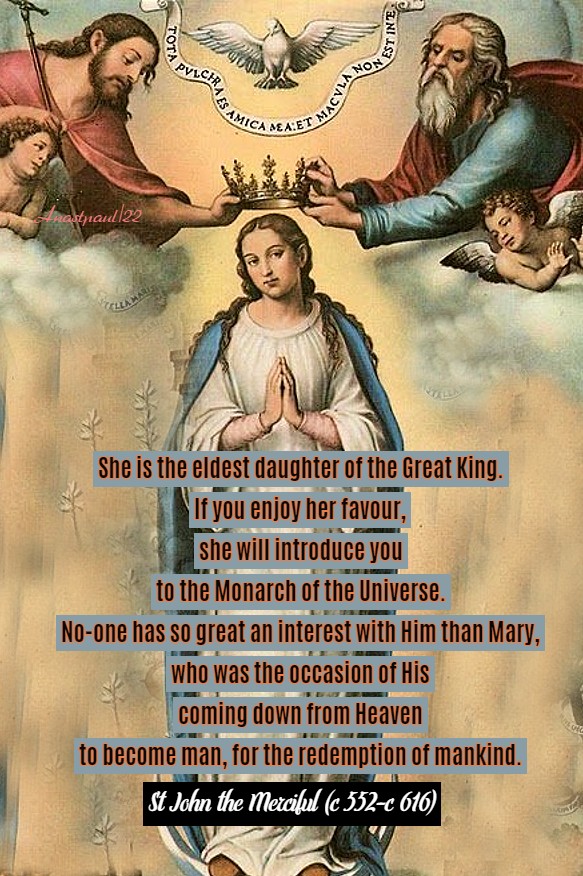


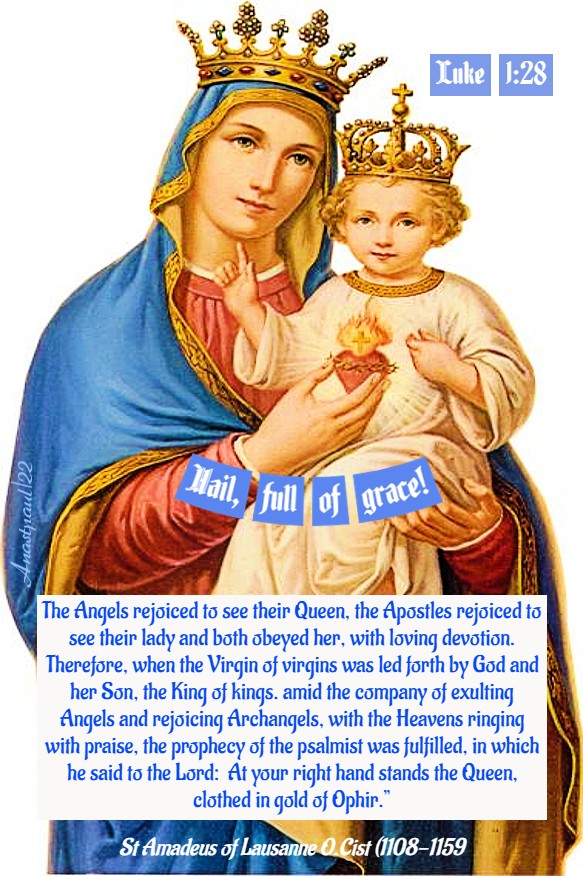
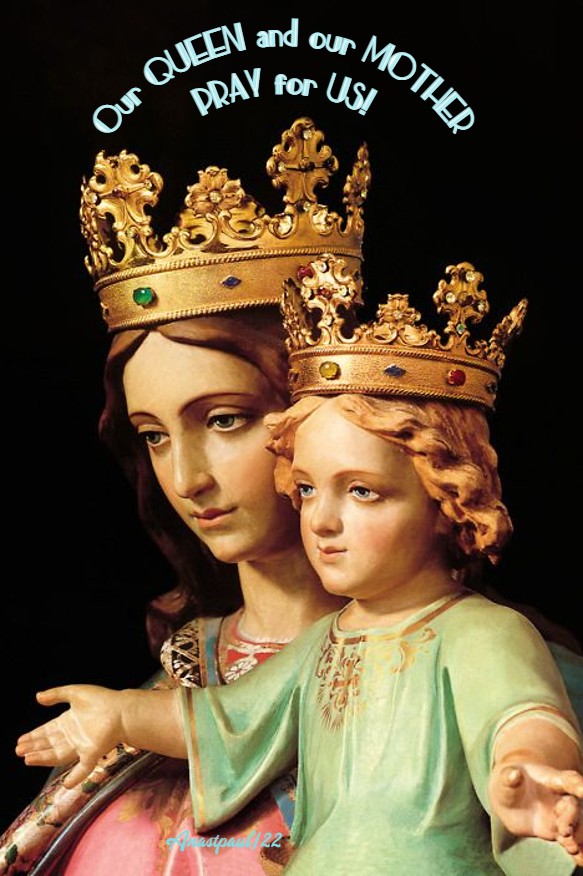

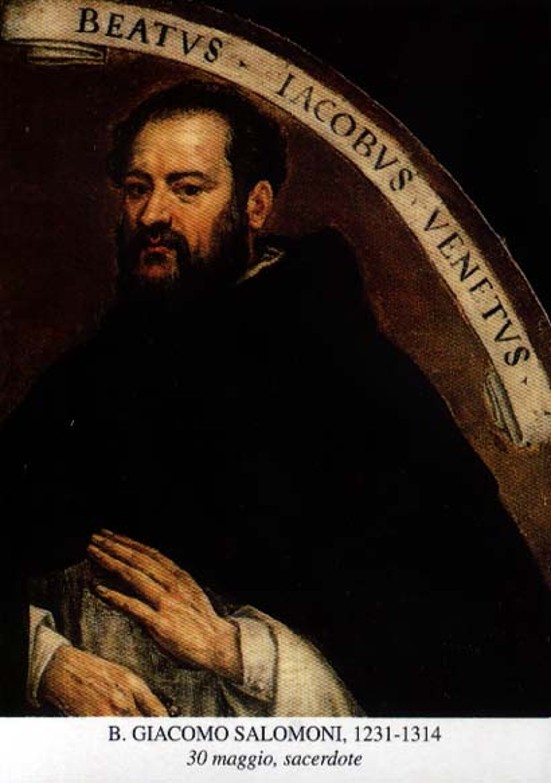







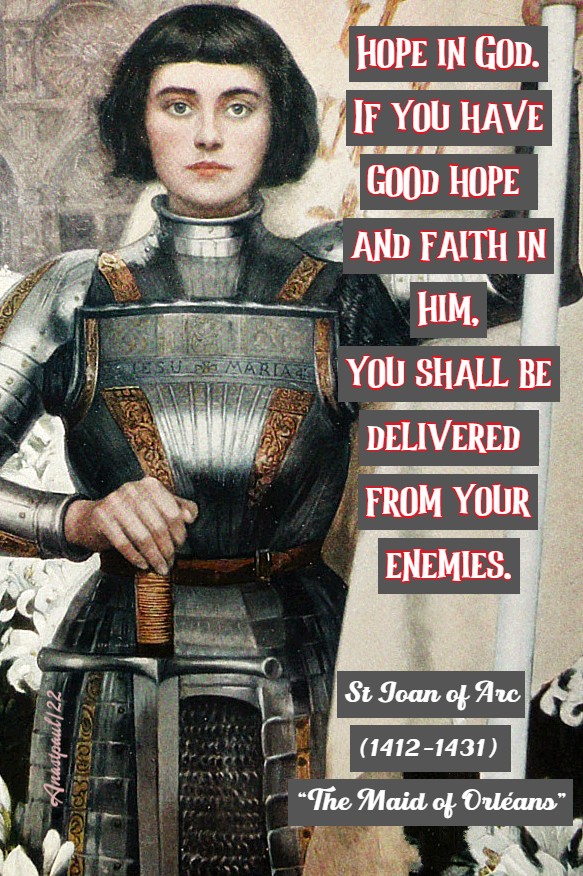
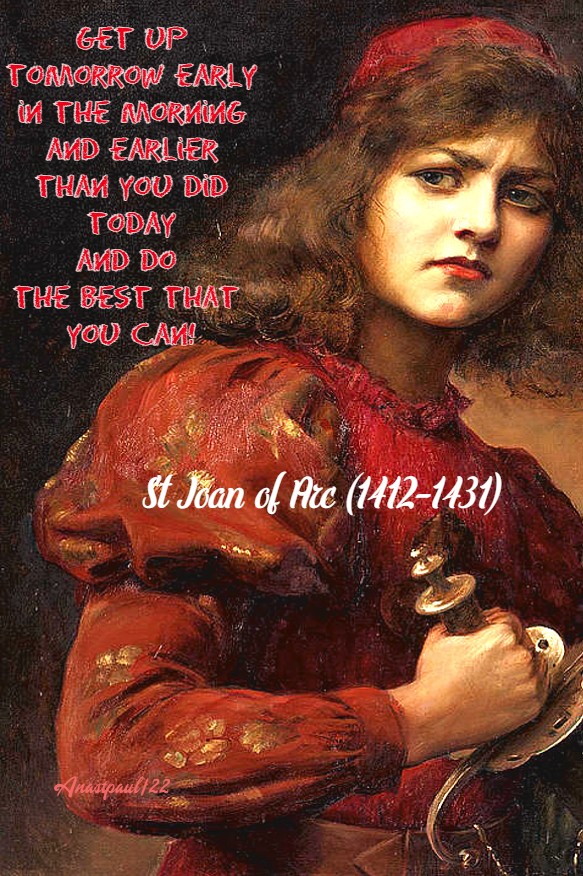
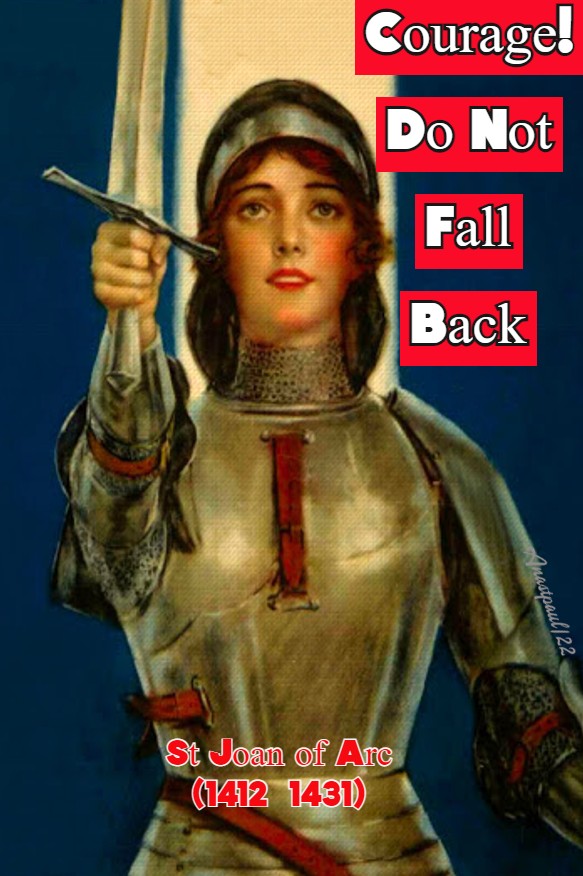

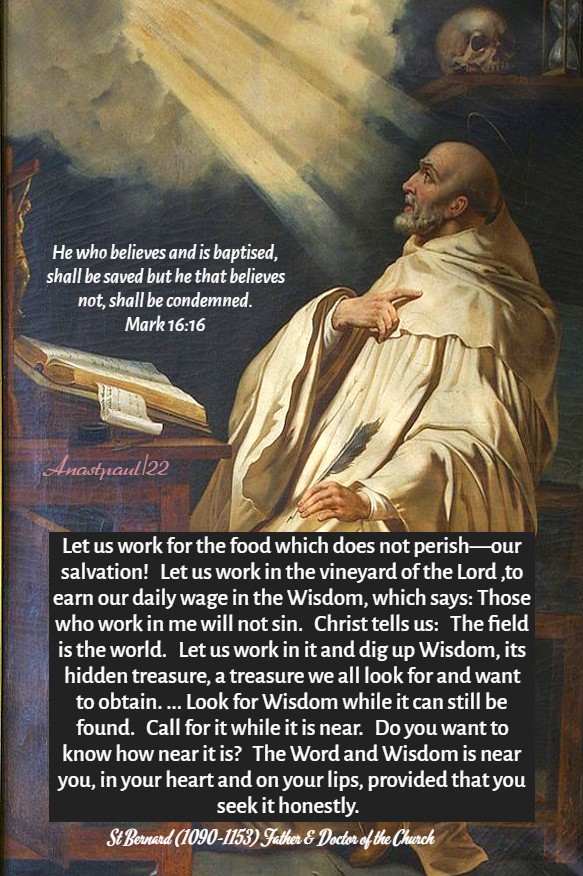
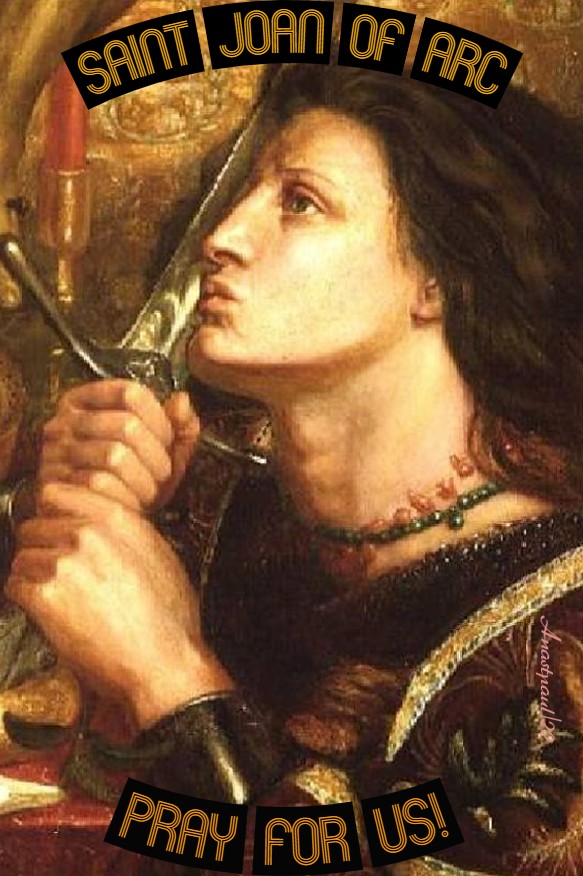



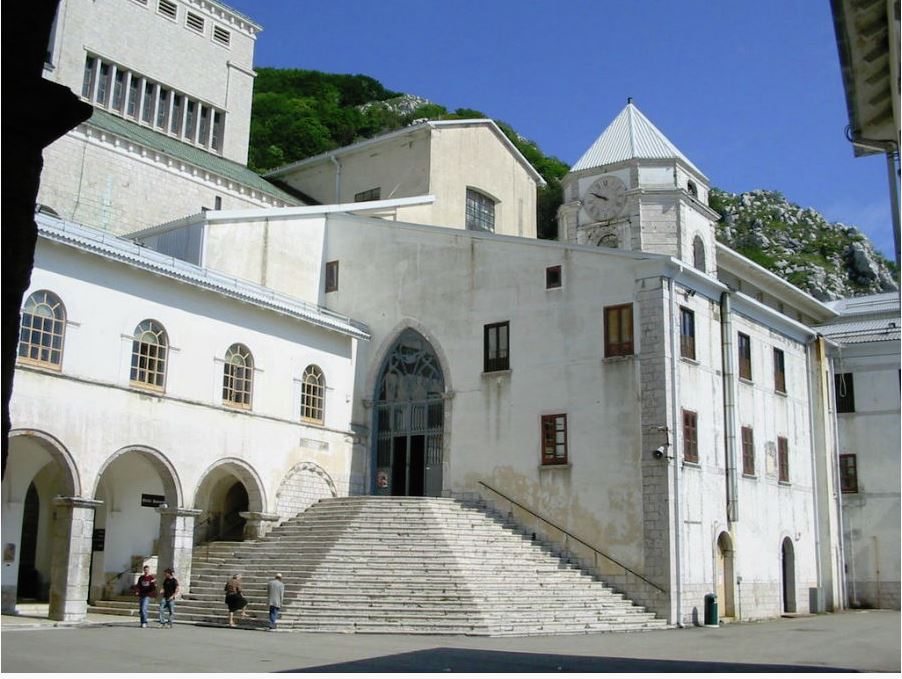

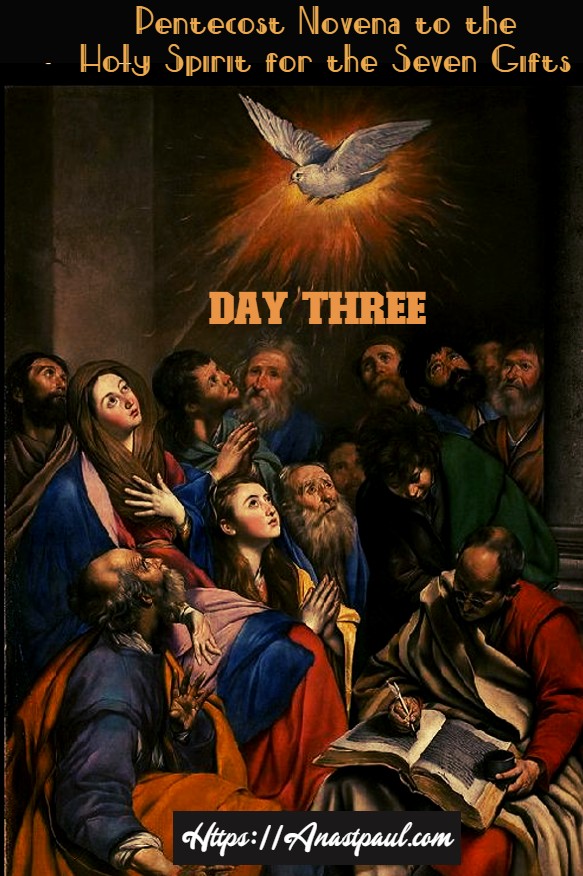

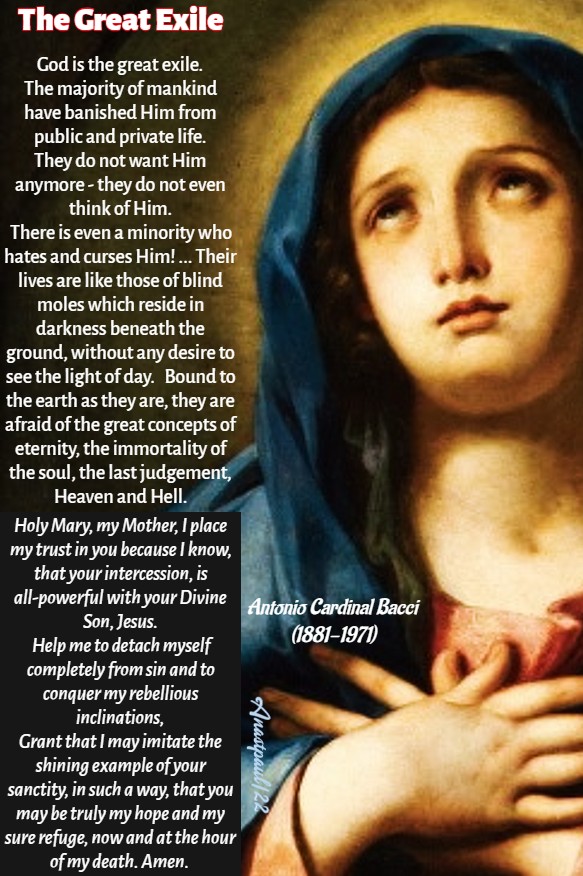


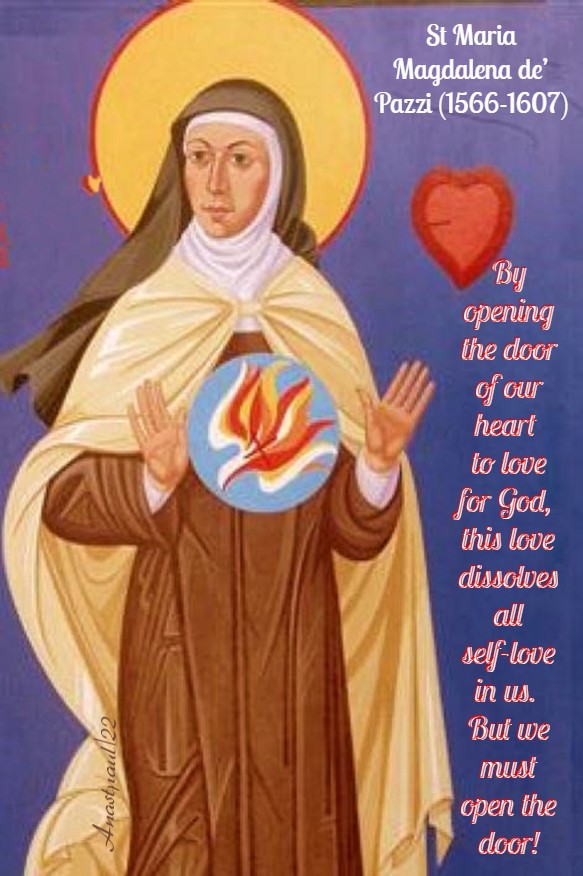
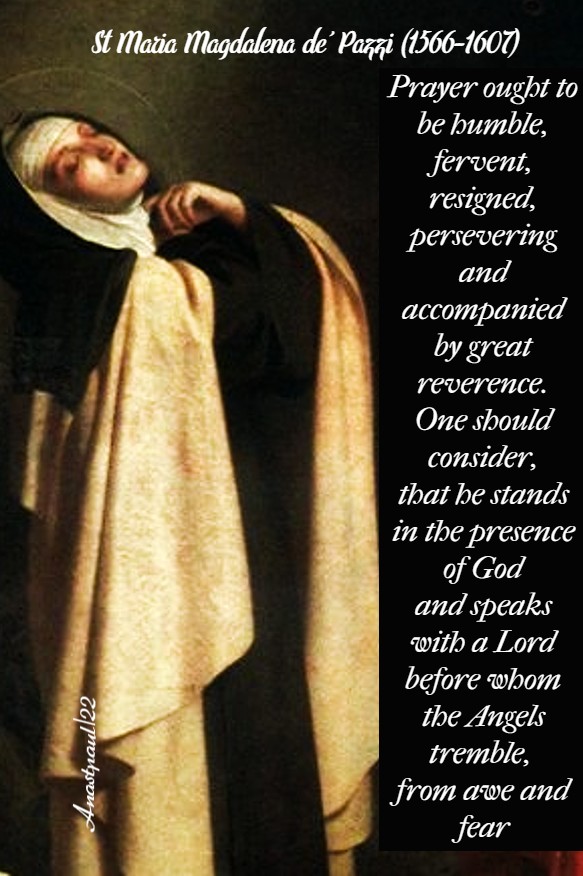
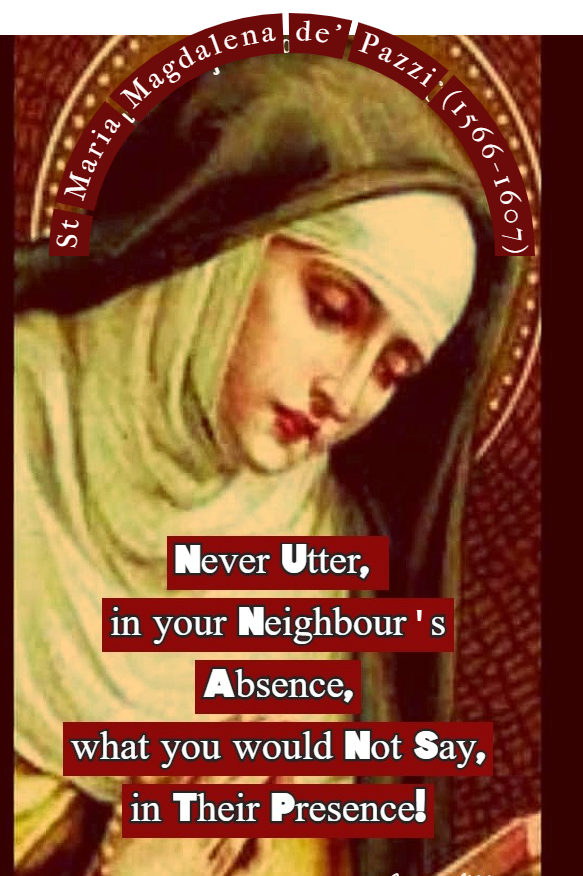
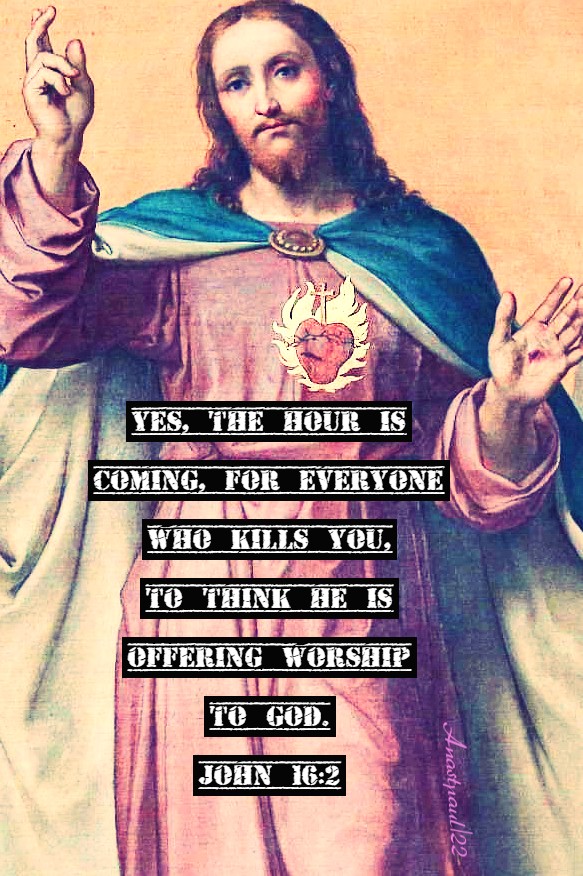
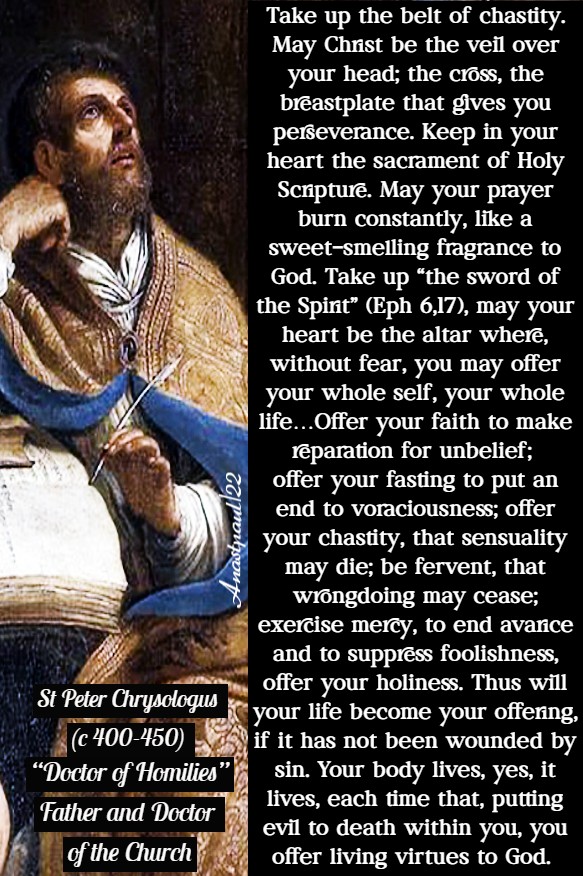
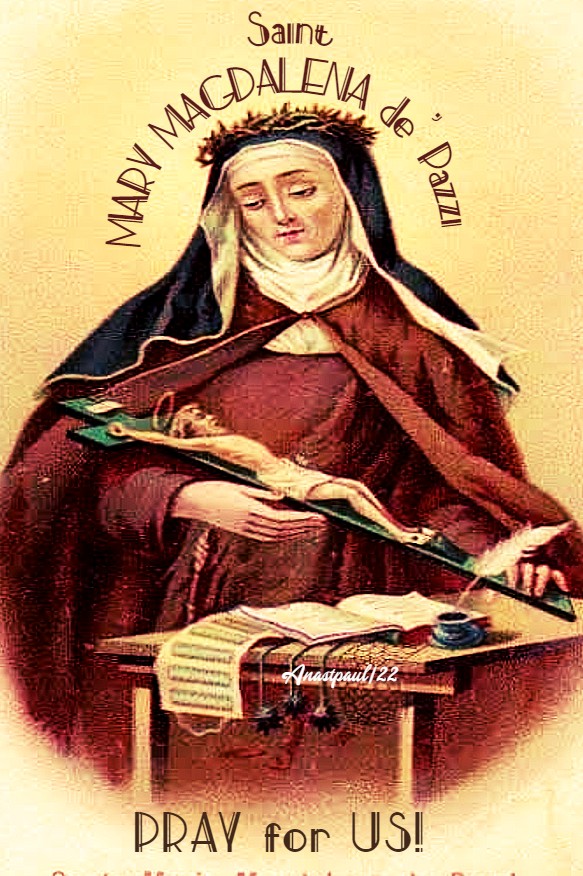

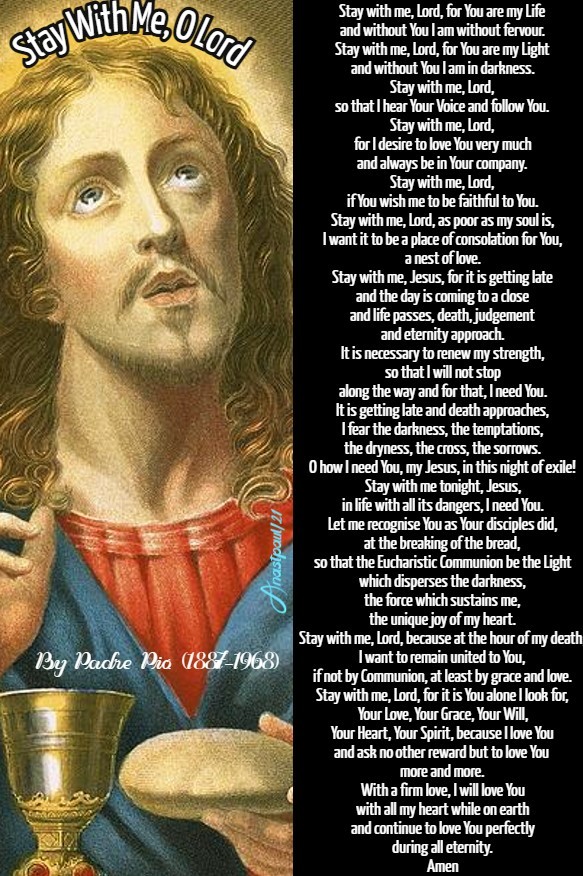

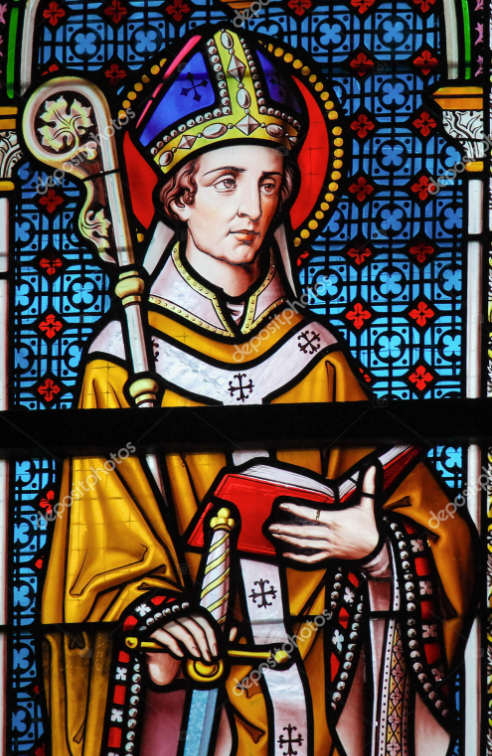
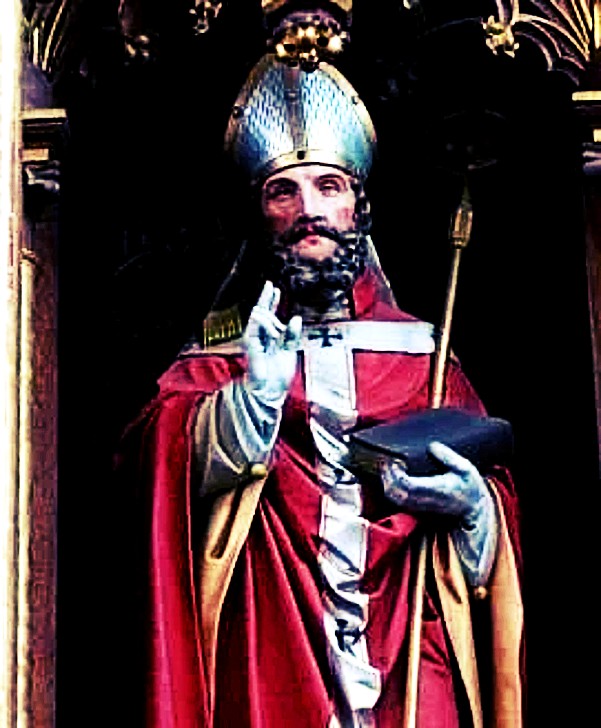
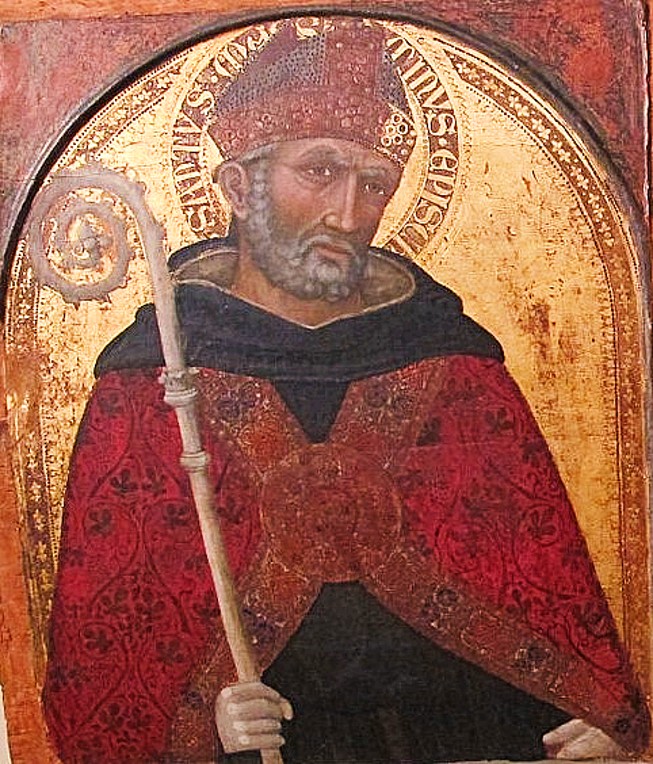
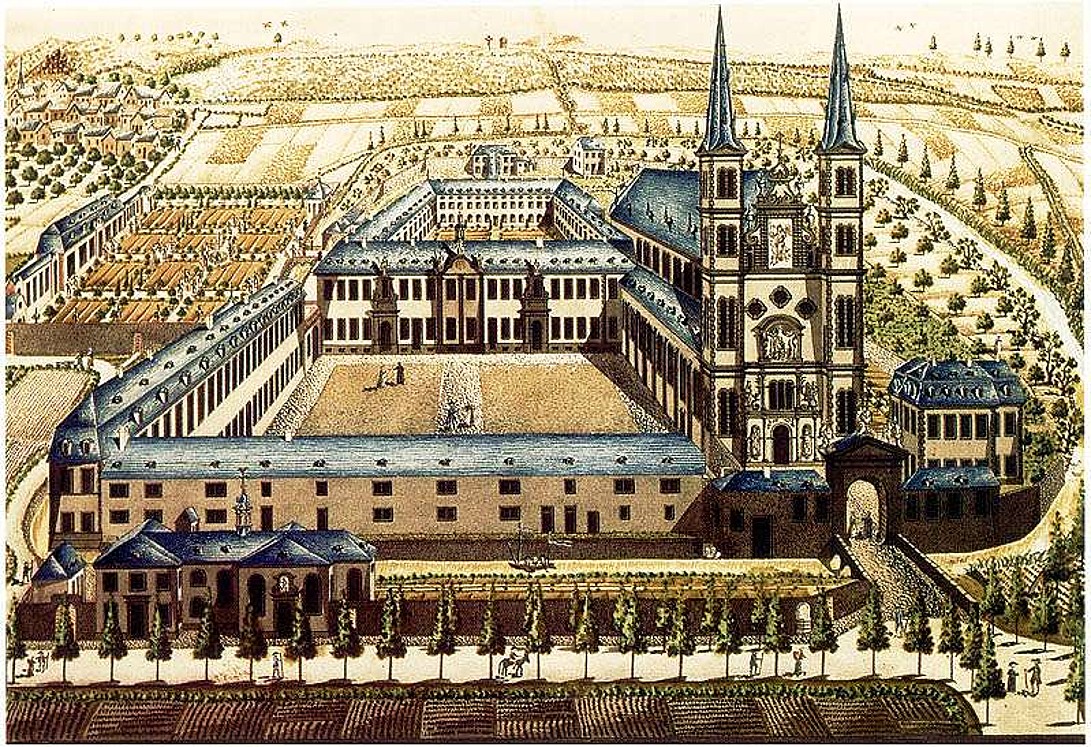
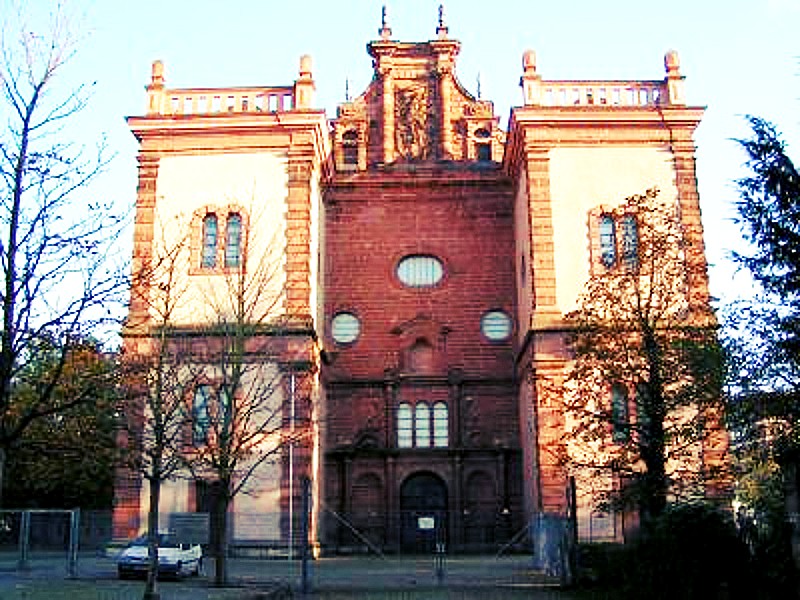

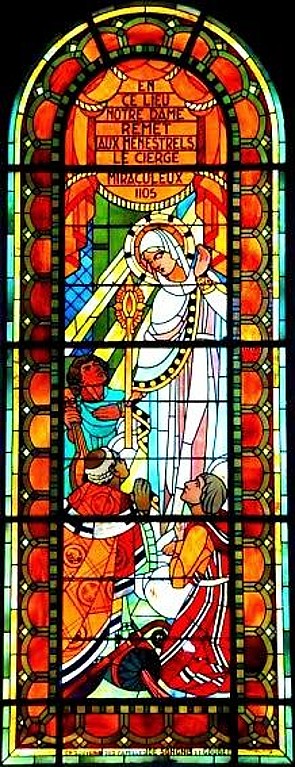
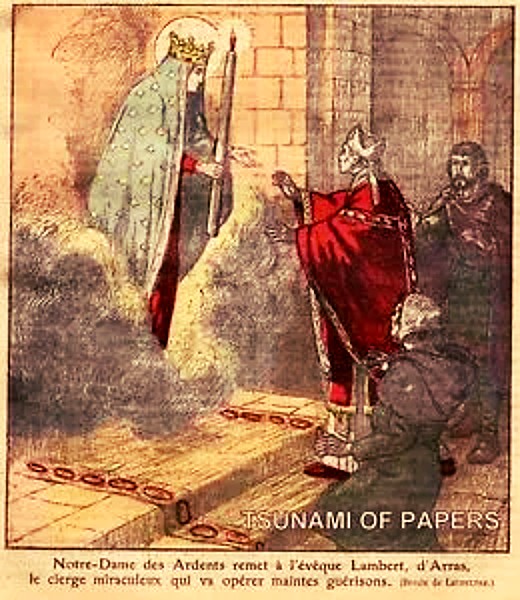
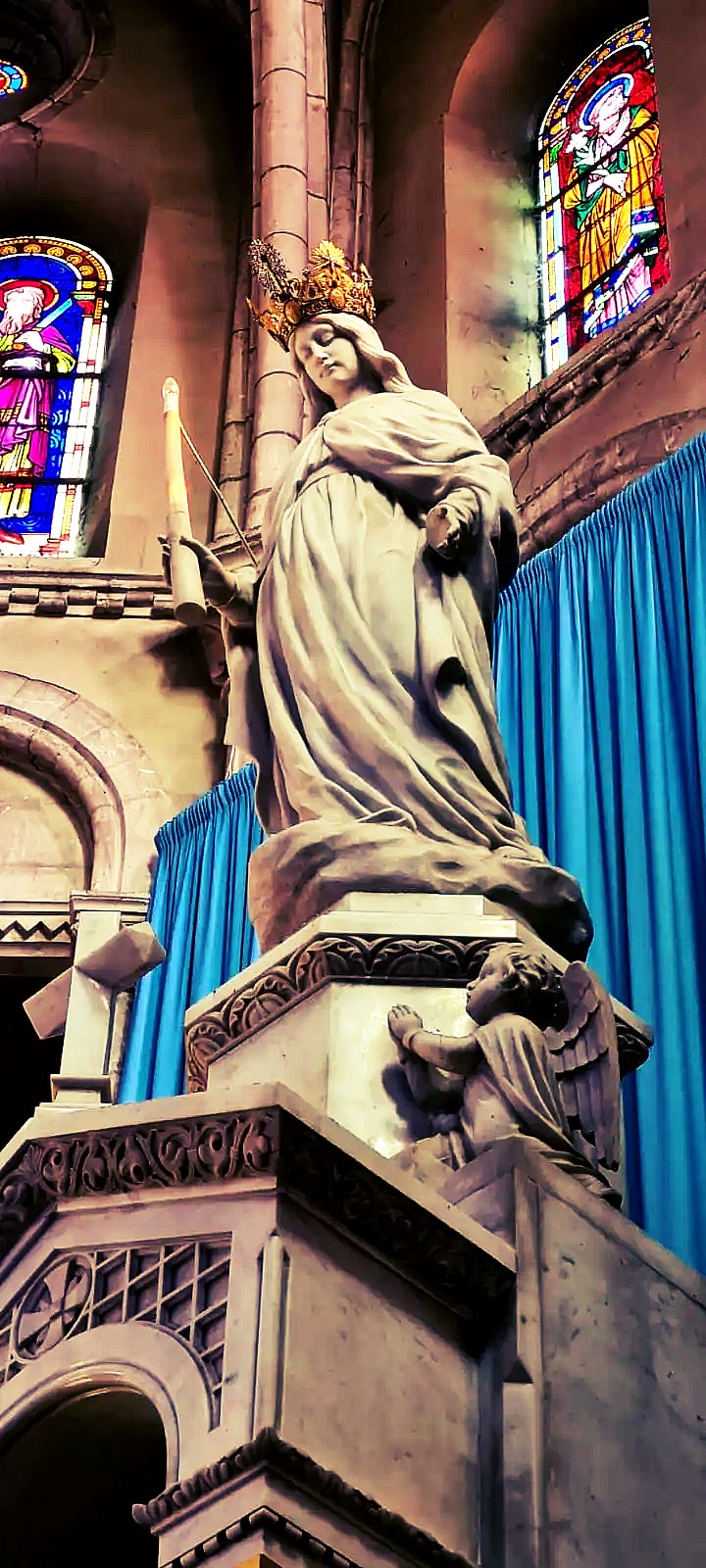

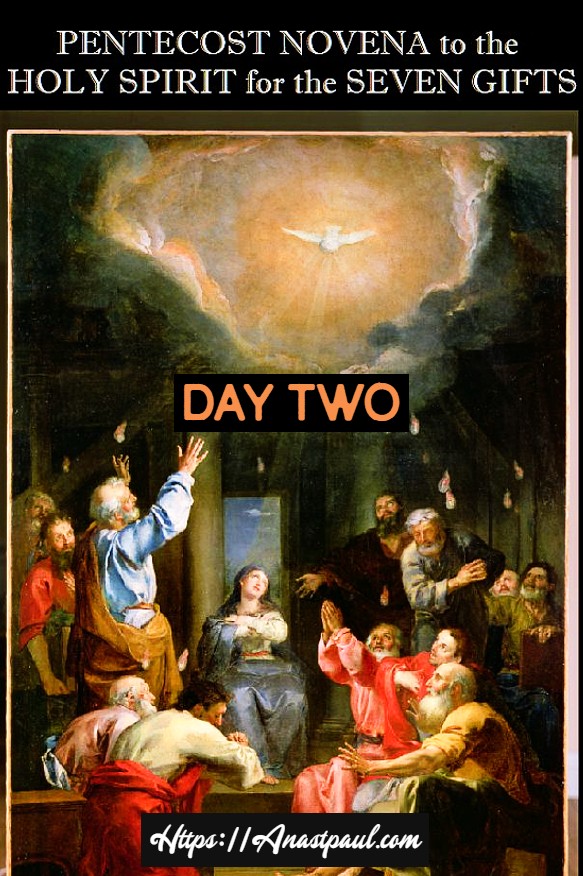

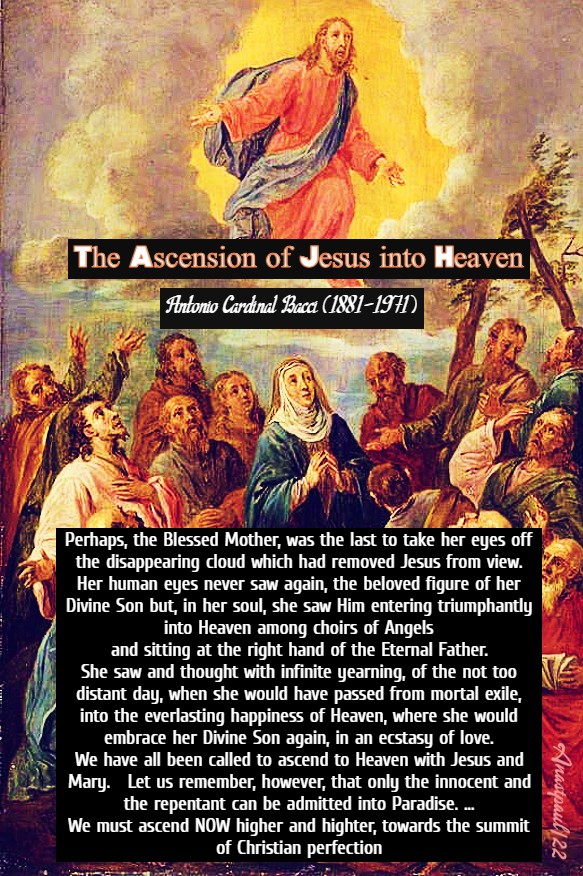


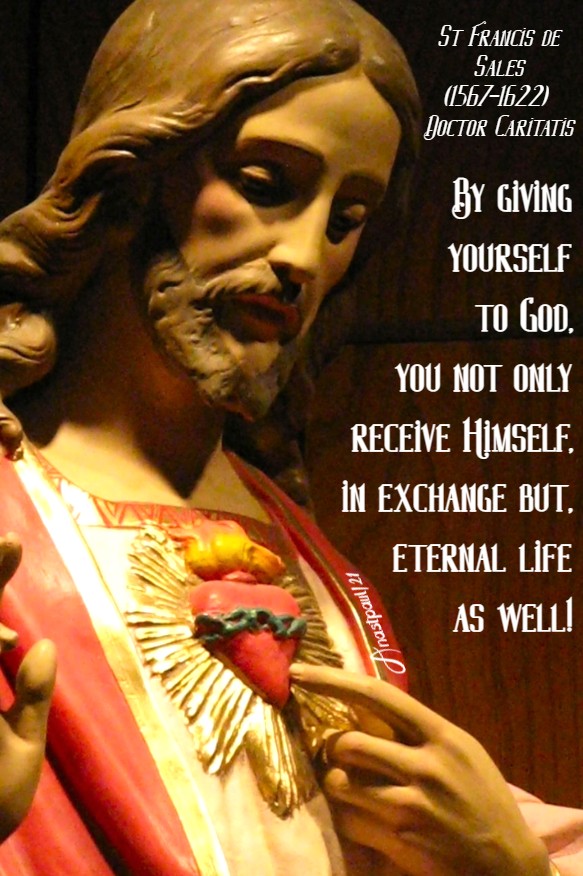
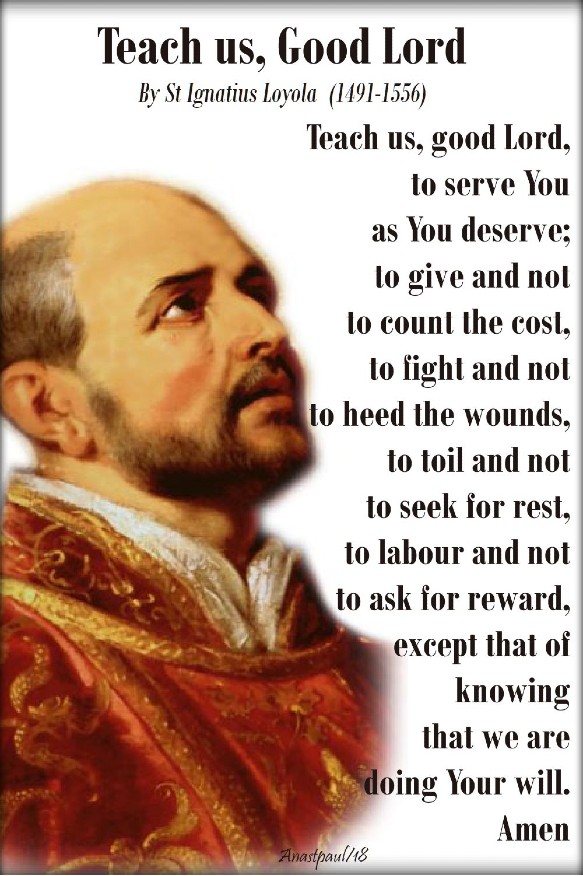


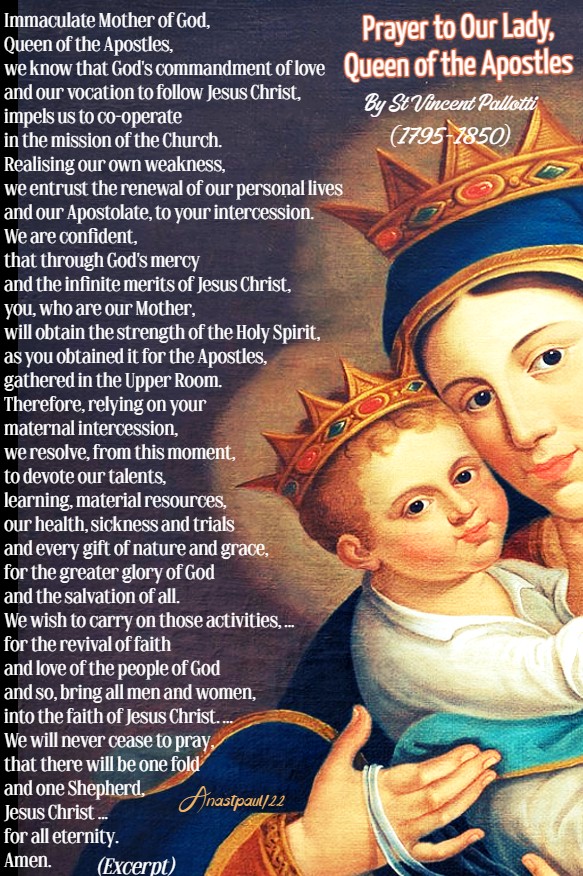


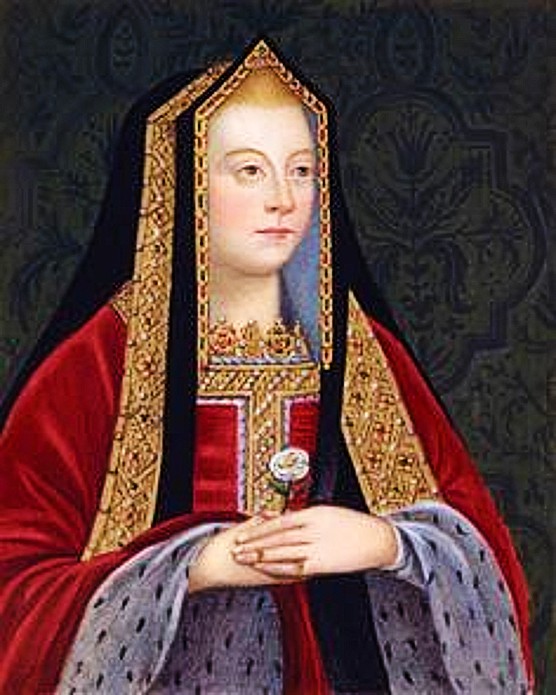


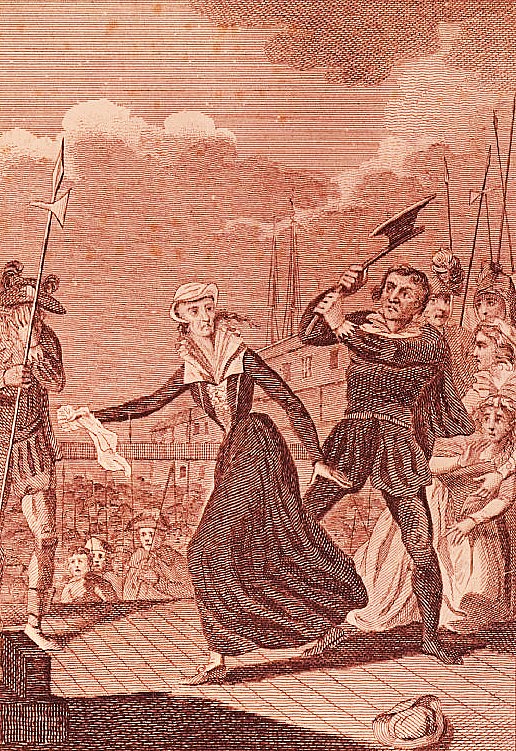


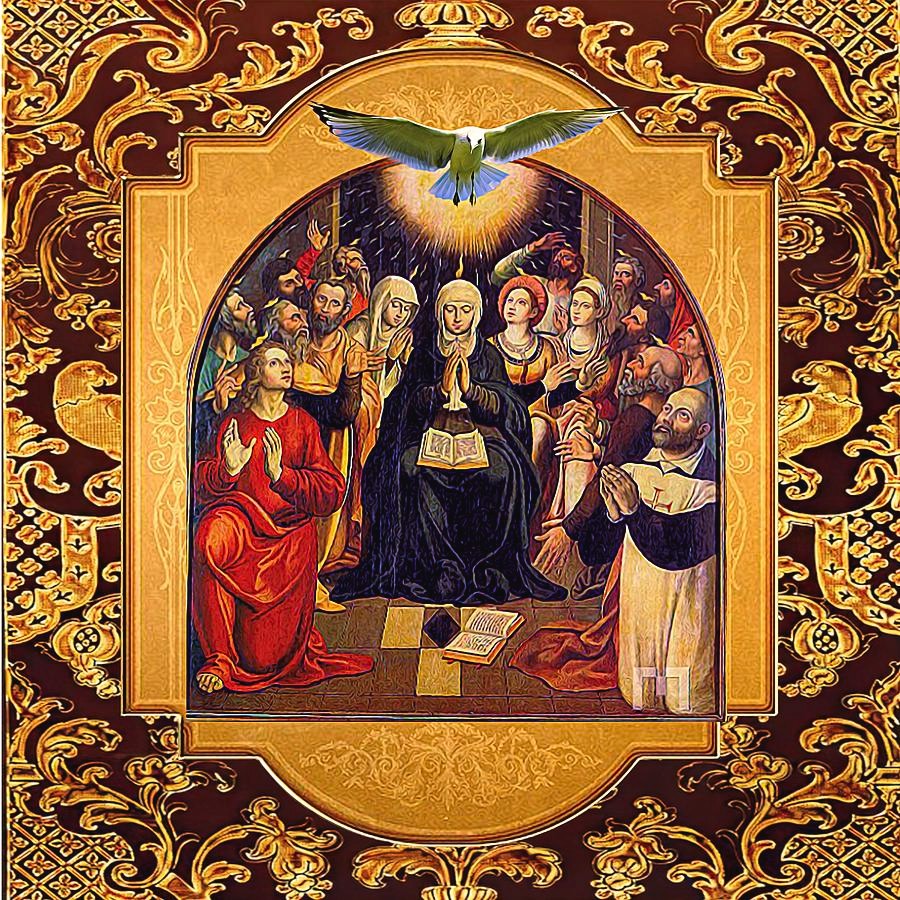
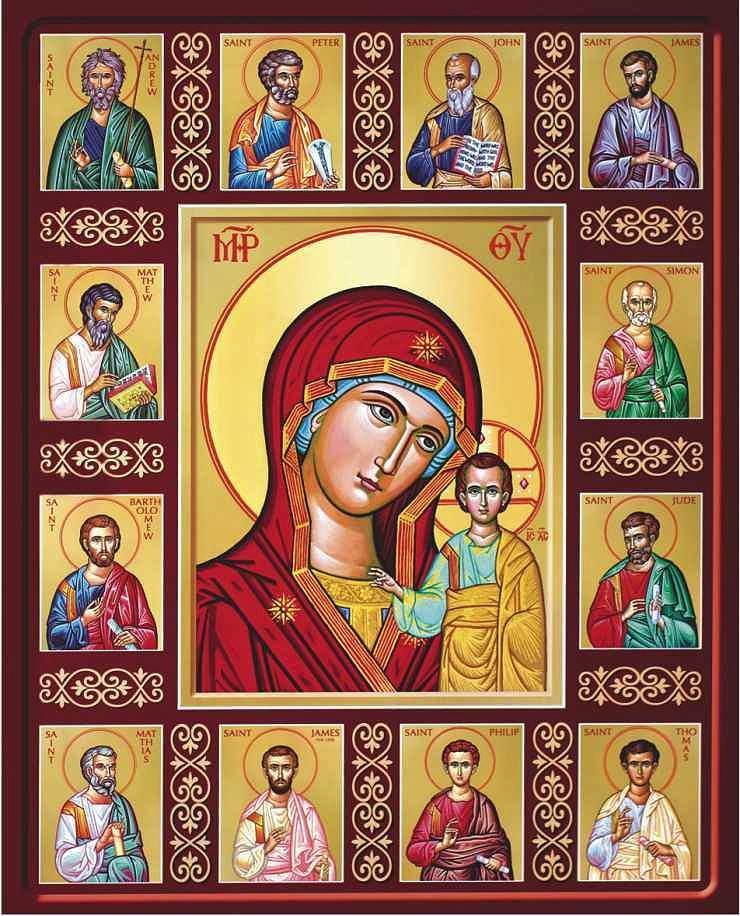
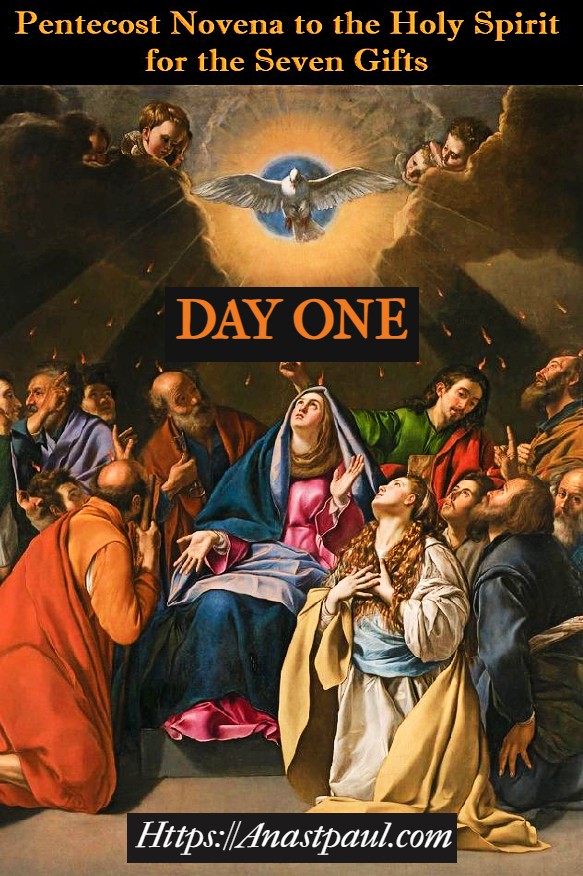


You must be logged in to post a comment.