Rogation Day: Rogation Days are days of prayer and fasting in the Church. They are observed with processions and the praying of the Litany of the Saints. The major Rogation is held on 25 April, the minor Rogations are held on Monday to Wednesday, preceding Ascension Thursday. The word Rogation comes from the Latin verb rogare, meaning “to ask,” which reflects the beseeching of God, for the appeasement of His anger and for protection from calamities. Rogation Days began in the Fifth Century in France by St Mamertus (Died c 477) Archbishop of Vienne. His Life here: https://anastpaul.com/2019/05/11/saint-of-the-day-11-may-st-mamertus-died-c-475/
St Basileus of Braga St Desiderius of Langres (c 307-c 356) Bishop Martyr St Epitacius of Tuy St Euphebius of Naples St Eutychius of Valcastoria St Florentius of Valcastoria St Goban Gobhnena
Martyrs of Béziers: 20 Mercedarian Friars murdered by Huguenots for being Catholic. Martyrs. 1562 at the Mercedarian convent at Béziers, France.
Martyrs of Cappadocia: A group of Christians tortured and Martyred in the persecutions of Diocletian and Galerius. Their names and the details of their lives have not come down to us. They were crushed to death in c.303 in Cappadocia (in modern Turkey).
Martyrs of Carthage: When a civil revolt erupted in Carthage in 259 during a period of persecution by Valerian, the procurator Solon blamed it on the Christians, and began a persecution of them. We know the names and a few details about 8 of these martyrs – Donatian, Flavian, Julian, Lucius, Montanus, Primolus, Rhenus and Victorius. They were beheaded in 259 at Carthage (modern Tunis, Tunisia).
Martyrs of Mesopotamia: A group of Christians Martyred in Mesopotamia in persecutions by imperial Roman authorities. Their names and the details of their lives have not come down to us. They were suffocated over a slow fire in Mesopotamia.
Martyrs of North Africa: A group of 19 Christians Martyred together in the persecutions of the Arian Vandal King Hunneric for refusing to deny the Trinity. We know little more than a few of their names – Dionysius, Julian, Lucius, Paul and Quintian. c 430.
Thought for the Day – 22 May – Meditations with Antonio Cardinal Bacci (1881-1971)
Mary, Queen of Heaven and Earth
“Mary is a supremely powerful Queen because she is the Mother of God. She is a more merciful Queen because she is our Mother and Mother of sinners. She is a most loving Queen because hers is a kingdom of love and of goodness. Even as she is the most lovable of creatures, so she is the most loving.
“To the immense love of God for His creatures,” writes Cardinal Massimi, “and to His command to rational beings, that they should love Him with all their hearts, there has been only one worthy response. That response, was yours, O Mary. You loved God with an intensity which surpassed the combined love of all other creatures. God created your heart, which was destined to be the heart of His Mother, after the fashion of His own. Adorned with every perfection, it had an immeasurable capacity for love, even as you are supreme in your love for God, O Mary, so you are supreme in your love for us. What a cause for gladness this is! God loves us and you love us, O Mary. Our poor hearts, which have a natural longing to be loved and suffer so much when they are disappointed, rejoice in being the object of your love. We thank you, O Mary, for favouring us, in spite your greatness and our unworthiness.” (Cardinal Massimo Massimi, Le Feste di Maria, p 82-83).
The realisation of Mary’s regal power and of her maternal love for us, should lead us to have complete confidence in her. This confidence should inspire us to pray fervently to her, to love her in return and to form a practical resolution of imitating her.”
Quote/s of the Day – 22 May – The Fifth Sunday after Easter – James 1:22-27, John 16:23-30
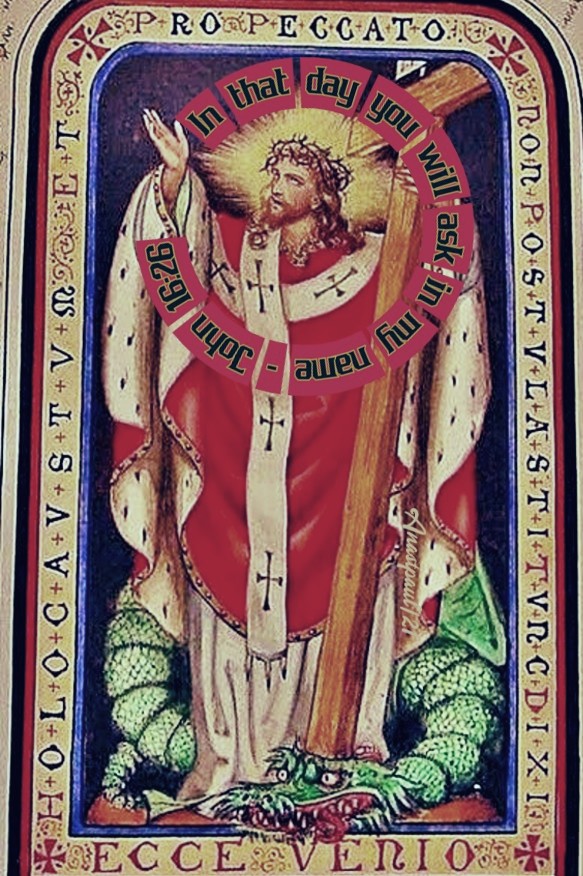
“In that day, you will ask in My Name”
John 16:26
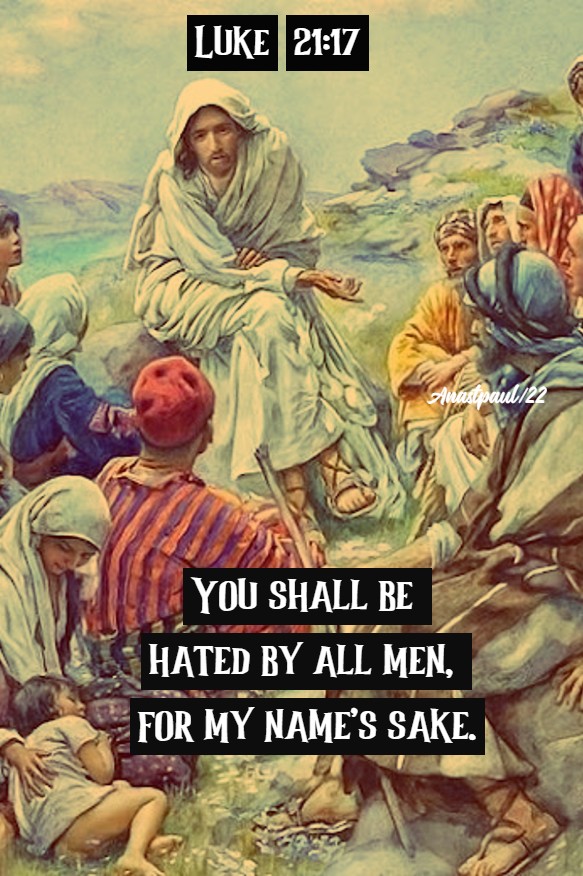
“And you shall be hated by all men, for my name’s sake.”
Luke 21:17
“The eternal God asks a favour of His bride: “Hold me close to your heart, close as locket or bracelet fits.” No matter whether we walk or stand still, eat or drink, we should at all times wear the golden locket “Jesus” upon our heart.”
Bl Henry Suso (1295-1366)
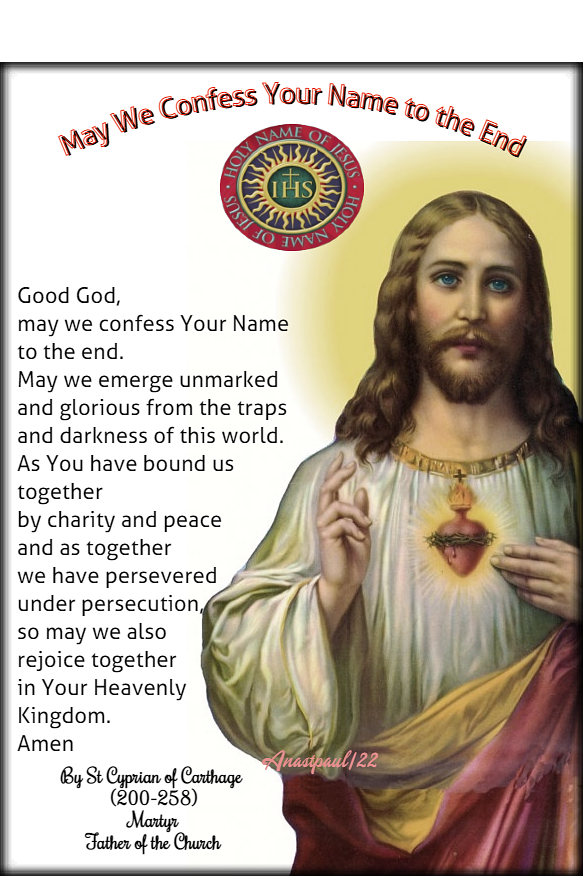
May We Confess Your Name to the End By St Cyprian of Carthage (200-258) Bishop and Martyr Father of the Church
Good God, may we confess Your Name to the end. May we emerge unmarked and glorious from the traps and darkness of this world. As You have bound us together by charity and peace and as together we have persevered under persecution, so may we also rejoice together in Your heavenly kingdom. Amen
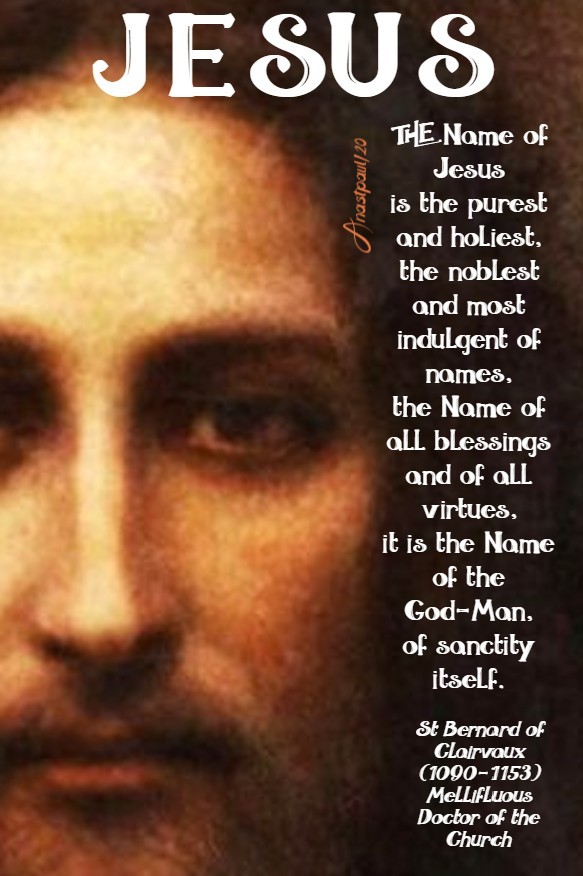
“The Name of Jesus is the purest and holiest, the noblest and most indulgent of names, the Name of all blessings and of all virtues, it is the Name of the God-Man, of sanctity itself.”
St Bernard of Clairvaux (1090-1153) Mellifluous Doctor of the Church
One Minute Reflection – 22 May – The Fifth Sunday after Easter – James 1:22-27, John 16:23-30
“In that day, you will ask in My Name” – John 16:26
REFLECTION – “At the end of our prayers we say: “Through Jesus Christ Thy Son, our Lord” and not “Through the Holy Spirit.” This practice of the Universal Church is not without reason. At its root lies the Mystery according to which, Jesus Christ is the Mediator between God and humanity (1 Tim 2:5), a Priest forever, according to the order of Melchizedek, He who, with His own Blood, entered into the Holy of Holies, not that which was only a copy but, into Heaven itself, where He is at the Right Hand of God and intercedes for us (Heb 6:20; 9:24).
It was in His consideration of Christ’s Priesthood, that the Apostle said: “Through Him let us continually offer God a sacrifice of praise, that is, the fruit of lips which confess His Name” (Heb 13:15). It is through Him that we offer the sacrifice of praise and prayer because it is His death that reconciled us while we were still enemies (Rom 5:10). He willed to offer Himself in sacrifice for our sakes and, since then, it is through Him, that our offerings can be acceptable in God’s sight. This is why Saint Peter warns us in these words: “Like living stones, let yourselves be built into a spiritual house to be a holy priesthood to offer spiritual sacrifices acceptable to God, through Jesus Christ” (1 Pt 2:5). This is the reason why we say to God the Father: “Through Jesus Christ Thy Son, our Lord.” – Saint Fulgentius of Ruspe (467-532) – Bishop in North Africa (Letter 14,36).
PRAYER – O God, from Whom all good things do come, grant to us Thy humble servants, that by Thy holy inspiration, we may think those things that are good and by Thy merciful guidance, may perform the same. Through Jesus Christ, Thy Son our Lord, Who lives and reigns with Thee, in the unity of the Holy Ghost, God, world without end. Amen (Collect).
Our Morning Offering – 22 May – The Fifth Sunday after Easter
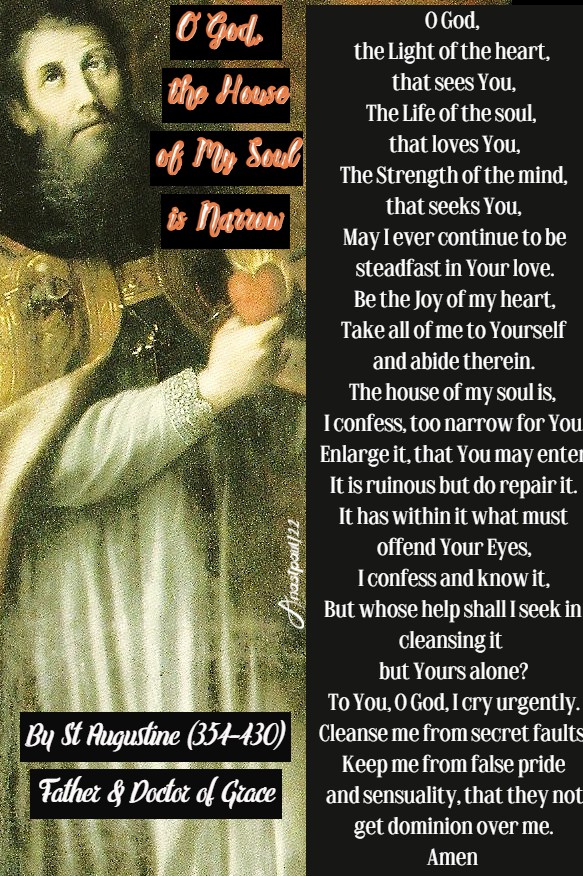
O God, the House of My Soul is Narrow By St Augustine (354-430) Father & Doctor of Grace
O God, the Light of the heart, that sees You, The Life of the soul, that loves You, The Strength of the mind, that seeks You, May I ever continue to be steadfast in Your love. Be the Joy of my heart, Take all of me to Yourself and abide therein. The house of my soul is, I confess, too narrow for You. Enlarge it, that You may enter. It is ruinous but do repair it. It has within it what must offend Your Eyes, I confess and know it, But whose help shall I seek in cleansing it but Yours alone? To You, O God, I cry urgently. Cleanse me from secret faults. Keep me from false pride and sensuality, that they not get dominion over me. Amen
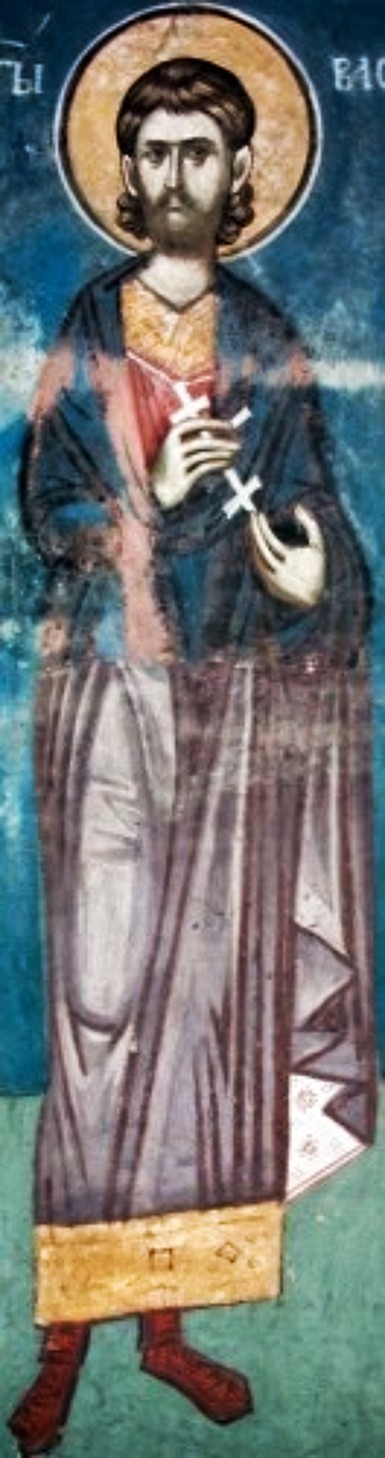
Saint of the Day – 22 May – St Basiliscus of Pontus (Died c 310) Martyr, Bishop of Comana in Pontus, Asia Minor (in modern Turkey) Died by beheading in c 310 in Comana, Pontus (in modern Turkey). Also known as – Basiliscus of Pontus, Basilicus, Basilisco.
The Roman Martyrology reads: “At Comana, in Pontus, under the Emperor Maximian and the Governor Agrippa, the holy Martyr Basiliscus, who was forced to wear iron shoes, pierced with heated nails and endured many other trials. Being at last decapitated and thrown into a river, he obtained the glory of Martyrdom.”
In our earliest sources Basiliscus is said to have announced in a vision at Comana, to the dying St John Chrysostom, the latter’s immediate entry into Heaven and to lead him home and to have identified himself as a Bishop of Comana, Martyred at Nicomedia under Maximian at about the same time as St Lucian of Antioch (who is reported by Eusebius to have been Martyred in 312 under Maximinus Daia).
In the seventh- or eighth-century Vitas of St John Chrysostom ascribed to George of Alexandria Basiliscus, makes the same appearance but identifies himself as a military Martyr. In this latter construction, he has a legendary Greek-language Passio, making him a Martyr at Comana under Maximian. In this version, Basiliscus was brought to a pagan temple to perform ritual sacrifice, which resulted, both in the temple’s being set afire by lightning and in the destruction of its idols, after which he was executed on this day, by decapitation and his body was thrown into the river Iris. Christians secretly retrieved the Saint’s remains and buried them in a freshly plowed field, where later a Martyrion or Shrine, was built in his honour. Thus far Basiliscus’ own Passio.
A related account under today’s date in a Byzantine menologion (the Greek version of the Martyrology) specifies, that he had been tortured by being forced to wear iron shoes studded with red-hot nails.
St Aigulf of Bourges St Atto of Pistoia St Aureliano of Pavia St Ausonius of Angoulême St Baoithin of Ennisboyne St Basiliscus of Pontus (Died c 310) Bishop
St Boethian of Pierrepont St Castus the Martyr St Conall of Inniscoel Bl Diego de Baja Bl Dionisio Senmartin St Emilius the Martyr St Faustinus the Martyr St Francisco Salinas Sánchez St Fulgencio of Otricoli Bl Fulk of Castrofurli Bl Giacomo Soler Bl Giusto Samper St Helen of Auxerre
St Lupo of Limoges St Marcian of Ravenna St Margaret of Hulme Bl Pedro of the Assumption St Quiteria St Romanus of Subiaco St Timothy the Martyr St Venustus the Martyr
Martyred in Japan John Baptist Machado Matthias of Arima Pedro of the Assumption
Martyred in the Spanish Civil War: • Blessed Francisco Salinas Sánchez • Blessed José Quintas Durán
Thought for the Day – 21 May – Meditations with Antonio Cardinal Bacci (1881-1971)
Holy Purity
“Since Mary excelled so much in this virtue and had so great a love for it, she will obtain for us from God, the grace necessary for us to preserve it, as long as we pray humbly to her, especially in times of temptation.
Let us remember, that at Baptism, we became members of the Mystical Body of Christ and temples of the Holy Spirit (Cf 1 Cor 6:15-20). We are obliged to avoid defiling this temple and making the Mystical Body of Christ a dwelling-place for the devil! It is not true to say, that this is an impossible fight. We know, from our own experience, that we can win. We have often battled with, or fled from occasions of sin. We have prayed and made sacrifices, in order to avoid sin and, with the help of God and the protection of the Blessed Virgin, we have won! After our victory, we have felt elated and have experienced that peace, which only God’s grace can bestow. If we have succeeded so many times, why cannot we do the same always? There is no need to be afraid. If we do all that we can, God’s grace will do the rest. “I can do all things in Him, Who strengthens me,” Phil 4:12) says St Paul. “God is faithful,” he writes elsewhere “and will not permit you to be tempted beyond your strength but, with the temptation, will also give you a way out, that you may be able to bear it” (1 Cor 10:13).
If we remain pure, we shall see God. We shall see Him in the work of His creation in this world and we shall see and enjoy Him forever in Heaven. “Blessed are the pure of heart, for they shall see God” (Mt 5:8).”
Quote/s of the Day – 21 May – “The Month of the Blessed Virgin Mary” and Sanctae Mariae Sabbato, Mary’s Saturday
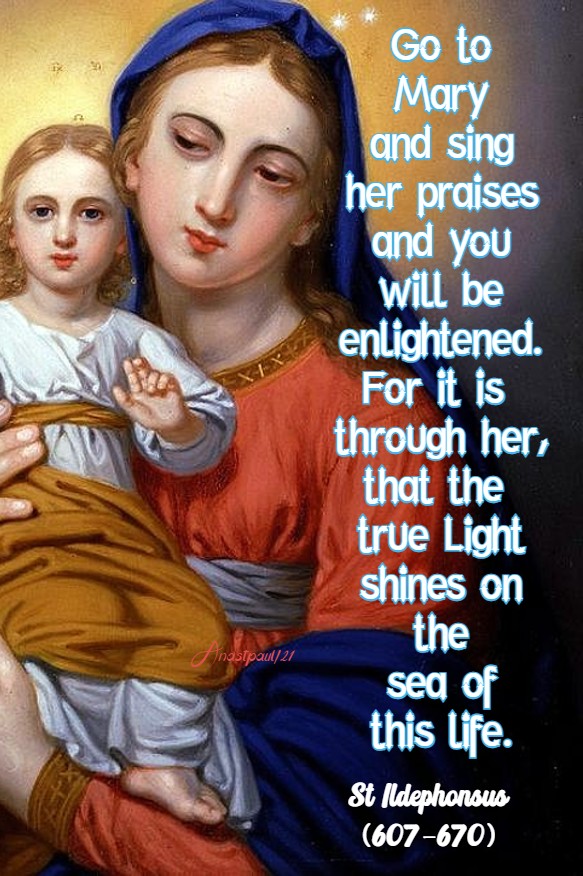
“Go to Mary and sing her praises and you will be enlightened. For it is through her, that the true Light shines on the sea of this life.”
St Ildephonsus (607-670)
“As breathing is not only a sign but even, a cause of life, so the name of Mary, which is constantly found on the lips of God’s servants, both proves that they are truly alive and, at the same time, causes and preserves their life and gives them, every succour . . . may Your name, O Mother of God, be the last sound that escapes my lips!”
St Germanus of Constantinople (c 640-733)
“We may seek graces but shall never find them without the intercession of Mary.”
St Cajetan (1480-1547)
“Do you not know, that not only is Jesus, resting and dwelling continually in the Heart of Mary but that He is, Himself the Heart of Mary … “
St John Eudes CO (1601-1680) Apostle of the Two Holy Hearts
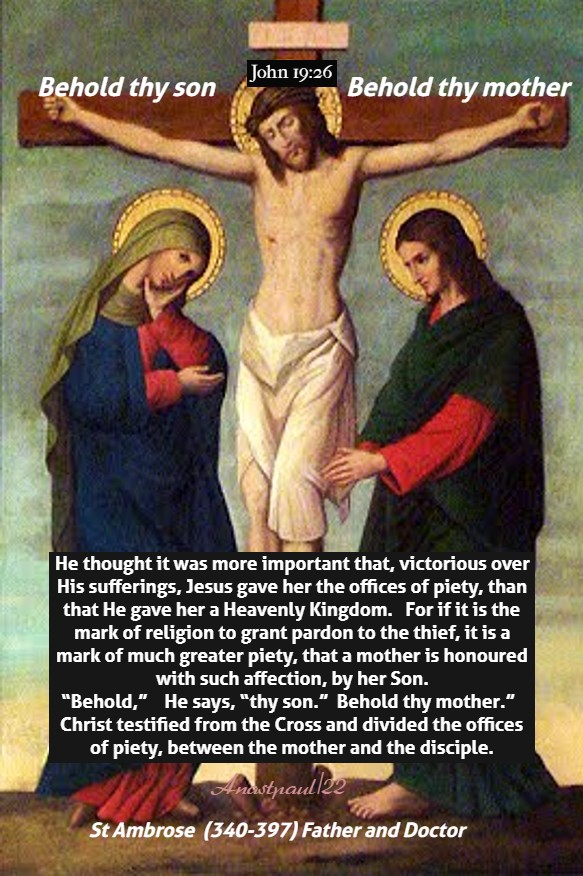
REFLECTION – “Mary, the Mother of the Lord, stood by her Son’s Cross. No-one has taught me this but the holy Evangelist John. Others have related how the earth was shaken at the Lord’s Passion, the sky was covered with darkness, the sun withdrew itself and how, the thief was, after a faithful confession, received into paradise. John tells us what the others have not told, how the Lord, while fixed on the Cross called to His Mother. He thought it was more important that, victorious over His sufferings, Jesus gave her the offices of piety, than that He gave her a Heavenly Kingdom. For if it is the mark of religion to grant pardon to the thief, it is a mark of much greater piety, that a mother is honoured with such affection, by her Son. “Behold,” He says, “thy son.” “Behold thy mother.” Christ testified from the Cross and divided the offices of piety, between the mother and the disciple.
Nor was Mary below what was becoming the Mother of Christ. When the Apostles fled, she stood at the Cross and with pious eyes beheld her Son’s wounds. For she did not look to the death of her offspring but to the salvation of the world. Or perhaps, because that “royal hall” knew, that the redemption of the world would be through the death of her Son, she thought that by her death, she also might add something to that universal gift. But Jesus did not need a helper, for the redemption of all, Who saved all without a helper. This is why He says, “I am counted among those who go down to the pit. I am like those who have no help.” He received indeed, the affection of His Mother but sought not another’s help. Imitate her, holy mothers, who in her only dearly beloved Son, set forth so great an example of maternal virtue. For neither have you sweeter children, nor did the Virgin seek the consolation of being able to bear another son.” – St Ambrose (340-397) Archbishop of Milan, Great Western Father and Doctor (Letter 63)
PRAYER – Grant, we beseech Thee, O Lord God, unto all Thy servants, that they may remain continually in the enjoyment of soundness, both of mind and body and by the glorious intercession of the Blessed Mary, always a Virgin, may be delivered from present sadness and enter into the joy of Thine eternal gladness. Through Jesus Christ, Thy Son our Lord, Who lives and reigns with Thee, in the unity of the Holy Ghost, God, world without end. Amen (Collect).
Our Morning Offering – 21 May – “The Month of the Blessed Virgin Mary” and Sanctae Mariae Sabbato, Mary’s Saturday
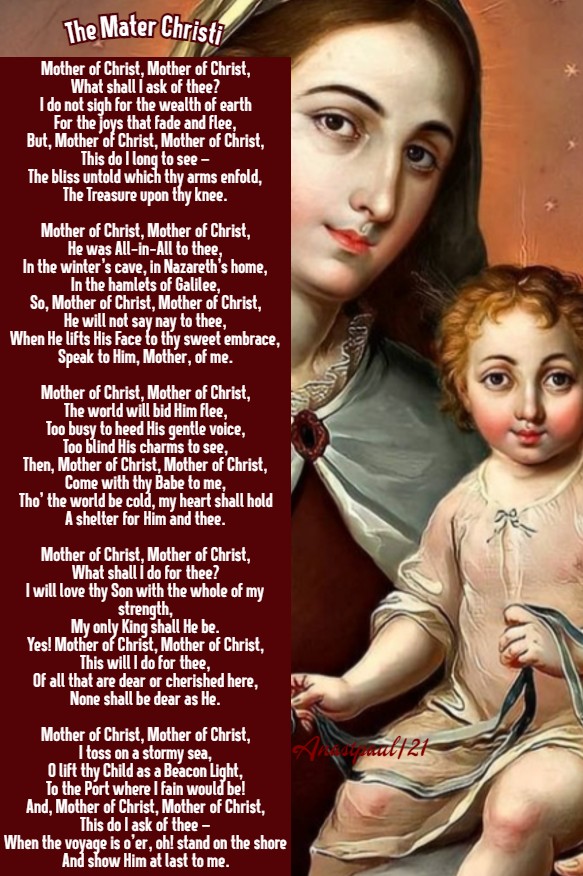
The Mater Christi Unknown Author
Mother of Christ, Mother of Christ, What shall I ask of thee? I do not sigh for the wealth of earth For the joys that fade and flee, But, Mother of Christ, Mother of Christ, This do I long to see — The bliss untold which thy arms enfold, The Treasure upon thy knee.
Mother of Christ, Mother of Christ, He was All-in-All to thee, In the winter’s cave, in Nazareth’s home, In the hamlets of Galilee, So, Mother of Christ, Mother of Christ, He will not say nay to thee, When He lifts His Face to thy sweet embrace, Speak to Him, Mother, of me.
Mother of Christ, Mother of Christ, The world will bid Him flee, Too busy to heed His gentle voice, Too blind His charms to see, Then, Mother of Christ, Mother of Christ, Come with thy Babe to me, Tho’ the world be cold, my heart shall hold A shelter for Him and thee.
Mother of Christ, Mother of Christ, What shall I do for thee? I will love thy Son with the whole of my strength, My only King shall He be. Yes! Mother of Christ, Mother of Christ, This will I do for thee, Of all that are dear or cherished here, None shall be dear as He.
Mother of Christ, Mother of Christ, I toss on a stormy sea, O lift thy Child as a Beacon Light, To the Port where I fain would be! And, Mother of Christ, Mother of Christ, This do I ask of thee — When the voyage is o’er, oh! stand on the shore And show Him at last to me.
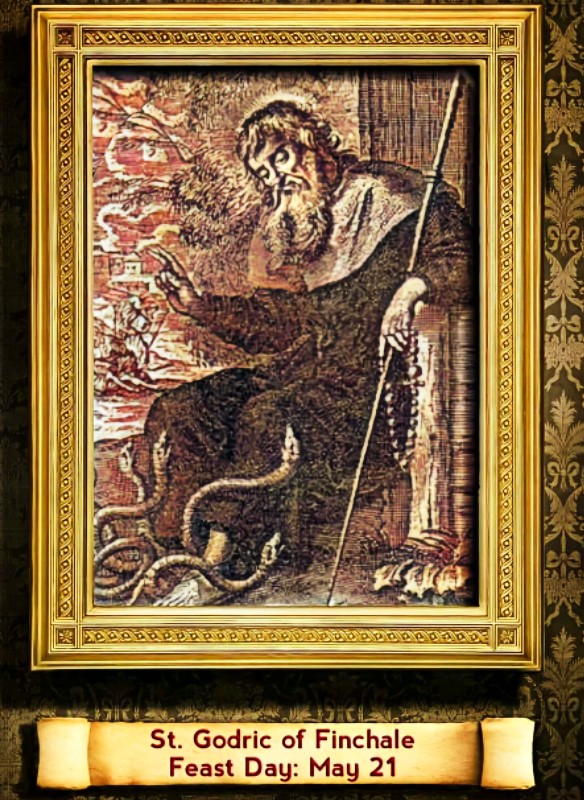
Saint of the Day – 21 May – Saint Godric of Finchale (c 1070-1170) Hermit, Merchant, Pilgrim, Hymnist, Spiritual Advisor to Saints, both great and small, friend of all animals. Born in c 1070 at Walpole, Norfolk, England and died in 1170 at Finchale, County Durham, England of natural causes, Also known as – Godrick
Godric’s life was recorded by a his contemporary, a Monk named Reginald of Durham. Several other Hagiographies are also extant. According to these accounts, Godric, who began from humble beginnings as the son of Ailward and Edwenna, “both of slender rank and wealth but abundant in righteousness and virtue,” was a pedlar, then a sailor and entrepreneur and may have been the captain and owner of the ship which conveyed King Baldwin I of Jerusalem to Jaffa in 1102.
After years at sea, Godric went to the Island of Lindisfarne and there experienced a vision of St Cuthbert. This encounter changed his life and, thereafter, he devoted himself to Christianity and service to God.
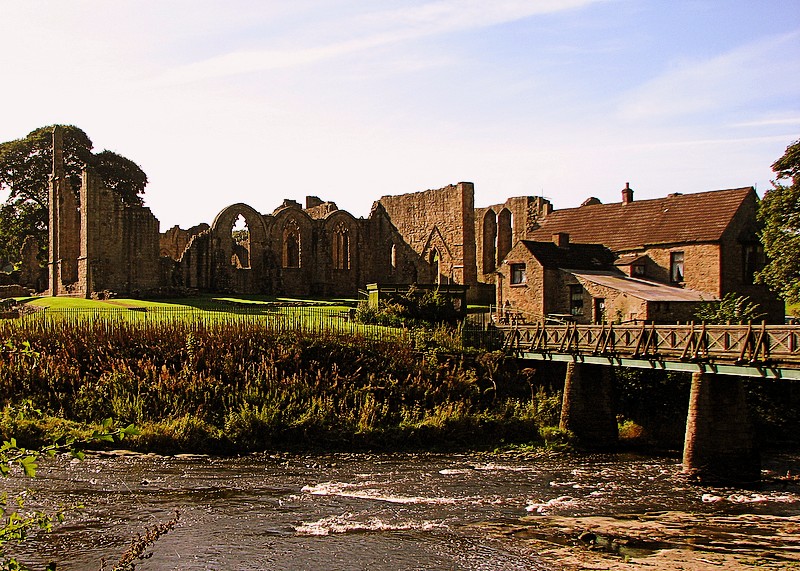
After many pilgrimages around the Mediterranean, Godric returned to England and lived with an elderly hermit named Aelric for two years. Upon Aelric’s death, Godric made one last pilgrimage to Jerusalem and then returned home, where he convinced Ranulf Flambard, the Bishop of Durham, to grant him a place to live as a Hermit at Finchale near the Monastery, by the River Wear. He had previously served as doorkeeper, the lowest of the minor orders, at the hospital Church of nearby St Giles Hospital in Durham. He is recorded to have lived at Finchale for the final sixty three years of his life, occasionally meeting with visitors approved by the Prior of Finchale Monaster, under whose care and obedience he lived and died. A Monk of that house was his Confessor, said Mass for him and administered him the Sacraments in a Chapel adjoining to his cell, which the holy man had built in honour of St John the Baptist.
Finchale Monastery today
As the years passed, his reputation grew, and St Thomas à Becket (Martyr) (1118-1170) and Pope Alexander III, both reportedly sought Godric’s advice as a wise and holy man.
Reginald of Durham.describes Godric’s physical attributes:
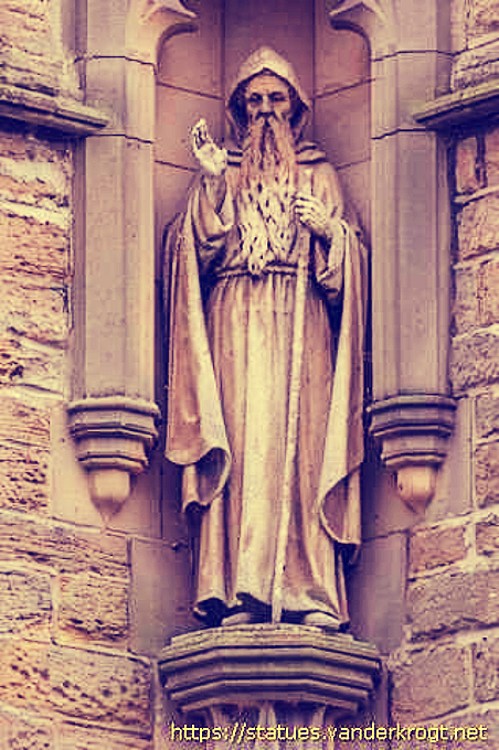
For he was vigorous and strenuous in mind, whole of limb and strong in body. He was of middle stature, broad-shouldered and deep-chested, with a long face, grey eyes most clear and piercing, bushy brows, a broad forehead, long and open nostrils, a nose of comely curve and a pointed chin. His beard was thick and longer than the ordinary, his mouth well-shaped, with lips of moderate thickness, in youth, his hair was black, in age as white as snow; his neck was short and thick, knotted with veins and sinews; his legs were somewhat slender, his instep high, his knees hardened and horny with frequent kneeling; his whole skin rough beyond the ordinary, until all this roughness was softened by old age.
This Statue resides at the Church named in his honour
For several years before his death, Godric was confined to his bed by sickness and old age. Father William of Newburgh OSA, Augustinian Priest and Historian, who visited him during that time, tells us that although his body appeared in a manner dead, his tongue was ever repeating the sacred names of the Three Divine Persons and, in his countenance, there appeared a wonderful dignity, accompanied with an unusual grace and sweetness. Having remained in his desert for sixty-three years, he was seized with his last illness and happily departed to his Lord on the 21st of May, 1170,
His body was buried in the Chapel of St John Baptist. Many miracles confirmed the opinion of his sanctity and a little Chapel was built in his memory by Richard, brother to Hugh Pidsey, Bishop of Durham.
St Godric is often remembered for his affinity with and kindness toward animals and many stories recall his protection of the creatures, who lived near his forest home. According to one of these, he hid a stag from pursuing hunters; according to another, he even allowed snakes to warm themselves by his fire.
Godric lived on a diet of herbs, wild honey, acorns, crab-apples and nuts. He slept on the bare ground.
Reginald of Durham recorded four hymns of St Godric. They are the oldest hymns in English for which the original musical settings survive. Reginald describes the circumstances in which Godric learnt the first hymn. In a vision, the Virgin Mary appeared to Godric “two maidens of surpassing beauty clad in shining white raiments,” at her side. They pledged to come to his aid in times of need and the Virgin herself, taught Godric a hymn of consolation, to overcome grief or temptation Saintë Marië Virginë.
The novel Godric (1981) by Frederick Buechner is a fictional retelling of his life and travels. It was a finalist for a Pulitzer Prize.
Church of Our Lady of Mercy and St Godric of Finchale in Durham
St Adalric of Bèze Bl Adilio Daronch St Ageranus of Bèze St Ansuinus of Bèze St Antiochus of Caesarea Philippi
St Bairfhion of Killbarron St Berard of Bèze St Collen of Denbighshire
St Constantine the Great St Donatus of Caesarea St Eutychius of Mauretania
St Genesius of Bèze St Godric of Finchale (c 1070-1170) Hermit Bl Hemming of Åbo St Hospitius St Isberga of Aire Bl Jean Mopinot Bl Lucio del Rio St Mancio of Évora Bl Manuel Gómez González St Nicostratus of Caesarea Philippi
St Polieuctus of Caesarea St Polius of Mauretania St Restituta of Corsica St Rodron of Bèze St Secundinus of Cordova St Secundus of Alexandria St Serapion the Sindonite St Sifrard of Bèze Bl Silao St Synesius St Theobald of Vienne St Theopompus St Timothy of Mauretania St Valens of Auxerre St Vales St Victorius of Caesarea
Martyrs of Egypt: Large number of Bishops, Priests, Deacons and lay people banished when the Arian heretics seized the diocese of Alexandria, Egypt in 357 and drove out Saint Athanasius and other orthodox Christians. Many were old, many infirm and many, many died of abuse and privations while on the road and in the wilderness. Very few survived to return to their homes in 361 when Julian the Apostate recalled all Christians and then many of those later died in the persecutions of Julian.
Martyrs of Pentecost in Alexandria: An unspecified number of Christian clerics and lay people who, on Pentecost in 338, were rounded up by order of the Arian bishop and Emperor Constantius and were either killed, or exiled, for refusing to accept Arian teachings. 339 in Alexandria, Egypt.
Martyrs of Caesarea Philippi Antiochus Nicostratus
Martyrs of Mauretania Eutychius Polius Timothy Monks of Tibhirine Célestin Ringeard Christian de Chergé Christian Lemarchand Christophe Lebreton Michel Fleury Paul Dochier Paul Favre-Miville
Thought for the Day – 20 May – Meditations with Antonio Cardinal Bacci (1881-1971)
Mary, the Source of Holiness
“Since we are Mary’s children, we should try and reproduce her holiness in ourselves. Although, it is higher than that of the Angels, her sanctity is easy to imitate. There is no record that she ever had ecstasies or worked miracles. Her’s was a perfect internal sanctity, consisting of total conformity with the Will of God and an intense love for Him. We must aspire to this kind of holiness and model our lives upon it. There is no point in arguing that it is sufficient to be good Catholics and, that it is not necessary to be holy. A Catholic, to be truly such, MUST be holy!
St Paul referred to the early faithful as saints (Eph 1:1). “You are a chosen race,” said St Peter, “a royal priesthood, a holy nation, a purchased people,” (1 Peter 1:16, Lev 11:44) “You are to be perfect,” Jesus Himself had commanded, “even as your heavenly Father is perfect,” (Mt 5:48), This was the reason, He indicated why He had come into the world – “that they may have life and have it more abundantly” (Jn 10:10). This is the purpose of the Gospel and this must be the purpose of our lives. Some day, we shall either be holy in Heaven, or we shall be damned. We shall either be saints in Heaven or condemned forever in Hell. This truth merits careful though – everything else is passing but this is something which will never pass away. This command to sanctify ourselves is a reality which is present at every moment of our lives. Let us do our best to obey it, at any cost!”
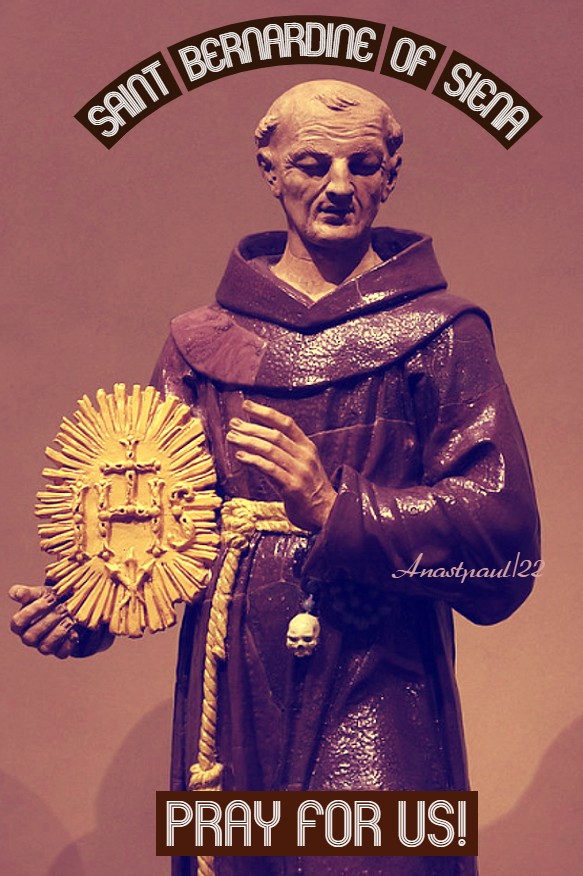
Quote/s of the Day – 20 May – The Memorial of St Bernadine of Siena OFM (1380-1444) Confessor
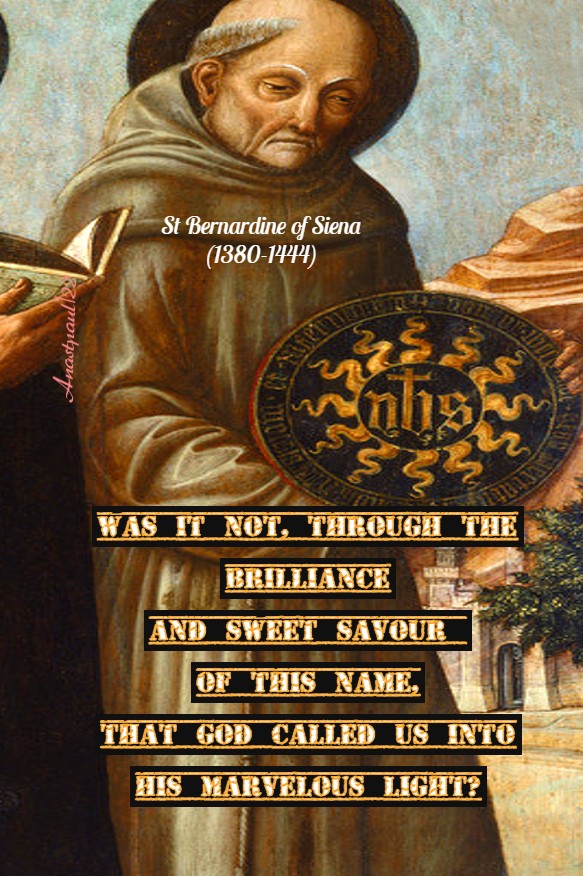
“Was it not through the brilliance and sweet savour of this Name, that God called us into His marvelous light?”“
Jesus, Name Full of Glory By St Bernardine of Siena (1380-1444)
Jesus, Name full of Glory, Grace, Love and Strength! You are the Refuge of those who repent, our Banner of Warfare in this life, the Medicine of souls, the Comfort of those who mourn, the Delight of those who believe, the Light of those who preach the True Faith, the Wages of those who toil, the Cure of the sick. To You our devotion aspires, by You our prayers are received; we delight in contemplating You. O Name of Jesus, You are the Glory of all the Saints for Eternity. Amen
One Minute Reflection – 20 May – The Memorial of St Bernadine of Siena OFM (1380-1444) Confessor – Ecclesiasticus 31:8-11, Matthew 19:27-29.
“And everyone who has left house, or brethren, or sisters, or father, or mother, or wife, or children, or lands for My Name’s sake, shall receive a hundredfold and shall possess life everlasting.” – Matthew 19:29
REFLECTION – “Seek for nothing, desiring to enter for love of Jesus, with detachment, emptiness and poverty in everything in this world. You will never have to do with necessities greater than those to which you made your heart yield itself – for the poor in spirit are most happy and joyful in a state of privation and he who has set his heart on nothing, finds satisfaction everywhere.
The poor in spirit (Mt 5:3) give generously all they have and their pleasure consists in being thus deprived of everything for God’s sake and out of love to their neighbour … Not only do temporal goods – the delights and tastes of the senses – hinder and thwart the way of God but spiritual delights and consolations also, if sought for or clung to eagerly, disturb the way of virtue.” – St John of the Cross (1542-1591) Carmelite, Doctor of the Church (Spiritual maxims, nos. 352, 355,356, 364; 1693 edition).
PRAYER – O Lord Jesus, Who bestowed on blessed Bernardine, Your Confessor, an unusual love for Your Holy Name, we beseech You, by his merits and intercession, graciously pour upon us the spirit of Your love. Who lives and reigns with God the Father, in the unity of the Holy Spirit, God, world without end. Amen (Collect).
Our Morning Offering – 20 May – “The Month of the Blessed Virgin Mary”
Most Holy Mary, Virgin Mother of God Act of Consecration By St Francis de Sales (1567-1622) Indulgence of 300 days, for each recitation St Pius X, 17 November 1906
Most Holy Mary, Virgin Mother of God, I ………., most unworthy though I am to be thy servant, yet touched by thy motherly care for me and longing to serve thee, do, in the presence of my Guardian Angel and all the court of Heaven, choose thee this day to be my Queen, my Advocate and my Mother and I firmly purpose to serve thee evermore myself and, to do what I can, that all may render faithful service to thee. Therefore, most devoted Mother, through the Precious Blood thy Son poured out for me, I beg thee and beseech thee, deign to take me among thy clients and receive me as thy servant forever. Aid me in my every action and beg for me the grace never, by word or deed or thought, to be displeasing in thy sight and that of thy most holy Son. Think of me, my dearest Mother and desert me not at the hour of death. Amen
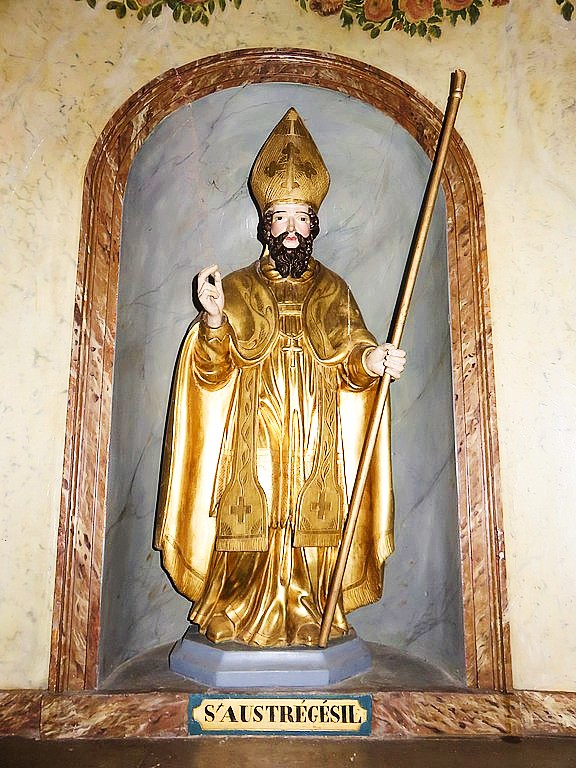
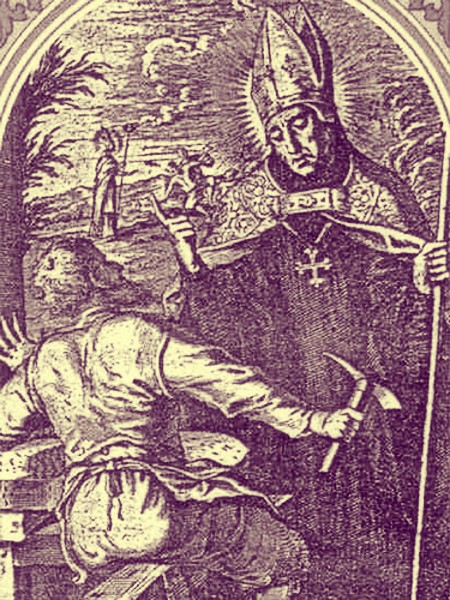
Saint of the Day – 20 May – St Austregisilus of Bourges (c 551-624) Bishop of Bourges from 612 to 624. Priest, Monk, Abbot Born in c 551 in Bourges, France and died in 624 of natural causes. Patronage – Bourges, France. Also known as – Aoustrille, Austregesilio, Outril, Outrille.
Austregisilus was born of noble but not very wealthy parentsin Bourges and when he was about 24, he was sent to live at the Court of King Saint Guntram (died c 592).
There, according to his Vita, he was falsely accused of forging an authorisation for one of the Courtiers and was ordered to fight a duel to prove his innocence.
By Divine intervention, it is reported, his slanderer was kicked to death by his own horse on the morning the ordeal.
Austregisilus then left the Court, became a Monk and a Priest and was appointed Abbot of St Nicetius Monastery in Lyon.
He was Consecrated Bishop of Bourges on 13 February 612. In October 614 he attended a Synod which met at Paris and his name appears eighth in the list of 79 Bishops who signed the Decrees.
He is reported to have granted a hermitage at Bourges to St Amandus, who became his disciple and later became the zealous and effective missionary to Flanders, known as the “Apostle of Belgium.” He Ordained St Sulpitius the Pious as cleric of his Church, then Deacon and Priest and appointed him Director of his Episcopal school and finally his successor as Bishop of Bourges.
The French villages of Saint-Outrille and Saint-Aoustrille are named after him.
St Abercius Bl Albert of Bologna St Alexander of Edessa St Althryda St Anastasius of Brescia St Aquila of Egypt Bl Arnaldo Serra and Companions St Asterius of Edessa St Austregisilus of Bourges (c 551-624) Bishop St Basilla of Rome St Baudelius of Nîmes St Codrato
St Plautilla of Rome St Protasius Chong Kuk-bo St Rafaél García Torres St Talaleo of Egea St Thalalaeus of Edessa St Theodore of Pavia St Tomás Valera González
Thought for the Day – 19 May – Meditations with Antonio Cardinal Bacci (1881-1971)
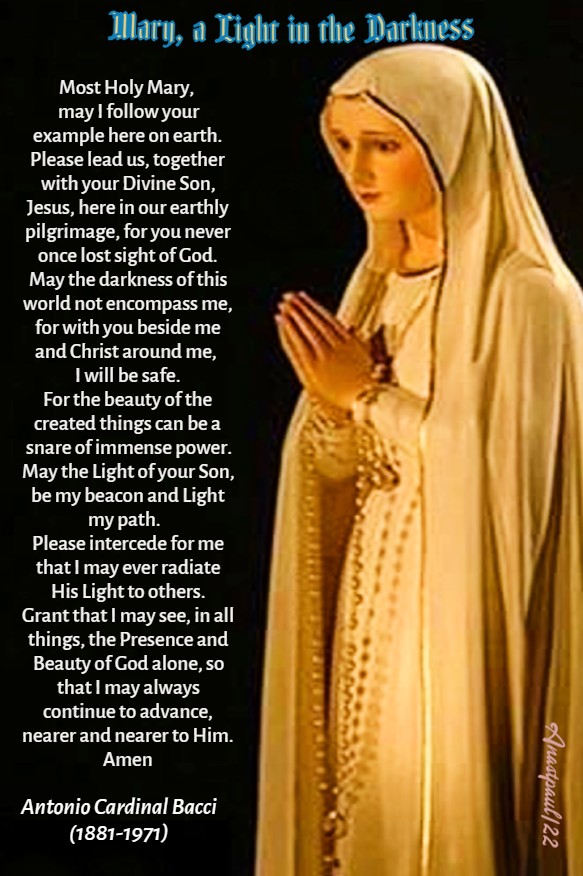
Mary, a Light in the Darkness
“Most Holy Mary, may I follow your example here on earth. Please lead us, together with your Divine Son, Jesus, here in our earthly pilgrimage, for you never once lost sight of God. May the darkness of this world not encompass me, for with you beside me and Christ around me, I will be safe. For the beauty of the created things can be a snare of immense power. May the Light of your Son, be my beacon and Light my path and intercede for me, that I may ever radiate His Light. Grant that I may see, in all things, the Presence and Beauty of God alone, so that I may always continue to advance, nearer and nearer to Him. Amen.”
Quote/s of the Day – 19 May – The Memorial of St Peter Celestine (1210-1296) Pope and Confessor – 1 Peter 5:1-4; 5:10-11, Matthew 16:13-19
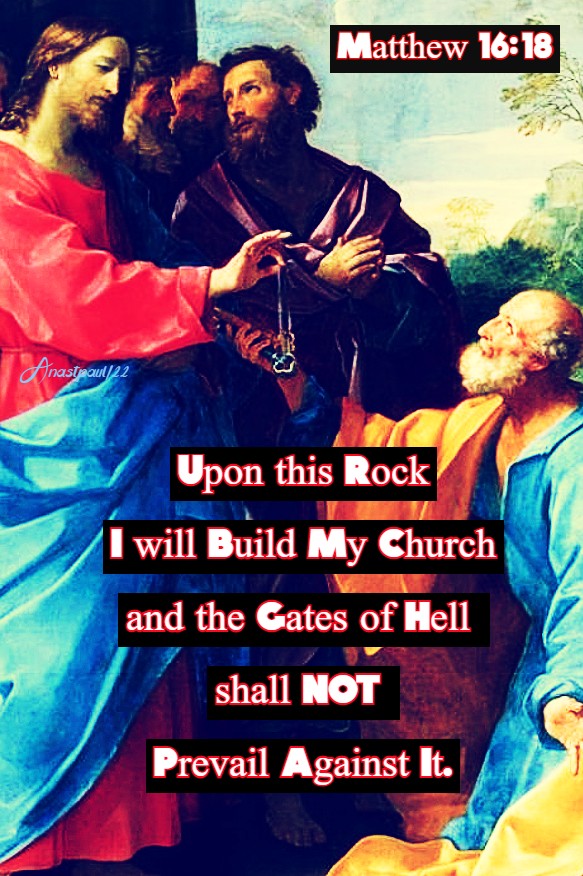
“Upon this rock I will build My Church and the gates of hell shall not prevail against it.”
Matthew 16:18
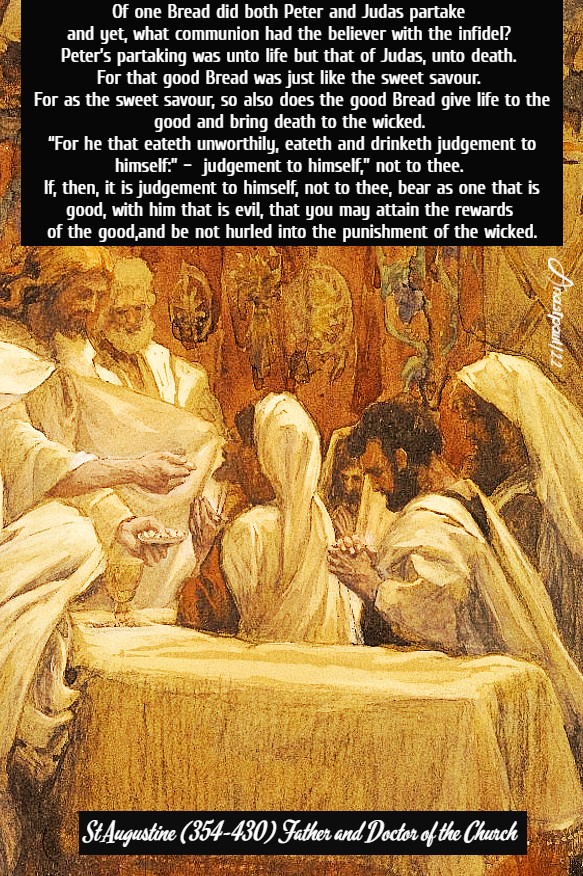
“Of one Bread did both Peter and Judas partake and yet, what communion had the believer with the infidel? Peter’s partaking was unto life but that of Judas, unto death. For that good Bread was just like the sweet savour. For as the sweet savour, so also does the good Bread give life to the good and bring death to the wicked. “For he that eateth unworthily, eateth and drinketh judgement to himself:” – judgement to himself,” not to thee. If, then, it is judgement to himself, not to thee, bear as one that is good, with him that is evil, that you may attain the rewards of the good,and be not hurled into the punishment of the wicked.”
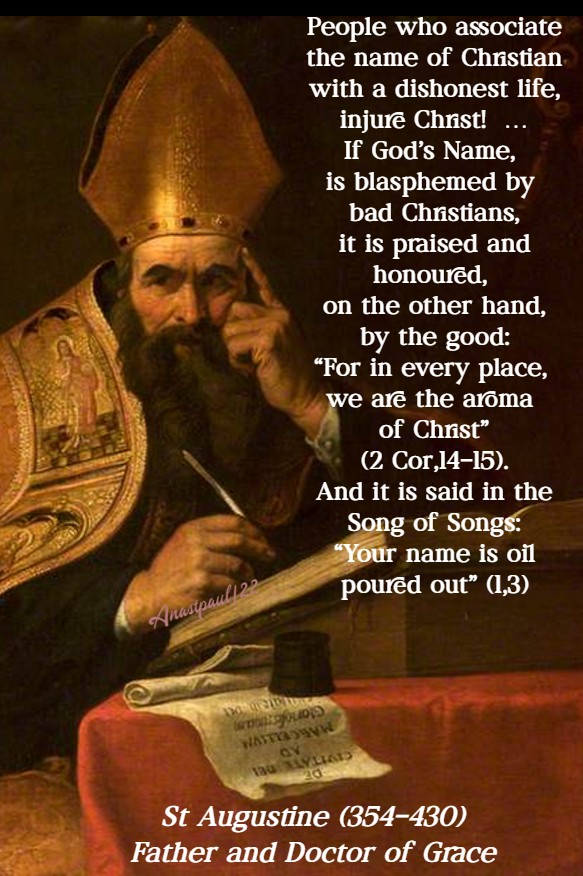
“People who associate the name of Christian with a dishonest life, injure Christ! … If God’s Name, is blasphemed by bad Christians, it is praised and honoured, on the other hand, by the good: “For in every place, we are the aroma of Christ” (2 Cor,14-15). And it is said in the Song of Songs: “Your name is oil poured out” (1,3).”
St Augustine (354-430) Father and Doctor of the Church
(On John 12:1-9 Monday of Holy Week).
“Better that only a few Catholics should be left, staunch and sincere in their religion, than that they should, remaining many, desire as it were, to be in collusion with the Church’s enemies and in conformity with the open foes of our faith.”
St Peter Canisius (1521-1397) Doctor of the Church
“The path to Heaven is narrow, rough and full of wearisome and trying ascents, nor can it be trodden without great toil and, therefore, wrong is their way, gross their error and assured their ruin, who, after the testimony of so many thousands of Saints, will not learn where to settle their footing!”
St Robert Southwell SJ (1561-1595) Priest and Martyr
One Minute Reflection – 19 May – The Memorial of St Peter Celestine (1210-1296) Pope and Confessor – 1 Peter 5:1-4; 5:10-11, Matthew 16:13-19
“Upon this rock I will build my church” … Matthew 16:18
REFLECTION – “Nothing escaped the Wisdom and Power of Christ, the elements of nature lay at His service, spirits obeyed Him, Angels served Him. … And yet, out of all the world, Peter alone was chosen to stand at the head, for the calling of all the peoples and the oversight of all the Apostles and Fathers of the Church. Thus, even though there are many Priests and shepherds among the People of God, Peter governed them all in person, while Christ also governs them in the capacity of Head. …
The Lord asks all the Apostles what people think of Him and they all say the same thing, so long as they are making known the doubts deriving from human ignorance. But when the Lord demands to know, what the disciples themselves think, the first to confess the Lord, is he, who is the first in dignity of the Apostles. As he had said: “You are the Christ, the Son of the Living God,” Jesus answers him: “Blessed are you, Simon son of Jonah. For flesh and blood has not revealed this to you, but my heavenly Father.” That is to say, blessed are you because my Father taught this to you. Earthly opinion has not led you astray but it is heavenly inspiration that has instructed you. It is not flesh and blood that enabled you to discover Me but He, Whose only Son I am.
“And so I say to you,” that is to say- just as my Father has manifested My Divinity to you, so, I Am making known your superiority to you. “You are Peter” namely, I am the unshakeable Rock, the Cornerstone who makes two peoples one (Eph 2:14), the foundation other than which, no-one can lay any other (1 Cor 3:11). But you also, you are rock, since you are impregnable by My Strength and, what I have by virtue of My Power, you have in common with Me, by the fact,, that you participate in it. “On this rock I will build my Church” … On the firmness of this foundation, He says, will I build an everlasting temple and my Church, whose summit is to reach to Heaven, will be raised on the strength of that faith.” … Saint Pope Leo the Great (400-461) Father and Doctor of the Church ( 4th sermon for the Anniversary of his Conse
PRAYER – O God, Who raised blessed Peter Celestine to the lofty dignity of Supreme Pontiff and taught him to prefer self-abasement instead; mercifully grant that by his example, we may look upon all worldly things as naught and may be worthy, to reap in joy, the rewards promised to the humble. Through Jesus Christ, Thy Son our Lord, Who lives and reigns with Thee, in the unity of the Holy Ghost, God, world without end. Amen (Collect).
Our Morning Offering – 19 May – “The Month of the Blessed Virgin Mary”
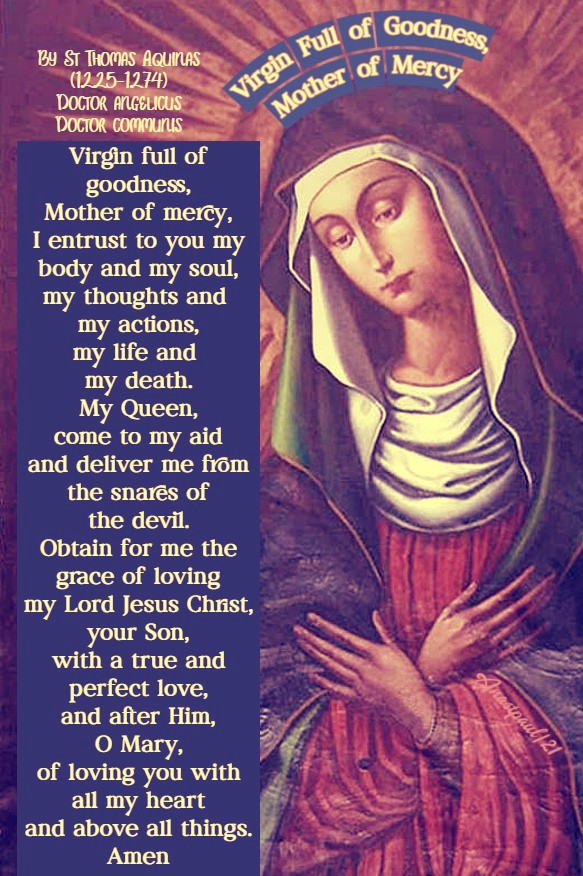
Virgin Full of Goodness, Mother of Mercy By St Thomas Aquinas (1225-1274) Doctor angelicus Doctor communis
Virgin full of goodness, Mother of mercy, I entrust to you my body and my soul, my thoughts and my actions, my life and my death. My Queen, come to my aid and deliver me from the snares of the devil. Obtain for me the grace of loving my Lord Jesus Christ, your Son, with a true and perfect love, and after Him, O Mary, of loving you with all my heart and above all things. Amen.
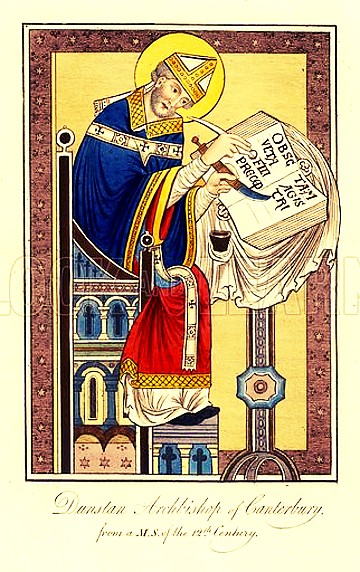
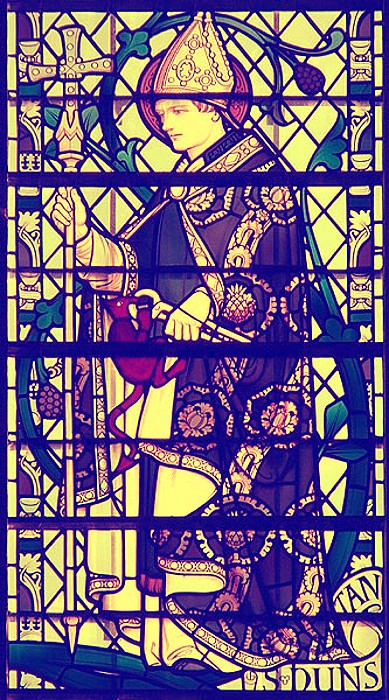
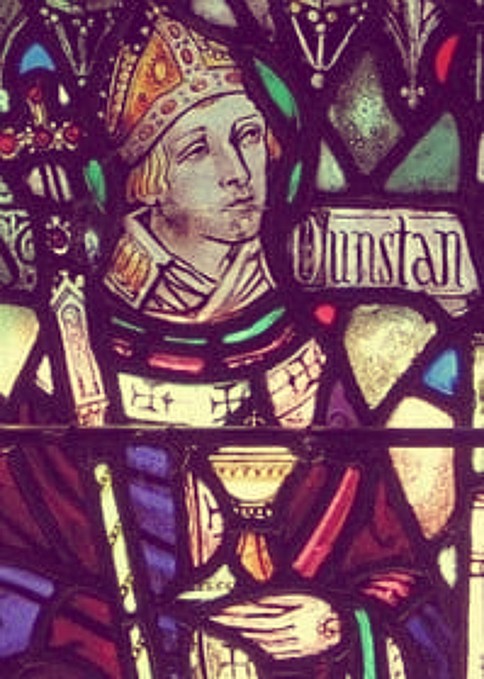
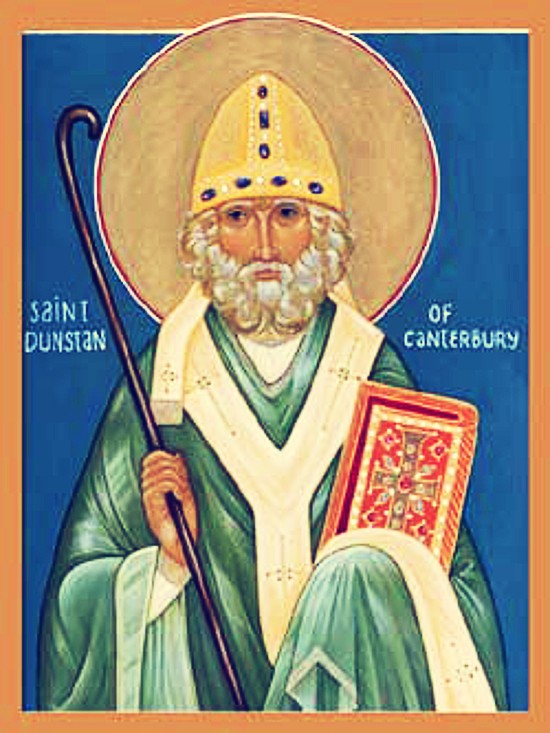
Saint of the Day – 19 May – Saint Dunstan of Canterbury (909-988) Bishop of London, Worcester then Archbishop of Canterbury, Priest, Monk, Abbot. As Abbot, he was the principal agent in the restoration of English monasticism, following the devastation of the Viking invasions. He was renowned as a great Scholar, Painter, Musician and Metalsmith, Writer and Poet, as well as being a Counsellor of Kings and a zealous reforming Bishop. Born in 909 at Baltonsborough, Glastonbury, England and died on 19 May 988 at Canterbury, England of natural causes. Patronages – Armourers, blacksmiths, the blind and sight-impaired, bell-ringers, goldsmiths, silversmiths, jewellers, lighthouse keepers, locksmiths, musicians, swordsmiths, Diocese of Charlottetown, Prince Edward Island, Canada.
St Dunstan was the son of Heorstan, Anglo-Saxon nobleman, born in the early 10th century near Glastonbury during the reign of King Athelstan. Northern Europe and the British Isles had been under attack and conquest from the Danes and Vikings for several centuries and many coastal communities and monasteries, had been destroyed by the invaders. As a young boy he was introduced to the Irish scholars who visited the renowned Monastery at Glastonbury.
After recovering from a near fatal illness, beloved to be leprosy, he pursued his studies with a zeal for knowledge and artistic skills. He became well known for his devotion and was summoned by his uncle Athelm, Archbishop of Canterbury, to enter his service. He soon became a favourite of King Aethelstan which aroused the envy of the King’s Court. St. Dunstan was accused of studying magic and heathen literature and was attacked by his enemies who bound, gagged him and threw him into a filthy pit . He escaped to Winchester and entered the service of the Bishop, another uncle, St Alphege. Following an illness caused by his treatment at Court, he was persuaded by his uncle to become a Monk.
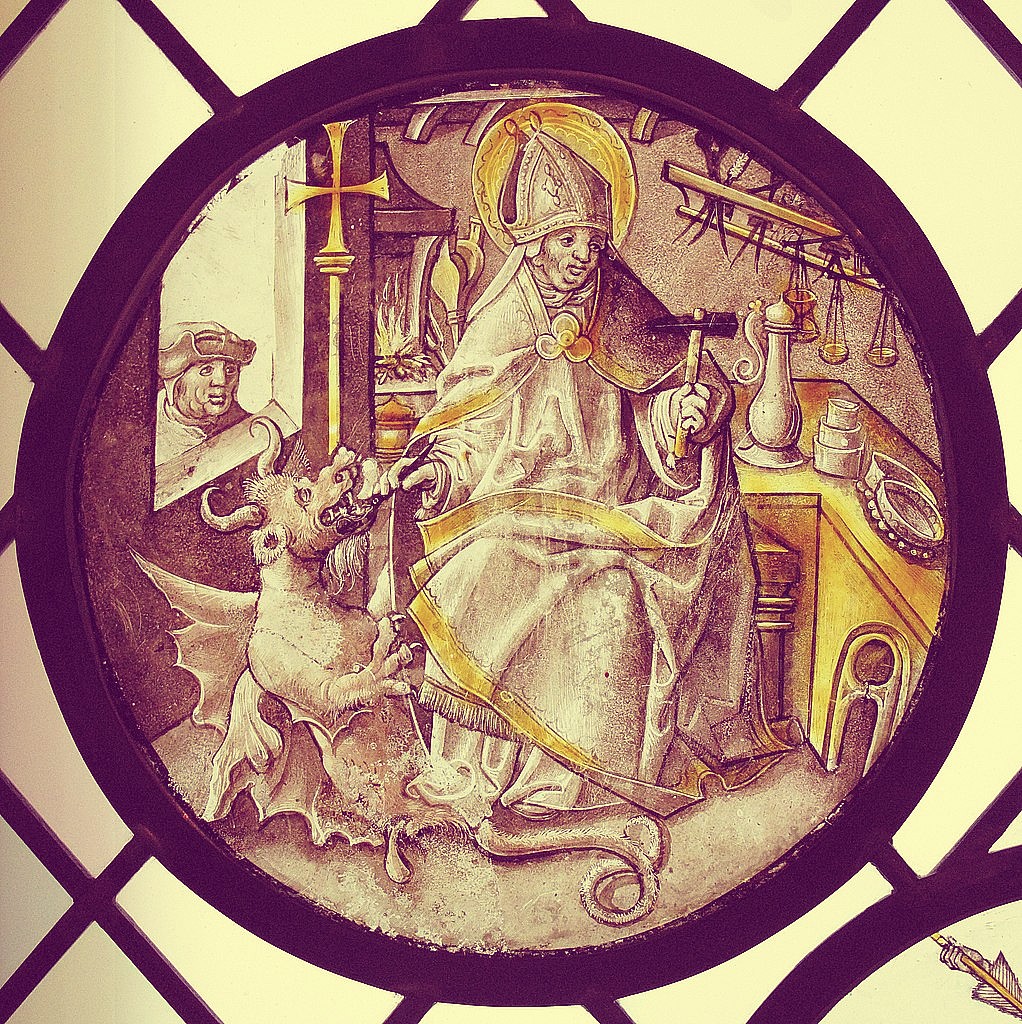
Following his Ordination to the Priesthood by his uncle in 934, he returned to Glastonbury and built a cell alongside the Church of St Mary. His cell was tiny only 5 feet (150 cms) long by 2ft 6ins(75 cms) wide. At this time, the devil tempted him but Dunstan seized Satan’s face with his smith’s tongs.
In 940 after the death of King Aethelstan, he was summoned by the new King, Eadmund and appointed a Counsellor but again he was driven from the Court by jealous courtiers. After narrowly escaping death while hunting, the King remembered the harsh treatment that Dunstan had received at Court. At Glastonbury, he took St Dunstan by the hand, gave him a kiss of peace and led him to the Abbot’s throne.
In his position as Abbot of Glastonbury, St Dunstan set about recreating the monastic life and rebuilding the Abbey. He rebuilt the Church of St Peter, the cloister and reestablished the monastic enclosure. Only two years later, King Eadmond was assassinated, and was succeeded by Eadred. As Abbot of Glastonbury, Dunstan was appointed Guardian of the Royal treasure. The new King encouraged the spread of Christian devotion and observance and the expulsion of heathendom. Dunstan became deeply involved in secular politics and incurred the enmity of the West Saxon nobles, for denouncing their immorality and for urging peace with the Danes.
In 955, Eadred died and was succeeded by Eadwig. Different from his predecessor he was under the influence of two unprincipled women. After the coronation, Dunstan discovered the King with his two harlots and was again forced to flee from the Court in exile. He took refuge at a Benedictine Monastery in Ghent. He stayed in Ghent for a year, during which time he came into contact with the reformed continental monasticism which was to inspire his vision of Benedictine perfection.
In 957, the nobles, unable to endure the excesses of King Eadwig, drove him out. His successor Eadgar, asked St Dunstan to return and appointed him Archbishop of Worchester In the following year, the See of London became vacant and was conferred on Dunstan, who held it simultaneously with Worcester.
One of Eadwig’s final acts had been to appoint a successor to Archbishop Oda of Canterbury, who died on 2 June 958. The chosen candidate was Ælfsige of Winchester but he died of cold in the Alps as he journeyed to Rome to receive the Pallium. In his place. Eadwig then nominated the Bishop of Wells, Byrhthelm. However, as soon as Edgar became King, he reversed this second choice on the ground that Byrhthelm had not been able to govern even his first Diocese in a successful manner. The Archbishopric was then conferred on Dunstan.
In 960, Dunstan journeyed to Rome to receive the Pallium from Pope John XII. On his journey there, Dunstan’s acts of charity were so lavish as to leave nothing for himself and his attendants. His steward complained but Dunstan replied that they trust in the Lord Jesus Christ and all would be well..
On his return from Rome, Dunstan at once regained his position as virtual prime minister of the Kingdom. By his advice, Ælfstan was appointed to the Bishopric of London and Oswald, to that of Worcester. In 963, Æthelwold, the Abbot of Abingdon, was appointed to the See of Winchester. With their aid and with the ready support of King Edgar, Dunstan was able to implement his reforms in the English Church. The Monks were taught to live in a spirit of self-sacrifice and Dunstan actively enforced the law of celibacy. He forbade the practices of simony (selling ecclesiastical offices for money) and ended the custom of clerics appointing relatives to offices under their jurisdiction. New Monasteries were built and in some of the great Cathedrals, Monks took the place of the Secular Canons and Canons were obliged to live according to rule. The Parish Priests were compelled to be qualified for their office; they were urged to teach Parishioners not only the truths of the Christian faith but als, trades to improve their lives. The state saw reforms as well. Good order was maintained throughout the realm and there was respect for the law. Trained bands policed the north and a navy guarded the shores from Viking raids. There was a level of peace in the Kingdom unknown in living memory.
Dunstan’s influence under the new Monarch began to wane and he retired to Canterbury. His retirement at Canterbury consisted of long hours, both day and night, spent in private prayer, as well as his regular attendance at Mass and the daily Office. He visited the Shrines of St Augustine and St Æthelberht, and there are reports of a vision of angels who sang to him heavenly canticles. He worked to improve the spiritual and temporal well-being of his people, to build and restore Churches, to establish schools, to judge suits, to defend widows and orphans, to promote peace and to enforce respect for purity. He practised his crafts, made bells and organs and collated the books in the Cathedral library. He encouraged and protected European scholars who came to England, and was active as a Teacher in the Cathedral school.
On the Vigil of Ascension Day 988, it is recorded that a vision of angels warned he would die in three days. On the Feast day of Ascension itself, Dunstan celebrated Holy Mass and preached three times to the faithful. In this last address, he announced his impending death and wished his congregation well. That afternoon he chose the spot for his tomb, then went to his bed. His strength failed rapidly and on Saturday morning, 19 May, he caused the Clergy to assemble. Mass was celebrated in his presence, then he received Extreme Unction and the Viaticum and died. Dunstan’s final words are reported to have been, “He hath made a remembrance of His wonderful works, being a merciful and gracious Lord: He hath given food to them that fear Him.“
The English people accepted him as a Saint shortly thereafter. He was formally Canonised in 1029 Pope John XIX. That year, at the Synod of Winchester, St Dunstan’s feast was ordered to be kept solemnly throughout England
English literature contains many references to St Dunstan, for example, in A Christmas Carol by Charles Dickens and in this folk rhyme:
St Dunstan, as the story goes, Once pull’d the devil by the nose With red-hot tongs, which made him roar, That he was heard three miles or more.
Another story relates how Dunstan nailed a horseshoe to the Devil’s hoof when he was asked to re-shoe the Devil’s horse. This caused the Devil great pain and Dunstan only agreed to remove the shoe and release the Devil, after he promised never to enter a place where a horseshoe is over the door. This is the origin of the lucky horseshoe. Until St Thomas Becket’s fame overshadowed Dunstan’s, St Dunstan was the most popular Saint in England for nearly two centuries, having gained fame for the many stories of his greatness, not least among which, were those concerning his famed cunning in defeating the Devil. Eighteen Churches in England are named after St Dunstan, including two famous ones in the City of London, as well as a number of schools, hospitals and other institutions, including the Charity established to help those blinded as a result of war.
Dunstan had been buried in his Cathedral and when that building was destroyed by a fire in 1074, his relics were translated by Archbishop St Lanfranc to a tomb on the south side of the High Altar, in the rebuilt Canterbury Cathedral. The Monks of Glastonbury used to claim, that during the sack of Canterbury by the Danes in 1012, Dunstan’s body had been carried ,for safety, to their Abbey. This story was disproved by Archbishop William Warham, who opened the tomb at Canterbury in 1508. They found Dunstan’s relics still to be there. Within a century, however, his s=Shrine was destroyed during the English Reformation.
BEFORE YOU ASK: _ I have been unsuccessful in ascertaining the reason for St Dunstan’s Patronage of the Blind. All I have so far found is the result of his Patronage – the worldwide organisations under his Patronage which are dedicated to the care and assistance of the blind and sight-impaired. I will keep trying.
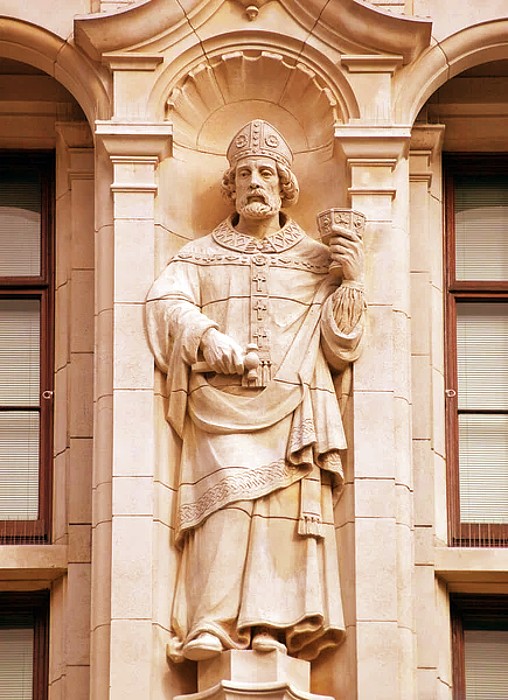
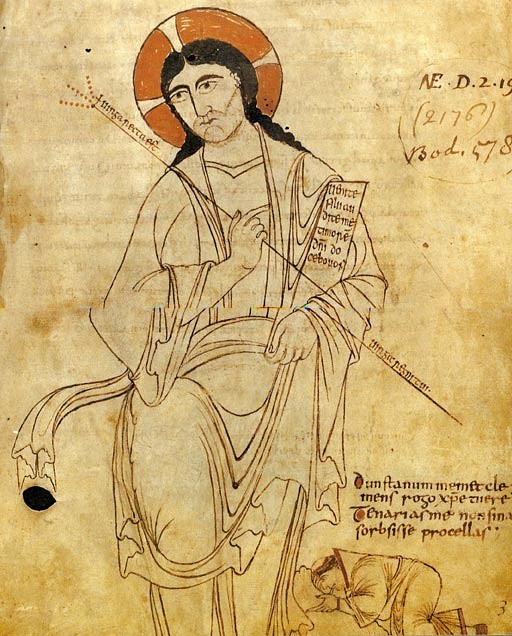
The image below is from the Manuscript known as the “Glastonbury Classbook” – it is a portrait of Christ,and the Monk kneeling beside Him is believed to be a self-portrait of St Dunstan. The text beside the Monk says: “Dunstanum memet clemens rogo, Christe, tuere / Tenarias me non sinas sorbsisse procellas” (‘I ask, merciful Christ, that You protect me, Dunstan; do not permit the Taenarian storms to swallow me‘). Then the Statue of St Dunstan beneath the above, is on his tomb in Canterbury Cathedral and shows him holding the Glastonbury Classbook – how lovely!
St Crispin of Viterbo St Cyriaca of Nicomedia and Companions St Cyril of Trèves St Dunstan of Canterbury (909-988) Bishop of London, Worcester then Archbishop of Canterbury St Evonio of Auvergne
Thought for the Day – 18 May – Meditations with Antonio Cardinal Bacci (1881-1971)
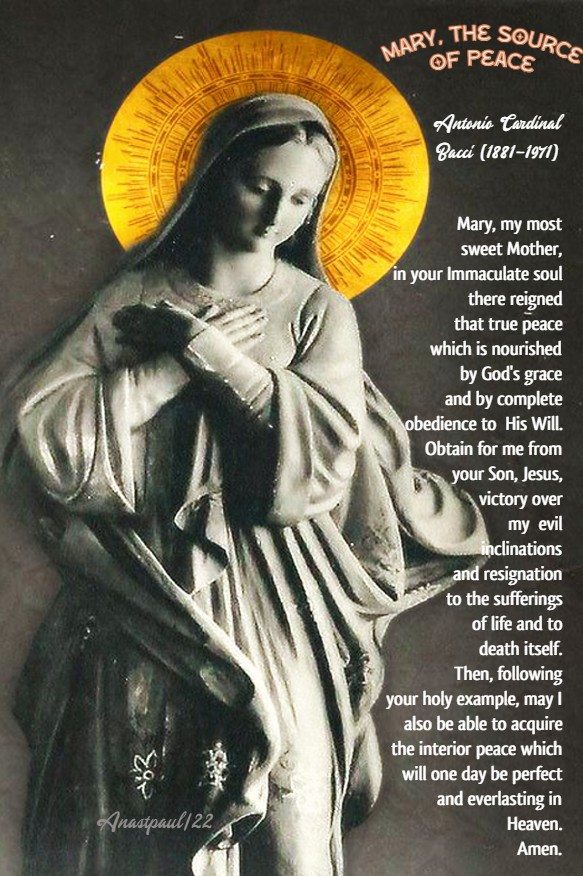
Mary, the Source of Peace
“Mary, my most sweet Mother, in your Immaculate soul there reigned that true peace which is nourished by God’s grace and by complete obedience to His Will. Obtain for me from your Son, Jesus, victory over my evil inclinations and resignation to the sufferings of life and to death itself. Then, following your holy example, may I also be able to acquire the interior peace which will one day be perfect and everlasting in Heaven. Amen.”
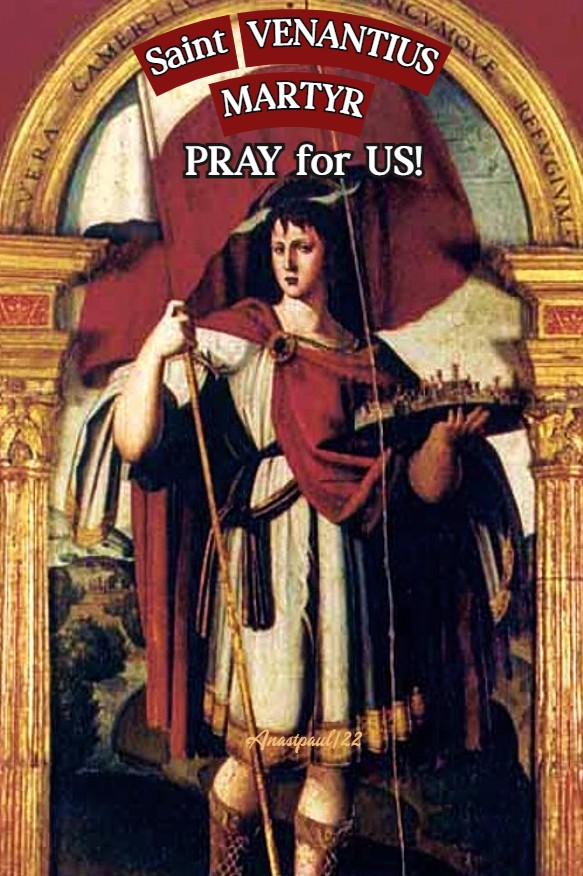
Quote/s of the Day – 18 May – The Memorial of St Venantius (Died c 250) Martyr – Wisdom 5:1-5, John 15:1-7
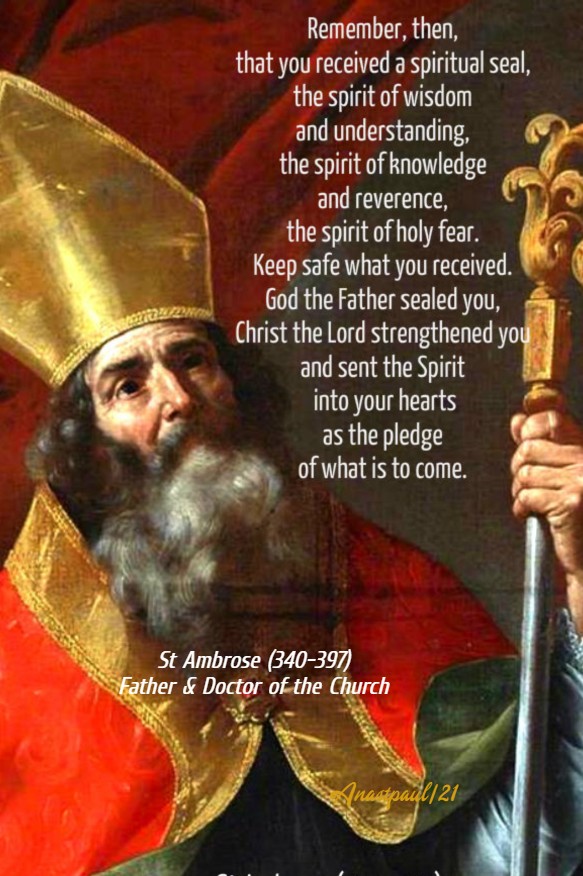
“Remember, then, that you received a spiritual seal, the spirit of wisdom and understanding, the spirit of knowledge and reverence, the spirit of holy fear. Keep safe what you received. God the Father sealed you, Christ the Lord strengthened you and sent the Spirit into your hearts as the pledge of what is to come.”
St Ambrose (340-397) Father & Doctor of the Church
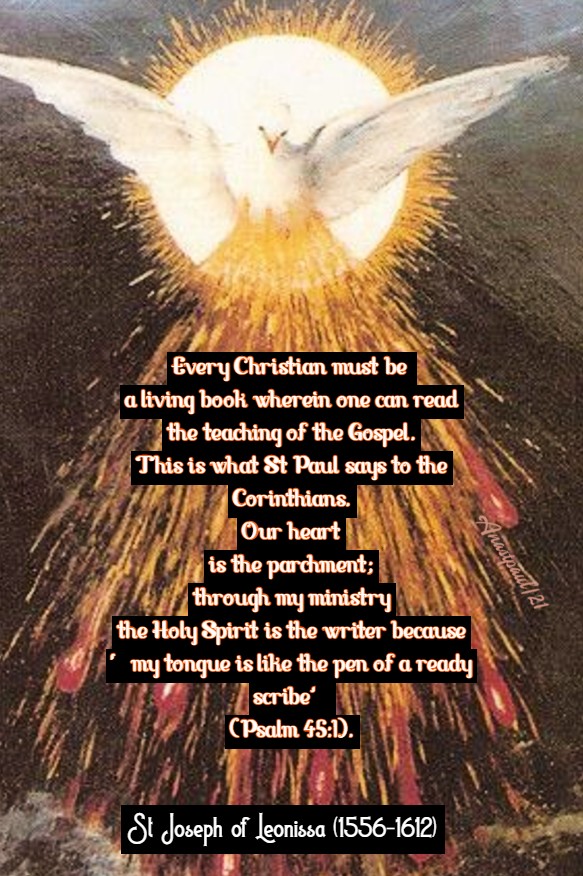
“Every Christian must be a living book wherein one can read the teaching of the Gospel. This is what St Paul says to the Corinthians. Our heart is the parchment; through my ministry the Holy Spirit is the writer because ‘my tongue is like the pen of a ready scribe’ (Psalm 45:1).”
St Joseph of Leonissa OFM CAP (1556-1612)
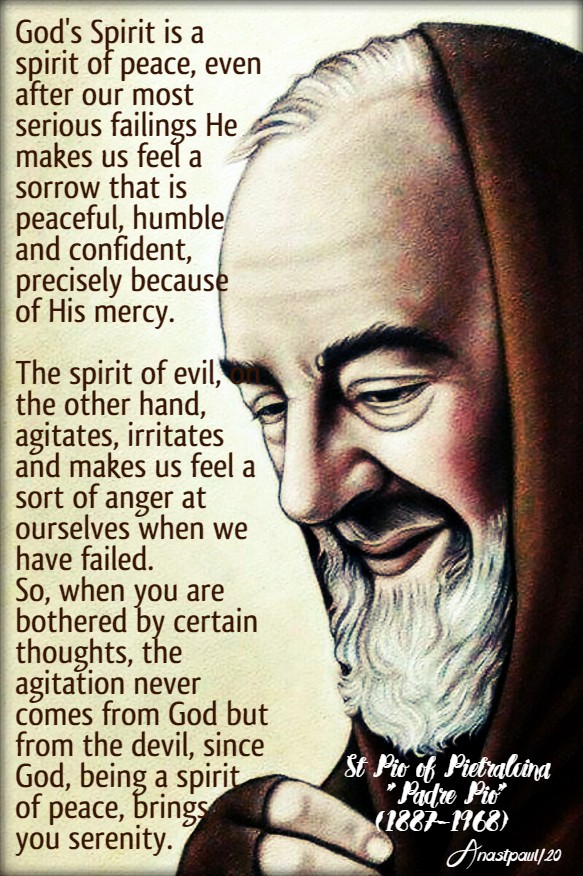
“God’s Spirit is a spirit of peace, even after our most serious failings He makes us feel a sorrow that is peaceful, humble and confident, precisely because of His mercy.
The spirit of evil, on the other hand, agitates, irritates and makes us feel a sort of anger at ourselves when we have failed. So, when you are bothered by certain thoughts, the agitation never comes from God but from the devil, since God, being a spirit of peace, brings you serenity.”
St Pio of Pietralcina “Padre Pio” (1887-1968)
( Letter 549)
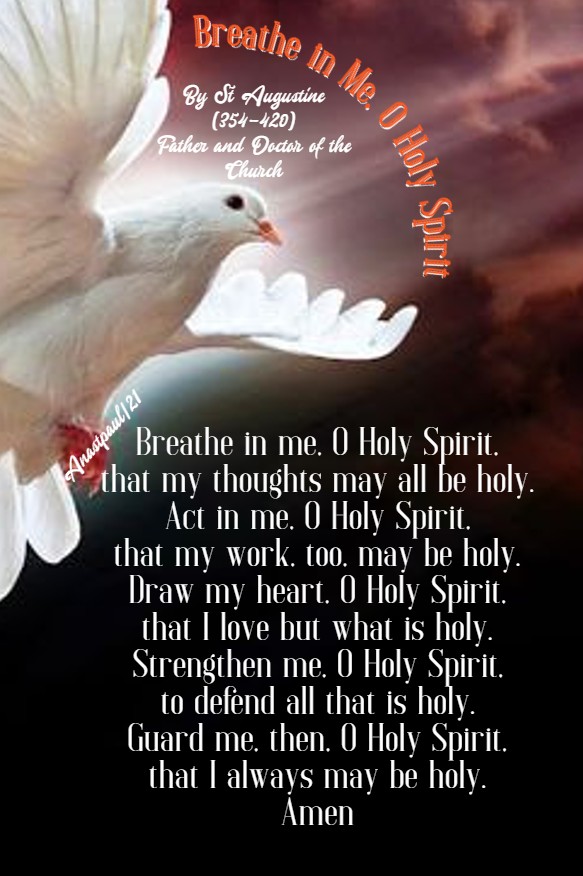
Breathe in Me, O Holy Spirit By St Augustine (354-420) Father and Doctor of the Church
Breathe in me, O Holy Spirit, that my thoughts may all be holy. Act in me, O Holy Spirit, that my work, too, may be holy. Draw my heart, O Holy Spirit, that I love but what is holy. Strengthen me, O Holy Spirit, to defend all that is holy. Guard me, then, O Holy Spirit, that I always may be holy. Amen
One Minute Reflection – 18 May – The Memorial of St Venantius (Died c 250) Martyr – Wisdom 5:1-5, John 15:1-7
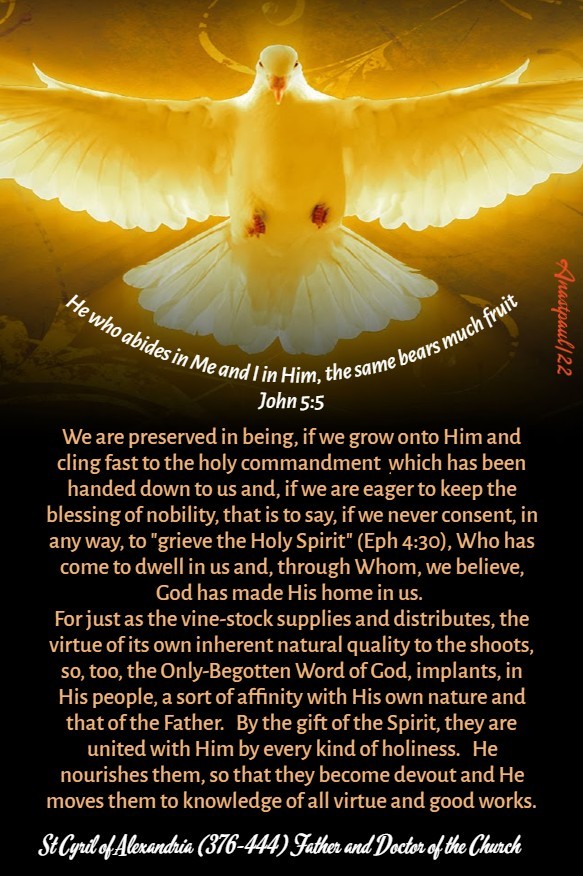
“He who abides in Me and I in Him, the same bears much fruit” – John 5:5
REFLECTION – “Because Christ wished to show His disciples, how necessary it is, to be rooted in love of Him and how beneficial it is, to cling to Him, He told them … that He was the vine and that the branches of the vine, were those, who were united to Him and, so to speak, inserted in Him so as to “participate in His nature” (2 Pt 1:4), through a share in the Holy Spirit. For we are made one with Christ the Saviour, by His Holy Spirit …
For we have been reborn from Him and in Him, that is, in the Spirit, in order to bear the fruit of life; not the old life we used to live but the life that consists of newness of faith and of love for Him. We are preserved in being, if we grow onto Him and cling fast to the holy commandment ,which has been handed down to us and, if we are eager to keep the blessing of nobility, that is to say, if we never consent, in any way, to “grieve the Holy Spirit” (Eph 4:30), Who has come to dwell in us and, through Whom, we believe, God has made His home in us. …
For just as the vine-stock supplies and distributes, the virtue of its own inherent natural quality to the shoots, so, too, the Only-Begotten Word of God, implants, in His people, a sort of affinity with His own nature and that of the Father. By the gift of the Spirit, they are united with Him by every kind of holiness. He nourishes them, so that they become devout and He moves them to knowledge of all virtue and good works.” – St Cyril of Alexandria (376-444) Archbishop of Alexandria, Father and Doctor of the Church
PRAYER – O God, Who made this day holy by the triumph of blessed Venantius, Your Martyr, listen to the prayers of Your people, and grant that we, who honour his noble deeds, may imitate the constancy of his faith. Through Jesus Christ, Thy Son our Lord, Who lives and reigns with Thee, in the unity of the Holy Ghost, God, world without end. Amen (Collect).
Our Morning Offering – 18 May – “The Month of the Blessed Virgin Mary”
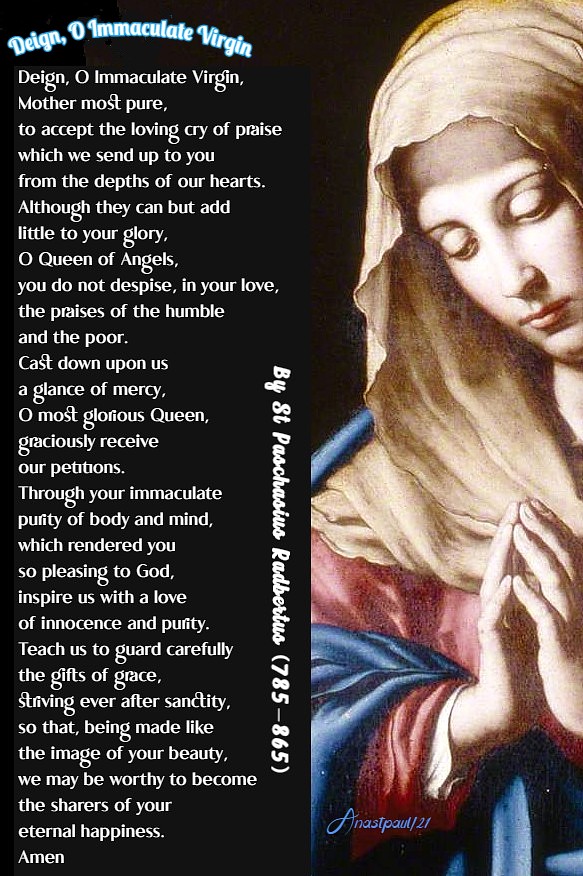
Deign, O Immaculate Virgin By St Paschasius Radbertus (785–865)
Deign, O Immaculate Virgin, Mother most pure, to accept the loving cry of praise which we send up to you from the depths of our hearts. Though they can but add little to your glory, O Queen of Angels, you do not despise, in your love, the praises of the humble and the poor. Cast down upon us a glance of mercy, O most glorious Queen, graciously receive our petitions. Through your immaculate purity of body and mind, which rendered you so pleasing to God, inspire us with a love of innocence and purity. Teach us to guard carefully the gifts of grace, striving ever after sanctity, so that, being made like the image of your beauty, we may be worthy to become the sharers of your eternal happiness. Amen
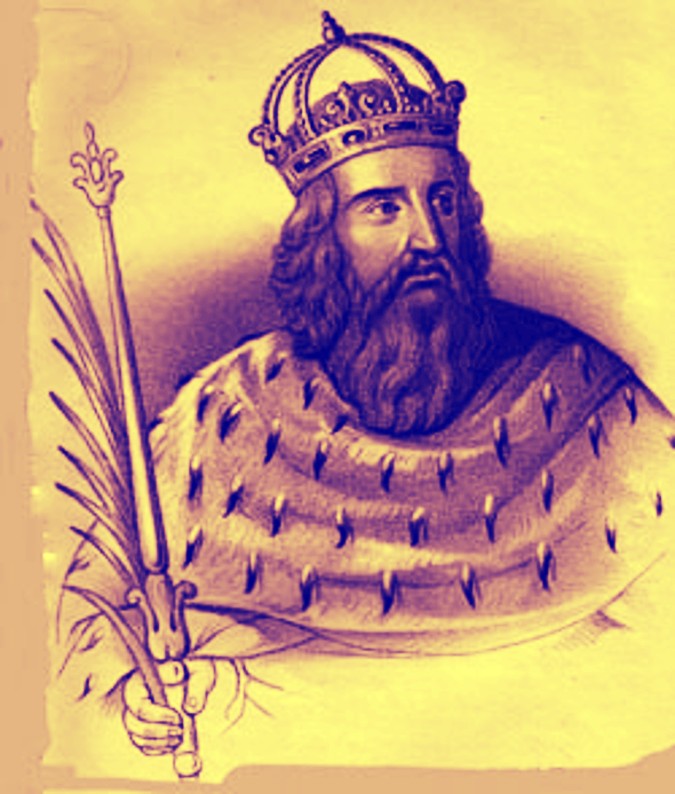
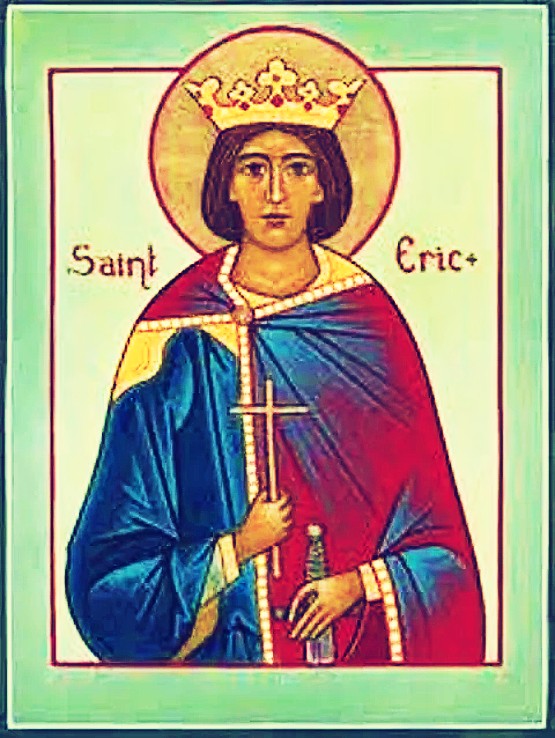
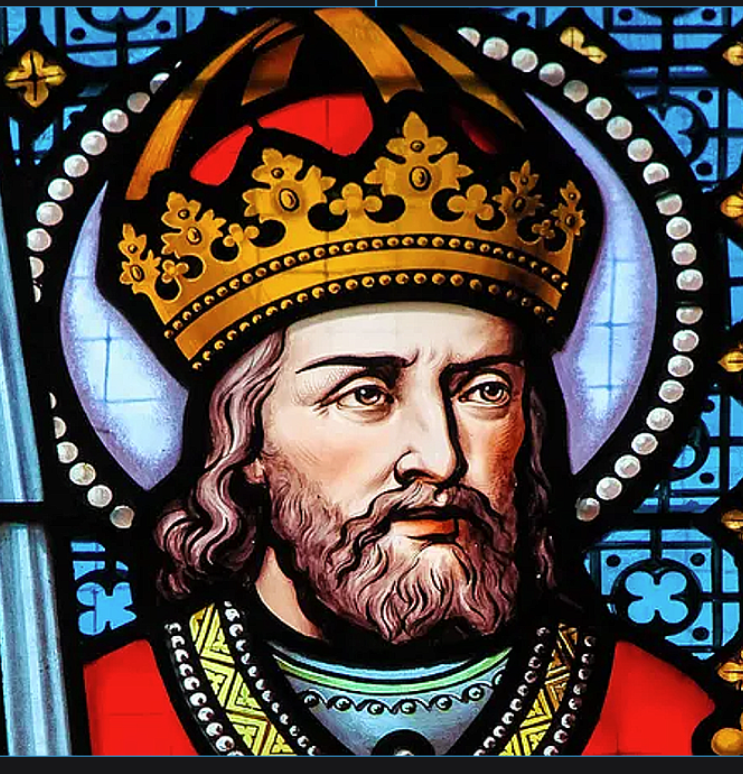
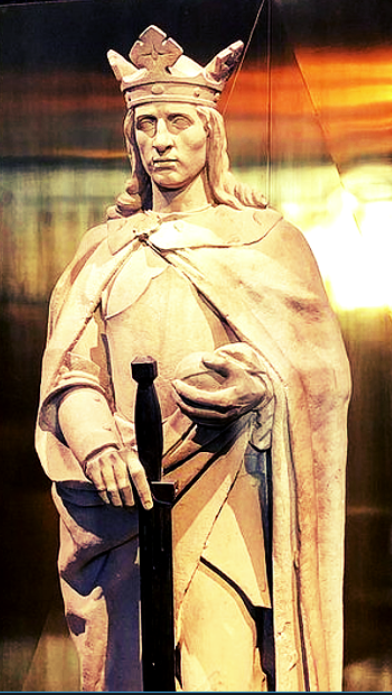
Saint of the Day – 18 May – Saint Eric of Sweden (c 1120-1161) King of Sweden, Martyr, Confessor, Defender of the oppressed. Born in c 1120 and died on 18 May 1161 at Uppsala, Sweden by being beheaded as he left Holy Mass. Patronages – Sweden, the Capital of Sweden, Stockholm and of farmers. Also known as – Henry of Sweden, Eric The Lawgiver, Eric IX.
The only full account of Eric’s life is a Hagiographic dating from the late 13th century. It writes that Eric was of royal blood and was unanimously chosen King of Sweden. It also states that Eric reigned for ten years, which would put the beginning of his reign in c 1150. If this is correct ,he would have been a rival King to Sverker I, who had ascended the throne in c. 1132 and was murdered in 1156. At any rate, it is assumed that Eric was recognised in most Provinces after 1156. While his paternity is obscure, there is good evidence, that he strengthened his claims to the throne, by marriage to the Danish princess Christina Björnsdotter, a granddaughter of King Inge the Elder. They were blessed with four children.
Eric did much to consolidate Christianity in his realm. The only reliable source mentioning his reign is a Cistercian chronicle from c 1200. Quite contrary to the impression of pro-clerical policy of the Eric Hagiography, it says that King Eric and Queen Christina harassed the Monks of Varnhem Abbey in Västergötland. Some Monks left for Denmark where Vitskøl Abbey was founded in 1158. After this, however, Eric and Christina changed their stance and allowed Varnhem to be reorganised under Abbot Gerhard of Alvastra Abbey. An early 13th-century source adds that he made donations to Nydala Abbey in Småland.
Eric is attributed with the initial spread of the Church and the Christian faih into Finland, “which at this time was pagan and did Sweden great harm.” In an effort to conquer and convert the Finns, he led the First Swedish Crusade east of the Baltic Sea. “Then Eric the Saint asked the people of Finland to accept Christianity and make peace with him. But when they refused to accept it, he fought against them and conquered them by the sword, avenging the blood of the Christian men which they had spilled often and for a long time. And when he had scored such an honourable victory he prayed to God, falling on his knees with tears in his eyes. Then one of his good men asked why he cried, since he should rejoice over the honourable victory ,which he had won over the enemies of Jesus Christ and the holy faith. He then replied: I am happy and praise God since He gave us victory. But I greatly regret that so many souls were lost today, who could have gained eternal life if they had accepted Christianity.” Eric persuaded an English Bishop sT Henry of Uppsala to remain in Finland to evangelise the Finns, later becoming a martyr too.
Eric is portrayed as the ideal of a just ruler, who supported those who were oppressed by the mighty and expelled the rude and unfair from his Kingdom. He was responsible for codifying the laws of his Kingdom, which became known as King Eric’s Law (or the Code of Uppland). Additionally, it is believed that he established a monastic chapter in Old Uppsala, begun by Benedictines who had come from the Danish Abbey of Odense or from Vreta Abbey.
According to Eric’s Hagiography, the Devil inspired Magnus Henriksson, who wished to exercise his claims to the throne, in his machinations. He used gifts and grand promises to attract Swedish nobles, including “a mighty man in the kingdom”. If this is based on sound tradition it may mean that Magnus allied with Karl of the rival House of Sverker. This assumption is supported by a statement in a late medieval chronicle.
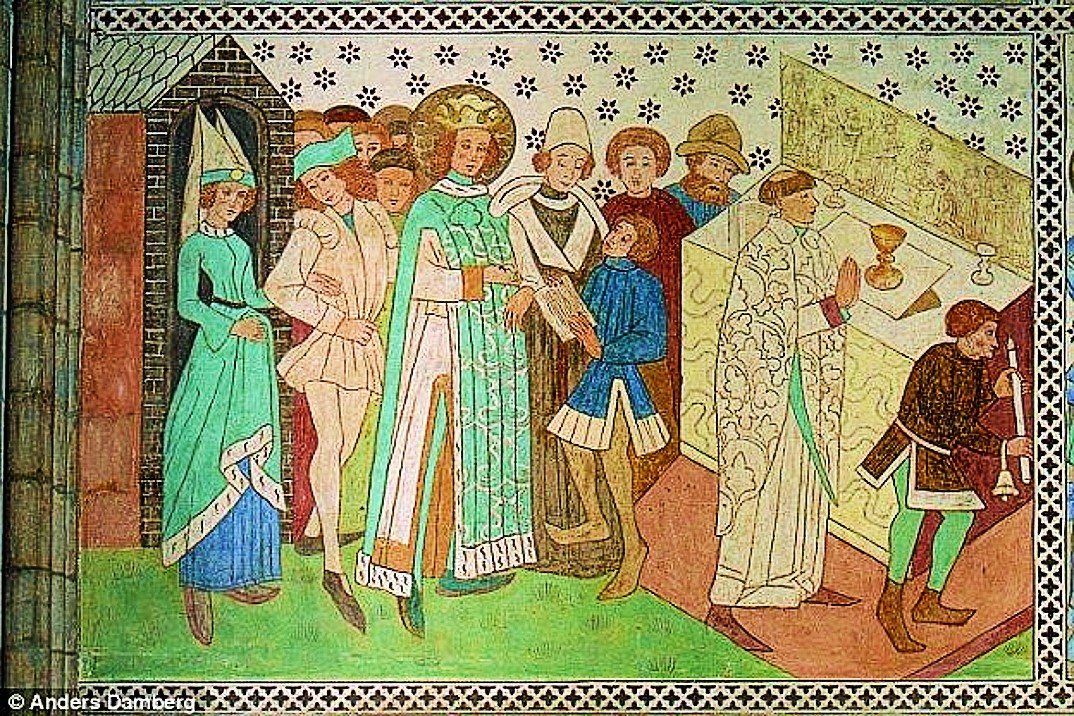
Unbeknownst to the King, the allies gathered a considerable army and accosted Eric near Uppsala when he attended Mass on the Feast of the Ascension in May 1160. The King, being informed of the approach of the enemy, heard Mass to the end, then armed himself and the few men at hand and went out to meet Magnus’ troops. He was pulled off his horse onto the ground by the swarming rebels, who taunted and stabbed him, then beheaded him.
St Eric at the Ascension Mass just before he was Martyred
A papal bull to his son, Canute I confirms that he was killed by unspecified enemies. The short chronicle in the Västgötalagen from c 1240 says: “The twelfth [King] was Eric. He was rashly killed in an unhappy moment. He always gave a good example while he lived and God rewarded him well. Now his soul is at rest with God and his Angels and his bones rest in Uppsala. And he has, with God’s help, made and manifested many precious miracles.”
Eric’s son Canute I, was eventually able to reclaim the throne and established the House of Eric as the ruling dynasty and used the memory of his father, to anchor the Christian faith and his regime.
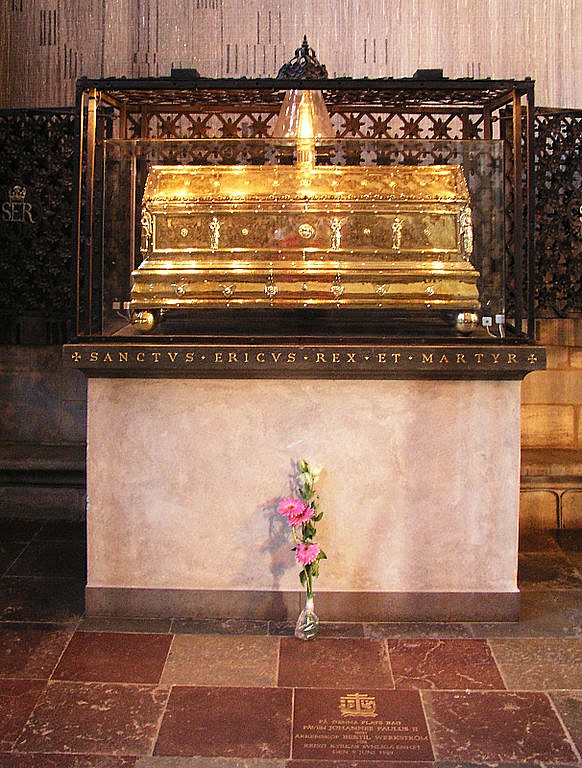
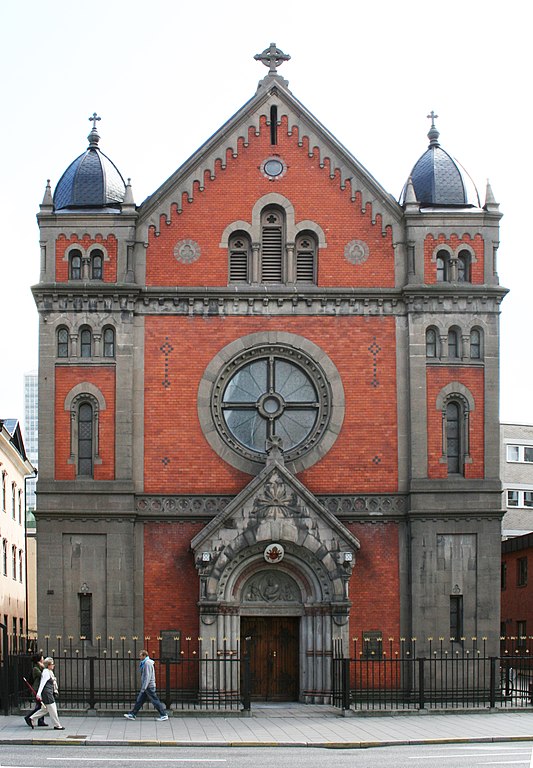
The assassinated King Eric was buried in the Old Uppsala Church, which he had rebuilt. In about 1167, as his son began to take power, Eric’s body was enshrined. Eric’s son Canute encouraged veneration of his father as a Martyr. The miracle of a fountain springing from the earth where the King’s head fell became a site of pilgrimage. In 1273, a century after Canute consolidated Sweden, Eric’s relics and regalia were transferred to the present Cathedral of Uppsala, built on the Martyrdom site. The translation both displayed and extended, the depth of his religious cult. The Catholic Cathedral in Stockhol, is dedicated to Saint. King Eric.
St Eric’s Relics
St Eric is the Patron Saint of Sweden and of its capital, Stockholm and his crowned head is depicted in the City’s Coat of Arms.

























You must be logged in to post a comment.