Quote/s of the Day – 15 August – Solemnity of the Assumption of the Blessed Virgin Mary into Heaven
“How can death devour this truly blessed woman, who gave birth to the Whole Person of the Word of God, through union with God? How can hell receive her? When Christ, who is the way and the truth, said “Where I am, there will my servant be also, .” why would there not be a dwelling for His own Mother with Him, with an even greater justification? It is well said, that precious in the sight of the Lord God of Hosts, is the death of his saints – but even more precious, is the passing of the Mother of God from this life..”
St John Damascene (675-749) Father and Doctor of the Church
One Minute Reflection – 15 August – Solemnity of the Assumption of the Blessed Virgin Mary into Heaven, Readings: Revelation 11:19; 12:1-6, 10,; Psalm 45: 10-12, 16; 1 Corinthians 15:20-27; Luke 1:39-56
“For behold, henceforth, all generations shall call me blessed.” – Luke 1:48
REFLECTION – “If Saint Mary Magdalene – who had been a sinner and from whom the Lord had cast out seven demons – merited to be glorified by him to the extent that her praise abides forever among the assembly of the saints, who can measure the extent to which “the upright rejoice and dance for joy in the presence of the Lord” with regard to holy Mary, who knew not man? … If the Apostle Peter, – who was not only unable to watch for one hour with Christ but, who even went so far as to deny him, – afterwards won such favour that the keys of the Kingdom of Heaven were entrusted to him, of what praises is holy Mary not worthy, who bore the King of Angels Himself in her womb, He Whom the Heavens cannot contain? If Saul, who “breathed murderous threats against the disciples of the Lord” … was the object of such mercy … that he was “caught up to the third heaven, whether in the body or out of the body,” it is not surprising, that the holy Mother of God – who stayed beside her Son through all the trials He endured, from His cradle onwards – should have been lifted up to Heaven, even in her body and exalted high above the Choirs of Angels.
If there is “joy in heaven before the angels over one sinner who repents”, who can tell what joyful and lovely praises rise up before God, concerning Holy Mary who never sinned? … Indeed, if those who “once were darkness” and have now become “light in the Lord” “will shine like the sun in the kingdom of their Father,” who is able to tell “the eternal weight of glory” of Holy Mary, who came into the world “like dawn arising, beautiful as the moon, resplendent as the sun” and of whom was born “the true light which enlightens everyone coming into the world?” Moreover, since our Lord said: “Whoever serves me must follow me and where I am, there will my servant also be,” where do we think His Mother must be, who served Him with such eagerness and fidelity? If she followed Him and obeyed Him, even to death, no-one can wonder, that now, more than anyone else, she “follows the Lamb wherever he goes.” – St Aelred of Rievaulx (1110-1167) – Cistercian Monk – 2nd sermon for the Assumption, from the Durham collection. (Biblical references : Lk 8:2; Ps 149[148]:1; Ps 68[67]:4; Lk 1:34; Mt 26:40.70; Mt 16:19; Acts 9:1; 2 Cor 12:2; Lk 22:28; Lk 15:7; Eph 5:8; Mt 13:43; 2 Cor 4:17; Sg 6:9; Jn 1:9; Jn 12:26; Rv 14:4)
PRAYER – God our Father, You crowned the Blessed Virgin Mary on the day of her Assumption with a glory beyond compare. You had looked on her lowliness and had made her the Mother of our Lord Jesus Christ, Your only-begotten Son. Grant that by her prayers, we may be saved by the mystery of Your redemption and share with her in the glory of eternal life. We make our prayer through Christ Your Son, our Lord, in the unity of the Holy Spirit, one God now and for all eternity, amen.
Our Morning Offering – 15 August – The Solemnity of the Assumption of the Blessed Virgin Mary
Prayer in Honour of the Assumption of the Blessed Virgin Mary By Venerable Pope Pius XII (1876-1958)
O Immaculate Virgin, Mother of God and Mother of men, we believe with all the fervour of our faith, in thy triumphal Assumption, both body and soul, into Heaven, where thou art acclaimed as Queen by all the Choirs of Angels and all the legions of the Saints. And we unite with them to praise and bless the Lord, who has exalted thee above all other pure creatures and to offer thee the tribute of our devotion and our love. Amen
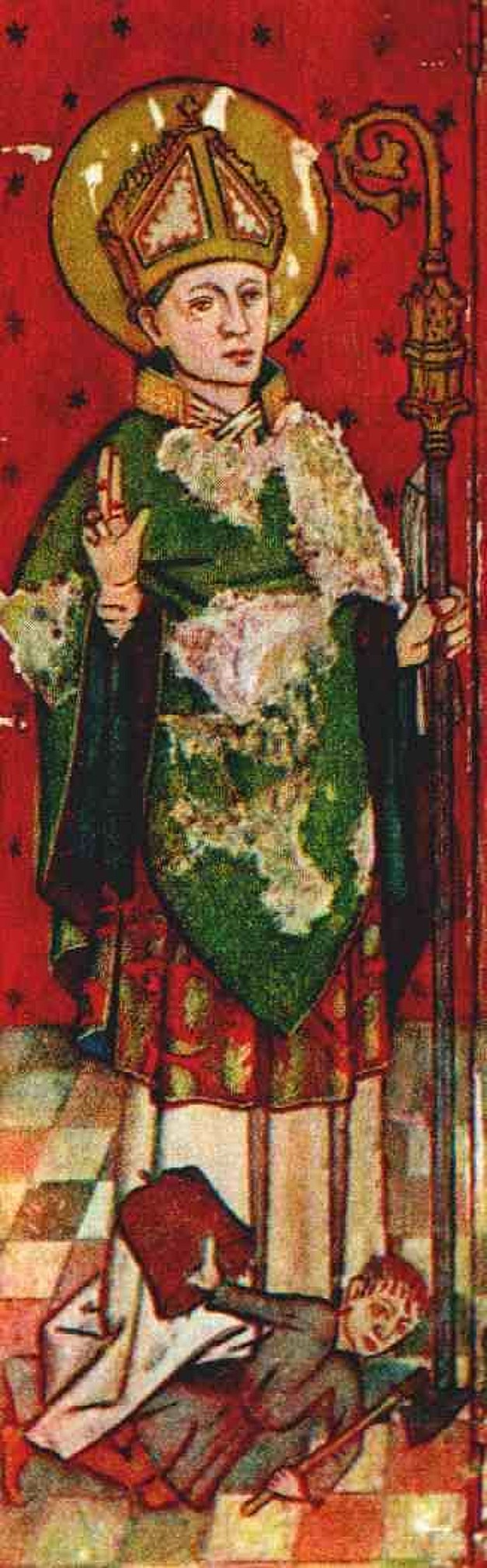
Saint of the Day – Saint Alypius of Thagaste (Died 430) Bishop of the See of Thagaste (in what is now Algeria) in 394, Confessor, Reformer, Defender of the Faith against heresy, Lawyer, teacher, spiritual advisor. He was a lifelong disciple and friend of Saint Augustine of Hippo and joined him in his conversion (in 386; Confessions 8.12.28) and life in Christianity. He is credited with helping establish Augustine’s Monastery in Africa. Most of what is known about him comes from Augustine’s autobiographical Confessions. Born sometime in the middle of the fourth century in Thagaste, North Africa and died in 430 of natural causes. Also known as – Alipio, Alipius.
The Roman Martyrology states of him today: “In Thagaste in Africa, St Alypius Bishop, who was the friend and disciple of the blessed Augustine and the companion of his conversion, his colleague in the pastoral charge, his valiant fellow-soldier in combating heretics and, finally, his partner in the glory of Heaven.”
He was born in Thagaste (today Souk Ahras, Algeria), to parents who were part of the local noble class. Small in stature but strong-minded and virtuous in character, he established an affectionate and intimate friendship with Augustíne, to the point where they repeatedly call each other “frater cordis mei” – brother of my heart. With him he shared the errors of youth, conversion, religious life and the toil of the apostolate. Saint Augustine describes him as a person of a religious nature, of great honesty and impartiality for his love of justice.
Some years younger than his friend, he attended the grammar schools of his land and the rhetoric schools in Carthage. He preceded him to Rome, where he went to study law and later, accompanied him to Milan. In Rome he was an advisor to the distributor of subsidies to Italy and he showed signs, rare in these circumstances, of integrity and prudence. He energetically resisted the pretensions of a powerful senator who tried to induce him to commit irregularities, showing indifference, with general admiration, both in the face of threats and flattery – “A rare soul,” writes Saint Augustine, “who did not pay attention to friendship, nor did he fear the resentment of such a powerful man, famous for the innumerable means at his disposal to do good or evil. “
“The Conversion of St. Augustine” (Gozzoli) The figure on the right isbelieved to St Alypius.
With his friend, Alypius lived the adventure of returning to faith. Chaste of custom, he was a great help in the fight against passions and advised against joining a woman, so as not to give up living freely in the love of wisdom. He was present in the conversion crisis and followed suit. He withdrew with Augustine to Casiciaco, where he participated in philosophical discussions and, together with him, received Baptism on 25 April 387. The following year, Alypius returned to Africa and in Thagaste, he retired with friends to cenobitic life. . In 391 he followed Augustine to the Monastery of Hipona. Soon after,, he travelled to the East and made friends with Saint Jerome. He was esteemed by Saint Paulinus of Nola, who admired his holiness and his zeal.
Elected Bishop of Thagaste, around the year 394, when Augustine was still a Priest. For almost forty years, he shone in the Church of Africa as a reformer of the clergy, teacher of monastic life (Saint Melania, the young woman, remained seven years in Thagaste under his direction) and defender of the faith against Donatists and Pelagians.
In 411 he participated in the Carthage Synod, being one of the seven Catholic Bishops who disputed with the Donatists. In 416 he participated in the Council of Milevi (Numidia) and wrote about this meeting to Pope Innocent.
For the reason of the Pelagian cause he travelled several times to Italy, taking with him the works of St Augustine to present to the Pontiff Boniface. The last news we have from him was in 428 in correspondence to Augustine.
It is believed that he was in Hippo at the time of the death of Saint Augustine and that he died in the same year ,430. He was Canonised in 1584 by Pope Gregory XIII.
Fra Angelico, The Death and the Assumption of the Virgin, c1432. This work combines the ancient iconography of the Dormition–showing the Virgin’s body surrounded by the Apostles, while Christ receives her soul, shown as a baby because she is reborn into Heaven–with the evolving imagery of the Assumption.
The Feast celebrates the Assumption of the body of the Blessed Virgin Mary into heaven upon her death. According to Pope Benedict XIV, it is a probable opinion, which it is impious to deny, though not an article of faith but has since in 1950 has been raised to a DOGMA of the Faith. The origin of the Feast day is not known but it was celebrated in Palestine before the year 500. It is a holy day of obligation, it’s Vigil being a fast day, in many English-speaking countries. In 1950, Pope Pius XII proclaimed Mary’s Assumption a Catholic Dogma: “the Immaculate Mother of God, the ever Virgin Mary, having completed the course of her earthly life, was assumed body and soul into heavenly glory” (Munificentissimus Deus). He did not specify whether she died first – Catholic Doctrine leaves that open. St Epiphanius of Salamis (Cyprus, died 403) had written, “No-one knows how her life ended.” But the Assumption of Mary is a nexus of Catholic faith in God’s power to resurrect the body and unite it with the soul in everlasting life. Among the many masters who have painted the subject of the Assumption are Fra Angelico, Ghirlandaio, Rubens, Del Sarto and Titian. Patronages – Acadians, Cajuns, Cistercian Order, Cistercians, fish dealers, fish-mongers, French air crews, harness makers, France, Guatemala, India, Jamaica, Malta, Paraguay, Slovakia, east Africa (region of east Africa which includes diverse countries, proclaimed on 15 March 1952 by Pope Pius XII) South Africa (this is not a region but a country) and the Assumption is, therefore, the Patronal Feast of the Country of South Africa – proclaimed on 15 March 1952 by Pope Pius XII), 24 dioceses, 38 cities.
Blessed Alfred of Hildesheim OSB (Died 874) Bishop, Benedictine Monk, Confessor, Founder of Essen Abbey, Hildesheim Cathedral, many Convents, Schools and Seminaries, Royal Spiritual Adviser to the East Frankish King Louis the German, Diplomatic Peacemaker, he was know for his great devotion to the Blessed Virgin Mary. His Lifestory: https://anastpaul.com/2020/08/15/saint-of-the-day-15-august-blessed-alfred-of-hildesheim-osb-died-874-bishop/
Bl Agustín Hurtado Soler St Arduinus of Rimini Bl Claudio Granzotto Bl George Halley
St Simplician (c 320-c 401) Archbishop of Milan and Successor of St Ambrose (340-397) Doctor of the Church in the Archdiocese of Milan, Teacher, Catechist, Writer, Mystic. St Ambrose used to call Simplician father, as a sign of spiritual relationship but they were also great friends. Simplician took also an active part in the conversions of both Alypius of Thagaste and Augustine of Hippo. The meeting between Augustine and Simplican occurred in Milan in 386 and it is recorded in Augustine’s Confessions. After his conversion, Augustine also called Simplician father and in 397 he dedicated to Simplician two books on the issue of predestination, known as De Diversis Quaestionibus ad Simplicianum. St Augustine, remembered and referred to him with deep gratitude, calling him the “spiritual father of my soul” and would submit his own writings to him to review and comment. Details of the life of St Simplician here: https://anastpaul.wordpress.com/2017/08/15/saint-of-the-day-15-august-st-simplician-of-milan/
St Stanislaus Kostka SJ (1550-1568) Polish Jesuit Novice. On the evening of the Feast of Saint Lawrence (10 August), Stanislaus felt a mortal weakness, magnified by a high fever and clearly saw, that his last hour had come. He wrote a letter to the Blessed Virgin begging her to call him to the skies, there to celebrate with her, the glorious Anniversary of her Assumption (15 August). His confidence in the Blessed Virgin, which had already brought him many favours, was this time again rewarded – on 15 August 1568, towards 4:00 in the morning, while he prayed to God, to the Saints and to the Virgin Mary, he died. Many in the City proclaimed him a saint and people hastened from all parts to venerate his remains and to obtain, if possible, arelic. St Stanislaus was Beatified on 19 October 1605 by Pope Paul V and Canonised on 31 December 1726 by Pope Benedict XIII. https://anastpaul.com/2017/11/13/saint-of-the-day-13-november-st-stanislaus-kostka-sj-1550-1568/
Martyrs of Nicomedia – 3 saints: Three Christians martyred together. No details survive but the names – Eutychian, Philip and Straton. They were martyred in Nicomedia, Bithynia (in modern Turkey).
Martyred in the Mexican Revolution: 4 Saints – St David Roldán Lara St Luis Batiz Sainz St Manuel Moralez St Salvador Lara Puente
Martyred in the Spanish Civil War: Thousands of people were murdered in the anti-Catholic persecutions of the Spanish Civil War from 1934 to 1939. • Blessed Agustì Ibarra Angüela • Blessed Carmelo Sastre y Sastre • Blessed Clemente Vea Balaguer • Blessed Francisco Míguez Fernández • Blessed Ildefonso Alberto Flos • Blessed Jaume Bonet Nadal • Blessed Joan Ceró Cedó • Blessed Josep Santonja Pinsach • Blessed Juan Francisco Barahona Martín • Blessed Juan Mesonero Huerta • Blessed Luis Ros Ezcurra • Blessed Manuel Formigo Giráldez • Blessed Miguel Alberto Flos • Blessed Sebastià Balcells Tonijuan • Blessed Severiano Montes Fernández
Daily Prayer: Lord Jesus Christ, Thou has destroyed the power of death and given the hope of eternal life, for body and soul. Thou granted Thy Mother a special place in Thy glory and did not allow decay to touch her body. As we rejoice in the Assumption of the Blessed Virgin Mary, grant us renewed confidence in the victory of life over death. Amen
Day 9: O Blessed Mother Assumed into Heaven, after years of heroic martyrdom on earth, we rejoice that thou hast at last been taken to the throne prepared for thee in Heaven by the Holy Trinity. Lift our hearts with thee in the glory of thy Assumption above the dreadful touch of sin and impurity. Teach us how small earth becomes when viewed from Heaven. Make us realise, that death is the triumphant gate through which we shall pass to thy Son and that someday, our bodies shall rejoin our souls in the unending bliss of Heaven. From this earth, which we tread as pilgrims, we look to thee for hope and help. In honour of thy Assumption into Heaven, we ask for this favour: ……………………………….. (Mention your request) At the hour of our death, lead us safely to the presence of Jesus to enjoy the vision of God for all eternity together with thee. O Queen Assumed into Heaven, pray for us, that we may be made worthy of the promises of Christ. Amen
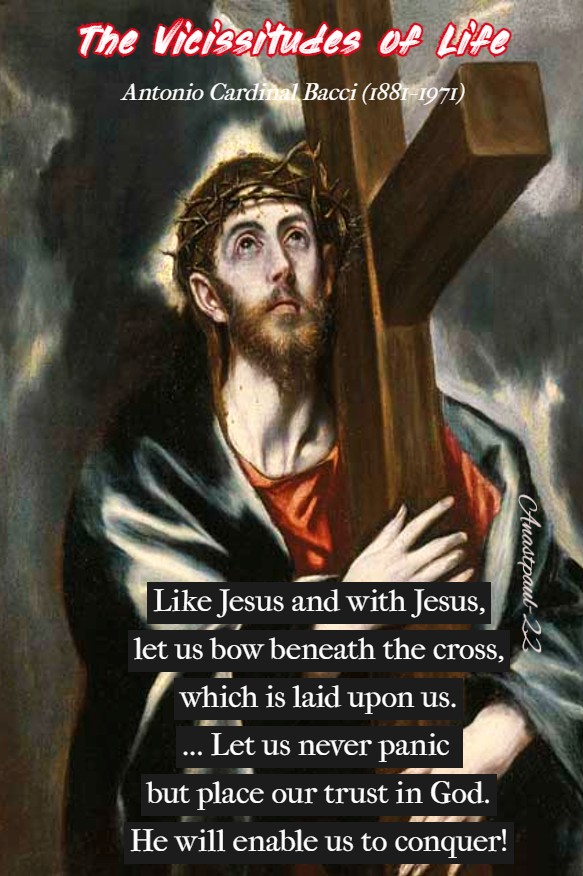
Thought for the Day – 14 August – Meditations with Antonio Cardinal Bacci (1881-1971)
The New Life
“Anyone who takes life seriously in the Christian sense, will regard it as a difficult journey towards perfection and towards God. This journey will be, at the same time, painful and joyful. On the way, there will be trouble, which will sadden us and vices, which will impede our progress. Our falls and defeats will cause us to be disheartened. But, there will also be the grace of God to enlighten and encourage us. It is our own loss if we sit down lazily on the side of the road, which should lead us to Heaven. It is even more disastrous if we acknowledge defeat and lay down the spiritual weapons of prayer and renunciation, in order to surrender ourselves to sin or to indifference. Everyday we should say to ourselves in the presence of God – A new life is beginning … in You, by Your grac and for You! Amen”
Quote/s of the Day – 14 August – “Month of the Immaculate Heart of Mary” – Readings: Joshua 24: 14-29; Psalm 16: 1-2a and 5-8, 11; Matthew 19: 13-15
God, Our Father
“Let the children come to me, do not prevent them”
Matthew 19:14
“Whoever has seen me, has seen the Father.”
John 14:9
“So, my brothers, let us pray as God our master has taught us. To ask the Father in words His Son has given us, to let Him hear the prayer of Christ ringing in His ears, is to make our prayer one of friendship, a family prayer. Let the Father recognise the words of His Son. Let the Son who lives in our hearts, be also on our lips. We have Him as an Advocate for sinners, before the Father, when we ask for forgiveness for ours sins, let us use the words given by our Advocate. He tells us – Whatever you ask the Father in my name, He will give you. What more effective prayer could we then make, in the name of Christ, than in the words of His own prayer?”
St Cyprian of Carthage (c 200- c 258) Bishop, Father of the Church and Martyr
An excerpt from his “On the Lord’s Prayer”
“Immediately after rising and throughout the day, all make the Sign of the Cross and renew their trust in God: to be strengthened by the power of the Father, to be enlightened by the wisdom of the Son and to be sanctified by the love of the Holy Spirit. And as they bless themselves, they may say: Of myself I can do nothing, with God I can do everything, I want to do everything for love of God.”
From the Rule of the Pallottines
Our life is: “To breathe God in and out. To find God in everything. To reveal God to all. To radiate the presence of God.”
My God, In Your Infinite Love By St Vincent Pallotti (1795-1850)
“My God, in Your infinite love You created me according to Your image and likeness. You gave me a free will. Help me to use Your gifts and improve myself so as to become totally Your living image, Father, Son and Holy Spirit, an image of Your infinite qualities and perfections. Amen
One Minute Reflection – 14 August – “Month of the Immaculate Heart of Mary” – Readings: Joshua 24: 14-29; Psalm 16: 1-2a and 5-8, 11; Matthew 19: 13-15
“Let the children come to me, do not prevent them” – Matthew 19:14
REFLECTION – “God is the source and origin of all things and because it is in Him that, as it is written, “we live and move and have our being” (Acts 17:28), it is most certainly, also from Him that we possess all the love with which we love our children. The whole universe and all humankind are offspring of their Creator and so, by means of the love that causes us to love our children, He wants us to comprehend how much He loves His own children. Since it is written that: – “the invisible attributes of God have been able to be understood and perceived in what he has made” (Rm 1:20), so He has wanted to make us understand His love for us, through the love He makes us have for our own works. And just as it is written that He wanted “all fatherhood in heaven and on earth to take its name from him” (Eph 3:15), so He has wanted us to recognise in Him a father’s love towards us.
What am I saying? A father’s? His love is far greater than a father’s, as these words of our Saviour in the Gospel prove: “God so loved the world that he gave his only Son” for the life of the world (Jn 3:16). And the Apostle Paul also says: “God did not spare his own Son but handed him over for us all. How will he not also give us everything else along with him?” (Rm 8:32). – Salvianus of Marseilles (c 400-c 480) Priest, Abbot, Ecclesiastical writer – Of God’s Government.
PRAYER – God almighty Father, grant that we may be instruments of welcome and of that love with which Jesus, Your Son, embraces the littlest ones. May we be a society of love and of holy parenting of all children, especially those most in need. Holy Mother, teach us and guide us in prayer and love of God and neighbour. We make our prayer through Christ our Lord, in the unity of the Holy Spirit, one God forever, amen.
Our Morning Offering – 14 August – “Month of the Immaculate Heart of Mary”
O Immaculate Heart of Mary, Heart of Love and Mercy
O Most Blessed Mother, heart of love, heart of mercy, ever listening, caring, consoling, hear our prayer. As your children, we implore your intercession with Jesus your Son. Receive with understanding and compassion the petitions we place before you today, especially those so deep in our heart. We are comforted in knowing your heart is ever open to those who ask for your prayer. We trust to your gentle care and intercession, those whom we love and those who are sick or lonely or hurting. Help all of us, Holy Mother, to bear our burdens in this life until we may share eternal life and peace with God forever. Amen
Saint of the Day – 14 August – Saint Werenfridus OSB (Died c 780) Priest, Confessor, Monk, Missionary in Frisia. Born in England and died in c 780 at Arnheim, Netherlands. Patronages – against gout, against arthritis and stiff joints, of vegetable gardeners, of Arnheim, Netherlands, Elst, Netherlands and Westervoort, Netherlands. Additionl Memorials in different parts of the Netherlands – 27 August and 8 November. Also known as – Werenfrid, Werenfried.
Werenfried (Latinised – Werenfridus) means: – “keep the peace.” The name is made up of two Germanic words: weer (meaning to keep) and fried (meaning peace).
Werenfridus was an Englishman by birth and was probably born in the kingdom of Northumbria. He forsook country and friends, to dedicate himself wholly to the service of God and his fellow creatures. He went to Ireland, where he served God in solitude and recollection. He is said to have been one of those twelve apostolic men belonging to the English nation, who were destined for a missionary career.
With their leader St Willebrord, these were sent out of Ireland by St. Egbert. They were destined to carry the word of life to the Frisons, Saxons and other pagans in the German territories. . The exact time of St. Werenfridus arrival there, is not known. He was one of those Gospel preachers, however, to whom the Netherlanders are indebted for their Christian teaching. About St Willibrord – https://anastpaul.com/2018/11/07/saint-of-the-day-7-november-st-willibrord-c-658-739-apostle-to-the-frisians/
He particularly planted the faith and Church of Christ in the Isle of Batavia or Betuwe. He likewise converted the inhabitants of Medemblik, Durostadt, Elst, and Westerwort. His admirable virtues were very remarkable. And as he planted the Faith, so too he planted vegetables and taught others to do so too – hence his patronage of vegetable gardeners.
The writer of his Acts assures us, that it was impossible to express how rich he was in all good works and how careful he had been in administering comfort to the afflicted. He was incomparable for his kindness while he was an exemplar of charity towards the poor. He was assiduous in his watching, and rigorous in his fasting. He was diligent in prayer and he excelled in all devotion. In fine, he was conspicuous for all virtues. Great success attended his labours in gaining souls to Christ.
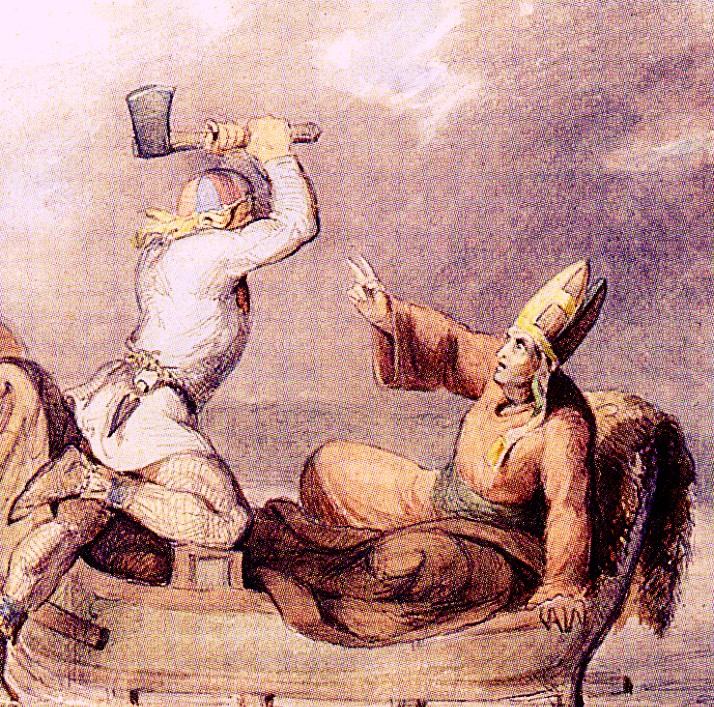
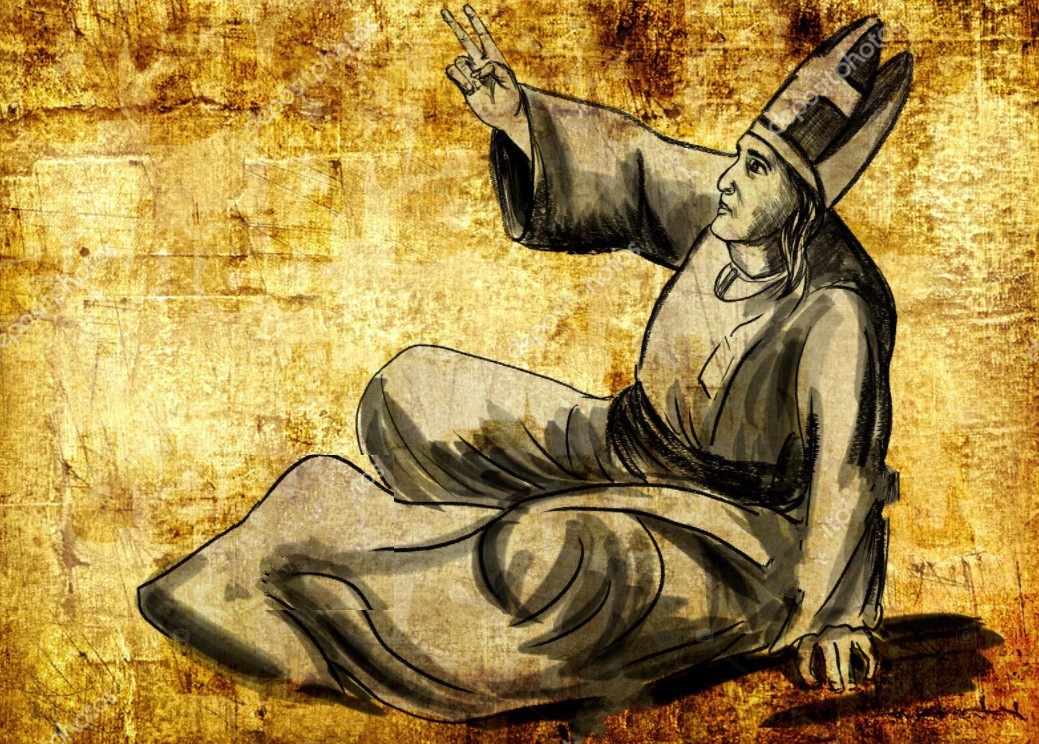
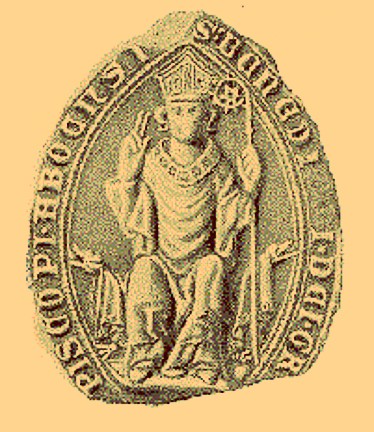
In a good old age, he received the reward of his labour. He departed some time around 780. Because the inhabitants of Elst and Westervoort could not agree on where he should be buried, they decided that he should decide for himself and so his coffin was placed in a boat that was washed down the Rhine and came to rest in Elst, where it was interred. The Overbetuwe municipal Coat of Arms depicts this event, see below. There formerly stood a collegiate Church dedicated to God in his name. This was much frequented, because miracles were often wrought within it by the Saint’s intercession.
The body of Saint Werenfridus remained in Elst until the time of the Reformation. It was feared that the body would be destroyed or removed by the Protestants. Therefore, he was transferred in 1664 to the Jesuit Church in Emmerich, which is located in Germany.
St. Werenfridus Feast is kept as a Double in the Diocese of Utrecht, on the 27th day of August. The 14th was the day of his decease, however, according to the best accounts. There are many Churches sprinkled around Holland and Germany dedicated to him.
The Vigil of the Assumption of the Blessed Virgin Mary – 14 August:
Mention is made of this vigil, with fasting, by Pope Nicolas I, who was the Pope in the year 858. It is recorded that on this day, Angels were heard, near the City of Soissons, singing this anthem:
“Felix namque es, sacra Virgo Maria, et omni laude dignissima, quia ex te ortus est Sol justitiae, Christus Deus noster.”
Vigils were kept on the evening before each feast day from the earliest days of the Church. On that evening all of the faithful would gather together to prepare themselves for the feast they were about to celebrate. This might also include listening to readings from the Scriptures and a sermon on the topic by a Priest. Mass would then be celebrated on the feast day and the fast would be broken. It is said that both Saint Augustine and Saint Jerome practiced and fully supported, the idea of the vigil. The Vigil of the Assumption would have been one of the Church’s most important vigils.
“Of the glory and felicity of the Saints in the beatific vision Saint Paul says with Isaias (I Cor. 2,9; Is. 64, 4), that neither have mortal eyes seen, nor ears heard, nor can it enter into the heart of man what God has prepared for those who love Him and who hope in Him. In accordance with this Catholic truth, we should not wonder at what is related of Saint Augustine, the great light of the Church, that, in setting out to write a book on the glory of the blessed, he was visited by his friend, Saint Jerome, who had just died and entered into the glory of the Lord and was admonished by his visitor, that he would not be able to compass his design; since no tongue or pen of man could describe the least part of the blessings enjoyed by the Saints in the Beatific Vision. Such is the testimony of Saint Jerome; and if through holy Scriptures we had no other information than that this glory is eternal, it would be beyond all our comprehension. For, however much of our intellect may expand, it will never comprehend eternity and ,as this is infinite and boundless, it is inexhaustible and incomprehensible, how much soever it may be known and loved. Just as God, the Infinite and the Almighty, created all things, without being thereby exhausted and even if He had created endless worlds ever anew, would remain still infinite and immutable; so also, although seen and enjoyed by countless Saints, He will remain an infinite source of new knowledge and love; for in creation and in glory, all creatures participate in Him only to a limited extent, each according to its condition, while He, in Himself, is without limitation or end.
If on this account the glory even of the least of the Saints is ineffable, what shall we say of the glory of the most Blessed Mary, since among the Saints she is the most holy and she by Herself is more like to her Son than all the Saints together, and since her grace and glory, exceed those of all the rest, as those of an Empress or Sovereign over her vassals?” – From the writings of Abbot Giovanni Battista Orsini (c 1450-1503) (the 39th Grand Master of the Order of the Knights Hospitaller from 1467 to 1476).
St Athanasia of Timia St Callistus of Todi St Demetrius of Africa St Domingo Ibáñez de Erquicia St Eberhard of Einsiedeln St Eusebius of Palestine
St Eusebius of Rome (Died 357) Priest, Confessor. “At Rome, the birthday of the blessed Priest Eusebius, who for the defence of the Catholic Faith, was shut up in a room of his own house by the Arian Emperor, Constantius, where constantly persevering in prayer for seven months, he rested in peace. His body was removed by the Priests, Gregory and Orosius and buried in the cemetery of Cllistus on the Appian Way.” – Roman Martyrology. His Life: https://anastpaul.com/2020/08/14/saint-of-the-day-14-august-saint-eusebius-of-rome-died-357-priest-confessor/
St Fachanan of Ross St Francisco Shoyemon Bl Juliana Puricelli St Marcellus of Apamea Bl Sanctes Brancasino St Ursicius of Nicomedia St Werenfridus OSB (Died c 780) Priest, Monk, Missionary __
Martyred in the Spanish Civil War: 11 Beati • Blessed Ángel de la Red Pérez • Blessed Antonio María Martín Povea • Blessed Basilio González Herrero • Blessed Ezequiél Prieto Otero • Blessed Joaquín Frade Eiras • Blessed Jocund Bonet Mercadé • Blessed José García Librán • Blessed Ricardo Atanes Castro • Blessed Segundo Pérez Arias • Blessed Vicente Rubiols Castelló
Daily Prayer: Lord Jesus Christ, Thou has destroyed the power of death and given the hope of eternal life, for body and soul. Thou granted Thy Mother a special place in Thy glory and did not allow decay to touch her body. As we rejoice in the Assumption of the Blessed Virgin Mary, grant us renewed confidence in the victory of life over death. Amen
Day 8: Mary, Queen Assumed into Heaven, we rejoice that thou art the Queen of Heaven and Earth. Thou hast given thy holy fiat to God and thou art the Mother of our Saviour. Obtain peace and salvation for us through thy prayers, for thou have given birth to Christ our Lord, the Saviour of all mankind. Intercede for us and bring our petitions before the Throne of God. ………………………………. (Mention your request) Through thy prayers, may our souls be filled with an intense desire to be like thee a humble vessel of the Holy Spirit and a servant of the Almighty God. O Queen Assumed into Heaven, pray for us. Amen
Thought for the Day – 13 August – Meditations with Antonio Cardinal Bacci (1881-1971)
Fundamental Facts – But tomorrow?
“Life is passing. The days chase one another; time is flying. Childhood has become a distant memory. Perhaps youth and manhood have also passed and gone and we find ourselves on the threshold of old age. All those days, months and years that have passed were gifts of God. He gave them to us for our benefit and sanctification. But what use have we made of them? Have we laid up treasure for eternal life? And, if we have not done so up to now, for what are we waiting? Let us remember the old saying, that we should never put off till tomorrow, what we can do today. Today there is still time to turn from sin, regain sanctifying grace and lead a life of Christian perfection. But tomorrow? What do we know about tomorrow? Tomorrow is in the hands of the Lord and we do not know if the Lord will grant us further time to make amends!
Do not say, therefore, that you will change tomorrow, that tomorrow you will turn away from the path of sin and begin to lead a holy life. For not alone does time pass but, it often betrays us! Our Lord tells us that the judgement will come at a time when we least expect it. The time that is gone will never return; the future is uncertain; there remains, only the present. But the present is equally uncertain; it is something that passes and, every moment could be the last of our lives. How many whom we have known, were taken away suddenly in the flower of their youth … Is that not a warning to us?
Let us do good while we have time; let us gain merit now, for eternal life. Amen”
Quote/s of the Day – 13 August – The Memorial of St Maximus the Confessor (c 580-662) Father of the Church
“Food is not evil – but gluttony is. Childbearing is not evil – but fornication is. Money is not evil – but avarice is. Glory is not evil – but vainglory is. Indeed, there is no evil in existing things – but only in their misuse!”
“To harbour no envy, no anger, no resentment against an offender, is still not to have charity for him. It is possible, without any charity, to avoid rendering evil for evil. But, to render, spontaneously, good for evil – such belongs to a perfect spiritual love.”
“In conformity with the philosophy of Christ, let us make of our life, a training for death.”
St Maximus the Confessor (c 580-662) Father of the Church
One Minute Reflection – 13 August – “Month of the Immaculate Heart of Mary” – Readings: Joshua 24: 1-13; Psalm 136: 1-3, 16-18, 21-22 and 24; Matthew 19: 3-12 and the Memorial of St Radegunde (c 518-587
And the two shall become one flesh – Matthew 19:5
REFLECTION – “Woman is not independent of man or man of woman in the Lord” (1 Cor 11:11) … Man and woman walk hand in hand to the Kingdom. Christ calls both man and woman, at one and the same time without distinction, united by God and joined together by nature, giving them a share in the same actions and tasks, in wonderful harmony. Through the marriage bond, God makes two, one and one, two in such a way, that another self is discovered, without loss of individuality or mingling in duality.
But why does God appeal thus to man and and to woman through the images He gives of His Kingdom? (cf. Lk 13:18-21). Why does He suggest such greatness by means of seemingly weak and inadequate examples? Oh my brethren! a priceless mystery is hidden under this poverty. As the Apostle Paul says: “This is a great mystery but I speak in reference to Christ and His Church” (Eph 5:32).
These parables suggest humanity’s greatest goal – man and woman have brought an end to the lawsuit against the world, a lawsuit that dragged on for centuries. The first man, Adam and first woman, Eve, are led from the tree of the knowledge of good and evil to the fire … of the Gospel …. Mouths sickened by the fruit of the poisoned tree are healed by the fiery taste of the tree of salvation, of that tree tasting of fire, which inflames consciences frozen by the former tree. Here nakedness makes no difference and no longer inspires shame, for man and woman are fully clothed in forgiveness.” – St Peter Chrysologus (406-450) Bishop of Ravenna, Doctor of the Church – Sermon 99 ; PL 52,477
PRAYER – Almighty Father, let Your light so penetrate our hearts and minds, that walking by Your commandments, we may always follow You, our teacher and our guide. Grant that the prayers of St Radegunde may continue to strengthen us. Through Jesus our Lord, with the Holy Spirit, one God forever, amen.
Our Morning Offering – 13 August – “Month of the Immaculate Heart of Mary”
Shelter Me Under Your Mantle, O Refuge of Sinners By St Alphonsus Liguori (1696-1787) Most Zealous Doctor
Most holy Virgin Immaculate, my Mother Mary, to you who are the Mother of my Lord, the Queen of the Universe, the Advocate, the hope, the refuge of sinners, I, who am the most miserable of all sinners, have recourse this day. I venerate you, great Queen and I thank you for the many graces you have bestowed upon me even unto this day, in particular for having delivered me from the hell which I have so often served by my sins. I love you, my dearest Lady and because of that love, I promise to serve you willingly forever and to do what I can, to make you loved by others also. I place in you all my hopes for salvation, accept me as your servant and shelter me under your mantle, you who are the Mother of Mercy. And since you are so powerful with God, deliver me from all temptations, or at least obtain for me the strength to overcome them until death. From you I implore a true love for Jesus Christ. Through you I hope to die a holy death. My dear Mother, by your love for Almighty God, I pray you to assist me always but most of all, at the last moment of my life. Forsake me not then, until you shall see me safe in heaven, there to bless you and sing of your mercies through all eternity. Such is my hope. Amen
Saint of the Day – 13 August – Saint Radegunde (c 518-587) Queen, Nun, Abbess, Ascetic, Founder of a female Convent of enclosed Nuns,named and dedicated to the Holy Cross of which a relic was enshrined, Sainte-Croixwho also cared for the sick within their Convent. Born c 518 in Erfurt, Saxony and died on 13 August 587 in Poitiers, France of natural causes. Also known as – Radegund, Rhadegund, Radegonde, Radigund, Radegundes.Patronages – against drowning, against fever, against leprosy, against scabies, against scabs, against the death of parents, against ulcers, difficult marriages, potters, weavers, Poitiers, France.
Radegunde was born about 518 to Bertachar, one of the three Kings of the German land Thuringia. Radegunde’s uncle, Hermanfrid, killed her father, Bertachar in battle and took Radegunde into his household. After allying with the Frankish King Theuderic, Hermanfrid defeated his other brother Baderic. However, having crushed his brothers and seized control of Thuringia, Hermanfrid reneged on his agreement with Theuderic to share sovereignty.
In 531, Theuderic returned to Thuringia with his brother Clotaire I. Together they defeated Hermanfrid and conquered his kingdom. Clotaire I also took charge of Radegunde, taking her back to Gaulwith him. He sent the child to his villa of Athies in Picardy for several years, before marrying her in 540.
Radegunde was one of Clotaire I’s six wives or concubine . She had no children with him. Radegunde was noted for her almsgiving and care of the poor and sick.
St Radegunde caring for the poor
By 550 Radegunde’s brother was the last surviving male member of the Thuringian Royal family. Clotaire had him murdered. Radegunde fled the Court and sought the protection of the Church, persuading the Bishop of Noyon to ordain her as a Deaconess and founded the Monastery of Sainte-Croix in Poitiers in around 560, where she cared for the infirm. Radegunde was widely believed to have the gift of healing.
Living under the Rule for Virgins of Caesarius of Arles, the Nuns were required to be able to read and write and to devote several hours of the day to reading the Sacred Scriptures and copying manuscripts, as well as traditional tasks such as weaving and needlework. This Rule strictly enclosed women, to the point that Nuns of Sainte-Croix were unable to attend Radegunde’s funeral.
Her Abbey was named for the relic of the True Cross that Radegunde obtained from the Byzantine Emperor Justin II. Although the Bishop of Poitiers, Maroveus, refused to install it in the Abbey, at Radegunde’s request, King Sigebert sent Eufronius of Tours to Poitiers to perform the ceremony. To celebrate the relic and its installation into Sainte-Croix, St Venantius Fortunatus (c 530 – c 609) composed a series of hymns, including the famous Vexilla Regis, considered to be one of the most significant Christian hymns ever written, which is still sung for services on Good Friday, Palm Sunday, as well as the Exaltation of the Holy Cross
Radegunde was a close friend of St Junian of Maire;, Abbot. Junian and Radegunde are said to have died on the same day, 13 August 587.
She was known for her asceticism and penance and has been described as an “extreme ascetic.” She followed a vegetable diet,refusing all animal products. She ate nothing but legumes and green vegetables: – neither fruit nor fish nor eggs. She also abstained from wine, mead and beer. During Lent she abstained from bread, oil and salt, and only drank a little water. She acted against the advice of others who warned her that her extreme ascetism might make her ill. She bound her neck and arms with three iron circlets; her flesh was badly cut because of this. On one occasion she heated a brass cross and pressed it on her body.
The Saint Poet Venantius Fortunatus and the Bishop, hagiographer and historian, St Gregory of Tours, were close friends with Radegunde and wrote extensively about her. She wrote Latin poems to Fortunatus on tablets that have been lost. The three of them seem to have been close and Fortunatus’ relations with Radegunde were deeply spiritual. There are two poems written in the voice of Radegunde, De Excidio Thoringiae and Ad Artachin. While it has been proposed that Venantius wrote them, recent historians see her as the author.
Sts Venantius Fortunatus with St Radegunde and another
Another biography was written by the Nun Baudovinia following a rebellion at the Abbey described by St Gregory of Tours.
Radegunde’s funeral, which St Venantius Fortunatus and St Gregory of Tours attended, was three days after her death. She was buried in what was to become the Church of St. Radegonde in Poitiers. Her tomb can still be found in the crypt of that Church, which remains the centre of devotion to her. In the 1260s a Church decoration program included stained-glass windows depicting Radegunde’s life. These were later largely destroyed by Huguenots.
Church of St Radegunde in Poitiers
In her book Woman Under Monasticism: Chapters on Saint-Lore and Convent Life between 500 and 1500 (1896) Lina Eckenstein drew the attention of modern readers to the rebellion of the Nuns at Poitiers after the death of Radegunde, during which, for a period of two years, they refused to accept a new Abbess who had been appointed by the male hierarchy.
St Anastasius the Monk St Anastasius the Priest St Benildus St Cassian of Imola St Cassian of Todi St Concordia St Conn O’Rourke Bl Gertrude of Altenberg St Helen of Burgos St Herulph of Langres Bl Jakob Gapp Bl John of Alvernia
St John Berchmans SJ (1599-1621) Jesuit Novice – born Jan Berchmans on 13 March 1599 at Driest, Brabant, Belgium and died on 13 August 1621 at Rome, Italy of natural causes. Patronages – Altar Servers, Jesuit novices and students. He had a special devotion to God’s Mother and to him is owed the Little Rosary of the Immaculate Conception. Biography: https://anastpaul.com/2019/08/13/saint-of-the-day-13-august-saint-john-berchmans-sj-1599-1621/
St Maximus the Confessor (c 580-662) Father of the Church, Monk, Abbot, Theologian, Confessor, Scholar, Writer. Also known as St Maximus of Constantinople and St Maximus the Theologian. St Maximus, a man of fearless courage in witnessing to – “confessing” – even while suffering, the integrity of his faith in Jesus Christ, true God and true man, Saviour of the world and of His Holy Catholic Church. His Life: https://anastpaul.com/2020/08/13/saint-of-the-day-13-august-saint-maximus-the-confessor-c-580-662-father-of-the-church/
St Nerses Glaietsi St Patrick O’Healy Bl Pierre Gabilhaud St Radegunde (c 518-587) Queen, Nun, Abbess St Wigbert of Fritzlar Bl William Freeman — Martyred in the Spanish Civil War: • Blessed Francesc Castells Areny • Blessed Inocencio García Díez • Blessed José Bonet Nadal • Blessed José Boher y Foix • Blessed José Juan Perot y Juanmarti • Blessed Jose Tàpies y Sirvant • Blessed Josep Alsina Casas • Blessed Luciano Hernández Ramírez • Blessed Maria de Puiggraciós Badia Flaquer • Blessed Mateo Despóns Tena • Blessed Modesto García Martí • Blessed Pascual Araguàs y Guàrdia • Blessed Pedro Martret y Molet • Blessed Silvestre Arnau y Pascuet
Daily Prayer: Lord Jesus Christ, Thou has destroyed the power of death and given the hope of eternal life, for body and soul. Thou granted Thy Mother a special place in Thy glory and did not allow decay to touch her body. As we rejoice in the Assumption of the Blessed Virgin Mary, grant us renewed confidence in the victory of life over death. Amen
Day 7: Mary, Queen of every heart, accept all that we are and bind us to Jesus and to thyself, with the bonds of love, so that we may be thine forever and may be able to say in all truth: “I belong to Jesus through Mary.” Our Mother, Assumed into Heaven and Queen of the Universe, ever-Virgin Mother of God, obtain for us our petitions, if it be for the glory of God and the good of our souls. ……………………………….. (Mention your request) Our Mother, assumed into Heaven, we love thee. Give us a greater love for Jesus and for thee. O Queen Assumed into Heaven, pray for us. Amen
Quote/s of the Day – 12 August – “Month of the Immaculate Heart of Mary” – Memorial of St Clare of Assisi (1194-1253) and St Jane Frances de Chantal (1572-1641
“Go forth in peace, for you have followed the good road. Go forth without fear, for He who created you has made you holy, has always protected you and loves you as a mother. Blessed be you, my God, for having created me.”
“Love[ing] one another with the charity of Christ, let the love you have in your hearts, be shown outwardly in your deeds …”
Thought for the Day – 12 August – Meditations with Antonio Cardinal Bacci (1881-1971)
The Blessedness of the Merciful
“Let us meditate now on the mercy of God, which is infinite, even as His justice is infinite. “His mercy,” says St Thomas Aquinas, “does not subtract from His justice but, is the fullness and the perfection of that justice” (Summa Theologica 1,q 21, a 3 ad 2). All the merits which we can acquire in the sight of God derive from His gratuitous gift of grace. God’s mercy and justice, therefore, are fused together in a wonderful harmony which claims our gratitude and fidelity.
References to the mercy of God are numerous in Sacred Scripture. “You, Lord, are good and forgiving,” says the Psalmist, “abounding in kindness to all who call upon you” (Ps 85:5). “Blessed be the Lord,” we read elsewhere, “my rock, … my refuge and my fortress, my stronghold, my deliverer …” (Ps 143:2). “Goodness and kindness follow me all the days of my life and I shall dwell in the house of the Lord for years to come” (Ps 22:6).
When we leave the Old Testament and open the Gospel, we discover tht it is a record of the goodness and mercy of God. We have only to recall Christ’s forgiveness of the Magdalene when she wept at His feet for her faults; the merciful judgement which He passed on the poor adulteress; His loving glance in the direction of St Peter, who had denied Him; the grace so miraculously granted to St Paul on the road to Damascus and, the parables of the good Samaritan, the prodigal son and the good shepherd who went in search of the lost sheep. Finally, there are the consoling words to the repentant thief: “This day thou shalt be with me in paradise.” When we read this chronicle of infinite goodness and mercy, we should experience a boundless hope and confidence. Even our great sins and gross ingratitude, should not stop us from repenting with true and heartfelt sorrow and with deeds of penance and reparation. God is ready then to forgive us and to receive us with open arms.”
One Minute Reflection – 12 August – “Month of the Immaculate Heart of Mary” – Readings: Joshua 3: 7-10a, 11, 13-17; Psalms114: 1-6; Matthew 18: 21 – 19: 1 – Memorial of St Clare of Assisi (1194-1253) and St Jane Frances de Chantal (1572-1641
“Then Peter came up and said to him, “Lord, how often shall my brother sin against me and I forgive him? As many as seven times?” Jesus said to him, “I do not say to you seven times but seventy times seven.” – Matthew 18:21-22
REFLECTION – “He is our peace, for He has made both one. Since we think of Christ as our peace, we may call ourselves true Christians, only if our lives express Christ by our own peace. As the Apostle says: He has put enmity to death. We must never allow it to be rekindled in us in any way but, must declare, that it is absolutely dead. Gloriously has God slain enmity, in order to save us, may we never risk the life of our souls by being resentful or by bearing grudges. …
No, since we possess Christ who is peace, we must put an end to this enmity and live as we believe He lived. He broke down the separating wall, uniting what was divided, bringing about peace by reconciling in His single person, those who disagreed. In the same way, we must be reconciled not only with those who attack us from outside but also with those who stir up dissension within; flesh then will no longer be opposed to the spirit, nor the spirit to the flesh. Once we subject the wisdom of the flesh to God’s law, we shall be re-created as one single man, at peace. Then, having become one instead of two, we shall have peace within ourselves.
Now peace is defined as harmony among those who are divided. When, therefore, we end that civil war within our nature and cultivate peace within ourselves, we become peace. By this peace we demonstrate that the name of Christ, which we bear, is authentic and appropriate.
When we consider that Christ is the true light, having nothing in common with deceit, we learn that our own life also must shine with the rays of that true light. Now these rays of the Sun of Justice are the virtues which pour out to enlighten us so that we may put away the works of darkness and walk honourably as in broad daylight. When we reject the deeds of darkness and do everything in the light of day, we become light and, as light should, we give light to others by our actions. If we truly think of Christ as our source of holiness, we shall refrain from anything wicked or impure in thought or act and thus show ourselves to be worthy bearers of His Name. For the quality of holiness is shown, not by what we say but by what we do in life.” – St Gregory of Nyssa (c 335–C 395) – Bishop and Father of the Church – Excerpt from his treatise, On Christian Perfection
PRAYER – Holy God, grant we pray, Your Holy Spirit of love and divine grace to grow ever more in faith and love. . By our prayers and love for You and our neighbour, may we merit Your divine assistance. Lord Jesus, help us to dwell often on the manner in which we are following You. Let us strive each day to become more and more like You in all things and, to become beacons of Your Light, to all the world. St Clare of Assisi, and St Jane Frances de Chantal, you who were lights to all, pray for us,amen.
Our Morning Offering – 12 August – “Month of the Immaculate Heart of Mary” Memorial of St Clare of Assisi (1194-1253)
I Come, O Lord By St Clare of Assisi (1194-1253)
I come, O Lord, unto Thy sanctuary to see the life and food of my soul. As I hope in Thee, O Lord, inspire me with that confidence which brings me to Thy holy mountain. Permit me, Divine Jesus, to come closer to Thee, that my whole soul may do homage to the greatness of Thy majesty, that my heart, with its tenderest affections, may acknowledge Thy infinite love, that my memory may dwell on the admirable mysteries, here renewed everyday and that the sacrifice, of my whole being, may accompany Thine. Amen
Saint of the Day – 12 August – Saint Euplus of Catania (Died 304) Deacon Martyr. Died by being flogged to death on 12 August 304 in Catania, Sicily, Italy. Patronages – co-patron of Catania, Sicily, Italy, Francavilla di Sicilia, Italy, Trevico, Italy. Also known as – Euplio, Euplius, Euplous.
The Roman Martyrology states: “In Catania, Saint Euplous, Martyr – according to tradition, during the persecution of the Emperor Diocletian, he was thrown into prison by the governor Calvisiano because he was found with the book of the Gospels in his hands; – questioned several times, he was beaten to death for replying that he would keep the Gospel in his heart with pride.”
Euplus Deacon, who suffered Martyrdom “under the ninth consulate of Diocletian and the eighth of Maximian, on the eve of ides of August, in Catania” that is, 12 August 304. This data comes to us from an ancient document, historically reliable, the Passion of St. Euplus, exemplary for conciseness and drama. “The Deacon Euplous, finding himself in the court, shouted aloud – “I am a Christian; I wish to die for the name of Christ “ The governor of the City, Calviniano, summoned him to stand before him and after a brief preliminary, ordered him to read a passage from the books he brought with him.
Euplus read: “Happy are those who suffer persecution for justice” Calviniano ordered that Euplus be tortured, and during the torture, the second interrogation took place and the invitation to retract the previous confession: “Euplus crossed his forehead with his free hand and replied:” “What I have confessed, I confess again – I am Christian and I read the Divine Scriptures.”
The executioners continued to rage and tortue him and he prayed: “I thank you, O Christ, save me, because I suffer for you.” The governor ordered a break and made the last attempt to persuade Euplus to sacrifice to the gods: “Wretch, worship the gods. honour Mars, Apollo and Aesculapius.” Euplus replied: “I adore the Father, the Son and the Holy Ghost. I adore the Holy Trinity. Except this, there is no other God … I sacrifice but I offer myself as a sacrifice to Christ God, I have nothing more to sacrifice; your efforts are in vain, I am a Christian.”
Euplus was sentenced to be beheaded: “The Gospel he wore at the moment of his arrest was placed around his neck, in front of him a herald shouted:” Euplus, Christian, enemy of the gods and emperors!”. Euplus replied: “Thanks be to Christ God.” He hurried up as if he were going to the coronation. Arriving at the place of execution he knelt down and prayed for a long time. Then he presented his head to the executioner and was beheaded. Later, some Christians came to take away the body. Before burying it, they embalmed it.”
Madonna del Bosco / Our Lady of the Woods, Montemilone, Potenza, Basilicata, Italy(13th Century) – 12 August:
The Shrine of the Glorious Virgin was built on the slopes of a hill , about 400 meters above sea level , at the behest of the Basilian Monks, who preferred to raise their Convents and Shrines on the banks of rivers or on the mountain ranges , with the intention to raise, more and more, the spirit to Heaven. The site is located about 3 kilometers from the Town centre. the Church was built on the design of the brothers Luigi and Ruggiero Sarolo , sculptors of Muro Lucano , which began construction in 1187 and finished in 1189 . The Sanctuary , to see it from a distance, has something magical with its stand on the slope of the hill.
The Statue, which was recently restored, is roughly made but expressive and full of solemn majesty . The Virgin seated on a throne in the chest holds the Divine Child. The peculiar characteristics of the Statue and , particularly , the crowns of the Virgin and Child, recall those of the French art of the post- Carolingian period but the clothes and painted decorations are purely Byzantine and Byzantine unmistakably is the posture of the blessing hand of the Child – the two fingers , the index and middle fingers open and the other closed.
St Jeanne de Chantal/Jane Frances de Chantal (1572-1641) Mother, Widow, Foundress of the Congregation of the Visitation with the assistance and guidance of St Francis de Sales, whose great friend and collaborator she was. St Vincent de Paul served as her spiritual director after St Francis de Sales’ death. Her favourite devotions were the Sacred Heart of Jesus and the Immaculate Heart of Mary. St Jane was buried in the Annecy Convent next to St Francis de Saless. Canonised on 16 July 1767 by Pope Clement XIII .(Optional Memorial) Details of St Jane here: https://anastpaul.wordpress.com/2017/08/12/saint-of-the-day-12-august-st-jane-frances-de-chantal/
St Anicetus of Marmora St Discolio of Vercelli St Euplus of Catania (Died 304) Deacon Martyr St Eusebius of Milan St Felicissima the Blind St Gracilian St Herculanus of Brescia
St Porcarius of Lerins St Simplicio of Vercelli St Ust — Martyrs of Augsburg – 4 saints: The mother, Hilaria, and three friends of of Saint Afra of Augsburg. While visiting the tomb of Saint Afra who were seized by the authorities and martyred when they visited Afra’s tomb – Digna, Eunomia, Euprepia and Hilaria. They were burned alive c 304.
Martyrs of Rome – 5 saints: A group of Christians martyred together in the persecutions of Diocletian. We know little more than their names – Crescentian, Juliana, Largio, Nimmia and Quiriacus. • c.304 in Rome, Italy • buried on the Ostian Way outside Rome.
Daily Prayer: Lord Jesus Christ, Thou has destroyed the power of death and given the hope of eternal life, for body and soul. Thou granted Thy Mother a special place in Thy glory and did not allow decay to touch her body. As we rejoice in the Assumption of the Blessed Virgin Mary, grant us renewed confidence in the victory of life over death. Amen
Day 6: Mary, our dear Mother and mighty Queen, take and receive our poor hearts with all their desires, all the love and all the virtues and graces with which they may be adorned. All we are and all we might be, all we have and hold in the order of nature as well as of grace, we have received from God, through thy loving intercession. Help us dear Mother, to surrender to God, all that we have, including our petitions. ………………………………… (Mention your request) Our Lady and Queen, into thy gentle hands, we entrust all, that it may be returned to its noble origin. O Queen Assumed into Heaven, pray for us. Amen
For eight hours we have been in darkness, only the Novena to Our Lady of the Assumption, which was Scheduled, has been posted. Hopefully all will be LIGHT tomorrow.
May YOUR day be filled with the Light of Christ! 💘🤗🙏
Daily Prayer: Lord Jesus Christ, Thou has destroyed the power of death and given the hope of eternal life, for body and soul. Thou granted Thy Mother a special place in Thy glory and did not allow decay to touch her body. As we rejoice in the Assumption of the Blessed Virgin Mary, grant us renewed confidence in the victory of life over death. Amen.
Day 5: O merciful and loving Mother, may thy glorious beauty fill our hearts with a distaste for earthly things and an ardent longing for the joys of Heaven. May thy merciful eyes glance down upon our struggles and our weakness in this vale of tears. Hear then loving Mother, our request and plead to Jesus for us. ……………………………….. (Mention your request) Crown us with the pure robe of innocence and grace here and with immortality and glory in Heaven. O Queen Assumed into Heaven, pray for us. Amen
Thought for the Day – 10 August – Meditations with Antonio Cardinal Bacci (1881-1971)
Following Jesus, the Divine Model
“Jesus is the Divine Model, Whom we ought to follow and imitate. In Him, the virtues possess both the infinite splendour of the Divinity and the gentle appeal of glorified Humanity. Jesus does not dazzle us with His brightness but kindly invites us to love and follow Him. “Learn from me” He says, “for I am meek and humble of heart and you will find rest for your souls” (Mt 11:29). After He has indicated humility, meekness and interior peace, as the foundations of the spiritual life, He invites us to take up the yoke of His law and assures us, that we shall find it light (Mt 11).
If we follow Jesus, even though we are bowed with Him, beneath the weight of the Cross, we shall experience, even in this life, a reflection of the peace and joy which will be our reward in Heaven.”
You must be logged in to post a comment.