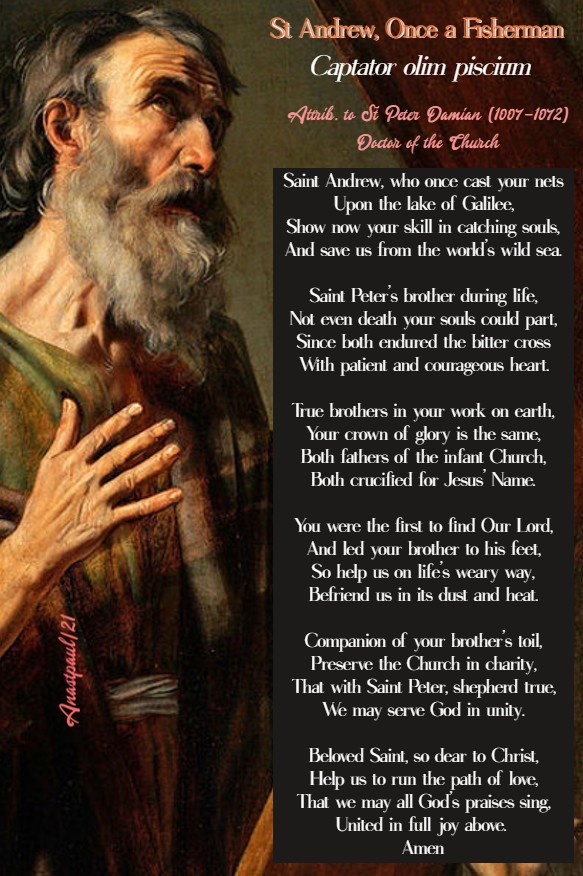
One Minute Reflection – 30 November – The Feast of St Andrew, Apostle of Christ – Readings: Romans 10: 9-18; Psalms 19: 8,-11; Matthew 4: 18-22
“At once they left their nets and followed him.” – Matthew 4:20
REFLECTION – “After Andrew had remained with Jesus (Jn 1:39) and had learned what he did learn, he did not keep his treasure concealed for himself but hastened to run quickly to his brother, Simon Peter, to share with him, the good things that he had received. Consider what he told his brother: “We have found the Messiah (which interpreted is Christ)” (Jn 1:41). Do you perceive, in these words, the fruit of what he had learned in such a short time? It shows, at once, the authority of the Teacher who taught His disciples and their own enthusiasm and will to learn from Him, since the very beginning.
Indeed Andrew’s eagerness, his zeal in wanting to spread immediately such a good news, supposes a soul who was longing to see the accomplishment of the many prophecies concerning Christ. It is a mark of brotherly kindness, of loving kinship, of genuine goodwill, to hasten to stretch out a helping hand to one another in spiritual matters. … ”We have found the Messiah”, he says; not any messiah but “the Messiah,” the one Christ they were awaiting.” – St John Chrysostom (347-407) Father and Doctor of the Church (Homely on the Gospel of Saint John, 19,1).
PRAYER – Lord, in Your kindness hear our petitions. You called Andrew the Apostle, to preach the Gospel and guide Your Church in faith. May he always be our friend in Your Presence, to help us with his prayers. We ask this through our Lord Jesus Christ, Your Son, who lives and reigns with You and the Holy Spirit, one God, forever and ever. Amen.
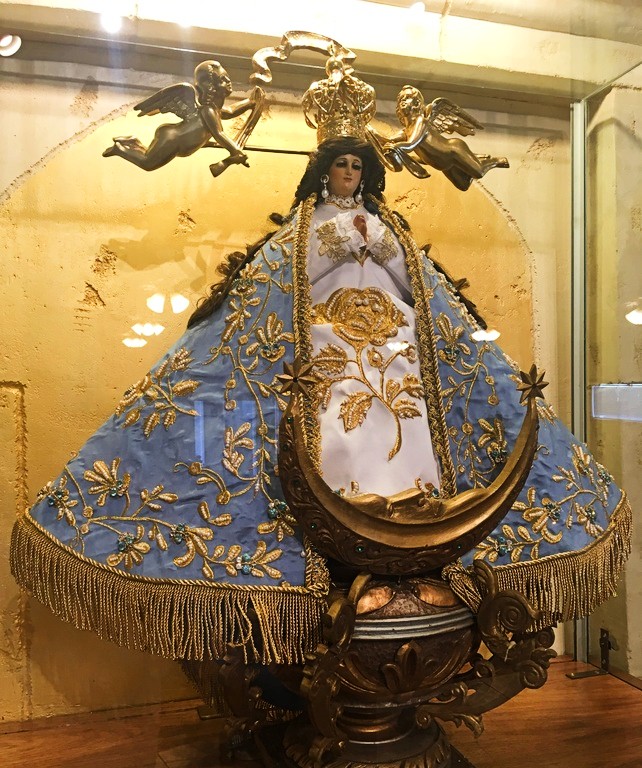
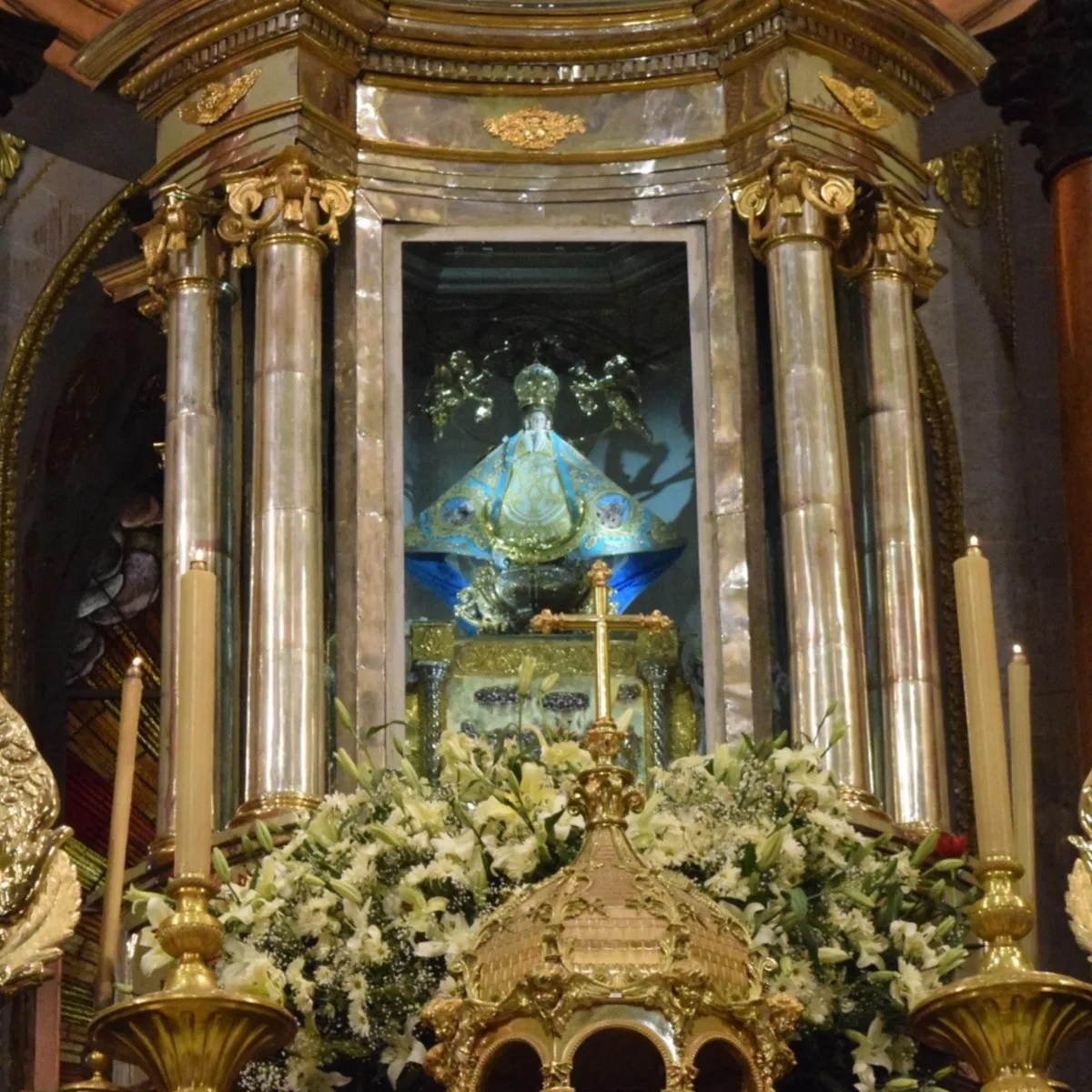
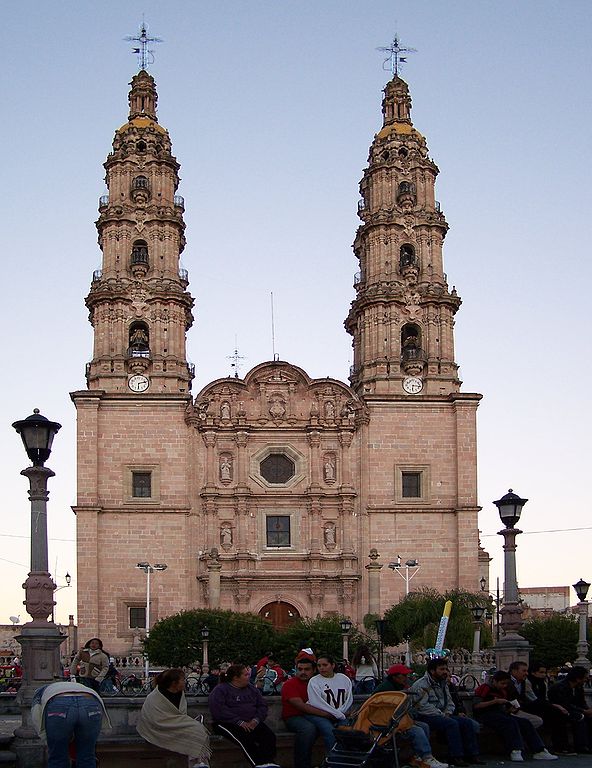
Virgen de la Concepción, San Juan de los Lagos / Mary Immaculate of Saint John of the Lakes, Mexico) (1524) – 30 November, 2 February, 24 June, 15 August, 8 December:
Fray Miguel de Bolonia, of the Spanish Netherlands, was one of the first Franciscans to enter Mexico in 1524. A saintly missionary who learned the native languages and stood up for natives when Spanish rulers threatened them, he travelled through Mexico, teaching and building, until his death in 1580. In 1542, he founded the village of San Juan Bautista de Mezquititlán (land of mesquite trees), where he built a hospital and Chapel in which he placed a half metre tall Statue of Mary Immaculate. In 1623, some trapeze artists brought the body of their daughter to the San Juan Chapel for burial. The young acrobat had fallen during practice onto some upright blades, buried blade side upward, in the earth to ensure the show was more dangerous and exciting. The chapel caretaker, an old woman named Ana Lucia put the Virgin’s Statue on the girl’s breast and the child revived. The grateful father took the fragile Statue, made of cornstalks and glue, to Guadalajara for restoration. From then on, the Shrine’s fame and miracles multiplied.
Meanwhile, the Town grew, changing its name to San Juan de los Lagos (St. John of the Lakes). A new Church was built and then another–each larger, more splendid, more worthy of the Immaculate Virgin. On 30 November, 1769, the Statue was installed in the third Church which is now a Basilica.
San Juan de los Lagos began holding a market fair in commemoration, annually around 30 November with festivities extending to the Feast of the Immaculate Conception, 8 December. The celebration eventually became so rowdy that the hierarchy decided to move the feast of the Virgen de San Juan de los Lagos to 2 February (Candlemas). The Candelaria fiesta has evolved into a month-long, mass pilgrimage to the Shrine from all over Mexico but 8 December is still observed, as well as 15 August (Feast of the Assumption). The beauty of the Sanctuary that hosts the Virgin, has become the main promoter of tourism in the region. After Our Lady of Guadalupe, it is the most visited Shrine in Mexico.
St Abraham of Persia Bl Alexander Crow St Anders of Slagelse Bl Andrew of Antioch Bl Arnold of Gemblours St Castulus of Rome St Constantius of Rome St Crider of Cornwall St Cuthbert Mayne St Domninus of Antioch St Euprepis of Rome Bl Everard of Stahleck Blessed Frederick of Regensburg OSA (Died 1329) Lay Friar of the Order of St Augustine St Galganus St Isaac of Beth Seleucia
Bl Joscius Roseus St Joseph Marchand St Justina of Constantinople Bl Ludwik Gietyngier St Mahanes the Persian St Maura of Constantinople St Merola of Antioch St Mirocles of Milan St Sapor St Simeon of Persia St Thaddeus Liu Ruiting St Trojan St Tudwal of Tréguier Bl William de Paulo Zosimus the Wonder Worker — Martyrs of Saxony – 6 saints: Missionaries who worked with Saint Willehad of Bremen. Martyrs. – Attroban, Benjamin, Emmingen, Folkard, Gerwald and Grisold. They were martyred on 30 November 782 at River Weser, Lawer Saxony, Germany.
Martyred in the Spanish Civil War – Martyred Augustinians of Madrid – 51 beati and Martyred Hospitallers of Madrid – 7 beati – Thousands of people were murdered in the anti-Catholic persecutions of the Spanish Civil War from 1934 to 1939.
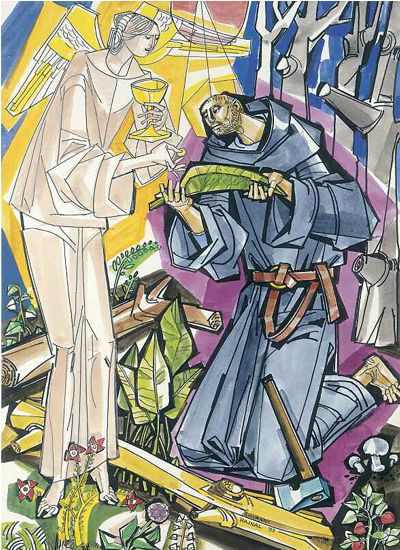
Saint of the Day – 30 November – Blessed Frederick of Regensburg OSA (Died 1329) Lay Friar of the Order of St Augustine, devotee of the Blessed Sacrament. Born in the late 13th century in Regensburg, Bohemia (in modern Germany) and died on 30 November 1329 in Regensburg, of natural causes. Additional Memorial – 29 November in the Augustinian Order.
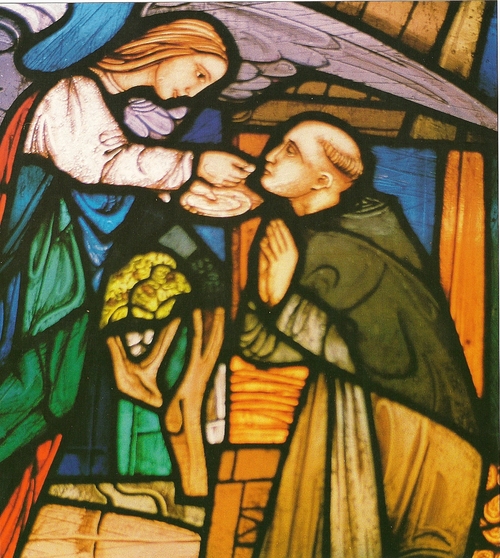
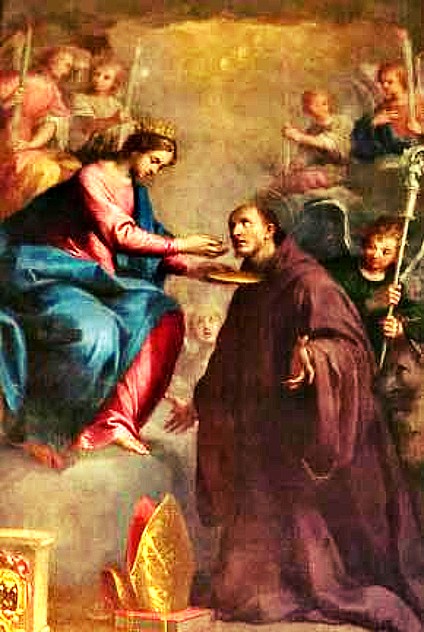
The Holy Communion of the Blessed Frederick of Regensburg by Jan van den Hoecke (1611-1651) (detail)
History has not left us a great deal of factual information about Blessed Frederick. Perhaps this is an indication of the ‘ordinariness’ of this servant of God, who spent his religious life in fidelity to the daily cycle of prayer and work, which characterises so many religious of his day and ours. Frederick reminds us that loyal devotion to one’s state in life, lived in fidelity to the Gospel is the means to holiness.
Blessed Frederick was born of poor parents in Regensburg, Germany. He entered the Augustinian Monastery of Saint Nicholas in that City as a lay brother. At that time, the Monastery of Saint Nicholas was considered to be the most important community of the Bavarian Province of the Order and even hosted the General Chapter of 1290, at which the first Constitution of the Augustinians was promulgated.
His life as an Augustinian was marked by humility and generosity, dedication to prayer and great devotion to the Blessed Sacrament.
His talents served the community principally as carpenter and woodcutter, activities in which he demonstrated his concern for his fellow religious and the needs of the Moonastery.
Frederick died on 30 November 1329 in Regensburg where devotion to him continued without interruption and the testimony of miracles attributed to his intercession, were gathered. Frederick is buried at St Cecelia Church in the City of Regensburg.
St Pius X Beatified him on 12 May 1909.
Blessed Frederick’s secret to holiness and message to us, is one of humble service and generous offering of self for the well being of others. His life of prayer and devotion to the Blessed Sacrament were the food that nourished his spirit and strengthened his daily resolve, to live for God and to practice love for his brothers – which is the heart of the Gospel.
PRAYER
Almighty and eternal God, source of all that is good, You gave to Blessed Frederick a wonderful spirit of dedication, of penance and a love for the Holy Eucharist. Through his prayers and example may we grow to be like him as your good and faithful servants. We ask this through our Lord Jesus Christ, your Son, Who lives and reigns with You and the Holy Spirit, one God forever and ever. Amen
The Holy Communion of the Blessed Frederick of Regensburg by Jan van den Hoecke (1611-1651)
Let us begin: In the Name of the Father and of the Son and of the Holy Spirit. Amen
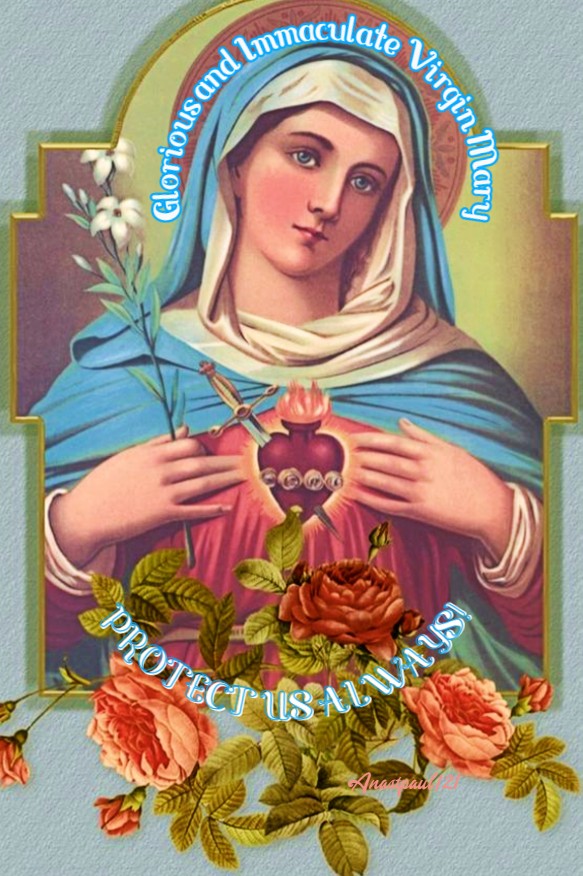
O most Holy Virgin, who was pleasing to the Lord and became His Mother, immaculate in body and spirit, in faith and in love, look kindly on me as I implore your powerful intercession.
O most Holy Mother, who by your blessed Immaculate Conception, from the first moment of your conception did crush the head of the enemy, receive my prayer as I implore you to present, at the throne of God, the favour I now request… ……………………. (Mention your request here…)
O Mary of the Immaculate Conception, Mother of Christ, Mother of God, you had influence with your Divine Son while upon this earth; you have the same influence now in Heaven. Pray for me and obtain for me from Him, the granting of my petitions. if it be the Divine Will. Amen
Say the: Our Father… the: Hail Mary… the: Glory Be…
Thought for the Day – 29 November – Meditations with Antonio Cardinal Bacci (1881-1971)
The Blessedness of the Meek
“Charity, as St Thomas Aquinas says, is the source of all the virtues (Summa Theologiae, II-II, q 157, a 2). This includes meekness, or that quality of moderation by which a Christian ought to govern his passions, especially anger and keep them subject to the control of reason. This virtue is opposed to pride and to vanity, in that these passions, when wounded, culminate in outbursts of anger and in quests for revenge.
Meekness is not simply a form of apathy or of good natured affability. On the contrary, it is based both on humility and on fortitude. It feels insults and ingratitude and does not remove the suffering which accompanies them but it demands the heroism of silence and of charitable behaviour towards those who hurt us. For this reason it is not identical with weakness but, requires spiritual fortitude because, it makes a man complete master of himself (Cf Summa Theologiae II-II, 1 157 a 4). Anger is not always sinful, as the Holy Spirit indicates (Ps 4-5). If it remains subject to the control of reason and of charity, indeed, it is only a reaction against evil and can exist alongside Christian meekness. It is fatal, however, to allow anger to become blind and tyrannical, for it will then betray a man into hatred and vengefulness. It will grow noisy and vulgar, give scandal to others and leave, in the soul, a sense of restlessness and of vexation (Cf St Francis de Sales, Introduction to the Devout Life, Bk III, ch 9). “If the Holy Spirit may be called, the peace of the soul, uncontrolled anger may be called, its disturber. Nothing is more hostile than anger to the indwelling of the Holy Spirit within us” (St John Climacus Scala Paradisi p 286).
Let us resolve never to allow ourselves to be led away by immoderate anger but, to preserve, at all times, our meekness and peace of soul.”
Quote/s of the Day – 29 November – Monday of the First Week of Advent – Readings: Isaiah 2: 1-5; Psalms 122: 1-9; Matthew 8: 5-11
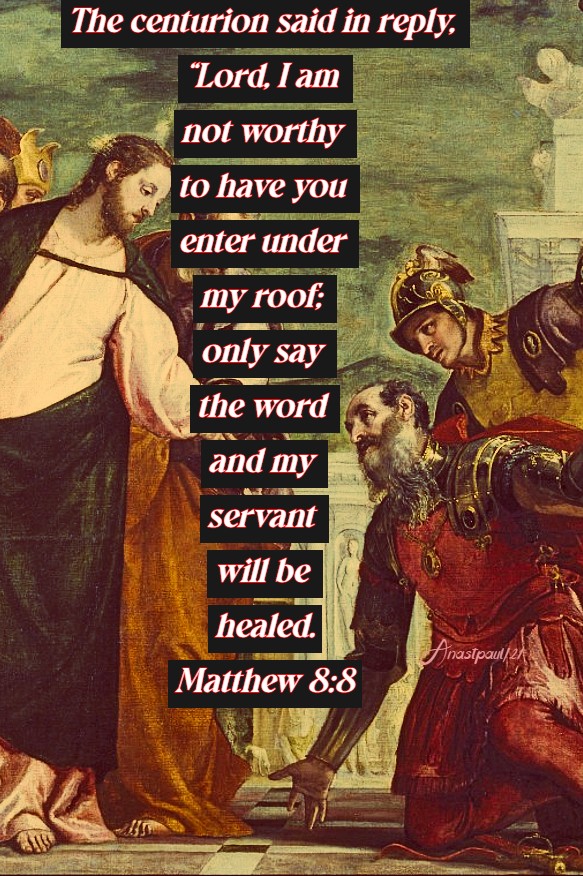
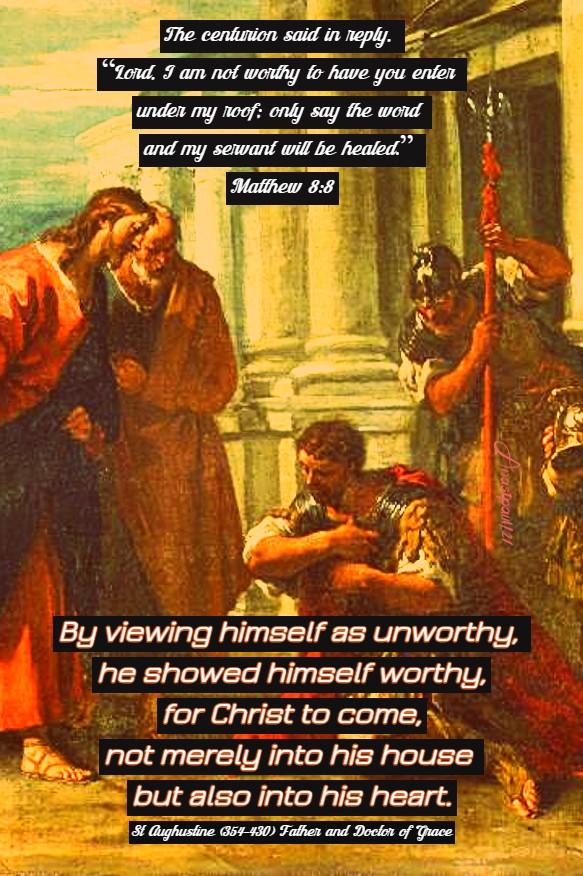
“The centurion said in reply, “Lord, I am not worthy to have you enter under my roof; only say the word and my servant will be healed.”
Matthew 8:8
“By viewing himself as unworthy, he showed himself worthy, for Christ to come, not merely into his house but also into his heart.”
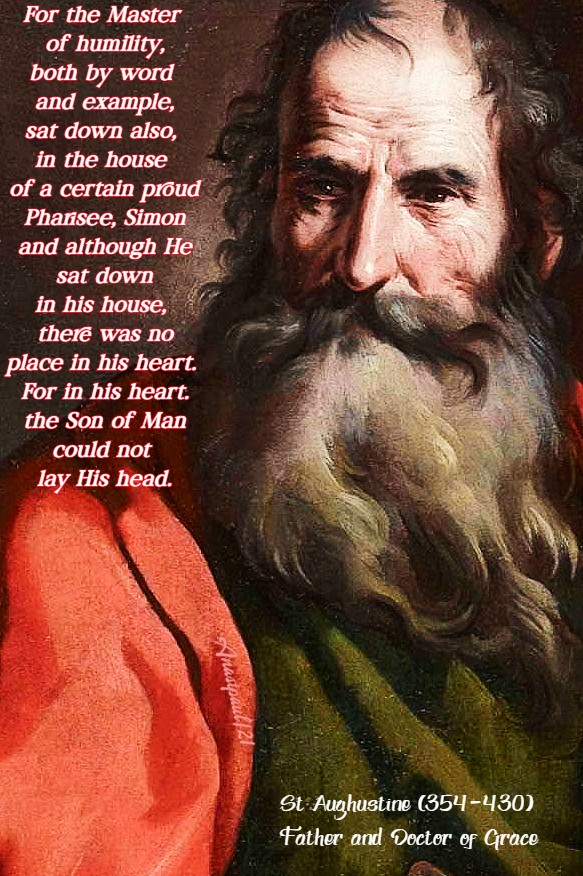
“For the Master of humility, both by word and example, sat down also, in the house of a certain proud Pharisee, Simon and although He sat down in his house, there was no place in his heart. For in his heart. the Son of Man could not lay His head.”
St Aughustine (354-430) Father and Doctor of Grace
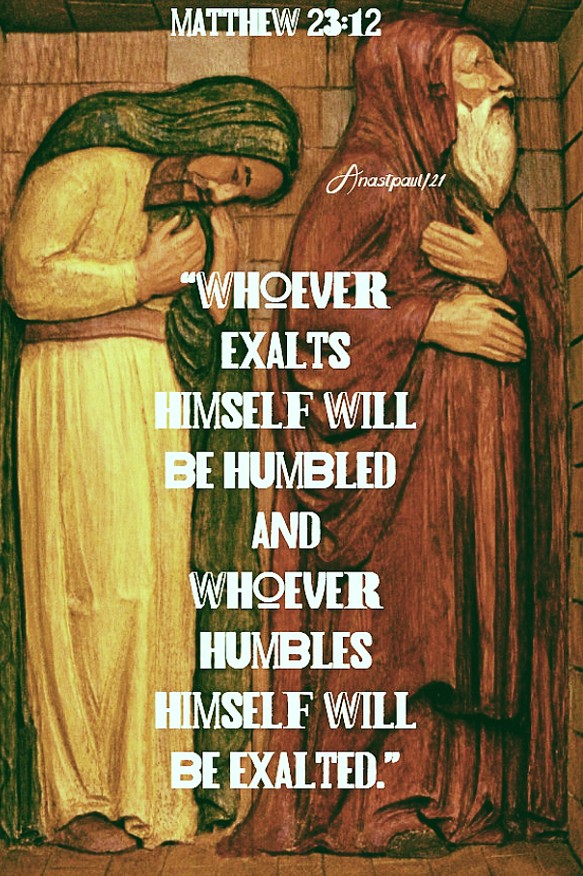
“Whoever exalts himself will be humbled and whoever humbles himself will be exalted.”
Matthew 23:12
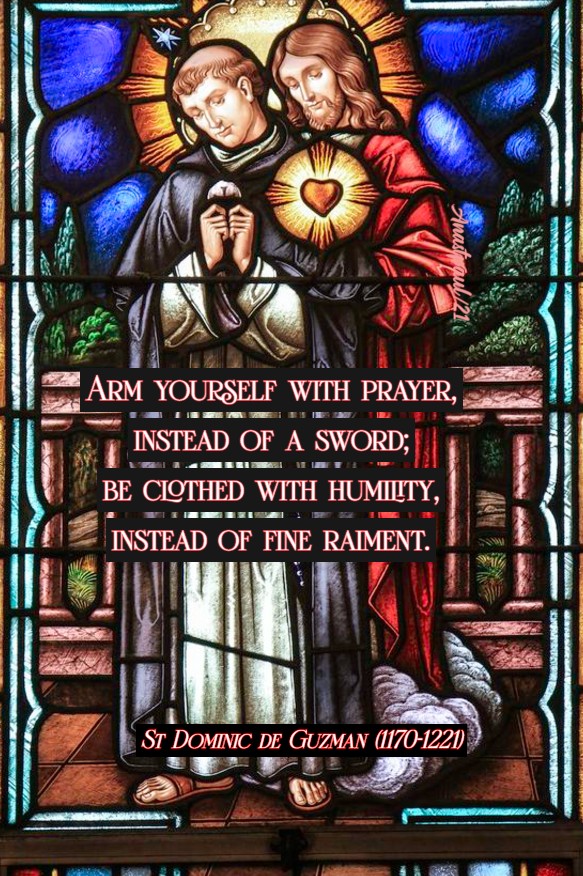
“Arm yourself with prayer, instead of a sword; be clothed with humility, instead of fine raiment.”
St Dominic de Guzman OP (1170-1221)
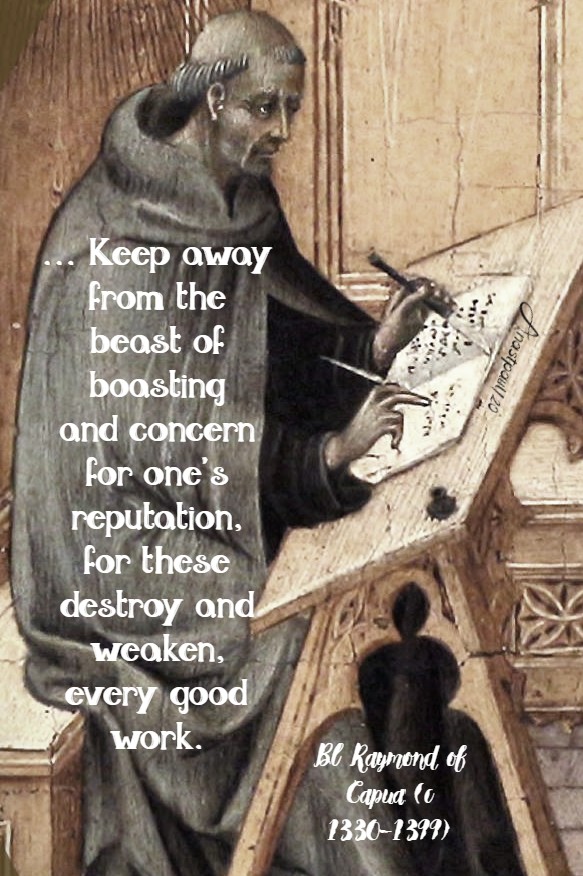
“My brothers, keep away from the beast of boasting and concern for one’s reputation, for these destroy and weaken, every good work.”
Bl Raymond of Capua (c 1330-1399)
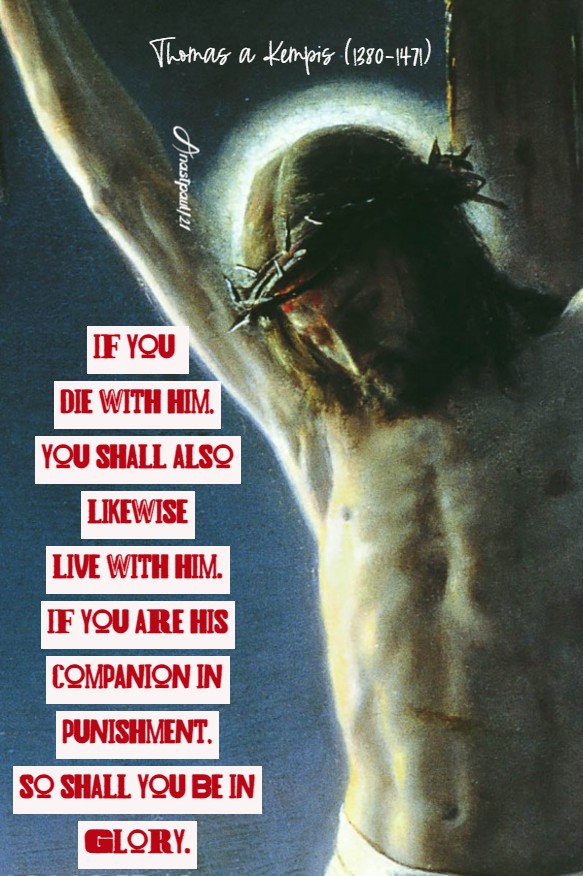
“ … If you die with Him, you shall also likewise live with Him. If you are His companion in punishment, so shall you be in glory.”
Thomas à Kempis (1380-1471)
“Humility and charity are the two master chords – one, the lowest; the other, the highest; all the others are dependent on them. Therefore, it is necessary, above all. to maintain ourselves in these two virtues, for observe well, that the preservation of the whole edifice depends on the foundation and the roof!”
One Minute Reflection – 29 November – Monday of the First Week of Advent – Readings: Isaiah 2: 1-5; Psalms 122: 1-9; Matthew 8: 5-11
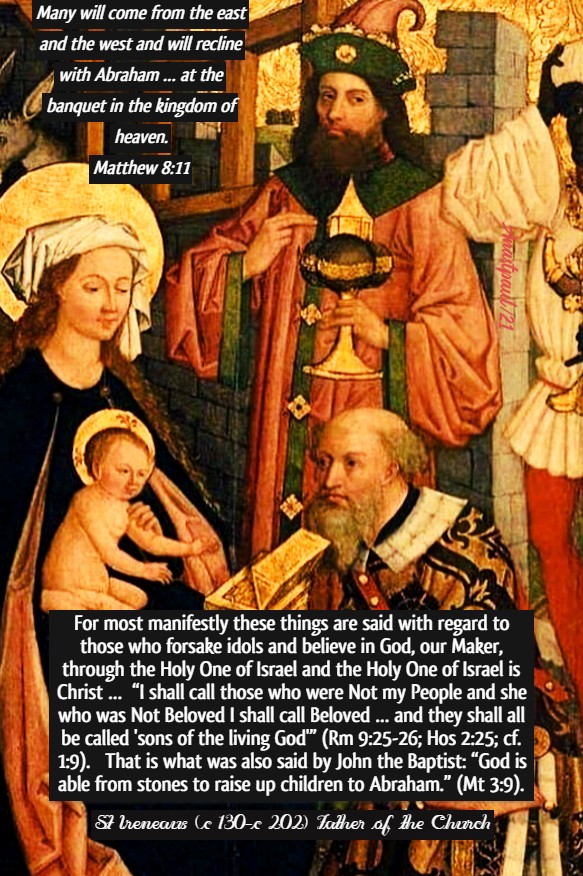
“Many will come from the east and the west and will recline with Abraham … at the banquet in the kingdom of heaven.” – Matthew 8:11
REFLECTION – “Behold, the days are coming, says the Lord, when I shall make a new covenant with the house of Israel and the house of Jacob … I will put my laws in their minds and will write them in their hearts” (Jr 31:31 f.) … And that these promises were going to be inherited by the calling of the Gentiles, in whom also, the New Covenant was opened, Isaiah says in this way, “Thus says the God of Israel, In that day man shall be confident in his Maker, and his eyes shall look to the Holy One of Israel and they shall not be confident in altars nor in the works of their hands, which their fingers have made…” (Is 17:7 f.). For most manifestly these things are said with regard to those who forsake idols and believe in God, our Maker, through the Holy One of Israel and the Holy One of Israel, is Christ …
PRAYER – Grant Almighty Father, that when Christ comes again, we may go out to meet Him,bearing the harvest of good works, achieved by Your grace. We pray that He will receive us int6o the company of the Saints and call us into the Kingdom of Heaven. And may His Mother and ours, the most pure Virgin Mary be our intercessor and advocate. We make our prayer through Christ our Lord, in the unity of the Holy Spirit, God forever, amen.
Our Morning Offering – 29 November – Monday of the4 First Week of Advent
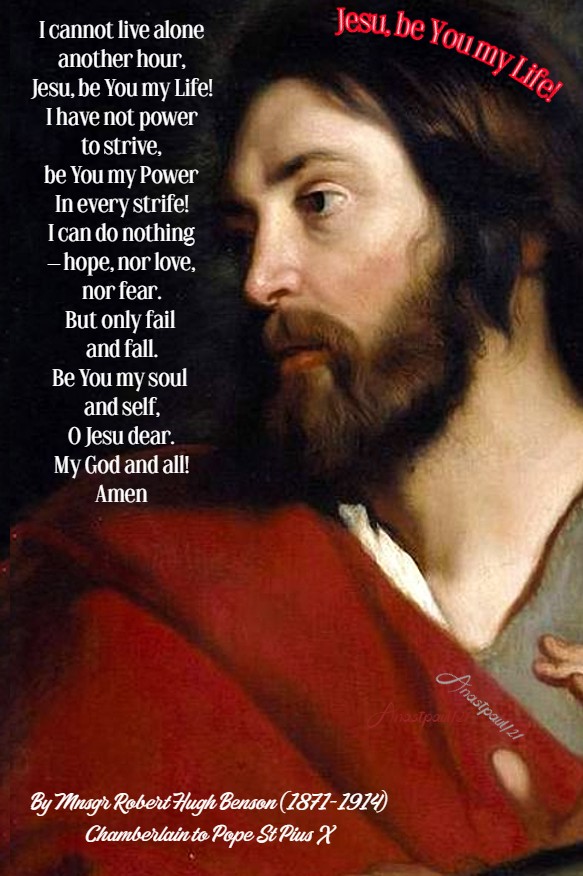
Jesu, be You my Life! Mnsgr Robert Hugh Benson (1871-1914) Chamberlain to Pope St Pius X
I cannot live alone another hour, Jesu, be You my Life! I have not power to strive, be You my Power In every strife! I can do nothing – hope, nor love, nor fear. But only fail and fall. Be You my soul and self, O Jesu dear. My God and all! Amen
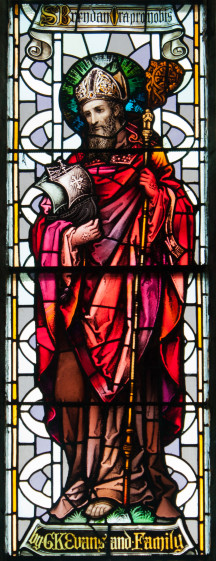
Saint of the Day – 29 November – Saint Brendan of Birr (Died c 573) Abbot known as “Prophet of Ireland,” Founder of the Monastery at Birr in Central Ireland. Brendan is one of the Twelve Apostles of Ireland and a friend and disciple of Saint Columba. Born in Ireland and died in c 573 at Birr, Ireland of natural causes. Patronage – Birr, Ireland. Also known as – Brendan mac Nemain, Brendan of Biorra, Brendan the Elder, (to distinguish him from his contemporary and friend, St Brendan the Navigator of Clonfert.) Prophet of Ireland, Brandan, Brandon, Breandan, Brenainn, Brendanus. Additional Memorial – 6 January, as one of the Twelve Apostles of Ireland.
In early Christian Ireland the druid tradition collapsed with the spread of the new faith. Study of Latin learning and Christian theology in monasteries flourished. Brendan became a pupil at the Monastic school at Clonard Abbey. During the sixth century, some of the most significant names in the history of Irish Church studied at the Clonard Monastery. It is said that the average number of scholars under instruction at Clonard, was 3,000. Twelve students who studied under Saint Finian became known as the Twelve Apostles of Ireland; Brendan of Birr was one of these.
Brendan of Birr is said to have been of a noble Munster family. It was at Clonard that Brendan became a friend and companion of St Kierán and St Brendan the Navigator.
Brendan founded the Monastery at Birr in central Ireland in about 540, serving as its first Abbot. He emerges from early Irish writings as a man of generous hospitality with a reputation for sanctity and devotion who was an intuitive judge of character. He was considered one of the chief prophets of Ireland. This is evidenced both in his title (‘Prophet of Ireland’) and by his attendance at the Synod of Meltown, in which Saint Columba was brought to trial over his role in the Battle of Cúl Dreimhne in 561. Brendan spoke on Columba’s behalf, prompting the assembled clerics to sentence Columba with exile, rather than excommunication. His friendship and support for Columba resulted in important connections between Birr and the Columban foundations. An adviser of Columba said that the saint saw a vision of Brendan’s soul being carried away by angels after his death. He thereupon ordered a mass to be said in his honour.
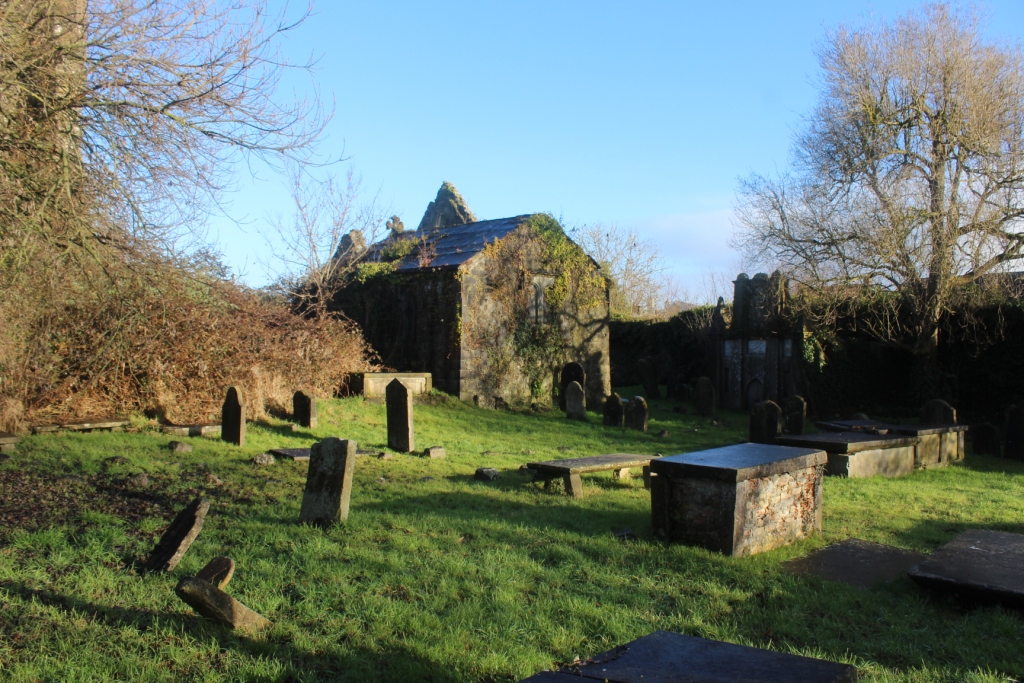
Ruins of Birr Monastery
Brendan’s monastery at Birr was later to produce the MacRegol Gospels, which are now housed at the Bodleian Library in Oxford.
Most glorious ascetic and chief of Ireland‘s Prophets, O Father Brendan, thou wast a bright beacon in the western isle, guiding many to salvation. At thy heavenly birthday, the Angels rejoiced and miraculously announced their joy to our Father Columba. The prayers of the righteous avail much for us sinners. Wherefore O Saint, pray to God for us that He will find us a place in the Mansions of the Blest. Amen Hymn of Saint Brendan of Birr
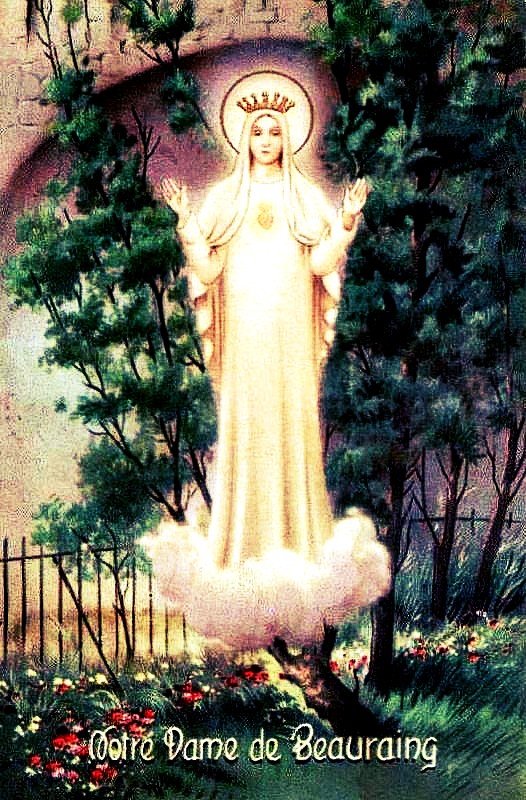
Notre Dame au Coeur d’Or / Our Lady of the Golden Heart of Beauraing, Belgium (1932) – 29 November:
On the evening of 29 November 1932, five children, fun-loving, mischievous playmates, ranging from the fifteen to nine years of age, were walking toward the railway viaduct in the Vallon part of Belgium, in the simple and quiet village of Beauraing. Suddenly one of them exclaimed that there was a bright light moving at the viaduct. First they thought these the lights of a moving car. Very soon, however, they discovered the figure of a lady and they instantly recognised that this could be nothing less than the Blessed Virgin.
Nobody wished to believe what the children related. But the next evening they came home with the same story. The village laughed at them and their parents were angry. The next time the children related with more details that they had seen a lady who was more beautiful than her Statues, dressed in pure white, with a crown of golden rays on her head.
On 2 December the children asked the lady some questions; she, smiling, confirmed that she was the Immaculate Virgin and demanded they “always be good.” As the visions continued, more people came to Beauraing, including police officials, doctors and psychologists. There were thirty-three apparitions in all. On 29 December the children related, the Blessed Virgin revealed, on her breast, a heart of gold. The next evening she asked for more prayers. On 1 January 1933, Our Lady of Beauraing reiterated this request and told Fernande, the fifteen year old girl:
“If you love my Son and love me, then sacrifice yourself for me.”
The Belgian Bishops forbade any processions or cults and started an investigation that was to last for ten years, during which serious objections were brought against the children. Finally, in 1943, a Decree was issued by the Bishop of Namur authorising the cult of Our Lady of Beauraing. On 18 July 1947, Msngr. Charue personally received the Papal blessings for the Sanctuary dedicated to Our Lady of Beauraing – the Virgin of the Golden Heart. This devotion has since taken on new and ever increasing proportions. The final approbation was given on 2 July1949. The cures of Miss Van Laer and Mrs. Acar were declared miraculous by a Decree given by Msgr. Charue. Many conversions and graces have been obtained through the intercession of Our Lady of Beauraing. The editor of the Belgian Communist paper, “Le Drapeau Rouge” (the Red Flag), was one of the first to become Catholic at the Shrine of Our Lady of Beauraing.
All Saints of the Seraphic Order (Franciscan): the Church celebrates the many Franciscan saints who followed in the footsteps of St Francis. It is a special day for all Franciscans to celebrate the feast of ‘All the Saints of the Seraphic Order.’ Also on this day in 1223, the final Rule of life for Franciscan Friars was approved. To commemorate this and all the saintly examples produced in the Franciscan Order, on this day all the saints of the Seraphic order are remembered at Franciscan Churches.
St Blaise of Veroli St Brendan of Birr (Died c573) Abbot St Demetrius of Veroli Blessed Denis of the Nativity OCD (1600-1638) Priest Martyr Bl Edward Burden
Bl Frederick of Ratisbon Bl George Errington St Hardoin of Brittany St Illuminata of Todi St James of Saroug Bl Jutta of Heiligenthal St Paphnutius of Heracleopolis St Paramon St Philomenus of Ancyra St Radbod of Utrecht Bl Redemptorus of the Cross St Sadwen of Wales St Saturninus of Rome St Saturninus of Toulouse St Sisinius of Rome St Walderic of Murrhardt Bl William Gibson Bl William Knight
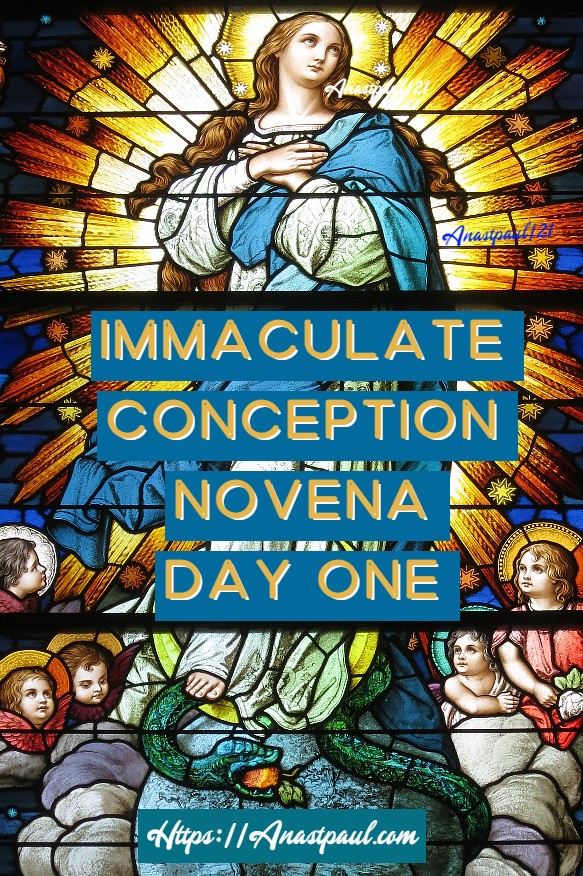
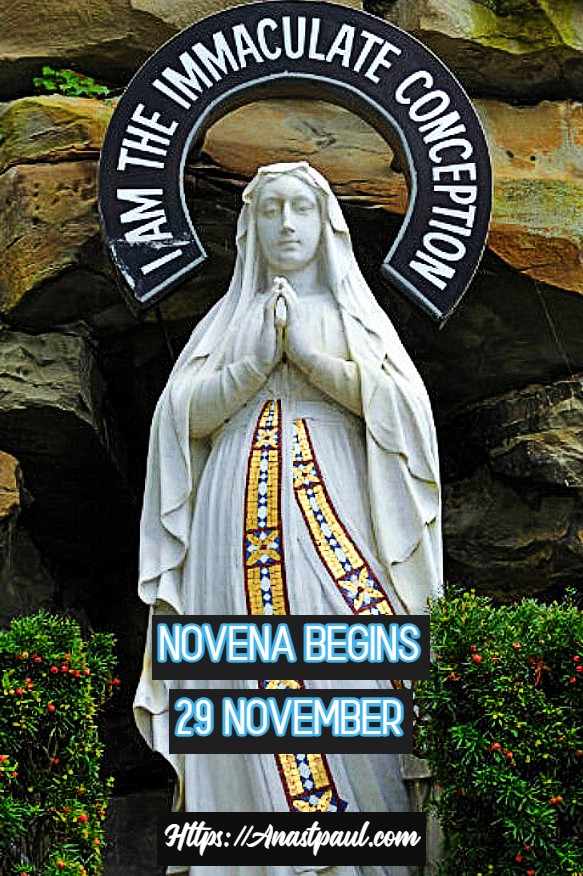
Novena in honour of the Immaculate Conception Begins 29 November Feast 8 December
The Dogma was promulgated by Blessed Pius IX in 1854 in the Bull Ineffabilis Deus. This Dogma is rejected by all Protestants including the Orthodox – another reason why we cannot interact with these the way some do and the Vatican II church endorses.
Let us Pray to our Mother, the Immaculate and Blessed Virgin Mary, conceived without sin.
Thought for the Day – 28 November – Meditations with Antonio Cardinal Bacci (1881-1971)
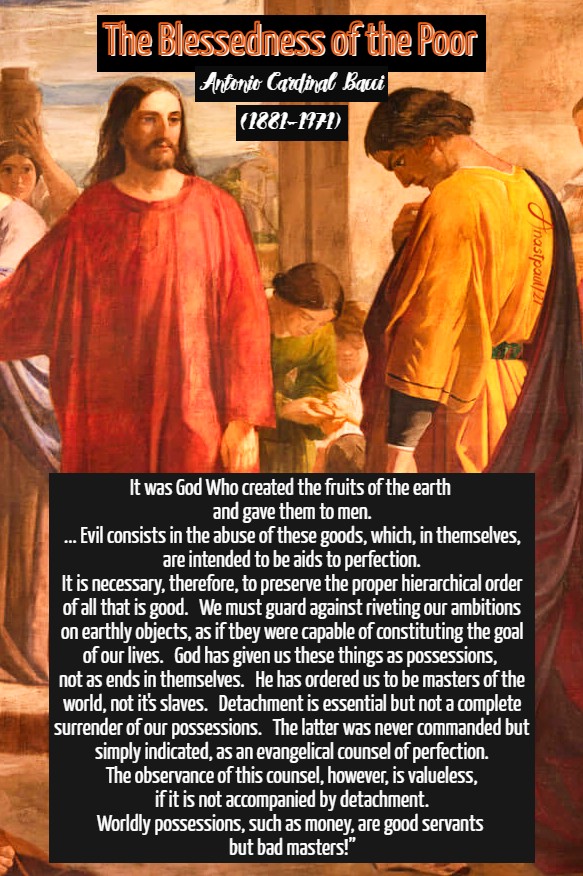
The Blessedness of the Poor
“Blessed are the poor in spirit” said Jesus, “for theirs is the kingdom of heaven” (Mt 5:3). We should take care to have a proper understanding of the meaning of these words. Catholic perfection does not actually consist in being poor. A man can be poor, even voluntarily so, without being vittuous and without receiving any blessing thereby. “Christian perfection,” explains St Thomas Aquinas, “does not especially consist in voluntary poverty, which is only an instrument of perfection. Therefore, it cannot be said that where there is greater poverty there is greater sanctity. The highest perfection can co-exist with great wealth, for we read that Abraham was wealthy and God said to him, ‘Walk in my presence and be perfect‘” (Summa Theologiae, II-II, q 185, a 6 ad 1).
Perfection then, does not consist in poverty as such but, in detachment from worldly possessions. Whether we are rich or poor, we must have this detachment, if we wish to be true followers of Christ. It was God Who created the fruits of the earth and gave them to men. When He had created them, He was pleased with His Work and declared, that all things were good. Evil consists in the abuse of these goods, which, in themselves, are intended to be aids to perfection. It is necessary, therefore, to preserve the proper hierarchical order of all that is good. We must guard against riveting our ambitions on earthly objects, as if tbey were capable of constituting the goal of our lives.
God has given us these things as possessions, not as ends in themselves. He has ordered us to be masters of the world, not it’s slaves. Detachment is essential but not a complete surrender of our possessions. The latter was never commanded but simply indicated, as an evangelical counsel of perfection. The observance of this counsel, however, is valueless, if it is not accompanied by detachment. Worldly possessions, such as money, are good servants but bad masters!”
Quote/s of the Day – 28 November – The Memorial of St Pope Gregory III (Died 741
“The only true riches are those that make us rich in virtue. Therefore, if you want to be rich, beloved, love true riches. If you aspire to the heights of real honour, strive to reach the Kingdom of Heaven. If you value rank and renown, hasten to be enrolled in the heavenly court of the Angels.”
St Pope Gregory III (Died 741)
“When God is our strength, it is strength indeed; when our strength is our own, it is only weakness.”
St Augustine (354-430) Father and Doctor of the Church
One Minute Reflection – 28 November – The First Sunday of Advent – Readings: Jeremiah 33: 14-16; Psalm 25: 4-5, 8-10, 14; First Thessalonians 3: 12 – 4: 2; Luke 21: 25-28, 34-36
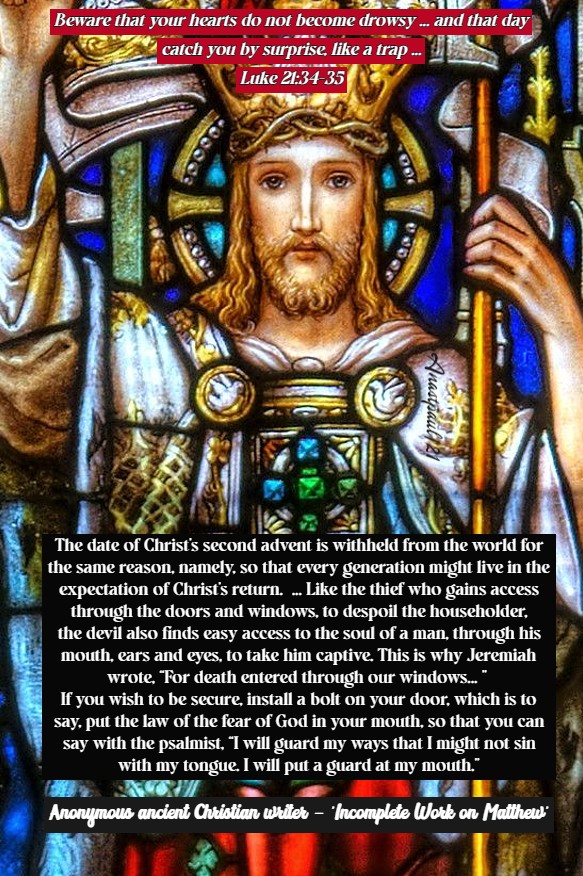
“Beware that your hearts do not become drowsy, from carousing and drunkenness and the anxieties of daily life and that day catch you by surprise, like a trap.”- Luke 21:34-35
REFLECTION – “Why is the date of an individual’s death hidden from him? Clearly, it is so that he might always do good, since he can expect to die at any moment.
The date of Christ’s second advent is withheld from the world for the same reason, namely, so that every generation might live in the expectation of Christ’s return. This is why when His disciples asked Him, “Lord, will you restore the kingdom to Israel at this time?” Jesus replied, “It is not for you to know the times and the seasons, which the Father has established by his authority. But know this, that if the head of the household had known the hour at which the thief would arrive, he would have been vigilant and would never have allowed his house to be burglarised.”
The head of the household represents the human soul, the thief is the devil, the house is the body, the doors are the mouth and ears and the windows are the eyes. Like the thief who gains access through the doors and windows, to despoil the householder, the devil also finds easy access to the soul of a man, through his mouth, ears and eyes, to take him captive. This is why Jeremiah wrote, “For death entered through our windows .. ”
If you wish to be secure, install a bolt on your door, which is to say, put the law of the fear of God in your mouth, so that you can say with the psalmist, “I will guard my ways that I might not sin with my tongue. I will put a guard at my mouth.” – Anonymous ancient Christian writer. The ancient work is known as the ‘Incomplete Work on Matthew’ – (Homily 51)
PRAYER – Holy God, Father Almighty, grant we pray, by the true Light of the world, Your only-begotten Son, our Lord Jesus Christ, Who enlightens all men for their salvation, give us grace to herald His coming, by preparing the ways of justice, love and peace. May the Holy Spirit fill us with all His gifts and virtues, so that we may await the coming of Your Son, guided by His Light and may Mary, the blessed Virgin, accompany us, guarding and giving us her prayerful help. Through Christ our Lord, with the Holy Spirit, God forever, amen.
Our Morning Offering – 28 November – Th4 First Sunday of Advent
Come, Sun and Saviour 8th Century Catholic Advent Prayer/Hymn
Come, Sun and Saviour, to embrace our gloomy world, its weary race. As groom to bride, as bride to groom, The wedding chamber, Mary’s womb. At Your great Name, O Jesus, now All knees must bend, all hearts must bow, All things on earth with one accord, Like those in heaven, shall call You Lord. Come in Your holy might, we pray, Redeem us for eternal day. Defend us, while we dwell below, From all assaults of our dread foe. Amen
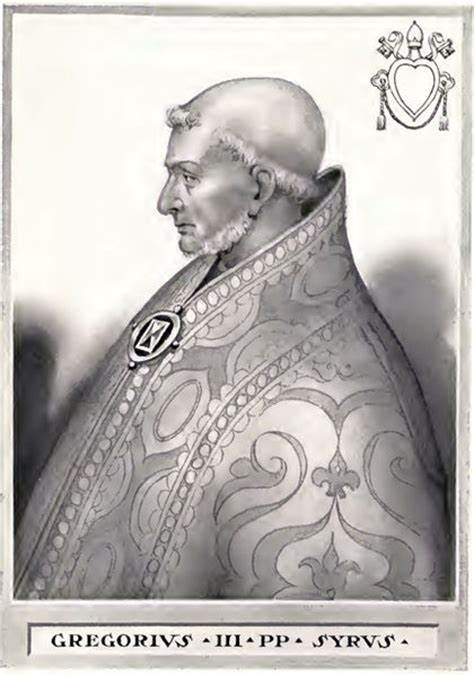
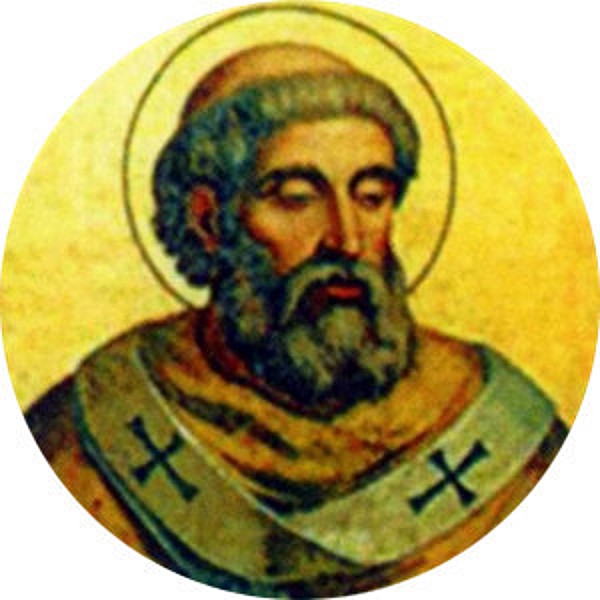
Saint of the Day – 28 November – Saint Pope Gregory III (Died 741) Bishop of Rome 11 February 731 until his death on 28 November 741. Born in Syria and died on 28 November 741 of natural causes.
The Roman Martyrology states: “St Rome, the blessed Pope Gregory III, who departed for Heaven with a reputation for great sanctity and miracles.“
Beside the fact that Gregory was a Priest at Saint Crisogono Church in Rome and that he was the son of a Syrian named John nothing else is known about his life prior to being elected the 90th pope. He was elected by popular acclamation in 731, during the funeral procession of his predecessor, because of his reputation for virtue and learninge.
Gregory’s Pontificate, like that of his predecessor, was troubled by the iconoclastic controversy (the deliberate destruction of religious icons and other symbols) in the Byzantine Empire.
Upon his accession as Pope, Gregory immediately appealed to the Byzantine Emperor Leo III, to moderate his position on the Iconoclastic controversy. When Pope Gregory’s representative was arrested on the orders of the Emperor, Gregory called a Synod in November 731, which condemned Iconoclasm outright. Leo responded by trying to bring the Pope under control, although the fleet he sent to enforce the imperial will, was shipwrecked in the Adriatic Sea. Failing, he appropriated Papal territories in Sicily and Calabria, transferring ecclesiastical jurisdictions in the former Praetorian Prefect, to the Patriarch of Constantinople. His attempt to force the Duke of Naples to enforce an imperial decree to confiscate [apal territory in the duchy failed, as the Duke was supportive of the Pope’s stand.
Pope Gregory demonstrated his opposition to Iconoclasm by emphasising his veneration of icons and relics. He repaired numerous beautiful Churches, adorning them with icons and images of Jesus Christ, the Virgin Mary and many Saints. He ordered, in the heart of St. Peter’s Basilica and Iconostasis, (an iconostasis is a wall of artworks and religious paintings, used to separate the Nave from the Sanctuary) situated between six onyx and marble columns. He also built a new oratory in St. Peter’s Basilica, which housed relics of several Saints. He was also an enthusiastic supporter of monasticism – he established the Monastery of S. Chrysogonus and rebuilt the Hospice of Saints Sergius and Bacchus near St Peter’s.
Pope Gregory also promoted the Church in northern Europe. He supported the continuing mission of St. Boniface in Germany, elevating him to the rank of Archbishop in 732. In 732, Gregory banned the consumption of horsemeat, both domestic and wild, comparing it as an “abomination” since it was associated with pagan ritual feastings. He was very conscious of the ongoing Lombard threat but was unsuccessful at stopping their advance. He also undertook and completed, the restoration of the Walls of Rome.
Pope Gregory III died on 28 November 741. He was succeeded by Pope Zachary and was buried in St Peter’s Basilica, in the oratory he had built at the start of his Pontificate.
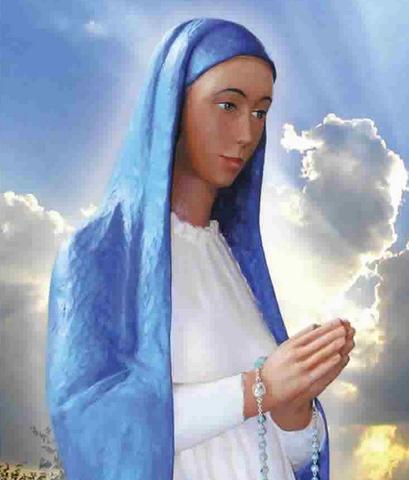
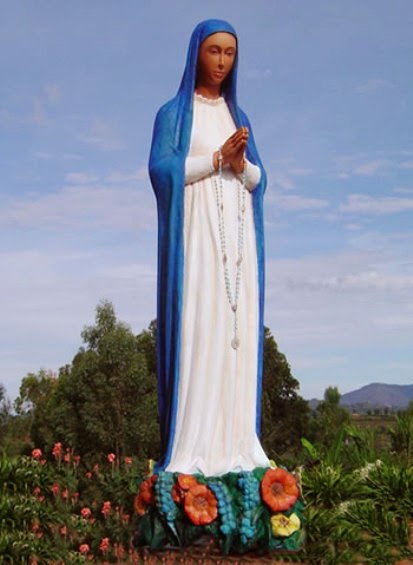
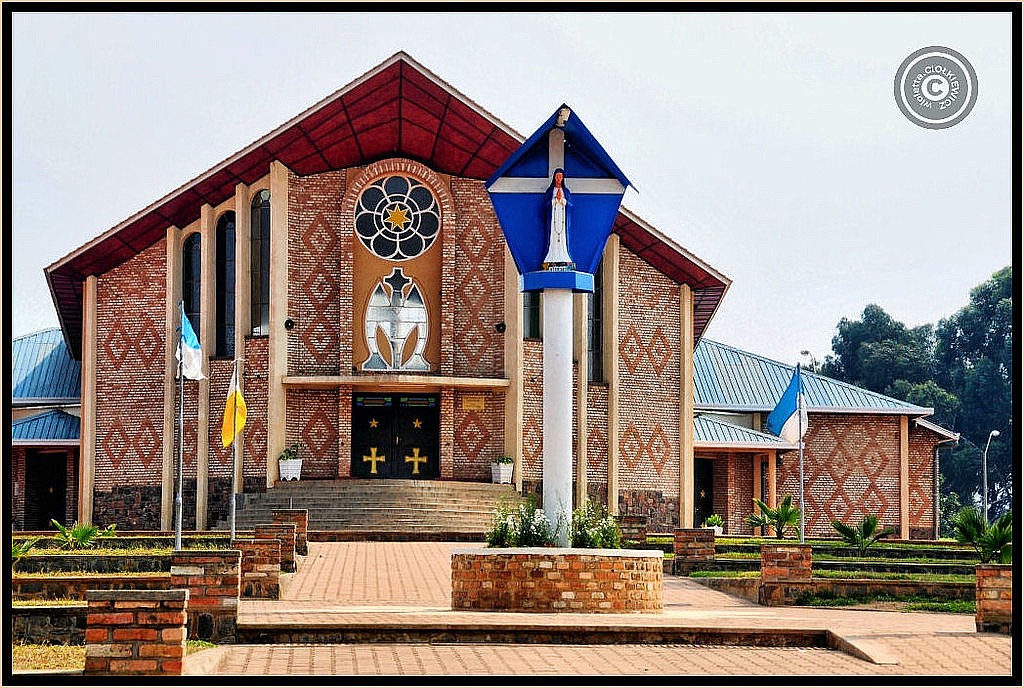
Nyina wa Jambo – Mother of the Word, Kibeho, Rwanda (1981) – 28 November
The apparitions began in November 1981 when six young girls and one boy claimed to see the Blessed Virgin Mary and Jesus. But only the visions of the first three — 17-year-old Alphonsine, 20-year-old Nathalie, and 21-year-old Marie Claire — have received Bishop Misago’s solemn approval. Because there were reservations about the other four visionaries and the supposed visions of Jesus, Bishop Misago did not confirm the authenticity of either those visions or visionaries. The Virgin appeared to them with the name “Nyina wa Jambo,” that is “Mother of the Word,” which is synonymous with “Umubyeyl W’iamna” that is, “Mother of God,”,as she herself explained to them. In the visions, Our Lady emphasised the call to pray the Rosary. She also asked for penance and fasting. A dreadful vision all three girls received became a key apparition leading to the official acceptance and approval of Kibeho. These girls reported seeing a gruesome picture – a river of blood, people who killed one another, abandoned bodies with no-one to bury them, a tree on fire, an open chasm, a monster, and severed heads. The vision is now considered a prophecy of the ethnic genocide that would take place in the country 13 years later. Tragically, in 1994, visionary Marie Claire became one of its victims.
Description “She had a seamless white dress and also a white veil on her head. Her hands were clasped together on her breast and her fingers pointed to the sky… I could not determine the colour of her skin,” said Alphonsine, “but she was of incomparable beauty.“ From the beginning in Kibeho, in southern Rwanda, there were conversions, prayer meetings, pilgrimages, miraculous cures and favours and abnormal phenomena during the apparitions. Also, the sun appeared to pulsate, spin, or split in two — a miracle reminiscent of Fatima.
Approval “Yes, the Virgin Mary did appear in Kibeho on 28 November 1981″ and then over “the course of the following six months,” proclaimed Bishop Augustine Misago of Gikongoro, Rwanda, Africa, when he announced his official approval of the apparitions. “There are more reasons to believe this than to deny it.”
Prayer Blessed Virgin Mary, Mother of the Word, Mother of all those who believe in Him and who welcome Him into their life, we are here before you to contemplate You. We believe that you are among us, like a mother in the midst of her children, even though we do not see You with our bodily eyes.
We bless you, The Sure Way that leads us to Jesus the Saviour, for all the favours which You endlessly pour out upon us, especially, that, in your meekness, You were gracious enough to appear miraculously in Kibeho, just when our world needed it most.
Grant us always the light and the strength necessary to accept, with all seriousness, Your call to us to be converted, to repent, and to live according to your Son’s Gospel. Teach us how to pray with sincerity and to love one another as He loved us, so that, just as You have requested, we may always be beautiful flowers diffusing their pleasant fragrance everywhere and upon everyone.
Holy Mary, Our Lady of Sorrows, teach us to understand the value of the cross in our lives, so that, whatever is still lacking to the sufferings of Christ, we may fill up in our own bodies for His mystical Body, which is the Church. And when our pilgrimage on this earth comes to an end, may we live eternally with You in the kingdom of Heaven. Amen
St Anrê Tran Van Trông Bl Calimerius of Montechiaro
St Fionnchu of Bangor St Pope Gregory III (Died 741) Bishop of Rome 11 February 731 until his death on 28 November 741. (His Feast was moved to 10 December in 1969), St Hilary of Dijon St Hippolytus of Saint Claude St Honestus of Nimes St Irenarcus
Bl James Thompson St Papius St Quieta of Dijon St Rufus St Simeon the Logothete St Sosthenes of Colophon (1st Century) Bishop, Martyr. St Stephen the Younger Bl Theodora of Rossano — Martyrs of Constantinople – 8 saints: A group of over 300 Christians martyred during the persecutions of the Iconoclast emperors. We have a lot of information on Saint Stephen the Younger, but for the others we have nothing but seven of their names – Andrew, Auxentius, Basil, Gregor, John, Peter and Stefan. They were scourged, stoned and/or dragged to death through the streets of Constantinople in 764.
Martyrs of North Africa – 13 saints: A group of thirteen clerics killed or exiled in the persecutions of Arian Vandals in North Africa – Crescens, Crescentian, Cresconius, Eustace, Felix, Florentian, Habetdeum, Hortulanus, Mansuetus, Papinianus, Quodvultdeus, Urban and Valerian.
Martyrs of Tiberiopolis – 14 saints: A group of fourteen Christian laymen, deacons, priests and bishops who were martyred together in the persecutions of Julian the Apostate – Basil, Chariton, Comasios, Daniel, Etymasius, Hierotheos, John, Nicephorus, Peter, Sergius, Socrates, Theodore, Thomas and Timothy. 361 at Tiberiopolis, Phyrgia (in modern Turkey)
Martyred in the Spanish Civil War – Martyred Augustinians of Madrid – 12 beati; Martyred Hospitallers of Madrid – 15 beati; Oblate Martyrs – 23 beati. • Blessed Ángel Francisco Bocos Hernández • Blessed Ángel Sastre Corporales • Blessed Antonio Hilario Delgado Vílchez • Blessed Antonio Meléndez Sánchez • Blessed Avelino Rodríguez Alonso • Blessed Balbino Villaroel y Villaroel • Blessed Benito Alcalde González • Blessed Bernardino Álvarez Melcón • Blessed Cándido Castán San José • Blessed Cecilio Vega Domínguez • Blessed Clemente Díez Sahagún • Blessed Clemente Rodríguez Tejerina • Blessed Daniel Gómez Lucas • Blessed Eduardo Bautista Jiménez • Blessed Eleuterio Prado Villaroel • Blessed Francisco Esteban Lacal • Blessed Francisco Polvorinos Gómez • Blessed Gregorio Escobar García • Blessed Isidoro Martínez Izquierdo • Blessed José Guerra Andrés • Blessed José Mora Velasco • Blessed José Peque Iglesias • Blessed José Prieto Fuentes • Blessed José Ruiz Cuesta • Blessed José Vega Riaño • Blessed Juan Alcalde y Alcalde • Blessed Juan Antonio Pérez Mayo • Blessed Juan Baldajos Pérez • Blessed Juan Herrero Arroyo • Blessed Juan Jesús Adradas Gonzalo • Blessed Juan José Caballero Rodríguez • Blessed Juan María Múgica Goiburu • Blessed Juan Pedro del Cotillo Fernández • Blessed Julián Plazaola Artola • Blessed Justo Fernández González • Blessed Justo Gil Pardo • Blessed Justo González Lorente • Blessed Lucinio Ruiz Valtierra • Blessed Luis Campos Górriz • Blessed Manuel álvarez Rego • Blessed Manuel Gutiérrez Martín • Blessed Marcelino Sánchez Fernández • Blessed Marcos Pérez Andrés • Blessed Pascual Aláez Medina • Blessed Pedro de Alcántara Bernalte Calzado • Blessed Pedro María Alcalde Negredo • Blessed Vicente Andrés Llop Gaya • Blessed Publio Rodríguez Moslares • Blessed Ramiro Frías García • Blessed Sabino Rodrigo Fierro • Blessed Samuel Pajares García • Blessed Senén García González • Blessed Serviliano Riaño Herrero • Blessed Vicente Blanco Guadilla
Thought for the Day –27 November – Meditations with Antonio Cardinal Bacci (1881-1971)
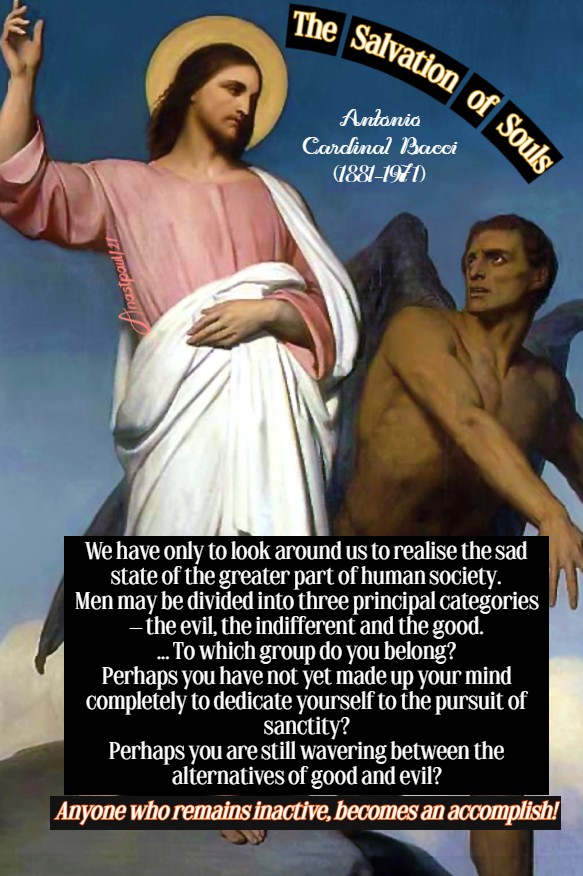
The Salvation of Souls
“We have only to look around us to realise the sad state of the greater part of human society. Men may be divided into three principal categories – the evil, the indifferent and the good. The evil are very numerous. The Holy Spirit tells us that the number of fools is infinite (Eccles 1:15). Now, the greatest and most real folly, is sin because, sin offends God, our supreme good, our Creator and Redeemer and because, it endangers the salvation of the soul. Nevertheless, countless sins are committed. There is an immense number of people who commit sin not merely through human frailty but who have abandoned God absolutely by denying or insulting Him and by striving to eradicate Him from the consciousness of their fellow-men. Their God is themselves!
The second group is that of the indifferent, those for whom God, religion and the supernatural are quite unimportant. They are content to lead materialistic lives without any thought of eternity. It is enough for them to be able to live, make money and to enjoy themselves. Nothing else matters. Their God is the world and its goods! The number of such people is increasing at an alarming rate.
Lastly, there are the good people who desire to become more and more perfect. Unfortunately, there are very few of these now and one would like to see them displaying greater generosity and enthusiasm for the salvation of those around them.
To which group do you belong? Perhaps you have not yet made up your mind completely to dedicate yourself to the pursuit of sanctity? Perhaps you are still wavering between the alternatives of good and evil? Anyone who remains inactive, becomes an accomplish!”
Quote/s of the Day – 27 November – Memorial of Our Lady of the Miraculous Medal the “Medal of the Immaculate Conception”
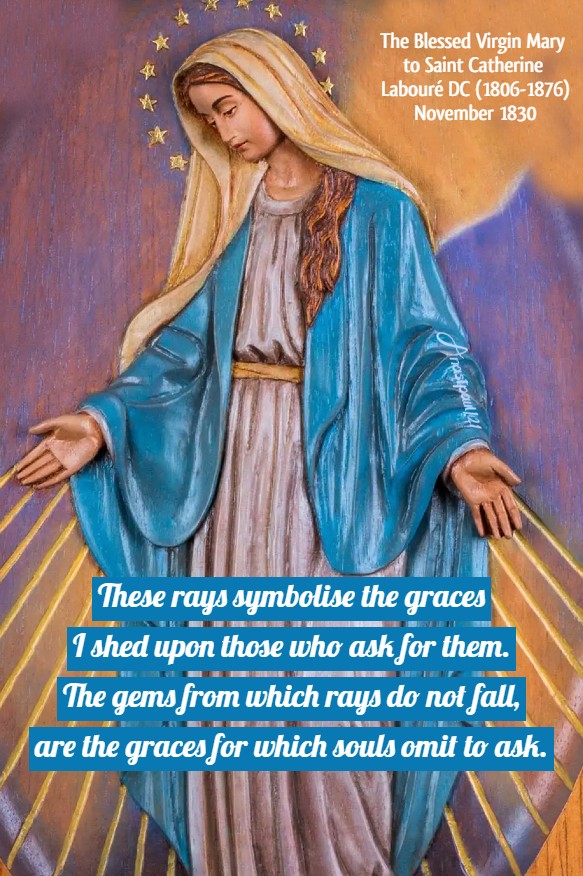
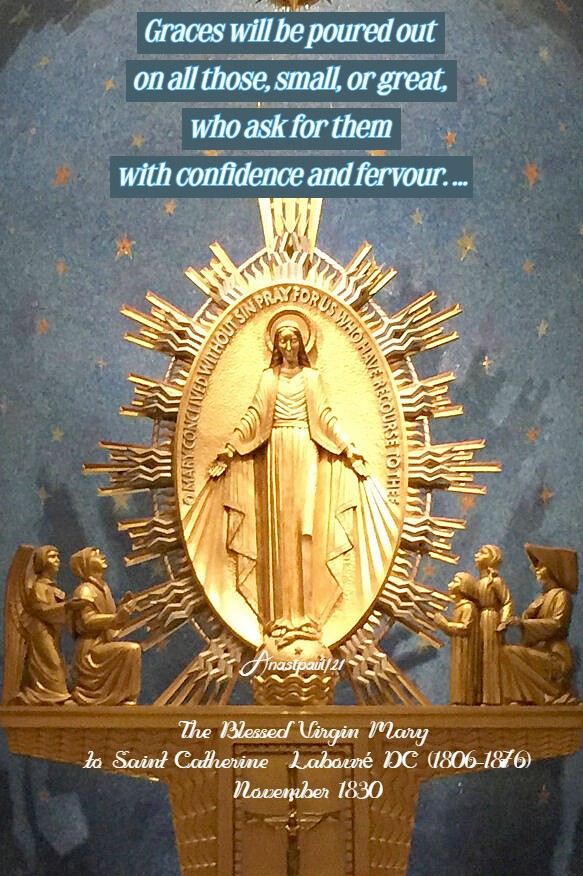
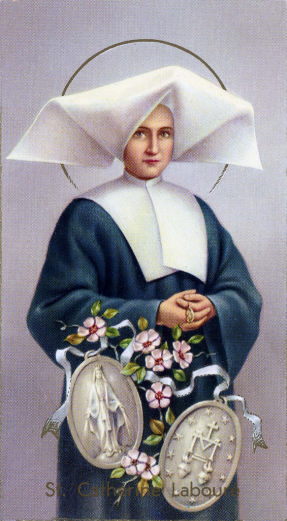
THE PROMISES OF THE MEDAL When Our Lady appeared to Saint Catherine Labouré on 27 November 1830, rays of light flowed from the rings (made of precious stones) on her fingers. However, some of the stones on the rings did not shine.
Our Lady explained:
“These rays symbolise the graces I shed upon those who ask for them. The gems from which rays do not fall are the graces for which souls omit to ask.”
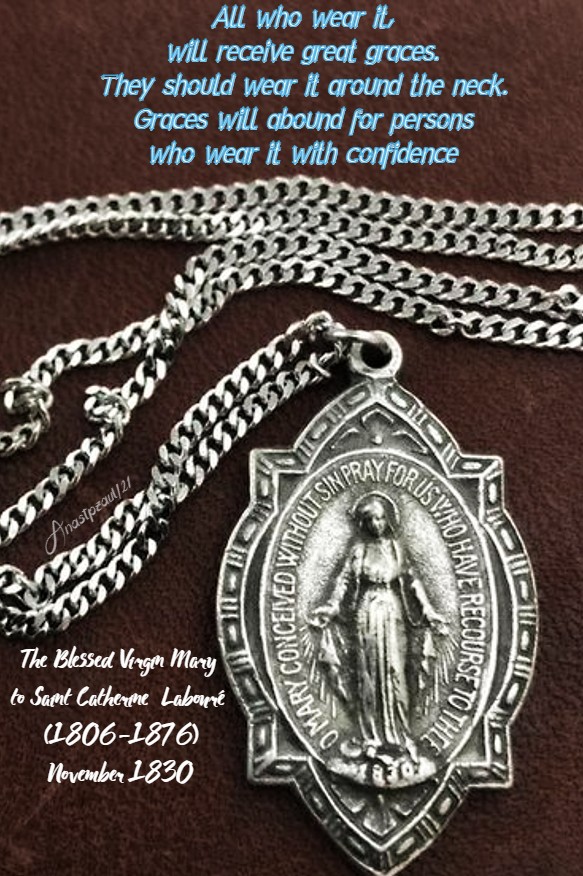
“All who wear it. will receive great graces. They should wear it around the neck. Graces will abound for persons who wear it with confidence.”
“Graces will be poured out on all those, small, or great, who ask for them with confidence and fervour. … ”
The Blessed Virgin Mary to Saint Catherine Labouré DC (1806-1876) November 1830
One Minute Reflection – 27 November – Memorial of Our Lady of the Miraculous Medal – Readings: Daniel 7: 15-27; Daniel 3: 82-87; Luke 21: 34-36
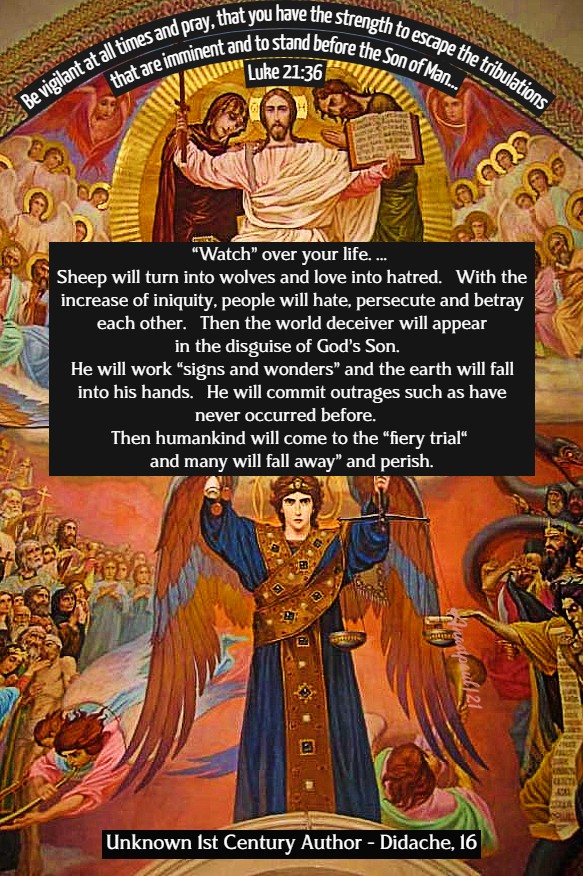
“Be vigilant at all times and pray, that you have the strength to escape the tribulations that are imminent and to stand before the Son of Man…” – Luke 21:36)
REFLECTION – “Watch” over your life. Do not let “your lamps” go out and do not keep “your loins ungirded” but “be ready,” for “you do not know the hour when our Lord is coming.” Meet together frequently in your search for what is good for your souls, since “a lifetime of faith will be of no advantage” to you unless you prove perfect at the very end. In the final days, multitudes of false prophets and seducers will appear. Sheep will turn into wolves and love into hatred. With the increase of iniquity, people will hate, persecute and betray each other. Then the world deceiver will appear in the disguise of God’s Son. He will work “signs and wonders” and the earth will fall into his hands. He will commit outrages such as have never occurred before.Then humankind will come to the “fiery trial“and many will fall away” and perish. “Those who persevere in their faith will be saved” by the Curse himself.
Then “there will appear the signs” of the Truth: first the sign of stretched-out hands in heaven, then the sign of “a trumpet’s blast” and third, the resurrection of the dead but not all the dead. As it has been said, “The Lord will come and all his saints with him. Then the world will see the Lord coming on the clouds of the sky.” – Unknown 1st Century Author of this early Treatise (Didache, 16)
PRAYER – Let us praise You alone, Lord, with voice and mind and deed and since life itself is Your gift, may we live in Your presence, never ceasing to live as Your children of light. Strengthen us good Father, to keep our lives free from the evils of the world and may we constantly be aware of the dangers we face. Grant that by the intercession of the Blessed and Immaculate Virgin Mother of Your divine Son, we may remain untempted by the evil pursuits which beset us. Through Jesus our Lord, in the unity of the Holy Spirit, God forever, amen.
Our Morning Offering – 27 November – The Memorial of The Medal of the Immaculate Conception / Our Lady of the Miraculous Medal and Mary’s Day
Prayer to Our Lady of the Miraculous Medal
Virgin Mother of God, Mary Immaculate, we unite ourselves to thee under thy title of Blessed Mother, Our Lady of the Miraculous Medal. May this medal be, for each one of us, a sure sign of thy motherly affection for us and a constant reminder of our filial duties towards thee. While wearing it, may we be blessed by thy loving protection and preserved in the grace of thy Son. Most powerful Virgin, Mother of our Saviour, keep us close to thee, every moment of our lives so that like thee, we may live and act according to the teaching and example of thy Son. Obtain for us, thy children, the grace of a happy death, so that in union with thee we may enjoy the happiness of heaven forever. Amen O Mary, conceived without sin, pray for us who have recourse to thee.
Saint of the Day – 27 November – Blessed Bernardine of Fossa OFM (1420-1503) Priest and Friar of the Observant Friars Minor of St Francis, Missionary in Italy and a renowned Preacher, noted Historian, Lawyer, Ascetical Writer, rising within the Order to important positions. Born in 1420 in Fossa, Aquila, Italy as Giovanni Amici and died on 27 November 1503 in the Franciscan Convent in L’Aquila, Italy of natural causes, aged 83. Also known as – Bernardine d’Amici, Bernardine of Aquila, Bernardine of Aquilanus, Fra Bernardino of Fossa, Giovanni Amici. Additional Memorial – 7 November (Franciscans). Patronages – the City and Diocese of L’Aquila.
The Roman Martyrology states: “At L’Aquila, blessed Bernardino da Fossa (Giovanni) Amici, Priest of the Order of Minors, who preached the Catholic Faith in many Provinces of Italy.“
Giovanni belonged to the ancient and noble family of the Amici and sometimes bears the name of Aquilanus on account of his long residence and death in the Town of Aquila.
He was of very lively intelligence and excelled in his studies. He graduated in Canon and Civil Law in Perugia and in 1445, at 21, he entered the Friars Minor of the Observance and completed his novitiate at Gubbio. On 13 March 1446 he made his solemn profession in the Convent of Stroncone taking the name of Bernardine and receiving the Habit from St James of the Marches who was then preaching a course of Lenten sermons at Perugiato. As was the custom of many religious Orders at the time, the place of birth was added, so Giovanni became Fra ‘Bernardino da Fossa.
Bernardine was endowed with outstanding organisational, spiritual and guiding skills and was, therefore, entrusted with various positions in the Franciscan Convents of Gubbio, Stroncone and others, also in Umbria. From there he passed into the Abruzzi, residing especially in his own City of L’Aquila.
He was a zealous Priest and talented Preacher in numerous Umbrian Towns. He was elected Provincial Father of the Friars Minor Observants for the Abruzzi four times , holding the office from 1454 to 1460 and then from 1472 to 1475 : between 1464 and 1467 he was instead Superior of Bosnia and Dalmatia, a Province just established by Pope Pius II and in 1468 he was elected Procurator of the Order at the Holy See .
He was twice elected bishop of Aquila (first in 1472 , on the death of Cardinal Amico Agnifili and then in 1491 , as the successor of Giovanbattista Gaglioffi) but he declined the election both times, from a spirit of humility.
In 1475 he abandoned all office and retired to the Convent of San Giuliano dell’Aquila. On 16 January 1495 , he managed to stop the troops of Charles VIII and persuaded them not to cross the L’ Aquila territory, sparing the population the serious consequences of a military occupation.
Bernardine was also a prolific writer – his writings include several sermons and short ascetical works and focus on themes of history and theology. His nephew, Antonio Amici, who was also his Biographer, published some of Bernardine’s works in 1572 , today of great value due to the extreme rarity of the preserved copies. Bernardine was the Author of the first life of his Patron, St Bernardino of Siena.
Bernardine died in the Convent of L’Aquila on 27 November 1503 and was always given a cult of blessed, both in Italy and throughout the Franciscan Order. The cult was later confirmed by the Beatification of Pope Leo XII on 26 March 1828.
Apparition of Christ to the Blessed Bernardino of Fossa by Francesco da Montereale,
Memorial of Our Lady of the Miraculous Medal / The Medal of the Immaculate Conception (1830) (the correct title is the latter):
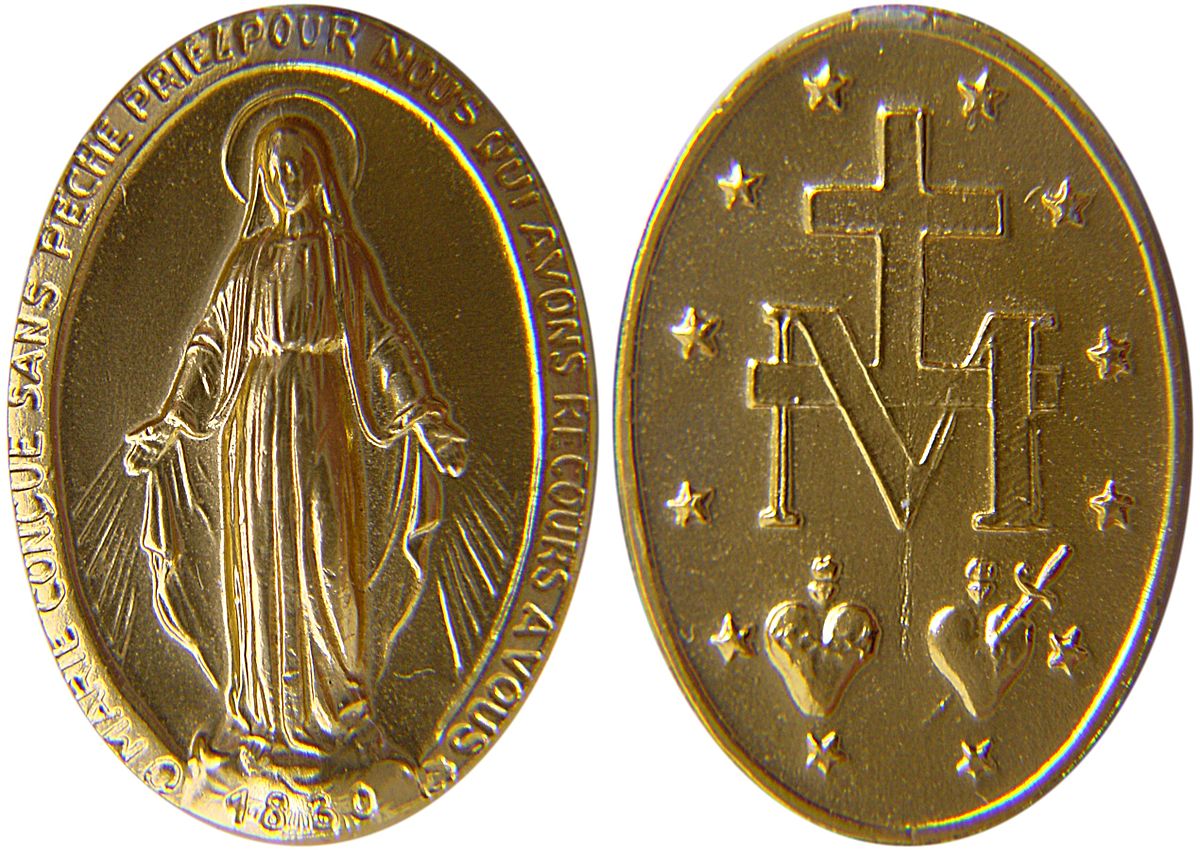
This Memorial on the Catholic Calendar commemorates the apparition to St. Catherine Labouré on 27 November 1830. Then a Novice of the Daughters of Charity in Paris, the young woman saw the Holy Virgin in glowing white, standing on a partial sphere, gazing heavenwards, holding up a gold globe as in offering to God. Words formed in an oval around her: “O Mary, conceived without sin, pray for us who have recourse to you.” The image turned around to reveal a cross atop a bar interlacing a letter M, with two hearts beneath. The Virgin spoke: “Have a medal struck after this model; everyone who wears it will receive great graces…”
On 30 June 1832, Aurélien Vachette delivered the first 1500 medals, commissioned by the the seer’s spiritual director and approved by the Archbishop. Vachette. As Catherine reported, rays came from Mary’s hands but here the hands were empty, held out at her sides. A snake appeared under her feet and below, the date 1830. On the reverse, where Catherine quoted the Virgin as saying, “The M and the two hearts are enough,” Vachette added the 12 stars of Revelation 12:1 encircling the whole. Despite these innovations, Sister Catherine approved the new Immaculate Conception medal, soon known as the Miraculous Medal for the many blessings it delivered as it spread rapidly through France, Europe and the world. It is still one of the most beloved and widespread and efficacious sacramentals of Catholic believers.
Two of the most famous conversions due to the Miraculous medal was that of Fr Alphonse Ratisbonne NDS (1814-1884), an anti-Catholic Jewish banker and Claude Newman (1923-1944). Fr Alphonse Ratisbonne received a vision of Our Lady of the Miraculous Medal. After his conversion, he became a Priest and worked for the conversion of the Jewish people.
St Acacius of Sebaste St Acharius of Noyon St Apollinaris of Monte Cassino St Barlaam Blessed Bernardine of Fossa OFM (1420-1503) Priest, Friar of the Friars Minor St Bilhild of Altmünster Bl Bronislao Kostkowski St Eusician St Facundus St Fergus the Pict St Gallgo of Wales St Gregory of Sinai St Gulstan St Hirenarchus of Sebaste St James Intercisus St John Angeloptes St John of Pavia St Josaphat Bl José Pérez González Bl Juan Antonio de Bengoa Larriñaga St Laverius
Martyrs of Antioch – (3 saints): A group of Christians martyred together for their faith. Little information has survived except for their names – Auxilius, Basileus and Saturninus.
Martyrs of Nagasaki – (11 beati): A group of eleven Christians martyred together for their faith during a period of official persecution in Japan. They are: • Blessed Alexius Nakamura • Blessed Antonius Kimura • Blessed Bartholomaeus Seki • Blessed Ioannes Iwanaga • Blessed Ioannes Motoyama • Blessed Leo Nakanishi • Blessed Matthias Kozasa • Blessed Matthias Nakano • Blessed Michaël Takeshita • Blessed Romanus Motoyama Myotaro • Blessed Thomas Koteda Kyumi They were martyred on 27 November 1619 in Nagasaki, Japan and Beatified on 7 May 1867 by Pope Pius IX.
Martyred in the Spanish Civil War: • Blessed Bartolomé Gelabert Pericás • Blessed Eduardo Camps Vasallo • Blessed José Pérez González • Blessed Juan Antonio de Bengoa Larriñaga • Blessed Miguel Aguado Camarillo • Blessed Pedro Armendáriz Zabaleta
Thought for the Day – 26 November – Meditations with Antonio Cardinal Bacci (1881-1971)
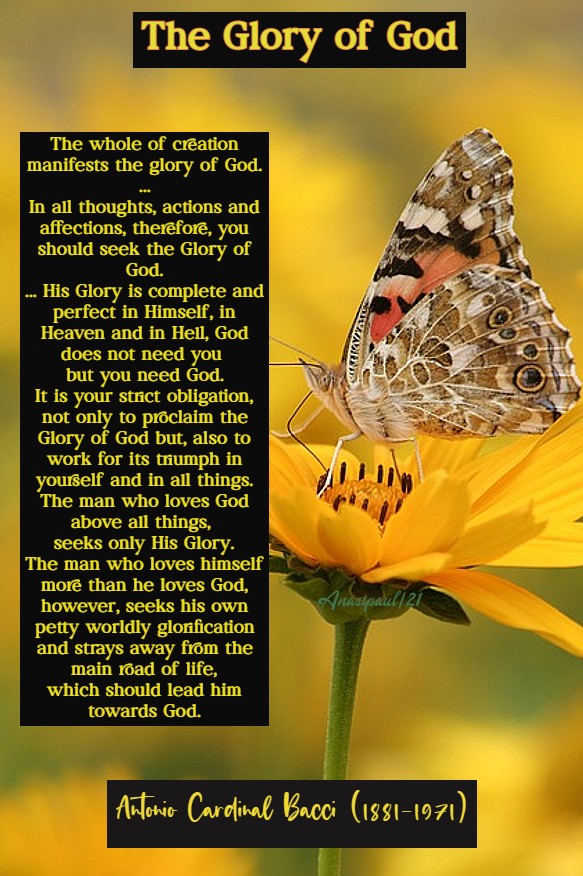
The Glory of God
“The whole of creation manifests the glory of God. The grass on the field, the trees of the forest, the insects and birds of the air, the creatures on the earth and in the sea, the stars in the sky – they all speak to us of the power and beauty of the Creator. You also were created by and for God, Who is the beginning and end of all things. In all thoughts, actions and affections, therefore, you should seek the Glory of God. God, indeed, has no need of your small contribution to enhance His Glory. His Glory is complete and perfect in Himself, in Heaven and in Hell, God does not need you but you need God. It is your strict obligation, not only to proclaim the Glory of God but, also to work for its triumph in yourself and in all things.
The man who loves God above all things, seeks only His Glory. The man who loves himself more than he loves God, however, seeks his own petty worldly glorification and strays away from the main road of life, which should lead him towards God.”
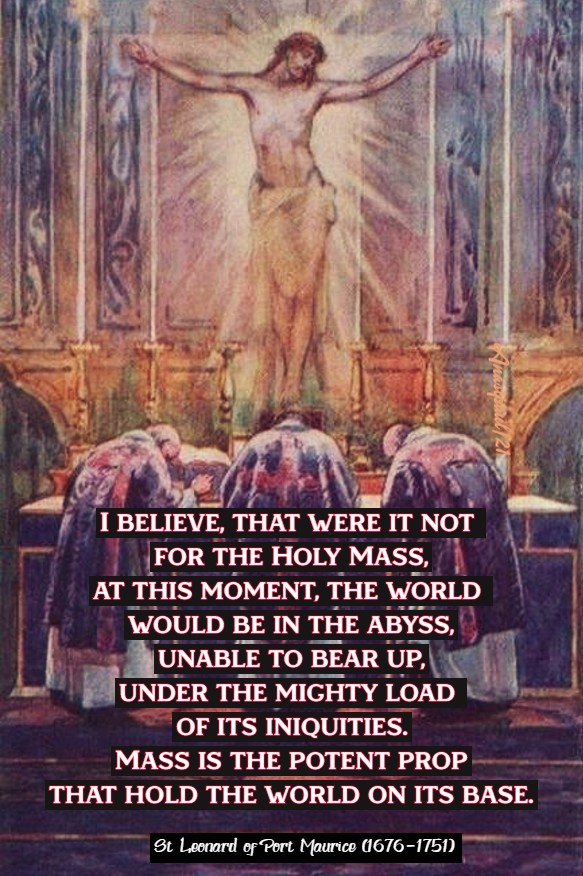
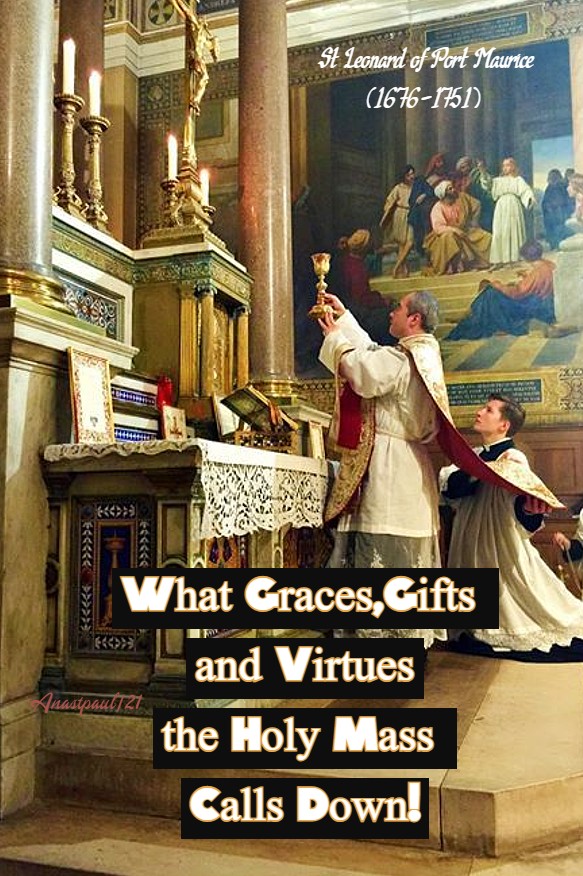
Quote/s of the Day – 26 November – The Memorial of St Leonard of Port Maurice OFM (1676-1751)
“I believe, that were it not for the Holy Mass, at this moment, the world would be in the abyss, unable to bear up, under the mighty load of its iniquities. Mass is the potent prop that hold the world on its base.”
“What graces, gifts and virtues the Holy Mass calls down!”
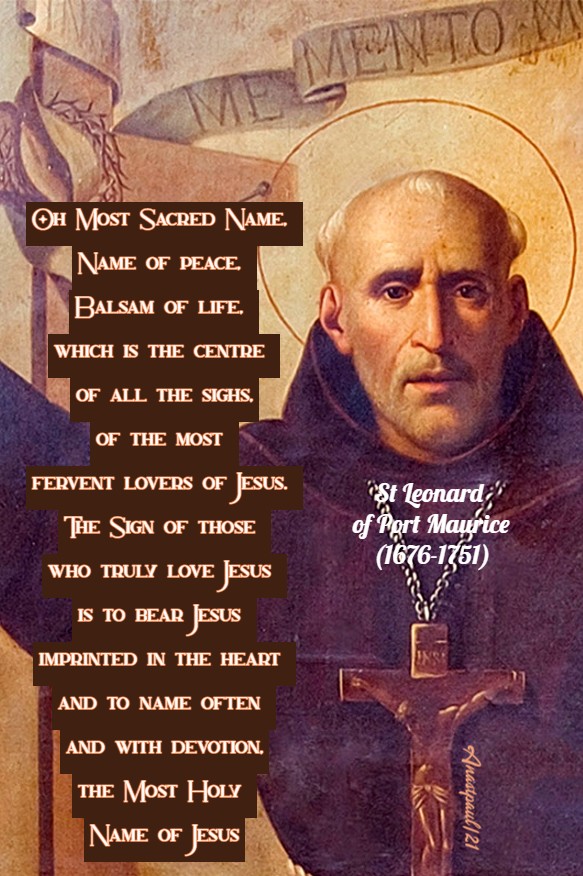
“Oh Most Sacred Name, Name of peace, Balsam of life, which is the centre of all the sighs, of the most fervent lovers of Jesus. The Sign of those who truly love Jesus is to bear Jesus imprinted in the heart and to name often and with devotion, the Most Holy Name of Jesus.”
One Minute Reflection – 26 November – “Month of the Holy Souls in Purgatory” – Readings: Daniel 7: 2-14; Daniel 3: 75-81; Luke 21: 29-33 – The Memorial of St Sylvester Gozzolini OSB Silv. (1177– 1267)
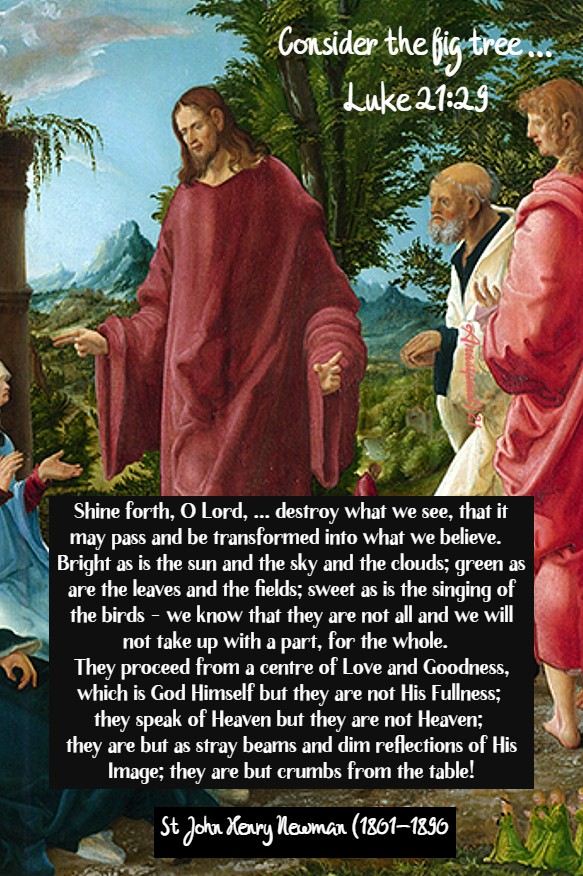
“Consider the fig tree” – Luke 21:29
REFLECTION – “The earth that we see does not satisfy us; it is but a beginning; it is but a promise of something beyond it; even when it is gayest, with all its blossoms on and shows most touchingly what lies hid in it, yet it is not enough. We know much more lies hid in it than we see. A world of Saints and Angels, a glorious world, the palace of God, the mountain of the Lord of Hosts, the heavenly Jerusalem, the throne of God and Christ, all these wonders, everlasting, all-precious, mysterious, and incomprehensible, lie hid in what we see. What we see is the outward shell of an eternal Kingdom and on that Kingdom we fix the eyes of our faith.
Shine forth, O Lord, as when, on Thy Nativity, Thine Angels visited the shepherds; let Thy glory blossom forth, as bloom and foliage on the tree,; change with Thy mighty power this visible world into that divine world, which, as yet we see not, destroy what we see, that it may pass and be transformed into what we believe. Bright as is the sun and the sky and the clouds; green as are the leaves and the fields; sweet as is the singing of the birds – we know that they are not all and we will not take up with a part, for the whole. They proceed from a centre of Love and Goodness, which is God Himself but they are not His Fullness; they speak of Heaven but they are not Heaven; they are but as stray beams and dim reflections of His Image; they are but crumbs from the table!” – St John Henry Newman C.O. (1801-1890),Priest, Theologian (The Invisible World » PPS, vol. 4, no.13)
PRAYER – Lord God, creator of all Light and creator of all good, grant that we may look up to You always and know that by Your Light and your goodness we are safe in this world of corruption. May the Light of our Lord Jesus, make the path He has set out bright and clear and may the prayers of St Sylvester Gozzolini be a help in our struggle. Lead us, Lord, in Your kindness and mercy to our heavenly home. We make our prayer through Christ our Lord, with the Holy Spirit, God forever, amen.
Our Morning Offering – 26 November – The Memorial of St Leonard of Port Maurice OFM (1676-1751)
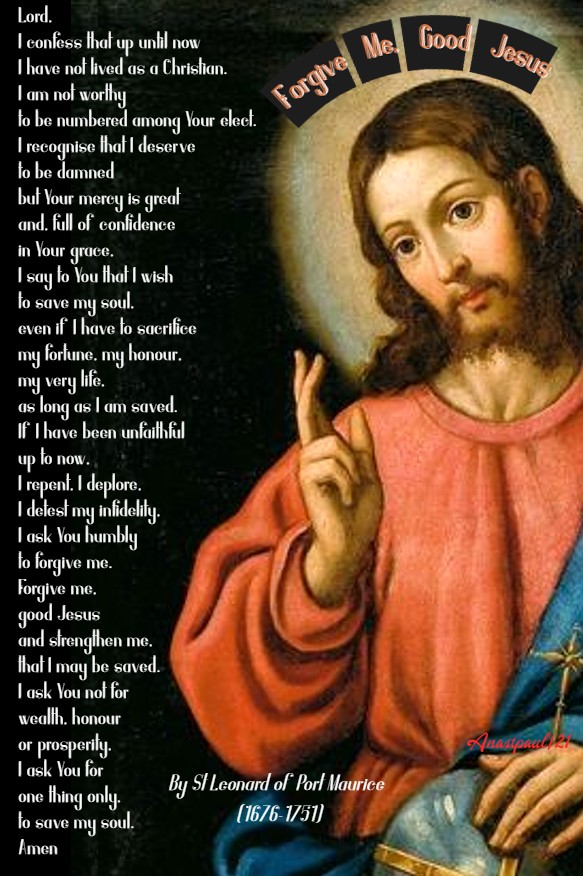
Forgive Me, Good Jesus By St Leonard of Port Maurice (1676-1751)
Lord, I confess that up until now I have not lived as a Christian. I am not worthy to be numbered among Your elect. I recognise that I deserve to be damned but Your mercy is great and, full of confidence in Your grace, I say to You that I wish to save my soul, even if I have to sacrifice my fortune, my honour, my very life, as long as I am saved. If I have been unfaithful up to now, I repent, I deplore, I detest my infidelity, I ask You humbly to forgive me. Forgive me, good Jesus and strengthen me, that I may be saved. I ask You not for wealth, honour or prosperity, I ask You for one thing only, to save my soul. Amen
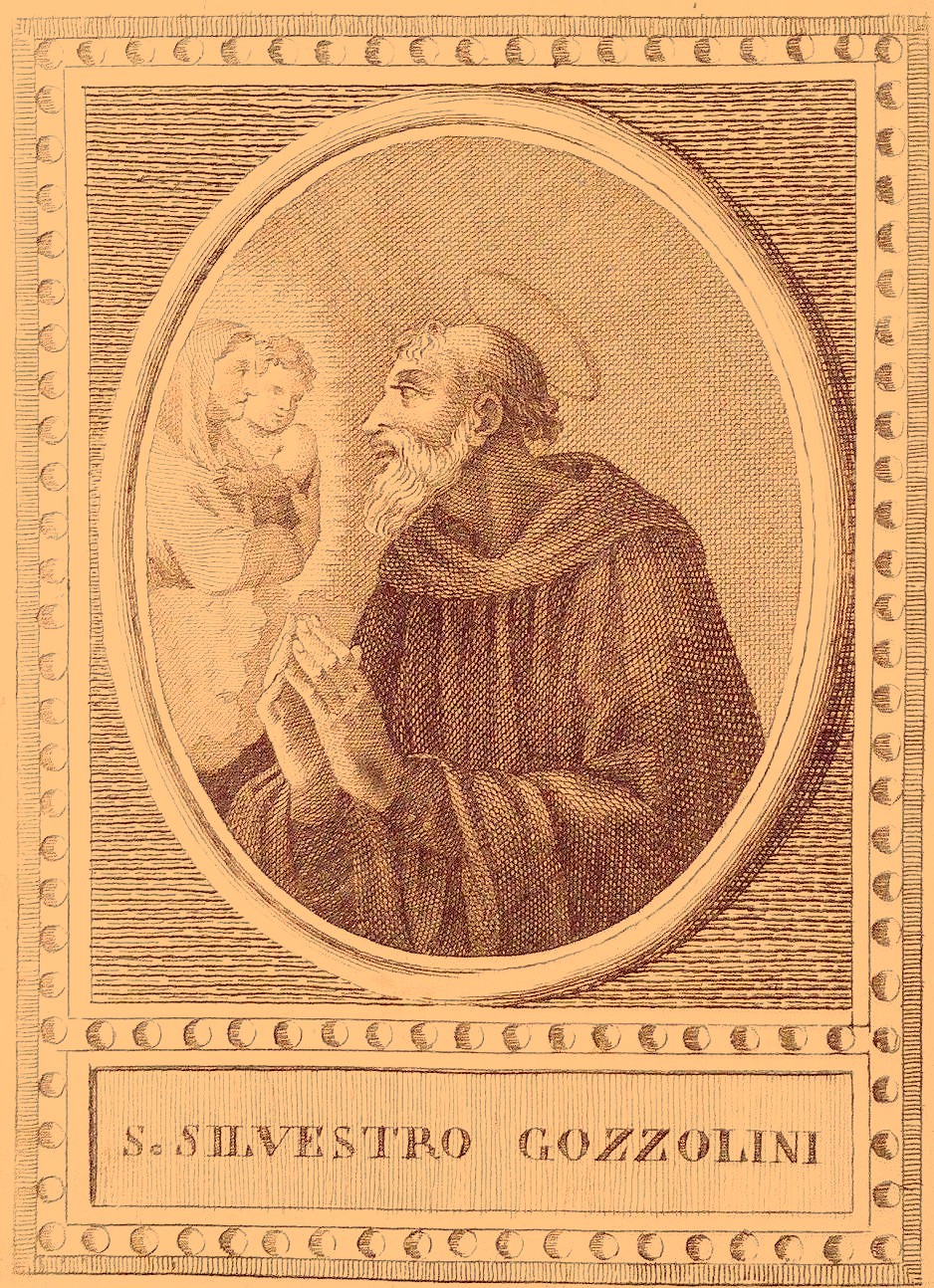
Saint of the Day – 26 November – Saint Sylvester Gozzolini OSB Silv. (1177– 1267) Priest, Abbot, Founder of the Silvestrini Congration, Mystic, gifted with the charism of prophecy and miracles, but also subject to violent attacks by the devil. Born in 1177 in Osimo, Marche, Italy and died on 26 November 1267 at Monte Fano, Fabriano, Italy of natural causes aged 90. Also known as – Silvestro, Sylvester of Osimo.
Sylvester was born of a noble family at Osimo in the Marches of Ancona and in his boyhood was remarkable for his love of study and his good conduct. As a youth, he was sent by his father to Bologna to study jurisprudence but was admonished by God to devote himself to sacred learning. Thus he abandoned the study of law for that of theology and Holy Scripture, giving long hours daily to prayer. This incited his father to anger, which Sylvester patiently endured when his father would not speak to him for ten years. On account of his remarkable virtue, the Canons of Osimo elected him an honorary member of their chapter, in which position he benefited the people by his prayers, his example and his sermons.
While assisting at the funeral of a nobleman, his relative, who had been unusually handsome, he looked into the open coffin and seeing the corpse all deformed, said to himself: “What this man was, I am now; what he is now, I shall be hereafter.“ As soon as the funeral was over, reading these words of our Lord: “If any one will come after me, let him deny himself and take up his cross and follow me,” he retired into solitude in order to attain greater perfection.
There he gave himself up to watching, prayer and fasting, often eating nothing but raw herbs. The better to conceal himself from men he frequently changed his place of abode;and at length settled at Monte Fano, which, though near to Fabriano, was at that time, a desert. There he built a Church in honour of the most holy father St Benedict and founded the Congregation of Sylvestrians, under the Rule and Habit shown him by St.Benedict in vision.
Satan, roused to envy, strove in many ways to terrify his Monks, making assaults by night at the Monastery gates. But the man of God repressed the enemy’s attacks with such vigour, that the Monks, recognising their father’s sanctity, were more and more confirmed in their holy purpose.
Sylvester was remarkable for the spirit of prophecy and other gifts, which he guarded by deep humility. This so stirred up the devil’s envy that he cast the saint headlong down the oratory stairs and well nigh killed him but the blessed Virgin at once graciously restored him to health. In gratitude for this benefit, Sylvester showed her the tenderest unfailing piety to the end of his life.
In 1247 he obtained from Pope Innocent IV, at Lyons, a Bull confirming his Order and before his death, founded a number of Monasteries.
He died at the age of ninety years, renowned for sanctity and miracles in1267. He was Beatified in1269 by Pope Clement IV who also added him to the Martyrology) and Canonised in 1598 by Pope Clement VIII. His body was disinterred and placed in a Shrine (1275-85) and is still honoured in the Church of Monte Fano. In 1890, the Sovereign Pontiff Leo XIII, extended his Office and Mass to the universal Church, with the rank of Double (third-class feast in the 1960 reform of Pope John XXIII), therefore, reducing today’s memorial to the status of a commemoration, as well as that of Saint Peter of Alexandria, who shares today as his Feast. In 1970, both these were removed altogether and relegated to the local calendars. These wonderful Saints were packed away in dark storage where no-one ever venerates or prays to them for their holy intercession.., but you and I will pray the Collect below and remember .him ..
Collect: May the intercession, O Lord, of blessed Sylvester, the Abbot, recommend us to Thee; that what we cannot hope for through any merits of our own, we may obtain by his prayers. Through our Lord Jesus Christ, Thy Son, Who lives and reigns with Thee, in the unity of the Holy Ghost, God, world without end. Amen



































You must be logged in to post a comment.