One Minute Reflection – 17 September – “Month of the Seven Sorrows of the Blessed Virgin Mary ” – Readings: Timothy 6: 2c-12; Psalm 49: 6-10, 17-20; Luke 8: 1-3
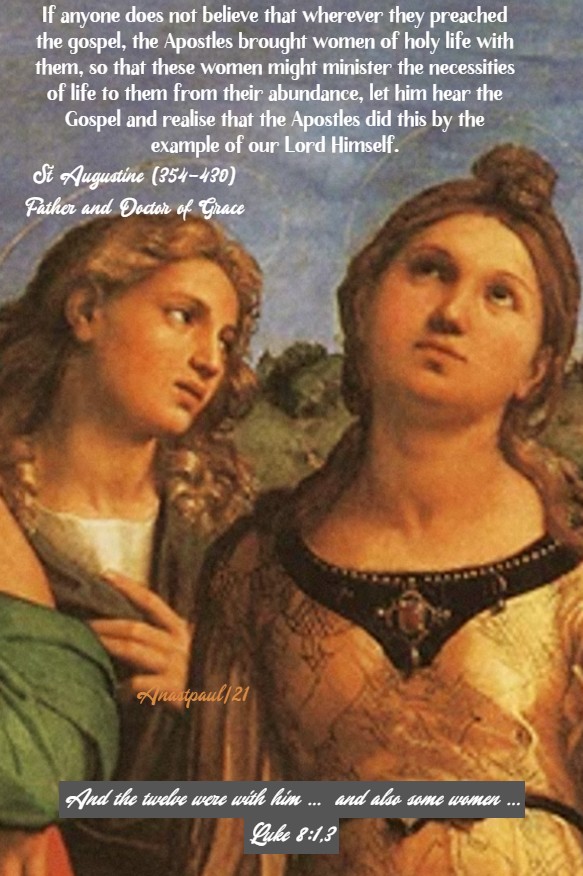
“And the twelve were with him … and also some women” – Luke 8:1,3
REFLECTION – “If anyone does not believe that wherever they preached the Gospel, the Apostles brought women of holy life with them, so that these women might minister the necessities of life to them from their abundance, let him hear the Gospel and realise that the Apostles did this, by the example of our Lord Himself.” – St Augustine (354-430) Father and Doctor of Grace – (The Works of Monks, 5)
PRAYER – Heavenly Father, help me to be holy in the way that You have laid out for me. Let me carry out my duties of my state of life to the full and grant me the grace to carry my crosses in honour of You. Only in You may I attain holiness, learning to give myself, my will, my heart and my soul only to You. Mary Holy Sorrowful Virgin and Glorious Mother of Christ Jesus, we ask for your intercession. We make our prayer in unity with Our Lord Jesus Christ and the Holy Spirit, one with You, now and forever, amen.
Our Morning Offering – 17 September – “Month of the Seven Sorrows of the Blessed Virgin Mary ”
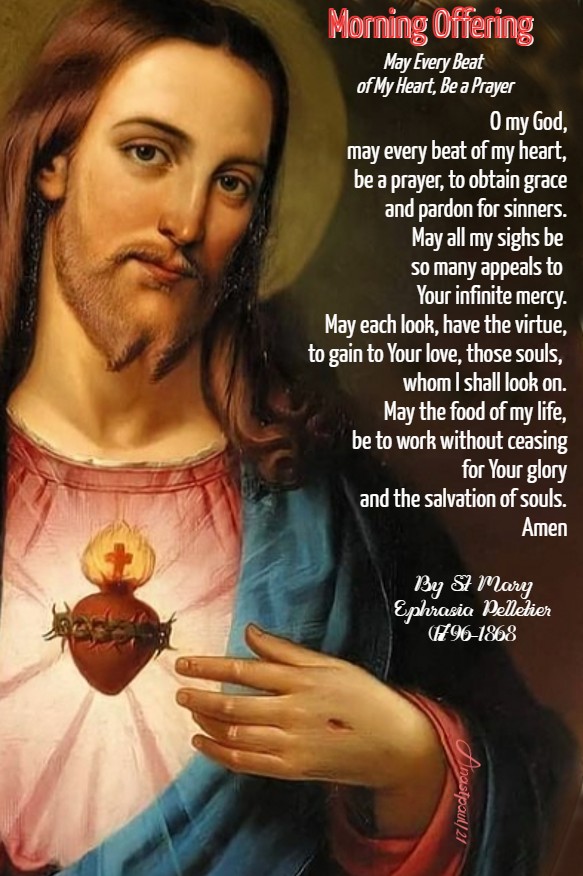
Morning Offering May Every Beat of My Heart Be a Prayer By St Mary Euphrasia Pelletier (1796-1868)
O my God, may every beat of my heart, be a prayer, to obtain grace and pardon for sinners. May all my sighs be so many appeals to Your infinite mercy. May each look have the virtue to gain to Your love, those souls, whom I shall look on. May the food of my life, be to work without ceasing for Your glory and the salvation of souls. Amen
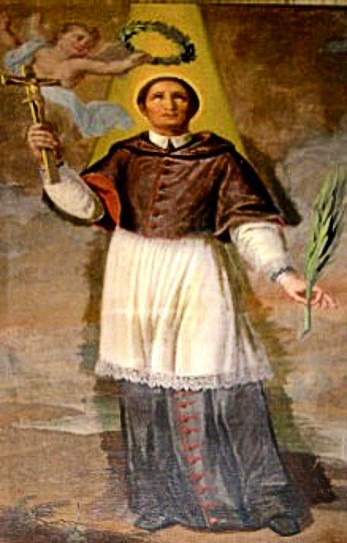
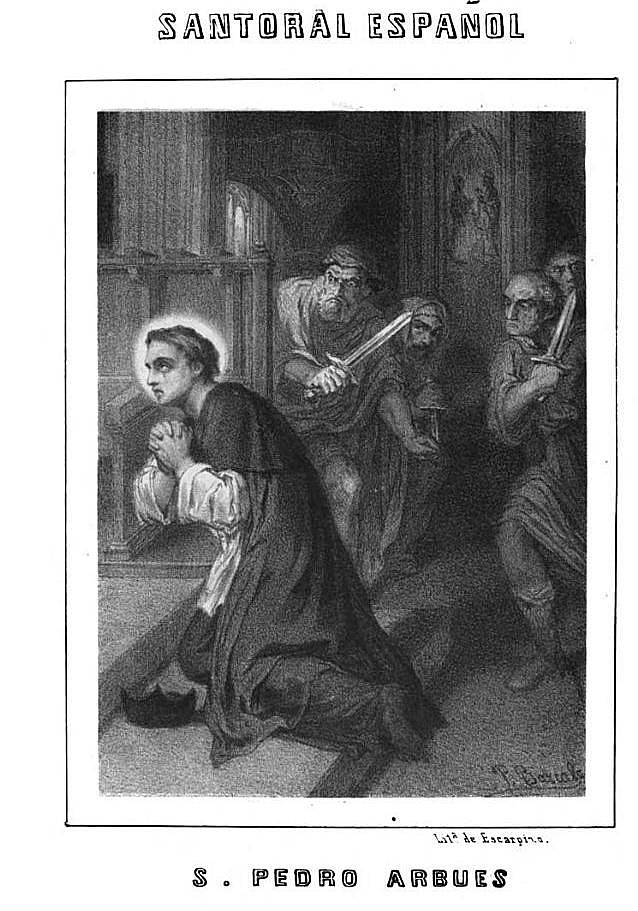
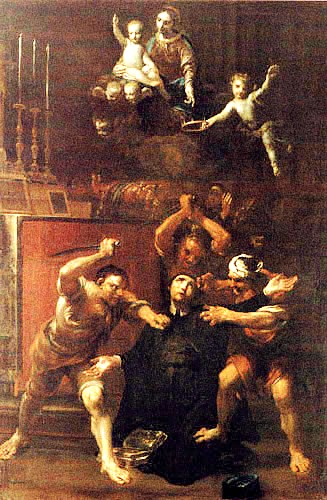
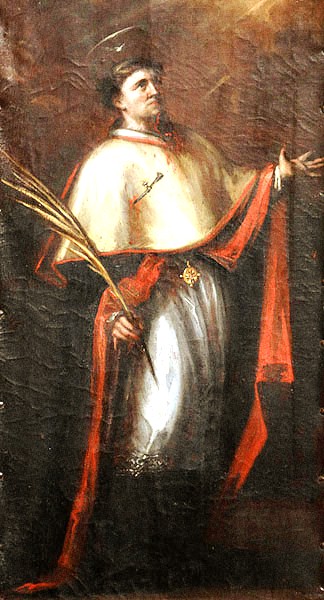
Saint of the Day – 17 September – Saint Peter Arbues OSA (1442-1485) Priest Martyr, Canon Regular of the Augustinian Order, learned Professor and Inquisitor. Born as Pedro de Arbués in 1442 at Épila in the region of Saragossa, Spain and died on 17 September 1485 in the Cathedral of Saragossa by being attacked and murdered.
The Roman Martyrology states of him today: “St Pedro of Arbues, first Inquisitor of the faith in the Kingdom of Aragon, who received the Palm of Martyrdom by being barbarously massacred by apostate Jews, for defending courageously, the Catholic faith, according to the duties of his office. He was Canonised by Pope Pius IX in 1867.“
Peter was born to the nobleman Antonio de Arbués and Sancia Ruiz. He studied philosophy perhaps in Huesca but later travelled to Bologna on a scholarship to the Spanish College of Saint Clement which was part of the University of Bologna. n 1473, he obtained his Doctorate in both Canon and Civil Law and he served as a Professor of Moral Philosophical studies or ethics.
Upon his return to Spain he was Ordained and became a member of the Cathedral Chapter of the Canons Regular at La Seo where, in 1474 he made his religious profession.
About that time Ferdinand and Isabella had obtained from Sixtus IV a Bull, to establish in their Kingdom, a tribunal for searching out heretics and especially Jews, who after having received Baptism had relapsed openly or secretly into Judaism – these were known as Marranos. In 1483, the famous Thomas Torquemada,, was appointed Grand Inquisitor over Castile and, being acquainted with the learning and virtue of Peter Arbues, in 1484, named him Inquisitor Provincial in the Kingdom of Aragon.
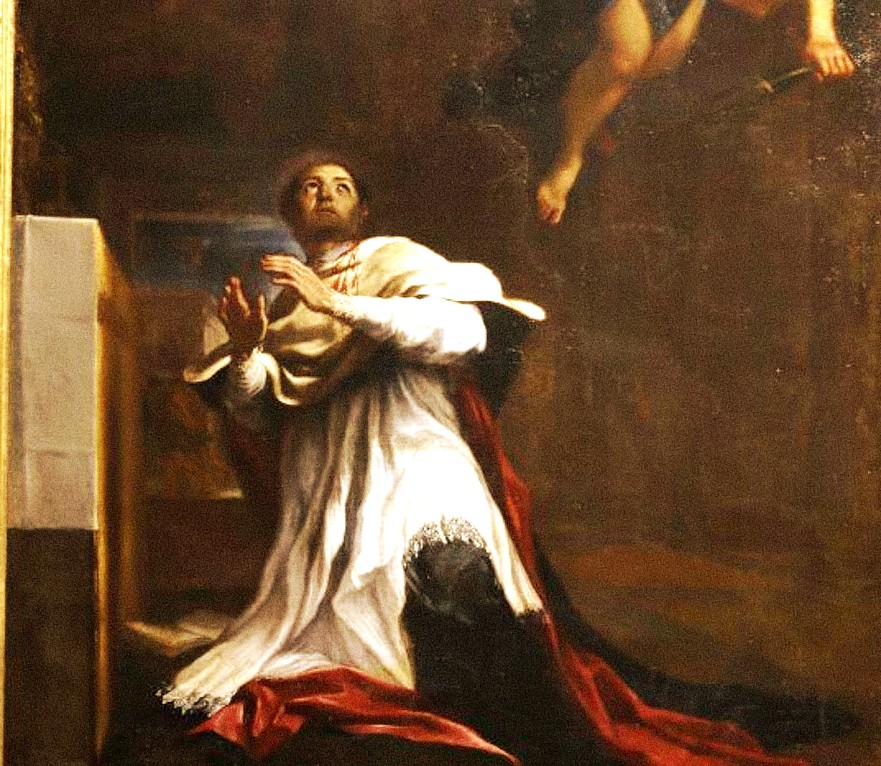
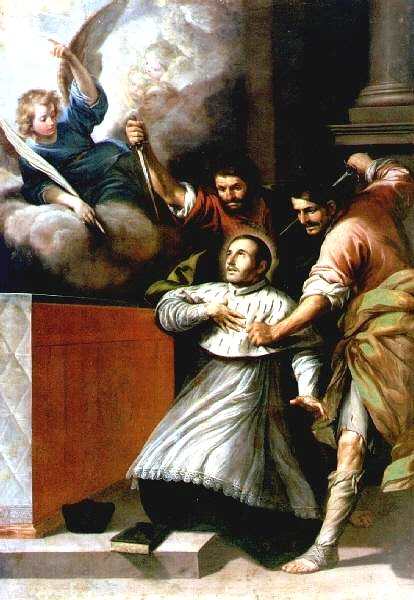
Peter performed the duties with zeal and justice. Although the enemies of the Inquisition accuse him of cruelty, it is certain that not a single sentence of death can be traced to him. The Marranos, however, whom he had punished hated and resolved to do away with him. One night while kneeling in prayer before the Altar of Our Lady in the metropolitan Cathedral where he used to recite the Office with his brother Canons, attacked him and hired assassins inflicted several wounds from which he died on 17 September 1485. He was just 44 years old.
His remains were entombed in a special Chapel dedicated to him in the Cathedral.
He was Beatified on 20 April 1664, by Pope Alexander VII and Canonised on 29 June 1867 by Pope Pius IX who said in the document formalising the Canonisation (Maiorem caritatem): “The divine wisdom has arranged, that in these sad days, when Jews help the enemies of the Church with their books and money, this decree of sanctity has been brought to fulfillment.“
In explanation, it should be noted, that the most powerful families among the converted Jews seem to have been involved in funding the murder.
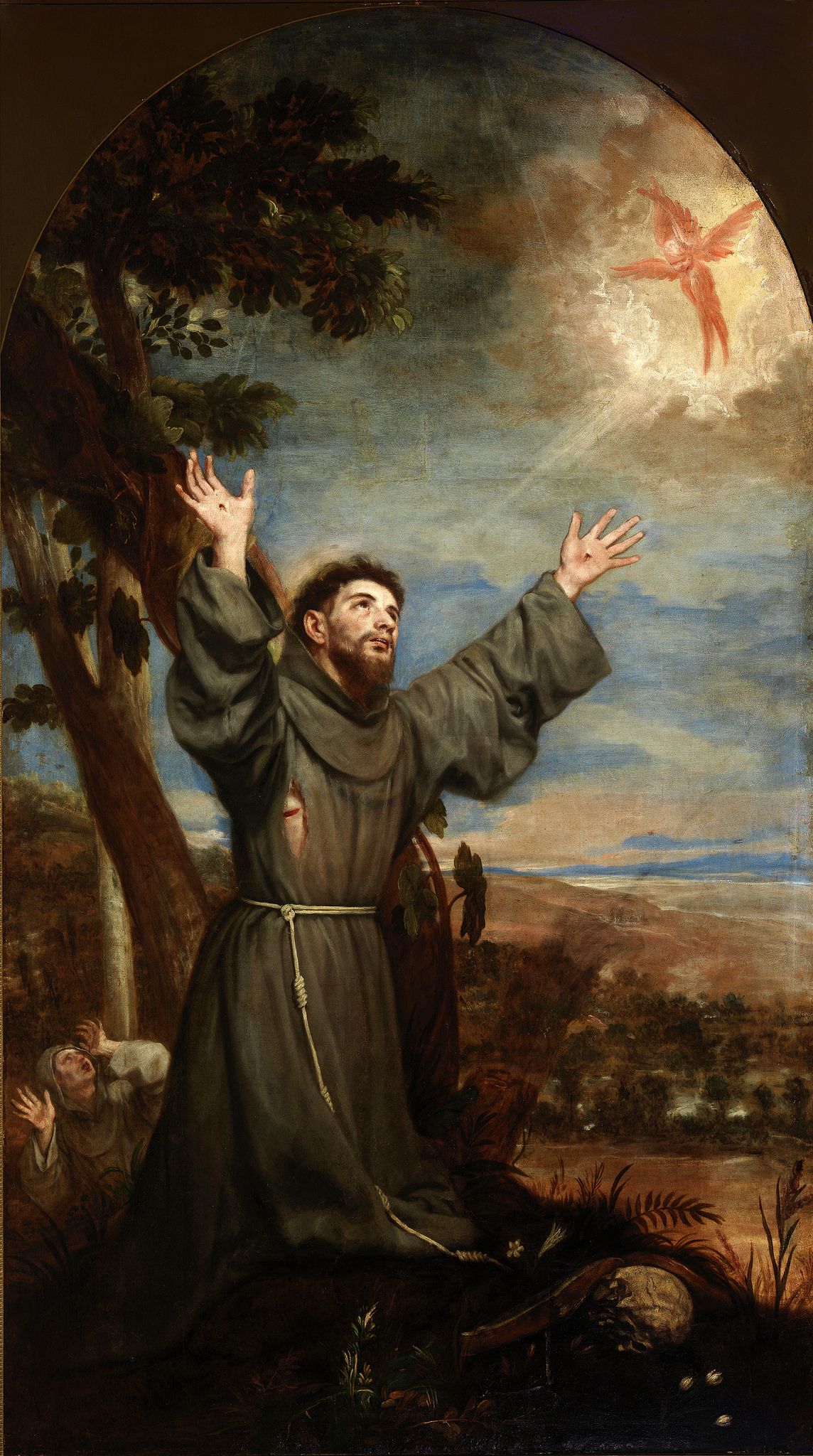
Stigmata of St Francis of Assisi: Two years before the great Saint Francis of Assisi died and when he was forty-two years old — one year after he had built the first crib in honour of Our Lord — he went off to a lonely mountain called Mount Alvernia, to prepare himself by forty days of fasting and prayer for the Feast of Saint Michael, the greatest of God’s Angels, whose Feast day is 29 September. On the Feast of the Exaltation of the Holy Cross on 14 September, Saint Francis received in his hands, feet and side the Sacred Wounds from Our Lord’s own body.
Never was a Saint more beautifully loved by Jesus than Saint Francis of Assisi. The wounds Jesus gave him stayed in his hands, feet and side and continually bled for two more years, until he died in 1226. The day on which Saint Francis received the Five Wounds of Our Lord was 14 September but so, that this beautiful event might have a feast day for itself, the Stigmata of Saint Francis is commemorated today, on 17 September. The simple liturgy of this holy Saint’s life might be put this way – the crib in 1223 and the Cross in 1224.
St Agathoclia St Brogan of Ross Tuirc St Columba of Cordova St Crescentio of Rome St Emmanuel Nguyen Van Trieu St Flocellus
St Narcissus of Rome St Peter Arbues OSA (1442-1485) Priest Martyr St Rodingus St Satyrus of Milan St Socrates Bl Stanislaus of Jesus and Mary St Stephen St Theodora St Uni of Bremen St Zygmunt Sajna
Thought for the Day – 16 September – Meditations with Antonio Cardinal Bacci (1881-1971)
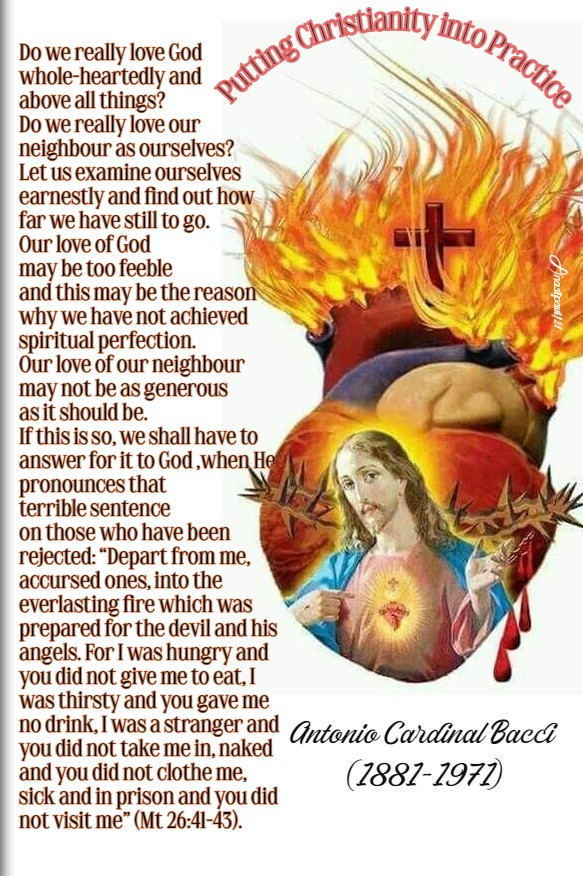
Putting Christianity into Practice
“Only the uiversal practice of Christianity, could change the world. Even after a period of twenty centuries, it is true to say, that for many Christans, the Gospel is an unexplained book, the principles of which, have yet to be fully realised in their ordinary lives.
None of us can change the world on his own but, each of us can accomplish that part of the task, which depends on himself.
Do we really love God whole-heartedly and above all things? Do we really love our neighbour as ourselves? Let us examine ourselves earnestly and find out how far we have still to go. Our love of God may be too feeble and this may be the reason why we have not achieved spiritual perfection. Our love of our neighbour may not be as generous as it should be. If this is so, we shall have to answer for it to God ,when He pronounces that terrible sentence on those who have been rejected: “Depart from me, accursed ones, into the everlasting fire which was prepared for the devil and his angels. For I was hungry and you did not give me to eat, I was thirsty and you gave me no drink, I was a stranger and you did not take me in, naked and you did not clothe me, sick and in prison and you did not visit me” (Mt 26:41-43). Let us resolve to be charitable and generous to all!”
Quote/s of the Day – 16 September – “Month of the Seven Sorrows of the Blessed Virgin Mary ” – Readings:Timothy 4: 12-16; Psalm 111: 7-10; Luke 7: 36-50
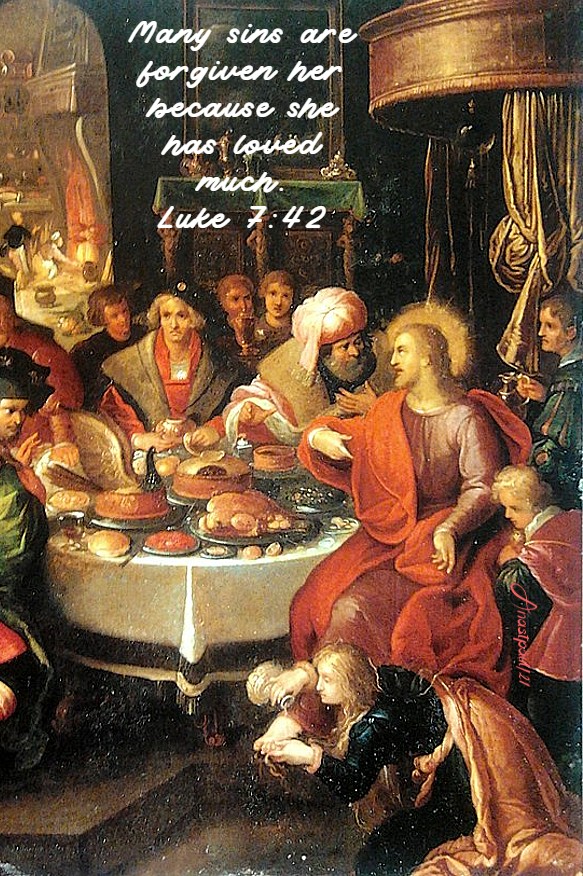
“Many sins are forgiven her because she has loved much.”
Luke 7:42
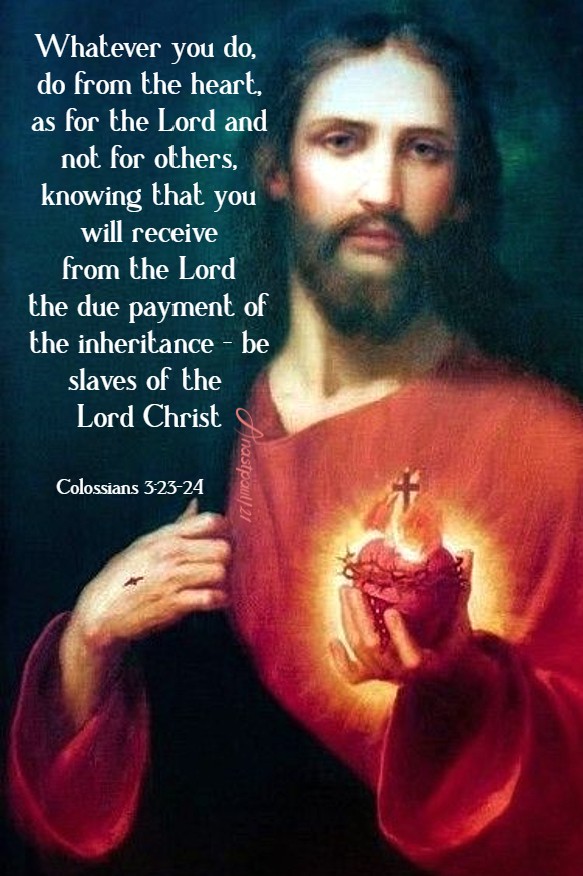
“Whatever you do, do from the heart, as for the Lord and not for others, knowing that you will receive from the Lord the due payment of the inheritance; be slaves of the Lord Christ.”
Colossians 3:23-24
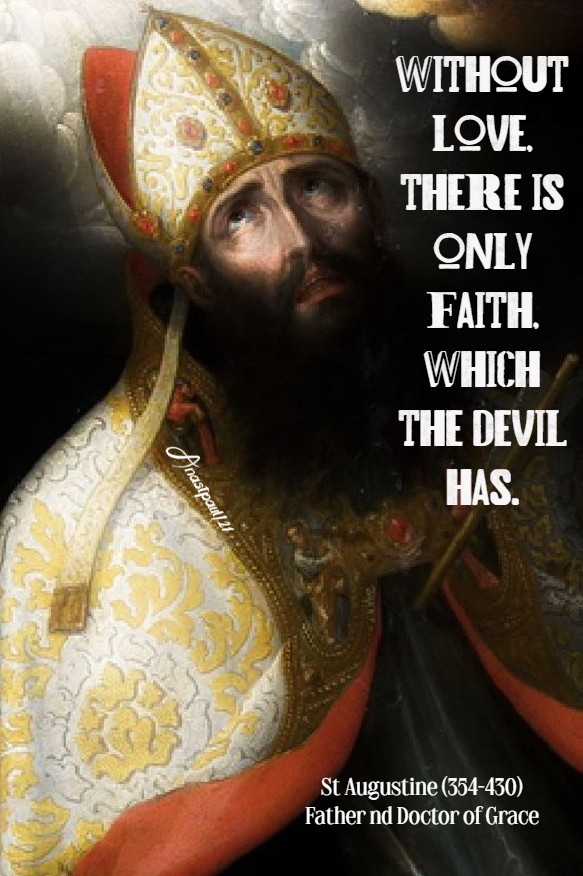
“Without love, there is only faith, which the devil has.”
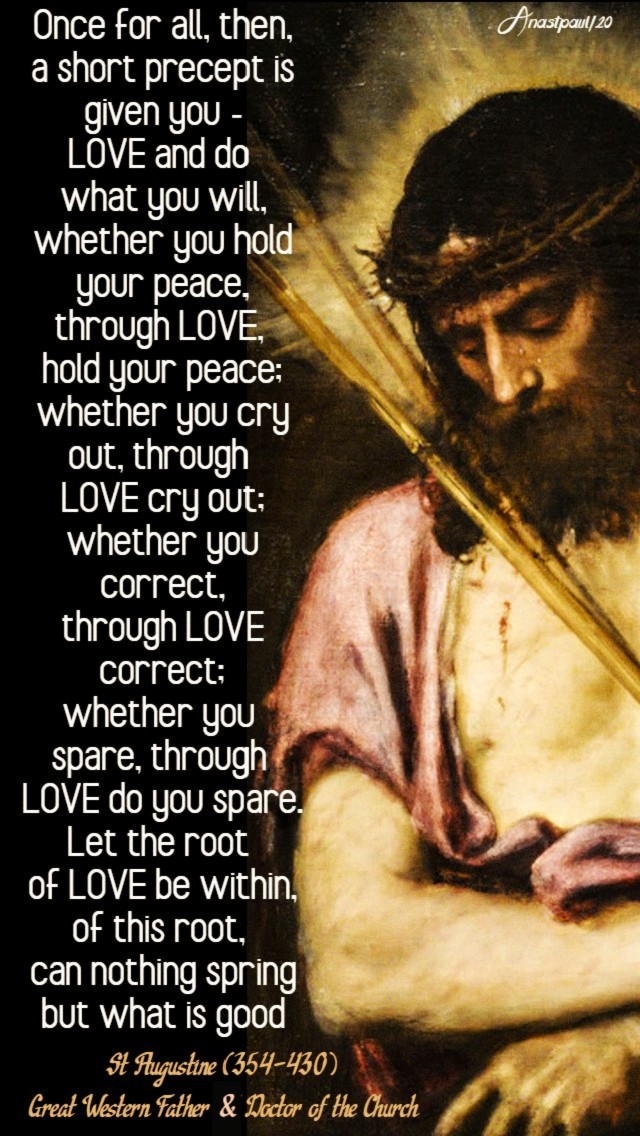
“Once for all, then, a short precept is given you – Love and do what you will, whether you hold your peace, through love, hold your peace; whether you cry out, through love cry out; whether you correct, through love correct; whether you spare, through love do you spare. Let the root of love be within, of this root, can nothing spring but what is good.”
St Augustine (354-430) Father nd Doctor of Grace
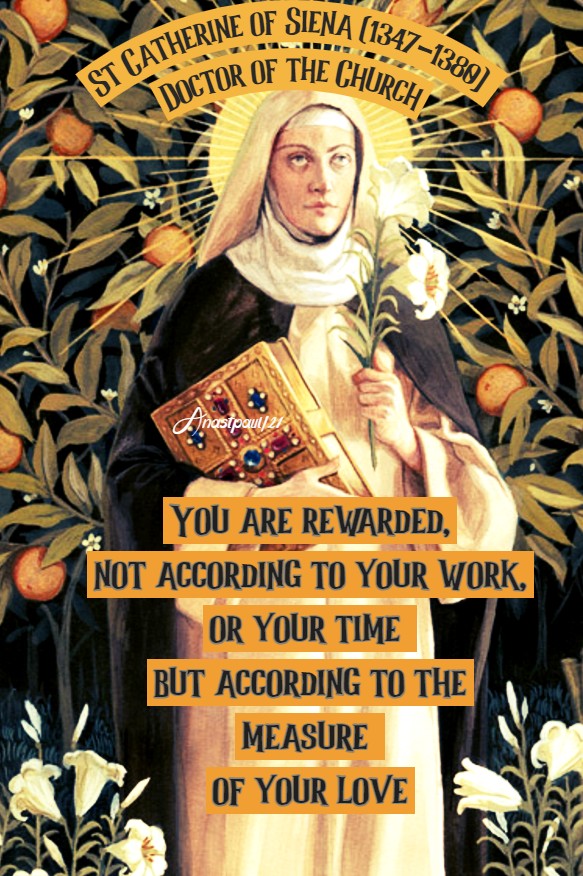
“You are rewarded, not according to your work, or your time but according to the measure of your love.”
St Catherine of Siena (1347-1380) Doctor of the Church
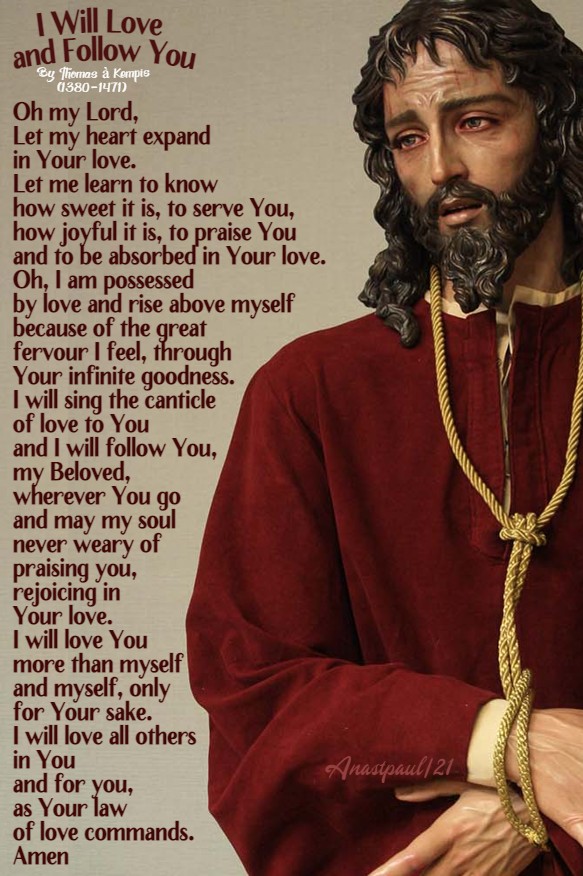
I Will Love and Follow You By Thomas à Kempis CRSA (1380-1471)
Oh my Lord, Let my heart expand in Your love. Let me learn to know how sweet it is, to serve You, how joyful it is, to praise You and to be absorbed in Your love. Oh, I am possessed by love and rise above myself because of the great fervour I feel, through Your infinite goodness. I will sing the canticle of love to You and I will follow You, my Beloved, wherever You go and may my soul never weary of praising you, rejoicing in Your love. I will love You more than myself and myself, only for Your sake. I will love all others in You and for you, as Your law of love commands. Amen
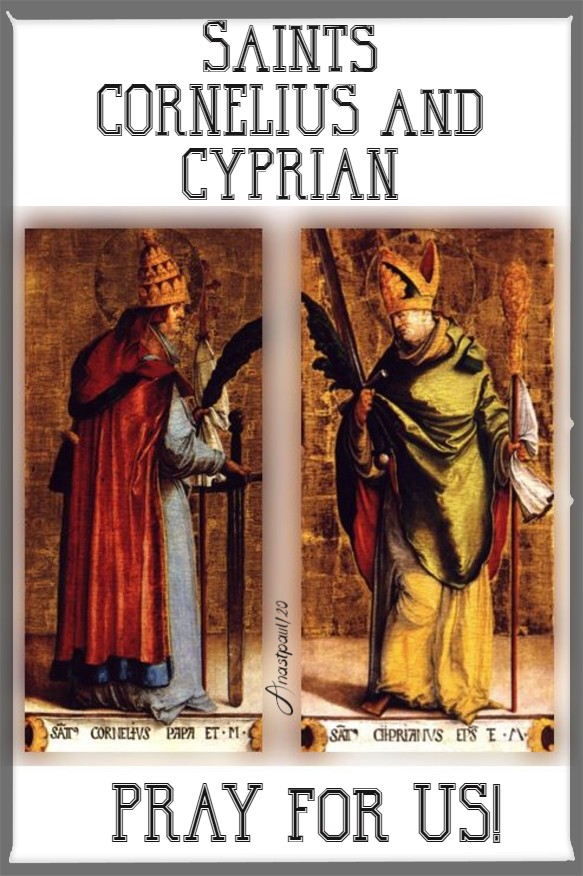
One Minute Reflection – 16 September – “Month of the Seven Sorrows of the Blessed Virgin Mary ” – Readings:Timothy 4: 12-16; Psalm 111: 7-10; Luke 7: 36-50 and the Memorial of Sts Cornelius & Cyprian
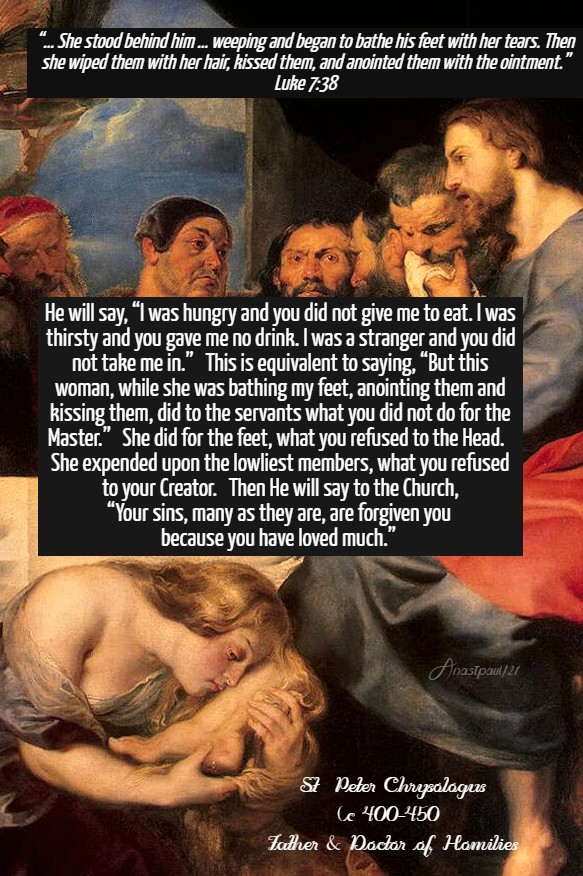
“… She stood behind him … weeping and began to bathe his feet with her tears. Then she wiped them with her hair, kissed them, and anointed them with the ointment.” – Luke 7:38
REFLECTION – “With her hands of good works, she holds the feet of those who preach His kingdom. She washes them with tears of charity, kisses them with praising lips and pours out the whole ointment of mercy, until He will return to her. This means that He will come back to her and say to Simon, to the Pharisees, to those who deny, to the nation of the Jews, “I came into your house. You gave me no water for my feet.”
When will He speak these words? He will speak them when He will come in the majesty of His Father and separate the righteous from the unrighteous, like a shepherd who separates the sheep from the goats. He will say, “I was hungry and you did not give me to eat. I was thirsty and you gave me no drink. I was a stranger and you did not take me in.” This is equivalent to saying, “But this woman, while she was bathing my feet, anointing them and kissing them, did to the servants what you did not do for the Master.” She did for the feet, what you refused to the Head. She expended upon the lowliest members, what you refused to your Creator. Then He will say to the Church, “Your sins, many as they are, are forgiven you because you have loved much.” – St Peter Chrysologus (c 400-450) Bishop of Ravenna, Father and “Doctor of Homilies”of the Church (Sermon 95)
PRAYER – Look upon us Lord, Creator and Ruler of the whole world, give us the grace to serve You with all our hearts, to take up our cross and follow You, that we may come to know the power of Your love and the forgiveness which You give and You teach. Grant that by the intercession of Sts Cornelius and Cyprian, we may attain the glory of Your kingdom and see You face to face. We make our prayer through Christ our Lord with the Holy Spirit, one God forever, amen.
Our Morning Offering – 16 September – “Month of the Seven Sorrows of the Blessed Virgin Mary ”
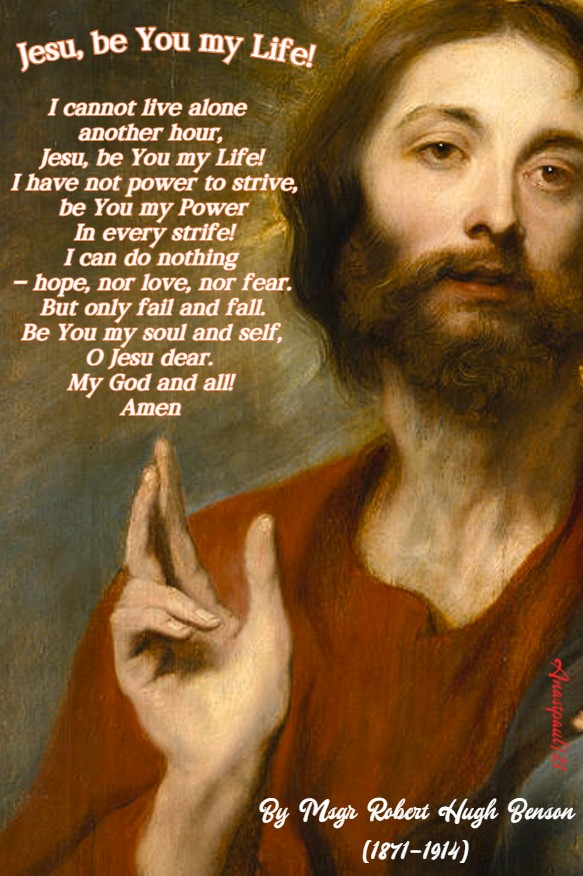
Jesu, be You my Life! By Msgr Robert Hugh Benson (1871-1914)
I cannot live alone another hour, Jesu, be You my Life! I have not power to strive, be You my Power In every strife! I can do nothing – hope, nor love, nor fear. But only fail and fall. Be You my soul and self, O Jesu dear. My God and all! Amen
Robert Hugh Benson AFSC KCSG KGCHS (18 November 1871 – 19 October 1914) was an English Anglican reverend who in 1903 was received into the Catholic Church in which he was Ordained Priest in 1904. He was a prolific writer of fiction and wrote the notable dystopian novel Lord of the World (1907). His output encompassed historical, horror and science fiction, contemporary fiction, children’s stories, plays, apologetics, devotional works and articles. He continued his writing career at the same time as he progressed through the hierarchy to become a Chamberlain to Pope Saint Pius X in 1911 and gain the title of Monsignor. He was a LaSallian Brother (AFSC) and a Knight of the Holy Sepulcher (KCSG KGCHS).
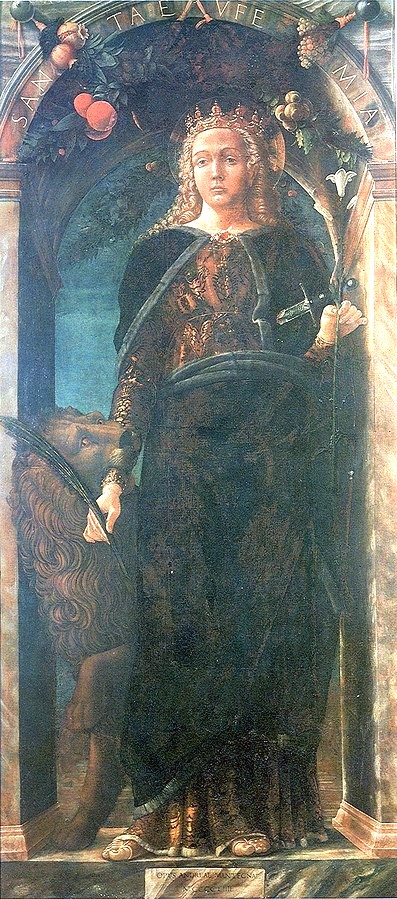
Saint of the Day – 16 September – Saint Euphemia (c 290-c 305) Virgen Martyr. Her name means “the well-spoken [of].” Patronages – Alba Adriatica, Italy, Rovinj, Croatia. Also known as – Euphemia of Chalcedon.
The Roman Martyrology states of her today: “At Chalcedon, the birthday of St Euphemia, Virgin and Martyr, under the Emperor Diocletian and the Proconsul Priscus. For faith in Our Lord, she was subjected to tortues, imprisonment, blows, the torment of the wheel, fire, the crushing weight of stones, the teeth of beasts, scourging with rods, the cutting of sharp saws, burning pans, all of which she survived. But when she was again exposed to the beasts in the amphitheatre, praying to Our Lord to receive her spirit, one of the animals, having inflicted a bite on her sacred body, whilst the rest licked her feet, she yielded her unspotted soul to God.”
St. Euphemia lived on the cusp of the 3rd and 4th centuries. According to tradition, she was the daughter of a senator named Philophronos and his wife Theodosia in Chalcedon, located across the Bosporus from the City of Byzantium (modern-day Istanbul). From her youth she consecrated her virginity to God.
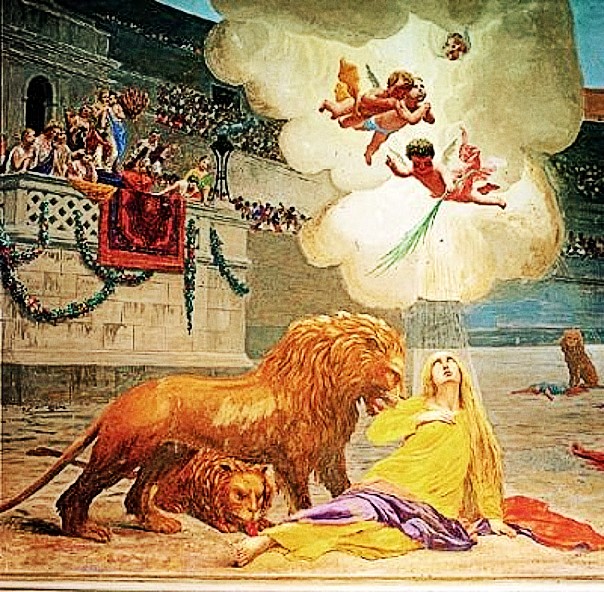
The governor of Chalcedon, Priscus, had published a decree that all of the inhabitants of the City take part in sacrifices to the deity Ares. Euphemia was discovered, with forty-nine other Christians, hiding in a house and worshipping God, in defiance of the governor’s orders. Because of their refusal to sacrifice, they were tortured for a number of days,and then, all but Euphemia, were sent to the Emperor for trial. Euphemia, the youngest among them, was separated from her companions and subjected to particularly harsh torments, including the wheel, in hopes of breaking her spirit. She was placed in the arena, where lions were sent out to kill her,but they instead licked her wounds. She eventually died of wounds from a wild bear in the arena.
Mural depicting the martyrdom of St Euphemia (Church of St Euphemia, Rovinj, Croatia)
The Council of Chalcedon, the Fourth Ecumenical Council, took place in the City of Chalcedon in the year 451. It repudiated the Eutychian doctrine of monophysitism and set forth the Chalcedonian Definition, which describes the “full humanity and full divinity” of Jesus Christ, the Second Person of the Holy Trinity.
Present at the Council were 630 representatives from all the local Christian Churches. The meetings were quite contentious and no decisive consensus could be reached.
According to the Synaxarion of Constantinople, a collection of hagiographies,, both parties wrote a confession of their faith and placed them on the breast of Saint Euphemia within her tomb. After three days the tomb was opened and the scroll with the confession of the true faith, was seen in the right hand of St Euphemia, while the scroll of the Monophysites lay at her feet.
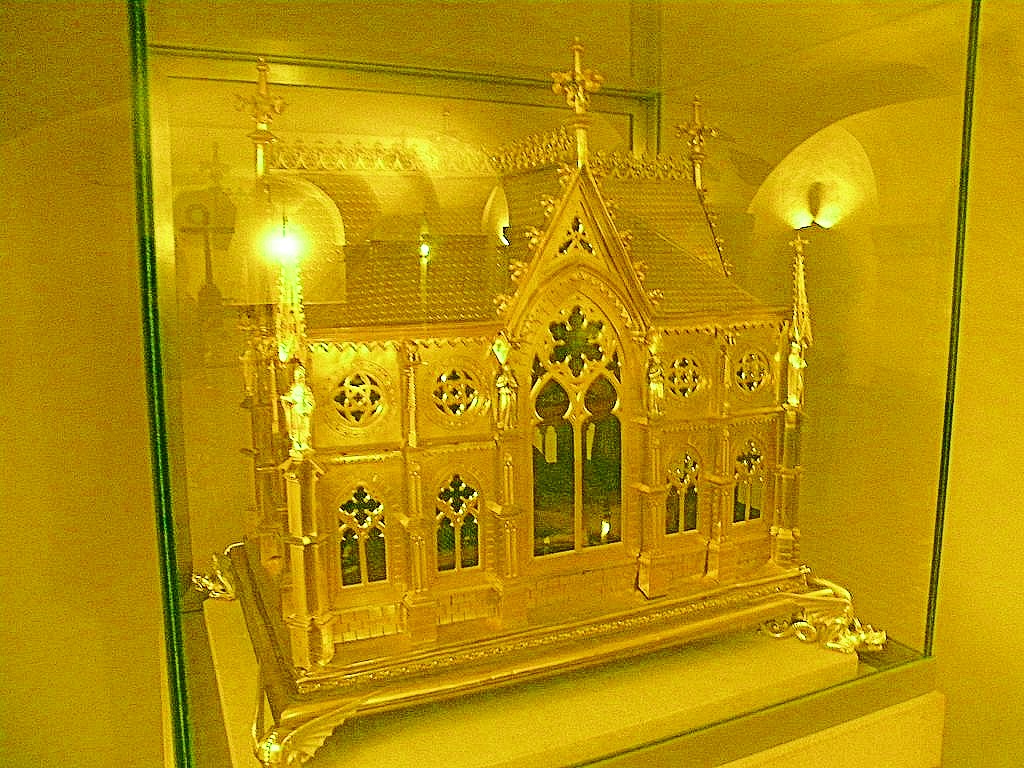
When the persecution of Diocletian ended, the Christians laid Saint Euphemia’s relics in a golden sarcophagus, placed within a Church that was dedicated to her. Her relics attracted crowds of pilgrims for centuries.
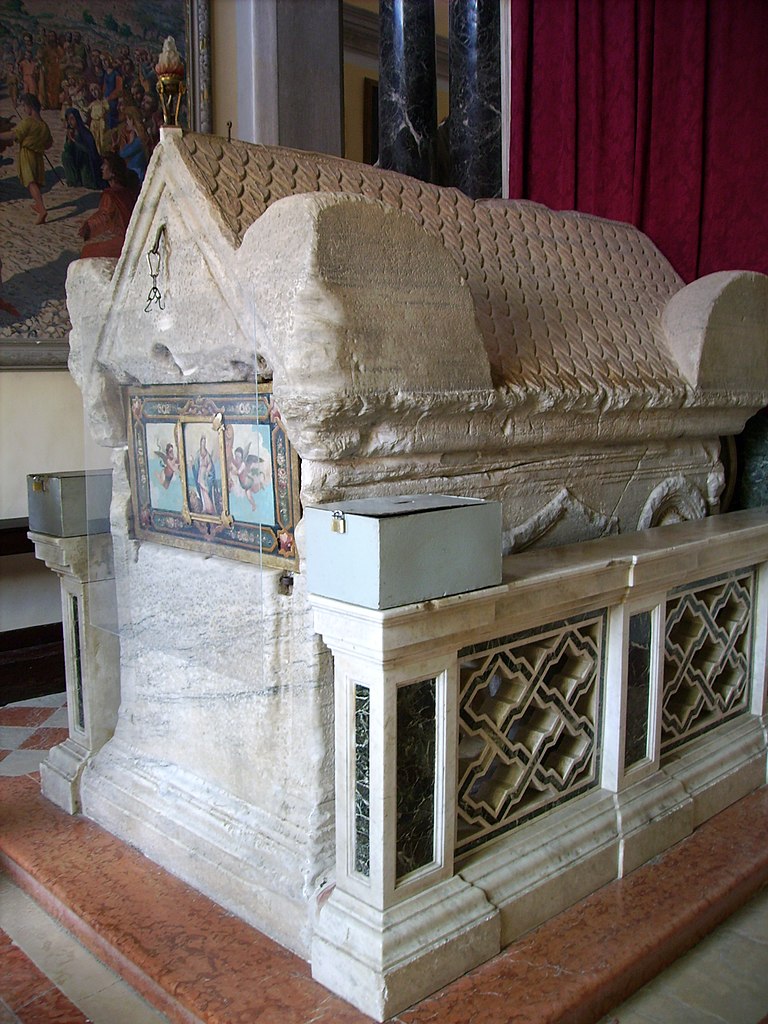
Sarcophagus containing some of the relics of Saint Euphemia in Rovinj, Croatia.
Around the year 620, in the wake of the conquest of Chalcedon by the Persians in the year 617, Saint Euphemia’s relics were transferred to a new Church in Constantinople. There, during the persecutions of the Iconoclasts, her reliquary was said to have been thrown into the sea, from which it was recovered by the ship-owning brothers, Sergios and Sergonos, who belonged to the Church and who gave it to the local Bishop who hid them in a secret crypt. The relics were afterwards taken to the Island of Lemnos and in 796 they were returned to Constantinople. The majority of her relics are still in the Patriarchal Church of St. George, in Istanbul and others are in Rovini, Croatia.
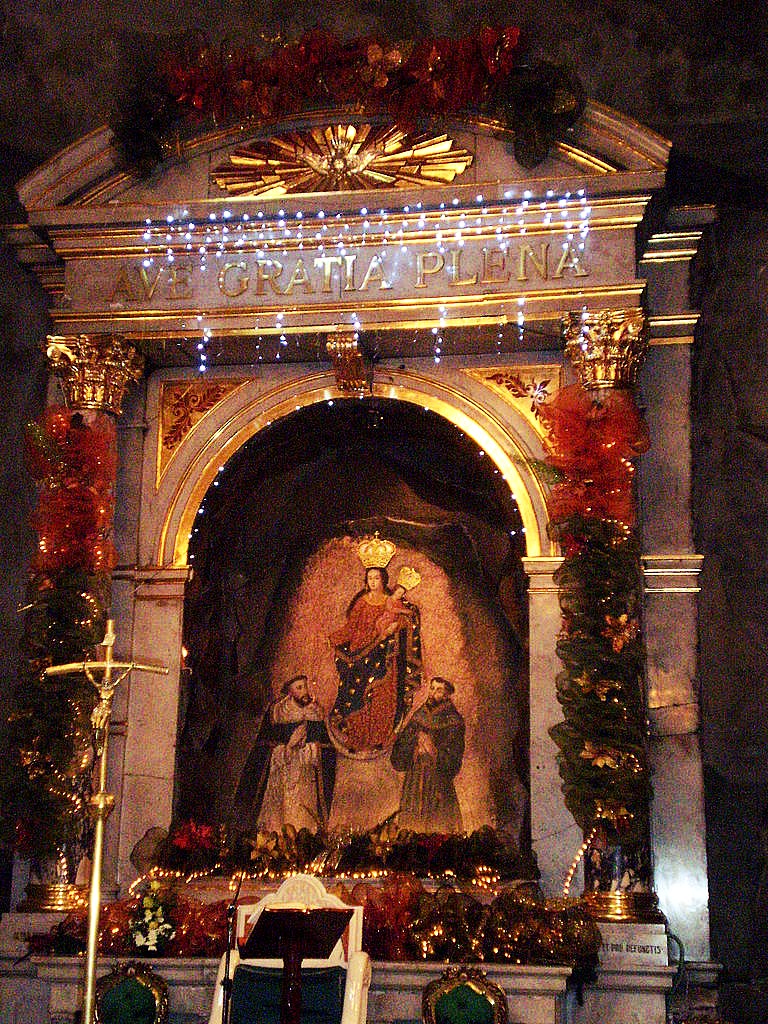
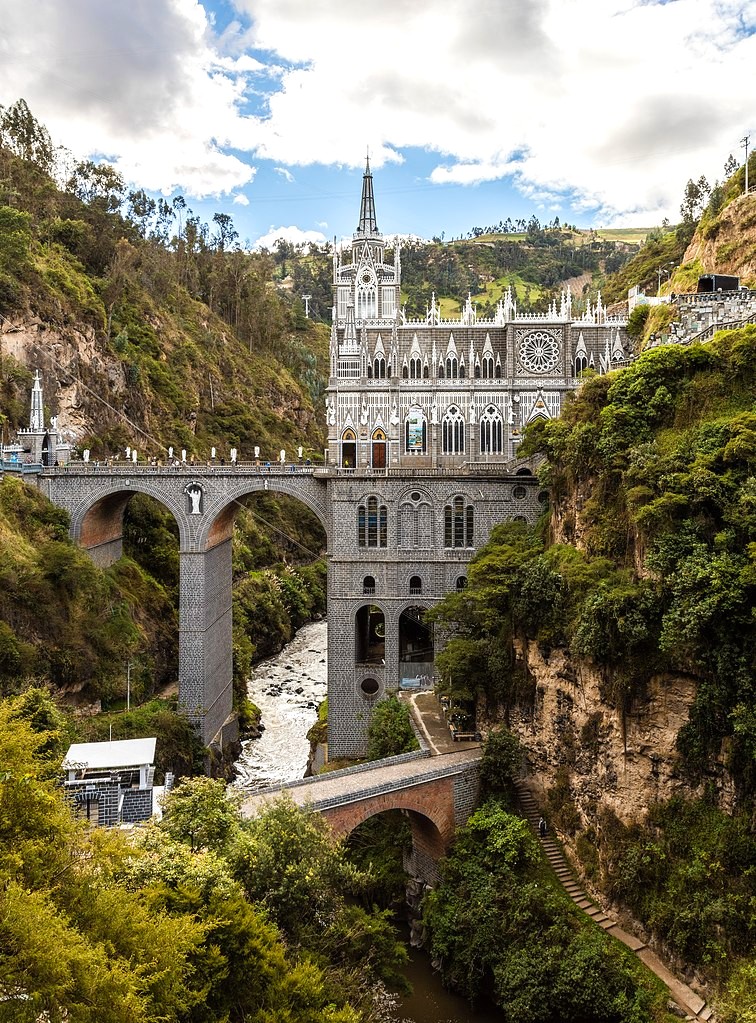
Nuestra Señora de las Lajas / Our Lady of the Flagstones, Potosí, Caldas, Colombia (1754) – 16 September:
In 1754, Maria Mueses de Quinones, an Indian woman from the village of Potosi, Colombia and her deaf-mute daughter, Rosa, were caught in a very strong storm. They sought refuge in a cave in the gigantic Lajas mountains. To Maria’s surprise, her mute daughter, Rosa exclaimed with her first words “the mestiza is calling me…” Maria did not see the figures of a woman and child that the girl described and fearfully ran back with her daughter to Ipiales and told the townspeople. After later returning to the spot, the woman saw an apparition of Our Lady and Child. Some months later, Rosa died and was returned to life when her mother prayed again at the cave. The townspeople came to see this place and encountered the miraculous image burned into the rocks!
The congregation celebrated the first Mass in the Pastarán river cave – it was 16 September 1754 and they built a straw grotto. With the endorsement of the ecclesiastical authorities, who declared the event as a miracle on 15 September 1754. Very soon, the image began to be venerated with great fervour and many miraculous events occurred there. Around the image the faithful devotees have erected four successively larger Churches, until culminating in the current Sanctuary whose construction lasted 30 years and was completed in 1949. In 1952 , Pope Pius XII granted the image the canonical coronation and in 1954 he granted the Sanctuary, the title of Minor Basilica.
St Abundantius of Rome St Abundius of Rome St Andrew Kim Taegon St Cunibert of Maroilles St Curcodomus Bl Dominic Shobyoye St Dulcissima of Sutri St Edith of Wilton St Eugenia of Hohenburg St Euphemia (c 290-c 305) Virgin Martyr St Geminianus of Rome St John of Rome
Blessed Luigi Ludovico Allemandi (c 1390-1450) Bishop and Cardinal, called “The Cardinal of Arles.” Blessed Luigi was a Priest driven by immense love for the Holy Mother of God and for the Church. His involvement in various Councils and Papal dissentions, were the result of his great desire to maintain the purity of the Chair of Peter. He was Beatified in 1527 by Pope Clement VII. His Life; https://anastpaul.com/2020/09/16/saint-of-the-day-blessed-luigi-ludovico-allemandi-c-1390-1450/
St Lucy of Rome St Ludmila St Marcian the Senator Bl Martin of Huerta Bl Michael Himonaya
Bl Paul Fimonaya St Priscus of Nocera St Rogellus of Cordoba St Sebastiana St Servus Dei St Stephen of Perugia
Blessed Pope Victor III OSB (1027-1087) Known as “the Gentle Pope,” Prince, Benedictine Abbot, Monk, Advisor, diplomat, reformer – Papal ascension – elected 24 May 1086 and enthroned on 9 May 1087 – until his death. Few have been more reluctant to accept the Papacy than the humble Monk and Hermit, who became Victor III. About Pope Victor III: https://anastpaul.com/2019/09/16/saint-of-the-day-16-september-blessed-pope-victor-iii-1027-1087/ St Vitalis of Savigny
Martyrs of the Via Nomentana: Four Christian men martyred together, date unknown – Alexander, Felix, Papias and Victor. They were martyred on the Via Nomentana outside Rome, Italy.
Martyred in the Spanish Civil War: • Blessed Antonio Martínez García • Blessed Ignasi Casanovas Perramón • Blessed Manuel Ferrer Jordá • Blessed Pablo Martínez Robles • Blessed Salvador Ferrer Cardet
Thought for the Day – 15 September – Meditations with Antonio Cardinal Bacci (1881-1971)
Mary’s Only Treasure
“Jesus had only one consolation in the midst of His terrible sufferings. His Mother, Mary was beside the Cross along with His beloved Apostle and the holy women who had always followed Him. Mary loved her Son with a love greater than that of any mother, which is the greatest love possible on earth. She loved Jesus with the heart of a Mother and of a Virgin – He was her only treasure. Moreover, she loved Him, not only as her Son but, also as her God. Precisely because she loved Him as her God, her love was in perfect harmony with the divine will.
She understood the mystery which led Jesus to accept death on the Cross – the mystery of the Redemption. “He was offered because it was his own will” (Isa 53:7). He was offered on our behalf, as a voluntary victim to His heavenly Father.”
Quote/s of the Day – 15 September – “Month of the Seven Sorrows of the Blessed Virgin Mary” and Memorial of the Seven Sorrows of our Mother
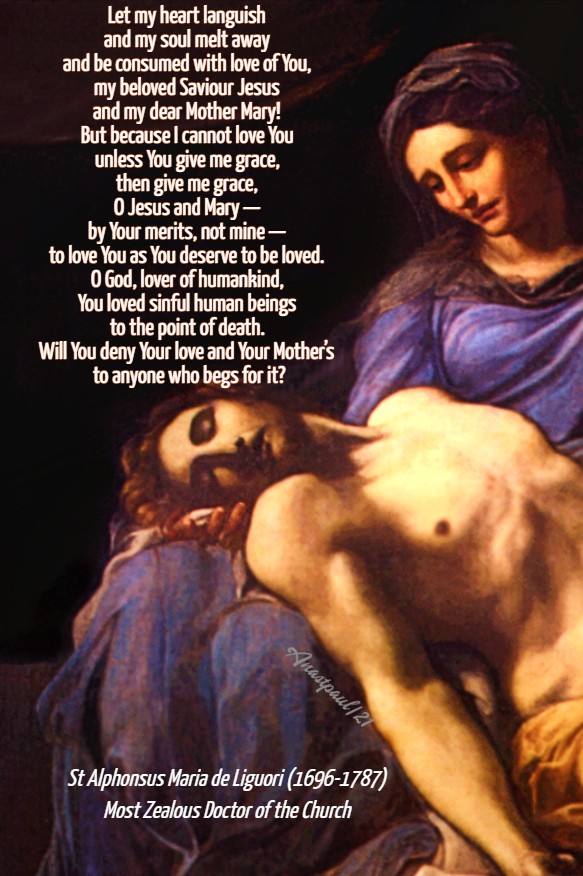
“Let my heart languish and my soul melt away and be consumed with love of You, my beloved Saviour Jesus and my dear Mother Mary! But because I cannot love You unless You give me grace, then give me grace, O Jesus and Mary — by Your merits, not mine — to love You as You deserve to be loved. O God, lover of humankind, You loved sinful human beings to the point of death. Will You deny Your love and Your Mother’s to anyone who begs for it?”
St Alphonsus Maria de Liguori (1696-1787) Most Zealous Doctor of the Church
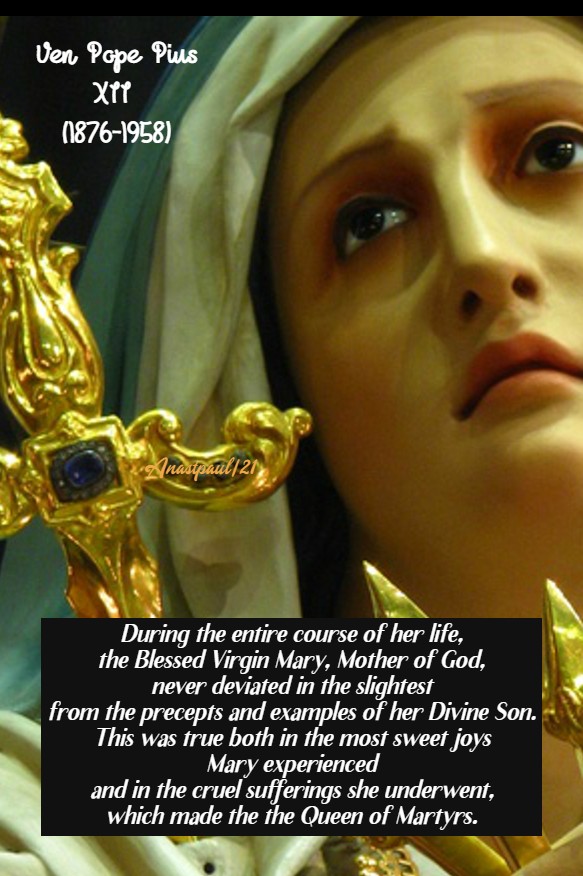
“During the entire course of her life, the Blessed Virgin Mary, Mother of God, never deviated in the slightest from the precepts and examples of her Divine Son. This was true both in the most sweet joys Mary experienced and in the cruel sufferings she underwent, which made the the Queen of Martyrs.”
Venerable Pope Pius XII (1876-1958)
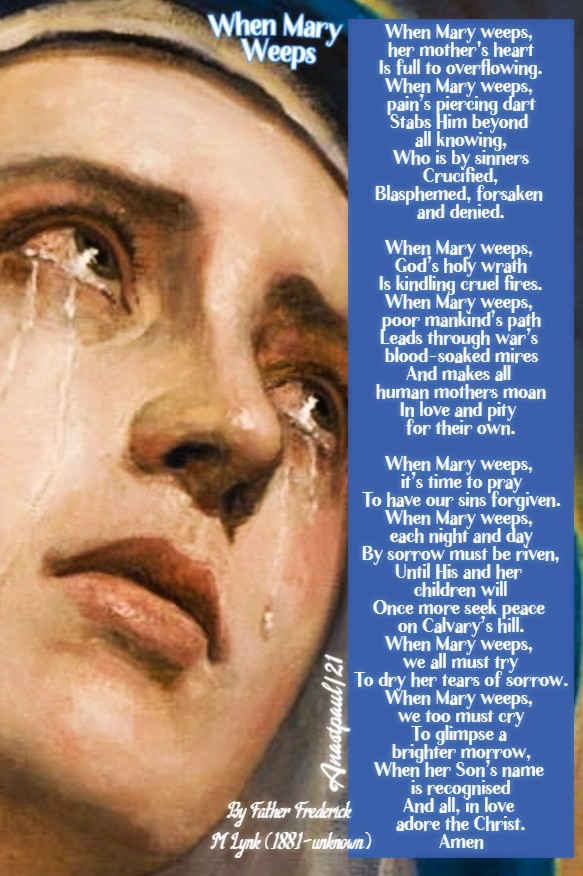
When Mary Weeps By Father Frederick M Lynk (1881-unknown)
When Mary weeps, her mother’s heart Is full to overflowing. When Mary weeps, pain’s piercing dart Stabs Him beyond all knowing, Who is by sinners Crucified, Blasphemed, forsaken and denied.
When Mary weeps, God’s holy wrath Is kindling cruel fires. When Mary weeps, poor mankind’s path Leads through war’s blood-soaked mires And makes all human mothers moan In love and pity for their own.
When Mary weeps, it’s time to pray To have our sins forgiven. When Mary weeps, each night and day By sorrow must be riven, Until His and her children will Once more seek peace on Calvary’s hill. When Mary weeps, we all must try To dry her tears of sorrow. When Mary weeps, we too must cry To glimpse a brighter morrow, When her Son’s name is recognised And all, in love adore the Christ. Amen
One Minute Reflection – 15 September – “Month of the Seven Sorrows of the Blessed Virgin Mary” and Memorial of the Seven Sorrows of our Mother – Readings: First Timothy 3: 14-16; Psalm 111: 1-6; John 19: 25-27 or Luke 2: 33-35
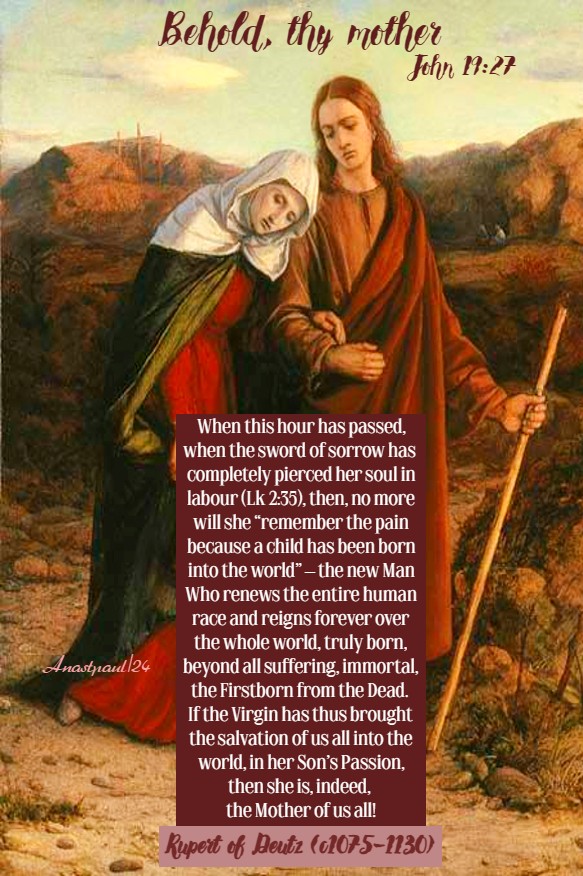
“Behold, thy mother” – John 19:27
REFLECTION – “Woman, this is thy son. This is thy mother.” By what right is the disciple. whom Jesus loved, the son of the Lord’s mother? By what right is she his mother? By the fact that, without pain, she brought into the world the salvation of us all, when she gave birth in the flesh to the God-Man. But now, she is in labour, with great pain as she stands at the foot of the Cross!
At the hour of His Passion, the Lord Himself rightly compared the Apostles to a woman in childbirth, when He said: “When a woman is in labour she is in anguish because a child is born into the world” (cf Jn 16:21). How much more, then, might such a Son compare such a Mother, the Mother standing at the foot of His Cross, to a woman in labour? What am I saying? “Compare?” She is indeed truly a woman and truly a mother and, at this hour, she is truly experiencing the pains of childbirth. When her Son was born she did not experience the anguish of giving birth in pain as other women do; it is now that she is suffering, that she is crucified, that she experiences sorrow; like a woman in labour because her hour has come ( Jn 16:21; cf 13:1; 17:1). …
When this hour has passed, when the sword of sorrow has completely pierced her soul in labour (Lk 2:35), then, no more will she “remember the pain because a child has been born into the world” – the new Man Who renews the entire human race and reigns forever over the whole world, truly born, beyond all suffering, immortal, the Firstborn from the Dead. If the Virgin has thus brought the salvation of us all into the world, in her Son’s Passion, then she is, indeed, the Mother of us all!” – Rupert of Deutz (c1075-1130) Benedictine Monk, Theologian, Exegete and Writer – (Commentary on Saint Johns Gospel, 13).
PRAYER – Our Father, when Jesus Your Son, was raised up on the Cross, it was Your will that Mary, His Mother, should stand there and suffer with Him in her heart. Grant that in union with her, the Church may share in the passion of Christ and so be brought to the glory of His Resurrection. Be our intercessor and our consolation, Our Lady of Sorrows, amen.
Our Morning Offering – 15 September – “Month of the Seven Sorrows of the Blessed Virgin Mary” and Memorial of the Seven Sorrows of our Mother
O Afflicted Virgin! By St Alphonsus Liguori (1696-1787) Most Zealous Doctor
O afflicted Virgin! O soul, great in virtues and great also in sorrows! for both arise from that great fire of love thou hast for God; thou “whose heart can love nothing but God.” O Mother, have pity on me, for I have not loved God and I have so much offended Him. Thy sorrows give me great confidence to hope for pardon. But this is not enough; I wish to love my Lord and who can better obtain this for me than thou, thou who art the Mother of fair love? O Mary, thou dost console all, comfort me also. Amen
Saint of the Day – 15 September – Our Sorrowful Mother Mary –
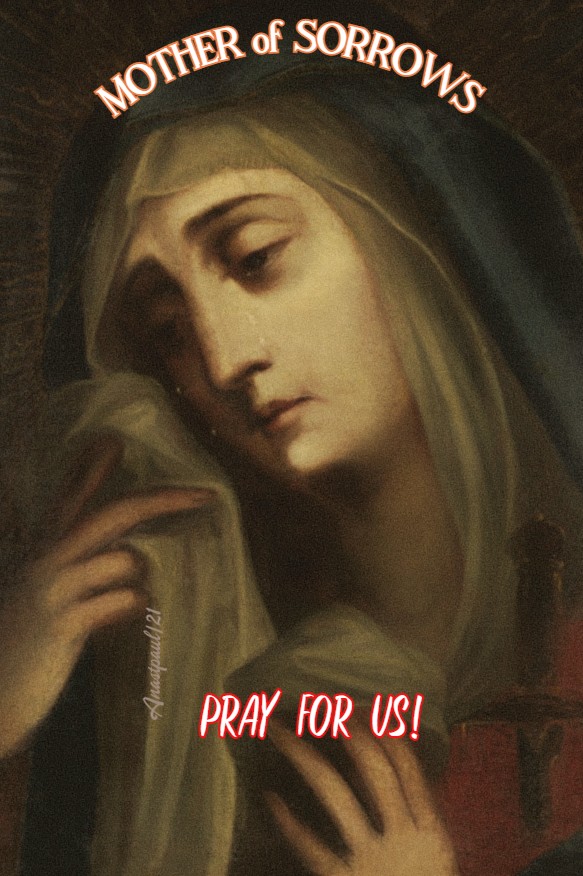
The Seven Sorrows of the Blessed Virgin Mary Also known as: • Septem Dolorum. • Beata Maria Virgo Perdolens • Beata Vergine Addolorata • Dolorosa • Maria Santissima Addolorata • Mater Dolorosa • Mother of Sorrows • Our Lady of the Seven Dolours • Our Lady of the Seven Sorrows • Sorrowful Mother
The Seven Sorrows of Mary
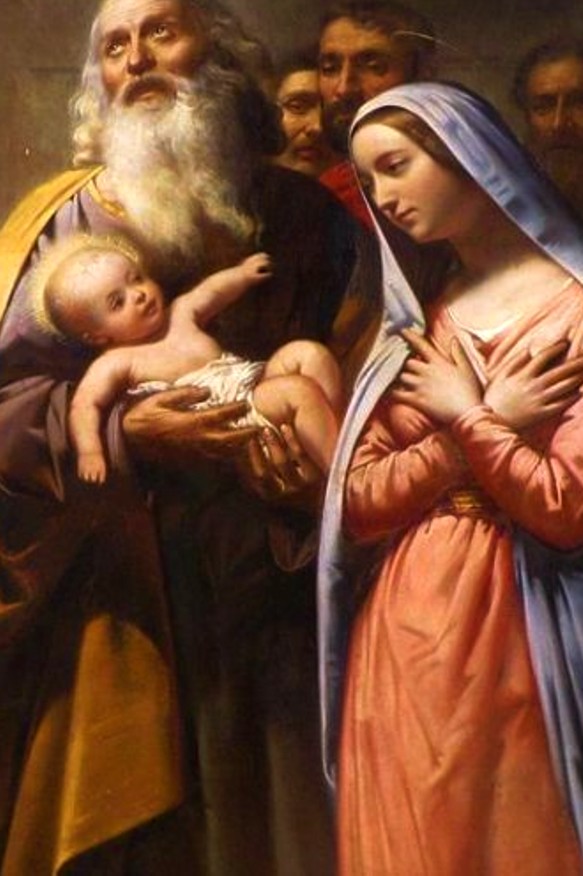
The Prophecy of Simeon at the Presentation of the Lord in the Temple: Forty days after Christ’s birth, Mary presented Him in the temple. The aged Simeon, a just and devout servant of the Lord, took Jesus into his arms and inspired by the Holy Spirit, exclaimed:
“Behold, this child is destined for the fall and for the rise of many in Israel and for a sign that shall be contradicted. And thy own soul a sword shall pierce, that the thoughts of many hearts may be revealed.” Luke 2:34-35
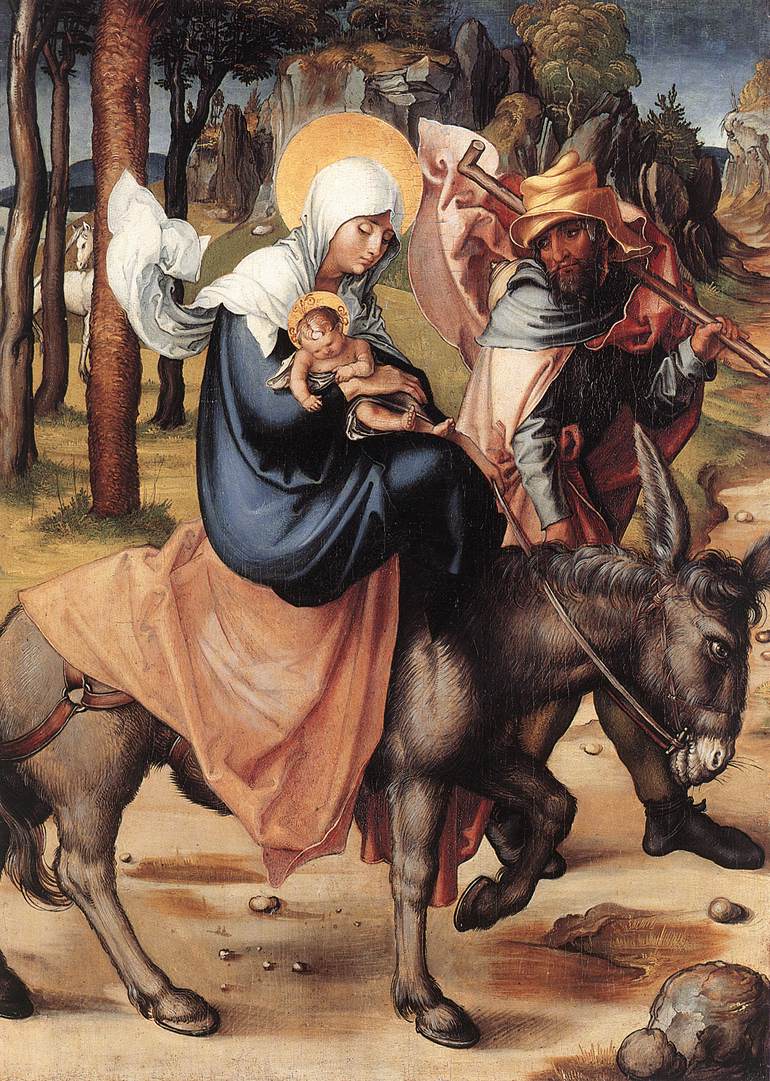
The Flight Into Egypt: No sooner did the heartless Herod hear that Jesus, the Infant King of the Jews, had been born, than he sought His life. But an Angel of the Lord appeared to Saint Joseph in a dream and warned:
“Arise, take the Child and His mother and flee into Egypt and remain there until I tell thee.” – Matthew 2:13
The Loss of Child Jesus for 3 Days: The third sword that pierced Our Lady’s heart was the three-day loss in the temple. At the age of twelve, Jesus went with Mary and Joseph to Jerusalem. Only when Mary and Joseph were travelling home, realise that Jesus was not with them. They hurried back and for three days sought Him among friends and relatives in Jerusalem. Finally, they found Him in the temple, listening and discussing with the teachers there , who were amazed at his knowledge and wisdom.
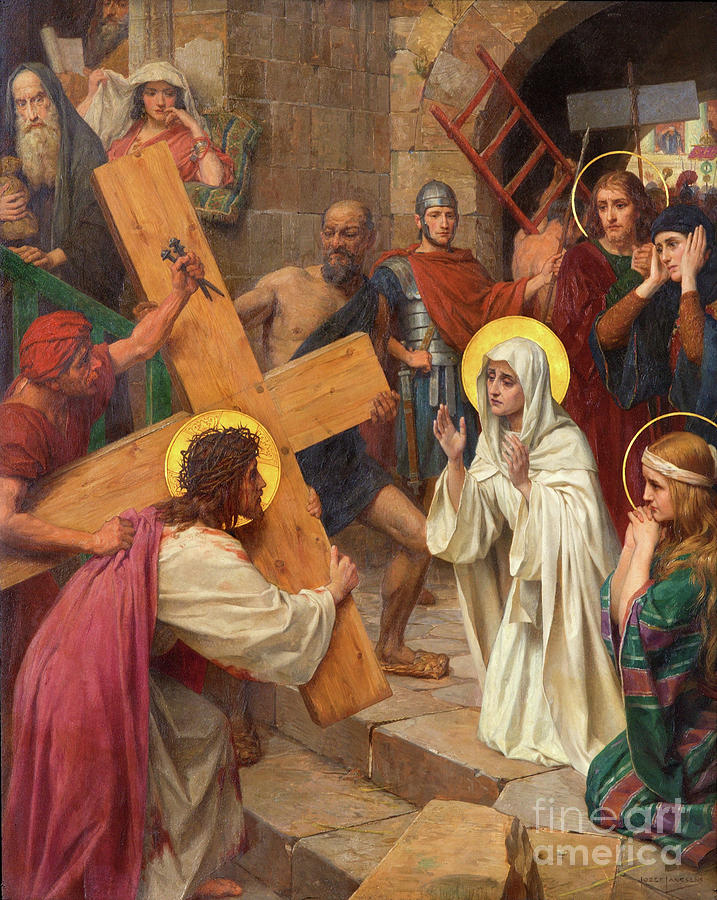
The Meeting of Jesus on the Way of The Cross: Mary’s fourth great sorrow we remember in the fourth Sorrowful Mystery of the Rosary and also the fourth Station of the Cross. Mary meets Jesus carrying His Cross to Calvary. What a mournful meeting. Imagine the pain in Mary’s heart to see her Jesus groaning and staggering under the cruel Cross. What an anguish to see the One she loved so dearly, being tortured by the taunts of the crowd, as well as the weight of the wood. And there is nothing she is able to do to help Him.
The Crucifixion and Death of Jesus: But the sword will plunge still deeper. She must see Him shamefully stripped of His garments, rudely thrown upon the Cross and then hear the sickening strokes of the hammer. Helplessly and heartbroken, she must stand beneath His cross watching Him writhe in torture, listening to His parting words, listening for His parting breath.
The Pieta – Jesus Is Laid In The Arms Of His Mother: And now comes the moment when they take Him down from the Cross. As each nail and each thorn was pulled from His body, it was a new blow to the heart of His Mother. How she must have hugged Him to her heart!
Jesus is Laid in The Tomb: The seventh sword was to witness that broken body laid in the grave. It was a Mother putting her child to bed. What a grief-stricken good-night that was. Mary must have wished that she could bury her heavy heart with Him.
During Passiontide, on the Friday before Palm Sunday, a second feast of Mary’s Dolors is held, which emphasises particularly, the four last mentioned of the seven sorrows above.
Thus the Church reflects on the feast of the Seven Sorrows of the Blessed Virgin Mary. The prayers of the Mass and the Office are indicative of her sorrows.
The first trace of the feast, St Alphonsus Liguori tells us, is found in Germany towards the beginning of the fifteenth century. Archbishop Theodoric’s ordered the keeping of this day at an assembly convened at Cologne in 1413 to wage battle against heresies of the iconoclast “Hussites,” who were very active in destroying images and pictures of Our Lady of Sorrows.
Before the sixteenth century the feast was observed only in the Diocese of North Germany, Scandinavia and Scotland but by the end of the sixteenth century, it extended over the south of Europe. In 1506 the celebration was granted the Friday before Passion Sunday as the feast of the Sorrows of Mary. To the whole German Church this last date was later assigned. On 22 April 1727, Pope Benedict XIII, extended it to the entire Latin Church under the title “Septem dolorum.”
St Aichardus St Albinus of Lyon Bl Anton Maria Schwartz St Aprus of Toul St Bond of Sens
St Catherine of Genoa (1447-1510) Married laywoman, Mystic, Apostle of the sick, the poor and the needy, Writer. Her body is incorrupt and rests in a glass reliquary at the Capuchin Church in Genoa. Catherine’s writings were examined by the Holy Office and declared to contain doctrine that would alone be enough to prove her sanctity and she was accordingly Beatified in 1675 by Pope Clement X and Canonised in 1737 by Pope Clement XII. Her writings also, became sources of inspiration for other religious leaders such as Robert Bellarmine and Francis de Sales and Cardinal Henry Edward Manning. Pope Pius XII declared her Patroness of the hospitals in Italy. Her Life: https://anastpaul.com/2020/09/15/saint-of-the-day-15-september-st-catherine-of-genoa-1447-1510/
Bl Camillus Constanzo St Emilas of Cordoba St Eutropa of Auvergne St Hernan Bl Jacinto de Los Ángeles and Bl Juan Bautista St Jeremias of Cordoba St Joseph Abibos St Mamillian of Palermo St Melitina St Mirin of Bangor St Nicetas the Goth St Nicomedes of Rome
St Porphyrius the Martyr St Ribert St Ritbert of Varennes Bl Rolando de Medici Bl Tommasuccio of Foligno St Valerian of Châlon-sur-Saône St Valerian of Noviodunum St Vitus of Bergamo Bl Wladyslaw Miegon — Martyrs of Adrianopolis – 3 saints: Three Christian men martyred together in the persecutions of Maximian – Asclepiodotus, Maximus and Theodore. They were martyred in 310 at Adrianopolis (Adrianople), a location in modern Bulgaria.
Martyrs of Noviodunum – 4 saints: Three Christian men martyred together, date unknown – Gordian, Macrinus, Stratone and Valerian. They were martyred in Noviodunum, Lower Moesia (near modern Isaccea, Romania).
Mercedarian Martyrs of Morocco – 6 beati: A group of six Mercedarians who were captured by Moors near Valencia, Spain and taken to Morocco. Though enslaved, they refused to stop preaching Christianity. Martyrs. – Dionisio, Francis, Ildefonso, James, John and Sancho. They were crucified in 1437 in Morocco.
Martyred in the Spanish Civil War: Bl Antonio Sierra Leyva Bl Pascual Penades Jornet
Thought for the Day – 14 September – Meditations with Antonio Cardinal Bacci (1881-1971)
The Crucifix
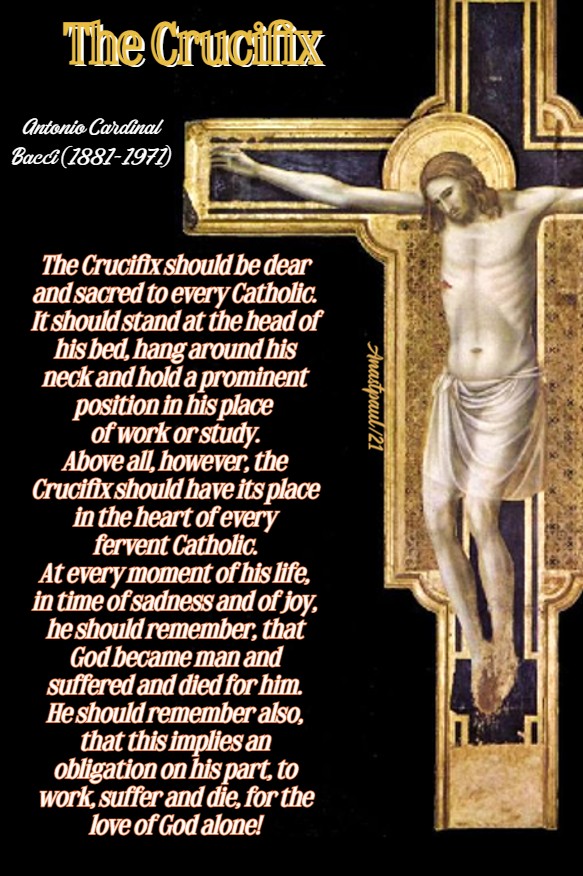
“The Crucifix is a simple meditation manual, open and intelligible to all, even to the most illiterate. Anyone who turns to it, can study the sorrowful gaze of Jesus, His heart pierced with love for men. His head crowned with thorns, His hands and feet transfixed with nails which support His divine body, streaming blood and writhing in anguish. The Crucifix should be dear and sacred to every Catholic. It should stand at the head of his bed, hang around his neck and hold a prominent position in his place of work or study.
Above all, however, the Crucifix should have its place in the heart of every fervent Catholic. At every moment of his life, in time of sadness and of joy, he should remember, that God became man and suffered and died for him. He should remember also, that this implies an obligation on his part, to work, suffer and die, for the love of God alone!
Many people meditate on the Crucifix. They kiss it and claim to love it. But while they love the Crucifix, they have no love for their particular cross, which they try, by every means in their power, to fling far away from them. Now, it is very certain, that anyone who does not love his own cross, does not really love the Crucifix, for Jesus has told us that, “if anyone wishes to come after me, let him deny himself and take up his cross and follow me” (Mt 16:24).”
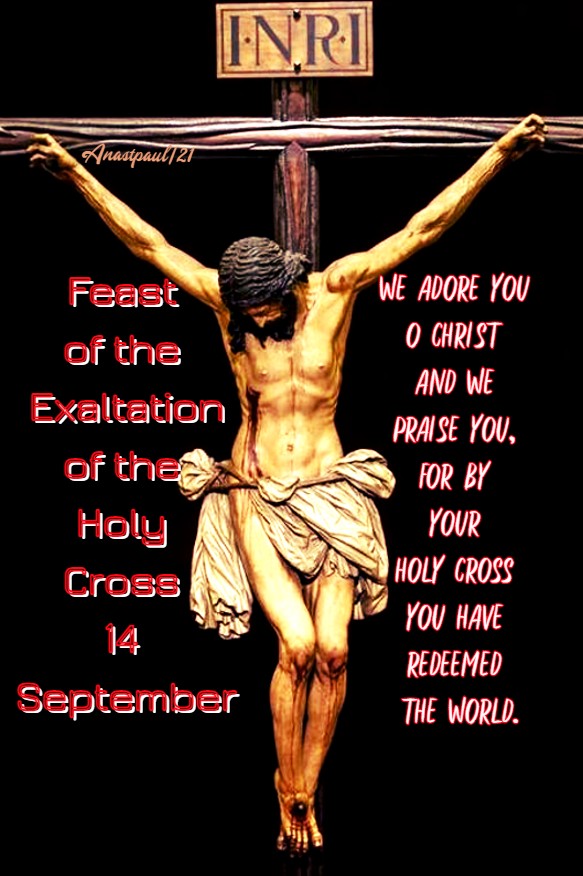
Quote/s of the Day – 14 September – Feast of the Exaltation of the Holy Cross
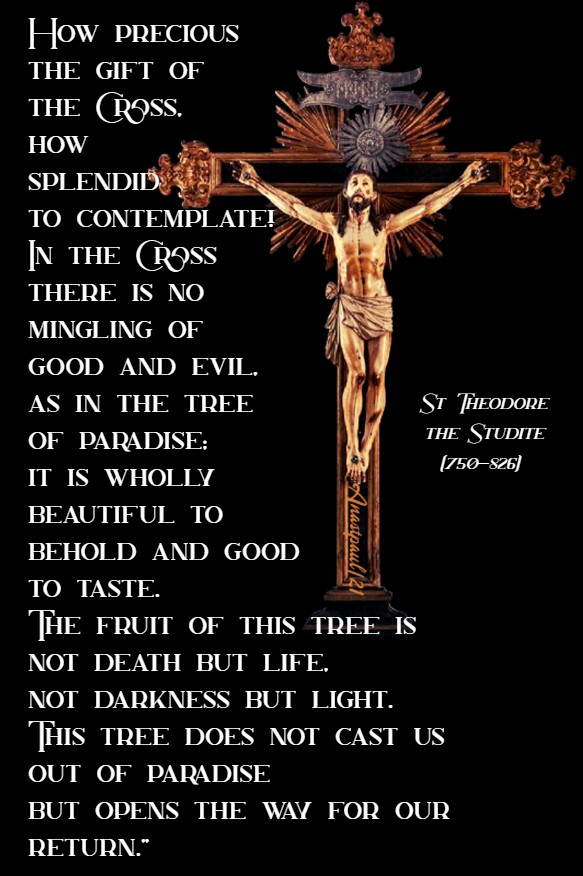
“How precious the gift of the Cross, how splendid to contemplate! In the Cross there is no mingling of good and evil, as in the tree of paradise; it is wholly beautiful to behold and good to taste. The fruit of this tree is not death but life, not darkness but light. This tree does not cast us out of paradise but opens the way for our return.”
St Theodore the Studite (750–826)
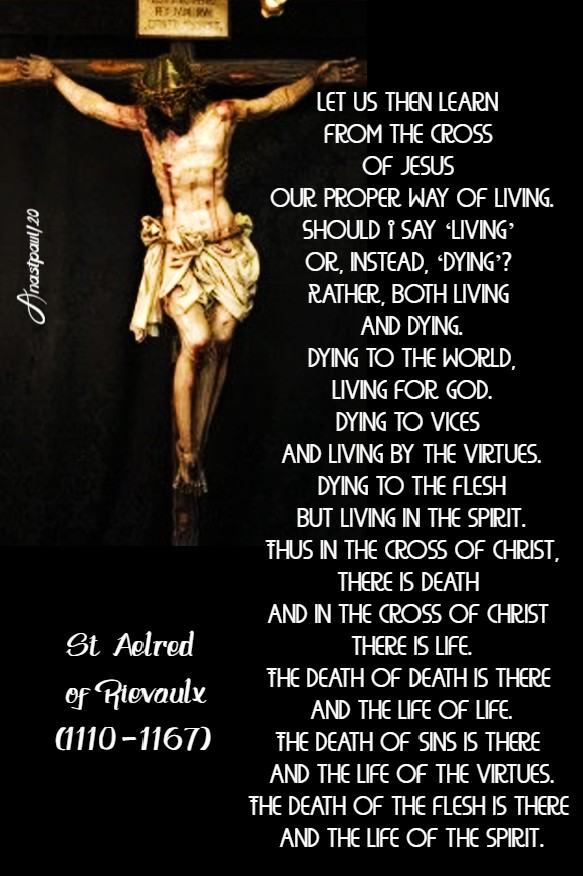
“Let us then learn from the Cross of Jesus our proper way of living. Should I say ‘living’ or, instead, ‘dying’? Rather, both living and dying. Dying to the world, living for God. Dying to vices and living by the virtues. Dying to the flesh, but living in the spirit. Thus in the Cross of Christ, there is death and in the Cross of Christ there is life. The death of death is there and the life of life. The death of sins is there and the life of the virtues. The death of the flesh is there and the life of the spirit.”
St Aelred of Rievaulx (1110-1167)
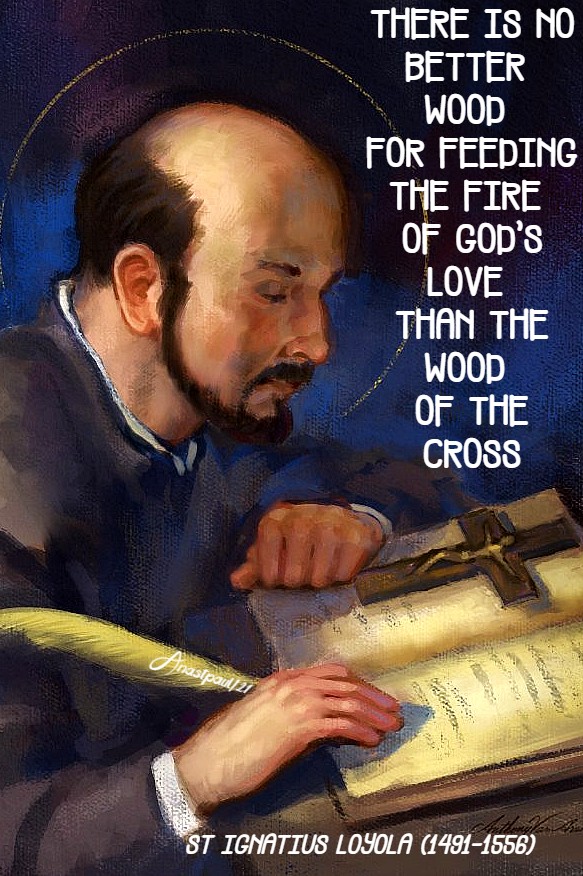
“There is no better wood for feeding the fire of God’s love than the wood of the Cross.”
St Ignatius Loyola (1491-1556)
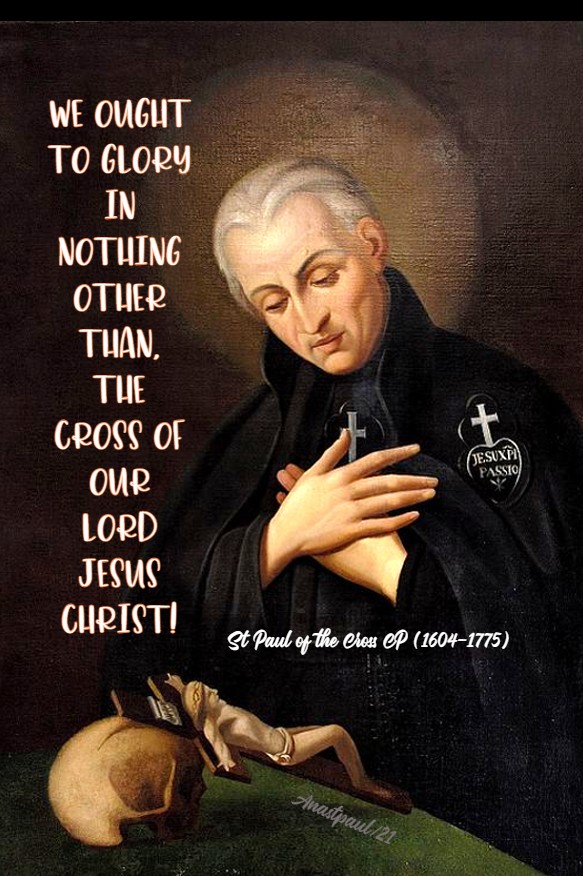
“We ought to glory in nothing other than, the Cross of our Lord Jesus Christ! …”
St Paul of the Cross CP (1604-1775)
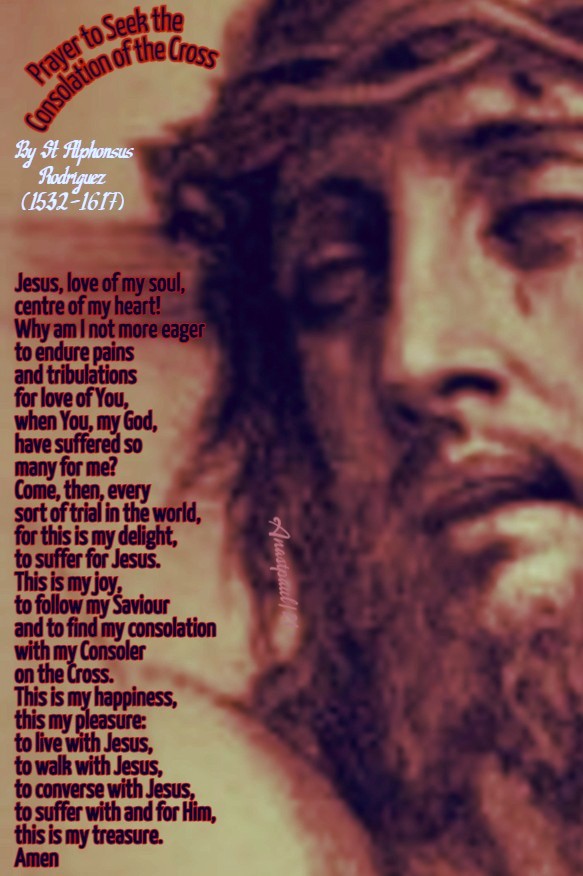
A Prayer to Seek the Consolation of the Cross By St Alphonsus Rodriguez SJ (1532-1617)
Jesus, love of my soul, centre of my heart! Why am I not more eager to endure pains and tribulations for love of You, when You, my God, have suffered so many for me? Come, then, every sort of trial in the world, for this is my delight, to suffer for Jesus. This is my joy, to follow my Saviour and to find my consolation with my Consoler on the Cross. This is my happiness, this my pleasure: to live with Jesus, to walk with Jesus, to converse with Jesus, to suffer with and for Him, this is my treasure. Amen
One Minute Reflection – 14 September – Feast of the Exaltation of the Holy Cross – Readings: Numbers 21:4-9, Psalms 78:1-2, 34-35, 36-37, 38, Philippians 2:6-11, John 3:13-17
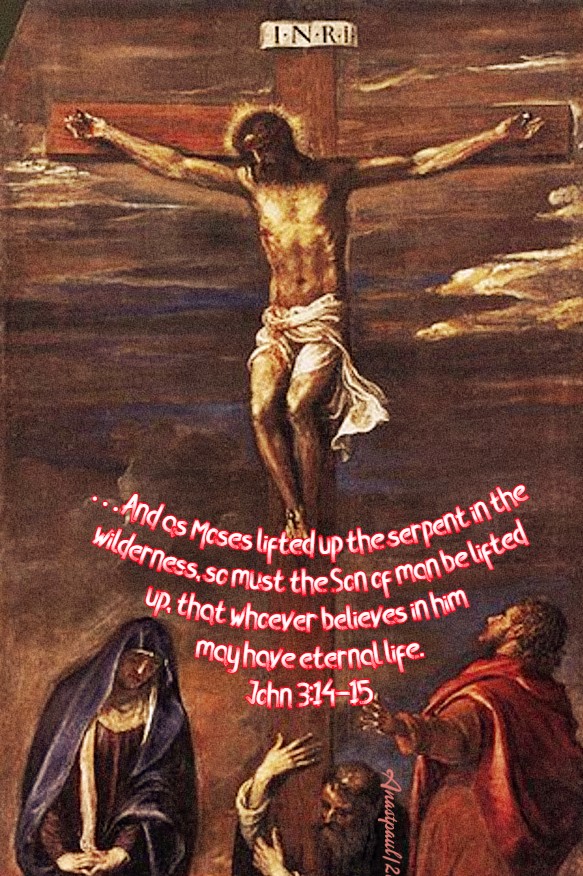
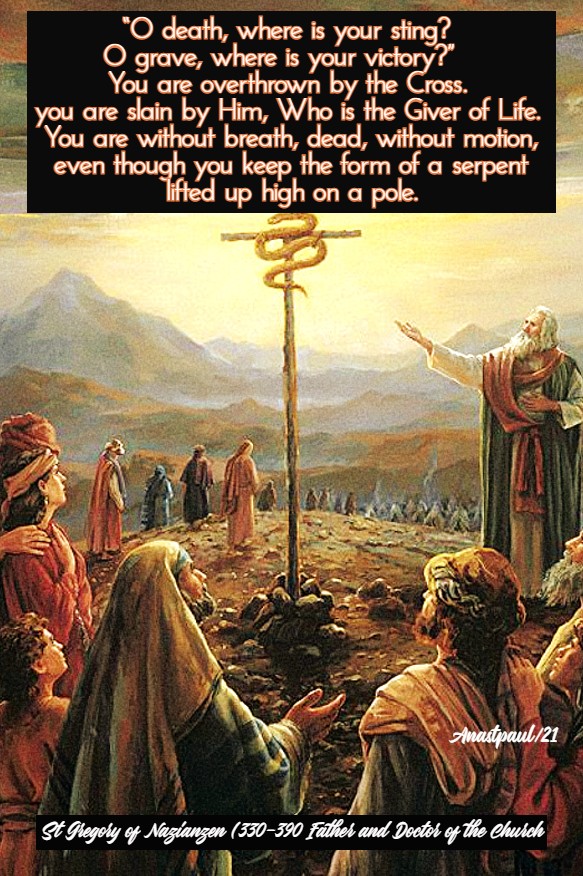
“…And as Moses lifted up the serpent in the wilderness, so must the Son of man be lifted up, that whoever believes in him may have eternal life.” – John 3:14-15
REFLECTION – “That brazen serpent was hung up as a remedy for the biting serpents, not as a type of Him that suffered for us but, as a contrast. It saved those that looked upon it, not because they believed it to live but because it was killed and killed with it, were the powers that were subject to it, being destroyed as it deserved. And what is the fitting epitaph for it from us? “O death, where is your sting? O grave, where is your victory?” You are overthrown by the Cross. you are slain by Him, Who is the Giver of Life. You are without breath, dead, without motion, even though you keep the form of a serpent lifted up high on a pole.” – St Gregory of Nazianzen (330-390) Archbishop of Constantinople, Father and Doctor of the Church (Oration 45).
PRAYER – O God, who willed that Your Only Begotten Son should undergo the Cross to save the human race, grant, we pray, that we, who have known His mystery on earth, may merit the grace of His redemption in heaven. For You placed the salvation of the human race on the wood of the Cross, so that, where death arose, life might again spring forth and the evil one, who conquered on a tree, might likewise on a tree be conquered through Christ. O Cross, You are the glorious sign of victory. Through your power may we share in the triumph of Christ Jesus. We adore You O Christ and we praise You, for by Your Holy Cross You have redeemed the world. Amen.
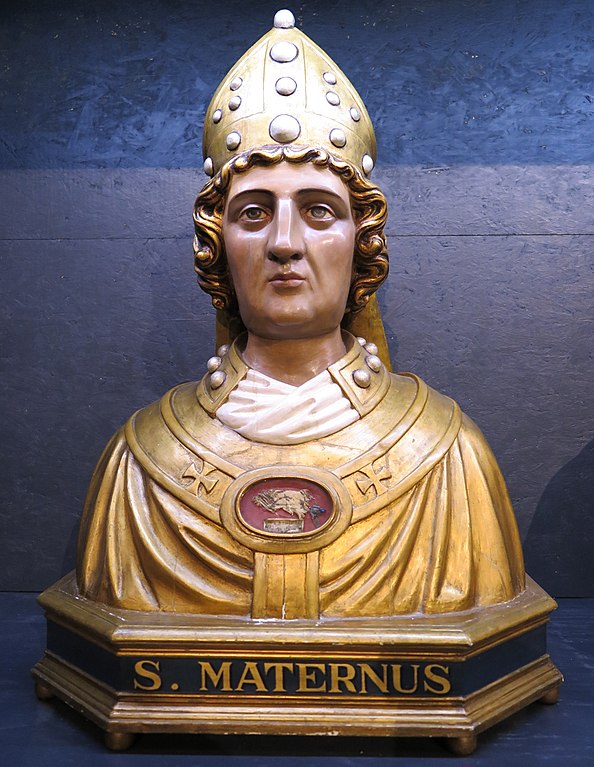
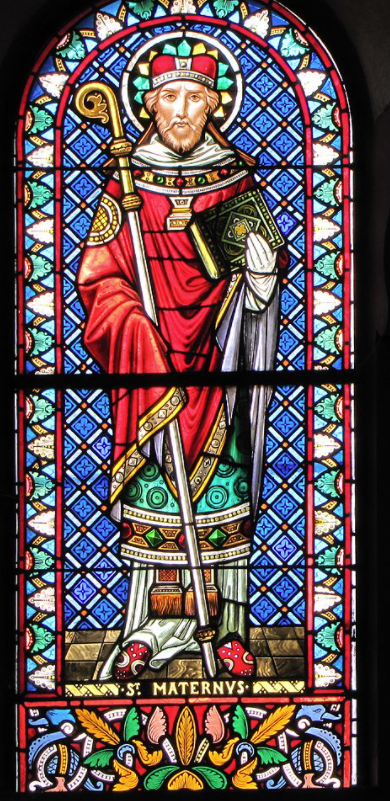
Saint of the Day – 14 September – Saint Maternus of Cologne (Died c 325) the first Bishop of Cologne and Founder of the Diocese of Tongeren, Germany. Born in Trier, Germany and died in c 325 in Cologne, Germany. Also known as – Maternus of Trier, Maternal, Materno.
The Roman Martyrology states of him today: I “In Cologne, Germany, St. Maternus, Bishop, who led the inhabitants of Tongeren, Cologne and Trier to faith in Christ.“
We know him as the first Bishop in the Christian history of Cologne. But from the ninth century a singular legend was born in Germany (and the place of origin is Trier), according to which Maternus would have arrived from Palestine. Not only that, he is also indicated as a disciple of Saint Peter the Apostle and sent by him to proclaim the Gospel in the Germanic world. This imaginative tale was intended to present Trier as the first episcopal see of Germany and, therefore, endowed with jurisdiction “by seniority” over the others.
The truth of history, on the other hand, states that our Saint, the Bishop of Cologne, was an important figure in the Church, now free by the work of Emperor Constantine but exposed – after the external persecutions – to the internal travail of Christians who hurt themselves by heresy.
Maternus is one of the peacemakers, called to settle a hard conflict that was born in North Africa. It was the Donatist schism, from the name of the Bishop Donatus. The schism of the rigorists, averse to any indulgence towards Christians who gave in out of fear during the persecution of Diocletian.
In May 313 Maternus left for Rome to attend a Synod with Pope Miltiades to attempt to resolve the problems faced and inflicted on the Church by the Donatists. (Eusebius of Caesarea, Ecclesiastical History). In 314, he also attended the Synod of Arles and he was the first Apostle of Alsace and successfully promoted the spread of Christianity in that Province and in Western Germany.
We do not know anything else about Maternus, after his mission to Rome, which ends with a judgement in favour of the Bishop elect Cecilian, over whom the heresy erupted in Carthage (but without putting an end to the schism, which will still torment Saint Augustine).
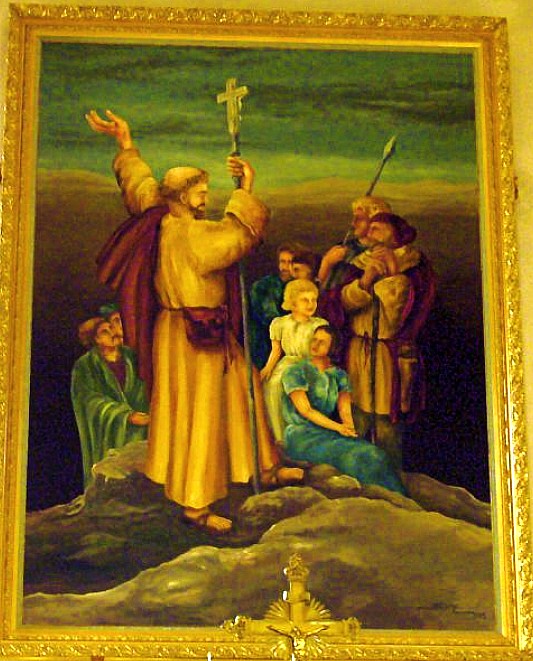
In Cologne and in his hometown of Trier, the faithful began to venerate him as a saint. A popular cult of which the splendid 13th century stained glass windows in the Cathedral Chapel dedicated to his name, also testify. He is venerated in many Churches both in Germany and in parts of modern day France. His cult seems to have been widespread by the many artworks of him in the abovementioned Churches. The image below shows the body of St Maternus arriving in a boat (1722) – sadly, we have no explanation for the obvious miracle around this painting.
He was buried in the Cathedral of Cologne but the Cathedral of St Peter in Trier boasts a large Reliquary, which became and remains, a pilgrimage site.
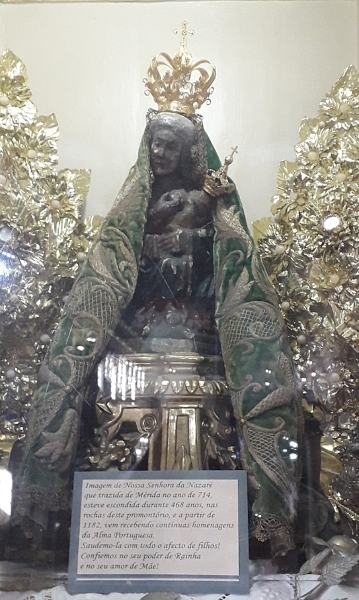
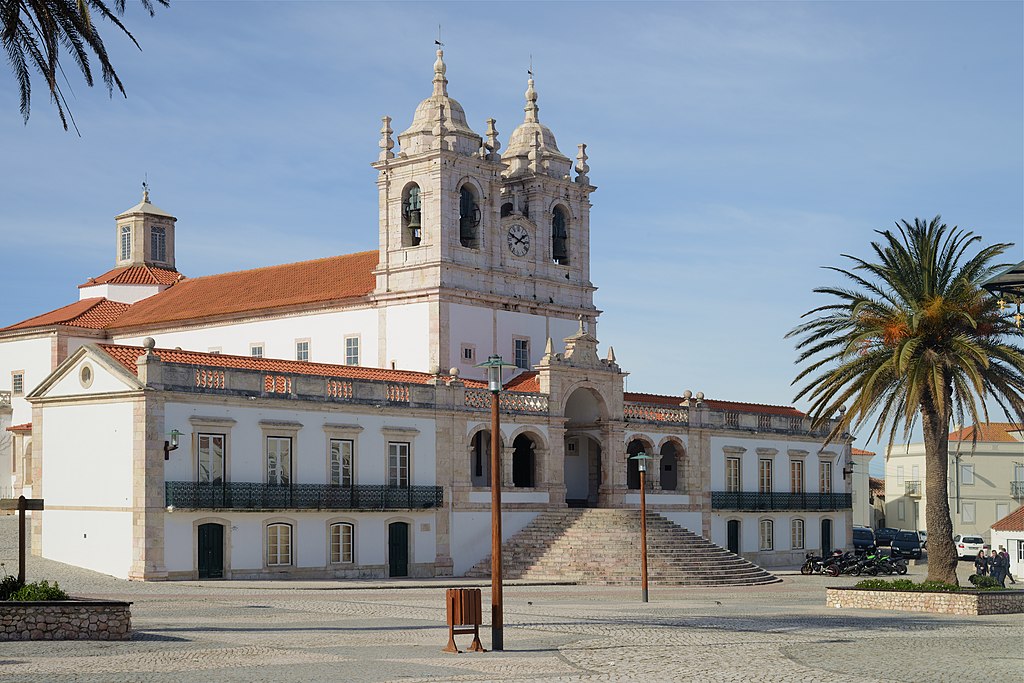
Nossa Senhora de Nazaré / Our Lady of Nazareth, Portugal (1182) -14 September:
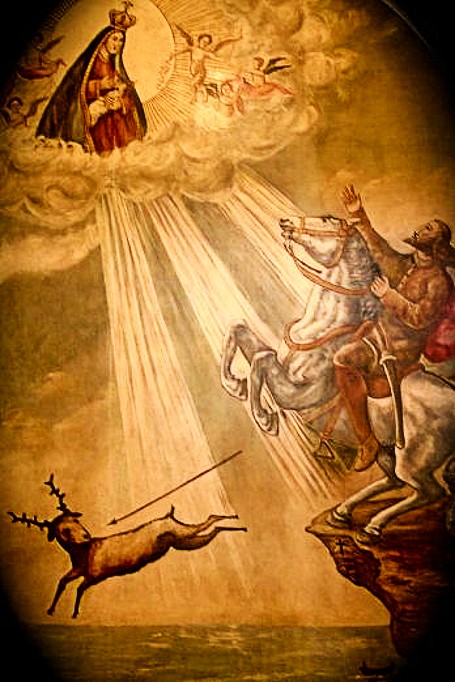
The chronicles of old Portugal report this episode that took place in the year 1182, on the day of the Exaltation of the Holy Cross. Dom Fuas Roupinho, a Knight and vassal of King Afonso Henriques, was out hunting on a foggy day. He was pursuing a deer when it came to an unexpected precipice and fell to its death into the sea below.
The horse, which was in close pursuit, reared on the very edge of the cliff and it seemed certain that Dom Fuas would follow the deer to his death. Knowing that a little distance to his left was a cave with the Statue of the Virgin of Nazareth, Dom Fuas immediately invoked her protection. He was saved and in thanksgiving he built a small “Chapel of memory” (Ermida da Memória) over the cave in her honour.
According to a document found with it, the little Statue of the Virgin had been venerated in Nazareth in the times of early Christianity. When the iconoclast heresy started in Constantinople and the heretics were destroying all the Statues, a Monk called Ciriaco took it to a Monastery in Spain in the proximity of Merida.
In 714, when the Saracens invaded the Iberian Peninsula, King Rodrigo fled with Friar Germano to the Atlantic coast, bearing the Statue with them. They hid the Statue in a small cave off the coast of the site that was later to become Nazaré, where it remained until it was found by a shepherd in 1179.
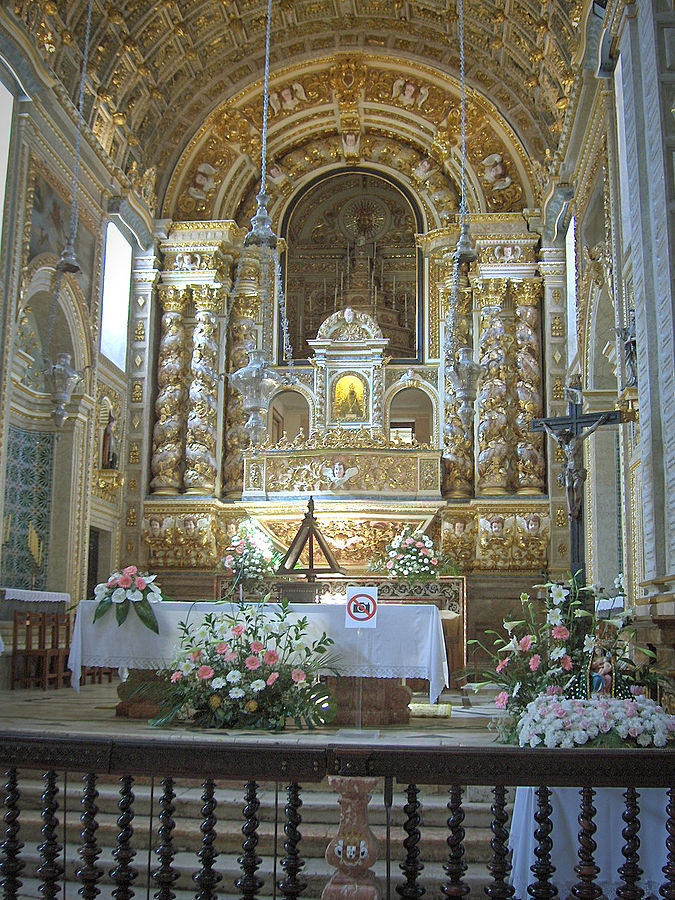
After Our Lady miraculously saved the life of Dom Fuas, the devotion to Our Lady of Nazareth spread throughout the country and was the source of countless graces for the people. In 1377 King Fernando ordered a large Church to be built near the little Chapel, and the Statue is venerated there now.
St Caerealis Bl Claude Laplace St Cormac of Cashel St Crescentian of Carthage St Crescentius of Rome St Generalis of Carthage St Giulia Crostarosa St Jean Gabriel Taurin du Fresse St Maternus of Cologne (Died c 325) Bishop
St Peter of Tarentaise O.Cist (1102-1174) Cistercian Monk, Archbishop of Tarentaise from 1141 until his death, Abbot, Apostle of Charity, Miracle-worker. There are two men named Saint Peter of Tarentaise who lived one century apart. The man we honour today is the younger Peter, born in France in the early part of the 12th century. The other man with the same name became Pope Innocent the Fifth. His Life: https://anastpaul.com/2019/09/14/saint-of-the-day-14-september-saint-peter-of-tarentaise-o-cist-1102-1174/
Bl Pedro Bruch Cotacáns St Rosula of Carthage St Sallustia St Victor of Carthage
Thought for the Day – 13 September – Meditations with Antonio Cardinal Bacci (1881-1971)
Sin
In that we prefer our own wayward whims to the law of God, sin is an abuse of liberty. It is a revolt against right reason, the dictates of which, we refuse to obey. It is an offence against our Creator and Redeemer, whose commandments we despise and whose redeeming grace, we reject by our actions. It is moreover, an act of supreme folly, for it extinguishes, not only the supernatural splendour of grace but, also, the natural light of reason. Through sin, man is brutalised and experiences in himself, as his first punishment, the confusion of his whole being.
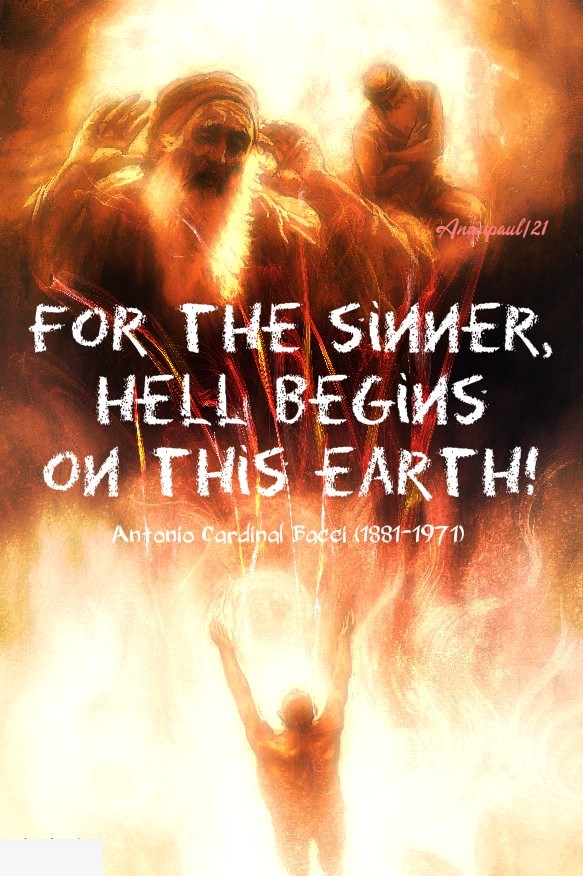
In practice, the sinner denies God, Who has created and redeemed him. He upsets the natural order of things and is violently separated from the source of all truth, beauty and goodness. As a result, he experiences, in himself, the hell which he has constructed with his own hands – a hell of emptiness, disgust and remorse. Unless the helping hand of God reaches out to rescue him from the abyss, all this is simply a bitter foretaste of eternal despair. God, as St Augustine has written, has ordained from all eternity, that every dissolute soul will be it’s own punishment. For the sinner, hell begins on this earth! There can be no peace for the wicked.
When we realise, the gravity, stupidity and dire consequences of sin, it seems impossible, that a rational being, enlightened and enriched by divine grace, should continue to sin. Nevertheless, sad experience teaches us that the lives of individuals, families and human society in general, are often distorted by this evil, which is the root of all other evils.”
Quote/s of the Day – 13 September – Readings: Timothy 2: 1-8; Psalm 28: 2, 7-9; Luke 7: 1-10
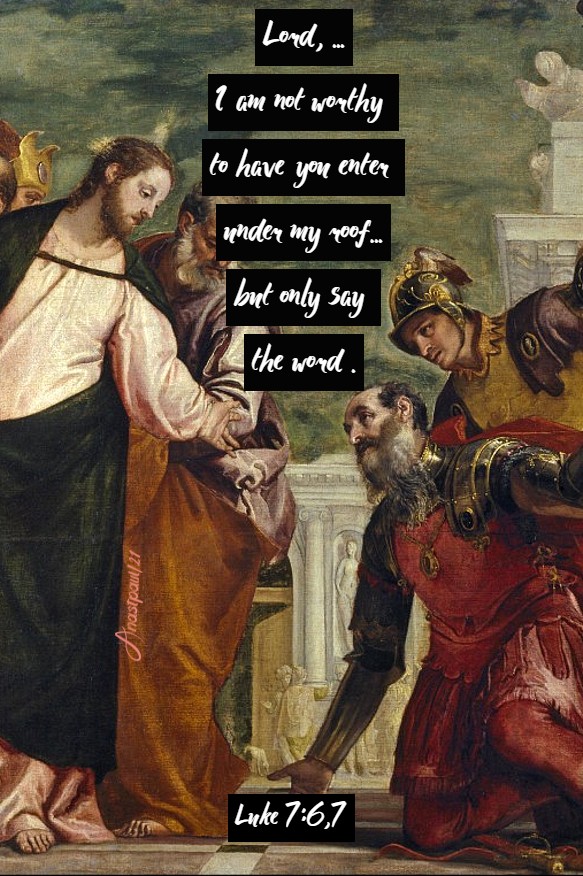
“Lord, … I am not worthy to have you enter under my roof… but only say the word …”
Luke 7:6,7
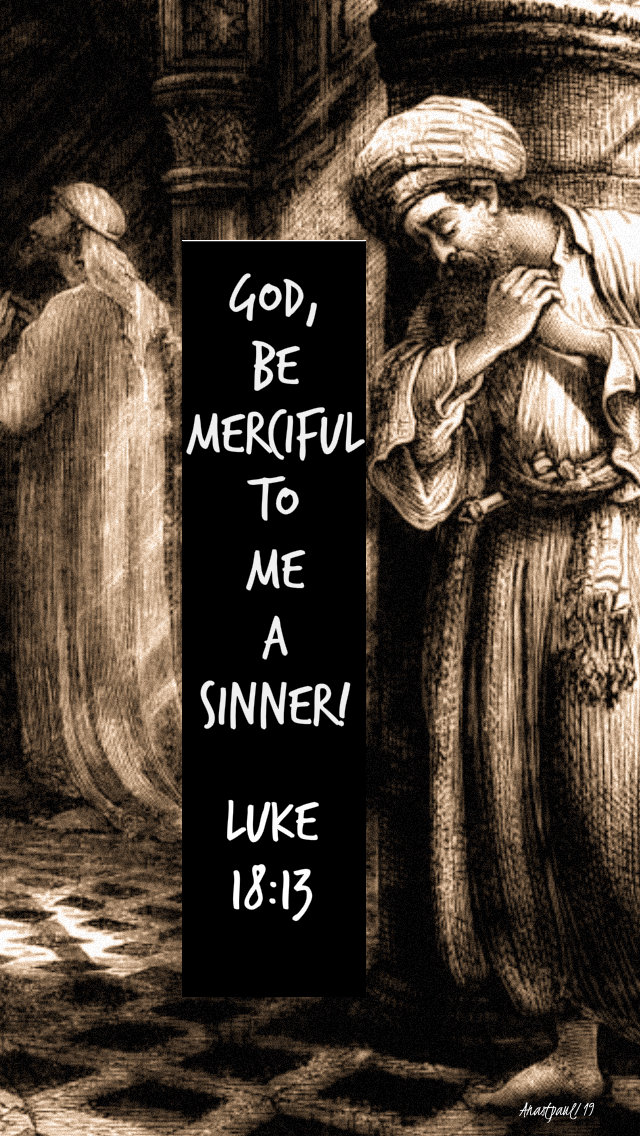
‘God, be merciful to me a sinner!’
Luke 18:13
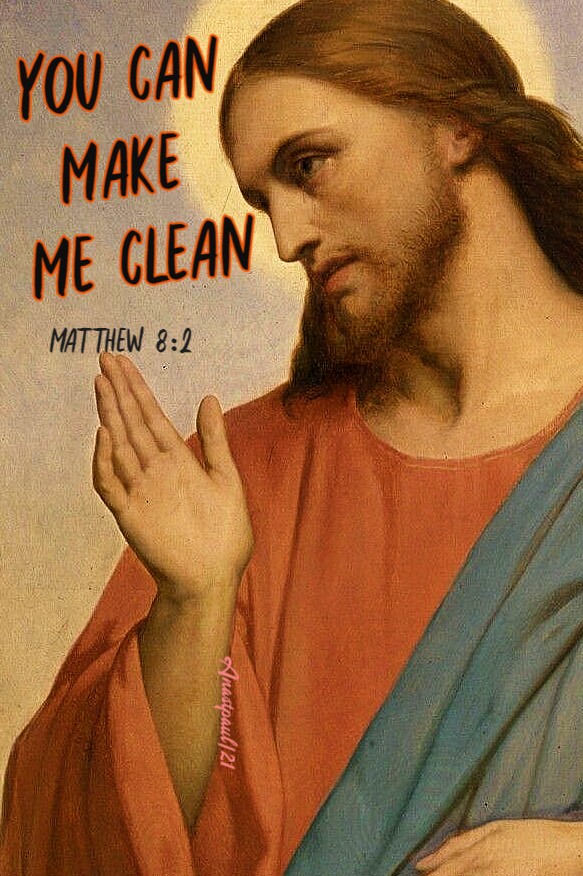
“’You can make me clean.’”
Matthew 8:2
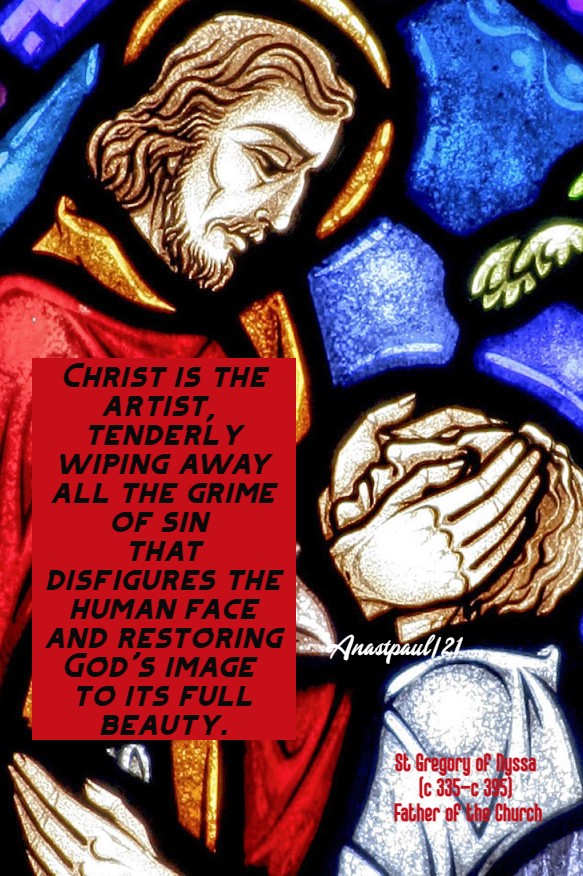
“Christ is the artist, tenderly wiping away all the grime of sin that disfigures the human face and restoring God’s image to its full beauty.”
St Gregory of Nyssa (c 335–C 395) Father of the Church
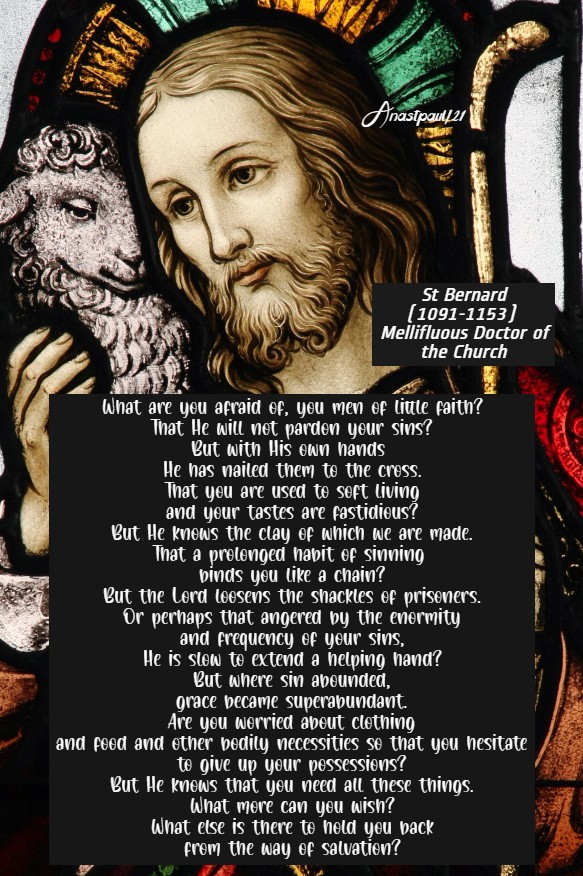
“What are you afraid of, you men of little faith? That He will not pardon your sins? But with His own hands He has nailed them to the cross. That you are used to soft living and your tastes are fastidious? But He knows the clay of which we are made (Gn 2:7). That a prolonged habit of sinning binds you like a chain? But the Lord loosens the shackles of prisoners. Or perhaps that angered by the enormity and frequency of your sins, He is slow to extend a helping hand? But where sin abounded, grace became superabundant (Rom 5,20). Are you worried about clothing and food and other bodily necessities so that you hesitate to give up your possessions? But He knows that you need all these things (Mt 6,32). What more can you wish? What else is there to hold you back from the way of salvation? ”
St Bernard (1091-1153) Mellifluous Doctor of the Church
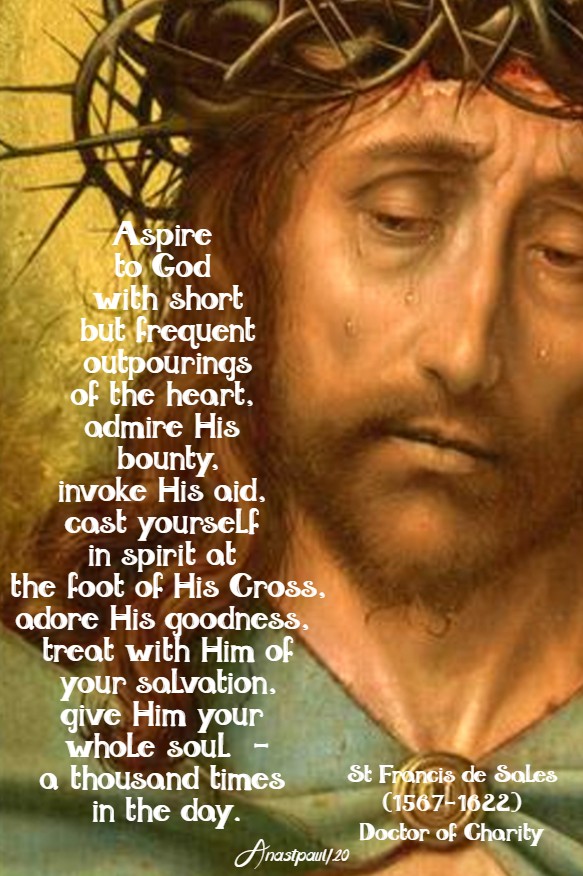
“Aspire to God with short but frequent outpourings of the heart, admire His bounty, invoke His aid, cast yourself in spirit at the foot of His Cross, adore His goodness, treat with Him of your salvation, give Him your whole soul – a thousand times in the day.”
One Minute Reflection – 13 September – Readings: Timothy 2: 1-8; Psalm 28: 2, 7-9; Luke 7: 1-10 – “Month of the Seven Sorrows of the Blessed Virgin Mary”
“And Jesus went with them but when he was only a short distance from the house, the Centurion sent friends to tell him, “Lord, do not trouble yourself, for I am not worthy to have you enter under my roof…” – Luke 7:6
REFLECTION – “I am not worthy that you should enter my house. I am not capable of receiving the Sun of Righteousness in its entirety; a little radiance from it, is sufficient for me to remove sickness, as it does for the darkness.” When our Lord heard this, He marvelled at him. God marvelled at a human being! He said to those who were near Him, “Truly, I say to you, not even in anyone among the house of Israel have I found this kind of faith.” The Centurion had brought them and he came, so that they would be advocates on his behalf. He rebuked them because they did not possess his faith. To show that the Centurion’s faith was the first of the faith of the Gentiles, He said, “Do not imagine that this faith can be limited to the cCnturion.” For he saw and believed. “Many will believe who have not seen.” “Many will come from the east and from the west and will sit at table with Abraham, Isaac and Jacob in the kingdom of heaven” – St Ephrem (306-373) Deacon, Father and Doctor of the Church – (Commentary on Tatian’s Diatessaron, 6.)
PRAYER – Lord God and holy Father, guard our faith we pray and grace us with Your mercy. Keep us ever faithful to Your precepts and bring us to Your home, to look upon Your Face. May the prayers of Your saints assist us on our journey. In your untiring life of trust in God, And may our Holy and Sorrowful Mother Mary, be our merciful protector. We ask all this through Christ, our Lord with the Holy Spirit, one God forever, amen.
Our Morning Offering – 13 September – “Month of the Seven Sorrows of the Blessed Virgin Mary”
Monday is the day in which we . begin the work week with extra devotion to the Holy Ghost, the Third Person of the Trinity to Whom we pray for enlightenment, for wisdom, for the light of inspiration. We ask the Holy Spirit to work in and through us over the course of the day and the week. To remind us we are instruments and help us to seek only the Will of God..
O God, Send forth Your Holy Spirit By St Anthony of Padua (1195-1231) Doctor of the Church
O God, send forth Your Holy Spirit into my heart that I may perceive, into my mind, that I may remember, and into my soul, that I may meditate. Inspire me to speak with piety, holiness, tenderness and mercy. Teach, guide and direct my thoughts and senses, from beginning to end. May Your grace, ever help and correct me, and may I be strengthened now with wisdom from on high, for the sake of Your infinite mercy. Amen
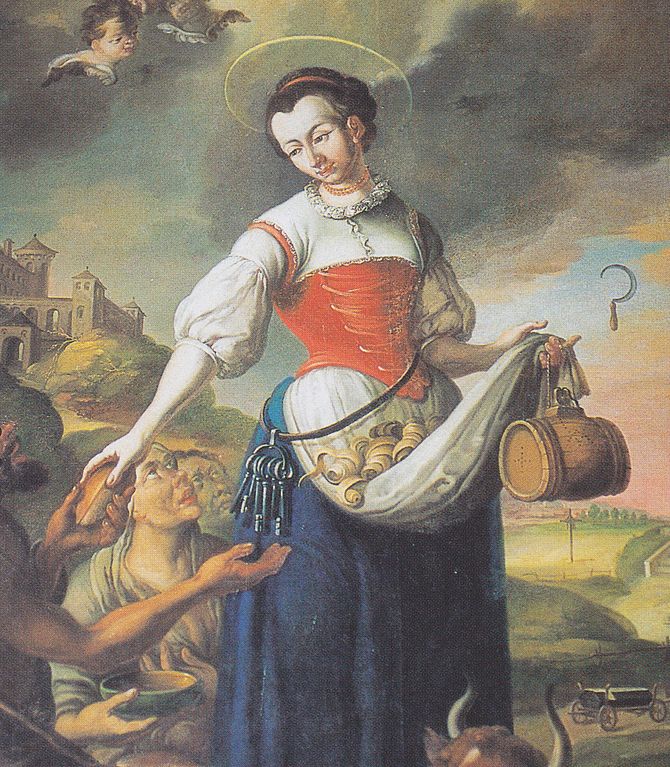
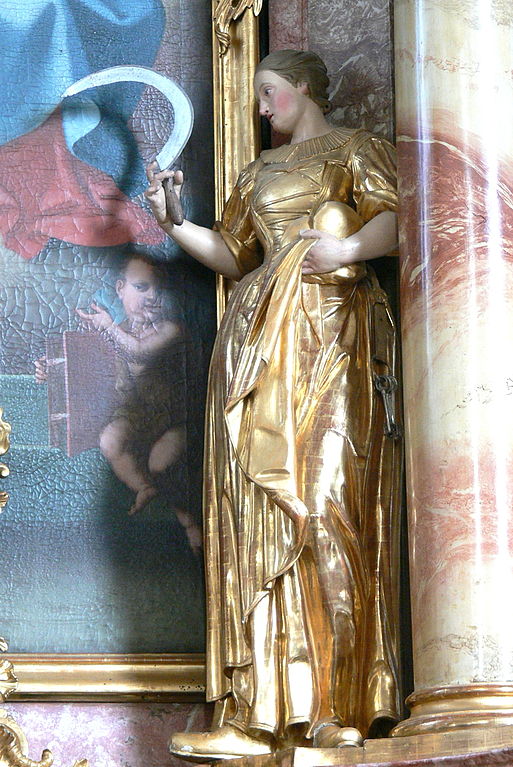
Saint of the Day – 13 September – Saint Notburga (c 1265-1313) Virgin, Laywoman, Servant, Apostle of the poor, Born in c 1265 at Rattenberg, Austria and died on 13 September 1313 at Buch , Austria. Patronages – Servants and peasants. Also known as – Notburga of Rattenberg or Notburga of Eben.
Long revered as the Patron Saint of servants and peasants, Notburga is an example of a Saint whose care for the poor, sprung not out of her own wealth but followed the example of the widow with two mites, whose overflowing generosity compelled her to give all that she had, even though it was little (Lk 21:1-4). Notburga was born circa 1265 at Rattenberg, in the present-day state of Bavaria, Germany. Notburga is a popular German Saint,and three primary legends constitute the core of her biography.
Notburga served as a cook in the family of Count Henry of Rothenburg and used the little authority she had in this position, to assist the poor in the community. Her mistress Ottilia ordered Notburga to feed the leftover food from their dinner table, to the swine but Notburga gave it instead to the hungry. When she was discovered, she instead saved some of her own food and brought it to the poor, especially on Fridays, in observance of the Friday fast and duty of penance. On one such Friday, Notburga encountered her Master on her mission to the poor and Henry commanded her to show him the food that she was carrying. Notburga obeyed but in place of food, Henry saw only wood shavings and sawdust and, when sipping the wine, he tasted only vinegar. As a result, the family dismissed her. But Otilla soon fell dangerously ill. Despite being dismissed from the family service, Notburga remained with her former mistress without pay, to nurse her through her sickness.
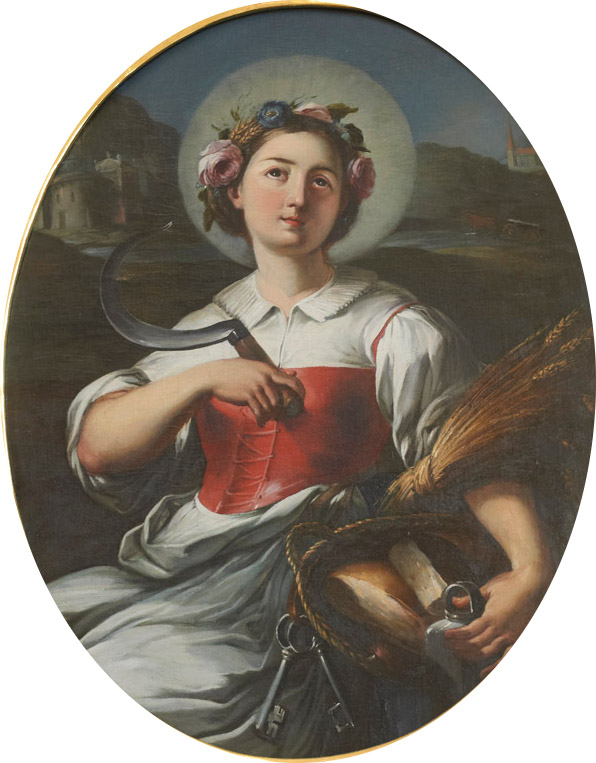
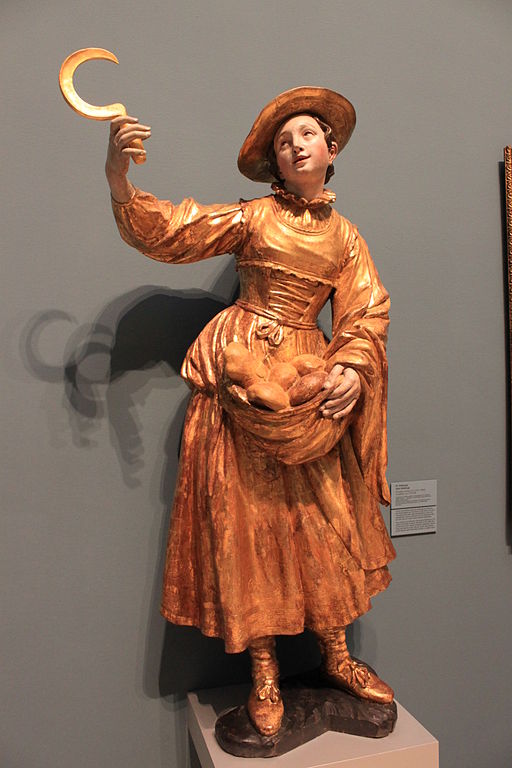
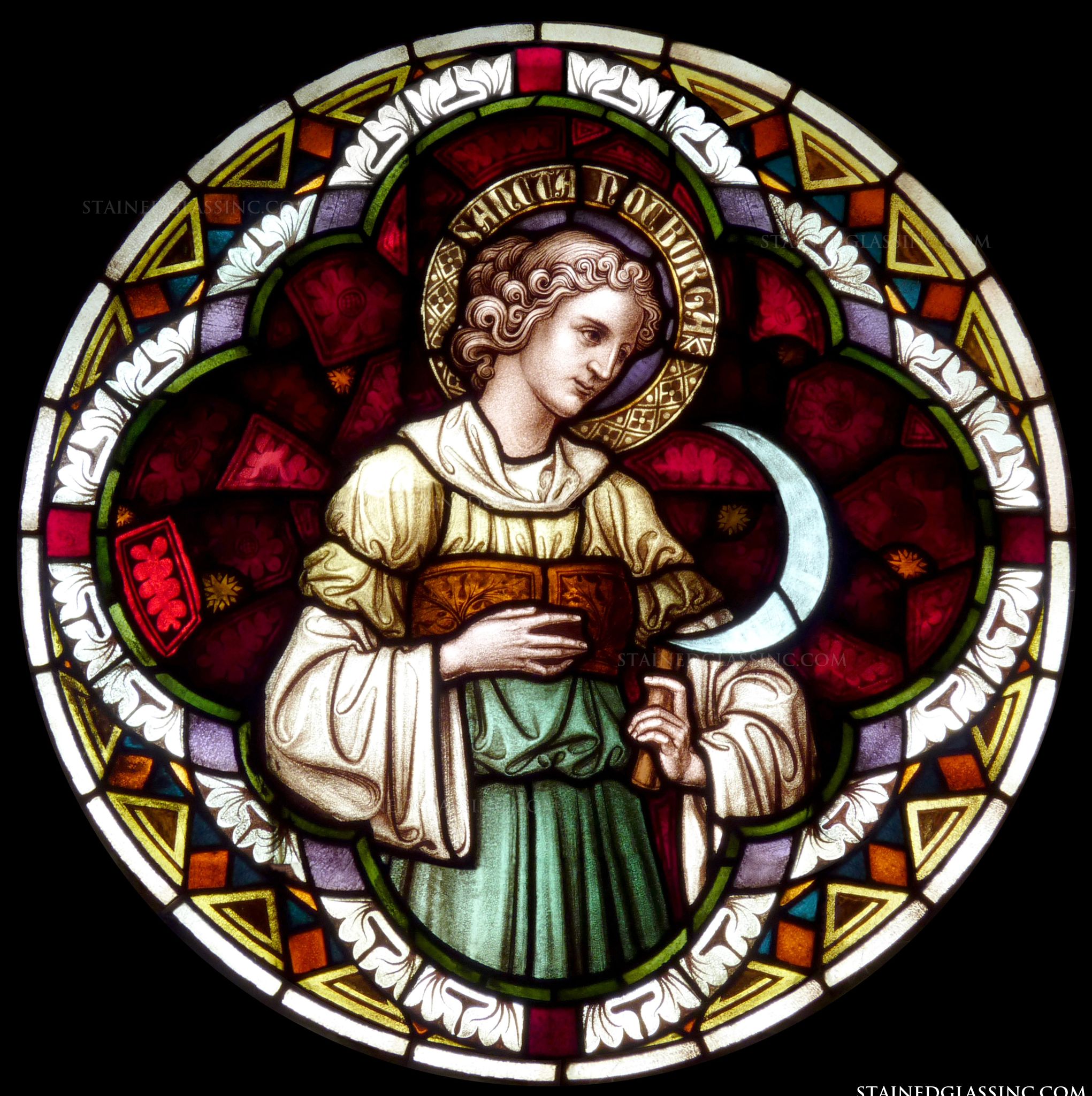
Afterward, Notburga entered the service of a peasant in the Town of Eben, with the single condition that she be permitted to go to Mass on holy days. Instead of going during the day and diminishing her hours of work, Notburga would go in the evening. One evening, her master urged her to continue working in the field instead of going to Mass. Seeking some divine assistance to make her case, Notburga threw her sickle into the air and said: “Let my sickle be judge between me and you.” Notburga’s employer watched, astonished, as the sickle remained suspended in mid-air.
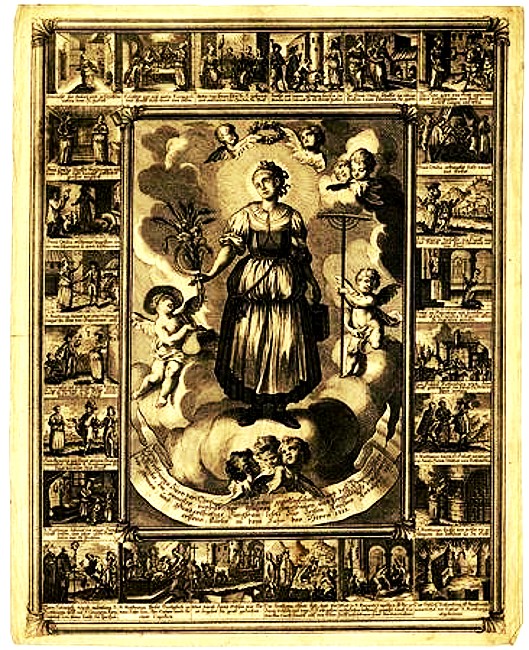
St Notburga’s life in pictures
After Notburga left his employ, Count Henry of Rothenburg’s fortunes took a serious turn for the worse. His household suffered endless hardships and bad fortune, which Henry began to ascribe to his dismissal of Notburga. In order to regain his good fortune, Henry sought out Notburga and implored her to return to work for him. Graciously, Notburga agreed and, upon her return, Henry’s estate prospered like never before.
As Notburga approached death, she instructed her Master to place her corpse on a wagon drawn by two oxen and to bury her wherever the oxen would stop. Upon her death, on 13 September 1313, Henry did as she commanded. His oxen drew the wagon to the Chapel of St Rupert near Eben, where she was laid to rest and where she still draws pilgrims who beg her ipowerful ntercession. Her cult was ratified on 27 March 1862 by Pope Pius IX and her feast is celebrated on the 13th of September. Notburga is usually represented with an ear of corn or flowers and a sickle in her hand or suspended in the air.
Saint Notburga, whose generous and faithful love inspired the rich and poor alike—pray for us!
Beata Vergine delle Grazie / Blessed Virgin of Grace, Chieri, Torino, Piedmont, Italy (1630) – Second Monday of September:
The Bubonic Plague that swept Europe in 1630 was especially deadly in northern Italy. The City of Turin lost over 70 percent of its population. The neighbouring City of Chieri appointed a commission to control the epidemic. In the absence of reliable medical solutions, the commission’s first action was to seek divine help, vowing on 26 June to build a Chapel to the Blessed Virgin of Graces in Chieri’s main Church, Santa Maria della Scala (St. Mary of the Stair). Chieri had lost 40 percent of its population. The survivors built the Chapel, where a wooden Statue of the Madonna and Child by Piedmontese sculptor, Pietro Botto, was installed in 1642. The Blessed Virgin of Graces became the Patron Saint of Chieri, which celebrates her with a Novena of special Masses and prayers and a secular program of music, dancing and food, culminating in her festa on the second Monday in September.
Dedication of the Basilicas of Jerusalem: Commemoration of the dedications of the Basilicas built on Mount Calvary and the Church of the Holy Sepulchre in Jerusalem. — St Aigulf
St Barsenorius Bl Claude Dumonet St Columbinus of Lure St Emiliano of Valence St Evantius of Autun St Gordian of Pontus Bl Hedwig of Hreford St Julian of Ankyra St Ligorius St Litorius of Tours St Macrobius St Marcellinus of Carthage Bl María López de Rivas Martínez
St Notburga (c 1265-1313) Virgin St Philip of Rome St Venerius of Tino — Martyrs of Ireland: • Blessed Edward Stapleton • Blessed Elizabeth Kearney • Blessed James Saul • Blessed Margaret of Cashel • Blessed Richard Barry • Blessed Richard Butler • Blessed Theobald Stapleton • Blessed Thomas Morrissey • Blessed William Boyton
Martyred in the Spanish Civil War including the Martyrs of Pozo de Cantavieja – 11 beati: • Blessed Bienvenido Villalón Acebrón • Blessed Emilio Antequera Lupiáñez • Blessed Florencio Arnáiz Cejudo • Blessed Francisco Rodríguez Martínez • Blessed Joaquín Gisbert Aguilera • Blessed José Álvarez-Benavides de La Torre • Blessed José Cano García • Blessed José Román García González • Blessed Juan Capel Segura • Blessed Juan Ibáñez Martín • Blessed Luis Eduardo López Gascón • Blessed Manuel Alvarez y Alvarez • Blessed Manuel Martínez Giménez • Blessed Pío Navarro Moreno • Blessed Ramiro Argüelles Hevia • Blessed Sabino Ayastuy Errasti • Blessed Teófilo Montes Calvo
Thought for the Day – 12 September – Meditations with Antonio Cardinal Bacci (1881-1971)
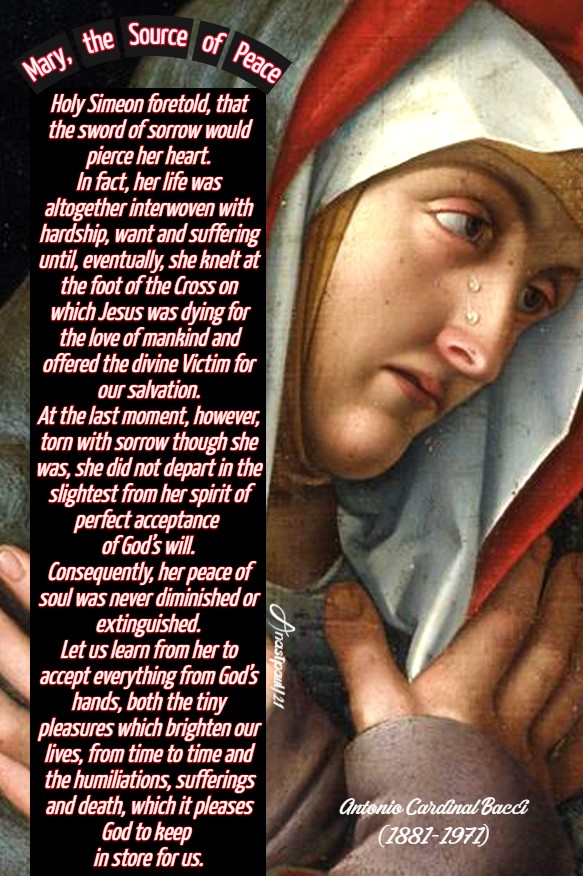
Mary, the Source of Peace
“Mary is surrounded by an atmosphere of peace. The countenance of the Virgin Mother, reflects the serenity of her soul. She was conceived free from original sin and endowed with every grace ad with every supernatural gift. There was no struggle in her, between good and evil, for this conflict is the effect of concupiscence. She never experienced the rule of sin of which St Paul complains. “I see another law in my members,” says St Paul, “warning against the law of my mind and making me prisoner to the law of sin that is in my members. Unhappy man that I am! Who will deliver me from the body of this death? The grace of God, through Jesus Christ our Lord” (Rom 7:23-25). It was quite otherwise with Mary. Her lower inclinations were completely subject to her spiritual faculties, which were, in their turn, perfectly submissive to the commands and inspirations of God. Nevertheless, while she enjoyed complete interior harmony, Mary had to endure external conflict and suffering. Holy Simeon foretold, that the sword of sorrow would pierce her heart. In fact, her life was altogether interwoven with hardship, want and suffering until, eventually, she knelt at the foot of the Cross on which Jesus was dying for the love of mankind and offered the divine Victim for our salvation. At the last moment, however, torn with sorrow though she was, she did not depart in the slightest from her spirit of perfect acceptance of God’s will. Consequently, her peace of soul was never diminished or extinguished. Let us learn from her to accept everything from God’s hands, both the tiny pleasures which brighten our lives, from time to time and the humiliations, sufferings and death, which it pleases God to keep in store for us.”
Quote/s of the Day – 12 September – Feast of the Holy Name of Mary
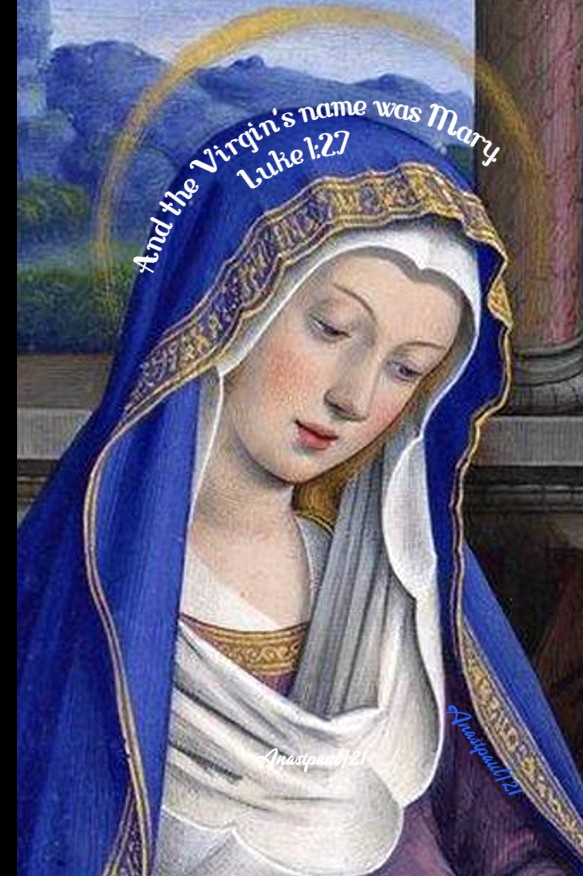
“And the Virgin’s name was Mary.”
Luke 1:27
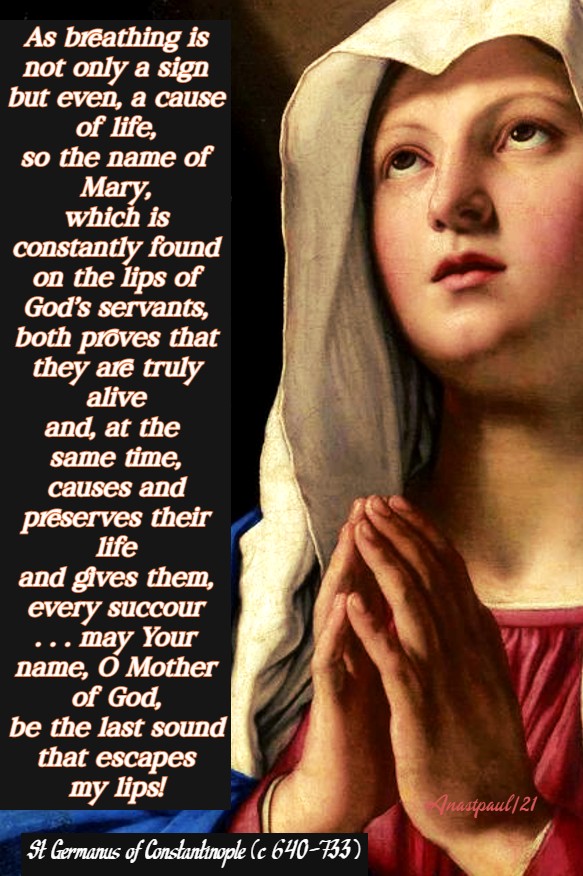
“As breathing is not only a sign but even, a cause of life, so the name of Mary, which is constantly found on the lips of God’s servants, both proves that they are truly alive and, at the same time, causes and preserves their life and gives them, every succour . . . may Your name, O Mother of God, be the last sound that escapes my lips!”
St Germanus of Constantinople (c 640-733)
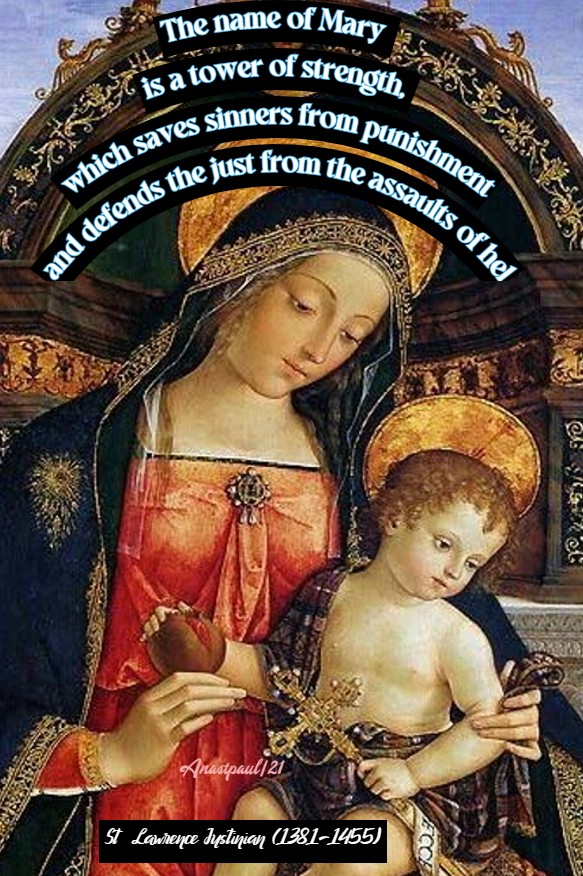
“The name of Mary is a tower of strength, which saves sinners from punishment and defends the just from the assaults of hell.”
St Lawrence Justinian (1381-1455)
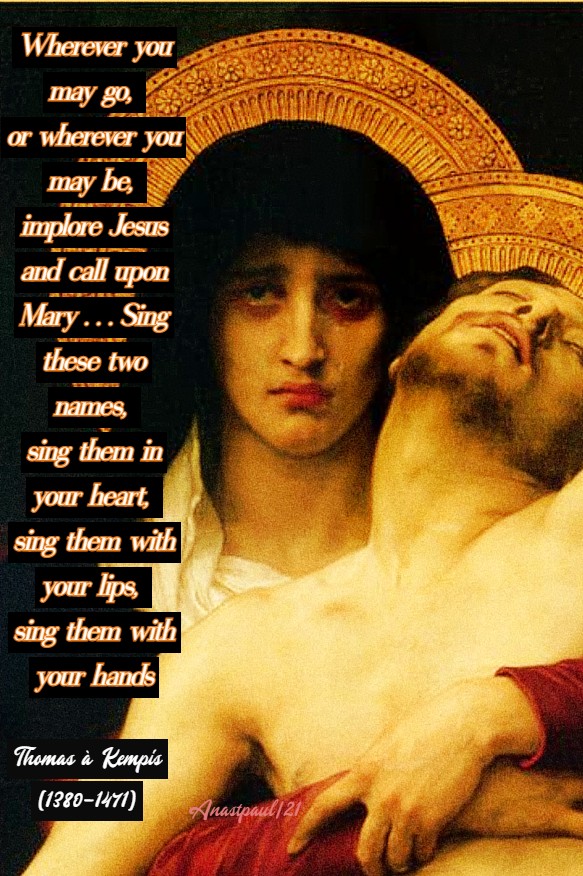
“Wherever you may go, or wherever you may be, implore Jesus and call upon Mary . . . Sing these two names, sing them in your heart, sing them with your lips, sing them with your hands.”


















You must be logged in to post a comment.