Posted in EASTER, ONE Minute REFLECTION, QUOTES of the SAINTS, The RESURRECTION, The WORD

One Minute Reflection โ€“ 7 April โ€“ Stay with us!

One Minute Reflection โ€“ 7 April โ€“ Easter Wednesday, Readings: First: Acts 3: 1-10, Psalm: Psalms 105: 1-2, 3-4, 6-7, 8-9, Gospel: Luke 24: 13-35

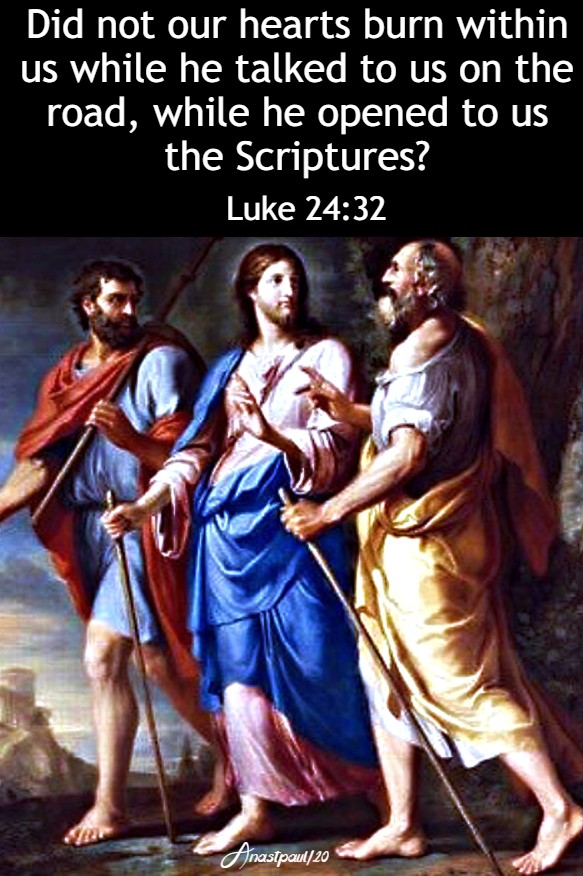
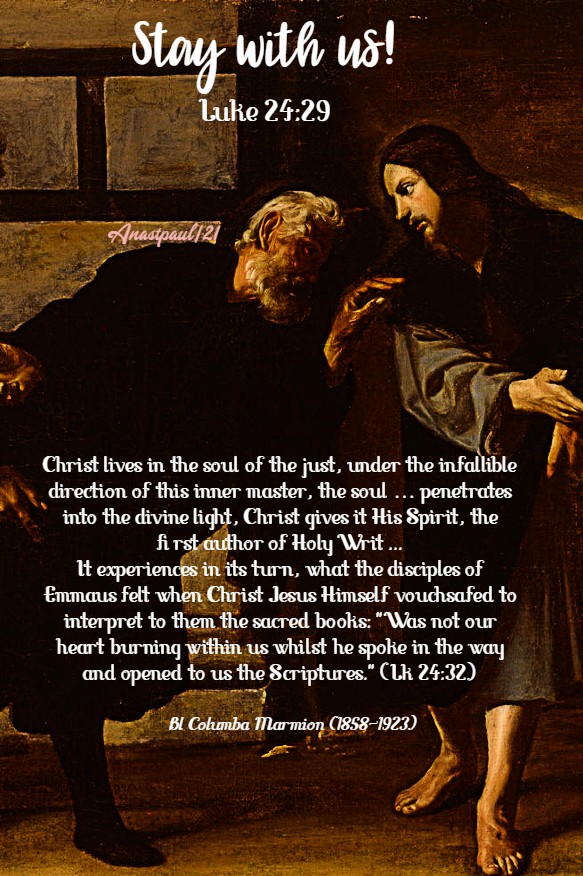
โ€œAnd they said one to the other: ‘Was not our hearts burning within us, whilst he spoke in this way and opened to us the scriptures?’โ€ – Luke 24:32

REFLECTION – โ€œWhat is the innermost reason of this fruitfulness of God’s Word? It is that Christ is ever living: He is ever the God who saves and quickens. โ€ฆ All proportion guarded, that which is true of the person of Jesus is true also of His Word and, what was true yesterday, is still true in our days.
Christ lives in the soul of the just, under the infallible direction of this inner master, the soul โ€ฆ penetrates into the divine light, Christ gives it His Spirit, the first author of Holy Writ, that it may there “search into the very depths of the infinite” (cf. 1 Cor 2:10). It contemplates God’s marvels with respect to men; it measures, by faith, the divine proportions of the mystery of Jesus and this wonderful spectacle, whereof the splendours enlighten and illuminate it, touches, draws, enraptures, uplifts, transports and transforms the soul. It experiences in its turn, what the disciples of Emmaus felt when Christ Jesus Himself vouchsafed to interpret to them the sacred books: “Was not our heart burning within us whilst he spoke in the way and opened to us the Scriptures.”

What is there astonishing, then, in the fact, that the soul, charmed and won by this living Word, “which penetrates even to the marrow” (Heb 4:12) makes the prayer of these disciples its own – “Stay with us! O Thou the incomparable Master, indefectible Light, infallible Truth, the only true Life of our souls!” Forestalling these holy desires “the Holy Spirit Himself prays for us with unspeakable groanings” which constitute true prayer, these vehement desires to possess God, to live no longer save for the Father’s glory and for that of His Son Jesus. Love becomes great and burning by contact with God, takes possession of all the powers of the soul, renders it strong and generous, to do perfectly, all the Father’s will, to give itself up ,wholly to the divine good pleasure.โ€ – Blessed Columba Marmion (1858-1923) Abbot – Monastic prayer (Christ, the Ideal of the Monk)
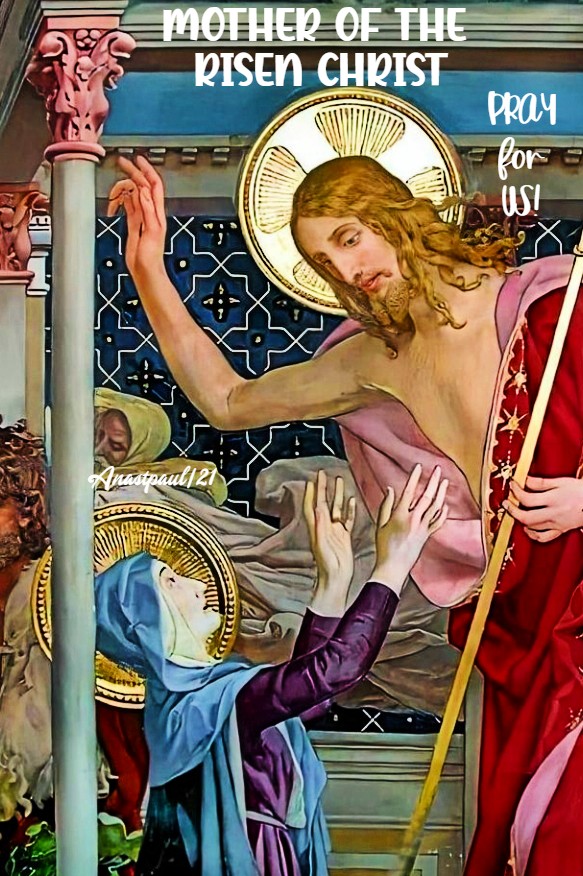
PRAYER – God our Father, you give us the joy of celebrating our Lord’s Resurrection. Let the word of the Word, our Resurrected Saviour, lead us to our eternal joy. May the intercession of all your Angels, Saints and the Blessed Mother of the Risen Christ, bring us safely home. Through Jesus Christ, with the Holy Spirit, one God with You, now and for all eternity, amen.
Epistle: Acts 3: 1-10
1 Now Peter and John went up into the temple at the ninth hour of prayer.
2 And a certain man who was lame from his motherโ€™s womb, was carried: whom they laid every day at the gate of the temple, which is called Beautiful, that he might ask alms of them that went into the temple.
3 He, when he had seen Peter and John about to go into the temple, asked to receive an alms.
4 But Peter with John fastening his eyes upon him, said: Look upon us.
5 But he looked earnestly upon them, hoping that he should receive something of them.
6 But Peter said: Silver and gold I have none; but what I have, I give thee: In the name of Jesus Christ of Nazareth, arise, and walk.
7 And taking him by the right hand, he lifted him up, and forthwith his feet and soles received strength.
8 And he leaping up, stood, and walked, and went in with them into the temple, walking, and leaping, and praising God.
9 And all the people saw him walking and praising God.
10 And they knew him, that it was he who sat begging alms at the Beautiful gate of the temple: and they were filled with wonder and amazement at that which had happened to him.

Gospel: Luke 24: 13-35
13 And behold, two of them went, the same day, to a town which was sixty furlongs from Jerusalem, named Emmaus.
14 And they talked together of all these things which had happened.
15 And it came to pass, that while they talked and reasoned with themselves, Jesus himself also drawing near, went with them.
16 But their eyes were held, that they should not know him.
17 And he said to them: What are these discourses that you hold one with another as you walk, and are sad?
18 And the one of them, whose name was Cleophas, answering, said to him: Art thou only a stranger to Jerusalem, and hast not known the things that have been done there in these days?
19 To whom he said: What things? And they said: Concerning Jesus of Nazareth, who was a prophet, mighty in work and word before God and all the people;
20 And how our chief priests and princes delivered him to be condemned to death, and crucified him.
21 But we hoped, that it was he that should have redeemed Israel: and now besides all this, today is the third day since these things were done.
22 Yea and certain women also of our company affrighted us, who before it was light, were at the sepulchre,
23 And not finding his body, came, saying, that they had also seen a vision of angels, who say that he is alive.
24 And some of our people went to the sepulchre, and found it so as the women had said, but him they found not.
25 Then he said to them: O foolish, and slow of heart to believe in all things which the prophets have spoken.
26 Ought not Christ to have suffered these things, and so to enter into his glory?
27 And beginning at Moses and all the prophets, he expounded to them in all the scriptures, the things that were concerning him.
28 And they drew nigh to the town, whither they were going and he made as though he would go farther.
29 But they constrained him; saying: Stay with us because it is towards evening, and the day is now far spent. And he went in with them.
30 And it came to pass, whilst he was at table with them, he took bread, and blessed, and brake, and gave to them.
31 And their eyes were opened, and they knew him: and he vanished out of their sight.
32 And they said one to the other: Was not our heart burning within us, whilst he spoke in this way, and opened to us the scriptures?
33 And rising up, the same hour, they went back to Jerusalem: and they found the eleven gathered together, and those that were staying with them,
34 Saying: The Lord is risen indeed, and hath appeared to Simon.
35 And they told what things were done in the way; and how they knew him in the breaking of the bread.
Posted in "Follow Me", CHRIST the WORD and WISDOM, CHRIST, the WAY,TRUTH,LIFE, Our MORNING Offering, PRAYERS of the SAINTS, SAINT of the DAY

Our Morning Offering – Easter Wednesday – The Saving Word

Our Morning Offering – Easter Wednesday and the Memorial of St John Baptiste de La Salle (1651-1719)

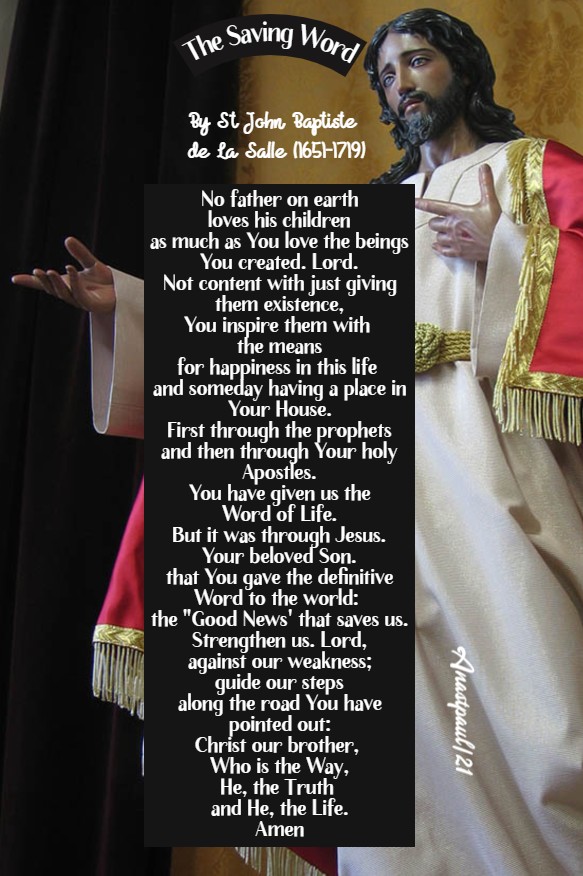
The Saving Word
By St John Baptiste de La Salle (1651-1719)

No father on earth
loves his children
as much as You love the beings You created. Lord.
Not content with just giving them existence,
You inspire them with the means
for happiness in this life
and someday, having a place in Your House.
First through the prophets
and then through Your holy Apostles.
You have given us the Word of Life.
But it was through Jesus. Your beloved Son.
that You gave the definitive Word to the world:
the “Good News’ that saves us.
Strengthen us. Lord, against our weakness;
guide our steps
along the road You have pointed out –
Christ our brother, Who is the Way,
He, the Truth and He, the Life.
Amen

Posted in JESUIT SJ, SAINT of the DAY

Saint of the Day – 7 April – Blessed Edward Oldcorne SJ (1561-1607) Priest Martyr.

Saint of the Day – 7 April – Blessed Edward Oldcorne SJ (1561-1607) Priest Martyr. Born in 1561 at York, North Yorkshire, England and died by being hanged, drawn and quartered on 7 April 1607 at Worcester, Worcestershire, England.

Edward Oldcorne (1561-1606) had a long and fruitful pastoral apostolate in England operating out of the same residence for 16 years. Ralph Ashley (birthday unknown, 1606) entered the Jesuits in Valladolid, Spain, as a brother and was urged to return to his native England to recover his good health, a prescription that worked well until he was arrested with Father Oldcorne whom he assisted for eight years.

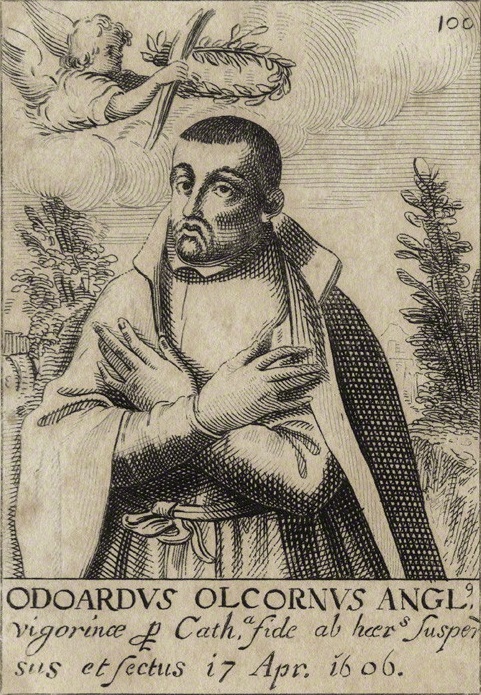
Blessed Edward Oldcore Unknown artist, line engraving, 1608

Oldcorne was born in York of a non-Catholic father and a Catholic mother, whose courage when she was imprisoned for her faith ,set an example for her son who dropped medical studies to travel to Rheims, France in August 1581 in order to study for the priesthood. In 1583 he moved on to Rome where he finished his studies and was Ordained a Priest. Soon afterwards, he asked to enter the Society of Jesus, was accepted and was allowed to complete his novitiate in a very short time because of the difficult conditions he would face, upon his return to England. He landed on a remote beach near Norfolk in November 1588 and joined a group of sailors travelling to London where he stayed with Father Henry Garnet, the Superior of the Jesuits in England. After a few months there, he was assigned to Hinlip Hall just outside Worcester ,where he would enjoy one of the longest periods of any Jesuit ministering in England during the many years of the persecution of the heretical Elizabeth.

The master of Hinlip Hall, was an ardent Catholic who was in prison and had left the property in the care of his sister, Dorothy, a Protestant, who had been at Elizabeth’s court and merely tolerated the presence of the Priest guests in her brother’s residence. Several Priests had tried, unsuccessfully, to convert her back to her family’s Catholicism but she resisted all efforts. Finally Oldcorne began fasting for her conversion; when she learned of his fast, she yielded to God’s grace and became an encouragement for many others in the shire to return to the Catholic religion. The Hall became the Jesuit’s base of operations where many people came to seek the Sacraments and hear Fr Edward’s preaching. His success was accompanied by poor health ever since he returned to England. He had a throat cancer that left him with a hoarse and painful voice but this did not keep him from preaching. He made a pilgrimage around 1591 to St. Winifred’s Shrine seeking a cure. He returned with the cancer healed.

Catholics looked forward to the end of persecution when Queen Elizabeth died and James I became King on 24 March 1603. He had promised he would be more tolerant but ,in fact, the persecution increased. Some angry Catholic laymen plotted to blow up the Houses of Parliament during the King’s visit there on 5 November 1605. Discovery of the plot intensified hatred of Catholics; the government was determined to implicate Jesuits in the so-called “Gunpowder Plot,” despite the fact, that the men behind it had already been captured. The Jesuit Superior, Father Garnet, decided to leave London and seek shelter at Hinlip Hall, which had more hiding places than any other mansion in England. Brother Nicholas Owen, (Saint), who had constructed those places, accompanied him. The two Jesuits joined Oldcorne and Ashley.

On 20 January 1606, the Sheriff of Worcestershire and over 100 men, arrived at the Hall and spent several days fruitlessly searching for the Priests. A man arrested for being involved in the plot against Parliament, tried to curry favour by telling authorities he could lead them to Father Oldcorne. Finally, on the fourth day, hunger forced Brother Ashley and his companion, St Owen, to leave their hiding place. Four more days later, the two Priests emerged weak and ill, from their hiding place. All four were imprisoned in the Tower of London.

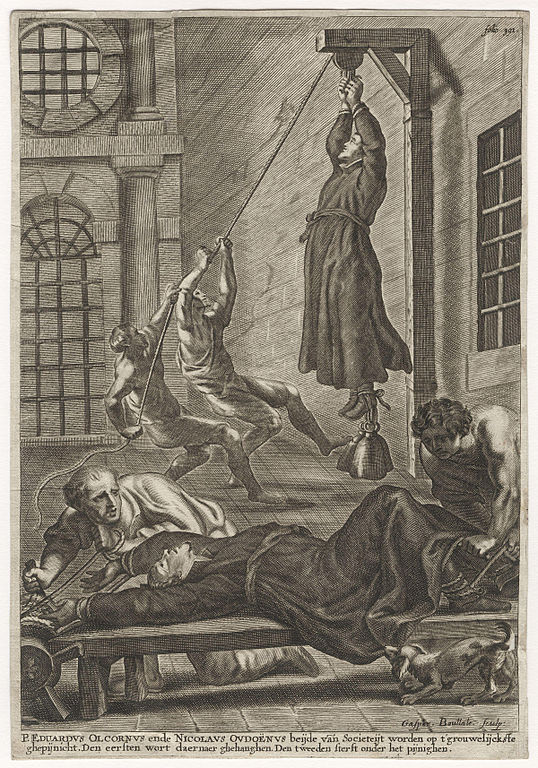
When efforts to spy on the conversation between the prisoners failed to yield any damning evidence, Fr Edward was tortured on the rack five hours a day for five consecutive days. He refused to say anything. When he and Ashley were put on trial, the Jesuit Priest denied the charge of being involved in the Gunpowder Plot so well, that the charge against him was changed to simply being a Jesuit Priest. He was found guilty of high treason and ordered to be executed. Just before he was hung, his betrayer asked for pardon, which Fr Edward readily granted. Fr Edward also prayed for the King and royal family, for his accusers, the judge and the jury who had condemned him. He was pushed from the ladder but was cut down before he was dead; he was then beheaded and quartered. Brother Ashley followed him to the gallows as did St Owen.

The Martyrdom of Blessed Edward Oldcorne, Brothr Ashley and Saint Nichola Owe

It is said, that, as Oldcorne waited on the ladder to die, Ashley kissed his feet and said, “What a happy man am I to follow in the steps of my sweet father”. Oldcorne died with the name of St Winifred on his lips. When Ashley came to die, he prayed and asked for forgiveness and noted that like Edward, he was dying for his faith and not as a traitor.

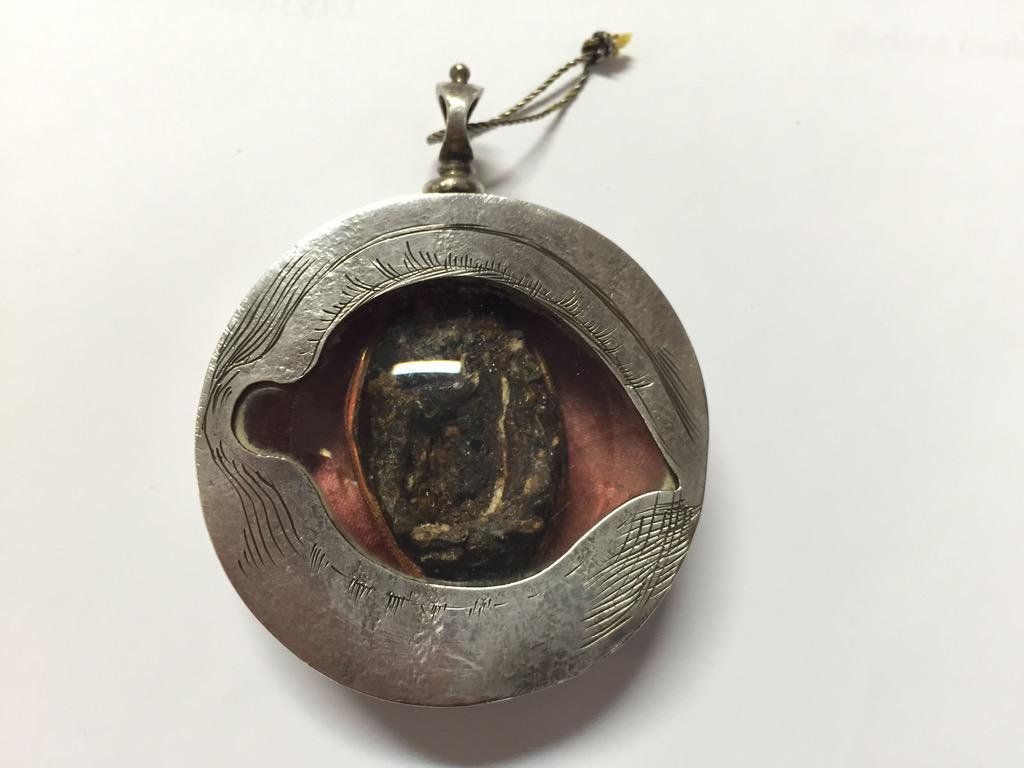
Blessed Edward’s portrait was painted after his death for the Church of the Gesรน. A number of his relics survived including one of his eyes which he lost, when the executioner decapitated him:. The force of the blow was so great, that his eye flew out of its socket. A secondary school, Blessed Edward Oldcorne Catholic College, named in his honour, is in Worcester. His right eye and the rope that bound him ,are kept as relics at Stonyhurst College. They believe, that the eye was taken by a Catholic sympathiser while his body was being parboiled after he was quartered.

Reliquary of Blessed Edward’s Right eye

Edward Oldcorne was Beatified on 15 December 1929 by Pope Pius XI.

Posted in MARIAN TITLES, SAINT of the DAY

Easter Wednesday, Santa Maria El Puig / Our Lady of Puig, Valencia, Spain and Memorials of the Saints – 7 April

Easter Wednesday – The Fourth Day in the Easter Octave +2021

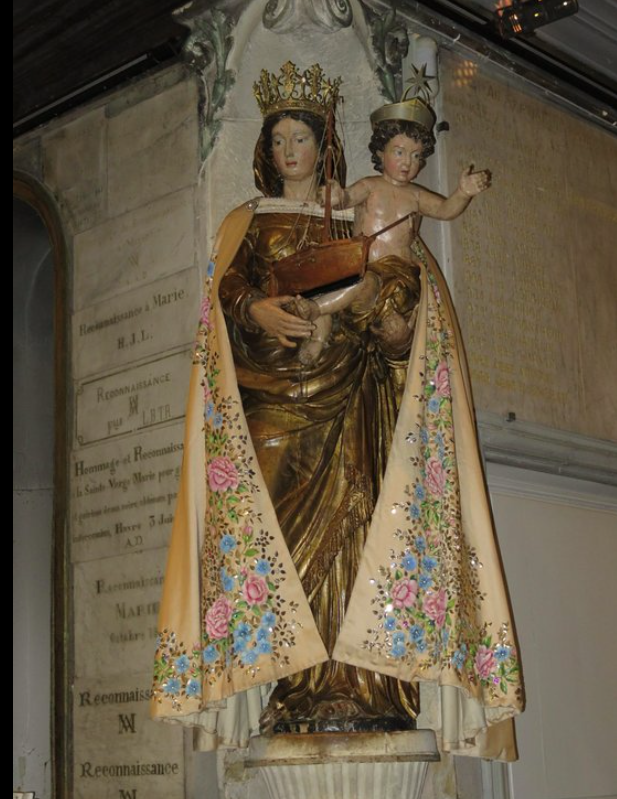
Santa Maria El Puig / Our Lady of Puig, Valencia, Spain, Patron of Valencia and the Spanish Army – 7 April:

The fortress and the Church of Our Lady of Puig are a short distance out of Valencia, both date from Roman times, when a temple of Venus stood on the hill overlooking the pleasant valley. At the coming of Christians, it was turned into a Monastery.
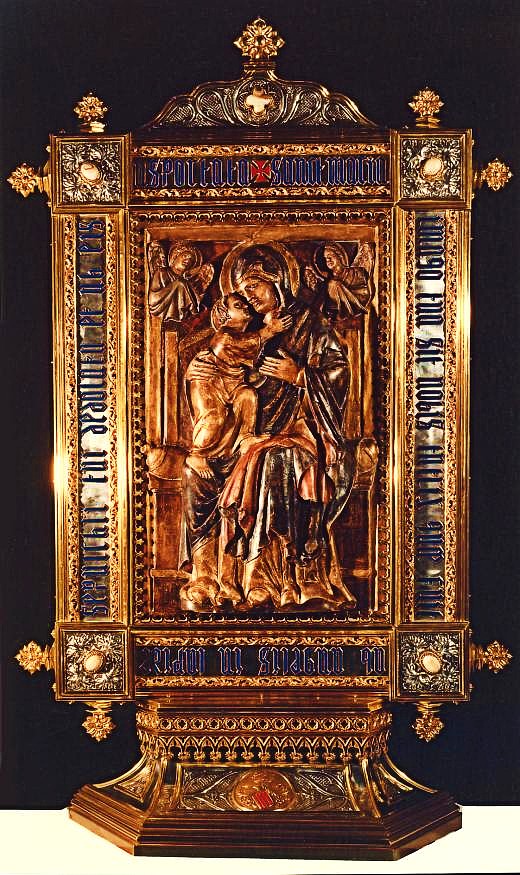
Early in history they acquired the image of Our Lady of Puig, in bas-relief, carved on a slab of marble, which was said to have formed part of the tomb of the Blessed Virgin Mary. How it got to Spain is not known with certainty, though the pious insist, that it was brought there by angels. It was the principal object of devotion at the Shrine, which thrived and grew beautiful until the ancient kingdom of the Visigoths fell to the Muslim invaders in the 8th Century.
In the year 712 the Monks sadly buried their treasure to hide it from desecration, along with the Church bell, under the floor of the Monastery, and fled for their lives. After five centuries the Moors were expelled from Valencia and the Plaque of Our Lady of Puig played a part in its liberation.

King James I of Aragon, victorious in other parts of Spain, moved on Valencia with his armies. The Moors, in an effort to trick the Christians into sending their troops to the wrong place, moved to attack the ancient fortress of Puig. This was done with great secrecy but Our Lady warned the Christians and helped them, to win the desperate battle.
Saint Peter Nolasco, who helped to found the Society for the Redemption of Captives under Our Ladyโ€™s guidance, was in Puig when the battle took place. One of the soldiers came to him and reported that when he had been on night guard, he had seen strange lights over the old ruined Church of Our Lady of Puig; sometimes the stars seemed to come down from the sky and circle around the building. Especially on Saturday nights there were bright lights around the mount of the Church.

The Battle of Puig

Saint Peter suggested to the King, that all the soldiers should receive the Sacraments and pray, to know what God was trying to tell them. After this had been done, he led them to the top of the hill and directed them to dig under the floor of the old Monastery. Here they found the Plaque and the bell, buried for 500 years, but unharmed.
The Plaque was first carried to the Chapel of the castle fortress. As soon as possible, a new Church was built on the mountain and given into the charge of the Mercedarians under Saint Peter Nolasco.
The ancient bell which was dated as being cast in 660 and was placed in the tower of the Church. This bell was said to be powerful against storms and always rung of its own accord in time of trouble. In 1550 the bell broke and a new one was cast from the fragments of the old one.

The Church built by Saint Peter Nolasco was called โ€œthe angelic chamberโ€ because angels were often heard singing there in the night, especially on Saturdays.
Our Lady of Puig has been the Patroness of Valencia for hundreds of years and not longer ago than 1935, was honoured by the Spanish Armies who have carried her image in so many successful battles. She was at this time named as a General in the Army and invoked as Patroness in the Christian War against Communism.

St John Baptiste de La Salle (1651-1719) (Memorial)
Biography โ€“ https://anastpaul.wordpress.com/2018/04/07/saint-of-the-day-7-april-st-john-baptiste-de-la-salle-1651-1719-the-father-of-modern-education/

St Albert of Tournai
Bl Alexander Rawlins
St Brenach of Carn-Engyle
St Calliopus of Pompeiopolis
Bl Cristoforo Amerio
St Cyriaca of Nicomedia
St Donatus of North Africa
Blessed Edward Oldcorne SJ (1561-1607) Priest Martyr
St Epiphanius the Martyr
St Finian of Kinnitty
St George the Younger
St Gibardus of Luxeuil
St Goran
St Guainerth
St Hegesippus of Jerusalem
St Henry Walpole
Blessed Maria Assunta Pallotta (1878-1905)
About Bl Maria Assunta:

https://anastpaul.com/2019/04/07/saint-of-the-day-7-april-blessed-maria-assunta-pallotta-1878-1905/
St Peleusius of Alexandria
St Peter Nguyen Van Luu
Bl Ralph Ashley
St Rufinus the Martyr
St Saturninus of Verona
Bl Ursuline of Parma
โ€”
Martyrs of Pentapolis โ€“ 4 saints: A bishop, deacon and two lectors at Pentapolis, Lybia who for their faith were tortured, had their tongues cut out, and were left for dead. They survived and each died years later of natural causes; however, because they were willing to die and because there were attempts to kill them, they are considered martyrs. We know little else except their names โ€“ Ammonius, Irenaeus, Serapion and Theodore c 310 at Pentapolis, Lybia.
Martyrs of Sinope โ€“ 200 saints: 200 Christian soldiers martyred together for their faith. We donโ€™t even have their names. They were martyred in Sinope, Pontus, Asia Minor (in modern Turkey).

Posted in EASTER, MEDITATIONS - ANTONIO CARD BACCI, QUOTES on CONVERSION, QUOTES on GRACE, QUOTES on REPENTANCE, QUOTES on SIN, QUOTES on VIRTUE, The RESURRECTION

Thought for the Day โ€“ 6 April โ€“ The Meaning of Easter

Thought for the Day โ€“ 6 April โ€“ Meditations with Antonio Cardinal Bacci (1881-1971)

The Meaning of Easter

โ€œToday the Church adorns herself in festival array.
Gone are the lengthy lamentations of Holy Saturday and the sorrowful recitations of the Passion and in their place, is the glad cry of Alleluia, the hymn of vitory over death and sin.
The true joy of Easter, lies, not merely in external celebration, however but in the spiritual gladness of the soul.
As Jesus has conquered death and sin, so we must purify ourselves of every trace of guilt by a good confession and must be sure, that it will result in a practical renovation of our lives.
We should approach Jesus in the Blessed Eucharist with greater fervour and humility and with greater trust in His goodness and mercy.
When we have received Him into our hearts, we should ask Him to renew and transform us in Himself.
He is everything and we are nothing without Him.
He is strong, we are weak.
We are capable only of feeble desires to do good but He can make them effective by His grace.
We should not be satisfied with forming general resolutions when we go to confession and receive Holy Communion at Easter.
We should examine the depths of our soul and discover the sin which we are most accustomed to commit and the virtue which we are principally lacking.
As a result of our investigation, we should form a particular resolution to combat this sin and to practise this virtue.
It is only in this way, that our celebration of Easter can inaugurate the beginning of a genuine self-renewal which will gain momentum daily, until it becomes a true spiritual resurrection.
It will be a hard battle, which will necessitate a constant vigilance and a readiness to begin again, everytime we realise, that we have fallen.
It will require an unfailing spirit of prayer but, the final victory, will bring us such happiness, that worldly pleasures will seem empty and illusory, by comparison.โ€

Antonio Cardinal Bacci

Posted in DOCTORS of the Church, EASTER, FATHERS of the Church, The RESURRECTION, The WORD

Quote/s of the Day – 6 April – Easter Tuesday – Alleluia, alleluia, alleluia!!!

Quote/s of the Day – 6 April – Easter Tuesday

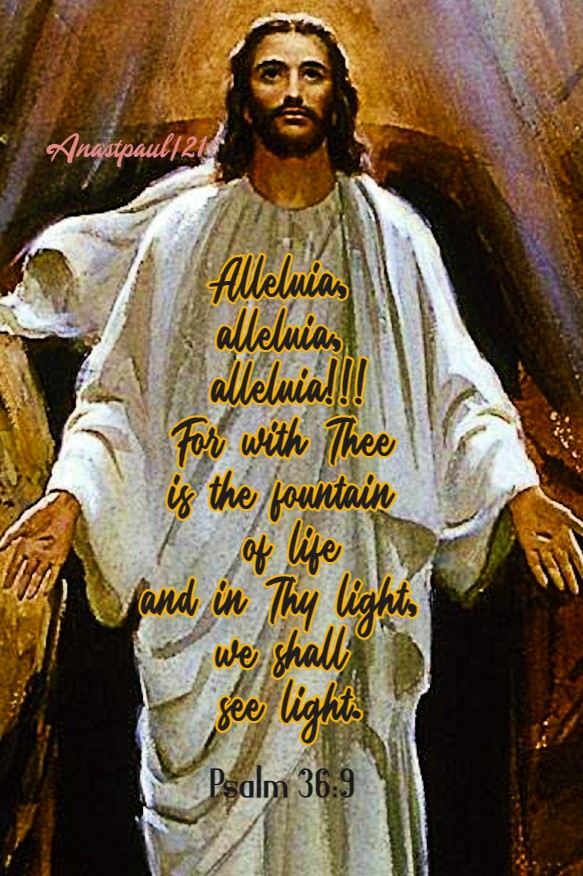
Alleluia, alleluia, alleluia!!!
For with thee is the fountain of life
and in thy light, we shall see light.

Psalm 36:9

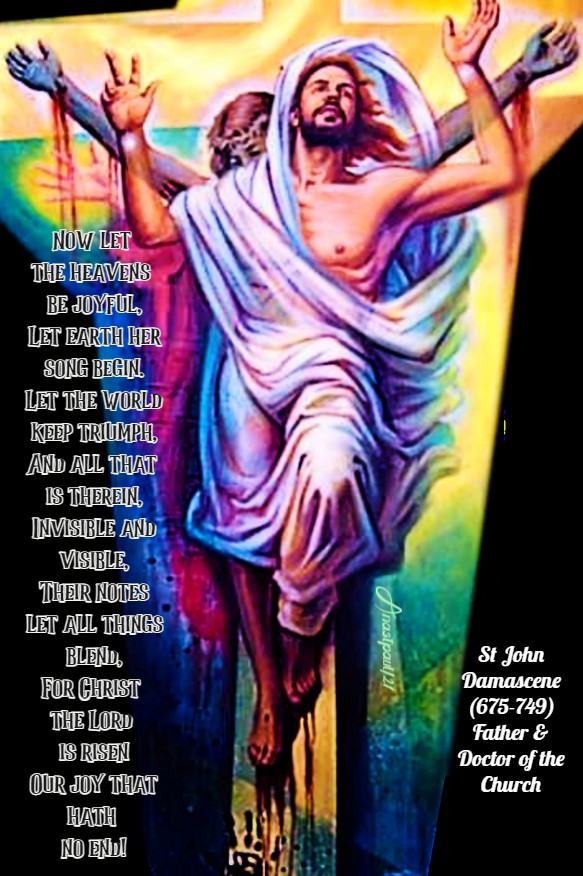
โ€œNow let the heavens be joyful,
Let earth her song begin.
Let the world keep triumph,
And all that is therein,
Invisible and visible,
Their notes let all things blend,
For Christ the Lord is risen
Our joy that hath no end!โ€

St John Damascene (675-749)
Father & Doctor of the Church

Posted in DOCTORS of the Church, FATHERS of the Church, ONE Minute REFLECTION, QUOTES on FAITH, The WORD

One Minute Reflection – 6 April – Easter Tuesday – ‘We all touch Him who believe in Him.’

One Minute Reflection – 6 April – Easter Tuesday Third Day in the Easter Octave, Readings: First: Acts 2: 36-41, Psalm: Psalms 33: 4-5, 18-19, 20 and 22, Gospel: John 20: 11-18

Some have requested at least the Epistle and the Gospel in full each day – I am, therefore, posting them below from the Douay-Rheims, Challoner translation. If anyone knows of a link to the original English translation, with chapter and verse, please share it with me. And please let me know whether I should continue to post the readings here.

โ€œDo not touch me, for I am not yet ascended to my Father.โ€ – John 20:17

REFLECTION โ€œTouch me not for I have not yet ascended to my Father.โ€ What are we to say? That Christ is better touched by faith than by flesh. Touching Christ by faith is truly to touch Him. This is what the woman suffering from an issue of blood did: – she drew near to Christ, full of faith and touched His robe โ€ฆ And our Lord, hemmed in by the crowd, was touched by no one but this woman โ€ฆ because she believed (Mk 5:25 f).

My brethren, Jesus is in heaven today. While He was living among His disciples, clothed visibly in flesh and possessing a body that could be touched, He was both seen and touched. But today, now He is seated at the right hand of the Father, which of us can touch Him? And yet, woe to us if we do not touch Him. We all touch Him who believe in Him. He is far away in heaven and the distance separating Him from us cannot be measured. But believe and you touch Him. What am I saying? You touch Him? If you believe, then you have with you, the One in Whom you believe โ€ฆ

Do you know how Mary wished to touch Him? She searched for Him among the dead and did not believe He would rise again: โ€œThey have taken my Lord from the tomb!โ€ (Jn 20:2). She wept for a man โ€ฆ โ€œTouch me not for I have not yet ascended to my Father.โ€ You touch me before I have ascended to the Father and see no more than a man in me. What will that sort of faith give you? โ€œLet me ascend to the Father. I have never left Him but, for your sake, I will ascend provided you believe me to be equal to the Father.โ€ Our Lord Jesus Christ ,did not leave His Father when He descended from His side. So neither has He forsaken us, when He went up again from our side. For at the very time of His going up and sitting at the right hand of the Father, He said to His disciples: โ€œI am with you always, until the end of the ageโ€ (Mt 28:20).โ€ – St Augustine (354-430) – Bishop of Hippo, Father & Doctor of the Church – 1st sermon for Holy Thursday, Morin Guelferbytanus 13 ; PLS 2, 572

PRAYER – Lord our God and Father, You have brought us solace through the Easter mysteries. Continue to be bountiful to Your people and lead us to perfect freedom, so tht the joy that gladdens our way on earth, will be fulfilled in heaven. May the prayers of the Blessed Virgin grant us strength on our journey. Through Your Son, our Lord and Redeemer, Jesus the Risen Christ, in the unity of the Holy Spirit, one God with Your, now and forever, amen.

First Reading: Acts 2: 36-41
36 Therefore let all the house of Israel know most certainly, that God hath made both Lord and Christ, this same Jesus, whom you have crucified.
37 Now when they had heard these things, they had compunction in their heart, and said to Peter, and to the rest of the apostles: What shall we do, men and brethren?

Gospel: John 20: 11-18
11 But Mary stood at the sepulchre without, weeping. Now as she was weeping, she stooped down, and looked into the sepulchre,
12 And she saw two angels in white, sitting, one at the head, and one at the feet, where the body of Jesus had been laid.
13 They say to her: Woman, why weepest thou? She saith to them: Because they have taken away my Lord; and I know not where they have laid him.
14 When she had thus said, she turned herself back, and saw Jesus standing; and she knew not that it was Jesus.
15 Jesus saith to her: Woman, why weepest thou? whom seekest thou? She, thinking it was the gardener, saith to him: Sir, if thou hast taken him hence, tell me where thou hast laid him, and I will take him away.
16 Jesus saith to her: Mary. She turning, saith to him: Rabboni (which is to say, Master).
17 Jesus saith to her: Do not touch me, for I am not yet ascended to my Father. But go to my brethren, and say to them: I ascend to my Father and to your Father, to my God and your God.
18 Mary Magdalen cometh, and telleth the disciples: I have seen the Lord, and these things he said to me.

Posted in Our MORNING Offering, PRAYERS, PRAYERS of the SAINTS

Our Morning Offering โ€“ 6 April โ€“ Easter Tuesday – A Song of Praise

Our Morning Offering โ€“ 6 April โ€“ Easter Tuesday

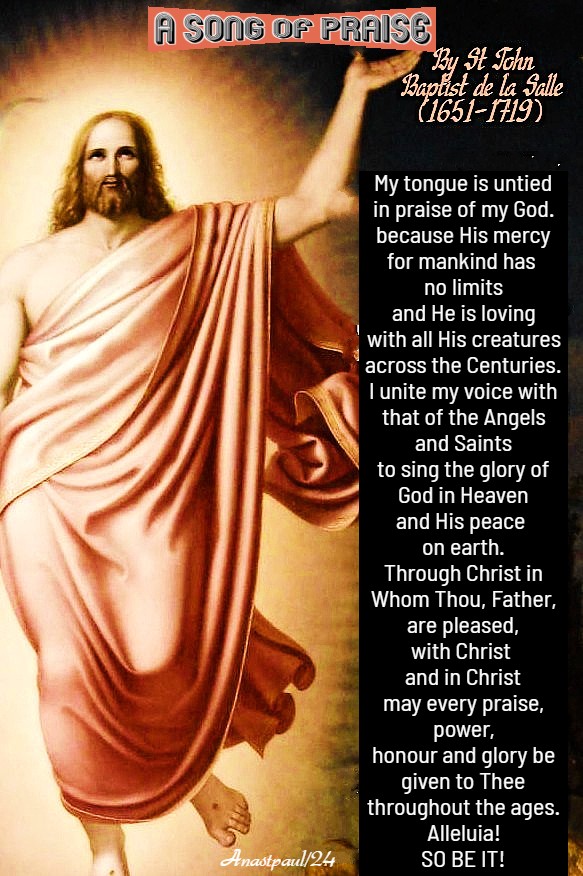
A Song of Praise
St John Baptiste de la Salle (1651-1719)

(Instructions and Prayers Ch 17. 81-82)

My tongue is untied
in praise of my God.
because His mercy
for mankind has no limits
and He is loving
with all His creatures across the Centuries.
I unite my voice with that of the Angels and Saints
to sing the glory of God in Heaven
and His peace on earth.
Through Christ in Whom Thou, Father, are pleased,
with Christ and in Christ
may every praise, power,
honour and glory be given to Thee
throughout the ages.
Alleluia!
SO BE IT
!

Posted in EUCHARISTIC Adoration, EUCHARISTIC ADORATION and Nocturnal, FEASTS and SOLEMNITIES, SAINT of the DAY, The HOLY EUCHARIST / The HOLY MASS

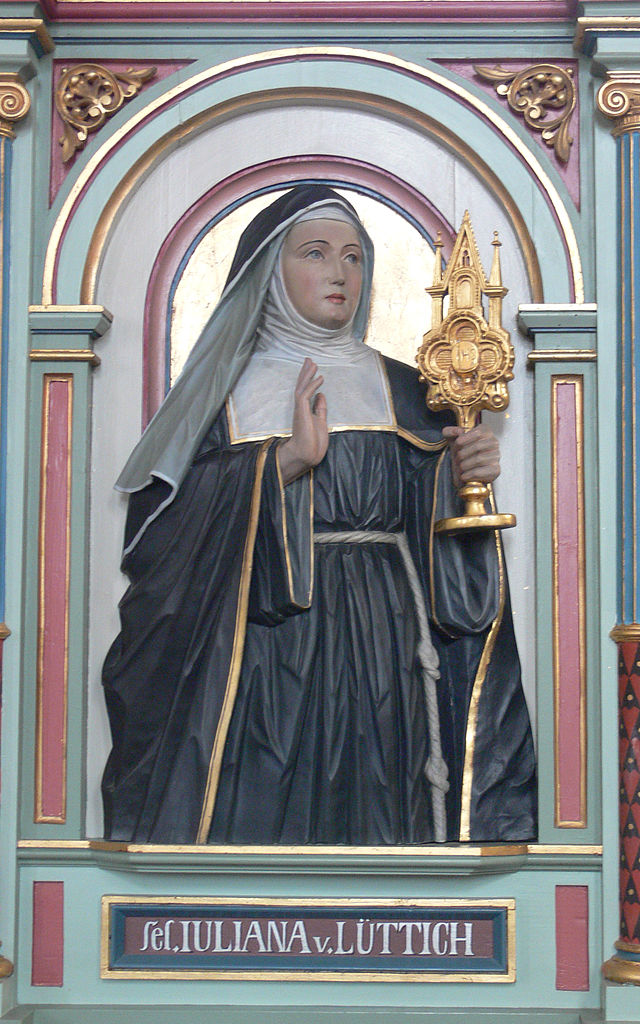
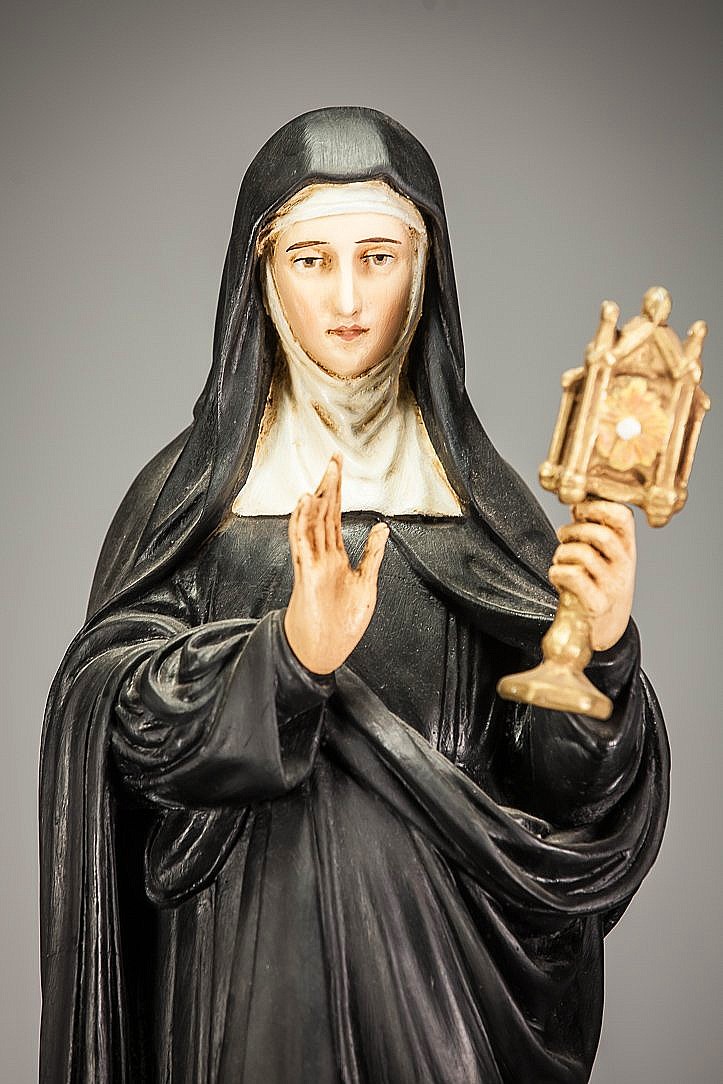
Saint of the Day – 6 April – Saint Juliana of Cornillon (c 1192-1258) “Apostle of the Blessed Sacrament.”

Saint of the Day – 6 April – Saint Juliana of Cornillon (c 1192-1258) Nun, Mystic “Apostle of the Blessed Sacrament.” Born in c 1192 or 1103 at Retinnes, Flanders, Belgium and died on 5 April 1258 of natural causes. Patronage – Devotion to the Blessed Sacrament. St Juliana is little known but the Church is deeply indebted to her, not only because of the holiness of her life but also because, with her great fervour, she contributed to the institution of one of the most important solemn Liturgies of the year, namely the Solemnity of Corpus Christi. She is also known as Juliana of Mount Cornillon, Julliana, Juliana of Liรจge.

We know several facts about her life, mainly from a Biography that was probably written by a contemporary cleric; it is a collection of various testimonies of people who were directly acquainted with the Saint.

Juliana was born near Liรจge, Belgium between 1191 and 1192. It is important to emphasise this place because at that time, the Diocese of Liรจge was, so to speak, a true โ€œEucharistic Upper Room.โ€ Before Juliana, eminent theologians had illustrated the supreme value of the Sacrament of the Eucharist and, again in Liรจge, there were groups of women generously dedicated to Eucharistic worship and to fervent communion. Guided by exemplary Priests, they lived together, devoting themselves to prayer and to charitable works.

Orphaned at the age of five, Juliana, together with her sister Agnes, was entrusted to the care of the Augustinian nuns at the Convent and leprosarium of Mont-Cornillon. She was taught mainly by a Sister called โ€œSapienzaโ€ [wisdom], who was in charge of her spiritual development to the time Juliana received the religious habit and thus became an Augustinian Nun.

She became so learned that she could read the words of the Church Fathers, of St Augustine and St Bernard in particular, in Latin. In addition to a keen intelligence, Juliana showed a special propensity for contemplation from the outset. She had a profound sense of Christโ€™s presence, which she experienced by living the Sacrament of the Eucharist especially intensely and by pausing frequently to meditate upon Jesusโ€™ words: โ€œAnd lo, I am with you always, to the close of the ageโ€ (Mt 28:20).

When Juliana was 16 she had her first vision, which recurred subsequently several times during her Eucharistic adoration. Her vision presented the moon in its full splendour, crossed diametrically by a dark stripe. The Lord made her understand the meaning of what had appeared to her. The moon symbolized the life of the Church on earth, the opaque line, on the other hand, represented the absence of a liturgical feast for whose institution Juliana was asked to plead effectively, namely, a feast in which believers would be able to adore the Eucharist so as to increase in faith, to advance in the practice of the virtues and to make reparation for offences, to the Most Holy Sacrament.

The vision of St Juliana

Juliana, who in the meantime had become Prioress of the convent, kept this revelation that had filled her heart with joy a secret for about 20 years. She then confided it to two other fervent adorers of the Eucharist, Blessed Eva, who lived as a hermit, and Isabella, who had joined her at the Monastery of Mont-Cornillon. The three women established a sort of โ€œspiritual allianceโ€ for the purpose of glorifying the Most Holy Sacrament. They also chose to involve a highly regarded Priest, John of Lausanne, who was a Canon of the Church of St Martin in Liรจge. They asked him to consult theologians and clerics on what was important to them. Their affirmative response was encouraging.

What happened to Juliana of Cornillon occurs frequently in the lives of Saints. To have confirmation that an inspiration comes from God, it is always necessary to be immersed in prayer to wait patiently, to seek friendship and exchanges with other good souls and to submit all things to the judgement of the Shepherds of the Church. It was in fact Bishop Robert Torote, Liรจge who, after initial hesitation, accepted the proposal of Juliana and her companions and first introduced the Solemnity of Corpus Christi in his Diocese. Later other Bishops following his example and instituted this Feast in the territories entrusted to their pastoral care.

However, to increase their faith the Lord often asks Saints to sustain trials. This also happened to Juliana who had to bear the harsh opposition of certain members of the clergy and even of the Superior on whom her Monastery depended. Of her own free will, therefore, Juliana left the Convent of Mont-Cornillon with several companions. For 10 years โ€” from 1248 to 1258 โ€” she stayed as a guest at various Monasteries of Cistercian sisters. She edified all with her humility, she had no words of criticism or reproach for her adversaries and continued zealously to spread Eucharistic worship.

She died at Fosses-La-Ville, Belgium, in 1258. In the cell where she lay, the Blessed Sacrament was exposed and, according to her biographerโ€™s account, Juliana died contemplating with a last effusion of love Jesus in the Eucharist, Whom she had always loved, honoured and adored.

Jacques Pantalรฉon of Troyes was also won over to the good cause of the Feast of Corpus Christi during his ministry as Archdeacon in Liรจges. It was he, who, having become Pope with the name of Urban IV in 1264, instituted the Solemnity of Corpus Christi on the Thursday after Pentecost as a Feast of precept for the universal Church.

In the Bull of its institution, entitled Transiturus de hoc mundo, (11 Aug. 1264), Pope Urban even referred discreetly to Juliana’s mystical experiences, corroborating their authenticity. He wrote: โ€œAlthough the Eucharist is celebrated solemnly everyday, we deem it fitting, that at least once a year. it be celebrated with greater honour and a solemn commemoration.

Indeed we grasp the other things we commemorate with our spirit and our mind but this does not mean, that we obtain their real presence. On the contrary, in this sacramental commemoration of Christ, even though in a different form, Jesus Christ is present with us in His own substance. While He was about to ascend into Heaven, He said โ€˜And lo, I am with you always, to the close of the ageโ€™ (Matthew 28:20)โ€.

The Pontiff made a point of setting an example by celebrating the solemnity of Corpus Christi in Orvieto, the town where he was then residing. Indeed, he ordered that the famous Corporal with the traces of the Eucharistic miracle which had occurred in Bolsena the previous year, 1263, be kept in Orvieto Cathedral โ€” where it still is today.

While a Priest was consecrating the bread and the wine, he was overcome by strong doubts about the Real Presence of the Body and Blood of Christ in the Sacrament of the Eucharist. A few drops of blood began miraculously to ooze from the consecrated Host, thereby confirming what our faith professes.

Urban iv asked one of the greatest theologians of history, St Thomas Aquinas โ€” who at that time was accompanying the Pope and was in Orvieto โ€” to compose the texts of the Liturgical Office for this great Feast. They are masterpieces, still in use in the Church today, in which theology and poetry are fused into glorious prayers. These texts pluck at the heartstrings in an expression of praise and gratitude to the Most Holy Sacrament, while the mind, penetrating the mystery with wonder, recogniSes in the Eucharist, the Living and Real Presence of Jesus, of His Sacrifice of Love, that reconciles us with the Father and gives us salvation.

Although, after the death of Urban iv the celebration of the Feast of Corpus Christi was limited to certain regions of France, Germany, Hungary and Northern Italy, it was another Pontiff, John XXII who in 1317, re-established it for the universal Church. Since then, the Feast experienced a wonderful development and is still deeply appreciated by the Catholic faithful.

In remembering St Juliana of Cornillon, let us also renew our faith in the Real Presence of Christ in the Eucharist. As we are taught โ€œJesus Christ is present in the Eucharist in a unique and incomparable way. He is present in a true, real and substantial way, with His Body and His Blood, with His Soul and His Divinity. In the Eucharist, therefore, there is present in a sacramental way, that is, under the Eucharistic Species of bread and wine, Christ whole and entire, God and Manโ€ (n. 282). (Excerpt – Pope Benedict XVI)

St Juliana was Canonised in 1869 by Blessed Pope Pius IX.

The Saints never failed to find strength, consolation and joy in the Eucharistic encounter. Let us repeat before the Lord present in the Most Blessed Sacrament ,the words of the Eucharistic hymn โ€œAdoro te devoteโ€: [Devoutly I adore Thee]: Make me believe ever more in you, โ€œDraw me deeply into faith, / Into Your hope, into Your love.โ€

Posted in MARIAN TITLES, SAINT of the DAY

Easter Tuesday, Notre-Dame de la Conception / Our Lady of the Conception, Flanders (1553) and Memorials of the Saints – 6 April

Easter Tuesday – The Third Day in the Easter Octave

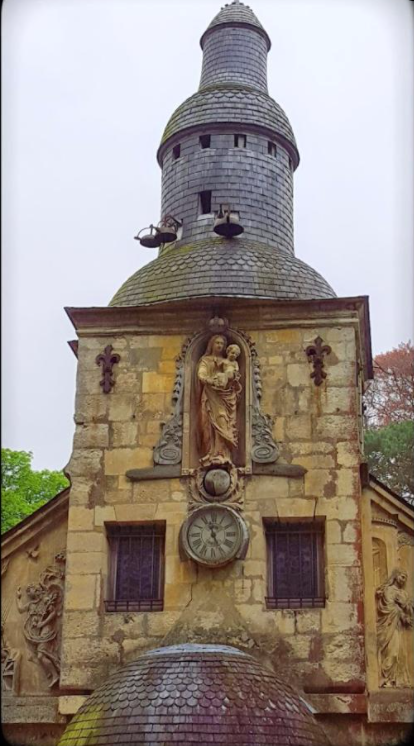
Notre-Dame de la Conception / Our Lady of the Conception, Flanders (1553) – 6 April:

The Abbot Orsini wrote: โ€œOur Lady of the Conception, at the Capuchin Convent of Donay, in Flanders, where is seen a picture of the Immaculate Conception, which was miraculously preserved from fire, in the year 1553.โ€

Donay, now known as Douai in France, was once considered a thriving and populous region of Flanders during the Middle Ages, markedly famous, for its textile market. It is now a commune in northern France located on the Scarpe River 25 kilometers from Arras. The town of Douai is also known as Douay or Doway in the English language.
The County of Flanders became part of the domain of the Duke of Burgundy in the year 1384 and then in 1477, became a possession of the Habsburgโ€™s. The Town was taken by the French army and became a permanent part of France in the year 1668. During successive sieges in 1710 and 1712, the City was almost completely razed to the ground by the British Army.
The University of Douai was founded in 1562. There was a Benedictine Priory founded at Douai in 1605. In the year 1609, a translation of the Old Te,stament was published there and combined with the recently published New Testament from Rheims, to create the famous Douay-Rheims Bible that is still considered to be the standard for the complete Catholic Bible.
It is certain that the French Revolution played a great deal of havoc in the region and the Town was heavily damaged during both World Wars.
In Butlerโ€™s lives of the Saints, there is a reference to a John Woodcock OFM, born in 1603. According to this history, he joined the English Franciscans at Douai and was clothed there in 1631. For some time he lived as a Chaplain and confessor and became a zealous worker on the English mission for many years but suffered from continual sickness and eventually retired to the Convent at Douai. This is the only reference I could find to the existence of a Capuchin Convent at Donay at the time.
There is also mention of a Capuchin Monastery in the list of historical monuments of Douai but other than the above, I can find no other information about this feast.

__
St Agrarius the Martyr
St Amand of Grisalba
St Berthanc of Kirkwall
St Brychan of Brycheiniog
Bl Catherine of Pallanza
St Diogenes of Philippi
St Elstan of Abingdon
St Galla of Rome
St Gennard
St Irenaeus of Sirmium
Bl Jan Franciszek Czartoryski
St Juliana of Cornillon (c 1192-1258) Nun, Mystic “Apostle of the Blessed Sacrament”

St Marcellinus the Martyr
Blessed Maria Karlowska (1865-1935)
About Blessed Maria:

https://anastpaul.wordpress.com/2018/04/06/saint-of-the-day-6-april-blessed-maria-karlowska-1865-1935/

Bl Michele Rua
Blessed Notker Balbulus OSB (c 840-912)
Biography:

https://anastpaul.wordpress.com/2017/04/06/saint-of-the-day-6-april-blessed-notker-balbulus/

St Phaolรด Lรช Bao Tinh
St Philaret of Calabria
Bl Pierina Morosini
St Platonides of Ashkelon
St Prudentius of Troyes
St Pope Sixtus I
St Timothy of Philippi
St Ulched
St Urban of Peรฑalba
St William of Eskilsoe
St Winebald
Blessed Zefirino Agostini (1813-1896)
His Life:

https://anastpaul.com/2019/04/06/saint-of-the-day-6-april-blessed-zefirino-agostini-1813-1896/
โ€”
Martyrs of Sirmium : 7 saints โ€“ A group of fourth century martyrs at Sirmium, Pannonia (modern Sremska Mitrovica, Serbia). We know little more than seven of their names โ€“ Florentius, Geminianus, Moderata, Romana, Rufina, Saturus and Secundus.

Martyred in the Spanish Civil War:
Bl Enric Gispert Domenech
Bl Josep Gomis Martorell

Posted in "Follow Me", DOGMA, EASTER, MEDITATIONS - ANTONIO CARD BACCI, QUOTES on ETERNAL LIFE, QUOTES on HAPPINESS, QUOTES on HEAVEN, QUOTES on HELL, QUOTES on SANCTITY, QUOTES on THE MYSTICAL BODY, QUOTES on The SOUL, QUOTES on TRUTH, The RESURRECTION

Thought for the Day โ€“ 5 April โ€“ The Resurrection

Thought for the Day โ€“ 5 April โ€“ Meditations with Antonio Cardinal Bacci (1881-1971)

The Resurrection

โ€œEven as Jesus rose from the dead, so we shall rise again.
This is a Dogma of ou faith.
โ€œI believe โ€ฆ in the resurrection of the body.โ€
When Job was seated on his dunghill, his body rotting with leprosy, deserted by everybody, scorned by his wife and reproved by his friends, he found comfort in this great truth.
โ€œI know that my Vindicator lives and that he will at last, stand forth on the dust where I myself shall see and, not another – and from my flesh, I shall see God – my inmost being is consumed with longingโ€ (Job 19:25-27).
St Paul describes this resurrection.
In the twinkling of an eye, he says, at the sound of the trumpet of the Eternal Judge, our bodies will reformed and will have life again.
We shall all rise but not all in the same manner.
The body, which was the companion of the soul during our mortal life, will once again be its companion and share with it, either the eternal glory of Heaven, or the everlasting pains of Hell (Cf 1 Cor 15).
We shall live forever like Jesus.
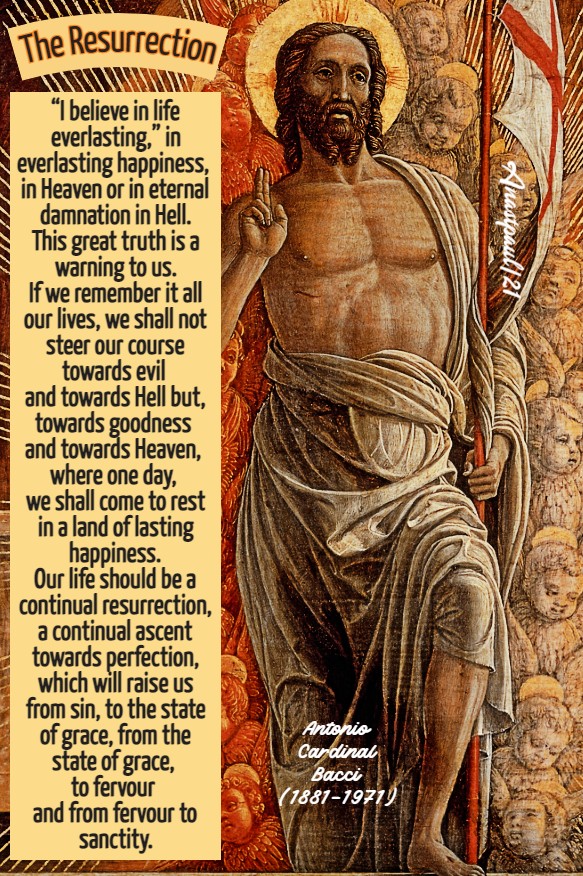
โ€œI believe in life everlasting,โ€ in everlasting happiness, in Heaven or in eternal damnation in Hell.
This great truth is a warning to us.
If we remember it all our lives, we shall not steer our course towards evil and towards Hell but, towards goodness and towards Heaven, where one day, we shall come to rest in a land of lasting happiness.

Our life should be a continual resurrection, a continual ascent towards perfection, which will raise us from sin, to the state of grace, from the state of grace, to fervour and from fervour to sanctity.โ€

Antonio Cardinal Bacci

PART ONE HERE:
https://anastpaul.com/2020/04/15/thought-for-the-day-15-april-the-resurrection/

Posted in "Follow Me", CHRIST the LIGHT, CHRIST the WORD and WISDOM, CHRIST, the WAY,TRUTH,LIFE, EASTER, GOD ALONE!, QUOTES for CHRIST, QUOTES on ETERNAL LIFE, QUOTES on OBEDIENCE, QUOTES on the CROSS of CHRIST, The RESURRECTION, The WORD, Thomas a Kempis

Quote/s of the Day – 5 April – Easter Monday

Quote/s of the Day – 5 April – Easter Monday -the Second day of the Octave

โ€œFor the one whom God sent
speaks the words of God.
He does not ration his gift of the Spiritโ€ฆ
he who does not obey the Son,
shall not see life.โ€

John 3:34,36

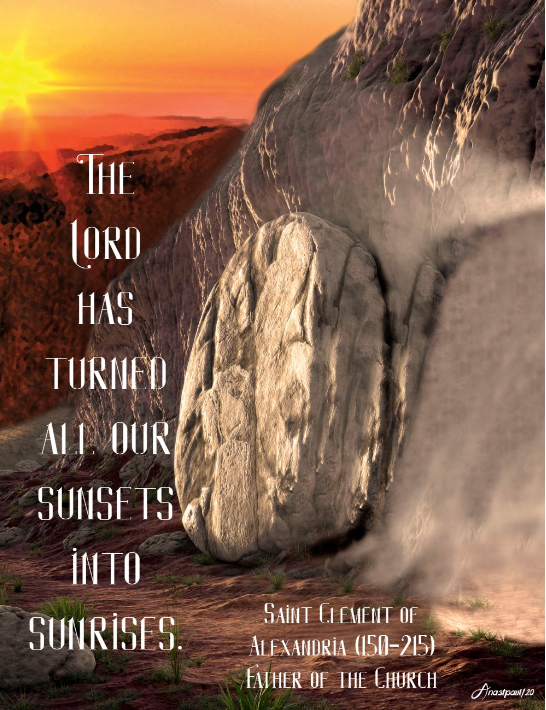
โ€œThe Lord has turned all our sunsets into sunrises.โ€

St Clement of Alexandria (150-215)
Father of the Church

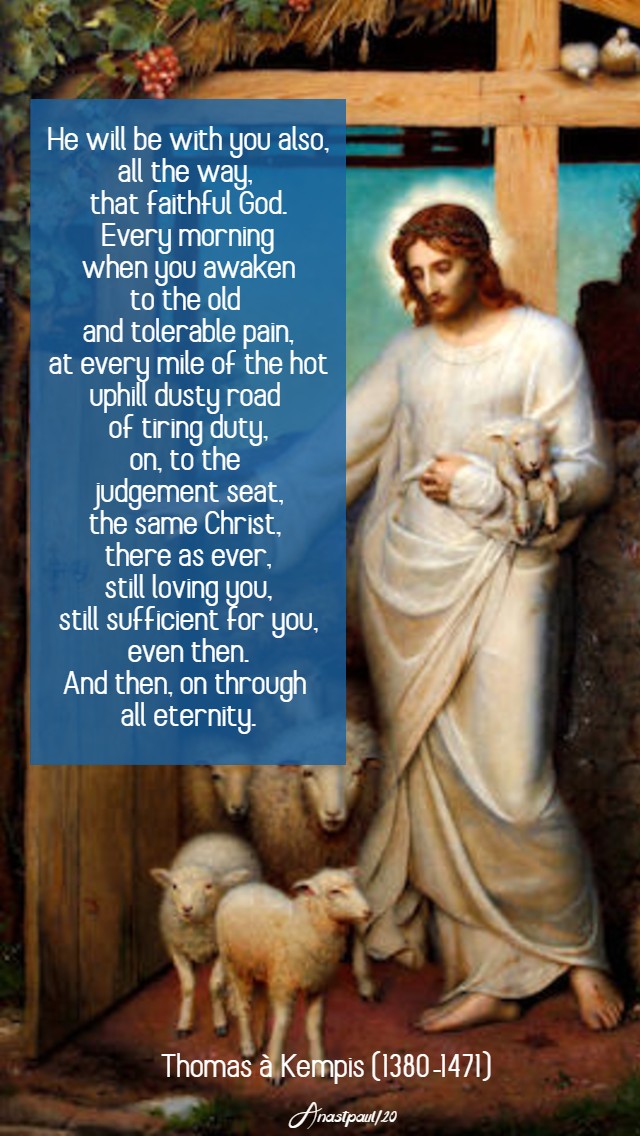
โ€œHe will be with you also,
all the way, that faithful God.
Every morning when you awaken
to the old and tolerable pain,
at every mile of the hot uphill dusty road of tiring duty,
on, to the judgement seat,
the same Christ there as ever,
still loving you,
still sufficient for you, even then.
And then, on through all eternity.โ€

Thomas ร  Kempis (1380-1471)

Posted in "Follow Me", EASTER, ONE Minute REFLECTION, QUOTES on DEATH, QUOTES on FREEDOM, QUOTES on the DEVIL/EVIL, The RESURRECTION, The WORD

One Minute Reflection โ€“ 5 April โ€“ Easter Monday – ‘Life is restored to humankind.’

One Minute Reflection โ€“ 5 April โ€“ Easter Monday, Readings: Acts 2:14, 22-33, Psalm 16:1-2, 5, 7-11, Matthew 28:8-15

Then Jesus said to them: โ€œFear not. Go, tell my brethren that they go into Galilee, there they shall see me.โ€ – Matthew 28:10

REFLECTION – โ€œThe Gospel pictures the disciples’ joyful race: โ€œThey both ran but the other disciple ran faster than Peter and arrived at the tomb firstโ€ (Jn 20:4). Which of us would not likewise want to look for Christ, sitting at the right hand of the Father? And which of us, when they joyfully call to mind those Apostles’ eager race, would not try to run in spirit so as to find Him at the end of their search? To encourage us in this desire, we should all eagerly repeat this verse of the Song of Songs: โ€œDraw me after you; we will run in the fragrance of your perfumeโ€ (3:4 LXX). To run in the fragrance of perfume, means, to keep going without stopping towards our Creator, using the footsteps of our spirit and strengthened by the holy fragrance of the virtues.

This was exactly what the praiseworthy race of those holy women was like, who, according to the gospels, had followed the Lord from Galilee and stayed faithful to Him at the time of His Passion, whereas the disciples had run away (Mt 27:55). They had run in the fragrance of perfume in their spirit โ€“ and even according to the letter โ€“ since they had bought spices with which to anoint the Lord’s body, as Mark testifies (16:1).

Brethren, following the example given by the hasty attentions of the disciples โ€“ both men and women โ€“ beside their Master’s tomb โ€ฆ let us proclaim, after our own fashion, the joys of the Lord’s Resurrection. It would be really sad if our tongues of flesh were to stifle the praises due to our Creator on this day, when His flesh was raised. This wonderful Resurrection prompts us to proclaim the greatness of so great a joy’s Author and, to make known abroad, the victory carried against our ancient enemy โ€ฆ Death is evicted today together with death’s maker; today, through Christ, life is restored to humankind. Today are broken the devil’s chains – on this day, the freedom of the Lord is granted to Christians. โ€St Odilo of Cluny (961-1048) Monk – 2nd Sermon for the Resurrection of the Lord; PL 142, 1005

PRAYER โ€“ Lord God, You bring us joy through the Easter mysteries. Continue to be bountiful to Your people, lead us from darkness to the perfect freedom, by which the joy that gladdens our way on earth, will be fulfilled in heaven. May the prayer of your angels and saints, with Mary the Mother of our Saviour and our Mother, grant us peace and strength. We make our prayer through our Lord, Jesus Christ, with the Holy Spirit, God forever amen.

Posted in DOMINICAN OP, Our MORNING Offering, PRAYERS of the SAINTS, SAINT of the DAY

Our Morning Offering โ€“ 5 April โ€“ Grant me, O my God, St Vincent Ferrer

Our Morning Offering โ€“ 5 April โ€“ Easter Monday and the Memorial of St Vincent Ferrer OP (1350-1419)

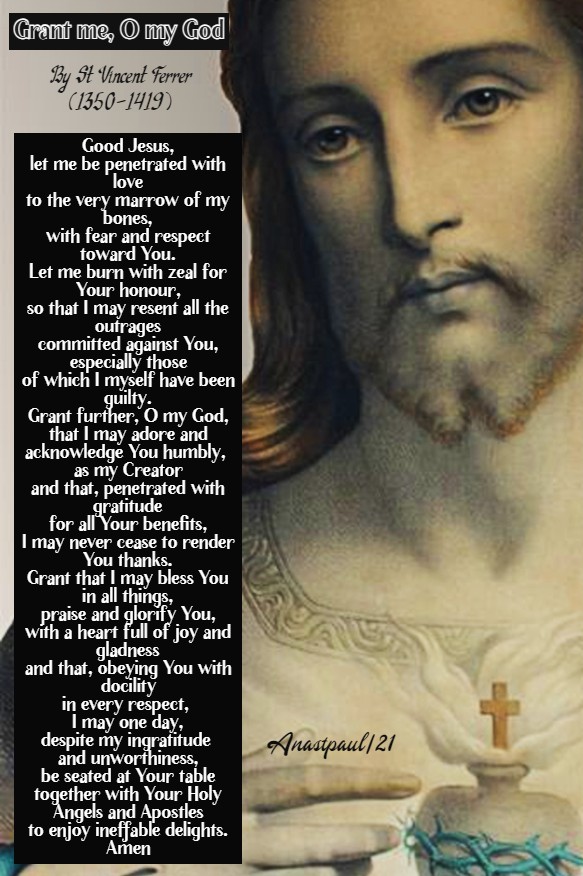
Grant me, O my God
By St Vincent Ferrer (1350-1419)

Good Jesus,
let me be penetrated with love
to the very marrow of my bones,
with fear and respect toward You.
Let me burn with zeal for Your honour,
so that I may resent all the outrages
committed against You, especially those
of which I myself have been guilty.
Grant further, O my God,
that I may adore and acknowledge You humbly,
as my Creator
and that, penetrated with gratitude
for all Your benefits,
I may never cease to render You thanks.
Grant that I may bless You in all things,
praise and glorify You,
with a heart full of joy and gladness
and that, obeying You with docility
in every respect, I may one day,
despite my ingratitude and unworthiness,
be seated at Your table
together with Your Holy Angels and Apostles
to enjoy ineffable delights.
Amen

Posted in INCORRUPTIBLES

Saint of the Day – 5 April – Saint Catherine of Palma OSA (1533โ€“1574)

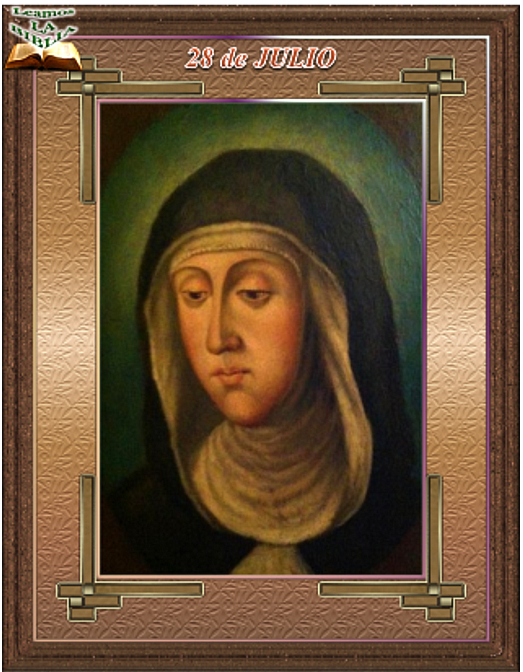
Saint of the Day – 5 April – Saint Catherine of Palma OSA (1533โ€“1574) Nun of the Order of the Canonesses of St Augustine, Mystic, gifted with the charism of prophecy, visions and ecstasy. Born on 1 May 1533 at Valldemossa, Mallorca, Spain and died on 5 April 1574 at Saint Mary Magdalen convent, Palma, Mallorca, Spain of natural causes, at the aged of 41. She is also known as Catalina Thomรกs, Caterina Tomร s i Gallard, and Catherine or Catalina Thomas or Tomas. Patronage – Mallorca. Her Body is incorrupt.

Catherine was born 1 May 1533 at Valldemossa, Mallorca, Spain, in a peasant family. Catherine was the youngest of 7 children. Her parents died when she was 7, leaving her without an inheritance or a dowry. She spent her remaining formative years in the home of her paternal uncle. Even though she was very young, she was made to do the worst tasks. The servants were even encouraged to overwork and ignore her. Even so, she remained ever sweet and patient.

At age 15, she began having visions of St Anthony and St Catherine, her patroness. It was then that she began to feel a calling to the Religious life. She confided these desires to a holy hermit Priest, Father Antony Castagneda. Believing that Catherine needed time to discern if this was really her vocation, he told her that she would receive a reply in time, if she continued to pray about it, as he would also do. She agreed without question or argument.

She had to wait a long time. The wait was made even more frustrating by the treatment she endured at the hands of her relations, who increased their mistreatment of her, because they feared losing her services. Father Antony hadn’t forgotten her though. He was finding it very hard to find a Convent that could afford to take a girl with no dowry. As a preliminary step to entering a Convent, he sent Catherine to serve a family in Palma, where nothing could stand in the way of her spiritual life. One of the daughters in the household taught her reading and writing. This girl soon became Catherine’s disciple in religious matters, since Catherine had already come very far on the road to holiness.

Soon, several Convents offered to take her. She decided to enter the Canonesses of St Augustine, at their Convent of St Mary Magdalen in Palma, Mallorca. She was 20 years old at that time. From the moment she was admitted, she was admired by the other sisters, because of her sanctity and loved because of her humility and her willingness to serve others.

The life of Catherine, in the Convent, was ordinary at first and there was nothing to distinguish her. Then, strange things began to happen to her. Every year, between 13 and 15 days before the Feast of St Catherine of Alexandria, she would lie in a profound trance. Also, after communion, she would always remain in ecstasy, which would last most of the day, or sometimes a whole week. There were times when she appeared to be in a coma, with no signs of life, for days but at other times, she would move around the Convent with her feet together and her eyes closed, sometimes conversing with Angels and other heavenly beings and oblivious to everything and everyone around her.

At other times she would intelligently answer questions, while in one of these “Comas.” She also had the gift of prophesy. In between these events, she would be severely attacked and tempted by demons. she not only suffered evil suggestions and hallucinations, and physical manifestations of demons but, she also suffered physical assaults at their hands. When this happened, frightening screams and sounds could be heard coming from Catherine’s cell. The other nuns could never see what was attacking her but they could see what the attacks left in their wake and they would try to relieve her suffering. She tried very hard not to let these experiences get in the way of the timely discharge of her work. She foretold her own death, and died at age 41 on 5 April 1574.

Anonymous 18th-century altarpiece showing St Catherine, in a Chapel at Valldemossa, Mallorca
Plaque commemorating the Saint
Posted in DOMINICAN OP, MARIAN TITLES, SAINT of the DAY

Easter Monday, Our Lady of Divine Providence, Cussanio, Italy (1521) and Memorials of the Saints 5 April

Easter Monday -the Second day of the Octave


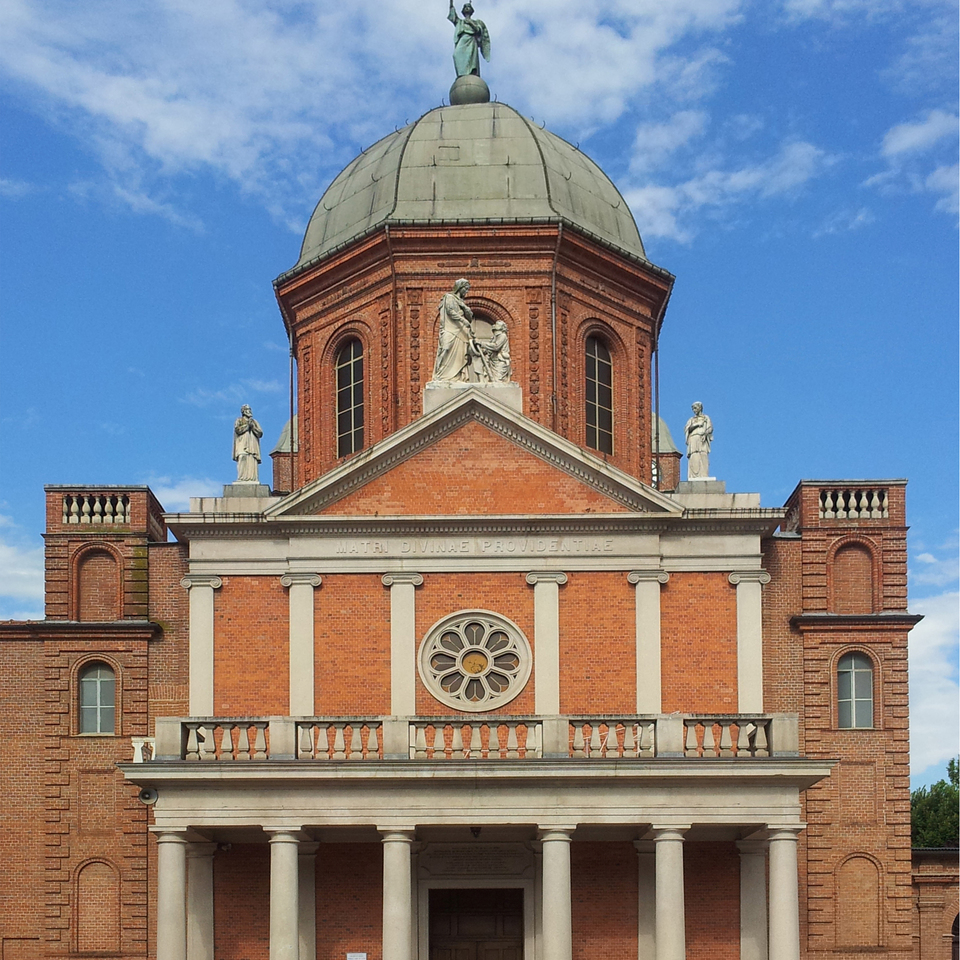
Santuario Madonna della Divina Provvidenza / Our Lady of Divine Providence, Cussanio, Italy (1521) – 5 April:

In the locality where the Sanctuary now stands, a poor deaf-mute of vulgar appearance and short stature, dressed in a rough habit, used to lead the animals to pasture. Nobody cared about him but on 8 May 1521 Bartholomew Coppa saw a Lady dressed in white coming to meet him, who approached him with maternal affection and blessed him with the word. He then told him to go to Fossano to announce the justice of God and to warn, that there would be great scourges without doing penance.

Having said this, the Lady disappeared and Bartolomeo ran to tell the story. His acquaintances hearing him speak were shocked and the kindest pushed him to carry out the mission that had been entrusted to him.
So Bartholomew went through the streets of the City to become a proclaimer of penance and to send Christians to leave the way of sin, threatening the punishments of God. But he was not listened to and he was disheartened, tired and hungry after three days, he returned to the place. of the prodigy and here he fell asleep on the ground.
And it is here that a new miracle took place. The Lady, who does not abandon her faithful, appeared to him a second time, no longer dressed in white but dressed in blue, gave him bread, repeated the command of the first time and disappeared. Bartholomew waking up, found food and gave thanks to the divine benefactress.
He brought some of the bread to his master and those in the neighbourhood and reminded them of the Lord’s threats. But again it was not believed.
After just six months, in October of the same year, a horrendous plague broke out in Fossano and its surroundings. Thousands of victims and desolation, death and sadness reminded the people of Fossano the words of poor Bartolomeo, who had foretold these punishments.
They then decided to follow his words and the plague subsided. Then in memory of the prodigious event they had a small Chapel built on the site of the Apparition of the Madonna, dedicating it to the Queen of Heaven.

In 1600 the Augustinian Brothers of the Congregation of Genoa came to Cussanio and the friars built the great Monastery complex next to the Sanctuary. During the French Revolution the Convent and Church were suppressed and the buildings forcibly abandoned.

Then, in the year 1872, the Bishop, Emiliano Manacorda, a personal friend of Saint Don Bosco, arrived at the Diocese and claimed ownership of the Monastery which had been wrongfully confiscated by the state and proceeded upon the complete renovation of the Sanctuary. Work began shortly after 1875 and continued for about twenty years and included the elevation of the majestic dome and the reconstruction of the entire faรงade. The nave was extended, two aisles built and the interior was adorned with Altars, sculptures and paintings. Two of the paintings, attributed to the painter Giuseppe Barotto, depict the two scenes mentioned above and are now preserved in the Church.


St Vincent Ferrer OP (1350-1419) (Optional Memorial)
Biography of St Vincent:

https://anastpaul.wordpress.com/2018/04/05/saint-of-the-day-5-april-st-vincent-ferrer-o-p-1350-1419/

St Albert of Montecorvino
Bl Antonius Fuster
St Becan
Bl Blasius of Auvergne
St Catherine of Palma OSA (1533โ€“1574) Nun
St Claudius of Mesopotamia
St Derferl Gadarn
St Gerald of Sauve-Majeure
St Irene of Thessalonica
St Maria Crescentia Hoss

Blessed Mariano de la Mata Aparicio OSA (1905-1983)
His Life:

https://anastpaul.com/2019/04/05/saint-of-the-day-5-april-blessed-mariano-de-la-mata-aparicio-osa-1905-1983/
St Pausilippus
Bl Peter Cerdan
St Theodore the Martyr
โ€”
Martyrs of Lesbos: 5 saints โ€“ Five young Christian women martyred together for their faith. We donโ€™t even know their names. island of Lesbos, Greece.

Martyrs of North-West Africa: Large group of Christians murdered while celebrating Easter Mass during the persecutions of Genseric, the Arian king of the Vandals. They were martyred in 459 at Arbal (in modern Algeria).

Martyrs of Seleucia: 120 saints โ€“ One-hundred and eleven (111) men and nine (9) women who, because they were Christians, were dragged to Seleucia and martyred for refusing to worship the sun or fire or other pagan idols during the persecutions of King Shapur II. They were burned alive in 344 in Seleucia, Persia.

Posted in "Follow Me", EASTER, NOTES to Followers, QUOTES of the SAINTS, The RESURRECTION

EASTER SUNDAY – 4 April – Jesus Christ is risen! He is truly risen! Alleluia!

EASTER SUNDAY – 4 April

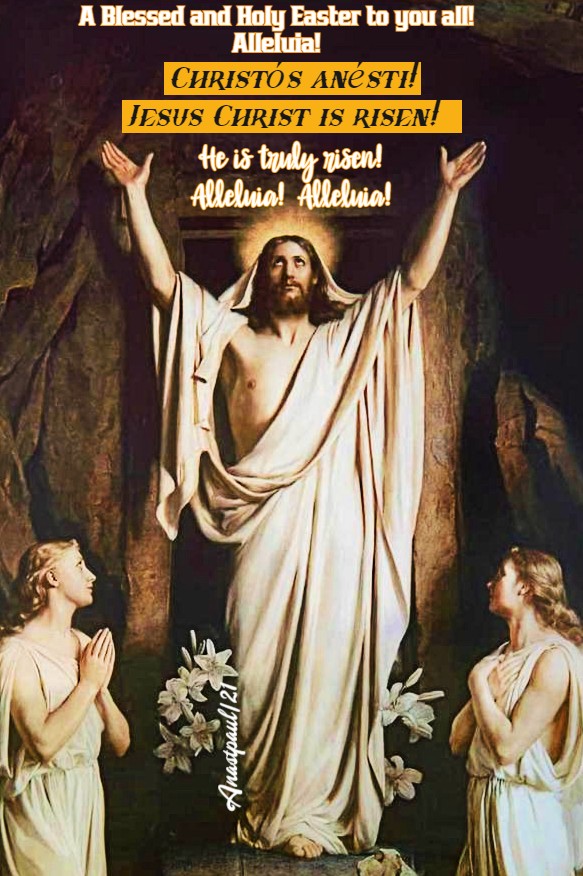
A Blessed and Holy Easter to you all!
Alleluia!
Christรณs anรฉsti!
Jesus Christ is risen!
He is truly risen!
Alleluia! Alleluia!
Amen

[Easter is the Anglo- Saxon word for April, and was derived, as Venerable Bede tells us, (in his book De temporum ratione c. 13,) from Easter, a goddess of our pagan ancestors. Others derive Easter from Oest, Oost the Saxon for rising, or the east: and hence, Osteren, the Resurrection. Tr. from Butlerโ€™s Moveable Feasts.]

THIS IS THE DAY WHICH THE LORD HATH MADE;
LET US BE GLAD AND REJOICE THEREIN!

The night between Saturday and Sunday has well nigh run its course and the day-dawn is appearing. The Mother of sorrows is waiting, in courageous hope and patience, for the blissful moment of her Jesusโ€™ return.

โ€ฆ But Jesus is not to tarry in the gloomy sepulchre. Quicker than a ray of light through a crystal, He passes through the stone that closes the entrance of the cave. Pilate had ordered his seal to be put upon this stone and a guard of soldiers is there, to see that no-one touches it. Untouched it is and unmoved and yet, Jesus is free!

Thus, as the holy Fathers unanimously teach us, was it at His birth: -He appeared to the gaze of Mary, without having offered the slightest violence to her maternal womb. The birth and the resurrection, the commencement and the end of Jesusโ€™ mission, these two mysteries bear on them, the seal of resemblance – in the first, it is a Virgin Mother; in the last, it is a sealed tomb giving forth its captive God.

And while this Jesus, this Man-God, thus breaks the sceptre of death, the stillness of the night is undisturbed. His and our victory has cost Him no effort. 0 death! where is now thy kingdom? Sin had made us thy slaves; thy victory was complete and now, lo! thou thyself art defeated! Jesus, whom thou didst exultingly hold under thy law, ( 1 Apec. 1, 5. 2 I. Cor xv, 26. โ€˜Ibid. 56) has set Himself free and we, after thou hast domineered over us for a time, we too shall be free from thy grasp. The tomb thou makest for us, will become to us the source of a new life, for He that now conquers thee is โ€˜the First-born among the dead ~ and to-day is the Pasch, the Passover, the deliverance, for Jesus and for us, His brethren.

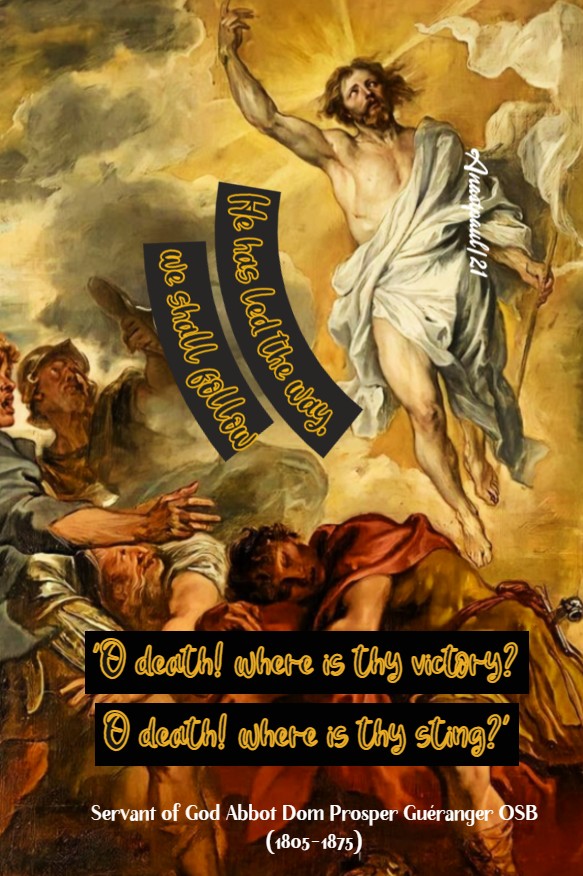
He has led the way, we shall follow and the day will come, when thou, the enemy, that destroys all things, shalt thyself be destroyed by immortality. Thy defeat dates from this moment of Jesusโ€™ Resurrection,and, with the great Apostle, we say to thee:

โ€˜O death! where is thy victory?

O death! where is thy sting?

Servant of God Abbot Dom Prosper Guรฉranger OSB (1805-1875)
Abbot of Solesmes

Posted in DOCTORS of the Church, EASTER, FATHERS of the Church, FEASTS and SOLEMNITIES, Our MORNING Offering, PRAYERS, PRAYERS of the SAINTS, The RESURRECTION

Our Morning Offering โ€“ 4 April โ€“ Your Loving Kindness, An Easter Prayer

Our Morning Offering โ€“ 4 April โ€“ Easter Sunday, The Resurrection of the Lord

Your Loving Kindness
An Easter Prayer
By St Pope Gregory the Great (540-604)
Church Father and Doctor

It is only right,
with all the powers of our heart and mind,
to praise You Father and Your Only-Begotten Son,
Our Lord Jesus Christ.
Dear Father, by Your wondrous condescension
of loving kindness toward us, Your servants,
You gave up Your Son.
Dear Jesus You paid the debt of Adam for us
to the Eternal Father, by Your Blood
poured forth in loving kindness.
You cleared away the darkness of sin
by Your magnificent and radiant Resurrection.
You broke the bonds of death
and rose from the grave as a Conqueror.
You reconciled Heaven and earth.
Our life had no hope of eternal happiness
before You redeemed us.
Your Resurrection has washed away our sins,
restored our innocence and brought us joy.
How inestimable is the tenderness of Your Love!
We pray You, Lord,
to preserve Your servants in the peaceful enjoyment
of this Easter happiness.
We ask this through Jesus Christ Our Lord,
Who lives and reigns with God, the Father,
in the unity of the Holy Spirit, forever and ever
Amen

Posted in SAINT of the DAY

Saint of the Day – 4 April – Saint Plato (c 734-813)

Saint of the Day – 4 April – Saint Plato (c 734-813) Monk, Confessor, Defender of sacred images and of the Sacraments of Marriage and Holy Orders. Born in c 734 in Greece and died on 19 March 813 of natural causes in Constantinople.

Plato was born into a wealthy but pious Christian family of the parents, Sergius and Euphemia but was orphaned when he was only around 13 years of age. He was taken to be raised by relatives, who gave him a fine education. When he grew up, he occupied himself, in the first years, in the management of the property which his parents had left him upon their death. He was very temperate and hard-working and acquired great wealth by his own toil. However, the future Monkโ€™s heart blazed with love for Christ. He gave away all his property, set his servants free and withdrew into a Monastery named Symbolon near Mount Olympos.

His prayerful zeal, love of work and geniality won him the love of hif fellow brethren. When he was not praying, he worked atย menial labour and copyied manuscripts. He also compiled anthologies, from the works of the holy Fathers.

When the Abbot, Theoctistus died in 770, the Monks chose Plato as Abbot, even though he was still a very young man. After the death of the Emperor Constantine Kopronymos (775), Plato went to Constantinople. The Archbishop wanted to make him Bishop of Nicomedia, or theAbbot of one of the Monasteries in Constantinople but such was the saintโ€™s humility, that he hastened back to the Symbolon Monastery, to escape such honour. In 782, he withdrew to the desolate place of Studion with his nephews Theodore and Joseph. On the mount they built a Church in honour of the holy Apostle John and founded a Monastery, whose Superior was Plato.

When Saint Tarasius and the Empress Irene convened the Seventh Ecumenical Council in Nicea in 787, Plato took an active part in its work. Being learned in Holy Scripture, he successfully unmasked the error in the Iconoclast heresy and defended the veneration of holy icons. When Plato approached old age, he transferred the administration of the monastery to Theodore.

In 795 the emperor Constantine VI (78-797) repudiated his Rmpress, Mary and he married one of his relatives, Theodota. Even though the holy Bishop Tarasius, condemned this marriage, Joseph, a prominent Priest of Constantinople, violated the Bishopsโ€™s prohibition and celebrated the marriage of the Emperor.

When they learned of this, Plato and Theodore excommunicated the Emperor from the Church and sent a letter about this to all the Monks. The enraged Rmperor gave orders to lock Plato in prison and to banish Theodore to Thessalonica. Only after the death of the Emperor in 797 did they receive their freedom. Theodore settled in Constantinople and became iAbbot of the Studion Monastery. Plato lived as a simple Monk at this Monastery under obedience to his nephew.

In 807, Joseph, the Priest who had presided at the wedding of Constantine and Theodoat, was restored to his position and made treasurer of the Church by order of Emperor Nicephorus. Plato considered this scandalous and loudly condemned it. The Emperor had him guarded for a year by a troop of insolent soldiers and false Monks. After which, Plato was unjustly condemned by a Council of Court Bishops, then banished for four years to be to the isles of Bosphorus, until he was freed in 811 by the new Emperor Michael I. Plato. Plato then returned to his cell and his life of prayer.

In 813, Plato saw that his end was near and directed his grave be dug. He then had himself carried to it and lived laying in it, spending his last days in prayer and receiving guests from his grave, including his former enemy, the Priest Joseph, who came to ask for Plato’s prayers and forgiveness.

The Roman Martyrology states of him on 4 April: “At Constantinople, Plato, a Monk, who for many years combatted with invincible courage, the heretics who were breaking sacred images.”

Posted in EASTER, FEASTS and SOLEMNITIES, MARIAN TITLES, SAINT of the DAY, The RESURRECTION

EASTER SUNDAY +2021 The Resurrection of the Lord – Solemnity of Solemnities! Our Lady of Grace, Normandy and Memorials of the Saints

EASTER SUNDAY +2021 The Resurrection of the Lord – Solemnity of Solemnities!
__
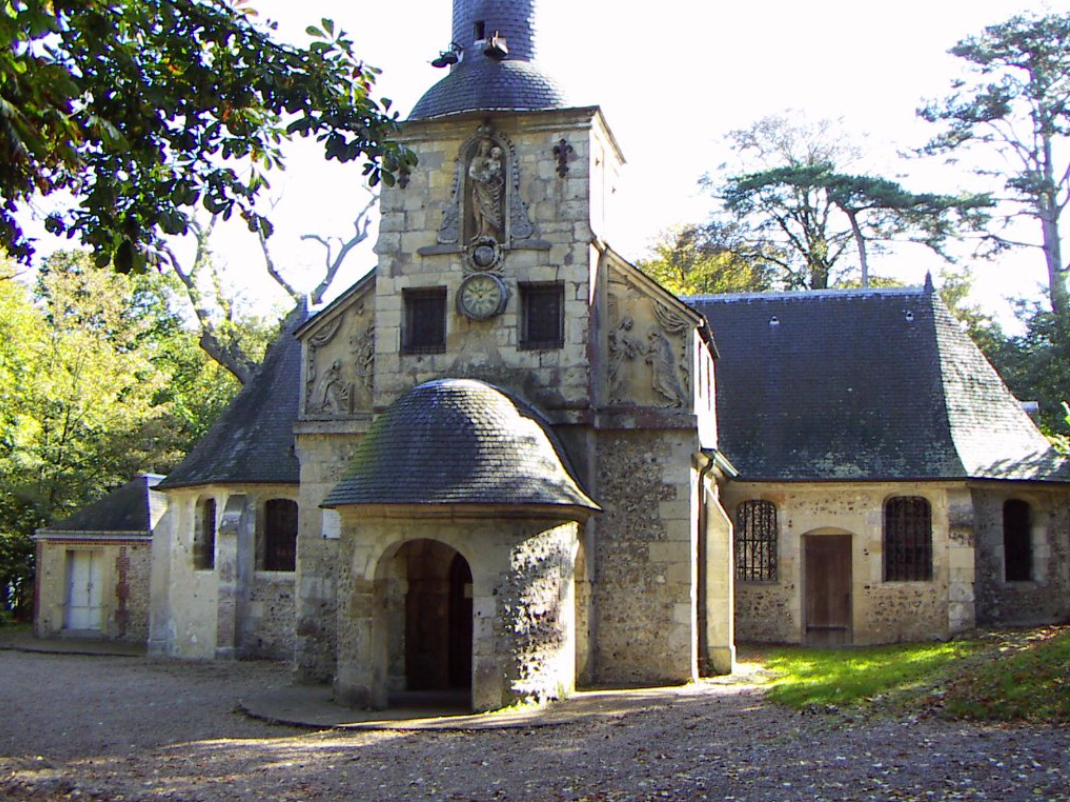
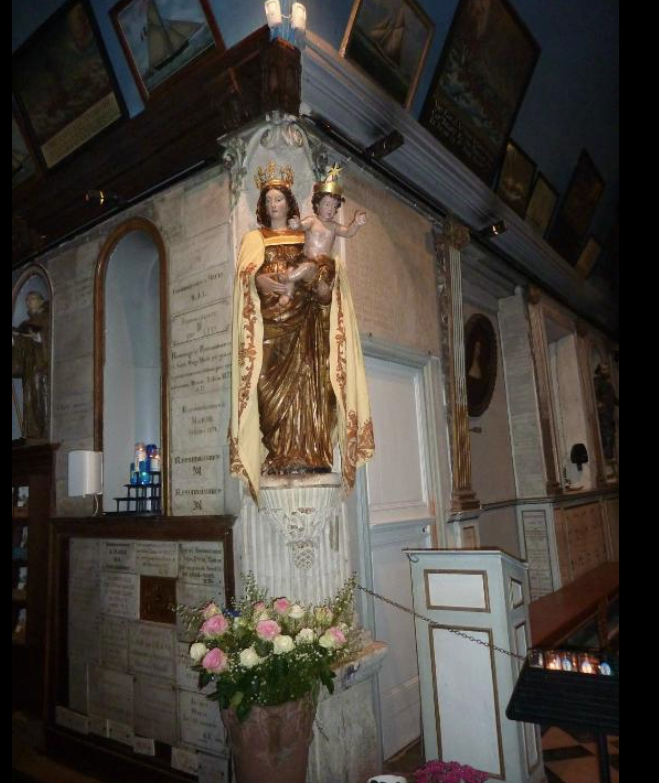
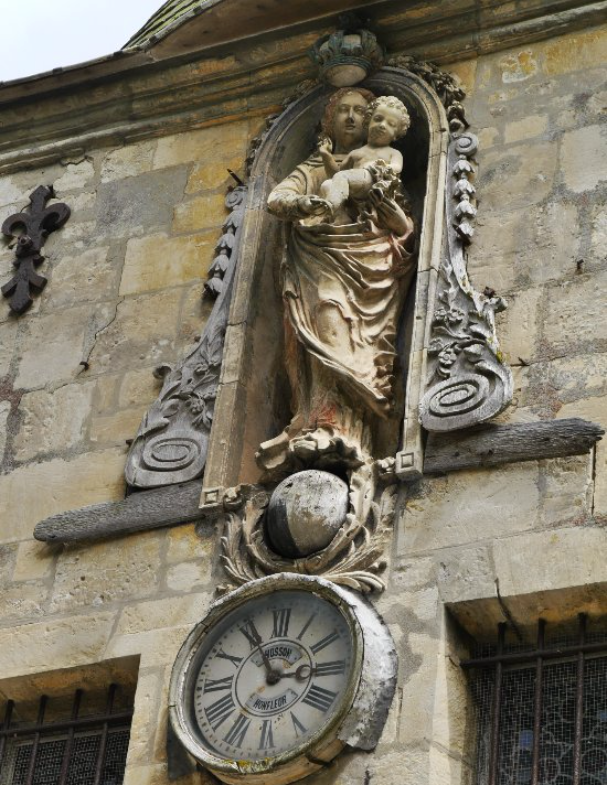
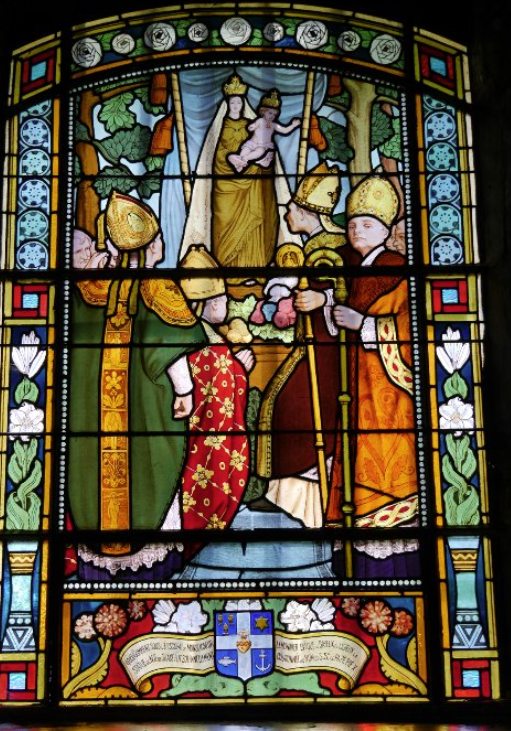
Notre-Dame de Grace, Honfleur, Normandie / Our Lady of Grace, Normandy, France – 4 April:

Our Lady of Grace is one of the most ancient maritime Chapels of Normandy. This Sanctuary was built in consequence of a vow made by a Norman Duke, who was very devout to the Blessed Virgin. That Duke, Robert the Magnificent, was once caught in a terrible storm off the coast of Normandy and knew, that a shipwreck would surely cost him his life. He swore, in the midst of that tempest, that was even then overwhelming him, that if he could somehow survive, he would build a Shrine on the hill, which he could still see, through the rain and surf from his sinking ship ,in thanksgiving to God for his rescue.
Robert was saved and so his harrowing experience ended, not in tragedy but instead, the duke kept his promise, which gave birth to a monument that millions of pilgrims STILL visit each year. The original Chapel he constructed was finished early in the 11th century, at a height 90 meters above sea level. That Chapel stood through the centuries until it was swept away by landslide in the 16th century. The present Chapel, the Chapel of Notre-Dame-de-Grace, replaces the original.

The site of this handsome Chapel of Our Lady of Grace, surrounded by large trees, in the midst of turf replete with flowers, is beautiful and calm, like the rich and fresh landscapes of the magnificent province of which it forms a part.
Our Lady of Grace appears like the fortress of Honfleur; from the little mountain which it crowns, the mouth of the Seine is visible, and farther on, the ocean, with its long waves of dark green, which receives in its bosom, the river of blue waters. Two roads lead to the Chapel – the one rough and rocky, the other smooth and even. In other times the inhabitants of Honfleur took delight in pointing out Our Lady of Grace, in reducing its steepness, in covering it with small, fine sand, so that a gracious princess, who had made herself beloved in these parts by her generous bounty, might be able to ascend it without fatigue, when she went to offer her prayers and vows to the Blessed Virgin.

St Isidore of Seville (c 560-636) Father & Doctor of the Church (Optional Memorial)
St Isidoreโ€™s life:

https://anastpaul.com/2020/04/04/saint-of-the-day-4-april-st-isidore-of-seville-c-560-636-father-doctor-of-the-church/
AND:
https://anastpaul.wordpress.com/2017/04/04/saint-of-the-day-4-april-st-isidore-of-seville-father-and-doctor-of-the-church/

Bl Abraham of Strelna
St Agathopus of Thessalonica
St Aleth of Dijon
St Benedict of Sicily OFM (1526-1589)
About St Benedict:

https://anastpaul.wordpress.com/2018/04/04/saint-of-the-day-4-april-st-benedict-of-sicily-o-f-m-1526-1589/

Bl essed Giuseppe Benedetto Dusmet OSB (1818-1894)
Biography:

https://anastpaul.com/2019/04/04/saint-of-the-day-4-april-blessed-giuseppe-cardinal-benedetto-dusmet-osb-1818-1894/
St Gwerir of Liskeard
St Henry of Gheest
St Hildebert of Ghent
St Peter of Poitiers
St Plato (c 734-813) Monk, Confessor
St Theodulus of Thessalonica
St Theonas of Egypt
St Tigernach of Clogher
St Zosimus of Palestine

Posted in "Follow Me", CHRIST, the WAY,TRUTH,LIFE, GOOD FRIDAY, HOLY WEEK, MEDITATIONS - ANTONIO CARD BACCI, QUOTES for CHRIST, QUOTES on SUFFERING, QUOTES on the CROSS of CHRIST, The PASSION, The REDEMPTION

Thought for the Day โ€“ 3 April โ€“ The Death of our Saviour

Thought for the Day โ€“ 3 April โ€“ Meditations with Antonio Cardinal Bacci (1881-1971)

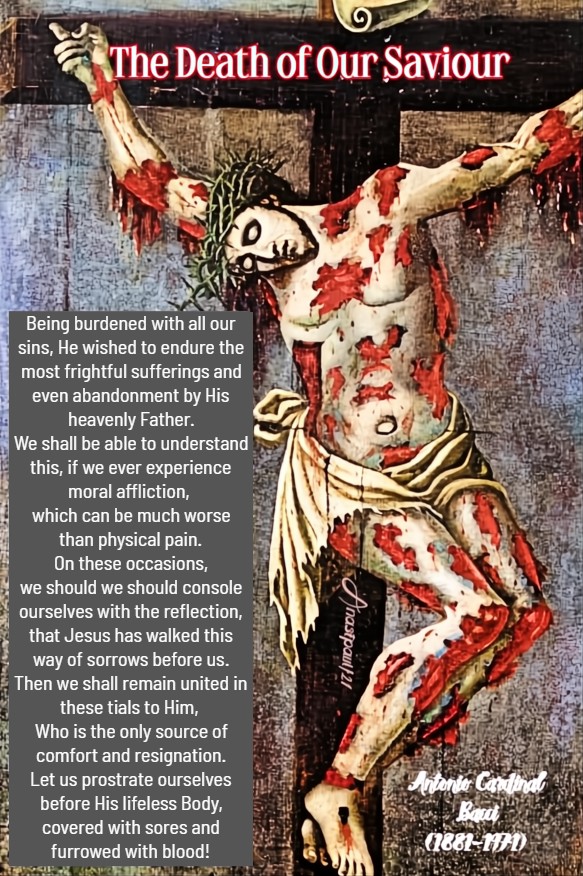
The Death of our Saviour

โ€œQuite apart from the most fearful physical torments, such as the Scourging, the Crowning with Thorns and the Crucifixion, Jesus willed to endure extreme moral sufferings, such as the betrayal by Judas, the desertion by His Apostles in His hour of trial and the denial by the Head of the Apostles himself.
He willed to endure an even greater spiritual affliction than these, which was so mysterious as to be almost beyond our understanding.
This, was His abandonment by His heavenly Father.
โ€œMy God, my God,โ€ He cries out in His last agony, โ€œwhy hast thou forsaken me.โ€
His human heart elected to experience, at that moment, the removal of the inmost consolations and joys, which flowed from His continual union with His heavenly Father.
He was both Man and God.
His human nature was hypostatically united to the Word and in this way, even His human nature participated in His infinite happiness.
As Man, however, He chose to be deprived of this happiness.
Being burdened with all our sins, He wished to endure the most frightful sufferings and even abandonment by His heavenly Father.

We shall be able to understand this, if we ever experience moral affliction, which can be much worse than physical pain.
On these occasions, we should we should console ourselves with the reflection, that Jesus has walked this way of sorrows before us.
Then we shall remain united in these tials to Him, Who is the only source of comfort and resignation.
Let us prostrate ourselves before His lifeless Body, covered with sores and furrowed with blood!
โ€

Antonio Cardinal Bacci

PART ONE HERE:
https://anastpaul.com/2020/04/14/thought-for-the-day-14-april-the-death-of-our-saviour/

Posted in "Follow Me", DOCTORS of the Church, EASTER, HOLY SATURDAY, QUOTES on the CROSS of CHRIST, The HOLY CROSS, The REDEMPTION

Quote of the Day โ€“ 3 April โ€“ ‘By nothing else except the CROSS …’

Quote of the Day โ€“ 3 April โ€“ Holy Saturday

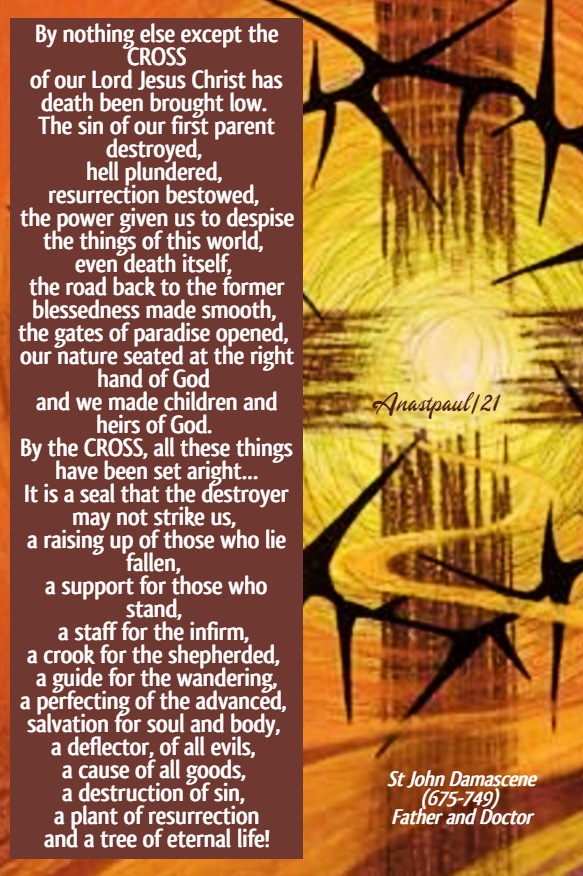
โ€œBy nothing else except the CROSS
of our Lord Jesus Christ
has death been brought low.
The sin of our first parent destroyed,
hell plundered,
resurrection bestowed,
the power given us to despise the things of this world,
even death itself,
the road back to the former blessedness made smooth,
the gates of paradise opened,
our nature seated at the right hand of God
and we made children and heirs of God.
By the CROSS, all these things have been set arightโ€ฆ
It is a seal that the destroyer may not strike us,
a raising up of those who lie fallen,
a support for those who stand,
a staff for the infirm,
a crook for the shepherded,
a guide for the wandering,
a perfecting of the advanced,
salvation for soul and body,
a deflector, of all evils,
a cause of all goods,
a destruction of sin,
a plant of resurrection
and a tree of eternal life!โ€

St. John Damascene (675-749)
Father and Doctor

Posted in EASTER, HOLY SATURDAY, QUOTES on DEATH, The RESURRECTION, The WORD

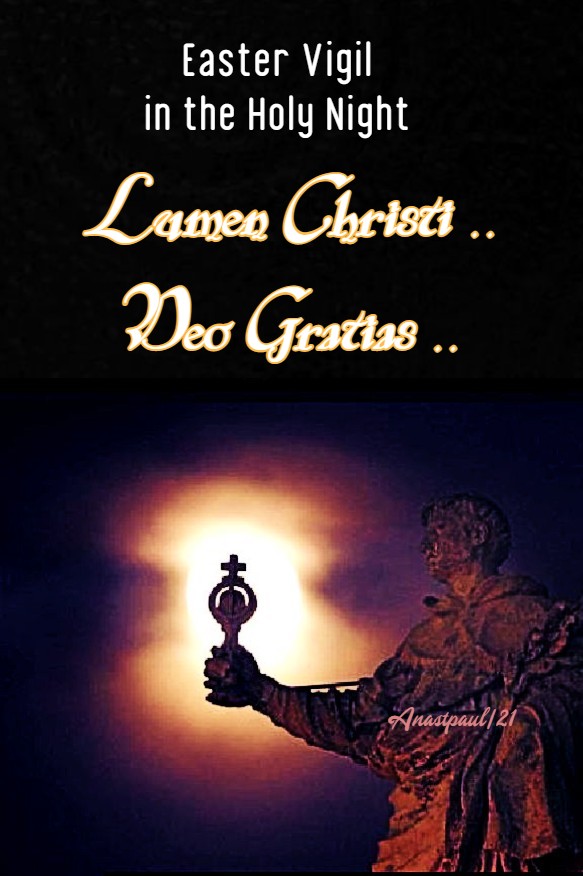
One Minute Reflection – 3 April – Holy Saturday – Lumen Christi โ€ฆ. Deo Gratias!

One Minute Reflection – 3 April – Holy Saturday, The Easter Vigil of the Holy Night, Readings: First Reading: Genesis 1: 1 – 2: 2 or 1: 1, 26-31a, Psalm: Psalms 104: 1-2, 5-6, 10, 12, 13-14, 24, 35 Second Reading: Genesis 22: 1-18 or 22: 1-2, 9a, 10-13, 15-18, Gospel: Mark 16: 1-7

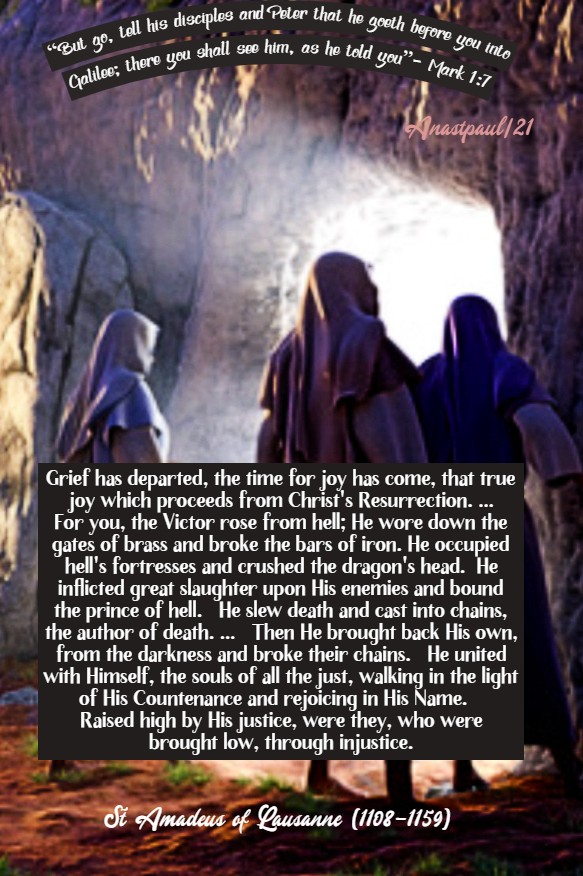
โ€œBut go, tell his disciples and Peter, that he goeth before you into Galilee; there you shall see him, as he told youโ€ – Mark 1:7

REFLECTION – โ€œSolomon says, there is a time for joy and a time for grief. Grief has departed, the time for joy has come, that true joy which proceeds from Christ’s Resurrection. โ€ฆ
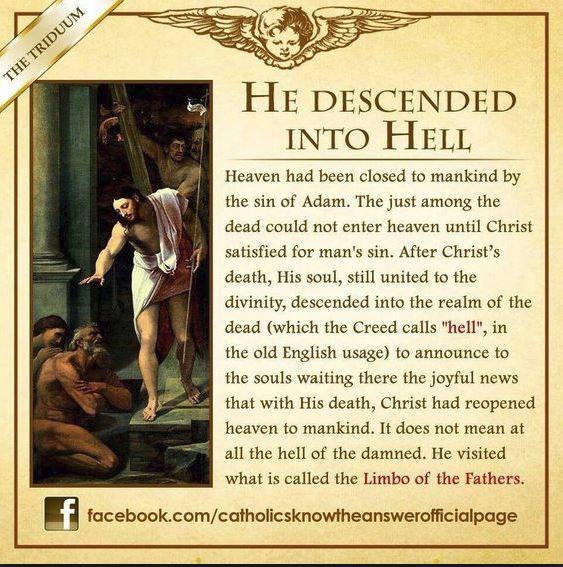
For you, the Victor rose from hell; He wore down the gates of brass and broke the bars of iron. He occupied hell’s fortresses and crushed the dragon’s head. He inflicted great slaughter upon His enemies and bound the prince of hell. He slew death and cast into chains, the author of death. โ€ฆ Then He brought back His own, from the darkness and broke their chains. He united with Himself, the souls of all the just, walking in the light of His Countenance and rejoicing in His Name. Raised high by His justice, were they, who were brought low, through injustice.
For him: “I am alone until I pass over.” (cf. Ps 140[141]:10) Alone when He entered but by no means alone, as He went forth, for He brought back with Him, countless thousands of the saints. He fell to the earth and died, that He might bear much fruit. (Jn 12:24) He laid Himself down at seed time, that He might, at the harvest, gather the human race. โ€ฆ For at the baptismal font, dead to the sins within ourselves, we are born again to Christ through the cleansing of regeneration, that we may live to Him, Who died for all. So the Apostle Paul says: “As many of you as were baptised in ChristM have put on the person of Christ.” (Gal 3:27) Therefore, from one grain come many harvests. โ€ฆ
Of Him also the Apostle says: “Therefore, God has exalted him and given him a name above all other names, that at the name of Jesus every knee should bow, of things in heaven, things on earth and of things under the earth.” (Phil 2:9-10) In truth, the knee of those in hell, bend before him in dread, the knee of those on earth, through self-interest, of those in heaven, through their blessedness.โ€ – Saint Amadeus of Lausanne (1108-1159) Cistercian Monk, then Bishop – Homily VI on the Blessed Virgin Mary, SC 72 (Magnificat: Homilies in praise of the Blessed Virgin Mary,

PRAYER – Almighty, ever-living God, Whose only-begotten Son descended to the realm of the derad and rose from there to glory, grant that Your faithful people who were buried with Him in Baptism, may by His Resurrection, obtain eternal life. Lumen Christi โ€ฆ. Deo Gratias! Amen

Posted in HOLY SATURDAY, Our MORNING Offering, PRAYERS for VARIOUS NEEDS, PRAYERS of the SAINTS, QUOTES on DEATH, The LAST THINGS, The RESURRECTION

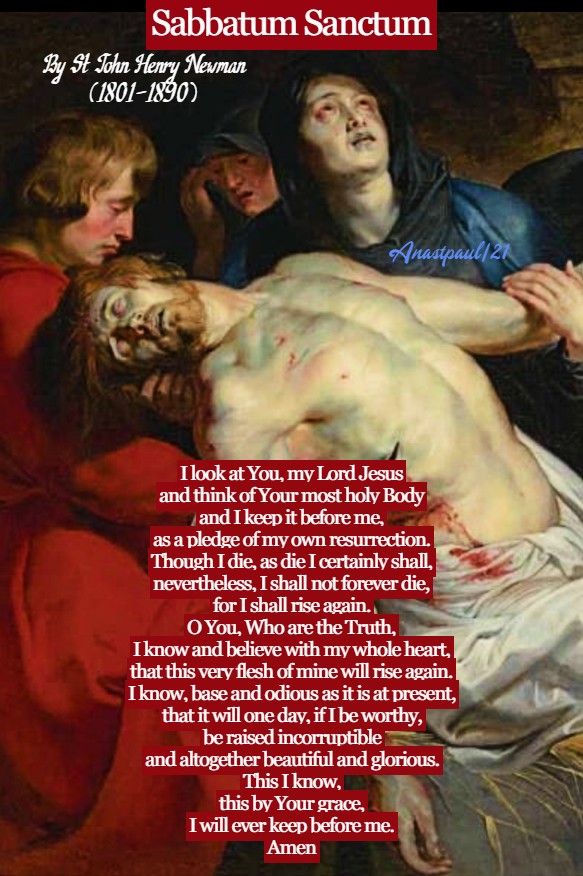
Our Morning Offering – 3 April – Sabbatum Sanctum

Our Morning Offering – 3 April – Holy Saturday

Sabbatum Sanctum
By St John Henry Newman (1801-1890)

I look at You, my Lord Jesus
and think of Your most holy Body
and I keep it before me,
as a pledge of my own resurrection.
Though I die, as die I certainly shall,
nevertheless, I shall not forever die,
for I shall rise again.
O You, who are the Truth,
I know and believe with my whole heart,
that this very flesh of mine will rise again.
I know, base and odious as it is at present,
that it will one day, if I be worthy,
be raised incorruptible
and altogether beautiful and glorious.
This I know,
this by Your grace,
I will ever keep before me.
Amen

Posted in EASTER, HOLY SATURDAY, MARIAN REFLECTIONS, MARIAN Saturdays

Sabbatum Sanctum โ€“ Holy Saturday: โ€œWatchingโ€ – The Easter Vigil of the Holy Night

Sabbatum Sanctumย โ€“ Holy Saturday:ย  โ€œWatchingโ€ – The Easter Vigil of the Holy Night

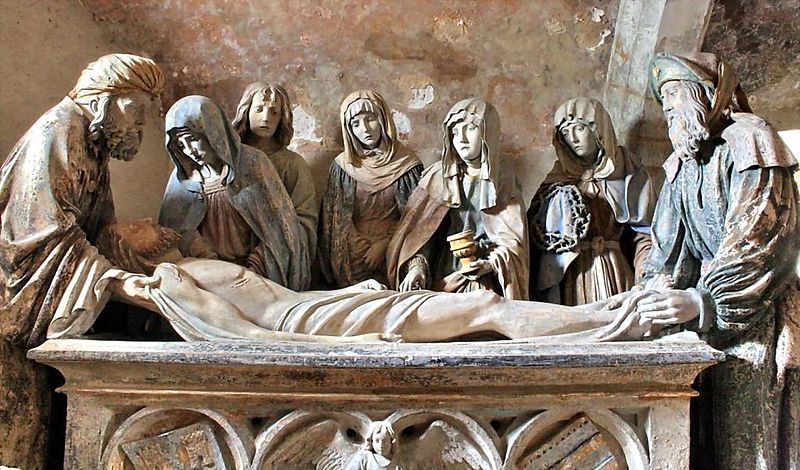
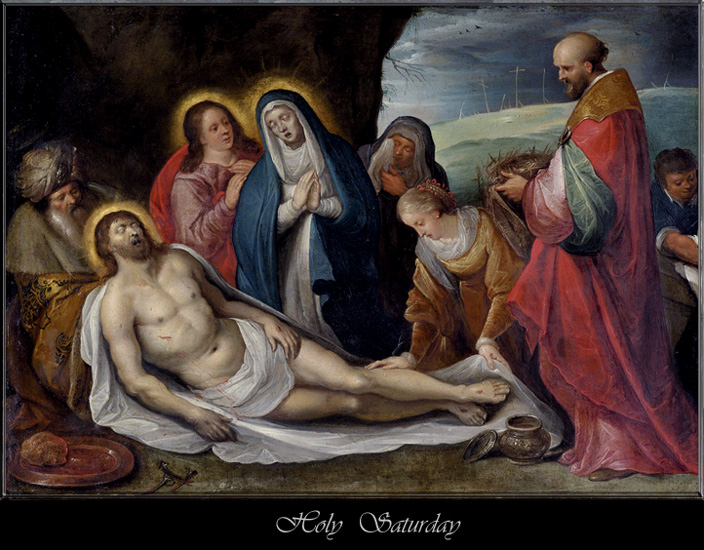
On Holy Saturday the Church waits at the Lordโ€™s tomb, meditating on His suffering and death.ย  ย The Altar is left bare and the Sacrifice of the Mass, is not celebrated.ย  ย Only after the solemn Vigil during the night, held in anticipation of the Resurrection, does the Easter celebration begin, with a spirit of joy which overflows into the following period of fifty days.

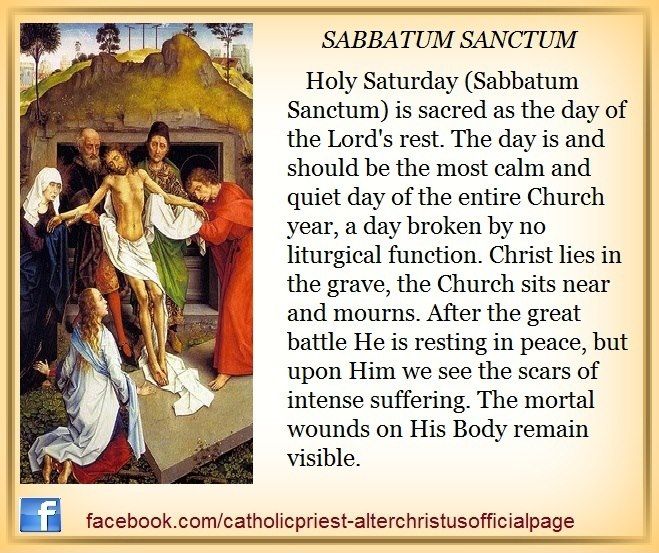
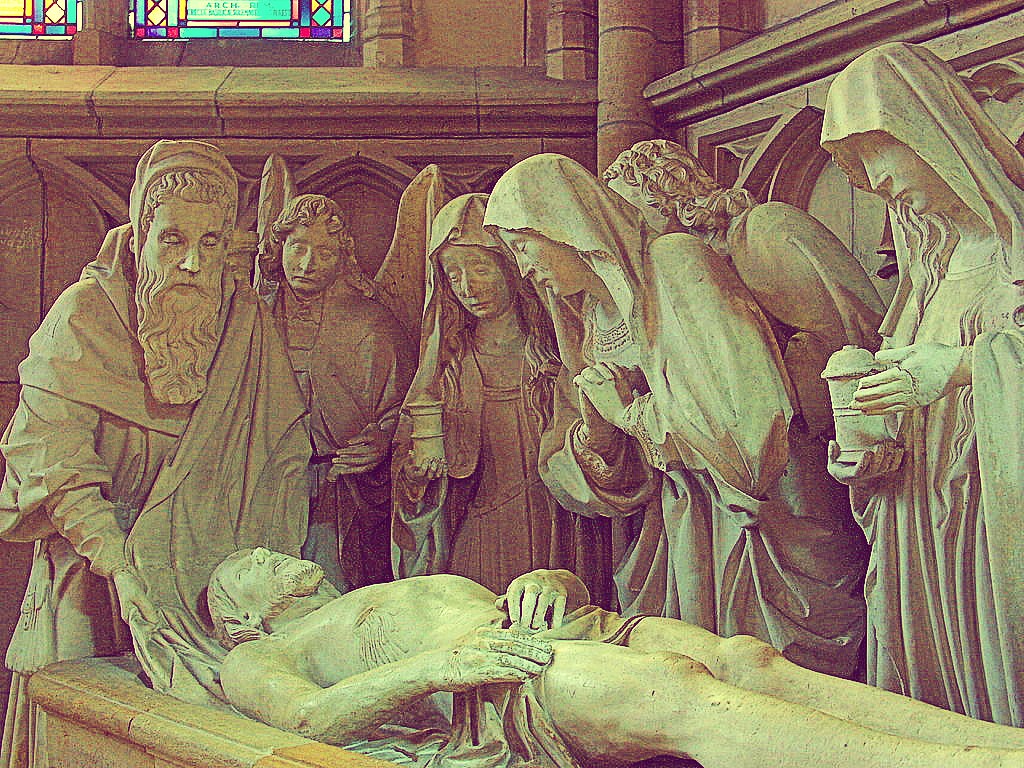
Holy Saturday (fromย Sabbatum Sanctum, its official liturgical name) is sacred as the day of the Lordโ€™s rest; it has been called the โ€œSecond Sabbathโ€ after creation.ย  ย The day is and should be the most calm and quiet day of the entire Church year, a day broken by no liturgical function.ย  ย Christ lies in the grave, the Church sits near and mourns.ย  ย After the great battle He is resting in peace but upon Him, we see the scars of intense sufferingโ€ฆThe mortal wounds on His Body remain visibleโ€ฆJ esusโ€™ enemies are still furious, attempting to obliterate the very memory of the Lord by lies and slander.

Mary and the disciples are grief-stricken, while the Church must mournfully admit, that too many of her children return home from Calvary cold and hard of heart.ย  ย When Mother Church reflects upon all of this, it seems as if the wounds of her dearly Beloved were again beginning to bleed.
The entire body of the Church is represented in Mary for she is theย โ€œcredentium collectio universaโ€ย (Congregation for Divine Worship, Lettera circolare sulla preparazione e celebrazione delle feste pasquali, 73).ย  ย Thus, the Blessed Virgin Mary, as she waits near the Lordโ€™s tomb, as she is represented in Christian tradition, is an icon of the Virgin Church keeping vigil at the Tomb of her Spouse while awaiting the celebration of His Resurrection.
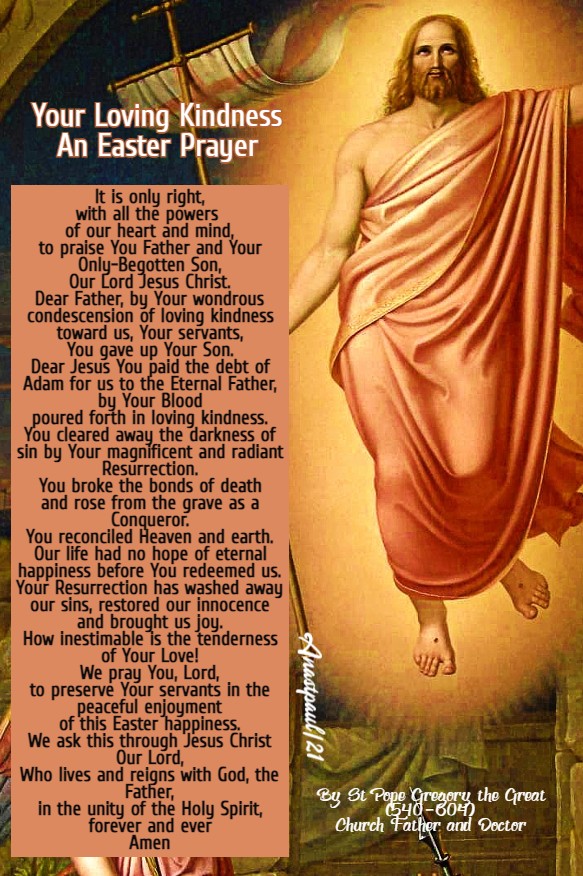
The pious exercise of the Ora di Maria is inspired by this intuition of the relationship between the Virgin Mary and the Church – while the Body of her Son lies in the Tomb and His soul has descended to the dead ,to announce liberation, from the shadow of darkness ,to His ancestors, the Blessed Virgin Mary, foreshadowing and representing the Church, awaits, in faith, the victorious triumph of her Son over death. โ€”ย Directory on Popular Piety and the Liturgy.

Posted in franciscan OFM, SAINT of the DAY

Saint of the Day – 3 April – Blessed John of Penna OFM (c 1193-1271)

Saint of the Day – 3 April – Blessed John of Penna OFM (c 1193-1271) Priest, Friar of the First Order of St Francis and became a Franciscan during St Francis’ lifetime. Founder of the Order in France, Mystic and gifted with the charism of prophecy. Born in c1193 at Penna San Giovanni, Diocese of Fermo, Italy as Giovanni da Parma and died on 3 April 1271 at Recanati, Italy. Also known as Juan de Pina, Juan da Penna San Giovanni, Giovanni, Johannes. Additional Memorial – 31 October (Franciscans).

Blessed John joined the Franciscans at Recanati about 1213, after hearing Fra Filippo preach. He listened in astonishment to this sermon and afterwards, begged to be received into the order and to be vested in its habit.

The now Ordained Priest attended the Provincial Chapter of the Franciscans in Recanati . Thereafter, in 1217, he was sent to Languedoc in France, along with other Friar companions, to spread the work of the Order. It was there, that he desired his life would soon come to a close, so that he could return to God and so he sat under a tree in prayer and reflection, beseeching the Lord to take him home – but a voice responded that he still had much work to do on Earth. He felt re-ignited with apostolic zeal and founded several houses for the Order in Provence. His apostolate in France, spanned over two decades.

He returned to the Italian peninsula in 1242 after a messenger from the Father Provincial came to summon him back and he returned to live the bulk of three decades in cloistered retirement. In 1248 he settled civil unrest in his hometown after writing a pact that was used during negotiations.

He spent one full night until the next dawn in spiritual reflection until an Angel appeared and foretold, that the Priest would soon die. He offered the Priest a choice – to spend a day in Purgatory or to expiate his remaining sins through one full week of suffering – he chose the latter.

John fell ill at once with a high fever and racking pain including gout in his hands and feet. The devil also came to him in a vision with a list of all the sins he committed and said to him: “Because of these sins which thou hast committed in thought, word and deed, thou art condemned to the depths of Hell.” This depressed him to the point where he told this to his fellow Friars, who at once summoned the aged Matteo da Monte Robbiano – John’s Confessor and a close friend – who arrived not long before his death. Robbiano encouraged John and comforted him and said it was a mere trick of Satan.

John died on 3 April 1271 after his week of suffering. He had won all hearts by his exemplary life as well as by his kindly and courteous manners. Aridity and a painful illness; spiritual consolations, however, assured him that he had accomplished his purgatory on earth and when he entered his true home, his cell was illuminated with a celestial light.

He was Beatified on 20 December 1806 by Pope Pius VII (cultus confirmed).

Posted in DOCTORS of the Church, franciscan OFM, HOLY SATURDAY, MARIAN REFLECTIONS, MARIAN Saturdays, MATER DOLOROSA - Mother of SORROWS, REDEMPTORISTS CSSR, SAINT of the DAY

Holy Saturday +2021 and Memorials of the Saints – 3 April

Holy Saturday +2021
https://anastpaul.com/2020/04/11/sabbatum-sanctum-holy-saturday-the-second-sabbath-10-april/

Our Glorious Most Sorrowful Mother – By St Alphonsus Maria de Liguori (1696-1787)
Most Zealous Doctor

Mary is our Mother โ€” not by the flesh but by love. That is, she is our Mother by love alone. So someone observes that she glories in being the mother of love. She is all love for us, her adopted children.
The first reason for Maryโ€™s great love for human beings, is that she loves God so much. She loved Him more in the first moment of her existence, than all the Saints and Angels every loved Him or will love him.

Just as there is not one, among all the blessed ,who loves God as Mary does, so there is no one, after God, who loves us as much as this most loving Mother does. Furthermore, if we heaped together all the love that mothers have for their children, all the love of husbands and wives, all the love of all the Angels and Saints for their clients, it could never equal Maryโ€™s love for even a single soul.
Mary, to obtain the life of grace for us โ€ฆ offered her beloved Jesus to an ignominious death, and watched him die before her eyes, in cruel and unexampled torments.
It is written of the Eternal Father, that God so loved the world as to give His only-begotten Son (Jn 3:16), so also, we can say of Mary, that she so loved the world, as to give her only-begotten Son.
So with St Anselm I will cry:

โ€œLet my heart languish and my soul melt away and be consumed with love of you, my beloved Saviour Jesus and my dear Mother Mary! But because I cannot love you unless You give me grace, then give me grace, O Jesus and Mary โ€” by Your merits, not mine โ€” to love You as You deserve to be loved. O God, lover of humankind, You loved sinful human beings to the point of death. Will You deny Your love and Your Motherโ€™s to anyone who begs for it?โ€

__
Bl Alexandrina di Letto
St Attala of Taormina
St Benatius of Kilcooley
St Benignus of Tomi
St Burgundofara
St Chrestus
St Comman
St Evagrius of Tomi
Bl Francisco Solรญs Pedrajas
Saint or Blessed (conflicting reports?) Gandulphus of Binasco OFM (c 1200-1260)
https://youtu.be/MH42oExIiEI?list=PL5_ax08Z6UX-Mp6eiMLvUNsbqM5V47Q9q

Bl Iacobus Won Si-bo
St John I of Naples
Blessed John of Penna OFM (c 1193-1271) Priest, Friar
Blessed John of Jesus and Mary/Juan Otazua Madariaga O.SS.T (1895-1937)
Priest Martyr
His Life and Death:

https://anastpaul.com/2020/04/03/saint-of-the-day-3-april-blessed-john-of-jesus-and-mary-o-ss-t-1895-1937-priest-martyr/
Bl Lawrence Pak Chwi-deuk
St Luigi Scrosoppi Cong. Orat. (1804-1884)
About St Luigi:
https://anastpaul.wordpress.com/2017/04/03/saint-of-the-day-3-april-st-luigi-scrosoppi/

A little Note about St Luigi โ€“ his Canonisation Miracle occurred in my previous Parish in Oudtshoorn, Cape Town!

Blessed Maria Teresa Casini (1864โ€“1937)
Her life:

https://anastpaul.com/2019/04/03/saint-of-the-day-3-april-blessed-maria-teresa-casini-1864-1937/
St Nicetas of Medicion
St Papo
Bl Piotr Edward Dankowski
St Richard of Chichester (1197-1253)
Biography:

https://anastpaul.wordpress.com/2018/04/03/saint-of-the-day-3-april-st-richard-of-chichester-1197-1253/

Posted in "Follow Me", CHRIST, the WAY,TRUTH,LIFE, GOOD FRIDAY, MEDITATIONS - ANTONIO CARD BACCI, QUOTES for CHRIST, QUOTES on HEAVEN, QUOTES on SUFFERING, QUOTES on the CROSS of CHRIST, The HOLY CROSS, The PASSION, The REDEMPTION

Thought for the Day – 2 April – The Crucifixion

Thought for the Day – 2 April – Meditations with Antonio Cardinal Bacci (1881-1971)

The Crucifixion

โ€œAfter a painful and exhausting journey, Jesus reaches Calvary, where He is to be Crucified.
Once again, He is stripped of His garments, which, by this time, have become stuck to His swollen sores.
Then, He is stretched upon the wooden Cross, to which, one of the brutal executioners fastens His Hands and Feet, with blows from a hammer.
The sharp nails are driven through His flesh into the hard wood.
Jesus looks upwards and offers Himself in silence, as a Victim of Expiation, on behalf of His tormentors and of all of us.
His Mother Mary, is standing a few paces away in the company of the holy women and of the beloved Disciple.
The blows of the hammer pierce the maternal heart of the Blessed Virgin but,she remains silent also and prays.

When we have been afflicted by misfortune or sorrow and our hearts are racked with grief, how do we behave?
Have we the resignation, the trust in God and the spirit of prayer, which Jesus and Mary had on Calvary?
Let us remind ourselves, that we are members of the Mystical Body of Christ.
If Jesus our Head, has suffered, how much more, do miserable sinners like the rest of us ,deserve to suffer!?
Jesus wishes us to participate in the work of redemption by uniting our sufferings to His.
โ€œI rejoice now,โ€ says St Paul, โ€œin the suffering I bear โ€ฆ and what is lacking of the suffering of Christ, I fill up in my fleshโ€ฆโ€ (Col 1:24).

Let us face adversity with courage, therefore and keep our eyes hopefully towards Heaven.
Let us remember, as St Paul also says, that even as we share in the sufferings of Christ, so we shall share in His triumph (Cf 2 Cor 1:7).
Jesus had to ascen Mount Calvary, before He could ascend to Heaven.
If we are to walk in His footsteps, we shall have to do the same.โ€

Antonio Cardinal Bacci

Posted in "Follow Me", CHRIST, the WAY,TRUTH,LIFE, DOCTORS of the Church, FATHERS of the Church, GOOD FRIDAY, JULY - The MOST PRECIOUS BLOOD, LENTEN THOUGHTS, QUOTES on the CROSS of CHRIST, The HOLY CROSS, The MOST PRECIOUS BLOOD, The PASSION, The REDEMPTION

Good Friday Refletion – 2 April – CONTEMPLATING THE LORD’S PASSION

Good Friday Refletion – 2 April

CONTEMPLATING THE LORD’S PASSION

From a Sermon by St Pope Leo the Great (400-461)
Father and Doctor unitatis Ecclesiae

True reverence for the Lord’s passion means, fixing the eyes of our heart on Jesus crucified and recognising in Him our own humanity.

The earth – our earthly nature – should tremble at the suffering of its Redeemer. The rocks – the hearts of unbelievers – should come forth, the massive stones now ripped apart. Foreshadowings of the future Resurrection, should appear in the holy city, the Church of God, what is happening to our bodies, should now take place in our hearts.

No-one, however weak, is denied a share in the victory of the Cross. No-one is beyond the help of the prayer of Christ. His prayer brought benefit to the multitude that raged against Him. How much more, does it bring, to those who turn to Him in repentance.

Ignorance has been destroyed, obstinacy has been overcome. The Sacred Blood of Christ, has quenched the flaming sword that barred access to the tree of life. The age-old night of sin has given place, to the true light.

The Christian people are invited to share the riches of paradise. All who have been reborn have the way open before them, to return to their native land, from which they had been exiled. Unless, indeed ,they close off for themselves, the path that could be opened before the faith of a thief.

The business of this life should not preoccupy us with its anxiety and pride, so that we no longer strive, with all the love of our heart, to be like our Redeemer and to follow His example. Everything that He did, or suffered, was for our salvation – He wanted His Body to share the goodness of its Head.

First of all, in taking our human nature, while remaining God, so that the Word became man, He left no member of the human race, the unbeliever excepted, without a share in His mercy. Who does not share a common nature with Christ, if he has welcomed Christ, who took our nature and is reborn in the Spirit, through whom Christ was conceived?

Again, who cannot recognise in Christ, his own infirmities? Who would not recognise that Christ’s eating and sleeping, His sadness and His shedding tears of love, are marks of the nature of a slave?

It was this nature of a slave, that had to be healed of its ancient wounds and cleansed of the defilement of sin. For that reason, the only-begotten Son of God, became also the Son of Man. He was to have both the reality of human nature and the fullness of the Godhead.

The Body, that lay lifeless in the tomb, is ours. The Body that rose again on the third day, is ours. The Body, that ascended above all the heights of heaven, to the right hand of the Father’s glory, is ours. If then we walk in the way of His commandments and are not ashamed to acknowledge, the price He paid for our salvation in a lowly Body, we too are to rise to share His glory. The promise He made will be fulfilled, in the sight of all: –“whoever acknowledges Me before men, I too will acknowledge him before My Father who is in heaven.”

Posted in DOCTORS of the Church, GOOD FRIDAY, HYMNS, PRAYERS of the CHURCH, PRAYERS of the SAINTS, QUOTES of the SAINTS, QUOTES on the CROSS of CHRIST, The HOLY CROSS, The PASSION

Quote/s of the Day – 2 April – Good Friday

Quote/s of the Day – 2 April – Good Friday of the Passion of the Lord

โ€œO SACRED HEADโ€
By St Bernard (1090-1153)
Mellifluous Doctor

O Sacred Head surrounded
By a crown of piercing thorn!
O bleeding Head, so wounded,
Reviled and put to scorn!
Deathโ€™s pallid hue comes oโ€™er Thee,
The glow of life decays,
Yet angel hosts adore Thee
And tremble as they gaze.

I see Thy strength and vigour
All fading in the strife,
And death, with cruel vigour,
Bereaving Thee of life;
O agony and dying!
O love to sinners free!
Jesus, all grace supplying,
O turn Thy face on me!

In this Thy bitter Passion,
Good Shepherd, think of me,
With Thy most sweet compassion,
Unworthy though I be.
Beneath Thy Cross abiding,
โ€˜Forever would I rest,
In Thy dear love confiding,
And will Thy presence blest.

โ€œDo not pass one day without devoting a half hour,
or at least a quarter of an hour,
to meditation on the sorrowful Passion of your Saviour.
Have a continual remembrance
of the agonies of your crucified Love
and know, that the greatest saints,
who now, in heaven,
triumph in holy love,
arrived at perfection in this way.โ€

St Paul of the Cross (1694-1775)