Day Thirty four of our Lenten Journey – 23 March – Tuesday of Passion Week or the Fifth Week of Lent, Readings: Numbers 21:4-9, Psalms 102:2-3, 16-18, 19-21, John 8:21-30
Imitating Christ with Thomas à Kempis (1380-1471)
In You is the source of life and in Your Light Lord, we see light Psalm 35(36)
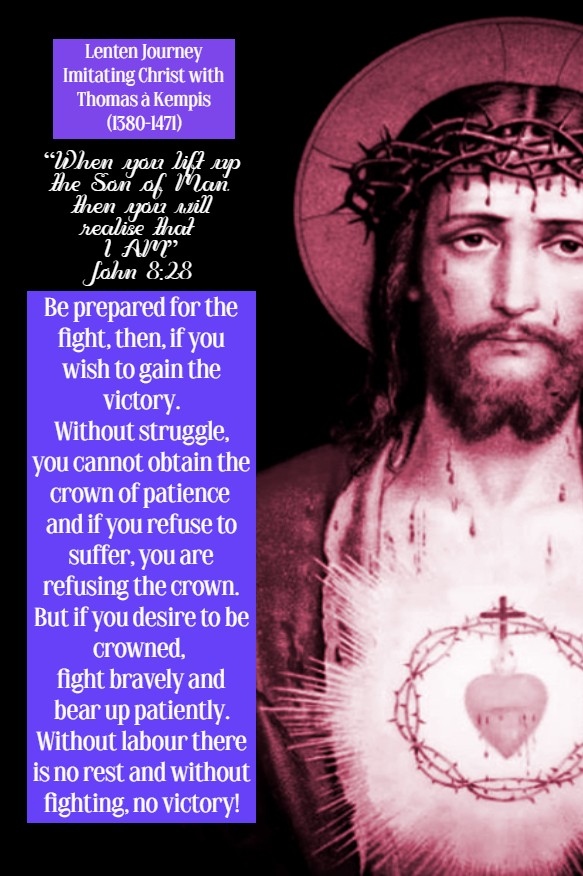
“When you lift up the Son of Man, then you will realise that I AM” – John 8:28
CHRIST: WHAT are you saying, My child? Think of My suffering and that of the saints and cease complaining. You have not yet resisted to the shedding of blood. What you suffer is very little compared with the great things they suffered who were so strongly tempted, so severely troubled, so tried and tormented in many ways. Well may you remember, therefore, the very painful woes of others, that you may bear your own little ones the more easily. And if they do not seem so small to you, examine if perhaps your impatience is not the cause of their apparent greatness; and whether they are great or small, try to bear them all patiently. The better you dispose yourself to suffer, the more wisely you act and the greater is the reward promised you. Thus you will suffer more easily if your mind and habits are diligently trained to it. Do not say: “I cannot bear this from such a man, nor should I suffer things of this kind, for he has done me a great wrong. He has accused me of many things of which I never thought. However, from someone else I will gladly suffer as much as I think I should.” Such a thought is foolish, for it does not consider the virtue of patience or the One Who will reward it, but rather weighs the person and the offense committed. The man who will suffer only as much as seems good to him, who will accept suffering only from those from whom he is pleased to accept it, is not truly patient. For the truly patient man does not consider from whom the suffering comes, whether from a superior, an equal, or an inferior, whether from a good and holy person or from a perverse and unworthy one; but no matter how great an adversity befalls him, no matter how often it comes or from whom it comes, he accepts it gratefully from the hand of God and counts it a great gain. For with God nothing that is suffered for His sake, no matter how small, can pass without reward. Be prepared for the fight, then, if you wish to gain the victory. Without struggle you cannot obtain the crown of patience and if you refuse to suffer, you are refusing the crown. But if you desire to be crowned, fight bravely and bear up patiently. Without labour there is no rest and without fighting, no victory.
DISCIPLE: O Lord, let that which seems naturally impossible to me become possible through Your grace. You know that I can suffer very little and that I am quickly discouraged when any small adversity arises. Let the torment of tribulation suffered for Your name be pleasant and desirable to me, since to suffer and be troubled for Your sake, is very beneficial for my soul. (Book 3 Ch 19)
Quote/s of the Day – 23 March – Tuesday of Passion Week or the Fifth Week of Lent, Readings: Numbers 21:4-9, Psalms 102:2-3, 16-18, 19-21, John 8:21-30
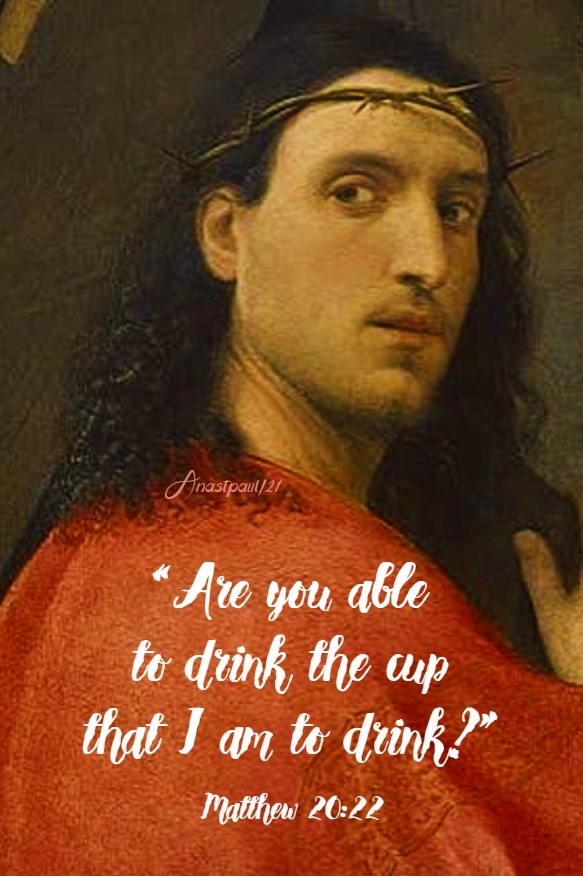
“Are you able to drink the cup that I am to drink?”
Matthew 20:22
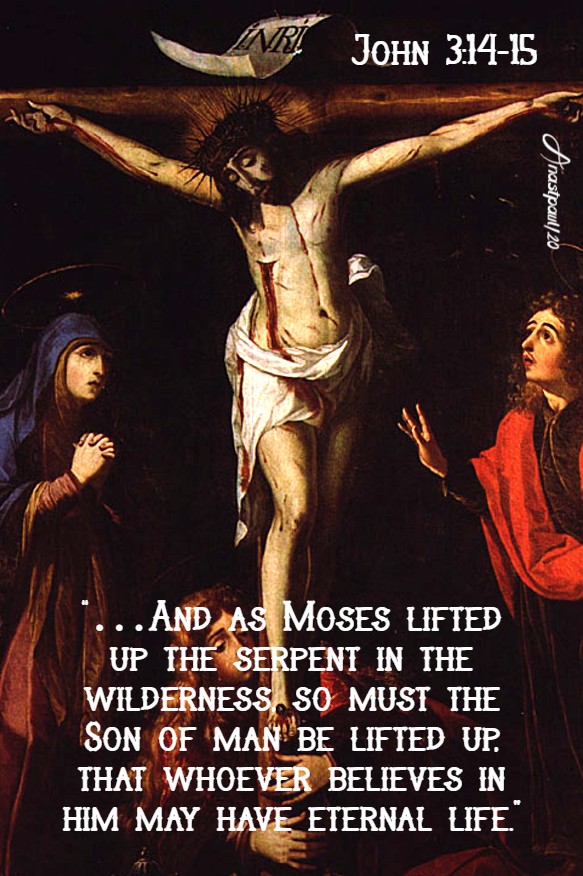
“…And as Moses lifted up the serpent in the wilderness, so must the Son of man be lifted up, that whoever believes in him may have eternal life.”
John 3:14-15
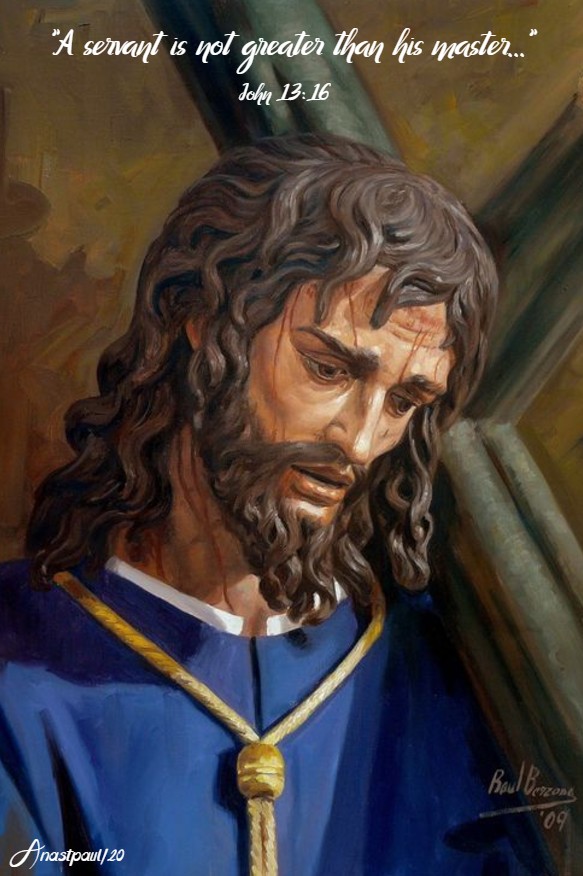
“The servant is not greater than his Master”
John 13:16
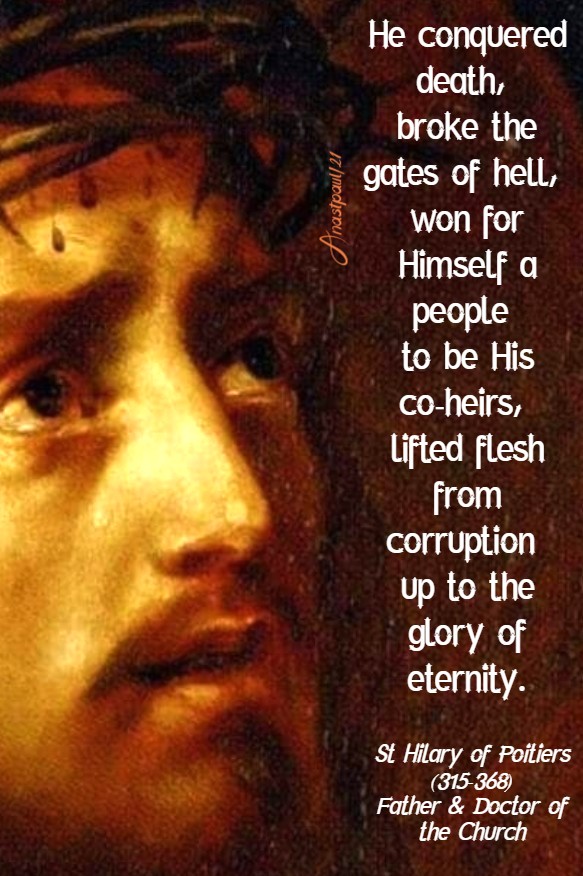
“He conquered death, broke the gates of hell, won for Himself a people to be His co-heirs, lifted flesh from corruption up to the glory of eternity.”
“The Son of God is nailed to the Cross but on the Cross, God conquers human death. Christ, the Son of God, dies but all flesh is made alive in Christ. The Son of God is in hell but man is carried back to heaven.”
St Hilary of Poitiers (315-368) Father & Doctor of the Church
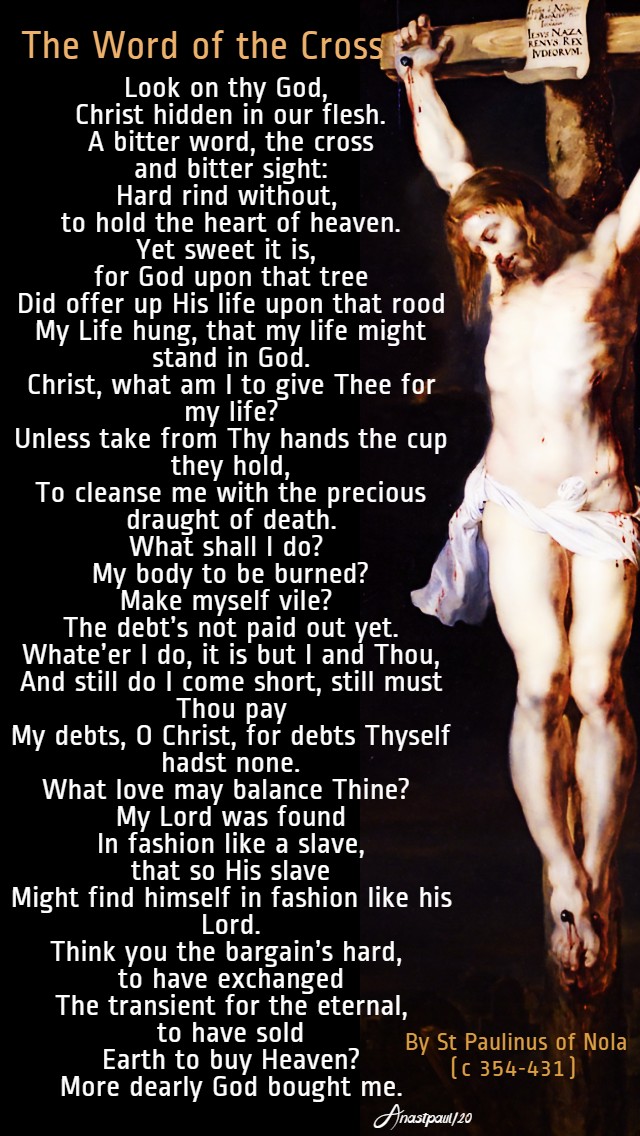
The Word of the Cross by Saint Paulinus of Nola (c 354-431)
Look on thy God, Christ hidden in our flesh. A bitter word, the cross and bitter sight: Hard rind without, to hold the heart of heaven. Yet sweet it is, for God upon that tree Did offer up His life upon that rood My Life hung, that my life might stand in God. Christ, what am I to give Thee for my life? Unless take from Thy hands the cup they hold, To cleanse me with the precious draught of death. What shall I do? My body to be burned? Make myself vile? The debt’s not paid out yet. Whate’er I do, it is but I and Thou, And still do I come short, still must Thou pay My debts, O Christ, for debts Thyself hadst none. What love may balance Thine? My Lord was found In fashion like a slave, that so His slave Might find himself in fashion like his Lord. Think you the bargain’s hard, to have exchanged The transient for the eternal, to have sold Earth to buy Heaven? More dearly God bought me.
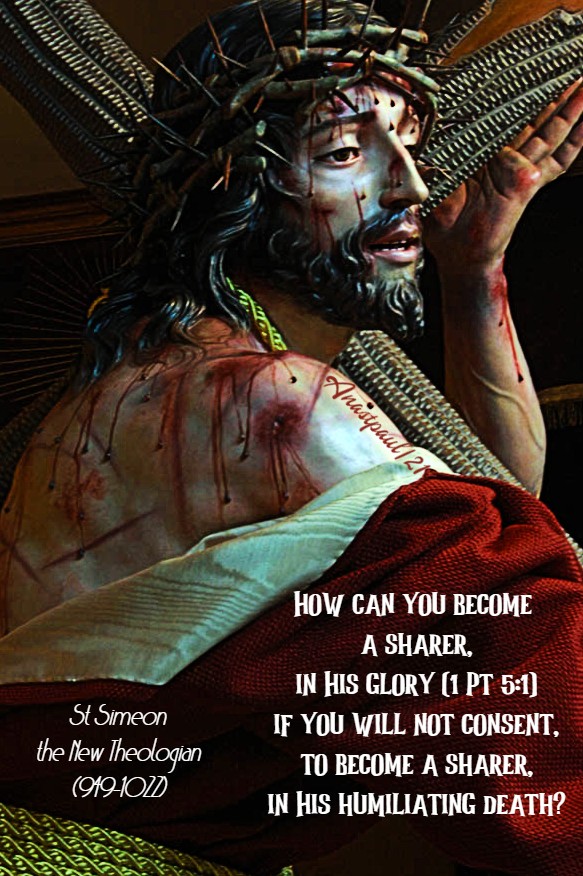
“How can you become a sharer, in His glory (1 Pt 5:1) if you will not consent, to become a sharer, in His humiliating death?”
St Simeon the New Theologian (949-1022)
“Let us then learn from the Cross of Jesus our proper way of living. Should I say ‘living’ or, instead, ‘dying’? Rather, both living and dying. Dying to the world, living for God. Dying to vices and living by the virtues. Dying to the flesh, but living in the spirit. Thus in the Cross of Christ, there is death and in the Cross of Christ there is life. The death of death is there and the life of life. The death of sins is there and the life of the virtues. The death of the flesh is there and the life of the spirit.”
St Aelred of Rievaulx (1110-1167)
“ … If you die with Him, you shall also likewise live with Him. If you are His companion in punishment, so shall you be in glory.”
“When you lift up the Son of Man, then you will realise that I AM” – John 8:28
REFLECTION – “Isaiah the prophet describes an exalted vision for us: “I saw the Lord seated on a throne” (Is 6:1). What a wonderful sight, my brethren! Happy the eyes that saw it! Who would not want with all their heart, to behold the splendour of so great a glory? … Yet here, I am listening to that same prophet give us an account of a very different vision of the same Lord: “We saw Him; He had no beauty, no splendour – we took Him for a leper” (Is 53:2f. Vg.) (…)
And so, if you desire to see Jesus in His glory, try, first of all, to contemplate Him in His humiliation. Begin by gazing on the serpent raised up in the desert, (cf. Jn 3:14) if you wish to see the King seated on His throne. Let the first vision fill you with humility, so that the second, may raise you from your humiliation. Let the former, reprove and heal your pride, before the latter fulfils and satisfies, your desire. Do you see the Lord “emptied?” (Phil 2:7). Do not let this vision leave you untouched, or you will not be able to behold Him later on, in the glory of His exaltation, without anxiety.
“You will be like Him,” indeed, when you see Him “as He is” (1 Jn 3:2); so, be like Him now, as you see what He became for your sake. If you do not refuse to become like Him in His humiliation, He will certainly give you, the likeness of His glory in return. He will never allow someone who has shared His Passion, to be excluded from communion in His glory. So little does He refuse, to admit someone who has shared His Passion, into the Kingdom with Him, that the thief found himself in paradise that very day with Him because he confessed Him on the cross (Lk 23:42) … Yes indeed, “if we suffer with Him, we shall reign with Him” (Rm 8:17). – St Bernard (1091-1153) Cistercian Monk and Mellifluous Doctor of the Church – Sermon 1 for the first Sunday of November.
PRAYER – Holy Father, we have sinned against You and beg for Your forgiveness and mercy. Through the merits of the saving Cross of Your Son, help Your people O Lord, to persevere in obedience to Your will, so that through this obedience, we may reach our eternal home. May the eyes of our hearts, never cease contemplating the Holy Cross and following the way of its humiliation. We hope for the intercession of your angels and saints and our most loving Mother Mary. Through Christ, our Lord with the Holy Spirit, God forever, amen.
Our Morning Offering – 23 March – Tuesday of Passion Week or the Fifth Week of Lent
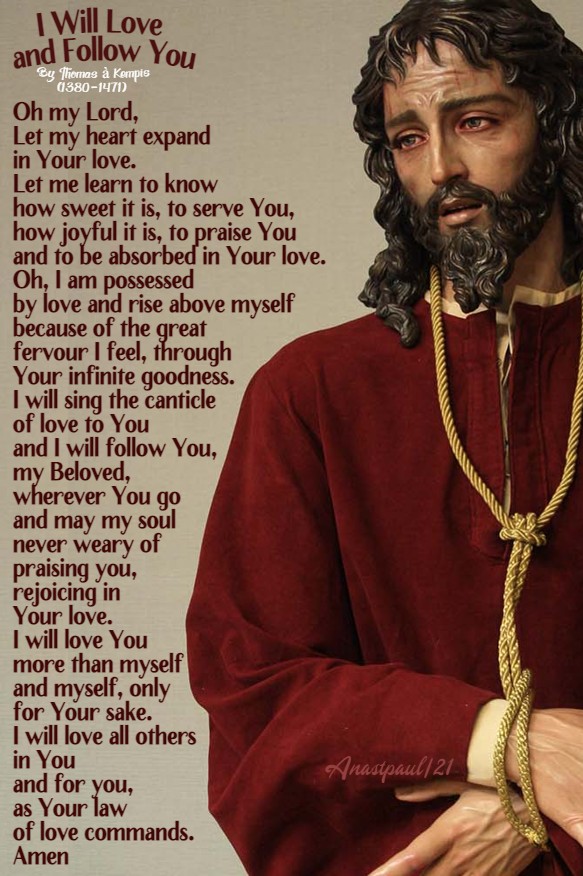
I Will Love and Follow You By Thomas à Kempis CRSA (1380-1471)
Oh my Lord, Let my heart expand in Your love. Let me learn to know how sweet it is, to serve You, how joyful it is, to praise You and to be absorbed in Your love. Oh, I am possessed by love and rise above myself because of the great fervour I feel, through Your infinite goodness. I will sing the canticle of love to You and I will follow You, my Beloved, wherever You go and may my soul never weary of praising you, rejoicing in Your love. I will love You more than myself and myself, only for Your sake. I will love all others in You and for you, as Your law of love commands. Amen
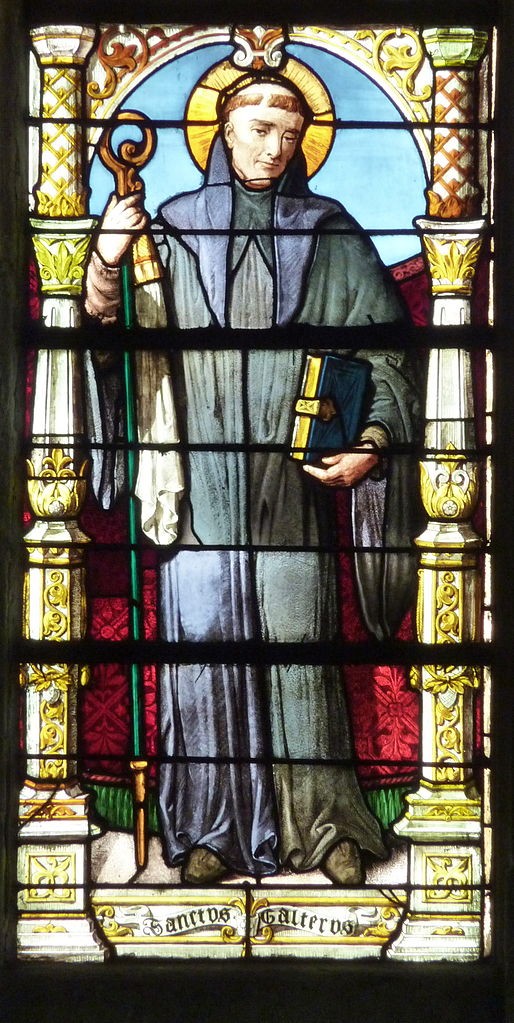
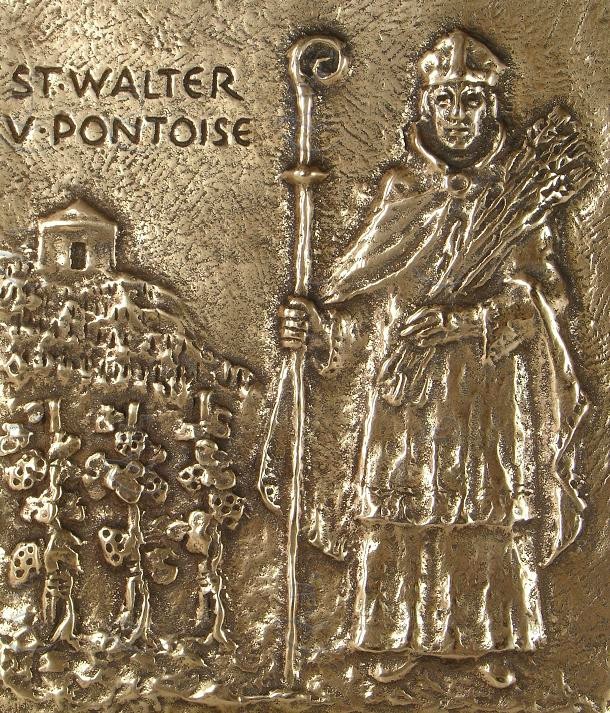
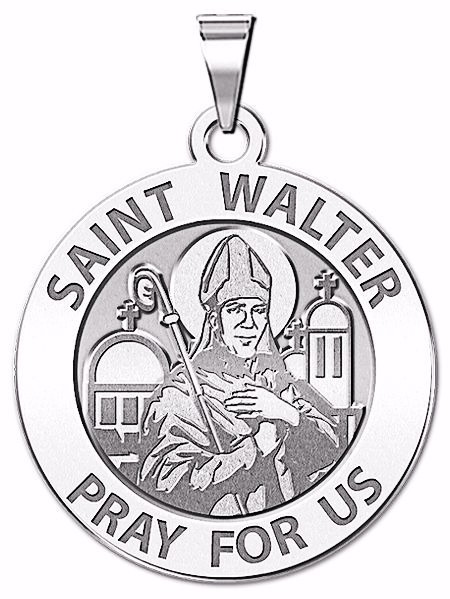
Saint of the Day – 23 March – Saint Walter of Pontoise OSB (c 1030-c 1099) A very reluctant Abbot, Reformer, would-be hermit. Born in c 1030 in Andainville, Picardy, France and died on Good Friday, 8 April 1099 of natural causes. Patronages – against job-related stress, prisoners, prisoners of war, vintners, Pontoise, France.
Walter had been a Professor of philosophy and rhetoric before deciding to join the Benedictine Abbey of Rebais-en-Brie to retreat from the world and the temptations success had brought him.
When the Cross Benedictine Abbey in Pontoise was founded, Walter was chosen as its first Abbot. By custom, the Abbot placed his hand under the king’s hand during the installation. Instead, Walter placed his hand over the hand of King Philip I and told him: “It is from God, not from your majesty, that I accept the charge of this church.”
Walter soon decided that embracing the Office of Abbot sid not leave him enough time for solitude and prayer, so he secretly left the Abbey and went to the Benedictine Abbey at Cluny, where St Hugh was the Abbot.
When the Monks at Pontoise learned where he was, they forced him to return, so he often moved into a cell for days at a time. Eventually, he fled again, this time to an island in the Loire River. The Monks brought him back again after a pilgrim told them where he was.
Walter hadn’t given up his dream to live as a simple Monk, so he went to Rome to appeal to Pope Gregory VII and resign his position as Abbot. However, Pope Gregory dashed Walter’s plans, telling him to go back to the Abbey and use his God-given talents for the best of his fellow Monks. This order seemed to change everything and Walter never again tried to escape.
Not that he led a quiet life. as the Abbot. For after his visit to Pope Gregory, he campaigned against the abuses and corruptions of his fellow Benedictines and denounced clerical abuses, especially among secular Priests, whom he criticised for lack of discipline and for simony. They responded by having him beaten and imprisoned. That didn’t stop Walter who, at a 1092 Church Council in Paris, defended a Vatican decree banning the faithful from going to Masses offered by Priests, living with a concubine.
Walter continued living as simple life as possible and being faithful to his administrative and pastoral functions as the Abbot. But, to find his own solace, he often spent the night in prayer before the Tabernacle in Church.
Shortly before his death on Good Friday, he built the Convent of Our Lady at Bertaucourt for Nuns.
Walter was buried in the Abbey at Pontoise. Numerous miracles were reported at his tomb. His remains were stolen during the French Revolution. Most were not recovered.
He was Canonised by Hugh de Boves, the Archbishop of Rouen in 1153 and was one of the last Saints in Western Europe, to have been Canonised by an authority, other than the Pope.
Walter is the Patron of prisoners because while he was a novice, he once took pity on an inmate at the Monastery prison and helped the prisoner to escape.
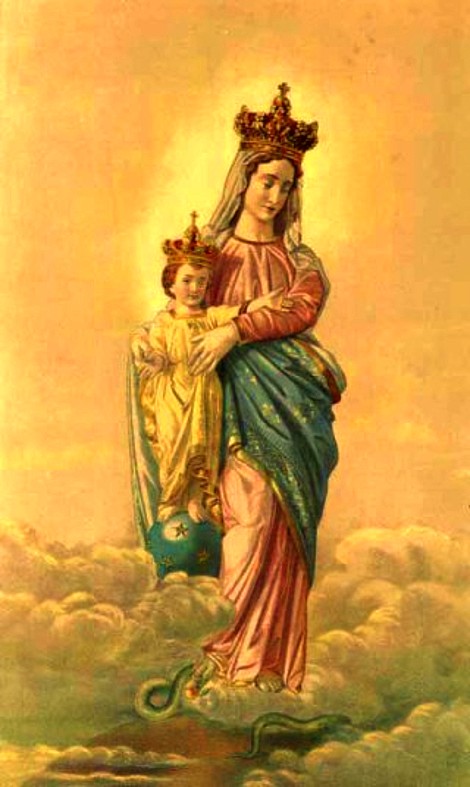
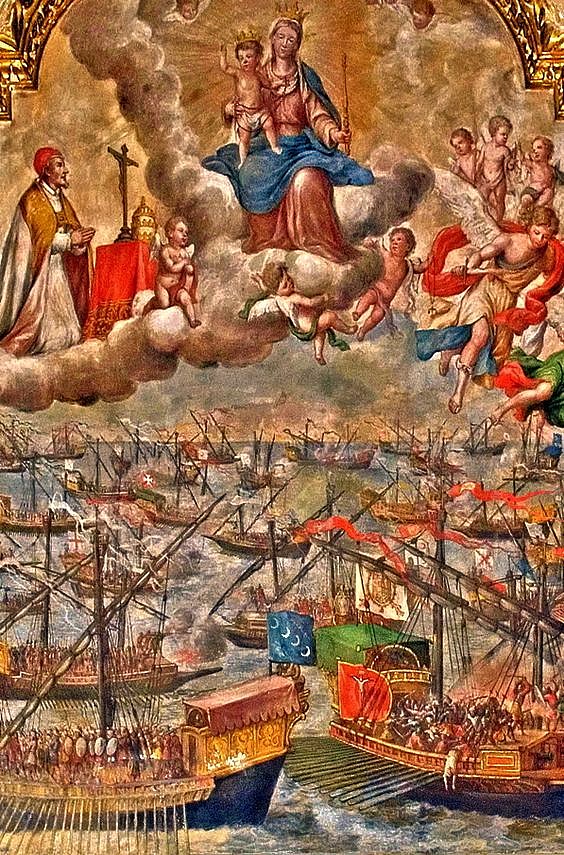
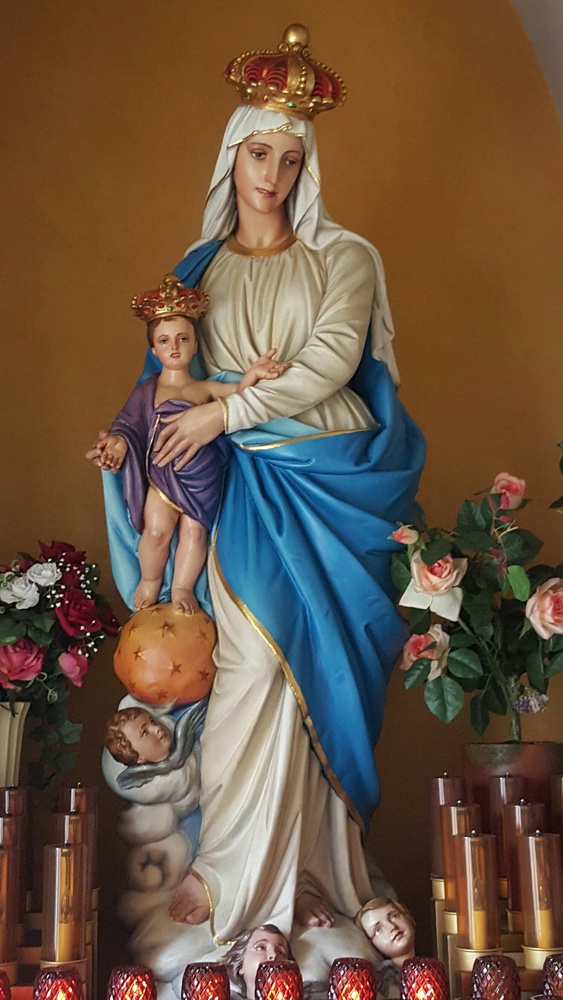
Madonna della Vittoria di Lepanto / Our Lady of Victory of Lepanto and Hungary, (1716) – 23 March:
The Battle of Lepanto was a naval engagement that took place between the ships of the Catholic Holy League under Don Juan of Austria and the navy of the Ottoman Empire under Ali Pasha, supported by a large fleet of corsairs. The Ottoman Empire was far too powerful for any one Christian kingdom to stand against it and, although all of Western Europe was threatened, only Spain, the Papal States, the Duchy of Savoy, the Republic of Venice, the Republic of Genoa and the Knights of Saint John, took a stand against them. Altogether they still had only 212 ships against no less than 278 ships. For hundreds of years the Ottoman Empire had been making advances into Europe, while also making lightning raids along the coastlines to pillage and take slaves. They intended to eventually overwhelm all of Europe and at that time, Catholics stood almost alone against them, as no Protestant force would do anything to oppose the invasion. The advantage in this contest went strongly to the Turks and so, Pope Pius V implored all of Christendom, to pray the Rosary to the Blessed Virgin Mary, to obtain her intercession before the throne of God, for their victory. Admiral Andrea Doria sailed to meet the Turks with an image of the Blessed Virgin prominently displayed in his flagship’s state room. The Venetian forces on Cyprus, had been under siege by the Turks, during the time that the Catholic forces were preparing to meet them. On 1 August they surrendered, after being assured, that they could leave the island unopposed. The Ottoman commander broke his solemn oath, however, taking the Venetians captive and flaying their captain while he was yet alive. Once he had completed this unspeakable torture, the captain’s dead body was hung from a spar on Mustafa’s flagship alongside the heads of all the Venetian commanders. This was the type of barbarism the Catholic forces sailed to oppose. The engagement took place on the 7th of October 1571, only 6 years after the Knights of Saint John defeated a powerful Ottoman army at Malta. Don Juan of Austria encouraged his men by telling them that “There is no paradise for cowards.” If they should lose the engagement, the Mediterranean Sea would be opened up to assist future Ottoman invasions. Victory would mean at least a brief reprieve. The Ottoman Turks had not lost any significant naval engagements in the memory of any living man, yet they were defeated. It was widely recognised, that the battle was won through the power of Mary, Our Lady of Victory. The Turks had come up like fire from the East, plundering, raping, enslaving, threatening to master the whole of Christendom but had been defeated at Lepanto through the power of the Rosary. The Turks had lost nearly 9 of every 10 ships and 30,000 men went to a watery grave. The Holy League lost only 17 galleys and 7,500 men. Many historians rank Lepanto as the most decisive naval engagement since the Battle of Actium in 31 BC, proving to the Christians, that the Turks could be beaten. Although the Turks soon rebuilt their fleet, many of their best soldiers and sailors were already dead at Malta and Lepanto and they could not be easily replaced.
This feast also celebrates another Christian victory, as in 1716, Mary, Queen of Victory, was chosen to protect her children again, at Petenwardein. This battle was fought on 5 August 1716, between the Austrian army of Prince Eugene and the Turks at Peterwardein in Hungary and, it was also won through the power of Mary Most Holy. To help equip the Christian army against the Turks, Pope Clement XI emptied the Papal treasury. The two armies met on the morning of the feast of Our Lady of the Snows; the Christian army was outnumbered ten to three; the enemy had the advantage of position but the Christian strength lay in the right of their cause and in Mary, who watched over them. The battle was long but, behind the lines in the Churches of Europe, Catholics prayed – their prayers were heard. That evening the sun set on a free Hungary. Mary’s men had won the day; Mary’s banner floated victoriously over a Christian land. The news filled the Christian world with joy but nowhere more than at Rome. In thanksgiving to the Mother of God for her help, glorious, solemn, pontifical ceremonies of gratitude were held in the Basilica of Saint Mary Major. After Lepanto, Pius V instituted the feast of the Holy Rosary in Rome and Clement XI extended it to the whole world. Today, other more sinister errors eat at the heart of Christian culture. Against the errors of our time, we must appeal to Mary; she is our Advocate, our Queen of Victories and of Peace. For her and for her blessed Son, we struggle and in her powerful intercession with the Prince of Peace, we place our trust. We struggle today to preserve our birthright as sons of God.
St Theodolus of Antioch St Victorian of Hadrumetum St Walter of Pontoise OSB (c 1030-c 1099) A very reluctant Abbot — Daughters of Feradhach: They are mentioned in early calendars and martyrologies, but no information about them has survived.
Martyrs of Caesarea – 5 saints: A group of five Christians who protested public games which were dedicated to pagan gods. Martyred in the persecutions Julian the Apostate. The only details we know about them are their names – Aquila, Domitius, Eparchius, Pelagia and Theodosia. They were martyred in 361 in Caesarea, Palestine.
Thought for the Day – 22 March – Meditations with Antonio Cardinal Bacci (1881-1971)
Sin
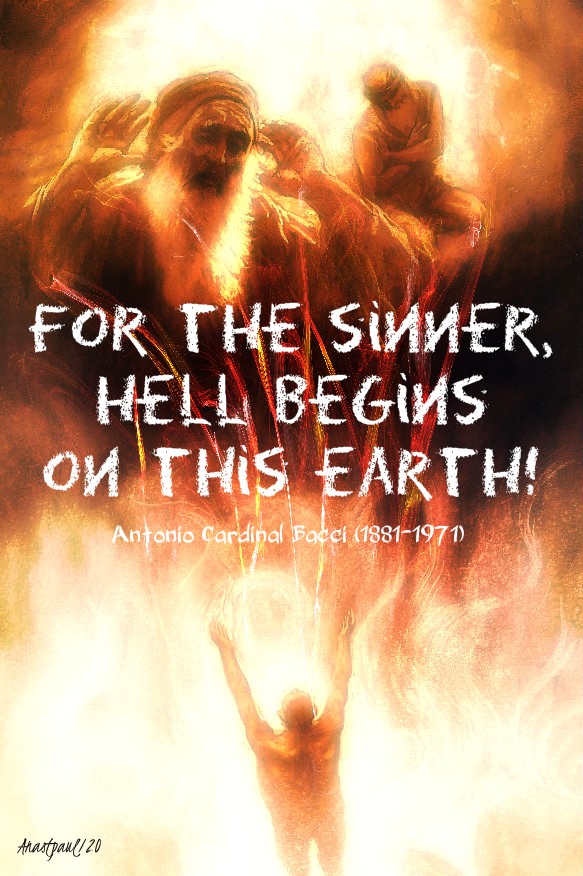
“In that we prefer our own wayward whims to the law of God, sin is an abuse of liberty. It is a revolt against right reason, the dictates of which, we refuse to obey. It is an offence against our Creator and Redeemer, whose commandments we despise and whose redeeming grace, we reject by our actions. It is moreover, an act of supreme folly, for it extinguishes, not only the supernatural splendour of grace but, also, the natural light of reason. Through sin, man is brutalised and experiences in himself, as his first punishment, the confusion of his whole being.
In practice, the sinner denies God, Who has created and redeemed him. He upsets the natural order of things and is violently separated from the source of all truth, beauty and goodness. As a result, he experiences, in himself, the hell which he has constructed with his own hands – a hell of emptiness, disgust and remorse. Unless the helping hand of God reaches out to rescue him from the abyss, all this is simply a bitter foretaste of eternal despair. God, as St Augustine has written, has ordained from all eternity, that every dissolute soul will be it’s own punishment. For the sinner, hell begins on this earth! There can be no peace for the wicked.
When we realise, the gravity, stupidity and dire consequences of sin, it seems impossible, that a rational being, enlightened and enriched by divine grace, should continue to sin. Nevertheless, sad experience teaches us that the lives of individuals, families and human society in general, are often distorted by this evil, which is the root of all other evils.”
Day Thirty four of our Lenten Journey – 22 March – Monday of Passion Week or the Fifth Week of Lent, Readings: Daniel 13:1-9, 15-17, 19-30, 33-62 or 13:41-62, Psalms 23:1-3, 3-4, 5, 6, John 8:1-11
Imitating Christ with Thomas à Kempis (1380-1471)
In You is the source of life and in Your Light Lord, we see light Psalm 35(36)
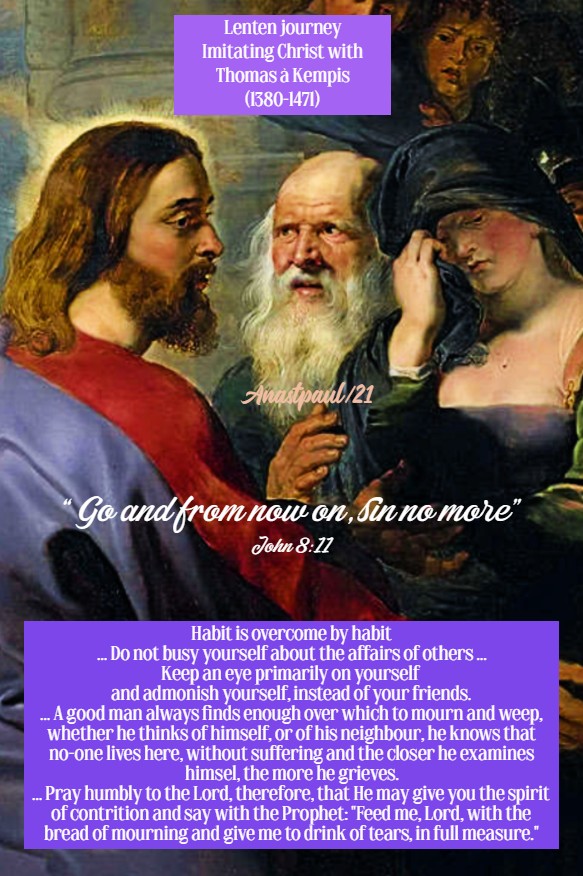
“Go and from now on, sin no more” – John 8:11
IF YOU wish to make progress in virtue, live in the fear of the Lord, do not look for too much freedom, discipline your senses and shun inane silliness. Sorrow opens the door to many a blessing which dissoluteness usually destroys.
It is a wonder that any man who considers and meditates on his exiled state and the many dangers to his soul, can ever be perfectly happy in this life. Lighthearted and heedless of our defects, we do not feel the real sorrows of our souls but often indulge in empty laughter, when we have good reason to weep. No liberty is true and no joy is genuine, unless it is founded in the fear of the Lord and a good conscience.
Happy is the man who can throw off the weight of every care and recollect himself, in holy contrition. Happy is the man who casts from himself, all that can stain or burden his conscience.
Fight like a man. Habit is overcome by habit. If you leave men alone, they will leave you alone to do what you have to do. Do not busy yourself about the affairs of others … Keep an eye primarily on yourself and admonish yourself, instead of your friends.
If you do not enjoy the favour of men, do not let it sadden you but consider it a serious matter, if you do not conduct yourself as well, or as carefully, as is becoming for a servant of God …
It is often better and safer for us to have few consolations in this life, especially comforts of the body. Yet, if we do not have divine consolation or experience it rarely, it is our own fault because we seek no sorrow of heart and do not forsake vain outward satisfaction.
Consider yourself unworthy of divine solace and deserving rather of much tribulation. When a man is perfectly contrite, the whole world is bitter and wearisome to him.
A good man always finds enough over which to mourn and weep, whether he thinks of himself, or of his neighbour, he knows that no-one lives here, without suffering and the closer he examines himsel, the more he grieves.
The sins and vices in which we are so entangled, that we can rarely apply ourselves to the contemplation of heaven, are matters for just sorrow and inner remorse.
I do not doubt that you would correct yourself more earnestl,y if you would think more of an early death than of a long life. And if you pondered in your heart the future pains of hell or of purgatory, I believe. you would willingly endure labour and trouble and would fear no hardship. But since these thoughts never pierce the heart and, since we are enamoured of flattering pleasure, we remain very cold and indifferent. Our wretched body complains so easily because, our soul is altogether lifeless.
Pray humbly to the Lord, therefore, that He may give you the spirit of contrition and say with the Prophet: “Feed me, Lord, with the bread of mourning and give me to drink of tears, in full measure.” (Book 1 Ch 24)
Quote/s of the Day – 22 March – Monday of Passion Week or the Fifth Week of Lent, Readings: Daniel 13:1-9, 15-17, 19-30, 33-62 or 13:41-62, Psalms 23:1-3, 3-4, 5, 6, John 8:1-11
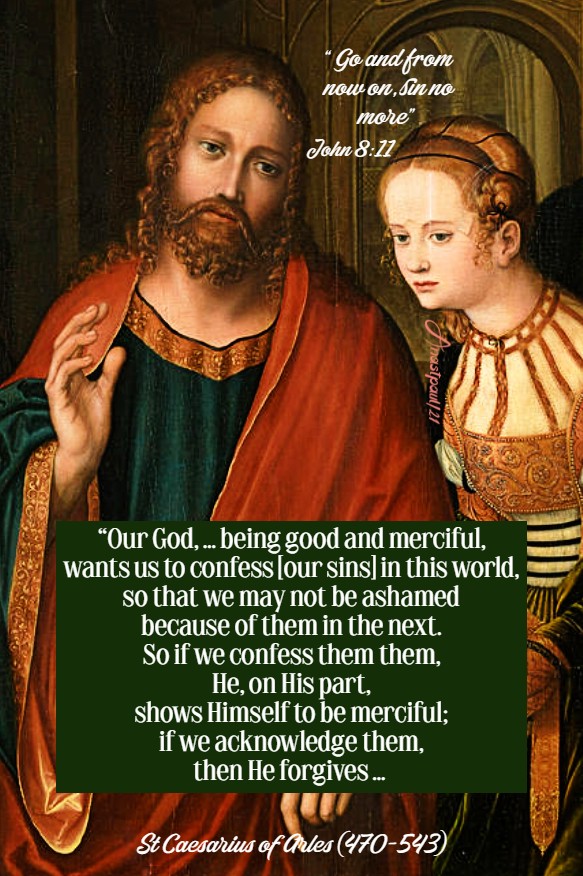
“Go and from now on, sin no more”
John 8:11
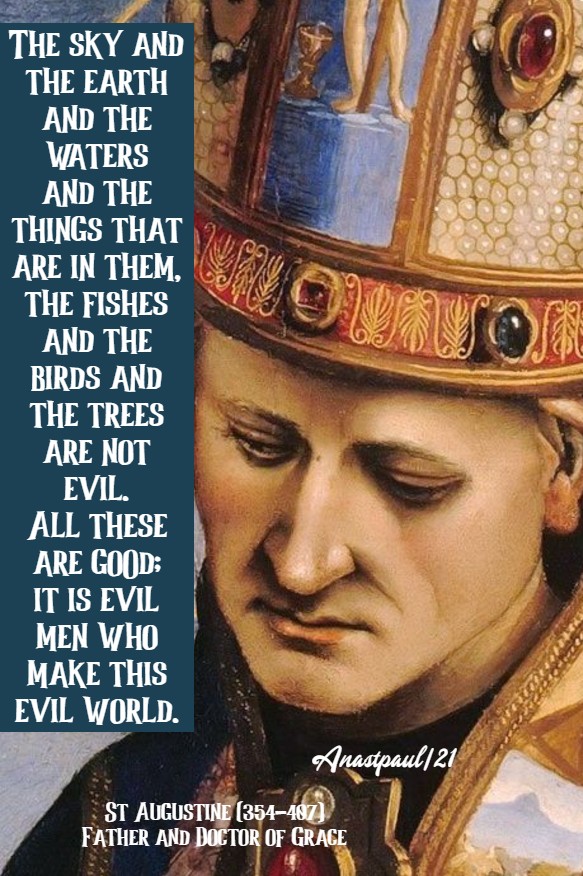
“The sky and the earth and the waters and the things that are in them, the fishes and the birds and the trees are not evil. All these are good; it is evil men who make this evil world.”
St Augustine (354-430) Father, Doctor of Grace
“Our God, … being good and merciful, wants us to confess [our sins] in this world, so that we may not be ashamed because of them in the next. So if we confess them them, He, on His part, shows Himself to be merciful; if we acknowledge them, then He forgives … ”
St Caesarius of Arles (470-543) Bishop and Monk
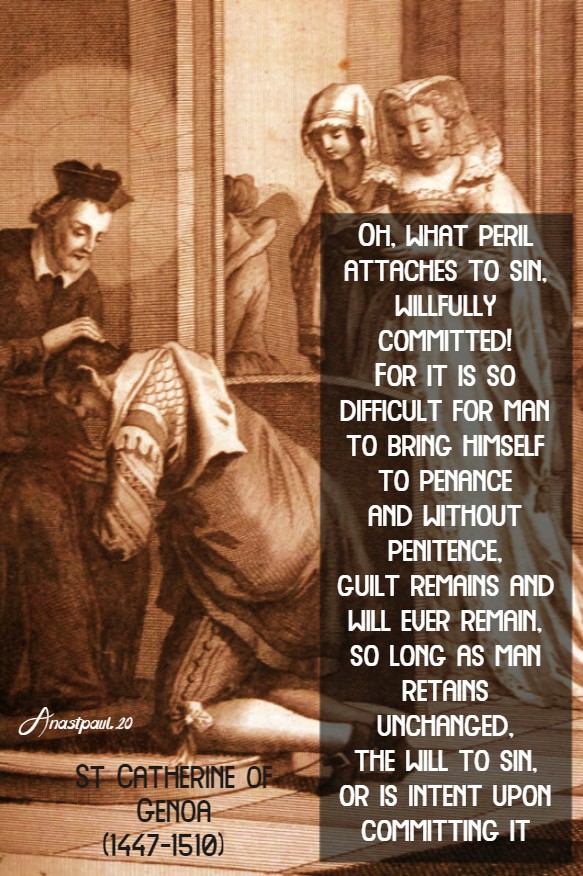
“Oh, what peril attaches to sin, wilfully committed! For it is so difficult for man to bring himself to penance and without penitence, guilt remains and will ever remain, so long as man retains unchanged, the will to sin, or is intent upon committing it.”
REFLECTION – “One after another all withdrew.” The two were left alone, the woman in need of mercy and Mercy. But the Lord, having struck them through with that dart of justice, deigned not to heed their fall but, turning His eyes away from them, “again he wrote with his finger on the ground.”
But when that woman remained alone and all had gone, He raised His eyes to her. We have heard the voice of justice; let us listen too to the voice of clemency… This woman expected to be punished by Him, in whom sin could not be found. But He, who had driven back her adversaries with the voice of justice, lifting the eyes of mercy to her, asked her: “Has no-one condemned you?” She answered, “No-one, Lord.” And He said: “Neither do I condemn you. I by Whom, perhaps, you were afraid of being condemned because you have found no sin in Me; neither do I condemn you.”
What is this, O Lord? Do you favour sins, then? Certainly not! But take note of what follows: “Go, henceforth sin no more.” The Lord did condemn, therefore but He condemned the sin, not the sinner… Let them be careful, then, those who love the goodness in the Lord but who fear His truthfulness… The Lord is gracious, the Lord is slow to anger, the Lord is merciful BUT the Lord is also just and the Lord is abounding in truth (Ps 85[86],15). He gives you time for amendment but you prefer to take advantage of the delay, rather than to reform your ways. Did you act wickedly yesterday? Be good today. Have you spent today in evil? At any rate change your behaviour tomorrow.
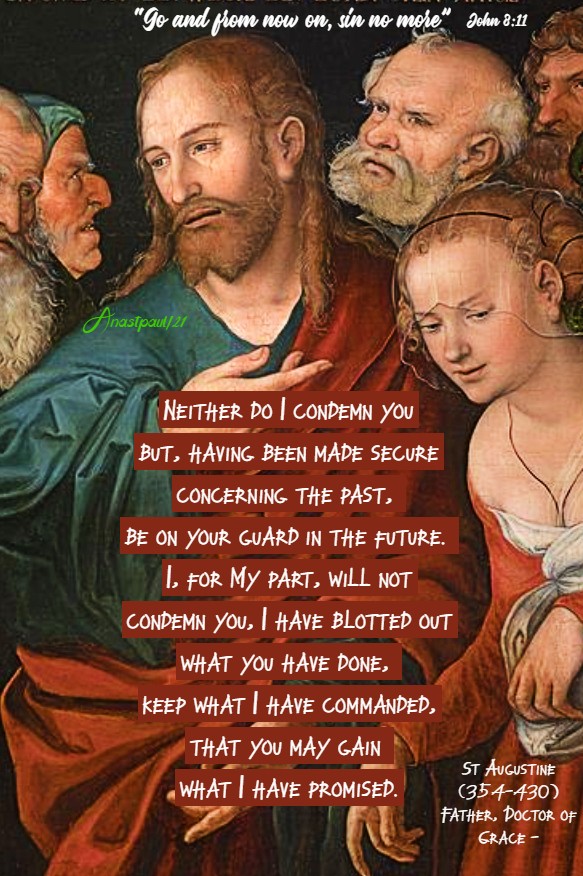
This, then, is the meaning of the words He addresses to this woman, “Neither do I condemn you but, having been made secure concerning the past, be on your guard in the future. I, for My part, will not condemn you, I have blotted out what you have done; keep what I have commanded, that you may gain what I have promised.” – St Augustine (354-430) Bishop, Father, Doctor of Grace –Tractate 33 on the Gospel of John, 5-8
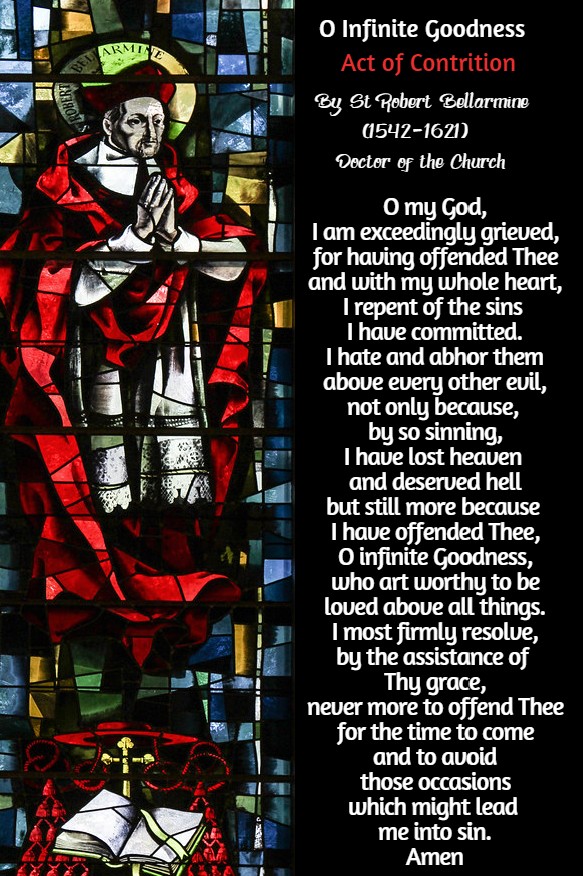
PRAYER – O Infinite Goodness – Act of Contrition By St Robert Bellarmine (1542-1621) – Doctor of the Church
O my God, I am exceedingly grieved, for having offended Thee and with my whole heart, I repent of the sins I have committed. I hate and abhor them above every other evil, not only because, by so sinning, I have lost heaven and deserved hell but still more because I have offended Thee, O infinite Goodness, who art worthy to be loved above all things. I most firmly resolve, by the assistance of Thy grace, never more to offend Thee for the time to come and to avoid those occasions which might lead me into sin. Amen
Our Morning Offering – 22 March – Monday of Passion Week or the Fifth Week of Lent
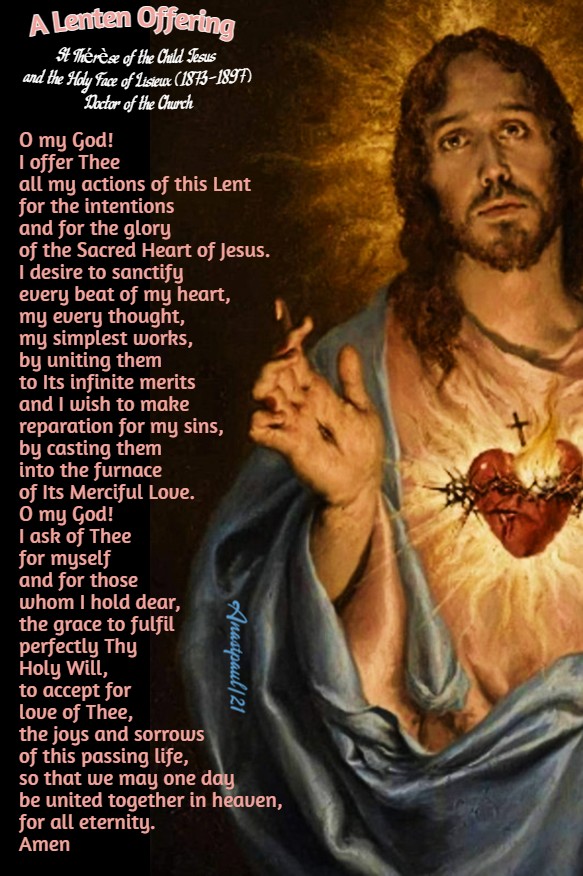
A Lenten Offering By St Thérèse of the Child Jesus and the Holy Face of Lisieux (1873-1897) Doctor of the Church
O my God! I offer Thee all my actions of this Lent for the intentions and for the glory of the Sacred Heart of Jesus. I desire to sanctify every beat of my heart, my every thought, my simplest works, by uniting them to Its infinite merits and I wish to make reparation for my sins, by casting them into the furnace of Its Merciful Love. O my God! I ask of Thee for myself and for those whom I hold dear, the grace to fulfil perfectly Thy Holy Will, to accept for love of Thee, the joys and sorrows of this passing life, so that we may one day be united together in heaven, for all eternity. Amen
Saint of the Day – 22 March – Saint Benevenuto Scotivoli of Osimo (c 1188-1282) Bishop of Osimo from 13 March 1264-his death on 22 March 1282, Reformer, apostle of the poor. Born in c 1188 in Ancona, Italy and died on 22 March 1282 in Osimo, Italy of natural causes. Patronage – Osimo, City and Diocese, Italy.
Benevenuto was born in Ancona of the noble Scotivoli family in around 1188. He studied theology and law in Bologna under the guidance of Silvestro Gussolino, Canon of Osimo. There he was a great friend of St Silvestro Abate of Osima. After his studies he was Ordained to Holy Orders. He was then appointed Papal Chaplain and, before 1262, Archdeacon of Ancona.
Benevenuto was highly esteemed by Pope Urban IV and was sent by him to Osimo with the aim of restoring order and peace in the City, which had passed a period of turbulence and rebellion and for this reason had also lost the Bishopric. On 1 August 1263 he became administrator of the Diocese of Osimo and by his reforms, he fulfilled his Papal mission. Now Benevenuto decided to fulfil his great desire and wear the Franciscan habit. Prior to entering the Friary, in preparing himself, he distributed all his possessions to the poor.
But his plans were to be thwarted for having re-established the Bishopric of Osima, Pope Urban IV, on 13 March 1264, entrusted its government to Benvenuto, who in 1267 was also commissioned to hold the civil government of the March of Ancona. In this period he Ordained St Nicholas of Tolentino.
Benvenuto was a great reformer – with a provision dated 15 January 1270, in fact, he forbade the monastery of St Fiorenzo di Posciavalle, of which he had been appointed administrator, to alienate its assets; in a Synod held on 7 February 1273, he also forbade the sale of ecclesiastical properties and in 1274, finally, he implemented the reform of the chapter of his Cathedral and defended the rights of his Diocese over the City of Cingoli.
In his pastoral care of his Diocese, he was both energetic and magnanimous in forgiveness. He gave all he had and ate little in order to give the rest to the poor. He also had to suffer persecution from some Monks who were unwilling to accept his fight against abuse.
Benvenuto died on 22 March 1282 and was succeeded by Berardo, elected by Pope Martin IV on 18 January 1283. He was buried in the Cathedral Church of Osimo, in a noble mausoleum prepared by the clergy and the people.In July 1590, his relics were translated to the Crypt of the same Cathedral.
Many miracles took place aat his tomb and the cult rendered to him, by the faithful, was already mentioned in the Statutes of Osimo of 1308, while indulgences are said to have been granted by Pope Eugene IV in 1432.
Benvenuto, was Canonised in 1284 by Pope Martin IV and he was declared the patron of the City of Osimo in 1755, his feast, in the Diocese of Osimo and Cingoli, Franciscan Order, is the day of his entry into heaven, today, 22 March.
Inspection of his tomb revealed a dark capuche sewn to a lambskin and it led to the biographer Jean Baldi, asserting that Scotivoli was a Franciscan which became an accepted proposition. But in 1765 the Osimo Priest Pannelli, contended that he was not a member of the Friars Minor, although he lived many of the St Francis’ rules. The Saint is still recognised on the Franciscan calendar.
Roman martyrology: “In Osimo in the Marches, St Benvenuto Scotivoli, Bishop, who, appointed there by Pope Urban IV, promoted peace among the citizens and, in the spirit of the Friars Minor, wanted to die on the bare earth.”
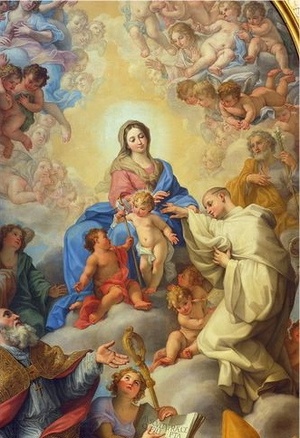
Notre-Dame-de-Citeaux / Our Lady of Citeaux, France built by St Robert (1098) – 22 March:
The Abbot Orsini wrote: “On Palm Sunday, in the year 1098, Saint Robert, Abbot of Moleme, retired with twenty-one of his Monks to the Diocese of Chalops-sur-Saone, where he built, in honour of Our Lady, the celebrated Monastery of Citeaux, the head house of the order.”
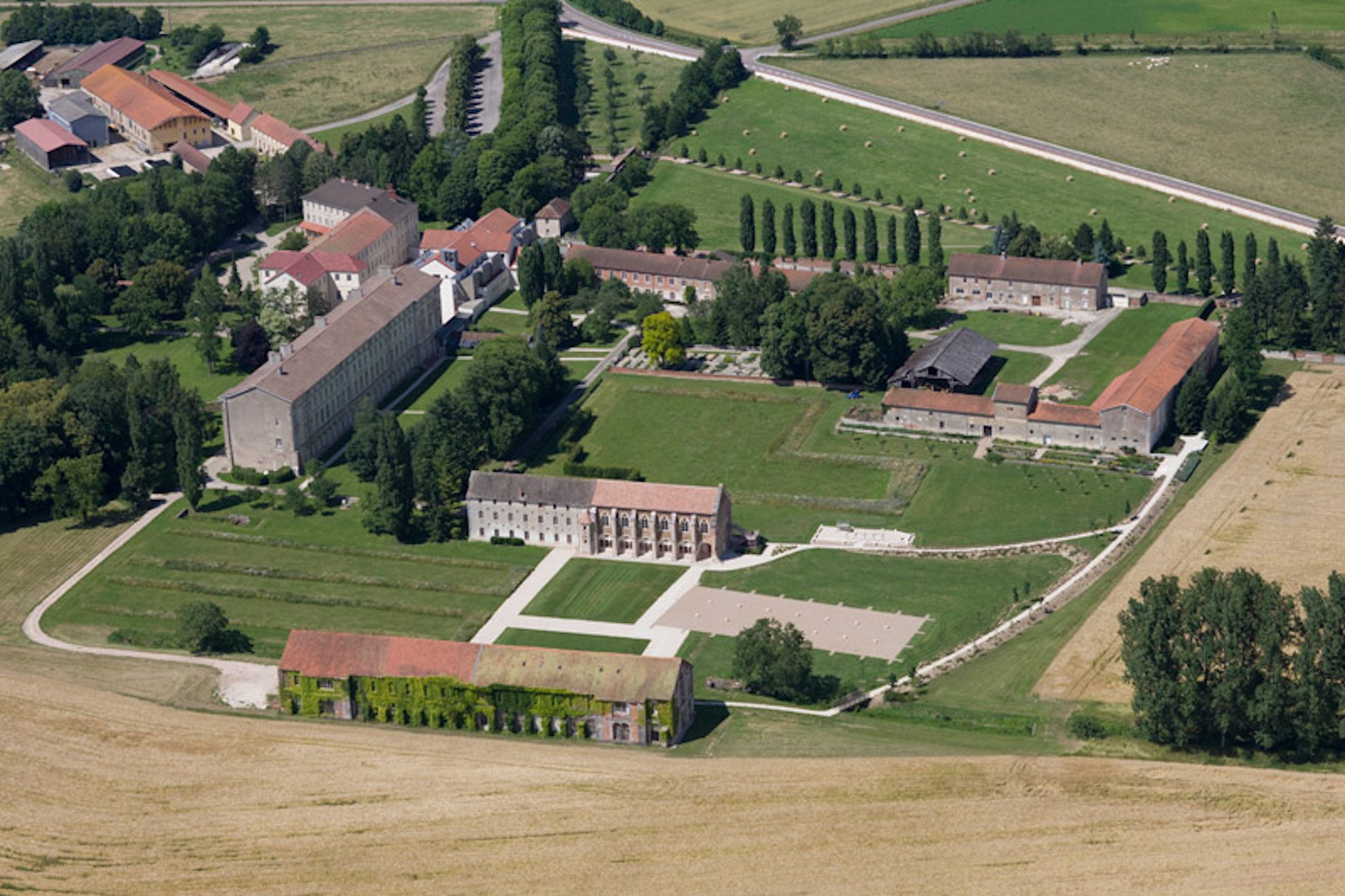
The Notre-Dame de Citeaux Abbey is the first Abbey of the Order of Citeaux, or the Cistercian Order. The original Abbey dates back to 1098, where in the Duchy of Burgundy, Robert of Molesme, Abbot of the Abbey of Our Lady of Molesme, founded the Church. Constructed in the Gothic style, which was current in the 11th century, it was dedicated to Mary, Mother of God and placed under the protection of the Dukes of Burgundy. Having left the Abbey of Our Lady of Molesme, a small group of twenty-one Monks, led by Robert of Molesme, went to Citeaux to apply the Gregorian reform and live in the spirit of prayer and poverty of the rule of St. Benedict. The low country was a land sparsely populated, well forested but also an unwelcoming and hostile place. The beginning was very difficult, for what was required to develop the land was beyond what they possessed. The disciples of Robert suffered from extreme poverty but Pope Pascal II, in the year 1100, gave his protection to the new Monastery and the Duke of Burgundy provided the Monks with what they needed for construction and supplied funding for food and the overall maintenance of the religious.
Our Lady and St Robert
Difficulties with the water supply at the original site required Aubry, successor of Robert after 1099, to settle the new community two kilometers further south. New buildings were constructed, including a Chapel, which was built of stone and dedicated to Our Lady. After the death of Abbot Aubry in 1109, Stephen was elected as the third Abbot. He faced great problems, for their voluntary poverty appeared so strict, that they had a reputation for too much austerity and there were few vocations. The community was shrinking and some appeared at the gates of despair because they feared to have no successors. Depending directly on the Papal States by pontifical right, the Cistercian Order was officially approved in 1119 by Pope Calixte II, with the purpose that it spread and enforce the Gregorian reform throughout the Christian West. The Abbey of Citeaux, thus became the founding mother of more than two thousand Monasteries from the Kingdom of France and throughout the Christian West to Transylvania in the East, during the 12th century. The Abbey of Citeaux, whose founding was so difficult, became a major spiritual center which profoundly influenced the spiritual, economic and social life of men in the Middle Ages. It was from this place, that new Cistercian Abbeys sprung up all over Europe for the benefit of all mankind. The Christian West returned to a more rigorous respect for the rule of St Benedict and none of this, is to even begin to mention, the influence of the great Saint and Monk, Bernard of Clairvaux (1090-1153). The famous Saint Bernard actually left Citeaux to found his Monastery at Clairvaux in the year 1115. The Monastery at Citeaux suffered pillaging several times throughout the Hundred Year’s War and the Monks were often forced to take refuge elsewhere during those perilous times. It was not until the 16th century, that the community once again numbered over 200 Monks but then, with the Wars of Religion, the number of Monks began to decrease again. Finally, in 1791, the Abbey was struck by the French Revolution. The property was illegally seized and sold as national property by the government. In 1898, twenty Cistercians returned to occupy the Abbey, although the Church had been completely destroyed. Still, it is one of the few sites that has regained at least something of its spiritual tradition. The Church has been rebuilt and there are currently about 30 brothers living there. The Abbey of Citeaux was classified as an historical monument in 1978.
Thought for the Day – 21 March – Meditations with Antonio Cardinal Bacci (1881-1971)
The Power of God’s Love in the Christian Life
“The love which we have for God, our Creator, Redeemer and Benefactor, should not be merely sentimental. It must be effective. When love is sincere, it is active. It is not enought to say: I love You, O my God. We must show by our actions, that we love Him. “Not everyone who says to me, ‘Lord, Lord,’ shall enter the Kingdom of Heaven,” Jesus tells us, “but he who does the will of my Father in heaven, shall enter the kingdom of heaven” (Mt 7:21). Our love must be active, therefore. Moreover, we must avoid and detest sin because it is an offence against God and, we must strive to become holy. This involves sacrifice but sacrifice is the touchstone of love. Anyone in love, is not afraid of sacrifice – in fact, he looks for it, in order to prove his love. Charity, like faith, is a lifeless thing, if it is not accompanied by actions (Cf Js 2:17). We must love God by doing everything for love of Him. God will repay us generously, ot only in the next life but even in the present. Even on earth, the only real happiness, is that whch comes from Him.”
Day Thirty three of our Lenten Journey – 21 March – Passion Sunday, Readings: Jeremiah 31:31-34, Psalms 51:3-4, 12-13, 14-15, Hebrews 5:7-9, John 12:20-33
Imitating Christ with Thomas à Kempis (1380-1471)
In You is the source of life and in Your Light Lord, we see light Psalm 35(36)
“If anyone serves me, he must follow me and where I am, there will my servant be also. If anyone serves me, the Father will honour him.” – John 12:26
CHRIST: MY CHILD, I came down from heaven for your salvation and took upon Myself your miseries, not out of necessity but out of love, that you might learn to be patient and bear the sufferings of this life ,without complaint. From the moment of My birth to My death on the Cross, suffering did not leave Me. I suffered great want of temporal goods. Often I heard many complaints against Me. Disgrace and reviling I bore with patience. For My blessings, I received ingratitude, for My miracles, blasphemies and for My teaching, scorn.
DISCIPLE: O Lord because You were patient in life, especially in fulfilling the design of the Father, it is fitting that I, a most miserable sinner, should live patiently according to Your will and, as long as You shall wish, bear the burden of this corruptible body, for the welfare of my soul. For though this present life seems burdensome, yet by Your grace, it becomes meritorious and it is made brighter and more endurable, for the weak, by Your example and the pathways of the saints. But it has also more consolation. than formerly. under the old law. when the gates of heaven were closed, when the way thereto. seemed darker than now and when. so few cared to seek the eternal kingdom. The just, the elect, could not enter heaven before Your sufferings and sacred death had paid the debt.
Oh, what great thanks I owe You, Who have shown me and all the faithful. the good and right way to Your everlasting kingdom! Your life is our way and in Your holy patience, we come nearer to You, Who are our crown. Had You not gone before and taught us, who would have cared to follow? Alas, how many would have remained far behind, had they not before their eyes, Your holy example! Behold, even we who have heard of Your many miracles and teachings, are still lukewarm; what would happen if we did not have such light, by which to follow You? (Book 3 Ch 18)
Quote/s of the Day – 21 March – Passion Sunday, Readings: Jeremiah 31:31-34, Psalms 51:3-4, 12-13, 14-15, Hebrews 5:7-9, John 12:20-33
“If anyone serves me, he must follow me and where I am, there will my servant be also. If anyone serves me, the Father will honour him.”
John 12:26
… “Now is the time for us to choose! … Listen to me, you holy seed, for I have no doubt, that it is here, in abundance… Listen to me or, rather, listen to Him, in me, Who was first called a good seed. Do not love your life in this world! If you truly love yourselves, do not thus love your life and then, you will save your life!”…
St Augustine (354-430) Father and Doctor of Grace
“We must note, therefore, that he that does things pleasing to God, serves Christ but he that follows his own wishes, is a follower, rather of himself and not of God.”
St Cyril of Alexandria (376-444) Father and Doctor of the Incarnation
REFLECTION – “Through the glorious achievements of the holy Martyrs with which the Church blossoms everywhere, we are ourselves, proving to our own eyes, how true are the words we have been singing that: “Precious in the sight of the Lord is the death of his saints” (Ps 116[115]:15). For it is precious both in our sight and in the sight of Him, in whose name the death took place.
But the price of those deaths is the death of one man. How many deaths did that one man purchase by His death, for, if He had not died, the grain of wheat would not be multiplied? You heard His words when He drew near His passion, that is when He was drawing near to our redemption: “Unless a grain of wheat falls into the earth and dies, it remains alone but if it dies, it bears much fruit.” On the Cross He carried out a vast transaction, there, the purse of our price was unfastened and, when His side was opened by the lance of the soldier, there streamed the price for the redemption of the whole earth (cf. Jn 19:34).
Now the faithful ones and Martyrs have been purchased but the faithfulness of the Martyrs has been proved – their blood is the proof … “As Christ laid down his life for us, so we ought to lay down our lives for the brethren” (1Jn 3:16). In another place it is stated: “At a grand table you have sat; now carefully consider what has been put before you, since it is your duty to prepare for such things” (cf. Prv 23:1). That table is great where the Lord of the table is Himself the meal. No-one feeds guests with Himself as food but this is exactly what the Lord Christ does, He, Himself is the host who invites; He, Himself is the food and the drink. Therefore, the Martyrs have recognised what they were eating and drinking so as to be able to repay such gifts. But whence can they make such return unless He who first paid the cost, supplies the source from which restitution may be made? That is the reason for the Psalm, where we sing what is written: “Precious in the sight of the Lord is the death of his saints.” ... St Augustine (354-430) Father and Doctor – Sermon 329, for the Feast of the Martyrs, 1-2 ; PL 38, 1454
PRAYER – Lord our God, Your Son so loved the world that He gave Himself up to death for our sake. Strengthen us by Your grace and give us a heart willing to live by that same love. With Mary, the Blessed Virgin Mother of Jesus and our Mother, may we stand at His Cross. We make our prayer through our Lord Jesus Christ, with You and the Holy Spirit, one God now and forever, amen.
I Beg You, O Lord By St Peter Canisius SJ (1521-1597) Doctor of the Church
I beg You, O Lord to remove anything which separates me from You, or You from me Remove anything that makes me unworthy of Your sight, Your control, Your reprehension, of Your speech and conversation, of Your benevolence and love. Cast from me, every evil that stands in the way of my seeing You, hearing, tasting, savouring and touching You, fearing and being mindful of You, knowing, trusting, loving and possessing You, being conscious of Your Presence and as far as maybe, enjoying You. This is what I ask for myself and earnestly desire from You. Amen
Saint of the Day – 21 March – Saint Serapion the Scolastic (Died c 354-370) Bishop of Thmuis, near Diospolis in the Nile delta of Egypt, Monk and Hermit, Confessor, brilliant Scholar of great learning, theologian, writer, a companion to St Anthony, the Desert Father and a close friend of St Athanasius and gave support to him against the heretic Arians in Egypt, for which action he was exiled. Died in c 365-370 of natural causes while in exile in Egypt. Also known as Serapion of Thmuis, Serapion the Scholar.
The surname of the Scholastic, which was given him, is a proof of the reputation which he acquired, by his penetrating genius and by his extensive learning, both sacred and profane. He presided for some time in the catechetical school of Alexandria but, to apply himself more perfectly to the science of the saints, to which he had always consecrated himself, his studies and his other actions, he retired into the desert and became a bright light in the monastic state.
Saint Athanasius assures us, in his life of Saint Antony, that in the visits which Serapion paid to that illustrious Father of Hermits, Saint Antony often spoke of things which passed in Egypt at a distance, of which he had gained supernatural knowledge. St Athanasius tells too, that St Anthony bequeathed after his death, one of his tunics of hair to Serpaion.
Serapion was drawn out of his retreat, to be placed in the Episcopal See of Thmuis, a famous City of Lower Egypt, near Diospolis. The name in the Egyptian tongue signified ‘a goat,’ which animal, as St Jerome informs us, was anciently worshipped there.
Serapion was closely linked with St Athanasius in the defence of the Catholic faith—for which he was banished by the Emperor Constantius; whence Saint Jerome styles him as confessor. Certain persons, who confessed God, the Son consubstantial with the Father, denied the divinity of the Holy Ghost. This error was no sooner broached but our saint strenuously opposed it and informed Saint Athanasius of this new inconsistent blasphemy and that zealous defender of the adorable mystery of the Trinity, the fundamental article of the Christian faith, wrote against this rising monster.
The four letters which Athanasius wrote to Serapion, in 359, when in exile, were the first express confutation of the Macedonian heresy that were published. Serapion, though separated from Athanasius, continued the fight, to great advantage, against both the Arians and Macedonians.
He also compiled an excellent book against the Manichees, in which he shows that our bodies may be made the instruments of good and that our souls may be perverted by sin; that there is no creature of which a good use may not be made and that both just and wicked men, are often changed, the former by falling into sin, the latter by becoming virtuous. It is, therefore, a self-contradiction to pretend with the Manichees that our souls are the work of God but our bodies of the devil, or the evil principle.
Saint Serapion wrote several learned letters and a treatise on the Titles of the Psalms, quoted by Saint Jerome, which are now lost. He was also the author of a series of writings on the Doctrine of the Divinity of the Holy Spirit (addressed to the Emperor).
At his request, Saint Athanasius composed several of his works against the Arians and so great was his opinion of our saint, that he desired him to correct, or add to them what he thought wanting.
Socrates relates that Saint Serapion gave an precis of his own life and an abridged rule of Christian perfection in very few words, which he would often repeat, saying: “The mind is purified by spiritual knowledge, (or by holy meditation and prayer,) the spiritual passions of the soul by charity, and the irregular appetites by abstinence and penance.”
Serapion died in his banishment and is commemorated on this day in the Roman Martyrology, which states of him: “At Alexandria, the blessed Serapion, anchorite and Bishop of Thmuis, a man of great virtue, who, being forced into exile by the enraged Arians, went to heaven.”
Passion Sunday or the Fifth Suday of Lent +2021 __ Onze-Lieve-Vrouw van Bruges / Our Lady of Bruges, Flanders (1150), where a lock of Our Lady’s hair is preserved – 21 March:
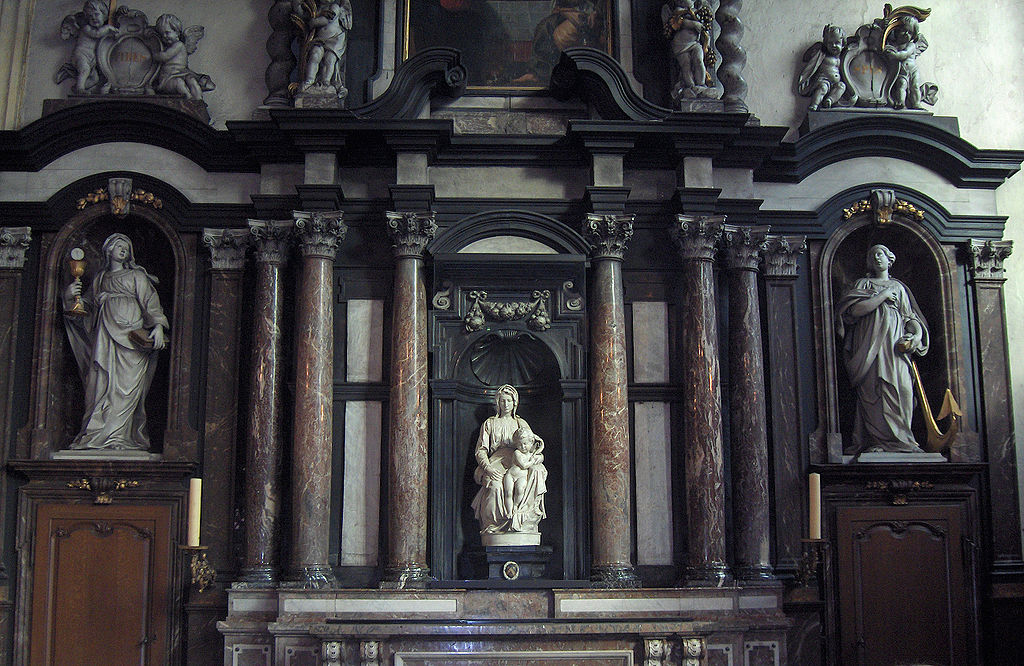
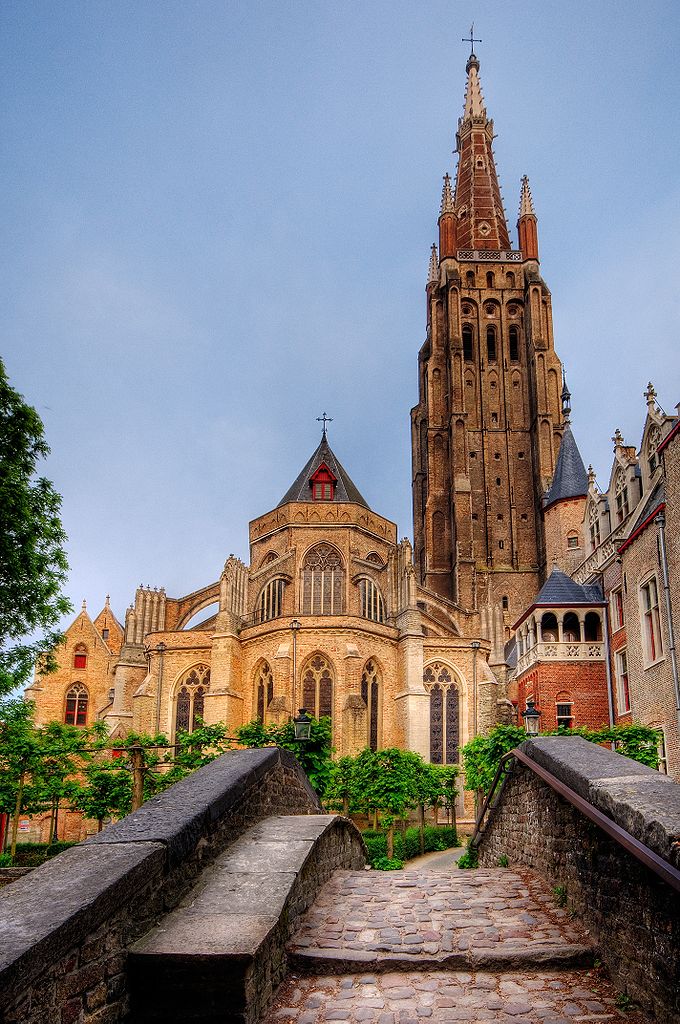
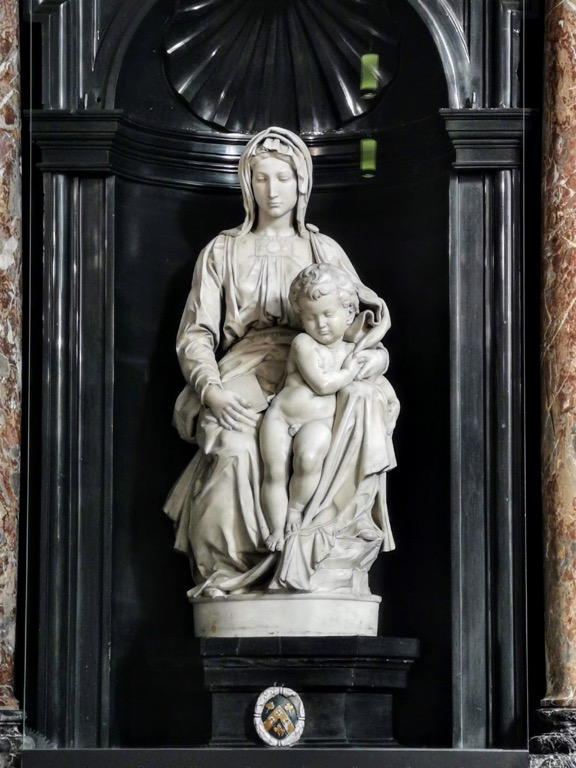
At a Shrine in Flanders, dedicated to Mary, it is reported that a lock of Our Lady’s hair is preserved, given by a Syrian Bishop, named Mocca. This Shrine is likewise said to have its famous relic of the Holy Blood, which is the centre of much pilgrimage. The precious relic was brought from Palestine by Thierry of Alsace on his return from the second crusade. From 1150 this relic has been venerated with much devotion. The annual pilgrimage attended by the nobility in their quaint robes takes place on the Monday following the first Sunday in May. Not only the Flemish nobility take part, but also thousands of pilgrims from all over Christendom. Every Friday the relic is less solemnly exposed for the veneration of the Faithful. As mentioned above, the Shrine is dedicated to Mary, for it was she who gave her own blood to her Divine Son, the God-Man. As at all the Marian Shrines, miracles take place through the intercession of the Mother of God. The present Gothic Cathedral of Notre-Dame in Bruges was built in 1225 and is famous for its 400 foot tall brick tower. Inside, however, is where the real treasures are kept. Among those relics already mentioned, there is also a Madonna of Bruges, a marble sculpture of the Blessed Virgin and the Divine Child sculpted by Michelangelo.
The features of the Blessed Virgin depicted in the Madonna of Bruges are very similar in appearance to the famous Pieta, which Michelangelo was said to have completed just prior to this sculpture. It is the only one of his works that left Italy during Michelangelo’s lifetime and was purchased and brought to Bruges by a wealthy merchant. In 1794 the inhabitants of Bruges were forced by the French Revolutionaries to ship the Madonna of Bruges to Paris. It was fortunate that the Statue was not destroyed, as so many Catholic works of art were during the French Revolution. TheSstatue did not remain long in Paris, as it was returned to Bruges after the defeat of Emperor Napoleon. It was taken again in 1944 when the German’s retreated from Belgium, but it was discovered two years later in Germany and returned once again to Bruges. As a precaution, after a bomb was set before the Statue of the Pieta in Saint Peter’s Basilica in 1972, the Madonna of Bruges was placed behind bulletproof glass, so that the public can now only admire the sculpture from several feet away.
Bl Thomas Pilcher Bl William Pike — Martyrs of Alexandria: A large but unknown number of Catholics massacred in several churches during Good Friday services in Alexandria, Egypt by Arian heretics during the persecutions of Constantius and Philagrio. They were martyred on Good Friday in 342 in Alexandria, Egypt.
Thought for the Day – 20 March – Meditations with Antonio Cardinal Bacci (1881-1971)
The Shortness of Time
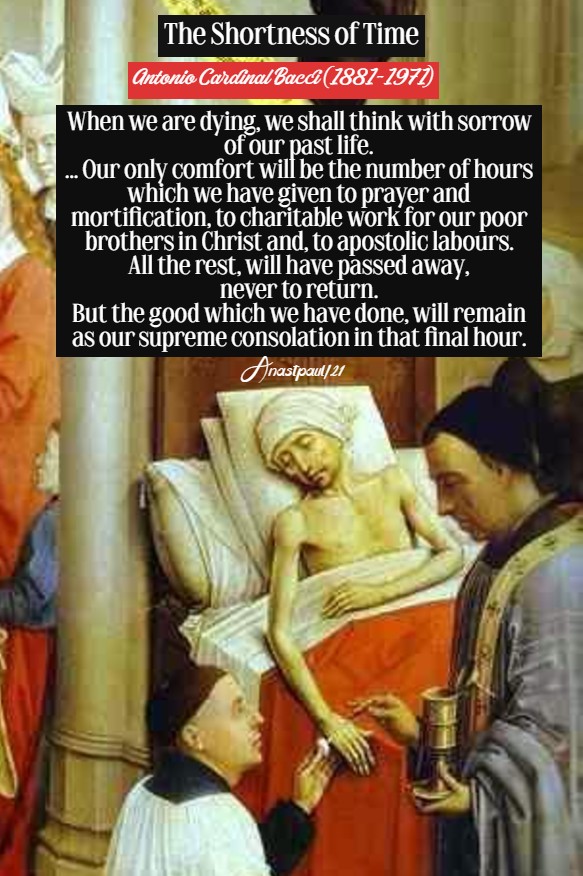
“When we are dying, we shall think with sorrow of our past life. Then we shall fully understand the fleeting nature of time and the vanity of worldly things. The world, with its empty grandeur and hollow or sinful pleasures, will seem like a cloud, which passes, or, like a curtain, which is drawn to reveal the entrance to eternity. Our only comfort will be the number of hours which we have given to prayer and mortification, to charitable work for our poor brothers in Christ and, to apostolic labours. All the rest, will have passed away, never to return. But the good which we have done, will remain as our supreme consolation in that final hour.”
Day Thirty-two of our Lenten Journey – 20 March – Saturday of the Fourth week of Lent, Readings: Jeremiah 11:18-20, Psalm 7:2-3, 9-12, John 7:40-53
Imitating Christ with Thomas à Kempis (1380-1471)
In You is the source of life and in Your Light Lord, we see light Psalm 35(36)
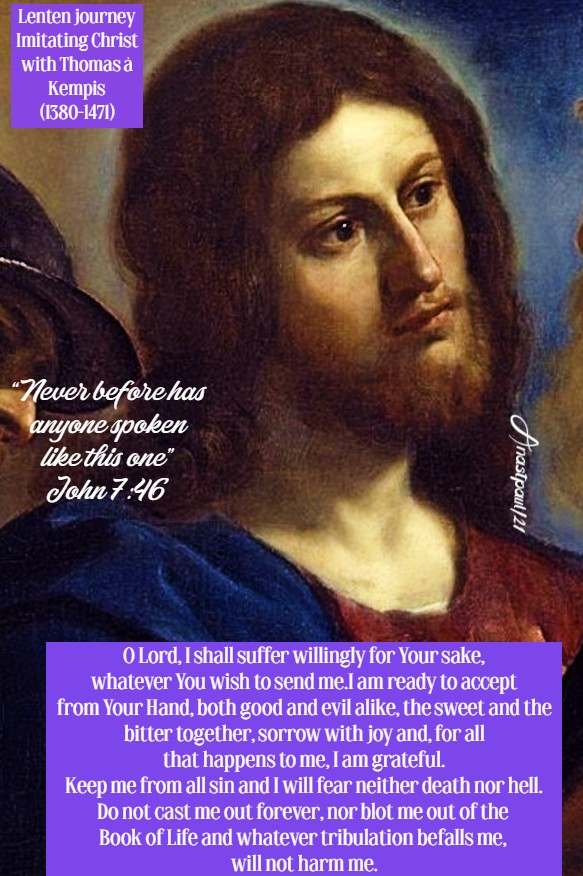
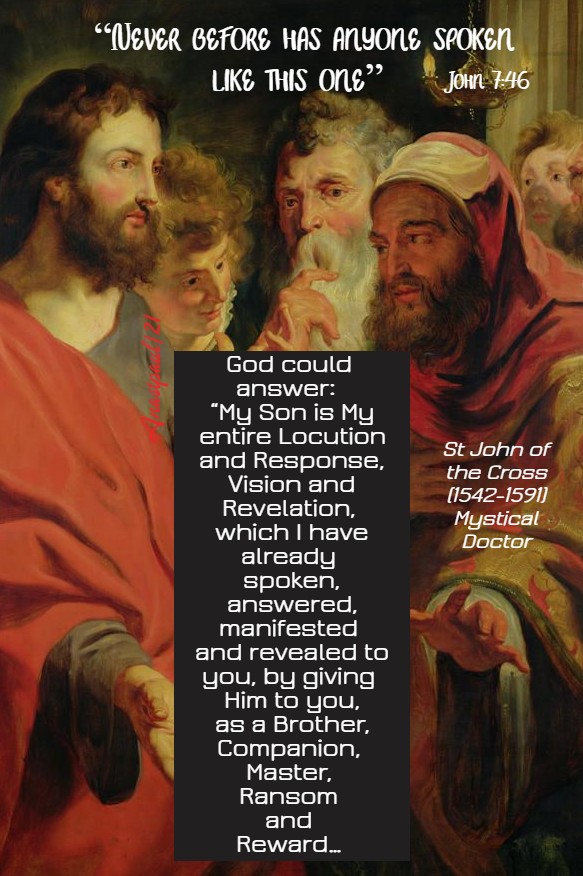
“Never before has anyone spoken like this one” – John 7:46
CHRIST: MY CHILD, allow me to do what I will with you. I know what is best for you. You think as a man, you feel in many things as human affection persuades.
DISCIPLE: Lord, what You say is true. Your care for me is greater than all the care I can take of myself. For he who does not cast all his care upon You, stands very unsafely. If only my will remain right and firm toward You, Lord, do with me, whatever pleases You. For whatever You shall do with me can only be good. If You wish me to be in darkness, I shall bless You. And if You wish me to be in light, again I shall bless You. If You stoop down to comfort me, I shall bless You and if You wish me to be afflicted, I shall bless You forever.
CHRIST: My child, this is the disposition which you should have, if you wish to walk with Me. You should be as ready to suffer as to enjoy. You should as willingly be destitute and poor, as rich and satisfied.
DISCIPLE: O Lord, I shall suffer willingly for Your sake whatever You wish to send me. I am ready to accept from Your Hand, both good and evil alike, the sweet and the bitter together, sorrow with joy and, for all that happens to me, I am grateful. Keep me from all sin and I will fear neither death nor hell. Do not cast me out forever, nor blot me out of the Book of Life and whatever tribulation befalls me, will not harm me. (Book 3 Ch 17)
Quote/s of the Day – – 28 March – Saturday of the Fourth week of Lent, Readings: Jeremiah 11:18-20, Psalm 7:2-3, 9-12, John 7:40-53
“Never before, has anyone spoken, like this one”
John 7:46
“Follow me.”
Luke 5:27
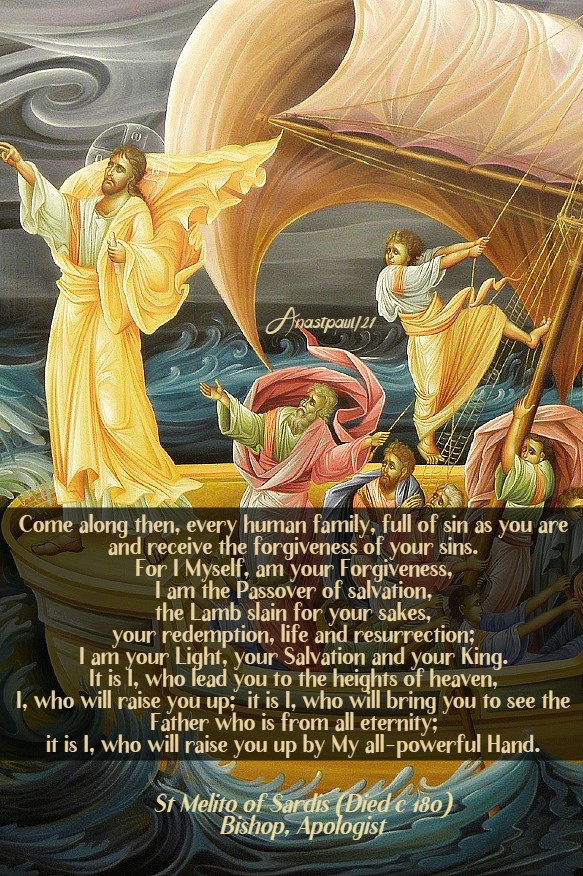
“Come along then, every human family, full of sin as you are and receive the forgiveness of your sins. For I Myself, am your Forgiveness, I am the Passover of salvation, the Lamb slain for your sakes, your redemption, life and resurrection; I am your Light, your Salvation and your King. It is I, who lead you to the heights of heaven, I, who will raise you up; it is I, who will bring you to see the Father who is from all eternity; it is I, who will raise you up by My all-powerful Hand.”
St Melito of Sardis (Died c 180) Bishop, Apologist
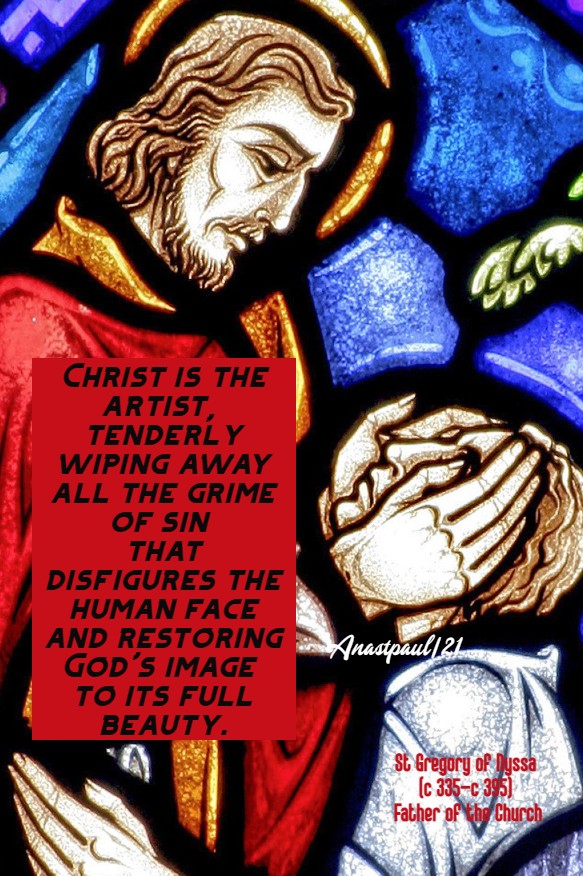
“Christ is the artist, tenderly wiping away all the grime of sin that disfigures the human face and restoring God’s image to its full beauty.”
St Gregory of Nyssa (c 335–C 395) Father of the Church
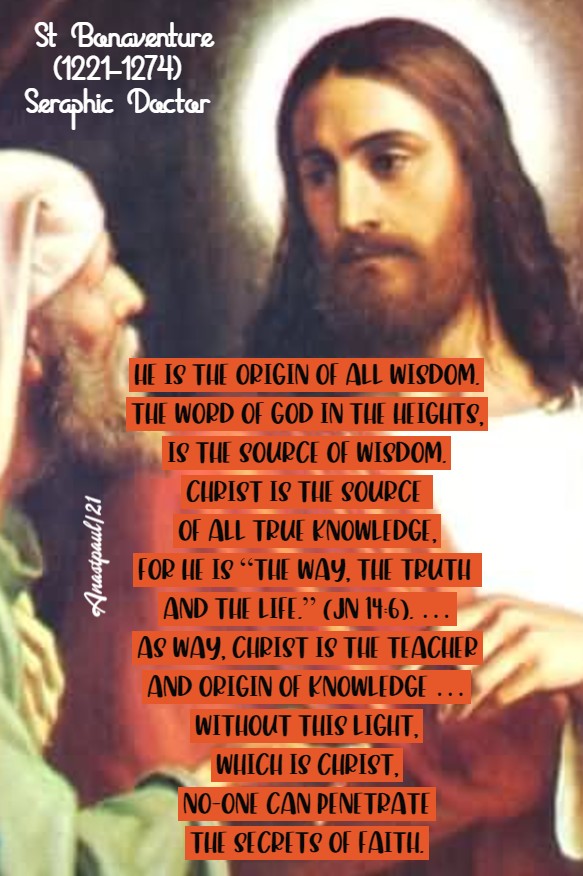
“He is the origin of all wisdom. The Word of God in the heights, is the source of wisdom. Christ is the source of all true knowledge, for He is “the way, the truth and the life.” (Jn 14:6). … As way, Christ is the teacher and origin of knowledge … Without this Ligh, which is Christ, no-one can penetrate the secrets of faith.”
St Bonaventure (1221-1274) Seraphic Doctor
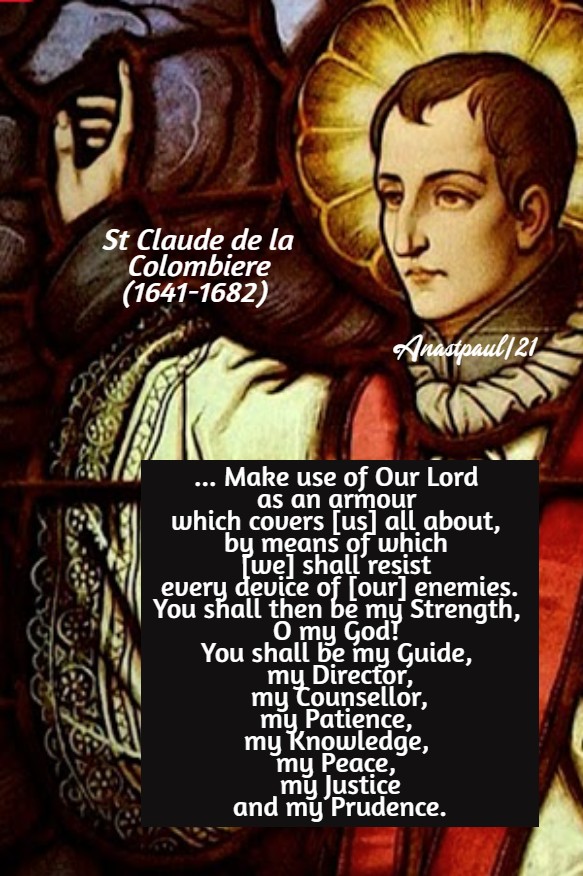
“… Make use of Our Lord as an armour which covers [us] all about, by means of which [we] shall resist every device of [our] enemies. You shall then be my Strength, O my God! You shall be my Guide, my Director, my Counsellor, my Patience, my Knowledge, my Peace, my Justice and my Prudence.”
St Claude de la Colombiere (1641-1682) “Apostle of the Sacred Heart”
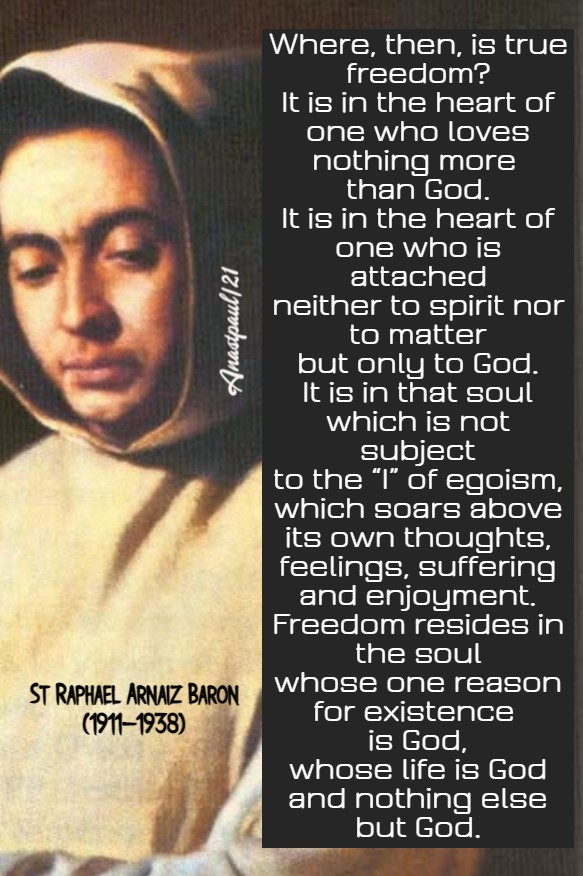
“Where, then, is true freedom? It is in the heart of one who loves nothing more than God. It is in the heart of one who is attached neither to spirit nor to matter but only to God. It is in that soul which is not subject to the “I” of egoism, which soars above its own thoughts, feelings, suffering and enjoyment. Freedom resides in the soul whose one reason for existence is God, whose life is God and nothing else but God.”
St Raphael Arnaiz Baron (1911-1938) Spanish Trappist Monk
“Never before has anyone spoken like this one” – John 7:46
REFLECTION – “God could answer: “My Son is My entire Locution and Response, Vision and Revelation, which I have already spoken, answered, manifested and revealed to you, by giving Him to you as a Brother, Companion, Master, Ransom and Reward… ‘This is my beloved Son in whom I am well pleased, hear him’ (Mt 17,5).
If you desire me to answer with a word of comfort, behold my Son, subject to me and to others out of love for me and the afflicted … you will see how much He answers you. If you desire me to declare some secret truths or events to you, fix your eyes only on Him and you will discern hidden in Him, the most secret mysteries and wisdom and wonders of God, as my Apostle proclaims: “In the Son of God are hidden all the treasures of the wisdom and knowledge of God” (Col 2,3). These treasures of wisdom and knowledge will be for you far more sublime, delightful and advantageous, than what you want to know. The apostle, therefore, gloried, affirming that he had acted as though he knew no other than “Jesus Christ and him crucified” (1Cor 2,2). And if you should seek other divine or corporeal visions and revelations, behold Him, become human and you will find more than you imagine. For the apostle Paul also says: “In Christ all the fullness of the divinity dwells bodily” (Col 2,9).”
One should not, then, inquire of God in this manner, nor is it necessary for God to speak anymore…: there is no more faith to reveal, nor will there ever be.” – St John of the Cross OCD (1542-1591) Carmelite, Doctor of the Church – Ascent of Mount Carmel, II, ch 22
PRAYER – In Your gentle mercy Lord, guide our wayward hearts, for we know that left to ourselves, we cannot do Your will. Almighty God, turn our hearts to Your Son, so that we, seeking the one thing necessary, may worship You and follow Him in spirit and in truth. We give You thanks for our faith, increase our faith O our God! May the prayers of all your saints and the Virgin Mary, Queen of All Saints, obtain for us the gift of humility and fidelity so that our lives may always be pleasing. Through Christ our Lord and Redeemer, with the Holy Spirit, God forever, amen.
Our Morning Offering – 20 March – Saturday of the Fourth Week of Lent, Mary’s Saturday
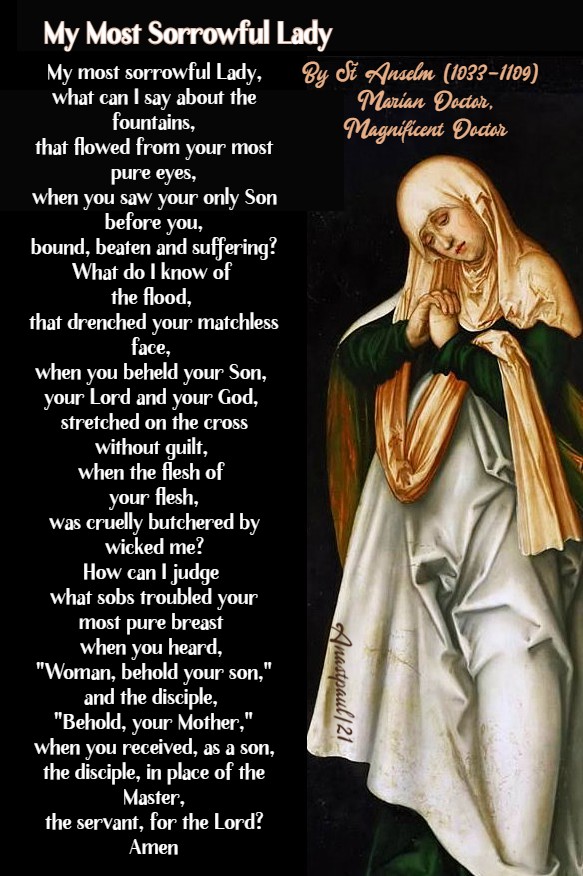
My Most Sorrowful Lady By St Anselm (1033-1109) Marian Doctor Magnificent Doctor
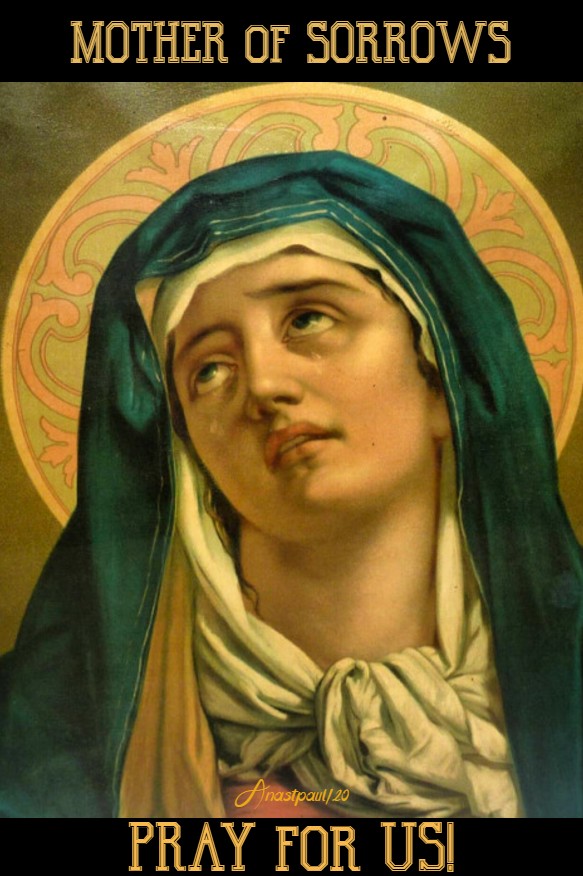
My most sorrowful Lady, what can I say about the fountains, that flowed from your most pure eyes, when you saw your only Son before you, bound, beaten and suffering? What do I know of the flood, that drenched your matchless face, when you beheld your Son, your Lord and your God, stretched on the cross without guilt, when the flesh of your flesh, was cruelly butchered by wicked me? How can I judge what sobs troubled your most pure breast when you heard, “Woman, behold your son,” and the disciple, “Behold, your Mother,” when you received, as a son, the disciple, in place of the Master, the servant, for the Lord? Amen
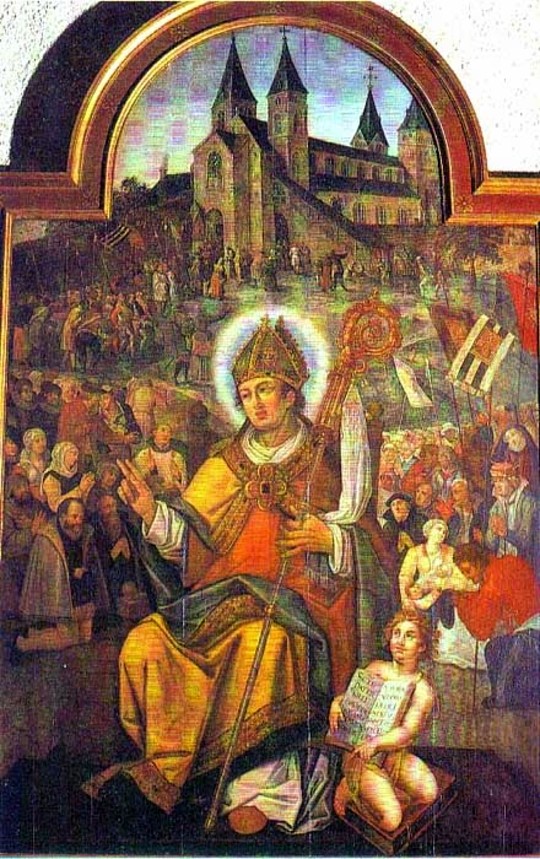
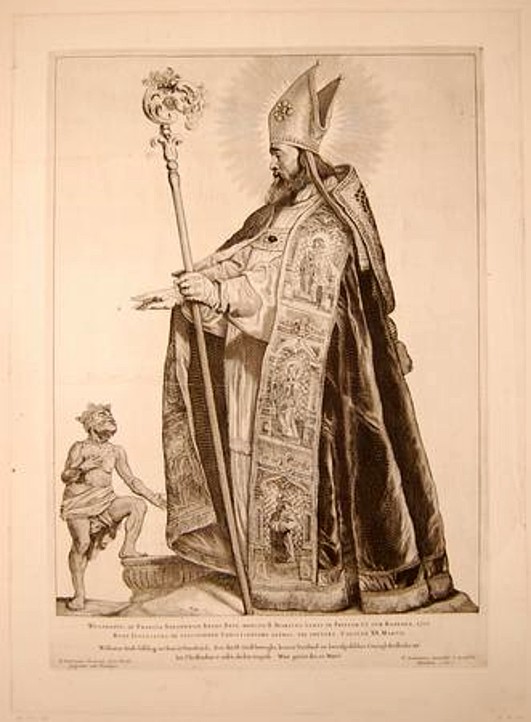
Saint of the Day – 20 March – Saint Wulfram of Sens (c 640-c 703) Archbishop of Sens and Confessor, Missionary, miracle-worker. Born in c 640 in France and died on 20 March c 703 at Fontenelle, France of natural causes. Patronages – Abbeville, France, against the dangers of the sea/of sailors, childbirth and young children. Also known as Wulfram of Fontenelle, Offran, Oufran, Suffrain, Vuilfran, Vulfran, Vulfranno, Vulphran, Wilfranus, Wolfram, Wolframus, Wolfran, Wulframnus, Wulfran, Wulfrann, Wulfrannus. Additional Memorials – 15 October (translation of relics) and 8 November as one of the Saints of the Diocese of Evry.
Wulfran’s life was recorded eleven years after he died by the Monk Jonas of Fontenelle. However, there seems to be little consensus about the precise dates of most events, whether during his life or after hs death.
Wulfran’s father was an Officer in the armies of Dagobert, a powerful King of the Franks. The Saint spent some years in the Court of King Clotaire III and his mother, Saint Bathildes but he occupied his heart only with God, despising worldly greatness as empty and dangerous and daily advancing in virtue. He renounced the world and received Sacred Orders; his estate he bestowed on the Abbey of Fontenelle, or Saint Wandrille, in Normandy. He was nonetheless called to the Court, where he served until his father died. Then, because the Archbishop of Sens had recently died in 682, he was chosen to replace him, by the common consent of the clergy and people of that City.
He governed that Diocese for two and a half years, with great zeal and sanctity. It was a tender compassion for the blindness of the idolaters of Friesland and the example of the zealous English preachers in those parts, which moved him then to resign his Bishopric, with proper advice and after a retreat at Fontenelle, to enter Friesland as a poor missionary Priest.
On the voyage by water, the Deacon who served him at the Altar, accidentally dropped the paten into the sea. Saint Wulfran told him to place his hand where it had fallen on the waves and it came up to him by a miracle. For long years that paten was conserved in the Monastery of Saint Wandrille. On this mission wULFRAM baptized great multitudes, among them a son of their King, Radbod and drew the people away from the barbarous custom of sacrificing human beings to idols.
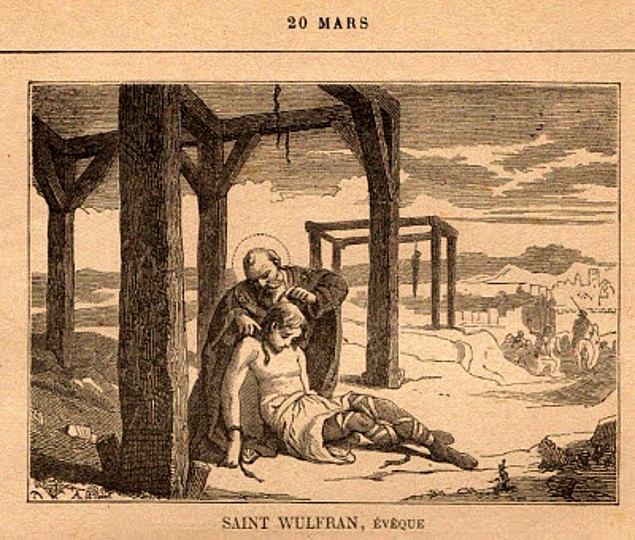
The custom was that pagan people, including children, were sacrificed to the local gods having been selected by a form of lottery. Wulfram, having remonstrated with Radbod on the subject, was told that the King was unable to change the custom but Wulfram was invited to save them if he could. The saint then waded into the sea, to save two children who had been tied to posts and left to drown as the tide rose. The turning point came, with the rescue of a young man, Ovon, who had been chosen by lot, to be sacrificed by hanging. Wulfram begged King Radbod to stop the killing but the people were outraged at the sacrilege proposed. In the end, they agreed that Wulfram’s God could have a chance to save Ovon’s life and if he did, Wulfram and his God could rescue him. Ovon was hanged and left for a few of hours, while Wulfram prayed. When the Frisians decided to leave Ovon for dead, the rope broke, Ovon fell and was still alive. Ovon became Wulfram’s devoted servant, his disciple, a Monk and then a Priest at Fontenelle Abbey. The faith of the missionaries (and their power to work miracles) frightened and awed the pagan people, who were Baptised and turned away from paganism.
Even Radbod seemed ready for conversion but just before his Baptism, he asked where his ancestors were. Wulfram told him that idolaters went to Hell. Rather than be apart from his ancestors, he chose to stay as he was.
Wulfran finally retired to Fontenelle, where he died in c 703. The Saint’s year of death is sometimes given as 720 but his interred body is said to have been moved in 704. Regardless of the exact year, St Wulfram’s feast day is kept on 20 March. He was buried in St Paul’s Chapel in the Abbey but in 704, his relics were translated to the Church. The body was again moved in 1058, this time to the collegiate Church of Our Lady in Abbeville, which was then re-dedicated in Wulfram’s name. The translation of his body to Abbeville is commemorated on 15 October.
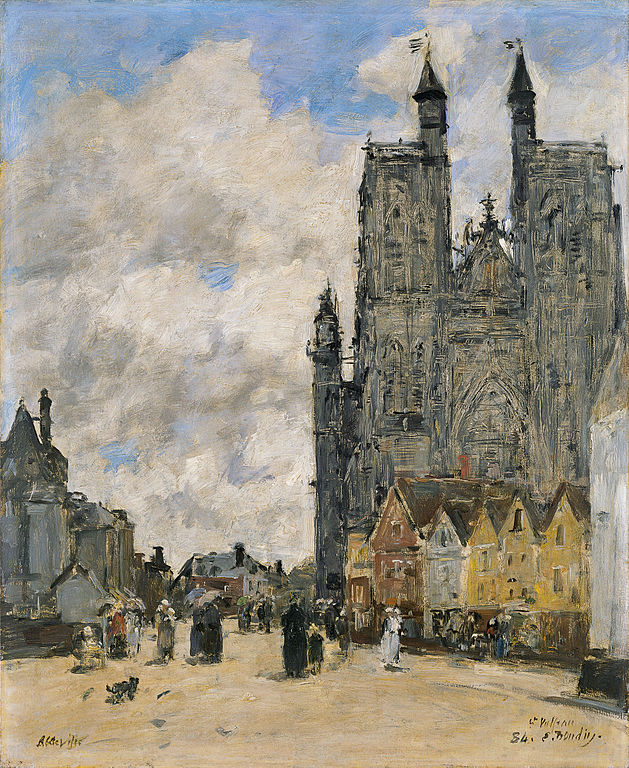
The Square of the Church of Saint Wulfram in Abbeville, Eugène Boudin, 1884
At about this time or later, perhaps when his body was again moved, this time to Rouen, his arm was taken as a relic to Croyland Abbey, Lincolnshire. The interest in him there, may have arisen from Ingulph, the Zbbot being a former Monk of Fontenelle. After the building at Crowland was damaged by fire, there was no longer a suitable place for keeping the relic, so it went to Grantham for safe-keeping. For two or three hundred years, it was kept in the Crypt Chapel below the Lady Chapel, where the pilgrims helped to wear the hollow, now to be seen in stone step before the Altar. Later, towards 1350, the arm went to the specially added Chapel above the north porch. At some stage in the long process of the English Reformation, this relic was lost.
A hagiographical account of his miracles was produced at the Abbey of Saint Wandrille before 1066. Among the miracles are two pertaining to childbirth and children. In one, Wulfram is credited with the miraculous delivery of a stillborn baby, the mother having commenced labour on 20 January (the feast day of Saint Sebastian). A week after Easter, prayers to Wulfram caused her belly to split open so the dead child could be delivered, after which, the wound healed as if it had never been, leaving only a “token of the cut.”
In the other, Wulfram is credited with the safe passage of an accidentally swallowed clothespin, which left the body of a two-year-old boy, after three days, without having injured it: “Is it not miraculous how through all the twists of the boy’s intestines, as if through fine small round tubes, the copper sharp object, now going up high, now going down low, could travel without getting stuck anywhere or causing wounds and so at last through Nature’s lower parts, find a way out all in one piece?”
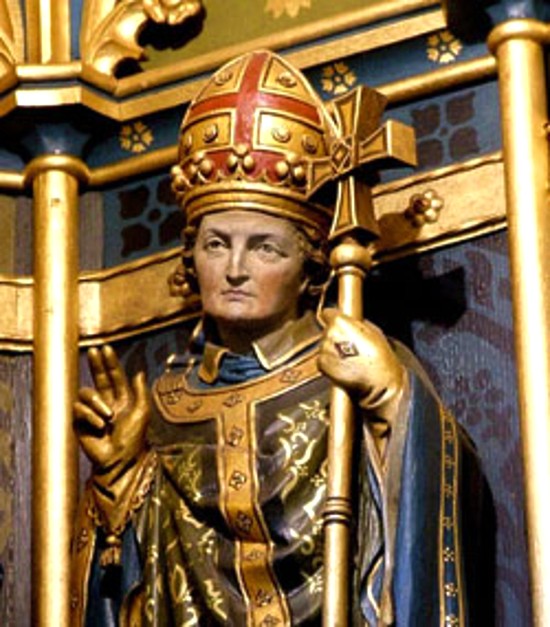
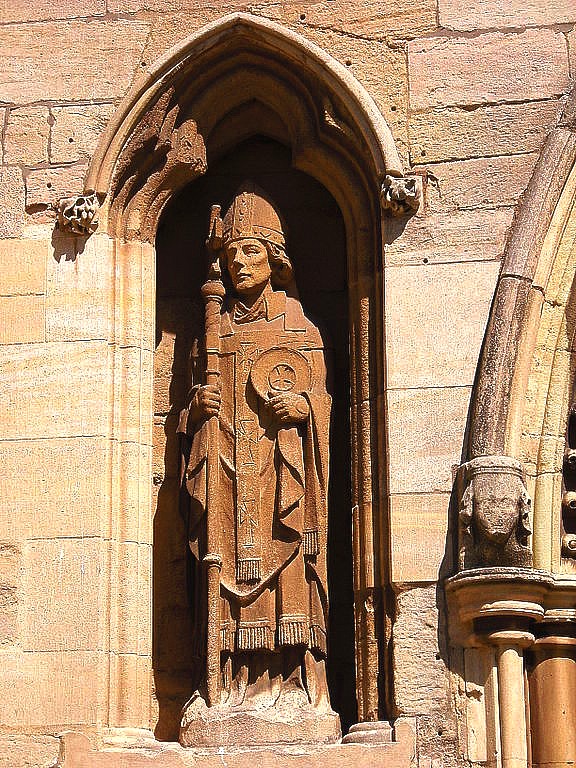
St Wulfram statue at his Church in Grantham, Lincolnshire.
Our Lady of Calevourt, near Brussels, Belgium (1454) – 20 March:
The Abbot Mathieu Orsini wrote: “Our Lady of Calevoirt, at Uckelen, near Brussels. This image began to work miracles in the year 1454, which led to the determination to build a magnificent Chapel in honour of Our Blessed Lady, in the year 1623, which the Infanta of Spain, Isabella Clara Eugenia, devoutly visited in the same year.”
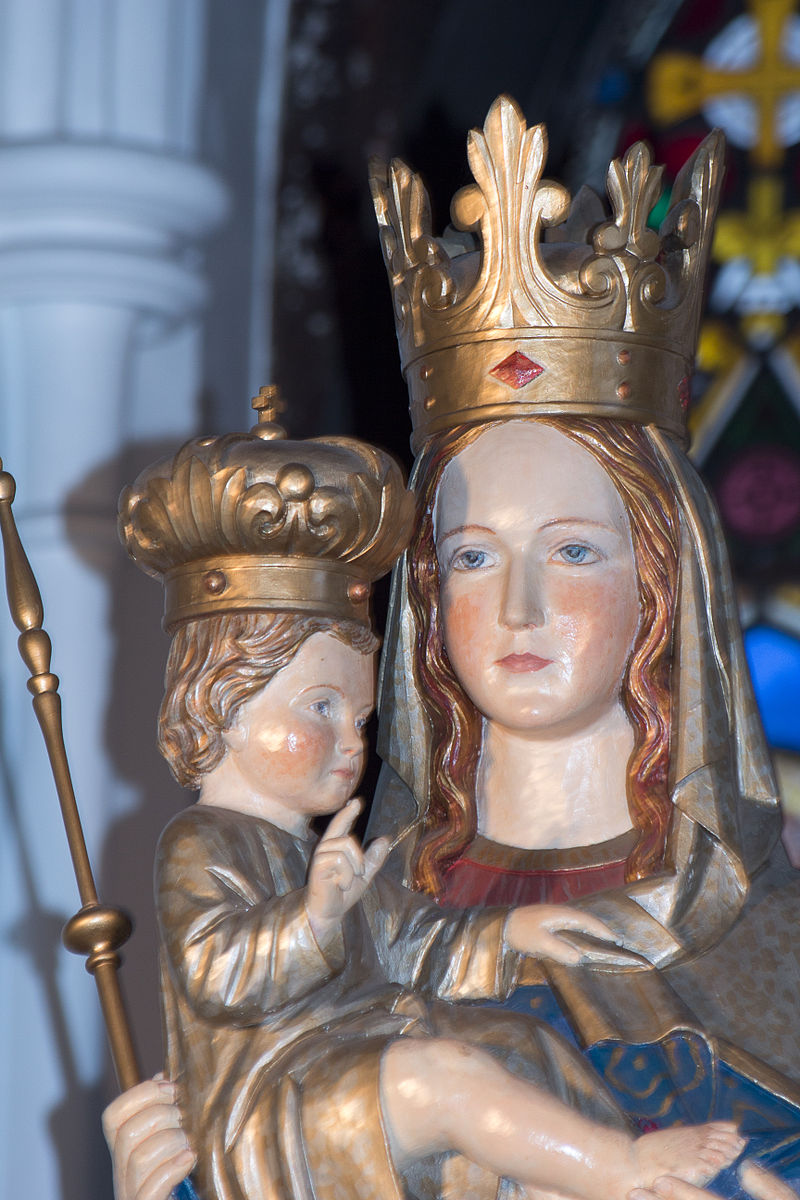
The image of Our Lady is known under various titles, due to the fact, that Mary gives aid, even miraculous aid, when called upon for help. Our Lady of Calevourt is perhaps better known as Our Lady of Good Success, or Our Lady of Aberdeen. We are told that during the Protestant “Reformation,” the figure was taken to Flanders and hidden away by a Catholic family to protect it from profanation. In due course, it fell into the hands of Protestants but this family, received numerous graces and blessing,s which they attributed to the presence of the holy image in their house. They were reconciled to the Church as a result. In 1623 a Spanish captain was given the Statue, with instructions to place it into the hands of Archduchess Isabella. The arrival of the Statue in Brussels is related under several incidents. The same day the ship arrived, the Infanta Isabella won a battle against the Hollanders. The Princess sent the Statue back to Brussles, providing the necessary funds for a Sanctuary she intended to be called Our Lady of Aberdeen. The townspeople greeted the Statue enthusiastically with a procession and placed it in the Chapel but when the victory became known, the name of the Sanctuary was changed and dedicated instead to Our Lady of Good Success. From that time on, Mary travelled from place to place but always her image was saved. During the Terrors of the French Revolution, the Statue was given to an English Catholic who kept it safe until 1805, when it was restored to Belgium. A few years later, the Protestants forced the image to be transferred to a Parish Church in Finistere, where the image now reigns peacefully over her beloved people. The Statue of the Blessed Mother stands with her Divine Child reclining on her right arm, His feet supported by the lift hand of His Mother.
__ Bl Ambrose Sansedoni of Siena Anastasius XVI Archippus of Colossi St Benignus of Flay St Cathcan of Rath-derthaighe St Clement of Ireland St Cuthbert of Lindisfarne Bl Francis Palau y Quer St Guillermo de Peñacorada St Herbert of Derwenwater Bl Hippolytus Galantini Bl Jeanne Veron Bl John Baptist Spagnuolo St John Nepomucene St John Sergius St Jósef Bilczewski (1860-1923) Biography: https://anastpaul.com/2019/03/20/saint-of-the-day-20-march-st-josef-bilczewski-1860-1923/
St Nicetas of Apollonias St Remigius of Strasbourg St Tertricus of Langres St Urbitius of Metz St Wulfram of Sens (c 640-c 703) Bishop — Martyrs of Amisus – 8 saints: A group of Christian women martyred together in the persecutions of Diocletian. The only details we have are eight of their names – Alexandra, Caldia, Derphuta, Euphemia, Euphrasia, Juliana, Matrona and Theodosia. They were burned to death c 300 in Amisus, Paphlagonia (modern Samsun, Turkey).
Martyrs of Rome – 9+ saints: A group of Christians martyred together in the persecutions of Nero. We know nothing else about them but the names Anatolius, Cyriaca, Joseph, Parasceve, Photis, Photius, Sebastian and Victor.
Martyrs of San Saba – 20 saints: Twenty monks who were martyred together in their monastery by invading Saracens. They were martyred in 797 when they were burned inside the San Sabas monastery in Palestine.
Martyrs of Syria – 3+ saints: A group of Christians who were martyred together in Syria. We know nothing else about them but the names Cyril, Eugene and Paul.
Thought for the Day – 19 March – The Solemnity of the Feast of St Joseph, Husband of the Blessed Virgin Mary and Patron of the Universal Church – Meditations with Antonio Cardinal Bacci (1881-1971)
St Joseph
“Joseph is described in the Gospel as “a just man” (Mt 1:19). Perfect justice, such as St Joseph possessed, is directed towards God, ourselves and our neighbours and embraces, in itself, all the other virtues. A pious tradition claims, that he was born wealthy, as well as being from a royal stock but,he distributed his goods amog the poor and for the greater part of his life, worked as a humble carpenter.
He loved silence and obscurity. His only aim in life was to please Jesus and His Blessed Mother.
It is believed, that he was confirmed in grace from the moment of his birth and that when he reached the use of reason, he consecrated himself to God by a vow of perpetual virginity.
He was always peaceful and hardworking and never complained about his position in life. Even when grave misfortunes overtook him, he endeavoured to do God’s will from the simple motive, that ths was what God wanted.
We have a great deal to learn from this temendous Saint. Let us love him, pray to him and imitate him.”
“When Joseph awoke, he did as the angel of the Lord had commanded him” – Matthew 1:24
REFLECTION – “How faithful in humility was the great Saint we are celebrating! That can’t be said in all its perfection for, in spite of what he was, in what poverty and lowliness he lived all the days of his life, a poverty and lowliness beneath which he kept hidden and concealed his great virtues and dignity!… Truly, I have no doubt at all, that the angels came, beside themselves with admiration, rank upon rank, to behold and wonder at his humility, while he sheltered that dearest Child, in the poor workshop where he worked at his employment, so as to feed the little Boy and the mother entrusted to him.
There is no doubt at all, that Saint Joseph was braver than David and wiser that Solomon, [who were his ancestors]. Nevertheless, seeing him reduced to the exercise of carpentry, who could have discerned this, unless they were enlightened by a heavenly light, so hidden did he keep the remarkable gifts, with which God had favoured him?
And what wisdom did he not have? For God gave him, His most glorious Son to care for… the universal Prince of heaven and earth… Nevertheless, you can see how low and humbled he was brought, more than can be said or imagined… he went to his own country and town of Bethlehem and none but he, was turned away from all those inns…
Notice how the angel turns him about with both hands. He tells him he has to go to Egypt and he goes, he orders him to return and he returns. God wants him to be always poor… and he submits to it with love and not only for a while, for he was poor his whole life long.”- St Francis de Sales (1567-1622) Bishop of Geneva and Doctor of the Church – Conferences, no. 19
PRAYER – Almighty God, at the beginnings of our salvation, when Mary conceived your Son and brought Him forth into the world, you placed them under Joseph’s watchful care. May his prayer still help Your Church to be an equally faithful guardian of Your mysteriest and a sign of Christ to mankind. We make our prayer through our Lord Jesus, with the Holy Spirit, God, forever, amen.
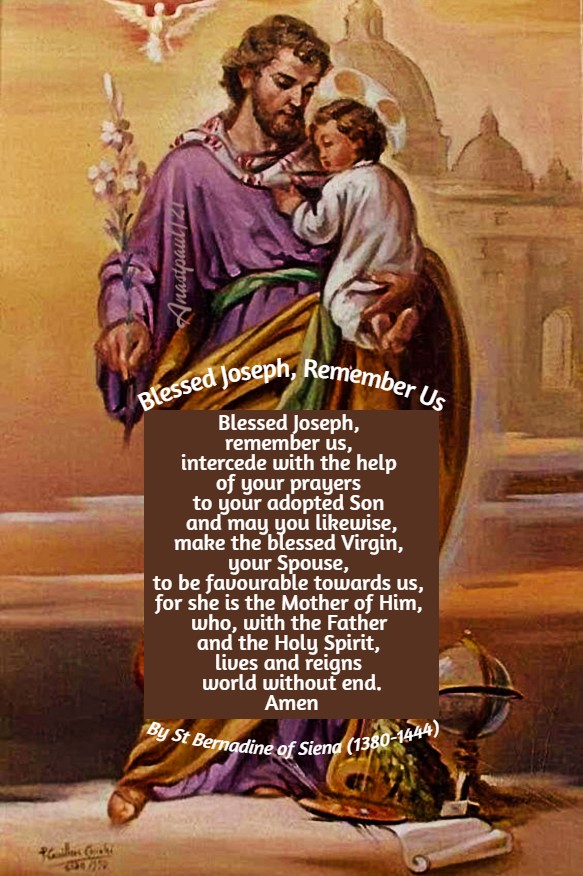
Our Morning Offering – 19 March – The Solemnity of St Joseph
Blessed Joseph, Remember Us By St Bernadine of Siena (1380-1444)
Blessed Joseph, remember us, intercede with the help of your prayers to your adopted Son and may you likewise, make the blessed Virgin, your Spouse, to be favourable towards us, for she is the Mother of Him, who, with the Father and the Holy Spirit, lives and reigns world without end. Amen






















You must be logged in to post a comment.