Thought for the Day – 5 August – Meditations with Antonio Cardinal Bacci (1881-1971)
Adoration of Jesus in the Blessed Sacrament
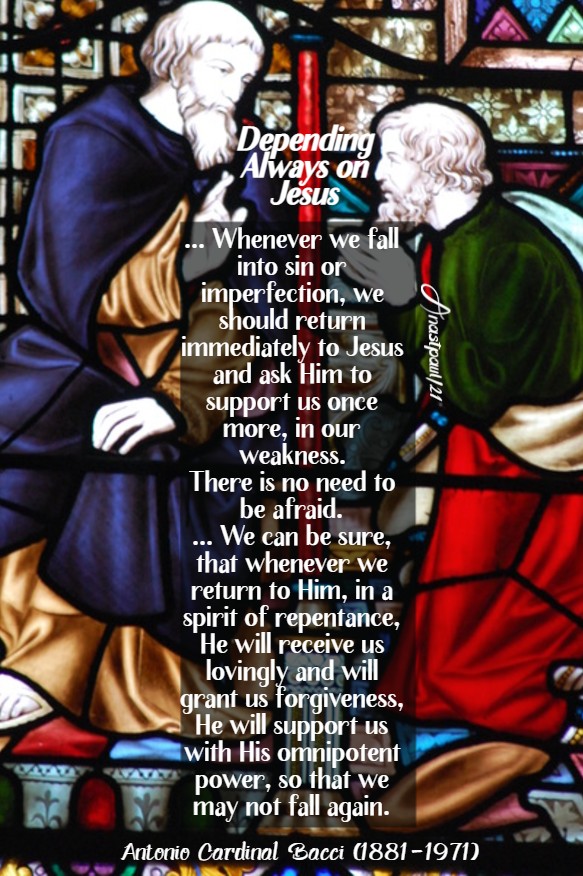
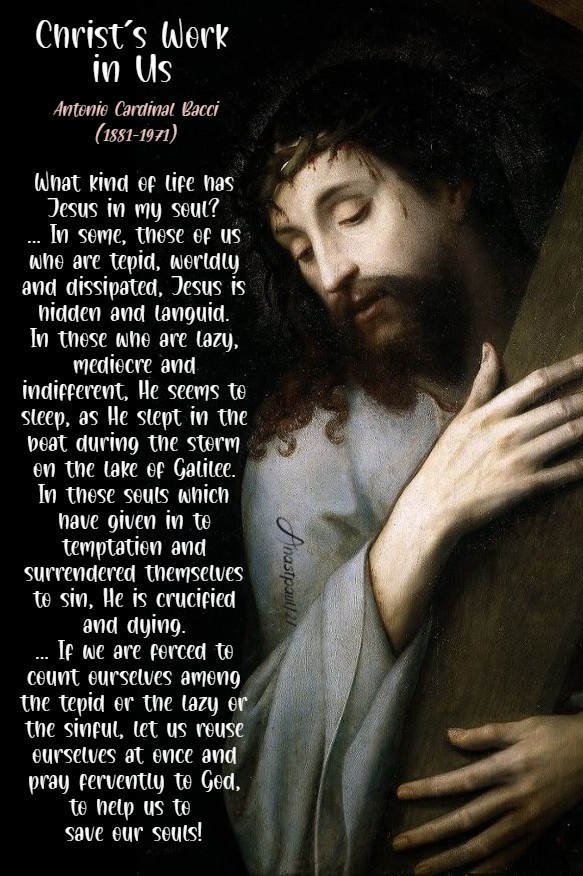
“Anyone who loves Jesus sincerely in the Sacrament of the Eucharist, must experience a pang of regret whenever he enters a Church and sees, that the spaces surrounding the Tabernacle are empty. Here and there, a few people may be praying before statues of Our Lady and of the Saints but, too often, there is nobody to worship Jesus in the Blessed Sacrament. Only the dim light of the Tabernacle lamp seems to be attempting to compensate in some small way, for the ingratitude of men. Yet, here is no mere image but the real living Jesus Who loves us and longs to shower His gifts upon us.
We are poor and He is rich; we are weak and He is strong. We are sinners and He wishes us to kneel repentant at His feet so that He may forgive us. We are bent beneath the weight of our cross, which seems too heavy for us to bear and He desires to lighten it by His grace. We are weary and worried and unable to find a friend who will fully understand and comfort us. But, if we go to Jesus, we shall find a Friend and a Comforter. “Come to me,” He says to us, “all you who labour and are burdened and I will give you rest. Take my yoke upon you and learn from me, for I am meek and humble of heart and you will find rest for your souls. For my yoke is easy and my burden light” (Mt 11:28-30). Let us kneel before Jesus in the Tabernacle and confide to Him, our worries, sorrows and desires. He will understand and enlighten us; He will strengthen our wavering resolution and inspire in our hearts, the divine love, which makes it easy to sacrifice ourselves for His sake.“
Quote/s of the Day – 5 August – “Month of the Immaculate Heart of Mary” – Wednesday of the Eighteenth Week in Ordinary Time and the Memorial of the Dedication of Mary Major
“Mary was placed by God in the centre of history and we can say, that everything was made through her and with her and in her.”
St Bernard (1090-1153) Doctor of the Church
“Mary is the divine Page on which God the Father wrote the Word of God, His Son. Let us draw near to her and read her!”
St Albert the Great (1200-1280) Doctor of the Church
“The single richest treasure in the Vatican is the Rosary.”
Bl Pope Pius IX (1792-1878)
“All to Jesus through Mary, all to Mary for Jesus.”
St Marcellin Champagnat (1789-1840)
“No matter how enormous our sins may be, no matter how irresistible our carnal instincts may seem, no matter how hopelessly we may have plunged into the depths of evil, it is enough for us to raise our eyes in confidence towards Mary. … Like a merciful Mother, she will obtain for us from God, forgiveness and the strength to return to the path of penitence and of peace. … Let us turn to her with trust and humility and she will certainly assist us.”
One Minute Reflection – 5 August – “Month of the Immaculate Heart of Mary” – Wednesday of the Eighteenth Week in Ordinary Time, Readings: Jeremiah 31:1-7, Responsorial psalm Jeremiah 31:10-13, Matthew 15:21-28 and the Memorial of the Dedication of Mary Major
And Jesus went away from there and withdrew to the district of Tyre and Sidon. … Matthew 15:21
REFLECTION – “Jesus came out of Israel …: “Jesus went from that place and withdrew to the region of Tyre” (Mt 15:21), a name which means “gathering of the nations.”This was so, that, from among the people of that territory, those who believed might be saved when they came out from it.
Now, pay attention to these words: “And behold, a Canaanite woman, coming out of that district, called out saying: ‘Have pity on me, Lord, son of David! My daughter is tormented by a demon’” (v. 22). Now in my opinion, if she had not withdrawn from that territory she would not have been able to call out to Jesus with cries that sprang from “great faith,” as the Lord Himself testified (v. 28).
It is “according to the measure of our faith” (Rm 12:6) that we come out from the territory of the pagan nations … We must certainly believe that each one of us, so long as he is a sinner, finds himself in the region of Tyre or Sidon, of Pharaoh or Egypt, or of some other land alien to God’s inheritance. But when sinners abandon their wrongdoing, turning back to the good, they withdraw from those regions where sin dwells and hasten to the regions that are the portion of God …
Notice, too, the sort of journey Jesus makes to meet the Canaanite woman, for he seems to be going towards the region of Tyre and Sidon …. The righteous are directed towards the kingdom of heaven and elevation into the Kingdom of God but sinners are directed towards the outcome of their evildoing …
The Canaanite woman, by leaving these territories, also left that tendency towards decadence, when she cried out and said: “Have pity on me, Lord, Son of David” … All the miracles accomplished by Jesus, as the evangelists have told them, took place, then, so that those who saw them might have faith. But those events are the symbol of what is always been brought about by Jesus’ power, for there is no age when what was written is not being realised in exactly the same way.” … Origen (c 185-253) Priest and Theologian, Church Father – Commentary on Saint Matthew’s gospel, Book XI, ch. 16
PRAYER – Forgive the sins of Your people Lord and since of ourselves, we are unable to do what pleases You, lead us on the way of salvation in Your divine Son who lives in us and gives us life. May the prayers of Mary, His Mother help us to constantly meditate on His eternal sustenance. He is our food, our Lord Jesus Christ, who lives and reigns with You and the Holy Spirit, God forever and ever, amen.
Our Morning Offering – 5 August – “Month of the Immaculate Heart of Mary” – Wednesday of the Eighteenth Week in Ordinary Time and the Memorial of the Dedication of Mary Major
Concórdi lætítia Harmonious Joy
Sounds of joy have put to flight
All the sadness of the night.
Now a Maid beyond compare
Hears her praises fill the air:
Virgo María.
Who is she whom angels sing,
Making all creation ring?
She it is who wins our priase,
As on earth our voice we raise:
Virgo María.
Queen of virgins, Maiden mild,
Hear me, take me for your child.
Ever my protector be,
Bring eternal life to me:
Virgo María.
Mighty Godhead, Three in One,
While eternal ages run,
Look to Mary, full of grace,
And forgive the human race:
Virgo María.
Amen
Saint of the Day – 5 August – Blessed Salvio Huix-Miralpeix CO Cong. Orat. (1877–1936) Bishop of Ibiza and later of Lleida, Catalonia and Martyr, Religious of the Congration of the Oratory of St Philip Neri, Professor of Theology, Apostle of the sick – born on 22 December 1877 in Santa Margarida de Vallors, Girona, Spain and died by being shot in the head on the morning of 5 August 1936 in a cemetery in Lleida, Spain.
Salvio Huix was born on 22 December 1877. His family, were fairly well-off and were more than ordinarily devout Catholics — daily Mass, Rosary, Visits to the Blessed Sacrament were built into the life of the family. There were always Priests visiting the home and there were quite a few Priests in the family, so it came as no real surprise, when young Salvio announced his intention to offer himself as a candidate for the Priesthood, leaving home for the local minor seminary at the age of 10. There, he excelled at his studies, not on account of any unusual intelligence but because of his tremendous application to his work. It was said by those who knew him that he would always do whatever was needed as well as he possibly could and, that he was an immensely practical sort of person, not given to day dreams or idling. The virtues noticed by his fellow students were to be those admired by his fellow Oratorians – his obedience, his joy and warm heartedness, his natural interest in others, his capacity for hard work and real leadership, while at the same time, shying away from any publicity. It must be said that this young man was also hot tempered and at times had difficulty in controlling his temper.
Salvio was Ordained Priest on 19th September 1903 and was sent to work as a country curate. He served in two rural Parishes but found there wasn’t work enough to absorb his energies; moreover, he wanted to be near people and to be active in the business of helping people become holy. It was this desire that lead him to enter the Oratory in Vich in 1907. He was then 30 years old.
What was life at the Oratory of Vich like? The fathers would rise each morning at 4:30am, except on Sunday and feast-days, when they would get up half an hour earlier. After an hour of mental prayer, they would go down to the Church to hear Confessions and after the last penitent was done, the fathers would say their Masses at one of the side-altars in the church. The afternoon was spent in the confessional, or working with one of the groups or sodalities which were attached to the church -Brothers of the Little Oratory, groups for young people etc. There were the sick to be visited and children to be catechised. Fr Huix became aware that there was nothing for young married men, who seemed to have no part in the life of the Church. Bl Salvio believed that a religion that attracted only women and children in large numbers was seriously deficient, so he started a confraternity for married men under the patronage of St Joseph. Both these men and the young ,he encouraged in the apostolate. He was anxious to get them working for the sick, not just by visiting them but by actually looking to their physical and material needs. He himself was unafraid to get his hands dirty and when he wasn’t busy in the Confessional or at the Seminary, where he was Professor of Mystical and Ascetical Theology, he was likely to be found tending the sick — washing them if needs be and changing their bed-linen.
In 1927, Fr Salvio, by now provost of the little community, was nominated Bishop of Ibiza. The island had been without a Bishop for 69 years and so his appointment was greeted with great joy. A photograph of his arrival shows the quay crowded with hundreds of cheering people. Even though his Episcopal Consecration (which took place 28 April that year) meant that Fr Huix would have to leave his Congregation, he remained very much a son of St Philip, even in the way he governed his Diocese. As Bishop he showed himself to be a very caring shepherd and very practical one too. Another photograph taken at a reception soon after his appointment as Bishop, shows him, his head inclined towards the person he is talking to, holding his hand, evidently interested in what he is saying. His clergy, he found, were extremely poor and so he organised a life insurance scheme which would guarantee them some security in their old age. He continued to encourage the laity in the social apostolate. He was very much a man for his people.
In 1931, Spain was declared a Republic and although the Spanish Bishops initially urged the faithful to co-operate with the Government, within a few weeks, things began to change and as the new order made itself felt. In Madrid and elsewhere, convents were pillaged and burned; the Jesuits were suppressed; the Archbishop of Toledo was expelled; all schools run by religious orders were closed. Cemeteries were secularised and Catholic burials were forbidden. All Crucifixes were ordered to be removed from the cemeteries. On Ibiza, men carried the great Crucifix from the cemetery to the Cathedral doors, where the Bishop himself shouldered the Crucifix and carried it to the sanctuary. Bl Salvio was unimpressed by the anti-religious laws and ideas and in his Lenten pastoral letter of 1932, he told his people that even though the dogs bark and the pigs grunt, the sun and the moon will continue to shine.
He remained Bishop of Ibiza for 8 years, when in 1935, he was translated to the more prestigious see of Lerida on the mainland. There he hoped to continue his pastoral programme but this was not to be, because within the year, the civil war broke out.
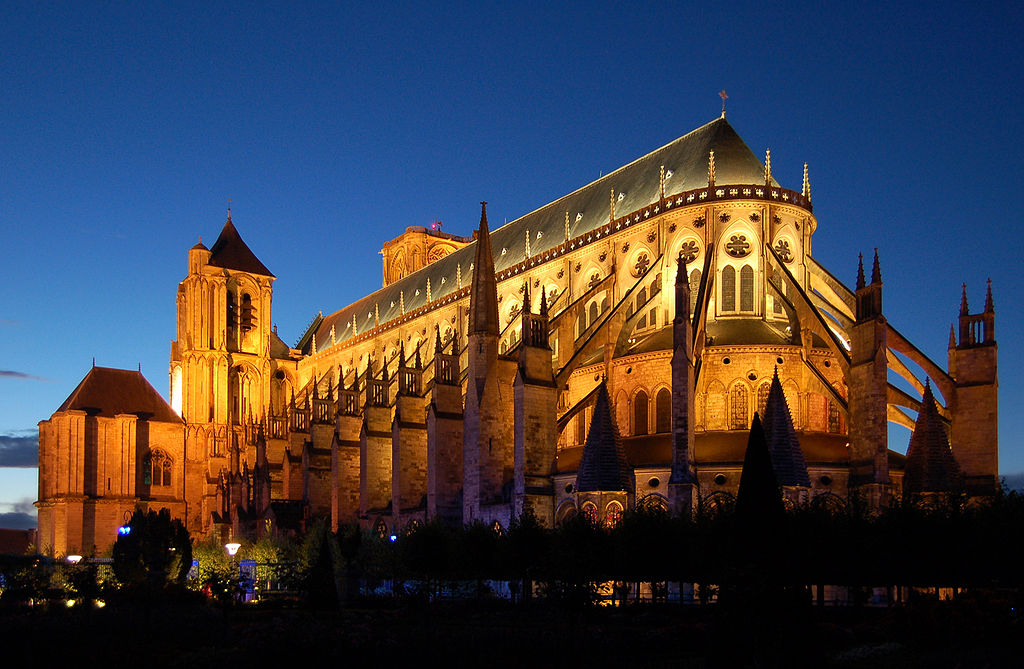
The Cathedral of Lerida
Between July 1936 and March 1937, there was an onslaught of violence against the Church, a few months in which thousands of people died. By the end of the war, it was reckoned that 6,832 priests and religious had been killed, 12 bishops and 283 religious sisters.
On 18 July there was a military uprising against the Republican government. Two days later, the city of Lerida was in the hands of republican forces, who burned the Cathedral and the Churches of the city, killing, in the course of several months, 80% of the Priests of the Diocese. The last photograph of Mgr Huix, taken in June of 1936, shows him flanked by the Priests he had just Ordained; within a month, all but one of those young men, together with their Bishop, were dead. One of his seminarians, aged about 15 was given a mock trial. The crowd shouted for his death and the ‘Judge’, so called, went through the motion of washing his hands, before condemning him to death. The boy was then beaten, stripped and nailed to a beam where he died.
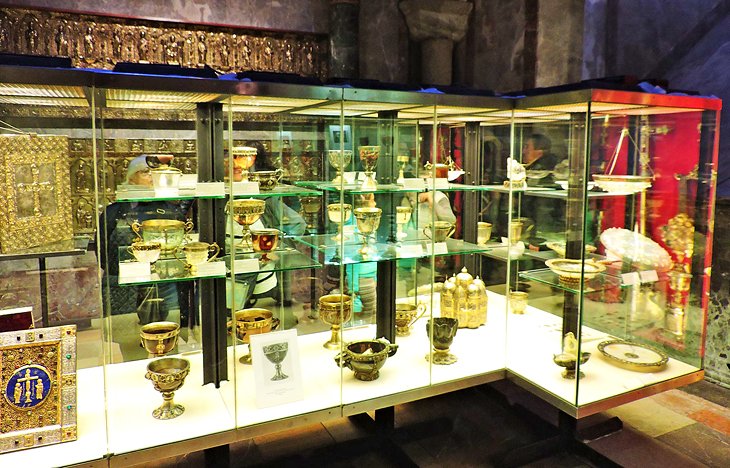
On the night of the 21st July, after republicans had burned the Cathedral, they turned their attention to the Episcopal residence. Whilst they were beating down the doors, Huix, together with his Secretary, the porter and his daughter, confessed, consumed the Blessed Sacrament and escaped by the back door. He had, it seems, expected something of the sort to happen, since he kept a suitcase with a simple suit packed ready, just in case. At first, he took refuge in the house of the gardener but realising the danger to which he was exposing this man and his family, he gave himself up to the police. ‘I am the Bishop of Lerida,’ he said, ‘and I place myself under your protection.’ The police promptly handed him over to the republicans, who imprisoned him. Many of the leading people of the city were already in gaol, also a number of his clergy. All were struck by the Bishop’s cheerfulness and his continuing care for his flock. On St James’ feast, he was able to say Mass, using vessels that had been smuggled in to the prison. He administered Communion and heard Confessions.
Early in the morning (4:30am) on the 5th August, the feast of Our Lady of the Snows, the Bishop and 20 others were told that were going to be taken for trial at Barcelona. Once outside the city, the lorries stopped by the cemetery and the prisoners were instructed to get out. Realising they were about to be killed, the group all asked their Bishop for his blessing. This he gave, telling them, ‘Be brave, for within the hour we shall be reunited in the presence of the Lord.’He is said to have used a popular Catalan saying on reaching the end of a long journey: Ja soms a sants(We are saints). They then recited the Credo together and were made to dig their graves. One account tells that Mgr Huix was offered his life if he would abjure his faith. This he refused to do but asked one favour, that he might be the last to die. As each was killed, he blessed them. One of the militia men, objecting to this, shot him through the hand, he continued to bless with his left In a written testimony after the Martyrdom, the man who had administered the coup de grace to the dying, said how there was much blood and that the sinews of the Bishop’s arms were exposed through having been shot a number of times.
Blessed Salvio was not the only father of the Oratory to lose his life in the tragic events of the Civil War. Four fathers from Barcelona were murdered, five from Gracia and the Provost of Vich. May their blood and that of all the Martyrs, be the seed of a new spring in the life of the Church in his country and their intercession, the means of a true reconciliation and understanding. I have perhaps spoken at too great a length about Blessed Salvio , when it might well have sufficed to quote St Ambrose: ‘I have called him Martyr. I have said everything.’
Blessed Salvio was Beatified on 13 October 2013 by Pope Francis in Tarragona, Spain along with another 521 martyrs. His liturgical feast is kept today, 5 August.
Almighty and eternal God, who in your goodness bestowed on the Bishop and Martyr Salvio Huix, the gift of pastoral charity even to the point of shedding of his blood for Christ and His Church, bestow on us also, the grace to work faithfully in your vineyard and to experience his intercession in this life. Through Christ our Lord. Amen
Our Lady of Copacabana: A statue of the Blessed Virgin Mary standing four feet tall, made of plaster and maguey fibre and created by Francisco Tito Yupanqui. Except for the face and hands, it is covered in gold leaf, dressed like an Inca princess and has jewels on neck, hands and ears. There is no record of what the image looks like under the robes, the carved hair has been covered by a wig and the image never leaves the Basilica. On 21 February 1583 it was enthroned in an adobe church on the Peninsula of Copacabana, which juts into Lake Titicaca nearly 3 miles above sea level. In 1669 the Viceroy of Peru added a straw basket and baton to the statue, which she still holds today. The present shrine dates from 1805. The image was crowned during the reign of Pope Pius XI and it’s sanctuary was promoted to a Basilica in 1949. It has been the recipient of many expensive gifts over the years, most of which were looted by civil authorities in need of quick cash. Patronage – Bolivia, Bolivian navy.
St Abel of Rheims
St Addai
St Aggai of Edessa
Bl Arnaldo Pons
St Cantidianus
St Cantidius
St Cassian of Autun
St Casto of Teano
Bl Corrado of Laodicea
St Emidius of Ascoli Piceno
St Eusignius
St Gormeal of Ardoilen
Bl James Gerius
St Margaret the Barefooted
St Mari
St Memmius of Châlons-sur-Marne
St Nonna St Oswald of Northumbria (604-642) Martyr Biography: https://anastpaul.com/2019/08/05/saint-of-the-day-5-august-saint-oswald-of-northumbria-c-604-642-martyr/
St Paris of Teano
Bl Pierre-Michel Noël Blessed Salvio Huix-Miralpeix C.O. Cong Orat (1877–1936) Bishop and Martyr
St Sobel
St Theodoric of Cambrai-Arras
St Venantius of Viviers
St Viator
—
Martyrs of Fuente la Higuera: A group of Augustinian priests and clerics who were martyred together in the Spanish Civil War. 5 August 1936 in Fuente la Higuera, Valencia, Spain. They were Beatified on 28 October 2007 by Pope Benedict XVI.
10 Beati:
• Anastasio Díez García
• Ángel Pérez Santos
• Cipriano Polo García
• Emilio Camino Noval
• Felipe Barba Chamorro
• Gabino Olaso Zabala
• Luciano Ramos Villafruela
• Luis Blanco Álvarez
• Ubaldo Revilla Rodríguez
• Victor Gaitero González
Martyrs of the Salarian Way: Twenty-three Christians who were martyred together in the persecutions of Diocletian.
303 on the Salarian Way in Rome, Italy.
Martyred in the Spanish Civil War:
Bl Eduardo González Santo Domingo
Bl Jaume Codina Casellas
Bl José Trallero Lou
Bl Lluís Domingo Mariné
Bl Manuel Moreno Martínez
Bl Maximino Fernández Marinas
Bl Victor García Ceballos
Thought for the Day – 4 August – Meditations with Antonio Cardinal Bacci (1881-1971)
The Crucifix
“I determined not to know anything among you,” wrote St Paul to the Corinthians, “except Jesus Christ and him crucified” (1 Cor 2:2).
It was St Paul’s boast, that while the Jews were looking for signs and the Greeks were searching for wisdom, he continued to preach about Christ on the Cross. “The Jews ask for signs and the Greeks look for ‘wisdom’ but we, for our part, preach a crucified Christ – to the Jews indeed, a stumbling-block and to the Gentiles, foolishness” (1 Cor 1:22-23).
Christian doctrine and Christian living, are centred around Jesus Crucified.
Unfortunately, in modern times, as in the times of St Paul, the Crucifix is either ignored and forgotten, or attacked as a symbol of folly.
There is no need to be amazed at this.
When the holy old man, Simeon, took Jesus in his arms, he made the prophecy that this Child, would be “a sign that shall be contradicted” (Lk 2:34). The world is proud of it’s scientific and technical progress, whereas the Crucifix, is the symbol of the lowliness to which God Himself descended for love of us. The world is looking for pleasure and voluptuousness, whereas, the Crucifix preaches to us the spirit of sacrifice and the purifying value of suffering. The world is fond of ease, riches and honour; the Crucifix demonstrates the depths of the love of God, Who became man for our sakes, suffered and died to redeem us from sin, taught us fraternal love and commanded us to carry our cross daily, if we wished to follow Him.
We must choose whether to follow Jesus Crucified, or to follow the world! The world can only give us a vain and passing satisfaction, while the Crucifix can give us the peace of a good conscience, even in the midst of sorrow and trouble and the hope of lasting happiness in the next life.”
Quote/s of the Day – 4 August – The Memorial of St John Marie Baptiste Vianney (1786-1859)
“The Holy Spirit leads us along, as a mother leads her two year old child by the hand, as a sighted person leads a blind one. We should say each morning: “Oh my God, send me Your Holy Spirit who will make me understand what I am and what you are …” A soul who possesses the Holy Spirit enjoys an exquisite taste in prayer, it never loses the holy presence of God.”
“There is one thing everyone can do, whether they find it hard to meditate or not and that is to make up their mind in the morning, to cultivate some particular virtue during the day, to practice the interior Presence of God and to live their life in union with Him.”
“The sign of the cross is the most terrible weapon against the devil. Thus the Church wishes not only, that we have it continually in front of our minds, to recall to us just what our souls are worth and what they cost Jesus Christ but also that we should make it at every juncture ourselves: when we go to bed, when we awaken during the night, when we get up, when we begin any action, and, above all, when we are tempted.”
“To serve the Queen of Heaven is already to reign there and to live under her commands, is more than to govern.”
“What does Jesus Christ do in the Eucharist?
It is God, who, as our Saviour, offers Himself each day for us to His Father’s justice.
If you are in difficulties and sorrows, He will comfort and relieve you. If you are sick, He will either cure you or give you strength to suffer, so as to merit Heaven. If the devil, the world and the flesh are making war upon you, He will give you the weapons with which to fight, to resist and to win the victory. If you are poor, he will enrich you with all sorts of riches for time and for eternity. Let us open the door of His Sacred and Adorable Heart and be wrapped about for an instant, by the flames of His love and we shall see, what a God who loves us, can do. O my God, who shall be able to comprehend?”
“We should consider those moments spent before the Blessed Sacrament as the happiest of our lives.”
“We do not have to talk very much to pray well,” we know that God is there in His Holy Tabernacle. Let us open our hearts to Him, let us rejoice in His Sacred Presence. This is the best prayer.”
“When we cannot go to the church, let us turn towards the tabernacle; no wall can shut us out from the good God.”
One Minute Reflection – 4 August – “Month of the Immaculate Heart” – Tuesday of the Eighteenth week in Ordinary Time, Readings: Jeremiah 30:1-2, 12-15, 18-22, Psalm 102:16-21, 29, 22-23, Matthew 15:1-2,10-14 and The Memorial of St John Vianney (1786-1859)
“Let them alone; they are blind guides [of the blind]. If a blind person leads a blind person, both will fall into a pit.” … Matthew 15:14
REFLECTION – “When, in these last days, the Word of God was born of Mary, clothed in flesh and revealed to the world, what was seen of Him was something other than the mind could discern. The appearance of His body was clear to all but knowledge of His divinity was only granted to some. Similarly, when the Word of God speaks to us through the Old Law and the prophets, He shows Himself beneath the veil of the appropriate garments.
In His incarnation He is clothed with flesh; in the Holy Scriptures He is clothed with the veil of the letter. The veil of the letter can be compared to His humanity and the spiritual sense of the Law, to His divinity. In the book of Leviticus we find the rites of sacrifice, the various sacrificial animals, the priestly liturgical service … blessed the eyes that discern the divine Spirit hidden beneath the veil …
“Whenever a person turns to the Lord the veil is removed … and, where the Spirit of the Lord is, there is freedom,” says the Apostle Paul (2 Cor 3:16-17). Thus it is to the Lord Himself, the Spirit Himself, we must pray, that He will deign to remove every obscurity, so we can behold in Jesus, the wonders of the spiritual meaning of the Law, like the man who said: “Open my eyes that I may see the wonders of your Law (Ps 119[118]:18).” … Origen (c 185-253) Priest and Theologian, Church Father – Homily 1 on Leviticus
PRAYER – Lord God, light of the faithful and shepherd of souls, who gave blessed John Vianney to Your Church to feed Your flock by his teaching and form them by his example, grant that by his intercession, we may keep the faith which he taught and follow in the way he walked, through our Lord Jesus Christ, in union with the Holy Spirit. St John Vianney, pray for us, amen.
Our Morning Offering – 4 August – “Month of the Immaculate Heart” – Tuesday of the Eighteenth week in Ordinary Time and The Memorial of St John Marie Baptiste Vianney (1786-1859)
St John Vianney’s prayer which is quoted in the CCC
I Love You, O My God By St John Marie Baptiste Vianney (1786-1859)
I love You,
O my God
and my only desire is to love You
until the last breath of my life.
I love You,
O my infinitely lovable God
and I would rather die loving You,
than live without loving You.
I love You, Lord
and the only grace I ask,
is to love You eternally
My God,
if my tongue cannot say
in every moment that I love You,
I want my heart to repeat it to You
as often as I draw breath.
Amen
Saint of the Day – 4 August – Saint Aristarchus of Thessalonica (1st Century) Convert and Disciple of Saint Paul the Apostle, first Bishop of Thessalonica, Martyr. Born in Thessalonica and died by being beheaded in the 1st century in Rome, Italy. Also known as • Aristarco • Aristarque • Arystarch.
He was one of those faithful companions of the Apostle Paul who shared with him his labours and sufferings. He is first mentioned along with Gaius as having been seized by the excited Ephesians during the riot stirred up by the silversmiths (Acts 19:29). They are designated “men of Macedonia, Paul’s companions in travel.”
We learn later that he was a native of Thessalonica (Acts 20:4; 27:2). They were probably seized to extract from them information about their leader Paul but when they could tell nothing and since they were Greeks, nothing further was done to them.
When Aristarchus attached himself to Paul we do not know but he seems to have remained in Paul’s company ever after the Ephesian uproar.
He was one of those who accompanied Paul from Greece via Macedonia (Acts 20:4). Having preceded Paul to Troas, where they waited for him, they travelled with him to Palestine. He is next mentioned as accompanying Paul to Rome (Acts 27:2). There he attended Paul and shared his imprisonment.
He is mentioned in two of the letters of the Roman captivity, in the Epistle to the Church at Colossae (4:10) and in the Epistle to Philemon (1:24), in both of which he sends greetings. In the former Paul calls him “my fellow-prisoner.”
According to tradition he was Martyred during the persecution of Nero. He is mentioned in the Roman Martyrology on 4 August. Aristarchus son of Aristarchus, a politarch of Thessalonica (39/38 BC).
St Agabius of Verona St Aristarchus of Thessalonica (1st Century) Convert and spiritual student of Saint Paul the Apostle, first Bishop of Thessalonica. Martyr.
St Crescentio of Rome
St Eleutherius of Bithynia
St Epiphanes of Besançon
St Euphronius of Tours
St Francesc Mercader Rendé Blessed Frédéric Janssoone OFM (1838-1916) “God’s Pedlar” “Good Father Frédéric” His Life:
St Hyacinth of Rome
St Ia of Persia
St Isidore of Besançon
St Lua of Limerick
St Onofrio of Panaia
St Perpetua of Rome
St Protasius of Cologne
St Rainerio of Split
St Sithney
St Tertullinus of Rome
Bl William Horne
“This Virgin Mother of the Only begotten of God is called Mary, worthy of God, Immaculate of the Immaculate, one of the one.”
Origen (c 185-253)
Historically, devotion to Mary Most Holy in the form of her Immaculate Heart first occurs in the thirteenth century with St Mechtilde, St Gertrude, St Bernardine of Siena and others. In the seventeenth century, St Francis de Sales was an exponent of this devotion. But it was St John Eudes the great apostle of the Immaculate Heart (1601-1680), who gave the decisive impulse to the practice.
In the same century, the devotion to the Sacred Heart of Jesus came back to light through St Margaret Mary Alacoque and her confessor, St Claude de La Colombiere. As the devotion to the Sacred Heart spread, so did the devotion to the Immaculate Heart. Both St Margaret Mary and St Claude, were deeply dedicated to the Immaculate Heart of Mary as well.
Beginning with Pope Pius VI, several popes incrementally spread the devotion but in 1944 Pope Pius XII extended it to the whole Church, fixing the Feast Celebration on 22 August. Today, the feast of the Immaculate Heart of Mary is celebrated on the Saturday following the feast of the Sacred Heart of Jesus, which is movable, always observed on a Friday, nineteen days after Pentecost Sunday.
The Physical Heart, Symbol of the Spiritual Heart
The Fathers of the Church consider that when, from the Cross, Our Lord Jesus made the Blessed Lady, the mother of St John and thus He appointed her the mother of all men.
Thus, Mary’s heart is the physical symbol of her boundless love for God and humankind. But Our Lady’s physical heart is also the symbol of her spiritual heart. Thus, in the Immaculate Heart of Mary we also honour her inner life, her virtues, her perfect purity, her boundless humility, her affections and her sorrow.
Poignant in Catholic tradition is the representation of Mary’s heart pierced by a sword, symbol of her immense sorrow at witnessing and willing her Son’s passion and death for the salvation of our souls.
Fatima and the Immaculate Heart of Mary
–The Five First Saturdays Devotion
In the second apparition of Fatima, Our Lady showed the seers, Lucia, Francisco and Jacinta, her heart encircled by thorns. Later, on 10 December 1925, in a private apparition to Sister Lucia, she asked for the devotion of reparation of the Five First Saturdays.
The Blessed Mother appeared alongside the Child Jesus who stood over a luminous cloud. Our Lady rested one hand on the Child’s shoulder while she held on the other hand a heart pierced with thorns.
The Child said,
“Have pity on the Heart of your Most Holy Mother which is covered with thorns with which ungrateful men pierce it at every moment with no-one to extract them with an act of reparation.
I want My Church to…put the devotion to this Immaculate Heart beside the devotion to My Sacred Heart.”
“Look, my daughter, My Heart surrounded with thorns with which ungrateful men pierce me at every moment with blasphemies and ingratitude. You, at least, make sure to console me and announce that all those who for five months, on the first Saturdays, go to Confession, receive Communion, say five decades of the Rosary and keep me company for 15 minutes meditating on the Mysteries of the Rosary, with the purpose of making reparation to Me, I promise to assist them at the hour of death with all the graces necessary for the salvation of their souls.”
Our Lady assured Lúcia: “My Immaculate Heart will be your refuge and the way that will lead you to God.” Thus, if we devote ourselves to her Immaculate Heart, Mary will lead us to her Son, Jesus Christ and we will be on the way to Heaven.
Our Lady of Fatima
“…Let us continue Immaculate Mary’s mission. All is included in it. May [we].. follow her example and be the handmaid of the Lord in everything, everywhere and always.”
Firstly, the Internet has been intermittent and then gone completely since 25 July, hence the sparsity of posts. Those who have been with me for a while will know how bad my service provider can be.
It seems to be repaired now, we pray! BUT today I leave for Cape Town for about a week.
We will be moving in November, God willing, to Hermanus on the Cape Whale Coast and are going down today (the first of a few trips) to finalise various matters.
Praying for you as always, please don’t forget me in your prayers.
Thought for the Day – 28 July – Meditations with Antonio Cardinal Bacci (1881-1971)
Temptations
“When a man fears and loves God, temptation is the greatest trial which he can endure. “No-one, is so perfect and holy,” says The Imitation of Christ, “as not sometimes to have temptations and we never can be wholly free from them. Nevertheless, temptations are often very profitable to a man, troublesome and grievous though they may be; for, in them, a man is humbled, purified and instructed. All the Saints passed through many tribulations and temptations and profited by them. And they that could not support temptations became reprobate and fell away …
A man is never wholly secure from temptation as long as he lives, for there is within us, the source of temptation, since we were born in concupiscence …
Inconstancy of mind and little confidence in God, is the beginning of all evil temptations. For as a ship, without a helm, is driven to and fro by the waves, so the man who is negligent and gives up his resolutions,is tempted in various ways. Fire tries iron and temptation, a just man” (Bk 1, c 13).”
These words from The Imitation of Christ, should encourage us.
God sends us temptations in order to test our virtue and to make us understand that we are in continual need of Him.
The important thing is to overcome them with the help of His grace, for a thousand temptations do not constitute a single sin.
When we are prepared to make sacrifices and to rely upon God’s assistance, temptations can be a source of merit for us.
“Blessed is the man who endures temptations,” writes St James, “for when he has been tried, he will receive the crown of life, which God has promised to those who love Him” (Js 1:12).
We should not fear temptations, nor be discouraged by them.
Instead, we should watch and pray and love God!”
Quote/s of the Day – 28 July – “Month of the Most Precious Blood” – Tuesday of the Seventeenth week in Ordinary Time, year A, Readings: Jeremiah 14:17-22, Psalm 79:8-9, 11, 13, Matthew 13:36-43
“Then the righteous shall shine like the sun in the kingdom of their Father. He who has ears, let him hear.”
Matthew 13:43
“Christ shall minister to us and show us His radiant Face and His glorious Body with all the marks of faithfulness and love therein impressed. And we shall see all the glorious bodies clothed with all the many tokens of love won in the service of God since the beginning of the world… And our living hearts shall flame with burning love for God and all His saints…”
Bl Jan van Ruusbroec (1293-1381)
Canon Regular, “Doctor Divinus Ecstaticus,” Mystic, Spiritual Writer – The seven steps of the ladder of spiritual love
“Give me grace to amend my life and to have an eye to mine end, without grudge of death, which to them that die in You, good Lord, is the gate of a wealthy life.”
St Thomas More (1478-1535) Martyr
“We will not be proclaimed blessed on the altars in all probability but if we are faithful, in Heaven we will be proclaimed ‘blessed’ and that is enough for us. Let us try to merit this hour of eternal delights.”
Bl Mary of the Passion (1839-1904)
“Work always with the same spirit of Christ. Keep Jesus before your eyes. He is the model of all called to glory.”
“On the last day, we will not be asked if we accomplished great deeds, or been acclaimed by men, rather we will be asked if we followed His will, in the state and condition, to which we were called.”
One Minute Reflection – 28 July – “Month of the Most Precious Blood” – Tuesday of the Seventeenth week in Ordinary Time, year A, Readings: Jeremiah 14:17-22, Psalm 79:8-9, 11, 13, Matthew 13:36-43
“The Son of Man will send his angels and they will gather out of his kingdom, all causers of sin and all law-breakers and throw them into the fiery furnace. In that place, there will be weeping and gnashing of teeth. Then the righteous shall shine like the sun in the kingdom of their Father. He who has ears, let him hear.” … Matthew 13:41-43
REFLECTION – “In your imagination see our Lord Jesus Christ seated on a throne of glory; beside Him stand the seraphim, cherubim and each angelic order, serving Him with fear and trembling. Then those who will have finished the combat, without allowing themselves to be drawn by any worldly pleasures or seduced by the attractions of this vain world, will hear the blessed voice of the Master. “Then, he says, the righteous will shine like the sun” (Mt 13:43) when they have come from east and west, north and south to take their places at the feast with Abraham, Isaac and Jacob (cf. Mt 8:11) in an indescribable joy (cf. 1 Pt 1:8), when our King and Lord, will distribute gifts according to their merits. Ah! my brothers and children. ah! how great and beautiful is the glory which the thrice blessed will enjoy and the saints who practised asceticism! Yes, most certainly, each will receive the blessings promised, according to the degree to which they have pleased God. …
So from now on, run well (cf. Gal 5:7) and may the devil not bewitch you (cf. Gal 3:1) nor hinder you! … May mercy, peace, charity, freedom from envy, from jealousy and ostentation come upon you, docility, friendly speech, solidarity, compassion towards each other, humility. Live like this, act like this, praying, too, with all your heart for my humble self that I may not be thrown into the eternal fire. May we all escape it, having been judged worthy of the kingdom of heaven, in Christ Himself, our God, to whom belongs all glory, honour, adoration, magnificence, together with the Father and the Holy Spirit, now and always, world without end. Amen.” … St Theodore the Studite (759-826) Monk and Theologian – Catechesis 42
PRAYER – All-powerful and ever-living God, splendour of true light and never-ending day, chase away the night of sin and fill our minds with the glory of Your coming. Take away our heart of stone and give us a heart of flesh, help us in our battle with sin and the devil. By our prayers, Your holy Sacraments and the strength of the Holy Spirit, may we be ever vigilant of the evil one. By our Baptism in Your Son, we are Your children, grant us Your protection. Kindly listen to the prayers of the Blessed Virgin Mary and all the saints and angels, whose prayers we beg, through Christ our Lord, with the Holy Spirit, God for all eternity, amen.
Our Morning Offering – 28 July – “Month of the Most Precious Blood” – Tuesday of the Seventeenth week in Ordinary Time
Prayer for a Humble Walk By Catholic Relief Services
Lord, You have told us what is good:
“do justice.”
Help us to treat others
as we would want them to treat us.
When someone asks us to walk a mile with them,
encourage us to walk two.
When someone demands our shirt,
offer our coat as well.
You have taught us Lord,
that justice extends beyond the letter of the law.
Lord, you have taught us what is good:
“love goodness”
Help us forgive our enemies
but more so, to pray for them.
Lead us to comfort the widow,
the orphan,
the weakest among us.
Aid us to feed the hungry,
shelter the wanderer and
offer drink to the thirsty.
You have shown us that goodness
extends even to the Cross
and flows from it for all.
Lord, You have taught us what is necessary:
“to walk humbly with You our God.”
And so, grant us, Lord,
the ability to see ourselves as You see us.
Grace us to walk without pride
so that we may serve others,
in humility and graciousness.
You have shown us how to serve
so that in imitation of You
we may do justice, love goodness
and walk with You forever.
Amen
Saint of the Day – 28 July – Saint Pope Victor I (Died 199) Pope, Martyr, Confessor – born in Africa, exact location not recorded in the early years of the 2nd Century. His Papal Ascension was in 189 and died by being Martyred 198-199 (though the date of his death and whether he was martyred is not certain). He was the first Bishop of Rome born in the Roman Province of Africa—probably in Leptis Magna (or Tripolitania). Nothing else is known of his younger years.
Victor’s reign showed many changes in the Church. Culture had begun to change in the Roman Empire. No longer was Greek the standard language. Latin had taken precedence as the official language of the Church, as well. Victor, unlike many of his predecessors, wrote in Latin. During the time of peace in the Church, Victor acted more like a ruler than many of the previous Bishops of Rome had been able to.
The mistress of Emperor Commodus was a woman named Marcia. It is said that she was a secret Christian, or at least, a woman tolerant towards Christianity. At one time, she called Victor to her, asking for a list of names of the Christians who had been sentenced to work in the mines of Sardinia. He gave her a list. This implies that the Christians were a tight group who knew each other well enough to keep tabs on one another. Marcia had them pardoned and sent the presbyter Hyacinthus, who may have been her advisor, to secure their release. One man, Callistus, chose to remain behind, possibly to preach to the pagans there. The Roman Christians sent him a stipend until he left.
At the time, not only was there peace but Christians could practice their religion and serve in the imperial court, which some did. This was a time when the Church attracted men and women of position and wealth.
Victor sought to solidify Roman control of the Church throughout the Mediterranean. He proclaimed that Easter was to be celebrated only on Sunday, a continuing battle, if you have read other entries on the Popes. Many Middle Eastern Christians had moved to Rome and were celebrating Easter as they did at home, following the Passover dates, rather than having Easter on a specific day. Victor requested their Bishops to send him a letter indicating how many people followed this custom. It was the great majority. Victor was not pleased and he went so far as to demand that the Eastern churches follow his rule. He set up the first Synod of Rome to deal with this. But, Eastern churches chose to ignore Victor and continued as they were, despite his threat of excommunication. St Ireneas, Bishop of Lyons and others wrote to Victor asking him to not be so harsh and demanding that he keep the Middle Eastern Churches within the fold. There are no letters of response from Victor but he must have relented because the Eastern churches remained.
There was a Priest who had known St Polycarp and was probably taught by him. The man’s name was Florinus. He began to teach questionable doctrine and eventually Gnostic heresy. St Ireneas wrote two treatises against Forinus’ preaching then notified Victor of the man’s work. Pope Victor immediately excommunicated sndf defrocked Florinus.
Another man, Theodotus, came to Rome from Asia and preached that Jesus was just a normal man until he was Baptised and was endowed with the Spirit. As much as Victor tried to excommunicate him, Theodotus continued his preaching. He and his followers developed a schismatic group which continued for a while.
In addition to these two, the Montanists were still troubling the churches of Asia with their odd prophecies, indicating that marriage was as much a sin as adultery and on and on. At first, from a distance, Victor thought them to be just zealously pious. But when some came to speak to him, he realised his mistake and ordered excommunication.
In addition to Victor’s writings about the paschal question, he was known to have written a treatise against gambling.
Considering the attitudes of the government at the time, it is thought that St Pope Victor probably did not die as a Martyr.
St Arduinus of Trepino
St Botwid of Sudermannland
St Camelian of Troyes
St Celsus of Rome
Bl Christodoulos
Bl Davíd Carlos-Marañon
St Eustathius of Galatia
St Irene of Cappadocia
Bl John Soreth
St José Caselles-Moncho
Bl José Melchór García-Sampedro Suárez
Bl Josep Castell-Camps
St Longinus of Satala
St Lucidius of Aquara
St Lyutius
Bl Manuel Segura-López
St Nazarius of Rome St Pedro Poveda Castroverde (1874-1936) Priest and Martyr His Life and Martyrdom:
He is the first US-born Priest and Martyr to be Beatified (on 23 September 2017) and the second person to be Beatified on US soil following the 2014 Beatification of New Jersey-born nun, Blessed Miriam Teresa Demjanovich S.C. (1901-1927).
His First Feast Day today, 28 July 2018
St Pope Victor I (Died 199) Martyr
—
Martyrs of Laodicea – 8 saints
Martyrs of Thebaid: A large but unspecified number of Christians who were imprisoned, tortured and murdered together in the persecutions of Decius and Valerian. 3rd century Thebes, Egypt.
Martyred in the Spanish Civil War – Thousands of people were murdered in the anti-Catholic persecutions of the Spanish Civil War from 1934 to 1939.
Martyrs of Fernán Caballero – 14 beati: Fourteen Claretian clerics who were martyred together in the Spanish Civil War. – 28 July 1936 in Fernán Caballero, Ciudad Real, Spain. They were Beatified on 13 October 2013 by Pope Francis.
Bl Antolín Astorga Díez
Bl Enrique Serra Chorro
Bl Gregorio Charlez Ribera
Bl Joan Ayats Plantalech
Bl Joan Bover Teixidor
Bl Joan Costa Canal
Bl José Aurelio Calleja de Hierro
Bl José Gutiérrez Arranz
Bl Josep Camí y Camí
Bl Josep Martí Coll
Bl Lluis Casanovas Vila
Bl Lorenzo Arribas Palacio
Bl Manuel Collellmir Sentíes
Bl Miguel Léibar Garay
Bl Narcís Felíu Costa
Bl Pedro Alonso Fernández
Bl Pelagi Ayats Vergés
Bl Pere Vilar Espona
Bl Primitivo Sandín Miñambres
Bl Ramon Gros Ballbé
Bl Vicente Toledano Valenciano
Bl Andrew the Catechist
St Austindus of Auch St Bartholomea Capitanio SCCG (1807-1833)
St Benigno of Malcestine
Bl Camilla Gentili
St Charus of Malcestine
Bl Edward Thwing
Bl Élisabeth-Thérèse de Consolin
St Erastus
Bl Évangéliste of Verona
St Exuperia the Martyr
Bl George Swallowell
St Gérontios
Bl Giuseppina Maria de Micheli
St Gothalm
St Hyacinth
Bl Jacques Netsetov
Bl John Ingram
St Joris
Bl Marcel-Gaucher Labiche de Reignefort
Bl Marie-Claire du Bac
Bl Marie-Madeleine Justamond
Bl Marie-Marguerite Bonnet
St Olympius the Tribune
St Parasceva of Rome
St Pastor of Rome
Bl Pérégrin of Verona
Bl Pierre-Joseph le Groing de la Romagère Blessed Robert Nutter OP (c 1557-1600) Martyr His Life: https://anastpaul.com/2019/07/26/saint-of-the-day-26-july-blessed-robert-nutter-op-c-1557-1600-martyr/
St Simeon of Padolirone
St Symphronius the Slave
St Theodulus the Martyr Blessed Titus Brandsma OCD (1881-1942) Martyr of the Faith Biography: https://anastpaul.com/2018/07/26/saint-of-the-day-27-july-blessed-titus-brandsma-o-c-d-1881-1942-martyr-of-the-faith/
Saint of the Day – 26 July – Saint Bartholomea Capitanio SCCG (1807-1833) Religious and the Co-Foundress of the Sisters of Charity of Lovere, Teacher, Apostle of the Poor, the ill, children – commonly known as the Sisters of Maria Bambina, which she established with St Vincenza Gerosa (about St Vinenza – https://anastpaul.com/2019/06/28/saint-of-the-day-28-june-st-vincenza-gerosa-1784-1847/ ). Born on 13 January 1807 at Lovere, Bergamo, Italy and died on 26 July 1833 at Lovere, Bergamo, Italy of tuberculosis, aged 26. Patronages – Teachers, Sisters of Charity of Lovere. St Bartolomea Capitanio was Canonised in Rome by Pope Pius XII on 18 May 1950 together with St Vincenza Gerosa. The two Saint friends, have an additional Memorial on 18 May in the Ambrosian Rite which includes the Sisters of Maria Bambina, the Diocese of Brescia, Italy, the Diocese of Bergamo, Italy and the Archdiocese of Milan, Italy.
St Bartholomea, left and St Vincenza, right
Bartolomea Capitanio was born at Lovere, a flourishing commercial centre on the western bank of Lake Iseo, on 13 January 1807, as the first born of Modesto Capitanio and Caterina Canossi. Of the six children born after her, only Camilla survives, all the others died at a young age. Her father, a merchant of grains, managed a small shop with which he maintained the family. The girl grew vivacious and dynamic, gifted with an exceptional intelligence.
Her mother, unable to care for her as she would have preferred, to give her proper Catholic instruction and to keep her away from dangers, due to having to work in the shop, entrusted her to the Sisters of the Poor Clares. She attended their School at the Monastery in Lovere.
St Bartholomea’s Birth home
Here, at just 12 years of age – as witnesses attest – having chosen the longest straw in a game, that indicated who would have become a Saint first, she decided really to become “a saint, a great saint, a saint soon.” Discovering the tangible signs of God’s love in her life, Bartholomea became fascinated by this immense love, unmerited and gratuitous, and felt the need to respond to it, with the whole strength of her exuberant and determined/strong-willed nature. She understood that there is no better way to reciprocate God’s love, than that of loving concretely one’s brothers and sisters, those whom He loves as He has loved her and for whom, He did not hesitate to descend to earth, to offer His life on the Cross and to give himself totally in the Eucharist.
And so, as soon as she came out of the Monastery, without disregarding her family duties, she took care of the needy persons of her town – the girls in moral danger, for whom she opened a small school with the help of the Parish Priest; she revived with brilliant initiatives, the Oratory which had been started by Caterina (St Vincenza) in her wealthy house; the abandoned sick and those who were in the hospital, that was also begun by “Lady” Caterina with the bequest of her uncle. She visited the prisoners and the poor.
Bartholomea kept in contact with many of her companions through her frequent correspondence and with the Priests of the neighbourhood to favour the renewal of Christian practice after the outburst of irreligiousness and anti-clericalism that had turned Italy upside down, following the French revolution. The passage of Napoleonic army had left the population in a deep material, moral and spiritual desolation.
The activity of Bartolomea was untiring, sustained by an intense prayer that pervaded every second of her day, lived in a spousal intimacy with her Lord. She understood that in order to give continuity to the works initiated, it was necessary to begin an Institute “whose aim should be – the Works of Mercy.”With the support of the Parish Priest and the help of her Spiritual Father, Fr Angelo Bosio, amidst difficulty and tribulation, she began her Order in an extremely precarious situation, in a poor house, with only one companion, Caterina (later Sr Vincenza). On the Feast of the Presentation – on 21 February 1832 – the pair dedicated themselves to God (in Bosio and Barboglio’s presence at San Giorgio in Casa Gaia) and began to live a communal life. The formal founding was on 21 November 1832. Within five months of it’s beginning, a grave pulmonary sickness took her to her tomb at only 26 years of age.
She accepted it as the call of the Lord with serenity, with the certainty that from heaven, she could have helped the Institute more than on earth. At her death, everything seemed to end because Caterina, already mature in years, did not feel capable of the project of Bartolomea. Nevertheless, solicited by the Parish Priest and supported by Fr Bosio, she carried on the work and took it forward with fidelity and holiness of life. Thus the Institute grew quickly, expanding in Lombardy-Venice and in Tyrol.
In 1860 the sisters were requested to evangelise Bengal (India) and following it, they continued to spread, going where their presence was called for because “the need is great and urgent,” just as the Foundress used to desire
Today they are present in 20 Countries on four continents. For this reason, the Institute has acquired a clear international physiognomy. Everything sprang forth from that small seed in the beginning, sown with trust in the Lovere soil, which had accepted to die in order to let the Lord to make it fruitful for the necessity of men and women of their and our time.
The Sisters of Charity of the Saints Bartolomea Capitanio and Vincenza Gerosa (SCCG) grateful for the gift that God had given them and to the whole Churc, committed themselves to witness, with a life dedicated to charity, to the Redeemer’s ardent love for every man and woman, of any race, language, culture, religion and social origin, as Bartolomea and Vincenza did.
They are familiarly called Sisters of Maria Bambina because they preserve in the Shrine in Milan, where the body of St Bartholomea lies, an effigy of baby Mary gifted to the Institute in 1842.
Thought for the Day – 25 July – Meditations with Antonio Cardinal Bacci (1881-1971)
Purification
“We must recognise that we are all poor sinners in the sight of God.
Sacred Scripture warns us that “the just mans falls seven times” (Prov 24:16). “If we say that we have no sin,” says St John, “we deceive ourselves and the truth is not in us” (1 Jn 1:8).
Sin is the greatest evil because it offends God, our highest good and happiness.
It only needs our own malice for us to commit sin but, in order to make reparation for it and to redeem us from slavery, it was necessary for God to become man and to offer Himself as a victim of expiation for our sins.
Only a God-Man could have fully satisfied our debt, by offering Himself as a victim of reparation for His adopted brothers.
Jesus desires us to be associated with Him in His Passion, however (Cf Col 1:24).
Our justification cannot be something extrinsic to ourselves but should transform us and make us holy.
Our co-operation with divine grace is necessary for this purpose (1 Cor 15:10).
If we are in sin, we should not only repent but should purify ourselves by acts of penance.
Jesus Himself commands this. “Unless you repent, you will all perish,” (Lk 13:5) “Repent, for the Kingdom of Heaven is at hand” (Mt 3:2, 4:17).
We must make satisfaction for our sins, therefore, by voluntary co-operation with the grace of God.
Although God is infinitely good and merciful, He will not purify us without this co-operation on our part.
We can be purified by accepting the unavoidable tribulations of life with perfect resignation and by offering to God, our own voluntary mortifications and sacrifices.
Are we prepared to follow the example of the Saints in this matter?”
One Minute Reflection – 25 July – “Month of the Most Precious Blood” – The Memorial of St James the Greater, Apostle of Christ, Readings: 2 Corinthians 4:7-15, Psalm 126, Matthew 20:20-28
INTERNET PROBLEMS – CANNOT UPLOAD IMAGES!
“Can you drink the cup that I am going to drink?” … Matthew 20:28
REFLECTION – “How shall I repay the Lord?” (Ps 115[116B],12) Not with holocausts or sacrifices or the observances of the legal cult but with my whole life itself. And this is why, says the psalmist, “The cup of salvation I will take” (v.13). The labour he underwent in the struggles of his filial devotion to God and the constancy with which he resisted sin even to death – this is what the psalmist calls his cup.
It was concerning this cup that our Lord Himself expressed Himself in the Gospels : “My Father, if it is possible, let this cup pass from me” (Mt 26:39). And again, to His disciples: “Can you drink the cup that I shall drink?” He intended to speak of that death He desired to suffer, for the salvation of the world. Therefore, He says: “The cup of salvation I will take up,” namely, my whole being is reaching out, parched, towards the consummation of martyrdom, even to the point of holding the torments endured, in the struggles of filial love as rest and not as suffering, for soul and body. I too, He says, will offer Myself to the Lord as a sacrifice and oblation. … And I am ready to pay these vows before all the people, for: “My vows to the Lord I will pay in the presence of all his people!” (v.14).” … St Basil the Great (330-379) Monk and Bishop of Caesarea in Cappadocia, Father & Doctor of the Church
PRAYER – Lord our God, You accepted the sacrifice of St James, the first of Your Apostles to give his life for Your sake. May Your Church find strength in his martyrdom and support in his constant prayer. Through our Lord Jesus Christ, your Son, who lives and reigns with you in the unity of the Holy Spirit, one God, for ever and ever. St James the Greater, Apostle of Christ, Pray for us! Amen
Our Morning Offering – 25 July – The Memorial of St Christopher (died c 251)
The Christopher Prayer
Father, grant that we may be,
bearers of Christ Jesus, Your Son.
Allow us to fill with Your light
the world around us.
Strengthen us by Your Holy Spirit
to carry out our mission
of living and following
the path of Jesus, our Lord.
Help us to understand,
that by Your grace
our gifts are Your blessings,
to be shared with others.
Fill us with Your Spirit of love
to give glory to You
in loving all
and preaching by our love.
Nourish in us the desire
to go forth
as the bearers of Your Son
fearless and gentle,
loving and merciful.
Make us true Christ bearers,
that in seeing us
only He is visible.
Amen
Pietro Corradini was born in 1435 in Macerata into a prominent household. When he was only thirteen years old he was graced with a vision. God showed Peter the whole world in ruins. Then God showed him that the world would be rescued by a single monk. The vision is reminiscent of Christ’s request to St Francis: “Francis, rebuild my Church.” How can a single man or a small group of men and women have such an impact? It defies common sense and the ways of the world.
Perhaps Blessed Peter was mindful of this, or perhaps his well-off family pushed him into university but in either event, Peter’s life took a more practical turn and he achieved his doctorate in law. He seemed poised to become a successful man of the world until he experienced a deep conversion upon listening to the sermon of a visiting Franciscan. Pietro immediately approached the Preacher and asked to be admitted as a Franciscan.
He joined the Order of Friars Minor in 1467 and was later Ordained to the Priesthood. He became a travelling Preacher in the Marche region, perhaps always zealously aiming to be the monk of his dream and save the world. He preached with immense power of his love for Christ and His Church and the dire need of the conversion of soul.
Much later he sent to Crete where he served as a Commissioner for the entire Order and advisor and collaborator of St James of the Marches who selected Corradini to be his protégé.
Fr Pietro was also a friend, as well as, both the Confessor and the Spiritual Director of St Camilla Battista da Varano and to to her father. Fr Pietro preached a Crusade against the Ottoman Empire and on three occasions served s the as the Franciscan Provincial for the Marche region. His first period of administration was in 1477 followed with appointments in 1483 and 1489. He also served as a Franciscan Representative to Rome in 1474.
He became ill in Camerino and immediately requested the Viaticum before he died, which occurred just after midnight on 25 July 1490.
The bells for the Te Deum during the midnight office rung when he died. St Camilla Da Varano presented a eulogy at the graveyard.
The Beatification process commenced not too long after Fr Pietro’s death and culminated on 10 August 1760 after Pope Clement XIII issued a formal decree that approved Corradini’s local ‘cultus’ thus naming him Blessed.
The image below is of Blessed Peter at the Holy House of Loreto, communing with the Blessed Virgin and the Christ Child.
St James the Greater (Feast) – Son of Zebedee and Salome, brother of Saint John the Apostle. He is called “the Greater” simply because he became an Apostle before Saint James the Lesser.
St Cugat del Valles
Bl Darío Acosta Zurita
St Ebrulfus
St Euphrasia
St Fagildo of Santiago
St Felix of Furcona
St Florentius of Furcona
St Glodesind of Metz
St Magnericus of Trier
Bl Michel-Louis Brulard
Bl Mieczyslawa Kowalska
St Mordeyren
St Nissen of Wexford
St Olympiad of Constantinople
St Paul of Palestine Blessed Pietro Corradini OFM (1435–1490) Priest
St Theodemir of Cordoba
—
Martyrs of Caesarea – 3 saints: Three Christians martyred together in the pesecutions of emperor Maximilian and governor Firmilian – Paul, Tea and Valentina. 309 in Caesarea, Palestine.
Martyrs of Cuncolim – 20 saints: On 15 July 1583 the group met at the church of Orlim, and hiked to Cuncolim to erect a cross and choose land for a new church. Local anti-Christian pagans, seeing the unarmed Christians, gathered their weapons and marched on them. One of the parishioners, a Portuguese emigre named Gonçalo Rodrigues, carried a firearm, but Father Alphonsus Pacheco stopped him from using it. The pagans then fell upon them, and killed them all without mercy. They were –
• Alphonsus Pacheco
• Alphonsus the altar boy
• Anthony Francis
• Dominic of Cuncolim
• Francis Aranha
• Francis Rodrigues
• Gonçalo Rodrigues
• Paul da Costa
• Peter Berno
• Rudolph Acquaviva
• ten other native Christian converts whose names have not come down to us
They were martyred on Monday 25 July 1583 at the village of Cuncolim, district of Salcete, territory of Goa, India. Beatified on 30 April 1893 by Pope Leo XIII.
Martyrs of Motril – 5 beati: Four priests and a brother, all members of the Augustinian Recollects, who were martyred together in the Spanish Civil War:
• Deogracias Palacios del Río
• José Rada Royo
• José Ricardo Díez Rodríguez
• Julián Benigno Moreno y Moreno
• León Inchausti Minteguía
They were shot on 25 July 1936 in Motril, Granada, Spain and Beatified on 7 March 1999 by Pope John Paul II.
Martyrs of Toledo – 4 beati: Four brothers and a priest, all members of the Hospitallers of Saint John of God, and all martyred together in the Spanish Civil War.
• Carlos Rubio álvarez
• Eloy Francisco Felipe Delgado Pastor
• Jerónimo Ochoa Urdangarín
• Primo Martínez De San Vicente Castillo
25 July 1936 in Talavera de la Reina, Toledo, Spain. They were Beatified on 25 October 1992 by Pope John Paul II.
Martyrs of Urda – 3 beati: Three members of the Passionists who were martyred together in the Spanish Civil War.
• Benito Solana Ruiz
• Felix Ugalde Irurzun
• Pedro Largo Redondo
They were shot on 25 July 1936 in Urdá, Toledo, Spain and Beatified on 1 October 1989 by Pope John Paul II.
Thought for the Day – 24 July – Meditations with Antonio Cardinal Bacci (1881-1971)
Progress in the Love of God
“The entire Christian system is based on the love of God. This, is “the greatest and first commandment” (Mt 22:38) of Jesus, from which the second commandment, to love our neighbour, naturally flows. A man who does not observe this first commandment is not a Christian, whereas a man who endeavours to increase, everyday, his love for God, is a saint. There are may grades of ascent in this love but, the basic step is indicated in the words of our Divine Master: “He who has my commandments and keeps them, he is is who loves me” (Jn 14:15,21).
The love of God should not consist of an empty and ineffective sentimentality but, should comprise a sincere determinations to please God by carrying out His will, without reserve and by becoming more closely united to Him, by the help of His holy grace. Progress in the love of God is divided by the masters of the spiritual lfe into three stages: (1) the period of purification; (2) the period of illuminations and; (3) the period of union with God. We may have advanced no farther than the first stage because there is still so much to be purified in our souls. Nevertheless, let us ask God’s grace, to help us to begin this work immediately!”
Quote/s of the Day – 24 July – Friday of the Sixteenth week in Ordinary Time, Year A, Readings: Jeremiah 3:14-17, Responsorial psalm Jeremiah 31:10-13, Matthew 13:18-23
“Good Soil”
“This, beloved, is the way in which we found our salvation, Jesus Christ, the High Priest who offers our gifts, the patron and helper in our weakness (Heb 10:20; 7:27; 4:15). It is through Him, that we look straight at the heavens above. Through Him, we see mirrored, God’s faultless and transcendent countenance. Through Him, the eyes of our heart were opened. Through Him, our unintelligent and darkened mind shoots up into the light. Through Him, the Master was pleased to let us taste the knowledge that never fades, He who is “the radiance of His splendour, who towers as much above the angels, as the title He has inherited, is superior to theirs.”
St Pope Clement I (c 35 – c 99)
O Lord and Master of My Life Prayer of Saint Ephrem the Syrian (306-373) Father & Doctor of the Church
O Lord and Master of my life, give me not a spirit of sloth, vain curiosity, lust for power and idle talk. But give to me, Thy servant, a spirit of soberness, humility, patience and love. O Lord and King, grant me to see my own faults and not to condemn my brother. For blessed art Thou to the ages of ages. Amen O God, be merciful to me a sinner. O God, cleanse me, a sinner. O God, my Creator, save me and for my many sins forgive me!
“A Christian is: a mind through which Christ thinks, a heart through which Christ loves, a voice through which Christ speaks and a hand through which Christ helps.”
St Augustine (354-430)
Father & Doctor of the Church
“You have the words of eternal life”
John 6:68
“These words surely make quite obvious to us the necessity for sitting at the feet of Christ, taking Him as our one and only teacher and giving Him our constant and undivided attention. … Keeping with their guide was the Israelites’ salvation then, just as not leaving Christ is ours now. … We will stay with You always and hold fast to Your commandments. We will receive Your words without finding fault, or thinking Your teaching hard, as the ignorant do but thinking rather: “How sweet are Your words to my throat! Sweeter to the mouth are they, than honey or the honeycomb!”
St Cyril of Alexandria (376-444)
Father and Doctor of the Church
“Paul says: I appeal to you by the mercy of God, to present your bodies as a sacrifice, living and holy. The prophet said the same thing: Sacrifice and offering you did not desire but you have prepared a body for me. Each of us is called to be both a sacrifice to God and His priest. Do not forfeit what divine authority confers on you. Put on the garment of holiness, gird yourself with the belt of chastity. Let Christ be your helmet, let the cross on your forehead be your unfailing protection. Your breastplate, should be the knowledge of God, that He Himself has given you. Keep burning continually, the sweet smelling incense of prayer. Take up the sword of the Spirit. Let your heart be an altar. Then, with full confidence in God, present your body for sacrifice. God desires, not death but faith; God thirsts, not for blood but for self-surrender; God is appeased, not by slaughter but by the offering, of your free will.”
St Peter Chrysologus (c 400-450)
Bishop, Father & Doctor of the Church
“Doctor of Homilies”
“Fix your minds on the passion of our Lord Jesus Christ. Inflamed with love for us, He came down from heaven to redeem us. For our sake He endured every torment of body and soul and shrank from no bodily pain. He Himself gave us an example of perfect patience and love. We, then, are to be patient in adversity.”
St Francis of Paola OM (1416-1507)
“There is One very near you Who knocks at your door every hour of the day, Who begs you to listen to Him and to keep silence in order to hear Him.”
St Simon-Marie-Just Ranfer de Bretenières (1838-1866)
Martyr
One Minute Reflection – 24 July – Friday of the Sixteenth week in Ordinary Time, Year A, Readings: Jeremiah 3:14-17, Responsorial psalm Jeremiah 31:10-13, Matthew 13:18-23 and the Memorial of St Charbel Makhluf (1828-1898)
“As for what was sown on good soil, this is he who hears the word and understands it; he indeed bears fruit and yields, in one case a hundredfold, in another sixty and in another thirty.”...Matthew 13:23
REFLECTION – “And yet, if both the land be good and the Sower one and the seed the same, wherefore did one bear a hundred, one sixty, one thirty?
Here again the difference is from the nature of the ground, for even where the ground is good, great even therein, is the difference.
Understand that not the Sower is to be blamed, nor the seed but the land that receives it? not for its nature but, for its disposition.
And herein too, great is His mercy to man, that He does not require one measure of virtue.
… And these things He says, lest they that followed Him should suppose that hearing is sufficient for salvation.
… Yes, both vainglory and all the rest belong to this world and to the deceitfulness of riches, such as pleasure and gluttony and envy and vainglory and all the like.
But He added also the “way” and the “rock,” signifying that it is not enough to be freed from riches only, but we must cultivate also the other parts of virtue.
But what if you are free indeed from riches, yet are soft and unmanly? and what if you are not indeed unmanly but are remiss and careless about the hearing of the word?
No one part is sufficient for our salvation but there is required first, a careful hearing and a continual recollection, then fortitude, then contempt of riches and deliverance from all worldly things.” … St John Chrysostom (347-407) Father and Doctor
PRAYER – A pure heart create for me O God, put a steadfast spirit within me! (Ps 50[51]) Lord God, bestow a full measure of Your grace to us. Keep us within in the path of Your commandments, help us to work on the earth of our souls, rooting out the weeds and casting forth the stones of malice. Grant that by the prayers of St Charbel Makhluf, who by Your grace triumphed in all virtues, we may succeed in attaining sanctity. Through Christ, our Lord, in union with the Holy Spirit, one God, forever, amen.
You must be logged in to post a comment.