One Minute Reflection – 15 November – Friday of the Thirty Second week in Ordinary Time, Year C, Gospel: Luke 17:26–37 and the Memorial of St Albert the Great OP (1200-1280) Doctor of the Church and of Bl Bl Mary of the Passion FMM (1839-1904)
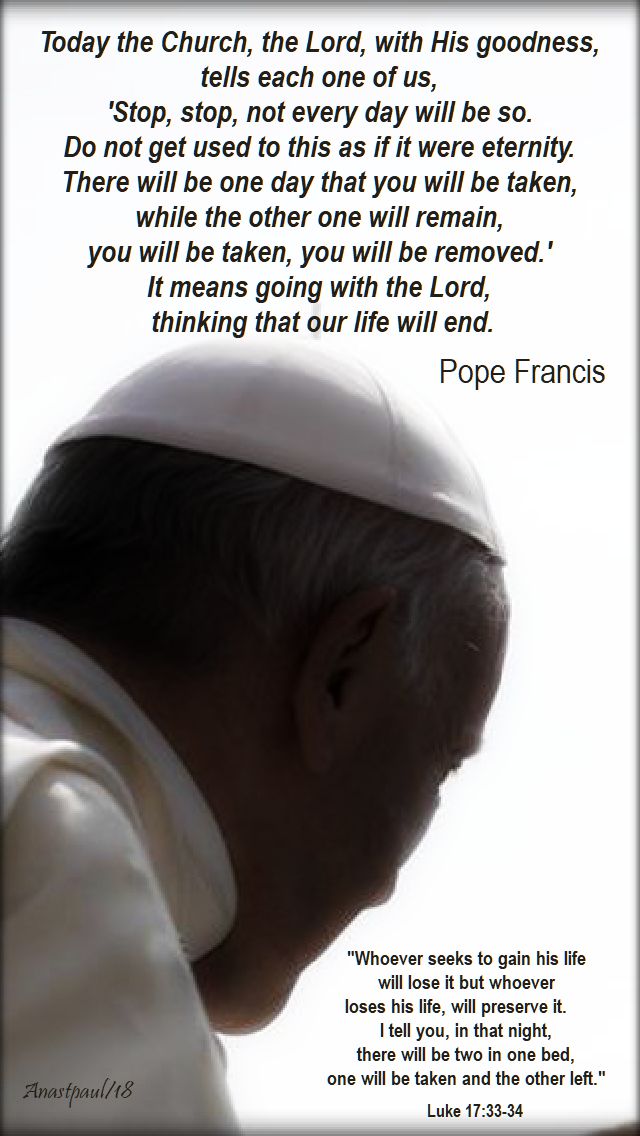
“Whoever seeks to gain his life, will lose it but whoever loses his life, will preserve it. I tell you, in that night there will be two in one bed, one will be taken and the other left.”…Luke 17:33-34
REFLECTION – “Today the Church, the Lord, with His goodness, tells each one of us, ‘Stop, stop, not every day will be so. Do not get used to this as if it were eternity. There will be one day that you will be taken, while the other one will remain, you will be taken, you will be removed.’ It means going with the Lord, thinking that our life will end.”…Pope Francis – Santa Marta, 17 November 2017
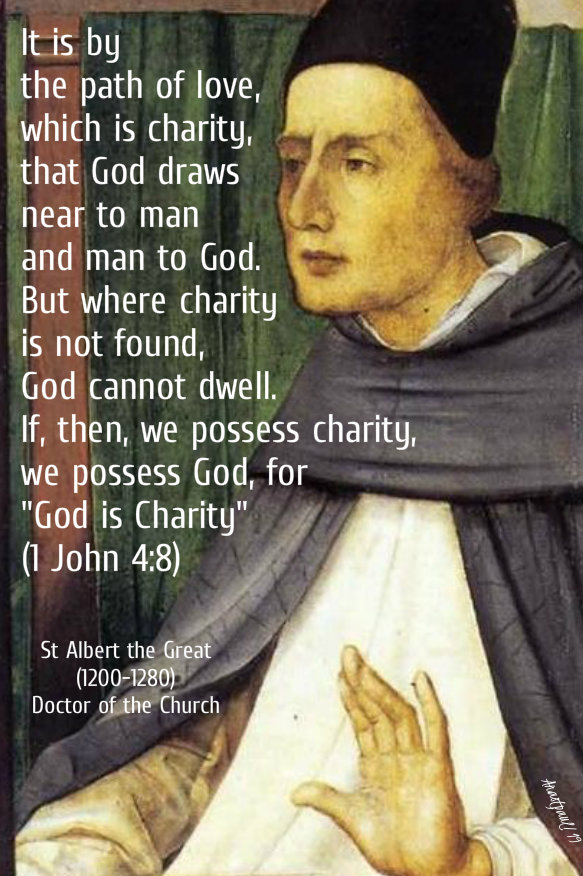
“It is by the path of love, which is charity, that God draws near to man and man to God. But where charity is not found, God cannot dwell. If, then, we possess charity, we possess God, for “God is Charity” (1 John 4:8) …
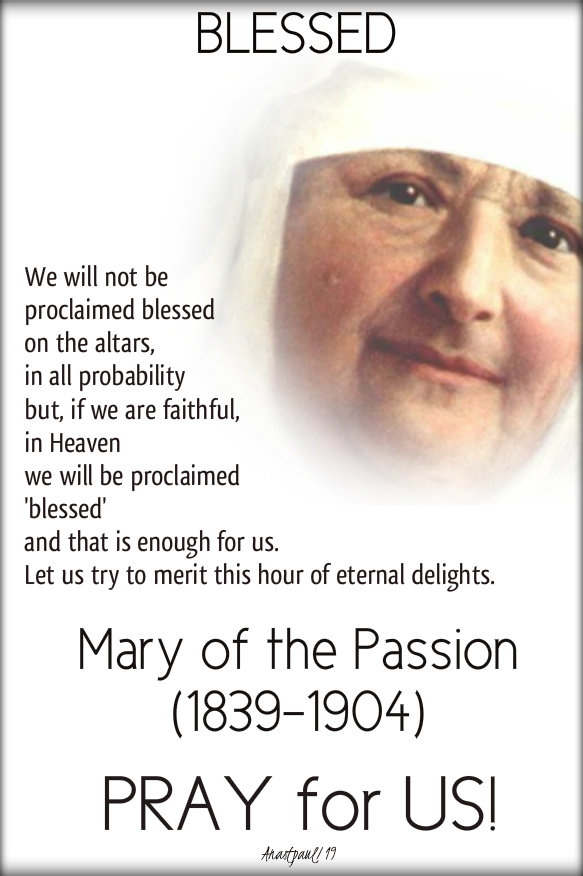
“We will not be proclaimed blessed on the altars in all probability but if we are faithful, in Heaven we will be proclaimed ‘blessed’ and that is enough for us. Let us try to merit this hour of eternal delights.” … Bl Mary of the Passion (1839-1904)
PRAYER – Lord God, You made St Albert great by his gift for reconciling human wisdom with divine faith. Help us so to follow his teaching that every advance in science may lead us to a deeper knowledge and love of You. May his prayers on our behalf be a succour to us all. We ask too for the intercession of the blessed Mary of the Passion that her zeal and perseverance may be the driving force of our lives. Through our Lord Jesus Christ with the Holy Spirit, one God for all eternity, amen.
Our Morning Offering – 15 November – Friday of the Thirty Second week in Ordinary Time, Year C and the Memorial of St Albert the Great OP (1200-1280) Doctor of the Church
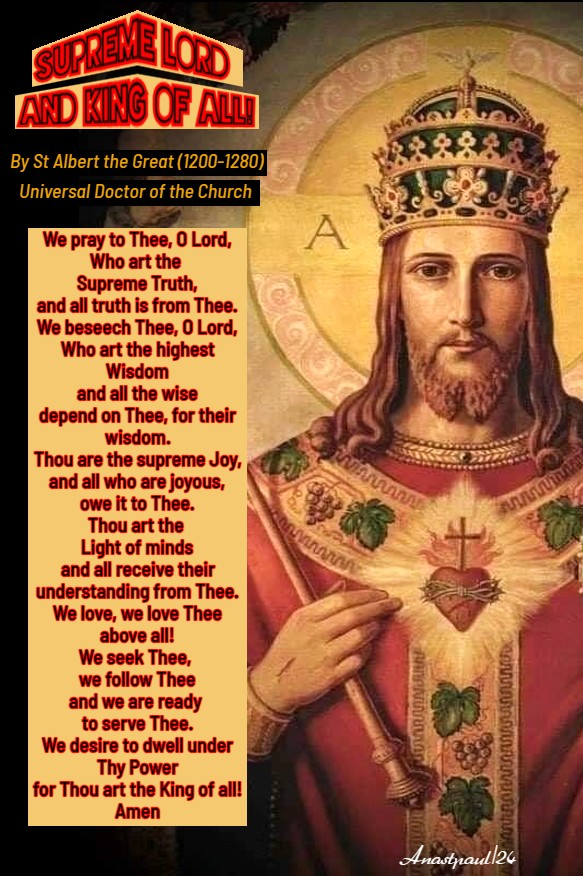
Supreme Lord and King of All! By St Albert the Great (1200-1280) Universal Doctor of the Church
We pray to Thee, O Lord, Who art the Supreme Truth, and all truth is from Thee. We beseech Thee, O Lord, Who art the highest Wisdom and all the wise depend on Thee, for their wisdom. Thou are the supreme Joy, and all who are joyous, owe it to Thee. Thou art the Light of minds and all receive their understanding from Thee. We love, we love Thee above all! We seek Thee, we follow Thee and we are ready to serve Thee. We desire to dwell under Thy Power for Thou art the King of all! Amen
St Anianus of Wilparting
St Arnulf of Toul
Bl Caius of Korea
St Desiderius of Cahors
St Eugene of Toledo
St Felix of Nola
St Findan
St Fintan the Missionary
St Gurias of Edessa
Bl Hugh Faringdon
Bl John Eynon
Bl John Rugg
Bl John Thorne
St Joseph Mukasa
St Joseph Pignatelli St Leopold III/Leopold the Good ( 1073 – 1136) Biography:
St Luperius of Verona
St Machudd of Llanfechell
St Malo of Aleth
St Marinus of Wilparting Bl Mary of the Passion FMM (1839-1904)
Bl Miguel Díaz Sánchez
St Paduinus of Le Mans
Bl Richard Whiting
Bl Roger James
St Shamuna of Edessa
St Sidonius of Saint-Saens
—
Martyrs of Hippo – 20 saints: 20 Christians martyred together and celebrated by Saint Augustine. The only details about them to survive are three of the names – Fidenziano, Valerian and Victoria. Hippo, Numidia (in north Africa).
Martyrs of North Africa – 3 saints: A group of Christians murdered for their faith in imperial Roman north Africa. The only details that have survived are the names of three of them – Fidentian, Secundus and Varicus.
Thought for the Day – 14 November – Thursday of the Thirty Second week in Ordinary Time, Year C, Gospel: Luke 17:20–25
” … For behold, the kingdom of God, is in the midst of you.”
Luke 17:21
My Lord and my God!
St John Henry Newman (1801-1890)
“I am slow to master the great Truth, that Christ is, as it were, walking among us and, by His Hand, or eye, or voice bidding me to follow Him.
I do not understand, that His call, is a thing which takes place now.
I think it took place in the Apostles’ days but I do not believe in it, I do not look out for it in my own case.
I have not eyes to see the Lord – far different from the beloved Apostle, who knew Christ, even when the rest of the disciples knew Him not! When He stood on the shore after His Resurrection and bade them cast the net into the sea, “that disciple whom Jesus loved, said unto Peter, ‘It is the Lord!'” …
O my God, Thou does over-abound in mercy!
To live by faith is my necessity, from my present state of being and from my sin but Thou has pronounced a blessing on it. Thou has said, that I am more blessed if I believe in Thee, than if I saw Thee – My Lord and my God!”
Quote/s of the Day – 14 November – Thursday of the Thirty Second week in Ordinary Time, Year C, Gospel: Luke 17:20–25
” … For behold, the kingdom of God, is in the midst of you.”
Luke 17:21
” …[The Kingdom of God] … is within you. That is, it depends on your own wills and is in your own power, whether or not you receive it. Everyone, that has attained to justification, by means of faith in Christ and decorated by every virtue, is counted worthy, of the kingdom of heaven.”
St Cyril of Alexandria (376-444)
(Commentary on Luke, 117) Known as “The Pillar of Faith” Archbishop of Alexandria, Father & Doctor of the Church
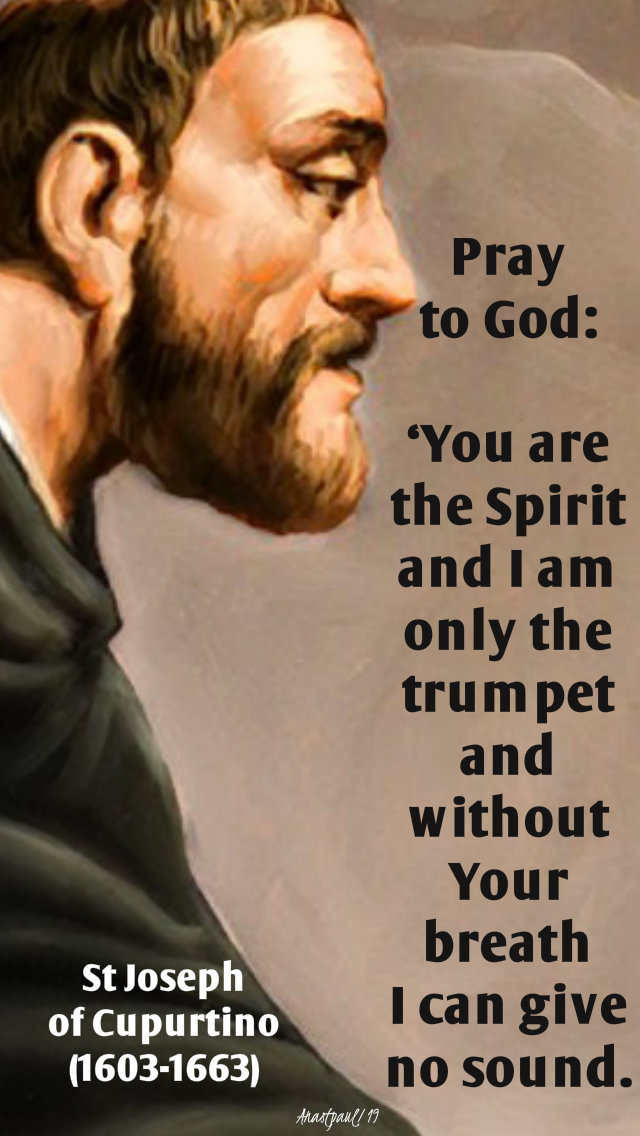
“Pray to God:
‘You are the Spirit and I am only the trumpet and without Your breath I can give no sound.’”
St Joseph of Cupurtino (1603-1663)
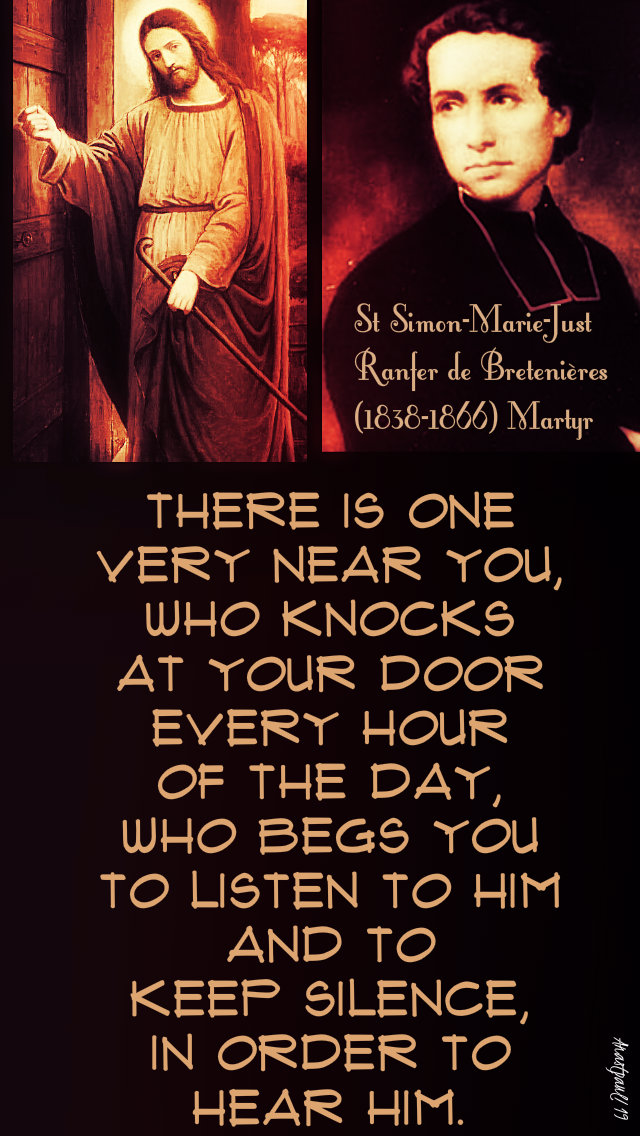
“There is One very near you Who knocks at your door every hour of the day, Who begs you to listen to Him and to keep silence in order to hear Him.”
St Simon-Marie-Just Ranfer de Bretenières (1838-1866) Martyr
One Minute Reflection – 14 November – Thursday of the Thirty Second week in Ordinary Time, Year C, Gospel: Luke 17:20–25 and the Memorial of Saint Joseph Maria Pignatelli SJ (1737 – 1811)
” … For behold, the kingdom of God is in the midst of you.” … Luke 17:21
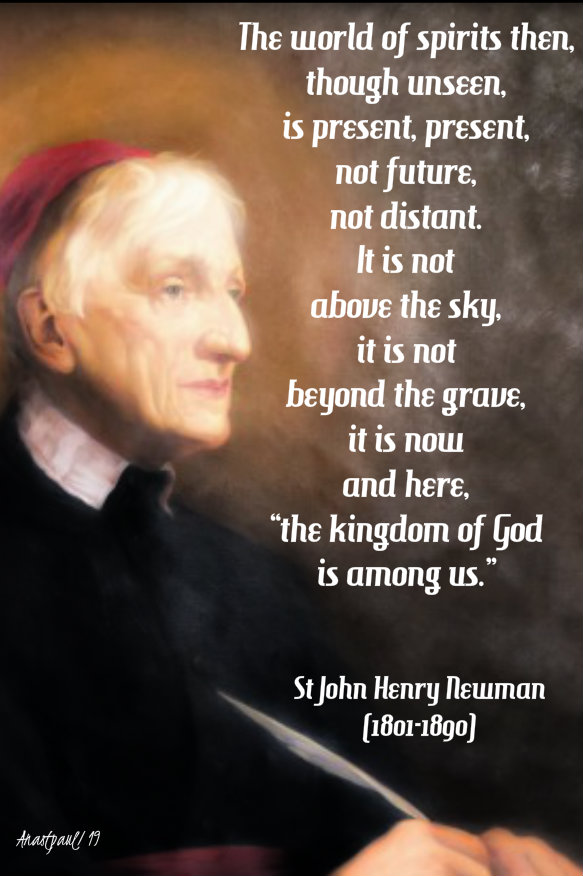
REFLECTION – “Is it difficult to faith to admit the word of Scripture concerning our connection with a world superior to us?… The world of spirits then, though unseen, is present, present, not future, not distant. It is not above the sky, it is not beyond the grave, it is now and here, “the kingdom of God is among us.” Of this the text speaks—”We look,” says St Paul, “not at the things which are seen, but at the things which are not seen, for the things which are seen are temporal but the things which are not seen are eternal” (2 Cor 4:18)…
Such is the hidden kingdom of God and, as it is now hidden, so in due season it shall be revealed. Men think that they are lords of the world and may do as they will. They think this earth their property and its movements in their power, whereas… it contains Christ’s little ones, whom they despise and His Angels, whom they disbelieve and these, at length, shall take possession of it and be manifested. At present, “all things,” to appearance, “continue as they were from the beginning of the creation” and scoffers ask, “Where is the promise of His coming?”(2 Pt 3:4) but at the appointed time there will be a “manifestation of the sons of God” and the hidden saints “shall shine out as the sun in the kingdom of their Father.” (Mt 13:43)
When the Angels appeared to the shepherds, it was a sudden appearance—“Suddenly there was with the Angel a multitude of the heavenly host” (Lk 2:13). How wonderful a sight! The night, had before that, seemed just like any other night – they were keeping watch over their sheep, they were watching the night as it passed. The stars moved on—it was midnight. They had no idea of such a thing when the Angel appeared. Such are the power and virtue hidden in things which are seen and at God’s will, they are manifested.” … St John Henry Newman (1801-1890) Cardinal, founder of the Oratory in England, Theologian – PPS “The Invisible world” vol.4, no.13
PRAYER – Our Father, hallowed be Your name, Your kingdom come, Your will be done! Grant us Lord, a true knowledge of our salvation, so that freed from fear and from the power of our foes, we may serve You faithfully, all the days of our lives and thus attain eternal joy with You. May the prayers of St Joseph Pignatelli on our behalf, be a succour to us all. Through our Lord Jesus Christ with the Holy Spirit, one God for all eternity, amen.
Our Morning Offering – 14 November – Thursday of the Thirty Second Weeek in Ordinary Time, Year C and the Memorial of St Joseph Maria Pignatelli SJ (1737 – 1811)
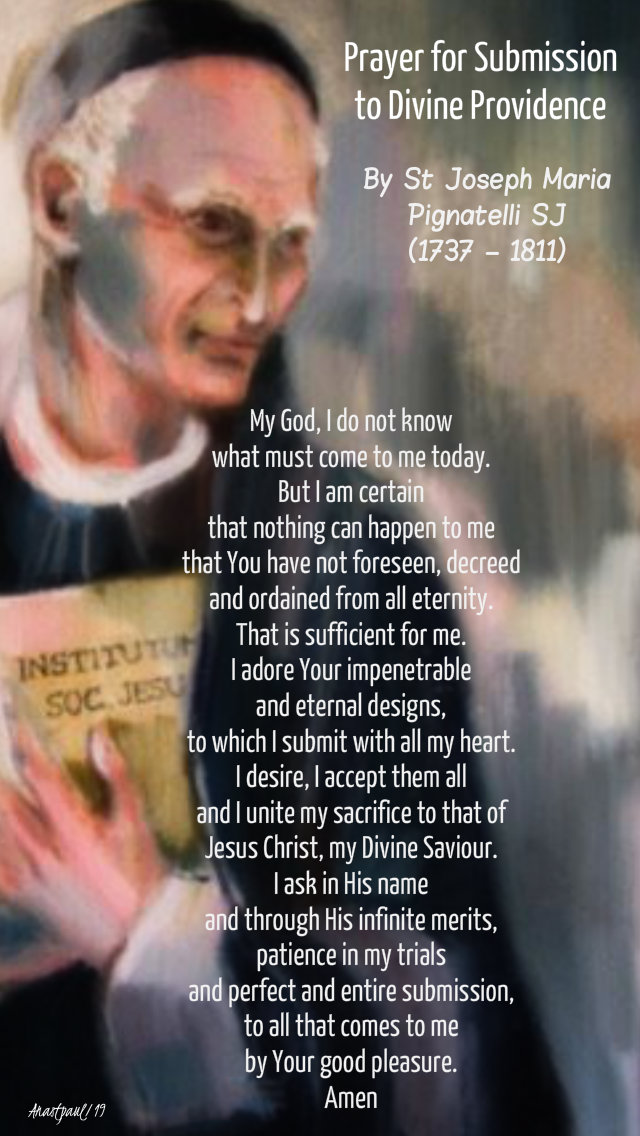
Prayer for Submission to Divine Providence By St Joseph Maria Pignatelli SJ (1737 – 1811)
My God, I do not know
what must come to me today.
But I am certain
that nothing can happen to me
that You have not foreseen, decreed
and ordained from all eternity.
That is sufficient for me.
I adore Your impenetrable
and eternal designs,
to which I submit with all my heart.
I desire, I accept them all
and I unite my sacrifice to that of
Jesus Christ, my Divine Saviour.
I ask in His name
and through His infinite merits,
patience in my trials
and perfect and entire submission,
to all that comes to me
by Your good pleasure.
Amen
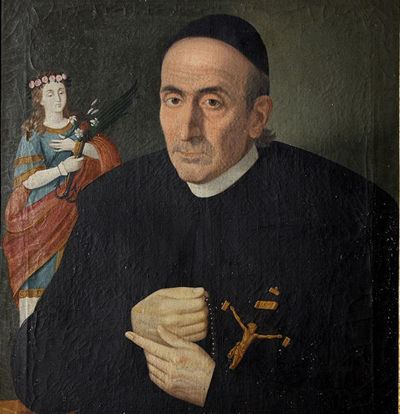
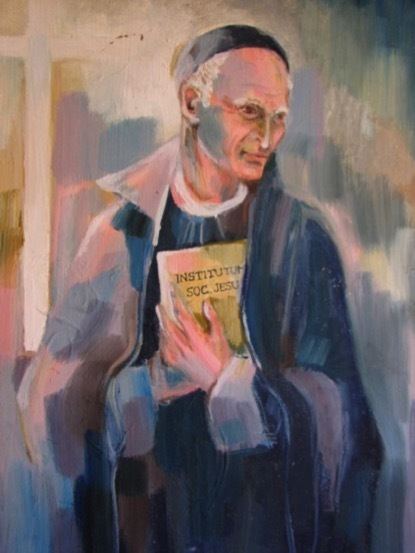
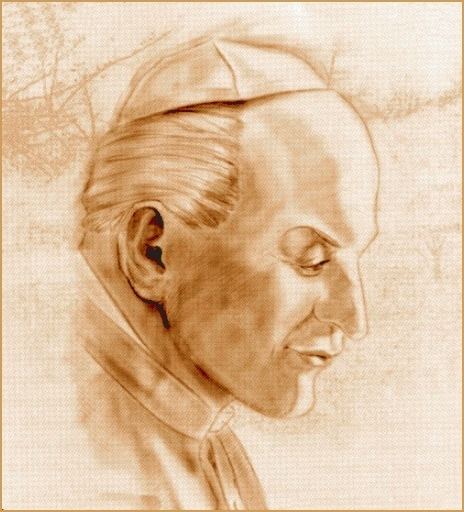
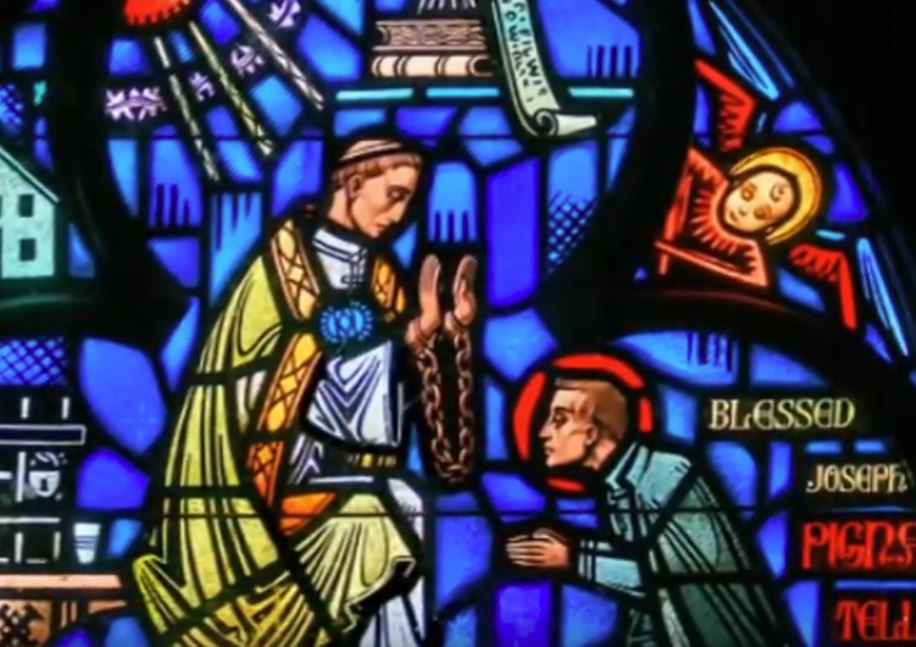
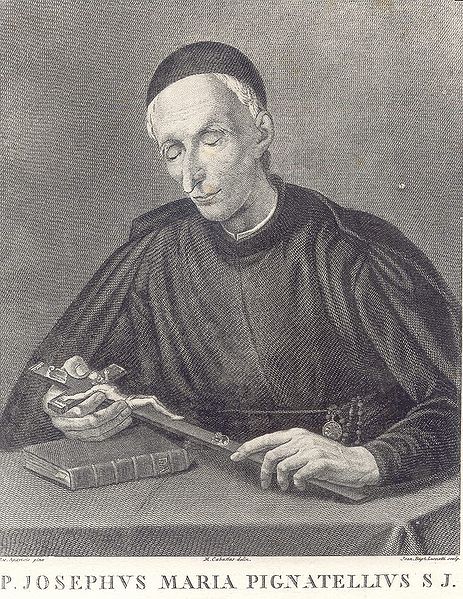
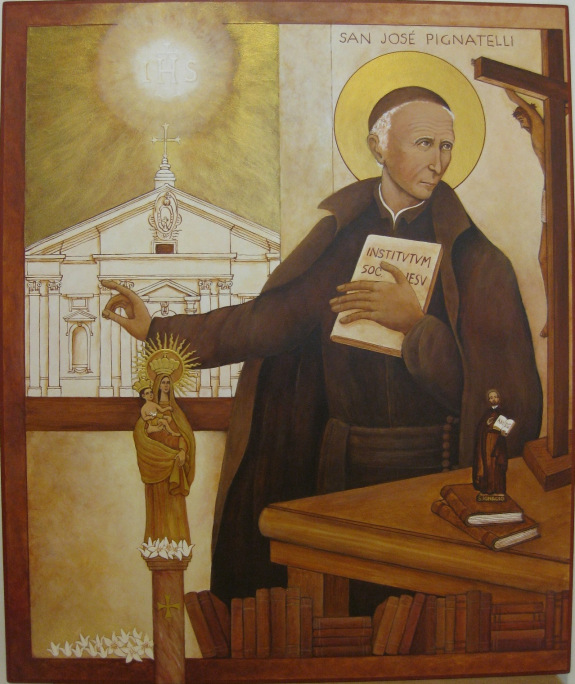
Saint of the Day – 14 November – Saint Joseph Maria Pignatelli SJ (1737 – 1811) Religious Priest of the Society of Jesus, known as “Restorer of the Society of Jesus” and “The Second Founder of the Society of Jesus” – born as José María Pignatelli on 27 December 1737 in Zaragoza, Spain and died on 15 November 1811, aged 73, in Rome. Patronage – Jesuit Novices.
Saint Joseph Pignatelli was born in Saragossa, Spain, of noble descent. His mother died when he was six and his father moved with the younger children to Naples but within four years his father also died.
At twelve, Joseph returned with his younger brother, Nicholas, to Saragossa, where they studied at the Jesuit school. By special privilege, they resided in the Jesuit community. Living among the Jesuits convinced Joseph of his vocation and in 1753, he entered the novitiate at Tarragona and took his religious vows two years later. Joseph spent the following year at Manresa, doing classical studies, the next three years studying philosophy at Calatayud and the subsequent four years back at Saragossa, for his theology.
After Joseph was ordained in 1762, he taught grammar to young boys at his old school and assisted in its parish. He taught for four and a half years, visited the local prisons and ministered to condemned convicts about to be executed. This apostolate ended abruptly when in 1767, King Charles III expelled the Jesuits from his kingdom and confiscated their property, making five thousand Jesuits homeless with one royal stroke of the pen.
Fr Pignatelli was made the acting provincial over some 600 exiled Jesuits on board thirteen ships during their three months at sea before arriving at Bonifacio, on the southern tip of Corsica. Later they were taken away to Genoa. After travelling three hundred miles on foot, they arrived at Ferrara, in the Papal States, tired and exhausted but were welcomed by Fr Pignatelli’s cousin and future cardinal, Msgr Francis Pignatelli.
The princes of Europe were pressuring the Pope to suppress the Society. Although Clement XIII heroically withstood the pressure, his successor, Clement XIV crumbled beneath it and decreed the dissolution of the Society of Jesus. This meant, that Fr Pignatelli and 23,000 others were no longer Jesuits and were no longer bound by their vows.
Saddened by this decree, Fr Pignatelli moved to Bologna where he and his brother, Nicholas, also a Jesuit, continued to live the life of a Jesuit and for the next twenty four years (1773-1797) he kept in contact with his dispersed brethren. Meantime, in White Russia (today’s Belarus), the Jesuits survived, because the Russian Czarina, Catherine II did not carry out the suppression. When Fr Pignatelli heard about this, he obtained permission from Pope Pius XI to affiliate with the Russian Jesuit province. Meantime Ferdinand, Duke of Parma also entered into negotiations with White Russia and in 1793, three Jesuits came to his Duchy to open a house for the Society. Fr Pignatelli associated himself with this group and in 1797, at sixty, he also promised God poverty, chastity and obedience, just as he did in Spain in 1755.
Fr Pignatelli was made Master of novices in 1799 and in 1803, he was appointed provincial of Italy. When the Society was restored in the kingdom of the Two Sicilies, many former Jesuits came to them to be re-admitted and the Jesuit apostolate became active again.
Fr Pignatelli and the other Jesuits were expelled from Naples when Napoleon’s brother Joseph Bonaparte overran the country. They headed for Rome and were welcomed by Pope Pius VII. Within months of their arrival in Rome, the Jesuits set up a novitiate at Orvieto and were teaching in six diocesan seminaries. During the exile of Pope Pius VII and the French occupation of the Papal States, the Society continued untouched, owing largely to the prudence of Pignatelli, he even managed to avoid any oaths of allegiance to Napoleon. He also secured the restoration of the Society in Sardinia in 1807. Fr Pignatelli was already seventy and had been in exile for forty years when he came to Rome. He still cherished the hope that the Society would be restored throughout the world during his lifetime. His health was weakening and during his last two years, he suffered from frequent hemorrhages due to tuberculosis and was soon confined to bed.
Fr Pignatelli died peacefully and serenely on 15 November 1811 without seeing the end of the 41-year suppression. However, his dearest hope of seeing the entire Society restored was realised, when Pope Pius VII decreed it on 7 August 1814, three years after his death.
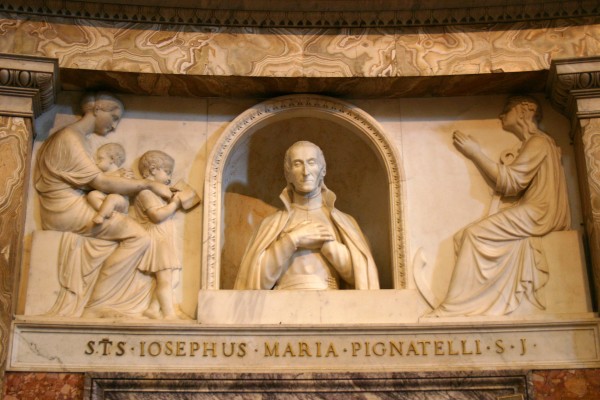
His remains rest today in a reliquary under the altar of the Chapel of the Passion in the Church of the Gesù in Rome.
This Shrine and window of St Joseph Pignatelli, is in the Church of the Gesù
The cause for Pignatelli’s Canonisation was introduced under Pope Gregory XVI. He was Beatified on 21 May 1933 by Pope Pius XI and was Canonised on 12 June 1954 by Venerable Pope Pius XII.
After St Ignatius of Loyola, the founder of the Society of Jesus, Pignatelli is arguably the most important Jesuit in its subsequent history, linking the two Societies, the old Society which was first founded in 1540 and the new Society which was founded forty years after it had been suppressed by Pope Clement XIV in 1773. Pignatelli can thus be rightly considered the saviour and restorer of the Society of Jesus.
St Adeltrude of Aurillac
St Alberic of Utrecht
St Antigius of Langres
St Dubricius of Wales
St Etienne-Théodore Cuenot
St Hypatius of Gangra
Bl Jean of Tufara Bl John Licci OP (1400-1511) Biography here: https://anastpaul.wordpress.com/2017/11/14/saint-of-the-day-14-november-blessed-john-licci-o-p-1400-1511/
St John Osorinus St Joseph Maria Pignatelli SJ (1737 – 1811) ‘Restorer of the Society of Jesus’
Bl Maria Louise Merkert
Bl Maria Teresa of Jesus
St Modanic
St Ruf of Avignon
St Serapion of Alexandria
St Serapion of Algiers
St Siard
St Venerando the Centurian
St Venerandus of Troyes
—
Holy Fathers of Merida
Martyrs of Emesa: Group of Christian women tortured and executed for their faith in the persecutions of the Arab chieftain Mady. They died in Emesa (modern Homs, Syria).
Martyrs of Heraclea – (3 saints): Group of Christians murdered together for their faith. The only details we have are three of their names – Clementinus, Philomenus and Theodotus. They were martyred in Heraclea, Thrace.
Martyrs of the Jaffa Gate:
• Blessed Déodat of Rodez
• Blessed Nikola Tavelic
• Blessed Pierre of Narbonne
• Blessed Stefano of Cuneo
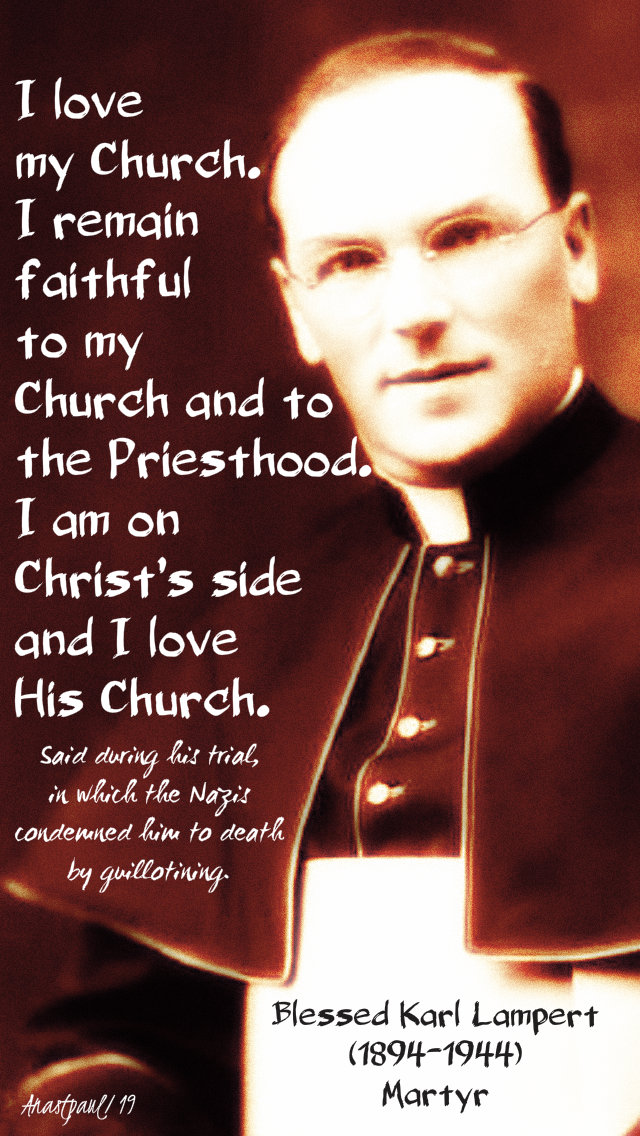
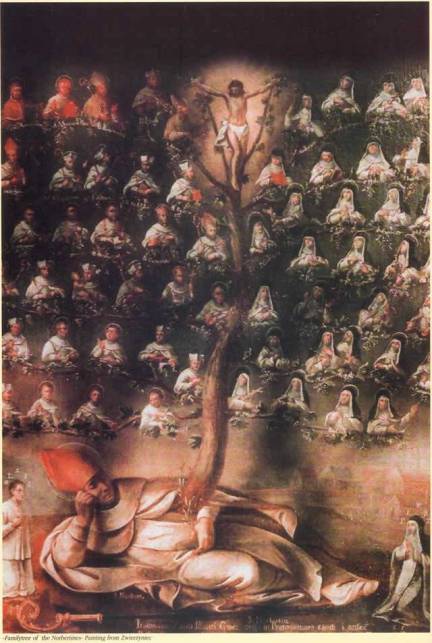
Quote/s of the Day – 13 November – The Memorial of St Stanislaus Kostka SJ (1550-1568) and Bl Karl Lampert (1894-1944) Martyr and of all the Saints of the Order of St Norbert, the Order of Canons Regular of Prémontré, also known as the Premonstratensians, the Norbertines and the White Canons.
On the day of his ordination, St Norbert said:
“O Priest! You are not of yourself because you are of God. You are not of yourself because you are the servant and minister of Christ. You are not your own because you are the spouse of the Church. You are not yourself because you are the mediator between God and man. You are not from yourself because you are nothing. What then are you? Nothing and everything. O Priest! Take care, lest what was said to Christ on the cross be said to you: ‘He saved others, himself he cannot save!”
St Norbert (c 1080-1134)
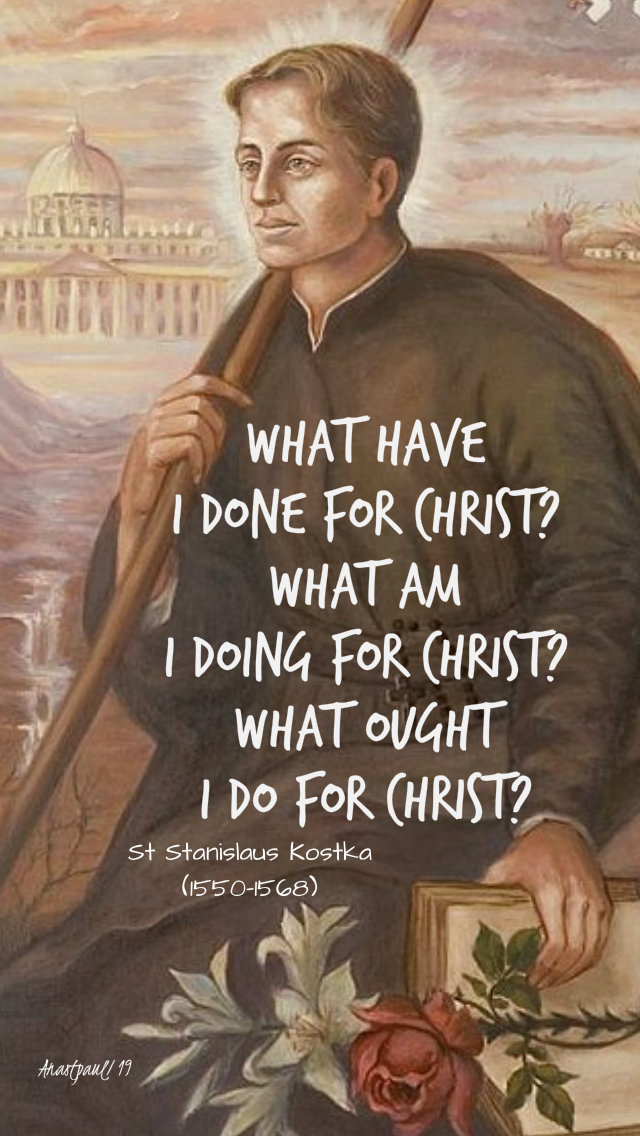
“What have I done for Christ? What am I doing for Christ? What ought I do for Christ?”
St Stanislaus Kostka SJ (1550-1568)
“I love my Church. I remain faithful to my Church and to the priesthood. I am on Christ’s side and I love His Church.”
Said during his trial, in which the Nazis condemned him to death by guillotining.
One Minute Reflection – 13 November – Wednesday of the Thirty Second week in Ordinary Time, Year C, Gospel: Luke 17:11–19 and the Memorial of All Benedictine and Cistercian Saints and Blessed Karl Lampert (1894-1944) Martyr
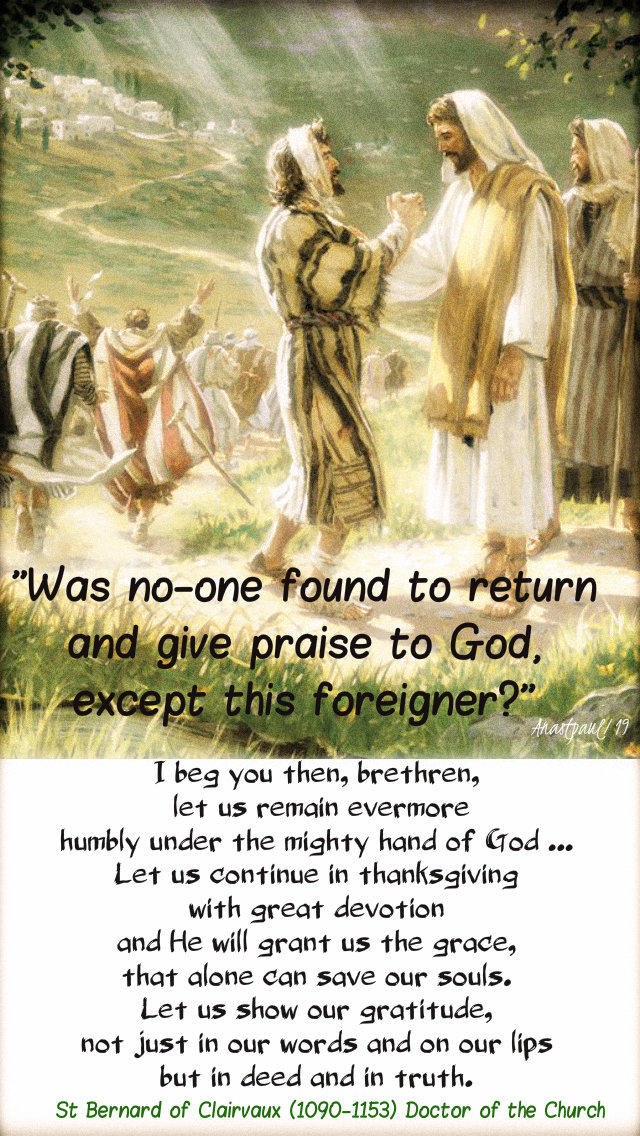
“Was no-one found to return and give praise to God, except this foreigner?” … Luke 17:18
REFLECTION – “How happy was that Samaritan leper who recognised that “he possessed nothing he had not received” (1Cor 4:7). “He guarded what had been entrusted to him” (2 Tm 1:12) and turned back to the Lord to thank Him. Blessed are they who, after each gift of grace, turn back to Him in whom is the fullness of all the graces, for if we show ourselves thankful in regard to Him for all we have received, then we make ready a place for grace within ourselves… in even greater abundance. In fact, our ingratitude is the only thing, that prevents us making progress, following our conversion…
Happy, then, are they who think of themselves as strangers and who give great thanks for even the least blessing, thinking that everything given to a stranger and foreigner is a wholly free gift. How unfortunate and wretched we are, on the other hand, if after first of all appearing timid, humble and pious we then forget, just how freely given, is what we have received…
I beg you then, brethren, let us remain ever more humbly under the mighty hand of God (1 Pt 5:6)… Let us continue in thanksgiving, with great devotion and He will grant us the grace, that alone can save our souls. Let us show our gratitude, not just in our words and on our lips but in deed and in truth.” … St Bernard of Clairvaux (1090-1153) Doctor of the Church
PRAYER – You Lord, Holy Father, never forget Your solemn covenant and grant us new life each day. We, though in our hearts of stone do forget and cease to thank and bless You. Make our hearts turn in gratitude, for all we are and have is by Your grace and we are as nothing without You. May our minds, hearts and souls sing with love and thanks to You, Lord our God. Grant us new hearts by the prayers of Blessed Karl Lampert and all the saints in heaven, who always lived with grateful hearts, praising You always. We ask this this through Jesus Christ, our Lord, with the Holy Spirit, one God forever, amen.
Our Morning Offering – 13 November – Wednesday of the Thirty Second week in Ordinary Time, Year C and the Memorial of All Benedictine and Cistercian Saints
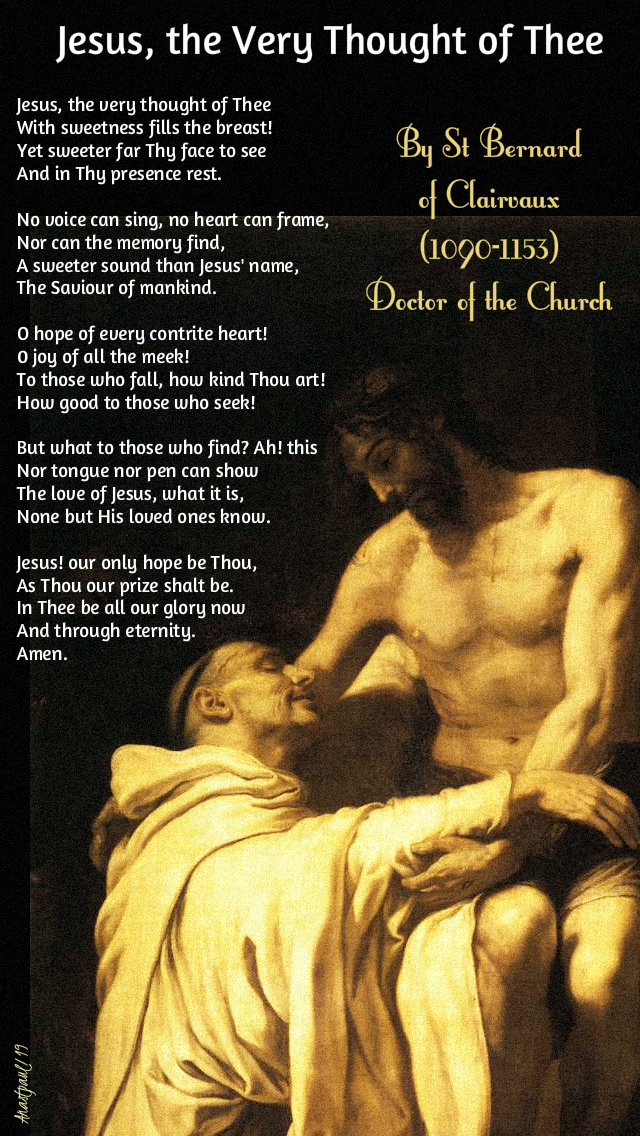
Jesus, the Very Thought of Thee By St Bernard of Clairvaux (1090-1153) Doctor of the Church
Jesus, the very thought of Thee
With sweetness fills the breast!
Yet sweeter far Thy face to see
And in Thy presence rest.
No voice can sing, no heart can frame,
Nor can the memory find,
A sweeter sound than Jesus’ name,
The Saviour of mankind.
O hope of every contrite heart!
0 joy of all the meek!
To those who fall, how kind Thou art!
How good to those who seek!
But what to those who find? Ah! this
Nor tongue nor pen can show
The love of Jesus, what it is,
None but His loved ones know.
Jesus! our only hope be Thou,
As Thou our prize shalt be.
In Thee be all our glory now
And through eternity.
Amen.
St Bernard was a French Abbot and a major leader in the reform of Benedictine Monasticism that caused the formation of the Cistercian order.
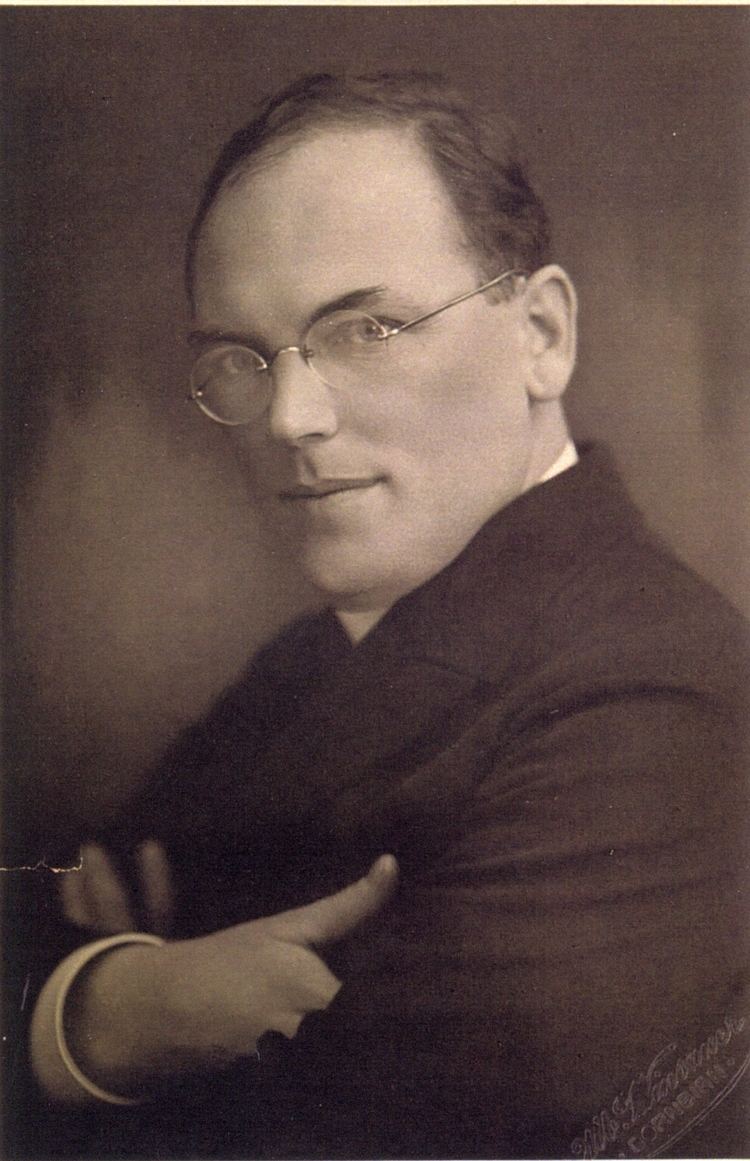
Saint of the Day – 13 November – Blessed Karl Lampert (1894-1944) Priest and Martyr – born on 9 January 1894 in Göfis, Feldkirch, Austria and died, aged 50, by being guillotined on 13 November 1944 in Halle an der Saale, Germany. Fr Karl served as the Pro-Vicar for the Diocese of Feldkirch in addition to being an outspoken critic of Nazism during World War II. This led to constant surveillance against him and his eventual arrests on several occasions. This all culminated in his final arrest in 1943 and his death from the guillotine in 1944 alongside a fellow Christian prisoner. He was declared to have been killed “in odium fidei” (in hatred of the faith) and was Beatified on 13 November 2011 in Austria. Cardinal Angelo Amato presided over his Beatification on the behalf of Pope Benedict XVI, who had approved the cause. Patronages – Prisoners and Persecuted Christians.
Fr Karl Lampert was born as the last of seven children of Franz Xaver Lampert and Maria Rosina Lampert in Feldkirch in 1894. He attended school in his hometown and would attend a state high school after the completion of his first studies, the death of his father seemed to jeopardise this but an uncle of his provided financial aid to assist him to further his education.
He commenced his studies for the priesthood in 1914 in Brixen and received his ordination from Bishop Franz Eggar on 12 May 1918 during World War I. He celebrated his first Mass on 26 May 1918. Following his ordination he worked as a chaplain in Dornbirn and was involved in pastoral work with adolescents.
In 1930 he moved – with the financial support of Bishop Sigismund Waitz – to Rome for studies in canon law and moved to new quarters at the Collegio Teutonico di Santa Maria dell’Anima until 1935 as a secretary to the Roman Rota. Pope Pius XI later made him a Monsignor in 1935.
On 1 October 1935 he was stationed in the Diocese of Innsbruck where Bishop Waitz wanted him to perform several administration duties. Around this time he was considered to be the Diocese’s new Bishop but Pius XI did not choose him, instead he was made Pro-Vicar of that Diocese on 15 January 1939. In 1940 he attempted in vain to secure the release of Blessed Otto Neururer and when he was killed Lampert published an obituary in a church newsletter for him. However he was arrested for this due to violating what was Nazi confidentiality laws and was deported to Dachau on 25 August 1940. (Blessed Otto Neururer was arrested for opposing “a Germanic wedding” when he told a young lady she could not marry a divorced man. He would eventually become the 1st priest martyred inside a Nazi concentration camp, (Buchenwald), in 1940 – he was Beatified by St John Paul II in 1996 – see image below.)
He was then sent to Sachsenhausen in Berlin on 1 September 1940 where he was forced to do labour in a penal colony. A popular saying of his – while there – was “in the name of Christ for the Church.” He was sent back to Dachau on 15 December 1940 and remained there for eight months, before being released on 1 August 1941 and sent to Stettin. Despite being freed he was put under intense surveillance and was regarded with much suspicion, his phone calls were tapped and all correspondence was read. He continued to work as a pastor but also worked as a hospital chaplain.
Fr Karl was arrested for the last time on 4 February 1943 and endured intense interrogations and was also tortured. He was found to be guilty of both treason and sedition on 30 December 1943 and was sent to Torgau on 14 January 1944 where he spent seven months in solitary confinement. A third trial ordered the death sentence on 8 September 1944. Lampert – alongside a fellow priest – was executed in a guillotine on 13 November 1944 at 4:00pm.
His remains were cremated and buried in Halle an der Saale and were returned to his hometown in 1948. In the Domskirche – the Cathedral of Innsbruck, there are side Altars devoted to both Blessed Otto and Blessed Karl, below is Blessed Otto’s Altar and Plague.
This slideshow requires JavaScript.
The Beatification process commenced on 5 September 1997 under Pope John Paul II and granted Lampert the title Servant of God. The Diocesan process spanned from 1 October 1998 to 18 November 2003 and had to ascertain the facts about whether or not Lampert died in hatred of his Christian faith. The process was validated on 14 March 2008 and allowed for the drafting of the Positio – documenting his life and reasons for how he died in hatred of the faith – which was submitted to the Congregation for the Causes of Saints in 2009.
On 27 June 2011 his Beatification was approved as Pope Benedict XVI acknowledged the fact that Lampert had indeed been killed in the camps for his faith. Cardinal Angelo Amato presided over the Beatification in Austria on the behalf of the pope on 13 November 2011. The current postulator assigned to the cause is Dr Andrea Ambrosi.
St Frances Xavier Cabrini (Optional Memorial, United States only – her Universal Feast Day is 22 December and this is the Day on which I will honour her on this site.)
All Saints of the Augustinian Order: On 13 November (The birthday of St Augustine), we celebrate the feast of All Saints of the Augustinian Order. On this day we call to mind the many unsung brothers and sisters of the Augustinian family who have “fought the good fight” and celebrate now, in Heaven.
Let us pray for one another that we too may one day join in the “unceasing chorus of praise” with all our Augustinian brethren in Heaven.
All Saints of the Benedictine & Cistercian Orders: Those interested in the Benedictine family may be interested to know that today, within the Benedictine liturgical tradition, is traditionally celebrated the feast of All Saints of the Benedictine Order – In Festo Omnium Sanctorum Ordinis S.P.N. Benedicti. The Cistercians — who also follow the Rule of St Benedict — likewise observe this day for All Saints of their Order. (On a related note, the Benedictines also traditionally observe 14 November as All Souls of their Order.
Saint Benedict and Saint Bernard (1542), by Diogo de Contreiras. Saint Bernard is depicted in the white cowl of the Cistercians.
All Saints of the Premonstratensian Order: The Order of Canons Regular of Prémontré, also known as the Premonstratensians, the Norbertines and, in Britain and Ireland, as the White Canons , are a Roman Catholic religious order of canons regular founded in Prémontré near Laon in 1120 by Saint Norbert, who later became Archbishop of Magdeburg. Premonstratensians are designated by O.Praem. following their name. St Norbert was a friend of Saint Bernard of Clairvaux and so was largely influenced by the Cistercian ideals as to both the manner of life and the government of his order.
Aside from St Norbert there are at present fifteen saints of the Order who have been Canonised or have had their immemorial cults confirmed by the Holy See.
St Abbo of Fleury St Agostina Pietrantoni S.D.C. (1864-1894) Her Story here: https://anastpaul.com/2018/11/13/saint-of-the-day-13-november-st-agostina-livia-pietrantoni-s-d-c-1864-1894/
St Amandus of Rennes
St Amanzio
St Beatrix of Bohemia
St Brice of Tours
St Caillin
St Chillien of Aubigny
Bl Christopher Eustace
St Columba of Cornwall
St Dalmatius of Rodez
Bl David Sutton
St Devinicus
St Didacus
St Eugenius of Toledo
St Florido of Città di Castello
St Gredifael
St Himerius
St Homobonus of Cremona
Bl John Sutton
Bl Juan Gonga Martínez
St Juan Ortega Uribe Blessed Karl Lampert (1894-1944) Priest and Martyr
St Leoniano of Vienne
Bl María Cinta Asunción Giner Gomis
Bl Maurice Eustace
St Maxellendis
St Mitrius
St Pope Nicholas I
St Paterniano
St Quintian of Rodez
Bl Robert Fitzgerald
Bl Robert Montserrat Beliart
Bl Robert Scurlock St Stanislaus Kostka SJ (1550-1568): Biography here: https://anastpaul.wordpress.com/2017/11/13/saint-of-the-day-13-november-st-stanislaus-kostka-sj-1550-1568/
Bl Thomas Eustace
Bl Warmondus of Ivrea
Bl William Wogan
Martyrs of Caesarea – 5 saints: A group of Christians murdered for their faith in the persecutions of Diocletian, Galerius Maximian and Firmilian. – Antoninus, Ennatha, Germanus, Nicephorus and Zebinas. 297 at Caesarea, Palestine.
Martyrs of Ravenna – 3 saints: A group of Christians murdered together in the persecutions of Diocletian. The only information about them that has survived are three names – Solutor, Valentine and Victor. c 305 in Ravenna, Italy.
Martyrs of Salamanca – 5 saints: The first group of Christians exiled, tortured and executed for their adherence to the Nicene Creed during the persecutions of the Arian heretic Genseric. – Arcadius, Eutychianus, Paschasius, Paulillus and Probus.
Born in Spain and Martyred in 437. Their relics are at Medina del Campo, Spain.
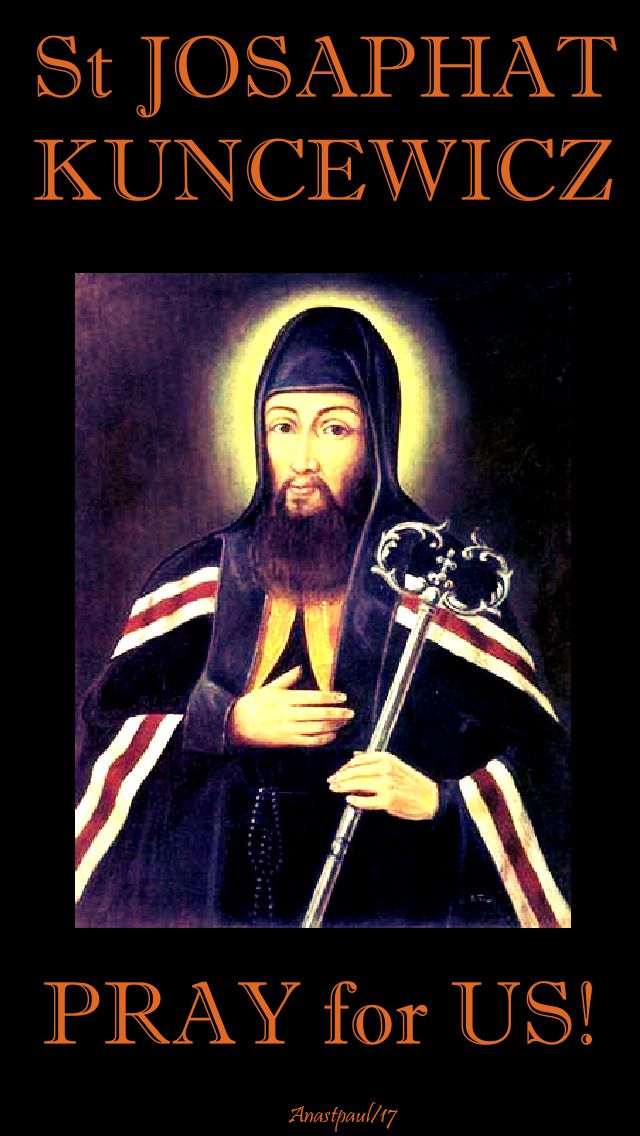
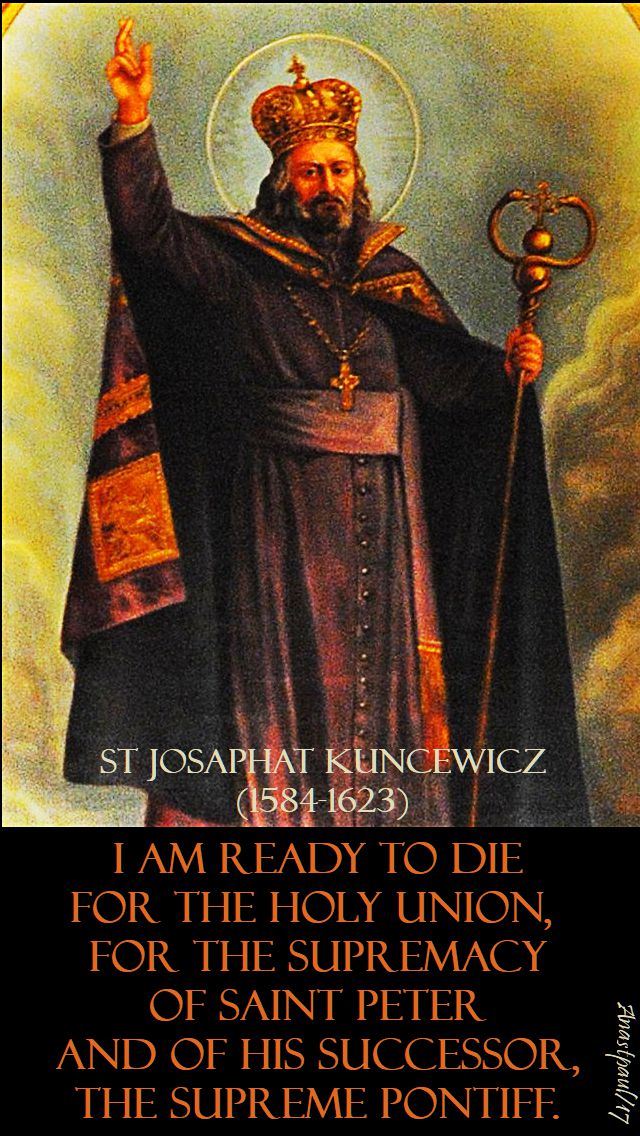
Thought for the Day – 12 November 2019 – Tuesday of the Thirty Second week in Ordinary Time, Year C, Gospel: Luke 17:7-10 and the Memorial of St Josaphat Kuncewicz (1584-1623)
“Say, ‘We are unprofitable servants”
Luke 17:10
St Isaac the Syrian of Nineveh (c 613-c 700)
Bishop of Nineveh, Monk at Mosul
The eyes of the Lord look on the lowly to make them glad. But the face of the Lord turns away from the proud to humble them. The lowly always receive pity from God… Make yourself small before everyone and you will be raised up higher than this world’s princes. Make all creatures go before you, embrace them, humble yourself before them, and you will be honoured more than those who make an offering of gold. Descend lower than your own self and you will see God’s glory within you. For where humility sprouts, God’s glory spreads… If you have humility in your heart, God will reveal his glory to you in it…
Do not love honour and you will not be dishonoured. Honour flees before someone who runs after it. But honour pursues the one who flees it and makes known to everyone his humility. If you despise yourself so as not to be honoured, God will make you known. If you accuse yourself for love of the truth, God will permit you to be praised in front of every creature. They will open before you the door to the glory of your Creator and praise you. For you are truly made in His image and likeness (Gn 1:26).
Collect:
Stir up in Your Church, we pray, O Lord,
the Spirit that filled Saint Josaphat
as he laid down his life for the sheep,
so that through his intercession
we, too, may be strengthened by the same Spirit
and not be afraid
to lay down our life for others.
Through our Lord Jesus Christ, Your Son
Who lives and reigns with You
in the unity of the Holy Spirit,
one God, for ever and ever.
One Minute Reflection – 12 November – Tuesday of the Thirty Second week in Ordinary Time, Year C, Gospel: Luke 17:7-10 and the Memorial of St Josaphat (1584-1623) Martyr
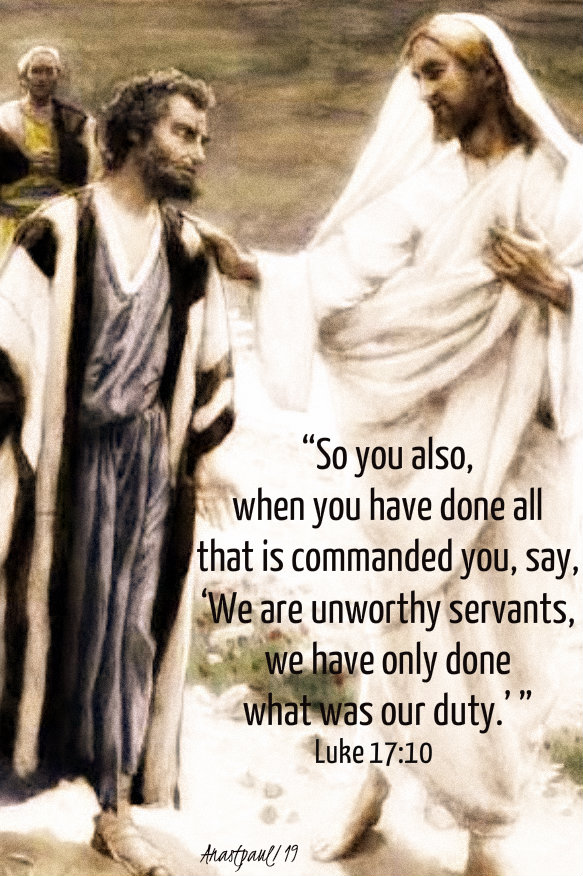
“So you also, when you have done all that is commanded you, say, ‘We are unworthy servants, we have only done what was our duty.’ ”… Luke 17:10
REFLECTION – “Thou, O my God, have a claim on me and I am wholly Thine! Thou are the Almighty Creator and I am Thou workmanship. I am the work of Thou Hands and Thou are my owner. As well might the axe or the hammer exalt itself against it’s framer, as I against Thee. Thou owe me nothing, I have no rights in respect to Thee, I have only duties. I depend on Thee for life and health and every blessing every moment. If Thou withdraw Thy breath from me for a moment, I die, I am wholly and entirely Thy property and Thy work and my one duty is to serve Thee. Amen” … St John Henry Newman (1801-1890) Cardinal, Theologian, Poet, Writer, Apologist, Professor
PRAYER – O Lord our God, grant that we may not so much seek to be consoled as to console, to be understood as to understand, to be loved as to love and to be only good influences to our neighbour. That by our love, our brothers in faith may be one . St Josaphat you fought and struggled to unite the Church and by your efforts achieved the crown of martyrdom, please pray for our world, for a one united faith. Amen
Our Morning Offering – 12 November – Tuesday of the Thirty Second week in Ordinary Time, Year C, Gospel: Luke 17:7-10
“So you also, when you have done all that is commanded you, say, ‘We are unworthy servants, we have only done what was our duty.’”… Luke 17:10
Not My Own By St John Henry Newman (1801-1890)
My Lord,
I offer Thee myself in turn,
as a sacrifice of thanksgiving.
Thou has died for me
and I in turn make myself over to Thee.
I am not my own.
Thou has bought me –
I will,
by my own act and deed,
complete the purchase.
My wish is to be separated from everything
of this world,
to cleanse myself simply from sin,
to put away from me,
even what is innocent,
if used for it’s own sake
and not for Thee.
I put away reputation and honour
and influence and power,
for my praise and strength,
shall be in Thou.
Enable me to carry out what I profess.
Amen
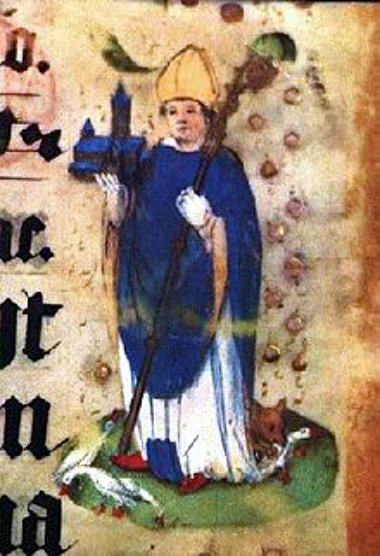
Saint of the Day – 12 November – St Lebuinus of Deventer (Died 775) Apostle of the Friesens, Priest, Monk, Confessor, Missionary – born in England and died in c773 at Deventer, Netherlands. Patronage – Deventer.
Lebuinus was a monk in St Wilfrid’s monastery at Ripon,Yorkshire. Inspired by the example of Saint Boniface, Saint Willibrord and other great English missionaries, he resolved to devote his life to the conversion of the Germans.
After his ordination, he proceeded in 754 to Utrecht and was welcomed by Saint Gregory, acting bishop of that place, who entrusted him with the mission of Overijssel on the borders of Westphalia and gave him a companion – Marchelm (or Marcellinus), a disciple of Saint Willibrord.
He preached the Gospel among the tribes of the district and erected a little chapel at Wilp on the west bank of the IJssel. His venerable personality and deep learning quickly won many to Christianity, even among the nobles and it soon became necessary to build a much larger church at Deventer on the east bank of the river.
However, Lebuinus’s great success aroused hostility among the pagans. Ascribing his conversions to witchcraft, they formed an alliance with the anti-Christian Saxons, burned the church at Deventer and dispersed the converts. After escaping with difficulty, Lebuinus determined to voice the claims of Christianity at the national assembly of the Saxons at Marklo near the Weser (Northwestern Germany) .
The Vitae of Lebuinus describes in great details, his appearance before the assembly, where, it is claimed, he pointed out to the Saxons the inefficacy of their deities. It also describes how he warned them of impending destruction at the hands of a powerful king unless they converted to Christianity. With the intercession of the nobleman Buto, he persuaded them sufficiently of the power of his mission that they not only allowed him to escape with his life but allowed him to preach unmolested in the territory allotted him. His life may have been a source of inspiration in the creation of the cultus on Saint Livinus of Ghent.
On his return to Friesland, Lebuinus rebuilt the church at Deventer where he was later buried. His body and a copy of the Gospel,s presumed to have been written by his hand, were still in Deventer, in a church bearing his name, until 882 when it was destroyed by the Normans. The relics of St Livinus of Ghent (c 580–657) Martyr, (whose feast also is on 12 November are probably those of Lebuinus. Saint Ludger rebuilt the church a few years later and in doing so rediscovered the saint’s remains beneath the site.
The Lebuïnuskerk, Deventer, see below, was consecrated in his name where he is highly venerated and in fact in all of the Netherlands.
St Arsatius
St Astricus of Ungarn
St Aurelius
St Cadwallader
St Cummian Fada
St Cunibert of Cologne
St Emilian Cucullatus
St Evodius of Le Puy
St Hesychius of Vienne
Bl John Cini della Pace
Bl José Medes Ferrís St Lebuinus of Deventer (Died 775)
St Livinus of Alost
St Machar of Aberdeen
St Margarito Flores-García
St Namphasius
St Nilus the Elder
St Paternus of Sens
St Publius
St Renatus of Angers
St Rufus of Avignon
Bl Ursula Medes Ferris
St Ymar of Reculver
—
Five Polish Brothers – martyrs: They weren’t Polish and they weren’t related but were instead five Italian Benedictine monks who worked with Saint Adalbert of Prague as missionaries to the Slavs and were martyred together. They were – Benedict, Christinus, Isaac, John and Matthew. Born in Italy. They were martyred in 1005 at the Benedictine monastery near Gnesen, Poland and Canonised by Pope Julius II.
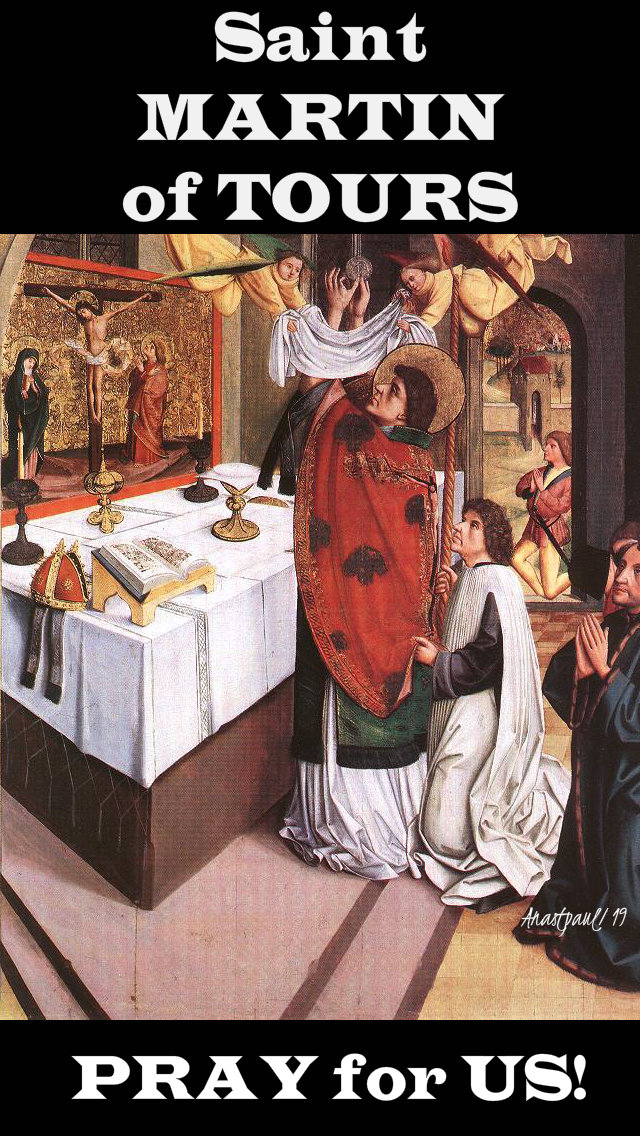
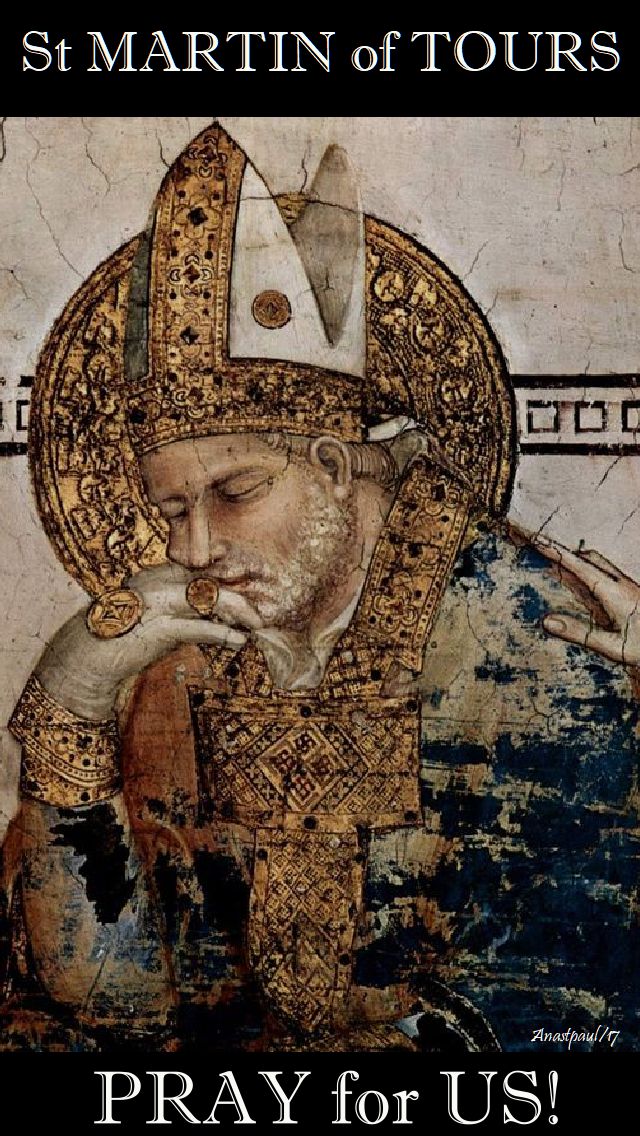
Thought for the Day – 11 November – Monday of the Thirty Second week in Ordinary Time, Year C, Gospel: Luke 17:1-6 and The Memorial of Saint Martin of Tours (c 316-397)
St Martin, the Miracle-Worker
By St John Henry Newman (1801-1890)
Two Essays on Biblical and Ecclesiastical Miracles
And the Lord said, “If you had faith as a grain of mustard seed, you could say to this sycamine tree, ‘Be rooted up and be planted in the sea,’ and it would obey you.”
Luke 17:6
“Before Martin was a Bishop, while he was near St Hilary at Poitiers, a certain Catechumen, who lived in his monastery, died of a fever, in Martin’s absence, without baptism. On his return, the Saint went by himself, into the cell where the body lay, threw himself upon it, prayed and then raising himself with his eyes fixed on it, patiently waited his restoration, which took place before the end of two hours …. At another time, on his giving orders for cutting down a pine to which idolatrous honour was paid, a heathen said, “If thou has confidence in thy God, let us hew the tree and do thou receive it as it falls. If thy Lord is with thee, thou wilt escape harm.” Martin accepted the condition and when the tree was falling upon him, made the Sign of the Cross. The tree reeled round and fell on the other side! This miracle converted the vast multitude who were spectators of it.”
Quote/s of the Day – 12 November – The Memorial of Saint Martin of Tours (c 316-397) and Blessed Vincenza Maria Poloni (1802-1855)
Lord, if Your people still have need of my services, I will not avoid the toil. Your will be done. I have fought the good fight long enough. Yet, if You bid me to continue to hold the battle line, in defence of Your camp, I will never beg to be excused from failing strength. I will do the work You entrust to me. While You command, I will fight beneath Your banner. Amen
Saint Martin of Tours (c 316-397)
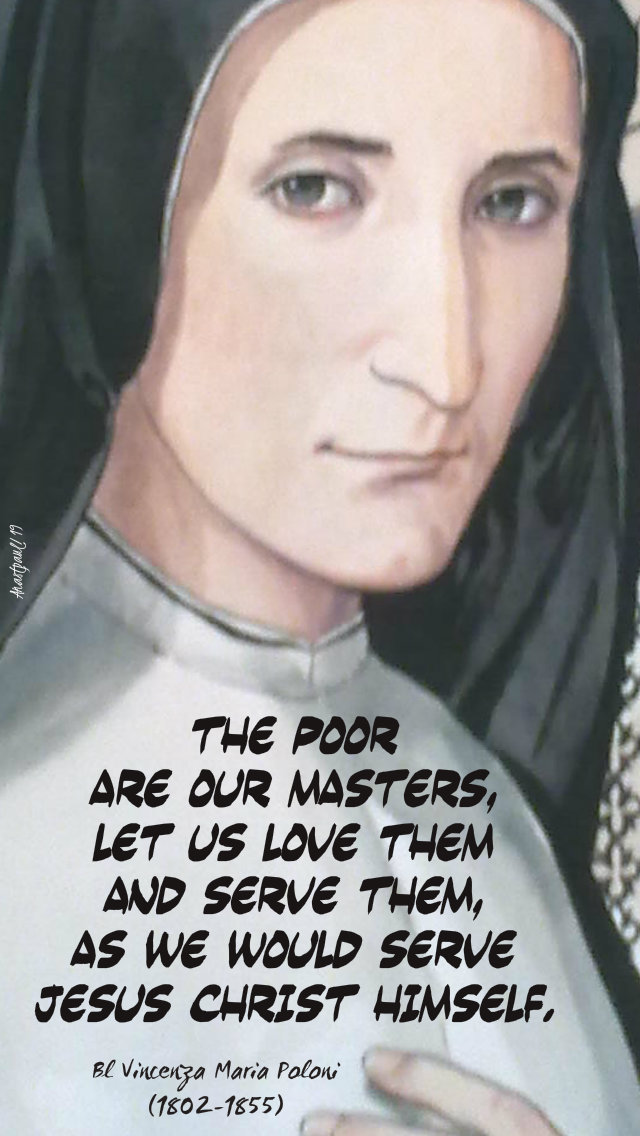
“The poor are our masters, let us love them and serve them, as we would serve Jesus Christ Himself. “
One Minute Reflection – 12 November – Monday of the Thirty Second week in Ordinary Time, Year C, Gospel: Luke 17:1-6 and the Memorial of St Martin of Tours
“… if he sins against you seven times in the day and turns to you, seven times and says, ‘I repent,’ you must forgive him.” … Luke 17:4
REFLECTION – “Love bears all things, believes all things, hopes all things, endures all things” (1 Cor 13:7). By this the apostle Paul showed that love can persevere steadfastly because it has learned to endure all things. And in another place he says: “Bear with one another through love, striving to preserve the unity of the spirit through the bond of peace” (Eph 4:2-3).
Neither unity nor peace can be preserved, unless brothers cherish one another, with mutual forbearance and preserve the bond of unity, with patience as intermediary. How then will you be able to endure these things – not to swear or curse, not to seek again what has been taken away from you, on receiving a blow to offer the other cheek also to your assailant, to forgive your brother who offends you, not only seventy times seven times but all his offences without exception, to love your enemies, to pray for your adversaries and persecutors, if you do not have the steadfastness of patience and forbearance?
We see what happened in the case of Stephen. When he was being killed by the violence and stones of the Jews, he did not ask for vengeance but forgiveness for his murderers, saying: “Lord, do not hold this sin against them” (Acts 7:60).” … St Cyprian of Carthage (c 200- c 258) Bishop and Martyr, Father of the Church – The Good of Patience
PRAYER – Lord God, Your Son has shown us the way. As we follow in His steps, may we never wander from the path that leads to life. Renew the wonders of Your grace in our hearts so that neither death nor life may separate us from Your love. Holy Father, as You were glorified by the life and death of St Martin, grant that by his prayers, we may receive strength to always give You our hearts, minds and selves. Through our Lord, Jesus Christ, with You in union with the Holy Spirit, one God for all eternity, amen.
Our Morning Offering – 11 November – Monday of the Thirty Second Week in Ordinary Time, Year C
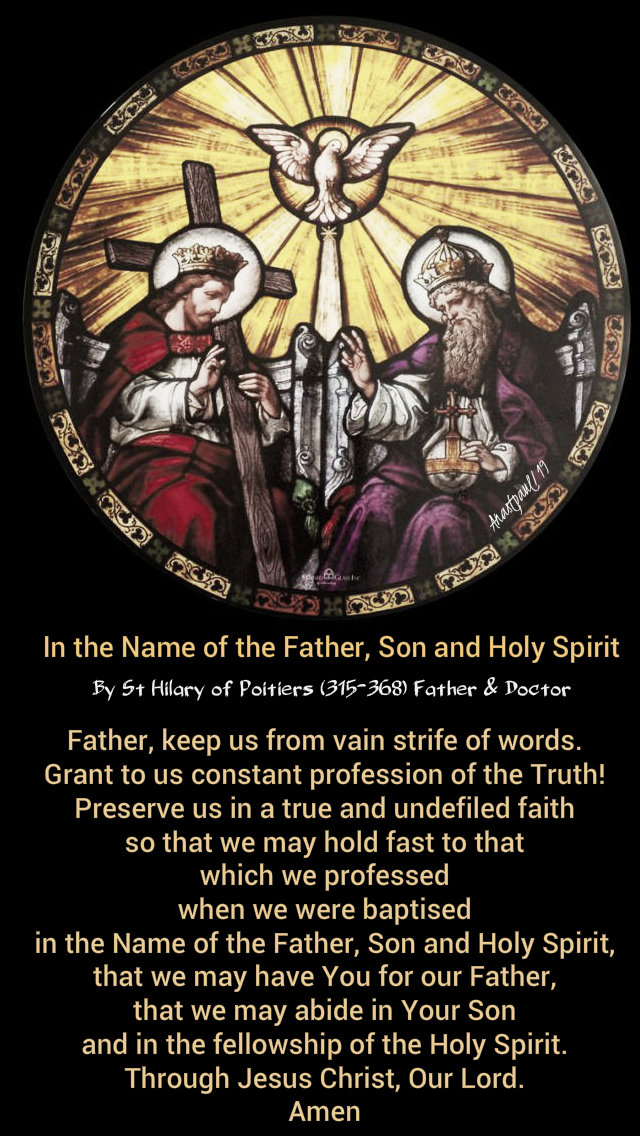
In the Name of the Father, Son and Holy Spirit By St Hilary of Poitiers (315-368) Father & Doctor of the Church
Father, keep us from vain strife of words.
Grant to us constant profession of the Truth!
Preserve us in a true and undefiled faith
so that we may hold fast to that
which we professed
when we were baptised
in the Name of the Father, Son and Holy Spirit,
that we may have You for our Father,
that we may abide in Your Son
and in the fellowship of the Holy Spirit.
Through Jesus Christ, Our Lord.
Amen
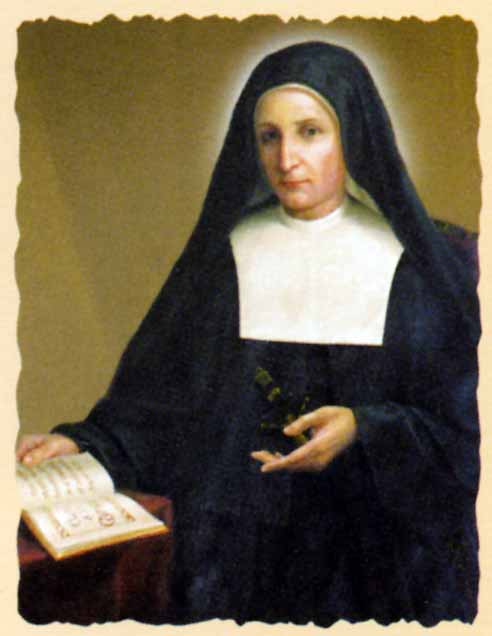
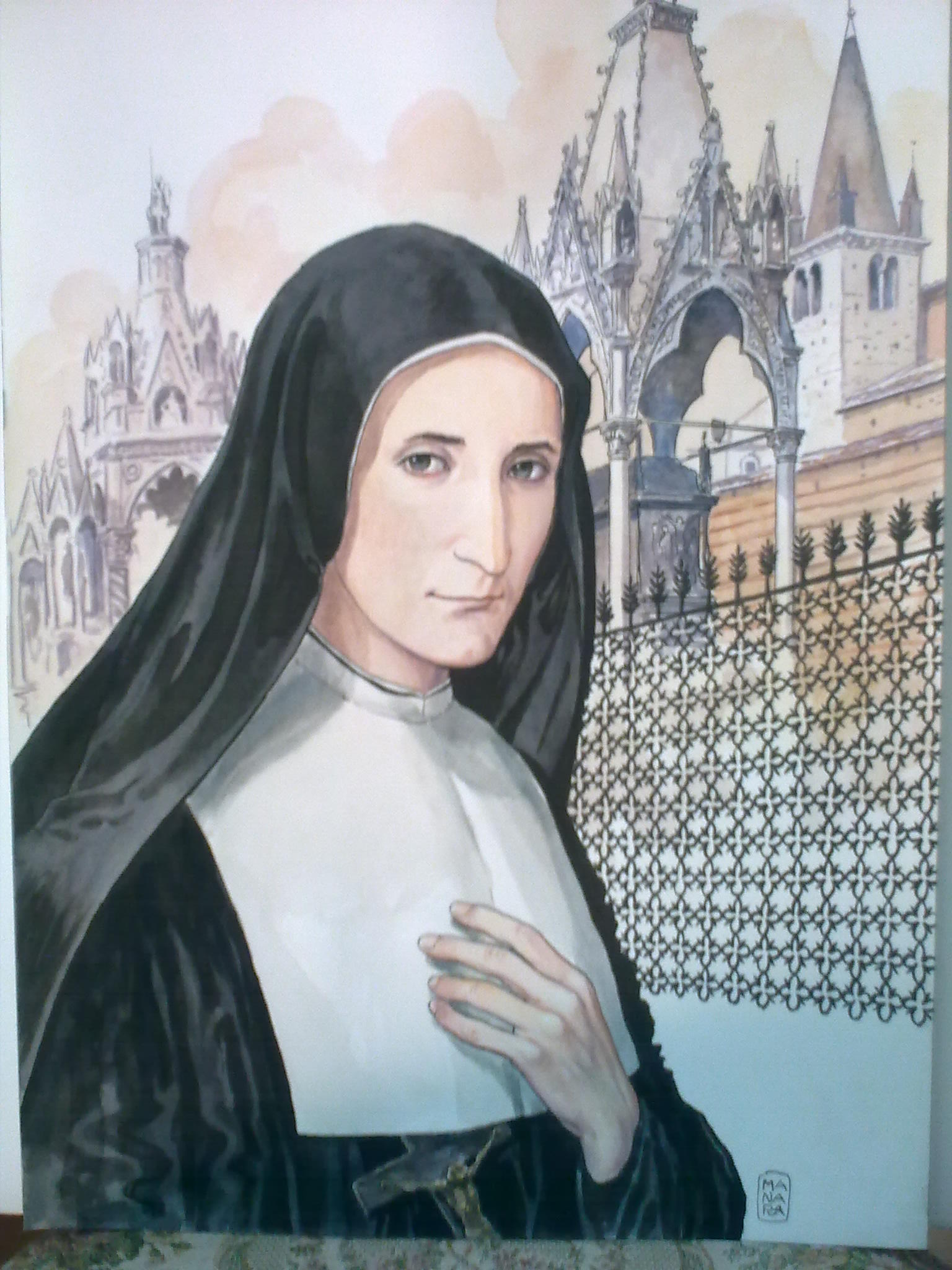
Saint of the Day – Blessed Vincenza Maria Poloni (1802-1855) Nun and Co-Founder of Sisters of Mercy of Verona, Apostle of the Holy Eucharist and of Charity and Mercy to the Sick, the Sacred and Immaculate Hearts, Our Lady of Sorrows – Born as Luigia Francesca Maria on 26 January 1802 in Verona, Italy and died on 11 November 1855 in Verona, Italy of cancer. She is Patron of the Order she founded. Additional memorial – 10 September, within her Order.
On 26 January 1802, in Verona, at the present number 8 of Piazza delle Erbe, the Servant of God Vincenza Maria Poloni was born to Gaetano and Margherita Biadego. In the afternoon of the same day, she was baptised in the Parish of St Maria Antica near the Scaliger Tombs with the name of Luigia Francesca Maria.
She was the last of twelve children – all the others being brothers, of whom nine died at an early age. Luigia grew up in a family atmosphere permeated by solid religious principles and a style of solidarity with the weakest. From her parents, she absorbed the sense of faith, prayer and industriousness and received a degree of education appropriate to her social condition.
A young woman of open and lively genius, she became the mother’s right hand in the care of the home, the irreplaceable support in the education of the numerous grandchildren, the caring assistant of a sister-in-law who was often sick and the main help in her father’s shop. Also, her brother Apollonio, found in his sister Luigia, a valid support for the management and administration of the complex agricultural activity in Palazzina (Verona).
Under the spiritual direction of Blessed Karl Steeb (1773 – 1856), her heart went along with the calls of the Holy Spirit who led her with ever greater inspiration, to devote time and attention to the elderly and chronically ill at the Pius Ricovero home. In 1836, during a terrible cholera epidemic, she showed unconditional assistance in the emergency wards, endangering her own health.
Meanwhile, God’s will was becoming more and more clear, the elderly and the sick constituted the body of the suffering Christ to whom He generously gave Himself and to whom He wanted to attract others who would offer themselves with Him.
Overcoming the many resistances posed by family members, who considered Blessed Vincenza, to be indispensable to the well-being of the family, on 2 November 1840 she settled with three companions in two small rooms at the Pio Ricovero to devote herself full time to the service of the elderly and the sick.
The beginnings of God’s works are always characterised by the zeal of self-giving and by a generous poverty, chosen consciously. Those four people immediately assumed the lifestyle of a religious community marked by a strict timetable, fervent prayer and a total service of charity towards others. Soon other companions were added, a house was purchased, civil and canonical authorisations were obtained and so on 10 September 1848 Luigia Poloni, she taking the name of Vincenza Maria and twelve sisters took religious vows of poverty, chastity and obedience.
The Sorelle della Misericordia Institute of Verona became a reality. A new source of light and love flowed in Verona, a city of saints and blesseds.
Blessed Karl & Blessed Mother Vincenza at the Sorelle della Misericordia in Verona
Mother Vincenza Maria, in the fifteen years she lived after the foundation of the Institute, exercised her mission of assistance to the elderly, sick and orphan children with admirable zeal. With the wisdom that derived from her temperament, from the experience of life in the family and above all from fidelity to the Spirit, the Community expanded reaching – at her death – the number of 48 sisters.
With the example of life and teaching, she recommended to her daughters rectitude in action, tenderness towards the sick, patience in tribulations, humility in recognising their mistakes, charity towards others, especially towards Poors. She used to say: ” The poor are our masters, let us love them and serve them as we would serve Jesus Christ Himself. “
Blessed Vincenza endured difficulties and sacrifices with faith and confidence in the divine Providence. She cultivated prayer, love for the Eucharist, devotion to Our Lady of Sorrows, to the Most Sacred Hearts of Jesus and Mary. She also nurtured a particular devotion towards St Vincent de Paul, the saint to whom Blessed Karl Steeb was inspired in laying down the Rules for the Institute that was about to arise.
The fame of the new Institute spread even outside Verona and Mother Vincenza Maria soon received requests for sisters to establish a service of mercy, in other cities and countries. The first communities were opened in Cologna Veneta, Montagnana, Zevio, Este and Monselice.
Sisters of Mercy Emblem
In the last years of her life, Mother Vincenza Maria was struck by a tumour that slowly but inexorably consumed her . She endured the pain with Christian fortitude and in silence so as not to be a burden to the sisters. She underwent surgery and even more painful treatment without anesthesia.
He spent the last ten days of her life in preparation for death, comforted by the presence of her spiritual director, Don Karl Steeb, who gave her the sacrament of the sick.
She entered eternity at 9.00 on 11 November 1855, leaving her daughters the treasure of her example and a wonderful spiritual testament in which she recommended charity with all her strength. Those words seem written with her blood and still have the charm of a heroism achieved by her commitment to conformity to Christ. Her figure constitutes a shining light that shows us the sure path of holiness.
This pearl could not remain hidden, so we say our thanks to the Church which, after scrupulous historical and theological examination, officially recognised on 28 April 2006 the exercise of the heroic virtues of mother Vincenza Maria Poloni and 17 December 2007 the miraculous healing of Sr Virginia Agostini, who had turned to her intercession in 1939.
Today our joy is complete, because Mother Vincenza Maria is officially proclaimed Blessed by the Church. A new saint is offered to us as an example and as a protector. … Vatican.va
Bl Alicia Maria jadwiga Kotowska
St Bartholomew of Rossano
St Bertuin of Malonne
St Cynfran of Wales
St Isidre Costa Hons St John the Almoner (c 550-c 616) St John’s Life: https://anastpaul.com/2018/11/11/saint-of-the-day-11-november-st-john-the-almoner-c-550-c-616/
Bl Josaphat Chichkov
Bl Kamen Vitchev Bl (Luigia) Vincenza Maria Poloni (1802-1855)
St Marina of Omura
St Menas Kallikelados
St Mennas of Santomenna
St Mercurius the Soldier
Bl Pavel Dzjidzjov
St Rhediw
St Theodore the Studite
St Turibius of Palencia
St Veranus of Lyon
St Veranus of Vence
Bl Vincent Eugene Bossilkoff
—
Martyrs of Torredembarra: Members of the Brothers of the Christian Schools, Discalced Carmelites, and Carmelite Tertiaries of Education who were martyred together in the Spanish Civil War.
• Blessed Bonaventura Toldrà Rodon
• Blessed Damián Rodríguez Pablo
• Blessed Felipe Arce Fernández
• Blessed Frederíc Vila Bartolì
• Blessed Isidre Tarsá Giribets
• Blessed Joan Roca Vilardell
• Blessed José Alberich Lluch
• Blessed Josep Boschdemont Mitjavila
• Blessed Josep Maria Bru Ralduá
• Blessed Julio Alameda Camarero
• Blessed Lluís Domingo Oliva
• Blessed Mariano Navarro Blasco
• Blessed Miquel Saludes Ciuret
• Blessed Pedro de Eriz Eguiluz
They were martured on 11 November 1936 in Torredembarra, Tarragona, Spain and Beatified
• 13 October 2013 by Pope Francis
• beatification celebrated in Tarragona, Spain.
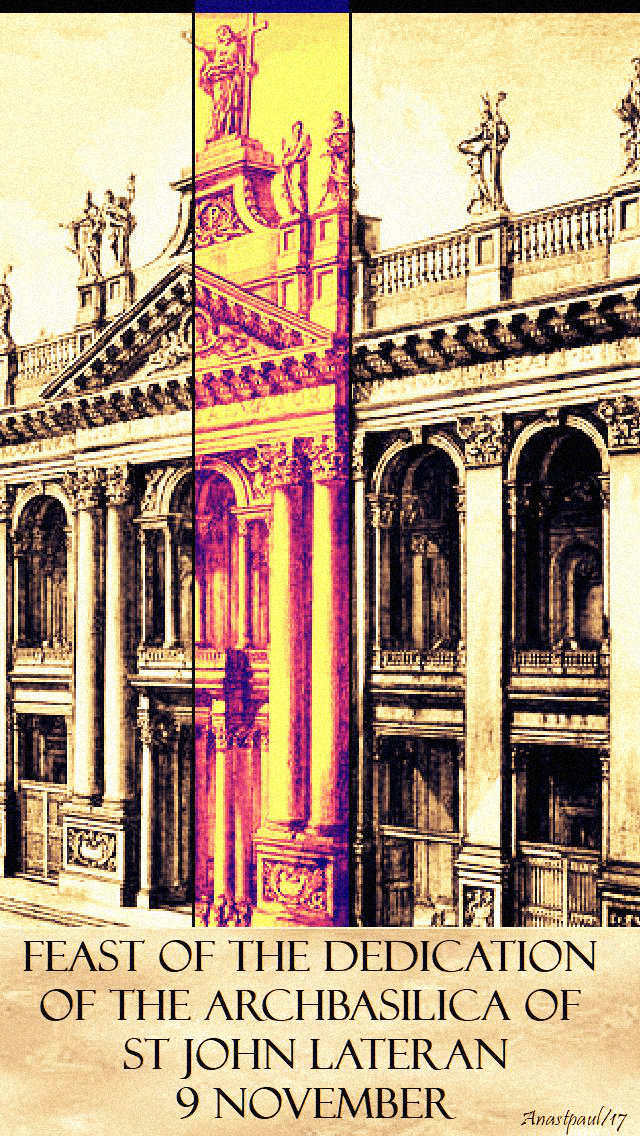
Thought for the Day – 9 November – Feast of the Dedication of the Lateran Basilica in Rome
We have All been made Temples of God through Baptism
Saint Caesarius of Arles (470-543)
An excerpt from Sermon 229
My fellow Christians, today is the birthday of this church, an occasion for celebration and rejoicing. We, however, ought to be the true and living temple of God. Nevertheless, Christians rightly commemorate this Feast of the Church, their mother, for they know that through her, they were reborn in the spirit. At our first birth, we were vessels of God’s wrath, reborn, we became vessels of His mercy. Our first birth brought death to us but our second restored us to life.
Indeed, before our Baptism we were sanctuaries of the devil but after our Baptism we merited the privilege of being temples of Christ. And if we think more carefully about the meaning of our salvation, we shall realise that we are, indeed, living and true temples of God. God does not dwell only in structures fashioned by human hands, in homes of wood and stone but rather He dwells principally, in the soul made according to His own image and fashioned by His own hand. Therefore, the apostle Paul says: The temple of God is holy and you are that temple.
When Christ came, He banished the devil from our hearts, in order to build in them a temple for Himself. Let us, therefore, do what we can with His help, so that our evil deeds will not deface that temple. For whoever does evil, does injury to Christ. As I said earlier, before Christ redeemed us, we were the house of the devil but afterward, we merited the privilege of being the house of God. God Himself in His loving mercy, saw fit, to make of us, His own home.
My fellow Christians, do we wish to celebrate joyfully the birth of this temple? Then let us not destroy the living temples of God in ourselves by works of evil . I shall speak clearly, so that all can understand. Whenever we come to Church, we must prepare our hearts to be as beautiful as we expect this Church to be. Do you wish to find this Basilica immaculately clean? Then do not soil your soul with the filth of sins. Do you wish this Basilica to be full of light? God too, wishes that your soul be not in darkness but that the light of good works shine in us, so that He, who dwells in the heavens, will be glorified. Just as you enter this Church building, so God wishes to enter into your soul, for He promised – I shall live in them and I shall walk the corridors of their hearts.
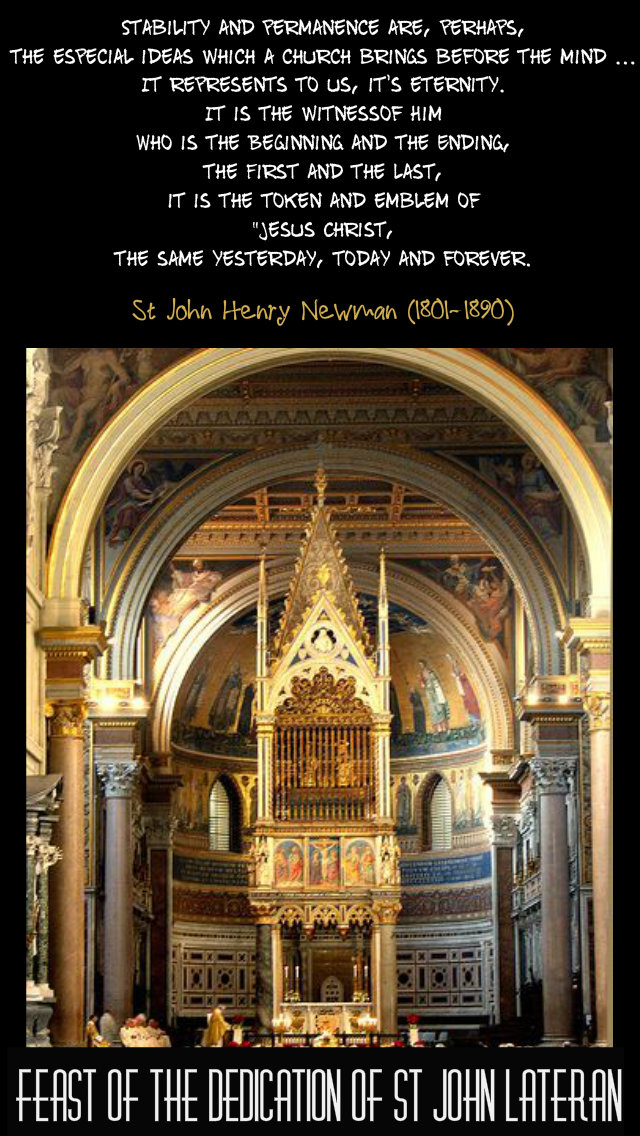
Quote/s of the Day – 9 November – Feast of the Dedication of the Lateran
“O God, who out of living and chosen stones, builds up an everlasting dwelling-place for Your Majesty – help Your people, who humbly pray to You and whatever material room Your Church may set apart for Your worship, let it bring also spiritual increase.”
Post Communion prayer
“Stability and permanence are, perhaps, the especial ideas which a church brings before the mind … It represents to us, it’s eternity. It is the witness of Him Who is the Beginning and the Ending, the First and the Last, it is the token and emblem of “Jesus Christ, the same yesterday, today and forever.”
St John Henry Newman (1801-1890) Cardinal
“God’s desire to build a spiritual temple in the world, a community that worships him in spirit and truth (cf. John 4:23-24). But this observance also reminds us of the importance of the material buildings in which the community gathers to celebrate the praises of God. Every community, therefore, has the duty to take special care of its own sacred buildings, which are a precious religious and historical patrimony. For this we call upon the intercession of Mary Most Holy, that she help us to become, like her, the “house of God,” living temple of His love.”
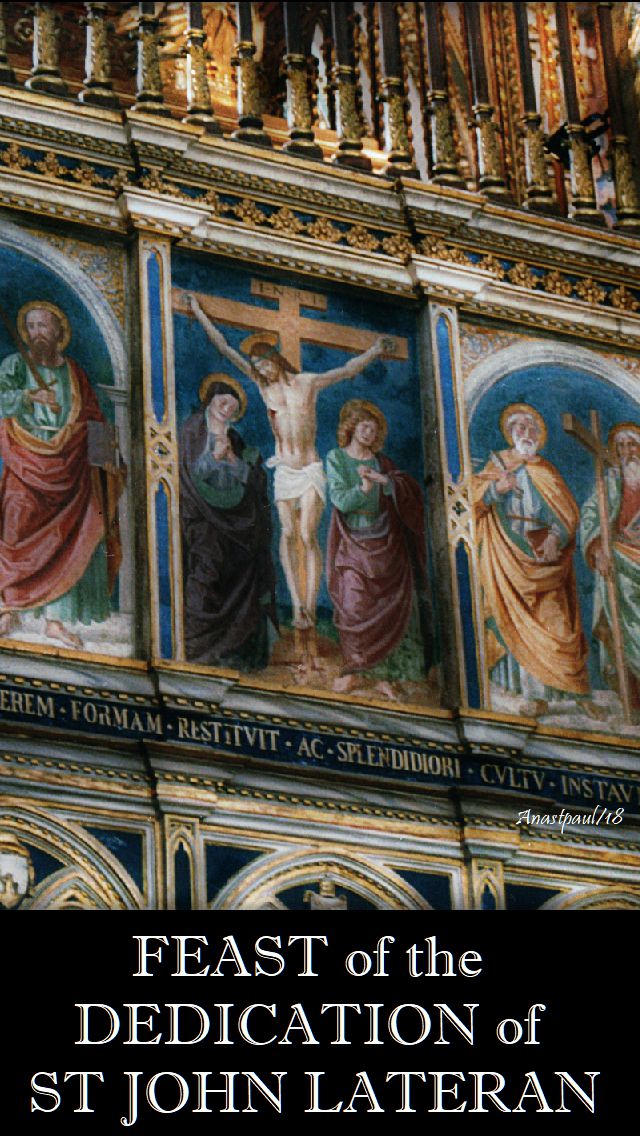
One Minute Reflection – 9 November – The Feast of the Dedication of St John Lateran – Gospel: John 2:13–22
“Zeal for your house will consume me.” ... John 2:18
REFLECTION – “Is a cathedral the offspring of a random thought, a thing to will and to accomplish at our pleasure?… Surely the churches which we inherit are not the purchase of wealth nor the creation of genius, they are the fruits of martyrdom. They come of high deeds and sufferings, as long before their very building as we are after it. Their foundations are laid very deep, even in the preaching of apostles and the confession of saints and the first victories of the gospel in our land. All that is so noble in their architecture, all that captivates the eye and makes its way to the heart, is not a human imagination but a divine gift, a moral result, a spiritual work.
The Cross is ever planted in hazard and suffering and is watered with tears and blood. No where does it take root and bear fruit, except its preaching be with self-denial. It is easy, indeed, for the ruling powers to make a decree and set religion on high and extend its range,and herald its name but they cannot plant it, they can but impose it. The Church alone can plant the Church. The Church alone can found her sees and inclose herself within walls. None but saintly men, mortified men, preachers of righteousness, and confessors for the truth, can create a home for the truth in any land.
Thus the Temples of God are withal the monuments of His saints… Their simplicity, grandeur, solidity, elevation, grace and exuberance of ornament, do but bring to remembrance the patience and purity, the courage, meekness and great charity, the heavenly affections, the activity in well-doing, the faith and resignation, of men who themselves did but worship in mountains and in deserts,and in caves and dens of the earth. They laboured but not in vain, for other men entered into their labours (cf. Jn 4:38) and, as if by natural consequence, at length their word prospered after them and made itself a home, even these sacred palaces in which it has so long dwelt… O happy they who, in a sorrowful time, avail themselves of this bond of communion with the saints of old and with the universal Church!… Happy they, who when they enter within their holy limits, enter in heart into the court of Heaven!” … St John Henry Newman (1801-1890) Cardinal, Founder of the Oratory in England, Theologian – PPS vol. 6, 19
PRAYER – Almighty God, as we recall with joy, the Dedication of this house of Yours on each recurring anniversary, listen to Your people’s prayer and grant that our worship here may be a sincere and holy service, honouring Your Name and bringing us the fullness of redemption. Through Jesus Christ, our Lord, in union with the Holy Spirit, one God for all eternity, amen.
















 His venerable personality and deep learning quickly won many to Christianity, even among the nobles and it soon became necessary to build a much larger church at Deventer on the east bank of the river.
 After escaping with difficulty, Lebuinus determined to voice the claims of Christianity at the national assembly of the Saxons at Marklo near the Weser (Northwestern Germany) .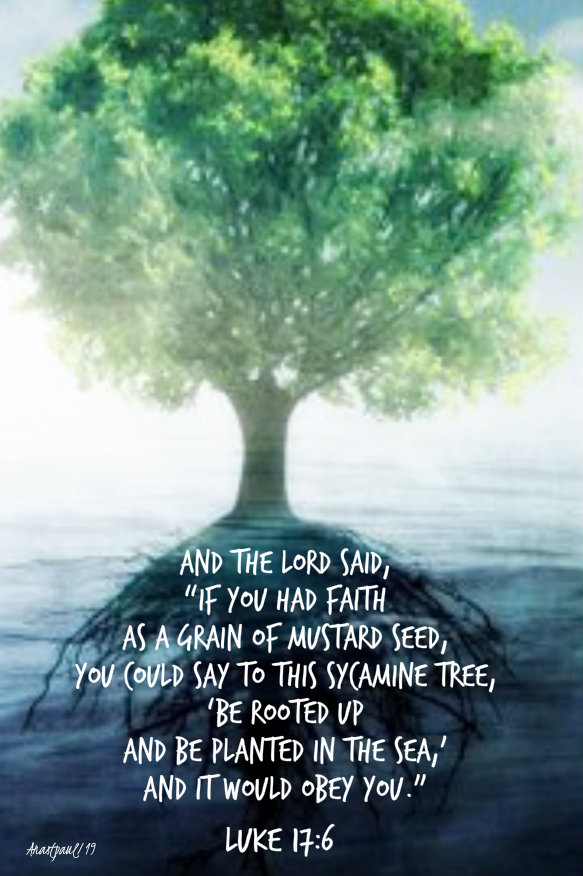








 Through Jesus Christ, our Lord, in union with the Holy Spirit, one God for all eternity, amen.
 AnaStpaul
You must be logged in to post a comment.