One Minute Reflection – 3 August – Saturday of the Seventeenth week in Ordinary Time, Year C, Gospel: Matthew 14:1-12
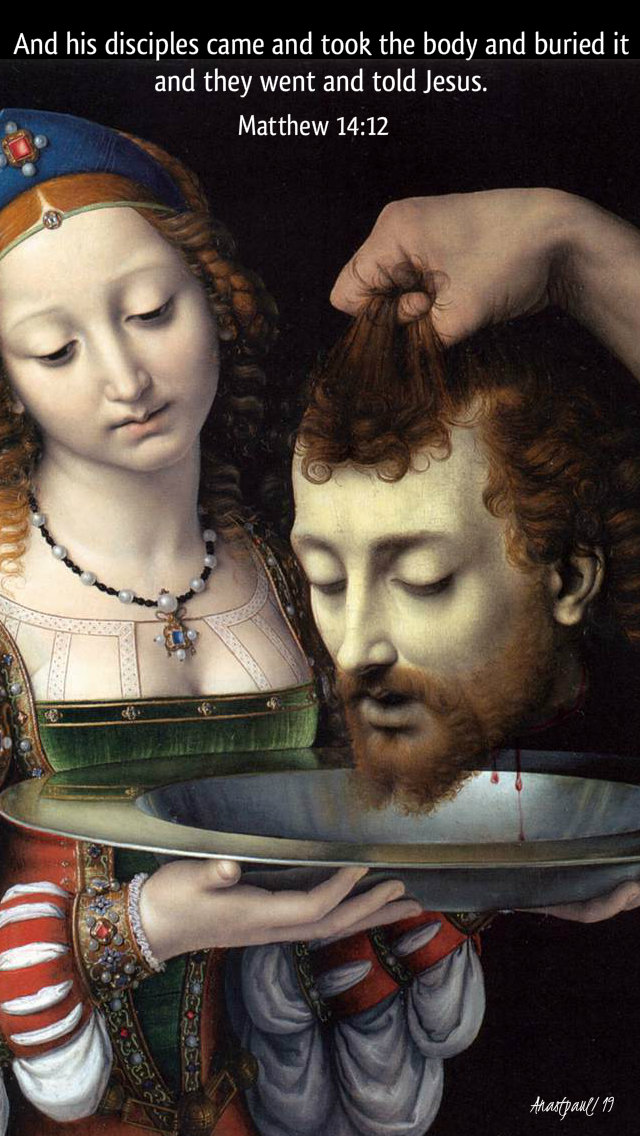
And his disciples came and took the body and buried it and they went and told Jesus. ... Matthew 14:12
REFLECTION – “Before Pilate, Christ proclaims that he “has come into the world, to bear witness to the truth,” (Jn 18:37). The Christian is not to “be ashamed then of testifying to our Lord,” (2 Tim 1:8). In situations that require witness to the faith, the Christian must profess it without equivocation, after the example of St Paul before his judges. We must keep “a clear conscience toward God and toward men,” (Acts 24:16).
The duty of Christians to take part in the life of the Church impels them to act as witnesses of the Gospel and of the obligations that flow from it. This witness is a transmission of the faith in words and deeds. Witness is an act of justice that establishes the truth or makes it known: “All Christians by the example of their lives and the witness of their word, wherever they live, have an obligation to manifest the new man which they have put on in Baptism and to reveal the power of the Holy Spirit by whom they were strengthened at Confirmation” (Vatican II).
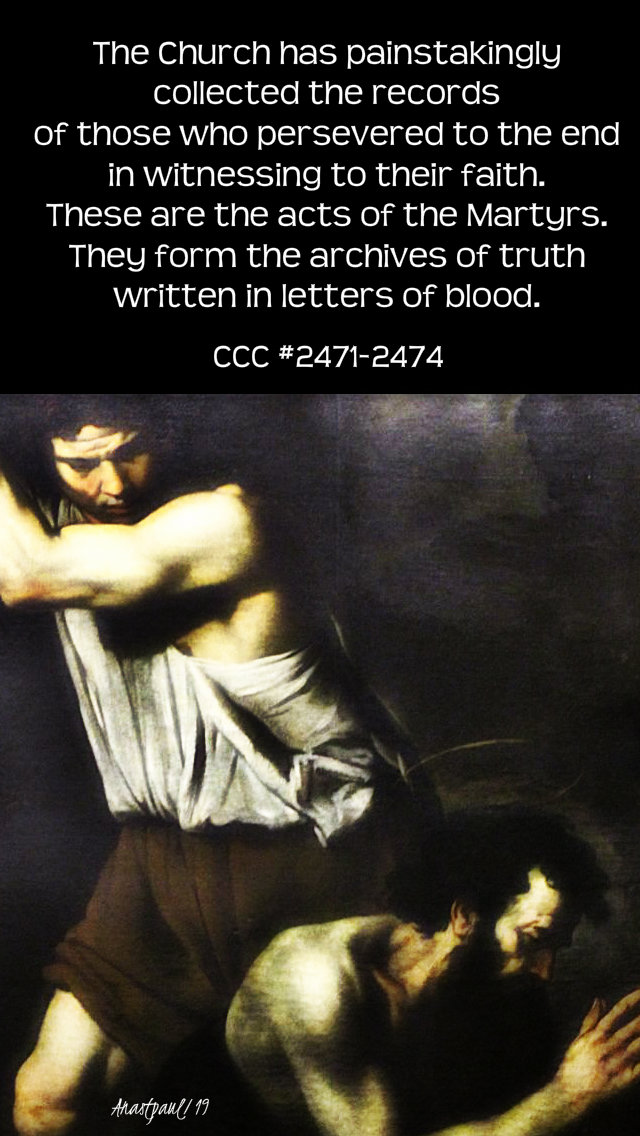
Martyrdom is the supreme witness given to the truth of the faith – it means bearing witness even unto death. the martyr bears witness to Christ who died and rose, to whom he is united by charity. He bears witness to the truth of the faith and of Christian doctrine. He endures death through an act of fortitude… The Church has painstakingly collected the records of those who persevered to the end in witnessing to their faith. These are the acts of the Martyrs. They form the archives of truth written in letters of blood…:
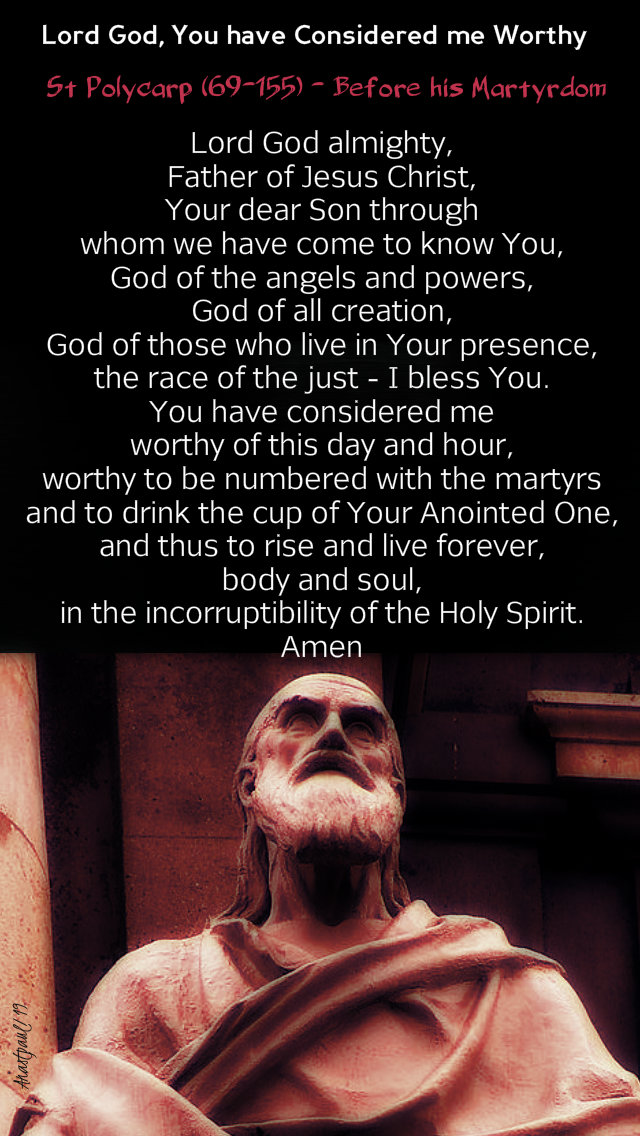
“I bless You for having judged me worthy from this day and this hour to be counted among Your martyrs…. You have kept Your promise, God of faithfulness and truth. For this reason and for everything, I praise You, I bless You, I glorify You through the eternal and heavenly High Priest, Jesus Christ, Your beloved Son” (St. Polycarp) … CCC #2471-2474
PRAYER – Almighty God, teach us to bear witness to Christ, Your only-begotten Son, who died for our sins. May each moment of our lives radiate the truth of the Word, Christ our Lord. Through the intercession of our holy Mother, the Channel of all Graces, may our strength be such, that we would bear witness even unto death. We make our prayer, through Jesus Christ with the Holy Spirit, God forever, amen.
Our Morning Offering – 3 August – Saturday of the Seventeenth week in Ordinary Time, Year C and a Marian Saturday
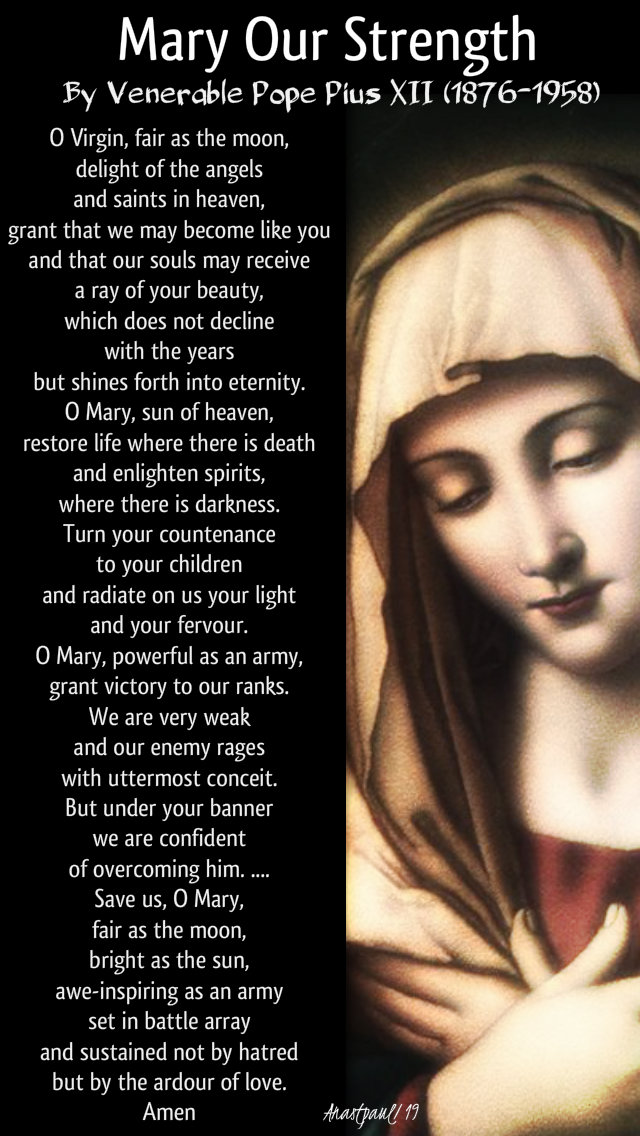
Mary Our Strength By Venerable Pope Pius XII (1876-1958)
(Pontiff 1939-1958)
O Virgin, fair as the moon,
delight of the angels and saints in heaven,
grant that we may become like you
and that our souls may receive a ray of your beauty,
which does not decline with the years
but shines forth into eternity.
O Mary, sun of heaven,
restore life where there is death
and enlighten spirits, where there is darkness.
Turn your countenance to your children
and radiate on us your light and your fervour.
O Mary, powerful as an army,
grant victory to our ranks.
We are very weak
and our enemy rages with uttermost conceit.
But under your banner
we are confident of overcoming him. ….
Save us, O Mary,
fair as the moon,
bright as the sun,
awe-inspiring as an army set in battle array
and sustained not by hatred
but by the ardour of love.
Amen
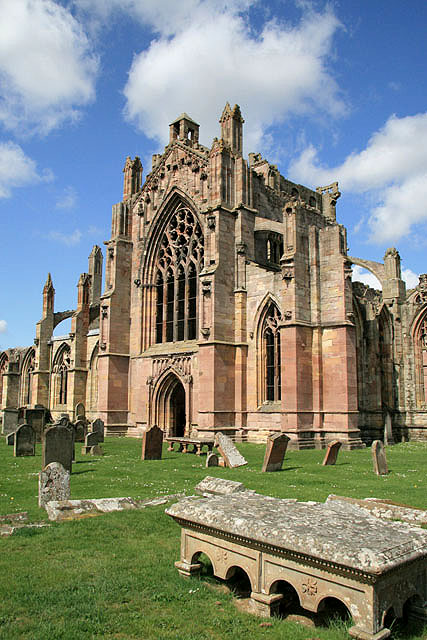
Saint of the Day – 3 August – Saint Waltheof of Melrose O.Cist. (c 1095-1159) Monk, Abbot, apostle of charity, mystic – born in c 1095 in England and died on 3 August 1160 of natural causes. Also known as Waldef or Waldeve. Noted for his severe, self-imposed austerities, endless kindness to the poor and a gentle hand with the brothers under his supervision. He received visions of Christ during the feasts of Christmas, Passiontide, and Easter and had visions of heaven and hell. St Waltheof was a Miracle worker who is reported to have multiplied food and miraculously healed the sick, especially the blind. Patronages – Melrose Abbey and Northamptonshire.
St Waltheof was of noble birth, (he was the son of Earl Simon of Northampton and Matilda, the great niece of William the Conqueror). He was born in England but grew up in the Scottish court, due to his mother’s second marriage after his father’s death. He could have become a court cleric but chose the monastic life, becoming an Austin canon at Nostell in Yorkshire. In 1134, he became prior of Kirkham. In 1140 he was a favourite to become Archbishop of York but King Stephen prevented this because he felt he would be too sympathetic to Scotland.
In his Life of Waltheof, Jocelin of Furness writes: “Waltheof’s face was the faithful interpreter of the inner man and gave convincing evidence of the indwelling of the Holy Spirit inhabiting his heart. It was thin but fair except where ruddy colour infused his cheeks, soft as doves. His handsome white hair was in keeping with his reverend and religious character. His appearance showed grace infusing his spirit with happiness and exultation, it expressed the fact, that the lord treasured him and induced all who saw and spoke to him to hold him in affectionate reverence.”
St Waltheof wanted to bring the Cistercians at Rievaulx and the Austins at Kirkham together but the canons objected strongly. In 1149 he became abbot of Melrose, taking over from someone who had a notorious temper. St Waltheof developed a reputation for great kindness, gentleness and humility. He went on to found monasteries at Cultram and Kinross. In 1159 he was asked to be bishop of St Andrews but he refused as he knew death was near.
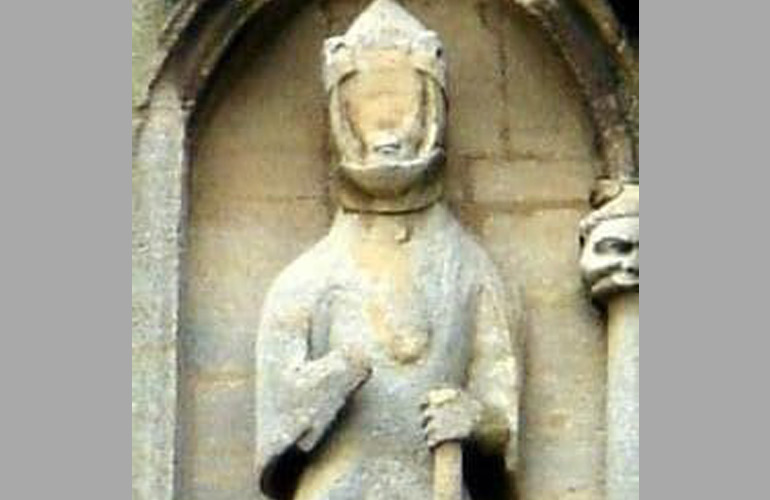
Jocelin also recalls that Abbot Waltheof was prone to take a nap whilst riding his horse, ‘Brother Grizzel’. On such occasions the horse would pick his steps carefully and slowly, lest he should trip but once the abbot was awake he would gallop swiftly, overtaking other steeds. Following Waltheof’s death, the horse was distraught and simply wasted away through sadness.
It has been said that he strove so greatly for perfection, that his confessors often found him irksome.
St Waltheof was never formally canonised but a popular cult grew around him until the Reformation. He is buried at the Cistercian chapter house at Melrose Abbey.
It is recorded in the Chronicle of Melrose that:
“The tomb of our pious father, sir Waltheof, the second abbot of Melrose, was opened by Enguerrand, of good memory, the bishop of Glasgow and by four abbots called in for this purpose and his body was found entire and his vestments intact, in the twelfth year from his death, on the eleventh day before the Kalends of June [22 May]. And after the holy celebration of mass, the same bishop and the abbots whose number we have mentioned above, placed over the remains of his most holy body a new stone of polished marble. And there was great gladness, those who were present exclaiming together and saying that truly this was a man of God …”
Thought for the Day – 2 August – The Memorial of St Eusebius of Vercelli (c 283-371)
Excerpt from Pope Benedict XVI’s
Catechesis on St Eusebius, October 2007
Ambrose’s admiration for Eusebius was based, above all, on the fact that the Bishop of Vercelli governed his Diocese with the witness of his life: “With the austerity of fasting he governed his Church.” Indeed, Ambrose was also fascinated, as he himself admits, by the monastic ideal of the contemplation of God which, in the footsteps of the Prophet Elijah, Eusebius had pursued. First of all, Ambrose commented, the Bishop of Vercelli gathered his clergy in vita communis and educated its members in “the observance of the monastic rule, although they lived in the midst of the city.” The Bishop and his clergy were to share the problems of their fellow citizens and did so credibly, precisely by cultivating, at the same time, a different citizenship, that of Heaven (cf. Heb 13: 14). And thus, they really built true citizenship and true solidarity among all the citizens of Vercelli.
While Eusebius was adopting the cause of the sancta plebs of Vercelli, he lived a monk’s life in the heart of the city, opening the city to God. This trait, though, in no way diminished his exemplary pastoral dynamism. It seems among other things that he set up parishes in Vercelli for an orderly and stable ecclesial service and promoted Marian shrines for the conversion of the pagan populations in the countryside. This “monastic feature,” however, conferred a special dimension on the Bishop’s relationship with his hometown. Just like the Apostles, for whom Jesus prayed at his Last Supper, the Pastors and faithful of the Church “are of the world” (Jn 17: 11), but not “in the world”. Therefore, Pastors, Eusebius said, must urge the faithful not to consider the cities of the world as their permanent dwelling place but to seek the future city, the definitive heavenly Jerusalem. This “eschatological reserve” enables Pastors and faithful to preserve the proper scale of values without ever submitting to the fashions of the moment and the unjust claims of the current political power. The authentic scale of values – Eusebius’ whole life seems to say – does not come from emperors of the past or of today but from Jesus Christ, the perfect Man, equal to the Father in divinity, yet a man like us. In referring to this scale of values, Eusebius never tired of “warmly recommending” his faithful “to jealously guard the faith, to preserve harmony, to be assiduous in prayer”(Second Letter, op. cit.).
Dear friends, I too warmly recommend these perennial values to you, as I greet and bless you, using the very words with which the holy Bishop Eusebius concluded his Second Letter: “I address you all, my holy brothers and sisters, sons and daughters, faithful of both sexes and of every age group, so that you may… bring our greeting also to those who are outside the Church, yet deign to nourish sentiments of love for us.”
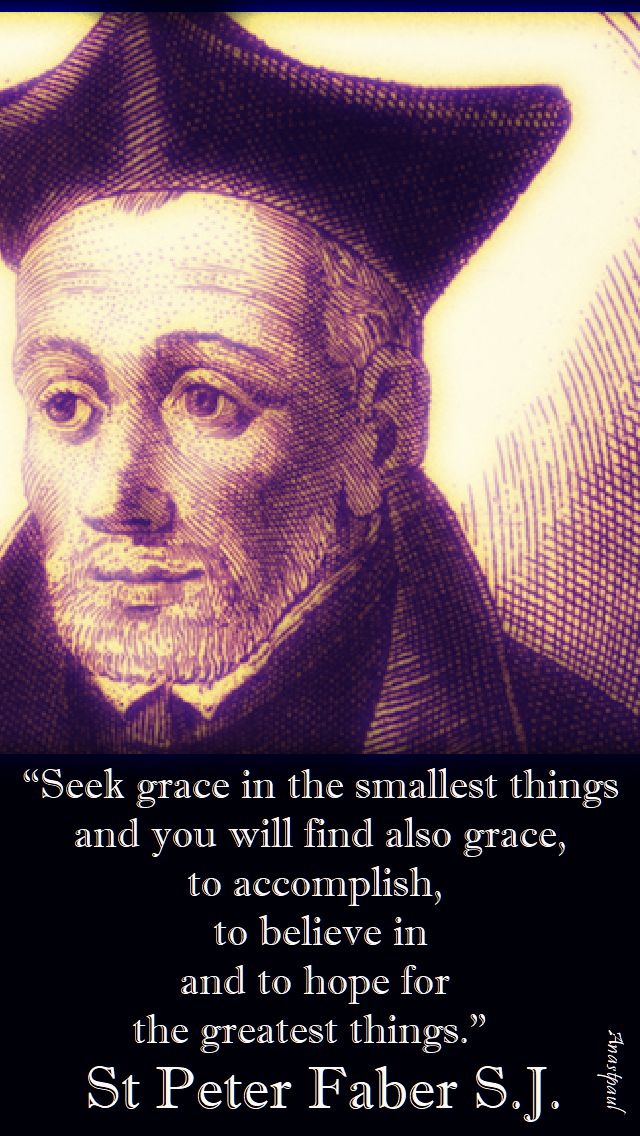
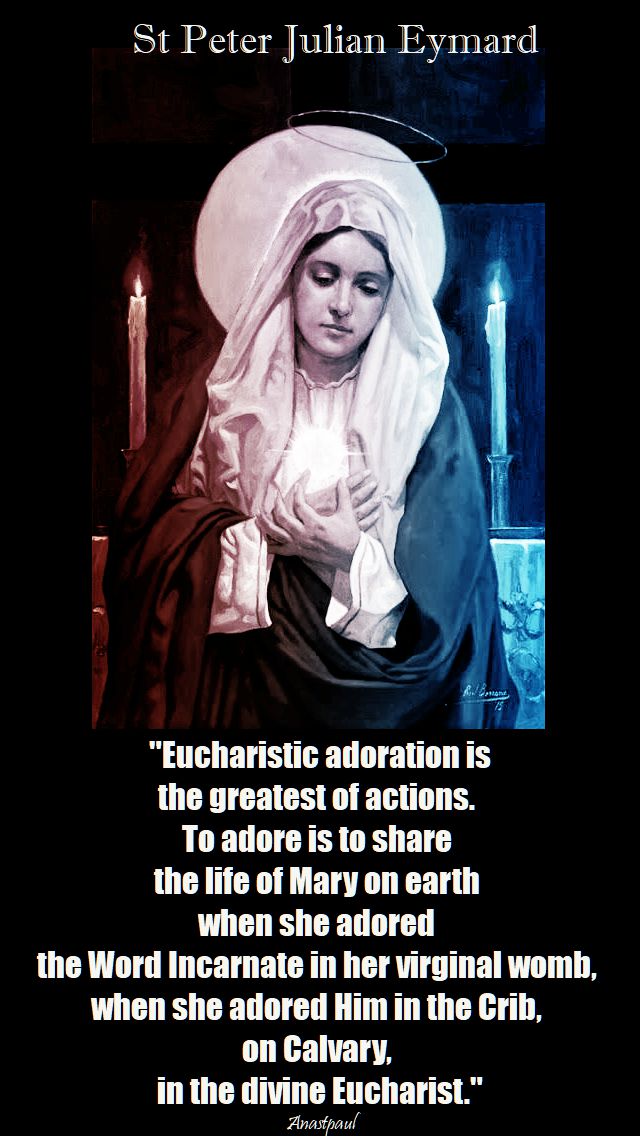
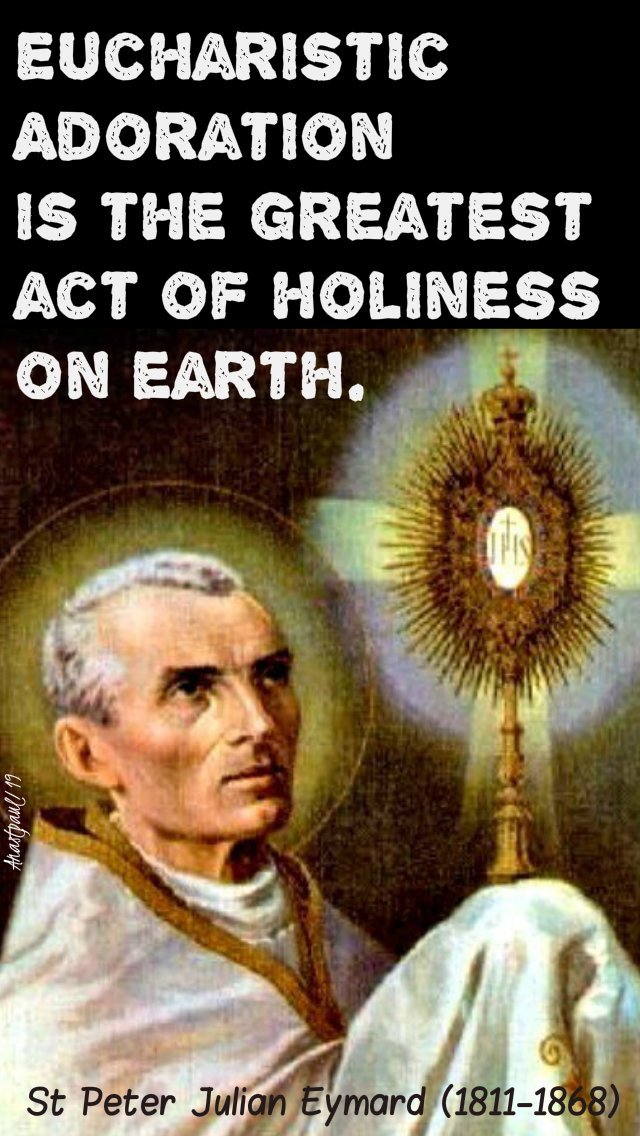
Quote/s of the Day – 3 August – Friday of the Seventeenth week in Ordinary Time, Year C and the Memorial of St Peter Faber SJ (1506-1546) and St Peter Julian Eymard SSS (1811-1868) “Apostle of the Eucharist”
“Seek grace for the smallest things, and you will find grace to accomplish, to believe in, and to hope for, the greatest things. Attend to the smallest things, examine them, think about putting them into effect, and the Lord will grant you greater.”
St Peter Faber (1506-1546)
“Eucharistic adoration is the greatest of actions. To adore is to share the life of Mary on earth when she adored the Word Incarnate in her virginal womb, when she adored Him in the Crib, on Calvary, in the divine Eucharist.”
“Eucharistic Adoration is the greatest act of holiness on earth.”
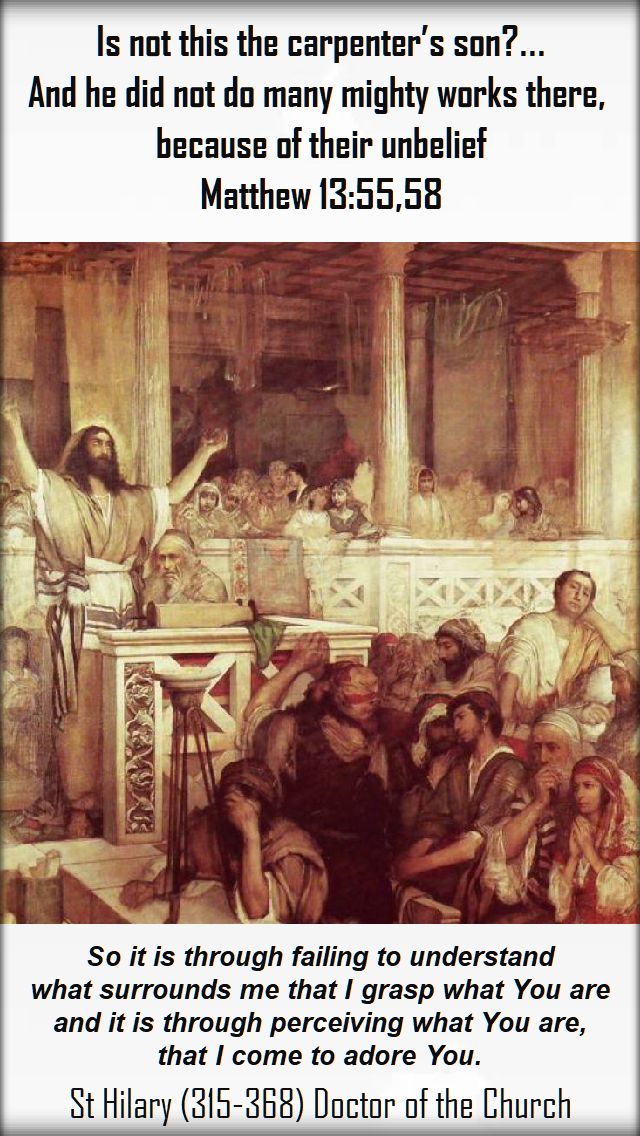
One Minute Reflection – 3 August – Friday of the Seventeenth week in Ordinary Time, Year C, Gospel: Matthew 13:54–58 and The Memorial of St Eusebius of Vercelli (c 283-371)
Is not this the carpenter’s son?…And he did not do many mighty works there, because of their unbelief.…Matthew 13:55,58
REFLECTION – “For if I do not understand the nature placed at my service, I discern Your goodness from the mere fact that it is there to serve me. I perceive that I do not even understand myself but I wonder at You all the more… You have given me intellect, life and human feeling, the source of so many joys, yet I do not begin to understand how I began to be…
So it is through failing to understand what surrounds me, that I grasp what You are and it is through perceiving what You are, that I come to adore You. That is why, in what concerns Your mysteries, my incomprehension, lessens not a bit my faith in Your omnipotence… Your eternal Son’s birth exceeds even the idea of eternity, it is prior to the times everlasting. Before any other thing that exists, He was Son proceeding from You, O God and Father. He is true God… You have never existed without Him… Before ever time was, You are the eternal Father of Your Sole Begotten One.”…St Hilary (315-368) Bishop of Poitiers, Doctor of the Church
PRAYER – “So long as I enjoy that breath of life granted to me by You, Holy Father, Almighty God, I will proclaim You as God eternal but also as Father eternal. Never will I set myself up as judge of Your almighty power and mysteries, never will I set my limited understanding before the true appreciation of Your infinity, never will I claim You to have existed beforehand without Your Wisdom, Power and Word, God the Only-Begotten, my Lord Jesus Christ. For even though human language is weak and imperfect when it speaks of You, this will not inhibit my mind, to the point of reducing my faith to silence, for lack of words, able to express the mystery of Your being…” (St Hilary) Lord God, You hold out the light of Your Word to those who do not know You. Strengthen in our hearts the faith You have given us, so that no trials may quench the fire Your Spirit kindled within us . Grant that the prayers of St Eusebius of Vercelli, may assist us to grow in love of You. Through Jesus Christ, our Lord, with the Holy Spirit, one God forever, amen.
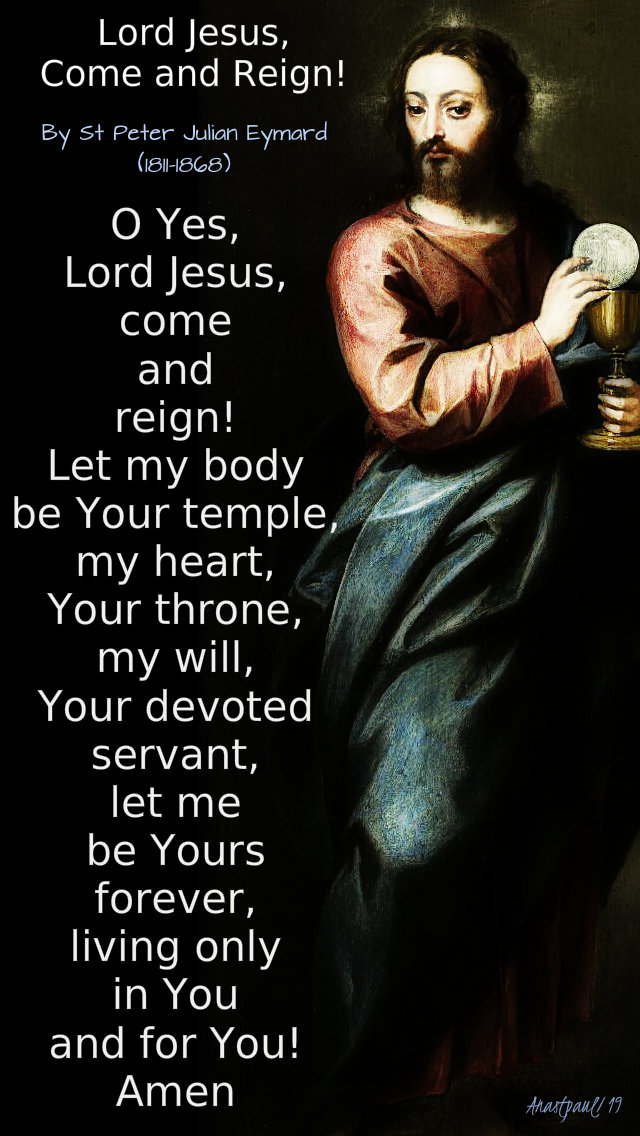
Our Morning Offering – 2 August – The Memorial of By St Peter Julian Eymard SSS (1811-1868) “Apostle of the Eucharist”
Lord Jesus, Come and Reign! By St Peter Julian Eymard (1811-1868)
O Yes, Lord Jesus,
come and reign!
Let my body
be Your temple,
my heart,
Your throne,
my will,
Your devoted servant,
let me be Yours forever,
living only in You
and for You!
Amen
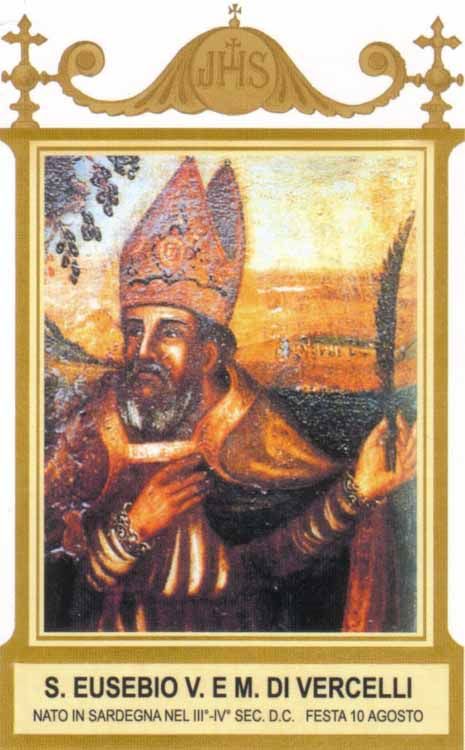
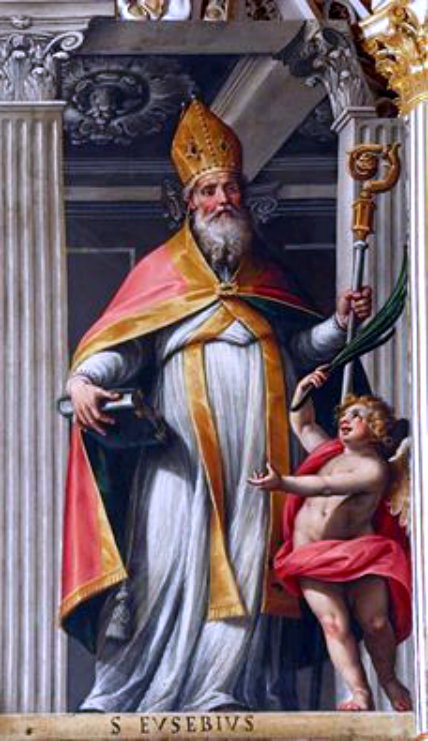
Saint of the Day – 2 August – Saint Eusebius of Vercelli (c 283-371) Bishop, Confessor, Founder of monasticism in his region – born in c 283 at Sardinia and died on 1 August 371 in Vercelli, Italy. Patronages – Congregation of the Daughters of Saint Eusebius, Berzo Demo, Italy, Piedmont, Italy, Vercelli, Italy.
Saint Eusebius was born of a noble family on the island of Sardinia, where his father is said to have died in prison for the Faith. He was brought up in Rome in the practice of piety and studied in Vercelli, a city of Piedmont. Eusebius was ordained a priest there and served the Church of Vercelli with such zeal that when the episcopal chair became vacant he was unanimously chosen, by both clergy and people, to fill it.
The holy bishop saw that the best and principal means to labour effectually for the edification and sanctification of his people, was to have a zealous clergy. Saint Ambrose assures us that he was the first bishop who in the West, united the monastic life with the clerical, living and having his clergy live almost like the monks of the East in the deserts. They shared a common life of prayer and penance, in a single residence, that of the bishop, as did the clergy of Saint Augustine in his African see. For this reason, the Canons Regular of St Augustine, honour him along with Augustine as their founder.
Saint Eusebius was very careful to instruct his flock in the maxims of the Gospel. The force of the truth which he preached, together with his example, brought many sinners to a change of life.
When a Council was held in Italy, under the influence of the Emperor Constans and the Arian heretics, with the intention of condemning Saint Athanasius (297-373), bishop of Alexandria and Doctor of the Church, St Eusebius courageously resisted the heretics. He attempted to have all present sign the Nicene Creed but the paper was torn out of his hands and his pen was broken. With St Dionysus of Milan, he refused to sign the condemnation of the bishop of Alexandria. The Emperor therefore had him banished to Scythopolis in Palestine with St Dionysus of Milan, then to Cappadocia, where St Dionysus died and finally, he was taken to the Upper Thebaid in Egypt, where he suffered grievously. The Arians of these places loaded him with outrages and treated him cruelly and St Eusebius confounded them, wherever they were.
At the death of Constans in 361, he was permitted to return to his diocese, where he continued to combat Arianism, with St Hilary of Poitiers (315-368) another Doctor of the Church. Two of his letters, written from his dungeons, are still extant, as well as a part of the Codex which is believed to be by him, have survived. One of the letters is addressed to his church, the other to the bishop of Elvira to encourage him to oppose a fallen heretic and not fear the power of princes.
Although in the middle ages he was sometimes referred to as a martyr, due primarily to two panegyrics appended to the works of Saint Ambrose, this was more to honour the sufferings he endured in standing up for his faith. Later legends of his martyrdom, have no historical basis.
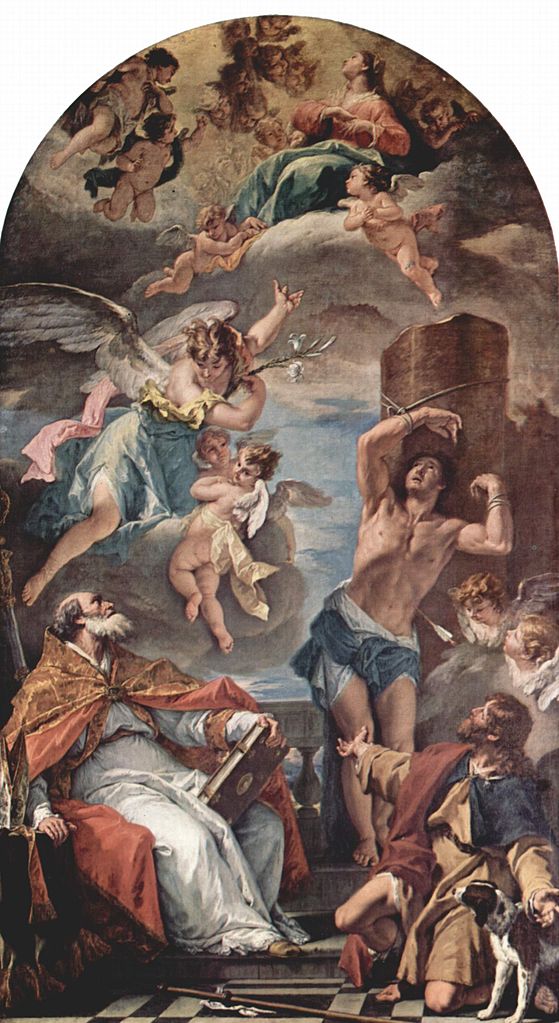
The Virgin Mary in Glory with Archangel Gabriel, and Saints Eusebius of Vercelli (seated), Saint Sebastian, and Saint Roch, Sebastiano Ricci.
In a General Audience in October 2007, Pope Benedict XVI observed:
Therefore, Pastors, Eusebius said, must urge the faithful not to consider the cities of the world as their permanent dwelling place but to seek the future city, the definitive heavenly Jerusalem. This “eschatological reserve” enables Pastors and faithful, to preserve the proper scale of values, without ever submitting to the fashions of the moment and the unjust claims of the current political power. The authentic scale of values – Eusebius’ whole life seems to say – does not come from emperors of the past, or of today but from Jesus Christ….
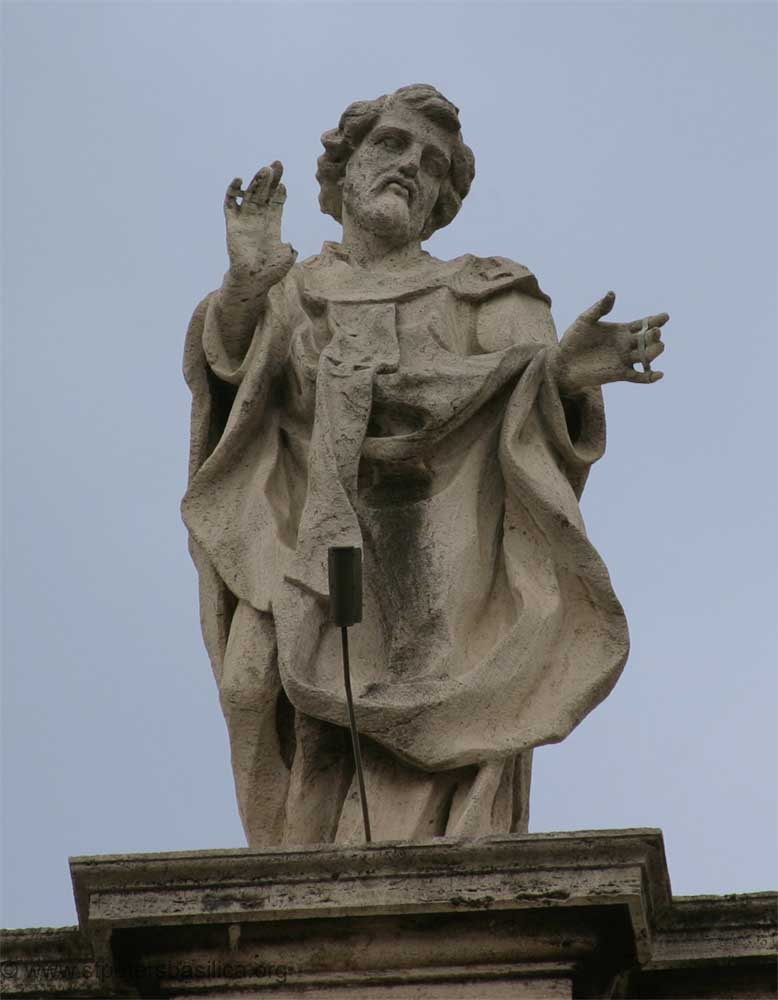
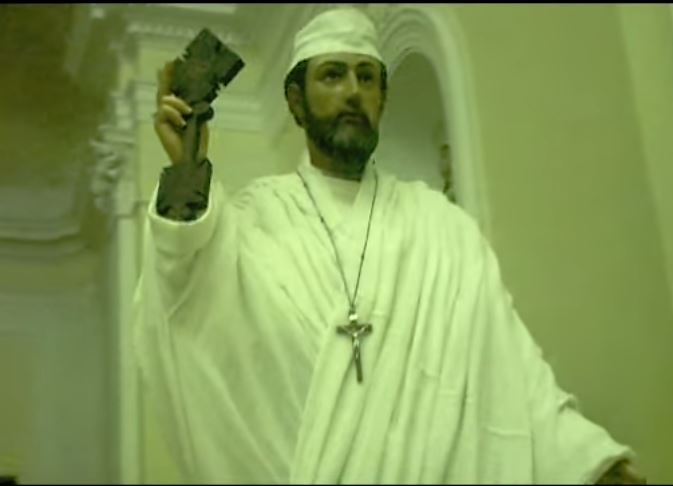
He died in 371. His relics are in a shrine in the Cathedral of Vercelli which is dedicated to him. The Statue below is on the Colonnade at St Peter’s, in the Vatican.
Our Lady of the Angels
St Auspicius of Apt
St Betharius of Chartres
St Centolla of Burgos
St Etheldritha of Croyland
Bl Frederic Campisani
Bl Giustino Maria Russolillo
Bl Gundekar of Eichstätt
Bl Joanna of Aza
Bl John of Rieti
St Maximus of Padua
St Pedro de Osma
St Plegmund
St Rutilius
St Serenus of Marseille
St Sidwell
St Pope Stephen I
—
Martyred in the Spanish Civil War:
Bl Fernando Olmedo Reguera
Bl Miguel Amaro Rodríguez
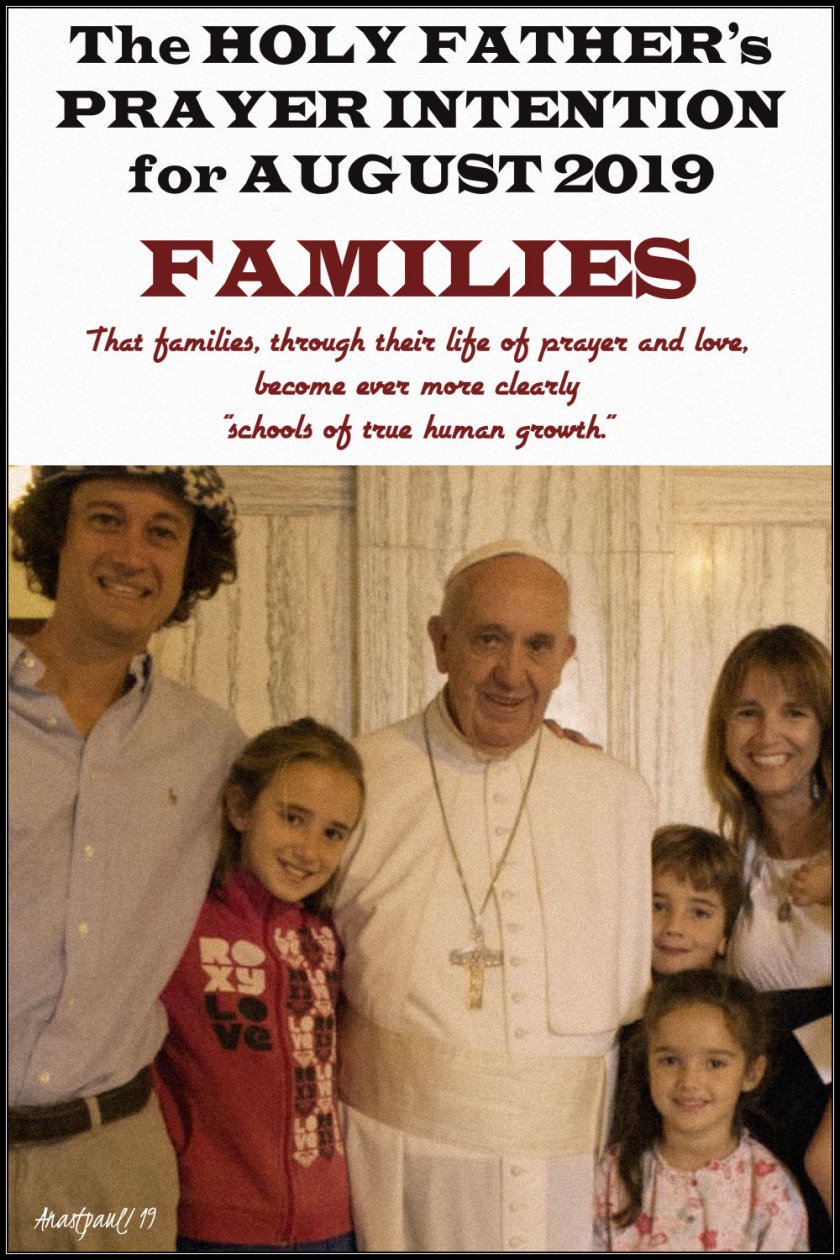
The Holy Father’s Prayer Intention for August 2019
FAMILIES
That families, through their life of prayer and love, become ever more clearly “schools of true human growth.”
“The family is the foundation of co-existence and a remedy against social fragmentation. Children have a right to grow up in a family, with a father and a mother, capable of creating a suitable environment, for the child’s development and emotional maturity.”
Pope Francis, Humanum Conference, November 17, 2014
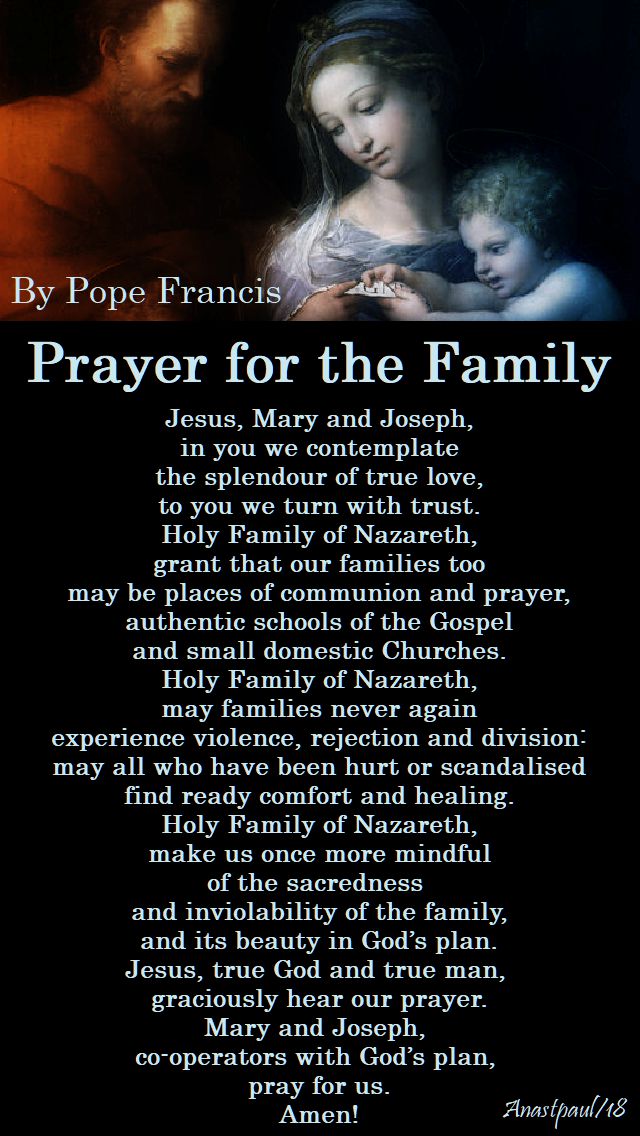
Pope Francis Prayer for the Family
Jesus, Mary and Joseph,
in you we contemplate
the splendour of true love,
to you we turn with trust.
Holy Family of Nazareth,
grant that our families too
may be places of communion and prayer,
authentic schools of the Gospel
and small domestic Churches.
Holy Family of Nazareth,
may families never again
experience violence, rejection and division.
May all who have been hurt or scandalised
find ready comfort and healing.
Holy Family of Nazareth,
make us once more mindful
of the sacredness
and inviolability of the family,
and its beauty in God’s plan.
Jesus, true God and true man,
graciously hear our prayer.
Mary and Joseph,
co-operators with God’s plan,
pray for us.
Amen!
(composed for the Synod on the Family and therefore, slightly adapted)
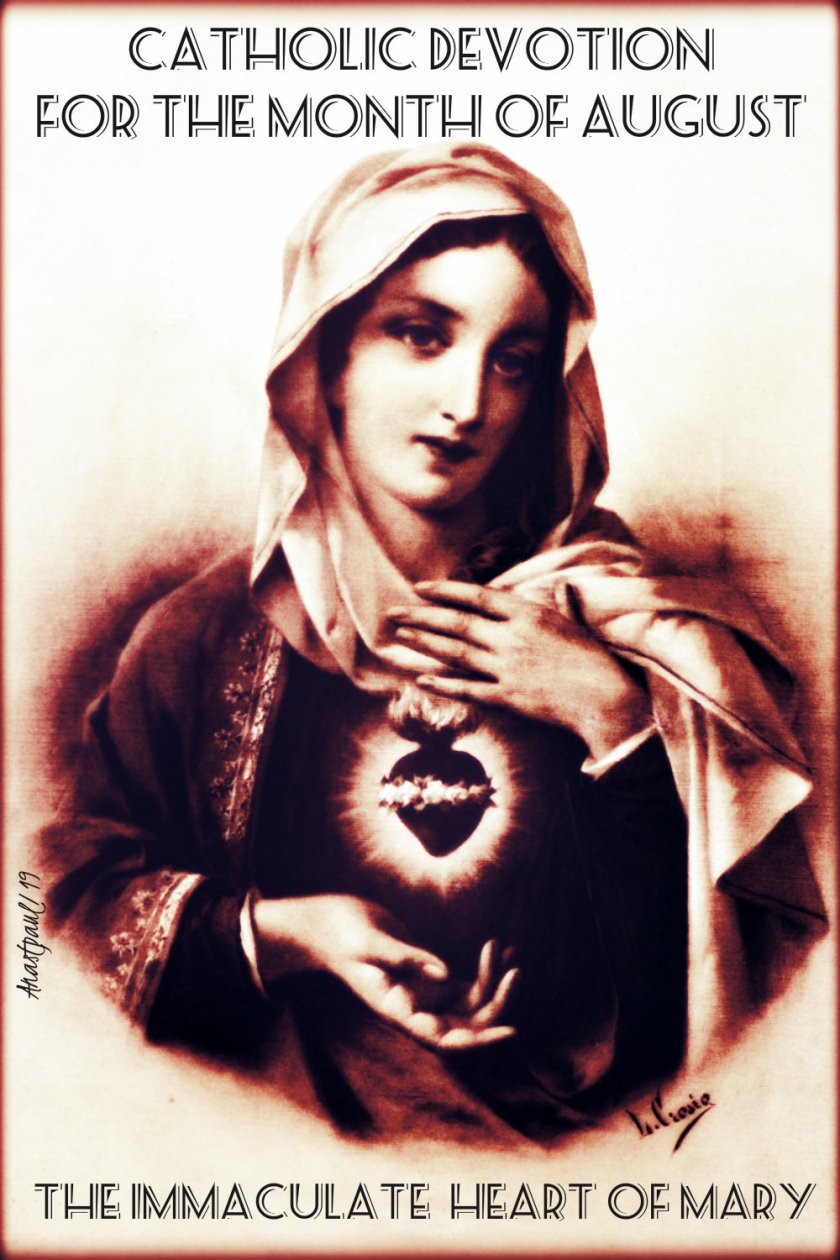
August – The Month of the Immaculate Heart of Mary
The Catholic Church dedicates the month of August to the Immaculate Heart of Mary. The Immaculate Heart is often venerated together with the Sacred Heart of Jesus (the devotion we celebrate in June) and, with good reason. Just as the Sacred Heart represents Christ’s love for mankind, the Immaculate Heart represents the desire of the Blessed Virgin to bring all people to her Son.
There is no better example of the Christian life than that offered by Mary. We do not worship Mary or place her above Christ, but we come to Christ through Mary, as Christ came to us through her.
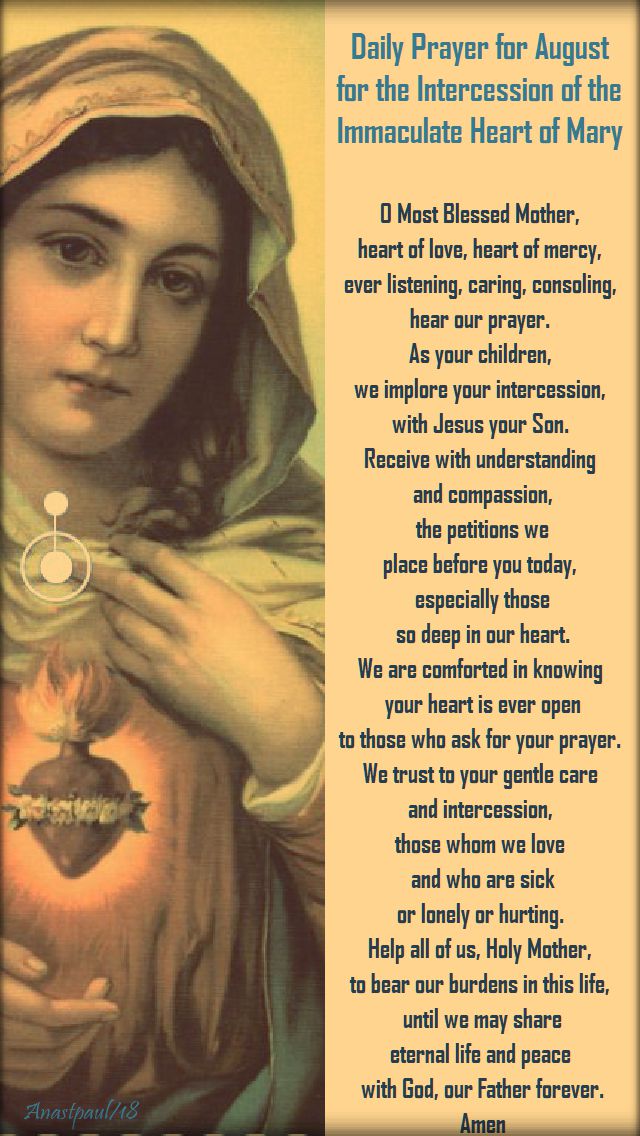
Daily Prayer for August for the Intercession of the Immaculate Heart of Mary
O Most Blessed Mother,
heart of love, heart of mercy,
ever listening, caring, consoling, hear our prayer.
As your children, we implore your intercession,
with Jesus your Son.
Receive with understanding and compassion,
the petitions we place before you today,
especially those so deep in our heart.
We are comforted in knowing your heart is ever open
to those who ask for your prayer.
We trust to your gentle care and intercession,
those whom we love
and who are sick or lonely or hurting.
Help all of us, Holy Mother,
to bear our burdens in this life,
until we may share eternal life and peace
with God, our Father forever.
Amen
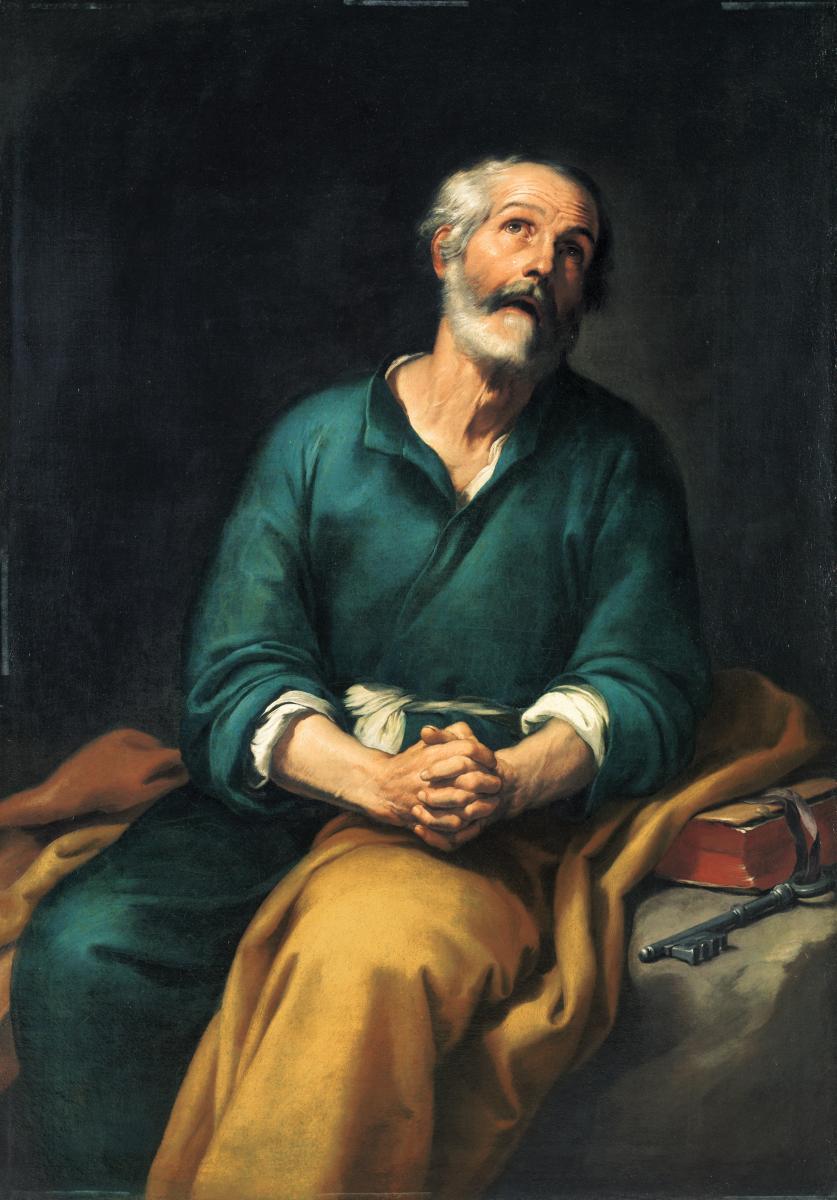
Thought for the Day – 1 August – Thursday of the Seventeenth week in Ordinary Time, Year C and the Feast of St Peter in Chains
Homily of St Augustine
Peter alone among the Apostles was accounted worthy to hear – A – men I say to thee, that thou art Peter and upon this rock I will build my Church. Worthy indeed was he, to be the foundation-stone, the supporting pillar, the key to the kingdom, in building up the peoples into the house of God. Concerning this, the divine word says – And they laid, it says, their sick, that when Peter passed by, his shadow at the least might fall on them. If at that time the shadow of his body could give aid, how much more now can the fullness of his power? If a mere breath of air from him, as he passed by, was of such benefit to suppliants, how much more his favour now that he remains steadfast? With good reason is the iron of those Penal chains held throughout all the churches of Christ to be more precious than gold.
If the shadow of him who visited was so potent to cure, how much more the chains of him who binds? If even the mere appearance of an empty image could have the force of healing in it, how much more healthfulness should the chains, with which he suffered, whose iron weight had pressed upon his sacred members, deserve to draw forth from his body? If he was so mighty to help his suppliants before his martyrdom, how much more must he avail after his triumph?
Happy those bonds, which by touching the Apostle rendered him a Martyr and so from manacles and fetters themselves were changed into a crown! Happy chains, which brought their prisoner even unto the cross of Christ, not so much for condemnation as for consecration!
Jesus said to His disciples – Who do men say that the Son of Man is? Peter answered and said – Thou art Christ, the son of the living God. And I say to thee – that thou art Peter and upon this rock I will build my Church!
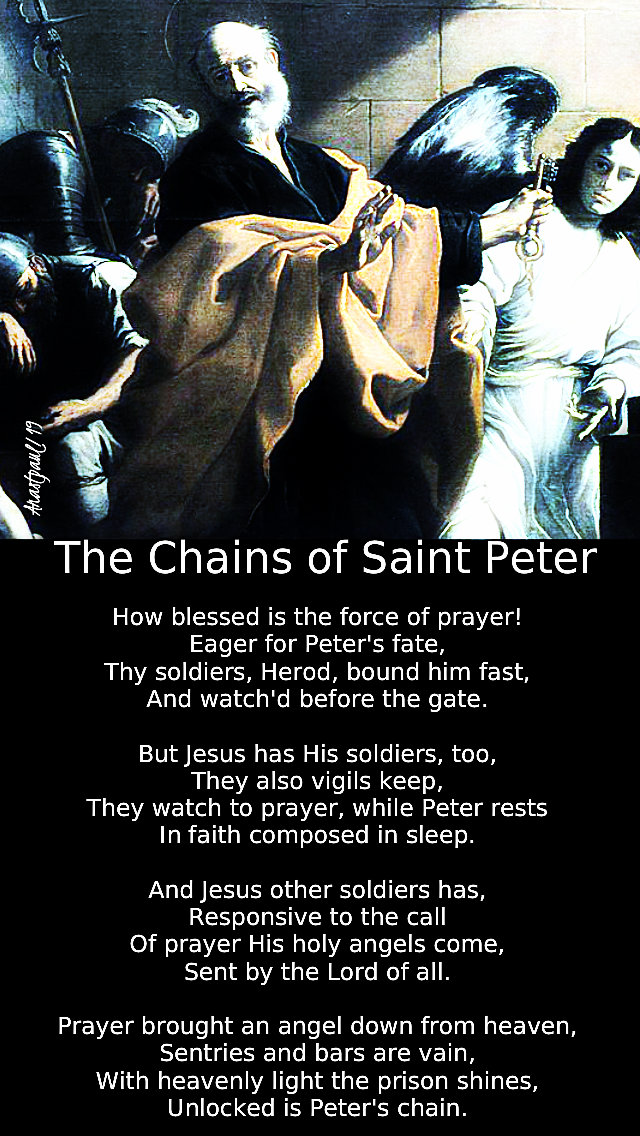
Hymn The Chains of Saint Peter
How blessed is the force of prayer!
Eager for Peter’s fate,
Thy soldiers, Herod, bound him fast,
And watch’d before the gate.
But Jesus has His soldiers, too,
They also vigils keep,
They watch to prayer, while Peter rests
In faith composed in sleep.
And Jesus other soldiers has,
Responsive to the call
Of prayer His holy angels come,
Sent by the Lord of all.
Prayer brought an angel down from heaven,
Sentries and bars are vain,
With heavenly light the prison shines,
Unlocked is Peter’s chain.
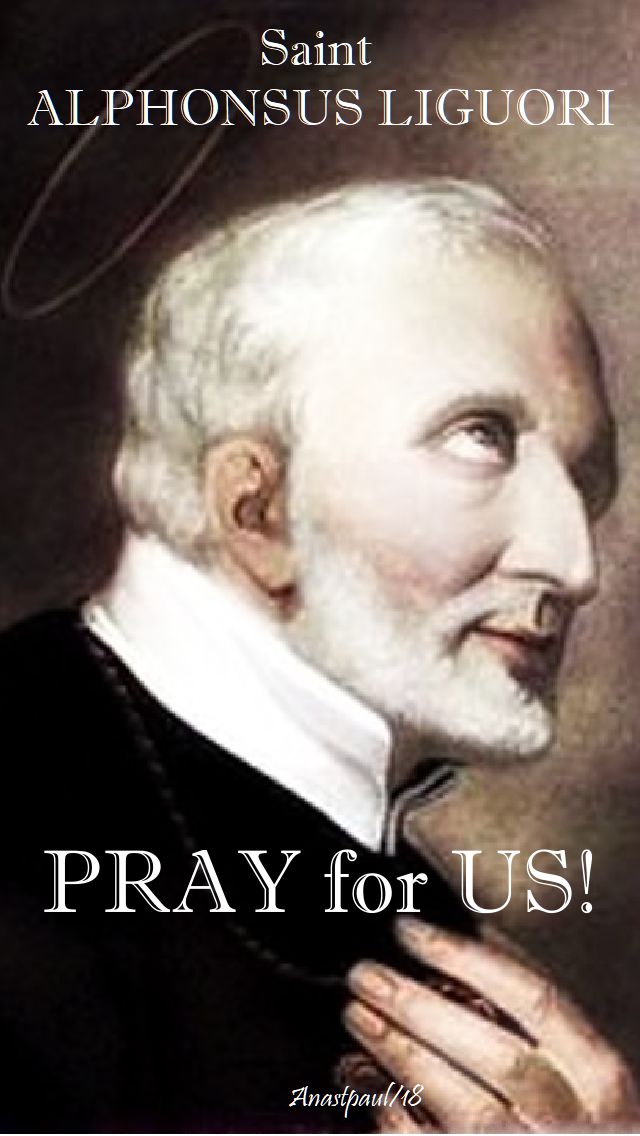
Quote/s of the Day – 1 August – Thursday of the Seventeenth week in Ordinary Time, Year C and the Memorial of St Alphonsus Liguori (1696-1787) Doctor of the Church
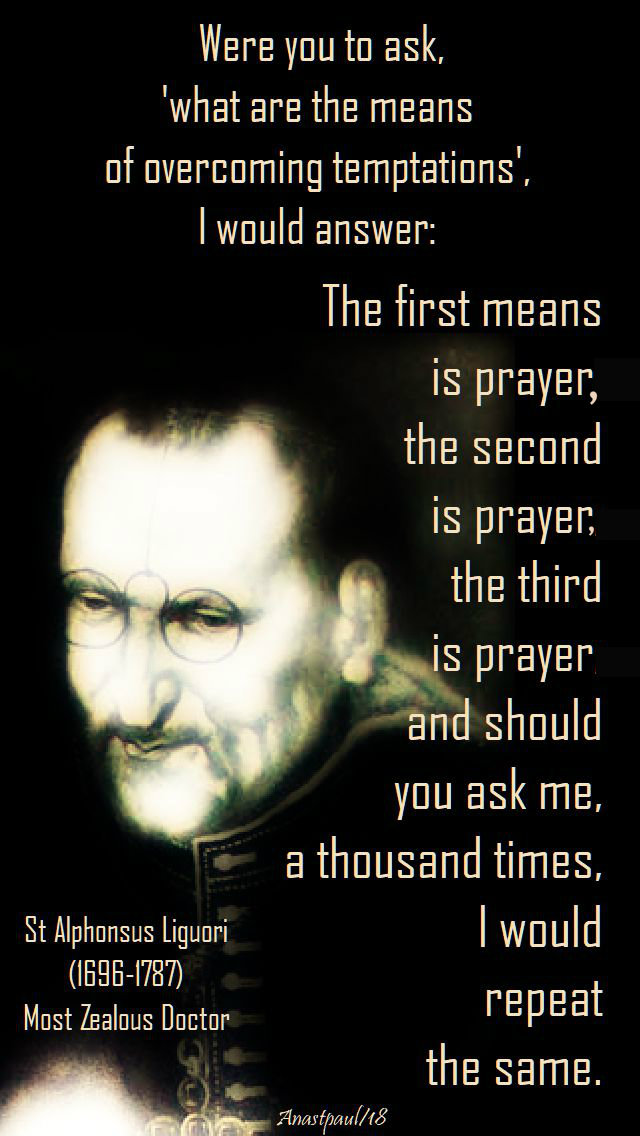
“Were you to ask, ‘what are the means of overcoming temptations’, I would answer: the first means is prayer, the second is prayer, the third is prayer and should you ask me a thousand times, I would repeat the same.”
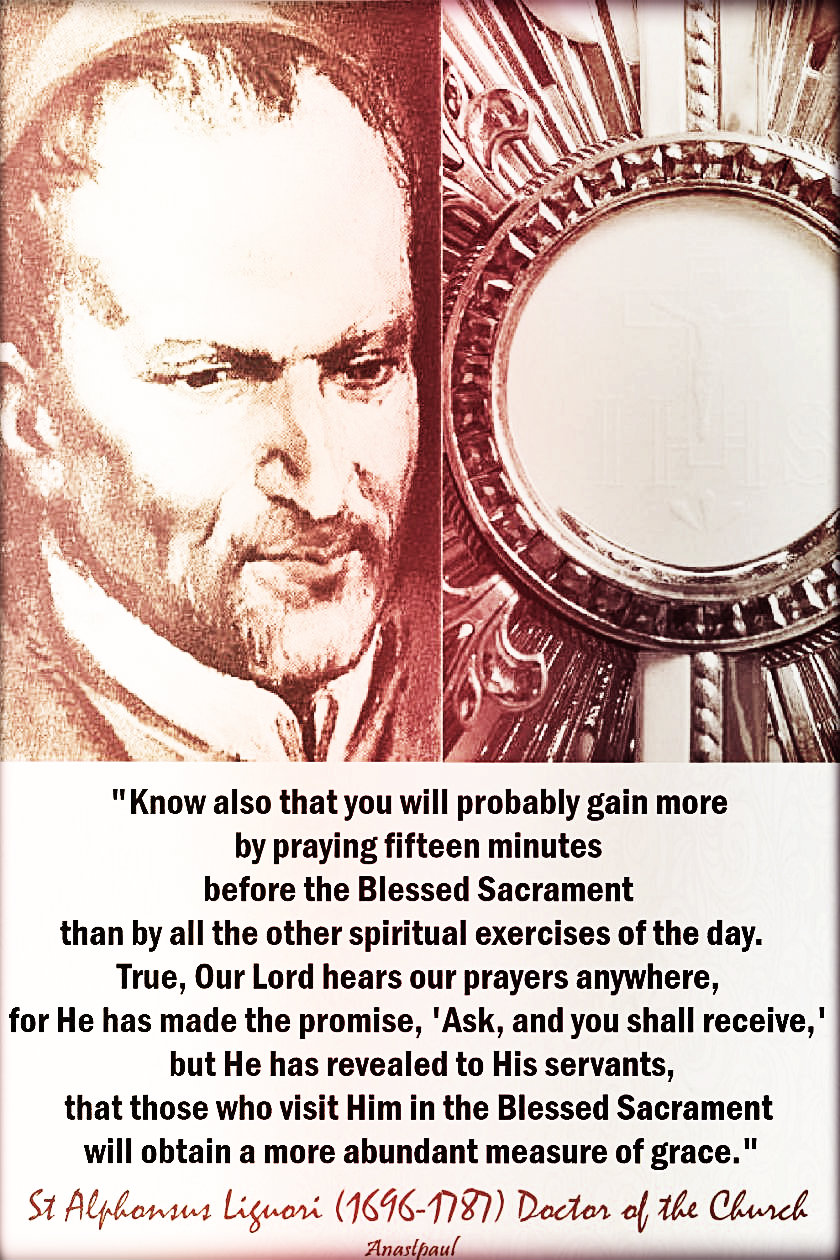
“Know also that you will probably gain more by praying fifteen minutes before the Blessed Sacrament than by all the other spiritual exercises of the day. True, Our Lord hears our prayers anywhere, for He has made the promise, ‘Ask, and you shall receive,’ but He has revealed to His servants, that those who visit Him in the Blessed Sacrament will obtain a more abundant measure of grace.”
“Without prayer, we have neither light nor strength, to advance in the way which leads to God.”
“He who prays most receives most.”
“Of all devotions, that of adoring Jesus in the Blessed Sacrament is the greatest, after the sacraments, the one dearest to God and the one most helpful to us.”
St Alphonsus Liguori (1696-1787) Doctor of the Church
One Minute Reflection – 1 August – Thursday of the Seventeenth week in Ordinary Time, Year C, Gospel: Matthew 13:47–53 and the Memorial of St Alphonsus Liguori (1696-1787) Doctor of the Church
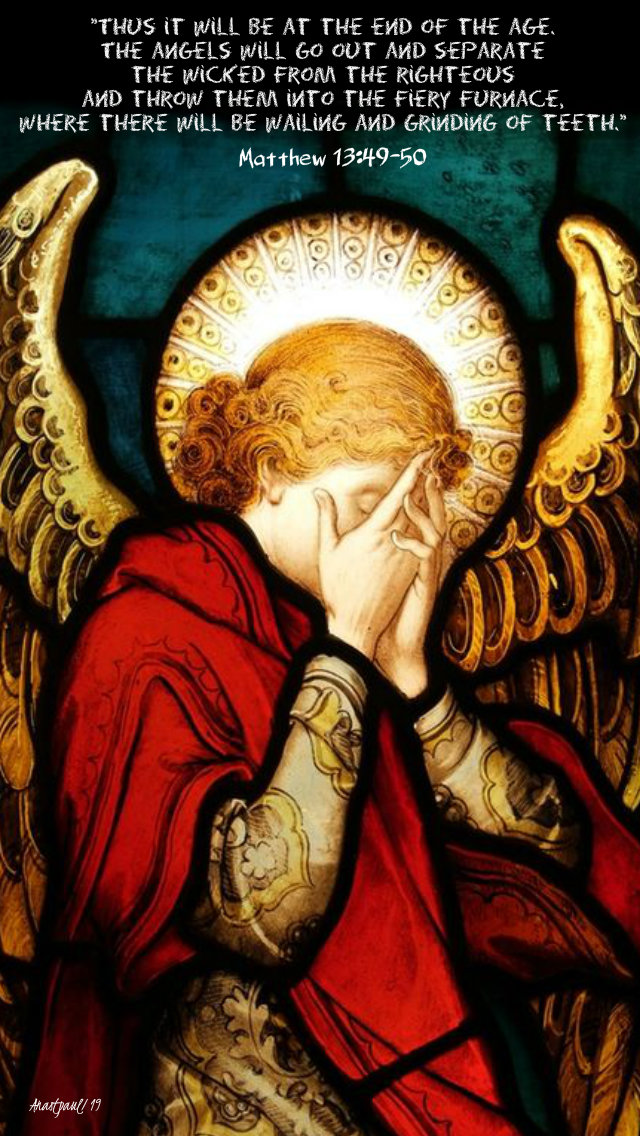
“Thus it will be at the end of the age. The angels will go out and separate the wicked from the righteous and throw them into the fiery furnace, where there will be wailing and grinding of teeth.” … Matthew 13:49-50
REFLECTION – “St Augustine and St Thomas define mortal sin to be a turning away from God – that is, the turning of one’s back upon God, leaving the Creator for the sake of the creature.
What punishment would that subject deserve who, while his king was giving him a command, contemptuously turned his back upon him to go and transgress his orders?
This is what the sinner does and this is punished in hell with the pain of loss,
that is, the loss of God, a punishment richly deserved by him who in this life turns his back upon his sovereign good.” … St Alphonsus Liguori (1696-1787) Doctor of the Church
PRAYER – Almighty God and Father, grant us this day the grace to live in Your light and follow your precepts. Desert us not in our temptations but grant us Your strength against the power of the evil one. May our deeds be ever true to Your commandments and our thoughts pleasing in Your sight. May the pattern and prayers of St Alphonsus be an inspiration on our way. Through Christ our Lord, with the Holy Spirit, God for all eternity, amen.
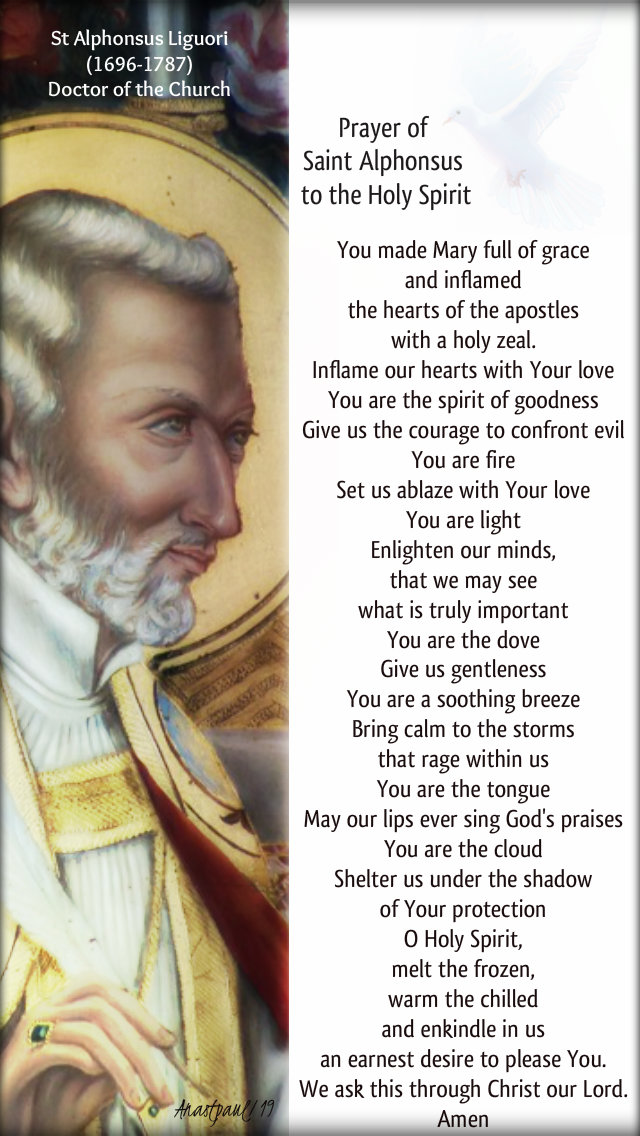
Our Morning Offering – 1 August – Thursday of the Seventeenth week in Ordinary Time, Year C and the Memorial of St Alphonsus Liguori (1696-1787) Doctor of the Church
Prayer of Saint Alphonsus to the Holy Spirit
You made Mary full of grace
and inflamed the hearts of the apostles
with a holy zeal.
Inflame our hearts with Your love
You are the spirit of goodness,
Give us the courage to confront evil
You are fire,
Set us ablaze with Your love
You are light,
Enlighten our minds,
that we may see what is truly important.
You are the dove,
Give us gentleness
You are a soothing breeze,
Bring calm to the storms that rage within us.
You are the tongue,
May our lips ever sing God’s praises
You are the cloud,
Shelter us under the shadow of Your protection
O Holy Spirit,
melt the frozen,
warm the chilled
and enkindle in us an earnest desire to please You.
We ask this through Christ our Lord.
Amen
1 August – The Feast of Saint Peter in Chains
The feast was originally kept in Rome, Italy to commemorate the dedication of the Church of Saint Peter on the Esquiline Hill built by Eudoxia Licinia in 442 and rebuilt by Adrian I in the 8th century. When the chains which Saint Peter had worn in prison and from which he was freed by angelic intervention were later venerated there, the feast received its present name.
The date when these chains were brought from Jerusalem is disputed – some claim they were brought in 116 by travellers sent in search of them by Saint Balbina and her father Saint Quirinus, while others think Saint Eudoxia brought them in 439. St Pope Leo the Great united them to the chains with which Saint Peter had been fettered in the Mamertine Prison, forming a chain about two yards long which is preserved in a bronze safe and guarded by a special confraternity. Patronages – diocese of Annecy, France, Donnas, Italy.
The Feast was removed from the Liturgical Calendar as a separate feast in 1962 but is celebrated together with the Feast of Sts Peter and Paul on 29 June. See the Getty image below.
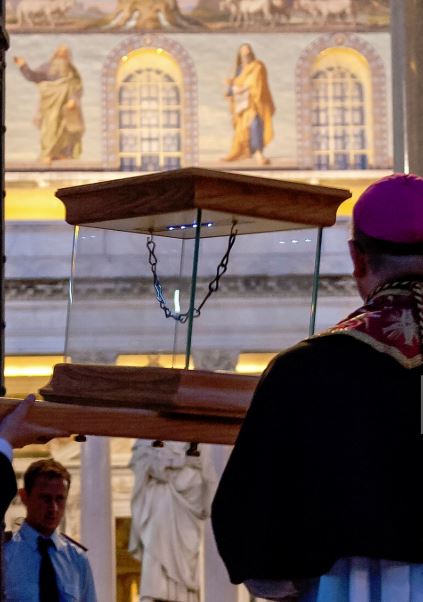
ROME, ITALY – 29 JUNE 2018: The faithful carry in procession the relic of the chains of St Paul on the occasion of the Feast of Saints Peter and Paul, around the Basilica of Paul Outside the Walls on 29 June 2018 in Rome, Italy. The surviving links of the chain that held St Paul prisoner in Rome, between 61 and 63 are displayed in an illuminated theca, near the tomb of the saint inside the Basilica of St Paul Outside the Walls. St Peter’s Chains are not carried in a similar way, being permanently protected.
St Peter in Chains
by Father Francis Xavier Weninger, 1876
The Holy Church, today, celebrates a special feast in commemoration of the great benefit which God bestowed upon His people by miraculously delivering St Peter, the visible head of the church, from prison. The entire event is described in the Acts of the Apostles, by St Luke. Herod Agrippa, a son of Aristobulus, favored by the Roman Emperor Claudius, ruled over Judaea, with the title of king. To give more stability to his reign, he endeavoured to make himself beloved by the Jews, for which there was no easier way than to persecute the Christians, especially those who fearlessly proclaimed the Gospel of Christ, as did the holy Apostles. He had, therefore, apprehended and soon after beheaded, James the Great, brother of St John, which bloody deed gave the Jews great satisfaction. To increase this, Herod commanded them to seize St Peter, intending to make away with him in the same manner. His command was executed, Peter was taken prisoner, chained and locked in a narrow dungeon, which was guarded so vigilantly, that he could not escape. It was then near the Easter Festival, after which St Peter was to be beheaded. The Christians, in deep distress, were praying day and night, that the Almighty would not permit His flock to be so soon deprived of its shepherd.
There was no human power to save him but God, hearing the prayer of His people, delivered him by a miracle. On the eve of the day on which he was to be executed, God sent an Angel to set him free. Although heavily laden with chains, the holy Apostle slept peacefully, guarded by the soldiers. The Angel, who by his brightness, illumined the dungeon, struck him on the side and awakened him, saying: “Arise quickly. Gird thyself; put on thy sandals and cloak and follow me.” The Apostle, whose chains had fallen from his hands and who thought it all a dream, obeyed and followed the Angel. They passed the first and second watches without attracting their attention and reached the iron gate which led into the street. The gate opened without the aid of human hands.
After having conducted St Peter through one street, the Angel vanished and was seen no more. Not until then did the holy Apostle realise that his deliverance was not a dream but a reality. Hence he began to praise the Almighty, exclaiming: “Now I know truly that the Lord has sent his Angel and delivered me out of the hands of Herod and from all the expectation of the people of Judaea.” He proceeded immediately to the house of Mary, the mother of John Mark, where the faithful were assembled in prayer.
When he knocked at the door, a servant, named Rhode, came and asked who was there. Judging by the voice that it was Peter, she was so greatly startled with joy and astonishment, that, without opening the door, she ran back to announce the news. They all believed that she was insane but as she reiterated her words, some said that it must be his guardian Angel. Meanwhile, the Saint repeated his knocking at the door. They opened it and perceived, with amazement, their beloved shepherd safe and free from chains. Their joy on beholding him was as great as had been their grief when he was taken prisoner. Having given the sign for silence, St Peter related all that had happened to him. They all gave thanks to Divine Providence when he had ended and learned to trust in future to the heavenly power and mercy.
Among the sermons of St Chrysostom, there is one in which he asserts, that the chains by which St Peter had been bound to the ground, came into the possession of the Christians soon after his deliverance and were held by them in great honour. Eudoxia, wife of the emperor Theodosius the Younger, received them as a present from the patriarch Juvenal, when on a visit to the holy places and sent one of them to the Church at Constantinople. The other she gave to her daughter Eudoxia, who married the Emperor Valentinian III. Eudoxia showed the chain to Pope Sixtus III., who, on his part, showed her the one with which St Peter had been bound, before the Emperor Nero sentenced him to die. No sooner had the two chains been held together, than they suddenly united as if they had been but one chain and forged by the same hand. This miracle increased the veneration in which these chains were held and actuated Eudoxia to build a special church at Rome for their keeping, where they can still be seen. Many sick were healed by their touch and many possessed were delivered, among the latter was a Count of the court of the Emperor Otho, who, in the year 969, was sent to Rome to be freed from the Evil Spirit. Pope John XIII had hardly touched the count’s neck with the holy chains, when he was relieved and his torments were ended.
St Gregory the Great, writes that it was considered a great happiness to possess a few particles filed off from these chains and that many persons devoutly wore them enclosed in golden crosses and lockets around their necks. Experience has shown that the touch of these crosses or lockets has restored health to many a sick person. A nobleman, who scoffed at this and, in derision, dared to break one of these crosses, was severely chastised. He was instantly possessed by the Evil One and became so enraged that he took his own life, as St Gregory relates. St Augustine states that the iron of these precious chains is justly esteemed far above gold. Blessed are those fetters which touched the apostle and made him a martyr. “The touch of the blessed limbs of St Peter has sanctified the instruments of torture.” In another place the same Saint says: “If the shadow of St Peter possessed a healing virtue, how much greater power must the chains of his sufferings have derived from him.”
Portiuncula Indulgence: An indulgence which may be gained in any church so designated by the bishop, by all the faithful who after Confession and Holy Communion, visit such churches between noon of 1 August and midnight of 2 August, or on the Sunday following. The indulgence is toties quoties and is applicable to the souls in Purgatory.
Feast Saint Peter in Chains
—
St Adela Mardosewicz
Bl Aleksy Sobaszek
St Alexander of Perga
St Almedha
St Arcadius
St Attius of Perga
St Buono
St Brogan
St Charity
St Ethelwold of Winchester
St Exuperius of Bayeux
St Faith
St Faustus
St Felix of Gerona
St Friard
Bl Giovanni Bufalari
St Hope
St Jadwiga Karolina Zak
St Jonatus
St Justin of Paris
St Kenneth of Wales
St Leontius of Perga
St Maur
St Nemesius of Lisieux
Bl Orlando of Vallombrosa
St Peregrinus of Modena
St Rioch
Bl Rudolph
St Secundel
St Secundus of Palestrina
St Sophia
St Verus of Vienne
—
Holy Maccabees: Jewish dynasty which began with the rebellion of Mathathias and his five sons against the Syrian king, Antiochus IV (168 BC) and ruled the fortunes of Israel until the advent of Herod the Great. Syrian attempts to force Greek paganism on the Jews, the profanation of the Temple at Jerusalem and the massacre which followed, brought the nation to arms under Mathathias, a priest of the sons of Joarib. At the death of Mathathias, Judas Machabeus, his third son, drove the Syrians and Hellenists out of Jerusalem, rededicated the Temple and began an offensive and defensive alliance with the Romans. Before the treaty was concluded, however, Judas, with 800 men, risked battle at Laisa with an overwhelming army of Syrians under Bacchides, and was slain. He was succeeded in command by his youngest brother, Jonathan (161 BC). Jonathan defeated Bacchides, revenged the death of his brother and made peace with Alexander who had usurped the throne of Demetrius, the successor to Antiochus. A period of peace followed in which Jonathan ruled as high priest in Jerusalem but Tryphon, who was plotting for the throne of Asia, treacherously captured him at ptolemais and later put him to death. The captaincy of the armies of Israel then fell to Simon, the second son of Mathathias. Under him the land of Juda flourished exceedingly. He obtained the complete independence of the country and a grateful people bestowed upon him the hereditary kingship of the nation. His rule marked five years of uninterrupted peace. He was treacherously slain by his son-in-law, Ptolemy, about the year 135 BC After Simon the race of the Machabees quickly degenerated. In 63 BC the Romans thought it necessary to interfere in the fratricidal war between Hyrcanus II and Aristobulus II. With this interference and the advent of Herod the Great the sceptre passed forever from the land of Juda. The story of the Machabees is written in the two books of the Old Testament which bear that name.
Saints Faith, Hope and Charity: The daughters of Saint Sophia. While still children, they were tortured and martyred for their faith in the persecutions of Hadrian. They were scourged, thrown into a fire, and then beheaded.
Martyrs of Nowogrodek – 11 beati: A group of eleven Holy Family of Nazareth nuns who were murdered by the Nazi Gestapo in exchange for 120 condemned citizens of Nowogrodek, Belarus who were scheduled for revenge killings. They are –
• Adela Mardosewicz
• Anna Kukolowicz
• Eleonora Aniela Józwik
• Eugenia Mackiewicz
• Helena Cierpka
• Jadwiga Karolina Zak
• Józefa Chrobot
• Julia Rapiej
• Leokadia Matuszewska
• Paulina Borowik
• Weronika Narmontowicz
They were machine-gunned by firing squad on 1 August 1943 by the Gestapo about three miles outside Novogrudok (Nowogródek), Hrodzyenskaya voblasts’, in Nazi occupied Belarus and buried on the site of the execution in a common grave. One of their surviving sisters, Maria Malgorzata Banas, located the grave on 19 March 1945 and tended to it until her death in 1966. Their relics have since been re-interred in a common sarcophagus in the chapel of the Novograd Farny Church (the Church of the Transfiguration, also known as Biala Fara or the White Church). They were Beatified on
5 March 2000 by St Pope John Paul II in Rome, Italy.
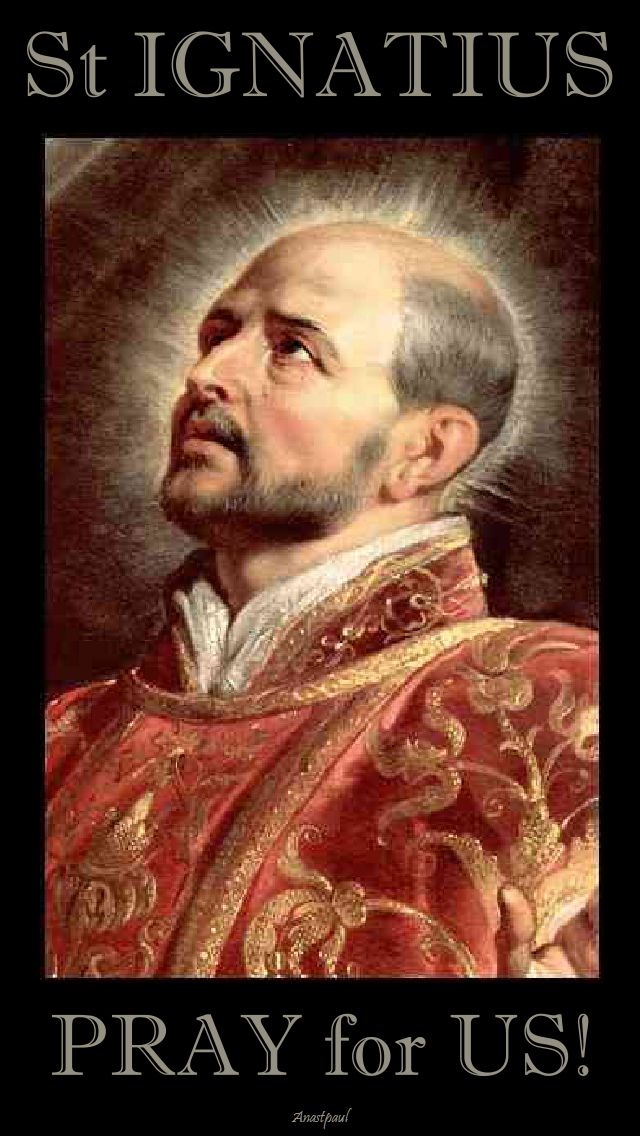
Thought for the Day – 31 July – The Memorial of St Ignatius Loyola (1491-1556)
Learn a bit more about St Ignatius of Loyola
Ignatius Loyola is best known as the person who founded the Jesuits and whose spiritual insights gave birth to Ignatian spirituality and the Spiritual Exercises. A lesser-known fact is that the cannonball wound he received in battle is actually what led to his conversion experience. Without this conversion, there would be no Jesuits, no Ignatian spirituality.
Listed below are seven more fun facts about St Ignatius of Loyola that you’re unlikely to hear in general conversation about this 16th-century saint:
He once allowed the donkey on which he was riding to determine whether he should follow and bodily attack someone he thought had insulted the Blessed Virgin Mary. (Fortunately, the donkey chose the path that led away from the insulter.)
He thought that his leg had been set poorly after the cannonball incident and that, as a result, he wouldn’t look good in his courtier’s tights. So he had a doctor re-break his leg and start over!
He may be the only Canonised saint to have a notarised police record—for night-time brawling, with intent to inflict serious harm.
He was hauled before the Spanish Inquisition on a number of occasions.
At age 33, he joined a class of young children so he could learn Latin.
He sometimes cried with so much devotion at Mass that he couldn’t continue and he feared he would lose his eyesight.
He penned over 6,800 letters in his lifetime, making him one of the most prolific letter writers of his time—or any time, for that matter.
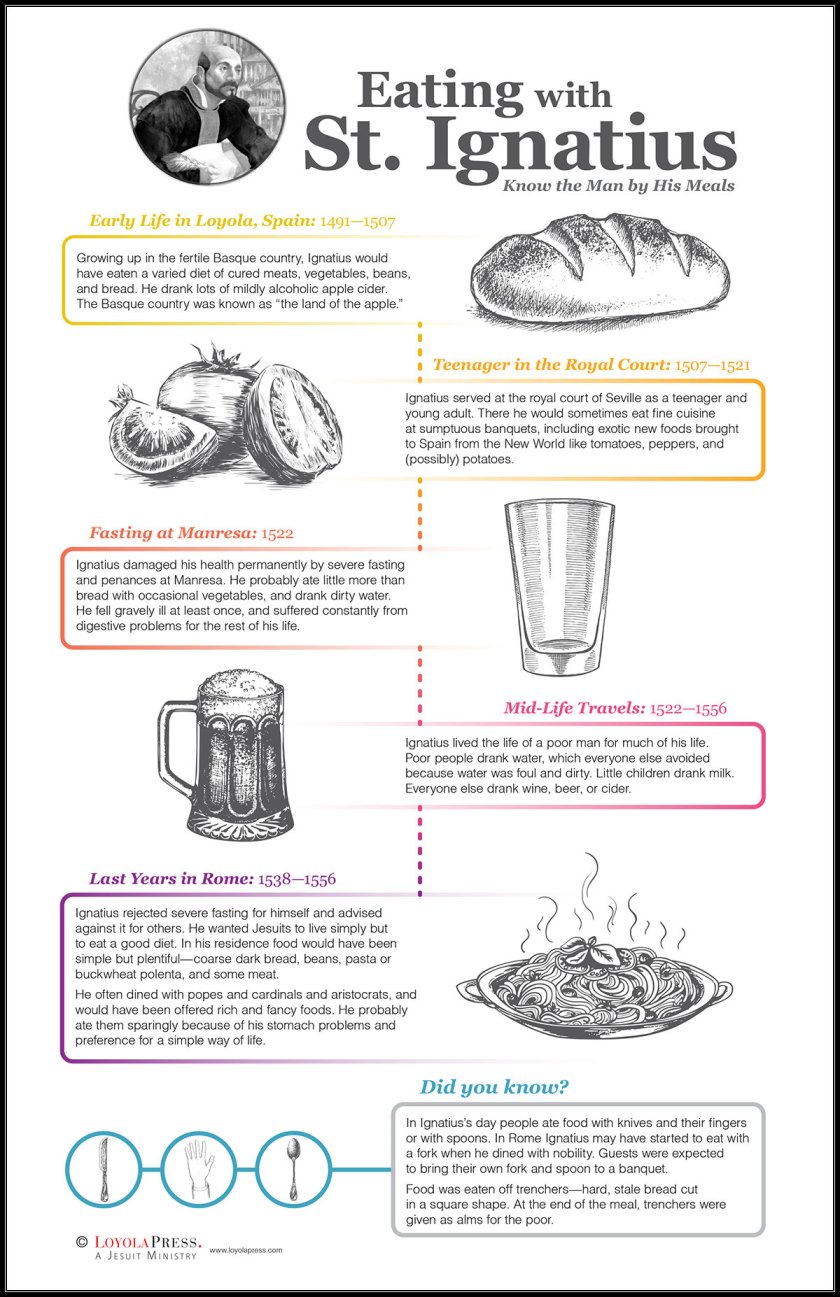
And below is a fun infographic by Loyola Press eating alongside St Ignatius as he grew up in Loyola, Spain, servds in the royal court, fasted after his conversion and later, lived out his last years in Rome.
The food Ignatius ate offers rich insight into his spiritual transformation, from the sumptuous feasts he enjoyed at court, to the severe fasting he subjected himself to post-conversion.
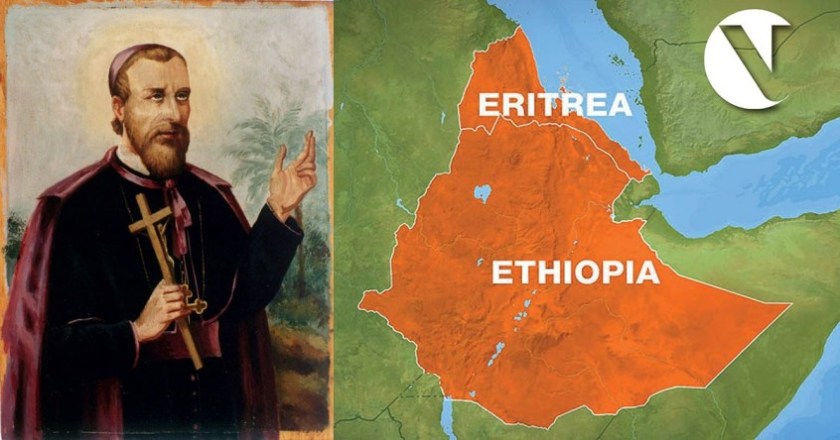
Second Thoughts of the Day – 31 July – The Mmorial of Saint Giustino de Jacobis CM (1800-1860) Apostolic Vicar of Abyssinia – Ethiopia and Eritrea
The great devotion to St Giustino but known as St Justin in Ethiopia/Eritrea
Eritrea is a recent nation in the Horn of Africa, on the shore of the Red Sea. It has an area of 127,750 sq. km. The population is calculated as 3,500,000 who live in Eritrea, with about a million scattered all over the world. It achieved its independence from Ethiopia after a long war of liberation in May 1991, later confirmed by a referendum in April 1993 with 99.8% in favour. The population is 50% Christian, the majority of whom are Orthodox Copts and 50% Moslem. Catholics are about 20% and Protestants 5%. Devotion to St Giustino (also known as Justin) is not confined to Catholics but is also found among the Orthodox and Moslems.
This devotion to St Justin, contains much of prayer and veneration and these two things which the Eritreans and Ethiopians do – they wash themselves over a period of two weeks in water which has been blessed beside St Justin’s tomb and they take a pinch of earth from the place in which he was first interred. By doing these two things his clients are convinced, that they will be healed of whatever form of illness from which they may be suffering. This may seem extremely pious — but this is what lovers of St Justin do and they feel miraculously healed. That is why at the moment his tomb in Hebo is still a place of pilgrimage. And also, in times of disaster and war, that is why it is to this tomb that many people come, trusting in his intercession. It is also where they come in times of drought to ask for rain through his intercession.
After his beatification several religious communities were established in Eritrea and also in Ethiopia. And many of them, before embarking on their ministry, had the custom of making a pilgrimage to his tomb in Hebo to ask his intercession for the success of their undertaking. Even today, his grave is one of the few pilgrimage destinations in all Eritrea and it will still be so tomorrow, at least to a large extent, in northern Ethiopia. The Vincentian Fathers and the Daughters of Charity have been there, beside his tomb, to welcome pilgrims since 1947-48. Diocesan priests usually have their annual retreats and pastoral meetings there in Hebo, in the presence of the saint. On the other hand, the place also lends itself to silence and recollection.
Many of them, because of their lack of historical knowledge combined with strong love and devotion, think and believe that St Justin was an Abyssinian, in other words one of themselves. Their devotion and admiration for and their love of, this man are so strong that they say: “He could not be a Ferengì,” which means a foreigner.
The Vincentian missionaries, who were well aware of the virtues and holy life of Justin, made several efforts to have his remains brought back to Italy. But the Hebo villagers showed very decided opposition to this, and said:
“Abuna Jacob is our Father. At present his place is among his children. Here he gave birth to our faith. We love him and he loves us. And the proof of his love is his final wish. He asked to be kept among us and no one may go against the wish of a dying man. He is ours and we are his and we will hold on to him.”
Msgr Biancheri replied to them:
“Yes, a father should rest among his children but a mother has the right to the body of her own son and the Congregation is the Mother of Abuna Jacob. We are his brothers. Is it right, then, for you to go against a mother’s wishes?”
But the villagers held on stubbornly to their point of view and did not allow the saint’s remains to be taken away by the missionaries. And Msgr Biancheri, noting the unwavering resolution of the people of Hebo, had to give in and then came the selection of those who were to keep vigil, day and night, over the remains of their father.
It remains to be said: “Yes, God sent Jesus Christ to save the human race. But this same God likewise sent, in Jesus Christ, St Justin to save the Abyssinian people. St Justin made himself Abyssinian in everything in order to win the Abyssinians for God. That is what they think and firmly believe. May St Justin again today obtain for this people, who have so loved peace, reconciliation as well.”
Quote/s of the Day – 31 July – The Memorial of St Ignatius Loyola (1491-1556)
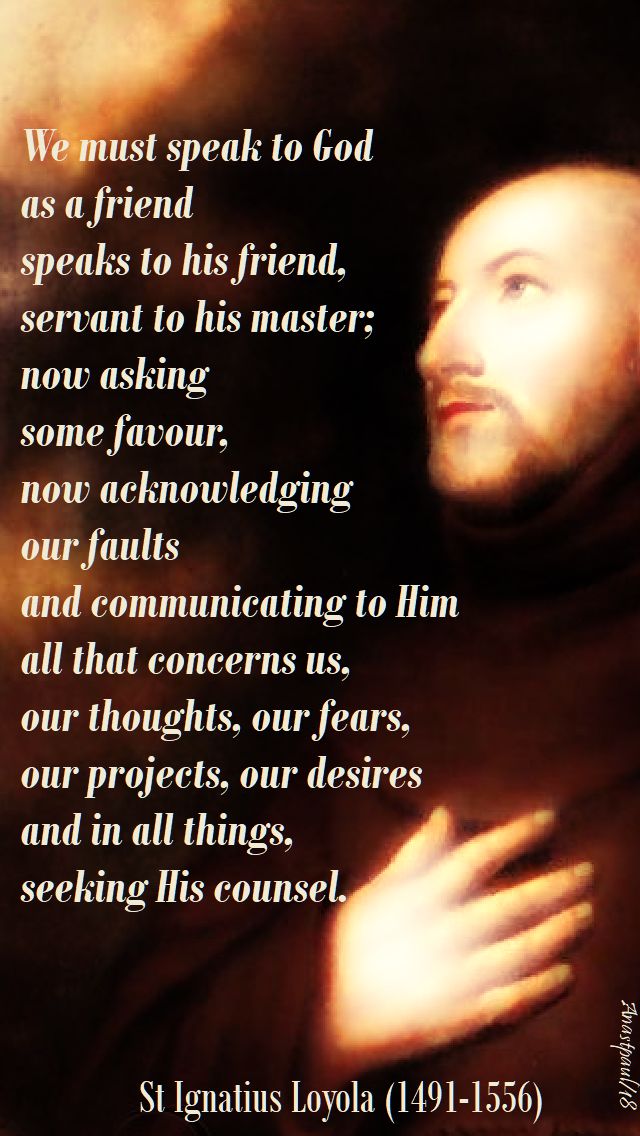
“We must speak to God as a friend speaks to his friend, servant to his master – now asking some favour, now acknowledging our faults and communicating to Him all that concerns us, our thoughts, our fears, our projects, our desires and in all things seeking His counsel.”
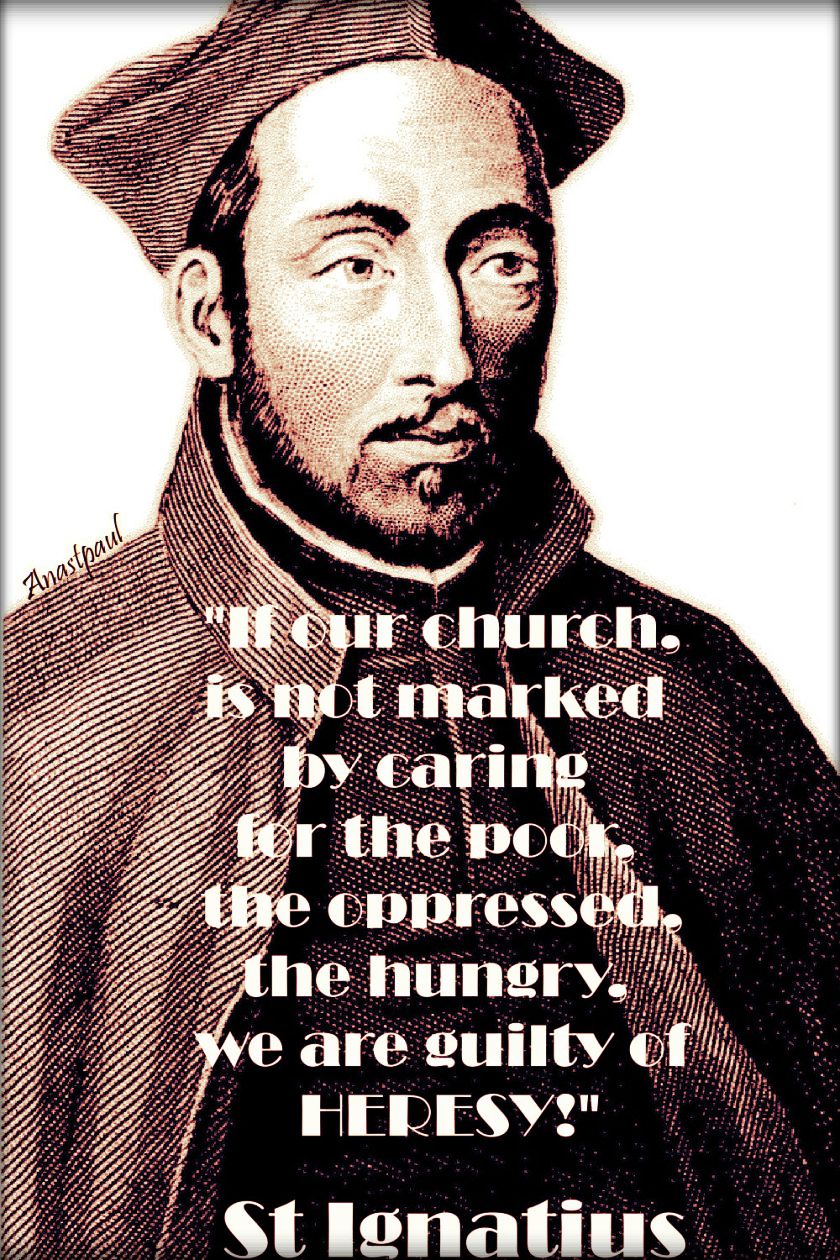
“If our church is not marked by caring for the poor, the oppressed, the hungry, we are guilty of heresy.”
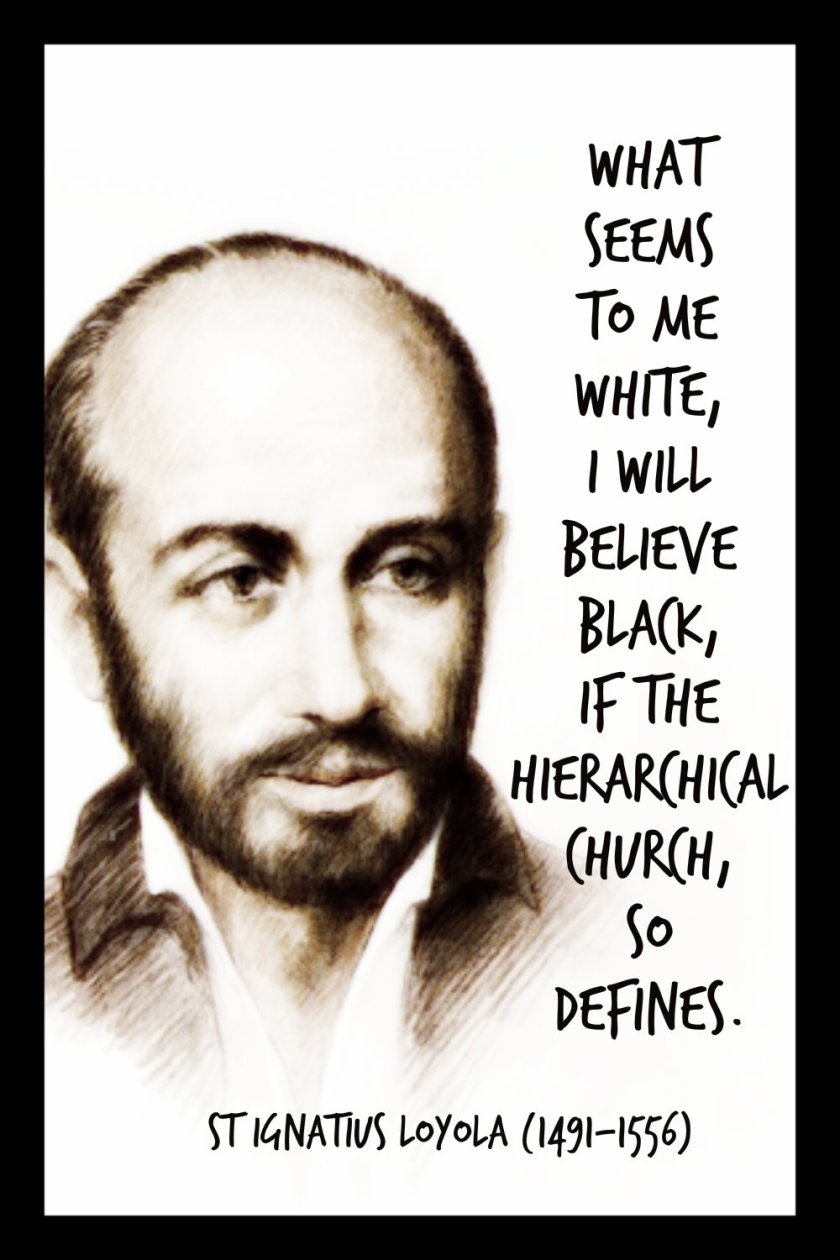
“What seems to me white, I will believe black, if the hierarchical Church, so defines.”
“If God gives you an abundant harvest of trials, it is a sign of great holiness which He desires you to attain. Do you want to become a great saint? Ask God to send you many sufferings. The flame of Divine Love never rises higher than when fed with the wood of the Cross, which the infinite charity of the Saviour used to finish His sacrifice. All the pleasures of the world are nothing compared with the sweetness found in the gall and vinegar offered to Jesus Christ. That is, hard and painful things endured for Jesus Christ and with Jesus Christ…..If God causes you to suffer much, it is a sign that He certainly intends to make you a saint.”
One Minute Reflection – 31 July – Wednesday of the Seventeenth week in Ordinary Time, Year C, Gospel: Matthew 13:44-46 and The Memorial of St Ignatius Loyola (1491-1556)
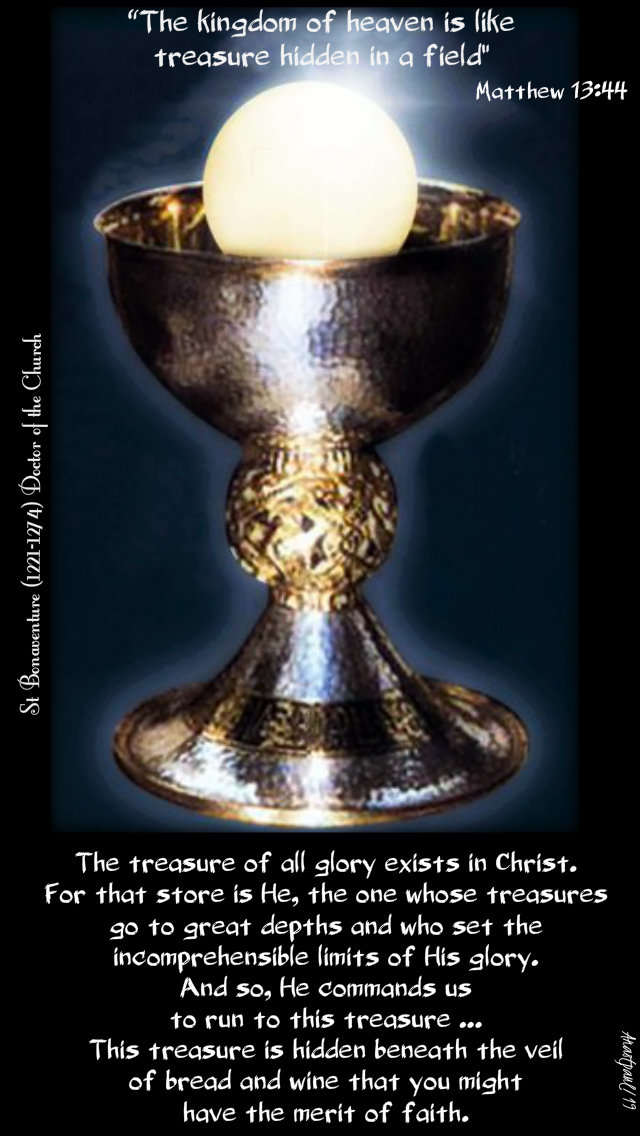
“The kingdom of heaven is like treasure hidden in a field” … Matthew 13:44
REFLECTION – “Christ is the treasure store of all grace for He is “filled with grace and truth” (Jn 1:14) and angels and humans receive from His fullness. He possesses the very source of fullness and, when He opens His hand, He fills all rational creatures with blessings. But this treasure store of graces, is concealed beneath the veil of the sacrament of the altar. Is it not true that “the Kingdom of heaven is like a treasure hidden in a field”? (Mt 13:44). And is not the field, in this case, the sacrament of the body of Christ, gathered in the fields? In this field we possess a hidden treasure because all kinds of graces are hidden there. “The man who discovered it went away in his joy, sold all he possessed and bought it” (Mt 13:44). Someone who knows the wealth of this sacrament willingly renounces all other activity, to freely give himself to participation and devotion towards this sacrament. He knows he will gain possession of eternal life according to the words of the Lord: “He who eats my flesh and drinks my blood has eternal life” (Jn 6:55).
The treasure of all glory exists in Christ. All the glory, possessed by both angels and men, who are to be saved until the day of judgement, whether it be glory of body or glory of soul, is drawn from that store of treasure. For that store is He, the one whose treasures go to great depths and who set the incomprehensible limits of His glory. And so, He commands us to run to this treasure when He says: “Gather up treasure for yourselves in heaven” (Mt 6:20). This treasure is hidden beneath the veil of bread and wine that you might have the merit of faith.
So may the Lord be praised for His mercies since He represented His Body to us beforehand under the image of heavenly treasure!” … St Bonaventure (1221-1274) Doctor of the Church
PRAYER – Almighty God, grant that the example of Your saints may spur us on to perfection, so that we, who are celebrating the feast of St Ignatius, may follow him step-by-step in his way of life to reach You in heaven. Grant us the grace, by his intercession, to find our treasure in Your divine Son, through Christ our Lord, with the Holy Spirit, God for always and forever, amen.
Our Morning Offering – 31 July – The Memorial of St Ignatius Loyola (1491-1556)
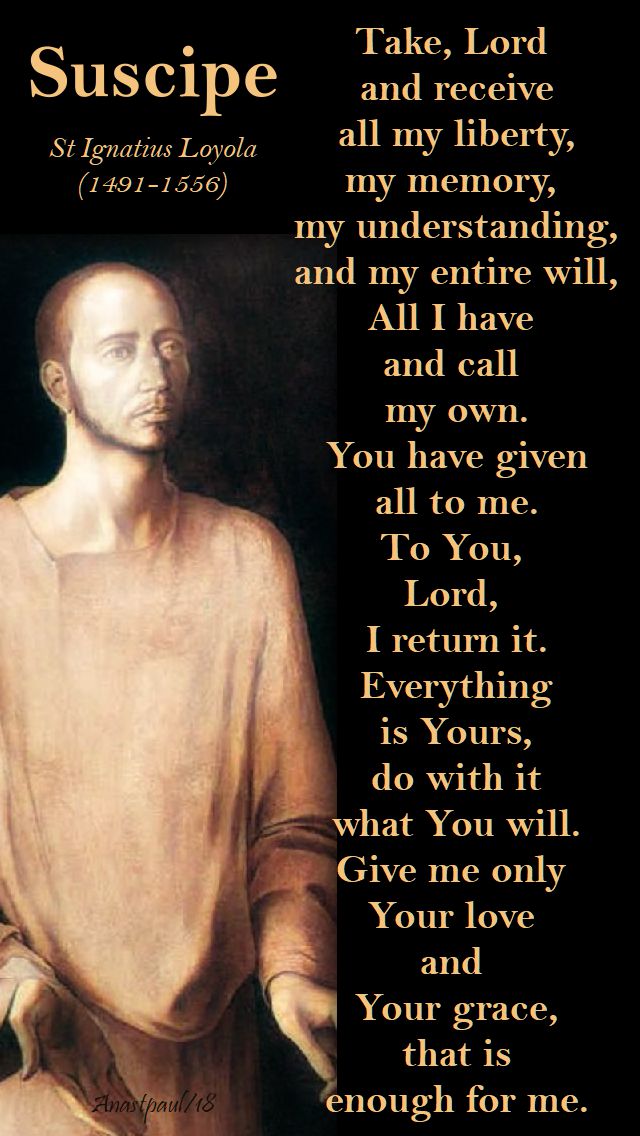
Suscipe By St Ignatius Loyola (1491-1556)
Take, Lord
and receive all my liberty,
my memory,
my understanding,
and my entire will,
All I have and call my own.
You have given all to me.
To You, Lord,
I return it.
Everything is Yours,
do with it what You will.
Give me only Your love
and Your grace,
that is enough for me.
Amen
Teach Us, Good Lord By St Ignatius Loyola (1491-1556)
Teach us, good Lord,
to serve You as You deserve;
to give
and not to count the cost,
to fight
and not to heed the wounds,
to toil
and not to seek for rest,
to labour
and not to ask for reward,
except that of knowing
that we are doing Your will.
Amen
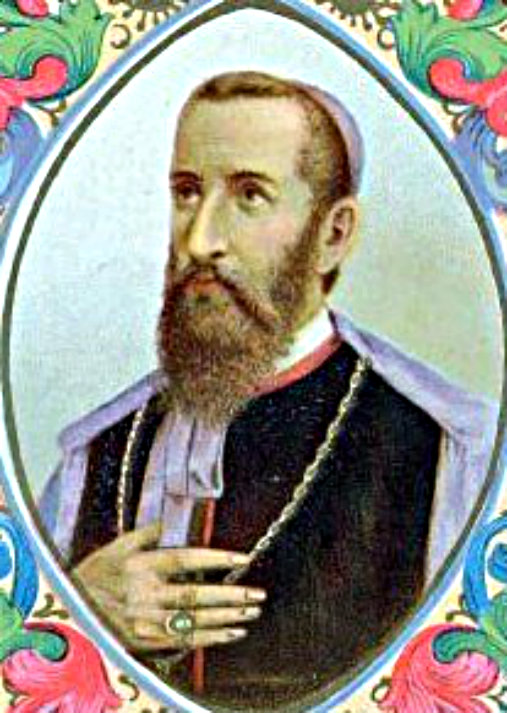
Saint of the Day – 31 July – Saint Giustino de Jacobis CM (1800-1860) Apostolic Vicar of Abyssinia – St Giustino was an Italian bishop and professed member of the Congregation of the Mission who became a Vicar Apostolic in Ethiopia and the Titular Bishop of Nilopolis. He is also known as Justin de Jacobis. Born on 9 October 1800 at San Fele, Luciana, Italy and died on 31 July 1860 on the side of a road near Halai, of a tropical fever in the valley of Alghedien Zula, Semenawi Keih Bahri, Eritrea while on a missionary trip. Patronages – Ethiopia, Eritrea, Missionaries.
On 17 October 1818 he entered the Congregation of the Mission at Naples and made his religious vows there on 18 October 1820. He was ordained to the priesthood at Brindisi on 12 June 1824. After spending some time in the care of souls at Oria and Monopoli he became superior first at Lecce and then at Naples.
In 1839 he was appointed as the first Prefect Apostolic of Ethiopia and entrusted with the foundation of Catholic missions there. After labouring with great success in Ethiopia for almost a decade, he was appointed as the Titular Bishop of Nilopolis in 1847 and not long afterwards the Vicar Apostolic. However, he refused the episcopal honour until it was forced upon him in 1849, when he received his episcopal consecration.
Despite imprisonment and exile combined with other kinds of persecution from the local Ethiopian Church he founded numerous Catholic missions. St Giustino also built schools in Agame and Akele Guzay for the training of a native priesthood and in the process he founded the beginnings of the Ethiopian Catholic Church and the Eritrean Catholic Church.
He died in 1860 at Hebo, of what is now the Southern Administrative Region of Eritrea, while en route to Halai, where he hoped to regain his health.
His body is interred in a Church in Hebo. He was Canonised on 26 October 1975 by St Pope Paul VI.
Our Lady of Consolation: Starting in the 2nd century, Catholics venerated Mary as Our Lady of Consolation, one of her earliest titles of honour. The title of Our Lady of Consolation, or Mary, Consoler of the Afflicted, comes from the Latin Consolatrix Afflictorum. The origin of this invocation is derived from the Augustinian monks who propagated this particular devotion. In 1436 the Confraternity of the Holy Cincture of Our Lady of Consolation was founded in Bologna, Italy. It was based on an Augustinian tradition which hold that Saint Monica in the fourth century, was distraught with anxiety for her wayward son, Augustine and that Mary gave her a sash which the Virgin wore, with the assurance that whoever wore this belt would receive her special consolation and protection. Along with Augustine and Monica, Our Lady of Consolation is one of the three patrons of the Augustinians. The “Augustinian Rosary” is sometimes called the “Corona (or Crown) of Our Mother of Consolation”.
St Helen of Skofde
Bl Jean-François Jarrige de La Morelie de Breuil
Bl John Colombini
St Marcel Denis
St Neot
—
Matyrs of Syria – 350 saints: 350 monks massacred by heretics for their adherence to orthodox Christianity and the decrees of the Council of Chalcedon. 517 in Syria.
Martyrs of Synnada: 3 Saints
Democritus
Dionysius the Martyr
Secundus
Martyred in the Spanish Civil War: Thousands of people were murdered in the anti-Catholic persecutions of the Spanish Civil War from 1934 to 1939.
• Blessed Ciriaco Olarte Pérez de Mendiguren
• Blessed Dionisio Vicente Ramos
• Blessed Francisco Remón Játiva
• Blessed Miguel Goñi Ariz
• Blessed Miguel Francisco González-Díez González-Núñez
• Blessed Agapito Alcalde Garrido
• Blessed Ciriaco Olarte Pérez de Mendiguren
• Blessed Dionisio Vicente Ramos
• Blessed Francisco Remón Játiva
• Blessed Jaume Buch Canals
• Blessed Maria Roqueta Serra
• Blessed Miguel Goñi Ariz
• Blessed Miguel Francisco González-Díez González-Núñez
• Blessed Prudencio Gueréquiz y Guezuraga
• Blessed Segundo de Santa Teresa
• Blessed Teresa Subirà Sanjaume
• Blessed Vicenta Achurra Gogenola
• Blessed Francisca Pons Sardá
Thought for the Day – 30 July – The Memorial of St Peter Chrysologus “Golden Words” (c 400-450) Father & Doctor
Present your Bodies as a Living Sacrifice
Let your Heart be an Altar
Saint Peter Chrysologus
From a Sermon
I appeal to you by the mercy of God.
This appeal is made by Paul, or rather, it is made by God through Paul, because of God’s desire to be loved rather than feared, to be a father rather than a Lord. God appeals to us in His mercy to avoid having to punish us in His severity.
Listen to the Lord’s appeal.
In Me, I want you to see your own body, your members, your heart, your bones, your blood. You may fear what is divine but why not love what is human?
You may run away from Me as the Lord but, why not run to Me, as your Father?
Perhaps you are filled with shame for causing My bitter passion. Do not be afraid. This cross inflicts a mortal injury, not on me but on Death.
These nails no longer pain Me but only deepen your love for Me.
I do not cry out because of these wounds but through them, I draw you into My heart.
My body was stretched on the cross as a symbol, not of how much I suffered but of My all-embracing love.
I count it no less to shed my blood – it is the price I have paid for your ransom.
Come, then, return to Me and learn to know Me as your Father, who repays good for evil, love for injury and boundless charity for piercing wounds.
Listen now to what the Apostle urges us to do. I appeal to you, he says, to present your bodies as a living sacrifice. By this exhortation of his, Paul has raised all men to priestly status. How marvellous is the priesthood of the Christian, for he is both the victim that is offered on his own behalf and the priest who makes the offering. He does not need to go beyond himself to seek what he is to immolate to God – with himself and in himself, he brings the sacrifice he is to offer God for himself. The victim remains and the priest remains, always one and the same. Immolated, the victim still lives, the priest who immolates cannot kill. Truly it is an amazing sacrifice in which a body is offered without being slain and blood is offered without being shed.
The Apostle says – I appeal to you by the mercy of God to present your bodies as a living sacrifice.
Brethren, this sacrifice follows the pattern of Christ’s sacrifice by which He gave His body as a living immolation for the life of the world. He really made His body a living sacrifice, because, though slain, He continues to live. In such a victim death receives its ransom but the victim remains alive. Death itself suffers the punishment. This is why death for the martyrs is actually a birth and their end a beginning. Their execution is the door to life and those who were thought to have been blotted out from the earth shine brilliantly in heaven.
Paul says: I appeal to you by the mercy of God to present your bodies as a sacrifice, living and holy. The prophet said the same thing – Sacrifice and offering You did not desire but You have prepared a body for me.
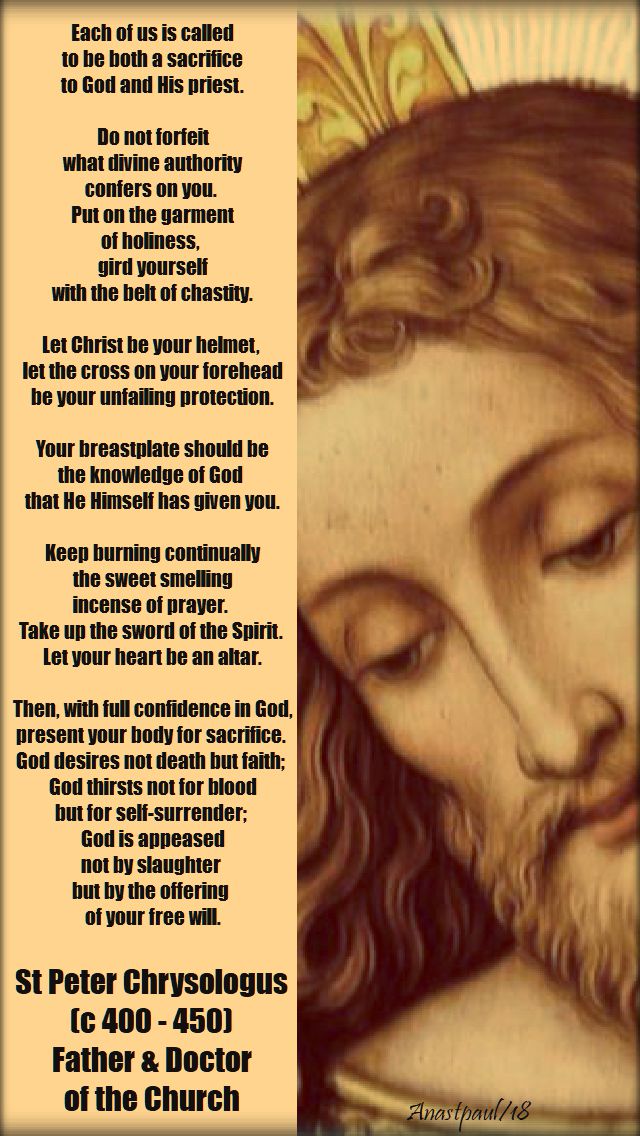
Each of us is called to be both a sacrifice to God and His priest. Do not forfeit what divine authority confers on you. Put on the garment of holiness, gird yourself with the belt of chastity. Let Christ be your helmet, let the cross on your forehead be your unfailing protection. Your breastplate should be the knowledge of God that He Himself has given you. Keep burning continually the sweet smelling incense of prayer. Take up the sword of the Spirit. Let your heart be an altar. Then, with full confidence in God, present your body for sacrifice. God desires not death but, faith. God thirsts not for blood but, for self-surrender. God is appeased not by slaughter but, by the offering, of your free will.
Quote/s of the Day – 30 July – The Memorial of St Peter Chrysologus “Golden Words” (c 400-450) Father & Doctor and St Maria de Jesus Sacramentado(1868-1959)
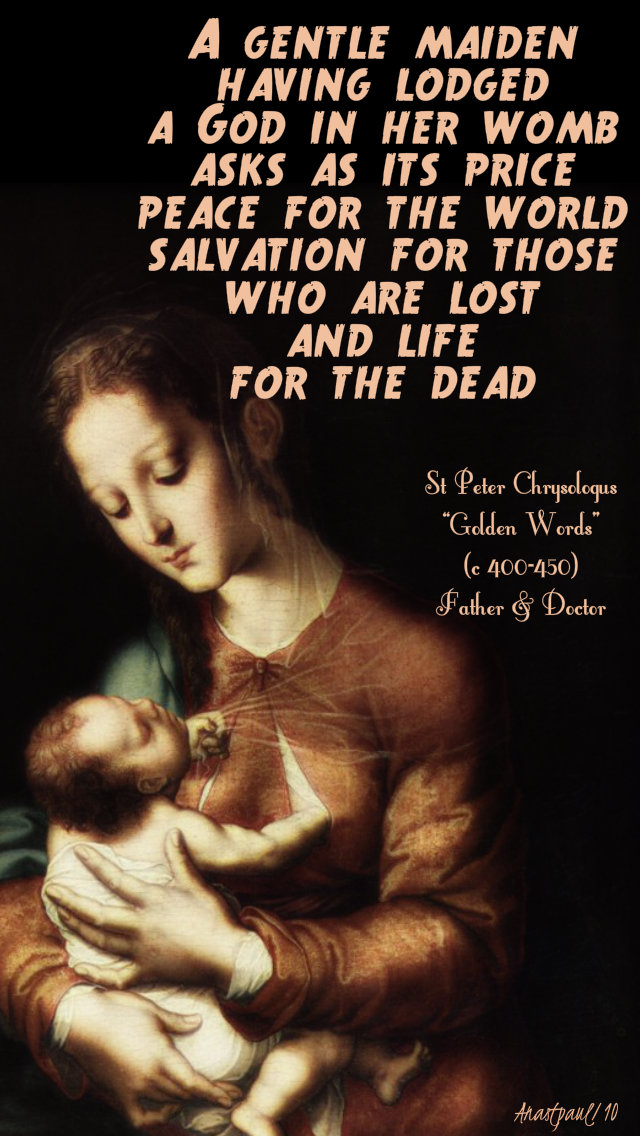
“A gentle maiden having lodged a God in her womb, asks as its price, peace for the world, salvation for those who are lost and life for the dead.”
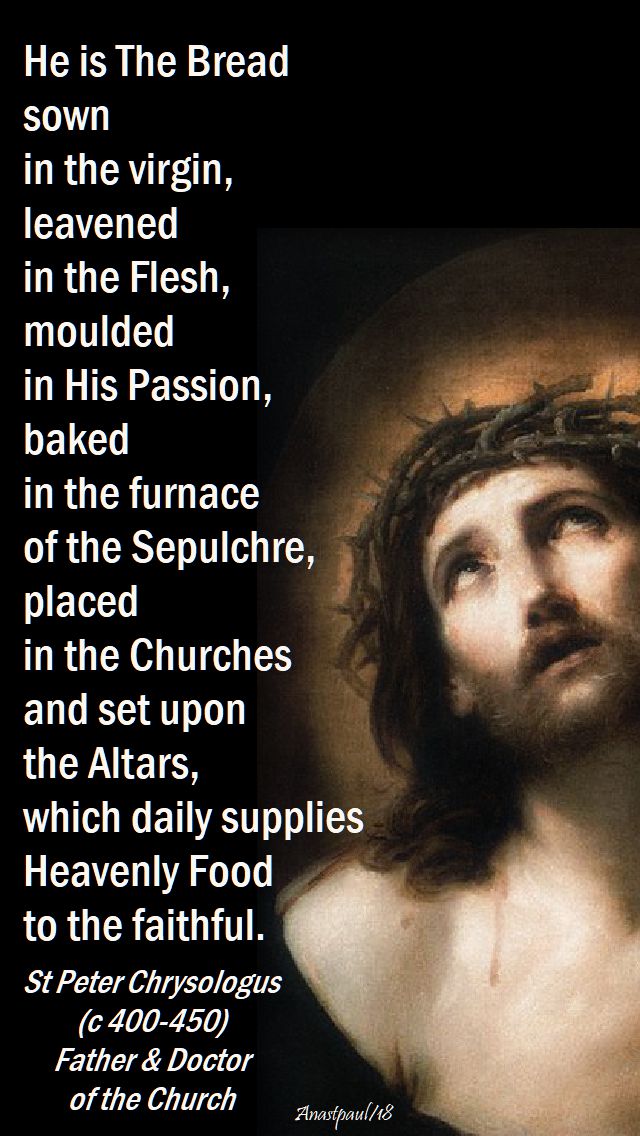
“He is The Bread sown in the virgin, leavened in the Flesh, moulded in His Passion, baked in the furnace of the Sepulchre, placed in the Churches and set upon the Altars, which daily supplies Heavenly Food to the faithful.”
“For he who touches the Body of Christ unworthily, receives his damnation.”
“We exhort you, in every respect, honourable brother, to heed obediently what has been written by the Most Blessed Pope of the City of Rome; for Blessed Peter, who lives and presides in his own see, provides the truth of faith to those who seek it.”
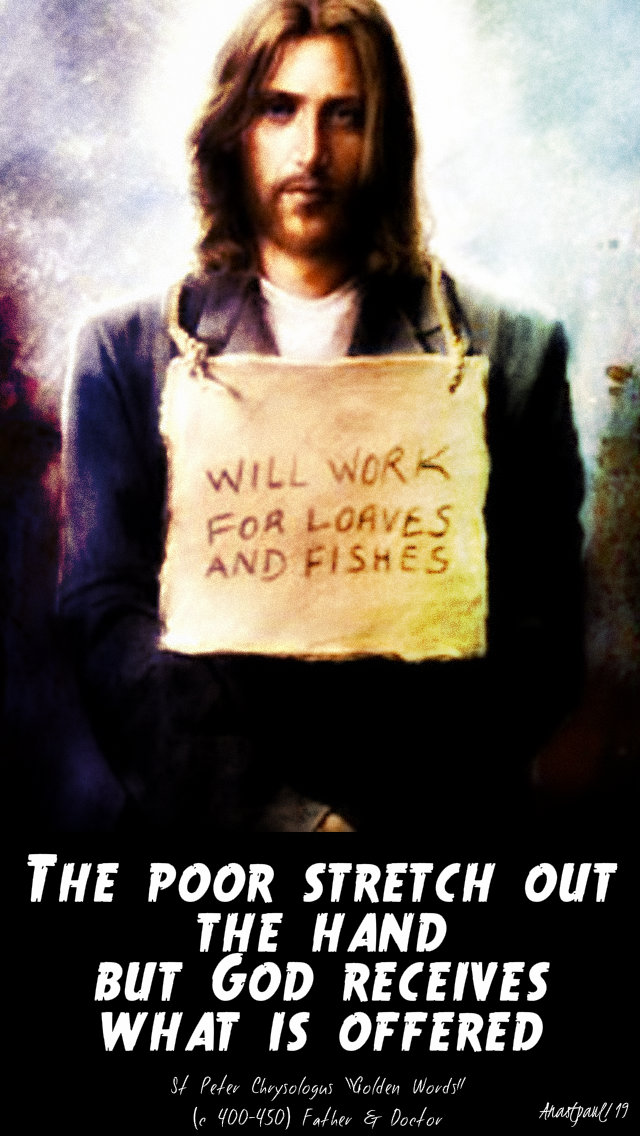
“The poor stretch out the hand but God receives what is offered.”
St Peter Chrysologus “Golden Words”
(c 400-450) Father & Doctor
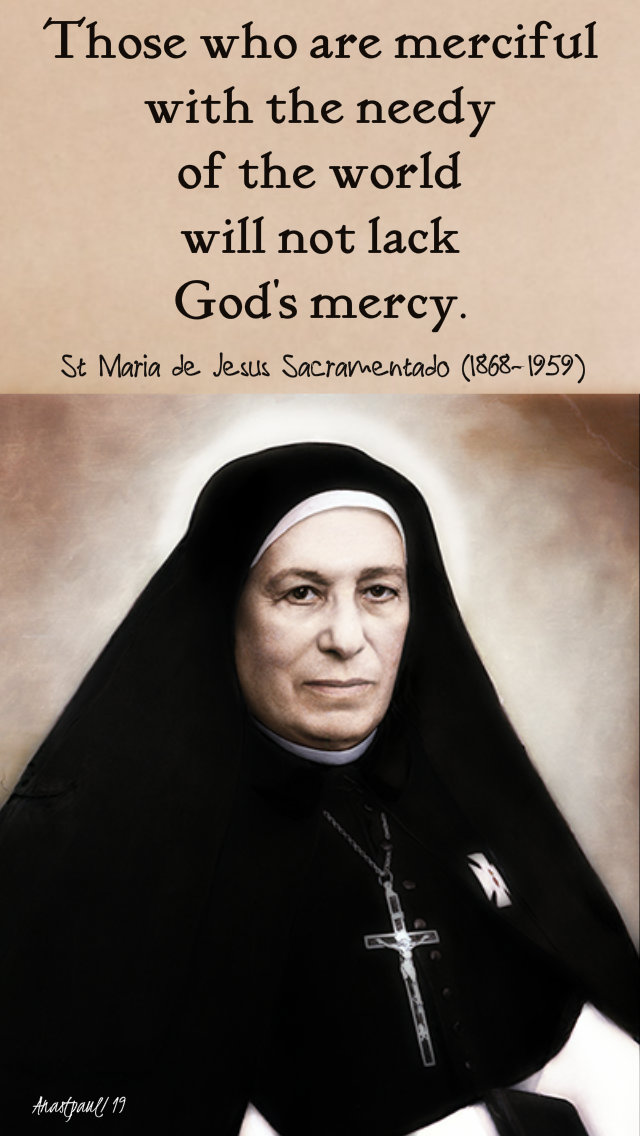
“Those who are merciful with the needy of the world will not lack God’s mercy.”
“The weight of the cross is burdensome for those carrying it but not, for those, who embrace it.”
One Minute Reflection – 30 July – Tuesday of the Seventeenth week in Ordinary Time, Year C, Gospel: Matthew 13:36–43 and the Memorial of St Peter Chrysologus (c 400-450) Father & Doctor of the Church
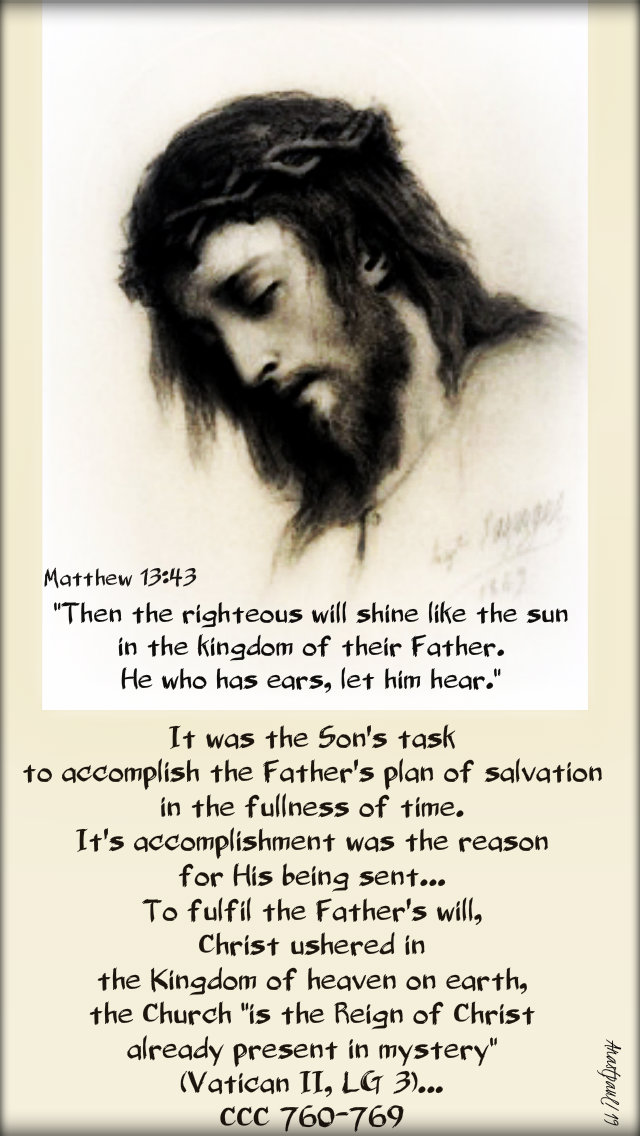
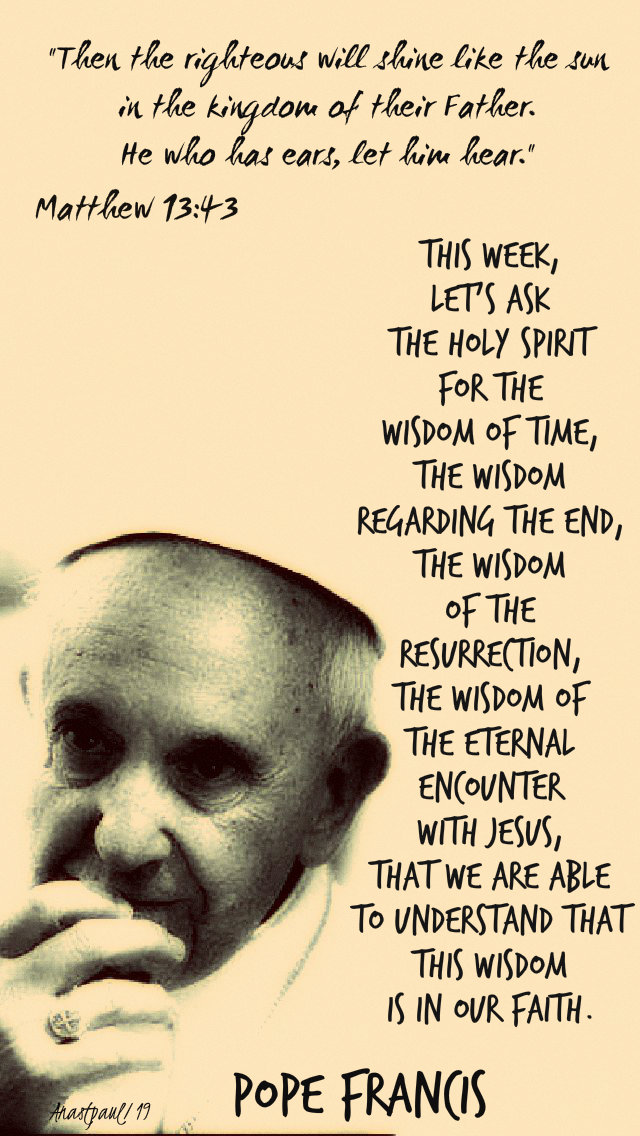
“Then the righteous will shine like the sun in the kingdom of their Father. He who has ears, let him hear.” … Matthew 13:43
REFLECTION – Christians of the first centuries said, “The world was created for the sake of the Church” (Hermas). God created the world for the sake of communion with His divine life, a communion brought about by the “convocation” of men in Christ and this “convocation” (ecclesia) is the Church. The Church is the goal of all things and God permitted such painful upheavals as the angels’ fall and man’s sin only as occasions and means for displaying all the power of His arm and the whole measure of the love He wanted to give the world: “Just as God’s will is creation and is called “the world,” so His intention is the salvation of men and it is called “the Church” (St Clement of Alexandria).
The gathering together of the People of God, began, at the moment when sin destroyed the communion of men with God and that of men among themselves. the gathering together of the Church is, as it were, God’s reaction to the chaos provoked by sin. This re-unification is achieved secretly in the heart of all peoples: “In every nation anyone who fears him and does what is right is acceptable” to God (Acts 10,35). The remote preparation for this gathering together of the People of God begins when He calls Abraham and promises that He will become the father of a great people (Gn 12,2). Its immediate preparation begins with Israel’s election as the People of God (Ex 19,5). By this election, Israel is to be the sign of the future gathering of all nations (Is 2,2)….
It was the Son’s task to accomplish the Father’s plan of salvation in the fullness of time. It’s accomplishment was the reason for His being sent… To fulfil the Father’s will, Christ ushered in the Kingdom of heaven on earth, the Church “is the Reign of Christ already present in mystery” (Vatican II, LG 3)… “The Church . . . will receive its perfection only in the glory of heaven,” (LG 48) at the time of Christ’s glorious return… Until that day, “the Church… longs for the full coming of the Kingdom… The Church and through her, the world, will not be perfected in glory without great trials. Only then will “all the just from the time of Adam, ‘from Abel, the just one, to the last of the elect,’ be gathered together in the universal Church in the Father’s presence” (LG 2). … CCC #760-769
“This week, let’s ask the Holy Spirit for the wisdom of time, the wisdom regarding the end, the wisdom of the resurrection, the wisdom of the eternal encounter with Jesus, that we are able to understand that this wisdom is in our faith. It will be a day of joyful encounter with Jesus. Let us pray that the Lord prepare us for this. Let each one of us end this week thinking about the end – “I will come to an end. I will not remain forever. How would I like to come to an end?”… Pope Francis (Santa Marta, 27 November 2018)
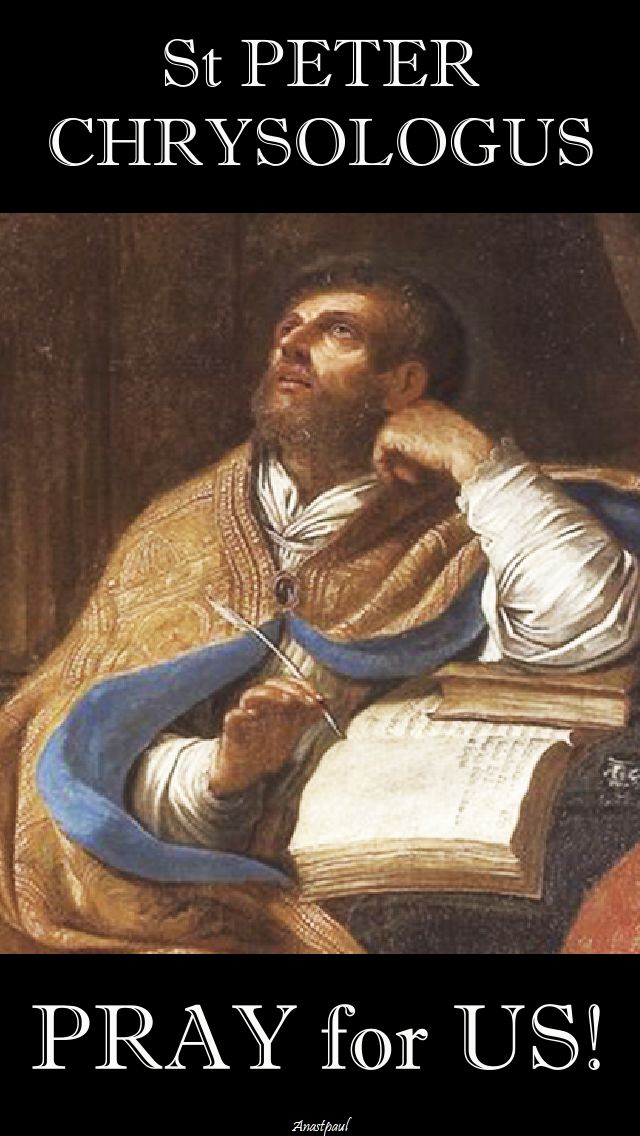
PRAYER – Almighty Father, send forth Your Spirit, that we may be created and Thou shall renew the face of the earth. O, God, who by the light of the Holy Spirit, did instruct the hearts of the faithful, grant that by the same Holy Spirit we may be truly wise and ever enjoy His consolations. Through Christ Our Lord, Amen. St Peter Chrysologus, pray for us!
Our Morning Offering – 30 July – Tuesday of the 17th week in Ordinary Time, Year C
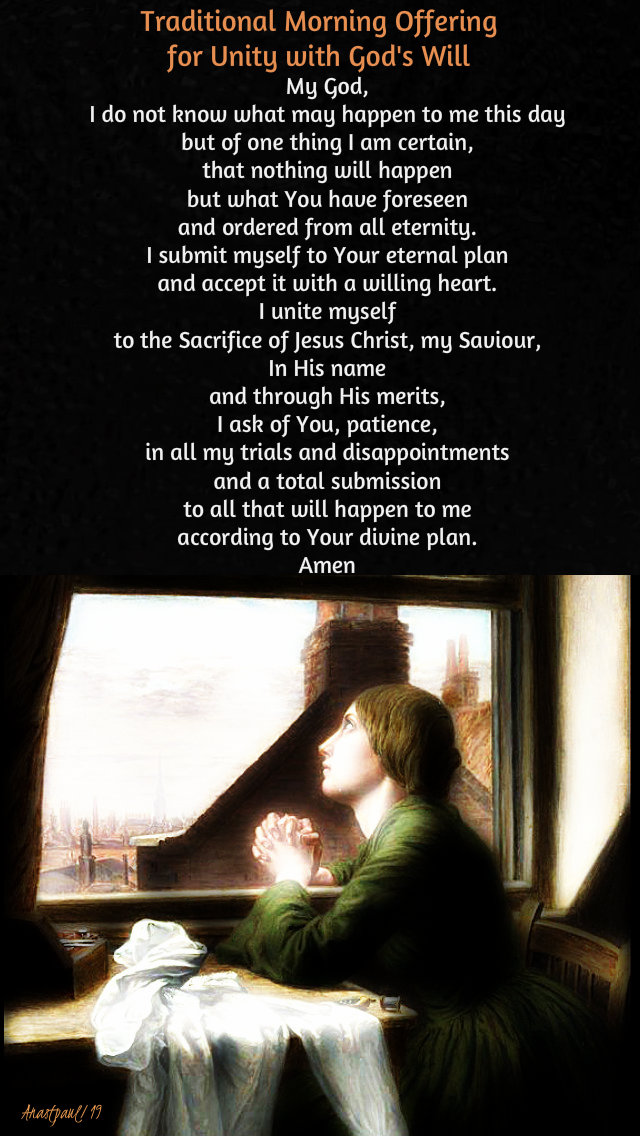
Traditional Morning Offering for Unity with God’s Will
My God,
I do not know what may happen to me this day
but of one thing I am certain,
that nothing will happen
but what You have foreseen
and ordered from all eternity.
I submit myself to Your eternal plan
and accept it with a willing heart.
I unite myself
to the Sacrifice of Jesus Christ, my Saviour,
In His name
and through His merits,
I ask of You, patience,
in all my trials and disappointments
and a total submission
to all that will happen to me
according to Your divine plan.
Amen


















You must be logged in to post a comment.