
St Anne (Memorial)
St Joachim (Memorial)
—
Bl Andrew the Catechist
St Austindus of Auch
St Bartholomea Capitanio
St Benigno of Malcestine
Bl Camilla Gentili
St Charus of Malcestine
Bl Edward Thwing
Bl Élisabeth-Thérèse de Consolin
St Erastus
Bl Évangéliste of Verona
St Exuperia the Martyr
Bl George Swallowell
St Gérontios
Bl Giuseppina Maria de Micheli
St Gothalm
St Hyacinth
Bl Jacques Netsetov
Bl John Ingram
St Joris
Bl Marcel-Gaucher Labiche de Reignefort
Bl Marie-Claire du Bac
Bl Marie-Madeleine Justamond
Bl Marie-Marguerite Bonnet
St Olympius the Tribune
St Parasceva of Rome
St Pastor of Rome
Bl Pérégrin of Verona
Bl Pierre-Joseph le Groing de la Romagère
Bl Robert Nutter
St Simeon of Padolirone
St Symphronius the Slave
St Theodulus the Martyr
St Titus Brandsma
St Valens of Verona
Bl William Ward
—
Martyred in the Spanish Civil War:
Aleix Miquel Rossell
Amancio Marín Mínguez
Antoni Jaume Secases
Josep Maria Jordá i Jordá
Josep Masquef Ferré
Bl Manuel Martín Sierra
Miquel Vilatimó Costa
Pau Roselló Borgueres
Santiago Altolaguirre y Altolaguirre
Bl Vicente Pinilla Ibáñez
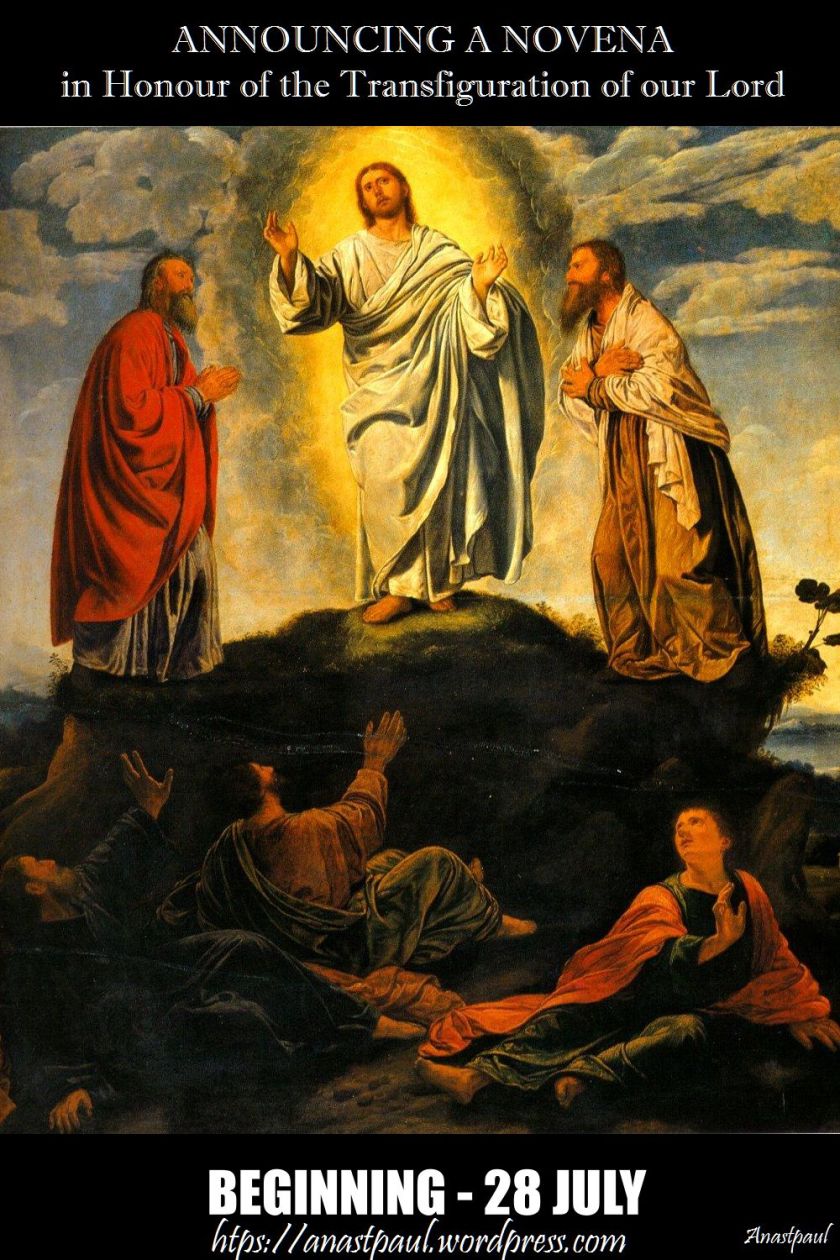
ANNOUNCING A NOVENA in Honour of the Transfiguration of our Lord
ANNOUNCING A NOVENA
in Honour of
the Transfiguration of our Lord
BEGINNING – 28 JULY
The Revelation of Christ’s Divine Glory
The feast of the Transfiguration of Our Lord Jesus Christ celebrates the revelation of Christ’s divine glory on Mount Tabor in Galilee (Matthew 17:1-6; Mark 9:1-8; Luke 9:28-36). After revealing to His disciples that He would be put to death in Jerusalem (Matthew 16:21), Christ, along with Saints Peter, James, and John, went up the mountain. There, Saint Matthew writes, “he was transfigured before them.
And his face did shine as the sun: and his garments became white as snow.”
QUICK FACTS ABOUT THE FEAST OF THE TRANSFIGURATION
Date: 6 August
THE HISTORY OF THE FEAST OF THE TRANSFIGURATION
The brightness with which He shone on Mount Tabor was not something added to Christ but the manifestation of His true divine nature and a forecast of His Resurrection. For Peter, James and John, it was also a glimpse of the glories of Heaven and of the resurrected body promised to all Christians.
When Christ was transfigured, two others appeared with Him: Moses, representing the Old Testament Law, and Elijah, representing the prophets. Thus Christ, Who stood between the two and spoke with them, appeared to the disciples as the fulfillment of both the Law and the prophets.
At Christ’s baptism in the Jordan, the voice of God the Father was heard to proclaim that “This is my beloved Son” (Matthew 3:17). During the Transfiguration, God the Father pronounced the same words (Matthew 17:5).
Despite the importance of this event, the Feast of the Transfiguration was not among the earliest of feasts celebrated by Christians. It was first celebrated in Asia starting in the fourth or fifth century and spread throughout the Christian East in the centuries following. The Catholic Encyclopedia notes that it wasn’t commonly celebrated in the West until the tenth century. Pope Callixtus III elevated the Transfiguration to a feast of the universal Church and established August 6 as the date of its celebration.
The Novena is often prayed as a Community after Benediction for 9 days, however, if our parish is not offering this Novena, we too can pray it on our own, to assist in preparing for this great revelation of our Lord and to help us obtain the great realisation and joy which Peter, James and John experienced.
Let us Pray!
Thought for the Day – 25 July – St Christopher – Memorial today 25 July
Thought for the Day – 25 July – St Christopher – Memorial today 25 July
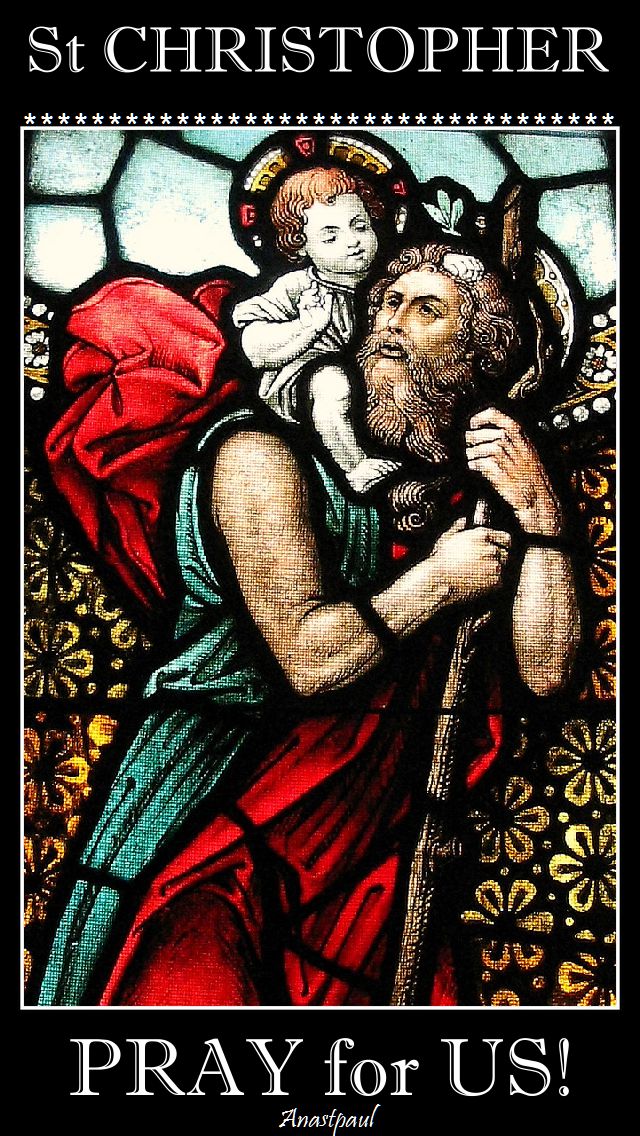
St Christopher, one of the “Fourteen Holy Helpers,” has been highly venerated since ancient times in both the Eastern and Western Churches. The older martyrologies say that he suffered death for Christ; in more recent centuries piety has woven garlands of legend about his name. Christopher has become a giant who wished to enter the service of the most powerful of lords. He first thought that the emperor qualified; later he selected the devil and finally he discovered Christ to be the most powerful Sovereign over all the world. From then on he served Him with greatest fidelity.
Because Christopher was of giant stature, he practiced charity by carrying pilgrims across a certain river. Once a child asked to be taken across. He complied as usual. While carrying the child on his shoulders through the river, it became heavier and heavier and finally he could hardly support it. Then the revelation was made: “You are carrying the Lord of the world!” It was Christ (Christopher means “Christ-carrier”).


In all of us, our water is turned into wine when we get close to Jesus Christ!
The legend has the nature of a symbol. Bishop Vida gives the following exposition: “Because you, O Christopher, always carried Christ in your heart, the artists place Christ on your shoulders. Because you suffered much, they paint you standing deep in the waters. And because you could not accomplish this without being large of stature, they have made you a giant, bigger than great temples; therefore do you live under the open heavens during the greatest cold. And since you conquered all that is difficult, they have given you a blossoming palm as traveling staff.”
Excerpted from The Church’s Year of Grace, Pius Parsch
Patronages: Archers; automobile drivers; automobilists; bachelors; boatmen; bus drivers;, cab drivers; floods; fruit dealers; fullers; hailstorms; holy death; lorry drivers; mariners; market carriers; motorists; porters; Rab, Croatia; sailors; storms; sudden death; taxi drivers; toothache; transportation; transportation workers; travellers; truck drivers; truckers; watermen.
Attributes: Giant; torrent; tree; man with Christ on his shoulders.
St Christopher, as you walked the earth during your life, come now, carry us and pray for us all!
Quote of the Day – 25 July
Quote of the Day – 25 July
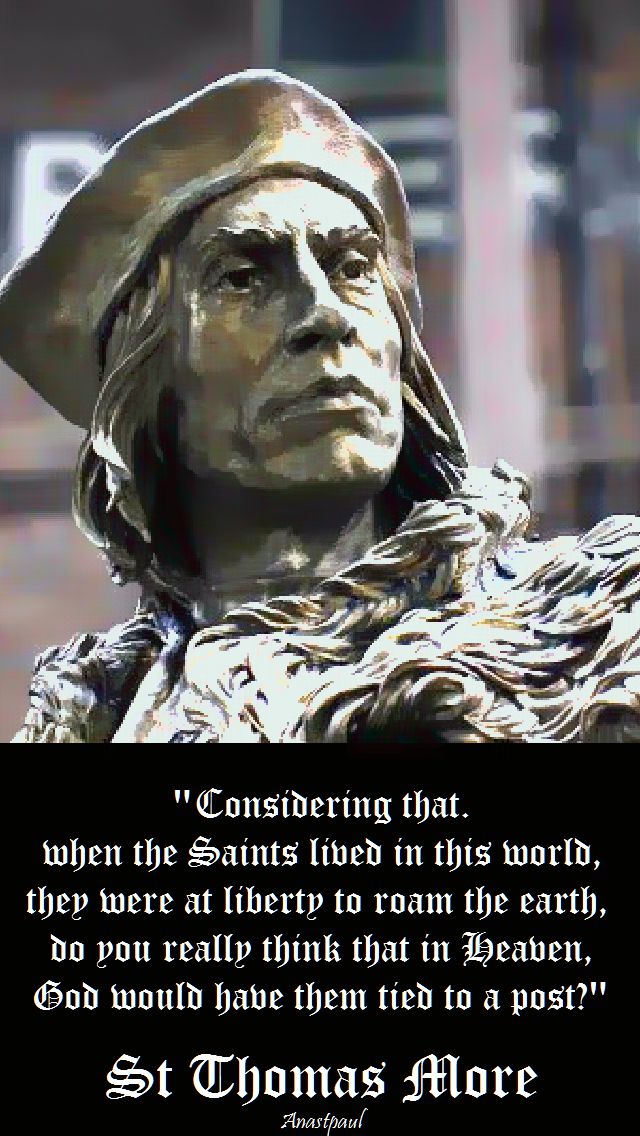
“Considering that when the Saints lived in this world,
they were at liberty to roam the earth,
do you really think that in Heaven,
God would have them tied to a post?”
St Thomas More
One Minute Reflection – 25 July
One Minute Reflection – 25 July
Jesus said in reply, “You do not know what you are asking. Can you drink the cup that I am going to drink?” They said to him, “We can.”……Matthew 20:28
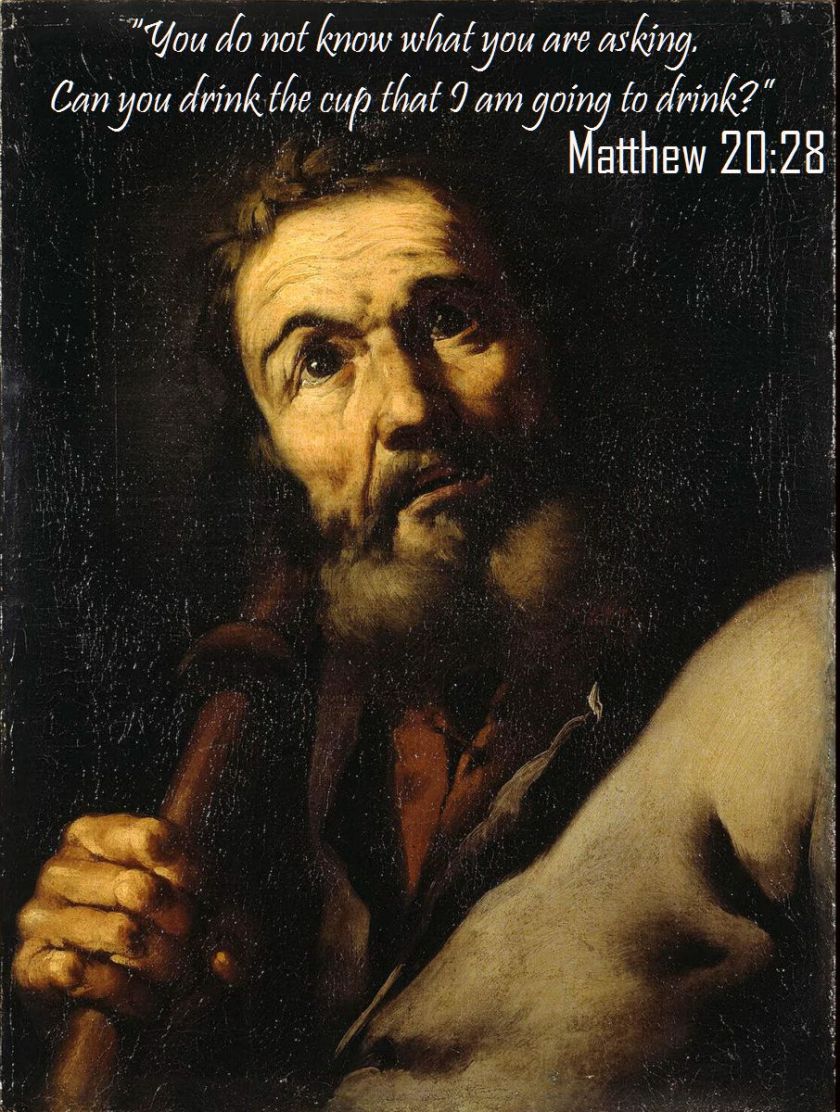
REFLECTION – “…we can learn much from St James: promptness in accepting the Lord’s call even when He asks us to leave the “boat” of our human securities, enthusiasm in following Him on the paths that He indicates to us over and above any deceptive presumption of our own, readiness to witness to Him with courage, if necessary to the point of making the supreme sacrifice of life. Thus James the Greater stands before us as an eloquent example of generous adherence to Christ. He, who initially had requested, through his mother, to be seated with his brother next to the Master in His Kingdom, was precisely the first to drink the chalice of the passion and to share martyrdom with the Apostles.
And, in the end, summarising everything, we can say that the journey, not only exterior but above all interior, from the mount of the Transfiguration to the mount of the Agony, symbolises the entire pilgrimage of Christian life, among the persecutions of the world and the consolations of God, as the Second Vatican Council says. In following Jesus, like St James, we know that even in difficulties we are on the right path.”…..Pope Benedict XVI – General Audience, June 21, 2006
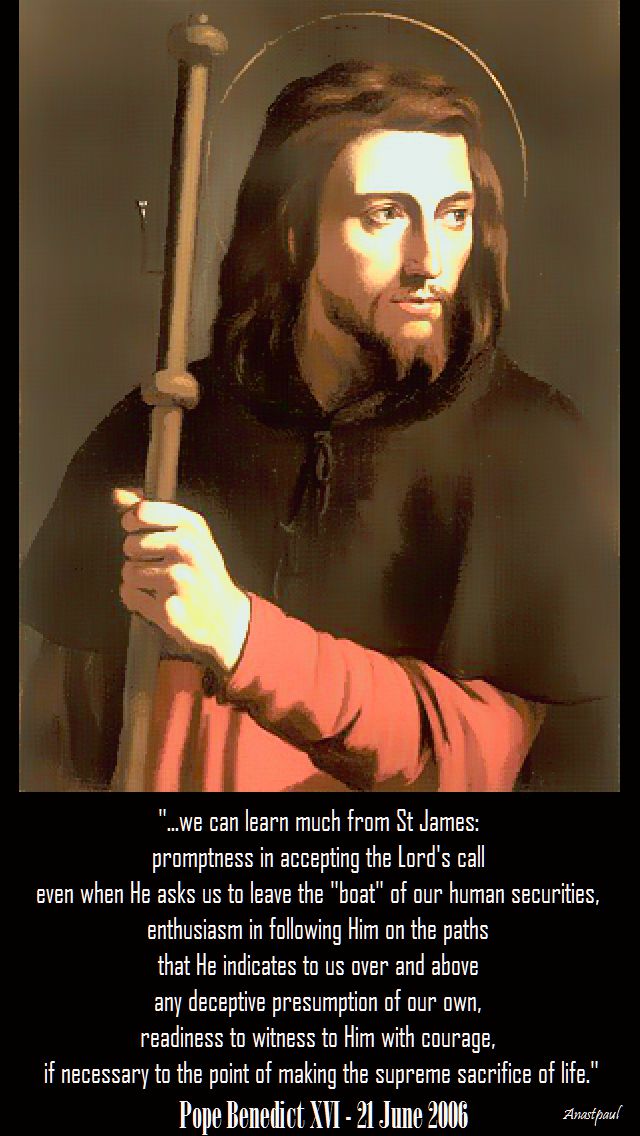
PRAYER – Almighty ever-living God, who consecrated the first fruits of Your Apostles by the blood of Saint James, grant, we pray, that Your Church may be strengthened by his confession of faith and constantly sustained by his protection. Through our Lord Jesus Christ, your Son, who lives and reigns with you in the unity of the Holy Spirit, one God, for ever and ever. St James the Greater, Apostle of Christ, Pray for us! Amen
Our Morning Offering – 25 July
Our Morning Offering – 25 July
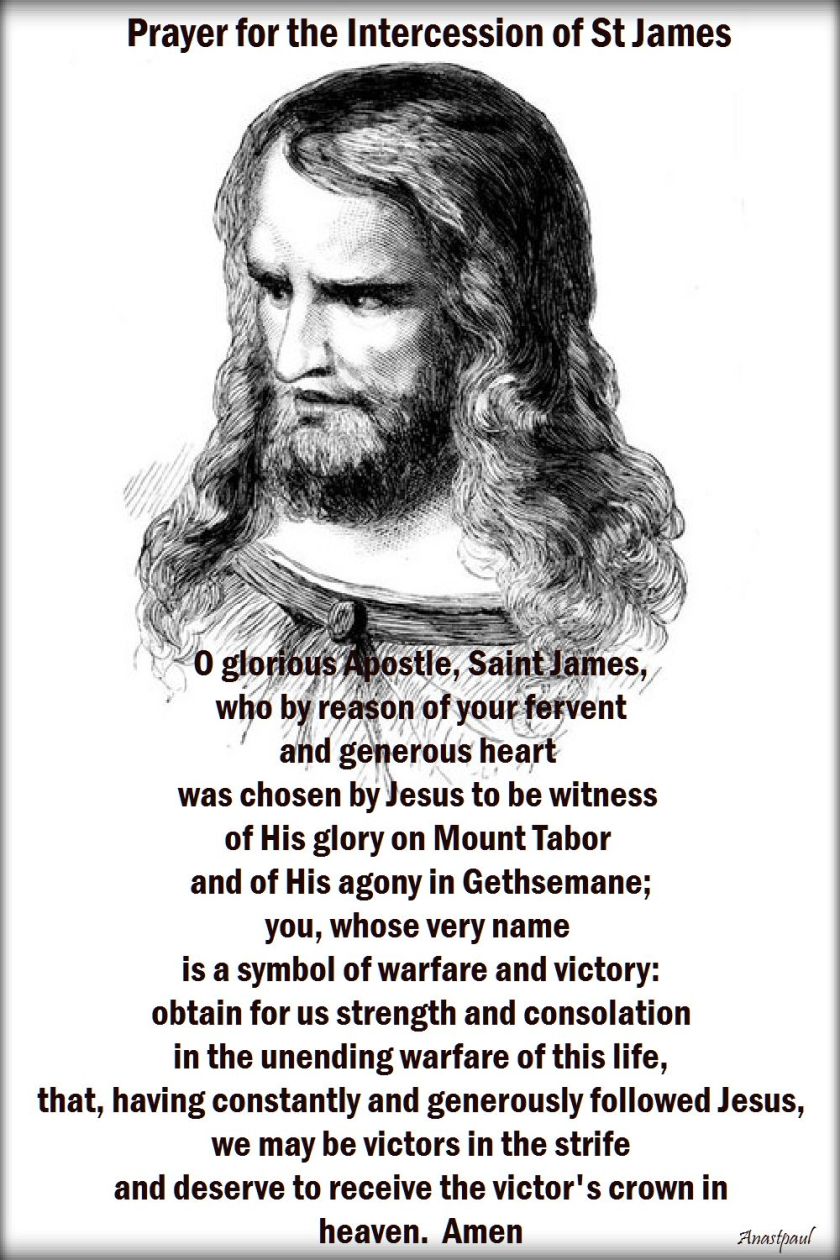
Prayer for the Intercession of St James
O glorious Apostle, Saint James,
who by reason of your fervent
and generous heart
was chosen by Jesus to be witness
of His glory on Mount Tabor
and of His agony in Gethsemane;
you, whose very name is a symbol
of warfare and victory:
obtain for us strength and consolation
in the unending warfare of this life,
that, having constantly and generously followed Jesus,
we may be victors in the strife
and deserve to receive the victor’s crown in heaven.
Amen
Saint of the Day – 25 July – Feast of St James the Greater, Apostle of Christ
Saint of the Day – 25 July – Feast of St James the Greater, Apostle of Christ and Marytr – Also known as: James Major, James the Elder, James the More, James, son of Zebedee, Santiago de España, Son of Thunder, Iago, Santiago, the Moor Slayer. Martyred – stabbed with a sword by King Herod Agrippa I in 44 at Jerusalem. Tradition says his body was taken by Angels and sailed in a rudderless, unattended boat to Spain where a massive rock closed around it. His relics are at at Compostela, Spain. Patronages – against arthritis or rheumatism, apothecaries, druggists or pharmacists, blacksmiths, equestrians, horsemen, riders, furriers, knights, labourers, pilgrims, soldiers, tanners, veterinarians, Spanish conquistadors, Chile, Guatemala, Nicaragua, Spain, Archdiocese of Seattle, Washington, diocese of Bangued, Philippines, 20 cities. St James was one of the Twelve Apostles of Jesus and traditionally considered the first Apostle to be Martyred. He was a son of Zebedee and Salome and brother of John the Apostle. He is also called James the Greater or James the Great to distinguish him from James, son of Alphaeus and James the brother of Jesus (James the Just). James the son of Zebedee is the patron saint of Spaniards and as such is often identified as Santiago.
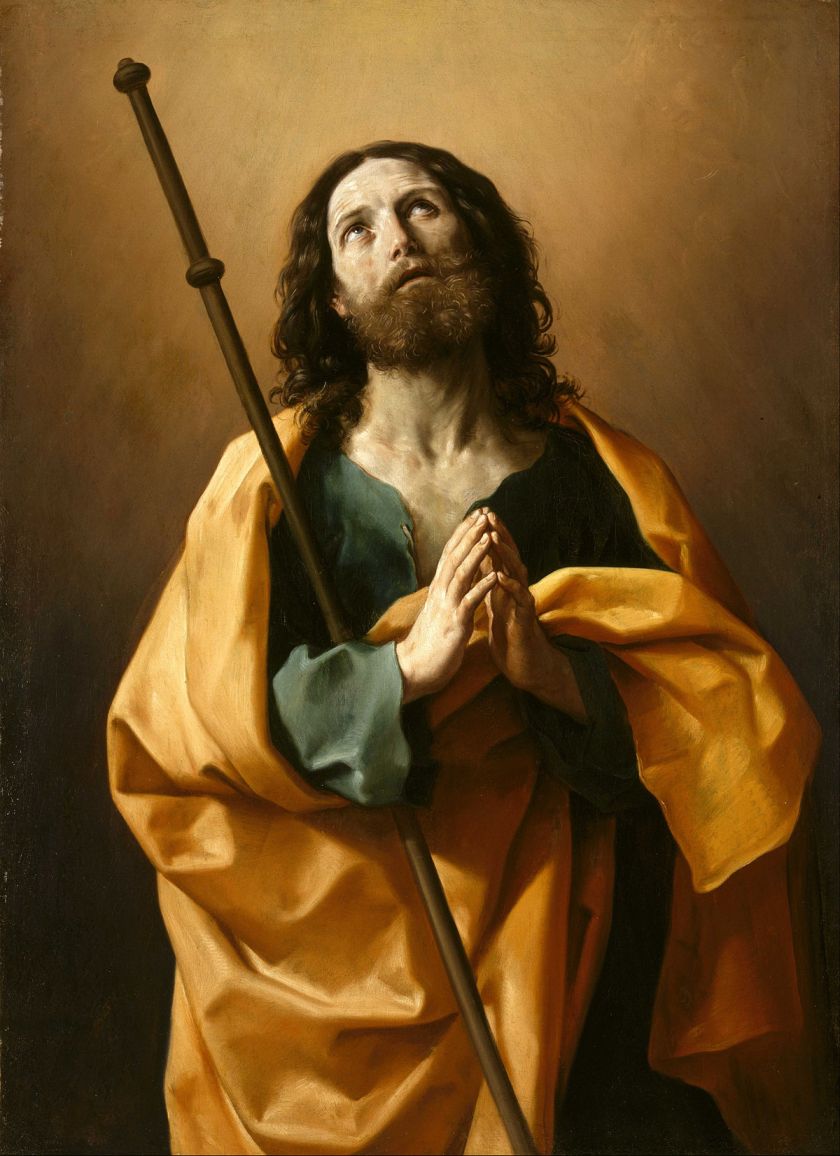
His parents seem to have been people of means. Zebedee, his father, was a fisherman of the Sea of Galilee, who probably lived in or near Bethsaida, present Galilee, Israel, perhaps in Capernaum and had some boatmen or hired men. Salome, his mother, was one of the pious women who afterwards followed Christ and “ministered unto him of their substance” and his brother John was personally known to the high-priest and must have had wherewithal to provide for the Mother of Jesus.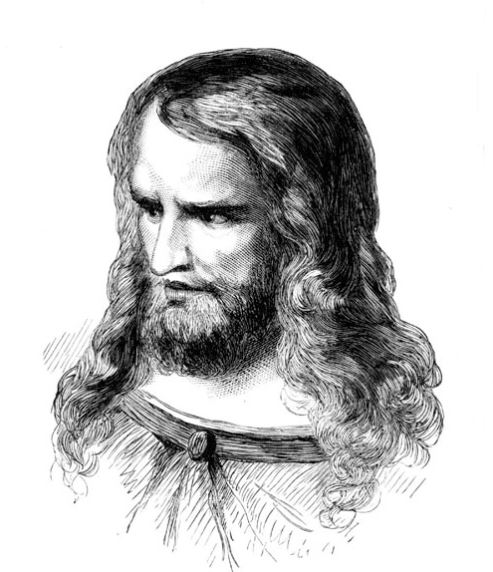
It is probable that he and his brother had not received the technical training of the rabbinical schools; in this sense they were unlearned and without any official position among the Jews. But, according to the social rank of their parents, they must have been men of ordinary education, in the common walks of Jewish life. James is described as one of the first disciples to join Jesus. The Synoptic Gospels state that James and John were with their father by the seashore when Jesus called them to follow him.[Matt. 4:21-22][Mk. 1:19-20] James was one of only three Apostles whom Jesus selected to bear witness to his Transfiguration.
James and John asked Jesus to grant them seats on his right and left in his glory. Jesus rebuked them and the other ten apostles were annoyed with them. James and his brother wanted to call down fire on a Samaritan town but were rebuked by Jesus[Lk 9:51-6]. The Acts of the Apostles records that “Herod the king” (traditionally identified with Herod Agrippa) had James executed by sword. He is the only apostle whose martyrdom is recorded in the New Testament. He is, thus, traditionally believed to be the first of the twelve apostles martyred for his faith.[Acts 12:1-2] Biblical scholars suggest that this may have been caused by James’ fiery temper, for which he and his brother earned the nickname Boanerges or “Sons of Thunder”
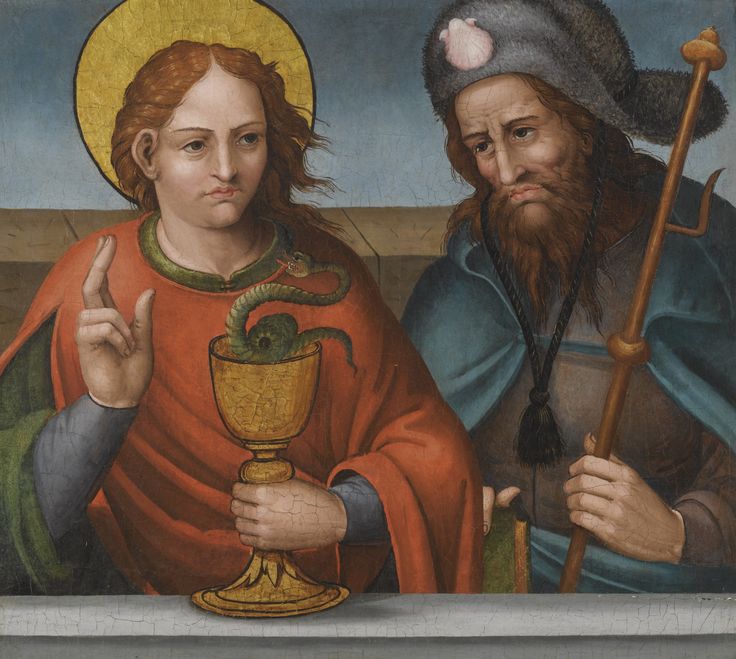
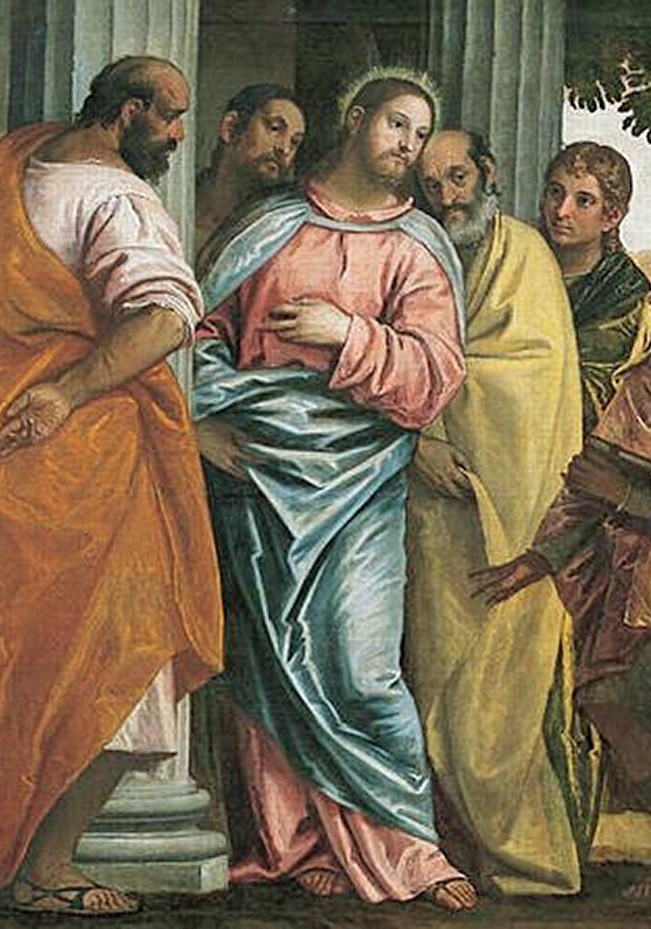
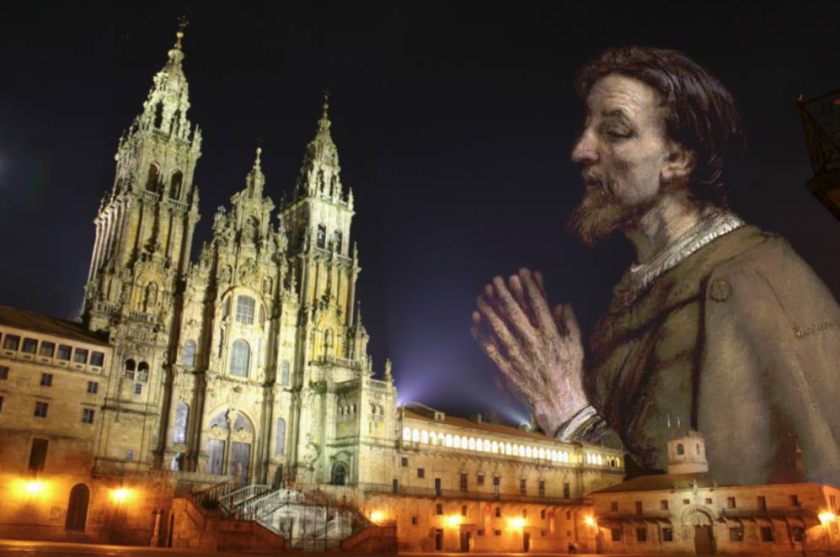
Saint James is the Patron Saint of Spain and, according to legend, his remains are held in Santiago de Compostela in Galicia. (The name Santiago is the local evolution of Vulgar Latin Sanctu Iacobu, “Saint James.”) The traditional pilgrimage to the grave of the Saint, known as the “Way of St James,” has been the most popular pilgrimage for Western European Catholics from the Early Middle Ages onwards. Some 237,886 pilgrims registered in 2014 as having completed the final 100 km walk (200 km by bicycle) to Santiago to qualify for a Compostela. When 25 July falls on a Sunday, it is a “Jubilee” year (an Año Santo Jubilar Compostelano or Año Santo Jacobeo) and a special east door is opened for entrance into Santiago Cathedral. Jubilee years fall every 5, 6, and 11 years. In the 2004 Jubilee year, 179,944 pilgrims received a Compostela. In 2010 the number had risen to 275,135.
Medieval “Santiago Matamoros” legend – tradition states that he miraculously appeared to fight for the Christian army during the legendary battle of Clavijo and was henceforth called Santiago Matamoros – Saint James the Moor-slayer. Cervantes has Don Quixote explaining that “the great knight of the russet cross was given by God to Spain as Patron and Protector.”
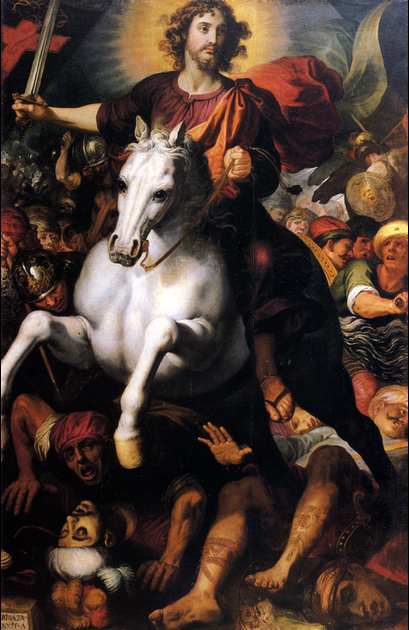
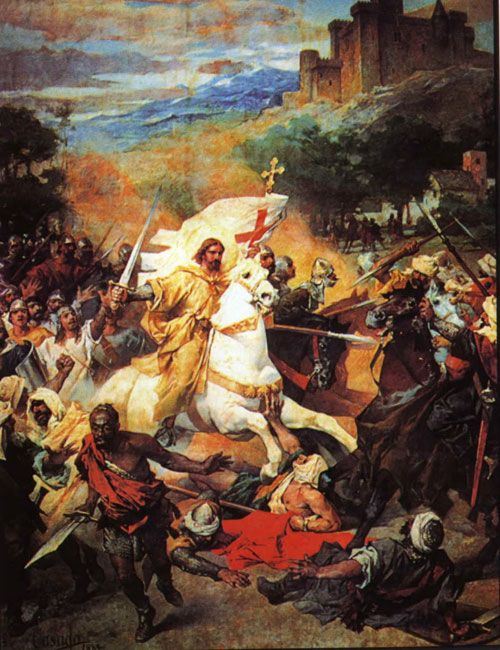
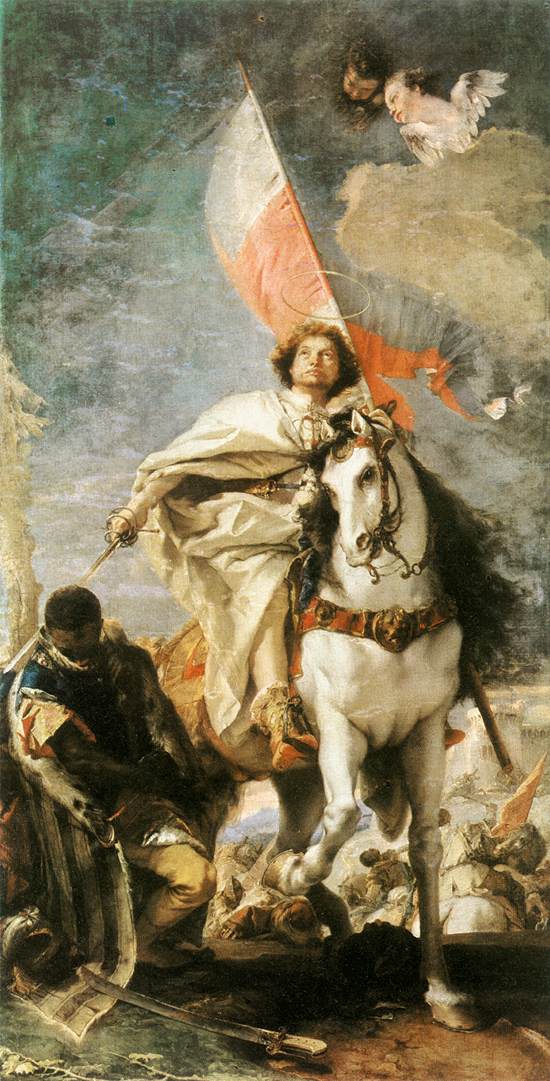


Saints’ Memorials and Feast of St James the Greater, Apostle of Christ – 25 July
St James the Greater (Feast) – Son of Zebedee and Salome, brother of Saint John the Apostle. He is called “the Greater” simply because he became an Apostle before Saint James the Lesser.
– https://www.youtube.com/watch?v=_6iVBddj6hA
—
Bl Alexius Worstius
Bl Antonio Lucci
Bl Antonio of Olmedo
St Bantu of Trier
St Beatus of Trier
St Christopher
St Cugat del Valles
Bl Darío Acosta Zurita
St Ebrulfus
St Euphrasia
St Fagildo of Santiago
St Felix of Furcona
St Florentius of Furcona
St Glodesind of Metz
St Magnericus of Trier
Bl Michel-Louis Brulard
Bl Mieczyslawa Kowalska
St Mordeyren
St Nissen of Wexford
St Olympiad of Constantinople
St Paul of Palestine
Bl Pietro Corradini of Mogliano
St Theodemir of Cordoba
—
Martyrs of Caesarea – 3 saints: Three Christians martyred together in the pesecutions of emperor Maximilian and governor Firmilian – Paul, Tea and Valentina. 309 in Caesarea, Palestine.
Martyrs of Cuncolim – 20 saints: On 15 July 1583 the group met at the church of Orlim, and hiked to Cuncolim to erect a cross and choose land for a new church. Local anti-Christian pagans, seeing the unarmed Christians, gathered their weapons and marched on them. One of the parishioners, a Portuguese emigre named Gonçalo Rodrigues, carried a firearm, but Father Alphonsus Pacheco stopped him from using it. The pagans then fell upon them, and killed them all without mercy. They were –
• Alphonsus Pacheco
• Alphonsus the altar boy
• Anthony Francis
• Dominic of Cuncolim
• Francis Aranha
• Francis Rodrigues
• Gonçalo Rodrigues
• Paul da Costa
• Peter Berno
• Rudolph Acquaviva
• ten other native Christian converts whose names have not come down to us
They were martyred on Monday 25 July 1583 at the village of Cuncolim, district of Salcete, territory of Goa, India. Beatified on 30 April 1893 by Pope Leo XIII.
Martyrs of Furci:
Martyrs of Motril – 5 beati: Four priests and a brother, all members of the Augustinian Recollects, who were martyred together in the Spanish Civil War:
• Deogracias Palacios del Río
• José Rada Royo
• José Ricardo Díez Rodríguez
• Julián Benigno Moreno y Moreno
• León Inchausti Minteguía
They were shot on 25 July 1936 in Motril, Granada, Spain and Beatified on 7 March 1999 by Pope John Paul II.
Martyrs of Toledo – 4 beati: Four brothers and a priest, all members of the Hospitallers of Saint John of God, and all martyred together in the Spanish Civil War.
• Carlos Rubio álvarez
• Eloy Francisco Felipe Delgado Pastor
• Jerónimo Ochoa Urdangarín
• Primo Martínez De San Vicente Castillo
25 July 1936 in Talavera de la Reina, Toledo, Spain. They were Beatified on 25 October 1992 by Pope John Paul II.
Martyrs of Urda – 3 beati: Three members of the Passionists who were martyred together in the Spanish Civil War.
• Benito Solana Ruiz
• Felix Ugalde Irurzun
• Pedro Largo Redondo
They were shot on 25 July 1936 in Urdá, Toledo, Spain and Beatified on 1 October 1989 by Pope John Paul II.
Martyred in the Spanish Civil War:
Antonio Varona Ortega
Bl Dionisio Pamplona-Polo
Enric Morante Chic
Higinio Roldán Iriberri
Jaume Balcells Grau
Jesús Eduard Massanet Flaquer
Jesús Juan Otero
José López Tascón
José Luis Palacio Muñiz
Josep Bardolet Compte
Josep Más Pujolrás
Juan Crespo Calleja
Bl Miquel Peiro Victori
Ricard Farré Masip
Santos López Martinez
Vicente Fernández Castrillo
The Wonders of the Holy Name – Fr Paul O’Sullivan, O.P. – “Revealing the Simplest Secret Ever of Holiness and Happiness.” Final Part – 24 July
Previous – here: https://anastpaul.wordpress.com/category/the-holy-name/

The Awful Crime of Ingratitude:
We thank our friends most effusively for any
little favour they do us but we forget or neglect to
thank God for His immense love of us, for becoming
man for us, for dying for us, for all the Masses we
can hear and the Holy Communions we can receive
– and do not receive. What black ingratitude!
By repeating often the Name of Jesus we correct
this grave fault and thank God and give Him great
glory and joy.
Do you not wish to give joy to God? You do.
Then dear friend thank, thank God. He is waiting
for your thanks.
God loves each one.
We have said that Our Lord in the dreadful
sufferings of His Passion, in the Agony in the
Garden, when He was hanging on the Cross, saw
us all and offered for each one every pang of pain,
every drop of His Precious Blood.
Can it be possible that God is so good that He
thinks of each one, that He loves each of us so
much?
Our poor hearts and minds are small and mean
and find it hard to believe that God can be so
good, that He troubles Himself about us.
But God, as He is Omnipotent, as He is infinitely
wise, He is also infinitely good and generous
and loving. To understand how God thought of
each one of us in the Passion, when He was hanging
on the Cross, we have only to remember what happens
in the millions of Holy Communions received
every day.
God comes to each one of us with all the
plenitude of the Divinity; He enters into each one
as fully and entirely as He is in Heaven. He comes
into each one as if that one were the only one who
received him that day. He comes with infinite,
personal love. That we all believe.
And how does He enter into us? He does not
merely come into our mouths, our hearts, He comes
into our souls, He unites Himself to our souls so
intimatelv that He becomes one with us.
Let us think for a moment of how the Great,
Almighty, Eternal God is in our very soul in the
most intimate possible way, that He is there with
all His infinite love, that He remains there and
this not once but every morning if we so wish.
If we think and understand this it will be easy
to see how He offered all His merits and all His
sufferings for each one.
The Devil:
The great, great evil, the great danger that
threatens each of us every day and every night
of our lives is the Devil.
St Peter and St Paul warn us in the strongest
language to beware of the Devil, for he is using
all his tremendous power, his mighty intelligence
to ruin us, to harm, to hurt us in every way.
There is no danger, no enemy in the World we
have to fear as we should fear the Devil.
He cannot attack God so he turns all his implacable
hate and malice against us.
We are destined to take the thrones he and the
other Angels have lost. This lashes him into wild
fury against us. Many foolish, ignorant Catholics
never think of this; they take no care to defend
themselves and so allow the Devil to inflict on them
infinite harm and cause them untold sufferings.
Our best, onr easiest remedy is the Name of
Jesus. It drives the Devil flying from our sides
and saveS us from countless evils.
Oh dear readers say constantly this all-powerful
Name and the Devil can do you no harm. Say it
in all dangers, in all temptations. Wake up if
you have been asleep. Open your eyes to the terrible
enemy who is ever seeking your ruin.
Priests should preach frequently on this all-important
subject. They should warn their penitents
in the confessional against the Devil. They counsel
them to avoid bad companions, who make them
lead bad lives. Incomparably more dreadful is the
influence of the Devil on them.
Teachers, Catechists and Mothers should constantly
warn their children against the Devil.
All their efforts will be only too little.
Lord Jesus, I love You with all my heart and soul, Jesus, Jesus, Jesus, Amen
The Chaplet of St Charbel Makhluf
The Chaplet of St Charbel Makhluf
THE CHAPLET
The chaplet is made up of five sets of beads, three red, one white and one blue. Five black beads, divide the sets. A medal of the saint connects the beads, with a single white bead following the medal and preceding the five sets.
The red beads are for the vows of poverty, chastity and obedience, the virtues by which religious share in the Passion of Christ.
The white beads represent the Holy Eucharist, and the blue beads love and devotion to Our Blessed Mother.
ORDER OF RECITATION
On the first white bead after the medal say the “Father of Truth” prayer. On each black bead recite an “Our Father”.
On the first three red beads say the “Hail Mary” in honor of Saint Charbel’s fidelity to the vow of poverty.
On the second set of red beads say the “Hail Mary” in honor of Saint Charbel’s fidelity to the vow of chastity.
On the third set of red beads say the “Hail Mary” in honor of Saint Charbel’s fidelity to the vow of obedience.
On the three white beads say the “Hail Mary” in honor of Saint Charbel’s love for the Eucharist.
On the three blue beads say the “Hail Mary” in honor of Saint Charbel’s devotion to Our Blessed Mother. Conclude with the prayer to obtain graces on the medal.
Father of Truth Prayer
Father of Truth, behold Your Son, a sacrifice pleasing to You. Accept this offering of Him who died for me; behold His blood shed on Golgotha for my salvation. It pleads for me. For His sake, accept my offering. Many are my sins, but greater is Your mercy. When placed on a scale, Your mercy prevails over the weight of the mountains known only to You. Consider the sin and consider the atonement; the atonement is greater and exceeds the sin. Your beloved Son sustained the nails and the lance because of my sins so in His sufferings You are satisfied and I live.
Prayer to Obtain Graces
Lord, infinitely holy and glorified in Your saints, You have inspired Charbel, the saint monk, to lead the perfect life of a hermit. We thank You for granting him the blessing and the strength to detach himself from the world so that the heroism of the monastic virtues of poverty, chastity, and obedience might triumph in his hermitage. We beseech You to grant us the grace of loving and serving You, following his example. Almighty God, who have manifested the power of Saint Charbel’s intercession through his countless miracles and favors, grant us this grace (here mention your intention) which we request from You through his intercession. Amen.


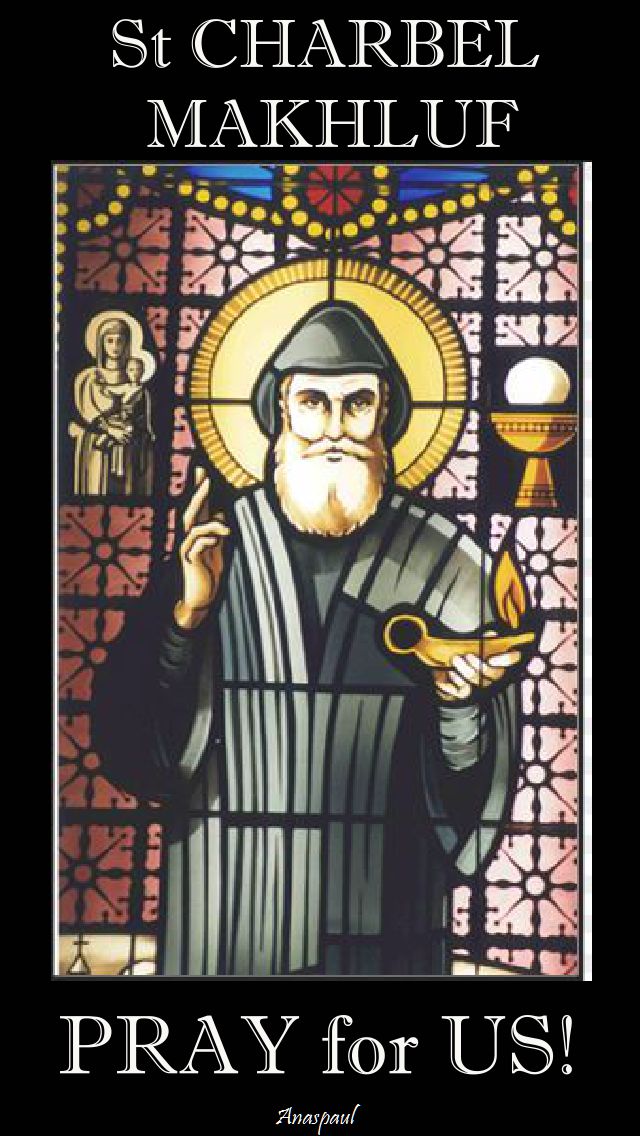
Thought for the Day – 24 July – The Memorial of St Charbel of Makhluf
Thought for the Day – 24 July – The Memorial of St Charbel of Makhluf
In 1950, Father George Webby, a Maronite priest from Scranton, visited Lebanon, took a photo of monks outside the wall of the monastery in which St. Charbel had lived and upon development of the picture saw that St. Charbel miraculously appeared with the monks, according to information provided by St. Anthony’s Church.
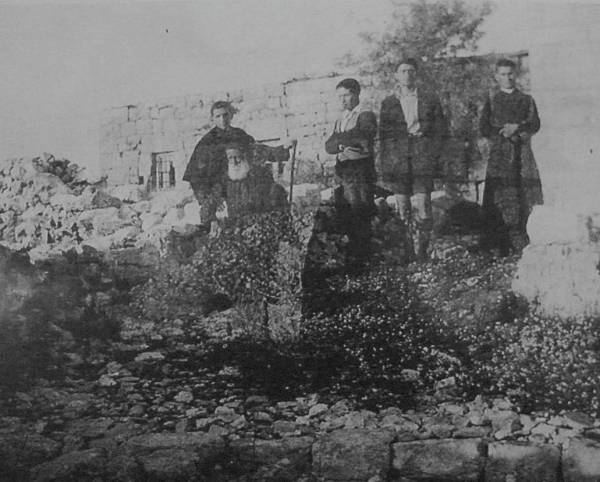
Art work for holy pictures of this saint is now taken from this photo. Can you see him? (Hint: smack dab in the middle) click on the picture and then zoom in….
St. Charbel is listed among The Incorruptibles, saints whose bodies were found intact years after burial. His body kept pouring oil and blood until the year before his canonization in 1977.
“…a hermit of the Lebanese mountain is inscribed in the number of the blessed, a new eminent member of monastic sanctity is enriching, by his example and his intercession, the entire Christian people. May he make us understand, in a world largely fascinated by wealth and comfort, the paramount value of poverty, penance and asceticism, to liberate the soul in its ascent to God…” ……….Pope Paul VI, October 9, 1977
St Charbel Makhluf, Pray for us!
Watch – “The Saint Charble Song” …it’s special…
A beautiful ode to Saint Charbel, written by J. Michael Thompson- (a Catholic Composer, professor of ecclesiastical chant):
The mountain heights of Lebanon
Resound with songs of joy;
The cedars of that ancient land
Stand tall as we employ
Our hymns of praise and thankfulness
For Sharbel’s saintly ways,
Lived out in strict humility
That guided all his days.
True monk and hermit of the hills,
Saint Maron’s modest son
Scorned wealth and comfort in his life
That heaven’s crown be won.
Of Mary, heaven’s Queen and Gate,
Devoted son was he,
Who cherished all the ancient rites
With great humility.
Fierce lover of the lowly life,
True father of the poor,
As you have done, so help us all
To struggle and endure,
That Christ be praised in ev’ry life,
That riches not ensnare
Or rule us in our daily walk;
That strong may be our prayer!
O Father, Son, and Spirit blest,
One God in persons three,
Receive this hymn we offer now,
And keep your Church e’er free
To follow, as Saint Sharbel did,
Enflamed with love so bright
That we, with eyes fixed firm on Christ,
May vanquish sin’s dark night.
Quote of the Day – 24 July
Quote of the Day – 24 July
“Those in the Catholic Church,
whom some rebuke for praying to Saints
and going on pilgrimages,
do not seek any Saint as their saviour.
Instead, they seek saints as those whom their Saviour loves
and whose intercession and prayer for the seeker
He will be content to hear.
For His Own sake, He would have those He loves honoured.
And when they are thus honoured for His sake,
then the honour that is given them for His sake ‘
overflows especially to Himself.”
St Thomas More
One Minute Reflection – 24 July
One Minute Reflection – 24 July
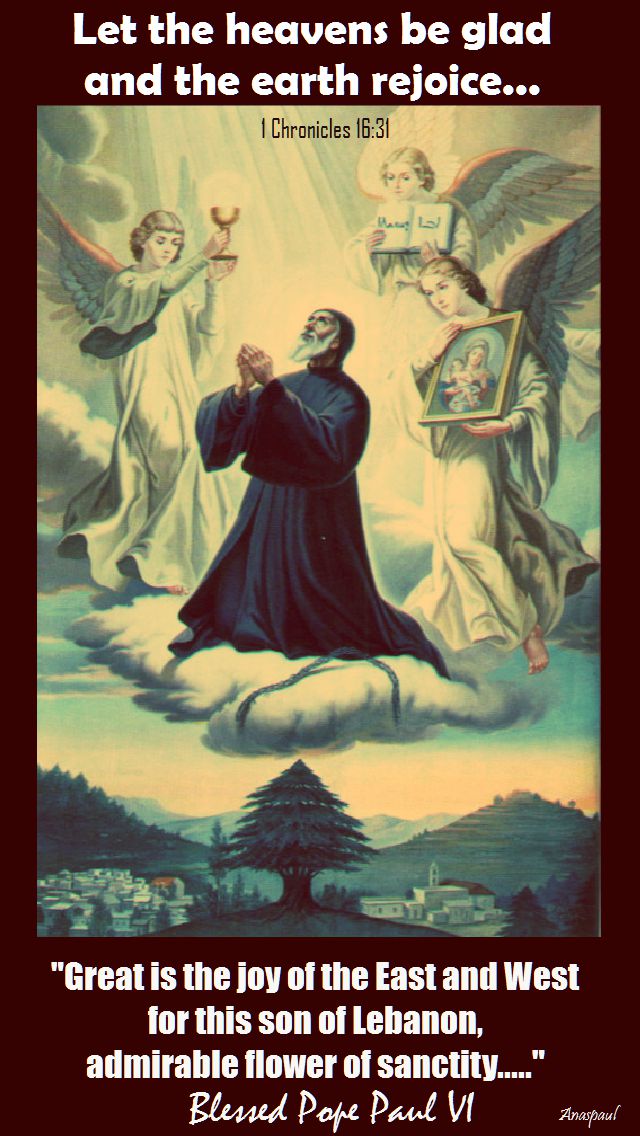
Let the heavens be glad and the earth rejoice; let them say among the nations: The LORD is king……1 Chronicles 16:31
REFLECTION – “Great is the gladness in heaven and earth today for the beatification of Charbel Makhluf, monk and hermit of the Lebanese Maronite Order. Great is the joy of the East and West for this son of Lebanon, admirable flower of sanctity blooming on the stem of the ancient monastic traditions of the East and venerated today by the Church of Rome.”……Bl Pope Paul VI at the Beatification ceremny at the closing of the Second Vatican Council, in 1965.
PRAYER – Lord, infinitely Holy and Glorified in Your Saints, You have inspired Charbel, the saint monk, to lead the perfect life of a hermit. We thank You for granting him the blessing and the strength to detach himself from the world so that the heroism of the monastic virtues of poverty,obedience, and chastity, could triumph in his hermitage. We beseech You to grant us the grace of loving and serving You, following his example. Almighty God, Who has manifested the power of St Charbel’s intercession
through his countless miracles and favours, grant us our intentions through his intercession. Amen
Our Morning Offering – 24 July
Our Morning Offering – 24 July
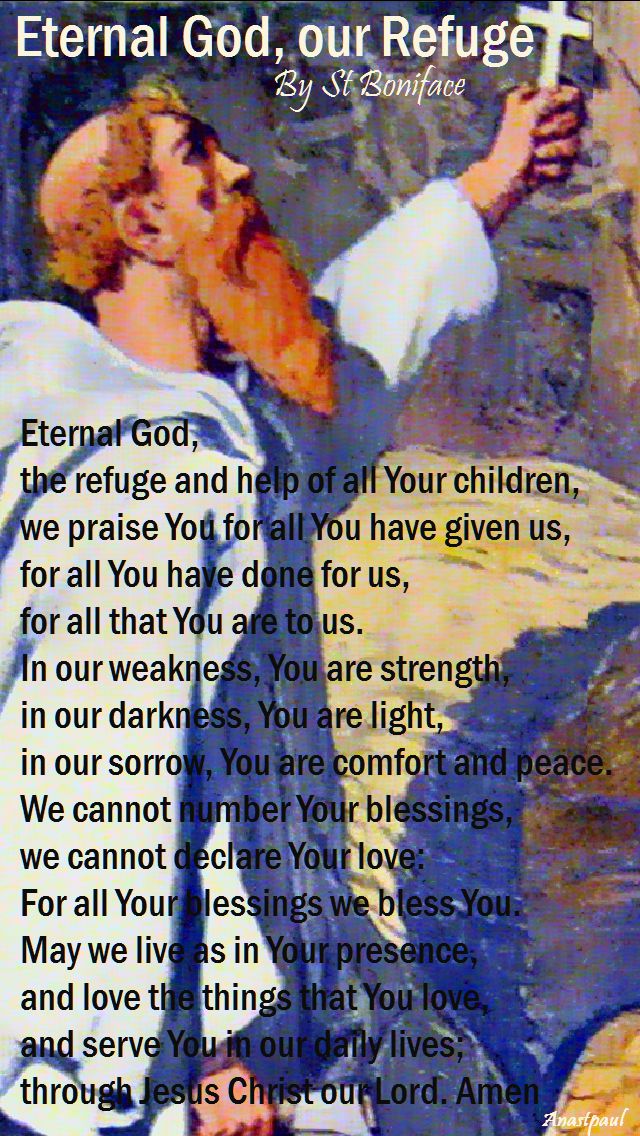
Eternal God, our Refuge
By St Boniface
Eternal God, the refuge and help of all Your children,
we praise You for all You have given us,
for all You have done for us,
for all that You are to us.
In our weakness, You are strength,
in our darkness, You are light,
in our sorrow, You are comfort and peace.
We cannot number Your blessings,
we cannot declare Your love:
For all Your blessings we bless You.
May we live as in Your presence,
and love the things that You love,
and serve You in our daily lives;
through Jesus Christ our Lord. Amen
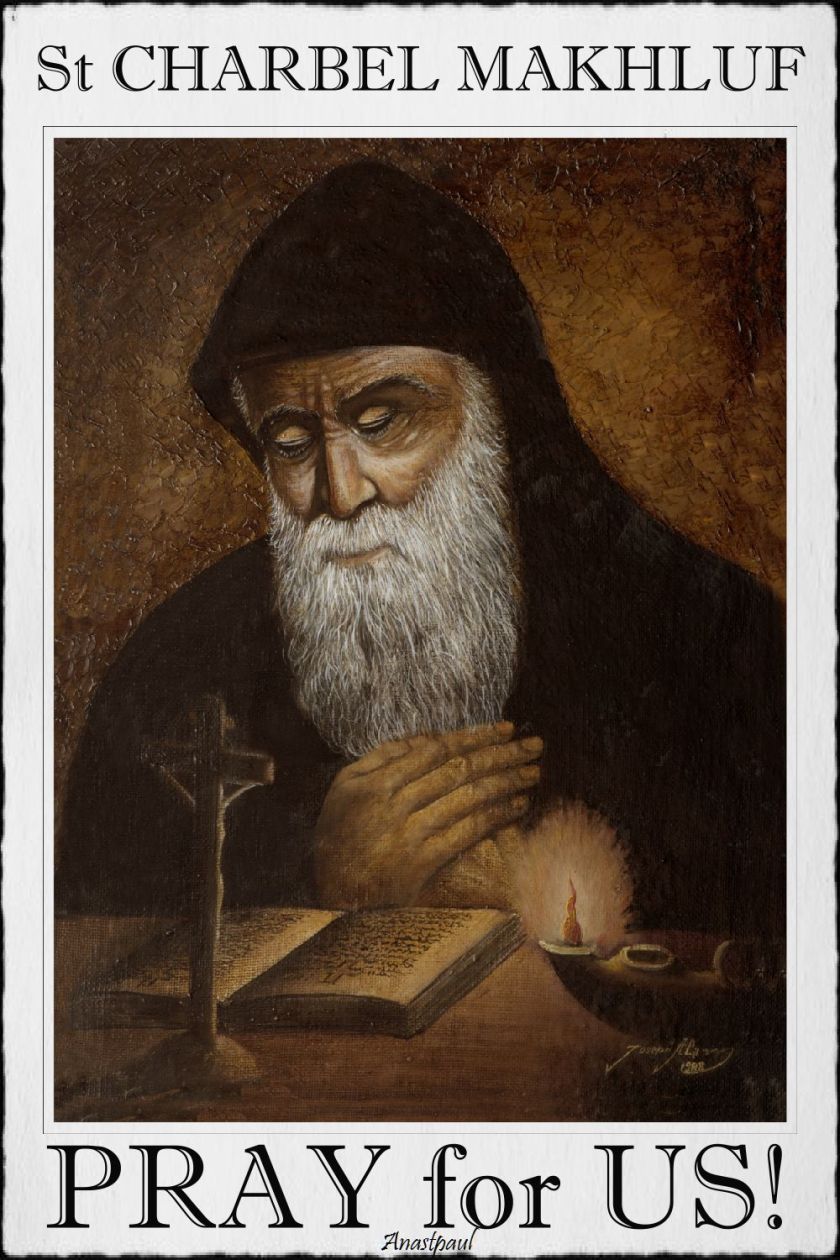
Saint of the Day – 24 July – St Charbel Makhluf O.L.M. – The holy monk whose dead body radiated white light
Saint of the Day – 24 July – St Charbel Makhluf O.L.M. Monk, Priest, Hermit, Miracle Worker – The holy monk whose dead body radiated white light – (8 May 1828 at Beka-Kafra, Lebanon as Joseph Zaroun Makhlouf – 24 December 1898 at Annaya of natural causes). St Charbel was Beatified in 1965, at the close of Vatican II and Canonised on 9 October 1977 by Pope Paul VI. Patron of Lebanon.
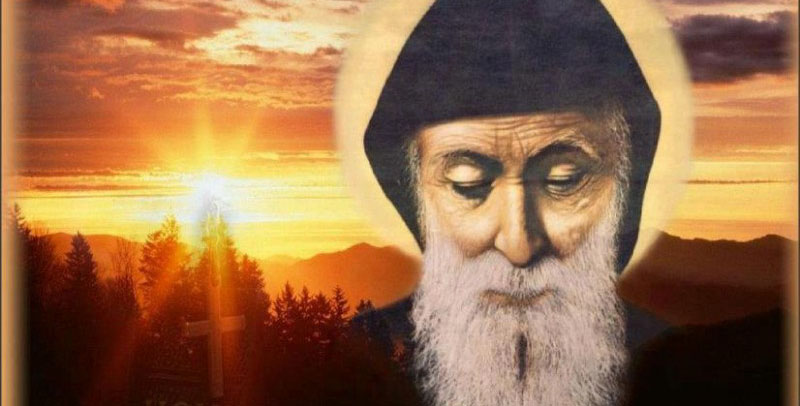

Youssef Antoun Makhlouf, the fifth child of a mule driver and his wife, he was born at Biqa-Kafra in the mountains of north Lebanon. Orphaned at an early age, he was brought up by an uncle who showed little sympathy for his charge’s devotion to prayer and solitude. Undeterred, in 1851, at the age of 23, Makhlouf entered the monastery of St Maroun at Annaya, taking the name in religion of Charbel, a second-century martyr at Antioch.
For 16 years, he worked hard in the monastery’s vineyards and sang the office at Mass. If Charbel was in any way distinguished from his fellow monks it was in his greater fervour for mortification, his rapt attention at Mass and his constant perusal of Thomas à Kempis’s Imitation of Christ. Although ordained a priest in 1859, Charbel increasingly felt the call to become a hermit. For some years his superiors resisted this ambition. In 1875, however, he removed to a hermitage attached to the monastery. At 4,600 feet above sea level his cell was often freezing; it was clear, however, that suffering and self-obliteration were precisely the graces which he sought. Following his death, the monks who trembled with cold during the night when they kept vigil at his coffin before his funeral, said: “See how we find ourselves unable to endure for a single night, the rude cold of this chapel! How could this priest live here for twenty-three years, on his knees, like a statue before the altar, every night from midnight until eleven in the morning, when he rose to say his Mass? Blessed is he, for he undoubtedly receives at present his reward with God!”

Saint Charbel also gained a reputation for holiness and despite his wish to live in isolation, was much sought for counsel and blessing. He had a great personal devotion to the Blessed Sacrament and the Blessed Virgin and was known to levitate during his prayers. He reportedly never raised his eyes from the ground, his face shrouded by his cloak, unless his gaze was fixed on the tabernacle during the Eucharist.
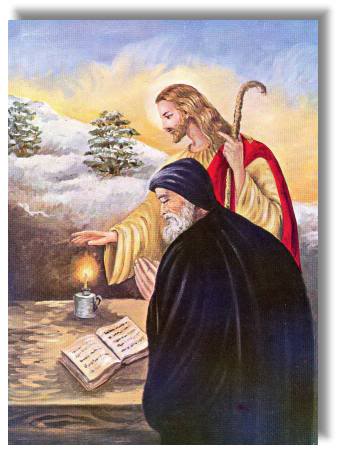
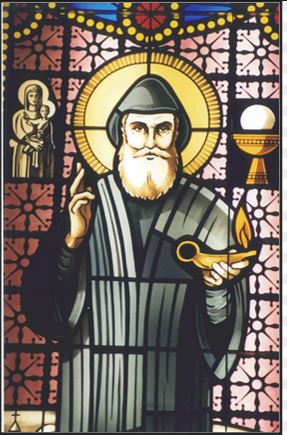
The week before Christmas, while Saint Charbel was offering Mass, paralysis struck him suddenly as he elevated the Eucharist during the consecration. For one week, he suffered in agony, repeating the prayer he was unable to complete during the Mass: “O Father of truth, behold Your Son, victim to please You; condescend to approve [this offering], because for me He endured death, to give me life…”
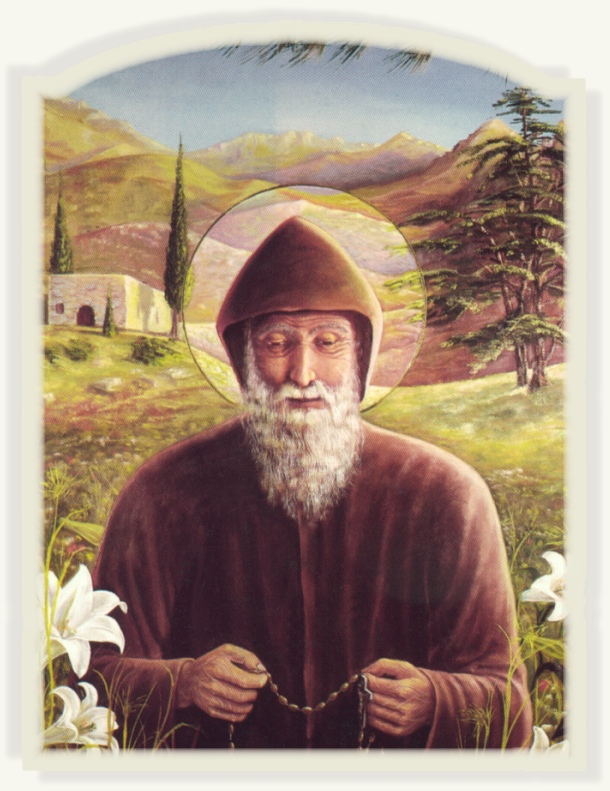
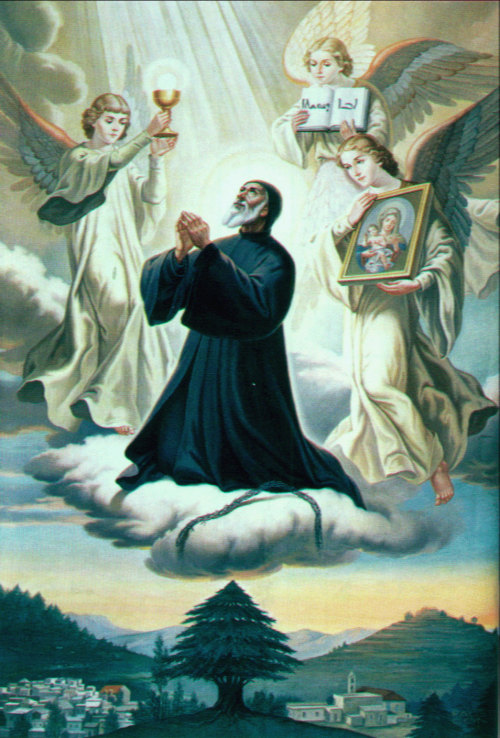

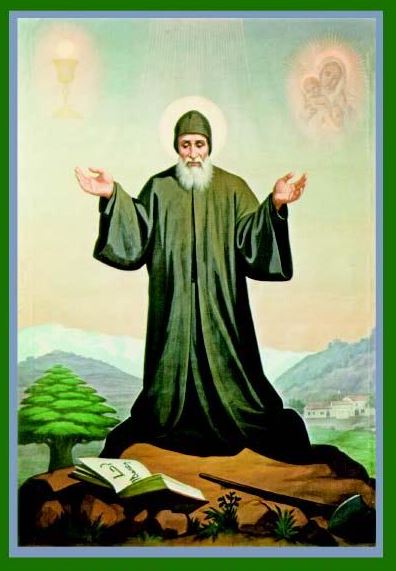
When Charbel died, aged 70, he was interred in the monastery cemetery, without a coffin, as was customary. On the evening of his funeral, his superior wrote: “Because of what he will do after his death, I need not talk about his behavior.” Over the next 45 days, however, it seemed to many observers that the place where his body lay was irradiated by white light. After four months it was decided to open the grave. Charbel’s cadaver was found to be perfectly preserved notwithstanding floods which had turned the area into a sea of mud.
The corpse was re-clothed and installed in the monastery chapel. Now, a strange liquid was secreted from the pores of the dead man’s skin, making it necessary regularly to change his garments. An examination conducted in 1927 by doctors of the local French medical institute found that the body was still incorrupt. At this stage it was transferred to a new zinc-lined coffin, which was placed inside the wall of an oratory.
In 1950 a liquid was observed to be oozing from a corner of the tomb. Another examination discovered a viscous fluid in the bottom of the coffin. And while subsequent investigations have revealed a body no longer incorrupt, the bones have mysteriously turned red.
Hundreds of cures have been, and still are, reported by those who visited Charbel’s tomb. He was canonised in 1977.


Saints’ Memorials – 24 July
St Charbel Makhluf (Optional Memorial) – https://www.youtube.com/watch?v=YFq1Q2rgbkg
—
St Aliprandus of Pavia
St Antinogenes of Merida
St Aquilina the Martyr
St Arnulf of Gruyere
Bl Balduino of Rieti
St Boris of Kiev
St Capito
St Christiana
St Christina of Bolsena
St Christina of Tyre
St Christina the Astonishing
St Cyriacus of Ziganeus
St Declan of Ardmore
Bl Diego Martinez
Bl Donatus of Urbino
Bl Giovanni Tavalli
St Gleb
Bl Godo of Oye
St John Boste
Bl Joseph Fernandez
Bl Joseph Lambton
Bl Juan Solorzano
St Kinga
St Lewina of Seaford
Bl Louise of Savoy
Bl Menefrida
St Meneus
St Niceta
Bl Nicholas Garlick
Bl Paulus Yi Do-gi
Bl Pierre de Barellis
St Rainofle
Bl Richard Simpson
Bl Robert Ludlam
Rufinus of Mercia
St Sigolena of Trocar
St Stercatius of Merida
St Ursicinus of Sens
St Victor of Merida
St Victorinus of Amiterno
St Vincent of Rome
St Wulfhad of Mercia
—
Martyred in the Spanish Civil War:
Bl Cándido Castán San José
Bl Cecilio Vega Domínguez
St Ignacio González Calzada
St Jaime Gascón Bordas
Bl José Joaquín Esnaola Urteaga
Bl José Máximo Moro Briz
St Josep Guillamí Rodo
St Marcos Morón Casas
Bl Maria Angeles of Saint Joseph
Bl Maria Mercedes Prat
Bl Maria Pilar of Saint Francis Borgia
Bl Teresa of the Child Jesus and of Saint John of the Cross
St Xavier Bordas Piferrer
The Wonders of the Holy Name – Fr Paul O’Sullivan, O.P. – “Revealing the Simplest Secret Ever of Holiness and Happiness.” Part Fourteen – 23 July
Previous – here: https://anastpaul.wordpress.com/category/the-holy-name/
We can ask for everything in the Name of Jesus.
The Angels are our dearest and best friends and
are most ready and able to help us in every difficulty and danger.
It is most regrettable that many Catholics do not
know, love and ask the Angels for help. The
easiest way is to say the Name of Jesus is in n their
honour. This gives them the greatest joy. They
in return will help us in all our troubles and keep
us safe from many dangers.
Let us say the Name of Jesus in honour of all
the Angels but especially in honour of our dear
Angel Guardian who loves us so much.
Our Sweet Lord is present in millions of
Consecrated Hosts in the countless Churches
of the World.
During many hours of the busy day and during
the long nights He is forgotten and left alone.
We can do much to console and comfort Him by
saying: My Jesus I love and adore You in all the
Consecrated Hosts of the World and I thank You
with all my heart for remaining on all the altars
of the World for love of us. Then say twenty,
fifty or more times the Name of Jesus with this
intention.
We may do most perfect penance for our sins
by offering the Passion and Blood of Jesus many
times each day for this intention.
The Precious Blood purifies our souls and raises
us to a high degree of holiness. It is all so
easy! We have only to repeat lovingly, joyfully,
reverently Jesus. Jesus. Jesus.
If we are sad, or cast down, if we are worried
with fears and doubts this Divine Name will give
us a delightful peace. If we are weak and wavering
it will give us a new strength and energy.
Did not Jesus, when on Earth, go about consoling
and comforting all those who were unhappy? He
is still doing it every day for those who ask Him.
If we are suffering from weak health, if we are
in pain, if some disease is taking hold of our poor
bodies, He can cure us. Did He not cure the sick,
the lame, the blind, the lepers? Does He not say
to us: “Come to me all you who labour and are
heavily burdened and I will refresh you”. Many
could have good health if they only asked Jesus
for it. By all means consult doctors, use remedies,
but above all call on Jesus.
The Name of Jesus is the shortest, the easiest,
the most powerful of all prayers. Our Lord tells
us that anything we ask the Father in His Name,
viz. in the Name of Jesus, we shall receive. Everytime
we say Jesus we are saying a fervent prayer
for all, all we need.
The Souls In Purgatory:
It is very lamentable that so many Christians
forget and neglect the souls in Purgatory.
It is possible that some of our dear friends
are suffering in these dreadful fires waiting.
waiting for our prayers and help which we could
so easily give them and do not give them.
We have pity for the poor whom we see in the
streets, for the hungry and for all those who suffer.
None suffer so terribly as the souls in Purgatory.
for the fire of Purgatory as St. Thomas tells us is
the same as the fire of Hell!
How often, dear reader, do you pray for the holy
souls? Days and weeks and perhaps months pass
and you do little, perhaps nothing for them!
You can easily help them if you say frequently
the Name of Jesus.
Because:
a) you thus offer for them the Precious Blood
and sufferings of Jesus Christ as we have explained;
b) also you gain every time you say Jesus 300 days Indulgence.
Having the custom of repeating often the Holy
Name you can like St. Mechtilde relieve thousands
of souls, who will never cease praying for
you with incredible fervour.
Thought for the Day – 3 July
Thought for the Day – 3 July
St Bridget was an exceedingly active and busy person, besides her deep and mystical life of prayer and communion with God. Her maid, nevertheless told others after the Saint’s death, that she was “kind and meek to every creature and that she had a smiling face” regardless of what we would today consider to be the ‘stress’ of her activity. Truly holy people are gentle with others, eminently kind and compassionate toward all and this is the first sign of genuine holiness. How I treat others, is pretty much a mirror of what is going on in my heart. If I aim to see God’s face in all and my heart is on fire with love of Him, then how I treat others will shine forth and reflect this love!
St Bridget of Sweden, pray for us.
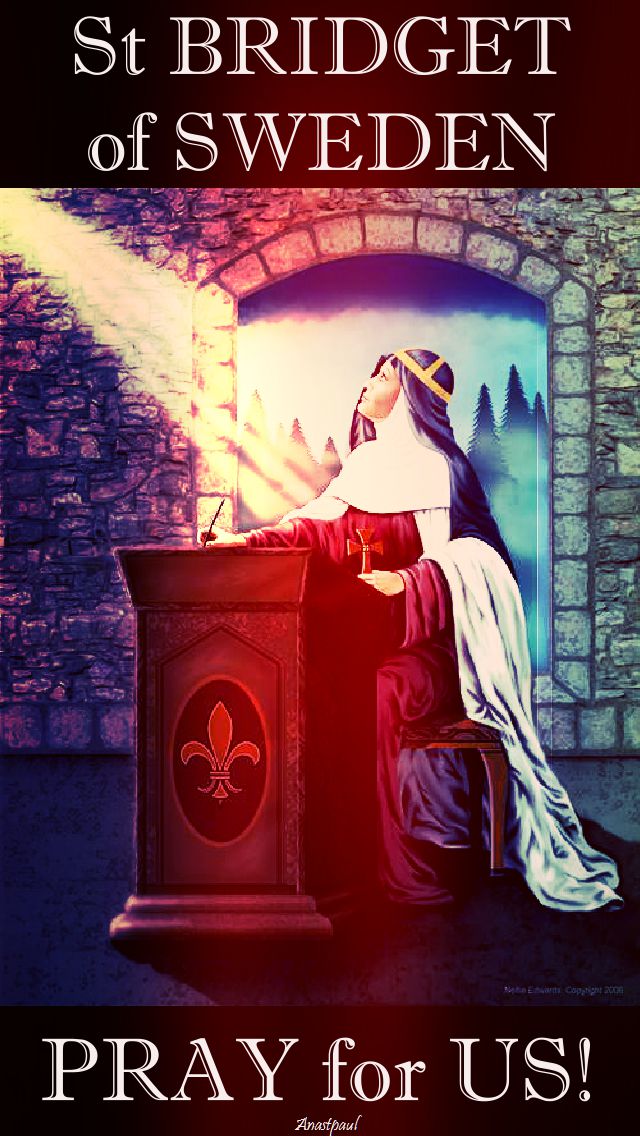
Quote/s of the Day – 23 July
Quote/s of the Day – 23 July
“There is no sinner in the world,
however much at enmity with God,
who cannot recover God’s grace,
by recourse to Mary
and by asking her assistance.”
“True wisdom, then, consists in works, not in great talents,
which the world admires;
for the wise in the world’s estimation . . . are the foolish
who set at naught the will of God
and know not how to control their passions.”
St Bridget of Sweden
One Minute Reflection – 23 July
One Minute Reflection – 23 July
You have heard that it was said:
“You shall love your neighbour and hate your enemy.”
But I say to you: ‘ love your enemies
and pray for those who persecute you.’…..Matthew 5:43-44
REFLECTION – “We must show love for those who do evil to us and pray for them.
Nothing is dearer or more pleasing to God than this.”…St Bridget of Sweden
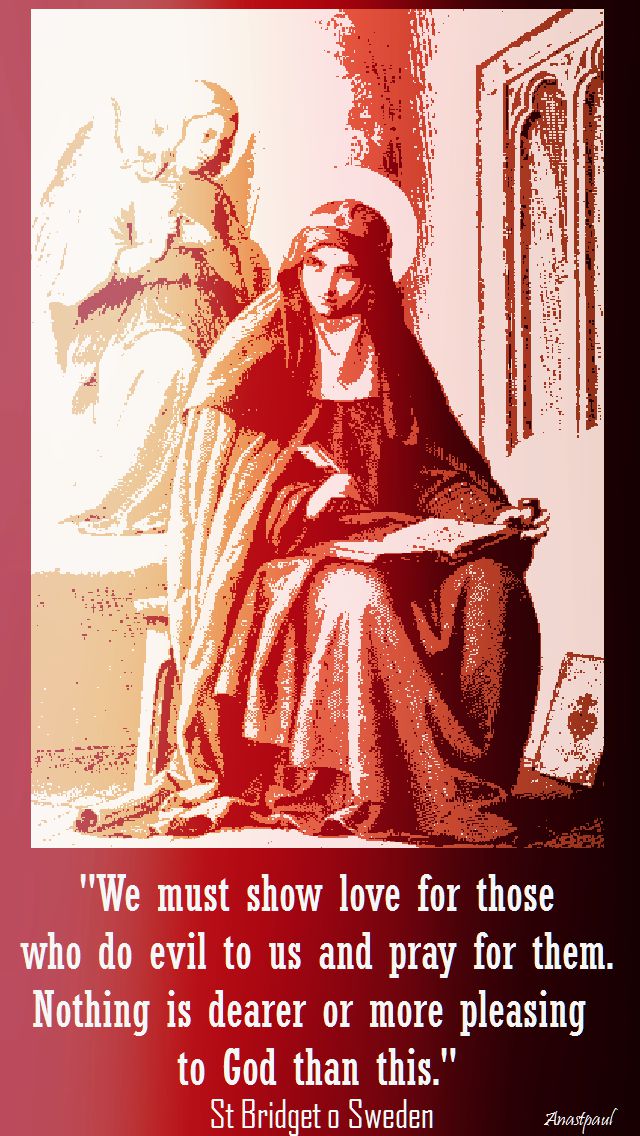
PRAYER – God of love, grant me the great grace to show love and forgiveness for those who do evil to me. Let me at least be able to pray for their salvation, won for them too, by your Divine Son, Jesus th Christ. St Bridget of Swden, pray for us, amen.
Our Morning Offering – 23 July
Our Morning Offering – 23 July
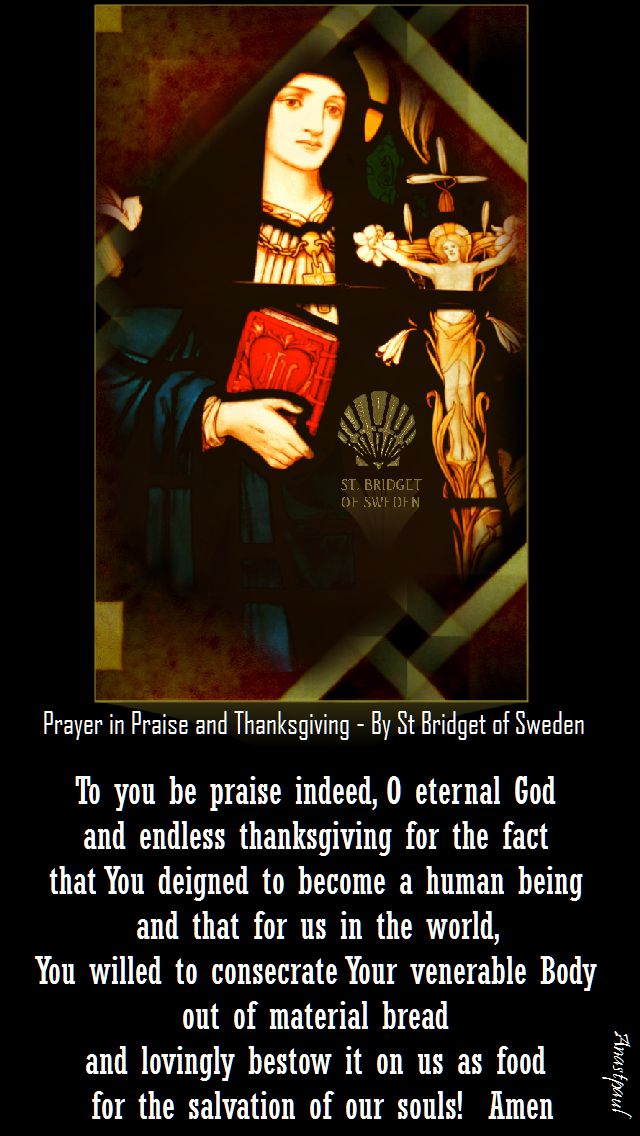
Prayer in Praise and Thanksgiving
By St Bridget of Sweden
To You be praise indeed, O eternal God
and endless thanksgiving for the fact
that You deigned to become a human being
and that for us in the world,
You willed to consecrate Your venerable Body
out of material bread
and lovingly bestow it on us as food
for the salvation of our souls!
Amen
Saint of the Day – 23 July – St Bridget of Sweden (c 1303-1373)
Saint of the Day – 23 July – St Bridget of Sweden (c 1303-1373) – Widow, Religious, Mystic, Confessor, Founder of the Bridgettines Nuns and Monks, author of “The Pieta” book of devotions. Born in 1302 or 1303 at Finsta Castle, Uppsala, Sweden and died on 23 July 1373 at Rome, Italy of natural causes. She was buried in 1374 at the Vadstena, Sweden convent she had founded. St Bridget was Canonised on 7 October 1391 by Pope Boniface IX. Patronages – Europe, Sweden, widows. Attributes – Religious habit, Pilgrim’s hat, staff & bag; crown, writing-book. She is one of the six patron saints of Europe, together with Benedict of Nursia, Sts Cyril and Methodius, Catherine of Siena and Edith Stein.
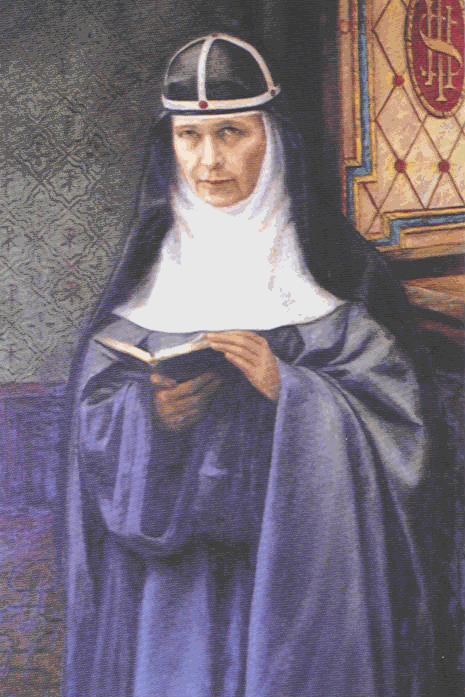
The most celebrated Saint of Sweden was the daughter of Birger Persson, the Governor and Provincial Judge of Uppland and of Ingeborg Bengtsdotter, who was related to the royal family. Bridget was born in Sweden in 1303. From the time she was a child, she was greatly devoted to the Passion of Jesus.
When she was only ten, it is recorded that she had a vision of Jesus on the Cross and heard Him say, “Look at me, my daughter.”
“Who has treated you like this?” cried little Bridget.
Jesus answered, “Those who despise me and refuse my love for them.” From that moment on, Bridget tried to stop people from offending Jesus.
When she was 14, Bridget married an 18-year old man named Ulf. Like Bridget, Ulf had set his heart on serving God. They had eight children, of whom one was St Catherine of Sweden. Bridget and Ulf also served the Swedish court, Bridget as the Queen’s personal maid. Bridget tried to help King Magnus and Queen Blanche lead better lives, however for the most part, they did not listen to her.
All her life, Bridget had marvellous visions and received special messages from God. In obedience to them, she visited many rulers and important people in the Church. She explained humbly what God expected of them.


After her husband died, Bridget put away her rich clothes and lived as a poor nun. Later, in 1346, she began the order of the Most Holy Saviour, also known as Bridgettines. She still kept up her own busy life, travelling about doing good everywhere she went. And through all this activity, Jesus continued to reveal many secrets to her, which she received without the least bit of pride.
Shortly before she died, the saint went on a pilgrimage to the Holy Land. At the shrines there, she had visions of what Jesus had said and done in each place.
All St Bridget’s revelations on the sufferings of Jesus were published after her death. Her Prayers continue to be a favourite devotion of Catholics all over the world and are published under the title the “Pieta Prayers.”
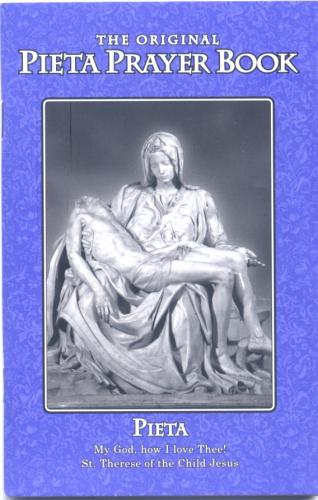
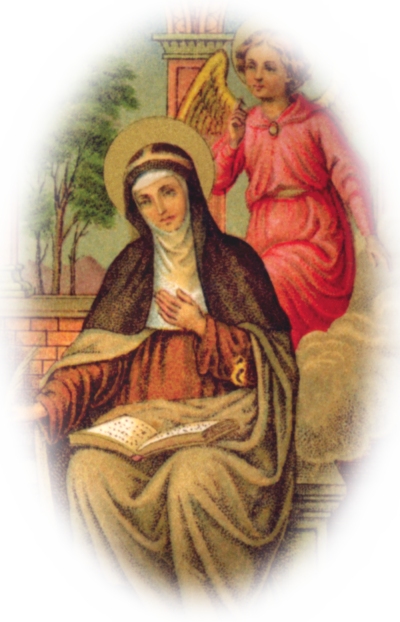
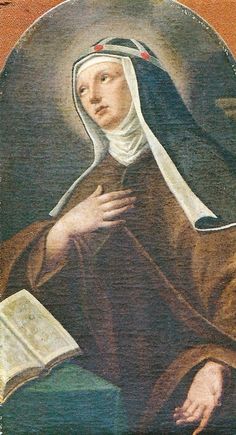
St. Bridget died in Rome on July 23, 1373. She was proclaimed a saint by Pope Boniface IX in 1391.

Saints’ Memorials and Feasts of the Blessed Virgin Mary
16th Sunday in Ordinary Time
St Bridget of Sweden (Optional Memorial)
Our Lady of Altino
Panagia Evangelistria/ Our Lady of Tinos: The complex is built around a miraculous icon which according to tradition was found after the Virgin appeared to the nun Pelagia and revealed to her the place where the icon was buried. The icon is widely believed to be the source of numerous miracles. It is by now almost completely encased in silver, gold, and jewels and is commonly referred to as the “Megalócharē” (“[She of] Great Grace”) or simply the “Chárē Tēs” (“Her Grace”). By extension the church is often called the same and is considered a protectress of seafarers and healer of the infirm.
The icon was found on the very first days after the creation of the modern Greek State, henceforth Our Lady of Tinos was declared the patron saint of the Greek nation. The icon was at the time thought to be the handwork of St. Luke the Evangelist, a possibility that can neither be confirmed nor ruled out and a nationwide fund collection was carried out for the building of a church to house it. The church, built in the Renaissance style, was inaugurated in 1830 and since then it constitutes the major Christian pilgrimage in Greece, equal to what is Lourdes in France or Fatima in Portugal. The church receives a vast number of donations in silver and gold votives each year; these are auctioned and used for charities.
The church is officially dedicated to the Annunciation of the Virgin Mary. The major feast of the church, however, is on 15 August when the Dormition of the Virgin Mary (Theotokos) is commemorated by the Greek Orthodox Church, following the strong tradition of the Aegean Islands where the Dormition is grandly celebrated in mid-August as the principal summer feast.


—
Anne of Constantinople
Apollonius of Rome
Bl Basil Hopko
Bl Beaudoin of Beaumont
Conan of Cornwall
Bl Emilio Arce Díez
Eugene of Rome
Herundo of Rome
Bl Jane of Orvieto
John Cassian
Bl Josep Sala Picó
Bl Juan de Luca
Bl Juan de Montesinos
Bl Leonard da Recanati
Bl Margarita de Maturana
Bl Pedro Ruiz de los Paños Angel
Phocas the Gardener
Primitiva of Rome
Rasyphus of Macé
Rasyphus of Rome
Ravennus of Macé
Redempta of Rome
Romula of Rome
Severus of Bizye
Theophilus of Rome
Trophimus of Rome
Valerian of Cimiez
Bl Wojciech Gondek
—
Martyrs of Barcelona – 7 beati: Seven Christians, some lay people, some members of the Missionaries of the Sacred Hearts of Jesus and Mary and some of the Franciscan Daughters of Mercy, who were martyred in two groups on the same day in the Spanish Civil War.
• Catalina Caldés Socías
• Francesc Mayol Oliver
• Miquel Pons Ramis
• Miquela Rul-Làn Ribot
• Pau Noguera Trías
• Prudència Canyelles Ginestà de Aguadé
• Simó Reynés Solivellas
23 July 1936 in Barcelona, Spain. They were Beatified on 28 October 2007 by Pope Benedict XVI.
Martyrs of Bulgaria: An unknown number of Christians killed for their faith during the 9th century war between the Greek Emperor Nicephorus and the Bulgars.
Martyrs of Carabanchel Bajo – 9 beati: A group of nine Passionist priests, brothers and clerics who were martyred together in the Spanish Civil War.
• Anacario Benito Nozal
• Felipe Ruiz Fraile
• Felipe Valcobado Granado
• José Osés Sainz
• José Ruiz Martinez
• Julio Mediavilla Concejero
• Laurino Proaño Cuesta
• Manuel Pérez Jiménez
• Maurilio Macho Rodríguez
22 July 1936 in Carabanchel Bajo, Madrid, Spain. They were Beatified on 1 October 1989 by Pope John Paul II.
Martyrs of Horta – 10 beati: A lay woman and nine Minim nuns who were martyred together in the Spanish Civil War.
• Ana Ballesta Gelmá
• Dolors Vilaseca Gallego
• Josefa Pilar García Solanas
• Josepa Panyella Doménech
• Lucrecia García Solanas
• Maria Montserrat Ors Molist
• Mercè Mestre Trinché
• Ramona Ors Torrents
• Teresa Ríus Casas
• Vicenta Jordá Martí
23 July 1936 at the Sant Genís dels Agudells highway, Horta, Barcelona, Spain. They were Beatified on
27 October 2013 by Pope Benedict XVI.
Martyrs of Manzanares – 5 beati: Five Passionist clerics who were martyred together in the Spanish Civil War.
• Abilio Ramos y Ramos
• Epifanio Sierra Conde
• José Estalayo García
• Vicente Díez Tejerina
• Zacarías Fernández Crespo
They were shot on 23 July 1936 in Manzanares, Ciudad Real, Spain and Beatified on 1 October 1989 by Pope John Paul II.
Thought for the Day – 22 July
Thought for the Day – 22 July
In short, without the generous contribution of many women, the history of Christianity would have developed very differently.
This is why, as my venerable and dear Predecessor John Paul II wrote in his Apostolic Letter Mulieris Dignitatem: “The Church gives thanks for each and every woman…. The Church gives thanks for all the manifestations of the feminine “genius’ which have appeared in the course of history, in the midst of all peoples and nations; she gives thanks for all the charisms which the Holy Spirit distributes to women in the history of the People of God, for all the victories which she owes to their faith, hope and charity: she gives thanks for all the fruits of feminine holiness” (n. 31).
As we can see, the praise refers to women in the course of the Church’s history and was expressed on behalf of the entire Ecclesial Community. Let us also join in this appreciation, thanking the Lord because He leads His Church, generation after generation, availing Himself equally of men and women who are able to make their faith and Baptism fruitful for the good of the entire Ecclesial Body and for the greater glory of God….
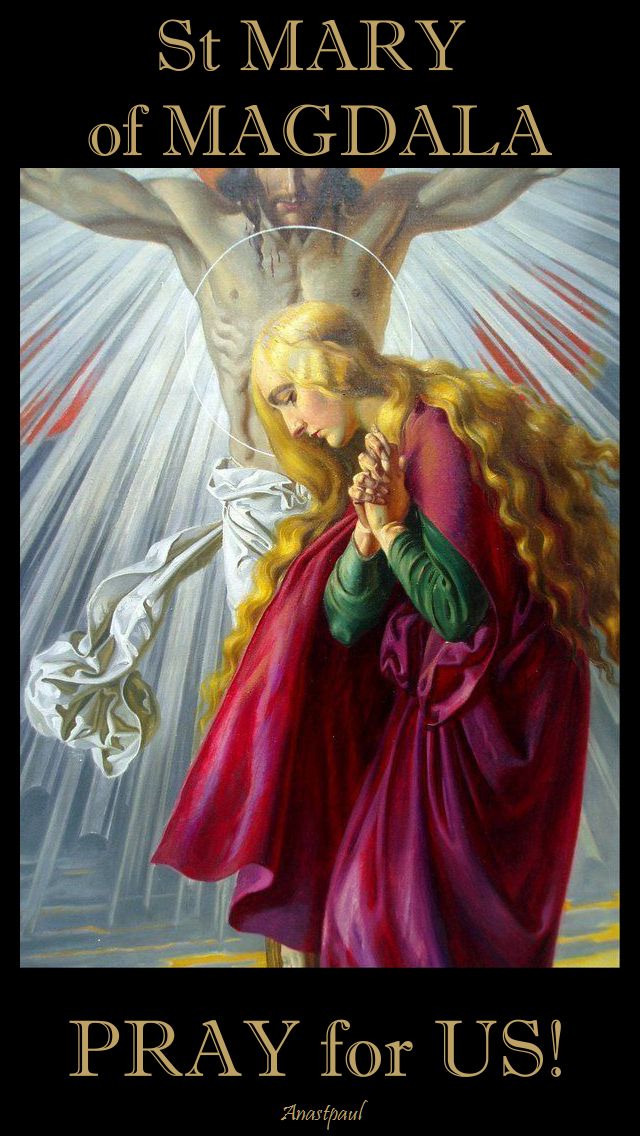
“The story of Mary of Magdala reminds us all of a fundamental truth. A disciple of Christ is one who, in the experience of human weakness, has had the humility to ask for His help, has been healed by Him and has set out following closely after Him, becoming a witness of the power of His merciful love that is stronger than sin and death………..”Pope BENEDICT XVI – General Audience, Paul VI Audience Hall – Wednesday, 14 February 2007
St Mary of Magdala, Pray for us!

Quote/s of the Day – 22 July
Quote/s of the Day – 22 July
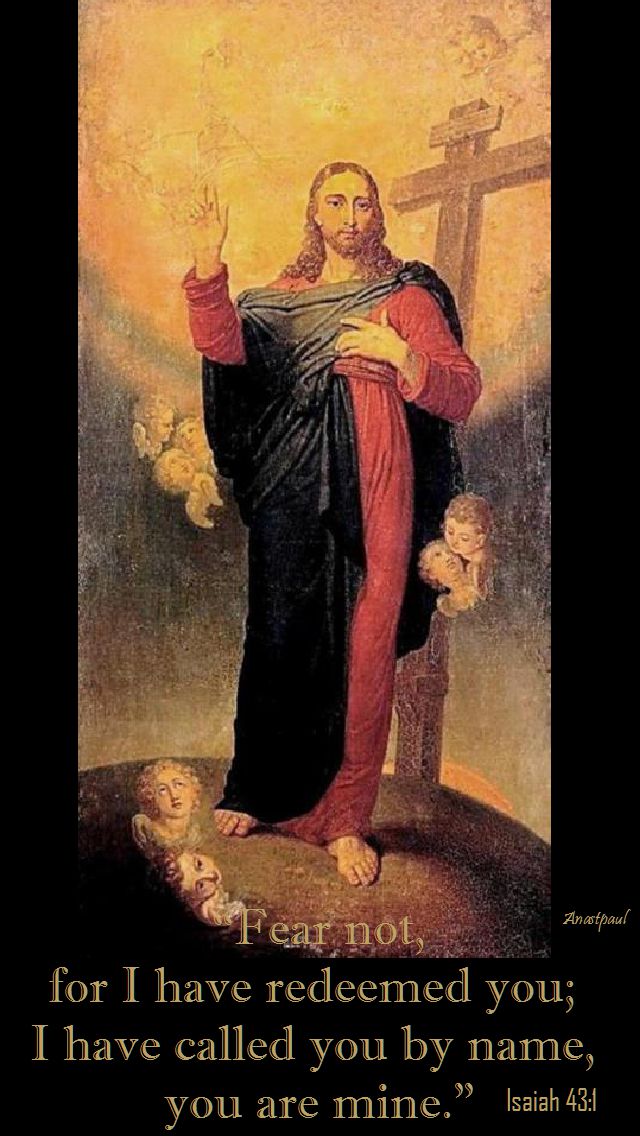
“Fear not, for I have redeemed you;
I have called you by name, you are mine”
Isaiah 43:1
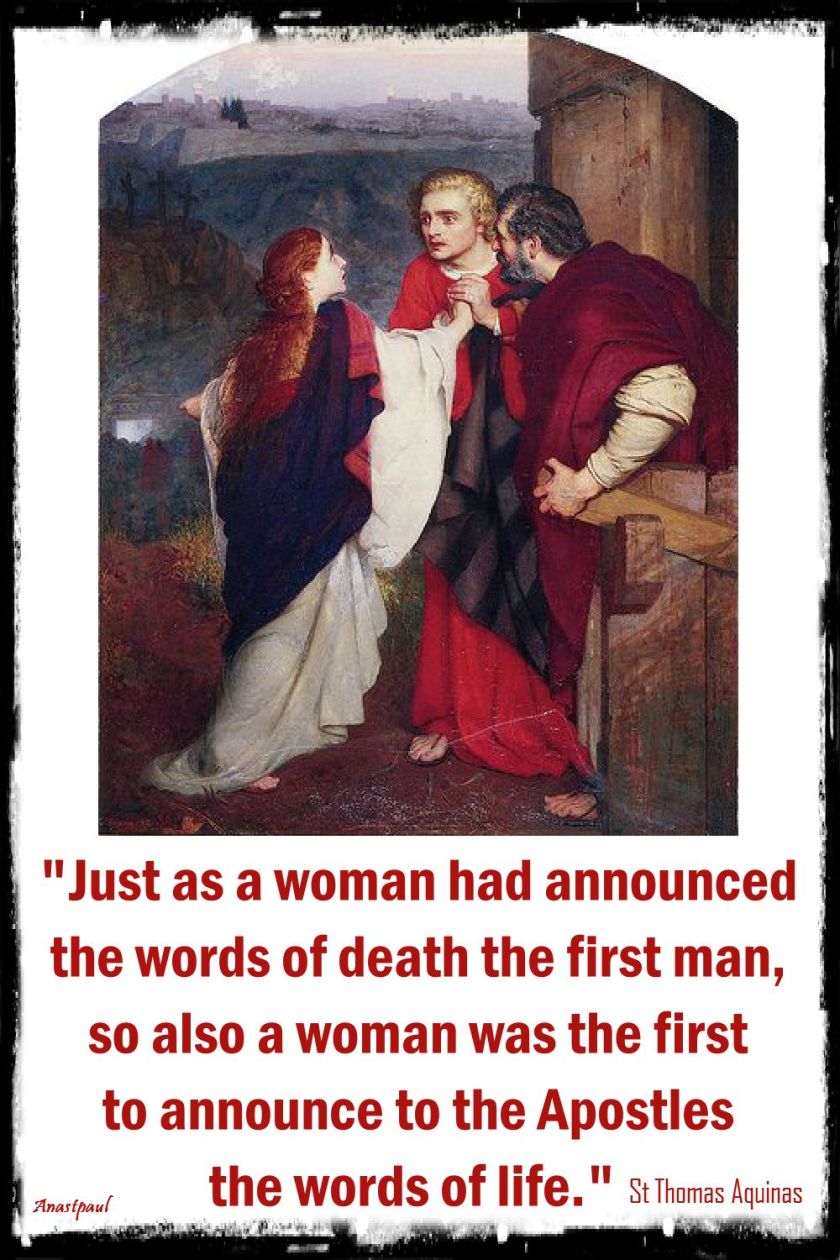
“Just as a woman had announced the words of death
to the first man, so also a woman was the first
to announce to the Apostles the words of life.”
….St Thomas Aquinas (Super Ioannem, ed. Cai, 2519)
The Wonders of the Holy Name – Fr Paul O’Sullivan, O.P. – “Revealing the Simplest Secret Ever of Holiness and Happiness.” Part Thirteen – 22 July
Previous – here: https://anastpaul.wordpress.com/category/the-holy-name/
The Doctrine of the Holy Name contd
The Passion:
The second meaning of the word Jesus is –
Jesus-dying-on-the-Cross for St. Paul tells us that our
Lord merited this most Holy Name by His sufferings
and death.
Therefore when we say Jesus we should also
wish to offer the Passion and Death of Our Lord
to the Eternal Father for His greater glory and
for our own intentions.
Just as Our Lord became man for each one of
us, as if that one were the only one in existence,
so He died not for all men in general but for
each one in particular. When He was hanging
on the Cross He saw me, He saw you, dear reader, –
and offered every pang of dreadful agony, every
drop of His Precious Blood, all His humiliations,
all the insults and outrages for me, for you, for
each one of us. He has given us all these infinite
merits as our very own. We may offer them
hundreds and hundreds of times every day to
the Eternal Father for ourselves and for the WorId.
We do this every time we say Jesus. At the
same time let us wish to thank Our Lord for all
He has suffered for us.
It is appalling that many Christians know so
little of this Holy Name and all that it means. As
a result they are losing every day precious graces
and forfeiting the greatest rewards in Heaven.
Sad, deplorable ignorance!
How to share in 500.000 Masses:
The third intention we ought to have when
saying Jesus is to offer all the Masses that are
being said all over the World for the glory of God,
for our own needs and for the World at large.
About 500.000+ Masses are celebrated daily. And
we can and should share in all these.
The Mass is Jesus. He once more becomes man,
renews the Incarnation in every Mass as really as
when He became man in His mother’s womb. He
also dies on the Altar as really and truly as He
died on Calvary. The Mass is said not only for
all those who assist at it in Church but for all those
who wish to hear it and offer it with the priests.
All we have to do is to say reverently Jesus.
Jesus with the intention of offering these Masses
and participating in them. By doing this we have
a share in all of them.
It is a wonderful grace to assist at and to offer
one Mass; what will it not be to offer and share in
500.000 Masses every day!
Therefore every time we say Jesus, let it
be our intention.
1. To offer to God all the infinite. love
and merits of the Incarnation.
2. To offer to God the Passion and Death
of Jesus Christ.
3. To offer to God all the 500.000
Masses being celebrated in the World
for His glory and our own intentions.
All that we have to do is to say the one word
Jesus but knowing what we are doing.
St Mechtilde was accustomed to offer the Passion
of Jesus in union with all the Masses of the
World for the souls in Purgatory.
Our Lord once showed her Purgatory open and
thousands of souls going up to Heaven as the
result of her little prayer.
When we say Jesus we can offer the Passion
and the Masses of the World either for ourselves
or for the souls in Purgatory or for any other
intention we please.
We should always. too, offer them for the World
at large and our own country in particular.
One Minute Reflection – 22 July
One Minute Reflection – 22 July
Jesus said to her, “Woman, why are you weeping? Whom are you looking for?” She thought it was the gardener and said to him, “Sir, if you carried him away, tell me where you laid him, and I will take him.” Jesus said to her, “Mary!” …….John 20: 13-15
REFLECTION – “When Mary Magdalen came to the tomb and did not find the Lord’s body, she thought it had been taken away and so informed the disciples. After they came and saw the tomb, they too believed what Mary had told them. The text then says: “The disciples went back home,” and it adds: “but Mary wept and remained standing outside the tomb.” We should reflect on Mary’s attitude and the great love she felt for Christ; for though the disciples had left the tomb, she remained. She was still seeking the one she had not found and while she sought she wept; burning with the fire of love, she longed for Him who she thought had been taken away. And so it happened that the woman who stayed behind to seek Christ was the only one to see Him. For perseverance is essential to any good deed, as the voice of truth tell us: “Whoever perseveres to the end will be saved….Jesus says to her: Mary. Jesus is not recognised when He calls her “woman”; so He calls her by name, as though He were saying: ‘Recognise me as I recognise you; for I do not know you as I know others; I know you as yourself.’ And so Mary, once addressed by name, recognises who is speaking. She immediately calls Him ‘Rabboni’, that is to say, teacher, because the one whom she sought outwardly was the one who inwardly taught her to keep on searching.” – from a homily by St Pope Gregory the Great

PRAYER – Almighty, ever-living God, Your only-begotten Son, Jesus Christ made Mary of Magdala the first herald of Easter joy. Grant that, following her example and helped by her prayers, we may, in this life, proclaimn he living Christ and come to se Him reigning with You in glory. Through our Lord Jesus Christ, in unity with the Holy Spirit, one God for ever and ever, amen.

Our Morning Offering – 22 July
Our Morning Offering – 22 July
You are Christ
St Augustine
You are Christ,
my Holy Father,
my Tender God,
my Great King,
my Good Shepherd,
my Only Master,
my Best Helper,
my Most Beautiful
and my Beloved,
my Living Bread,
my Priest Forever,
my Leader to my Country,
my True Light,
my Holy Sweetness,
my Straight Way,
my Excellent Wisdom,
my Pure Simplicity,
my Peaceful Harmony,
my Entire Protection,
my Good Portion,
my Everlasting Salvation.
May the live coal of Your Love grow hot within my spirit
and break forth into a perfect fire;
may it burn incessantly on the altar of my heart;
may it glow in my innermost being;
may it blaze in hidden recesses of my soul;
and in the days of my consummation
may I be found consummated with You!
Amen.
Saint of the Day – 22 July – The Feast of St Mary of Magdala – “Apostle to the Apostles”
Saint of the Day – 22 July – The Feast of St Mary of Magdala – “Apostle to the Apostles” (born probably in Magdala – died at an unknown date possibly in Saint-Maximin-la-Sainte-Baume, Provence-Alpes-Côte d’Azur, France, or Ephesus, Asia Minor). Patronages – against sexual temptation, apothecaries, druggists, pharmacists, contemplative life, contemplatives, converts, glove makers, hairdressers, penitent sinners, penitent women, people ridiculed for their piety, perfumeries, reformed prostitutes, tanners, women, Diocese of Salt Lake City, Utah, 8 cities. During the Middle Ages, Mary Magdalene was regarded in Western Christianity as a repentant prostitute or promiscuous woman, claims not found in any of the four canonical gospels.
Mary Magdalene was one of Christ’s disciples. She has been identified with several Marys in the Gospel – Mary, the sister of Martha and Lazarus; Mary, the sinner who washed Jesus’ feet with her tears; Mary, a woman who cared for Jesus and his apostles on their journey. Today scholars believe that Mary Magdalene was not the sinful woman in Scripture although she has been confused with this unnamed woman for centuries. Except for the mother of Jesus, few women are more honoured in the Bible than Mary Magdalene. Yet she could well be the patron of the slandered, since there has been a persistent legend in the Church that she is the unnamed sinful woman who anointed the feet of Jesus in Luke 7:36-50.
Most Scripture scholars today point out that there is no scriptural basis for confusing the two women. Mary Magdalene, that is, “of Magdala,” was the one from whom Christ cast out “seven demons” (Luke 8:2)—an indication at the worst, of extreme demonic possession or possibly, severe illness.
Writing in the New Catholic Commentary, Father Wilfrid J Harrington, OP, says that “seven demons” “does not mean that Mary had lived an immoral life—a conclusion reached only by means of a mistaken identification with the anonymous woman of Luke 7:36.” In the Jerome Biblical Commentary, Father Edward Mally, SJ, agrees that she “is not…the same as the sinner of Luke 7:37, despite the later Western romantic tradition about her.”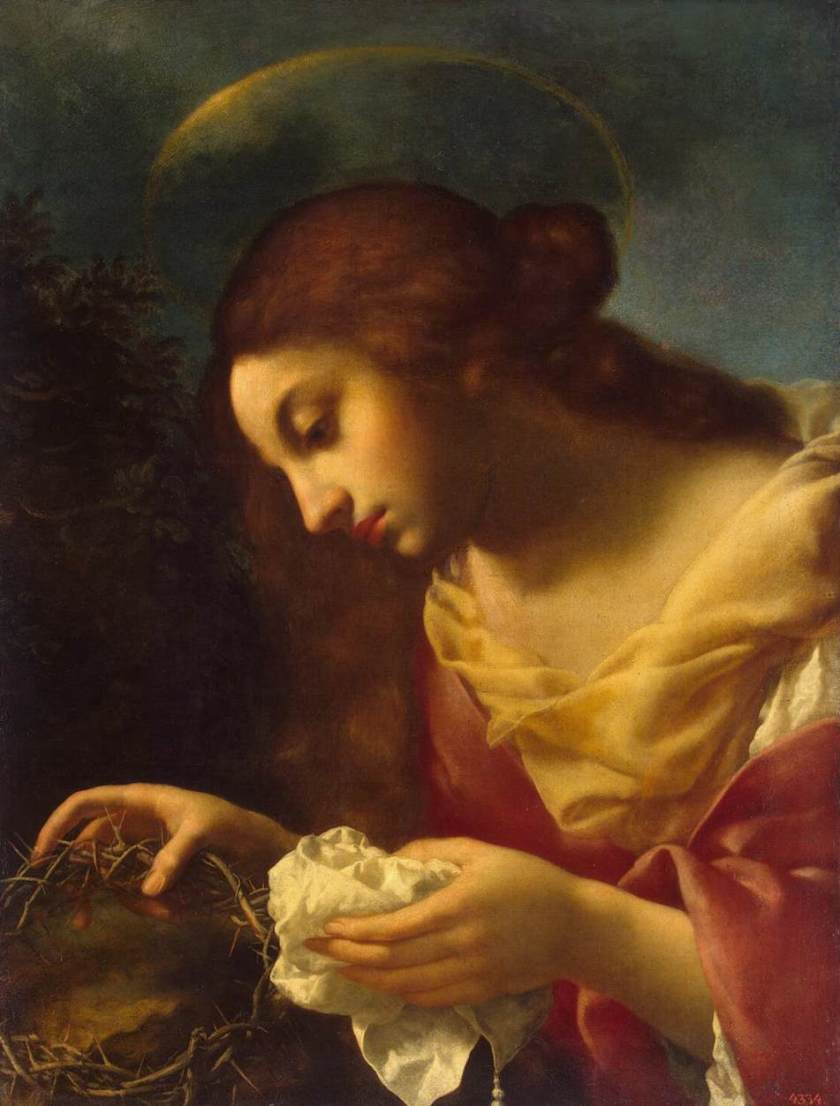
Mary Magdalene was one of the many “who were assisting them [Jesus and the Twelve] out of their means.” She was not the sister of Martha and Lazarus! She was one of those who stood by the Cross of Jesus with his mother. And, of all the “official” witnesses who might have been chosen for the first awareness of the Resurrection, she was the one to whom that privilege was given.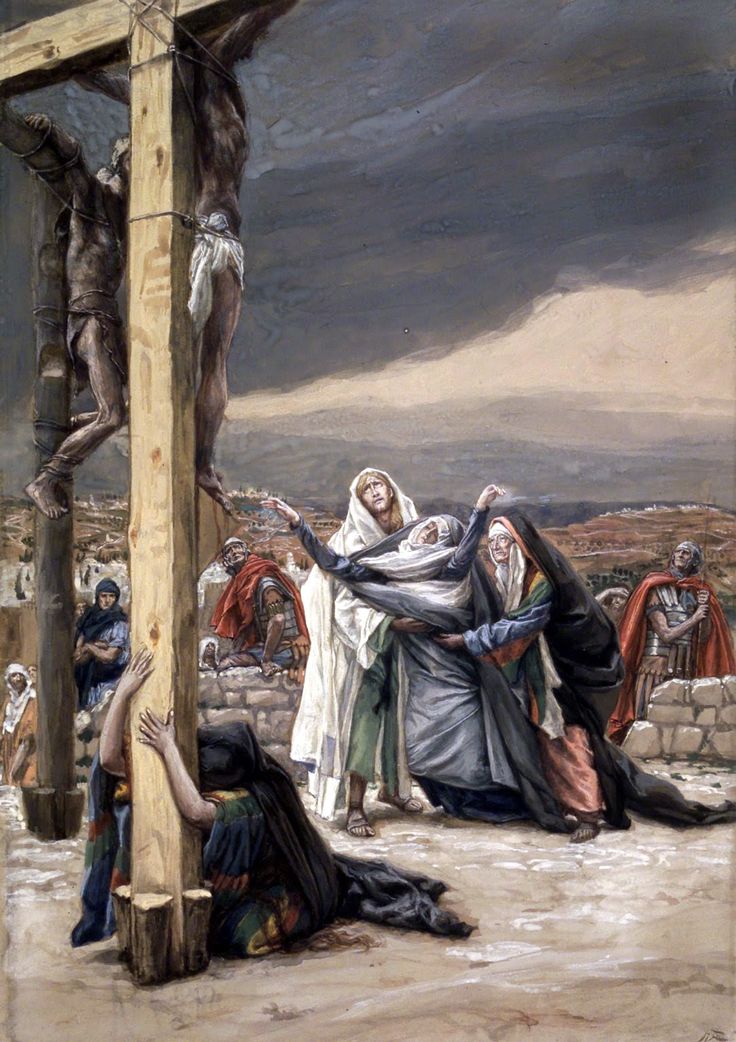
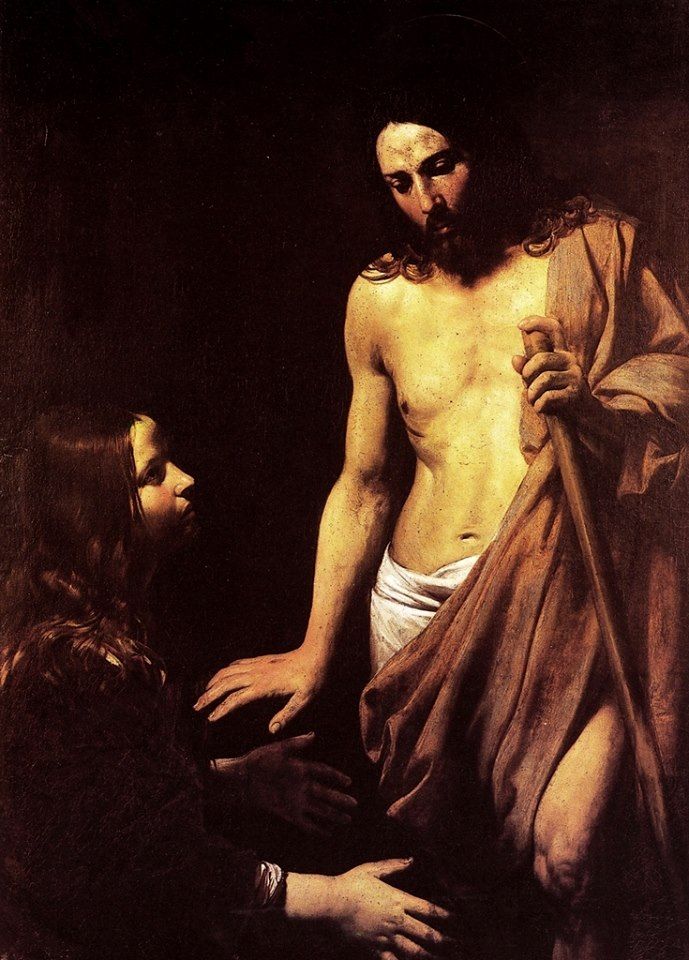
Matthew, Mark, and John record that Mary of Magdala was present at the Crucifixion of Jesus and that she was among the women who visited the Tomb on Easter morning. Luke mentions her presence only at the Tomb on Easter. According to John, Mary was specially privileged to see and speak to the risen Lord on Easter morning. She thought He was the gardener until he said her name.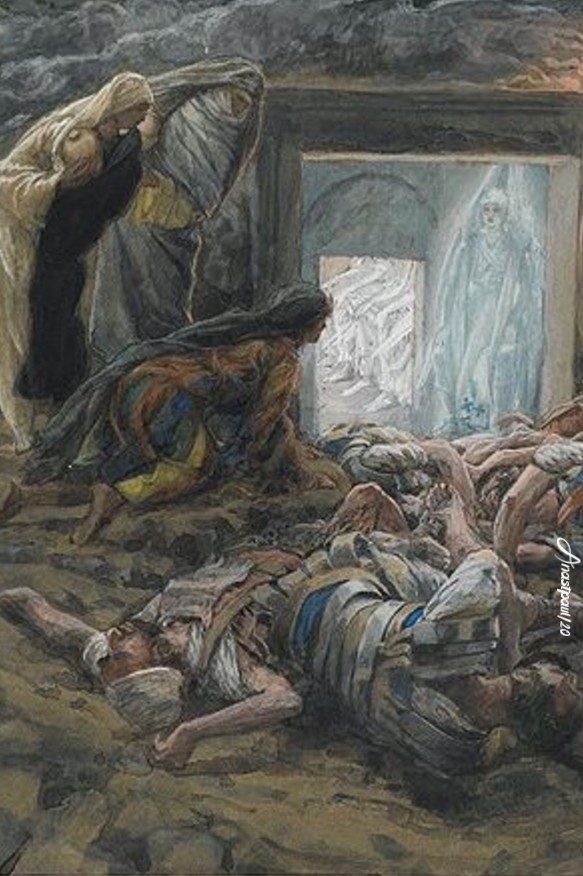
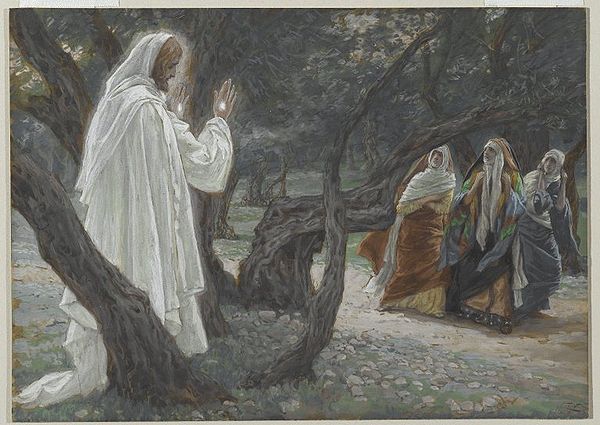
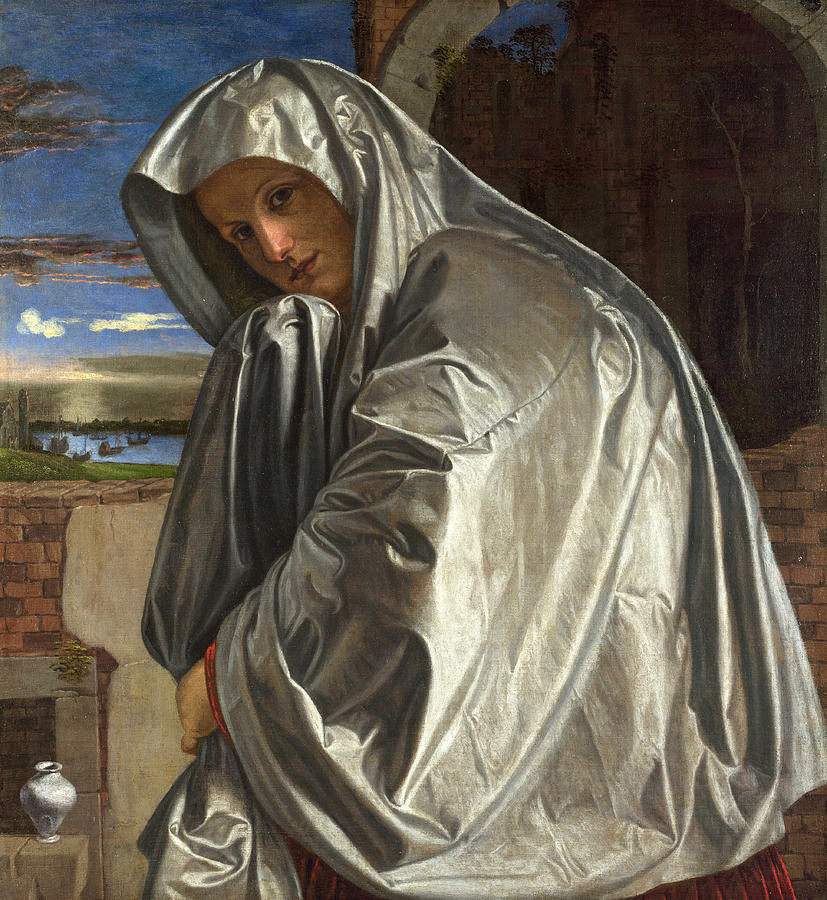
So Mary Magdalene was near Jesus in His darkest hour and again in His most glorious hour. Moreover, she was an outstanding disciple of Jesus. Because Mary Magdalene was the one who brought the news of Jesus’ Resurrection to the apostles, she is called the Apostle to the Apostles.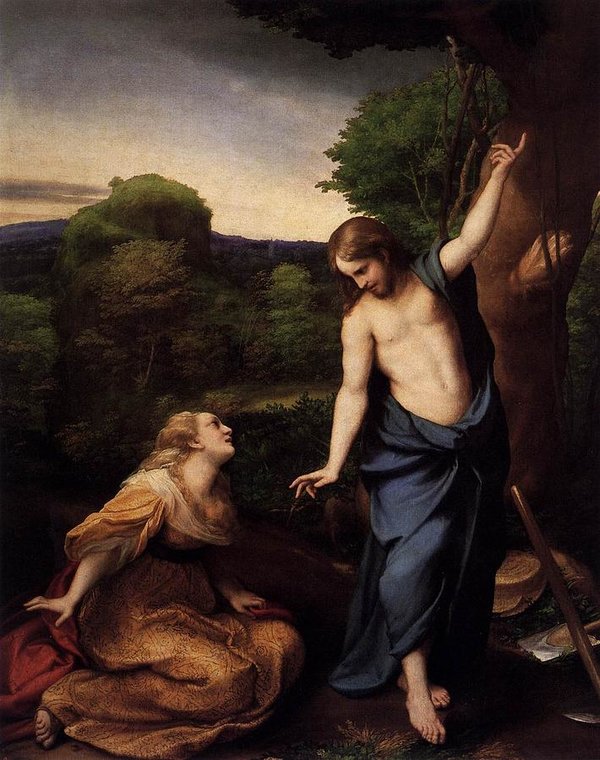

Saint’s Memorials and Feasts/Feasts of the Blessed Virgin Mary
St Mary Magdalen (Feast)
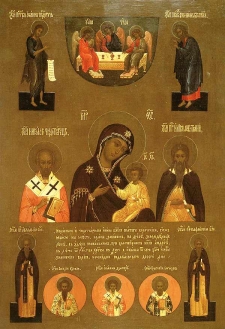
Mother of God of Koloch: The Koloch Icon of the Mother of God manifested itself in the year 1413 during the reign of Basil I, 15 miles from the city of Mozhaisk, in the vicinity of Koloch in the Smolensk governia. A peasant of this village by the name of Luke found the holy icon and took it to his home. One of his household was paralyzed. The sick one put his forehead to the icon with faith and received complete healing.
This became known through the surrounding area and many of the suffering began to flock to the wonderworking icon and they received help from the Mother of God. Luke afterwards took the icon to Mozhaisk and from there to Moscow. At the capital, Metropolitan Photius, together with a gathering of clergy and a multitude of the people, visited the holy icon. As the icon was carried through Moscow many of the sick were healed of their infirmities. Later they returned the icon to Mozhaisk.
At the place where the icon appeared, a church was built in honour of the Mother of God. Here the holy icon was housed. With the offerings of the peasant Luke and others, Prince Andrew Dimitrievich built a monastery on this site called the Kolochsk or Mozhaisk.
—
St Anastasius of Schemarius
St Andrea of Antioch
St Andreas Wang Tianqing
St Anna Wang
Bl Augustine Fangi
St Baudry of Montfaucon
Bl Benno of Osnabruck
St Claudius Marius Victorinus of Saussaye
St Cyril of Antioch
St Dabius
Bl Jacques Lombardie
St John Lloyd
St Joseph of Palestine
St Lewine
St Lucia Wang Wangzhi
Bl Manuela de Jesus Arias Espinosa
St Maria Wang Lishi
St Meneleus of Ménat
St Movean of Inis-Coosery
St Pancharius of Besancon
Bl Paolo de Lara
St Philip Evans
St Plato of Ancyra
St Syntyche of Philippi
St Theophilus of Cyprus
St Wandrille of Fontenelle
—
Martyrs of Marula/Massylis: – 3 saints: Three Christians martyred together. We know nothing else about them but the names – Ajabosus, Andrew and Elian. They were martyred in Massylis (Marula), Numidia (in modern Algeria).
Martyrs of Massilitani: A group of Christians martyred together in northern Africa. Saint Augustine of Hippo wrote about them.
Martyred in the Spanish Civil War:
Jaime María Carretero Rojas
Bl Joaquin Rodríguez Bueno
José María Mateos Carballido
Juan Durán Cintas
Ramón María Pérez Sousa
 AnaStpaul
You must be logged in to post a comment.