Posted in franciscan OFM, SAINT of the DAY

Saint of the Day – 24 April – St Fidelis of Sigmaringen OFM Cap (1577-1622) Martyr

Saint of the Day – 24 April – St Fidelis of Sigmaringen OFM Cap (1577-1622) Priest of the Capuchins of the Friar’s Minor and Martyr, Lawyer, Philosopher, Teacher, Apostle of Eucharistic Adoration and charity –   Major Shrine at the Capuchin Friary of Weltkirchen (Feldkirch), Austria, the image below.

Austria-Feldkirch-Kapuzinerkloster-Capuchin-Monastery-attracts-pilgrims-who-wish-to-get-rid-of-headaches

St Fidelis was born as Mark Rey in 1577 in Sigmaringen, a town in modern-day Germany, then under the Principality of Hohenzollern-Sigmaringen.    His father’s name was John Rey.    He studied law and philosophy at the University of Freiburg.   Mark ultimately earned the degree of Doctor of Law and subsequently taught philosophy at this University,.    During his time as a student, he did not drink any alcoholic beverages and wore a hair-shirt in penance for his own and the sins of those around him.    He was known for his modesty, meekness and chastity.

In 1604, Mark accompanied, as preceptor (teacher-mentor), three young Swabian gentlemen on their travels through the principal parts of Europe.    During six years of travel, he attended Mass very frequently.    In every town they came to, he visited the hospitals and churches, passed several hours on his knees in the presence of the Blessed Sacrament and was generous to the poor, sometimes giving them the very clothes off his back.

Upon his return, he practiced law at Colmar, in Alsace where he came to be known as the ‘poor man‘s lawyer’.    He scrupulously forbore all invectives, detractions and whatever might affect the reputation of any adversary.    Disenchanted with the evils associated with his profession, he was determined to enter the religious life as a member of the Capuchin friars.

As soon as Fidelis finished his course of theology, he was immediately employed in preaching and in hearing confessions.    After becoming guardian of the Capuchin friary in Weltkirchen, Feldkirch (in present-day Austria), many residents of the town and neighbouring places were reformed by his zealous labours and several Calvinists were converted.   The Congregation of the Doctrine of the Faith commissioned Fidelis to preach in the Graubünden region of eastern Switzerland.   Eight other Capuchin friars were to be his assistants and they laboured in this mission under his direction.

3355

The Calvinists of that territory, being incensed at his success in converting their brethren, loudly threatened Fidelis’ life and he prepared himself for martyrdom.   Fidelis and his companions entered into Prättigau, a small district of Graubünden, in 1622, on the Feast of the Epiphany, January 6.    The effects of his ardent zeal, where the Bishop of Coire sent a lengthy and full account to the Congregation for the Propagation of the Faith, enraged the Calvinists in that province.

On 24 April 1622, Fidelis made his confession, celebrated Mass and then preached at Grüsch.    At the end of his sermon, which he had delivered with more than ordinary zeal, suddenly he stood silently, with his eyes fixed upon Heaven, in ecstasy.    He foretold his death to several persons in the clearest terms and began signing his letters, “P. Fidelis, prope diem esca vermium” (“Father Fidelis, in days ahead to become food for worms“).    After the service at Grüsch he and several companions travelled to Seewis.    His companions noted that he was particularly cheerful.

On 24 April, in a campaign organised by the Habsburgs, Fidelis was preaching under protection of some Austrian imperial soldiers in the Church at Seewis with the aim of re-convert the people of Seewis to Catholicism.   During the sermon, his listeners were called “to arms” by the Calvinist agitators outside.    Some of the people went to face the Austrian troops outside the Church.    Fidelis had been persuaded, by the remaining Catholics, to immediately flee with the Austrian troops out of Seewis, which he did but then returned alone to Grüsch.    On his way back he was confronted by 20 Calvinist soldiers who demanded, unsuccessfully,, that he renounce the Catholic faith and when he refused, they subsequently murdered him.

A local account:

From Grüsch he went to preach at Seewis, where, with great energy, he exhorted the Catholics to constancy in the faith.    After a Calvinist had discharged his musket at him in the Church, the Catholics entreated him to leave the place.    He answered that death was his gain and his joy, and that he was ready to lay down his life in God’s cause.    On his road back to Grüsch, he met twenty Calvinist soldiers with a minister at their head. They called him a false prophet and urged him to embrace their sect.    He answered: “I am sent to you to confute, not to embrace your heresy. The Catholic religion is the faith of all ages, I fear not death.”    One of them beat him down to the ground by a stroke on the head with his backsword.    Fidelis rose again on his knees and stretching forth his arms in the form of a cross, said with a feeble voice “Pardon my enemies, O Lord: blinded by passion they know not what they do. Lord Jesus, have mercy on me. Mary, Mother of God, succour me!.”   Another sword stroke clove his skull and he fell to the ground and lay in a pool of his own blood.    The soldiers, not content with this, added many stab wounds to his body with their long knives and hacked-off his left leg, as they said, to punish him for his many journeys into those parts to preach to them.

It is said that a Catholic woman lay concealed near the place of Fidelis’ martyrdom as the saint was slain.    After the soldiers had left, she came out to assess the incident and found the martyr’s eyes open, fixed on the heavens.    He was buried by Catholics the next day.

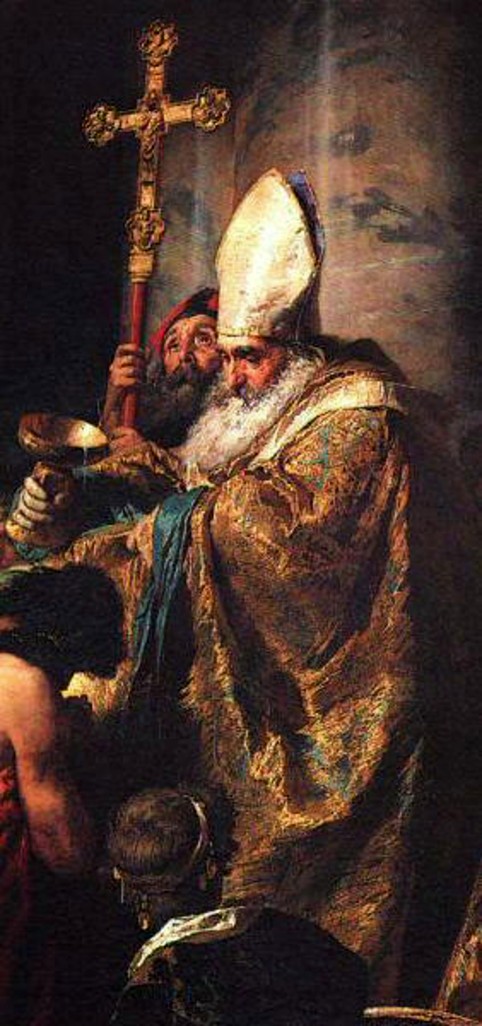
martyrdom of st fidelis

The rebels were soon after defeated by the imperial troops, an event which the martyr had foretold them.    The Protestant minister who had participated in Fidelis’ martyrdom, was converted by this circumstance, made a public abjuration of Calvinism and was received into the Catholic Church.

After six months, the martyr’s body was found to be incorrupt but his head and left arm were separated from his body.    The body parts were then placed into two reliquaries, one sent to the Cathedral of Coire, at the behest of the bishop and laid under the High Altar; the other was placed in the Capuchin church at Weltkirchen, Feldkirch, Austria.

COIRE -ST FIDELIS

St Fidelis was Beatified on 24 March 1729 by Pope Benedict XIII and Canonised on 29 June 1746, Rome by Pope Benedict XIV

Posted in SAINT of the DAY

Saints – 24 April

St Fidelis of Sigmaringen (Optional Memorial)
Our Lady of Bonaria: Devotion to the Blessed Virgin Mary in the form of a statue of Mary and the Christ Child that was washed up at a Mercedarian monastery near Cagliari, Italy on 25 April 1370, apparently from a shipwreck the night before. Legend says that the locals tried to open the crate it was in, but only one of the Mercedarian monks could get the it open. Patron of Sardinia, Italy
Our Lady of Buenos Aires

St Alexander of Lyon
St Anthimos of Nicomedia
St Authairius of La Ferté
St Benedetto Menni
St Bova of Rheims
St Deodatus of Blois
St Diarmaid of Armagh
St Doda of Rheims
St Dyfnan of Anglesey
St Egbert of Rathemigisi
St Eusebius of Lydda
St Gregory of Elvira
St Honorius of Brescia
St Ivo of Huntingdonshire
St Leontius of Lydda
St Longinus of Lydda
St Mary Euphrasia Pelletier
St Mary of Cleophas
St Mary Salome
St Mellitus of Canterbury
St Neon of Lydda
St Sabas the Goth of Rome
St Tiberio of Pinerolo
St William Firmatus

Mercedarian Martyrs of Paris

Posted in NOVENAS

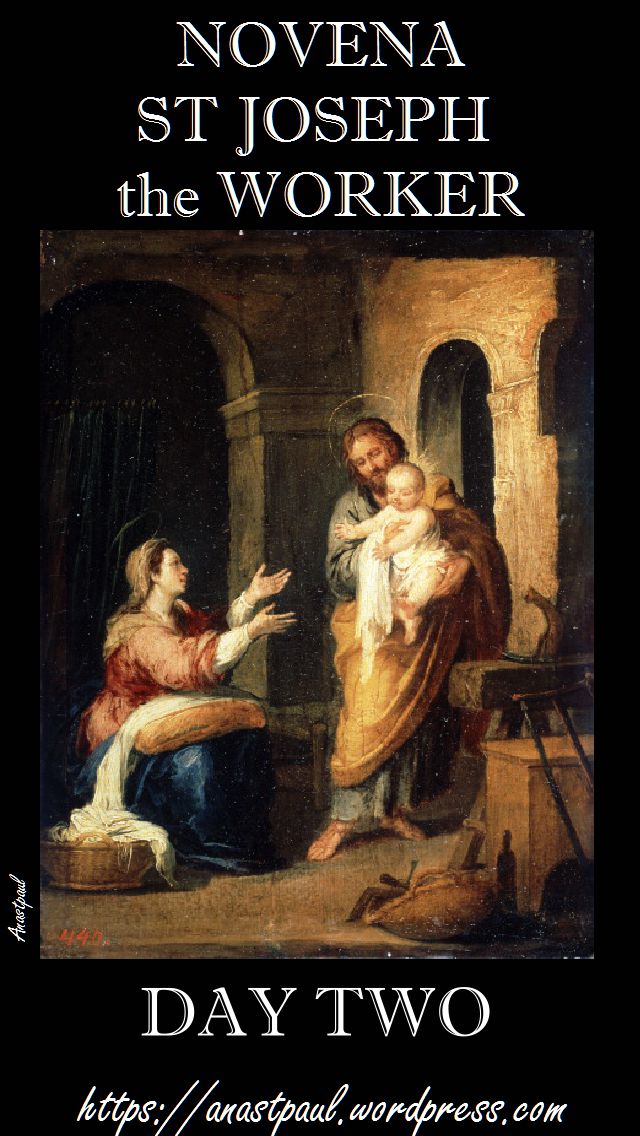
Novena to St Joseph the Worker – 23 April – Day Two

Novena to St Joseph the Worker – 23 April

Work positively affects the worker’s family, the whole of society and the worker personally.   “It forms the person in the process of transforming things;  it humanises and spiritualises the person in the process of modifying material objects.   And finally, it draws men together in the purusit of a goal that is visible to all and in the construction of the world in which they are called to live” (Louis Lavelle).

Thus when a worker offers to God not only the firstfruits of his labour but his labour itself, human labour “can become a great liturgy of worship” (M D Philippe).

Day Two

day two st jospeh novena

Let us Pray:

Glorious St Hoseph,
foster-father and protector of Jesus Christ,
spouse of the blessed Virgin Mary the Mother of God,
powerful protector of the Holy Church,
to you do I raise my heart and implore your powerful intercession.
You gave yourself completely to the Saviour,
it was cause for joy to pray, to work, to sacrifice yourself,
to suffer, to die for Him.
You were unknown in this world even though Jesus knew you very well,
He would look at your simple and hidden life with love.
We are called to contribute by our diligient industry
to the unfolding of the Creator’s plan in history.
Protect the rights of all workers.
Enable people to find work that befits their dignity.
Do not let those who are unemployed become discouraged
but them them in finding fitting employment.
May I too approach my work as an act of worship.
United in your powerful intercession,
I offer you my intentions
(make your intention)
I commend to your fatherly solicitude this specific task.
I am placing it in your hands.
I ask for the grace to never separate myself from God,
to know Christ ant love Him even more and His blessed Mother,
and to always live in the presence of God,
to do all for His glory and the good of other souls
and one day to reach the beatific vision of God
to praise Him eternally with you. Amen.


Posted in ART DEI, MORNING Prayers, SAINT of the DAY

Thought for the Day – 23 April

Thought for the Day – 23 April

The Christian hero is not the slayer of dragons or the knight who wields the sword.
The Christian hero is the saint, although saints like St Joan of Arc, could and did wield the sword too.
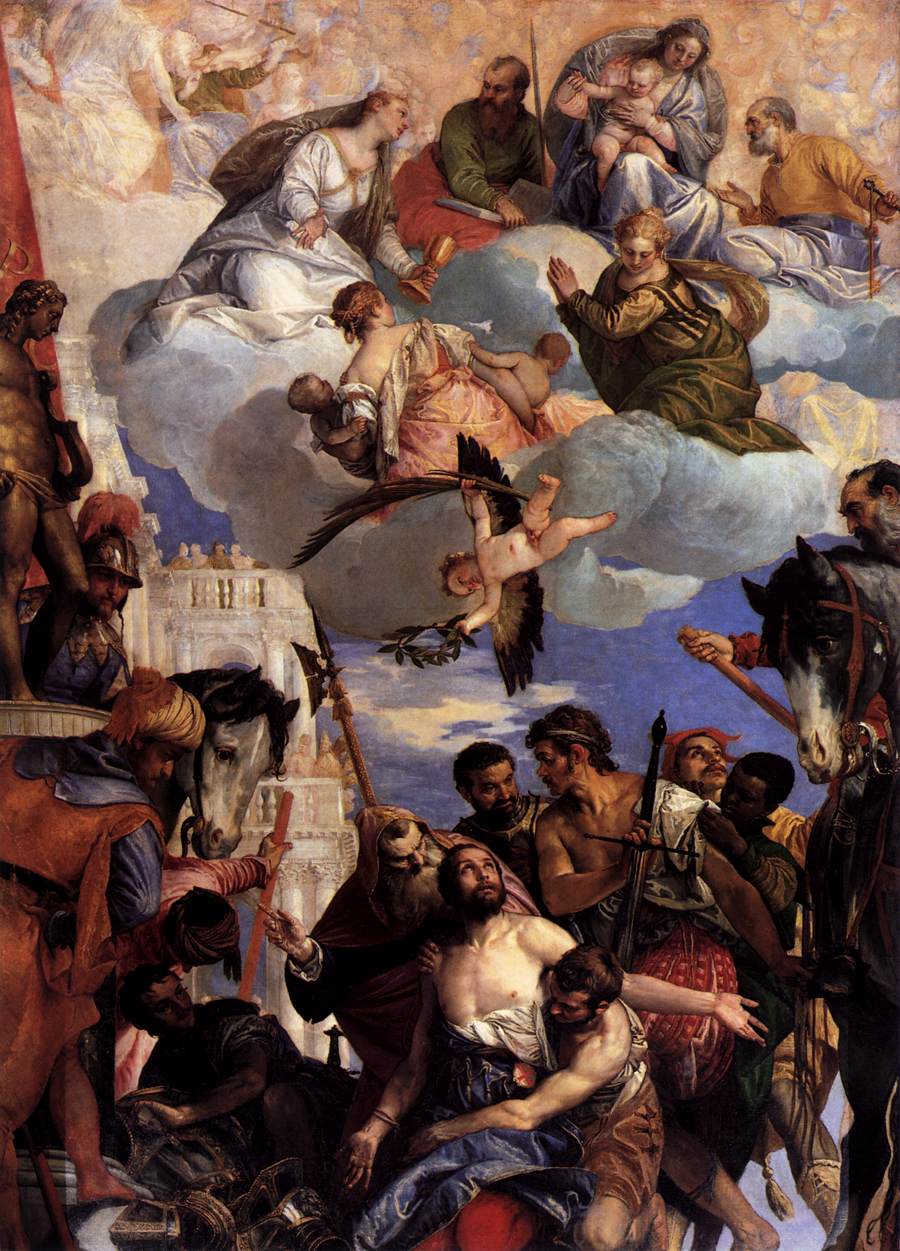
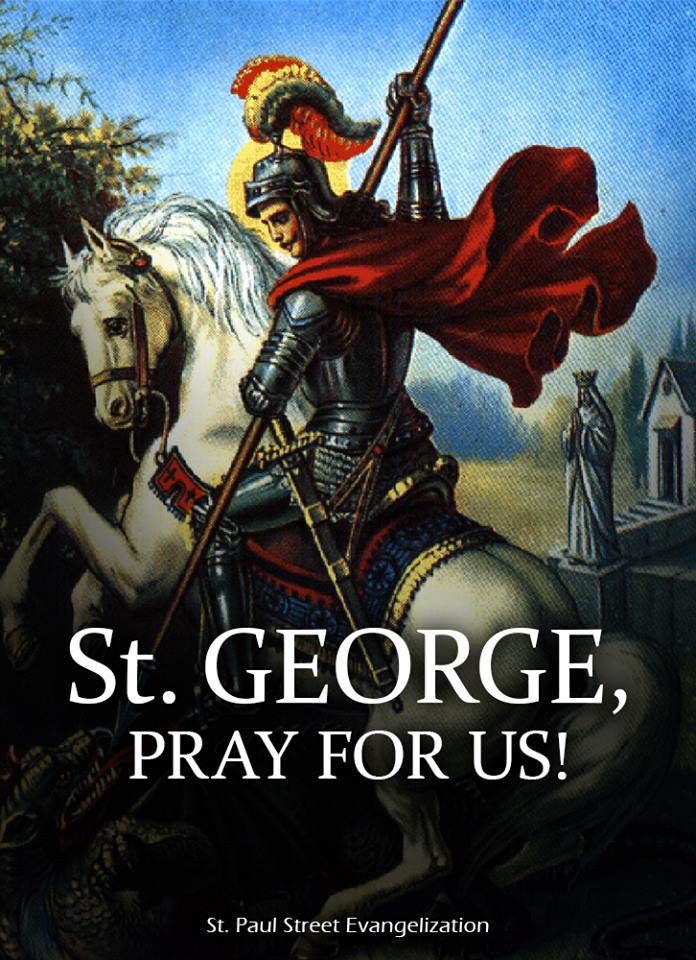
St George, whose Memorial it is today, got lost in legends and folklore but he was a real soldier who gave his life in witness to Christ.   He was a Martyr for Christ – the ultimate act of heroism.   If only we remembered him correctly and with honour, for this martyrdom for the One who saved us!

martyrdom-of-saint-george

Martyrdom of Saint George, c.1564 – Paolo Veronese

St George pray for us and we pray that your memory may be restored!

ST GEORGE - APRIL 23

Posted in EASTER, FEASTS and SOLEMNITIES, MORNING Prayers, QUOTES of the SAINTS

Quote/s of the Day – 23 April – Divine Mercy Sunday

Quote/s of the Dat – 23 April – Divine Mercy Sunday

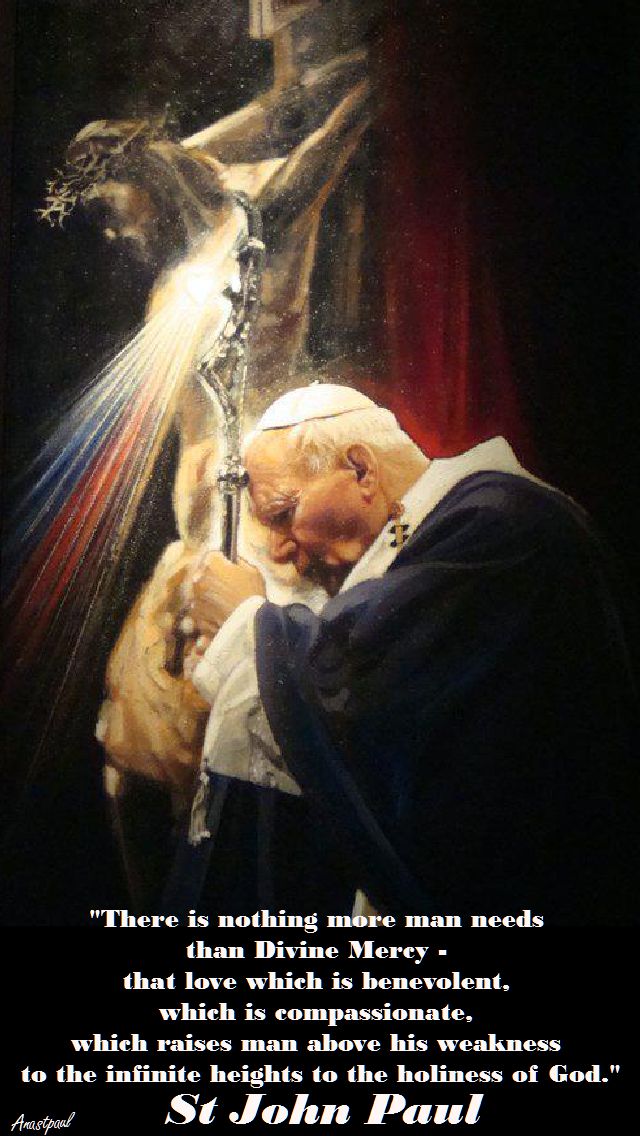
“There is nothing more man needs than Divine Mercy – that love which is benevolent, which is compassionate, which raises man above his weakness to the infinite heights to the holiness of God.”

THERE IS NOTHING MORE MAN NEEDS-STJP


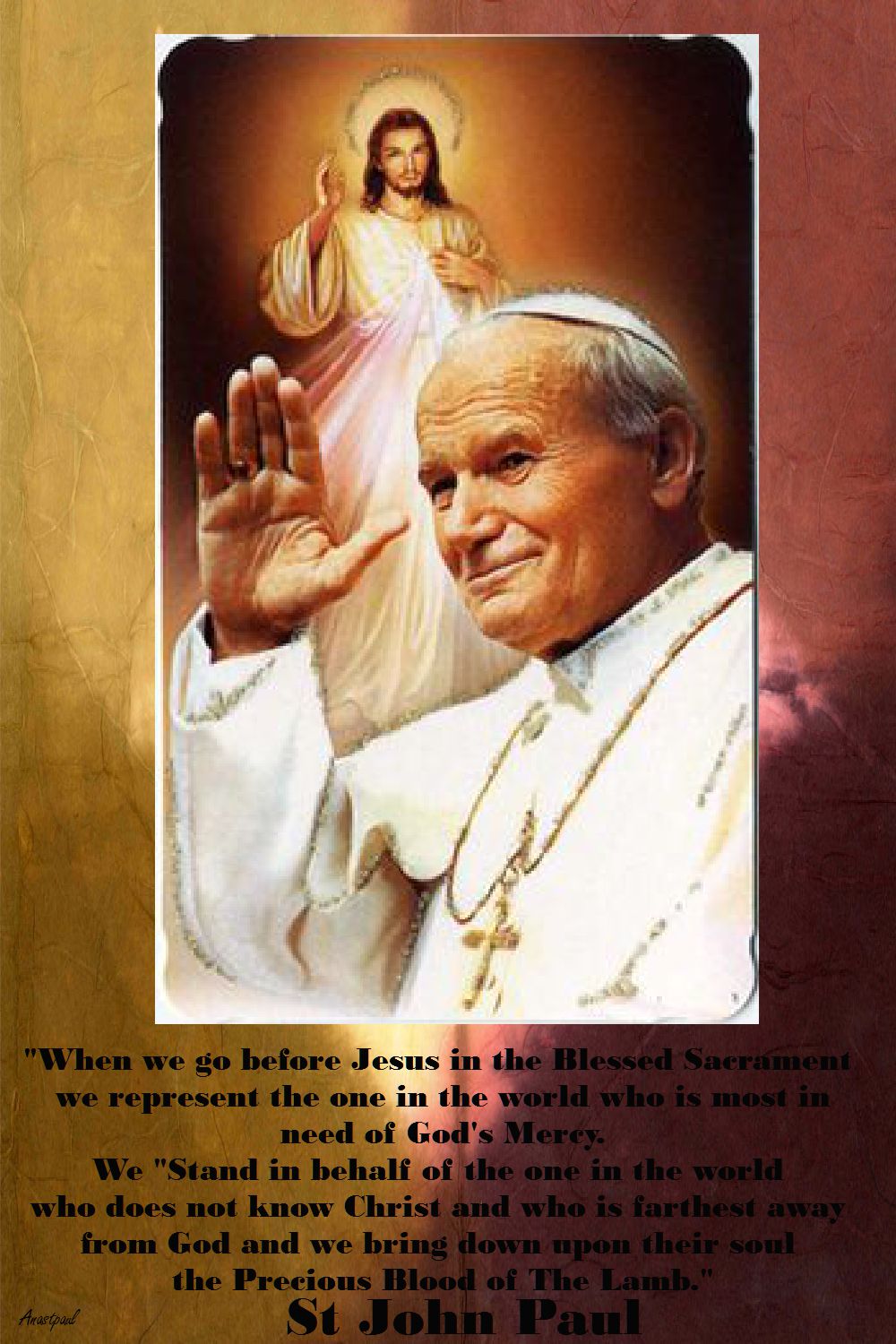
“When we go before Jesus in the Blessed Sacrament we represent the one in the world who is in most need of God’s Mercy.”   We “Stand in behalf of the one in the world who does not know Christ and who is farthest away from God and we bring down upon their soul the Precious Blood of The Lamb.”

WHEN WE GO BEFORE THE LORD

St Pope John Paul II

Posted in EASTER, FEASTS and SOLEMNITIES, MORNING Prayers, PRAYERS of the SAINTS, QUOTES of the SAINTS, SAINT of the DAY, The WORD

One Minute Reflection – 23 April Octave and Divine Mercy Sunday

One Minute Reflection – 23 April
Octave and Divine Mercy Sunday

DAILY MEDITATION: Kindle the faith of your people and show us Your Mercy!

But you are “a chosen race, a royal priesthood, a holy nation, a people of his own, so that you may announce the praises” of him who called you out of darkness into his wonderful light.    Once you were “no people” but now you are God’s people; you “had not received mercy” but now you have received mercy………………..1 Peter 2:9-10

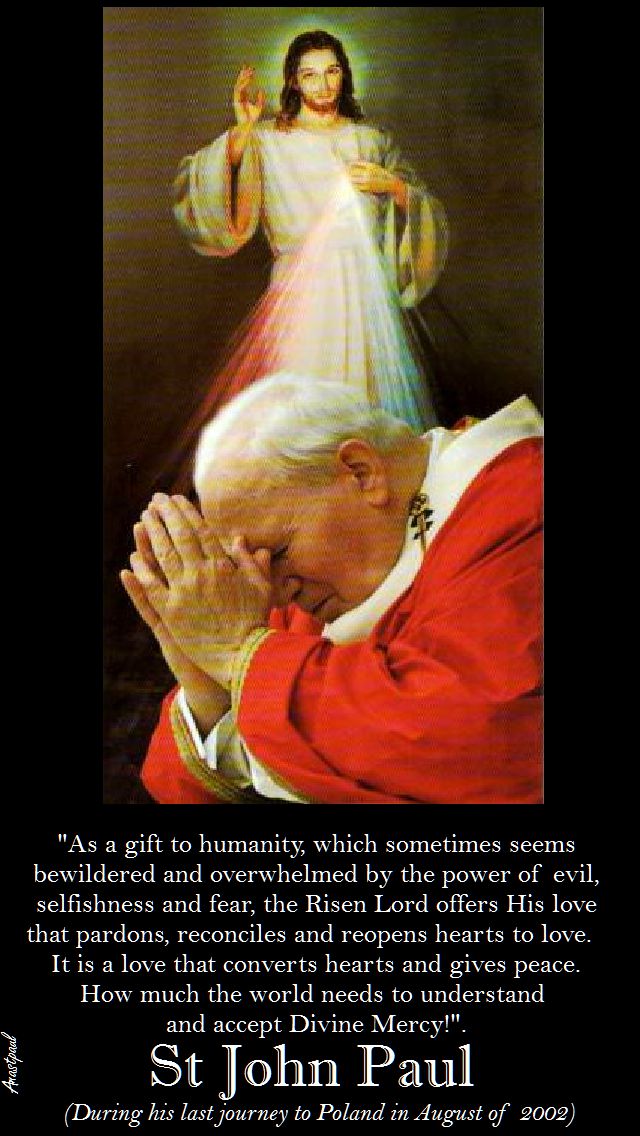
REFLECTION – “How much the world is in need of the mercy of God today!   In every continent, from the depths of human suffering, a cry for mercy seems to rise.   In those places where hatred and the thirst for revenge are overwhelming, where war brings suffering and the death of innocents, one needs the grace of mercy to pacify the minds and the hearts and make peace spring forth.   In those places where there is less respect for life and human dignity, one needs the merciful love of God, in whose light we see the ineffable value of every single human being.   Mercy is needed to ensure that every injustice may find its solution in the splendour of truth. …..As a gift to humanity, which sometimes seems bewildered and overwhelmed by the power of evil, selfishness, and fear, the Risen Lord offers His love that pardons, reconciles, and reopens hearts to love. It is a love that converts hearts and gives peace.   How much the world needs to understand and accept Divine Mercy!”…………St John Paul

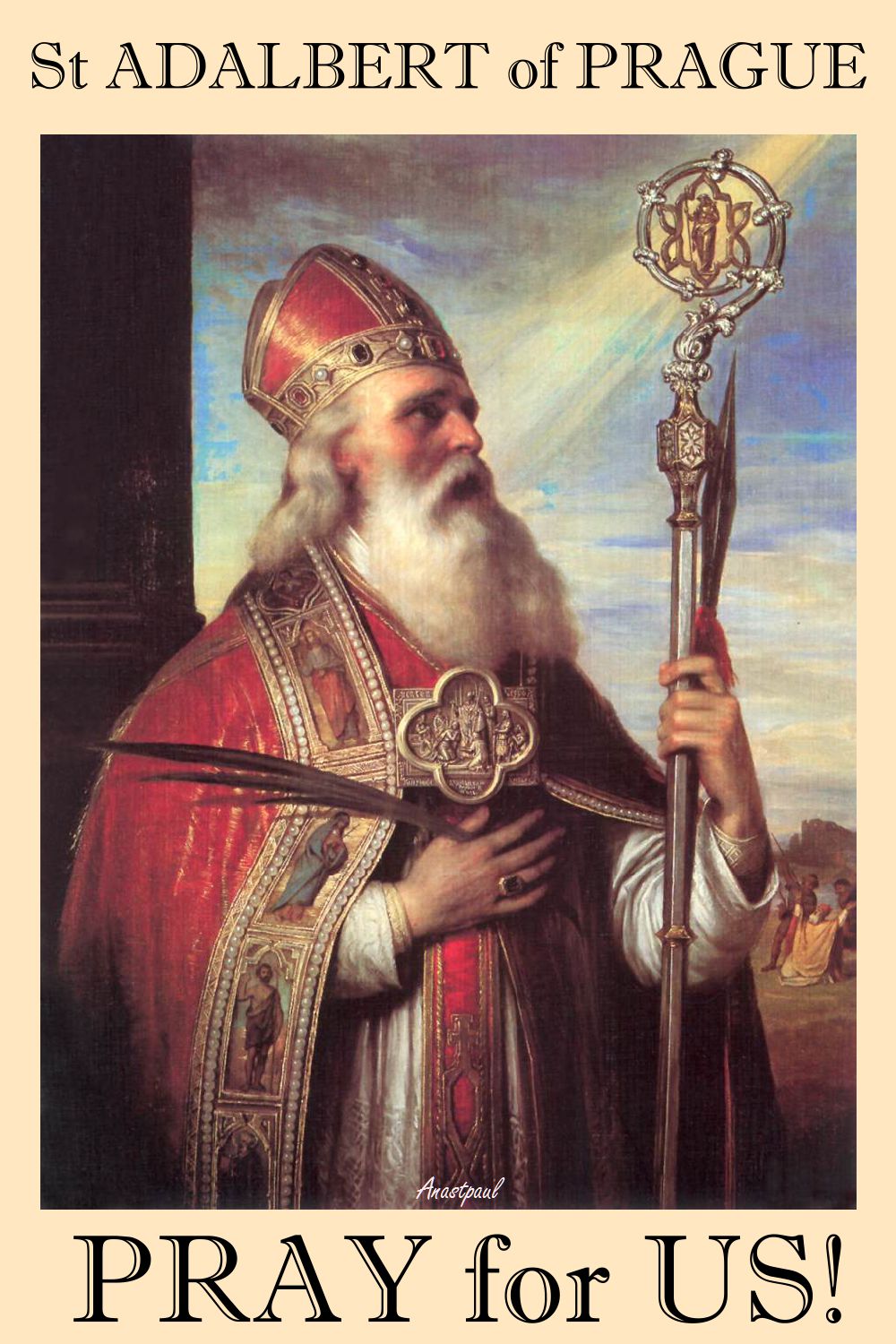
PRAYER – “Lord, who reveal the Father’s love by Your death and Resurrection, we believe in You and confidently repeat to You today: Jesus, I trust in You, have mercy upon us and upon the whole world. Amen.” – St John Paul (During his last journey to Poland in August of 2002) St Adalbert of Prague pray for us!

1 PETER 2-10AS A GIFT TO HUMANITY-ST JOHN PAULst adalbert of prague pray for us

Posted in DOCTORS of the Church, MORNING Prayers, PRAYERS of the SAINTS

Our Morning Offering – 23 April

Our Morning Offering – 23 April

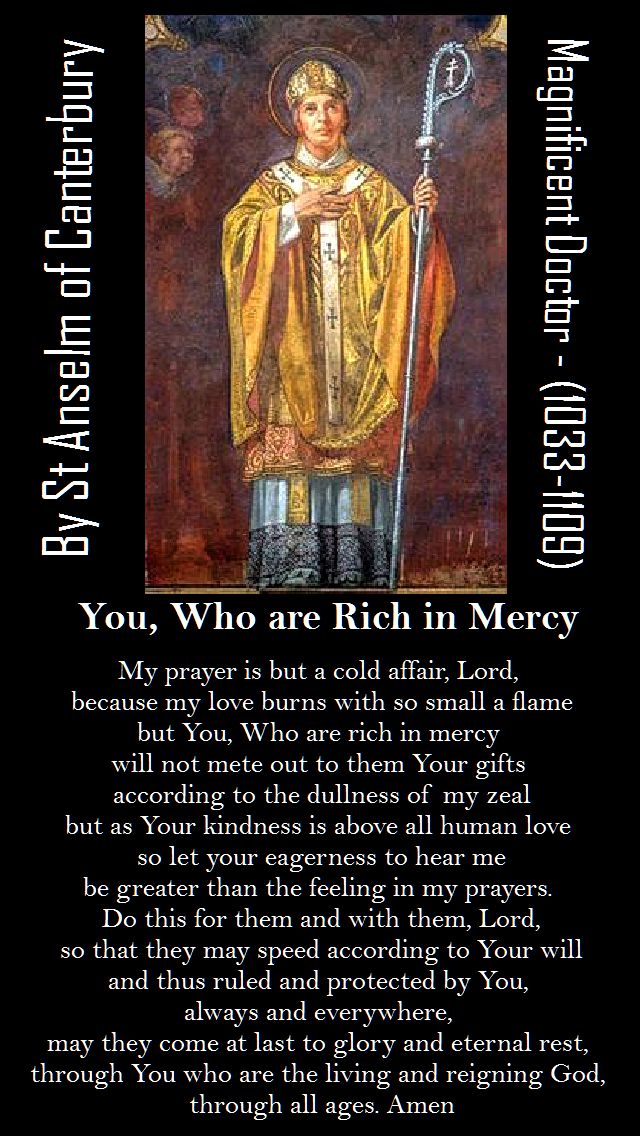
YOU, WHO ARE RICH IN MERCY
By St Anselm of Canterbury (1033-1109)
Doctor magnificus (Magnificent Doctor);
Doctor Marianus (Marian Doctor)

My prayer is but a cold affair, Lord,
because my love burns with so small a flame
but You, Who are rich in mercy
will not mete out to them Your gifts
according to the dullness of my zeal
but as Your kindness is above all human love
so let your eagerness to hear me
be greater than the feeling in my prayers.
Do this for them and with them, Lord,
so that they may speed according to Your will
and thus ruled and protected by You,
always and everywhere,
may they come at last to glory and eternal rest,
through You who are the living and reigning God,
through all ages. Amen

YOU, WHO ARE RICH IN MERCY - ST ANSELM

Posted in SAINT of the DAY

Saint of the Day – 23 April – St Adalbert of Prague, Bishop and Martyr

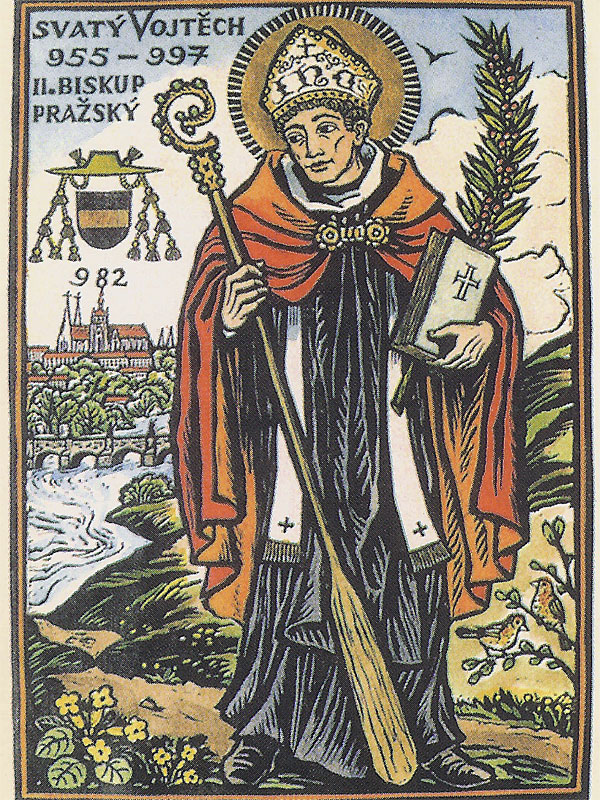
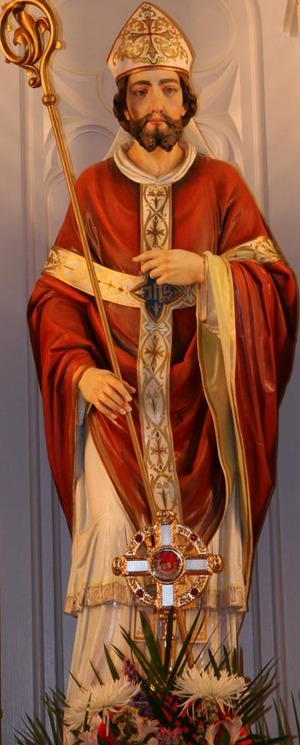
Saint of the Day – 23 April – St Adalbert of Prague (c 956-997) Bishop and Martyr, Missionary – also known as Adalbert of Praha, Apostle of Bohemia, Apostle of the Prussians, Apostle of the Slavs  – Patronages – of Poland, Hungary, Bohemia, Czech Republic, Archdiocese of Prague, Czech Republic, Prussia.

Heiliger-Adalbert-Heiligenbildchen

St Adalbert was born circa 956, in modern-day Czech Republic, with the given name of Vojtech.    He came from a large, noble family and was one of seven sons to Prince Slavnik.    Vojtech survived a serious illness as a child and was consecrated for service to God.    He studied in Magdeburg, under St Adalbert of Magdeburg and Vojtech took his mentor’s name at his confirmation.    The younger St Adalbert returned home and was Ordained a Priest and soon became Bishop of Prague at the age of 27.  Adalbert was consecrated as the Bishop of Prague just months after becoming a priest.   “It is an easy thing to wear the mitre and a cross,” Adalbert reflected, “but it is a most dreadful circumstance to have an account to give of a bishopric to the Judge of the living and the dead.”22 st adalbert

Bohemia was still a mostly pagan area at the time and Adalbert condemned their practices of polygamy, idolatry and slavery.    He tried to protect a woman accused of adultery but was unsuccessful and the woman was killed.    St Adalbert excommunicated the murderers and was soon forced to exile in Hungary.    He was welcomed by King Boleslaw I and made bishop of Gnesen.    Here, he baptised St Stephen of Hungary and converted many pagans.   St Adalbert 1 of 1

St Adalbert eventually resigned from the See to become a missionary in modern-day Poland.    He converted many and angered pagan priests in the process.    St Adalbert was Martyred in April of 997 and the king paid his weight in gold to have the body returned.455px-Szt-adalbert

A few years after his Martyrdom, Adalbert was Canonised as St Adalbert of Prague.    His life was written in Vita Sancti Adalberti Pragensis by various authors, the earliest being traced to imperial Aachen and the Bishop of Liège, Notger von Lüttich, although it was previously assumed that the Roman monk John Canaparius wrote the first Vita in 999. Another famous biographer of St Adalbert was St Bruno of Querfurt who wrote a hagiography of him in 1001-4.

Notably, the Přemyslid rulers of Bohemia initially refused to ransom St Adalbert’s body from the Prussians who murdered him and therefore it was purchased by Poles.    This fact may be explained by the Saint belonging to the Slavniks family which was rival to the Přemyslids.    Thus St Adalbert’s bones were preserved in Gniezno, which assisted Boleslaus I of Poland in increasing Polish political and diplomatic power in Europe.

ST ADALBERT'S COFFIN Catedral_de_Gniezno,_Gniezno,_Polonia,_2014-09-17,_DD_25-27_HDR
Silver coffin of St Adalbert, Cathedral in Gniezno

According to Bohemian accounts, in 1039 the Bohemian Duke Břetislav I looted the bones of St Adalbert from Gniezno in a raid and translated them to Prague.    According to Polish accounts, however, he stole the wrong relics, namely those of St Gaudentius, while the Poles concealed St Adalbert’s relics and consequently remain in Gniezno.    In 1127 his severed head, which was not in the original purchase according to Roczniki Polskie, was discovered and translated to Gniezno.    In 1928, one of the arms of St Adalbert, which Bolesław I had given to Holy Roman Emperor Otto III in 1000, was added to the bones preserved in Gniezno.    Therefore, today St Adalbert has two elaborate shrines in the Prague Cathedral and Royal Cathedral of Gniezno, each of which claims to possess his relics, but which of their bones are his authentic relics, is unknown.    For example, pursuant to both claims the Saint has two skulls.    The one in Gniezno was stolen in 1923.   However in the 1970s the relics in Prague, below, were examined by anthropologists and confirmed as belonging to St Adalbert.

relics of st adalbert inprague
The Relics of St Adalbert in Prague Cathedral

st-vitus-st-wenceslas-st-adalbert-cathedral-chapelle-saint-venceslas-prazsky-hrad-53 (1)
The Shrine of St Adalbert in St Vitus Cathedral, Prague

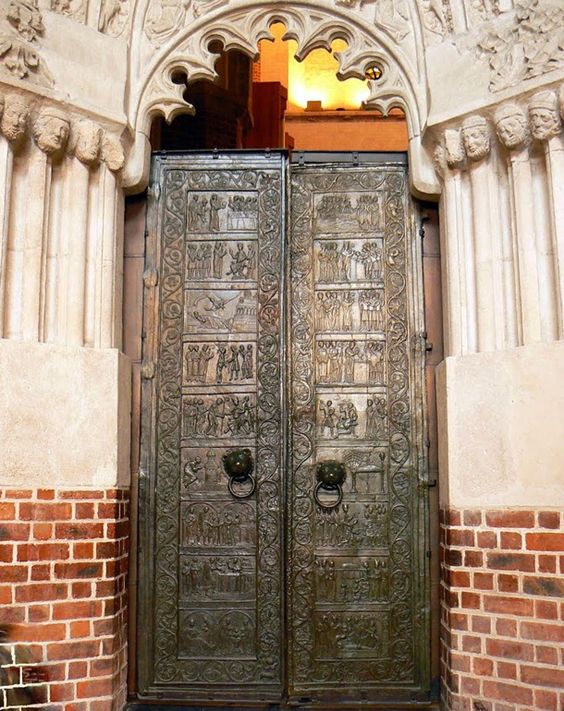
The massive bronze doors of Gniezno Cathedral, dating from around 1175, are decorated with eighteen reliefs of scenes from the Saint’s life.    They are the only Romanesque ecclesiastical doors in Europe depicting a cycle illustrating the life of a saint and therefore are a precious relic documenting Adalbert’s martyrdom.

BRONZE DOORS OF GNIEZNO CATHEDRAL

23 April 1997 was the one thousandth anniversary of St Adalbert’s martyrdom.   It was commemorated in Poland, Czech Republic, Germany, Russia and other nations. Representatives of Roman Catholic, Greek Orthodox and Evangelical churches travelled on a pilgrimage to the Saint’s tomb located in Gniezno.    St Pope John Paul II visited the Cathedral and celebrated a Liturgy there in which heads of seven European nations and approximately one million faithful participated.069_saint_adalbert

A ten-meter cross was erected near the village of Beregovoe (formerly Tenkitten), Kaliningrad Oblast where St Adalbert is thought to have been martyred by the Prussians.

Adalbert_of_Prague
St Adalbert in Prague

st adalbert and his brother Socha_Svateho_Vojtecha_a_Radima
Monument to St Adalbert and his brother Gaudentiu in the Czech Republic

Posted in FEASTS and SOLEMNITIES, SAINT of the DAY

Saints and Liturgical Feasts – 23 April

2nd Sunday of Easter (2017) – DIVINE MERCY SUNDAY and the OCTAVE DAY of EASTER
St Adalbert of Prague (Optional Memorial) – BRESKI VIDEO – https://www.youtube.com/watch?v=Dqz2ajDC8nY
St George (Optional Memorial)

Achilleus of Vienne
Bl Adalbert III of Salzburg
Felix of Vienne
Fortunatus of Vienna
George of San Giorio
Gerard of Orchimont
Bl Gerard of Toul
Bl Giles of Assisi
Bl Giles of Saumur
Bl Giorgio di Suelli
Bl Helen del Cavalanti
Ibar of Meath
Bl Maria Gabriela Sagheddu
Marolus of Milan
Pusinna of Champagne
Bl Teresa Maria of the Cross

French Mercedarian Martyrs

Martyrs of Africa: A group of Christians murdered for their faith in northern Africa. Little information has survived but their names. The ones we know are – Catulinus, Chorus, Faustinus, Felicis, Felix, Nabors, Plenus, Salunus, Saturninus, Silvius, Solutus, Theodora, Theodorus, Theon, Ursus, Valerius, Venustus, Victorinus, Victurus, Vitalis

Martyrs of Rome

Posted in DOCTORS of the Church, EASTER, MORNING Prayers, QUOTES of the SAINTS

Quote of the Day – Easter Saturday – 22 April

Quote of the Day – Easter Saturday – 22 April

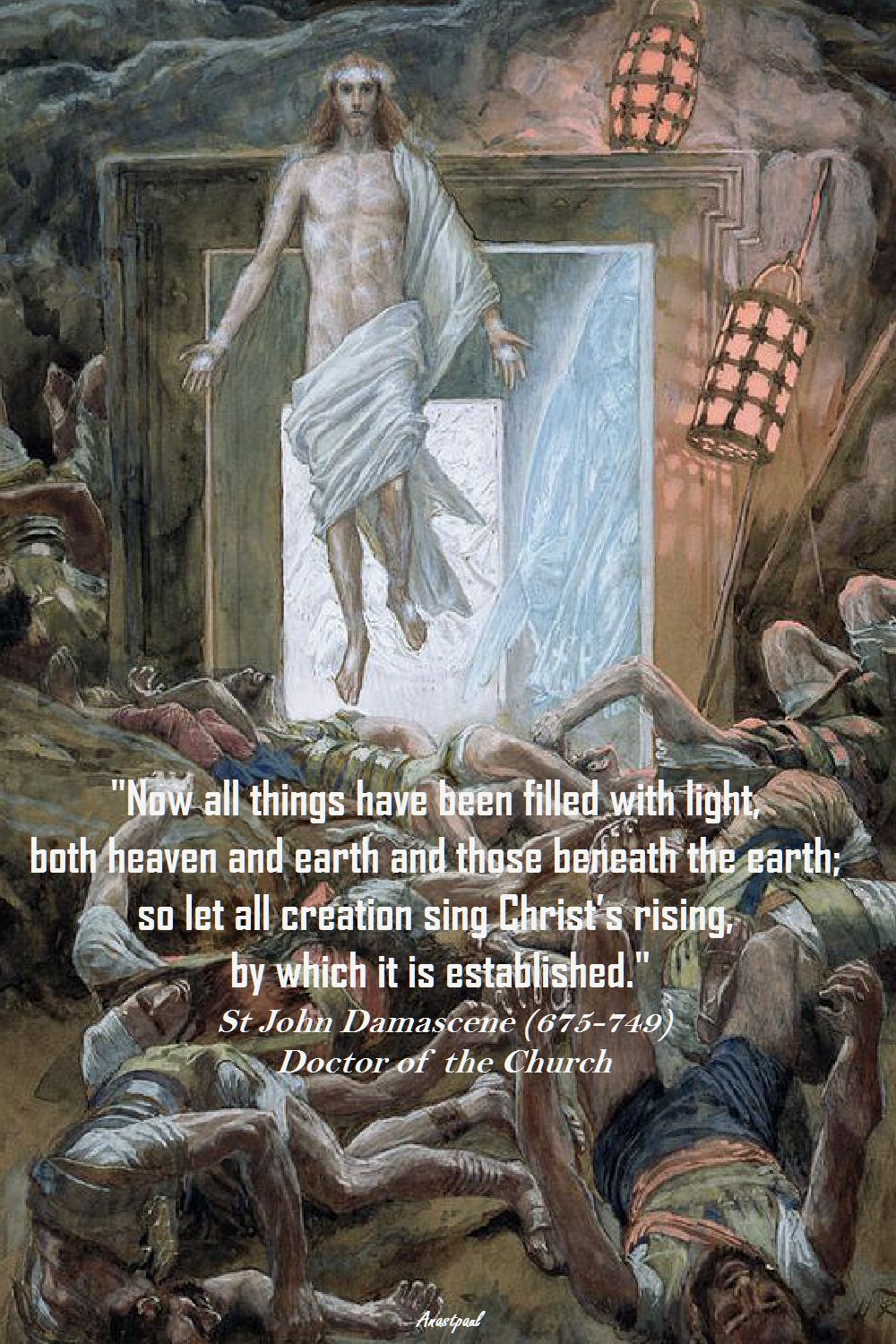
“Now all things have been filled with light,
both heaven and earth and those beneath the earth;
so let all creation sing Christ’s rising,
by which it is established.”

St John Damascene – Paschal Canon

NOW ALL THINGS HAVE EEN FILLED WITH LIGHT - ST JOHN DAMASCENE

Posted in DOCTORS of the Church, EASTER, MORNING Prayers, QUOTES of the SAINTS

One Minute Reflection – 22 April – Seventh Day in the Easter Octave

One Minute Reflection – 22 April – Seventh Day in the Easter Octave

DAILY MEDITATION:  “Lord I believe, help my unbelief!”

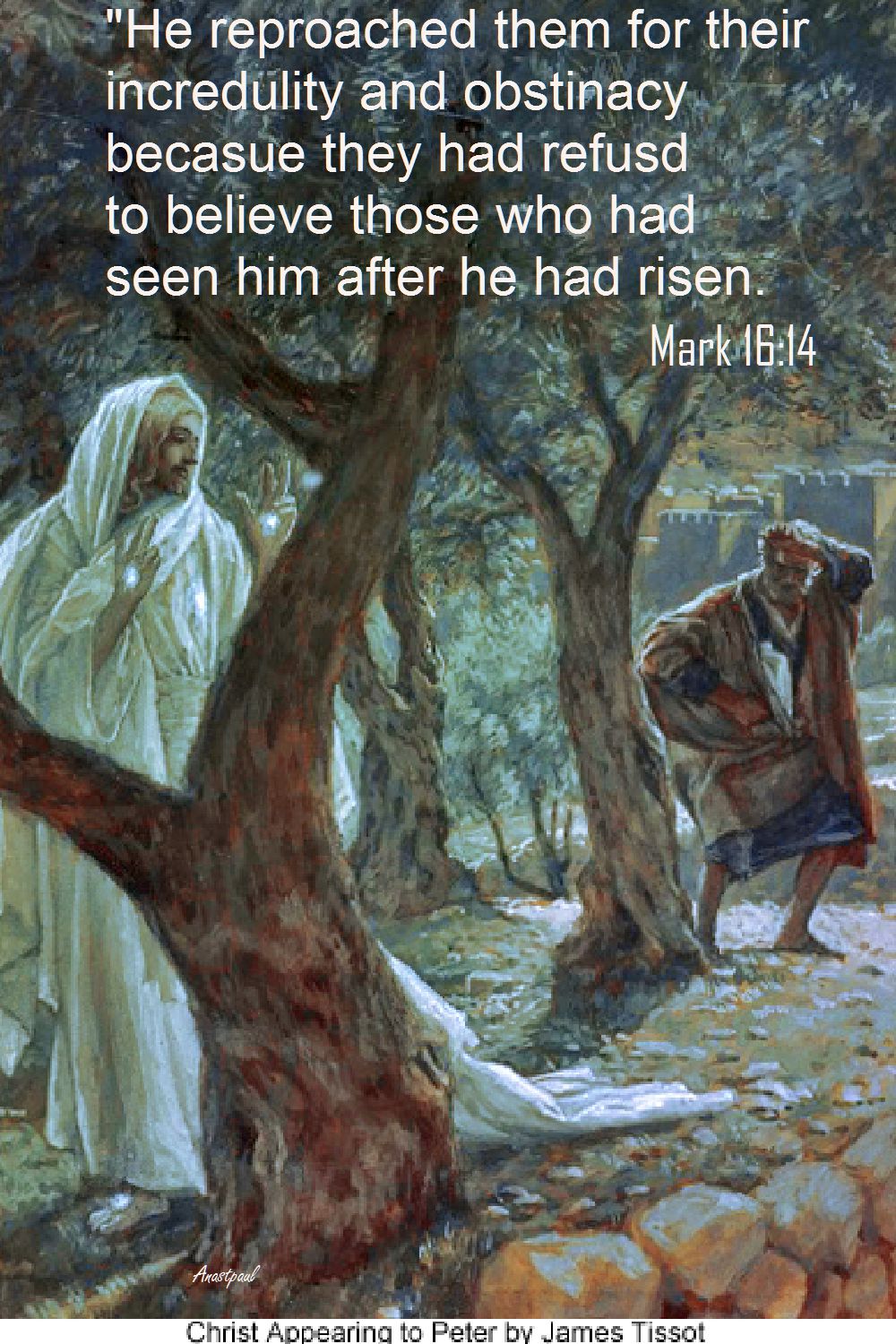
“He reproached them for their incredulity and obstinacy becasue they had refusd to believe those who had seen him after he had risen.   And he said to the, ‘Go out to the whole world;  proclaim the gospel to all creation.’………….Mark 16:14-15

REFLECTION – “The power of faith is enormous.   It is so great that it not only saves the believer:  thanks to one person’s faith others are saved also.    The paralytic at Capernaum did not have faith.    But the men who brought him to Jesus and let him down through the roof had it.   The soul of the sick man was ill as well as his body.   That is made clear in the Gospel:  “And when Jesus saw their faith he said…, ‘Rise, take up your pallet and go home'”.   The Gospel does not speak of “his” faith but of “their” faith. The stretcher-bearers believed and the paralytic had the benefit of being healed because of it. (Mark 2:1-11)    Then there is the death of Lazarus.   Four days had passed.   His dead body was already decomposing.   How could one who had been dead for so many days believe and himself ask for the Deliverer?   He could not possibly do so but his sisters provided the faith for him.   When they met the Lord, one sister fell down at his feet.    He asked, “Where have you laid him?”   The other sister said: “Lord, by this time there will be a bad smell”.    Then the Lord said, “If you believe you will see the glory of God”.  As if to say, “As regards faith, you must take the place of the dead man”.   And the faith of the sisters succeeded in calling Lazarus back from the hereafter. (John 11:1-44).    So if these two women by believing in place of the other were able to secure his resurrection, how much more certainly will you be able to secure it for yourself by your own faith in Jesus?

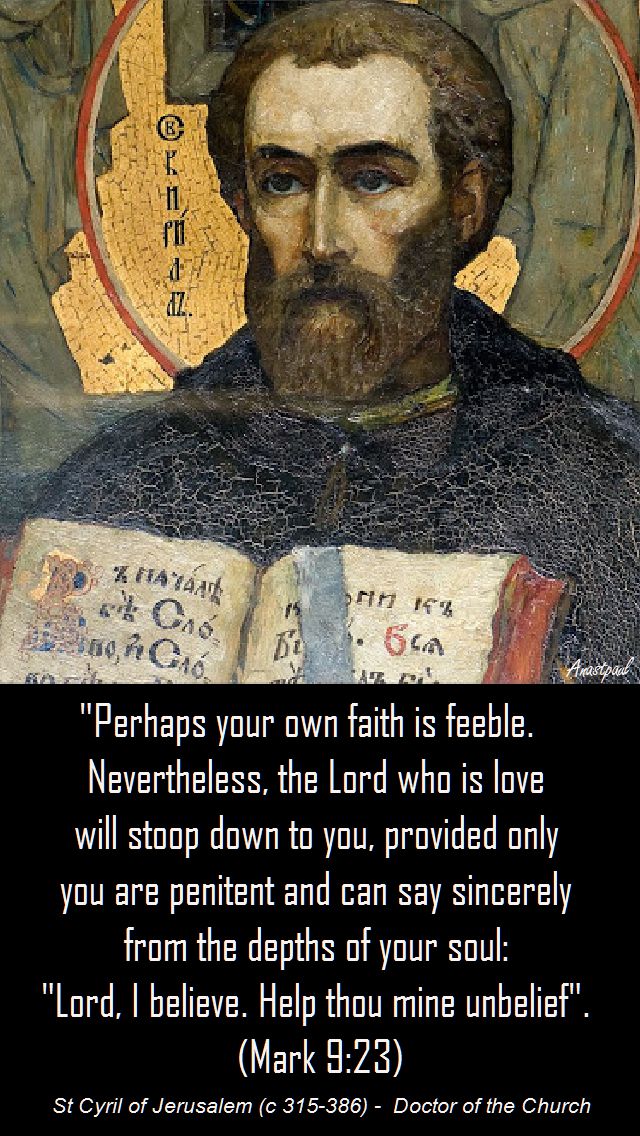
Perhaps your own faith is feeble.   Nevertheless, the Lord who is love will stoop down to you, provided only you are penitent and can say sincerely from the depths of your soul: “Lord, I believe. Help thou mine unbelief”. (Mark 9:23)……………………..The Power of Faith:  St Cyril of Jerusalem (c 315-386) Doctor of the Church

PRAYER – Loving Father, I believe that You love me. I ask you to watch over me and let me feel the love You shower on me.
I have been born again in baptism and long for the undying life You offer me. Strengthen my faith and help me to share this gift of faith
You have bestowed on me. Amen

MARK 16-14Perhaps your own faith is feeble-st cyril of jerusalem

Posted in MORNING Prayers, NOVENAS, Uncategorized

NOVENA to ST JOSEPH, THE WORKER – DAY ONE – 22 APRIL

NOVENA to ST JOSEPH, THE WORKER

The Liturgical Memorial of St Joseph, the Worker (1 May) was established by Venerable Pope Pius XII (d.1958), to highlight the importance of work and of the presence of Christ and the Church in the working world.   It provides an occasion to reflect on – and witness to – the “Gospel of Work.”   In a particular way St Joseph, the carpenter of Nazareth, stands as Patron of all workers and craftsmen, revered as a singular model.   St John Paul, in his encyclical on human work, encourages us to live with the awareness that “work is a participation in God’s activity” – an awareness that “ought to permeate….even the most ordinary everyday activities.”   By our labour and personal industry, we “are unfolding he Creator’s work…..and contributing to the realisation in history of the Divine plan.”

Let us pray:

day one novena st joseph the worker

~~This image is by Pietro Annigoni (1910-1988)~~

DAY ONE

Glorious St Joseph,
in your diligent daily labour,
you provided for the household
of the Holy Family.
Patron of all workers,
you model how work is a
participation in God’s own activity.
Our Lord Jesus Christ declared:
“My food is to do the will of him
who sent me and to accomplish his work.”
I pray for the sanctification of all human labour.
Through it, God never ceases to perfect
and govern the immense work of creation.
St Joseph, by your intercession,
protect the rights of all workers.
Enable all to find work that befits their dignity.
Do not let those who are unemployed become
discourage but aid them in obtainng fitting work.
United in your powerful help and intercession,
I offer you my own intentions……
(make your intention)
I pray you, dear St Joseph, through our Lord,
Jesus Christ, your dearly beloved foster Son,
in union with the Holy Spirit.
Amen


Posted in EASTER, MORNING Prayers, NOVENAS, Uncategorized

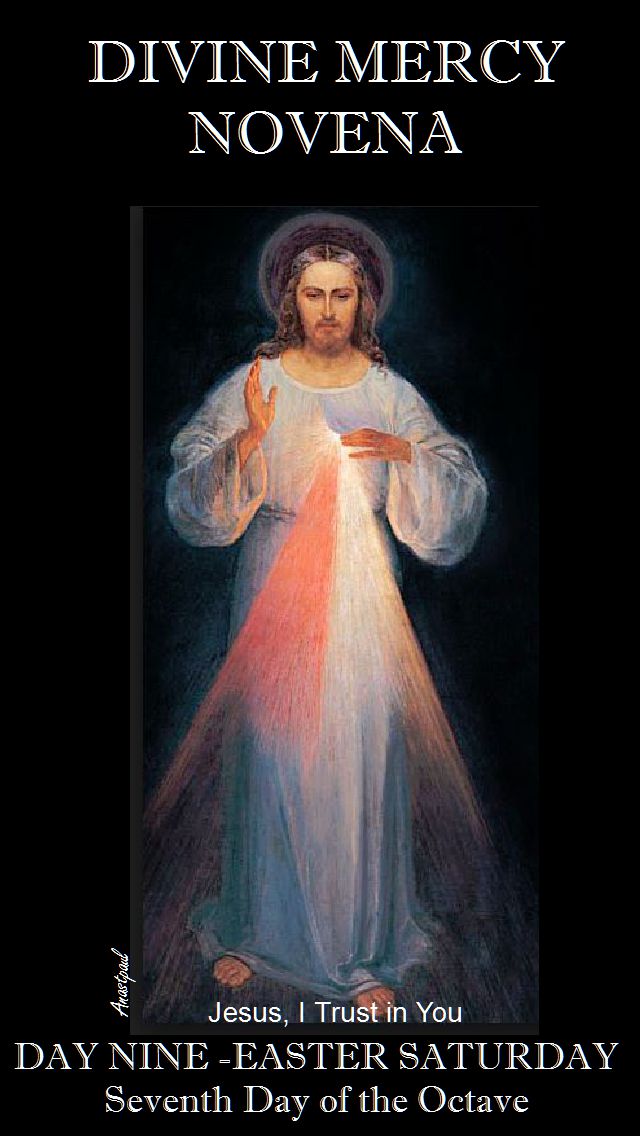
DIVINE MERCY NOVENA – DAY NINE – Easter Saturday – Seventh Day of the Octave

DIVINE MERCY NOVENA – DAY NINE – Easter Saturday – Seventh Day of the Octave

VILNIUS IMAGE - DAY NINE DM NOVENA

Today bring to Me the Souls who have become Lukewarm,

and immerse them in the abyss of My mercy. These souls wound My Heart most painfully.   My soul suffered the most dreadful loathing in the Garden of Olives because of lukewarm souls.   They were the reason I cried out: ‘Father, take this cup away from Me, if it be Your will.’   For them, the last hope of salvation is to run to My mercy.” 

Most compassionate Jesus, You are Compassion Itself.   I bring lukewarm souls into the abode of Your Most Compassionate Heart.   In this fire of Your pure love, let these tepid souls who, like corpses, filled You with such deep loathing, be once again set aflame.   O Most Compassionate Jesus, exercise the omnipotence of Your mercy and draw them into the very ardor of Your love and bestow upon them the gift of holy love, for nothing is beyond Your power.

Eternal Father, turn Your merciful gaze upon lukewarm souls who are nonetheless enfolded in the Most Compassionate Heart of Jesus. Father of Mercy, I beg You by the bitter Passion of Your Son and by His three-hour agony on the Cross:  let them, too, glorify the abyss of Your mercy. Amen. 

Posted in MORNING Prayers, PRAYERS of the SAINTS

Our Morning Offering – 22 April

Our Morning Offering – 22 April

Lord, Grant us Your Grace
St Anselm of Canterbury

O Father, most merciful, Who,
in the beginning, created us;
Who, by the Passion of Your only begotten Son,
created us anew.
Work in us now, we beseech You, both to will
and to do your good pleasure!
And because we are weak
and can do no good thing on our own,
grant us Your grace.
Grant us your heavenly benediction,
that in whatever work we undertake
we may do all to Your honour and Your glory;
that being kept from sin,
daily increasing in good works,
so long as we live in the body,
we may always give service to You –
and after our departure,
we may receive pardon for all our sins,
attaining life eternal: through Him who,
with You and the Holy Spirit, lives and reigns,
God, forevermore. Amen.

LORD GRANT US YOUR GRACE - S ANSELM

Posted in For RAIN OR Against RAIN, PATRONAGE - SPOUSAL ABUSE / DIFFICULT MARRIAGES / VICTIMS OF ABUSE, SAINT of the DAY

Saint of the Day – 22 April – St Theodore of Sykeon (Died c613) Bishop

Saint of the Day – 22 April – St Theodore of Sykeon (Died c613) Bishop, Monk, Abbot, (born at Sykeon, Galaia, Bulgaria on an unknown date  and died c613) – Patronages –  of difficult marriages, for rain.

A native of Sykeon, in Galatia, Asia Minor, he was the son of a Byzantine imperial messenger and possibly of a prostitute.   Entering a monastery in Jerusalem, he served there for many years until becoming abbot of a number of monastic institutions.   He predicted the rise of Emperor Maurice and cured a royal prince of leprosy. About 590, he was appointed Bishop of Anastasiopol is, in Galatia.

St. Theodore spent his childhood at his mother’s inn that doubled as a brothel at Sykeon in Asia Minor.  v When Theodore was about six years old a wonderful cook arrived at the inn who created so much business that his mother stopped her prostitution.    The cook became Theodore’s spiritual director, teaching him to visit churches, to pray and fast, and to use the sacraments.

In his teens Theodore lived as a hermit in a cave near Sykeon.   Then he shut himself up in a mountainous cave to practice extreme mortification.   But Theodore also became well known for serving his neighbours with his gifts of healing, exorcism and prophecy.

When the church at Anastasiopolis chose Theodore as bishop, he reluctantly accepted the office.   About his administration we know very little as his biography records only a long series of his miracles.   After ten years he resigned because he was neglecting his prayer and his monks at Sykeon.   Theodore retired to an oratory near Heliopolis.   There he exercised a apostolate of charity and miracles until his death in 613.

Posted in SAINT of the DAY

Saints – 22 April

St Abel McAedh
St Aceptismas of Hnaita
St Pope Agapitus I,
St Apelles of Smyrna
St Arwald
St Epipodius of Lyon
St Euflamia
Bl Francis of Fabriano
St Helimenas
St Joseph of Persia
St Leo of Sens
St Leonidas of Alexandria
St Lucius of Laodicea
St Opportuna of Montreuil
St Senorina
St Pope Soter
St Theodore of Sykeon
St Virginio

Martyrs of Alexandria
Martyrs of Persia: Bishops, priests, deacons and laity who were martyred in Persia and celebrated together. Several of them have their stories related in the Acta of Saints Abdon and Sennen.
• Abdiesus the Deacon
• Abrosimus
• Aceptismas of Hnaita
• Aithilahas of Persia
• Azadanes the Deacon
• Azades the Eunuch
• Bicor
• Chrysotelus of Persia
• Helimenas of Persia
• James of Persia
• Joseph of Persia
• Lucas of Persia
• Mareas
• Milles of Persia
• Mucius of Persia
• Parmenius of Persia
• Tarbula of Persia

Posted in MORNING Prayers, NOVENAS

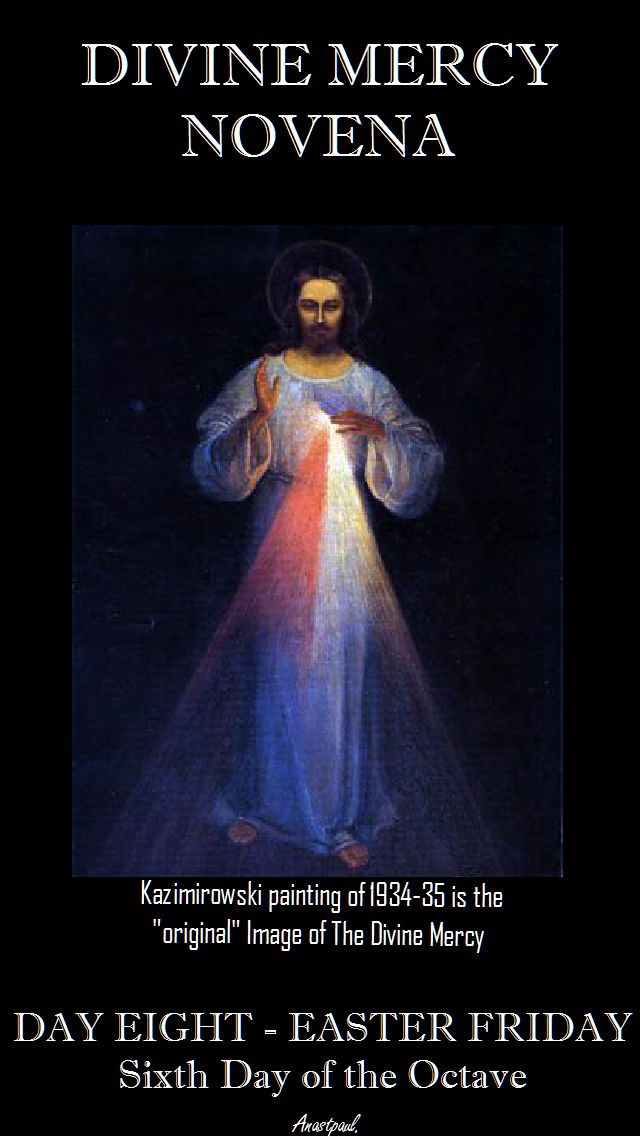
DIVINE MERCY NOVENA – Day Eight – Sixth Day of the Octave

DIVINE MERCY NOVENA – Day Eight – Sixth Day of the Octave

day 8 dm novena

“Today bring to Me the Souls who are in the prison of Purgatory,

and immerse them in the abyss of My mercy.   Let the torrents of My Blood cool down their scorching flames. All these souls are greatly loved by Me.   They are making retribution to My justice. It is in your power to bring them relief.   Draw all the indulgences from the treasury of My Church and offer them on their behalf.   Oh, if you only knew the torments they suffer, you would continually offer for them the alms of the spirit and pay off their debt to My justice.”

Most Merciful Jesus, You Yourself have said that You desire mercy; so I bring into the abode of Your Most Compassionate Heart the souls in Purgatory, souls who are very dear to You and yet, who must make retribution to Your justice.   May the streams of Blood and Water which gushed forth from Your Heart put out the flames of Purgatory, that there, too, the power of Your mercy may be celebrated.

Eternal Father, turn Your merciful gaze upon the souls suffering in Purgatory, who are enfolded in the Most Compassionate Heart of Jesus. I beg You, by the sorrowful Passion of Jesus Your Son and by all the bitterness with which His most sacred Soul was flooded, manifest Your mercy to the souls who are under Your just scrutiny.    Look upon them in no other way but only through the Wounds of Jesus, Your dearly beloved Son;  for we firmly believe that there is no limit to Your goodness and compassion. Amen.

Posted in DOCTORS of the Church, MORNING Prayers, SAINT of the DAY

Thought for the Day – 21 April – St Anselm of Canterbury – “Magnificent Doctor” / “Father of Scholasticism”

Thought for the Day – 21 April – St Anselm of Canterbury – “Magnificent Doctor” / “Father of Scholasticism”

As a young boy in Aosta, Italy, Anselm thought of being a priest.    His father, angered by this desire, introduced his son to court life. Anselm forgot about his vocation.    But in 1060, Anselm learned of Lanfranc, the leader of monasticism in Normandy, France. Anselm entered Lanfranc’s monastery at Bec.    Three years later, Anselm became a prior, or head and began to publish his writings on the existence of God.

LanfrancLanfranc at St Dunstan's, Canterbury

What is it about these great Saints! The perseverance, the zeal and the prolific and endless gifts for all of us. So many lessons to be learnt, so many prayers to be said to them appealing for their intercession! The greatest lesson perhaps is their uncompromising gift of self to God, through thick and thin, in health and in suffering, in the good and the bad times, it is only God who counts and the glory of the Kingdom.

St Anselm, please pray for us all!


Posted in DOCTORS of the Church, MORNING Prayers, QUOTES of the SAINTS, SAINT of the DAY

Quote/s of the Day – 21 April

Quote/s of the Day – 21 April

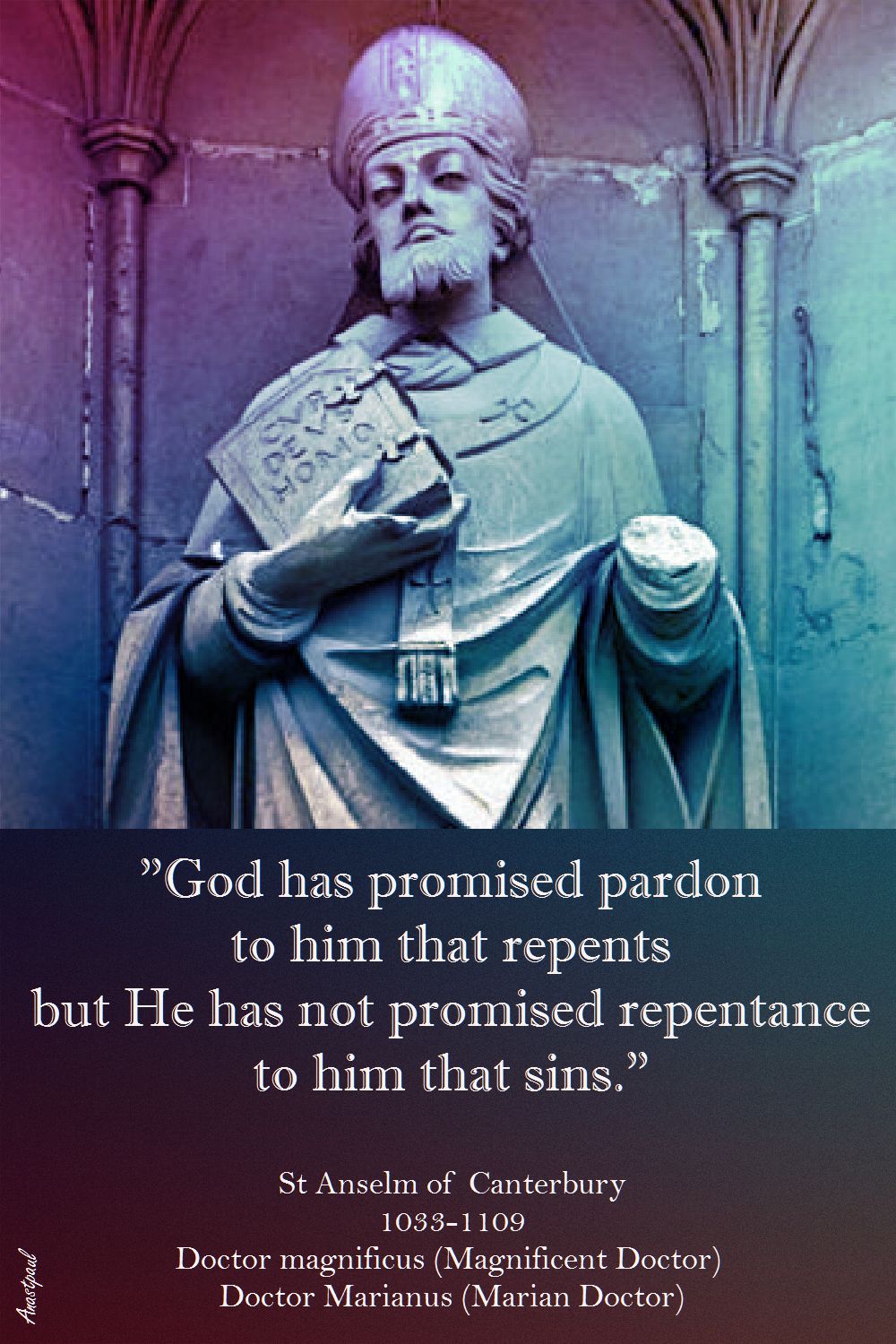
“God has promised pardon to him that repents
but he has not promised repentance to him that sins.”

ST ANSLEM - GOD HAS PROMISED PARDON

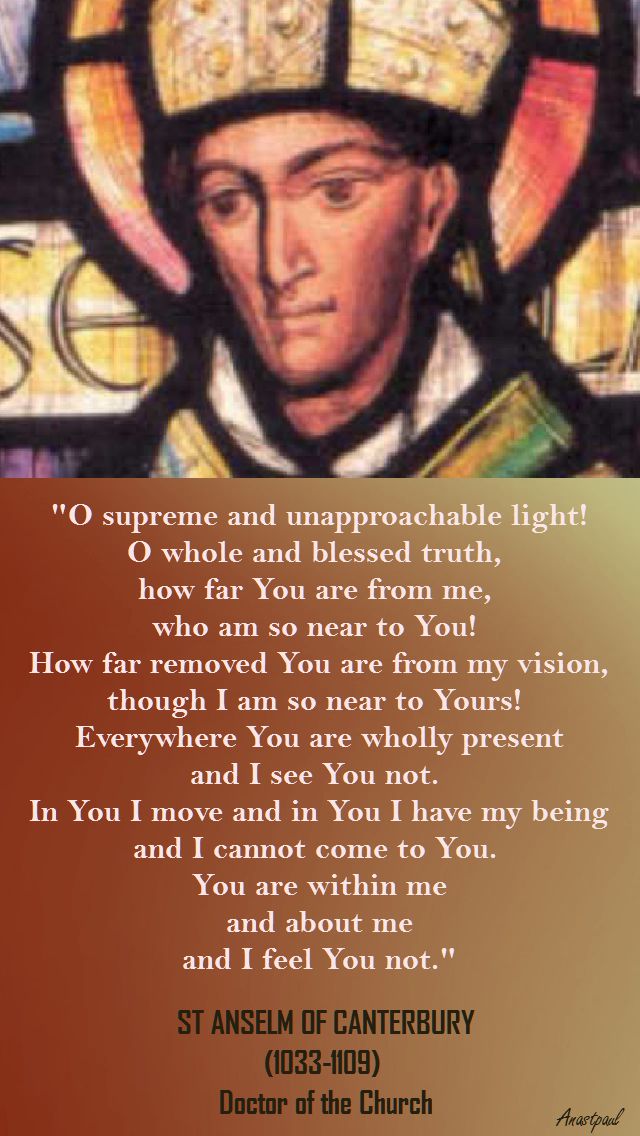
“O supreme and unapproachable light!
O whole and blessed truth, how far You are from me,
who am so near to You!
How far removed You are from my vision,
though I am so near to Yours!
Everywhere You are wholly present
and I see You not.
In You I move and in You I have my being
and I cannot come to You.
You are within me
and about me
and I feel You not.”

O supreme and unaproachable light! - St Anselm

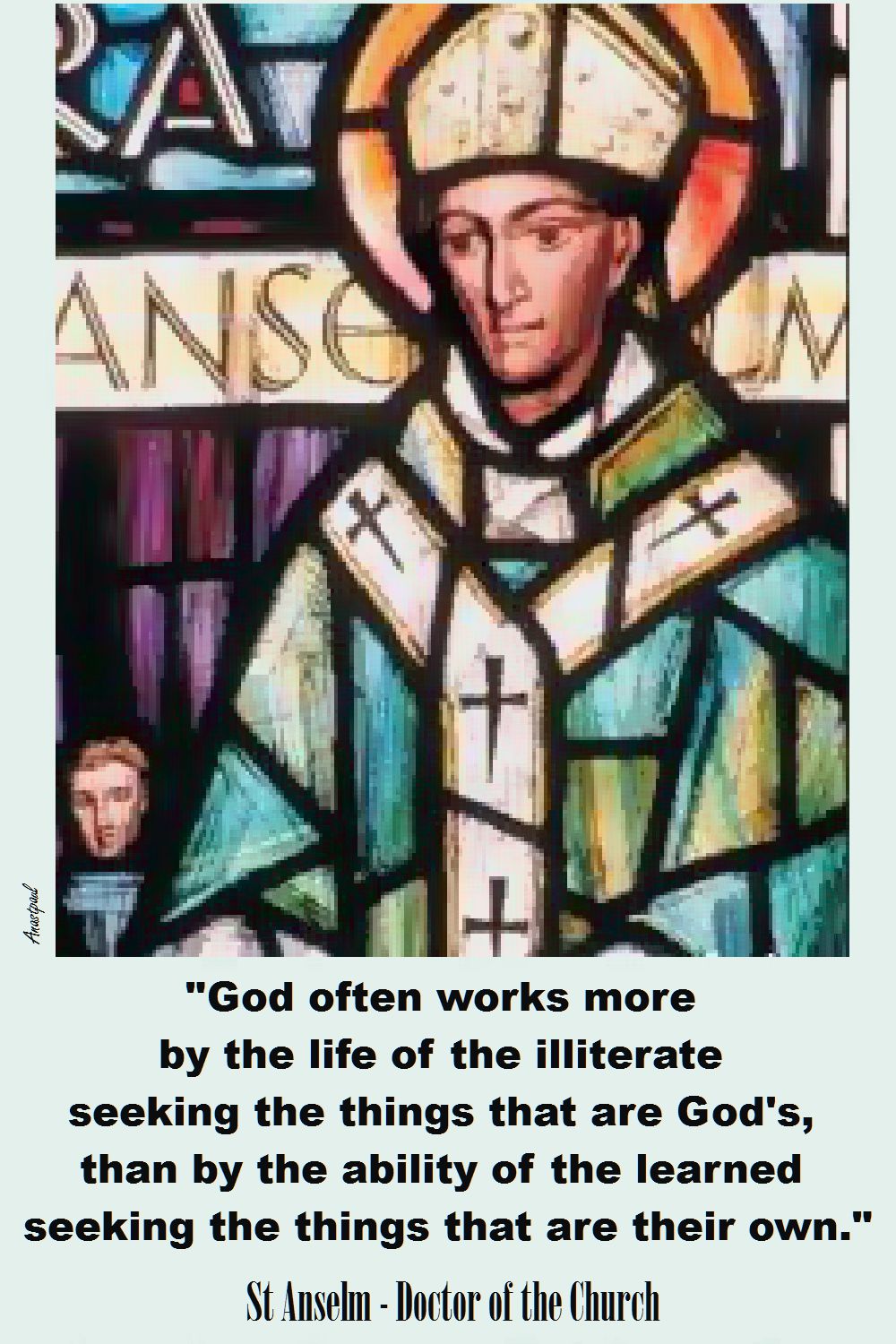
“God often works more by the life of the illiterate
seeking the things that are God’s,
than by the ability of the learned
seeking the things that are their own.”

GOD OFTEN WORKS MORE - ST ANSELM

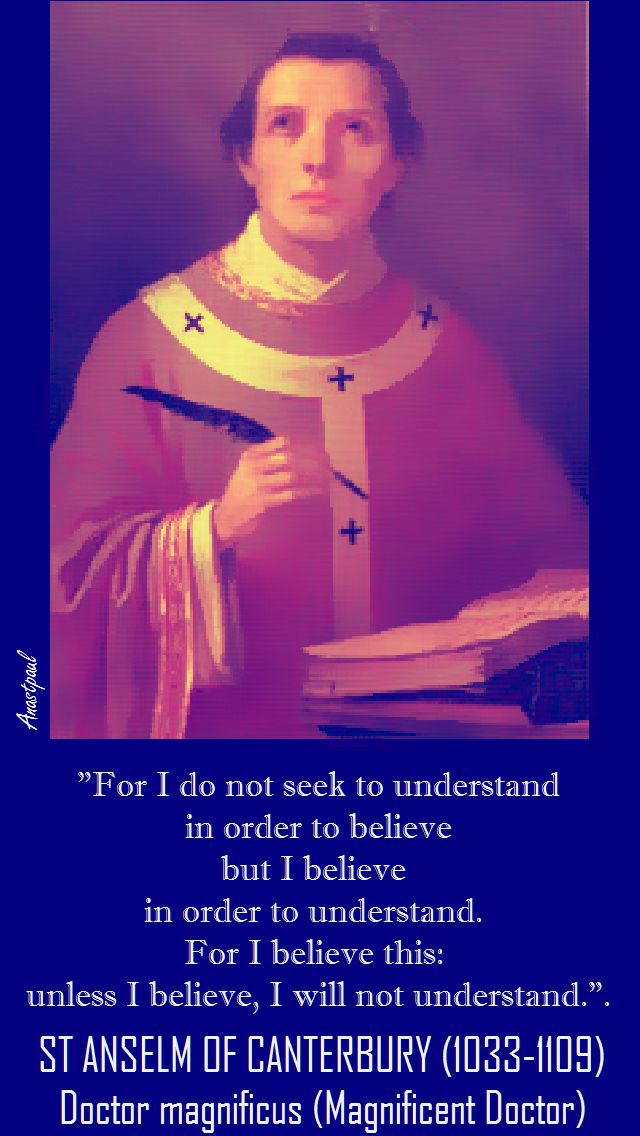
“For I do not seek to understand in order to believe
but I believe in order to understand.
For I believe this: unless I believe, I will not understand.”

FOR I DO NO SEEK TO UNDERSTAND-ST ANSELM

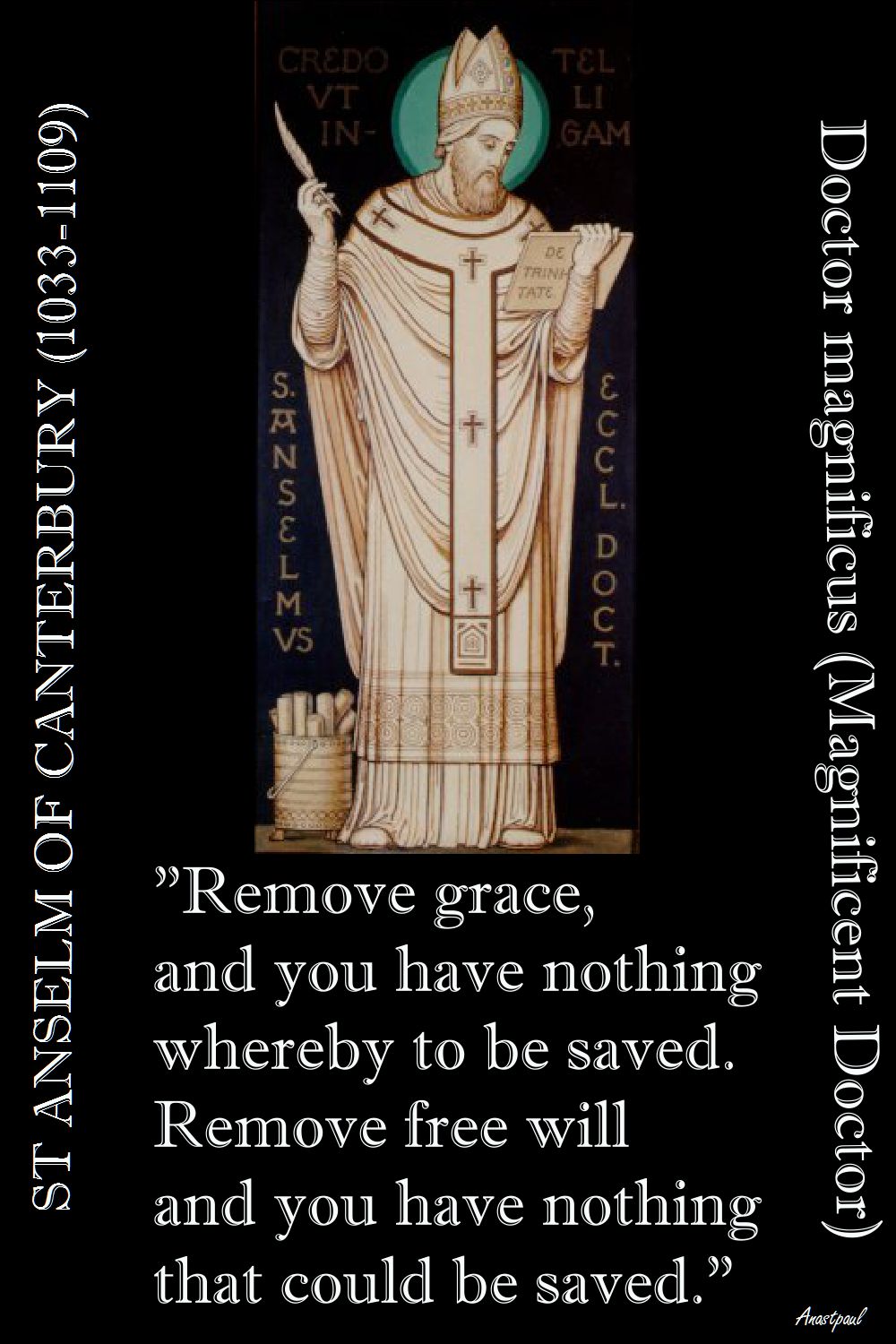
“Remove grace, and you have nothing whereby to be saved.
Remove free will and you have nothing that could be saved.”

remoe grace - st anselm

“A single Mass offered for oneself during life
may be worth more than a thousand celebrated
for the same intention after death.”

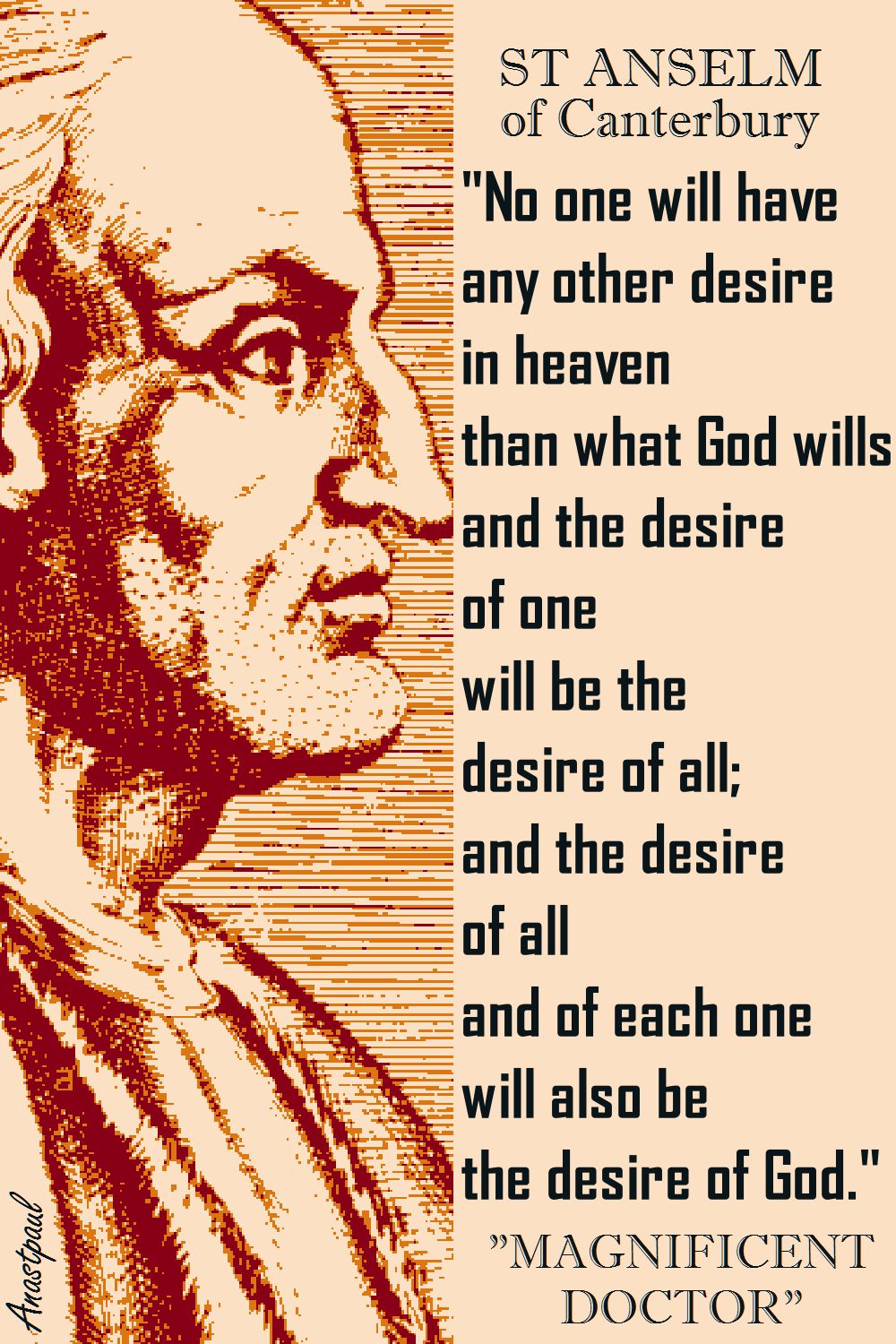
“No one will have any other desire in heaven
than what God wills;
and the desire of one will be the desire of all;
and the desire of all and of each one
will also be the desire of God.”

no one will have-st anselm

ST ANSELM OF CANTERBURY (1033-1109)
Archbishop of Canterbury, O.S.B.
Doctor magnificus (Magnificent Doctor);
Doctor Marianus (Marian Doctor)

Posted in DOCTORS of the Church, EASTER, MORNING Prayers, QUOTES of the SAINTS, The WORD

One Minute Reflection – 21 April Easter Friday Seventh Day of the Octave

One Minute Reflection – 21 April Easter Friday Seventh Day of the Octave  and the Memorial of St Anselm ‬OSB (1033-1109) Doctor of the Church

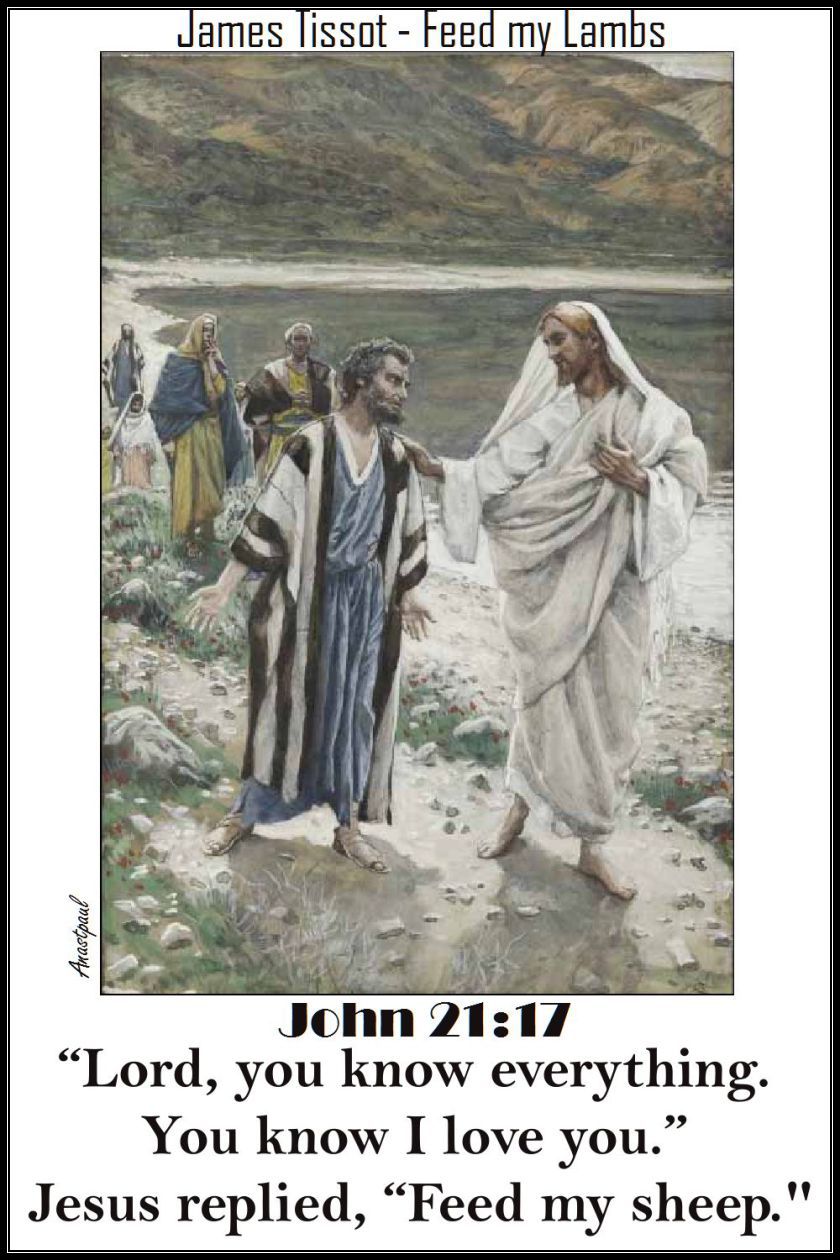
DAILY MEDITATION: Lord, let me love You and feed Your sheep.

Jesus asked a third time,
“Simon son of John, do you love me?”
Peter was hurt because Jesus
had asked him three times if he loved him.
So he told Jesus,
“Lord, you know everything. You know I love you.”
Jesus replied, “Feed my sheep.”
— John 21:17john-21-17.21 april 2018

REFLECTION – “Those who destroy truth with their lies or detractions deny Christ with their mouths.   In the third chapter of the Acts of the Apostles, Peter says: “You denied the Holy and the Just One before Pilate and desired a murderer to be given to you” (3:14). Pilate, whose name means a “hammermouth,” symbolises a person who lies and detracts others.    Those who tell lies destroy truth as if they had pounded it with a hammer; those who detract others destroy the love of neighbour.    In both cases they deny Christ with their mouths.   Detraction seeks to transform good into evil and to minimise its worth.”
…..St Anthony of Padua [1195-1231] on John 21.17those-who-tell-lies-st-anthony-of-padua-21 apirl 2017

PRAYER – Our God and Holy Father, purify our hearts with Your truth and guide them in the way of holiness, so that we may do what is pleasing in your sight.   Let your face shine upon us, that we may be freed from sin and filled with Your plenty.   That we may radiate the light of Christ Your Son to all we meet and never allow us to sin against any of Your children by lies or detraction.   Teach me to feed Your lambs and Your sheep.  May the Prayers of St Anselm be to our gain.   Through Christ our Lord, with the Holy Spirit, God forever and ever, amen.t anselm father of scholasticism pray for us 21 april 2020


Posted in DOCTORS of the Church, PRAYERS of the SAINTS, SAINT of the DAY

Our Morning Offering – 21 April

Our Morning Offering – 21 April

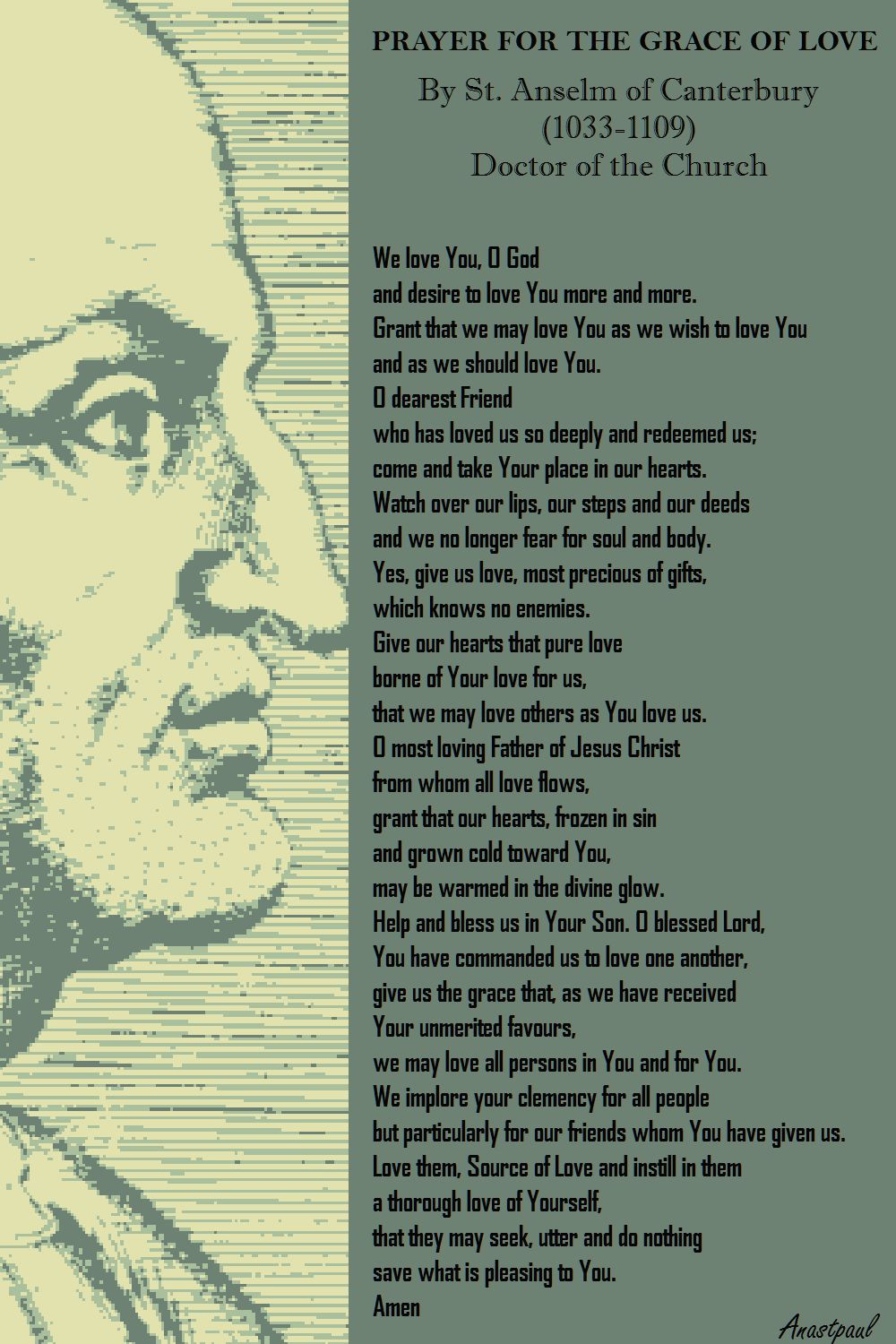
PRAYER FOR THE GRACE OF LOVE By St Anselm of Canterbury

We love You, O God
and desire to love You more and more.
Grant that we may love You as we wish to love You
and as we should love You. O dearest Friend
who has loved us so deeply and redeemed us;
come and take Your place in our hearts.
Watch over our lips, our steps and our deeds
and we no longer fear for soul and body.
Yes, give us love, most precious of gifts,
which knows no enemies.
Give our hearts that pure love
borne of Your love for us,
that we may love others as You love us.
O most loving Father of Jesus Christ
from whom all love flows,
grant that our hearts, frozen in sin
and grown cold toward You,
may be warmed in the divine glow.
Help and bless us in Your Son. O blessed Lord,
You have commanded us to love one another,
give us the grace that, as we have received
Your unmerited favours,
we may love all persons in You and for You.
We implore your clemency for all people
but particularly for our friends whom You have given us.
Love them, Source of Love and instill in them
a thorough love of Yourself,
that they may seek, utter and do nothing
save what is pleasing to You. Amen

PRAYER FOR THE GRACE OF LOVE BY ST ANSELM

Posted in DOCTORS of the Church, SAINT of the DAY

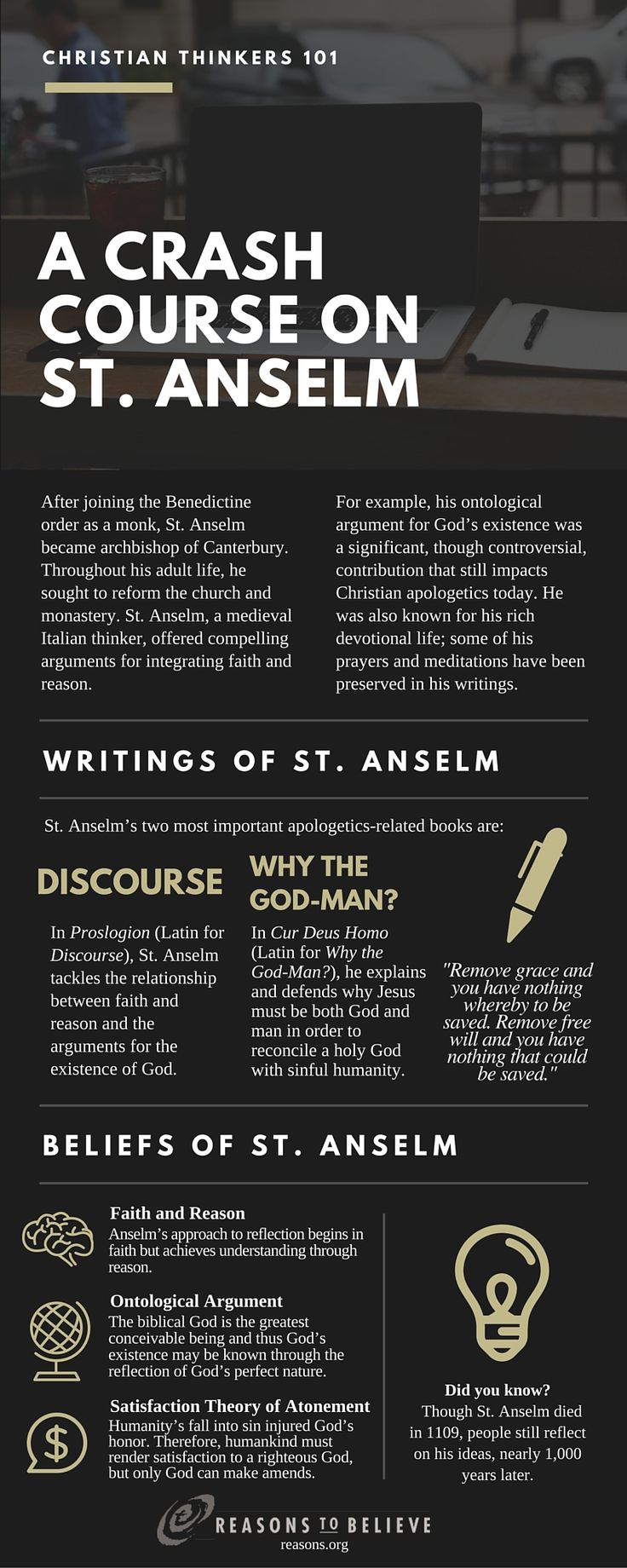
Saint of the Day – 21 April – St Anselm of Canterbury (c1033-1109) – Bishop, Confessor, Doctor of the Church

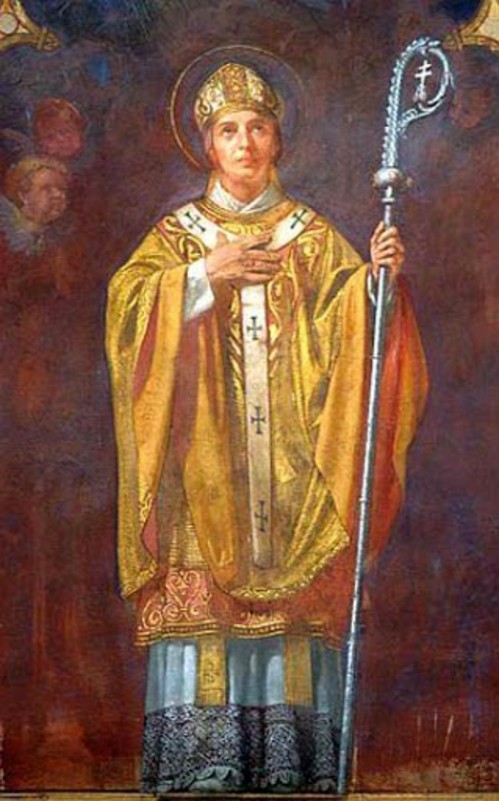
Saint of the Day – 21 April – St Anselm of Canterbury- Bishop, Confessor, Doctor of the Church (c1033-1109) Doctor magnificus (Magnificent Doctor), Doctor Marianus (Marian Doctor), “Father of Scholasticism” – Monk, Prior, Abbott, Archbishop, Theologian, Philosopher.   Anselm was born in or around Aosta in Upper Burgundy sometime between April 1033 and April 1034.   At the age of fifteen, Anselm desired to enter a Monastery but, failing to obtain his father’s consent, he was refused by the Abbot.   The illness he then suffered has been considered a psychosomatic effect of his disappointment but upon his recovery he gave up his studies and for a time lived a carefree life.beautiful st anselm archbishop

Following the death of his mother, probably at the birth of his sister Richera, Anselm’s father repented his earlier lifestyle but professed his new faith with a severity that the boy found likewise unbearable.   Anselm, at age 23, left home with a single attendant crossed the Alps and wandered through Burgundy and France for three years.   His countryman Lanfranc of Pavia was then prior of the Benedictine abbey of Bec;  attracted by the fame of his fellow countryman, Anselm reached Normandy in 1059.   After spending some time in Avranches, he returned the next year.   His father having died, he consulted with Lanfranc as to whether to return to his estates and employ their income in providing alms or to renounce them, becoming a hermit or a monk at Bec or Cluny. Professing to fear his own bias, Lanfranc sent him to Maurilius, the Archbishop of Rouen, who convinced him to enter the abbey as a novice at the age of 27.   Probably in his first year, he wrote his first work on philosophy, a treatment of Latin paradoxes called the Grammarian.   Over the next decade, the Rule of Saint Benedict reshaped his thought.

st anselm sml

Because of the physical closeness and political connections, there was frequent travel and communication between Normandy and England and Anselm was in repeated contact with Church officials in England.    He was chosen as reluctant Archbishop of Canterbury, England in 109 – officials had to wait until he was too sick to argue in order to get him to agree.

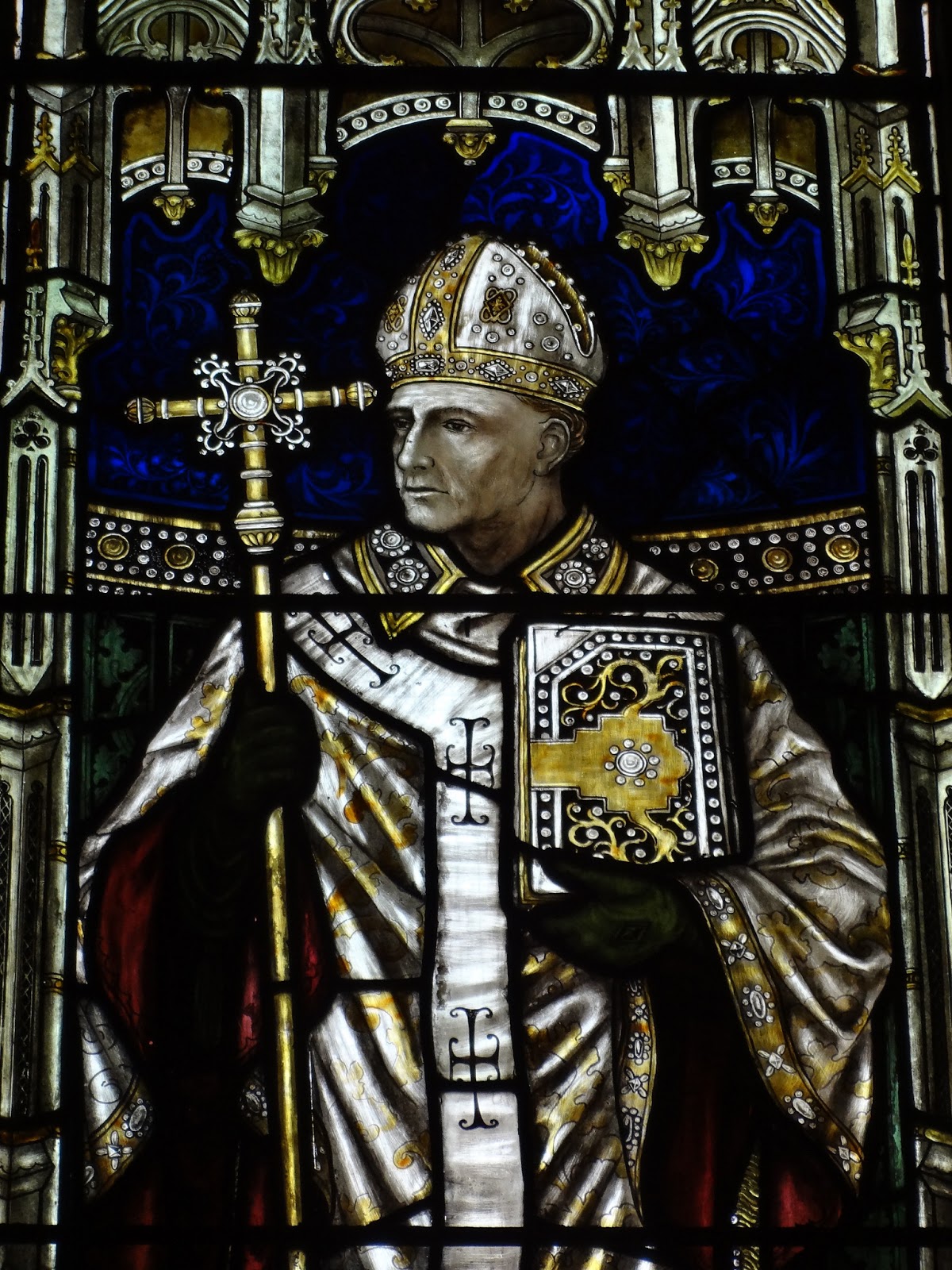
st AnselmP136 assuming the palium
“Anselm Assuming the Pallium in Canterbury Cathedral” from E M Wilmot-Buxton’s 1915 Anselm

As bishop he fought King William Rufus’s encroachment on ecclesiastical rights and the independence of the Church, refused to pay bribes to take over as bishop and was exiled for his efforts.    He travelled to Rome, Italy and spent part of his exile as an advisor to Pope Blessed Urban II, obtaining the pope’s support for returning to England and conducting Church business without the king’s interference.    He resolved theological doubts of the Italo-Greek bishops at Council of Bari in 1098.st anselm snip

In 1100 King Henry II invited Anselm to return to England but they disputed over lay investiture and Anselm was exiled again only to return in 1106 when Henry agreed not to interfere with the selection of Church officials.    Anselm opposed slavery and obtained English legislation prohibiting the sale of men.   He strongly supported celibate clergy and approved the addition of several saints to the liturgical calendar of England.

70e6c17ff836e1076dee349072e08b27

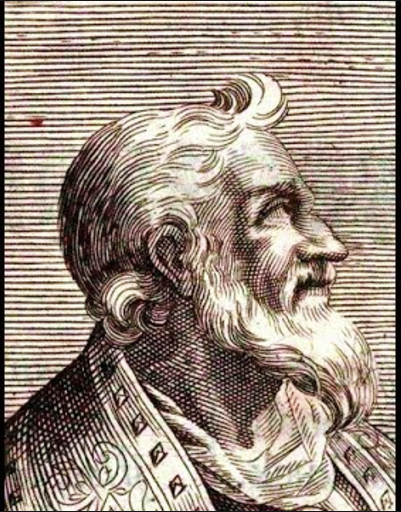
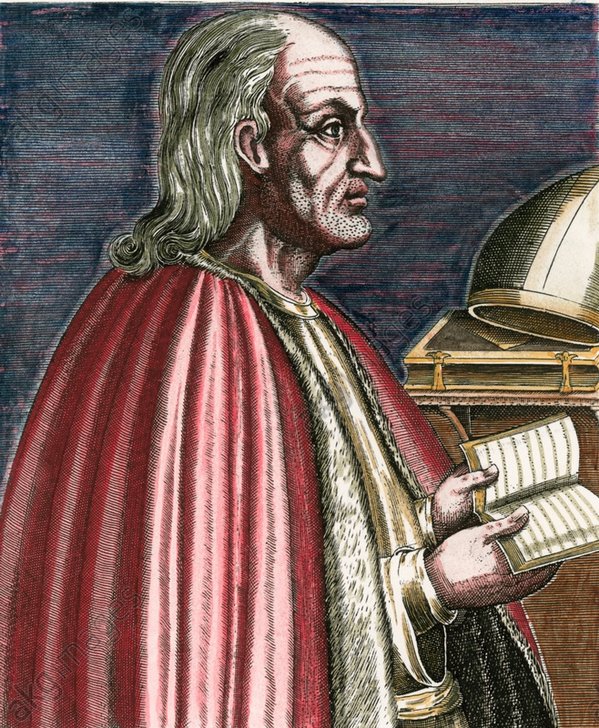
He died on Holy Wednesday, 21 April 1109.   His remains were translated to Canterbury Cathedral and laid at the head of Lanfranc at his initial resting place to the south of the Altar of the Holy Trinity (now St Thomas’s Chapel).   During the church’s reconstruction after the disastrous fire of the 1170s, his remains were relocated, although it is now uncertain where.Anselm v.Canterbury,Porträt/Kupferstich - Anselm of Canterbury, Portrait / Copper engraving - Anselme de Cantorbéry, portrait / Gravure

Anselm was one of the great philosophers and theologians of the middle ages and a noted theological writer.   He was far more at home in the monastery than in political circles but still managed to improve the position of the Church in England.    Counsellor to Pope Gregory VII.   Chosen a Doctor of the Church in 1720 by Pope Clement XI.

The_Immaculate_Conception_with_St._Anselm_and_St._Martin_-_Giuseppe_Maria_Crespi_-_Louvre_INV_259 1722
Giovanni Francesco Romanelli (1610-1662) – The Meeting of the Countess Matilda and Anselm of Canterbury in the Presence of Pope Urban II (1637-1642), oil on canvas, Galleria dei Romanelli, the Vatican.

Posted in SAINT of the DAY

Saints – 21 April

St Anselm of Canterbury (Optional Memorial)
Holy Infant of Good Health (Mexico)

St Abdechalas
St Anastasius I of Antioch
St Anastasius of Sinai
St Apollo of Nicomedia
St Apollonius the Apologist
St Arator of Alexandria
St Beuno Gasulsych
St Conrad of Parzham
St Crotates of Nicomedia
St Cyprian of Brescia
St Felix of Alexandria
St Fortunatus of Alexandria
St Frodulphus
St Isacius of Nicomedia
Bl John Saziari
St Maelrubba of Applecross
St Roman Adame Rosales
St Silvius of Alexandria
St Simeon of Ctesiphon
St Vitalis of Alexandria
Bl Vitaliy Bayrak
Bl Wolbodó of Liège

Posted in EASTER, NOVENAS, Uncategorized

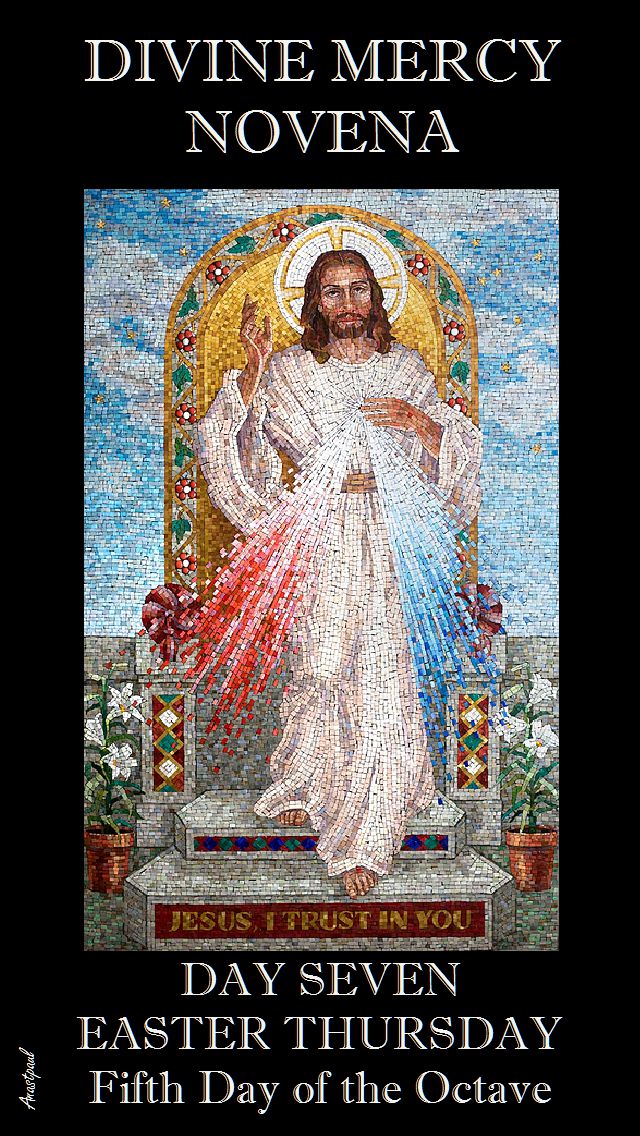
Divine Mercy Novena – 20 April Easter Thursday – Fifth Day of the Octave

Divine Mercy Novena – 20 April
Easter Thursday – Fifth Day of the Octave

DAY SEVEN

Today bring to Me the Souls who especially venerate and glorify My Mercy*,and immerse them in My mercy. These souls sorrowed most over my Passion and entered most deeply into My spirit. They are living images of My Compassionate Heart. These souls will shine with a special brightness in the next life. Not one of them will go into the fire of hell. I shall particularly defend each one of them at the hour of death.

Most Merciful Jesus, whose Heart is Love Itself, receive into the abode of Your Most Compassionate Heart the souls of those who particularly extol and venerate the greatness of Your mercy.    These souls are mighty with the very power of God Himself.    In the midst of all afflictions and adversities they go forward, confident of Your mercy; and united to You, O Jesus, they carry all mankind on their shoulders.    These souls will not be judged severely but Your mercy will embrace them as they depart from this life.

Eternal Father, turn Your merciful gaze upon the souls who glorify and venerate Your greatest attribute, that of Your fathomless mercy and who are enclosed in the Most Compassionate Heart of Jesus.    These souls are a living Gospel; their hands are full of deeds of mercy and their hearts, overflowing with joy, sing a canticle of mercy to You, O Most High! I beg You O God:

Show them Your mercy according to the hope and trust they have placed in You.    Let there be accomplished in them the promise of Jesus, who said to them that during their life but especially at the hour of death, the souls who will venerate this fathomless mercy of His, He, Himself, will defend as His glory. Amen.

*The text leads one to conclude that in the first prayer directed to Jesus, Who is the Redeemer, it is “victim” souls and contemplatives that are being prayed for; those persons, that is, that voluntarily offered themselves to God for the salvation of their neighbor (see Col 1:24; 2 Cor 4:12). This explains their close union with the Savior and the extraordinary efficacy that their invisible activity has for others. In the second prayer, directed to the Father from whom comes “every worthwhile gift and every genuine benefit,”we recommend the “active” souls, who promote devotion to The Divine Mercy and exercise with it all the other works that lend themselves to the spiritual and material uplifting of their brethren.”

day seven dm novena

Posted in MORNING Prayers, SAINT of the DAY

Thought for the Day – 20 April

Although St. Agnes of Montepulciano was not in any way a “child saint,” like her little Roman patroness, there is about her something of the same simplicity, which makes her name appropriate.    Some of the best known legends about her concern her childhood (see the Saint of the Day here: https://anastpaul.wordpress.com/2017/04/20/saint-of-the-day-20-april-st-agnes-of-montepulciano/)

At the age of forty nine, Agnes’ health began to fail rapidly.   She was taken for treatment to the baths at Chianciano – accompanied, as it says in the rule, by “two or three sisters” but the baths did her no good.    She did perform a miracle while there, restoring to life a child who had fallen into the baths and drowned.   But she returned to Montepulciano to die on the twentieth of April, 1317.   She died in the night, and the children of the city wakened and cried out, “Holy Sister Agnes is dead!”    She was buried in Montepulciano, and her tomb soon became a place of pilgrimage.

One of the most famous pilgrims to visit her tomb was St. Catherine of Siena, who went to venerate the saint and also, probably, to visit her niece, Eugenia, who was a nun in the convent there.    As she bent over the body of St. Agnes to kiss the foot, she was amazed to see Agnes raise her foot so that she did not have to stoop so far.   Agnes of Montepulciano was canonised in 1796.

Simplicity and humility – help us Lord to attain these great virtues – St Agnes of Montepulciano pray for us!

ST AGNES OF MONTE PRAY FOR US

Posted in EASTER, MORNING Prayers

Quote of the Day – 20 April – Easter Thursday – Fifth Day in the Octave

Quote of the Day – 20 April – Easter Thursday – Fifth Day in the Octave

“The Gospel of Easter is very clear:
we need to go back there, to see Jesus risen
and to become witnesses of his Resurrection.
This is not to go back in time;
it is not a kind of nostalgia.
It is returning to our first love,
in order to receive the fire which Jesus
has kindled in the world
and to bring that fire to all people,
to the very ends of the earth.”

Pope Francis (Easter Vigil Homily, 2014)

POPE FRANCIS EASTER VIGIL

Posted in DOCTORS of the Church, EASTER, MORNING Prayers

One Minute Reflection – 20 April – Easter Thursday – Fifth Day of the Octave

One Minute Reflection – 20 April – Easter Thursday – Fifth Day of the Octave

Daily Meditation: May we be one in faith. love and peace through the Eucharist.

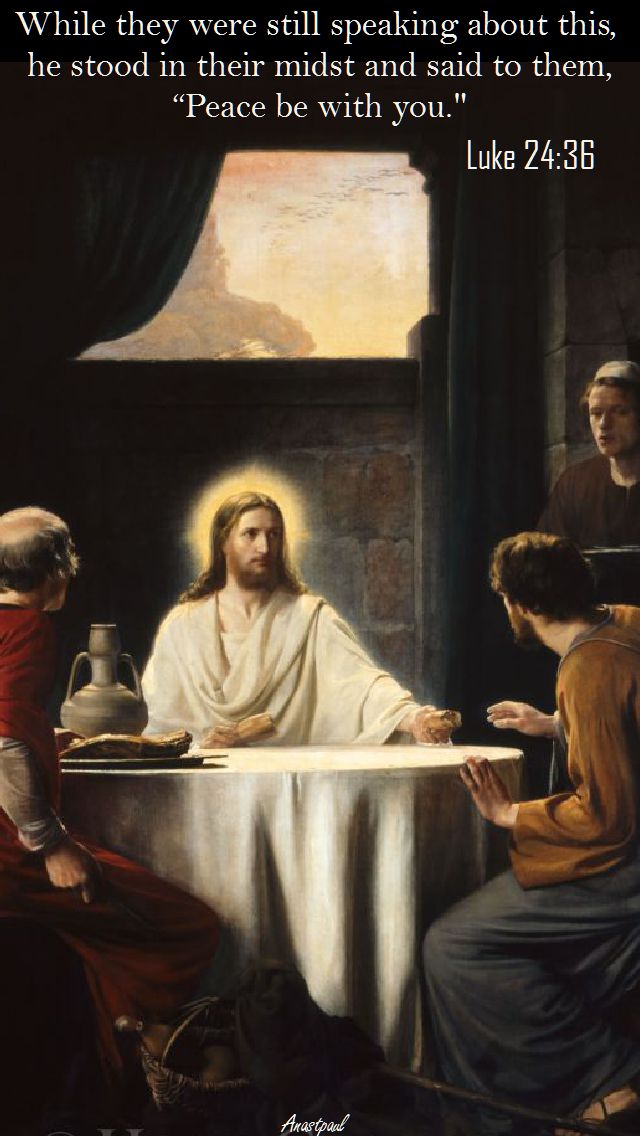
While they were still speaking about this,
he stood in their midst and said to them,
“Peace be with you.”
…..Luke 24:36

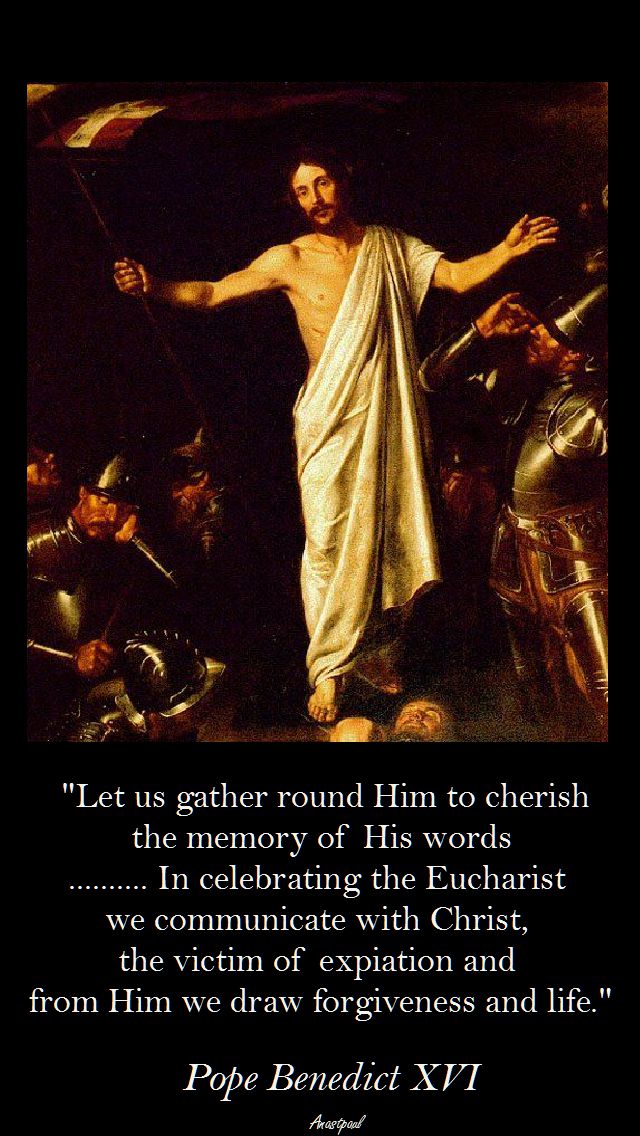
REFLECTION – “Let us gather round Him to cherish the memory of His words and of the events contained in Scripture; let us relive His Passion, death and Resurrection. In celebrating the Eucharist we communicate with Christ, the victim of expiation and from Him we draw forgiveness and life. What would our lives as Christians be without the Eucharist? The Eucharist is the perpetual, living inheritance which the Lord has bequeathed to us in the Sacrament of His Body and His Blood and which we must constantly rethink and deepen so that, as venerable Pope Paul VI said, it may “impress its inexhaustible effectiveness on all the days of our earthly life” (Insegnamenti, V [1967], p. 779).”……..Pope Benedict XVI 2009

PRAYER – Heavenly Father, we are scattered in this world and so easily distracted from seeing You. Help me to communicate in love to those around me
who gather in Your love. Let me praise Your name from my heart and rejoice that I have been given the grace of faith through Your love for me. Lord Jesus, remember Your holy Church, built on the apostles and reaching to the ends of the earth and let Your blessing and peace rest on all who gather to celebrate at Your feast in the most holy Eucharist. Amen

luke 24 -36LET US GATHER ROUND HIM - POPE BENEDICT

Posted in DOCTORS of the Church, EASTER, FATHERS of the Church, MORNING Prayers, PRAYERS of the SAINTS

Our Morning Offering – 20 April

Our Morning Offering – 20 April

Prayer of St Ambrose

I beg of you, O Lord,
by this most holy mystery of Your Body and Blood,
with which You daily nourish us in Your Church,
that we may be cleansed and sanctified
and made sharers in Your divinity.
Grant to me Your holy virtues, which will enable
me to approach Your altar with a clean conscience,
so that this heavenly Sacrament may be a means
of salvation and life to me, for You Yourself have said:
“I am the living bread that has come down from heaven.
If anyone eat of this bread, he shall live forever
and the bread that I will give is my flesh for the life of the world.”
Most Sweet Bread, heal my heart, that I may taste the sweetness
of Your love. Heal it from all weakness, that I may enjoy
no sweetness but You. Most pure Bread, containing
every delight which ever refreshes us, may my heart
consume You and may my soul be filled with Your sweetness.
Holy Bread, living Bread, perfect Bread, that has come down
from heaven to give life to the world,
come into my heart and cleanse me from every stain of body
and soul. Enter into my soul; heal and cleanse me completely.
Be the constant safeguard and salvation of my soul and body.
Guard me from the enemies who lie in wait.
May they flee from the protecting presence
of Your power, so that, armed in soul
and body by You, I may safely reach
Your Kingdom.
There we shall see You, not as now
as in mysteries, but face to face,
when You will deliver the Kingdom to God
the Father and will reign as God over all.
Then You, who with the same God the Father
and the Holy Spirit, live and reign forever,
will satisfy the hunger of my soul perfectly
with Yourself, so that I shall neither hunger
nor thirst again. Amen

PRAYER BEFORE MASS - ST AMBROSE

Posted in SAINT of the DAY

Saint of the Day – 20 April – St Agnes of Montepulciano

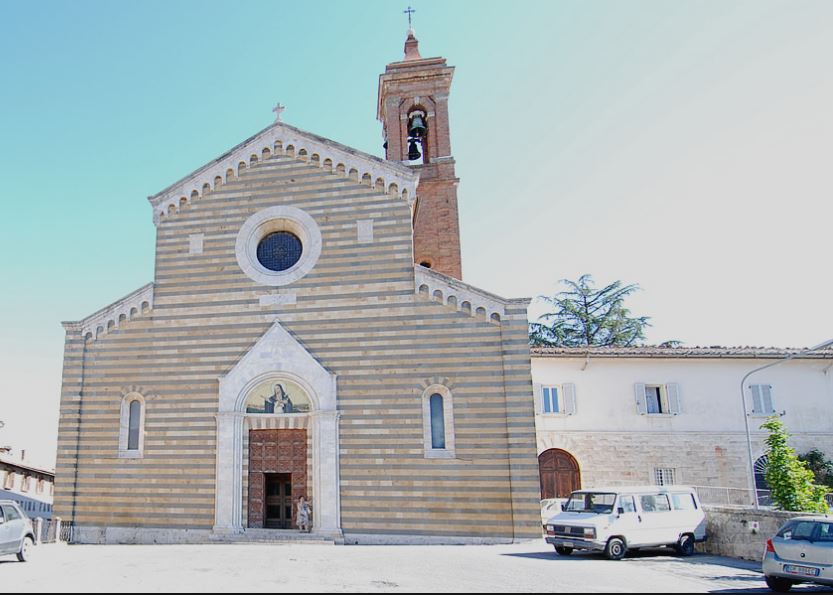
Saint of the Day – 20 April – St Agnes of Montepulciano O.P. (1268-1317) Religious Nun and Abbess “The Miracle Worker” – Attributes – Dominican Nun with a lily and a lamb.   Her Body is incorrupt and her major Shrine is Church of St Agnes, Montepulicano, Siena, Italy.

ST AGNES OF MONTE

St Agnes was born in 1268 into the noble Segni family in Gracciano, a frazione of Montepulciano – in Siena, Italy, then part of the Papal States.    At the age of nine, she convinced her parents to allow her to enter a Franciscan monastery of women in the city known as the “Sisters of the Sack”, after the rough religious habit they wore. they live a simple, contemplative life.    She received the permission of the pope to be accepted into this life at such a young age, normally against Church law.

In 1281, the lord of the castle of Proceno, a fief of Orvieto, invited the nuns of Montepulciano to send some of their Sisters to Proceno to found a new monastery. Agnes was among the nuns sent to found this new community.    At the age of fourteen, she was appointed bursar.

In 1288 Agnes, despite her youth at only 20 years of age, was noted for her devotion to the Blessed Sacrament and deep life of prayer and was elected as the abbess of the community.    There she gained a reputation for performing miracles:  people suffering from mental and physical ailments seemed cured by her presence.    She was reported to have “multiplied loaves”, creating many from a few on numerous occasions, recalling the Gospel miracle of the loaves and fishes.    She herself, however, suffered severe bouts of illness which lasted long periods of time.

In 1306 Agnes was recalled to head the monastery in Montepulciano.    Agnes reached a high degree of contemplative prayer and is said to have been favoured with many visions.    After her return, she proceeded to build a church, Santa Maria Novella, to honour the Blessed Mother, as she felt she had been commanded to do in a mystical vision several years earlier.    She also had a vision of St. Dominic Guzman, under the inspiration of which she led the nuns of her monastery to embrace the Rule of St. Augustine as members of the Dominican Order.    She was frequently called upon to bring peace to the warring families of the city.

By 1316, Agnes’ health had declined so greatly that her doctor suggested taking the cure at the thermal springs in the neighboring town of Chianciano Terme.   The nuns of the community prevailed upon her to take his recommendation.    While many of the other bathers reported being cured of their illnesses, Agnes herself received no benefit from the springs.    Her health failed to such a degree that she had to be carried back to the monastery on a stretcher.

Agnes died the following 20 April, at the age of forty-nine.   The Dominican friars attempted to obtain balsam (or myrrh) to embalm her body.    It was found, however, to be producing a sweet odour on its own and her limbs remained supple.   When her body was moved years after her death to the monastery church, it was found to be incorrupt.   Her tomb became the site of pilgrimages.

Some fifty years later, a Dominican friar, the Blessed Raymond of Capua, who served as confessor to St. Catherine of Siena, wrote an account of Agnes’ life.    He described her body as still appearing as if she were alive.    Catherine herself referred to her as “Our mother, the glorious Agnes”.    Catherine made a pilgrimage to Montepulciano while visiting her niece, Eugenie, who was a nun there.

Agnes was canonised by Pope Benedict XIII in 1726.

Some of the Miracles attributed to St Agnes:

• Her birth was announced by flying lights surrounding her family’s house.

• As a child, while walking through a field, she was attacked by a large murder of crows; she announced that they were devils, trying to keep her away from the land;   years later, it was the site of her convent.

• She was known to levitate up to two feet in the air while praying.

• She received Communion from an angel and had visions of the Virgin Mary.

• She held the infant Jesus in one of these visions; when she woke from her trance she found she was holding the small gold crucifix the Christ child had worn.

• On the day she was chosen abbess as a teenager, small white crosses showered softly onto her and the congregation.

• She could feed the convent with a handful of bread, once she’d prayed over it.

• Where she knelt to pray, violets, lilies and roses would suddenly bloom.

• While being treated for her terminal illness, she brought a drowned child back from the dead.

• At the site of her treatment, a spring welled up that did not help her health but healed many other people.

The_Virgin2

Posted in SAINT of the DAY

Saints – 20 April

St Agnes of Montepulciano
Bl Antony Page
St Caedwalla of Wessex
Bl Catwallon
Bl Chiara Bosatta
St Domninus of Digne
Bl Francis Page
Bl Gerald of Salles
Bl Harduin
Bl Hildegun of Schönau
St Hugh of Anzy-le-Duc
Bl James Bell
Bl John Finch
Bl John of Grace-Dieu
St Marcellinus of Embrun
St Marcian of Auxerre
St Margaret of Amelia
Bl Maurice MacKenraghty
St Michel Coquelet
Bl Oda of Rivreulle
Bl Richard Sergeant
St Sara of Antioch
St Secundinus of Córdoba
St Servilian
Bl Simon Rinalducci
St Sulpicius
St Theodore Trichinas
St Theotimus of Tomi
St Vincent of Digne
St Wiho of Osnabrück
Bl William Thomson