Posted in SAINT of the DAY

Saint of the Day – 2 October – Saint Theophilus of Bulgaria

Saint Theophilus of Bulgaria, was a Benedictine monk and confessor. Originally from Bulgaria, he joined a monastery in Asia Minor and was an outspoken opponent of the imperial policies of lconoclasticism. For this he was sent into exile by Emperor Leo III the Isaurian, and was brutally mistreated.
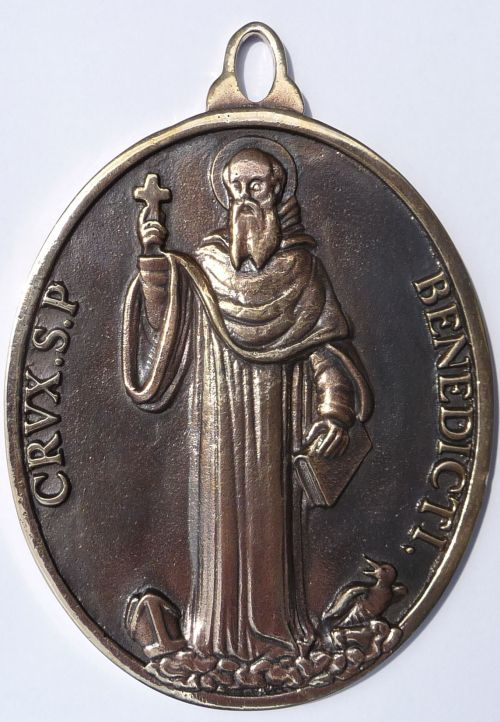
Original design of the St Benedict medal

In accord with the emperor’s orders, the saint was subjected to beatings and led through the city tied up like a criminal. The emperor then gave Theophilus over into the charge of the official, Hypatius, who tried repeatedly to compel Theophilus to accept the Iconoclastic heresy. Theophilus remained steadfast in the Faith, and Hypatius converted instead. Because of this, Hypatius gained the emperor’s permission to set the saint free.

Theophilus died in 750.
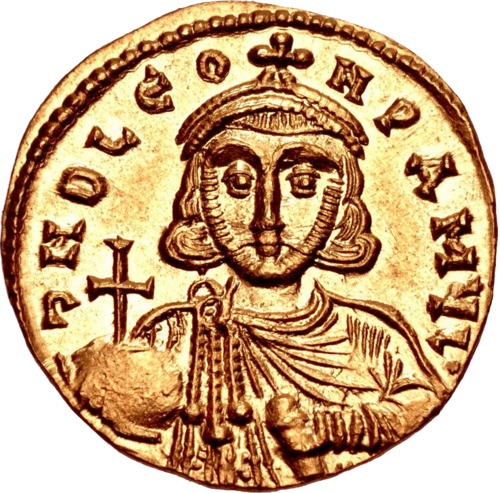
Leo III the Isaurian

Leo III the Isaurian was described as ‘Islamic minded’.
Posted in Uncategorized

Saint of the Day – 3 September – St. Remaclus

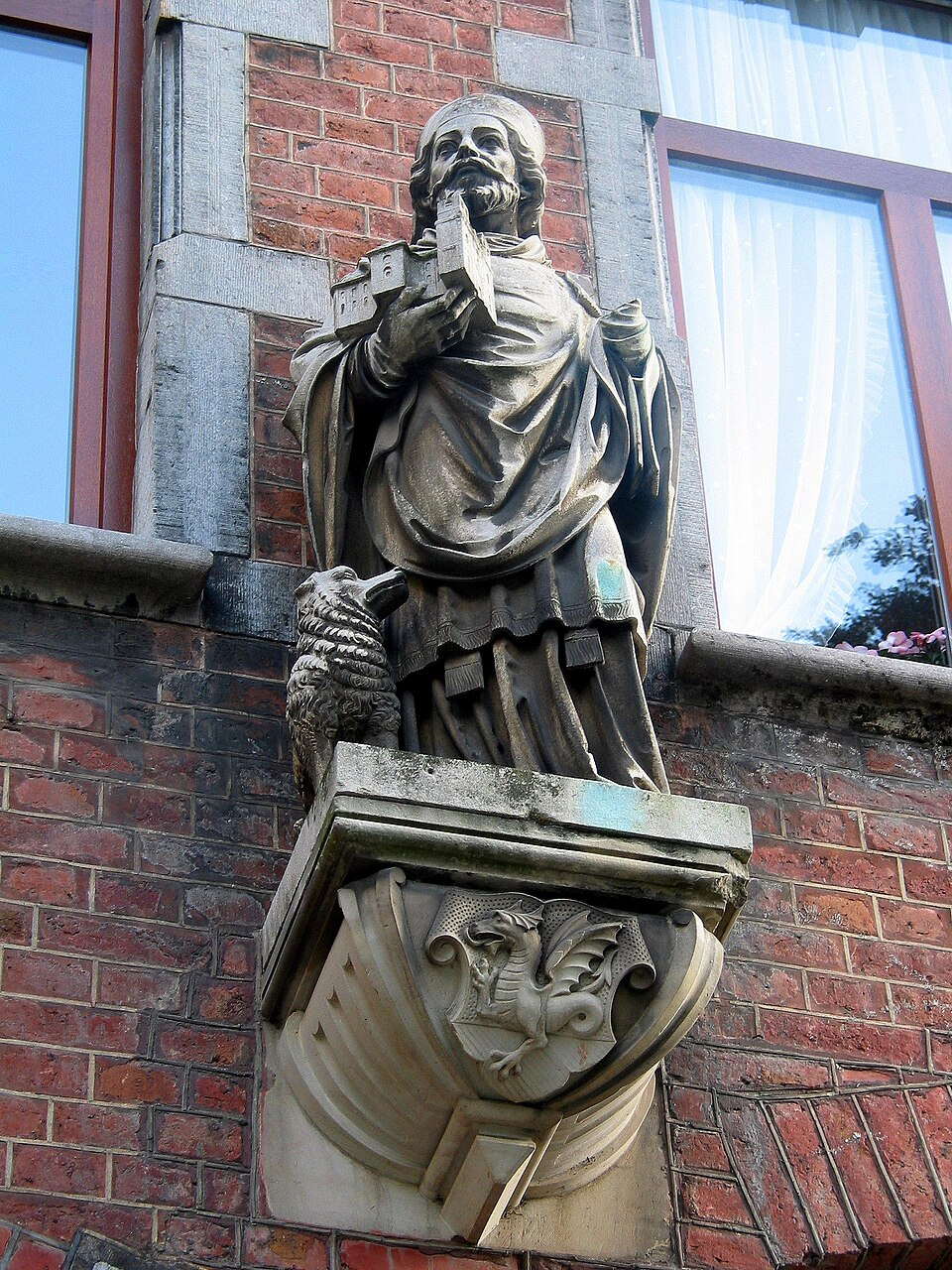
Saint Remaclus, also known as Remaclus von Stablo, Remacle, Remaculus, Rimagilus, was a Benedictine monk, priest, and the first abbot at Solignac Abbey in France, a position to which he was appointed by Saint Eligius. Th leader of a busy life, he was born in the early 7th century, in Aquitaine, France, he came from nobility. Remaclus grew up in and around the royal court of Aquitaine, and studied under Saint Sulpicius of Bourges.

He became an advisor to King Sigebert II of Austrasia and convinced the king to found the double abbey of Stavelot, Belgium, and Malmedy, Ardennes, France, in 648. Saint Remaclus served as its first abbot. He then became missionary bishop of Maastricht, Netherlands from 652 to 663, a diocese frequently out of touch with the Church. Also a diocese which had murdered some of its previous bishops. He worked to spread monasticism in the region.

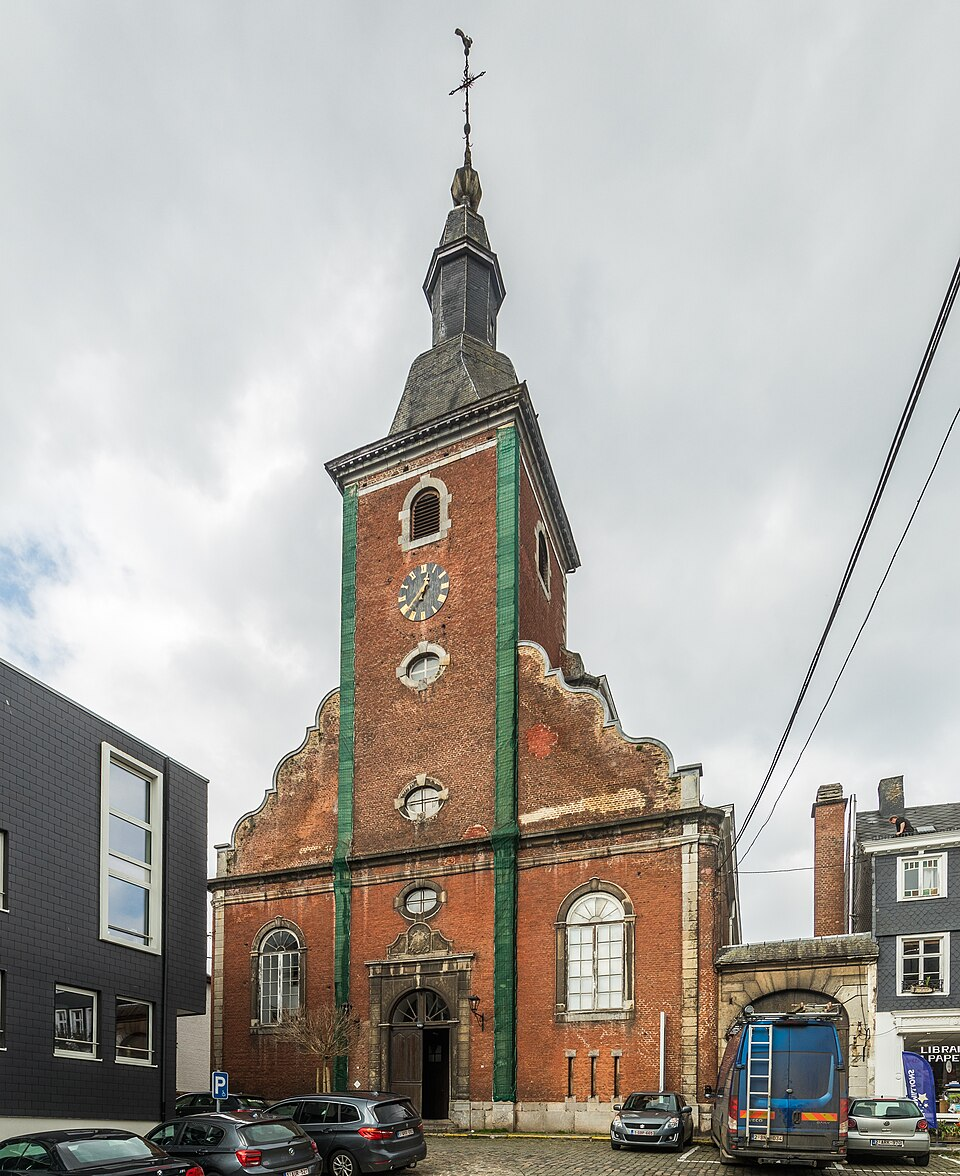
He was friends with Saint Hadelin and the spiritual father of Saint Trond, Saint Babolen, Saint Theodard of Maastricht, and Saint Lambert of Maestricht. In his later years he retired to the abbey at Stavelot to spend his final days as a prayerful monk, dying 663 of natural causes. His relics lie in St. Sebastian Church in Stavelot.

Church of St. Sebastian in Stavelot

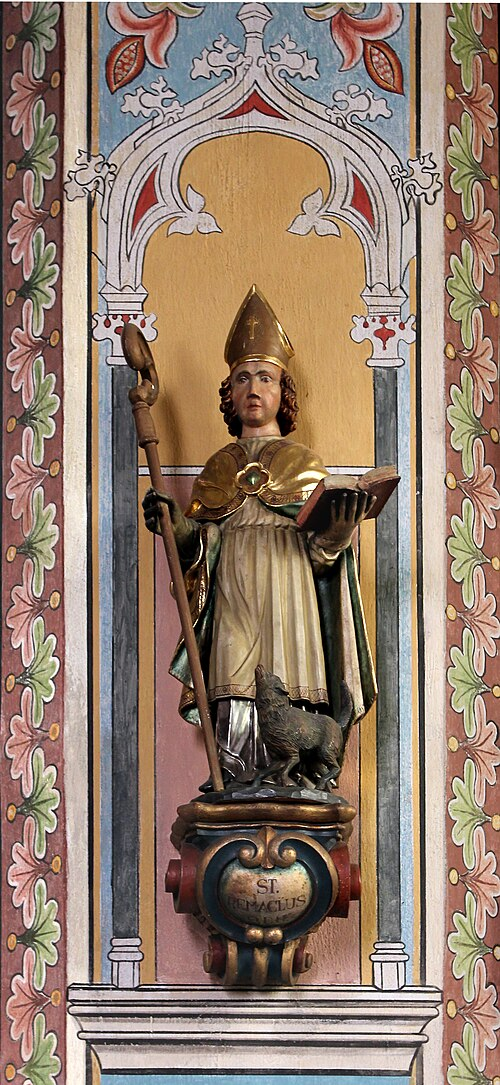
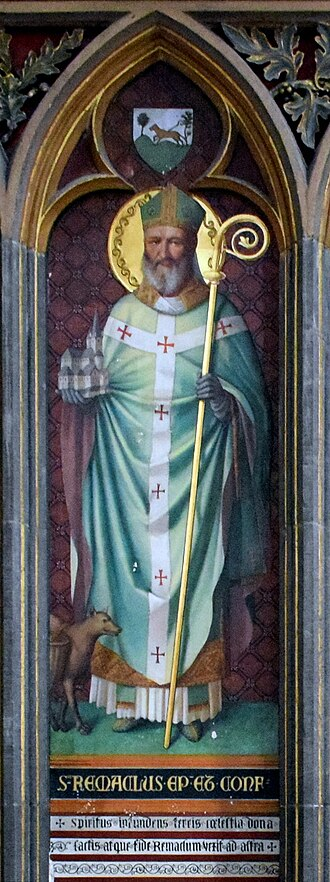
He is often depicted with a wolf because a wolf able to drive away the devil accompanied him. With his staff, the saint discovered springs which possessed healing waters.