Posted in MARIAN TITLES, SAINT of the DAY

Nostra Signora della Neve, Adro, Italy / Our Lady of the Snow, Adro, Italy (1519), St Elizabeth of Portugal Widow and Memorials of the Saints – 8 July

Nostra Signora della Neve, Adro, Italy/Our Lady of the Snow, Adro, Brescia, Italy (1519) – 8 July, 5 August:
HERE:

https://anastpaul.com/2021/07/08/nostra-signora-della-neve-adro-italy-our-lady-of-the-snow-adro-brescia-italy-1519-and-memorials-of-the-saints-8-july/
St Elizabeth of Portugal TOSF (1271-1336) Widow, Queen Consort, Widow, Franciscan Tertiary, Apostle of Charity and Peace, Political Negotiator and Mediator. In the year 1694 Pope Innocent XII moved her Feast to 8 July, so that it would not conflict with the celebration of the Octave of Saints Peter and Paul, Apostles.
Biography:

https://anastpaul.com/2018/07/04/saint-of-the-day-4-july-st-elizabeth-of-portugal-t-o-s-f-1271-1336/

St Abraham the Martyr
Bl Adolf IV of Schauenburg
St Pope Adrian III
St Ampelius of Milan (Died c672) Bishop
St Apollonius of Benevento

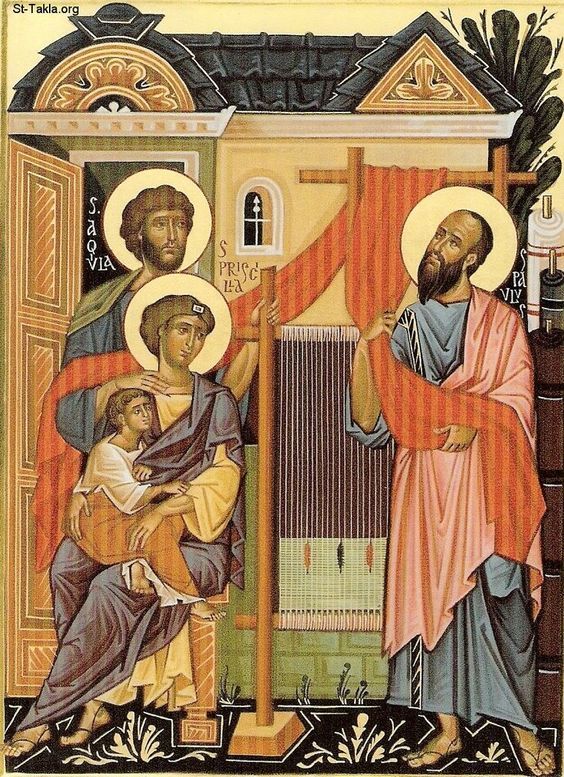
Sts Aquila & Priscilla – the Tentmakers, Collaborators of Saint Paul.
About:

https://anastpaul.com/2018/07/08/saints-of-the-day-8-july-priscilla-and-aquila/

St Arnold
St Auspicius of Toul
St Auspicius of Trier
St Brogan of Mothil
St Colman of Thuringia
St Doucelin

St Edgar the Peaceful (c 943-975) King of the English, faithful son and Defender of the Church, Protector and Founder of Monasteries and Churches, a fair and wise ruler., always with the support of St Dunstan and the Bishops.
A Holy King:

https://anastpaul.com/2022/07/08/saint-of-the-day-8-july-st-edgar-the-peaceful-c-943-975/

Blessed Pope Eugene III O.Cist (c 1080-1153) Cistercian Monk, Papal Ascension – 15 February 1145 until his death. The 167th Pope. Pope Pius IX approved and confirmed the veneration paid to him.
Biography

https://anastpaul.com/2021/07/08/saint-of-the-day-8-july-blessed-pope-eugene-iii-c-1080-1153-t/

Blessed Giulio of Montevergine (Died 1601) Hermit, Penitent. His body is incorrupt.
His Lifestory:

https://anastpaul.com/2020/07/08/saint-of-the-day-8-july-blessed-giulio-of-montevergine-died-1601/

St Glyceria of Heraclea
St Grimbald
St Ioannes Wu Wenyin
St Ithier of Nevers

St Killian (c640-689) Martyr, Bishop, Missionary, “Apostle of Franconia”(nowadays the northern part of Bavaria).
St Killian’s Life and Death:

https://anastpaul.com/2017/07/08/saint-of-the-day-8-july-st-killian/

St Landrada
Bl Mancius Araki Kyuzaburo
St Morwenna – No details about her have survived. She is reported to have appeared in visions in Morwenstow, Cornwall, England, where her Relics are apparently buried under the Church floor.
St Pancras of Taormina
Bl Peter the Hermit
St Procopius of Ceasarea
St Sunniva of Bergen
St Thibaud de Marly
St Totnan of Thuringia

Abrahamite Monks/Martyrs of Constantinople: A group of Monks in a Monastery founded by Saint Abraham of Ephesus. Martyred in the iconoclast persecutions of Emperor Theophilus. In c 835 in Constantinople.

Martyrs of Shanxi – 7 Saints: In 1898 seven sisters of the Franciscan Missionaries of Mary were sent to the Shanxi Diocese in China to serve the poor in hospitals and care for the unwanted or other destitutes in orphanages. They were:
Anne-Catherine Dierks
Anne-Francoise Moreau
Clelia Nanetti
Irma Grivot
Jeanne-Marie Kuergin
Marianna Giuliani
Pauline Jeuris
There they all died in one of the periodic persecutions against foreign missionaries. They were beheaded on 9 July 1900 at Taiyuanfu, China- Canonisedon 24 November 1946 by Pope Pius XII.

Martyrs of Syrmium – 5 Saints: Five Christians Martyred together for their faith. We know nothing else about them but the names – Cecilia, Eperentius, Eraclius, Sostratus and Spirus. They were martyred in the 4th century in Syrmium, Pannonia (modern Serbia).

Posted in MARIAN TITLES, SAINT of the DAY

Nostra Signora della Neve, Adro, Italy/Our Lady of the Snow, Brescia, Italy (1519) and Memorials of the Saints – 8 July

Nostra Signora della Neve, Adro, Italy/Our Lady of the Snow, Adro, Brescia, Italy (1519) – 8 July, 5 August:
HERE:

https://anastpaul.com/2021/07/08/nostra-signora-della-neve-adro-italy-our-lady-of-the-snow-adro-brescia-italy-1519-and-memorials-of-the-saints-8-july/

St Elizabeth of Portugal TOSF (1271-1336) Queen Consort, Franciscan Tertiary, Apostle of Charity and Peace, Political Negotiator and Mediator. In the year 1694 Pope Innocent XII moved her Feast to 8 July, so that it would not conflict with the celebration of the Octave of Saints Peter and Paul, Apostles.
Biography:

https://anastpaul.com/2018/07/04/saint-of-the-day-4-july-st-elizabeth-of-portugal-t-o-s-f-1271-1336/

St Abraham the Martyr
Bl Adolf IV of Schauenburg
St Pope Adrian III
St Ampelius of Milan
St Apollonius of Benevento

Sts Aquila & Priscilla – the Tentmakers, Collaborators of Saint Paul.
About:

https://anastpaul.com/2018/07/08/saints-of-the-day-8-july-priscilla-and-aquila/

St Arnold
St Auspicius of Toul
St Auspicius of Trier
Brogan of Mothil
St Colman of Thuringia
St Doucelin
St Edgar the Peaceful (c 943-975) King of the English

Blessed Pope Eugene III O.Cist (c 1080-1153) Cistercian Monk, Papal Ascension – 15 February 1145 until his death. The 167th Pope. Pope Pius IX approved and confirmed the veneration paid to him.
Biography

https://anastpaul.com/2021/07/08/saint-of-the-day-8-july-blessed-pope-eugene-iii-c-1080-1153-t/

Blessed Giulio of Montevergine (Died 1601) Hermit, Penitent. His body is incorrupt.
His Lifestory:

https://anastpaul.com/2020/07/08/saint-of-the-day-8-july-blessed-giulio-of-montevergine-died-1601/

St Glyceria of Heraclea
St Grimbald
St Ioannes Wu Wenyin
St Ithier of Nevers

St Killian (c 640-689) Martyr, Bishop, Missionary, “Apostle of Franconia”(nowadays the northern part of Bavaria).
St Killian’s Life and Death:

https://anastpaul.com/2017/07/08/saint-of-the-day-8-july-st-killian/

St Landrada
Bl Mancius Araki Kyuzaburo
St Morwenna
St Pancras of Taormina
Bl Peter the Hermit
St Procopius of Ceasarea
St Sunniva of Bergen
St Thibaud de Marly
St Totnan of Thuringia

Abrahamite Monks/Martyrs of Constantinople: A group of Monks in a Monastery founded by Saint Abraham of Ephesus. Martyred in the iconoclast persecutions of Emperor Theophilus. In c 835 in Constantinople.

Martyrs of Shanxi – 7 Saints: In 1898 seven sisters of the Franciscan Missionaries of Mary were sent to the Shanxi Diocese in China to serve the poor in hospitals and care for the unwanted or other destitutes in orphanages. They were:
• Anne-Catherine Dierks
• Anne-Francoise Moreau
• Clelia Nanetti
• Irma Grivot
• Jeanne-Marie Kuergin
• Marianna Giuliani
• Pauline Jeuris
There they all died in one of the periodic persecutions against foreign missionaries.
They were beheaded on 9 July 1900 at Taiyuanfu, China- Canonisedon 24 November 1946 by Pope Pius XII.

Martyrs of Syrmium – 5 Saints: Five Christians Martyred together for their faith. We know nothing else about them but the names – Cecilia, Eperentius, Eraclius, Sostratus and Spirus. They were martyred in the 4th century in Syrmium, Pannonia (modern Serbia).

Posted in SAINT of the DAY

Saint of the Day – 8 July – Blessed Pope Eugene III (c 1080-1153) t

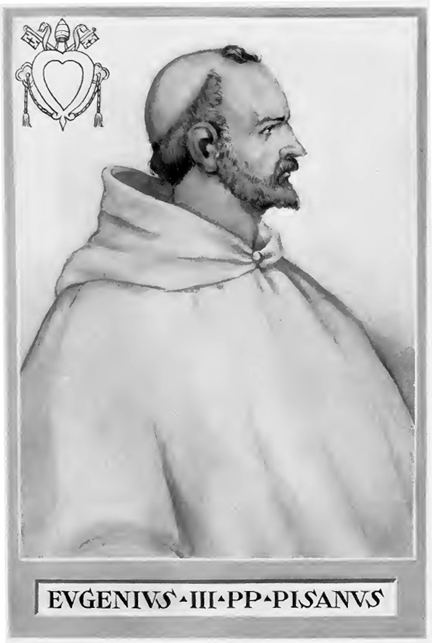
Saint of the Day – 8 July – Blessed Pope Eugene III (c 1080-1153) the first Cistercian Monk to be raised to the Chair of St Peter, Born Bernardo Pignatelli, in Montemagno, Pisa, Italy and died on 8 July 1151 at Tivoli, Italy of natural causes. In response to the fall of Edessa to the Muslims in 1144, Eugene proclaimed the Second Crusade. The Crusade however, failed to recapture Edessa. Also known as – Peter dei Paganelli di Montemagno, Bernard of Pisa, Bernardo Pignatelli.

Bernardo was born in the vicinity of Pisa. Little is known about his origins and family except that he was son of a certain Godius.[3] From the 16th century he is commonly identified as member of the family of Paganelli di Montemagno, which belonged to the Pisan aristocracy.

Between May 1134 and February 1137 he was Ordained to the Priesthood by Pope Innocent II, who resided at that time in Pisa. Under the influence of Bernard of Clairvaux he entered the Cistercian Order in the Monastery of Clairvaux in 1138. A year later he returned to Italy as leader of the Cistercian community in Scandriglia.

After he became a Cistercian he took the name of “Bernard” in honour of his friend, Saint Bernard of Clairvaux. Father Bernard was appointed Abbot of Tre Fontaine in Rome. Following the death of Pope Lucius II (+1145) the Cardinals elected Abbot Bernard to be Pope, who was not present at the conclave due to not being a Cardinal. It is reported that ALL were surprised. But he always remained a Cistercian Monk at heart.

Bernardo’s election was assisted by being a friend and pupil of Bernard of Clairvaux, the most influential ecclesiastic of the Church and a strong assertor of the pope’s temporal authority. The choice did not have the approval of Bernard, however, who remonstrated against the election, writing to the entire Curia:

“May God forgive you what you have done! … What reason or counsel, when the Supreme Pontiff was dead, made you rush upon a mere rustic, lay hands on him in his refuge, wrest from his hands the axe, pick or hoe, and lift him to a throne?”

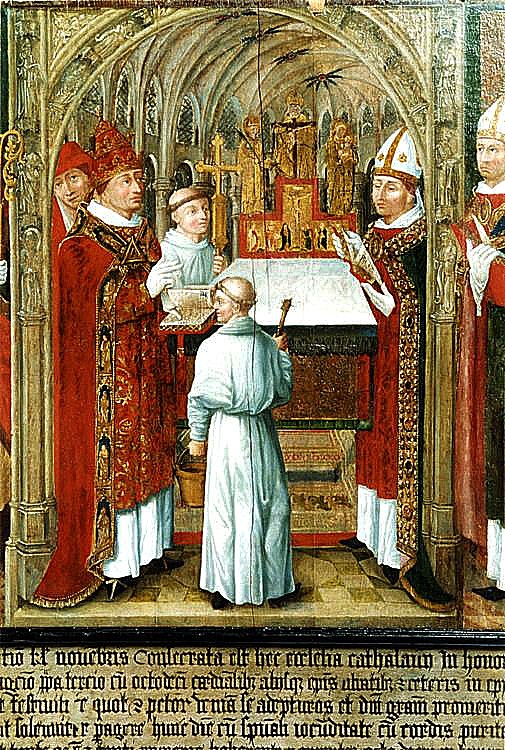
Episcopal Consecration of Blessed Eugene.

Bernard was equally forthright in his views directly to Eugene, writing:

“Thus does the finger of God raise up the poor out of the dust and lift up the beggar from the dunghill that he may sit with princes and inherit the throne of glory.”

Never a shy man and passionate teacher, Saint Bernard wrote De consideratione to instruct him, that is Eugene, in Papal duties. Despite these criticisms, Eugene seems to have borne no resentment to Bernard and notwithstanding these criticisms, after the choice was made, Bernard took advantage of the qualities in Eugene III which he objected to, so as virtually to rule in his name.

On hearing of the fall of Edessa (now the modern day city of Urfa, the first of the Crusader states established in the Levant) to the Turks, which occurred in 1144, he had, in December 1145, addressed the bull Quantum praedecessores to Louis VII of France, calling on him to take part in another Crusade. At a great diet held at Speyer in 1146, King Conrad III of Germany and many of his nobles were also incited to dedicate themselves to the Crusade by the eloquence of St Bernard of Clairvaux, preached to an enormous crowd at Vézelay. The Second Crusade turned out to be “an ignominious fiasco” and, after travelling for a year, the army abandoned their campaign after just five days of siege “having regained not one inch of Muslim territory.”

The Dominican, St Antoninus called Pope Eugene “a great Pope with great sufferings.” And, St Bernard spoke of Pope Eugene in this way: “There is no arrogance or domineering way in him.” Eugene III held synods in northern Europe at Paris, Rheims, and Trier in 1147 and 1149 that were devoted to the reform of clerical life. He also considered and approved the works of Hildegard of Bingen

Throughout most of his Papacy, Eugene had been an “absentee landlord” of Rome, due to the infighting of those who rejected his claim to temporal, as well as spiritual power over its citizens. Although the citizens of Rome resented Eugene III’s effort to assert his temporal authority, they recognised him as their spiritual lord. Until the day of his death he continued to wear the coarse habit of a Cistercian Monk under his robe. He was buried in the Vatican with every mark of respect and veneration. The people of Rome speedily recognised him as a pious figure who was meek and spiritual. His tomb acquired considerable fame due to the miracle which occurred there and his cause for sainthood commenced. Pope Pius IX Beatified him on 28 December in 1872.

With the Church we pray:

Almighty ever-living God, Who chose blessed Eugene III to preside over Your whole people and benefit them by word and example, keep safe, we pray, by his intercession, the shepherds of your Church along with the flocks entrusted to their care and direct them in the way of eternal salvation. Through our Lord Jesus Christ, Your Son in the unity ofthe Holy Ghost, one God now and forever, amen.

Posted in MARIAN TITLES, SAINT of the DAY

Nostra Signora della Neve, Adro, Italy/ Our Lady of the Snow, Adro, Brescia, Italy (1519) and Memorials of the Saints – 8 July

Nostra Signora della Neve, Adro, Italy/ Our Lady of the Snow, Adro, Brescia, Italy (1519) – 8 July, 5 August:

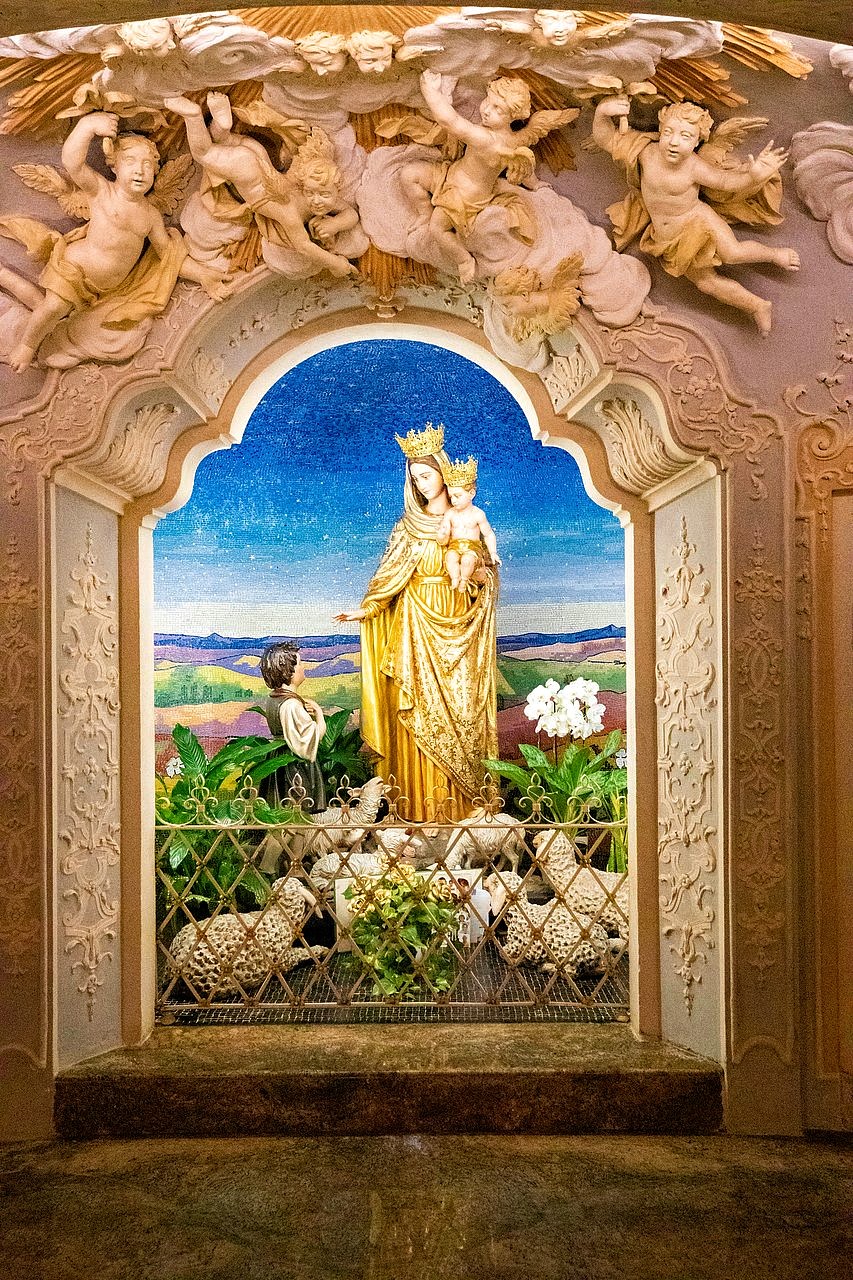
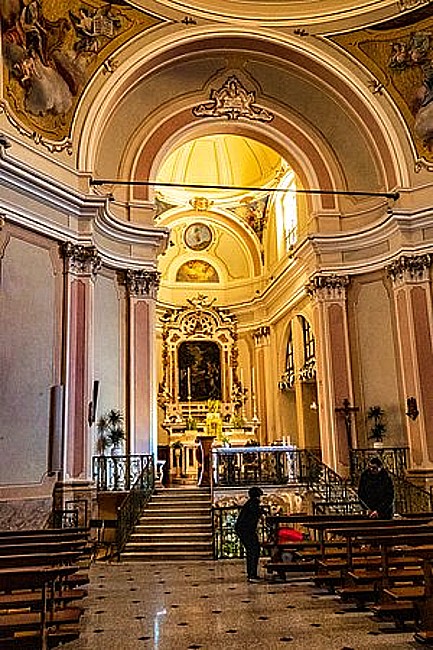
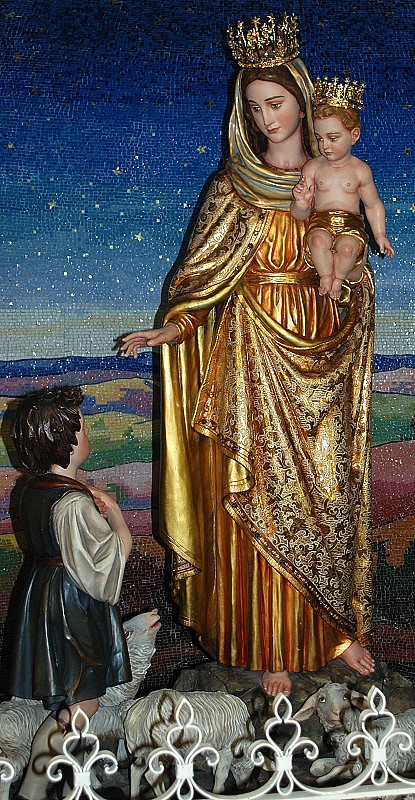
Adro is a Town in the Province of Brescia, in the Lombardy region, northern Italy. The Sanctuary emerged after the appearance of the Madonna in this place. to Battista Bajoni Comino, the deaf-mute who was visited by the Holy Mother on 8 July 1519. The Virgin appeared saying she was the Mother of God and sent a message to the people of Adro.
Our Lady’s message contained a reference to a Christian life, repentance for sins and conversion and reparation and the construction of a Sanctuary in her honour. The built the Church at the place of vision, and began to amend their lives. They practised devotion on Sundays and Holy Days, stopped blaspheming the Holy Name and refrained from other evil habits, for Our Lady had also said that if they did not repent they could expect a serious penalty .
Mary said – “And if they wonder how it is that you speak, tell them that you have been with the Advocate of Sinners. Everyone knows you were dumb. Now take this stone with you and show it to them as it will change colour from time to time. “

The central Feast of Our Lady of the Snows is celebrated on 5 August
Immediately after the miracle, it was called “Madonna della Cava,” the place where the Virgin had appeared to the Shepherd and the feast was celebrated on 8 July the anniversary of the vision.
Later, however, Church officials transferred the Feast to 5 August, the day the dedication of Santa Maria Maggiore in Rome, also known as “Santa Maria de las Nieves,” built by Pope Liberius commemorates after Miracle of snow (that happened in Rome). It was then that this temple took the name of “Our Lady of the Snows.”
In pilgrimage season (April to October) groups of pilgrims arriving from neighbouring provinces, especially from Brescia, Bergamo, Como, Varese, Milan, Cremona, Mantua and Verona. Sunday is preferred by families. All opportunities for spiritual growth are offered through preaching and the Sacraments.

Such is the fascination of the Virgin on the pilgrims who will then return again.
It is a ceremony in which you have to enter the crypt “to see the Madonna”.

The miracle of the deaf-mute who began to hear and speak gave rise to a small Shrine (1521). It remains alongside the current main Altar.
It was visited by Saint Charles Borromeo in 1581 and visited by John XXIII and Paul VI being Cardinals.
Being too small for the influx of pilgrims,the Church was demolished in 1750 and enlarged. It was built on a design by architect Gaspare Turbini and opened in 1776.

The Carmelites of St Teresa, built a Monastery nearby.

The current statue is gilded wood sculptor . Next to the Shrine a discreet and well-shaded park with tables and benches offers a welcome drink to pilgrims.

St Abraham the Martyr
Bl Adolf IV of Schauenburg
St Pope Adrian III
St Ampelius of Milan
St Apollonius of Benevento

Sts Aquila & Priscilla – the Tentmakers, Collaborators of Saint Paul.
About:

https://anastpaul.com/2018/07/08/saints-of-the-day-8-july-priscilla-and-aquila/

St Arnold
St Auspicius of Toul
St Auspicius of Trier
Brogan of Mothil
St Colman of Thuringia
St Doucelin
St Edgar the Peaceful
Blessed Pope Eugene III O.Cist (c 1080-1153) Papal Ascension – 15 February 1145 until his death. The 167th Pope.

Blessed Giulio of Montevergine (Died 1601) Hermit, Penitent
His Lifestory:

https://anastpaul.com/2020/07/08/saint-of-the-day-8-july-blessed-giulio-of-montevergine-died-1601/

St Glyceria of Heraclea
St Grimbald
St Ioannes Wu Wenyin
St Ithier of Nevers


St Killian (c 640-689) Martyr, Bishop, Missionary, “Apostle of Franconia”(nowadays the northern part of Bavaria).
St Killian’s Story:

https://anastpaul.com/2017/07/08/saint-of-the-day-8-july-st-killian/

St Landrada
Bl Mancius Araki Kyuzaburo
St Morwenna
St Pancras of Taormina
Bl Peter the Hermit

Blessed Peter Vigne (1670-1740) Missionary Priest, Apostle of the Holy Eucharist, of Charity, of Mary, Catechist, tireless missionary and teacher and Founder of the Religious of the Blessed Sacrament
Biography:

https://anastpaul.com/2019/07/08/saint-of-the-day-8-july-saint-peter-vigne-1670-1740/

St Procopius of Ceasarea
St Sunniva of Bergen
St Thibaud de Marly
St Totnan of Thuringia

Abrahamite Monks/Martyrs of Constantinople: A group of monks in a monstery founded by Saint Abraham of Ephesus. Martyred in the iconoclast persecutions of emperor Theophilus. In c 835 in Constantinople.
Martyrs of Shanxi – 7 saints: In 1898 seven sisters of the Franciscan Missionaries of Mary were sent to the Shanxi diocese in China to serve the poor in hospitals and care for the unwanted or other destitutes in orphanages. They were –
• Anne-Catherine Dierks
• Anne-Francoise Moreau
• Clelia Nanetti
• Irma Grivot
• Jeanne-Marie Kuergin
• Marianna Giuliani
• Pauline Jeuris
There they all died in one of the periodic crackdowns against foreign missionaries.
They were beheaded on 9 July 1900 at Taiyuanfu, China- Beatified on 24 November 1946 by Pope Pius XII and Canonised on 1 October 2000 by Pope John Paul II.
Martyrs of Syrmium – 5 saints: Five Christians martyred together for their faith. We know nothing else about them but the names – Cecilia, Eperentius, Eraclius, Sostratus and Spirus. They were martyred in the 4th century in Syrmium, Pannonia (modern Serbia).