Posted in SAINT of the DAY

Saints of the Day – 1 October – Blessed Ralph Crockett & Blessed Edward James

Blessed Ralph Crockett & Blessed Edward James were priest martyrs in England, and two of the Martyrs of Douai.
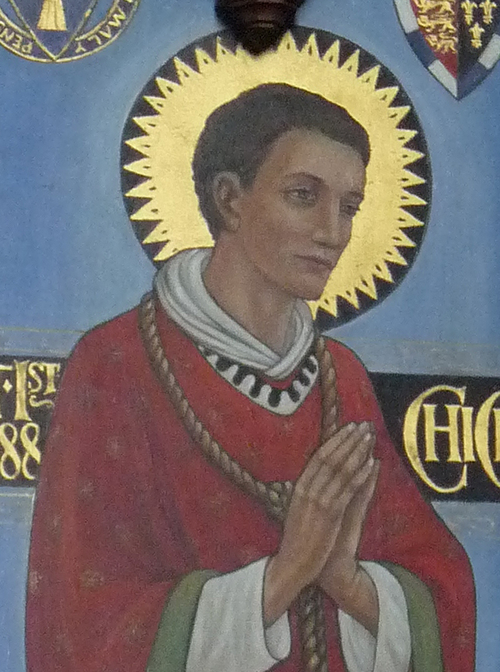
Ralph Crockett was born at Barton, near Farndon, Cheshire in 1522. He was educated at Christ’s College, Cambridge, and then became a schoolmaster in Norfolk for a year before going to Gloucester Hall, Oxford. After a year, he went to Ipswich, where he was a schoolmaster for five years. In 1581, persecutions increased after the death of Edmund Campion, so he withdrew to Cheshire for about two years. In 1584, he left for France, and began studies at the English College then located at Rheims. He was ordained at Rheims in 1585, and continued his studies for a year, but his health being compromised, he asked to return to England. He and three other priests, Thomas Bramston, George Potter, and Edward James, left from Dieppe, but the ship ran ashore 19 April 1586 at Littlehampton, Sussex.

Ralph and Edward, with two others, John Oven and Francis Edwardes, were selected for trial, which took place at Chichester on 30 September 1588. Crockett, James and Edwardes were condemned to death, under the Jesuits, etc. Act 1584, for being priests and coming into the realm; but Oven on taking the Oath of Supremacy was respited.

On1 October 1588. Ralph ascended the scaffold and blessed the crowd in Latin which brought shouts of anger upon him, however he changed into praying in English whereupon the crowd cheered. He and Edward faced their deaths without fear and were executed after absolving each other.

His father Adam, in his later years entered the Catholic Church on the Continent and his descendants remained recusant and continued to practise their Catholic faith in the face of continued persecution.

In 1929 Ralph was beatified by Pope Pius XI.
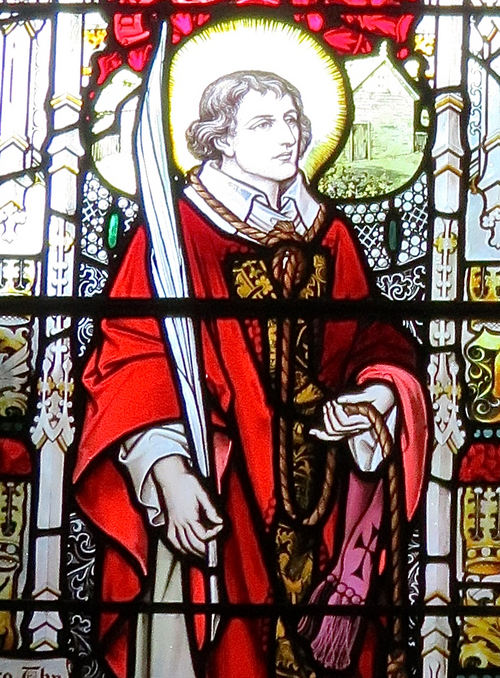
Edward James was born at Barton, Breaston, near Long Eaton, Derbyshire. He was educated at Derby School, St John’s College, Oxford, the English college at Rheims and the Venerable English College at Rome. In October 1579, he and William Filby sailed from Dover for Calais. The following August, Edward and ten others travelled to the English College, Rome. In October 1583, James was ordained as a priest in Rome by Bishop Thomas Goldwell, the last survivor of the English bishops who had refused to accept the Protestant Revolution.

In early February 1586, James left Rheims for the mission, accompanied by Stephen Rowsham who had been banished from England the year before. They met up with Ralph Crockett in Dieppe. He was captured on board a ship at Littlehampton, Sussex, on 19 April 1586, with three other priests, Thomas Bramston, George Potter, and his fellow martyr, Ralph Crockett, and they were charged with being Catholic priests and coming into the realm of England contrary to an Act of Parliament of 1584. All four were sent to London and put in prison there on 27 April 1586, where they remained for more than two years without trial.

Ralph Crockett, Edward James, John Oven and Francis Edwardes, were sent for trial at Chichester on 30 September 1588. All four were condemned to death for being priests and entering England, but Oven then took the Oath of Supremacy, in accordance with the Act of Supremacy 1559, and was reprieved. On 1 October 1588, the other three were drawn on a hurdle to Broyle Heath, near Chichester, where Edwardes recanted and was also reprieved. Crockett and James continued to refuse to recant and to take the oath.

He was beatified by Pope Pius XI.
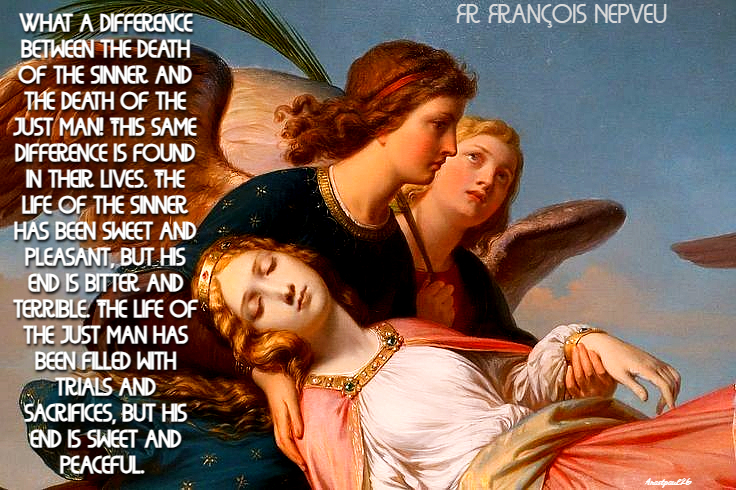
What a difference between the death of the sinner and the death of the just man! This same difference is found in their lives. The life of the sinner has been sweet and pleasant, but his end is bitter and terrible. The life of the just man has been filled with trials and sacrifices, but his end is sweet and peaceful. That which made up the happiness of the sinner during life is his torment at death, but that which made up the pain and suffering of the just man during life is his happiness and consolation at death. The death of the sinner brings an end to the goods and pleasures of time, and plunges him into the evils and sufferings of eternity. The death of the just man brings an end to the evils and sufferings of time, and bids him enter into the goods and pleasures of eternity. What a difference between the death of the sinner and the death of the just man. Which death do you choose?

Father François Nepveu
Posted in SAINT of the DAY

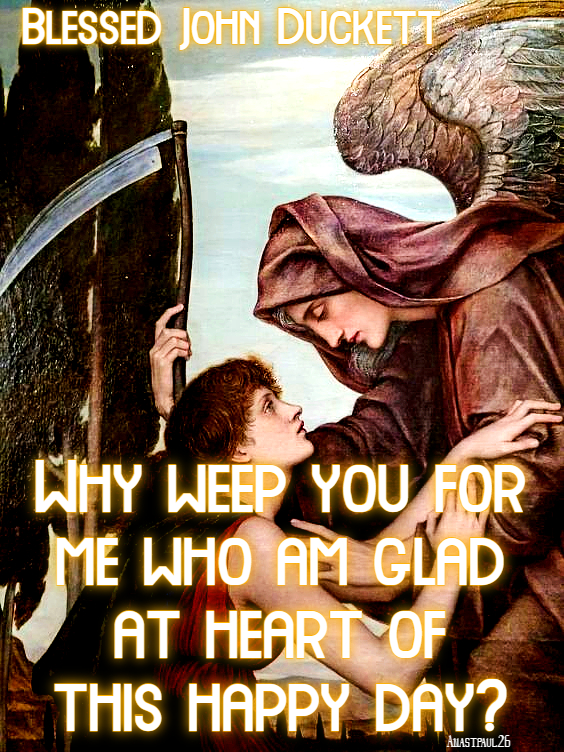
Saint of the Day – 7 September – Blessed John Duckett

Blessed John Duckett, was a priest and martyr, one of the Martyrs of Douai. Born in 1613 in Sedbergh, Yorkshire, the son of James and Francis Duckett and a relative and possibly the grandson of Blessed James Duckett, who had been executed at Tyburn on 19 April 1601 for printing Catholic books.

He was baptized on 24 February 1614 and educated at Sedbergh School. At the age of seventeen, he entered the English College, Douai; where he was ordained a priest by the Archbishop of Cambrai in 1639.

John possessed an extraordinary gift for prayer, and would spend whole nights in contemplation. On his way to the English mission, he spent two months in spiritual exercises, under the direction of his uncle, the Carthusian prior at Nieuport. He laboured for about a year in Durham and was arrested near Whisingham on his way to baptize two children, 2 July, 1644. The place which tradition declares to be that of his arrest is now marked by a tall stone cross. Carried to Sunderland, he was examined by a Parliamentary Committee of sequestrators, and placed in irons. He confessed his priesthood and was thereupon sent up to London with Father Ralph Corbie, S.J., who had been arrested about the same time near Newcastle-on-Tyne.

They were committed to Newgate, and edified the crowds of Catholics who flocked to see them by their joyousness, their sanctity, and their longing to suffer for Christ. A reprieve for one of them having been obtained, each refused to take it for himself. On his way to execution, Duckett astonished all by his supernatural joy; comforting those who wept for him, he said smiling: “Why weep you for me who am glad at heart of this happy day?” His jailers even were so struck by his gladness that they exclaimed “assuredly this man dies for a good cause”.

He suffered with Father Corbie, at Tyburn. In a farewell letter to the Bishop of Chalcedon, he wrote on the eve of his martyrdom: “I fear not death, nor I contemn not life. If life were my lot, I would endure it patiently; but if death, I shall receive it joyfully, for that Christ is my life, and death is my gain. Never since my receiving of Holy Orders did I so much fear death as I did life, and now, when it approacheth can I faint?”

Posted in SAINT of the DAY

Saint of the Day – 22 August – Blessed William Lacey

Blessed William Lacey, was a martyr of England and a priest. Born in Horton, West Riding, Yorkshire, he married a widow and both his step-sons became Jesuits.

He distinguished himself as a lawyer and as an ardent Catholic, using his house as a refuge for the much-oppressed Catholics of the time, being one of those gentlemen whose house was open to priests that came from the colleges abroad. Having been advised by them that he could not in good conscience attend Protestant churches, his absence was noted and he was forced to give up his position. He was subject to repeated fines, until he had to leave his home and stay with friends, but never long in one place. For fourteen years he suffered persecution for his faith, which included imprisonment at Hull. After the death of his wife, he went abroad and arrived at Reims, 22 June 1580. On 25 September following he went on to Pont-à-Mousson, and thence to Rome, where he obtained a dispensation. The dispensation was necessary as Lacy had been married twice.

He arrived at Douai in 1577 and, after the transference of the English College to Reims, was ordained priest on Holy Saturday, 1579. On his return to England in August he seems to have found a refuge with Robert Dymoke, hereditary Champion of England (d. in Lincoln gaol for his faith, 11 Sept 1580), at Scrivelsby, Lincolnshire. He was eventually arrested, 8 August, 1582. After condemnation the two martyrs shared one cell in a turret till 10 August, when Blessed Richard was moved to an underground dungeon.

York’s ‘Tyburn’ at Knavesmire, where the martyrs were executed

He was executed at Knavesmaire, just outside of York with Blessed Richard Kirkman. They are both members of the 158 Douai Martyrs.

My son, my son, remember eternal life; look up to Heaven and see the One Who reigns there; life is not taken from thee, it is exchanged for a better one.

St Symphorian’s mother

Posted in MARIAN TITLES, SAINT of the DAY

Nostra Signora di Oropa / Our Lady of Oropa, Italy (3rd Century), Beata Vergine delle Grazie / The Blessed Virgin of Grace, Udine, Italy (1479) and the Saints we remember today 29 October

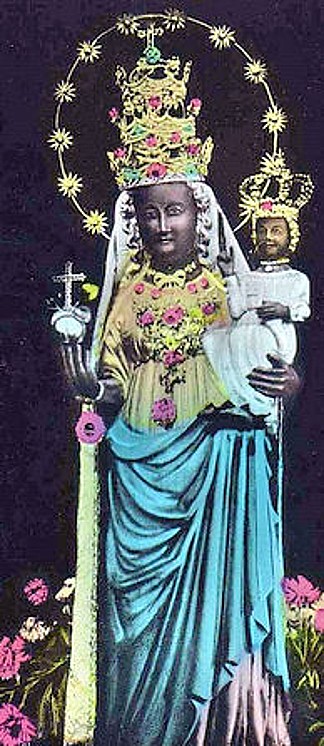
Nostra Signora di Oropa / Our Lady of Oropa, Piedmont, Italy (3rd Century) – 29 October:
HERE:

https://anastpaul.com/2021/10/29/nostra-signora-di-oropa-our-lady-of-oropa-piedmont-italy-3rd-century-and-memorials-of-the-saints-29-october/

Beata Vergine delle Grazie / The Blessed Virgin of Grace, Udine, Friuli-Venezia Giulia, Italy (1479) – Fourth Sunday of October:
HERE:

https://anastpaul.com/2021/10/24/twenty-second-sunday-after-pentecost-beata-vergine-delle-grazie-the-blessed-virgin-of-grace-udine-friuli-venezia-giulia-italy-1479-and-memorials-of-the-saints-24-october/

St Abraham Kidunaia (c296-c366) Priest, Hermit. The Vita of St Abraham was written by his friend, St Ephrem (306-373) Father and Doctor of the Church.
Biography:

https://anastpaul.com/2021/10/29/saint-of-the-day-29-october-saint-abraham-kidunaia-c-296-c-366/

Saint Achahildis (Died c970) Married Laywoman, Apostle of the poor, Miracle-worker, she built the Church in Wendelstein, Germany.
Her Holy Life:

https://anastpaul.com/2022/10/29/saint-of-the-day-29-october-saint-achahildis-died-c-970/

St Abraham of Rostov
St Anne of Mount Olympus
St Colman of Kilmacduagh
St Dodone of Wallers-en-Fagne
St Donatus of Corfu
St Ermelinda of Meldaert
St Eusebia of Bergamo
St Felician of Carthage
St Honoratus of Vercelli
St John of Autun
St Kennera
St Mary of Edessa
St Narcissus of Gerona

St Sigolinus of Stavelot
St Stephen of Cajazzo
St Terence of Metz
St Theodore of Vienne (Died c575) Abbot

St Zenobius of Sidon

Martyrs of Douai – 160 Saints and Beati: 160 Priests, Laymen and Religious who studied at the English College in Douai, France, then returned to minister to covert Catholics in England during a period of government persecution of the Church and were murdered for their work.

Martyrs of Lucania – 4 Saints: A group of Christians executed together for their faith. Only their names have survived – Felician, Hyacinth, Lucius and Quintus. Their Martyrdom occurred in Lucania, southern Italy.