Thought for the Day – 18 July – Meditations with Fr Richard Frederick Clarke SJ (1839-1900)
HUMILITY Meditations for a Month
Humility in Success
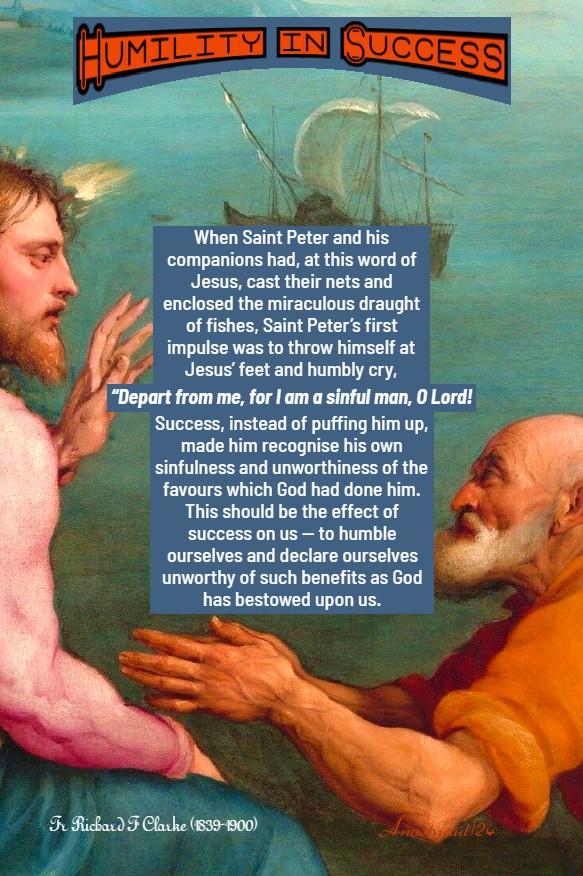
When Saint Peter and his companions had, at this word of Jesus, cast their nets and enclosed the miraculous draught of fishes, Saint Peter’s first impulse was to throw himself at Jesus’ feet and humbly cry, “Depart from me, for I am a sinful man, O Lord!” Success, instead of puffing him up, made him recognise his own sinfulness and unworthiness of the favours which God had done him. This should be the effect of success on us — to humble ourselves and declare ourselves unworthy of such benefits as God has bestowed upon us.
Yet success is meant to encourage us. We cannot help being conscious of having done well and given satisfaction and it would be foolish and ungrateful to ignore the fact. But, our spirit must be that of Saint Bernard, who did not deny the marvels God had wrought through him. Instead, he expressed his astonishment that God could make use of such an instrument! So, we should regard it as fresh proof of God’s power and love, that He should work the marvels of His grace through us.
Thus, to humble ourselves amid the approval and applause of others, is no easy task. It is very possible to cry out, “Not unto us, O Lord but to Thy Name be the praise” and, all the time, to be puffed up with pride. The real test is whether we pray at such moments,
“Humble me, O Lord. Teach me my own nothingness, make me continually depend on Thee and in my heart attribute to Thee all the glory and to myself nothing.” Such a prayer, if it comes from our heart, is a certain safeguard for our humility.
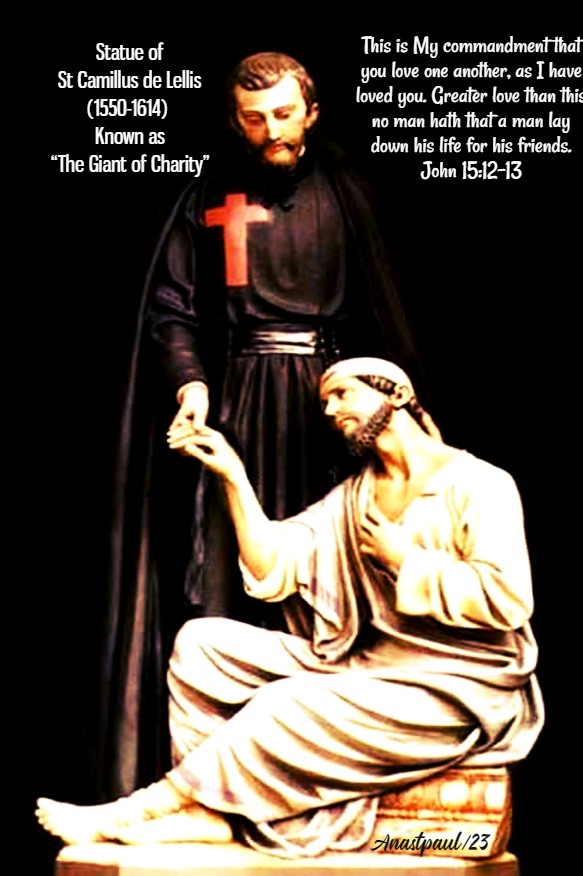
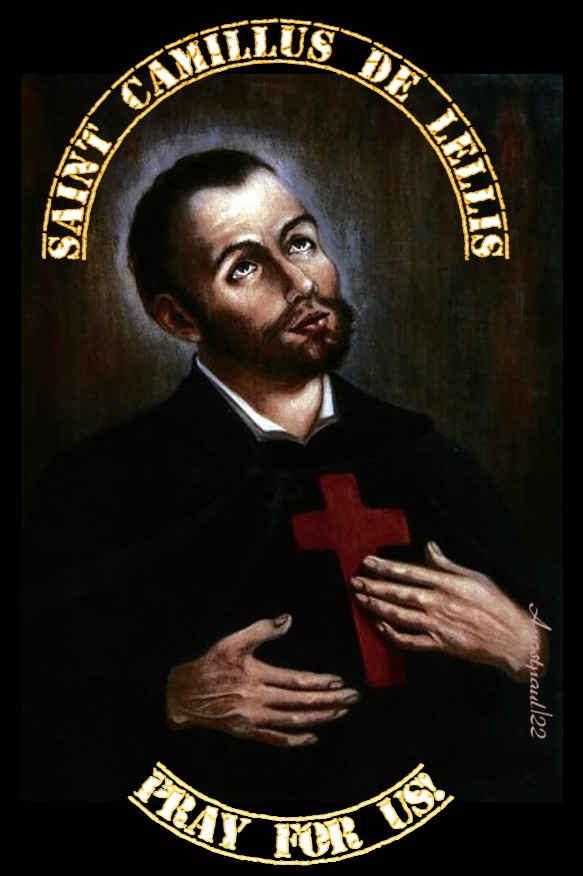
One Minute Reflection – 18 July – “The Month of the Most Precious Blood” – St Camillus de Lellis MI (1550-1614) Confessor, Priest and Founder, “The Giant of Charity.” – 1 John 3:13-18, John 15:12-16 – Scripture search here: https://www.drbo.org/
“This is My commandment that you love one another, as I have loved you. Greater love than this no man hath that a man lay down his life for his friends.” – John 15:12-13
REFLECTION – “The more we are united to our neighbour, the more we are united to God. So that you may understand the meaning of this saying, I am going to give you an picture, taken from the Fathers – imagine a circle drawn on the ground that is to say, a line drawn into a round shape, with a compass, having a centre. We refer to the middle of the circle as being the exact centre. Now, give your attention to what I am saying. Imagine that this circle is the world, its centre is God and each radius represents different ways or kinds of lifestyle. When the saints, desiring to draw near to God, move towards the middle of the circle, then to the degree to which they penetrate further into its interior, they draw closer to each other, even as they draw closer to God. The closer they draw to God, the closer they draw to each other and the closer they draw to each other, the closer they draw to God.
From this you will understand that the same thing applies conversely, when we turn away from God to withdraw outside the circle – then it becomes obvious that, the more we withdraw from God, the more we withdraw from each other and, the more we withdraw from each other, the more we also withdraw from God.
Such is the nature of charity. To the extent that we stand outside and do not love God, to the same extent, each one of us stands apart, with regard to their neighbour. But, if we love God, then, insofar as we come closer to God, through our love for Him, we also participate in love of neighbour to the same extent. And insofar as we are united to our neighbour, we are equally so to God.” – St Dorotheus of Gaza (c505-c565) Abbot, Father of the Church (Instructions VI, 76-78).
PRAYER – O God, Who endowed St Camillus with a special gift of charity for the help of souls struggling in their final agony, pour upon us, we beseech Thee, by his merits, the spirit of Thy love, so that at the hour of our death, we may be found worthy to overcome the enemy and attain the heavenly crown. Through Jesus Christ, Thy Son our Lord, Who lives and reigns with Thee, in the unity of the Holy Ghost, God, world without end. Amen (Collect).
Our Morning Offering – 18 July – “The Month of the Most Precious Blood”
Prayer in Praise of God By St Francis of Assisi (c1181-1226)
Thou art Holy, Lord, the only God and Thine Deeds art wonderful. Thou art Strong. Thou art Great. Thou art the Most High. Thou art Almighty. Thou, Holy Father art King of Heaven and earth. Thou art Three and One, Lord God, all Good. Thou art Good, all Good, Supreme Good, Lord God, Living and True. Thou art Love. Thou art Wisdom. Thou art Humility. Thou art Endurance. Thou art Rest. Thou art Peace. Thou art Joy and Gladness. Thou art Justice and Moderation. Thou art all our Riches and Thou art Suffice for us. Thou art Beauty. Thou art Gentleness. Thou art our Protector. Thou art our Guardian and Defender. Thou art our Courage. Thou art our Haven and our Hope. Thou art our Faith, our great Consolation. Thou art our Eternal Life, Great and Wonderful Lord, God Almighty, Merciful Saviour. Amen
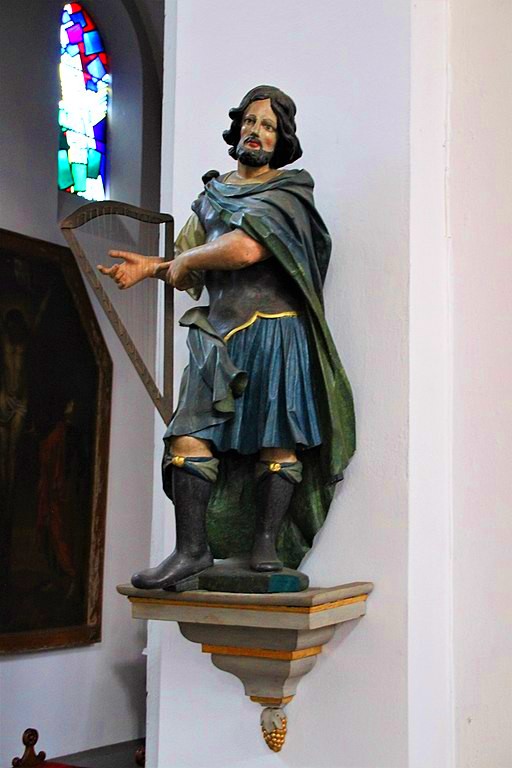
Saint of the Day – 18 July – Saint Arnold of Arnoldsweiler (Died 793) Layman, Musician at the Court of Blessed Charlemagne, Apostle of the poor and needy, Tutor and substitute ruler of King Louis the Pious, Blessed Charlemagne’s son. Born in in Greece (?) or in Graz in Austria (?) and died on 18 July 793 in Arnoldsweiler, today a district of Düren in North Rhine-Westphalia, Germany. The name ‘Arnold’ means: ‘the one who rules like an eagle‘ (Old High German). Patronages – for a holy and gentle death, for the cure of livestock diseases, of musicians, of musical instrument manufacturers, of the Town of Arnoldsweiler, Germany.
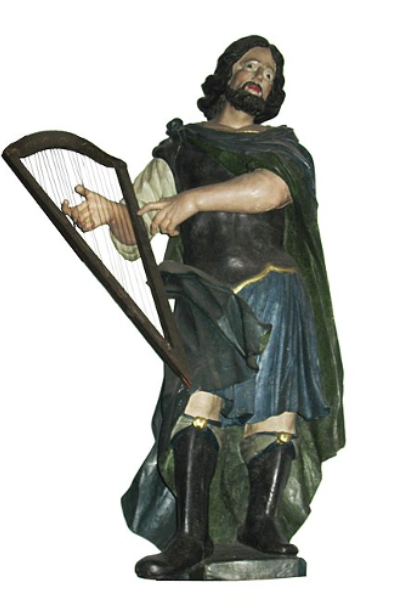
Statue, around 1800, in the Arnold Chapel in Arnoldsweiler
Arnold lived at the Court of Charlemagne, as a singer and harp player. In 779, Arnold saw the plight of the poor and took the opportunity, when the King was hunting in the village of Ginnizweiler – today’s Arnoldsweiler – to ask the King to give him as much of the forest as he could ride around during dinner.
The King granted the request and Arnold rode around the Bürgewald(wald meaning forest) northeast of Düren with 20 villages and these poor communities were now allowed – by official decision – to collect firewood from this forest.
Not long thereafter, Charlemagne appointed Arnold as the Count of Agde and Montpellier. In 781, Charlemagne appointed his son Louis – later called the Pious – as the Regent of Aquitaine and appointed Armold as his tutor and official substitute King until the minor came of age.
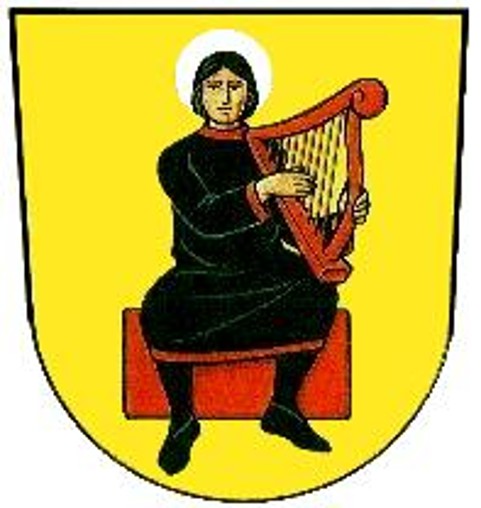
The Coat of Arms of the Municipality of Arnoldsweiler , 1966
During this time, Arnold maintained good relations with St Benedict of Aniane, the Abbot and monastic Reformer (known as “The Second Benedict”). When Louis came of age and our Saint’s substitution came to an end, Arnold, who was described as an exemplary ruler and deeply religious man with great commitment to the poor, donated all of the wealth he had acquired in Aquitaine to Benedict’s Abbey of Aniane.
In 792 he wanted to make a pilgrimage to the Tomb of James the Elder in Santiago de Compostela but because of a great famine, however, he only got as far as the Bordeaux region, turned back and spent the last years of his life in Ginnizweiler now the Town named after him.
18th Century Statue in Arnoldsweiler
Armold’s donations to the Monastery in Aniane are confirmed in two documents by Emperor Louis the Pious, the second of which dates from 822. A document by the same King names the former Ginnizweiler, as a hamlet named after Arnold and, it is attested tpp, in 1168 as .Wilre Sancti Arnoldi.’ The 20 communities around Arnoldsweiler which Arnold gifted with the right to harvest wood in the forest are recorded in a document by Archbishop Gero of Cologne from 973/976. In return for the right to harvest wood, the communities offered prayers at an annual candlelit procession to Arnold’s grave which, according to tradition, had already been ordered by Arnold at the time of the donation, as a wax offering for the Altar of the Church in Ginnizweiler every Pentecos .
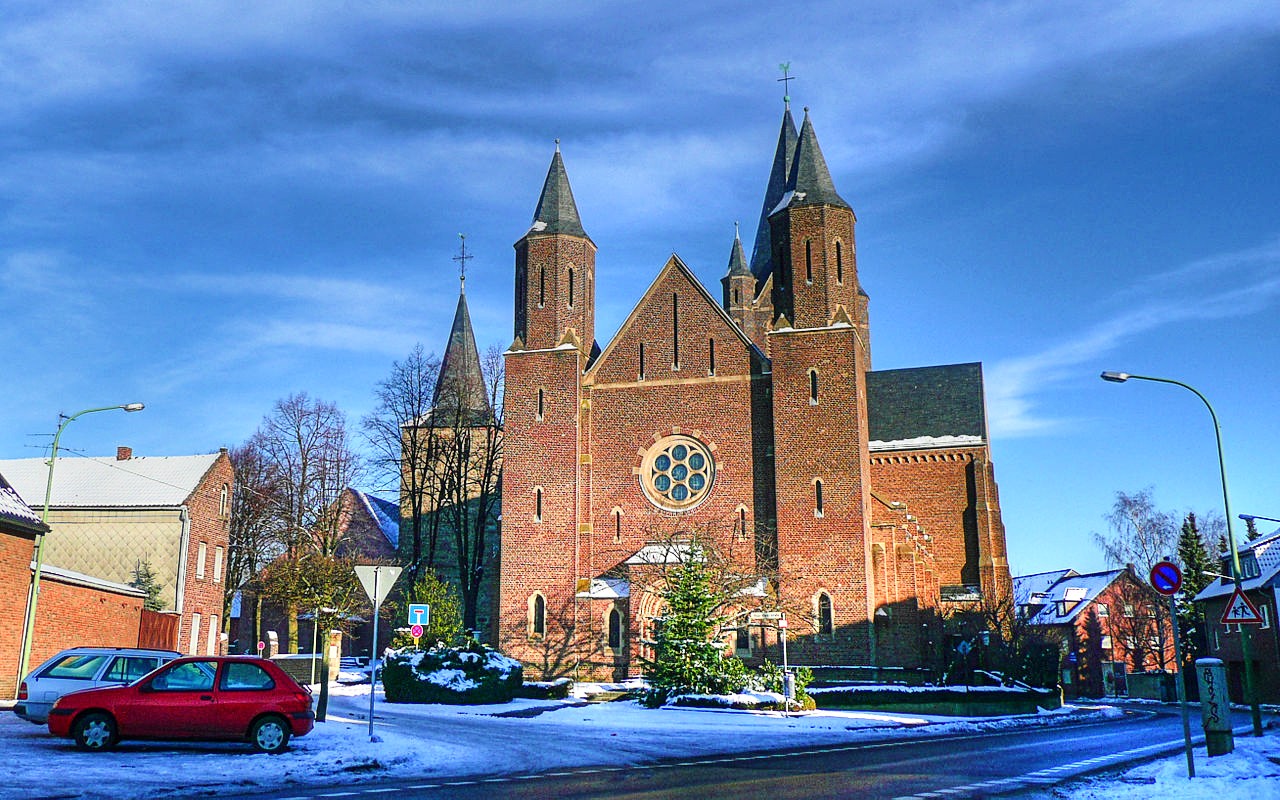
The Church of St Arnold in Arnoldsweiler
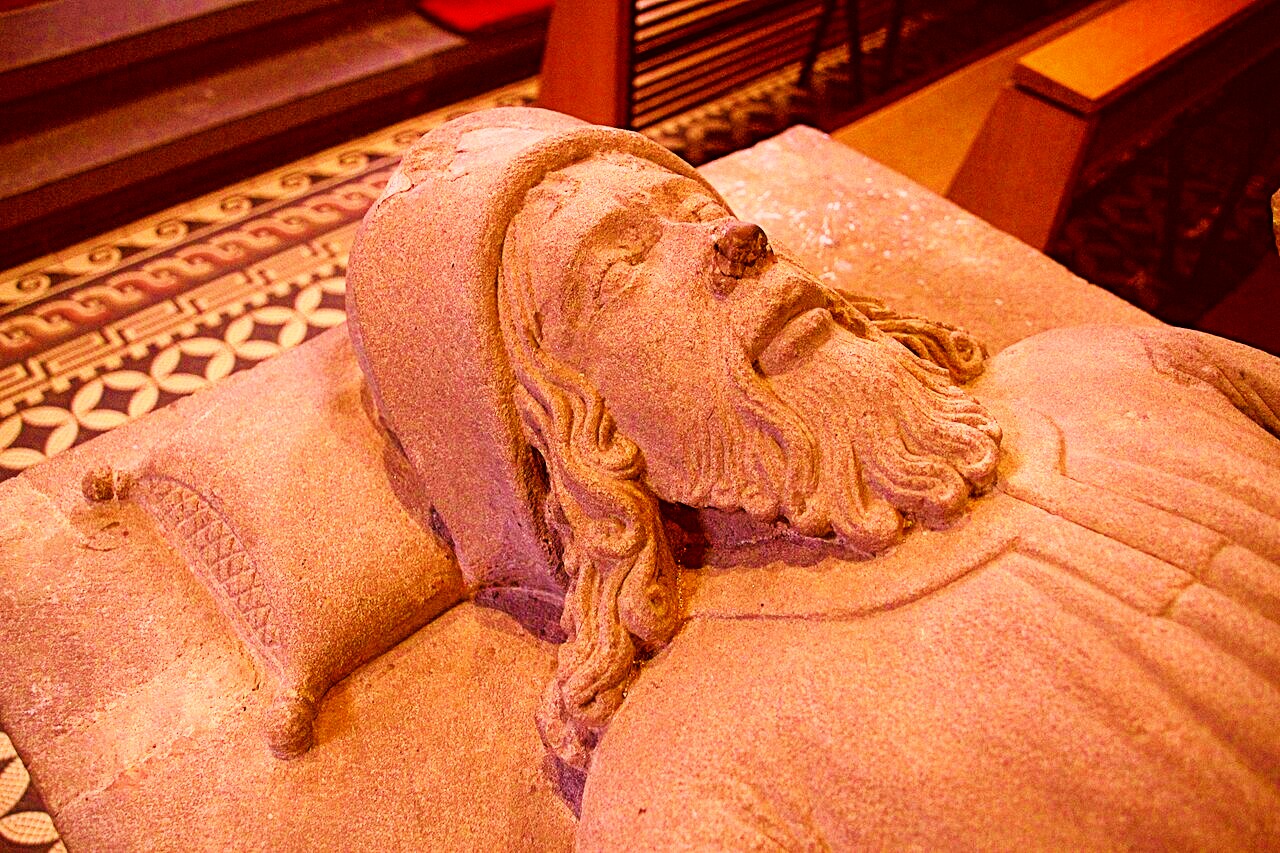
Arnold’s bones rest in a raised grave in the old Parish Church in Arnoldsweiler, now known as the Arnold Chapel. Parts of his head are now in the Arnold Church of the Steyler Missionaries in Neuenkirchen-St Arnold; its Founder, Father Arnold Janssen SVD (1837-1909), traced his name to Arnold of Arnoldsweiler. In the 15th Century, a brotherhood named after Arnold was founded in Arnoldsweiler, which still exists today. Arnoldus Week is celebrated in Arnoldsweiler around his memorial day, which concludes on Sunday with a Solemn High Nass and procession.
Arnold was probably Canonised by the Archbishop of Cologne as early as 820. However, the veneration was not officially confirmed until 18 February 1886 by Pope Leo XIII.
Peter Hecker: Duchess Magdalena of Jülich makes a pilgrimage to the grave of Armold in 1618, fresco, 1913, in the Arnold Chapel in Arnoldsweiler
St Symphorosa and her seven sons / Also known as – The Martyrs of Tivoli – 8 Saints: A widow, St Symphorosa and her seven sons ( Crescens, Eugene, Julian, Justin, Nemesius, Primitivus and Stracteus) Martyred in Tivoli, Italy in the 2nd-century persecutions of Hadrian.
St Aemilian of Dorostorium St Alanus of Sassovivo St Alfons Tracki Blessed Angeline of Marsciano Bl Arnold of Amiens St Arnold of Arnoldsweiler (Died 793) Layman St Arnoul the Martyr
Martyrs of Silistria – 7 Saints: Seven Christians who were Martyred together. No details about them have survived but the names – Bassus, Donata, Justus, Marinus, Maximus, Paulus and Secunda. They were martyred in Silistria (Durostorum), Moesia (in modern Bulgaria), date unknown.
Thought for the Day – 17 July – Meditations with Fr Richard Frederick Clarke SJ (1839-1900)
HUMILITY Meditations for a Month
Humility under Correction
To be forced to recognise defects in ourselves, is always painful to human nature. We should like to think ourselves perfect, or at any rate, free from any very serious faults. In spite of all our efforts, the knowledge of our many imperfections and blemishes, thrusts itself upon us and the difference between the man of goodwill and the lover of self is, that one turns himself with all his energy to cure his defects and, the other, seeks to palliate them, excuse them and hide them, as best he can from himself and others.
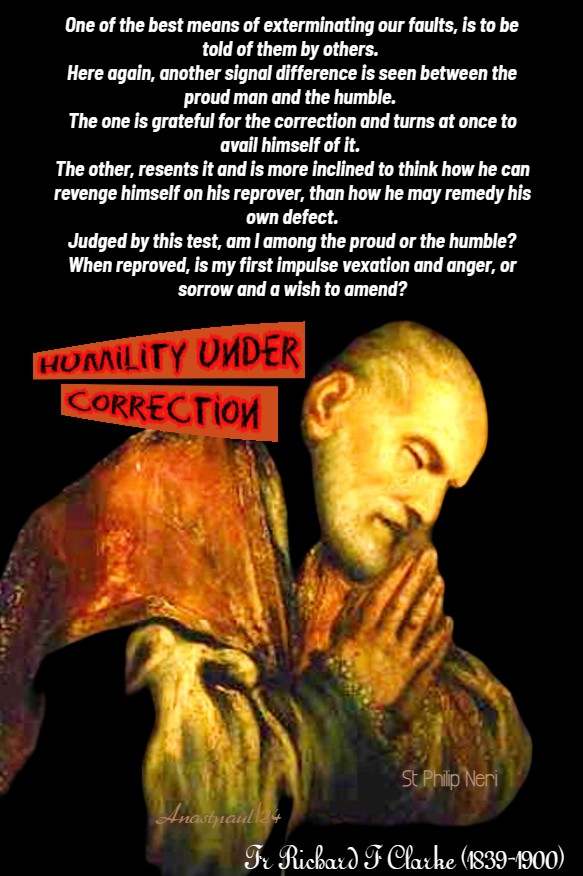
One of the best means of exterminating our faults, is to be told of them by others. Here again, another signal difference is seen between the proud man and the humble. The one is grateful for the correction and turns at once to avail himself of it. The other, resents it and is more inclined to think how he can revenge himself on his reprover, than how he may remedy his own defect. Judged by this test, am I among the proud or the humble? When reproved, is my first impulse vexation and anger, or sorrow and a wish to amend?
There is still another test. The proud sometimes avail themselves of a reproof and correct their faults because of that reproof. Yet, they seek to conceal from their reprover, the fact that they are following his counsel. They will not acknowledge, that they are being guided by the reprover. Those who are truly humble, rejoice in letting others see that they are adopting their advice in submitting themselves to reproof, with gratitude, as coming from God and as a favour bestowed on them. Can I stand this test?
Quote/s of the Day – 17 July – The Feast of the Humility of the Blessed Virgin Mary
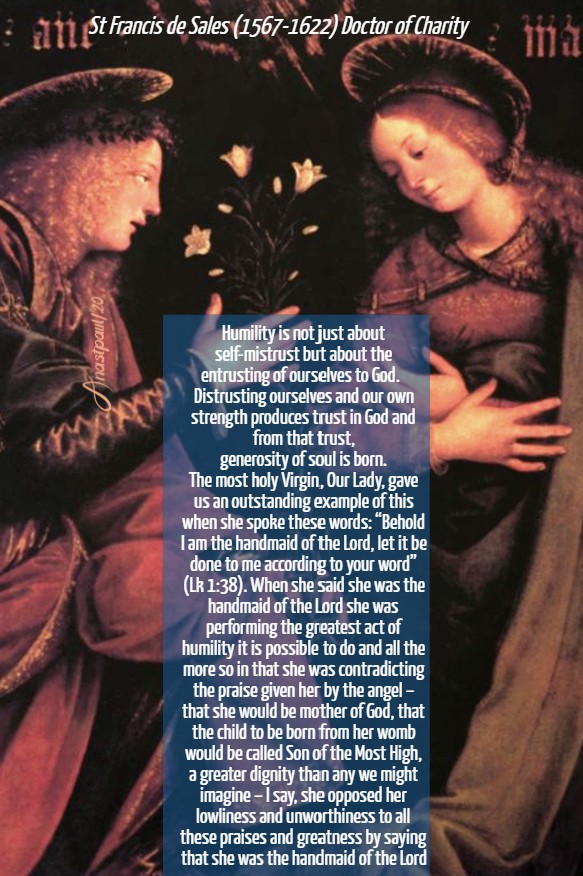
“The most holy Virgin, Our Lady, gave us an outstanding example of this when she spoke these words: “Behold I am the handmaid of the Lord, let it be done to me according to your word” (Lk 1:38). When she said she was the handmaid of the Lord, she was performing the greatest act of humility it is possible to do and, all the more so, in that she was contradicting the praise given her by the Angel – that she would be Mother of God, that the child to be born from her womb would be called Son of the Most High, a greater dignity than any we might imagine – I say, she opposed her lowliness and unworthiness to all these praises and greatness, by saying that she was the handmaid of the Lord.”
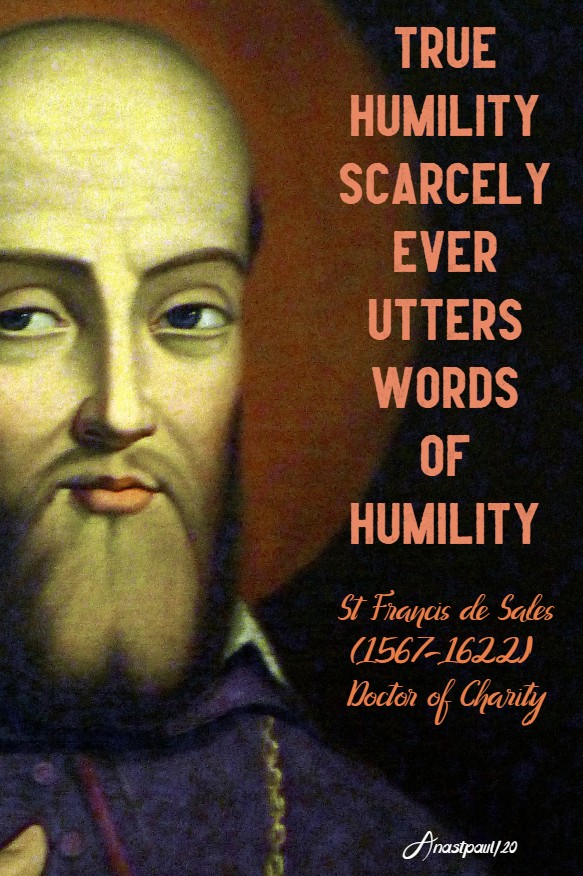
“True humility scarecly ever utters words of jumility.”
“Humility, makes our lives acceptable to God, meekness, makes us acceptable to men.”
“Humility is not just about self-mistrust but about the entrusting of ourselves to God. Distrusting ourselves and our own strength produces trust in God and from that trust, generosity of soul is born.”
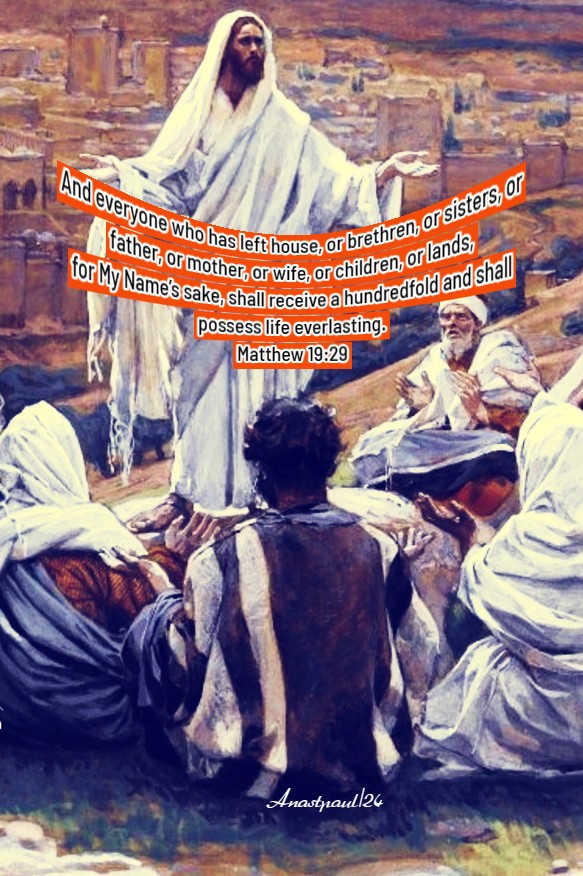
One Minute Reflection – 17 July– “The Month of the Most Precious Blood” – Feast of The Humility of the Blessed Virgin Mary – St Alexius –1 Timothy 6:6-12, Matthew 19:27-29 – Scripture search here: https://www.drbo.org/
“And everyone who has left house, or brethren, or sisters, or father, or mother, or wife, or children, or lands, for My Name’s sake, shall receive a hundredfold and shall possess life everlasting.” – Matthew 19:29
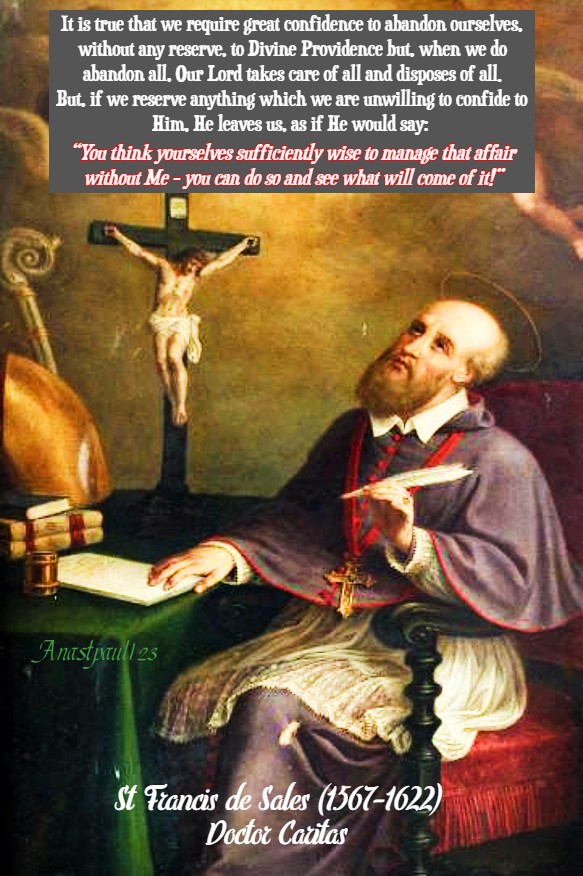
REFLECTION – “WE MUST POSSESS a continual and imperturbable equanimity, amid the great variety of human occurrences and although, all things change around us, remain immovable, with our eyes fixed on God alone. And, although, all things, I will not merely say around us but even within us, should turn topsy-turvy; whether our souls be joyful or sorrowful, in peace or in trouble, in light or in darkness, in temptation or in repose, in happiness or in disgust, although the sun scorch, or the dew refresh – we should always keep our will fixed on the good pleasure of God, as its sole and supreme object.
It is true that we require great confidence to abandon ourselves, without any reserve, to Divine Providence but, when we do abandon all, Our Lord takes care of all and disposes of all. But, if we reserve anything which we are unwilling to confide to Him, He leaves us, as if He would say: “You think yourselves sufficiently wise to manage that affair without Me – you can do so and see what will come of it!” – St Francis de Sales (1567-1622) Doctor Caritatis( Consoling Thoughts on God and Providence).
PRAYER – Grant, we beseech Thee, O Lord God, unto all Thy servants, that they may remain continually in the enjoyment of soundness both of mind and body and, by the glorious intercession of the Blessed Mary, always a Virgin, maybe delivered from present sadness and enter into the joy of Thine eternal gladness.ThroughJesus Christ, Thy Son our Lord, Who lives and reigns with Thee, in the unity of the Holy Ghost, God, world without end. Amen (Collect).
Our Morning Offering – 17 July – The – The Humility of Mary
Make Me Like Thineself, Mary My Mother By St Louis-Marie de Montfort (1673-1716)
My powerful Queen, thou art all mine, through thy mercy and I am all thine. Take away from me, all which may displease God and cultivate in me, all which is pleasing to Him. May the light of thy faith, dispel the darkness of my mind, thy deep humility, take the place of my pride, thy continual sight of God, fill my memory, with His Presence. May the love of thine heart inflame the lukewarmness, of mine. May thy virtues, take the place of my sins. May thy merits, be my enrichment and reconcile all which is wanting in me, before God. My beloved Mother, grant that I may have, no other spirit but thine, to know Jesus Christ and His Divine Will and to praise and glorify the Lord, that I may love God, with burning love like thine. Amen
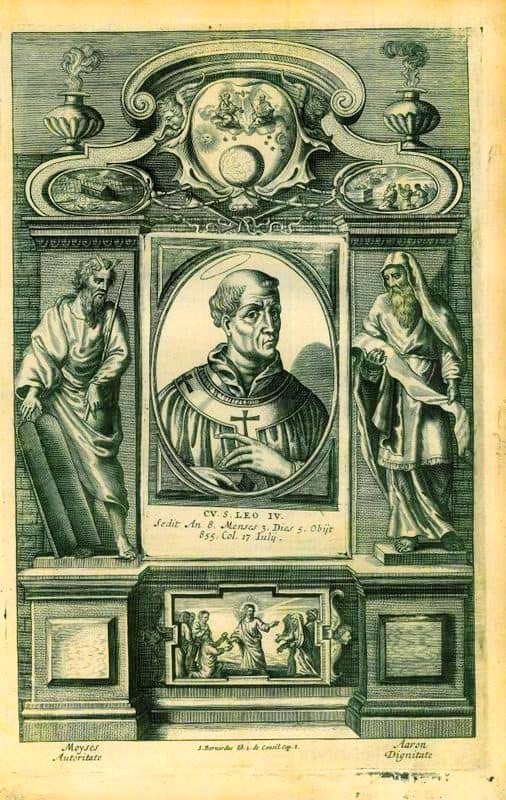
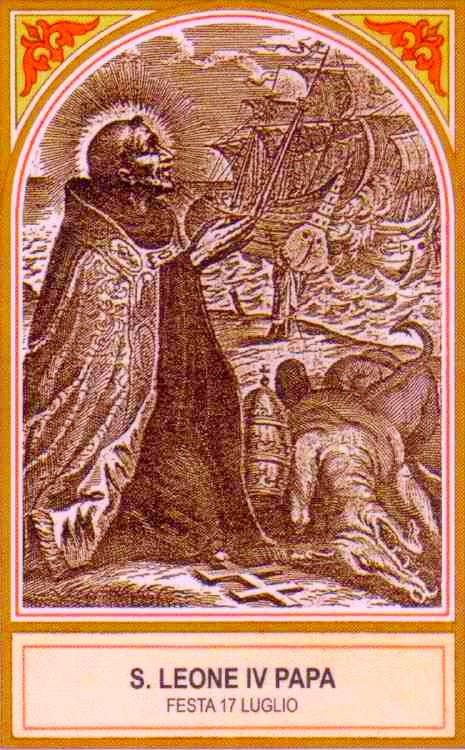
Saint of the Day – 17 July – St Pope Leo IV (c790- 855) The 103rd Bishop of Rome. Papal Ascension: 847. Died: 855 at Rome. St Leo is particularly remembered for repairing Roman Churches which had been damaged during the Arab raid and for building the Leonine Wall around Vatican Hill to protect the City. Pope Leo organised a league of Italian Cities who fought and won ,the sea Battle of Ostia, against the Saracens.
He was the son of a Roman nobleman amd had been educated in the Monastery of “Saint Martin Without the Walls.” He attracted the notice of Pope Gregory IV, who made him a Subdeacon and was created Cardinal-priest of “The Four Crowned Martyrs – Santi Quattro Coronati” by Pope Sergius II.
He was chosen as the new Pope after the death of Sergius II in 847 and governed the Church for eight years, three months. The Saracens from Calabria had lately plundered Saint Peter’s Basilica on the Vatican Hill and were still hovering about Rome. Leo made it his first care to repair the ornamental parts of this beautiful Basilica, especially the Tomb of Saint Peter with the Altar which stood upon it. By Leo’s work, the Altar again received its gold covering (after being stolen) which weighed 94 kg (206 lb) and was studded with precious gems. He also restored and embellished the damaged Basilica of Saint Paul Outside the Walls.
To prevent a second plundering of that holy place, he, with the approbation and liberal contributions of the Emperor Lothaire, enclosed the Basilica and the whole Vatican Hill with a wall and ordered a new line of walls encompassing the suburb on the right bank of the Tiber to be built, including St Peter’s Basilica which had been undefended until this time. The district enclosed by the walls is still known as the Leonine City.
He rebuilt or repaired the walls of the City, fortified with fifteen towers. Whilst he was putting Rome in a posture of defence, In 849, when a Saracen fleet from Sardinia approached Portus, Leo IV summoned the maritime republics – Naples, Gaeta and Amalfi – to form a league. The command of the unified fleet was given to Cesarius, son of Duke Sergius I of Naples. Aided by a fierce storm, the league destroyed the Saracen fleet off Ostia. The Battle of Ostia was one of the most famous in the history of the Papacy and is celebrated in a famous fresco by Raphael and his pupils in the ‘Raphael Rooms’ dedicated to his works in the Vatican Palace. Raphael’s work, ‘The Fire’ in the Borgo, celebrates the incident in which, our Saint Leo stopped a fire in the pilgrims’ district by making the Sign of the Cross.
Leo IV held three Synods – the one in 850 distinguished by the presence of Emperor Louis. Before his death in 855, the Pope welcomed Aethelwulf, King of Wessex and his sons, including the seven year old St Alfred the Great, who at the age of 5 years, had already met Pope Leo as pilgrims to Rome.
Pope Leo directed to all Bishops a Homily on the Pastoral Care, published from the Vatican manuscripts. In it, Leo regulates all the chief functions of the pastoral charge and every duty enforced with no less learning than piety.
Among other miracles performed by this holy Pope, it is recorded that by the Sign of the Cross he extinguished a great fire in the City which threatened the Church of the Prince of the Apostles – this is mentioned above as having been immortalised by the art of Raphael and his School.
He died on the 17 July, 855 and Benedict III, Priest of the Church of Saint Calixtus, was immediately chosen Pope. He with many tears begged that so formidable a burden might not be laid on his shoulders but his protests could not prevail. Anastasius the deposed priest set up for pope and procured the protection of the Emperor Louid II but, the steady unanimity of the people in the election of Benedict III overcame this opposition and he was Consecrated on the 1 September in the same year, 855.
Leo IV was originally buried in his own monument in St Peter’s Basilica. Some years after his death, his remains were put into a Tomb which contained the first four Popes named Leo. In the 18th Century, the Relics of Leo the Great were separated from his namesakes and given their own Chapel.
Leo IV had the figure of a Rooster placed on the Old St. Peter’s Basilica which has served as a religious icon and reminder of St Peter’s denial of Christ since that time, with some Churches still having the cockerel on the steeple today. It is reputed that Pope Gregory I had previously said that the cock “was the most suitable emblem of Christianity” being “the emblem of St Peter”. After Leo IV, Pope Nicholas I, who had been made a Deacon by St Leo IV, decreed that the figure of the cock should be placed on every Church throughout the world.
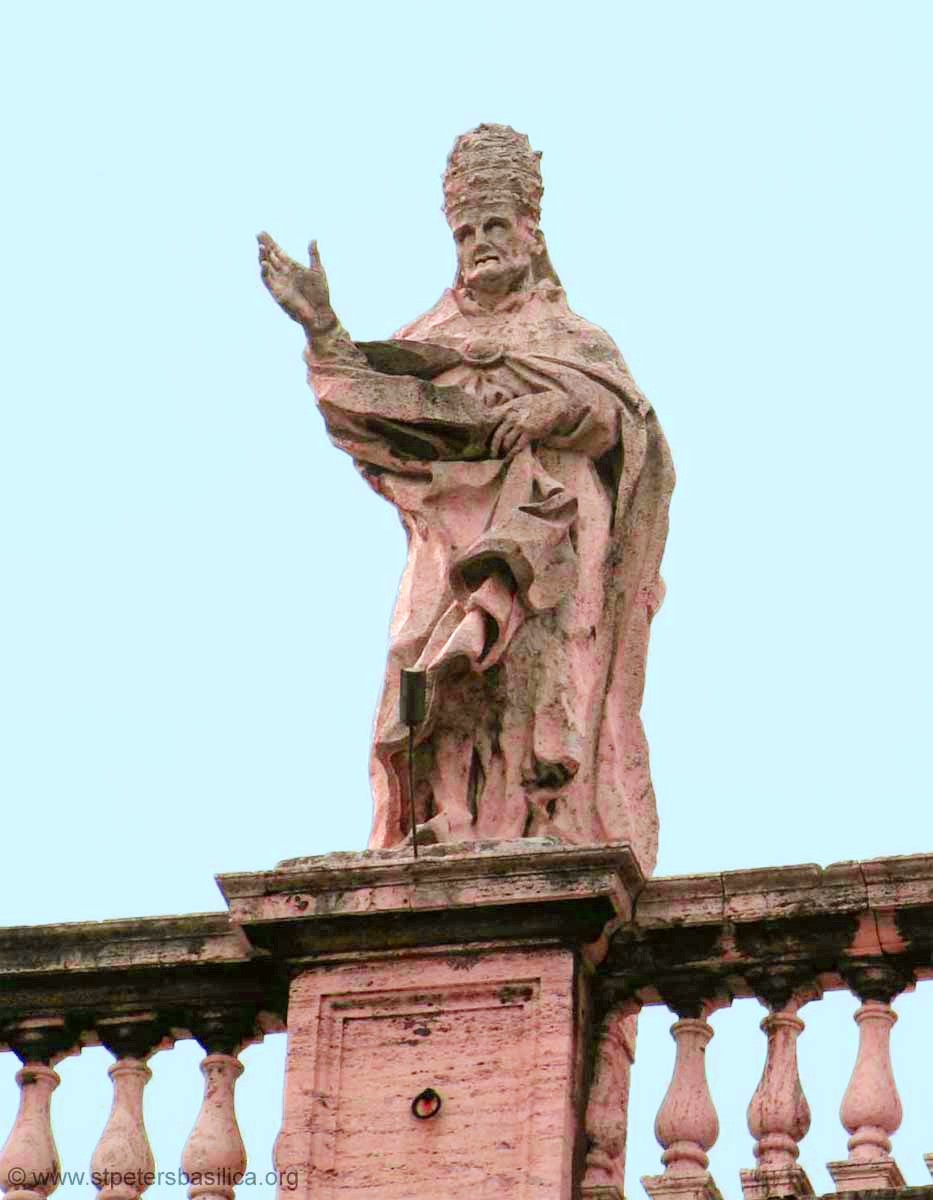
The Statue of St Leo is situate on the South Colonnade’s Curved Arm next to St Pope Clement I. St. Leo IV – Pope Born – 790 Died – 17 July 855 in Rome Feastday – 17 July Sculptor – unknown Based on the documents and stylistic features perhaps the work could be attributed, but it has been very damaged by time. However, it seem closest to the school of Algardi. Statue created – c.1669-1670 The statue is part of a group of 16 installed between 1 May 1669 and 5 August 1670.
The Statue of St Leo is situate on the South Colonnade’s Curved Arm next to St Pope Clement I.
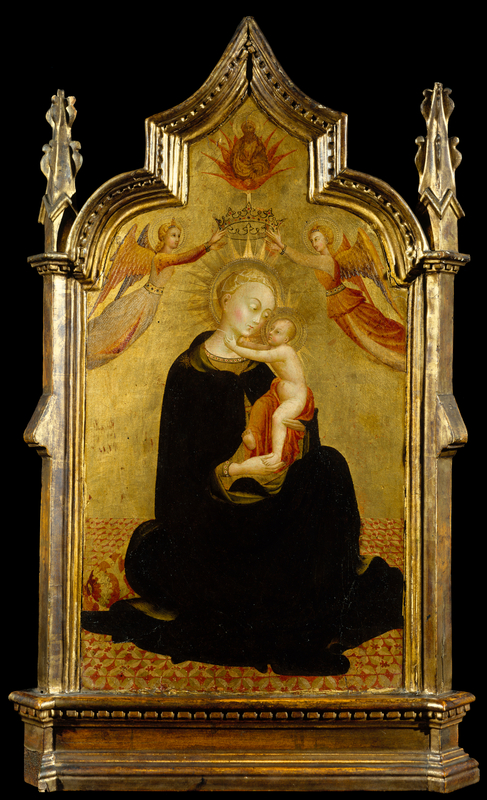
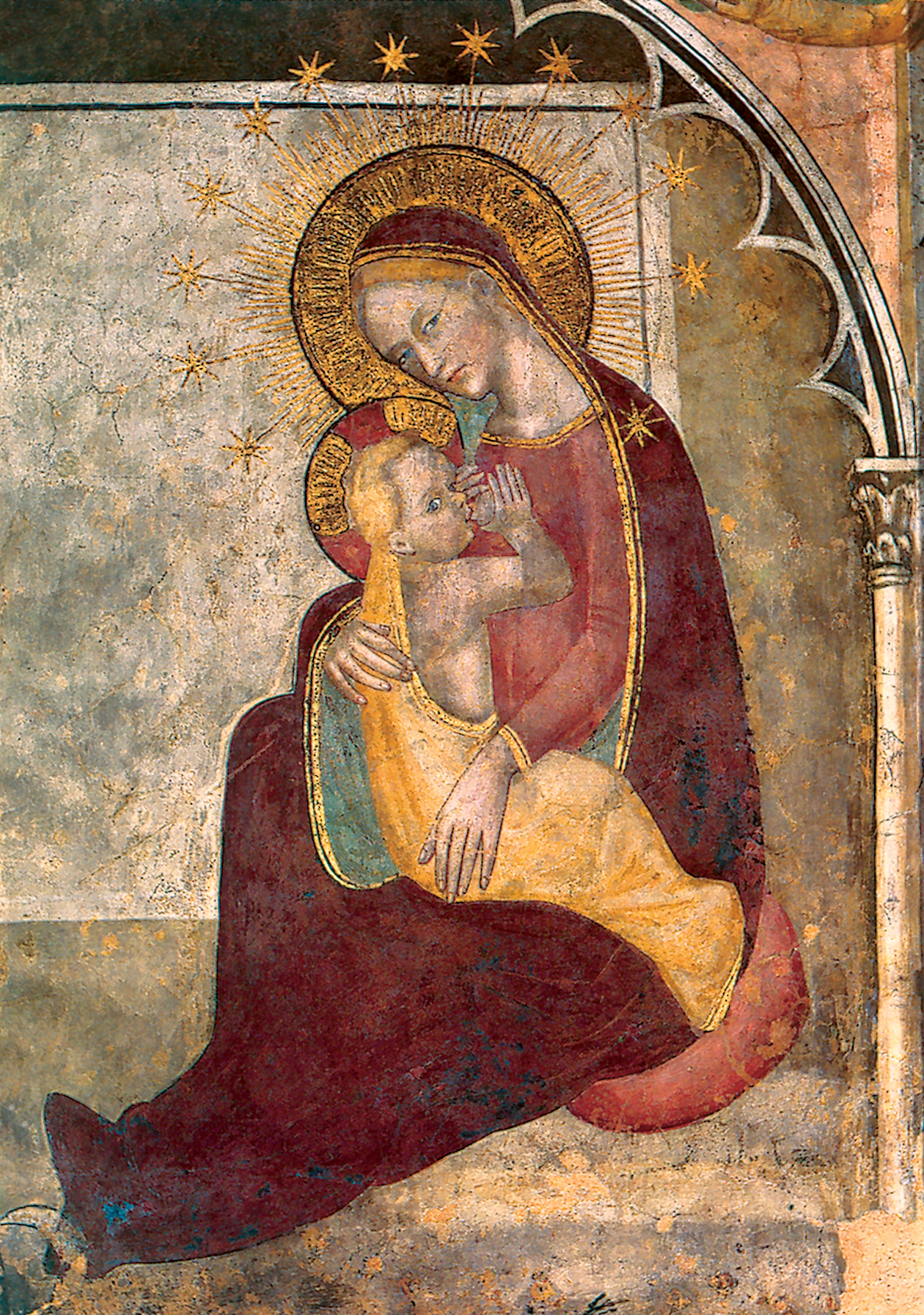
The Feast of The Humility of the Blessed Virgin Mary or the Madonna of Humility: The Feast of the Humility of the Blessed Virgin Mary was included in the General Roman Calendar of 1954 among the feasts ‘pro aliquibus locis’ (in some places) but was removed from the General Roman Calendar of 1960. However, many Diocese worldwide still celebrate this beautiful Feast as do all Traditional Catholics. https://anastpaul.com/2022/07/17/saint-of-the-day-17-july-the-humility-of-mary-by-st-alphonsus/
Martyrs of Compiegne (16 Carmelite Beati): Sixteen Blessed Teresian Martyrs of Compiègne. Eleven Discalced Carmelite nuns, three lay sisters and two lay women servants who were Martyred together in the French Revolution. They were the earliest Martyrs of the French Revolution that have been recognised. They were: Angelique Roussel • Anne Pelras • Anne-Marie-Madeleine Thouret • Catherine Soiron • élisabeth-Julitte Vérolot • Marie Dufour • Marie Hanniset • Marie-Anne Piedcourt • Marie-Anne-Françoise Brideau • Marie-Claude-Cyprienne Brard • Marie-Françoise de Croissy • Marie-Gabrielle Trezel • Marie-Geneviève Meunier • Marie-Madeleine-Claudine Lidoine • Rose-Chretien de Neuville • Thérèse Soiron. They were guillotined on 17 July 1794 at the Place du Trône Renversé (modern Place de la Nation) in Paris, France. The 16 Martyrs Story: https://anastpaul.com/2017/07/17/saints-of-the-day-17-july-the-carmelite-martyrs-of-compiegne-o-c-d/
Bl Arnold of Himmerod Bl Bénigne Bl Biagio of the Incarnation
Bl Carlos de Dios Murias OFM Conv (1945-1976) Priest Martyr St Clement of Ohrid St Cynllo St Ennodius of Pavia St Fredegand of Kerkelodor St Generosus St Gorazd St Hyacinth of Amastris St Kenelm St Pope Leo IV (c790-855) The 103rd Bishop of Rome
St Marcellina (c330-c398) Consecrated Virgin, sister of St Ambroseand St Satyrus. The Roman Martyrology reads: “At Milan, the Virgin St Marcellina, sister of the blessed Archbishop Ambrose, who received the religious veil from Pope Liberius, in the Basilica of St Peter at Rome. Her sanctity is attested by St Ambrse in his writings.” Lovely Marcellina: https://anastpaul.com/2023/07/17/saint-of-the-day-17-july-st-marcellina-c330-c398-virgin/
St Nerses Lambronazi Bl Sebastian of the Holy Spirit Bl Tarsykia Matskiv St Theodosius of Auxerre St Theodota of Constantinople St Turninus
Martyrs of Scillium (12 Saints): A group of twelve Christians Martyred together, the final deaths in the persecutions of Emperor Marcus Aurelius. Upon their conviction for the crime of being Christians, the group was offered 30 days to reconsider their allegiance to the faith; they all declined. Their official Acta still exist. Their names : • Acyllinus • Cythinus • Donata • Felix • Generosa • Januaria • Laetantius • Narzales • Secunda • Speratus • Vestina • Veturius They were beheaded on 17 July 180 in Scillium, Numidia (in North Africa).
Thought for the Day – 16 July – Meditations with Fr Richard Frederick Clarke SJ (1839-1900)
CHARITY Meditations for a Month
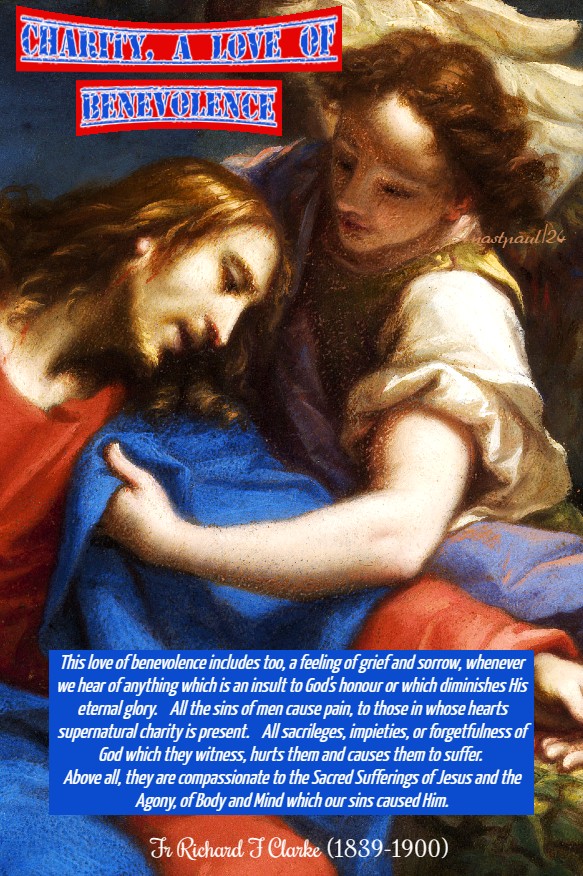
Charity, a Love of Benevolence
By love of complacency, we take personal pleasure in the good of our friend, by love of benevolence, we desire to see that good increased. The benevolence of charity consists in an ever-present desire that the glory of God, may be promoted by all men who live upon the earth, that His Kingdom may spread, that the number of the Saints may receive continual additions and that sinners may be converted to Him. This is the chief wish of our hearts and it is ever-present in our minds – that the interests of God will be advanced everywhere.
This love of benevolence includes too, a feeling of grief and sorrow, whenever we hear of anything which is an insult to God’s honour or which diminishes His eternal glory. All the sins of men cause pain, to those in whose hearts supernatural charity is present. All sacrileges, impieties, or forgetfulness of God which they witness, hurts them and causes them to suffer. Above all, they are compassionate to the Sacred Sufferings of Jesus and the Agony, of Body and Mind which our sins caused Him.
Charity, moreover, requires that we shall not be satisfied with a mere feeling of goodwill. Our benevolence must be a practical one. We must do our part to add to God’s glory. In proportion to our charity, will be our devotion of every act and word and thought, to the glory of God. When Saint Paul said, ‘Whether you eat or drink or whatever you do, do all to the glory of God,’ he was but inculcating a precept of charity. What do I do to promote God’s glory? Alas, how much less than I ought!
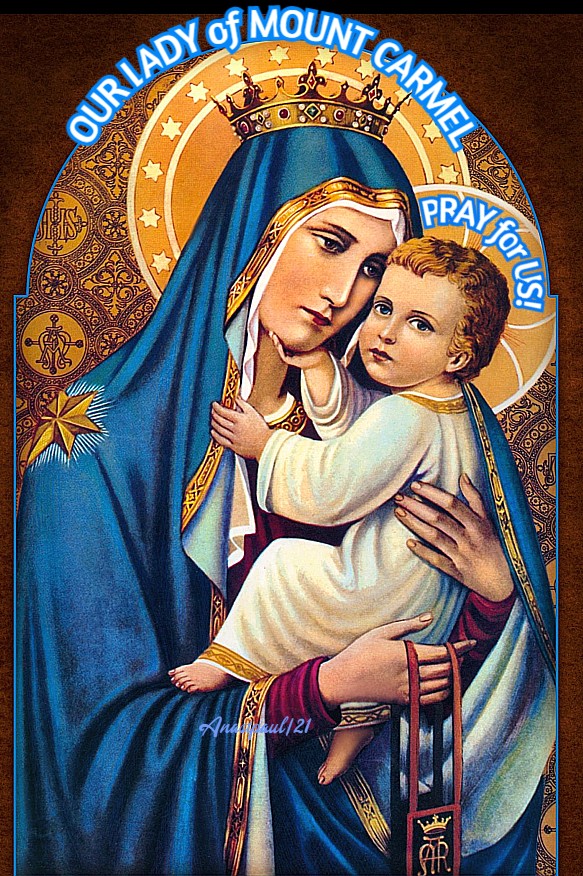
Quote/s of the Day – 16 July – The Feast of Our Lady of Mount Carmel – Ecclesiasticus Sirach 24:23; Luke 11:27-28 – Scripture search here: https://www.drbo.org/
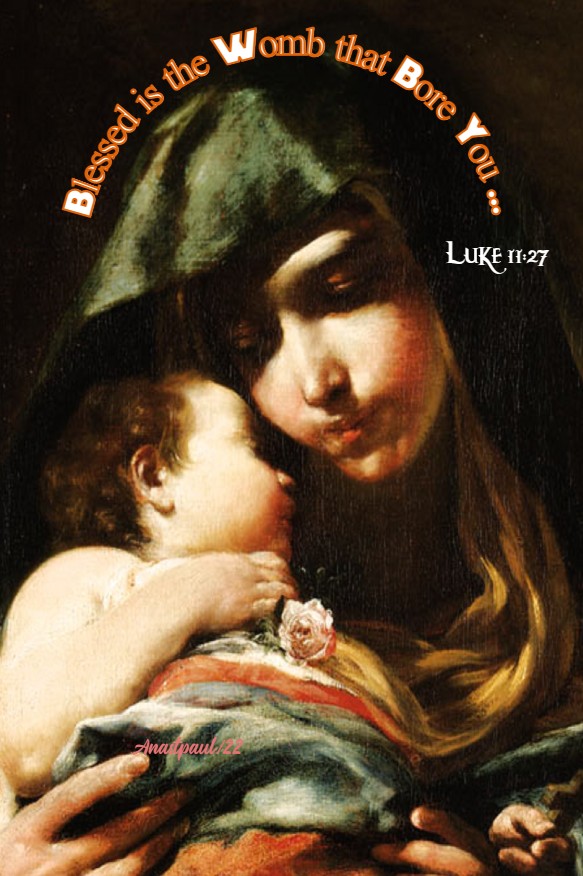
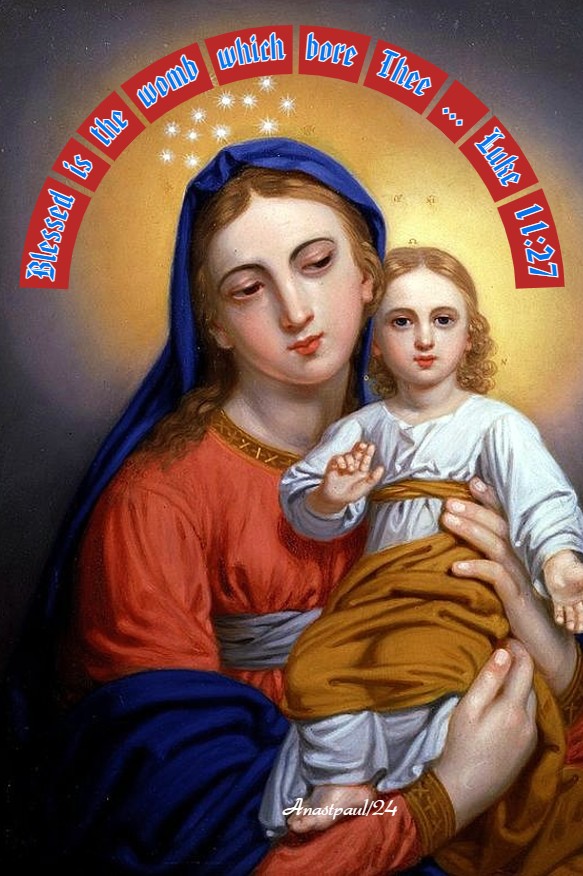
“Blessed is the womb which bore Thee ”
Luke 11:27
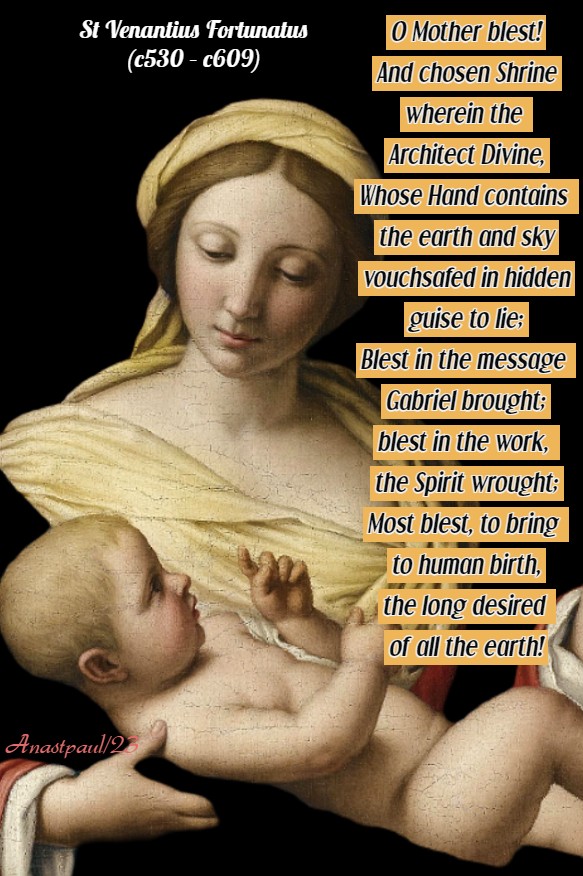
“O Mother blest! And chosen Shrine wherein the Architect Divine, Whose Hand contains the earth and sky vouchsafed in hidden guise to lie; Blest in the message Gabriel brought; blest in the work, the Spirit wrought; Most blest, to bring to human birth, the long desired of all the earth!”
St Venantius Fortunatus (c530–c609)
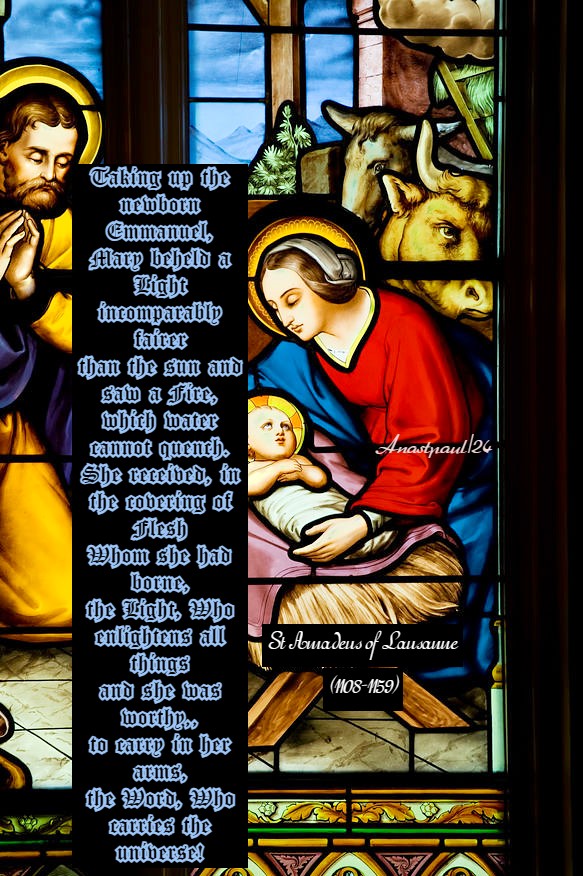
“Taking up the newborn Emmanuel, Mary beheld a Light incomparably fairer than the sun and saw a Fire, which water cannot quench. She received, in the covering of Flesh Whom she had borne, the Light, Who enlightens all things and she was worthy,, to carry in her arms, the Word, Who carries the universe!”
St Amadeus of Lausanne (1108-1159) Bishop, Cistercian Monk
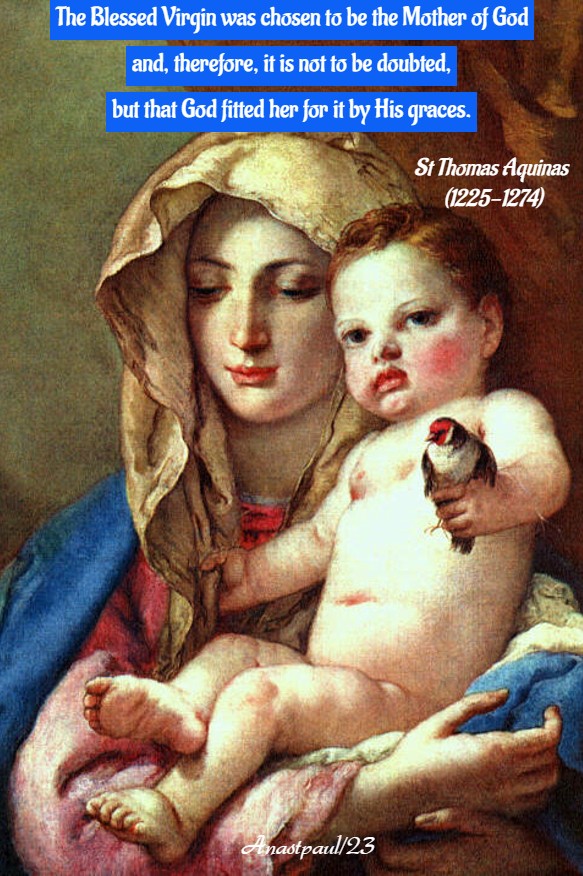
“The Blessed Virgin was chosen to be the Mother of God and, therefore, it is not to be doubted, but that God fitted her for it by His graces.”
St Thomas Aquinas (1225-1274) Doctor Angelicus / Doctor Communis
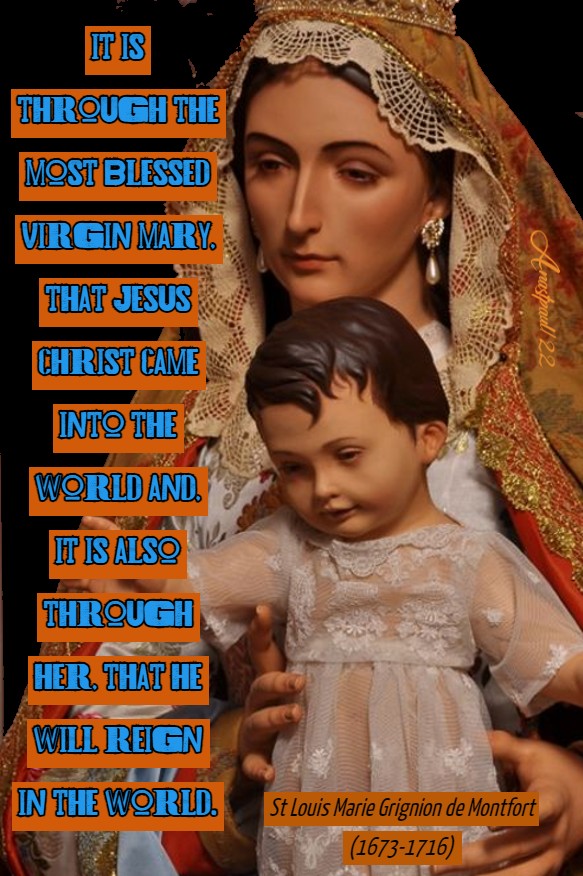
“It is through the most Blessed Virgin Mary that Jesus Christ came into the world and, it is also through her that He will reign in the world.”
One Minute Reflection – 16 July – “The Month of the Most Precious Blood” – The Feast of Our Lady of Mount Carmel – Ecclesiasticus Sirach 24:23; Luke 11:27-28 – Scripture search here: https://www.drbo.org/
“Blessed is the womb which bore Thee … But He said, rather, blessed are they who hear the Word of God and keep it. ” – Luke 11:27-28
REFLECTION – “Stretching out His Hand over His disciples, the Lord Christ declared: ‘Here are My mother and My brothers; anyone who does the Will of My Father Who sent Me, is My brother and sister and My mother.’ I would urge you to ponder these words. Did the Virgin Mary, who believed by faith and conceived by faith, who was the chosen one from whom our Saviour was born among men, who was created by Christ before Christ was created in her — did she not do the Will of the Father? Indeed the blessed Mary certainly did the Father’s Will and so, it was for her, a greater thing to have been Christ’s disciple than to have been His Mother and, she was more blessed, in her discipleship, than in her motherhood. Hers was the happiness, of first bearing in her womb, Him Whom she would obey as her Master.
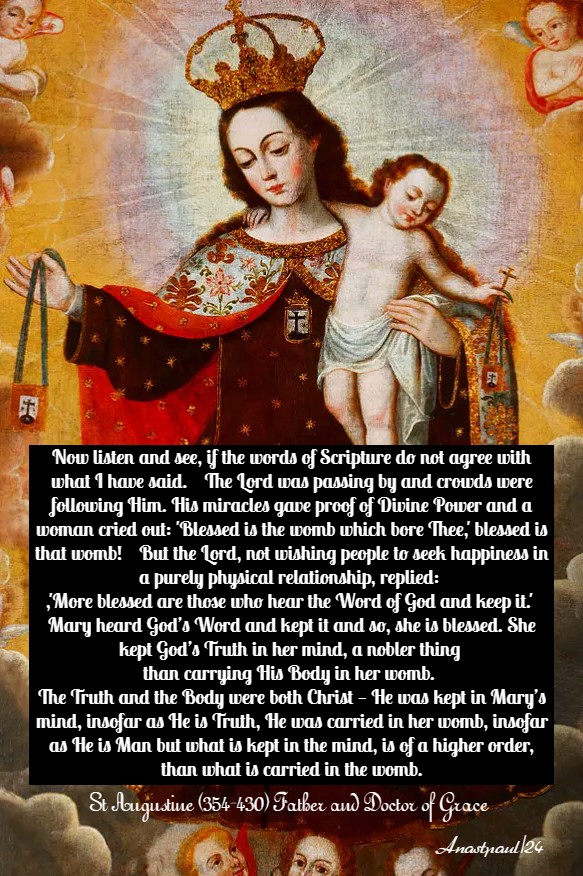
Now listen and see if the words of Scripture do not agree with what I have said. The Lord was passing by and crowds were following Him. His miracles gave proof of Divine Power and a woman cried out: ‘Blessed is the womb which bore Thee,’ blessed is that womb! But the Lord, not wishing people to seek happiness in a purely physical relationship, replied: ,’More blessed are those who hear the Word of God and keep it.‘ Mary heard God’s Word and kept it and so, she is blessed. She kept God’s Truth in her mind, a nobler thing than carrying His Body in her womb. The Truth and the Body were both Christ — He was kept in Mary’s mind, insofar as He is Truth, He was carried in her womb, insofar as He is Man but what is kept in the mind, is of a higher order, than what is carried in the womb.
The Virgin Mary is both holy and blessed and yet, the Church is greater than she. Mary is a part of the Church, a member of the Church, a holy, an eminent — the most eminent — member but still, only a member of the entire Body. The Body, undoubtedly is greater than she, one of its members. This Body has the Lord for its Head and Head and Body together, make up the whole Christ. In other words, our Head is Divine — our Head is God.
Now, beloved, give me your whole attention, for you also are members of Christ; you too are the Body of Christ. Consider how you, yourselves, can be among those of whom the Lord said: ‘Here are My mother and My brothers.’ Do you wonder how you can be the mother of Christ? He himself said: ‘Whoever hears and fulfils the Will of My Father in Heaven, is My brother and My sister and My mother.’ As for our being the brothers and sisters of Christ, we can understand this because, although there is only one inheritance and Christ is the Only Son, His mercy would not allow Him to remain alone. It was His wish that we too should be heirs of the Father and co-heirs with Himself.
Now having said that all of you are brothers of Christ, shall I not dare to call you His mother? Much less would I dare to deny His own words. Tell me how Mary became the mother of Christ, if it was not by giving birth to the members of Christ? You, to whom I am speaking, are the members of Christ. Of whom were you born? “Of Mother Church,” I hear the reply of your hearts. You became sons of this mother at your Baptism, you came to birth then, as members of Christ. Now you, in your turn, must draw to the Font of Baptism, as many as you possibly can. You became sons when you were born there yourselves and now, by bringing others to birth in the same way, you have it in your power to become the mothers of Christ!” – St Augustine (354-430) Father and Doctor of Grace (An excerpt from Sermon 25).
PRAYER – O God, Who honoured the Order of Carmel with the special title of the most blessed Mary, ever Virgin, Thy Mother, graciously grant, that we, who this day honour her commemoration with solemn rites, defended by her care, may be found worthy to attain everlasting happiness.Through the same Jesus Christ, Who lives and reigns with God the Father, in the unity of the Holy Spirit, God, world without end. Amen (Collect).
Our Morning Offering – 16 July – “The Month of the Most Precious Blood” – Feast of Our Lady of Mount Carmel
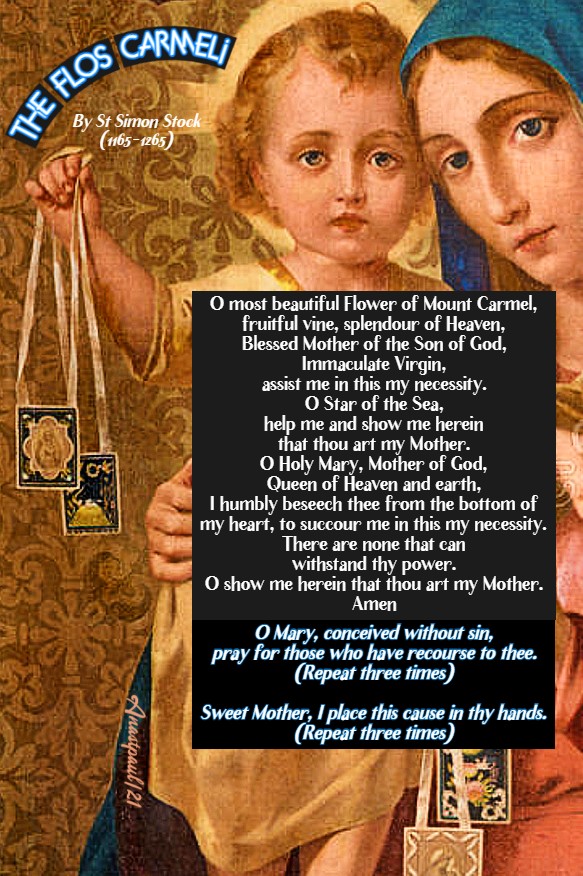
“The Flos Carmeli The Flower of Carmel” By St Simon Stock (1165-1265)
O most beautiful Flower of Mount Carmel, fruitful vine, splendour of Heaven, Blessed Mother of the Son of God, Immaculate Virgin, assist me in this my necessity. O Star of the Sea, help me and show me herein that thou art my Mother. O Holy Mary, Mother of God, Queen of Heaven and earth, I humbly beseech thee from the bottom of my heart, to succour me in this my necessity. There are none that can withstand thy power. O show me herein, that thou art my Mother. Amen.
O Mary, conceived without sin, pray for those who have recourse to thee. (Repeat three times)
Sweet Mother, I place this cause in thy hands. (Repeat three times)
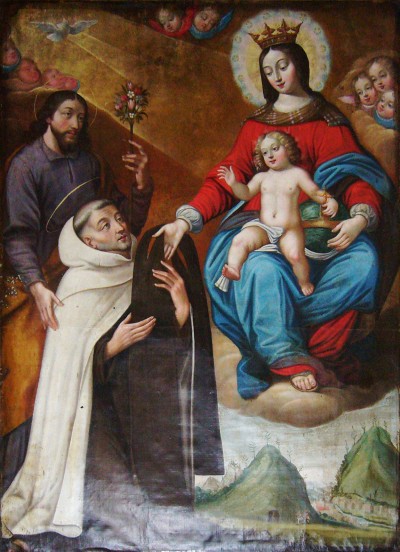
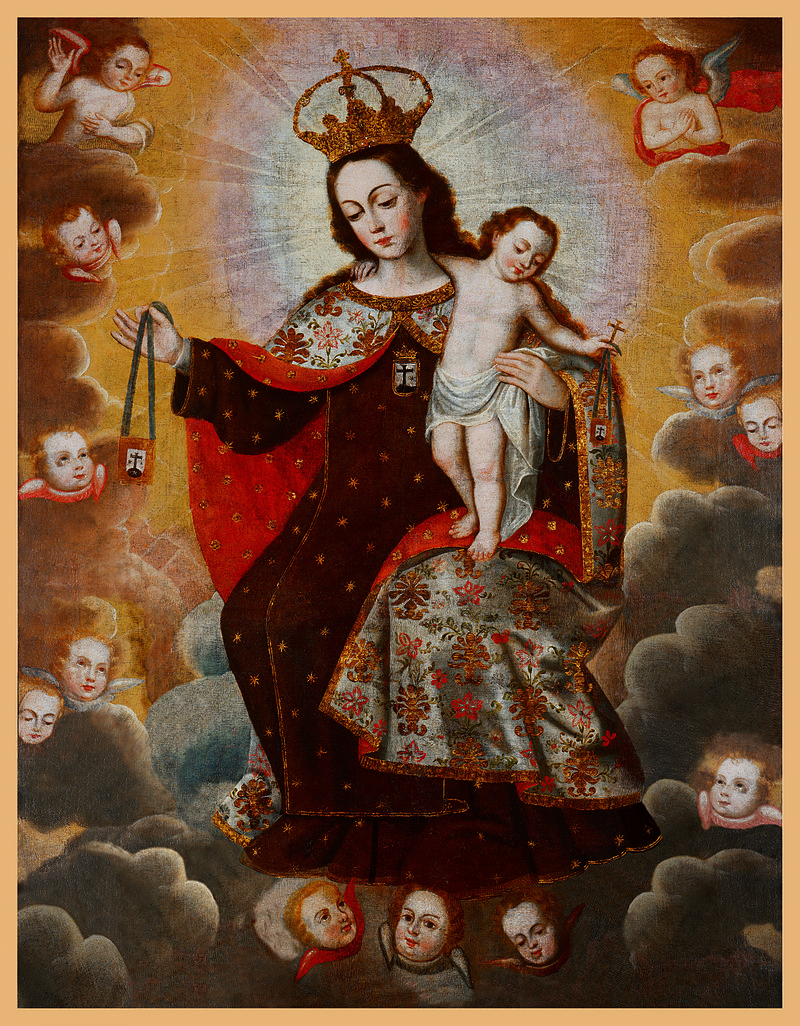
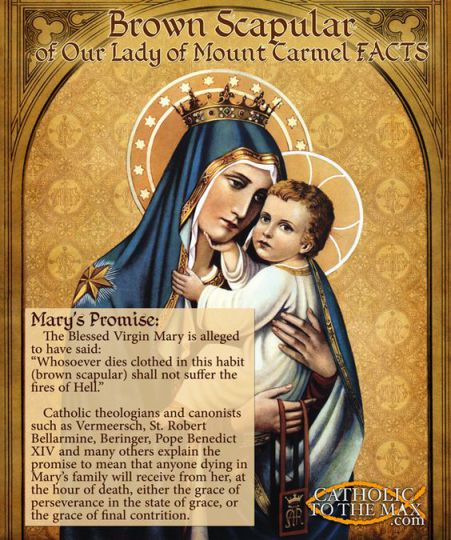
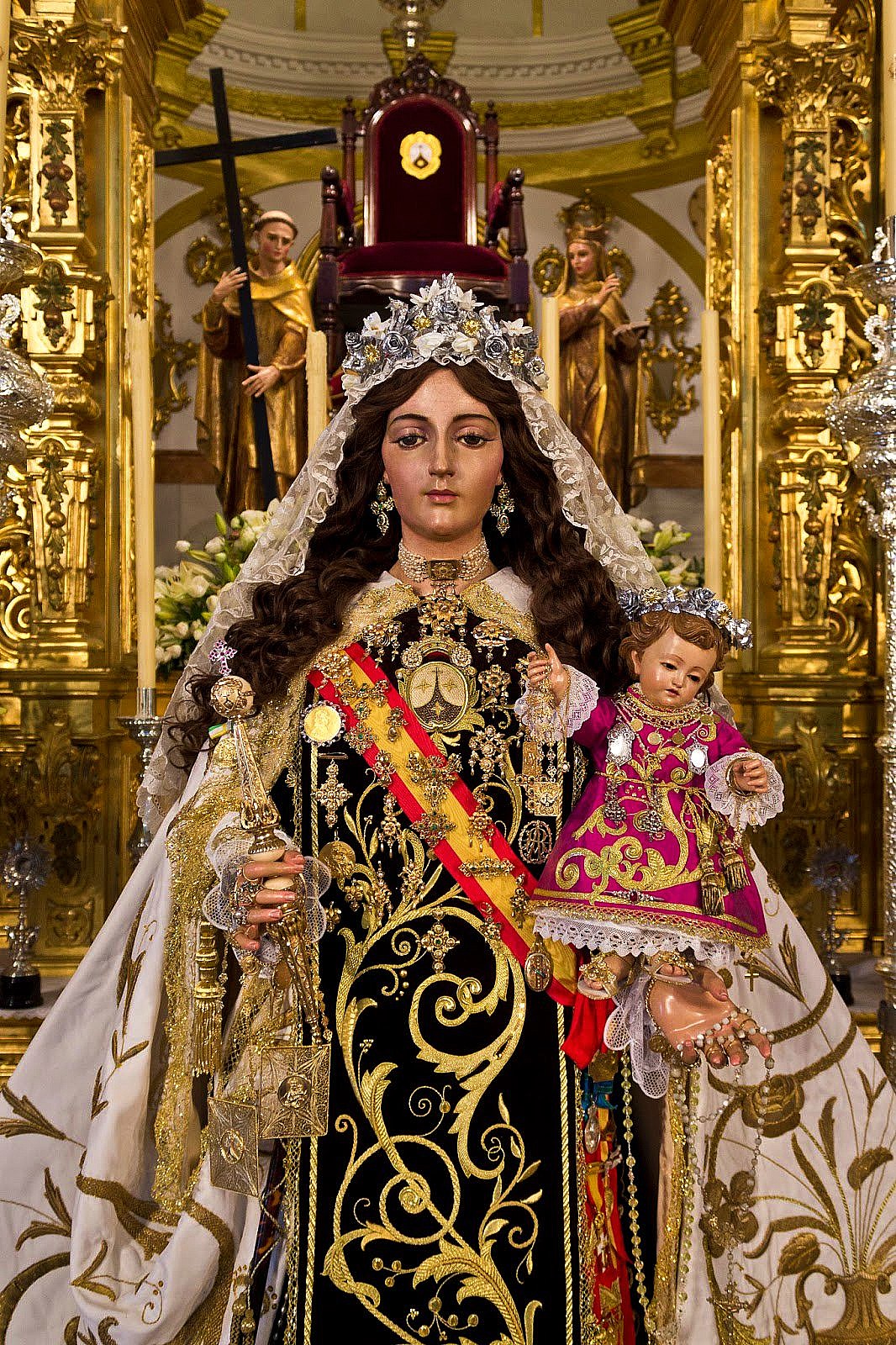
This prayer, the “Flos Carmeli” (“The Flower of Carmel”), was composed by St Simon Stock (1165-1265), a Carmelite, so-called because he and other members of his Order lived atop Mount Carmel in the Holy Land. St Simon Stock was visited by the Blessed Virgin Mary on 16 July 1251, at which time, she bestowed upon him a scapular, or habit, (commonly called “the Brown Scapular”) which became part of the Liturgical clothing of the Carmelite Order. Oral tradition tells of St Simon Stock praying, with a passionate intensity to Our Lady of Mount Carmel, during a time of great distress and hardship for the Order. With fervour and faith, he prayed his prayer, the Flos Carmeli, for the first time. And Our Lady answered his prayer. Thus, for seven centuries the Flos Carmeli continues to be prayed to the Blessed Mother with the firm faith that she she will answer its petition, with her powerful assistance.
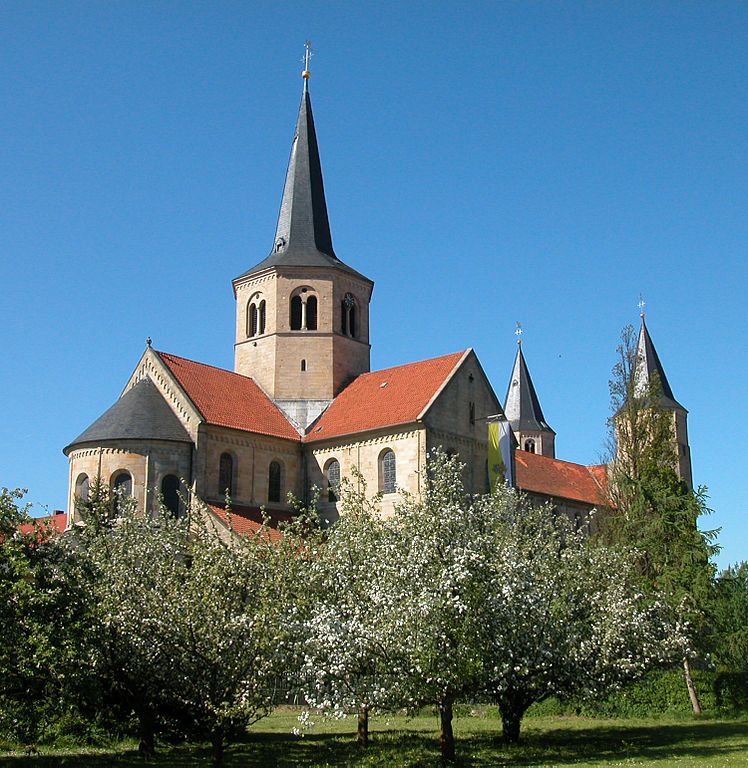
Saint of the Day – 16 July – Blessed Arnulf of Hildesheim (Died 1180) Abbot of Saint Godehard Monastery in Hildesheim. Died on 16 July 1180 at his Monastery of natural causes. Also known as – Arnoldus, Arnold, Arnoldo. His Body is/was Incorrupt.
St Godehard Monastery Church, now a Minor Basilica
Arnulf lived in the 12th Century in Germany. Sadky, we can find no details of his life beyond these few facts. He became a Benedictine Monk in the Fulda Monastery in Germany.
From there he was called to the Monastery of St Godehard in Hildesheim where he was appointed as the Abbot.
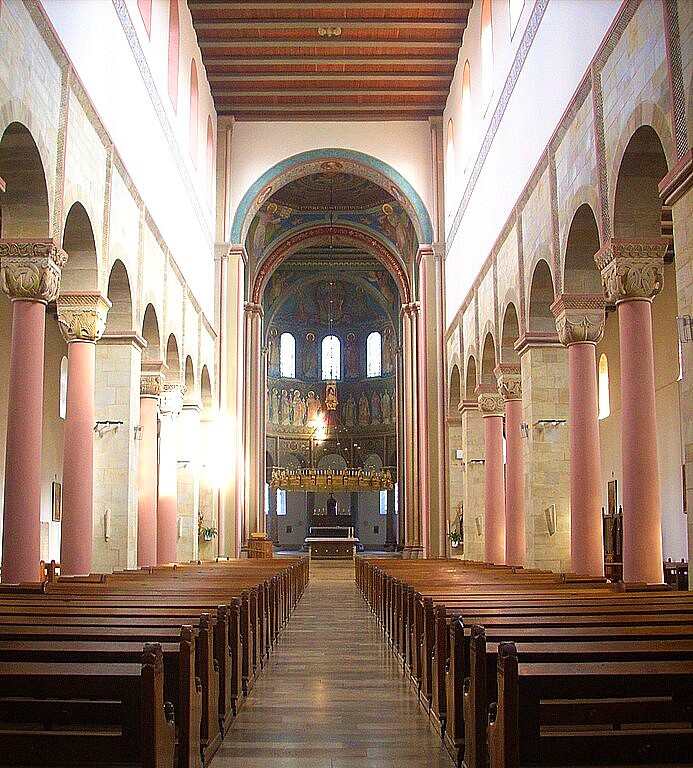
St Godehard Interior
He died on 16 July 1180. His body was found intact during translations in the years 1400 and again in 1473, when his cult was confirmed.
St Andrew the Hermit St Antiochus of Sebaste Bl Arnold of Clairvaux Blessed Arnulf of Hildesheim (Died 1180) Abbot. His Body is/was Incorrupt. St Athenogenes of Sebaste
St Bartholomew of Braga OP – ArchBishop of Braga also known as Bl Bartholomew of the Martyrs (Bartolomeu Fernandez dei Martiri Fernandes) (1514-1590) Portuguese Dominican Friar and Priest, Writer, Theologian, Advisor, Teacher and Catechetical writer, Apostle of Charity founding a series of hospitals and hospices in Braga and surrounds. St Bartholomew: https://anastpaul.com/2018/07/16/saint-of-the-day-16-july-blessed-bartholomew-of-the-martyrs-1514-1590/
St Generosus of Poitou St Gobbán Beg St Gondulf of Tongeren-Maastricht St Gondolf of Saintes St Grimoald of Saintes
St Helier of Jersey (Died c555) Martyr, Hermit, Missionary from Belgium, Hermit, Ascetic, Miracle-worker. PATRONAGES – St Helier is the Patron Saint of Jersey and in particular of the Diocese and Capital City of Jersey, named for him – Saint Helier, he is invoked against and for the cure of EYE diseases and skin disorders, His Life and Death: https://anastpaul.com/2023/07/16/saint-of-the-day-16-july-st-helier-of-jersey-died-c555-martyr-missionary-hermit/
Bl Irmengard St Landericus of Séez Bl Madeleine-Françoise de Justamond Bl Marguerite-Rose de Gordon Bl Marguerite-Thérèse Charensol Bl Marie-Anne Béguin-Royal Bl Marie-Anne Doux
St Marie-Madeline Postel (1756-1846) Religious Sister and Founder of the Sisters of Christian Schools of which she is the Patron, Teacher, Franciscan tertiary. Pope Pius X later signified on 22 January 1908 his approval to two investigated miracles attributed to her intercession and so Beatified her on 17 May 1908. Pope Pius XI confirmed two additional miracles and Canonised Blessed Marie-Madeline on 24 May 1925. Her Life: https://anastpaul.com/2019/07/16/saint-of-the-day-16-july-st-marie-madeline-postel-
Bl Marie-Rose Laye Bl Milon of Thérouanne St Monulphus of Tongeren-Maastricht Bl Ornandus of Vicogne
Martyrs of Antioch – 5 Saints: Five Christians who were Martyred together. No details about them have survived by the names – Dionysius, Eustasius, Maximus, Theodosius and Theodulus. They were Martyred in Antioch, Syria, date unknown.
Thought for the Day – 15 July – Meditations with Fr Richard Frederick Clarke SJ (1839-1900)
CHARITY Meditations for a Month
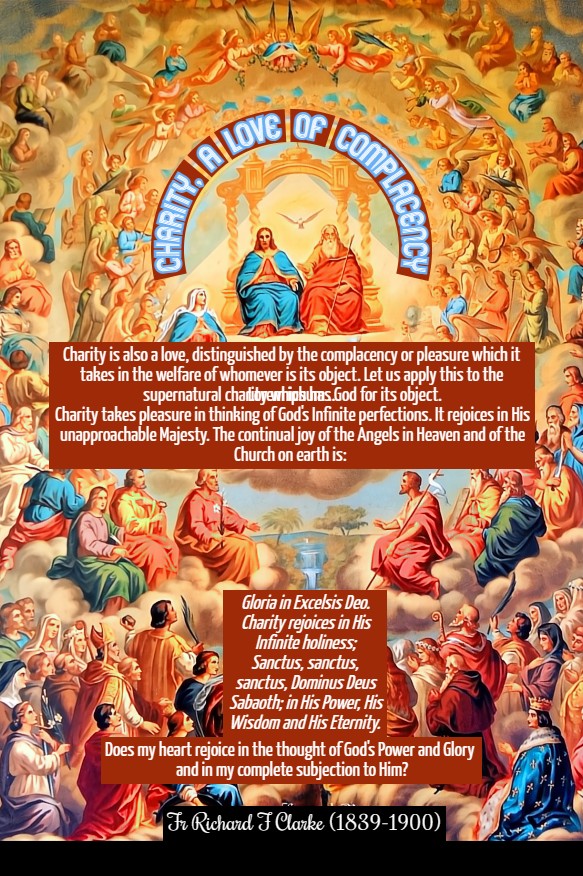
Charity, a Love of Complacency
Charity is also a love, distinguished by the complacency or pleasure which it takes in the welfare of whomever is its object. Let us apply this to the supernatural charity which has God for its object.
Charity takes pleasure in thinking of God’s Infinite perfections. It rejoices in His unapproachable Majesty. The continual joy of the Angels in Heaven and of the Church on earth is:
Gloria in Excelsis Deo. Charity rejoices in His Infinite holiness; Sanctus, sanctus, sanctus, Dominus Deus Sabaoth; in His Power, His Wisdom and His Eternity. Does my heart rejoice in the thought of God’s Power and Glory and in my complete subjection to Him?
Charity also thinks with complacency of the homage paid to God by Angels and by men. It thinks of the honour He derives from the holiness of the Saints, from the Immaculate purity of His Holy Mother, from the obedience of the Son of God to His Eternal Father and, from the Sacrifice on Calvary, whereby the world was made once more, the Kingdom of God and filled with tens of thousands of saints. For all this, do I render thanks to God and rejoice in the glory He derives therefrom. I thank Thee, O my God, that Thou hast on earth, so many faithful servants who give glory to Thy Name.
Charity, moreover, rejoices exceedingly in the honour done to God, whenever a sinner is reconciled to Him. The Angels rejoice over the sinner doing penance, not so much for his own sake, as because God’s Kingdom is thereby enlarged and His glory increased. So, too, we ought to rejoice in the conversion of every sinner and all the more because we are sinners. As sinners, we can appreciate better, the injury done to God by sin and the honour He receives when sin is blotted out and the sinner is reconciled to Him. Do I rejoice in the conversion of sinners and recognise that conversion has increased God’s Kingdom and His glory?
Quote/s of the Day – 15 July – “The Month of the Most Precious Blood” – Ecclesiasticus 31:8-11, Luke 12:35-40 – Scripture search here: https://www.drbo.org/
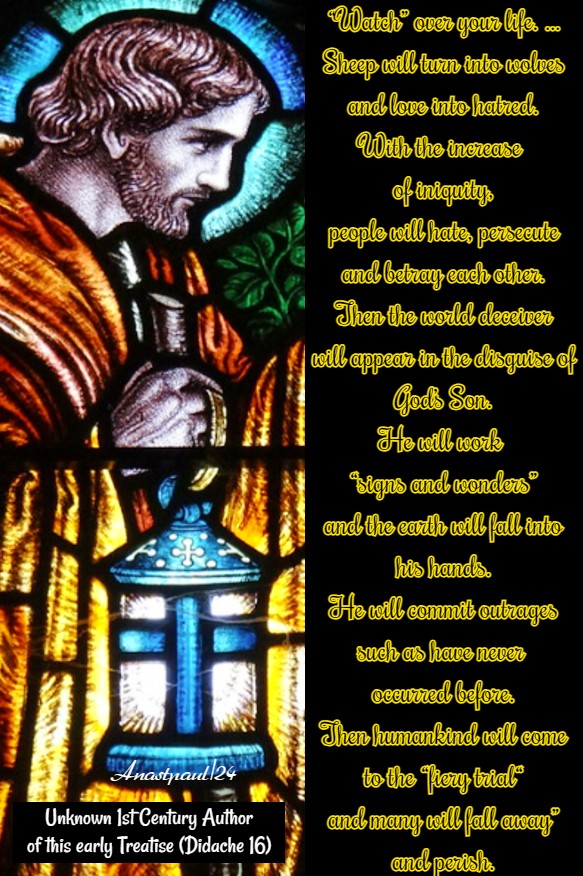
“Watch” over your life. … Sheep will turn into wolves and love into hatred. With the increase of iniquity, people will hate, persecute and betray each other. Then the world deceiver will appear in the disguise of God’s Son. He will work “signs and wonders” and the earth will fall into his hands. He will commit outrages such as have never occurred before. Then humankind will come to the “fiery trial“ and many will fall away” and perish.”
Unknown 1st Century Author [ACW- Ancient Christian Writer] (Didache 16)
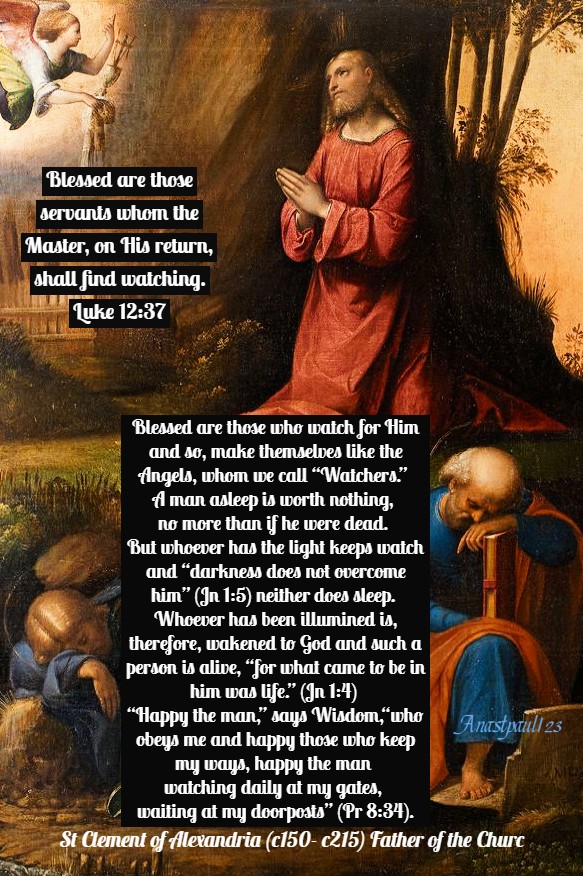
“Blessed are those servants whom the Master, on His return, shall find watching.” Luke 12:37
“Blessed are those who watch for Him and so, make themselves like the Angels, whom we call “Watchers.” A man asleep is worth nothing, no more than if he were dead. But, whoever has the light, keeps watch and “darkness does not overcome him” (Jn 1:5) neither does sleep. Whoever has been illumined is, therefore, wakened to God and such a person is alive, “for what came to be in him was life.” (Jn 1:4) “Happy the man,” says Wisdom, “who obeys me and happy those who keep my ways, happy the man watching daily at my gates, waiting at my doorposts” (Pr 8:34).”
St Clement of Alexandria (c150- c215) Father of the Church,
“She did not leave the temple, serving with fastings and prayers, night and day.” Luke 2:37
“If, in holy Scripture, Christ is the true Sun and the true Day, there is no hour when Christians should not adore God frequently and constantly, so that we, who are in Christ, that is, in the true Sun and true Day, should be persevering, throughout the whole day, in our petitions and prayer. And when, in the course of time, the revolving night returns, there can be no harm from the nocturnal shades, for those who pray because, to the sons of Light (1 Thes 5:5), even in the night there is day! For when is he without light who has Light in his heart? Or when does he not have sun and day to whom Christ is Sun and Day?”
St Cyprian of Carthage (200-258) Martyr, Father of the Church
One Minute Reflection – 15 July – “The Month of the Most Precious Blood” – St Henry II (972-1024) Confessor, Holy Roman Emperor. – Ecclesiasticus 31:8-11, Luke 12:35-40 – Scripture search here: https://www.drbo.org/
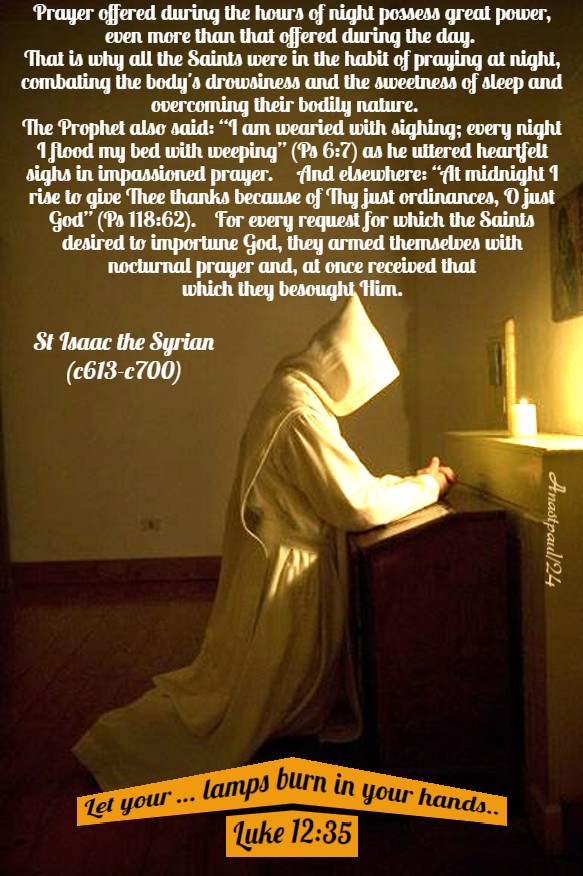
“Jesus said to His disciples: Let your … lamps burn in your hands.” – Luke 12:35
REFLECTION – “Prayer offered during the hours of night possess great power, even more than that offered during the day. That is why all the Saints were in the habit of praying at night, combating the body’s drowsiness and the sweetness of sleep and overcoming their bodily nature. The Prophet also said: “I am wearied with sighing; every night I flood my bed with weeping” (Ps 6:7) as he uttered heartfelt sighs in impassioned prayer. And elsewhere: “At midnight I rise to give Thee thanks because of Thy just ordinances, O just God” (Ps 118:62). For every request for which the Saints desired to importune God, they armed themselves with nocturnal prayer and, at once received that which they besought Him.
Satan himself fears nothing as much as prayer offered during the night watches. Even if they are accompanied by distractions, it does not return fruitless, as long as something inappropriate is not being asked for. That is why Satan engages in severe combat against those who keep watch at night, so as to deter them from this practice if he can, especially if they show themselves to be persevering. But those who are in any way defended against his pernicious wiles and have tasted the gifts God grants, at these times of vigil and, have had personal experience, of the greatness of the help God gives them, wholly despise him, he and all his craftiness.” – St Isaac the Syrian of Nineveh (c613-c700) Bishop of Nineveh, Monk at Mosul, Father of the Church (Ascetical Discourses)
PRAYER – O God, Who on this day took Henry, Thy Confessor, to the everlasting Kingdom from the throne of an earthly empire; we humbly beseech Thee, that as Thou enabled him, protected by the abundance of Thy grace, to overcome the temptations of the world, so grant that we, in emulation of him, may shun the allurements of this world and come to Thee with pure hearts.Through Jesus Christ, Thy Son our Lord, Who lives and reigns with Thee, in the unity of the Holy Ghost, God, world without end. Amen (Collect).
Our Morning Offering – 15 July – “The Month of the Most Precious Blood” – The Feast of the the “Divisio Apostolorum – the Division of the Apostles” also known as (‘Dispersion’)
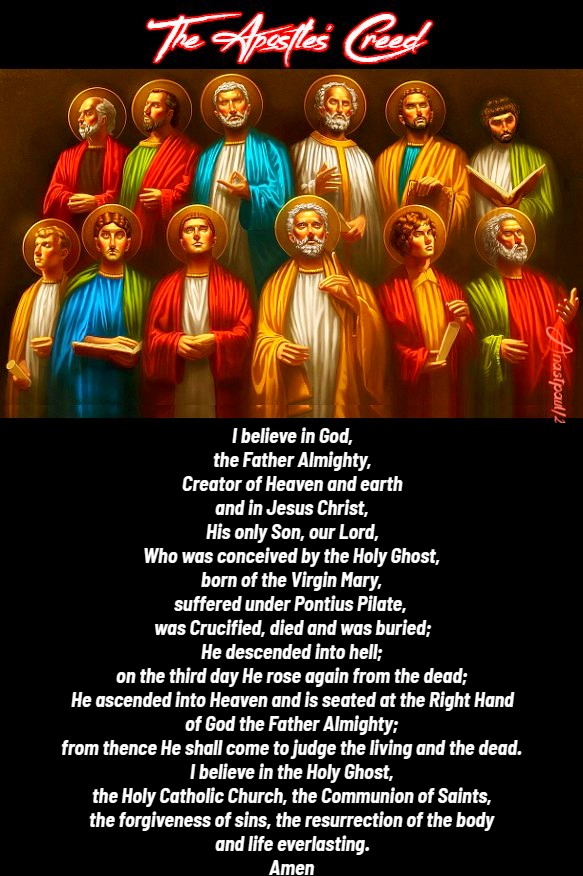
The Apostles’ Creed
I believe in God, the Father Almighty, Creator of Heaven and earth and in Jesus Christ, His only Son, our Lord, Who was conceived by the Holy Ghost, born of the Virgin Mary, suffered under Pontius Pilate, was crucified, died and was buried; He descended into hell; on the third day He rose again from the dead; He ascended into Heaven and is seated at the Right Hand of God the Father Almighty; from thence He shall come to judge the living and the dead. I believe in the Holy Ghost, the Holy Catholic Church, the Communion of Saints, the forgiveness of sins, the resurrection of the body and life everlasting. Amen
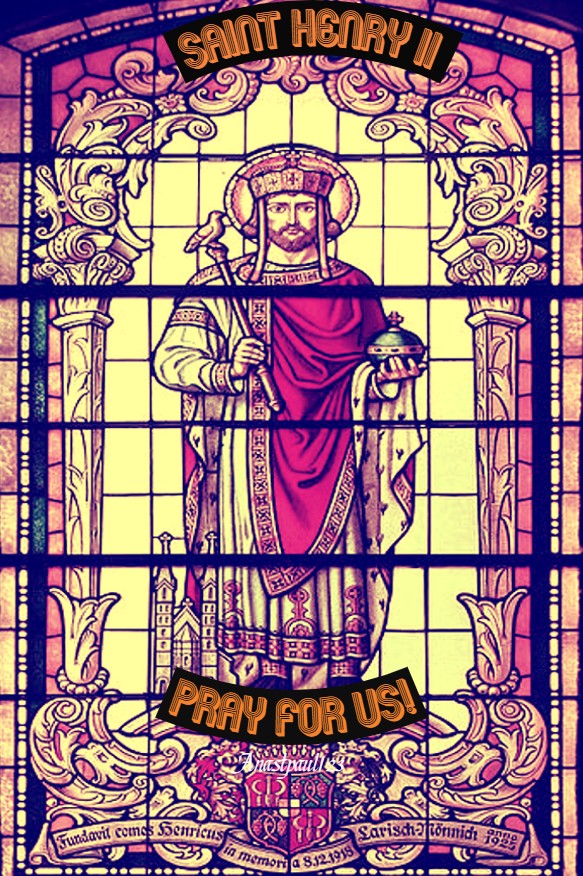
St Henry II (972-1024) Holy Roman Emperor. Henry was well known for his Missionary spirit and for his protection of the Pope in times of trouble. Henry ruled with a spirit of great humility and always sought to give the glory to God. He used his position to promote the work of the Church and the peace and happiness of the people. Another Saints whose Feast was moved in 1969 from today, 15 July to 13 July. Biography: https://anastpaul.wordpress.com/2017/07/13/saint-of-the-day-13-july-st-henry-ii-holy-roman-emperor/
St Abundantia of Spoleto St Abudemius of Bozcaada St Adalard the Younger
Blessed Anne-Mary Javouhey (1779-1851) “The Mother of the Slaves,” Religious Sister, Missionary and Founder of the Sisters of Saint Joseph of Cluny. Imagine a Mother Teresa in the France of Napoleon’s day and you will have a picture of Anne-Marie Javouhey. Nanette, as she was called, was a “velvet brick,” a thin layer of gentleness covering her determined core. A competent leader, Nanette dominated every scene in her adventurous life. Blessed Anne-Marie was Beatified on 15 October 1950 by Pope Pius XII. Biography: https://anastpaul.com/2019/07/15/saint-of-the-day-15-july-blessed-anne-mary-javouhey-1779-1851/
St Apronia
St Athanasius of Naples (c830-c 872) Confessor, Bishop of Naples from 849 until his death, Papal Legate, Reformer and restoring of Monasteries, he built a Hospice for pilgrims and a new Monastery, a man of austerity and prayer. This Athanasius should not be confused with his nephew, Athanasius II, also the Bishop of Naples. About this St Athanasius, a Patron of Naples among +70 Patrons: https://anastpaul.com/2022/07/15/saint-of-the-day-15-july-st-athanasius-of-naples-c-830-c-872/
St Antiochus of Sebaste St Benedict of Angers
Blessed Bernard of Baden TOSF (1428-1458) Margrave of Baden, Germany (Margrave was originally the medieval title for the military commander assigned to maintain the defence of one of the border provinces of the Holy Roman Empire.) Tertiary of the Order of St Francis, Apostle of the poor and the needy. Bernard was Beatified on 16 September 1769 by Pope Clement XIV. His Canonisation process continues, at present, the second miracle required is being investigated. Blessed Bernard’s Life: https://anastpaul.com/2021/07/15/saint-of-the-day-15-july-blessed-bernard-of-baden-tosf-1428-1458/
St David of Sweden St Donivald St Eberhard of Luzy St Edith of Tamworth St Eternus St Felix of Pavia St Gumbert of Ansbach St Haruch of Werden St Jacob of Nisibis St Joseph Studita of Thessalonica Bl Peter Aymillo St Plechelm of Guelderland Bl Roland of Chézery St Valentina of Nevers St Vladimir I of Kiev
Martyred Jesuit Missionaries of Brazil – 40 Beati: A band of forty Spanish, Portugese and French Jesuit Missionaries Martyred by the Huguenot pirate Jacques Sourie while en route to Brazil. They are – Aleixo Delgado • Alonso de Baena • álvaro Borralho Mendes • Amaro Vaz • André Gonçalves • António Correia • Antônio Fernandes • António Soares • Bento de Castro • Brás Ribeiro • Diogo de Andrade • Diogo Pires Mimoso • Domingos Fernandes • Esteban Zuraire • Fernando Sánchez • Francisco Alvares • Francisco de Magalhães • Francisco Pérez Godoy • Gaspar Alvares • Gonçalo Henriques • Gregorio Escribano • Ignatius de Azevedo • Iõao • João Fernandes • João Fernandes • Juan de Mayorga • Juan de San Martín • Juan de Zafra • Luís Correia • Luís Rodrigues • Manuel Alvares • Manuel Fernandes • Manuel Pacheco • Manuel Rodrigues • Marcos Caldeira • Nicolau Dinis • Pedro de Fontoura • Pedro Nunes • Simão da Costa • Simão Lopes • They were Martyed on 15 and 16 July 1570 on the ship Santiago near Palma, Canary Islands. They were Beatified on 11 May 1854 by Pope Pius IX.
Martyrs of Alexandria – 13 Saints: Thirteen Christians who were Martyred together. We know the names of three, no details about them and the other ten were all children. – Narseus, Philip and Zeno. Martyred in the early 4th-century in Alexandria, Egypt.
Martyrs of Carthage – 9 Saints: A group of nine Christians who were Martyred together. We know nothing else but their names – Adautto, Catulinus, Felice, Florentius, Fortunanziano, Januarius, Julia, Justa and Settimino. They were Martyred in Carthaginian and their relics at the Basilica of Fausta at Carthage.
Martyrs of Pannonia – 5 Saints: Five 4th-century Martyrs killed together. No information about them has survived except the names – Agrippinus, Fortunatus, Martialis, Maximus and Secundinus.
Quote/s of the Day – 14 July – “The Month of the Most Precious Blood” – St Bonaventure OFM (1221-1274) Seraphic Doctor of the Church
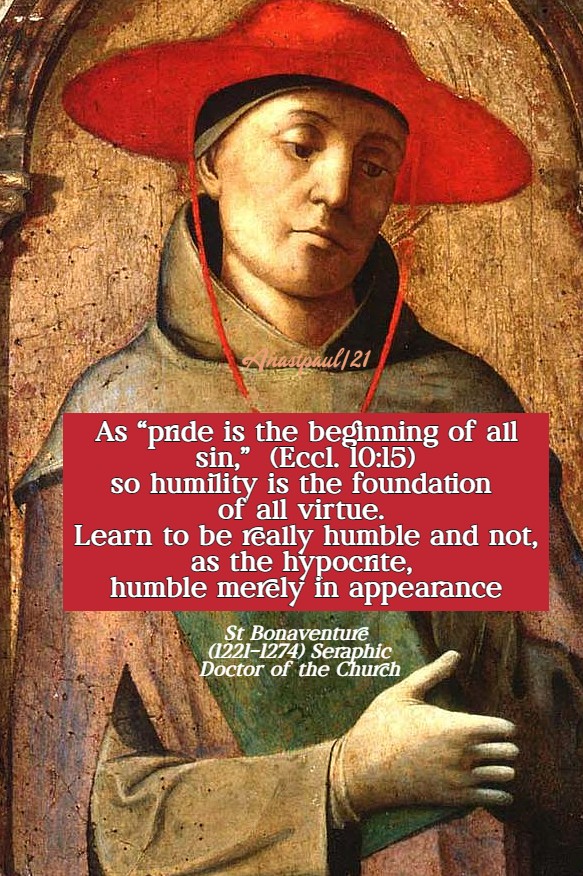
“As “pride is the beginning of all sin,” (Eccl. 10:15) so humility is the foundation of all virtue. Learn to be really humble and not, as the hypocrite, humble merely in appearance.”
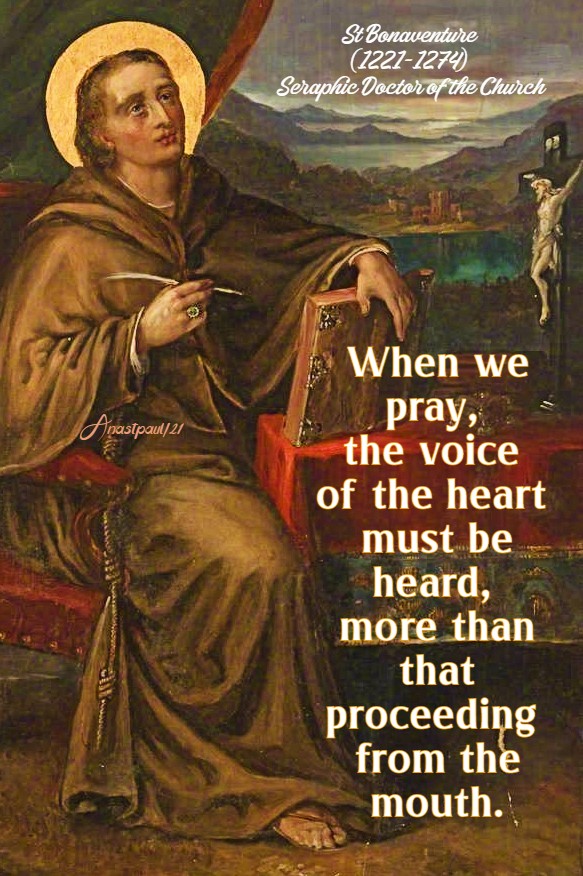
“When we pray, the voice of the heart must be heard , more than that proceeding from the mouth.”
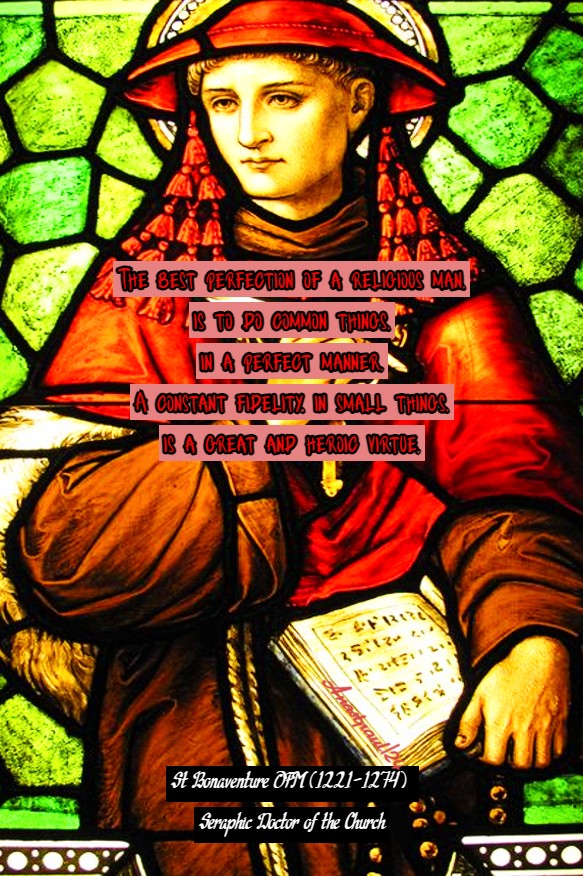
“The best perfection of a religious man, is to do common things, in a perfect manner. A constant fidelity, in small things, is a great and heroic virtue.”
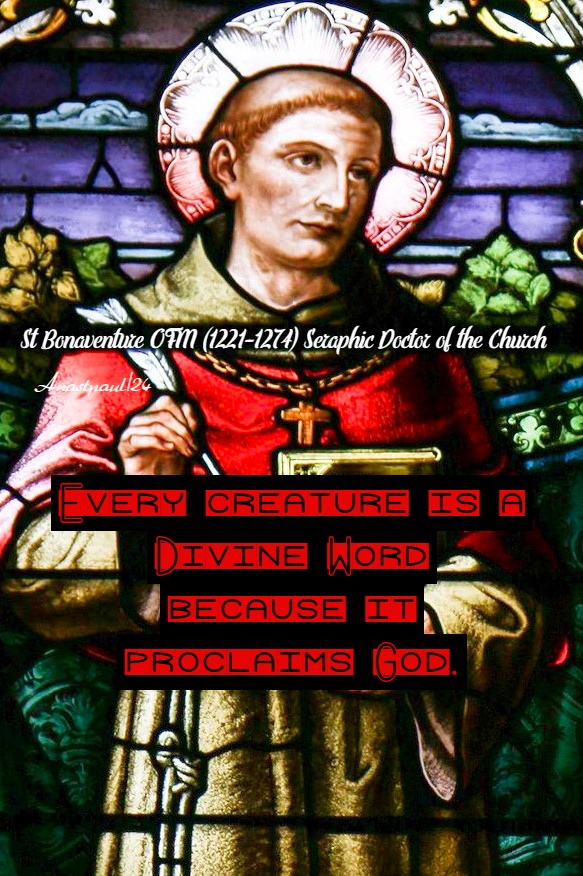
“Every creature is a Divine Word because it proclaims God.”
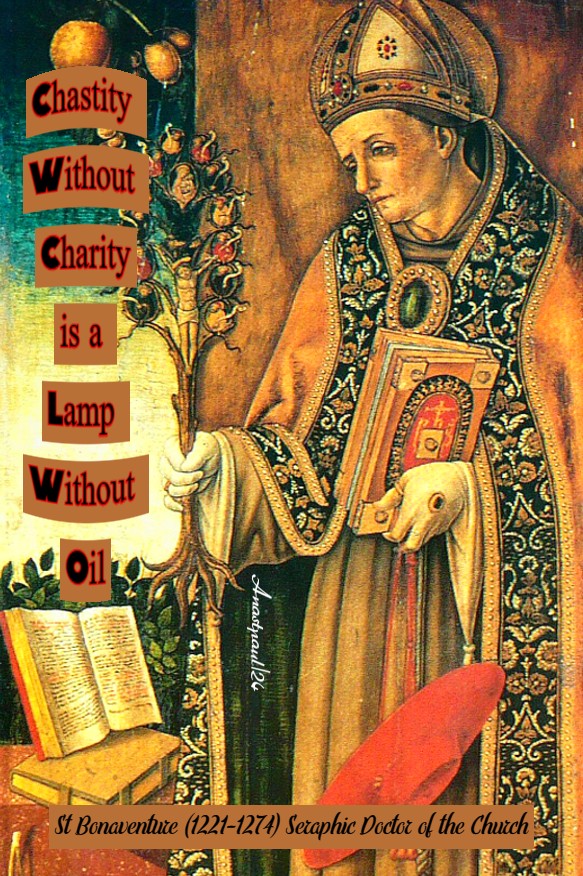
“Chastity without charity is a lamp without oil.”
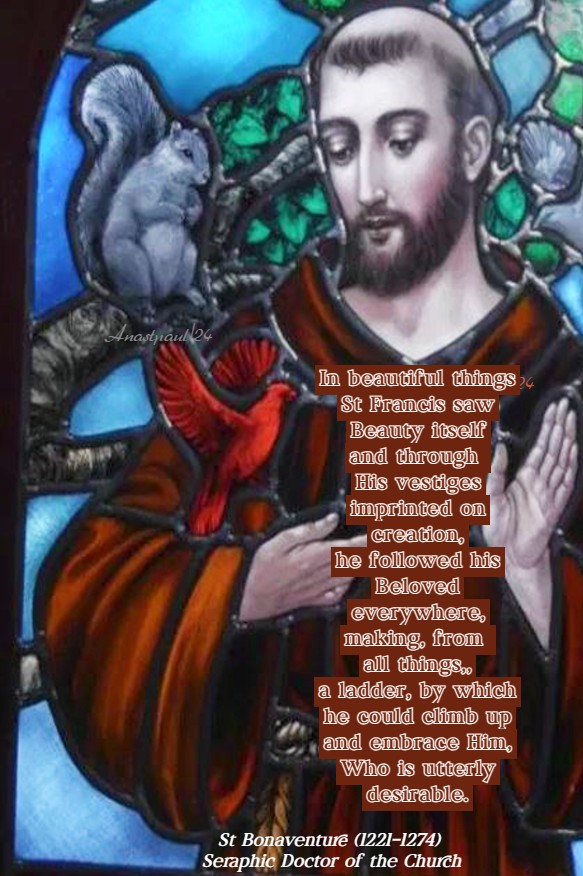
“In beautiful things St Francis saw Beauty itself and through His vestiges imprinted on creation, he followed his Beloved everywhere, making, from all things, a ladder, by which he could climb up and embrace Him, Who is utterly desirable.”
Our Morning Offering – 14 July – “The Month of the Most Precious Blood” – Pentecost VIII – St Bonaventure OFM (1221-1274) Seraphic Doctor of the Church
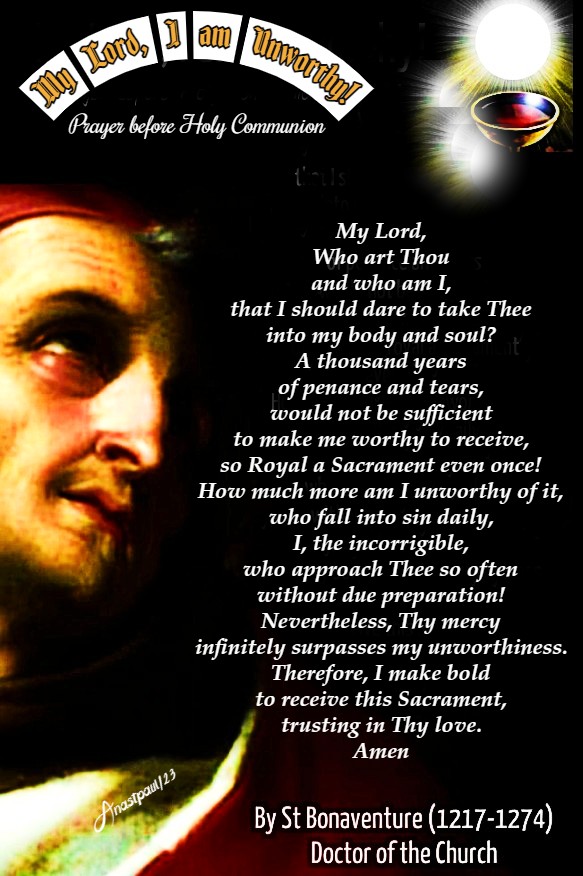
My Lord, I am Unworthy! Prayer before Holy Communion By St Bonaventure (1217-1274) Seraphic Doctor of the Church
My Lord, Who art Thou and who am I, that I should dare to take Thee into my body and soul? A thousand years of penance and tears, would not be sufficient to make me worthy to receive, so Royal a Sacrament even once! How much more am I unworthy of it, who fall into sin daily, I, the incorrigible, who approach Thee so often without due preparation! Nevertheless, Thy mercy infinitely surpasses my unworthiness. Therefore, I make bold to receive this Sacrament, trusting in Thy love. Amen
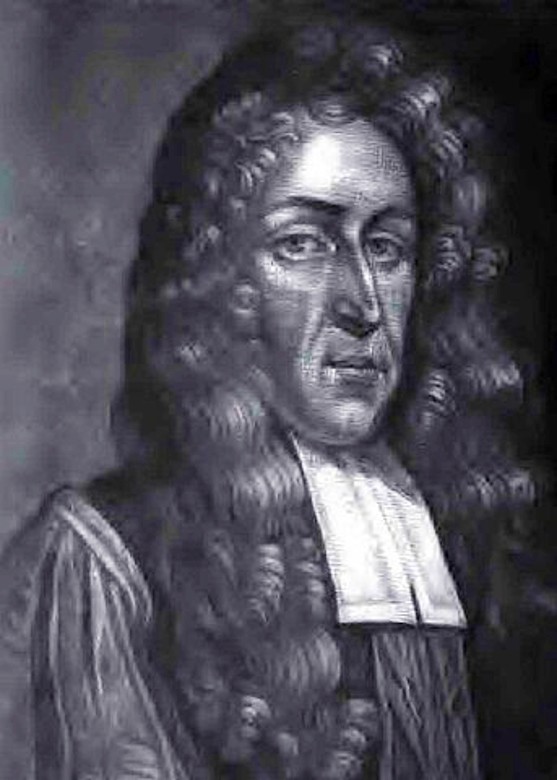
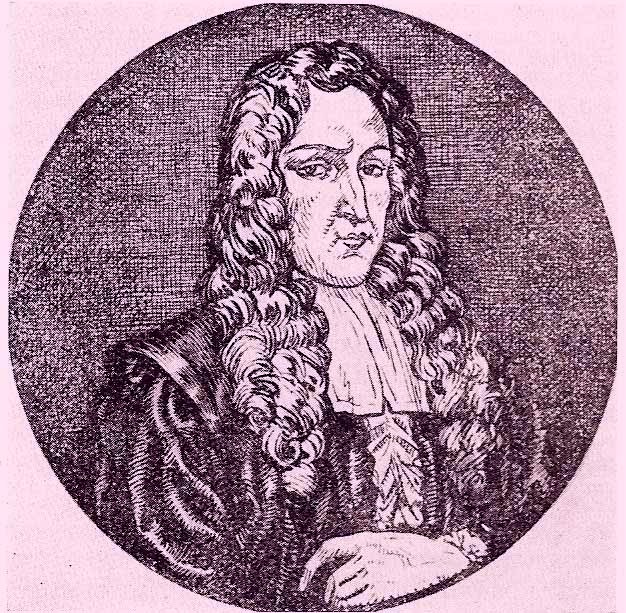
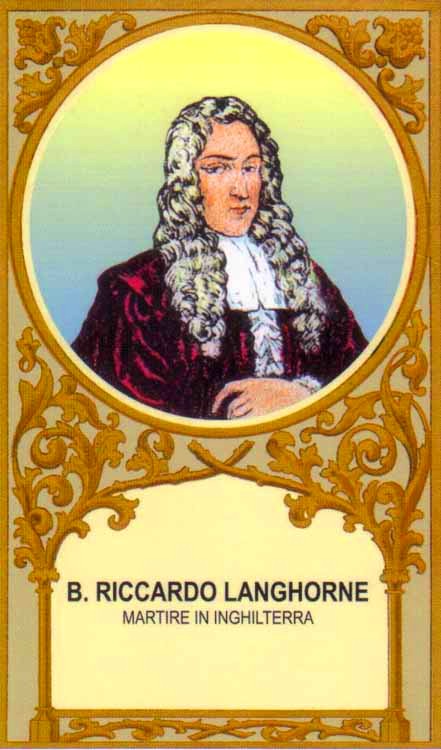
Saint of the Day – 14 July – Blessed Richard Langhorne (c1624-1679) Martyr Layman, Barrister. Born in c1624 in Little Wymondley, Hertfordshire, England and died on 14 July 1679 (aged 54–55) at Tyburn Tree, London, England by being hanged on a false charge of treason as part of the fabricated Popish Plot. He fell under suspicion because he was a Roman Catholic and because, he had acted as legal adviser to the Jesuits at a time of acute anti-Catholic hysteria.
Richard was the third son of William Langhorne, a Barrister and his wife, Lettice Needham, of Little Wymondley in Hertfordshire. He was admitted to the Inner Temple in May 1647 and called to the Bar in November 1654. He was a Catholic and provided legal and financial advice to the Society of Jesus in London. During the wave of anti-Catholic hysteria which followed the Great Fire of London of 1666, he was briefly arrested but quickly released.
His wife, Dorothy Legatt, was a Protestant from Havering in Essex. His sons, Charles and Francis were both Priests. When, in October 1677, Titus Oates was expelled from the English College at St Omer “for serious moral lapses” Charles Langhorne nevertheless, entrusted Oates with a letter to his father. Oates returned to St Omer with a letter from Richard thanking the Jesuits for all they had done for his sons.
When Oates and Israel Tonge, one of his accomplice, in September 1678, unleashed their entirely fictitious Popish Plot, a non-existent Catholic conspiracy to kill King Charles II, three Jesuits and a Benedictine were arrested. Following a detailed search of their papers (which failed to uncover any evidence of treason), Langhorne’s role as legal adviser to the Jesuits was discovered almost at once – he was arrested a week after the four Priests, although there was no evidence in the Priests’ papers that he had committed any crime. He was imprisoned at Newgate and charged with treason. Oates claimed and was corroborated by the notorious informer and confidence trickster, William Bedloe, that Langhorne’s earlier correspondence dealt with the conspiracy to kill the King.
He was tried on 14 June 1679. He was forced to defend himself, as a person charged with treason had no right then to Defence Counsel (this rule was not changed until the passage of the Treason Act in 1695). His main defence consisted of an attack on the character of the Crown’s principal Witnesses, Oates and Bedloe but since the Judges were well aware of the deplorable past lives of both men, this seems to have made little impression.He also called a number of students from St Omer to prove that Oates had been at the College on the crucial dates when he claimed to be in London but the public mood was so hostile to Catholics that the Witnesses were barely able to make themselves heard above the roar of the crowd and some of them were assaulted as they left the Court. Ironically, some of the same Witnesses appeared for the prosecution at Oates’ own trial for perjury in 1685, where the crowd treated them courteously and the Jury was told to weigh their evidence with the greatest seriousness. (Such evil contradicitions and treachery within the Courst of Justic [!] within the space of 6 years!)
William Scroggs, the Lord Chief Justice, although violently prejudiced against Catholic Priests, was relatively tolerant of Catholic laymen. His summary was reasonably fair, by the standards of the time and he did warn the Jury that on no account should an innocent man’s life be taken away. Nonetheles, Langhorne was found guilty of High Treason.
As the result of a petition by his wife, a ‘true Protestant’ he received a month’s reprieve to tidy the affairs of his clients. Some suggest that the Crown was still hoping that he would confess and it seems he was offered a Royal Pardon if he did so. Langhorne was prepared, presumably with the consent of the Jesuit Fathers, to give the Crown a list of all the Jesuit properties in England, (which turned out to be much less extensive than the Crown, misled by Oates’s wild exaggeration of the Jesuits’ wealth, had expected) but, he steadily maintained his innocence.
Richard wrote a lengthy Devotion of Prayers and Meditations in verse, which was later published. He was executed at Tyburn Tree, London, on 14 July 1679.
His last words to his Executioner were:
“I am desirous to be with my Jesus. I am ready and you need stay no longer for me.”
Public opinion was slowly turning against the Plot and Langhorne’s courageous death made a favourable impression on the watching crowd.
The Martyr’s wife, Dorothy, although a militant Protestant, who even sometimes provided information against the Catholics, remained faithful to her husband until the end and perhaps later converted to Catholicism, as suggested by Burnet in his emorandum of the Popish Conspiracy.
Langhorne’s Memorial remains, containing the story of his arrest and imprisonment, written in Newgate and published, by his son, Father Richard, three months after his death, together with the Prayers and Meditations he composed while awaiting the supreme hour, (London 1679). Father Richard later also published , written by his father in defence of Charles II’s declaration of 15 March 1672. We also have some letters of the Martyr preserved by two of his friends, the Protestant Lord Christopher Hatton and the Catholic William Blundell.
Begun in Rome on 9 December 1886 by order of Pope Leo XIII, the cause for Langhorne’s Beatification was concluded under the Pontificate of Pope Pius XI, with his inscription in the catalogue of the Blesseds on 15 December. 1929
Blessed Gaspar de Bono OM (1530– 1604) Spanish Priest, Friar of the Order of Minims, Vicar Provincial of the Order. He was noted for his particular devotion to the Passion of Christ, carrying his Crucifix everywhere as a means of evangelisation and to be able to constantly immerse himself in his Saviour’s sufferings. His Loving Life: https://anastpaul.com/2021/07/14/saint-of-the-day-14-july-blessed-gaspar-de-bono-om-1530-1604/
Bl Giorgio of Lauria Bl Hroznata of Bohemia Bl Humberto of Romans St Idus of Ath Fadha St Just St Justus of Rome St Liebert St Marciano of Frigento St Marchelm Bl Michael Ghebre St Optatian of Brescia St Papias of Africa Blessed Richard Langhorne (c1624-1679) Martyr Layman Bl Toscana of Verona St Ulric of Zell St Vincent Madelgaire
Thought for the Day – 13 July – Meditations with Fr Richard Frederick Clarke SJ (1839-1900) Today we begin a new seriest with Fr Clarke having completed “Patience.” I believe we still have a week or so of “Humility” to complete.
CHARITY Meditations for a Month
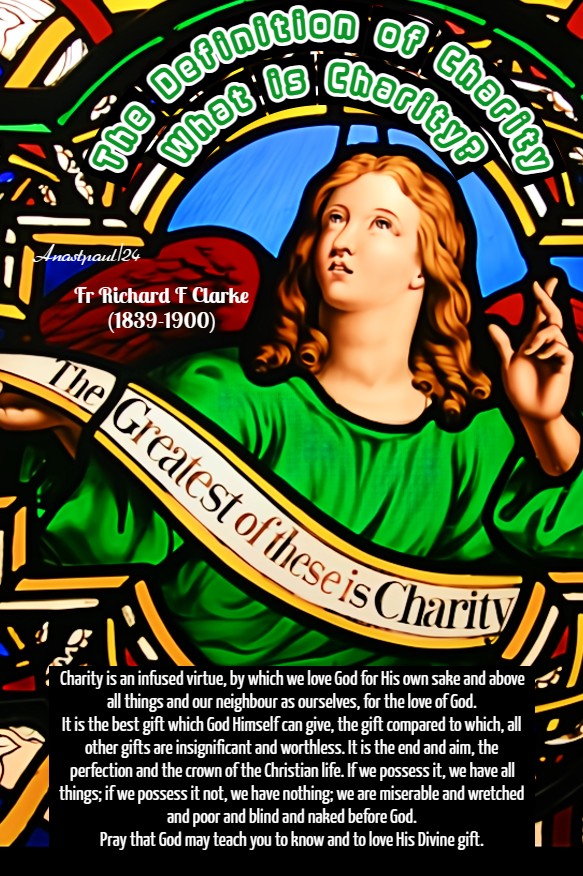
The Definition of Charity What is Charity?
Charity is an infused virtue, by which we love God for His own sake and above all things and our neighbour as ourselves, for the love of God. It is the best gift which God Himself can give, the gift compared to which, all other gifts are insignificant and worthless. It is the end and aim, the perfection and the crown of the Christian life. If we possess it, we have all things; if we possess it not, we have nothing; we are miserable and wretched and poor and blind and naked before God. Pray that God may teach you to know and to love His Divine gift.
Charity is called an infused virtue, because we can only obtain it, if God shall please to pour it into our soul. No amount of practice can make it ours. No natural benevolence will develop into charity, unless God adds that supernatural character which alone can render it pleasing in His sight and meritorious of eternal life. We must carefully distinguish natural from supernatural charity and we must beware of being satisfied with the former.
Charity is one of the virtues called “Christian virtues,” inasmuch, as their model and type, is the Life of Christ upon earth because, they unite us to Christ and make us like unto Him. It is true that charity is, in itself, pre-eminently the Christian virtue and when Saint Paul says, “Put ye on the Lord Jesus Christ” (Romans 13:14), he refers alone to the virtue of charity, with which we must be clothed, if we are to be the servants and followers of our Lord. Can I say I am clothed with charity, so all around me see it? Do they not too often detect in me, a lamentable want of this virtue?
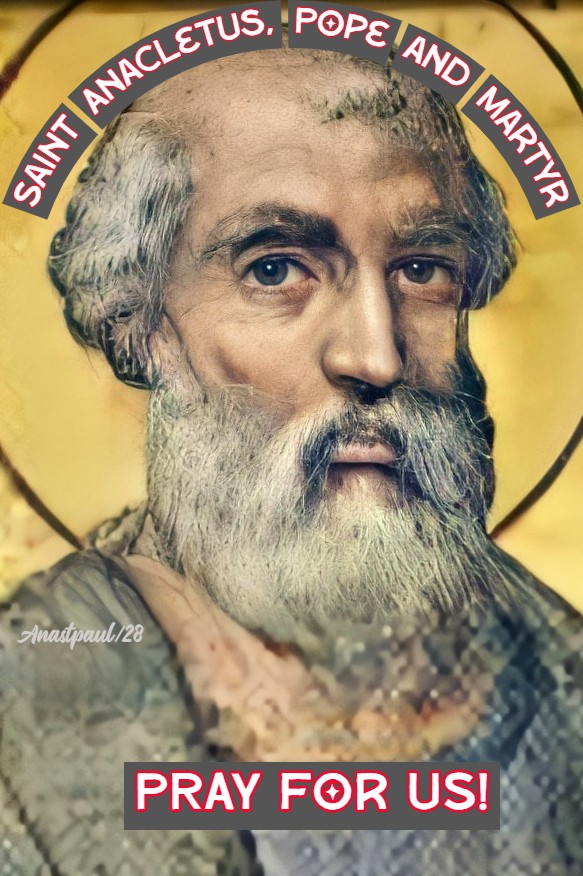
Quote/s of the Day – 13 July – “The Month of the Most Precious Blood” – St Anacletus (c25-c89) 3rd Bishop of Rome and Martyr – 1 Petet 5:1-4; 5:10-11: Matthew 16:13-19 – Scripture search here: https://www.drbo.org/
“And I say to thee: That thou art Peter and upon this rock, I will build My Church and the gates of hell shall not prevail against it.”
Matthew 16:18
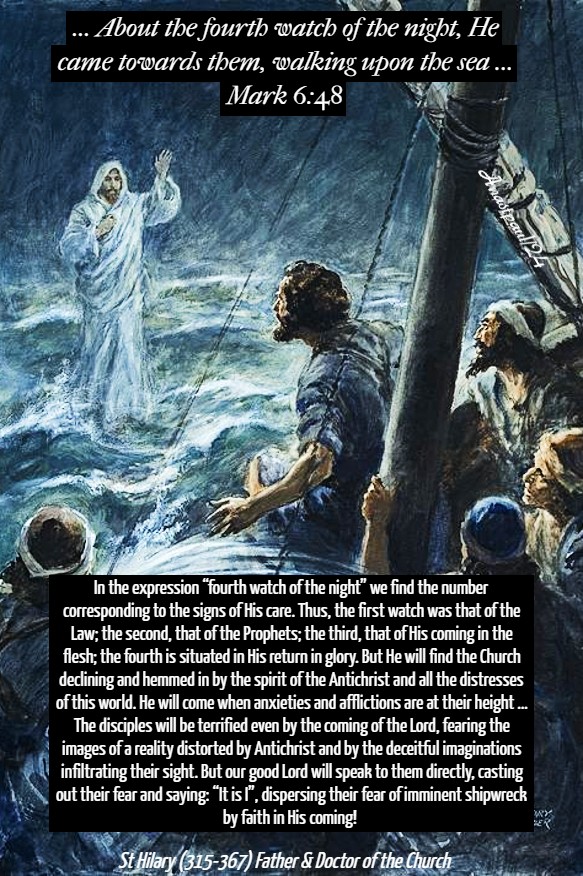
“… About the fourth watch of the night, He came towards them, walking upon the sea …”
Mark 6:48
“In the expression “fourth watch of the night” we find the number corresponding to the signs of His care. Thus, the first watch was that of the Law; the second, that of the Prophets; the third, that of His coming in the flesh; the fourth is situated in His return in glory. But He will find the Church declining and hemmed in by the spirit of the Antichrist and all the distresses of this world. He will come when anxieties and afflictions are at their height … The disciples will be terrified even by the coming of the Lord, fearing the images of a reality distorted by Antichrist and by the deceitful imaginations infiltrating their sight. But our good Lord will speak to them directly, casting out their fear and saying: “It is I”, dispersing their fear of imminent shipwreck by faith in His coming! ”
St Hilary (315-368) Bishop of Poitiers, Father & Doctor of the Church
“We, as Catholics, are not permitted to believe anything of our own will, nor to choose, what someone has believed, of his [own will]. We have God’s Apostles as authorities, who did not themselves, of their own wills, choose anything of what they wanted to believe but faithfully transmitted, to the nations, the teachings of Christ.”
St Isidore of Seville (c560-636) Father & Doctor of the Church
“Let us trust in Him. Who has placed this burden upon us. What we ourselves cannot bear, let us bear, with the help of Christ. For He is All-powerful and He tells us: ‘My yoke is easy and my burden light.’”
St Boniface (c672-754) Martyr
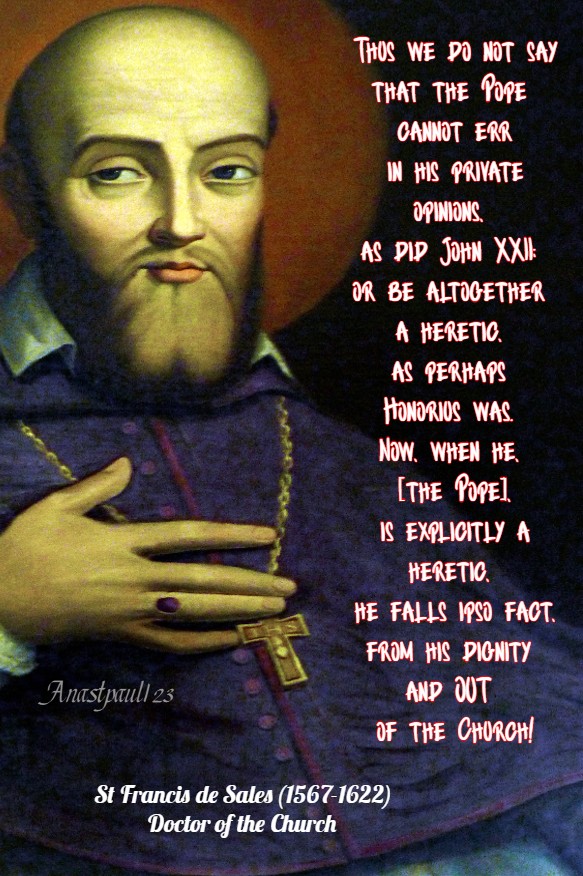
“Thus we do not say that the Pope cannot err in his private opinions, as did John XXII; or be altogether a heretic, as perhaps Honorius was. Now, when he, [the Pope], is explicitly a heretic, he falls ipso facto, from his dignity and OUT of the Church! …
St Francis de Sales (1567-1622) Doctor of the Church
One Minute Reflection –13 July – “The Month of the Most Precious Blood” – St Anacletus (c25-c89) 3rd Bishop of Rome and Martyr – 1 Petet 5:1-4; 5:10-11: Matthew 16:13-19 – Scripture search here: https://www.drbo.org/
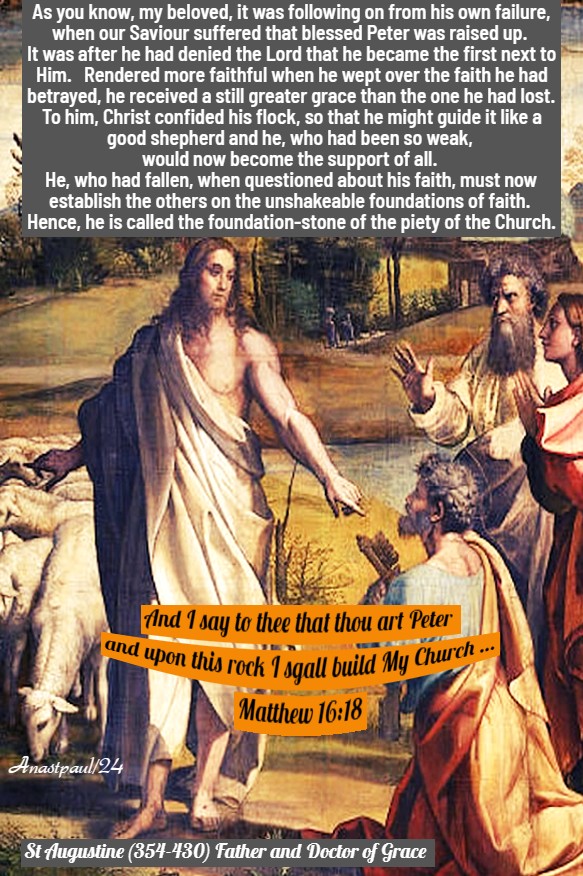
“And I say to thee that thou art Peter and upon this rock I sgall build My Church …” – Matthew 16:18
REFLECTION – “Thou art Peter and upon this rock I shall build My Church.” He was given this name of ‘Peter’ because he was the first to set the foundations of the faith among the nations and because, he is the indestructible rock on which rests the judgement seat and the whole edifice, belonging to Christ Jesus. It was on account of his faithfulness that he was called Peter, whereas our Lord receives the same Name on account of His power according to Saint Paul’s words: “They drank from a spiritual Rock which followed them and that Rock ,was the Christ” (1 Cor 10:4). Yes, the Apostle chosen to be His co-worker merited to share the same Name as Christ. They built the same building together – Peter does the planting, the Lord gives the increase and it is the Lord, too, Who sends those who will do the watering (cf 1 Cor 3:6).
As you know, my beloved, it was following on from his own failure, when our Saviour suffered that blessed Peter was raised up. It was after he had denied the Lord that he became the first next to Him. Rendered more faithful when he wept over the faith he had betrayed, he received a still greater grace than the one he had lost. To him, Christ confided his flock, so that he might guide it like a good shepherd and he, who had been so weak, would now become the support of all. He, who had fallen, when questioned about his faith, must now establish the others on the unshakeable foundations of faith. Hence, he is called the foundation-stone of the piety of the Church.” – St Augustine (354-430) Father and Doctor of Grace (Sermon attributed to Saint Augustine).
PRAYER – Look forgivingly on thy flock, Eternal Shepherd, and keep it in thy constant protection, by the intercession of blessed Anacletus thy Martyr and Sovereign Pontiff, whom thou didst constitute Shepherd of the whole Church.Through the same Jesus Christ, Thy Son our Lord, Who lives and reigns with Thee, in the unity of the Holy Ghost, God, world without end. Amen (Collect).
Our Morning Offering – 13 July – Feast of the Most Holy Name of Mary
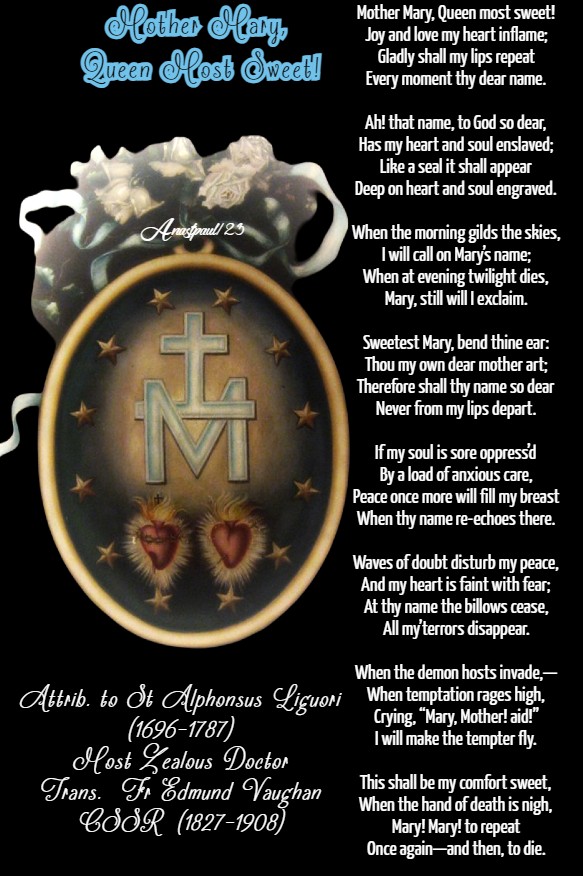
Mother Mary, Queen Most Sweet! Attrib. to St Alphonsus de Liguori (1696-1787) Most Zealous Doctor Italian Hymn Trans. Fr Edmund Vaughan CSSR (1827-1908)
Mother Mary, Queen most sweet! Joy and love my heart inflame; Gladly shall my lips repeat Every moment thy dear name.
Ah! that name, to God so dear, Has my heart and soul enslaved; Like a seal it shall appear Deep on heart and soul engraved.
When the morning gilds the skies, I will call on Mary’s name; When at evening twilight dies, Mary, still will I exclaim.
Sweetest Mary, bend thine ear: Thou my own dear mother art; Therefore, shall thy name so dear Never from my lips depart.
If my soul is sore oppress’d By a load of anxious care, Peace once more will fill my breast When thy name re-echoes there.
Waves of doubt disturb my peace, And my heart is faint with fear; At thy name the billows cease, All my’terrors disappear.
When the demon hosts invade,— When temptation rages high, Crying, “Mary, Mother! aid!” I will make the tempter fly.
This shall be my comfort sweet, When the hand of death is nigh, Mary! Mary! to repeat Once again—and then, to die.
This Hymn is an Anonymous Hymn belonging to the Redemptorist tradition but Hymnary.org attributes it to St Alphonsus Liguori. “Hymns and Verses on Spiritual Subjects” (1863) notes that this is one of two Hymns, translated in that book, mentioned above, which come from a Neapolitan published collection of Mission Hymns which are attributed to St Alphonsus.























 AnaStpaul
You must be logged in to post a comment.