Posted in INCORRUPTIBLES

Saint of the Day – 5 April – Saint Catherine of Palma OSA (1533โ€“1574)

Saint of the Day – 5 April – Saint Catherine of Palma OSA (1533โ€“1574) Nun of the Order of the Canonesses of St Augustine, Mystic, gifted with the charism of prophecy, visions and ecstasy. Born on 1 May 1533 at Valldemossa, Mallorca, Spain and died on 5 April 1574 at Saint Mary Magdalen convent, Palma, Mallorca, Spain of natural causes, at the aged of 41. She is also known as Catalina Thomรกs, Caterina Tomร s i Gallard, and Catherine or Catalina Thomas or Tomas. Patronage – Mallorca. Her Body is incorrupt.

Catherine was born 1 May 1533 at Valldemossa, Mallorca, Spain, in a peasant family. Catherine was the youngest of 7 children. Her parents died when she was 7, leaving her without an inheritance or a dowry. She spent her remaining formative years in the home of her paternal uncle. Even though she was very young, she was made to do the worst tasks. The servants were even encouraged to overwork and ignore her. Even so, she remained ever sweet and patient.

At age 15, she began having visions of St Anthony and St Catherine, her patroness. It was then that she began to feel a calling to the Religious life. She confided these desires to a holy hermit Priest, Father Antony Castagneda. Believing that Catherine needed time to discern if this was really her vocation, he told her that she would receive a reply in time, if she continued to pray about it, as he would also do. She agreed without question or argument.

She had to wait a long time. The wait was made even more frustrating by the treatment she endured at the hands of her relations, who increased their mistreatment of her, because they feared losing her services. Father Antony hadn’t forgotten her though. He was finding it very hard to find a Convent that could afford to take a girl with no dowry. As a preliminary step to entering a Convent, he sent Catherine to serve a family in Palma, where nothing could stand in the way of her spiritual life. One of the daughters in the household taught her reading and writing. This girl soon became Catherine’s disciple in religious matters, since Catherine had already come very far on the road to holiness.

Soon, several Convents offered to take her. She decided to enter the Canonesses of St Augustine, at their Convent of St Mary Magdalen in Palma, Mallorca. She was 20 years old at that time. From the moment she was admitted, she was admired by the other sisters, because of her sanctity and loved because of her humility and her willingness to serve others.
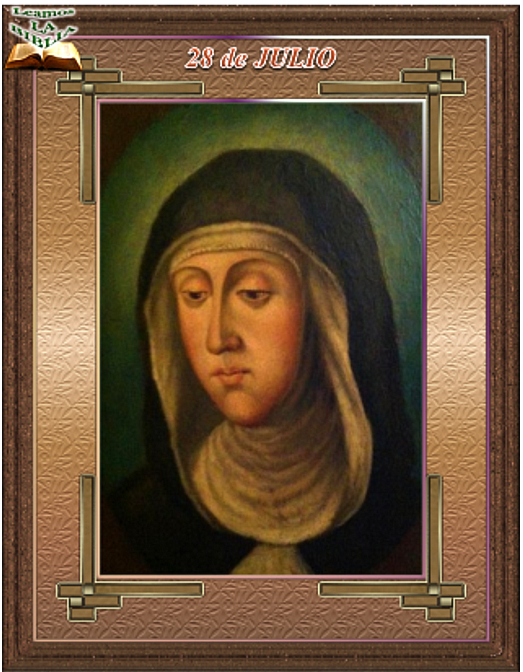
The life of Catherine, in the Convent, was ordinary at first and there was nothing to distinguish her. Then, strange things began to happen to her. Every year, between 13 and 15 days before the Feast of St Catherine of Alexandria, she would lie in a profound trance. Also, after communion, she would always remain in ecstasy, which would last most of the day, or sometimes a whole week. There were times when she appeared to be in a coma, with no signs of life, for days but at other times, she would move around the Convent with her feet together and her eyes closed, sometimes conversing with Angels and other heavenly beings and oblivious to everything and everyone around her.

At other times she would intelligently answer questions, while in one of these “Comas.” She also had the gift of prophesy. In between these events, she would be severely attacked and tempted by demons. she not only suffered evil suggestions and hallucinations, and physical manifestations of demons but, she also suffered physical assaults at their hands. When this happened, frightening screams and sounds could be heard coming from Catherine’s cell. The other nuns could never see what was attacking her but they could see what the attacks left in their wake and they would try to relieve her suffering. She tried very hard not to let these experiences get in the way of the timely discharge of her work. She foretold her own death, and died at age 41 on 5 April 1574.

Anonymous 18th-century altarpiece showing St Catherine, in a Chapel at Valldemossa, Mallorca
Plaque commemorating the Saint
Posted in DOMINICAN OP, MARIAN TITLES, SAINT of the DAY

Easter Monday, Our Lady of Divine Providence, Cussanio, Italy (1521) and Memorials of the Saints 5 April

Easter Monday -the Second day of the Octave


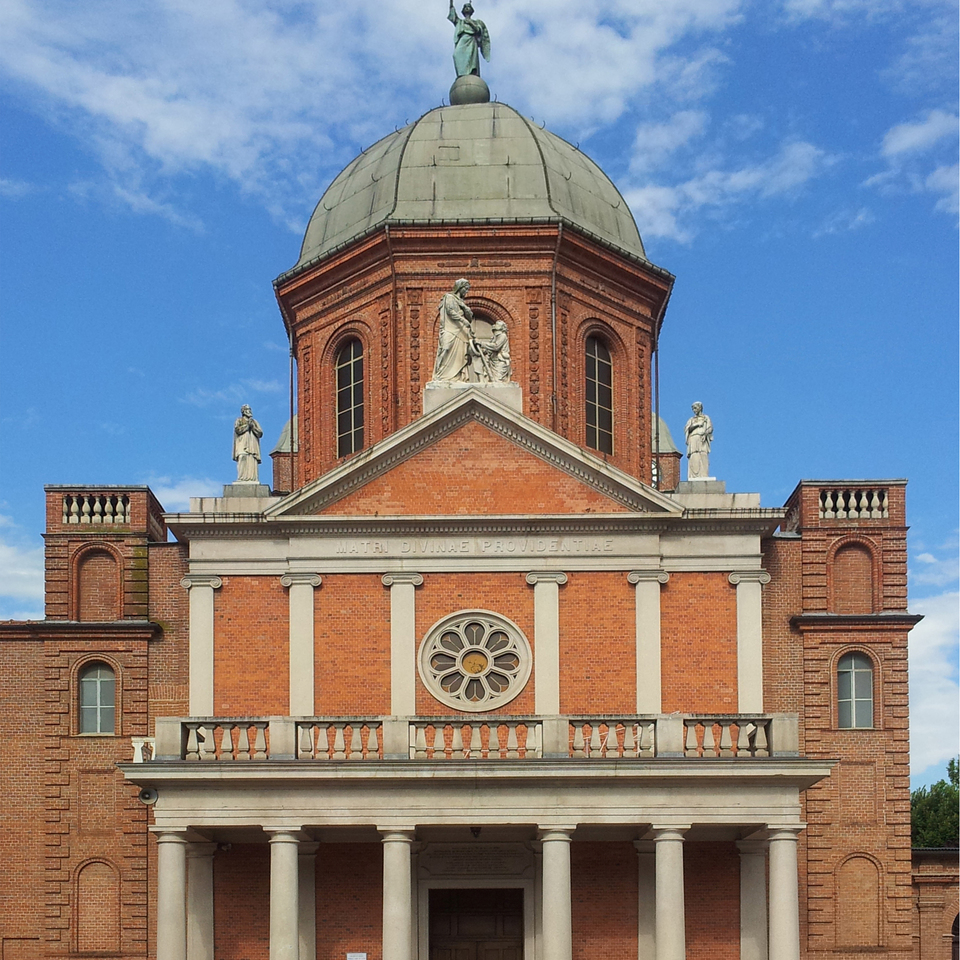
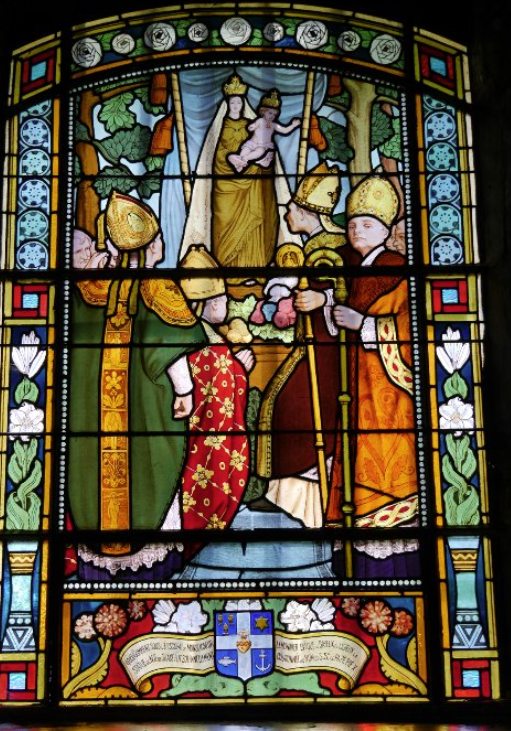
Santuario Madonna della Divina Provvidenza / Our Lady of Divine Providence, Cussanio, Italy (1521) – 5 April:

In the locality where the Sanctuary now stands, a poor deaf-mute of vulgar appearance and short stature, dressed in a rough habit, used to lead the animals to pasture. Nobody cared about him but on 8 May 1521 Bartholomew Coppa saw a Lady dressed in white coming to meet him, who approached him with maternal affection and blessed him with the word. He then told him to go to Fossano to announce the justice of God and to warn, that there would be great scourges without doing penance.

Having said this, the Lady disappeared and Bartolomeo ran to tell the story. His acquaintances hearing him speak were shocked and the kindest pushed him to carry out the mission that had been entrusted to him.
So Bartholomew went through the streets of the City to become a proclaimer of penance and to send Christians to leave the way of sin, threatening the punishments of God. But he was not listened to and he was disheartened, tired and hungry after three days, he returned to the place. of the prodigy and here he fell asleep on the ground.
And it is here that a new miracle took place. The Lady, who does not abandon her faithful, appeared to him a second time, no longer dressed in white but dressed in blue, gave him bread, repeated the command of the first time and disappeared. Bartholomew waking up, found food and gave thanks to the divine benefactress.
He brought some of the bread to his master and those in the neighbourhood and reminded them of the Lord’s threats. But again it was not believed.
After just six months, in October of the same year, a horrendous plague broke out in Fossano and its surroundings. Thousands of victims and desolation, death and sadness reminded the people of Fossano the words of poor Bartolomeo, who had foretold these punishments.
They then decided to follow his words and the plague subsided. Then in memory of the prodigious event they had a small Chapel built on the site of the Apparition of the Madonna, dedicating it to the Queen of Heaven.

In 1600 the Augustinian Brothers of the Congregation of Genoa came to Cussanio and the friars built the great Monastery complex next to the Sanctuary. During the French Revolution the Convent and Church were suppressed and the buildings forcibly abandoned.

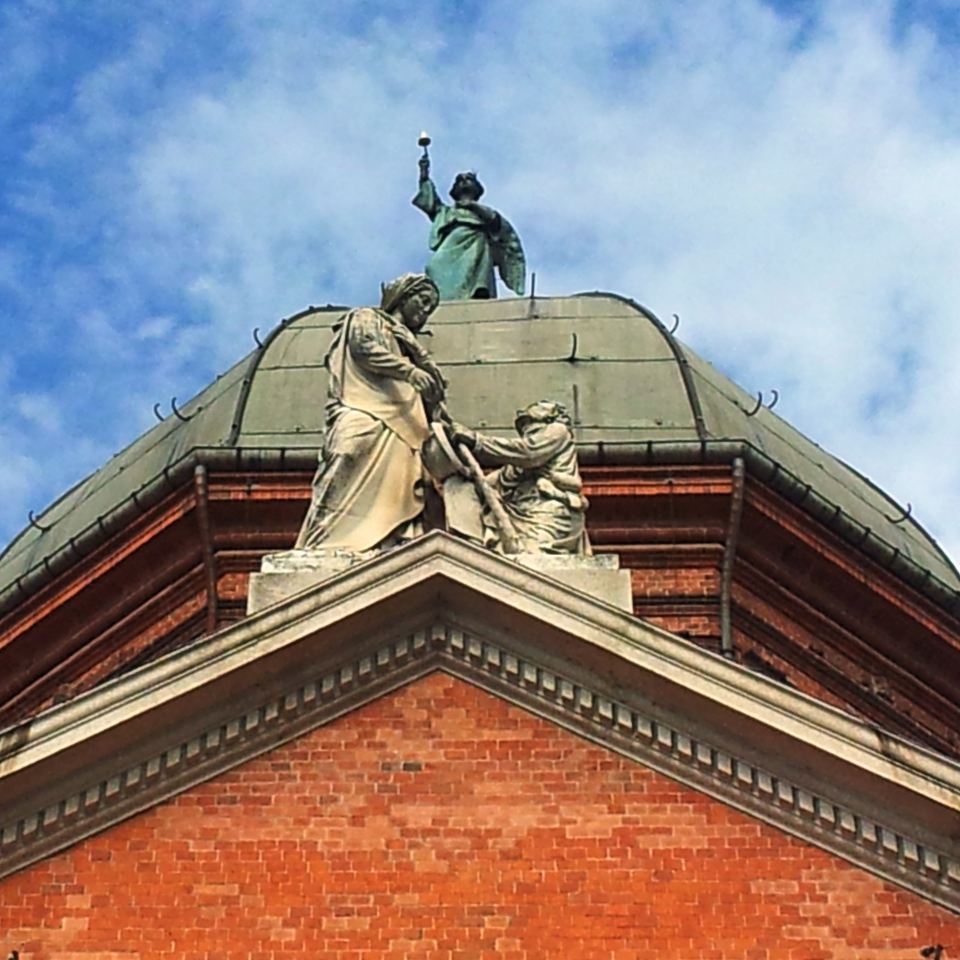
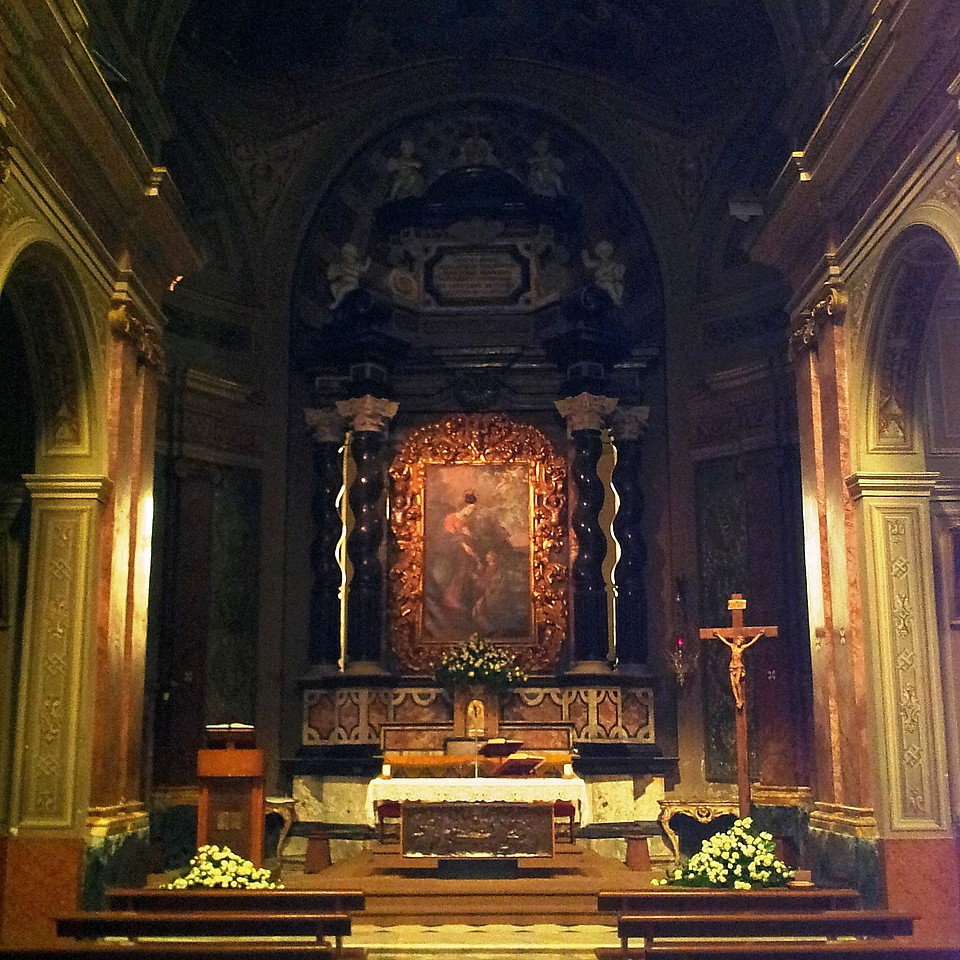
Then, in the year 1872, the Bishop, Emiliano Manacorda, a personal friend of Saint Don Bosco, arrived at the Diocese and claimed ownership of the Monastery which had been wrongfully confiscated by the state and proceeded upon the complete renovation of the Sanctuary. Work began shortly after 1875 and continued for about twenty years and included the elevation of the majestic dome and the reconstruction of the entire faรงade. The nave was extended, two aisles built and the interior was adorned with Altars, sculptures and paintings. Two of the paintings, attributed to the painter Giuseppe Barotto, depict the two scenes mentioned above and are now preserved in the Church.


St Vincent Ferrer OP (1350-1419) (Optional Memorial)
Biography of St Vincent:

https://anastpaul.wordpress.com/2018/04/05/saint-of-the-day-5-april-st-vincent-ferrer-o-p-1350-1419/

St Albert of Montecorvino
Bl Antonius Fuster
St Becan
Bl Blasius of Auvergne
St Catherine of Palma OSA (1533โ€“1574) Nun
St Claudius of Mesopotamia
St Derferl Gadarn
St Gerald of Sauve-Majeure
St Irene of Thessalonica
St Maria Crescentia Hoss

Blessed Mariano de la Mata Aparicio OSA (1905-1983)
His Life:

https://anastpaul.com/2019/04/05/saint-of-the-day-5-april-blessed-mariano-de-la-mata-aparicio-osa-1905-1983/
St Pausilippus
Bl Peter Cerdan
St Theodore the Martyr
โ€”
Martyrs of Lesbos: 5 saints โ€“ Five young Christian women martyred together for their faith. We donโ€™t even know their names. island of Lesbos, Greece.

Martyrs of North-West Africa: Large group of Christians murdered while celebrating Easter Mass during the persecutions of Genseric, the Arian king of the Vandals. They were martyred in 459 at Arbal (in modern Algeria).

Martyrs of Seleucia: 120 saints โ€“ One-hundred and eleven (111) men and nine (9) women who, because they were Christians, were dragged to Seleucia and martyred for refusing to worship the sun or fire or other pagan idols during the persecutions of King Shapur II. They were burned alive in 344 in Seleucia, Persia.

Posted in "Follow Me", EASTER, NOTES to Followers, QUOTES of the SAINTS, The RESURRECTION

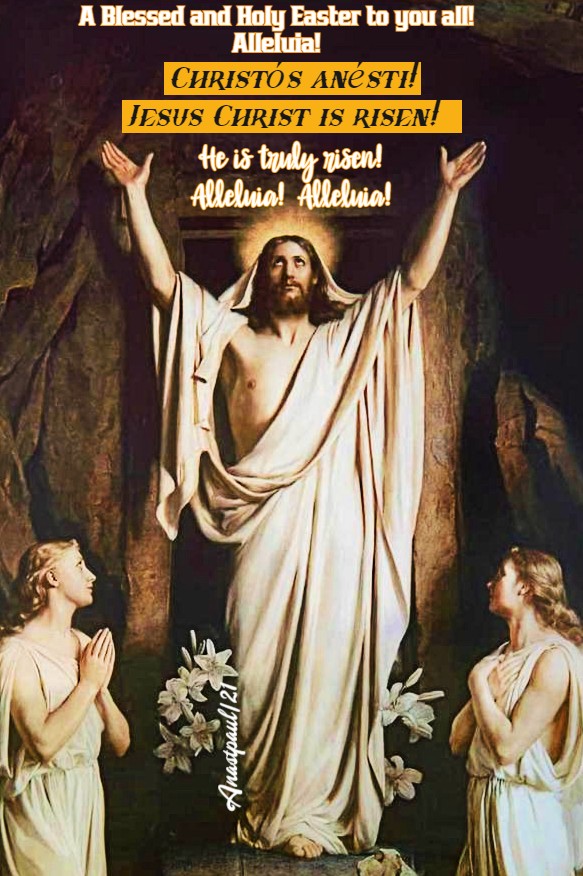
EASTER SUNDAY – 4 April – Jesus Christ is risen! He is truly risen! Alleluia!

EASTER SUNDAY – 4 April

A Blessed and Holy Easter to you all!
Alleluia!
Christรณs anรฉsti!
Jesus Christ is risen!
He is truly risen!
Alleluia! Alleluia!
Amen

[Easter is the Anglo- Saxon word for April, and was derived, as Venerable Bede tells us, (in his book De temporum ratione c. 13,) from Easter, a goddess of our pagan ancestors. Others derive Easter from Oest, Oost the Saxon for rising, or the east: and hence, Osteren, the Resurrection. Tr. from Butlerโ€™s Moveable Feasts.]

THIS IS THE DAY WHICH THE LORD HATH MADE;
LET US BE GLAD AND REJOICE THEREIN!

The night between Saturday and Sunday has well nigh run its course and the day-dawn is appearing. The Mother of sorrows is waiting, in courageous hope and patience, for the blissful moment of her Jesusโ€™ return.

โ€ฆ But Jesus is not to tarry in the gloomy sepulchre. Quicker than a ray of light through a crystal, He passes through the stone that closes the entrance of the cave. Pilate had ordered his seal to be put upon this stone and a guard of soldiers is there, to see that no-one touches it. Untouched it is and unmoved and yet, Jesus is free!

Thus, as the holy Fathers unanimously teach us, was it at His birth: -He appeared to the gaze of Mary, without having offered the slightest violence to her maternal womb. The birth and the resurrection, the commencement and the end of Jesusโ€™ mission, these two mysteries bear on them, the seal of resemblance – in the first, it is a Virgin Mother; in the last, it is a sealed tomb giving forth its captive God.

And while this Jesus, this Man-God, thus breaks the sceptre of death, the stillness of the night is undisturbed. His and our victory has cost Him no effort. 0 death! where is now thy kingdom? Sin had made us thy slaves; thy victory was complete and now, lo! thou thyself art defeated! Jesus, whom thou didst exultingly hold under thy law, ( 1 Apec. 1, 5. 2 I. Cor xv, 26. โ€˜Ibid. 56) has set Himself free and we, after thou hast domineered over us for a time, we too shall be free from thy grasp. The tomb thou makest for us, will become to us the source of a new life, for He that now conquers thee is โ€˜the First-born among the dead ~ and to-day is the Pasch, the Passover, the deliverance, for Jesus and for us, His brethren.

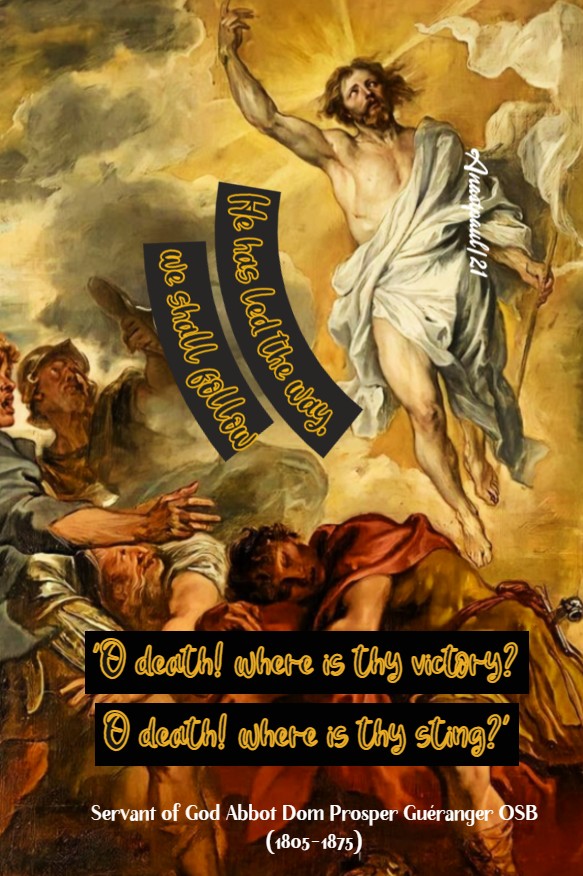
He has led the way, we shall follow and the day will come, when thou, the enemy, that destroys all things, shalt thyself be destroyed by immortality. Thy defeat dates from this moment of Jesusโ€™ Resurrection,and, with the great Apostle, we say to thee:

โ€˜O death! where is thy victory?

O death! where is thy sting?

Servant of God Abbot Dom Prosper Guรฉranger OSB (1805-1875)
Abbot of Solesmes

Posted in DOCTORS of the Church, EASTER, FATHERS of the Church, FEASTS and SOLEMNITIES, Our MORNING Offering, PRAYERS, PRAYERS of the SAINTS, The RESURRECTION

Our Morning Offering โ€“ 4 April โ€“ Your Loving Kindness, An Easter Prayer

Our Morning Offering โ€“ 4 April โ€“ Easter Sunday, The Resurrection of the Lord

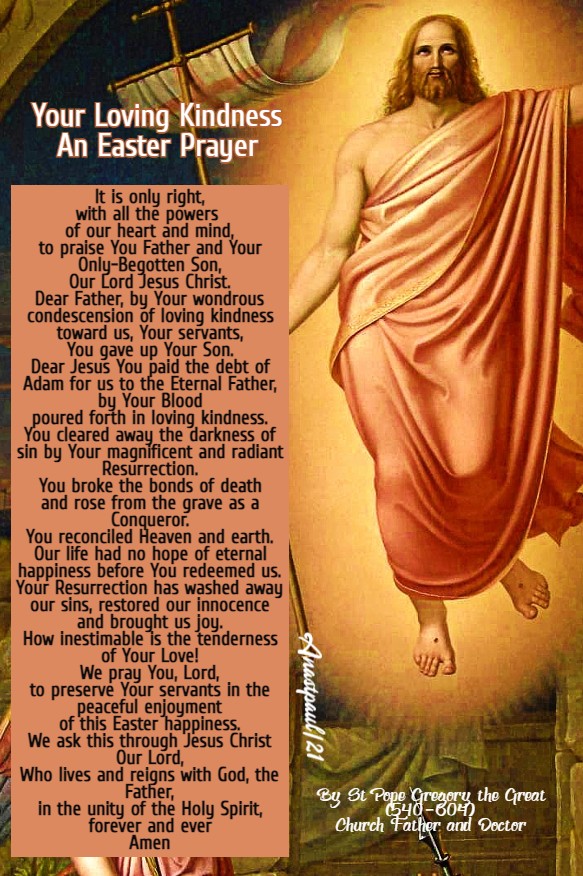
Your Loving Kindness
An Easter Prayer
By St Pope Gregory the Great (540-604)
Church Father and Doctor

It is only right,
with all the powers of our heart and mind,
to praise You Father and Your Only-Begotten Son,
Our Lord Jesus Christ.
Dear Father, by Your wondrous condescension
of loving kindness toward us, Your servants,
You gave up Your Son.
Dear Jesus You paid the debt of Adam for us
to the Eternal Father, by Your Blood
poured forth in loving kindness.
You cleared away the darkness of sin
by Your magnificent and radiant Resurrection.
You broke the bonds of death
and rose from the grave as a Conqueror.
You reconciled Heaven and earth.
Our life had no hope of eternal happiness
before You redeemed us.
Your Resurrection has washed away our sins,
restored our innocence and brought us joy.
How inestimable is the tenderness of Your Love!
We pray You, Lord,
to preserve Your servants in the peaceful enjoyment
of this Easter happiness.
We ask this through Jesus Christ Our Lord,
Who lives and reigns with God, the Father,
in the unity of the Holy Spirit, forever and ever
Amen

Posted in SAINT of the DAY

Saint of the Day – 4 April – Saint Plato (c 734-813)

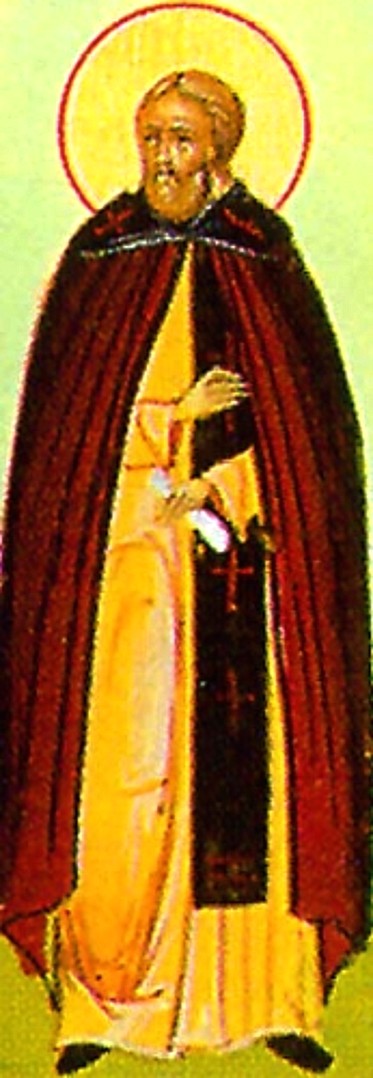
Saint of the Day – 4 April – Saint Plato (c 734-813) Monk, Confessor, Defender of sacred images and of the Sacraments of Marriage and Holy Orders. Born in c 734 in Greece and died on 19 March 813 of natural causes in Constantinople.

Plato was born into a wealthy but pious Christian family of the parents, Sergius and Euphemia but was orphaned when he was only around 13 years of age. He was taken to be raised by relatives, who gave him a fine education. When he grew up, he occupied himself, in the first years, in the management of the property which his parents had left him upon their death. He was very temperate and hard-working and acquired great wealth by his own toil. However, the future Monkโ€™s heart blazed with love for Christ. He gave away all his property, set his servants free and withdrew into a Monastery named Symbolon near Mount Olympos.

His prayerful zeal, love of work and geniality won him the love of hif fellow brethren. When he was not praying, he worked atย menial labour and copyied manuscripts. He also compiled anthologies, from the works of the holy Fathers.

When the Abbot, Theoctistus died in 770, the Monks chose Plato as Abbot, even though he was still a very young man. After the death of the Emperor Constantine Kopronymos (775), Plato went to Constantinople. The Archbishop wanted to make him Bishop of Nicomedia, or theAbbot of one of the Monasteries in Constantinople but such was the saintโ€™s humility, that he hastened back to the Symbolon Monastery, to escape such honour. In 782, he withdrew to the desolate place of Studion with his nephews Theodore and Joseph. On the mount they built a Church in honour of the holy Apostle John and founded a Monastery, whose Superior was Plato.

When Saint Tarasius and the Empress Irene convened the Seventh Ecumenical Council in Nicea in 787, Plato took an active part in its work. Being learned in Holy Scripture, he successfully unmasked the error in the Iconoclast heresy and defended the veneration of holy icons. When Plato approached old age, he transferred the administration of the monastery to Theodore.

In 795 the emperor Constantine VI (78-797) repudiated his Rmpress, Mary and he married one of his relatives, Theodota. Even though the holy Bishop Tarasius, condemned this marriage, Joseph, a prominent Priest of Constantinople, violated the Bishopsโ€™s prohibition and celebrated the marriage of the Emperor.

When they learned of this, Plato and Theodore excommunicated the Emperor from the Church and sent a letter about this to all the Monks. The enraged Rmperor gave orders to lock Plato in prison and to banish Theodore to Thessalonica. Only after the death of the Emperor in 797 did they receive their freedom. Theodore settled in Constantinople and became iAbbot of the Studion Monastery. Plato lived as a simple Monk at this Monastery under obedience to his nephew.

In 807, Joseph, the Priest who had presided at the wedding of Constantine and Theodoat, was restored to his position and made treasurer of the Church by order of Emperor Nicephorus. Plato considered this scandalous and loudly condemned it. The Emperor had him guarded for a year by a troop of insolent soldiers and false Monks. After which, Plato was unjustly condemned by a Council of Court Bishops, then banished for four years to be to the isles of Bosphorus, until he was freed in 811 by the new Emperor Michael I. Plato. Plato then returned to his cell and his life of prayer.

In 813, Plato saw that his end was near and directed his grave be dug. He then had himself carried to it and lived laying in it, spending his last days in prayer and receiving guests from his grave, including his former enemy, the Priest Joseph, who came to ask for Plato’s prayers and forgiveness.

The Roman Martyrology states of him on 4 April: “At Constantinople, Plato, a Monk, who for many years combatted with invincible courage, the heretics who were breaking sacred images.”

Posted in EASTER, FEASTS and SOLEMNITIES, MARIAN TITLES, SAINT of the DAY, The RESURRECTION

EASTER SUNDAY +2021 The Resurrection of the Lord – Solemnity of Solemnities! Our Lady of Grace, Normandy and Memorials of the Saints

EASTER SUNDAY +2021 The Resurrection of the Lord – Solemnity of Solemnities!
__
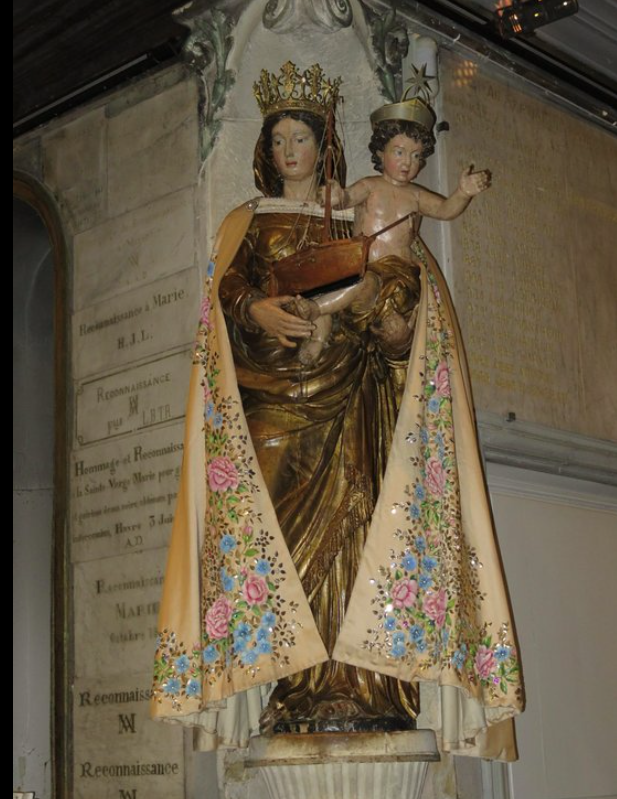
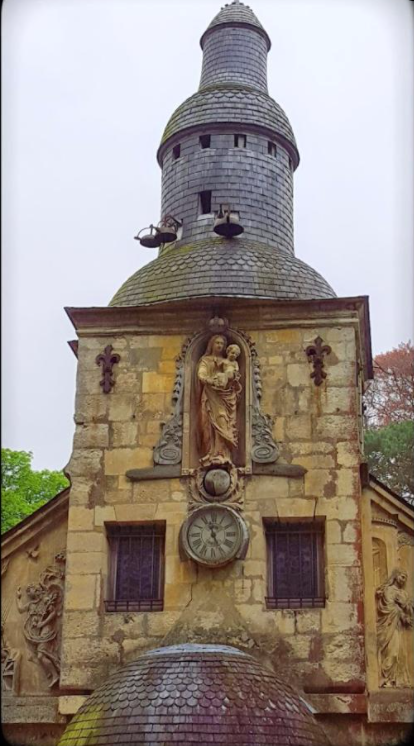
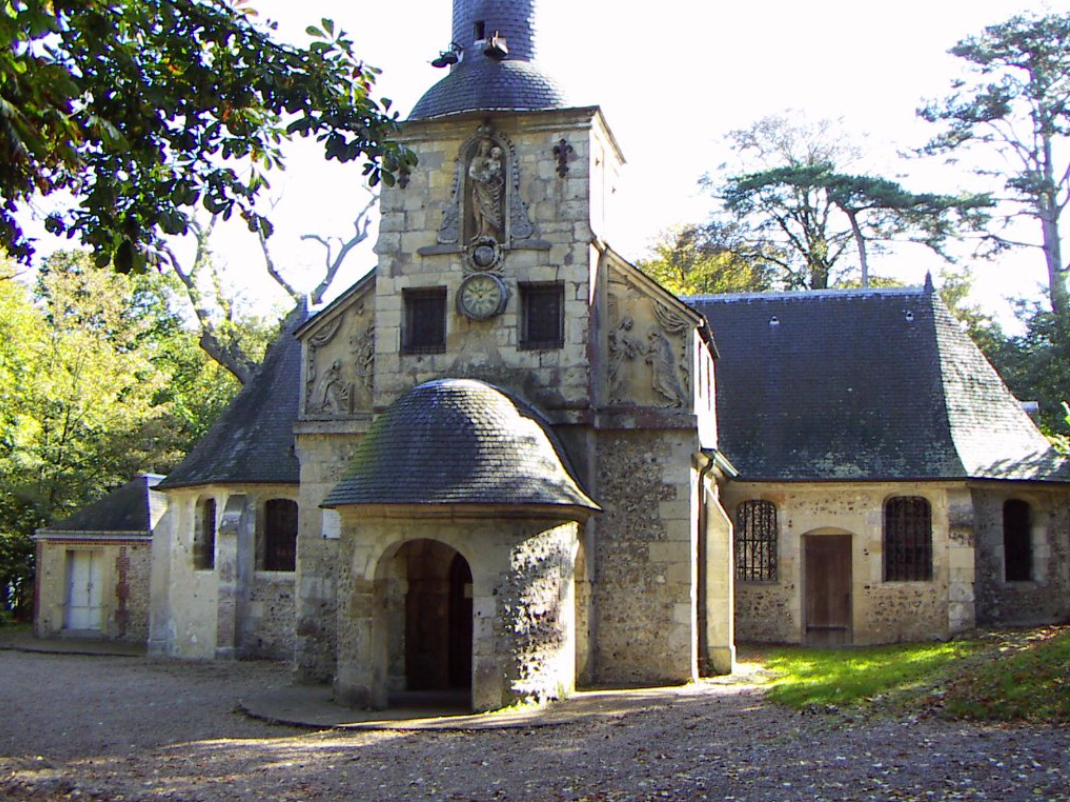
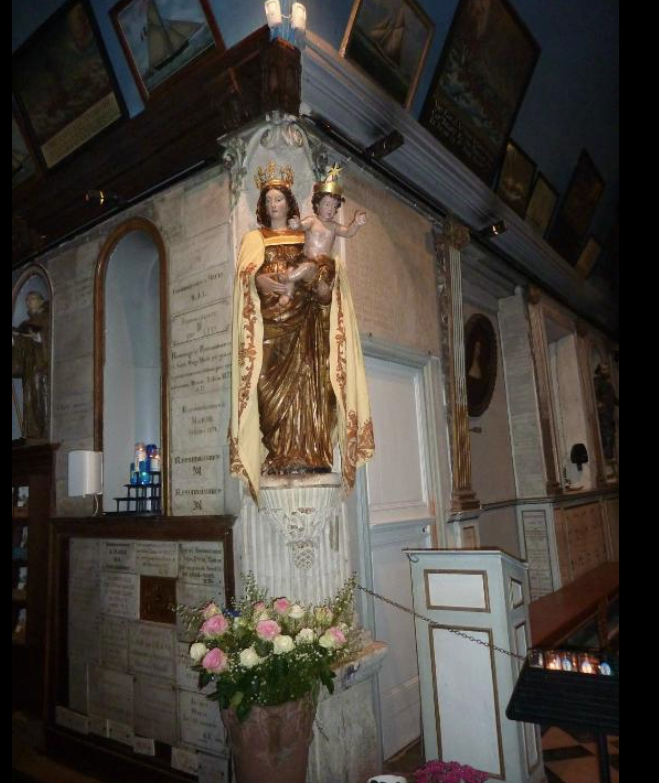
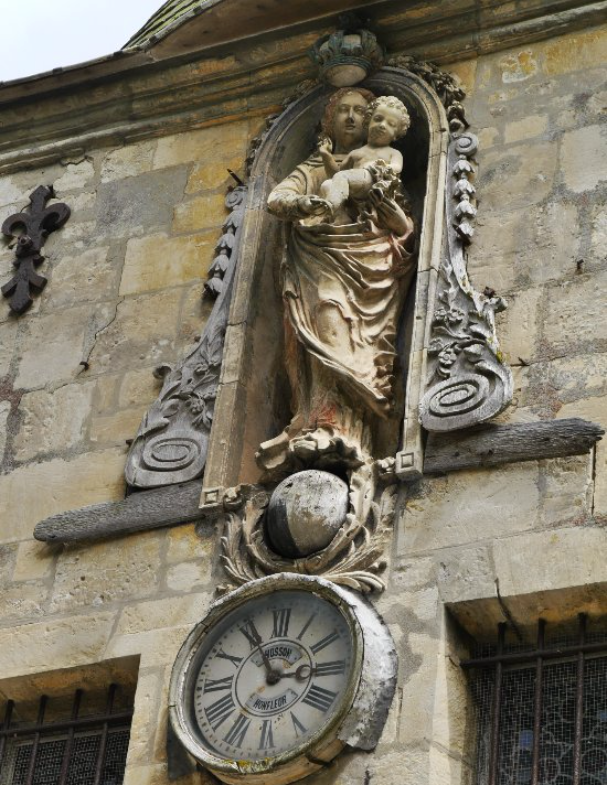
Notre-Dame de Grace, Honfleur, Normandie / Our Lady of Grace, Normandy, France – 4 April:

Our Lady of Grace is one of the most ancient maritime Chapels of Normandy. This Sanctuary was built in consequence of a vow made by a Norman Duke, who was very devout to the Blessed Virgin. That Duke, Robert the Magnificent, was once caught in a terrible storm off the coast of Normandy and knew, that a shipwreck would surely cost him his life. He swore, in the midst of that tempest, that was even then overwhelming him, that if he could somehow survive, he would build a Shrine on the hill, which he could still see, through the rain and surf from his sinking ship ,in thanksgiving to God for his rescue.
Robert was saved and so his harrowing experience ended, not in tragedy but instead, the duke kept his promise, which gave birth to a monument that millions of pilgrims STILL visit each year. The original Chapel he constructed was finished early in the 11th century, at a height 90 meters above sea level. That Chapel stood through the centuries until it was swept away by landslide in the 16th century. The present Chapel, the Chapel of Notre-Dame-de-Grace, replaces the original.

The site of this handsome Chapel of Our Lady of Grace, surrounded by large trees, in the midst of turf replete with flowers, is beautiful and calm, like the rich and fresh landscapes of the magnificent province of which it forms a part.
Our Lady of Grace appears like the fortress of Honfleur; from the little mountain which it crowns, the mouth of the Seine is visible, and farther on, the ocean, with its long waves of dark green, which receives in its bosom, the river of blue waters. Two roads lead to the Chapel – the one rough and rocky, the other smooth and even. In other times the inhabitants of Honfleur took delight in pointing out Our Lady of Grace, in reducing its steepness, in covering it with small, fine sand, so that a gracious princess, who had made herself beloved in these parts by her generous bounty, might be able to ascend it without fatigue, when she went to offer her prayers and vows to the Blessed Virgin.

St Isidore of Seville (c 560-636) Father & Doctor of the Church (Optional Memorial)
St Isidoreโ€™s life:

https://anastpaul.com/2020/04/04/saint-of-the-day-4-april-st-isidore-of-seville-c-560-636-father-doctor-of-the-church/
AND:
https://anastpaul.wordpress.com/2017/04/04/saint-of-the-day-4-april-st-isidore-of-seville-father-and-doctor-of-the-church/

Bl Abraham of Strelna
St Agathopus of Thessalonica
St Aleth of Dijon
St Benedict of Sicily OFM (1526-1589)
About St Benedict:

https://anastpaul.wordpress.com/2018/04/04/saint-of-the-day-4-april-st-benedict-of-sicily-o-f-m-1526-1589/

Bl essed Giuseppe Benedetto Dusmet OSB (1818-1894)
Biography:

https://anastpaul.com/2019/04/04/saint-of-the-day-4-april-blessed-giuseppe-cardinal-benedetto-dusmet-osb-1818-1894/
St Gwerir of Liskeard
St Henry of Gheest
St Hildebert of Ghent
St Peter of Poitiers
St Plato (c 734-813) Monk, Confessor
St Theodulus of Thessalonica
St Theonas of Egypt
St Tigernach of Clogher
St Zosimus of Palestine

Posted in "Follow Me", CHRIST, the WAY,TRUTH,LIFE, GOOD FRIDAY, HOLY WEEK, MEDITATIONS - ANTONIO CARD BACCI, QUOTES for CHRIST, QUOTES on SUFFERING, QUOTES on the CROSS of CHRIST, The PASSION, The REDEMPTION

Thought for the Day โ€“ 3 April โ€“ The Death of our Saviour

Thought for the Day โ€“ 3 April โ€“ Meditations with Antonio Cardinal Bacci (1881-1971)

The Death of our Saviour

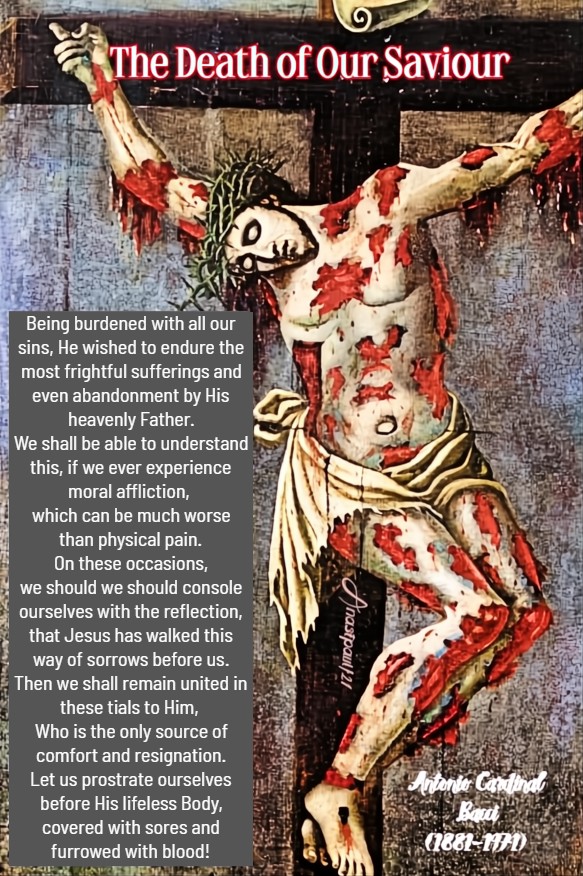
โ€œQuite apart from the most fearful physical torments, such as the Scourging, the Crowning with Thorns and the Crucifixion, Jesus willed to endure extreme moral sufferings, such as the betrayal by Judas, the desertion by His Apostles in His hour of trial and the denial by the Head of the Apostles himself.
He willed to endure an even greater spiritual affliction than these, which was so mysterious as to be almost beyond our understanding.
This, was His abandonment by His heavenly Father.
โ€œMy God, my God,โ€ He cries out in His last agony, โ€œwhy hast thou forsaken me.โ€
His human heart elected to experience, at that moment, the removal of the inmost consolations and joys, which flowed from His continual union with His heavenly Father.
He was both Man and God.
His human nature was hypostatically united to the Word and in this way, even His human nature participated in His infinite happiness.
As Man, however, He chose to be deprived of this happiness.
Being burdened with all our sins, He wished to endure the most frightful sufferings and even abandonment by His heavenly Father.

We shall be able to understand this, if we ever experience moral affliction, which can be much worse than physical pain.
On these occasions, we should we should console ourselves with the reflection, that Jesus has walked this way of sorrows before us.
Then we shall remain united in these tials to Him, Who is the only source of comfort and resignation.
Let us prostrate ourselves before His lifeless Body, covered with sores and furrowed with blood!
โ€

Antonio Cardinal Bacci

PART ONE HERE:
https://anastpaul.com/2020/04/14/thought-for-the-day-14-april-the-death-of-our-saviour/

Posted in "Follow Me", DOCTORS of the Church, EASTER, HOLY SATURDAY, QUOTES on the CROSS of CHRIST, The HOLY CROSS, The REDEMPTION

Quote of the Day โ€“ 3 April โ€“ ‘By nothing else except the CROSS …’

Quote of the Day โ€“ 3 April โ€“ Holy Saturday

โ€œBy nothing else except the CROSS
of our Lord Jesus Christ
has death been brought low.
The sin of our first parent destroyed,
hell plundered,
resurrection bestowed,
the power given us to despise the things of this world,
even death itself,
the road back to the former blessedness made smooth,
the gates of paradise opened,
our nature seated at the right hand of God
and we made children and heirs of God.
By the CROSS, all these things have been set arightโ€ฆ
It is a seal that the destroyer may not strike us,
a raising up of those who lie fallen,
a support for those who stand,
a staff for the infirm,
a crook for the shepherded,
a guide for the wandering,
a perfecting of the advanced,
salvation for soul and body,
a deflector, of all evils,
a cause of all goods,
a destruction of sin,
a plant of resurrection
and a tree of eternal life!โ€

St. John Damascene (675-749)
Father and Doctor

Posted in EASTER, HOLY SATURDAY, QUOTES on DEATH, The RESURRECTION, The WORD

One Minute Reflection – 3 April – Holy Saturday – Lumen Christi โ€ฆ. Deo Gratias!

One Minute Reflection – 3 April – Holy Saturday, The Easter Vigil of the Holy Night, Readings: First Reading: Genesis 1: 1 – 2: 2 or 1: 1, 26-31a, Psalm: Psalms 104: 1-2, 5-6, 10, 12, 13-14, 24, 35 Second Reading: Genesis 22: 1-18 or 22: 1-2, 9a, 10-13, 15-18, Gospel: Mark 16: 1-7

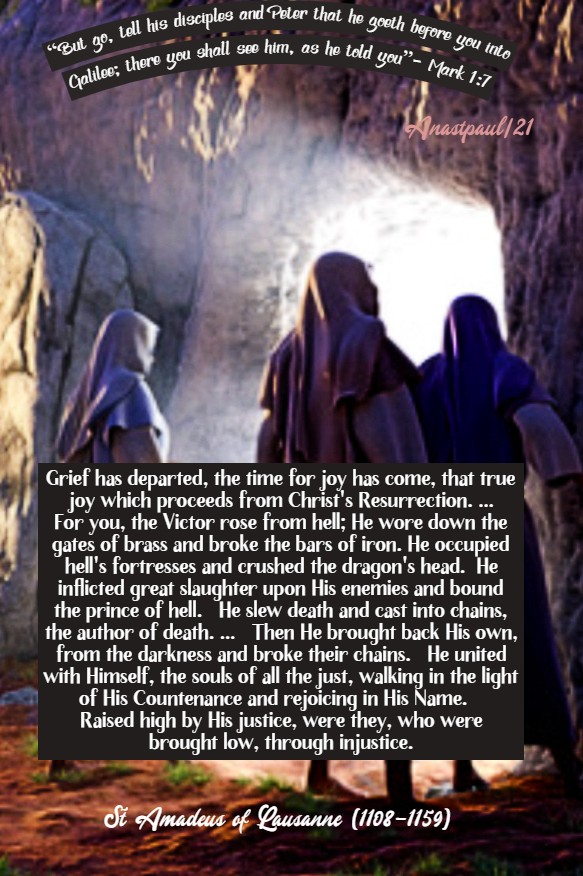
โ€œBut go, tell his disciples and Peter, that he goeth before you into Galilee; there you shall see him, as he told youโ€ – Mark 1:7

REFLECTION – โ€œSolomon says, there is a time for joy and a time for grief. Grief has departed, the time for joy has come, that true joy which proceeds from Christ’s Resurrection. โ€ฆ
For you, the Victor rose from hell; He wore down the gates of brass and broke the bars of iron. He occupied hell’s fortresses and crushed the dragon’s head. He inflicted great slaughter upon His enemies and bound the prince of hell. He slew death and cast into chains, the author of death. โ€ฆ Then He brought back His own, from the darkness and broke their chains. He united with Himself, the souls of all the just, walking in the light of His Countenance and rejoicing in His Name. Raised high by His justice, were they, who were brought low, through injustice.

For him: “I am alone until I pass over.” (cf. Ps 140[141]:10) Alone when He entered but by no means alone, as He went forth, for He brought back with Him, countless thousands of the saints. He fell to the earth and died, that He might bear much fruit. (Jn 12:24) He laid Himself down at seed time, that He might, at the harvest, gather the human race. โ€ฆ For at the baptismal font, dead to the sins within ourselves, we are born again to Christ through the cleansing of regeneration, that we may live to Him, Who died for all. So the Apostle Paul says: “As many of you as were baptised in ChristM have put on the person of Christ.” (Gal 3:27) Therefore, from one grain come many harvests. โ€ฆ
Of Him also the Apostle says: “Therefore, God has exalted him and given him a name above all other names, that at the name of Jesus every knee should bow, of things in heaven, things on earth and of things under the earth.” (Phil 2:9-10) In truth, the knee of those in hell, bend before him in dread, the knee of those on earth, through self-interest, of those in heaven, through their blessedness.โ€ – Saint Amadeus of Lausanne (1108-1159) Cistercian Monk, then Bishop – Homily VI on the Blessed Virgin Mary, SC 72 (Magnificat: Homilies in praise of the Blessed Virgin Mary,

PRAYER – Almighty, ever-living God, Whose only-begotten Son descended to the realm of the derad and rose from there to glory, grant that Your faithful people who were buried with Him in Baptism, may by His Resurrection, obtain eternal life. Lumen Christi โ€ฆ. Deo Gratias! Amen

Posted in HOLY SATURDAY, Our MORNING Offering, PRAYERS for VARIOUS NEEDS, PRAYERS of the SAINTS, QUOTES on DEATH, The LAST THINGS, The RESURRECTION

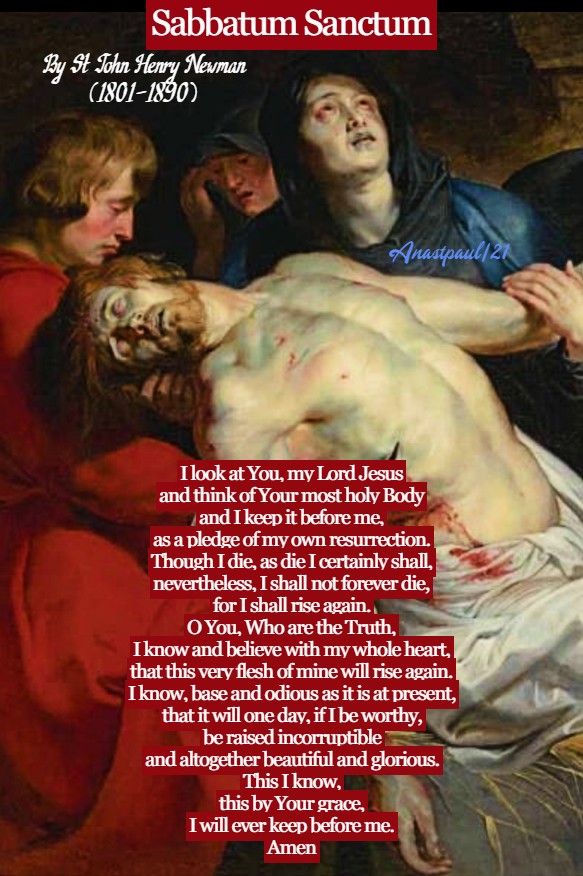
Our Morning Offering – 3 April – Sabbatum Sanctum

Our Morning Offering – 3 April – Holy Saturday

Sabbatum Sanctum
By St John Henry Newman (1801-1890)

I look at You, my Lord Jesus
and think of Your most holy Body
and I keep it before me,
as a pledge of my own resurrection.
Though I die, as die I certainly shall,
nevertheless, I shall not forever die,
for I shall rise again.
O You, who are the Truth,
I know and believe with my whole heart,
that this very flesh of mine will rise again.
I know, base and odious as it is at present,
that it will one day, if I be worthy,
be raised incorruptible
and altogether beautiful and glorious.
This I know,
this by Your grace,
I will ever keep before me.
Amen

Posted in EASTER, HOLY SATURDAY, MARIAN REFLECTIONS, MARIAN Saturdays

Sabbatum Sanctum โ€“ Holy Saturday: โ€œWatchingโ€ – The Easter Vigil of the Holy Night

Sabbatum Sanctumย โ€“ Holy Saturday:ย  โ€œWatchingโ€ – The Easter Vigil of the Holy Night

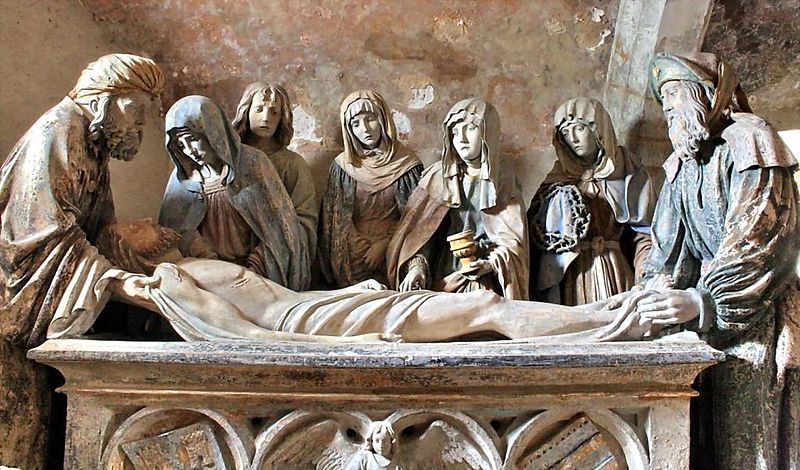
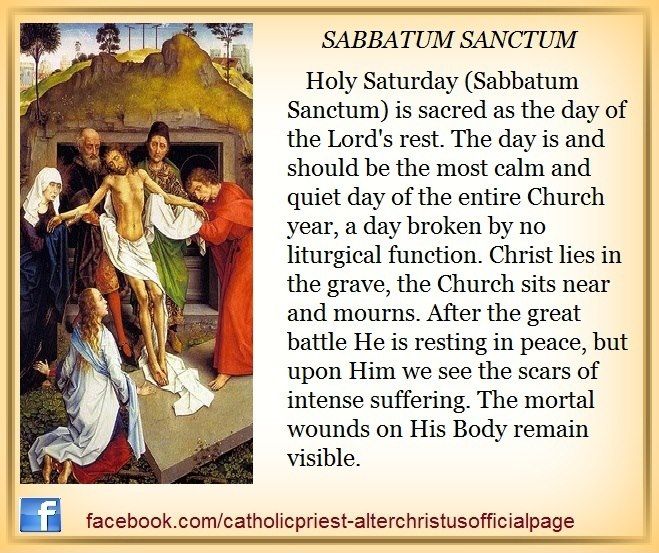
On Holy Saturday the Church waits at the Lordโ€™s tomb, meditating on His suffering and death.ย  ย The Altar is left bare and the Sacrifice of the Mass, is not celebrated.ย  ย Only after the solemn Vigil during the night, held in anticipation of the Resurrection, does the Easter celebration begin, with a spirit of joy which overflows into the following period of fifty days.

Holy Saturday (fromย Sabbatum Sanctum, its official liturgical name) is sacred as the day of the Lordโ€™s rest; it has been called the โ€œSecond Sabbathโ€ after creation.ย  ย The day is and should be the most calm and quiet day of the entire Church year, a day broken by no liturgical function.ย  ย Christ lies in the grave, the Church sits near and mourns.ย  ย After the great battle He is resting in peace but upon Him, we see the scars of intense sufferingโ€ฆThe mortal wounds on His Body remain visibleโ€ฆJ esusโ€™ enemies are still furious, attempting to obliterate the very memory of the Lord by lies and slander.

Mary and the disciples are grief-stricken, while the Church must mournfully admit, that too many of her children return home from Calvary cold and hard of heart.ย  ย When Mother Church reflects upon all of this, it seems as if the wounds of her dearly Beloved were again beginning to bleed.

The entire body of the Church is represented in Mary for she is theย โ€œcredentium collectio universaโ€ย (Congregation for Divine Worship, Lettera circolare sulla preparazione e celebrazione delle feste pasquali, 73).ย  ย Thus, the Blessed Virgin Mary, as she waits near the Lordโ€™s tomb, as she is represented in Christian tradition, is an icon of the Virgin Church keeping vigil at the Tomb of her Spouse while awaiting the celebration of His Resurrection.

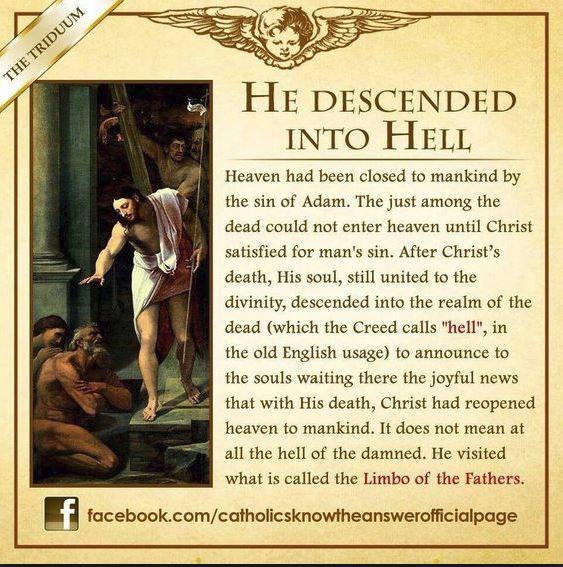
The pious exercise of the Ora di Maria is inspired by this intuition of the relationship between the Virgin Mary and the Church – while the Body of her Son lies in the Tomb and His soul has descended to the dead ,to announce liberation, from the shadow of darkness ,to His ancestors, the Blessed Virgin Mary, foreshadowing and representing the Church, awaits, in faith, the victorious triumph of her Son over death. โ€”ย Directory on Popular Piety and the Liturgy.

Posted in franciscan OFM, SAINT of the DAY

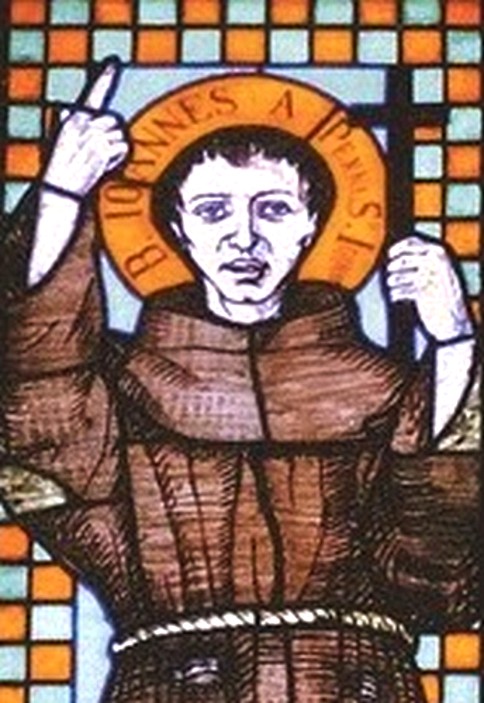
Saint of the Day – 3 April – Blessed John of Penna OFM (c 1193-1271)

Saint of the Day – 3 April – Blessed John of Penna OFM (c 1193-1271) Priest, Friar of the First Order of St Francis and became a Franciscan during St Francis’ lifetime. Founder of the Order in France, Mystic and gifted with the charism of prophecy. Born in c1193 at Penna San Giovanni, Diocese of Fermo, Italy as Giovanni da Parma and died on 3 April 1271 at Recanati, Italy. Also known as Juan de Pina, Juan da Penna San Giovanni, Giovanni, Johannes. Additional Memorial – 31 October (Franciscans).

Blessed John joined the Franciscans at Recanati about 1213, after hearing Fra Filippo preach. He listened in astonishment to this sermon and afterwards, begged to be received into the order and to be vested in its habit.

The now Ordained Priest attended the Provincial Chapter of the Franciscans in Recanati . Thereafter, in 1217, he was sent to Languedoc in France, along with other Friar companions, to spread the work of the Order. It was there, that he desired his life would soon come to a close, so that he could return to God and so he sat under a tree in prayer and reflection, beseeching the Lord to take him home – but a voice responded that he still had much work to do on Earth. He felt re-ignited with apostolic zeal and founded several houses for the Order in Provence. His apostolate in France, spanned over two decades.

He returned to the Italian peninsula in 1242 after a messenger from the Father Provincial came to summon him back and he returned to live the bulk of three decades in cloistered retirement. In 1248 he settled civil unrest in his hometown after writing a pact that was used during negotiations.

He spent one full night until the next dawn in spiritual reflection until an Angel appeared and foretold, that the Priest would soon die. He offered the Priest a choice – to spend a day in Purgatory or to expiate his remaining sins through one full week of suffering – he chose the latter.

John fell ill at once with a high fever and racking pain including gout in his hands and feet. The devil also came to him in a vision with a list of all the sins he committed and said to him: “Because of these sins which thou hast committed in thought, word and deed, thou art condemned to the depths of Hell.” This depressed him to the point where he told this to his fellow Friars, who at once summoned the aged Matteo da Monte Robbiano – John’s Confessor and a close friend – who arrived not long before his death. Robbiano encouraged John and comforted him and said it was a mere trick of Satan.

John died on 3 April 1271 after his week of suffering. He had won all hearts by his exemplary life as well as by his kindly and courteous manners. Aridity and a painful illness; spiritual consolations, however, assured him that he had accomplished his purgatory on earth and when he entered his true home, his cell was illuminated with a celestial light.

He was Beatified on 20 December 1806 by Pope Pius VII (cultus confirmed).

Posted in DOCTORS of the Church, franciscan OFM, HOLY SATURDAY, MARIAN REFLECTIONS, MARIAN Saturdays, MATER DOLOROSA - Mother of SORROWS, REDEMPTORISTS CSSR, SAINT of the DAY

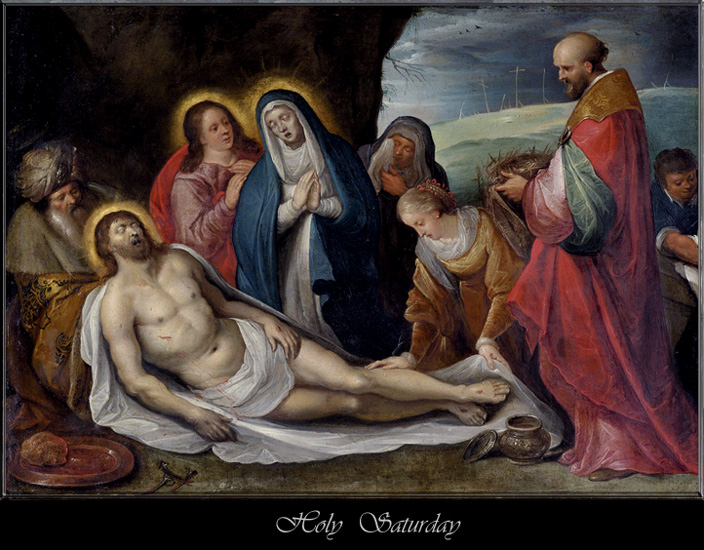
Holy Saturday +2021 and Memorials of the Saints – 3 April

Holy Saturday +2021
https://anastpaul.com/2020/04/11/sabbatum-sanctum-holy-saturday-the-second-sabbath-10-april/

Our Glorious Most Sorrowful Mother – By St Alphonsus Maria de Liguori (1696-1787)
Most Zealous Doctor

Mary is our Mother โ€” not by the flesh but by love. That is, she is our Mother by love alone. So someone observes that she glories in being the mother of love. She is all love for us, her adopted children.
The first reason for Maryโ€™s great love for human beings, is that she loves God so much. She loved Him more in the first moment of her existence, than all the Saints and Angels every loved Him or will love him.

Just as there is not one, among all the blessed ,who loves God as Mary does, so there is no one, after God, who loves us as much as this most loving Mother does. Furthermore, if we heaped together all the love that mothers have for their children, all the love of husbands and wives, all the love of all the Angels and Saints for their clients, it could never equal Maryโ€™s love for even a single soul.
Mary, to obtain the life of grace for us โ€ฆ offered her beloved Jesus to an ignominious death, and watched him die before her eyes, in cruel and unexampled torments.
It is written of the Eternal Father, that God so loved the world as to give His only-begotten Son (Jn 3:16), so also, we can say of Mary, that she so loved the world, as to give her only-begotten Son.
So with St Anselm I will cry:

โ€œLet my heart languish and my soul melt away and be consumed with love of you, my beloved Saviour Jesus and my dear Mother Mary! But because I cannot love you unless You give me grace, then give me grace, O Jesus and Mary โ€” by Your merits, not mine โ€” to love You as You deserve to be loved. O God, lover of humankind, You loved sinful human beings to the point of death. Will You deny Your love and Your Motherโ€™s to anyone who begs for it?โ€

__
Bl Alexandrina di Letto
St Attala of Taormina
St Benatius of Kilcooley
St Benignus of Tomi
St Burgundofara
St Chrestus
St Comman
St Evagrius of Tomi
Bl Francisco Solรญs Pedrajas
Saint or Blessed (conflicting reports?) Gandulphus of Binasco OFM (c 1200-1260)
https://youtu.be/MH42oExIiEI?list=PL5_ax08Z6UX-Mp6eiMLvUNsbqM5V47Q9q

Bl Iacobus Won Si-bo
St John I of Naples
Blessed John of Penna OFM (c 1193-1271) Priest, Friar
Blessed John of Jesus and Mary/Juan Otazua Madariaga O.SS.T (1895-1937)
Priest Martyr
His Life and Death:

https://anastpaul.com/2020/04/03/saint-of-the-day-3-april-blessed-john-of-jesus-and-mary-o-ss-t-1895-1937-priest-martyr/
Bl Lawrence Pak Chwi-deuk
St Luigi Scrosoppi Cong. Orat. (1804-1884)
About St Luigi:
https://anastpaul.wordpress.com/2017/04/03/saint-of-the-day-3-april-st-luigi-scrosoppi/

A little Note about St Luigi โ€“ his Canonisation Miracle occurred in my previous Parish in Oudtshoorn, Cape Town!

Blessed Maria Teresa Casini (1864โ€“1937)
Her life:

https://anastpaul.com/2019/04/03/saint-of-the-day-3-april-blessed-maria-teresa-casini-1864-1937/
St Nicetas of Medicion
St Papo
Bl Piotr Edward Dankowski
St Richard of Chichester (1197-1253)
Biography:

https://anastpaul.wordpress.com/2018/04/03/saint-of-the-day-3-april-st-richard-of-chichester-1197-1253/

Posted in "Follow Me", CHRIST, the WAY,TRUTH,LIFE, GOOD FRIDAY, MEDITATIONS - ANTONIO CARD BACCI, QUOTES for CHRIST, QUOTES on HEAVEN, QUOTES on SUFFERING, QUOTES on the CROSS of CHRIST, The HOLY CROSS, The PASSION, The REDEMPTION

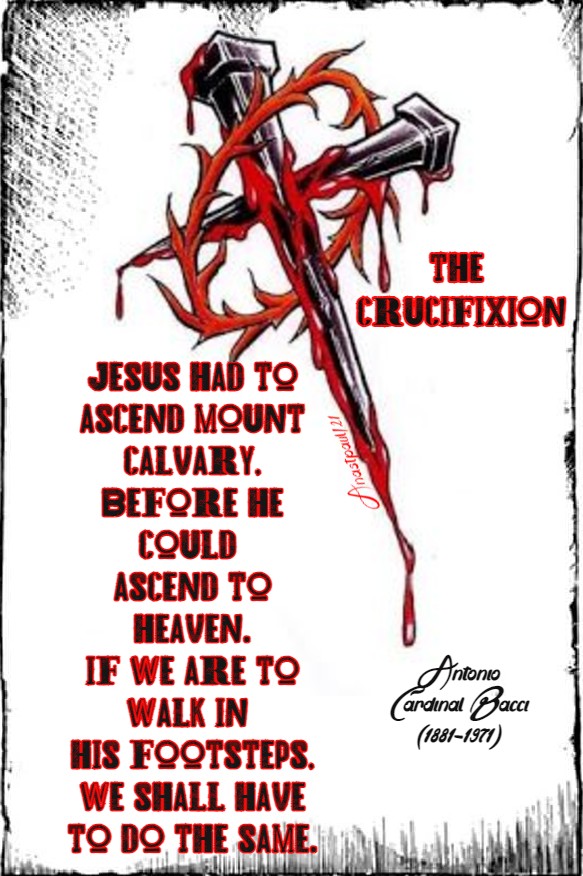
Thought for the Day – 2 April – The Crucifixion

Thought for the Day – 2 April – Meditations with Antonio Cardinal Bacci (1881-1971)

The Crucifixion

โ€œAfter a painful and exhausting journey, Jesus reaches Calvary, where He is to be Crucified.
Once again, He is stripped of His garments, which, by this time, have become stuck to His swollen sores.
Then, He is stretched upon the wooden Cross, to which, one of the brutal executioners fastens His Hands and Feet, with blows from a hammer.
The sharp nails are driven through His flesh into the hard wood.
Jesus looks upwards and offers Himself in silence, as a Victim of Expiation, on behalf of His tormentors and of all of us.
His Mother Mary, is standing a few paces away in the company of the holy women and of the beloved Disciple.
The blows of the hammer pierce the maternal heart of the Blessed Virgin but,she remains silent also and prays.

When we have been afflicted by misfortune or sorrow and our hearts are racked with grief, how do we behave?
Have we the resignation, the trust in God and the spirit of prayer, which Jesus and Mary had on Calvary?
Let us remind ourselves, that we are members of the Mystical Body of Christ.
If Jesus our Head, has suffered, how much more, do miserable sinners like the rest of us ,deserve to suffer!?
Jesus wishes us to participate in the work of redemption by uniting our sufferings to His.
โ€œI rejoice now,โ€ says St Paul, โ€œin the suffering I bear โ€ฆ and what is lacking of the suffering of Christ, I fill up in my fleshโ€ฆโ€ (Col 1:24).

Let us face adversity with courage, therefore and keep our eyes hopefully towards Heaven.
Let us remember, as St Paul also says, that even as we share in the sufferings of Christ, so we shall share in His triumph (Cf 2 Cor 1:7).
Jesus had to ascen Mount Calvary, before He could ascend to Heaven.
If we are to walk in His footsteps, we shall have to do the same.โ€

Antonio Cardinal Bacci

Posted in "Follow Me", CHRIST, the WAY,TRUTH,LIFE, DOCTORS of the Church, FATHERS of the Church, GOOD FRIDAY, JULY - The MOST PRECIOUS BLOOD, LENTEN THOUGHTS, QUOTES on the CROSS of CHRIST, The HOLY CROSS, The MOST PRECIOUS BLOOD, The PASSION, The REDEMPTION

Good Friday Refletion – 2 April – CONTEMPLATING THE LORD’S PASSION

Good Friday Refletion – 2 April

CONTEMPLATING THE LORD’S PASSION

From a Sermon by St Pope Leo the Great (400-461)
Father and Doctor unitatis Ecclesiae

True reverence for the Lord’s passion means, fixing the eyes of our heart on Jesus crucified and recognising in Him our own humanity.

The earth – our earthly nature – should tremble at the suffering of its Redeemer. The rocks – the hearts of unbelievers – should come forth, the massive stones now ripped apart. Foreshadowings of the future Resurrection, should appear in the holy city, the Church of God, what is happening to our bodies, should now take place in our hearts.

No-one, however weak, is denied a share in the victory of the Cross. No-one is beyond the help of the prayer of Christ. His prayer brought benefit to the multitude that raged against Him. How much more, does it bring, to those who turn to Him in repentance.

Ignorance has been destroyed, obstinacy has been overcome. The Sacred Blood of Christ, has quenched the flaming sword that barred access to the tree of life. The age-old night of sin has given place, to the true light.

The Christian people are invited to share the riches of paradise. All who have been reborn have the way open before them, to return to their native land, from which they had been exiled. Unless, indeed ,they close off for themselves, the path that could be opened before the faith of a thief.

The business of this life should not preoccupy us with its anxiety and pride, so that we no longer strive, with all the love of our heart, to be like our Redeemer and to follow His example. Everything that He did, or suffered, was for our salvation – He wanted His Body to share the goodness of its Head.

First of all, in taking our human nature, while remaining God, so that the Word became man, He left no member of the human race, the unbeliever excepted, without a share in His mercy. Who does not share a common nature with Christ, if he has welcomed Christ, who took our nature and is reborn in the Spirit, through whom Christ was conceived?

Again, who cannot recognise in Christ, his own infirmities? Who would not recognise that Christ’s eating and sleeping, His sadness and His shedding tears of love, are marks of the nature of a slave?

It was this nature of a slave, that had to be healed of its ancient wounds and cleansed of the defilement of sin. For that reason, the only-begotten Son of God, became also the Son of Man. He was to have both the reality of human nature and the fullness of the Godhead.

The Body, that lay lifeless in the tomb, is ours. The Body that rose again on the third day, is ours. The Body, that ascended above all the heights of heaven, to the right hand of the Father’s glory, is ours. If then we walk in the way of His commandments and are not ashamed to acknowledge, the price He paid for our salvation in a lowly Body, we too are to rise to share His glory. The promise He made will be fulfilled, in the sight of all: –“whoever acknowledges Me before men, I too will acknowledge him before My Father who is in heaven.”

Posted in DOCTORS of the Church, GOOD FRIDAY, HYMNS, PRAYERS of the CHURCH, PRAYERS of the SAINTS, QUOTES of the SAINTS, QUOTES on the CROSS of CHRIST, The HOLY CROSS, The PASSION

Quote/s of the Day – 2 April – Good Friday

Quote/s of the Day – 2 April – Good Friday of the Passion of the Lord

โ€œO SACRED HEADโ€
By St Bernard (1090-1153)
Mellifluous Doctor

O Sacred Head surrounded
By a crown of piercing thorn!
O bleeding Head, so wounded,
Reviled and put to scorn!
Deathโ€™s pallid hue comes oโ€™er Thee,
The glow of life decays,
Yet angel hosts adore Thee
And tremble as they gaze.

I see Thy strength and vigour
All fading in the strife,
And death, with cruel vigour,
Bereaving Thee of life;
O agony and dying!
O love to sinners free!
Jesus, all grace supplying,
O turn Thy face on me!

In this Thy bitter Passion,
Good Shepherd, think of me,
With Thy most sweet compassion,
Unworthy though I be.
Beneath Thy Cross abiding,
โ€˜Forever would I rest,
In Thy dear love confiding,
And will Thy presence blest.

โ€œDo not pass one day without devoting a half hour,
or at least a quarter of an hour,
to meditation on the sorrowful Passion of your Saviour.
Have a continual remembrance
of the agonies of your crucified Love
and know, that the greatest saints,
who now, in heaven,
triumph in holy love,
arrived at perfection in this way.โ€

St Paul of the Cross (1694-1775)

Posted in FATHERS of the Church, GOOD FRIDAY, ONE Minute REFLECTION, QUOTES on the CROSS of CHRIST, The HOLY CROSS, The PASSION, The WORD

One Minute Reflection – 2 April – Good Friday – The Precious and Life-giving Cross of Christ

One Minute Reflection – 2 April – Good Friday, Readings: First: Isaiah 52: 13 — 53: 12.salm: Psalms 31: 2, 6, 12-13, 15-16, 17, 25. Second: Hebrews 4: 14-16; 5: 7-9
Gospel: John 18: 1 — 19: 42

โ€œBut one of the soldiers with a spear opened his side, and immediately there came out blood and water.โ€– John 18:34

REFLECTION – โ€œHow precious the gift of the Cross, how splendid to contemplate! In the Cross there is no mingling of good and evil, as in the tree of paradise, it is wholly beautiful to behold and good to taste. The fruit of this tree is not death but life, not darkness but light. This tree does not cast us out of paradise but opens the way for our return.

This was the tree upon which, Christ, like a king on a chariot, destroyed the devil, the lord of death and freed the human race from his tyranny. This was the tree upon which the Lord like a brave warrior wounded in hands, feet and side, healed the wounds of sin that the evil serpent had inflicted on our nature. A tree once caused our death but now, a tree brings life. Once deceived by a tree, we have now repelled the cunning serpent, by a tree. What an astonishing transformation! That death should become life, that decay should become immortality, that shame should become glory! Well might the holy Apostle exclaim – Far be it from me to glory except in the cross of our Lord Jesus Christ, by which the world has been crucified to me and I to the world! The supreme wisdom that flowered on the Cross has shown the folly of worldly wisdom’s pride. The knowledge of all good, which is the fruit of the Cross, has cut away the shoots of wickedness.

The wonders accomplished through this tree were foreshadowed clearly, even by the mere types and figures that existed in the past. Meditate on these, if you are eager to learn. Was it not the wood of a tree that enabled Noah, at God’s command, to escape the destruction of the flood, together with his sons, his wife, his sons’ wives and every kind of animal? And surely the rod of Moses prefigured the Cross, when it changed water into blood, swallowed up the false serpents of Pharaoh’s magicians, divided the sea at one stroke and then restored the waters to their normal course, drowning the enemy and saving God’s own people? Aaron’s rod, which blossomed in one day, in proof of his true priesthood, was another figure of the Cross and did not Abraham foreshadow the Cross, when he bound his son Isaac and placed him on the pile of wood?

By the Cross, death was slain and Adam was restored to life. The Cross is the glory of all the Apostles, the crown of the Martyrs, the sanctification of the Saints. By the Cross, we put on Christ and cast aside our former self. By the Cross we, the sheep of Christ, have been gathered into one flock, destined for the sheepfold of heaven.โ€ – St Theodore the Studite (759-826) Father, Abbot, Theologian, Writer

PRAYER – Be mindful Lord, of this Your family, for whose sake, our Lord Jesus Christ, when betrayed, did not hesitate to yield Himself into His enemies hands and undergo the agony of the Cross – He Who lives and reigns with You and the Holy Spirit, God forever and ever, amen.

Posted in HOLY WEEK, LENTEN PRAYERS & NOVENAS, Our MORNING Offering, PRAYERS of the SAINTS, The PASSION

Our Morning Offering โ€“ 2 April โ€“ The Angel of the Agony

Our Morning Offering โ€“ 2 April โ€“ Good Friday of the Passion of the Lord

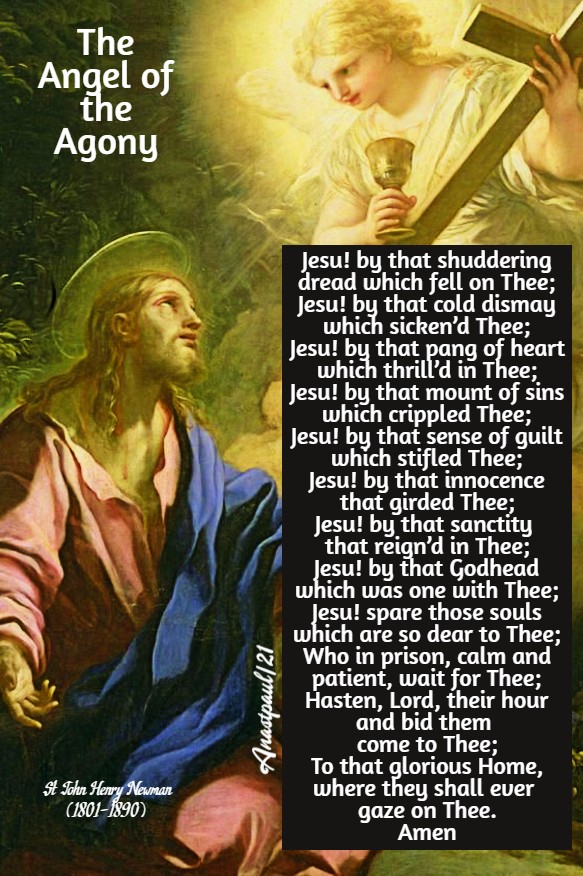
The Angel of the Agony
St John Henry Newman (1801-1890)

Jesu! by that shuddering dread which fell on Thee;
Jesu! by that cold dismay which sickenโ€™d Thee;
Jesu! by that pang of heart which thrillโ€™d in Thee;
Jesu! by that mount of sins which crippled Thee;
Jesu! by that sense of guilt which stifled Thee;
Jesu! by that innocence that girded Thee;
Jesu! by that sanctity that reignโ€™d in Thee;
Jesu! by that Godhead which was one with Thee;
Jesu! spare those souls which are so dear to Thee;
Who in prison, calm and patient, wait for Thee;
Hasten, Lord, their hour and bid them come to Thee;
To that glorious Home, where they shall ever gaze on Thee.
Amen

Posted in Against ALCOHOLISM, of ALCOHOLICS, Against STORMS, EARTHQUAKES, THUNDER & LIGHTENING, FIRES, DROUGHT / NATURAL DISASTERS, Of GARDENERS, Horticulturists, Farmers, PATRONAGE - VINTNERS, WINE-FARMERS, SAINT of the DAY

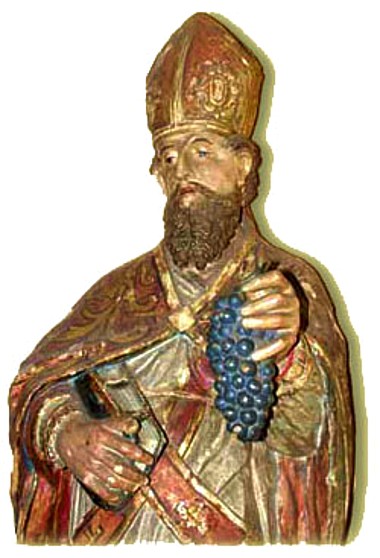
Saint of the Day – 2 April – Saint Urban of Langres (c 327-c 390)

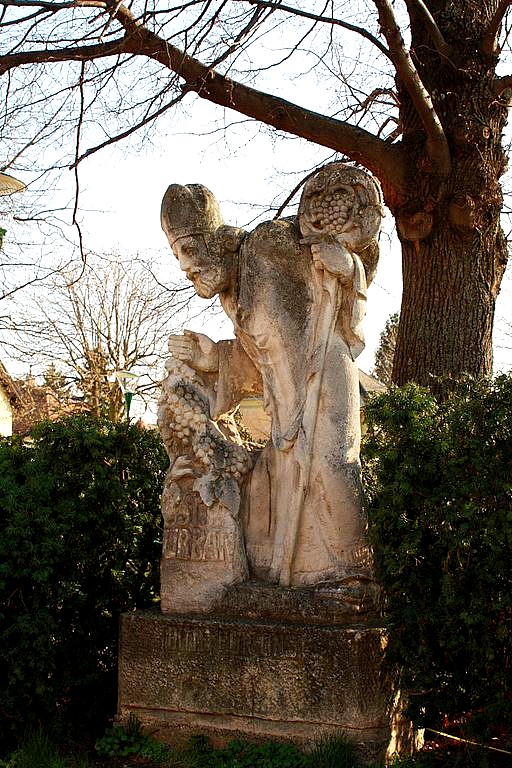
Saint of the Day – 2 April – Saint Urban of Langres (c 327-c 390) Bishop, the sixth Bishop of Autun and Langres, in Burgundy, France from 374 until his death, Confessor. Saint Leodegaria was his sister. Patronages – Langres, Dijon, vine-growers, vine-dressers, gardeners, vintners, invoked against blight (mildew or fungus infestation in plants), frost, storms, alcoholism and faintness. Additional Memorial – 23 January in Langres, France.

Urban was Bishop of the See of Autun and Langres during a time of political upheaval. At one point, he fell foul of the local Duke, an unpleasant man by the name of Junius Medellius. Urban found support from a patron of his, named Maceratius, who owned a vineyard and he was able to hide among the vines. The vine-dressers in the area concealed him and he took the opportunity to convert them to Christianity. Those same vine-dressers then helped him in his covert ministry, as he moved from one town to another via their vineyards.

There is a legend told that, on one sunny morning, some soldiers had been tracking the movements of Urbanโ€™s followers and they narrowed his position down to a specific row of vines. By the time they had decided to apprehend him, a wind picked up and would not subside. The soldiers took a few steps but heavy rain began falling and they could not get close to Urban for a massive hailstorm descended upon them, denting their armour and sending them iscurrying into retreat and back to their camp. So it was, that Urban survived his own storm, coming out of hiding and eventually becoming the Patron saint of wine amd against storms.

Due to St Urban’s work and to his devotion to the Holy Blood, he developed a great affection for all the people in the wine industry and they for him. Urban is thus the Patron saint of all those who work in the wine industry and is invoked against blight and alcoholism.

The cult of St Urban of Langres spread rapidly, especially among in wine growing areas. The German vineyard owners seemed to have adopted him as their own. His cult was closely associated with the weather too. Several old German sayings reflect this:

The weather on St Urban’s Day, will indicate what the autumn weather will be.

If there is sunshine on St Urban’s Day,the wine thrives afterwards, they say.

O holy Urban, bring us comfort! Give us this year much noble must.

What the weather is like on St Urban’s day, orders the same for 20 days.

Posted in MARIAN TITLES, SAINT of the DAY

Good Friday of the Passion of the Lord +2021, Nuestra Seรฑora de la Altagracia / Our Lady of the Highest Grace (1506) and Memorials of the Saints – 2 April

Good Friday of the Passion of the Lord +2021

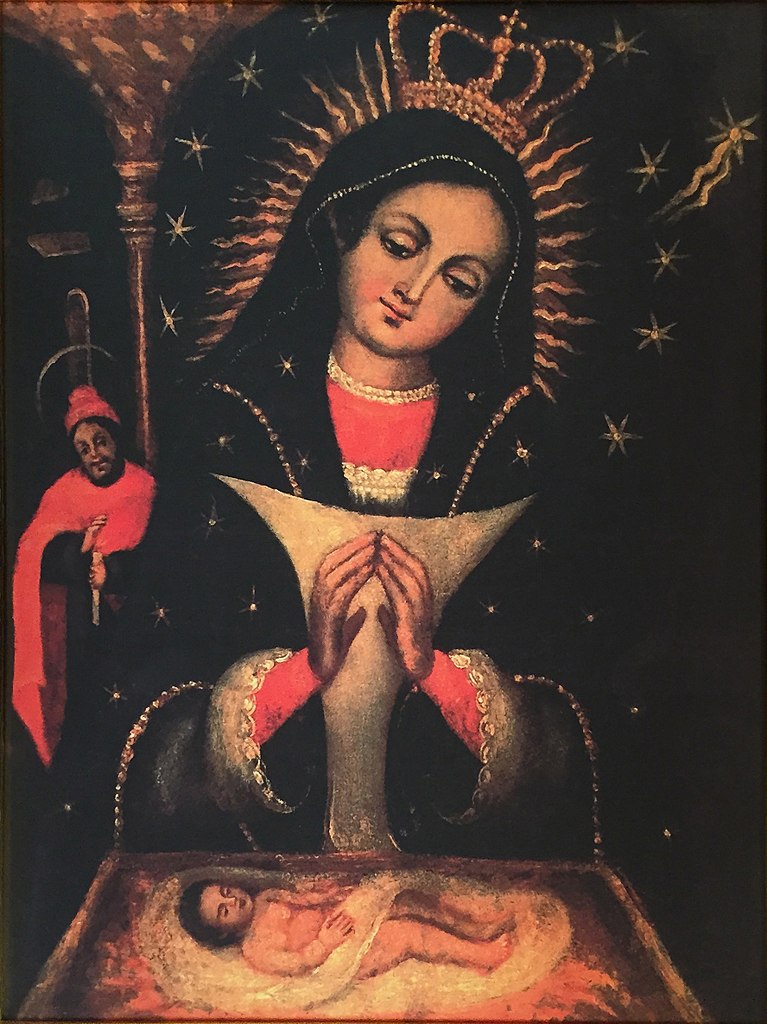
Nuestra Seรฑora de la Altagracia / Our Lady of the Highest Grace, Higuey, Dominican Republic (1506) Patron of Dominicans- 2 April:

Before the Spaniards began their conquest of America, pilgrimages were already being made to the Shrine of Our Lady of the Highest Grace of Altagracia, in the town of Higuey in the Dominican Republic.
Juan Ponce de Leon relates that he and his crew were saved from shipwreck through their prayers to this Virgin. Maryโ€™s miracles have continued down to the present. A multimillion dollar ultra-modern Basilica erected at Higuey in Maryโ€™s honour, where the image is still displayed, gives testimony of this.


Juan Ponce de Leonโ€™s daughter, La Nina, also had a great devotion to the Mother of God. Our Lady appeared to Nina while she prayed before the Statue in their home Chapel and told her to request from her father a gift, a painting of Our Lady of Highest Grace. Juan Ponce de Leon was struck with amazement at the request, for he had never heard of Our Lady under that title. Juan Ponce de Leon, told his host of his daughterโ€™s wish and added that the Bishop of Domingo had told him no such painting existed.

He asked Nina, โ€œHow could I identify this image?โ€

โ€œBy the white scapular over her robe,โ€ Nina replied.

Juan Ponce de Leon searched and inquired everywhere, in order to fulfill his daughterโ€™s request but without success. One day, while returning from a three-day trip, he asked for lodging at a small hut; his host granted this at the same time to an old man with a long white beard; the latter crouched against the walls, carefully guarding an apparent treasure in his saddle-bags.

Juan Ponce de Leon, forgetting the old man, told his host of his daughterโ€™s wish and added that the Bishop of Domingo had told him no such painting existed. The old man hearing this, exclaimed, โ€œThe Virgin of Highest Grace does not exist? I have brought the painting with me.โ€

He then took from his saddle-bags a parchment, unrolled it and displayed a beautiful painting of Our Lady in simple tones of blue, white and red. Mary was depicted adoring the Christ Child, while Saint Joseph holding a lighted taper hovered in the background. Over the Virginโ€™s starred blue robe hung a white scapular. Juan Ponce de Leon offered all he possessed in exchange for the painting but the stranger waved aside the offer, saying, โ€œTake it to La Nina.โ€
The two men fell on their knees to give homage to the holy image. When they again looked up, the old bearded stranger had vanished. When Ponce de Leon arrived home, his daughter awaited him under an orange tree in the plaza, stretching out her hands she begged:
โ€œThe painting, Papacito! Please, let me see it!โ€
When it had been unwrapped, La Nina fell on her knees, covering Our Ladyโ€™s face with kisses. Then she cried:
โ€œThis is exactly how our Mother of Highest Graces appeared to me!โ€

The painting of Our Lady of Highest Grace was placed in the Chapel where the townspeople came to venerate it. Not long afterward, La Nina died and was buried beneath the orange tree, which she loved, for it was there she had received the image.
Later the painting of Our Lady of Highest Grace disappeared from the Chapel and was found in the branches of the orange tree. After this had happened three times, the people were convinced that Our Lady wished a Shrine erected on the spot. Countless miracles began to occur there.

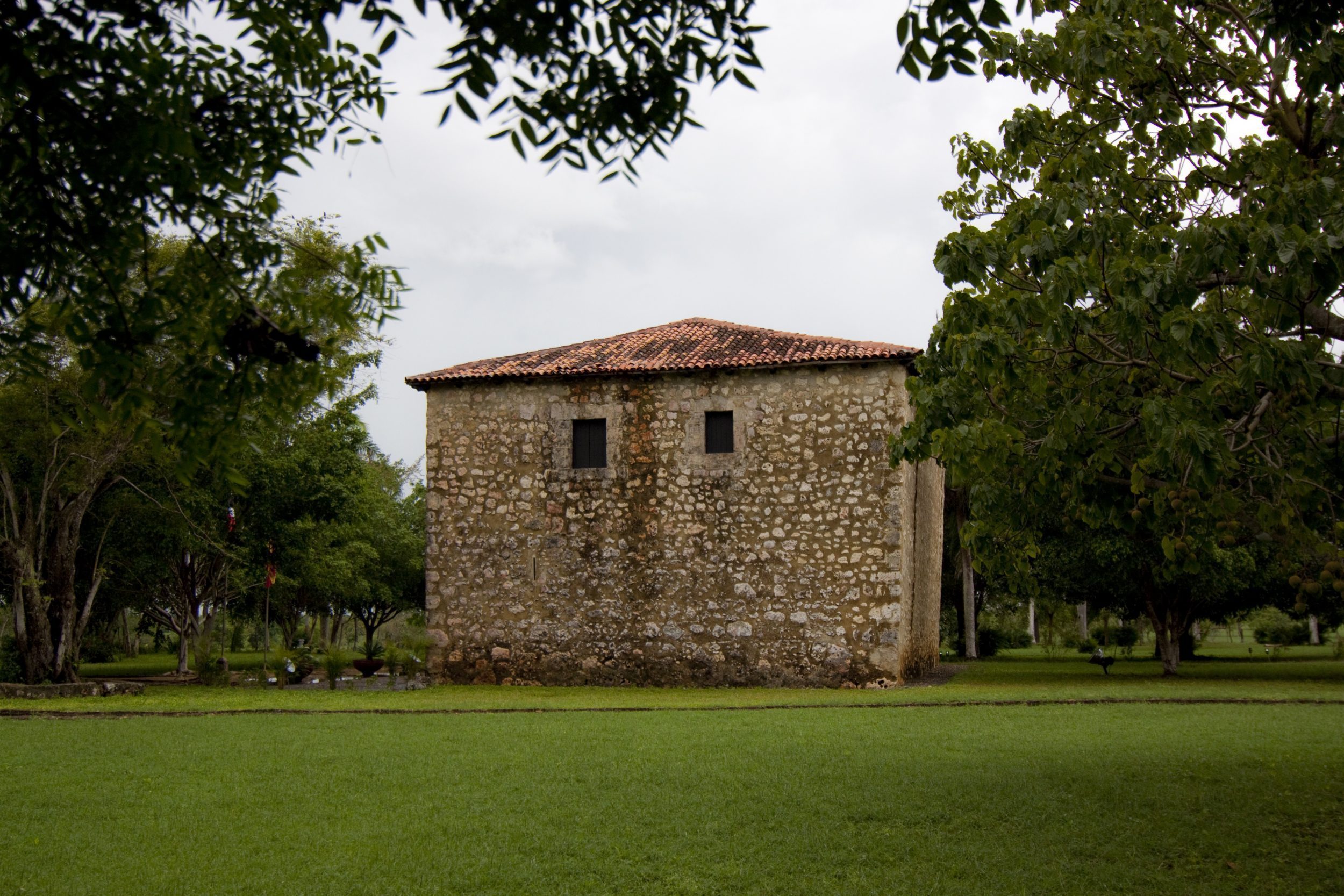
Juan Ponce de Leรณnโ€™s residence continues to stand in the southeastern town of San Rafael de Yuma, close to Higรผey, where he lived before heading out into the seas. Today, it is a much visited Museum.

Houseof Juan Ponce de Leon

__
St Francis of Paola O.M. (1416-1507) (Optional Memorial)
St Francisโ€™s Life:

https://anastpaul.wordpress.com/2018/04/02/saint-of-the-day-2-april-st-francis-of-paola-o-m-1416-1507/

St Abundius of Como
St Agnofleda of Maine
St Appian of Caesarea
St Bronach of Glen-Seichis
St Constantine of Scotland
St รaminh Tuoc
Bl Diego Luis de San Vitores-Alonso
St Ebbe the Younger
St Eustace of Luxeuil
St Gregory of Nicomedia
St John Payne
Bl Leopold of Gaiche
St Lonochilus of Maine
St Musa of Rome
Bl Mykolai Charnetsky
St Nicetius of Lyon
St Pedro Calungsod (1654โ€“1672) Martyr
His Life and Death:

https://anastpaul.com/2019/04/02/saint-of-the-day-2-april-st-pedro-calungsod-1654-1672-martyr/

St Rufus of Glendalough
St Theodora of Tiria
St Urban of Langres (c 327-c 390) Bishop
St Victor of Capua
Blessed Vilmos Apor (1892โ€“1945) Bishop Martyr
Blessed Vilnos’ Life and Death:

https://anastpaul.com/2020/04/02/saint-of-the-day-2-april-blessed-vilmos-apor-1892-1945-bishop-martyr/

Posted in MAUNDY THURSDAY, MEDITATIONS - ANTONIO CARD BACCI, QUOTES on CONSCIENCE, QUOTES on FORGIVENESS, QUOTES on REPENTANCE, QUOTES on SIN, SACRED HEART QUOTES, The PASSION

Thought for the Day โ€“ 1 April โ€“ The Betrayal of Judas

Thought for the Day โ€“ 1 April โ€“ Meditations with Antonio Cardinal Bacci (1881-1971)

The Betrayal of Judas

โ€œIngratitude is a very cruel thing.
It imprints a deep wound on the human heart and the heart of Jesus, was infinitely more sensitive than ours.
He had raised Judas to the high rank of the Apostolate;ย  He had made him one of His closest friends and had entrusted him with the secrets of His infinite love.
Now Judas betrays Him for the wretched sum of thirty pieces of silver.
Worse is to follow, however.
While Jesus is praying and perspiring blood at the thought of the ingratitude of men and of the nearness of His passion and death, the Garden of Gethsemane becomes suddenly aglow with torches and reverberates with the shouting of the hired ruffians, whom Judas has brought with him to arrest Jesus.
The treacherous Apostle comes forward.
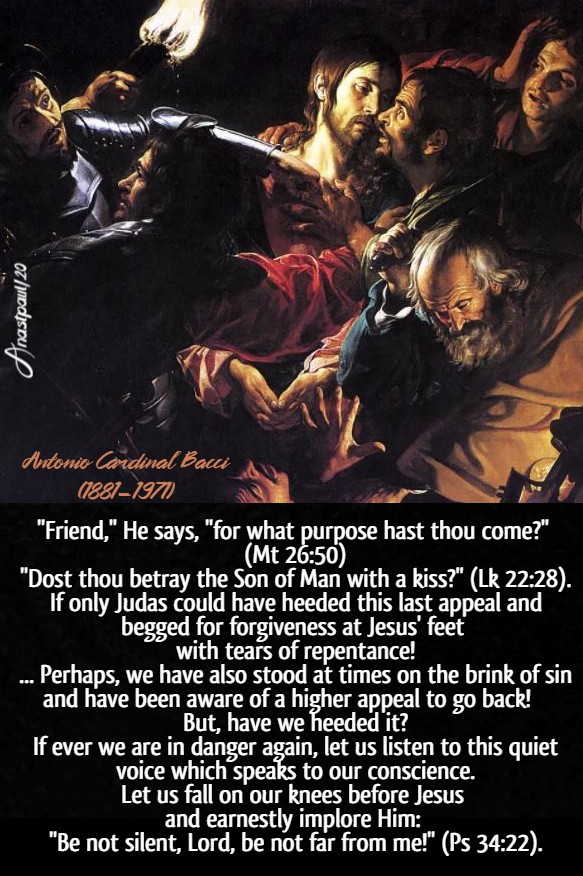
He embraces our divine Redeemer, hails Him as his Master and greets Him with a sacrilegious kiss upon the cheek.
Jesus neither repulses nor rebukes him but, with a gesture of infinite mercy, He addresses him as a friend.
โ€œFriend,โ€ He says, โ€œfor what purpose hast thou come?โ€ (Mt 26:50).
โ€œDost thou betray the Son of Man with a kiss?โ€ (Lk 22:28).
If only Judas could have heeded this last appeal and begged for forgiveness at Jesusโ€™ feet with tears of repentance!
Jesus would certainly have taken him to His heart and returned his kiss with a kiss of pardon and divine friendship.
Perhaps, we have also stood at times on the brink of sin and have been aware of a higher appeal to go back!
But, have we heeded it?
If ever we are in danger again, let us listen to this quiet voice which speaks to our conscience.
Let us fall on our knees before Jesus and earnestly implore Him: โ€œBe not silent, Lord, be not far from me!โ€ (Ps 34:22).
Let us ask Him to have pity on our weakness and to come to our assistance.โ€

Antonio Cardinal Bacci

Posted in APRIL -MONTH of the RESURRECTION and the BLESSED SACAMENT, EUCHARISTIC Adoration, HOLY COMMUNION, The HOLY EUCHARIST / The HOLY MASS

Devotion for the Month of April – The Blessed Sacrament

Devotion for the Month of April

The Blessed Sacrament

โ€œThe masterpiece of Jesus Christโ€™s love for humanity is the Eucharist.
The Eucharist is within our reach.
We can all get close to Christ the guest and talk with Him
and perceive the warmth of His word.
The word! How it inflames the spirits!
How will the word of Christ inflame them!
We can all get to the altar when He immolates Himself and shouts at us:
Look how much I have loved and loved you!
And we can all sit at His table
and eat the bread
and drink the intoxicating wine of charity. โ€œ

Blessed Marcelo Spรญnola y Maestre (1835-1906)
Cardinal-Priest

Posted in FATHERS of the Church, MAUNDY THURSDAY, QUOTES for CHRIST, The LAMB of GOD, The MOST HOLY REDEEMER, Our SAVIOUR, The PASSION, The REDEMPTION

Journey to the Cross – Maundy Thursday – 1 April – The Lamb That Was Slain, Has Delivered Us from Death and has Given Us Life

Journey to the Cross – Maundy Thursday – 1 April

The Lamb That Was Slain, Has Delivered Us from Death

and has Given Us Life

Today we leave dear Thomas ร  Kempis and read instead a reflection by Saint Melito, Bishop of Sardis (Died c 180) Father of the Church, whose Feast day it is today.

โ€œThere was much proclaimed by the prophets about the mystery of the Passover – that mystery is Christ and to Him be glory forever and ever. Amen.

For the sake of suffering humanity He came down from heaven to earth, clothed Himself in that humanity in the Virgin’s womb and was born a man. Having then a body capable of suffering, He took the pain of fallen man upon Himself; He triumphed over the diseases of soul and body, that were its cause, and by His Spirit, which was incapable of dying, He dealt man’s destroyer, death, a fatal blow.

He was led forth like a lamb; He was slaughtered like a sheep. He ransomed us from our servitude to the world, as He had ransomed Israel from the hand of Egypt; He freed us from our slavery to the devil, as He had freed Israel from the hand of Pharaoh. He sealed our souls with His own Spirit and the members of our body, with His own Blood.

He is the One, Who covered death with shame and cast the devil into mourning, as Moses cast Pharaoh into mourning. He is the One, Who smote sin and robbed iniquity of offspring, as Moses robbed the Egyptians of their offspring. He is the One, Who brought us out of slavery into freedom, out of darkness into light, out of death into life, out of tyranny into an eternal kingdom; who made us a new priesthood, a people chosen to be His own forever. He is the Passover that is our salvation.

It is He who endured every kind of suffering, in all those who foreshadowed Him. In Abel, He was slain, in Isaac bound, in Jacob exiled, in Joseph sold, in Moses exposed to die. He was sacrificed in the Passover lamb, persecuted in David, dishonoured in the prophets.

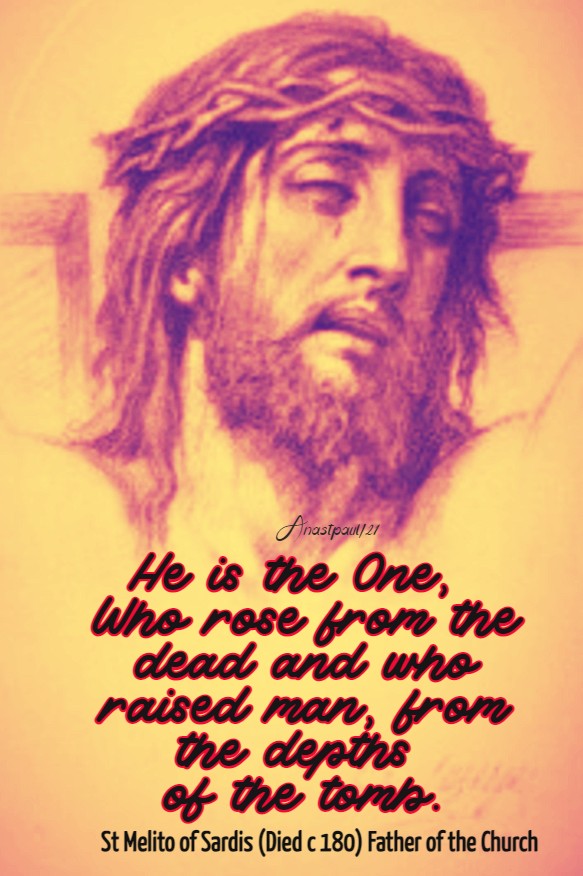
It is He who was made man of the Virgin, He who was hung on the tree; it is He who was buried in the earth, raised from the dead and taken up to the heights of heaven. He is the mute Lamb, the slain Lamb born of Mary, the fair ewe. He was seized from the flock, dragged off to be slaughtered, sacrificed in the evening, and buried at night. On the tree no bone of His was broken; in the earth His body knew no decay. He is the One, Who rose from the dead and who raised man from the depths of the tomb.โ€

From an Easter homily by St Melito of Sardis

Posted in "Follow Me", CHRIST the KING, CHRIST the LIGHT, CHRIST the PHYSICIAN, CHRIST the WORD and WISDOM, CHRIST, the WAY,TRUTH,LIFE, FATHERS of the Church, MAUNDY THURSDAY, QUOTES for CHRIST, QUOTES on the CROSS of CHRIST, The PASSION, The WORD

Quote/s of the Day โ€“ 1 April โ€“ ‘He is all things’

Quote/s of the Day โ€“ 1 April โ€“ Maundy Thursday, Evening Vigil Mass of the Lordโ€™s Supper, Gospel: John 13:1-15 and the Memorial of Saint Melito Bishop of Sardis (Died c 180) Early Church Father

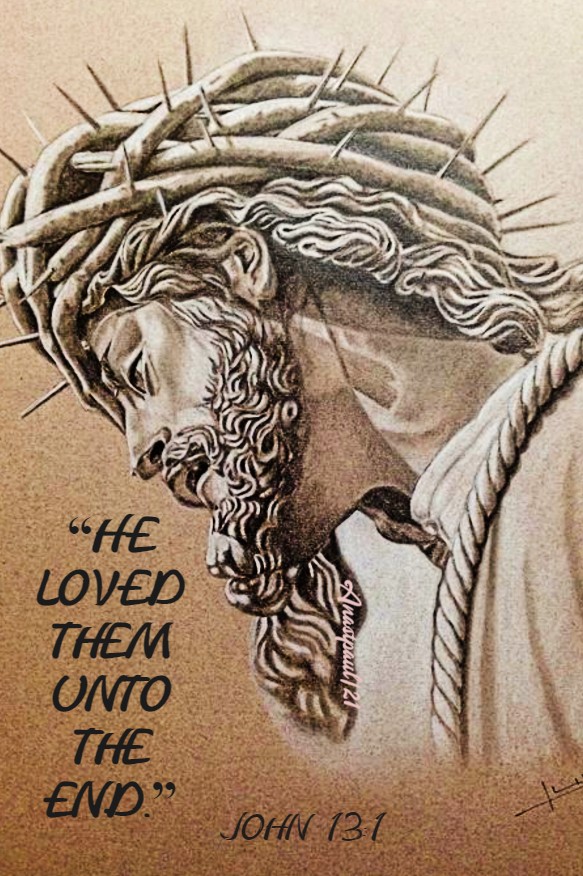
โ€œHe loved them unto the end.โ€

John 13:1

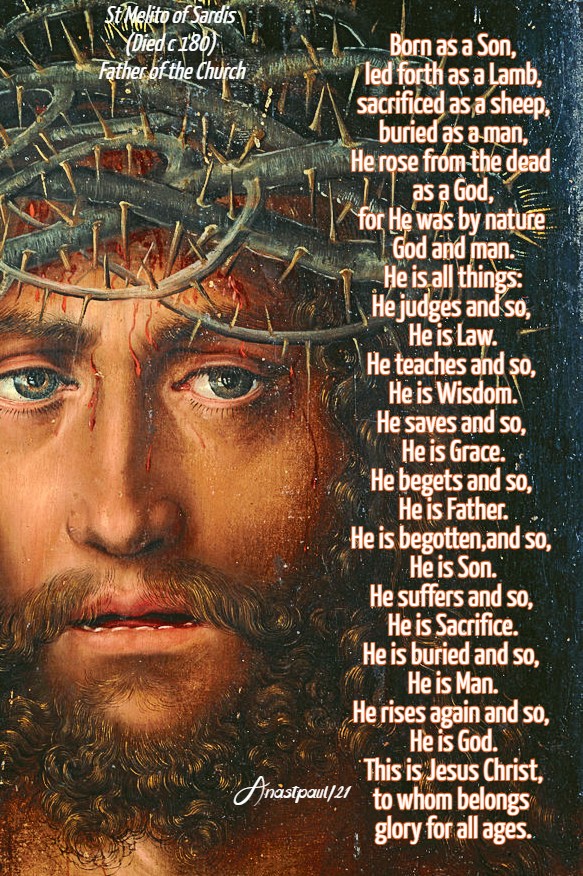
โ€œBorn as a Son,
led forth as a Lamb,
sacrificed as a sheep,
buried as a man,
He rose from the dead as a God,
for He was by nature God and man.

He is all things –
He judges and so, He is Law.
He teaches and so, He is Wisdom.
He saves and so, He is Grace.
He begets and so, He is Father.
He is begotten,and so, He is Son.
He suffers and so, He is Sacrifice.
He is buried and so, He is Man.
He rises again and so, He is God.
This is Jesus Christ,
to whom belongs glory for all ages.โ€

St Melito of Sardis (Died c 180)
Bishop, Early Church Father

Posted in CHRIST the WORD and WISDOM, CHRIST, the WAY,TRUTH,LIFE, DOCTORS of the Church, JULY - The MOST PRECIOUS BLOOD, MATER DOLOROSA - Mother of SORROWS, MAUNDY THURSDAY, QUOTES on The SOUL, The LAMB of GOD, The MOST PRECIOUS BLOOD, The PASSION, The REDEMPTION, The WORD

One Minute Reflection โ€“ 1 April โ€“ Maundy Thursday – ‘ … Place all your trust in the Blood of Christ Crucified โ€ฆ’

One Minute Reflection โ€“ 1 April โ€“ Maundy Thursday, Evening Vigil Mass of the Lordโ€™s Supper, Readings: Exodus 12:1-8, 11-14, Psalms 116:12-13, 15-18, 1 Corinthians 11:23-26, John 13:1-15

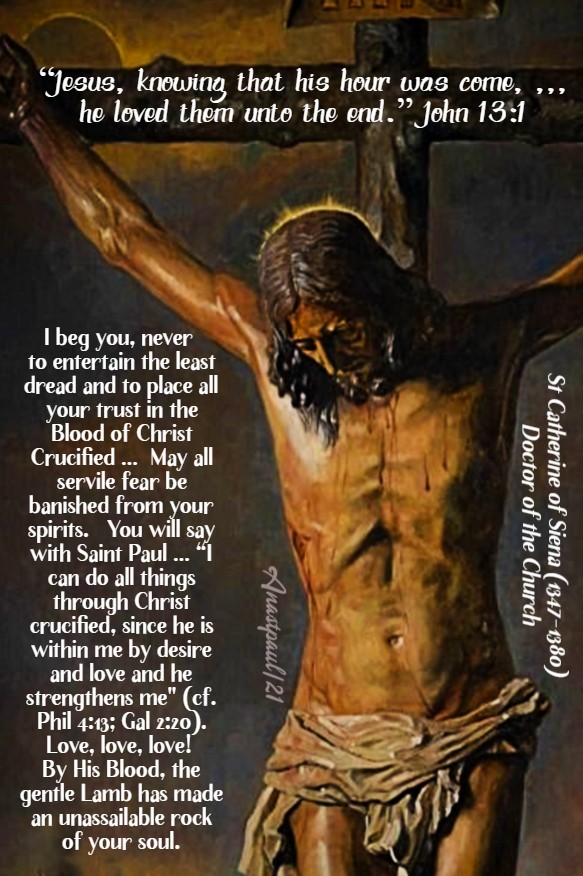
โ€œJesus, knowing that his hour was come, … he loved them unto the end.โ€ – John 13:1

REFLECTION – โ€œBe obedient to the death, following the example of the spotless Lamb who obeyed His Father even to a shameful death on the Cross. Reflect that He is the way and the rule you are to follow. Always hold Him present before the eyes of your spirit. See how obedient He is, this Word, this Utterance of God! He does not refuse to take up the burden of suffering laid on Him by His Father; to the contrary, He throws Himself into it, spurred on by His great desire. Isnโ€™t this what He reveals during the Last Supper on Maundy Thursday, when He says: โ€œI have eagerly desired to eat this Passover with you before I sufferโ€ (Lk 22:15)? By โ€œeat this Passoverโ€ He means, the accomplishment of the Fatherโ€™s will and His desire. Seeing that scarcely any time lies before Him (He was already looking ahead to the end, when He would sacrifice His body for our sake), He rejoices, He is glad and joyfully says: โ€œI have greatly desired.โ€ Here is the Passover He is speaking about – that which consists in giving His own self as food, in laying down His own body in obedience to the Father.

Jesus had celebrated many another Passover with His disciples but never this one, O unspeakable, sweet and burning charity! You think neither of Your suffering nor of Your humiliating death – if You had thought of them, You would not have been so joyful, You would not have called it a Passover. The Word sees ,that it is He Himself Who has been chosen, He Himself Who has received all our humanity as His spouse. He has been asked to give us His own Blood so that Godโ€™s will might be accomplished in us, so that it might be His Blood that sanctifies us. This is, indeed, the sweet Passover, this Lamb without blemish accepts (cf. Ex 12:5) and it is with great love and great desire that He fulfils the Fatherโ€™s will and wholly carries out His design. What unspeakably sweet love! โ€ฆ

That is why, my beloved, I beg you never to entertain the least dread and to place all your trust in the Blood of Christ Crucified โ€ฆ May all servile fear be banished from your spirits. You will say with Saint Paul โ€ฆ: โ€œI can do all things through Christ crucified, since he is within me by desire and love and he strengthens me” (cf. Phil 4:13; Gal 2:20). Love, love, love! By His Blood, the gentle Lamb has made an unassailable rock of your soul.โ€ – St Catherine of Siena (1347-1380) Dominican tertiary, Doctor of the Church, Co-patron of Europe – Letter 129

PRAYER โ€“ Love of You, with our whole heart, Lord God, is holiness. Increase then Your gifts of divine grace in us, so that, as in Your Sonโ€™s Death, You made us hope for what we believe, You may likewise, in His Resurrection, make us come to You, our final end. Listen we beg, to the prayers of Your holy ones and may the Blessed Mother walk along with us and keep our hand, ever in hers. Through Jesus Himself, in the unity of the Holy Spirit, God with You, forever and ever, amen.

Posted in HOLY WEEK, LENTEN PRAYERS & NOVENAS, MARIAN POETRY, MARIAN PRAYERS, MATER DOLOROSA - Mother of SORROWS, Our MORNING Offering, The PASSION

Our Morning Offering – 1 April – When Mary Weeps

Our Morning Offering – 1 April – Maundy Thursday

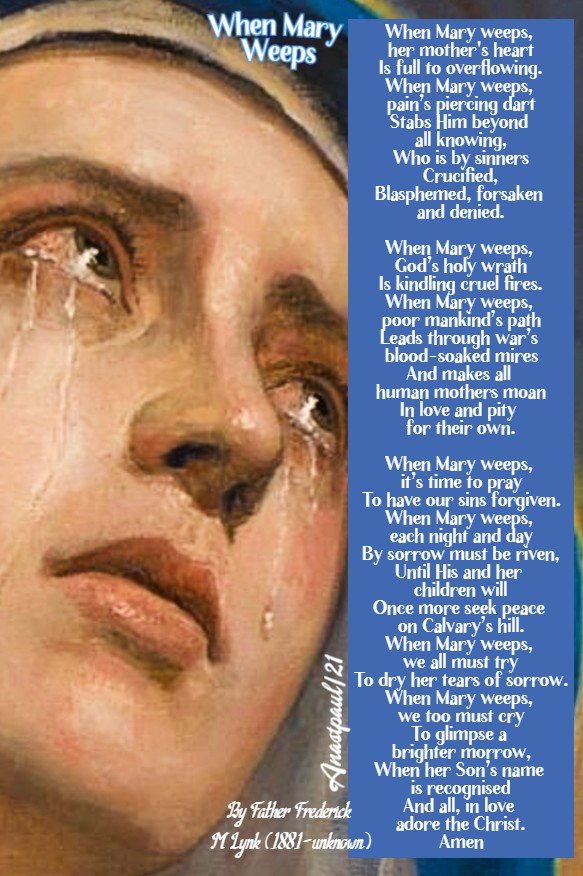
When Mary Weeps
By Father Frederick M Lynk (1881-unknown)

When Mary weeps, her mother’s heart
Is full to overflowing.
When Mary weeps, painโ€™s piercing dart
Stabs Him beyond all knowing,
Who is by sinners Crucified,
Blasphemed, forsaken and denied.

When Mary weeps, Godโ€™s holy wrath
Is kindling cruel fires.
When Mary weeps, poor mankindโ€™s path
Leads through warโ€™s blood-soaked mires
And makes all human mothers moan
In love and pity for their own.

When Mary weeps, itโ€™s time to pray
To have our sins forgiven.
When Mary weeps, each night and day
By sorrow must be riven,
Until His and her children will
Once more seek peace on Calvaryโ€™s hill.
When Mary weeps, we all must try
To dry her tears of sorrow.
When Mary weeps, we too must cry
To glimpse a brighter morrow,
When her Sonโ€™s name is recognised
And all, in love adore the Christ.
Amen

Posted in INCORRUPTIBLES

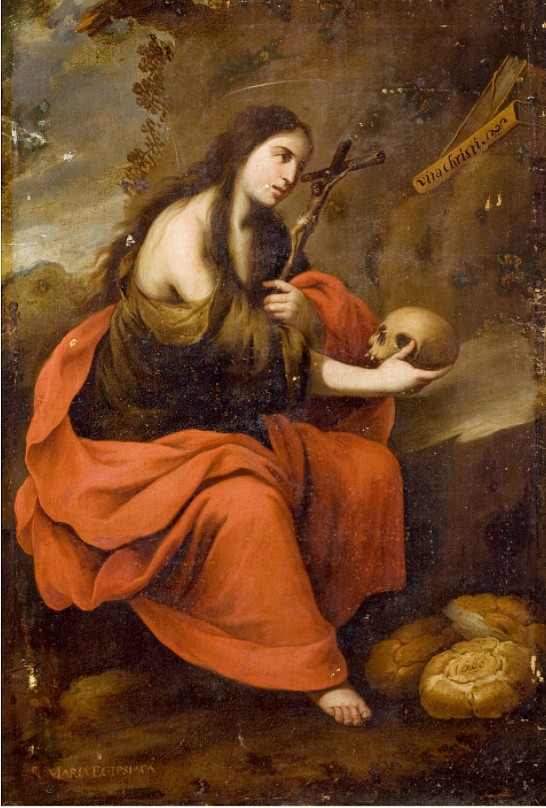
Saint of the Day – 1 April – Saint Mary of Egypt (c 344-c 421)

Saint of the Day – 1 April – Saint Mary of Egypt (c 344-c 421) Desert Mother, Penitent, Recluse, Born in c 344 in Egypt am died in c 421 in the desert near the River Jordan of natural causes. Also known as Maria Aegyptica, Maria Egiziaca. Patronages – Penitents, Chastity (warfare against the flesh; deliverance from carnal passions), demons (deliverance from), fever, skin diseases, reformed fallen women.

The primary source of information on Saint Mary of Egypt is the Vita written of her, around 100 years after her death, by St Sophronius, the Bishop of Jerusalem (634โ€“638). Most of the information in this section is taken from this source. The complete Vita is available to read here (from an Orthodox Church source): https://stmaryofegypt.org/files/library/life.htm

Saint Mary, was born somewhere in the Province of Egypt. At the age of twelve she ran away from her parents to the City of Alexandria. Here she lived an extremely dissolute life. In her Vita, it states that she often refused the money offered for her sexual favours, as she was driven “by an insatiable and an irrepressible passion” and that she mainly lived by begging, supplemented by spinning flax.

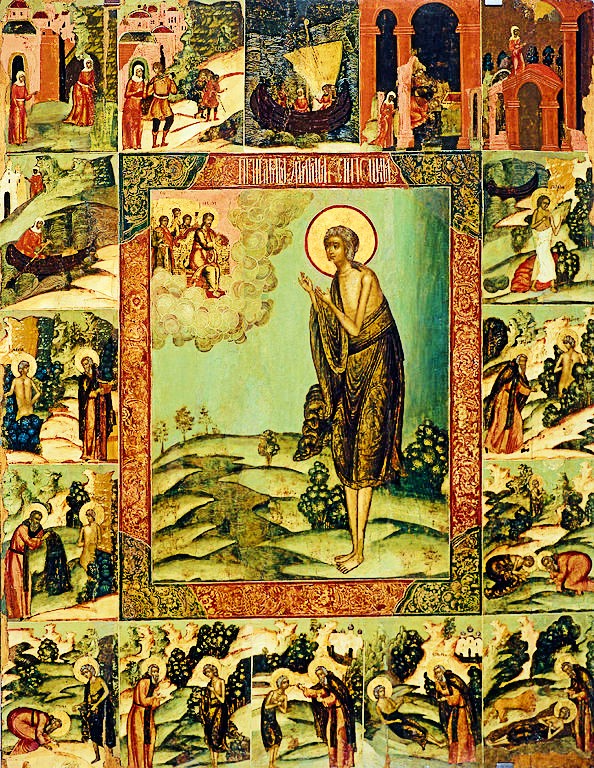
Ico depicting St Mary’s life

After seventeen years of this lifestyle, she travelled to Jerusalem for the Feast of the Exaltation of the Holy Cross. She undertook the journey as a sort of “anti-pilgrimage,” stating, that she hoped to find, in the pilgrim crowds at Jerusalem, even more partners in her lust. She paid for her passage by offering sexual favours to other pilgrims and she continued her habitual lifestyle for a short time in Jerusalem.

Her Vita relates that when she tried to enter the Church of the Holy Sepulchre for the celebration, she was barred from doing so by an unseen force. Realising that this was because of her impurity, she was struck with remorse and upon seeing an icon of the Mother of God Blessed Virgin. outside the Church, she prayed for forgiveness and promised to give up the world. Then, she attempted again to enter the Church and this time, was permitted in.

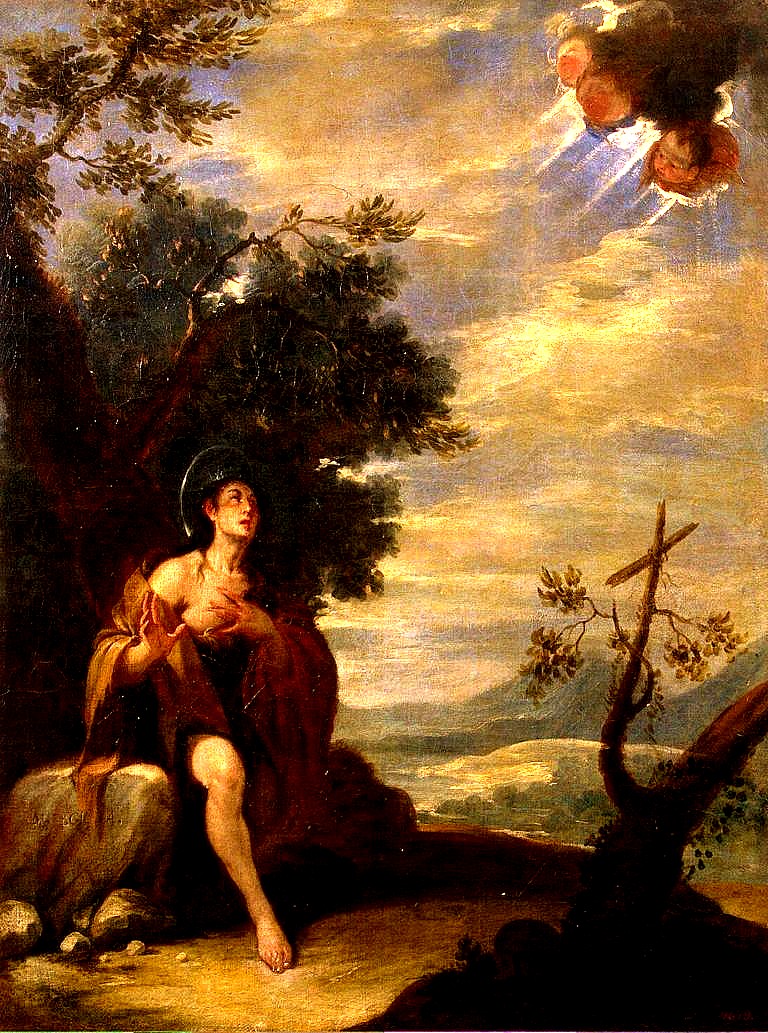
After venerating the relic of the True Cross, she returned to the Icon to give thanks and heard a voice telling her, “If you cross the Jordan, you will find glorious rest.” She immediately went to the Monastery of Saint John the Baptist on the bank of the River Jordan, where she received absolution and afterwards, Holy Communion. The next morning, she crossed the Jordan and retired to the desert to live the rest of her life as a hermit in penitence. She took with her only three loaves of bread and once they were gone, lived only on what she could find in the wilderness.

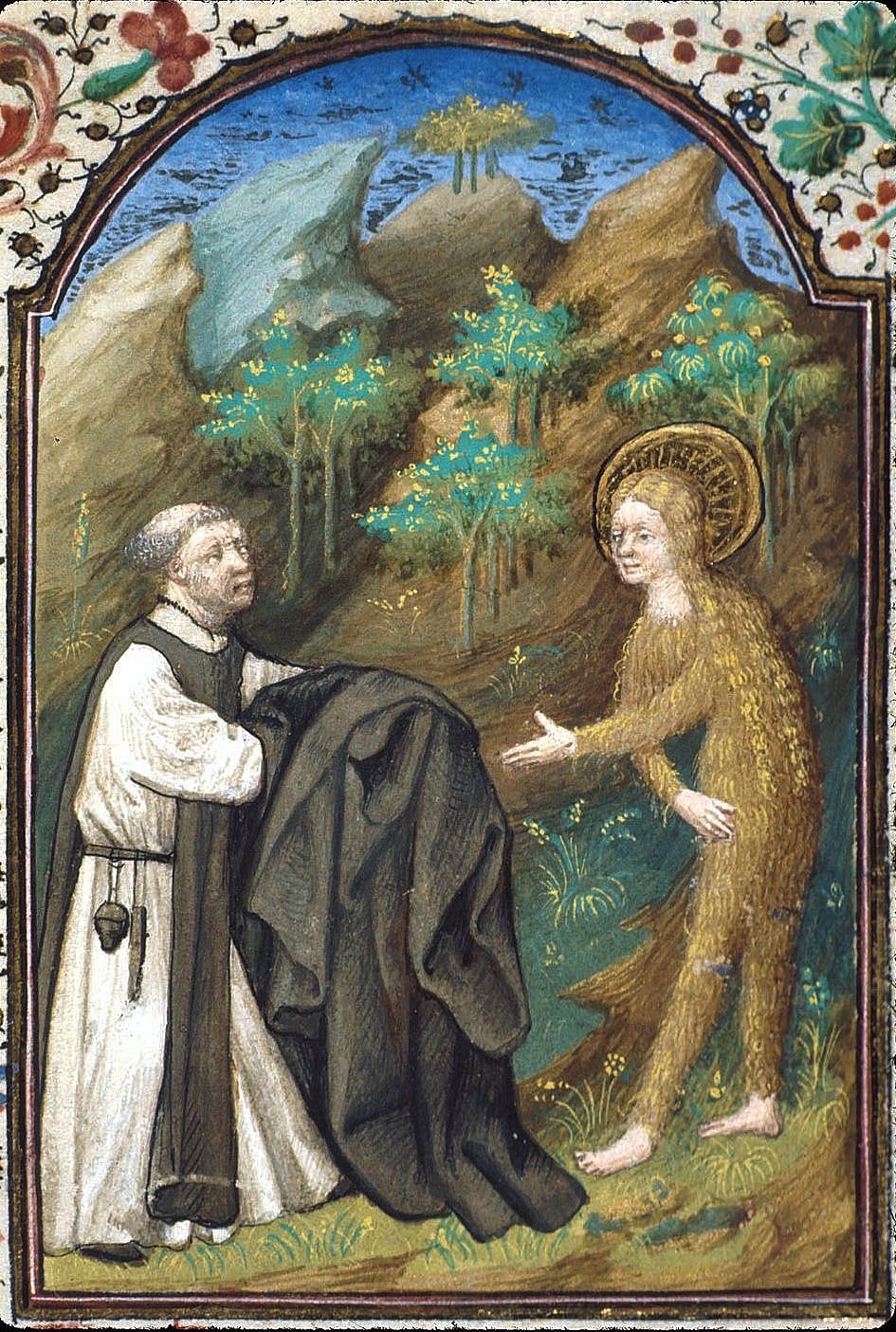
Approximately one year before her death, she recounted her life to Saint Zosimas of Palestine (c 460-c 560), who encountered her in the desert. When he unexpectedly met her in the desert, she was completely naked and almost unrecognisable as human. She asked St Zosimas to give her his mantle to cover her nakedness and then she narrated her life’s story to him.

St Zosimas gies St Mary his mantle

She then asked him to meet her at the banks of the Jordan, on Holy Thursday of the following year and bring her Holy Communion. When he fulfilled her wish, she crossed the river to get to him by walking on the surface of the water and received Holy Communion, asking him to meet her again in the desert the following Lent.

St Mary’s last Holy Communion

The next year, St Zosimas travelled to the same spot where he first met her, some twenty days’ journey from his Monastery and found her lying there dead. According to an inscription written in the sand next to her head, she had died on the very night he had given her the Blessed Sacrament and had been somehow miraculously transported to the place he found her. Her body was preserved incorrupt.

He buried her body with the assistance of a passing lion. On returning to the Monastery, he related her life story to the brethren and it was preserved among them, as oral tradition, until it was written down by St Sophronius.

There is disagreement among various sources regarding the dates of Saint Mary’s life. The dates given above correspond to those in the Catholic Encyclopedia. The Bollandists place her death in 421, or 530. The only clue given in her Vita, is the fact that the day of her repose was 1 April which was stated to be Holy Thursday, meaning ,that Easter fell on 4 April that year, 421.

St Mary’s relics lie in various Cathlic Churhes, the Italian Churches are named below- Rome, Naples, and Cremona in Italy and in Antwerp, Belgium. In Italy, Mary became associated with the Patronage of fallen women much like Mary Magdalene, to whom similar traits were associated. There are a number of Churches or Chapels dedicated to Saint Mary of Egypt, among which are:

Temple of Portunus (Santa Maria Egiziaca, Rome)
Church of Santa Maria Egiziaca a Forcella, Naples
Church of Santa Maria Egiziaca a Pizzofalcone, Naples
Chapel in Church of the Holy Sepulchre in Jerusalem, commemorating the site of her conversion

Many literary works commemorate her within various formats, both fictional, stage and music.

Posted in FATHERS of the Church, MARIAN TITLES, SAINT of the DAY

Maundy Thursday +2021, Nostra Signora delle Lacrime / Our Lady of Tears, Sicily (1953) and Memorials of the Saints – 1 April

Maundy Thursday +2021:
https://anastpaul.com/2020/04/09/maundy-or-holy-thursday-of-the-passion-of-our-lord-jesus-christ-and-the-seven-churches-visitation-9-april/

Nostra Signora delle Lacrime / Our Lady of Tears, Sicily (1953) – 1 April:

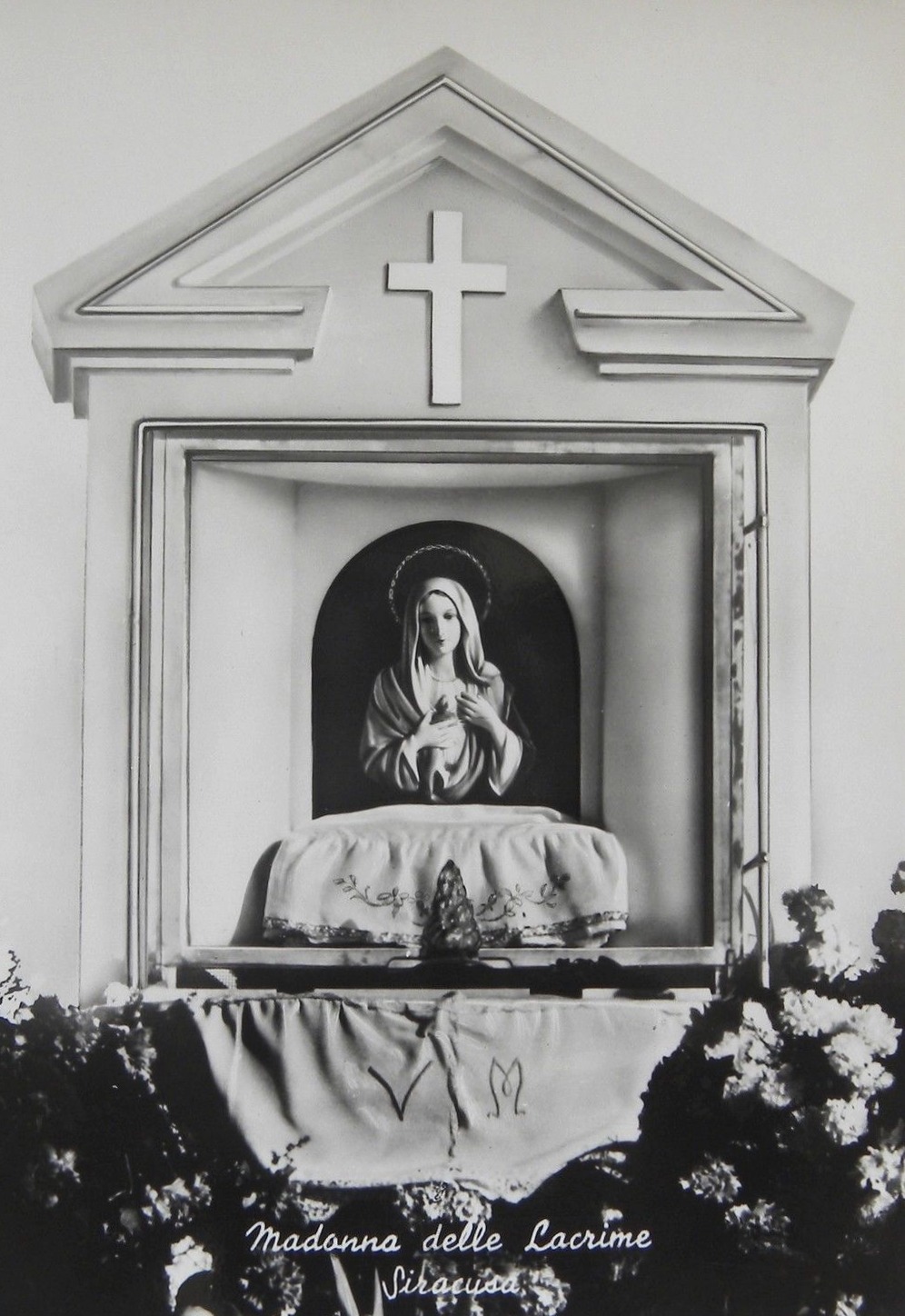
Also known as the Weeping Madonna of Syracuse, this plaster hanging wall plaque depicts the Immaculate Heart of Mary in the style of the 1950โ€™s. Like many others just like it, it was mass-produced in a factory in Tuscany and shipped to various locations throughout the world.

This particular plaque of Our Lady of Tears was purchased for a wedding gift for a couple who wed on 21 March 1953. The couple, Angelo and Antonian Iannuso, would later admit, that they were not devout but they liked the plaque and placed it on the wall over their bed. Antonian soon became pregnant but the happy couple learned, that the pregnancy caused Antonian to suffer from toxemia that resulted frequent convulsions and even temporary blindness.adly
On the morning of 29 August, 1953, Antonian awoke to find that her sight had been restored.
โ€œI opened my eyes and stared at the image of the Madonna above the bedhead. To my great amazement, I saw that the effigy was weeping. I called my sister-in-law, Grazie and my aunt, Antonian Sgarlata, who came to my side, showing them the tears. At first they thought it was an hallucination due to my illness but when I insisted, they went close to the plaque and could esily see ,that tears were really falling from the eyes of the Madonna and, that some tears ran down her cheeks onto the bedhead. Taken by fright, they took it out the front door, calling the neighbours and they too confirmed the phenomenonโ€ฆโ€
The plaque of Our Lady of Tears was publicly displayed, convincing even the skeptics of the prodigy as many of the sick were miraculously healed of their ailments. Some of the tears were collected for scientific examination and the findings were as follows:

โ€œโ€ฆthe liquid examined is shown to be made up of a watery solution of sodium chloride in which traces of protein and nuclei of a silver composition of excretiary, substances of the quanternary type, the same as found in the human secretions, used as a comparison during the analysis.
โ€œThe appearance, the alkalinity and the composition, induce one to consider the liquid examined analogous to human tears.โ€

The tears stopped four days later at 11:40 am.
On 17 October 1954, Pope Pius XII stated the following during a radio broadcast:
โ€œโ€ฆwe acknowledge the unanimous declaration of the Episcopal Conference held in Sicily, on the reality of that event. Will men understand the mysterious language of those tears?โ€

A vintage postcard of the miraculous Weeping Madonna of Syracuse, Sicily.

Blessed Abraham of Bulgaria
Blessed Alexander of Sicily
Saint Anastasio
Blessed Antonius of Noto
Saint Berhard of Amiens
Blessed Bernhardin of Noto
Saint Celsus of Armagh
Saint Dodolinus of Vienne
Blessed Gerard of Sassoferrato
Saint Gilbert de Moray
Blessed Giuseppe Girotti
Blessed Hugh of Bonnevaux
Saint Hugh of Grenoble
Saint Jacoba of Rome
Blessed John Bretton
Saint Leucone of Troyes
Saint Lodovico Pavoni FMI (1784-1849)
His Lifestory:

https://anastpaul.com/2020/04/01/saint-of-the-day-1-april-saint-lodovico-pavoni-fmi-1784-1849/

Blessed Marcelle
Saint Mary of Egypt (c 344-c 421) Desert Mother, Penitent
Saint Melito Bishop of Sardis (Died c 180) Early Church Father
Biography:

https://anastpaul.com/2019/04/01/saint-of-the-day-1-april-st-melito-died-c-180/
Blessed Nicolรฒ of Noto
Saint Prudentius of Atina
Saint Tewdrig ap Teithfallt
Saint Theodora of Rome
Saint Valery of Leucone
Saint Venantius of Spalato
Blessed Vinebault
Blessed Zofia Czeska-Maciejowska
โ€”
Apostles of Picardy:
Saint Caidoc
Saint Fricor

Martyrs of Dalmatia and Istria โ€“ 9 saints: A group of Christians martyrs who died at various locations in Dalamtia and Istria (in modern Croatia, whose relics were later taken to Rome, Italy, and who are remembered together. We know the names Anastasio, Antiochiano, Asterius, Gaiano, Mauro, Paoliniano, Septimius, Telio and Venantius.
Died
โ€ข on the Adriatic coast of modern Croatia
โ€ข relics translated to Rome, Italy

Martyrs of Thessalonica โ€“ 6 saints: A group of Christians martyred. We know nothing about them but the names Alexander, Dionysius, Ingenianus, Panterus, Parthenius and Saturninus.
Died
Thessalonica, Greece, date unknown

Martyred Sisters of Thessalonica:
Saint Agape
Saint Chionia

Martyred in Alexandria:
Saint Stephen
Saint Victor

Martyred in Armenia:
Saint Irenaeus
Saint Quintian

Martyred in Heraclea:
Saint Castus
Saint Victor

Martyred in the Mexican Revolution
Blessed Anacleto Gonzรกlez Flores
Blessed Jorge Vargas Gonzรกlez
Blessed Luis Padilla Gรณmez
Blessed Ramรณn Vargas Gonzรกlez