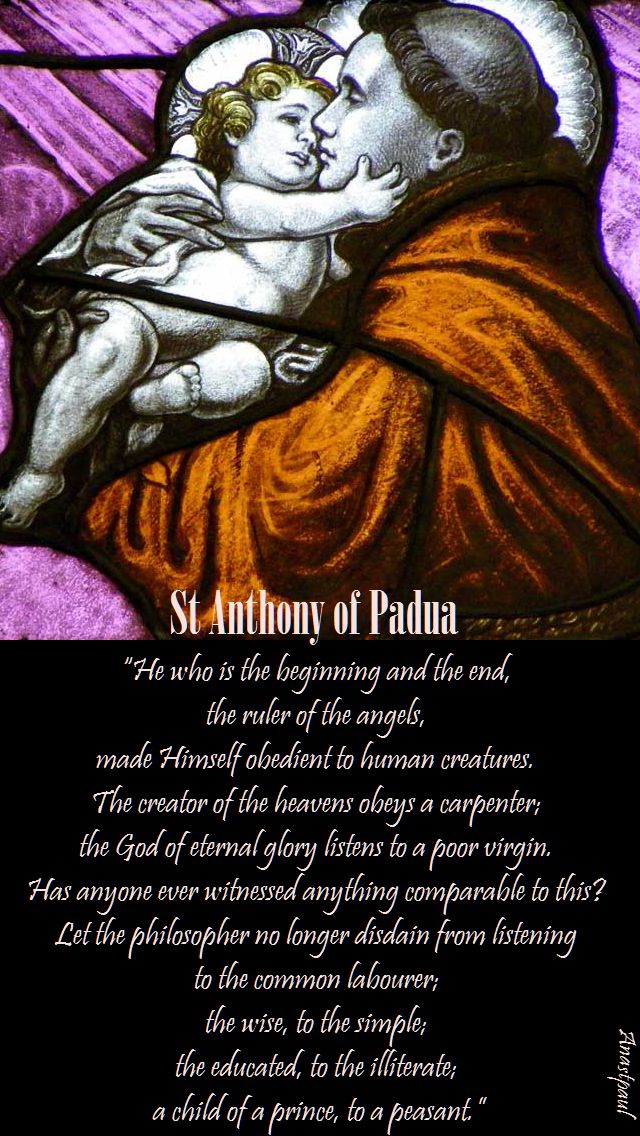
“He who is the beginning and the end,
the ruler of the angels,
made Himself obedient to human creatures.
The creator of the heavens obeys a carpenter;
the God of eternal glory listens to a poor virgin.
Has anyone ever witnessed anything comparable to this?
Let the philosopher no longer disdain from listening
to the common labourer;
the wise, to the simple;
the educated, to the illiterate;
a child of a prince, to a peasant.”
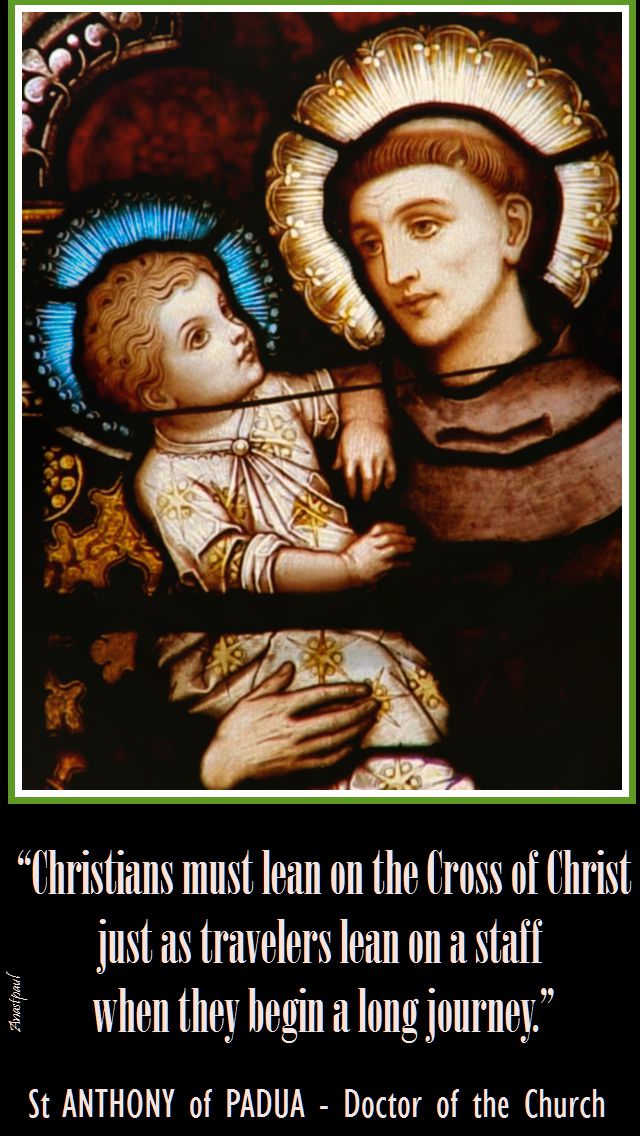
“Christians must lean on the Cross of Christ
just as travelers lean on a staff
when they begin a long journey.”
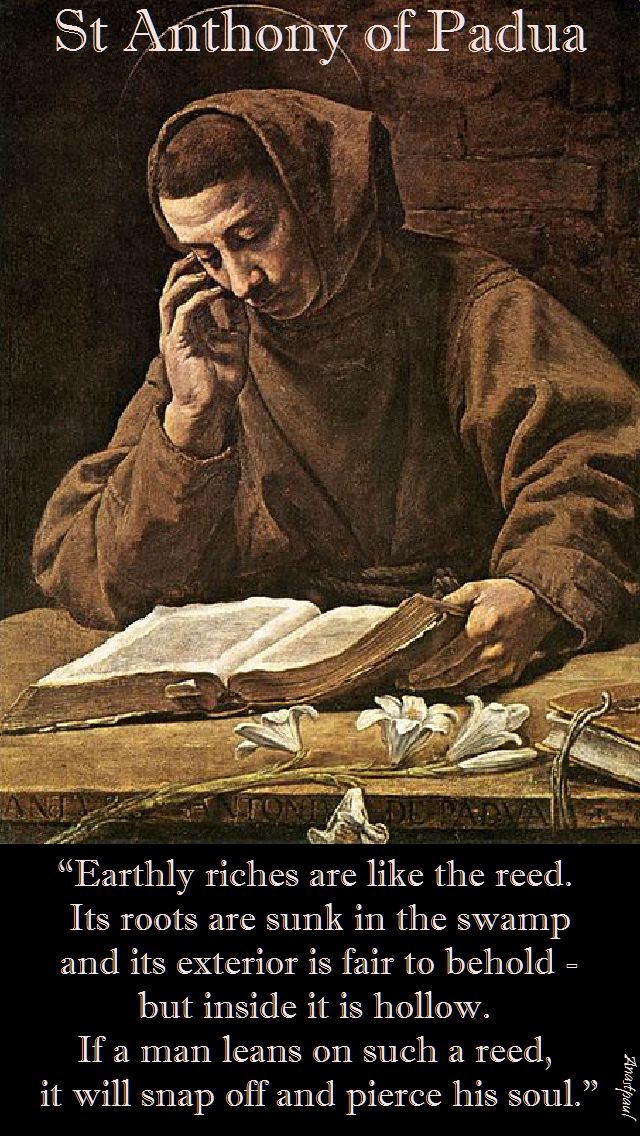
“Earthly riches are like the reed.
Its roots are sunk in the swamp
and its exterior is fair to behold –
but inside it is hollow.
If a man leans on such a reed,
it will snap off and pierce his soul.”
“Not without a long procession does the devil wish the sinner to be carried to his grave
and therefore he arranges the file after the usual manner:
Ambition carries the cross,
Detraction the incense,
Oppression the holy – or rather the cursed – water,
Hypocrisy bears the lights.
There are two chanters:
one is the Fallacious Confidence of living a long time
and he sings, Requiem aeternam – you still have abundant time;
the other is Presumption as to the Divine Mercy
and he sings, In Paradisnm le ducant angeli.
Pride celebrates the office.
Then follow Vain-Glory on the right,
Envy on the left, and, walking after,
Anger, Impatience, Insolence, Blasphemy,
Contumely, Arrogance, Lasciviousness,
Gluttony, Idle Talk, Boasting, Injury, Curiosity
and Uneasiness.
Lo! what a crowd in the conscience following him
who is dead in trespasses and sin.”
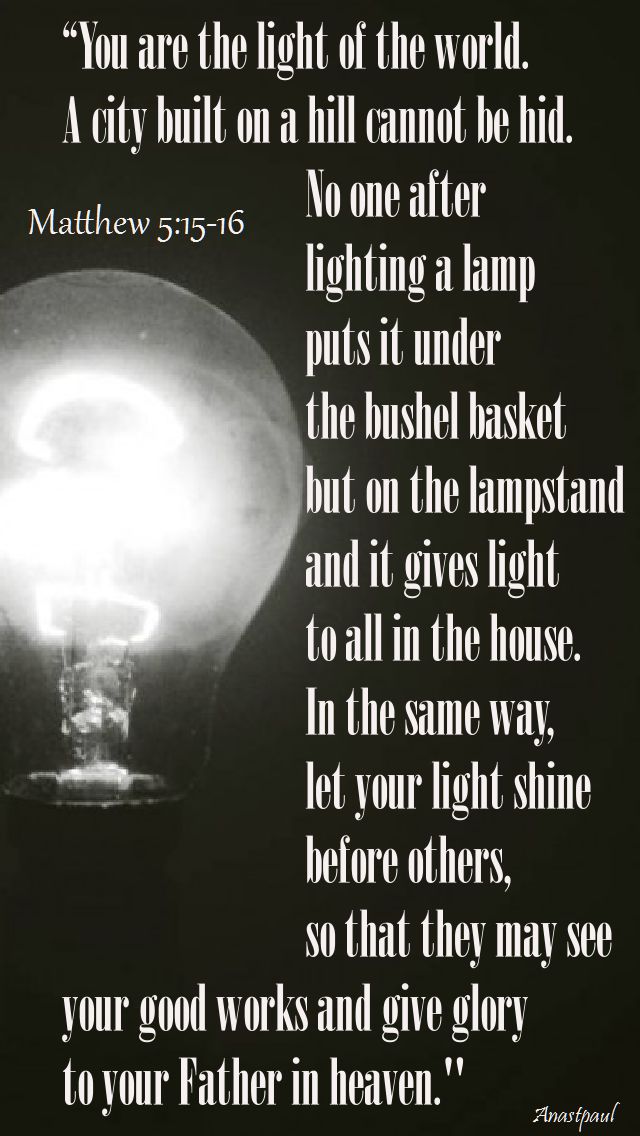
“You are the light of the world. A city built on a hill cannot be hid. No one after lighting a lamp puts it under the bushel basket, but on the lampstand, and it gives light to all in the house. In the same way, let your light shine before others, so that they may see your good works and give glory to your Father in heaven.”………….Matthew 5:15-16
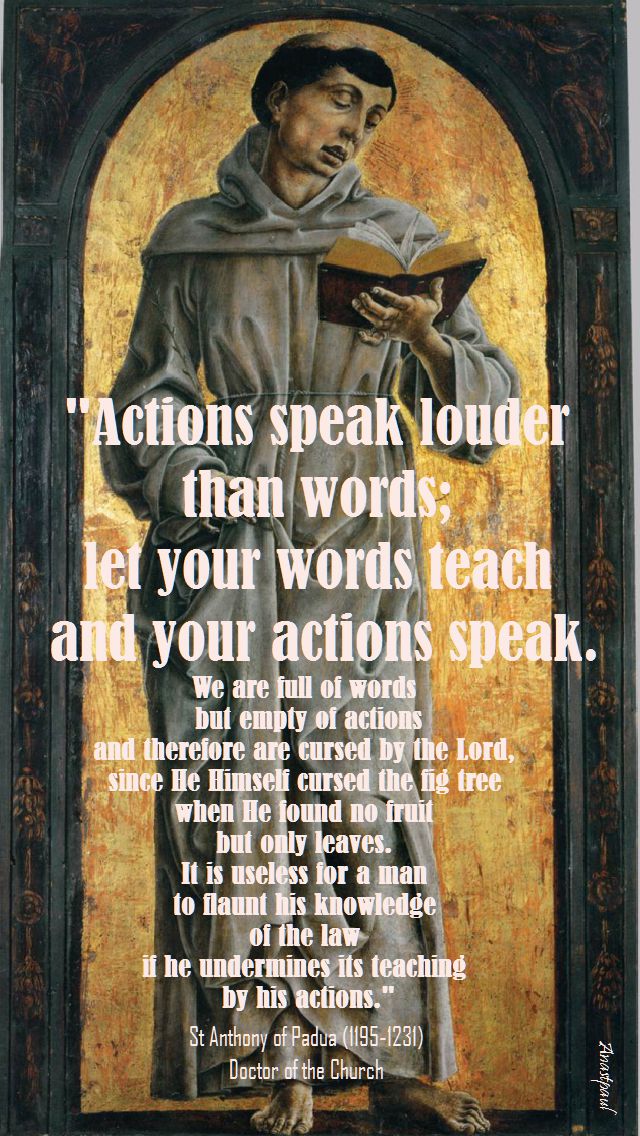
REFLECTION – “Actions speak louder than words;
let your words teach and your actions speak.
We are full of words but empty of actions
and therefore are cursed by the Lord,
since He Himself cursed the fig tree
when He found no fruit but only leaves.
It is useless for a man to flaunt his knowledge
of the law if he undermines its teaching by his actions.”…….St Anthony of Padua
PRAYER – My Lord and my God, teach me the gift of silence and the gift of charity. Help me to live as I speak and to do as You say. Let my fruit be the proof of my love for You and for my neighbour. St Anthony your preaching and teaching was always accompanied by love and charity, pray for us all that we may be a light for the world, amen.
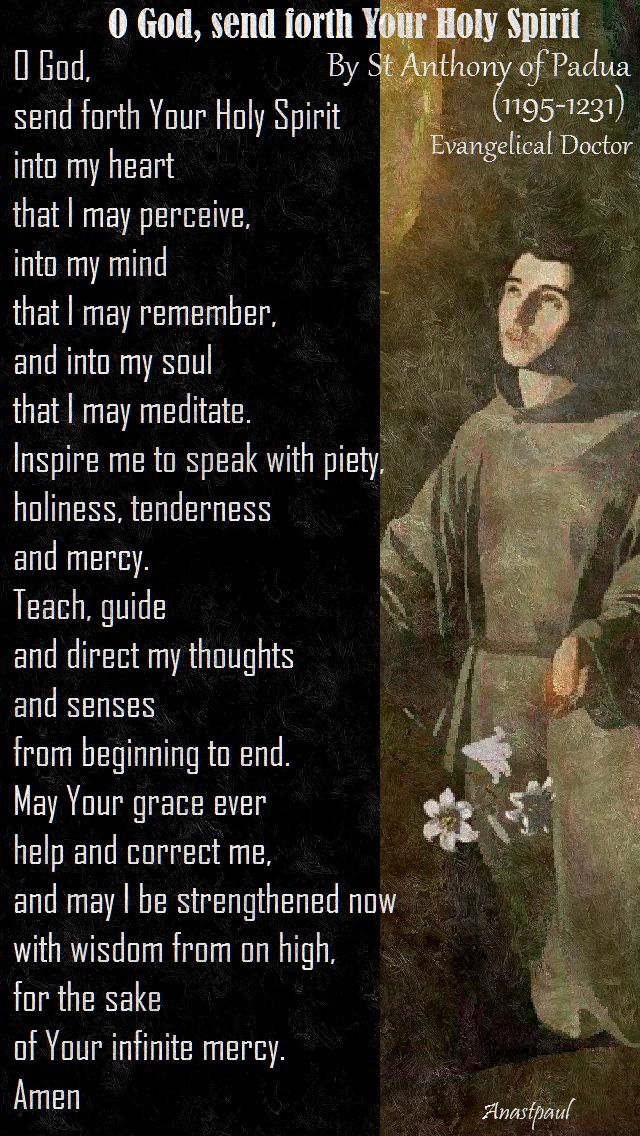
O God, send forth Your Holy Spirit By St Anthony of Padua
O God,
send forth Your Holy Spirit into my heart
that I may perceive,
into my mind that I may remember,
and into my soul that I may meditate.
Inspire me to speak with piety,
holiness, tenderness and mercy.
Teach, guide and direct my thoughts
and senses from beginning to end.
May Your grace ever help and correct me,
and may I be strengthened now
with wisdom from on high,
for the sake of Your infinite mercy. Amen
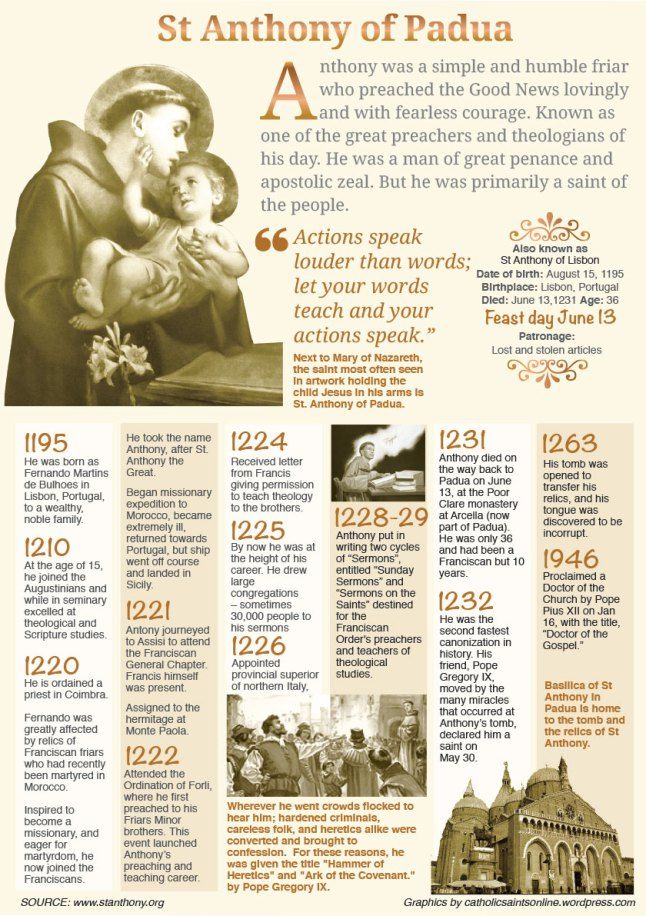
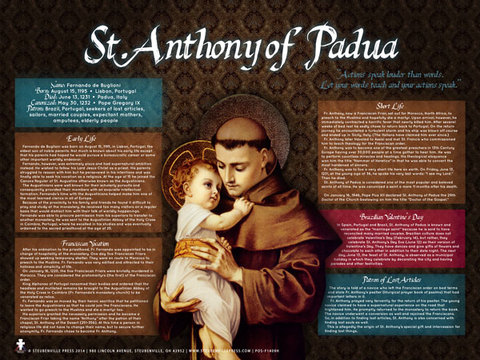
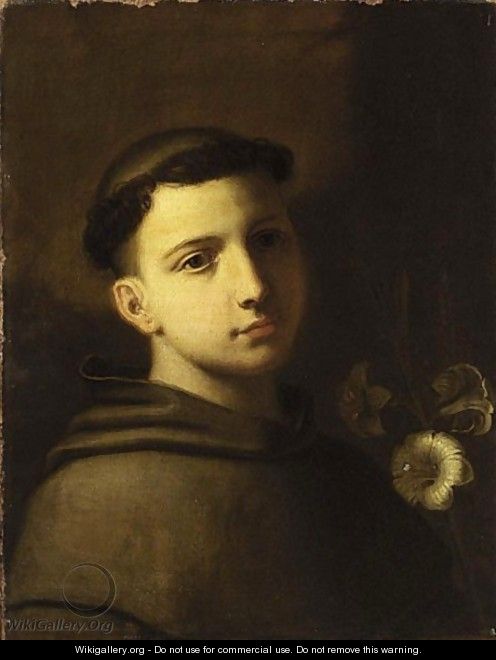
Saint of the Day – 13 June – St Anthony of Padua OFM (1195-1231) Evangelical Doctor – KNOWN AS THE Hammer of Heretics – Professor of Miracles – Wonder-Worker – Ark of the Testament – Repository of Holy Scripture (1195 at Lisbon, Portugal – 13 June 1231 of natural causes). Religious Priest and Friar of the Franciscan Order, Evangelist, Preacher, Teacher, Apostle of Charity, Apostle of the Holy Eucharist, Scriptural expert, Miracle Worker, Teacher, Confessor, Defender of the Faith. He was buried on the Tuesday following his death in the Church of Santa Maria Maggiore, Padua, Italy and legend says that all the sick who visited his new grave were healed. Also known as St Anthony of Lisbon.Patronages – against sterility, against shipwreck, against starvation, American Indians, amputees, animals – both wild and domestic, asses, mariners, elderly people, expectant mothers, for faith in the Blessed Sacrament, fishermen, for good harvests, horses, lost articles, seekers of lost articles, posted articles, oppressed people, poor people, swineherds, travel guides, travellers, Brazil, Portugal, Tigua Indians, 4 Diocese, 17 Cities.
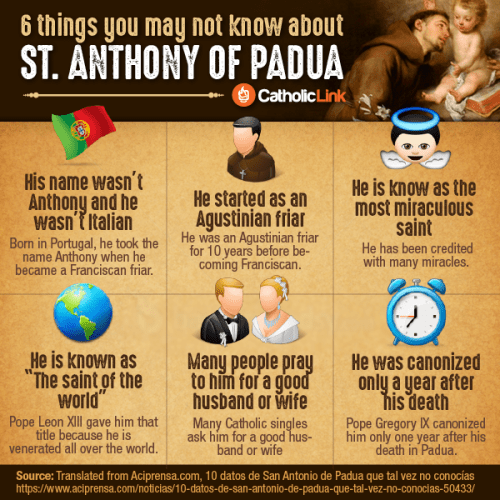
St Anthony of Padua/Lisbon, was a Portuguese Priest and Friar of the Franciscan Order. He was born and raised by a wealthy family in Lisbon, Portugal and died in Padua, Italy. Noted by his contemporaries for his forceful preaching, expert knowledge of scripture and undying love and devotion to the poor and the sick, he was one of the most-quickly Canonised Saints in Church history. He was proclaimed a Doctor of the Church by Pope Pius XII on 16 January 1946.
St. Anthony’s Youth & Conversion
St Anthony was born in the year 1195at Lisbon (Portugal) where his father was a captain in the royal army. Already at the age of fifteen years, he had entered the Congregation of Canons Regular of St Augustine and devoted himself with great earnestness both to study and to the practice of piety in the Monastery at Coimbra (Portugal).
About that time some of the first members of the Order of Friars Minor, which St. Francis has founded in 1206 came to Coimbra. They begged from the Canons Regular a small and very poor place, from which by their evangelical poverty and simplicity they edified everyone in the region. Then in 1219 some of these friars, moved by divine inspiration, went as missionaries to preach the Gospel of Christ to the inhabitants of Morocco. There they were brutally martyred for the Faith. Some Christian merchants succeeded in recovering their remains and so brought their relics in triumph back to Coimbra. The relics of St Bernard and companions, the first martyrs of the Franciscan Order, seized St. Anthony with an intense desire to suffer martyrdom in a like manner. So moved by their heroic example he repeatedly begged and petitioned his superiors to be given leave to join the Franciscan Order. In the quiet little Franciscan convent at Coimbra he received a friendly reception and in the same year his earnest wish to be sent to the missions in Africa was fulfilled.
St Anthony’s Arrival in Italy
But God had decreed otherwise. And so, St Anthony scarcely set foot on African soil when he was seized with a grievous illness. Even after recovering from it, he was so weak that, resigning himself to the will of God, he boarded a boat back to Portugal. Unexpectedly a storm came upon them and drove the ship to the east where it found refuge on coast of Sicily. St Anthony was greeted and given shelter by the Franciscans of that island and thus came to be sent to Assisi, where the general chapter of the Order was held in May, 1221. Since he still looked weak and sickly,and gave no evidence of his scholarship, no one paid any attention to the stranger until Father Gratian, the Provincial of friars living in the region of Romagna (Italy), had compassion on him and sent him to the quiet little convent near Forli (also in Italy). There St Anthony remained nine months as chaplain to the hermits, occupied in the lowliest duties of the kitchen and convent and to his heart’s content he practiced interior as well as exterior mortification.
St Anthony, Preacher and Teacher
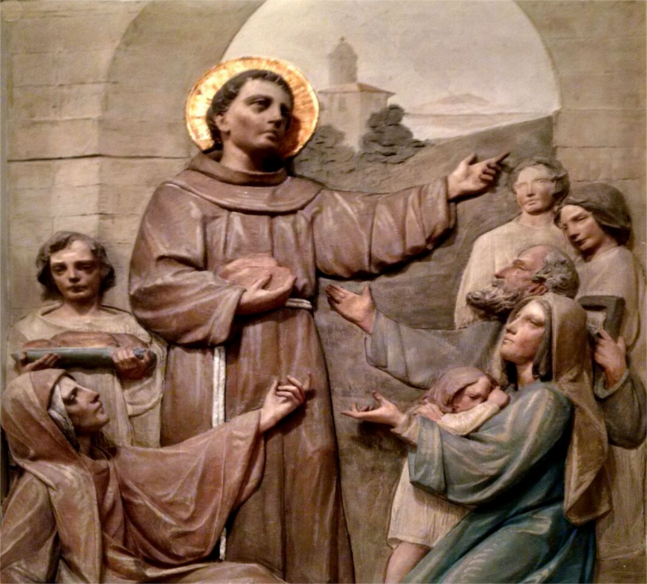
But the hidden jewel was soon to appear in all its brilliance. For the occasion of a ceremony of ordination some of the hermits along with St Anthony were sent to the town of Forli. Before the ceremony was to begin, however, it was announced that the priest who was to give the sermon had fallen sick. The local superior, to avert the embarrassment of the moment, quickly asked the friars in attendance to volunteer. Each excused himself, saying that he was not prepared, until finally, St Anthony was asked to give it. When he too, excused himself in a most humble manner, his superior ordered him by virtue of the vow of obedience to give the sermon. St Anthony began to speak in a very reserved manner; but soon holy animation seized him and he spoke with such eloquence, learning and unction that everybody was fairly amazed.
When St Francis was informed of the event, he gave St Anthony the mission to preach throughout Italy. At the request of the brethren, St. Anthony was later commissioned also to teach theology, “but in such a manner,” St Francis distinctly wrote, ” that the spirit of prayer be not extinguished either in yourself or in the other brethren.” St Anthony himself placed greater value in the salvation of souls than on learning. For that reason he never ceased to exercise his office as preacher despite his work of teaching.
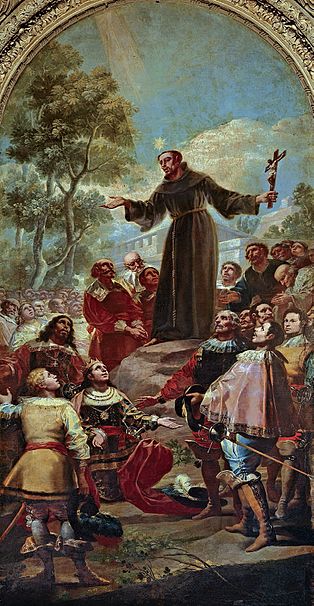
The number of those who came to hear him was sometimes so great that no church was large enough to accommodate and so he had to preach in the open air. Frequently St. Anthony wrought veritable miracles of conversion. Deadly enemies were reconciled. Thieves and usurers made restitution. Calumniators and detractors recanted and apologised. He was so energetic in defending the truths of the Catholic Faith that many heretics returned to the Church. This occasioned the epitaph given him by Pope Gregory IX “the ark of the covenant.”
In all his labours he never forgot the admonition of his spiritual father, St Francis, that the spirit of prayer must not be extinguished. If he spent the day in teaching and heard the confession of sinners till late in the evening, then many hours of the night were spent in intimate union with God.
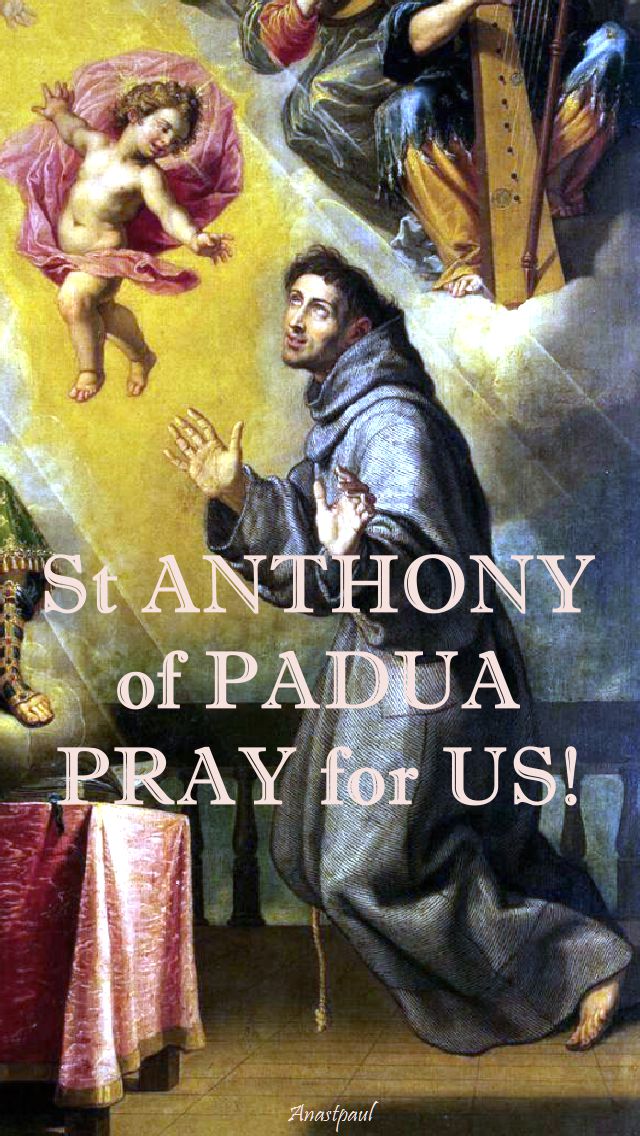
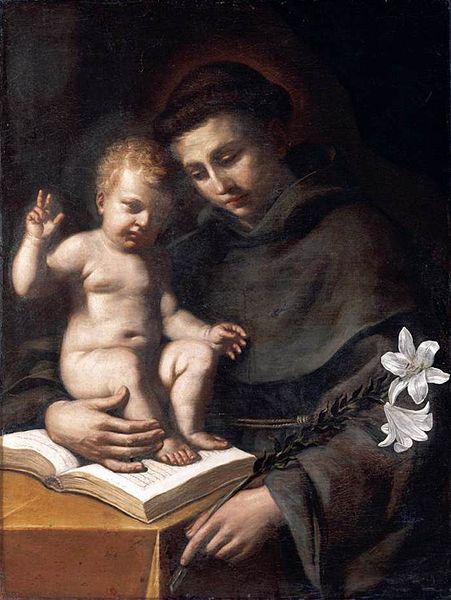
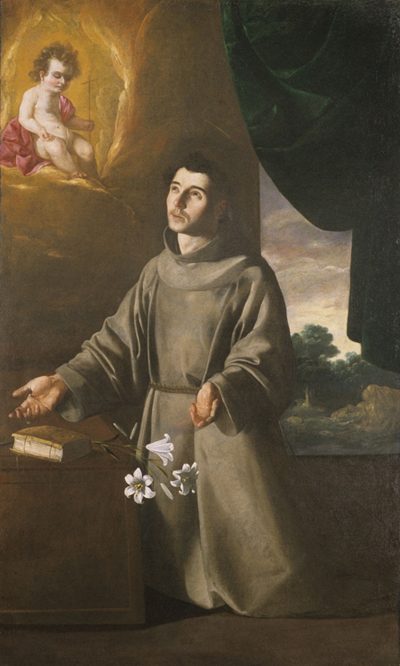
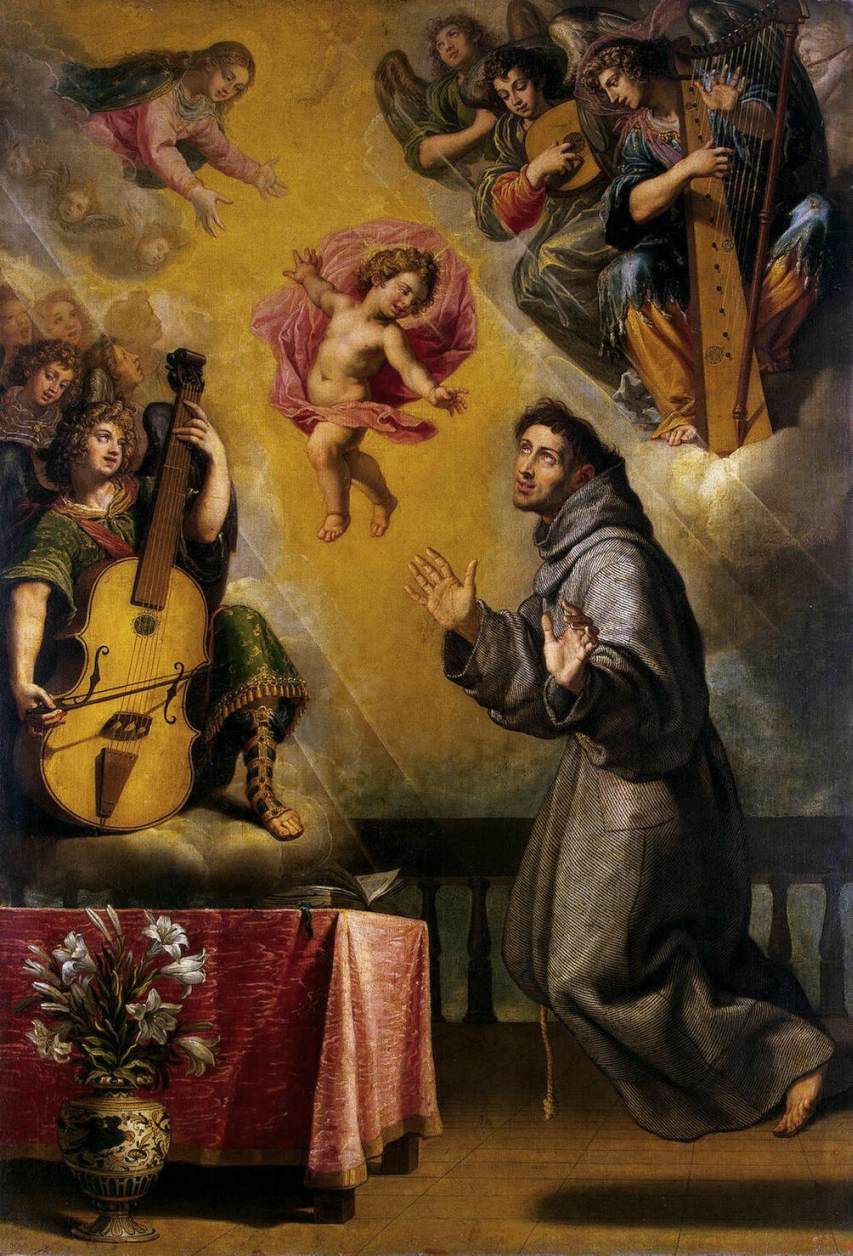
Once a man, at whose home St Anthony was spending the night, came upon the saint and found him holding in his arms the Child Jesus, unspeakably beautiful and surrounded with heavenly light. For this reason St. Anthony is often depicted holding the Child Jesus.
St Anthony’s Death
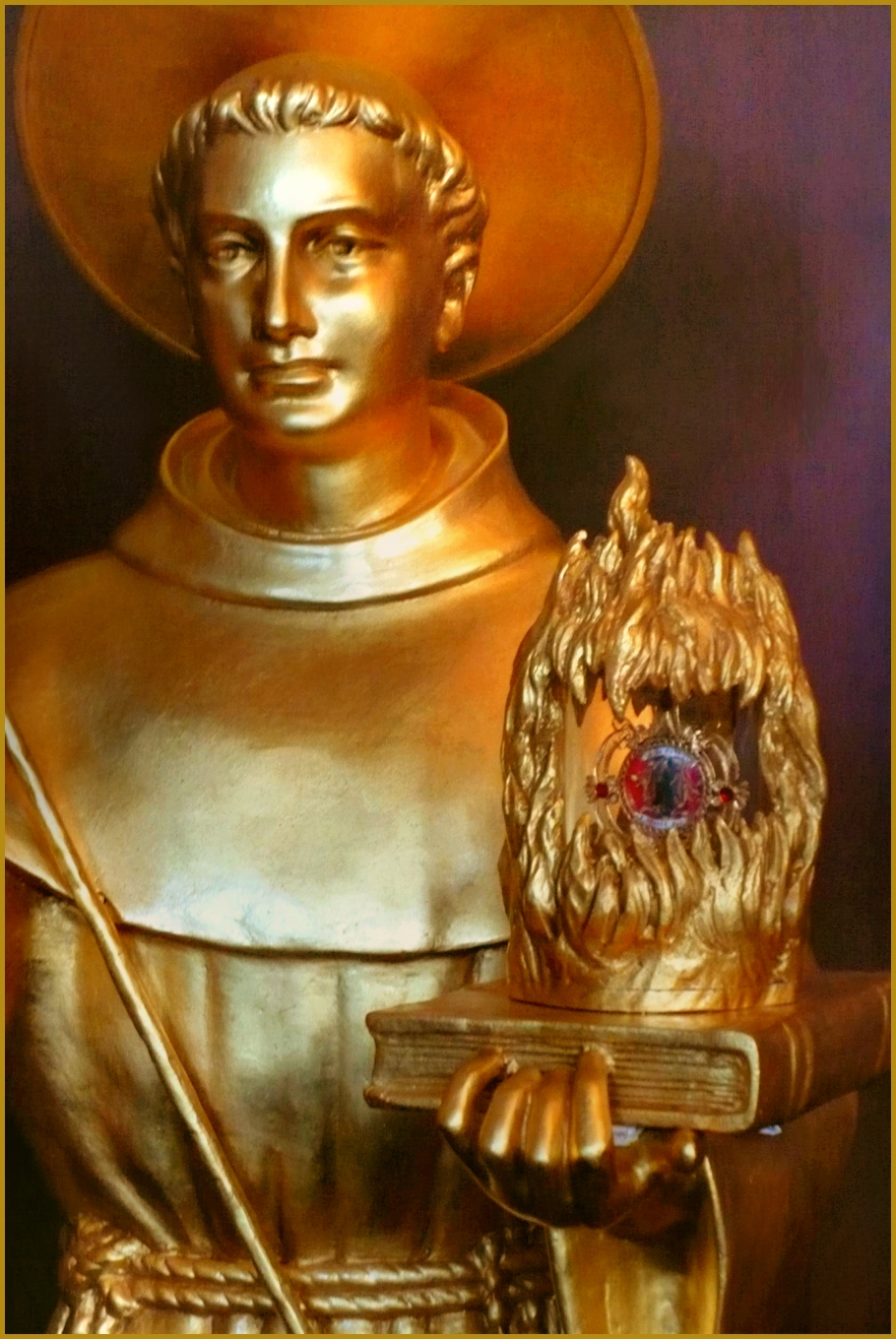
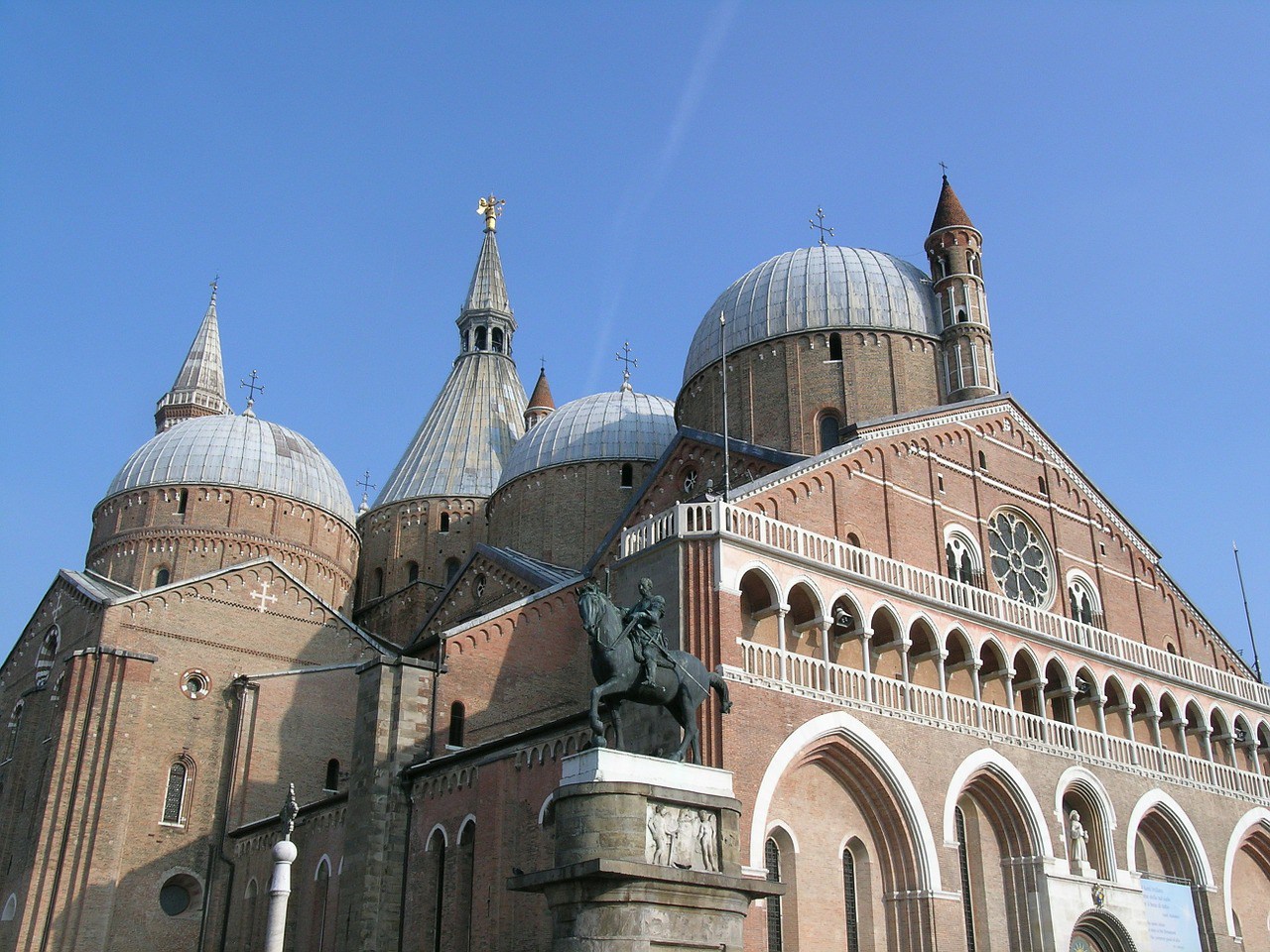
In 1227 St Anthony was elected Minister Provincial of the friars living in northern Italy. Thus he resumed the work of preaching. Due to his taxing labours and his austere penance, he soon felt his strength so spent that he prepared himself for death. After receiving the last sacraments he kept looking upward with a smile on his countenance. When he was asked what he saw there, he answered: “I see my Lord.”He breathed forth his soul on June 13, 1231 A. D., being only thirty six year old. Soon the children in the streets of the city of Padua were crying: “The saint is dead, Anthony is dead.” Anthony is buried in a chapel within the large basilica built to honour him, where his tongue is displayed for veneration in a large reliquary. For, when his body was exhumed thirty years after his death, it was claimed that the tongue glistened and looked as if it was still alive and moist; apparently a further claim was made that this was a sign of his gift of preaching.
Pope Gregory IX enrolled him among the saints in the very next year. At Padua, a magnificent basilica was built in his honour, his holy relics were entombed there in 1263. From the time of his death up to the present day, countless miracles have occurred through St. Anthony’s intercession, so that he is known as the Wonder-Worker. In 1946 St Anthony was declared a Doctor of the Church.
Basilica of St Anthony in Padua
Why do we ask St Anthony to help us find lost things?
St. Anthony had a book of psalms that was quite special to him. It was special because in those days before the printing press, books were rare and expensive. But it was also special because it contained many notes Anthony had made to help him in his preaching and teaching.
Late one night, a young Franciscan decided to leave the community. He’d had enough of that life, so he made plans to just sneak out in the middle of the night. He saw Anthony’s book of psalms on his way out and he snatched it up and ran. He knew that he could sell this precious book for a good deal of money.
Of course, Anthony was quite upset. He prayed that God would change the young man’s heart and bring him back to the Franciscan life. He also hoped that while God was at it, he would return Anthony’s book too. The next day, the young man returned, tired and ashamed, with Anthony’s book. He also brought back his own gifts and talents, which he decided once more to offer to the Franciscan community.
So that’s why we like to ask St Anthony to help us find lost things. He was an extraordinary man who can still help us from heaven, even in the most ordinary ways.
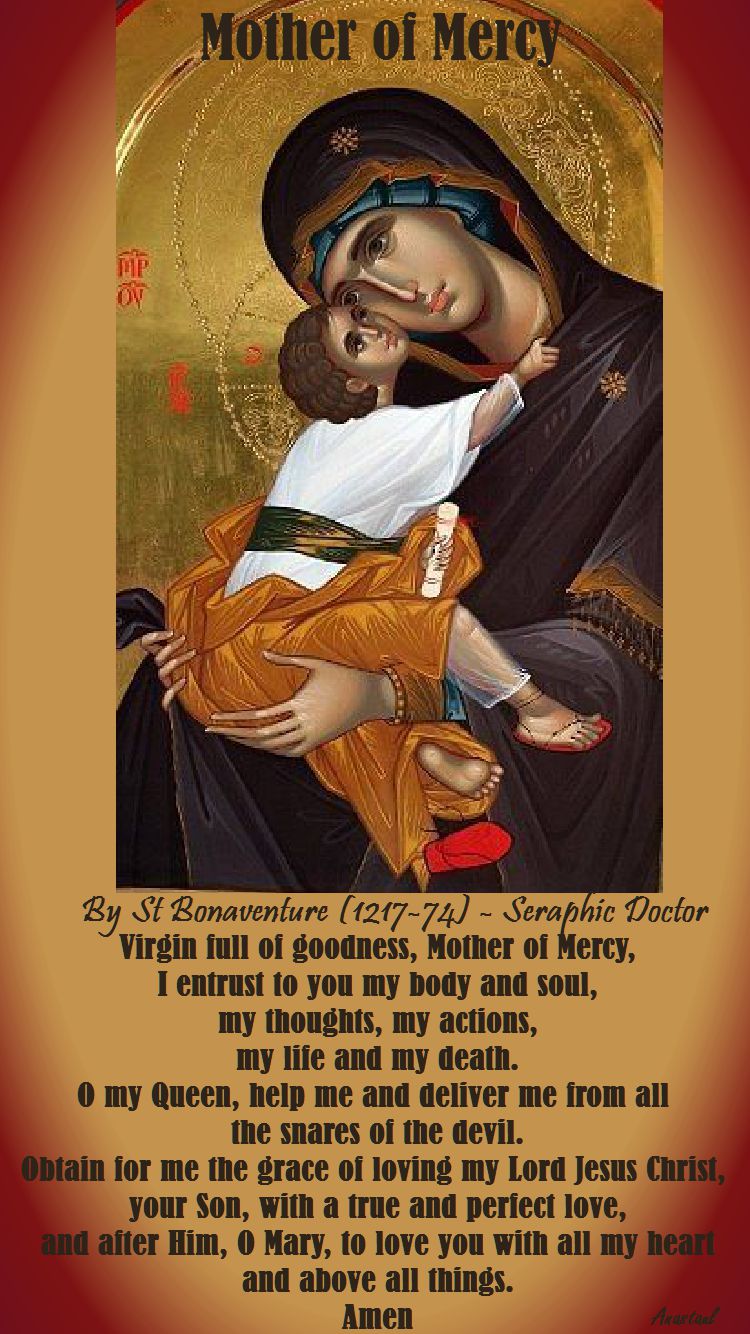
Mother of Mercy
By St Bonaventure (1217-74)
Seraphic Doctor
Virgin full of goodness,
Mother of Mercy,
I entrust to you my body and soul,
my thoughts, my actions,
my life and my death.
O my Queen, help me,
and deliver me from all
the snares of the devil.
Obtain for me the grace
of loving my Lord Jesus Christ,
your Son, with a true and perfect love,
and after Him, O Mary,
to love you with all my heart
and above all things.
Amen
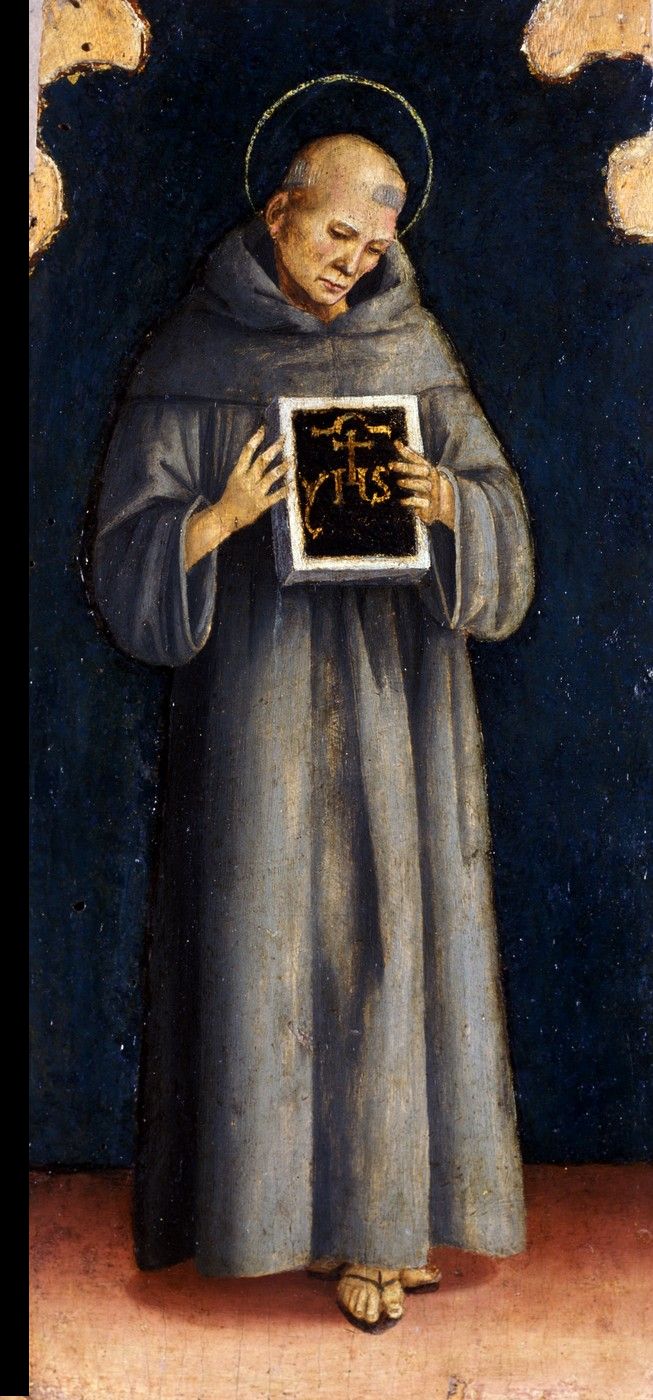
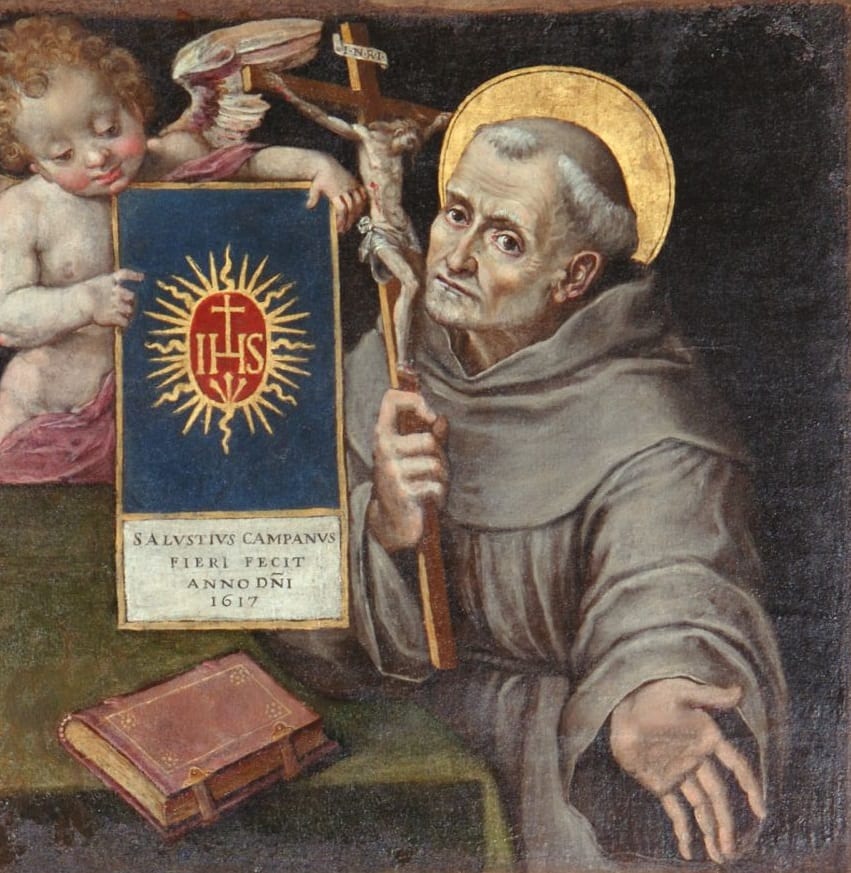
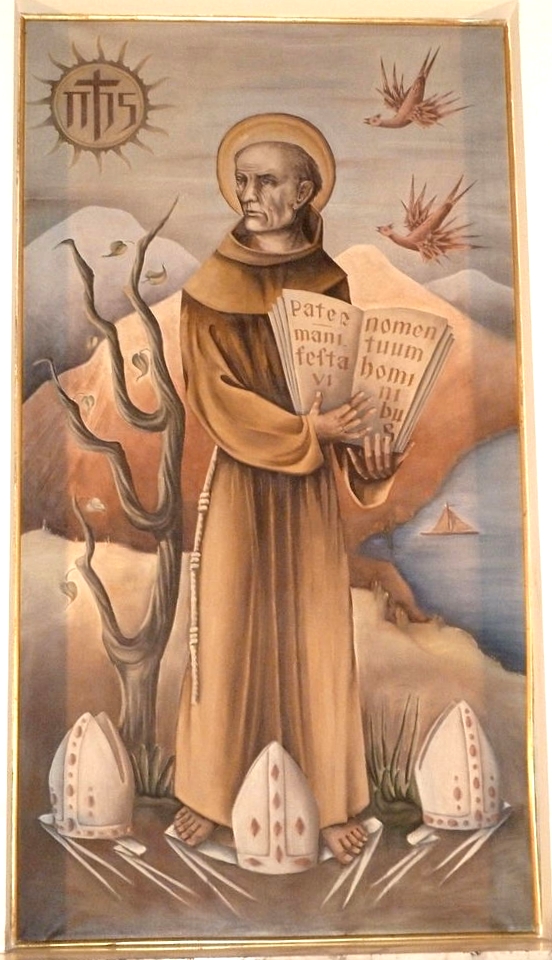
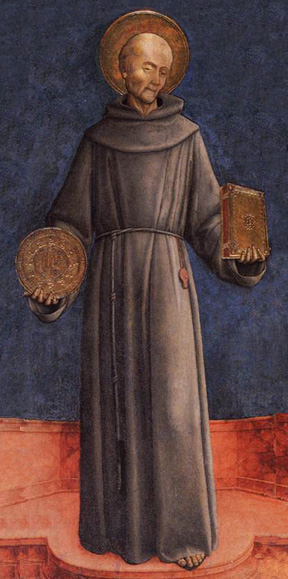
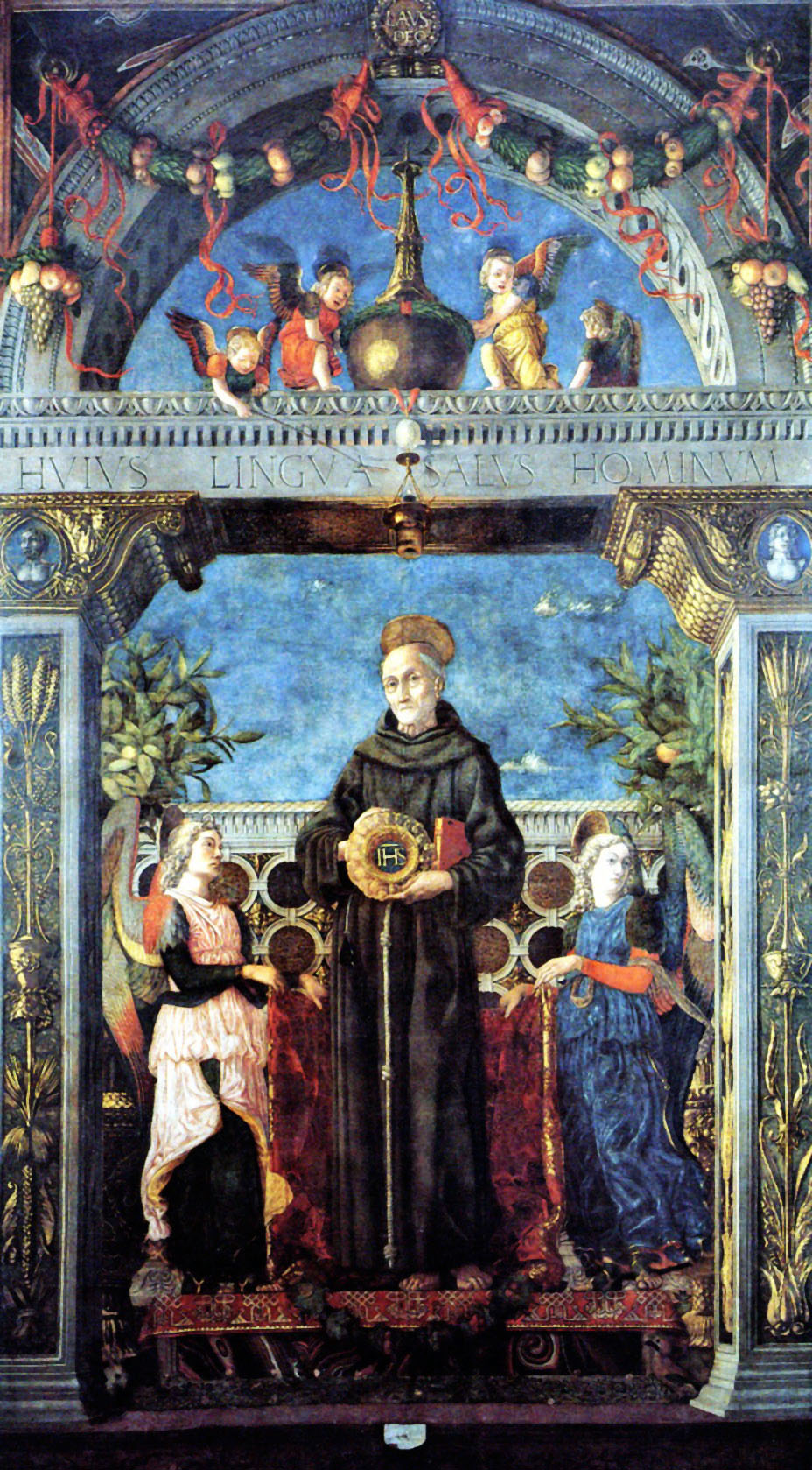
In St Bernardine’s day, cursing was almost part of the common speech and he combated it by promoting devotion to the Holy Name of Jesus.
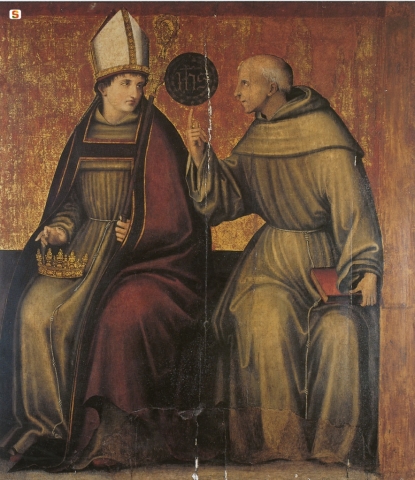
He even had cards printed inscribed with the Holy Name and they were more popular than playing cards..
He knew that you do not root out an evil merely preaching against it, instead you must put something good in its place.
That is a piece of wisdom it would do us well to follow. Perhaps our attempts should be garnered universally to root out the sacrilegious habit of great portions of the world, which use the name of God and of Jesus in vain, so often with every sentence, so much so, that in public it is now an accepted practice!
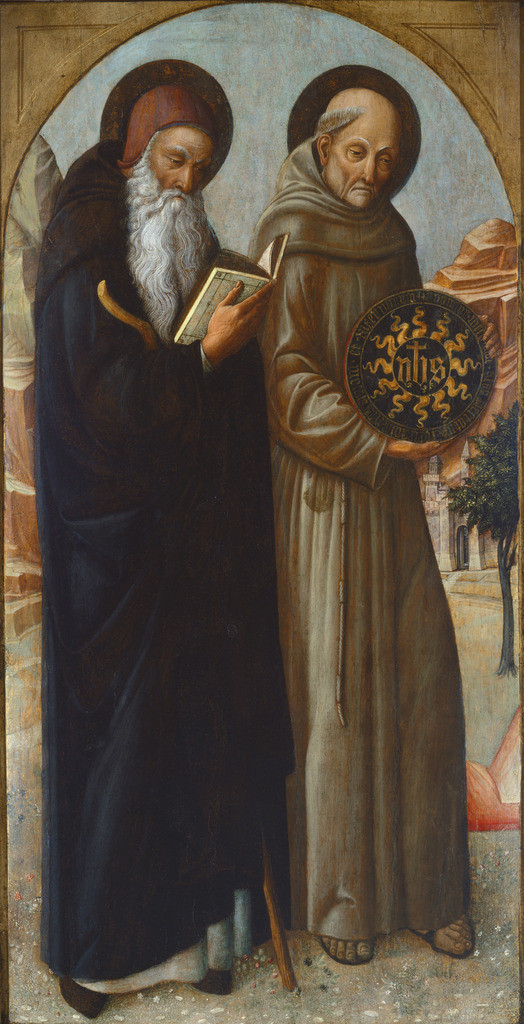
Especially known for his devotion to the Holy Name of Jesus, Bernardine devised a symbol—IHS, the first three letters of the name of Jesus in Greek–in Gothic letters on a blazing sun. This was to displace the superstitious symbols of the day, as well as the insignia of factions: for example, Guelphs and Ghibellines. The devotion spread and the symbol began to appear in churches, homes and public buildings.
The provenance of this item indicates that the prayer book belonged to Franciscan communities in Tuscany during the lifetime of Saint Bernardine of Siena.
“The name of Jesus is the glory of preachers because the shining splendour of that Name causes His word to be proclaimed and heard. And how do you think such an immense, sudden and dazzling light of faith came into the world, if not because Jesus was preached? Was it not through the brilliance and sweet savour of this Name that God called us into His marvelous light? When we have been enlightened and in that same light behold the light of heaven, rightly may the apostle Paul say to us: ‘Once you were darkness but now you are light in the Lord; walk as children of light.’ “
And coming to her, he said, “Hail, favoured one! The Lord is with you.”………..Luke 1:28
REFLECTION -“You must know that when you ‘hail’ Mary, she immediately greets you! Don’t think that she is one of those rude women of whom there are so many — on the contrary, she is utterly courteous and pleasant. If you greet her, she will answer you right away and converse with you!”……..St Bernardine of Siena
PRAYER – Lord God, You sent your angel to Mary and Your divine Son became man when she gave her consent to the angel’s announcement. Help me to give a perpetual consent to all that You will for me and a perpetual refusal to all that only I, in my pride, wish. Help me to see and understand and pray unceasingly to discern Your will. Holy Mary, Mother of God and our Mother, help us all. St Bernardine of Siena, please pray for us, amen.
Saint of the Day – 20 May – St Bernardine of Siena OFM (1380 at Massa di Carrara, Italy to 1444 at Aquila, Italy of natural causes) “Apostle of the Most Holy Name of Jesus,” Priest, Missionary, Preacher, known as the “Apostle of Italy,” the “Star of Tuscany,” and the “Second Paul.” Saint Bernadine is one of the most renowned Franciscan preachers and reformers, a prolific writer who graced the Church with countless sermons and writings and is largely responsible for increasing the popular devotion to the Holy Name of Jesus. St Bernadine is also remembered for his ardent devotion to Our Blessed Mother and the Holy Family. His numerous Patronages include – against chest and lung problems, respiratory illnesses, of Advertising and Communications and Public Relations workers, against gambling and gambling addictions, of Italy, Diocese of San Bernardino, California, of the Diocese of Capri, Italy, of the Italian Cities of Altavilla Irpina, Aquila, Camaiore, Carpi, Castelspina, Alessandria, Montecchio, Trevignano Romano Venice.
Saint Bernadine was the greatest preacher of his time, journeying across Italy, bringing peace to areas ridden with strife, attacking the paganism he found rampant. When he preached, he would attract large crowds of nearly 30,000 listeners, converting many on the spot. Above all, he followed St. Francis’s admonition to preach about “vice and virtue, punishment and glory.” Saint Antoninus described him as “a new star in the midst of the murky darkness of the earth; to shine with the brightness of Divine gifts; to beam far and wide the bright rays of his glorious life and teachings; to lead in the fear of God, by the holiness of his example, a people whose blindness had removed it from the straight path of the heavenly Homeland.”
He was born on the Feast of the Nativity of Mary in Siena, Italy. StBernadine entered the world in nobility, the son of a governor. At age six, he lost both his parents and thus orphaned, was raised by a pious aunt who attended to both his physical and spiritual needs. Bernadine excelled at school, demonstrating both intelligence and diligence, holiness and piety, and was well-liked and popular. At age 17, he entered a Marian confraternity at the La Scala hospital, beginning a secluded religious life devoted to prayer and meditation. At that time, the plague raged throughout Europe and Bernadine left seclusion to aid the sick, placing himself at great risk and assuming administration of the hospital. While he never contracted the plague, he fell ill from exhaustion and was confined to bed for several months. While he never fully recovered, his voice—hoarse and weak from his sickness- was fully restored through his devotion to Our blessed Mother, allowing him to develop profound preaching skills. Following his own sickness, his aunt fell ill and he nursed her until her death, never leaving her side. Upon her death, Saint Bernadine turned to fasting and prayer, spending his days seeking the will of the Lord in his life.
One day while he was kneeling at the foot of his crucifix, praying for guidance, Bernadine heard the voice of Jesus say to him: “My son Bernardine, you see Me hanging on the Cross, in a state of total denudation. If you love Me and want to walk in My footsteps, fasten yourself also to the cross, divested of everything.” Following this divine message, Bernadine joined the Franciscan Order, distinguishing himself through obedience, which he considered the virtue of highest import.
Bernadine was assigned to preaching, having a natural gift given by the Holy Spirit. Over the next decade of his life, he traveled throughout Italy, preaching in major cities, a natural successor to Saint Vincent Ferrer. The Adorable Name of Jesus was the usual theme of his sermons, stemming from his aunt’s instruction as a child. Wherever he traveled, he carried a tablet on which the Holy Name of Jesus (IHS) was written, adopting it as his standard and his “sole weapon.” He firmly held only in this Name could man be saved, as Saint Peter had instructed the elders in the Synagogue.
One of Bernadine’s listeners in Siena was to become Pope Pius II. In his notes, the Pope tells of one of Bernardine’s addresses: “One day, as he was preaching in the square in Siena, a thick cloud formed and threatened rain. Everyone wanted to run off. ‘Friends, remain in peace,’ exclaimed the orator. He knelt down and prayed, ordering the cloud, by virtue of the Name of Jesus, to go away. Scarcely had he spoken when the cloud scattered without a drop of rain, and the weather turned as fair as it had been before.”
Bernardine was a preacher of inspired eloquence. He has been called the Doctor of the Heart of Mary due to his writings on Mary’s heart. He wrote, “from her heart, as from a furnace of Divine Love, the Blessed Virgin spoke the words of the most ardent love.” He was also a distinguished master in the science of all things sacred, as is proved by the writings he has left us.
Bernadine’s watchword, like Saint Francis, was peace. He preached peace wherever he went, balancing the social climate of the day with the teachings of the Church. Mass reconciliations were reported as he celebrated Mass, given his encouragement of the kiss of peace between attendees.
Numerous miraculous occurrences were reported in his presence. One day, preaching in praise of the Blessed Virgin, he applied to Her the verse of the Apocalypse: “A great sign appeared in heaven, a Woman clothed with the sun…” At once a brilliant star appeared over his head. On other occasions, Bernadine was understood by all present when he spoke in Italian—even by those who didn’t speak Italian! He obtained miraculous conversions and reformed the greater part of Italy by his burning words and by the power of the Holy Name of Jesus.
Bernardine was appointed Vicar General of his Order in 1438, an office he held for five years. After five years, he began preaching again until, worn out from his missionary labors, he died on the Eve of the Ascension. At his death, his brothers surrounded him, chanting, “Father, I have manifested Thy Name to men.” Saint Bernadine was buried at Aquila in the Abruzzi. The miracles reported at his tomb encouraged Pope Nicholas V to canonise him only six years later.
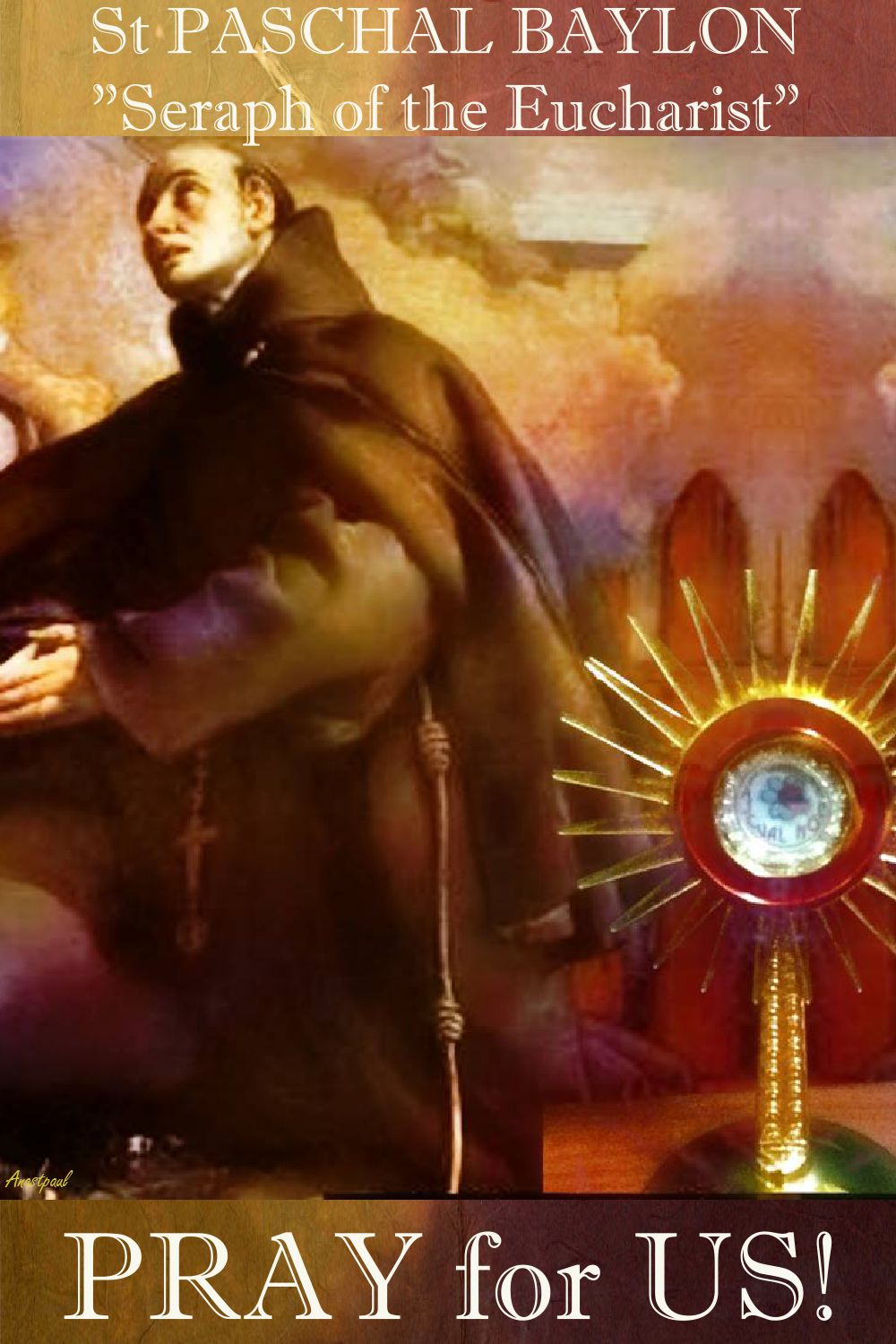
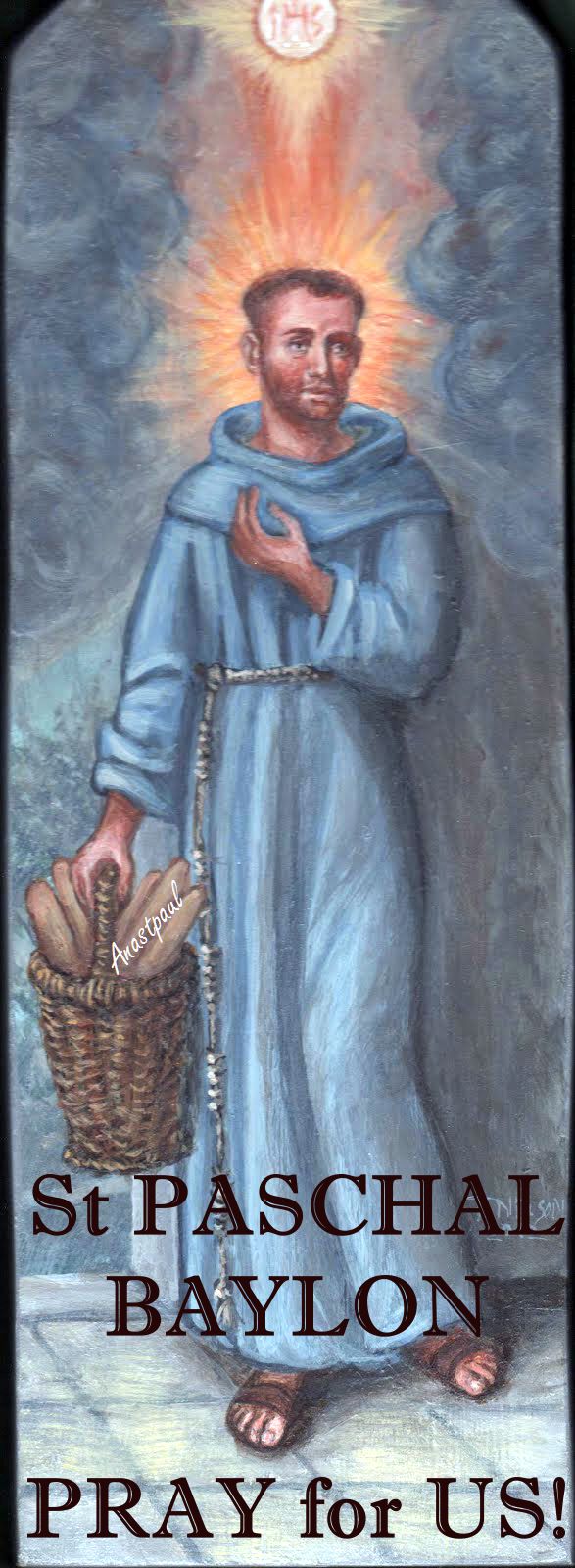
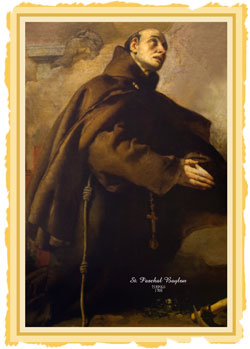
The life of St Paschal Baylon is one of simple adoration of the Lord. He recognised the importance of spending time before Our Saviour, in contemplation of His passion, love, and sacrifice—in the earthly presence of God. Through his devotion to the Blessed Sacrament, St Paschal was graced with wisdom beyond his education and obedience and charity beyond measure. His life inspires us to greater communion with the Lord, leading us to His spiritual treasures. As prayer before the Blessed Sacrament occupied much of Saint Francis’ energy. Most of his letters were to promote devotion to the Eucharist. St Paschal shared this concern. An hour in prayer before our Lord in the Eucharist could teach all of us a great deal! Many holy and busy Catholics today, across the world, find that their lives in every respect, are enriched by these minutes regularly spent in prayer and meditation.
O God, You filled St. Paschal with a wondrous love for the sacred mysteries of Your Body and Blood. May we draw from this Divine Banquet the same spiritual riches he received. St Paschal Baylon Pray for us amen!
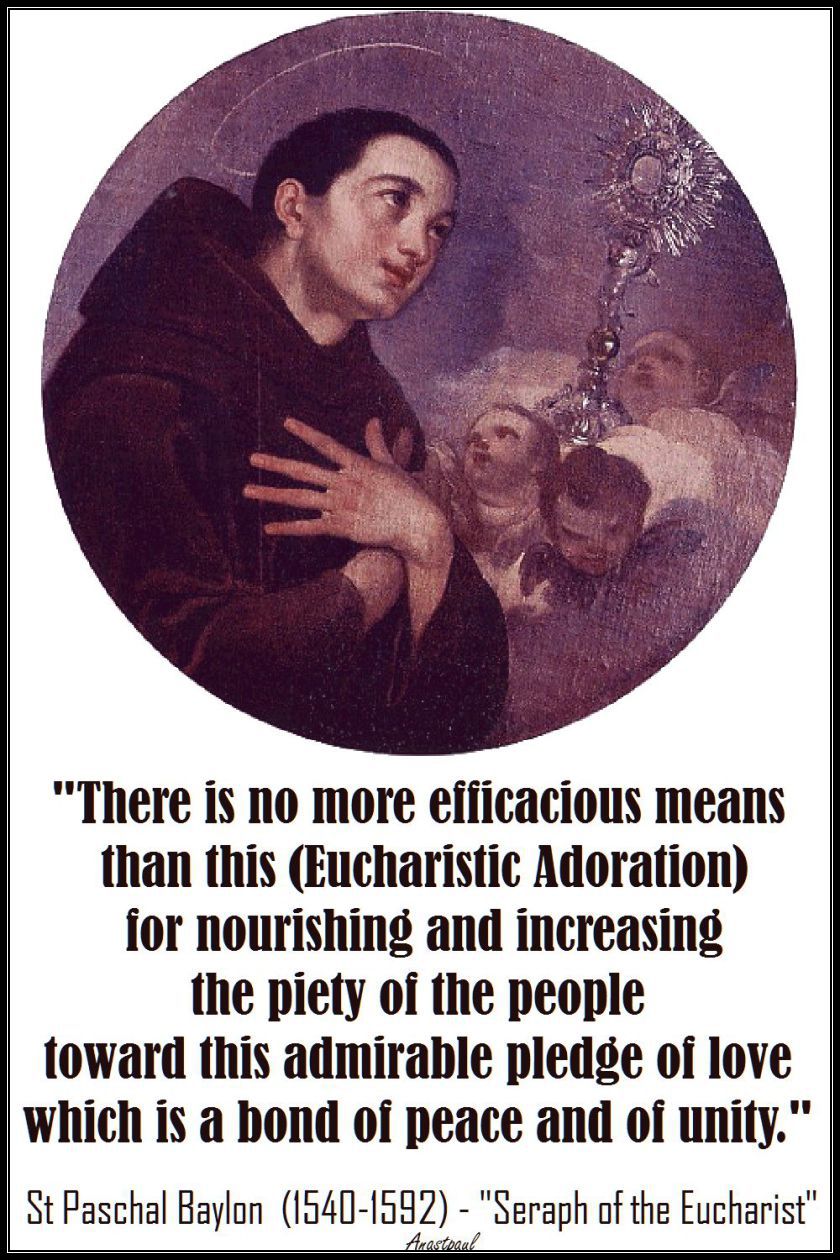
“There is no more efficacious means than this (Eucharistic Adoration)
for nourishing and increasing the piety of the people
toward this admirable pledge of love
which is a bond of peace and of unity.”
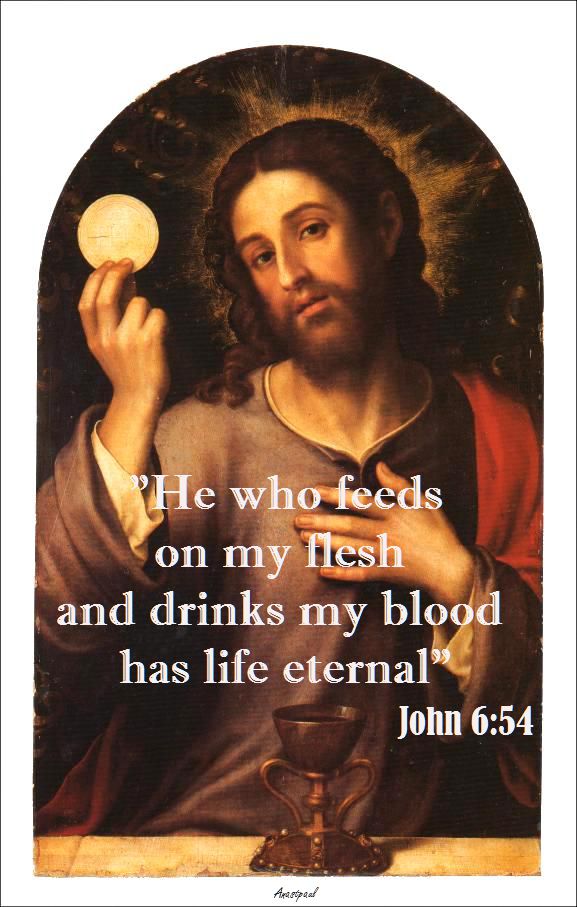
“He who feeds on my flesh and drinks my blood has life eternal”……………….John 6:54
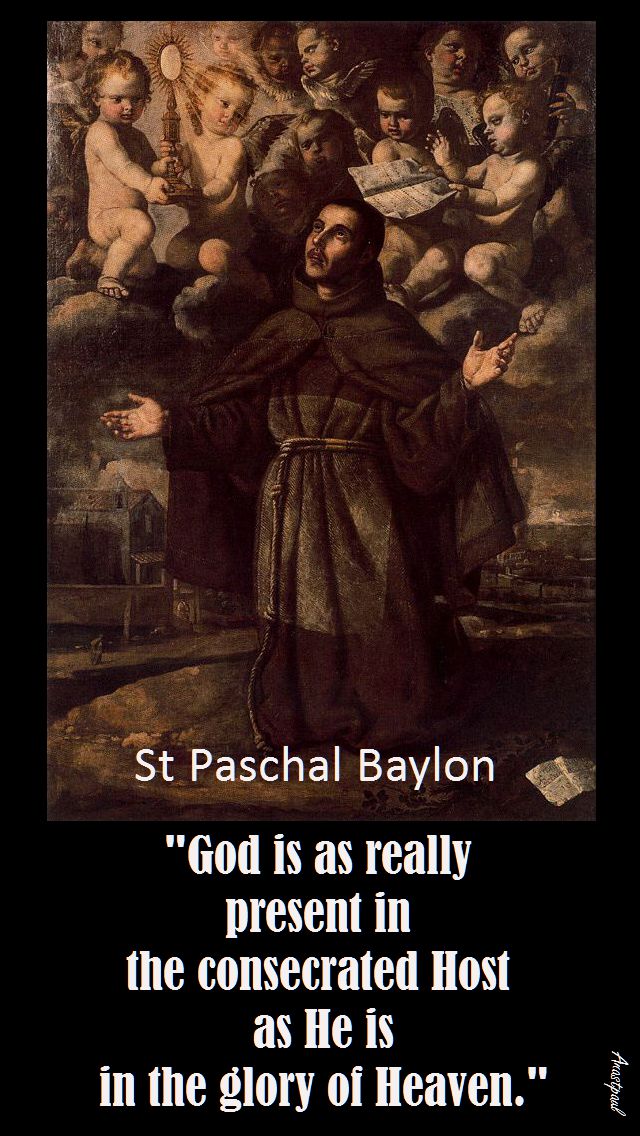
REFLECTION – “God is as really present in the consecrated Host as He is in the glory of Heaven”…..St Paschal Baylon
PRAYER – Lord Jesus Christ, never let me abstain from receiving You in Holy Communion and let me always find the time to visit You in the Tabernacle. Lord teach enlighten my mind with a fuller love and understanding of Your Eucharistic Heart. St Paschal Baylon, Seraph of the Eucharist, pray for us all! Amen
Virgin Mary, hear my prayer:
through the Holy Spirit
you became the Mother of Jesus;
from the Holy Spirit may I too have Jesus.
Through the Holy Spirit your flesh conceived Jesus;
through the same Spirit may my soul receive Jesus.
Through the Holy Spirit you were able to know Jesus,
to possess Jesus,
and to bring Him into the world.
Through the Holy Spirit may I too come to know your Jesus.
Imbued with the Spirit,
Mary, you could say:
“I am the handmaid of the Lord,
be it done unto me according to your word”;
in the Holy Spirit,
lowly as I am,
let me proclaim the great truths about Jesus.
In the Spirit you now adore Jesus as Lord
and look on Him as Son;
in the same spirit,
Mary, let me love your Jesus. Amen
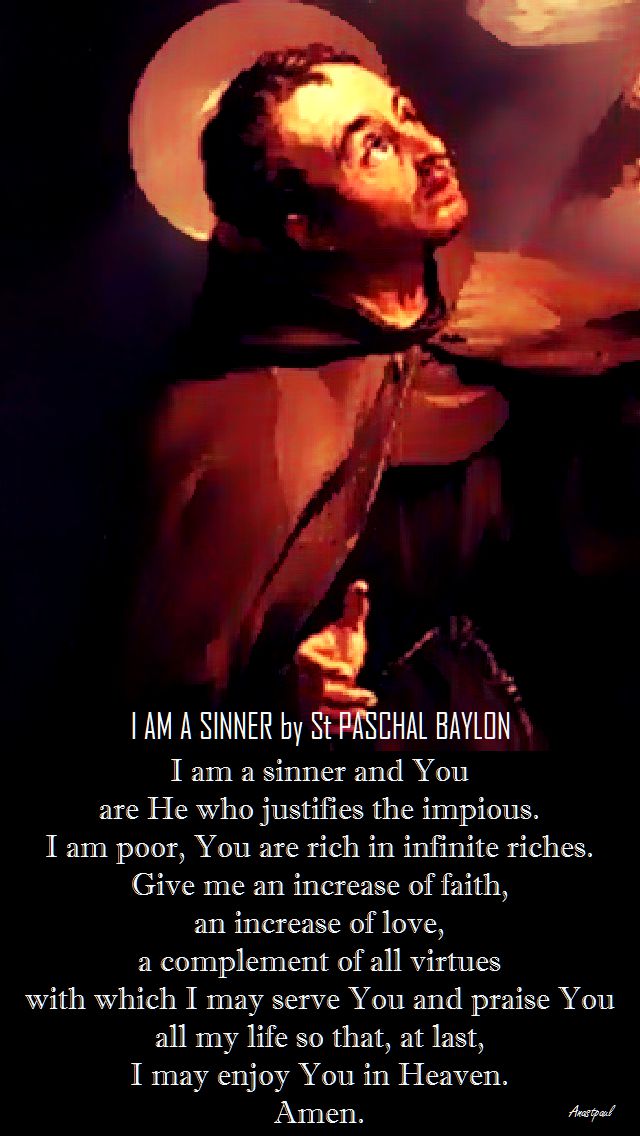
I AM A SINNER by ST PASCHAL BAYLON (Memorial today 17 May)
I am a sinner and You
are He who justifies the impious.
I am poor, you are rich in infinite riches.
Give me an increase of faith,
an increase of love,
a complement of all virtues
with which I may serve You and praise You
all my life so that, at last,
I may enjoy You in Heaven.
Amen.
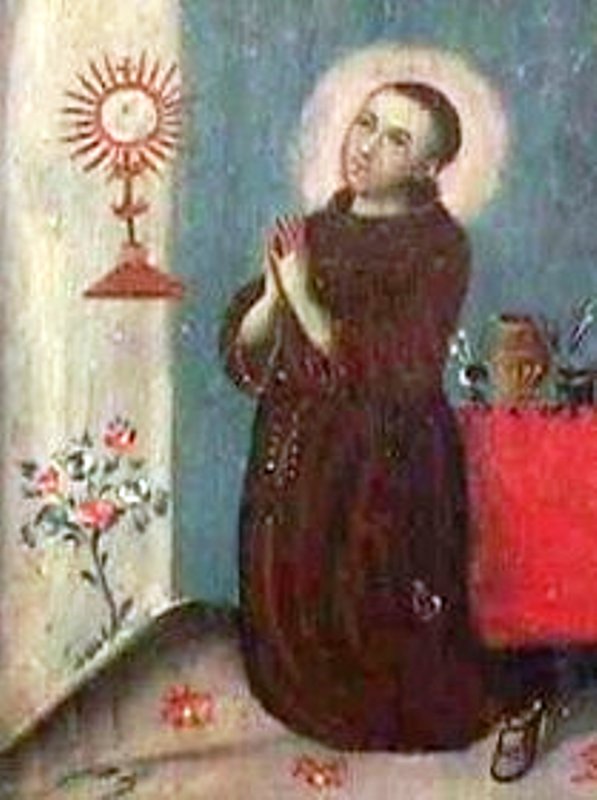
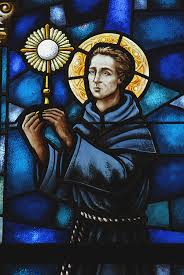
Saint of the Day – 17 May – St Paschal Baylon (1540 (feast of Pentecost) at Torre Hermosa, Aragon, (modern Spain) – 15 May 1592 (feast of Pentecost) at Villa Reale, Spain of natural causes) Franciscan lay brother, Mystic, Contemplate, known as the “Seraph of the Eucharist,” “Saint of the Blessed Sacrament,” “Servant of the Eucharist.”Patron of cooks, shepherds, Eucharistic congresses and organisations (proclaimed by Pope Leo XIII on 28 November 1897), Diocese of Segorbe-Castellón de la Plana, Spain, Obado, Bulacan, Philippines. Attributes – The Eucharist, Monstrance, Franciscan habit.
Today, 17 May marks the Feast Day of Saint Paschal Baylon, mystic, known for his profound devotion to the Blessed Sacrament. While Saint Paschal never became a priest, he is the saint most often thought of in relation to the Holy Eucharist and Pope Leo XIII declared him the patron saint of Eucharistic congresses and associations. He wrote, “There is no more efficacious means than this for nourishing and increasing the piety of the people toward this admirable pledge of love, which is a bond of peace and of unity.” Among all those most devoted to the Eucharist, Paschal Baylon seemed to the Pope to be “the greatest.”
As a youth, Paschal Baylon tended his family’s sheep. He taught himself to read so that he could pray the Little Office of the Blessed Virgin, the popular prayer book of his day. Paschal disciplined himself to endure the harshness and loneliness of a shepherd’s work. And when his sheep trod on others’ vines, he scrupulously paid for the damage out of his own meager resources.
At twenty-one, St Paschal joined the reformed Franciscans of St. Peter of Alcántara at Loreto. As a lay brother, Paschal for many years served as porter and guestmaster with patience and good humor. John Ximenes, his biographer, reports that he was a model friar, always the first at prayer and never once behaving badly in a relationship. “In no single case,” said Ximenes, “do I remember to have noted even the least fault in him, though I lived with him in several of our houses and was his companion on two long journeys.”
Like other saintly doorkeepers Brother André and Solanus Casey, Paschal gained a reputation for miracles.
For example, Martin Crespo once told how the saint freed him from his determination to take vengeance on his father’s murderers:
“One Good Friday there was a lifelike representation of the descent from the cross. Along with everyone else in town, I followed the crucifix borne in triumph through the streets. In a last ditch effort to get me to repent, my friends boxed me in and forced me to endure the preacher’s address. He concluded his eloquent speech in a pathetic peroration, urging me to forgiveness in memory of our Saviour’s passion. His fine discourse left me unmoved and cold.
“Quit tormenting me,” I exclaimed angrily. “It’s no use. I will not forgive them.” Brother Paschal, whom I had not noticed before, stepped forward. He took me by the arm and drew me aside. “My son,” he said, “have you not just now seen a representation of our Lord’s passion?” Then with a glance that penetrated my soul he said: “For the love of Jesus Crucified, my son, forgive them.”
“Yes, Father,” I replied, hanging my head and weeping. “For the love of God I forgive them with all my heart.” I no longer felt the same person. The crowd anxiously awaited the outcome of our mysterious conference. When Paschal announced that I had forgiven my enemies, they burst into applause.”
We remember Paschal Baylon most as the “Saint of the Blessed Sacrament.” Typically he spent as many hours a day as he could worshiping before the Tabernacle. Because of his faithful devotion, the Church has named him Patron of Eucharistic Congresses and conferences. He died in 1592 at the age of fifty-two.
Saint Paschal exhibited an ardent love for Christ and was especially devoted to the Eucharistic Mystery. He traveled from church to church, always on foot, visiting and praying before the Blessed Sacrament, referring to his encounters with “the real presence of Jesus” in these moments. During his prayers, he would often levitate above the floor, so much was his love and zeal for Christ.
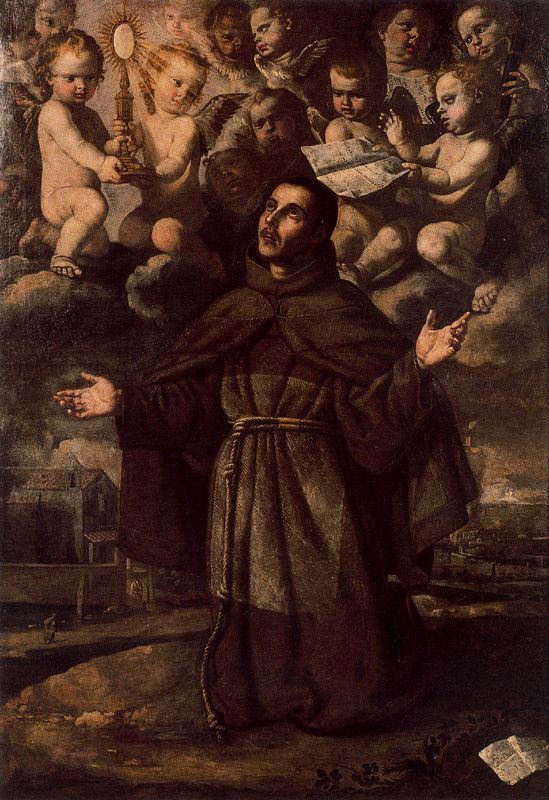
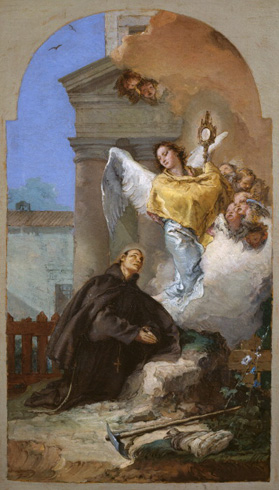
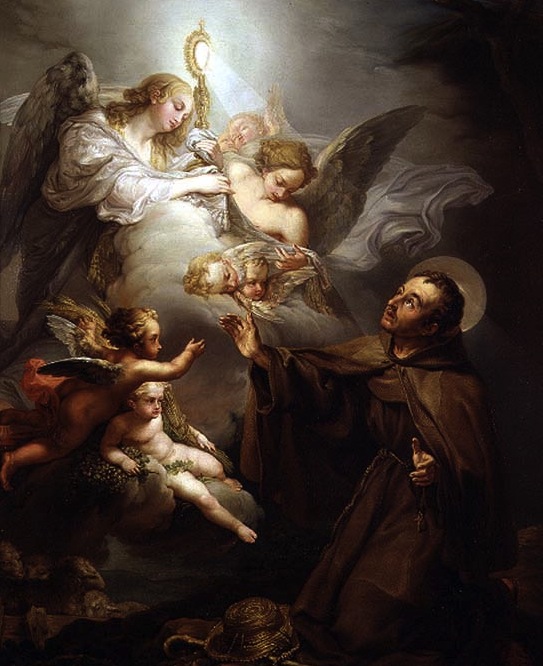
Many miracles are attributed to Saint Paschal, including creating fresh-flowing streams by striking the ground, healing, and miraculous charity. Saint Paschal also experienced mystical visions. On one such occasion, while he was out in the fields with his sheep and unable to go to Mass at the nearby monastery, Paschal was waiting for the sound of the Consecration Bell which he always observed in prayer. In his longing to be present at the Holy sacrifice of the Mass, he cried out, “My Master, My adorable Master, Oh that I might see Thee!” Suddenly before him he saw Angels bowed down before a Chalice, with the Blessed Sacrament floating above it. In the Divine Presence of Our Lord, Paschal fell flat on his face and adored God. Then taking courage he gazed upon the beautiful vision.
The “Servant of the Eucharist,” as he was commonly called, died on 17 May Pentecost Sunday, in 1592. His tomb at the Royal Chapel in Villareal, Valencia, Spain immediately became the object of innumerable pilgrimages, even by the king and the nobles of Spain. At his funeral Mass, Saint Paschal’s eyes miraculously opened during the Consecration, adoring the Blessed Sacrament even in death. Since his death, strange occurrences have continued to be reported, known as the “Knocks of St. Paschal.” At first, the knocks came from Paschal’s tomb. Later they came from relics and pictures of the saint. The knocking sound is believed to come as a kind of warning, to let people know that a terrible event was about to take place. It is also said that in Spain and Italy, those who are devoted to Saint Paschal, are warned about their death, days before, so that they may have a chance to receive the Last Sacraments. Beatified by Pope Paul V in 1618, he was Canonised by Pope Alexander VIII on 16 October 1690.
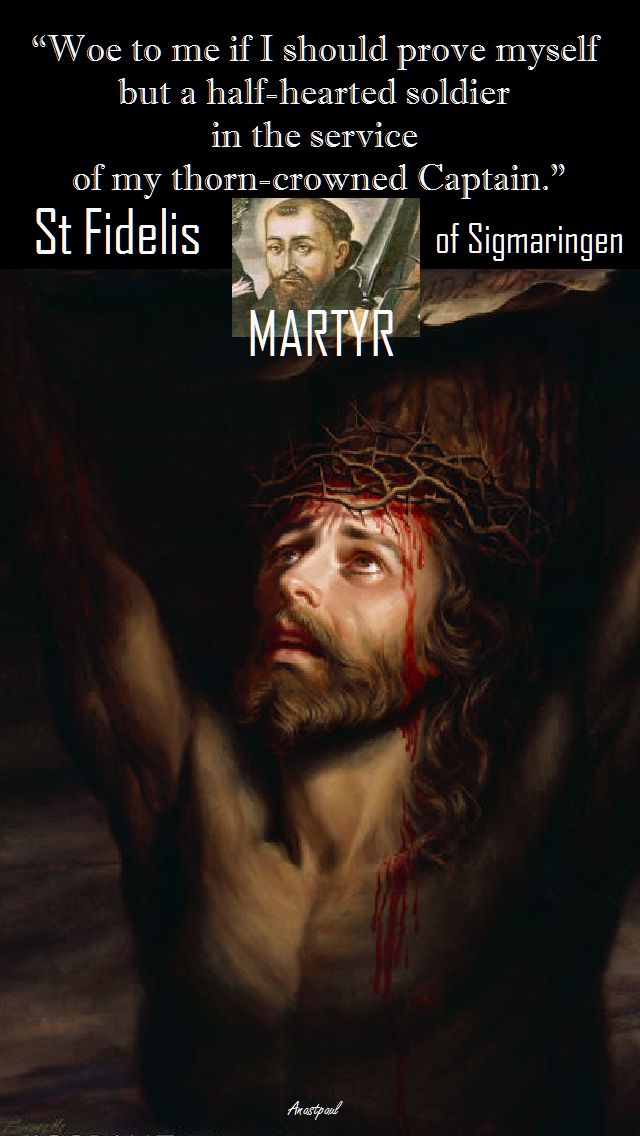
Many saints, like St Fidelis of Sigmaringen, realise that they are wasting their time in the midst of greed and foolish ambition and decide on another course. Their gifts were turned to doing good and to this they devote the whole of their lives. Sometimes, it is often easily apparent, that a change is demanded in our lives – feeling miserable, unsatisfied, uneasy, worried by the greed of the world, it’s lukewarmness or apathy and more! Courage now is needed and that courage comes from he grace of God in prayer. ‘You become what you love’ – what is it that you love?
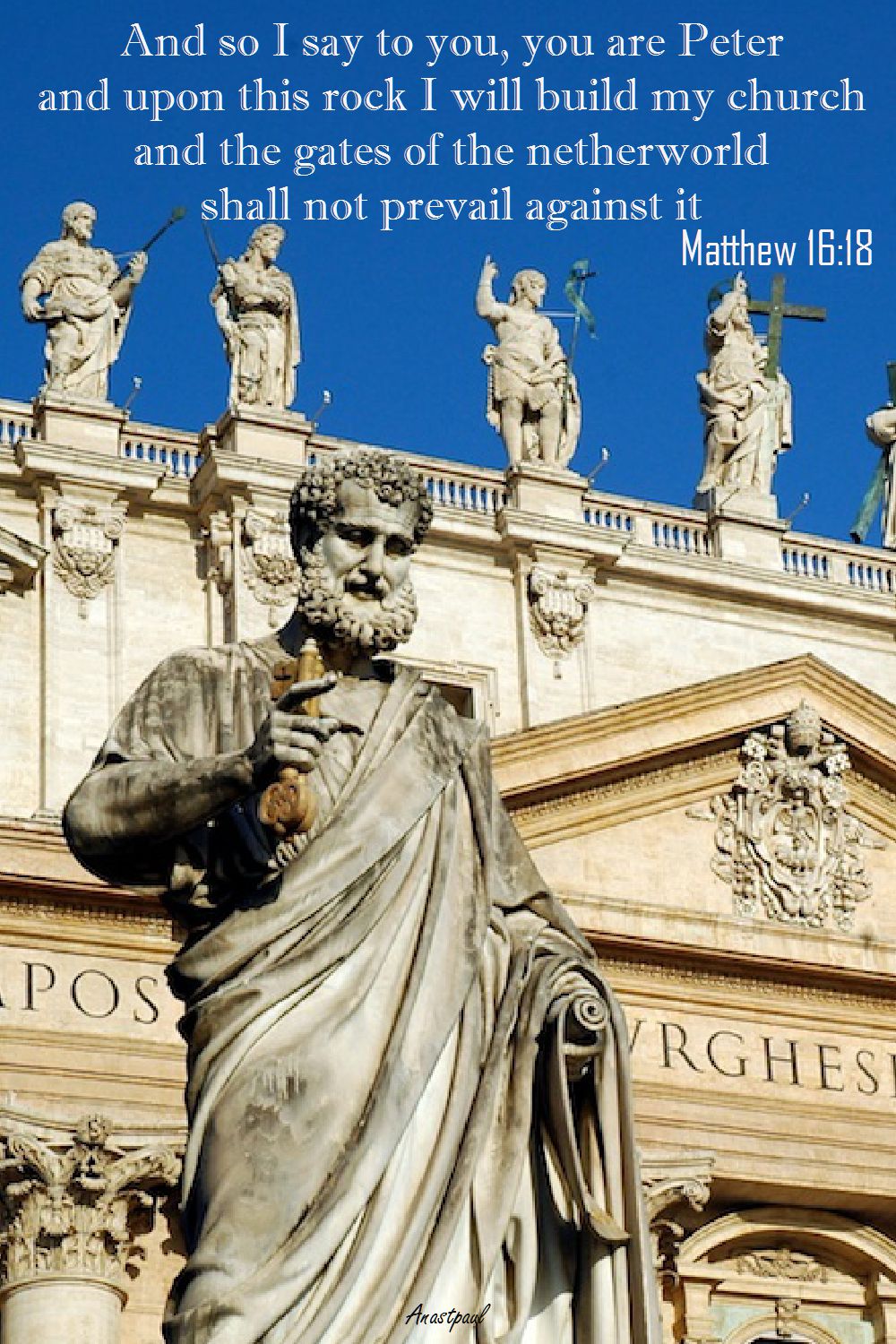
And so I say to you, you are Peter
and upon this rock I will build my church
and the gates of the netherworld
shall not prevail against it……….Matthew 16:18
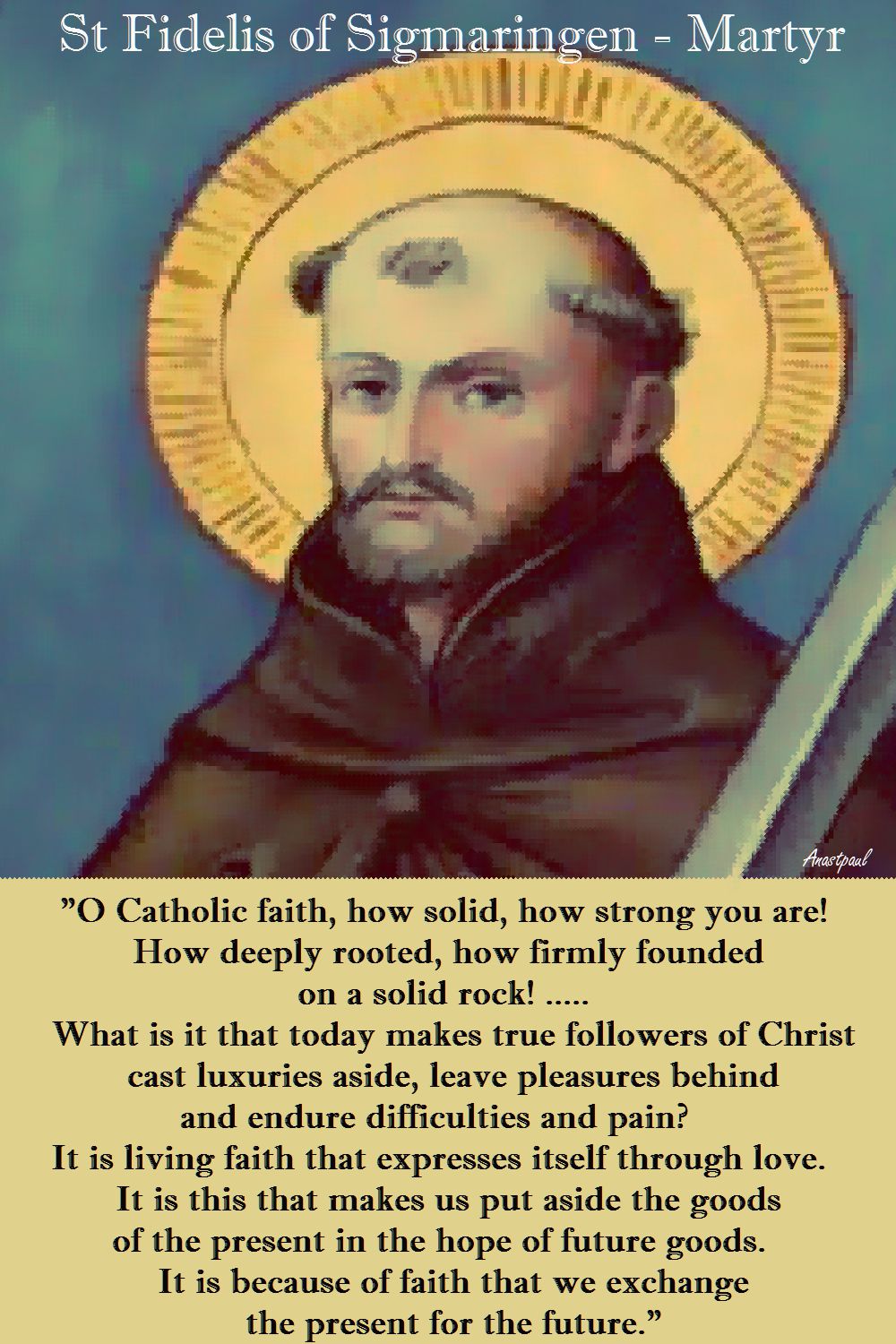
REFLECTION – “O Catholic faith, how solid, how strong you are! How deeply rooted, how firmly founded on a solid rock! Heaven and earth will pass away but you can never pass away. From the beginning the world opposed you but you mightily triumphed over everything. This is the victory that overcomes the world, our faith. It has subjected powerful kings to the rule of Christ; it has bound nations to His service. What made the holy apostles and martyrs endure fierce agony and bitter torments, except faith and especially faith in the resurrection? What is it that today makes true followers of Christ cast luxuries aside, leave pleasures behind and endure difficulties and pain? It is living faith that expresses itself through love. It is this that makes us put aside the goods of the present in the hope of future goods. It is because of faith that we exchange the present for the future.”…………………St Fidelis of Sigmaringen
PRAYER – Father, Son and Holy Spirit, we praise You and give You glory: we bless You for calling us to be Your holy people. Remain in our hearts and guide us in our love and service. Help us to let our light shine before others and lead them to the way of faith.
Holy Trinity of love, we praise You now and for ever. St Fidelis man of courage and true faith, pray for us, amen!
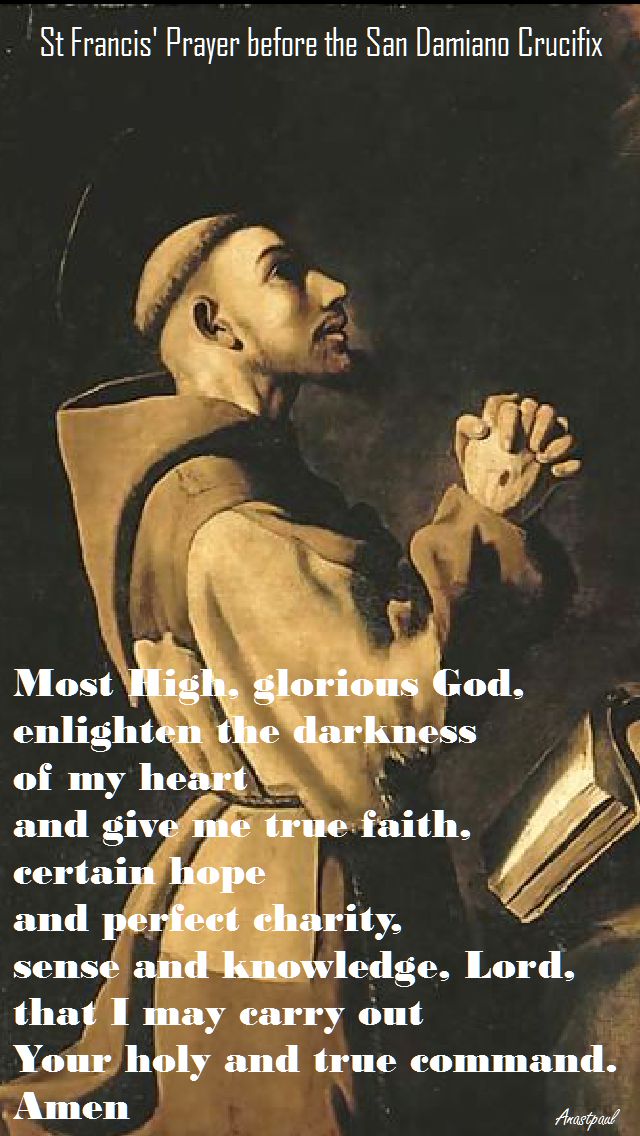
Prayer in front of the Crucifix of San Damiano
Francis used to recite this prayer already in 1205-1206, during the period of his vocational discernment, when he would visit the small abandoned church of San Damiano, where there was a Byzantine Crucifix which is nowadays venerated in the Basilica of Santa Chiara in Assisi.
Most High, glorious God,
enlighten the darkness of my heart
and give me true faith,
certain hope
and perfect charity,
sense and knowledge, Lord,
that I may carry out
Your holy and true command. Amen
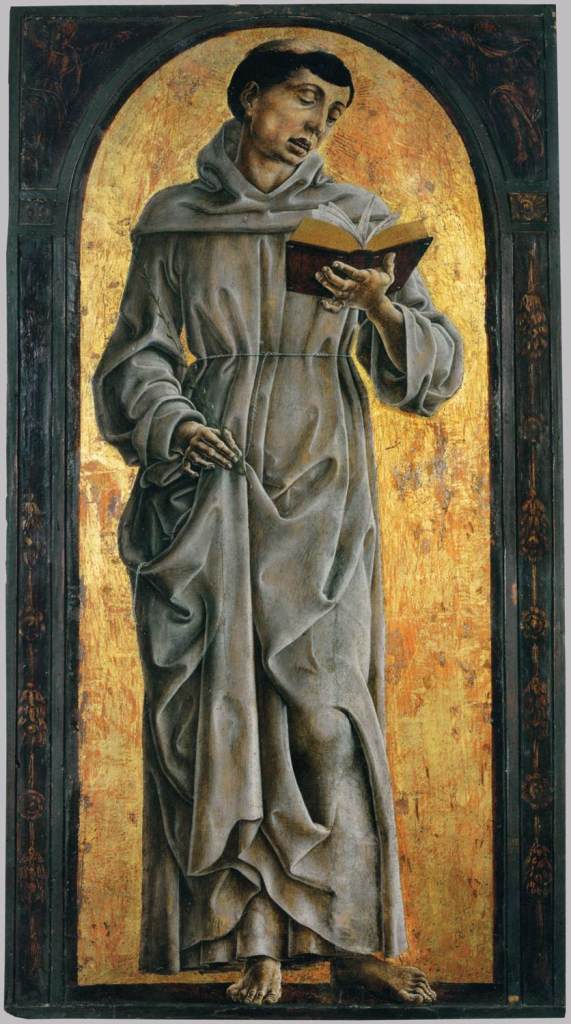
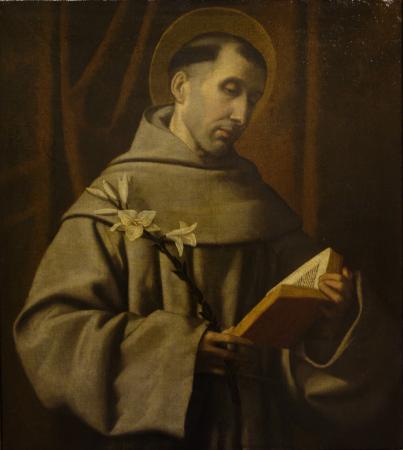
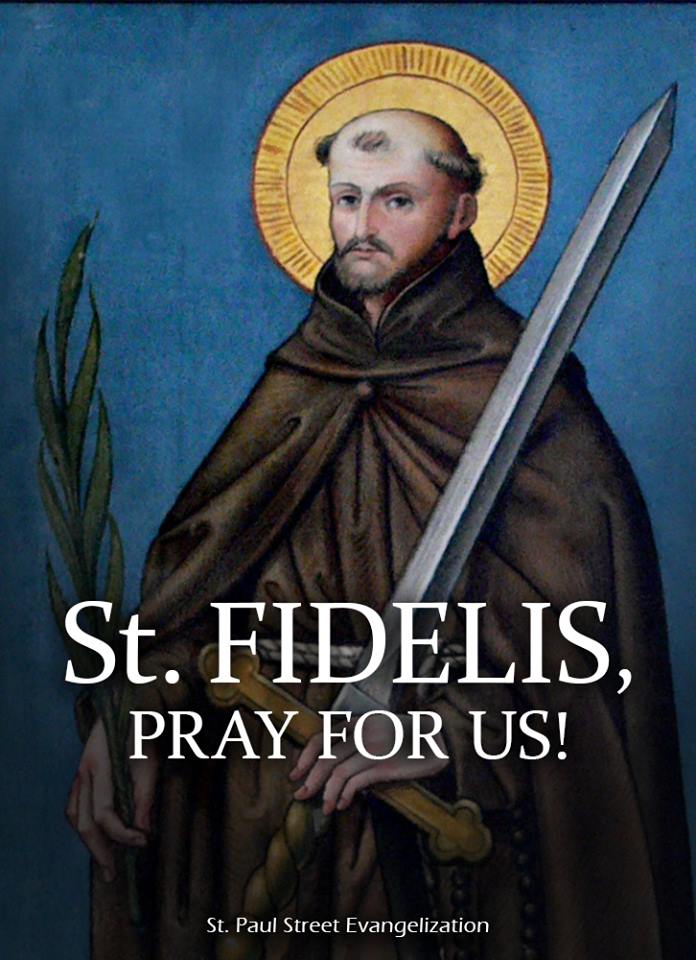
Saint of the Day – 24 April – St Fidelis of Sigmaringen OFM Cap (1577-1622) Priest of the Capuchins of the Friar’s Minor and Martyr, Lawyer, Philosopher, Teacher, Apostle of Eucharistic Adoration and charity – Major Shrine at the Capuchin Friary of Weltkirchen (Feldkirch), Austria, the image below.
St Fidelis was born as Mark Rey in 1577 in Sigmaringen, a town in modern-day Germany, then under the Principality of Hohenzollern-Sigmaringen. His father’s name was John Rey. He studied law and philosophy at the University of Freiburg. Mark ultimately earned the degree of Doctor of Law and subsequently taught philosophy at this University,. During his time as a student, he did not drink any alcoholic beverages and wore a hair-shirt in penance for his own and the sins of those around him. He was known for his modesty, meekness and chastity.
In 1604, Mark accompanied, as preceptor (teacher-mentor), three young Swabian gentlemen on their travels through the principal parts of Europe. During six years of travel, he attended Mass very frequently. In every town they came to, he visited the hospitals and churches, passed several hours on his knees in the presence of the Blessed Sacrament and was generous to the poor, sometimes giving them the very clothes off his back.
Upon his return, he practiced law at Colmar, in Alsace where he came to be known as the ‘poor man‘s lawyer’. He scrupulously forbore all invectives, detractions and whatever might affect the reputation of any adversary. Disenchanted with the evils associated with his profession, he was determined to enter the religious life as a member of the Capuchin friars.
As soon as Fidelis finished his course of theology, he was immediately employed in preaching and in hearing confessions. After becoming guardian of the Capuchin friary in Weltkirchen, Feldkirch (in present-day Austria), many residents of the town and neighbouring places were reformed by his zealous labours and several Calvinists were converted. The Congregation of the Doctrine of the Faith commissioned Fidelis to preach in the Graubünden region of eastern Switzerland. Eight other Capuchin friars were to be his assistants and they laboured in this mission under his direction.
The Calvinists of that territory, being incensed at his success in converting their brethren, loudly threatened Fidelis’ life and he prepared himself for martyrdom. Fidelis and his companions entered into Prättigau, a small district of Graubünden, in 1622, on the Feast of the Epiphany, January 6. The effects of his ardent zeal, where the Bishop of Coire sent a lengthy and full account to the Congregation for the Propagation of the Faith, enraged the Calvinists in that province.
On 24 April 1622, Fidelis made his confession, celebrated Mass and then preached at Grüsch. At the end of his sermon, which he had delivered with more than ordinary zeal, suddenly he stood silently, with his eyes fixed upon Heaven, in ecstasy. He foretold his death to several persons in the clearest terms and began signing his letters, “P. Fidelis, prope diem esca vermium” (“Father Fidelis, in days ahead to become food for worms“). After the service at Grüsch he and several companions travelled to Seewis. His companions noted that he was particularly cheerful.
On 24 April, in a campaign organised by the Habsburgs, Fidelis was preaching under protection of some Austrian imperial soldiers in the Church at Seewis with the aim of re-convert the people of Seewis to Catholicism. During the sermon, his listeners were called “to arms” by the Calvinist agitators outside. Some of the people went to face the Austrian troops outside the Church. Fidelis had been persuaded, by the remaining Catholics, to immediately flee with the Austrian troops out of Seewis, which he did but then returned alone to Grüsch. On his way back he was confronted by 20 Calvinist soldiers who demanded, unsuccessfully,, that he renounce the Catholic faith and when he refused, they subsequently murdered him.
A local account:
From Grüsch he went to preach at Seewis, where, with great energy, he exhorted the Catholics to constancy in the faith. After a Calvinist had discharged his musket at him in the Church, the Catholics entreated him to leave the place. He answered that death was his gain and his joy, and that he was ready to lay down his life in God’s cause. On his road back to Grüsch, he met twenty Calvinist soldiers with a minister at their head. They called him a false prophet and urged him to embrace their sect. He answered: “I am sent to you to confute, not to embrace your heresy. The Catholic religion is the faith of all ages, I fear not death.”One of them beat him down to the ground by a stroke on the head with his backsword. Fidelis rose again on his knees and stretching forth his arms in the form of a cross, said with a feeble voice “Pardon my enemies, O Lord: blinded by passion they know not what they do. Lord Jesus, have mercy on me. Mary, Mother of God, succour me!.” Another sword stroke clove his skull and he fell to the ground and lay in a pool of his own blood. The soldiers, not content with this, added many stab wounds to his body with their long knives and hacked-off his left leg, as they said, to punish him for his many journeys into those parts to preach to them.
It is said that a Catholic woman lay concealed near the place of Fidelis’ martyrdom as the saint was slain. After the soldiers had left, she came out to assess the incident and found the martyr’s eyes open, fixed on the heavens. He was buried by Catholics the next day.
The rebels were soon after defeated by the imperial troops, an event which the martyr had foretold them. The Protestant minister who had participated in Fidelis’ martyrdom, was converted by this circumstance, made a public abjuration of Calvinism and was received into the Catholic Church.
After six months, the martyr’s body was found to be incorrupt but his head and left arm were separated from his body. The body parts were then placed into two reliquaries, one sent to the Cathedral of Coire, at the behest of the bishop and laid under the High Altar; the other was placed in the Capuchin church at Weltkirchen, Feldkirch, Austria.
St Fidelis was Beatified on 24 March 1729 by Pope Benedict XIII and Canonised on 29 June 1746, Rome by Pope Benedict XIV












You must be logged in to post a comment.