Saint of the Day – 14 June – St Marcian of Syracuse (Died c 68) Martyr, Bishop of Syracuse, Sicily, Italy, Disciple of and Consecrated by St Peter, Missionary, Evangelist. Born in the first century in Antioch and died in c 68 in Syracuse, Italy by murder. Patronages – Cities of Gaeta and Syracuse, Italy. Also known as Marcellus.
St Erasmus (Elmo) left and St Marcian on the right
The Roman Martyrology states of him today: “At Syracuse, St Marcian, Bishop, who was Consecrated Bishop by the blessed St Peter and killed by the Jews after he had preached the Gospel.”
Marcian is considered the first evangeliser of Christianity in that Italian City, where he arrived in the year 39, sent by Saint Peter, of whom he was a disciple. He is considered the first Bishop of Syracuse .
His preaching was completed with that of Saint Paul.
He made many conversions,for which he suffered persecution by the local Jewish community and in the year 68 he was Martyred.
The life of St Marcian
His body is venerated in the Cathedral of Gaeta, the City of which he is a Co-patron but the oldest representation is found in the Catacomb of Santa Lucia in Syracuse.
Notre-Dame de la Treille / Our Lady of the Trellis, Lille, Nord, Flandres, France, 1234 – 14 June:
Three series of miraculous events are associated with the Statue, occurring in 1234, from 1519 to 1527 and from 1634 to 1638. The miracle of 1234 was the healing of the 53 disabled patients who resorted to her intercession and were cured upon praying before the Statue of Our Lady of the Trellis, installed behind a latticework fence in St Peter’s Collegiate Church in Lille, France. The miracles in the 16th century were varied and included deliverance from demonic possession, hernias, blindness, paralysis and plague. In 1254, a Confraternity of Our Lady of the Treille was canonically established by Pope Alexander IV and since 1259, an annual procession in honour of Our Lady of the Treille was held – a practice which continued until the French Revolution and since then resumed and is continued today. In 1634, Jean Le Vasseur, Mayor of Lille, Consecrated the City to Our Lady of the Treille. In 1667, Louis XIV, who had just taken Flanders, took an oath to respect the freedoms of Lille before the Statue. A procession held annually on the second Sunday after Pentecost commemorates the miracles. Saved during the destruction of St Peter’s Church in the French Revolution, the Statue moved afterwards to St Catherine’s Church. Devotion to Our Lady of the Trellis revived in the mid-1800s and a grand neo-Gothic Church arose in her honour, where the Statue was installed in 1872 and canonically crowned in 1874. After the theft of the original in 1959, sculptor Marie Madeleine Weerts carved the image now displayed in Lille’s Catholic Cathedral, the Basilica of Notre-Dame de la Treille.
The statue is described by Father Charles Bernard, Parish Priest of the Church of St Catherine, as a sSatue of stone “a little more than two and a half feet high; she has a scepter in her right hand and from her left. she supports the Baby Jesus on her knees.” He mentions the trellis of gilded wood surrounding the Statue and its pedestal, and specifies that the old trellis made of gilded iron was lost in 1792 during the destruction of the Collegiate Church of St. Peter. He speculates that this trellis is what gave the Statue its name, although it is more likely that the name came from Treola, a place existing in the 9th century in what is now Lille.
St Anastasius of Córdoba St Burchard of Meissen St Caomhán of Inisheer St Castora Gabrielli St Cearan the Devout Bl Constance de Castro St Cyprien St Cyriacus of Zeganea St Davnet St Digna of Córdoba St Dogmael of Wales St Elgar of Bardsey
St Etherius of Vienne St Felix of Córdoba Bl Fortunatus of Napoli Bl Francisca de Paula de Jesus Isabel St Gerold of Evreux Bl Hartwig of Salzburg St Joseph the Hymnographer St Marcian of Syracuse (Died c 68) Bishop Martyr, Consecrated by St Peter St Mark of Lucera
St Nennus of Arran Bl Peter de Bustamante St Protus of Aquileia St Quintian St Richard of Saint Vannes St Rufinus of Soissons St Thecla St Theopista St Valerius of Soissons Bl Walter Eustace
Thought for the Day – 13 June – Meditations with Antonio Cardinal Bacci (1881-1971)
St Anthony
“On the 13th of June in the year 1231, a crowd of children set out from the nearby Convent of Arcella and entered Padua crying out: “The Saint is dead!” The entire City was -plunged into mourning because it’s Saint was dead.
Anthony had traversed Italy, converting heretics, recalling innumerous sinners to repentance, working miracles and giving peace to souls and to strife-torn cities. Soon he had felt that his young life was already running out as the result of these labours and austerities and he had determined to hide himself in a little Franciscan Monastery at Camposampiero near Padua. In order to shelter himself from the world ,as far as possible, he built a little cell in the bifurcation of the branches of a giant walnut tree. Here he spent his last days in prayer and contemplation, joining with the birds in their songs of praise to God. He was no longer a man but an angel in human form. Crowds of the faithful flocked around the tree to hear, once again, the voice of the Saint calling on them to practise virtue and to follow the road to Heaven.
It was in this little nest, at only thirty six years of age, that his life slowly flickered out, consumed, not so much by disease as by a burning love for God and for his fellowman.
Let us pray that we may obtain a spark of this love, which will detach us from the world, cause us to belong entirely to God and make us generous apostles in our work for the salvation of souls. Jesus, my God, I love You above all things. Amen.”
Quote/s of the Day – 13 June – – “Month of the Sacred Heart” – The Memorial of St Anthony of Padua (1195-1231) Evangelical Doctor of the Church
“The breadth of charity, widens the narrow heart, of the sinner.”
“Charity is the soul of faith and makes it alive; without love, faith dies.”
“He prays best , who does not know that he is praying.”
“The life of the body, is the soul, the life of the soul, is Christ.”
“Attribute to God, every good that you have received. If you take credit for something that does not belong to you, you will be guilty of theft!”
O God, send forth Your Holy Spirit By St Anthony of Padua (1195-1231) Doctor of the Church
O God, send forth Your Holy Spirit into my heart that I may perceive, into my mind, that I may remember, and into my soul, that I may meditate. Inspire me to speak with piety, holiness, tenderness and mercy. Teach, guide and direct my thoughts and senses, from beginning to end. May Your grace, ever help and correct me, and may I be strengthened now with wisdom from on high, for the sake of Your infinite mercy. Amen
St Anthony of Padua (1195-1231) Evangelical Doctor of the Church
Saint of the Day – 13 June – Saint Tryphillius (Died 370) Bishop of Nicosia, Cyprus, eloquent and learned Priest, Defender of the True Faith against Arianism and of St Athanasius of Alexandria. Born in Rome, Italy and died in 370 of natural causes. Also known as – Triphyllius, Trifilio, Trifillo.
Tryphillius was educated in law at the school of Beirut. He converted to Christianity and was named Bishop of Nicosis.
He was a disciple of Saint Spyridon of Trimythous. He was also an ardent supporter of St Athanasius of Alexandria against the Arians. Saint Athanasius praised Tryphillius for his adherence to orthodoxy and consequently, the Arians turned their attacks on him.
Tryphillius lived in simplicity without pomp or splendour,and preached everyday. St Jerome considered him one of the most eloquent Church figures of the era.
Sunday within the Octave of the Sacred Heart +2021
13 June 1917 – The Second Apparition of our Lady of Fatima
Madonna della Cava/ Our Lady of the Cave, Latera, Viterbo, Latium, Italy – 13 June:
The Church of the Madonna della Cava is a small Church located in an area of tufa quarries in one of the roads leading to the agricultural areas of the country. It is the Church and above all, a painting depicting the Madonna and child, ae the subject of particular devotion on the part of the inhabitants of Latium. The Church, rebuilt today, was bombed during World War II and reduced to ruins, ruined from flying debris and explosions with only the framework surviving behind the Altar and the painting.
Bl Achilleo of Alexandria Bl Alfonso Gomez de Encinas Bl Anthony of Ilbenstadt St Aquilina of Syria St Aventino of Arbusto St Damhnade St Diodorus of Emesa St Eulogius of Alexandria St Fandilas of Penamelaria St Felicula of Rome St Fortunatus of North Africa
Blessed Gerard of Clairvaux (Died 1138) – was the elder brother of Saint Bernard of Clairvaux. He was a Soldier. When he was wounded in combat at the siege of Grancy, Gerard resolved to become a Monk. He became a Benedictine Cistercian Monk at Citeaux. He worked with Saint Bernard at Clairvaux and became his closest confidant. He died in 1138 of natural causes.
St Lucian of North Africa St Mac Nissi of Clonmacno
St Maximus of Cravagliana St Nicolas Bùi Ðuc The St Peregrinus of Amiterno St Rambert St Salmodio Bl Servatius Scharff St Thecla St Tryphillius (Died 370) Bishop St Victorinus of Assisi St Wilicarius of Vienne
Saint of the Day – 12 June – St Pope Leo III (c 750-816) Bishop of Rome and Ruler of the Papal States from 26 December 795 to his death, Diplomat, financial administrator and Defender of the City ad peoples of Rome and of the Church. Peacemaker and restorer of Churches and Monasteries, Patron of the Arts and apostle of the poor. Known as “Charlemagne’s Pope” Born at Rome, Italy in c 750 and died on 12 June 816.
The Roman Martyrology statesof him today: “At Rome, in the Vatican Basilica, St Leo III, to whom God miraculously restored his eyes and his tongue, after they had been torn out by impious men.”
Leo was of a modest family in southern Italy, the son of Atyuppius and Elizabeth. He was made Cardinal-Priest of Santa Susanna by Pope Adrian I, and also Vestiarius, or Chief of the Pontifical Treasury, or wardrobe.
He was elected on 26 December 795, the day Adrian I was buried and Consecrated on the following day. With the letter informing Charlemagne that he had been unanimously elected Pope, Leo sent him the keys of the cCnfession of St Peter and the Standard of the City. This he did, to show that he regarded the Frankish King as the Protector of the Holy See. In return he received from Charlemagne, letters of congratulation and a great part of the treasure which the King had captured from the Avars. The acquisition of this wealth, was one of the causes which enabled Leo to be such a great benefactor to the Churches and charitable institutions of Rome.
Prompted by jealousy or ambition, or by feelings of hatred and revenge, a number of the relatives of Pope Adrian I formed a plot to render Leo unfit to hold his sacred office. On the occasion of the procession of the Greater Litanies (25 April, 799), when the Pope was making his way towards the Flaminian Gate, he was suddenly attacked by a body of armed men. He was dashed to the ground and an effort was made to root out his tongue and tear out his eyes. After he had been left for a time bleeding in the street, he was hurried off at night to the Monastery of St Erasmus (remeber St Elmo?)on the Cœlian. There, in what seemed quite a miraculous manner, he recovered the full use of his eyes and tongue. Escaping from the Monastery, he betook himself to Charlemagne, accompanied by many of the Romans. He was received by the Frankish King with the greatest honour at Paderborn, although his enemies had filled the King’s ears with malicious accusations against him. After a few months’ stay in Germany, the Frankish Monarch caused him to be escorted back to Rome, where he was received with every demonstration of joy by the whole populace, natives and foreigners.
The Pope’s enemies were then tried by Charlemagne’s envoys and, being unable to establish either Leo’s guilt or their own innocence, were sent as prisoners to France (Frankland). In the following year (800) Charlemagne himself came to Rome and the Pope and his accusers were brought face to face. The assembled Bishops declared that they had no right to judge the Pope;but Leo of his own free will, in order, as he said, to dissipate any suspicions in men’s minds, declared on oath, that he was wholly guiltless of the charges which had been brought against him. At his special request, the death sentence which had been passed upon his principal enemies, was commuted into a sentence of exile.
A few days later, Leo and Charlemagne again met. It was on Christmas Day in St. Peter’s. After the Gospel had been sung, the Pope approached Charlemagne,, who was kneeling before the Confession of St Peter,and placed a Crown upon his head. The assembled multitude at once made the Basilica ring with the shout: “To Charles, the most pious Augustus, crowned by God, to our great and pacific Emperor life and victory!” By this act was revived the Empire in the West and, in theory, at least, the world was declared by the Church, subject to one temporal head, as Christ had made it subject to one spiritual head.
Pope Leo III Crowns Charlemagne
It was understood that the first duty of the new Emperor was to be the Protector of the Roman Church and of Christendom against the heathen. With a view to combining the East and West under the effective rule of Charlemagne, Leo strove to further the project of a marriage between him and the Eastern Empress Irene. Her deposition, however (801), prevented the realisation of this excellent plan. Some three years after the departure of Charlemagne from Rome (801), Leo again crossed the Alps to see him (804). According to some he went to discuss with the Emperor ,the division of his territories between his sons. At any rate, two years later, he was invited to give his assent to the Emperor’s provisions for the said partition. Equally while acting in harmony with the Pope, Charlemagne combatted the heresy of Adoptionism which had arisen in Spain but he went somewhat further than his spiritual guide when he wished to bring about the general insertion of the Filioque in the Nicene Creed. The two were, however, acting together when Salzburg was made the metropolitical City for Bavaria and when Fortunatus of Grado was compensated for the loss of his See of Grado by the gift of that of Pola. The joint action of the Pope and the Emperor was felt even in England. Through it, Eardulf of Northumbria recovered his Kingdom, and the dispute between Eanbald, Archbishop of York and Wulfred, Archbishop of Canterbury, was regulated.
Leo had, however, many relations with England solely on his own account. By his command, the Synod of Beccanceld (or Clovesho, 803), condemned the appointing of laymen as superiors of Monasteries. In accordance with the wishes of Ethelheard, Archbishop of Canterbury, Leo excommunicated Eadbert Praen for seizing the throne of Kent and withdrew the pallium which had been granted to Litchfield, authorising the restoration of the ecclesiastical jurisdiction of the See of Canterbury “just as St. Gregory the Apostle and Master of the nation of the English had arranged it”.
During the Pontificate of Leo, the Church of Constantinople was in a state of unrest. In their distress, the Monks turned for help to Leo, as they had done earlier. The Pope replied, not merely with words of praise and encouragement but also, by the dispatch of rich presents and, after Michael I came to the Byzantine throne, he ratified the treaty between him and Charlemagne which was to secure peace for East and West.
Not only in the last mentioned transaction but in all matters of importance, did the Pope and the Charlemagne act in concert. It was on Charlemagne’s advice that, to ward off the savage raids of the Saracens, Leo maintained a fleet,and caused his coast line to be regularly patrolled by his ships of war. But because he did not feel competent to keep the Moslem pirates out of Corsica, he entrusted the guarding of it to the Emperor.
But when the great Emperor died (28 January 814), evil times once more broke on Leo. A fresh conspiracy was formed against him but on this occasion the Pope was apprised of it before it came to a head. He caused the chief conspirators to be seized and executed. No sooner had this plot been crushed than a number of nobles of the Campagna rose in arms and plundered the country. They were preparing to march on Rome itself, when they were overpowered by the Duke of Spoleto, acting under the orders of the King of Italy (Langobardia).
The large sums of money which Charlemagne had given to the Papal Treasury enabled Leo to become an efficient helper of the poor and a patron of art, and to renovate the Churches, not only of Rome, but even of Ravenna. He employed the imperishable art of mosaic not only to portray the political relationship between Charlemagne and himself but chiefly, to decorate the Churches, especially his titular Church of St Susanna. Up to the end of the sixteenth century a figure of Leo in mosaic was to be seen in that ancient church.
Leo III was buried in St Peter’s (12 June, 816), where his relics are to be found along with those of Sts Leo I, Leo II and Leo IV. He was Canonised in 1673 by Pope Clement X. The silver denarii of Leo III still extant, bears the name of the Frankish Emperor upon them, as well as that of Leo, showing thereby the Emperor as the Protector of the Church and overlord of the City of Rome.
Saint of the Day – 11 June – Blessed Helen of Poland (c 1235-1298) Princess, Widow, Mother, Nun and Abbess of the Poor Clares, apostle of the poor, the needy and the sick. Born in c 1235 in Esztergom, Hungary as Jolenta Árpádházi and died on 11 June 1298 at Gniezno Poland of natural causes. Also known as – Helen of Hungary, Helena, Iolantha, Joheleth, Jolanda, olenta, Yolanda.
Jolenta was the daughter of King Béla IV of Hungary and Maria Laskarina. She was the sister of Saint Margaret of Hungary and Saint Kinga of Poland. One of her paternal aunts was the Franciscan Saint Elizabeth of Hungary.
As a young girl, Jolenta was sent to Poland to be tutored under the supervision of her sister, Kinga, who was married to the Duke of Poland. There, she was encouraged to marry Bolesław the Pious, which she did in 1257. They had three daughters:
Elisabeth of Kalisz (1263 – 28 September 1304); married Henry V, Duke of Legnica; Hedwig of Kalisz (1266 – 10 December 1339); married Władysław I the Elbow-high, King of Poland; Anna of Kalisz (born 1278, date of death unknown); a nun in Gniezno. During the time of her marriage, she was noted for her great services to the poor and needy of the country, as well as being a major benefactor of the Monasteries, Friaries and hospitals connected to them. Her husband gave her so much support in her charities that he earned the nickname “the Pious.” She was widowed in 1279.
Following Boleslaus’ death, Jolenta and Kinga, along with one of Jolenta’s daughters, Anna, retired to the Poor Clare Monastery that Kinga had founded in Sandez. and here she took the name Helen. Forced to relocate due to armed conflict in the region, Jolenta founded a new Monastery in Gniezno. She was persuaded to become Abbess of the community of nuns shortly before her death.
Helen was Beatified on 26 September 1827 by Pope Leo XII (cultus confirmed).
Our Lady of Mantara / Our Lady of ‘Awaiting’, Maghdouché, Sidon, South Governorate, Lebanon (1721) – 11 June, 8 September:
While Jesus preached in Sidon, Mary is said to have waited here in the cave of Mantara (“awaiting” in Arabic). Emperor Constantine’s wife Helena replaced a pagan shrine with one to the Holy Mother, donating to it an Icon and Altar furnishings. Three centuries later, after takeover by an intolerant Arab ruler, Christians sealed the cave and fled Maghdouché. In 1683, descendants of the exiles returned to their homeland under the inclusive Prince Fakhreddin II. On 8 September 1721, when a goat fell through a gap in the porous limestone, its young herder made a rope from vine twigs, tied it to a tree and followed the animal into the hole but the rope broke. The boy fell into the darkness, where eventually he made out the golden glimmer of an Icon of the Madonna and Child. On seeing the image, the Melkite Catholic clergy recognised it as St Helen’s Icon.
Christians now celebrate its rediscovery annually on 8 September, Feast of the Virgin’s Birth. A Cathedral was added to the site in 1860 and a modern tower topped with a bronze Statue in the 1960s.
On 11 June 1911, some 400 people saw a silent, luminous apparition of the Madonna and Child near the cave. Our Lady of Mantara is invoked for the healing of eye diseases and the protection of children, so the Shrine is a popular site for infant Baptisms.
Bl Kasper of Grimbergen St Maximus of Naples St Parisius St Paula Frasinetti St Riagail of Bangor St Tochumra of Kilmore St Tochumra of Tuam — Martyrs of Tavira – 7 beati: Members of the Knights of Santiago de Castilla. During the re-conquest of the Iberian peninsula from the Muslims by Christian forces, in a period of truce between the armies, the group was allowed to leave the Portuguese camp to hunt. Near Tavira, Portugal, he and his companions were ambushed and killed by a Muslim force. Making a reprisal attack, the Portuguese army took the city of Tavira. The murdered knights were considered to be martyrs as they died in an action defending the faith. They were – • Blessed Alvarus Garcia • Blessed Beltrão de Caia • Blessed Damião Vaz • Blessed Estêvão Vasques • Blessed Garcia Roiz • Blessed Mendus Valle • Blessed Pedro Rodrigues They were martyred in 1242 outside Tavira, Faro, Portugal. Their relics are enshrined under the altar of Saint Barnabas in the Church of Our Lady, Queen of the Angels (modern Santa Maria do Castelo) in Tavria
Mercedarian Martyrs of Damietta: Three Mercedarian lay knights who worked to ransom Christians enslaved by Muslims. During the 7th Crusade, a plague swept through the Christian army and these knights volunteered to work with the sick. During this work they were captured by Muslims and ordered to convert to Islam; they refused. They were tortured, taken to Damietta, Egypt where they were murdered for their faith. They were thrown from a tower in the mid-13th century in Damietta, Egypt.
Saint of the Day – 19 June – Blessed Bogumilus of Gniezno (c 1135-c 1182) Archbishop of Gniezno, Camaldolese Hermit . Bornin c 1135 bear Dobrow, Poland and died in c 1182 near Uniedow, Poland of natural causes. Also known as Bogimilus, Bogumil Piotr, Bogumilo, Theophilus. Patronage – Archdiocese of Gniezno.
Bogumilus and his twin brother, Boguphalus, were born into a noble family in about 1135 at Dobrów, Poland. They studied in Paris, France. Having completed his studies Bogumilus was Ordained a Priest near Dobrów. His Uncle, who was the Archbishop of Gniezno, made him the Chancellor of Gniezno. Bogumilus succeeded his Uncle as Archbishop of Gniezno in 1167. Bogumilus founded a Cistercian Abbey at Koronowo.
Gniezno Cathedral
He resigned his See in 1172, possibly due to opposition by his clergy to what they viewed as his excessive strictness. Bogumilus then joined the Camaldolese Hermits at Uniedow, Poland, where he remained until his death. While on his deathbed, Bogumilus saw a vision of the Virgin Mary and Child, surrounded by a throng of angels, who were inviting him to Heaven.
The cult and veneration of Bogumilus began almost immediately after his death, especially in Eastern Poland. Many people prayed for his intercession. When their prayers were answered, many faithful visited his tomb in the Cathedral of Gniezno and it became a place for local pilgrimage. Yet it was not until 1625 that the formal process of Beatification began under the Primate of Poland, Archbishop Maciej Łubieński.
Statue of Blessed Bogumił on the Gniezno Cathedral.
The files were sent to Rome in 1651, however the process was never completed as the Book of Miracles, which was in the hands of a Count, by the name of Sebastian Głębocki, was burned at his Court in Głębokie, Kruszwica. In 1788 a small wooden Chapel dedicated to Bogumilus was built, near Dobrów. The process of Beatification would remain dormant until 1908, when Stanislaw Zdzitowiecki, the Bishop of Kujawy, reactivated the process. On 27 May 1925 Pope Pius XI proclaimed Bogumilus, as Blessed.
Nossa Senhora da Lapa / Our Lady of the Grotto, Sernancelhe, Viseu, Douro, Norte, Portugal, 1498 – 10 June:
In 1498, a mute girl was herding her flock in the hills of Quintela, outside the Town of Sernancelhe in north central Portugal, when she found a Statue of the Virgin and Child in the cleft of a rock. Young Joana made the Statue an object of personal devotion, carrying it back and forth from home, where she made clothes for it, to the hills, where she would set it on a rock, surround it with flowers and pray, while the sheep grazed nearby. Her mother began to feel the “doll” was distracting the girl from her chores and one day threw it in the fireplace. Suddenly Joana spoke, for the first time in her life: “Mother! That’s Our Lady of the Grotto! What are you doing?”The girl grabbed the unburnt image out of the fire. She was cured but her mother’s arm became paralysed! After they both prayed, the mother regained use of her arm. As word spread through the area, people began coming to venerate the Statue, and the Parish Priest suggested moving it to the Church. But three times, the image vanished from the Church, reappearing in its original place between the rocks. So, a Chapel was built there, enclosing the location where Joana found the Statue. People believed that in 982, nuns fleeing the Islamic conqueror Almanzor, had hidden the image there.
Nossa Senhora da Lapa became one of Portugal’s major pilgrimage destinations, attracting devotion from colonies in Brazil and India, as well as from the Portuguese aristocracy. In 1575, Pope Gregory XIII approved the request of King Sebastian to transfer the Shrine to the Society of Jesus. Between 1610 and 1635, the Jesuits rebuilt the Church, decorating the interior with azulejo tilework. Later, they added a college and housing for pilgrims, students and themselves. From the 1700s to the 1900s, the complex changed hands several times, repeatedly taken over by the state then returned to the Church. Since 1929, it has belonged to the Roman Catholic Diocese of Lamego.
n addition to the huge boulders within the Sanctuary, another unusual feature of the Shrine is a crocodile hanging from the ceiling (as in the Church of Our Lady of the Cherry Tree in Belgium)—a wooden replica of the long-decayed stuffed skin, which some say a pilgrim brought to thank the Virgin for her help against the beast in India. A more fanciful local story relates that a monstrous lizard menaced a girl who was spinning by hand while watching her flock. After invoking Our Lady of Lapa, she was able to subdue the animal by stuffing its mouth with balls of wool, then lead it home by a thread to be killed and mounted.
Although the Shrine’s fame has been eclipsed by that of Fatima, it still hosts three big pilgrimages annually: on 10 June Portugal Day, on `15 August Feast of the Assumption (preceded by novenas) and on 8 September Feast of Mary’s Birth.
Bl Amata of San Sisto St Amantius of Tivoli St Asterius of Petra St Bardo of Mainz Blessed Bogumilus of Gniezno (c 1135-c 1182) Bishop, Camaldolese Hermit St Caerealis of Tivoli St Censurius of Auxerre St Crispulus of Rome
Bl José Manuel Claramonte Agut Bl Joseph Kugler St Landericus of Novalese St Landericus of Paris Bl Mary Magdalene of Carpi St Maurinus of Cologne St Primitivus of Tivoli St Restitutus of Rome Bl Thomas Green St Timothy of Prusa Bl Walter Pierson St Zachary of Nicomedia — Martyrs of North Africa – 17 saints: A group of seventeen Christians martyred together in North Africa; the only surviving details are two of their names – Aresius and Rogatius. Both the precise location in North Africa and the date are unknown.
Martyrs of the Aurelian Way – 23 saints: A group of 23 martyrs who died together in the persecutions of Aurelian. The only details that survive are three of their names – Basilides, Mandal and Tripos. c.270-275 on the Aurelian Way, Rome, Italy.
Saint of the Day – 9 June – Blessed Anna Maria Taigi O.SS.T. (1769-1837) Secular Religious of The Order of the Most Holy Trinity and of the Captives – known as the Trinitarians, Married laywoma, Mystic. Born on 29 May 1769 at Siena, Italy as Anna Maria Gianetti and died on 9 June 1837 at Rome, Italy of natural causes. Patronages – Housewives,Mothers,Victims of verbal abuse, Victims of spousal abuse,Families,Trinitarian tertiaries. Also known as – Anne Marie Gesualda Antonia Taigi, Anna Maria Taigi, Anne Marie Gianetti. Her body incorrupt.
Hailing from Siena, Italy, Taigi’s family moved to Rome when her pharmacist father needed to find employment after financial ruin. Poverty, although unchosen then, later in life would be embraced as one of her defining characteristics.
Unsure of her vocation as a young woman, Taigi considered religious life but because she was too ambivalent to it, a confessor suggested marriage. Her future husband’s path crossed hers while both were engaged in service work in the homes of Italian nobility. Domenico Taigi was a rough and tumble man, prone to making life difficult for those around him in word and deed. And his wife got the brunt of his temperament. But Taigi softened him, showing love when least expected. A hardened heart, almost assuredly will melt over time from love’s gentleness — such as an unwarranted smile. Taigi models how one takes seriously the marriage vows as a means to one’s own sanctification and growth in holiness.
This self-denial for which Anna Maria became known was not always what defined her. In the early years of their marriage, her life was marked by vanity and luxury. It has been disputed that she engaged in an adulterous affair.
But a conversion experience led Anna Maria to embrace a Gospel way of life that came to define her life. Baptised the day after her birth, Anna Maria’s faith had not blossomed until after her marriage. A chance encounter with a Priest in S. Peter’s Square prompted her to subsequently make a fruitful Confession, in which she renounced the life of worldly priorities which she had been living. That night, Taigi had been moved by an inner voice that said God desired more from her. Her husband described years later, how, as a first step in this new life, his wife “took to wearing the plainest possible clothes,” noting ,that, in obedience to her spouse, she asked for his consent. He gave it completely, he said, for he saw “she was entirely given to the love of God.”
All this had kept her from giving her all to Christ, which took place while in prayer before a Crucifix. She heard Jesus ask from the Cross, “What is your wish? To follow Jesus poor and naked and stripped of all, or to follow Him in His triumph and glory? Which do you choose?” To which she replied, “I embrace the Cross of my Jesus. I will carry it like Him in pain and ignominy. I wait at His hands, triumph and glory in the hereafter.”
Single-minded dedication to Christ, defined the rest of Anna Maria’s life, which was a constant display of the closeness to Christ she experienced in the Sacrament. She worked to serve Christ in the sick and poor as a Third Order Trinitarian ,while keeping up with the duties of a wife and mother. A gift of prophesying the future was the spiritual fruit of visions and ecstasies — all the more incredible that this came to an ordinary housewife, not the likes of a cloistered nun. Her prophetic abilities caused her to become sought after by many notable figures, including Napoleon’s Mother and the Pope. Anna Maria became acquainted with Cardinal Luigi Ercolani, and Giovanni Maria Mastai Ferretti ,who would become Blessed Pope Pius IX. Pope Pius VII often asked St Vincent Strambi , the Priest who had assisted her in her convesion, how she was doing and would send his blessings to her. Pope Leo XII and Giuseppe Bartolomeo Menocchio both held her in high esteem Anna Maria composed a prayer to the Blessed Virgin Mary. Pedicini took this prayer to Pius VII who, in a rescript on 6 March 1809, granted an indulgence. For 100 days, those who recited it, a plenary indulgence once a month on the usual conditions.
Anna Maria attended the 1825 Jubilee which Pope Leo XII had summoned. She knew of the latter Pope’s ill health. Before he died, in 1829, she saw the morning sun and prayed for him. She heard a heavenly voice say, “Arise and pray. My Vicar is on the point of coming to render an account to Me.” Pope Leo’s successor Pope Pius VIII lived in the shadow of ill health. Anna Maria foresaw his death and prayed for his soul as she did with his predecessor. She had predicted the pontificate of Pius VIII would be a short one.
She successfully foresaw that Cardinal Bartolomeo Alberto Cappellari would be elected as Pope Gregory XVI. Before Pius VIII died, Anna Maria went to San Paolo fuori le Mura. When Cappellari arrived she fixed her eyes on him When she was asked why she was doing this, she frankly responded, “That is the future Pope.”
On 24 October 1836, Anna Maria fell ill. She was confined to her bed and would never rise again. On 2 June 1837, her fever slightly declined but a few days later, her fever rose again. On 5 June she bid farewell to those who visited her bedside. On 8 June she received the last rites of Extreme Unction.
Ana Maria received the Viaticum and the Anointing of the Sick from the local curate. On 9 June 1837, at 4 a.m., she died. Pedicini sent a letter at once to Cardinal Carlo Odescalchi to inform him of her death. Anna Maria’s remains were exposed until 11 June in the Church of Santa Maria in Via Lata. She was buried at Campo Verano where, on the orders of Pope Gregory XVI, her remains were enclosed in a leaden sepulcher with seals affixed to it. Cardinal Odescalchi asked her Confessor to compile all documents so that her biography could be published.
Upon her death in 1837, the future St Vincent Pallotti praised her holiness. This was reiterated by Venerable Bernardo Clausi who said, “If she is not in heaven, there is no room there for anybody.” She was Beatified by Pope Benedict XV on 30 May 1920.
Madonna della Fontenuova / Our Lady of the Plain , Monsummano Terme, Pistoia, Tuscany, Italy, 1573 – 9 June
In the year 500, in the area where now stands the Church, there were only swamps, forests and meadows, an area used only by shepherds on the slopes of Monsummano Alto, with streets that wind their way through marshes and grassy fields., a place unlikely for a town to develop.
But what nature seems to deny was achieved, by a sudden and unexpected intervention of Our Lady. On 9 June 1573, in fact, Jacopina Mariotti, a shepherdess sweet and mild, as well as pious, simple and modest, prayed in front of one of the many pictures painted in fresco on the wall,s that dot the streets of the plan. After the prayer, she realised that she had lost her flock. Her crying moved the Virgin Mary who, according to a documented records, appearing to Jacopinam and showed her where her flock had wandered.
In addition, the Blessed Mother asked Jacopina to go to the Priest of the Church of the Castle, to sask him to build a Church in her honour on the spot where she had appeared. Devotion to Our Lady of the Plain grew with great fervour and faith. Just two months after the first event, local authorities, agreeing with the will of the people to build a Chapel to Our Lady of the Plain and allocated for this purpose, the many offerings of pilgrims from all over the Valdinievole area.
Another appearance, this time more crucial and decisive for the erection of the Shrine and the Marian movement resulting therefrom, occurred on10 June 1602 and was witnessed by the Priest of Monsummano, Alto Simone Casciani. On 7 July of the same year, during the celebration of the Mass, aftera long drought, the rain began to pour with abundance. The people attributed this long needed rain to their novena to Our Lady of the Plain. .
From that day, the Madonna del Piano was called: Our Lady of Fontenova. The explosion of devotion to Mary, already significant after the events of 9 June 1573, became even greater, requiring the intervention of the Grand Duke of Tuscany, Ferdinando I de ‘Medici. He ordered that the building work of the Marian Shrine proceed with speed, the first stone was laid 30 December 1602. On 13 February 1607 the Grand Duke of Tuscany approved the project for the construction of the Hostel for pilgrims to be administered by the Sanctuary.
On 8 June 1608 Cosimo de ‘Medici in fulfillment of a vow made by his father Ferdinand, crowned the Blessed Mother in a precious and costly diadem, finely crafted and carved. Experts consider it the best and most intricate example of the art of the period. This Crown was placed on the head of the Virgin Mary by the Vatican Chapter in 1782. (Apologies for this Italia translation).
Bl Alexander of Kouchta St Alexander of Prusa Blessed Anna Maria Taigi O.SS.T. (1769-1837) Religious of the Secular Trinitarians, Married laywoma, Mystic St Arnulf of Velseca St Baithen of Iona
St Comus of Scotland St Cumian of Bobbio St Cyrus Bl Diana d’Andalo St Diomedes of Tarsus St Felicianus Bl Henry the Shoemaker St Jose de Anchieta Bl Joseph Imbert St Julian of Mesopotamia St Luciano Verdejo Acuña Bl Luigi Boccardo St Maximian of Syracuse St Pelagia of Antioch St Primus St Richard of Andria Bl Robert Salt Bl Sylvester Ventura St Valerius of Milan St Vincent of Agen — Martyrs of Arbil – 5 saints: Five nuns who were martyred together in the persecutions of Tamsabur for refusing to renounce Christianity for sun-worship – Amai, Mariamne, Martha, Mary and Tecla. They were beheaded on 31 May 347 at Arbil, Assyria (in modern Kurdistan, Iraq).
Saint of the Day – 8 June – Saint William of York (Died 1154) Archbishop of York, Monk. Also known as William FitzHerbert, William FitzHerbert of York, William of Thwayt.
Born William FitzHerbert in York, William was the son of Herbert of Winchester, Chancellor and Treasurer of King Henry I. Thus born into a powerful family in 12th-century England, William seemed destined for great things. His uncle was next in line for the English throne—though a nasty dynastic struggle complicated things. William himself faced an internal Church feud.
He was elected as the Archbishop of York in 1140. His selection was challenged by reformers, especially a group of Cistercians and William was accused of simony, sexual misconduct and being unduly influenced by his connections to the Royal Court.
The Vatican investigated and Pope Innocent cleared him of all charges,and confirmed him as Archbishop on 26 September 1143, 3 years of his election. However, the charges resurfaced a few years later under Pope Eugene III, a Cistercian; Eugene suspended William from his See and in 1147 removed him as Archbishop, replacing him with the Cistercian Henry Murdac, Abbot of Fountains’ Abbey. Some of William’s supporters took to the streets to defend him and during a riot, they attacked and burned a section of the Monastery of Fountains’ Abbey. William, however, retired to Winchester and became a Monk, noted for his austerities and active prayer life.
In 1154, in the reign of Pope Anastasius IV, William was called from his seclusion and again became the Archbishop of York. When he entered the City that Spring after years of exile, he received an enthusiastic welcome. Within two months, however, he was dead, probably from poisoning believed to be in the sacramental wine. One of William’s Clerks accused Osbert de Bayeux, an Archdeacon of York and Osbert was summoned before the King to be tried at the Royal Court. But the King died before the trial could take place ad it seems to have never occurred.
William was buried at York Cathedral. A few months of his death, miracles were attributed to his intervention and a sweet smell came from his tomb when it was damaged during a fire. Nor was the body decayed or burnt in the fire. Pope Honorius III then ordered an investigation into the miracles. In 1226, he was Canonised in Rome by Pope Honorius III on 18 March 1226, just 73 years after his death.
Notre-Dame du Dimanche/ Our Lady of Sunday, Saint-Bauzille-de-la-Sylve, l’Hérault, France (1873) – 8 June:
An apparition of the Blessed Virgin Mary to Auguste Arnaud on 8 June 1873 and 8 July 1873. Arnaud was married, the father of two,and a winemaker who regularly skipped Sunday Mass to work his vineyards. Our Lady appeared to him in the vineyard on 8 June and reminded him:
“You must not work on Sundays.”
In honour of this blessing, Arnaud placed a Cross and a Statue of Mary at the site in the field. Later a little Chapel in honour of the Virgin was built there too.
On 8 July Our Lady appeared again, this time to both Auguste and his neighbours who had gathered there and told them again:
“You must never work on Sunday! Blessed are those who believe.”
In 1876, the Diocesan Bishop, Bishop De Cabrières, after the establishment of a commission of inquiry and having questioned several times the seer, he recognised the supernatural origin of the apparitions.
St Anne Mary Taigi St Bron of Cassel St Calliope St Clodulf of Metz Bl Engelbert of Schäftlarn St Eustadiola of Moyen-Moutier St Fortunato of Fano St Gildard of Rouen * Twin Brother of St Medard below Bl Giorgio Porta Bl Giselbert of Cappenberg St Heraclius of Sens Bl István Sándor
The Roman Martyrology states of St Medard and his twin brother, St Gildard, today: “At Soissons, in France, the birthday of St Medard, Bishop of Novon, whose life and precios death are illustrated by glorious miracles – at Rouen, St Gildard, Bishop, twin brother of St Medard,who was born with his brother on the same day, Consecrated Bishops at the same time and being taken away from this life, also on the same day, they entered Heaven together!”
St Melania the Elder St Muirchu St Pacificus of Cerano Bl Peter de Amer Bl Robert of Frassinoro St Sallustian St Syra of Troyes St Victorinus of Camerino St William of York (Died 1154) ArchBishop of York, Monk
Saint of the Day – 7 June – Saint Robert of Newminster O.Cist. (c 1100–1159) English Priest, Abbot, Apostle of the poor, Miracle-worker. He was one of the Monks who founded Fountains Abbey in North Yorkshire, England, another at Newminster, Northumbria and 3 other Monasteries Robert ruled and directed the Monks at Newminster for 21 years. Born in c 1100 at Gargrave, Craven district, Yorkshire County, England and died on 7 June 1159 at Newminster England of natural causes. Saint Robert of Newminster is remembered as a generous, compassionate and capable man devoted to God. A man of great simplicity, he was reported to be strong and active and committed to fasting. His acts and miracles continue to inspire people to help others and to honoUr , love and obey God.
Robert was born in what is now the district of Craven, near Skipton in North Yorkshire, probably in the village of Gargrave. He studied at the University of Paris, where he composed a commentary – since lost – on the Psalms. He became a parish priest, returning to serve Gargrave.
Aftrer a time he became a Benedictine joining the Monks of Saint Mary’s Abbey in York. A group of Monks, including Robert, established a Monastery in a valley near Skeldale, on land given them by Archbishop Thurstan in 1132. The first two years were difficult and the Monks struggled in extreme poverty. Initially they lived in a makeshift structure on the banks of the River Skell. Despite the hardships, the Monks were known for their holiness, austerity and dedication to the strict Benedictine way of life. Their fame brought a new novice, St Hugh, Dean of York, who relinquished all his wealth to the community who built more suitable facilities.
Because of the many natural springs in the area, the Monastery was called Fountains’ Abbey. Fountains Abbey became affiliated with the Cistercian reform which had been introduced by St Bernard of Clairvaux and became a Cistercian Abbey. (I lived very near Fountains’ Abbey for 10 years. It is still a pilgrimage site, although in ruins, destroyed and pillaged by the excesses of the Henry VIII and Elizabeth I. I have attended Holy Mass in the Crypt, a place still ofpalpable holiness and great beauty. Of course, many of the so-called pilgrims are really just tourists now and there is a very fine restaurant too, which attracts those unconcerned with or even unaware of, the holy history of the amazing Abbey.)
Robert was described as a devout, prayerful, and gentle man. He is known for being merciful in his judgement of others and a warm and considerate companion. He was zealous regarding his own vows of poverty. About 1138 he headed a group of Monks sent out from Fountains’ to establish Newminster Abbey near the Castle of Ralph de Merlay and his wife, Juliana, , west of Morpeth in Northumberland. Abbot Robert was said to be blessed with the gift of prophecy and miracles. During his Abbacy three colonies of Monks were sent to found new Monasteries at Pipewell in Northamptonshire (1143), Roche in South Yorkshire (1147), and Sawley in Lancashire (1148).
Capgrave’s life tells that an accusation of misconduct was brought against him by his own Monks. . He went to defend himself before St Bernard of Clairvaux in 1147–1148. Bernard did not doubt Robert’s innocence as he had received a heavenly sign of his virtuous conduct
Robert ruled and directed the Monks at Newminster for 21 years. The small Monastery of only 17 Monks, was one of the first to be dissolved in 1535 by Henry VIII and the site has been privately owned since.
Robert was a close spiritual friend of the Hermit St Godric of Finchale. On the night Robert died, Godric s saw a vision of Robert’s soul, like a ball of fire, being lifted by Angels on a pathway of light ,toward the gates of Heaven. As they approached, Godric heard a voice saying, “Enter now my friends.”
When Robert died in 1159 he was buried in Newminster,but after its dissolution his remains were entombed in the local Church of Newminister, where many miracles were reported and which still remain a place of veneration and pilgraimage.
Relief of St Robert at the pulpit in the former Cistercian Abbey at Baumgartenberg, Austria
Madonna della Quercia / Our Lady of the Oak – Visora di Conflenti, Italy (1578) – 7 June:
On 7 June 1578, the Virgin appeared for the first time to a shepherd of humble conditions, named Lorenzo Folino. Due to the sultry heat, the young man had lain down under a Chestnut tree and had fallen asleep. He was suddenly awakened by the sound of a beautiful melody, which became gradually clearer and more intense. Frightened, he looked at a small hill called Serracampanara and saw the Virgin Mary surrounded by angels, descending on a large Oak tree. Lorenzo immediately rushed to the tree and knelt devoutly in prayer. Smiling, Our Lady asked him to come closer and entrusted him with this message:
“Go, my son, to the Mayor and the Parish Priest and tell them what you have seen. Say that I am the Mother of God and that I want a Church to be built in the place which I will show to you.“
After showing him a large Oak tree, in the place called Visora, not far from the Town of Conflenti, she disappeared. Lorenzo ran into the village and told the Parish Priest and the Mayor what he had seen and heard, referring to Mary’s message. However, his story provoked general laughter, many believed he had gone mad and turned him away with derision. The Madonna della Quercia then appeared to the peasant Vermiglia Mercuri and, finally, to the housewife Delicia Mastroianni always asking for the erection of a Church to be dedicated to her. Since the reactions of the people did not change and even the ecclesiastical authorities did not give weight to the reports of the three visionaries, Mary reappeared many other times, both to individual citizens and to all the people. She worked numerous miracles, until it was evident that it was a supernatural event and was finally decided, that a Church had to be built. In 1862 a Church was built ad even the Oak tree on which the Our Lady had appeared was kept as a part of the Shrine.
But, on the evening of 21 July 1921, the Church was destroyed by fire. After a decade of complete abandonment, the Church was eventually rebuilt, with the help of the emigrants of Conflenti, scattered around the world. On 7 Jue each year, a Procession and festival is held and attended by many from the Town and surrounding villages.
St Aventinus of Larboust Bl Basilissa Fernandez St Colman of Dromore Bl Demosthenes Ranzi St Deochar St Gotteschalk St Justus of Condat St Landulf of Yariglia St Lycarion of Egypt
Venerable Matt Talbot (1856 – 1925) (born Matthew Talbot) – Layman, Ascetic, Mystic – known as the “Saint in Overalls” and “the Workers’ Saint” disciple of Eucharistic Adoration and the Blessed Virgin – Patron of Struggling and Recovering Addicts and Alcoholics and many addiction treatment programs, retreats and centres throughout the world bear his name. The Matt Talbot Story: https://anastpaul.com/2017/06/07/saint-of-the-day-7-june-venerable-matt-talbot-ofs/
St Meriadoc I of Vannes St Meriadoc II of Vannes St Odo of Massay St Potamiaena of Alexandria the Younger St Quirinus of Cluny St Robert of Newminster O.Cist. (c 1100–1159) Priest, Abbot St Sergius of Cluny St Vulflagius of Abbeville — Martyrs of Africa – 7 saints: A group of seven Christians who were martyred together. No details about them have survived except the names – Donata, Evasius, Guirillus, Januaria, Privata, Spisinna, Victurus. The precise location in Africa and date are unknown.
Martyred in Córdoba, Spain: Habentius of Córdoba Jeremiah of Córdoba Peter of Córdoba Sabinian of Córdoba Wallabonsus of Córdoba Wistremundus of Córdoba
Saint of the Day – 6 June – Saint Jarlath of Tuam (c 445-c 540) Priest, Bishop, Abbot, Scholar, Founder of the Monastic School of Tuam and of the Archdiocese of Tuam, in Galway, Ireland. The Féilire of Aengus, tells us that he was noted for his mortification, fasting, and prayer. Born in c 445 at Connaught, Galway, Ireland and died in c 540 of natural causes. Patronage – The Archdiocese of Tuam, Ireland. Also known as – Iarlaith, Iarlath.
Very little is known about the life of Jarlath. He firstly studed under Benen, a disciple of St Patrick and then became a disciple of St Enda at Arran Island. The Monasteries he founded, first at Cloonfush and later at Tuam, were renowned for their scholarship and learning.
From the second syllable of his name in Irish, fhlaith, meaning “lord,”,it could be taken that he came from a wealthy family.
He own first monastic foundation was at Cloonfush, some miles east of Tuam. His students at the monastic college included Saint Brendan of Clonard and Saint Colman of Cloyne.
Jarlath appears briefly as a prominent figure in the medieval Irish Lives of St Brendan of Clonfert. Brendan is said to have visited Connacht to study under the famous Jarlath. One day, when Jarlath was in his old age, Brendan advised his mentor to leave the school and to depart in a newly built chariot until its two hind shafts broke because there would be the place of his resurrection and that of many after him. Because Jarlath acknowledged the holiness and superior wisdom of his pupil, saying “take me into thy service forever and ever,” he gladly accepted his advice. His travel did not take him very far, as the shafts broke at Tuaim Mound. From this incident, the chariot wheel has become the symbol of the Town of Tuam.
St Jarlath’s Chariot Wheel at Tuam
The ruins of Tuam Monastery
The Diocese was established by the twelfth-century synods of Rathbreasail and Kells and subsequently became an Archdiocese absorbing into it two other medieval Dioceses: Annaghdown and Mayo.
St Jarlath as depicted in a stained glass window of Tuam Cathedral, designed by Richard King in 1961
Jarlath died, “full of days,” on 26 December, c 540, aged about 90 years old. Saint Jarlath’s Feast day is 6 June, which is the date of the translation of his relics to a Church especially built in his honour next to the Cathedral of Tuam. His remains were encased in a silver Shrine, from which the 13th-century Church gained the name Teampul na scrín, that is the “Church of the Shrine.“
Solemnity of Corpus Christi – The Most Holy Body ad Blood of Our Lord Jesus Christ +2021 – celebrated today in many countries, where Thursday was not a Holy Day
Panna Mária,/ Blessed Virgin Mary, Pozba, Nové Zámky, Nitra, Slovakia 1512 –Second Sunday after Feast of the Ascension:
In 1512, the Pauline Fathers built a Marian Shrine, in the southwest Slovakian Town of Vel’ké Lovce. In the 1700s is was a popular place of pilgrimage. One day in those years, shepherds and pilgrims, observed a white dove bathing in a spring in the woods five miles away, outside the village of Pozba. The story circulated that a shepherd’s blind daughter regained her sight after washing her eyes with the dove’s bathwater. The landowner made fun of this, wondering if the spring could help his blind horse. It did, but he went blind instead. A sick girl saw the Virgin, wearing a white dress and blue sash, in a pear tree and was immediately cured. From the wood of this tree, a Pietà was carved, still venerated in a Chapel by the spring, which hosts annual pilgrimages on Pentecost Sunday and on 15 September, Feast of Our Lady of Sorrows.
St Norbert (c 1080-1134) (Optional Memorial) Bishop, Confessor, Founder of the Premonstratensian or theNorbertine Canons and Sisters, “Defender of the Eucharist” and “Apostle of the Eucharist,” Exorcist, Reformer, Preacher His amazing life: https://anastpaul.com/2017/06/06/saint-of-the-day-6-june-st-norbert/
St Agobard of Lyon St Alexander of Fiesole St Alexander of Noyon St Amantius of Noyon St Anoub of Skete St Artemius of Rome St Bazalota of Abyssinia St Bertrand of Aquileia (1258– 1350) Bishop St Candida of Rome St Ceratius of Grenoble St Claudius of Besançon St Cocca St Colmán of Orkney Bl Daniel of Bergamo St Euphemia of Abyssinia St Eustorgius II of Milan Bl Falco of La Cava Bl Gilbert of Neufontaines St Grazia of Germagno St Gudwall Bl Gundisalvus of Azebeyro St Hilarion the Younger
St Paulina of Rome St Phêrô Dung St Phêrô Thuan St Rafael Guízar y Valencia St Vincent of Bevagna St Vinh-Son Duong — Marytrs of Tarsus: A group of 20 martyrs who were killed together during the persecutions of Diocletian. They were martyred in Tarsus (in modern Turkey).
Mercedarian Fathers of Avignon: Several Mercedarians from the Santa Maria convent of Avignon, France who worked with plague victims in that city and died of the disease themselves. They died in Avignon, France of plague and are remembered together today for their great charity and commitment to their people.
Quote/s of the Day – 5 June – The Memorial of St Boniface (c 672-754) “The Apostle of Germany” – Martyr
“Let us stand fast in what is right and prepare our souls for trial. Let us wait upon God’s strengthening aid and say to Him: ‘O Lord, you have been our refuge in all generations.’”
St Boniface (c 672-754) “The Apostle of Germany” – Martyr
Saint of the Day – 5 June – Blessed Ferdinand of Portugal (1402-1443) “The Holy Prince.” Blessed Ferdinand spent as much time as he could in adoration of the Most Blessed Sacrament especially during the Easter Triduum when his habit was to be constantly in adoration, from Holy Thursday to Easter. He was the youngest of the “Illustrious Generation” of 15th-century Portuguese Princes of the House of Aviz and lay Master of the Knightly Order of Aviz. Born on 29 September 1402 at Santarem, Portugal and died on 5 June 1443 (aged 40) in prison in Fez, Morocco of maltreatment by the Moors – for this reason some call him a Martyr. Also known as Ferdinand the Prince, “Saint Prince” or the “Constant Prince.”
Ferdinand was born in Santarém on 29 September 1402, the Feast of St Michael, a Saint to whom he would remain affectionately attached. He had a complicated birth and would remain a sickly child throughout much of his youth. Relatively sheltered because of his illnesses, Ferdinand had a quiet and very pious upbringing, a favourite of his English mother, from whom he acquired a preference for the Sarum Rite of Salisbury in the religious Liturgy of Holy Mass. Bodily weakness did not hinder his growth in spirit and even in his boyhood and youth, he gave evidence of remarkable qualities of soul and intellect. With great strength of character and a keen sense of justice and order, he combined an innocence, gentleness, and charity which excited the wonder of the Royal Court.
Ferdinand had a special predilection for prayer and for the ceremonies and devotions of the Church, especially time in adoration before our lord in the Blessed Sacrament. After his fourteenth year, he recited daily, the canonical hours, rising at midnight for Matins. Always severe with himself, he was abstemious in his diet and fasted on Saturdays and on the eves of the Feasts of the Church. He cared for the spiritual, as well as the corporal, necessities of his domestics, while his solicitude for the poor and oppressed was unbounded. His generosity towards the Monasteries was impelled by his desire to share in their prayers and good works. He had himself enrolled for the same reason in all the pious Congregations of the Kingdom.
He was one of five sons, his mother being, Philippa, daughter of John of Gaunt, Duke of Lancaster and his father, King John I, known in history for his victories over the Moors and in particular, for his conquest of Ceuta, a powerful Moorish stronghold and his establishment of an episcopal see within its walls. Upon the death of his father in 1433, his brother, Edward (Duarte) ascended the throne, while he himself received but a small inheritance. It was then that he was induced to accept the Grand-Mastership of the Knightly Order of Aviz, in order that he might be better able to help the poor. As he was not a cleric, his brother, the King, obtained for him the necessary Papal dispensation. The fame of his charity went abroad, and Pope Eugene IV, through the Papal Legate, offered him the Cardinal’s hat. This he refused, not wishing, as he declared, to burden his conscience.
Though living a life of great sanctity in the midst of the Court, Ferdinand was not a mere recluse. He was also a man of action and in his boyhood, his soul was stirred by the heroic campaign against the Moors. His mother, the Queen, had nurtured the martial spirit of her sons, and it is even said that on her deathbed, she gave them each a sword, charging them to use it in defence of widows, orphans and their country and, in particular, against unbelievers. An opportunity soon presented itself. In 1437 Edward planned an expedition against the Moors in Africa and placed his brothers Henry and Ferdinand, in command. They set sail on 22 August 1437 and four days later, arrived at Ceuta. During the voyage, Ferdinand became dangerously ill, in consequence of an abcess and fever which he had concealed before the departure, in order not to delay the fleet. Through some mismanagement, the Portuguese numbered only 6000 men, instead of 14,000, as ordered by the King. Though advised to wait for reinforcements, the two Princes, impatient for the fray, advanced towards Tangiers, to which they lay siege. Ferdinand recovered slowly but was not able to take part in the first battle.
The Portuguese fought bravely against great odds but were finally compelled to make terms with the enemy, agreeing to restore Ceuta in return for a safe passage to their vessels. The Moors likewise demanded that one of the Princes be delivered into their hands as a hostage for the delivery of the City. Ferdinand offered himself for the dangerous post and, with a few faithful followers,, including João Alvarez, his Secretary and later his Biographer, began a painful captivity which ended only, with his death.
He was first brought to Arsilla by Salà ben Salà, the Moorish Ameer. In spite of sickness and bodily sufferings, he continued all his devotions and showed great charity towards his Christian fellow-captives. Henry at first repaired to Ceuta, where he was joined by his brother John. Realising that it would be difficult to obtain the Royal consent to the restoration of the fortress, they proposed to exchange their brother for the son of Salà ben Salà, whom Henry held as a hostage. The Moor scornfully rejected the proposal, and both returned to Portugal to devise means of setting the Prince free. Though his position was perilous in the extreme, the Portuguese Cortes refused to surrender Ceuta, not only on account of the treachery of the Moors but because the place had cost them so dearly and might serve as a point of departure for future conquests. It was resolved to ransom him if possible. Salà ben Salà refused all offers, his purpose being to recover his former seat of government.
Scenes from Ferdinand’s captivity and death in Fez (from the Bollandist’s Acta Sanctorum, 1695). The only known depiction of Ferdinand with a saint’s halo.
Various attempts were made to free the Prince, but all proved futile and only served to make his lot more unbearable. On 25 May, 1438, he was sent to Fez and handed over to the cruel Lazurac, the King’s vizier. He was first condemned to a dark dungeon and, after some months of imprisonment, was compelled to work like a slave in the royal gardens and stables. Amid insult and misery, Ferdinand never lost patience. Though often urged to seek safety in flight, he refused to abandon his companions and grieved more for their sufferings, of which he considered himself the cause, than for his own. His treatment of his persecutors was respectful and dignified, but he would not descend to flattery to obtain any alleviation of his sufferings. During the last fifteen months of his life, he was confined alone in a dark dungeon with a block of wood for his pillow and the stone floor for a bed. He spent most of his time in prayer and in preparation for death, which his rapidly failing health warned him, was near at hand. In May, 1443, he was stricken with the fatal disease to which he finally succumbed. His persecutors refused to change his loathsome abode, although they allowed a physician and a few faithful friends to attend him.
On the evening of 5 June, after making a general confession and a profession of faith, he peacefully gave up his soul to God. aged just 40. During the day he had confided to his Confessor, who frequently visited him, that the Blessed Virgin with St John and the Archangel Michael had appeared to him in a vision. Lazurac ordered the body of the Prince to be opened and the vital organs removed and then caused it to be suspended head downwards for four days on the walls of Fez. Nevertheless, he was compelled to pay tribute to the constancy, innocence and spirit of prayer of his royal victim. Of Ferdinand’s companions, four shortly afterwards followed him to the grave, one joined the ranks of the Moors and the others regained their liberty after Lazurac’s death. One of the latter, João Alvarez, his Secretary and Biographer, carried his heart to Portugal in 1451 and in 1473, his body was brought to Portugal, and laid to rest in the Royal Vault at Batalha Monastery amid imposing ceremonies.
Effigy of Ferdinand the Holy Prince in the Monument of the Discoveries, in Lisbon,
Prince Ferdinand has ever been held in great veneration by the Portuguese on account of his saintly life and devotion to the country. Miracles were wrought at his intercession and in 1470, he was Beatified by Paul II.
Beata Vergine dell’Aiuto, / Our Lady of Help, Bobbio, Piacenza, Emilia Romagna, Italy 15th century – 5 June :
In the 1400s, Adriano Repetino had a vineyard in fields of Corgnate outside Bobbio, on the road to the hub of Piacenza. He built a wall along the road,and in it, a niche, with an image of Mary seated with the Child, who held a bouquet with one hand and raised the other in blessing. In the summer of 1472, the image became a focus of local devotion – there were miracles and the picture was seen to change its appearance. After an investigation, Church authorities decided the site merited a Chapel. Adriano Repetino donated some property and the building was dedicated to the Annunciation of Maria. On 5 June 1611, miracles resumed. The picture was found covered in sweat. Cures and other miracles multiplied. The Bishop named the wonder-working image the “Blessed Virgin of Help.” A larger, finer Church, begun in 1621, was finally consecrated on 13 July 1738 and construction continued into the 1800s. Built over the old, the newer Shrine houses the Madonna of Help’s processional Statue, modelled on the miraculous fresco in the old Shrine below.
In thanks for her protection during World War II, the Town of Bobbio named the Madonna of Help its principal Patron in 1947, when the image was officially Crowned. In 1970 Pope Paul VI elevated the Church to the rank of Basilica Minor.
St Adalar of Erfurt Bl Adalbert Radiouski Bl Adam Arakawa St Austrebertus of Vienne St Claudius of Egypt and Companions St Ðaminh Huyen St Ðaminh Toai St Dorotheus of Tyre St Elleher St Eoban of Utrecht St Eutichius of Como St Evasius of Africa St Felix of Fritzlar Blessed Ferdinand of Portugal (1402-1443) “The Holy Prince” St Franco of Assergi St Genesius, Count of Clermont St Gregory of Lilybaeum St Gundekar St Hadulph St Luke Loan Bl Meinwerk of Paderborn St Privatus of Africa St Sanctius of Córdoba St Tudno of Caernarvon St Waccar
Martyrs of Caesarea: A group of Christians who converted together, were imprisoned together, tortured together, and martyred together. We know nothing more about them but their names – Cyria, Marcia, Valeria and Zenaides. Died Caesarea, Palestine, date unknown.
Martyrs of Egypt: A group of Christians martyred together in the persecutions of Galerius Maximian. The only other information was have is three of their names – Apollonius, Marcian and Nicanor. Died in Egypt, date unknown.
Martyrs of Perugia: A group of Christians martyred together in the persecutions of Decius. We know little more than their names – Cyriacus, Faustinus, Florentius, Julian and Marcellinus. Died beheaded in 250 in Perugia, Italy
Martyrs of Rome: 26 Christians martyred together. We have no details about them but their names – Candida, Castula, Fappa, Felician, Felicitas (2 of), Felicula, Fortunatus, Gagus, Gregor, Hilarius, Ingenuus, Juliana, Martialis, Maurus, Mustilus, Nicander, Prima, Rogata, Rutianus, Sacrinus, Saturnin, Secundian, Secundus, Urbicus, Victurus. Died • Rome, Italy, date unknown • relics transferred to Antwerp, Belgium, date unknown.
Saint of the Day – 4 June – Blessed Pacificus of Cerano OFM (c 1424-1482) Priest of the Order of the Friars, renowned Preacher, called the “very famous apostolic orator,” Writer of spiritual works. Born as Pacifico Ramati in c 1424 at Cerano, Novara, Lombardy, Italy and died on 14 June 1482 in Sassari, Sardinia, Italy of natural causes. He was considered by scholars to be “outstanding for doctrine and holiness, the care and protection of his homeland.” Patronage – Cerano, Italy. Also known as – Pacifico Ramati, Pacificus of Ceredano, Pacificus Ramota.
The Roman Martyrology states of him today: “In Sassari, blessed Pacifico Ramati, priest of the Order of Minors, who preached in defense of Christians and died in the Lord.”
A native of Cerano in the Province of Novara, Pacifico Ramati was orphaned at an early age and welcomed in the Monastery of St Lorenzo dei Benedettini were he was educated by the Superior in all necessary studies and in love of God and neighbour.
On the death of the Superior, his benefactor, he chose to remain in the religious state but preferring the Franciscan Order of Minors, thus entering the famous Observants Convent of St Nazario della Costa, already the cradle of future Saints of the Order.
After being Ordained as a Priest and having excelled in his studies, he was sent to the Sorbonne in Paris, where he obtained his doctorate. He returned to Italy and dedicated himself to preaching with fervour and competence, so as to be considered another St Bernardine and nicknamed the “very famous apostolic orator.”
He fought the religious ignorance of both the faithful and the clergy, especially in matters of penance. Pacificus became very active against religious ignorance and wrote the “Summa Pacifica,” a dissertation written in Italian and named after him ,as the Summa Pacifica which elaborates on the proper method of hearing Confessions. It was published in 1474 in the vernacular in order to reach as many as possible. The work was also published in Latin at Venice on two occasions first in 1501 and then in 1513.
His work took place in particular in Piedmont and Lombardy and in Cerano where he often returned and where he had a Chapel built to the Madonna to increase her devotion.
In 1471 Pope Sixtus IV sent him on a special mission to Sardinia and then a second time in 1480 during the Arab invasion of Mohammed II, with the task of organising a special Crusade against the Turks.
After two years of fruitful missionary efforts, on 4 June 1482, he died in Sassari consumed by apostolic labours. Fulfilling his wishes, his body was buried in the Franciscan Church in Cerano and some of his relics were given to the Parish Church as Patron of the Town. He was immediately honoured as a Saint and Pope Benedict XIV approved the cult on 12 May 1746.
Virgen María Sembradora / Virgin Mary the Planter, Hurlingham, Buenos Aires, Argentina – 4 June :
She is a great sower in the world of the best Seed, that of her Son. She was chosen to be the door of that great Seed that has changed the colour and flavour of all things and peoples of this world, Jesus Christ, the Son of God. A planter of the Gospel as a woman in her home, in that family of Nazareth where Jesus grew in wisdom and truth. She sowed silence around her Son, a silence of listening, of following, of accepting God’s will. But she also sowed commitment to the need of Elizabeth her relative and at that wedding in Cana. She again put seeds of the Kingdom at the foot of the Cross, welcoming that disconsolate disciple, becoming a Mother to him and to us all. Her seeds of unity, affection and advice in the midst of the community bore fruit … Today she continues to plant all this in our hearts to love her Son Jesus and God our Father who chose her as His Masterpiece.
The image of Virgen Maria Sembradora / Virgin Mary the Planter is housed in the Parish “San Carlos Borromeo” in Hurlingham, Buenos Aires, Argentina. The Virgin carries in her right hand the Seed of the Word, planting it in the hearts of the faithful.
A Novena is begun on 25 May and on 4 June every year, the Statue is carried out in procession.
St Aldegrin of Baume St Alexander of Verona St Alonio Bl Antoni Zawistowski St Aretius of Rome Bl Boniface of Villers St Breaca of Cornwall St Buriana of Cornwall St Christa of Sicily St Clateus of Brescia St Cornelius McConchailleach St Croidan St Cyrinus of Aquileia St Dacian of Rome St Degan St Edfrith of Lindisfarne St Elsiar of Lavedan St Ernin of Cluain
St Francis Caracciolo CRM (1563-1608) Priest, Co-Founder of the Congregation of the Clerics Regular Minor with Venerable John Augustine (1551-1587) the “Adorno Fathers,” Confessor, Apostle of the Eucharistic Adoration. His body was given enough preparation for a long journey to Naples. Truly, God has left His own sign on him. When the body was lanced, the blood spouted a red and scented fluid and his vital organs were uncorrupted. Around his heart were printed the words of the Psalm: “The zeal of your house consumes me” (Ps 69:10). Wow!: https://anastpaul.com/2020/06/04/saint-of-the-day-4-june-saint-francis-caracciolo-crm-1563-1608/
Bl Francis Ronci Bl Margaret of Vau-le-Duc St Medan Bl Menda Isategui St Metrophanes of Byzantium St Nennoc St Nicolo of Sardinia St Optatus of Milevis Blessed Pacificus of Cerano OFM (c 1424-1482) Priest of the Order of the Friars Minor of St Francis St Petroc of Cornwall St Quirinus of Croatia St Quirinus of Tivoli St Rutilus of Sabaria Saturnina of Arras Bl Stanislaw Kostka Starowieyski St Trano of Sardinia St St Walter of Fontenelle Walter of Serviliano — Martyrs of Cilicia – 13 saints: A group of 13 Christians who were martyred together. The only details about them that have survived are their names – • Cama• Christa• Crescentia• Eiagonus• Expergentus• Fortunus• Italius • Jucundian• Julia• Momna• Philip• Rustulus• Saturnin They were martyred in in Cilicia, Asia Minor (in modern Turkey), date unknown
Martyrs of Nyon – 41 saints: A group of 41 Christians martyred together for refusing to sacrifice to imperial Roman idols. We know the names of some but no other details. • Amatus• Attalus• Camasus• Cirinus• Dinocus• Ebustus• Euticus• Eutychius • Fortunius• Galdunus• Julia• Quirinus• Rusticus• Saturnina• Saturninus • Silvius• Uinnita• Zoticus Martyred by being beheaded in Noviodunum (modern Nyon, Switzerland).
Saint of the Day – 3 June – Saint Kevin of Glendalough (c 498-618) Priest, Founder and first Abbot of the Glendalough Monastery in County Wicklow, Ireland, Hermit, Ascetic and Mystic, scholar, Spiritual Adviser, miracle-worker., he possessed a miraculous affinity with animals and nature. Born in c 498 as Coemgen which means “fair-begotten”, or “of noble birth” at the Fort of the White Fountain, Leinster, Ireland and died on 3 June 618 of natural causes. Patronages – blackbirds, Archdiocese of Dublin, Glendalough. Also known as – Kevin of Glen da locha, Caoimhghin, Coemgen, Coemgenus, Comegen, Keivin. Glendalough, or the Glen of two Lakes, is one of the most important sites of monastic ruins in Ireland. Before the arrival of St Kevin this glen would have been desolate and remote, ideal for a secluded retreat.
Kevin (like St Columba) was of noble birth, the son of Coemlog and Coemell of Leinster. He was born in c 498 at the Fort of the White Fountain and Baptised by Saint Cronan of Roscrea. He became a pupil of Saint Petroc of Cornwall, who had come to Leinster about 492. He was Ordained by Bishop Lugidus and, following his Ordination, he moved to Glendalough in order to live a life of contemplation and prayer. He lived as a Hermit in a partially man made cave, now known as St Kevin’s Bed, to which he was led, in the account of his Vita, by an angel.
St Kevin’s Bed can best be described as a man-made cave cut in the rock face very close to the edge of the mountain. It overlooks the upper lake from a height of about 0 metres. The approach to the cave is very difficult, with access to it through a rectangular space and a short passageway 1 metre high and les than that in width. The inner or main part of the cave is just 1.5 metres wide and less than 31 metre high. It is reasonable to assume that the cave could only have been used as a sleeping place and would have been impossible for an adult to stand upright in, so it is quite likely that St Kevin only used it as his bed, or a place for pious prayer or meditation.
There is a legend which claims that St Laurence O’Toole used the “bed” as he frequently made penitential visits to Glendalough, especially during the season of Lent.
Kevin lived the life of a hermit there with an extraordinary closeness to nature. His companions were the animals and birds all around him. He lived as a Hermit for seven years wearing only animal skins, sleeping on stones and eating very sparingly.
He went barefoot and spent his time in prayer. Disciples were soon attracted to Kevin and a further settlement enclosed by a wall, called Kevin’s Cell, was established nearer the lakeshore. By 540 Saint Kevin’s fame as a teacher and holy man had spread far and wide. Many people came to seek his help and guidance. In time, Glendalough grew into a renowned seminary of saints and scholars and the parent of several other Monasteries.
In 544, Kevin went to the Hill of Uisneach in County Westmeath to visit the holy Abbots, Sts Columba, Comgall and Cannich and to establish a brotherly league of communication with them. He then proceeded to Clonmacnoise, where St Cieran had died three days before. Having firmly established his community, he retired into solitude for four years and only returned to Glendalough at the earnest entreaty of his Monks. Until his death in 618, Kevin presided over his Monastery in Glendalough, living his life by fasting, praying and teaching. St Kevin is one of the Patron Saints of the diocese of Dublin.
He belonged to the second order of Irish saints. Eventually, Glendalough, with its seven Churches, became one of the chief pilgrimage destinations in Ireland.
Kevin of Glendalough was Canonised by St Pope Pius X on 9 December 1903 (cultus confirmation).
You were privileged to live in the Age of Saints, O Father Kevin being Baptised by one Saint, taught by another and buried by a third. Pray to God that He will raise up saints in our day to help, support and guide us into the Way of salvation. (A troparion to St Kevin)
Madonna della Lettera / Our Lady of the Letter (Messina, Sicily, Italy) 1693 – Patron of Messina, Palmi (Reggio Calabria) and of Finale (Palermo) – 3 June and 9 January:
According to tradition, Saint Paul arrived in Messina to preach the Gospel and the population welcomed him with enthusiasm, thus obtaining many conversions. In 42, when Paul was about to return to Palestine, some Messinesi asked to accompany him in order to get to know Our Lady in person. So a delegation of Messinesi went to Palestine with a missive, in which many fellow citizens converted to the faith of Christ, professed their faith and asked for the protection of Mary.
Mary welcomed them and, in response to the letter, sent back a letter of her, written in Hebrew, rolled up and tied with a lock of her hair. The delegation returned to Messina on 8 September 42 carrying the important letter. In it, Mary praised their faith, mentioning that their devotion pleased her and assured them of her perpetual prayers and protection.
The lock of hair is kept in the Cathedral of Messina and exposed on the day of Corpus Christi set in the tree of a small galleon built in silver, which represents one of the examples of the protection of the Lady for Messina. (see image below)
The cult of Our Lady of the Letter, however, only became established in 1716, the year in which the Monk Gregorio Arena brought a translation of the letter of Mary from Arabic into Messina. Since then, the City of Messina has celebrated the festival on 3 June with a crowded procession of the silvery litter of Our Lady. The tradition of the names Letterio and Letteria (abbreviations, respectively Lillo and Lilla) derives from the cult of Our Lady of the Letter, spread above all in Messina and the Province.
The text of the letter delivered to the Messina delegation reads:
“Most humble servant of God, Mother of Jesus crucified, of the tribe of Judah, of the lineage of David, good health to all the Messinese and Blessing of God the Father Almighty. It is clear to us, through public instrument, that all of you with great faith, have sent Legates and Ambassadors, confessing that Our Son, begotten of God, is God and man and that after his Resurrection, ascended into heave. Having known the way of truth through the preaching of Paul, the chosen Apostle for whom we bless you and your city and, of which, we want to be its perpetual protector.
(From Jerusalem 3 June year 42 of Our Son. Indiction 1 moon XXVII) “
The phrase VOS ET IPSAM CIVITATEM BENEDICIMUS(“We bless you and your City”) is now written in large letters at the base of the Statue of Our Lady on the extreme arm of the Port of Messina. It should be noted that the text of the letter has an inconsistency in the date, since at that time Christian dating did not yet exist.
The devotion in Palmi (Reggio Calabria): – In 1575 an epidemic of plague broke out in Messina which caused the death of over 40,000 people. The citizens of Palmi welcomed those who fled the Peloritan City and also, through its sailors, sent aid of various kinds of food and oil. After the calamity, the City of Messina wanted to donate one of the hairs of Our Lady that were brought to the Sicilian City to the ecclesial authorities of Palmi, as a sign of gratitude for the help given. In 1582 a reliquary containing a Holy Hair of the Virgin arrived at the Marina di Palmi. From that moment, veneration towards Our Lady with the title “of the Holy Letter” began also in the people of Palmese and her Effigy carved in dark wood and enclosed in a silver mantle, similar to that venerated in the Peloritan City, was adopted.
Martyrs of Uganda (Memorial) – 22 saints: Twenty-two (22) young Ugandan converts martyred in the persecutions of King Mwanga. They are – • Achileo Kiwanuka • Adolofu Mukasa Ludigo • Ambrosio Kibuuka • Anatoli Kiriggwajjo • Anderea Kaggwa • Antanansio Bazzekuketta • Bruno Sserunkuuma • Charles Lwanga • Denis Ssebuggwawo • Gonzaga Gonza • Gyavire • James Buzabaliao • John Maria Muzeyi • Joseph Mukasa • Kizito • Lukka Baanabakintu • Matiya Mulumba • Mbaga Tuzinde • Mugagga • Mukasa Kiriwawanvu • Nowa Mawaggali • Ponsiano Ngondwe They were Canonised on 18 October 1964 by Pope Paul VI at Rome, Italy. The Lives and Martyrdom of the Ugandan Martyrs: https://anastpaul.com/2017/06/03/saints-of-the-day-3-june-uganda-martyrs-or-st-charles-lwanga-companions/
Bl Adam of Guglionesi St Albert of Como St Athanasius of Traiannos St Auditus of Braga Bl Beatrice Bicchieri St Caecilius of Carthage
St Charles Lwanga & Companions (see the Martyrs of Uganda above)
Bl Charles-René Collas du Bignon St Clotilde of France St Conus of Lucania St Cronan the Tanner St Davinus of Lucca Bl Diego Oddi Bl Francis Ingleby St Gausmarus of Savigny St Genesius of Clermont St Glunshallaich St Hilary of Carcassone St Isaac of Córdoba
St Laurentinus of Arezzo St Liphardus of Orléans St Morand of Cluny St Moses of Arabia St Oliva of Anagni St Paula of Nicomedia St Pergentinus of Arezzo St Phaolô Vu Van Duong St Urbicius — Dominicans Martyred in China
Martyrs of Africa – 156 saints: 156 Christians martyred together in Africa, date unknown; the only other information to survive are some of their names – • Abidianus• Demetria• Donatus• Gagus• Januaria• Juliana• Nepor• Papocinicus• Quirinus• Quirus Martyrs of Byzantium – 5 saints: A group of Christians, possibly related by marriage, who were martyred together. They were – • Claudius• Dionysius• Hypatius• Lucillian• Paul They were Martyred in 273 in Byzantium.
Martyrs of Rome – 8 saints: A group of Christians martyred together. We know nothing else about them but the names – • Amasius• Emerita• Erasmus• Lucianus• Orasus• Satuaucnus• Septiminus• Servulus They were Martyred in Rome, Italy, date unknown.
Martyrs of Rome – 86 saints: 85+ Christians martyred together in Rome, Italy, date unknown. The only details that have survived are some of their names – • Apinus • Apronus • Aurelius • Avidus • Cassianus • Criscens • Cyprus • Domitius • Donata • Donatus • Emeritus • Extricatus • Exuperia • Faustina • Felicitas • Felix • Flavia • Florus • Fortunata • Fortunatus • Fructus • Gagia • Gagus • Gallicia • Gorgonia • Honorata • Januaria • Januarius • Justa • Justus • Libosus • Luca • Lucia • Matrona • Matura • Mesomus • Metuana • Nabor • Neptunalis • Obercus • Paula • Peter • Pompanus • Possemus • Prisca • Procula • Publius • Quintus • Rogatian • Romanus • Rufina • Saturnin • Saturnus • Secundus • Severa • Severus • Sextus • Silvana • Silvanus • Sinereus • Tertula • Titonia • Toga • Urban • Valeria • Veneria • Veranus • Victor • Victoria • Victorinus • Victuria • Victurina • Virianus • Weneria • Zetula. They were Martyred in Rome date unknown.
Saint of the Day – 2 June – Saint Nicholas Peregrinus the Pilgrim (1075-1094) Confessor. Born in 1075 in Greece and died in 1094 in Trani, Italy of natural causes, aged 19 years old, just fifteen days after his arrival, having travelled from Taranto and before that from Otranto. Also known as – Nicholas the Pilgrim, Nicola Pellegrino di Trani. Patronage – Trani, Italy. Th name Nicholas derives from the Greek Nikòlaos and means “winner of the people.”
The Cathedral of Trani is his living memory, a memory of extraordinary harmony. Nicola il Pellegrino is the Patron Saint of the Apulian City – the Church built in 1097 is dedicated to him. Nicholas came from Greece and moved to Puglia, he travelled through it in its entirety. The chronicles report that he uttered a single, insistent invocation: “Kyrie Eleison”. He died in Trani in 1094. Since then, the miracles fro the veneration at his tomb, have been endless.
The Roman Martyrology states of him today: “In Trani in Puglia, Saint Nicholas, who, a pilgrim born in Greece, travelled the whole region carrying a Crucifix and repeating without interruption ‘Kyrie, eléison.'”
Nicholas was born in Steiri in Boeotia, Greece, where his solitary life as a shepherd led him to contemplative spirituality. He developed a desire to warn others of their dire need of th great love and mercy of God. He desired to go on pilgrimage to the Holy Sites and on his way, to try to impress upon all, the need for repentance, prayer and supplication to God for His mercy. He developed the constant repetition of the phrase “Kyrie, eléison” – “Lord, have mercy.”
He attracted and gathered around him the young boys giving them small gifts and making them repeat his invocation. After his death numerous miracles blossomed; four years later in 1098 in the Roman Synod, the Bishop of Trani stood up and asked the Assembly that the venerable Nicholas be entered in the catalogue of saints for the merits he had in life and for the miracles that occurred post-mortem.
Pope Urban II issued a ‘Brief’ which authorised the Bishop of Trani, after appropriate reflection, to act as he considered most appropriate. The Bishop returned to Trani and Canonised Nicholas by the decree of Pope Urban II in 1098 and, after having erected a new Basilica, he deposited the body of the saint there.
His feast day is honoured each year, with great piety and celebration, by Holy Mass and a procession through the City of Trani.
Madonna delle Lacrime / Madonna of the Tears, Ponte Nossa, Bergamo, Lombardy, Italy , 1511 – 2 June:
In the territory of Ponte Nossa known as Campo Lungo there was a small Oratory dedicated to the Seven Martyr Brothers and the Madonna which had a fresco on the facade by Giacomo Borlone de Buschis depicting the Crucifixion with the Madonna and St John.
On 2 June 1511 , some shepherdesses of the town staring at the picture, saw Mary’s face change, open and close her left eye until tears of blood appeared o her cheek. Among them was a girl from the Bonelli de Ferrari family, who wiped away her tears with her apron. The Virgin said:
“To the first who will pass this way, you will make my apparition kown and you will report that the Blessed Virgin told you so, who she orders that a Church be built in her honour where she will give many graces.”
The young women made the miracle public and showed the blood left on the young woman’s apron as a testimony. Tradition tells of other miraculous facts, such as the story of a soldier who mocked the young girls by questioning what they had reported and who whe he remounted his horse, suddenly found himself blind and his horse too, struck by the ‘wrath of God.’ The punishment made him repent and asking forgiveness from God and the Madonna, he regained the gift of sight. The testimony of the miracle and what happened after, were then collected by the notary Guerinoni of Gorno and put in writing. The construction of the new Church had the authorisation to begin construction as early as 10 June of the same year.
The building was finished in 1533, was built in Lombard Romanesque style next to the existing Church. It was Consecrated with the rite of dedication to Santa Maria Annunziata on 19 April 1575 by the co-adjutor of theBbishop Federico Corner and elevated to Parish in 1583. The miraculous fresco was inserted as a side Altarpiece . The previous church was then demolished in 1716 in order to make room for the new sacristy of the complex.
Although the exterior of the Sanctuary appears austere, the interior is full of treasures and frescoes. The frescoe below depicts the blinded soldier begging forgiveness. The Altar of the Madonna delle Lacrime (Our Lady of Tears) was embellished in the seventeenth century with small twisted alabaster columns accompanied by a plague in memory of the graces received and a special prayer to the Virgin.
Hanging from the ceiling of the nave, on the right side, in front of the Altar of the Virgin there is a crocodile. There is no written documentation referring to the true reason for the presence of a crocodile inside the Church. The first citation of it presence is deducible from a document dated 24 January 1594 by Bishop Federico Corner who asked for its immediate removal: “In the Church of the Madonna’s oratory, remove that crocodile skin under the roof, for it is indecent .” This order, however, was eluded by the then Parish Priest, Don Celso Lotteri, who declared – “It would be a huge mistake to remove it because, if on one hand, the skin of a sea monster is indecent in a sacred place, on the other hand, it is a real display of a miracle and a very material votive proving a true miracle and grace obtained through the invocation of Santa Maria dei Campi by some villagers who were miraculously preserved from the jaws of that voracious monster.”
The testimony of this miracle remains only oral, handed down by the faithful. It would seem, that in Rimini a merchant who was travelling to sell his wares, found himself facing a ferocious crocodile. He entrusted his prayers to the Madonna di Campolungo and thus, managed to hit the monster in the throat, killing it (as shown in the third fresco on the right wall in the upper part.) However, it appears, that there are many legends about the crocodile and although they differ slightly in detail, the main focus always remains the same, the intervention of the Blessed Virgin Mary!
In the 19th century, the figure of Mary was solemnly crowned with a diadem of gold and precious jewels. An annual procssion is held each year in honour of Our Lady of Tears.
St Pope Eugene I, St Evasius Bl Giovanni de Barthulono Bl Guy of Acqui St Honorata St Humatus St John de Ortega St Joseph Tien St Nicholas Peregrinus the Pilgrim (1075-1094) Confessor St Photinus of Lyons St Rogate Bl Sadoc of Sandomierz St Stephen of Sweden — Martyrs of Lyons and Vienne: A group of 48 Christians from the areas of Vienne and Lyon, France, who were attacked by a pagan mob, arrested and tried for their faith, and murdered in the persecutions of Marcus Aurelius. A letter describing their fate, possibly written by Saint Irenaeus of Lyons, was sent to the churches in the Middle East. Only a few names and details of their lives have survived; some of them have separate entries on this date – • Alexander of Vienne • Attalus of Pergamos • Biblis of Lyons • Blandina the Slave • Cominus of Lugdunum • Epagathus of Lugdunum • Maturus the Novice • Photinus of Lyons • Ponticus of Lugdunum • Sanctius of Vienne • Vettius of Lugdunum They were martyred in assorted ways on on various during 177.
Martyrs of Sandomierz: A group of 49 Dominicans, some of whom received the habit from Saint Dominic de Guzman himself. They worked separately and together to bring the faith and establish the Dominican Order in Poland, basing their operations in and around Sandomierz. In 1260 they were all martyred by the Tartars as they were singing the Salve Regina at Compline; the custom of singing the Salve Regina at the deathbed of Dominicans stems from this incident. We know a few details about a few of the martyrs, but most survive only as names – • Zadok• Andrea, chaplain• James, novice master• Malachi, convent preacher • Paul, vicar• Peter, guardian of the garden• Simone, penitentiaryfriars • Abel, Barnabas, Bartholomew, Clemente, Elia, John, Luke, Matthew, Philip deacons• Giuseppe, Joachim, Stefanosub-deacons• Abraham, Basil, Moses, Taddeoclerics• Aaron, Benedict, David, Dominico, Mattia, Mauro, Michele, Onofrio, Timothyprofessed students• Christopher, Donato, Feliciano, Gervasio, Gordian, John, Mark, Medardo, Valentinonovices• Daniele, Isaiah, Macario, Raffaele, Tobialay brothers• Cyril, tailor• Jeremiah, shoemaker • Thomas, organist They were martyred in 1260 at Sandomierz, Poland and Beatified on 18 October 1807 by Pope Pius VII (cultus confirmation).
Quote/s of the Day – 1 June – “Month of the Most Sacred Heart of Jesus” – The Memorial of St Justin Martyr (c 100-165) Father of the Church
“Let it be understood, that those who are not found living as He taught, are NOT Christian- even though they profess with the lips, the teaching of Christ.”
“As by the Word of God, Jesus our Saviour was made Flesh and had both Flesh and Blood for our salvation, so also the food, which has been blessed by the word of the prayer, instituted by Him, is both the Flesh and Blood of Jesus Incarnate.”
“By examining the tongue of the patient, physicians find out, the diseases of the body and philosophers, the diseases of the mind.”
“Love is like the air we breathe, it isn’t always seen but it is heard, felt and needed.”
“You can kill us but you cannot do us any real harm.”
Saint of the Day – 1 June – Blessed Teobaldo Roggeri (c 1100-1150) Layman, Shoemaker, Porter, Apostle of the poor and needy, Penitent, Pilgrim Born in c 1100 in Vico, Liguria, Piedmont, Italy and died in 1150 of natural causes. Patronages – the Diocese of Alba, against fever, against sterility, Church cleaners, Cobblers, Porters, Shoemakers, Tradespeople. Also known as Theobald of Vico, Theobald of Alba, Teobaldo of Alba, Theobald Roggeris. The liturgical feast commonly occurs on 1 June but is also celebrated on 1 February with the “Feast of Remembrance” which opens with the nocturnal sound of the bells with which we remember the miracle of the bells which rang alone, without aid, when the tomb of our saint was re-discovered late at night on 31 January 1429.
The Roman Martyrology states of him today: “In Alba in Piedmont, Blessed Teobaldo, who, driven by love for poverty, gave all his possessions to a widow and became a porter out of a spirit of humility, to carry the burdens of others on himself.”
Teobaldo Roggeri was born in the Ligurian region to nobles from Piedmont. The careful reading and attentiveness to the Gospel caused him to abandon his noble status in favour of a simple and austere life. He was orphaned of both his parents during his childhood, so he set off for Alba in 1112 where he became an apprentice to a shoemaker.
Teobaldo worked as a cobbler and proved to be quite skilled in his trade which prompted the master, to hope in vain, that Teobaldo would wed his daughter, Virida and continue the business after his death. However, the apprentice instead made a private vow to remain chaste.
Teobaldo also worked as a porter and spent time transporting sacks of grain from place to place as part of his job. His master died in 1122 after a decade of working with Teobaldo. This prompted him to embark on a solemn pilgrimage – with a bundle and a staff – to the Santiago de Compostela Cathedral in Spain and he later returned to Alba to resume his work. He used his meager income to help the poor of his region and he often slept outside the local Church, until it would be opened to admit him to spend further time before Our Lord in the Tabernacle.
On one occasion the owner of the shoe store where he worked, asked that he take a sack of wheat to the mill to be ground into flour. He agreed but gave handful after handful to the poor people that he encountered along the path, to the point, where no more wheat remained. He lacked the courage to face the woman back at the store and refused to go back without something to return, so he filled the bag with sand and left it on the woman’s doorstep before running off. The woman found flour in the bag though later learned of what had happened. This began the tale of the “Miracle of the Flour” and happened not long before his death.
Repenting of having reacted with an indignant jerk to an offense received, he wanted to atone for all his remaining life and began to sleep on the bare stone of the steps of the Church of St Lorenzo, where he also began to serve as a Sacristan in the hours free from deliveries.
Teobado died in 1150 after contracting a serious illness while visiting the widow of his cobbler master, where he died under her roof. At his request ,he was buried in an unmarked patch of ground between the two Churches of San Lorenzo and San Silvestro. His grave became a place of pilgrimage and miracles. After several decades, his grave grew obscure and was overgrown and lost. His remains were rediscovered late in the evening of 21 January 1429, almost by inspiration, by the Bishop of Alba, Alerino Rambaudi;. The Church bells rang out on their own during the night pf 31 January 1429 in celebration of the discovery. This miracle is remembered by the marble plaque inserted on the wall. by the Bishop himself in the Chapel dedicated to the saint, in the Alba Cathedral, where the remains were later transferred. This discovery reignited the memory of this humble and holy man, servant of all and the miracles began again at his tomb. Blessed Teobald was Beatified in 1841 by Pope Gregory XVI (cultus confirmation).

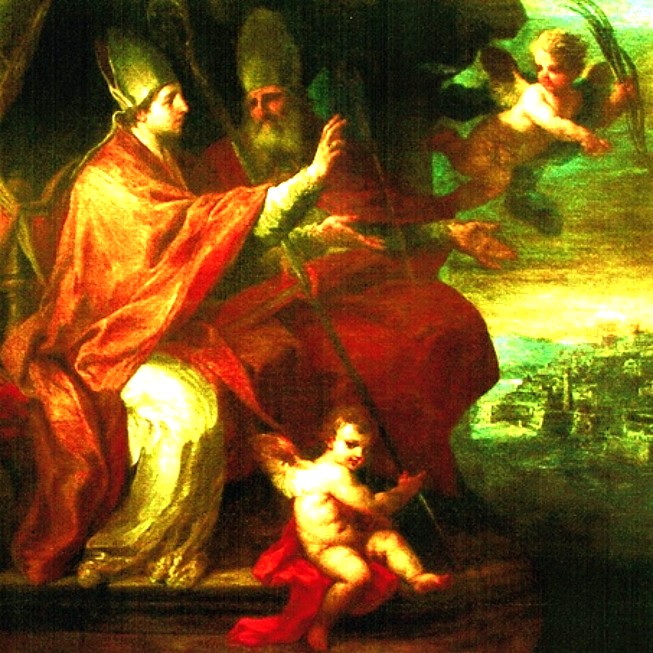

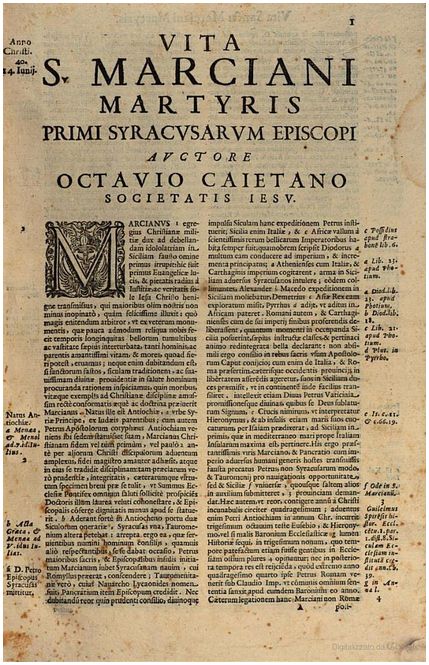
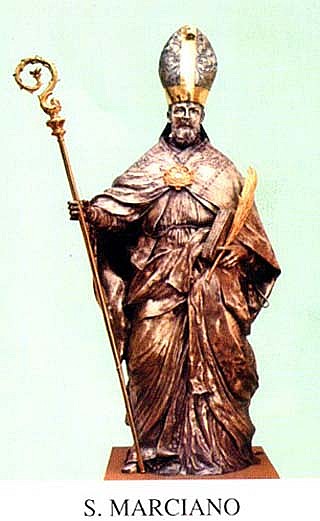
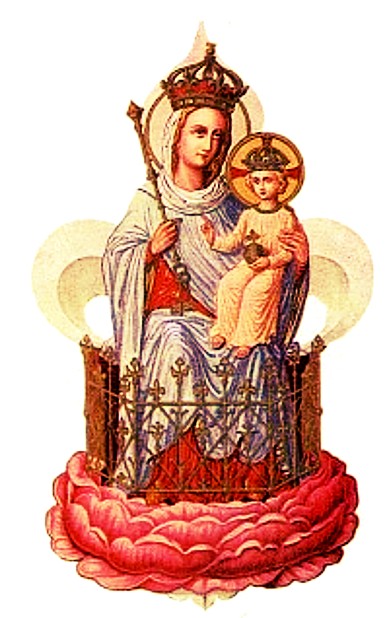
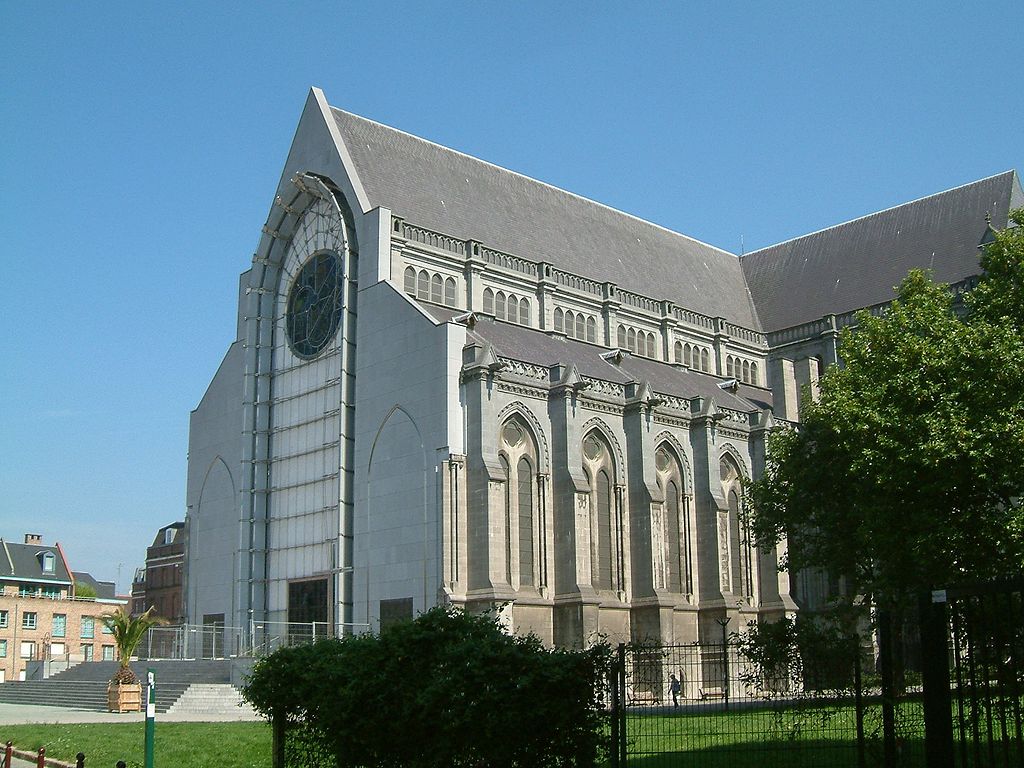
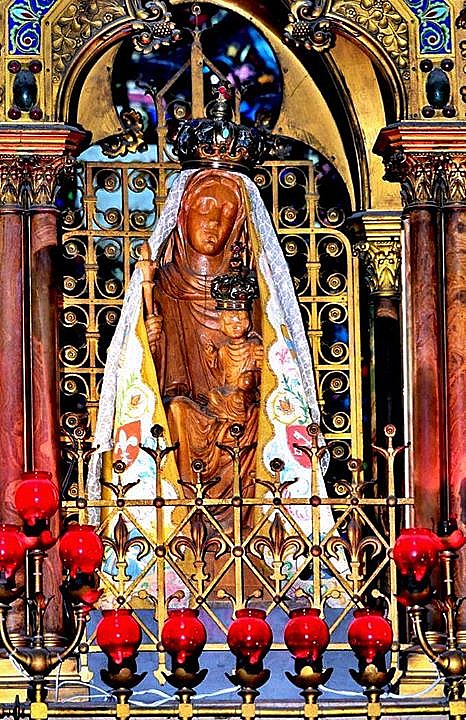
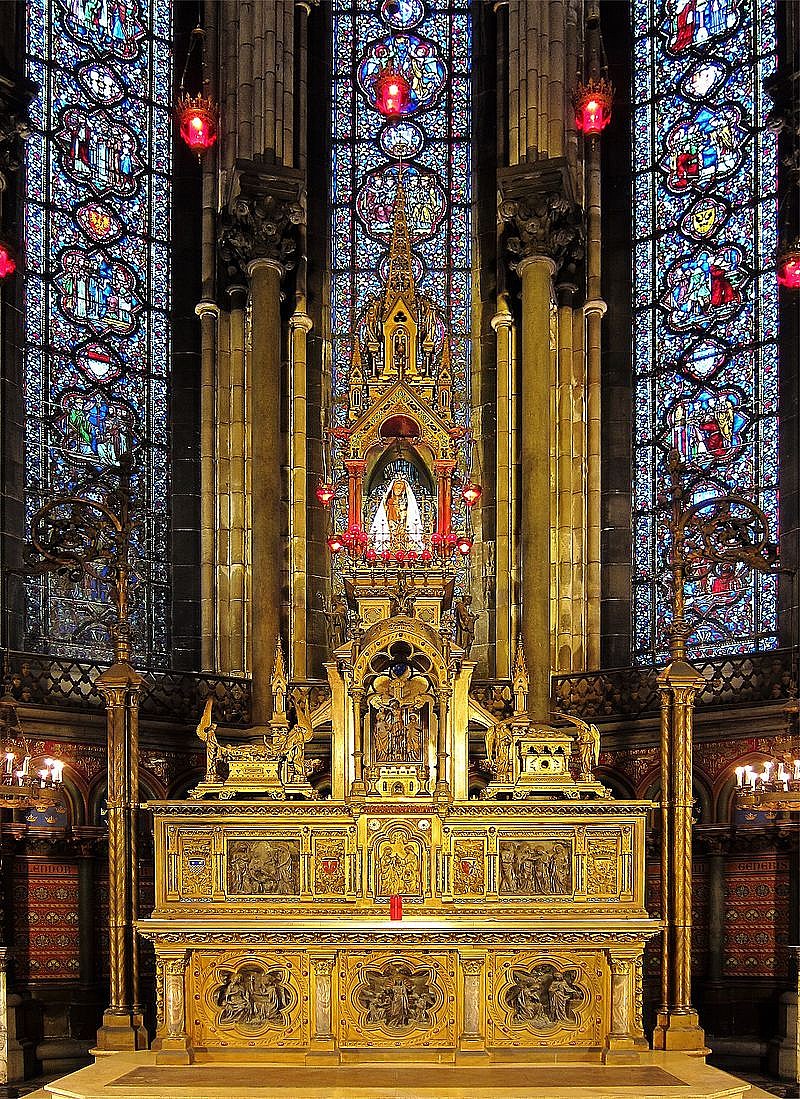


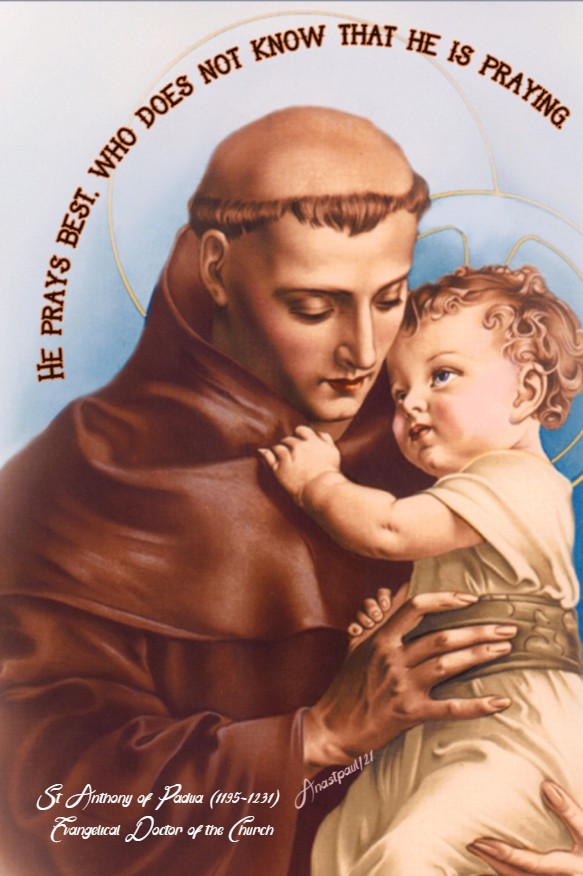
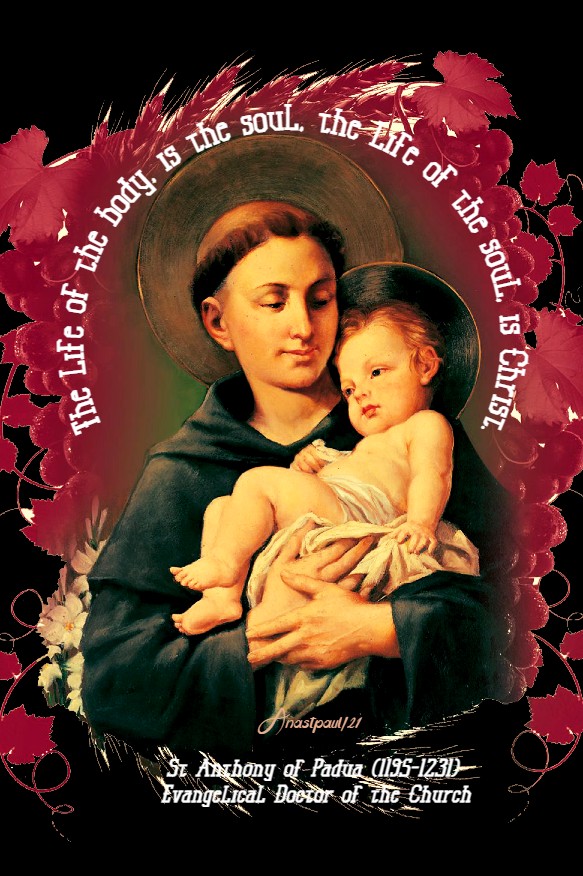
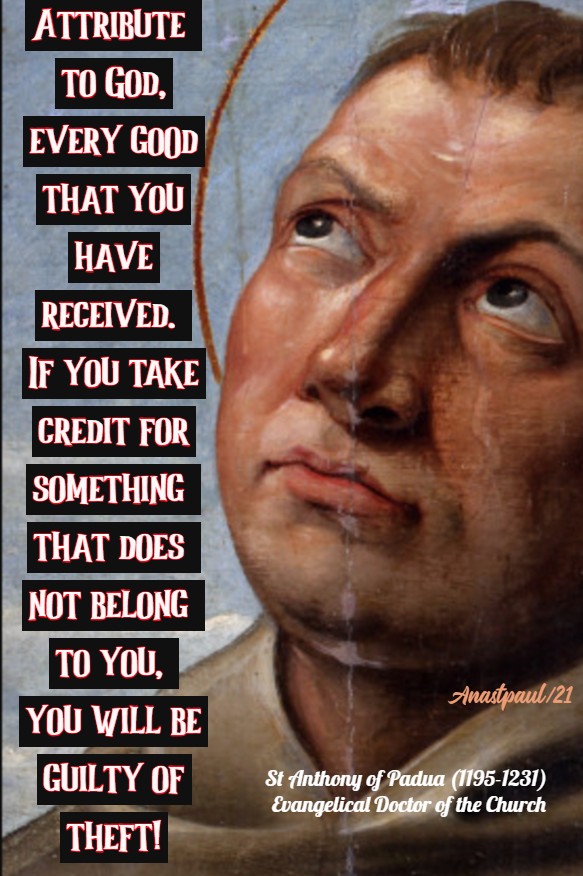
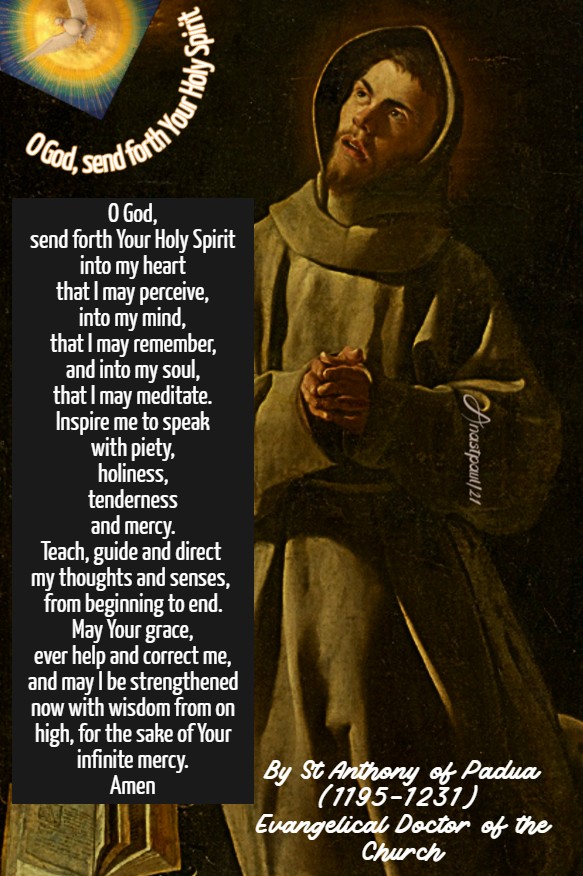


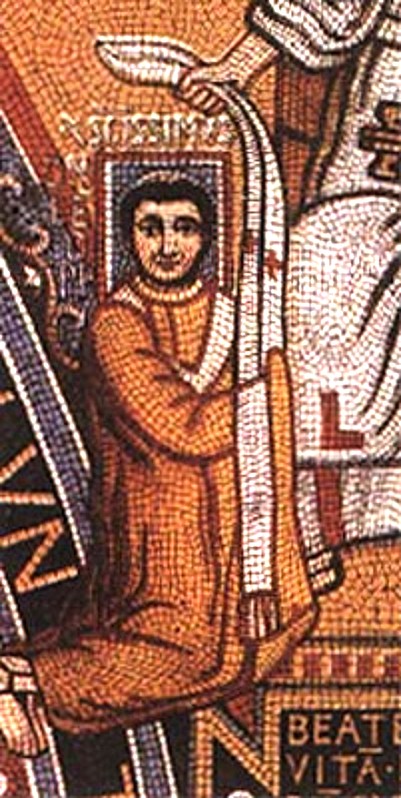

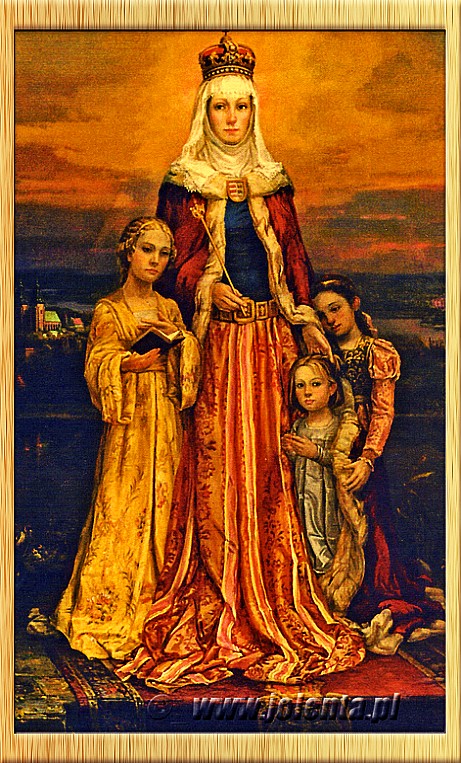
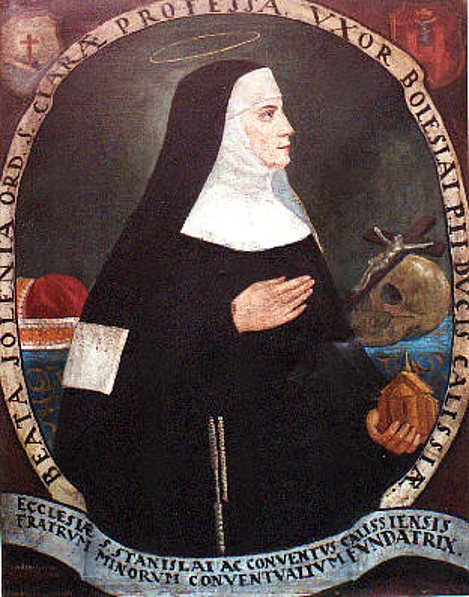

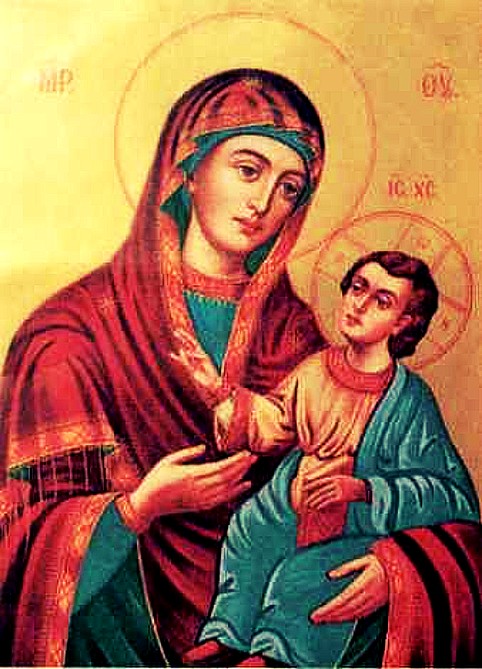
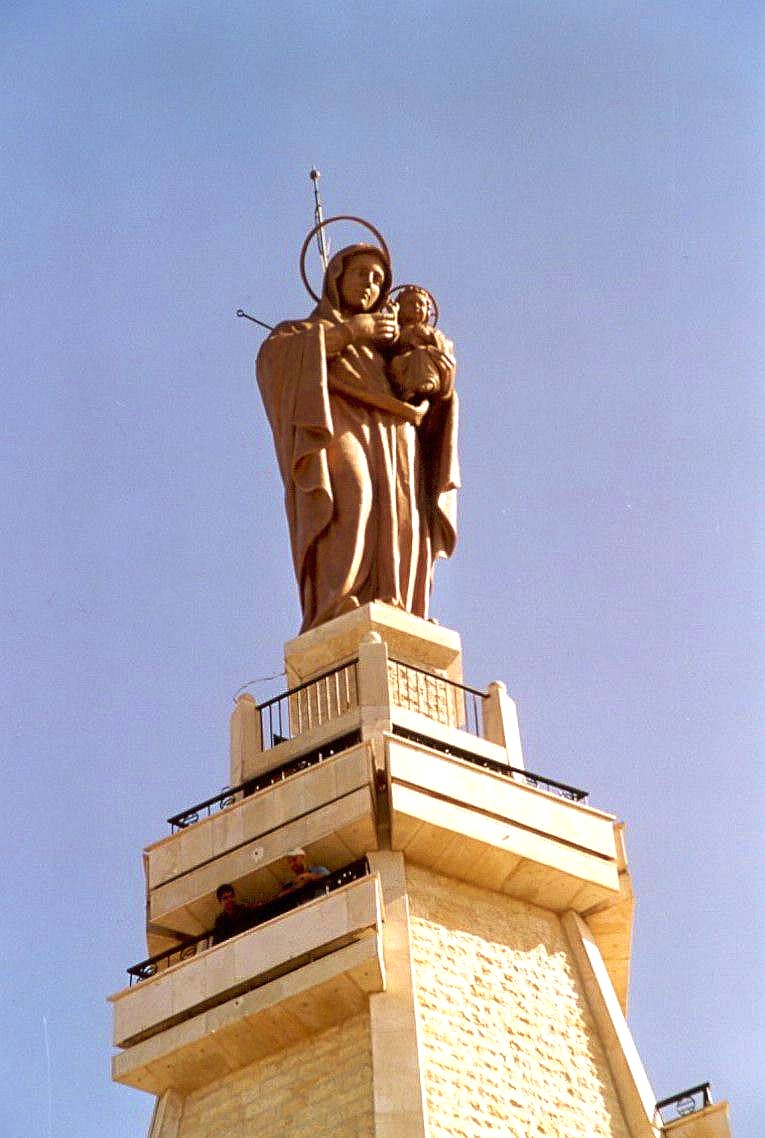
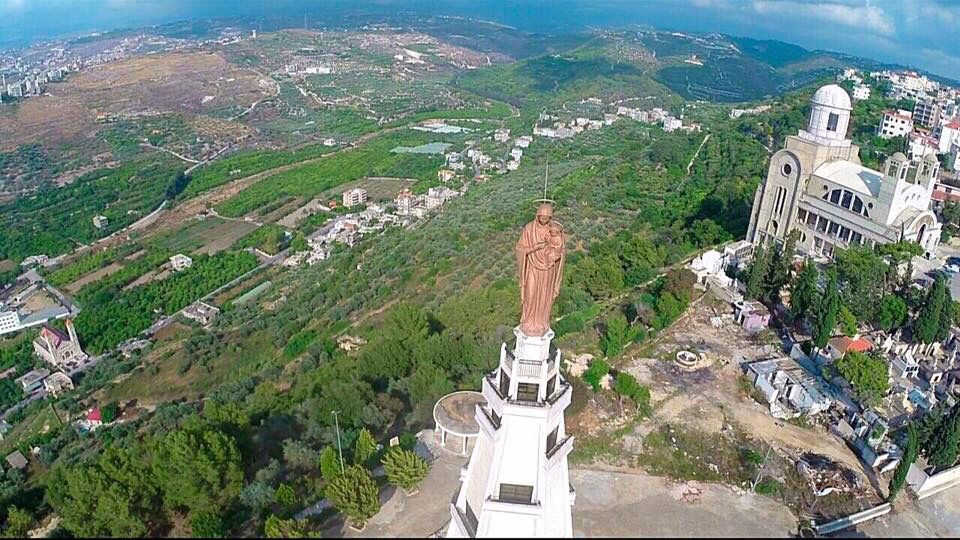
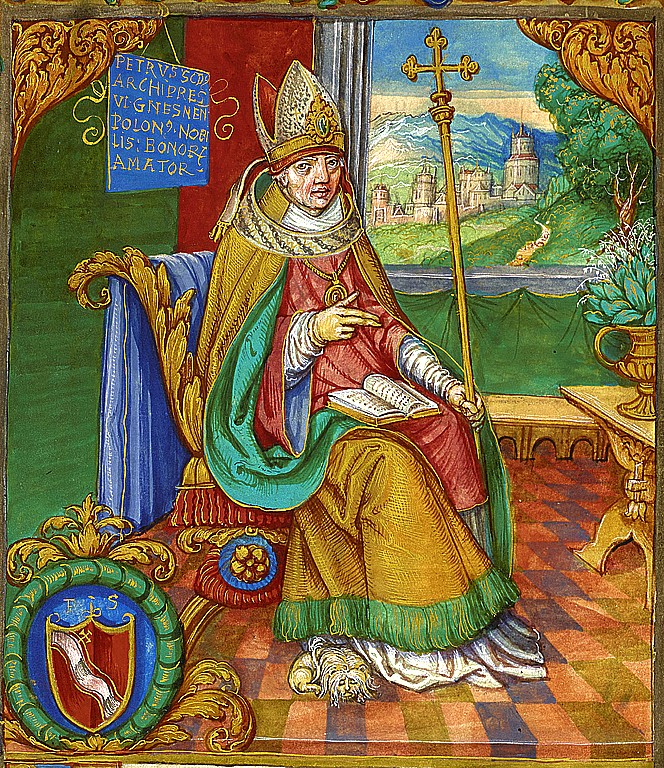
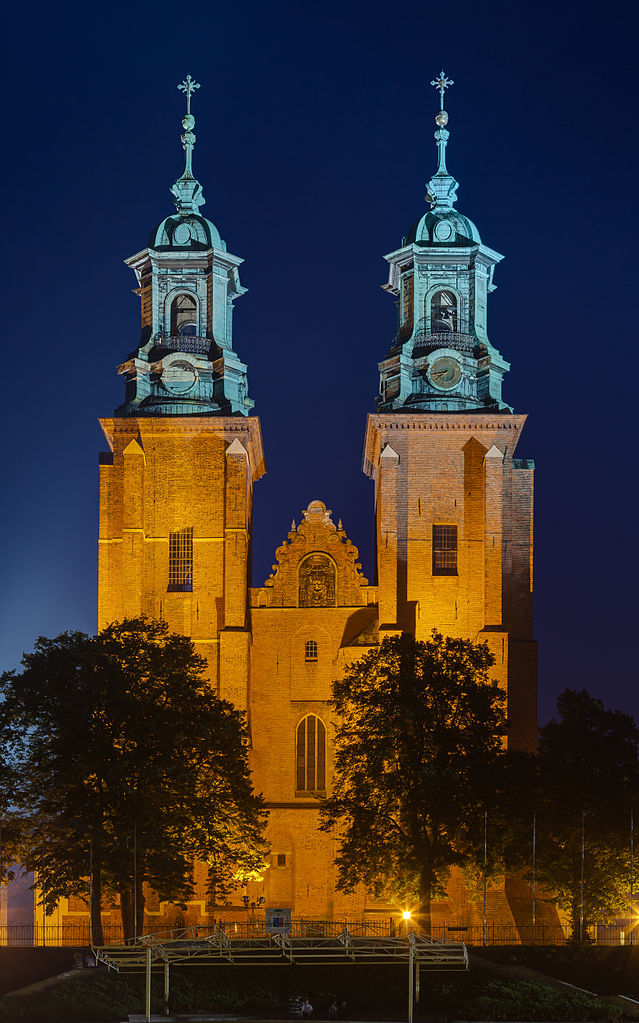
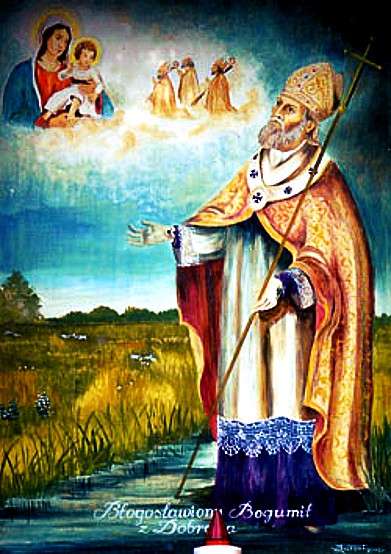
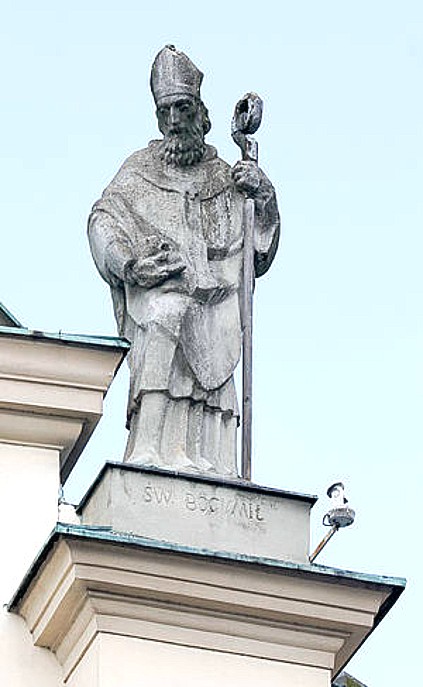
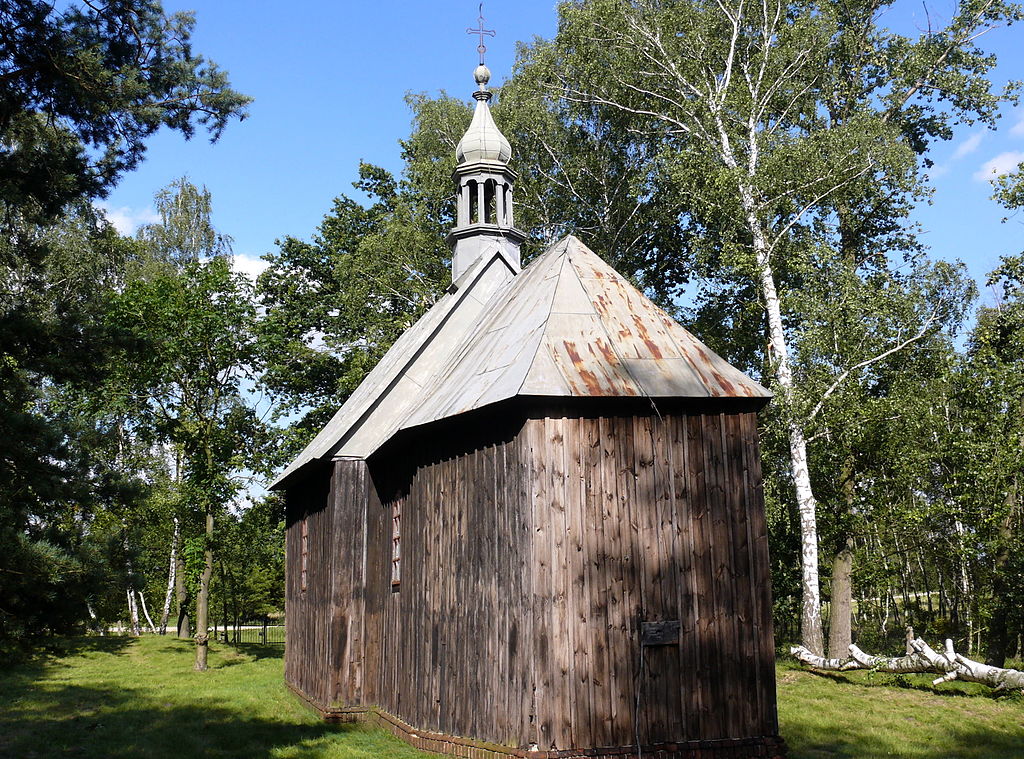
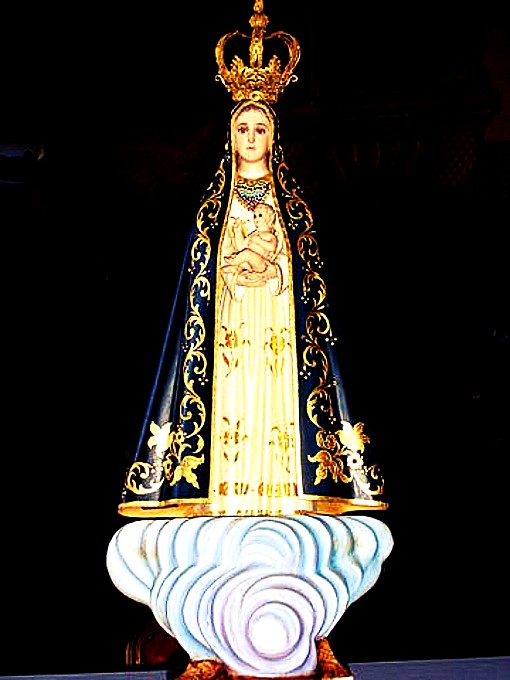
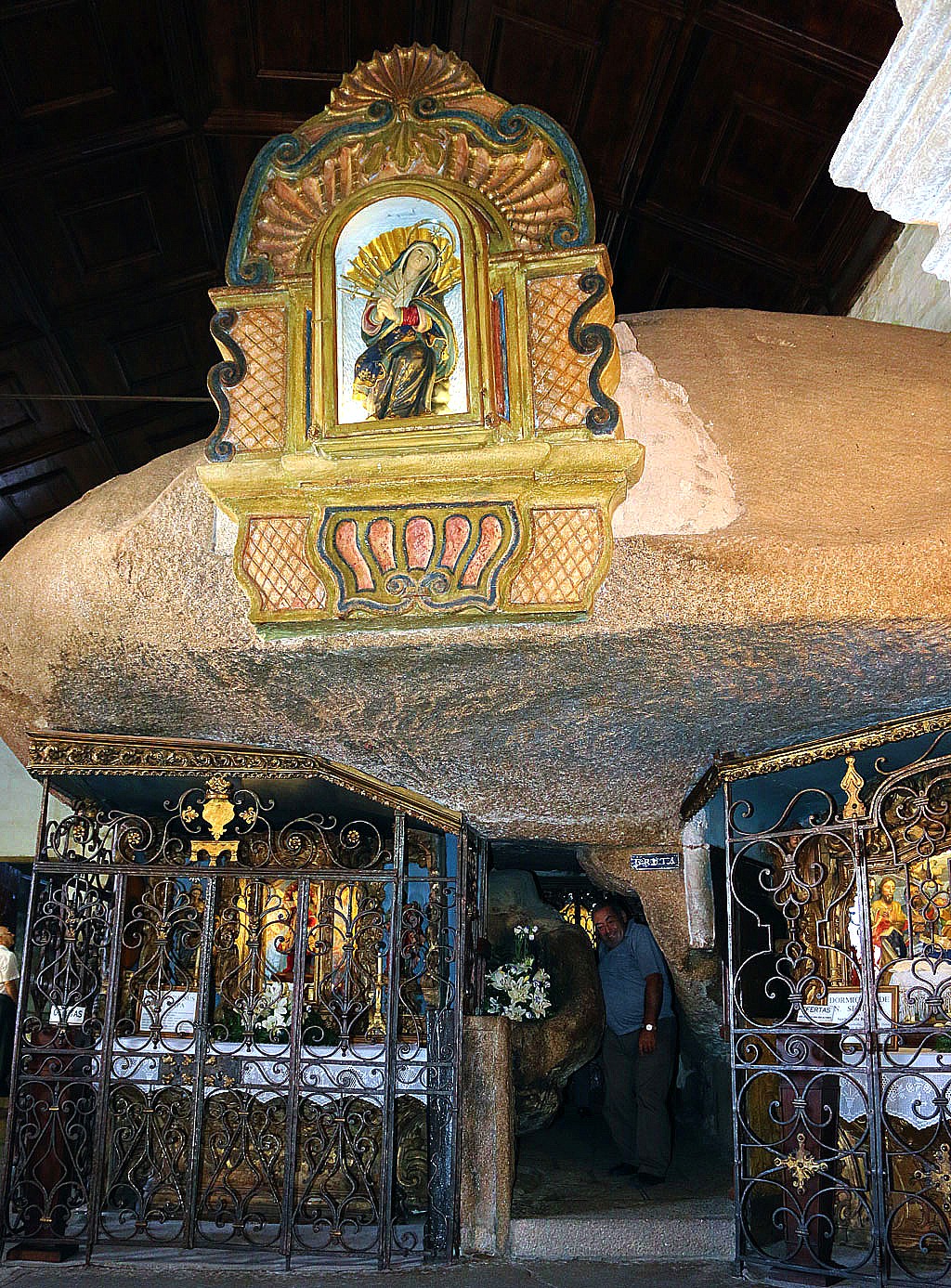

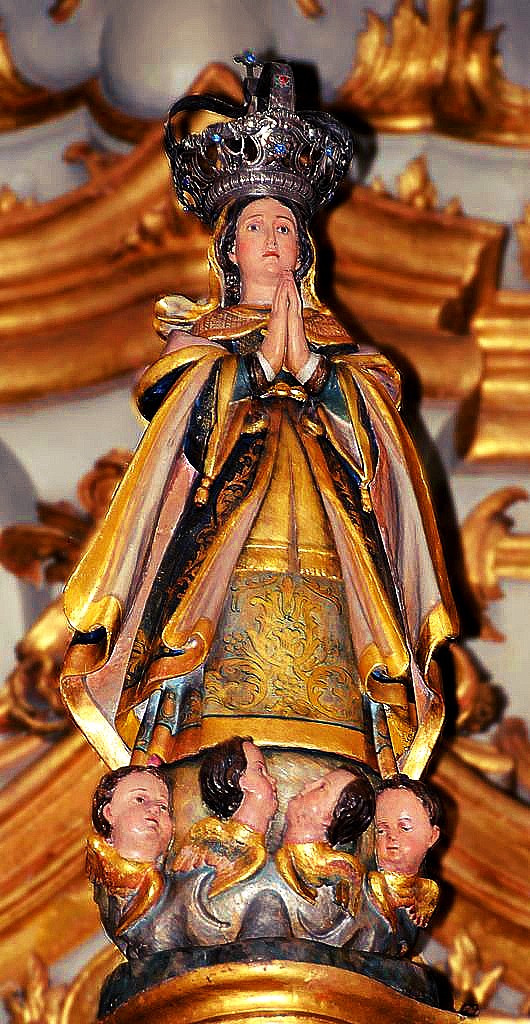

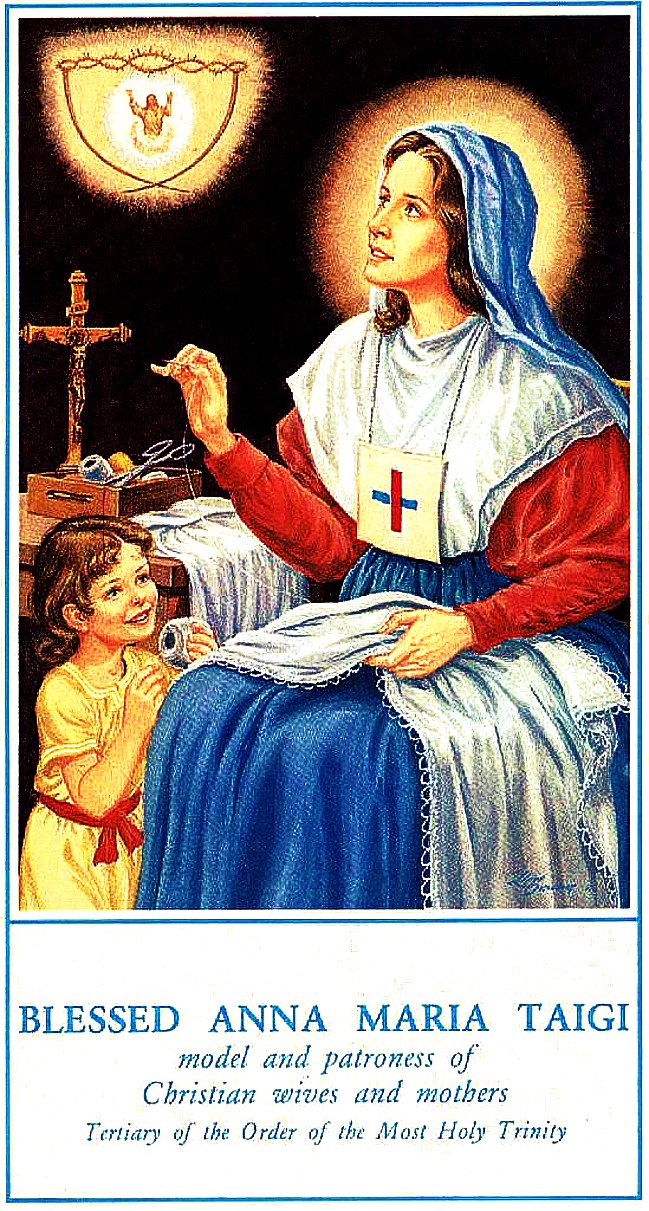
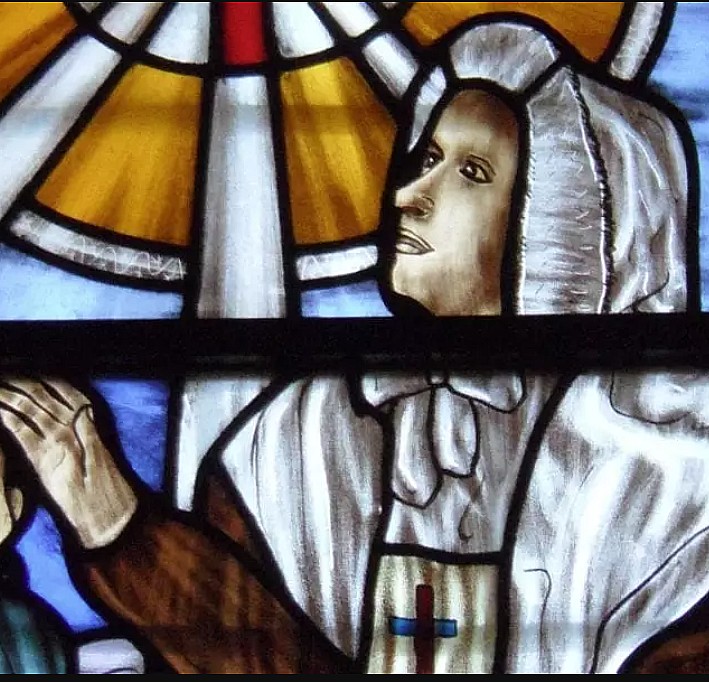
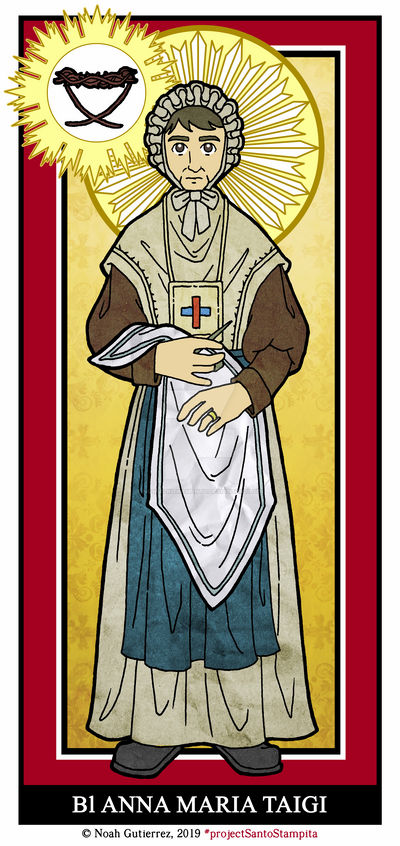
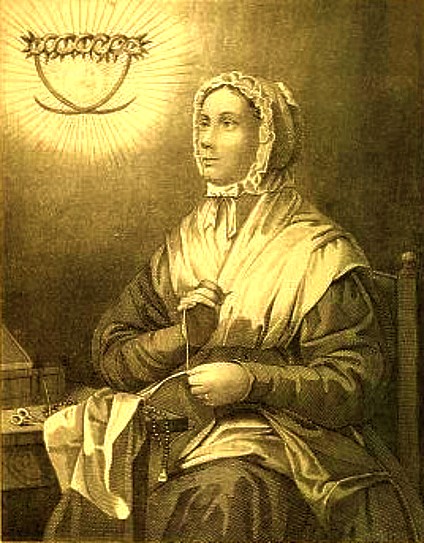


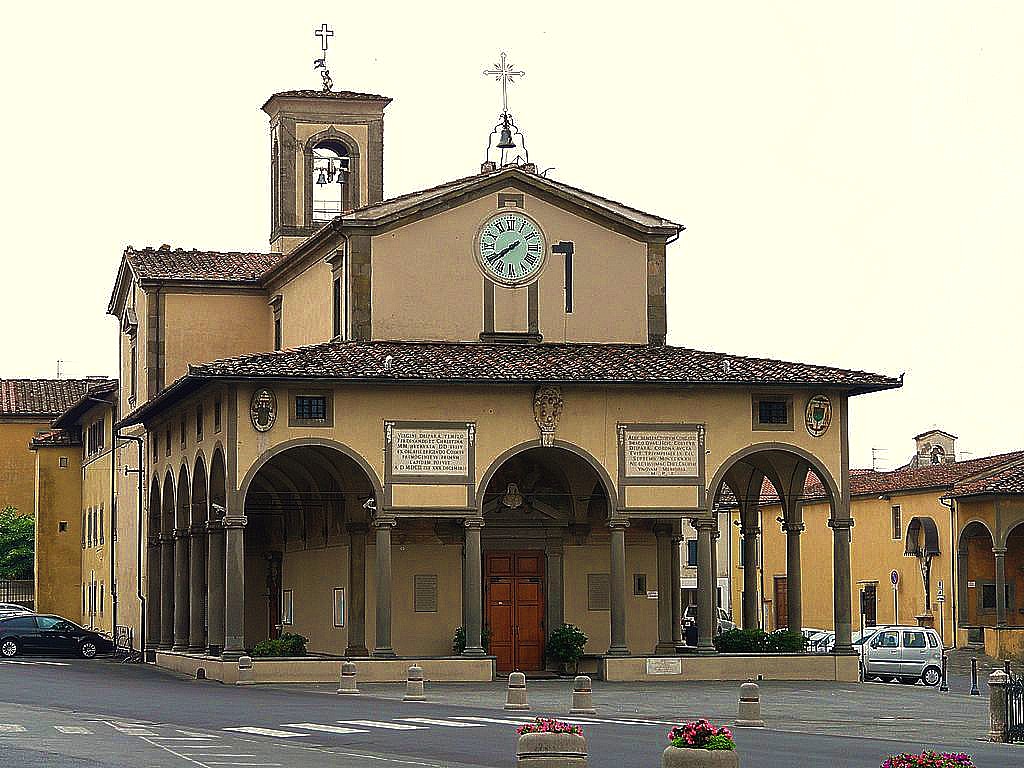

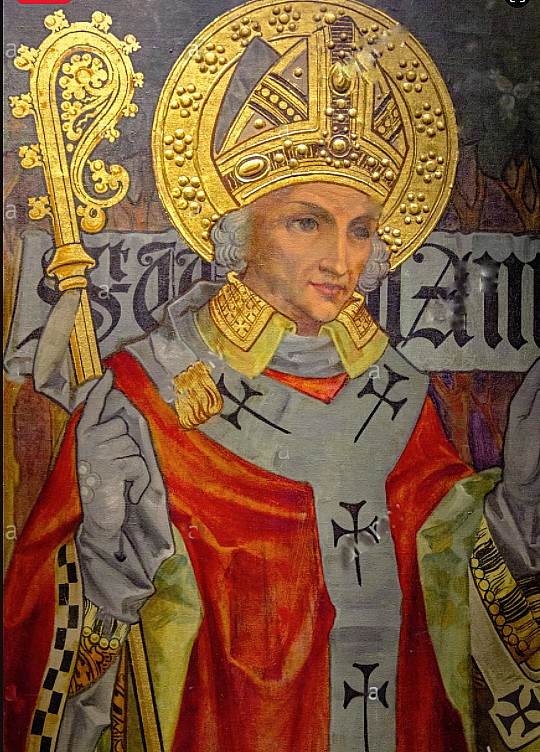

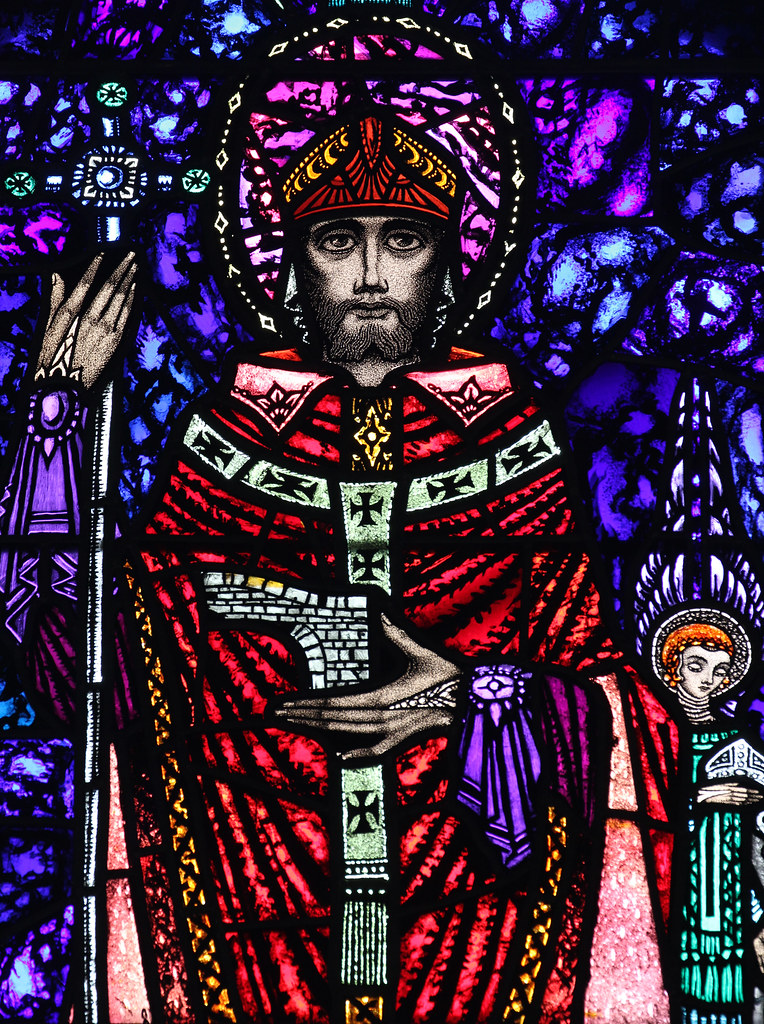
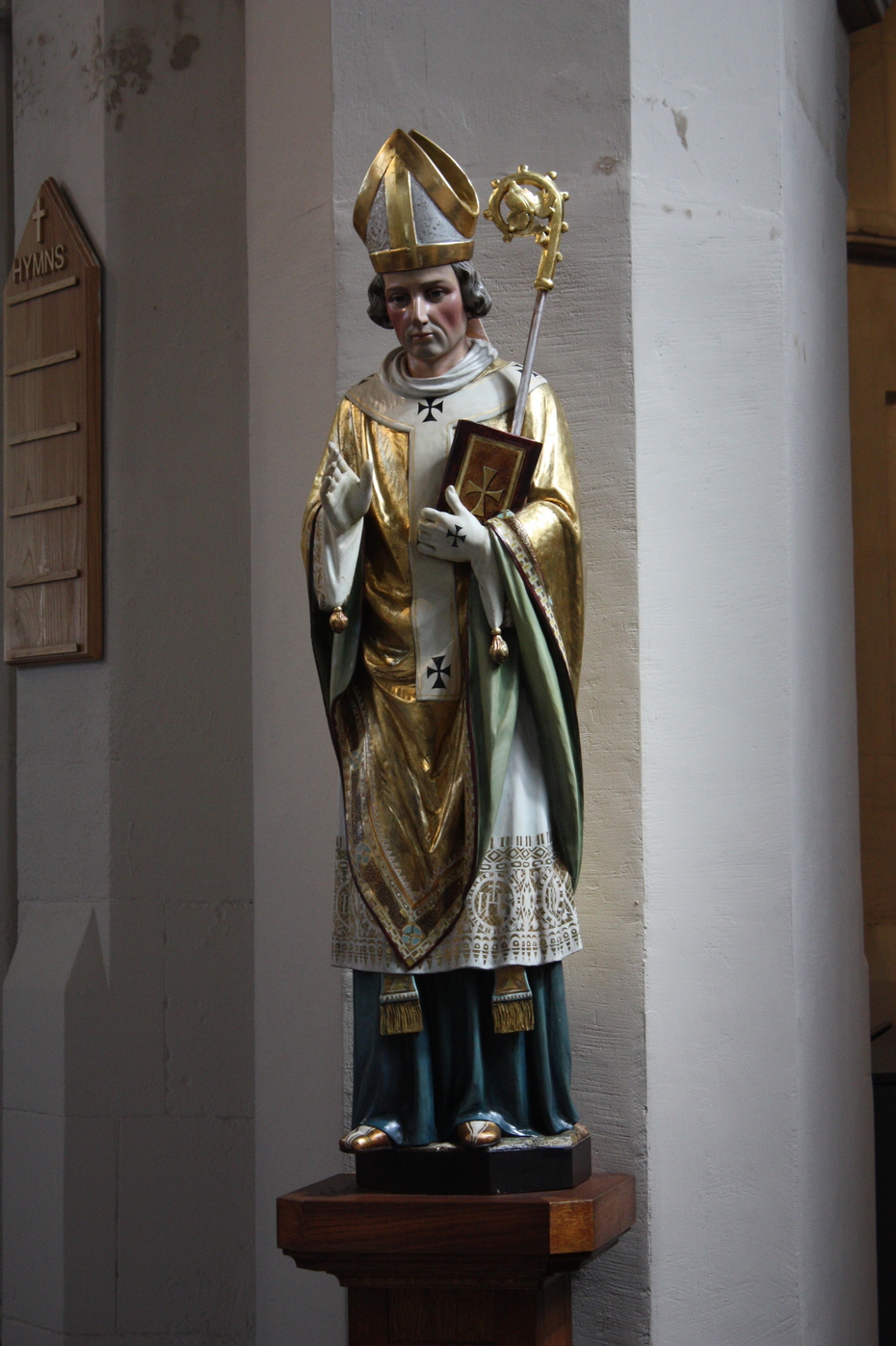

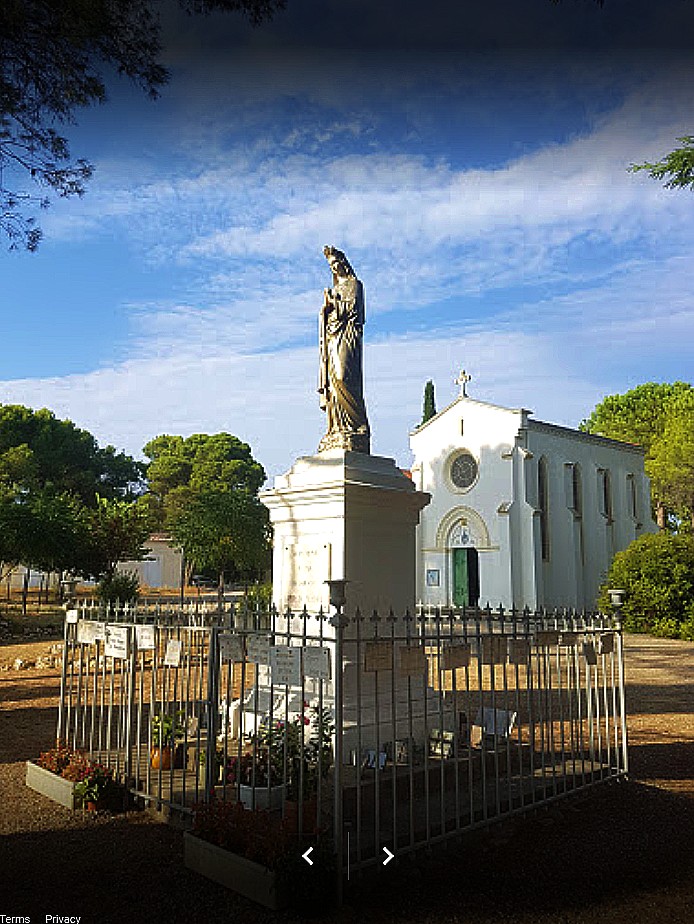

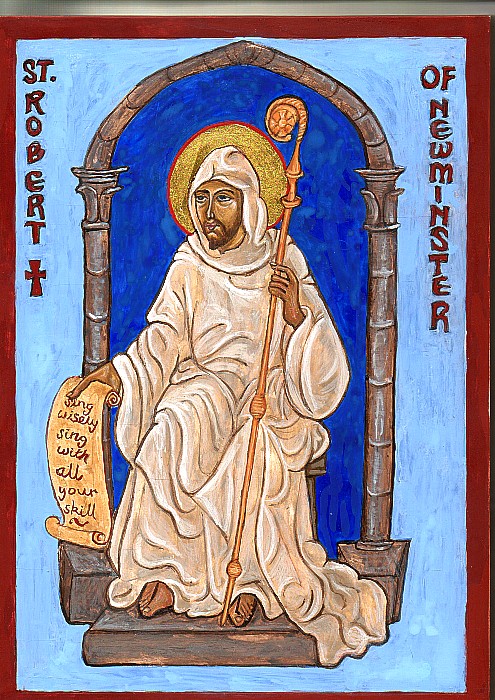
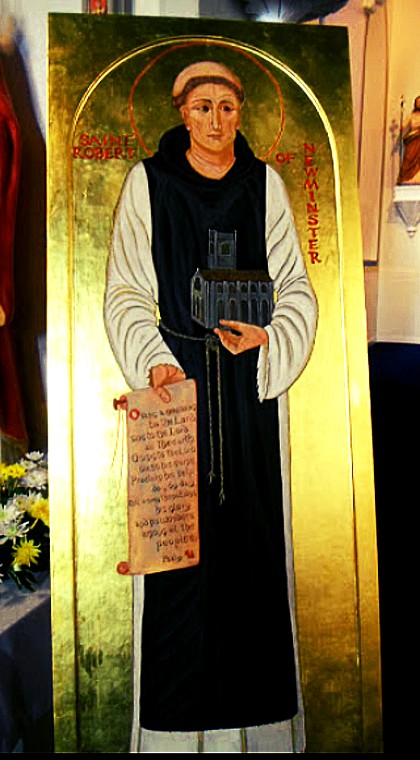
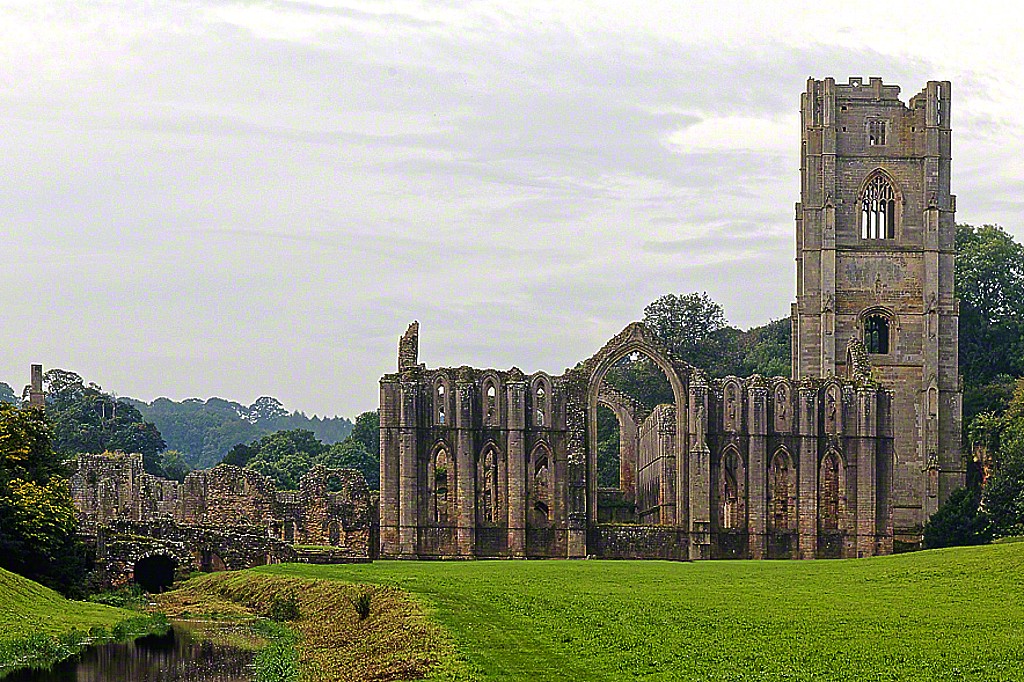
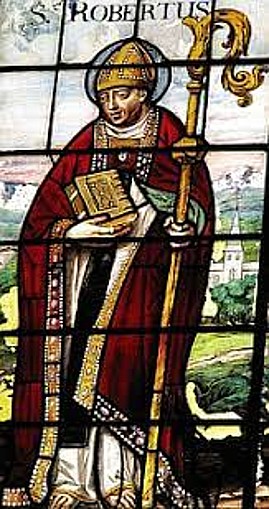
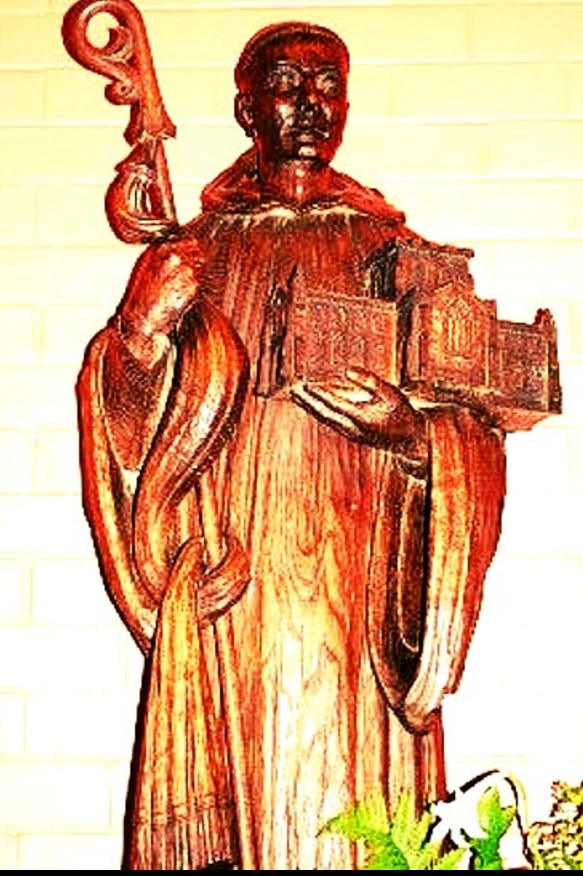
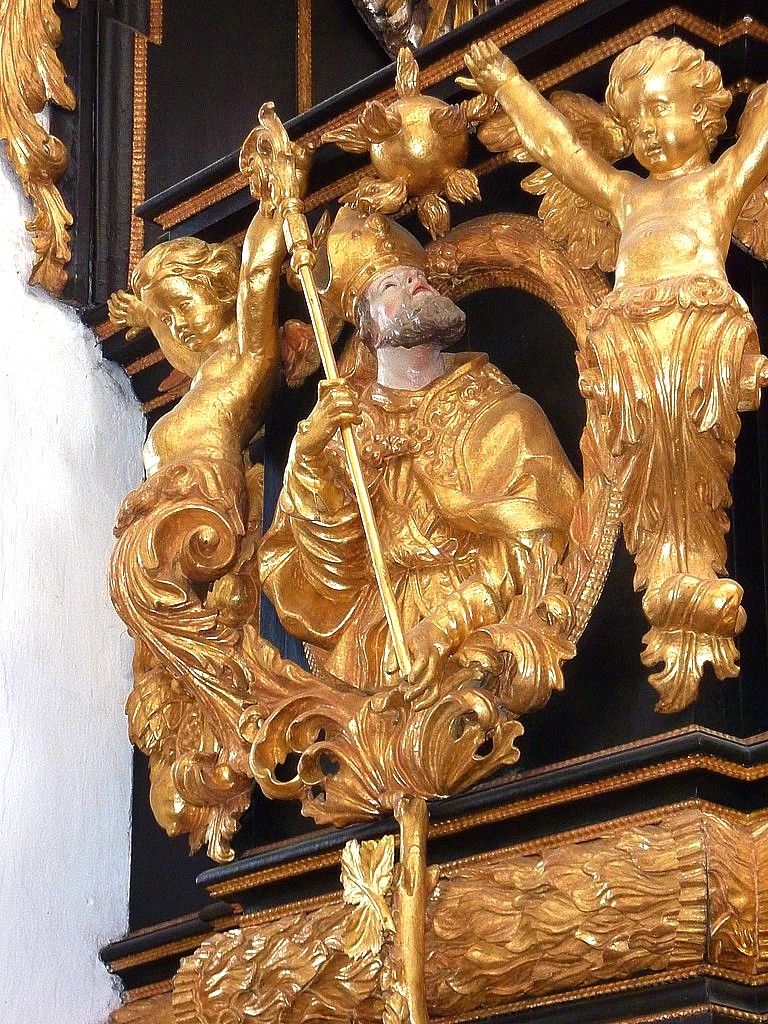
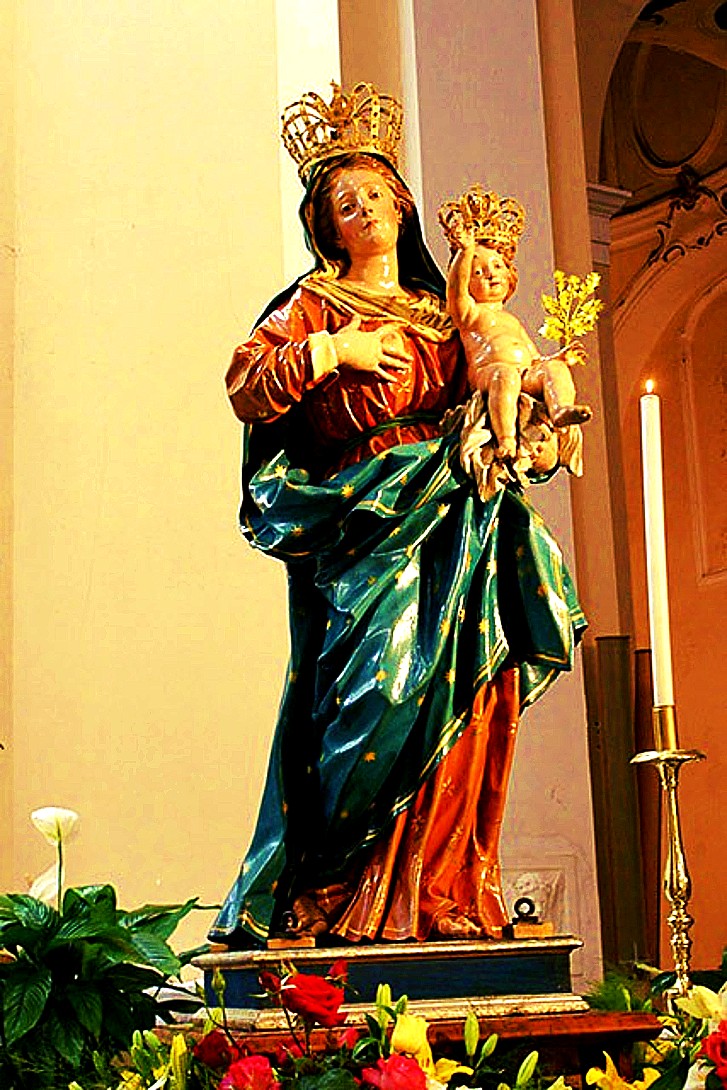
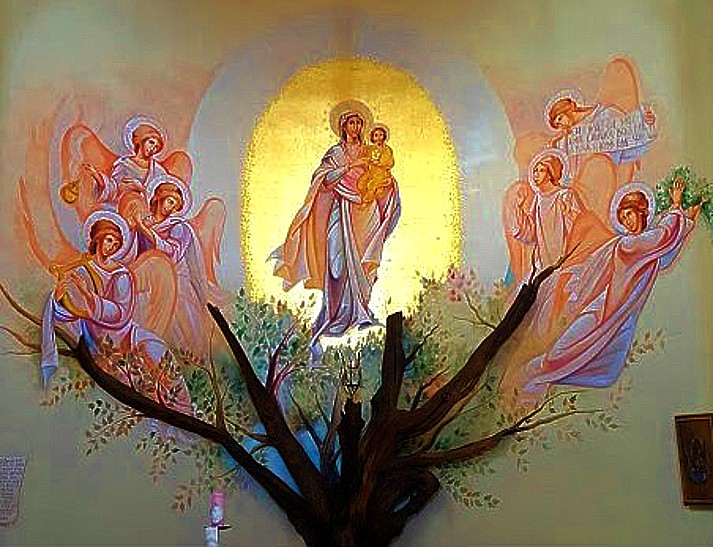
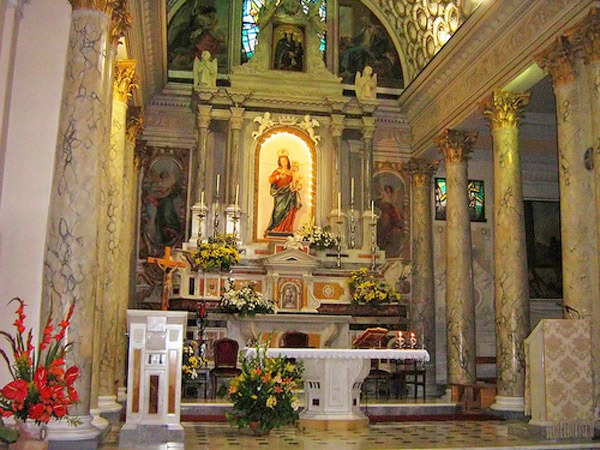
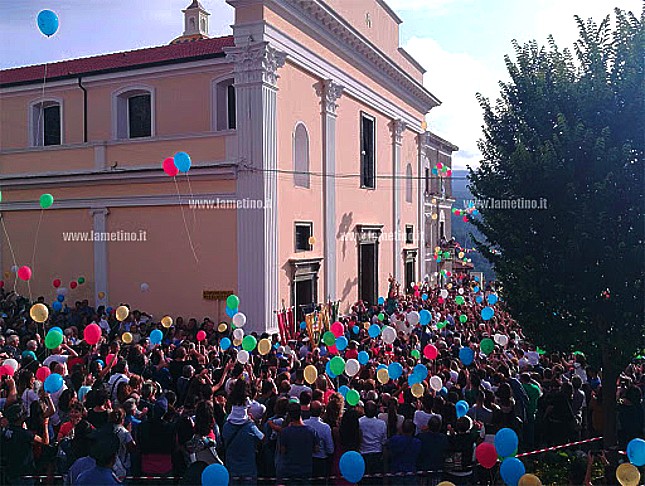
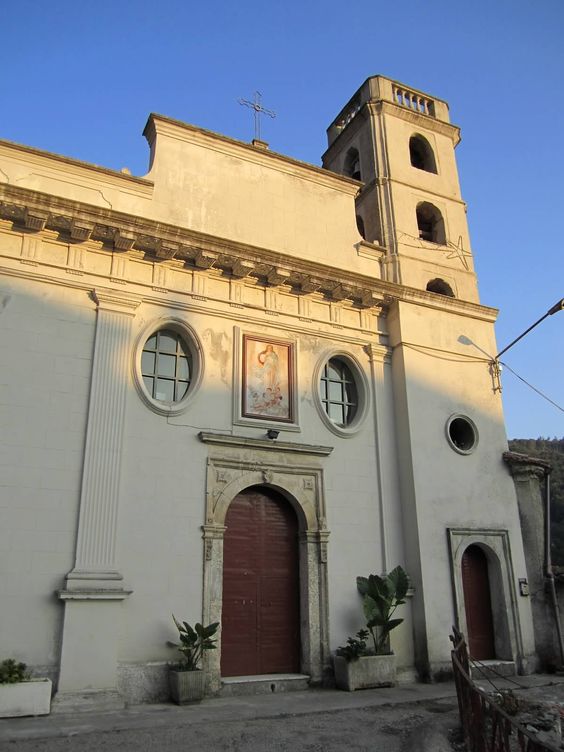
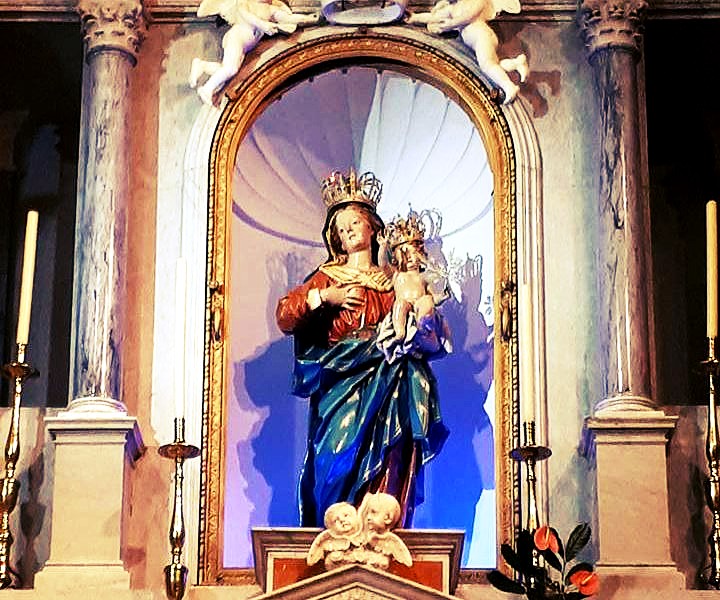
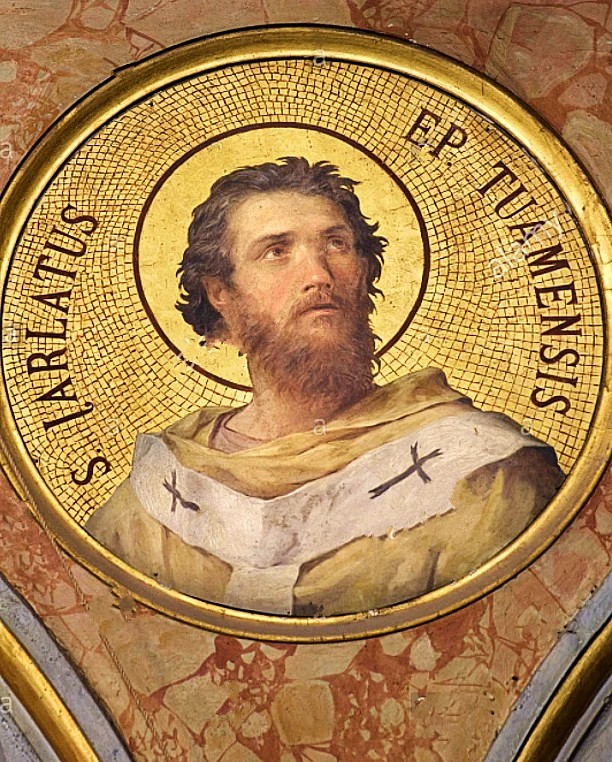
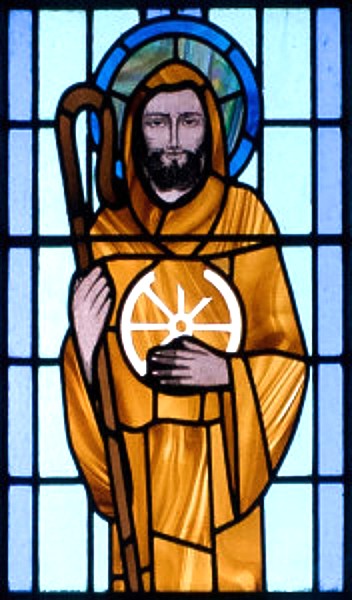

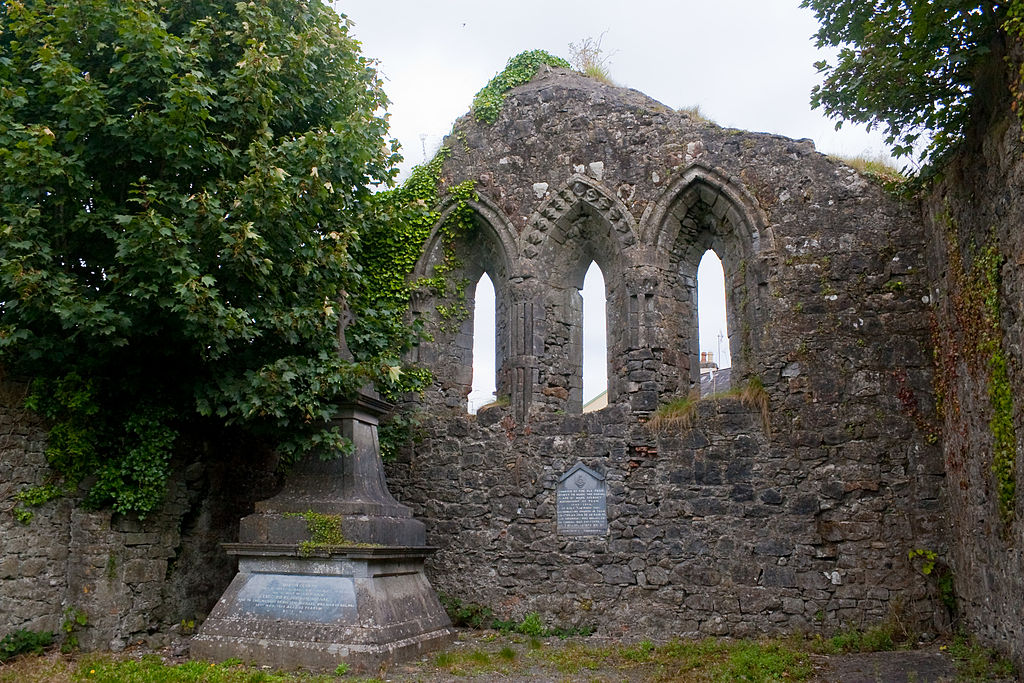



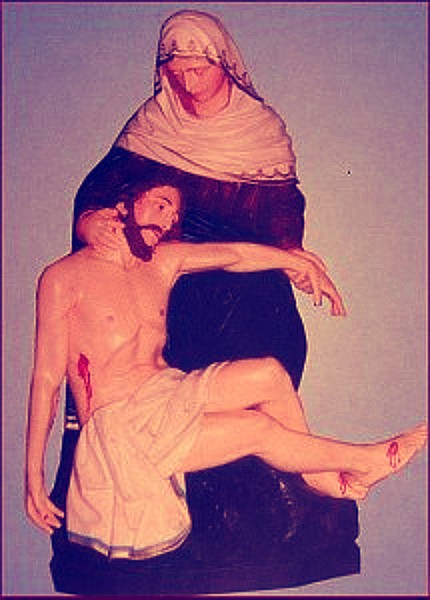
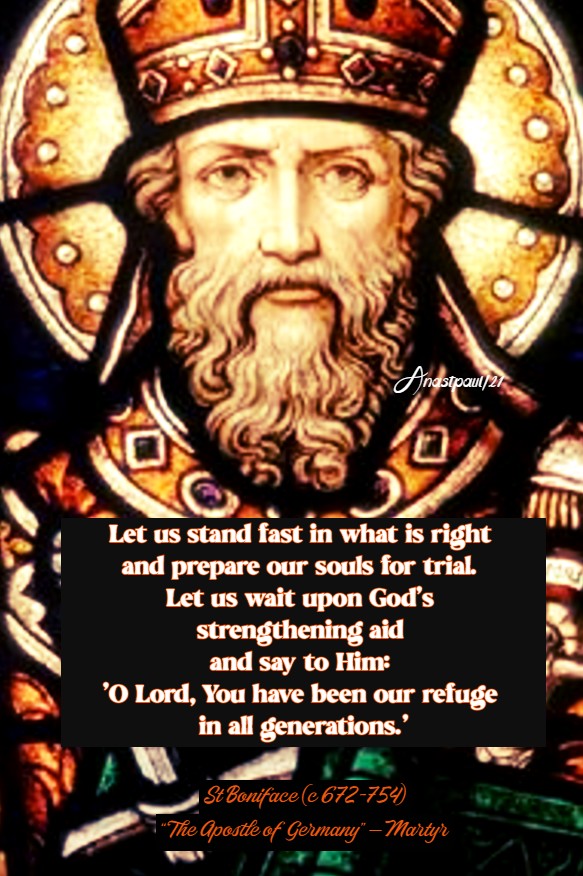


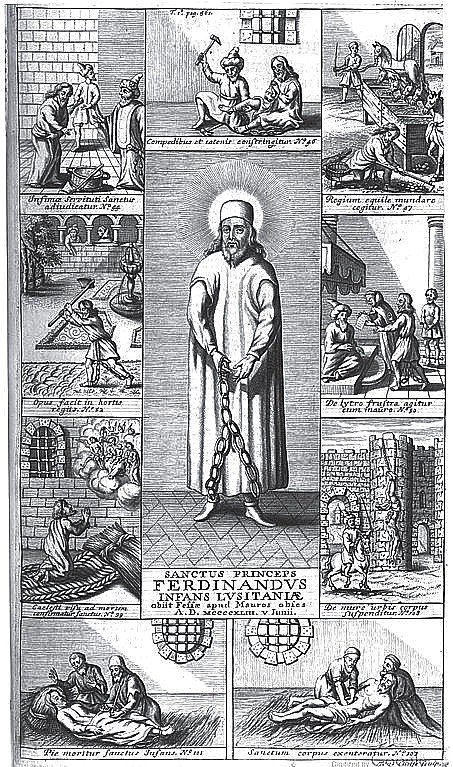



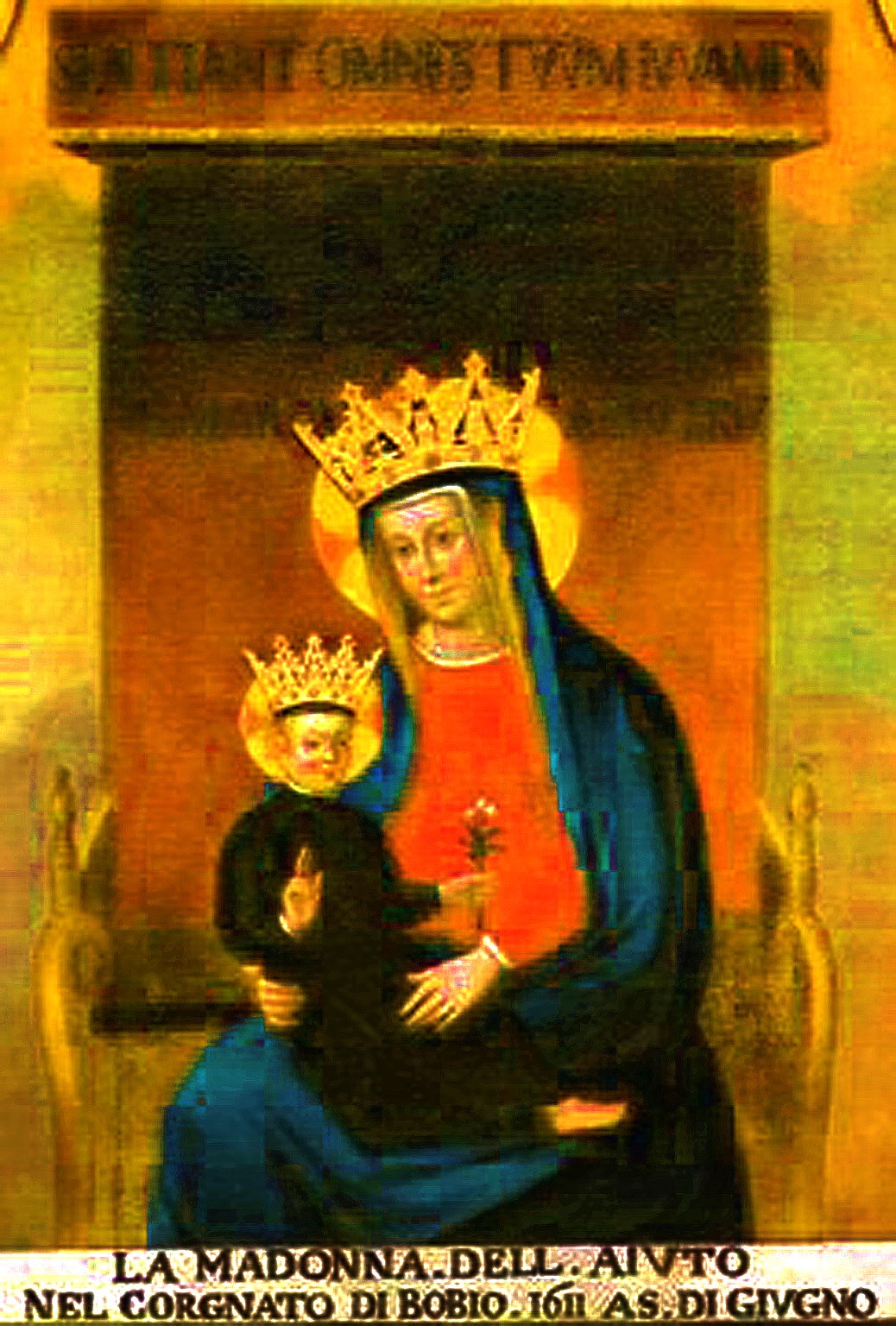

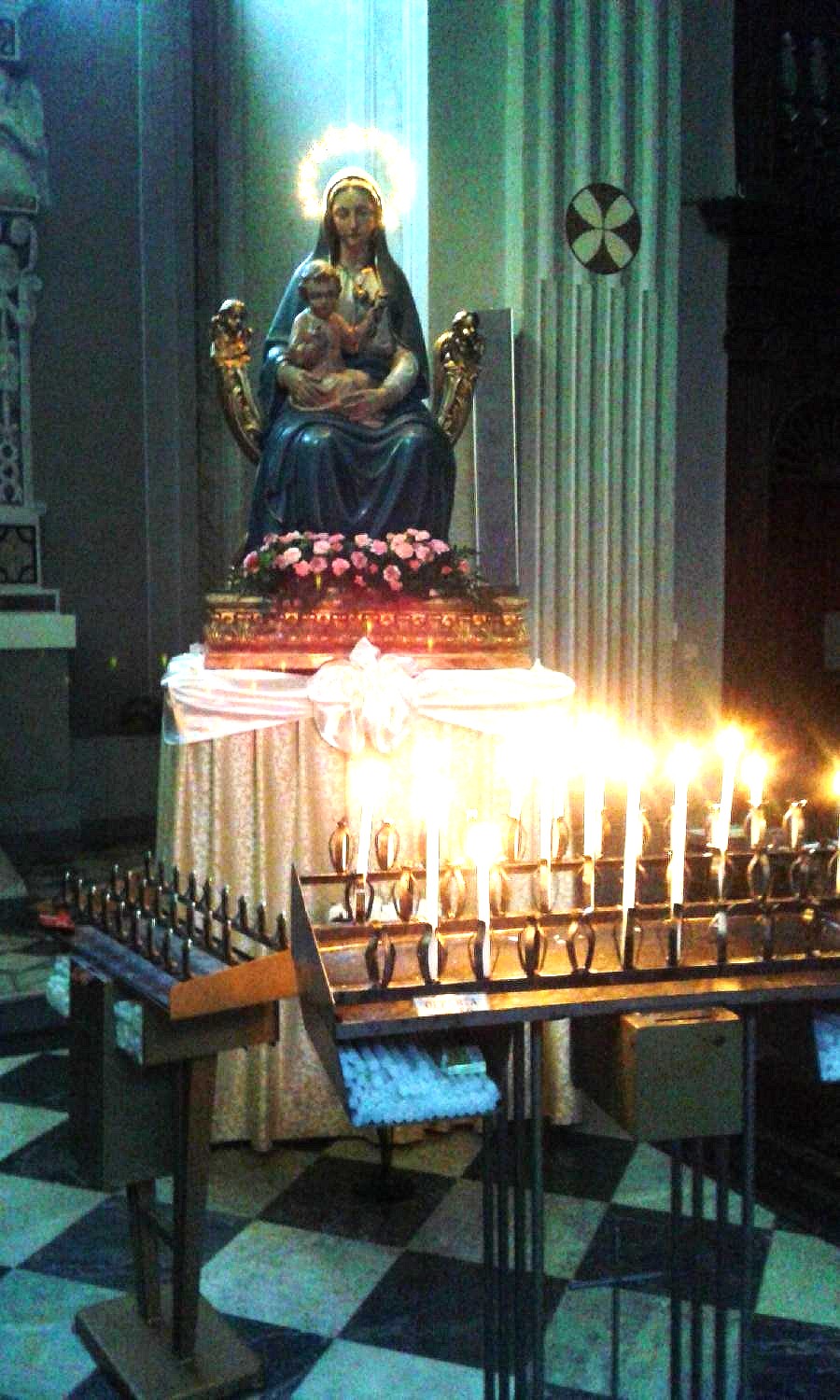
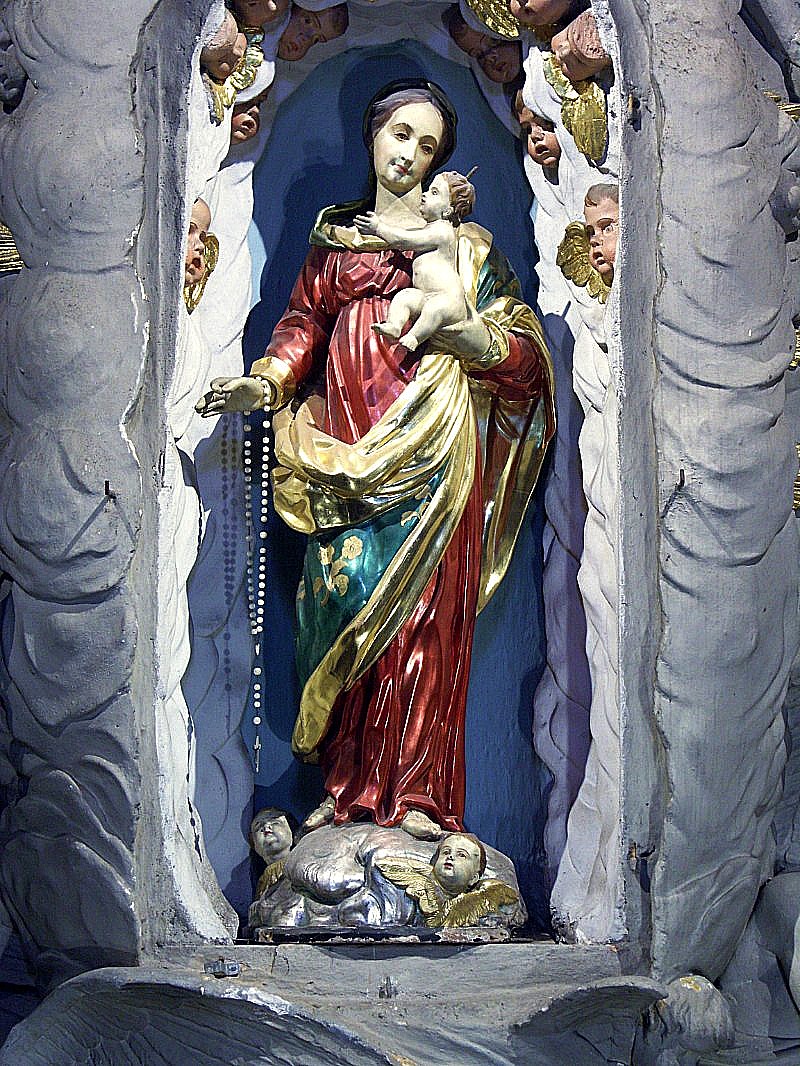


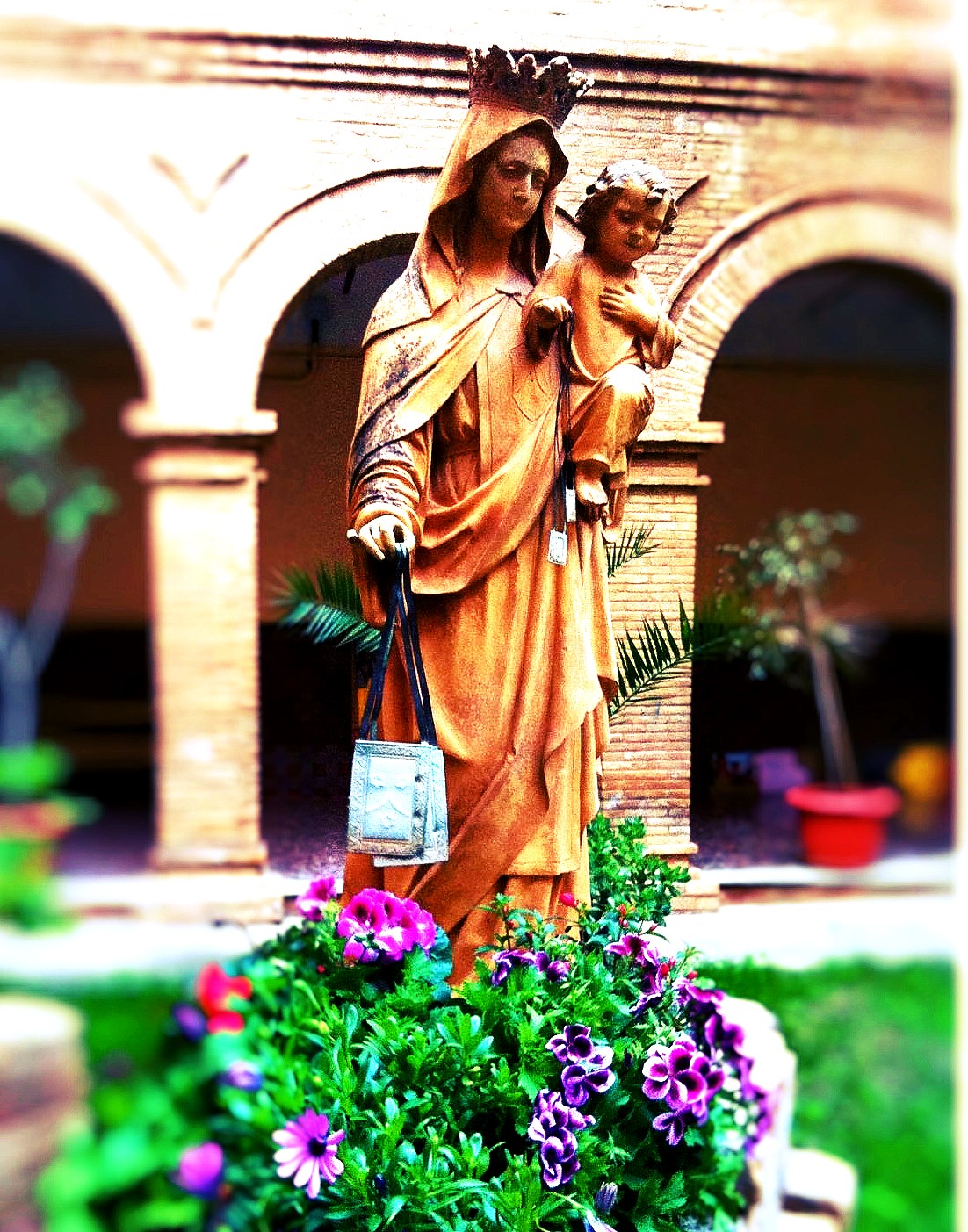




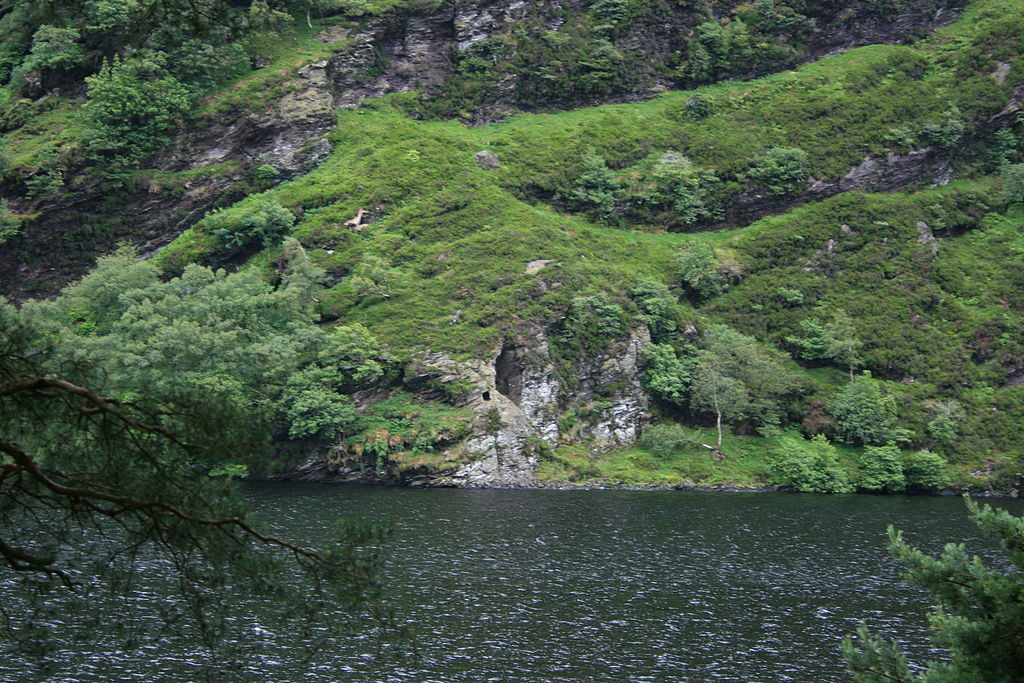


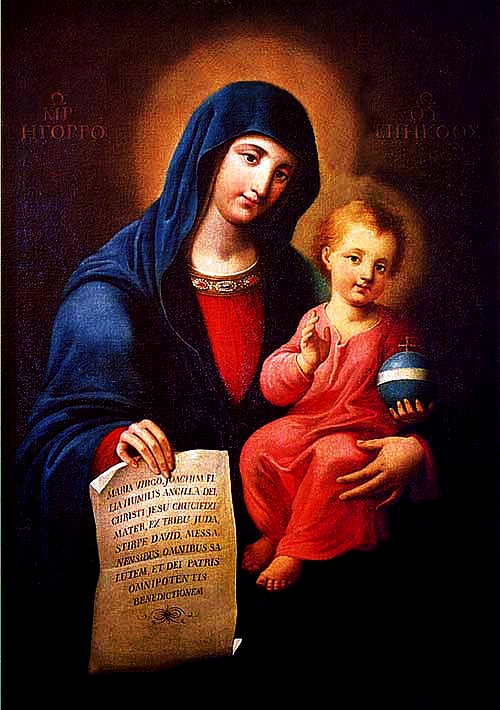
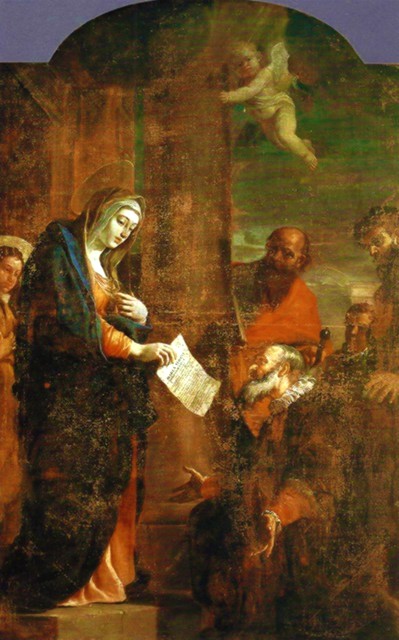
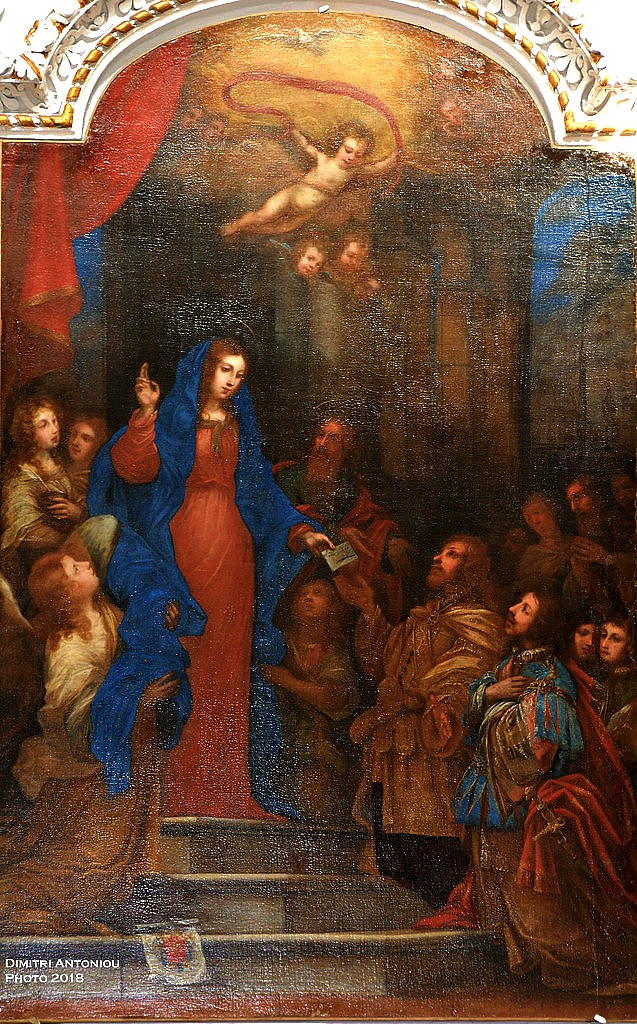
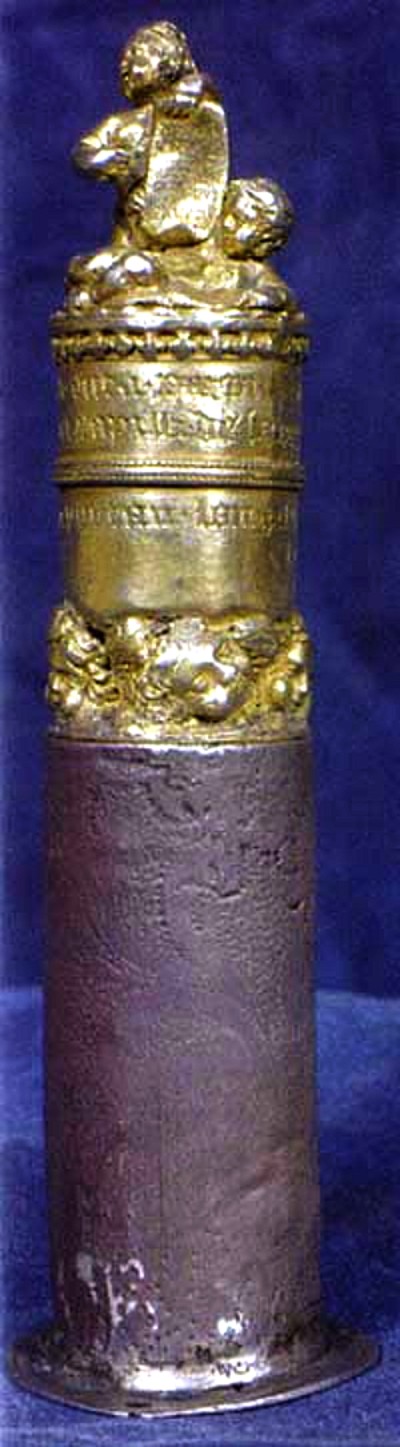


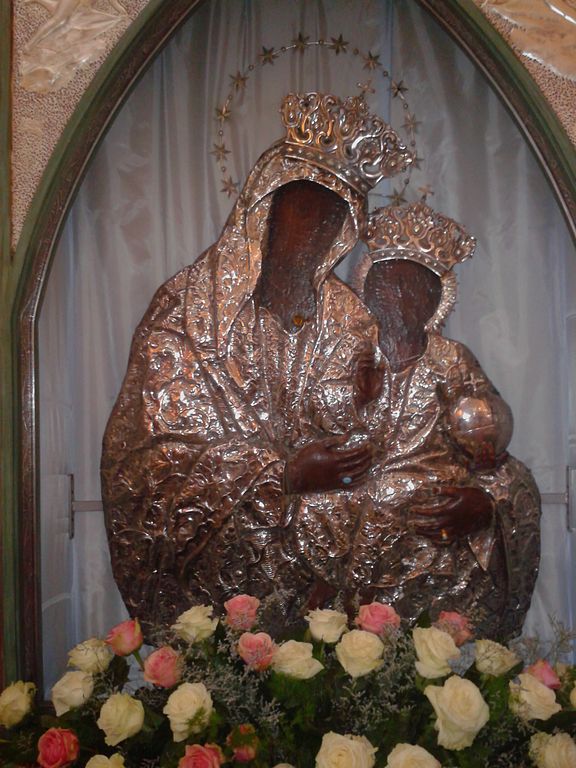

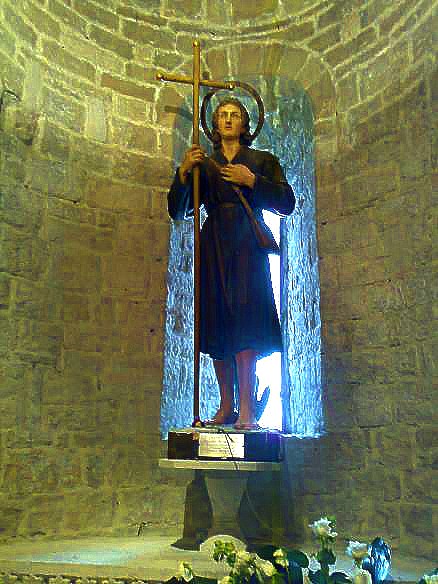

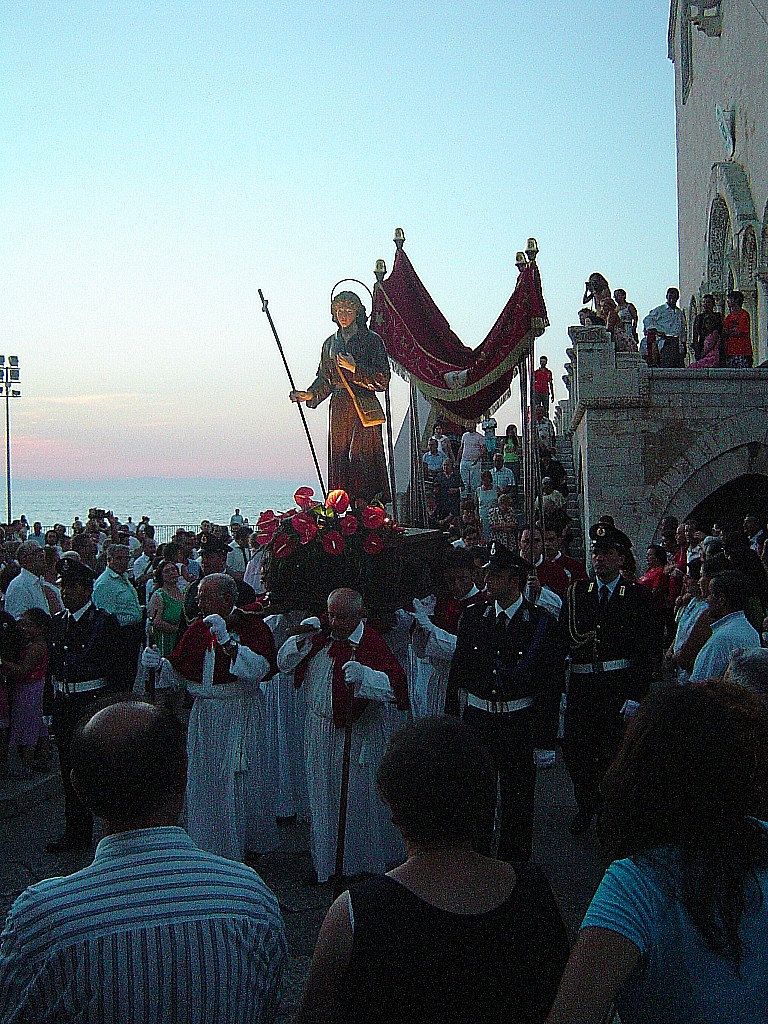


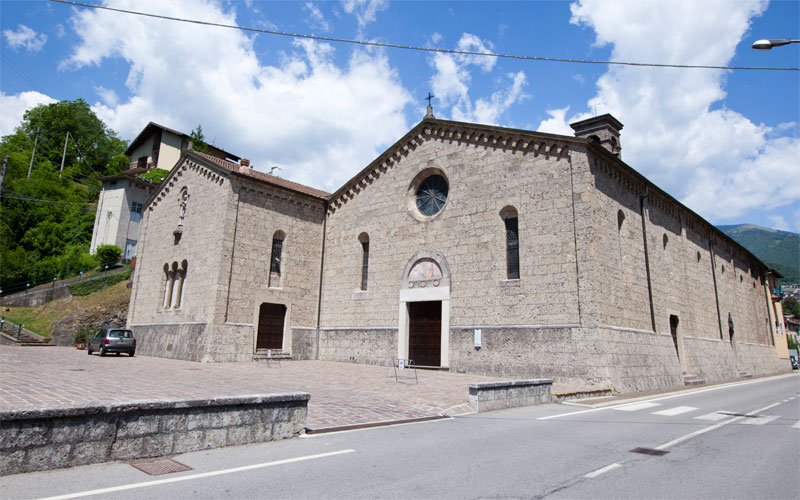

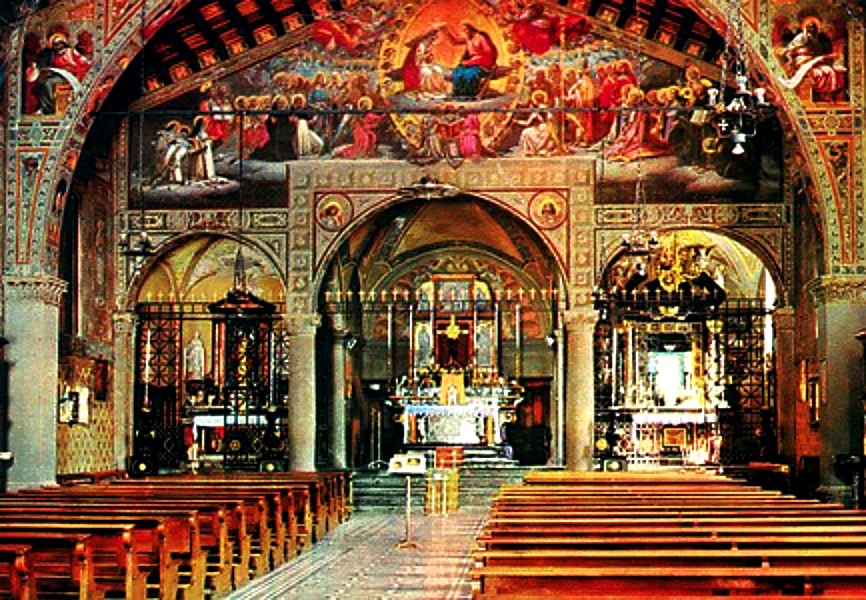

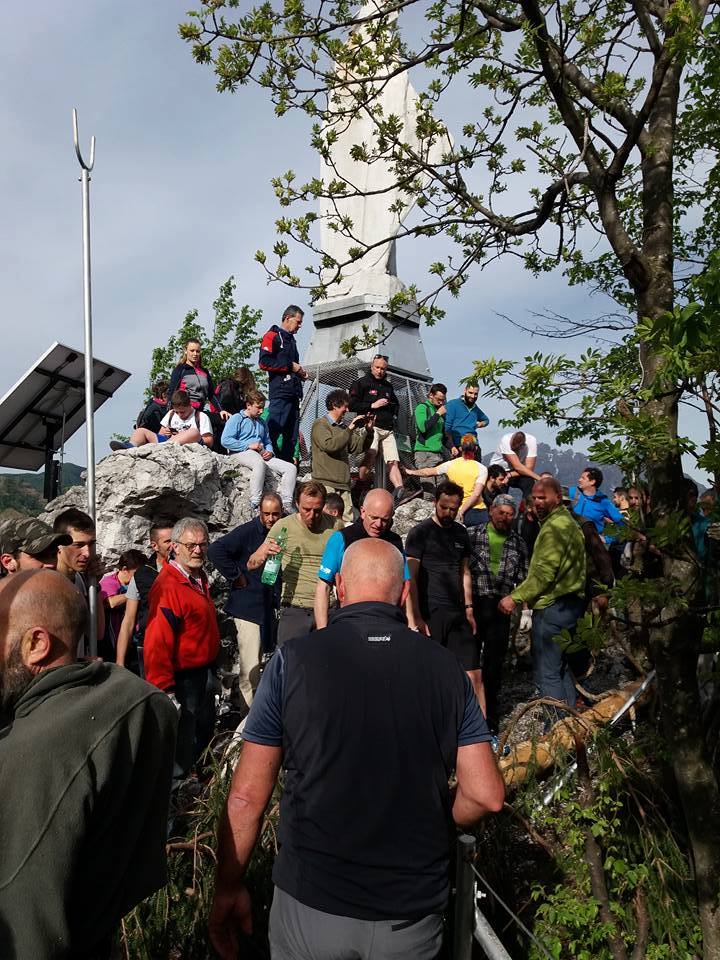
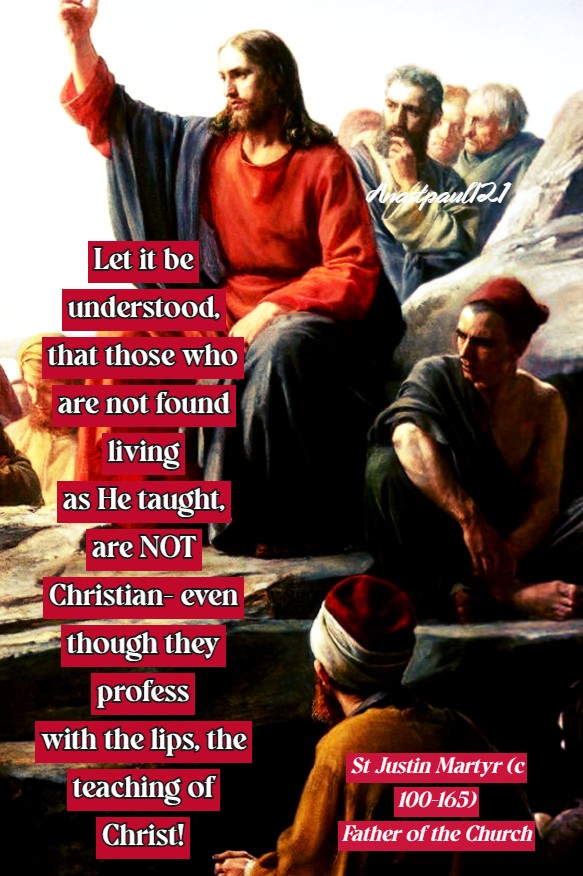


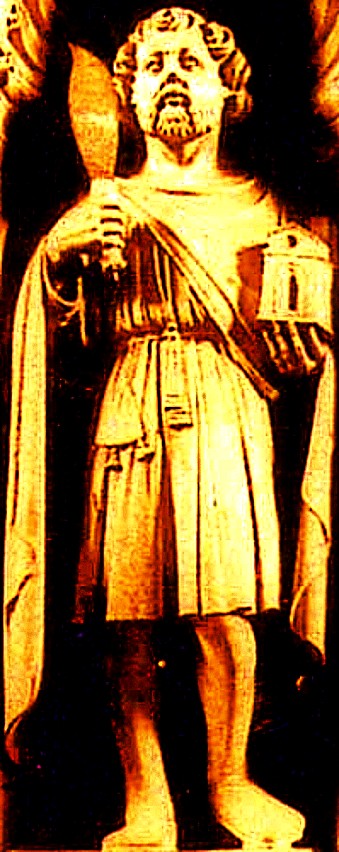

 AnaStpaul
You must be logged in to post a comment.