One Minute Reflection – 16 September – Wednesday of the Twenty Fourth week in Ordinary Time, Readings: 1 Corinthians 12:31–13:13, Psalms 33:2-3, 4-5, 12 and 22, Luke 7:31-35 and the Memorial of Sts Cornelius & Cyprian
“To what shall I compare the people of this generation?” … Luke 7:31
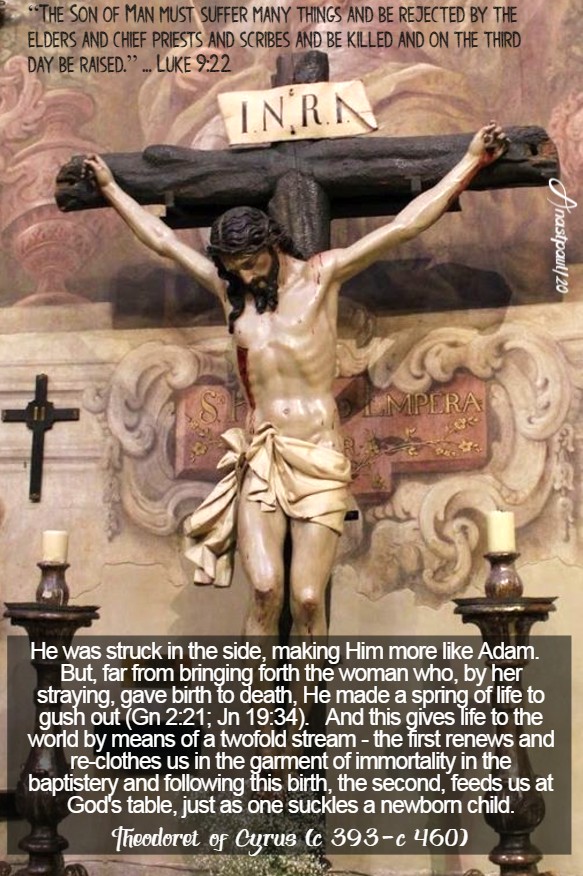
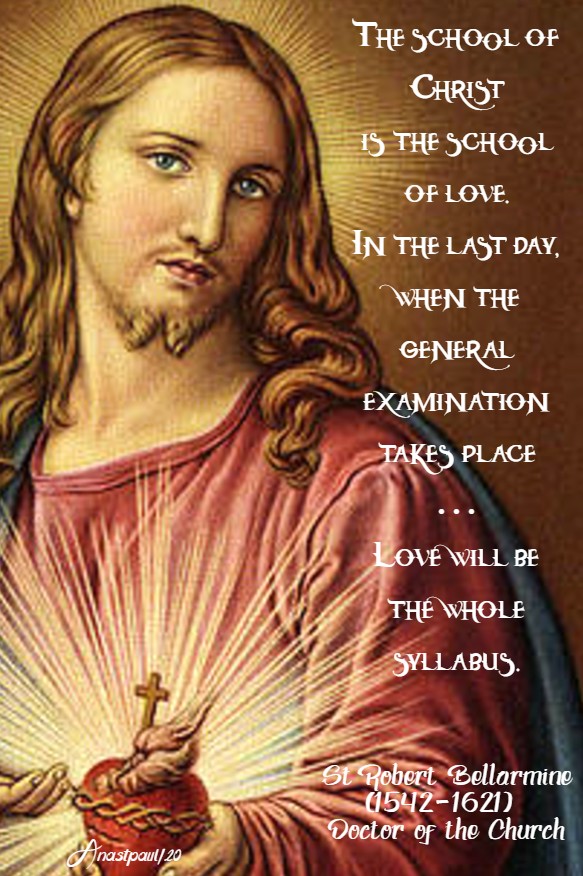
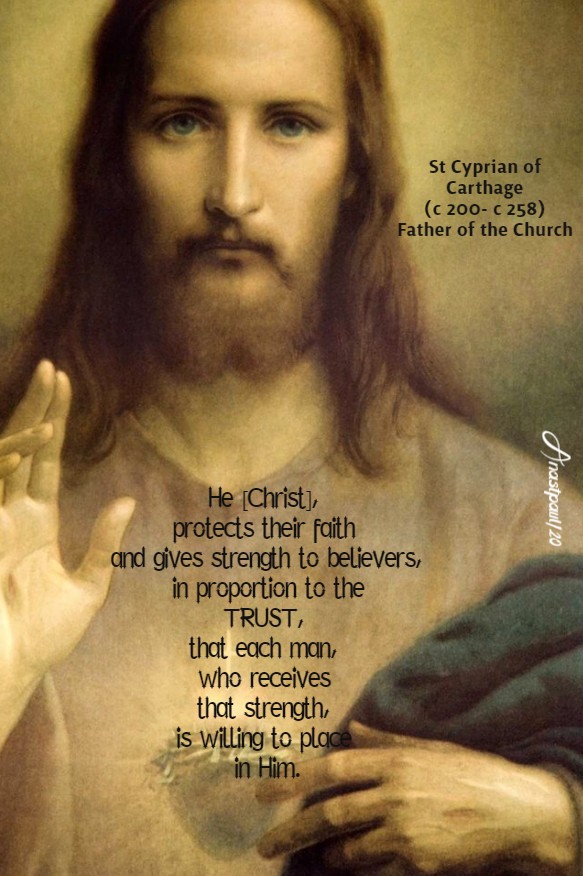
REFLECTION – “The apostle Paul says that there are some, who have no knowledge of God (1 Co 15:34). My opinion is that all those who lack knowledge of God, are those, who refuse to turn to Him. I am certain, that they refuse because they imagine this kindly disposed God, to be harsh and severe, this merciful God to be callous and inflexible, this lovable God to be cruel and oppressive. So it is, that wickedness plays false to itself, setting up for itself an image that does not represent God as He truly is.
What are you afraid of, you men of little faith? That He will not pardon your sins? But with His own hands He has nailed them to the cross. That you are used to soft living and your tastes are fastidious? But He knows the clay of which we are made (Gn 2:7). That a prolonged habit of sinning binds you like a chain? But the Lord loosens the shackles of prisoners. Or perhaps that angered by the enormity and frequency of your sins, He is slow to extend a helping hand? But where sin abounded, grace became superabundant (Rom 5,20). Are you worried about clothing and food and other bodily necessities so that you hesitate to give up your possessions? But He knows that you need all these things (Mt 6,32). What more can you wish? What else is there to hold you back from the way of salvation? This is what I say – you do not know God, yet you will not believe our words. I should like you to believe those whom experience has taught.” … St Bernard (1091-1153) Mellifluous Doctor of the Church – Commentary on the Song of Songs, Sermon 38
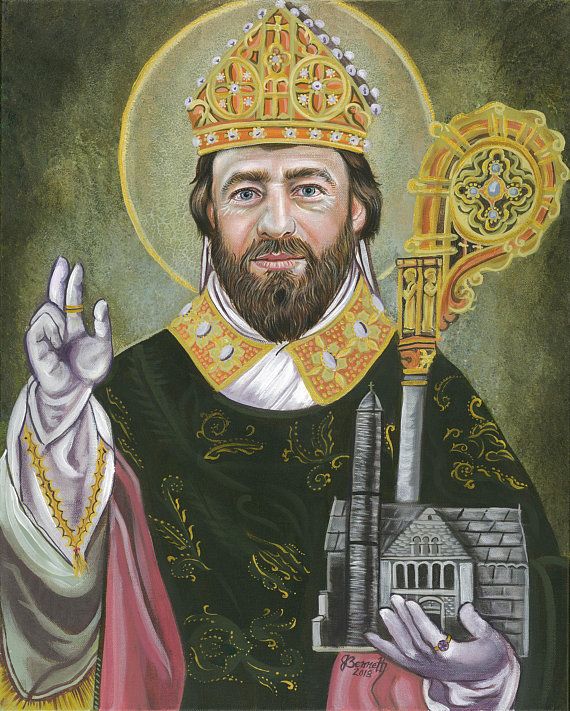
PRAYER – Look upon us Lord, Creator and Ruler of the whole world, give us the grace to serve You with all our hearts, to take up our cross and follow You, that we may come to know the power of Your love and the forgiveness which You give and You teach. Grant that by the intercession of Sts Cornelius and Cyprian, we may attain the glory of Your kingdom and see You face to face. We make our prayer through Christ our Lord with the Holy Spirit, one God forever, amen.
Our Morning Offering – 16 September – Wednesday of the Twenty Fourth week in Ordinary Time and the Memorial of Sts Cornelius & Cyprian
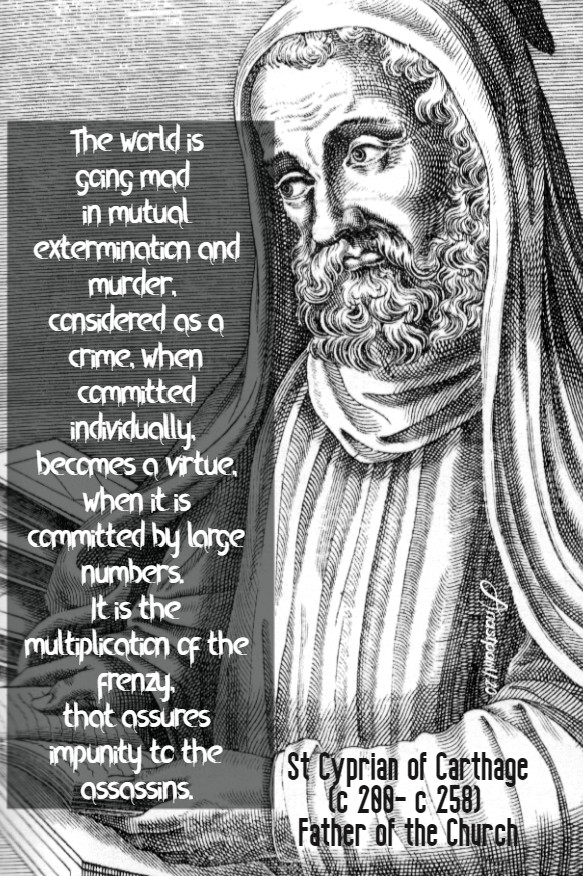
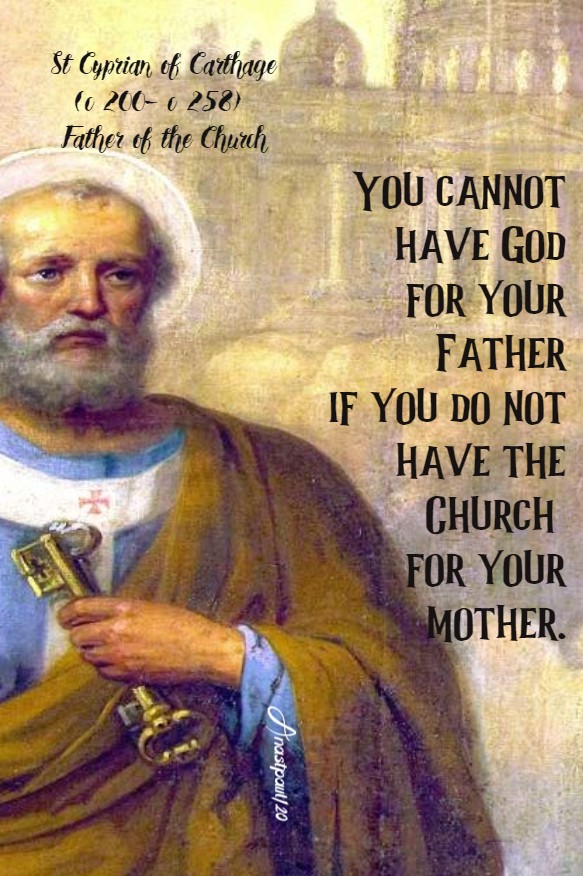
“So, my brothers, let us pray as God our Master has taught us. To ask the Father, in words His Son has given us, to let Him hear the prayer of Christ ringing in His ears, is to make our prayer one of friendship, a family prayer. Let the Father recognise the words of His Son. Let the Son, who lives in our hearts, be also on our lips. We have Him as an Advocate for sinners, before the Father, when we ask for forgiveness for ours sins, let us use the words given by our Advocate. He tells us – Whatever you ask the Father in my name, He will give you. What more effective prayer could we then make, in the name of Christ, than in the words of His own prayer?”
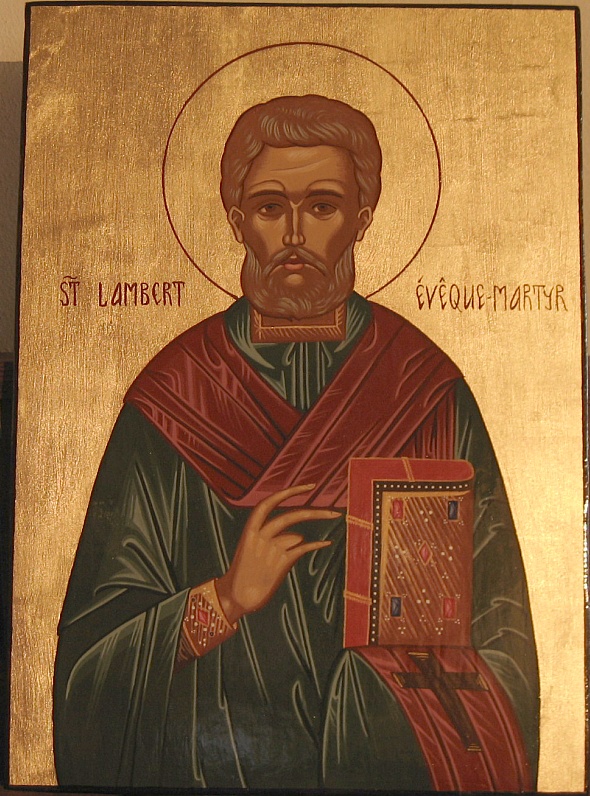
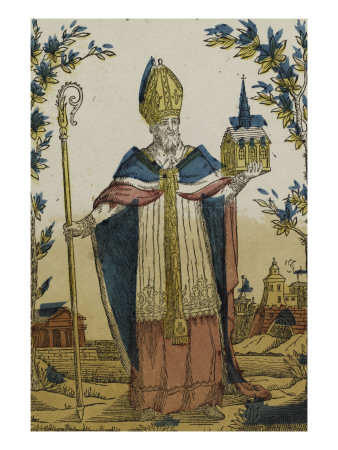
St Cyprian of Carthage (c 200- c 258) Bishop and Martyr, Father of the Church
The Lord’s Prayer Jesus Matthew 6:9-13
Our Father who art in heaven, Hallowed be Thy name. Thy kingdom come. Thy will be done, On earth as it is in heaven. Give us this day our daily bread And forgive us our trespasses As we forgive those who trespass against us And lead us not into temptation but deliver us from evil. Amen
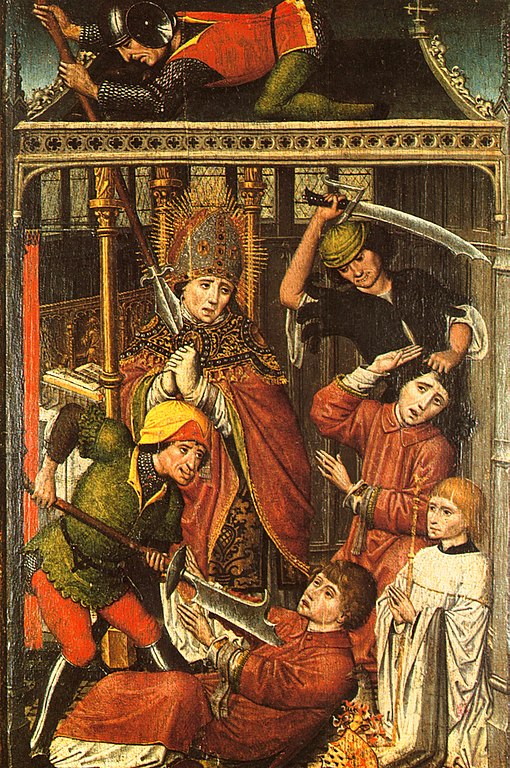
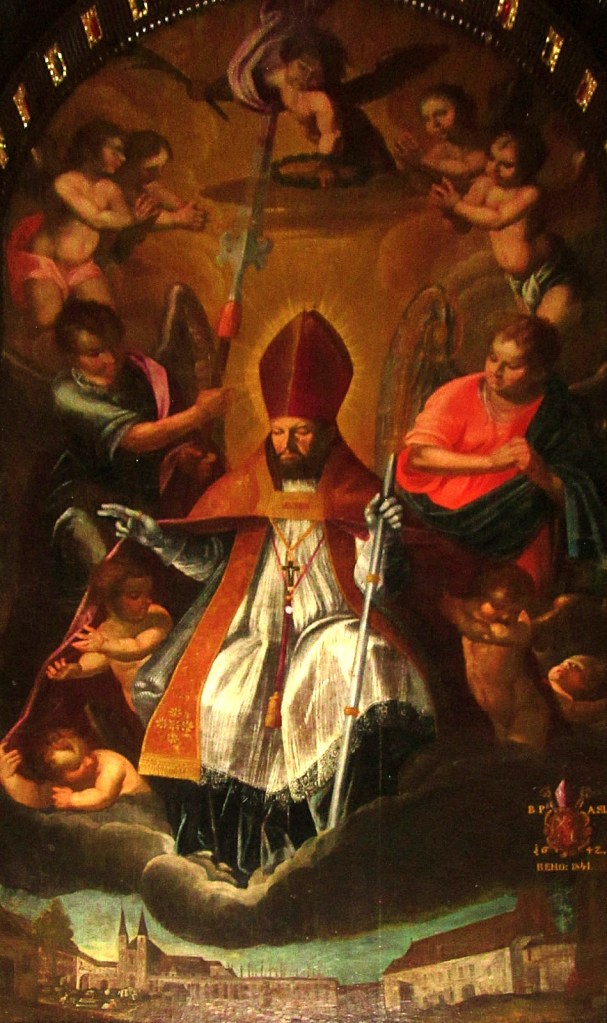
Saint of the Day – Blessed Luigi Ludovico Allemandi (1390-1450) Bishop and Cardinal – often called “The Cardinal of Arles.” Born in c 1390 possibly in Arbent, Bugey, Kingdom of France and died on 16 September 1450 (aged 60) Arles, Kingdom of France. Blessed Luigi was a Priest driven by immense love for the Holy Mother of God and for the Church. His involvement in various Councils and papal dissentions, were the result of his great desire to maintain the purity of the Chair of Peter. He is also known as Louis Allemand, Louis Alamanus, Louis Alemanus, Louis Almannus, Louis Alamandus.
The noble Germanic family of Allemandi moved, at the time of the Ottoni emperors, to Piedmont and more precisely to San Michele di Prazzo, in Val Maira. Most likely the present Blessed was born here, although according to other hypotheses he would have been born in the nearby French region of Bugey. What is certain, however, is the Saluzzo origins of the family, given the future good relations that Ludovico had with Cardinal Amedeo of the Marquises of Saluzzo.
He embarked on an ecclesiastical career at a very young age and, having entered the Canons of Lyon, he was elevated to the dignity of Prior of Piellonez and Contamines-sur-Arles. At the University of Avignon, he graduated in law in 1414. He received various positions as a teacher at Abbeys in Tours, Valenza and Barbona.
He took part in the councils of Pisa and Constance, both aimed at a positive conclusion of the Western schism. Pope Martin V then assigned him to the Episcopal chair of Maguelonne in 1418 and of Arles in 1423.
Awarded the Cardinal’s purple, in 1424 he became governor of Bologna, where he had to face the ongoing struggle between Guelphs and Ghibellines. Here he was imprisoned for several long days by the powerful Guelph family of the Canetoli. When released, he moved to Rome where he worked at the Papal Court.
He was a prominent member of the Council of Basel in 1432 and together with Cardinal Julian Cesarini led the forces that maintained the power of the general councils over the Pope’s own control of the Church. It was while the council was proceeding, that he tended to victims of the plague. He later led opposition to the Pope but Cesarini was reconciled with Pope Eugene IV and had a prominent part in the Pope’s convoked Council of Florence. In 1439 he led the effort to depose Eugene IV and the election of a successor. In 1440 he placed the tiara upon Antipope Felix V and Consecrated him as a Bishop. This was a misguided attempt at reforming the Church which Blessed Luigi believed was vital. Eugene IV responded to this and excommunicated the antipope while also depriving Luigi of all his Ecclesiastical dignities. This occurred on 11 April 1440 – he was stripped of Arles as his Archdiocese and was stripped of his Titular Church.
Antipope Felix V made him the legate to the Diet of Frankfurt to the Court of Emperor Friedrich IV. He was further involved in the unsuccessful efforts to win over Europe’s Princes to Basel’s antipope. In order to make an end of the schism, the former cardinal advised Felix V to abdicate, at which stage Pope Nicholas V restored the Cardinal to all his honours and appointed him as a Papal Legate to the German kingdom; his full restoration was on 19 December 1449. He was restored to his Titular Church as well and from that moment, until his death served as the Protopriest of the College of Cardinals. It was due to his estrangement to the Roman See that he was not permitted to participate in the conclave of 1447.
He returned to his former Archdiocese of Arles, where he dedicated himself with great zeal, to the catechetical formation of the people. Death reached him in 1450 at the Franciscan convent of Salon. He was buried in his Cathedral and his tomb did not take long to become a pilgrimage destination and a miraculous place.
The historian, Saxius, summarised his life as follows: “Angelicam vitam duxit,” that is, “he led an angelic life,” characterised by a marked Marian devotion embodied in support of the dogma of the Immaculate Conception.
In 1527, Pope Clement VII officially confirmed his cult by declaring him “Blessed.”
St Abundantius of Rome St Abundius of Rome St Andrew Kim Taegon St Cunibert of Maroilles St Curcodomus Bl Dominic Shobyoye St Dulcissima of Sutri St Edith of Wilton St Eugenia of Hohenburg St Euphemia of Chalcedon St Geminianus of Rome St John of Rome Blessed Luigi Ludovico Allemandi (c 1390-1450) Bishop and Cardinal St Lucy of Rome St Ludmila St Marcian the Senator Bl Martin of Huerta Bl Michael Himonaya St Ninian (Died 432) Apostle to the Southern Picts Biography: https://anastpaul.com/2018/09/16/saint-of-the-day-16-september-st-ninian-c-360-died-432-apostle-to-the-southern-picts/
Martyrs of the Via Nomentana: Four Christian men martyred together, date unknown – Alexander, Felix, Papias and Victor. They were martyred on the Via Nomentana outside Rome, Italy.
Martyred in the Spanish Civil War: • Blessed Antonio Martínez García • Blessed Ignasi Casanovas Perramón • Blessed Manuel Ferrer Jordá • Blessed Pablo Martínez Robles • Blessed Salvador Ferrer Cardet
Quote/s of the Day – 15 September – The Memorial of Our Lady of Sorrows and of St Catherine of Genoa (1447-1510)
‘By the cross of our salvation Mary stood in desolation While the Saviour hung above All her human powers failing, Sorrow’s sword, at last prevailing, Stabs and breaks her heart of love… Virgin Mary, full of sorrow, From your love I ask to borrow Love enough to share your pain. Make my heart to burn with fire, Make Christ’s love my own desire, Who for love of me was slain.’
Stabat Mater
“The spear which opened His side passed through the soul of the Virgin, which could not be torn from the heart of Jesus.”
St Bernard (1090-1153) Mellifluous Doctor of the Church
“Whoever you are, who love the Mother of God, take note and reflect with all your innermost feelings, upon her, who wept for the Only-Begotten as He died… The grief she felt in the Passion of her son, goes beyond all understanding.”
St Amadeus of Lausanne (1108-1159)
“Near the cross stood His mother, speechless; living she died; dying she lived.”
“Any time spent before the Eucharistic presence, be it long or short, is the best-spent time of our lives.”
“We must not wish anything other than what happens from moment to moment, all the while, however, exercising ourselves in goodness.”
“And when I hear it said, that God is good and He will pardon us and then see, that men cease not from evil-doing, oh, how it grieves me! The infinite goodness with which God communicates with us, sinners as we are, should constantly make us love and serve Him better but we, on the contrary, instead of seeing in His goodness an obligation to please Him, convert it into an excuse for sin, which will, of a certainty, lead in the end, to our deeper condemnation.”
“The one sole thing, in myself, in which I glory, is that I see in myself, nothing, in which I can glory.”
“Oh, what peril attaches to sin, wilfully committed! For it is so difficult for man to bring himself to penance and without penitence, guilt remains and will ever remain, so long as man retains unchanged, the will to sin, or is intent upon committing it.”
“I see clearly with the interior eye, that the sweet God loves, with a pure love, the creature that He has created and has a HATRED for nothing but SIN, which is more opposed to Him, than can be thought or imagined.”
Saint of the Day – 15 September – St Catherine of Genoa (1447-1510) Married laywoman, Mystic, Apostle of the sick, the poor and the needy, Writer – born in 1447 at Genoa, Italy as Caterina Fieschi Adorno and died on 15 September 1510 at Genoa, Italy of natural causes. Patronages – Brides, Childless Couples, Difficult Marriages, People Ridiculed For Their Piety, Temptations, Victims Of Adultery, Victims Of Infidelity. Her body is incorrupt and rests in a glass reliquary at the Capuchin Church in Genoa.
Catherine was born in Genoa in 1447. She was the youngest of five. Her father, Giacomo Fieschi, died when she was very young. Her mother, Francesca di Negro provided such an effective Christian education that the elder of her two daughters became a religious. When Catherine was 16, she was given in marriage to Giuliano Adorno, a man who after various trading and military experiences in the Middle East had returned to Genoa in order to marry.
Married life was far from easy for Catherine, partly because of the character of her husband who was given to gambling. Catherine herself, was at first induced to lead a worldly sort of life in which, however, she failed to find serenity. After 10 years, her heart was heavy with a deep sense of emptiness and bitterness. A unique experience on 20 March 1473 sparked her conversion. She had gone to the Church of San Benedetto in the monastery of Nostra Signora delle Grazie [Our Lady of Grace], to make her confession and, kneeling before the Priest, “received,” as she herself wrote, “a wound in my heart from God’s immense love.” It came with such a clear vision of her own wretchedness and shortcomings and at the same time of God’s goodness, that she almost fainted.
Her heart was moved by this knowledge of herself — knowledge of the empty life she was leading and of the goodness of God. This experience prompted the decision that gave direction to her whole life. She expressed it in the words: “no longer the world, no longer sin” (cf. Vita Mirabile, 3rv). Catherine did not stay to make her Confession. On arriving home she entered the remotest room and spent a long time weeping. At that moment she received an inner instruction on prayer and became aware of God’s immense love for her, a sinner. It was a spiritual experience she had no words to describe ( cf. Vita Mirabile, 4r).
It was on this occasion that the suffering Jesus appeared to her, bent beneath the Cross, as he is often portrayed in the Saint’s iconography. A few days later she returned to the Priest to make a good Confession at last. It was here, that began the “life of purification” which for many years caused her to feel constant sorrow for the sins she had committed and which spurred her to impose forms of penance and sacrifice upon herself, in order to show her love to God.
St Catherine of Genoa painted by artist Denys Savchenko. It resides in the St Catherine Church, Genoa, Italy.
On this journey Catherine became ever closer to the Lord until she attained what is called “unitive life,” namely, a relationship of profound union with God. In her Vita it is written, that her soul was guided and instructed from within, solely by the sweet love of God, which gave her all she needed. Catherine surrendered herself so totally into the hands of the Lord that she lived, for about 25 years, as she wrote, “without the assistance of any creature, taught and governed by God alone” (Vita, 117r-118r), nourished above all by constant prayer and by Holy Communion which she received every day, an unusual practice in her time. Only many years later did the Lord give her a Priest who cared for her soul.
Catherine was always reluctant to confide and reveal her experience of mystical communion with God, especially because of the deep humility she felt before the Lord’s graces. The prospect of glorifying Him and of being able to contribute to the spiritual journey of others, alone spurred her, to recount what had taken place within her, from the moment of her conversion, which is her original and fundamental experience.
The place of her ascent to mystical peaks was Pammatone Hospital, the largest hospital complex in Genoa, of which she was director and animator. Hence Catherine lived a totally active existence despite the depth of her inner life. In Pammatone a group of followers, disciples and collaborators formed around her, fascinated by her life of faith and her charity. Indeed her husband, Giuliano Adorno, was so so won over, that he gave up his dissipated life, became a Third Order Franciscan and moved into the hospital to help his wife.
Catherine’s dedication to caring for the sick continued until the end of her earthly life on 15 September 1510. From her conversion until her death there were no extraordinary events but two elements characterise her entire life – on the one hand her mystical experience, that is, the profound union with God, which she felt as spousal union and on the other, assistance to the sick, the organisation of the hospital and service to her neighbour, especially the neediest and the most forsaken. These two poles, God and neighbour, totally filled her life, virtually all of which she spent within the hospital walls.
Dear friends, we must never forget that the more we love God and the more constantly we pray, the better we will succeed in truly loving those who surround us, who are close to us, so that we can see in every person the Face of the Lord whose love knows no bounds and makes no distinctions. The mystic does not create distance from others or, an abstract life but, rather approaches other people, so that they may begin to see and act with God’s eyes and heart.
Catherine’s thought on purgatory, for which she is particularly well known, is summed up in the last two parts of the book mentioned above – The Treatise on Purgatory and the Dialogues between the body and the soul. The first original passage concerns the “place” of the purification of souls. In her day, it was depicted mainly using images linked to space – a certain space was conceived of, in which purgatory was supposed to be located. Catherine, however, did not see purgatory as a scene in the bowels of the earth – for her it is not an exterior but rather an interior fire. This is purgatory – an inner fire. The Saint speaks of the Soul’s journey of purification on the way to full communion with God, starting from her own experience of profound sorrow for the sins committed, in comparison with God’s infinite love (cf. Vita Mirabile, 171v).
We heard of the moment of conversion when Catherine suddenly became aware of God’s goodness, of the infinite distance of her own life from this goodness and of a burning fire within her. And this is the fire that purifies, the interior fire of purgatory. Here too, is an original feature in comparison with the thought of her time. In fact, she does not start with the afterlife in order to recount the torments of purgatory — as was the custom in her time and perhaps still is today — and then to point out the way to purification or conversion. Rather our Saint begins with the inner experience of her own life on the way to Eternity.
“The soul,” Catherine says, “presents itself to God, still bound to the desires and suffering that derive from sin and this makes it impossible for it to enjoy the beatific vision of God.” Catherine asserts that God is so pure and holy, that a soul stained by sin, cannot be in the presence of the Divine Majesty (cf. Vita Mirabile, 177r).
We too feel how distant we are, how full we are of so many things that we cannot see God. The soul is aware of the immense love and perfect justice of God and consequently, suffers for having failed to respond in a correct and perfect way to this love and, love for God itself, becomes a flame, love itself cleanses it from the residue of sin.
In Catherine we can make out the presence of theological and mystical sources on which it was normal to draw in her time. In particular, we find an image typical of Dionysius the Areopagite – the thread of gold that links the human heart to God Himself. When God purified man, he bound him with the finest golden thread, that is, His love and draws him toward Himself with such strong affection, that man i,s as it were “overcome and won over and completely beside himself.” Thus man’s heart is pervaded by God’s love that becomes the one guide, the one driving force of his life (cf. Vita Mirabile, 246rv). This situation of being uplifted towards God and of surrender to His will, expressed in the image of the thread, is used by Catherine to express the action of divine light on the souls in purgatory, a light that purifies and raises them to the splendour of the shining radiance of God (cf. Vita Mirabile, 179r).
With her life, St Catherine teaches us that the more we love God and enter into intimacy with Him in prayer the more He makes Himself known to us, setting our hearts on fire with His love. In writing about purgatory, the Saint reminds us of a fundamental truth of faith that becomes for us an invitation to pray for the deceased, so that they may attain the beatific vision of God in the Communion of Saints.
Moreover, the humble, faithful and generous service in Pammatone Hospital that the Saint rendered throughout her life, is a shining example of charity for all and an encouragement, especially for women who, with their precious work enriched by their sensitivity and attention to the poorest and neediest, make a fundamental contribution to society and to the Church.
Catherine’s writings were examined by the Holy Office and declared to contain doctrine that would alone be enough to prove her sanctity and she was accordingly Beatified in 1675 by Pope Clement X and Canonised in 1737 by Pope Clement XII. Her writings also, became sources of inspiration for other religious leaders such as Robert Bellarmine and Francis de Sales and Cardinal Henry Edward Manning. Pope Pius XII declared her Patroness of the hospitals in Italy.
When she died, her body was placed in a coffin in the Chapel of the hospital where she had served so selflessly. The wooden coffin unfortunately suffered water damage, yet after it was removed, a year later, the body itself was found to be incorrupt. Her body was later transferred to the Capuchin Convent Annunziata di Portoria, near the centre of Genoa and can be viewed by the public, in the Church attached to the Convent.
St Aichardus St Albinus of Lyon Bl Anton Maria Schwartz St Aprus of Toul St Bond of Sens St Catherine of Genoa (1447-1510)
Bl Camillus Constanzo St Emilas of Cordoba St Eutropa of Auvergne St Hernan Bl Jacinto de Los Ángeles and Bl Juan Bautista St Jeremias of Cordoba St Joseph Abibos St Mamillian of Palermo St Melitina St Mirin of Bangor St Nicetas the Goth St Nicomedes of Rome Blessed Paolo Manna PIME (1872-1952) “A Burning Soul” Priest, Missionary His Life: https://anastpaul.com/2019/09/15/saint-of-the-day-15-september-blessed-paolo-manna-pime-1872-1952-a-burning-soul/
St Porphyrius the Martyr St Ribert St Ritbert of Varennes Bl Rolando de Medici Bl Tommasuccio of Foligno St Valerian of Châlon-sur-Saône St Valerian of Noviodunum St Vitus of Bergamo Bl Wladyslaw Miegon — Martyrs of Adrianopolis – 3 saints: Three Christian men martyred together in the persecutions of Maximian – Asclepiodotus, Maximus and Theodore. They were martyred in 310 at Adrianopolis (Adrianople), a location in modern Bulgaria.
Martyrs of Noviodunum – 4 saints: Three Christian men martyred together, date unknown – Gordian, Macrinus, Stratone and Valerian. They were martyred in Noviodunum, Lower Moesia (near modern Isaccea, Romania).
Mercedarian Martyrs of Morocco – 6 beati: A group of six Mercedarians who were captured by Moors near Valencia, Spain and taken to Morocco. Though enslaved, they refused to stop preaching Christianity. Martyrs. – Dionisio, Francis, Ildefonso, James, John and Sancho. They were crucified in 1437 in Morocco.
Martyred in the Spanish Civil War: Bl Antonio Sierra Leyva Bl Pascual Penades Jornet
“Then Peter came up and said to him, “Lord, how often shall my brother sin against me and I forgive him? As many as seven times?” Jesus said to him, “I do not say to you seven times but seventy times seven.” … Matthew 18:21-22
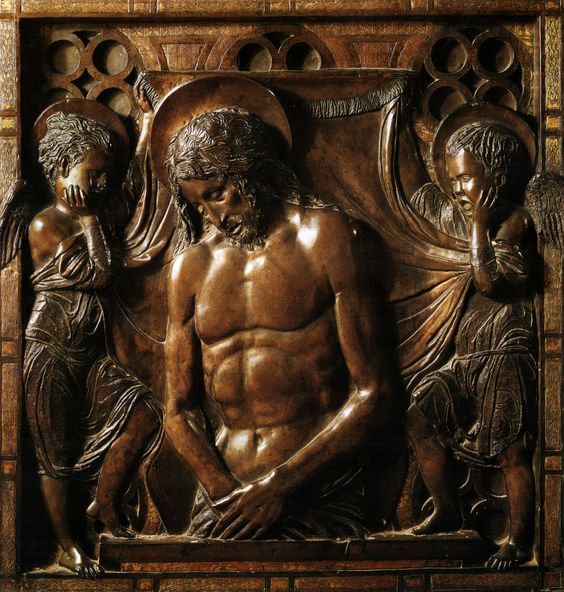
REFLECTION – “The perfection of brotherly love lies in the love of one’s enemies. We can find no greater inspiration for this, than grateful remembrance of the wonderful patience of Christ. He who is more fair than all the sons of men, offered His fair face to be spat upon by sinful men. He allowed those eyes, that rule the universe, to be blindfolded by wicked men. He bared His back to the scourges. He submitted that head which strikes terror in principalities and powers, to the sharpness of the thorns. He gave Himself up to be mocked and reviled and, at the end, endured the cross, the nails, the lance, the gall, the vinegar, remaining always gentle, meek and full of peace. In short, He was led like a sheep to the slaughter and like a lamb before the shearers He kept silent and did not open his mouth. Who could listen to that wonderful prayer, so full of warmth, of love, of unshakeable serenity – Father, forgive them – and hesitate to embrace his enemies with overflowing love? Father, He says, forgive them. Is any gentleness, any love, lacking in this prayer? Yet He put into it, something more. It was not enough to pray for them, He wanted also to make excuses for them. Father, forgive them, for they do not know what they are doing. They are great sinners, yes but they have little judgement, therefore, Father, forgive them. They are nailing Me to the cross but they do not know who It is that they are nailing to the cross, if they had known, they would never have Crucified the Lord of glory. Therefore, Father, forgive them. They think it is a lawbreaker, an impostor claiming to be God, a seducer of the people. I have hidden My Face from them and they do not recognise My glory. Therefore, Father, forgive them, for they do not know what they are doing.
If someone wishes to love himself he must not allow himself to be corrupted by indulging his sinful nature. If he wishes to resist the promptings of his sinful nature, he must enlarge the whole horizon of his love, to contemplate the loving gentleness of the humanity of the Lord. Further, if he wishes to savour the joy of brotherly love with greater perfection and delight, he must extend even to his enemies the embrace of true love. But if he wishes to prevent this fire of divine love from growing cold because of injuries received, let him keep the eyes of his soul always fixed on the serene patience of his beloved Lord and Saviour.” … St Aelred of Rievaulx (1110 – 1167) – Speculum Caritatis 3,5
PRAYER – Lord God, strength of those who hope in You, by Your will, St John Chrysostom became renowned in the Church, for his astounding eloquence and his forbearance in persecution. Grant that we may be enriched by his teaching and thus grow in sanctity, to follow the commandments You set forth in Your Word, Your Son who is our Saviour and Redeemer. By the prayers of St John Chrysostom, may we attain the place You have prepared for us. We make our prayer through Jesus Christ with the Holy Spirit, one God, forever amen.
Saint of the Day – 13 September – Saint Amatus (c 560-c 627) Monk and Hermit, Penitent, miracle-worker, together with St Romaric, he founded Remiremont Abbey. Born in c 560 at Grenoble, France and died on 13 September 627 in Remiremont, Vosges, France of natural causes. Also known as – Aimé, Amad, Amat, Amé.
Amatus was born about the year 560 to a noble family at Grenoble. Around 581, he entered the Abbey of St Maurice Agaunum and at the age of thirty retired into a hermitage, where his reputation for a life of penance and prayer, privileged with the grace of miracle working, drew the attention of St Eustace of Luxeuil, who persuaded Amatus to join his community.
One of his missionary journeys brought him to the court at Metz and there he converted a former Count Palatine of King Theodebert II, the Frankish noble St Romaric.
S. Romaric founded with Amatus a double monastery for men and women at Remiremont Abbey, on land that had been in Romaric’s possession since his days as a Count Palatine.
Remiremont Abbey
Amatus was its first abbot. He ruled this Abbey for many years and established there the difficult pious practice of the “Laus perennis” or Perpetual Praise, which consisted in the maintaining in the Church, an uninterrupted service of Psalmody and Prayer, day and night.
Saint Amatus died in the year 627 and at his own request, was buried just outside the church door. Later, his remains were suitably enshrined under one of the altars of the same church.
Saint Amatus was Canonised on 3 December 1049 by Pope Leo IX. He is greatly venerated in Grenoble, France.
Dedication of the Basilicas of Jerusalem: Commemoration of the dedications of the basilicas built on Mount Calvary and the Church of the Holy Sepulchre in Jerusalem. — St Aigulf St Amatus OSB (c 560-c 627) Monk, Abbot St Amatus of Sens St Barsenorius Bl Claude Dumonet St Columbinus of Lure St Emiliano of Valence St Evantius of Autun St Gordian of Pontus Bl Hedwig of Hreford St Julian of Ankyra St Ligorius St Litorius of Tours St Macrobius St Marcellinus of Carthage Bl María López de Rivas Martínez St Maurilius of Angers (c 336-426) His Life: https://anastpaul.com/2019/09/13/saint-of-the-day-saint-maurilius-of-angers-c-336-426/ St Nectarius of Autun
St Notburga (c 1265-1313) St Philip of Rome St Venerius of Tino — Martyrs of Ireland: • Blessed Edward Stapleton • Blessed Elizabeth Kearney • Blessed James Saul • Blessed Margaret of Cashel • Blessed Richard Barry • Blessed Richard Butler • Blessed Theobald Stapleton • Blessed Thomas Morrissey • Blessed William Boyton
Martyred in the Spanish Civil War including the Martyrs of Pozo de Cantavieja – 11 beati: • Blessed Bienvenido Villalón Acebrón • Blessed Emilio Antequera Lupiáñez • Blessed Florencio Arnáiz Cejudo • Blessed Francisco Rodríguez Martínez • Blessed Joaquín Gisbert Aguilera • Blessed José Álvarez-Benavides de La Torre • Blessed José Cano García • Blessed José Román García González • Blessed Juan Capel Segura • Blessed Juan Ibáñez Martín • Blessed Luis Eduardo López Gascón • Blessed Manuel Alvarez y Alvarez • Blessed Manuel Martínez Giménez • Blessed Pío Navarro Moreno • Blessed Ramiro Argüelles Hevia • Blessed Sabino Ayastuy Errasti • Blessed Teófilo Montes Calvo
Saint of the Day – 12 September – Saint Ailbe (Died 528) Bishop of Emly, “The Patrick of Munster,” Confessor, Evangelist – Saint Ailbe is venerated as one of the four great Patrons of Ireland. Also known as – Ailbhe, Albert, Albeo, Albeus, Elvis. Patronages – Cashel, Ireland, Diocese of, Cashel and Emly, Ireland, Archdiocese of, Emly, Ireland, Diocese of, Munster, Ireland,wolves.
Ailbe was born to a maidservant in the house of Cronan, lord of Eliach in County Tipperary. Cronan, for reasons unrevealed, disapproved of his birth and directed that he be exposed to ‘dogs and wild beasts, that he might be devoured.’ But, instead, the baby was found hidden under a rock (Ail) and alive (beo), by a she-wolf who reared him among her own cubs. The Saint repaid the kindness toward the end of his life, when a she-wolf chased by hunters took refuge with him. He ordered that it should not be harmed and would come to eat with him each day.
Ailbe is frequently named as leader among the four “Palladian bishops” all of whom ministered in the south of Ireland – Ailbe of Emly, Ibar of Begerin, Declan of Ardmore and Ciaran of Saighir – before or around the time of the arrival of St Patrick.
Since Ailbe was also known in South Wales, it seems certain that before Patrick there was a movement of Christians between the south of Wales and the south of Ireland. And it may be from this movement that Ailbe received his Christian faith. Another source says Ailbe Baptised St David of Wales.
Ailbe was particularly friendly with Declan. The Life of Declan says: “They loved one another like brothers…” The Life also says they both went to Rome and were Ordained Bishop by the Pope.
The Life of Declan also deferentially declares: “Humble Ailbe was the Patrick of Munster….” He was considered to be one of the pre-Patrician Saints of Ireland
The church Ailbe founded at Emly in south-west Tipperary became a centre of formation for other well-known monastic saints, such as St Colman of Dromore and St Enda of Aran island.
Ailbe is said to have petitioned King Aengus of Cashel for a site for a Monastery for St Enda. Unaware that he had islands in his domain, Aengus that night dreamed about them and granted them to Enda.
According to the Annals of Innisfallen, which draws on records originally compiled at Emly, Ailbe died in 528.
Another interesting story is that Ailbe’s tomb, long forgotten, was discovered in Cashel in 580 when St Brendan of Birr came on a visit to inaugurate the new king. An ancient and weathered Celtic cross in its churchyard is known as “St Ailbe’s Cross.”
Emly later became an important Ecclesiastical centre and Diocese. In 1718 it was united with Cashel and St Ailbe is the Patron of the joint Archdiocese.
St Ailbe’s monastic Rule: A ninth century monastic rule bears Ailbe’s name. It consists of 56 verses in Irish, including these instructions to a monk:
Ailbe’s windowLet him be steady, let him not be restless, let him be wise, learned, pious; let him be vigilant; let him be a slave; let him be humble kindly.
Let him be gentle, close and zealous, let him be modest, generous and gracious; against the torrent of the world, let him be watchful, let him not be reproachful; against the brood of the world, let him be warlike.
The jewel of baptism and communion, let him receive it.
Let him be constant at prayer, his canonical hours let him not forget; his mind let him bow it down without insolence or contention.
A hundred genuflections for him at the Beata at the beginning of the day… thrice fifty psalms with a hundred genuflections every hour of vespers.
A genuflection thrice, earnestly, after going in past the altar rail, without frivolity and without excitement, going into the presence of the King of the angels.
A clean house for the guests and a big fire, washing and bathing for them and a couch without sorrow.
The Most Holy Name of Mary – 12 September (Optional Memorial): Feast of the entire Latin Church. It was first observed at Cuenca, Spain in 1513, then extended to the universal Church and assigned to its present place and rank by Pope Innocent XI in 1683 in thanksgiving to God and the Blessed Virgin for the liberation of Vienna, France and the signal victory over the Turks on 12 September 1683. It is the titular feast of the Society of Mary (Marianists) and of the Congregation of the Oblates of Mary Immaculate.
Bl Maria Luisa Angelica/Gertrude Prosperi (1799-1847) St Mancius of Saint Thomas St Paul of Saint Clare Bl Pierre-Sulpice-Christophe Faverge St Sacerdos of Lyon St Silvinus of Verona St Tomás de Zumárraga Lazcano — Martyrs of Alexandria – 6 saints: A group of Christians martyred in the persecutions of Diocletian. We know little more than their names – Hieronides, Leontius, Sarapion, Seleusius, Straton and Valerian. They were drowned c 300 at Alexandria, Egypt.
Martyrs of Phrygia – 3 saints: Three Christians who were martyred for destroying pagan idols. We know little more than their names – Macedonius, Tatian and Theodolus. They were burned to death in 362 in Phrygia (modern Turkey).
Martyred in the Spanish Civil War: • Blessed Fortunato Arias Sánchez • Blessed Francisco Maqueda López • Blessed Jaume Puigferrer Mora • Blessed Josep Plana Rebugent • Blessed Julián Delgado Díez
Quote/s of the Day 11 September – Friday of the Twenty Third week in Ordinary Time, Readings: 1 Corinthians 9:16-19, 22b-27, Psalms 84:3, 4, 5-6, 12, Luke 6:39-42 and the Memorial of Blessed Charles Spinola SJ (1564-1622) Priest, Martyr, Missionary to Japan
“A disciple is not above his teacher…”
Luke 6:40
“Let us then learn from the Cross of Jesus our proper way of living. Should I say ‘living’ or, instead, ‘dying’? Rather, both living and dying. Dying to the world, living for God. Dying to vices and living by the virtues. Dying to the flesh, but living in the spirit. Thus in the Cross of Christ, there is death and in the Cross of Christ there is life. The death of death is there and the life of life. The death of sins is there and the life of the virtues. The death of the flesh is there and the life of the spirit.”
St Aelred of Rievaulx (1110-1167)
Blessed Charles Spinola went underground, going by the foreshadowing alias “Joseph of the Cross”, a haunt of the shadows who was obliged to conceal himself from daylight because his foreign features were instantly recognisable. With the help of Nagasaki’s ample Christian community he eluded capture for an amazingly long time.
“For nearly two years and a half I have devoted myself to encourage and support the Christians of this country, not without great difficulty. Having no home, I pass secretly from house to house, to hear confessions and celebrate our holy mysteries by night. Most of my time I spend in utter solitude, deprived of all human converse and consolation, having only that which God gives to those who suffer for His love … However I am tolerably well and, though destitute of almost everything and taking but one scanty meal a day, I do not fall away. Does not this prove that “man liveth not by bread alone?”
-Letter of Spinola dated March 20, 1617
“Father, how sweet and delightful is it to suffer for Jesus Christ! I have learned this better by experience than I am able to express, especially since we are in these dungeons where we fast continually. The strength of my body fails me but my joy increases as I see death draw nearer. O what a happiness for me, if next Easter I shall sing the heavenly Alleluia in the company of the blessed!”
“Oh, if you had tasted the delights with which God fills the souls of those who serve Him and suffer for Him, how would you condemn all that the world can promise!”
“… God is to be served chiefly for Himself alone, for He is the fountain of all goodness and merits all our devotion, without any hope of reward.”
Saint of the Day – 11 September – Blessed Charles Spinola SJ (1564-1622) Priest, Martyr, Missionary to Japan – born as Carlo Spinola in 1564 in Madrid, Spain and died by being slowly burned to death on 10 September 1622 at Nagasaki, Japan.
Charles Spinola was born in Madrid, Spain. His father, the Italian Count of Tassarolo, was tutor to Prince Rudolph, the Emperor’s son. After his early studies in Spain, Charles was sent to the Jesuit school in Nola, Italy where he lived with his uncle Philip Spinola, the Bishop of Nola. As a youth, Charles was so moved by the Martyrdom in India of Rudolph Acquaviva’s heroic example of love for God, that he too was determined to die for Christ and the faith. He entered the Society and became a novice at the Nola novitiate. In 1584 he went to Naples for his philosophy and after taking his vows, he was sent to Brera College in Milan where he completed his philosophy and his theology studies, though at the time his health was not too good. After his Ordination in 1594, he was assigned to give parish missions in Cremona although he had requested to go on foreign missions.
Two years later in 1596 Fr Spinola together with the Sicilian Jesuit, Jerome De Angelis, finally were assigned to the mission in Japan but it took him six years, eight ships and great patience to arrive in Nagasaki, Japan after overcoming shipwrecks, pirates and many unfortunate incidents along the way.
The first ship he took from Genoa struck a rock and was forced to return to Genoa. From Barcelona, he had to walk on foot across Spain and Portugal to reach Lisbon but there the ship met with a violent storm and its rudder was shattered. After five months, the ship was repaired in Brazil, they again set forth only to meet another storm and they found themselves drifted back to the Atlantic to its starting point. His second attempt was also unsuccessful and ended when English pirates captured the ship and took it to England and only managed to escape back to Lisbon after two years. It was only in 1600, when Fr Spinola set off on his third attempt did he reach Malacca, Malaya.
Eventually he reached Japan in 1602, after 6 years of attempts and he studied Japanese before going to Miyako (today’s Kyoto) where he was Novice Master at the Jesuit College and also teacher of mathematics and astronomy. He moved to Nagasaki seven years later to care for the temporal needs of the province. In 1614, the long period of peaceful relations with Shogan Iyeyasu ended, when the number of Christians in Japan had reached two million, causing the country leaders to become fearful that the Christians proposed a national threat and that their country might be taken over by Spain. This resulted in the Shogun’s decree banishing all foreign missionaries and forbidding Japanese Christians to harbour Priests or practice their religion.
Arising from this decree, about 100 Jesuits left Japan but some remained, including Fr Spinola and he eluded Priest-hunters for four years. Fr Spinola was captured together with Bro Ambrose Fernandes and their catechist, John Chogoku and were imprisoned for four years in a bird-like cage under harsh conditions.
We have the record of a letter from one Franciscan, Blessed Richard of St Anne, to his home Monastery in France:
“I have been for nearly a year in this wretched prison, where there are with me, nine religious of our order, eight Dominicans and six Jesuits. The others are native Christians who have helped us in our ministry. Some have been here for five years. Our food is a little rice and water. The road to martyrdom has been paved for us by more than 300 martyrs, all Japanese, on whom all kinds of tortures were inflicted. As for us survivors, we also are all doomed to death. We religious and those who have helped us, are to be burnt at a slow fire; the others will be beheaded… If my mother is still alive, I beg you to be so kind as to tell her of God’s mercy to me in allowing me to suffer and die for Him. I have no time left to write to her myself.”
In September 1622, the nine prisoners who had been caged together, were taken to Nagasaki and felt Martyrdom would soon be theirs. Before they left, Fr Spinola accepted the vows of his seven novices. On 9 September, the nine Jesuits together with twenty-four other prisoners at Suzuta, each with a rope round his neck and the Jesuits in their cassocks, were led to Martyrs’ Hill escorted by 400 soldiers. There they waited for another thirty-three prisoners from the city. When the 2 groups met, they embraced. Fr Spinola recognised Isabel Fernandez among them, the wife of Dominic Jorjes, who had sheltered Charles after he had Baptised her son, Ignatius, now a four-year-old. Isabel said “I brought him [Ignatius] with me to die for Christ before he is old enough to sin against Him.” The boy knelt for a blessing from Charles, witnessed the Martyrdom of his mother and was killed himself—all without crying out.
The religious, with exception of John Chugoku (being a lay person) were condemned to death by slow fire, the Christians and Chugoku were to be beheaded.
When fastened to his stake, Fr Spinola intoned the psalm, Praise the Lord, All You Nations and the martyrs joined in a song of thanksgiving to God. The fires were lit but the wood was so arranged to prolong the victims’ suffering. Fr Spinola died within half an hour as he was greatly weakened after four years of imprisonment. Fr Kimura, endured his martyrdom for three hours and was the last to die, during which time he remained immobile with his arms outstretched in the form of a cross.
The nine martyrs died on Martyrs’ Hill on 10 September 1622. When Pope Pius IX beatified the 205 Japanese Martyrs on 7 May 1867, Bro Ambrose Fernandes, who had died in prison, was also included.
Bl John Bathe St Leudinus of Toul St Matthew of Gravedona sul Lario St Paphnutius of Thebes St Patiens of Lyon Bl Peter Taaffe Bl Petrus Kawano St Protus of Rome St Regula of Zurich Bl Richard Overton St Sperandea St Theodora the Penitent Bl Thomas Bathe — Martyred in the Spanish Civil War: • Blessed José María Segura Panadés • Blessed José Piquer Arnáu • Blessed Josep Pla Arasa • Blessed Lorenzo Villanueva Larrayoz
Saint of the Day – 10 September – Blessed Oglerio O.Cist (c 1136-1214) Cistercian Monk, Abbot, Mediator and peace-maker, Reformer, Penitent, Writer – born in c 1136 in Trento, Trino Vercellese, Italy and died in 1214 of natural causes. He is also known as Ogerius, Ogler, Oglerius. Blessed Oglerio was devoted to Mary and in his writings praised her prerogatives, especially the Immaculate Conception. Not only a man of learning but of humility as well, he was found by Pope Innocent III to be an “instrument of peace” in settling quarrels among warring factions in Italy.
It can be said that Trino Vercellese is a land of the blessed. In addition to Blessed Magdalene Panattieri and Blessed Arcangela Girlani, Blessed Oglerio, Abbot of St Maria di Lucedio is also the pride of the people of Trento. This was an important Cistercian Abbey, founded in 1123 as a subsidiary of the Monastery of La Fertè, in a vast wooded plain not far from Trino. In those days, the abbeys were indeed centres of spirituality but they also had the important economic role of managing many lands recovered from the state of abandonment.
Oglerio was born around the year 1136, the son of a wealthy family. Even today in the city, his birthplace is traditionally indicated which, despite the inevitable alterations, retains three coats of arms from the 8th century on the facade. There is also a fresco depicting the three local blessed.
In 1248 the young Oglerio witnessed the solemn passage of St Bernard of Clairvaux who accompanied, together with fourteen cardinals, Blessed Pope Eugenio III (also a Cistercian) on the journey from Asti to Vercelli, for the Consecration of the Basilica of St Mary Major. The great Doctor of the Church, with his exceptional charisma, broke into the heart of Oglerio who, probably already a student at Lucedio, wore the white Cistercian habit three years later. According to the Benedictine Rule, he alternated study with work, he took his vows in 1153 and in 1161 he was Ordained a Priest. He killed his own body with penance and fasting but he was meek with others, revealing that character that would distinguish him throughout his life.
In 1174, when Bernard of Clairvaux was Canonised, Lucedio was at its peak. About ten years later Peter II was elected Abbot and Oglerio, his right hand, was often his companion in the many missions he undertook in the ecclesiastical and civil sphere. On behalf of Pope Celestino III they settled the disputes between the Bishop of Tortona and the Templars. From the successor Pope Innocent III, they had the task of reconciling Parma and Piacenza (1200), reforming the important Monastery of Bobbio and, with the Bishop of Vercelli, the congregation of the Umiliati of that city, to smooth out the discords between the Monks and Canons of St Ambrogio of Milan (1202) and between the Bishop of Genoa and the Chapter of his Cathedral (1203).
In 1202 they preached the IV Crusade in Trino, one of the captains was Bonifacio del Monferrato. The Crusade failed in its intent, also because the Venetians, despite the dissent of the Pope, exploited it for their own political gain. Boniface, however, was awarded the title of King of Thessaly and the Abbot Peter II was elected Bishop of Ivrea and later Patriarch of Antioch. Oglerio became the eleventh Abbot of Lucedio who, in that year (1205), had fifty Monks.
The Blessed always had a great love for his country and several times he acted as a “peacemaker” in the long-standing conflicts that arose between the Bishop and the Municipality of Vercelli. In 1210, Trino acquired a certain autonomy and the Emperor Otto IV granted the Monastery, possessions and privileges, that benefited the surrounding territory – great was the charity of the Monks who drew from the Abbey’s granaries to help the needy in the many periods of need.
Oglerio also had many diplomatic assignments, on behalf of the Order of Cîteaux, the Apostolic See and the local dignataries – on behalf of the Marquis Guglielmo il Buono, he went on a mission to the Emperor Conrad and the King of France Louis VII. In 1212 Pope Innocent III appointed him Arbitrator between the Canons of Casale and those of Paciliano and the following year he had the task of re-establishing the rights of the Cistercians at the Monastery of Chortaiton, near Thessalonica, devastated by the Saracens. The Bishop of Novara Gerardo had him reform a female Convent and settle some disputes between Lucedio and the municipality of Vercelli.
However, Oglerio was, above all, an excellent spiritual father, in the years in which the Church opposed the heresy of the Albigensians. Fortunately, the “Tractatus in laudibus Sanctae Dei Genitrix” and an “Expositio super Evangelium in Coena Domini” have come down to us of his writings, also precious from a literary point of view. The first, addressed in particular to consecrated women, narrates the glories of Mary, through the passages of the Gospel and defends her immunity from original sin from conception (what will be the dogma of the Immaculate Conception). The second contains thirteen homilies on the Eucharist, “bread of the Spirit”, dealing with chapters XIII – XV of the Gospel of John. Oglerio indicates Jesus as the Lamb sacrificed for the salvation of men and to his Monks he says the Eucharist is “the way, whereby you must go through, the truth you must come to, the life you must remain in” (sermon VII). Christ prevails over the devil for the virtues of “humility, patience and kindness” (sermon IX). He who “loved you without measure, without measure you must love Him” (Sermon I). Mary is “the uncorrupted virgin, the untempered virgin, the virgin before childbirth and after childbirth” (sermon III). His works, for a long time, were believed to be of St Bernard but, in 1661, Cardinal Giovanni Bona attributed them correctly. From them all the sweetness for his Monks shines – many were those trained by him in the school of holiness. The 13th century parchment codex (141 sheets) containing his writings was kept in the Staffarda Abbey, passed to the Royal Library of Turin and definitively, in 1724, to the University Library.
The illustrious Abbot from Trentino one day passed through a Ligurian city, driving away some evil spirits. This episode characterised its iconography (in the likeness of St Bernard) and in the Cistercian martyrology he is remembered as “terror of unclean spirits” but also, to remember his tireless apostolate as a peacemaker.
Now old, he died on 10 September 1214, with a great reputation as a saint among the people and in his Order. The body was placed first in the cloister of the Monastery, then under the main altar. An altar was dedicated to him in 1577, becoming the local parish. On 2 September 1616 there was a sacking of the Monastery by the soldiers of the Duke of Savoy but fortunately, the relics were not dispersed. In 1786 the Cistercians, moving, took them to Castelnuovo Scrivia. The people of Trento got them back on 9 September 1792 and they were definitively placed in the town’s parish Church, St Bartolomeo of Trino, which also includes the magnificent Altarpiece of the Immaculate Conception (see below). Pope Blessed Pius IX, on 8 April 1875, confirmed the cult and Beatified Oglerio. The Abbey of Lucedio was secularised by Pope Pius VI in 1784, the beautiful bell tower and a few elements of the complex remain original from the times of Oglerio, subsequently remodelled several times.
Beata Vergine Maria della Vita/Our Lady of Life: Celebration of the Blessed Virgin Mary as patroness of the Our Lady of Life Hospital in Bologna, Italy, and as depicted in a painting in a sanctuary dedicated to her c 1375 in the hospital. Patronage – hospitals in the diocese of Bologna, Italy.
Blessed Oglerio O.Cist (c 1136-1214) St Peter Martinez St Pulcheria St Salvius of Albi St Sosthenes of Chalcedon St Theodard of Maastricht St Victor of Chalcedon — Martyrs of Bithynia – 3 sister saints: Three young Christian sisters martyred in the persecutions of emperor Maximian and governor Fronto: Menodora, Metrodora, Nymphodora. They were martyred in 306 in Bithynia, Asia Minor (in modern Turkey).
Martyrs of Japan – 205 beati: A unified feast to memorialise 205 missionaries and native Japanese known to have been murdered for their faith between 1617 and 1637.
Martyrs of Sigum – 8 saints: A group of Nicomedian martyrs, condemned for their faith to be worked to death in the marble quarries of Sigum. There were priests, bishops and laity in the group but only a few names have come down to us: Dativus, Felix, Jader, Litteus, Lucius, Nemesian, Polyanus, Victor. They were worked to death c 257 in Sigum.
Martyred in the Spanish Civil War: • Blessed Félix España Ortiz • Blessed Leoncio Arce Urrutia • Blessed Tomàs Cubells Miguel
Quote/s of the Day – 9 Sepember – The Memorial of St Peter Claver SJ (1581-1654) “Slave of the slaves” and Blessed Frédéric Ozanam (1813–1853) “Servant to the Poor” and Founder of the St Vincent de Paul Society
“We must speak to them with our hands, by giving, before we try to speak to them with our lips.”
“To love God as He ought to be loved, we must be detached from all temporal love. We must love nothing but Him, or if we love anything else, we must love it, only for His sake.”
“To do the will of God, man must despise his own; the more he dies to himself, the more he will live to God.”
St Peter Claver (1581-1654) “Slave of the slaves”
“Let us complain less of our times and more of ourselves. Let us not be discouraged, let us be better!”
“Let us learn of Him, that holy preference, which shows most love, to those who suffer most.”
“Let us go in simplicity, where merciful Providence leads us, content to see the stone on which we should step, without wanting to discover, all at once and completely, the windings of the road.”
Blessed Frédéric Ozanam (1813–1853) “Servant to the Poor”
One Minute Reflection – 9 September –Wednesday of the Twenty Third week in Ordinary Time, Readings: 1 Corinthians 7:25-31, Psalms 45:11-12, 14-15, 16-17, Luke 6:20-26 and the Memorial of St Peter Claver SJ (1581-1654) “Slave of the slaves” and Blessed Frédéric Ozanam (1813–1853) “Servant to the Poor” and Founder of the St Vincent de Paul Society
“Blessed are you that weep now, for you shall laugh.” … Luke 6:21
REFLECTION – “Blessed are they that mourn, for they shall be comforted” (Mt 5:5). By this saying the Lord wants us to understand that the path of joy lies in tears. It is through desolation one goes to consolation; in losing one’s life that one finds it; in forsaking it that one possesses it; in hating it that one loves it; in despising it that one keeps it (cf. Mt 16:24 f.). If you would know and have the mastery over yourself, enter within yourself and do not seek yourself without (…) Return to yourself, you sinner, return to where you are, to your heart (…) Will not the one who returns to himself discover himself to be far away, like the prodigal son, in a region of unlikeness, in a foreign land, where he sits and weeps at the memory of his father and his native country? (Lk 15,17) (…)
“Adam, where are you? “(Genesis 3:9) Perhaps still in the shadows, so as not to see yourself, you are sewing leaves together in a vain desire to cover your shame, looking at what is around you and what belongs to you (…). Look inside, look at yourself (…) Return within yourself, you sinner, return to your soul. See and weep for this soul subject to vanity and restlessness who cannot set himself free from his captivity (…) It is clear, my brethren, that we live outside ourselves, we are forgetful of ourselves whenever we fritter our lives away in empty pursuits or distractions decked out with trifles. That is why Wisdom is more concerned to invite us to the house of repentance than the house of feasting, that is to say to call back into himself the man outside himself, saying: “Blessed are they that mourn” and in another passage: “Woe to you who laugh now.”
My brethren, let us groan in the presence of the Lord whose goodness moves Him to forgive; let us turn to Him “with fasting, weeping and mourning “ (Joel 2:12) so that one day His (…) consolation may delight our souls. Blessed indeed are those who weep now, not because they are weeping but because they shall be comforted. Weeping is the way, blessedness the consolation.” … Blessed Isaac of Stella O.Cist (c 1100 – c 1170) Sermon 2 for All Saints, 13-20
PRAYER – God of mercy and love, You offer all peoples the dignity of sharing in your life. Rule over our hearts and bodies this day. Sanctify us and guide our every thought, word and deed, may our hands be held out to our neighbour in imitation of Your love and mercy. By the example and prayers of St Peter Claver and Bl Frederic Ozanam, strengthen us to overcome all racial hatreds and to love each other as brothers and sisters. We ask this through our Lord Jesus Christ, your Son, who lives and reigns with you and the Holy Spirit, one God, forever and ever amen.
Saint of the Day – 9 September 2020 – Blessed Pierre Bonhomme (1803-1861) Priest and Founder of the Sisters of Our Lady of Calvary of Gramat, Apostle of the poor and the handicapped, Preacher, Evangeliser, Diocesan Missionary. Born on 4 July 1803 in Gramat, Lot, France and died on 9 September 1861 at Gramat, Lot, France, aged 58. Patronages – Sisters of Our Lady of Calvary of Gramat, Preachers.
Pierre Bonhomme (1803-1861), Founder of the Congregation of the Sisters of Our Lady of Calvary. He was born on 4 July 1803 in Gramat, France. As a child, Pierre showed an inclination for study, a deep piety and generosity to his parents and sister. He felt called to be a priest from an early age and was attracted to a life of simplicity and poverty.
He completed his studies at the Royal College and entered the major seminary of Cahors in November 1818. On 23 December 1827 he was Ordained a Priest. From that time, he demonstrated an extraordinary ability to help others, both spiritually and materially. While still a Deacon, he opened an elementary and middle school for boys. In 1831 he opened a school to prepare students for the major seminary. He also founded the spiritual group “Children of Mary” for young girls in Gramat, convinced of the need to give youth both human and spiritual guidance when there was nothing else of the kind for them in the area.
Shortly after his appointment as Parish Priest of Gramat, Fr Bonhomme came into contact with the wretchedness and neglect suffered by so many of the poor, elderly and sick. He longed to help them and was undaunted by the scarcity of the available means. He urged “his young people” to visit them, bringing material aid and spiritual comfort. A little later, Fr Bonhomme received permission to establish a home for the needy. He understood, that to run this charitable institution, a religious congregation was indispensable and that it’s members must be women who would give all of themselves for the good of the poor and the suffering. He believed that the young members of the “Daughters of Mary,” so generous in the gift of themselves and in love for God, might have this vocation. It was this that inspired Fr Bonhomme to found the Congregation of the Sisters of Our Lady of Calvary in Gramat. They were dedicated to educating children and to providing assistance to the poor, sick, elderly, deaf-mutes and the seriously mentally and physically disabled.
Hortense and Adèle Pradel and Cora and Mathilde Roussot, all of whom lived in Gramat, became the first members. They felt called to be consecrated to God in His service and began their formation under Fr Bonhomme and at several religious institutes in Cahors.
Fr Bonhomme continued his parish activity and was known for the many missions he preached in nearby Lot and Tarn-et-Garonne. He acquired a reputation as a gifted preacher, converting many and attracting other young women to his newly-founded congregation. Scorching heat and bitter cold, did not deter him from preaching with the same zeal to save souls. He had a special devotion to Our Lady of Rocamadour, in Gramat and through her, sought the strength and inspiration he needed. On one occasion, while preaching a retreat, he completely lost his voice. It was through prayer to Our Lady of Rocamadour that he received a miraculous cure, recovered his voice and was able to go on speaking.
In 1836, Fr Bonhomme made a brief retreat in the Trappist monastery of Mortagne, feeling the need to discern God’s will for him in deeper prayer and reflection. He felt a growing desire to become a Carmelite and to found a Carmelite community in Gramat. However, the Bishop of Cahors did not accept this proposal and encouraged him to continue his missionary activities and to collaborate with the group of newly-established Diocesan Missionaries in Rocamadour. Fr Bonhomme obeyed and threw himself into this new project with all his energy and enthusiasm. In 1848, during a mission in Lot, Fr Bonhomme was once again unable to speak but this time, he was obliged to give up preaching and a disease of the larynx was diagnosed. The Priest did not despair; he trusted in God’s providence and believed that this would afford him the opportunity to dedicate himself to the flourishing congregation he had founded; it already had 61 religious members in various communities in the rural parishes who were dedicated to educating children and caring for the sick. In 1844, Fr Bonhomme sent a community to serve a psychiatric hospital in Leyme and paid frequent visits to “his daughters” there to encourage them in their difficult mission. In 1856, he opened another community in Paris, dedicated to serving “mentally ill, convalescent poor” persons.
His own disability, due to the disease that deprived him of his voice, made him particularly sensitive to the disabled, especially deaf-mutes. In 1854 he opened a school for deaf-mute children in Mayrinhac-Lentour, Lot and in 1856 he sent sisters to Paris to found a home for deaf-mutes.
In his last years, Fr Bonhomme devoted all his time and energy to forming the sisters and to writing the Rule of his institute which he put under the protection of Our Lady of Calvary, who became Mother and Model of the Congregation.
Fr Bonhomme died in Gramat on 9 September 1861. Today the Congregation of the Sisters of Our Lady of Calvary consists of 250 religious who work in France, Brazil, Argentina, Guinea, Ivory Coast and the Philippi. … Vatican.va
The miracle needed for his Beatification was subjected to full investigation in a Diocesan tribunal and was granted it’s formal ratification on 27 October 2000 in order for the cause to proceed to Rome. John Paul II approved it and Beatified him on 23 March 2004.
St Basura of Masil St Bettelin St Dorotheus of Nicomedia Bl Gaudridus Bl George Douglas St Gorgonio of Rome St Gorgonius of Nicomedia St Isaac the Great Bl Jacques Laval St Joseph of Volokolamsk St Kieran the Younger Bl Maria Eutimia Uffing Bl Mary de la Cabeza St Omer St Osmanna Blessed Pierre Bonhomme (1803-1861) Priest and Founder St Rufinian St Rufinus Bl Seraphina Sforza St Severian St Straton St Teódulo González Fernández St Tiburtius St Valentinian of Chur St Wilfrida St Wulfhilda
Saint of the Day – 8 September – Saint Corbinian (c 670–c 730) First Bishop of Freising and Founder of the Diocese, Hermit, Missionary, Confessor. After living as a hermit near Chartres for fourteen years, he made a pilgrimage to Rome. Pope Gregory II sent him to Bavaria. His opposition to the marriage of Duke Grimoald to his brother’s widow, Biltrudis, caused Corbinian to go into exile for a time. Also known as Latin: Corbinianus; French: Corbinien; German: Korbinian, Waldegiso.
Corbinian was born sometime around 670, not in today’s southern Germany but in what we now call France, indeed very near the centre of modern northern France, at Chatres.
Corbinian’s life was recorded by Arbeo of Freising, one of his successors as Bishop of Freising, who lived from 723-784. According to Arbeo, Corbinian’s father, Waldegiso, after whom the boy was originally named, died when he was a child. His father’s death was followed some years later by that of his mother, who had renamed him after her own name, Corbiniana. For some years after her death the young Corbinian lived as a hermit in the forest not far from his home. Here he prayed and studied and attracted a number of disciples. Dismayed by the interruptions in his intended life of prayer that were being made by the demands of his followers, he decided to journey to Rome and become a hermit there, near the tomb of Saint Peter.
On arrival in Rome rumour of his spiritual prowess reached the ears of Pope Gregory II. Gregory suggested that he should use his abilities not in withdrawal into a hermitage but to bring the people of his homeland to the Gospel and he sent him back to the north, ordaining him as a Missionary Bishop before he left. This was fairly standard practice at this time, for a Missionary Bishop had the full power of the Church behind him. He could preach, offer the Eucharist, Baptise, Confirm and Ordain, thus enabling him to plant new Churches with complete structure,s in areas outside the surviving and functioning Roman towns, which still had resident Bishops.
Corbinian set out as a pilgrim Bishop and was successful in the Frankish territories. Sometime around 723 he returned to Rome and on the way there acquired his most famous miracle and the symbol by which he is so well remembered.
According to the story, as he travelled through the foothills of the Alps, his horse was attacked and killed by a bear. Nothing daunted, Corbinian subdued the bear and, as a penance for killing the horse, asked the bear to carry his bags in it’s stead. The bear accepted the penance . Corbinian saddled it and loaded his bags on its back. The bear was as good as its word, carrying them all the way to the gates of Rome. At Rome, Corbinian released it back to the wild with thanks. The bear became the symbol of Saint Corbinian as well as the symbol for the town of Freising.
After reporting to Pope Gregory II on this second trip to Rome, Saint Corbinian was sent back to the north to continue his Missionary work. He appears to have arrived in the Freising region about 724 and established a Benedictine Monastery there.
Franz Kobald, Saint Corbinian and His Bear German, 1899 Kuens, Parish church
Almost immediately he entered into a controversy with Grimoald, the duke then ruling the area now called Bavaria, on behalf of the Frankish kings. Grimoald, who, as a Frankish noble, was already a Christian, had contracted a marriage to his brother’s widow, Biltrudis. This kind of marriage was considered incest if undertaken without a dispensation (this is the very same issue that applied to Henry VIII of England and Catherine of Aragon hundreds of years later, causing Henry to break away from the Catholic Church). Corbinian denounced the marriage and was forced by threats from Grimoald and Biltrudis to leave the area, retreating to northern Italy for a while. On their deaths he was able to return to Freising and resume his work.
Anonymous, Saint Corbinian Confronting Grimoald German, c 1870-1880 Freising, Cathedral
He died there on 8 September 730 and this day became his feast day. Of course, his feast day was overshadowed by the greater feast of the Nativity of the Blessed Virgin Mary and it has subsequently been moved to 20 November in Freising in veneration of the translation of St Corbinian’s relics.
Jan Polack, Death of Saint Corbinian Polish, 1484-1485
Tomb of St Corbinian at Freising Cathedral
Corbinian’s Bear is used as the symbol of Freising in both civic and ecclesiastical heraldry. It appeared on the arms of Pope Benedict XVI, who first adopted the symbol when, still known as Joseph Ratzinger, he was appointed Archbishop of Freising-Munich in March 1977. He retained the bear in his revised coat of arms when he was elevated to Cardinal in June of the same year and again on his Papal Coat of Arms when he was elected in 2005.
Transfer of the Body of Saint Corbinian German, 1724 Freising, Cathedral
Apotheosis of Saint Corbinian German, 1723-1724 Freising, Cathedral of Saint Mary and Saint Corbinian
In Catholic Iconography: The scallop shell is a traditional reference to pilgrimage. For Pope Benedict XVI, it also reminded him of the legend according to which one day St Augustine, pondering the mystery of the Trinity, saw a child at the seashore playing with a shell, trying to put the water of the ocean into a little hole. Then, St Augustine heard the words: “This hole can no more contain the waters of the ocean than your intellect can comprehend the mystery of God.” The crowned Moor is a regional motif in heraldry often seen in Bavaria, Benedict’s German homeland. Benedict has been quoted saying that, in addition to the obvious reference back to Saint Corbinian, the Founder of the Diocese where Benedict would become Bishop in 1977, the bear represents Benedict himself being “tamed by God” to bear the spiritual burdens of Benedict’s own ministries first as Bishop, then asCcardinal, and now as Pope.
Our Lady of Covadonga – 8 September: is a title of the Blessed Virgin Mary and the name of a Marian shrine devoted to her at Covadonga, Asturias. The shrine in northwestern Spain rose to prominence following the Battle of Covadonga in about 720, which was the first defeat of the Moors during their invasion of Spain. A statue of the Virgin Mary, secretly hidden in one of the caves, was believed to have miraculously aided the Christian victory. Our Lady of Covadonga is the patron of Asturias, and a basilica was built to house the current statue. St Pope John Paul II visited the shrine to honour Our Lady of Covadonga to honour, whose feast day is 8 September.
Our Lady of Health of Vailankanni – 8 September: This is the title given to the Blessed Virgin Mary by people as she twice appeared in the town of Velankanni, Tamil Nadu, India, in the 16th to 17th centuries. The Feast of the Nativity of Mary, is also commemorated as the feast of Our Lady of Good Health. The celebration starts on 29 August and ends on the day of the feast. The feast day prayers are said in Tamil, Marathi, East Indian, Malayalam, Telugu, Kannada, Konkani, Hindi and English.
Our Lady of Meritxell – 8 September: This is an Andorran Roman statue depicting an apparition of the Virgin Mary. Our Lady of Meritxell is the patron saint of Andorra. One 6 January in the late 12th century, villagers from Meritxell, Andorra were going to Mass in Canillo. Though it was winter, they found a wild rose in bloom by the roadside. At its base was a statue of the Virgin and Child. They placed the statue in a chapel in the church in Canillo. The next day the statue was found sitting under the wild rose again. Villagers from Encamp took the statue to their church but the next day the statue had returned to the rose bush. Though it was snowing, an area the size of a chapel was completely bare and the villagers of Meritxell took this to mean that they should build a chapel to house the statue and so they did. On 8-9 September 1972 the chapel burned down and the statue was destroyed, a copy now resides in the new Meritxell Chapel. The feast day of Our Lady of Meritxell is 8 September and the Andorran National Day.
St Adam Bargielski St Adela of Messines Bl Alanus de Rupe St Corbinian (c 670–c 730) Bishop St Disibod of Disenberg St Ethelburgh of Kent St Faustus of Antioch St Isaac the Great St István Pongrácz St Kingsmark St Peter of Chavanon Bl Seraphina Sforza St Pope Sergius I St Timothy of Antioch Bl Wladyslaw Bladzinski — Martyrs of Alexandria – (5 saints) A group of Christians martyred together in the persecutions of Diocletian – Ammon, Dio, Faustus, Neoterius and Theophilus. Martyred in Alexandria, Egypt.
Martyrs of Japan – (21 beati): A group of 21 missionaries and converts who were executed together for their faith. • Antonio of Saint Bonaventure • Antonio of Saint Dominic • Dominicus Nihachi • Dominicus of Saint Francis • Dominicus Tomachi • Francisco Castellet Vinale • Franciscus Nihachi • Ioannes Imamura • Ioannes Tomachi • Laurentius Yamada • Leo Aibara • Lucia Ludovica • Ludovicus Nihachi • Matthaeus Alvarez Anjin • Michaël Tomachi • Michaël Yamada Kasahashi • Paulus Aibara Sandayu • Paulus Tomachi • Romanus Aibara • Thomas of Saint Hyacinth • Thomas Tomachi Died on 8 September 1628 in Nagasaki, Japan Beatified on 7 May 1867 by Pope Pius XI
Martyred in England: Bl John Norton Bl Thomas Palaser
Martyred in the Spanish Civil War: • Blessed Adrián Saiz y Saiz • Blessed Apolonia Lizárraga Ochoa de Zabalegui • Blessed Bonifacio Rodríguez González • Blessed Dolores Puig Bonany • Blessed Eusebio Alonso Uyarra • Blessed Ismael Escrihuela Esteve • Blessed Josefa Ruano García • Blessed Josep Padrell Navarro • Blessed Mamerto Carchano y Carchano • Blessed Marino Blanes Giner • Blessed Miguel Beato Sánchez • Blessed Pascual Fortuño Almela • Blessed Segimon Sagalés Vilá • Blessed Tomàs Capdevila Miquel
Saint of the Day – 7 September – Saint Regina (3rd Century) Virgin Martyr – also known as Sainte Reine (in French). Patronages – poor people, shepherdesses, torture victims.
Saint Regina was the daughter of a pagan aristocrat named Clement, in Alise, Burgundy. When her mother died in childbirt,. Regina’s father placed her upbringing, in the care of a Christian nurse attached to the family, who, secretly baptised her. Regina was driven from her family’s home because of her faith and lived as a poor, prayerful shepherdess, together with her governess. She worked in the fields by day, tending sheep, to help support the household. In the fields, Regina grew closer to the Lord, meditating and contemplating His love and mercy and praying to better emulate the lives of the holy saints and martyrs.
At the age of fifteen, Regina caught the eye of the prefect of Gaul, Olybrius, a man of great importance . He became obsessed with the young woman and was determined to take her as his bride. He delighted in her noble upbringing but was deeply disturbed to find that she was practising the Christian faith. At that time, Christians were being violently persecuted and killed, under the direction of the Emperor Decius. Olybrius attempted to persuade her to deny her faith, so as to not only save her from persecution but to secure her as a wife. She declined, refusing to recant her faith and professing it all the louder. In retaliation, Olybrius had her imprisoned.
Regina was chained to the walls of a dark prison cell by means of an iron belt that was bolted to the wall. There she was left while Olybrius participated in several military campaigns against invading barbarians, returning to his daily activities. After an absence of some time, he returned, hoping she may have changed her mind. On the contrary, her imprisonment had served to strengthen her resolve to live like the saints and martyrs and maintain her chastity for the Lord. She refused to sacrifice to idols and he angrily ordered her tortured. Regina courageously withstood whippings and scourging over the back of a wooden horse, raking with iron combs, burning with hot pincers and torches, and crucifixion. None of these could cause her to doubt the Lord or recant her faith and as she continued to praise God. Lastly, she was beheaded, ending her life and her conversion of many witnesses present who observed a solitary dove hovering atop her head during her torture.
The relics of Saint Regina are enshrined in Flavigni Abbey, having been translated there in c 864. Since that time, numerous miracles have been attributed to their presence and frequent pilgrimages are made by the faithful to venerate them.
Given the accounts of her Martyrdom, in art, Saint Regina is portrayed as a maiden bound to a cross with torches applied to her sides, imprisoned with a dove appearing on a shining cross, scourged with rods, or in a boiling cauldron. She is greatly venerated at Autunand Dijon, France and in southern Germany.
Honoured in many Martyrologies, Regina’s feast is celebrated today, or in the Archdiocese of Paderborn on 20 June. In the past, a procession was held in her honour in the town of Dijon. The history of the translation of Regina was the subject of a 9th-century account.
There are many places in France named Sainte-Reine after her.
St Alcmund of Hexham Bl Alexander of Milan St Augustalus St Balin St Carissima of Albi St Chiaffredo of Saluzzo Bl Claude-Barnabé Laurent de Mascloux St Cloud (522-c 560) Biography: https://anastpaul.com/2017/09/07/saint-of-the-day-7-september-st-cloud/ St Desiderio of Benevento St Dinooth Bl Eugenia Picco St Eupsychius of Caesarea St Eustace of Beauvais St Evortius of Orleans St Faciolus St Festo of Benevento Bl François d’Oudinot de la Boissière Blessed Giovanni Battista Mazzucconi (1826-1855) Martyr His Life and Death: https://anastpaul.com/2019/09/07/saint-of-the-day-7-september-blessed-giovanni-battista-mazzucconi-1826-1855-martyr/ St Giovanni of Lodi St Goscelinus of Toul St Gratus of Aosta St Grimonia of Picardy St Hiduard Bl Ignatius Klopotowski Bl John Duckett Bl John Maki Bl John of Nicomedia Bl Ludovicus Maki Soetsu Madalberta Bl Maria of Bourbon St Marko Križevcanin St Melichar Grodecký St Memorius of Troyes St Pamphilus of Capua Bl Ralph Corby St Regina (3rd Century) Virgin Martyr St Sozonte Bl Thomas Tsuji St Tilbert of Hexham — Martyrs of Noli: Four Christians who became soldiers and were martyred together for their faith. A late legend makes them member of the Theban Legend who escaped their mass martyrdom but that’s doubtful – Paragorius, Partenopeus, Parteus and Severinus. They were born in Noli, Italy and martyred in Corsica, France. Attribute – soldiers with a banner of Noli.
Martyred in the Spanish Civil War: • Blessed Antoni Bonet Sero • Blessed Ascensión Lloret Marcos • Blessed Gregorio Sánchez Sancho • Blessed Félix Gómez-Pinto Piñero
Saint of the Day – 6 September – Saint Eleutherius the Abbot at Spoleto (Died c 585). He died in c 585 at the Monastery of Saint Andrew in Rome, Italy.
A wonderful simplicity and spirit of compunction were the distinguishing virtues of this holy sixth century Abbot. He was elected to preside at Saint Mark’s Monastery near Spoleto, under the direction of Saint Pope Gregory the Great and favoured by God with the gift of miracles and exorcism.
A child who was confided to the Monastery, to be educated there after having been delivered by the Abbot from a diabolical possession, appeared to everyone to be entirely exempt from further molestations. And Saint Eleutherius chanced to say one day: “Since the child is among the servants of God, the devil dares not approach him.” These words seemed to savour of vanity and, thereupon, the devil again entered into and tormented the child. The Abbot humbly confessed his fault and undertook a fast, in which the entire community joined, until the child was again freed from the tyranny of the fiend.
Saint Gregory the Great, finding himself unable to fast on Holy Saturday on account of extreme weakness, called for this Saint, who was in Rome at the time, to offer up prayers to God for hi, that he might join the faithful in the solemn practice of that day’s penances. Saint Eleutherius prayed with many tears and the Pope, when they came out of the church, felt suddenly strengthened and able to accomplish the fast as he desired.
The same Pope, remarking that the Abbot was said to have raised a dead man to life, added: “He was so simple a man, one of such great penance, that we must not doubt that Almighty God granted much to his tears and his humility!” After resigning his Abbacy, Saint Eleutherius died in Rome in Saint Andrew’s monastery, about the year 585. His relics were later translated to Spoleto, Italy.
St Arator of Verdun St Augebert of Champagne St Augustine of Sens St Beata of Sens St Bega Blessed Bertrand de Garrigues OP (c 1195-1230) “The Second Dominic” Biography: https://anastpaul.com/2019/09/06/saint-of-the-day-6-september-blessed-bertrand-de-garrigues-op-c-1195-1230/ St Cagnoald St Consolata of Reggio Emilia St Cottidus of Cappadocia St Eleutherius the Abbot (Died c 585) St Eugene of Cappadocia St Eve of Dreux St Faustus of Alexandria St Faustus of Syracuse St Felix of Champagne St Frontiniano of Alba St Gondulphus of Metz St Imperia St Macarius of Alexandria St Maccallin of Lusk St Magnus of Füssen (Died c 666?) Biography: https://anastpaul.com/2017/09/06/saint-of-the-day-6-september-st-magnus-of-fussen/ St Mansuetus of Toul St Onesiphorus St Petronius of Verona St Sanctian of Sens St Zacharius the Prophet — Martyrs of Africa – 6 saints: There were thousands of Christians exiled, tortured and martyred in the late 5th century by the Arian King Hunneric. Six of them, all bishops, are remembered today; however, we really know nothing about them except their names and their deaths for the faith – Donatian, Fusculus, Germanus, Laetus, Mansuetus and Praesidius.
Martyred in the Spanish Civil War: • Blessed Diego Llorca Llopis • Blessed Felipe Llamas Barrero • Blessed Pascual Torres Lloret • Blessed Vidal Ruiz Vallejo
Saint of the Day – 5 September – Saint Alvito de León OSB (Died 1063) Bishop of León between 1057 and 1063, Monk and Abbot. Also known as Albito, Avitus.
He was the son of Aloito Fernández de Saavedra, who was a nobleman and senior butler to King Bermudo II of León and Urrace López of Lemos. His older brother, Arias Aloitiz, inherited his father’s estate, which included the castle of Arias and the territories of Parga, Villalba and Mondoñedo. He was a family relative of St Rudesind.
Alvito was the Confessor to King Fernando I of León, a Monk and the Benedictine Abbot of the Sahagún Monastery. Various documents from May 1057 list his presence at the Bishop of the Diocese after the resignation of his predecessor Cipriano.
In 1063 King Fernando organised an expedition against the muslims of the south peninsula and after his military successes he sent Alvito to Seville and to the Bishop of Astorga Ordoño, with the mission that they recover the body of Saint Justa. They did not successfully find these remains but they did find those of Saint Isidore, whose burial place was revealed to Alvito in a revelation, which also revealed his approaching death.
Indeed, the Bishop from León died a week after discovering the Isidore’s tomb and Bishop Ordoño returned to León with the bodies of both, St Isisdore and St Alvito.
In the presence of Abbot Silos Saint Domingo, St Isidore was buried in the Church of Santa Maria the Ruler.
According to tradition, before Alvito was buried, St Isidore appeared to King Fernando demanding that his body be present at the burial of Alvito, as was finally done.
Alvito death occurred pre-congregation and although he has never been formally Canonised, he has always been recognised as a Saint in the Church at León. In the Spanish calendar of Saints he appears today.
St Victorinus of Amiterme St Victorinus of Como Bl William Browne — Martyrs of Armenia – 1,000 saints: A group of up to 1,000 Christian soldiers in the 2nd century imperial Roman army of Trajan, stationed in Gaul. Ordered to sacrifice to pagan gods, they refused and were transferred to Armenia. Ordered again to sacrifice to pagan gods, they refused again. Martyrs. We know the names of three of them, but nothing else – Eudoxius, Macarius and Zeno.
Martyrs of Capua – 3 saints: Three Christians who were martyred together. Long venerated in Capua, Italy. We know their names, but little else – Arcontius, Donatus and Quintius. They were martyred in Capua, Italy.
Martyrs of Nicomedia – 80 saints: A group of 80 Christians, lay and clergy, martyred together in the persecutions of Valens. We know little more than the names of three of them – Menedemo, Teodoro and Urbano. They were locked on a boat which was then set on fire on the shore of Nicomedia, Bithynia (in modern Turkey) c 370.
Martyrs of Porto Romano – 4+ saints: A group of Christians martyred together in the persecutions of Marcus Aurelius. We know little more than their names – Aconto, Herculanus, Nonno and Taurino. c180 at Porto Romano, Italy
You must be logged in to post a comment.