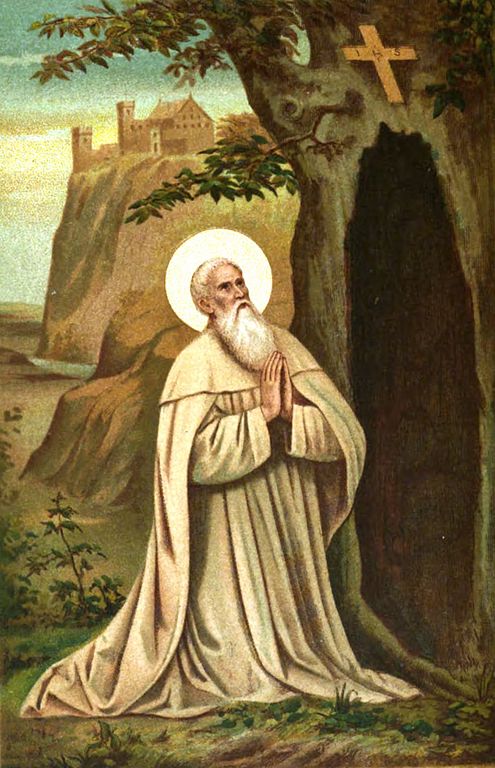
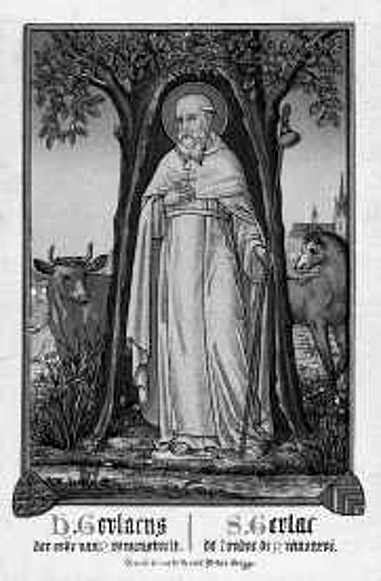
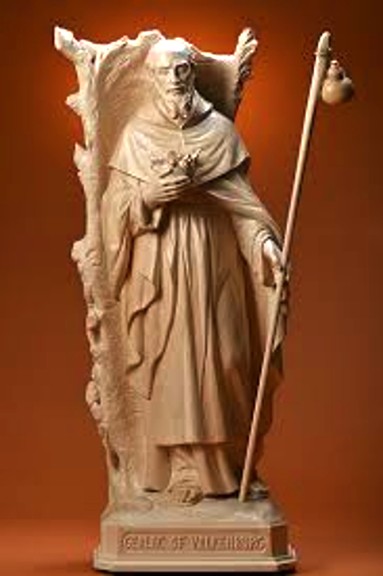
Saint of the Day – 5 January – Saint Gerlach (c 1100-c 1170) Hermit – born in c 1100 at Valkenburg, Netherlands and died in 1172 – 1177 at Houthem, in the Province of Limburg in the Kingdom of the Netherlands of natural causes. Also known as Gerlac von Houthem, Gerlac of Maastricht, Gerlac of Valkenberg, Gerlach, Gerlache, Gerlacus, Gerlachus, Gerlak.Patronages – against cattle disease, against plague/epidemics, of domestic animals.
The Vita Beati Gerlaci Eremytae, written around 1227, describes his legend and life. Originally a licentious soldier and brigand, Gerlach became a pious Christian upon the death of his wife and went on pilgrimage to Rome and Jerusalem. At Rome, he performed rites of penance for the sins of his youth, made a general confession of his sins to Pope Eugene III and then proceeded to Jerusalem where the latter had sent him. There he tended the sick, which he did for seven years.
Upon returning to the Netherlands, he gave up all of his possessions to the poor and took up residence in a hollow oak on his former Estate near Houthem. He ate bread mixed with ash and travelled by foot, each day on pilgrimage to Maastricht, to the Basilica of Saint Servatius.
Neighbouring Monks wished to see him enter their Monastery, especially since they were convinced that Gerlach was very rich and hid his treasure in the hollow of the tree where he lived. The local Bishop, therefore, intervened and ordered that the oak be felled. When he saw that there was no hidden treasure, he ordered that the tree be made into boards and be used to build a new hermitage for Gerlach.
The people of the neighbourhood already considered him a saint and he also enjoyed the protection of great figures, such as Hildegard of Bingen .
Legend states that when Gerlach had done enough penance, water from the local well transformed itself into wine three times, as a sign that his sins had been forgiven. He died shortly after, barely fifty and legend has it that the last rites were administered to him by the Saint Servatius himself.
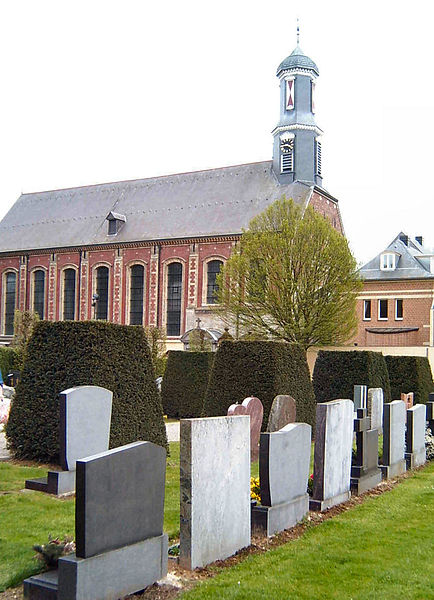
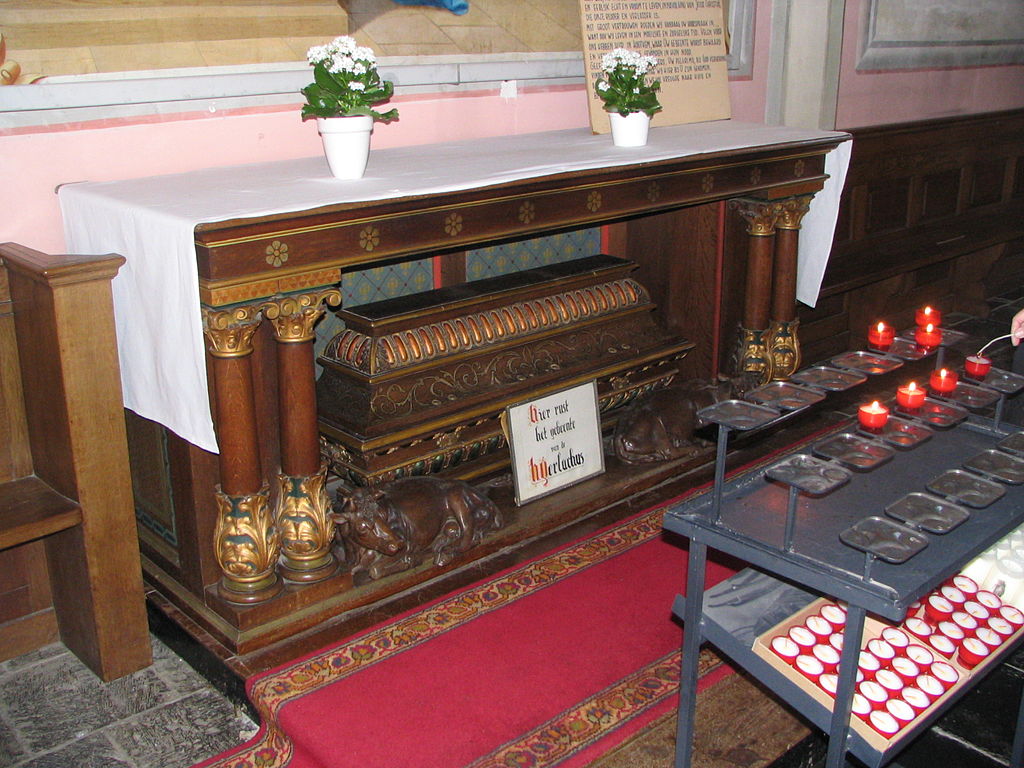
The Order of Premontre (Norbertines) claims his as one of theirs, due to his “rough white habit” and has him on its liturgical calendar as a “Blessed.” Below is the Church of St Gerlac in Houthem where his relics now rest. The Abbey of St Gerlac, which was named after him, is now a hotel.
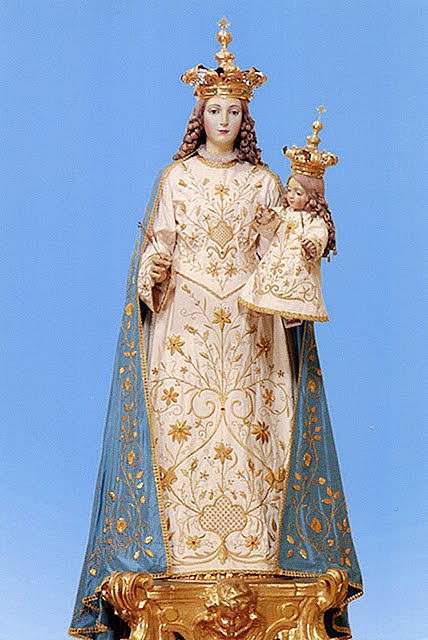
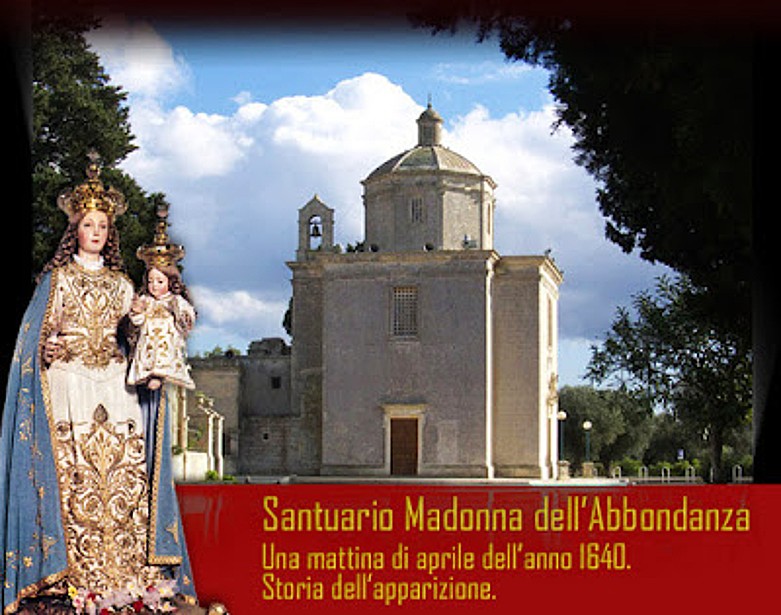
Madonna dell’Abbondanza / Our Lady of Abundance, Cursi, Italy (1641) – 5 January:
The Blessed Virgin under the above title is venerated at Cursi, Italy. The story begins in the first half of the seventeenth century. At that time the Puglia region of Italy was suffering from a severe drought. For almost three years not a drop of rain had fallen. By the spring of 1641, matters were desperate. April had arrived and the heat was as in mid-summer. Thus prospects for relief and a good harvest that year appeared dim. Then the people of Cursi and vicinity prayed fervently to the Blessed Mother, begging her to come to their aid and save them from the famine that drew ever nearer. The Blessed Virgin heard their plea. She appeared to a shepherd, Baglio Orlando Natali on 5 January. Thoroughly frightened by the appearance of the lovely lady, he ran away. The Mother of God called him back, reassured him gently and told him who she was. The Queen of Heaven said that she felt compassion toward Baglio and the people of that region, for the misfortune that had befallen them. The Blessed Virgin told Baglio to go to the Priest of the parish and tell him, in her name, to assemble all the people of Cursi and come back with them, to that very place, where she wished a Church to be erected. When it was completed she would take Cursi and the surrounding area under her protection. As a token of her deep regard, she promised Baglio that at the end of that same year, there would be a harvest of such abundance as none had ever seen before. Finally, she told Baglio that he was to change his way of life, for she had selected him to be her true follower and that he was to serve in the new Church when it would be completed. So saying she vanished as suddenly as she had appeared. Her wishes were followed and today still, in the Church erected in her honour and the Shrine created there, today is celebrated as a veneration of this Apparition.
Bl Convoyon of Redon St Deogratias of Carthage (Died 457) Bishop St Dorotheus the Younger Bl François Peltier St Gaudentius of Gnesen St Genoveva Torres Morales (1870-1956) Her Life: https://anastpaul.com/2020/01/05/saint-of-the-day-5-january-saint-genoveva-torres-morales-1870-1956/ St Gerlach (c 1100-c 1170) Hermit Bl Jacques Ledoyen Bl Joan Grau Bullich St Kiara St Lomer of Corbion Bl Marcelina Darowska Bl Maria Repetto Bl Paula of Tuscany Nl Pierre Tessier Bl Pietro Bonilli St Simeon Stylites St Syncletica St Talida of Antinoë — Martyrs of Africa – 14 saints: A group of Christians martyred together in Africa, date unknown, exact location unknown. We know nothing more than their names – Acutus, Anastasia, Candidus, Coelifloria, Felix, Honorius, Januaria, Jucundus, Lucianus, Marcus, Petrus, Secundus, Severus and Telesphorus.
Martyrs of Sais: A group of Christians martyred for their faith, but about whom no details have survived. They were martyred by drowning near Sais, Egypt.
Martyrs of Upper Egypt: There were many martyrs who suffered in the persecutions of Diocletian in the Thebaid region. Though we know these atrocities occurred, to the point that witnesses claim the torturers and executioners were exhausted by the work, we do not know the names of the saints and we honour them as a group. Many were beheaded and or burned alive in 303 in Upper Egypt.
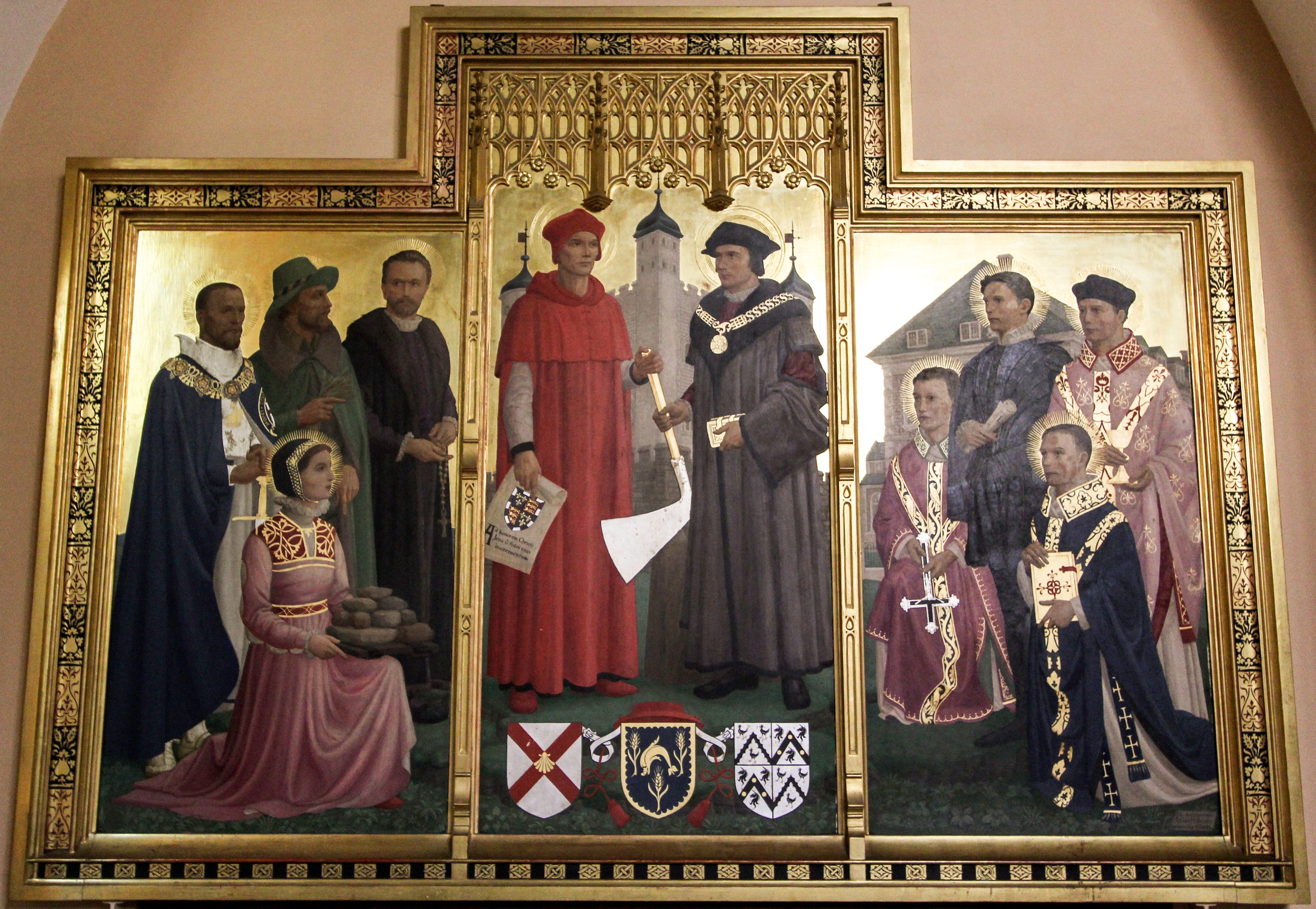
Saint of the Day – 4 January – Blessed Thomas Plumtree (Died 1570) Priest, Martyr, Lincolnshire, Priest, Rector of Stubton, Military Chaplain to Blessed Thomas Percy (7th Earl of Northumberland), renowned Preacher of the uprising and Martyr of the Rising of the North — hanged at Durham in 1570, after refusing to apostatise. For those unfamiliar with the “Rising of the North” – https://en.wikipedia.org/wiki/Rising_of_the_North. Born in Lincolnshire, England and died by being hung, drawn and quartered on 4 January 1570 in the marketplace at Durham Castle, Durham, England. Additional Memorial – 1 December as one of the Martyrs of Oxford University.
Of the three hundred and fifteen of our Catholic ancestors, who sacrificed their lives for the Catholic faith in England and Wales, during the religious persecution of the 16th and 17th centuries, twenty six can be considered as “Martyrs of the North” as they were born, laboured or suffered within the confines of Northumberland and Durham. To return to England as a Priest was high treason punishable by hanging, drawing and quartering; to shelter a Priest was a felony punishable by imprisonment, fines, confiscation of property and in many cases, death. It was only true heroes and heroines of Christ, who could face such ordeals.
Thomas was born in the Diocese of Lincoln, was a scholar of Corpus Christi College, Oxford. In 1546, he was made Rector of Stubton in his native county. He resigned his benefice on the change of religion under Elizabeth and became a schoolmaster at Lincoln but was obliged to resign the post on account of his faith.
But, it is as chief Chaplain and Priest of the army of the Northern Rising, that he won the Martyr’s palm.
His voice seems to have been like the Baptist’s and to have stirred high and low alike. His call to abandon heresy and to rally to the standard of the faith, ran through the northern counties and hundreds came in response to his summons.
He appears to have been celebrant of the Mass in Durham Cathedral, immediately preceding Fr Holmes’ sermon and the public Absolution which followed.
On his capture after the failure of the Rising, he was singled out as a notable example of the Priests who had officiated. On the gibbet in the marketplace at Durham, he was offered his life, if he would embrace heresy but he refused and dying to this world received eternal life from Christ. He suffered on 4 January 1572 and was buried in the marketplace. He was Beatified on 9 December 1886 by Pope Leo XIII (cultus confirmation).
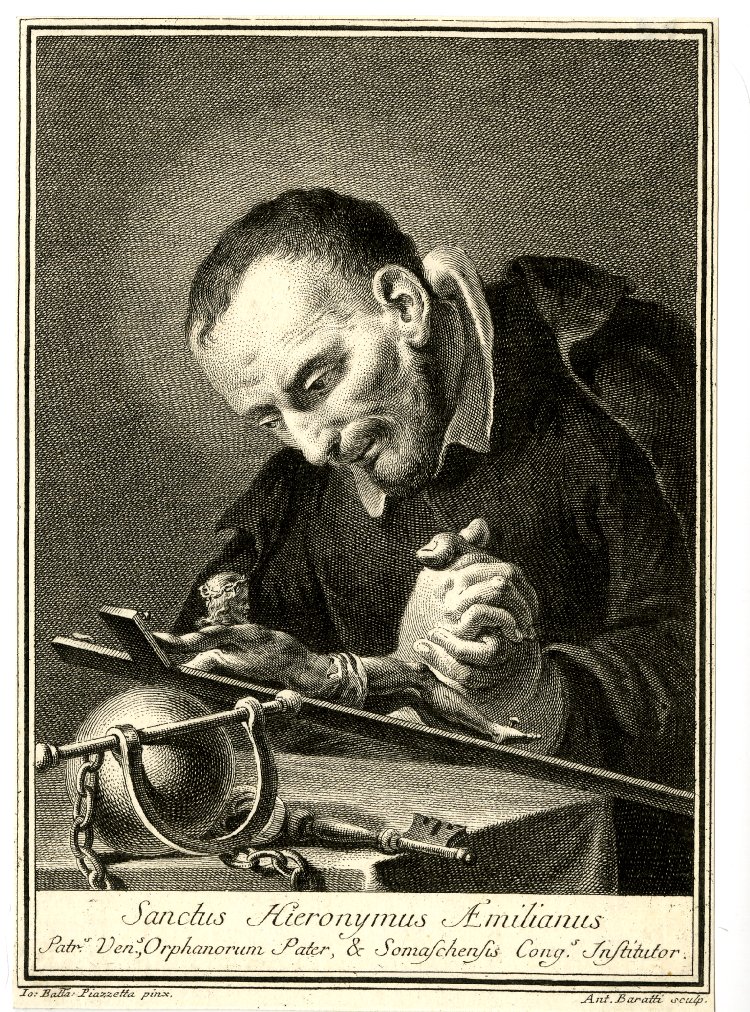
Madonna della Treviso di San Jerome Emiliani / Our Lady of Treviso of St Jerome Emiliani: St Jerome Emiliani (1486-1537), founder of the Congregation of the Somascha Fathers, when still a layman, experienced in a marvellous way the mercy of Our Blessed Lady. A capable soldier, he was once entrusted with the defense of Castelnuevo, in Fruili, Italy, when this was stormed by the Venetians, who were commanded by Maximilian I. Jerome was captured and confined in a dark prison, where he was loaded with chains.
Being a man of many vices, he began to feel remorse for his past life, almost to the point of despair. Then, he thought of Mary, the Mother of God, as the Mother of Divine Mercy. To her he turned, promising to lead a better life in the future, if this loving Mother would deliver him from his miserable condition. In an instant, Jerome beheld his prison filled with light and the Virgin Mary descending from Heaven to loose, with her own hands, the chains with which he was bound. Moreover, she handed him a key with which to open the door of the prison and escape. Eluding his captors, he directed his steps toward Treviso, to the shrine of the Mother of God.
Duomo (Treviso) – interior – Assumption of the Virgin by Domenico Capriolo
St Celsus of Trier Bl Chiara de Ugarte St Chroman St Dafrosa of Acquapendente St Ferreolus of Uzès St Gaius of Moesia St Gregory of Langres St Hermes of Moesia St Libentius of Hamburg Bl Louis de Halles St Manuel Gonzalez Garcia (1877–1940) “Apostle of the Abandoned Tabernacles” St Manuel’s Story: https://anastpaul.com/2019/01/04/saint-of-the-day-4-january-st-manuel-gonzalez-garcia-1877-1940-apostle-of-the-abandoned-tabernacles/ St Mavilus of Adrumetum St Neophytos St Neopista of Rome St St St Oringa of the Cross Bl Palumbus of Subiaco St Pharaildis of Ghent St Rigobert of Rheims Bl Roger of Ellant St Stephen du Bourg St Theoctistus Blessed Thomas Plumtree (Died 1570) Priest, Martyr
Martyrs of Africa – 7 saints: A group of Christians martyred together in the persecutions of the Arian Vandal king Hunneric. Saint Bede wrote about them. – Aquilinus, Eugene, Geminus, Marcian, Quintus, Theodotus and Tryphon. In 484 in North Africa.
Martyrs of Rome – 3 saints: Three Christians martyred together in the persecutions of Julian the Apostate for refusing to renounce Christianity as ordered. – Benedicta, Priscillianus and Priscus. In 362 in Rome, Italy.
Saint of the Day – 3 January – Saint Pope Antherus (Died 235) Martyr, Bishop of Rome from 21 November 235 to 3 January 236, the date of his Martyrdom which occurred in Rome under Emperor Julius Maximinus. Also known as Anteros, Anterus, Antheros.
Anterus was the son of Romulus, born in Petilia Policastro, Calabria, Italy. He is thought to have been of Greek origin and his name may indicate that he was a freed slave. He succeeded Pope Pontian, who had been deported from Rome to Sardinia, along with the antipope Hippolytus. He created one Bishop, for the city of Fondi.
We know for certain, only that he reigned some forty days and that he was buried in the famous “Papal crypt” of the Cemetery of Saint Callistus at Rome. He was the first pope buried in the Papal crypt.
The “Liber Pontificalis” says that he was martyred for having caused the Acts of the Martyrs to be collected by notaries and deposited in the archives of the Roman Church. This tradition seems old and respected, nevertheless, the best scholars maintain that it is not sufficiently guaranteed by its sole voucher, the “Liber Pontificalis,” on account, among other things, of the late date of that work’s compilation.
The site of his sepulchre was discovered by De Rossi in 1854, with some broken remnants of the Greek epitaph engraved on the narrow oblong slab that closed his tomb, an index at once of his origin and of the prevalence of Greek in the Roman Church up to that date. His relics had been removed to the Church of Saint Sylvester in the Campus Martius, Rome and were discovered on 17 November 1595, when Pope Clement VIII rebuilt that Church.
St Pope Antherus (Died 235) Martyr Bl Arnold Wala St Athanasius of Cilicia St Bertilia of Mareuil St Bertille of Thuringia St Blitmund of Bobbio St Constant of Gap St Cyrinus of Cyzicus St Daniel Himmerod the Younger Bl Daniel of Padua St Eustadius St Finlugh St Fintan of Doon St Florentius of Vienne St Florentius of Vienne the Martyr St Genevieve (c 419-c 502) Biography: https://anastpaul.com/2020/01/03/saint-of-the-day-3-january-saint-genevieve-c-419-c-502/
Bl Gerard Cagnoli St Gordius of Cappadocia St Imbenia St Kuriakose Elias Chavara St Lucian of Lentini St Melorius St Peter of Palestine St Primus of Cyzicus St Salvator of Belluno St Theogenes of Cyzicus St Theonas St Theopemptus of Nicomedia St Wenog Bl Bl William Vives St Zosimus of Cilicia — Martyrs of Africa – 12 saints: A group of Christians martyred together in Africa, date unknown, exact location unknown. We know nothing more than their names – Acuta, Candidus, Constantius, Eugenia, Firmus, Hilarinus, Lucida, Martial, Poenica, Possessor, Rogatianus and Statutianus.
Martyrs of Tomi – 7 saints: A group of Christians martyred together, date unknown. We know nothing more than their names – Claudon, Diogenius, Eugene, Eugentus, Pinna, Rhodes and Rhodo. They were martyred at Tomi, Exinius Pontus, Moesia (modern Constanta, Romania).
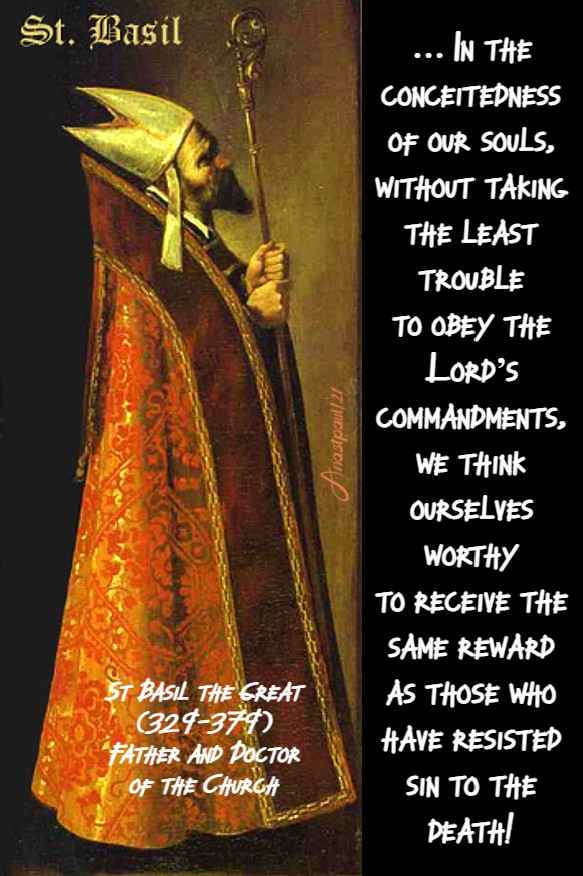
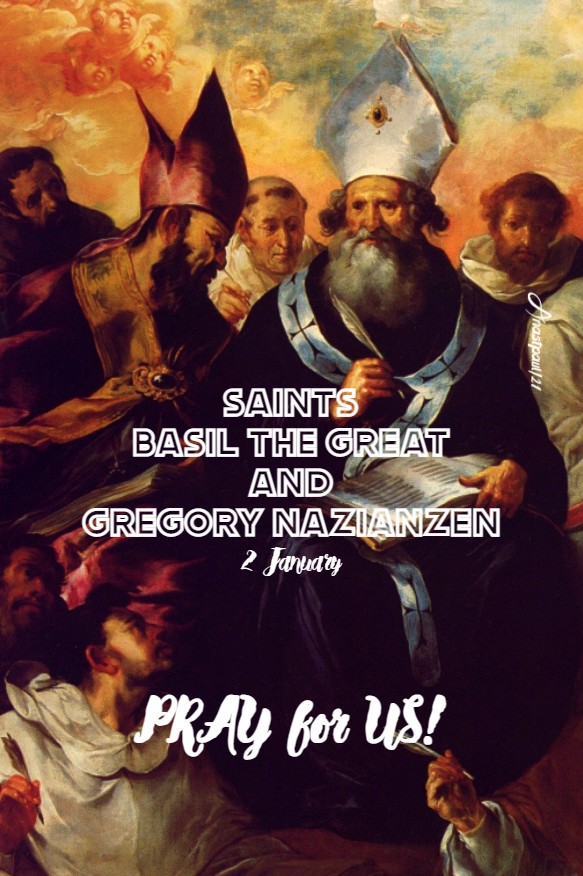
Quote/s of the Day – 2 January – Christmas Weekday and The Memorial of St Basil the Great (329-379) and St Gregory of Nazianzen (330-390)
“… In the conceitedness of our souls, without taking the least trouble to obey the Lord’s commandments, we think ourselves worthy to receive the same reward as those who have resisted sin to the death!”
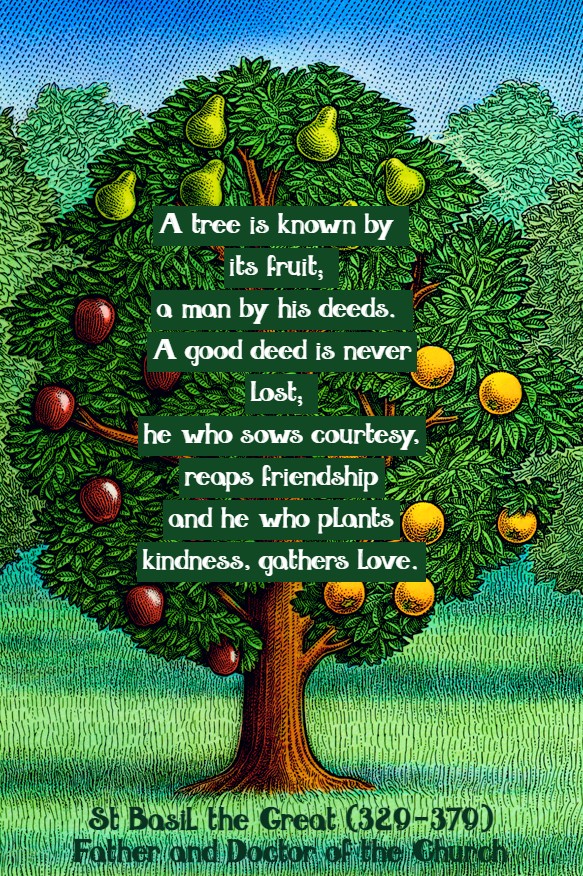
“A tree is known by its fruit, a man by his deeds. A good deed is never lost, he who sows courtesy, reaps friendship and he who plants kindness, gathers love.”
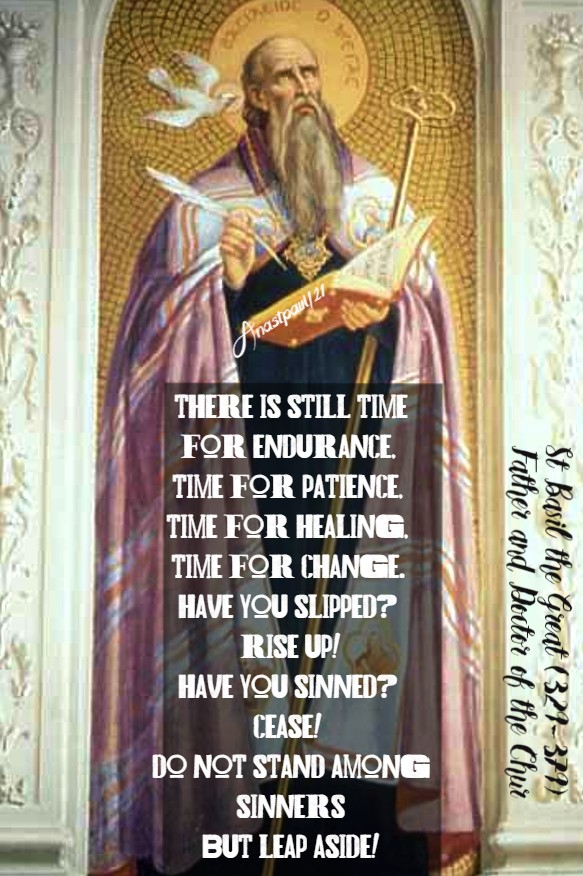
“There is still time for endurance, time for patience, time for healing, time for change. Have you slipped? Rise up! Have you sinned? Cease! Do not stand among sinners but leap aside!”
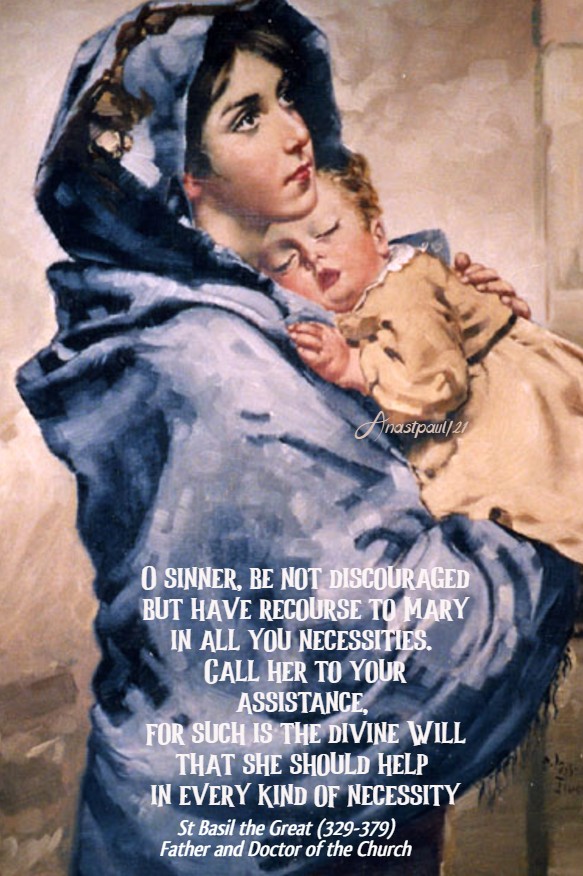
“O sinner, be not discouraged but have recourse to Mary in all you necessities. Call her to your assistance, for such is the divine Will that she should help in every kind of necessity.”
St Basil the Great (329-379) Father and Doctor of the Church
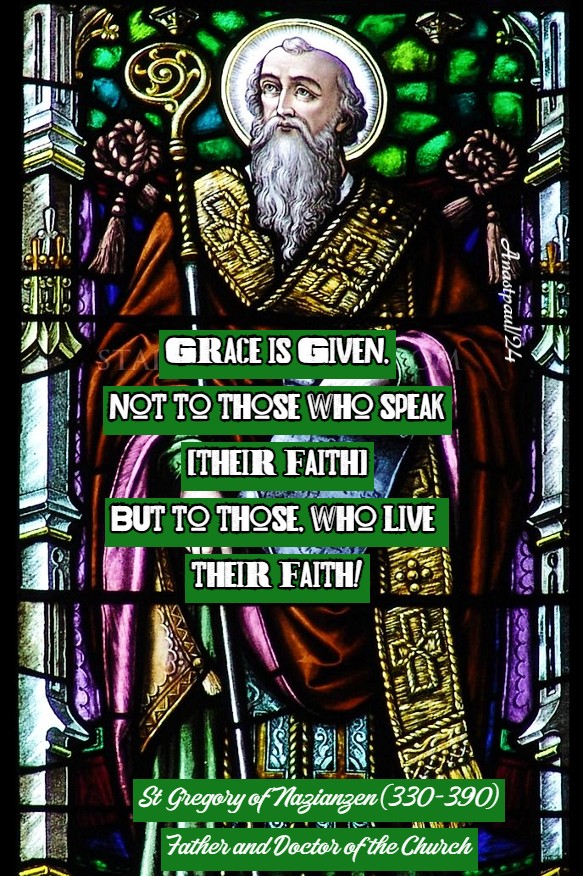
“Grace is given, not to those who speak [their faith] but to those, who live their faith.”
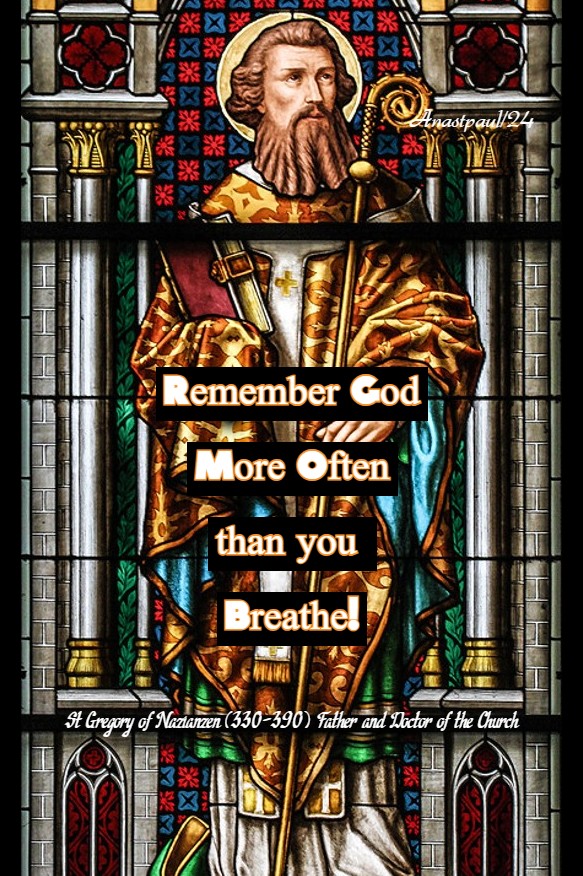
“Remember God more often than you breathe!”
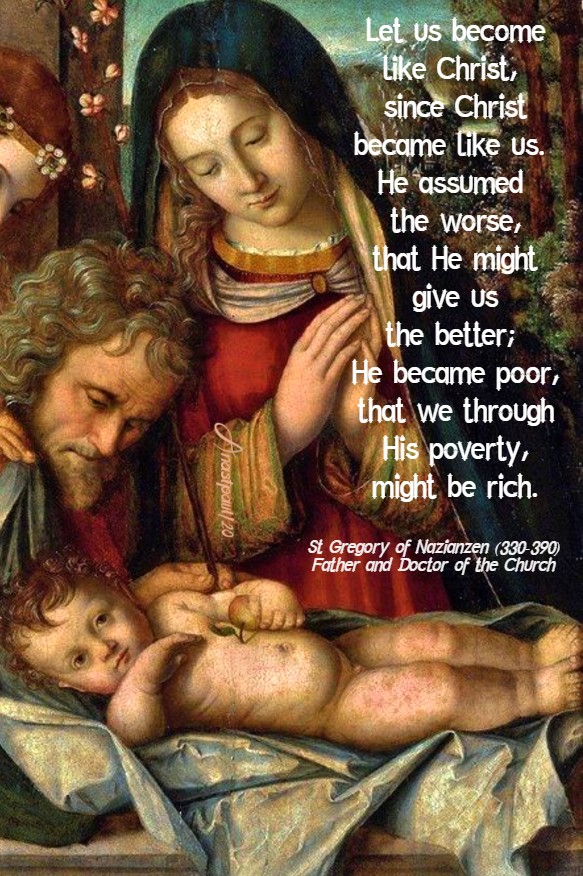
“Let us become like Christ, since Christ became like us. He assumed the worse, that He might give us the better; He became poor, that we through His poverty, might be rich.”
St Gregory of Nazianzen (330-390) Father and Doctor of the Church
One Minute Reflection – 2 January – Christmas Weekday and The Memorial of St Basil the Great (329-379) and St Gregory of Nazianzen (330-390), Readings: 1 John 2:22-28, Psalms 98:1, 2-3,3-4, John 1:19-28
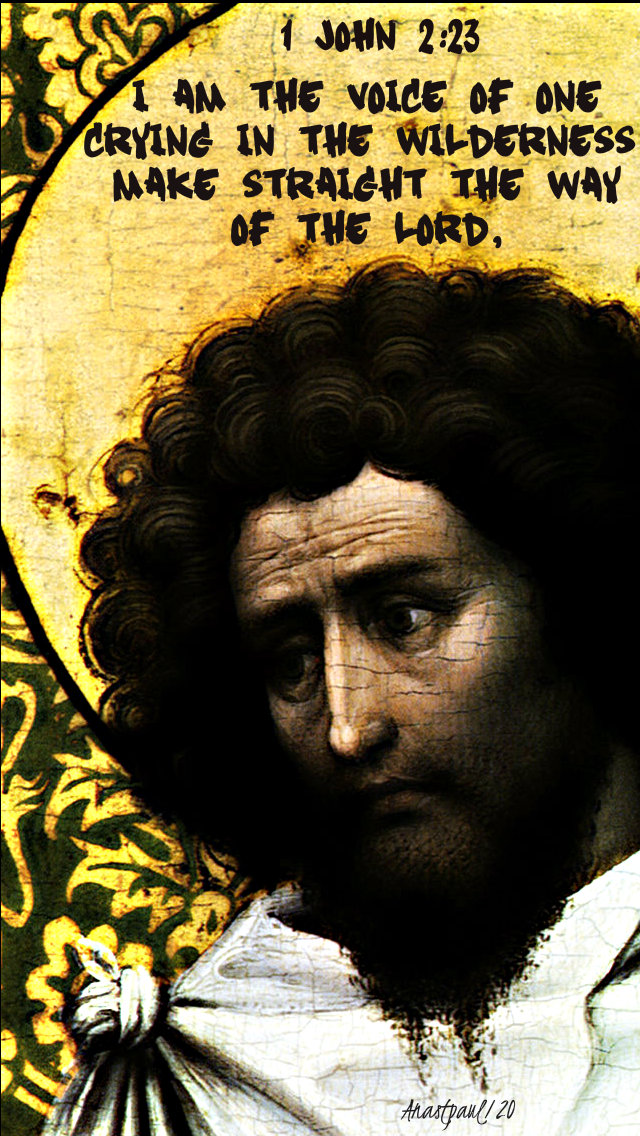
He said, “I am the voice of one crying in the wilderness, ‘Make straight the way of the Lord,’ as the prophet Isaiah said.” … 1 John 2:23
REFLECTION – “Prepare a way for the Lord.” Brethren, however far you journey along it… from the very nature of goodness, there is no limit to the way along which you travel. And so… the wise and indefatigable traveller… can say to himself each day: “Now I begin”… And how many “go astray in the wilderness”… None of them can yet say: “Now I begin.”
For “the beginning of wisdom is the fear of the Lord.” If the beginning of wisdom, then surely it is also the beginning of the way of goodness… It is this that encourages praise…, it also moves the proud to penance, so that they hear the voice of him crying in the wilderness, ordering the preparation of the way and thus showing how to begin it: “Do penance for the kingdom of heaven is close at hand”…
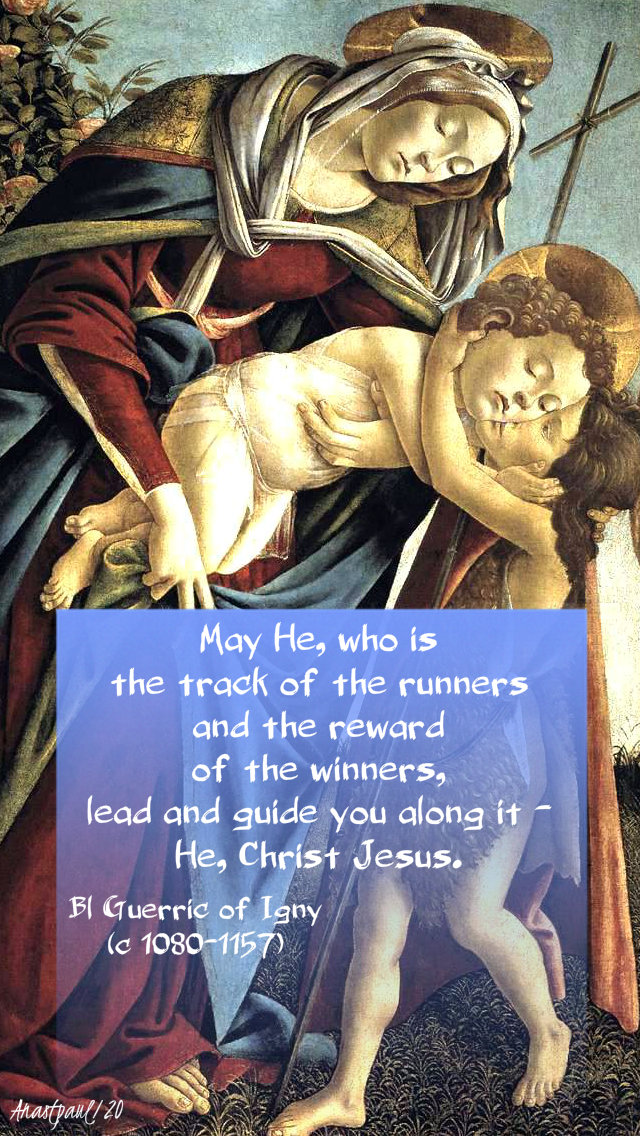
If you are on the way, then fear only one thing, lest you leave it, lest you offend the Lord who leads you along it, so that He would abandon you to “wander in the way of your own heart”… If you feel that the way is too narrow look forward to the end to which it leads you. If you were to see how everything is to be attained, then you would say without hesitation: “Broad indeed is your command!” If you cannot see so far, believe Isaiah who could… “Behold,” he says, “the redeemed shall walk by this way and the ransomed of the Lord shall return and come to Sion with singing, everlasting joy shall be upon their heads . They shall obtain also joy and gladness and sorrow and sighing shall flee away.” Those who dwell sufficiently on this end, I think, will not only make the way easier for himself but also grow wings, so that he no longer walks but flies… May He, who is the track of the runners and the reward of the winners, lead and guide you along it – He, Christ Jesus!” … Blessed Guerric of Igny (c 1080-1157) Cistercian Abbot – 5th sermon of Advent, SC 166
PRAYER – Look with favour on our morning prayer, Lord and in Your saving love, let Your light penetrate the wilderness in our hearts. May no sordid desires darken our minds, renewed and enlightened as we are, by Your heavenly grace. God our Father, You enriched Your Church and gave examples for us to follow in the life and teachings of Sts Basil and Gregory. Grant that, learning Your truth with humility, we may practise it in faith and love. Sts Basil and Gregory, pray for our beloved Church, pray for all Catholic Christians, through Jesus Christ with the Holy Spirit, God forever, amen.
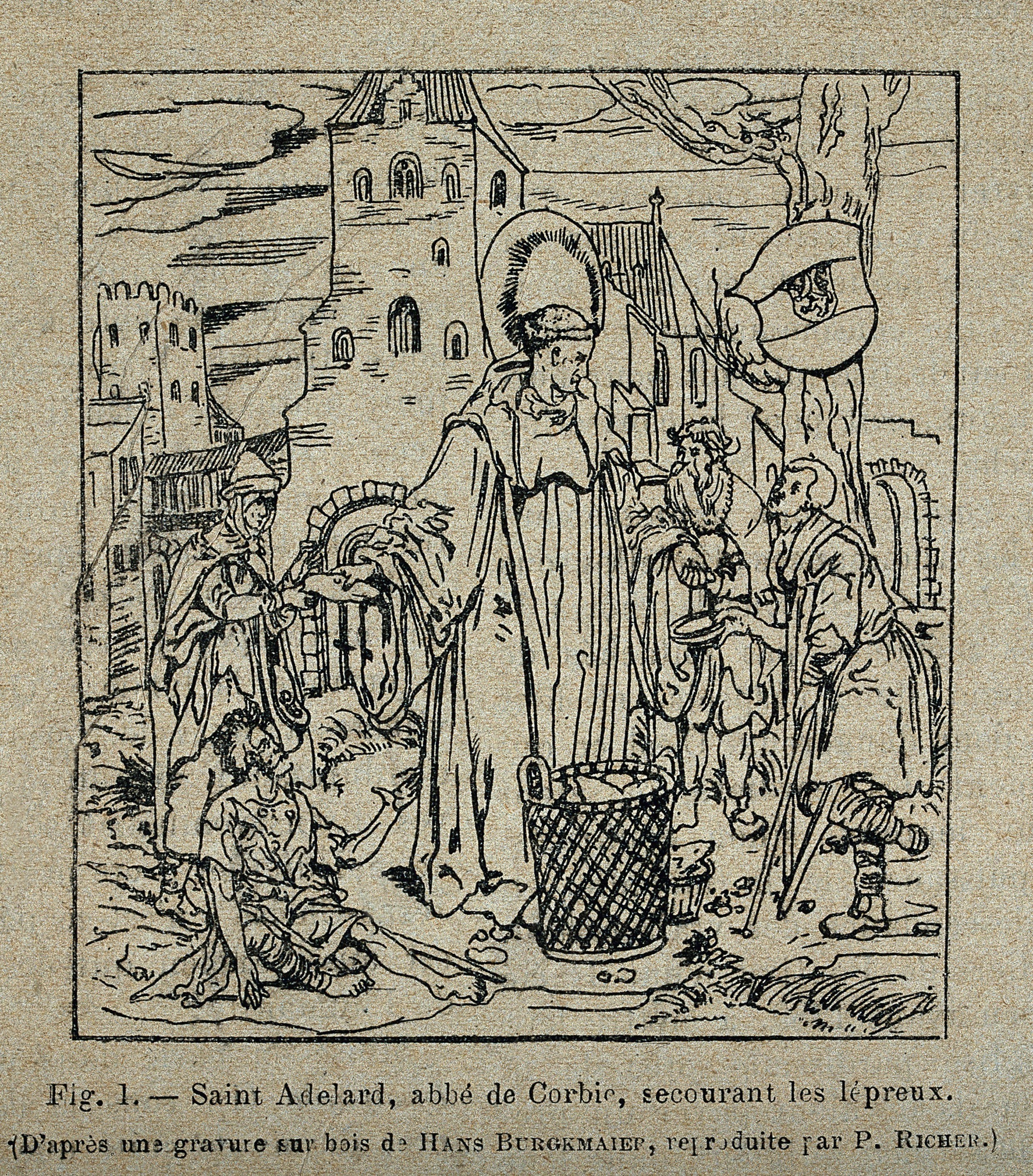
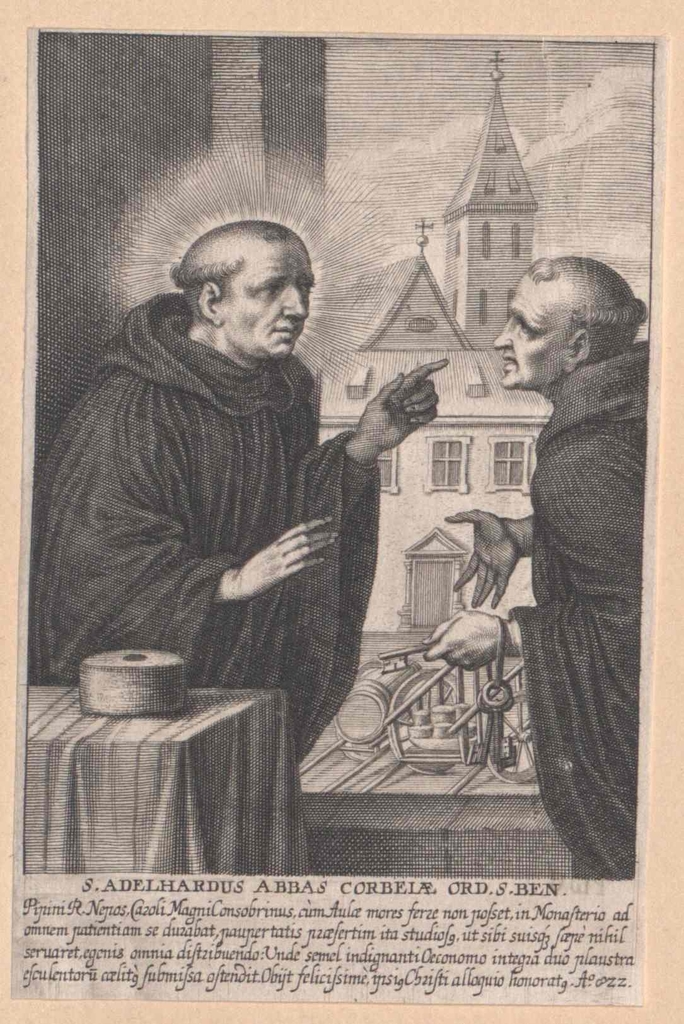
Saint of the Day – 2 January – Saint Adelard of Corbie (c 751 – 827) Monk, Abbot, Apostle of the poor and needy, Court administrator, Counsellor to Charlemagne – born in c 751 and died on 2 January 827 at Corbie Abbey, Picardy, France following a brief illness. Also known as Adalard, Adalhard, Adelhard, Adalardus, Adelardus, Alard, Alardus, Adalardo. Patronages – against fever/illness, against typhoid/epidemics, of gardeners, of many Churches and Towns in France and along the lower Rhine.
Adelard (752-827) was the grandson of Charles Martel, nephew of King Pepin and first cousin to Charlemagne. Adalard received a good education in the Palatine School at the Court of Charlemagne in Aachen and while still very young was made Count of the Palace. He became a Monk, at the age of 20, at Corbie in Picardy in 773. He attempted to embrace a more eremitical life at Monte Cassino but was ordered back to Corbie by Charlemagne. Eventually, he was chosen Abbot and became Charlemagne’s counsellor.
He was forced by the King to leave the Monastery and work for him as chief minister for his son Pepin. At his death in Milan in 810, King Pepin appointed Adelard tutor to his son Bernard of Italy, then but twelve years of age.
He was accused of supporting a rival power (Bernard) against Emperor Louis the Debonair and was banished to a Monastery on the island of Heri. Five years later he was recalled to the King’s court (821). Several hospitals were erected by him. In 822 Adalard and his brother Wala founded Corvey Abbey (“New Corbie”) in Westphalia, Germany.
He later retired to the Abbey at Corbie and died on 2 January after an illness, thought today to have been typhoid.
Miracles were reported after his death. When Adelard first became Monk at Corby in Picardy (in 773), his first assignment was gardener of the Monastery. He did his job humbly and piously, praying throughout the day. His great virtues eventually helped him become Abbot but also, forced him into secular posts at the order of the King.
Saint Adelard was Canonised by Pope John XIX in 1026.
With the above description in mind, it will not be much of a surprise that Adelard became the patron saint of gardeners. In addition, he became known as the patron of sufferers of fevers and typhoid.
St Basil the Great (329-379) Father & Doctor of the Church (Memorial) St Gregory of Nazianzen (330-390) Father & Doctor of the Church (Memorial) About these 2 great fathers:
St Adelard of Corbie (c 751 – 827) Monk, Abbot Bl Airaldus of Maurienne St Asclepius of Limoges St Aspasius of Auch St Blidulf of Bobbio Bl Guillaume Répin St Hortulana of Assisi St Isidore of Antioch St Isidore of Nitria St Laurent Bâtard St Macarius the Younger Blessed Marie Anne Blondin SSA (1809-1890) https://anastpaul.com/2020/01/02/saint-of-the-day-blessed-marie-anne-blondin-ssa-1809-1890/ St Maximus of Vienne Bl Odino of Rot St Paracodius of Vienne St Seraphim of Sarov St Seiriol St Telesphorus, Pope St Theodota St Theopistus St Vincentian of Tulle — Many Martyrs Who Suffered in Rome: There were many martyrs who suffered in the persecutions of Diocletian for refusing to surrender the holy books. Though we know these atrocities occured, we do not know the names of the saints and we honour them as a group. c 303 in Rome, Italy.
Martyrs of Antioch – 5 saints: A group of Christian soldiers martyred together for their faith. We know the names of five – Albanus, Macarius, Possessor, Starus and Stratonicus. They were born in Greece and were martyred in Antioch (modern Antakya, Turkey).
Many Martyrs of Britain: The Christians of Britain appear to have escaped unharmed in the earlier persecutions which afflicted the Church but the cruel edicts of Diocletian were enforced in every corner of the empire and the faithful inhabitants of this land, whether native Britons or Roman colonists, were called upon to furnish their full number of holy Martyrs and Confessors. The names of few are on record but the British historian, Saint Gildas, after relating the martyrdom of Saint Alban, tells us that many others were seized, some put to the most unheard-of tortures and others immediately executed, while not a few hid themselves in forests and deserts and the caves of the earth, where they endured a prolonged death until God called them to their reward. The same writer attributes it to the subsequent invasion of the English, then a pagan people, that the recollection of the places, sanctified by these martyrdoms, has been lost and so little honour paid to their memory. It may be added that, according to one tradition, a thousand of these Christians were overtaken in their flight near Lichfield and cruelly massacred and that the name of Lichfield, or Field of the Dead, is derived from them.
Martyrs of Ethiopia – 3 saints: A group of Christians martyred together for their faith. We know the names of three – Auriga, Claudia and Rutile.
Martyrs of Jerusalem – 2 saints: A group of Christians martyred together for their faith. We know the names of two – Stephen and Vitalis.
Martyrs of Lichfield: Many Christians suffered at Lichfield (aka Lyke-field, meaning field of dead bodies), England in the persecutions of Diocletian. Though we know these atrocities occured, we do not know the names of the saints, and we honour them as a group. Their martyrdom occurred in 304 at Lichfield, England.
Martyrs of Piacenza: A group of Christians who died together for their faith in the persecutions of Diocletian. No details about them have survived. They were martyred on the site of church of Madonna di Campagna, Piacenza, Italy.
Martyrs of Puy – 4 saints: Missionaries, sent by Saint Fronto of Périgueux to the area of Puy, France. Tortured and martyred by local pagans. We know the names – Frontasius, Severinus, Severian and Silanus. They were beheaded in Puy (modern Puy-en-Velay), France and buried together in the church of Notre Dame, Puy-en-Velay by Saint Fronto, their bodies laid out to form a cross.
Martyrs of Syrmium – 7 saints: Group of Christians martyred together, date unknown. We know the names of seven – Acutus, Artaxus, Eugenda, Maximianus, Timothy, Tobias and Vitus – but very little else. This occurred in the 3rd or 4th century at Syrmium, Pannonia (modern Sremska Mitrovica, Serbia).
Martyrs of Tomi – 3 saints: Three brothers, all Christians, all soldiers in the imperial Roman army, and all three martyred in the persecutions of emperor Licinius Licinianus. We know their names – Argeus, Marcellinus and Narcissus – but little else. They were martyred in 320 at Tomi, Exinius Pontus, Moesia (modern Constanta, Romania).
Saint of the Day – 1 January – Saint Odilo of Cluny OSB (962-1049) Priest, Monk, 5th Abbot of Cluny, Reformer, known as the “Archangel of the Monks,” Apostle of the poor and needy, Marian devotee and promoter of prayer for the Souls in Purgatory.St Odilo was the fifth Benedictine Abbot of Cluny, holding the post for around 54 years. During his tenure Cluny became the most important Monastery in western Europe. Odilo actively worked to reform the monastic practices not only at Cluny but at other Benedictine houses. He also promoted the Truce of God whereby military hostilities were temporarily suspended at certain times for ostensibly religious reasons. Odilo encouraged the formal practice of personal Consecration to Mary. He established All Souls’ Day (on 2 November) in Cluny and its Monasteries as the annual commemoration to pray for all the faithful departed. The practice was soon adopted throughout the whole Western Church. He was born in 962 at Auvergne, France and died on 1 January 1049 at Souvigny, France of natural causes. Additional memorials – 29 April as one of the Seven Abbots of Cluny, 19 January in Cluny (formerly 2 January), 6 February in Switzerland. Patronages – against jaundice, the souls in Purgatory.
Odilo was descended from the nobility of Auvergne. He early became a cleric in the seminary of St Julien in Brioude. In 991 he entered Cluny and before the end of his year of probation was made coadjutor to Abbot Mayeul and shortly before the latter’s death (994) was made Abbot and received Holy orders.
The rapid development of the Monastery under him was due chiefly to his gentleness and charity, his activity and talent for organising. He was a man of prayer and penance, zealous for the observance of the Divine Office and the monastic spirit. He encouraged learning in his monasteries and had the monk, Radolphus Glaber, write a history of the time. He erected a magnificent Monastery building and furthered the reform of the Benedictine Monasteries. Under Alphonse VI it spread into Spain. The rule of St Benedict was substituted in Cluny for the domestic rule of Isidore. By bringing the reformed or newly founded Monasteries of Spain into permanent dependence on the mother-house, Odilo prepared the way for the union of Monasteries, which Hugo established for maintaining order and discipline. The number of Monasteries increased from thirty-seven to sixty-five, of which five were newly established and twenty-three had followed the reform movement.
On account of his services in the reform, Odilo was called by the Blessed Bishop Fulbert of Chartres, the “Archangel of the Monks” and through his relations with the Popes, rulers, and prominent Bishops of the time, Cluny monasticism was promoted. He journeyed nine times to Italy and took part in several synods there. Popes John XIX and Benedict IX both offered him the Archbishopric of Lyons but he declined.
From 998 he gained influence with the Emperor Otto III. He was on terms of intimacy with Henry II when the latter, on political grounds, sought to impair the spiritual independence of the German Monasteries. For Germany the Cluny policy had no permanent success, as the Monks there were more inclined to individualism. Between 1027 and 1046 the relations between the Cluniac Monks and the Rmperor remained unchanged. In 1046 Odilo was present at the coronation of Henry III in Rome. Robert II of France allied himself with the Reform party.
The conclusion of the Peace of God (Treuga Dei), for which Odilo had worked from 1041, was of great economic importance. During the great famines of that time (particularly 1028-33), he also exercised his active charity and saved thousands from death.
He established All Souls Day (2 November) in Cluny and its Monasteries, probably not in 998 but after 1030 and it was soon adopted in the whole Church. Of his writings we have but a few short and unimportant ones – a life of the holy Empress St Adelaide, to whom he was closely related; a short biography of his predecessor Mayeul; sermons on feasts of the ecclesiastical year; some hymns and prayers and a few letters from his extensive correspondence.
Odilo and his confreres interested themselves in the Church reform which began about that time. They followed no definite ecclesiastico-political programm, but directed their attacks principally against individual offences such as simony, marriage of the clergy and the uncanonical marriage of the laity. The Holy See could depend, above all, on the religious of Cluny, when it sought to raise itself from its humiliating position and undertook the reform of the Church.
He died while on a visitation to the Monastery of Souvigny where he was buried and soon venerated as a saint.
St Odilo’s Funeral Procession
In 1063 St Peter Damien undertook the process of his Canonisation, and wrote a short life, with the assistance of an abstract from the work of Jotsald, one of Odilo’s monks who accompanied him on his travels. In 1793 the relics were burned by the revolutionaries “on the altar of the fatherland.”
Titular Feast of the Society of Jesus – But now celebrated on 3 January, the Feast of the Holy Name of Jesus
Bl Adalbero of Liege St Baglan of Wales St Basil of Aix Bl Bonannus of Roio St Brogan St Buonfiglio Monaldi Bl Catherine de Solaguti St Clarus of Vallis Regia St Clarus of Vienne St Colman mac Rónán St Colman Muillin of Derrykeighan St Concordius of Arles St Connat St Cuan St Demet of Plozévet St Elvan St Eugendus of Condat St Euphrosyne of Alexandria St Fanchea of Rossory St Felix of Bourges St Frodobert of Troyes St Fulgentius of Ruspe (c 462 – 533) About St Fulgentius! https://anastpaul.com/2020/01/01/saint-of-the-day-1-january-saint-fulgentius-of-ruspe-c-462-533-the-pocket-augustine/ St Gisela of Rosstreppe St Gregory Nazianzen the Elder Bl Hugolinus of Gualdo Cattaneo Bl Jean-Baptiste Lego Bl Jean of Saint-Just-en-Chaussée St Joseph Mary Tomasi St Justin of Chieti Bl Lojze Grozde St Maelrhys St Magnus the Martyr Bl Marian Konopinski St Mydwyn St Odilo of Cluny OSB (962-1049) Priest, Monk, 5th Abbot of Cluny St Odilo of Stavelot St Peter of Atroa St Peter of Temissis Bl René Lego St Sciath of Ardskeagh St Severino Gallo St Telemachus St Thaumastus of Mainz St Theodotus St Tyfrydog Bl Valentin Paquay St Vincent Strambi St William of Dijon St Zedislava Berka St Zygmunt Gorazdowski — Breton Missionaries to Britain Martyred Soldiers of Rome: Thirty soldiers martyred in Rome as a group during the persecutions of Diocletian. We don’t even known their names. They were martyred c 304 at Rome, Italy.
Martyrs of Africa – 8 saints: Eight Christians martyred together in Africa, date unknown. The only details we have are four of their names – Argyrus, Felix, Narcissus and Victor.
Martyred in the Spanish Civil War: • Blessed Andrés Gómez Sáez
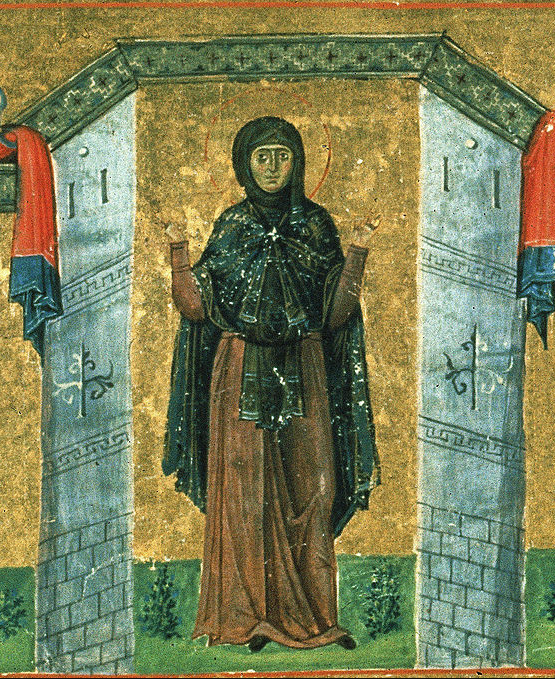
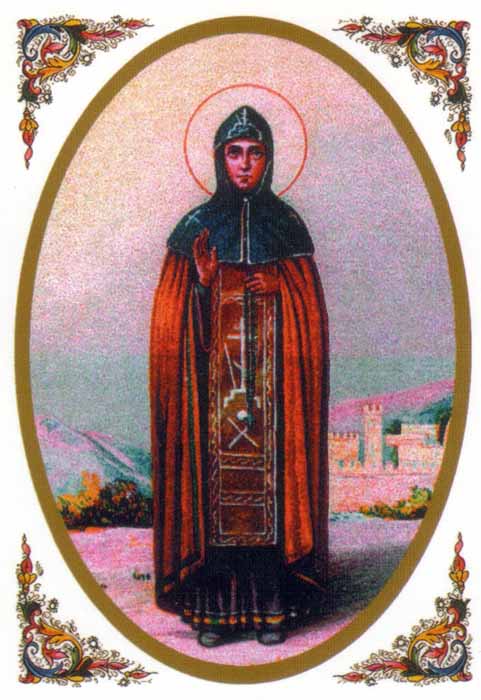
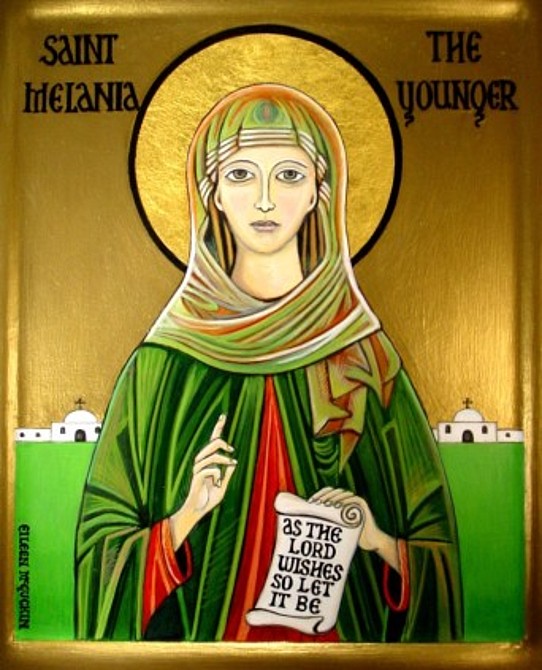
Saint of the Day – 31 December – Saint Melania the Younger (c 383-439) Foundress, Desert Hermit, Married and Mother of 2 children who died very young, Widow. Born c 383 and died in late December 439 at Jerusalem of natural causes. St Melania the younger was the daughter of Publicola, only son of St Melania the Elder. She was foundress of communities of Desert Hermits. Patronages – against the death of children, exiles.
Melania was born to Valerius Publicola – the son of Valerius Maximus Basilius and Melania the Elder – and his wife Albina. She married her paternal cousin, Valerius Pinianus, at the age of fourteen. After the early deaths of their two children, she and her husband embraced Christian asceticism and maintained a celibate life thereafter. Upon inheriting her parents’ wealth, she donated it to ecclesiastical institutions and to the poor through anonymous intermediaries.
Melania and Pinianus left Rome in 408, living a monastic life near Messina (Sicily) for two years. In 410, they travelled to Africa, where they befriended St Augustine of Hippo and devoted themselves to a life of piety and charitable works. Together they founded a convent of which Melania became Mother Superior and cloister of which Pinianus took charge. Melania lived with the women, fasting and wearing sackcloth. She spent many hours transcribing manuscripts, a work at which she was highly skilled.
In 417, they went to Palestine by way of Alexandria, where they visited the principal places of monastic life and hermitages. In Jerusalem, they lived in a hospice for pilgrims and met St. Jerome, whose disciple and collaborato, Paula, was Melania’s cousin. She became a member of Jerome’s circle of helpers. She lived in Jerusalem for twelve years in a hermitage near the Mount of Olives. Her mother died in 431 and after this Melania opened a convent for women on the Mount of Olives, which she inspired and maintained but refused to become its superior. After her husband’s death she built a cloister for men, then a Chapel and later, a larger Church. She attracted many men and women to a solitary way of life, one of whom was her spiritual director and Biographer, Gerontius.
Melania’s Uncle Volusianus, a diplomat at the court of theEemperor Valentinian, wrote inviting her to Constantinople. She did go there and helped in his conversion to Christianity and assisted him as he died on 6 January 437. She also mounted a campaign there against Nestorianism.
Melania spent the Christmas of 439 in Bethlehem and died a week later.
Blessed Alain de Solminihac OSA (1593-1659) His Story: https://anastpaul.com/2019/12/31/saint-of-the-day-31-december-blessed-alain-de-solminihac-osa-1593-1659/ St Anton Zogaj St Barbatian of Ravenna St Columba of Sens Bl Dominic de Cubells St Festus of Valencia St Gelasius of Palestine Bl Giuseppina Nicoli St Hermes the Exorcist St Melania the Younger (c 383-439) Foundress, Desert Hermit St Offa of Benevento Bl Peter of Subiaco St Pinian St Potentian of Sens St Sabinian of Sens St Theophylact of Ohrid Bl Walembert of Cambrai Bl Wisinto of Kremsmünster St Zoticus of Constantinople — Martyrs of Catania – 10 saints: A group of early Christians martyred together, date unknown. The only other information to survive are ten of their names – Attalus, Cornelius, Fabian, Flos, Minervinus, Pontian, Quintian, Sextus, Simplician and Stephen. They were martyred in Catania, Sicily, Italy.
Martyrs of Rome – 10 saints: A group of Roman women martyred in an early persecution, date unknown. We known the names of ten of them – Dominanda, Donata, Hilaria, Nominanda, Paolina, Paulina, Rogata, Rustica, Saturnina and Serotina. Their relics were enshrined in the catacombs of Via Salaria, Rome, Italy.
Martyred in the Spanish Civil War: • Blessed Leandro Gómez Gil • Blessed Luis Vidaurrázaga González
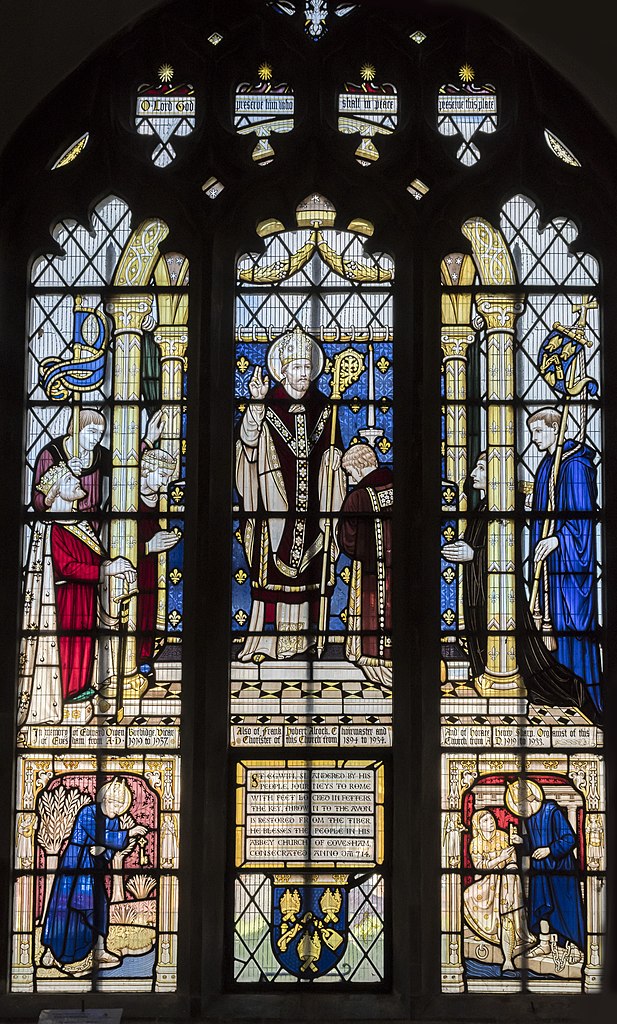
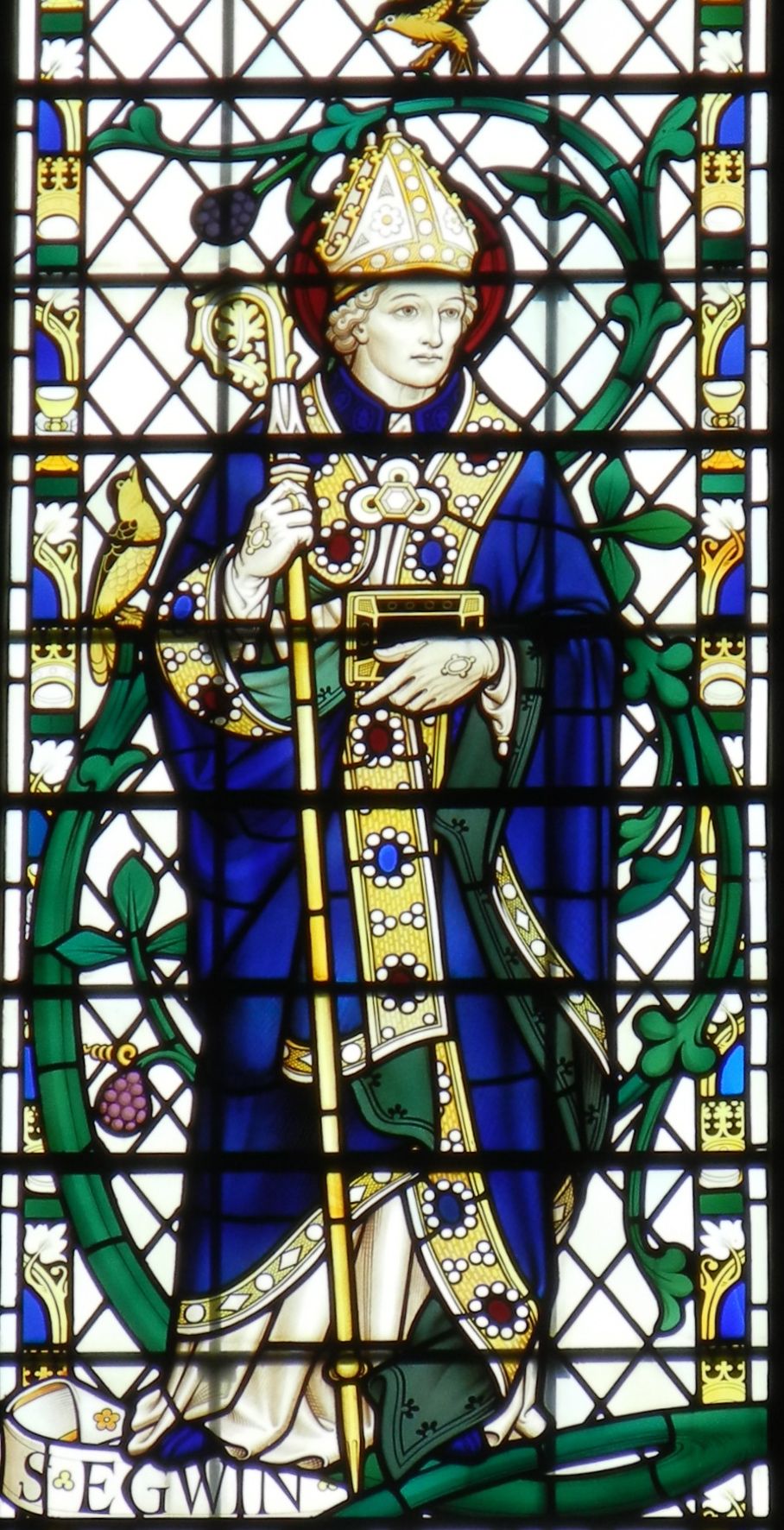
Saint of the Day – 30 December – Saint Egwin of Worcester OSB (Died 717) Bishop, Benedictine Monk, Reformer and Penitent, miracle-worker – born in the 7th century in England and died on 30 December 717 at Evesham Abbey, Mercia of natural causes.
Scenes from the life of Saint Egwin, St Lawrence’s Church, Evesham
Egwin of Worcester was of a noble family, possibly a descendant of the Mercian kings.
He was devoted to God since his youth and became a Benedictine Monk. His biographers say that king, clergy and the faithful, all united in demanding Egwin’s elevation to Bishop. He succeeded to the See of Worcester in 662.
Though a good Bishop, protector of orphans and widows and a fair judge, he incurred the animosity of people who resisted his insistent teaching on marital morality and clerical celibacy.
The clergy saw him as overly strict, while he felt he was simply trying to correct abuses and impose appropriate disciplines. Bitter resentments arose and complaints were made against him to this ecclesiatical superiors. Egwin made his way to Rome to present his case to Pope Constantine. The case against Egwin was examined and annulled.
He prepared for his journey by locking shackles on his feet and throwing the key into the River Avon. In Rome, as he prayed before the tomb of the Apostle St Peter, one of his servants brought him this very key—found in the mouth of a fish that had just been caught in the Tiber. Egwin then released himself from his self-imposed bonds and straight away obtained from the Pope an authoritative release from his enemies’ obloquy.
His Vita relates that on crossing the Alps with a few companions, there was no water. Parched, those who did not appreciate his sanctity, mockingly suggested that he ask for water, like Moses. But others, who knew him well, reverently beseeched him to, indeed, pray for water. As Egwin prostrated himself in prayer, a stream of crystalline water issued forth from a rock.
On his return to England, Egwin founded the famous Abbey of Evesham, which became one of the great Benedictine houses of medieval England. It was dedicated to the Blessed Virgin Mary, who had reportedly made it known to a swineherd named Eof, just where a church should be built in her honour.
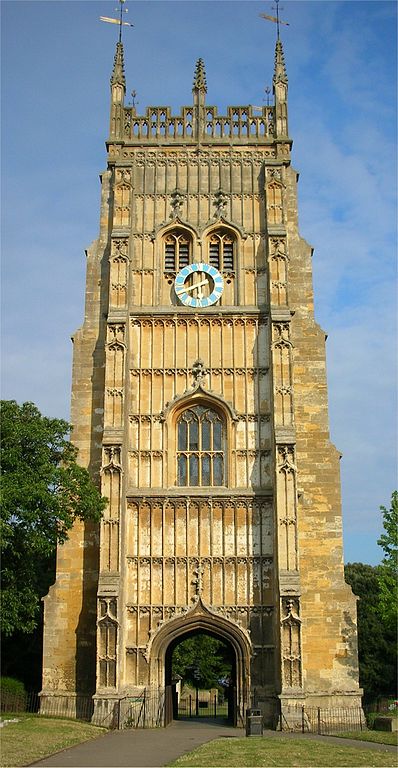
Evesham Abbey, Bell Tower
Around 709, he again journeyed to Rome, this time in the company of Kings, Cenred of Mercia and Offa of the East Saxons and received many privileges for his Monastery from Pope Constantine.
St Egwin died on 30 December 717 and was buried at the Monastery he had founded.
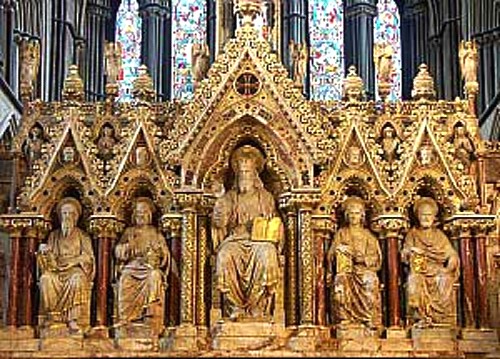
Detail inside the current Worcester Cathedral, statues around Christ the King, seated in niches, one larger and more imposing than the others, which is thought to be St Egwin.
A hagiography, the Vita Sancti Egwini, was written by Dominic of Evesham, a medieval Prior of Evesham Abbey around 1130. Egwin’s tomb was destroyed, along with the Abbey Church, at the time of the dissolution of the Abbey in 1540.
St Anysia of Thessalonica St Anysius of Thessalonica St Egwin of Worcester OSB (Died 717) Bishop
St Elias of Conques St Eugene of Milan St Pope Felix I St Geremarus Blessed Giovanni Maria Boccardo (1848-1913) His Life: https://anastpaul.com/2019/12/30/saint-of-the-day-30-december-blessed-giovanni-maria-boccardo-1848-1913-father-of-the-poor/ St Hermes of Moesia St Jucundus of Aosta St Liberius of Ravenna Bl Margaret Colonna St Perpetuus of Tours Bl Raoul of Vaucelles St Raynerius of Aquila Bl Richard of Wedinghausen St Ruggero of Canne St Sebastian of Esztergom — Martyrs of Alexandria – (5 saints): A group of Christians martyred in the unrest caused by Monophysite heretics. We know the names for five of them – Appian, Donatus, Honorius, Mansuetus and Severus. They were martyred in c 483 at Alexandria, Egypt.
Martyrs of Oia – (6 saints): A group of Christians martyred together, date unknown. The only details to have survived are the names – Cletus, Florentius, Papinianus, Paul, Serenusa and Stephen. They were martyred in Oia, Greece.
Martyrs of Spoleto – (4 saints): A group of Christians martyred in the persecutions of Diocletian – Exuperantius, Marcellus, Sabinus and Venustian. They were martyred in 303 in Spoleto, Italy
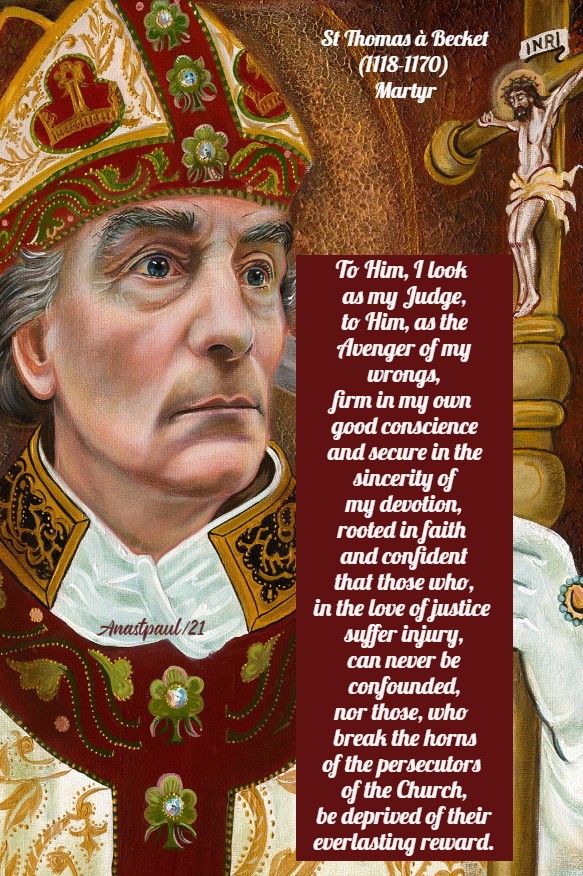
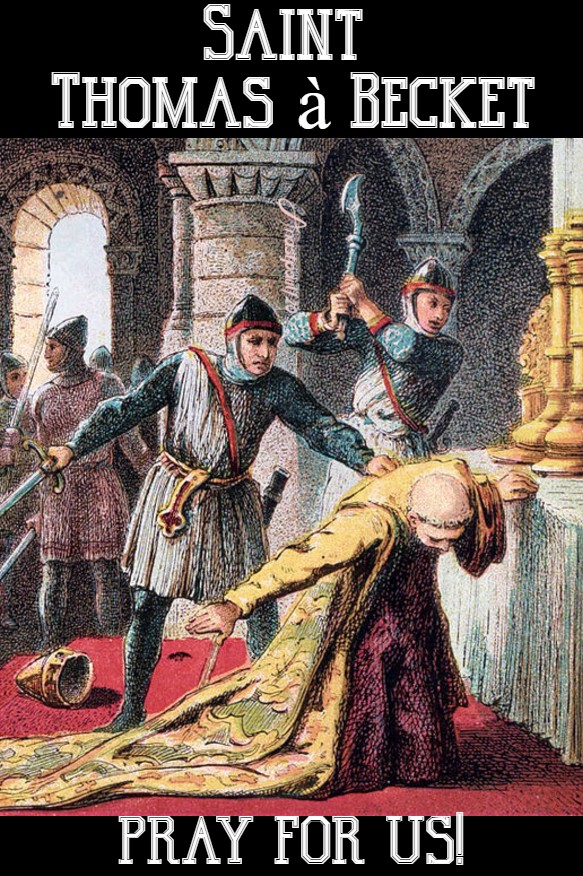
Quote/s of the Day – 29 December – The Fifth Day of the Octave of Christmas and the Memorial of St Thomas à Becket (1118-1170) Martyr, Archbishop of Canterbury
“To Him, I look as my judge, to Him, as the avenger of my wrongs, firm in my own good conscience and secure in the sincerity of my devotion, rooted in faith and confident that those who, in the love of justice suffer injury, can never be confounded, nor those, who break the horns of the persecutors of the Church, be deprived of their everlasting reward.”
“Let it be your consolation, then, that God’s enemies, however honourable and exalted they may have been, shall, nevertheless, fade away like the smoke.”
One Minute Reflection – 29 December – The Fifth Day of the Octave of Christmas, Readings: 1 John 2:3-11, Psalms 96:1-2, 2b-3, 5-6, Luke 2:22-35 and the Memorial of St Thomas à Becket (1118-1170) Martyr, Archbishop of Canterbury
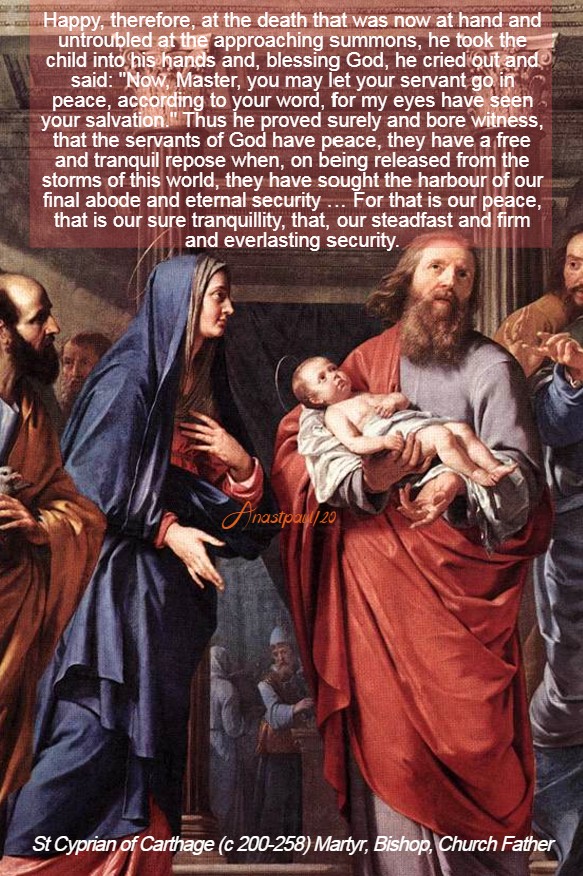
“Now, Master, you may let your servant go in peace ”- Luke 2:29
REFLECTION – “The kingdom of God is at hand” (Lk 21:31). The kingdom of God, beloved brethren, has begun to be at hand; the reward of life and the joy of eternal salvation and perpetual happiness and the possession of paradise once lost, are now coming with the passing of the world; now the things of heaven are succeeding those of earth; great things, small and eternal things, transitory. What place is there here for anxiety and worry? …
It is written that “the just man lives by faith” (Rm 1:17). If you are just and live by faith, if you truly believe in Jesus Christ, why do you, who are destined to be with Christ and secure in the promise of the Lord, not rejoice that you are called to Christ …? Take the example of Simeon, the just man who was truly just, who with full faith kept the commandments of God – when the answer had been given him from heaven that he would not die before he had seen Christ and when Christ as an infant had come into the temple with His mother, he knew in spirit that Christ was now born, concerning whom it had been foretold to him before and on seeing Him he knew, that he himself would quickly die.
Happy, therefore, at the death that was now at hand and untroubled at the approaching summons, he took the child into his hands and, blessing God, he cried out and said: “Now, Master, you may let your servant go in peace, according to your word, for my eyes have seen your salvation.” Thus he proved surely and bore witness, that the servants of God have peace, they have a free and tranquil repose when, on being released from the storms of this world, they have sought the harbour of our final abode and eternal security … For that is our peace, that is our sure tranquillity, that, our steadfast and firm and everlasting security.” – St Cyprian of Carthage (c 200-258) Martyr, Bishop, Church Father – On mortality, 2-3
PRAYER – God our Father, our human nature is the wonderful work of Your hands. Your Son took to Himself our manhood, grant us a share in His Sonship, that as co-heirs with Him, we may strive evermore obediently to gain our final home with the Blessed Virgin and all Your saints. Through Christ, our Lord, with the Holy Spirit, one God with You now and for evermore, amen.
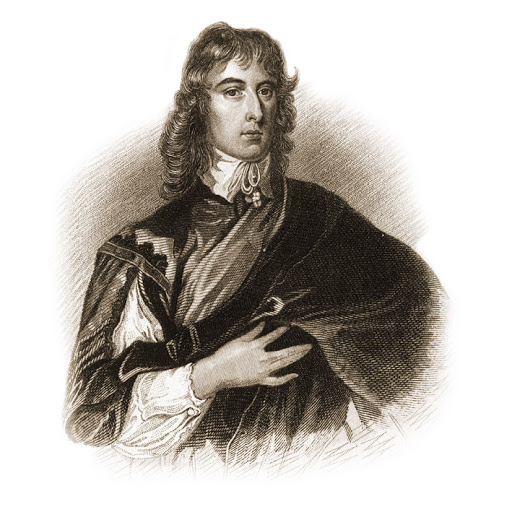
Saint of the Day – 29 December – Blessed William Howard (1614–1680) Martyr, Married Layman and Father, 1st Viscount Stafford – born on 30 November 1614 in Strand, London, England and died by being beheaded on 29 December 1680 on Tower Hill, London, England.
Engraved by Thomas Phillip Brown after the original by Sir Antony van Dyck, for ‘Portraits of Illustrious Personages of Great Britain’ by Edmund Lodge FSA.
William was the grandson of the Venerable Philip Howard, Earl of Arundel, fifth son of Earl Thomas (the first great art collector of England) and Uncle of Thomas Philip – Cardinal Howard. Brought up as a Catholic, he was made a Knight of the Bath, at the Coronation of Charles I, on 1 February 1626 and married Mary, sister of the last Baron Stafford, in October 1637; the title was revived for him on 12 September 1640 and he was immediately afterwards created a Viscount.
He is said to have joined the Royal army during the Civil War but perhaps erroneously, for in 1642 he was in Holland, attending the exiled Royal family and his mother and father. He was also employed by the Emperor Ferdinand in a missions to Flanders and Switzerland. After his father’s death on 4 October 1646, many painful quarrels with his nearest relatives ensued. The Howard properties in England having been sequestrated by Parliament, the family was much impoverished and William’s eldest surviving brother, Earl Henry Frederick, was induced to commence a series of unjust and vexatious lawsuits against his mother and practically robbed her of her dowry. William, as her representative, was involved in these painful and prolonged quarrels and even after both mother and brother had passed away, his cousins and their agents continued against him a quasi-persecution for several years.
The details of these transactions are obscure but it would seem that the Viscount was, under foreign law, twice actually arrested, at Heidelberg, in 1653 and at Utrecht in January 1656. In the latter case, he was acquitted with honour, though the charges, of which the particulars are not now known, were insulting and vexatious. In these troubles, his most dangerous opponents were perhaps Junius and other literary adherents of his father, who were claiming manuscripts and rarities from the Arundel Collections in payment of their debts, while Lord William successfully proved that those collections were not liable to such charges. After the Restoration in 1660, his rights were firmly established and his life within his large family circle must have been extremely happy. The brightest hours were perhaps those spent in conducting his nephew Philip to receive the Cardinal’s hat in Rome (1675).
Three years later, the infamous anti-Catholic Titus Oates and his abetters, included Lord Stafford in their list of Catholic Lords to be proscribed and eventually, he was put first upon the list. It has been supposed that this was done because his age, simplicity and the previous differences with other members of his family, suggested that he would prove comparatively easy prey. On 25 October, 1678, he was committed to the Tower and it was more than a year before it was decided to try him. Then the resolution was taken so suddenly that he had little time to prepare. The trial, before the House of Lords, lasted from 30 November to 7 December and was conducted with great solemnity. But no attempt was made to appraise the perjuries of Oates, Dugdale and Tuberville and the Viscount was, of course, condemned by 55 votes to 31.
It is sad to read that all his kinsmen but one (that one, however, the Lord Mowbray, with whom he had had many of the legal conflicts above here noticed) voted against him. His last letters and speeches are marked by a quiet dignity and a simple heroism, which give us a high idea of his character. Blessed William was condemned to execution by beheading.
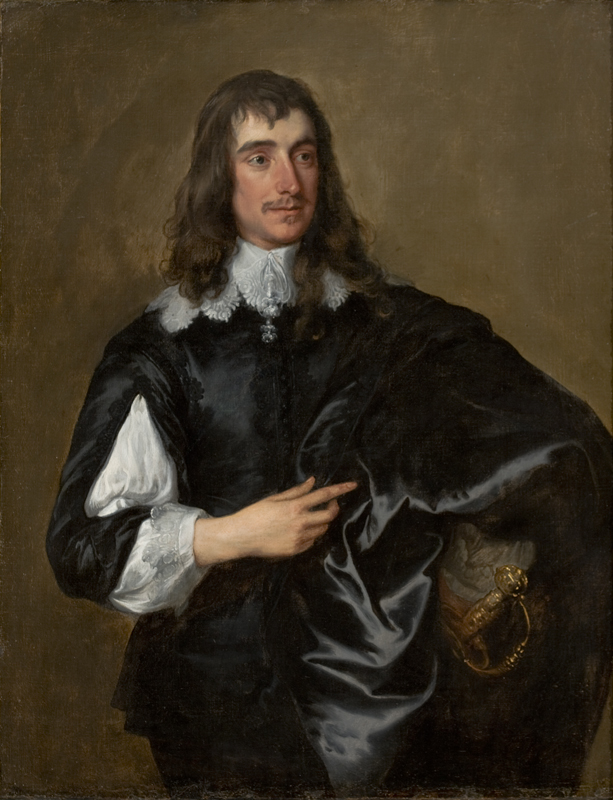
His fellow prisoner and confessor, Father Corker OSB, says: “He was ever held to be of a generous disposition, very charitable, devout, addicted to sobriety, inoffensive in words, a lover of justice.” A portrait of him, see below, by Sir Antony Van Dyck belongs to the Marquess of Bute.
Blessed William was Beatified on 15 December 1929 by Pope Pius XI.
St Aileran of Clonard St Albert of Gambron St Aproniano de Felipe González St David the King St Ebrulf of Ouche St Enrique Juan Requena St Florent of Bourges Bl Francis Ruiz St Girald of Fontenelle St Jacinto Gutiérrez Terciado Bl José Aparicio Sanz Bl José Perpiñá Nácher St Juan Bautista Ferreres Boluda St Libosus of Vaga St Marcellus the Righteous St Martinian of Milan Bl Paul Mary Bl Peter the Venerable St Quartillosa of Carthage St Thaddeus of Scythia St Trophimus of Arles St Trophimus of Ephesus Blessed William Howard (1614–1680) Martyr, Layman — Martyrs of North Africa – (8 saints): A group of Christians executed together for their faith. The only details to survive are eight names – Crescentius, Dominic, Honoratus, Lybosus, Primian, Saturninus, Secundus and Victor.
Martyrs of Rome – (3 saints): A group of Christians executed together for their faith. The only details to survive are three names – Boniface, Callistus and Felix.
Martyrs of Seoul – (7 saints): Additional Memorial – 20 September as part of the Martyrs of Korea. A group of seven lay woman in the apostolic vicariate of Korea who were martyred together. • Barbara Cho Chung-I • Barbara Ko Sun-I • Benedicta Hyong Kyong-Nyon • Elisabeth Chong Chong-Hye • Magdalena Han Yong-I • Magdalena Yi Yong-Dok • Petrus Ch’oe Ch’ang-Hub They were born in South Korea and were martyred by beheading on 29 December 1839 at the Small West Gate, Seoul, South Korea. They were Canonised on 6 May 1984 by St Pope John Paul II.
Martyred in the Spanish Civil War: Thousands of people were murdered in the anti-Catholic persecutions of the Spanish Civil War from 1934 to 1939. • Blessed Aproniano de Felipe González • Blessed Enrique Juan Requena • Blessed Jacinto Gutiérrez Terciado • Blessed Juan Bautista Ferreres Boluda
One Minute Reflection – 28 December – The Feast of the Holy Innocents – The Fourth Day of the Christmas Octave, Readings: 1 John 1:5-2:2, Psalm 124:2-5, 7-8, Matthew 2:13-18
When Herod realised that he had been deceived by the magi, he became furious. He ordered the massacre of all the boys in Bethlehem and its vicinity, two years old and under, in accordance with the time he had ascertained from the magi. – Matthew 2:16
REFLECTION – “The Apostle John said: “Whoever says he abides in Christ, ought to walk even as Christ walked” (1 Jn 2:6). Moreover, the blessed Apostle Paul exhorts and teaches us, saying: “We are God’s children but if children, then heirs of God and joint-heirs with Christ; if so be that we suffer with him that we may also be glorified together” (Rm 8:16f.) … Let us, beloved brethren, imitate righteous Abel, who initiated martyrdom, he being the first to be slain for righteousness’s sake (Gn 4:8) …; let us imitate the three children Ananias, Azarias and Misael, who … overcame the king by the power of faith (Dn 3) … What of the prophets whom the Holy Spirit quickened to a foreknowledge of future events? What of the Apostles whom the Lord chose? Since these righteous men were slain for righteousness’ sake, have they not taught us also to die?
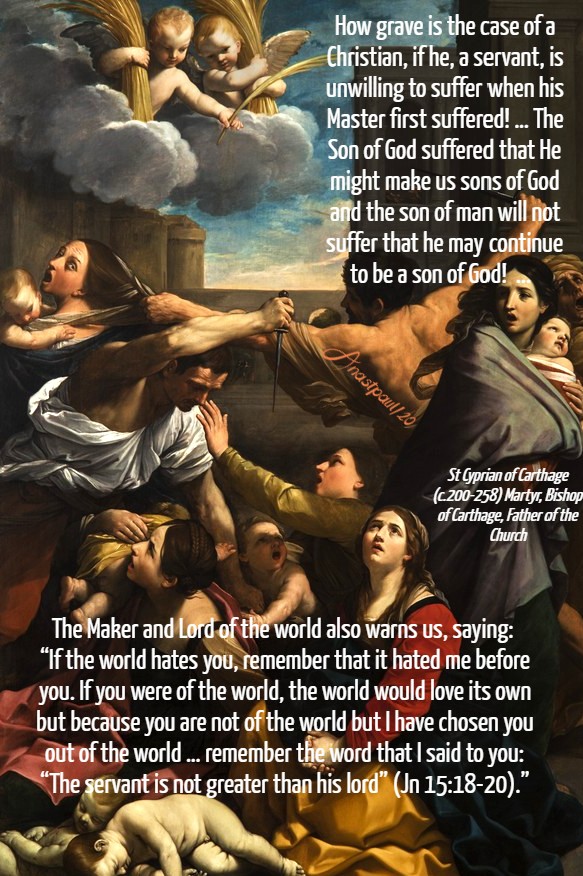
The nativity of Christ at once witnessed the martyrdom of infants, so that they who were two years old and under were slain for His name’s sake. An age, not yet fitted for the battle, appeared fit for the crown. That it might be manifest that they who are slain for Christ’s sake are innocent, innocent infancy was put to death for His name’s sake … How grave is the case of a Christian, if he, a servant, is unwilling to suffer when his Master first suffered! … The Son of God suffered that He might make us sons of God and the son of man will not suffer that he may continue to be a son of God! … The Maker and Lord of the world also warns us, saying: “If the world hates you, remember that it hated me before you. If you were of the world, the world would love its own but because you are not of the world but I have chosen you out of the world … remember the word that I said to you: “The servant is not greater than his lord” (Jn 15:18-20).” – St Cyprian of Carthage (c.200-258) Martyr, Bishop of Carthage, Father of the Church – Letter 55
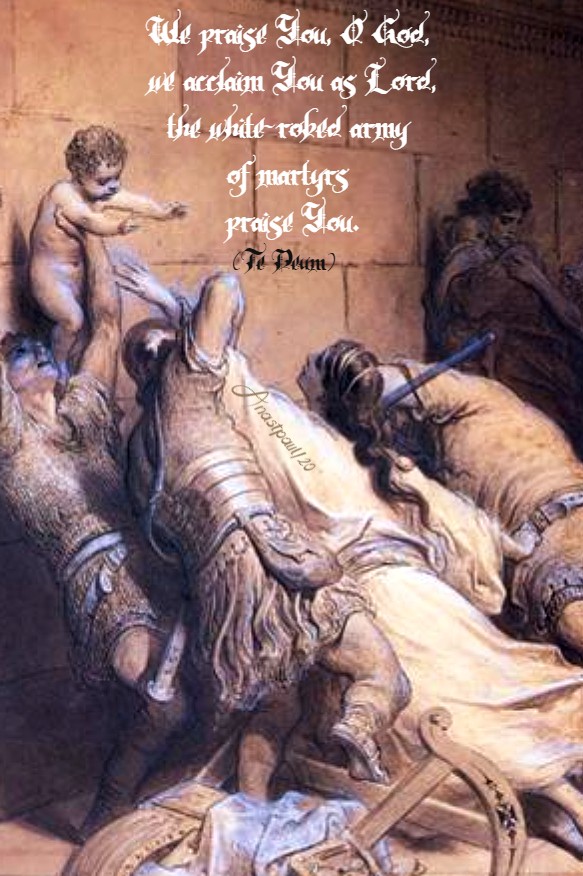
PRAYER – We praise You, O God, we acclaim You as Lord, the white-robed army of martyrs praise You. (from the Te Deum).
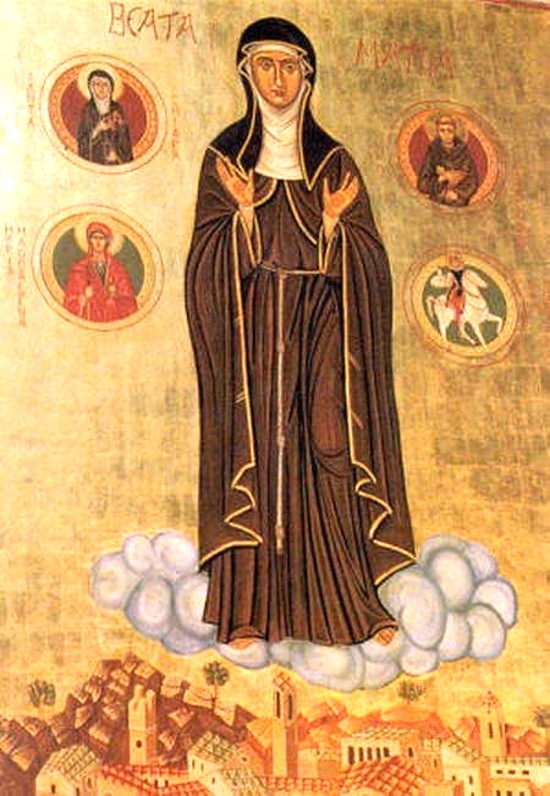
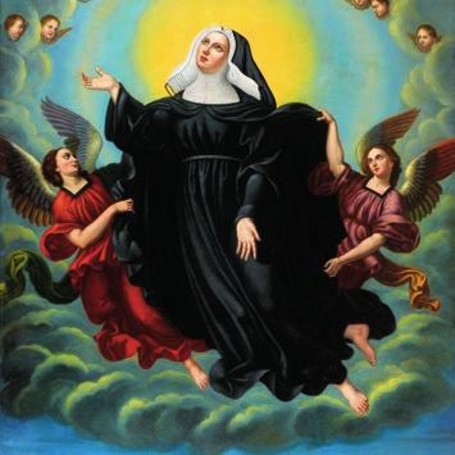
Saint of the day – 28 December – Blessed Matthia de Nazzarei OSC (1253-1319) Virgin, Nun of the Poor Clares, Abbess, gifted with the charism of miracles and prophecy – born on 1 March 1253 in Matelica, Macerata, Italy and died on 28 December 1319 in Matelica, Macerata, Italy of natural causes. Also known as Mattia, Matthias Nazarei. Her body is incorrupt. Patronage – Matelica, Italy.
Matthia’s life mirrored that of St Clare in many respects besides simply sharing the same life and charism. She ran away to a Monastery at a tender age, immediately sheared her tresses and donned the habit, resisted the drastic attempts of her relatives to remove her and served as Abbess for 46 years.
Blessed Matthia, whose name is derived from the Hebrew meaning “given by God,” was born to aristocratic Italian parents in 1253. Perhaps the significance of this year escaped her parents at the time but every Poor Clare remembers, this was the year St Clare died. Little did anyone know that this little baby would grow up to emulate that great but simple Abbess.
An only child, Matthia grew up, according to one account, “humble and intelligent,” a rare and attractive combination. She preferred a simple life and rejected all pomp of court life that demonstrated what she felt was excessive wealth. Naturally, her parents hoped to arrange a successful marriage in the world for her. But she spent long hours in the Chapel of the local Benedictine Monastery and eventually decided this life of penance was her calling.
At the age of eighteen a marriage was arranged for her. When she heard this, she left her home and fled to the Benedictine Convent of Santa Maddalena at Matalica. It was there that she became a Benedictine nun and served as its Abbess for four decades from 1279.
She feared her father’s retribution for her fleeing and remained hidden until he found her. But her father was so impressed with her that he allowed her to remain and the two reconciled. She took her solemn profession on 10 August 1271. The Convent later adopted the rule of the Poor Clares.
Considerable work was done during her term – the Convent and Chapel were both rebuilt – but the interior work she did for souls by her charitable service far surpassed any earthly accomplishment, however monumental. She also possessed the charisms of healing, prophecy and even turning spoiled wine into the best vintage.
When her end drew near, she told her sisters, “It is time to go to the Father.” Then after exhorting her community to faithfulness to their chosen way of life, she said, “God is love!” and commended her soul to God. She died on 28 December 1319 in Matelica. The Convent was renamed “Beata Matthias” in her honour in 1758. She was reinterred near the high altar of her Convent Chapel and was exhumed in 1536. It was found incorrupt and also was seen sweating. The remains were again exhumed in 1756 and still found to be incorrupt and is on display for veneration in the Chapel.
She was Beatified on 27 July 1765 after developing a pious following. Napoleon’s troops stole her incorrupt body in 1811 but it was returned a few months later to Matelica, where it rests to this day. In 1972, a sample from the red liquid that periodically comes forth from her body underwent a hematological study. It was found to be human blood.
Many miracles have been worked through this blood over the centuries. Today a case has been ratified locally, on 14 November 2014 and has now been sent to the Congregation of the Causes of Saints and is being examined.
BL Claudia Weinhardt St Conindrus St Domitian the Deacon St Domnio of Rome St Eutychius St Gowan of Wales Bl Gregory of Cahors Bl Hryhorii Khomyshyn St Iolande of Rome Bl Johannes Riedgasser Blessed Matthia de Nazzarei OSC (1253-1319) Virgin, Nun Bl Nicolas Mello Bl Otto of Heidelberg St Romulus St Simon the Myroblite St Theonas of Alexandria St Theodore of Tabenna St Troadius of Pontus — 20,000 Martyrs of Nicomedia: 20,000 Christians who were murdered during in 303 in Nicomedia, Bithynia (modern Izmit, Turkey) during the persecutions of Diocletian. Many of them were killed en masse when they were ordered, during Christmas Mass, to sacrifice to idols; when they refused, they were locked in the churches and the buildings burned around them. We know some details of a few of them, but most are known only to God. The names we have are – Agape, Anthimos, Domna, Domna, Dorotheus, Esmaragdus, Eugene, Euthymius, Glykerios, Gorgonius, Hilary, Indes, Mardonius, Mardonius, Maximus, Migdonius, Migdonus, Peter, Peter, Theophila, Theophilus and Zeno. 303 in Nicomedia, Bithynia (modern Izmit, Turkey).
Martyrs of Africa – (3 saints): Three Christians murdered together in Africa for their faith. The only details to survive are their names – Castor, Rogatian and Victor.
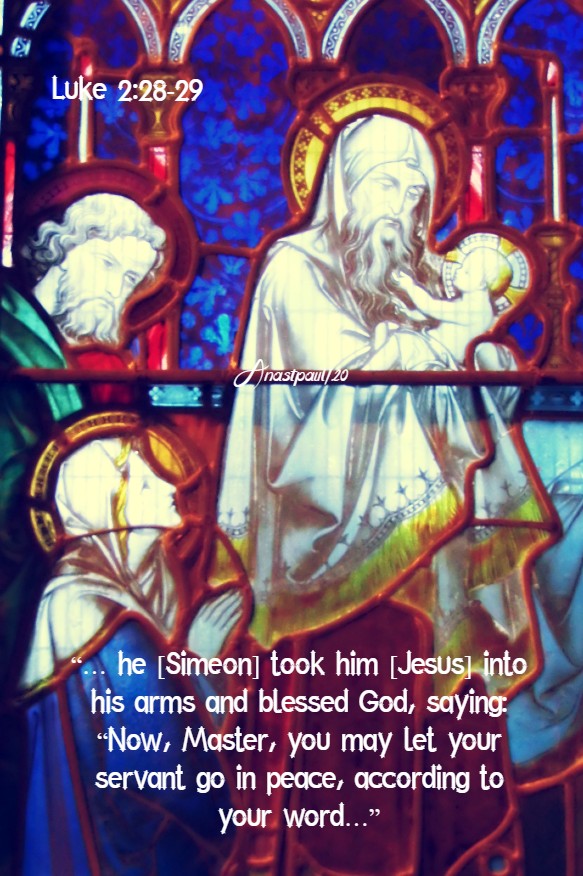
“… he [Simeon] took him [Jesus] into his arms and blessed God, saying: “Now, Master, you may let your servant go in peace, according to your word…” – Luke 2:28-29
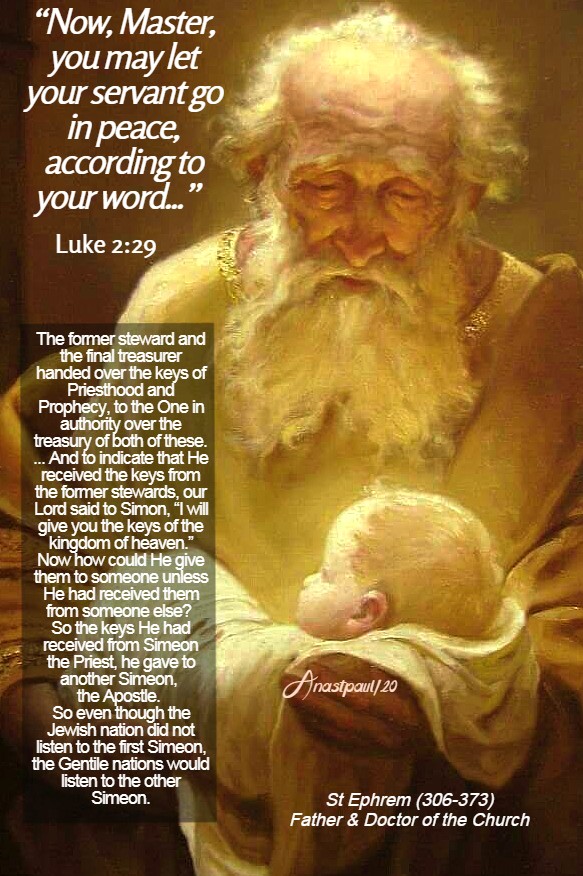
REFLECTION – “The Son came to the servant not to be presented by the servant but so that, through the Son, the servant might present to his Lord, the priesthood and prophecy that had been entrusted to his keeping. Prophecy and priesthood, which had been given through Moses, were both passed down and came to rest on Simeon. He was a pure vessel who consecrated himself, so that, like Moses, he too could contain them both. These were feeble vessels that accommodated great gifts — gifts that one might contain because of their goodness but that many cannot accept because of their greatness. Simeon presented our Lord and in Him he presented the two gifts he had, so that what had been given Moses in the desert, was passed on by Simeon, in the temple. Because our Lord is the vessel in which all fullness dwells, when Simeon presented Him to God, He poured out both of these upon him – the priesthood from his hands and prophecy from his lips. The priesthood had always been on Simeon’s hands, because of ritual purifications. Prophecy, in fact, dwelt on his lips because of revelations. When both of these saw the Lord of both of these, they were combined and were poured into the Vessel that could accommodate them both, in order to contain Priesthood, Kingship and Prophecy. That Infant who was wrapped in swaddling clothes by virtue of His goodness, was also dressed in Priesthood and Prophecy by virtue of His Majesty. Simeon dressed Him in these and presented Him to the One who had dressed Him in swaddling clothes. Then, as the old man returned Him to his mother, he returned the Priesthood with Him. And when he prophesied to her about Him: “This child is destined for the downfall and rising,” he gave her Prophecy with him as well. So Mary took her firstborn and left. Although He was visibly wrapped in swaddling clothes, He was invisibly clothed with Prophecy and Priesthood. Thus, what Moses had been given, was received from Simeon and it remained and continued with the Lord of these two gifts. The former steward and the final treasurer handed over the keys of Priesthood and Prophecy, to the One in authority over the treasury of both of these. This is why His Father gave Him the Spirit without measure because all measures of the Spirit are under His hand. And to indicate that He received the keys from the former stewards, our Lord said to Simon, “I will give you the keys of the kingdom of heaven.” Now how could He give them to someone unless He had received them from someone else? So the keys He had received from Simeon the Priest, he gave to another Simeon, the Apostle. So even though the Jewish nation did not listen to the first Simeon, the Gentile nations would listen to the other Simeon.” – St Ephrem (306-373) Father and Doctor of the Church –Homily on Our Lord, 53
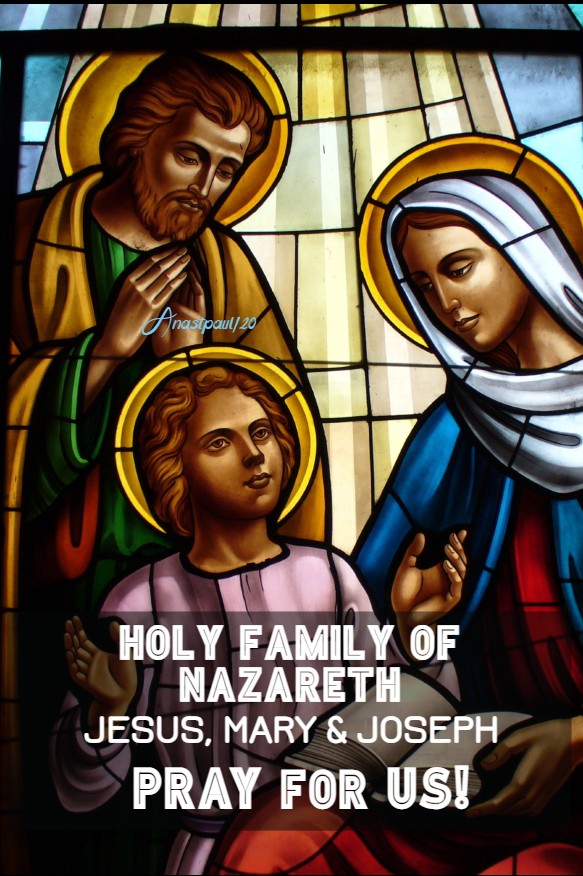
PRAYER – God, our Father, in the Holy Family of Nazareth, You have given us the true model of a Christian home. Grant, that by following Jesus, Mary and Joseph in their love for each other and in the example of their family life, we may come to Your home of peace and joy. We make our prayer through our Lord Jesus Christ, Your Son Who lives and reigns with You and the Holy Spirit, God, now and forever, amen.
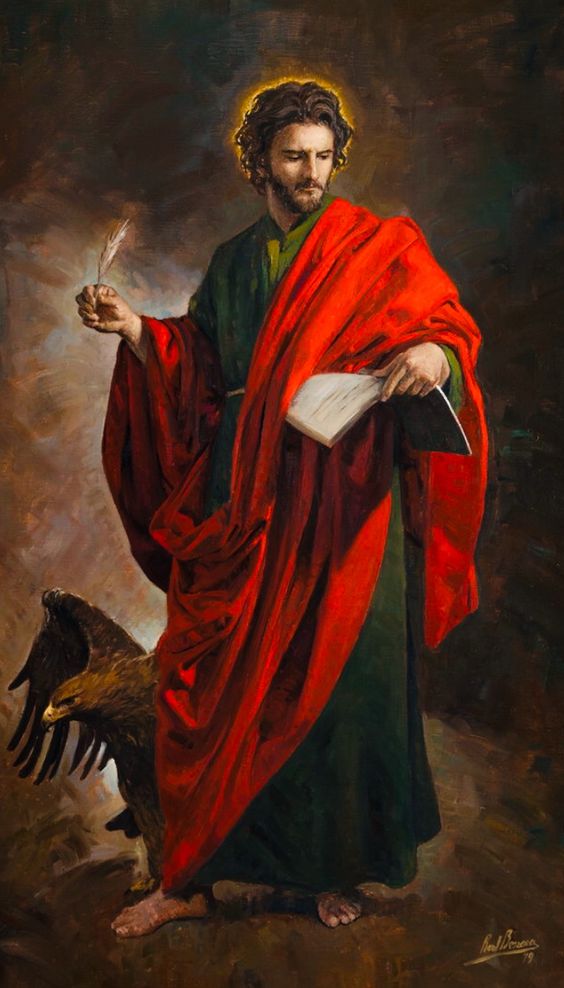
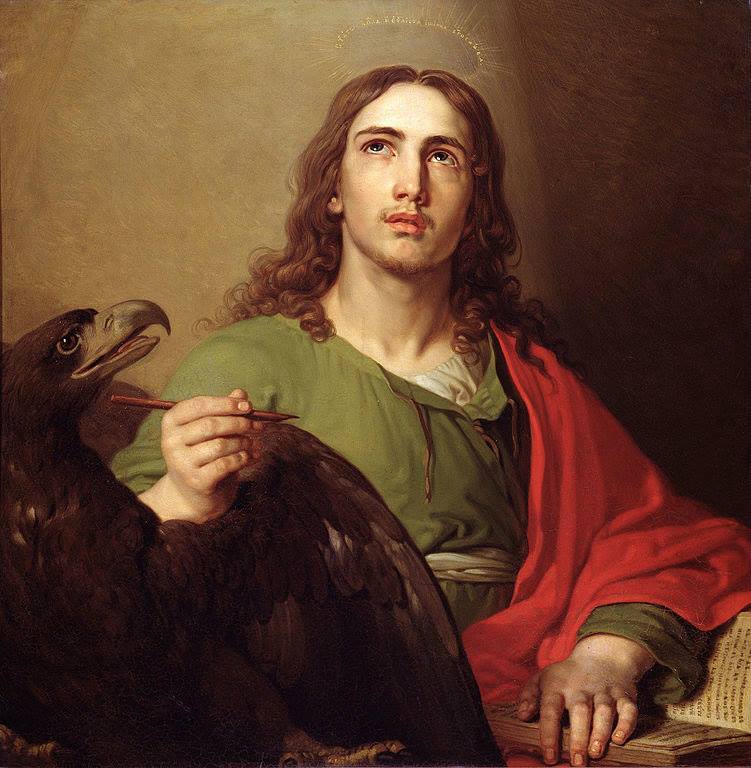
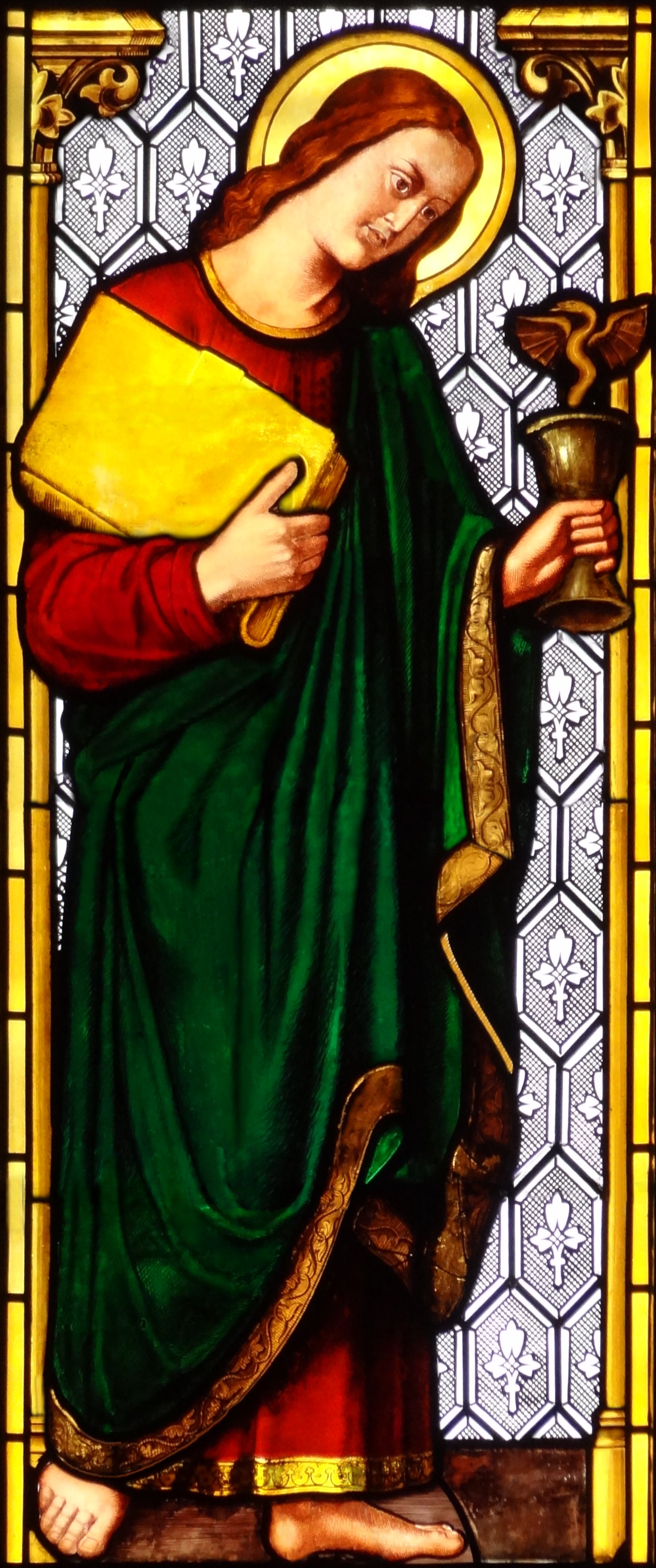
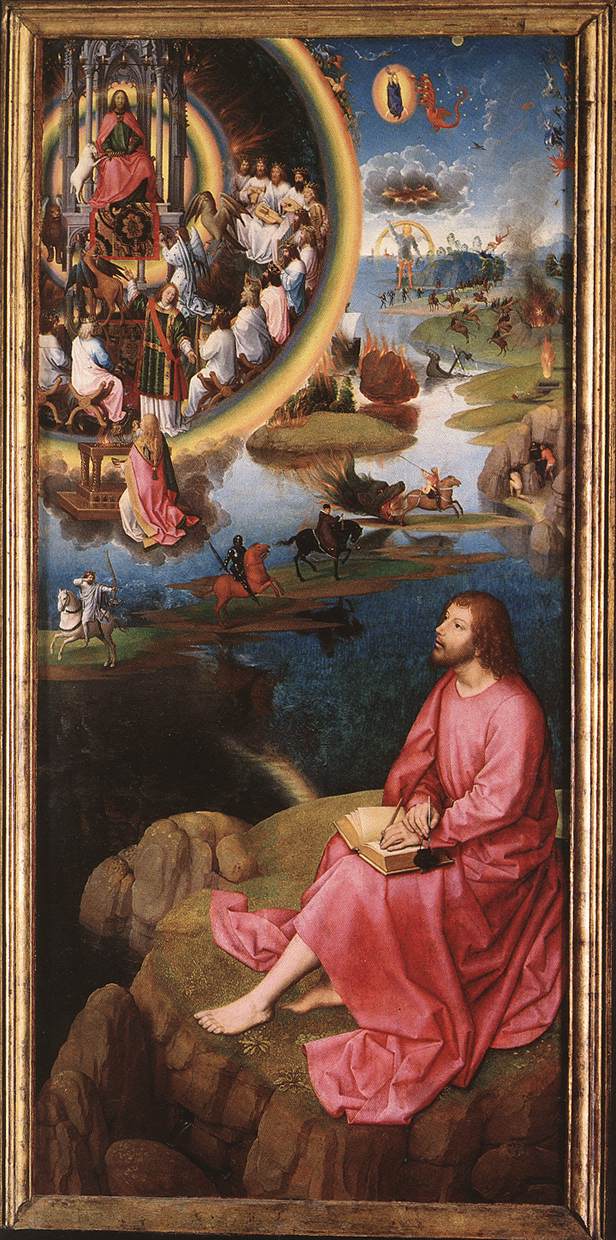
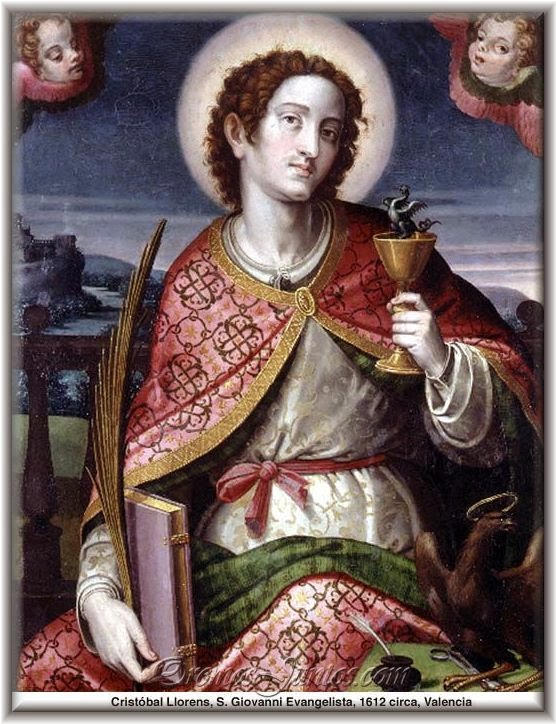
Saint of the Day – 27 December – St John the Apostle and Evangelist. Patronages – • against burns; burn victims• against epilepsy• against foot problems• against hailstorms• against poisoning• art dealers• authors, writers• basket makers• bookbinders• booksellers• butchers• compositors• editors• engravers• friendships• glaziers• government officials• harvests• lithographers• notaries• painters• papermakers• publishers• saddle makers• scholars• sculptors• tanners• theologians• typesetters• vintners• Asia Minor (proclaimed on 26 October 1914 by Pope Benedict XV)• 6 Diocese• 7 Cities.
The days following Christmas are full of symbolic meaning, as on 26 December we honour the first Martyr, St Stephen, who shed his blood for Jesus. 27 December, honours St John the Evangelist, the Disciple of Jesus who wrote the Gospel of John and the book of Revelation. Interestingly enough, he is the only Gospel writer to omit a narrative of Jesus’ birth. Based on this fact alone, it seems strange to include him during the Octave of Christmas. What is the Church’s reason behind this choice? Servant of God, Dom Prosper Guéranger in his Liturgical Year, points to St John’s pure chastity and his focus on the Divinity of Christ, as the reasons why he is honoured now at the Crib of Christ.
Dom Prosper Guéranger OSB (1805-1875)
The Disciple Whom Jesus Loved, the Eagle
“Nearest to Jesus’ Crib, after Stephen, stands John, the Apostle and Evangelist. It was only right, that the first place should be assigned to him, who so loved his God, that he shed his blood in his service; for, as this God Himself declares, greater love than this hath no man, that he lay down his life for his friends [1 John, 15:13] and Martyrdom has ever been counted, by the Church, as the greatest act of love and as having, consequently, the power of remitting sins, like a second Baptism. But, next to the sacrifice of Blood, the noblest, the bravest and, which most wins the heart of Him, who is the Spouse of souls, is the sacrifice of Virginity. Now, just as St Stephen is looked upon as the type of Martyrs, St John is honoured as the Prince of Virgins. Martyrdom won for Stephen the Crown and palm; Virginity merited for John most singular prerogatives, which, while they show how dear to God, is holy Chastity, put this Disciple among those, who, by their dignity and influence, are above the rest of men.
St. John was of the family of David, as was our Blessed Lady. He was, consequently, a relation of Jesus. This same honour belonged to St James the Greater, his Brother; as also to St James the Less and St Jude, both Sons of Alpheus. When our Saint was in the prime of his youth, he left, not only his boat and nets, not only has lather Zebedee but, even his betrothed, when everything was prepared for the marriage. He followed Jesus and never once looked back. Hence, the special love which our Lord bore him. Others were Disciples or Apostles, John was the Friend, of Jesus. The cause of this our Lord’s partiality, was, as the Church tells us in the Liturgy, that John had offered his Virginity to the Man-God. Let us, on this his Feast, enumerate the graces and privileges that came to St John from his being The Disciple whom Jesus loved.
This very expression of the Gospel, which the Evangelist repeats several times — The Disciple whom Jesus loved [John, 13:23, 19:26, 21:7, 21:20] — says more than any commentary could do. St Peter, it is true, was chosen by our Divine Lord, to be the Head of the Apostolic College and the Rock whereon the Church was to be built – he, then, was honoured most but St John was loved most. Peter was bid to love more than the rest loved and he was able to say, in answer to Jesus’ thrice repeated question, that he did love Him in this highest way and yet, notwithstanding, John was more loved by Jesus than was Peter himself, because his Virginity deserved this special mark of honour.
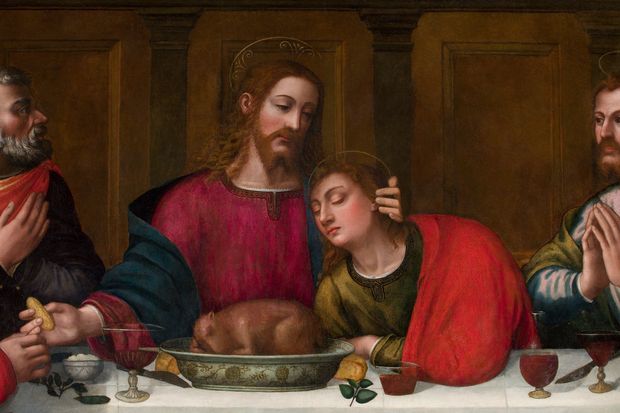
Chastity of soul and body brings him, who possesses i,t into a sacred nearness and intimacy with God. Hence it was, that at the Last Supper – that Supper, which was to be renewed on our Altars, to the end of the world, in order to cure our spiritual infirmities and give life to our souls – John was placed near to Jesus, nay, was permitted, as the tenderly loved Disciple, to lean his head upon the Breast of the Man-God. Then it was, that he was filled and from their very Fountain, with Light and Love, it was both a recompense and a favour and became the source of two signal graces, which make St John an object of special reverence to the whole Church.
Divine wisdom, wishing to make known to the world, the Mystery of the Word and commit to Scripture, those profound secrets, which, so far, no pen of mortal had been permitted to write — the task was put upon John. Peter had been crucified, Paul had been beheaded and the rest of the Apostles had laid down their lives in testimony of the Truths they had been sent to preach to the world; John was the only one left in the Church. Heresy had already begun its blasphemies against the Apostolic Teachings; it refused to admit the Incarnate Word as the Son of God, Consubstantial to the Father. John was asked by the Churches to speak and he did so in language heavenly above measure. His Divine Master had reserved to this, his Virgin-Disciple, the honour of writing those sublime Mysteries, which the other Apostles had been commissioned only to teach — THE WORD WAS GOD, and this WORD WAS MADE FLESH for the salvation of mankind.
Thus did our Evangelist soar, like the Eagle, up to the Divine Sun and gaze upon Him with undazzled eye, because his heart and senses were pure and, therefore, fitted for such vision of the uncreated Light. If Moses, after having conversed with God in the cloud, came from the divine interview with rays of miraculous light encircling his head – how radiant must have been the face of St John, which had rested on the very Heart of Jesus, in whom are hid all the treasures of wisdom and knowledge! [Col. 2:3] how sublime his writings! how divine his teaching! Hence, the symbol of the Eagle, shown to the Prophet Ezechiel, [Ezechiel 1:10, 10:14] and to St John himself in his Revelations, [Apoc. 4:7] has been assigned to him by the Church and, to this title of The Eagle has been added, by universal tradition, the other beautiful name of Theologian. This was the first recompense given by Jesus to his Beloved John, a profound penetration into divine Mysteries. The second was the imparting to him a most ardent charity, which was equally a grace consequent upon his angelic purity, for purity unburdens the soul from grovelling egotistic affections and raises it to a chaste and generous love. John had treasured up in his heart the Discourses of his Master, he made them known to the Church and, especially, that divine one of the Last Supper, wherein Jesus had poured forth His whole Soul to His own, whom he had always tenderly loved but most so, at the end [John, 13:1]. He wrote his Epistles and Charity is his subject – God is Charity — he that loveth not, knoweth not God — perfect Charity casteth out fear — and so on throughout, always on Love. During the rest of his life, even when so enfeebled by old age as not to be able to walk, he was forever insisting upon all men loving each other, after the example of God, who had loved them and so loved them! Thus, he that had announced more clearly than the rest of the Apostles the divinity of the Incarnate Word, was by excellence, the Apostle of that divine Charity, which Jesus came to enkindle upon the earth.
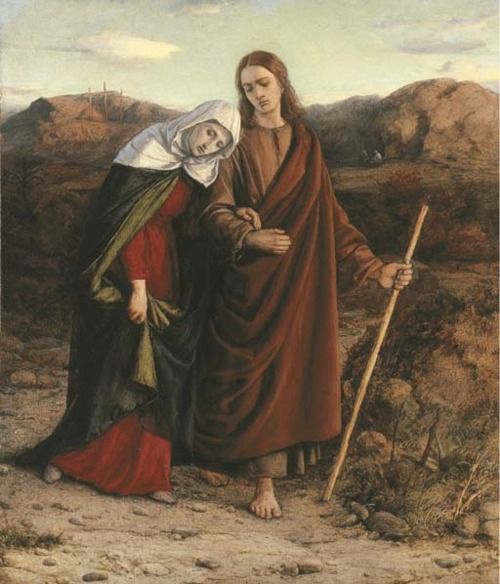
But, our Lord had a further gift to bestow and it was sweetly appropriate to the Virgin-Disciple. When dying on His cross, Jesus left Mary upon this earth. Joseph had been dead now some years. Who, then, shall watch over His Mother? who is there worthy of the charge? Will Jesus send His Angels to protect and console her? — for, surely, what man could ever merit to be to her as a second Joseph? Looking down, he sees the Virgin-Disciple standing at the foot of the Cross – we know the rest, John is to be Mary’s Son — Mary is to be John’s Mother. Oh! wonderful Chastity, that wins from Jesus such an inheritance as this! Peter, says St Peter Damian, shall have left to him the Church, the Mother of men; but John, shall receive Mary, the Mother of God, whom he will love as his own dearest Treasure and to whom, he will stand in Jesus’ stead; whilst Mary will tenderly love John, her Jesus’ Friend, as her Son.
The Blessed Virgin in the House of St John by Dante Gabriel Rossetti, 1859
Can we be surprised after this, that St John is looked upon by the Church as one of her greatest glories? He is a Relative of Jesus in the flesh; he is an Apostle, a Virgin, the Friend of the Divine Spouse, the Eagle, the Theologian, the Son of Mary; he is an Evangelist, by the history he has given of the Life of his Divine Master and Friend; he is a Sacred Writer, by the three Epistles he wrote under the inspiration of the Holy Ghost; he is a Prophet, by his mysterious Apocalypse, wherein are treasured the secrets of time and eternity. But, is he a Martyr? Yes, for if he did not complete his sacrifice, he drank the Chalice of Jesus [Matt. 20:22], when, after being cruelly scourged, he was thrown into a caldron of boiling oil, before the Latin Gate, at Rome. He was, therefore, a Martyr in desire and intention, though not in fact. If our Lord, wishing to prolong a life so dear to the Church, as well as to show how he loves and honours Virginity, — miraculously stayed the effects of the frightful punishment, St John had, on his part, unreservedly accepted Martyrdom.
Such is the companion of Stephen at the Crib, wherein lies our Infant Jesus. If the Protomartyr dazzles us with the robes he wears of the bright scarlet of his own blood — is not the virginal whiteness of John’s vestment fairer than the untrod snow? The spotless beauty of the Lilies of Mary’s adopted Son and the bright vermilion of Stephen’s Roses — what is there more lovely than their union? Glory, then, be to our New-Born King, whose court is tapestried with such heaven-made colours as these! Yes, Bethlehem’s Stable is a very heaven on earth and we have seen its transformation. First, we saw Mary and Joseph alone there — they were adoring Jesus in his Crib; then, immediately, there descended a heavenly host of Angels singing the wonderful Hymn; the Shepherds soon followed, the humble simple-hearted Shepherds; after these, entered Stephen the Crowned and John the Beloved Disciple; and, even before there enters the pageant of the devout Magi, we shall have others coming in and there will be, each day, grander glory in the Cave and gladder joy in our hearts. Oh! this Birth of our Jesus! Humble as it seems, yet, how divine! What King or Emperor ever received, in his gilded cradle, honours like these shown to the Babe of Bethlehem? Let us unite our homage with that given him by these the favoured inmates of his court. Yesterday, the sight of the Palm in Stephen’s hand animated us and we offered to our Jesus the promise of a stronger Faith: to-day, the Wreath, that decks the brow of the Beloved Disciple, breathes upon the Church the heavenly fragrance of Virginity — an intenser love of Purity must be our resolution and our tribute to the Lamb.
Feast of the Holy Family+2020: Today’s Feast is held on the Sunday between Christmas and New Year’s Day. If both are Sundays, the Feast is celebrated on 30 December.
Today is the Feast day of the Holy Family but also every family’s feast day, since the Holy Family is the Patron and model of all Christian families. Today should be a huge family feast, since it is devoted entirely to the Holy Family as a model for the Christian family life. As Rev. Edward Sutfin states:
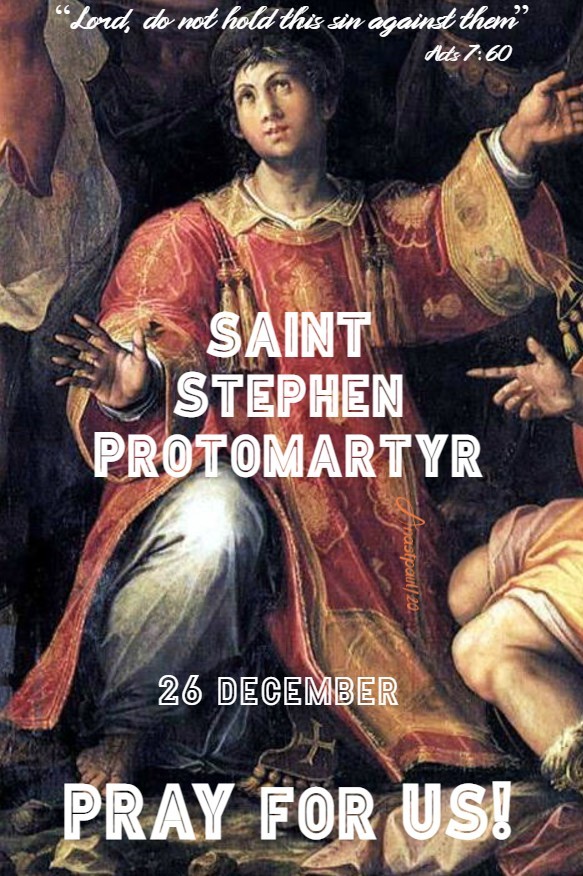
Quote/s of the Day – 26 December – Feast of St Stephen the ProtoMartyr and The Second Day in the Christmas Octave
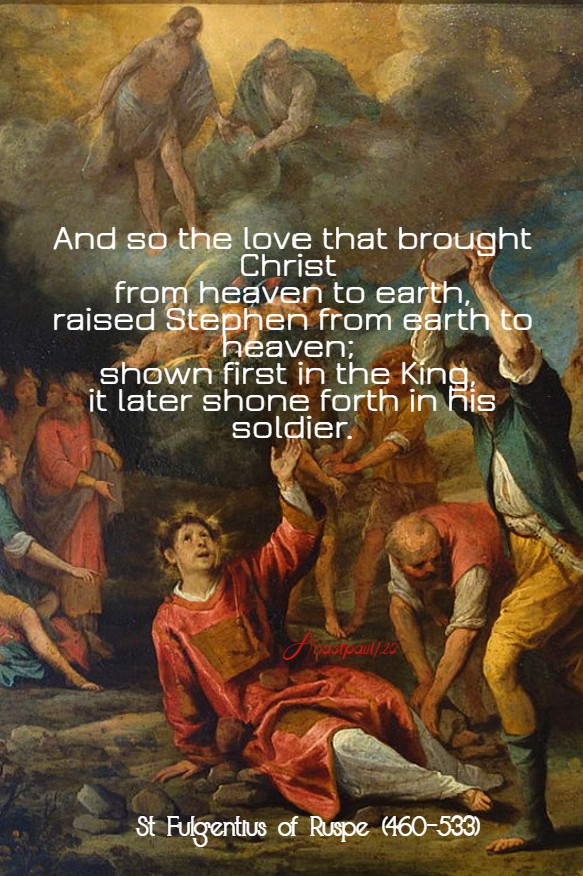
“And so the love that brought Christ from heaven to earth, raised Stephen from earth to heaven; shown first in the King, it later shone forth in his soldier.”
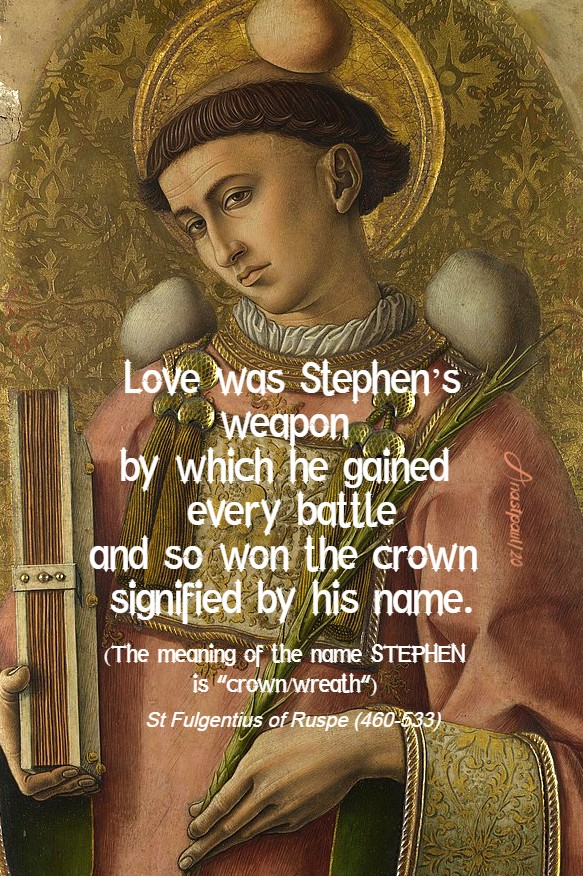
“Love was Stephen’s weapon by which he gained every battle and so won the crown signified by his name.” (The meaning of the anme STEPHEN is “crown/wreath”)
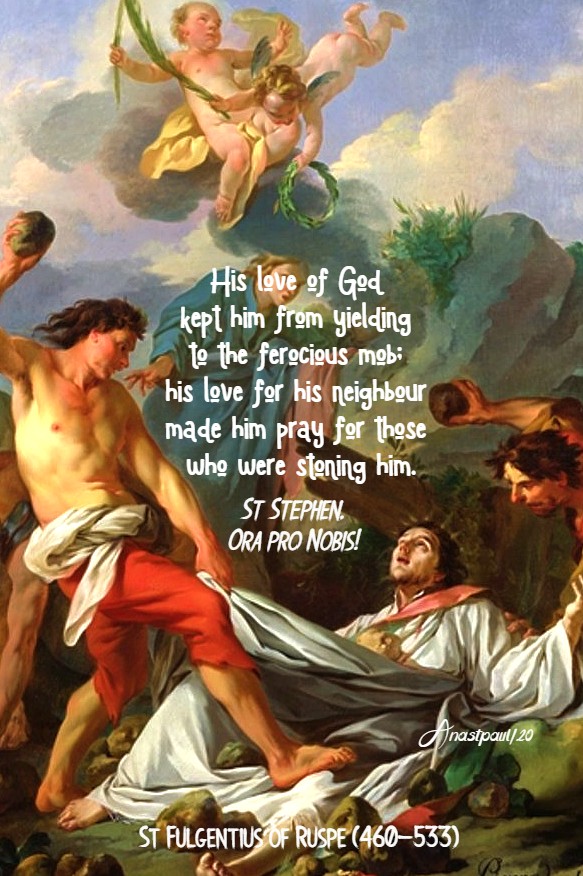
“His love of God kept him from yielding to the ferocious mob; his love for his neighbour made him pray for those who were stoning him.”
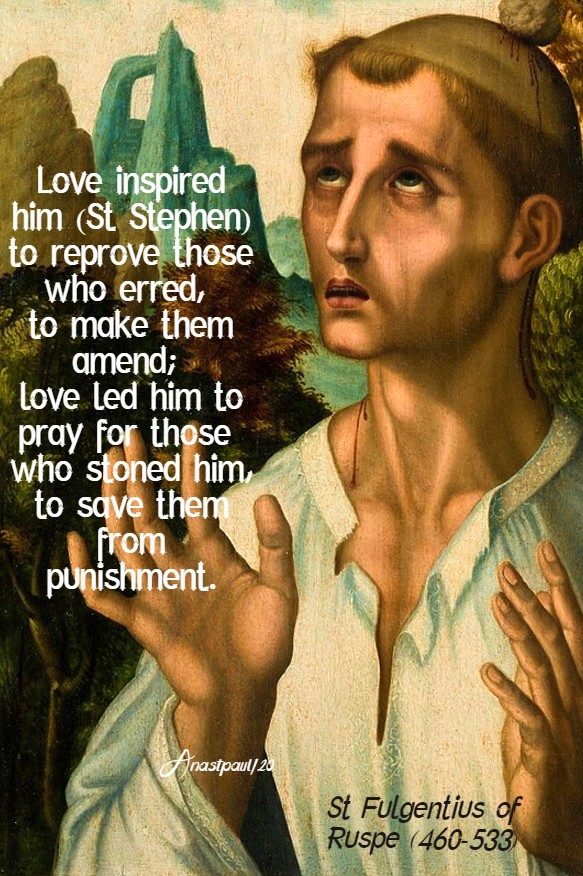
“Love inspired him to reprove those who erred, to make them amend; love led him to pray for those who stoned him, to save them from punishment.”
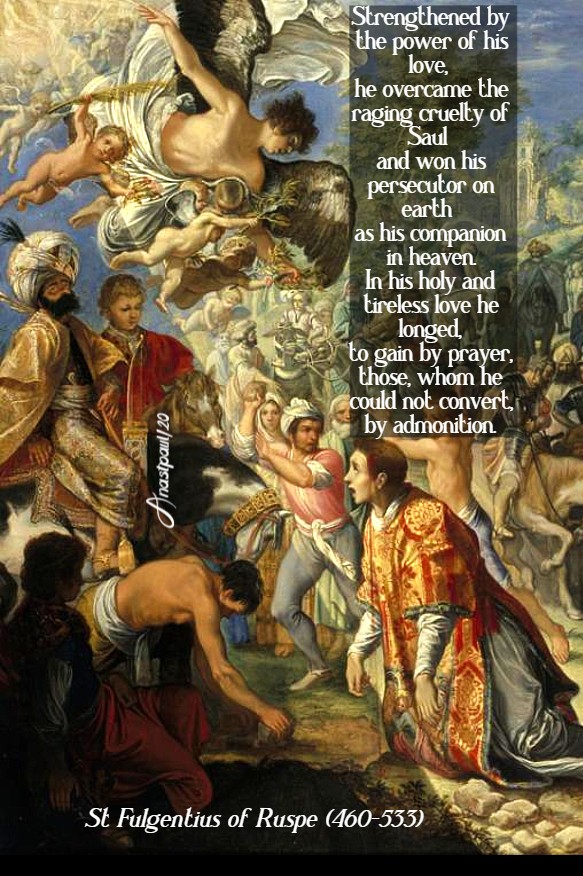
“Strengthened by the power of his love, he overcame the raging cruelty of Saul and won his persecutor on earth as his companion in heaven. In his holy and tireless love he longed, to gain by prayer, those, whom he could not convert, by admonition.”
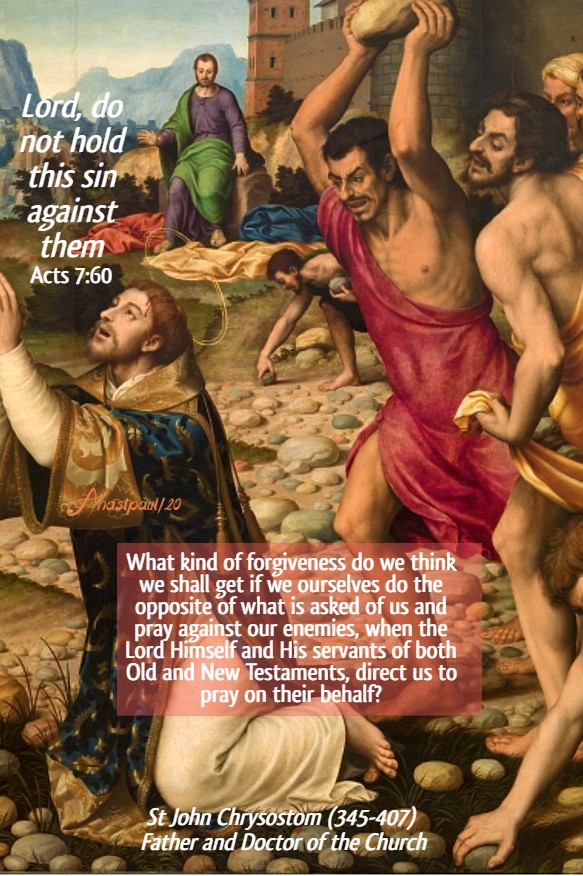
“Lord, do not hold this sin against them” – Acts 7:60
REFLECTION – “Let us imitate our Lord and pray for our enemies … He was crucified yet, at the same time, prayed to His Father for the sake of those who were crucifying Him. But how could I possibly imitate our Lord, one might ask? If you want to, you can. If you weren’t able to do it how could He have said: “Learn from me for I am meek and humble of heart”? (Mt 11:29) …
If you have difficulty in imitating our Lord, at least imitate him who is also His servant, his deacon. I would speak of Stephen. Just as Christ, in the midst of those crucifying Him, without considering the cross, without considering His own predicament, pleaded with the Father on behalf of His tormentors (Lk 23:34), so His servant, surrounded by those who were stoning him, attacked by all, crushed beneath a hail of stones and without taking any account of the suffering they were causing him, said: “Lord, do not hold this sin against them” (Acts 7:60). Do you see how the Son spoke and how His servant prayed? The former said: “Father, forgive them for they know not what they do,” and the latter said: “Lord, do not hold this sin against them.” Moreover, to make us realise better the fervour with which he was praying, he did not just pray as he stood beneath the blows of the stones but he spoke on his knees with sincerity and compassion …
Christ said: “Father, forgive them for they know not what they do.” Stephen cried out: “Lord, do not hold this sin against them.” Paul, in his turn, said: “I offer up this sacrifice for my brethren, my kin according to race” (cf. Rm 9:3). Moses said: “If you would only forgive their sin! And if you will not, then strike me out of the book that you have written!” (Ex 32:32). David said: “May your hand fall on me and my kindred,” (2 Sam 24:17). … What kind of forgiveness do we think we shall get if we ourselves do the opposite of what is asked of us and pray against our enemies, when the Lord Himself and His servants of both Old and New Testaments, direct us to pray on their behalf?” – St John Chrysostom (345-407) Father and Doctor of the Church – Sermon for Good Friday “The Cross and the bandit”
PRAYER – Grant us Your Grace, Lord God Almighty, to practise what we worship. Teach us to love our enemies and to pray for those who persecute us. As we keep the feast of Saint Stephen, may we learn from him, who learned from You and prayed, even for the men who stoned him to death. Through Christ our Lord, with the Holy Spirit, God now and forever, amen.
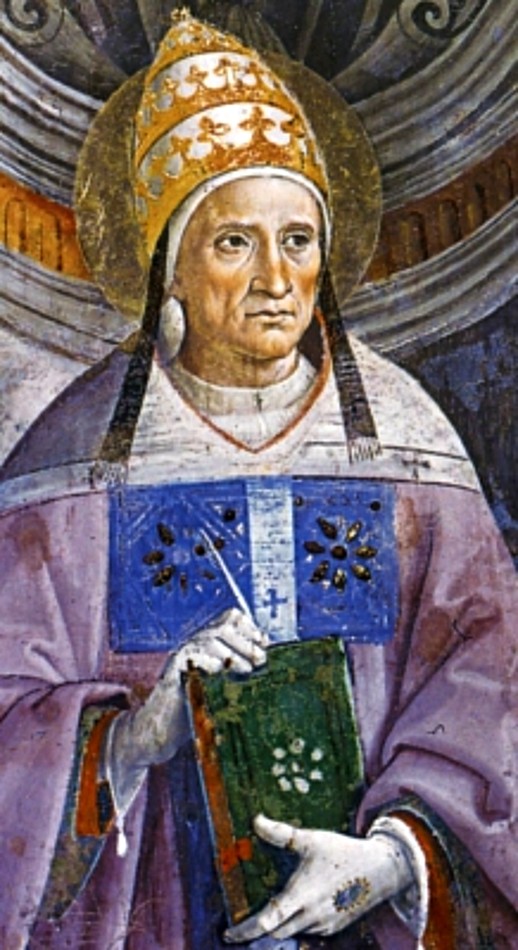
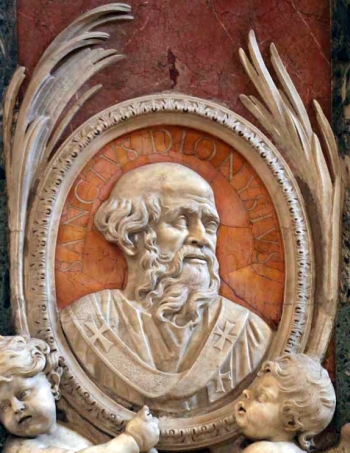
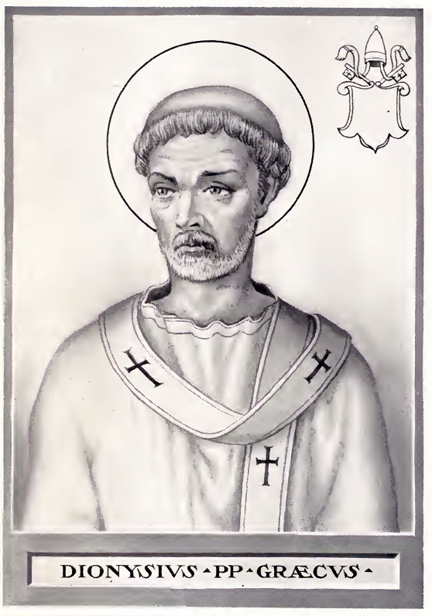
Saint of the Day – 26 December – St Pope Dionysius (Died 268) Bishop of Rome from 22 July 259 to his death on 26 December 268. According to early Church records, Dionysius was the first pope not Martyred for his Faith.
Historians know very little about the early life of Dionysius except that he was Greek and Italian. Though his family came from Greece, he was born in Italy sometime around 200. Some believe that he was born in the small town of Terra Nova but others think that he was born in Magna Graecia. During his early years, he used the name Dionusius, which he changed to Dionysius upon becoming Pope.
Dionysius was not the first man chosen for the next Pope after the death of Sixtus II. Pope Sixtus II was Martyred as were many other Christians at the time. It took nearly a year before Dionysius became the Pope and the Bishop of Rome.
Pope Dionysius had an easier time than Sixtus II did, mainly because of the murder of Emperor Valerian. Valerian was known for the persecution of Christians but the King of Persia issued orders in 260 that led to his capture and murde. Gallienus then became Emperor and issued orders that called for the tolerance of Christians. The new Emperor helped rebuild churches and allowed Christians to practice again. This period became known as the Little Peace of the Church, which lasted for nearly four decades.
Though his predecessor ruled for less than one year, Pope Dionysius reigned for more than nine years and a total of 3,445 days. He was likely in his late 50s when he assumed the throne and in his late 60s when he died. Due to his age, many historians believe that he died of old ages or natural causes. As with previous popes, the Church had his body interred in the Cemetery of Callistus. Many recognise him as a calm and peaceful man who worked hard to reorganise the Church after the many years of persecution and to care for the Christians under his care, in his role as the Holy Vicar of Christ.














You must be logged in to post a comment.