Saint of the Day – 24 January – Saint Felician of Foligno (c 158-c 250) Bishop and Martyr, Confessor – born in c 158 in Foligno, Italy and died in c 250 just outside the City of Foligno as the result of his tortures and scourgings. Felician was one of the first Christian Bishops of northern Italy. Patronage – Foligno.
Felician was born in present-day Foligno, of a Christian family, around 158. He was the spiritual student of Pope Eleuterus and evangelised in Foligno, Spello, Bevagna, Assisi, Perugia, Norcia, Plestia, Trevi and Spoleto.
In c 204 he was Consecrated as the Bishop of Foligno by Pope Victor I. St Felician was the first Bishop to receive the Pallium as a symbol of his office.
He ordained St Valentine of Rome as a Priest. His Episcopate lasted for more than 50 years. he was one of the first Christian Bishops of northern Italy.
He was arrested at an advanced age (he was in his nineties) for refusing to sacrifice to the Roman gods during the persecutions of Decius.
Martyrdom of St Felician
He was tortured and scourged and died outside Foligno while being conveyed to Rome for his execution.
Sculpture of St Felician in Foligno Cathedral
A Church (now a Cathedral) was built over his grave at Foligno. His relics were transferred to Metz on 4 October 970. In 965 some relics were translated to Minden in Germany; Felician was thus erroneously considered a bishop of that German city (and he had a separate feast day of 20 October), an error that entered the Roman Martyrology. Some of his relics were later returned to Foligno in 1673-4.
Foligno Cathedral
Foligno Cathedral preserves a statue of the saint, of silver and bronze.
Third Sunday in Ordinary Time +2021 Third Sunday after Epiphany (Traditional Calendar) +2021
St Francis de Sales (1567-1622)– Doctor of the Church: Doctor caritatis (Doctor of Charity) “The Gentle Christ of Geneva” and the “Gentleman Saint” – (Memorial)
St Anicet Hryciuk St Artemius of Clermont St Bartlomiej Osypiuk Bertrand of Saint Quentin St Daniel Karmasz St Exuperantius of Cingoli St Felician of Foligno (c 158-c 250) Bishop and Martyr St Filip Geryluk Bl Francesc de Paula Colomer Prísas St Guasacht St Ignacy Franczuk Bl John Grove St Julian Sabas the Elder St Luigj Prendushi St Macedonius Kritophagos Bl Marcolino of Forli Bl Marie Poussepin Blessed Paola Gambara Costa TOSF (1463-1515) His Life: https://anastpaul.com/2020/01/24/saint-of-the-day-24-january-blessed-paola-gambara-costa-tosf-1463-1515/ St Projectus St Sabinian of Troyes St Suranus of Sora St Thyrsus Bl William Ireland — Martyrs of Asia Minor – 4 saints: A group of Christians martyred together for their faith. The only details to survive are four of their names – Eugene, Mardonius, Metellus and Musonius. They were burned at the stake in Asia Minor.
Martyrs of Podlasie – 13 beati: Podlasie is an area in modern eastern Poland that, in the 18th-century, was governed by the Russian Empire. Russian sovereigns sought to bring all Eastern-rite Catholics into the Orthodox Church. Catherine II suppressed the Greek Catholic church in Ukraine in 1784. Nicholas I did the same in Belarus and Lithuania in 1839. Alexander II did the same in the Byzantine-rite Eparchy of Chelm in 1874 and officially suppressed the Eparchy in 1875. The bishop and the priests who refused to join the Orthodox Church were deported to Siberia or imprisoned. The laity, left on their own, had to defend their Church, their liturgy, and their union with Rome. On 24 January 1874 soldiers entered the village of Pratulin to transfer the parish to Orthodox control. Many of the faithful gathered to defend their parish and church. The soldiers tried to disperse the people, but failed. Their commander tried to bribe the parishioners to abandon Rome but failed. He threatened them with assorted punishments but this failed to move them. Deciding that a show of force was needed, the commander ordered his troops to fire on the unarmed, hymn-singing laymen. Thirteen of the faithful died, most married men with families, ordinary men with great faith. We know almost nothing about their lives outside of this incident. Their families were not allowed to honour them or participate in the funerals and the authorities hoped they would be forgotten. Their names are: • Anicet Hryciuk • Bartlomiej Osypiuk • Daniel Karmasz • Filip Geryluk • Ignacy Franczuk • Jan Andrzejuk • Konstanty Bojko • Konstanty Lukaszuk • Lukasz Bojko • Maksym Hawryluk • Michal Wawryszuk • Onufry Wasyluk • Wincenty Lewoniuk Martyrdom: • shot on 14 January 1874 by Russian soldiers in Podlasie, Poland • buried nearby without rites by those soldiers Beatified 6 October 1996 by Pope John Paul II
Martyrs of Antioch: Babylas Epolonius Prilidian Urban
Quote/s of the Day – 23 January – “Month of the Most Holy Name of Jesus” and The Memorial of Blessed Henry Suso OP (1295-1366)
“Faith in Jesus and in the power of His Holy Name is the greatest spiritual force in the world today. It is a source of joy and inspiration in our youth; of strength in our manhood, when only His Holy Name and His grace, can enable us to overcome temptation; of hope, consolation and confidence at the hour of our death, when more than ever before, we realise, that the meaning of Jesus is ‘Lord, the Saviour.’ We should bow in reverence to His Name and submission to His Holy Will.”
“Suffering is the ancient law of love; there is no quest without pain; there is no lover who is not also a martyr.”
“Remember, that you will derive strength by reflecting, that the saints yearn for you to join their ranks; desire to see you fight bravely and, that you behave like true knights in your encounters with the same adversities which they had to conquer. That breath-taking joy is theirs and your eternal reward for having endured a few years of temporal pain. Every drop of earthly bitterness will be changed into an ocean of heavenly sweetness!”
“I have often repented of having spoken. I have never repented of silence.”
“Let each look to himself and see what God wants of him and attend to this, leaving all else alone.”
One Minute Reflection – 23 January – Saturday of the Second week in Ordinary Time, Readings: Hebrews 9: 2-3, 11-14, Psalms 47:2-3, 6-7, 8-9, Mark 3: 20-21 and the Memorial of St John the Almoner (Died c 620)
“For a tabernacle was constructed, the outer one, in which were the lampstand, the table and the bread of offering, this is called the Holy Place…” Hebrews 9:2
REFLECTION – “Each one of us can build a tabernacle for God, in himself. For if, as some before us have said, this tabernacle represents a figure of the whole world and if, each individual can have an image of the world in oneself, why should not each individual, be able to fulfil the form of the tabernacle in oneself? . . . For that part within you, which is most valuable of all, can act the part of priest—the part which some call the first principle of the heart, others the rational sense or the substance of the mind, or whatever other name, one wishes to give to that part of us, which makes us capable of receiving God.” – Origen of Alexandria (c 185-253) Priest, Theologian, Exegist, Writer, Apologist, Father – Homilies on Exodus, 9
PRAYER – Lord God, true light and creator of light, grant us the grace to see clearly by the light who is Light, Your only Son. Lead us in His path and send us Your Spirit. Grant us the strength to grow in holiness so that our struggle against the powers of darkness may we a victory over temptation. May the intercession of the extraordinary charity of St John the Almoner, help us to obtain such charity in purity of heart. We make our prayer through Christ our Lord, in the unity of the Holy Spirit, God for all eternity, amen.
Our Morning Offering – 23 January – The Memorial of St Ildephonsus (c 607-670) and a Marian Saturday
Let Me Love Your Jesus By St Ildephonsus (c 607-670)
Virgin Mary, hear my prayer, through the Holy Spirit, you became the Mother of Jesus, from the Holy Spirit, may I too have Jesus. Through the Holy Spirit, your flesh conceived Jesus, through the same Spirit, may my soul receive Jesus. Through the Holy Spirit, you were able to know Jesus, to possess Jesus and to bring Him into the world. Through the Holy Spirit, may I too come to know your Jesus. Imbued with the Spirit, Mary, you could say “I am the handmaid of the Lord, be it done unto me according to your word,” in the Holy Spirit, lowly as I am, let me proclaim the great truths about Jesus. In the Spirit, you now adore Jesus as Lord and look on Him as Son, in the same Spirit, Mary, let me love your Jesus. Amen
Saint of the Day – 23 January – St John the Almoner (Died c 620) Bishop of Alexandria, Widower, Confessor, Apostle of the poor, Reformer – both within the Church and within the civic structures – born in c 552 at Amathus, Cyprus and died in c 620 in Cyprus of natural causes. Patronages – Egypt and Cyprus. Also known as John the Almsgiver, John the Merciful, John V of Alexandria, John Eleymon and Johannes Eleemon. St John’s hagiography was written by his contemporary Bishop, Leontios of Neapolis at the instruction of their Archbishop.
John the Almoner, second half of the 15th century, Warsaw National Museum
John was born at Amathus as the son of Epiphanius, Governor of Cyprus and was of noble descent. In early life he was married and had children but his wife and children soon died, after which he entered religious life. He gave away all he possessed and became known throughout the East as the Almoner.
On the death of the Patriarch Theodore, the Alexandrians besought Emperor Phocas to appoint John his successor, which was accordingly done. One of the first steps he took was to make a list of several thousand needy persons, whom he took under his especial care. He always referred to the poor as his “lords and masters” because of their mighty influence at the Court of the Most High. He assisted people of every class who were in need. In his youth John had had a vision of a beautiful maiden with a garland of olives on her head, who said that she was Compassion, the eldest daughter of the Great King. This had evidently made a deep impression on John’s heart and soul and, now that he had the opportunity of exercising benevolence on a large scale, he soon became widely known all over the East for his liberality towards the poor.
He was a reformer who attacked simony and fought heresy by means of improvements in religious education. He also reorganised the system of weights and measures for the sake of the poor and decried and managed to cease the practice of corruption among the civic officials. He increased the number of Churches in Alexandria from seven to seventy.
The apostolate of St Vitalis of Gaza, a Monk who worked among the prostitutes of the city, was a noteworthy episode of John’s reign. The Bishop was considered to have behaved with wisdom for not punishing this Monk who was notorious for visiting the seedy part of town, his intentions of course, being viciously misread and his judgement was vindicated only after the death of Vitalis when the story of the Monk’s mission of mercy became known. St Vitalis’ life here: https://anastpaul.com/2018/01/11/saint-of-the-day-11-january-st-vitalis-of-gaza-died-c-625/
John he visited the hospitals three times every week and he freed a great many slaves. He is said to have devoted the entire revenues of his see to the alleviation of those in need.
Titian, Saint John the Almsgiver, 1545-50
Many of the works of John are legendary as is the following – a rich man presented him with a magnificent bed covering; he accepted it for one night but then sold it and disposed of the money in alms. The rich man “bought back” the article and again presented it to John, with the same result. This was repeated several times but John drily remarked: “We will see who tires first.”
An instance of his piety was that he caused his own grave to be dug but only partly so and appointed a servant to come before him on all state occasions and say “My Lord, your tomb is unfinished, pray give orders for its completion, for you know not the hour when death may seize you.”
When the Sassanachs sacked Jerusalem in 614, John sent large supplies of food, wine and money to the fleeing Christians. But eventually the Persians occupied Alexandria and John himself, in his old age, was forced to flee to his native country, where he died.
From Cyprus his body was moved to Constantinople, then in 1249 to Venice, where there is a Church dedicated to him, the Chiesa di San Giovanni Elemosinario, although his relics are preserved in another Church, San Giovanni in Bragora, in a separate Chapel.
Saint John the Almoner at the Church of San Giovanni in Bragora, Venice
Another relic of his was sent by Sultan Bayezid II in 1489 to King Matthias Corvinus of Hungary. It was placed in the private Royal Chapel in Buda Castle, which was dedicated to him. Now his body lies in the St John the Almoner Chapel in St Martin’s Cathedral in Bratislava, Slovakia.
Feast in honour of the Blessed Virgin’s Espousal to Saint Joseph. It is certain that a real Matrimony was contracted by Joseph and Mary. Still Mary is called “espoused” to Joseph (“his mother Mary was espoused to Joseph”, Matthew 1:18) because the matrimony was never consummated. The term, ‘spouse’ is applied to married people until their marriage is consummated.
The first definite knowledge of a Feast in honour or the Espousals of Mary dates from 29 August1517, when it was granted by Pope Leo X to the Nuns of the Annunciation. It was celebrated on 22 October. It appears in the Missal of the Franciscans, to whom it was granted on 21 August 1537, for 7 March, while the Servites obtained the Feast for 8 March. Although the Feast of the Espousal has never been extended to the Universal Church ,it is observed in nearly the entire Latin Church on 23 January and in the Spanish-speaking countries on 26 November.
Bl Joan Font Taulat St John the Almoner (Died c 620) Bishop of Alexandria Bl Juan Infante St Jurmin St Lufthild St Maimbod Bl Margaret of Ravenna Martyrius of Valeria St Messalina of Foligno St Ormond of Mairé St Parmenas the Deacon St Severian the Martyr
Quote/s of the Day – 24 January – The Memorial of St Vincent Pallotti (1795-1850)
“Immediately after rising and throughout the day, all make the Sign of the Cross and renew their trust in God: to be strengthened by the power of the Father, to be enlightened by the wisdom of the Son and to be sanctified by the love of the Holy Spirit. And as they bless themselves, they may say: Of myself I can do nothing, with God I can do everything, I want to do everything for love of God.”
From the Rule of the Pallottines
Our life is: “To breathe God in and out. To find God in everything. To reveal God to all. To radiate the presence of God.”
“Remember that the Christian life is one of action, not of speech and daydreams. Let there be few words and many deeds and let them be done well.”
“Since God is perfect in loving man, man must be perfect in loving his neighbour.”
Our Morning Offering – 22 January – The memorial of St Vincent Pallotti (1795-1850)
My God, In Your Infinite Love By St Vincent Pallotti (1795-1850)
“My God, in Your infinite love You created me according to Your image and likeness. You gave me a free will. Help me to use Your gifts and improve myself so as to become totally Your living image, Father, Son and Holy Spirit, an image of Your infinite qualities and perfections. Amen
Saint/s of the Day – 22 January – Saint Valerius of Saragossa (Died 315) Bishop of Saragossa, Spain from 290 until his death. Patronage – Saragossa.
There are few records of Valerius but tradition holds that he had a speech impediment, and that the Deacon, St Vincent of Saragossa, acted as his spokesman.
Both Valerius and Vincent suffered imprisonment under Diocletian. Vincent was Martyred at Valencia. Valerius was exiled for a time to a place called Enet, near Barbastro but is known to have been present at the Council Elvira, (c 306).
A chapel dedicated to him can be found at La Seo Cathedral in Saragossa. It includes a baroque entryway of gilded wood from the seventeenth century with scenes of the saints Valerius, Vincent, and Lawrence.
Statue of St Valerius at the Monastery of Santa María de Veruel, Spain
Vincent of Saragossa was one of the Church’s three most illustrious Deacons, the other two being Stephen and Lawrence. He is also Spain’s most renowned martyr. Ordained Deacon by St Valerius of Saragossa, he was taken in chains to Valencia during the Diocletian persecution and put to death. From legend we have the following details of his martyrdom. After brutal scourging in the presence of many witnesses, he was stretched on the rack but neither torture, nor blandishments, nor threats, could undermine the strength and courage of his faith. Next, he was cast on a heated grating, lacerated with iron hooks and seared with hot metal plates. Then he was returned to prison, where the floor was heavily strewn with pieces of broken glass. A heavenly brightness flooded the entire dungeon, filling all who saw it with greatest awe.
After this he was placed on a soft bed in the hope that lenient treatment would induce apostasy, since torture had proven ineffective. But strengthened by faith in Christ Jesus and the hope of everlasting life, Vincent maintained an invincible spirit and overcame all efforts, whether by fire, sword, rack, or torture, to induce defection. He persevered to the end and gained the heavenly crown of martyrdom.
The Ambrosian Breviary has selected several verses of this long Poem, for one of its Hymns and there are offered to you.
O blessed Martyr! bless this day of thy feast, whereon the crown is given to thee, the Conquero and thou didst purchase it by thy blood.
This is the day which took thee from this dark world to heaven and restored thee in triumph to Christ, for thou hadst conquered thy torturer and thy judge.
Fellow now of the Angels, thou shinest in thy bright stole, which thou didst wash in the stream of thy blood, for thou wast the invincible witness of Christ.
Thou wast a levite of the holy tribe, a Minister of God’s altar, which is surrounded by its seven snow-white pillars and, by thy noble triumph, thou art a Martyr of Christ.
Thou alone, O doubly noble! didst bear away the palms of a double victory and wreathe two laurels for thy brow.
Conqueror, once, in the hard death thou didst endure and, then, after death, thou wast conqueror over the tyrant-thief and, with thy body alone, didst gloriously defeat him.
Oh! by thy chains and fires and hooks; by thy prison-chains; by the potsherds, strewed to enhance thy glory.
Assist us now and hear the humble prayers of thy suppliants and make intercession for us sinners at the throne of God. Amen.
To God the Father and to His Only Son and to the Holy Paraclete, be glory now and for all ages. Amen
St Anastasius the Persian St Antonio della Chiesa St Blaesilla of Rome St Brithwald of Ramsbury St Caterina Volpicelli St Dominic of Sora Bl Esteve Santacana Armengol St Francis Gil de Frederich de Sans
One Minute Reflection – 23 January – Thursday of the Second Week in Ordinary Time, Readings: Hebrews 7:25 – 8:6, Psalms 40:7-8,8-9, 10, 17, Mark 3:7-12 and the Memorial of Saint Agnes (c 291- c 304) Virgin and Martyr and Saint Meinrad of Einsiedeln OSB (c 797–861) Martyr, Priest, Monk, Hermit
“A great crowd followed, from Galilee and Judea and Jerusalem and Idumea and from beyond the Jordan and from around Tyre and Sidon. When the great crowd heard all that he was doing, they came to him.” – Mark 3:7-8
REFLECTION – “God did not create man to be lost but so that he might live eternally; this intention remains unchanging … For He “wills everyone to be saved and to come to knowledge of the truth,” (1 Tm 2:4). It is the will of your Father in heaven, says Jesus, “that not one of these little ones be lost,” (Mt 18:14). It is also written elsewhere: “Neither will God have a soul to perish but brought back” meaning, that he that is cast off should not altogether perish, ( 2 Sm 14:14 Vulg [Douai]; cf. 2 Pt 3:9). God is true; He does not lie when He promises on oath: “As I live! I take no pleasure in the death of the wicked man but rather in the wicked man’s conversion, that he may live,” (Ez 33:11).
Can we then think, without gross sacrilege, that He might not want the salvation of all in general but only of a few? Anyone who is lost, is lost contrary to God’s will. He cries out to him every day: “Turn, turn from your evil ways! Why should you die, O house of Israel?” (Ex 33:11). And again, He protests: “Why do these people rebel with obstinate insistence? They set their faces harder than stone and refuse to return,” (Jr 8:5; 5:3).The grace of Christ is, therefore, always available to us. Since He desires that all men should be saved, He calls to all without exception: “Come to me, all you who labour and are burdened and I will give you rest,” (Mt 11:28). – St John Cassian (c 360-435) Father, Monk, Founder of Monasteries, Disciple of St John Chrysostom – Conference 13
PRAYER – Lord God, true light and creator of light, grant us the grace to see clearly by the light who is Light, Your only Son. Lead us in His path and send us Your Spirit. Grant us the strength to grow in holiness so that our struggle against the powers of darkness may we a victory over temptation. May the intercession of the extraordinary fortitude and love of Your holy Martyrs St Agnes and Meinrad, help us and protect us. We make our prayer through Christ our Lord, in the unity of the Holy Spirit, God for all eternity, amen.
Saint of the Day – 21 January – Saint Meinrad of Einsiedeln OSB (c 797–861) Martyr, Benedictine Priest and Monk, Hermit, known as “Martyr of Hospitality” – born at Solgen, Swabia (Sülichgau near Wurtemberg, Germay) and died by being beaten to death with clubs by robbers, on 21 January 861 at Einsiedeln, Switzerland. Patronage – Hospitality, Einsiedeln Monastery in the United States.
Meinrad received his education and entered the Order of St Benedict at Reichenau Abbey in his native Germany. After Ordination to the Priesthood around the year 824, he taught at Reichenau and then served at the Benedictine Priory at Benken in Switzerland.
Around the year 835, seeking greater solitude, he was allowed to establish a Hermitage and Chapel on Mount Etzel, the present site of Einsiedeln Abbey. He had with him a small miraculous statue of the Blessed Virgin Mary, given to him by Hildegard, Abbess of Zurich, which is now known as Our Lady of Einsiedeln.
His life of simple austerity and his reputation for holiness soon drew pilgrims to his remote hut and they brought him gifts and alms which Meinrad distributed to the poor and needy. He always welcomed all visitors with Christian hospitality, even the two robbers who finally took his life after 26 years in that lonely place. In 835 he retreated to a Hermitage in the forest on the site of today’s Monastery in Einsiedeln. Inspired by the Desert Fathers, Meinrad practiced a strict asceticism. He was killed in 861 by two robbers who wanted the treasures which pilgrims left at the shrine. Meinrad is known as the Martyr of Hospitality.
When his brother Monks found his body, they buried him at the at Reichenau Abbey on Reichenau Island.
Over the next eighty years, the Hermitage was occupied by a succession of hermits. One of them, named Eberhard, previously Provost of Strasburg, erected a Monastery, Einsiedeln Abbey and became its first Abbot.
In 1039, the year of Meinrad’s Canonisation as a Saint, his remains were brought back to Einsiedeln. During the French Revolution, Meinrad’s relics were hidden at Tyrol, Austria, by Abbot Conrad Tanner and his reliquary is now enshrined in the Grace Chapel of the Abbey Church at Einsiedeln.
During the Middle Ages, Einsiedeln became a popular place of pilgrimage for people from southern Germany, Switzerland and the Alsace. Meinrad’s cell became the Shrine of the Black Madonna of Einsiedel. Over the years dust and the smoke of candles, oil lamps and incense darkened the image. In 1803 the hands and face were painted black.
The Chapel St Meinrad at the summit of the Etzel Pass is first mentioned in the 13th century. The Chapel and a nearby inn are located on the pilgrimage route of Camino de Santiago.
Virgen de la Altagracia/ Our Lady of Altagracia, Dominican Republic (c 1502) – 21 January – Also known as: Our Lady of High Grace (Altagracia) – Our Lady of Grace – Protector and Queen of the hearts of the Dominicans – Tatica from Higuey – Virgen de la Altagracia – Virgin of Altagracia. Today is Día de la Altagracia, or Altagracia Day!
A portrait of the Virgin Mary in a Nativity scene. It is 13 inches (33 centimeters) wide by 18 inches (45 centimeters) high and is painted on cloth. It is a primitive work of the Spanish school, painted c 1500. The Spanish brothers Alfonso and Antonio Trejo, two of the first European settlers on Santo Domingo, brought the portrait to the island some time prior to 1502 and eventually donated it to the Parish Church at Higuey. It’s first Shrine was finished in 1572 and in 1971 it was moved to its present Basilica. The image was crowned on 15 August 1922 during the Pontificate of Pius XI. Due to its age, centuries of handling by the faithful and exposure to candle smoke, it was in sad shape, and was restored in 1978. On 25 January 1979 St Pope John Paul II crowned the image with a gold and silver tiara, his gift to the Virgin. It’s frame is made of gold, enamel and precious stones and was constructed by an unknown 18th century artisan. The Dominicans see the image as exemplifying Our Lady watching over the island and the growth of Christianity there. The feast day is marked by services, all-night vigils, singing, dancing and festivals in many of the towns. Legend says that the pious daughter of a rich merchant asked her father to bring her a portrait of Our Lady of Altagracia from Santo Domingo but no-one had heard of that title. The merchant, staying overnight at a friend’s house in Higuey, described his problem as they sat outdoors after dinner. An old man with a long beard, who just happened to be passing by, pulled a rolled up painting from his cloak, gave it to the merchant and said, “This is what you are looking for.” It was the Virgin of Altagracia. They gave the old man a place to stay for the night but by dawn he was gone, not to be seen again. The merchant placed the image on their mantle but it repeatedly disappeared only to be found outside and the family finally returned it to the church.
St Agnes of Aislinger St Alban Bartholomew Roe St Anastasius of Constantinople St Aquila of Trebizond St Brigid of Kilbride St Candidus of Trebizond Bl Edward Stransham St Epiphanius of Pavia St Eugenius of Trebizond Bl Franciscus Bang St Gunthildis of Biblisheim Blessed Josefa María Inés de Benigánim OAD (1625–1696) Biography: https://anastpaul.com/2020/01/21/saint-of-the-day-21-january-blessed-josefa-maria-ines-de-beniganim-oad-1625-1696/ St John Yi Yun-on St Lawdog St Maccallin of Waulsort St Meinrad of Einsiedeln OSB (c 797–861) Martyr, Priest, Monk
St Nicholas Woodfen St Patroclus of Troyes St Publius of Malta Bl Thomas Reynolds St Valerian of Trebizond St Vimin of Holywood St Zacharias the Angelic —
Blessed Martyrs of Laval – 19 beati: Fifteen men and four women who were martyred in Laval, France by anti-Catholic French Revolutionaries. • Blessed André Duliou • Blessed Augustin-Emmanuel Philippot • Blessed François Duchesne • Blessed François Migoret-Lamberdière • Blessed Françoise Mézière • Blessed Françoise Tréhet • Blessed Jacques André • Blessed Jacques Burin • Blessed Jean-Baptiste Triquerie • Blessed Jean-Marie Gallot • Blessed Jeanne Veron • Blessed John Baptist Turpin du Cormier • Blessed Joseph Pellé • Blessed Julien Moulé • Blessed Julien-François Morin • Blessed Louis Gastineau • Blessed Marie Lhuilier • Blessed Pierre Thomas • Blessed René-Louis Ambroise The were born in French and they were martyred on several dates in 1794 in Laval, Mayenne, France. They were beatified on 19 June 1955 by Pope Pius XII at Rome, Italy.
Martyrs of Rome – 30 saints: Thirty Christian soldiers executed together in the persecutions of Diocletian. They were martyred in 304 in Rome, Italy.
Martyrs of Tarragona: Augurius, Eulogius, Fructuosus
Saint of the Day – 20 January – Saint Euthymius (c 377–473) Abbot, Hermit, Ascetic, founder of Monasteries, spiritual teacher. Born in c 377 at Melitine, Armenia (modern Malatya, Turkey) and died on 20 January 473 of natural causes. Also known as Euthymius the Great.
Euthymius was educated by Bishop Otreius of Melitene, who afterwards Ordained him Priest and placed him in charge of all the Monasteries in the Diocese of Melitene.
At the age of twenty-nine he secretly set out on a pilgrimage to Jerusalem and remained for some time with a settlement of Monks, about six miles east of Jerusalem. In 411 he withdrew, with St Theoctistus, a fellow-hermit, into the wilderness and lived for a while in a rough cavern on the banks of a torrent. When many disciples gathered around them, they turned the cavern into a Church and built a Monastery which was placed under the Abbacy of St Theoctistus.
A miraculous cure which Euthymius effected for Terebon, the son of the Saracen chief Aspebetus, spread the fame of the holy hermit far beyond the confines of Palestine. Aspebetus was afterwards Ordained Priest and became Bishop over his area and people, in which capacity, he attended the Council of Ephesus in 431.
When the report of this miracle had made the name of Euthymius famous throughout Palestine and large crowds came to visit him in his solitude, he retreated with his disciple Domitian, to the wilderness of Ruba, near the Dead Sea. Here he lived for some time on a remote mountain called Marda whence he afterwards withdrew to the desert of Zipho. When large crowds also followed him to this place, he returned to the neighbourhood of the Monastery of Theoctistus, where he took up his abode in a cavern.
Every Sunday he came to the Monastery to take part in the Divine services. At length, because numerous disciples desired him as their spiritual guide, he founded, in 420, on the right side of the road from Jerusalem to Jericho, a Monastery made up of separate cells or huts where the hermits met in a communal area for meals, similar to that of Pharan. The Church connected with this Monastery was dedicated in 428 by Juvenal, the first Patriarch of Jerusalem.
The remains of St Euthymius’ Monastery
When the Council of Chalcedon (451) condemned the errors of Eutyches, it was greatly due to the authority of Euthymius that most of the Eastern recluses accepted its decrees. The Empress Eudoxia was converted to Catholic unity through his efforts.
The Church celebrates his feastday on 20 January, the day of his death.
Notre-Dame-des-Tables / Our Lady of the Tables, Montpellier, France “Arms of the City of Montpellier” (1198) – 20 January: The Basilica of Our Lady of the Tables is intimately linked to the history of the city of Montpellier. It is located on the outskirts of town at Montpellier, France. The Shrine is said to have taken its name from the many tables of merchants and money changers who stood about the Church in the Middle Ages, for the Church was a stopping point for pilgrims to pray while on their way to Santiago de Compostela in Spain.
There once stood, at this site, a very ancient, renowned Church containing a shrine of Mary – the Blessed Virgin Mary holding her Son in her arms, extended over the City, so to say. She stood upon a byzantine pedestal or table and was fondly called the “Arms of the City of Montpellier.” In 1198, there were a series of miracles connected to devotion to the statue and attributed to Our Lady. The feast dates from the ninth Century and is annually celebrated on 20 January. The final destruction of the ancient Church of Our Lady of the Tables, built in 1230 and known as Arms of the City of Montpelier, occurred during the French Revolution and now only the wreck of the Crypt and burial vaults remain.
The original Church
This Statue housed at the Shrine was a famous Statue of black wood – Notre-Dame-des-Tables. In an attempt to preserve it during the Protestant uprisings the icon was hidden for a long time within a silver Statue of the Blessed Virgin, life-size and screened from the public view. It was stolen by the Calvinists and has since disappeared from history. The original Church was destroyed by the revolutionaries but the current Basilica was begun, after the French Revolution had ended and the cult transferred to a Jesuit chapel. The Jesuit Church of Montpellier, Notre Dame des Tables, was begun in 1707. Although the statue has disappeared, the people of Montpellier believe Mary still extends her arms over the children of the city, as mentioned above. Her arms of love wield miraculous power, for she is the Mother of God.
St Ascla of Antinoe Bl Basil Anthony Marie Moreau St Basilides the Senator St Bassus the Senator Bl Benedict Ricasoli Bl Bernardo of Poncelli Bl Cyprian Michael Iwene Tansi St Daniel of Cambron Bl Didier of Thérouanne St Eusebius the Senator St Eustochia Calafato St Euthymius (c 377–473) Abbot, Hermit St Eustochia Smeraldo Calafato OSC (1434-1485) Her Life: https://anastpaul.com/2020/01/20/saint-of-the-day-20-january-st-eustochia-smeraldo-calafato-osc-1434-1485/ St Eutyches the Senator St Fechin of Fobhar Bl Francesco Paoli Bl Jeroni Fábregas Camí St Maria Cristina dell’Immacolata Concezione St Molagga of Fermoy St Neophytus of Nicaea St Stephen Min Kuk-ka St Wulfsin
Quote/s of the Day – 19 January – the Memorial of St Wulfstan (c 1008–1095) Bishop of Worcester
This is true love of Christ and His Church. O Lord, send us such men in our day, where have they gone!? Today, those we have, are hiding behind closed doors and locking the Churches from the faithful, withholding the Sacraments or reporting souls for not complying with satanic rules. They are co-operating in evil schemes to subject all peoples to a totalitarian rule, turning the sheep of the Good Shepherd, into goats, who will be cast into the flames!
“Let the man truly possessed by the love of Christ keep His commandments. Who can express the binding power of divine love? Who can find words for the splendour of its beauty? Beyond all description are the heights to which it lifts us. Love unites us to God; it cancels innumerable sins, has no limits to its endurance, bears everything patiently. Love is neither servile nor arrogant. It does not provoke schisms or form cliques but always acts, in harmony with others. By it, all God’s chosen ones, have been sanctified; without it, it is impossible to please Him. Out of love, the Lord took us to Himself because He loved us and it was God’s will, our Lord Jesus Christ gave His life’s blood for us— He gave His body for our body, His soul for our soul.”
St Clement I of Rome (c 35-99) Martyr for Christ, Bishop of Rome, Apostolic Father
“We unfortunates, are destroying the works of Saints, in order to win praise for ourselves. In that happy age, men were incapable of building for display; their way, was to sacrifice themselves to God, under any sort of roof and to encourage their subjects, to follow their example. But we strive to pile up stones while neglecting souls.”
St Wulfstan (c 1008–1095) Bishop of Worcester
“He who is not ANGRY when there is just cause for anger is IMMORAL. Why? Because anger looks to the good of justice. And if you can live amid INJUSTICE WITHOUT ANGER, you are IMMORAL, as well as, UNJUST.”
St Thomas Aquinas (1225-1274) Doctor Angelicus Doctor Communis
“Better that only a few Catholics should be left, staunch and sincere in their religion, than that they should, remaining many, desire as it were, to be in collusion with the Church’s enemies and in conformity with the open foes of our faith.”
St Peter Canisius (1521-1397) Doctor of the Church
“The declared enemies of God and His Church, heretics and schismatics, must be criticised as much as possible …. It is a work of charity to shout: ‘Here is the wolf!’ when it enters the flock or anywhere else.”
St Francis de Sales (1567-1622) Doctor of Charity
“The sole reason why society is perishing is because, it has refused to hear the word of the Church, which is the word of God. All plans for salvation will be sterile, if the great word of the Catholic Church, is not restored in all it’s fullness!”
“Woe to me if I do not preach and warn [sinners], for I would be held responsible for their condemnation.”
St Anthony Mary Claret (1807-1870)
“A day will come when the civilised world will deny its God, when the Church will doubt as Peter doubted. She will be tempted to believe that man has become God. In our churches, Christians will search in vain for the red lamp where God awaits them. Like Mary Magdalene, weeping before the empty tomb, they will ask, ‘Where have they taken Him?’”
One Minute Reflection – 19 January – Tuesday of the Second week in Ordinary Time, Readings: Hebrews 6:10-20, Psalms 111:1-2, 4-5,9 and 10, Mark 2:23-28 and the Memorial of St Wulfstan (c 1008–1095) Bishop of Worcester
Then he said to them, “The sabbath was made for man, not man for the sabbath.” – Mark 2:27
REFLECTION – “‘When God rested on the seventh day from all His works and sanctified that day’, this is not to be understood in any childish way, as if God had toiled at His work, seeing that ‘he spoke and they were made’ by a Word, which was intelligible and eternal, not vocal and temporal. No, the ‘rest of god’ means the rest of those who find their rest in Him, just as the ‘joy of a house’ means the joy of those who rejoice in that house, even if it is not the house itself but, something else which is responsible for the joy. … And so, it is most appropriate that when God is said, on the authority of the prophetic narrative, to have ‘rested,’ what is meant, is the rest of those who find their rest in Him and to whom He gives rest. The prophecy promises this to men also, for it speaks to men and was in fact written for men’s benefit. It promises them, that they also, after the good works which God performs in them and through them, will have eternal rest in Him, if they have already, in some measure, drawn near to Him already in this life, through faith.” – St Augustine (354-430) Bishop of Hippo, Father and Doctor of Grace – City of God – Book XI, Chapter VIII
PRAYER – Almighty Lord and God, shed Your clear light on our hearts so that we may praise You Lord with voice and mind and deed and, since life itself is Your gift, may all we have and are be Yours. Listen dear Lord, we pray, to the intercession of St Wulfstan, whose example to us, is one of total oblation. We make our prayer through Christ our Lord, with the Holy Spirit, God for all time and for all eternity, amen.
Saint of the Day – 19 January – Saint Wulfstan (c 1008–1095) Bishop of Worcester from 1062 to 1095, Monk, Prior, a man of extreme holiness and penitence who was admired by all, he was a he was a man of iron will, immense charm and unworldly humility and piety and suffered no luxury, preferring always the poor to himself. Born in c 1008 at Long Itchington, Warwickshire and died in January 1095. He was the last surviving pre-Norman Conquest Bishop and the only English-born Bishop after 1075. Patronages – Vegetarians and dieters.
Saint Wulfstan was an impressive character. As Bishop, he fought against the continuing of married Priests in his Diocese – announcing that they should either give up their women or their Priesthood! This was in accordance with the reform of the Church as promoted by the Papacy from the mid 11th century in which clerical marriage was censured. Wulfstan expected his Monks and congregation to adhere to Christianity in the strictest sense; it is recorded that he recited Psalms repeatedly when travelling on horseback anywhere as a sign of his unwavering faith and conviction, inviting all to follow his example.
Wulfstan was born at Itchington in Warwickshire on the eve of the Danish Conquest (c 1008 or a little later), into a well-connected family. His mother may have been the sister of Wulfstan, Archbishop of York, the prominent homilist and law-maker who was an influential adviser first to King Æthelred and then to the Danish conqueror Cnut. (So the elder Wulfstan was also a bishop adept at making himself acceptable to conquerors – clearly it ran in the family.) The younger Wulfstan was probably named for his famous uncle but Coleman’s life says, that Wulfstan’s parents named him from a combination of their own names: his father was called Æthelstan (‘noble stone’) and his mother was called Wulfgifu (‘wolf gift’), so they named their son ‘Wulfstan’, joining elements from the two names
Wulfstan was educated in the Monastery of Peterborough, where he was taught by a Monk named Earnwig, an expert scribe and illustrator. Coleman’s Vita of our Saint, tells how Earnwig gave young Wulfstan some books to look after – a Sacramentary and a Psalter, with letters illuminated in gold. The boy fell in love with these beautiful books, captivated by the rich decorations but his teacher, with an eye to winning royal favour, presented the books to Cnut and his queen, Emma. The child was heartbroken at the loss but the story has a happy ending for Wulfstan had a dream, in which an angel promised the books would be returned to him and much later in lif,e they were! Cnut sent the books to Cologne as a diplomatic gift to the Holy Roman Emperor and, in the reign of St King Edward the Confessor, they happened to be brought back to England and were given to Wulfstan as a gift by someone who did not know of his dream! The Lord indeed, works in strange and wondrous ways to the eyes of men!
Wulfstan became a Priest and then a Monk at Worcester. One night he was praying in the Church, when an old peasant came in and scolded him for being there so late and challenged him to a fight. Wulfstan – knowing, of course, that it was the Devil in disguise, wrestled with the peasant until he vanished in a puff of smoke.
“But so that [the Devil] should not seem to have failed altogether, he trod on the good man’s foot with all the force wickedness could muster and pierced it, as though with a red-hot iron. The damage penetrated to the bone, so Godric, a Monk of that house, bore witness; according to Coleman, he said he had often seen it, he said “I do not know whether to call it wound or ulcer.’ The same Coleman avows, that he knew the rustic whose shape the Devil took on, a man well suited from his superhuman strength, wicked character and grim ugliness, to be the one into whom that wicked bandit transformed himself. (SL, 29)”
Wulfstan was Consecrated Bishop of Worcester in 1062, late in the reign of St King Edward the Confessor. The tone of his time as Bishop was set, according to William of Malmesbury, by the Bible verse chosen at his Consecration (at random, as was customary, as a prognostication): ‘Behold an Israelite indeed in whom there is no guile’. The stories about Wulfstan’s career as Bisho, illustrate this idea of his guilelessness, his remarkable simplicity and humility, even when he was mixing with the most powerful people in the land. Wulfstan had been closely associated with Harold Godwineson but he nonetheless, managed, to retain his position after the Norman Conquest when many English Abbots and Bishops were deposed. Later legend said ,that when he was ordered to surrender his Episcopal Staff, he stuck it into the tomb of St King Edward, declaring that as Edward had appointed him, only Edward could take it from him. No-one could pull the staff out of the tomb except Wulfstan himself – his own sword-in-the-stone miracle. So he kept his position.
Typical of the stories about Wulfstan’s simplicity of life, is this witty exchange with a Norman Bishop who teased Wulfstan for dressing in humble lamb-skin, rather than grander clothes: “When he was on one occasion told off for this by Geoffrey Bishop of Coutances, he retorted with some witty remarks. Geoffrey had asked why he had lamb-skins when he could and should wear sable, beaver or wolf. He replied neatly, that Geoffrey and other men well versed in the way of the world, should wear the skins of crafty animals but he, was conscious of no shiftiness in himself and was happy with lambskin. Geoffrey pressed the point and suggested he could at least wear cat. But ‘Believe me,’ answered Wulfstan, ‘the Agnus Dei is more often chanted than the Cattus Dei.’ That made Geoffrey laugh – he was pleased that he could be made fun of and that Wulfstan could not be moved (SL, 107-9).”
Many post-Conquest Bishops embarked on ambitious building projects at their Cathedrals, replacing the Anglo-Saxon Churches with larger, more impressive buildings in the new style. Wulfstan did the same at Worcester but he mourned the loss of the old cathedral:
“When the bigger church, which he had himself started from the foundations, had grown large enough for the Monks to move across to it, the word was given for the old church, the work of St Oswald, to be stripped of its roof and demolished. Wulfstan stood there in the open air to watch and could not keep back his tears. His friends mildly reproved him, saying that he should rather rejoice that in his lifetime, so much honour had accrued to the Church that the increased number of Monks made larger dwellings necessary. He replied: “My view is quite different. We unfortunates are destroying the works of Saints, in order to win praise for ourselves. In that happy age men were incapable of building for display; their way was to sacrifice themselves to God under any sort of roof and to encourage their subjects to follow their example. But we strive to pile up stones while neglecting souls.” He said more along these lines, undermining opposed views with his own assertions (GP, 429-31).”
Worcester Cathedral built by St Wulfstan
The Interior showing the Choir of Worcester Cathedral
Wulfstan can be regarded as a modern man through his efforts to decry and abolish the slave trade. The Diocese of Worcester extended as far down as Gloucestershire, which included the city of Bristol. Wulfstan made regular journeys to Bristol and would reside there for 2 to 3 months at a timEe, in order that his residence there, would make an impression upon the community. Bristol was one of the capitals of the slave trade in Britain and traded slaves native to England, Scotland and Wales. People resorted to slavery when they were severely impoverished, often families would sell their children into the trade. When a person was enslaved in Bristol, the process had to be undertaken in a public place with witnesses so that the slave could not deny their slavery at a later date. Thus, this measure reveals, that it would have been nigh impossible to work a way out of the slave trade as, during the public process, you had relinquished all personal rights to your master. Wulfstan succeeded in abolishing the slave trade in Bristol by converting the traders, this accomplishment initiated a reform of the slave trade elsewhere in Britain.
Wulfstan’s unworldliness was fondly remembered: “If he was ever forced to go to the Shire Court, he started by pronouncing a curse on evil judges and a blessing on upright ones. Then he would sit down and if some religious matter was under consideration, he would concentrate hard but if it was secular, as more often happened, he would grow bored and go to sleep. But if anyone thought fit to speak against him, he soon found out that Wulfstan was no dullard when it came to replying (GP, 429).”
St Wulfstan died on 20 January 1095 after a protracted illness, the last surviving pre-Norman Conquest Bishop. After his death, an Altar was dedicated to him in Great Malvern Priory, next to those of St Thomas Cantilupe and St King Edward the Confessor.
At Easter of 1158, Henry II and his wife Eleanor of Aquitaine, visited Worcester Cathedral and placed their Crowns on the Shrine of Wulfstan, vowing not to wear them again. Their son King John is buried at Worcester Cathedral.
Soon after Wulfstan’s death, a hagiography, or saint’s life, was written about him in English by his former Chancellor Coleman. It was translated into Latin by the medieval chronicler and historian William of Malmesbury. One of the many miracles, which were granted through the intercession of St Wulfstan was the curing of King Harold’s daughter.
Wulfstan was Canonised on 14 May 1203 by Pope Innocent III and he was much venerated by later English Kings, including Henry II and John, who chose to be buried in Worcester Cathedral next to St Wulfstan’s tomb. John is still there, in pride of place, although Wulfstan’s tomb is gone, probably desecrated by the minions of Henry VIII.
St Maris of Persia St Messalina of Foligno St Ponziano of Spoleto St Remigius of Rouen St Wulstan (c 1008–1095) Bishop — Martyrs of Numidia – 9 saints: A group of Christians martryred together for their faith. The only details to survive are nine of their names – Catus, Germana, Gerontius, Januarius, Julius, Paul, Pia, Saturninus and Successus. 2nd century Numidia in North Africa.
Saint of the Day – 18 January – Blessed Andrés Grego de Peschiera OP (1400-1485) Priest and Friar of the Order of Preachers, Confessor, Missionary, miracle-worker, known as “the Apostle of the Valtelline,”“Father of the poor.” Born in 1400 in Peschiera del Garda, Italy and died on 18 January 1485 in the Dominican convent at Morbegno, Sondrio, Lombardy, Italy of natural causes. Roman Martyrology – In the convent of Morbegno near the Italian Alps, Blessed Andrew Grego of Peschiera, a priest of the Order of Preachers, who for a long time walked all over the region, where he lived austerely with the poor and tried to reconcile everyone fraternally (1485). Also known as – Andrés Gregho, Andrés of Peschiera, Andrew… Patronages – Peschiera and Valtelline, Italy.
Born early 15th Century in Peschiera, Italy. As a child, Andrés lived on the southern shore of Lake Garda, in northern Italy. His training for a life of heroic sanctity began early, with voluntary penances and unquestioning obedience to his father. Andrés’ first desire was to be a hermit, an ambition that was met with ridicule from his brothers. Failing to realise this hope, he made for himself a severe schedule of prayer and penance and, in his own house, lived the life of one wholly given to God. He was remarkable for his prayer, abstinence, charity for the poor and obedience to his father. Blessed Andrés, as a child, always fasted on only bread and water during the whole of Lent.
After the death of his father, it became increasingly difficult to carry out his plan, so he resolved to enter the cloister. Although his brothers had persecuted him without mercy, he knelt and humbly begged their prayers and forgiveness for having annoyed them. Then he gave them the only possession he had, a walking stick. This stick, thrown carelessly in a corner by the brothers, was forgotten until, long afterwards, it bloomed with flowers, like the legendary rod of Saint Joseph in token of Andrés’ holiness.
The 15-year old received the Dominican habit at Brescia and then was sent to San Marco in Florence. This convent was then at its peak of glory, stamped with the saintly personalities of Saint Antoninus and the Blessed Lawrence of Riprafratta, Constantius and Antony della Chiesa. Andrés soul caught the fire of their apostolic zeal and set forth on his mission in the mountains of northern Italy.
St Dominic, St Catherine and Dominican Saints and Blesseds
Heresy and poverty had combined to draw almost this entire region from the Church. It was a country of great physical difficulties and, in his travels in the Alps, he risked death from snowstorms and avalanches as often as from the daggers of the heretics. Nevertheless, he travelled tirelessly, preaching, teaching and building–for his entire lifetime (45 years). He worked tirelessly and without fear in the area preaching against heresy and founding many orphanages and refuges for the poor. He caused several churches and monasteries to be erected and was so loved by the poor that he was given the popular title, “Father of the poor.”
Morbegno, Valtellina, Italy.
He would retire from time to time to these convents for periods of prayer and spiritual refreshment, so that he could return with renewed courage and zeal to the difficult apostolate. He was known as “the Apostle of the Valtelline” because of the district he evangelised.
Andrés performed many miracles. Probably his greatest miracle was his preaching, which produced such fruits in the face of great obstacles. At one time, when he was preaching to the people, the heretics presented him with a book in which they had written down their beliefs. He told them to open the book and see for themselves what their teachings amounted to. They did so and a large viper emerged from the book.
Andrés had a tender devotion to the Passion of Our Lord and in the ancient pictures of him (none of which appear to be electronically available today) Blessed Andrés is usually pictured with a Crucifix. There is also historical accounts that Blessed Andrew is pictured, at the Chapel in Peschiera dedicated to him, near a Crucifix, from which issues a light that is directed at Andrés’ heart. This is said to refer to some miraculous favour that was granted to Blessed Andrés while he was contemplating Our Lord’s passion. Tradition also tells that on Fridays, Andrés wore a crown of sharp thorns which he concealed under the hood of his habit.
Bl Andrés of Peschiera
Blessed Andrés died on 18 January 1485 among his Dominican brethren at the priory of Morbegno, Valtellina, Italy. So many miracles were reported to have occurred at his tomb, that Blessed Andrew’s mortal remains were moved twice to allow better access for pilgrims. Blessed Andrés was Beatified (cultus confirmed) by Pope Pius VII in on 26 September 1820.
O Lord Jesus Christ, who didst adorn Blessed Andrés, Thy Confessor, with the apostolic spirit, grant us, in imitation of him, so to benefit others, both by word and example, as to reap abundant fruit. Who livest and reignest world without end. Amen
Notre-Dame de Dijon / Our Lady of Dijon (1513) – 18 January:
In the fifth century, the Abbey of St Etienne of Dijon had a regular chapter which observed the Rule of St Augustine; it was given over to the secular canons and later, Pope Clement XI made the Church the Cathedral of Dijon. The image of Our Lady of Dijon in Burgundy was formerly named the “Black Virgin” and “Our Lady of Good Hope.” In the year 1513, Mary miraculously delivered the city of Dijon, the ancient city of the Dukes of Burgundy, from the hands of the Swiss. The German and Swiss forces coming against them totalled 45,000 men and although Dijon was well stocked for a siege, they only had perhaps 6,000 defenders. There were plenty of arrows but little gunpowder and most of the French cannon needed repairs. The invading force was so sure of success, that they there were columns of empty wagons pulled behind the army to bring back the loot they expected to take from the French towns and monasteries. The Monastery at Beze was not spared, as even dead Monks were dug up in search of treasure. The army arrived on 8 September the solemnity of Our Lady’s Nativity. There were so many men, that the defenders saw nothing but a vast sea of shining armour, wherever they gazed. The Swiss opened up with heavy cannon fire the next day, yet there were surprisingly few fatalities. When breeches were made in the walls and the enemy attacked, they were repulsed with heavy loss of life. On Sunday, 11 September, a procession was organised after Mass. The “Black Virgin” was carried through the streets as the French prayed to the Mother of God, to spare them from their deadly enemies. The following day a treaty was signed and the conflict ended unexpectedly. In thanksgiving for this favour, she was titled Our Lady of Dijon, and general procession to her shrine is made every year.
During the French Revolution the Church suffered the outrage of being transformed into a forage storage house. Afterward, in atonement to Our Lady for this insult, the faithful of France rebuilt the Shrine and pleaded, that the Holy See grant numerous relics and valuable keepsakes to be placed there. Our Blessed Mother responded to the generosity and love of the people by granting favours and cures and extending her God-given miraculous power over the people. In 1944 the German army occupied the city of Dijon. The people turned to Mary, praying: “Holy Virgin, Compassionate Mother, you who protected our knights of old and who delivered our city from enemy attack, you maintained our ancestors in their times of trouble…Our Lady of Good Hope, pray for us.” On 11 September, the Nazi army unexpectedly left Dijon.
Saint of the Day – 17 January – Saint Sulpicius of Bourges (Died c 647) Bishop, miracle-worker, apostle of the poor – born in the 7th century as Sulpicius le Debonnaire in France and died in c 647 of natural causes. Also known as – St Sulpicius the Pious, Pius of Bourges, Sulpice of Bourges.
According to his Vita, Sulpitius was born at a place in Vatan in the Diocese of Bourges, of noble parents, before the end of the sixth century. From his youth he devoted himself to good works and to the study of Scripture and donated his large patrimony to the Church and the poor.
Austregisilus, Bishop of Bourges, ordained him cleric of his Church, then Deacon, Priest and finally made him director of his Episcopal school. Clotaire II (King of the Franks from 613 to 629), who had heard of his merits, summoned him and made him almoner and Chaplain of his armies. Upon the death of Bishop Austregisilus (. 624) Sulpicious was recalled to Bourges to succeed him. Thenceforth he laboured with much zeal and success to re-establish ecclesiastical discipline, for the relief of the poor.
In 626 Sulpitius attended the Council of Clichy and held several others with the Bishops of his See. St Desiderius of Cahors, treasurer to King Clothar II and later Bishop of Cahors, was his personal friend – three letters survive which St Sulpicius addressed to him. In the settings of Vita Sulpicii Episcopi Biturgi, Sulpicius’miracles show him receiving “Theudogisilus,, a noble from the palatium of the king with entertainments and a “great heaped fire” (in a fireplace in the centre of the great hall, the smoke issuing through a vent in the roof). Sulpitius allegedly extinguished this fire, when it threatened to get out of control, with an outstretched hand. The Vita asserts with approval that “he, the holy man gave leave for no-one, neither heretic, gentile or Jew, to live in the city of Bourges without the grace of Baptism” – with many consequent conversions from the Jews of Bourges.
The Vita tells that Dagobert I sent his representative the merciless general Lollo (Lollonius) to reside at Bourges and to bring the city more closely under the King’s command. Sulpitius intervened with King Dagobert on behalf of his flock, of whom a too heavy tax was exacted. When the people came complaining of their treatment to Sulpicius, he decreed a three-day fast for clergy and laity but also sent one of his clergy, Ebargisilus by name, to the King.
Towards the end of his life, Sulpitius took a co-adjutor, Vulfolnde and retired to a Monastery which he had founded near Bourges. There he died on 17 January 647, which day several manuscripts of the Hieronymian Martyrology indicate as his feast. The reports of miracles at his tomb in the Basilica he had ordered built, began soon after his death and the place became a place of pilgrimage.
That place, where Sulpicius had the Basilica built and where the memorable man of God is buried, is called Navis, because the port of ships is seen to be there. It is a most lovely place between two rivers with pastures and woods and vineyards in great number, with fields and rivers flowing between huge plains so that there, the inhabitants may be seen to possess the image of paradise.
In his honour the Church of Saint-Sulpice was built in Paris, from which the Society of Saint-Sulpice ( is a society of apostolic life of Pontifical Right for Priests) derives its name.
Notre Dame d’Esperance de Pontmain / Our Lady of Hope, Our Lady of Pontmain (1871) – 17 January:
During the Franco-Prussian War, German troops approached the town of Pontmain, France and the villagers there prayed for protection. On the evening of 17 January 1871, Mary appeared in the sky for several minutes over the town. She wore a dark blue dress covered in stars, carried a crucifix and below her were the words – “Pray, my children, God will answer your prayers very soon. He will not allow you to be touched.” That night the German army was ordered to withdraw and an armistice ending the war was signed eleven days later on 28 January. In May 1872, Bishop Wicart authorized the construction of a Sanctuary, which was consecrated in October 1900. In 1905 Pope Pius X elevated the Sanctuary to the status of a Basilica – The Basilica of Our Lady of Hope of Pontmain. Pope Pius XI gave a final decision regarding the mass and office in honour of Our Lady of Hope of Pontmain. A final papal honour was given to Our Lady of Hope on 16 July 1932 by Cardinal Pacelli, who later became Pope Pius XII, by passing a decree from the Chapter of St Peter’s Basilica, that the Statue of the Blessed Lady, Mother of Hope, be solemnly honoured with the crown of gold. The Lady then was crowned in the presence of Archbishop, Bishops, Priests and the laity by Cardinal Verdier, Archbishop of Paris. The coronation took place on 24 July 1934. At Pontmain, it was a matter of a message of prayer, very simple in the dramatic circumstances of war and invasion. At Pontmain, Mary is a sign of hope in the midst of war. A place of pilgrimage, it attracts annually around 200,000 drawn from among the people of the region, with some international pilgrimages, especially from Germany.
It was in the winter of 1871 in the village of Pontmain, France, Eugene Barbedette was busy in his father’s barn helping prepare the animal feed. He stood briefly in the open doorway, admiring the beautiful evening. Suddenly the gaze of the 12 year old was held there, for opposite the barn and in a framework of stars, stood a beautiful lady – motionless – smiling at him. “Do you see anything?” he shouted to the others, “Look, over there!” “Yes,” cried his brother Joseph, “a beautiful lady dressed in a blue robe with golden stars, yes and blue shoes with golden buckles…and, she has a golden crown which is getting bigger and a black veil.” Since the father did not see her, he told the boys to get on with their work; then curiously, he asked, “Eugene, do you still see anything?” “Yes, she’s still there,” the boy answered and ran to fetch his mother; she saw nothing but with a woman’s intuition, she thought it might be the Blessed Virgin and assembling the family gently, all prayed five Paters and Aves in honour of the Mother of God. She called for a nun at the convent next door, who brought her two little charges with her, the latter, Francoise and Jean Marie, reaching the door of the barn, called out, “Oh, look at that lovely lady with the golden stars!” and clapped their hands with delight. The news spread quickly, people gathered, with them the Cure, M Guerin. The Magnificat was intoned and Eugene shouted, “Look what she is doing!” Slowly a great white streamer unfolded and in large letters they read: “Pray, my children, God will answer your prayers very soon. He will not allow you to be touched.”
The Cure then intoned the hymn: “My Sweet Jesus…” At that a red cross with the wounded body of Christ appeared before the Virgin, who held it. At the top in large red letters was written, “Jesus Christ.” The crowd burst into tears, while the Cure ordered night prayers to be said; a white veil hid the vision, while our Lady smiled at the children, a smile which haunted them all through life with its beauty. Something of the sorrow of farewell was depicted on the faces of Eugene and Joseph, for the cure said quickly, “Can you still see anything?” “No, it is quite finished,” they answered.
At the moment the message was being written in the sky, a messenger passing in front of the crowd had shouted, “You may well pray, the Russians are at Laval.” But they never entered it. On the 17th of January, at six o’clock at night, the very hour the Virgin appeared to the children of Pontmain, the division of soldiers, without apparent reason, received the order to retire. On the 28th of January, the armistice was signed at Versailles. After long and searching inquiry, Mgr. Wicart, the Bishop of Laval, proclaimed the authenticity of the vision and at the very spot where Our Lady had appeared, a cHURCH was erected in honour of Our Lady of Hope of Pontmain. There the Queen of Heaven receives her countless children and gives them fresh hope in their trials, as she gave France peace in her hour of need. The Basilica is a magnificent structure in the 13th century style and one may still see the barn where Eugene and Joseph worked when Mary appeared.
St Achillas of Sketis St Amoes of Sketis St Antony of Rome Bl Euphemia Domitilla Bl Gamelbert of Michaelsbuch St Genitus St Genulfus St Jenaro Sánchez Delgadillo St John of Rome Bl Joseph of Freising St Julian Sabas the Elder St Marcellus of Die St Merulus of Rome St Mildgytha St Nennius St Neosnadia St Pior St Richimir
One Minute Reflection – 16 January – Saturday of the First week in Ordinary Time, Readings: Hebrews 4:12-16, Psalms 19:8, 9, 10,15, Mark 2:13-17 and the Feast Our Lady, Refuge of Sinners and Memorial of St Fursey (Died c 648)
“Why does he eat with tax collectors and sinners?” And when Jesus heard it, he said to them, “Those who are well have no need of a physician but those who are sick. I came not to call the righteous, but sinners.” – Mark 16-17
REFLECTION – “He came in humility – He, the Creator, was created amongst us, He made us but He was made for us. God before time began, man in time, He delivered man from time. This great physician has come to heal our cancer… by His example, He has come to heal pride itself.
This is what we must give our attention to, in the Lord – let us consider His humility, drink the cup of His humility, clasp Him, contemplate Him. How easy it is to have elevated thoughts, easy to take pleasure in honours, easy to give one’s ear to flatterers and people who praise us. But to bear with insult, patiently undergo humiliation, pray for those who persecute us (Mt 5,39.44) – that is the Lord’s cup, that is the Lord’s feast.“… St Augustine (354-430) Father & Doctor of the Church – Sermon for the ordination of a bishop, Guelferbytanus no.32
PRAYER – Almighty, ever-living God, You offer the covenant of reconciliation to mankind through Your Son Jesus Christ, the Word made flesh. Lord God, grant Your people constant joy, in the renewed vigour of their souls. They rejoice because You have restored them to the glory of Your adopted children, through Him who saves them. Grant that by the assistance of Mary, His mother and theirs, they may look forward gladly to the certain hope of resurrection. Through Christ, the Lord, in union with the Holy Spirit, one God for all eternity, amen.
Saint of the Day – 16 January – Saint Fursey (Died c 650) Irish Missionary Monk, Abbot who did much to establish Christianity in the British Isles and in France, Mystic, whose visions played a pivotal role in the Church’s developing understanding of life after death. St Fursey is one of the Four Comely Saints – a collective name for Saints Fursey, Brendan of Birr, Conall and Berchán, at their burial place on Inishmore a Church was built in the fifteenth-century and dedicated to them. Born in c567 at Munster, Ireland and died in c 648 at Mezerolles, France. Also known as Fursey of peronne, Fursey of Lagny, Fursa, Furseo, Furse, Fursae, Fursu, Fulsey, Furseus. Patronage – Peronne, France.
Fursey was born in Ireland in the closing years of the 6th century. as the son of an Irish Prince and was baptised by St Brendan the Traveller, his father’s uncle. He early showed desire and aptitude to study the Sacred Scriptures and his growth in the faith was matched only by a monastic discipline of life. In his early twenties he received visions that focussed his life on the urgency of preaching the Good News of Christ. His visions were also to play a pivotal role in the Church’s developing understanding of life after death and God’s continuing desire to show love and forgiveness. Fursey’s visions are among the first major accounts of a journey of a soul in the other world to be composed in the early medieval period.
For the next decade Fursey went around Ireland and his preaching was powerful. But his growing popularity disturbed him for he wished people to focus on Christ. Already a Monk, he went with some monastic companions on retreat to a small Irish island to seek guidance. The desire to become ‘a pilgrim for the love of God’ grew stronge, and the group left Ireland, never to return.
Fursey and his companions journeyed to England, where Sigebert – the new and Christian King of East Anglia – had returned from exile in 630 with a desire to share his new faith with his new subjects. Sigebert welcomed Fursey and his group and allowed them to base themselves at Cnobheresburgh (which has been traditionally identified as the Roman Fort at Burgh Castle near Great Yarmouth). Becoming ill, Fursey fell into a trance and, according to St Bede, left his body from evening till cock-crow and was found worthy to behold the chorus of angels in Heaven. Fursey’s visions of Heaven and Hell, experienced throughout his life and widely recounted, are thought to have inspired Dante’s Divine Comedy. After almost a decade in East Anglia Fursey felt called to continue his missionary pilgrimage.
Going to France, he was received by King Clovis II and his leading official Earconwald. With their blessing he founded a Monastery at Lagny-sur-Marne (east of Paris). His journeys continued and many Churches in Picardy are dedicated to him.
He died at Mézerolles c 648. His body lay unburied and unsullied by decay and emitting a sweet odour for thirty days pending the Dedication of the Church and was during that time, visited by pilgrims from all parts. Finally, he was buried in a Church (built specially by Earconwald) in Peronne which has claimed him as Patron ever since. Four years later his still incorrupt body was moved to a new shrine east of the altar. At nearby Mont St Quentin, an Abbey was founded in his honour, which became such a great centre for pilgrims that Peronne was known as ‘Peronne Scottorum’ (Peronne of the Irish). In its scriptorium one of the Monks wrote the Vita of Fursey, which tells us so much about him. The Vita has the vitality and insights that come from an eyewitness account, making it of especial value.
It was this almost contemporary Life, that the Venerable St Bede drew on, in his “History of the English Church and People” (iii,19). St Bede obviously admired Fursey deeply. “He was renowned” wrote St Bede “for his words and doing, and was outstanding in virtue.”“Inspired by the example of his goodness and the effectiveness of his teaching,” St Bede went on, “many unbelievers were converted to Christ and those who already believed, were drawn to greater love and faith in him.” St Bede wrote, as he himself said, so that his readers would understand “how great a man Fursey was.” It is a view echoed by writers of our own day who place Fursey as the most influential Irish Missionary in Europe, after his predecessor Columbanus . Fursey’s Visions were to play a pivotal role in the Western Church’s developing understanding of the world to come.
Nuestra Señora Refugio de los Pecadores / Our Lady Refuge of Sinners (Spain) – 16 January:
The worst evil that can befall us is unquestionably SIN, which makes us an object of abhorrence in the sight of God. God’s infinite mercy has not only prepared for us a potent remedy against sin, in the merits of Jesus Christ, our Saviour but, He has also given us poor sinners, a secure refuge in the assistance of Mary, Our Lady Refuge of Sinners. In the Old Law there were cities of refuge to which the guilty could flee for safety; in the New Law, Mary’s mantle is, for us, that citadel of refuge for sinful souls. How can the Divine Wrath strike us, if we are covered by the mantle of Mary, the chosen daughter and the honoured Mother of God? Our Lady Refuge of Sinners is thus not merely a pledge of our safety but, by her unrivaled sanctity, she is as earnest of pardon for all sinners who have recourse to her intercession. She not only disarms the just anger of God roused by our sins but also, obtains for her true clients, sincere and heartfelt conversion. All we need do is turn toward her with Faith, to obtain Divine Clemency and the means to rise from the mire of sin.
St Berard and Companions (Peter, Adjute, Accurs, Odo and Vitalis) St Dana of Leuca St Dunchaid O’Braoin St Fulgentius of Ecija St Fursey (Died c 648) Missionary Monk
St Juana Maria Condesa Lluch Bl Konrad II of Mondsee St Leobazio St Liberata of Pavia St Pope Marcellus I St Melas of Rhinocolura St Priscilla of Rome St Sigeberht of East Anglia St Titian of Oderzo St Triverius St Valerius of Sorrento
One Minute Reflection – 15 January – Friday of the First week in Ordinary Time, Readings: Hebrews 4:1-5, 11, Psalms 78: 3 and 4, 6-7, 8, Mark 2:1-12and the Feast of Our Lady of Banneux/Our Lady of the Poor (1933) and St Maurus OSB (c 512-584)
And when Jesus saw their faith, he said to the paralytic, “Son, your sins are forgiven.” Now some of the scribes were sitting there, questioning in their hearts, “Why does this man speak like that? He is blaspheming! Who can forgive sins but God alone?”– Mark 2:5-6
REFLECTION – “O God, fullness of goodness, You do not forsake any, except those who forsake you. You never take away Your gifts, except when we take away our hearts. We rob the goodness of God, if we claim the glory of our salvation for ourselves. We dishonour His mercy, if we say He has failed us. We offend His generosity, if we do not acknowledge His blessings. We blaspheme His goodness, if we deny that He has helped and assisted us. In short, O God, cry loud and clear into our ears: “your destruction comes from you, O Israel. In me alone is found your help” (Hos 13:9). – St Francis de Sales (1567-1622) Doctor Caritatis – Treatise on the Love of God, Ch 9
PRAYER – Lord God, You hold out the light of Your Word to those who do not know You. Strengthen in our hearts, the faith You have given us, so that no trials may quench the fire Your Spirit has kindled within us. Grant us the grace of approaching You in sorrow and repentance, so that we may hear Your Word, “your sins are forgiven you, go and sin no more.” May the prayers of Our Blessed Lady of Banneux and St Marus, grant us eyes to see and ears to hear and strength to hear and obey You. Through Christ, our Lord, with the Holy Spirit, God now and forever, amen.
Saint of the Day – 15 January – Saint Maurus OSB (c 512-584) Benedictine Abbot and Deacon, miracle-worker. Maurus was the first disciple of Saint Benedict of Nursia (512–584). He is mentioned in Saint Gregory the Great’s biography of the latter as the first oblate, offered to the Monastery by his noble Roman parents as a young boy, to be brought up in the monastic life. Born in c 512 in Rome, Italy and died on 15 January 584 of natural causes. Patronages – Benedictine Novices and Oblates (co-patron with St Placidus), disabled/cripples, invoked against rheumatism, epilepsy, gout, hoarseness, cold, charcoal burners, cobblers, coppersmiths, shoemakers, porters, tinkers, tailors, lantern and candle makers, of the Azores, Badajoz, Spain, Casoria, Italy, Saint-Bonnet-de-Vieille-Vigne, France.
Four stories involving Maurus recounted by St Gregory formed a pattern for the ideal formation of a Benedictine Monk. The most famous of these involved Saint Maurus’s rescue of Saint Placidus, a younger boy offered to Saint Benedict at the same time as Saint Maurus. The incident has been reproduced in many medieval and Renaissance paintings.
“Saint Maurus—one of the greatest masters of the Cenobitical Life and the most illustrious of the Disciples of St Benedict, the Patriarch of the Monks of the West—shares with the First Hermit, St Paul, the honours of this fifteenth day of January.” (From the Benedictine Liturgy). The Benedictines today, liturgically honour the first companions of Saint Benedict, Saint Maurus and Saint Placidus. They are the Patron saints of Benedictine Novices and Oblates.
St Maurus, Abbot and Deacon, son of Equitius, a nobleman of Rome, was born about the year 510 and died in 584. When he was about twelve years old, his father placed him under the care of St Benedict at Subiaco, to be educated in piety and learning. When he had grown up, St Benedict chose him as his co-adjutor in the government of the Monastery. He was a model of perfection to all his brethren but especially in the virtue of obedience.
St Placidus, one of his fellow disciples, the son of the Senator Tertullus, going one day to draw water, fell into the lake and was at once carried away by the current. St Benedict saw this in spirit in his cell and bade Maurus run and draw him out. Having asked and received the holy Father’s blessing, Maurus hastened down to the lake, walked upon the waters, thinking he was on dry land and dragged Placid out by the hair, without sinking in the least himself. He attributed the miracle to the command and prayers of St Benedict but the holy Abbot, to the obedience of the disciple.
St Benedict sends St Maurus to rescue St Placidus – not the picture in the background – see below
St Maurus was sent to France in 543 to propagate the order of St Benedict in that country. He founded the famous Abbey of Glanfeuil, over which he ruled as Abbot for thirty-eight years. In 581 he resigned the Abbacy, built for himself a small cell near the Church of St Martin, so that, in solitude and prayer, he might prepare himself for his passage into eternity. After two years he fell sick of a fever, he received the Sacraments of the Church, lying on sackcloth before the Altar of St Martin and in that posture expired on 15 January 584.
Maurus was originally buried in the Abbey Church at Glanfeuil. When, in 868, Odo and the monks of Glanfeuil were obliged to flee to Paris in the face of Vikings marauding along the Loire, the remains of St Maurus were translated to the Abbey of Saint-Pierre-des-Fossés, later renamed Saint-Maur-des-Fossés. In 1750 the relics were relocated to Saint-Germain-des-Prés, where they remained until dispersed by a Parisian mob during the French Revolution. Saint Maurus is still venerated by Benedictine congregations today, many Monks adopting his name and dedicating Monasteries to his patronage.
The cult of Saint Maurus slowly spread to Monasteries throughout France and by the 11th century had been adopted by Monte Cassino in Italy, along with a revived cult of Saint Placidus. By the late Middle Ages, the cult of Saint Maurus, often associated with that of Saint Placidus, had spread to all Benedictine Monasteries. Saint Maurus is venerated even as far as in India, where he is highly honoured in certain areas of the southern state of Kerala.
St Maurus was favoured by God with the gift of miracles. To show in what high degree the Saint possessed the gift of miracles, it will be sufficient to cite a few examples of how he miraculously cured the sick and restored to health those who were stricken with a grievous affliction. It has already been stated, according to the testimony of St Pope Gregory the Great, in the Second Book of his Dialogues, how when a youth, St Maurus rescued St Placidus from drowning.
A few more examples of miracles wrought by the Saint, as related by the Monk St Faustus (Bollandists, Vol. 2), who accompanied St Maurus to France and later wrote his life, will be given here. They were invariably wrought by means of the Sign of the Cross and the relic of the true Cross, which he had taken along to France.
When St Maurus, at that time Prior of the Abbey of Monte Cassino, was returning with the brethren from gathering the harvest in the fields, he met a boy who was mute and crippled, accompanied by his parents. When the father and mother of the boy cast themselves at the feet of the Saint and implored him to cure their child of his maladies, St Maurus, having for some time given himself to prayer, imposed upon the head of the boy his levitical stole, for he was a Deacon and made the sign of the Cross over him, saying to him: “In the name of the most holy and undivided Trinity and supported by the merits of the-most holy Father Benedict, I bid you to rise, stand upon your feet and be cured.” And forthwith the boy arose, walked about and with a loud voice praised and glorified God.
St Benedict with St Maurus and St Placidus
A certain Vicar, Ardenard, had been sent by Innocent, the Bishop of Mans, to Monte Cassino, in order to petition St Benedict to send some Monks to France. Arriving at a place called Vercella, the Vicar fell down headlong from a high stairway in the place where he was lodging. His body was so crushed by the fall that his life was despaired of. His right shoulder, arm and hand had so swelled with inflammation, that amputation of the arm was deemed necessary. Recourse was then had to their companion, St Maurus, who was engaged in prayer in the oratory. Moved by the earnest supplications of his brethren and the misery of the sick man, the Saint cast himself prostrate at the foot of the Altar, pouring forth his soul in fervent prayer. Having finished praying, he took from the Altar the case of relics which had been sent him by his master, St Benedict and went to the bedside of the sick man. Having exposed the relic of the Cross, he made the Sign of the Cross over every part of the arm from the shoulder to the fingers, saying:
“O God, the Creator of all things, You ordained that Your only Son should take flesh of the Virgin Mary by the power of the Holy Spirit, for the restoration of your people and You deigned to heal the wounds and infirmities of our souls, by the redemption accomplished upon the sacred and glorious wood of the life-giving Cross, do You also vouchsafe through this powerful Sign, to restore health to Your servant.”
His prayer being ended, all the poisoned blood, by which the Vicar’s arm had beer inflamed, began to flow off from three different places in his arm and his arm was cured.
While continuing their journey and reaching the Alps, one of the servants, Sergius, riding on horseback, fell from his horse and struck his leg against a huge rock and so crushed it, that it was but one bruised mass. Whereupon St Maurus went up to the unfortunate man, seized his crushed leg with his left hand and with his right made the sign of the Cross over it, saying: “In the name of almighty God, arise and be cured” and immediately, to the joy of all, his crushed leg became whole and sound.
When St Maurus and his little band came to the Church of the Holy Martyrs Sts Maurice and his companions, they entered it to pray. At the entrance of the Church sat a certain man who was born blind, begging alms from those who entered and left the holy building. He had learned that Maurus, the disciple of the holy man Benedict, had arrived, the fame of his sanctity having already preceded him. When Maurus and his companions had finished their prayers and left the Church, they found the blind man lying prostrate on the ground, begging and imploring the Saint to obtain for him by his prayers the light of his eyes. Maurus commanded him to rise and pressing the fingers of his right hand upon his eyes, he imprinted on them the sign of our redemption. Thereupon, the blind man instantly obtained his eyesight.
Blessing of St Maurus Since St Maurus miraculously freed many persons from their bodily afflictions through the Sign of the Cross and the relic of the true Cross of Christ, in many Monasteries of the Order of St Benedict from time immemorial, after the example of this miracle-worker, the custom of blessing the sick with the relic of the true Cross, has prevailed, in order to restore their health. But until recent years, there was no uniform and approved formula of blessing of the Church. There existed a number of old and new formulas, which were essentially the same but differed from each other in many details. Some formulas were exceedingly lengthy. In the face of these facts, Dom Maurus Wolter OSB, President of the Beuronese Congregation, petitioned Rome for an approved and authentic formula. A carefully prepared and much abbreviated formula was therefore presented to the Sacred Congregation of Rites for its approval.
The formula and prayer of St Maurus, was approved by the Sacred Congregation for all Priests and Deacons, secular as well as regular clerics, to impart the blessing, provided the formula approved by the Sacred Congregation is used.
In art, St Maurus is depicted as a young man in the garb of a monk, usually holding an Abbot’s cross or sometimes with a spade (an allusion to the monastery of Saint-Maur-des-Fossés, literally “Saint Maurus of the Ditches”). Another of Saint Maurus’ attributes, is a crutch, in reference to his patronage of cripples. He was invoked especially against fever, and also against rheumatism, epilepsy and gout. He is also sometimes depicted with a scale, a reference to the implement used to measure a Monk’s daily ration of bread, given to him by Benedict when he left Monte Cassino, for France. The Monks of Fossés near Paris (whence the community of Glanfeuil had fled from the Vikings in 868) exhibited this implement throughout the Middle Ages.
Notre-Dame de Banneux /Our Lady of Banneux, Belgium (under 2 Titles – Notre Dame des Pauvres / Our Lady of the Poor and Reine des Nations / Queen of Nations) (15 January – 2 March 1933) 15 January:
Our Lady of Banneux, or Our Lady of the Poor, is the sobriquet given to the apparition of the Virgin Mary to Mariette Beco, an adolescent girl living in Banneux, province of Liège (Belgium). Between 15 January and 2 March 1933, Beco told her family and parish priest of seeing a Lady in white who declared herself to be the “Virgin of the Poor,” saying I come to relieve suffering and believe in me and I will believe in you.
Mariette Beco, waiting for her brother to come home, pressed her face against the window while darkness fell – it was seven o’clock in Banneux. Mrs Beco was working in a back room; the rest of the family had retired – none of them had attended Mass that Sunday morning – the father was a lapsed Catholic. Suddenly Marietta called, “Mother, there is a Lady in the garden. It is the Holy Virgin.” Mrs Beco scoffed at this. Taking a Rosary Marietta had found on the road, she began to pray it. When Julien came home and heard what had happened, he said there was ‘nothing in the garden’ perhaps the icicles reflected weirdly and confused Marietta. The Parish Priest was informed but he did not put much stock in the story, thinking the vision of Beauraing and Lourdes was resulting in an epidemic of visions. He sent word to Marietta to forget about it and not spread stories. The next morning, Wednesday, the Priest was surprised to see Marietta at Holy Mass – she had quit school because she failed in her First Holy Communion examination three times and after that, had not gone to Mass again. That day, Marietta went to school and for the first time in her life, knew her lessons well. The next evening she went into the garden, knelt and said the Rosary; her father followed her with a coat which he threw around her shoulders. He tried to get the Priest who was out, then called a neighbour, a practicing Catholic, and together they followed. The child was being beckoned onto the highway by the Lady, until they reached a spring,, into which Marietta plunged her hands at the command of the Lady, who said, “This spring is set aside for me. Good night!” Then she vanished. When they reached home, the Priest was waiting for them. Marietta described the Lady: “Her robe was long and white; she wore a blue belt and rays of light shone from her head. She was a little more than five feet tall; her right foot was bare and under it, a golden rose. Her hands were raised to her breast on which was a golden heart. A Rosary hung from her right arm” – all similar to the Lourdes apparition.
There were six or seven more apparitions; at one of these, Marietta, on the advice of the Priest asked the Lady her name, to which Mary replied, “I am the Virgin of the poor” and leading the girl to the spring, said, “This spring is for all nations…for the sick…I would like a Chapel built. I come to relieve suffering. Have faith in me and pray much. My dear child, pray hard…” At the end of each visit Mary would say “Au revoir,” which means, “until we meetagain” but, at the last visit Our Lady said, “Adieu”, which means, “good-bye.” She blessed Marietta then, at which the girl fainted. Marietta did not see the Lady depart. The Beco family and many others became model Catholics. The Chapel was built and the spring became the site of endless cures. During the German occupation of Belgium in 1942, the Bishop encouraged the cult of Our Lady of Banneux, Our Lady of the Poor.
In 1947, the Bishop approved the devotion. In 1948 the cornerstone of a new Basilica was laid; this was to supplant the small Chapel. During the war, Marietta married a Dutch salesman. During the Battle of the Bulge in 1944, an American Chaplain found them and their fifteen month old baby living in a cellar of a small home occupied by American troops. Belgium is one more reminder in these days when communism seems to be sweeping everything before it, that our great hope – our only hope – lies in our carrying out the requests Our Lady made at Fatima and here at Banneux Mary, our Mother, prays for us without ceasing but we, too, must pray, must sacrifice. We must do our part, if we expect Mary to help us!
St Blaithmaic of Iona St Bonitus of Clermont St Britta St Ceolwulf of Northumbria St Emebert of Cambrai St Ephysius of Sardinia St Eugyppius St Francis Ferdinand de Capillas Bl Geoffrey of Peronne Bl Giacomo Villa St Gwrnerth St Habakkuk the Prophet St Isidore of Scété St Isidore the Egyptian St Ita of Killeedy St John Calabytes St Liewellyn St Lleudadd of Bardsey St Macarius of Egypt St Malard of Chartres St Maurus OSB (c 512-584) Abbot and Deacon St Maximus of Nola Blessed Nikolaus Gross – (1898-1945) Martyr His Life and Death: https://anastpaul.com/2019/01/15/saint-of-the-day-blessed-nikolaus-gross-1898-1945-martyr/ St Pansofius of Alexandria St Paul the Hermit (c 227-c 342) About: https://anastpaul.wordpress.com/2018/01/15/saint-of-the-day-15-january-st-paul-the-hermit-c-227-c-342/
Bl Peter of Castelnau St Placid St Probus of Rieti St Romedio of Nonsberg St Sawl St Secondina of Anagni St Secundina of Rome St Tarsicia of Rodez St Teath — Martyrs of Suances – 5 beati: A priest and four laymen in the archdiocese of Burgos, Spain who were martyred together in the Spanish Civil War. • Blessed Donato Rodríguez García • Blessed Emilio Huidobro Corrales • Blessed Germán García y García • Blessed Valentín Palencia Marquina • Blessed Zacarías Cuesta Campo They were martyred on 15 January 1937 near Suances, Cantabria, Spain Venerated on 30 September 2015 by Pope Francis (decree of heroic virtues) and Beatified on 23 April 2016 by Pope Francis. The beatification was celebrated in Burgos, Spain, presided by Cardinal Angelo Amato.

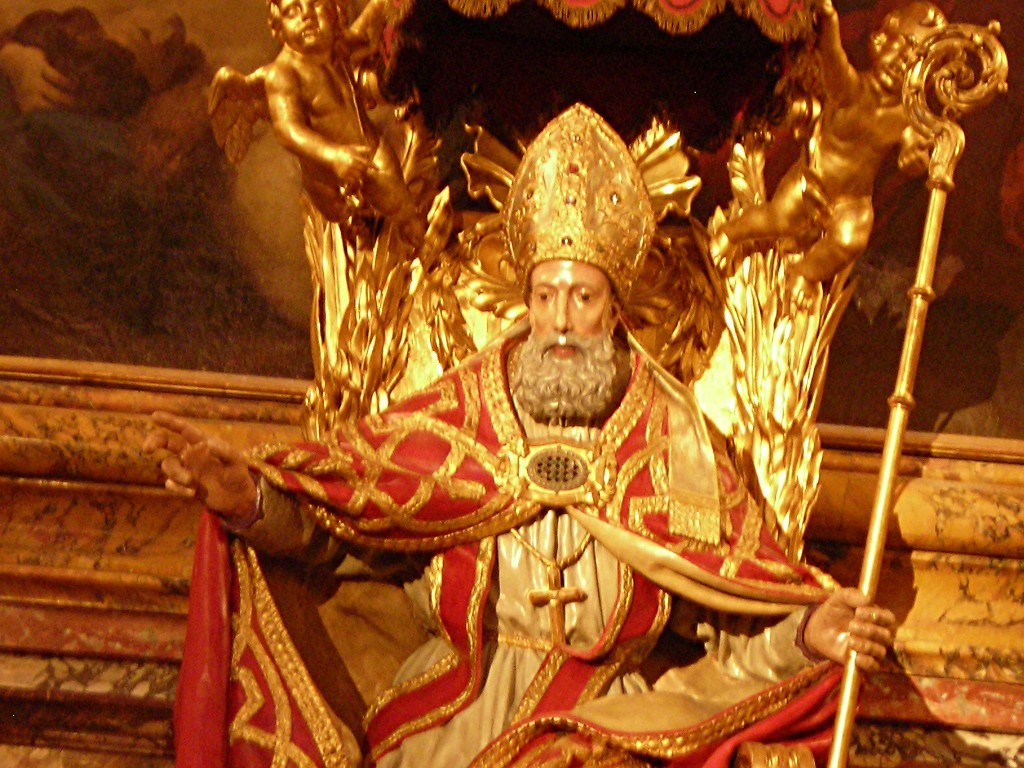
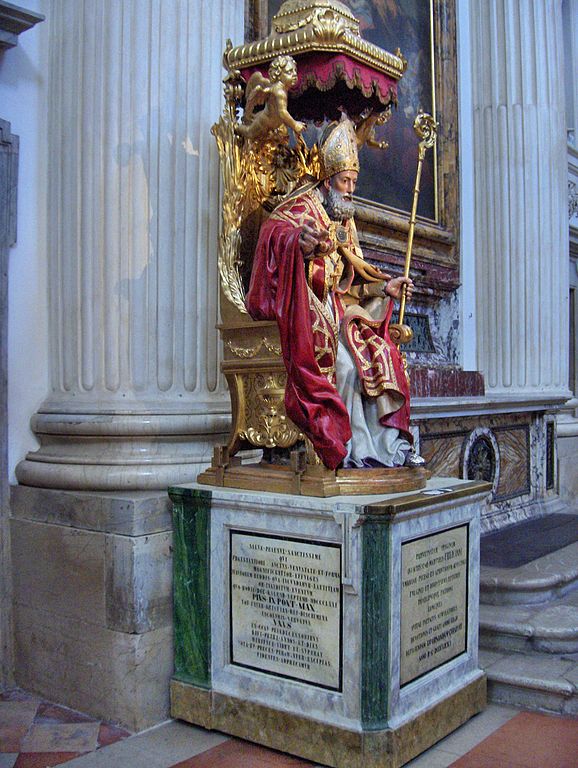
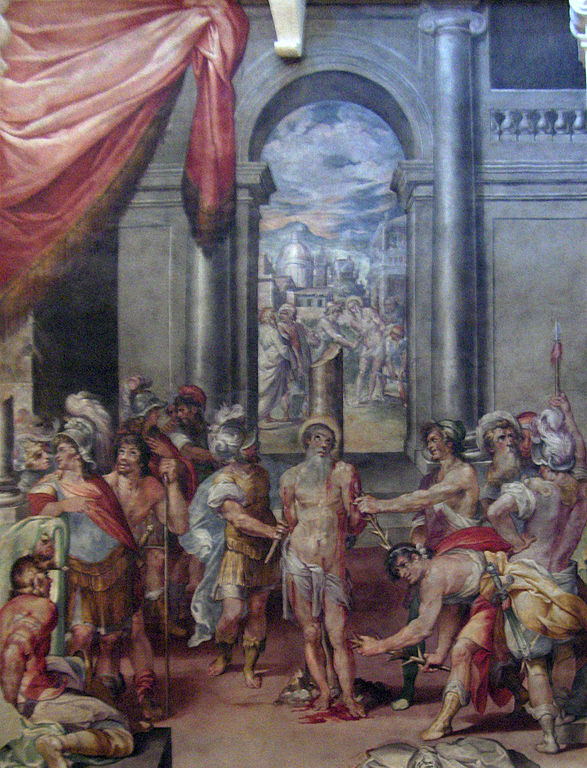
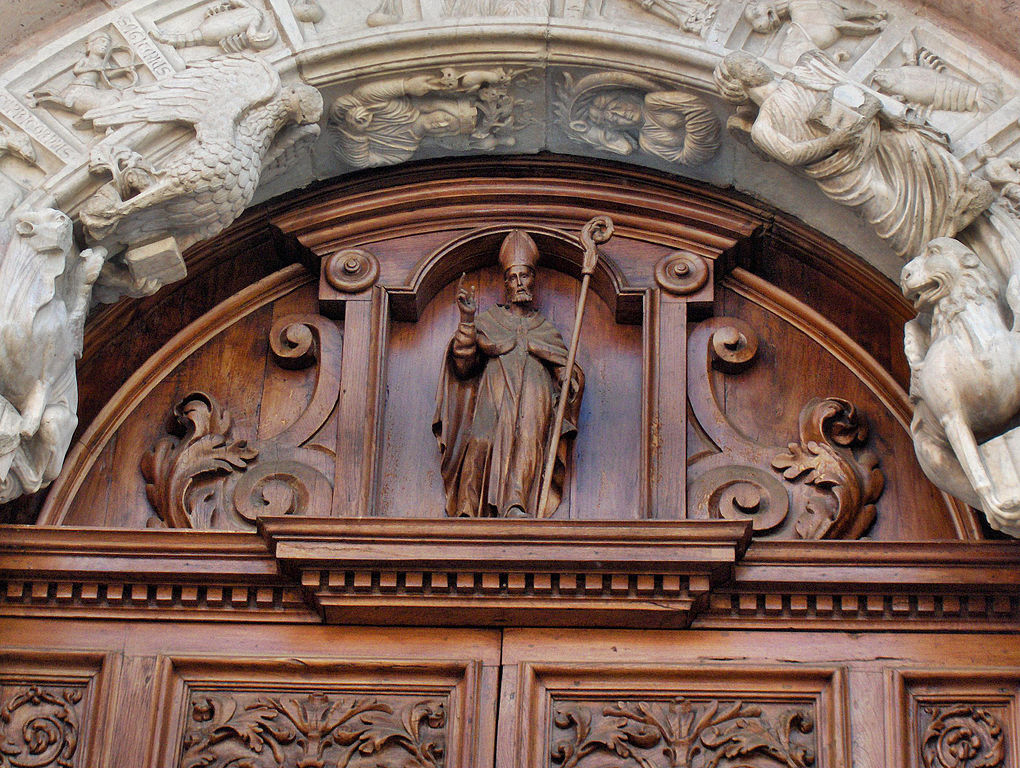
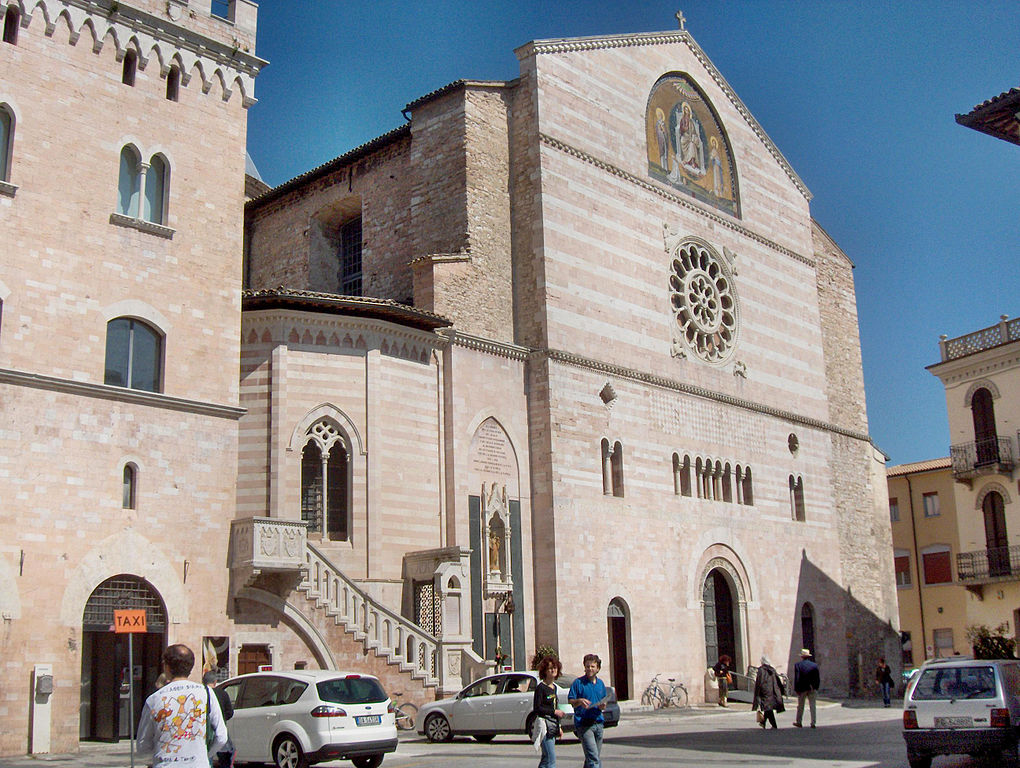

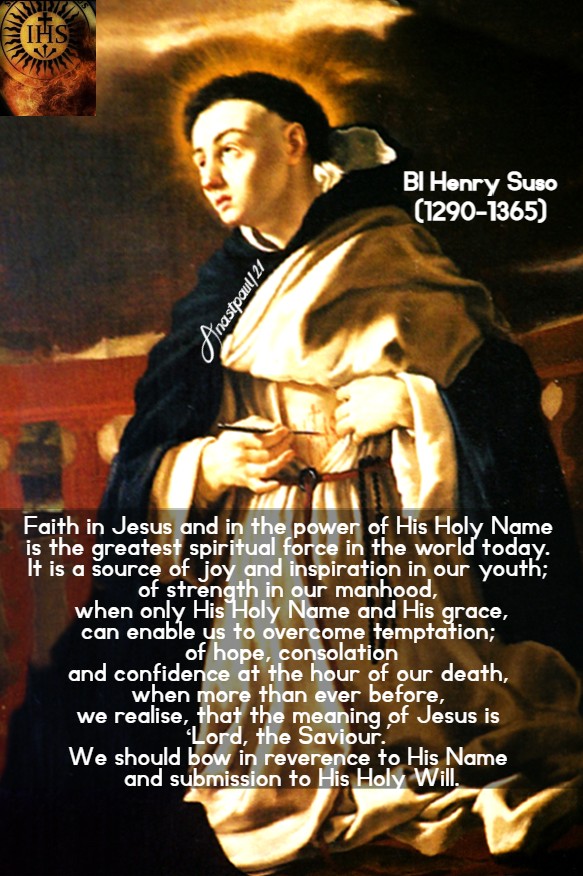
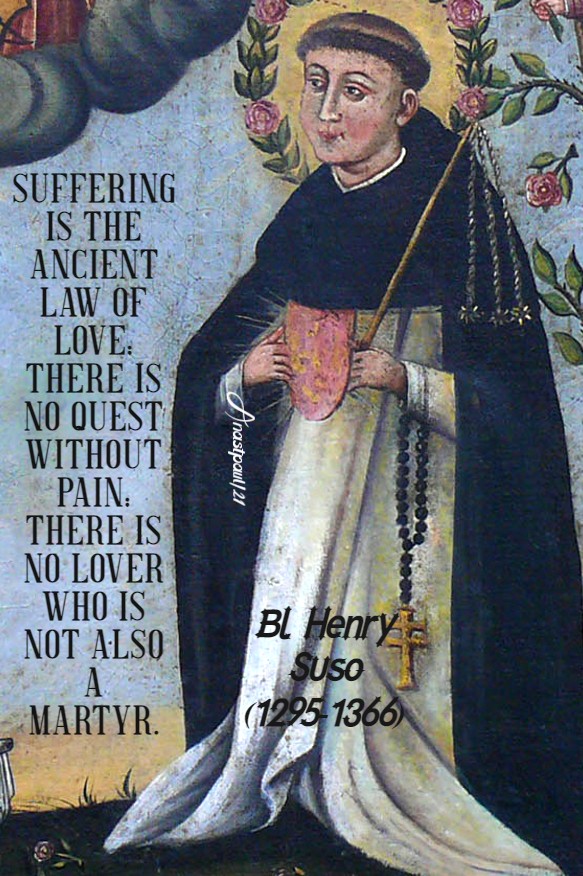
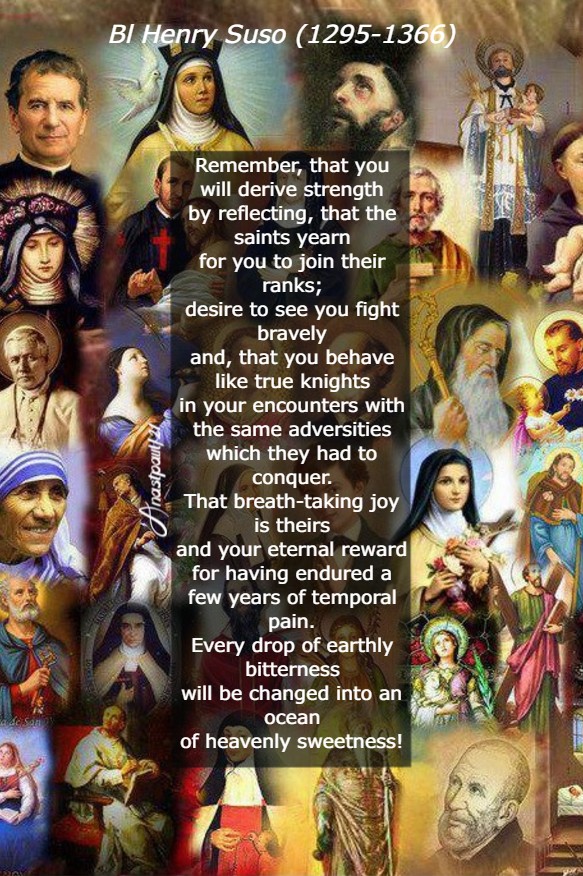

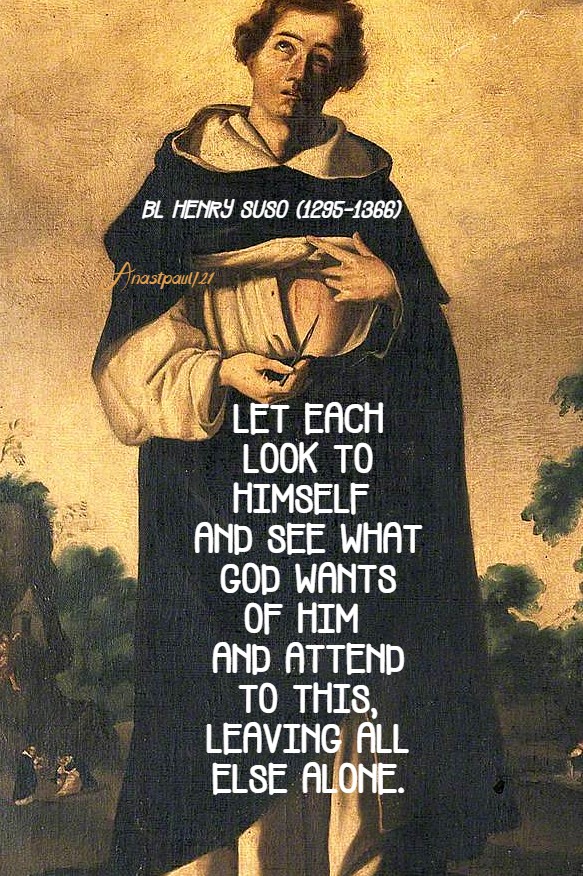
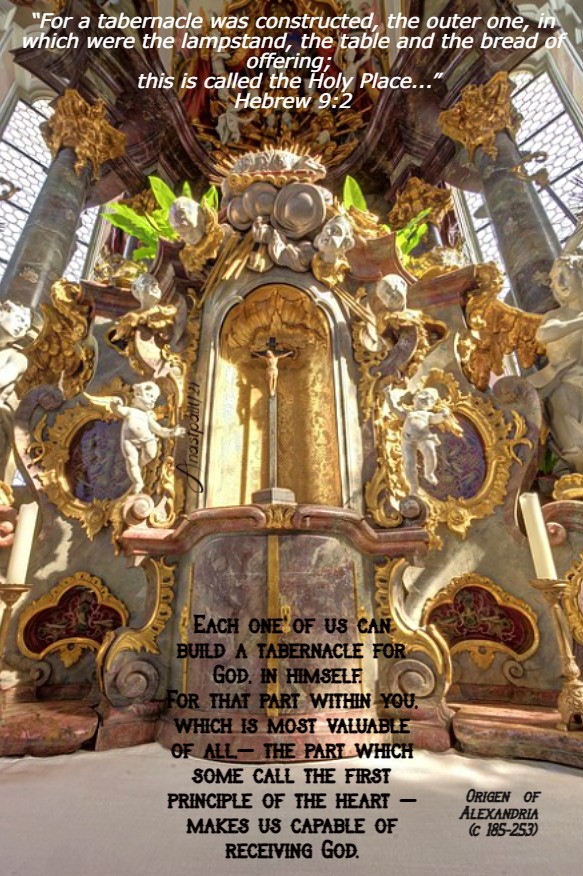

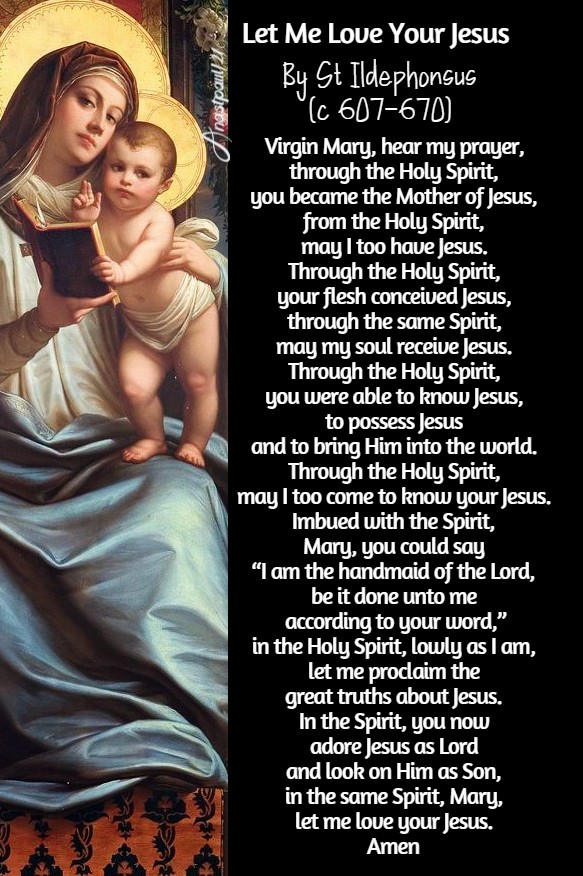

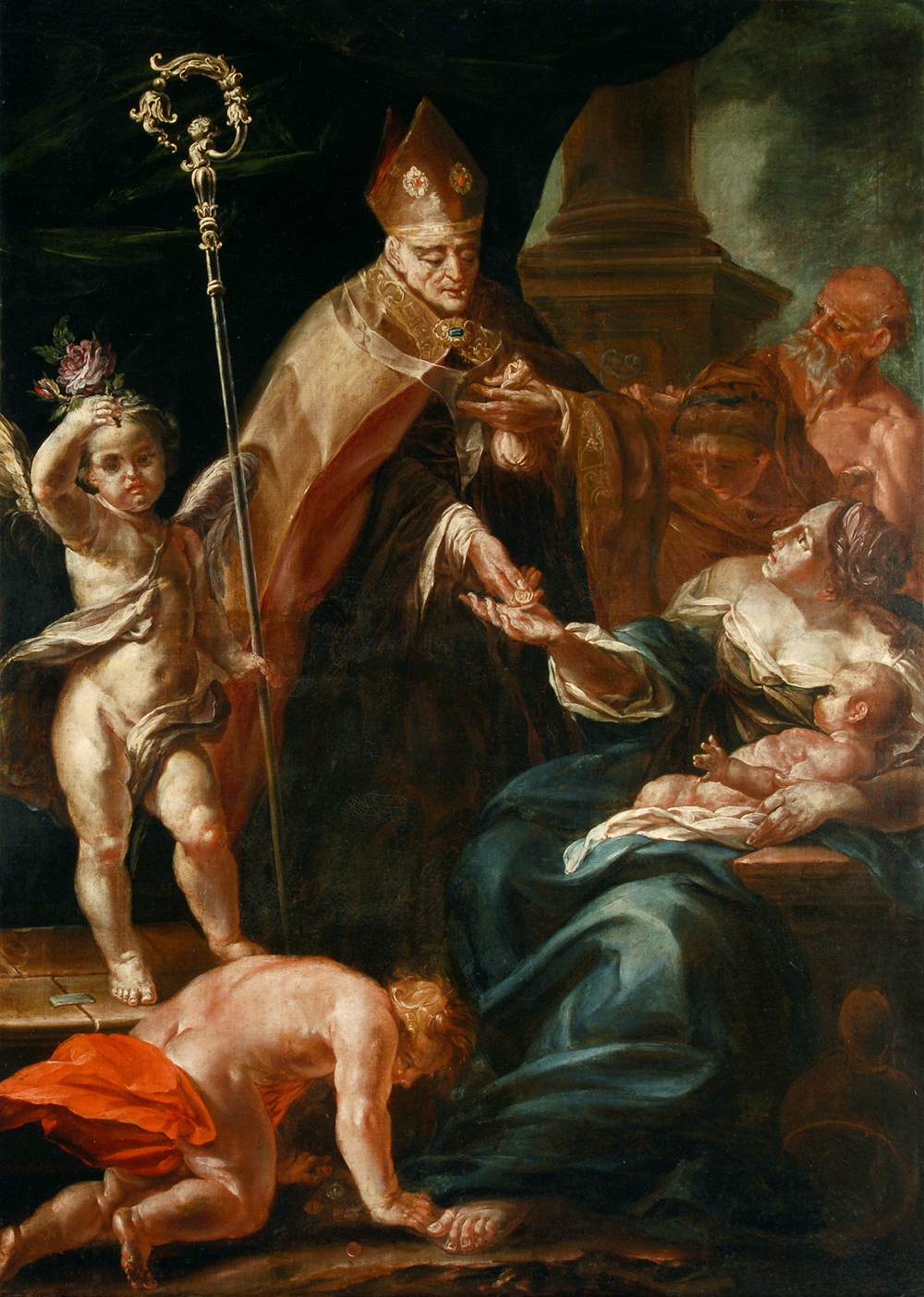
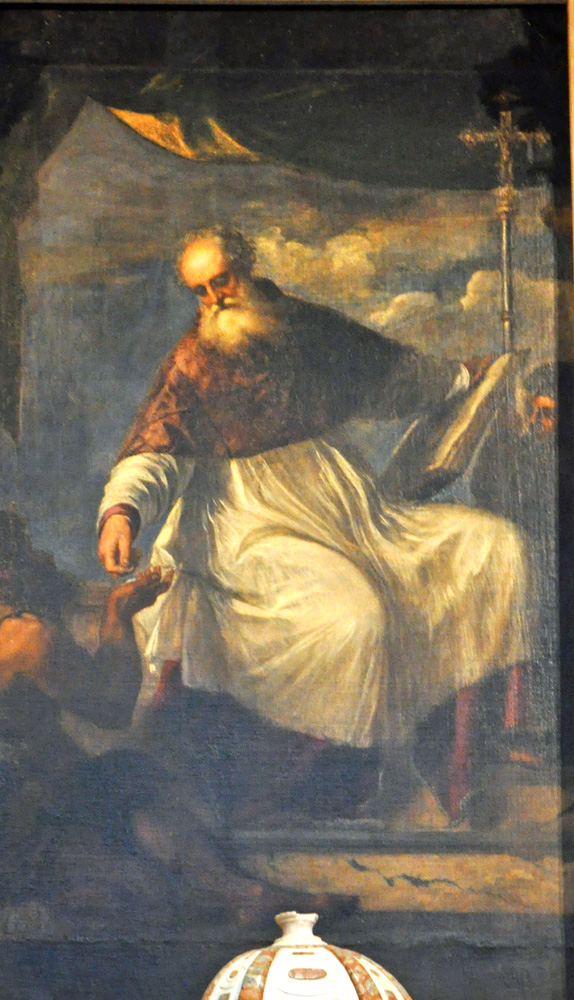
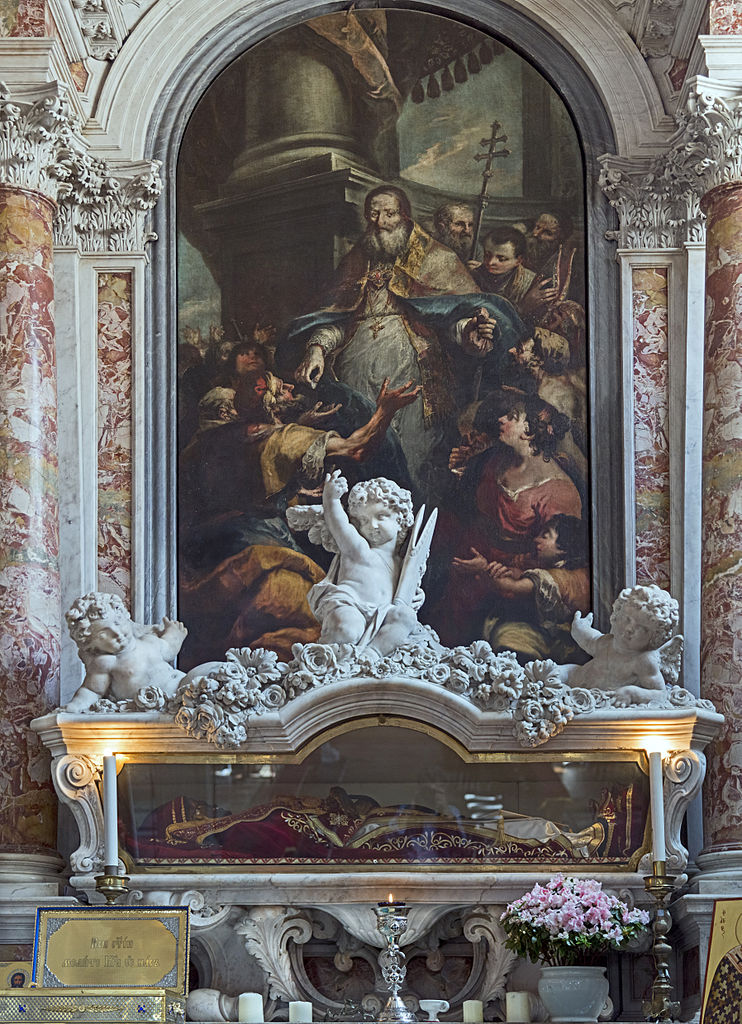
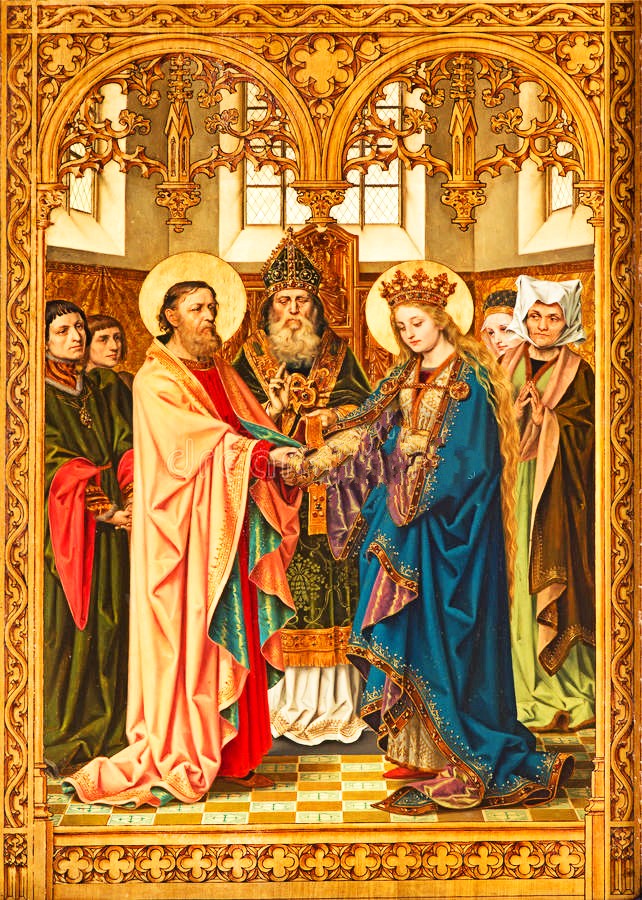
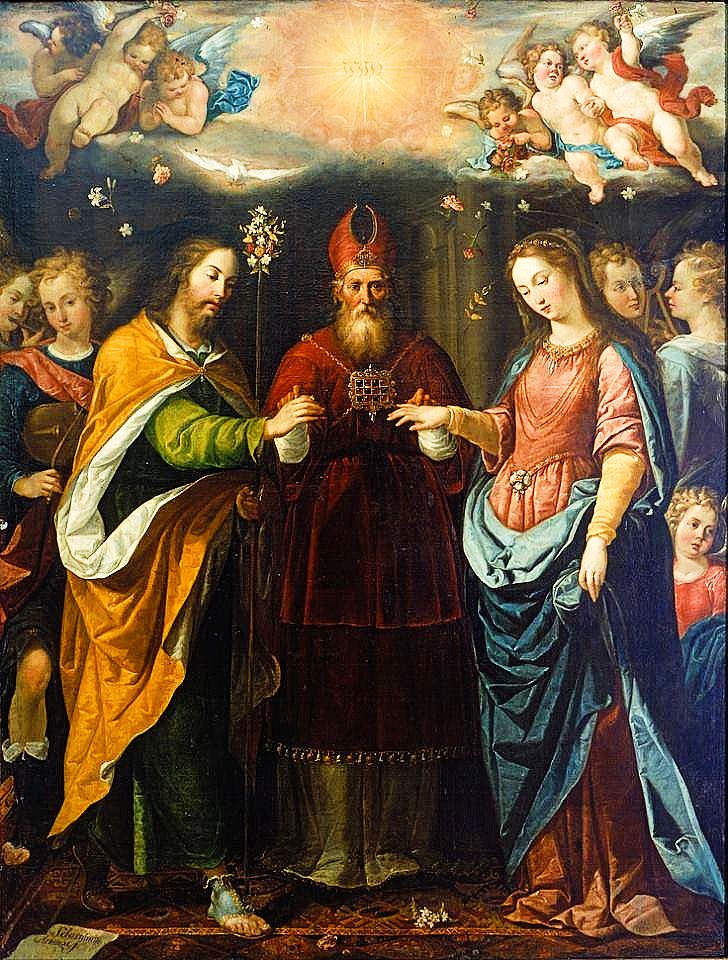
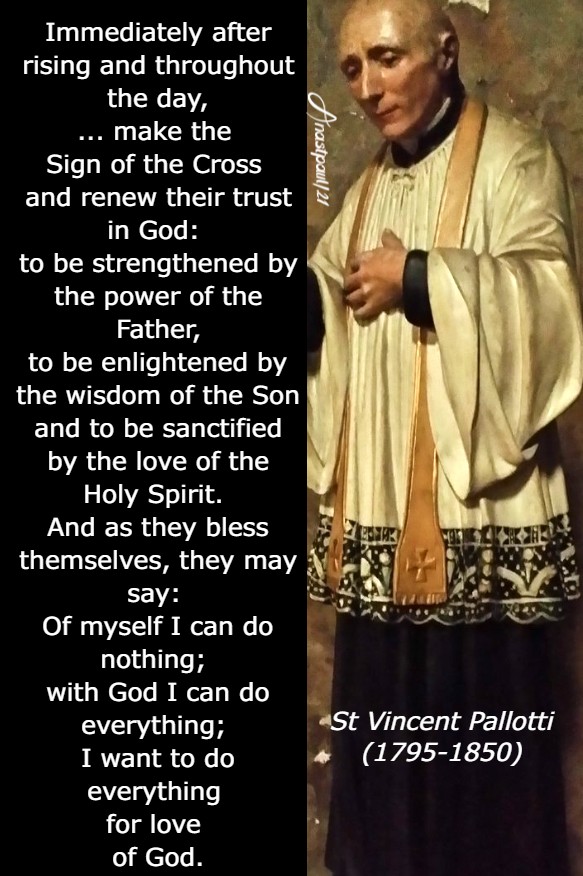
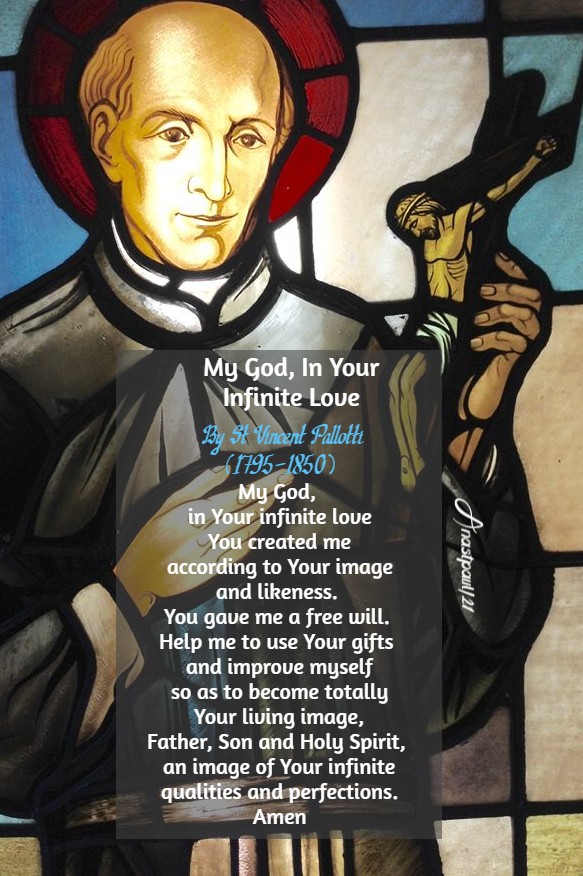
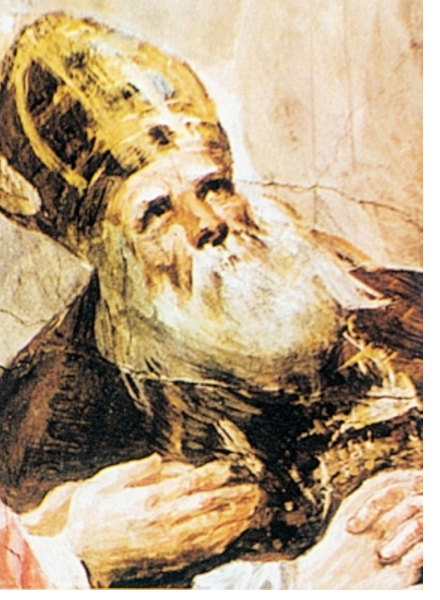

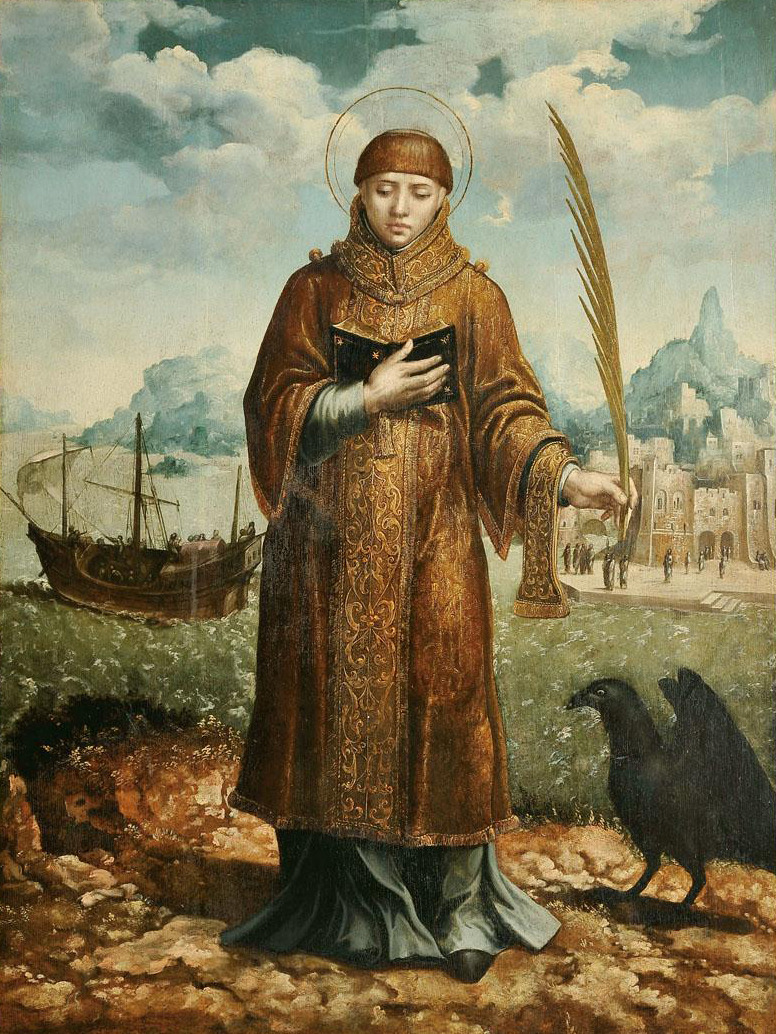

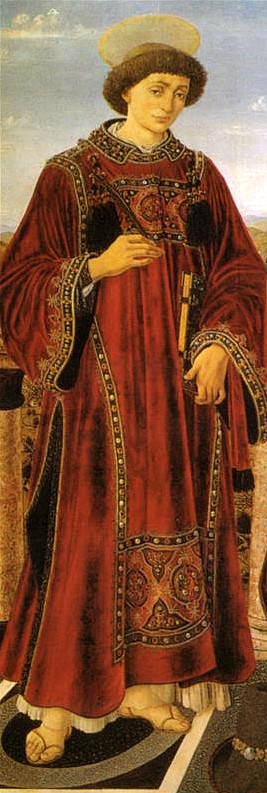
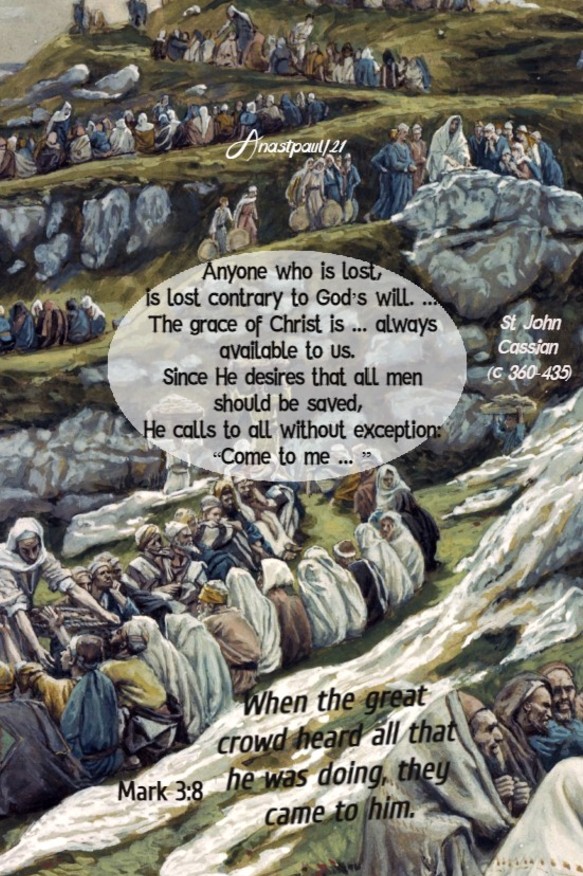
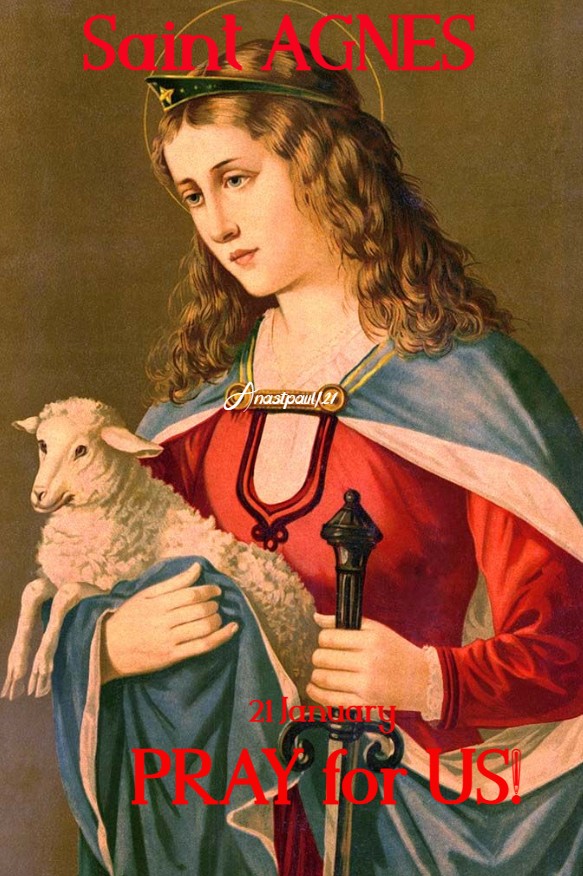
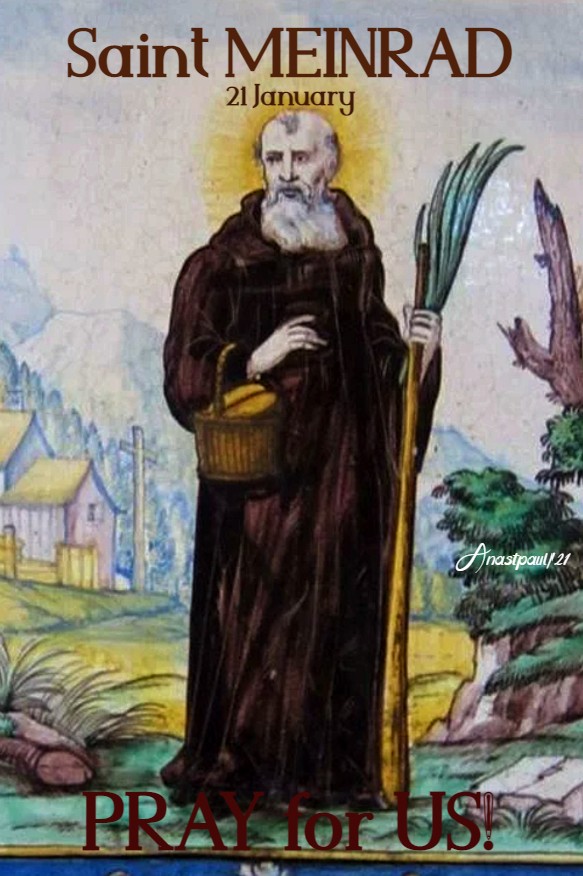
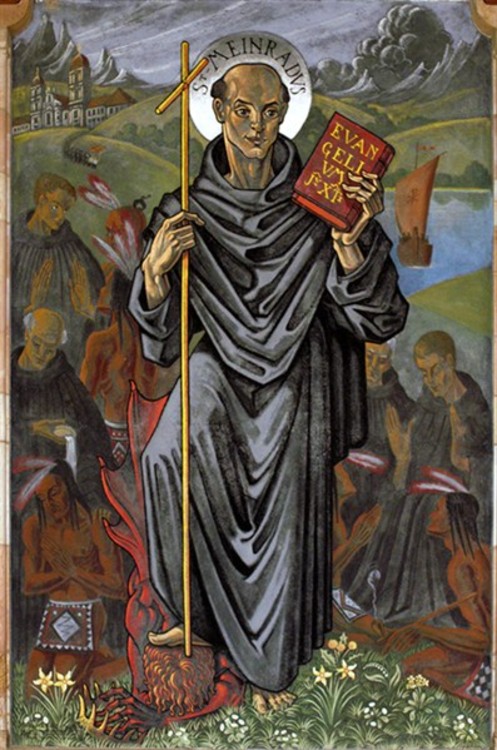
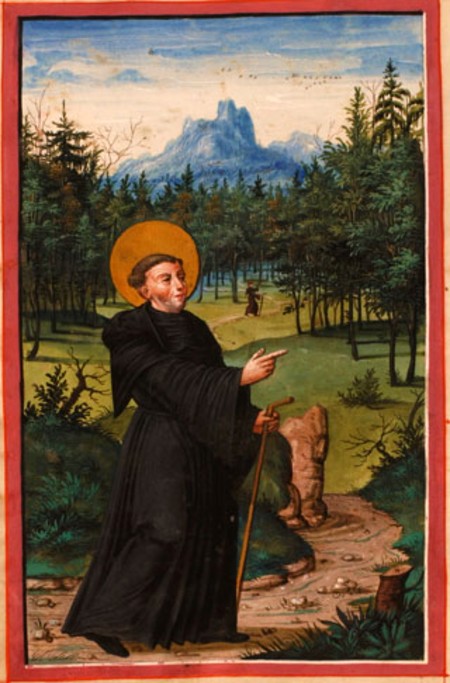
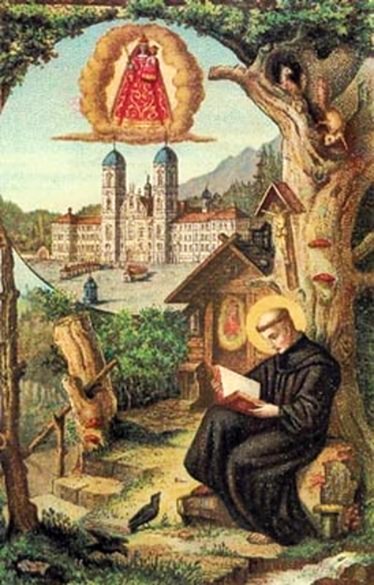


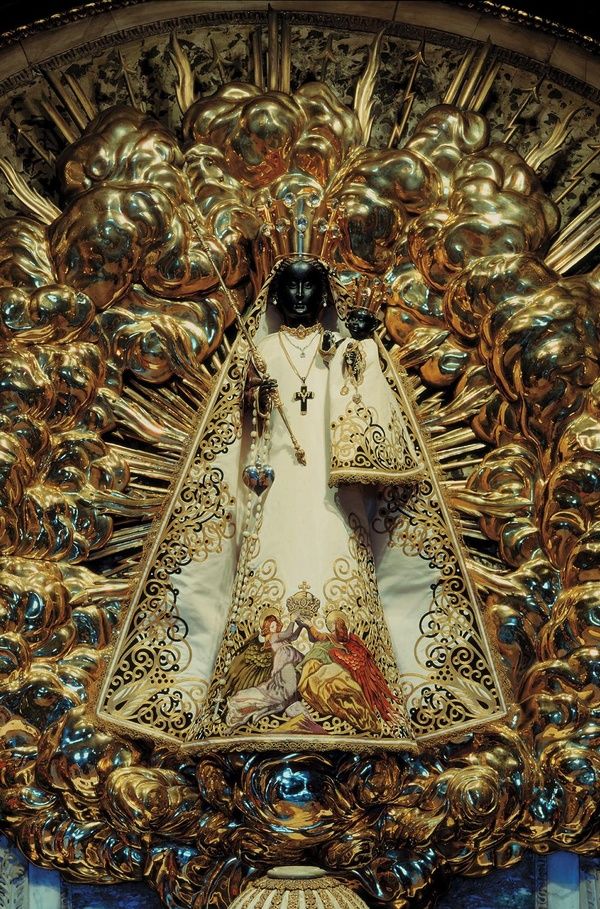


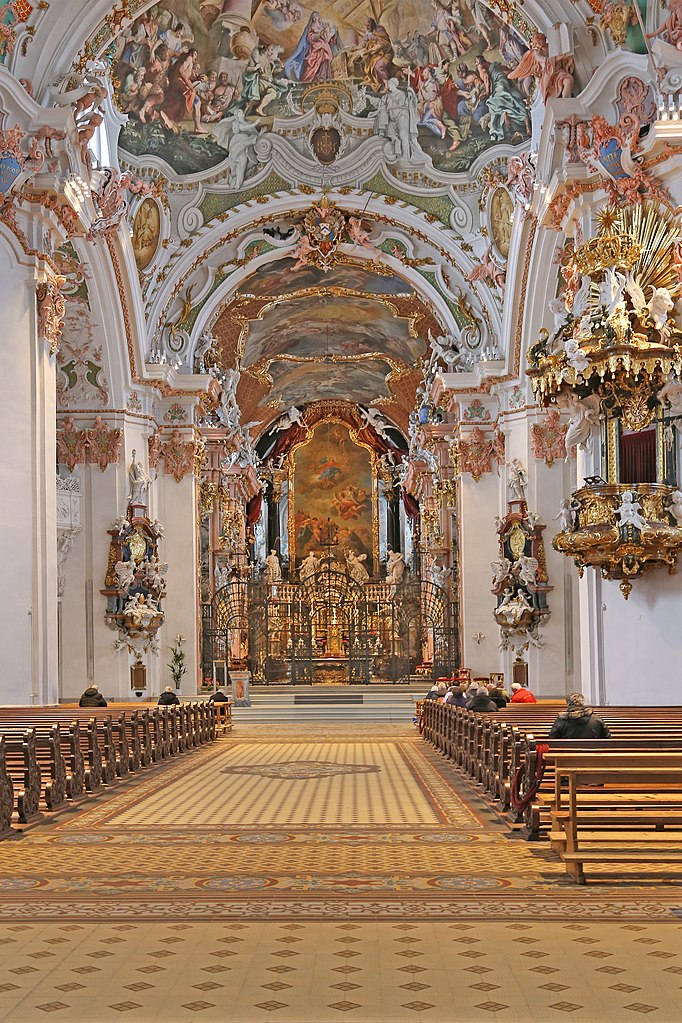
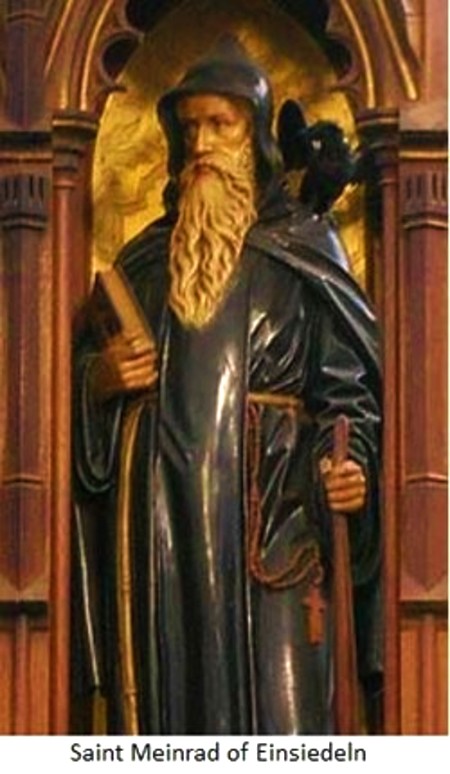
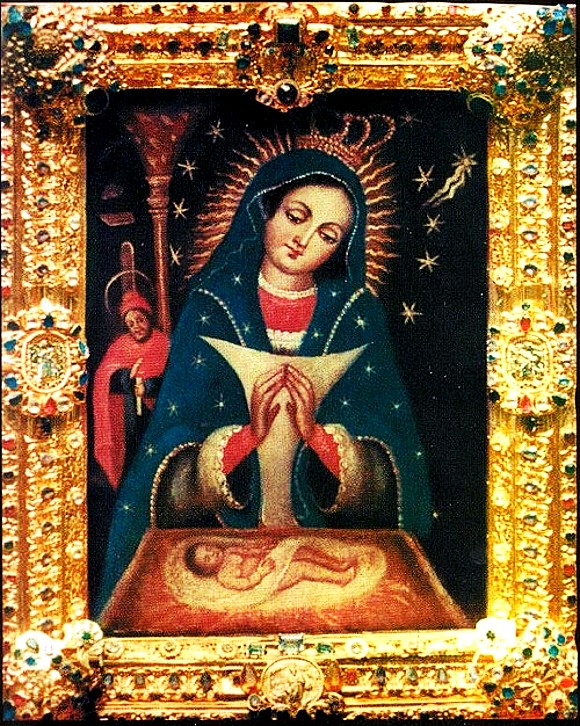


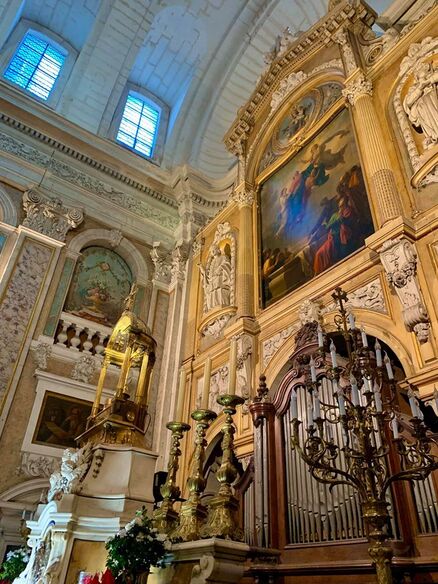
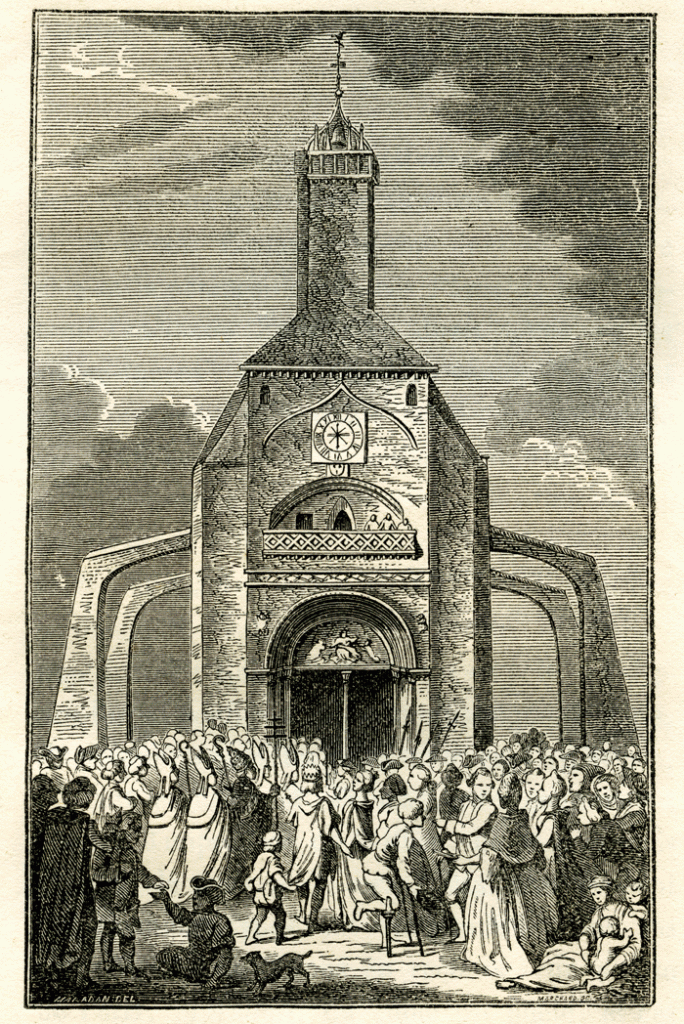
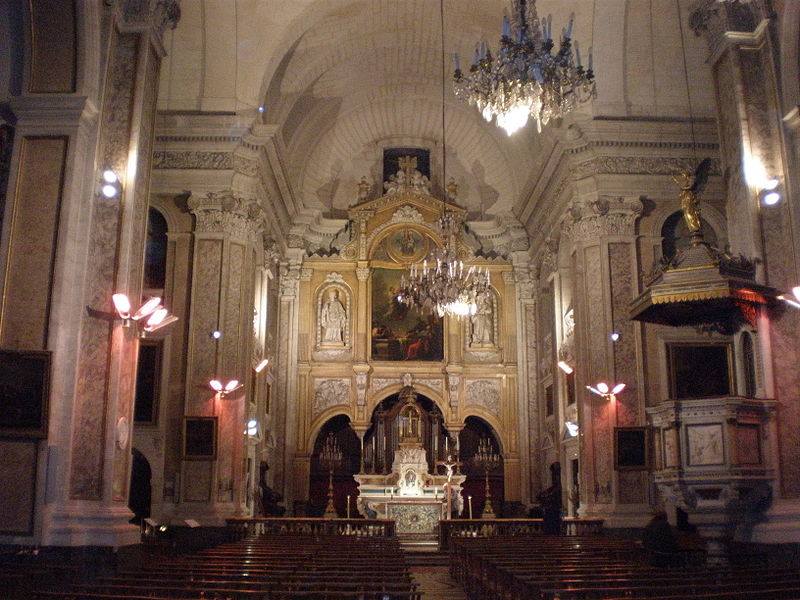
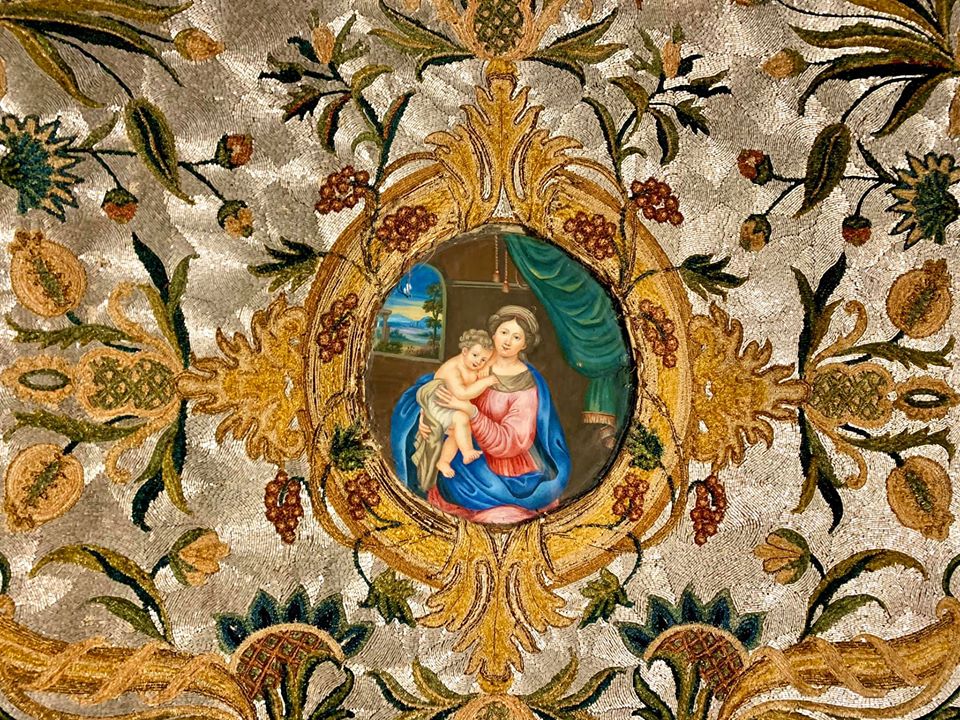
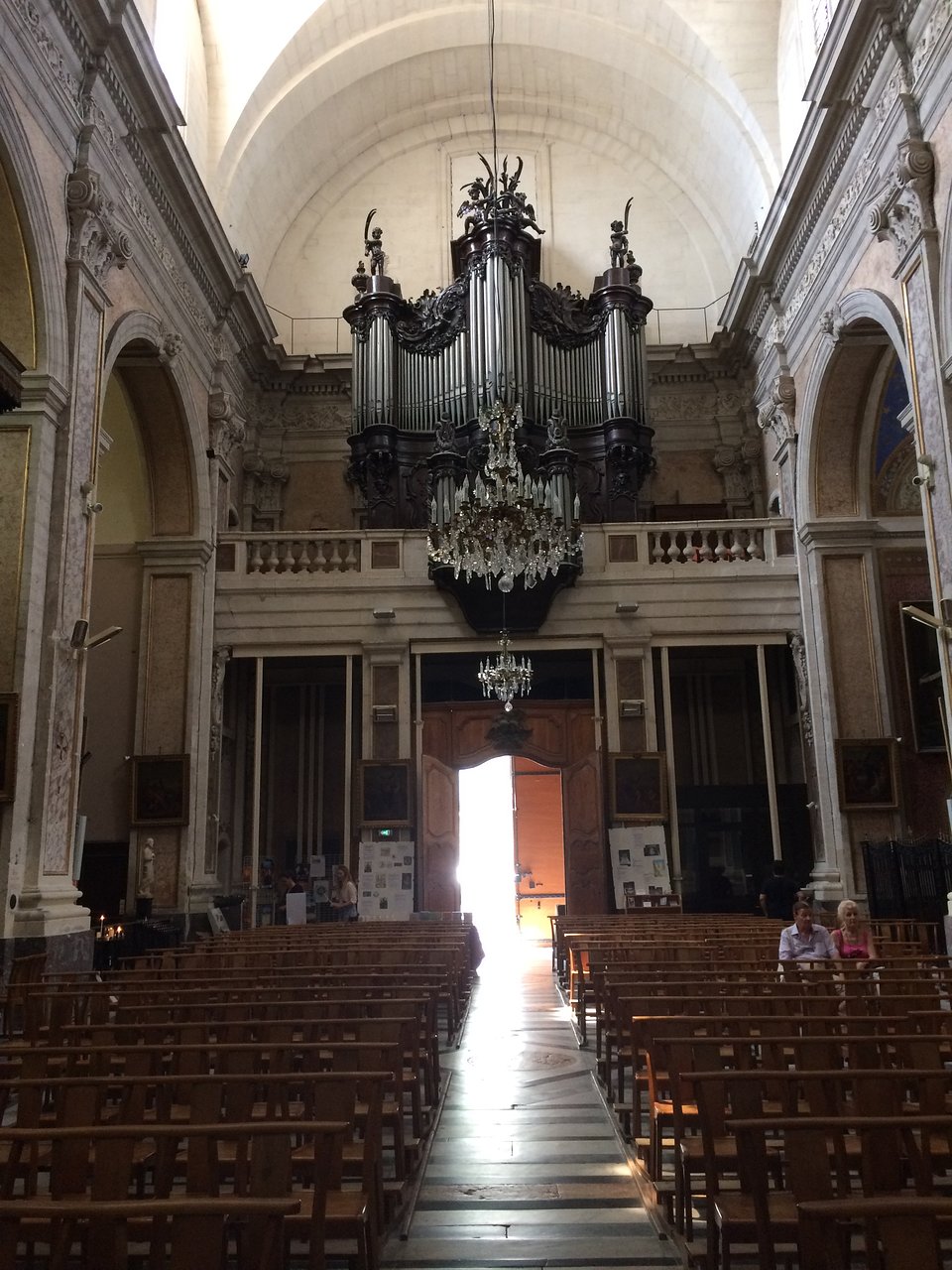
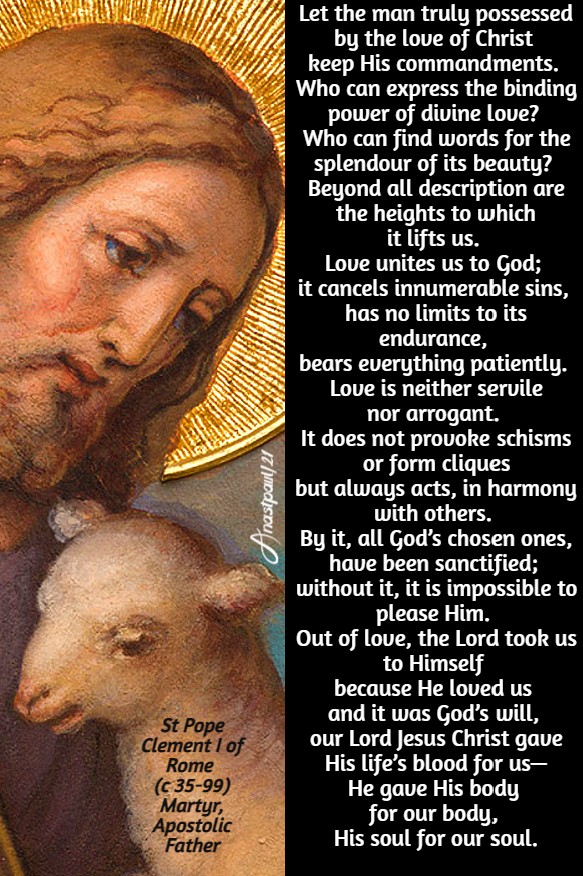
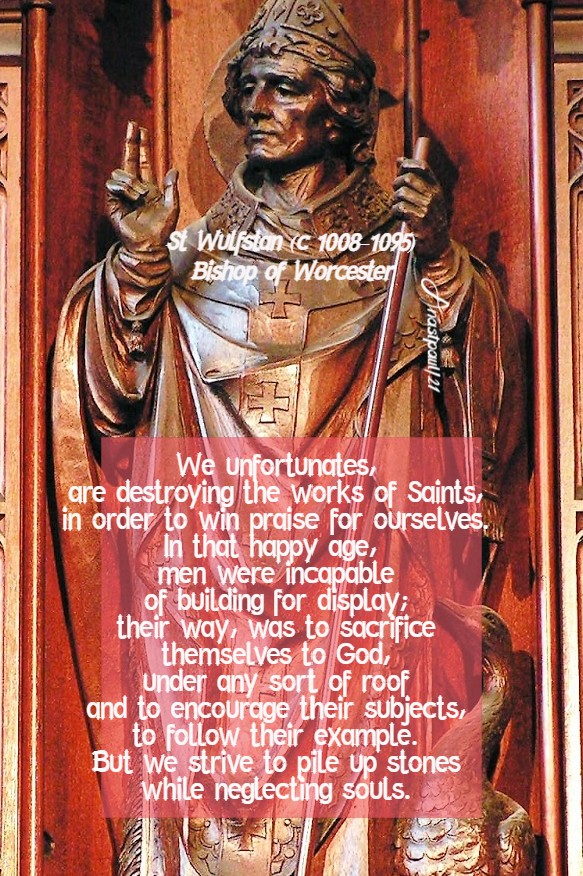
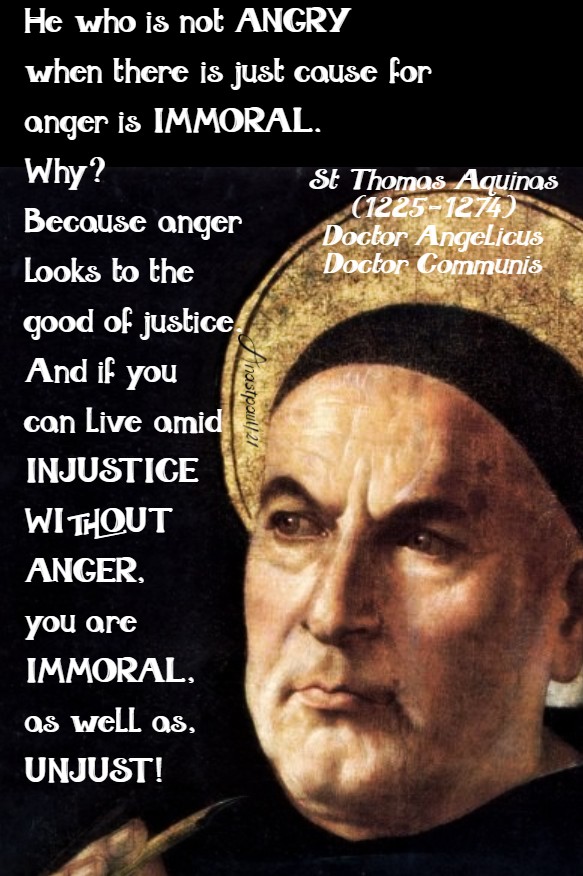

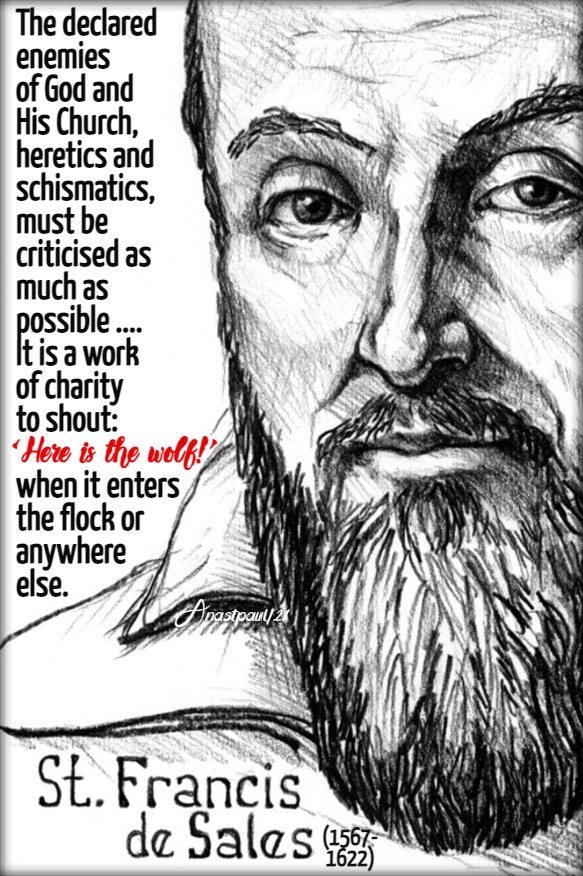
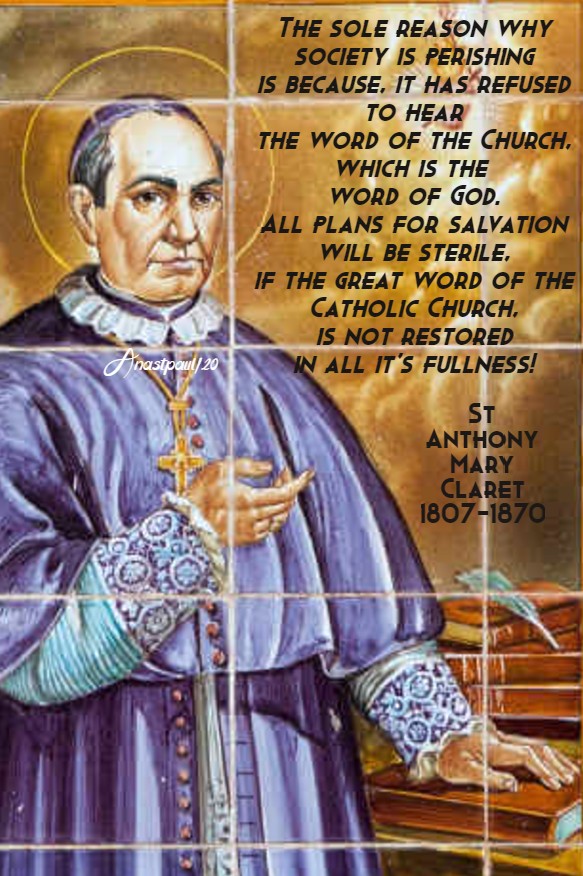
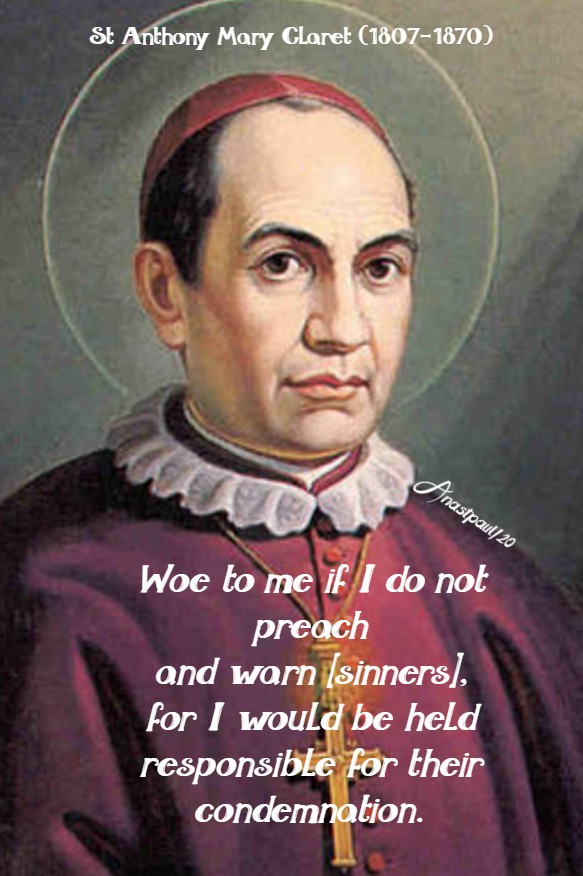
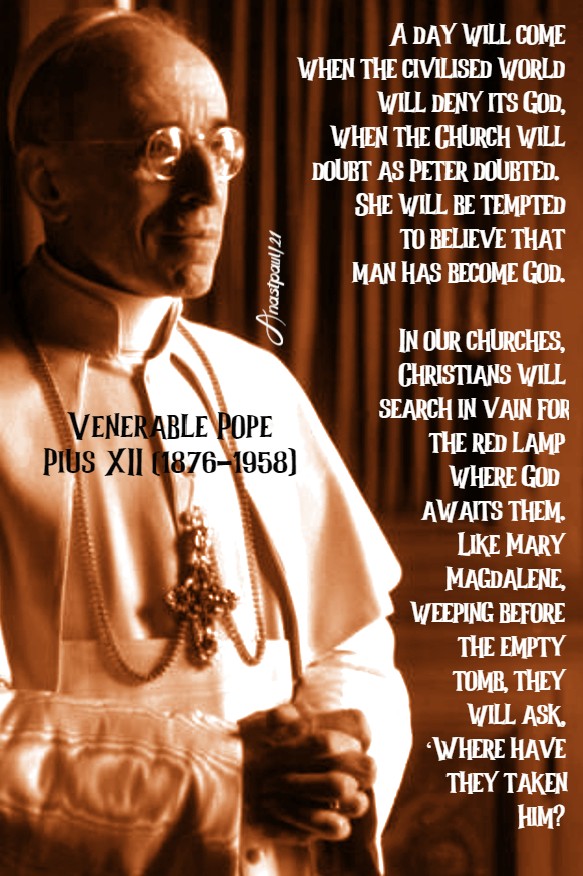

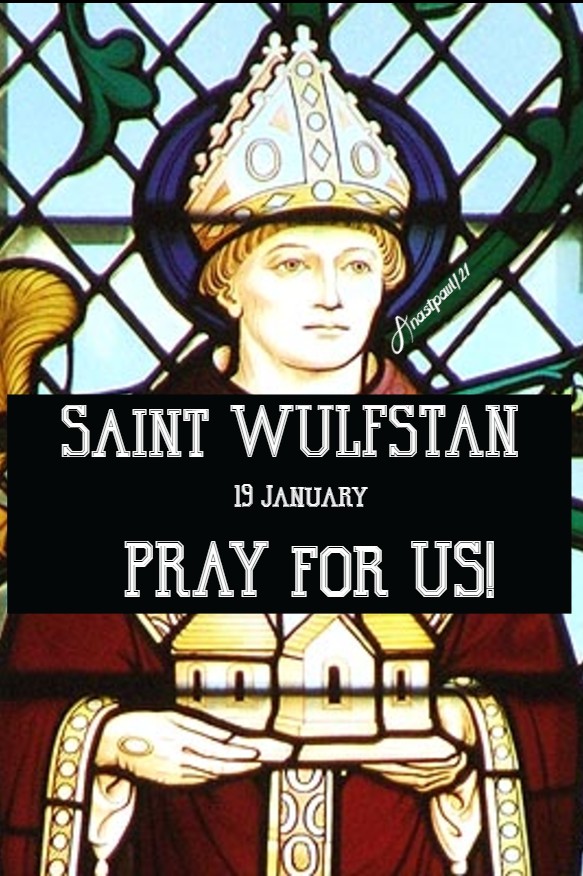
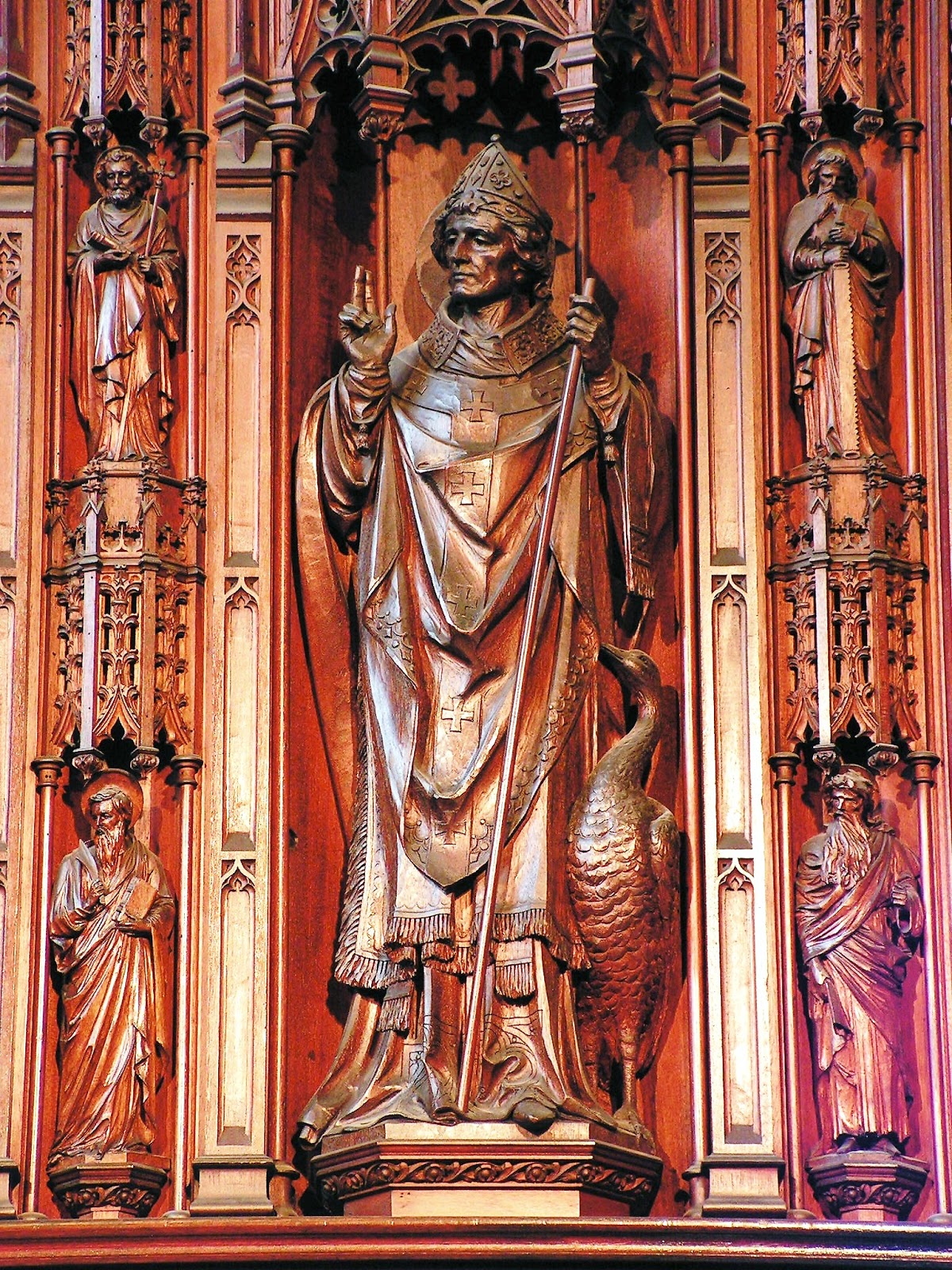
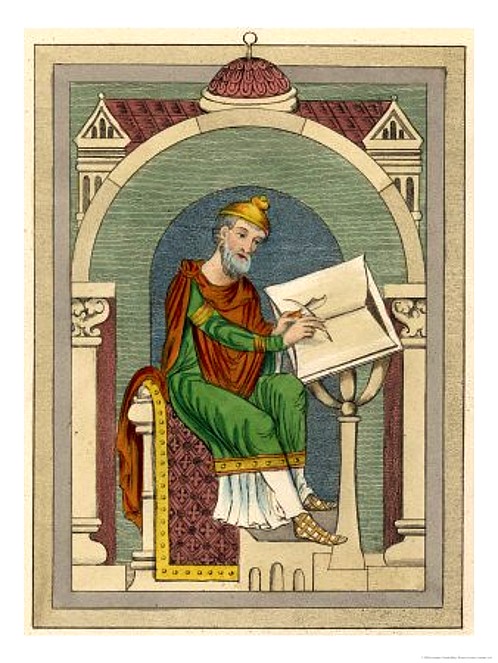
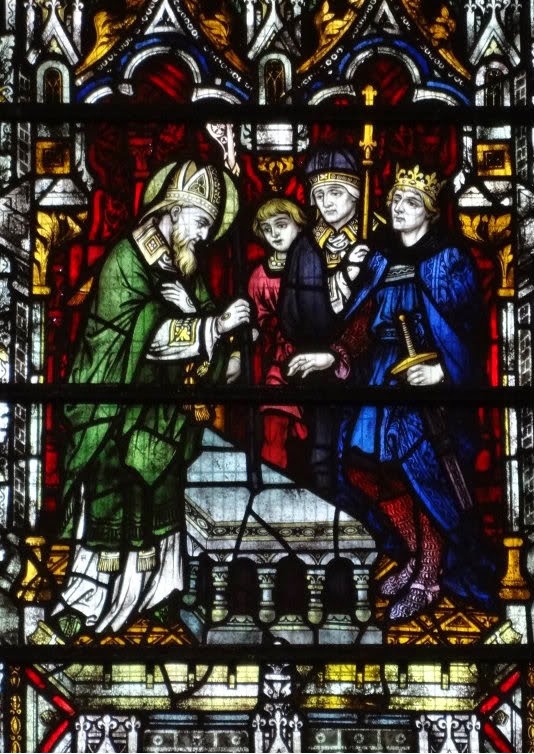
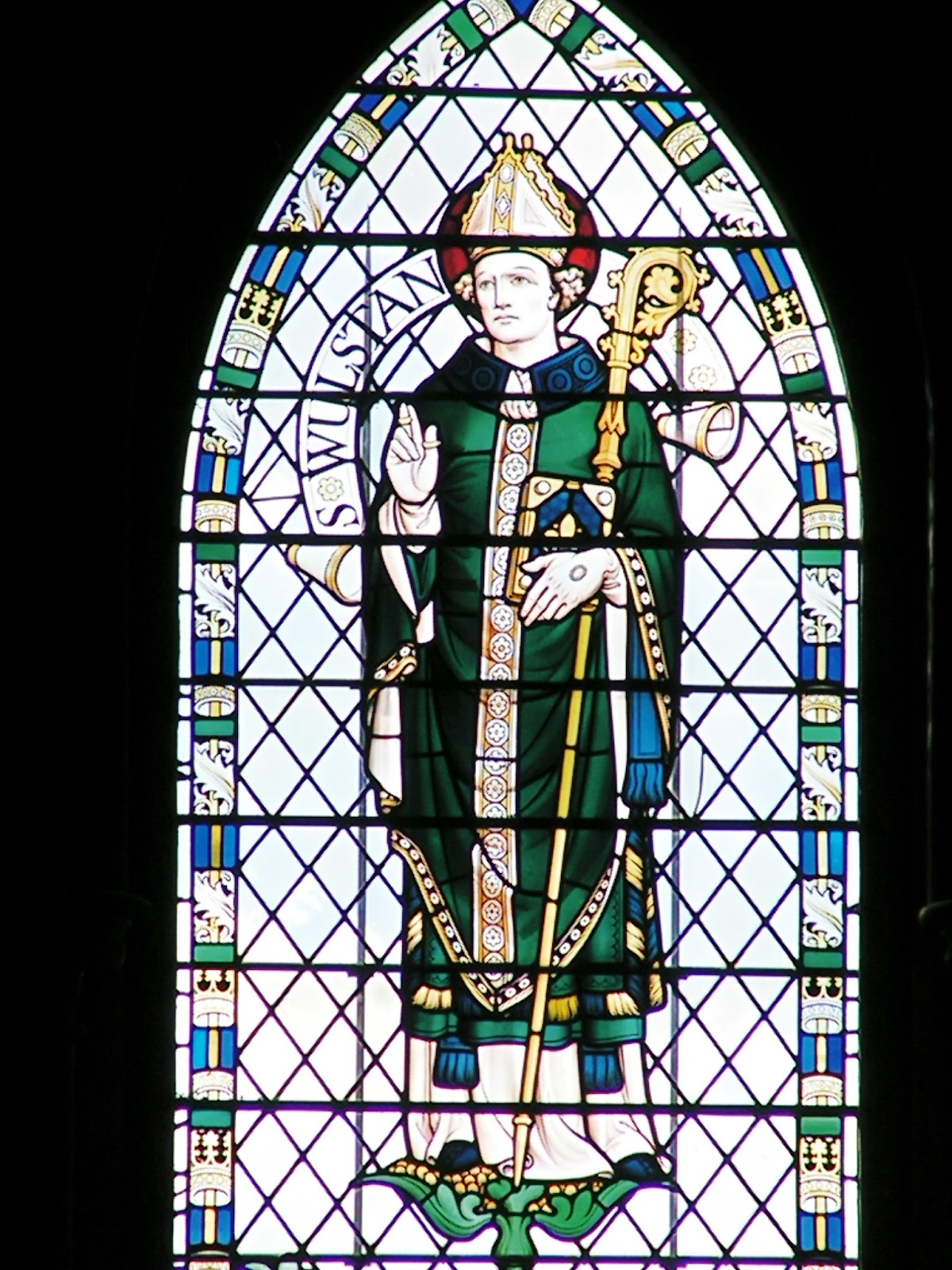
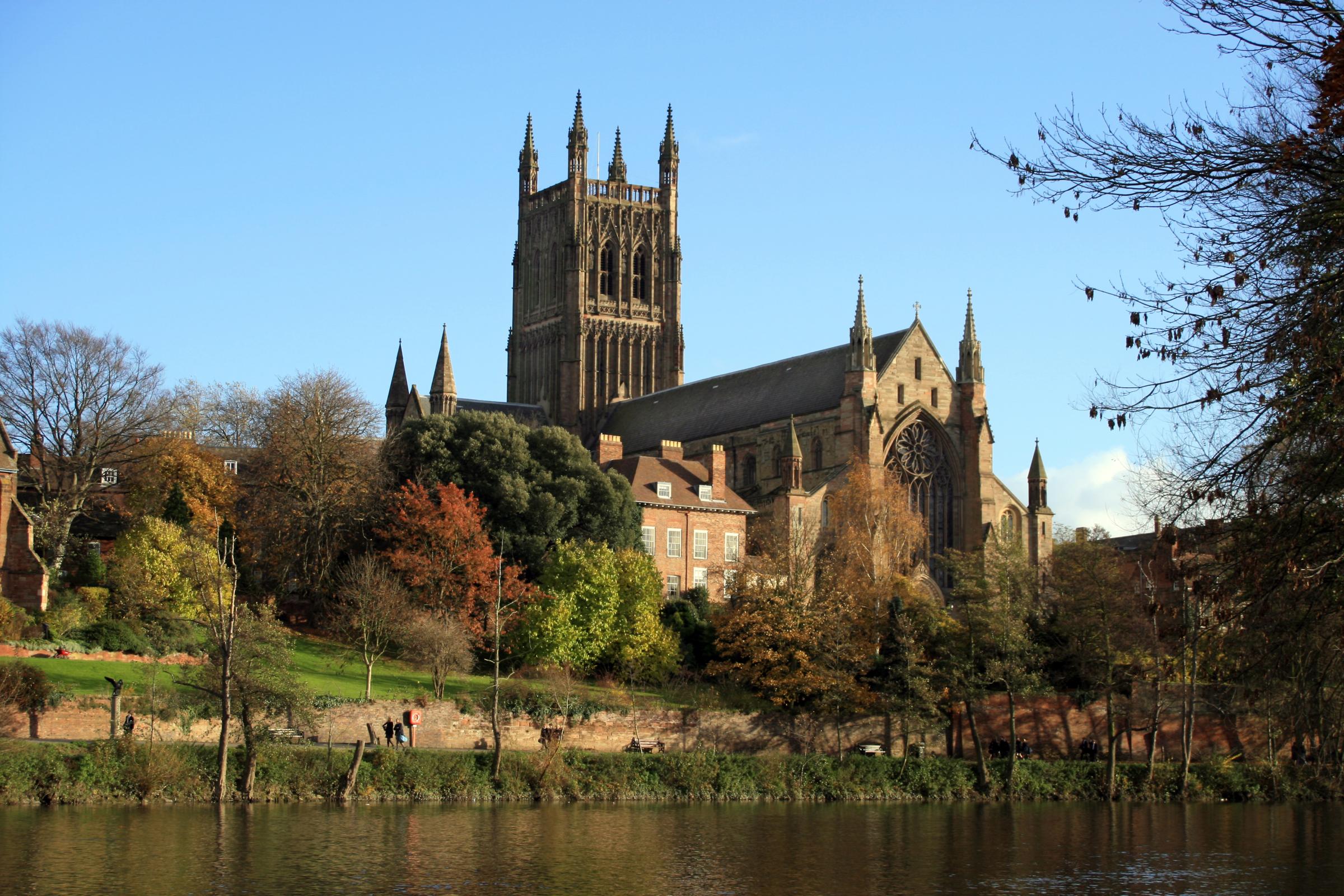
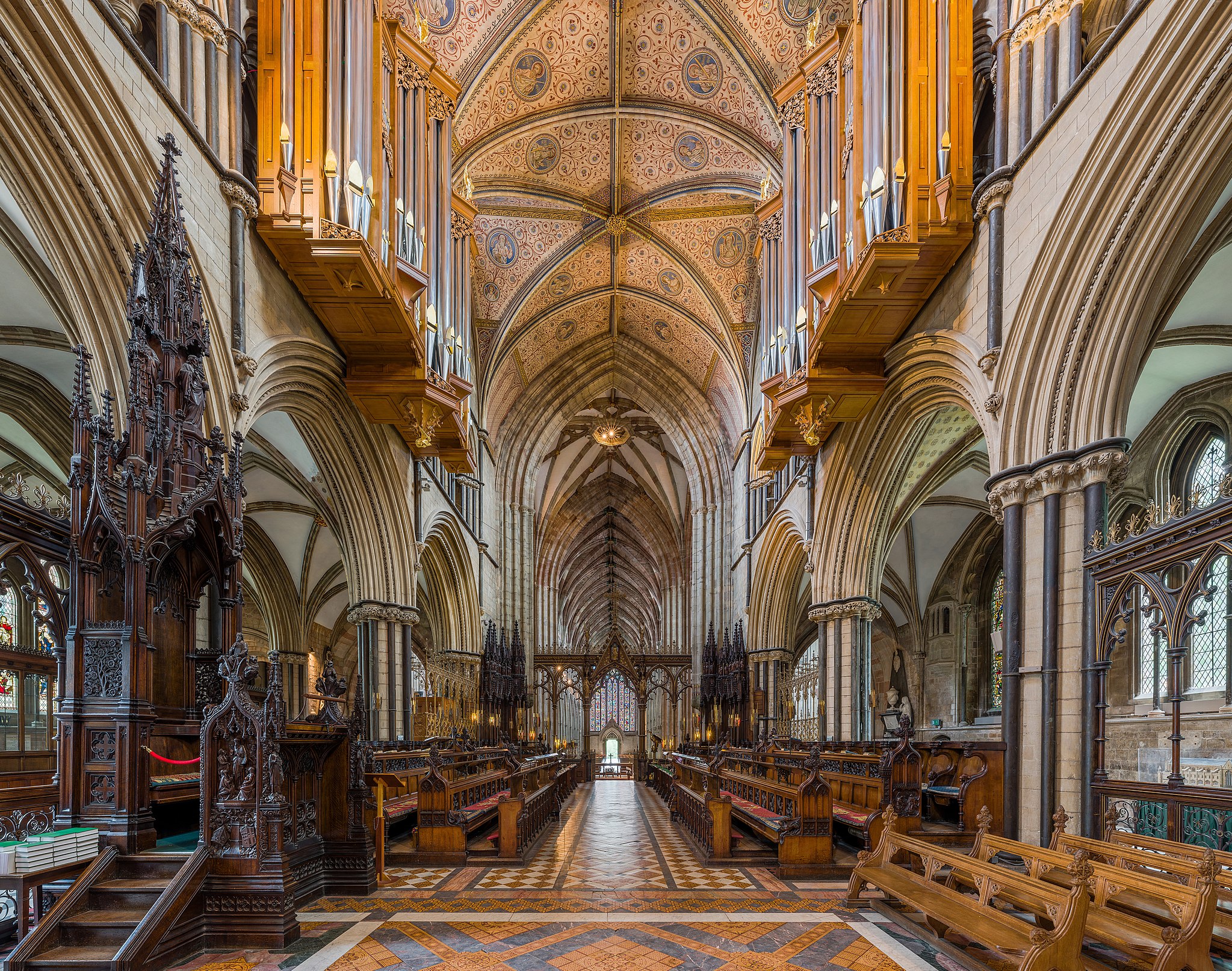
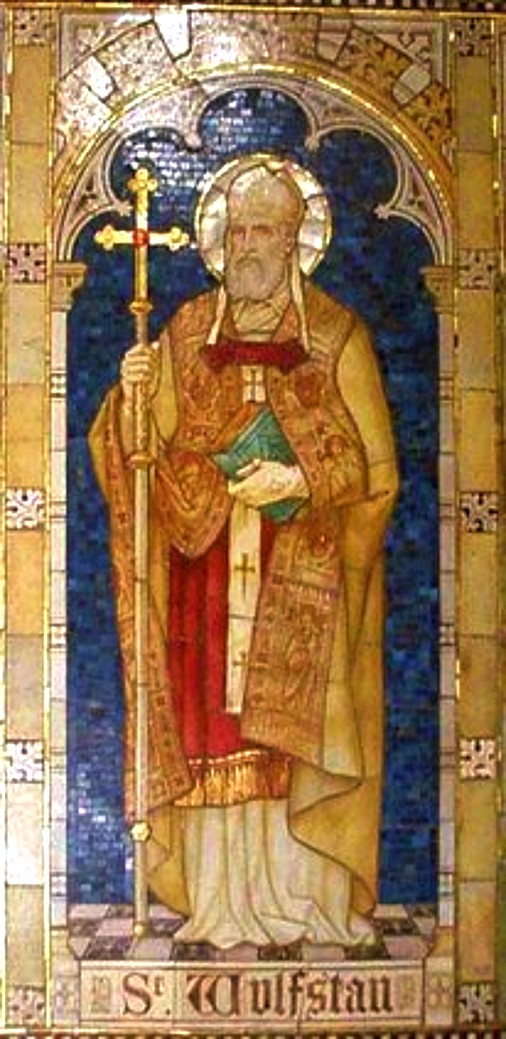
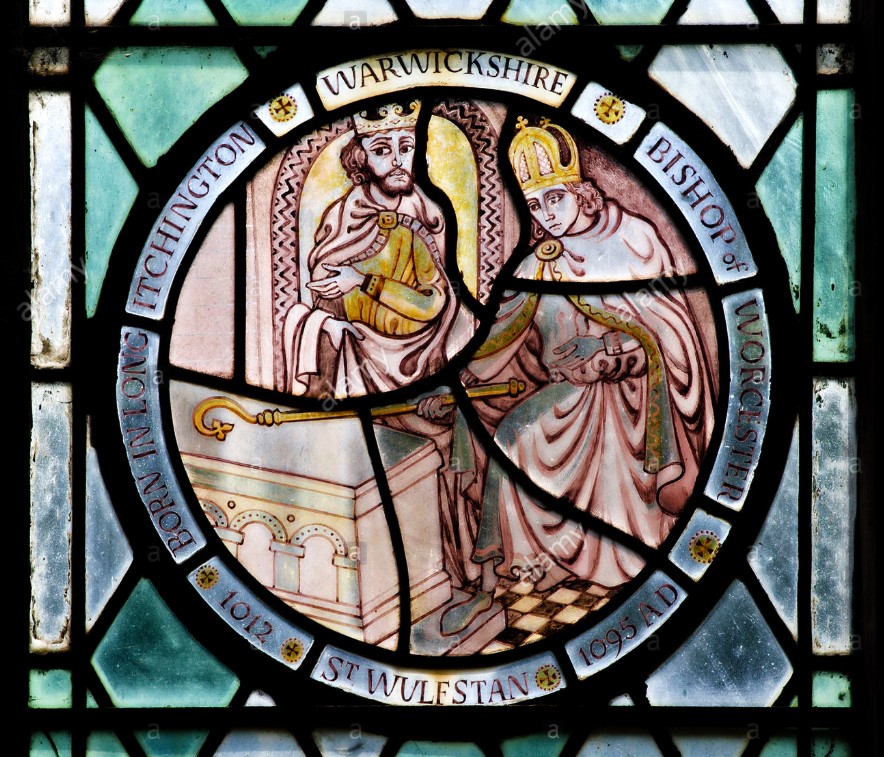
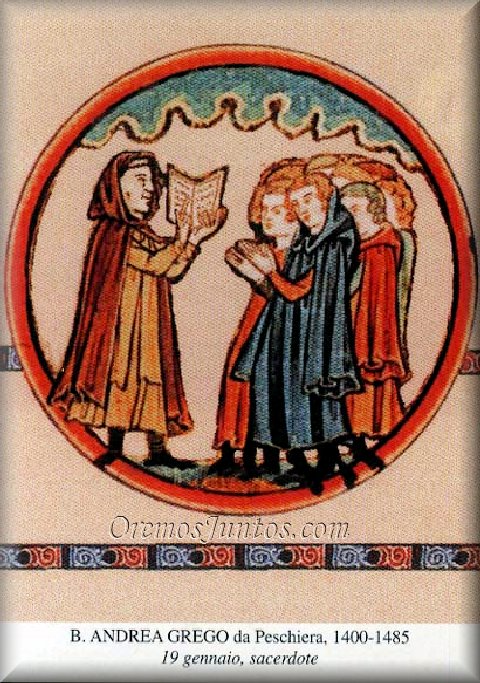
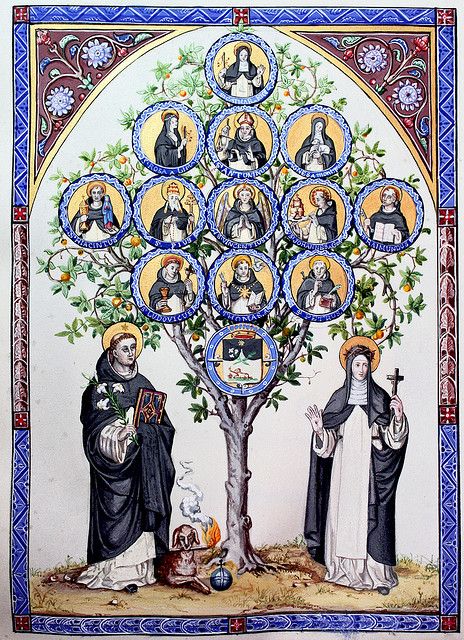
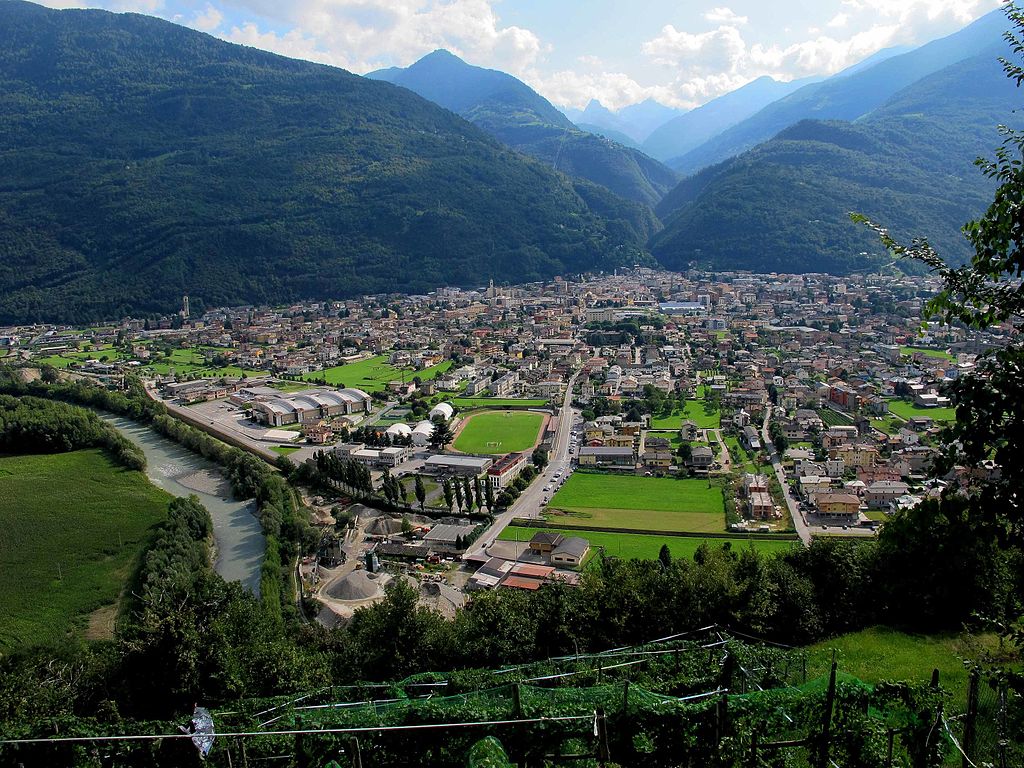


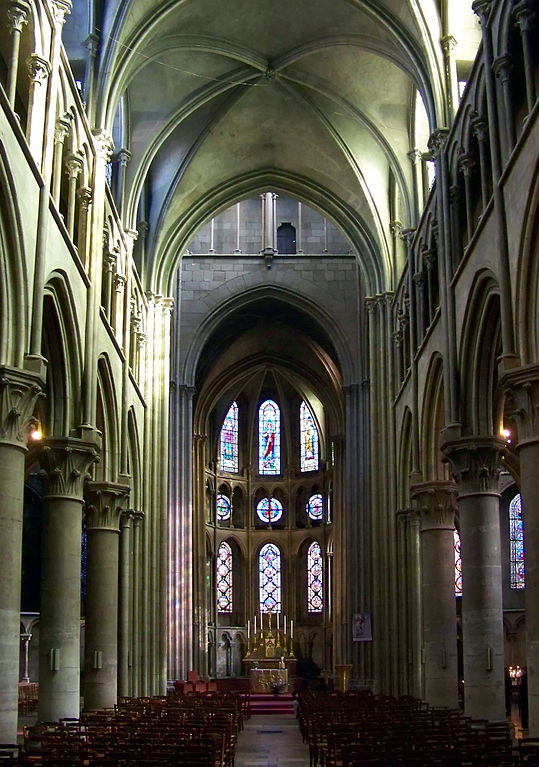
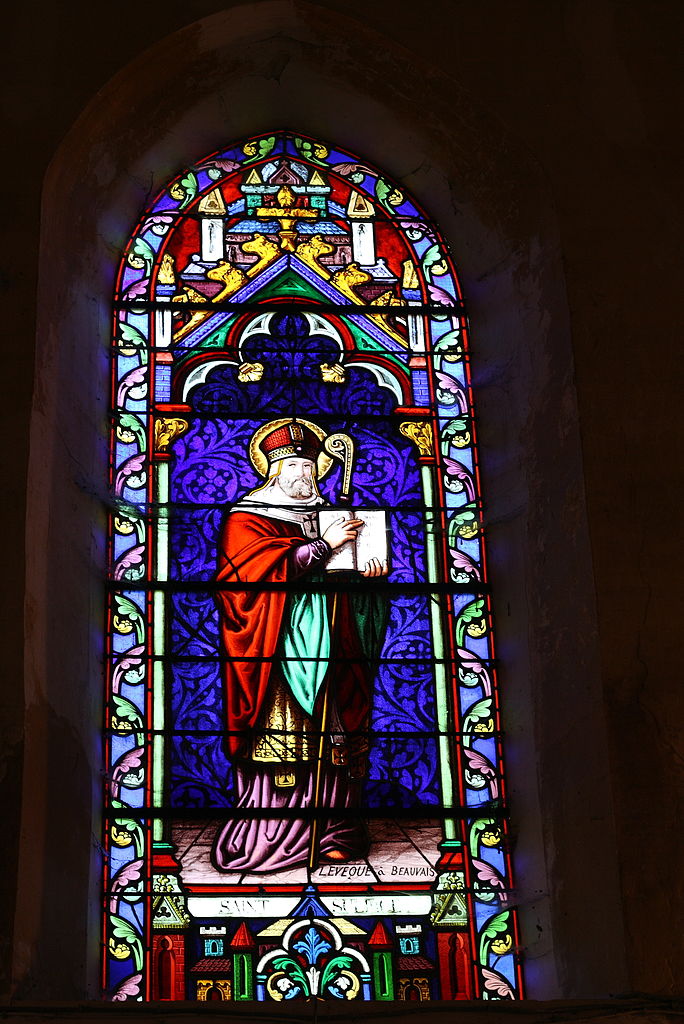
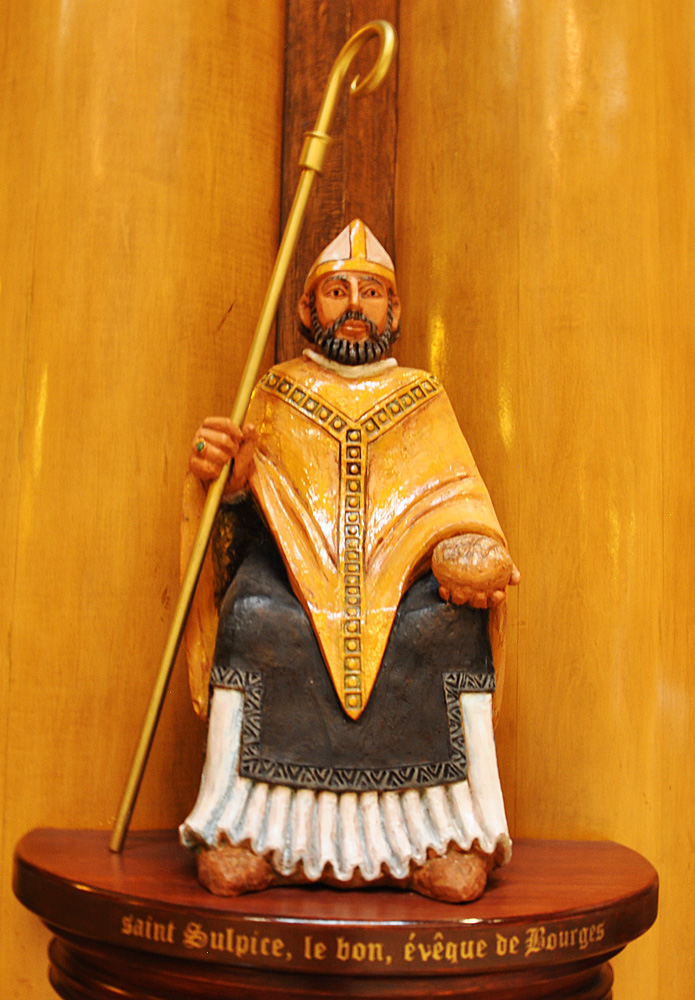
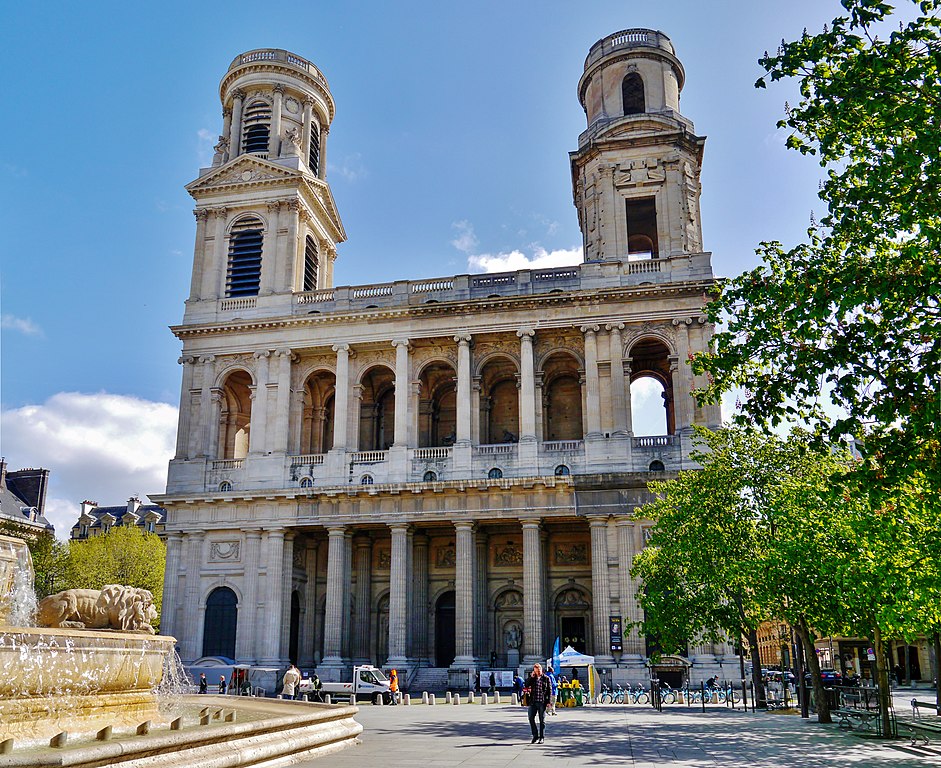
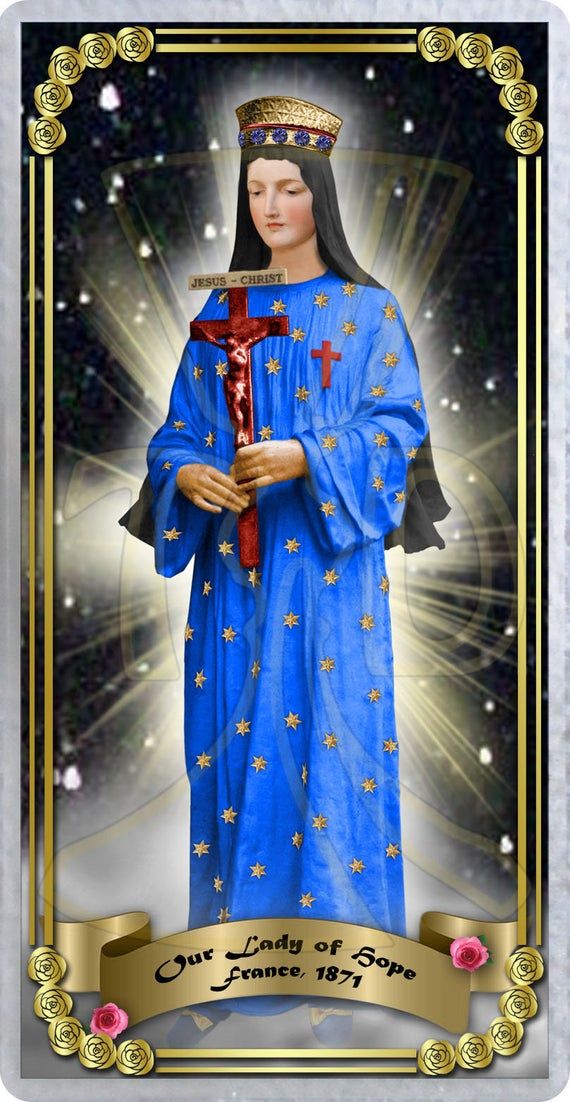
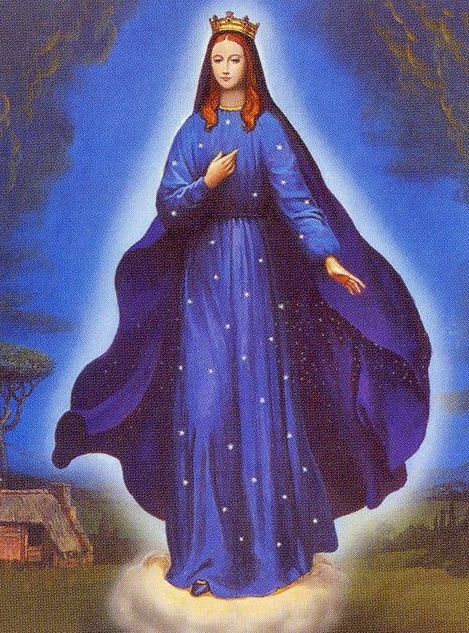
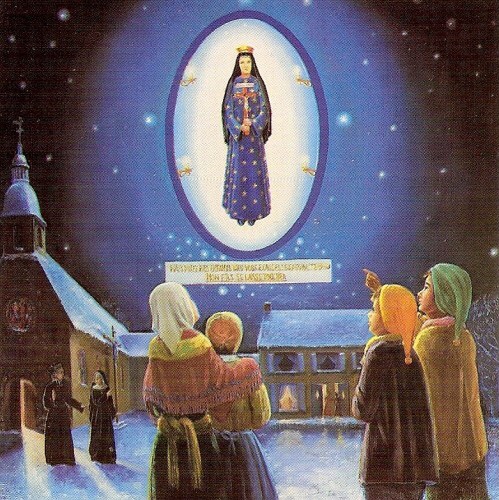
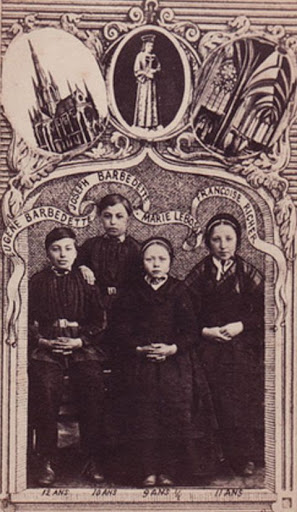

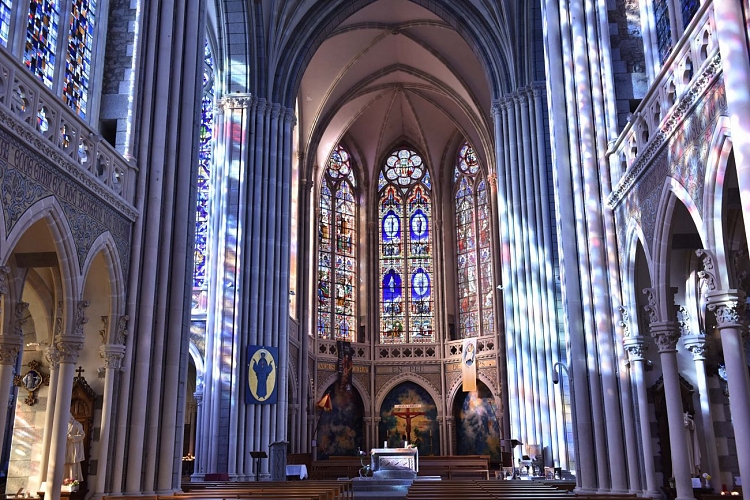
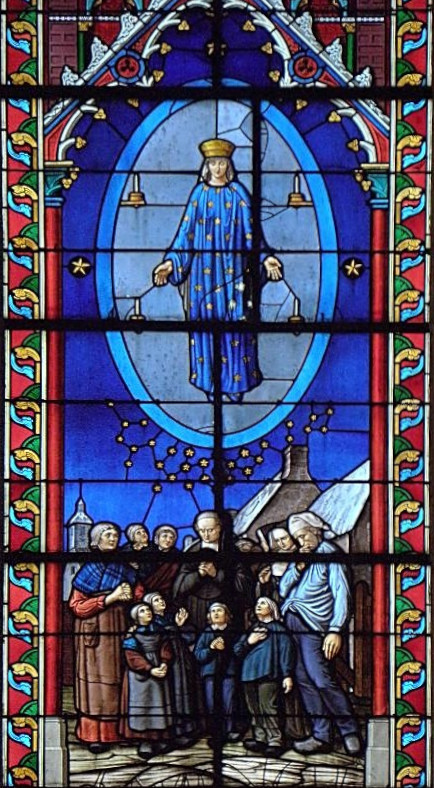
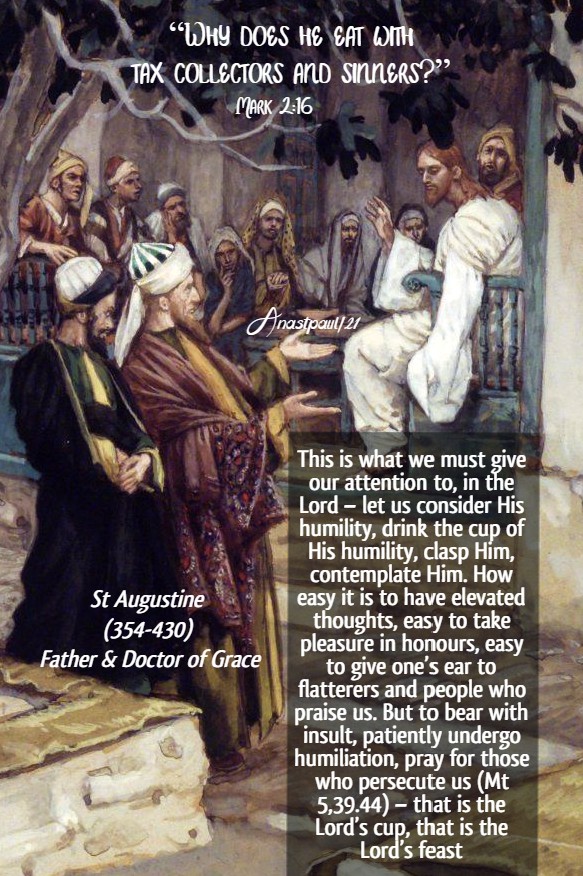
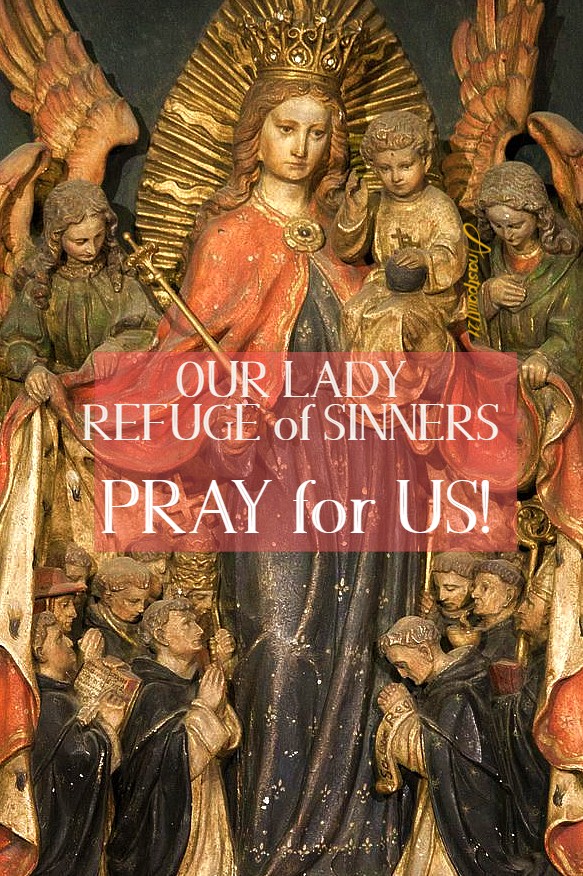


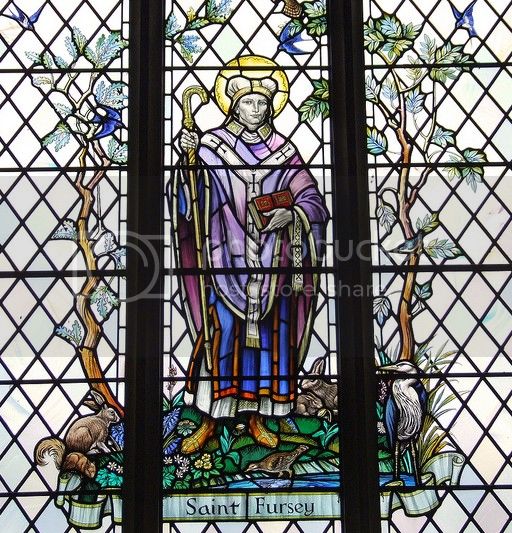
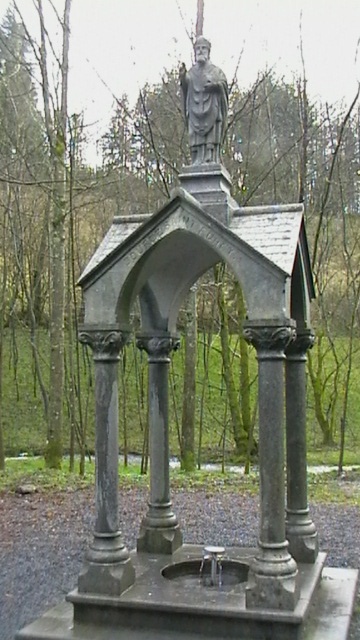

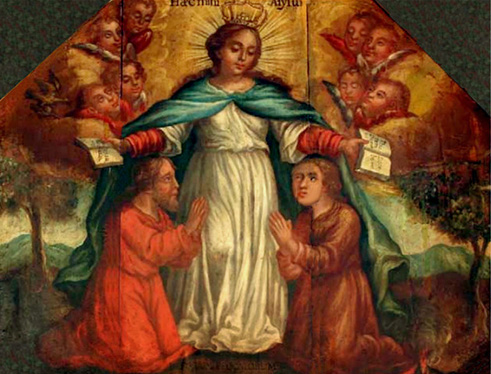
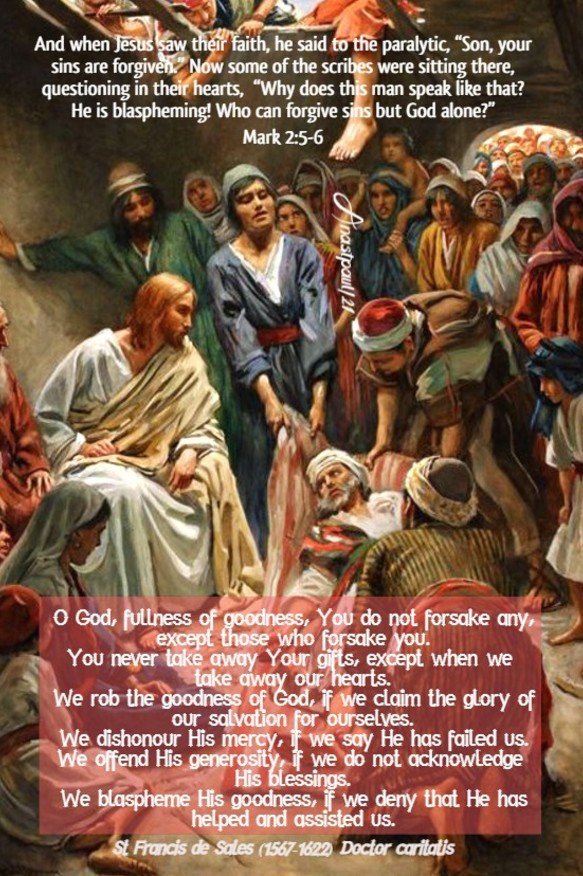


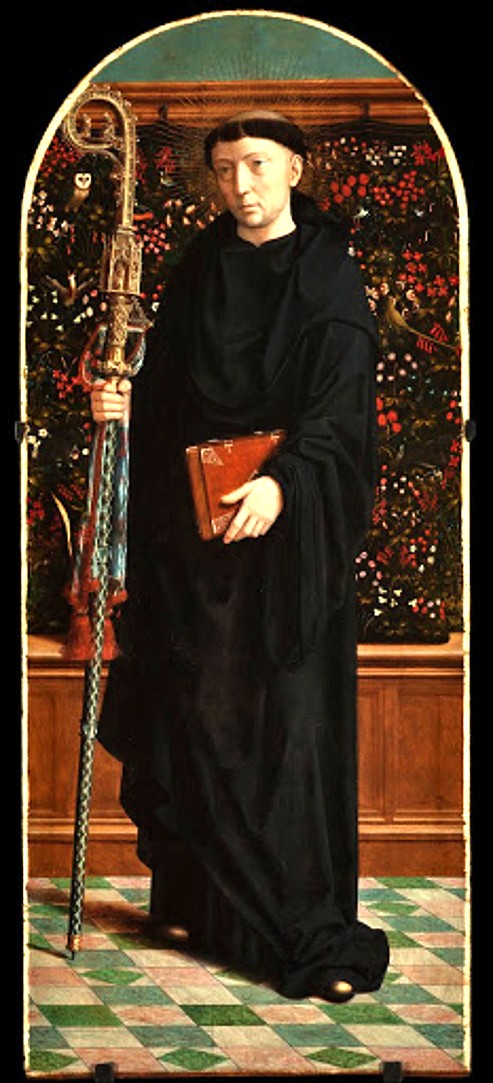
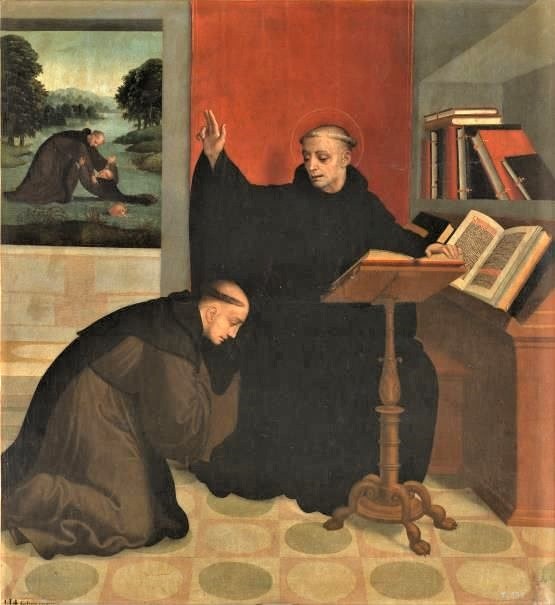
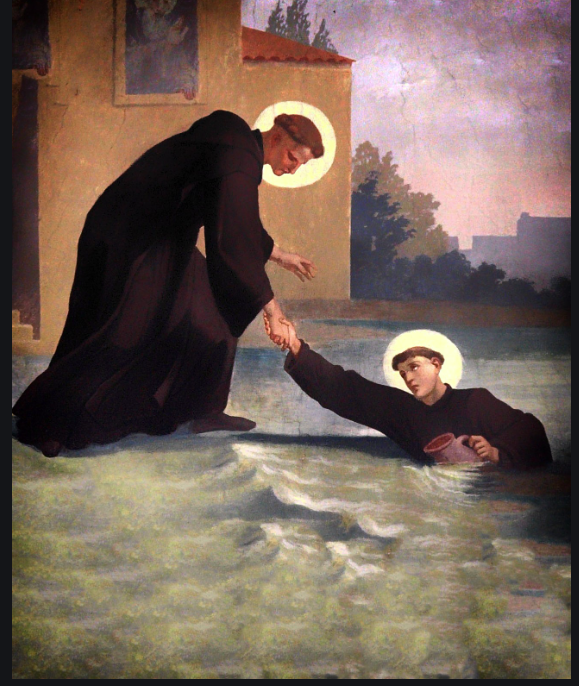
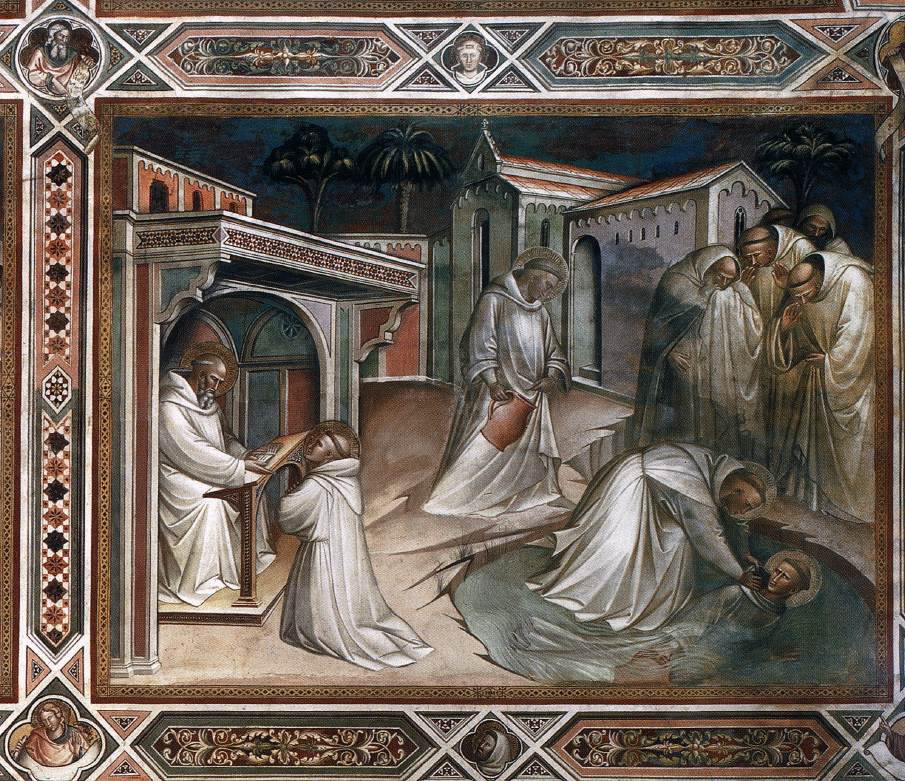
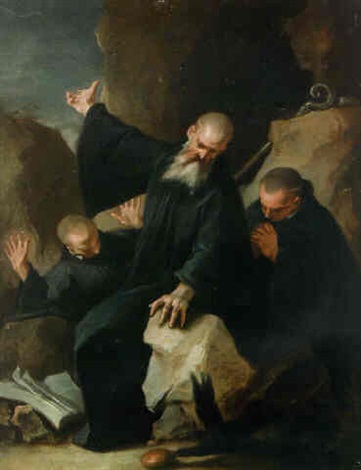
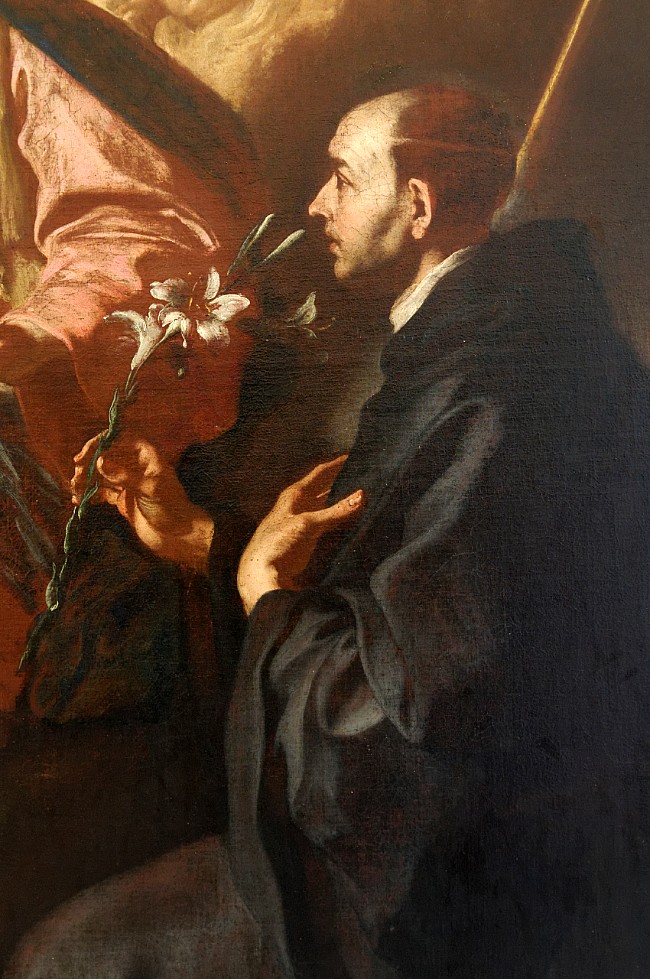
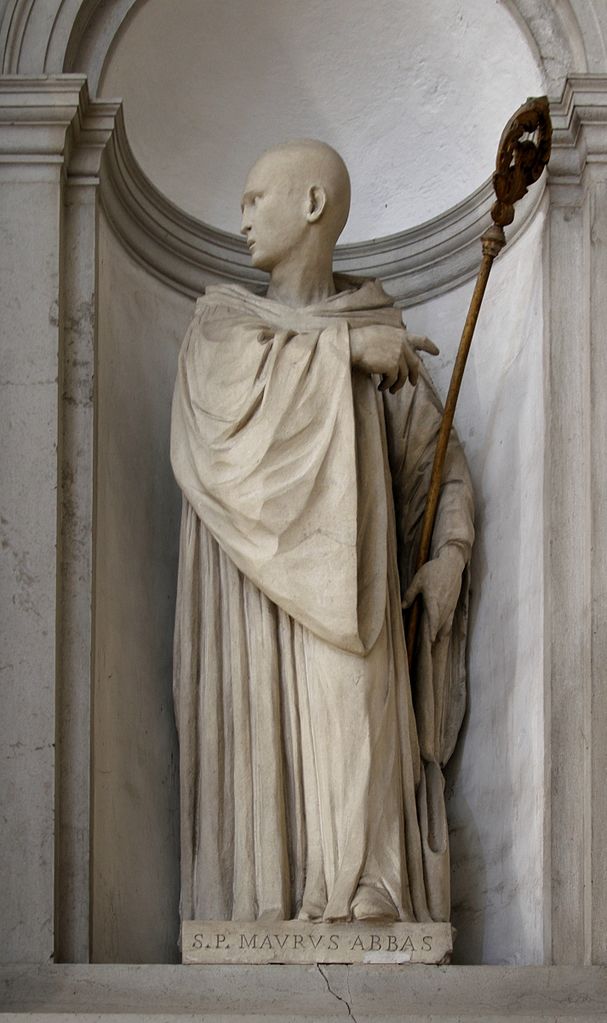

 The Parish Priest was informed but he did not put much stock in the story, thinking the vision of Beauraing and Lourdes was resulting in an epidemic of visions. He sent word to Marietta to forget about it and not spread stories. The next morning, Wednesday, the Priest was surprised to see Marietta at Holy Mass – she had quit school because she failed in her First Holy Communion examination three times and after that, had not gone to Mass again. That day, Marietta went to school and for the first time in her life, knew her lessons well. The next evening she went into the garden, knelt and said the Rosary; her father followed her with a coat which he threw around her shoulders. He tried to get the Priest who was out, then called a neighbour, a practicing Catholic, and together they followed. The child was being beckoned onto the highway by the Lady, until they reached a spring,, into which Marietta plunged her hands at the command of the Lady, who said, “This spring is set aside for me. Good night!” Then she vanished. When they reached home, the Priest was waiting for them. Marietta described the Lady: “Her robe was long and white; she wore a blue belt and rays of light shone from her head. She was a little more than five feet tall; her right foot was bare and under it, a golden rose. Her hands were raised to her breast on which was a golden heart. A Rosary hung from her right arm” – all similar to the Lourdes apparition.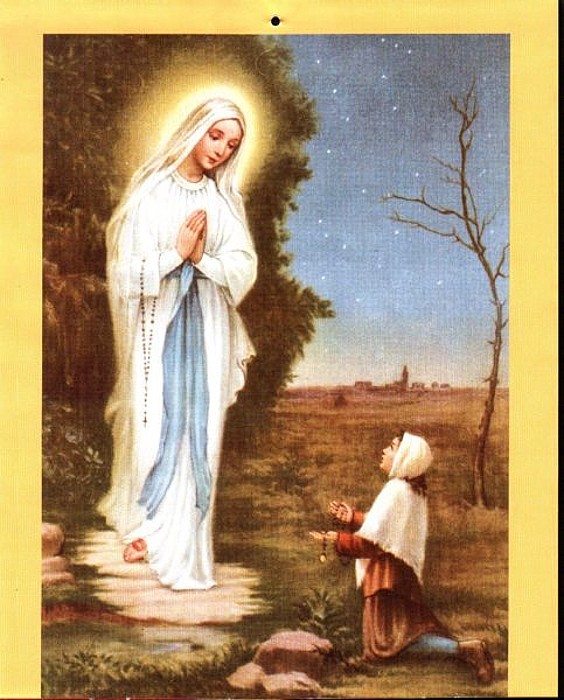
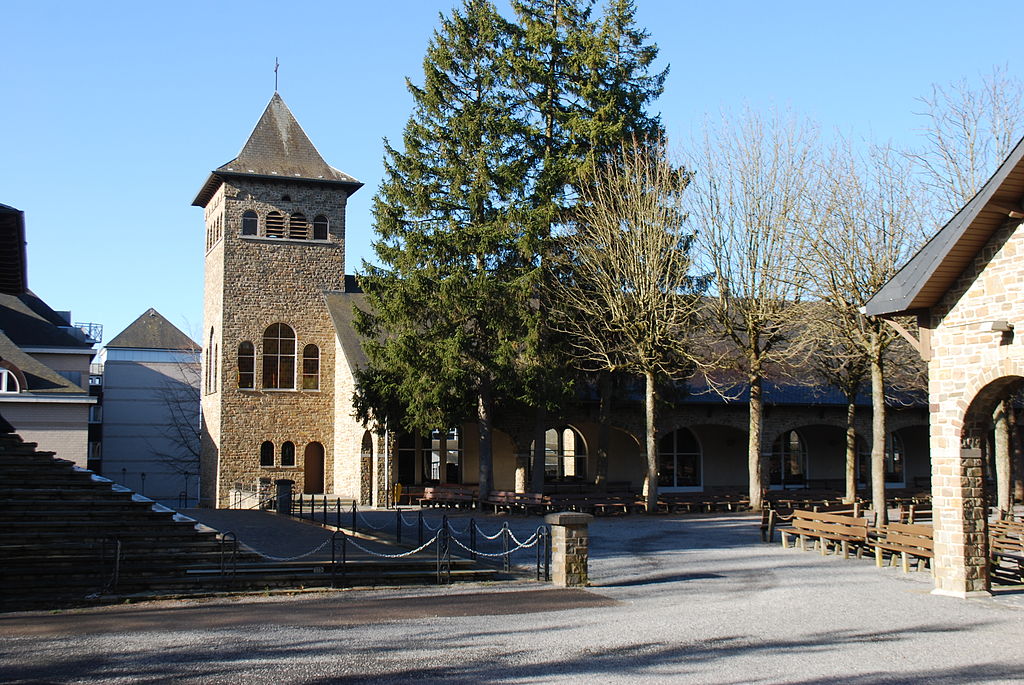


You must be logged in to post a comment.