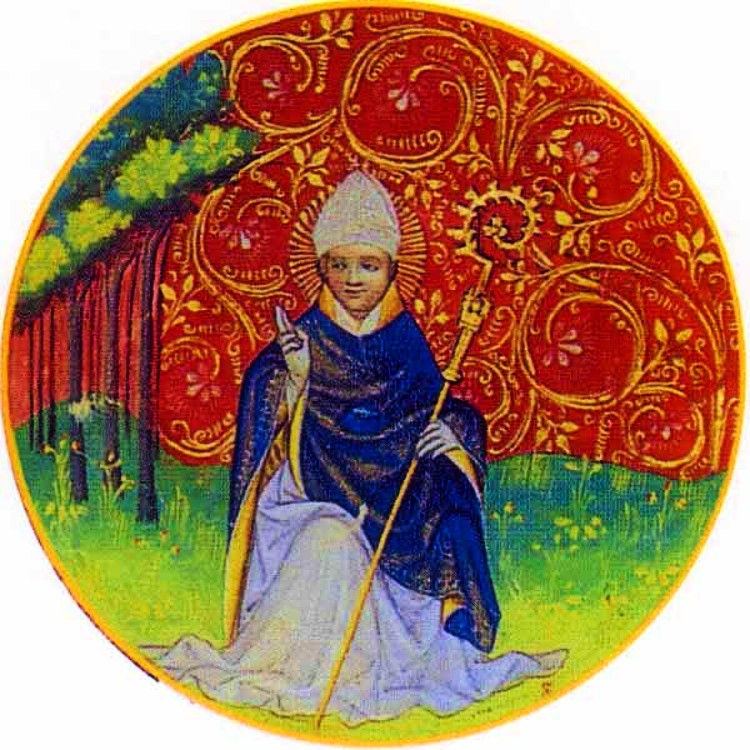
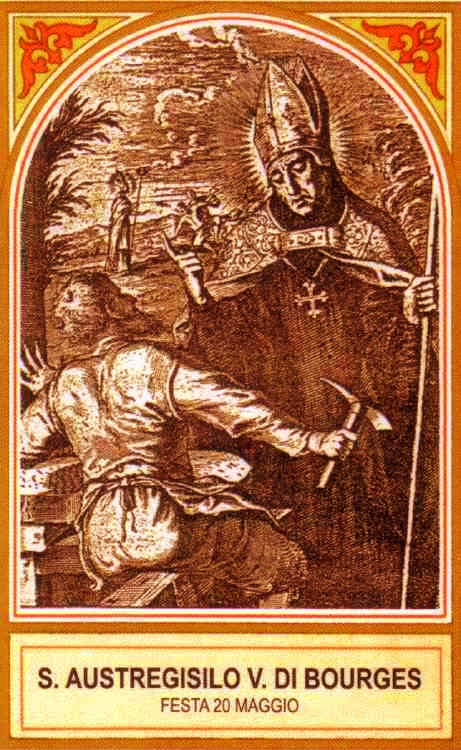
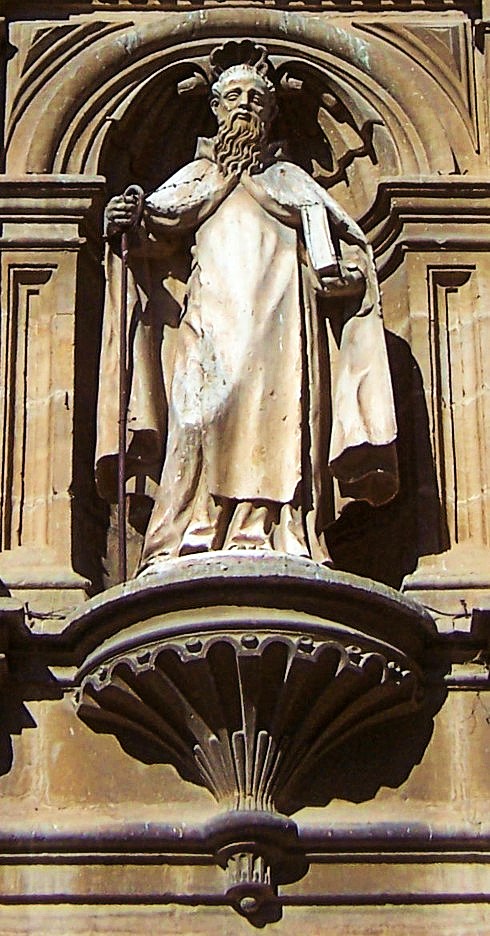
Saint of the Day – 20 May – St Austregisilus (c551-624) Bishop and Confessor of Bourges , Apostle of Charity to the poor and suffering, Defender of his flock by his assiduous care against all forms of strife, Born in c551 in Bourges, France and died there on 20 May 624. Patronages – Bourges and Lyon in France. Also known as – Aoustrille, Austregesilio, Outril, Outrille.
The Roman Martyrology reads today: “At Bourges in France, St Austregisil, Bishop and Confessor.”
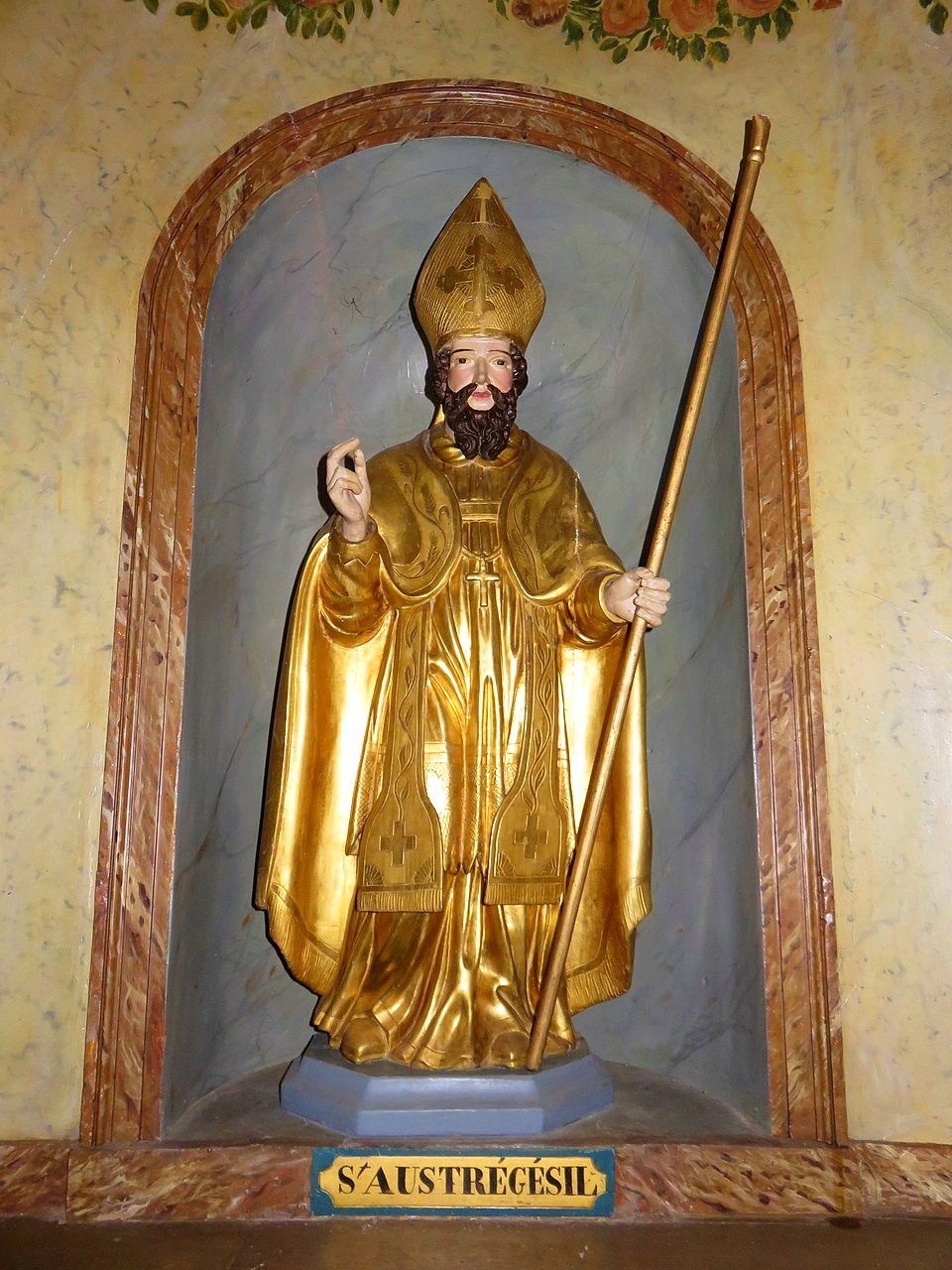
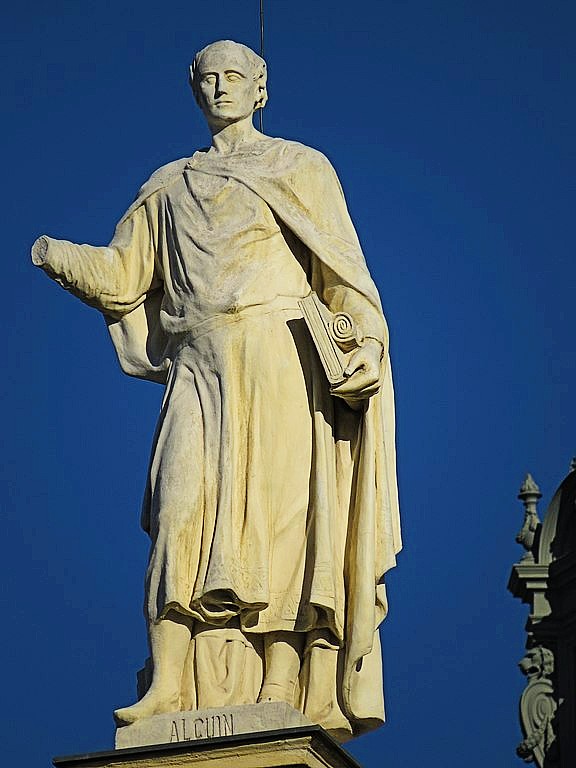
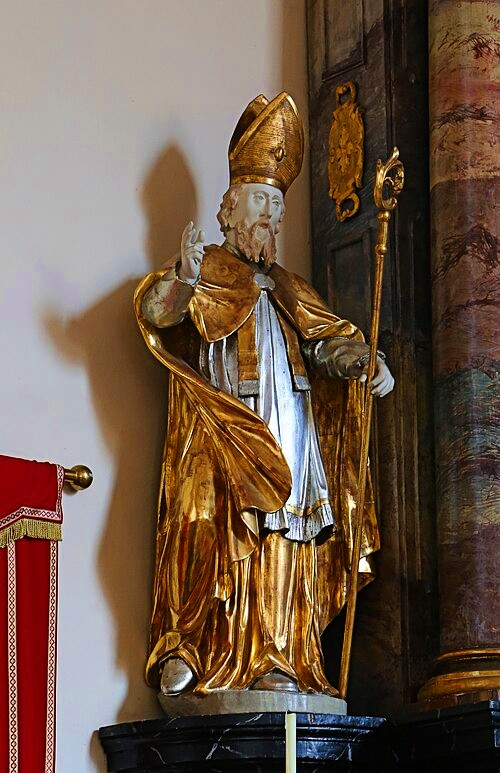
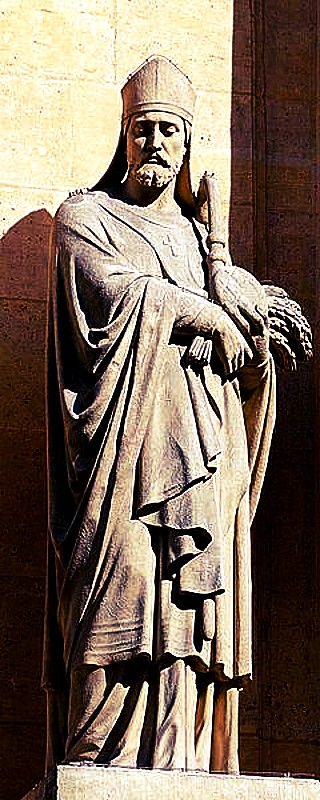
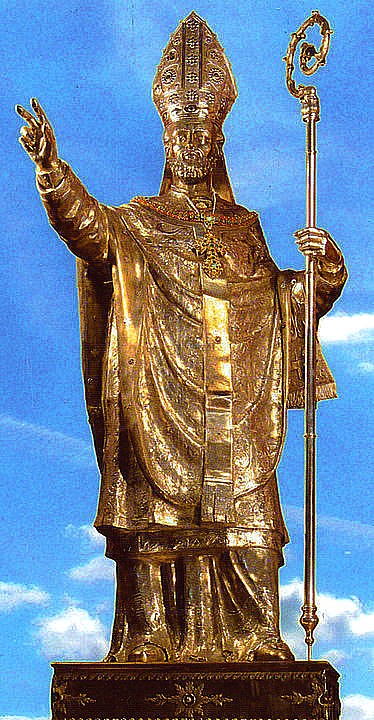
Statue of Austregisilus in the Church of Frontenas.
Born of a nobile family, Austregesilus’ youth was spent in the shadow of the Royal Court of King Guntram, where he had the opportunity to experience first-hand, the dynamics of power and the miseries of the people. It is said that, despite his noble origins, Austregesilus was deeply touched by the suffering of the weakest, developing a strong desire to devote himself to the service of God.
According to tradition, Austregesilus refused the marriage arranged for him by the Court, preferring to follow the Divine call to the Priesthood. This courageous choice, in contrast to the social expectations of the time, testifies to his profound faith and his desire to dedicate himself, body and soul, to the good of others.
Around 612, Austregesilus was Consecrated as the Bishop of Bourges, assuming leadership of the Diocese during a turbulent period marked by political conflicts and social tensions. Despite these difficulties, the new Bishop distinguished himself by his dedication to the people, becoming a beacon of hope and an example of Christian charity.
Saint Austregesilus committed himself fully to the pastoral care of his Diocese, regularly visiting all his Parishes and preaching the Gospel with fervour. His work was directed, in particular, to the most needy: the poor, orphans, the sick and those condemned to death. With dedication and compassion, Austregesilus did his utmost to alleviate their suffering, offering them not only material support but also, spiritual comfort.
In 614, Austregesilus participated in the Council of Paris, an important event which brought together the Frankish Bishops to discuss theological and disciplinary issues. His presence at the Council underlines his role as a reference within the Frankish Church and his commitment to promoting unity and cohesion among the faithful.
Saint Austregesilus died on 20 May 624, leaving a deep sorrow and eternal memory of sanctity and charity among his people. His figure soon became an object of veneration in Bourges and surrounds and a Church was dedicated to him in Bourges, of which he is still the Patron today.
St Abercius Blessed Albert (Died 1245) Priest and Abbot of the Vallombrosan Abbey near Bologna, Italy. St Alexander of Edessa St Althryda St Anastasius of Brescia St Aquila of Egypt Bl Arnaldo Serra and Companions St Asterius of Edessa St Austregisilus (c551-624) Bishop and Confessor of Bourgesof Bourges St Basilla of Rome St Baudelius of Nîmes St Codrato
Bl Guy de Gherardesca St Helena St Hilary of Toulouse St Lucifer of Caglieri St Marcello
St Plautilla (Died 67) A Roman Widow, Mother of St Flavia Domitilla. She was Baptised by St Peter and is believed to have seen the Martyrdom of St Paul. The Roman Martyrology reads today: “At Rome, St Plautilla, wife of an ex-Consul and mother of the blessed Flavia Domitilla. She was Baptised by the Apostle, St Peter and after giving the example of all virtues, rested in peace.” Blessed Indeed St Plautilla: https://anastpaul.com/2023/05/20/saint-of-the-day-20-may-st-plautilla-of-rome-died-67-a-roman-widow/
St Talaleo of Egea St Thalalaeus of Edessa St Theodore of Pavia
DISCLAIMER: Please note: I cannot control the content of the Advertisements on this Site, or of pop-ups which may appear, The revenue from the Advertisements, however, does provide a little assistance in the support of the Site. I do apologise for any inappropriate content.
Saint of the Day – 19 May – St Pudentiana (Died c160) Virgin Martyr(?) although sources do not confirm her Martyrdom. Patronage – Co Patron of the Philippines, with St Rose of Lima under the Principal patronage of Our Lady of the Immaculate Conveption. Also known as – Potentiana.
The Roman Martyrology reads today: “At Rome, the saintly virgin, Pudentiana, who, after numberless tribulations, after with great respect, burying many Martyrs and distributing all her goods to the poor for Christ’s sake, departed from this world to go to Heaven.”
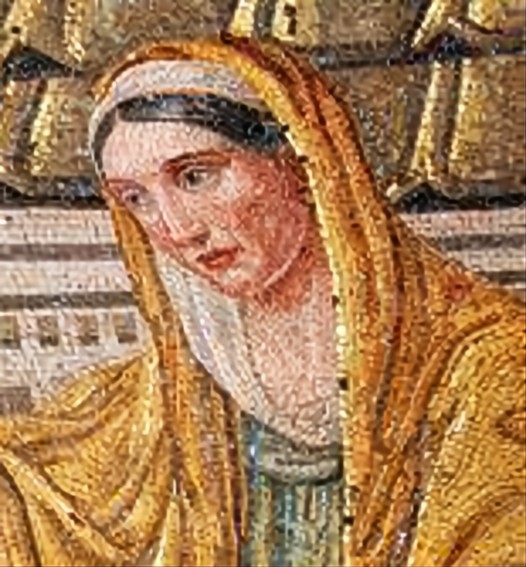
This mosaic is present in the Apse of the Basilica dedicated to St Pudentiana in Rome
According to her Acta and the Martyrology of Reichenau, she was a Roman virgin of the early Church, daughter of Saint Pudens, friend of the Apostles and Disciples and sister of St Praxedes, also a Martyr.
These 2 sisters, together with Pope Pius I, built a Baptistry in the Church inside their father’s house and started to Baptise pagan converts there.
Pudentiana died at the age of 16, possibly a Martyr and is buried next to her father St Pudens, in the Priscilla Catacombs on the via Salaria.
While there is evidence for the life of Pudens, there is no direct evidence for either Pudentiana or Praxedes. However, these 2 have a Church in Rome but not their fahter.
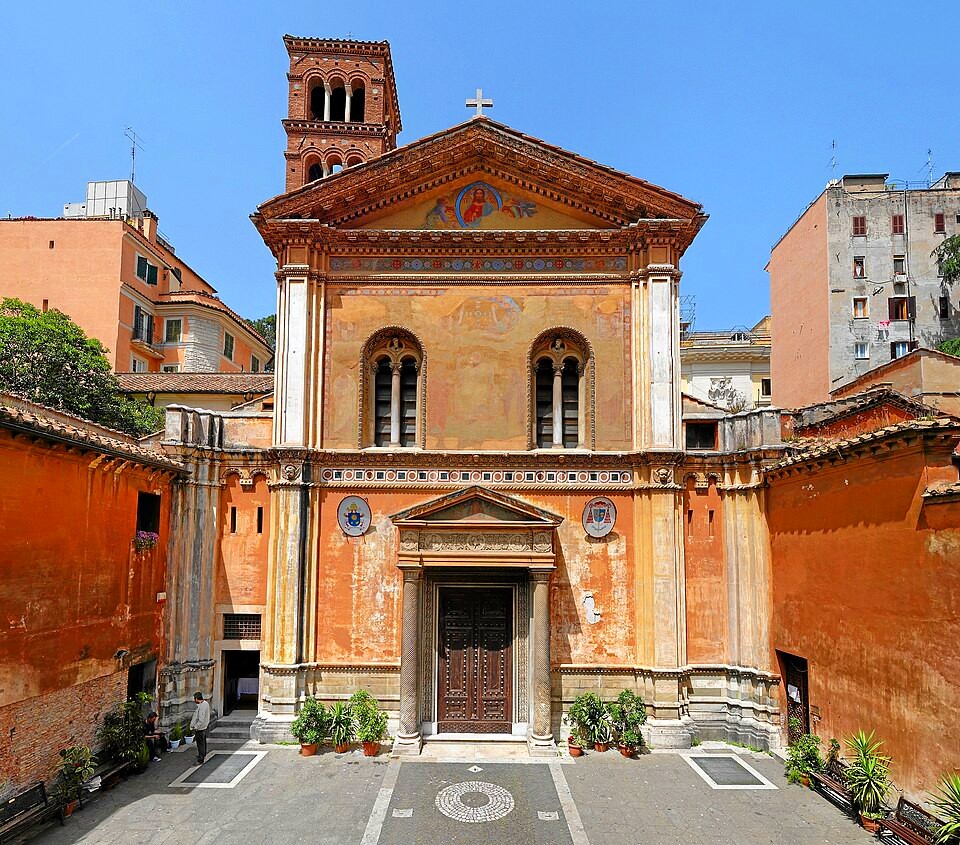
Santa Pudenziana, a Basilica in Rome, is named for her, and her commemoration in the General Roman Calendar fell on 19 May until its 1969 revision. Pudentiana is still mentioned on 19 May in the Roman Martyrology.
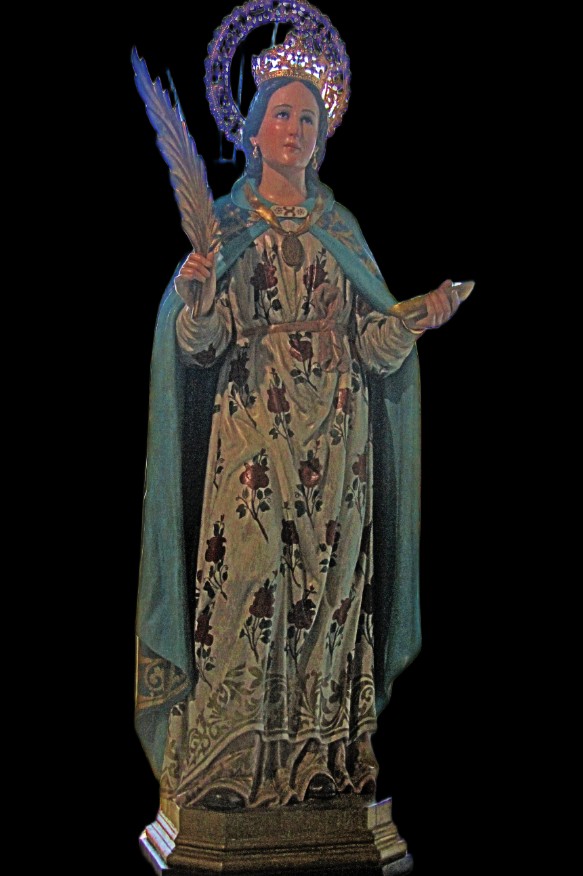
St Pudentiana on the South Colonnade at St Peter’s. Here she raises a sponge used to collect the blood of the Martyrs.
The Spanish Conquistador, Miguel López de Legazpi, the Founder of the modern City of Manila, Philippines, gained possession of the territory on 19 May 1571. As it was the Feastday of Saint Pudentiana, Legazpi declared her the Patron.
By the Apostolic Letter “Impositi Nobis Apostolici” of 12 September 1942, Pope Pius XII, at the request of the Philippine Episcopacy, declared the Virgin Mary under the title of the Immaculate Conception, as principal Patron of the Country, with Saints Pudentiana and Rose of Lima, as secondary patrons. His Decree mentions the historic documents, indicated Pudentiana as Patron from the 16th Century and Rose of Lima from the 17th.
St Pudentiana’s Relics were transferred to the Basilica in Rome, (see below) dedicated to her and her sister from the Catacombs of Priscilla.
St Calocerus of Rome St Crispin of Viterbo St Cyriaca of Nicomedia and Companions St Cyril of Trèves St Dunstan of Canterbury St Evonio of Auvergne St Hadulph of Saint-Vaast Bl Humiliana de’ Cerchi
Bl Juan of Cetina St Parthenius of Rome Bl Peter de Duenas Bl Peter Wright St Philoterus of Nicomedia St Theophilus of Corte
DISCLAIMER: Please note: I cannot control the content of the Advertisements on this Site, or of pop-ups which may appear, The revenue from the Advertisements, however, does provide a little assistance in the support of the Site. I do apologise for any inappropriate content.
Saint of the Day – 18 May – St Felix (Died c304) Bishop of Spoleto in Italy, Martyr. Martyred in the persecutions of Diocletian in Salona, Dalmatia. Also known as – Felix of Epetium, of Martana, of Spalato, of Spello, of Split, of Stobrec, Felice…
The Roman Martyrology reads today: “At Spoleto, St Felix, a Bishop, who obtained the Palm of Martyrdom under the Emperors Diocletian and Maximian.”
The “Prologus Paschae” written in 395, tells of Bishop Felix’s Martyrdom in Salona, not in Spoleto, during the persecution of Diocletian and Maximian. Here we read: “During the consulship of Diocletian and Maximian, … the Christians suffered the sixth persecution.”
The testimony of the Prologus is, at this point, confirmed by contemporary documents and can be accepted without fear, with the exception of the consular date which evidently must be brought back to at least the year 303, the beginning of the persecution.
Felix’s cult is still alive in Split, the ancient Salona, where, in the Franciscan Church his Relics are preserved and he has been celebrated since time immemorial on 18 May. On the same day the Saint is honoured in Stobrec, formerly Epetium, a few miles from Split, in the vicinity of which the ruins of a Church dedicated to him have been brought to light. Stobrec too, considers him one of its ancient Bishops but wrongly, because the Town was never an Episcopal Seat.
In the Martyrology of the 9th Century, on 18th May we find this eulogy: “On the same day, Saint Felix, Bishop, who obtained the Palm of Martyrdom at the City of Spelle, under the Emperor Maximian.” The same name and the same day of veneration (18 May) as Felice di Spalato. This and other circumstances have led the best scholars, to conclude that Felice di Spello is, in reality, nothing more than the namesake of Spalato and it is probable that the assonance of the words had, as has occurred in many other cases, its share of blame in the genesis of the error. Certainly it was only because of the similarity that Baronio (he himself confesses it) created Felice the Bishop of Spoleto.
In addition to Epetium, Spello and Spoleto, Felice was considered the Bishop of Martana, another Diocese which never existed, where he is celebrated on 30 October. The passio of Felice of Martana is identical, except for the topographical notes, to that of Felice of Spello. Furthermore, since Martana is located in the territory of Todi, the historians of the latter City, since Felice could not have been the Bishop of Martana, assigned him the Seat of Todi.
Martyrs of Ancyra – 8 Saints: Seven nuns Martyred in the persecutions of Diocletian and the innkeeper who was executed for giving them a Christian burial: Alexandria, Claudia, Euphrasia, Julitta, Matrona, Phaina, Thecusa and Theodatus. c.304 in Ancyra, Galatia (in modern Turkey).
DISCLAIMER: Please note: I cannot control the content of the Advertisements on this Site, or of pop-ups which may appear, The revenue from the Advertisements, however, does provide a little assistance in the support of the Site. I do apologise for any inappropriate content.
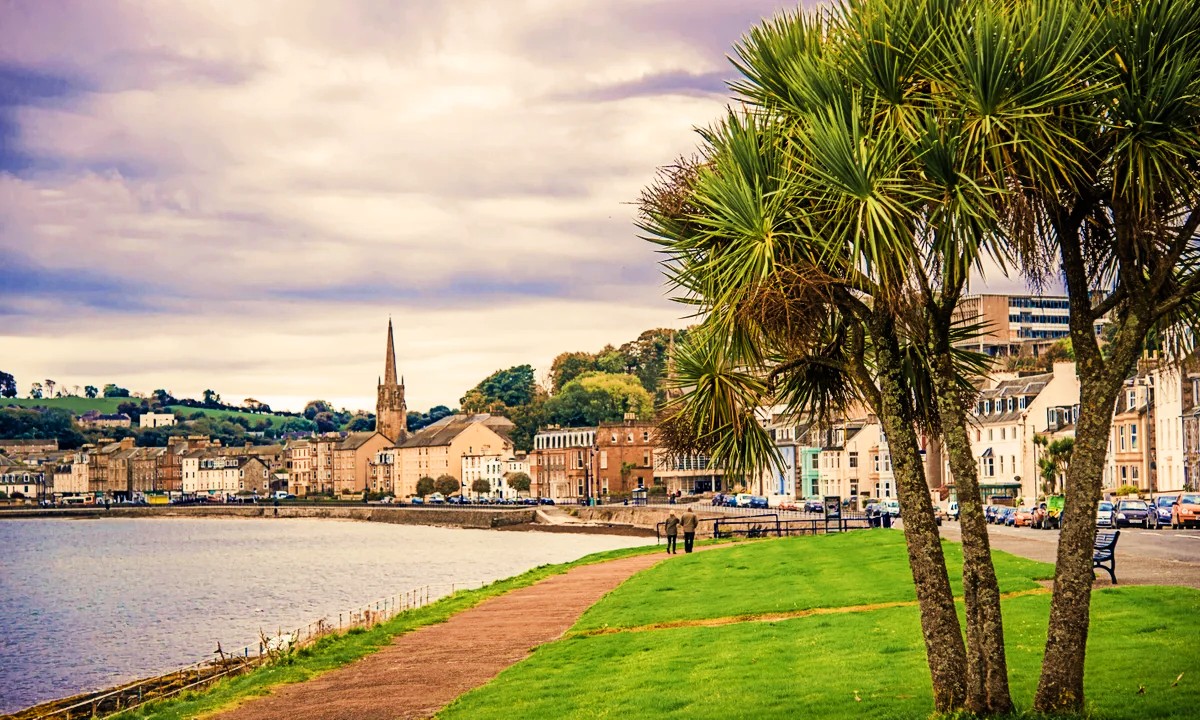
Saint of the Day – 17 May – Saint Cathan (6th or 7th Century) Bishop of the Isle of Bute, in the Scottish Hebrides. It is believed that he was one of the first Irish Missionaries to the Scottish lands. Also known as – Cadan, Catan, Chattan.
The Ruins of the Cemetary and Chapel of St Cathan on the Isle of Kil’Cathan/Bute
According to the Scots, the Relics of Bishop St Cathan rest on the Isle of Bute, where he may have been the Bishop. They were so famous that the land is often called Kil’cathan.
There is a Tomb bearing this name at Tamlacht near Londonderry in Ireland. Scholars believe there is the possibility that there were two Saints by this name (Benedictines).
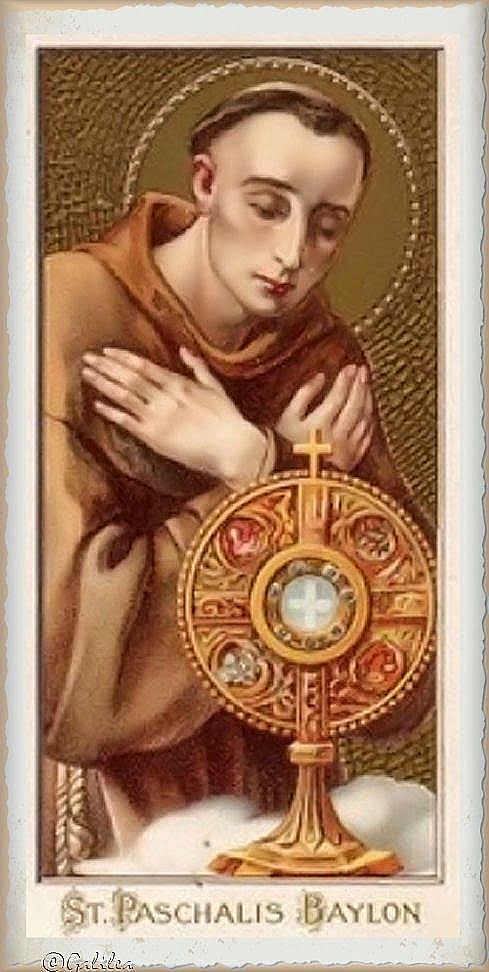
St Paschal Baylon OFM (1540-1592) “Seraph of the Eucharist,” “Saint of the Blessed Sacrament,” “Servant of the Blessed Sacrament.” Franciscan Lay Brother, Mystic…….. A man remarkable for innocence of life and the spirit of penance. Pope Leo XIII declared him the heavenly patron of Eucharistic Congresses and Societies and Apostolates, formed in honour of the Most Blessed Sacrament. Official and traditional Patronages: Pope Leo XIII, on 28 November 1897, proclaimed him Patron of Eucharistic Congresses and Associations. Popularly he is also considered Patron of cooks and pastry chefs, on the basis of his humble services carried out in the Convent – according to tradition, Paschal is the creator of the famous desert called Zabaglione, whose name evidently derives from him. Probably due to a resemblance in the sound of Paschal’s Surname (“St Paschal Baylonne”). Paschal is finally invoked by single women looking for a husband and by women in general. About this Beautiful Saint: https://anastpaul.com/2017/05/17/saint-of-the-day-17-may-st-paschal-baylon/ AND: https://anastpaul.wordpress.com/2018/05/17/saint-of-the-day-17-may-st-paschal-baylon-o-f-m-1540-1592-the-seraph-of-the-eucharist/ AND: https://anastpaul.com/2022/05/17/saint-of-the-day-17-may-st-paschal-baylon-ofm-1540-1592-servant-of-the-blessed-sacrament/
St Heraclius of Noviodunum Bl Ivan Ziatyk St Madron of Cornwall St Maildulf of Malmesbury St Maw
St Paul of Noviodunum St Peter Lieou St Rasso of Grafrath St Restituta of Carthage St Silaus of Lucca St Solochanus of Chalcedon St Thethmar St Victor Roma
Martyrs of Alexandria – 3 Saints: Three Christians Martyred together; no details about them have survived except their names: Adrio, Basilla and Victor. 4th century Alexandria, Egypt.
Martyrs of Nyon: A group of Christians Martyred together in the persecutions of Diocletian. We know little more than three of their names: Aquilinus, Heradius and Paul. 303 at Noyon, Switzerland.
DISCLAIMER: Please note: I cannot control the content of the Advertisements on this Site, or of pop-ups which may appear, The revenue from the Advertisements, however, does provide a little assistance in the support of the Site. I do apologise for any inappropriate content.
Saint of the Day – 16 May – St Ubaldus Baldassini (c1085-1160) Bishop and Confessor, Reformer, untiring Shepherd and protector of his flock both in spiritual and temporal affairs, Apostle of all the needs of the poor and Defender of his City, Miracle-worker. Born in c1085 in Gubbio near Ancona, Umbria, Italy as Ubaldo Baldassini and died in the same City at around sunrise on Monday 16 May 1160 . Also known as – Ubaldus of Gubbio, Ubaldo… Ubald… Ubalde… Patronages – of Gubbio and Montovi, in Italy, St Ubaldus was Canonised in 1192 by Pope Celestine III.
The Roman Martyrology reads today: “At Gubbio, St Ubaldus, a Bishop renowned for miracles.”
Ubaldus was born into the noble Baldassini family in c1085. His parents died while he was still a child and he was raised by an uncle. He was educated at St Secondus Monastery and then at St Marianus. However, he disapproved of the way of life of the Clergy of San Marianus and, in 1104, he return to St Secondus.
The old Bishop Rusticus died and was succeeded by St John of Lodi. At the request of the new Bishop, St Ubaldus returned to Sant Marianus.
Ubaldus was Ordained in 1114 and was elected Prior of the St Marianus Canonric some four years later He was sympathetic to the cause of Church reform and imposed an ascetic Rule on his community. [He imposed what is known as the Portuense Rule which Pope Paschal II had confirmed in 1116 for a community of Regular Canons at the Church of Santa Maria in Portu on the Island of Corizo near Ravenna. This Rule subsequently became widely diffused in Italy, France, Spain and Germany.]
In 1126, when a fire destroyed much of Gubbio, including the Cathedral and the Monastery, Ubaldus fled to the Eremo di Fonte Avellana, intent on dedicating himself to the monastic life. Ubaldus had donated his inheritance to the poor and to the restoration of Monasteries. Several bishoprics were offered to him,but he refused them all. However, when in 1128, the Episcopal See of Gubbio becoming vacant, he was sent, with some Clerics, by the faithful, to ask Pope Honorius II, for a newBishop. The Pope immediately Consecrated Ubaldus and sent him back to Gubbio. To his people he became a perfect pattern of all Christian virtues and a powerful protector in all their spiritual and temporal needs.
Ubaldus became its Bishop, just a year before the start of the Papal schism. His support Pope Innocent II (perhaps because this was the candidate supported by St Bernard) seems to have been influential in deciding the obedience of the Cities of Umbria.
One of his first acts as the Bishop was to begin the rebuilding of the City. During the years 1135-1140, our Saint Ubaldus, calmed the civil unrest which culminated in the establishment of the government of the region and the election of Consuls. In 1151, exiled nobles from Gubbio seem to have mobilised support from some eleven neighbouring Cities and a force under Perugian leadership attacked Gubbio. However, Ubaldus had rebuilt the walls of the City and the invaders were forced to mount a siege. Fortunately, St Ubaldus was able to dispatch soldiers to the surrounding mountains under cover of darkness. The following day the besieging army found itself surrounded and was forced to withdraw.
His assistance was again needed in 1155, when the Emperor Frederick I, who was camped with a large army after the sack of Spoleto, demanded a huge payment from Gubbio to prevent a similar seige. St Ubaldus pleaded with Frederick I, who was so impressed that he left the City in peace and granted it a number of territorial privileges.
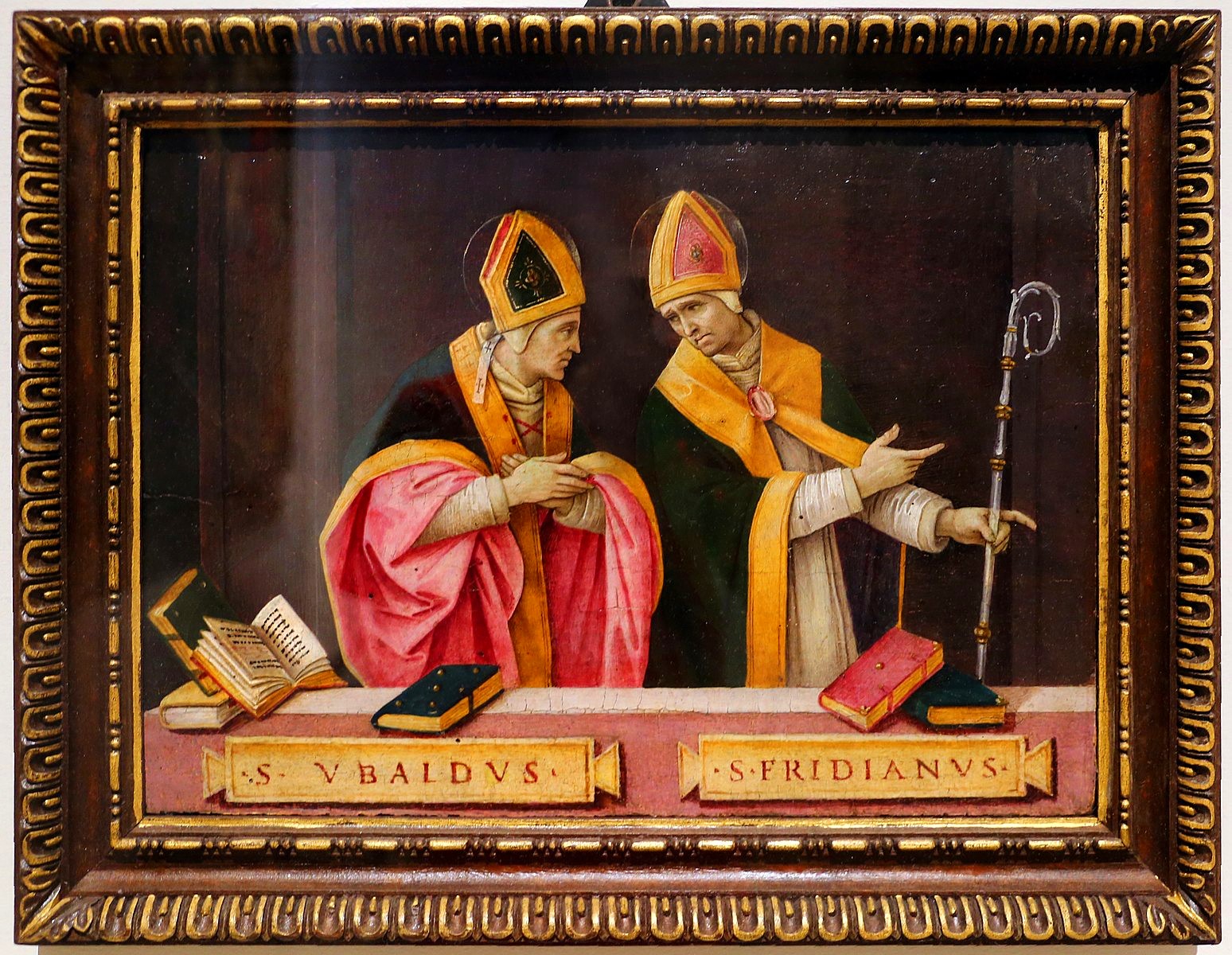
St Ubaldus left and St Fredianus right
Ubaldus was known for his patience and heroic gentleness and was considered to have the gift of healing. Once it happened, that in repairing the wall of the City, the workmen encroached upon his vineyard. The Bishop mildly put them in mind of it, and desired them to forbear. The overseer of the work moved with fury, scornfully pushed him into a great heap of mortar. The good Bishop got up all covered with lime and dirt, without making the least expostulation. The people demanded that the overseer, in punishment for the offence, should be banished and his goods confiscated. The Saint endeavoured to present the incident as an accident but when that did not satisfy the people, who knew how it happened, he, being desirous to deliver the man out of the hands of the magistrates, maintained that the consideration of the misdemeanour belonging to his own jurisdiction, he would take care to render justice himself. Ubaldus then pardoned him.
Numerous miracles were attributed to St Ubaldus during his life and after his death. A number of miraculous cures were attributed to his intercession. The life of St Ubaldus was written by Theobald, his immediate successor in the Episcopal See.
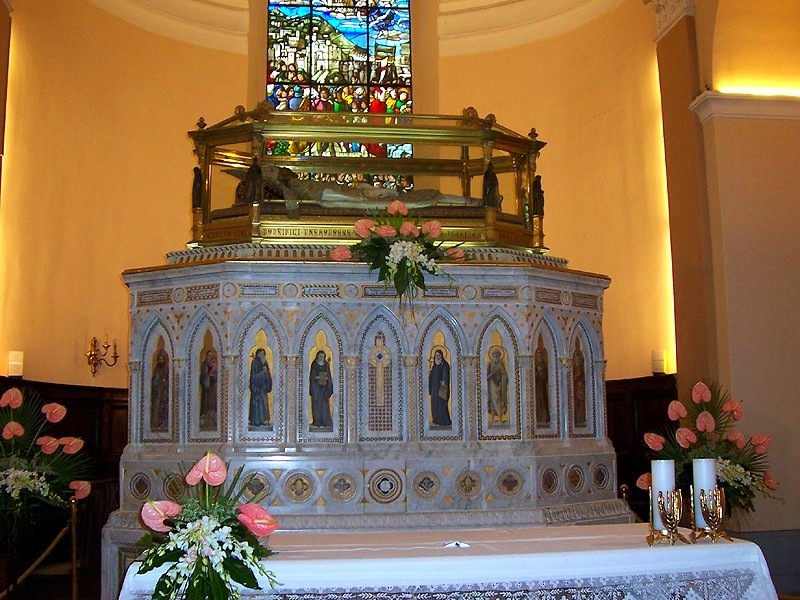
St Ubaldus Shrine
When St Ubaldus died in 1160, he was buried in the old Duomo, beside the Relics of Sts Marianus and James. In 1188, Pope Clement III gave permission to Bishop Benedetto Bentivoglio, for the translation of the Relics of the saints of Gubbio, (presumably including the body of the future St Ubaldus) from the olf City to the site on the mountain, where the new City Cathedral had been constructed. Now known as the Basilica of St Ubaldus, it is frequented by numerous pilgrims.
Dante mentions Ubaldus in the Divine Comedy (Heaven Canto XI): “Between Tupino and the stream which falls from the blest Ubaldus’ chosen hill, the slope is green, a lofty mount below.”
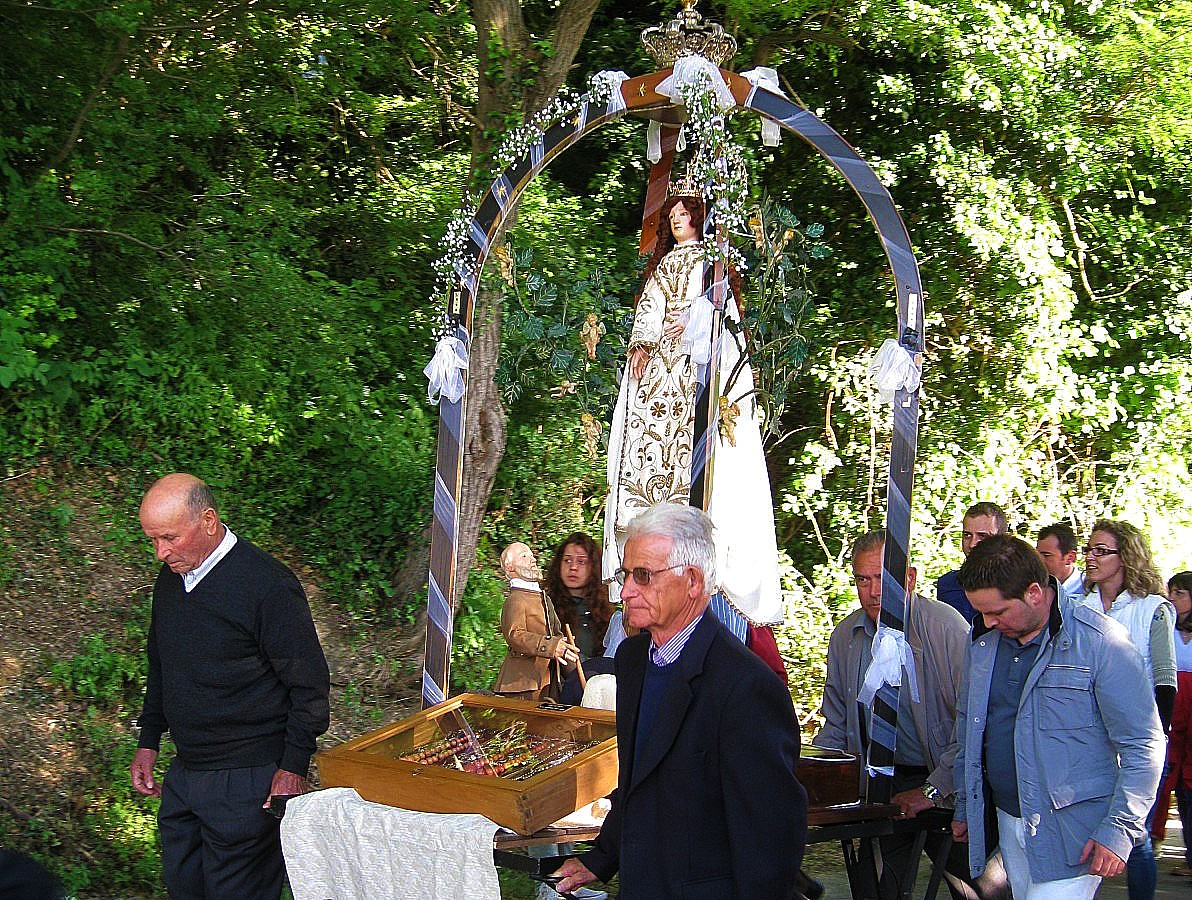
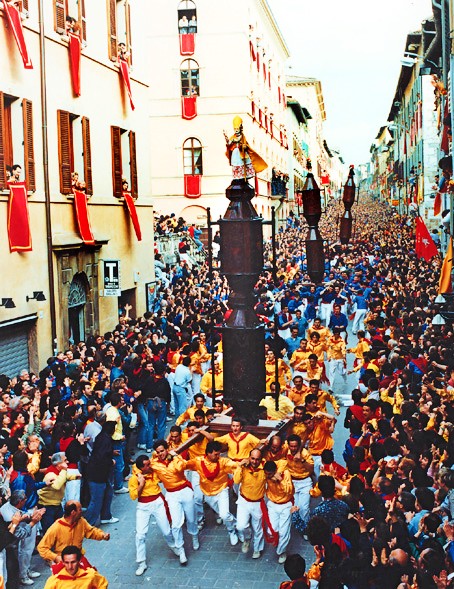
The festival of La Corsa dei Ceri at Gubbio. The statue of Saint Ubaldo leads the procession, followed by ceri topped with the statues of Saint George and Saint Anthony the Great.
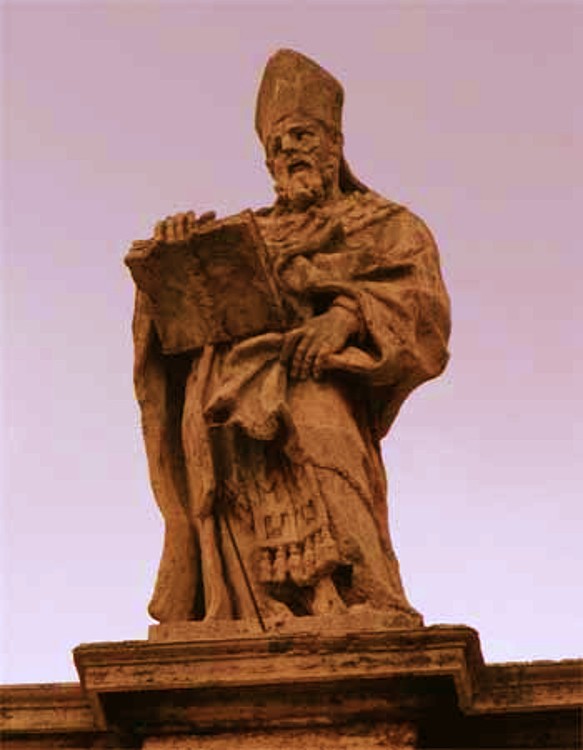
St Ubaldus Statue on the South Colonnade, Curved Arm, at St Peter’s Basilica.
St Abdas of Cascar Bl Adam of Adami Bl Adam of San Sabine
St Andrew Bobola SJ (1591-1657) Priest of the Order of the Society of Jesus (Jesuits), Missionary, known as the Apostle of Lithuania and the “Hunter of Souls.” Beatification: 30 October 1853 by Pope Blessed Pius IX Canonisation: 17 April 1938 by Pope Pius XI His Holy and Zealous Life: https://anastpaul.wordpress.com/2017/05/16/saint-of-the-day-16-may-st-andrew-bobola-sj/
St Carantac St Carantoc St Diocletian of Osimo St Felix of Uzalis St Fidolus of Aumont St Fiorenzo of Osimo St Fort of Bordeaux St Francoveus St Gennadius of Uzalis St Germerius of Toulouse St Hilary of Pavia
St Ubaldus Baldassini(c1085-1160) Bishopand Confessor
St Victorian of Isauria Bl Valdimir Ghika
Martyrs of Saint Sabas: A group of Monks, whose names have not come down to us, who were massacred by Moors at the monastery of Saint Sabas in Palestine.
Martyrs of Caramasi Albertin-Marie Maisonade Ignace-Alexandre-Joseph Cardon Jan Chrysostom Zavrel Maturin-Marie Pitri Modeste-Marie Burgen Zosimo Maria Brambat
Martyrs of Osimo Diocletian Fiorenzo
Martyrs of Uzalis Felix Gennadius
DISCLAIMER: Please note: I cannot control the content of the Advertisements on this Site, or of pop-ups which may appear, The revenue from the Advertisements, however, does provide a little assistance in the support of the Site. I do apologise for any inappropriate content.
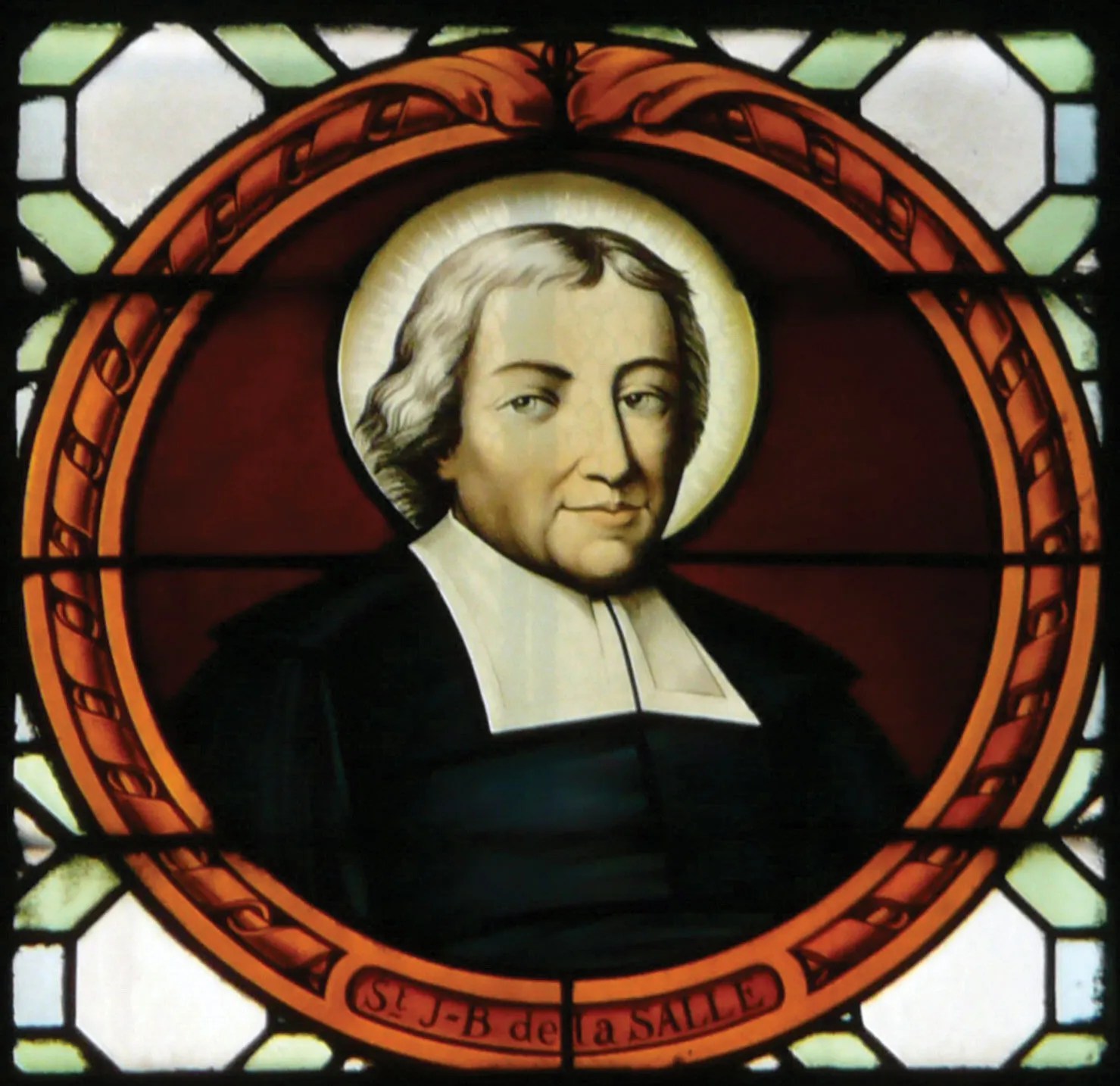
Quote/s of the Day – 15 May – St John Baptiste de la Salle (1651-1719) “The Father of Modern Education,” Confessor, Priest, Founder
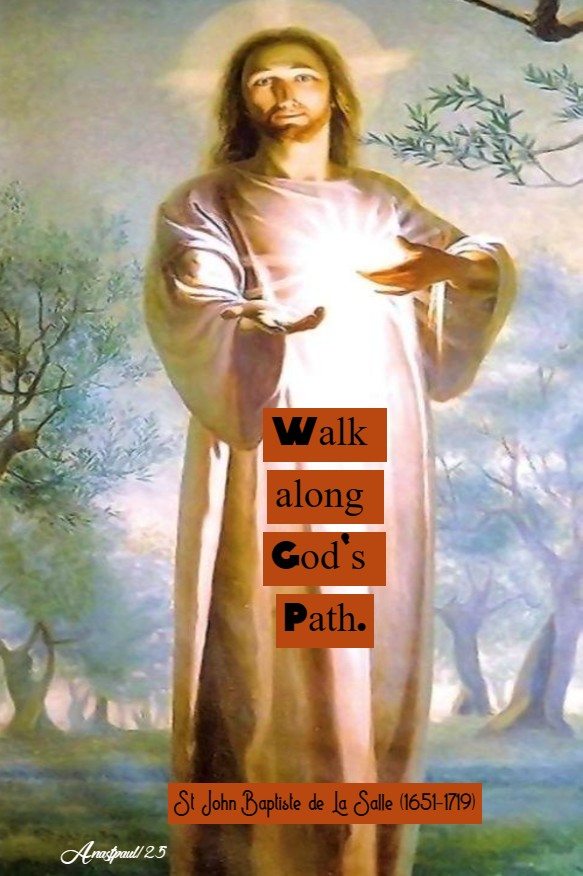
“Walk along God’s path.”
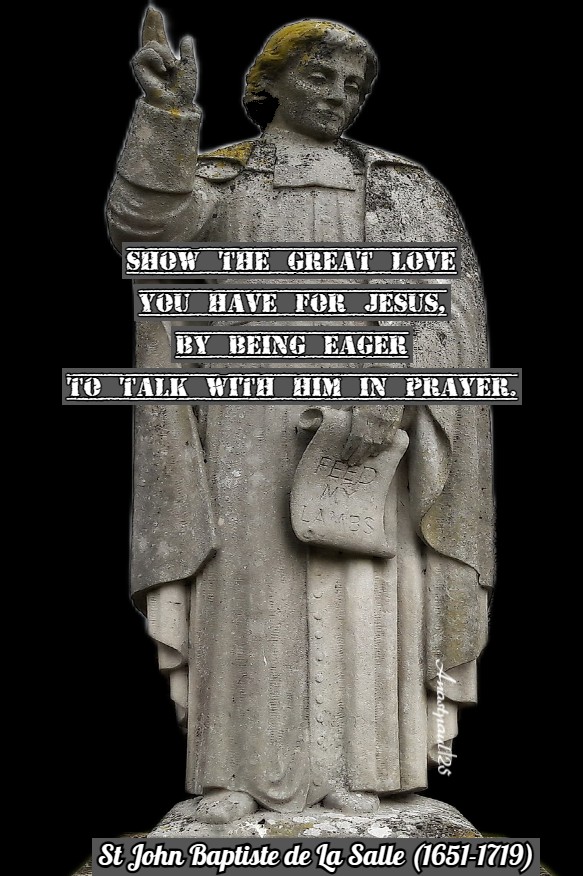
“Show the great love you have for Jesus, by being eager to talk with Him in prayer.”
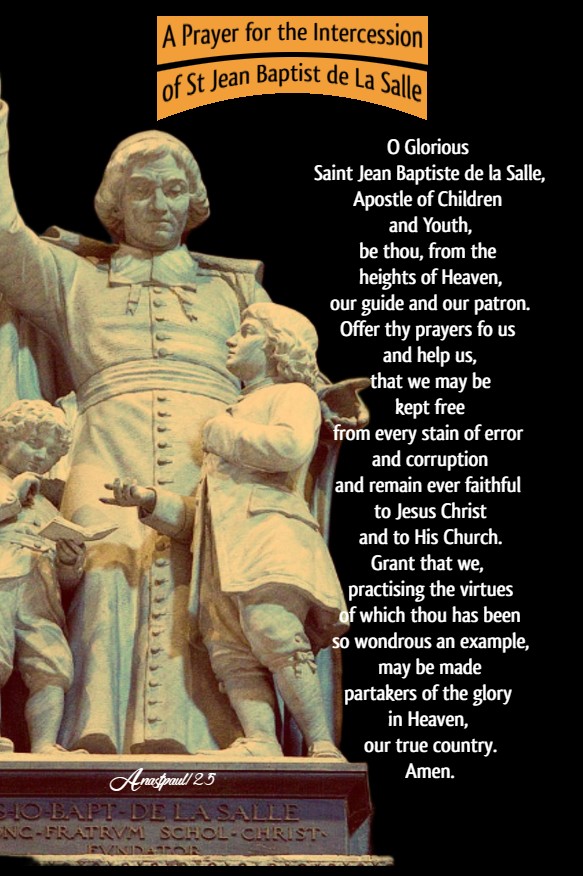
Prayer for the Intercession of St John Baptist de La Salle
O Glorious Saint Jean Baptiste de la Salle, Apostle of Children and Youth, be thou, from the heights of Heaven, our guide and our patron. Offer thy prayers fo us and help us, that we may be kept free from every stain of error and corruption and remain ever faithful to Jesus Christ and to His Church. Grant that we, practising the virtues of which thou has been so wondrous an example, may be made partakers of the glory in Heaven, our true country. Amen
Saint of the Day – 15 May – Saint Bercthun (Died 733) Abbot of the Monastery n Beverley, North Yorkshire, England. Born in the late 7th Century in Beverley, and died there on 15 May 733 . Also known as – Beorhthun, Berchthun, Berhthu, Bertctun, Bertin, Brithun, Brithwin, Brituno, Britwin, … of Beverley. Additional Memorial – 15 September on local calendars.
A Yorkshireman by birth, Bercthun after having been one of the disciples of St John of Beverley, Archbishop of York, he became a Deacon.
The Archbishop had a great regard for Bercthun, so much so, he entrusted him with the government of the Abbey he had founded in Indervoda or Deirvoda, which would become Beverley which was located in the north of Yorkshire nearby our Saint’s own home-ground and that of St John too.
And it was precisely to this Monastery St John retired after renouncing the government of his Archdiocese. The Venerable St Bede also mentioned Bercthun, calling him “most reverend and most truthful.”
Although we know very little about Bercthu’s personal history, his name appears in various hagiographic sources. The only certain date is the day of his death which occurred on 15 May and, depending on the sources, in the year 733 or 740.
Bercthun’s body was buried in the Monastery but after some miracles were attributed to him through his intercession, it was transferred to the Church and placed next to his master, St John.
St Bercthun is depicted in a bust in the British Library and is locally celebrated and remembered on 15 September possibly the date of the translation of St Bercthun’s Relics.
St Bercthun (Died 733) Abbot in Beverley, England St Bertha of Bingen St Caecilius of Granada St Caesarea of Otranto St Cassius of Clermont Bl Clemente of Bressanone St Colman Mc O’Laoighse St Ctesiphon of Verga
St Hilary of Galeata St Indaletius of Urci St Isaias St Isidore of Chios Bl Joan Montpeó Masip St Maximus of Clermont St Nicholas the Mystic St Rupert of Bingen St Secundus of Avila St Simplicius of Sardinia St Sophia of Rome St Victorinus of Clermont St Waldalenus of Beze
DISCLAIMER: Please note: I cannot control the content of the Advertisements on this Site, or of pop-ups which may appear, The revenue from the Advertisements, however, does provide a little assistance in the support of the Site. I do apologise for any inappropriate content.
Saint of the Day – 14 May – St Boniface (Died c307) Martyred by beheading in c307 in Tarsus, Cilicia (in modern Turkey). Patronage – of the City of Cerchiara di Calabria in Italy. Also known as – Boniface of Tarsus, Bonifatius
The Roman Martyrology reads today: “The birthday of the holy Martyr Boniface, who suffered at Tarsus in Cilicia under Diocletian and Maximian. His body was subsequently carried to Rome and buried on the Latin Way.”
Boniface went from Rome to Tarsus in Cilicia to bring back the Relics of the Martyrs to his mistress, Aglaida of whom he was the steward. As a faithful follower of Christ, he in turn suffered Martyrdom under Galerius and his father-in-law Diocletian.
Both Boniface and Aglaida had been pagans and lived in dissoluteness. Tired of their way of life but also interested in understanding the phenomenon of Christianity, Aglaida decided to send Boniface on a pilgrimage to the Holy Land to collect the holy Relics of the Christian Martyrs.
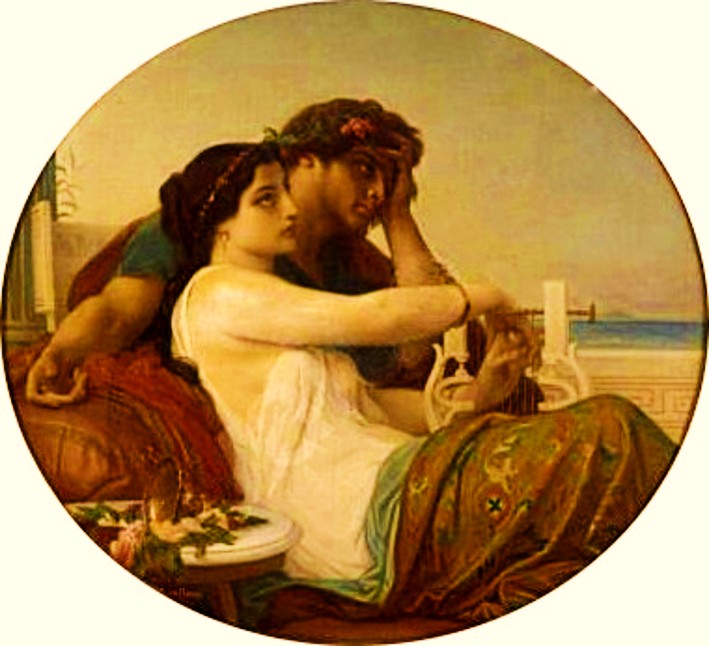
Alexandre Cabanel – Aglaida and Boniface
When he arrived in Tarsus, Boniface discovered a massive persecution against Christians had begun, he immediately declared himself a Christian and, as such, was subjected to Martyrdom. His embalmed body was brought back to Rome to be buried in an oratory on the Via Latina.
Aglaida herself had too become a Christian. Leaving all her wealth to the poor, she retired to monastic life for the eighteen years she lived, receiving – the divine gift of exorcising evil spirits.
In memory of Boniface, Aglaida had a Church built on the Aventine which later became the basilica of Saints Boniface and Alexius (where the remains of St Alexius of Rome are also found), a place where, the Saint’s Relics were later transferred, on Palm Tuesday 1217, to a marble urn under the high Altar.
St Boniface is remembered on 14 May. He is the Patron of Cerchiara di Calabria in Italy. In 1969 the life of the saint was considered legendary and his name was removed from the general calendar of Saints. The Municipality of San Bonifacio takes its name from a noble Chapel dedicated to Saint Boniface of Tarsus.
St Boniface (6th Century) Bishop of Ferentino St Boniface of Tarsus Martyr St Corona the Martyr St Costanzo of Capri St Costanzo of Vercelli Bl Diego of Narbonne St Dyfan St Engelmer St Erembert of Toulouse St Felice of Aquileia St Fortunatus of Aquileia St Gal of Clermont-Ferrand
St Henedina of Sardinia St Justa of Sardinia St Justina of Sardinia
St Maria Domenica Mazzarello FMA (1837-1881) Virgin, Religious Sister and Founder with St John Bosco of the Daughters of Mary Help of Christians. They were founded to work alongside Saint John Bosco and his Salesians of Don Bosco in his teaching projects in Turin. They continue to be a teaching Order worldwide and are now called the Salesian Sisters of St John Bosco.Her Body is incorrupt. Maria was Beatified on 20 November 1938 and Canonised on 24 June 1951. Her incorrupt body is venerated in the Basilica of Our Lady Help of Christians, in Turin, Italy, which is the Mother Basilica of the Salesians, built by St John Bosco. A Church in southeast Rome bears her name, Santa Maria Domenica Mazzarello – the Statue below resides there. Her Saintly Life: https://anastpaul.com/2022/05/14/saint-of-the-day-14-may-st-maria-domenica-mazzarello-fma-1837-1881/
St Maria Domenica Mazzarello FMA (1837-1881) Virgin
St Pons of Pradleves St Pontius of Cimiez St Tuto of Regensburg St Victor the Martyr
Martyrs of Seoul – 5 Beata: A group of lay people Martyred together in the apostolic vicariate of Korea. • Petrus Choe Pil-je • Lucia Yun Un-hye • Candida Jeong Bok-hye • Thaddeus Jeong In-hyeok • Carolus Jeong Cheol-sang 14 May 1801 at the Small West Gate, Seoul, South Korea
DISCLAIMER: Please note: I cannot control the content of the Advertisements on this Site, or of pop-ups which may appear, The revenue from the Advertisements, however, does provide a little assistance in the support of the Site. I do apologise for any inappropriate content.
Saint of the Day – 13 May – Saint Agnes of Poitiers (Died 588) the 1st Abbess og the Convent of Sainte-Croix, a Monastery founded in Poitiers by Saint Radegonde (c518-587) in around 552. The date and place of St Agnes’ birth are unknown but she died at the Sainte-Croix Monastery in Poitiers of natural causes.
We know little about Agnes’ origins except through the life of Saint Radegonde, to whom she would have been very close from a young age and whom she would have accompanied throughout her life.
Agnes, educated as a daughter by the holy Queen Radegunde, when the latter, after retiring from Court, founded the Monastery of the Sainte-Croix in Poitiers. Agnes, being begged by her benefactress, St Radegunde, who did not want this office for herself, became the 1st Abbess, with the abbatial blessing bestowed upon her by Saint Germanus, the Bishop of Paris, in the presence of other Bishops.
St Agnes left St Radegunde, right
After a few years, following conflicts which arose between the Monastery and the Bishop of the City, Merovech, over questions of jurisdiction, the Saint deemed it appropriate to temporarily retire to Arles together with St Radegunde. On her return, Agnes introduced into the Monastery the Rules dictated to her by St Caesarius of Arles, the Bishop there, for a female Abbey.
The prudence with which Agnes exercised the difficult art of government, in addition to attracting more than 200 Nuns, meant that, after the death of Saint Radegundr, she was able to reconcile with Bishop Merovech, who had the final direction of the religious community. The relationship between the two authorities, i.e. the Bishop and the Abbess, improved wonderfully when St Venantius Fortunatus (c530 – c609) , successor of Merovech. The 2 future Saints, Agnes and Venantius became fast friends and St Venantius left us precise testimonies regarding our Saint for today, of her virtues and abilities as Abbess. St Venantius spoke of Agnes in his letters and verses.
Agnes died on 13 May 588, nine months after Radegunde and was buried in the Church of Saint Mary outside the City walls. The new Proper of the Diocese of Poitiers celebrates and commemorates Saint Agnes today on the date of her birthday into Heaven.
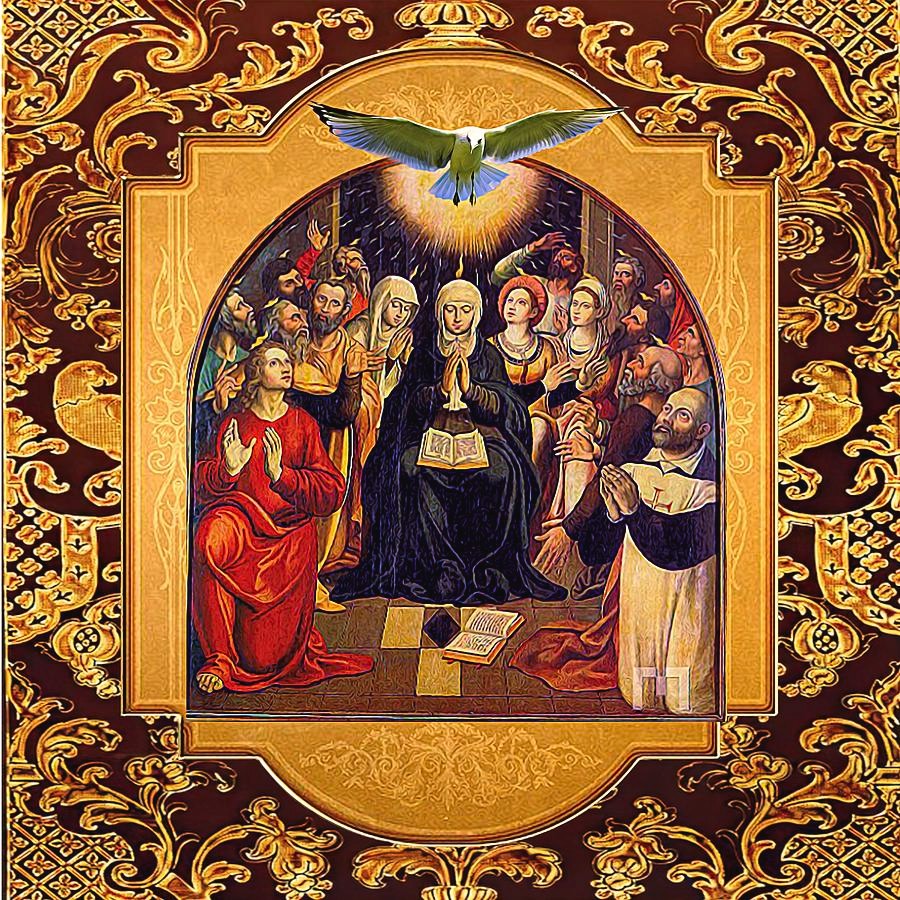
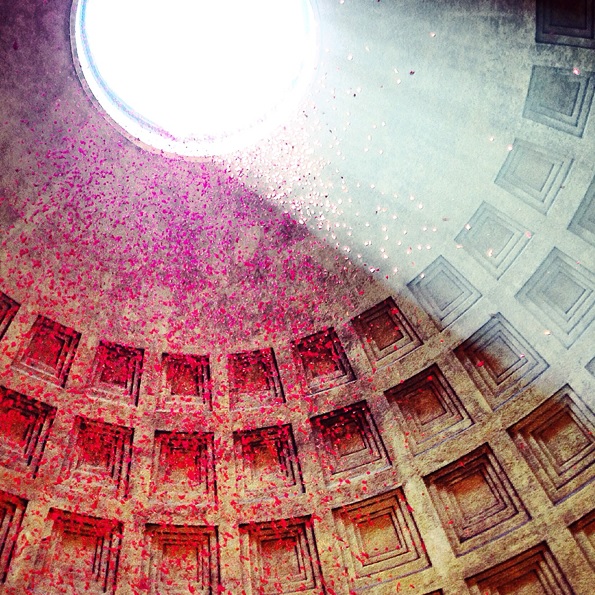
Rose Petals raining down on Pentecost Sunday in St Mary and the Martyrs (Pantheon), Rome
St Abban (Died c520) Irish Hermit who served the Lord inAbbington, England, Founded a Monastery.
St Agnes of Poitiers (Died 588) Abbess
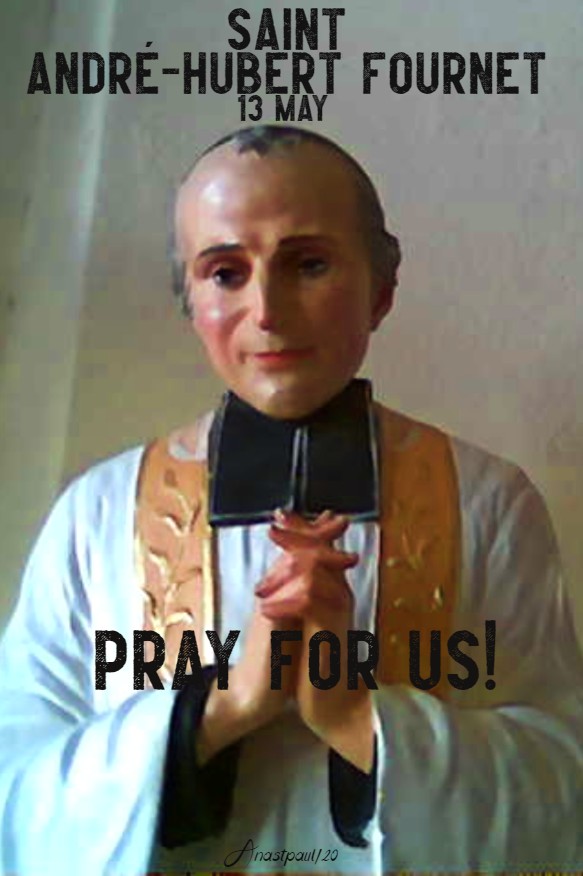
St André-Hubert Fournet (1752-1834) “The Good Father” – Priest and Co-Founder with St Jeanne-Élisabeth Bichier des Ages of the Congregation of the Daughters of the Cross, Apostle of the poor, needy, children and the aged. Until his old age, the Good Father kept an expression of simplicity and humility. In the sun of God’s love, the transfiguration of his being continued in deep holiness, charity, humility and zeal. After the approval of 2 miracles, he was Beatified on 16 May 1926 by Pope Pius XI and Canonised on June 1933 by the same Pope, after a further 2 miracles. About “The Good Father” St André-Hubert : https://anastpaul.com/2020/05/13/saint-of-the-day-13-may-saint-andre-hubert-fournet-1752-1834-the-good-father/
St Anno of Verona St Argentea of Cordoba St Euthymius the Illuminator Bl Fortis Gabrielli Bl Gerard of Villamagna Bl Gemma of Goriano St Glyceria of Trajanopolis
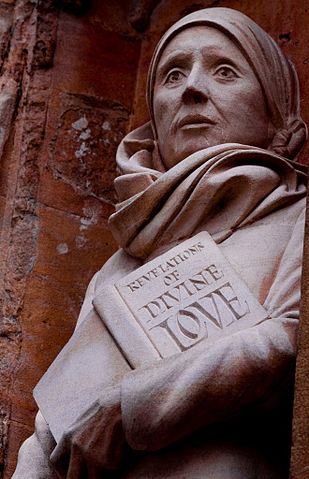
Blessed Julian of Norwich (c1342-c 1416) (aged 73–74) Anchorite, Mystic, Writer, Ascetic, Spiritual director. At the time of Julian’s death, people from all over Europe travelled to her room, or cell, to ask her advice. Everyone recognised that she was close to God. The Church never formally declared her a saint but through the ages, people have called her “Blessed.” Lived in Love: https://anastpaul.com/2019/05/13/saint-of-the-day-13-may-blessed-julian-of-norwich-c-1342-c-1416/
St Lucius of Constantinople St Mael of Bardsey Bl Magdalen Albrizzi St Merewenna of Rumsey St Mucius of Byzantium St Natalis of Milan St Onesimus of Soissons St Servatus of Tongres St Valerian of Auxerre
Martyrs of Alexandria: A group of Christians Martyred in the Church of Theonas, Alexandria, Egypt by order of the Arian Emperor Valens. Their names have not come down to us. 372 in Alexandria, Egypt.
DISCLAIMER: Please note: I cannot control the content of the Advertisements on this Site, or of pop-ups which may appear, The revenue from the Advertisements, however, does provide a little assistance in the support of the Site. I do apologise for any inappropriate content.
Saint of the Day – 12 May – St Modoaldus (Died c640) Bishop of Trier, Germany. Brother of Saint Severa of Saint Gemma. Uncle of Saint Gertrude of Nivelles, Saint Begga of Ardenne and Saint Modesta of Trier. Counselor to King Dagobert I of the Franks. Born in Aquitaine, France and died in c640 in Trier, Germany of natural causes. Patronage – of the Village of Reichsabtei. Also known as – Modoald, Modoaldo, Modowald, Modowandus, Modwald, Romoald, Romoaldus.
The Roman Martyrology reads today: “At Trier, St Modoaldus, Bishop.”
Modoaldus was born in Aquitaine to an aristocratic family and spent much of his life in close contact with the Merovingian Kings, whose shortcomings, according to Saint Gregory of Tours, influenced Modoald’s career.
King Dagobert I, at whose ourt he lived, assigned him to the Episcopal Aee of Trier while still very young, but this did not prevent the young Bishop from reproaching the Sovereign for the immorality which characterised his and his Court’s lifestyle.
Only towards the end of his life, however, did the Sovereign repent and try to amend his ways. He, therefore, wanted Modoaldus as his spiritual advisor and generously donated to him, land and money for the foundation of new Monasteries.
However, not many details of the life of Saint Modoaldus are known. He took part in the Council of Rheims in 625 and Ordained the future Martyr, Saint Germanus of Munster-Granfelden to the Priesthood. St Germanus had been Modoaldus’ disciple.
He was also a friend of Saint Desiderius of Cahors. Modoaldus’ Episcopate probably lasted about twenty years, until his death in c640.
In 1107 St Modoaldus’ Relics were translated to Paderborn in Germany.
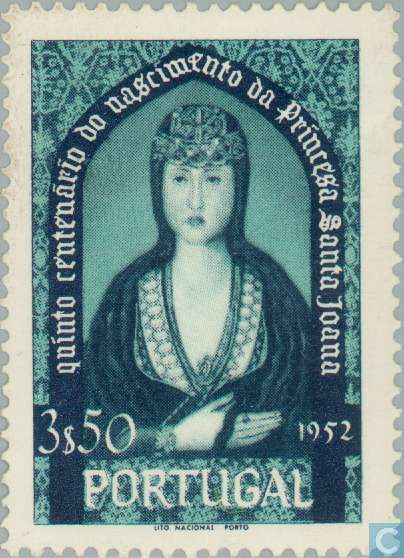
Blessed Joanna of Portugal OP (1452-1490) Religious of the Second Order of St Dominic, Virgin, Princess of Portugal of the House of Aviz, daughter of King Afonso V of Portugal and his first wife Isabella of Coimbra, Penitent. About Blessed Joanna whom the Portuguese called “Saint Princess Joanna”: https://anastpaul.com/2020/05/12/saint-of-the-day-12-may-blessed-joanna-of-portugal-1452-1490/
Bl Juan de Segalars St Lucien Gala
St Modoaldus (Died c640) Bishop of Trier St Palladius of Rome St Philip of Agira St Richrudis of Marchiennes St Theodora of Terracina St Thomas Khampheuane Inthirath
DISCLAIMER: Please note: I cannot control the content of the Advertisements on this Site, or of pop-ups which may appear, The revenue from the Advertisements, however, does provide a little assistance in the support of the Site. I do apologise for any inappropriate content.
Saint of the Day – 11 May – Saint Illuminatus OSB (Died 13th Century) of San Severino Marche in Umbria, Italy, a Monk at the Monastery of San Mariano (now Santa Caterina), Monk and Confessor., Miracle-worker. Born probably somewhere in Italy and died at the Monastery of San Severino Marche of natural causes. Patronage – of the City and Diocese of San Severino Marche. Also known as – Illuminato.
The Roman Martyrology reads today: “At San Severino, in the Marches of Ancona, St Illuminatus, Confessor.”
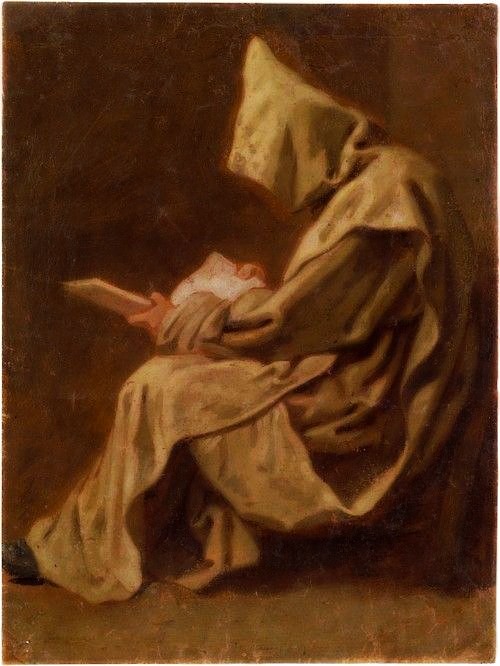
Unknown Monk
Information about Illuminatus, a Benedictine Monk who lived in the second half of the 13th Century, is scarce. His figure, venerated as a Saint by the City of San Severino Marche , has emerged over ttime thanks to popular devotion and some historic documents which attest to his sanctity and miracles.
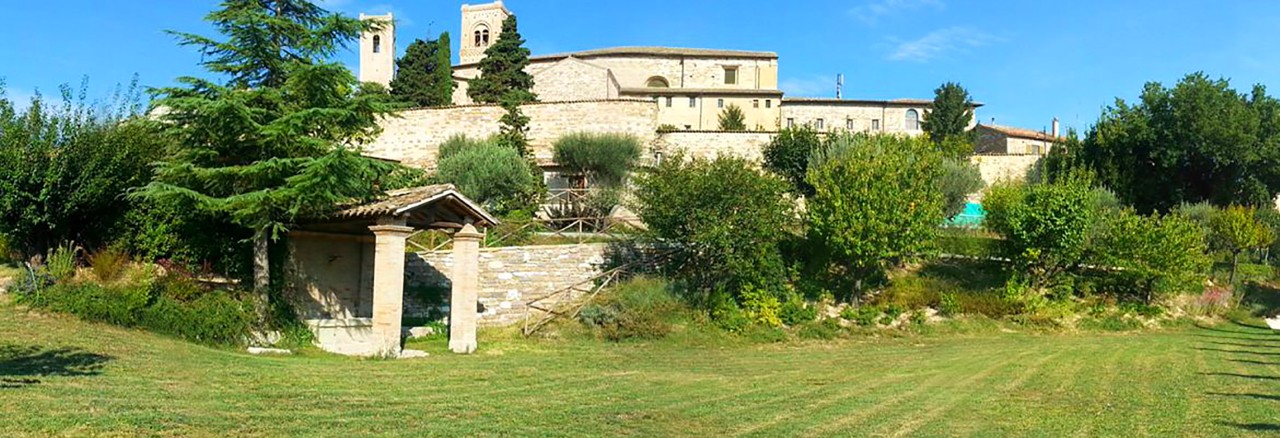
Although tradition identifies him as a native of San Severino in the Marches of Ancona, he was actually born elsewhere. Historic sources associate him with the Monastery of San Mariano (now Santa Caterina), located near the City, where he spent his monastic life.
Santa Caterina Monastery
He lived in the second half of the 13th Century, a period of great religious fervour and the flourishing of the Benedictine movement.
Illuminatus distinguished himself by his sanctity and his deep faith and devotion. His fame spread rapidly, fueled by the numerous miracles attributed to him. Popular tradition tells of miraculous cures, divine intercessions and prodigies which increased his reputation as a Saint.
Devotion to Illuminatus took deep root in the hearts of the people of San Severino Marche. His fame as a miracle worker and intercessor with God, caused the community to venerate him as a Saint. In 1702 he was officially listed among the co-protectors of the City, confirming his role as an intercessor and celestial protector. The Liturgical Feast of St Illuminatud is celebrated on 11 May, the presumed date of his death. On this date, the City of San Severino Marche celebrated its Patron Saint with solemn processions, Holy Mass and great civin celebrations.
Wishing all Mothers a Blessed and Happy Mothers’ Day May Mary, the Mother of God, our Lord Jesus Christ and our Mother, be a guide and a comfort to us all.
St Anastasius of Lérida St Anthimus of Rome St Bassus of Sabina St Bertilla St Criotan of MacReddin Bl Diego of Saldaña St Evellius of Pisa St Fabius of Sabina St Francesco de Girolamo SJ St Fremund of Dunstable St Gengulphus of Burgundy
Bl Illuminatus St Illuminatus OSB (Died 13th Century) of San Severino Marche, Monk and Confessor Bl James Walworth Bl John Rochester St Maiulo of Hadrumetum
St Mamertus (Died c477) Archbishop of Vienne, France, Theologian, Writer, Founder of the introduction of the praying of Litanies prior to Ascension Day, called “Rogation Days.” Rogation days are days of prayer and fasting in the Church. They are observed with processions and the praying of the Litany of the Saints. The major Rogation is held on 25 April, the minor Rogations are held on Monday to Wednesday, preceding Ascension Thursday. The word Rogation comes from the Latin verb rogare, meaning “to ask,” which reflects the beseeching of God, for the appeasement of His anger and for protection from calamities. Rogation St Mammertus: https://anastpaul.com/2019/05/11/saint-of-the-day-11-may-st-mamertus-died-c-475/
St Mozio of Constantinople St Possessor of Verdun St Principia of Rome St Tudy St Vincent L’Hénoret Bl Vivaldus St Walbert of Hainault
Martyrs of Camerino: An imperial Roman official, his wife, their children and servants, all of whom were converts and martyrs: Anastasius, Aradius, Callisto, Eufemia, Evodius, Felice, Primitiva, Theopista.
Martyrs of Carcassona – 14 Beati:
Martyrs of Osimo: Diocletius Florentius Sisinius
DISCLAIMER: Please note: I cannot control the content of the Advertisements on this Site, or of pop-ups which may appear, The revenue from the Advertisements, however, does provide a little assistance in the support of the Site. I do apologise for any inappropriate content.
Saint/s of the Day – 10 May – St Gordianus (Died c392) and St Epimachus (Died 250) Martyrs.
The Roman Martyrology reads today: “At Rome, on the Latin Way, the birthday of the holy Martyrs Gordianus and Epimachus. In the time of Julian the Apostate, the former was scourged for a long time and finally decapitated for confessing the Name of Christ. He was buried at night by the Christians, in a Crypt to which shortly before his burial, the remains of the blessed Martyr, Epimachus, had been translated from Alexandria, where he had been Martyred for the faith of Christ.”
Sts Gordianus and Epimachus depicted together in the Nuremberg Chronicle
These two holy Martyrs are named in all calendars of the Church since the 6th Century. Epimachus suffered at Alexandria under Decius, in the year 250, with one Alexander. They had been long detained in a hideous dungeon, were beaten with clubs, their sides were torn with iron hooks; lastly, they were both burnt in lime. This is related by St Dionysius of Alexandria, quoted by St Eusebius of Caesarea,
Gordianus was beheaded in Rome for his faith in Christ, under Julian the Apostate, in the year 392. His name occurs in the ancient Martyrologies. His body was laid in a cave, in which was deposited that of St Epimachus which was brought from Alexandria to Rome a little before St Gordianus’ Martyrdom.
St Gordianus
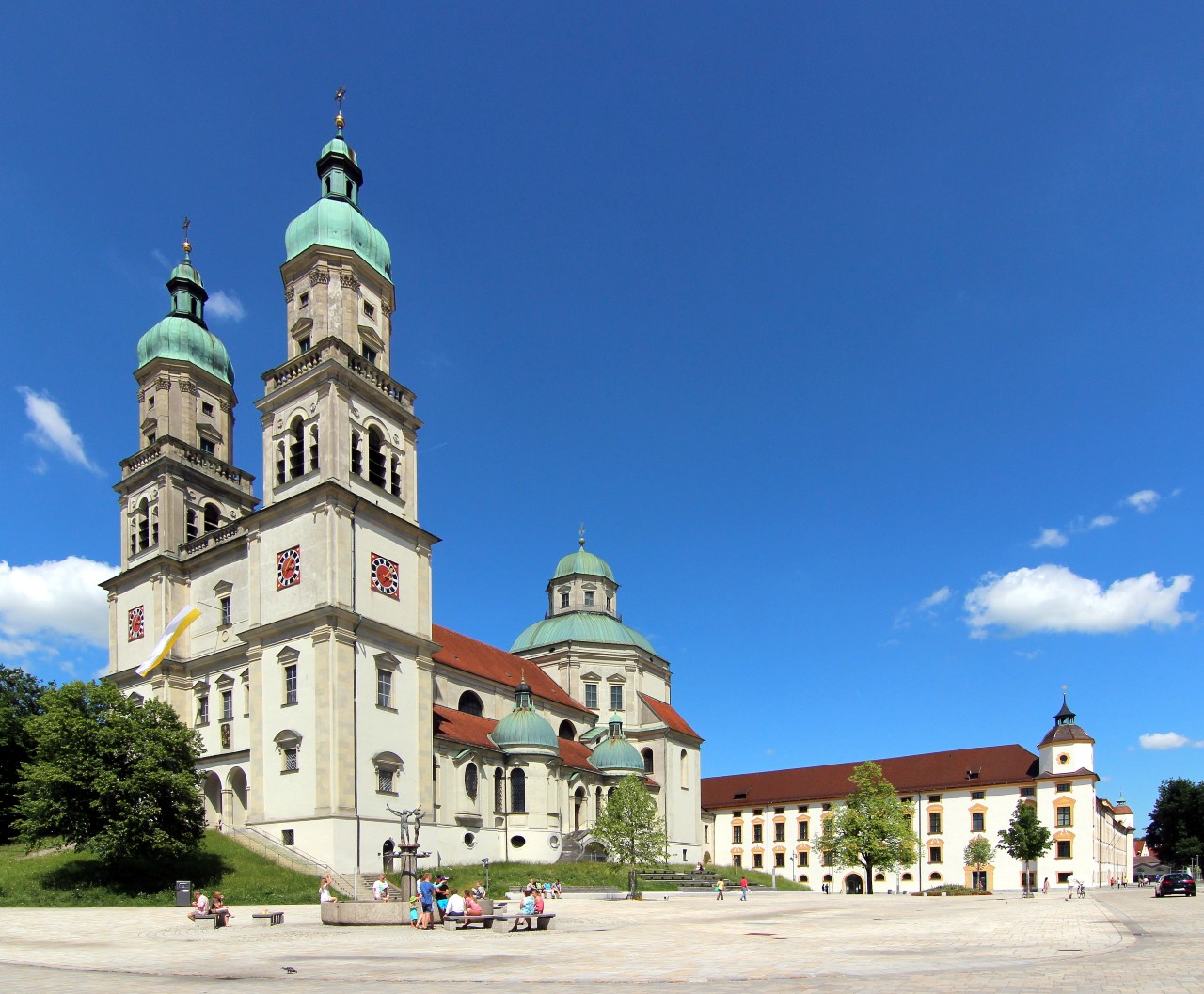
The Relics of both these Martyrs are now in the possession of the great Benedictine Princely Abbey of Kempten, in the Diocese of Ausbourg in Germany, see below.
Since 1969, this cult is now confined to local calendars.
St Alphius of Lentini Bl Amalarius of Metz Bl Antonio of Norcia St Aurelian of Limoges Bl Beatrix d’Este the Elder St Blanda of Rome St Calepodius of Rome
St Comgall of Bangor St Cyrinus of Lentini St Dioscorides of Smyrna
+St Epimachus (Died 250) Martyr St Felix of Rome Bl Giusto Santgelp +St Gordianus (Died c392) Martyr
Blessed Nicholas Albergati (1373-1443) Bishop, Cardinal Priest St Palmatius of Rome St Philadelphus of Lentini St Quartus of Capua St Quintus of Capua St Simplicius of Rome St Solange of Bourges St Thecla Bl William of Pontnoise
DISCLAIMER: Please note: I cannot control the content of the Advertisements on this Site, or of pop-ups which may appear, The revenue from the Advertisements, however, does provide a little assistance in the support of the Site. I do apologise for any inappropriate content.
Saint of the Day – 9 May – Saint Vincent (Died c950) Abbot of San Pedro de Montes Abbey at Vierzon in Spain. He was probably born in Spain and died there in c950, having been the Abbot for 14 years.
San Pedro de Montes Abbey at Vierzon in Spain
We have very little information about this Saint. All we know is that he had been a Monk in the Monastery of St Peter in Montes and a disciple of the Abbot, St Gennadius (Died 936). When St Gennadius was Consecrated as the Bishop of the Astorga Diocese, Vincent was elected as the Abbot of the Monastery of St Peter.
Both Master (who returned to his Monastery to retire) and Disciple died in their Monastery and were buried there.
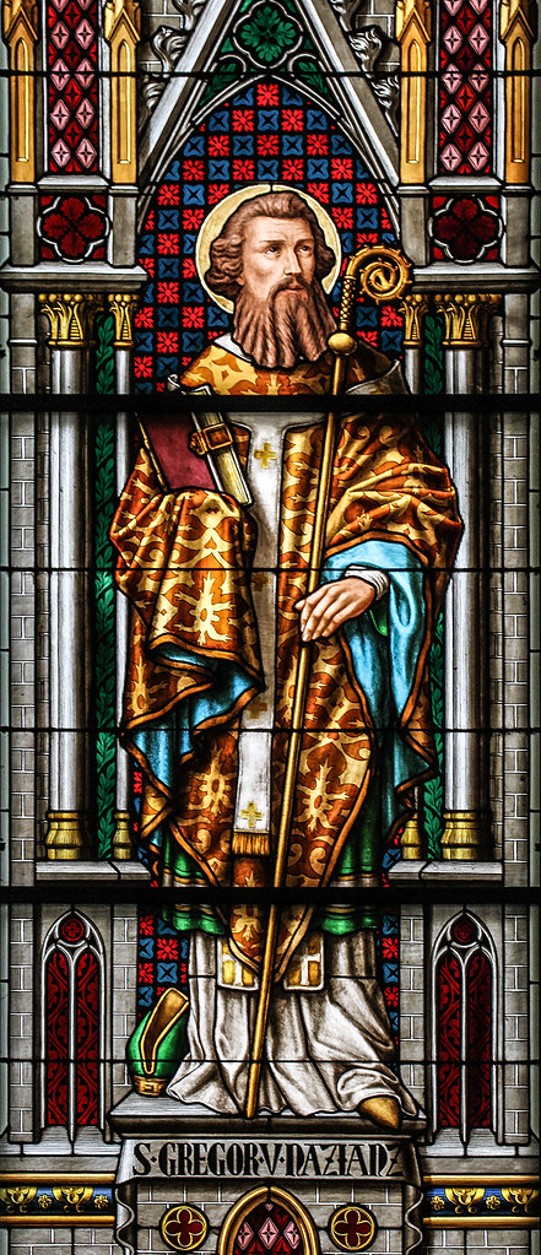
St Gregory Nazianzen (330-390) Archbishop of Constantinople, Father, Doctor, Confessor, Theologian, Philosopher, Orator, Poet, Writer, he is remembered as the “Trinitarian Theologian.” He is widely considered one of the most accomplished rhetorical stylist of the patristic age. Along with his great friends and colleagues, the brothers St Basil the Great and St Gregory of Nyssa, he is known as one of the Cappadocian Fathers. The Cappadocia region, in modern-day Turkey, was an early site of Christian activity, with several missions by St Paul in this region. The Roman Martyrology states of him today: “At Naziazus, the birthday of St Gregory, Bishop and Doctor of the Church, surnamed “The Theologian” because of his remarkable knowledge of divinity. At Constantinople, he restored the Catholic Faith, which was fast waning and repressed the rising heresies.” Wonderful St Gregory: https://anastpaul.com/2022/05/09/saint-of-the-day-9-may-st-gregory-nazianzen-330-390-great-father-and-doctor-of-the-church/ AND: (In 1969, St Gregory’s Feast was combined with that of St Basil the Great – “Two Bodies one Spirit” and was then celebrated on 2 January). Their lives here: https://anastpaul.com/2019/01/02/saint-s-of-the-day-2-january-st-basil-the-great-329-379-and-st-gregory-of-nazianzen-330-390-two-bodies-one-spirit/
St Banban the Wise St Beatus of Laon St Beatus of Lungern St Brynoth of Scara St Dionysius of Vienne Bl Fortis Gabrielli St Gerontius of Cervia
Blessed Giovanni Benincasa of Montepulciano OSM (1375-1426) Religious Friar of the Servite Order, Hermit, Mystic, Penitent. His Beatification received formal approval from Pope Pius VIII on 23 December 1829. His Devout Life
St Giuse Hien St Gorfor of Llanover
St Gregory of Ostia St Hermas of Rome Isaiah the Prophet St John of Châlon
Blessed Thomas Pickering (c1621-1679) Martyr, Benedictine Lay Brother. He was one of the 107 Martyrs of England and Wakes. They were Beatified by Pope Pius XI on 15 December 1929 and is, therefore, remembered with them all on 4 May. In character, he was described, as the most charitable and sweet-tempered of men. His Life and Death: https://anastpaul.com/2021/05/09/saint-of-the-day-9-may-blessed-thomas-pickering-osb-c-1621-1679-martyr/
St Vincent (Died c950) Abbot of Montes
Martyrs of Persia: 310 Christians murdered together for their faith in Persia. No details about them have survived.
20 Mercedarian Martyrs of Riscala: 20 Mercedarian friars who were murdered by Huguenot heretics for refusing to denounce their faith. 16th century at the Santa Maria convent at Riscala, France.
DISCLAIMER: Please note: I cannot control the content of the Advertisements on this Site, or of pop-ups which may appear, The revenue from the Advertisements, however, does provide a little assistance in the support of the Site. I do apologise for any inappropriate content.
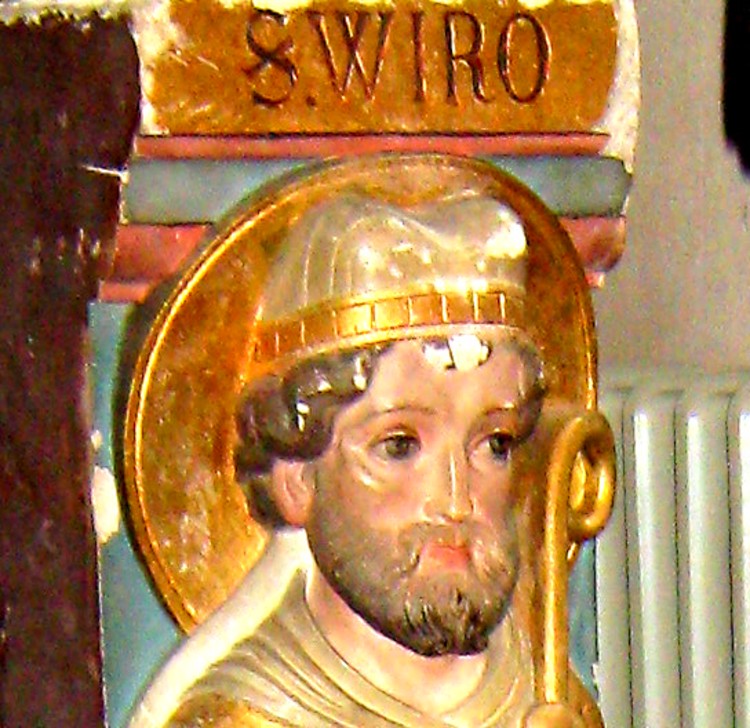
Saint of the Day – 8 May – St Wiro (Died c753) Bishop of Utrecht, Missionary Bishop to the Frisia people, one of the Apostles of Frisia. Born in Northumbria, England although some sources say that he was an Irish Missionary and died in Roermond, Holland in c753 of natural causes. Patronage – of Utrecht Diocese. Also known as – Apostles of Frisia,Wirone, Wiro of Roermond, Wera of Utrecht (and possibly also the same as Vira of Northumbria). Additional Memorial – 11 May in Roermond, Holland.
The Roman Martyrology reads today: “In Ireland, St Wiro, Bishop”
Probably a native of Northumberland, England, Wiro seems to have been associated with Saint Willibrord and in c741, to have been appointed the 2nd Bishop of Utrecht to succeed St Willibrord.
Between 746 and 747, Wiro was one of eight Bishops, along with St Boniface, who wrote a letter to Æthelbald, King of Mercia, to reprove him for various dissolute and irreligious acts including stealing Ecclesiastical revenue, violating Church privileges, imposing forced labour on the Clergy and fornication. The letter implored Æthelbald to take a wife and abandon the sin of lust:
“We ,therefore,, beloved son, beseech Your Grace by Christ the Son of God and by His coming and by His Kingdom that if it is true that you are continuing in this vice, you will amend your life by penitence, purify yourself and bear in mind, how vile a thing it is, through lust, to change the image of God created in you, into the image and likeness of a vicious demon! Remember, you were made King and Ruler over many, not by your own merits but by the abounding grace of God and now, you are making yourself, by your own lust, the slave of an evil spirit.”
Wiro was an itinerant missionary and preached in the region of the Meuse region and the Rhine, where his legend associates him with the Priest St Plechelm and the Deacon St Otger.
Wiro is said to have been Ordained as a Bishop in Rome and then, together with his companions, founded the Monastery in Berg—today’s St. Odile’s Church. Wiro is buried there.
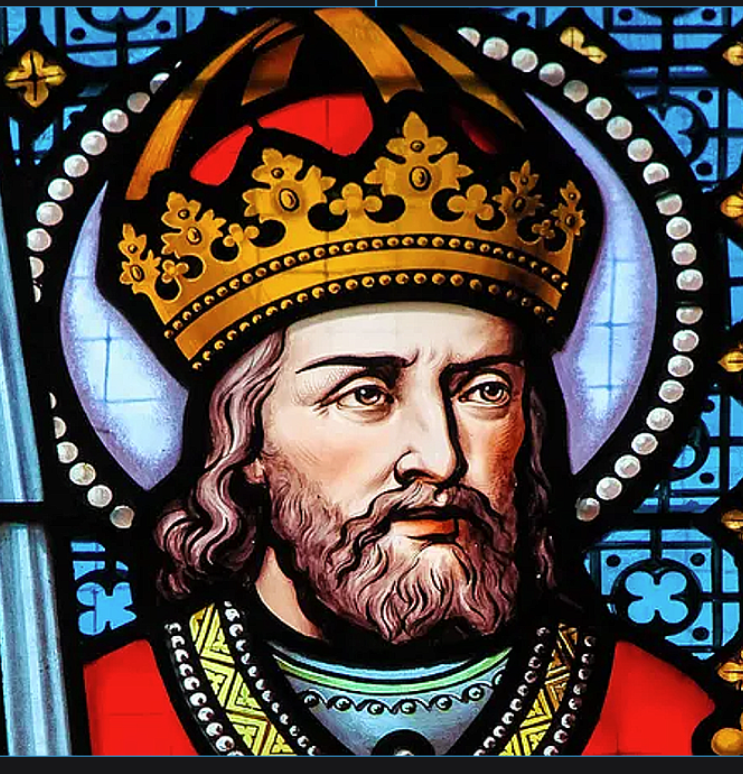
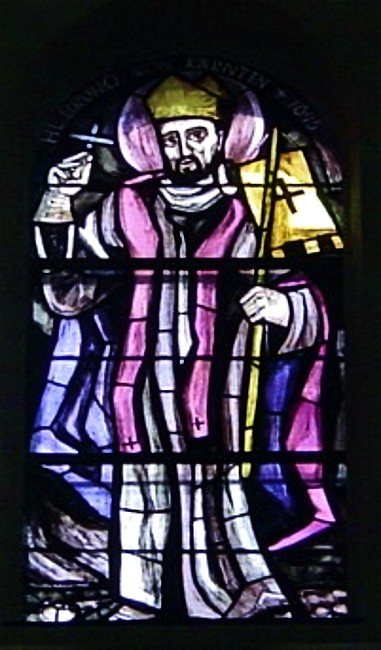
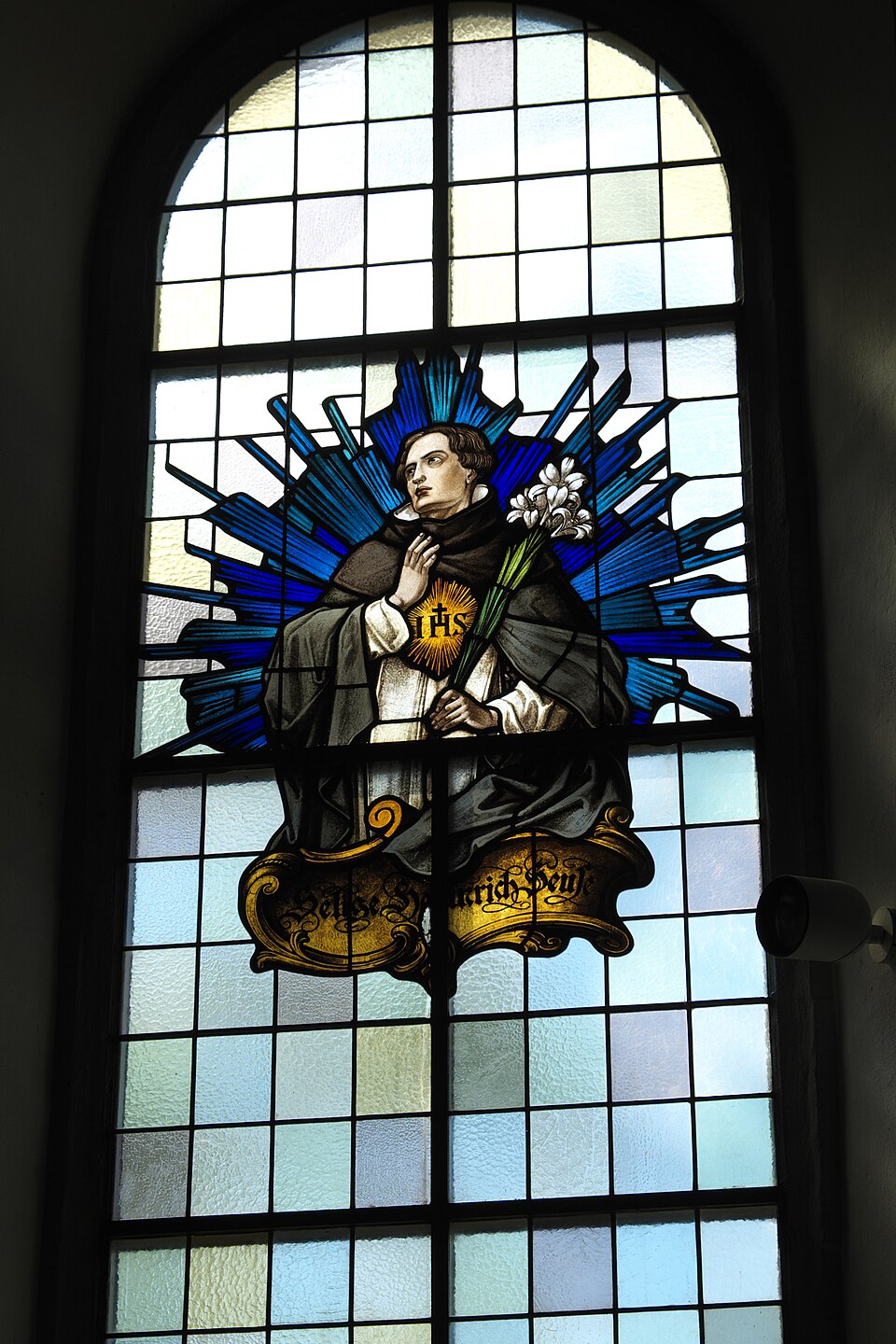
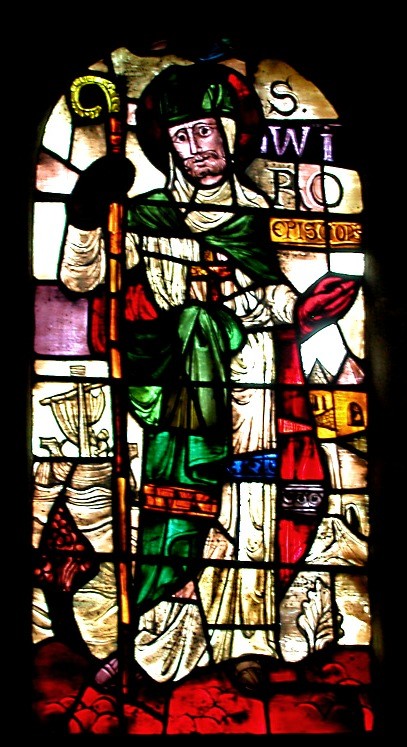
St Wiro stained glass window in the Basilica of Saints Wiro, Plechelm and Otger, Sint Odilienberg
He may be identical with the Missionary Bishop Vira from Northumbria, mentioned by St Alcuin among others.
The Basilica of Saints Wiro, Plechelm and Otger at Sint Odilienberg, is dedicated to these three Missionary companions.
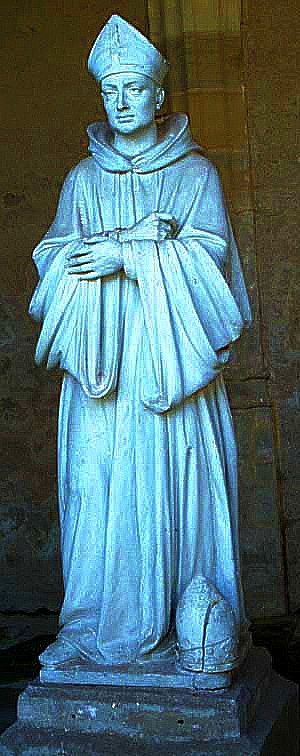
St Wiro Statue in the Basilica of Saints Wiro, Plechelm and Otger, Sint Odilienberg
Veneration of Wiro and his two companions began early in Roermond. The legendary life story was written at the end of the 10th Century.
The Monastery he founded was transferred to Roermond, in 1361, accompanied by his Relics which were lost during the Reformation. They were re-discovered later in the 16th Century and a Feastday is celebrated to commemorate the rediscovery. In 1881 the original grave was found in the former Abbey and most of the bones were returned to it.
Wiro’s Feastday is 8 May but in Roermond it is celebrated on 11 May. Since the Middle Ages, his skull has been in Utrecht, where he is the Patron Saint of the Diocese. Pilgrimages are still made to his grave, in Roermond.
Reliquary shrine of Wiro, Plechelm and Otger in St. Odilienberg
St Acacius of Byzantium Bl Aloysius Luis Rabata St Amatus Ronconi Bl Angelo of Massaccio St Arsenio of Mount Scete St Benedict II, Pope
St Boniface IV, Pope (c550-615) Supreme Pontiff from 608 until his death, Deacon, assistant and disciple of St Pope Gregory the Great, Papal Treasurer under Pope Gregory. In other words, he was the first official in connection with the administration of Papal property. he converted the Pantheon into a Church. This was the first pagan temple in Rome to be transformed. On 13 May 609, the Pantheon was consecrated to the Blessed Virgin and all the Christian Martyrs. Boniface ordered 28 cartloads of bones from the Catacombs to be reburied under the high Altar of the new Church.https://anastpaul.com/2021/05/08/saint-of-the-day-8-may-saint-pope-boniface-iv-c-550-615/embed/#?secret=CaaBptqdZu#?secret=HEWU7j5av1
St Desideratus of Bourges Bl Domenico di San Pietro St Gibrian St Helladius of Auxerre
St Ida of Nivelles St Martin of Saujon St Metrone of Verona St Odrian of Waterford St Otger of Utrecht St Peter of Besançon Bl Pietro de Alos Blessed Raymond of Toulouse
St Victor Maurus the Moor (Died c 303) Martyr, Layman, ex-Soldier. The Roman Martyrology reads: “At Milan, the birthday of the holy Martyr Victor, a Moor. He became a Christian in his youth and served as a soldier in the imperial army. When Maximian wished to force him to offer sacrifice to idols, he persevered with the greatest fortitude in the confession of the Lord. Being first beaten with rods but without experiencing any pain, through the protection of God and then, having melted lead, poured over him, which did him no injury whatever. He at length terminated the career of his glorious Martyrdom by being beheaded.” His Life and Death: https://anastpaul.com/2022/05/08/saint-of-the-day-8-may-st-victor-maurus-the-moor-died-c-303-martyr/
Saint of the Day – 7 May – Saint Placid (Died c675) Abbot of the Abbey of Saint Symphorian in Autun in France. He was probably both born and died in the 7th Century in France. Also known as – Placidus, Plait.
Unknown ancient Abbot
There is very little information about Saint Placid who became the Abbot of the Monastery at Autun. His existence is certain, as attested by the ancient cult paid to him in the Abbey and Basilica of Saint Symphorian in Autun.
However, precise chronological data is lacking and his figure remains elusive, the object of uncertainty and conjecture.
There is no certain knowledge about his birth, his education or his path of faith. His Episcopal identity itself is doubtful: some ancient martyrologies indicate him as the Bishop of Autun but his name does not appear in the official list of Bishops of the Diocese.
The only certainty concerns his role as the Abbot of the Abbey of Saint Symphorian in Autun. It is presumed that he governed the Abbey before 731, the year in which the Basilica was burned and destroyed by the Saracens.
The Martyrology of St Jerome mentions Saint Placidus on 7 May, attributing to him the title of Priest and Abbot of the Abbey of Saint Symphorian. His Liturgical memory is fixed for this date.
Despite the scarcity of biographical information, Saint Placid remains a venerated figure in local tradition. His memory is preserved in the Basilica of Saint Symphorianus (below), rebuilt after the Saracen destruction. His hagiography, although fragmentary, represents an important part in the history of the Church of Autun and of Benedictine monasticism.
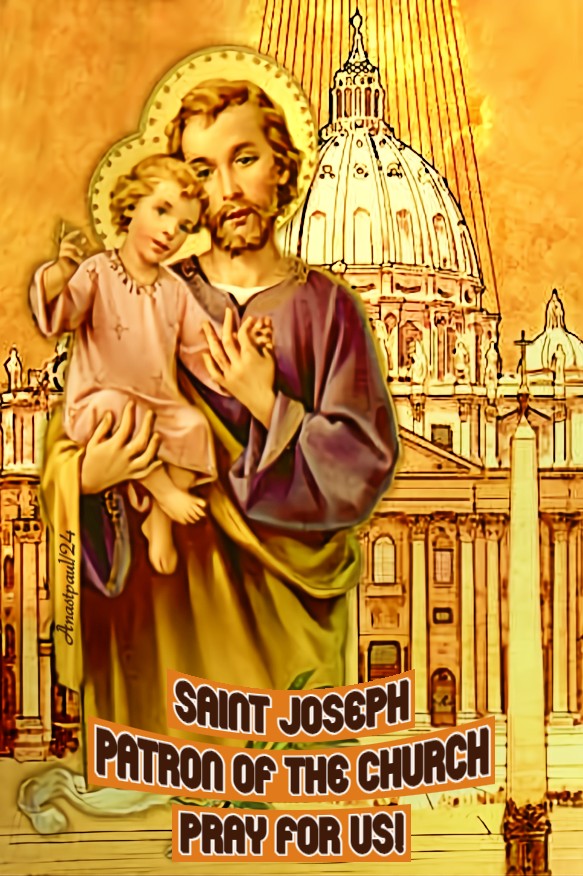
The Solemnity of the Patronage of St Joseph Wednesday preceding the Third Sunday after Easter: Few Catholics are likely familiar with the Eastertide Solemnity of St Joseph.By Papal Decree of Pope Pius IX on 8 December 1870 According to Father Francis Xavier Lasance (1860-1946) it was instituted during the hostile occupation of Rome by the Troops of the Italian King, Victor Emmanuel II. The Pope proclaimed St Joseph the Patron of the oppressed Household of the Faith, entrusting to St Joseph, the defence of Holy Mother Church.
In the beginning, this Feast Day was observed on the Third Sunday after Easter but when Pope St Pius X reformed the Liturgical Calendar to restore the Sunday Offices to prominence over those of the Saints, the second Feast of St Joseph was moved to the Wednesday preceding the Third Sunday after Easter. In 1911, the Feast was raised to a Double of the First Class and it was assigned an Octave after it was moved to the Wednesday before the Third Sunday after Easter. It is a Common Octave, so the Octave may or may not be commemorated on the intra Octave days depending on the rank of the Feasts which occur during the Octave. While this Feast day is not in the 1962 Missal, it is still kept by Priests who celebrate Holy Mass according to the pre-1955 reforms.
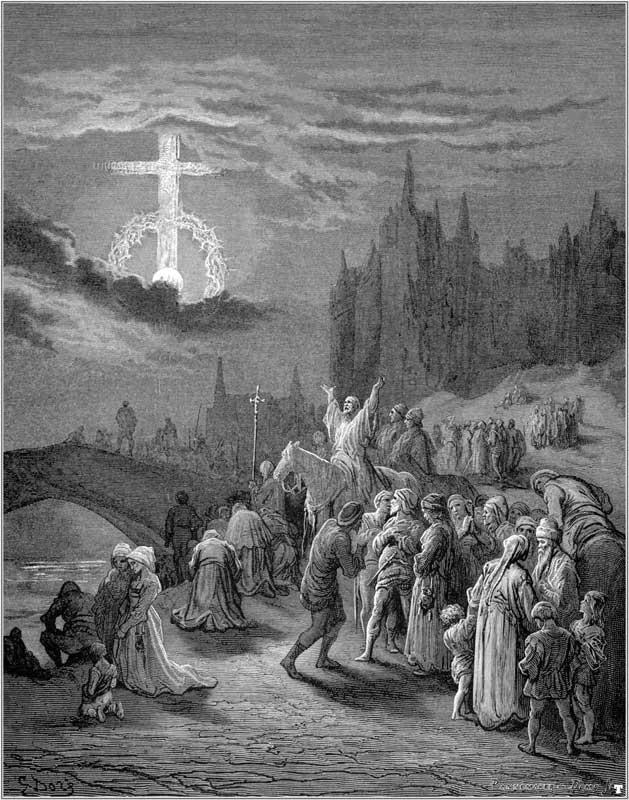
The Apparition of the Holy Cross over Jerusalem: The Commemoration of the appearance on 7 May 351, Pentecost that year, of a luminous image of the Holy Cross in Jerusalem. It stretched from Mount Golgotha to the Mount of Olives (about two miles / three kilometers), was brighter than the sun, lasted several hours and was seen by the entire City. It led to many conversions and was reported in a letter attributed to Saint Cyril of Jerusalem.
Bl Antonio de Agramunt St Augustine of Nicomedia St Augustus of Nicomedia St Cerenico of Spoleto St Domitian of Huy St Duje
St Flavia Domitilla of Terracina (1st Century) Virgin Martyr. The Roman Martyrology states of her today: “At Terracina, in Campania, the birthday of blessed Flavia Domitilla, Virgin and Martyr, niece of the Consul Flavius Clemens. She received the religious veil at the hands of St Clement and in the persecution of Domitian, was exiled with many others to the island of Pontia, where she endured a long Martyrdom for Christ. Taken afterwards to Terracina, she converted many to the faith of Christ by her teaching and miracles. The judge ordered the chamber in which she was, with the virgins Euphrosina and Theodora, to be set on fire and she thus consummated her glorious Martyrdom. She is also mentioned with the holy Martyrs Nereus and Achilleus, on the 12th of this month.” Her Life and Death: https://anastpaul.com/2021/05/07/saint-of-the-day-7-may-saint-flavia-domitilla-of-terracina-1st-century-virgin-and-martyr/
St Flavius of Nicomedia Bl Francesco Paleari Bl Gisela of Ungarn
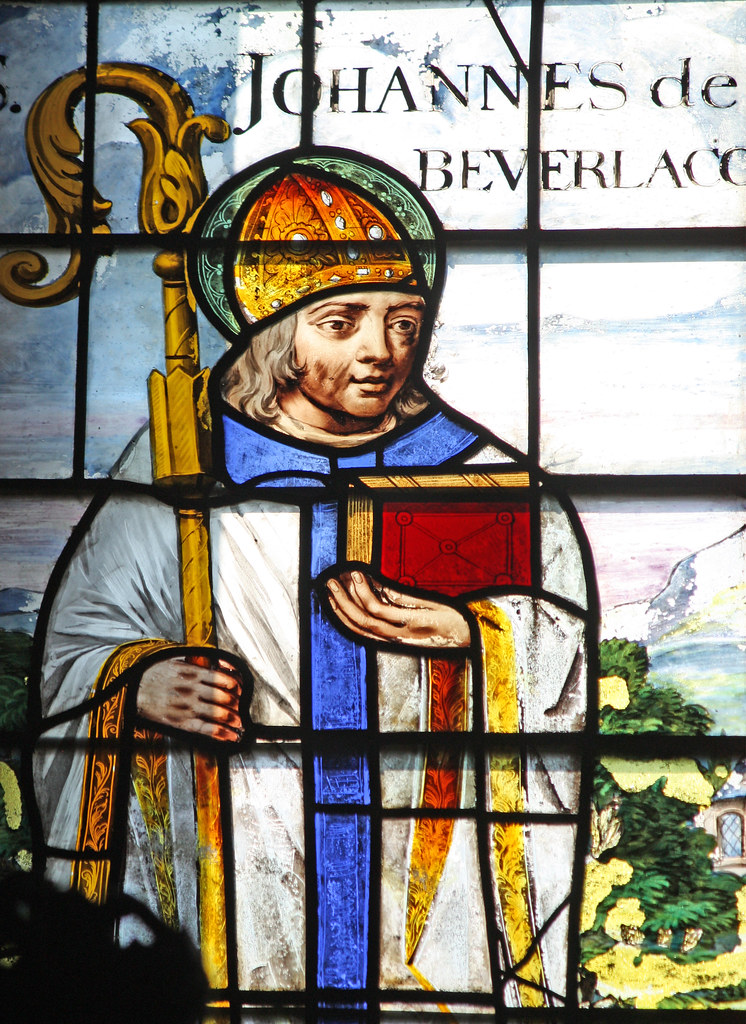
St John of Beverley (Died 721) Bishopof Hexham and then the Bishop of York, Scholar and Teacher, Apostle of the poor, and the sick Ascetic, Miracle-worker., a great friend of St Bede the Venerable. He founded a Monastery at Beverley, Yorkshire from which the Town developed. Today, it is a vibrant market Town of some 31,000 people. It owes its foundation and growth to Saint John of Beverley. The Beverley Cathedral now stands on the site of St John’s Monastery. The Roman Martyrology reads today: “At York, in England, St John, Bishop, renowned for his saintly life and miracles.” A Wonderful Saint from Yorkshire: https://anastpaul.com/2022/05/07/saint-of-the-day-7-may-st-john-of-beverley-died-721-of-the-miraculous-banner/
St Juvenal of Benevento St Maurelius of Voghenza-Ferrara St Peter (Died c735) Bishop of Pavia St Placid (Died c675) Abbot of Autun St Quadratus of Herbipolis St Quadratus of Nicomedia
St Serenicus of Hyesmes St Serenus of Hyesmes Bl Villanus (Died 1237) Bishop of Gubbio
Saint of the Day – 6 May – St Edbert (Died 698) Bishop of Lindisfarne Island, Monk at the Monastery there, succeeding St Cuthbert in 688, a renowned Scriptural Scholar, he administered the See of Lindisfarne Island for 10 years and became too, a man remembered for his great virtue and especially for his wonderful charity to the poor, needy and ill. Born in the 7th Century in England and died on 6 May 698 of natural causes at Lindisfarne which is situate along the northeast coast of England, close to the border with Scotland. Also known as – … of Lindisfarne, Eadbert, Eadbeorht, Eadberht, Edberto.
The Roman Martyrology reads today: “In England, St Eadbert, Bishop of Lindisfarne, eminent for doctrine and piety.”
After having been a Monk at Lindisfarne, Edbert succeeded Bishop St Cuthbert. The Venerable St Bede calls him “magnarum virtutum vir et in Scripturis notabilità eruditus – A man of great virtues and remarkably learned in the Scriptures.”
He also distinguished himself for the generous alms he gave to the poor, to whom, every year, he distributed a part of the tithe of everything, money and produce.
On 20 March 698, after having asked his consent and approval, some Monks lifted the body of St Cuthbert from the ground which, being found intact, was placed in an urn and exposed to the veneration of the faithful. He is, therefore, as having founded the Holy Shrine of his predecessor, Saint Cuthbert on the Island of Lindisfarne, a place which was to become a centre of great pilgrimage in later years.
Edbert used to spend Lent and an Advent of forty days away from his See and the Monastery, in a solitary place surrounded on all sides by water “ and in great devotion of fasting, prayer and tears.”
The Church of Lindisfarne had been built by St Finau with oak wood and reeds; Edbert replaced the pipes with lead sheets, making the building more durable, solid and beautiful.
He died on 6 May 698, exhausted by a long illness, as he had asked the Lord and his body was placed in an coffin above the Tomb of Saint Cuthbert.
Egbert was graced by the granting of many miracles to those who prayed at his tomb after his death






























 AnaStpaul
You must be logged in to post a comment.